Finding the new normal
by Grace crandall Staff Writer
Several years ago, some had never heard of it. Now it seems difficult to imagine a world without it. Zoom has become a feature in nearly every school across the country, used by grade schools and colleges alike. The video chat company’s stock went up 400% by the end of 2020, proving its major influence during the COVID-19 pandemic.
Three years later, the influence of video chat is still reflected in schools. If not Zoom, then Google Hangouts or Microsoft Teams provide a virtual link to the classroom. This leaves many wondering if video chats will become a permanent feature of the average student’s school experience. But this type of question was raised before the pandemic.
Online learning has become a prominent feature in the last decade, providing a flexible option for those with busy schedules. WCC has offered what it calls Distance Learning (DL) since the 2010s.
Distance learning courses are asynchronous, in which individual students plan when they will work on course material. In Winter 2019, 19.8% of WCC’s courses were offered in the DL mode, ac-
cording to WCC enrollment records.
Unlike DL courses, WCC’s synchronous courses, implemented via Zoom, have certain meeting times in which a student must be present to “attend” the class. These synchronous courses, also known as virtual courses, are what began during the pandemic.

The COVID-19 pandemic temporarily shut down the campus, taking all classes online. Faculty and students alike faced an adjustment to learning online, whether that took the form of asynchronous or synchronous.
“Everyone was at a different place in terms of technology,” said Julie Kissel, English professor and president of
the faculty union at WCC. “We did what we had to do at that time. But when given the opportunity, having some classes on campus and some classes virtually, you…pick the best approach that fits for that skill.”
Some classes returned to campus in Fall 2020 out of necessity, according to Kissel. However, this was a small percentage; 15% of all classes were in-person, with 32.9 % offered in DL. Additionally that semester, virtual classes were introduced, constituting 52.1% of all classes offered that semester.
This was a great change from one year prior, when 79.3% of classes were offered in-person, and the world of
Zoom did not exist for WCC.
Since the height of the pandemic, the number of virtual classes has slowly dropped each semester. More recently, 18.7% of classes had a virtual option for Fall 2022 enrollment. With this yearly decline, the future of virtual courses is in question.

“There will be a use for virtual courses that remains,” said Kissel. “The ability to have office hours virtually is important. Those are things that will forever change, but I think we’ll go back to more classes face-to-face or fully online (DL), and that virtual will be a special case (in the future).”
continued on a3
Free Press reporter, Voice alum talks to students about journalism industry
by WilloW SymondS Staff Writer
Chanel Stitt works as a Business Reporter for the Detroit Free Press, but her first step into journalism was here at The Washtenaw Voice.

While attending WTMC, WCC’s on campus high school, she worked as a contributor and then a staff writer, winning an award for her feature story about the success of a reading-to-barbers program.
However, according to Stitt, quite a few things have changed since her graduation in 2017.
The most noticeable difference is the newsroom itself, having moved location to the Student Center almost two years ago. Stitt admired the new room for the first time on Friday, Feb. 17 – especially her Michigan Community College Press Association award hanging on the wall – before giving a talk to the current Voice team.
When speaking to current members, she noted another change: how the digital age impacts journalists. Six years ago, Stitt and her fellow Voice colleagues focused on traditional reporting through writing and photos, with the website being their only tech-
Exercise initiative strives for change
 by WilloW SymondS Staff Writer

While on campus, students and staff may notice fliers and human-sized posters promoting “To the Moon.” Students may also notice WCC’s online forms, no matter the main topic, include questions about their exercise habits. What do these two incidents have in common?
The simple answer: Biology professor Marvin Boluyt implemented both of these into WCC this school year. The longer answer involves a global organization called Exercise is Medicine on Campus (EIM-OC), though they have less influence on the ‘To the Moon’ exercise initiative than one may think.
making classes.
A student asked her how much she knew about business before starting this beat, and Stitt answered that she knew “almost nothing,” but this never became an issue. She doesn’t have to understand finances or economical issues to focus on the people behind the business and their impact on the community.
One of her favorite aspects of her career is “making an impression on readers.”
nological engagement.
This is no longer true for The Voice or for Stitt. She now updates the Detroit Free Press’ official TikTok account, posting several times a month related to current events and feature stories related to the metro area.
Stitt says their viral TikToks are usually “the most bizarre.” As an example, she pulled up the TikTok account on the newsroom’s TV and showed helicopter footage of a man down below shooting at the aircraft, which got two million views.
Stitt began her online content creation as a hobby, and she applied these skills to help shift the Detroit Free
Press into multimedia. She uses the TikTok platform with the purpose of reaching younger generations, who may be less likely to search for their website or print paper.
“A lot of media outlets were analyzing who was engaging with their news, and they weren’t including Gen Z at all,” Stitt said. “I definitely wanted to change that.”
When not making TikTok videos for a living, she writes about minority-owned businesses in the metro area. These stories range from 50-year-old floral shops to cafes adding flowers to their menu, from independent clothing retailers to vegan soap stores hosting candle-
“I love when more people go to a small business because of what I wrote,” she said. “Sometimes I’ll report on a business somewhere and other [news organizations] come out of the woodworks and report on the same business themselves.”
Another student said, while their question might be cliche, they wanted to know Stitt’s number one advice for anyone pursuing the journalism field.
“I could just say the cheesy, ‘Always ask questions,’ but I think the better advice is [about] learning new skills,” Stitt responded. “When I was a general reporter and wrote breaking news, I always read a bit about the topic before writing about it. … I often learn as I go.”
“We have an opportunity here to have a campus-wide promotion event,” Boluyt said. “It’s a unique opportunity, too, because we can compare [exercise rates among students, staff, and faculty] before and after the promotion and see: did the promotion have an effect?”
These fliers include a QR code linked directly to the website, which contains the activity log. Students and faculty can enter the amount of time they spend on physical activities each week. To prevent outside tampering, they must log into their WCC accounts to access it.
The activity log offers over 50 activities, such as walking, bicycling, skiing, and even gardening, though the possibilities don’t end here. One pickleball player has been registering their exercise under tennis, but their sport will soon be added to the list. Other activities soon to be available include ice skating, roller skating (though they do have roller blading), and skateboarding.
Exercise is Medicine on Campus co-chair Dr. Carrie Davidson encourages students and faculty to engage with To the Moon. However, she believes WCC’s new initiative
could collect data in a more efficient way.
“Students need some sort of incentive [to exercise and record the results],” Davidson said. “I’m intrinsically motivated myself [to exercise], but I’m not motivated to record a bunch of stuff manually.”
Davidson also works as a fitness manager at the University of Kentucky, where students and faculty can use a platform where anyone’s wrist device – no matter if it’s Apple, Google, or another brand – automatically uploads their exercise data into the system. A downside is the price, as their school pays to use this program.
WCC does not use this platform. Instead, Communications Director Rich Rezler and other staff members created the website and activity log over the course of a year.

On the other hand, Davidson added that “each registered campus has their own autonomy to run their own programs.”
“They know what’s best to work on their college campus,” she explained. “They don’t have to get permission or run it by anyone. They might partner-up with us because they’re after the same mission.”
The incentive for students to log their exercise habits in To the Moon may be the prizes. The first tier of prizes are reserved for top performers, while the second tier will be chosen in a random drawing of each and every participant. The prizes will remain unidentified until WCC collectively travels 238,855 miles.
Anyone with school spirit will find another reason: earning the Gold award from Exercise is Medicine on Campus.
Both four-year and twoyear schools apply for recognition each February in preparation for the May award ceremony. WCC first applied in 2019, after one of Marvin
College A NATIONAL PACEMAKER AWARD NEWSPAPER VOL. 33, No. 4 Tuesday, February 28, 2023 www.washtenawvoice.com Ann Arbor, Michigan continued on a3 ann arbor hosts folk dance class see b1 learn more about mardi gras see a6
The student publication of Washtenaw Community
LAURA CHODOROFF | WASHTENAW VOICE
COURTESY OF MARVIN BOLUYT
WCC biology professor Marvin Boluyt accepts an award from Exercise is Medicine co-founder, Robert Sallis.
the rise of ai may change journalism see a5
VOICE FILE PHOTO Chanel Stitt’s Voice staff photo from 2017


The Washtenaw Voice February 28 , 2023 A2 AD WCC students can get published and earn scholarships! TO LEARN MORE: Judy McGovernjumcgovern@wccnet.edu
A preview of STEAM week
By AidAn Ross Contributor
WCC will be holding its annual STEAM Week from Feb. 28 to March 2.
The three-day event will consist of various online and in-person activities highlighting topics related to science, technology, engineering, arts, and mathematics. It’s a part of WCC’s STEM Scholars program, which gives social, academic, and financial assistance to students majoring in STEM fields.
The event was originally started in 2018 as STEM Week, with arts being added more recently.
Susan Dentel, STEM Scholars Coordinator at WCC, commented on the importance of the arts in STEM fields.
“Any kind of product out there, there’s design, and art, and creative insight,” Dentel said.

Dentel said that, while STEAM Week is primarily directed towards students, anyone is welcome to attend.
“And that’s, I think, the way it should be,” she said.
David Wooten, a biology professor at WCC, will be giving a presentation on the biochemistry of snake venom and on his research on the Massasauga Rattlesnake, Michigan’s only venomous snake.

“They really are incred-
ible animals with incredible adaptations,” Wooten said. “I want to convey that beauty, that fascination with them.”
Other highlights will include a panel on the liberal arts with Hava Levitt-Phillips; a presentation by Brian Ottum on astrophotography; and a demonstration by representatives of Planewave Instruments, a Michigan-based manufacturer of observatory telescopes. Attendees will also be entered in a raffle for two scholarships for WCC tuition and books.
“What I like about STEAM Week is that it plugs into so many different niches that people can find their own place in these different fields of study,” Wooten said.
Dentel said that public school teachers can stream STEAM Week sessions into classrooms through Zoom.
“We partner with a lot of people, and that’s helped to make it, you know, more and more rich and successful.”
According to Dentel, the aim of STEAM Week is to give attendees interesting and new experiences and inspire students looking for their career paths.
“I want to ignite an interest in some kids in possibilities for their future careers,” she said.
Registration for STEAM Week is available on the WCC website.
Boluyt’s students, Lorie Beardsley-Heyn, suggested the idea to him earlier that school year. In 2022, WCC earned a Silver Award for the fifth consecutive year.
The staff behind ‘To the Moon’ aim 2023 to be WCC’s first year earning Gold. While the ‘To the Moon’ initiative isn’t criteria for a Gold Award, Boluyt still wanted to strengthen WCC’s case when applying for EIM-OC’s top level.
This form explains the requirements for all three levels, which include Bronze, Silver, and Gold. Bronze follows the “exercise promotion” theme, while Silver needs the promotion and “exercise education.” Gold requires both of those while also ensuring their campus healthcare providers count exercise as a vital sign.
To earn Gold, campus’ healthcare providers must clinically measure students’ physical exercise during appoint-
Online
continued from A1
Similarly, WCC’s provost Linda Blakey commented on the shift in course offering, and its dependence upon student demand. “We’ll see how the next few semesters go. I think we’ll continue to offer virtual classes. But it’s based on meeting student needs,” said Blakey.
Determining course offering and selection includes many factors, according to Blakey. WCC breaks down enrollment into three categories: percentage of students taking in-person classes only, those taking both in-person and online classes,and those taking online classes only. The breakdown does not differentiate DL learning from virtual learning, however.

For Fall 2022, student enrollment for only in-person courses was 30%. Combination of in-person and online learning made up 26%, and only online made up the remaining 44%.
ments. Campuses must provide screenshots of EMR (electronic medical records) or photograph other evidence of asking their student about exercise habits, and then send these to EIMOC when applying for Gold.
This is also why WCC questionnaires often ask students how many days they exercise in a week, along with how many minutes they exercise in a day. Keeping track of one’s activities can increase their amount of exercise, according to a Harvard Medical School article about PLOS Medicine’s study. People who actively record their exercise are more likely to reflect on their progress and push themselves further, whether that’s running
a 5k, a marathon, or racking up enough miles to reach the moon.
Having logged over 500 miles, Boluyt currently holds the number two spot on the website’s leaderboard. Most people in the ‘top 10’ are students in his Exercise Science and Kinesiology classes and fellow faculty, but he wants to change that.
“I want to reach the moon, hopefully, by the end of the se-

mester,” Boluyt said. “We’ve got [over] 10,000 miles, but there’s still 228,000 more to go. We need to up our game.”
Once having reached the moon, he wants everyone involved to carry on and “go to Mars.”
“Mars might be a decadelong project, but that’s okay,” Boluyt said. “Why not? We shouldn’t ever stop exercising.”
It may seem as though students prefer taking online classes based on the enrollment statistics, but Blakey said this was not necessarily the case. Oftentimes, faculty is driving the selection process. Students who prefer inperson learning may choose an online course based on its instructor.
“The instructor selection trumps the mode selection,” said Blakey. “What’s difficult is that that’s not an indicator
that the student wants an online class.”
There is a way, however, for students to provide feedback for their enrollment process.
“The earlier the better,” said Blakey. “If we can get earlier feedback, we’ll have a better chance at adding the section and having enough time for students to enroll and have faculty to teach it.”
Submit your feedback
On WCC’s main website, students can go to the WCC gateway, and click “view classes”. From there, a question pops up, asking if students are finding the classes in the time and format they want. Blakey strongly encourages students to submit their feedback as soon as possible.
The Washtenaw Voice February 28, 2023 A3 NEWS
LAURA CHODOROFF | WASHTENAW VOICE
40% OF FOOD IN AMERICA IS WASTED
PHOTO TAKEN FROM UNSPLASH
Exercise
COURTESY OF DAVID WOOTEN
As part of this year’s STEAM week, biology professor David Wooten will present his research on the Massasauga rattlesnake, Michigan’s only venomous snake.
“Boluyt believes exercise indicates health just as much as weight and blood pressure – if not even more so.”
continued from A1
‘Blind dating’ books does not go as planned
pat myself on the back every time I understood what he meant by “Kantian ethics,” and if I’m not falling in love this February, I might as well remind myself how great I am at memorizing random trivia.
Favorite quote:
With each line I skimmed in the first few pages, my eyes glazed over, probably trying to save my brain cells from death by boredom.
By WilloW SymondS Staff Writer
As an avid reader, I made sure to take advantage of the Bailey Library’s “Blind Date with a Book”, even though romance is not my genre. Still, the point of a blind date is for new experiences, right?

And if those experiences themselves don’t become cherished memories, at least they’ll make for good stories.
Over the course of a week, I checked out three paperwrapped books, knowing nothing but the teaser hints tagged onto the front. Here’s how each blind date went.
First date: ‘Warm Bodies’ by Isaac Marion (2011), where “a zombie yearns for a better life.”
I originally thought the ‘zombie’ mentioned in the tag might be metaphorical – but no, the walking corpse of a man really IS looking for love.
Isaac Marion isn’t the first author to retell Romeo and Juliet with a supernatural twist, which isn’t even much of a ‘twist’ anymore. It became its own cliche not long after Stephanie Meyer’s “Twilight” came out in 2005.
I’ve met too many paranormal-romance novels that
used the genre as nothing but a marketing gimmick, and I worried “Warm Bodies” would suffer from the same problem. I’m happy to report that this book mostly stands on its own. The world felt fully realized, and the characters had actual arc progressions beyond “fall in love”.
Even if the writing and the story takes itself too seriously at times, it doesn’t make fun of itself for existing, either, which is another route this type of book often goes in. I didn’t fall in love with “Warm Bodies,” but I’d be happy to go on another date sometime (AKA, watching the 2013 movie adaptation).
Favorite quote: “Deep under our feet Earth holds its molten breath, while the bones of countless generations watch us and wait” (page 205), as this feels uniquely worded and shows why I mostly enjoyed the writing.
Weirdest moment: The skeleton army felt like villains from a superhero comic. This story doesn’t seem to care too much about why zombies really exist other than sending the reader messages about human greed… and then “skellys” pop out from time to time and make everyone theorize about extraterrestrial influence. Second date:
‘On Love’ by Luc Ferry (2013), with “a new way to look at love.”
Most people desperately try to find at least one thing in common with their blind date. In this case, I didn’t need to look too hard to find that connection.
If I hadn’t taken Philosophy 101 last semester, I would’ve gone running for the hills of my normal fiction reads as soon as I’d slogged through the Introduction. Luckily, I went into this date
knowing I’d at least have SOMETHING in common with this modern French philosopher.
Many people consider political and religious talk a first date no-no, but I appreciate knowing people’s core values right away instead of being blind-sided by extremist views after proposing marriage.
I’d assumed the author’s philosophy would mostly touch on romantic love.
Instead, I read entire chapters about why French children are struggling in schools and why the author hates modern art (it’s because snobs call it “beautiful” when the artists only meant for it to be subversive and ugly). The passages themselves weren’t uninteresting, but I kept thinking, “Huh, I wasn’t expecting to read this on Valentine’s Day.”
I doubt I ever would’ve picked this book up on my own accord, so I’m glad the library chose it for me. I could
“The revolution of love is also an ethical and political revolution”
(page 82), which summarizes why our values have changed so much in the past few centuries.
Weirdest moment: Every time the author’s friend Claude Capelier interrupted his stream of consciousness, which felt like when your date’s friend pulls up a chair at your two-person table, joins the conversation, and never leaves.
Third date:
‘The Prudence of Love: How Possessing the Virtue of Love Benefits the Lover’ by Eric J. Silverman (2010), full of “short stories examining lives of suburbanites seeking solace and gratification.”
I unwrapped the last book almost a week after Valentine’s Day, expecting slice-oflife fiction that could be really pretentious but could also have some great short stories. Instead, I greeted a… philosophy textbook?
The table of contents didn’t show anything fictional or suburban.
“Am I being catfished?” I thought. “Can a book catfish someone?”
I did the literary equivalent of having an epiphany while sitting across from my blind date and saying, “I’m so sorry for wasting your time, but I think there’s been a mistake – your cover art is cool, though,” and then rushing out of there, back to campus, to the library where “The Prudence of Love” belongs. Sure, Feb. 14 may have passed, but could they still have their booth available?
Maybe I could correct this mistake and finally find my written soulmate, or at least find the book I expected for this third date. If this collection of short stories was stuck with a label calling it a “boring ethics book that has never left the library,” then maybe I could be its knight in shining armor and rescue it from its wrongful imprisonment.
I rushed through the doors like an ex crashing a wedding before the love of their life is gone forever, only to find the pink-adorned table… no longer there. No more fairy lights, no more lollipops. Only a dim, empty space where something brighter should be, much like the void in my chest I attempted to fill with romance novels – to no avail.
Either way, “The Prudence of Love” has an almost perfect rating on Goodreads, even if only two people rated it such, so I guess there really is someone for everyone.
What’s the worst advice someone has given you?
By Willow Symonds & Alejandra Smith | Staff Writer & Contributor

“No one told me that loans need to be paid off. People kept telling me, ‘Take out a loan! Take out a loan!’ I only later learned about subsidized and unsubsidized loans. … Same thing with grants.”

De’Ja Parker, Neuroscience
bad advice –it’s super unhelpful.”
Bridget Kelly, Social Work


“A friend told me, ‘Leave the house – don’t tell [your mom] where you’re going.’ I didn’t do it.”
Vanessa Jordan, English
“‘Trust authority figures.’ Or at least, ‘trust ALL authority figures.’ But that’s not the case. Trust is a very broad thing for people. For me, I have to know you to trust you. I don’t think all leaders have everyone’s best interests.”
Grant Howe, Health Science
“‘Things don’t matter in the future. Choices today don’t have consequences.’ You probably don’t get that advice much anymore, but when you’re young, kids do that.”
Hunter Iott, Accounting


“I got this from friends, but ‘Start dating as soon as possible.’ Their idea was to work on yourself with someone else. I tried that, and it went terrible.”
Stosh Zadansy, Broadcast Media Arts
“Anything my middle school teachers told me about paying attention in class. Nothing they said mattered because they just complained about their jobs. They tried to teach us things they didn’t care about and we didn’t care about, when we could’ve been doing fun [stuff].”
Nelson Portis, 3-D Animation
The Washtenaw Voice February 28, 2023 A4 OPINION OUR TEAM AND ITS ROLE The Washtenaw Voice is produced every other week by students of Washtenaw Community College. Editorial responsibility lies with the students. The views here are not endorsed or approved by the faculty, administration or Board of Trustees of WCC. YOUR VOICE The Voice welcomes letters from readers. Letters should be a maximum of 400 words and include the author’s name. A phone number and email address are required so letters can be verified before publication. The Voice welcomes news tips and story ideas. CORRECTIONS The Voice is committed to correcting any errors that appear in the newspaper or on its website. To report an error of fact, phone 734–677–5405 or email thewashtenawvoice@gmail.com. FIRST COPY’S FREE A copy of each edition of the Voice is free to everyone. Additional copies are available at The Voice newsroom, SC 109, for 25 cents each. EDITOR........................... DEPUTY EDITOR............ DIGITAL EDITOR............ GRAPHIC DESIGNERS... PHOTO EDITOR............ WRITERS......................... CONTRIBUTERS............. ADVISER......................... Ruby Go Robin Wyllie-Scholz Santone Pope-White Grace Faver Laura Chodoroff Paula Farmer Willow Symonds Jacob Kuiper Grace Crandall Lauren Smith Jordan Scenna Aidan Ross Alejandra Smith Judy McGovern rgo@wccnet.edu mwylliescholz@wccnet.edu spopewhite@wccnet.edu gfaver@wccnet.edu lchodoroff@wccnet.edu pgfarmer@wccnet.edu wsymonds@wccnet.edu jkuiper@wccnet.edu gcrandall@wccnet.edu lsmith@wccnet.edu jscenna@wccnet.edu aiross@wccnet.edu asmith173@wccnet.edu jumcgovern@wccnet.edu thewashtenawvoice@gmail.com 734–677–5125 4800 E. Huron River Drive Room SC 109 Ann Arbor, Mich. 48105 COLUMN
“‘Just get over it.’ I feel like that’s
WILLOW SYMONDS | WASHTENAW VOICE
WCC’s Bailey Library hosted “Blind Date with a Book” leading up to Valentine’s Day.
GRACE FAVER | WASHTENAW VOICE

Will I be next?
York Times. Last year, guns took the lives of more than 6,000 children and teens, according to the Gun Violence Archive.
The rise of AI may change journalism
What does ChatGPT mean for our future?
By JoRdan Scenna Contributor
Can ChatGPT replace journalists?
As someone who yearns to turn writing into a career, when I first experimented with ChatGPT, I was faced with an existential question.
“If AI can write a story better than me, faster than me…then what value am I?”
journey is a testament to the power of determination and hard work.”
This was a marked improvement. By just tweaking what I asked ChatGPT to do and building on its previous response, it wrote a better lede and it did it in seconds. Not yet worthy of the New Yorker, but a recognizable leap.
of human emotion and experience, which is indispensable to great storytelling.
By RuBy Go Editor
It was about a month ago when I thought it was my turn to get shot.
I was working in the newsroom—alone—when suddenly I heard a man wail with rage. The wailing was soon accompanied by a banging so intense I could feel it on the bottoms of my feet. Although I could not see what was happening, the first thought that came to my mind was, “Is he a shooter?”

I hid out of view from the door and waited silently in distress for about five minutes. The banging eventually stopped, and once my heart rate returned to a normal pace, I just sat there, trying to make sense of what just happened. I didn’t hear any actual gunshots, so what probably happened was just someone having a really bad day.
Did I overreact? In today’s world, no, I don’t think I did.

Two weeks after the MSU shooting, it feels like a matter of when I will get shot, not if. There have already been more than 80 mass shootings in America this year, with one or more happening almost every day, according to the Gun Violence Archive, which defines a mass shooting as four or more people being shot (whether they were injured or killed). About 106 people have died from gun violence this year, which is up from about 82 deaths at this time last year.
For children ages 1-18, an age group that I am a part of, gun violence has become the leading cause of death, surpassing car accidents and even cancer, according to The New
My dad works as a paraprofessional for third grade at a local school. The other day, the class did an activity designed to teach them about courage. They were given a worksheet that asked what their biggest fear is and how they want to overcome it. Nearly all of the third graders put “getting shot” as their biggest fear.
It doesn’t have to be this way.
The United States is the only country among its peers (countries of similar size or wealth) that has gun violence as the number one cause of death among children. As for our peer countries, car accidents and cancer are the top causes of death for children, according to the Kaiser Family Foundation.
Look at Canada, for example. Gun violence is the fifth leading cause of death among children, causing a total of 48 deaths in 2020. That same year in the U.S., more than 4,300 children lost their lives to guns.
Canada’s gun laws make a lot more sense to me than ours, and clearly they do a much better job at keeping people safe. First off, firearms are federally regulated. Second, it seems that it is much harder to obtain one. In October 2022, Canada banned all handgun sales, purchases, and transfers. Meanwhile, some malicious person in Alabama is buying an AK-47 because they don’t even do background checks down there!
It may sound dramatic, but going out in public nowadays means risking your life. The threat of being shot is very real. At 17 years old, I don’t really understand the politics revolving around gun laws, but I recognize the need for change. Nothing can justify the amount of deaths, injuries, and lives ruined by guns.
All you can do is hope you’re not one of them.
When I first read stories out of the tech world promising to eliminate entire sectors of the job market with artificial intelligence, it was the truckers who were upfront sweating in the driver’s seat. The evolution of AI would allow automated trucks to drive these highway warriors, these heroes of the long-haul, off our interstates, and park them firmly in the unemployment line. Progress, it seems, is sticking to its word, with many companies either currently using or developing driverless trucks. In fact, a number of industries, from warehousing giant Amazon, to agriculture and finance, are using AI to replace people. Our pesky need to eat and sleep has been a thorn in the side of profit for centuries. Now, the “we do it because we can” attitude of tech wizards is raising the bottom line of businesses everywhere and threatening the livelihood of countless workers.
It never occurred to me that a computer would eventually write me into obsolescence. It’s the factory workers, fast food, and grocery store clerks; they are the casualties of unstoppable technological progress. Besides, writers, like painters, are artists, and machines can’t make art, right? But now, thanks to OpenAI’s ChatGPT software, everyone from journalists to truck drivers are carrying the same load. Will ChatGPT leave writers as antiquated as the quill? Will journalists be usurped by the onslaught of AI?
I decided to put ChatGPT to the test. I wanted to see if it could write one of my stories better than I could. I used a story I wrote last semester about a WCC student whose scientific research received recognition. First, I copied my interview notes into ChatGPT. Then, I gave it this prompt: “Write a profile using the following notes in the style of the New Yorker.” It wrote the following lede.
“Luke Thomas is a student at WCC, where he is studying pre-engineering and participating in a science transfer program. He has always been fascinated by astronomy and space science, having grown up as a big fan of the original Star Wars trilogy. Despite his passion for space, his initial college experience at East Tennessee State was marked by poor grades, which led him to drop out.”
Coherent enough, but pretty bland. No flavor, no sauce, nothing much to capture the reader’s attention.
So, I tasked it with spicing things up. My second ask was to “write the same article with an interesting anecdotal lede.” Seconds later, ChatGPT came back with, “Luke Thomas is the epitome of what can happen when someone sets their sights on a goal and refuses to give up. From a college dropout with bad grades, to an aspiring astrophysicist with a published paper to his name, Thomas’
For my last experiment, I wanted to see if it could make me a nationally published writer. I input my entire article and said, “Improve this to be publishable in Vanity Fair.” When ChatGPT cut my article in half, I couldn’t help but feel it was calling me a windbag without actually calling me a windbag; the thing even has decorum. But to my surprise, and great relief, the resulting profile was a worse version than its previous attempts.
In its current form, ChatGPT can’t replace journalists, not fully anyway (with a little who, what, when, and where, it can write you a hard news story without so much as a sip of coffee). For one thing, it can’t run an interview.
It
It also has a lying problem. When I asked ChatGPT to write a bio on me, for some inexplicable reason, it didn’t know who I was, so it just made something up—although a glowing bio it was–apparently I’m a professional soccer player who played his college ball at Michigan State University. It also can’t understand context and the subtlety
Today, for budding journalists, ChatGPT is the monster lurking under the bed. It can’t hurt us yet, but with society’s fear of technological stagnation, it’s getting stronger. OpenAI CEO Sam Altman has already said that a fourth-generation model of ChatGPT may be released this year. Altman proposed that a new model may have the capability to learn and improve on its own, something that GPT-3.5 can’t do. This means once GPT-4 is online, the model can self-upgrade and improve based on its interactions, becoming a better version of itself.


AI language models are still in their infancy, but have made considerable progress in the last few years. It’s only a matter of time before they come for, not just journalism jobs, but many jobs in art related fields. One day, your computer will be able to sit you down for an interview. It will call you, or you’ll be able to login (whenever you want because computers don’t sleep, or eat, or get tired) and it’ll ask you the tough questions without reservation or bias.
It’s a brave new world, and human resources are going digital. Just not quite yet. But don’t take my word for it, just ask ChatGPT.
-Can ChatGPT replace journalists?
“…Journalism requires human judgment, critical thinking, and a deep understanding of the world and the people who live in it.” Well said.
COLUMN OPINION COLUMN ILLUSTRATION LAURA CHODOROFF
can’t read a person, pick up on cues, and know what to ask and what not to.
The Washtenaw Voice February 28, 2023 A5
Gun violence is getting out of hand
By Grace crandall Staff Writer
All about Mardi Gras

When Mardi Gras comes to mind, there are many images that may run through one’s head. Parade floats and colorful beads, costume masks and jelly donuts, all have a role to play in the historic holiday. Mardi Gras, celebrated last week Feb. 21, brings cultures and traditions together in a day of food and festivity. The source of these celebrations go back further than a few generations, however. Its history can be found in ancient times.
From ancient times to the new world Mardi Gras is based upon ancient pagan celebrations of Lupercalia, a Roman festival celebrating the arrival of spring. The festival was cited to be one of excessive food and drink. This celebration eventually transformed into a Christian holiday, which Christians would observe with eating rich foods before entering the season of Lent, a time of fasting and prayer taking place between Ash Wednesday and Easter Sunday. Mardi Gras festivities continued to spread through Europe during the following centuries. Mardi Gras means “Fat Tuesday,” in French, referring to the rich and fatty foods consumed on that day. The celebration is also known as “Carni
val”, which comes from Latin, meaning, “to take away meat,” thus referring to the upcoming fasting of Lent.
Mardi Gras’ arrival to America
In 1699, a French explorer named Jean Baptiste Le Moyne Sieur de Bienville found land south of what is now New Orleans, Louisiana. Bienville named the spot, “Pointe du Mardi Gras”, as it was the day before the holiday. By 1718, New Orleans had been established, and was becoming the center of FrenchAmerican culture. Early Mardi
By ruBy Go Editor
WCC students now have a dedicated space to play video games on campus. The Esports Arena, located in TI 239, is open Monday through Thursday from 3-6 p.m., and students of all skill levels are welcome. WTMC students are also welcome as long as they are currently enrolled in a WCC class.



The total cost of the arena is about $45,000, according to Peter Leshkevich, director of student development. About $9,800 was spent on gaming consoles, laptops, games, and peripherals, which were purchased in previous years for WCC’s Esports programs.
Roughly $66,000 is expected to go into staffing, programming, and arena upkeep during the 2023-2024 fiscal year. That money will allow for two additional Esports teams, daily free play hours for WCC students, high school Esport team visits to the arena, as well as community tournaments, Leshkevich said.
The Department of Student Development and Activities is in the process of hiring a new coordinator to oversee the Esports program. Once the coordinator is hired, they plan to host a “formal grand opening” and open house for the arena.
“We are thrilled to expand our offerings and keep WCC students engaged,” Leshkevich said.
Gras celebrations consisted of a governor’s ball and parades, organized by what is called a “krewe”. Krewes remain an integral part of Mardi Gras today. Keeping their identities a secret from the public, they are the groups that prepare the festivities that have become a part of the New Orleans tradition.
New Orleans today
Modern day New Orleans begins its Mardi Gras with parades. Krewes stagger the timing of parades, and place floats throughout the city, giving everyone a chance to join
in the celebration. Thousands of beads are thrown from the floats, as well as cups, toys, and other goodies.
Flags and streamers are hung from every building, in the colors of purple (for justice), green (for faith), and gold (for power).
Everyone who rides on a float is required to wear a costume mask, carrying on the custom of anonymity. Traditionally, the purpose of a Mardi Gras mask was to allow everyone to celebrate together, disregarding class or status. All paradegoers are encouraged to don a mask, as it helps add mystery to the
event. Mardi Gras ends with several balls, with some being invitation only, and others open to the public. The balls are blacktie events, featuring food, music, and dancing.
Another iconic tradition includes eating king cake, a braided cake covered in purple, green, and gold sprinkles. This tradition is based on the story of the three wise men who brought gifts to the baby Jesus. King cake usually has a tiny plastic baby hidden inside, or some other small item. The person who re-
Everything you need to know about Mardi Gras Arena created for Esports on campus
ceives the slice of cake with the baby gives the next king cake party, so the tradition goes.
Meanwhile, in Michigan…
While Michigan may not be known for its Mardi Gras festivities, the state still gets involved in the holiday. Detroit fused New Orleans style with Caribbean tradition in a celebration the weekend leading up to Mardi Gras. The city presented brass band parades along the riverfront, offered Cajun cuisine, and welcomed various live performers.
Perhaps the most famous aspect of a Michigan Mardi Gras can be found in the celebration of paczki, Polish jelly-filled donuts. Many people spend their Mardi Gras morning standing in line to order a dozen of the sweet pastries. In fact, paczki have become so popular in the Midwest that many Michiganders refer to the day as “Paczki Day.”
The tradition of paczki began in the early 20th century, when Polish immigrants arrived in Hamtramck, Michigan, and introduced the special deepfried donut. Today, Hamtramck is the center of everything paczki, with multiple Polish bakeries in the area. The town even holds the “Paczki Run” a 5K through Hamtramck the Saturday before Paczki Day. If you missed Paczki Day this year, many bakeries throughout the state offer paczki all year round.
The arena has several computers as well as consoles to play games on, with a wide variety of games to choose from. WCC currently has two Esports teams, one for Super Smash Bros and one for Valorant. Before the arena was made available, the Smash Bros team reserved an empty classroom to practice in, while the Valorant team rented out space at EMU’s Esports arena. Now, the arena allows both teams to have their own space.

The Washtenaw Voice February 28 , 2023 A6 FEATURE
-
Students break in the new Esports arena in the TI building.
“The key for us is to engage students and get you involved on campus,” said Matt Lucas, manager of WCC sports. “Being engaged here is more helpful than ‘I just come here for class and I go.’”
PHOTOS BY PAULA FARMER | WASHTENAW VOICE
Student plays Valorant in the new esports center.
Students break in the new Esports arena in the TI building.
Super Smash Bro’s battle in a new space.
Students break in the new esports center.
Student plays Valorant in the new esports center.
The Esports arena features several gaming laptops.
GRACE FAVER | WASHTENAW VOICE


February 28, 2023
Arbor group
beginner’s folk dancing lesson PHOTOS BY RUBY GO Story coming soon to the Washtenaw Voice website Dancers practice their footwork. Silhouetted man dances. Beginner level folk dancers have fun while learning new moves. Drake Meadow leads the group in dance. Dancers move in a circle around the room while holding hands. The dancers hold hands. Drake Meadow leads the group in dance. Beginner level folk dancers have fun while learning new moves.
Ann
hosts
By WilloW SymondS Staff Writer
Diversify Your Bookshelf introduces readers to books written from marginalized perspectives, including racial minorities, LGBTQ+ people, disabled individuals, and more. These books come in all genres and targeted age groups, so there’s something for everyone.

Black Cake by Charmaine Wilkerson (2022)

Genre: Family Saga; LGBTQ+
Matriarch Eleanor Bennett passed away at the age of 73, leaving behind her remaining Caribbean black cake and a voice recording she insisted her two adult children must listen to together. Byron and Benny have spent eight years not speaking, even though they’d grown up close in their
hometown of Los Angeles. They’ve never visited the islands Eleanor speaks of in her story, and they’ve also never heard of Covey, the island girl with a talent for swimming and speaking her mind. But Covey’s life gets darker when her troubled father leads her into an impossible choice: stay in the only place she’s called home, or flee to where no one can track her down, especially not anyone who knows the man she may or may not have murdered.
This debut novel, “Black Cake,” is one of the rare times
in fiction where the framing device is just as riveting as the story it surrounds.
Plain Bad Heroines by emily m. danforth (2020)

Genre: Historical Horror; Hollywood Drama; LGBTQ+
“Plain Bad Heroines” switches between two timelines: the early 1900s, starting with Florida and Clara, two students in love at the Bookhaunts School for Girls who fell to their deaths, and then the modern-day, where a movie adaptation of the nonfiction book attempts to capture what happened so many
years ago. Everyone from both time periods suspects one popular memoir-manifesto, “Plain Bad Heroines,” to have caused such a strange chain of events, but no one realizes how deep these chains go.
Sure, the movie set is plagued with many unfortunate coincidences, but is it really haunted? And what exactly could be so special about this small New England town for it to hold such a power over so many generations? Our narrator remains anonymous but has no less of a personality, and cartoonist Sara Lautman’s illustrations perfectly capture the whimsically gothic vibes of this 500page novel.
Picture Us in the Light by Kelly Loy Gilbert (2018)
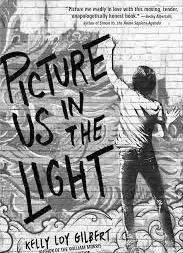
Genre: Young Adult Contemporary; LGBTQ+
Danny Cheng always knew his parents had secrets. He hadn’t imagined what they could be hiding until he uncovered a box in his dad’s closet, containing old letters and a file on a powerful San Francisco family. But Danny also keeps secrets, especially the ones regarding his feelings for his best friend, Harry Wong. He keeps his internal life bottled inside for fear of upsetting his parents’ carefully curated life or Harry’s relationship with his girlfriend, though he wonders if everyone would be better off breaking free from the images they’ve worked so hard to protect. While Danny could leave his complicated life behind once he attends RISD next year, he knows his family and his friends need him to bring their secrets to light, even when they’re desperately trying to keep Danny in the dark.
“Picture Us in the Light” seamlessly blends multiple storylines into one big picture, filled with characters so real they’ll never leave one’s thoughts.
Grace Faver
Graphic Designer
Titanium - David Guetta ft. Sia
“Really motivational and empowering.”
Tess Choe-Herrington
Dark Necessities - Red Hot
Chili Peppers
“I love the band. Especially their drummer, he makes the music come alive.”

Trivia Wade
Blood Upon the Snow - Hozier
“It has such a cool change of tempo. Switches from slow to fast and I’ve always loved orchestral music. Video game music is always fun to listen to.”





Sam Watson
C.R.E.A.M. - Wu-Tang Clan
“Reminds me of old school vibes.”
Brendan O’Connor
Trapped Under Ice - Metallica

“I like how it sounds, full of energy.”
Jack Wojcik
Soul On the road - Eligh
“It’s very special to me, the song is about your life and where you’re going.”
Diego Long
Cloudbusting - Kate Bush
“This song reminds me of my childhood because my dad used to play it a lot, and it makes me feel hopeful.”
Robin Wyllie-Scholz, Deputy Editor
“Darkness cannot drive out darkness, only light can do that. Hate cannot drive out hate, only love can do that.”
Martin Luther King Jr., civil rights activist
“Not everything that is faced can be changed, but nothing can be changed until it is faced.”
James Baldwin, author

“The truth is, no one can be free until everyone is free.”
Maya Angelou, poet
The Washtenaw Voice February 28, 2023 B2 FEATURES
Black Cake by Charmaine Wilkerson (2022)
Picture Us in the Light by Kelly Loy Gilbert (2018)
Plain Bad Heronies by Emily M. Danforth (2020)
BREWSTER ROCKIT By Tim
Rickard
ACROSS DOWN
Center for Career Success
SC 112 734-677-5155 careers@wccnet.edu
These are among recent employment ad posted with WCC Center for Career Success.
Students may contact the Center for Career Success to find out how to apply for the openings.
To view more information, visit Career Connect at wccnet.edu/careerconnect
Student Radiologic / MRI Extern Trinity Health Hospitals.
The Student Radiology Technologist is responsible for screening, positioning and imaging of patient. The Student Radiology Technologist will be scheduled to work only when another Radiology Technologist is on-duty and will work closely with the Radiology Team Leader and Radiologist to produce the most diagnostic images possible in accordance with the department protocols.
Brand Ambassador.
We are looking for candidates to be Brand Ambassadors for Brighton Ford. The individual would utilize their social media platforms and connections to get referrals to 1800NEW-
FORD.com. Get paid for every order, set your own hours with no income limit, and make money while you work/finish education.
Preschool Teacher - The Discovery Center.
The Discovery Center is open year-round and has immediate openings for teachers who thrive in a caring team environment. Discover your passion and embrace a career focusing on the things you love. Our teachers share a variety of backgrounds, including specialization in the following areas: Kinesiology, Music, Dance, Art, Child Development, Child Psychology, and Pediatric Nursing. This is an ideal opportunity to learn and grow your teaching skills, as you work with a group of seasoned and experienced educators.
Dog Daycare
Client Experience Representative.
Canine To Five is seeking energetic dog lovers to work in for our busy dog daycare and boarding facility in Commerce, MI. Client Service Reps (CSRs) work at our front desks supporting our clients (human and furry). We are looking for full-time (30+hrs/week) and part-time (20-30 hours a week) CSRs to join our team. No experience is necessary- just a positive attitude, strong work ethic, quick learner, and love for dogs!
Visitation/Case Aide.
Transport clients to agency scheduled activities as assigned. Transport children to and from appointments and visits as assigned. Coordinate supervised parenting-time visits with the foster care workers, foster parents, biological parents or other relevant caretakers. Communicate with persons served, other agencies, co-workers, etc. Monitor/supervise visitation and document according to agency policy. Provide feedback, visit coaching to parents to improve parentchild interactions.
Service Technician.
The Service Technician is key to ensuring customer satisfaction with our service team. As a Service Technician, you are responsible for performing diagnoses and repairs for customer and internal vehicles and being specialized in specific areas of repair and maintenance. Fox Motors is looking for a Service Technician that has previously worked with cars in some capacity, is customer-focused and has a drive to perform in a growing environment. If you are ready to put your career in gear, Apply Now!
EPA Aviation Emissions Modeling Fellowship.
Research Project: The selected candidate(s) will be involved in research and development of databases and modeling methods to improve EPA’s aircraft performance and emissions models. It includes
researching data sources, measurements, and models to improve emission inventories; conducting rigorous analysis of aircraft and engine emissions data and flight activities to support modeling or regulations; developing methods to improve post-processing of emissions data for air quality models; and researching methods to improve validation of emission inventories compared to ambient air quality measurements and satellite monitoring data.
Foster Care Specialist.
This position requires significant travel including in-office, in-home, and outside of office work, often during non-traditional hours such as evenings and weekends, depending on case needs. The appropriate candidate will work with other dedicated professionals in a team atmosphere and have the ability to work independently. Attention to detail, strong organization skills, and professional manner are all important characteristics for the right candidate. This is a fulltime position. Schedules need to be flexible to accommodate duties, children, families, and court, including a 9 week long preliminary training. This is not a 9-5 job and requires periodic on-call duties. This position is based in our Washtenaw office but there will be work in multiple counties including Wayne, Monroe, Livingston and Lenawee counties
Marketing and Business
Development InternshipSummer 2023.
The Business Development Intern will work closely with the Business Development (BD) team learning the ins and outs of the day-to-day activities which may include supporting the generation of revenue through project management and coordination, digital marketing support, direct target marketing support, and other internal activities.
Purchasing Assistant. Compile information and records to draw up purchase orders for procurement of materials and services. Responsible for supporting business operations by ordering products or materials. Their duties include maintaining relationships with Suppliers, Vendors or Wholesalers, placing orders for products based on current inventory needs and tracking shipments.
Parts Specialist. Track and oversee all new, used, and rental equipment. Correspond with customers. Quotes customer new or used equipment as needed. Coordinates all pick-up and delivery of equipment. Processes invoices and billing for all equipment.
Stormwater Monitoring and Engineering Intern.
The Huron River Watershed Council (HRWC) and Digital Water Lab at the University of Michigan Department of Civil
and Environmental Engineering seek a paid summer intern to assist with their sensor node network and water quality monitoring efforts. The intern will provide support to the collaborative sensor node installation efforts and split time at the two organizations assisting with a range of field, lab, and data processing duties.
Certified Nurse Aide (CNA).
Provide your assigned residents with routine daily assisted living care, including but not limited to: hygiene care, toileting, oral care, enrichment activities, prepare and assist with meals, transport residents, and personal care, in accordance with our mission statement, established procedures, and as may be directed by your nurse managers or supervisors. Such care will be delivered with an emphasis on the value of providing quality customer service to all residents, family members, co-workers, volunteers, visitors and other service professionals. Housing Case Manager. This position is responsible for providing case management, counseling, life skills training and other supportive services to homeless youth and/or youth living in supportive housing programs to assist them in achieving and maintaining safe and stable housing and increasing overall self-sufficiency. Services are provided in the office, at partner organizations, virtually and in the community.
The Washtenaw Voice B3 PLAY
WCC students and employees can place classified ads in The Washtenaw Voice for free. LOCAL BUSINESS OWNERS Looking for help? As a service to our students, you may place “help wanted” ads in The Washtenaw Voice for free. THE DEADLINE in 5 p.m. the Tuesday before publication. SEND ADS to wcc.voice. advertising@gmail.com Solutions to puzzles on washtenawvoice.com
February 28, 2023
1 Sport played on horseback 5 Make fun of 9 Goes up 14 Bibliography abbreviation 15 Furniture chain that also sells lingonberry preserves 16 Feeling of existential boredom 17 *Sincere intention to be fair 20 Sight or smell 21 Granny 22 Some Wall St. deals 23 Joan of __: French heroine 25 Pampering place 27 *One who can't help but see the bright side 36 Assignment for a swimmer or a bowler 37 Ore deposit 38 Beat 39 Chicago winter hrs. 40 Central Pennsylvania city 42 Luv 43 Go-to crew 45 Salad fish 46 Stud farm stud 47 *Private fashion consultant 50 Sunflower St. school 51 __-pitch softball 52 See 64-Down 55 Biblical ark builder 59 Songs for two 63 Reason for a courtroom objection, and what the start of the answer to each starred clue has 66 Silly activity 67 Red gemstone 68 Writer Bombeck 69 "Let's Make a Deal" host Brady 70 Unworried state 71 "Whoa, trippy!" 1 Green animals in Angry Birds 2 Slender woodwind 3 Zebra hunter 4 "There's a nonzero chance ... " 5 Coastal inlet 6 Comparable (to) 7 Oscar winner Catherine __-Jones 8 Journalist Paula 9 NFL official 10 Fill with passion 11 __ appeal 12 Currency named for a continent 13 Follows an obedience school command 18 Houseplant with fronds 19 Sunup direction 24 Match a bet, in poker 26 Bread served with hummus 27 Rock formation in Yosemite, familiarly 28 Have a spoonful, say 29 "The door's open!" 30 Led Zeppelin's "Whole __ Love" 31 Near-beer name 32 Lowly workers 33 Reply to "Ya dig?" 34 18-Down seed 35 Copier cartridge 40 Songwriter Tori 41 Slangy turndowns 44 Welcomed at the door 46 Mouthed (off) 48 Former Georgia senator Sam 49 Bygone GM line 52 Imperfection 53 "Chocolat" actress Olin 54 Like Cheerios 56 Mythical menace 57 Teal shade 58 Busy airports 60 Ireland, to the Irish 61 Heavy book 62 Simple fastener 64 With 52-Across, floating Arctic sheet 65 Potato spot
Compiled by: Ruby Go | Editor
AT WCC IN THE COMMUNITY
community conversation on minority mental health
Feb. 28 from 3:30-4:30 p.m.
Zoom
The Office of Diversity and Inclusion will host a screening of “Decolonizing Mental Health“ followed by a discussion on minority mental health. This program contains discussions of self-harm and suicide. Viewer discretion is advised. Get the zoom link at wccnet.edu/events.

cultural open mic
March 2 from 3-5 p.m.
Garrett’s Restaurant
Join Student Activities and sing your favorite songs in any language.
therapaws: therapy dogs visit the Bailey Library
March 8 from noon-1:30 p.m.
Bailey Library
Therapaws of Michigan volunteers and their therapy dogs will be in the Bailey Library once a month to visit the WCC community.
craft your elevator pitch
March 13 from noon-1 p.m.
LA 241
Let people know who you are and what you do. Create a personal brand as a networking tool. Learn conversation starters to get you started.

guided walks: Matthaei Botanical Gardens
March 1 from 5:30-6:30 p.m.
Matthaei Botanical Gardens
People of all ages invited to explore the conservatory (or the grounds if weather permits) with a guide. Arrival 15 minutes before start time recommended.
game night: sweetwaters cafe downtown
March 3 from 7-9 p.m.
123 W. Washington St.
All invited to play any kind of tabletop game. Bring your own game or use one provided. Preregistration requested at meetup.com/aagame.
pittsfield open band
March 4 from 3-5 p.m.
Pittsfield Union Grange
Jam sessions open to all interested musicians to work on jigs, reels, and waltzes to have fun and learn. All instruments welcome. Masks required.
bookbinding for beginners
March 5 from 2-4 p.m.
AADL Downtown
A chance for adults and teens to learn bookbinding techniques and make a handmade book.

2023 Washtenaw County CSA Fair
March 5 from 1-3 p.m.
AADL Downtown
A chance to visit with local farmers to learn and sign up for their community supported agriculture shares, a popular way to buy local seasonal food directly from a farmer.
quilled paper pendants
March 5 from 2-3:30 p.m.
AADL Pittsfield
Adults and kids ages 10 and up invited to use rolled, shaped, and glued paper to make a delicate pendant.
kerrytown crafters
March 8 at 7 p.m.
Online
All crocheters, knitters, spinners, weavers, felters, sewers, and other crafters are invited to work on their own projects with others. Questions welcome, help available. For URL join facebook.com/groups/KTCrafters.
food literacy for all

March 14 from 6:30-8 p.m.
Location TBA
This event is part of a lecture series on food literacy. Ten U-M faculty from various disciplines give five minute talks related to food and/or agriculture in “Fast Food for Thought.”
The Washtenaw Voice February 28, 2023 B4 NEWS
