WASHINGTON g a rdener
Did the Harsh Winter Affect Native Plants?
Tips for Healthy Staghorn Ferns
Dealing with Weedy Mallow Plants
Enjoy Lilies in Containers
Year of the Impatiens
Garden Book Reviews How to Grow Skunk Cabbage
Changes at the Bonsai Museum
A New Daylily What We Learned at the GreenScapes Symposium
Are Sterile Versions of Invasive Species
Okay to Plant?



Your Ad Here

Are you trying to reach thousands of gardeners in the greater DC region/Mid-Atlantic area? Washington Gardener Magazine goes out on the 15th of every month. Contact KathyJentz@gmail.com or call 301.588-6894 for ad rates (starting from $200) The ad deadline is the 10th of each month. Please submit your ad directly to: KathyJentz@gmail.com

Need a Garden Club Speaker?
Washington Gardener Magazine’s staff and writers are available to speak to groups and garden clubs in the DC region and ONLINE! Call 240.603.1461 or email KathyJentz@gmail.com for available dates, rates, and topics.

RARE AND EXCEPTIONAL PLANTS FOR THE
Barry Glick
Sunshine Farm and Gardens 696 Glicks Road Renick, WV 24966, USA Email: barry@sunfarm.com www.sunfarm.com


www.greenspring.org

Green Spring Gardens
A “must visit” for everyone in the metropolitan Washington, DC, area. It’s a year-round goldmine of information and inspiration for the home gardener. It’s an outdoor classroom for children and their families to learn about plants and wildlife. It’s also a museum, a national historic site that offers glimpses into a long, rich history with colonial origins. Located at 4603 Green Spring Rd., Alexandria, VA. Information: 703-642-5173.
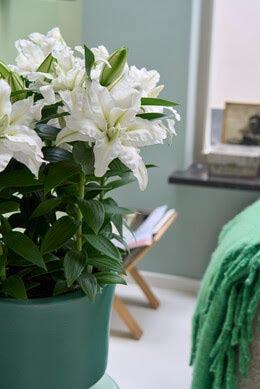
Keep cats away from Easter Lilies and other Asiatic Lilies (Lilium spp.) because cats can suffer acute kidney failure in a very short period of time from just licking a few pollen grains off their fur. (Daylilies, by the way, are not true lilies and so are not a plant of concern for cats.) Photo credit: ibulb.com.
Got a Garden Question?
Send your questions to KathyJentz@gmail.com and use the subject line “Q&A.” Then look for your answered questions in upcoming issues

Whether you’re planting a simple container or a lush garden border, 2026 is the perfect year to celebrate the resilient beauty of Impatiens. Image credit: National Garden Bureau.
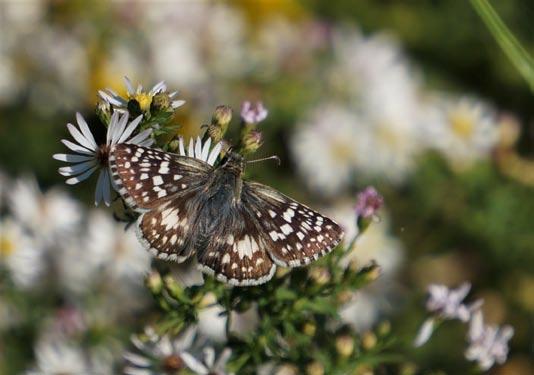
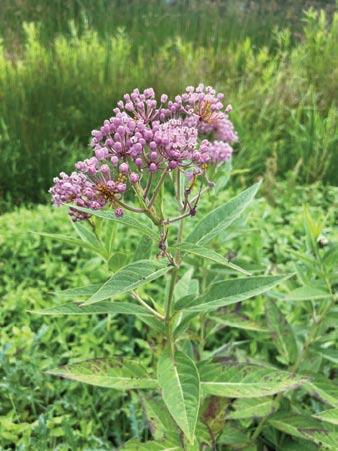
Common mallow is the preferred larval host plant for one of our most charming small butterflies, the checkered skipper. Photo Credit: Vera Wiest.

Why I Quit the Weed Warriors
It may surprise some folks to learn that I was part of the Montgomery County Weed Warriors for several years. Our mission was to remove nonnative invasive plants in parks throughout Montgomery County, MD. We had a few training sessions and then could sign up for group workdays in specific areas of a designated park. We were also issued a Weed Warrior card that we could show people, if we were working alone and someone confronted us for “attacking” the park’s plantings. I was never asked to produce that card, but I still have it, along with my Weed Warrior Tshirt and bucket hat—somewhere.
I was not a great Weed Warrior. I moved slowly and methodically, lest I accidentally cut off a desirable plant or trampled on a small woodland animal. While others hacked and slashed around me, accumulating big piles and filling several bags of debris, I’d be lucky to have one topped off. Mainly, though, I wasn’t diligent about recording my hours in their system or signing up for group events. My participation started to dwindle off after a few years.
I started to get really frustrated and disillusioned with the whole effort. I’d go back to areas we cleared, just a couple months later, and they were totally consumed by the same plant that we spent our efforts removing. Our hard work seemed futile and after a while, when I saw no efforts to replace remove plantings with native ones, it seemed like an exercise in banging our heads against the wall. Then there were the deer. They kept coming in closer to the sites we cleared, with no fear of humans, it seems. It was like we were doing them a favor by taking out the brambles and given them access to the tasty morsels underneath. If only they were goats!
For those still in the Weed Warriors and related programs, more power to you!
Sincerely,
Credits
Kathy Jentz Editor/Publisher
Washington Gardener 826 Philadelphia Ave. Silver Spring, MD 20910
Phone: 301-588-6894
kathyjentz@gmail.com www.washingtongardener.com
Ruth E. Thaler-Carter Proofreader
Aicha Bangoura Lauren Bentley Interns
Subscription: $20.00
• Washington Gardener Blog: www.washingtongardener.blogspot.com
• Washington Gardener Archives: http://issuu.com/washingtongardener
• Washington Gardener Discussion Group: https://groups.google.com/g/ washingtongardener/
• Washington Gardener Twitter Feed: www.twitter.com/WDCGardener
• Washington Gardener Instagram: www.instagram.com/wdcgardener
• Washington Gardener Facebook Page: https://www.facebook.com/ WashingtonGardenerMagazine/
• Washington Gardener YouTube: www.youtube.com/ washingtongardenermagazine
• Washington Gardener Amazon Store: www.amazon.com/shop/wdcgardener
• Washington Gardener BookShop: bookshop.org/shop/WDCgardener
• Washington Gardener Podcast: https://podcasters.spotify.com/pod/ show/gardendc/
• Washington Gardener is a woman-owned business We are proud to be members of:
· GardenComm (formerly GWA: The Association for Garden Communicators)
· Green America Business Network
· National Garden Bureau
· One Montgomery Green
· Ladies in the Landscape
· Potomac Rose Society
· American Horticultural Society
· Maryland Nursery, Landscape and Greenhouse Association
Volume 21, Number 1
ISSN 1555-8959
© 2026 Washington Gardener
All rights reserved. Published monthly.

Kathy Jentz, Editor/Publisher, Washington Gardener, KathyJentz@gmail.com
No material may be reproduced without prior written permission. This magazine is purchased by the buyer with the understanding that the information presented is from various sources from which there can be no warranty or responsibility by the publisher as to legality, completeness, or technical accuracy.
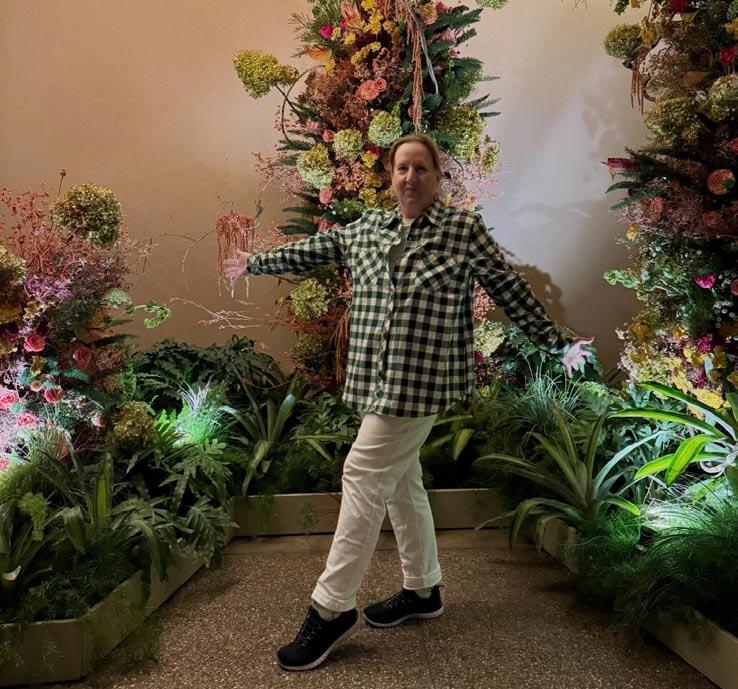
Your editor at the recent Garden Glow exhibit at Longwood Gardens. Photo by Louise Clarke.
Staghorn Ferns: Huge Leaves with Ease!
What’s your favorite houseplant? It’s a tricky question. My answer seems to change each time I’m asked. Usually, I end up drawn to whichever plant is cooperating the most and looking the happiest. This time? The staghorn fern wins my heart. Today, I’m here to make that everyone else’s problem. Prepare yourself for some plant facts.
Staghorn ferns (Platycerium bifurcatum) don’t really look like ferns at all. Their leaves look like somebody cut out the shape of an antler from some particularly thick and glossy construction paper or maybe wallpaper. They’re pretty sturdy! These plants have teenytiny hairs on their leaves, similar to those you’d see on an air plant. It’s not enough to make the staghorn fern fuzzy to the touch, but it does add a sort of shimmer over parts of each leaf’s vibrant dark green.
At the base of the plant, an entirely different type of leaf grows pressed against the soil, like some sort of shield, protecting the plant’s roots. My very professional, serious, and scientific term for these leaves is pancakes. Although, I suppose you could also call them sterile fronds. Only the antlershaped leaves of the staghorn fern are able to produce spores, occasionally appearing as if the underside of the leaves have been dipped in cinnamon. Meanwhile, the pancake leaves are too busy for that sort of thing. When they first show up, the pancakes are green, but over time, they mature to that classic pancake color. Delicious? Probably not. Cool-looking? Definitely. And useful, too! They hold quite a bit of water, allowing the plant to adopt a very interesting lifestyle.
You may be used to ferns shriveling to a crisp at the drop of a hat, but the staghorn fern is built differently. I kid you not: I’ve seen a picture of a staghorn fern growing on the tire of an abandoned car—no soil or anything. Typically, these tough cookies choose something more natural, opting to grow on the sides of trees.
The staghorn fern’s native range includes Papua New Guinea, Eastern Australia, and Southeast Asia. Those aren’t the only places you’ll find them. They’ve managed to escape into the wild in many other areas, such as Florida, New Zealand, and Colombia.
By Savannah Scollar
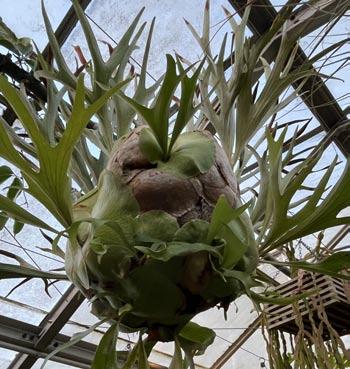
One of the most fascinating details about these plants is the way they’re able to work as a colony, with different members taking on specialized roles based on their location in the clump. The plants up top grow much sturdier fronds, acting as a funnel for water and debris. This is how the plant is able to eat and drink, essentially acting as its own personal compost bin, mounted to the side of a tree. The ferns at the bottom have much floppier leaves, and seem to hold more water. This is probably influenced by the way water falls and travels across the plants. It’s a lot like how, when hung up to dry, the bottom of a towel ends up becoming much wetter than the top.
Often, people will grow staghorn ferns mounted to a piece of wood and hung on a wall. Although this may look pretty, it can lead to all sorts of problems, and result in a much more difficult care experience than necessary. The plant would have to be taken down from the wall, soaked in a bin of water, and allowed to drip dry somewhere it won’t ruin the walls or floors. Keeping in mind that these plants are mounted on dead pieces of wood, which don’t have the same resilience as a living tree, it seems like a recipe for mold.
If you’re in love with the look of a fern on the wall, you could order a wallhanging planter. This can be used by itself or attached to a frame or wooden slab. A clear half-bowl planter could look beautiful. Another good option would be a hanging basket. It doesn’t even have to be one designed for plants: A woven basket with a plastic liner would look beautiful.
I strongly prefer growing my staghorn ferns in a clear vase or bowl. I go to the thrift store and pick out a cute container that doesn’t taper too much at the top. Even a mug will work! Drainage isn’t necessary and any potting soil will do just fine. Water your plant sparingly. You don’t wanna drench it. You’ll want to make sure it gets to dry a fair amount between waterings as well. Generally, I’ll water my staghorn ferns twice a month with around a quarter as much water as there is soil in the container. They really don’t need much sun. They can live a few yards away from a window and grow very well.
In a clear container, you may be surprised not to see the plant’s roots. Fern roots are brown, blending in extremely well with soil. Here’s the exciting part: From time to time, you might notice a bit of green in the soil. If you’re lucky, your plant will grow babies underground! You can scoop these out and transplant them into a terrarium. Let them grow a couple inches tall before taking them out and potting them up.
Staghorn ferns are one of my favorite plants to use in a habitat for a frog or gecko. They grow nice and big, and aren’t too picky about watering. They’re great for small animals to climb on and sleep under. My crested gecko, Dakota, absolutely adores staghorn ferns.
At a hardware store, you’re most likely to find them sold in a hanging basket for around $20. These baskets contain a clump of plants, which can be divided up to be shared or planted all around the house. This species can grow 2- or 3-inch-wide leaves with a length of up to 4 feet-though they’ll usually be closer to 1 foot long when you first buy them. Don’t worry too much, though. It can take a decade or more for your plant to reach its full gigantic size.
If these ferns sound fun, know that there’s plenty to explore. Staghorn ferns come in 18 different species with slight differences in leaf shape and color. You’ll find plenty of choices. Apologies to your wallet. o
Savannah Scollar opened Easy Little Plants (easylittleplants.com), a houseplant shop in Olney, MD, in July 2023 at age 21. She loves doing research, teaching private workshops, decorating with houseplants, and arranging adorable terrariums

On February 13, 2026, more than 1,300 participants attended the 23rd annual Greenscapes Symposium via Zoom, hosted by Brookside Gardens. The annual event discusses topics related to biodiversity, planting, and climate change that can affect both small, personal gardens and large public landscapes. This year’s symposium focused on “Integrating Ecology, Beauty, and Adaptability in Design.”
Virtual presentations were given by Patrick Cullina, Heather Holm, ChingFang Chen, and David McKinney. Here is an overview of the common threads that ran through most of their presentations, followed by a brief summary of each speaker’s lecture.
Cullina gave the first presentation, titled “Design by Nature: Dynamic Planting at the Intersection of Horticulture and Ecology.”
He is an award-winning horticulturist, landscape designer, photographer, and planning consultant. His design and consulting business finds innovative mechanisms of integrating plants into a variety of different designs. Cullina is also the Vice President of Horticulture at New York City’s High Line, which he used as an example throughout the presentation.
Cullina’s discussion studied successful case studies of landscape designs that offer endurance and variability throughout seasonal challenges. He taught the basics of designing landscapes that have both beauty and functionality.
The second speaker was Holm, discussing “From Canopy to Groundcover: Building Soft Landings with Keystone Plants for Pollinators.” Holm’s presentation gave insights about the dependency between insects and native plant species, as well as building soft-landing landscapes of all scales, from home gardens to large park sites.
By Aicha Bangoura and Lauren Bentley
Holm, who is an award-winning author of books dedicated to educating the public about pollinators and plants, said soft landing is the action of inserting native herbaceous plants under a tree. According to Holm, these plantings can offer pollen and nectar resources, additional larval host plants for different caterpillars, and a more naturalistic habitat for a variety of beneficial insects.
Holm spoke about the process of creating a soft landing and the benefits of beginning with sedges.
“They are cool-season plants, which means they do most of their growth in early spring in the cooler months,” she said. “It provides a really nice initial sort of interest in the garden, having these green plants that are ready to go once the snow melts.” Holm recommended that the audience do their research to get sedges that are adapted to partial sun and drier conditions.
Moving on from sedges and grass, Holm then spoke about adding flowering plants to the soft landing, which she said is critical, but potentially tricky. Later, Holm mentioned other plants that the audience can consider to incorporate into their soft landings, such as ferns, bellworts, foxgloves, and Solomon’s seals.
During her presentation, Holm proposed ways to build soft landings for homeowners and said sheet mulching was the best approach. Although Holm acknowledged that excessive mulch attracts invasive earthworms, she introduced tactics to prevent this. According to Holm, leaving bagged mulch in the sun for a few days could kill any jumping worms.
Another note from Holm is sourcing the smaller plug-sized plants when you’re working on soft landings with a mature tree. “It’s a lot easier to plug in a lot more plants, and it’s actually
more economical, I find. I can buy a six-pack of plugs for less than $14 at retail price, even for my own garden,” she said.
In conclusion, Holm emphasized the importance of soft landings. “The soft-landing plantings are really these little mini ecosystems that you can use to educate the public… about all of this interconnectivity between the life cycle stages of insects and plants and all of the other organisms that rely on feeding on insects, and you are also probably, in the long term, helping the health of the tree,” she said.
The third speaker was Chen, a Montgomery Parks landscape architect and project manager who discussed “Bridging Design and Ecology: Strategies for Resilient and Engaging Landscapes.”
Chen said the park development division, which she works for, has limited resources. According to Chen, the division only had $48 million in their budget. “That means we can only do a few projects per year, and a park gets its turn about every 25 to 35 years,” she said. “Just as a comparison, our overall six-year budget for development for our entire park system would not be enough to fund a single project like a little island on Pier 55 in New York City.”
Chen presented three projects that her division completed and one project that is currently ongoing. The first project she discussed was the 2022 renovation of a small park in Kensington, MD, developed in the 1990s, that was previously an abandoned right away.
Chen explained the issues with the space: It had contracted soil, utility erosion, overgrown vegetation and invasives, and was not accessible, etc.
“The intent of the renovation was to try to create a park for everyone, not just a playground,” she said. “With such a tight space, our strategy is to try to terrace the sloping ground and to expand the program area. In this case, we doubled it to accommodate the program so we can provide an accessible connection to the surrounding neighborhood.”
The second project renovation Chen spoke about was the 2007 Little Bennett Regional Park Master Plan. The plan recommended a more environmentally responsible and culturally
sensitive framework. Chen described this plan as an “open heart surgery.” Amongst many things, Chen said the project redeveloped a dilapidated farmhouse ground into a park entrance.
The third project Chen spoke about was the Brookside Garden gateway, an initiative to renovate the deficient entrance and parking facility. Chen said before she got involved, the project was initially led by engineers who focused on cars and other vehicles.
“I had the opportunity to collaborate and steer the project from a simply utilitarian, engineering solution to a holistic design approach,” she said. “It’s not just a parking lot, it’s an entry, it’s a green infrastructure; it’s an arrival experience, a living system, and a garden.”
The final project Chen spoke about is a future park in Lyttonsville, an area in Silver Spring, MD. Chen said the goal is to create a new park and a rest stop for the Capital Crescent Trail with amenities, and to provide environmental mitigation.
The final presentation, from McKinney, was titled “Adapting Gardens for a Changing Climate: Building Biodiversity Through Plant Diversity.”
McKinney, who is curator of collections and grounds at the Iowa Arboretum and Gardens, began by reflecting on the future effects of climate change on native plants.
His discussion mainly focused on the ways in which urban and suburban transformation has left little room for the original habitats of many plants, which can result in shorter and earlier periods for them to bloom.
He proposed that a potential solution to the shorter bloom of these native plants is more diverse garden and plant selections. “We need to hold ourselves to the aesthetic standard that native plants require,” McKinney said. These expert speakers’ presentations allowed audience members to better understand how thoughtful and intentional design plays a role in thriving environments and landscapes. o
Aicha Bangoura and Lauren Bentley are interns this semester with Washington Gardener Magazine. They are both senior journalism major at the University of Maryland in College Park MD.
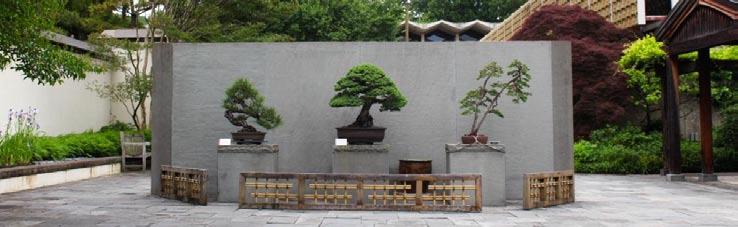
Bonsai Museum Changes
By Lauren Bentley
At the end of December, the National Bonsai Foundation (NBF), a nonprofit organization that supports the U.S. National Arboretum (USNA), ended their operations after 40 years and transferred stewardship of the National Bonsai and Penjing Museum to Friends of the National Arboretum (FONA).
FONA is another nonprofit organization that has a history of supporting USNA, and their mission is to celebrate the science, beauty, and community impact of USNA through several mechanisms.
The Bonsai Museum is part of the USNA, and FONA is a separate organization that will now be running the museum operations for the arboretum. The USNA itself is part of the U.S. Department of Agriculture.
The decision “marks an intentional transition that is rooted in our commitment to the art of bonsai,” The National Bonsai Foundation said in a farewell letter. The final decision was made after deliberation from the NBF’s Board of Directors.
The arboretum has been moving toward a model that consolidates nonprofit engagement under a single partnership for several years, the letter said. The arboretum has designated FONA as its single partner organization.
A request from Dr. Richard Olsen, Director of the U.S. National Arboretum, for this consolidated model resulted in the decision. He has confidence that FONA will continue NBF’s legacy and preserve the museum’s collection, according to FONA’s press release, signed by Board Chair Martha Van Dale.
The new approach will help streamline communication, expand community engagement, and improve visitor experience, an online FONA statement said.
Bonsai and Penjing collections will continue to be managed by the USNA staff, the statement also said.
NBF will transfer a majority of the remaining assets directly to FONA to support the museum.
“These funds will be specifically dedicated to the continued growth, care, and improvement of the Museum, including capital projects, program development, and public engagement,” the NBF farewell letter said.
In addition, NBF will also distribute a small amount of the remaining funds to several organizations with their shared mission, such as the American Bonsai Society, Pacific Bonsai Expo, Potomac Bonsai Association, and North American Bonsai Federation.
NBF has had long-standing roots with all of these organizations, the letter said.
FONA’s primary role is now to act as a fundraiser for the Bonsai Museum and its programming needs, according to FONA Executive Director Jeanne Braha.
Braha was selected as the organization’s new executive director last month, and officially started the position on January 5, 2026. She replaced previous FONA executive director Craven Brand.
“We are thrilled to have already raised more than $100,000 for this work since our announcement in late 2025,” Braha said.
Braha also noted that FONA supported repairs to the garden outside the museum late last year, which she said will be replanted in the spring.
FONA embraces their new role and hopes to help the museum continue to flourish in upcoming decades, their statement said. They hope to preserve NBF’s mission to “preserve and promote the art of bonsai in America.” o
Lauren Bentley is an intern this semester with Washington Gardener Magazine. Photo courtesy of the Friends of the National Arboretum.
Say ‘Cheeses’! – the Mallow Family
By Rick Borchelt
The mallow family, Malvaceae, is home to many iconic ornamental and commercial plants, from hibiscus, hollyhocks, and rose of Sharon to okra, cotton, and cacao. Its 4,000 or so species range in size from small herbs to towering trees. Taller Malvaceae include trees from basswood in the eastern forests of North America to baobabs in Africa and Asian durio, which produces the huge, foul-smelling but muchsought-after fruit, durian.
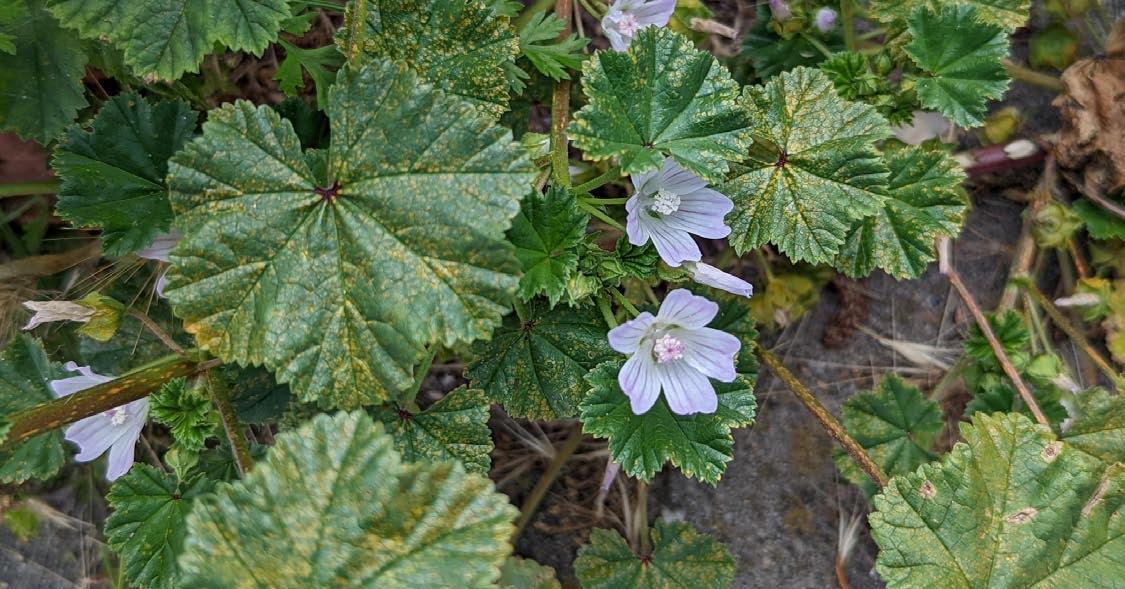
On the small end of the spectrum, we find Malva neglecta, common or dwarf mallow, an Old World introduction to North America. It’s a hardy little plant that could have arrived here as stowaway seeds in grain, or as roots or seedlings enmeshed with fruit tree or grape saplings. More likely, though, it was deliberately brought by European colonists who valued common mallow as an edible plant; the leaves, stalks, and seeds are all considered tableworthy.
Common mallow also has a long history of medicinal use. The roots in particular yield a mucousy tea that calms sore throats, soothes coughing, and reduces hoarseness. A common mallow cousin, Althaea officinalis, is precursor to the fluffy topping on hot cocoa—marshmallows—that were originally made by boiling the plant’s roots to extract the gelatinous goo, adding
honey, and whipping it to achieve a confectionary consistency. Common mallow can be prepared similarly, if not with equally frothy results.
The genus name Malva is simply the Latin name for mallow, although which species it refers to isn’t quite clear, except that it’s related to the soothing, expectorant properties of the root as well as the plant itself. The French word mauve is also related to Malva, probably because of the lavender-purple flowers of both species.
Even if it did arrive as an innocent, deliberate import into early gardens, common mallow didn’t stay that way for long. It now occurs in virtually every state in the nation, in Canada as far as the Arctic Circle, and south into Mexico.
The species name neglecta hints at mallow’s ability to thrive in such varied habitats. When used in botanical nomenclature, this often points to plants that are found in weedy or neglected landscapes. Malva neglecta is just such a plant, fond of overgrown fields, roadsides, and disused city lots… and not-very-diligently maintained community garden plots!
A second clue to common mallow’s ubiquity is its tough perennial rootstock. While the plant itself is rather fragile-looking, it has a lot going on underground. The rootstock is thick and fibrous, digging deep even into hard
clay soils. This sturdy anchor allows mallow to spring back, unscathed, from regular fisticuffs with the lawn mower.
Today, as I write this column, most of College Park is still covered in a facsimile of the Greenland Ice Sheet, yet just two weeks ago, I photographed winter rosettes of common mallow greenly gracing the sloping lawns of the university’s sorority houses I pass on my way to the local coffee shop. I know that even under that foot of snowcrete, clumps of common mallow are doing just fine. They are exceptionally freezehardy, especially under a little icy insulation to keep the leaves from drying out in cold winter wind. They can even photosynthesize in the dim light coming through the snow.
These winter clumps offer your best chance to find and dispatch common mallow if you consider it a nuisance in your yard or garden. In truth, common mallow is seldom an obvious problem in my yard or garden beds—at least not as a competitor with my own plantings. But I have a soft spot for hollyhocks, both the cottage garden Malva alcea and the French hollyhocks, Malva sylvestris All of them suffer badly in our area from the fungus Leptopuccinia malvacearum, commonly known as hollyhock rust.
Common mallow in bloom and covered with hollyhock rust. Photo credit: Michael Langeveld.
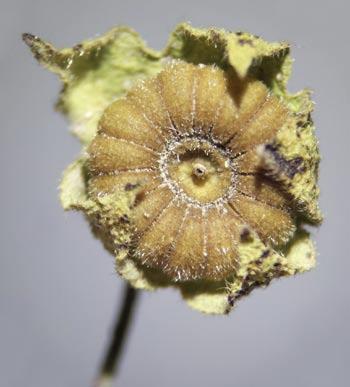
The diminutive “cheese wheel” seed capsule of common mallow, fit for a garden fairy’s picnic. Photo Credit: Stefan Lefnaer.
True to its moniker, hollyhock rust coats the underside of Malva leaves (and leaves of related plants) with rustcolored or orange pustules that cause them to yellow and wither. At one point, it became so bad in my garden that I rooted out all my hollyhocks and carted them off to the landfill instead of composting them. I replaced the soil in the affected beds and waited a full year before planting new hollyhocks. By midspring of the following year, though, just as the flower buds were swelling on my new hollyhock stock, the orange death showed up again on every plant.
The culprit? Common mallow, scattered around the perimeter of my yard, which serves as a reservoir for this pernicious fungus. Hardy critter that it is, common mallow suffers only mild cases of hollyhock rust itself, but infects everything else within reach of a casual breeze that carries the fungal spores to new destinations.
On the plus side, common mallow is the preferred larval host plant for the checkered skipper, one of our most charming small butterflies.
Best do any pulling you feel warranted before common mallow sets seeds, which can be anytime during warmer weather. The seed capsules are distinctive, dime-sized pinwheels that look like diminutive cheese rounds, lending common mallow another vernacular name: cheeses. They’ll remind you of Lilliputian hollyhock or flowering maple seed—or a tiny fromage fit for a garden fairy’s picnic. o
Rick Borchelt is a science and natural history writer, field naturalist, and garden and botany enthusiast. Reach him with questions about this column at rborchelt@gmail.com.
Skunk Cabbage
By Kathy Jentz
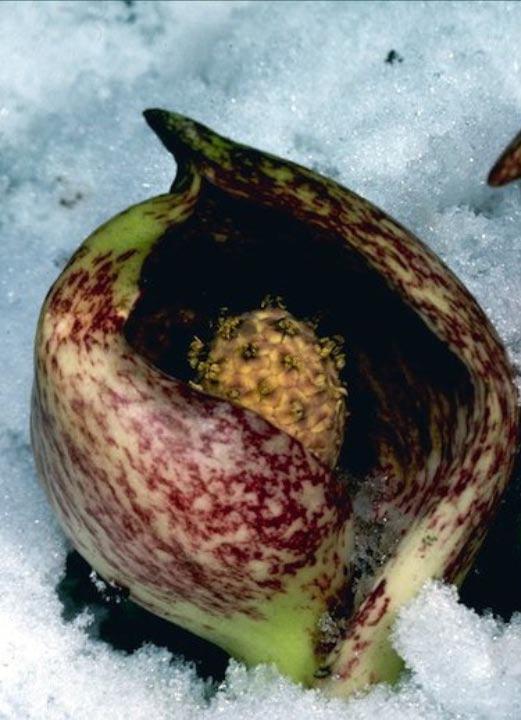
Eastern Skunk Cabbage (Symplocarpus foetidus) is a herbaceous perennial plant. It is also known as swamp cabbage, clumpfoot cabbage, meadow cabbage, foetid pothos, West Virginia Hosta, or polecat weed). It has huge leaves that when bruised smell like, well, skunk or some say overcooked cabbage, mustard, or garlic.
The purplish flower, which is called a spathe, looks a lot like its smaller cousin—the Jack-in-the-Pulpit (Arisaema triphyllum). It attract flies, gnats, and beetles for pollination.
It is native to the eastern half of the United States and is hardy to USDA Zones 4 to 7. There is also Western Skunk Cabbage and an Asian cousin.
The plant emerges from the ground in late winter to early spring. Amazingly, it generates enough heat to melt the snow around it as it emerges.
Eastern Skunk Cabbage is typically found in very wet soil, such as stream valleys, bogs, and marshes, and that is the best place to plant it in your garden. Note that it does go dormant around early summer if it is planted in drier soils, but in wetter locations, it persists into autumn.
It prefers to grow in part- to full-shade.
It can reach 3 feet tall and 4 feet wide during years of heavy rainfall. Once established, it is very difficult to transplant because the root system can be larger than the plant above ground.
Seed is the best way to propagate Skunk Cabbage, but you must sow the seeds immediately when ripe, because they are very ephemeral.
The foliage contains heavy amounts of oxalic acid, so it is deer- and pest-resistant. According to the National Wildlife Federation, bears will eat the berry-like fruit. They also eat the roots after emerging from hibernation because the roots act as a laxative. o
Kathy Jentz is the editor of Washington Gardener. Photo by Barry Glick.
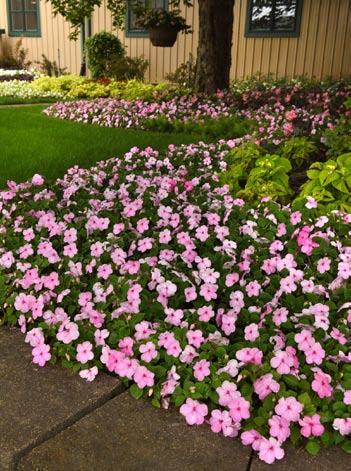
National Garden Bureau Declares 2026 the “Year of the Impatiens”
The National Garden Bureau (NGB), the nonprofit organization dedicated to inspiring home gardeners, is proud to announce that 2026 has been designated the “Year of the Impatiens.” From humble window boxes to elaborate botanical displays, this highly adaptable genus brings vibrant color and joy to gardens worldwide, proving itself a timeless favorite for both sun and shade.
The enchanting Impatiens genus, with more than 1,000 species, represents one of nature’s most diverse flowering families. Known colloquially as “touchme-nots,” they first captured botanical interest in the late 1500s when European explorers discovered them in East Africa and South Asia.
The name “impatiens” is a nod to their fascinating seed dispersal mechanism: Their ripe capsules burst at the slightest touch, catapulting seeds up to 20 feet away. While most gardeners recognize the common low-growing varieties, the genus is vast—some species grow as tall as small trees in the mountains of New Guinea, while others thrive in the mist-shrouded valleys of Southeast Asia.
The impatiens industry faced a major turning point in 2011 with the first documented downy mildew (IDM) epidemic in the U.S., which devastated traditional Impatiens walleriana. This led to a massive shift in breeding programs. Today, thanks to breakthrough genetics, gar-
deners can once again plant with confidence. Series like Beacon® and Imara XDR now offer high-level resistance to the disease, restoring this staple to its rightful place in the garden.
The 2026 Year of the Impatiens highlights the versatility of modern cultivars.
• For the Shade: Traditional Impatiens walleriana (such as the Beacon® and Glimmer™ series) remain the gold standard for bright, consistent color in lowlight areas.
• For the Sun: The SunPatiens® and Sol Luna™ series have revolutionized gardening by thriving in full sun.
• For Architectural Interest: New Guinea Impatiens (genetically resistant to IDM), like the Florific™ and Roller Coaster series, offer larger blooms and striking foliage.
• Unique Hybrids: Interspecific hybrids like the Bounce and Solarscape® XL series combine the best traits of different species for superior garden performance.
Quick Growing Tips for Success with Impatiens:
1. Match Variety to Light: Know your plant! Traditional types love shade, while new varieties can handle full sun.
2. Soil & Water: Plant in rich, well-draining soil (pH 6.0–6.5). Water at the soil level to keep leaves dry and prevent disease. Reduce watering during cooler weather.
3. Space to Breathe: Ensure proper air circulation by spacing traditional varieties 8–12 inches apart, while larger varieties need 14–24 inches.
4. Feed for Blooms: Use a balanced 15-15-15 fertilizer monthly, or weekly for container plants, to maintain vibrant color all season.
5, Regular Maintenance:
• Deadhead spent blooms.
• Pinch back leggy growth.
• Remove yellowed leaves. Find out more at https://ngb.org/ year-of-the-impatiens/. Founded in 1920, the National Garden Bureau is a nonprofit organization dedicated to educating, inspiring, and motivating people to grow more plants. As a trusted ambassador for the horticulture industry, NGB provides trialed-and-true resources to help home gardeners succeed. o
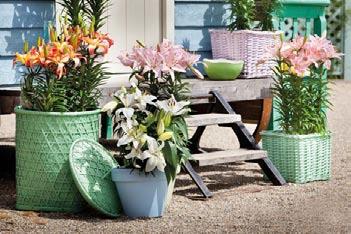
Lilies in Pots: Stylish Eye-Catchers for Home and Balcony
Looking to refresh your home or balcony with a touch of elegance? Pot lilies are a wonderful choice. These compact, colorful plants instantly bring warmth, atmosphere, and style to any setting. Whether you prefer soft pastels or vibrant reds and oranges, there’s always a pot lily that perfectly matches your décor.
Pot lilies are true eye-catchers. Their graceful blooms bring a sense of luxury, while their compact size makes them ideal for smaller spaces. Place them on a windowsill, table, balcony planter, or in that forgotten corner that needs a bit of extra charm.
Pot lilies are on-trend: They fit perfectly within the global movement toward green, stylish indoor and outdoor living. Their long-lasting blooms are perfect for small rooms or balconies.
If planting them for indoors, combine pot lilies with ceramics, glass, or natural materials such as wood and rattan. In a modern interior, they provide a striking pop of color.
When planting them on a balcony or terrace, mix pot lilies with other flowering plants for a lively look. Play with different heights to create a dynamic effect.
Pot lilies are easy care. Here are a few tips to make them thrive.
• Light: Place them in a bright spot, avoiding harsh midday sun.
• Water: Keep the soil lightly moist, but avoid standing water.
• Feeding: Add plant food every two weeks to encourage longer flowering. With these simple tips, pot lilies will stay healthy and beautiful for many weeks. Want more ideas for summer flowers, bouquets or bulb-on-pot inspiration? Visit www.flowers4joy.com for tips and inspiration. o
New Plant Spotlight
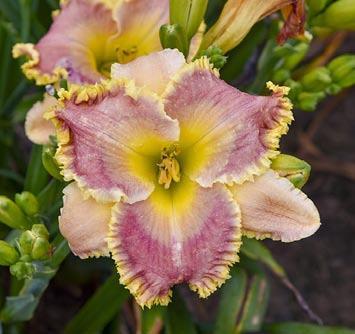
Daylily ‘Now You See Me’
Capture the beauty of a perfect moment with Hemerocallis ‘Now You
See Me’. This compact, yet striking, daylily stands 23–24" tall and showcases 5½–6" blooms in a captivating pink and yellow bicolor pattern. Each flower features a heavy, ruffled yellow edge and a lavender-rose base with lighter sepals, creating a vibrant, eye-catching display.
Characteristics (Compared to Other Daylilies):
• Midseason-Late Bloomer, blooming in late July.
• USDA Hardiness Zones: 3–9
• Semi-Evergreen foliage.
• Tetraploid with 44 chromosomes, twice as many as Diploids. Tetraploids tend to be bigger, stronger plants.
Daylilies are some of the easiest perennials to grow and are a good choice for any gardener. These are tough, adaptable plants that will grow in any soil, from normal to slightly wet to dry. Older varieties are able to bloom if planted in partial shade, but most of the newer introductions need full sun for best performance. Likewise, older varieties tend to spread more rapidly than the newer hybrids. Daylilies can survive many harsh conditions that other plants cannot including: polluted city environments, slopes, poor and dry soils, near pavement that is salted in winter, and under Black Walnut trees (they are not affected by juglone).
Hemerocallis ‘Now You See Me’ was introduced by Walters Gardens (www.waltersgardens.com). o
Quick Links to Recent Washington Gardener Blog Posts
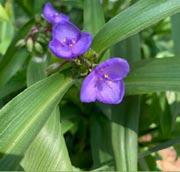
• Spiderwort Plant Profile
• Garden Pests and Friends
• Philadelphia Flower Show Histor y
• Mushrooms are Everywhere
• How to Grow Foxgloves
See more Washington Gardener blog posts at WashingtonGardener.blogspot.com o
March Garden To-Do List
• Avoid walking on and compacting wet soil in the garden.
• Prune grapevines.
• Put up trellises and teepees for peas, climbing beans, etc.
• Plant peas, potatoes, beets, turnips, radishes, cabbage, mustard greens, onion sets, carrots, and kale.
• Set out traps for mice, moles, and voles.
• Get a soil test.
• Do soil preparation—add lime, compost, etc., as needed.
• Mulch beds with a light hand.
• Start or update your garden journal.
• Clean out any old debris from last season from your growing beds.
• Turn your compost pile.
• Repot root-bound houseplants and start fertilizing them.
• Clean leaves and debris from your water garden.
• Do not be alarmed if your pond turns green from algae bloom—this is natural until your water plants fill the surface area. Add a barley ball to combat it for now.
• Cut back ornamental grasses.
• Water during dry spells.
• Cut your daffodils for indoor bouquets, but do not combine daffodils with other flowers in one vase. They give off a toxic substance that may kill off your other blooms prematurely.
• Weed by hand to avoid disturbing newly forming roots.
• Walk your garden to look for early signs of fungal disease.
• Divide perennials and herbs.
• Fertilize new growth.
• Plant and prune roses.
• Transplant small trees and shrubs.
• Buy or check on your stored summer bulbs (such as dahlias and caladiums). Pot them and start to water to give them an early start on the season.
• If you started seeds last month, thin them and start the hardening-off process.
• Start some more seeds—try flowering annuals like impatiens and petunias.
• Prune fruit trees as their buds are swelling. Check for dead and diseased wood to prune out. Cut a few branches for indoor forcing, if desired.
• Build a raised bed for vegetables. Add lots of manure and compost.
• Buy an indoor plant to liven up your office space. Try an orchid or African violet.
• Cut back and clear out the last of your perennial beds.
• Feed birds and provide nesting materials (try dryer lint), as well as houses, for the start of their family season.
• Plant a tree for Arbor Day, which falls on different dates in different states. In our area, it is the first Wednesday in April for Maryland, second Friday in April for Virginia, and last Friday in April for DC. Many local groups and towns have their own celebrations.
• Read a good gardening book or magazine.
• Cut some branches (Forsythia, Quince, Bittersweet, Redbud, etc.) for forcing into bloom and enjoying indoors. o
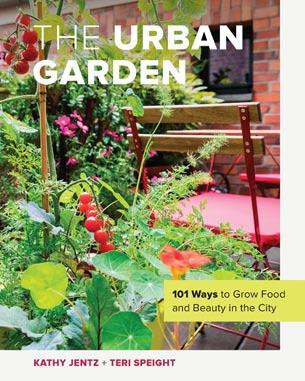
The Urban Garden: 101 Ways to Grow Food and Beauty in the City is all about small-space gardening solutions!
By Kathy Jentz and Teresa Speight
Published by Cool Springs Press/Quarto Homes
Order it today at: https://amzn.to/3yiLPKU
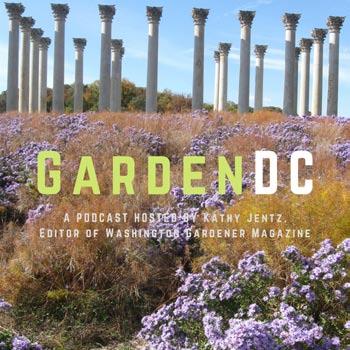
GardenDC Podcast
The GardenDC podcast is all about gardening in the greater Washington, DC, and Mid-Atlantic area. The program is hosted by Kathy Jentz, editor of Washington Gardener Magazine, and features guest experts in local and national horticulture. The latest episodes include interviews with experts on Mushrooms, Goldenrods, and Growing Nuts.
You can listen online at https:// washingtongardener.blogspot.com/ or on Spotify, Apple, etc o
Classes, Events, and Plant Shows/Sales
• Now—April 26
Annual Orchid Show
Smithsonian Gardens and the U.S. Botanic Garden (USBG) present the 30th annual orchid exhibition this year in collaboration with the Smithsonian’s National Museum of African American History and Culture (NMAAHC), exploring the many ways orchids connect individuals, communities, and nature: “More than a Flower: The Connective Power of Orchids.” To get your free, timed-entry passes to the museum, go to https://nmaahc.si.edu/.
• Saturday, March 7, 9am–4pm
Rooting DC 2026
This free, all-day event provides education and community building about urban agriculture and food systems, with the goal of cultivating personal, community, and environmental wellbeing. Held at Eastern High School, 1700 East Capitol St., NE, Washington, DC 20002. Register at: https://www. eventbrite.com/e/rooting-dc-2026-tickets-1981943716007.
• Saturday, March 7, 10am–2:30pm
USBG Production Facility Open House
A rare chance to see the U.S. Botanic Garden (USBG) Production Facility— 85,000 square feet under glass divided into 34 greenhouse bays and 17 environmental zones. Register for one of the open house times to meet the gardeners. Event is free; there is a $25 fee if parking spot is needed during event. Register at https://usbg.swoogo.com/ PFOpenHouse_2026.
• Saturday, March 14, 1–3pm Brent & Becky’s Spring Garden Tour (Also offered on Wed., March 18; Sat., March 21; and Wed., March 25.)
Take a leisurely stroll around the trial fields and gardens at the farm and home of Brent and Becky Heath in Tidewater Virginia. See spring-flowering bulbs during peak blooming time and different planting combinations incorporating trees, shrubs, bulbs, and perennials, plus a little history of the land you will be touring. Walking shoes recommended; will be on gravel, dirt, and
grass. Reservations required, $10 per person. Order tickets online at https:// brentandbeckysbulbs.com/.
• Monday, March 16, 7:30–8:45PM
Growing Great Tomatoes and Peppers hosted by Silver Spring Garden Club
This talk will cover how a local business prepares its tomato and pepper seedlings for the spring season. It will also cover what varieties do best in our region. Speaker Carrie Engel, Horticulturist, Valley View Farms, is well-known in our area. Engel appears with meteorologists Tony Pann and Ava Marie weekly on the WBAL TV’s “Sunday Gardener.” This meeting is free and open to the public. It takes place at the Brookside Gardens Visitors Center/Education Building, 1800 Glenallan Avenue, Wheaton, MD.
• Saturday, March 21, 9am–3pm 15th Annual Gardening Symposium
Four prominent speakers will share their knowledge and inspire us as we start preparing our gardens for the spring and subsequent growing seasons. Presentations include Shannon Currey on “Soft Landings Add Life Under Trees” and Kathy Jentz on “Groundcovers: Great Alternatives to Turf Grass.” To register, see https://loudouncountymastergardeners.org/events/annualsymposium/.
Looking Ahead
• April 10—11
2026 Spring Garden Market
The popular garden market will take place at River Farm, AHS’ headquarters in Alexandria, VA. Tickets on sale now. Details at https://ahsgardening.org/ spring-garden-market/.
Event Listing Updates
See updated event listings on the Washington Gardener discussion list. Join by emailing WashingtonGardenersubscribe@googlegroups.com
How to Submit Events
To submit an event for this listing, email washingtongardenermagazine@gmail. com with “Event” in the subject line. Our next deadline is March 15 for the April 2026 issue, for events taking place after April 5 o
Ask the Expert
By Miri Talabac
Sterile Versions of Invasive Species
Q: Every year, I seem to encounter more cultivars of plants like butterfly bush and barberry advertised as sterile. Are those okay to plant, since they can’t spread?
A: I would not plant them, and for some invasive species, the clock is ticking for nurseries to stop selling them in Maryland, regardless of cultivar. The Maryland Department of Agriculture (MDA) regulates the sale of invasive plants, and in 2024, state law was revised and expanded to include more species. The previous regulation structure ranked select groups of invasive species into two lists: Tier 1, which were banned for sale, and Tier 2, which could be sold as long as the seller notified customers of their invasive potential and encouraged the use of alternatives.
The initial expansion of the prohibited species list upgraded those Tier 2 category plants to the equivalent of Tier 1, so they are now not allowed to be sold or acquired in Maryland. Additional species that are not currently prohibited are scheduled to be examined under a new invasive plant species status assessment protocol and may be added to the prohibited list in future years.
Ten species are prioritized for assessment in 2026. They include plants still widely sold by nurseries in the midAtlantic, like English Ivy (Hedera helix), Leatherleaf Mahonia (Mahonia bealei), Chinese Silvergrass (Miscanthus sinensis), Butterfly Bush (Buddleja davidii), and Periwinkle (Vinca minor and Vinca major).
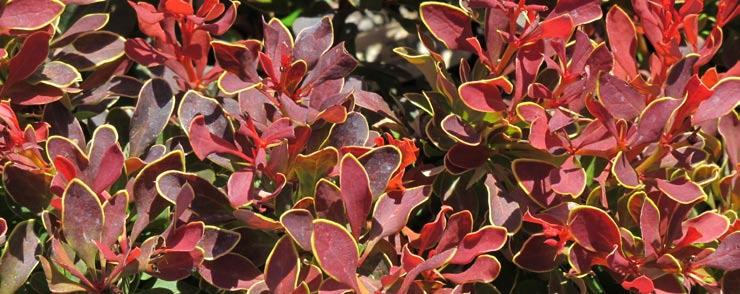
Japanese Barberry (Berberis thunbergii) was in the Tier 2 group of species that were the first additions to the prohibited list, along with several species of Privet (Ligustrum), Burning Bush (Euonymus alatus), Heavenly Bamboo (Nandina domestica), and Asian Wisterias (Wisteria floribunda, W. sinensis, and their hybrids).
Purportedly sterile cultivars of
invasive species are also prohibited unless granted an exemption by the MDA. Even if select cultivars remain legal to sell in the future, seedless plants could still further the spread of their species by pollinating plants already growing in natural areas, allowing them to produce seedlings that continue to disrupt the ecosystem.
Keep in mind that “sterile” in plant marketing doesn’t necessarily mean “will never produce any viable seed.” Some cultivars described as sterile could produce a small percentage of seed capable of germination. While that may sound acceptably low-risk, all it takes is the mixing of genes from pollination for those seedlings to potentially lose those sterile tendencies, giving escaped progeny more opportunity to spread. Part of the problem with invasive species spread is that seedlings don’t typically show up where you can find and remove them before they reproduce. Wildlife and weather move them into habitats where they can take over and become nearly impossible to eradicate.
The MDA law includes a phase-out period for Maryland businesses, so you may see the prohibited species legally available for sale during the next one to two years. This is a point-of-sale law, which means that it applies to plant sellers like nurseries, garden centers, and landscapers; gardeners and managed properties are not required to remove existing invasive plants from their landscapes, although that would be ideal if you can possibly do so.
You can find the full plant lists and a link to the law on the MDA’s Maryland Invasive Plants Prevention and Control website.
Hardier Alternative for Creeping Thyme
Q: I love the look of creeping thyme, but can’t seem to keep it alive in the garden for long. Is there a look-alike I can use?
A: Many gardeners try to grow thyme as an accent between walkway pavers or as a groundcover that gets stepped on, which it does not appreciate, especially since it requires excellent drainage. Thyme struggles in compacted soil or conditions that stay too moist. If your planting site won’t be subject to foot traffic, I suggest trying Heath Aster (Symphyotrichum ericoides, formerly known as Aster ericoides). In particular, the cultivar ‘Snow Flurry’ stays quite low and has sprawling stems and tiny foliage that do a good impersonation of thyme.
Although it doesn’t have thyme’s fragrance, Heath Aster will flower with a profusion of very small white flowers around late summer. Asters are popular with pollinators, and they can be host plants for a couple of butterfly species as well. I’ve planted ‘Snow Flurry’ Aster in a large mixed-perennial container to spill over the edge, and have also seen it grow along the edges of garden beds as an attractive fine-textured contrast to coarser-leaved plants. o
Miri Talabac is a Certified Professional Horticulturist who joined the University of Maryland Extension Home and Garden Information Center in 2019 as a horticulture consultant. She is a graduate of UMCP with a focus in entomology. To ask a gardening or pest question, go to http:// extension.umd.edu/hgic and select “Ask Extension.” Digital photos can be attached.
‘Golden Ruby’ barberry, one of numerous cultivars introduced in recent decades. Photo by Miri Talabac.

20TH ANNUAL PHOTO CONTEST DETAILS
Here are the 17 winners in the Washington Gardener Magazine 20th Annual Photo Contest. More than 150 photos were submitted in this year’s contest from 20 entrants. As usual, the quality of entries was high and our judge had an especially difficult time winnowing the images down to the best of the best! It was great to see several first-time entrants place highly. Many of these photos are of the photographers’ own home gardens, while the majority of the rest were taken at public gardens in our region.
Congratulations to the 2026 DC Garden Photo Contest winners and thank you to all who entered.
WHERE TO SEE THE PHOTOS AT THEIR FULL QUALITY
Winning images will be displayed during the Washington Gardener Seed Exchanges and appear in a local photo exhibit this summer at Meadowlark Botanical Gardens in Vienna, VA. The opening reception is Sunday, August 2, at 2pm.
THANK YOU TO OUR JUDGE
Elizabeth Olson, certified photography judge with the Maryland Association of Agricultural Fairs & Shows (MAAFS).
THANK YOU TO OUR 2026 PRIZE SPONSORS
• Capital Photography Center, LLC
• Proven Winners ColorChoice Flower Shrubs
Additional prizes supplied by Washington Gardener Magazine

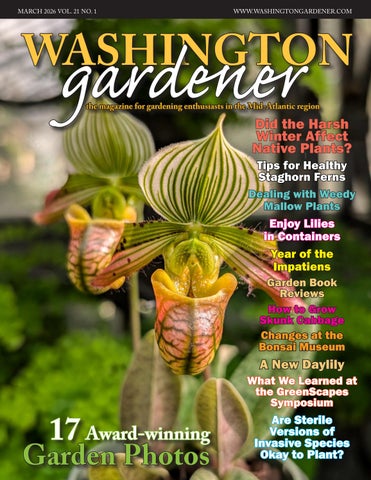
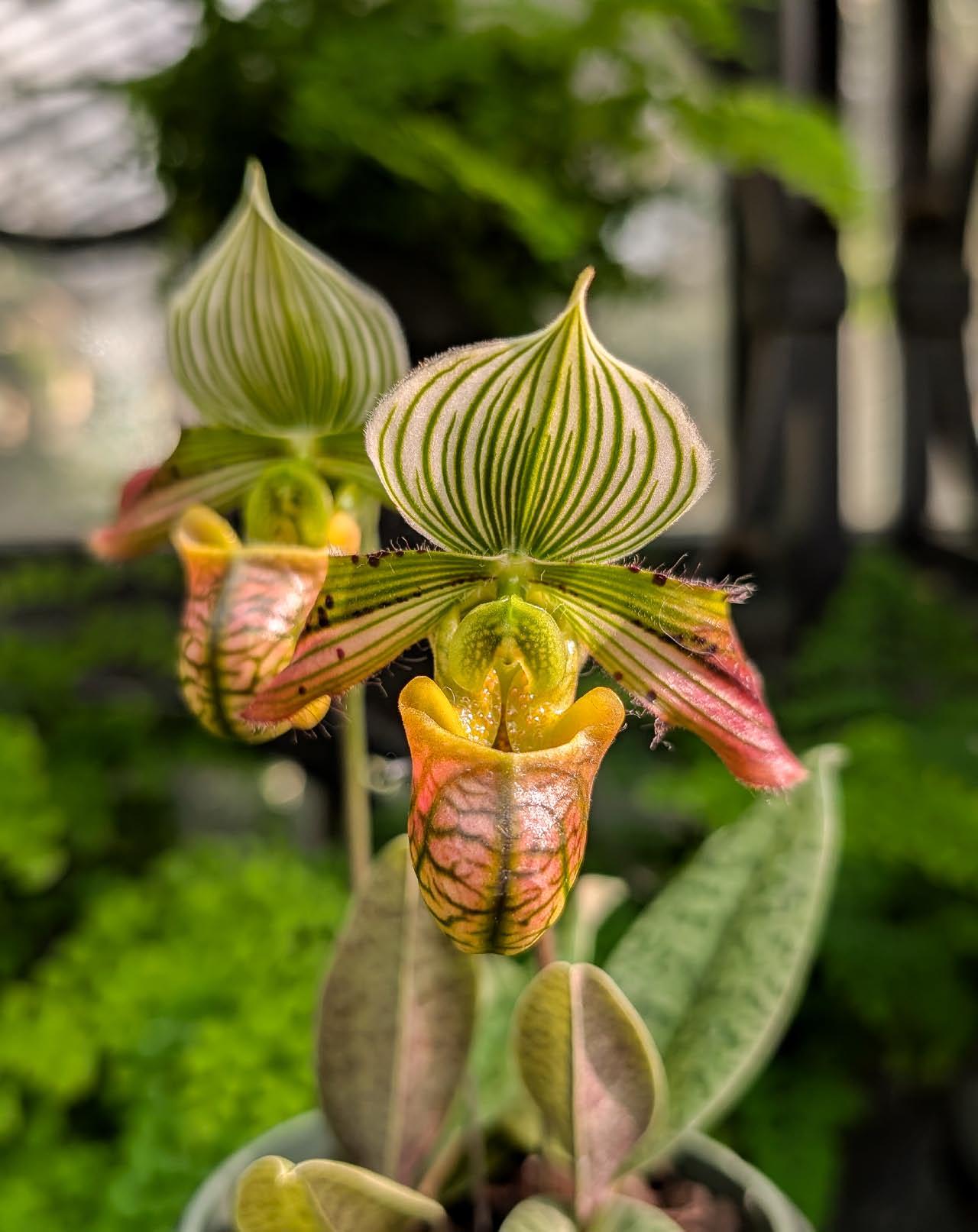
Grand Prize Winner (on the cover)
Karin Melinda Reber
“Paphiopedilum venustum”
Location: Orchid Room at Longwood Gardens, Kennett Square, PA
Reber wrote, “Among many bigger, bolder blooms in the Orchid Room at Longwood Gardens, this small charmer caught my eye with its intricate patterns and delicate size.” Image taken with a Google Pixel 9 Pro, ƒ/1.71/806.9 mm ISO20.
Garden Creatures Category
Images of insects, birds, frogs, domestic pets, wild animals, etc., in a private or public garden setting.
First Place
Karin Melinda Reber
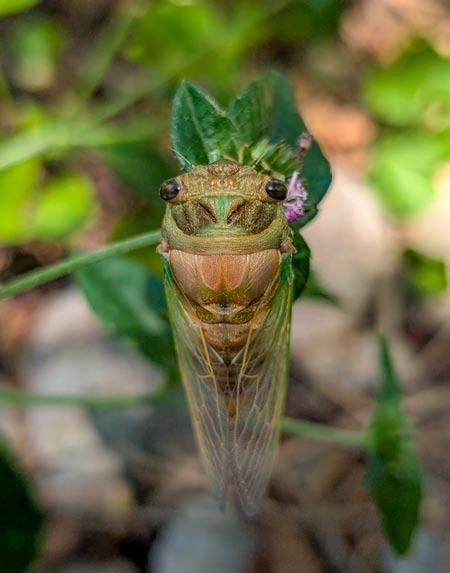
“Newly Emerged Cicada”
Location: Falls Church, VA
Reber wrote, “I happened to come across this newly emerged cicada while I was weeding, with its shell just out of frame. I kept checking on it to see if its green and gold colors would start to darken and become more vivid over the course of an hour.” Image taken with a Google Pixel 9 Pro, ƒ/1.7, 1/160, 6.9 mm, ISO20. Reber is an amateur photographer with more than 25 years of experience.
Third Place
Wanda Prather
“Curious Visitor”
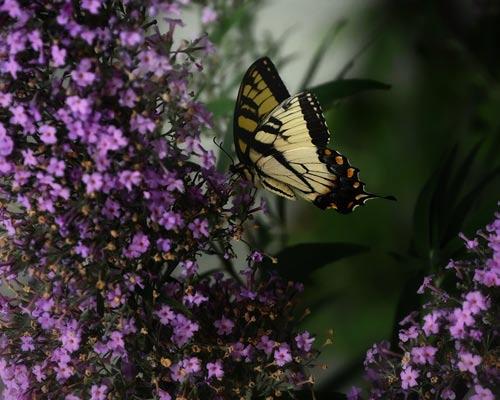
Second Place
Teresa Hughes
“Yellow Swallowtail”
Location: Catonsville, MD
Yellow swallowtail inside a butterfly bush. Image taken with a Nikon Z5, 200 mm, 1/2000 sec, f/6.3, ISO 5000. Hughes is an amateur photographer with more than 15 years’ experience.
Location: Photographer’s own backyard container garden, Marriottsville, MD
A fluffy female Northern Cardinal with a bright-orange beak, perched on a metal bar in falling snow, looking curiously at the camera. Taken with Olympus OMDEM1 Mark II digital camera (micro 4/3), Olympus 100-400 mm F5.0-6.3 zoom lens, 1/250 sec at f5.8, natural light during snowfall. Prather is an amateur photographer with more than 15 years’ experience.
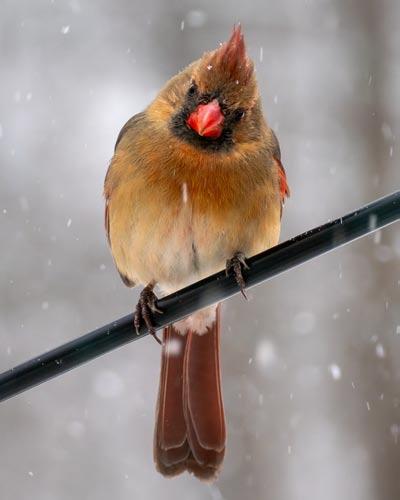
Photo Contest Winners
Garden Vignettes Category
Groupings of plants in beds or containers, unusual color or texture combinations, garden focal points, and still scenes.
Second Place
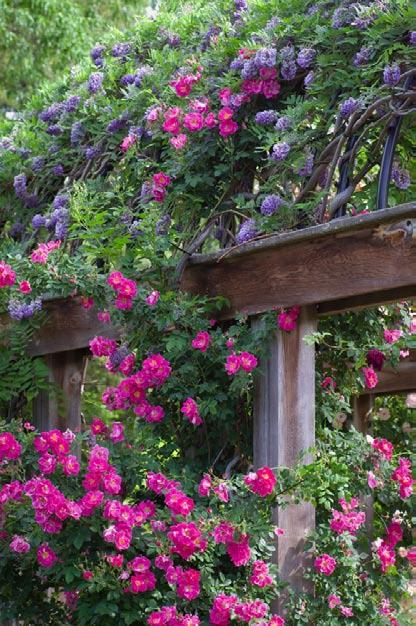
Lisa Ostrich
“Blooming Cascade”
Location: Bon Air Rose Garden, Arlington, VA
Roses and wisteria on arbor. Taken with a Pentax KP; Pentax DFA 100 mm macro lens. Ostrich is an amateur photographer with 13 years’ experience using a DSLR.
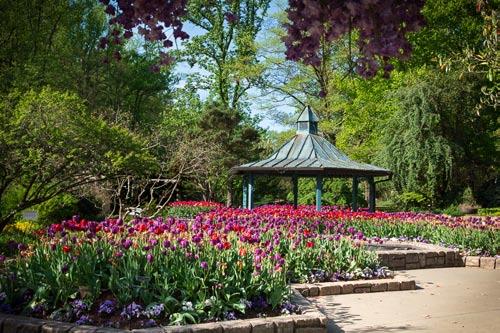
First Place
Jane Mahaffie
“Colorful Tulip Garden”
Location: Brookside Gardens, Wheaton, MD
Mahaffie wrote, “Tulips, tulips, tulips just filling the beautiful garden beds at Brookside. It was a beautifully colorful scene in this section of the garden and wonderful contrast to the roofed structure.” Taken with a Nikon Z8, ISO 160 with a 28-400 lens at 37 mm. Mahaffie is an amateur photographer with 30+ years of experience.
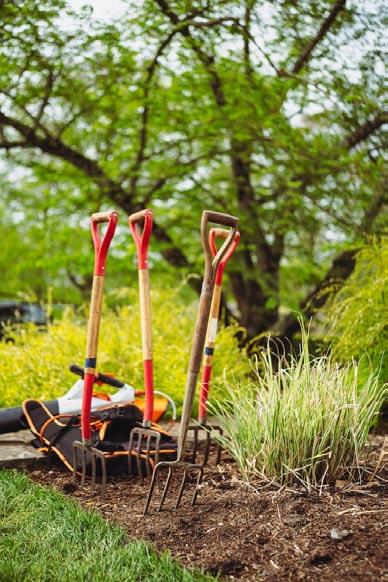
Third Place
Holden Edward Barnes
“Tools of the Trade”
Longwood Gardens, Kennett Square, PA
Pitchforks await gardeners ready to replace the recently removed tulips. Taken using a Sony a7IV; Sigma 35 mm 1.4 lens; in natural lighting. Barnes is a professional photographer with five years’ experience.
Small Wonders Category
Tight close-up or macro image of a single flower, plant parts, leaves, fruits, etc.
First Place
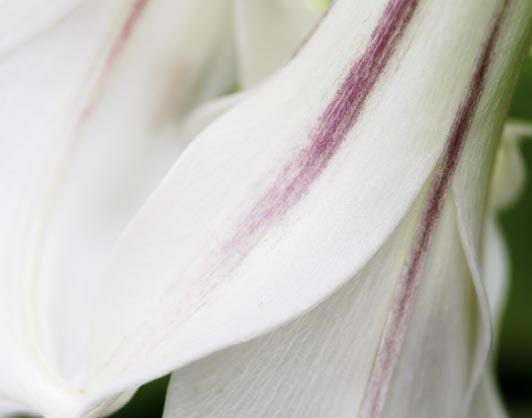
Anita Feidler
“Soft Abstract of a Lily Flower”
Location: Green Spring Gardens, Alexandria, VA
Feidler wrote, “I usually try to capture all the details when shooting flowers. But on this outing, I experimented with shooting softer, more abstract photos.” Taken using the OM System OM-1; Olympus M.60 mm, F2.8 macro, 1/400 sec at ƒ/3.5. She is an amateur photographer with 25+ years of experience.
Third Place
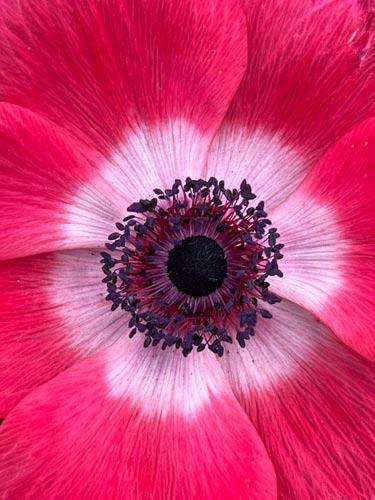
Janet Sifers
“Red Poppy Anemone”
Second Place
Georgette Grossman
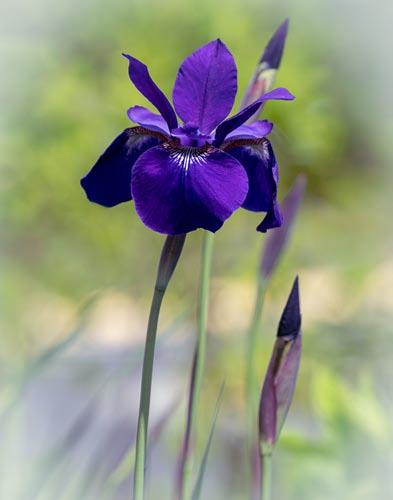
“Spring Iris”
Location: Woodleigh Chase Senior Living Center, Fairfax, VA
Grossman wrote, “The color of this iris reminds me of the ones we had at my home growing up. I enjoy seeing them where I live now.” Taken using a Fuji X-T5 camera, a Fuji 18-135 mm lens, f/5.6, 1/2200 sec, ISO 800; tripod, in natural light. Grossman is an amateur photographer with 20 years’ experience.
Location: Longwood Gardens, Kennett Square, PA
Sifers wrote, “These poppy anemones had amazing color and texture with a purple-black center and the pop of white.” Taken using an iPhone 13 Pro. Sifers is an amateur photographer with 20+ years of experience.
Garden Views Category
Beautiful, dramatic, or unusual perspectives of a garden landscape, including wide shots showing the setting.
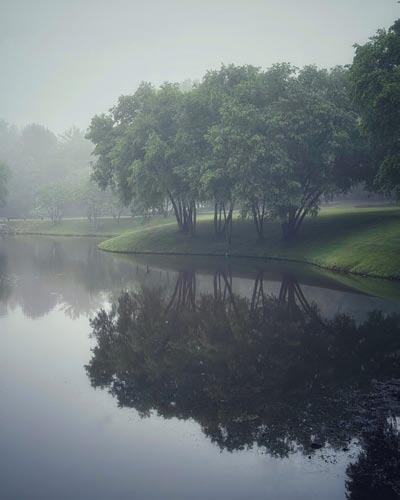
First Place
Janet Sifers
“Mason Pond Fog”
Location: Mason Pond, Fairfax, VA
Sifers wrote, “I was taking my son to GMU orientation on a foggy summer morning and liked the moodiness of the reflection in the pond.” Taken with an iPhone 16 Pro. Sifers is an amateur photographer with 20+ years of experience.
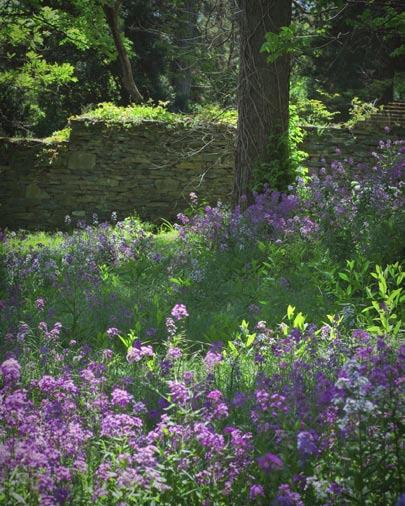
Third Place
Lisa Ostrich
“The Garden Wall”
Location: Oatlands House and Garden, Leesburg, VA Pink and purple flowers and stone wall. Taken using a Pentax KP; Pentax DFA 100 mm macro lens. Ostrich is an amateur photographer with 13 years’ experience using a DSLR.
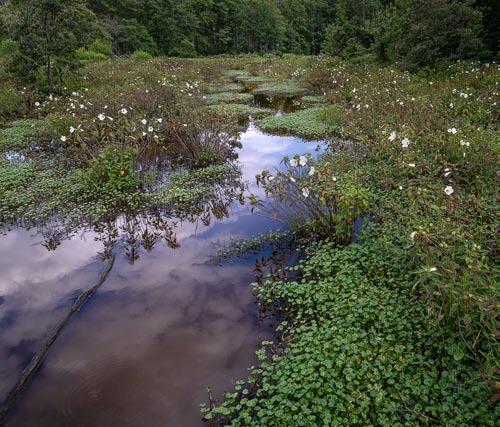
Second Place
Thomas Gross “Bountiful Huntley”
Location: Huntley Meadows, Fairfax County, VA
Aquatic meadow. Taken using a Nikon D850, Tamron 15-30 mm (24 mm), 1/160, f/11, on a cloudy day in natural light. Gross is an amateur photographer with 6 years of experience.
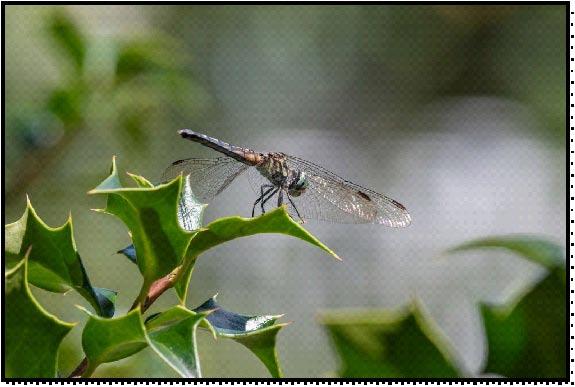
Garden Creatures
Lou Borghi
“Holly Dasher”
Location: Photographer’s backyard, Herndon, VA.
Blue Dasher Dragonfly on a holly tree was taken using a Nikon D850, 200 mm, f/8.0, ISO 100, 1/125 sec; image shot in natural light. Borghi is an amateur photographer with 12 years of experience.
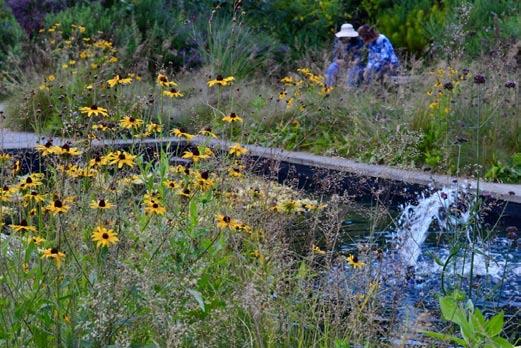
Honorable MentionGarden Views
Deborah Whitman
“‘Black’ and Blue”
Location: Brookside Gardens, Wheaton, MD
Black-eyed Susans in the foreground, two women in blue in the background. Taken using a NIKON D3100 AF-S DX VR Zoom-Nikkor 18-55 mm. Whitman is an amateur photographer with 35+ years of experience.
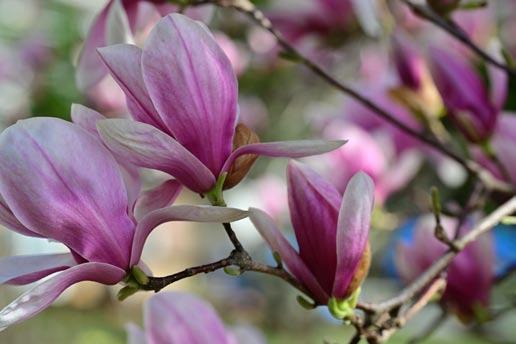
Honorable MentionSmall Wonders
Wenzell Carter
“Magnolia Blossoms”
Location: Photographer’s home garden, Montgomery Village, MD.
Taken using a Nikon Z6ii mirrorless full frame, Z MC 105 mm, f 2.8 lens, in natural light. Carter is an amateur photographer with 65 years of experience.
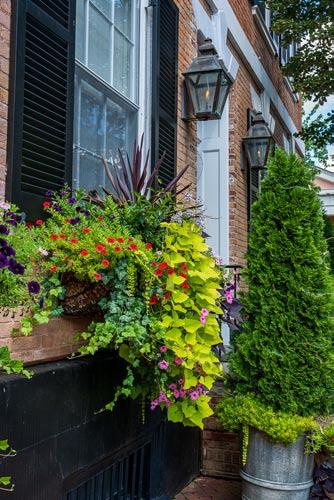
Honorable MentionGarden Vignettes
Jane Mahaffie
“The Window Box Garden”
Location: Historic downtown Alexandria, VA
Mahaffie wrote, “The window box and front door stoop of this historic Alexandria, VA, house was blooming with contrasting colors and beautiful greens.” Taken with a Nikon Z8 camera with 400 ISO / 1/10 sec and 34 mm. Mahaffie is an amateur photographer with 30+ years of experience.
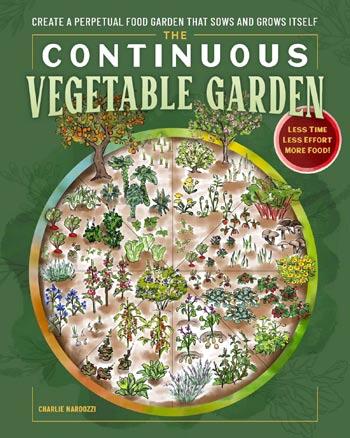
The Continuous Vegetable Garden: Create a Perpetual Food Garden that Sows and Grows Itself
Author: Charlie Nardozzi
Publisher: Cool Springs Press
List Price: $26.99
Order Links: https://amzn.to/4lhQxTa and https://bookshop.org/ a/79479/9780760398760
Reviewer: Marsha Douma
Be sure to have a notebook and colored markers with you when reading the Continuous Vegetable Garden. There is so much useful information in this beautifully formatted book that you will want to take notes. If I hadn’t been gardening for a number of years, I might not have appreciated the wealth of useful information the author provides. It is therefore a useful book for both beginner and experienced gardeners. The author discusses both the larger picture, detailing the families of plants that can continue to provide food with as little input from the gardener as possible, and the smaller details of the various growing challenges that are always present, with refreshing honesty and useful suggestions. The objective of the book is to give the reader multiple ways to grow food from the spring through the end of the fall growing season. There is also a section about how to protect your crops through the early winter, for an even longer season.
At the very beginning of the book, the author tells us, “What’s the solution for a space-and time-starved gardener wanting to grow interesting edibles in a more ecologically friendly way? Continuous vegetable gardening.” In other words, continuous gardening is
the process of planting edibles that will come back year after year with little to no effort on the gardener’s part. There is always so much to do in a garden, taking care of the plants once they have grow, that having as many plants as possible re-emerge on their own in the spring and early summer is a much-appreciated bonus.
The book is written in an inviting, approachable conversational style that makes it easy to read, understand, and then implement the wealth of ideas presented. AI has definitely not written this book. At its core, the book explains all one needs to know to successfully identify, then plant and harvest edibles that will create a continuous harvest.
The book begins by defining and listing the many edible annual and perennial plants you can grow in your garden. Examples of the annuals that will generously either reseed themselves are some onions, ground cherries, kale, and broccoli. A few dependable perennials are Jerusalem artichokes, asparagus, and rhubarb. This beginning section also includes “wild edibles,” otherwise known as weeds, for adventurous readers. While our job as gardeners might be easier if we embraced and developed a taste for dandelions, Lamb’s quarters, Amaranth green, purslane, and chickweed, the focus of the book is the more popular plants gardeners want to eat.
To this end, a very useful and detailed section also covers fruit trees, berry bushes, and groundcovers such as strawberries.
After listing and explaining in detail how to “plant, grow, harvest, and use” edible plants to provide continuous food for yourself and your family, the book discusses where in the garden these plants should go.
This largely depends on the size of one’s garden. For smaller gardens, incorporating edible plants, including herbs, into an existing garden is a good option. One can increasingly see examples of this style in many public gardens as it becomes more popular. Edible plants are more often planted among native plants, since they have a less formal look, but I have seen kale and mustard growing alongside tulips and poppies; rhubarb and Swiss chard scattered among the dahlias and roses; and creeping thyme as a groundcover almost anywhere. Nature certainly doesn’t differentiate between edible and ornamental plants in a natural landscape. Therefore, this style of gar-
den design is primarily about training one’s garden eye to appreciate these combinations, rather than a botanical need to keep edibles and ornamentals separate.
For those gardeners with more space who want to grow more edibles than a smaller garden allows, there are drawings of multiple beds, 4 feet by 8 feet, showing how they would look and be used in the spring, summer, and fall. These beds are planted with commonly used edibles. There are 6 beds for full sun, 4 beds for part shade, and 6 more beds for a hotter climate. These plans illustrate how to maximize the use of edibles using companion plantings that take into account the various growth patterns, pest susceptibility, and water and sun needs.
This extremely interesting and useful book would make a wonderful addition to your own garden library, or a muchappreciated present for any gardeners among your friends and family. o
Marsha Douma is a retired dentist and lifelong gardener who also enjoys swimming and playing the piano. She lives in Rockville, MD.
Tashiding: Beyond Earth and Sky, the Gardens of Douglas & Tsognie Hamilton
Author: Douglas Hamilton Jr.
Photography: Norman Baker
Publisher: Oro Editions
List Price: $75.00
Order Links: https://amzn.to/4aRTINE and https://bookshop.org/ a/79479/9781961856868
Reviewer: Jim Dronenburg
(Full disclosure: Your reviewer has been to Tashiding, as the Hamiltons graciously open the property to garden groups.)
Tashiding is the name of the Hamilton estate north of Baltimore, MD. The name is taken from that of one of the oldest and most venerated Buddhist monasteries in Sikkim.
This is not a gardening book. It won’t tell you how to grow what the Hamiltons have. It is, however, the telling of the story of Douglas (from Maryland) and Tsognie (from Sikkim) Hamilton’s origins, their love story, and how they created a magnificent estate blending East and West.
The blend of East and West starts with the house. They took a stone farmhouse, neglected to the point that

it had to be a total gut-and-rebuild job, and reconstructed it, adding on a Japanese-style “wing” about the same size, visually, as the house. Between the two, as it were, is a quiet courtyard reminiscent of Japanese temple gardens. It all “works” together.
In adding the wing, Mr. Hamilton writes, “In excavating…we found vast quantities of limestone”… and in blasting the stone to put in the foundation, they uncovered springs. (Whoops.) Those got piped into the (existing) lake. The estate, and the lake, reflect the quiet Japanese/Asian garden spirit. Asian accents and Japanese-style evergreens and azaleas, stone, and water predominate, but there are also American elements. There are flowers, to be sure; irises there are, roses there are; but here is not where you will find massive parterres or ranges of geometric garden beds.
When I say “Japanese,” you can read, “Buddhist tranquility.” Tsognie is Buddhist. Interestingly, I got no sense from the book of what traditional Sikkimese gardens are or were; rather, I got the overwhelming sense of high mountains and up-and-down grandeur that is Sikkim. The Hamiltons, as much as possible in flattish mid-Maryland, have tried to incorporate that, as a nod to Tsognie’s original home.
The Hamiltons designed the estate themselves, but acknowledge the work of many teams that accomplished the work, whether it be the house, or stone walls, or plant acquisitions.
They also, in the grand “Japanese” tradition, have taken the small stream that runs through the property and bridged it with one magnificent slab of stone. They have brought in quantities of huge stone to get the effects they wanted. There is a stone stair up a hillside to a Buddhist shrine—and a pavilion on the lake where one can relax or feed the koi in the lake while viewing the plantings on the opposite shore and the small island in the middle.
There are other elements of the over-
all estate: a swimming pool and associated buildings, a children’s play area, and a wonderful peacock house (when I asked how they had so many peacocks without fights, Mr. Hamilton said, “If there are no females, the males don’t fight.”) Something to remember if one has peafowl…
The book is, of course, a coffee table book, large and lavishly illustrated with professional photographs taken at various times and seasons, from the reconstruction of the original farmhouse onward. The overall effect is calm greenness, both in smaller “areas” and in the large vistas, with interludes of color, as when the roses on their pavilion/arbor bloom…. And then there is the explosion of light in the fall, when the many trees the Hamiltons have planted turn color.
This book fits into the category of “books about a place.” It is well worth reading, at your library if nowhere else. If you want a book on your coffee table that will keep you and your visitors spellbound, I very much recommend this one. o
Jim Dronenburg is a retired accountant who now gardens full-time in Knoxville, MD
The Wild & Free Garden
Author: Stephanie Rose
Publisher: Cool Springs Press/ List Price: $24.99
Order Links: https://amzn.to/4d3kHaj and https://bookshop.org/ a/79479/9781577156390
Reviewer: Aicha Bangoura
The Wild & Free Garden is a step-bystep guide to envision, create, and fulfill one’s gardening dreams. If there’s just one word I would use to describe this book, it would be “resourceful.”
The book features many images, including various gardens from Rose’s hometown in East Vancouver, Canada, along with several other gardeners’; what she described as “beautiful projects,” each of which includes a short description of how and why they were made.
The book opens with an introductory section about Rose’s experience of finally getting a fresh start after years of being homeless and living in vulnerable circumstances. We get a sense of her creativity and determination.
Rose discusses her own journey of transforming her garden into, she writes, “a unique, one-of-a-kind, bespoke outdoor living space that took
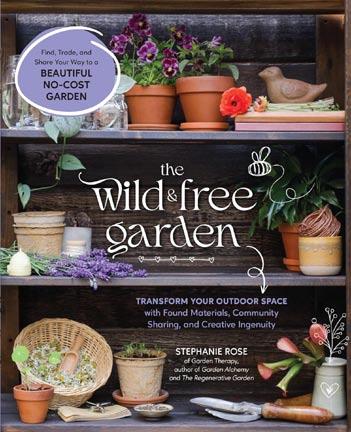
five years and hundreds of memories to build.” Even if you don’t typically garden, this book could motivate you to do so.
In the book, Rose does not leave you to fend for yourself; instead, she jots down every tip that an aspiring gardener should know. Whether it’s garden journaling, collecting, observing, lighting, or networking, Rose has the answers.
While even Rose acknowledges that a garden of your dreams might sound pricey, she is adamant about not feeding into the consumerism agenda to achieve your goals.
Rose’s cost-saving recommendations are level-headed and not solely about money. In chapter 4, there’s a section dedicated to plant conservation and it’s fascinating how she knows so much about how to care for a plant. From transplanting to overwintering, Rose introduces things I wouldn’t have thought of before.
While there’s a lot of information packed in, the book is written comprehensively and doesn’t make your mind go in different directions while you read. Many of the images are helpful in giving a visual representation of any instructions you might take on.
Besides preservation, Rose has another message that also stays consistent; Gardening will heal your soul. One thing I took from this book is the benefit of spending time outdoors. You could make a difference in not only your community, but your mind as well.
I recommend this book for anyone who is on a budget and has a desire to garden. o
Aicha Bangoura is an intern this semester with Washington Gardener Magazine.
Oh, Snow! Checking on Your Plants

By Barry Glick
Whenever the temps drop so drastically into the single digits and the winter winds start a-roarin’, the volume of phone calls and emails that I receive from concerned gardeners skyrockets. What are they looking for? Mainly reassurance and peace of mind that the plants that they can’t see are gonna come back. This year, I can give them a pretty good dose of reassurance, and why you may ask? In a word, SNOW!
It took me a while, when I first started growing perennial plants, to wrap my head around the fact that snow was a good thing for them. Now, you must come to grips with the reality that gardening is not a risk-free adventure; you’re going to have a few casualties and lose some plants in some years. Reasons are plenty. There are plants that just have a shorter lifespan than others. Sometimes a hungry varmint is going to dig up your dormant bulbs, tubers, and roots, and eat them or just leave them lying on the ground to freeze to death when they discover that they taste terrible!, Wrong plant! Wrong place! It’s definitely a crap shoot!
However, just because you can’t see any growth above ground, it doesn’t mean that your plants are dead. They’re considered “dormant.”
I have a real problem with the word “dormant.” That’s why I use the quotes around it. Actually, there is a miraculous beehive of activity going on down there under the snow, and I’ll give you a brief synopsis of that activity below.
If you leave a bottle of water outside during freezing weather, it’s going to burst. Right? But if that bottle has anti-
freeze mixed in with the water, it will remain a liquid and there is no bursting. Think of the cells in the underground parts of the plant as having a chemical compound that acts like antifreeze and prevents the water in its cells from bursting and killing the plant. These compounds are continually moving water in and out of the cells to maintain a balance during winter’s freeze-and-thaw cycles. These natural “antifreeze” compounds are actually sugars and carbohydrates that the plant sent down during its growing cycle to the roots for storage to use over the winter, or what we “think” of as the “dormancy” period.
The roots also take in moisture over the winter during freeze/thaw cycles to stave off dehydration. Roots can and do grow during the winter, albeit slowly. They can penetrate the soil more deeply to not only hunt for and absorb nutrients, but to hug the ground more tightly to prevent the plant from being “heaved” out of the ground during the freeze/thaw cycles of late winter/early spring.
And it’s not just in the roots of the plant where activity is taking place under the snow: Beneficial fungi and soil microbes are partying as well. These organisms are working around the clock to break down and decompose the mulch from fallen leaves, along with other organic matter, and turn it into a slow-releasing fertilizer. This composting action makes it accessible and available for the roots to absorb when spring finally wakes the plants up.
One of the other things to consider when planting your plants out in the spring is how much soil moisture they
can take during the growing season and, with equal importance, during the winter season. Many plants are “drowned” from winter wet and not the cold, but a combination of cold and excessive moisture in the soil.
During their evolution, certain plants have evolved to have the ability to absorb the oxygen, moisture, and nutrients through the adapted roots that they need to grow and survive the winter. A good example of the type of plant that has that ability is found growing in bogs and wetland areas: Skunk Cabbage (Symplocarpus foetidus)
Lastly, and certainly not least, is the now-clear logic to use our native plants in your landscape. I wrote above about evolutionary process, and how certain plants have evolved to happily and reliably survive in certain habitats. You can take that one step farther and deduce the fact that you can’t grow bananas outside in the Greenbrier Valley, WV, and many of the perennial plants offered at the “big box” stores just aren’t suited to our climate—so shop local and grow local. o
Barry Glick, a transplanted Philadelphian, has been residing in Greenbrier County, WV, since 1972. His mountaintop garden and nursery is a mecca for gardeners from virtually every country in the world. He writes and lectures extensively about native plants and Hellebores, his two main specialties, and welcomes visitors with advance notice. He can be reached at barry@sunfarm.com, www. sunfarm.com, or 304.497.2208.


BACK ISSUE SALE!
YOU CAN REQUEST A SINGLE COPY OF PRINT BACK ISSUES FOR $6 EACH OR ANY 6 BACK ISSUES FOR $24, OR ALL 40+ PRINT BACK ISSUES FOR JUST $100. PRICE INCLUDES POSTAGE AND HANDLING. PLEASE SPECIFY THE ISSUE DATE(S). ORDER MUST BE PREPAID BY CHECK OR MONEY ORDER. SEND ORDERS TO: WASHINGTON GARDENER, 826 PHILADELPHIA AVE., SILVER SPRING, MD 20910
MARCH/APRIL 2005
• Landscape DIY vs. Pro
• Prevent Gardener’s Back
• Ladew Topiary Gardens
• Cherry Trees
MAY/JUNE 2005
• Stunning Plant Combinations
• Turning Clay into Rich Soil
• Wild Garlic
• Strawberries
JULY/AUGUST 2005
• Water Gardens
• Poison Ivy
• Disguising a Sloping Yard
• Kenilworth Aquatic Gardens
SEPTEMBER/OCTOBER 2005
• Container Gardens
• Clematis Vines
• Sponge Gardening/Rain Gardens
• 5 Insect Enemies of Gardeners
NOVEMBER/DECEMBER 2005
• Backyard Bird Habitats
• Hellebores
• Building a Coldframe
• Bulb Planting Basics
JANUARY/FEBRUARY 2006
• Garden Decor Principles
• Primroses
• Tasty Heirloom Veggies
• U.S. Botanic Garden
MARCH/APRIL 2006
• Top 10 Small Trees and Large Shrubs
• Azaleas
• Figs, Berries, & Persimmons
• Basic Pruning Principles
MAY/JUNE 2006
• Using Native Plants in Your Landscape
• Crabgrass
• Peppers
• Secret Sources for Free Plants
JULY/AUGUST 2006
• Hydrangeas
• Theme Gardens
• Agave
• Find Garden Space by Growing Up
SEPTEMBER/OCTOBER 2006
• Shade Gardening
• Hosta Care Guide
• Fig-growing Tips and Recipes
NOVEMBER/DECEMBER 2006
• Horticultural Careers
• Juniper Care Guide
• Winter Squash Growing Tips and Recipes
• Layer/Lasagna Gardening
JANUARY/FEBRUARY 2007
• Indoor Gardening
• Daphne Care Guide
• Asparagus Growing Tips and Recipes
• Houseplant Propagation
MARCH/APRIL 2007
• Stormwater Management
• Dogwood Selection & Care Guide
• Early Spring Vegetable Growing Tips
• Franciscan Monastery Bulb Gardens
MAY/JUNE 2007
• Roses: Easy Care Tips
• Native Roses & Heirloom Roses
• Edible Flowers
• How to Plant a Bare-root Rose
JULY/AUGUST 2007
• Groundcovers: Alternatives to Turfgrass
• How to Pinch, Prune, & Dead-head
• William Paca House & Gardens
• Hardy Geraniums
SEPTEMBER/OCTOBER 2007
• Succulents: Hardy to our Region
• Drought-Tolerant Natives
• Southern Vegetables
• Seed Saving Savvy Tips
NOVEMBER/DECEMBER 2007
• Gardening with Children
• Indoor Bulb-Forcing Basics
• National Museum of the American Indian
• Versatile Viburnums
JANUARY/FEBRUARY 2008
• Dealing with Deer
• Our Favorite Garden Tools
• Delightful Daffodils
MARCH/APRIL 2008
• Patio, Balcony, Rooftop Container Gardens
• Our Favorite Garden Tools
• Coral Bells (Heuchera)
MAY/JUNE 2008
• Growing Great Tomatoes
• Glamorous Gladiolus
• Seed-Starting Basics
SUMMER 2009
• Grow Grapes in the Mid- Atlantic
• Passionflowers
• Mulching Basics
• Growing Hops
FALL 2009
• Apples
• How to Save Tomato Seeds
• Persimmons
WINTER 2009
• Battling Garden Thugs
• How to Start Seeds Indoors
• Red Twig Dogwoods
• Unusual Edibles to Grow in Our Region
SPRING 2010
• Community Gardens
• Building a Raised Bed
• Dwar f Iris
• Broccoli
SUMMER 2010
• Fragrance Gardens
• Watering Without Waste
• Lavender
• Potatoes
FALL 2010
• Vines and Climbers
• Battling Stink Bugs
• Russian Sage
• Garlic
WINTER 2010
• Paths and Walkways
• Edgeworthia
• Kohlrabi
you trying to reach thousands of gardeners in the greater DC region/MidAtlantic area? Washington Gardener Magazine goes out in the middle of every month. Contact kathyjentz@gmail.com or call 301.588.6894 for ad rates (starting from $200). The ad deadline is the 10th of each month. Please submit your ad directly to: kathyjentz@gmail.com
Got a Garden Question?
Got a gardening question you need answered? Send your questions to KathyJentz@gmail. com and use the subject line “Q&A.”
Please also include your first name, last initial, and what city and state you are writing from. Then look for your answered questions in upcoming issues.
SOLDOUT!SOLDOUT!SOLDOUT!
SPRING 2011
• Cutting-Edge Gardens
• Final Frost Dates and When to Plant
• Bleeding Hearts
• Onions
• Flavorful Fruiting Natives
JULY/AUGUST 2008
• Landscaping with Ornamental Grasses
• Edible Grasses to Graze On
• Slug and Snail Control
• Sage Advice: Sun-Loving Salvias
SEPTEMBER/OCTOBER 2008
• Autumn Edibles — What to Plant Now
• Beguiling Barrenworts (Epimediums)
• Best Time to Plant Spring-blooming Bulbs
• 14 Dry Shade Plants Too Good to Overlook
NOVEMBER/DECEMBER 2008
• Outdoor Lighting Essentials
• How to Prune Fruiting Trees, Shrubs, Vines
• 5 Top Tips for Overwintering Tender Bulbs
• Harry Lauder’s Walking Stick
JANUARY/FEBRUARY 2009
• Compost Happens: Nature’s Free Fertilizer
• Managing Stormwater with a Rain Garden
• Visiting Virginia’s State Arboretum
• Grow Winter Hazel for Winter Color
MARCH/APRIL 2009
SUMMER 2011
• Ornamental Edibles
• Urban Foraging
• Amsonia/Arkansas Blue Star
• Growing Corn in the Mid- Atlantic
FALL 2011
• Herb Gardens
• Toad Lilies
• Sweet Potatoes
• Cool Weather Cover Crops
WINTER 2011/EARLY SPRING 2012
• Green Roofs and Walls
• Heaths and Heathers
• Radishes
SPRING 2012
• Pollinator Gardens
• Brunnera: Perennial of the Year
• Growing Yacon
SUMMER 2012
• Tropical Gardens
• Captivating Canna
• Icebox Watermelons
SPRING 2013
• Great Garden Soil
• All About Asters
• 40+ Free and Low-cost Local Garden Tips
• Spring Edibles Planting Guide
• Testing Your Soil for a Fresh Start
• Redbud Tree Selection and Care
SOLDOUT!SOLDOUT!SOLDOUT!
• Squash Vine Borer
SUMMER/FALL 2013
• Miniature/Faerie Gardens
• Beguiling Abelias
• Best Viewing Spots for Virginia Bluebells
MAY/JUNE 2009
• Top Easy Summer Annuals for DC Heat
• Salad Table Project
• Grow and Enjoy Eggplant
• How to Chuck a Woodchuck
• Growing Great Carrots
WINTER/EARLY SPRING 2014
• Ferns for the Mid-Atlantic
• Chanticleer Gardens
• Beet Growing Basics
Jentz Prints
Antique Botanical Prints for the decorator, collector, connoisseur, and art lover.
Jentz Prints can be purchased at the world-famous Eastern Market on non-rainy Saturdays.
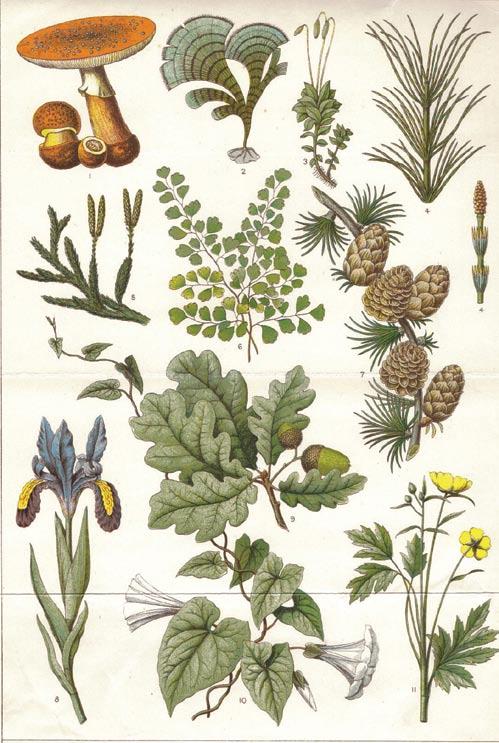
Antique prints are affordable—most in the $10-$30 range—and they are the perfect gift idea for that plant lover in your life. And don’t forget to buy a few for yourself!
For more information or to get a detailed show schedule, please contact Jentz Prints by email at UllrichJ@aol.com.