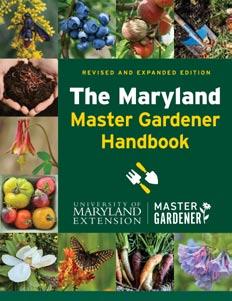
A Flavorful Herb Garden in Containers Manage Pests Rather than Rely on Internet Myths Garden Book Reviews
Taking Care of Your Yard During a Heat Wave
The Elusive Azalea Plant Bug
Perennial Picks for Supporting Bees the magazine for gardening enthusiasts in the Mid-Atlantic region
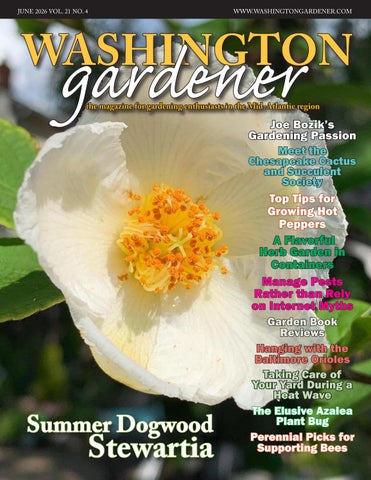
WASHINGTON g a rdener SummerStewartDogwood
Your Ad Here
Are you trying to reach thousands of gardeners in the greater DC region/Mid-Atlantic area? Washington Gardener Magazine goes out on the 15th of every month. Contact KathyJentz@gmail.com or call 301.588-6894 for ad rates (starting from $200) The ad deadline is the 10th of each month. Please submit your ad directly to: KathyJentz@gmail.com
Need a Garden Club Speaker?
Washington Gardener Magazine’s staff and writers are available to speak to groups and garden clubs in the DC region and ONLINE! Call 240.603.1461 or email KathyJentz@gmail.com for available dates, rates, and topics.
RARE AND EXCEPTIONAL PLANTS FOR THE
Barry Glick
Sunshine Farm and Gardens 696 Glicks Road Renick, WV 24966, USA Email: barry@sunfarm.com www.sunfarm.com
www.greenspring.org
Green Spring Gardens
A “must visit” for everyone in the metropolitan Washington, DC, area. It’s a year-round goldmine of information and inspiration for the home gardener. It’s an outdoor classroom for children and their families to learn about plants and wildlife. It’s also a museum, a national historic site that offers glimpses into a long, rich history with colonial origins. Located at 4603 Green Spring Rd., Alexandria, VA. Information: 703-642-5173.
the
ciscan Monastery in
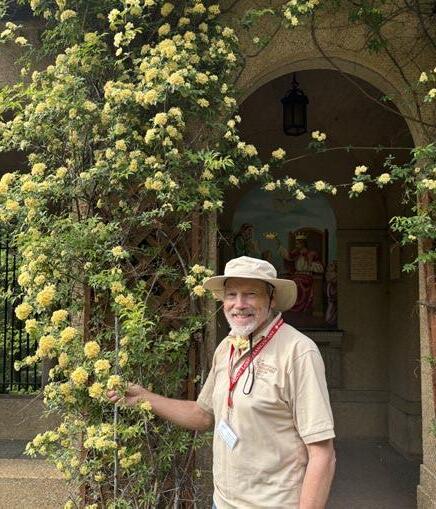
Joe Bozik with the Lady Banks rose at
Photo by Lauren Bentley.
Coming Up Roses
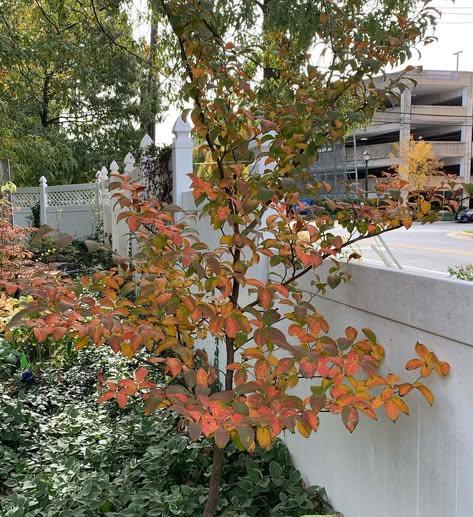
After a long, cold winter and a cool spring, we jumped into summer, then a late freeze, then summer again. Many of my plants suffered from these severe weather swings. I lost the Stewartia tree that is pictured on the cover of this issue. I also lost a potted Rosemary and am hearing from many readers that their Rosemary plants also did not make it. I thought I lost all the Dahlias that I left in my community garden plot to overwinter, as I had done the last few years with no issues, but just this week, they finally emerged!
The Crape Myrtles leafed out early, then got zapped by the freeze. They are finally re-leafing out and seem to be okay now. I am hearing from others that their Redbuds and Japanese Maples also suffered leaf loss/frost burn, but are slowly recovering.
The worst losses in our region were all the apples, peaches, and other fruit trees that got frosted/frozen right as their flower buds emerged—the worst timing possible. Many local orchards suffered a total crop loss and will not be opening at all this season.
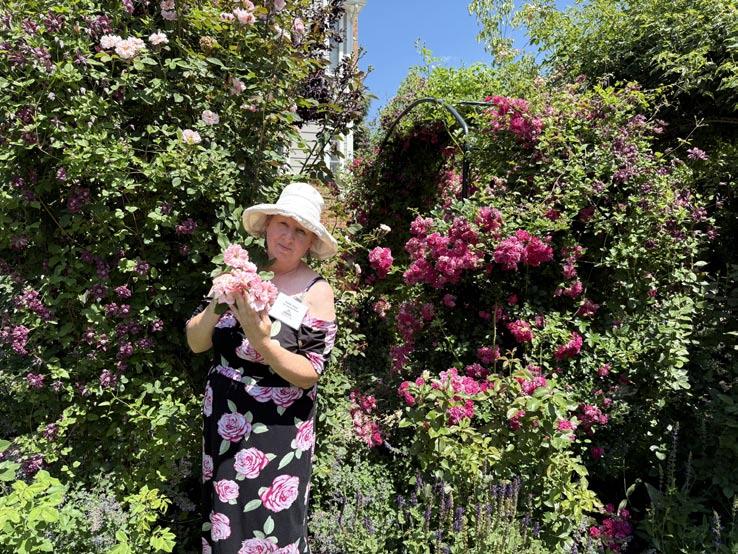
I had the worst Garlic crop I’ve ever experienced, but on the good news front, many plants are opening later than usual, such as the Roses pictured above. For every garden loss, something else usually replaces it or at least makes up for it. While I will dearly miss my Stewartia, I look forward to planting a new small tree in its spot and enjoying it for years to come.
Sincerely,
Credits
Kathy Jentz Editor/Publisher
Washington Gardener 826 Philadelphia Ave. Silver Spring, MD 20910
Phone: 301-588-6894
kathyjentz@gmail.com www.washingtongardener.com
Ruth E. Thaler-Carter Proofreader
Aicha Bangoura Lauren Bentley Interns
Subscription: $20.00
• Washington Gardener Blog: www.washingtongardener.blogspot.com
• Washington Gardener Archives: http://issuu.com/washingtongardener
• Washington Gardener Discussion Group: https://groups.google.com/g/ washingtongardener/
• Washington Gardener Twitter Feed: www.twitter.com/WDCGardener
• Washington Gardener Instagram: www.instagram.com/wdcgardener
• Washington Gardener Facebook Page: https://www.facebook.com/ WashingtonGardenerMagazine/
• Washington Gardener YouTube: www.youtube.com/ washingtongardenermagazine
• Washington Gardener Amazon Store: www.amazon.com/shop/wdcgardener
• Washington Gardener BookShop: bookshop.org/shop/WDCgardener
• Washington Gardener Podcast: https://podcasters.spotify.com/pod/ show/gardendc/
• Washington Gardener is a woman-owned business We are proud to be members of:
· GardenComm (formerly GWA: The Association for Garden Communicators)
· Green America Business Network
· National Garden Bureau
· One Montgomery Green
· Ladies in the Landscape
· Potomac Rose Society
· American Horticultural Society
· Maryland Nursery, Landscape and Greenhouse Association
Editor/Publisher, Washington Gardener, KathyJentz@gmail.com
P.S. Please vote for our show, the GardenDC Podcast, by June 10, 2026, at https:// bestof2026.washingtoncitypaper.com/ under Arts & Entertainment > Best Local Podcaster. Thank you in advance!
No material may be reproduced without prior written permission. This magazine is purchased by the buyer with the understanding that the information presented is from various sources from which there can be no warranty or responsibility by the publisher as to legality, completeness, or technical accuracy.
Your editor at Lomnova, the home garden of Yvonne Tsikata in Great Falls, Virginia.
Photo by Linus Chen.
Reader Contest
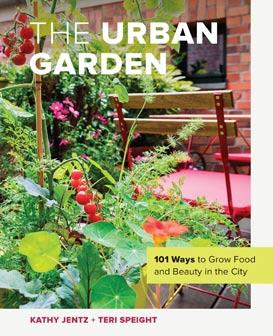
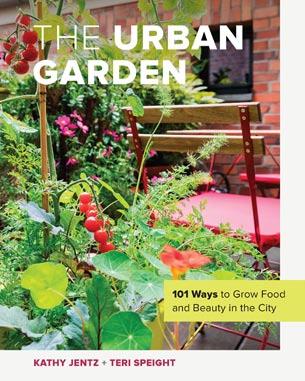
For our June 2026 Washington Gardener Reader Contest, we are giving away a copy of The Urban Garden: 101 Ways to Grow Food and Beauty in the City by Kathy Jentz and Teresa Speight (prize value: $27).
In The Urban Garden, you’ll find dozens of inspiring and creative ways to grow flowers, shrubs, vegetables, herbs, and other plants in small spaces and with a limited budget. Whether you want to grow on a balcony, rooftop, front stoop, or tiny urban patio, turn your growing dreams into reality and build a gorgeous and unique garden that showcases your personal style while still being functional and productive. With the ingenious ideas and resourceful tactics found here, you’ll be maximizing yields and beauty from every square inch of your space, while also making a lush outdoor living area you’ll crave spending time in.
GardenDC Podcast
I’m a daylily grower, but love all flowers—thank you for this episode (GardenDC Podcast Episode 288: Growing Roses Naturally)! ~ @MPFlowerGardens
Great episode (GardenDC Podcast Episode 284: Summer Bulbs)! I might get my kids to plant surprise lily bulbs for me. It seems delightful to be greeted with floral surprises! ~ @redrobyn769 o
Want Your Club Profiled?
To enter to win the book, send an email by 5:00pm on Tuesday, June 30, to WashingtonGardenerMagazine@gmail.com with “Urban Garden” in the Subject line and in the body of the email. Tell us what your favorite article was in the June 2026 issue and why. Please include your full name and mailing address. Winners will be announced and notified on July 1. Entry comments might be published. o
Your Ad Here
Are you trying to reach thousands of gardeners in the greater DC region/MidAtlantic area? Washington Gardener Magazine goes out in the middle of every month. Contact KathyJentz@gmail.com or call 301.588.6894 for ad rates (starting from $200). The ad deadline is the 5th of each month. Please submit your ad directly to: KathyJentz@gmail.com
Plant a Row for the Hungry (PAR) is an easy program to participate in and really does not take any extra resources than what you may have in your garden. In normal times, about 35 million people wonder where their next meal will come from. Most of these are children. That’s where PAR steps in.
PAR is such a simple program: It urges gardeners to Plant A Row (or a container) dedicated to feeding the hungry, and then take the harvest to someplace or someone that needs it. Once you have donated, send an email to KathyJentz@gmail.com with the total (in pounds and ounces) of what you gave. That is all there is to it. Easy. Effective. Adaptable and Helpful.
Got a Washington, DC-area garden group, plant society, or neighborhood club that you think should be profiled here? Send full details to KathyJentz@gmail.com or call 301.588.6894.
Note: The books reviewed in this issue were provided free from their publishers. These book reviews include links to Amazon.com and BookShop.org for ordering them. Washington Gardener Magazine might receive a few cents from each order placed after you click on these links
Love Reading?
These books were reviewed by volunteer members of the Washington Gardener Reader Panel. Reader Panelists may also be asked to review new gardening plants, tools, and seeds. To join the Washington Gardener Volunteer Reader Panel, send an email with your name and address to: KathyJentz@gmail.com. We look forward to having you be a vital part of our local publication and its gardening mission. o
Joe Bozik Franciscan Monastery Garden Guild
By Lauren Bentley
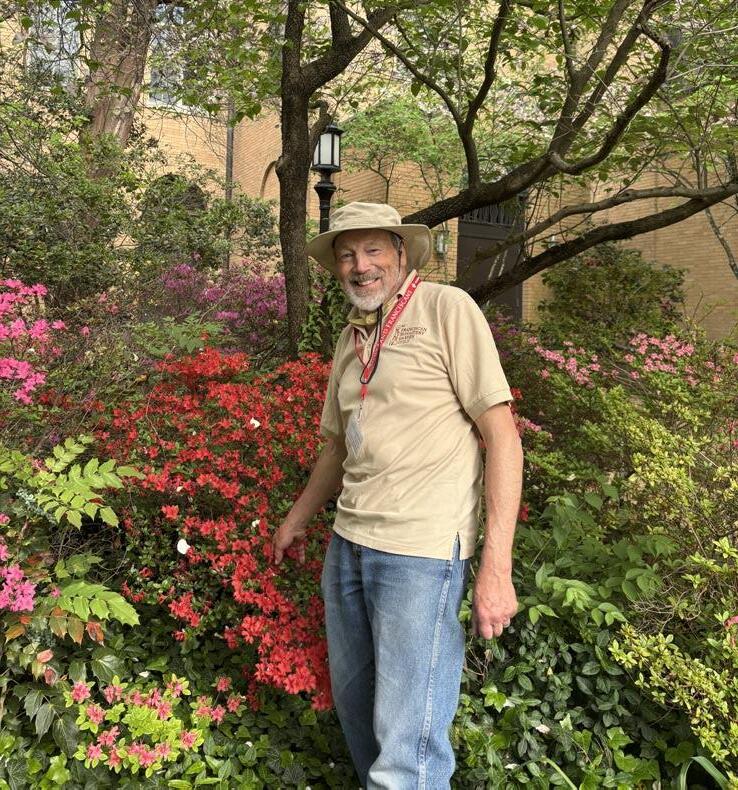
Joe Bozik now serves as the Chief Executive Officer of the Franciscan Monastery Garden Guild (FMGG, http:// www.fmgg.org/), located in Washington, DC, but his affinity for plants and nature started as a child, he says.
Bozik is from mid-state, rural New York, which contributed to being an “outdoorsy person” from the time he was young.
“Discovering all creation surrounding me greatly influenced and motivated my interests in what is growing, how it thrives, what is flowering, and where its seeds are,” Bozik said.
Both he and his brother spent most of their time playing outside, in the fields and woods, after finishing the chores that accompanied living on a large dairy farm. Bozik’s father planted a large vegetable garden that supplied his three-generation family with fresh vegetables.
His father, mother, and grandmother also worked together to store canned fruit and vegetables.
Bozik enjoyed receiving a seed catalog in January of each year, and would through them to prepare for upcoming planting seasons. This helped him learn about many types of flowers and develop the ability to easily recognize them.
“Of course, ordering the seeds was always a thrill,” he said. “Waiting for their arrival, planting seeds in containers on window sills, and then transplanting in the garden after the chance of frost was over.”
After high school, Bozik attended Rensselaer Polytechnic Institute and studied civil engineering. His first job was with the New York State Department of Transportation, in their Engineering Research and Development Division.
While working in transportation, he also completed a master’s degree at Union College by attending in the evenings.
In 1976, Bozik moved to Washington, DC, for better job opportunities and
started working in the U.S. Naval Ordinance Laboratory as a civil engineer, updating buildings. From there, he had several different engineering jobs ,including at the U.S. Coast Guard Headquarters and the U.S. Department of Energy.
When he retired in 2007, Bozik began focusing on his hobbies, which mostly consisted of gardening. “Wherever I lived, I planted gardens, whether flowers or vegetables,” he said.
At one point, Bozik tended five different gardens, one of which was the herb garden at the Franciscan Monastery.
Bozik first learned of the FMGG in 2002 while still working. He responded to an ad in a church bulletin asking for volunteers to help with an upcoming event at the monastery. He was intrigued by the accomplishments and activities of the guild, and decided that he wanted to join after attending only one meeting.
Bozik was captured by how well he fit in. “Although my professional career was about as far removed from gardening as any could be, I felt that gardening, being outdoors, was something natural, comfortable, and so inherent in my being,” he said.
Since joining, he has held positions as Vice President, President, Treasurer, and now CEO. He is responsible for assuring that the guild is caring successfully for the vegetable gardens and the 1915 vintage greenhouse at the monastery.
Twenty years ago, Bozik also started the honeybee hives apiary at the monastery. They now have more than 20 hives and have bottled more than 2,000 pounds of honey.
The Garden Guild has many volunteers who tend the gardens multiple times a week, and is open for anyone who would like to get involved.
“St. Francis of Assisi is known to have understood his call to care for our creation, to have respect for nature, and to observe the interconnectedness of all living things,” Bozik said.
Bozik can be contacted via email at 1retrojoe@gmail.com. o
Lauren Bentley was an intern for the Spring 2026 semester with Washington Gardener Magazine.
The Elusive Azalea Plant Bug
By Carol Allen
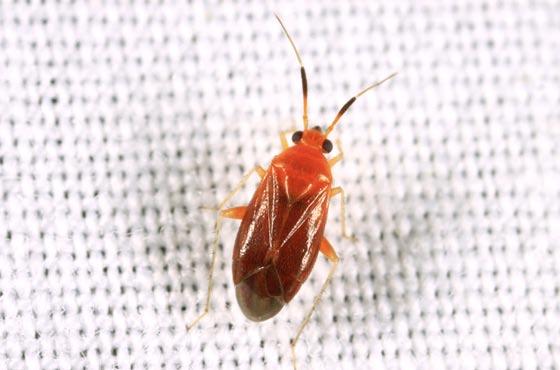
The azalea plant bug (Rhinocapsus vanduzeei Uhler), is a bug that does it all! They are predators, scavengers, and herbivores, and will take the occasional nip out of an irritating human.
They emerge from their over-wintering egg stage just about the time that the first deciduous azaleas are flowering. Kristine Braman and Ramona Beshear wrote of seeing them on Florida, Alabama, Piedmont, and flame azaleas during the months of March and early April in their study in the early 1990s. They were looking at the emergence of several different plant bugs and their predation on species of thrips, both in the field and in laboratory trials.
R. vanduzeei’s sucking mouthparts distinguish it from other species of plant bugs that feed on thrips. The azalea plant bug was found to feed on other small insects and on azalea pollen.
In the mid-1970s, Silver Spring residents, Dr. August Kehr and Judson Hardy observed their feeding on Rhododendron bakeri, R. calendulaceum, and R. viscosum.
Their observations added to the work of Thomas J. Henry and A. G. Wheeler, working out of the Pennsylvania Department of Agriculture, also in the 1970s.
They hypothesized that the azalea plant bugs might be detrimental to azalea breeding operations due to their feeding on azalea pollen and stamens.
Although first described in 1890, there have only been a few references to R. vanduzeei in the literature. The Maryland Biodiversity Project has only four reports of the insect being observed in Montgomery, Prince Georges, and Baltimore counties, all in the month of May.
It is a small insect, measuring only 3.5 to 4.0 mm long as an adult. The nymphs are bright-red and mature to more of an orange color with darker wings. They have a peculiar habit of ducking to the underside of a leaf when disturbed and immediately emerging on the top of the leaf at the other side.
Azalea plant bugs are native insects that are found from Ontario south to North Carolina and west to Missouri. The few records of its presence may be
https://www.marylandbiodiversity.com/.
due to its short life cycle. Although it emerges in April, after feeding on the azalea bloom flush, it disperses to raspberries and is generally not found by mid-July in the DC region.
Have you seen it? If you do, there is no reason to control this elusive insect because its damage seems to be largely insignificant.
Further adventures between human and azalea plant bug can be found here, https://www.azaleas.org/. Bill Miller, a member of the Azalea Society of America, writes of his encounters with the elusive insect. The insect’s duck-under-the-leaf strategy makes it difficult to photograph. Miller recounts his fascination, frustrations, and pain while tracking the azalea plant bug through his garden. o
Carol Allen describes herself as a committable plant-a-holic. She has more than 25 years’ experience in the horticulture industry, with a special interest in plant pests and diseases; is a Licensed Pesticide Applicator in the state of Maryland; and is an ISACertified Arborist. She can be contacted at carolallen@erols.com.
Azalea Plant Bug in Prince George’s County, MD. Photo by Bill Johnson,
Flavorful Herb Gardens Enhance Outdoor Gatherings
By Melinda Myers
Make it fun and convenient to add some homegrown flavor to cookouts, garden parties, and meals: Grow a few herbs in containers on a patio, deck, or balcony.
Set a pot near the grill and fill it with favorite grilling herbs. Include some Barbeque Rosemary (Rosmarinus officinalis ‘Barbecue’), known for its especially good flavor and aroma being suited to cooking. Plus, the strong stems make the perfect skewer—something guests are sure to remember.
Grow herbs like basil, marjoram, oregano, and thyme for seasoning vegetables when grilling. Use pots of these and other favorites, like chives, set on the table as an edible centerpiece. Include snips and suggestions for guests to use for seasoning their own dishes.
Dress up beverages with fresh herbs, like mint or basil in lemonade. Grow lemongrass in containers as a vertical accent and boil the stalks to make hot or iced tea.
Use thyme as a trailer in containers and pair it with citrusy drinks or gin, vodka, or bourbon for an earthy and minty enhancement. Sweeten beverages
with fresh stevia leaves. Use them to create a simple syrup, steep into tea, or muddle with other herbs to flavor drinks.
Enjoy their added flavor in beverages, entrees, and desserts and a variety of health benefits they provide. Benefit from the anti-inflammatory effects of basil and Rosemary, vitamins and minerals in thyme, antioxidants in mint, and calming effects of lavender.
Most herbs prefer full sun and welldrained soil, but some, like mint, thyme, chives, parsley, and lemon balm, will tolerate some shade. A bit of afternoon shade is welcomed by many sun-loving plants growing in hotter regions. Check the plant tag or seed packet for detailed planting information.
Grow herbs in containers that have drainage holes and are filled with a quality potting mix. Incorporate a certified organic and sustainable amendment, like Wild Valley Farms’ wool pellets (wildvalleyfarms.com). This soil amendment, made from wool waste, reduces watering by up to 25%, adds nutrients and organic matter, and
increases air space for better plant growth.
Grow individual plants in their own containers or combine several in one pot. Place three to four plants in a 10–12" pot, four to six in a 14–16" container, and six to eight in a 16 to 20” planter. Adjust this number based on the size of the transplants used and the mature size and growth habit of those included.
Harvest a few leaves and stems as needed throughout the growing season. Regular harvesting encourages more growth for the future. Herbs have the most intense flavor when harvested just before flowering. However, the flavor and pollinators that visit can still be enjoyed once flowering begins. Most herbs’ flowers are edible, but be sure to check before adding any to beverages and meals.
Using herbs to flavor dishes and beverages makes every meal a special occasion, and family and friends will have fun seasoning their meal with tasty fresh herbs in easy reach. o
Melinda Myers has written more than 20 gardening books, including Midwest Gardener’s Handbook, 2nd Edition and Small Space Gardening. She hosts The Great Courses “How to Grow Anything” instant video and DVD series and the nationally syndicated Melinda’s Garden Moment radio program. Myers is a columnist and contributing editor for Birds & Blooms magazine and was commissioned by Wild Valley Farms for her expertise in writing this article. Her website is www.MelindaMyers.com.
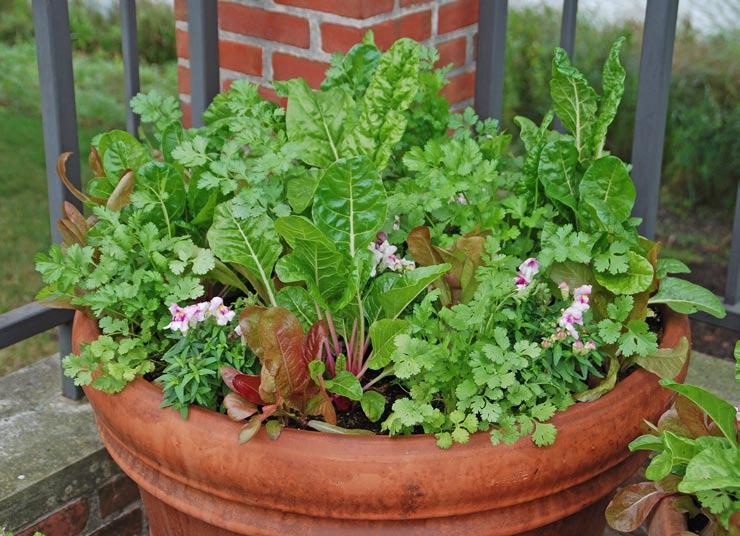
Above: A container filled with Santo cilantro, Peppermint swiss chard, Romaine lettuce, and Snapshot Plumblossom snapdragon. Photo courtesy of MelindaMyers.com.
Your Ad Here
Are you trying to reach thousands of gardeners in the greater DC region/MidAtlantic area? Washington Gardener Magazine goes out in the middle of every month. Contact kathyjentz@gmail.com or call 301.588.6894 for ad rates (starting from $200).
The ad deadline is the 10th of each month. Please submit your ad directly to: kathyjentz@gmail.com
Develop a Pest Management Plan Instead of Homemade Sprays
By Devon Johnson
When Stephanie Blevins Wycoff, a consumer pesticide safety expert with the Virginia Cooperative Extension, noticed damage on her tomato plants last spring, she didn’t reach for a pesticide. Instead, she began an investigation to find the culprit and determine what she should do to protect her plants.
“It turned out to be tomato hornworm, but by the time I found it, it had been parasitized by insect larvae and was no longer a threat,” said Blevins Wycoff, an extension associate with the Virginia Tech Pesticide Program.
As a scientist, Blevins Wycoff understands the important role all Virginians can play in protecting the commonwealth’s environment and natural resources. Using pesticides safely, correctly, and only when necessary by developing an integrated pest management plan is one way to advance the wellbeing of our environment and communities.
Home gardeners who identify frustrating and destructive garden pests might be tempted to turn to the internet, where recipes for homemade pesticide sprays have proliferated in recent years. Although they may be touted as curealls, mixtures made from household ingredients like dish soap or vinegar have not been vetted for effectiveness or tested for potential environmental impacts. They can also damage plants
by causing chemical burns.
“Before reaching for a chemical, we hope that people will try non-chemical control options first. That’s where integrated pest management comes into play,” Blevins Wycoff said.
Integrated pest management is a holistic, ecological approach to controlling pests. In this program, a gardener assesses plants to determine what the problem is, monitors for damage, determines at what threshold they need to take action, and attempts to prevent pest issues before implementing control methods, such as pesticides. With good planning, like encouraging beneficial insects or rotating crops to minimize disease, gardeners can also reduce the number of pest problems they see.
In many cases, pest or disease problems may also be controlled through non-chemical means; for example, by physically removing insects or diseased plant material. By identifying the pests and diseases they encounter in their gardens and monitoring for signs of these problems, gardeners can stay on top of pests before plants are damaged enough to reduce crop yields.
Although they can be annoying or unsightly, in some cases, pests or diseases may not cause enough damage to warrant intervention at all.
If gardeners do determine a pesticide is necessary, Blevins Wycoff recom-
mends local Virginia Cooperative Extension offices as the best source of information for treatment. As trained experts and members of your community, Extension agents and Extension Master Gardener volunteers can help gardeners put scientific ideas into action. They identify pest problems, determine the best course of action, and if necessary, make a recommendation for a specific pesticide application based on the situation.
“Gardeners should be skeptical of anything that promises to be a cure-all,” Blevins Wycoff said. “If you’re applying something that promises to kill all insects, you might also be killing beneficial insects. If you have identified a specific pest, you can look for a registered pesticide that targets certain pests and will not harm others. ”
Registered pesticides have been tested and approved by the EPA and have information for application, efficacy, and first aid. There is a lot of infrastructure in place to ensure these products are safe and effective when used according to their labels. Extension agents and other trained pesticide safety educators can help gardeners determine whether pesticides are appropriate and which ones to use.
“Just because you find something on the internet doesn’t mean it’s a good source of information,” Blevins Wycoff said. “Many times, you may not even need a pesticide to manage garden pests. You should always identify exactly what your problem is before taking action because you may discover that non-chemical control methods are effective.”
Extension Master Gardeners are trained volunteer educators who work in communities to share knowledge, implement research, and steward natural resources through research-based horticulture education. Contact local Master Gardeners through your local Extension office. o
Devon Johnson is Communications Project Coordinator with Virginia Tech.
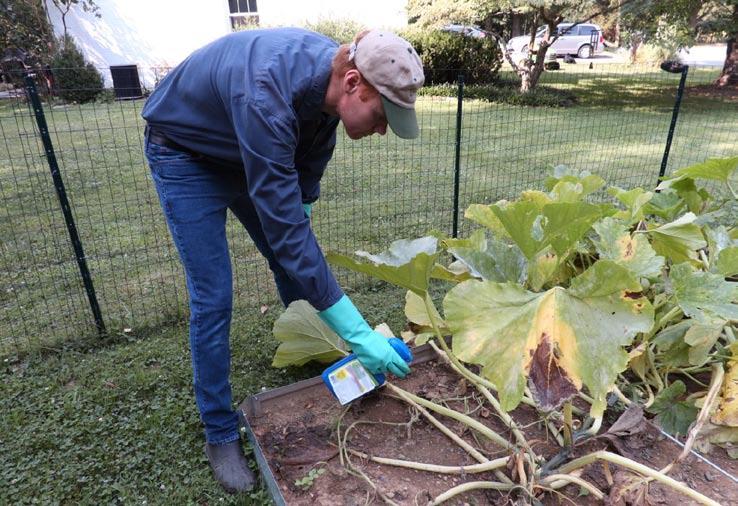
Above: The best way to deal with garden pests is to establish a pest management plan and evaluate when pesticides are necessary. Photo by Whitney Weaver for Virginia Tech.
Top Perennials for Bees
Perennials are more than just a beautiful addition to your yard. They create a sustainable foundation and come back year after year. This not only saves you time and money, but also supports biodiversity. Bees and other pollinators need flowers to survive. By choosing flowering perennials that are rich in nectar, you help nature and enjoy a colorful garden at the same time.
A varied planting scheme ensures a yard that blooms throughout the season. Combine early flowering varieties such as sage (Salvia) and catmint (Nepeta) with summer bloomers like Persicaria and Aster. These plants are both colorful and also rich in nectar and irresistible to bees and butterflies. This way, you provide pollinators with continuous food and create a vibrant color palette in your garden.
Here are the top perennials for bees:
• Anise hyssop (Agastache) — Fragrant flowers, a long blooming period, and irresistible to bees and butterflies.
• Aster — Blooms late in the season and offers an important food source for bees and butterflies in late summer.
• Avens (Geum) — Cheerful, colorful flowers that bloom for a long time and attract pollinators.
• Burnet (Sanguisorba) — Airy blooms with small, nectar-rich flowers that attract insects.
• Catmint (Nepeta) — Strong, low maintenance, and loved by pollinators.
• Coneflower (Echinacea) — A real eye— catcher that also attracts butterflies.
• Fleeceflowers (Persicaria)
— Abundant flowering with numerous small flowers that provide nectar for bees and butterflies, ideal for a natural border.
• Sage (Salvia) — Long-blooming and loves the sun.
• Scabiosa — Long-blooming and a real bee favorite.
• Stonecrop or Tall Sedum — Perfect for late-summer bloom and insects.
• Speedwell (Veronica) — Slender flower spikes full of nectar, loved by bees and butterflies.
• Culver’s root (Veronicastrum) — Tall, stately flower spikes that contain plenty of nectar and add vertical accents to the garden.
Tips for a bee-friendly garden:
• Choose variety: Combine plants with different blooming periods.
• No pesticides: Protect bees by avoiding chemicals.
• Create shelter: Leave a corner of your yard a little wild.
• Water matters: A shallow dish of water helps bees drink.
With perennials, you make your yard not only more beautiful, but also more future proof. They require little maintenance, are climate friendly and bring life to your outdoor space. The buzzing of bees and fluttering of butterflies create a sense of peace and connection with nature.
Start small: plant anise hyssop or create a border with sage. Add something new each season and watch your yard transform into a blooming oasis. This way, you make yourself happy and the bees as well. A win-win for people and nature.
Find more inspiration and information at www.perennialpower.eu. o
Got a Garden Question?
Got a gardening question you need answered? Send your questions to KathyJentz@gmail.com and use the subject line “Q&A.” Please also include your first name, last initial, and where you are writing from. Then look for your answered questions in upcoming issues.
Taking Care of Your Yard During a Heat Wave
As temperatures rise, so should the care of your yard’s lawn and landscape. However, it is important to ensure your yard is healthy before a heat wave hits.
“The healthier your grass, trees, and shrubs, the more resistant they will be to extreme temperatures. Lawns, in particular, that have healthy grass, leaves, and deeper roots are able to store more moisture,” said Kris Kiser, President & CEO of the TurfMutt Foundation.
Here are a few recommendations for protecting your yard during a heat wave.
1. Put the right plant in the right place. Always select appropriate plants and grass for your climate zone. This ensures the space is not only attractive, but will be more likely to thrive in your microclimate, be easier to maintain, and will support pollinators and wildlife. Consider water, sunlight, or shade requirements for your yard.
2. Water at the right times. The best time to water the lawn and plants is in the early morning or late evening when it is cooler.
3. Don’t over-water. It’s okay to make your grass work hard for its water. With little water, grass will send its roots deeper, seeking water. The grass then does a better job of sequestering carbon and releasing oxygen.
Also, most turfgrasses—and there are hundreds of species—will go brown during months when water is scarcer. It will “green up” again when conditions change.
4. Know what type of soil you have. The frequency and amount of water you apply to lawns and gardens vary based on its soil, clay type, organic matter, and type of plants and grass. Some soil holds water better than others; water molecules cling to fine particles of clay soil more than to the coarser particles of a sandy soil.
5. Cut grass long. When mowing, don’t cut more than one-third of the grass height. By keeping it longer, turfgrass can develop stronger roots and a greater tolerance to heat and drought stress.
6. Keep foot traffic minimal. For already stressed grass, foot traffic can cause damage. Keep people off the lawn while the heat persists.
For more tips, visit turfmutt.com. o
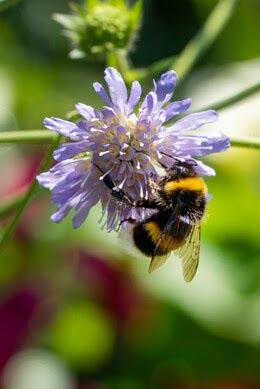
Photo c ourtesy of Perennial Powe r.
New Plant Spotlight
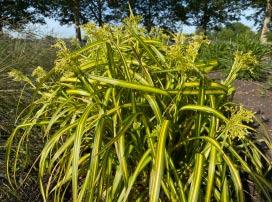
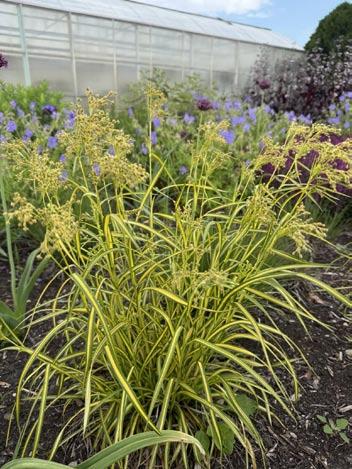
Scirpus pendulus ‘Stars and Stripes’
Common Name: Snow in Summer
Introducing a new nodding bullrush. This brightly variegated bullrush looks similar to a Carex and is a grass-like plant, native to most states and provinces in North America.
The strap-like leaves, 3/8 of an inch wide and 12 inches long, have bright yellow centers with green and gold streaking in strong green edges.
In July, butter-yellow stems emerge and grow to 24" with star-like clusters at the tips. Scirpus ‘Stars and Stripes’ is an easy and fast grower.
It has a long lifespan, 10" deep rhizomatous and fibrous roots. It is slow to spread and best located on wet shorelines, swamp margins, wet ditches, and meadows.
Find out more about Scirpus ‘Stars and Stripes’ from the Intrinsic Introductions website at https://www. intrinsicintroductions.com. o
Quick Links to Recent Washington Gardener Blog Posts
• Blackberry Harvest
• Meet the New Summer 2026 Interns
• Growing Roses Naturally
• Blue-Eyed Grass Plant Profile
See more Washington Gardener blog posts at WashingtonGardener.blogspot.com o
June Garden To-Do List
• Direct-sow annual flower and vegetable seeds.
• Water newly planted trees and shrubs weekly or as needed.
• Contact a Certified Arborist to have your trees’ health inspected.
• Check on your container plants daily and keep them well-watered.
• Watch for insect and disease problems throughout your garden.
• Mow in the early evening and cut off no more than one-third of the grass height at one time. Leave clippings on the ground to provide nutrients.
• Add barley straw (in a bale or ball) to your pond to improve water clarity.
• Take cuttings from azaleas and roses to start new plants.
• Harvest herbs to use in salads and summer dishes.
• Try a few new tropical plants on your patio.
• Shape your evergreens and hedges. Prune boxwoods.
• Look for slug trails in the early morning and put out slug bait as needed.
• Tie up climbing roses and other wandering vines.
• Fill in bare spots in the garden with annuals.
• Deadhead spent flowers to encourage reblooming.
• Prune flowering shrubs as their flowers fade—last chance to do so for fallblooming camellias.
• Spray roses with Neem oil every two weeks.
• Start a sunflower patch with help from a few kids.
• Harvest strawberry beds daily.
• Cut a few flowers to enjoy at your workplace.
• This is the perfect time to apply grub control.
• Change the water in your birdbath daily and throw a Mosquito Dunk (or Mosquito Bits) into any standing water.
• Put in supports for tomatoes and tall-blooming plants such as dahlias.
• Order spring-flowering bulbs to arrive for planting this fall.
• Take photos and update your garden journal.
• Inspect your garden hose for leaks and tighten all connections.
• Weed.
• Sow beets, beans, cucumbers, pumpkins, and squash for fall harvesting.
• Sharpen your lawnmower blade.
• Avoid using pesticides or any chemicals near your water garden.
• Make hummingbird food by boiling 2 cups sugar in 4 cups of water.
• Turn your compost pile.
• Clean up fallen fruit and berries.
• Cover berry bushes and fruit trees with bird netting.
• Dig up garlic when the tops turn brown. Place in a well-ventilated room or a dry, shady spot to cure for three weeks, then store.
• Fertilize your azaleas and rhododendrons, and monitor them closely for any lacebug damage.
• Sow heat-tolerant greens like Swiss Chard and mustard greens in part-shade.
• As the heat and humidity move in, take it easy by working in the morning or early evening to avoid intense sun. Leave the big projects for this fall. For now, concentrate on maintaining the beds you’ve already established and nurturing your new plantings. o
The Urban Garden: 101 Ways to Grow Food and Beauty in the City is all about small-space gardening solutions!
By Kathy Jentz and Teresa Speight
Published by Cool Springs Press/Quarto Homes
Order it today at: https://amzn.to/3yiLPKU
GardenDC Podcast
The GardenDC podcast is all about gardening in the greater Washington, DC, and Mid-Atlantic area. The program is hosted by Kathy Jentz, editor of Washington Gardener Magazine, and features guest experts in local and national horticulture. The latest episodes include interviews with experts on Landscape Design and Growing Roses Naturally.
You can listen online at https:// washingtongardener.blogspot.com/ or on Spotify, Apple, etc o
Classes, Events, and Plant Shows/Sales
• Starting on Monday, June 8
Extended Summer Hours at the USNA
The Friends of the National Arboretum (FONA) is thrilled to host summer evening hours at the U.S. National Arboretum (USNA) in Washington, DC. once again. The National Arboretum will stay open until 8:00pm every weekday through Friday, August 28. The arboretum will close at 5:00pm on Saturdays and Sundays. See details at https:// www.fona.org/.
• Thursday, June 11, 10–11:15am Rose Garden Tour—Redesign Updates
This tour, led by Tour Guide: Kristin Davey, horticulturist, Brookside Gardens, will highlight updates in the rose garden two years after its redesign and replanting. You’ll learn how Brookside Gardens has shifted to an organic approach with managing disease and insect-prone plants like roses. Explore the design concepts used to mix native perennials with traditional non-natives. Fee: $12 per person. Details at https:// montgomeryparks.org/events/rosegarden-tour-redesign-updates-rose-garden-tour-redesign-updates/.
• Wednesday, June 17, 10am—12n Heirloom Collard Seed Saving
Learn the tradition of seed saving with heirloom collards from the Kitchen Garden at the U.S. Botanic Garden in Washington, DC. Come hear about the significance of heirloom plants in our gardens and techniques for growing enough seed to last you for many seasons. Led by Lola Bloom, Urban Agriculture Education Specialist. Intended audience: all levels. Location: Conservatory Garden Court FREE: No registration needed. Please note: This is a drop-in experience and will be repeated several times over the course of the designated program time.
• Saturday, June 20, 2–3pm Magical Botany—Science to Story Discover fascinating plant properties—fragrant herbs, colorful petals, and more—that have inspired magical stories. Then create your own “magical potion” using plant elements in a
creative activity. Held at Green Spring Gardens, 4603 Green Spring Rd., Alexandria, VA. Fee: $18 per person. Register online at http://www.fairfaxcounty. gov/parks/parktakes.
• Saturday, June 27, 9am–12n 6th Annual UP Meadow Day
Hosted by the Town of University Park, this all volunteer, free event will take place at the UP Native Wildflower Pollinator Meadow on Adelphi Road, across from the Hyattsville Library in University Park, MD. The event features family-friendly activities and entertainment, including a pollinator parade, plant and seed giveaways, caterpillar adoptions, exhibitions from local pollinator and wildlife education groups, and light refreshments. Please leave dogs at home for this specific event. For more information, contact upmeadowday@gmail.com.
Looking Ahead
• Saturday, August 22, 9:00am–4:30pm, and Sunday, August 23, 12:00–2:30 p.m.
Annual Begonia Show and Sale
Feast your eyes on this free show, sponsored by the Potomac branch of the American Begonia Society. Be tempted with splashes of color and shapes for homes, terrariums, and greenhouses that last long after frosts have put outdoor gardens to bed. The accompanying sale offers a wide variety of begonias, including tropical and subtropical species. Free. Held at Green Spring Gardens, 4603 Green Spring Rd., Alexandria, VA. See further details at www. friendsofgreenspring.org.
Event Listing Updates
See updated event listings on the Washington Gardener discussion list. Join by emailing WashingtonGardenersubscribe@googlegroups.com
How to Submit Events
To submit an event for this listing, email washingtongardenermagazine@gmail. com with “Event” in the subject line. Our next deadline is June 15 for the July 2026 issue, for events taking place after June 5 o
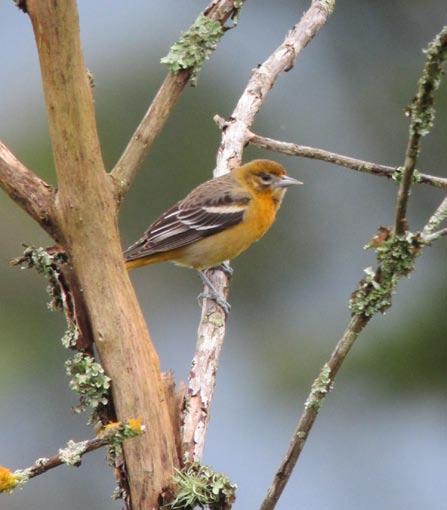
“Hanging” with the Baltimore Orioles
By Rick Borchelt
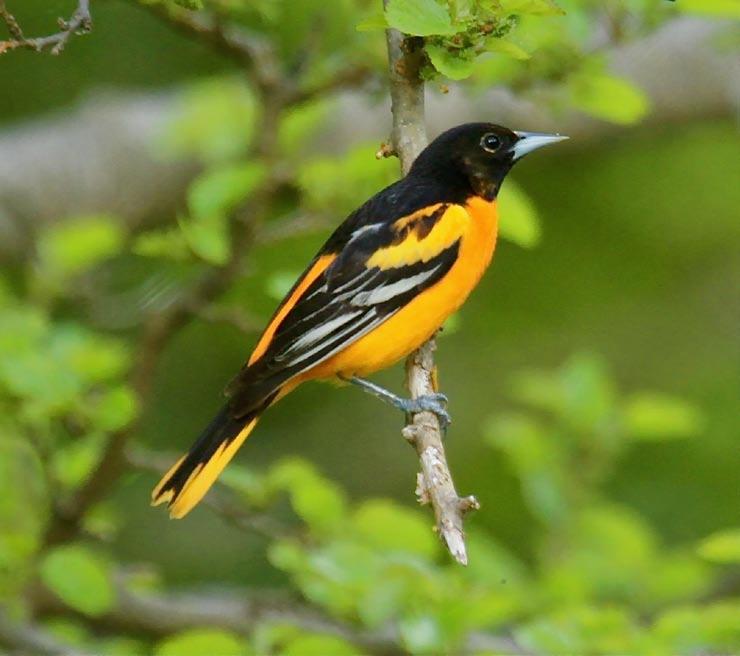
The colors of Lord Baltimore, Cecil the 2nd Baron Baltimore, who established the Province of Maryland in 1634, are well-known to almost everyone in the DMV: The bright orange, black, white, and red of Lord Baltimore’s family coat of arms still fly high in Maryland’s flag. If not from the flag, people recognize the vivid orange and black colors of the mascot of the Baltimore Orioles baseball team. However, this mascot has a real-life counterpart as well: the actual bird called the Baltimore oriole.
True to its namesake lord, the male Baltimore oriole (Icterus galbula) is arrayed in the same brilliant orange, verging at times on red, accented with deep black on the head and wings. The bird’s white wing patches complete the Baltimorean ensemble.
Mark Catesby was so struck by the bird’s resemblance to Lord Baltimore’s coat of arms that he originally named this oriole the Baltimore-Bird in his early 18th-century magnum opus of bird paintings, The Natural History of Carolina, Florida, and the Bahama Islands. Carl Linnaeus, the Swiss botanist who formalized Latin nomenclature, named the species Coracias galbula in 1758, believing it was related to the Old World
bee-eaters and rollers he had already described under the genus name Coracias
In fact, the New World orioles aren’t closely related to Coracias or any Old World birds. They are part of a group of brightly colored birds found only in the Americas that number among their tribe 30-odd species now assigned to the genus Icterus. Even the name Icterus is a geographic throwback to Europe; from the Greek, meaning jaundiced, or yellow. To the Greeks, the Ikterus was a golden bird (probably the Eurasian golden oriole, Oriolus oriolus, no relation to Catesby’s Baltimore-Bird) the sight of which, folk medicine held, would cure the liver malady that turns people’s skin yellow.
Even the species name galbula hearkens back to the Old World: It’s Latin for “a small yellow bird”—again, possibly Europe’s golden oriole. Both Old and New World birds now confusingly share the common name oriole, stemming from the Latin for golden, aureolus
Despite their brilliant colors and how common they can be in our local yards and parks, Baltimore orioles are more often heard than seen. The males have a loud, sweet, burbling song they deliver
from treetops that is often mistaken for a robin’s. Interestingly, the female also sings, voicing a similar but softer song, and the two can sometimes be heard in duet.
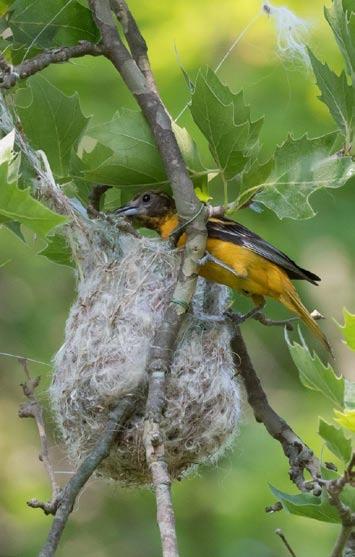
The female is a watered-down yellow-orange, much less colorful than the adult male, and young males look like females until they get their gaudier masculine colors in their second year. The more somber colors are presumed to protect young birds from predators until they get their adult wits about them, and camouflage females when they’re building or sitting on the nest. And what a nest it is! It resembles more than anything else a gray athletic tube sock hanging from a forked stem, well out from the trunk, preferably over a stream, pond, or lake. This location seems to offer some protection from that ace predator of nesting songbirds, the surprisingly arboreal black rat snake.
Orioles favor tall trees with long horizontal limbs, like sycamore, willow, and cottonwood; their preferred nest tree used to be American elm before the tree was virtually wiped out by Dutch elm disease. The National Park Service estimates that populations of Baltimore orioles have declined by 1.5 percent a year since 1980, principally because of the loss of prime American elm nest sites.
The female oriole knits her sturdy and water-resistant sack of fibrous plant materials—often a foot or more long—and lines it with feathers and soft grasses. In this pendulous nest, she will lay three to seven eggs and brood them by herself for about two weeks before they hatch. The male gets back in the parenthood act again at this point, helping feed and care for the young until they leave the nest another two weeks later.
Unlike most other songbirds in our area, orioles don’t feed their young whole caterpillars or other insects. A lot of the diet of adult orioles is made up of flower nectar and ripe fruit, in addition to insects, and it’s this soupy mix that they regurgitate for their young.
So dependent on nectar are Baltimore orioles that they time their return from wintering grounds in Central and northern South America with the flower-
A male Baltimore oriole decked out in Lord Baltimore’s family colors.
Photo by Tony Castro via Wikimedia.
ing of our native tulip poplar, Liriodendron tulipifera, and its veritable fountain of nectar in the open, cup-like flowers. The orioles’ northward migration follows the flowering of tulip poplars from the Gulf states into New England. One of the surest ways to see a Baltimore oriole is to lure it from the trees to an offering of halved oranges or grape jelly. Bird feeder supply stores offer a variety of tailor-made jelly feeders, but in reality, a shallow glass jar suspended on a wire clothes hanger does the trick just as well. Grape is the preferred jelly of orioles; unlike robins and waxwings and other fruit-eating birds, they’ll turn their beaks up at green grapes, apple jelly, or other green or yellow fruit and stick with deep purple.
Sadly, Lord Baltimore never visited the colonies to see the bird that would come to bear his name, but if he had, he would surely have respected the Yankee ingenuity of this master weaver, wearing his colors. o
Rick Borchelt is a science and natural history writer, field naturalist, and garden and botany enthusiast. Reach him with any questions at rborchelt@gmail.com.
Stewartia
By Kathy Jentz
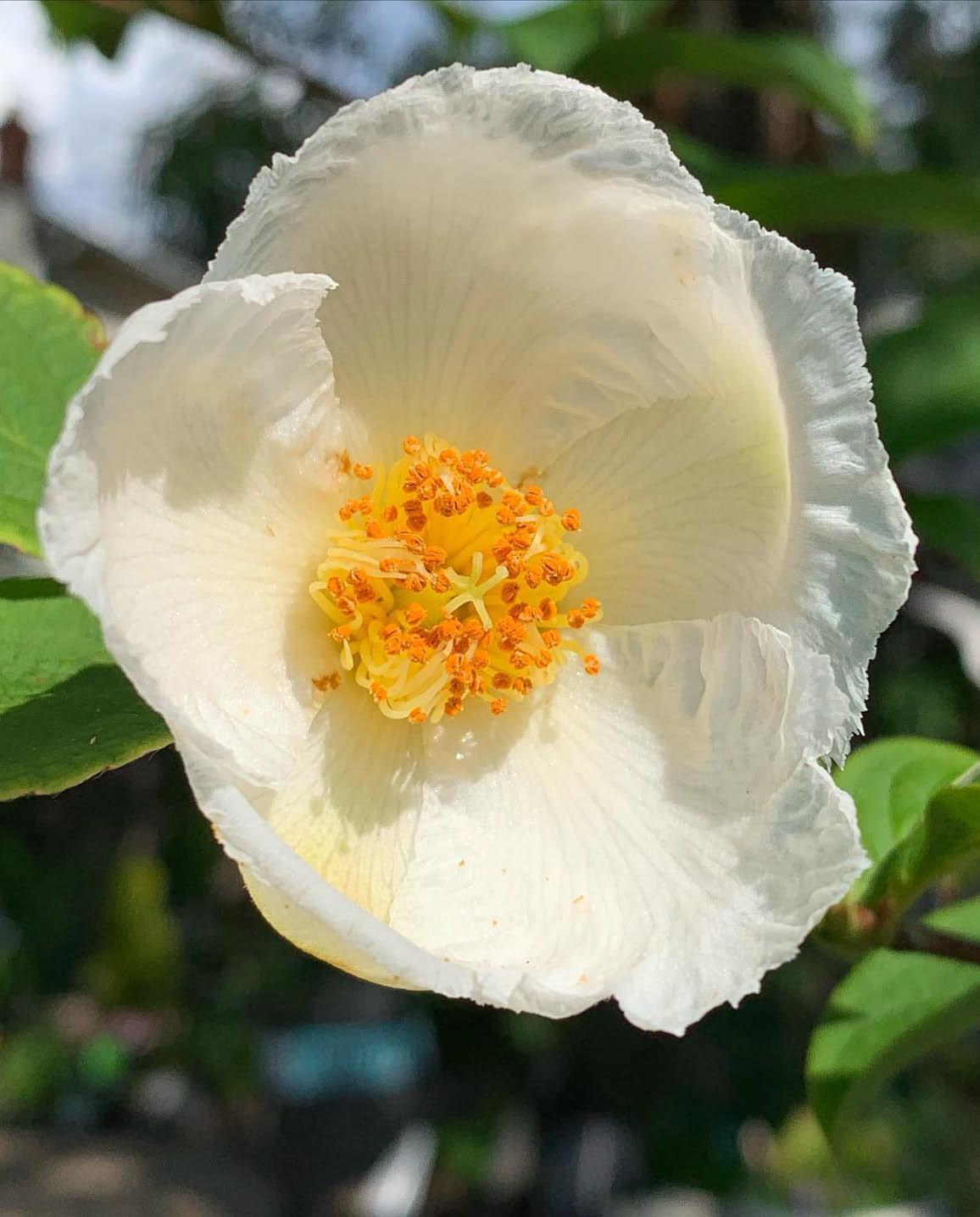
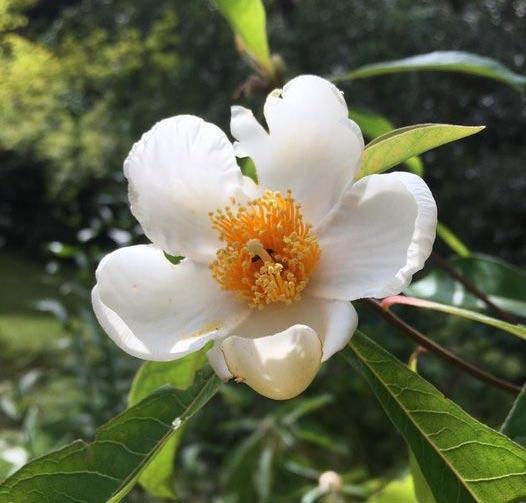
Stewartia (Stewartia spp.) is a small tree that is known for its ornamental flower buds, its camellia-like white flowers, fall color, interesting seed pods, and attractive, exfoliating bark in winter.
It is called the “Summer Dogwood” in the southern U.S. due to its late spring into early summer blooming period.
There are both Asian and native kinds of Stewartia. In fact, there are two native species and 12 recognized Asian ones—some with branches that zig-zag, some shrubby, and two species with fragrant flowers. Silky Stewartia (S. malacodendron) and Mountain Stewartia (S. ovata) have purple anthers with blue stamen. The Asian species have golden-yellow centers. The plant most available in nurseries is the Japanese Stewartia (Stewartia pseudocamellia).
Stewartia requires consistent watering during its first year. Pick its location in your garden carefully because transplanting has a low survival rate.
Stewartia does like well-drained, organic soil, and a sheltered spot, with protection from the afternoon sun and the north wind. It does not like wet feet. An understory woodland habitat tree, it will thrive under similar conditions in your garden.
Pruning is not required. Allow it to develop its natural structure and shape, pruning only to remove dead, broken, or crossing branches—or to remove a waterspout.
Stewartia is known to be pest-free as well as non-aggressive. It grows to about 30 feet tall and is highly recommended for small space gardens. Read even more about Stewartia in our July 2015 issue. o
Kathy Jentz is the editor of Washington Gardener
Oriole at the nest in a sycamore tree.
Photo by Bonnie Ott.
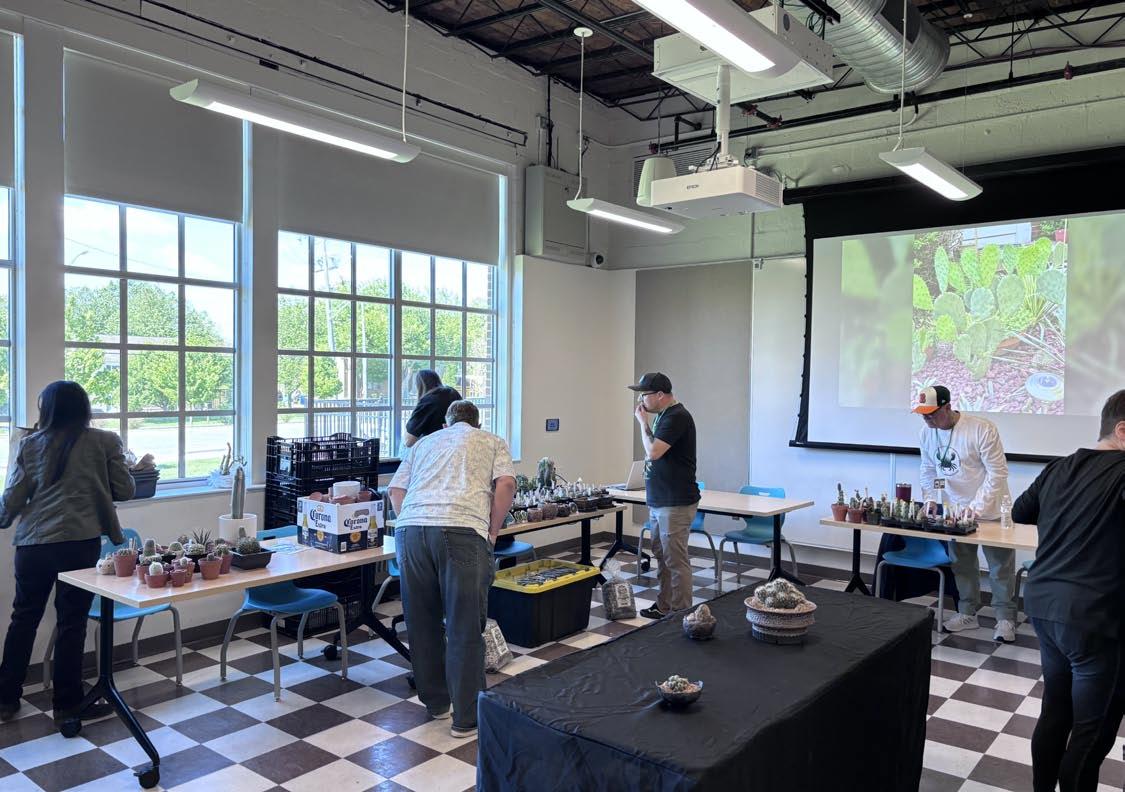
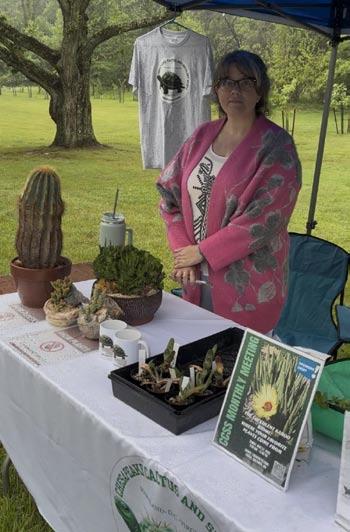
Meet the Chesapeake Cactus and Succulent Society
By Aicha Bangoura
For decades, the Cactus and Succulent Society of America (CSSA) has made an effort to promote knowledge, appreciation, and conservation of cacti and succulents in cultivation and in wild populations. With the society’s various affiliates, the message is able to reach a broader audience.
The local chapter of the CSSA is the Chesapeake Cactus and Succulent Society (CCSS), which primarily serves plant enthusiasts from Maryland; Washington, DC; and Virginia (DMV). “We’re continuously expanding partnerships with botanical gardens, universities, vendors...to create exciting and rewarding experiences for our members,” said Stan Vornovitsky, president of CCSS.
Vornovitsky spoke about the purpose of the society. “We’re 100 percent judgement-free. All that it matters is that you have a passion for cacti and succulents,” he said.
“If you kill the succulent, that’s okay, because guess what? Everybody does,”
said Emilie Bell, a member of the society.
“We’re an all-inclusive group, so we have people of all ages come in, people from all over the DMV area, and we have a lot of people who are interested in different genres of plants, and people who care for plants that are outside of cactus and succulents as well,” Bell said.
Vornovitsky expressed how it is essential to educate the public about cactuses. “These are absolute treasures of nature, and they’re popular all over the world, and they’re truly amazing things to get to know,” he said.
Vornovitsky explained future goals for the chapter. “We definitely want more members. We definitely want more exciting experiences and rewarding experiences for our members,” he said. “We’re trying to form a financial base to be able to offer scholarships and get more young people interested in this art of growing and cultivating these wonderful things.”
Bell also encouraged people to join the society. “There is such a free exchange of information…a genuine love for these plants. Learning how to take care of them, learning how to grow them outside of their natural environment, is huge because the vast majority of what we grow can’t be put on the ground outside here,” she said.
“It’s really great,” Bell continued. “There are some successes and there are some failures, but, you know, we all learn from them.”
Brian Oliver, vice president of the CCSS, recently participated in the Chesapeake Cactus and Succulent Society Spring Show and Sale at the Harriet Tubman Cultural Center in Columbia, MD, and spoke about what stood out for him. “We already have been getting ourselves out there in terms of marketing, where we had a very good showing, a lot of support,” he said. “That really makes me proud…that moment of seeing all those people appreciating what I was demonstrating really felt good.”
Oliver said his interest in plants began years ago. “I’ve always been someone who is a collector of things, and I’m also someone who, when I find something I’m interested in, I deep-dive into it,” he said. “I can’t just have one. I have to have them all. I have to understand it completely.”
Oliver said conservation is the main reason to promote cactuses and succulent plants. “For those of us who are into the hobby, it is easy to get excited and want interesting and cool plants, and some of those plants out there are poached. Some of those plants are not sourced in an ethical manner,” he said.
“I think the CSSA is an amazing society, especially with their conservation work that they’ve done throughout the years,” he said.
Oliver knows what he wants people to get from the CCSS. “I want people to be inspired and feel connected at whatever level,” he said. “To be able to step back and just enjoy the form of a plant and… the slow growth of a plant… I think it’s really a cool thing.”
Find out more about the Chesapeake Cactus and Succulent Society at https://chesapeakecactus.org/. o
Aicha Bangoura was an intern in the Spring 2026 semester with Washington Gardener Magazine.
Photos by Stan Vornovitsky.
“Inspire. Connect. Grow.”
The National Garden Bureau is a nonprofit organization that exists to educate, inspire, and motivate people to increase the use of garden seed, plants, and products in homes, gardens, and workplaces by being the marketing arm of the gardening industry. Our members are experts in the field of horticulture and our information comes directly from these sources. Find out more at https://ngb.org/
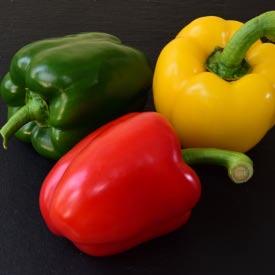
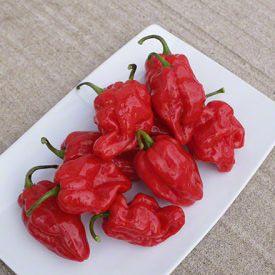
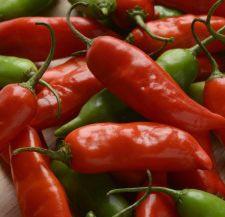
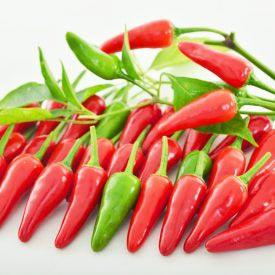
2026 is Year of the Hot Pepper
Peppers (Capsicum spp.) are a globally cherished and incredibly diverse crop— domesticated over 10,000 years ago in the Americas—that continues to bring essential flavor, color, spice, and unique regional identity to palates and gardens on every continent.
“Peppers truly spice up our lives,” said Diane Blazek, Executive Director of the National Garden Bureau. “With the diversity of colors, shapes, and heat levels available today, there is a perfect pepper for every palate and every garden, from a tiny balcony container to a sprawling backyard plot.”
The genus Capsicum was domesticated in Mexico and the Andean regions of South America. Human selection for culinary and aesthetic traits occurred over the last 10,000 years. Continued plant breeding for commercial markets has resulted in high-performing, uniform varieties of jalapeno, bell, snack, and poblano peppers.
Today, hot and sweet peppers are consumed on every continent and help create regionally distinct cuisine. Farmers and home gardeners alike share an affinity for this wildly diverse crop because it truly spices up our lives.
There are 25–30 known species of pepper, but globally, we only cultivate and consume closer to five of them: C. annuum, C. chinense, C. baccatum, C. frutescens, and C. pubescens
Capsicum annuum
Extremely diverse species produce a wide range of sweet and hot peppers in various shapes and sizes. Market classes include bell, snack, jalapeno, and poblano.
Capsicum chinense
Large plants produce extremely hot, small fruits, including “super-hot” varieties of habañeros.
Capsicum baccatum
Vigorous plants with fragrant, hot fruits of many shapes. Flowers distinguished by a green-yellow corolla ring.
Capsicum frutescens
Produces small, hot fruits, often with more than one fruit per node. Most notable for the ‘Tobasco’ variety.
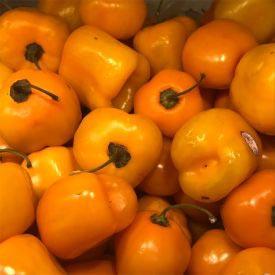
Capscium pubescens
Cold-tolerant species that produces hot, flavorful fruits distinguished by purple corollas and black seeds. Most notable for rocoto types and the ’Manzano’ variety.
The “Year of the Hot Pepper” spotlights high-performing varieties—many of them All-America Selections Winners (https://all-americaselections.org/winners/)—that combine aesthetic beauty with kitchen utility:
• For the Chef: Emerald Fire F1
A deep-green, disease-resistant jalapeño perfect for stuffing or fresh salsa.
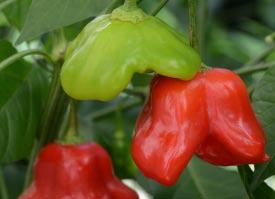
• The Conversation Starter: Mad Hatter F1 (pictured above)
A disc-shaped pepper with a sweet, citrusy finish and just a touch of heat.
• The Landscape Star: Buffy F1
An ornamental powerhouse that packs a 500,000 Scoville punch.
• The “Trickster”: Roulette F1
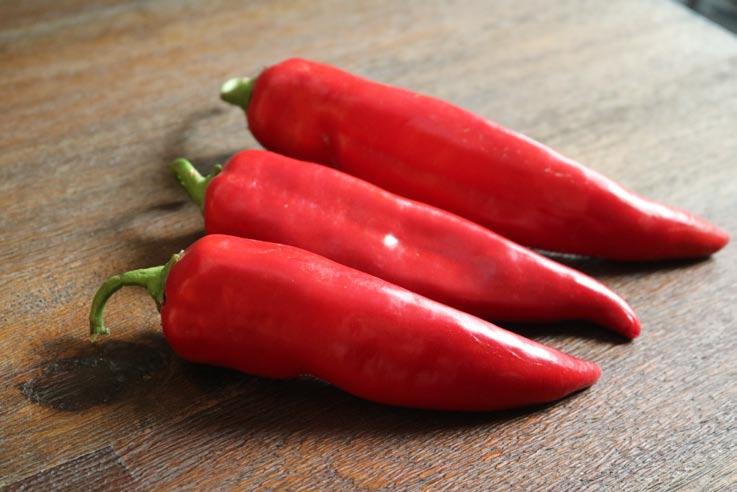
A red habañero that looks dangerously hot but is actually sweet—perfect for those who love the aroma without the burn. o
Photos and text are courtesy of the National Garden Bureau.
10 Hot Pepper Growing Tips
1. Select varieties that will ripen in your growing season. Some varieties of hot peppers (especially C. chinense and C. baccatum) can take 100+ days to ripen.
2. Are you sensitive to spicy foods? Will you actually eat these peppers? Would you like to dry them? Think about how you plan to use your peppers and choose your varieties accordingly. There are plenty of options for ornamental peppers if you’re not interested in eating them.
3. Strong Seedling = Hearty Harvest. Give your peppers a fighting chance by either purchasing strong seedlings from your local garden center or investing in a good seed-starting system at home.
4. Seedlings with fruit already on them have probably either been in the same container for too long or were stressed into flowering. If your seedling has flowers or fruit before transplanting, be sure to remove these.
5. Peppers are extremely cold-sensitive. Check your last frost dates in the spring before planting them outside. Peppers should be started indoors 6–8 weeks before the last frost. Use a heat mat for uniform germination. Do not transplant until nighttime temperatures are consistently above 55°F.
6. Avoid planting your peppers too close together. Densely planted peppers will stretch and be more fragile.
7. Consider support for the plants that will bear a heavy fruit load. Cages, stakes, and trellis wire can all help support a pepper plant’s growth.
8. Think about how you want to manage pests and disease throughout the season. Should you set some insect traps? Do you feel comfortable applying home pesticides? Thinking ahead will help in reducing stress (and pests) later.
9. Wait to harvest peppers until they have fully changed color (unless, of course, you want a green pepper to eat!).
10. Hot peppers contain capsaicin, which can be a skin and eye irritant. To protect yourself, wear gloves when harvesting and processing any hot peppers.
For more information about the Year of the Hot Pepper, visit https://ngb.org/year-ofthe-hot-pepper/.
The Azalea Society offers membership to anyone with an interest in azaleas, from home gardeners, collectors and students to plant professionals. The Azalea Society website (azaleas.org) is the source of information about azaleas.
“Groundcover Revolution is a must-have book for anyone who is interested in having less lawn, fewer weeds, and reduced mulching. The properties charts will save the reader time and money, the pictures provide inspiration, while the detailed plant portraits give the focused information needed for creating beautiful, functional landscapes.”
―C.L. Fornari, GardenLady.com
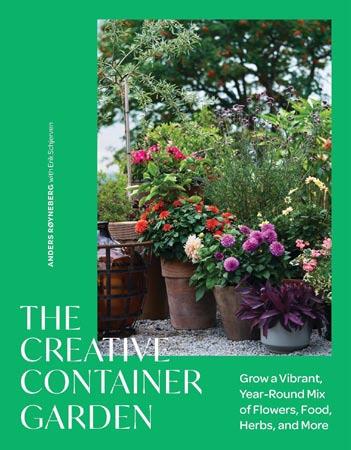
The Creative Container Garden: Grow a Vibrant, Year-Round Mix of Flowers, Food, Herbs, and More
Author: Anders Røyneberg
Publisher: Timber Press
List Price: $30.00
Order Links: https://amzn.to/4frtowD and https://bookshop.org/ a/79479/9781643265391
Reviewer: Lauren Bentley
The Creative Container Garden by Anders Røyneberg provides insight into how readers of any place—urban or rural—can cultivate a gardening space for themselves.
“It doesn’t matter where you start,” Røyneberg says in his introduction. “Whether you live in an urban area with a balcony and courtyard or in the countryside with a garden and terrace, you can create your own container garden.”
Norway-based Røyneberg, himself has lived all over, with various limitations on space and plants, but has always found a way to have an expansive variety of plants with just a few pots. If he sounds vaguely familiar to you, he is known on Instagram as Arctic Gardener.
The book starts off by covering the many benefits of having outdoor containers: requiring little space, beautifying your outdoor space, offering creative expression, minimal weeding, and many more. However, Røyneberg says, plants in small spaces might require more care and supervision with watering and fertilizer.
The first chapter covers how to choose containers and plants. “I, who
have been tinkering with pots and plants since I was young, think it can be rather challenging and complicated at times,” he says.
Røyneberg goes over factors to consider when choosing both, such as time, plant choice, space, cost, and climate.
The second and third chapters cover caring for container plants and planting in pots. Røyneberg gives useful tips on what type of soil to use, drainage aids, and how to garden on a budget.
These tips highlight my favorite aspect of the book, which is its accessibility. As a reader, it is very clear to me that Røyneberg believes gardening can and should be accessible to everyone.
Often, it’s too easy to dismiss gardening as a hobby that requires lots of time and money for purchasing the perfect space, tools, and plants. However, this book is a reminder that it shouldn’t take much to make a garden you’re proud of with your own plants and containers.
The last four chapters of the book cover pest control, winter, caring for containers year-round, and container garden projects. The final chapter is another one of my favorite elements of this book.
In chapter seven, Røyneberg has many container projects you can try for yourself. If a beginner is reading it, you can easily pick a project that suits you and follow his steps.
The projects include ornamental and edible plants, as well as a section meant to be purely creative.
Each project section is easy to follow—again demonstrating the accessibility of gardening. Røyneberg tells readers what materials they might need, what care is required, and steps to take in actually potting the plant.
Overall, I think this book could be for anyone. If you find yourself wanting to garden, but are struggling to navigate finding the space and proper containers, I especially recommend it. This book will certainly provide anyone with a great start on their own container garden. o
Lauren Bentley was an intern with Washington Gardener Magazine during the spring 2026 semester
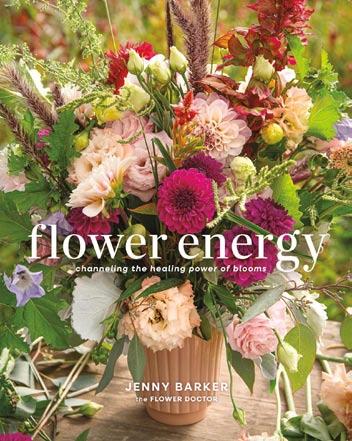
Flower Energy: Channeling the Healing Power of Blooms
Author: Jenny Barker
Publisher: Running Press
List Price: $32.00
Order Links: https://amzn.to/4ukhpVs and https://bookshop.org/ a/79479/9780762489060
Reviewer: Aicha Bangoura
Flower Energy by Jenny Barker is all about the healing attributes of blooms.
Barker, who is from Southern California, describes how her interest in flowers began from childhood in the introduction. It’s heartwarming to read how those in her family influenced her desire in blossoms.
As you read, it seems like Barker botanizes with flowers like nobody’s business. She describes how she would spend time outdoors and connect with blooms in a spiritual way at a young age.
Barker is the epitome of independence. She writes about several jobs she juggled in her life before her flower business, including one in a bakery. Barker describes how a baking experience was the moment she found her calling for flower arranging.
Throughout the book, Barker writes about how flowers serve a sense of serenity. While I can’t prove this, I believe in what she writes about because of her vulnerability.
Barker says she earned her master’s degree in spiritual psychology and explains how her “flower prescriptions” have evolved over the years.
This book is like a memoir as Barker reflects on her childhood, discusses the development of her business “Magical Blooms,” and provides anecdotal career moments.
The book contains images of Barker in her childhood, adolescence, and adult years, which gives it an even more raw and personal vibe.
I learned a lot of cool and intuitive things from Barker. I always thought of flowers as attractive plants that might smell nice at times, but after reading this book, I recognize the deep meaning of them.
Barker encourages readers to view flowers differently after reading the book, and I might just do that.
On another note, the images of various flowers in the book are captivating and add a lot of character to the pages, which I appreciate.
Barker maintains that flowers are beneficial for ourselves, but if you aren’t interested in reading about using flowers for wellness, Barker also provides tips on flower designing in Chapter 8.
While reading the steps, I didn’t have the impression of a tedious handbook. The section about roses was interesting because Barker explains the many essences that the plant comes in by its different colors.
Barker also discusses the importance of inspecting cut flowers that you buy from a grocery store and other florist shops for sustainability and quality. This section is helpful because I see flowers at a local grocery store and I would want to know whether they are fresh if I purchased them.
While she promotes her flower shop in the book, it’s not only about Barker. Rather, it is about the healing energy that flowers can exude.
As someone who has also faced anxiety and troubling moments, I admire Barker’s optimism and free-spirited thoughts.
I recommend this book to anyone who wants to connect with blooms or know what type of flowers you should get for any occasion or to evoke a specific feeling. o
Aicha Bangoura was an intern with Washington Gardener Magazine during the spring 2026 semester
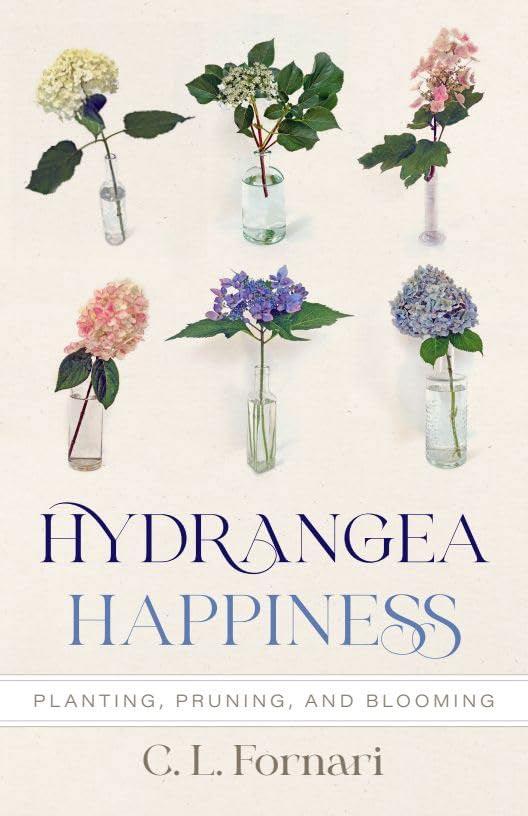
Hydrangea Happiness: Planting, Pruning, and Blooming
Author: C. L.
Fornari
Publisher: Brandeis University Press List Price: $27.95
Order Links: https://amzn.to/3RR1fFp and https://bookshop.org/ a/79479/9781684583102
Reviewer: Marsha Douma
For hydrangea lovers, Hydrangea Happiness is a delightfully comprehensive and artfully presented book that would be an asset to any garden library.
Worldwide, it is estimated that there are between 25 and 75 different hydrangea species. This book limits itself to the six species most commonly grown in North America, with each species having its own chapter. There is also a general chapter exploring how to grow hydrangeas in pots, use root cuttings to produce more plants, best harvest fresh flowers, and dry flowers for future use. In this age of misinformation, the final chapter tackles the erroneous myths about the growing, pruning, and fertilizing of hydrangeas. Gardeners grow hydrangeas for their gorgeous flowers. Therefore, and perhaps most importantly, the book details the best pruning techniques for the various species and whether soil amendments are needed. This is because some hydrangea species flower entirely on the current season’s growth, called new wood. Others flower on last year’s stems, called old wood. In addition, amending the soil by making it more acidic or alkaline will affect the flower color of some species, but not others.
Smooth hydrangea (Hydrangea arborescens), which are native to our area, generally have large white flowers, although some of the newer cultivars are pink. The color of the H. arborescens flowers is not dependent on the pH of the soil. ‘Annabelle’ is an old variety of H. arborescens, and perhaps still the cultivar most commonly found, although there are other cultivars as well. Mt. Cuba Center recently completed a trial of native hydrangea cultivars, including this species. The huge flowers stay on the plant for a long time, typically starting out green, changing to white, then back to green, giving the flowers a long life. The new flowers
grow on this season’s growth, therefore it is said the flowers grow on new wood. The plants in this species can be pruned hard in the fall or winter, if they are getting too large, with no loss of flowers the following spring. But sometimes that causes the stems or canes to not be strong enough to support the large and heavy flowers in a storm. To solve that problem, the author illustrates a clever way to stake the plant so it still looks natural, but doesn’t flop over.
Mophead hydrangea (Hydrangea macrophylla) is a popular species, producing large and gorgeous blue or pink blooms. Importantly for pruning, this species makes its buds for the following season the same summer it is concurrently blooming. These new buds appear the following spring on the old stems. It is these buds that formed last season that will become this season’s flowers, leaves, and stems. Therefore, pruning should only be done once the new spring growth has started and it is obvious what is the new growth and what is dead wood from the previous season. If Hydrangea macrophylla is pruned in the fall or winter, all the buds for the following season will be cut off, and therefore all the potential flowers for that next season will be cut away.
The chapter devoted to growing this variety has pictures of both large beauBook Reviews continued on page 22
Book Reviews continued from page 21
tiful shrubs, plus early spring buds illustrating where and how to safely prune. The author also fully discusses ways to amend the soil for the Hydrangea macrophylla to grow pink or blue flowers. The essence is that if the soil is more alkaline, which means the ph is higher, the flowers will be pink. Acidic soil, with a low pH, will result in blue flowers.
The other species fully explored are Hydrangea paniculata, which are often grown as a tree by grafting; Hydrangea petiolaris, a climbing variety; Hydrangea serrata, commonly called mountain hydrangea; and the oakleaf hydrangea (Hydrangea quercifolia).
Among many other interesting characteristics of this popular plant family, this book importantly and clearly explains how and why pruning and fertilizing is species dependent. With this knowledge, I have now safely and happily pruned out the dead wood from my Hydrangea quercifolia plants, left the Hydrangea arborescens alone, and understand why the colors in my Hydrangea macrophylla vary. Perhaps that is why the book is entitled Hydrangea Happiness o
Marsha Douma is a retired dentist and lifelong gardener who also enjoys swimming and playing the piano. She lives in Rockville, MD.
How to Design a Garden
Authors: Jon Brookes MBE and Andrew Duff; Gwendolyn van Paasschen, Editor
Publisher: Pimpernel Press/Gemini
Books
List Price: $27.95
Order Links: https://amzn.to/4x7LSbE and https://bookshop.org/ a/79479/9781910258910
Reviewer: Andrea Siegel
Imagine a collection of garden writings of one of the most innovative designers of a generation gone, a book that is thoughtful, witty, visionary, educational, and relevant today.
John Brookes (1933–2018) was that designer, and How to Design a Garden is that book, edited by Gwendolyn Paasschen. Brookes, who was British, was a globally renowned garden designer, teacher, founder of design schools, writer, and gardener. He was highly
influential in modernizing garden design. This book explains the elements of designing a modern garden and how to apply that knowledge.
It is a book that, as an introduction to design, deepens gardeners’ insights into design, from its influences to creating plans to making the garden a reality. From start to end, it is practical in approach and advice; a wonderful book; one that makes a reader think.
Brookes’ ideas are hardly startling now, but consider this: The garden he made at the age of 29 for the 1962 Chelsea Garden Show was the first of its kind to be part of the exhibition; it was an outdoor space with people in mind, not a collection of plants in a formal, traditional style. He won the Silver Flora medal.
Brookes saw gardens as an extension of a residence, designed to meet the needs of the people who live there, and fit their budget. It should be lowmaintenance and sustainable (as opposed to the formal styles of that time that were high-maintenance) to suit modern lifestyles, and take cues from the surrounding area.
While he designed major gardens for public and private places around the world, he also worked on modest spaces. He used some native plants where he was working, included exotics, and turned to the local natural landscape for the garden to mesh with the area.
A few words about the “how-to” book title. As a collection of writings—lectures,
articles, and the like—selected and arranged chapter-style, it is an atypical how-to book. Still, this book is a howto, teaching people how to learn from the landscape and soil, how to envision creating a design connection between a home and people and their garden and the natural outdoors nearby; how to plan and design using proportion and a grid system; how to consider plants to use and much more. There are helpful illustrations, lovely photos—though some now seem dated—and, of course, the text, some of which shows its age, though it can be read as revealing changes in garden design.
The book opens with advice to homeowners and designers, moves logically through design planning, then to plants and planting. Introductions to each of Brookes’ writings provide context, and green boxes hold the takeaways. Writings range from a talk to a garden group to recounting taking students outside design to look at local settings for cues.
They also include Brookes’ opinions on garden matters—from water features to garden centers. His advice to homeowners is witty and spot-on as he counseled that knowing their storage needs and how much time they would devote to tending the garden is just the beginning of the design process.
The book updates the 2021 version, and ends with a list of plants Brookes frequently used, and their native lands.
All this may be more than a beginning gardener is prepared to tackle, as the work that goes into garden design and learning to use the grid system is not insignificant. After all, the book is about learning to design, not about how to grow a garden. There’s information elsewhere on how to nurture plants.
Still, anyone interested in gardening and/or design, novice or experienced gardener, can learn from this book and broaden their horizons. Some of those lessons, like learning to plan and that less is more, are applicable outside the garden. o
Andrea Siegel is a Master Gardener in Maryland.
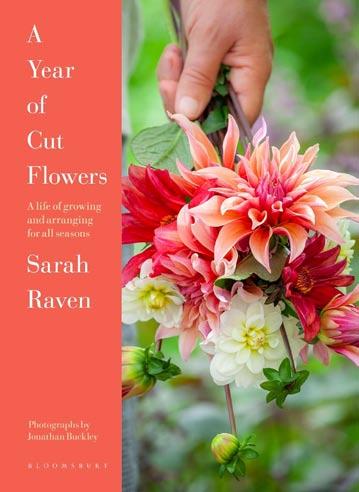
A Year of Cut Flowers: Color and Joy for All Seasons
Author: Sarah Raven
Publisher: Bloomsbury Publishing List Price: $35.00
Order Links: https://amzn.to/4o4ZlNi and https://bookshop.org/ a/79479/9781526683427
Reviewer: Jim Dronenburg
A Year of Cut Flowers is not a book for everyone. The writer is British, and at a guess is setting up to be the British Martha Stewart. The trouble is, that not everyone in the DC area has a 40-acre farm, in the British climate, with staff.
The book revolves around flower arranging, and truly, there is a lot of information about cutting and “conditioning” the flowers you cut before they are arranged. However, so much of the book is concerned with when to plant such-and-such, and tend it, with the idea of supplying your own cut flowers every day of the year as needed, that it simply does not apply to people who are forced by space constraints to grow only a few things, if that. A better book would have been about using what is available as bought cut flowers.
Then there is the problem of location, location, location. The varieties of annuals and perennials chosen to recommend are available in Great Britain. Whether they would be available here is problematic, as is the difference in climates. What works like a charm in Britain may work like a curse in our region.
The flower arrangements are often presented as formulaic, with a “bride” type of flower, then “bridesmaids”—you get the idea. Many arrangements are constructed step-by-step, and comprise a lot of the book’s bulk. The author does, however, go into foliage in its supporting role, which is a “Good Thing.” Another Good Thing is to keep a stash of containers of all types and sizes to put flowers in. Again, not all of us have storage for containers to fit all occasions.
There are some wonderful ideas, though, some of which involve the flowers that most people with a scrap of land can grow. For example, hellebore flowers floating upright in a bowl of water—old news—but then the author shows pictures of winter aconite and snowdrops, too. These are small things that can be grown, and will thrive, in most gardens, no matter how tiny. It does make you think about what can be done with whatever else you have. Conditioning cut flowers before arranging (with a few tips about what to do with store-bought cut flowers) to prolong their vase life is covered in detail. Some ideas are right out—for example, they no longer use florists’ foam at the farm; the microplastics, she says, get into the water table. Good ecological practice, so far—but then she uses a small, twiggy branch without leaves instead, pushed into the vase, to hold the flowers in place. Again, good practice, but who has small twiggy branches on their own property available that they want to sacrifice on a routine basis?
For those who grow their own cut flowers, the book has a lot of good tips about how to keep the plants blooming. These include pointers of what to cut, and how. There is a massive number of photos to illustrate the concepts as well.
A florist could use this book. A person with less opportunity than a florist to grow or obtain flowers should probably just go to the library to read it, if it’s there. I would not recommend buying it for yourself if you have little or no land. Or live here in the Mid-Atlantic U.S., as opposed to England, New England, or the Pacific Northwest. o
Jim Dronenburg is a retired accountant and now gardens full-time in Knoxville, MD
Your Ad Here
Are you trying to reach thousands of gardeners in the greater DC region/MidAtlantic area? Washington Gardener Magazine goes out in the middle of every month. Contact kathyjentz@gmail.com or call 301.588.6894 for ad rates (starting from $200). The ad deadline is the 10th of each month. Please submit your ad directly to: kathyjentz@gmail.com
Got a Garden Question?
your first name,
from. Then
for your answered questions in upcoming issues.
big THANK YOU to all of our Washington Gardener advertisers. Please tell them you saw their ad in
Gardener!
Jentz Prints
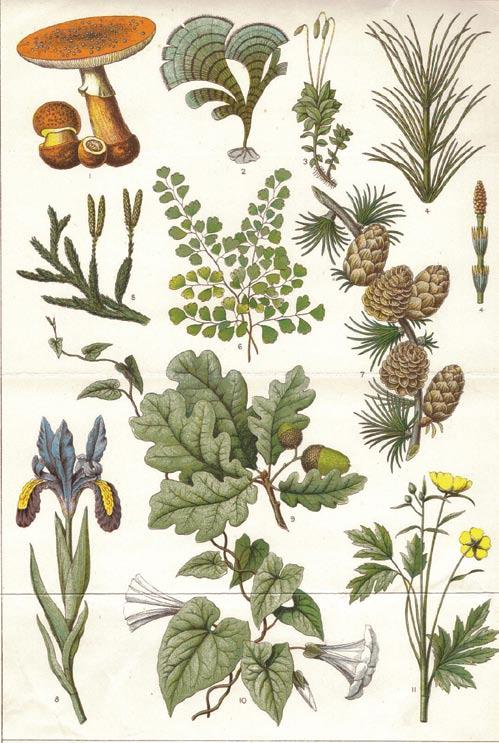
Antique Botanical Prints for the decorator, collector, connoisseur, and art lover.
Jentz Prints can be purchased at the world-famous Eastern Market on non-rainy Saturdays.
Antique prints are affordable—most in the $10-$30 range—and they are the perfect gift idea for that plant lover in your life. And don’t forget to buy a few for yourself! For more information or to get a detailed show schedule, please contact Jentz Prints by email at UllrichJ@aol.com.