Washington Blade, Volume 57, Issue 25, June 19, 2026
PUBLISHED BY Brown Naff Pitts Omnimedia, Inc.
LYNNE J. BROWN lbrown@washblade.com ext. 8075 EDITORIAL
KEVIN NAFF knaff@washblade.com ext. 8088 SR. NEWS REPORTER LOU CHIBBARO JR. lchibbaro@washblade.com ext. 8079
ext. 9463 INTERNATIONAL NEWS EDITOR MICHAEL K. LAVERS mlavers@washblade.com ext. 8093
MICHAEL KEY mkey@washblade.com ext 8084
CONTRIBUTING WRITERS
ISAAC AMEND, TINASHE CHINGARANDE, PETER ROSENSTEIN, PATRICK FOLLIARD, TERRI SCHLICHENMEYER, JOE PHILLIPS, EVAN CAPLAN, ANKUSH KUMAR, ESTEBAN RIOSECO, TOM SITUMO, AYMAN ECKFORD CREATIVE DESIGN/PRODUCTION
MEAGHAN JUBA production@azercreative.com
SALES & ADMINISTRATION
DIRECTOR OF SALES & MARKETING
STEPHEN RUTGERS srutgers@washblade.com ext. 8077
SR. ACCT. EXECUTIVE
BRIAN PITTS bpitts@washblade.com ext. 8089
CLASSIFIED ADVERTISING/ADMINISTRATION
PHILLIP G. ROCKSTROH prockstroh@washblade.com ext. 8092
NATIONAL ADVERTISING
RIVENDELL MEDIA 212-242-6863; sales@rivendellmedia.com
For distribution, contact Lynne Brown at 202-747-2077, ext. 8075. Distributed by Southwest Distribution Inc. All
Lewis George holds strong lead over McDuffie in D.C. mayor’s race
Gay Council member Parker wins in Ward 5; bi candidate leads in Ward 1
By LOU CHIBBARO JR. | lchibbaro@washblade.com
(Editor’s note: Final results for many D.C. races were not known at press time. Please visit washingtonblade.com for updates.)
D.C. Council member Janeese Lewis George (D-Ward 4) was leading former D.C. Council member Kenyan McDuffie (D-At-Large) in the D.C. primary race for mayor late Tuesday night by a margin of 52.79 percent of the vote compared to 36.57 percent for McDuffie with 64 percent of the votes counted, according to information released by the D.C. Board of Elections at 11:55 p.m.
A Board of Elections spokesperson informed the media by email that the board had stopped its vote counting shortly before midnight and would resume its counting Wednesday morning, June 17.
The late-night returns showed Lewis George and McDuffie were far ahead of the other five candidates competing in the Democratic primary for mayor, with candidate Rini Sampath, who self-identifies as queer, receiving 2.93 percent of the vote.
Of the remaining Democratic mayoral candidates, former Council member Vincent Orange received 3.73 percent; businessman Gary Goodweather received 3.0 percent; and civic activists Hope Solomon, 1.09 percent; and Ernest Johnson 0.53 percent.
Election board spokesperson Sarah Graham noted in her email to the media that the initial vote percentages released Tuesday night were counted under the city’s newly implemented ranked choice voting system, which was in place for mayor, D.C. Council, D.C. congressional delegate, and D.C. attorney general. She said the follow-up “roundby-round tabulation results” when voters’ second, third, fourth and possibly fifth choices are counted under the ranked choice system, they are estimated to be released between Sunday, June 21 and Wednesday, June 24.
“The final round-by-round tabulation results will be released on or after June 26, 2026,” she stated. The ranked-choice system does not go into effect if a candidate receives at least 50 percent of the vote.
Lewis George and McDuffie have strong records of support on LGBTQ issues, and Goodweather expressed strong support for LGBTQ issues during the campaign. The Capital Stonewall Democrats, the city’s largest LGBTQ political group, endorsed Lewis George for mayor.
Although the election board had yet to declare a winner in the mayor’s race, with 36 percent of the votes cast not yet counted, Lewis George delivered a rousing speech at her election-night event at the Howard Theatre that many of her supporters considered a victory speech. Among those attending the event and expressing the belief that Lewis
George was the expected winner was Capital Stonewall Democrats President Stevie McCarty.
“There’s still a lot of votes to count, but I feel very confident and it looks really good,” he said in referring to Lewis George and the LGBTQ community members who supported her campaign.
Like the other races for D.C. Council, the D.C. congressional delegate seat, and D.C. attorney general, most if not all of the candidates had either expressed support for LGBTQ rights or had strong records of support, like McDuffie and Lewis George. LGBTQ activists have said that meant LGBTQ voters would be choosing a candidate based on issues other than LGBTQ rights issues.
In other races, D.C. Council member Zachary Parker (D-Ward 5), the Council’s only gay member, was far ahead of two Democratic challengers, with 76.37 percent of the vote. Challengers Bernita Carmichael and Bridgete French received 15.28 percent and 7.57 percent respectively.
Political observers believe Parker is the strong favorite to win re-election in November against a Republican and a Statehood Green Party candidate.
In the Ward 1 D.C. Council race, where five LGBTQ supportive candidates were competing for the seat being vacated by Democratic incumbent Brianne Nadeau, who is not running for re-election, community activist Aparna Raj, who identifies as bisexual, was leading gay candidate and LGBTQ rights activist Miguel Trindade Deramo by a margin of 46.7 percent to 20.27 percent in a five-candidate race.
The other candidates were Rashida Brown, 17,18 percent; Jackie Reyes Yanes, 9.98 percent; and Terry Lynch, 5.75 percent.
In the race for the D.C. delegate seat to the U.S. House of Representatives, which is being vacated by retiring Del. Eleanor Holmes Norton (D), D.C. Council member Robert White (D-At-Large) was leading in a five-candidate race with 63.16 percent of the vote. His leading opponent, D.C. Council member Brooke Pinto (D-Ward 2) had 21.45 percent of the vote.
The vote count for the other candidates was 7.66 percent for Kinney Zalene; 4.55 percent of Trent Holbrook; and 2.8 percent for Greg Jaczko.
In other D.C. Council races Council Chair Phil Mendelson (D-At-Large) and Council member Matthew Frumin (D-Ward 3) were unopposed in the Democratic primary and are considered strong favorites to win re-election in November.
Nine Democrats competed for the At-Large D.C. Council seat being vacated by Council member Anita Bonds (D), who is not seeking re-election. Community activist and local pharmacist Oye Owolewa, who was endorsed by Capital Stonewall Democrats, was leading in the Democratic primary with 33.77 percent of the vote.
The vote count percentage for the other candidates were: Lisa Raymond, 15.22; Kevin Chavous, 13.84; Greg Jackson, 10.95; Candis Nelson, 7.67; Dwight Davis, 6.02; Dyana Forester, 3.72; and Leniqua Jenkins, 3.0.
In the Ward 6 D.C. Council race, Democratic incumbent Charles Allen, a longtime LGBTQ rights supporter who received the Capital Stonewall Democrats endorsement, was far ahead of his two Democratic challengers with 74.43 percent of the vote. Gloria Ann Nauden had 18.68 percent, and Michael Murph had 6.51 percent.
D.C. Attorney General Brian Schwalb, an outspoken supporter of LGBTQ rights who also received the Capital Stonewall Democrats endorsement, had 90.34 percent of the vote in the Democratic primary, with his sole opponent J.P. Szymkowicz receiving 9.15 percent.
In the special election to fill the At-Large Council seat that must go to a non-Democrat under the city’s Home Rule Charter, and which was vacated by McDuffie when he decided to run for mayor as a Democrat, former Council member Elissa Silverman was leading with 54.75 percent of the vote. Incumbent Council member Doni Crawford, who was temporarily appointed to the seat, was in second place with 34.81 percent of the vote. A third candidate, Jaque Patterson, had 19.27 percent. All three candidates ran as independents.
In the separate D.C. Republican and D.C. Statehood Green Party primaries held on June 16, all the offices for which a candidate from those two parties were on the ballot ran unopposed. No Republican candidate ran for D.C. mayor in the primary. With a large majority of D.C. voters being registered as Democrats, no Republican or Statehood Green Party candidate has won election to public office in D.C. for at least the past 10 years or longer. No known LGBTQ Republican or Statehood Green Party candidate was on the ballot in the June 16 primary.
JANEESE LEWIS GEORGE is leading Kenyan McDuffie in the race for D.C. mayor. (Blade photo by Michael Key)
Dwayne Bensing looks to make history in Delaware AG race
ACLU state legal director would be first out gay man to serve in role
By THOMAS WEAVERLING
(
Editor’s note: This is the first of two reports on the race for Delaware attorney general. Next week: An interview with the incumbent candidate, Kathy Jennings.)
Delaware is known as the state of “firsts” and it could deliver another first in this year’s elections if Dwayne Bensing becomes the first openly gay man elected attorney general of any state in the country.
The Washington Blade spoke with current Delaware ACLU Legal Director Bensing to discuss his campaign. He is challenging incumbent Attorney General Kathy Jennings in the Sept. 15 primary.
Bensing is an Arkansas native who moved to Delaware from D.C. a decade ago. He is a UPenn law school graduate with a background in education both as a teacher and an attorney, having worked for the Department of Justice and then the Department of Education under the Obama administration.
He left the DOE under the first Trump administration in 2020 after acting as a whistleblower in an effort to protect trans athletes from discrimination.
“As a whistleblower, I don’t shy away from calling out bad acts, even if it’s from the political elite or the establishment. That’s the kind of independent government oversight that I want to bring to the office of the attorney general,” Bensing told the Blade.
One of the pillars of Bensing’s campaign is corporate accountability: “I don’t think billionaires need any more grease on the wheels to pad their pockets,” said Bensing.
Bensing criticized Jennings for her stance on corporations and the wealthy.
“I don’t think that our attorney general appreciates the moment that we find ourselves in, where the billionaire class is consolidating all of the wealth on the backs of the working class and consumers,” Bensing said.
In particular, he knocked Jennings’s handling of the restructuring of OpenAI , as she and California Attorney General Rob Bonta approved the company’s transition from a nonprofit organization to a public benefit corporation.
“The people’s voice is being diminished in so many ways by the corporate oligarchy and government establishment elite who’ve benefited from the system as it is,” said Bensing.
“I believe that we have to clean up our own backyard first and really solidify the ‘small d’ democratic norms of access to voting at the ballot box, access to a high-quality public education, and access to free speech,” said Bensing.
Bensing also spoke about the mistreatment of unhoused persons and the unhoused camps that are being removed by the government in Wilmington .
“For people who have no place to go and are in a public space, we need to make sure that we’re providing them the services so that they can lift themselves up, not criminalize their mere existence,” said Bensing.
Bensing shared his desire to reform the “Delaware way” by pushing Delaware to sort out its disagreements internally and hold the federal government and corporations accountable.
“From my vantage point at the ACLU of Delaware, the Delaware way is a way to preserve the power, the influence, the resources of the establishment elite, and so those who are benefiting from the Delaware way,” said Bensing.
“I think we are a state of neighbors, as our congresswoman often reminds us, and I think that will always keep us polite without being aggressively disagreeable, but what I feel we are losing is that accountability piece,” said Bensing.
As a gay man, Bensing has been a staunch supporter of transgender rights and the LGBTQ community as a whole throughout his career.
When asked about his plans to continue his support for the trans community. Bensing responded by saying “I’ve been on the front lines of this issue.” He also referenced the late Barney Frank , saying “If you’re not at the table, you’re probably on the menu.”
“In private practice, I filed the very first federal district court case regarding the rights of transgender students under Title IX ,” said Bensing.
Bensing continued the fight for trans youth while working in the DOE under the first Trump administration: “When I found myself in the Trump administration unexpectedly, I met with Secretary Betsy DeVos in her office, and I begged her to meet transgender students because I didn’t think she understood that our transgender students were being vilified by the very leaders who were sworn to protect them.”
As previously mentioned, Bensing left the DOE in 2020 after he leaked emails showing protocol violations in an investigation involving the treatment of transgen -
der students.
Bensing highlighted Delaware’s past as being a leader on the “front lines” of LGBTQ protections and emphasized the need to continue protecting LGBTQ rights.
Last August, Jennings wrote a letter to Nemours Children ’s Hospital imploring them to reconsider their decision to stop providing gender affirming care services to new transgender youth patients.
Bensing criticized Jennings’s letter to Nemours, describing it as an example of Jennings having “more bark than bite.”
“Our attorney general wrote a strongly worded letter to Nemours while other attorneys general said we will sue you, and did sue when health care providers stopped providing life-saving healthcare to transgender youth,” said Bensing.
“Battle lines have been drawn and the attorney general needs to stand with LGBTQ+ youth on this issue,” said Bensing.
Bensing has also been president of the Delaware Stonewall Political Action Committee for five years. He explained that its mission is to elect LGBTQ individuals and allies to office.
“It’s really important that we keep fighting for equal protection under the law, and that we show up in civic spaces, that we become elected leaders, that we become engaged members of our community,” Bensing said.
Bensing recalled growing up gay in Arkansas at a time not too long ago when same-sex marriage was what we described as “a bipartisan issue of objection.”
He shared his concerns over same-sex marriage losing support according to recent polls: “That’s a fight I think that many in the LGBTQ+ community thought we had won.”
“I know firsthand how fragile our constitutional rights are and how fickle the public can be when extending dignity to a minority group.”
DWAYNE BENSING is running for attorney general of Delaware. (Photo courtesy of Bensing’s campaign)
Former HHS Secretary to face Republican Steve Hilton
By JOE REBERKENNY | jreberkenny@washblade.com
California voters selected its two front runners for the state’s open governor seat following the second election of Gavin Newsom.
Last week former U.S. Secretary of Health and Human Services Xavier Becerra became the Democratic nominee for governor, setting up a general election matchup against Republican nominee Steve Hilton, a former political adviser in the UK and Fox News commentator.
Becerra, the son of Mexican immigrants, has spent nearly three decades in public service. Over the course of his career, he has served as California attorney general, U.S. secretary of Health and Human Services, a member of the U.S. House of Representatives, and a member of the California Assembly.
Raised by Hungarian parents who fled communism and settled in the UK, Hilton entered politics after graduating from Oxford University. He worked within the Conservative Party — beginning during the era of former Prime Minister Margaret Thatcher and later served as Director of Strategy for Prime Minister David Cameron. After relocating to California in 2012 with his wife, Hilton taught at Stanford University, became a U.S. citizen, and later established himself as a Fox News political commentator.
As the race enters the general election phase, policy questions surrounding healthcare, civil rights, and the future of LGBTQ protections in California are expected to feature prominently in both campaigns. The Washington Blade sat down with former Biden-Harris administration health officials who worked under Becerra’s leadership and also with LGBTQ advocates. Both paint a clear picture of Becerra — a longtime ally whose support for LGBTQ rights and health equity has spanned multiple decades and offices.
“For Equality California, he has been a staunch ally over his decades of service serving California. From his time in Congress to attorney general to HHS secretary, he’s been a partner to the LGBTQ community at large, and specifically to Equality California, advancing LGBTQ equality,” Tony Hoang, executive director of Equality California told the Blade. “As he’s been the front-runner making the top two, we’re excited to get behind him in the race so that he wins the general election in November.”
Hoang argued that California’s next governor will play a critical role in protecting LGBTQ rights amid continued attacks from the Trump-Vance administration.
“It is critical that California remains a bulwark against what’s happening from the Trump administration. That’s why we were so supportive of Secretary Becerra’s campaign for governor,” Hoang said. “He has been there in that fight. When he was attorney general, he sued the Trump administration over 100 times, including a lawsuit where Equality California was an organizational plaintiff around the transgender military ban. Over the remainder of Trump’s term, it’s critical that California continues to fight to stand up for our values, including LGBTQ people in all facets of equality.”
Former HHS official Adrian Shanker, who oversaw LGBTQ health initiatives during the Biden-Harris administration, pointed to Becerra’s emphasis on health equity as one of the defining characteristics of his leadership.
“As Secretary, Xavier Becerra required all of us to include a health equity lens in all policies. No matter what the policy was, he wanted health equity to be centered. Health equity means ensuring that all people can attain their highest levels of health,” Shanker explained. “One of his priorities was clinical trial diversity. He wanted to make sure that new drug modalities and treatments were studied on all kinds of bodies, including populations that had historically been excluded from research.”
Shanker also emphasized that while leading HHS, Becerra consistently relied on scientific expertise rather than political considerations when making policy decisions.
“He really believed that we can’t politicize science. We have to let science drive the policy. He established a very strong scientific integrity policy for the department. That’s important for LGBTQ health, but it’s also important for everyone’s health.”
Shanker expanded on the multiple HIV prevention efforts including making the medication covered by nationwide subsidy programs allowing for americans of all income levels to get this life saving healthcare during Becerra’s tenure at HHS.
“We worked to make PrEP free for anyone on Medicare. The secretary trusted the scientists in the department to determine what was safe and effective and then championed the results,” Shanker said.
For many LGBTQ advocates, California’s role as a refuge state has become increasingly important as Republican-led states enact restrictions affecting transgender people and LGBTQ healthcare access.
Admiral Rachel Levine (ret.), the first openly trans person confirmed by the U.S. Senate and Becerra’s former assistant secretary for health, said California’s next governor will be
central to those fights.
“We have an increasingly hostile federal environment against the LGBTQIA community in general, but particularly against the transgender and nonbinary communities. They have targeted the most vulnerable among us, especially trans youth, their families, and their medical providers. California is a refuge, and no one is a stronger supporter of our broader community and our transgender community than Secretary Xavier Becerra,” she told the Blade.
“He articulated his strongest and most enthusiastic support for our community throughout his time at HHS. Health equity was really principle number one for Secretary Becerra, and that includes health equity for our LGBTQIA+ community.”
Levine, who worked directly under Becerra, also praised his leadership style.
“Xavier Becerra really is an outstanding leader. I worked for him and with him when he was secretary and I was assistant secretary for health. He’s so down to earth and unassuming, and he talks a lot about his background, his parents, and his family. He exhibits all the traits you would want in a leader. He is personable, always professional, always compassionate, organized, and knowledgeable.
“I think that he will make an outstanding governor of California. He has local experience in California, where he served as attorney general, and he also has experience in Washington as a member of Congress and as Secretary of Health and Human Services. His background and his character make him an outstanding choice for governor.”
Shanker similarly pointed to Becerra’s engagement with LGBTQ communities and transgender advocates during his time at HHS as one of his strong suits — one that shows he is willing to commit to the right thing even if it is what some in higher powers, disagrees with.
“Secretary Becerra visited LGBT centers. He spoke at our HHS Pride Summit each year. He met directly with transgender health leaders and advocates.”
One meeting in particular stood out to Shanker– where Becerra’s leadership and tenacious dedication to committing to serving the American public.
“He said that his policy is to never do anything mild. He wanted actual policy change that advances the health and well-being of all Americans. He wasn’t looking for small, little tweaks. He wanted structural improvements.”
Shanker went on explaining that Becerra’s approach to all things — but especially very trivialized trans healthcare thoughts remained rooted in scientific evidence.
“He wasn’t reading the tea leaves to determine what policy we should enact. He was trusting the science and wanted to do the right thing for the people affected by our decisions,” Shanker said.
Hoang said that commitment to the evidence — and what LGBTQ advocates have point blanked asked from him has continued throughout Becerra’s gubernatorial campaign.
“I will say that he has done everything that we’ve asked of him and continues to speak proudly in support of the trans community. Full stop. We were lucky enough to work with him during his time as attorney general, but also as HHS secretary, ensuring that decisions are based upon science versus the rhetoric coming from MAGA extremists.”
As a recent example, Hoang pointed to Becerra’s support for trans student-athlete AB Hernandez.
“Just last week, he put out a statement that was read at the track meet for AB Hernandez, the trans athlete who was competing in the track and field championships.”
He added: “He has been a staunch ally, a proven staunch ally, of the LGBTQ community and specifically trans people.”
Levine said the importance of the California governor’s race extends far beyond state borders.
“I think it’s very important because states like California, New York, Massachusetts, Oregon, Washington, and others are ground zero for these battles. They serve as places of refuge, particularly for trans youth and nonbinary youth who may have to leave their states because of these attacks and hateful laws,” she said. “The governors of those states, including the governor of California, could not be more important. We could have no better defender than Xavier Becerra.”
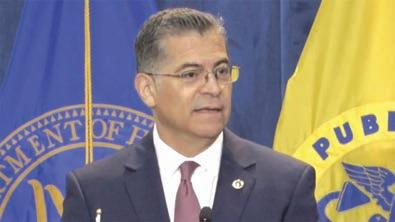
XAVIER BECERRA at 2023 HHS Pride Summit (Screen capture/YouTube)
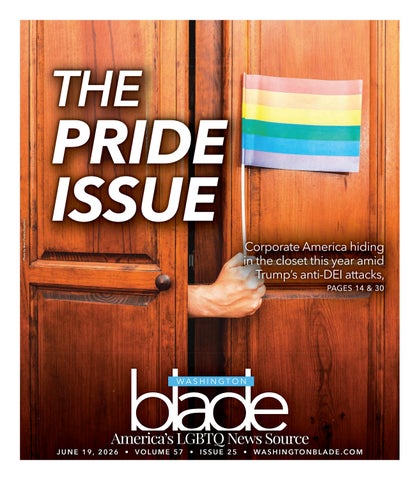
Corporate America caves to Trump, abandons Pride Anti-DEI crusade scares off many sponsors, but organizers vow to carry on
By JOE REBERKENNY | jreberkenny@washblade.com
Pride began as an uprising against a political system that told LGBTQ people they did not belong.
More than 50 years later, after what many believed was a lasting cultural shift toward acceptance, that progress now feels increasingly fragile. What once seemed like hard-won inclusion is being tested in a political environment in which LGBTQ rights have re-emerged as a central point of debate, from school boards to state legislatures to the highest levels of government. While today’s backlash does not resemble police batons on the streets of Greenwich Village in 1969, advocates say it is taking a new form—through policy fights, cultural rhetoric, and a quiet retreat by corporate America from Pride itself.
For many in the LGBTQ community, Pride remains the most important event of the year. It is a moment when cities and towns—large and small, urban and rural, blue and red—attempt to create space for those who were long treated as outsiders. What was once confined to secrecy, coded meeting places, and dingy bar backrooms has become visible and celebrated openly in streets filled with music, color, and community.
Over time, however, Pride has also evolved. With each passing year and each wave of corporate sponsorship, it has drifted further from its explicitly political roots. For many observers, it is now often perceived as a cultural celebration or festival rather than a protest born out of state violence and legal discrimination against LGBTQ people.
Now, as LGBTQ communities again face intensified political attacks—this time driven by Republican officials across multiple levels of government and policies emerging from the Trump administration—some advocates say corporate sponsors are quietly pulling back to avoid offending the government amid an unprecedented crackdown on DEI. In doing so, they argue, companies risk forgetting that Pride itself began as a refusal to stay silent or invisible—a movement that, in its earliest form, quite literally overturned the status quo.
That tension between political urgency, cultural visibility, and corporate participation is now being felt in very concrete ways inside the organizations that produce Pride events.
The Washington Blade spoke with Pride organizers, marketing experts, advocacy organizations, and reviewed national reporting and corporate data to understand what the decline in Pride sponsorships reveals about corporate America’s relationship with LGBTQ people—and whether that support was ever as durable as many believed.
For organizers, the conversation begins with numbers.
Across the country, Pride groups report declining sponsorship revenue, fewer corporate partners, and increased difficulty securing the commitments that have helped fund modern Pride celebrations for decades.
Mike Alexander, director of development for Capital Pride Alliance, which organizes D.C.’s Pride events, said the shift became noticeable almost immediately after President Donald Trump’s return to the Oval Office.
“As soon as the inauguration happened and the immediate swift attacks on DEI began, we started seeing a downturn in sponsorships. We probably had close to $10 million in pledges, and that was pretty much cut in half last year. Even though WorldPride ended up being an overall success and we had incredible support from sponsors that were able to remain on, overall support has been down quite significantly from what we usually have. Between 2016 and 2024, we typically saw anywhere from 150 to 275 corporate sponsors. Now we’re looking at probably about half of that this year, so it’s quite a significant drop.”
Yet organizers say most companies are not explicitly citing politics when they walk away.
“I can’t recall any particular sponsor that actually cited DEI. A lot of them cited budget concerns, reorganizations, and restructuring. No one in particular says, ‘We’re not coming back because of this. We don’t want to support you.’ I think the overall sentiment is that a lot of companies still want to support.”
Alexander noted that uncertainty extends beyond DEI debates alone.
“There are a lot of things happening right now. The global conflicts, the economy, and the broader political climate all play a role. D.C. is uniquely impacted because there are a lot of organizations and companies here that are directly connected to government, federal contractors, public policy, and advocacy. There’s so much uncertainty.”
Even so, he acknowledged the reasons often go unsaid.
“Nobody really says that. They cite other reasons, or they don’t respond. Sometimes they
simply say they can’t participate and don’t mention the exact reasons why. I think we can read between the lines.”
For many observers, those lines point toward a rapidly changing political environment.
Andrew Isen, founder and president of WinMark Concepts, said the current moment differs from previous periods of anti-LGBTQ backlash because companies now believe there are tangible financial consequences for visible support.
“It’s 100 percent quantifiable and 100 percent relatable to the administration’s anti-trans and, more particularly, anti-DEI policies,” Isen said. “An administration that has threatened universities, law firms, corporations, and just about any entity that supports any iteration of DEI policies has had a profound effect on the behavior of these organizations.
“In the aftermath of the Bud Light situation, companies became very afraid to put their brands out there, and they continue to do so.”
He argues the roots of the current climate stretch back several years.
“Things have changed exponentially. What’s happened in the last two and a half years we’ve never seen before,” he continued. “This started several years ago with what I’ll call trans-bashing on the right, then the adoption of the word ‘woke’ as a pejorative. When you put those two together, there was an incendiary fire waiting to happen, and it happened with the Bud Light situation.”
National Pride leaders have reached similar conclusions.
“I think that’s why some of the corporations have pulled back, because they don’t want that government scrutiny,” Jordan Braxton, co-president of the United States Association of Prides, told NPR in May. “People sometimes look at Pride festivals just as a big party, which they are, but they’re also resource fairs, job fairs, and we also use it as a fundraising event.”
Advertising researcher E. Ciszek also told NPR the trend reveals something deeper about corporate support.
“It’s important to take a step back and see this more as a moment of risk, a moment of political pressure, and looking really at the limits of corporate allyship, particularly when LGBTQ visibility has become really politically costly.”
That pressure is increasingly visible in how corporations present themselves publicly.
Isen pointed to the ongoing Target boycott as one of the clearest examples.
“Target, which was a huge supporter of all things LGBTQ, began to pare back its visibility. The amount of Pride merchandise it carried went from roughly 3,500 products to about 500. Instead of putting those products at the front of stores, they moved them to the back.”
That continued to be scaled back as the most vocal and those in line with Trump were considered the ones to appease.
“Because of bomb threats and other concerns, Pride merchandise appeared in far fewer stores than it had previously.”
Yet retreating from LGBTQ visibility has not necessarily insulated companies from criticism.
In a letter to shareholders, investors wrote that “Target has repeatedly entangled itself in social controversy over the past several years, including its decision to pull back its Pride collection, the rollback of its DEI initiatives, and, most recently, its limited public response to Immigration and Customs Enforcement (ICE) activities at certain store locations.”
The letter concluded that those actions may have alienated “Black, Latino, LGBTQ+, and progressive consumer segments.”
Beyond individual companies, Pride organizers describe a much broader pullback.
“We’re now in a vacuum where Pride and its sponsors have been eviscerated by fear and backlash from consumers and by retribution from the current administration through its DEI policies,” Isen said.
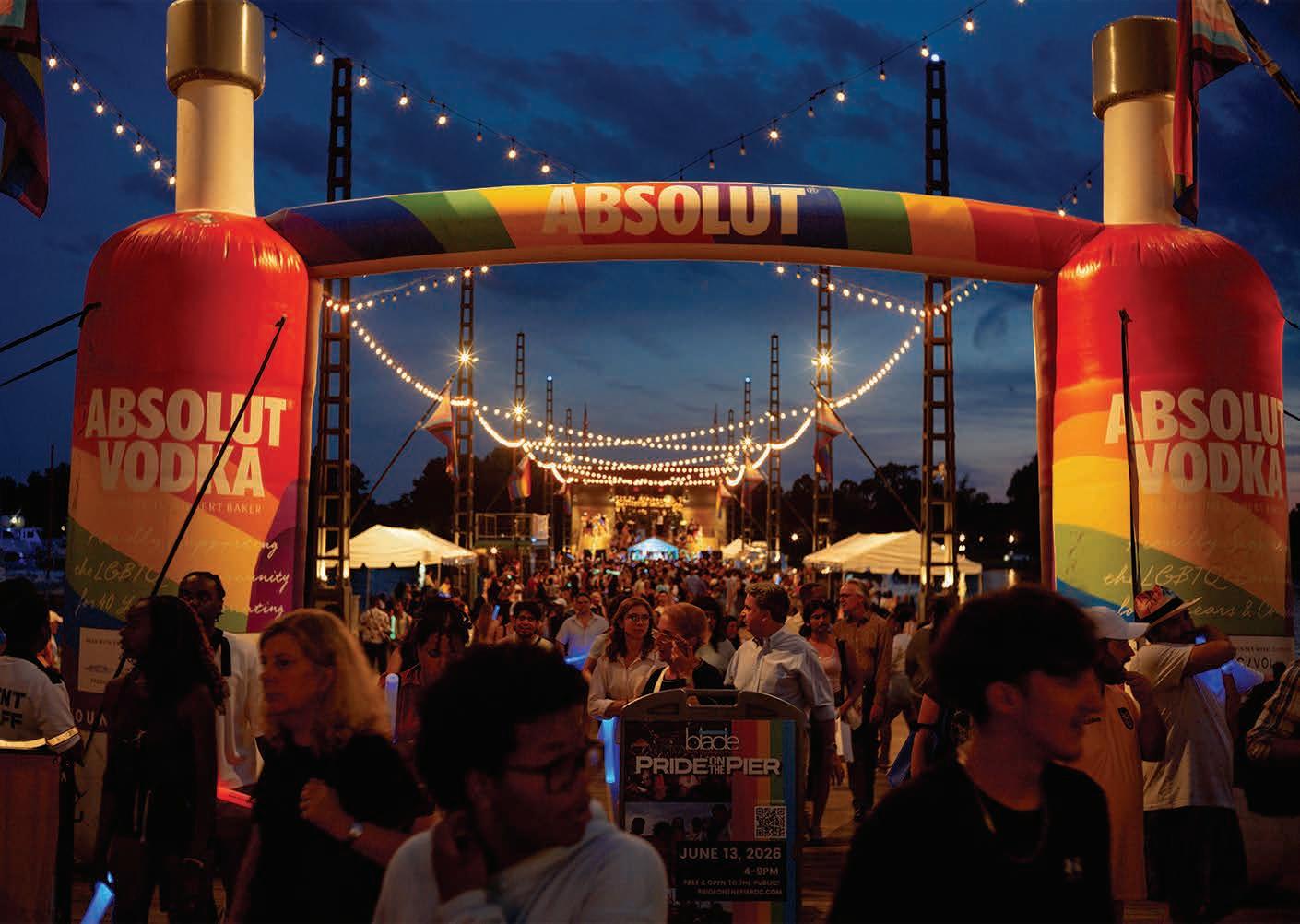
That said, some major brands continue to support Pride, including Absolut, Marriott, Coca-Cola, and others.
For organizers, the consequences of this Pride pullback extend far beyond symbolism.
Pride celebrations require significant financial resources, and corporate sponsorships have traditionally provided much of that support. This is the same game with new rules.
“It takes a lot of money to do this,” Pittsburgh Pride Director Dena Stanley told NPR. “Permitting costs, security costs, headliners costs, staging costs, cleaning crew costs, insurance costs, all of these are expenses.”
Former Tampa Pride organizer Carrie West described how quickly the situation can become unsustainable.
“All of a sudden, bingo. Here you have no money, no grant money, no supporting money, to make operations, to plan, to get any kind of anything.”
San Francisco Pride Executive Director Suzanne Ford told The Wall Street Journal that replacing lost sponsors is extraordinarily difficult.
“It’s hard to replace a $150,000 sponsor with individual donations,” Ford said. “I’ve just got to find some new corporate sponsors out there…I’m cautiously optimistic.”
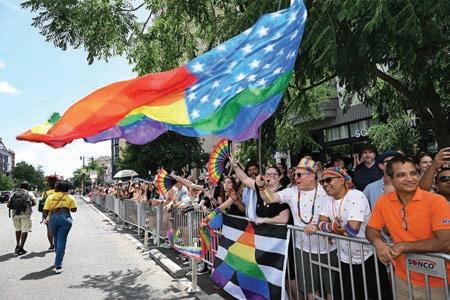
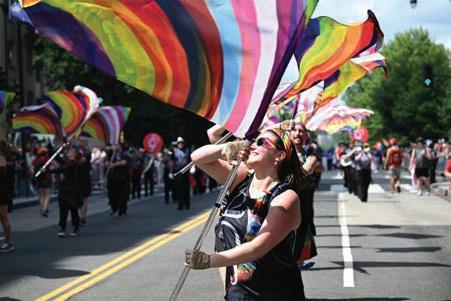
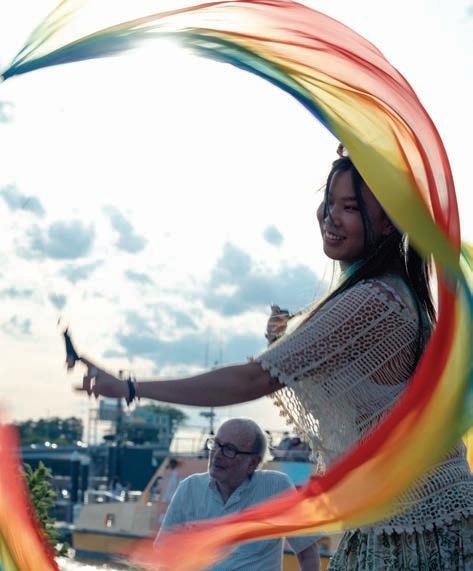
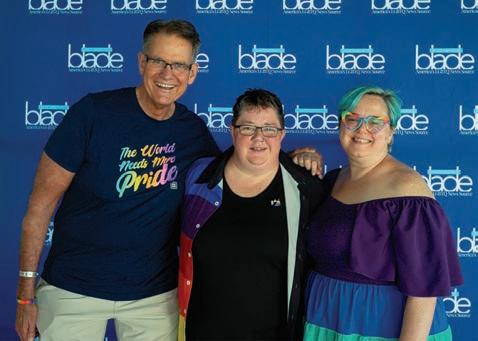
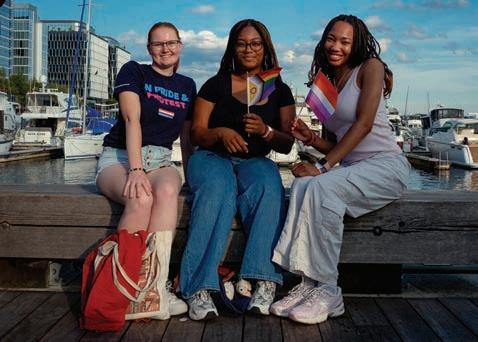
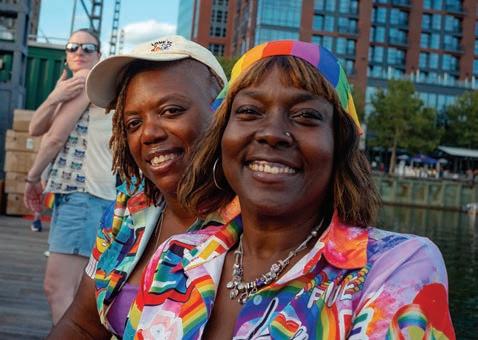
Pride celebrations continue this year despite a drop off in corporate support. (Blade photo by Michael Key)
National Mall | 11 AM–4 PM
Still marching: Rev. Troy Perry and the ongoing fight for liberation
Reflecting on the origins of Pride and power of representation
By AJ SLOAN
Long before tone-deaf Target swag and rainbow hashtags lit up the very queer month of June, Rev. Troy Perry was helping the LGBTQ+ community create space where it did not yet exist, and he did so with little more than faith and perseverance. This Pride season, as communities around the world fight once again with rising attacks on LGBTQ+ rights and democratic freedoms, Perry returns to the movement he helped build for a conversation rooted not only in history but in survival. The unveiling of Steps to Liberation at Founders Metropolitan Community Church in Los Angeles serves as an uplifting reminder that Pride is not just a parade but also serves as a commitment to continue to advocate for our community.
Joined by original rainbow flag co-creator Lynn Segerblom, Perry looks back on the legacy of the first Pride marches, the spiritual and political power of real representation, and why the rainbow flag still matters nearly 50 years after its creation. As Founders MCC transforms its front steps into a vibrant rainbow pathway, the symbolism feels especially timely – freedom is not a destination, it’s something communities continuously build together, step by step. In our interview, Perry speaks candidly on activism, faith, and his continued belief that even in difficult times, hope remains an unwavering act of resistance.
BLADE: You’ve been at the forefront of LGBTQ+ history for decades. What does this moment, unveiling Steps to Liberation, mean for you? You’ve often spoken about visibility as an act of courage. Why is that still not only true but also essential today?
PERRY: I will be 86 years old in another month. Not in the best of health and in a wheelchair, but still a LGBTQ+ activist at heart. I tell my husband, Phillip De Blieck, that I never thought I would live this long. He and I will be celebrating our 41st anniversary this year. In the early days of our struggle for our liberation, I used to cut up and tell people there’s just nothing like a good demonstration to get my heart pumping. This is what I feel as we dedicate the Steps of Liberation! Another symbol of our freedom. We’re here, we’re queer, and we’re gonna fight to our last breath, to win all the rights that the colors on the steps represent.
BLADE: When you think back to organizing the first Pride march in Los Angeles, what emotions or memories visit you?
PERRY: Having the guts to follow through on our vow to hold a pride parade, no matter what! We did follow through and sued the city of Los Angeles for the right to hold that parade. We won! Thank God for the ACLU. The next thing I thought was, my God, look at all the people who have come out to be in the parade, and to watch it. I was also thankful that no one was hurt that day, and the pride I had of being a part of that demonstration.
BLADE: How does this new installation reflect the spirit of those early days of activism?
PERRY: The steps of liberation tell all who see it that we are still here and not afraid after 56 years have passed since our first pride parade.
BLADE: The theme of IDAHOBIT 2026 is “The Heart of Democracy.” In your view, how has the LGBTQ+ movement played its part in influencing our country’s democracy?
PERRY: I think that most of us have played by the rules and use the cards dealt to us
to make a difference in our democracy here in the USA. The LGBTQ+ community has changed so much in 56 years. Today, members of our community are serving in every political office in our country. We have gay and bisexual city council members, lesbian governors, and trans state legislators. We have a gay man who has run for president of the United States. The heart of democracy is a right given to all of us to work to change our country so that all of us are treated the same. Nothing more, nothing less!
BLADE: You’ve often spoken about visibility as an act of courage. Why is that still not only true but also essential today?
PERRY: I tell groups of young LGBTQ+ people to be yourself. Flaunt it! Coming out of the closet is the best thing you can do. Whether you come out fast or slow, just come out. If you are going to do it, now is the time. I am so proud of young people who are using the Internet, TikTok, and YouTube to make a difference for us. Your siblings are looking for you!
BLADE What do you hope someone feels the first time they walk up the Rainbow Steps?
PERRY: God, does this feel good! Why didn’t I do this a long time ago?
BLADE: How has faith intersected with activism in your life?
PERRY: This is my testimony. Most of my relatives would tell you that I have been deeply spiritual all my life. I have had the opportunity to live a very interesting life. I started preaching when I was 13 years old. I was licensed to preach in the Southern Baptist church at age 15. I married heterosexually at age 18. I started pastoring my first church at age 19. I am the father of two children. I am a Vietnam-era veteran. I was divorced at age 26 and founded Metropolitan Community Church at age 28. I have been slapped in the face, spat on, had some people try to murder me, and cursed by some throughout my life, all because I dare call myself a clergyman as a gay man. Has it been worth it? Absolutely. I would not change my life for anything. I try to always keep my faith intact.
BLADE: In moments when progress feels uncertain or under threat, what keeps your hopes up?
PERRY: I have my husband, Phillip, and friends that I can talk to. I also have a favorite scripture that keeps me going: though God slay me, I will trust in God. Job 13:15
BLADE: How do you see younger folks carrying forward the legacy you helped build?
PERRY: Don’t give up the fight. Organize, organize, organize!
BLADE: The launch of Flag50 looks ahead to the 50th anniversary of the rainbow flag. What do you think folks should be reflecting on as that milestone approaches?
PERRY: I love the Pride flag! It gives us hope that there can be a tomorrow. I love the colors and what they represent. Hopefully, we will be able to teach this in our schools one day, along with the American flag and how each of those colors is meant to give us dignity, as well as hope.
BLADE: How do art and public installations like this one shape cultural change in ways that perhaps policy can’t?
PERRY: Laws are important because they protect us, but art touches the heart first. A public installation like the Steps of Liberation tells our story without anyone having to say a word.
BLADE: What threats facing our LGBTQ+ community today concern you more than others?
PERRY: I worry when people try to erase us, especially our transgender brothers and sisters and LGBTQ+ young people. I have lived long enough to know that fear and hatred can grow when people stop seeing each other as human beings. We cannot go backward. I also worry when people become discouraged and think their voice no longer matters. That is exactly when we must organize, vote, speak out, and stand together. We have survived attacks before, and we will survive them again, but only if we refuse to be silent. Silence has never protected our community. Courage and love have.
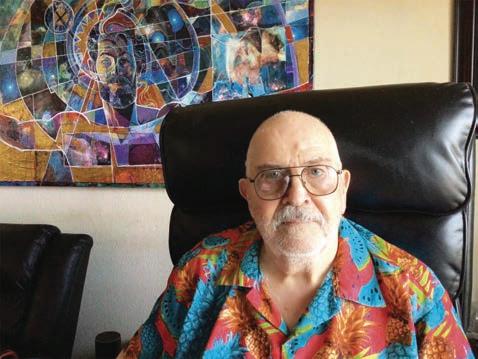
Rev. TROY PERRY (Photo courtesy of Perry)
57 towns in 57 hours: Rep. McBride kicks off re-election bid
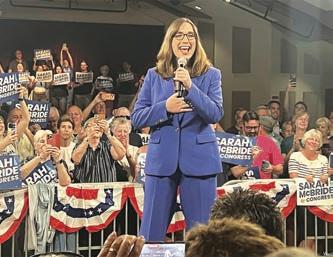
REHOBOTH BEACH, Del. — Rep. Sarah McBride (D-Del.) officially kicked off her re-election campaign this week with a grueling tour of her state that saw her visit 57 municipalities in just 57 hours.
The tour culminated Monday evening in Rehoboth Beach with a packed crowd at the Convention Center. At least 400 attendees stood patiently in a line that wrapped around the block and snaked down Rehoboth Avenue. Once inside, a DJ entertained the ebullient crowd that kept busy batting beach balls around the venue.
The crowd featured a large LGBTQ presence that cheered speakers including state
Rep. Claire Snyder-Hall, state Sen. Russ Huxtable, and Delaware Democratic Party Chair Evelyn Brady, who introduced McBride.
McBride took the stage to Chumbawamba’s “Tubthumping” and the lyrics “I get knocked down, but I get up again.” In her remarks, she touched on a record of introducing more bipartisan legislation than any other freshman lawmaker and touted an award her office won for providing superior constituent service.
“People want leaders who are focused on lowering costs, solving problems, and delivering results,” she said. “That’s exactly what I’ve worked to do in Congress, and that’s why I’m running for re-election – to continue delivering for and defending Delaware.”
McBride is the first transgender member of Congress and is Delaware’s sole representative in the U.S. House. She will face the winner of the Republican primary in November. Rev. Earl Cooper — a former Democrat McBride defeated two years ago — is running for the GOP nomination. The state primary election is Sept. 15 and the general election is Nov. 3.
UFC fighter says Michelle Obama ‘is a man’
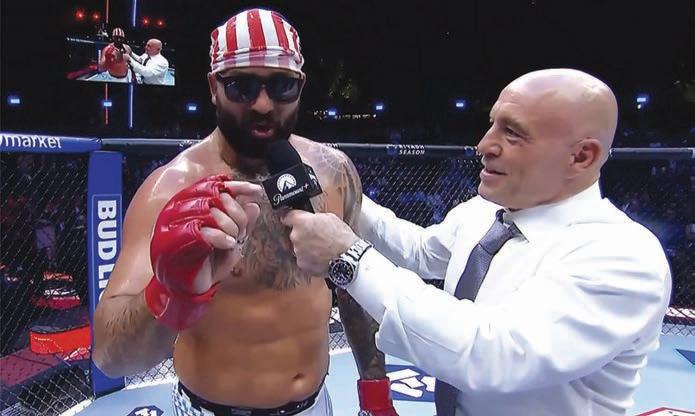
UFC fighter Josh Hokit, in a crude post-match stunt, told podcaster Joe Rogan that, “Michelle Obama is a man. Am I right America?”
The incident occurred as part of President Trump’s UFC Freedom 250 event held on the White House lawn on Sunday night. Hokit won his fight then gave an interview to Rogan on stage when he made the remark.
Trump has not addressed the incident but has a history of attacking the Obamas using racist imagery.
White House spokesperson Steven Cheung responded to questions by saying, “He had a great win last night. He showed toughness and the ability to pressure his opponent both on his feet and on the ground.”
BET’s report on the incident noted, “The ‘Michelle Obama is a man’ claim is not new. It is a transphobic and racist conspiracy theory that has been used against the former First Lady since 2007, weaponizing both transphobia and the misgendering of Black women, who are often targets of similar attacks.” FROM STAFF REPORTS
Gay San Diego mayor to lead U.S. Conference of Mayors
Todd Gloria has had a whirlwind two decades as a public servant.
Beginning with his successful 2008 San Diego City Council election, followed up by his second successful campaign in 2012 — this time as president of the San Diego City Council — Gloria has been strapped to a rocket headed to public servant fame that would make Leslie Knope’s head spin, with no signs of slowing down.
Just one year into his tenure as president of the San Diego City Council, Bob Filner, the then-mayor of the city, resigned from his role following multiple allegations of sexual harassment. In that moment of political uncertainty, Gloria stepped up, becoming the interim mayor of San Diego, and the leader of one of the largest cities in the U.S. .While his term as interim mayor — lasting from August 2013 to March 2014 — was not long, it was a sign to the people of San Diego — and to himself — that Gloria could do good things for San Diego. When the newly elected Mayor Kevin Faulconer was sworn in in March 2014, Gloria continued working hard to keep the city he grew up in in caring hands.
Gloria started to look past “America’s Finest City” and began looking toward Sacramento. It was there that some of the state’s most capable minds were attempting to tackle problems that the entire Golden State faced. In 2016, he ran for the California State Assembly’s 78th District seat, representing San Diego, where he won with an impressive margin and started championing the city’s climate action plan. Shortly after assuming office, he was chosen to become a member of the Democratic leadership — as assistant majority whip — where he helped pass his and the Democratic Party’s legislative goals in the most populous state in the nation.
It should be no surprise that, with a growing reputation as someone bent on making his city better for the more than 400,000 residents who live within the 78th District, Gloria won re-election in 2018 with more than 70 percent of the vote in both the primary and general elections. There, he was tapped once again to be an integral part of the Democratic Party’s legislative mission and was, in January 2018, made majority whip. In 2019, Gloria announced he would no longer seek the 78th District seat when his term
was up, but would return from Sacramento to San Diego — this time as mayor. He ran his campaign on issues that San Diegans faced: the housing crisis, affordability, public transportation, and climate change.In November 2020, Gloria was elected mayor of the city he grew up in, where he broke barriers — his win also made him the first Native American and the first Filipino American to hold this position in a U.S. city with more than a million people, becoming San Diego’s first mayor of color. He was also the city’s first openly gay mayor.
The Washington Blade sat down with Gloria when he visited Washington earlier this month for the U.S. Conference of Mayors, where he was elected president of the organization. The presidency lasts for one year and alternates between political parties to ensure bipartisanship.
Gloria, has served as mayor of San Diego since 2020, will lead the nearly century-old bipartisan organization as a proud out gay man at a time when many LGBTQ Americans are concerned about the future of their rights and protections.
“Well, a lot. I think the first thing that comes to mind is that this time that we’re all living in, the stakes feel particularly high, and I think number one, I’d want your readers to understand that this is a conference of bipartisan mayors from all across the country who supported me to lead the organization that’s nearly 100 years old,” he explained.
“I think at a time when we definitely wonder, as queer people, where we sit in our nation and in our society, that my fellow mayors of all different political stripes are willing to allow me to be their voice as leader of this organization. I hope it somehow validates the notion that we are still making progress, that particularly the political process is still possible.”
Gloria framed his election as evidence that progress remains possible, even amid growing political polarization. He noted that the U.S. Conference of Mayors was founded during the Great Depression, another period when local leaders stepped forward to address challenges they felt were not being adequately addressed at the federal level.
Continues at washingtonblade.com.
JOE REBERKENNY
KEVIN NAFF
UFC fighter JOSH HOKIT made a racist and transphobic comment about Michelle Obama on Sunday night. (Screen capture via UFC/YouTube)
Rep. SARAH MCBRIDE speaks at a campaign event Monday in Rehoboth Beach, Del. (Washington Blade photo by Kevin Naff)
War, geopolitical tensions overshadow Pride around the world
Hungary’s new government lifts Budapest parade ban
By MICHAEL K. LAVERS | mlavers@washblade.com
Activists around the world are marking Pride month this year against the backdrop of war and geopolitical tensions with the U.S.
KyivPride on June 21 will hold its annual Pride march in the Ukrainian capital. The group, which is raising funds for the country’s air defense, on June 14 hosted KyivPride Park, an event that highlighted LGBTQ service members and veterans.
Russia in 2022 launched its war against Ukraine.
Oleksandr Demenko is the head of Ukrainian LGBT Military for Equal Rights. He also fought to defend Azovstal, a sprawling steel mill in Mariupol, a city in eastern Ukraine that Russian forces occupied after a months-long siege that ended on May 20, 2022.
Demenko in a KyivPride press release said that “almost no one talked about LGBTIQ+ servicemembers” before the war.
“Today we have our own platform, and every year more and more people are ready to speak openly,” he noted. “This is the best proof of how the country is changing.”
“When we talk about rights and equality, we are talking about specific people — service members who defend Ukraine. We carry out the same duties as everyone else, yet we still do not have the same rights,” added Demenko. “That is why it is so important that the state finally recognizes our families. On June 21, we will remind everyone of this at the KyivPride March.”
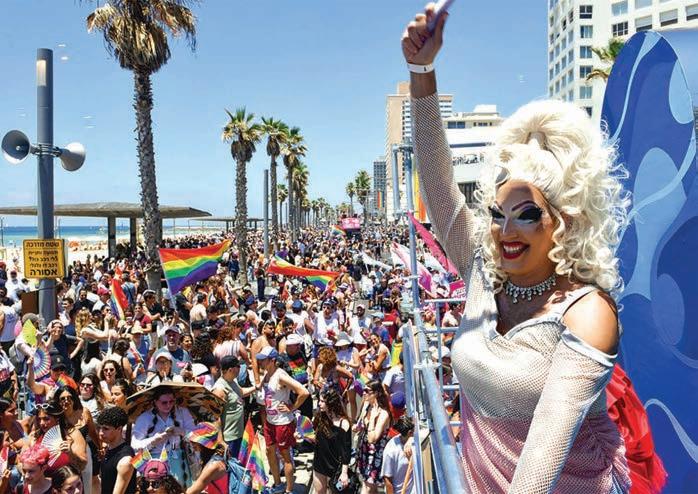
More than 100,000 people participated in Tel Aviv’s 28th annual Pride parade on June 12.
“Each year, we share a joyful day in Tel Aviv-Yafo,” said Tel Aviv Mayor Ron Huldai. “It is a day when we come to celebrate the society we strive to be: one where people are valued not for who they are, whom they love, where they fall on the spectrum, or the kind of family they choose to create.”
Tel Aviv authorities last year cancelled the parade, which was to have taken place hours after Israel launched airstrikes against Iran. Tehran, in turn, launched hundreds of missiles toward the Jewish State.
President Donald Trump on June 23, 2025, announced a ceasefire that ended the 12-day war.
Israel and the U.S. on Feb. 28 launched airstrikes against Iran. The Jewish State continues to carry out airstrikes against Hezbollah, an Iran-backed Shia militant group the U.S. and Israel have designated a terrorist organization, in Lebanon.
Reports indicate the U.S. and Iran this week are poised to formally sign a ceasefire agreement. Israeli Prime Minister Benjamin Netanyahu on Monday said his government would continue its efforts to prevent Iran from obtaining nuclear weapons.
Hamas militants on Oct. 7, 2023, killed roughly 1,200 people, including upwards of 360 partygoers at the Nova Music Festival, when they launched a surprise attack against Israel from the Gaza Strip. The militants also kidnapped more than 200 people.
A case that South Africa filed with the International Court of Justice accuses Israel of committing genocide against Palestinians in the Hamas-controlled enclave after Oct. 7.
Roma Pride organizers earlier this month banned two Jewish LGBTQ groups from having floats in their June 20 parade in the Italian capital because they refused to categorize the Israeli government’s post-Oct. 7 war in Gaza as a genocide. The decision has sparked outrage among Jewish organizations around the world.
“The participation of a float in Roma Pride therefore also assumes — regardless of the sexual orientation, identity, religion, ethnicity or nationality of the person you see — a clear and unequivocal position of condemnation of the genocide perpetrated by the Israeli government,” said Roma Pride in a May 26 statement. “The history of our republic is a history of resistance. The history of our movement is a history of resistance. Roma Pride, therefore, supports the right to exist and to resist (for) the Palestinian people oppressed by Israeli government’s criminal and genocidal conduct.”
Sipineq+, a Greenlandic LGBTQ rights group, organized its annual Pride parade that took place in Nuuk, the mineral-rich island’s capital, on June 13.
Trump since he took office for the second time has called for the U.S. to take control of Greenland, a self-governing Danish territory with a population of less than 60,000 people. Trump claims the U.S. needs to control the island in the Arctic Ocean between Europe and North America because of national security.
Cuba’s National Center for Sexual Education, a group that Mariela Castro, the daughter of former Cuban President Raúl Castro directs, last month held a series of events that commemorated the International Day Against Homophobia, Transphobia, and Biphobia.
The IDAHOBiT commemorations took place against the backdrop of widespread blackouts and a severe fuel shortage after Venezuela stopped oil shipments to Cuba after American forces seized now former Venezuelan President Nicolás Maduro and his wife, Cilia Flores,
on Jan. 3. Federal prosecutors last month also indicted Raúl Castro over his alleged role in the 1996 shooting down of four planes that Brothers to the Rescue, a Miami-based Cuban exile group, operated over the Florida Straits that separate Cuba and the Florida Keys. Raúl Castro, 94, was Cuba’s defense minister when the incident took place.
The Budapest Pride march will take place in the Hungarian capital on June 27, less than two months after Prime Minister Péter Magyar took office.
Hungarian lawmakers last year passed a bill that banned Pride events and allowed authorities to use facial recognition technology to identify participants. MPs later amended the Hungarian Constitution to ban public LGBTQ events.
More than 100,000 people defied the ban and participated in last year’s Budapest Pride parade. The event became one of the largest protests against then-Prime Minister Viktor Orbán and his government that Magyar and his center-right Tisza party ousted on April 12. Hungarian police on May 29 announced they will allow the Budapest Pride march to take place.
“We will march freely in fresh air for our rights, for the democratic Hungary,” said Budapest Pride on its Facebook page.
Erika Hilton, a Black travesti and former sex worker who has been in the Brazilian Congress since 2022, is among those who spoke at the annual São Paulo Pride Parade that took place on the city’s Paulista Avenue on June 7. Reports indicate more than 1 million people took part in the event.
Equal Namibia will hold several events in the country.
The Namibian High Court in 2024 struck down Apartheid-era statutes that criminalized consensual same-sex sexual relations — the country gained its independence from neighboring South Africa in 1990. The Namibian Supreme Court the year before ruled the country must recognize same-sex marriages legally performed elsewhere.
Patrick Reissner, co-founder of Equal Namibia, on Monday told the Washington Blade the organization is preparing to file a marriage equality case. Reissner said two Equal Namibia staffers are planning to participate in this year’s World Pride, which will take place in Amsterdam from July 25-Aug. 8.
“By staying visible, engaging with the international (business) community, and pushing for more research in queer spaces — Namibian, regional, and continental — we hope to prove to our government that the economic and social costs of discrimination cause more damage, affect productivity, limit innovation, and hold back our nation’s investment attractiveness,” Reissner told the Blade. “Diversity and inclusion — across the board — are not only social values, but increasingly vital arguments in shaping our local economies for future generations.”
More than 100,000 people participated in the Tel Aviv Pride Parade in Tel Aviv, Israel, on June 12, 2026. (Photo by Kfir Sivan, courtesy of the Israel Tourism Ministry)
KEVIN NAFF
is editor of the Washington Blade. Reach him at knaff@washblade.com
Cowardly corporations abandon LGBTQ America
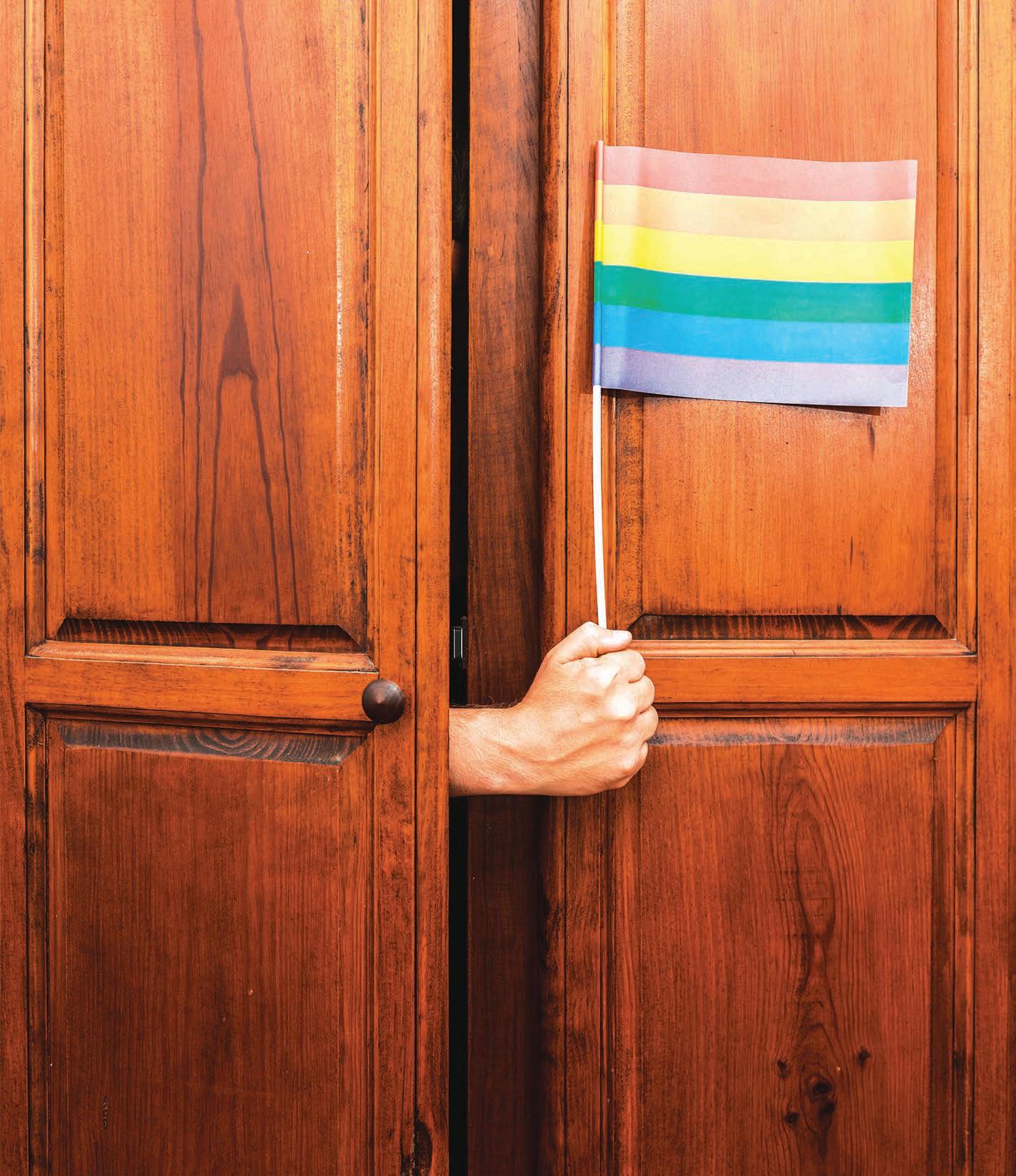
Execs are hiding in the closet this Pride season. Should we ever welcome them back?
I had a thought provoking conversation with Billy Porter over Memorial Day weekend. The talented and opinionated star asked me how things were going at the Blade and in D.C. given the current administration in the White House. It was a loaded question. The short answer is that things in D.C. are pretty terrible these days — the economy is down, inflation and gas prices are up; small businesses and non-profits are struggling amid widespread government funding cuts; and, yes, media outlets large and small are also feeling the pinch. Even the aesthetics of our once beautiful city are suffering (see the White House lawn).
For queer-identified businesses, the news is worse, as major corporations across the country have reduced or eliminated support for anything deemed “DEI,” which includes LGBTQ causes and support for Pride celebrations.
When I explained all of this to Porter, he replied with a quick and definitive comment that has left me thinking for weeks: “And when the pendulum swings back, don’t let those companies back in. Ever.”
There are certainly some big companies that continue to live their values and stand by the LGBTQ community — Absolut, Marriott, Walmart, Coca-Cola. But so many others have abandoned us at a challenging time — Target, Bud Light (and most beer brands), PepsiCo, Accenture, among a long list.
There’s a lot of cynicism about so-called “rainbow capitalism,” or the practice of companies profiting off of the LGBTQ community especially during Pride month. We’ve seen all sorts of silly pandering in recent years — rainbow Oreos and Doritos come to mind.
But corporate America has frequently been called upon to play an important role in advancing equality. From implementing inclusive and affirming hiring and workplace practices (especially in places lacking legal protections) to using their influence to advance public policy, our corporate allies have helped us in myriad ways. To suggest we don’t need them ignores the many accomplishments corporate leaders have made on our behalf. They stepped up to fight bathroom bills in North Carolina and they successfully blunted Mike Pence’s notorious “license to discriminate” law in Indiana.
That was then. Fast forward to 2026 and under pressure from the corrupt Trump administration, our former corporate allies have run for cover. They are cowards. Their cynical abandonment of the LGBTQ community has grave consequences. New York City Pride ran $800,000 short last year after major sponsors like Mastercard and Nissan pulled out, according to a recent report in the Wall Street Journal. San Francisco Pride fell $300,000 in debt last year when Anheuser-Busch and others pulled out, the Journal noted. Phoenix Pride has filed for bankruptcy. There will be many other casualties.
The topic of how to respond if and when the pendulum swings back is a popular one right now in the LGBTQ movement. Do we replace corporate sponsorship dollars with grants and individual donations? That’s easier said than done. Do we take their money and forgive these transgressions? Or do we follow Porter’s advice and tell them to fuck off?
Nonprofits, Pride organizations, and queer media outlets like the Blade have some thinking to do about this. No one is in business to turn away sponsors and ad dollars. But we have a responsibility to our customers, readers, and community to operate ethically. An ad in the Blade carries a lot more subtext and meaning than an ad in the Washington Post.
To those companies and executives hiding in the closet this Pride season: Shame on you. To the companies standing with us: Our sincere gratitude. Our community’s memory is long and we will not forget those who resisted Trump’s anti-DEI crusade to stand on the right side of history.
ANDREW A. ISEN
is the founder and president of WinMark Concepts, a D.C.-based marketing and communications firm. For 35 years, WinMark has been advising companies and brands on defining and developing effective LGBTQ business strategies.
Corporate LGBTQ Pride 2026 on life support
A rainbow washout as marketing dollars disappear
Terrified of becoming targets of right wing media and activists, businesses and brands are fleeing Pride support in 2026. The fear of boycotts and retribution have seen Pride sponsorships plummet to previously unseen levels. Further, there is now a complete corporate reevaluation of marketing and advertising activities in the LGBTQ consumer sector writ large.
No more rainbow washing. For the past 30 years, corporations have literally wrapped their brands in rainbow colored monikers during the month of June. This practice, know as “rainbow washing,” sought to ingratiate companies with the over $1 trillion LGBTQ consumer segment. From rainbow filled Oreos to rainbow wrapped Burger King Whoppers, brands actively engaged in developing relationships with this coveted consumer. Now, it’s considered taboo.
No more multi-million dollar beer sponsorships in the aftermath of the Bud Light disaster. For the first time since the over 100 Pride festivals accepted marketing opportunities, major brands including Bud Light, Miller and Corona have decided that reputational risk, boycotts and the like are more dangerous than the commercial reward. Their non-participation and the significance of this loss cannot be overstated.
When right-wing bloviators co-opted the meaning of the word woke , they turned a positive definition into a pejorative. Now, corporations and brands are petrified of being labeled as woke , and in turn, are curtailing marketing outreach to niche consumer segments, LGBTQ included.
Anti-woke legislation has now appeared in a multitude of states, primarily around transgender issues. Bathroom bills, as they are known, are ubiquitous. Boys playing in girls sports,is portrayed as a national emergency. These issues are a constant presence on social media as well as at every level of government, and have had a major impact on LGBTQ-related corporate activities.
But perhaps most devastating, is the federal government effort to enact elements of the right-wing’s Project 2025 agenda, seeking to eradicate DEI at every level. Companies, universities, and nearly all institutions that previously championed diversity, equity, and inclusion, have rapidly and radically disbanded and defunded all DEI efforts and activities within their organizations. Discontinuing supplier diversity initiatives, defunding support for internal ERG’s (employee resource groups), and decamping from participation in HRC’s (Human Rights Campaign) Equality Index. Importantly, this index is considered the gold standard for corporate DEI evaluation, and its repudiation is having a profound effect on corporate behavior.
DEI is now in the ICU on life support, with little chance of resuscitation. Companies that once embraced DEI have retreated in fear, in spite of critical positive facts. In 2023, McKinsey and Company, no bastion of liberalism stated, “that for five years, our research has shown a positive, statistically significant correlation between company financial outperformance and diversity, on the dimensions of both gender and ethnicity.”
What happens next is unknown. We have entered uncharted territory where the confluence of so many factors is having negative effects. June 2026 has seen many companies severely curtail or fully exit partnerships with Pride organizations and LGBTQ marketing programs in general, citing among other things, economic concerns. However, no company can honestly deny that overall fear and the increasingly hostile climate for DEI and LGBTQ issues have prompted brands to rethink their overall support and initiatives. This, despite pressure from stakeholders and shareholders, and vital employee recruitment and retention efforts.
Political winds have outcomes. It would be naïve to think that there might be an immediate rethinking should the Congress or presidency change parties. Business cycles, though more agile than government, take longer to work through. Years, not months. So just as quickly as “rainbow washing” has come to a precipitous end, so too is the arrival and reckoning with the blistering Rainbow Washout.
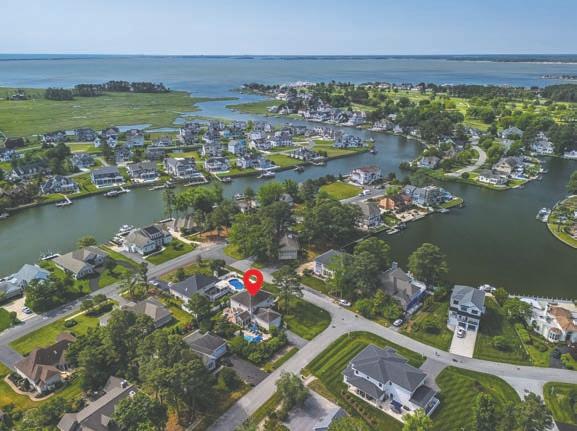
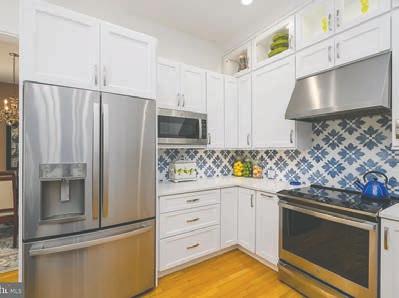
LocatedintheprestigiousRehobothBeachYacht&CountryClubcommunity,19SherborneRoadofferstheperfect b lendofcoastalelegance,comfort,andresort-stylelivingjustminutesfromdowntownRehobothBeachandthe AtlanticOcean.Thisbeautifullydesigned4-bedroom,3.5-bathhomefeaturesapproximately3,200Sq.Ft.of thoughtfullycraftedlivingspacewithanopenfloorplanidealforentertainingandeverydayliving.
MARY KAY DEVINE
is a Chicago resident.
My trans daughter thrived in Chicago public schools
Washington wants to make that impossible
I am a Chicagoan whose daughter is transgender. But that is not the most important fact about her. My daughter loves fashion, sings in choir, is active at church, and is, by every measure, your classic American teenager.
Yet it is her gender identity that politicians in Washington have once again decided to make their business.
She’s had the benefit of attending school in a district that affirms her, with educators who have added protections for students like her to a contract, in a city that benefits from and believes in diversity.
If the Republican-led Congress that is subpoenaeing the CEO of Chicago Public Schools truly was interested in “inappropriate content” and its impact on students, they would start with the anti-trans state legislation that increases youth suicide attempts by 72%, not the school districts making them feel safe and welcomed. Protecting these kids in school is not a culture war talking point. It is suicide prevention.
But that is not what they are doing. Instead, they are calling to question the head of a school district where Chicago’s values have made our schools safer places for students of every gender, race, and nationality.
The same administration that has yet to investigate the Epstein files but is moving the FCC to put warning labels on television shows that portray inclusive families and characters of different sexualities, is telling on itself in what they think is permissible and what they think is harmful for school-age youth. They say this is about parental rights and children’s well-being, but the parental right I care most about is the right for my daughter and all children to walk into a school building and feel safe and affirmed instead of scared and threatened.
My daughter spent 13 years in Chicago public schools. Her teachers used her chosen name. Her classmates accepted her for who she is. She wore a formal dress at choir concerts, landed a female lead in the school musical, and used the women’s bathroom without anyone batting an eye. When she went to a school dance, her teachers celebrated her like any other student, gushing over her dress, cheering her on. Nobody treated her like a problem to be managed.
That is not luck. That is Chicago. It’s the result of educators who fought hard for these protections. While MAGA has moved other states to bar teachers from even acknowledging LGBTQ+ students, the Chicago Teachers Union ratified a contract that does the opposite. It puts gender support coordinators in every network, codifies protections for chosen names and pronouns, and incorporates CPS guidelines for transgender students into the collective bargaining agreement itself.
Those are not bureaucratic details. They are what stands between a child like mine and the bully who, without them, could decide she does not deserve dignity and hurt her without consequence.
Chicago believes every student, including LGBTQ+ children, belongs in school and deserves to feel safe there. Our city has grit and resolve and a deep sense of pride in the diversity that makes it what it is. I believe that is exactly why this administration has put us in its crosshairs. This is a city that shuts down its streets for the Pride parade, Puerto Rican Day Parade, St. Patrick’s Day, and the Bud Billiken Parade. This is the Chicago I am raising my daughter in. The Republicans in Congress have decided that belief is the problem.
They have already passed a bill to pull federal funding from any school that affirms a transgender student’s identity without first notifying parents. They’re attempting to withhold funds from Chicago and other districts for programs that reverse generations of discrimination and disinvestment. They want to dismantle the Department of Education and have already passed a law to fund private religious schools with public dollars. Putting our school district under the lights of their circus is just one tactic in their political agenda.
I wanted my daughter to read, to do math, to graduate ready for whatever comes next, and find her place in the world. Every parent I know wants that. My daughter recently graduated. She got there because she had good teachers, she applied herself, and she never had to walk into school ashamed of who she was or afraid of what might happen.
It matters to me that my daughter was in a district intentionally seeing to her safety, immigrant students’ sanctuary, and Black students’ success. What they see as a violation is really our city’s commitment to the dignity of all students
What they are running is not a parental rights agenda. It is a defunding agenda against parents, students, and educators who don’t subscribe to their beliefs, and Chicago is just the beginning.
AYMAN ECKFORD
is a Washington Blade contributing writer.
There is no Pride in detention
LGBTQ refugees, asylum seekers struggling to survive
“There Is No Pride in Detention” is the name of a campaign led by Rainbow Migration, the British organization to which I contribute as part of an advisory panel.
The campaign, launched during Pride Month, highlights the fact that an unknown number of LGBTQ people are held in immigration detention in the UK. They are detained without courts or judges, in prison-like conditions, often for an unlimited amount of time.
Although detention is officially meant to be used only when someone is about to be removed from the UK, in practice most detainees are eventually released. Their detention serves no meaningful purpose other than isolation and trauma.
The campaign made me think about LGBTQ refugees in other Western countries, especially the U.S. Immigration enforcement there, particularly under Trump-era and broader MAGA-aligned politics, has become increasingly brutal toward LGBTQ refugees. The UK has its own problems, but still a very different and less problematic system in tone and practice from U.S. Immigration and Customs Enforcement.
British policing, for all its flaws, is generally far more restrained than many other systems I have encountered. UK police tend to be procedural, British policemen are generally polite, and reluctant to use force compared to what is common elsewhere. Most British policemen don’t even carry weapons if they are not dealing with a specific danger case. ICE, by contrast, has a well-documented record of brutality, aggressive attacks in detention settings and immigration facilities.
ICE does not meaningfully distinguish between queer refugees, asylum seekers, or people labelled in official rhetoric as “illegal aliens,” “drug dealers,” or “gang members.” In practice, they are all treated as deportable and faced the same level of brutality. Human rights organisations have documented widespread abuse, medical neglect, and high levels of physical and sexual violence in detention facilities, as well as verbal and physical abuse that was homophobic, transphobic, xenophobic, or racist in nature. Transgender detainees are especially vulnerable due to systemic transphobia and lack of protection.
There is a real risk that people like me — trans refugees — could end up in these systems. I am a refugee in the UK, having arrived in 2018, but the U.S. was originally the country I most wanted to reach. I have idealized the U.S. since I was a child. I was obsessed with American mass culture as a kid, followed American politics closely as a teen, and as a young adult had more American friends than local ones, and tried to understand post-Soviet politics through American diplomatic literature, including Henry Kissinger.
In 2018, I was invited to speak at a disability rights conference in the U.S. about queer autistic people in the post-USSR. At the time, I was under pressure from Russian authorities, and my hometown of Donetsk in Ukraine was already under occupation. So, of course, I intended to apply for asylum in the U.S.
Ironically, I am now grateful my visa was denied and I never made it to that conference. I was devastated at the time, but in hindsight it may have saved me from something far worse. There is an old joke: if you are late for a trip, don’t worry, you might just be late for the Titanic.
I don’t doubt I would have been able to adapt socially in the U.S. more than I adapt to Ukraine and Russia. But it doesn’t matter, because it doesn’t protect people from ICE. No one deserves the brutality reported in detention facilities, no matter how governments choose to frame them.
One example is Andry José Hernández Romero, a 31-year-old gay makeup artist who fled persecution in Venezuela. He was detained by ICE in March 2025 and deported to a maximum-security prison in El Salvador under allegations of gang affiliation. These claims were based largely on his nationality and the fact that he had tattoos, despite experts — from a criminology professor to a Venezuelan journalist who wrote a book about the gang — noting there is no reliable evidence that the Tren de Aragua gang uses identifiable tattoos. Hernández’s case seemed like something from a dark campy movie, because his “gang” tattoos were just ordinary tattoos on his hands that read “mom” and “dad.”
There’re too many other documented cases of abuse in U.S. immigration detention centers, including forced labor.
At the South Louisiana ICE Processing Center in Basile, La., detainees reported being recruited into work programs where they were paid as little as 1$ per day. Others describe harassment, sexual violence, physical abuse, and separation of same-sex families. In some cases, people attending legal asylum appointments were detained and placed into deportation proceedings.
While the UK remains comparatively more protective in some respects, recent political shifts that became obvious after the local elections in May, are deeply worrying. The rise of far-right politics, combined with increasingly restrictive immigration policies, suggests a broader global trend.
Nestled in the heart of Logan Circle, 14Church introduces a new era of urban luxury. O ering 65 inspired condominiums, each home balances timeless elegance and modern sophistication.
This rare new-construction opportunity rises within one of Washington’s most coveted neighborhoods, where vibrant culture, acclaimed dining, and everyday conveniences, like Whole Foods, await just beyond your front door. Be among the first to experience what’s next.
Pride is here!
Parade, festival, parties planned for 51st annual D.C. celebration
By MICHAEL KEY
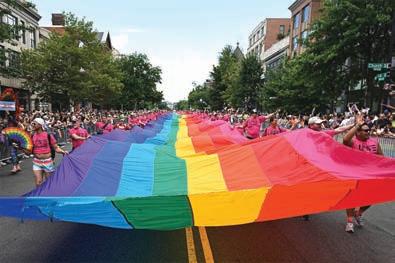
The 51st annual Capital Pride is already underway with parties and events throughout D.C. The Capital Pride Parade and Capital Pride Festival are the two large signature events slated for this weekend, though there are many other LGBTQ Pride celebrations planned for venues throughout the city in the days to come.
Friday, June 19
The Capital Pride Alliance and the Mayor’s Office of LGBTQ Affairs are hosting the LGBTQ+ Women’s Symposium at Arlo Washington DC (333 G St., N.W.) with sessions scheduled from 10:30 a.m.-2:30 p.m. and a day party from 3-7 p.m. The symposium brings together community leaders and advocates for panel discussions and dialogue. RSVP for the free event on capitalpride.org
The RIOT! Official Capital Pride Opening Party is scheduled for 9 p.m.-3:30 a.m. at Echostage (2135 Queens Chapel Rd., N.E.). Bob the Drag Queen will be running a DJ set and Myki Meeks scheduled as the headlining performer. Area DJs and performers include: Bambi, Baphomette, Bumper, Cake Pop!, Connor, DJ Ed Bailey, DJ Diyanna Monet, Evry Pleasure, Jakknife Complex, Mari Con Carne, Pussy Noir and WessTheDJ. Advance tickets run from $49-$59 and will be $69 at the door. Capital Pride General and VIP pass packages also include admission and can be purchased on capitalpride.org. The event is 18+.
KINETIC Presents is holding a Pride opening party, UNCUT XXL: Heavy Load from 10 p.m.-4 a.m at A.i. Warehouse (530 Penn St. N.E.). There will be music by Alex Acosta, Felipe Lira and Mitch Ferrino. Tickets are $80.33-$96.62 + fees on Eventbrite. The event is 21+.
Saturday, June 20
A Capital Pride Family Fun Festival will be held at Stead Park (1625 P St., N.W.) from 11 a.m.-3 p.m. The event is designed for families and children with games, crafts, glitter tattoos, hair tinsel, story time, an inflatable obstacle course, and more. The event is free and especially designed for children ages 2-10, though is open to everyone.
The Crack of Noon Parade Brunch is scheduled for 12-3 p.m. at Viceroy Washington DC (1430 Rhode Island Ave., N.W.). It is an all-you-can-eat gourmet brunch with mimosas. Tickets for the event are limited and range from $75-$90 or as a part of the VIP package available on capitalpride.org. The event is 21+.
The 17th Street Pride Block Party will run concurrently with the Capital Pride Parade from noon-10 p.m. on 17th St., N.W. between P and S streets. The event is presented by Absolut.
The Capital Pride Parade is one of the largest in the region and is expected to draw tens of thousands of participants and spectators. The annual parade is scheduled for 3-7:30 p.m. and will move through the Shaw, Logan Circle, Downtown and Penn Quarter neighborhoods. The parade is anticipated to begin at 14th Street and T Street, N.W. and end at Pennsylvania Avenue and 9th Street, N.W. The event is free to spectate and open to people of all ages, however, there are grandstand bleachers set up at Franklin Park (957 14th St., N.W.) for a shaded, seated spot for $40 in advance. Tickets for the grandstand bleachers are available on capitalpride.org. Monroe Alise and David Archuleta are serving as the parade grand marshals.
The Official Capital Pride Women’s Party, ELIX-Her, is slated for 10 p.m.-3 a.m. at Decades DC (1219 Connecticut Ave., N.W.) The multi-floor event has a different “vibe” for each floor: Latin/reggaeton/Caribbean, house/dance/pop, and hip-hop/rap/afro/reggae musical genres. Tickets are $32.15-$42.59 + fees and can be purchased on capitalpride.org. The event is 21+.
The MIXTAPE Pride Party is scheduled for 10 p.m. at the 9:30 Club (815 V St., N.W.) with DJs Shea Van Horn and Matt Bailer. Tickets are $45.65 and are available on ticketmaster.com The dance party is 21+.
KINETIC Presents partners with Capital Pride to produce the Official Main Event party, Toy Land, from 10 p.m.-4 a.m at Echostage (2135 Queens Chapel Rd., N.E.). Toy Land is 18+ and
features music by GSP and Matt Suave. There will be a special performance by Alaska from “RuPaul’s Drag Race.” Tickets are $63.35-$69.15 and available on ticketmaster. com
Sunday, June 21
The Capital Pride Festival is scheduled for 12-10 p.m. on Pennsylvania Avenue, N.W. The event will include food courts, multiple beverage gardens, vendors, community organizations, games, art, performances, dancing and more. Donations are appreciated by organizers, but the event is free. There are designated beverage garden areas for attendees 21+, but the majority of the festival is open to people of all ages. The Capital Pride Concert on the main stage of the festival runs from 1-8 p.m. with a sunset dance party with DJ Tracy Young planned for 8-10 p.m. The stage is at the east end of the festival on Pennsylvania Ave. at 3rd Street. The event is free and open to the public, but VIP passes for an area near the stage for attendees 21+ are available on capitalpride. org and range from $230$290 or as a part of a $450 Capital Pride VIP package. Concert headliners include Maren Morris, Myki Meeks, Leikeli47 and Harrison. Other performers include Carlos Ova Dupress, Kora Edge, Ruepratt, RenRiot, Vagenesis, Kitty Lovelace, Ari Voxx, RAYSHARD, Bryce Bowyn, the 2026 Capital Pride royal court, Lisa Lisa, Ms. DC Black Pride and Destiny B. Childs. An accessibility zone is available with ASL interpretation and accessible seating.
KINETIC’s discoVERS closing party is scheduled from 10 p.m.-3 a.m. at SAX (734 11th St., N.W.). Music is provided by Alexis Tucci and Clinton Foster. Tickets are $41.76-$69.46 + fees and are available at kineticpresents. com. The event is 21+.
(Washington Blade photos by Michael Key)
CALENDAR |
Friday, June 19
Trans and Genderqueer Game Night will be at 7 p.m. at the DC LGBTQ+ Community Center. This is a relaxing, laid-back evening of games and fun. For more details, visit the DC Center’s website.
Saturday, June 20
GoGay DC will host “LGBTQ+ Community Pride Brunch” at 11 a.m. at Freddie’s Beach Bar & Restaurant. This fun weekly event brings the DMV area LGBTQ+ community, including allies, together for delicious food and conversation. Attendance is free and more details are available on Eventbrite.
LGBTQ People of Color will be at 7 p.m. on Zoom. This peer support group is an outlet for LGBTQ people of color to come together and talk about anything affecting them in a space that strives to be safe and judgement free. There will be all sorts of activities like watching movies, poetry events, storytelling, and just hanging out with others. For more details, visit thedccenter.org/ poc or facebook.com/centerpoc.
The DC LGBTQ+ Community Center will host “Sunday Supper on Saturday” at 2 p.m. It’s more than just an event; it’s an opportunity to step away from the busyness of life and invest in something meaningful, and enjoy delicious food, genuine laughter, and conversations that spark connection and inspiration. For more details, visit the Center’s website.
Sunday, June 21
Kinetic Presents will host “DiscoVERS: Pride with Alexis Tucci & Clinton Foster” at 10 p.m. at Sax Restaurant and Lounge. Alexis Tucci and Clinton Foster trade off behind the decks all night, weaving uplifting disco and driving house into one continuous set. Throughout the evening, surprise performances unfold across the room, woven into the music rather than stacked on top of it. Tickets cost $41.76 and are available on Eventbrite.
Monday, June 22
Center Aging: Monday Coffee Klatch will be at 10 a.m. on Zoom. This is a social hour for older LGBTQ+ adults. Guests are encouraged to bring a beverage of choice. For more information, contact Adam (adamheller@thedccenter.org).
Center Faith will host “Pride Interfaith Service” at 7 p.m. at St. Mark’s Episcopal Church. This is the 43rd annual LGBTQ+ community celebration of religious pluralism and interfaith collaboration. Founded during the era of the Names Project AIDS memorial quilts, we continue to connect and weave many LGBTQ+ faith communities. For more details, email centerfaith@thedccenter.org. Queer Book Club will be at 7 p.m. on Zoom. The Queer Book Club meets on the fourth Monday of the month to discuss queer books by queer authors. This month’s reading is “The Skin and it’s Girl” by Sarah Cypher. For more details, visit the DC Center’s website.
By TINASHE CHINGARANDE
Tuesday, June 23
Genderqueer DC will be at 7 p.m. on Zoom. This is a support group for people who identify outside of the gender binary, whether you’re bigender, agender, genderfluid, or just know that you’re not 100% cis. For more details, visit www.genderqueerdc.org or Facebook.
“Self-Defense Class with Avi Rome” will be at 12:30 p.m. Rome is a proud member of the LGBTQ+ community and a full time Martial Arts instructor with 25 years of teaching experience. He holds a 5th Degree Black Belt in Jhoon Rhee Tae Kwon Do and is the director of the studio’s Adaptive Tae Kwon Do program for students with special needs. He has also run numerous self-defense workshops for various groups and situations. For more details, visit the center’s website.
Wednesday, June 24
Job Club will be at 6 p.m. on Zoom upon request. This is a weekly job support program to help job entrants and seekers, including the long-term unemployed, improve self-confidence, motivation, resilience and productivity for effective job searches and networking — allowing participants to move away from being merely “applicants” toward being “candidates.” For more information, email centercareers@thedccenter.org or visit www.thedccenter.org/careers.
Thursday, June 25
The DC LGBTQ+ Community Center’s Fresh Produce Program will be held all day at the center. People will be informed on Wednesday at 5:00 pm if they are picked to receive a produce box. No proof of residency or income is required. For more information, email supportdesk@thedccenter.org or call 202-682-2245.
Virtual Yoga Class will be at 7 p.m. on Zoom. This free weekly class is a combination of yoga, breathwork and meditation that allows LGBTQ+ community members to continue their healing journey with somatic and mindfulness practices. For more details, visit the DC LGBTQ+ Community Center’s website.
OUT & ABOUT
Queer writers’ association hosts Capital Love LitFest
The Washington Writers’ Publishing House (WWPH), the nation’s longest continuously operating cooperative nonprofit literary press, will present the inaugural “Capital Love LitFest” on Sunday, June 28 at 10 a.m. at The Writer’s Center in Bethesda, Md.
Designed as a full-day literary salon and cultural gathering, the event will feature more than 25 writers, nine workshops, and panel discussions, readings, and conversations centered on love, relationships, identity, healing, creativity, and connection in divisive times. Admission is pay-what-you-can, beginning at free.
The LitFest celebrates the release of “Capital Love,” WWPH’s new anthology featuring 55 writers from across the DMV, including contributors from Baltimore, D.C., Maryland, and Virginia. The pocket-sized collectible anthology explores love in its many forms through poetry and prose and serves as a literary response to today’s social and political climate.
For more details, visit Washington Writers’ website.
‘Capital Love’ is an anthology that explores love in its many forms through poetry and prose.
Ben Thrash, Head of School
TICKETS ON SALE NOW!
Theatre & Wolf Trap Present BROADWAY IN THE PARK
Tituss Burgess & Heather Headley JUNE 20
ST. VINCENT
National Symphony Orchestra
JUNE 25
RIVERDANCE 30
The New Generation JUNE 26–28
THE HUMAN LEAGU E
Soft Cell & Alison Moyet JUNE 30
DANIEL DONATO’S COSMIC COUNTRY & MOLLY TUTTLE
JULY 1
HARRY CONNICK JR.
JULY 3
SARAH M C LACHLAN
Allison Russell
JULY 5
MELISSA ETHERIDGE WYNONNA JUDD Maggie Rose JUNE 24
National Symphony Orchestra
JULY 7
A.R. RAHMAN
National Symphony Orchestra
JULY 10
DISNEY’S THE LITTLE MERMAID IN CONCERT
National Symphony Orchestra
JULY 11
LINDSEY STIRLING
PVRIS
JULY 14
TORI AMOS
Bartees Strange (Solo)
JULY 22 AND MANY MORE!
‘Feeling
Afraid’ explores life of a neurotic stand-up comic
Navigating sex, work, and possibly love in London
By PATRICK FOLLIARD
Wordily yet rightly titled, solo show “Feeling Afraid As If Something Terrible Is Going To Happen” dives deeply into the world of a neurotic stand-up comic as he navigates sex, work, and possibly love in London.
Busy arranging hookups and dates on “The App,” the 36-year-old gay funnyman juggles a full dance card; still he’s never been in a romantic relationship. While he’s willing to give love a shot, he’s not pressed about it. As he says, he harbors no fear of dying alone.
Currently making its American premiere at Studio Theatre, this darkly humorous Edinburgh Fringe import features terrific out English actor Steven Webb as The Comedian who’s about to explore what it means to spend all his time with one man.
At Studio’s intimate Mead Theatre, Kat Heath’s minimal set says standard comedy club (fluorescent tube lighting, the mic with a long cord, a single stool backed by a rose-colored curtain), but gay playwright Marcelo Dos Santos has conjured something much more than a live comedy set.
Yes, The Comedian bounces onstage in his red Converse high tops, jeans, and pink shirt with a huge mouth emblazoned on the back, but he delivers more than jokes. At times hilariously self-deprecating, then dark, and occasionally a lesson on what makes standup work, this is a layered, well-acted piece.
With Webb (a keen caricaturist of types and voices) playing all the parts while conducting The Comedian’s hilariously frenetic interior monologue, “Feeling Afraid” takes us through a summer of love. It seems after six chaste dates with The American, our nervous hero has found Mr. Right. The American is earnest, smart, hesitant to initiate sex. He’s also well built with a beautiful smile. And strangely, he’s been medically advised not to laugh aloud.
The Comedian delights in the joys of new love: dates, first kisses, sex, and then suddenly spending all of his time with the adored. Visits to art galleries become fun. Eating home cooked meals followed by grim documentaries is a thing. The Comedian is beguiled as his own boyish figure fills out, but something isn’t right. He can’t entirely relax.
Along the way we meet the Aussie doctor, our protagonist’s longtime hookup; a young runner with some exceptional body parts; the random third in a failed threesome; grumpy working comics, male and female; and an ineffectual counselor.
Webb gives a lightning-fast performance that boggles the mind (in terms velocity and virtuosity). He can be impish, very impish. He’s nervous energy incarnate, flashing jazz hands, grimacing but handsome when still. He’s likeable, a necessity when delivering a hilariously rude joke just feet away from two stone-faced audience members. (Perhaps they were laughing on the inside? At any rate, they stayed through the end the show.)
Produced by the team behind Fringe hits “Fleabag” and “Baby Reindeer,” small stage works that were developed into major TV screen successes, “Feeling Afraid” is funny for sure, and it’s also highly confessional, sexually explicit, and raw.
Written by Dos Santos during COVID lockdown, the piece was a smash hit in the 2022 Edinburgh Fringe before finding further success in London. Its depiction of a youngish queer guy navigating the big city rings entirely true. Like so much Fringe stuff, the oneman show is delightfully lewd and standup inspired.
One little moan: the show closes cleverly but too abruptly with its star dashing offstage without sufficiently basking in the admiration and applause of his thoroughly chuffed audience.
They say third time’s a charm, and regarding “Feeling Afraid,” I’d agree. After two performance cancellations (first for laryngitis and the second involving faulty air conditioning on an especially muggy June evening), I made my third trek to Studio where I found both the actor and AC in very fine fettle. And truly, Webb’s work was more than worth the wait.
‘Feeling Afraid As If Something Terrible Is Going to Happen’ Through July 12 | Studio Theatre | 1501 14th St., N.W. | $55-$102 | Studiotheatre.org
STEVEN WEBB in ‘Feeling Afraid As If Something Terrible Is Going To Happen’ (Photo by DJ Corey)
June 30 is approaching. Save thousands on select BMW demo and loaner vehicles.
Final Opportunity: 2025 BMW Demo & Loaner Savings End June 30. Current BMW incentive programs, lease offers, and finance rates on select 2025 models are scheduled to end June 30. For many clients, this may be the final opportunity to secure these exceptional savings before programs change.
To close out the month, BMW of Fairfax is offering substantial savings on our remaining 2025 BMW demonstrator and courtesy vehicles.
These near-new, low-mileage BMWs deliver everything you expect from the Ultimate Driving Machine while offering an opportunity to enjoy significantly greater value than purchasing a comparable new vehicle. Many of these vehicles represent some of the strongest values currently available at BMW of Fairfax. Once sold, they are gone―and once June ends, today’s incentive programs may as well. Inventory is limited. Savings are significant. And current BMW programs expire June 30. Don’t miss this opportunity to secure exceptional value on a premium BMW before these vehicles and incentives disappear.
2025 BMW M235i xDrive Gran Coupe*
MSRP: $55,325 | STK# NS7S49549
Total Price: $44,348
Lease for $477/mo or Finance at 2.99% APR with $10,977 OFF
2026 BMW X3 30 xDrive*
MSRP: $59,630 | STK# NS9Z98132
Total Price: $49,848
2025 BMW 330i xDrive*
MSRP: $52,175 | STK# NS8F39008
Total Price: $40,848
Lease for $432/mo or Finance at 1.99% APR with $11,327 OFF
Lease for $614/mo or Finance at 1.90% APR with $9,782 OFF
2025 BMW X7 xDrive40i*
MSRP: $98,325 | STK# N9Z22350
Total Price: $80,848
2025 BMW X1 xDrive28i*
MSRP: $47,880 | STK# NS5151032
Total Price: $39,848
Lease for $473/mo or Finance at 1.99% APR with $8,032 OFF
Lease for $1,023/mo or Finance at 1.90% APR with $17,477 OFF
‘Stop! That! Train!’ is made for fans, but fun for all RuPaul stars as President
By JOHN PAUL KING
Gagwell
trying to avert a tragedy
Before I can begin a review of “Stop! That! Train!” (the movie that’s been algorithmically dominating your queer social media feed in the form of ads for weeks now), I feel it’s necessary to provide a disclaimer: I am not a superfan of “RuPaul’s Drag Race.”
That doesn’t mean I’m NOT a fan, mind you. I’m just disclosing that I have never been the loyal viewer for whom each new episode is the highlight of the week, or followed the careers of the contestants I loved the most; I don’t know who won each season, or how many times they’ve been on the show. I barely even know any of the catch phrases. I say all this because you should know that, as someone who didn’t get any of the show references I’ve been told were laced throughout the movie, I’m probably not the person RuPaul and filmmaker Adam Shankman had in mind when they were making it.
I do, however, respect and adore the art of drag, not just as an expression of queer identity tied to a long tradition stretching back centuries, but as a powerful tool for satire. It’s a queer-eyed view that exposes the hypocritical norms and mainstream “morality”of society in a form that goes right over the heads of anyone who isn’t in on the joke, and the Queens of “Drag Race” not only honor that tradition but live up to it. Make no mistake, the queer spirit of rebellion is alive and well in “Stop! That Train!” – even if it sometimes feels like it’s just along for the ride.
Mounted as a parody of old-school “disaster movies” – a genre that found its heyday in the same ‘70s and ‘80s period that also saw the success of classic movie spoofs like “Young Frankenstein” and “Airplane!” (which clearly serves as the primary blueprint) – Shankman’s film seems driven by an impulse toward the absurd as a kind of de facto social commentary, but puts the most emphasis on landing its jokes. It imagines a contemporary world where high-speed train travel is an actual thing in America (wouldn’t that be nice?) and a Black drag queen can be elected president (OK, maybe she’s a cisgender woman in context of the plot, but still), but
in which everything is pretty much just as “off the rails” as it really is, anyway.
In the middle of it all are Tess and DeeDee (Ginger Minj and Jujubee, both popular “Drag Race” veterans), two “train stewardesses” who fake their way into jobs on the prestigious “Glamazonian Express” railway line and face hostility from the “mean girl” attendants who work there. The popularity contest soon takes a back seat, however, when the train finds itself speeding into a catastrophic “storm-o-ganza,” and they’re faced with the challenge of saving themselves – along with the train’s assortment of passengers – from all-but-certain doom. Fortunately, they’re not alone; under-appreciated train dispatcher Donna Dusk (Rachel Bloom) is doing her best to guide them from afar toward the least catastrophic outcome, and no less than American President Judy Gagwell (RuPaul Charles, of course) takes a personal interest in averting the disaster; after all, it could take a few points off of her popularity rating if she doesn’t. Can this plucky alliance of women-with-something-to-prove shepherd this runaway train (and everyone on board) to safety? Of course they can, and in the most ridiculous way possible.
Like the aforementioned “Airplane!” (the zany 1980 farce that was itself modeled after the popular “Airport” series of all-star disaster epics), “Stop! That! Train!” takes an approach to comedy that’s more like facing a high-speed pitching machine in a batting cage than watching a movie in a theater; it’s one joke after another, thrown rapid fire against the wall on the theory that at least some of them will stick – a time-honored tradition that, admittedly, results in a lot of them that don’t. For every belly laugh, there’s a real groaner, and a fair number of the chuckles are “polite” ones, at best; but that, of course, is part of the appeal. Screenwriters Christina Friel and Connor Wright skew their humor toward the lowbrow –something the popular drag movement fully embraces, anyway – and make most of their characters into clowns as they freely transplant plot points and tropes into their ludicrous scenario; all of it’s on purpose, and most of it works, because
this is the kind of movie that is intended to be as “stupid” as possible and we wouldn’t want it any other way.
Of course, some viewers will inevitably be underwhelmed by the movie’s humor; its borrowed tropes may feel less funny for being too familiar, sometimes the “lowbrow” might edge too closely on the “tasteless,” and the overall spirit of “bitchiness” could easily just come across as just plain “mean” if one is in the wrong mood. Let’s face it, though: most of those people will probably not be going to see “Stop! That! Train!,” anyway. For the rest of us, even if more of its jokes fall flat than we might hope and some of the zingers don’t have the “zing” that they should, there’s still a cumulative effect that leaves the impression of a whole being greater than its parts. After all, sometimes we just want to have brainless fun at the movies instead of having to think too much about it, and nobody was expecting an Oscar-winner, were they?
As for the disaster movie plot, it’s impossible to take seriously, of course, but it does provide the opportunity to showcase a lot of characters – and caricatures – along the way. Minj and Jujubee are essentially the stars of the show, and their easy chemistry together helps them carry the film; RuPaul, every inch the superstar as ever, strides confidently into his presidential role and rightfully dominates every scene that he’s in, yet is graceful enough not to overwhelm or overshadow the work of his co-stars, especially Matt Rogers, who, as President Gagwell’s possibly psychopathic press secretary and confidante, shares more screen time with him than anyone else.
By TERRI SCHLICHENMEYER
How many times have you marched so far this month? Seems like there’s always a reason to gather and walk during Pride, but save some time for yourself, too. You’ll want to reflect, rest, and read these great books about living your best Pride month.
No doubt, you’ve thought once or twice about stepping away from society as it is, and moving somewhere more accepting. So read “Qtopia: A Memoir of Love, Land, and Liberation” by Juda Bennett (University of Wisconsin Press, $18.95), the story of doing exactly that, and how it turned out.
Back in the ‘70s, Bennett fled the suburbs and all it represented, and went “back to the land,” to a commune named Lavender Hill. Some of the places he’d lived before then had promised way more than they delivered, but Lavender Hill was different – more rural, more open, more queer, much better. But you know all good things must end, and that includes “queer utopia.” The only thing left was to re-enter the mainstream, a journey unto itself, and one worth reading.
Speaking of memoirs, in “Gay Mormon Dad” by Chad
Anderson, art by Remy Burke (Graphic Mundi, $21.99), you’ll read about Anderson’s life as a husband (to a woman), a father, and a man who seemingly had it all but it wasn’t right, and he wasn’t happy. He was gay, but acknowledging it, telling his family and his church family, could mean the loss of everything he loved. It’s a story that may be familiar to you, in some way, and it’s a quick read.
For most of his life, Joseph Osmundson dreamed about getting pregnant and having a family. The former didn’t happen and, as for the latter, as he writes in his memoir, “Spawning Season: An Experiment in Queer Parenthood” (Bloomsbury, $27.99) the journey for a gay man to become a father can have plenty of roadblocks.
When two women approach Osmundson to be a sperm donor, it appears that his ultimate dreams are about to come true. Things go swimmingly – until race enters the conversation. Are the words “donor” and “dad” the same? Read this powerful book, and think about it.
And finally, if parenthood as a gay person is something that’s a case of maybe-later, then “Good Morning Moon: A
Snapshot of an American Family” by Brad Gooch (Harper, $29) is a book to find. It’s the story of late-life love, surrogacy, and identity as Gooch learns about himself as he learns to be a good Dad. This is a great book for older fathers, and anyone who’s on the parental fence, later in life.
Books for Pride by various authors c.2026, various publishers $18.95 - $29.00
If these great books aren’t enough for you, or if you’re looking for something different for Pride, then head to your favorite bookstore or library and ask the staff there to help you find your next best read. They’ve got a lot of books to put in your hands, a lot of sunny afternoons full of relaxing and promise, so march on out, get a new book, and happy Pride!
RUPAUL and MATT ROGERS star in ‘Stop! That! Train!’ (Image courtesy World of Wonder Bleecker Street)
THE FOURTH COURIER
BY TIMOTHY JAY SMITH
DAVID LLOYD | Weichert,
Realtors
Old Town Historic District. 121 N. Pitt Street. Alexandria, VA 703-593-3204 | dlrealtygroup@gmail.com
$685,000
A Residence with Supreme Provenance
Once owned by a Supreme Court Justice and held by the same family since 1981, this beautifully renovated 2BR/2.5BA condo is truly a judicious investment.
Located in The Representative Condominium, this nearly 1,600 sq ft home offers panoramic views of Washington, DC’s iconic monuments from an expansive 11th-floor balcony—perfect for entertaining or enjoying a quiet evening with a view that rests its case on its own.
Features include an open, light-filled layout, updated eat-in kitchen, remodeled baths, abundant storage, in-unit washer/
dryer, and garage parking. The flexible second bedroom adapts easily as a guest room, office, or additional living space.
Full-service building with concierge, pool, fitness center, and more. Just steps to Pentagon City Metro, shopping, dining, and National Landing.
A rare opportunity—this one won’t stay on the docket for long.
Pride on the Pier
Seventh annual LGBTQ celebration held at The Wharf DC
(Washington
The Washington Blade held the seventh annual Pride on the Pier at The Wharf DC on Saturday, June 13.
Blade photos by Landon Shackelford)
Lost River Pride
LGBTQ celebration held in rural West Virginia
(Washington
The 2026 Lost River Pride Festival was held on the scenic grounds of the Lost River Farmers Market in Lost City, W.Va. on Saturday, June 13. Headliner Tom Goss performed at the festival and gave a second performance at the nearby Guesthouse Lost River.
Blade photos by Michael Key)
Cool convertibles
By JOE PHILLIPS AUTOS
Ragtops rock! For drivers looking to carve their own lane, the world already has enough sensible crossovers, minivans, and pickups. These three convertibles trade practicality for sunshine, wind, and the occasional wild-hair day.
BMW Z4
$58,000 | MPG: 25 city/33 highway
0 to 60 mph: 5.2 seconds | Trunk space: 10.0 cu. ft.
PROS: Strong engines. Uber comfy. Stylish.
CONS: Expensive. Final year of production.
Act fast, Bimmer fans, this is the last year the BMW Z4 roadster will be produced. Along with the entry-level xDrive30i and high-performing M40i, there is a Final Edition model.
Since 2002, the Z4 has expertly balanced performance, comfort, and style. The long hood and short rear deck still look fantastic. The stance is athletic. And with the top down, this car gains an extra dose of drama.
Under the hood, BMW offers turbo power that feels eager rather than overwhelming. Acceleration is brisk. The steering precise. The chassis composed.
Upgrading to the premium models lets you scoot from 0 to 60 mph in just 3.9 seconds. But—ka-ching!—the MSRP soars to $79,000.
Available in manual or automatic transmissions, this convertible can sprint through mountain roads on Saturday and soothingly devour highway miles on Sunday.
As for the interior, it blends luxury and functionality. Materials feel expensive. Controls are easy to use. And the seats
are supportive.
For me, other ragtops may be more party hearty, but the Z4 is low-key, impeccably tailored and still the center of attention. Think suave James Bond versus sparkling RuPaul.
MAZDA MX-5 MIATA
$32,000 | MPG: 26 city/35 highway
0 to 60 mph: 5.5 seconds | Trunk space: 5.0 cu. ft.
PROS: Nimble. Lightweight. Affordable.
CONS: So-so power. Wind noise. Limited space
For decades, the Mazda MX-5 Miata has followed a simple formula: Keep it light, keep it balanced and make every drive feel special. The result: Automotive comfort food that never gets old.
Many vehicles grow larger every year, but the Miata has remained Lilliputian in a way that feels rebellious. You sit low. The controls are user-friendly. Visibility is excellent.
No, the engine power won’t blow you away. But this beachcomber isn’t about brute force. It’s about how the Miata makes you feel wonderfully alive, whether tootling along city streets or a winding road.
Inside, the dashboard is sparse but echoes a traditional sports car. Large analog tachometer and analog speedometer. And while the 8.8-inch infotainment display is dinky, it works nicely.
Alas, storage is limited. The cabin is snug. And taller drivers may wish for a bit more room.
Yet somehow even those compromises feel almost charming. This ride knows exactly what it is and refuses to
apologize. Sort of like showing up to Pride wearing what makes you happy rather than chasing trends.
MINI COOPER
$27,000 | MPG: 28 city/39 highway
0 to 60 mph: 7.9 seconds | Trunk space: 5.2 cu. ft.
PROS: Playful styling. Fun handling. Extra stowage.
CONS: Ride can be firm. Not a speed demon.
Mini Coopers approach life with a wink and a grin. Rounded headlights. Compact dimensions. Cheerful styling. It all works to create a vehicle that looks like it’s having fun before you’ve even started the engine.
Driving this ragtop is equally entertaining. The steering is quick, and the chassis feels eager to please. Overall performance is lively rather than blistering.
The cabin leans heavily into Mini’s playful design language. Circular elements appear throughout. Details feel intentionally quirky. Many modern interiors seem created by committees that fear excitement. This cabin feels designed by someone who enjoys color, personality and perhaps spontaneous dance breaks.
Unlike the BMW Z4 and Mazda Miata, the Mini offers a small rear seat. “Small” is doing some heavy lifting there, but the extra space adds flexibility. It may not be enough room to comfortably squeeze in friends, but you can easily stow a few bags here.
To me, driving this convertible feels like attending the world’s friendliest block party. People notice it. People smile. Sometimes people even wave.
BMW Z4
MAZDA MX-5 MIATA MINI COOPER
Does Pride decor resemble Trump’s design aesthetic?
Glitter, gold, and rejecting the idea that a home should be understated
By VALERIE M. BLAKE
Interior design is often a balancing act between taste, personality, and restraint. Sometimes, however, restraint leaves the building entirely. Such is the case when the colorful exuberance of gay Pride-inspired decorating collides with the famously excessive decorating style associated with the current occupant of the White House. The result can be a fascinating study in maximalism, spectacle, and unapologetic visual overload.
Donald Trump’s personal decorating style has long been a subject of debate among designers and critics. Admirers see luxury and grandeur. Critics see something else: a dizzying display of gold leaf, marble, mirrors, crystal, and oversized furnishings that often crosses the line from elegant into what many designers would call tacky. More is rarely enough. If one chandelier sparkles, three are better. If a room has gold accents, why not make every available surface gold? (See Oval Office and ballroom rendition for details.)
In many ways, this excess shares common ground with certain Pride celebrations. Pride has never been about blending into the background. It celebrates visibility, self-expression, individuality, and joy. Rainbow colors, dramatic costumes, glitter, flamboyant artwork, and bold statements have long been part of Pride culture. Yet there is an important difference. Pride’s extravagance is often playful, self-aware, and rooted in personal expression, while Trump’s aesthetic has frequently been criticized for equating luxury with sheer quantity and visual intensity.
Combining these influences creates an interior that could best be described as “glamorous chaos.”
Imagine entering a living room in which gold-trimmed mirrors stretch from floor to ceiling. Crystal chandeliers hang above a bright rainbow velvet sectional. Marble floors gleam beneath metallic furniture that appears determined to reflect every available light source. Pride flags become framed artwork surrounded by ornate gold moldings. A room designed this way doesn’t whisper. It shouts.
Color is central to the concept. Pride-inspired interiors of-
CONTINUED FROM PAGE 14
ten embrace the full spectrum of colors. Trump’s style, meanwhile, traditionally favors cream, gold, black, and glossy finishes. Combining them means introducing vivid jewel tones against a backdrop of faux-palatial luxury. Emerald green chairs, ruby-red draperies, sapphire-blue accent walls, and gold-trimmed furniture can coexist in a way that feels deliberately theatrical.
The key word is theatrical.
Many professional designers spend years learning how to create visual balance.
A Pride-meetsTrump interior intentionally ignores many of those rules. Pattern competes with pattern. Shine competes with shine. Artwork competes with furniture. The eye rarely gets a chance to rest. For some homeowners, that sounds exhausting. For others, it sounds like the perfect party.
Lighting offers another opportunity to embrace excess. Crystal chandeliers, mirrored lamps, illuminated shelves, and color-changing LED lighting can transform a room into something resembling a cross between a luxury hotel lobby and a Pride festival. The goal is not subtlety. The goal is spectacle.
A dining room inspired by this combination might feature a massive glass table, gold dining chairs, rainbow floral arrangements, mirrored walls, and enough crystal accessories to keep a polishing cloth busy year-round. Critics would call it gaudy. Fans would call it fabulous.
pieces featuring LGBTQ+ history, activism, and culture can provide meaning beneath the decorative excess. Without these personal and cultural elements, the room risks becoming little more than a collection of expensive looking, but not necessarily expensive, objects. Pride design can work best when it reflects identity and community rather than simply displaying color for color’s sake.
While normally a haven for restful sleep, bedrooms can take a similar approach. Plush velvet fabrics, oversized tufted headboards, metallic and mirrored finishes, colorful accent lighting, and dramatic artwork create a space that feels more like a boutique hotel suite than a traditional bedroom. Again, the challenge is avoiding the temptation to add one more decorative element to an already crowded visual landscape. What makes this design combination interesting is that both aesthetics reject the idea that a home should be understated. Both embrace visibility. Both invite attention. Both encourage occupants to take up space unapologetically. Yet where Pride design often celebrates authenticity and self-expression, Trump’s decorating style is frequently criticized for prioritizing conspicuous luxury over cohesion and refinement.
The result is an interior style that many people would consider delightfully outrageous and others would consider a decorating nightmare. Either way, nobody is likely to forget it.
In the end, a Pride-inspired interpretation of Donald Trump’s famously over-the-top aesthetic would be colorful, glittering, excessive, and impossible to ignore. It would break nearly every rule of minimalist design while embracing the philosophy that if something is worth doing, it is worth overdoing. Whether one sees that as fabulous or tacky may depend entirely on how much gold leaf and rainbow velvet one can tolerate in a single room.
Valerie M. Blake is a licensed associate broker in D.C., Maryland, and Virginia with RLAH @properties. Call or text her at 202-246-8602, email her at valerie@DCHomeQuest. com or follow her on Facebook at TheRealst8ofAffairs.
Pride marches on despite drop in corporate support
The sponsorship decline has also reignited a longstanding debate about whether corporate support for LGBTQ communities represents genuine allyship or merely marketing.
Isen argues fear—not economics—is driving much of the retreat.
“The LGBTQ community is more economically viable than it ever was.”
“The community is as economically viable as it has always been, but unfortunately the corporate fear factor has outweighed the economic viability and importance of the LGBTQ consumer community.”
He believes the Bud Light controversy fundamentally altered corporate calculations.
“Boycotts have never worked in my entire professional history. On either side, straight or gay, boycotts do not work. Until now.”
“This is the first time a boycott has ever worked as a demonstrative opposition to a brand supporting LGBTQ consumers.”
At the same time, national data suggests corporate support has not disappeared entirely.
According to the Human Rights Campaign Foundation’s 2026 Corporate Equality Index, 71% of surveyed companies still sponsor LGBTQ-inclusive events or run LGBTQ-focused marketing campaigns, 81% provide financial or in-kind support to LGBTQ organizations, and 97% maintain LGBTQ employee resource groups or diversity councils.
Still, HRC President Kelley Robinson warned that many LGBTQ employees are feeling the effects of corporate hesitation.
“Our latest community survey shows LGBTQ+ employees—especially transgender and gender-expansive people— are experiencing increased bias and heightened anxiety about job security, career advancement, and physical safety at work. And in too many workplaces, the response has been silence, retreat, or ambiguity.”
Despite the uncertainty, organizers insist Pride will continue regardless of what corporations decide.
Alexander emphasized that sponsors have never been the entirety of Pride.
“There’s a misconception about corporate sponsorships. Sponsors have typically provided the majority of our funding, but they still make up only about one-third of our partici-
pants. The other two-thirds are community groups, nonprofits, small businesses, and service organizations.”
He also believes organizations must adapt.
“Because nothing is certain, it’s important to diversify funding. It’s important to create programming and partnerships that make sense, whether that’s grant funding, individual support, grassroots support, or other avenues.”
Most importantly, he said, Pride’s purpose remains unchanged.
“Pride is a protest, but it is also a celebration. Being joyful, being happy, and being who you are is in itself a protest. If you show up to Pride and celebrate yourself, you’re sending the message that you’re not living in fear.”
And regardless of sponsorship totals, he said the movement itself belongs to the people who show up.
“We’re going to keep moving forward no matter what. There’s important work to do, important voices to be heard, people who need support, and communities that are marginalized. We’re going to find a way to move forward.”
“We are not Pride. Pride is the community. It is the people who show up and participate. We provide the platform and the amplification, but Pride belongs to the community.”
Trump’s White House decor features an astonishing amount of tacky gold leaf.
CLASSIFIEDS and your ad will appear in print & online! If you need assistance, please email the text & image to: classifieds@washblade.com or call 202-747-2077 x 8092 leave a message!
*First 25 words or less. Each additional word at $1.00 each. Monday, 5 pm deadline for Friday’s print issue!
w/ 16’ ceilings - modern kitchen - 1½ half baths - full size washer/dryer-w extra storage in the Den - 1/2 bath off Den. Ensuite elegantly finished in white marble, double sinks, walk-in shower - full wall of custom closets. 1042 SQF. Parking in the alley w easy access through private entrance. Husband & I are a LGBTQ+ Friendly & Affirming Household. No Pets. FIRST MONTH RENT FREE! Email: larskontzDC@gmail.comLars 202-368-9742
COUNSELING
COUNSELING FOR LGBTQ
People. Individual/Couples counseling with a volunteer peer counselor. GMCC, serving our community since 1973. 202-580-8861 gaymenscounseling.org No fees. Donation requestRE ROOMMATE / DC
LOOKING FOR A ROOMMATE
Capitol Hill NE,14th & F Sts NE. Only a younger male. Share bathroom, kitchen, living space & W/D in the house. $950/month + utils + deposit Call 202-397-7132
FOR SALE / DC
STRAIGHT OUT OF THE GILDED AGE, this circa-1890 stately Grand Dame commands a premier position overlooking life on Logan Circle. With two sides of broad bay windows on 3 levels, bathing the home in natural light--each framing beautiful views of the park--and a coveted fenced and private courtyard, you’ll have a front row seat to this historic neighborhood in downtown DC. 6 bedrooms/3 baths and private entry to lower level living. $2.2M Andy Alderdice
301.466.5898 andy4homes@gmail.com
Long & Foster Real Estate 202-234-4100 Luxury Real Estate SpecialistLicensed in MD, DC & VA Integrity. Experience. Commitment. Local
RENT / REHOBOTH
REHOBOTH- SMALL 2 BR partly furnished house in quiet wooded area 2 miles from downtown. Wood floors, W/D and central A/C. Monthly rent $1800 + utilities. No Pets 302 226-0303
FOR SALE / WEST VIRGINIA ARCHITECTURAL GEM 2 hours from DC.
Custom-designed with two 200+year old log cabins and the finest materials, this 4-bedroom, 4 bath house rests on 5.4 acres in a gated community at the foot of Ice Mountain (150-acre preserve) and the North Fork River. Antique furniture can convey, making this beautifully landscaped, serene getaway basically turnkey. $890,000. http://bit.ly/3RG5kvY Kathy Montgomery GRI, ABR, SRES, Associate Broker KathyMontgomery.cb@gmail.com Berkeley Springs Realty 1294 Valley Road Berkeley Springs, WV 25411 304-702-3424
Takoma Park area. Looking for friends nearby to hang out, dinner, movies, drinks, etc, etc, etc. Bracey611dc@gmail.com
BODYWORK
THE MAGIC TOUCH
Swedish, Massage or Deep Tissue. Appts. Low Rates, 24/7, In-Calls. 202-486-6183