Washington Blade, Volume 57, Issue 23, June 05, 2026
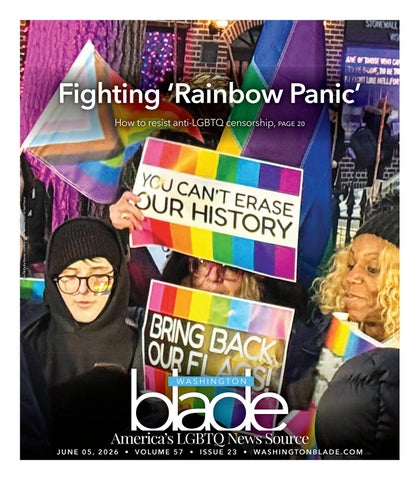
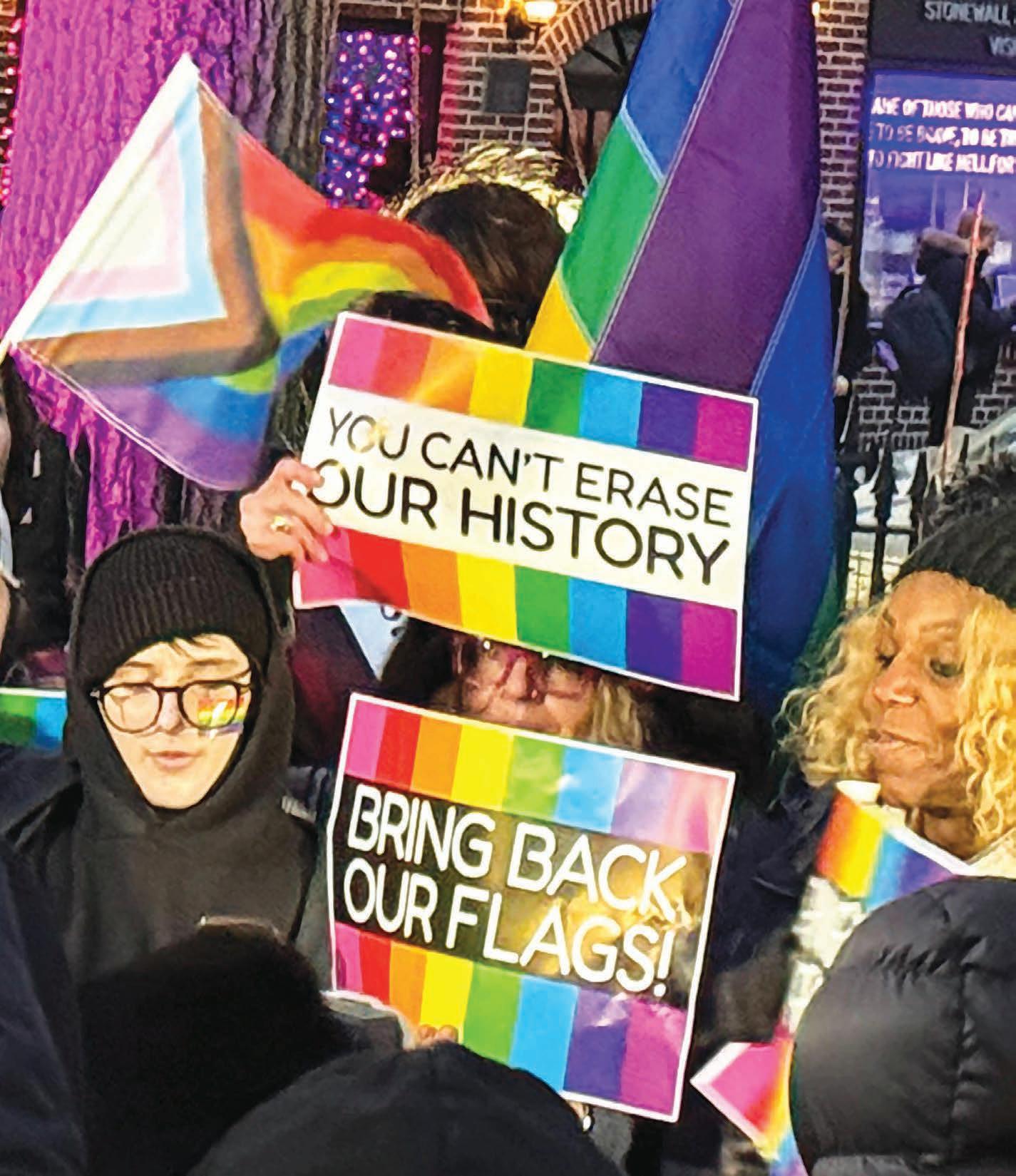
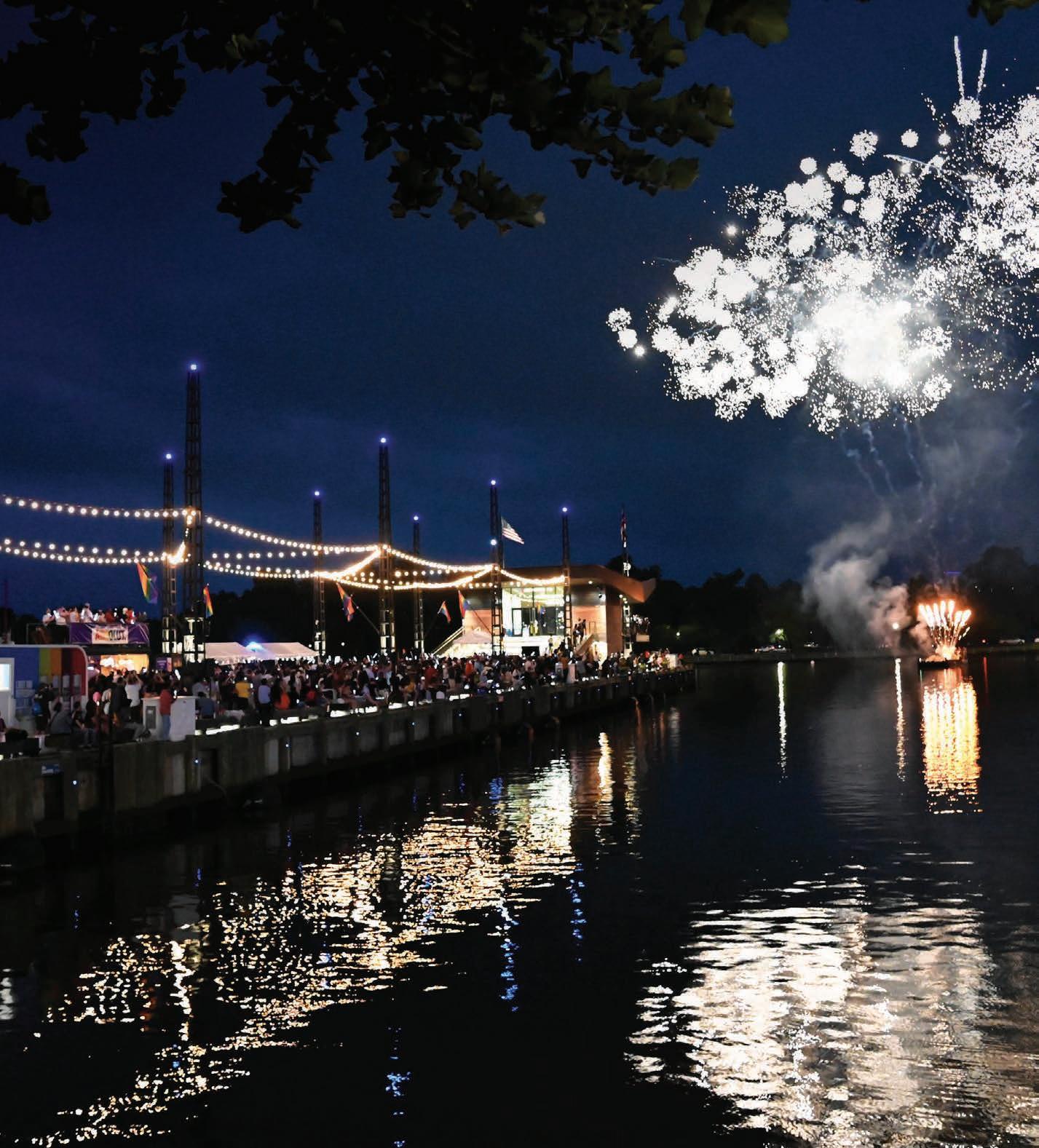
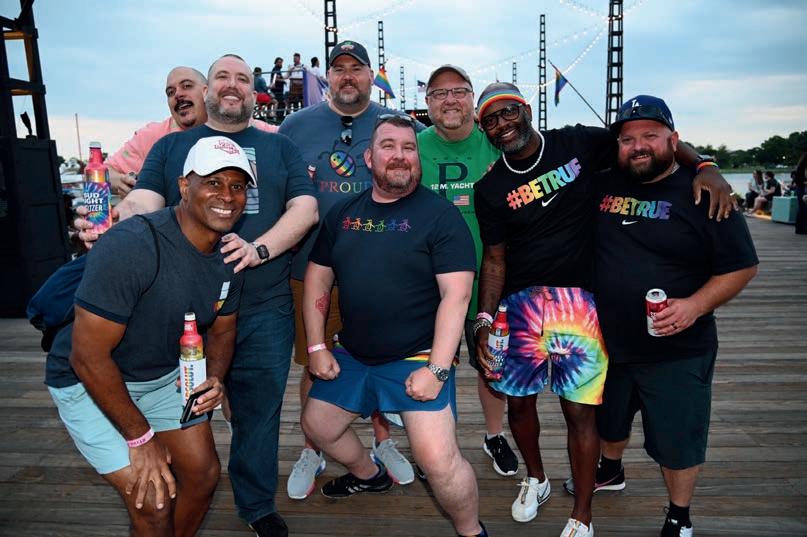
(Photo by Cathy Renna;
ADDRESS PO Box 60664
Washington DC 20039
PHONE
202-747-2077
E-MAIL
news@washblade.com
INTERNET washingtonblade.com
PUBLISHED BY Brown Naff Pitts Omnimedia, Inc.
PUBLISHER
LYNNE J. BROWN
lbrown@washblade.com ext. 8075
EDITORIAL EDITOR
KEVIN NAFF
knaff@washblade.com ext. 8088
SR. NEWS REPORTER
LOU CHIBBARO JR. lchibbaro@washblade.com ext. 8079
WHITE HOUSE CORRESPONDENT
JOE REBERKENNY jreberkenny@washblade.com ext. 9463
INTERNATIONAL NEWS EDITOR
MICHAEL K. LAVERS mlavers@washblade.com ext. 8093
POP CULTURE REPORTER
JOHN PAUL KING
PHOTO EDITOR
MICHAEL KEY mkey@washblade.com ext 8084
CONTRIBUTING WRITERS
ISAAC AMEND, TINASHE CHINGARANDE, PETER ROSENSTEIN, PATRICK FOLLIARD, TERRI SCHLICHENMEYER, JOE PHILLIPS, EVAN CAPLAN, ANKUSH KUMAR, ESTEBAN
RIOSECO, TOM SITUMO, AYMAN ECKFORD CREATIVE DESIGN/PRODUCTION
MEAGHAN JUBA production@azercreative.com
SALES & ADMINISTRATION
DIRECTOR OF SALES & MARKETING
STEPHEN RUTGERS srutgers@washblade.com ext. 8077
SR. ACCT. EXECUTIVE
BRIAN PITTS bpitts@washblade.com ext. 8089
CLASSIFIED ADVERTISING/ADMINISTRATION
PHILLIP G. ROCKSTROH prockstroh@washblade.com ext. 8092
NATIONAL ADVERTISING
RIVENDELL MEDIA
212-242-6863; sales@rivendellmedia.com
For distribution, contact Lynne Brown at 202-747-2077, ext. 8075. Distributed
CAMP Rehoboth’s new director shares plans for busy summer
Dr. Robin Brennan on joyful approach to leadership role
By THOMAS WEAVERLING
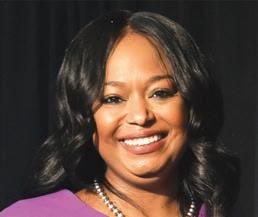
Dr. Robin Brennan, CAMP Rehoboth’s new executive director, has been getting adjusted to her role and connecting with the Rehoboth community.
In March of this year, Brennan took on the role of executive director of CAMP Rehoboth, an LGBTQ+ community center in Delaware working to Create A More Positive (CAMP) environment, following the retirement of Kim Leisey.
When asked about her frst few months with CAMP, Brennan said that she’s “in the listening and learning phase.”
“The frst few months have been overwhelmingly beautiful, with such warm wishes from so many really diverse groups,” said Brennan.
“The more time that I’ve been at CAMP, it’s almost like I have more questions and more admiration for the solid foundation that it has,” said Brennan. She explained that she is taking her time to listen and connect with the Rehoboth community during these crucial frst months.
She spoke to the stressful nature of this work, saying, “This work takes a lot of resiliency, especially being in a front-facing position as executive director of an organization. There’s so much pressure on this to be successful.”
Brennan is no stranger to high-pressure work environments, having worked in the public health feld during the COVID-19 pandemic.
Brennan earned a doctorate in public health from Drexel University and has spent nearly two decades working in higher education, which she says greatly infuences her approach to her work.
“I am always giving back to and mentoring students, that’s always been a part of who I am,” said Brennan. She said that the adaptability and fexibility she practiced during her time as a professor infuences her work, noting, “I think that to be fexible is a key to success.”
Aside from her tenure in academia, Brennan has worked for nonprofts, including with organizations such as Redeemer Health and Nemours Children’s Health
Leslie Ledogar, president of CAMP’s board of directors, said that Brennan’s joyful approach to this work made her stand out in the search for a new executive director.
“I think that I’ve always naturally been positive and joyful
because if I don’t, I will burn out,” said Brennan.
For Brennan, honoring CAMP’s legacy remains a top priority in her role at CAMP. “For me, legacy is so critical, so I want to honor the legacy that this foundation was built on.”
When asked about DEI funding cuts by the Trump administration, Brennan shared how she is navigating an administration that is targeting organizations like CAMP.
“This administration doesn’t open doors for opportunities. As a nimble nonproft organization, we have always had to be creative,” said Brennan.
She said that she “would never want CAMP Rehoboth to rely on federal dollars, regardless of what type of political administration we’re in. I think relying on any kind of dollars or funding is problematic.”
“We need to stay creative and innovative, not chase money, and also our ears need to be listening to what our community needs,” said Brennan.
As younger members of the LGBTQ+ community grow disheartened by the growing attacks on queer rights, Brennan shared her thought process behind helping younger members of the community.
“I think my number one thing is to listen to them, to ensure that they know their voice is valuable. That’s the most important thing before giving advice is to listen to their concerns, their needs, their fears, their struggles,” said Brennan.
“They may not be your struggles, but ultimately, as a human being, they’re all of our struggles.”
Brennan brought up PRISM, CAMP’s social group for young LGBTQ+ adults to gather in community and experience new activities with likeminded young adults. This group offers a safe space where members can form connections with one another to build a sense of belonging.
Throughout the interview, Brennan reiterated her admiration for CAMP and the community it has brought to Rehoboth for decades.
“There is no place like CAMP Rehoboth, and what it has done for Rehoboth or what it has done for countless individuals who see it as an escape and a place of freedom, visibility, belonging, and hope,” said Brennan.
Born and raised in Philadelphia, Brennan said that she frst
visited Rehoboth in 1996 as a young gay person. “I felt at home. I could breathe,” said Brennan. She said that she has been a frequent visitor ever since and bought a house in town three years ago.
Brennan shared how happy she is to have her teenage daughter growing up with Rehoboth in her life.
She said that her ideal day in Rehoboth involves going to the beach, trying new food, and enjoying time with her friends and family that live in the area.
As the summer season commences, Brennan shared that there is a plethora of upcoming events for members of the community to attend and enjoy.
Brennan highlighted the CAMP Women’s Golfng League, which is getting started on June 4 with tickets on sale now for CAMP Rehoboth members.
The CAMP Rehoboth Chorus is singing to honor the 250th anniversary of the U.S. on June 19 with tickets on sale now.
This year also marks the 35th anniversary of CAMP, which will be celebrated with Pride in the Courtyard on June 26.
Brennan was excited to promote CAMP’s new partnership with Beebe Healthcare starting this summer. The partnership is designed to expand access to patient-centered health services in downtown Rehoboth Beach.
“Relying on this partnership will be critical to the success of the health of our community,” said Brennan.
Brennan also talked about SUNFESTIVAL, which will be held during Labor Day weekend and will feature David Archuleta as the headliner.
Lastly, Brennan highlighted CAMP’s annual Block Party, which is held each October. “We shut down several streets, we have 100 vendors, and it’s a beautiful way for the whole community to come together to wrap up the summer,” said Brennan.
JR.’s hosts meet & greet for mayoral candidate Janeese Lewis George
Event organized by Capital Stonewall Democrats, Queers for Janeese
By LOU CHIBBARO JR.
D.C. mayoral candidate Janeese Lewis George spoke to a crowd of LGBTQ supporters on June 1 at a meet & greet event held at JR.’s on 17th Street in the Dupont Circle neighborhood.
The event, organized by Capital Stonewall Democrats, which has endorsed Lewis George for mayor, with support from a group called Queers for Janeese, was followed by a “get out the vote” canvassing endeavor in which several of those attending the meet & greet visited the homes of nearby residents known to be Lewis George supporters.
The purpose of the canvassing was to remind Lewis George supporters to return their mail-in ballots or go to the polls on June 16 to elect Lewis George as the city’s next mayor, according to Matthew Kavanagh, one of the leaders of Queers for Janeese who attended the meet & greet event at JR.’s.
Local political observers consider Lewis George, a Ward 4 D.C. Council member, and former At-Large D.C. Council member Kenyan McDuffe, to be the two leading candidates in this year’s race for mayor. The two are among seven mayoral candidates competing in the city’s June 16 Democratic primary.
Lewis George told those attending the meet & greet, which was held on the JR.’s outdoor patio, that she has a
long record of advocating for and initiating city polices and laws in support of the LGBTQ community. She said large corporate donors were backing her opponents and urged her LGBTQ supporters to help raise funds for her in the remaining days of the campaign.
Among those attending the meet & greet was gay longtime Dupont Circle civic activist Randy Downs who last November opened a nearby eatery called Protest Pizza. “I am queer and I am a Janeese supporter,” Downs told the Blade.
Stevie McCarty, president of Capital Stonewall Democrats, who also spoke at the meet & greet event, said his group would organize events in support of Lewis George in the remaining days of the campaign. Among them, he said, was an LGBTQ bar crawl in which supporters of Lewis George, including the candidate herself, would visit LGBTQ bars to promote her candidacy.
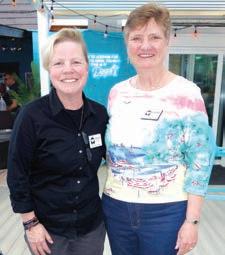
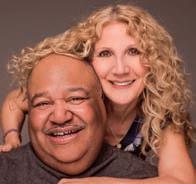
Dr. ROBIN BRENNAN (left) with CAMP Rehoboth Board President LESLIE LEDOGAR (Photo courtesy CAMP Rehoboth)
D.C. mayoral candidate JANEESE LEWIS GEORGE (Washington Blade photo by Michael Key)
D.C. kicks off Pride month with fag raising ceremony
Mayor, Council members join LGBTQ activists in 4th annual event
By LOU CHIBBARO JR. | lchibbaro@washblade.com
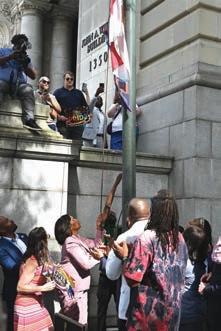
Members of the D.C. Council joined Mayor Muriel Bowser and a crowd of LGBTQ activists and supporters on June 1 for the city’s fourth annual LGBTQ Pride fag raising ceremony held outside the John A. Wilson Building, which serves as the D.C. City Hall.
Since its inception four years ago by Mayor Bowser, the event has served as the offcial kickoff of D.C. Pride month, which culminates this year with the annual Capital Pride Parade on June 20 and Pride festival on June 21, which takes place on Pennsylvania Avenue, N.W. near the U.S. Capitol.
“As I like to say, we’re celebrating Pride month in the gayest city in the world,” Bowser told a crowd that included city offcials and Council members joining her on the front steps of the Wilson Building.
“Fifty-one years of Pride in the future 51st state,” she said, adding, “And both movements are rooted in the same belief – every person deserves to be seen, heard, and fully represented.”
Among those who spoke at the event in addition to
Bowser were Japer Bowles, director of the Mayor’s Offce of LGBTQ Affairs; D.C. Attorney General Brian Schwalb; and D.C. Council Chair Phil Mendelson (D-At-Large).
“This year is special,” Bowles told the gathering. “It’s special because we celebrate the 20th anniversary of the Mayor’s Offce of LGBTQ Affairs,” he said. “For two decades this offce has helped make Washington, D.C. one of the most welcoming and affrming cities in the world.”
He added, “We have expanded LGBTQ services across agencies, invested millions of dollars into community organizations, championing culturally competent care and training, supporting LGBTQ supportive businesses and workers and celebrated our history.”
Schwalb said his Offce of the D.C. Attorney General continues to safeguard the city’s laws protecting residents against discrimination but expressed concern about “high court” rulings that he said continue to roll back civil rights, voting rights, and human rights.
He said, “We’re seeing cases limiting medical care for transgender youth while at the same time green lighting so-called conversion therapy.” He pointed to cases or policies “excluding transgender girls from participating in sports and excluding story books with LGBTQ characters from our school libraries.”
He said his offce is committed to protecting all residents, including LGBTQ residents, from all forms of discrimination. “And that includes the right to be our authentic selves, to freely express our identities and ourselves to be who we are and to love who we love.”
Mendelson, who also expressed strong support for the LGBTQ community and for the upcoming Pride events,
said 10 of the Council’s 13 members were attending the Pride fag raising event, including gay Council member Zachary Parker (D-Ward 5).
“I’m just here with gratitude,” Parker told the Washington Blade. “There’s a lot to be grateful for and a lot more to fght for,” he said. “And so, raising this fag is a reminder that our government is here to serve all of our residents regardless of how you identify or who you love.”
Shortly after Mendelson spoke, D.C. Council member Janeese Lewis George (D-Ward 4), who is running for mayor in the city’s June 16 primary, arrived at the event, becoming the 11th Council member to turn out for the event.
Among those also attending the event were Ryan Bos and June Crenshaw, the two top offcials of the Capital Pride Alliance, the group that organizes D.C.’s annual LGBTQ Pride events.
Bowser, who is not running for re-election this year and will be stepping down as mayor in January 2027, thanked those attending the Pride fag raising event for playing a role in an all-inclusive city.
“We speak with one clear voice – that D.C. is a welcoming city,” she said in her remarks. “But also, we know that our work has been robust, but it is not done. We fy this fag in front of the John A. Wilson Building because it tells a story,” she said.
“It tells a story of a city that takes care of itself,” she added. “And we take care of each other. We are a city that is diverse and welcoming.”
Serving as the event’s master of ceremony and who introduced Bowles as the frst speaker was longtime D.C. drag performer Tara Hoot.
D.C. Latinx Pride celebrates culture and heritage
Your guide to events throughout June
By MICHAEL KEY
Organizers with the Latinx History Project have planned a host of events this Pride season with parties, poetry, drag and more.
The festivities begin with the DC Latinx Pride 2026 Kickoff at Crush Dance Bar (2007 14th Street, N.W.) on Friday, June 12 from 6-10 p.m. The party will include a coronation ceremony for the 2026 Royal Court: Ms. DC Latinx Pride Vida Rangel and Mx. DC Latinx Pride Steph Niaupari. RSVP at latinxhistoryproject.org. The event is free, though donations are accepted.
An outdoor event is planned for Sunday, June 14 from 11 a.m.-1 p.m. at Anacostia River Park (1500 Anacostia Dr., S.E.). Cultivating Queer Outdoor Joy is a “peaceful outdoor community event focused on grounding, connection, and queer joy in nature.” The event is free.
A panel discussion is planned for The Festival Center (1640 Columbia Rd., N.W., 2nd foor) on Monday, June 15 from 6-8 p.m. La Plática: The Future of 2 Spirits and Trans Natives will focus upon the “stories, leadership and vision of Two-Spirit, Indigiqueer and Trans Native people.” RSVP to the free event at latinxhistoryproject.org.
A sex-positive poetry workshop, “Hoetry: Writing Erotic Poetry,” is planned for Wednesday, June 17 from 6-8 p.m. at The Festival Center (1640 Columbia Road, N.W.). The event is free.
The workshop So You Wanna Do Drag? is planned for Thursday, June 18 from 5:30-8 p.m. at The Festival Center
(1640 Columbia Road, N.W.). Featured guests Ricky Rose and Mari Con Carne will hold a style showcase to discuss the basics of developing a drag persona. RSVP to the free event at latinxhistoryproject.org.
The Latinx History Project is collaborating with Rumba Queer DC to produce an offcial Latinx Pride Party: Sin Vergüenza. The event is at the multi-level venue, Transmission (1353 H Street, N.E.) on Thursday, June 18 from 7 p.m.-1 a.m. There are dance lessons, vendors and three different music experiences in the sprawling venue. There
will also be a drag showcase from 10-11 p.m. The event is 21+ and tickets are available at shotgun.live/en/events/ sin-verguenza. Tickets are $15 for entry into the party. Tickets to participate in the dance lesson are $29.98. Participants may choose between a bachata lesson or a salsa lesson from 7-8 p.m.
La Fiesta: Offcial DC Latinx Pride Party is planned for Friday, June 19 from 10 p.m. - 2 a.m. at Bunker (2001 14th Street, N.W.). Serena Morena from “Drag Race México” and “Drag Race UK vs The World” is slated to headline the 21+ event. Early tickets are available for $15 (plus $0.38 service fee) until June 16. The door cover charge without early tickets is $20. Attendees can also purchase a meet and greet experience with Serena Morena for $30. Tickets are available at latinxhistoryproject.org.
The Latinx History Project plans to march in the Capital Pride Parade on Saturday, June 20 and to have a table at the Capital Pride Festival on Sunday, June 21. Visit latinxhistoryproject.org to register to march alongside LGP in the parade or to staff the table at the festival.
The DC Latinx Pride 2026 Closing Event is scheduled for Friday, June 26 from 6:30-8:30 p.m. at the Mexican Cultural Institute (2829 16th Street, N.W.). The free event is a panel discussion “centering the experiences of immigrants who have lived in Latin America and now call the United States home.”
Visit latinxhistoryproject.org for more information.
Members of the D.C. Council joined Mayor Muriel Bowser for the fag raising on Monday. (Washington Blade photo by Michael Key)
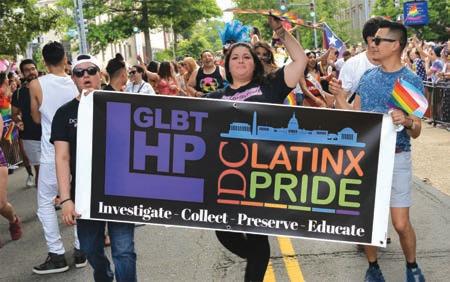
Members and supporters of the Latinx History Project march in the Capital Pride Parade. (Washington Blade photo by Michael Key)
JUNE 16, 2026
Primary and Special Elections
Every registered DC voter will be mailed a ballot for the June 16, 2026 Elections.
Mail Ballot Drop Boxes Open
May 22–June 16, 2026 until 8:00 pm
Early Voting: June 8–14, 2026
Vote Centers Open: 8:30 am – 7:00 pm
Election Day: June 16, 2026
Vote Centers Open: 7:00 am – 8:00 pm
Ranked choice voting (RCV) is a voting method that allows voters to rank candidates in order of their preference. In DC, RCV is used in eligible contests with three (3) or more candidates, and voters may rank up to ve (5) candidates, including write-in candidates. RCV allows your vote to count towards another candidate if your rst-choice candidate does not receive enough votes.
Visit www.dcboe.org/RCV for interactive tools, practice ballots, and additional information about RCV. You can also attend voter outreach events and visit DC Board of Elections (DCBOE) for hands-on practice.
Visit our website to learn more!
JUNE
Campaign seeks to repeal Va. marriage amendment
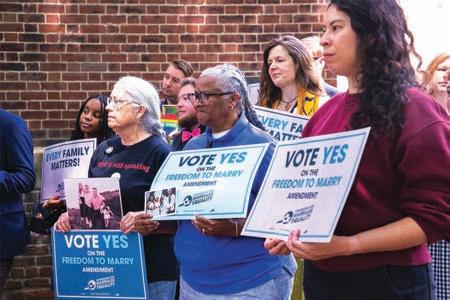
Virginians for Marriage Equality on Monday launched a campaign in support of repealing Virginia’s constitutional amendment that defnes marriage as between a man and a woman.
Equality Virginia Executive Director Narissa Rahaman, former state Sen. Adam Ebbin, former state Del. Mark Sickles, and American Civil Liberties Union of Virginia Executive Director Mary Bauer are among those who spoke at the launch that took place in Richmond. State Del. Kirk McPike (D-Alexandria), who co-chairs the campaign, also participated.
“This amendment is about making clear that the government has no business deciding which marriages or which families are worthy of recognition,” said Bauer. “The ACLU of Virginia has been fghting for Virginians’ right to marry who they love since the landmark case, Loving v. Virginia, which struck down the ban on interracial marriage. Now we are
proud to carry that legacy forward by standing with our coalition partners in the fght to pass this amendment and fnally enshrine the right to marriage equality in the commonwealth’s constitution.”
Voters in 2006 approved the Marshall-Newman Amendment.
Same-sex couples have been able to legally marry in Virginia since 2014. Former Gov. Glenn Youngkin, who is a Republican, in 2024 signed a bill that codifed marriage equality in state law.
Two successive legislatures must approve a proposed constitutional amendment before it can go to the ballot.
Democratic Gov. Abigail Spanberger in February signed a bill that fnalized the referendum’s language.
The referendum will take place on Nov. 3. FROM STAFF REPORTS
10 HIV/AIDS activists arrested on Capitol Hill
U.S. Capitol Police on Tuesday arrested 10 HIV/AIDS activists who protested Secretary of State Marco Rubio during a Senate Foreign Relations Committee hearing. The activists from Housing Works, Health GAP, the Treatment Action Group, and ACT UP held signs and chanted “Rubio’s Cuts Kill People with AIDS, PEPFAR Saves Lives!” before offcers removed them from Dirksen Senate Offce Building room where the hearing took place.
A media advisory the Washington Blade received before the protest noted “mounting evidence of Rubio’s attempts to sabotage PEPFAR (the President’s Emergency Plan for AIDS Relief, U.S. bilateral AIDS program) and vital global health programs.” The press release specifcally highlighted three specifc points:
• Eliminating Centers for Disease Control’s (CDC) lifesaving PEPFAR programs, which currently support approximately 12 million people on HIV treatment across 51 countries. Instead, Rubio intends to dismantle CDC’s current PEPFAR role and stamp out their global footprint in disease outbreak and surveillance for pandemics beyond HIV. Experts including eight former CDC Directors under Republican and Democratic administrations have spoken out against this effort to dismantle PEPFAR. Recent PEPFAR data showed sharp decreases in the numbers of people newly tested, diagnosed, and treated for HIV, but these
data would have been even worse if not for CDC’s PEPFAR programs.
• Withholding $2 billion in Congressionally appropriated FY25 funding, including $330 million to combat HIV, $250 million to fght malaria, $320 million for maternal and child health programs, and nearly $650 million in global health security programs.
• Negotiating secret bilateral deals blackmailing African governments by demanding access to critical mineral wealth as a condition of access to HIV treatment and prevention funding.
The groups have staged several protests against the Trump-Vance administration’s HIV/AIDS policies since it took offce.
Rubio on Jan. 28, 2025, issued a waiver that allowed PEPFAR and other “life-saving humanitarian assistance” programs to continue to operate during a freeze on nearly all U.S. foreign aid spending. HIV/AIDS service providers around the world with whom the Blade has spoken say PEPFAR cuts and the loss of funding from the U.S. Agency for International Development, which offcially closed on July 1, 2025, has severely impacted their work.
The State Department last September announced PEPFAR will distribute lenacapavir in countries with high prevalence rates.
The New York Times last summer reported Vought “apportioned” only $2.9 billion of $6 billion that Con-
gress set aside for PEPFAR for fscal year 2025. (PEPFAR in the coming fscal year will use funds allocated in fscal year 2024.)
Bipartisan opposition in the U.S. Senate prompted the Trump-Vance administration last July withdraw a proposal to cut $400 million from PEPFAR’s budget. Vought a few weeks later said he would use a “pocket rescission” to cancel $4.9 billion for HIV/AIDS prevention and global health programs and other foreign aid assistance initiatives that Congress had already approved.
The White House in January expanded the global gag rule to ban U.S. foreign aid for groups that promote “gender ideology.” President Ronald Reagan in 1985 implemented the original regulation, also known as the “Mexico City” policy, which bans U.S. foreign aid for groups that support abortion and/or offer abortion-related services. Advocacy groups insist the expanded rule will adversely impact HIV prevention efforts around the world.
“Congress must stop Secretary Rubio before he dismantles PEPFAR,” said Treatment Action Group’s Kendall Martinez-Wright. “Rubio continues to defy the will of Congress and the American people who want this program restored and repaired. Under his leadership he is diverting funding and trying to eliminate the essential role of technical experts in global HIV and global health, while program performance is failing.”
MICHAEL K.
LAVERS
AIDS Healthcare Foundation announces 3 million lives in care
The AIDS Healthcare Foundation, a Los Angeles-based nonproft group founded in 1987 that has become the world’s largest HIV/AIDS organization, has announced it has reached an historic new milestone of “3 million lives in care worldwide.”
In a statement released on May 26, the organization, known worldwide as AHF, said the latest accomplishment refects its global commitment to HIV prevention, care, and treatment. It says the accomplishment comes at a time when AHF marks the 25th anniversary of its frst global programs launched in South Africa and Uganda in early 2001.
The statement says the 3 million lives in care milestone also comes while the group approaches the 40th anniversary of its founding in 1987.
“Today, AHF provides lifesaving services in 50 coun-
tries across Africa, the Americas, Asia, and Europe, supporting millions of people living with HIV through a network of 1,056 global clinics, 79 healthcare centers in the U.S., 67 pharmacies, 96 wellness centers, 26 Out of the Closet thrift stores, outreach programs, and community partnerships,” the statement says.
“This accomplishment is far more than a number – it represents 3 million individuals whose lives have been touched by compassion, commitment, and the belief that healthcare is a human right,” Dr. Condessa M. Curley, the AHF Board Chair, said in the statement. “We extend our deepest gratitude to every member of the AHF team whose dedication made this milestone possible,” Curley said.
The AHF website says the organization was founded in 1987 in Los Angeles as a network of hospices com-
mitted to “fghting for the living and caring for the dying” at a time when there was no effective treatment for HIV/AIDS. A statement on the website says since that time AHF has greatly expanded, converting its hospices into healthcare centers “and building a new paradigm for HIV care both in the United States and around the world.”
The statement adds, “Under the leadership of President and co-founder Michael Weinstein, AHF has grown from a group of friends dedicated to creating dignifed hospice care to the largest AIDS organization in the world.” It says Weinstein “has been at the forefront of creating cutting-edge healthcare and advocacy programs and continues to drive the organization forward with the aim of saving more lives around the world.”
LOU CHIBBARO JR.
Virginians for Marriage Equality campaign supporters in Richmond, Va., on June 1, 2026. (Photo by Phuong Tran of the ACLU of Virginia)
White House Correspondents’ Dinner rescheduled after shooting
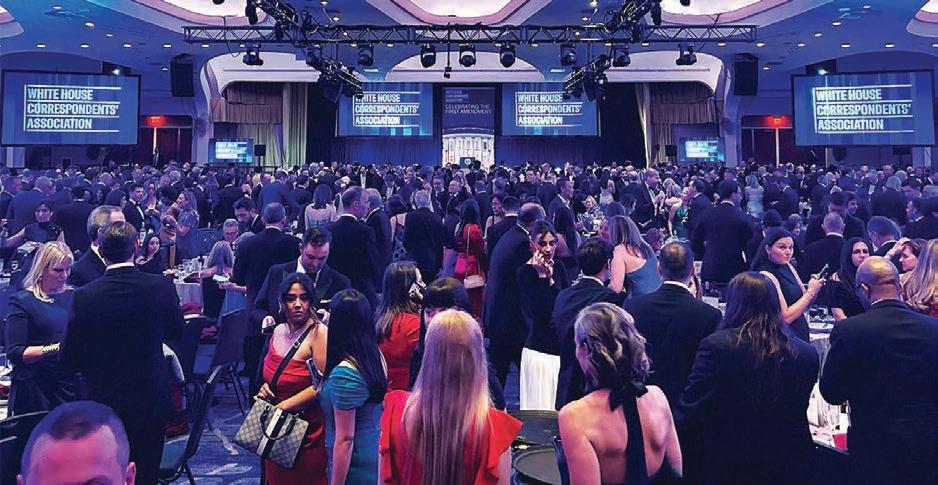
The White House Correspondents’ Association announced on Tuesday that it has rescheduled its annual dinner for July 24 after the April event was halted when gunshots rang out at the Washington Hilton.
Cole Allen, 31, is charged with the attempted assassination of President Trump, who was in the ballroom at the time of the incident. One Secret Service offcer was wounded in the attack. Offcers stopped Allen before he could enter the ballroom where 2,500 journalists and politicos were having dinner and waiting for Trump to speak. It was Trump’s frst time attending as president.
“We will not allow an act of violence to have the last word, especially during a year when we are refecting on the 250th anniversary of America and everything we stand for,” said WHCA President Weijia Jiang in a statement to members.
She did not announce further details, including venue and ticketing.
Washington Blade White House reporter Joe Reberkenny was in the audience when shots were fred and reported live on social media from the scene.
This post will be updated as more details are announced.
FROM STAFF REPORTS
Advocates push back on proposed FCC warning labels
The Federal Communications Commission is considering a new rating system that would require a warning label to appear before any television content that includes LGBTQ characters.
On April 22, the FCC issued a public notice asking Americans to submit comments on whether the TV Oversight Management Board should create new TV ratings to alert viewers to “transgender and gender nonbinary programming” and “the discussion or promotion of gender identity themes.”
This proposed warning would appear before content, similar to warnings that explain a program contains sexual content, drug use, or violence — categories that Congress explicitly included in the Telecommunications Act of 1996 on the grounds of obscenity and violence that some parents “believe is harmful to their children.”
The public notice says that “recently, parents have raised concerns that controversial gender identity issues are being included or promoted in children’s programs without providing any disclosure or transparency to parents.”
It goes on to say that not having a warning for trans and nonbinary people is “undermining the ability of parents to make informed choices for their families.”
LGBT Tech is an organization that works to provide LGBTQ representation in mainstream media or entertainment. The group notes 81 percent of trans respondents it surveyed said these representations had a positive impact on them discovering or learning about their identity.
“These numbers refect a basic truth: for many people, and especially young people, seeing LGBTQ+ lives represented in ordinary media is not harmful. It is formative, affrming, and often lifesaving.”
Since the public notice’s publication, more than 40 organizations have come out against the proposed alert.
GLAAD President Sarah Kate Ellis issued a statement in May on the proposal, highlighting what she described as a concerted effort by the Trump-Vance administration to other trans and nonbinary people.
“The FCC does not set TV ratings, but under this administration the FCC has repeatedly tried to control what Americans can see on their own televisions. This government overreach is dangerous and a threat to our community and our democracy,” Ellis said.
“LGBTQ+ people and their families deserve to see their lives represented in the media they watch. And media companies must have the freedom to create programming that appeals to their viewers and subscribers without interference from a government pursuing its own anti-LGBTQ+ political agenda.”
Human Rights Campaign President Kelley Robinson pointed out that this is an act of politically motivated policy, not one based on any rhyme or reason.
“LGBTQ+ stories matter and deserve to be told, seen, and heard,” Robinson said. “The Trump administration does not get to use the FCC to try and erase us simply because they want to pretend to live in a world where we don’t exist. This is a brazen form of political interference that will hurt the ability of all people to appreciate, understand, and learn about the world and people around them.”
Brian Dittmeier, director of LGBTQI+ equality at the National Women’s Law Center Action Fund, echoed Robinson’s concerns that this is attempted censorship for the sake of political gain.
“The FCC is cloaking itself in purported concern for parents in an attempt to censor content, intimidate industry, and silence depictions of our trans siblings and neighbors,” Dittmeier wrote. “The FCC is overstepping its authority to undermine the existing ratings system, which
is well understood by parents and enjoys broad public support. The FCC’s presumption that it knows better does not refect parents’ priorities and reeks of government overreach.”
PFLAG National Vice President of Policy and Government Affairs Diego Sanchez said this is federal government overreach into censorship — something the First Amendment protects against.
“The FCC has given us yet another example of what ‘small government’ means: small enough to ft in your living room; to interrupt family movie night; small enough to make home feel unsafe,” Sanchez said. “Parents and families with transgender loved ones in particular know too well how big government actions impact their families directly, because they feel those impacts before everyone else.”
This proposed warning follows a slew of other federal actions targeting trans people in America, including Executive Order 14168, “Defending Women from Gender Ideology Extremism and Restoring Biological Truth to the Federal Government,” which mandated that only sex assigned at birth be used on federal government documents regardless of gender identity, as well as broadbased restrictions on gender-affrming care, particularly for trans minors.
JOE REBERKENNY
The scene inside April’s White House Correspondents’ Dinner after shots rang out. (Washington Blade photo by Joe Reberkenny)
(Photo by REDPIXEL.PL/Bigstock)
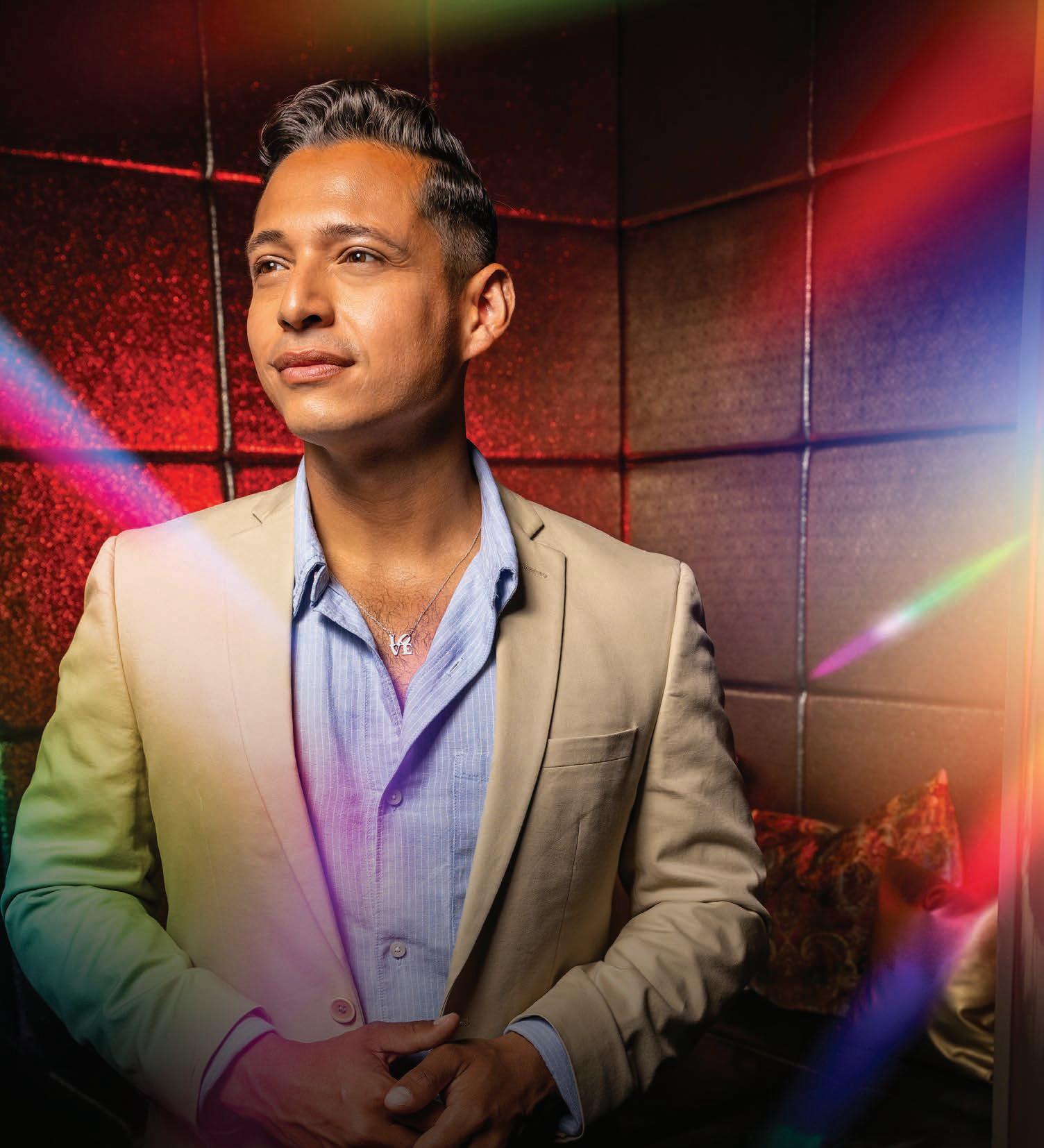
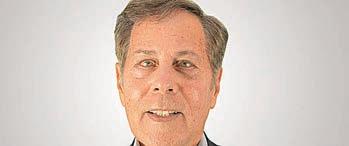
Miguel Martinez-Valle Philadelphia Journalist
Hungary
lifts Budapest Pride ban
Hungarian police on May 29 announced they will allow the annual Budapest Pride march to take place.
“The Budapest Metropolitan Police has approved the 2026 Budapest Pride Parade and also has issued restrictive orders in relation to three counter-demonstrations,” a Budapest Metropolitan Police spokesperson told Politico.
Budapest is Hungary’s capital and largest city.
Hungarian lawmakers last year passed a bill that banned Pride events and allowed authorities to use facial recognition technology to identify participants. MPs later amended the Hungarian constitution to ban public LGBTQ events.
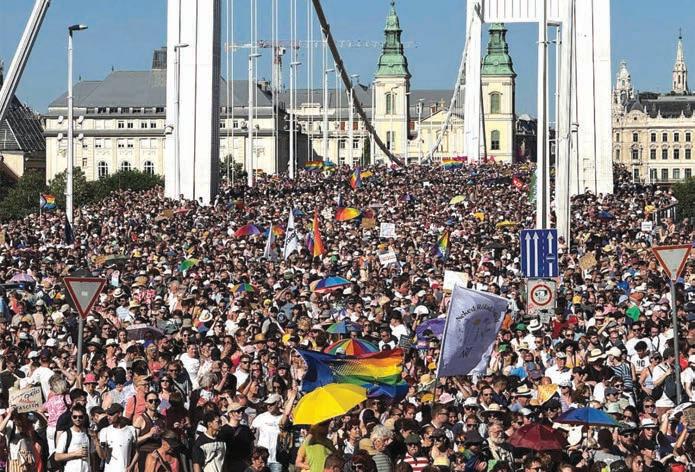
More than 100,000 people defed the ban and participated in last year’s Budapest Pride parade. The event became one of the largest protests against then-Prime Minister Viktor Orbán and his government since he took offce in 2010.
Prime Minister Péter Magyar took offce last month after his center-right Tisza party ousted Orbán’s Fidesz-KDNP coalition in elections that took place on April 12. The European Union’s top court, the EU Court of Justice, days after Orbán’s ouster struck down Hungary’s anti-LGBTQ propaganda law that MPs approved in 2021.
The EU on May 29 announced it will release more than €16 billion ($18.59 billion) in funds to Hungary that it withheld while Orbán was in offce.
The Budapest Pride march will take place on June 27.
“We will march freely in fresh air for our rights, for the democratic Hungary,” said Budapest Pride on its Facebook page.
MICHAEL K. LAVERS
Ghana approves anti-LGBTQ bill
Ghanaian lawmakers on Friday approved a bill that would, among other things, criminalize LGBTQ allyship.
Reuters reported MPs approved the Human Sexual Rights and Family Values Bill, 2025, in a voice vote after parliament’s Constitutional and Legal Affairs Committee backed it.
MPs in 2024 approved a similar bill, but it faced legal challenges and then-President Nana Akufo-Addo didn’t sign it. Lawmakers last year reintroduced the measure after President John Dramani Mahama took offce.
The bill awaits his signature.
Rightify Ghana, a Ghanaian LGBTQ advocacy group, in a series of social media posts notes MPs passed the bill days before the 4th African Inter-Parliamentary Conference on Family Values and Sovereignty will take place in Accra, the country’s capital.
MICHAEL K. LAVERS
Lesbian candidate falls short in Colombian election
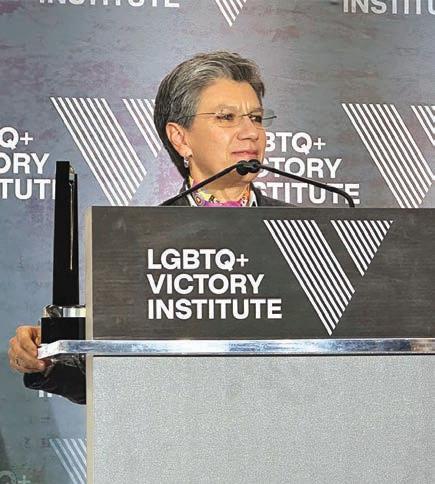
Former Bogotá Mayor Claudia López on Sunday fnished ffth in the frst round of Colombia’s presidential election.
López, a centrist who ran as an independent, received 225,517 votes. This fgure is .95 percent of the total votes cast.
López was the Colombian capital’s mayor from 20202023. She was a member of the Colombian Senate from 2014-2018. López, whose wife is outgoing Colombian Sen. Angélica Lozano, would have become the country’s frst female and frst lesbian president if she would have won the election.
The LGBTQ+ Victory Institute honored López in D.C. in 2024.
“We need to listen to each other again, we need to have a coffee with each other again, we need to touch each other’s skin,” she told the Washington Blade during an interview. She hadn’t yet declared her candidacy, and did not specifcally discuss her plans to run.
Abrelardo de la Espriella, a far-right lawyer who has praised U.S. President Donald Trump and Salvadoran President Nayib Bukele, on Sunday fnished frst with 43.74 percent of the vote. Senator Iván Cepeda, a member of outgoing President Gustavo Petro’s Historic Pact party, came in second with 40.9 percent of the vote.
Neither men received a majority of votes. A runoff between them will take place on June 21.
MICHAEL K. LAVERS
Russia bans 9 LGBTQ ‘extremist’ groups
Nine LGBTQ groups in Russia have been banned so far this year after authorities deemed them as “extremist.”
Human Rights Watch on Thursday noted courts in seven regions between March and May banned Coming Out, the LGBT Resource Center, Parni Plus, the Moscow Community Center for LGBT+ Initiatives, Irida, the Russian LGBT Network, the Kallisto movement, T9 NSK, and Center T. Human Rights Watch also pointed out a lawsuit has been fled against the Alliance of Straights and LGBT for Equality.
Parni Plus is an LGBTQ media outlet.
“Russian authorities are intensifying their criminalization of those who provide critical support to the very LGBT people they have systematically persecuted,” said Human Rights Watch Europe and Central Asia Director Hugh Williamson in a press release. “Authorities should vacate all court decisions and criminal convictions based on these spurious ‘extremism’ charges.”
The Kremlin over the last decade has faced global criticism over its crackdown on LGBTQ rights.
The Russian Supreme Court in 2023 ruled the “international LGBT movement” is an extremist organization and banned it.
The country in January designated ILGA World, a global LGBTQ and intersex rights group, as an “undesirable” organization. ILGA World in response to the designation noted Russians who are found guilty of engaging with “undesirable” groups face up to six years in prison.
MICHAEL K. LAVERS
Budapest Pride participants march over the Erzsebet Bridge on June 28, 2025, despite an offcial ban. (Courtesy photo)
Former Bogotá Mayor CLAUDIA LÓPEZ (Washington Blade photo by Michael K. Lavers)
VINCENT SLATT
volunteers as the senior curator at the Rainbow History Project.
A vice president marches by our side
New exhibit explores Pride in the 2020s and asks what’s to come
A photograph can change how we understand ourselves. In Rainbow History Project’s exhibit “Pickets, Protests, and Parades: The History of Gay Pride in Washington,” one pairing does exactly that: 10 Washingtonians in their Sunday best picketing the White House in 1965, and, a few panels later, Vice President Kamala Harris in a “Love is Love” T-shirt marching down Pennsylvania Avenue for Capital Pride in 2021. Between those two moments—anxious, buttoned-up defiance on one side of the White House fence and a sitting vice president cheering among rainbow flags on the other—lies the story this exhibit tells.
Last year, we stretched that story along Freedom Plaza for WorldPride 2025, just three blocks from the White House. Over seven weeks, visitors from around the globe walked a timeline that showed how a small, risky White House picket helped ignite six decades of increasingly visible, intersectional Pride in the nation’s capital. They met organizers who insisted that gay history did not start at Stonewall, and that D.C. has been a laboratory for LGBTQ resistance since at least that first 1965 picket.
This June, as part of Dupont Underground’s “Matters of Pride” programming, we’re inviting you back underground to revisit what we showed the world last year—and to look harder at what it asks of us now. The tunnels below Dupont Circle will host the early eras of the exhibition: the White House picket; block parties at Lambda Rising bookstore, the first National March for Lesbian and Gay Rights in 1979 that brought more than 100,000 people onto the Mall; and the first D.C. Pride march that began at Howard University, led by BIPOC activists who carried every part of their identities into the streets.
Seen together, these moments make the theme “A Vice President Marches By Our Side” less about a single VIP participant and more about a changing relationship between our movements and the state. In 1965, picketers carefully followed dress codes to appear “employable” enough to be heard at all. By 1979, marchers filled the National Mall with banners that linked sexuality to feminism, racial justice, and anti-war activism. By the 2020s, a vice president could show up at Capital Pride, call for the Equality Act, and speak explicitly about protecting trans youth and communities of color. None of those shifts were guaranteed. All of them were built, step by step, by people who kept organizing whether or not anyone in power joined them.
The reinstall is also a chance to notice details you may have rushed past on a crowded WorldPride weekend: a hand-lettered sign demanding federal jobs in 1965; a quote from a 1970s organizer about the sheer relief of dancing in public; a photograph of local pioneers like SaVanna Wanzer, the founder of D.C. Trans Pride and Black Trans Pride, whose work helped make today’s Pride more fully trans inclusive even as Black trans folx remain under attack. These are not just artifacts; they are reminders of how much was risked so that we could take Pride for granted at all.
We are reinstalling this exhibit at a moment when very little about the future feels guaranteed. America’s 250th birthday is around the corner, and national debates over whose stories “belong” in the classroom, the public square, or in the archives, are already shaping policy. In that context, going back to the origins of D.C. Pride is more than nostalgia. It is a strategy lesson. The 1960s picketers, the 1979 marchers, the BIPOC activists leaving an intersectionality conference at Howard and marching to the Mall—all of them faced hostile climates, limited resources, and no certainty of success. Yet they showed up anyway, and in doing so, they expanded what was imaginable.
That is why, at the end of the reinstall, the exhibit turns back on you. The final section, “The Next 60 Years of Pride,” remains intentionally unwritten. Instead, you will find a simple question on the wall: “What will you do?” Visitors will have the chance to add their own commitments—large or small—to the story: what they will march for, organize for, or quietly sustain in the years ahead.
A vice president once marched by our side. This month at Dupont Underground, we are asking something both humbler and more radical: after everything we have learned from the past six decades of Pride in Washington, who will you be standing with, and what will you be brave enough to do next?
In conjunction with WorldPride 2025 the Rainbow History Project exhibited “Pickets, Protests, and Parades: The History of Gay Pride in Washington.” More than two years of planning resulted in seven weeks of outdoor education, centering the voices of Pride’s organizers. In the final of the 10 themes, we discuss “A Vice President Marches By Our Side,” about what Pride looked like in the 2020s and asking about Pride in the years to come.
is a longtime LGBTQ rights and Democratic Party activist. He writes regularly for the Blade.
Leaving for a barge trip through canals of Burgundy
Nervous about European reactions to Americans given Trump’s war in Iran
As those who read my columns know, I love cruising, the kind you do on water. I have had many different cruise experiences, including sailing through the Galapagos and the Norwegian fjords. This time, I will be doing something a little different and am off on a new adventure. With 18 others, will be on a barge for six days, going from Lyon to Paris, through the canals of Burgundy. Each day will bring a new adventure. We will be embarking in Besancon, and traveling to Beaune, Arc-et-Senans, Dole, Saint-Jean-De-Losne, Seurre, Chalon-Sur-Saone, and then disembarking in Auxerre, en route to Paris. Of the 18 people, four are friends from D.C. and Rehoboth Beach. I look forward to meeting the other travelers.
I leave for Paris on June 8 and made arrangements for a car in Paris to take me to the Gare De Lyon, to board a fast train to Lyon. A quick two-hour trip. In Lyon I will head to the hotel for a welcome dinner, where I will meet our guide and other travelers. This is a Gate 1 adventure booked by my friends at My Lux Cruise. We will be spending two days in Lyon before boarding the MS Daniele, built in 2016. It is modern, with space for both indoor and outdoor dining, a small lounge, the requisite bar, and very simple staterooms. Mine will have two single beds. Can’t forget the hot tub on the bow. I will be writing a blog during my trip, which will be published in the Blade, likely after my return. I will post pictures during the trip on social media. After six days on the barge, we arrive in Paris, where I will spend a couple of days with good friends. One planned excursion is to see the rebuilt Notre Dame. I will be away from D.C. on June 16, primary day. Since for the first time there will be ranked choice voting, it is possible we won’t know who wins until I get back on June 19. I hope everyone votes, and urge you to vote, as I already have, for Kenyan McDuffie for mayor. His main opponent, Janeese Lewis George, clearly doesn’t understand how D.C. government really works. She is trying to emulate NYC Mayor Mamdani with promises, but hers won’t happen. We don’t have a governor, and state legislature, to help. Our governor is in essence the felon in the White House, and our state legislature is the Congress. They won’t be helping. In addition, George has claimed the endorsement of an antisemitic organization, DSA, and is going to birthday parties for a guy who calls gay men like me ‘fags’ and says they shouldn’t be teaching his children in the public schools. The winners of the Democratic primary races will determine how D.C. moves forward. It really makes a difference.
The world is a different place today than it was just a short 18 months ago, when the felon began his second term. This is the first time I will be out of the country since he began this illegal war with Iran, plunging the world into chaos. I wonder what the reception for an American will be in Europe these days. I remember back when Ronald Reagan was first elected, which was the last time in my travels, before Trump, I felt compelled to apologize for my country. At that time people would actually come up to me and ask, what did America do, and why? Yet as bad as times seemed then, they were nowhere as bad as they are today. The felon in the White House has made life so much worse for people around the world. Europeans have seen him get on his knees to Putin, and screw Ukraine. Now with this illegal, and unnecessary, war in Iran, he is impacting their lives directly. Fuel prices are rising dramatically, and there is a drastic shortage of jet fuel, causing cuts in flights. They see him work hand-in-hand with the war criminal, Netanyahu, in Israel. They see how he simply wants to enrich himself with things like his ‘Board of Peace,’ and in the long run, screw the Palestinian people. It will be interesting to hear how Europeans feel about all this. I look forward to listening to them. All I can say in response is I didn’t vote for Trump and will continue to demonstrate, and write against him, as often as I can.
Putting politics aside, which is hard to do these days, I am excited about this new adventure, and look forward to sharing some of my experiences with you.
(Image via Bigstock/RnDmS)
Fighting ‘Rainbow Panic’ in museums
By EMMA CIESLIK
Here’s how we can resist the escalation of anti-LGBTQ censorship
Back in February of 2025, I wrote a piece for New York City-based arts publication Hyperallergic about the importance of museums stepping up for their LGBTQ staff. I was right to be concerned. Over the last three years, censorship of LGBTQ histories and art has exploded in the museum field. Discourse surrounding censorship of art and artifacts reflects galleries, libraries, archives, and museums (GLAM) institutions’ push to erase LGBTQ stories, language, and people from not just exhibitions but also the wider museum field.
Many now recognize this rush of censorship in the early 2020s as the “rainbow panic,” first coined by historian Wendy Rouse in her piece published in July 2025.
While LGBTQ censorship in GLAM institutions is not new, the recent push to censor queer and trans histories under the Trump administration began in May 2024 when members of the City Council of Lubbock, Texas cut funding for the First Friday Art Trial due to the inclusion of a drag performance.
Additional cancellations followed, including in February 2025, when the Art Museum of the Americas canceled “Nature’s Wild With Andil Gosine” scheduled to open in March. While the museum did not say why, some of Gosine’s work that was set to be part of the exhibition reflected on LGBTQ identity and activism in the Caribbean.
That same month, the National Park Service removed mentions of transgender people from the Stonewall National Memorial website, now seen as a watershed moment in queer erasure. In response, the LGBTQ+ History Association issued a statement warning about the recent moves to censor and erase LGBTQ history and art.
The Association was right to be concerned because the following month, Trump released his Executive Order titled “Restoring Truth and Sanity to American History” where he targeted the National Museum of American History, National Museum of African American History and Culture, and the American Women’s History Museum.
But it wasn’t just erasure, it was also intentional renaming. Also in February 2025, the Scottsdale Museum of Contemporary Art changed its traveling exhibition of work by women, queer and trans artists, changing the title that was originally “transfeminisms.” By June, the Art Institute of Chicago changed the title of an exhibition of Gustave Caillebotte’s work and removed discussions of gender and sexuality from the wall text that were included when the show was displayed in Paris and Los Angeles.
In the last year, censorship has especially escalated with Amy Sherald cancelling her show “American Sublime” at the National Portrait Gallery (and moving it to the Baltimore Museum of Art) and art scholar Ignacio Darnaude writing in an Out op-ed that the National Portrait Gallery (NPG) exhibition “Felix Gonzalez-Torres: Always to Return” did not include information about the artist’s queer identity or the work’s connections to AIDS. The National Portrait Gallery has denied claims of erasure.
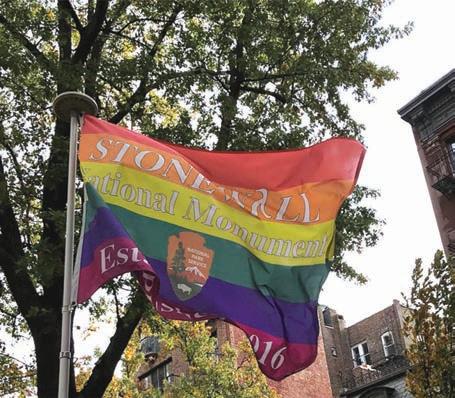
This leads us to the most recent happening when in February 2026, a Pride flag was removed from the Stonewall National Monument after a directive from the Trump
administration. Thankfully, later that month, protesters re-raised the flag. In April 2026, the National Park Service agreed to restore the Pride flag at the Stonewall National Memorial and keep it up permanently. But even with this victory — the result of queer and trans organizing — attacks on LGBTQ histories remain.
As the histories we fought to collect and interpret are censored and erased, through museums’ compliance-in-advance as well as government discrimination and decree, we (I write as a queer GLAM worker) see a willingness to sacrifice those histories and our communities for institutional safety, funding, and government support.
Please know the LGBTQ community will remember the hard truths we learned this past year — that we and our histories were expendable. If we can be cast aside, hidden, or disowned, whose histories are safe? How can (and can we) rebuild trust in the institutions that failed us this past year? It’s not just the LGBTQ community. In fact, just this January, the National Park Service removed signage from the Independence National Historical Park in Philadelphia that referenced slavery at the President’s House Site.
Please help us to fight the erasure of queer and trans histories and communities. Please stand with the LGBTQ community (and LGBTQ+ GLAM workers) against the violence we are facing — not just outside museums, but inside them too.
For ways that you can help to fight historical erasure, including against the LGBTQ community, please consider the following:
Consume queer history content. Whether it be by visiting exhibitions, listening to a podcast, going on a walking tour or lecture, or buying queer history books, your presence and money speak volumes. And learn your local queer histories. Often, we focus on the largescale histories that surround the Stonewall Uprising, Compton Cafeteria Riots, and other pivotal moments,
but there’s queer history all around us. It’s time to learn and celebrate these histories.
On that topic, volunteer and contribute your time to local LGBTQ history initiatives. Everyone is based in different parts of the country, so another great option for access are online projects like The Pink Triangle Legacies Project, Queer Zine Archive Project, Queer Digital History Project, and Invisible Histories. Everyone has skills, especially GLAM workers, to support the work of these independent history groups.
Financially support and visit grassroots LGBTQ+ archives and museums. Despite mass censorship and violence over the past year, queer and trans history workers have created and facilitated groundbreaking exhibitions and community action at the Museum of Transology (specifically the TRANSCESTRY exhibition), the Museum of Transgender Hirstory & Art, and other grassroots archives, libraries, and museums created by and for our communities.
Queer and trans museum workers refuse to be silenced and shut out of institutions that have long ignored our histories. The work that we do to seek representation is too important, too urgent, to abandon. We look to these grassroots efforts as models for how our institutions can preserve and tell queer and trans histories because many of them were founded themselves during times of censorship and violence.
Find and support your local LGBTQ (and other) employee resource groups and other organizations pushing for transparency and accountability at your workplaces. Right now, many of these groups have gone underground. Where you can, provide mutual aid and financial and organizational support to these groups, and you can be an advocate (especially if you have privilege and protection) for these organizations and their efforts.
Support the unionization of GLAM workers — show up for pickets and use your attendance and money to support institutions that support and invest in their LGBTQ cultural workers. This past year has been incredibly difficult for LGBTQ museum workers — from censorship and erasure of our histories to the firing of and discrimination against LGBTQ federal workers, federal agencies have denied our existence, cut off lifesaving care for LGBTQ people, and ordered the termination of employee community resource groups.
Mobilize and fight against anti-LGBTQ legislation affecting your queer and trans GLAM colleagues (and your neighbors). As goes LGBTQ histories and representation, so goes rights for queer and trans museum staff. The best examples of this are the experiences of queer and trans federal and trust workers. Call your representatives, participate in resistance efforts, and contribute to mutual aid supporting people most hurt by the legislation.
Hope is not lost! LGBTQ history, as I can attest, is not going anywhere, but amid the rising tide of censorship and erasure, there has never been a more important time to show up in support of LGBTQ preservation, curation, and education efforts. As the victory surrounding the Pride flag at the Stonewall National Monument represents, these are hard-fought battles but ones that we can win with your support.
A Pride flag was removed from the Stonewall National Monument in February after a directive from the Trump administration. It was later restored after protests. (Photo courtesy NPS)
Takoma Wellness Center
“FAST, FILTHY AND SURPRISINGLY REVEALING”
–EVENING STANDARD
“SERIOUSLY FUNNY”
–THE GUARDIAN
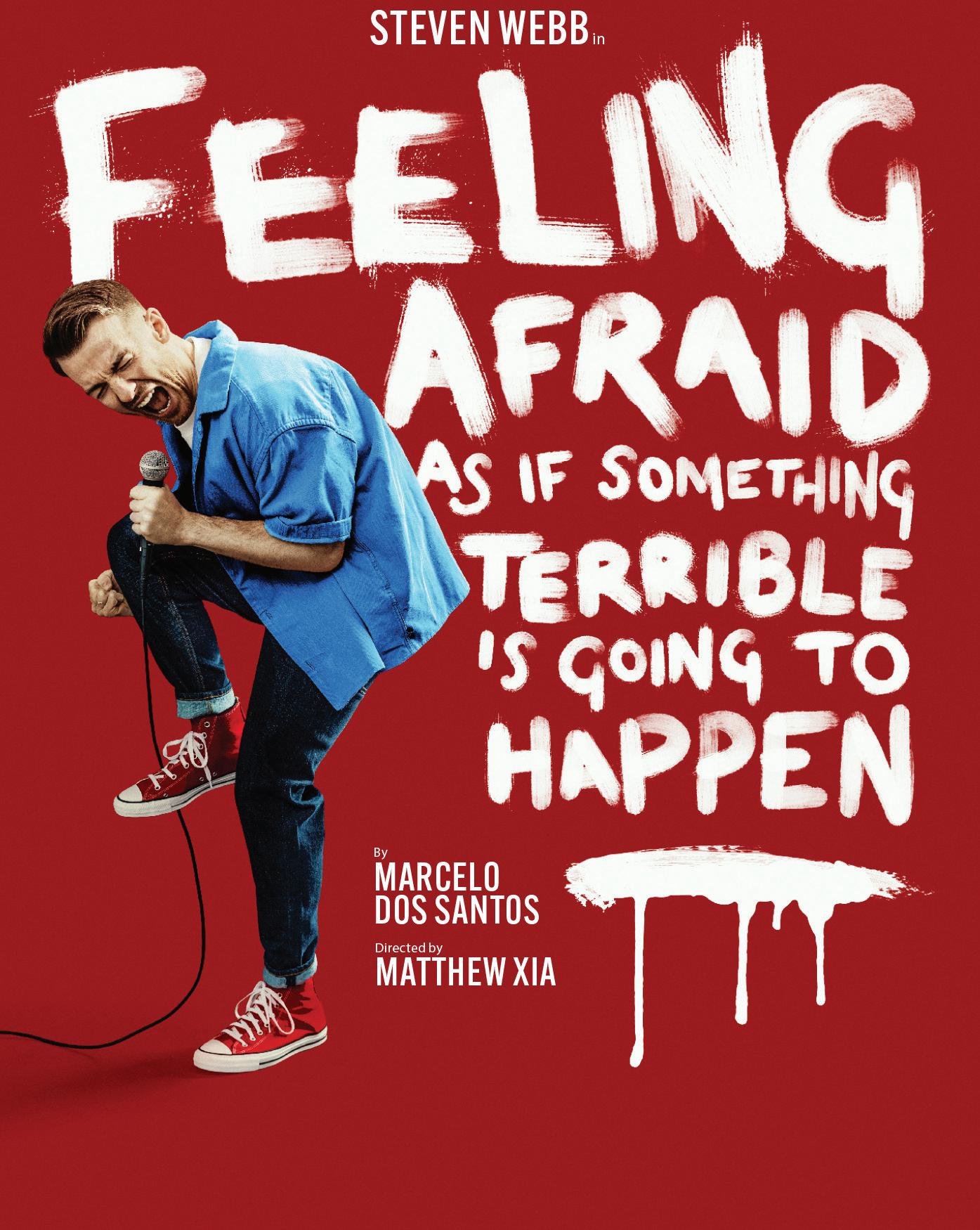
“I’m thirty-six, I’m a comedian, and I’m about to kill my boyfriend.”
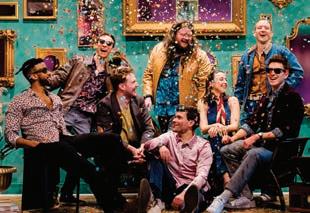
After years of swiping, a permanently single, professionally neurotic standup comedian finally meets Mr. Right— and then does everything wrong. Strap in for a delightfully dark journey through self-awareness and selfsabotage as he decides whether love is worth the price of a killer punchline. This hilarious one-man show is sure to be one of the highlights of DC Pride— get your tickets today!
CALENDAR |
Friday, June 05
“Center Aging: Pride Monthly Luncheon with Chair Yoga & Drag Bingo” will be at 12:00p.m. at the DC LGBQ+ Community Center. Lunch will be provided. For more details, visit the DC Center’s website.
“Comedy Show for LGBTQ+ Prosperity” will be at 7 p.m. at the DC LGBTQ+ Community Center. This will be a funny, queer show produced by Grassroots Comedy to celebrate the DC LGBTQ+ Center and the beginning of Pride month. Across the country, LGBTQ+ people are losing access to care, protection, and support. These aren’t abstract policy changes – they are real people losing the resources they rely on to stay safe and well. And when that happens, many come to Washington, DC, a place long considered a site of refuge for these vulnerable populations. For more details, visit the DC Center’s website.
Saturday, June 06
GoGay DC will host “LGBTQ+ Community Brunch” at 11 a.m. at Freddie’s Beach Bar & Restaurant. This fun weekly event brings the DMV area LGBTQ+ community, including allies, together for delicious food and conversation. Attendance is free and more details are available on Eventbrite.
Sunday, June 07
Pride Month Sound Bath Meditation will be at 10:30 a.m. at Atlas Salon DC. Pride Month sound bath meditation is an immersive morning of sound to slow down, reset, and rest in community while supporting LGBTQIA+ youth. This event is free and more details are available on Eventbrite.
Monday, June 08
Center Aging: Monday Coffee Klatch will be at 10 a.m. on Zoom. This is a social hour for older LGBTQ+ adults. Guests are encouraged to bring a beverage of choice. For more information, contact Adam (adamheller@thedccenter.org).
Genderqueer DC will be at 7 p.m. on Zoom. This is a support group for people who identify outside of the gender binary, whether you’re bigender, agender, genderfluid, or just know that you’re not 100% cis. For more details, visit www.genderqueerdc.org or Facebook.
By TINASHE CHINGARANDE
Tuesday, June 09
Trans Discussion Group will be at 7 p.m. on Zoom. This event is intended to provide an emotionally and physically safe space for trans people and those who may be questioning their gender identity/expression to join together in community and learn from one another. For more details, email info@thedccenter.org.
Coming Out Discussion Group will be at 7 p.m. on Zoom. This is a safe space to share experiences about coming out and discuss topics as it relates to doing so — by sharing struggles and victories the group allows those newly coming out and who have been out for a while to learn from others. For more details, visit the group’s Facebook.
Wednesday, June 10
Job Club will be at 6 p.m. on Zoom upon request. This is a weekly job support program to help job entrants and seekers, including the long-term unemployed, improve self-confidence, motivation, resilience and productivity for effective job searches and networking — allowing participants to move away from being merely “applicants” toward being “candidates.” For more information, email centercareers@thedccenter.org or visit www.thedccenter.org/careers.
Thursday, June 11
The DC Center’s Fresh Produce Program will be held all day at the DC LBTQ+ Community Center. No proof of residency or income is required. For more information, email supportdesk@thedccenter.org or call 202-6822245.
Virtual Yoga Class will be at 7 p.m. on Zoom. This free weekly class is a combination of yoga, breathwork and meditation that allows LGBTQ+ community members to continue their healing journey with somatic and mindfulness practices. For more details, visit the DC Center’s website.
DC Front Runners Pride Run 5K set for Saturday
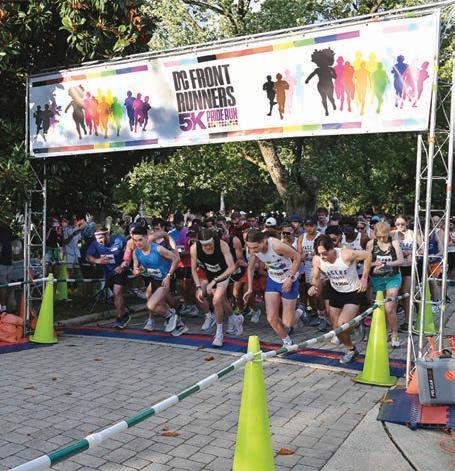
The 14th annual DC Front Runners’ Pride 5K run/ walk is set for Saturday, June 6 at historic Congressional Cemetery. The race starts and ends at the cemetery (1801 E St., S.E.) and passes through scenic D.C., along the Anacostia River trail and the fields at RFK campus. Registration ends Friday at 11:59 p.m.
Runners can pick up their race packets on Saturday from 7-8:30 a.m. at Congressional Cemetery; the race begins at 9 a.m.
The fee to run the 5K in person is $65 ($35 for those under age 20). Proceeds benefit local LGBTQ nonprofits, including Thrive DC, Wanda Alston Foundation, Blade Foundation, Ainsley’s Angels, SMYAL, and Team DC. Visit DCFrontRunners.org for more information.
Local queer journalists will celebrate Pride this weekend at the annual NLGJA-DC Pride Happy Hour event at Trade (1410 14th St., N.W.) on Saturday, June 6, 3-5 p.m. Admission is free.
The 14th annual DC Front Runners’ Pride 5K run/walk is set for Saturday. (Washington Blade photo by Michael Key)
Timothy Nelson on the premiere of his opera ‘Song of Sakuntala’
Story of love, loss, redemption unfolds amid Indian classical music
By PATRICK FOLLIARD
As the artistic director of IN Series, Timothy Nelson rarely blows his own horn, but for the world premiere of his own opera “The Song of Sakuntala,” he’ll make an exception.
During a recent interview squeezed in between afternoon and evenings rehearsals, Nelson took time to talk about his opera (while nearby his “blessing of a husband” prepared a giant dinner for the entire cast and crew).
As smart and gracious as ever, Nelson explains that he wrote the opera a decade ago at a low point in his life: He was divorcing and wanted to immerse himself into something musical, all-consuming, a project tantamount to writing a thick novel.
At the time, Nelson’s mentor, the influential American stage and opera director Peter Sellers, pushed him to write again. Nelson recalls, “I hadn’t composed for some time. I wanted to see if I could do it, and I wanted to revisit Indian classical music.”
He adds, “There was never any anticipation of it being
produced. It was a way of processing and dealing with life in a healthy way.”
Adapted from Kālidāsa’s 5th-century dramatic masterpiece, “The Song of Sakuntala” brings together Western baroque and Indian classical musical traditions into a story of “love, loss, memory, and redemption.” His libretto, a reflection of South Asian storytelling, includes the words of the great Indian poets Tagore, Naidu, and Vidyapati.
The story follows “a prince and a woman of the forest who fall in love and wed in secret. He departs, and she later seeks him out, only to have him deny all recognition of her. She disappears in sorrow; he spends the rest of his life searching. At the end, in the same forest where they first met, they find each other again and are transfigured.”
At 90 minutes, the uninterrupted piece features three singers (Aryssa Leigh Burrs, Teresa Ferrara, Marvin Wayne Allen) accompanied by an instrumental ensemble led by acclaimed sitarist Rajib Karmakar, who specializes in bridging Indian and Western classical traditions, and conducted by Nelson who also joins the music making on drone and harmonium.
Burrs plays the prince. Originally written for a countertenor, Nelson imagined a man singing the role but ultimately cast a woman to play the part.
Because the piece is “fiendishly difficult in almost unnecessary ways,” Nelson explains with a wicked chuckle, he knew that Burrs had the talent and sharp brain required for the role.
The prince is cruel without explanation. Despite that, 40-something Nelson admits to relating to the opera’s prince: “In midlife, you reflect on your mistakes. At least for now that’s how I feel. I might have felt different earlier and it could change later on.”
Nelson lived in India for nine months, backpacking and studying in different places, absorbing different musical styles and playing pieces as varied and complex as any Western music.
And while based in D.C., IN Series performs in both Washington and Baltimore using various borrowed venues. “The Song of Sakuntala” is playing at both the Atlas Performing Center in D.C. (6/6-6/14) and Baltimore’s beloved Baltimore Theatre Project (6/19-6/21) with its terrific acoustics.
In a past conversation, Nelson who lives in Adams Morgan, shared that all audiences bring something specific to the table. Baltimore tends to attract more risk taking while D.C. audiences often lean into the intellectual side of what the company does.
‘The Song of Sakuntala’ IN Series | In Washington and Baltimore Atlas Performing Arts Center, 1333 H St., N.E. (Selected dates June 6-14) Baltimore Theatre Project, 45 W. Preston St., Baltimore (June 19-21) | $25-35 | Inseries.org
IN Series artistic director TIMOTHY NELSON (Photo by Sergei Shauchenka)
Controversial ‘Blue Film’ pushes past taboos for gripping drama
Two-character psychosexual drama explores Dom-sub encounter
By JOHN PAUL KING
When movies are labeled as “controversial,” the effect is often akin to Oscar Wilde’s quip that “there’s only one thing in life worse than being talked about, and that is not being talked about.”
Indeed, a whiff of controversy can be the best publicity of all, turning a movie that might otherwise have been no more than a blip on the cultural radar into the buzziest “hidden gem” of the season – and “Blue Film,” a two-character psychosexual drama about an encounter between a male sex worker and a much-older client, is a perfect example. The debut feature of flmmaker Elliot Tuttle, it was rejected for inclusion at last year’s Sundance and SXSW festivals before fnally premiering at the Edinborough International flm fest; and even then, some audience members were walking out of the theater in disgust.
It’s easy to see why, really. The taboos it breaks run far deeper than just frank depiction of queer sexuality to rattle some among the ones most hard-coded into our cultural DNA, and the directness with which it pushes past our comfort zones is merciless. It begins with Aaron Eagle (Kieron Moore), a Los Angeles “fetish cam-boy” who specializes in fnancial humiliation and domination, proudly performing for his online fans by fondling his stacked physique on camera while deriding them with homophobic slurs and other forms of verbal abuse. He also taunts them by bragging that one of them is paying $50,000 to be abused in person overnight. When he shows up for the gig, he’s greeted by an older man in a ski mask (Reed Birney), who wants to begin their session by asking him questions on camera about his personal life. Aaron agrees, but makes up the answers, only to have the client call out his lies; the mask soon comes off, revealing that the man behind it is Hank Johnson, a teacher who had been fred from Aaron’s home town middle school after attempting to molest a student in the boys’ restroom, and who confesses that he has spent his life savings to set
BOOKS
up this meeting because he was once “in love” with Aaron from afar. Claiming he doesn’t want a sexual experience, but simply the chance to “get to know” each other and achieve a kind of closure in his old age, he convinces a wary-but-intrigued Aaron to stay, setting the scene for a night of charged conversation, true confessions, and secretive soul-baring, which leads them to discover unexpected common ground.
It’s clear from even the barest description that Tuttle’s movie is not designed for all audiences. Even within the “niche” of queer cinema, these are “problematic” characters: sex workers, despite years of growing acceptance and decriminalization, are still largely stigmatized by the culture at large; and as for convicted pedophiles, you’re more likely to fnd tolerance for them in the halls of government than on a big screen. Yet in “Blue Film,” these are the characters we get, and as a result, it’s a movie in which almost everything that is said or done has a layer – and often, several layers – that’s likely to be objectionable to someone in the audience.
That’s not by mistake. In his director’s statement, Tuttle calls his flm an “essay on perversion,” born from “the accumulation of a lifetime of private thoughts regarding sex, fetish, and relationships,” and fueled by his frustration with what he calls the “conceptualization” of sex on the screen. His purpose in presenting a two-person “echo chamber” is an exploration of how these sexually stigmatized individuals fnd a “reckoning with the ways in which they can and cannot connect with those around them,” in which his explicit intention is to make sex on the screen “feel uncomfortable, scary, and laced with signifcance.” It’s safe to say that he succeeded.
Of course, it would be easy enough to stave off the discomfort “Blue Film” creates for us to sit in by dismissing the whole thing as deliberately sensational, if not for the fact that it’s so well done. Tuttle directs it like a thriller – a ftting approach, considering the uneasy dynamic between its char-
‘Mighty Real’ explores history of LGBTQ music
From Judas Priest to Whitney, something for every taste
By TERRI SCHLICHENMEYER
Step, step, tap, back step.
Shimmy in a circle, left hand waving over your head, shake your tail feathers, repeat to the beat. Once there was a time when you could do any dance in your sleep, but it’s been a while. So read “Mighty Real” by Barry Walters, and see if your toes don’t tap.
Fifty-seven years after Stonewall, and here we are: LGBTQ musicians still face scrutiny for their sexuality because, says Walters, music isn’t created for gay listeners. No problem: LGBTQ artists and writers have often penned lyrics carefully in order to say what can’t be said, “coding” songs for gay audiences that straight (and ignorant) listeners can dance to and enjoy with apparent obliviousness.
Walters offers “just a few” examples.
Lou Reed sang about trans people in the late ‘60s and offered a rallying song for the Gay Liberation Front in 1972, the latter of which felt like a message to a then-11-year-old Walters. Janis Joplin claimed she was straight, but she had several girlfriends. Motown singers often offered sometimes-ambiguous lyrics.
John Lennon’s hand placement on the back cover of Sgt.
Pepper’s Lonely Hearts Club Band made Walters begin to understand that he was different from other boys.
David Bowie is on his list, of course, as is Bette Midler, Elton John, Donna Summer, and Queen. You’ll fnd Judas Priest here, Green Day, and punk music. The Village People are included in this book, also Grace Jones, Duran Duran, and Cher, Whitney, Melissa, Latifah, and the lyrics from several blockbuster movies.
Two of Prince’s band members were lesbians, and they heavily infuenced his albums. Diana Ross’s “I’m Coming Out” cemented her position in LGBTQ culture, and Michael Jackson’s inclusion here takes much careful consideration.
Read about Olivia Newton-John and the B52s. And then there’s Sylvester, for whom Walters has a soft spot in his heart. Sylvester’s death still makes Walters cry.
In his preface, author and music writer Barry Walters points out that music is what you make it and that it’s interpreted differently by each individual. To that end, this book naturally consists of preferential history and personal opinions about singers, bands, albums, and songs. Agree or disagree. That’s where much of the appeal lies
acters, each of whom might easily be operating with malicious intent, and the generally “sketchy” circumstances of their arranged meeting – and he uses the resulting tension as a subliminal undercurrent that keeps us feeling unsettled. When things do begin to get sexy (because of course they do, Hank’s protestations of wholesome intent notwithstanding), he plays into the anticipated uneasiness of sexually squeamish viewers by layering in some particularly ominous strains from Isaac Eiger’s moody electronic score; it feels like we’re about to see something horrible, when in fact we don’t even get any full-frontal nudity.
In fact, it’s in these sexual moments – which, though explicit enough to get the point across, never feel pornographic – that “Blue Film” may deliver its most directly transgressive imagery. Though both men are adults, participating in consensual acts, what we are watching is probably the ultimate sexual taboo of all, not because of what we see but because we know the fantasy being played out in their minds. It’s unsettling, perhaps even for the most open-minded fetishists out there, yet in the unvarnished honesty with which the movie strives to deliver its uncomfortable truths, it somehow plays as something almost sweet.
As always in a flm that presents characters who push the limits of our ethical and moral boundaries, the actors carry the weight of responsibility for transcending (or at least tempering) our judgment of them; in this case, the two star players face a monumental task, and they rise to it with unfinching commitment. Birney, a Tony-winning actor who also served as an executive producer on the flm, has the more challenging burden, but he defes the odds by bestowing Hank with both the grace of a man who has learned how to endure shame and the cageyness that comes from a life of keeping it hidden.
CONTINUES AT WASHINGTONBLADE.COM
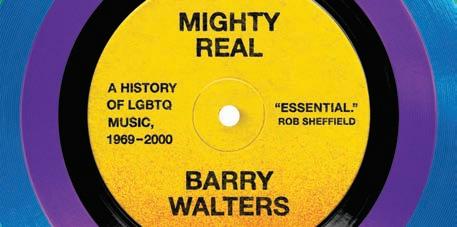
‘Mighty Real: A History of LGBTQ Music, 1969-2000’ By Barry Walters | c.2026, Viking | $35 | 496 pages
in “Mighty Real.”
Here, Walters wraps his memories around his choices, giving readers room for their own views, memories, and list making. Music-loving readers might also be surprised to note who’s not on Walters’ list – there aren’t many country performers here, for example, and the overall list focuses entirely on music from roughly 1968 to the year 2000, mostly on the kinds of songs you’ll want at the club or party. Again, discuss, and curate your own playlist.
This is a hefty book, but the chapters are browse-able and generally short enough to read in under fve minutes. It’s nostalgic, yet also serious in the history it presents. This is the kind of book you want to leave near your album collection, or wherever you get your tunes. But fnding “Mighty Real” is your frst step.
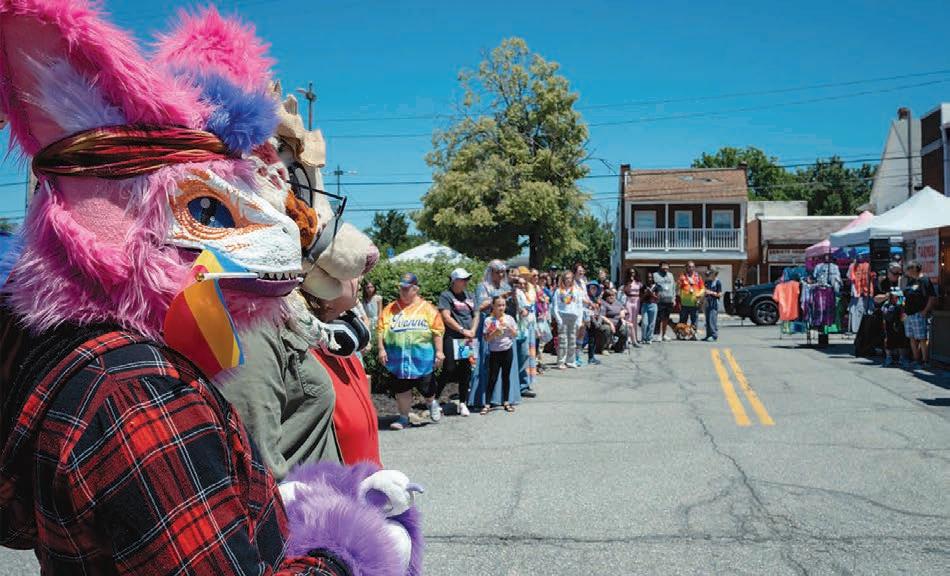
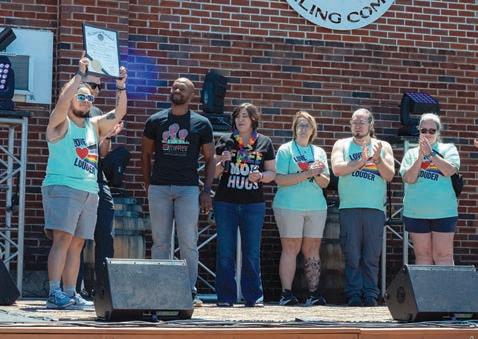
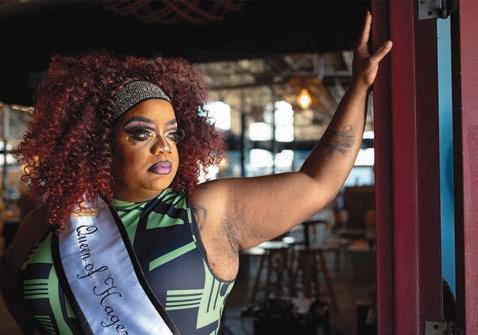
Hagerstown Pride
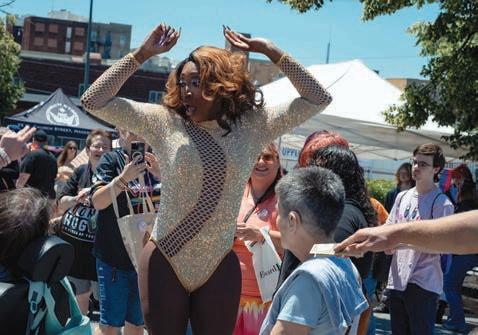
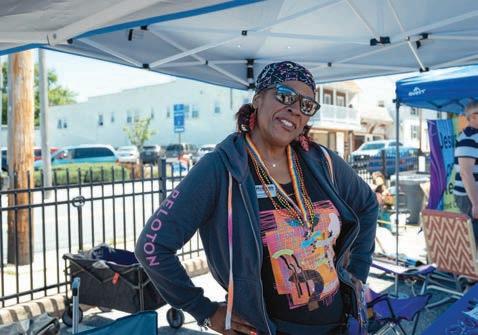
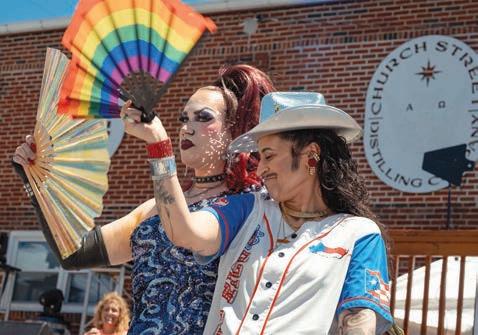
Maryland LGBTQ celebration held outside Hub City Brewery (Washington
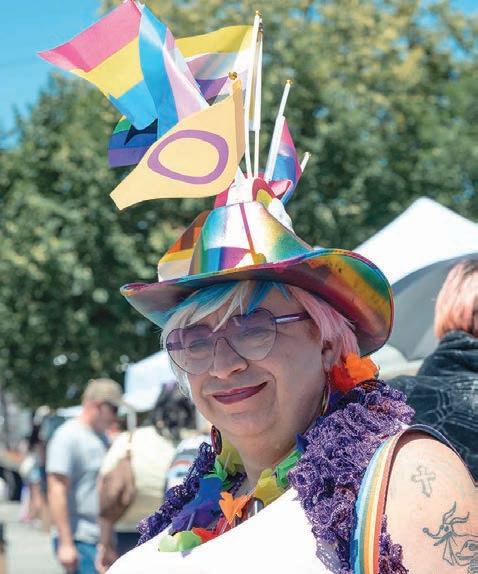
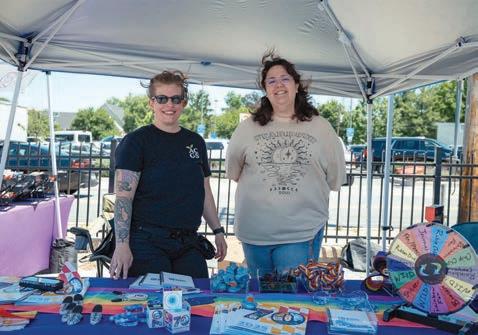
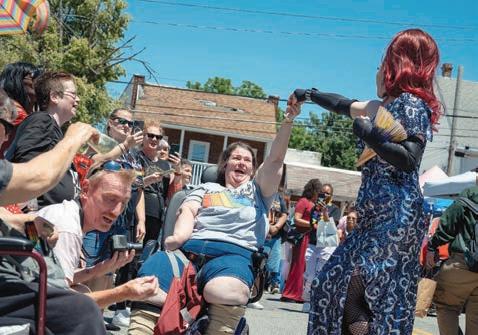
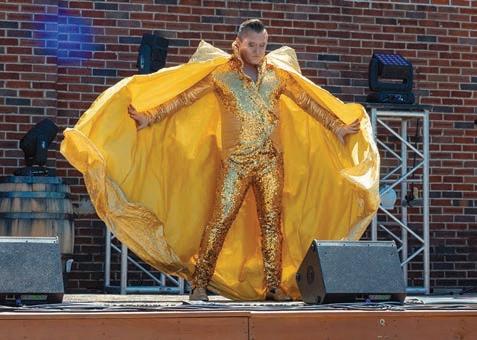
Hagerstown Hopes held the Hagerstown Pride Festival outside Hub City Brewery on Saturday, May 30.
Blade photos by Landon Shackelford)
$890,000
Custom-designed with two 200+year old log cabins and the fnest materials, this 4-bedroom, 4 bath house rests on 5.4 acres in a gated community at the foot of Ice Mountain (150-acre preserve) and the North Fork River. Antique furniture can convey, making this beautifully landscaped, serene getaway basically turnkey.
Washington has long prided itself on stability. Anchored by the federal government and buoyed by a highly educated workforce, the District has historically weathered economic uncertainty better than most cities.
But beneath that stability, cracks have been showing since January 2025.
I was having a conversation with a prospective client the other day and offered him a candid assessment of the District’s economic outlook. Simply put, structural challenges have been shaping the city’s future, a new mayoral election, and more that blends cautious optimism with clear concern about the changes ahead.
For one, the long-term shift toward remote and hybrid work continues to reshape the city in ways many people still underestimate. There has been a change in the rhythm of downtown D.C., reduced daytime foot traffic for local businesses, and created uncertainty for commercial real estate owners and the neighborhoods that depended on those workers every day.
At the same time, the cost of living in the District continues to rise at a pace that many residents are struggling to absorb. Even residents with strong incomes are becoming more cautious about spending and relocation decisions.
Landlords are feeling those pressures as well. Many smaller housing providers are operating in an environment where expenses continue to rise faster than revenue while the regulatory environment has grown increasing-
Stylish Senior Living Is Here
EXPLORE OUR RESIDENCES
ly complex. For some rental owners, especially those with older buildings or only a few rental units, the math is making it harder to cover costs, much less generate passive income.
There is also growing concern about the District government’s own financial outlook. Significant budget pressures and spending cuts are being had in a more serious way than many Washingtonians are used to hearing. As uncertainty in federal employment affects local tax revenue and consumer confidence, how will the city fund services, infrastructure, housing programs, and public safety priorities in the years ahead?
At the same time, consumer confidence feels noticeably down than it did even a few years ago. People are taking longer to make decisions, whether that means signing a lease, purchasing a home, renovating a property, or expanding a business. That hesitation creates a slower-moving marketplace where caution often replaces momentum.
Despite all this, Washington has proven remarkably resilient over time. The city continues to attract talented professionals, international investment, universities, healthcare institutions, and industries tied to government, law,
Find the perfect floor plan to fit your style and budget at an Erickson Senior Living®-managed community near you!
• Ashby Ponds® Ashburn, VA
• Greenspring® Springfield, VA
• Riderwood® Silver Spring, MD
• The Grandview Bethesda, MD
• Woodleigh Chase® Fairfax, VA
Call 1-800-711-8639 or visit EricksonSeniorLiving.com for your free brochure. EricksonSeniorLiving.com
technology, and public policy. Neighborhoods continue to evolve, and demand for well-managed rental housing remains strong in the core areas of the city.
Unlike other major cities driven by private industry, federal employment and contracting are two of the main pillars of Washington’s economy. That reliance has long insulated the region from deep recessions. But it also creates vulnerability when federal activity slows.
D.C.’s economy is far more interconnected and interdependent than many people fully appreciate. Between significant federal layoffs, the District’s high unemployment rate, and broader economic uncertainty, there are a number of warning signs that property owners should be paying close attention to. When federal hiring slows or contracts tighten, the impact extends well beyond government workers themselves. It affects restaurants, retail, housing, and countless other sectors tied to the District’s economic activity.
Brookings Institution has documented how job losses in higher-income sectors can disproportionately impact urban economies—precisely because those workers drive local spending.
AT WASHINGTONBLADE.COM
SCOTT BLOOM is owner and senior property manager of Columbia Property Management. Contact him via ColumbiaPM.com.
(Photo via Bigstock/sparky2000)
BETSY TWIGG
Associate Broker | Licensed in Virginia 703.967.4391 (CELL ) betsy.twigg@corcoranmce.com
COUNSELING COUNSELING FOR LGBTQ People. Individual/Couples counseling with a volunteer peer counselor. GMCC, serving our community since 1973. 202-580-8861 gaymenscounseling.org No fees. Donation requestRE
ROOMMATE / DC LOOKING FOR A ROOMMATE
Capitol Hill NE,14th & F Sts NE. Only a younger male. Share bathroom, kitchen, living space & W/D in the house. $950/month + utils + deposit Call 202-397-7132
RENT
/ REHOBOTH
REHOBOTH BEACH CONDO YEARLY RENTAL
2BDroom / 2Bath 2nd Floor
Kitchen / LV room / DN room
Fireplace / Laundry room
Screened in Porch / 2 pools walking distance to downtown Rehoboth.
CONTACTS: DOUG 570-854-0600 PAM 570-441-8394
RENT / GEORGETOWN STUNNING 1BR + DEN APT
w/ 16’ ceilings - modern kitchen - 1½ half baths - full size washer/dryer-w extra storage in the Den - 1/2 bath off Den. Ensuite elegantly fnished in white marble, double sinks, walk-in shower - full wall of custom closets. 1042 SQF. Parking in the alley w easy access through private entrance. Husband & I are a LGBTQ+ Friendly & Affrming Household. No Pets. $3500. Email: larskontzDC@gmail.com Lars 202-368-9742
SUPERIOR COURT OF THE DISTRICT OF COLUMBIA PROBATE DIVISION 2026 ADM 000514
William H. Braxton, III, Name of Decedent
Notice of Appointment, Notice to Creditors and Notice to Unknown Heirs
Angela M. Braxton, whose address is 1422 4th Street, SW, Washington, DC 20024 was appointed Personal Representative of the estate of William H. Braxton, III, who died on February 1, 2026 without a Will and will serve without Court supervision. All unknown heirs and heirs whose whereabouts are unknown shall enter their appearance in this proceeding. Objections to such appointment shall be fled with the Register of Wills, D.C., Building A, 515 5th Street, N.W., 3rd Floor, Washington, DC. 20001, on or before 12/05/2026. Claims against the decedent shall be presented to the undersigned with a copy to the Register of Wills or to the Register of Wills with a copy to the undersigned, on or before 09/27/2026, or be forever barred. Persons believed to be heirs or legatees of the decedent who do not receive a copy of this notice by mail within 25 days of its publication shall so inform the Register of Wills, including name, address, and relationship.
Date of frst publication: June 05, 2026
Name of Newspaper and/or periodical: Washington Blade /s/Angela M.Braxton, 202-313-8146 /s/Nicole Stevens, Register of Wills.
FOR SALE / DC
LOGAN CIRCLE GRAND DAME
STRAIGHT OUT OF THE GILDED AGE, this circa-1890 stately Grand Dame commands a premier position overlooking life on Logan Circle. With two sides of broad bay windows on 3 levels, bathing the home in natural light--each framing beautiful views of the park--and a coveted fenced and private courtyard, you’ll have a front row seat to this historic neighborhood in downtown DC. 6 bedrooms/3 baths and private entry to lower level living. $2.2M Andy Alderdice - 301.466.5898 andy4homes@gmail.com
Long & Foster Real Estate 202-234-4100
Takoma Park area. Looking for friends nearby to hang out, dinner, movies, drinks, etc, etc, etc. Bracey611dc@gmail.com
and
If you need assistance, please email the
or call 202-747-2077 x 8092 leave a message!
Luxury Real Estate SpecialistLicensed in MD, DC & VA Integrity. Experience. Commitment. Local