





Gay billionaire’s name appears 2,200 times in files but no criminality alleged, PAGE 12






























































ADDRESS PO Box 60664
Washington DC 20039
PHONE
202-747-2077
news@washblade.com
INTERNET washingtonblade.com
PUBLISHED BY Brown Naff Pitts Omnimedia, Inc.
PUBLISHER
LYNNE J. BROWN
lbrown@washblade.com ext. 8075
EDITORIAL EDITOR
KEVIN NAFF
knaff@washblade.com ext. 8088
SR. NEWS REPORTER
LOU CHIBBARO JR. lchibbaro@washblade.com ext. 8079
WHITE HOUSE CORRESPONDENT
JOE REBERKENNY jreberkenny@washblade.com ext. 9463
INTERNATIONAL NEWS EDITOR
MICHAEL K. LAVERS mlavers@washblade.com ext. 8093
POP CULTURE REPORTER
JOHN PAUL KING
PHOTO EDITOR
MICHAEL KEY mkey@washblade.com ext 8084
CONTRIBUTING WRITERS
DANIEL ITAI, ISAAC AMEND, TINASHE CHINGARANDE, PETER ROSENSTEIN, PATRICK FOLLIARD, TERRI SCHLICHENMEYER, JOE PHILLIPS, EVAN CAPLAN, ANKUSH KUMAR, ESTEBAN RIOSECO, SAM KISIKA, ELVIS KAWEDO, DAWN ENNIS CREATIVE DESIGN/PRODUCTION
MEAGHAN JUBA production@azercreative.com
SALES & ADMINISTRATION
DIRECTOR OF SALES & MARKETING
STEPHEN RUTGERS srutgers@washblade.com ext. 8077
SR. ACCT. EXECUTIVE
BRIAN PITTS bpitts@washblade.com ext. 8089
CLASSIFIED ADVERTISING/ADMINISTRATION
PHILLIP G. ROCKSTROH prockstroh@washblade.com ext. 8092
NATIONAL ADVERTISING
RIVENDELL MEDIA 212-242-6863; sales@rivendellmedia.com
For distribution, contact Lynne



By LOU CHIBBARO JR.
Taylor Lianne Chandler, a member of the Capital Pride Alliance Board of Directors since 2019 who most recently served as the board’s secretary, submitted a letter of resignation on Feb. 24 that alleges the board has failed to address instances of “sexual misconduct” within the Capital Pride organization.
The Washington Blade received a copy of Chandler’s resignation letter one day after she submitted it from an anonymous source. Chandler, who identifies as transgender and intersex, said in an interview that she did not send the letter to the Blade, but she suspected someone associated with Capital Pride, which organizes D.C.’s annual LGBTQ Pride events, “wants it out in the open.”
“It is with a heavy heart, but with absolute clarity, that I submit my resignation from the Capital Pride Alliance Board of Directors effective immediately,” Chandler states in her letter. “I have devoted nearly ten years of my life to this organization,” she wrote, pointing to her initial involvement as a volunteer and later as a producer of events as chair of the organization’s Transgender, Gender Non-Conforming, and Intersex Committee.
“Capital Pride once meant something profound to me – a space of safety, visibility, and community for people who have often been denied all three,” her letter continues. “That is no longer the organization I am part of today.”
“I, along with other board members, brought forward credible concerns regarding sexual misconduct – a pattern of behavior spanning years – to the attention of this board,” Chandler states in the letter. “What followed was not accountability. What followed was retaliation. Rather than addressing the substance of what was reported, officers and fellow board members chose to chastise those of us who came forward.”
The letter adds, “This board has made its priorities clear through its actions: protecting a sexual predator matters more than protecting the people who had the courage to come forward. … I have been targeted, bullied, and made to feel like an outsider for doing what any person of integrity would do – telling the truth.”
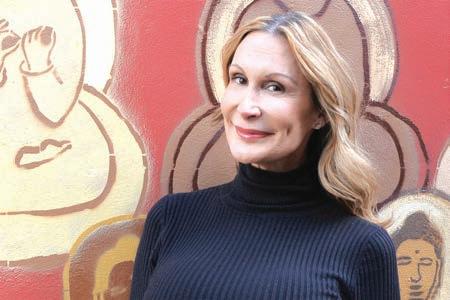
In response to a request from the Blade for comment, Anna Jinkerson, who serves as chair of the Capital Pride
board, sent the Blade a statement praising Taylor Chandler’s efforts as a Capital Pride volunteer and board member but did not specifically address the issue of alleged sexual misconduct.
“We’re also aware that her resignation letter has been shared with the media and has listed concerns,” Jinkerson said in her statement. “When concerns are brought to CPA, we act quickly and appropriately to address them,” she said.
“As we continue to grow our organization, we’re proactively strengthening the policies and procedures that shape our systems, our infrastructure, and the support we provide to our team and partners,” Jinkerson said in her statement. “ We’re doing this because the community’s experience with CPA must always be safe, affirming, empowering, and inclusive,” she added.
In an interview with the Blade, Chandler said she was not the target of the alleged sexual harassment.
She said a Capital Pride investigation identified one individual implicated in a “pattern” of sexual harassment related behavior over a period of time. But she said she was bound by a Non-Disclosure Agreement (NDA) that applies to all board members and she cannot disclose the name of the person implicated in alleged sexual mis-
conduct or those who came forward to complain about it.
“It was one individual, but there was a pattern and a history,” Chandler said, noting that was the extent of what she can disclose.
“And I’ll say this,” she added. “In my opinion, with gay culture sometimes the touchy feely-ness that goes on seems to be like just part of the culture, not necessarily the same as a sexual assault or whatever. But at the same time, if someone does not want those advances and they’re saying no and trying to push you away and trying to avoid you, then it makes it that way regardless of the culture.”
When asked about when the allegations of sexual harassment first surfaced, Chandler said, “In the past year is when the allegation came forward from one individual. But in the course of this all happening, other individuals came forward and talked about instances – several which showed a pattern.”
Chandler’s resignation comes about five months after Capital Pride Alliance announced in a statement released in October 2025 that its then board president, Ashley Smith, resigned from his position on Oct. 18 after Capital Pride became aware of a “claim” regarding Smith. The statement said the group retained an independent firm to investigate the matter, but it released no further details since that time. Smith has declined to comment on the matter.
When asked by the Blade if the Smith resignation could be linked in some way to allegations of sexual misconduct, Chandler said, “I can’t make a comment one way or the other on that.”
Chandler’s resignation and allegations come after Capital Pride Alliance has been credited with playing the lead role in organizing the World Pride celebration hosted by D.C. in which dozens of LGBTQ-related Pride events were held from May through June of 2025.
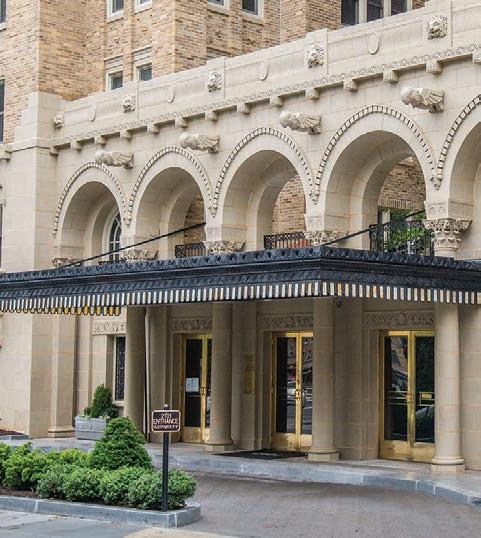
The letter of resignation also came just days before Capital Pride Alliance’s annual “Reveal” event scheduled for Feb. 26 at the Hamilton Hotel in which the theme for D.C.’s June 2026 LGBTQ Pride events was to be announced along with other Pride plans.
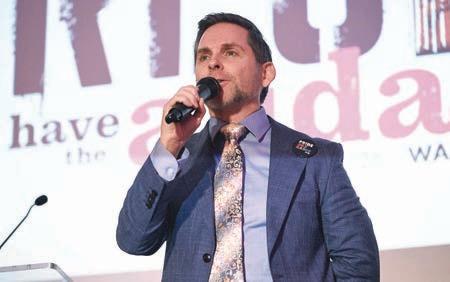
In an official statement released at the reveal event Capital Pride Alliance described its just announced 2026 Pride theme of “Exist, Resist, Have the Audacity” as a “bold declaration affirming the presence, resilience, and courage of LGBTQ+ people around the world.”
The statement adds, “Grounded in the undeniable truth that our existence is not up for debate, this year’s theme calls on the community to live loudly and proudly, stand firm against injustice and erasure, and embody the collective strength that has always defined the LGBTQ+ community.”
In a reference to the impact of the hostile political climate, the statement says, “In a time when LGBTQ+ rights and history continue to face challenges, espe-
cially in our Nation’s Capital, where policy and public discourse shape the future of our country, together, we must ensure that our voices are visible, heard, and unapologetically centered.”
The statement also quotes Capital Pride Alliance CEO and President Ryan Bos’s message at the Reveal event: “ This year’s theme is both a declaration and a demand,” Bos said. “Exist, Resist, Have Audacity! reflects the resilience of our community and our responsibility to protect the progress we’ve made. As we look toward our nation’s 250th anniversary, we affirm that LGBTQ+ people have always been and always will be part of the United States’s history, and we will continue shaping its future with strength and resolve,” he concluded. LOU CHIBBARO JR.













asks public to support D.C.-area
By LOU CHIBBARO JR.
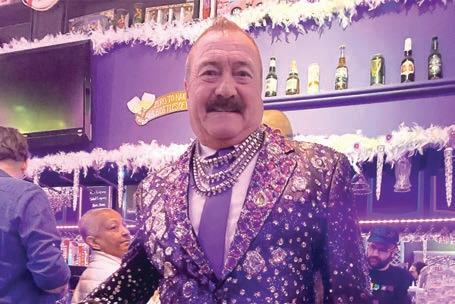
An overflowing crowd turned out Sunday night, March 1, for the 25th anniversary celebration of Freddie’s Beach Bar, the LGBTQ bar and restaurant located in the Crystal City section of Arlington, Va.
The celebration began as longtime patrons sitting at tables and at the bar ordered drinks, snacks, and full meals as several of Freddie’s well-known drag queens performed on a decorated stage.
Roland Watkins, an official with Equality NoVa, an LGBTQ advocacy organization based in the Northern Virginia areas of Arlington, Alexandria, and Fairfax County, next told the gathering about the history of Freddie’s Beach Bar and the role he said that owner Freddie Lutz has played in broadening the bar’s role into a community gathering place.
“Twenty-five years ago, opening a gay bar in Arlington was not a given,” Watkins told the crowd from the stage. “It took courage, convincing, and a deep belief that our community belongs openly, visibly, and proudly,” he
said. “And that belief came from Freddie.”
Watkins and others familiar with Freddie’s noted that under Lutz’s leadership and support from his staff, Freddie provided support and a gathering place for LGBTQ organizations and a place where Virginia elected officials, and candidates running for public office, came to express their support for the LGBTQ community.
“Over the past 25 years, Freddie’s has become more than a bar,” Watkins said. “It has become a community maker.”
Lutz, who spoke next, said he was moved by the outpouring of support from long-time customers. “Thank you all so much for coming tonight and thank you all so much for your support over the past 25 years,” he said. “I can’t tell you how much that means to me and how much it’s kept me going.”
But Lutz then said Freddie’s, like many other D.C. area gay bars, continues to face economic hard times that he said began during the COVID pandemic. He noted that
Ferentinos joins National Museum of American History advisory board
By PETER ROSENSTEIN
The Comings & Goings column is about sharing the professional successes of our community. We want to recognize those landing new jobs, new clients for their business, joining boards of organizations and other achievements. Please share your successes with us at comingsandgoings@washblade.com.
The Comings & Goings column also invites LGBTQ+ college students to share their successes with us. If you have been elected to a student government position, gotten an exciting internship, or are graduating and beginning your career with a great job, let us know so we can share your success.
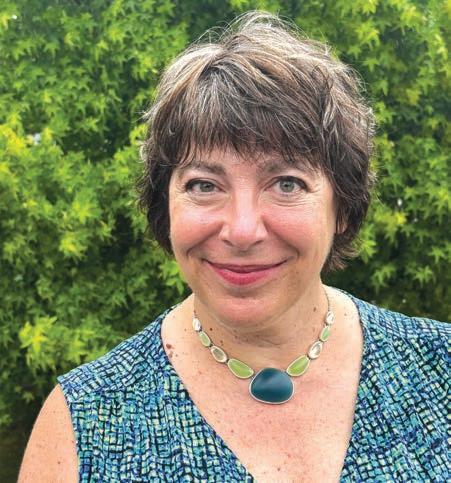
Congratulations to Susan Ferentinos, Ph.D., on her appointment to the Advisory Board of the Smithsonian’s National Museum of American History. On her appointment she said, “This is a moment when historians must stand up for accuracy, complexity, and the full breadth of the American story. I look forward to working with my fellow board members to ensure the National Museum of American History continues to fulfill its mission of serving all Americans with the highest standards of scholarship and integrity.”
Ferentinos operatesher ownnationalconsulting businessbased in Port Townsend, Wash.,with satellite operations based in Delaware County, Pa. Her business helpsmuseums, historic sites, and government agencies expand and diversify the stories they tell about the American past. Her work focuses on interpreting LGBTQ history and women’s history, bringing overlooked narratives into mainstream historical interpretation. Her clients have included the National Park Service, the American Association for State and Local History,Baltimore Heritage,andnumerousmuseums and historic sites across the country. Among her many accomplishments, Susanwas
part of the teams responsible for getting three LGBTQ sites designated as National Historic Landmarks. Two of those landmarks are in Washington, D.C. She authored the NHL nominations for the Furies Collective, in Capitol Hill, building on research performed by local historian Mark Meinke, and she authored the NHL nomination for the home of African-American educators Lucy Diggs Slowe and Mary Burrill, in Brookland, building on research by Eric Griffitts and Katherine Wallace, of EHT Traceries.
Ferentinos earned her bachelor’s degree from College
fewer customers are coming to Freddie’s in recent years, with a significant drop in patronage for his once lucrative weekend buffet brunches.
“So, I don’t want to be the daddy downer on my 25year anniversary,” he said. “But this was actually the worst year we’ve ever had,” he added. “And I guess what I’m asking is please help us out. Not just me, but all the gay bars in the area.” He added, “I’m reaching out and I’m appealing to you not to forget the gay bars.”
Lutz received loud, prolonged applause, with many customers hugging him as he walked off the stage.
of William and Mary in International Development and Philosophy; a master’s from Indiana University in United States History; and a Ph.D. from Indiana University in United States History. Congratulations also to Shawn Gaylord on joining a team at Berkshire Hathaway PenFed Reality in Solomons, Md. His focus will be Southern Maryland - Calvert, St. Mary’s, Charles, and Anne Arundel. Gaylord still leads the LGBTQ+ Strategies Team at The Raben Group and works part-time on federal policy for GLSEN.



































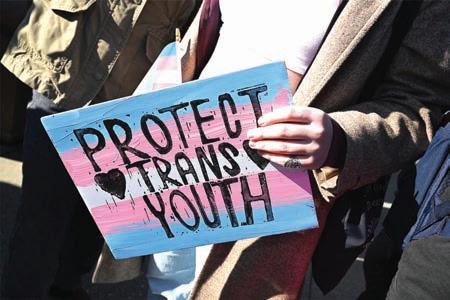
The Supreme Court on Monday blocked a California policy that allowed teachers to withhold information about a student’s gender identity from their parents.
The policy had permitted California students to explore their gender identity at school without that information automatically being disclosed to their parents. Now, educators in the state will be required to inform parents about developments related to a student’s gender identity, depending on how the case proceeds in lower courts.
The case involves two sets of parents — identified in court filings as John and Jane Poe and John and Jane Doe — both of which say their daughters began identifying as boys at school without their knowledge, citing religious objections to gender transitioning.
The Poes say they only learned about their daughter’s gender dysphoria after she attempted suicide in eighth
grade and was hospitalized. After treatment for the attempt and after being returned to school the following year, teachers continued using a male name and pronouns despite the parents’ objections, citing California law. The Poes have since placed their daughter in therapy and psychiatric care.
Similarly, the Does say their daughter has intermittently identified as a boy since fifth grade, but while their daughter was in seventh grade, they confronted school administrators over concerns that staff were using a male name and pronouns without informing them. The principal told them state law barred disclosure without the child’s consent.
Both sets of parents filed lawsuits in the U.S. District Court for the Southern District of California challenging the state policy that protects students’ gender identity and limits when schools can disclose that information to parents.
The justices voted along ideological lines, with the court’s six conservative members in the majority and the three liberal justices dissenting.
“We conclude that the parents who seek religious exemptions are likely to succeed on the merits of their Free Exercise Clause claim,” the court said in an unsigned order. “The parents who assert a free exercise claim have sincere religious beliefs about sex and gender, and they feel a religious obligation to raise their children in accordance with those beliefs. California’s policies violate those beliefs.”
In dissent, the three liberal justices argued that the case is still working its way through the lower courts and that there was no need for the high court to intervene at this stage. Justice Elena Kagan wrote, “If nothing else, this Court owes it to a sovereign State to avoid throwing over its policies in a slapdash way, if the Court can
provide normal procedures. And throwing over a State’s policy is what the Court does today.”
Conservative Justices Samuel Alito and Clarence Thomas indicated they would have gone further and granted broader relief to the parents and teachers challenging the policy.
The emergency appeal from a group of teachers and parents in California followed a decision from the United States Court of Appeals for the Ninth Circuit that allowed the state’s policy to remain in effect. The appeals court had paused an order from U.S. District Judge Roger Benitez — who was nominated by George W. Bush — that sided with the parents and teachers and put the policy on hold.
The legal challenge was backed by the Thomas More Society, which relied heavily on a decision last year in which the court ’s conservative majority sided with a group of religious parents seeking to opt their elementary school children out of engaging with LGBTQ-themed books in the classroom.
California Attorney General Rob Bonta expressed disappointment with the ruling. “We remain committed to ensuring a safe, welcoming school environment for all students while respecting the crucial role parents play in students’ lives,” his office said in a statement.
The decision comes as the Trump administration has taken a hardline approach to transgender rights. During his State of the Union address last week, President Donald Trump referenced Sage Blair, who previously identified as transgender and later detransitioned, describing Blair’s experience transitioning in a public school. According to the president, school employees supported Blair’s chosen gender identity and did not initially inform Blair’s parents.
JOE REBERKENNY
Transgender people across Kansas received letters in the mail on Wednesday demanding the immediate surrender of their driver’s licenses following passage of one of the harshest transgender bathroom bans in the nation. Now the American Civil Liberties Union is filing a lawsuit to block the ban and protect transgender residents from what advocates describe as “sweeping” and “punitive” consequences.
Independent journalist Erin Reed broke the story Wednesday after lawmakers approved House Substitute for Senate Bill 244. In her reporting, Reed included a photo of the letter sent to transgender Kansans, requiring them to obtain a driver’s license that reflects their sex assigned at birth rather than the gender with which they identify.
According to the reporting, transgender Kansans must surrender their driver’s licenses and that their current credentials — regardless of expiration date — will be considered invalid upon the law’s publication. The move effectively nullifies previously issued identification documents, creating immediate uncertainty for those impacted.
House Substitute for Senate Bill 244 also stipulates that any transgender person caught driving without a valid license could face a class B misdemeanor, punishable by up to six months in jail and a $1,000 fine. That potential penalty adds a criminal dimension to what began as an administrative action. It also compounds the legal risks for transgender Kansans, as the state already
requires county jails to house inmates according to sex assigned at birth — a policy that advocates say can place transgender detainees at heightened risk.
Beyond identification issues, SB 244 not only bans transgender people from using restrooms that match their gender identity in government buildings — including libraries, courthouses, state parks, hospitals, and interstate rest stops — with the possibility for criminal penalties, but also allows for what critics have described as a “bathroom bounty hunter” provision. The measure permits anyone who encounters a transgender person in a restroom — including potentially in private businesses — to sue them for large sums of money, dramatically expanding the scope of enforcement beyond government authorities.
Ballard Spahr LLP. The complaint argues that SB 244 violates the Kansas Constitution’s protections for personal autonomy, privacy, equality under the law, due process, and freedom of speech.

Additionally, the American Civil Liberties Union filed a temporary restraining order on behalf of the anonymous plaintiffs, arguing that the order — followed by a temporary injunction — is necessary to prevent the “irreparable harm” that would result from SB 244.
State Rep. Abi Boatman, a Wichita Democrat and the only transgender member of the Kansas Legislature, told the Kansas City Star on Wednesday that “persecution is the point.”
“This legislation is a direct attack on the dignity and humanity of transgender Kansans,” said Monica Bennett, legal director of the ACLU of Kansas. “It undermines our state’s strong constitutional protections against government overreach and persecution.”
The lawsuit challenging SB 244 was filed today in the District Court of Douglas County on behalf of anonymous plaintiffs Daniel Doe and Matthew Moe by the American Civil Liberties Union, the ACLU of Kansas, and
“SB 244 is a cruel and craven threat to public safety all in the name of fostering fear, division, and paranoia,” said Harper Seldin, senior staff attorney for the ACLU’s LGBTQ & HIV Rights Project. “The invalidation of state-issued IDs threatens to out transgender people against their will every time they apply for a job, rent an apartment, or interact with police. Taken as a whole, SB 244 is a transparent attempt to deny transgender people autonomy over their own identities and push them out of public life altogether.”
JOE REBERKENNY





INCLUDES THE PREMIERE OF A NEW PORTAITS PIECE TITLED “ADIOR”
MARCH 25 AT 7:30PM (ASL)
NATIONAL CITY CHRISTIAN CHURCH
5 THOMAS CIRCLE NW
TICKETS & INFO AT GMCW.ORG

Gay billionaire’s name appears 2,200 times in files but no criminality alleged
By JOSEPH REBERKENNY | jreberkenny@washblade.com
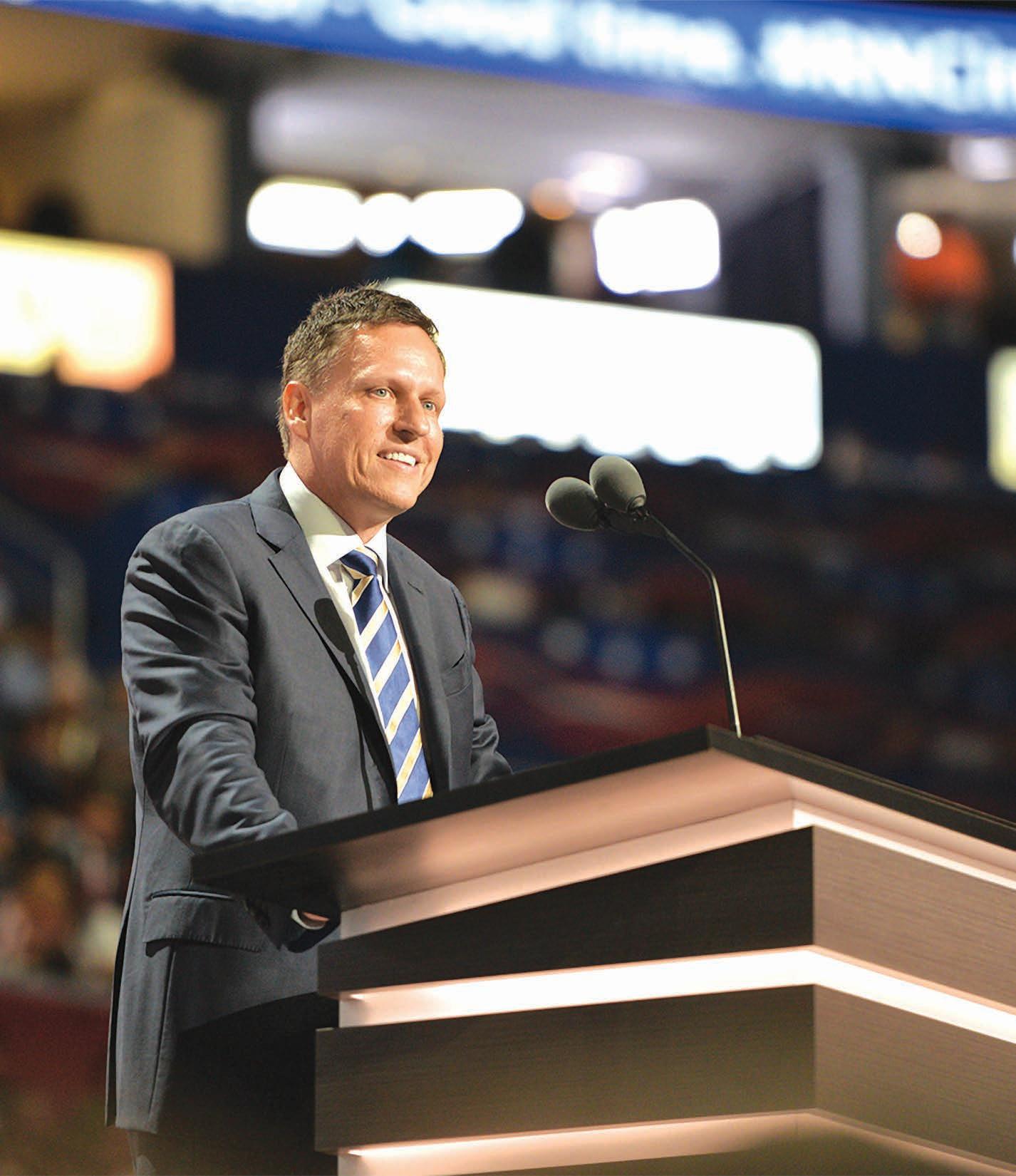
There are few figures in modern politics whose reach extends across Silicon Valley, Wall Street, and Washington, D.C., as Peter Thiel’s.
A billionaire venture capitalist, Thiel built his fortune at the dawn of the internet age and has since positioned himself at the highest levels of U.S. technology, finance, and national defense infrastructure. He is best known as a co-founder of PayPal, an early investor in Facebook, and the co-founder of Palantir Technologies — a data analytics firm that maintains significant contracts with U.S., U.K., and Israeli defense and intelligence agencies.
Over the last two decades, Thiel has also built an interconnected network of investment vehicles — Clarium Capital, Founders Fund, Thiel Capital, Valar Ventures, and Mithril Capital — giving him influence over emerging technologies, political candidates, and ideological movements aligned with his worldview. Through these firms, Thiel has backed companies in artificial intelligence, defense technology, biotech, cryptocurrency, and financial services, often positioning himself early in sectors that later became central to public policy debates.
Born in Frankfurt, West Germany, in 1967, Thiel immigrated to the United States as an infant. He later attended Stanford University, earning a degree in philosophy before graduating from Stanford Law School in 1992. As an undergraduate, he founded The Stanford Review, a conservative student publication that opposed what it described as campus “political correctness.” The paper became a platform for combative and contrarian arguments that previewed themes Thiel would revisit in later essays and speeches about elite institutions, democracy, and technological stagnation.
Thiel’s professional ascent coincided with the explosive growth of the dot-com era. In 1998, he co-founded PayPal, helping pioneer digital payment systems that would become foundational to online commerce. When the company was sold to eBay in 2002 for $1.5 billion, Thiel emerged a multimillionaire and part of what would later be known as the “PayPal Mafia” — a loose but influential network of founders and early employees who went on to launch or invest in some of Silicon Valley’s most dominant firms.
In 2004, Thiel made one of the most consequential investments of his career, providing $500,000 in seed funding to Facebook, then a fledgling social network founded by Mark Zuckerberg. He became the company’s first outside investor and later served on its board. That early bet proved extraordinarily lucrative and cemented Thiel’s status as a major venture capitalist with a reputation for identifying transformative platforms before they reached scale.
The same year, he co-founded Palantir Technologies. Initially backed in part by In-Q-Tel, the CIA’s venture capital arm, Palantir developed software — including its Gotham platform — designed to help defense, intelligence, and law enforcement agencies integrate and analyze massive datasets. The company’s tools allow users to map relationships, identify patterns, and visualize complex networks across financial records, communications data, and other digital trails.
Over time, Palantir secured billions of dollars in public-sector contracts. It has worked with the U.S. Department of Defense, Immigration and Customs Enforcement, the Centers for Disease Control and Prevention, and allied governments abroad. Public reporting has documented that its global government contracts exceed $1.9 billion, including agreements with Israeli defense entities — relationships that reportedly expanded following the Oct. 7 attacks in Israel. Critics have raised concerns about civil liberties and surveillance, while supporters argue the company provides essential national security tools.
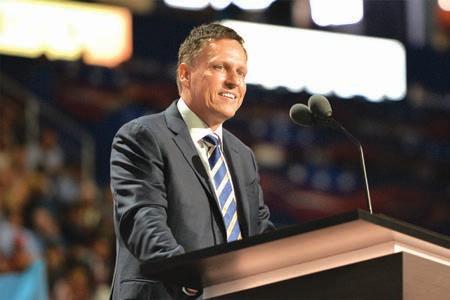
By the mid-2000s, Thiel was no longer simply a wealthy entrepreneur. He was a financier operating at the intersection of capital, advanced technology, and government — with investments embedded in some of the country’s most sensitive security systems. His political giving would later extend that influence further, including support for candidates aligned with his populist and nationalist leanings– notably Donald Trump in 2016.
As his wealth and influence expanded, so too did his proximity to other powerful — and, in some cases, controversial — figures in global finance.
Among them was Jeffrey Epstein.
Thiel’s name appears more than 2,200 times in documents released so far by the U.S. Department of Justice related to Epstein. A name appearing in legal filings does not, by itself, indicate wrongdoing. However, the extensive references illustrate that Epstein’s social and financial network intersected with elite figures in technology, academia, politics, and finance — including individuals connected to Thiel’s business and philanthropic circles.
Epstein’s legal troubles became public in 2005, when police in Palm Beach, Fla., investigated allegations that he had sexually abused a minor. In 2008, he pleaded guilty in state court to soliciting prostitution from a minor under a plea agreement that was widely criticized as unusually lenient. He served 13 months in county jail with work-release privileges and was required to register as a sex offender. Comparable federal charges can carry significantly longer sentences.
Despite that conviction, Epstein continued to maintain relationships with prominent business and political fig-
ures for years. The extent to which members of elite networks remained in contact with him after his guilty plea has been the subject of extensive scrutiny.
Documents released by the Justice Department indicate that individuals connected to Thiel’s philanthropic and investment circles communicated with Epstein after his conviction. One document shows an invitation, sent on behalf of the Thiel Foundation, for Epstein to attend a technology event in San Francisco. Additional financial records and reporting indicate that between 2015 and 2016, Epstein invested approximately $40 million in funds managed by Valar Ventures, one of Thiel’s firms. Other records reflect meetings and correspondence, at times arranged through intermediaries. Epstein also extended invitations to his Caribbean residence.
There is no evidence that Thiel was involved in Epstein’s criminal conduct. The documented interactions do, however, show numerous planned meetings between the two both in the Caribbean (where Epstein’s infamous island is located) and across the world, while also raising questions about why business relationships continued after Epstein had pleaded guilty to a sex offense involving a minor and was a registered sex offender. For critics, that continued engagement speaks to the insular nature of elite finance, where access to capital and networks can override reputational risk.
Palantir represents another overlap. In emails made public through Justice Department releases, Epstein referenced Palantir in correspondence with Ehud Barak, the former Israeli prime minister who also maintained ties to Epstein. The emails do not indicate that Epstein had operational involvement in Palantir or access to its systems, however, they show that he discussed one of Thiel’s most strategically significant companies — a firm deeply integrated into Western defense and intelligence systems — with senior political figures abroad.
Separately, Thiel’s long-running dispute with Gawker Media offers additional insight into how he has exercised power outside traditional political channels.
After Gawker published an article in 2007 that publicly identified Thiel as gay, he later secretly funded litigation brought by professional wrestler Hulk Hogan over the outlet’s publication of a sex tape. The lawsuit resulted in a $140 million judgment against Gawker, which ultimately filed for bankruptcy. Thiel later confirmed his financial backing of the case, framing it as a defense of privacy and a response to what he considered reckless media behavior.
The episode demonstrated Thiel’s willingness to deploy substantial financial resources strategically and, at times, discreetly. It also illustrated how wealth can be used to influence institutions — whether through venture capital, political donations, or litigation.
Taken together, the record does not establish criminal liability for Thiel in connection with Epstein. It does, however, situate him within a dense web of elite finance, national security contracting, political influence, and reputation management. As additional documents related to Epstein continue to emerge, that web — and the decisions made within it — remains a subject of public interest and ongoing scrutiny.


























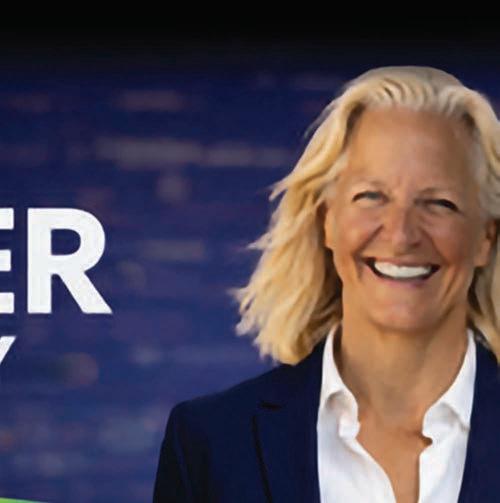

















, also known as Coach G, is founder and CEO of Sweat DC.
I recently lost my dog, Argo. He was a pit bull, big, sweet, endlessly cuddly, and for 15 years he was my constant. The kind of presence you stop consciously noticing until they’re gone and the quiet hits you all at once. Pit bulls have a reputation. Argo never got the memo. He just loved people, completely and without condition, from the moment he met them until his last day.
I wasn’t prepared for what happened next.
My phone filled up. Instagram lit up. Texts came in from people I hadn’t heard from in months, in some cases years. Hugs from neighbors. Messages from colleagues. Condolences from people I’d lost touch with, some through nothing more than the slow drift of busy lives in a busy city, and some honestly through small tiffs and misunderstandings that neither of us ever bothered to resolve.
And sitting with all of that love pouring in, I found myself asking a question I wasn’t expecting: Why has it taken this long?
We do this in D.C. We get caught in our heads, our calendars, our ambitions. We let weeks turn into months. We let a small misunderstanding calcify into distance because nobody wants to be the first one to reach out, nobody wants to seem like they need something. We perform resilience so well that sometimes the people who care about us most don’t know we need them.
And then something breaks open, a loss, a moment of real vulnerability, and suddenly people show up. And you realize the connection was always there. It just needed permission.
Argo gave people permission. Even in dying, he did what he always did when he was alive. He brought people together.
I’ll be honest with you about where I’ve been lately. As I’ve climbed the entrepreneurial ladder, something quietly shifted. People stopped seeing Gerard. They started seeing a title, a resource, someone who could give them something or who owed them something. A character. Not a person. And when most of your day is spent inside other people’s problems and crises, you can start to feel it, a slow creep of cynicism that you don’t even notice until one day you realize you’ve gone numb.
And I’m not alone in that. Look
around. We just watched innocent people die while those in power looked us in the face and called it something else. We watched people erupt over a 10-minute halftime performance like it was the greatest threat to our country. Everywhere you look there is something designed to make you angry, or exhausted, or both. Anger and numbness have become survival strategies. I understand it. I’ve lived it.
But here is what Argo reminded me.
The world is not what the loudest voices say it is. The world is what shows up when something real happens. And what showed up for me, after losing my sweet boy, was people. Caring, loving, present people who put down whatever they were doing to reach out to a friend. Some of them I hadn’t spoken to in too long. Some of them I’d had friction with. All of them showed up anyway.
That is the world. That is what it actually is underneath all the noise.
I think we’ve forgotten that. Or maybe we haven’t forgotten it, maybe we’re just so tired and overstimulated and battle-worn that we’ve stopped letting ourselves feel it. Because feeling it requires vulnerability, and vulnerability feels dangerous right now. It’s easier to scroll. It’s easier to stay mad. It’s easier to keep a wall up and call it wisdom.
Argo spent 15 years showing me a different way. He never met a stranger. He never held a grudge. He never saved his love for people who deserved it on paper. He just gave it, freely, every single time. Not a reward. Not a transaction. Just the most natural thing in the world.
Grief burns off everything that isn’t essential and leaves only what matters. What’s left for me is this: the world is full of good people. You may be surrounded by more of them than you know. And if you’ve gone numb, or angry, or so busy surviving that you’ve stopped connecting, I want you to know that the feeling can come back. It came back for me.
Reach out to someone today. Close a distance you’ve let grow. Tell someone they matter. Not because everything is perfect, but because connection is how we survive when it isn’t. Living disconnected, mad and closed off isn’t living at all. It’s a slower kind of dying.
Death came to teach me how to live. I hope this saves you some time.
is president and CEO of Black, Gifted & Whole.
Making healthcare more affordable is vitally important
Black Americans are more likely than Americans of other races to live with chronic conditions like HIV. They also disproportionately struggle to afford the often expensive treatments needed to manage those conditions.
So it’s hardly surprising that Black voters care about politicians’ proposals to bring down healthcare costs more than any other group.
Most of those proposals — from leaders in both parties — are well-intentioned. But they are not all equally beneficial. Recent efforts to impose price controls on prescription drugs threaten to harm the very patients they are meant to help.
Consider former President Biden’s signature Inflation Reduction Act, which gave Medicare the power to set prices on brand-name medicines for chronic conditions like diabetes, autoimmune disease, or cancer — all diseases that Black patients disproportionately struggle with.
These price controls promise short-term cost savings. But they threaten to erase the much larger savings that patients with chronic illness would otherwise see over their lifetimes. That’s because price controls disincentivize companies from developing new medicines to compete against existing popular treatments for serious conditions.
Consider HIV. According to the CDC, more than 1.2 million people in the United States are living with HIV, and roughly 31,000 new infections still occur each year. In the 1980s, these diagnoses would have been a death sentence. Today, they represent a manageable chronic illness — a direct result of decades of sustained research and investment in antiretroviral development, long-acting injectables, and prevention tools like PrEP.
HIV treatments are cheaper and more accessible now than ever. That’s not because of government intervention, but because of the price wars that resulted as companies introduced competing therapies and battled for market share.
In fact, had the government prematurely intervened, those competing treatments might never have reached patients, who would still be stuck paying vastly higher prices.
That is precisely the risk our leaders are now taking. Many companies are already scaling back research because of the IRA’s price controls. Since the law’s passage in 2022, biotech firms have canceled at least 55 research programs.
That is especially dangerous for the Black community. Black patients have historically been overlooked by the research establishment, from the underrepresentation of Black participants in clinical trials to underinvestment in conditions like sickle cell disease that disproportionately affect Black patients. If companies are forced to scale back research, it is likely that treatments for smaller and more marginalized patient populations will face the greatest risks of being cut.
The Trump administration, meanwhile, continues to push for its so-called “Most Favored Nation” policy that would tie U.S. drug prices to the lower prices arbitrarily set by foreign governments.
The consequences could be severe. “Most Favored Nation” pricing would dramatically reduce companies’ revenues on both new and existing medicines, decimating resources for future research and development. Researchers project that, if imposed on Medicare and Medicaid alone, such policies could cut research spending nearly in half, leading to more than 200 fewer new medicines over the coming decade.
Developing treatments for HIV has historically required long timelines, complex trials, and sustained capital. Any policy that compresses revenues for breakthrough medicines must be evaluated not only for short-term savings, but also on its potential long-term effects on the pipeline that brings new survival and prevention advances to patients.
And there are also access risks. In countries that rely heavily on price controls, patients often face delayed and restricted access to drugs. Black communities in the United States already face barriers to consistent care and adherence to treatment. Importing foreign countries’ price controls would inevitably have ripple effects across our healthcare system, worsening these disparities.
Making healthcare more affordable is vitally important. Black families feel the pressure of rising costs every single day. But price controls carry severe tradeoffs. Breakthroughs in HIV treatment, long-acting prevention, cancer treatment, and chronic disease management rely on steady research — and if policymakers weaken the economic engine that drives that research, Black patients will feel the consequences first.
Health equity is not just about lowering today’s price tag. It is also about protecting tomorrow’s cures. Black communities deserve reforms that do both, not price controls that promise cost relief while sacrificing future breakthroughs.
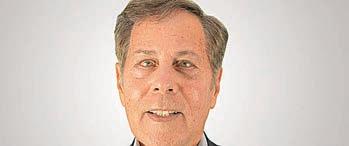
PETER ROSENSTEIN
is a longtime LGBTQ rights and Democratic Party activist. He writes regularly for the Blade.
Will Trump claim a national emergency to undermine midterms?
The president of the United States in his rambling speech about our attack on Iran, recorded during a campaign trip, said, “The Iranian regime seeks to kill. The lives of courageous American heroes may be lost and we may have casualties — that often happens in war — but we’re doing this not for now. We’re doing this for the future, and it is a noble mission.”
Well, the United States has not declared war on Iran, only Congress can do that, not the president. As I write this, the felon has yet to make a live speech to the American people about what he is doing, and Americans have already lost their lives. He is weekending as he usually does at Mar-a-Lago. I wonder if he has the balls to head out to the golf course while American lives continue to be at stake.
This operation is clearly the felon’s way of distracting the people of the United States from his failed domestic policies. From rising food prices, rents, and health insurance. From the loss of manufacturing jobs, as reported in November ”manufacturing shed another 6,000 jobs in September, for a total loss of 58,000 since April.” Had he not acted on Iran now every news outlet in the nation would have reported on the Epstein scandal with the release of the depositions, video and transcripts, of former Secretary of State Hillary Clinton and former President Bill Clinton, in front of the Congressional Oversight Committee.
Even more frightening is this may be his way of preparing to claim a national emergency to undermine the midterm elections, which he is clearly on target to lose, now that his Save America Act has been defeated in Congress.
Americans must ask themselves how long they will put up with this warmonger, racist, sexist, lying, homophobic, SOB, who cares not a whit for them, but only for himself, and his rich colleagues, taking as much grift as they all can, while he is president.
None of this is to say we shouldn’t put constraints on Iran, work to see they never have a nuclear bomb, and limit their production of missiles. We were working toward the goal of stopping them from having a nuclear bomb when the felon, in his first term, pulled us out of the agreement to move forward on that. Today, he has sidelined the
State Department, and his Secretary of State, Marco Rubio, in negotiations, and has relied on his son-in-law, Jared Kushner, and Steve Witkoff. The attack was commenced while negotiations were underway. At the end of last week it was reported, Oman’s Foreign Minister Badr Al-Busaidi, who mediated the talks in Geneva, said there had been “significant progress in the negotiation.” Al-Busaidi added, “Technical-level talks would continue next week in Vienna, the home of the International Atomic Energy Agency.” The United Nations’ atomic watchdog likely would be critical in any deal.
So clearly this is all about what the two negotiators, who have sidelined the State Department, Kushner and Witkoff, secretly reported to the felon. My guess is some progress was being made, clearly it was not what the president wanted. So, what ruled was his immediate need for a distraction after the failure of his State of the Union address to make any impact on his sagging poll numbers.
I have written often of the alternate universe Trump has us living in. I am just waiting for his MAGA cult to react to this. Will they still blindly follow everything he says, or will the Laura Loomers of the world finally say, “screw this, take care of us at home, do what you promised to make our lives better”. The first MAGA to say this was Marjorie Taylor Greene. Then Tucker Carlson added his slam against the felon. His PR flack, Karoline Leavitt, is getting confused by all the lies, recently saying “things are better than they were last year.” Clearly forgetting last year was 2025, and the felon was president for all except for 20 days of it, so is responsible for last year.
I am an optimist and believe our democracy will survive him, and his fascist cohorts’ blatant attacks. We won a revolution against one king, and survived a civil war, becoming even stronger as a united nation. We helped Europe defeat Hitler. I believe Sen. Mark Kelly (D-Ariz.) when he says the military will reject illegal orders. Orders that ask them to act against their fellow countrymen and women. I believe the American people will come to their senses before it’s too late. They will finally reject the POS in the White House, and the sycophants, and fascists, surrounding him in time to reclaim our nation for all the people.







Most gay men of a certain age remember “the kiss.”
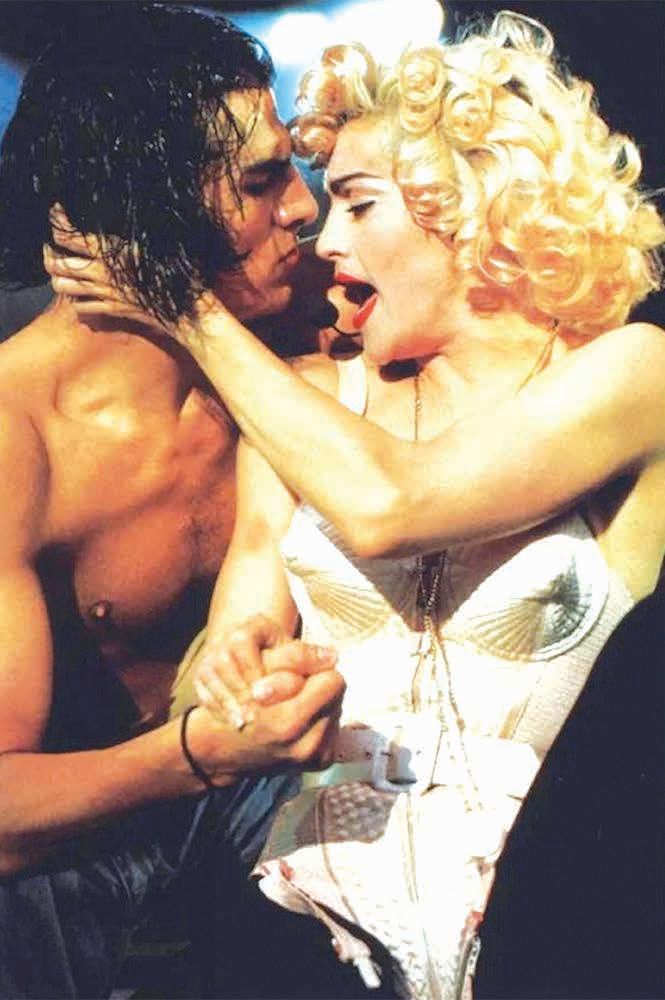
It was the moment Madonna’s dancers Salim Gauwloos and Gabriel Trupin locked lips in the hit 1991 documentary film “Truth or Dare,” which is celebrating its 35th anniversary this spring.
The kiss was hot, but what made it groundbreaking is that it appeared in a mainstream Hollywood movie that screened in suburban multiplexes across the country. This wasn’t an obscure art house film. The movie, and tour on which it was based, received months of breathless media attention all over the world for bold expressions of female empowerment and queer visibility. Madonna was threatened with arrest in Toronto for simulating masturbation on stage and Pope John Paul II urged Catholics to boycott the show, triggering a media firestorm.
“Truth or Dare” was billed as a behind-the-scenes documentary of the tour, but it quickly became clear that the real star of the show wasn’t Madonna, but rather her colorful troupe of seven backup dancers, six of whom identified as gay: Kevin Stea, Carlton Wilborn, Luis Xtravaganza Camacho, Jose Gutierez Xtravaganza, Gauwloos, and Trupin; Oliver Crumes III identifies as straight.
We saw them party and march in the New York City Pride parade. They were unabashedly queer at a dangerous time — before protease inhibitors began to stem the AIDS plague and before most celebrities and politicians embraced the gay community in any real way. Being out in 1991 carried major risks to career and reputation.
Enter Gauwloos, one of those brave dancers who vogued his way into the hearts of countless gay men entranced by his handsome looks, his stage presence, and dance skills.
Gauwloos — known then and now as “Slam”— sat down with the Blade to talk Madonna, the lasting impact of “Truth or Dare,” the public disclosure of his HIV status, and plans for a new book on his life.
His story is fascinating — from growing up in Europe to dancing in New York to landing the gig of a lifetime with Madonna. He performed on that tour while secretly HIV positive and went without medical treatment for 10 years because he was living in the United States as an undocumented immigrant. Not even Madonna knew of his HIV status. Two other dancers on the tour were also HIV positive but no one talked about it. Ironically, Madonna was singing “Express Yourself” and advocating for condom use during her concerts yet backstage three of her dancers were secretly positive.
“A lot of people were dying so I wasn’t going to tell Madonna I had HIV,” said Slam, now 57. “And the others didn’t either. It wasn’t the moment to do it. She used to make speeches about Keith Haring and AIDS and I thought it’s going to be me next.”
Gabriel Trupin died of AIDS in 1995. Slam was diagnosed at age 18 in 1987, a frightening time when a positive test result often meant a death sentence. He booked the “Blond Ambition Tour” at age 21 after moving to New York. His friends encouraged him to audition but Slam resisted because he wasn’t a big Madonna fan.
“It was crazy, everyone wanted that job,” he said, “but I wanted to dance with Janet Jackson and Paula Abdul.” He listened to his friends and shortly after the audition, Slam received a call from Madonna herself inviting him to join the tour.

Salim Gauwloos on Madonna, HIV, and why he almost didn’t audition for
By KEVIN NAFF | knaff@washblade.com

“We all wanted to be stars but not even Madonna knew how big that tour would become. The way it was choreographed and directed, the stars aligned. … It never looks dated even today.”

The world tour kicked off in Japan in April 1990 then moved to the United States and Europe, stirring controversy wherever it went. There was the iconic cone bra; the aforementioned simulated masturbation during “Like a Virgin”; and religious imagery that offended many Catholic groups and the Vatican.

And the controversy didn’t end with the tour. Cameras were rolling throughout the tour for what Slam thought would be a “video memory” for Madonna. But as the tour unfolded, director Alek Keshishian reportedly became more interested in what was happening behind the scenes so plans for mere tour footage were expanded into a full documentary.
“We were young and partying and didn’t really know what was going on,” Slam said. “You live in this celebrity bubble and you sign a paper – I don’t even know what I
signed.”
In 1992, Kevin, Oliver, and Gabriel sued Madonna for invasion of privacy and fraud claiming she used some footage without their consent. They claim they were told nothing would be included in the film that they didn’t want to be seen. In one specific incident, Gabriel alleged that he told producers he didn’t want the scene of him kissing Slam to be in the film as he wasn’t fully out.
“Gabriel was forcibly outed,” in the movie, Kevin said in a 2016 interview.
Slam did not join his colleagues in the lawsuit.
“I couldn’t sue because I was illegal but I wasn’t ever going to sue,” Slam said. “I’m not a suing kind of person. But good for them, they fought for it and won. A lot of people don’t have the balls to sue Madonna.” The suit was settled two years later for an undisclosed sum.
“We were all conflicted about the kiss,” he said with a laugh. “The kiss, oh my God, my boyfriend is going to kill me! Belgian stress!”
Beyond worrying about his boyfriend’s reaction, Slam had concerns about the impact of being openly gay on his modeling career.
“In 1990, you couldn’t get high fashion campaigns as an openly gay model,” he said. “I was worried about that. I couldn’t get a campaign because I was gay. My agency told me to say I was straight and it was just a game.”
In 2016, pegged to the 25th anniversary of “Truth or Dare,” the surviving six dancers filmed a documentary about their lives post-Madonna titled “Strike A Pose.” In it, Slam publicly revealed his HIV status for the first time in an emotional scene with his former colleagues.
“I found the strength to tell the world I have HIV,” he recalls. “I was scared but I felt brave. The outcome and messages were beautiful. After I saw ‘Strike A Pose,’ I knew we gave people hope. And not just for gay people.”
He was infected in 1987 but didn’t get treated until 1997. After the tour ended, he said he went into a depression and his agency dropped him.
“I was partying too much after the tour,” he recalls. “I made a decision to live as an illegal alien.” In 1997, Slam collapsed and was rushed to the hospital with pneumonia.
“They started treating me and thank God the new HIV drugs were out, the cocktails, it took me a couple months to get better.”
Madonna didn’t participate in “Strike A Pose” and Slam said he hasn’t seen or spoken to her since the end of the tour. He said he had no idea of the impact “Truth or Dare” would have.
“You look at this movie in 1991 and you don’t think it’s going to be such a big thing and 35 years later it’s still helping people,” he said. “It was helpful for people who felt alone at that time. It was such an important documentary.
“I don’t think younger gay people realize how important Madonna was to gay and queer visibility — she was a big part of it. We showed the world it’s OK to be gay and that was the great message of this movie.”
He noted that, decades later, many of his friends have transgender kids and that queer culture is represented in much of mainstream pop culture.
“It’s amazing how far we’ve come,” he said. “I know we’ll always be marginalized but we have come so far. I’m really
proud of our community. The current nightmare will be over and I do believe that things will get better.”
Referencing President Trump’s attacks on the LGBTQ community and crackdown on immigration, Slam described the situation in the U.S. today as “sad.”
“Everything is such a mess,” he said. “Some of these people have lived here 30-40 years and they take you out of your home. I can’t even imagine. It breaks my heart. When I was illegal it was a different story.”
Slam met his husband, Facundo Gabba, who’s from Argentina, in 2000, and he helped him get a legal case together to win citizenship. He filed a case in 2001 and was told there was a 99 percent chance he wouldn’t be permitted to stay in the United States because they weren’t allowing HIV-positive immigrants to remain in the country. But he got his green card anyway in 2005 and became a U.S. citizen in 2012.
Today, Slam and Gabba live in Brooklyn, though they travel a lot because “I can’t take the cold.” The couple married in Argentina in 2010 and in the U.S. in 2016.
Slam is still dancing and working as a choreographer. He’s teaching at a contemporary dance festival in Vienna in July and even offers online lessons via Salimdans.com.
As a longtime HIV survivor, Slam is dedicated to a healthful lifestyle.
“You have to keep moving; when you move you stay healthy,” he says. “Dance heals everything. I do yoga, I eat healthy and clean as possible. I don’t watch much TV … I try to stay healthy and positive. If I absorb all of the negativity I would be sick.”
In addition to his ongoing work in dance and choreography, Slam is in the early stages of writing a book about his extraordinary life and pioneering career.
“I always knew I had a book inside of me. I want to talk



about my HIV status. I know I can inspire more people. I want to tell even more secrets in the book; secrets are a poison so I want to tell everything.”
Among those secrets, he notes, is a desire to write about his strict Muslim father and the years he spent as an undocumented immigrant in America.
“Those are the things I want to talk about, the struggles. It’s a love story, hope and resilience. I know it will help people.”
As for his friends from the tour, Slam says he remains in contact with Gabriel’s mother and José Xtravaganza is his best friend. Baltimore’s Center Stage theater is currently developing a new musical about Xtravaganza’s life. And Slam said he occasionally talks to Oliver, though “he still can’t pronounce Sandra Bernhard’s name.”
At the end of our interview, Slam indulged a round a rapid fire questions:
• Favorite song to perform in the “Blond Ambition” tour? “Express Yourself.”
• Aside from Madonna, who was your favorite artist you worked with? Toni Braxton in “Aida” on Broadway.
• Favorite Madonna song? “Live to Tell”
• Favorite Madonna video? “Bedtime Stories”
• What’s more stressful: performing in a concert or performing on the VMAs? “Both, because we always had to be perfect.”
• Did you go to Madonna’s recent “Celebration” tour? “I didn’t see the show but I saw clips online.”
• What do you remember most about performing “Vogue” at the VMAs? “It was nerve-racking for them to flip those fans.”
• When was the last time you vogued? “I teach classes so a couple weeks ago.”
Circa
Traditional Music of Ireland
Friday, Mar. 20 at 8 p.m.
“Compellingly original” (Los Angeles Times)
MASON ARTIST-IN-RESIDENCE
Silkroad Ensemble with Rhiannon Giddens
Sanctuary: The Power of Resonance and Ritual
Sunday, Mar. 22 at 7 p.m.
“an exhilarating musical ride” (The San Francisco Chronicle)
Humans 2.0
Sunday, Apr. 12 at 7 p.m.
“Arguably the world’s most daring circus company” (Guardian)
A Dorrance Dance Production
Saturday, May 2 at 8 p.m.
An innovative collaboration featuring original, live music


March 21–29
Lisner Auditorium
WASHINGTON, D.C.



March 7, 8, 15
Lisner Auditorium
WASHINGTON, D.C.
Damien Sneed and Kyle Bass bring Scott Joplin’s forgotten opera into a new era under the direction of legendary mezzosoprano Denyce Graves.
May 8, 9, 10
Lyric Baltimore BALTIMORE, MD
Robert Ward’s Pulitzer Prize-winning opera, based on Arthur Miller’s Tony Award®-winning play, puts truth on trial.
The New York Times called Director Francesca Zambello’s production “a revelation” and “darkly up-to-date in its message.”
May 14, 15
The Music Center at Strathmore NORTH BETHESDA, MD

Experience the Leonard Bernstein, Stephen Sondheim, and Arthur Laurents’ Tony Award®winning classic on a grand scale featuring Jerome Robbins choreography.


‘A Body to Live In’ a fascinating trip into a transgressive culture
By JOHN PAUL KING
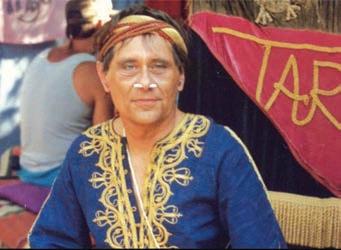
Once upon a time in the 1940s, a teenager named Roland Loomis, who lived with his devout Lutheran parents in Aberdeen, S.D., received a hand-me-down camera from his uncle. It was a gift that would change his life.
Small and effeminate, he didn’t exactly fit with the “in” crowd of his small rural town; but he had an inner life more thrilling than anything they had to offer, anyway, and that camera became the key with which it could finally be unlocked. Waiting patiently for those precious hours when he was alone in the house, he used it to capture images of himself that expressed an identity he had only begun to explore, through furtive experiments in body manipulation that incorporated exotic costuming, erotic nudity, gender ambiguity, and what many of us might call (though he would not) self-mutilation, including the piercing of his skin and other extreme forms of physical modification.
Young Roland would go on to become famous (or perhaps, notorious) in the decades to come, but it would be under a different name: Fakir Musafar, the focal figure of filmmaker Angelo Madsen’s documentary “A Body to Live In,” which opened in Los Angeles on Feb. 27 and expands to New York this weekend.
Like Musafar himself, who died of lung cancer at 87 in 2018, it’s a documentary that doesn’t quite follow the expected rules. Eschewing “talking head” commentators and traditional narration, Madsen spins his movie from his subject’s extensive archives and allows the information to come through the voices of those who were close to him: collaborator and life partner Cléo Dubois, performance artists Ron Athey and Annie Sprinkle, and underground publisher V. Vale are among the many who contribute their memories and impressions of him, while evocative photos and film footage create a
hazy “slide show” effect to provide a guided tour of his life, his art, and his legacy. Less a biography than a chronicle of profoundly unorthodox self-discovery, it details his development from those early days of clandestine self-photography through a continual evolution that would see him become a performance artist, a central figure in the burgeoning BDSM culture, a seeker who espoused eroticism as a spiritual practice, the founder of a “Radical Faeries” offshoot for the kink/ fetish community, and ultimately an elder and mentor for a new generation for whom his once-taboo ideas and explorations had essentially become mainstream – thanks in no small part to his own pioneering efforts.
It’s a fascinating, hypnotic trip into a culture which might feel disturbingly transgressive to those who have never been a part of it –yet will almost certainly feel like being “seen” to those who have. It opens a window into a lifestyle where leather, kink, BDSM, gender play, and non-monogamous “situationships” are not just accepted but viewed as natural variations on the spectrum of human sexuality; and in the middle of it all is Musafar, on a deeply personal quest to connect with the deepest part of his essence through the intense and ritualistic pursuit of an inner drive that keeps pushing him further. As one reminiscing cohort remarks during the film, it’s as if he is “trying to find an answer to a question that” he “cannot form.”
Indeed, it might be said that Madsen’s movie is an exercise in forming that question; bringing his own “transness” into the mix as he examines the various aspects of Musafar’s ever-evolving relationship with self, identity, and presentation, he evokes a timely resonance in which the imperative to make physical form match psychic self-perception becomes an irresistible force, and draws a direct line between his subject’s fluid ambi-

guity and the plight faced by modern trans people over the bigotry of those who think gender is strictly about genitalia. Perhaps the question has to do with whether we are defined by our identities or by our physical form – or if both are malleable, adaptable, and in a constant state of flux.
In any case, with regard to Musafar, “A Body to Live In” is unquestionably a film about transformation, not just of physical manifestation but of consciousness itself. In his journey from being little Roland, the outcast schoolboy with a secret fetish, to Fakir, the spiritual psychonaut for whom sex and gender are only walls that separate us from a true and eternal essence, he is embodied by Madsen’s reverent documentary as a being in the process of breaking free from the restrictions of physical existence, of transcending all such distinctions by letting go of life itself – something underscored not only by the section of the movie dealing with the impact of the AIDS epidemic on Musafar’s deeply-bonded community, but by his own words, spoken in a deathbed interview that serves as a connecting thread throughout the film. We are kept unavoidably aware of the mortality which – for Musafar at least –seems little more than a prison that keeps us from the unfettered joy of our true nature.
But while Madsen honors his subject as a pillar – and an under-sung hero – of contemporary queer culture, he also addresses the aspects that made him a “problematic” figure; in his life, he drew criticism over perceived cultural appropriation from the indigenous American tribes whose sacred rituals inspired the kink-flavored practices which facilitated his own spiritual odyssey, and which he popularized among his own acolytes to give rise to the still-controversial “Modern Primitive” movement that has been criticized by some for turning meaningful cultural tra-
ditions into an excuse for trendy fashion accessories. Even Musafar’s survivors, whose love for him exudes palpably from the stories and memories they share of him throughout the film, make observations that point to his flaws; yet at the same time, Madsen’s documentary makes clear that Musafar himself never saw himself as perfect, either – just as someone willing to endure the kind of suffering that most of us might find unbearable in order to get closer to perfection.
Of course, it probably helped that he enjoyed that so-called “suffering,” but that’s perhaps too glib an observation in the face of a film that so clearly makes a case for the deep and sincere commitment he held for his quest for transcendence; but it’s also a helpful reminder that his practices – which might seem macabre and twisted to the uninitiated – were also an experience of joy, an exercise in rising above pain and making it a vehicle toward enlightenment, and in achieving a deeper understanding of one’s own place in this confusing place we call the universe.
Full disclosure: “A Body to Live In” is an intense experience, replete with candid sexual conversation, frequent nudity, and graphic scenes of extreme fetish practices – like suspension by metal hooks through the skin – which might be hard to handle for those who are unprepared to be confronted by them. Even so, as dark and menacing as it might be for the squeamish outsider, the world revealed in Madsen’s eloquent portrait is full of treasures and steeped in dark beauty, and it’s hard to imagine a more fitting way than that to portray a queer pioneer like the former Roland Loomis.













































PLEASE SUPPORT THESE ADVERTISERS IN THIS ISSUE
9:30 Club, AHF(AIDS Healthcare Foundation), Awesome Con, Big Gay Smiles, Bite the Fruit, City Dogs, Jade Fitness, DACHA Beer Garden, Dignity NOVA / DC, DC Quit Now from Engage Strategies, Gay Men’s Chorus of Washington, GayCowboys.net, GayVeterans.us, George Mason University Center for the Arts, Greater Washington Community Foundation, Infinite Legacy, Integrity Homes/ Potomac Overlook, Lee Ann Wilkinson Group, Shakespeare Theatre Co., Sylvia Bergstrom & Marin Hagen/Coldwell Banker, Takoma Wellness, The Attic, Zeiger Realty, A Cleaning Service, Robyn Zeiger, PhD., Sidney Binks and our classified advertisers.
FERNANDO’S CLEANING
Residential & Commercial Cleaning, Reasonable Rates, Free Estimates, Routine, 1-Time, Move-In/Move-Out
202-486-6183

LGBTQ
People. Individual/Couples counseling with a volunteer peer counselor. GMCC, serving our community since 1973. 202-580-8861
gaymenscounseling.org No fees. Donation requested.
Local licensed company with over 25 years of experience. Specializing in bathrooms, kitchens & all interior/exterior repairs. Drywall, paint, electrical, wallpaper, roofing & siding. Trevor 703-303-8699
KASPER’S LIVERY SERVICE
Your Personal Uber/Limo Service WHERE DO YOU WANT TO GO? I can get you there!

Proper DC License & Livery Insured. Gay & Veteran Owner/Operator. Since 1987. 202-554-2471 www.KasperLivery.com

Local & Long Distance. Get a Great Move at a Great Price call (301) 699-2066
We’ve moved the Blade, Embassies & the Smithsonian’s piano collection! greatscottmoving.com Let us move you!
COLLEGE PARK / FURN. 1BR-BSMT. YOU MUST SEE








this NEW FABULOUSLY RENOVATED semi-private furnished basement apartment located in North College Park steps from City dining, Mom’s and other stores, easy access major roadways & only 10 min walk to Metro. All Utilities Included. bit.ly/4r79Qje email: cprental@ymail.com


or Aussie wellhung hunk, to use me and make me squirm, moan, and howl. Just relax and enjoy my service! Sincere responses, please text me. I will get back to you. Available 24/7. Call or text: 240-457-1292
or