

Over the past three years, we have demonstrated that the circular transition is happening right here and now, in our innovation environment at Wargön Innovation. When the project launched in the spring of 2023, we set the goal of creating a world-leading testing and development environment for textile material flows while simultaneously supporting small and medium-sized enterprises in their circular development. Today, we can confidently state that we have not only achieved our goals, we have surpassed them.
Our combination of technology and practical testing environments makes us unique in the Nordic region. Here, sorting, valuation, disassembly, reconditioning, and re-dyeing come together in an environment where waste becomes a value-creating resource and where ideas can quickly be turned into real prototypes.
The results speak for themselves: tailored support initiatives for 65 unique companies, where 84% of the companies developed circular prototypes, 14 companies have brought products to market, and 58% have scaled up their processes. With a full 97% of entrepreneurs satisfied, we see the power that is unleashed when the right technology, expertise, and a healthy dose of courage come together.
Behind the numbers lies a broad spectrum of innovations, ranging from AI-driven and digitized sorting to new materials, restoration services, bio-based paints, and smart resale systems. The project has served as a vibrant meeting place where entrepreneurs, researchers, companies, and public sector actors have connected and forged new collaborations. At our closing event in November, nearly 80 participants gathered, and the sentiment was clear: Wargön Innovation is a connecting hub that helps ideas take the next step.
As we wrap up the project, we do so with pride. Together, we have shown that circular and resource-efficient textile flows are not just a vision for the future—they have already begun to take shape.
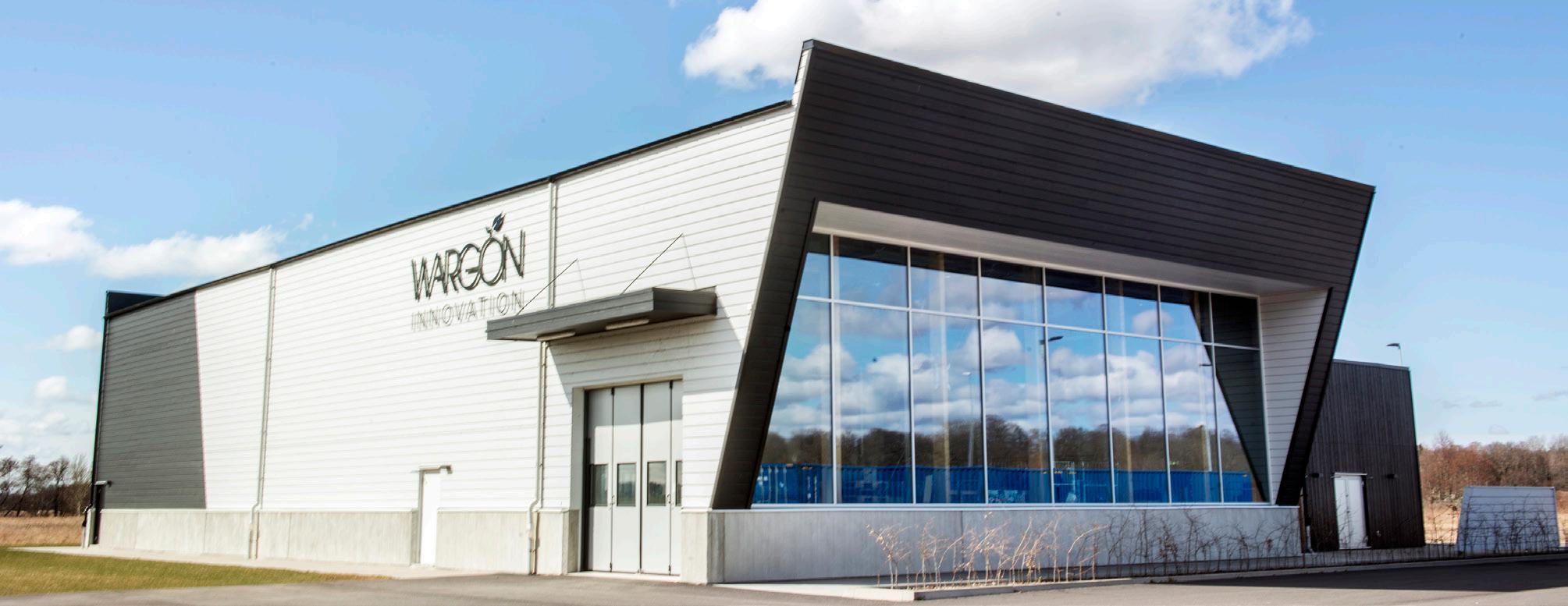
Wargön Innovation accelerates the transition to a circular society. As a leading force in sustainable development, we work with clear purpose to transform today’s linear production systems into resource efficient, circular flows. Within our innovation environment, textile material streams are made available for testing and development, supported by advanced sorting technology and the expertise of a skilled and experienced team that helps companies take concrete steps toward circularity.
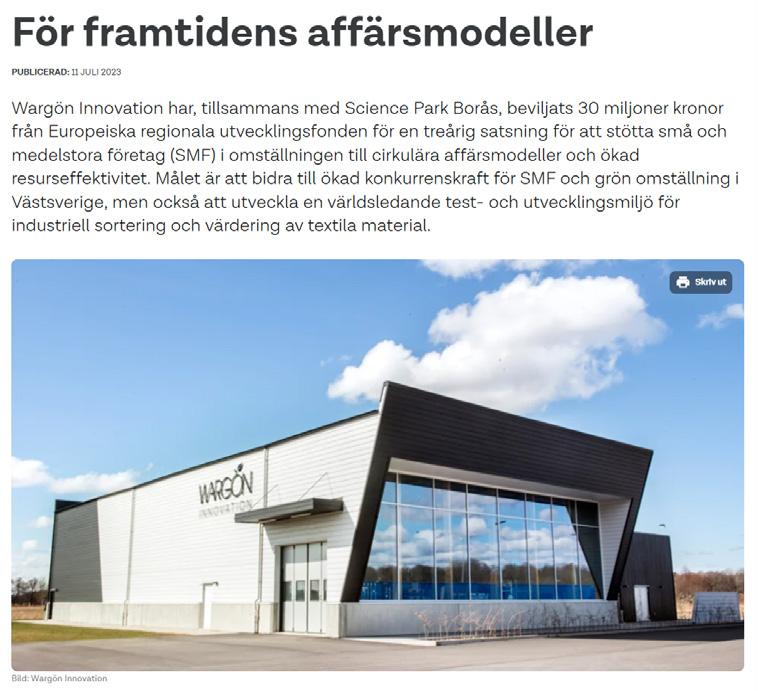
The European Regional Development Fund approves funding for the project and implementation begins. The aim is to strengthen the competitiveness of SMEs and support the green transition in Western Sweden, while also developing a world leading test and development environment for industrial sorting and valuation of textile materials.
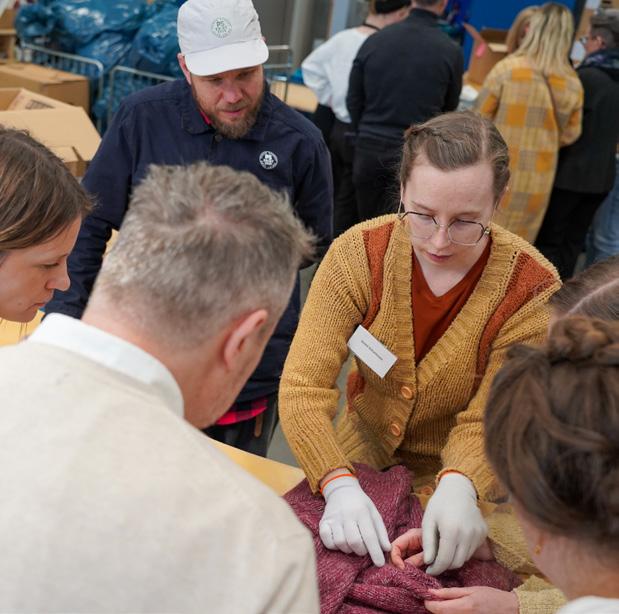
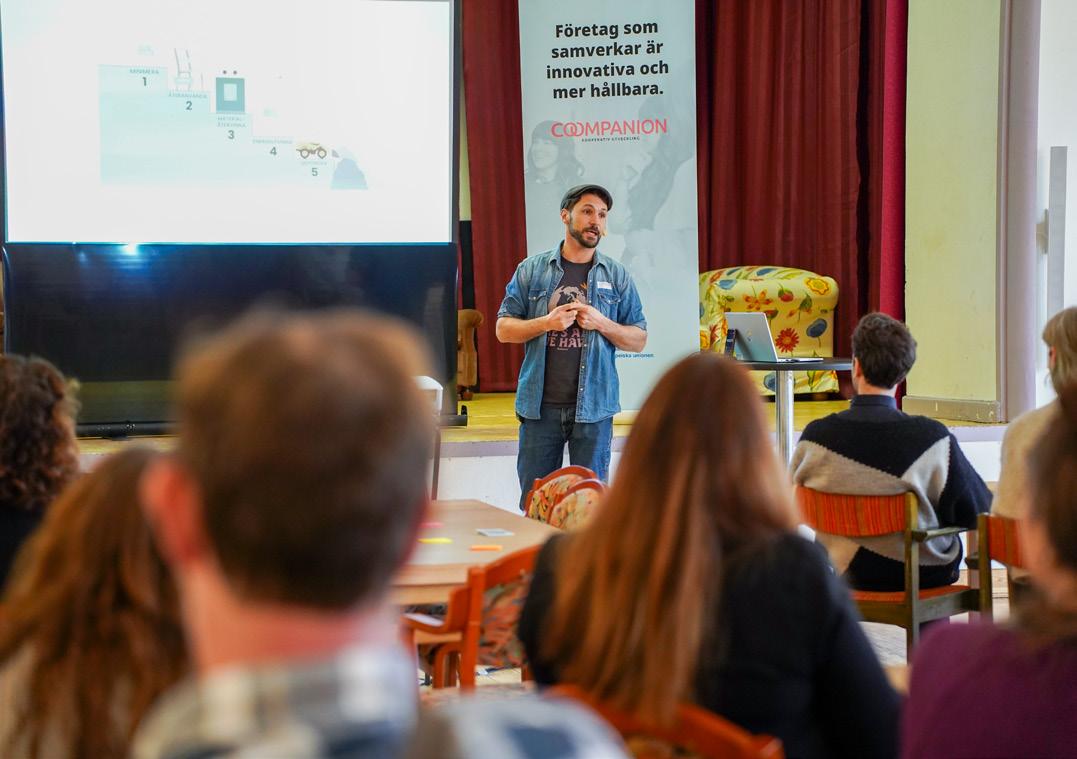
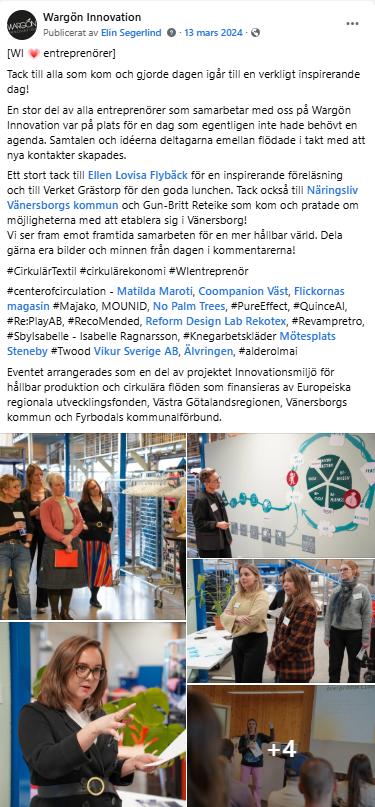
Can new circular ideas emerge by bringing creative entrepreneurs together, offering a platform for new connections and collaborations? To explore this, we invited all entrepreneurs involved in the project to spend a full day at our facilities.
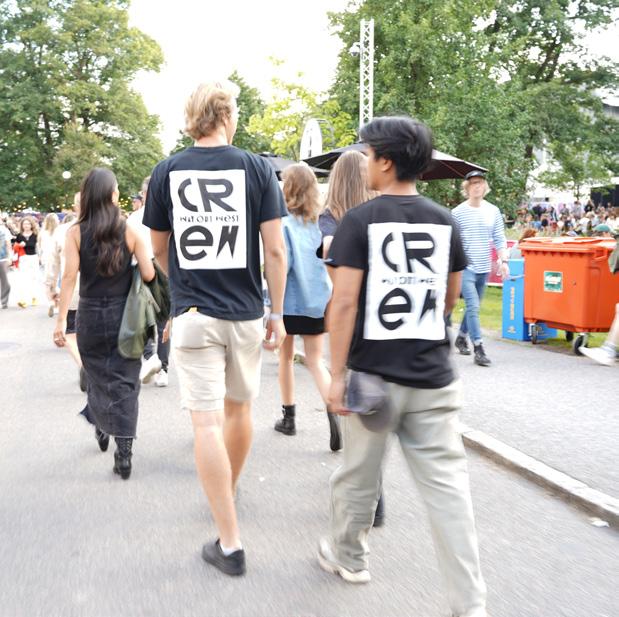
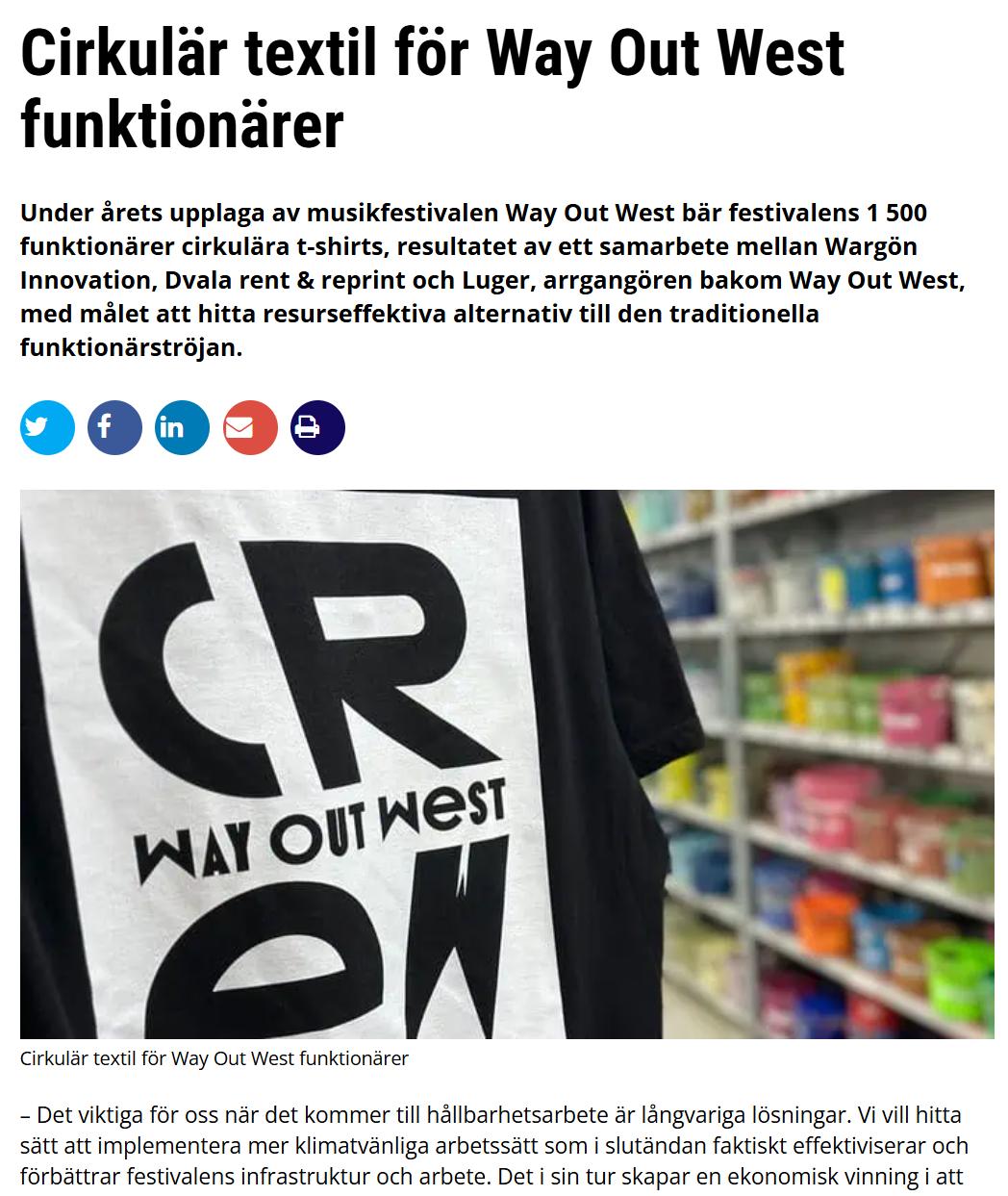
During the Way Out West music festival, 1,500 members of staff wore circular t-shirts with a generic print, designed to make reuse at future festivals possible. The initiative was carried out in collaboration with Luger and Dvala.
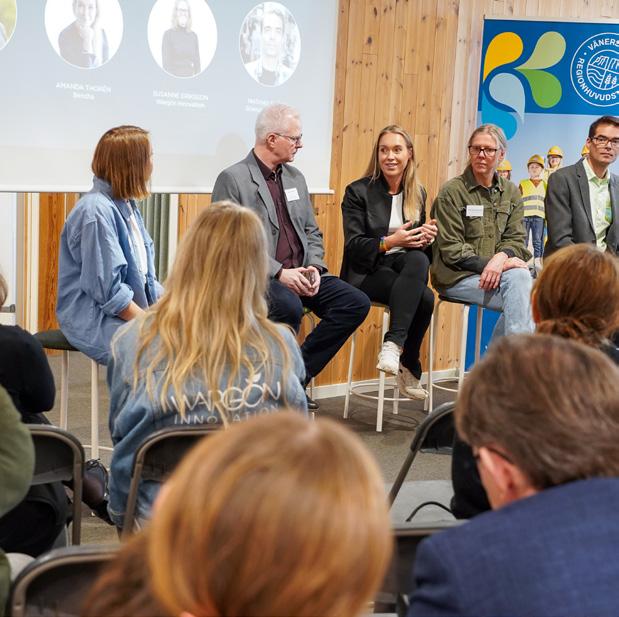
As part of the Västra Götaland Region’s circular economy initiative, we participated together with selected entrepreneurs in the challenge Circular Design & New Business. The focus was on shifting from reactive to proactive approaches — seeing new opportunities instead of managing waste, and exploring how circular business ideas can create value for both companies and customers.
APRIL 2025
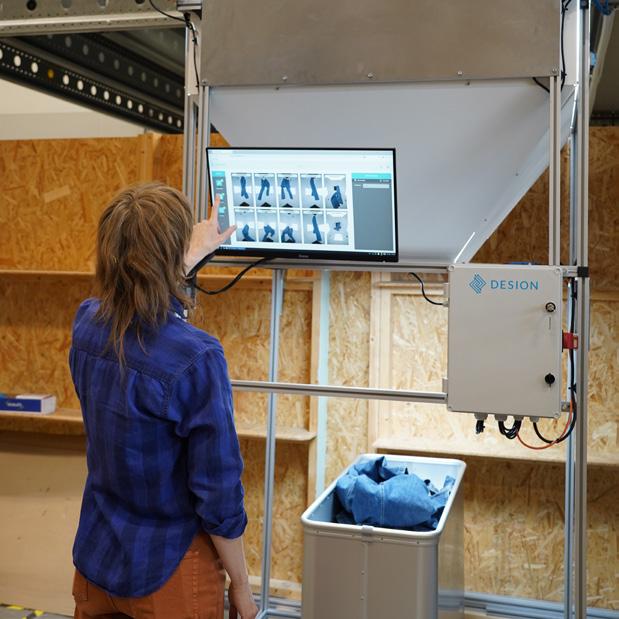
Using five cameras and AI, the Classifly Inspection System assesses garments as they fall through a vertical chute. While the technology is already used in industries such as commercial laundries, this is the first application of its kind for sorting second hand garments. The installation at Wargön Innovation is unique in the Nordic region and serves as a prototype for testing and developing efficient textile sorting and assessment.
NOVEMBER 2025
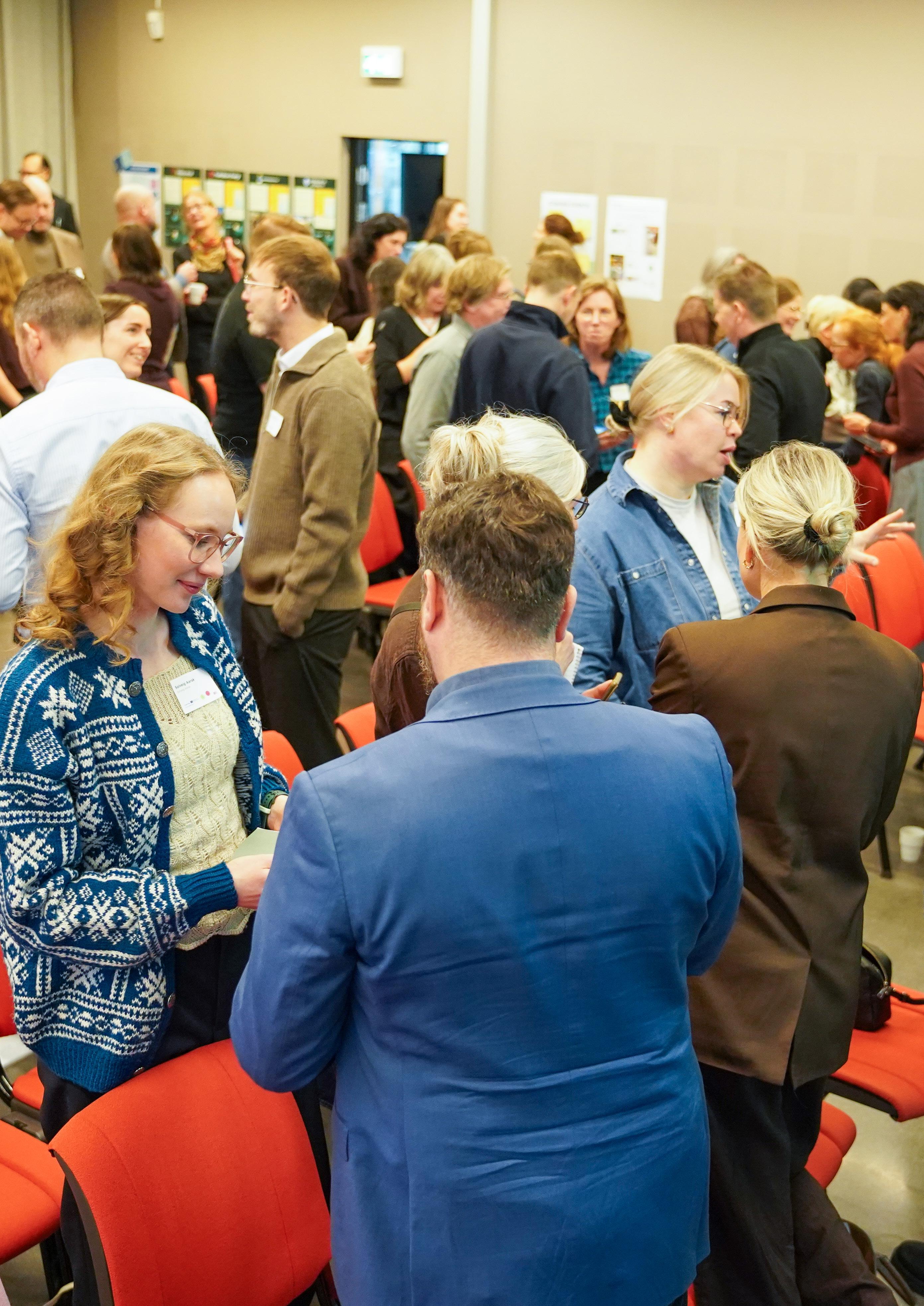
How do you summarise three intense years of work? We hosted two events focused on automation, digitalisation and collaboration.
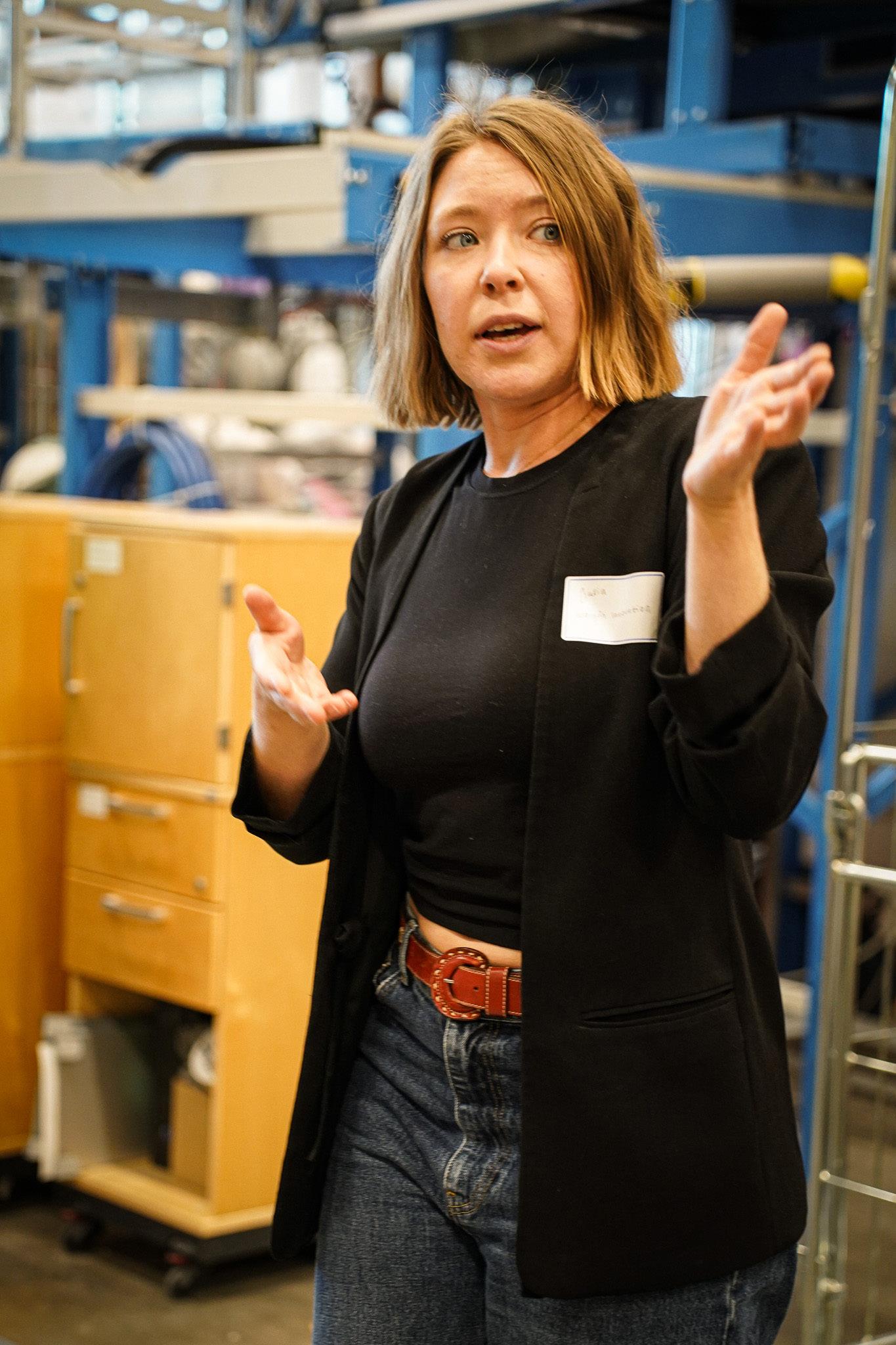
“These two days reminded me what a powerful meeting place Wargön Innovation is. This is where new ideas can take shape and come to life through collaboration, knowledge and exciting new technologies. We can take bigger steps in the circular transition when we work together,” summarised project manager and moderator Julia Ronkainen.
2025
The unique dataset for second hand clothing developed within the project AI for Circular Fashion received a major upgrade, making it easier for researchers and developers to train AI models for textile analysis and sorting.
“By standardising and cleaning the dataset, we have created a tool that is far more useful for AI developers. It allows both researchers and companies to train models more efficiently and test new ideas faster,” says Mathias Bräck, Innovation Engineer at Science Park Borås.

UNIQUE COMPANIES SUPPORTED
3/5
SCALED UP PROCESSES AND WAYS OF WORKING
84%

DEVELOPED CIRCULAR PROTOTYPES AND PRODUCTS
2/3
92%
INITIATED NEW COLLABORATIONS AND NETWORKS
PROTOTYPES OR PRODUCTS ON THE MARKET

97% ARE SATISFIED WITH THE COLLABORATION
Figures are based on a survey responded to by participating companies. Response rate: 67%.
Innovative laboratory environments play a crucial role in enabling breakthroughs that can shape the future. For the startup Mounid, which develops textile dyes derived from microalgae, access to this type of environment has been key.
By getting access to Wargön Innovation’s lab facilities, Mounid has made significant progress in developing its innovative dyeing methods for textiles. The company has used the lab to mix colours, test
different formulations and optimise dyeing processes — steps that have been essential in meeting the textile industry’s expectations for quality and scalability.
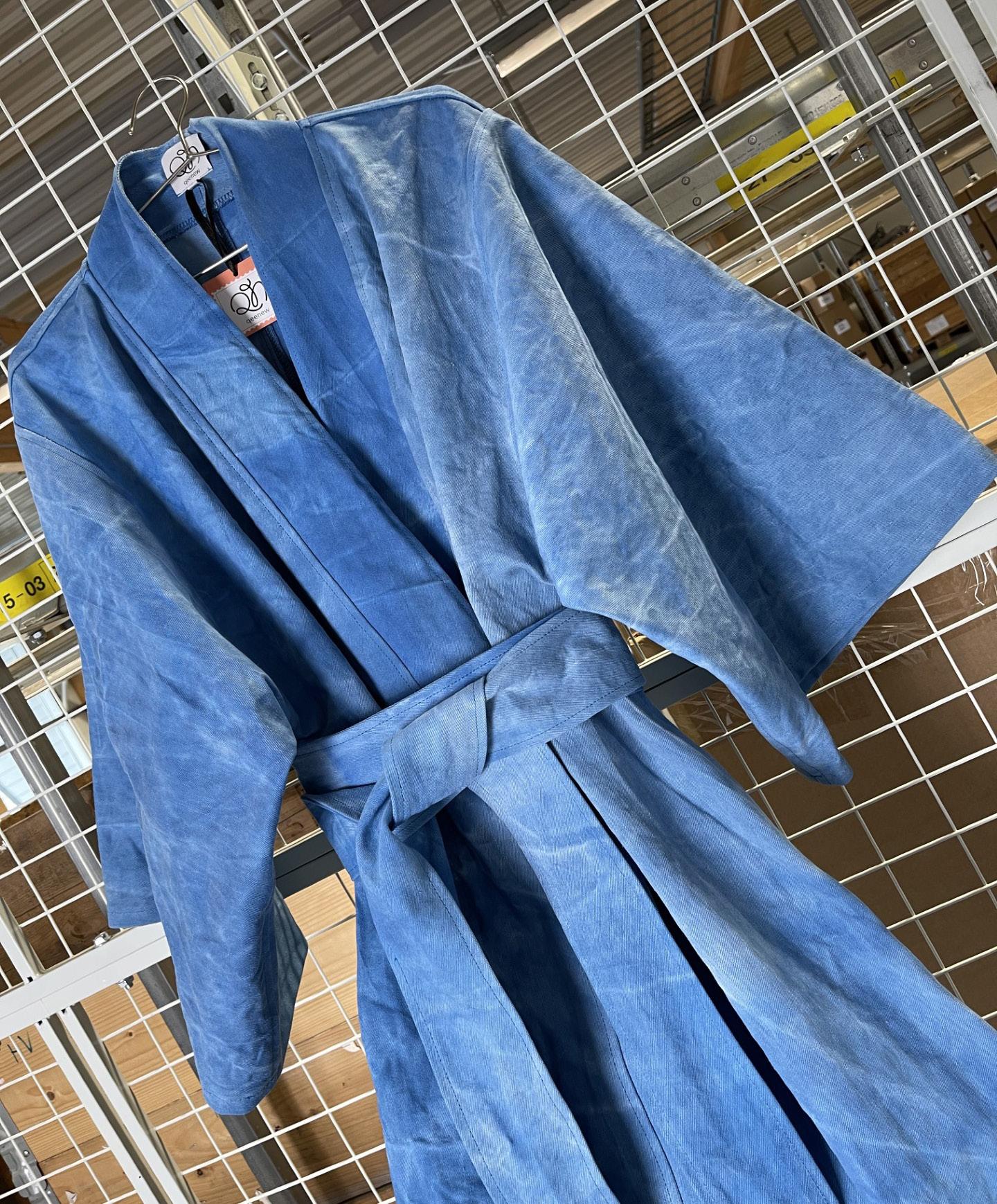
Another major benefit of collaborating with Wargön Innovation has been access to a broad network and contact with fellow entrepreneurs. Collaboration between Mounid and qeenew has resulted in beautifully designed garments and accessories made from fabrics dyed with Mounid’s bio based colours.
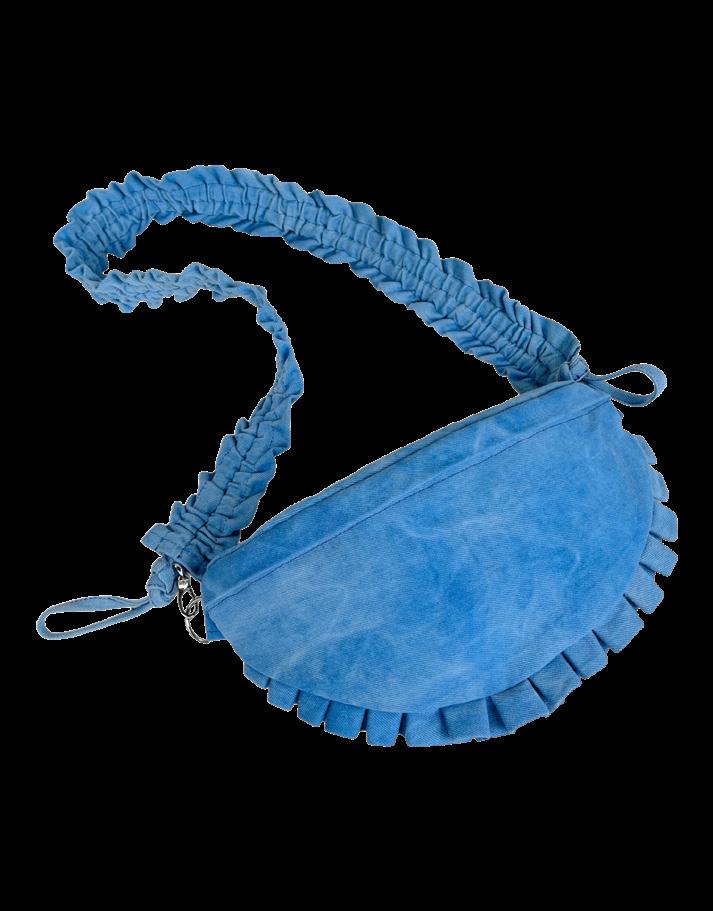
”Access to Wargön Innovation’s lab has enabled us to test and develop our bio based textile dyes on a larger scale. The innovation environment provides the right equipment, as well as opportunities to collaborate and grow alongside other industry actors.”
- Ida Näslund, founder Mounid
Within our innovation environment, we have created a place where ideas are turned into reality. Technology, curiosity and sustainability meet in a setting designed to test, develop and refine future solutions for circular textile flows. By bringing together technical equipment, expertise and people driven by change, we enable new steps toward more resource efficient and sustainable production.
The sorting line is a central component of the innovation environment, where textiles are assessed, sorted and directed into the appropriate flows. It supports both the development and demonstration of new approaches to industrial textile sorting.
In the lab, there is room to experiment with materials, methods and technologies, making it easier to refine ideas before scaling. The lab also serves as a meeting place where knowledge and innovation take shape.
In the photo tunnel, garments are photographed in real time as they pass through a tunnel equipped with tailored lighting and cameras. AI technology is tested here to automatically assess condition, colour, brand and size — without manual handling. This technology opens the door to more efficient, large scale textile sorting in the future.
The modular technology development line is designed for flexibility and can easily be adapted for a wide range of testing and development projects. Using AI and NIR technology, it can generate image recognition data and measure moisture content in textiles, bringing us closer to automated and sustainable textile handling.

Fibersort is used to analyse and sort textiles based on fibre composition — a critical capability for creating efficient, high quality material flows. The technology enables better decision making around reuse and recycling, strengthening resource efficient textile processes.
In the laundry area, textiles are prepared for further testing, analysis and development. Materials are cleaned and quality assured for new applications, creating better conditions for circular flows.
With the Classifly Inspection System, garments are quickly and effectively assessed using cameras and AI as they move through the system. The technology allows garments to be categorised without manual handling, creating new opportunities for automated and highly accurate textile sorting.
THERE!
Hi Susanne Eriksson, project manager at Wargön Innovation.
You have worked closely with the technical development in the innovation environment. What has been the most exciting to develop?
The modular technology development line has probably been the most exciting — those functions are clearly in demand. Being able to stand in the environment, demonstrate the equipment and explain how a large scale sorting flow could work using these technologies is incredibly rewarding. It becomes much more inspiring for visitors when they can actually see how the technology works.
Can you share an example of how companies have benefited from the innovation environment?

At the dismantling station, textile products are efficiently taken apart using ergonomic tools, enabling reuse, recycling and new value chains. By removing unwanted components, clean and homogeneous material flows are created.
One concrete example is our sorting line, which has delivered many highly appreciated batches of test material to both companies and projects, spanning the entire waste hierarchy. Fibersort and the dismantling station have also supplied fibre analysed and cleaned materials for various assignments.
Another example is the dataset containing images of over 30,000 garments, along with associated data, which has been downloaded more than 2,000 times. The purpose is to boost AI development in textile sorting, and additional datasets are currently being developed using the modular line and the photo tunnel.
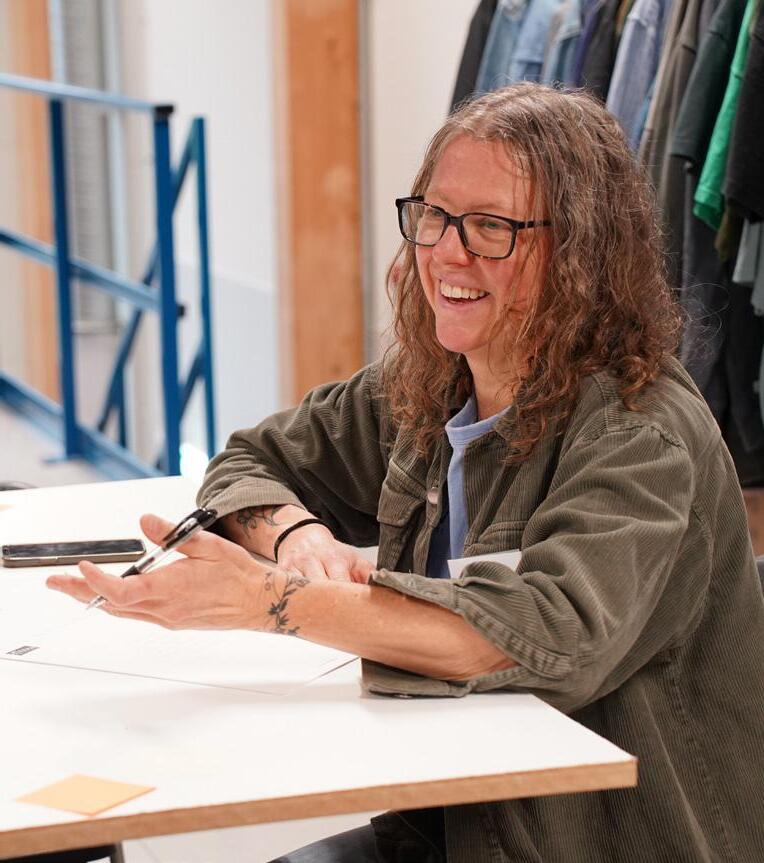
Throughout the project period, the innovation environment has served as a meeting place for ideas and collaboration. Through events and workshops, companies, researchers and entrepreneurs have come together to share knowledge, test new solutions and inspire one another.
Many of the project’s key insights and innovations were born in these settings.
In early November, nearly 80 participants from industry, academia and the public sector gathered for two inspiring days focused on the circular textile industry. Together, we explored how automation, digitalisation and new business models can drive the transition forward. The programme included talks, technology demonstrations and creative workshops, resulting in vibrant discussions and several concrete ideas for future collaboration and business development.
In spring 2024, we brought together a group of creative entrepreneurs for a day filled with dialogue, new ideas and high energy. We explored how collaboration can be strengthened and how circular initiatives can move forward. The engagement was palpable, and many participants stayed long after the programme ended to continue connecting.
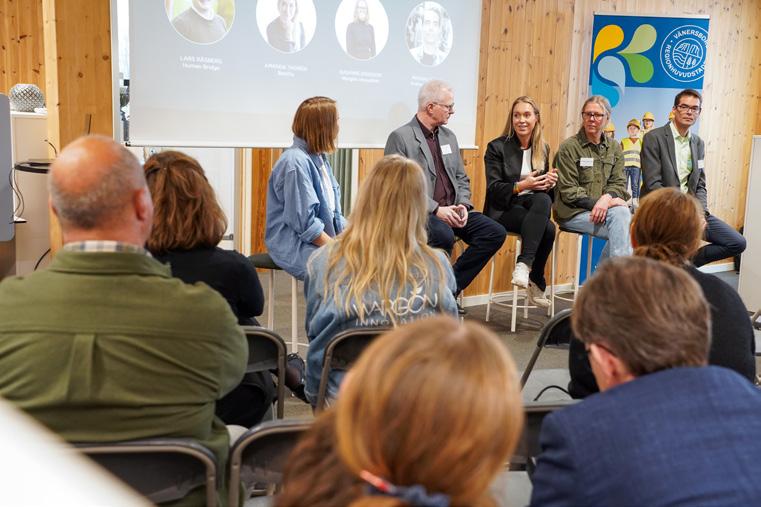
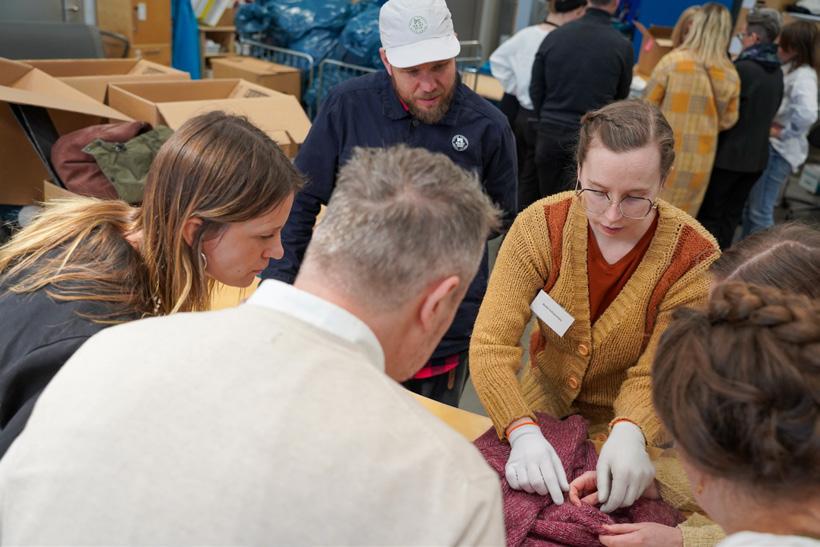

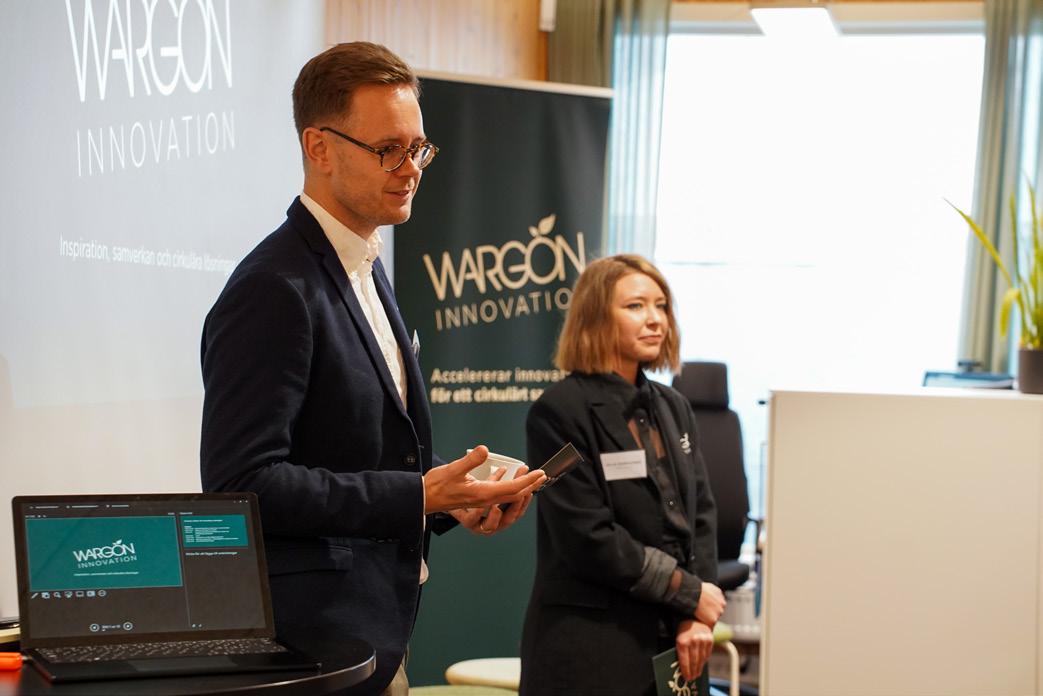
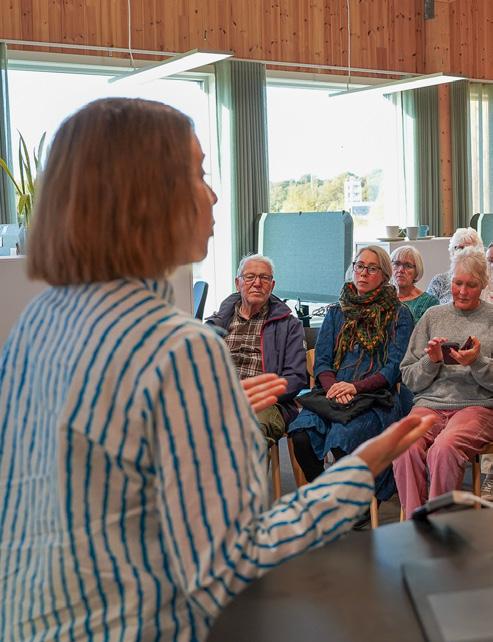
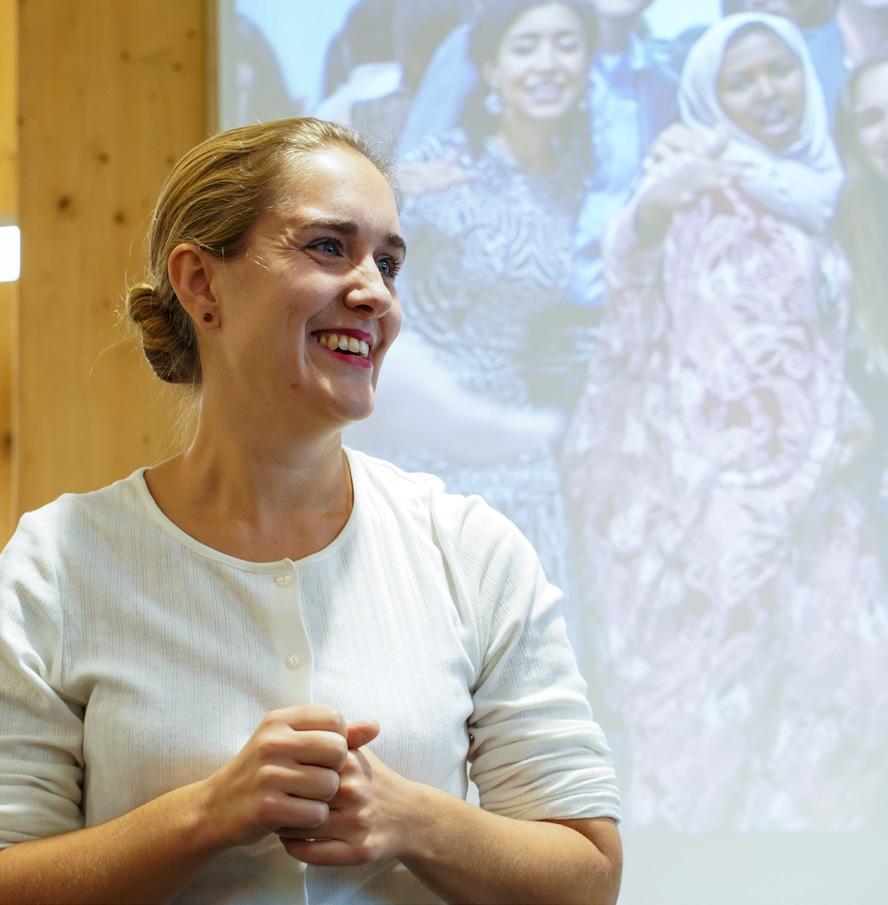

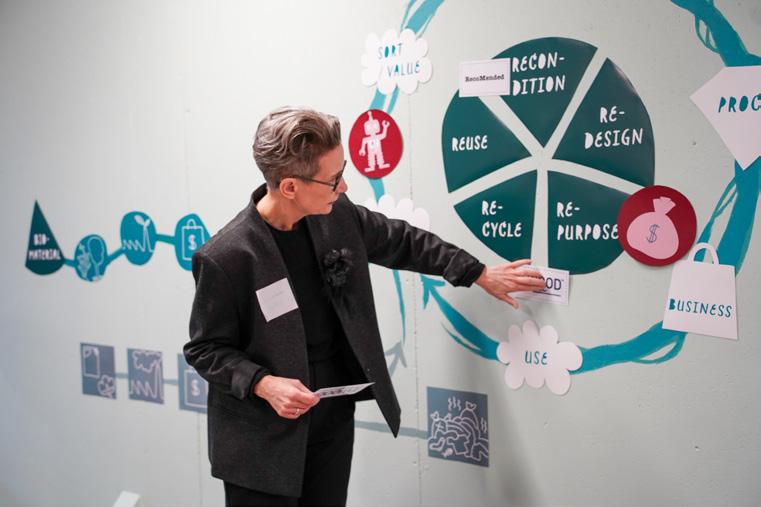
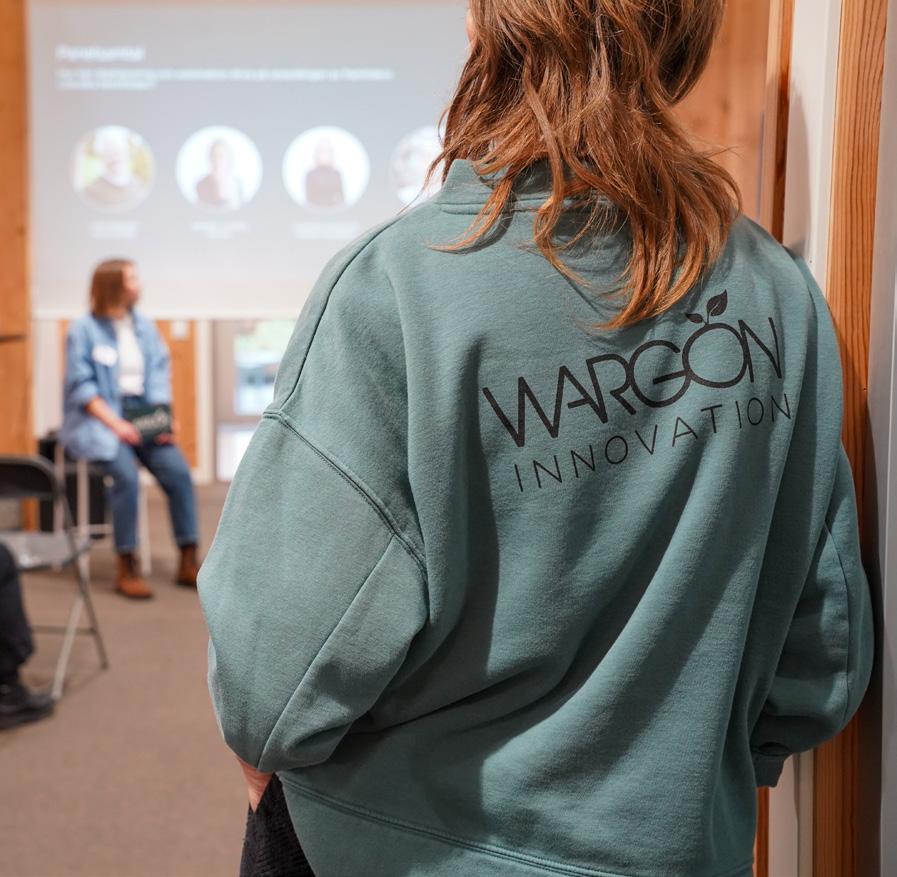
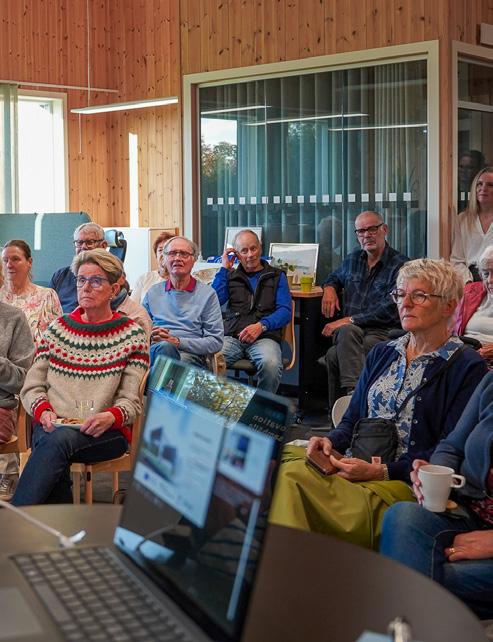
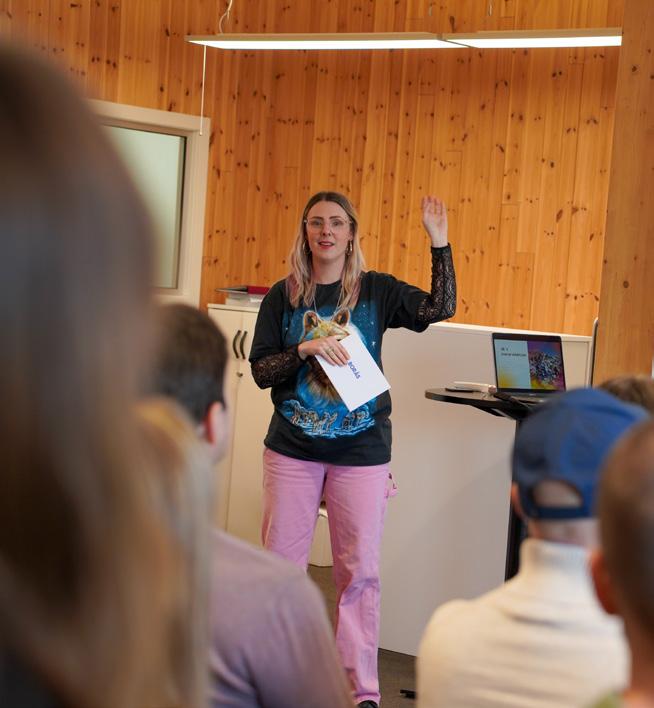
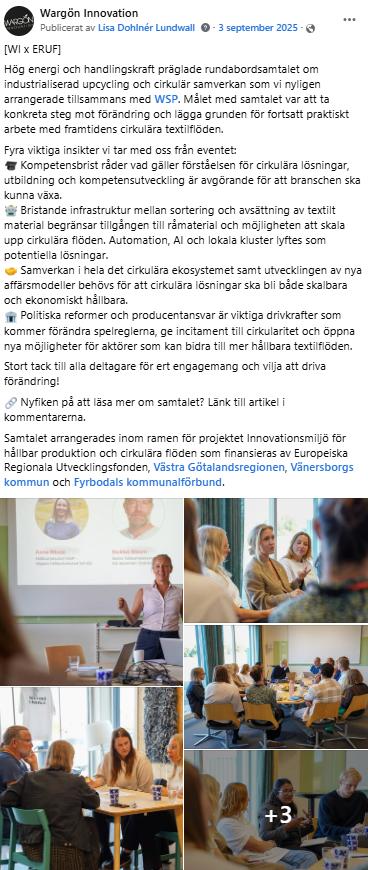
In September 2025, we hosted a roundtable discussion together with WSP, bringing together actors driven by the same ambition: creating sustainable change through collaboration. Experiences, challenges and opportunities related to circular solutions and future industry were shared in an open and informal setting, resulting in several ideas that are now continuing through new partnerships.
Creativity flowed during the first workshop within the Textile Movement Talent project, hosted at Wargön Innovation with a focus on future sourcing. Working under the theme “design from waste”, participants used textile material from the Swedish Red Cross textile flow. The day provided valuable insights and hands on exercises that highlighted the importance of using already produced textiles as raw material for sustainable production.
Center of Circulation is a social enterprise founded by Matilda Maroti, focused on giving new life to textile waste through local design and production in Sweden.
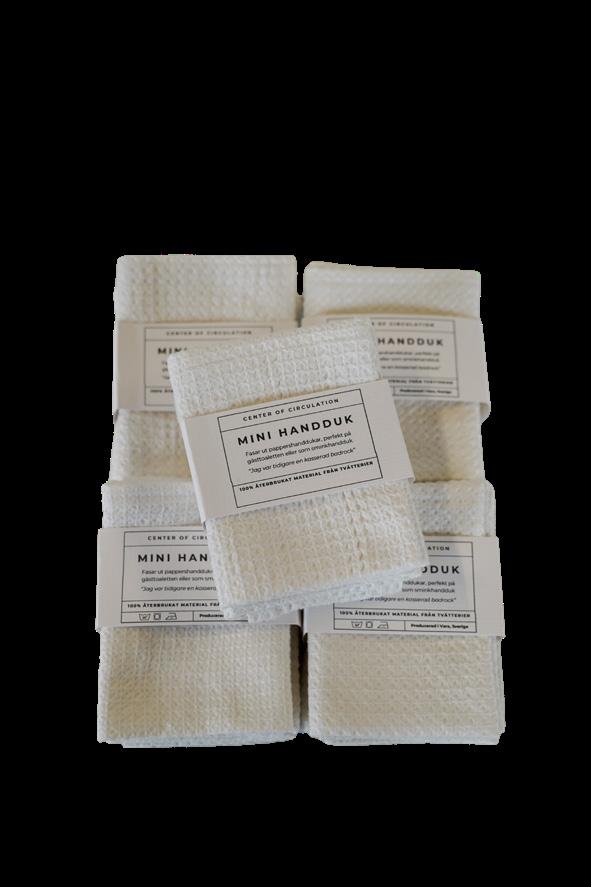
Through a collaboration with Rikstvätt Bengtsfors/Karlskoga, discarded textiles are transformed into new circular products. From a single discarded bathrobe, Center of Circulation can create up to 54 new products that re-enter a circular flow.
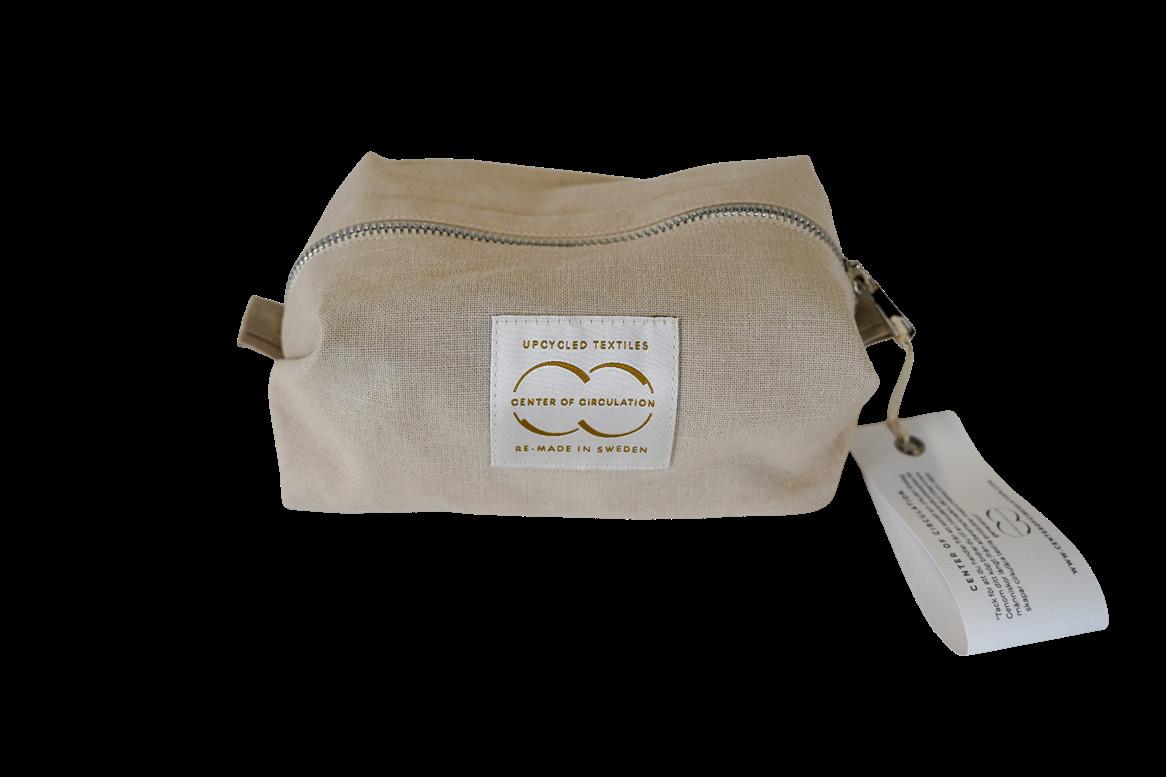
Laundries such as Rikstvätt already principles through rental models.
”Wargön Innovation has been absolutely crucial for the launch of our circular hotel collection. Through their network, we were able to connect with Rikstvätt Bengtsfors/Karlskoga, which became the starting point for the entire initiative.”
- Matilda Maroti, founder Center of Circulation
When products are damaged and taken out of active use, they work proactively to find solutions that enable continued use of the textiles.
THERE!
Hi Ulrika Hedkrok, marketing coordinator at Rikstvätt Bengtsfors/Karlskoga.
What key insights have you gained from the collaboration with Center of Circulation?
Textiles that were previously worn out and discarded are now being given new life as products sold, for example, in hotel shops. The collection creates a credible
Together, Center of Circulation and Rikstvätt have created a closed loop where worn hotel textiles return to hotels as new products — extending product life, reducing new production and saving water and energy.
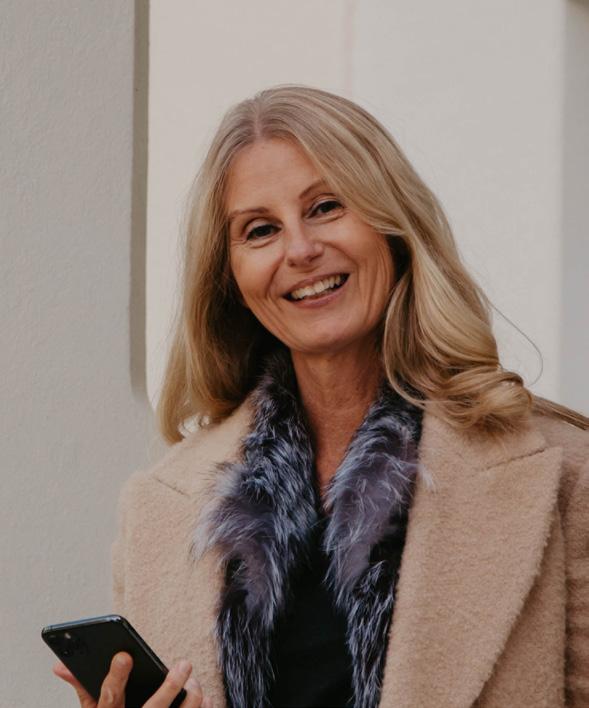
sustainability story while at the same time opening up new revenue opportunities — a crucial prerequisite for working with sustainability in the long term. Several of the products are also designed to withstand professional laundering and can, if desired, be returned to our laundry facilities and continue circulating over time. A unique combination of design, functionality and a truly circular flow.
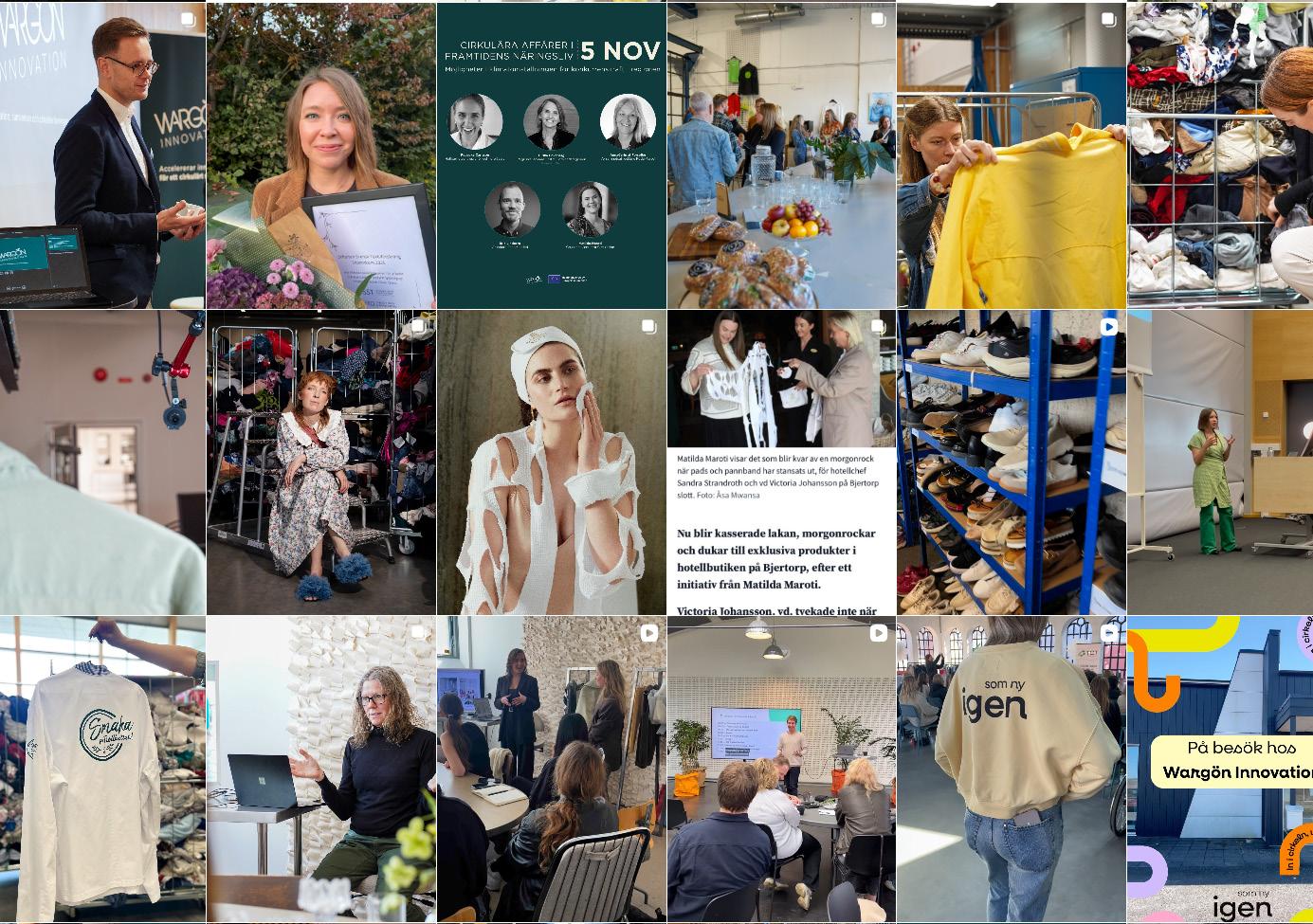
Dissemination is essential for building understanding, engagement and long term impact. By communicating insights through dialogue, networks, events and knowledge materials, more actors are reached — enabling results to be translated into practice and pushing the circular transition forward.
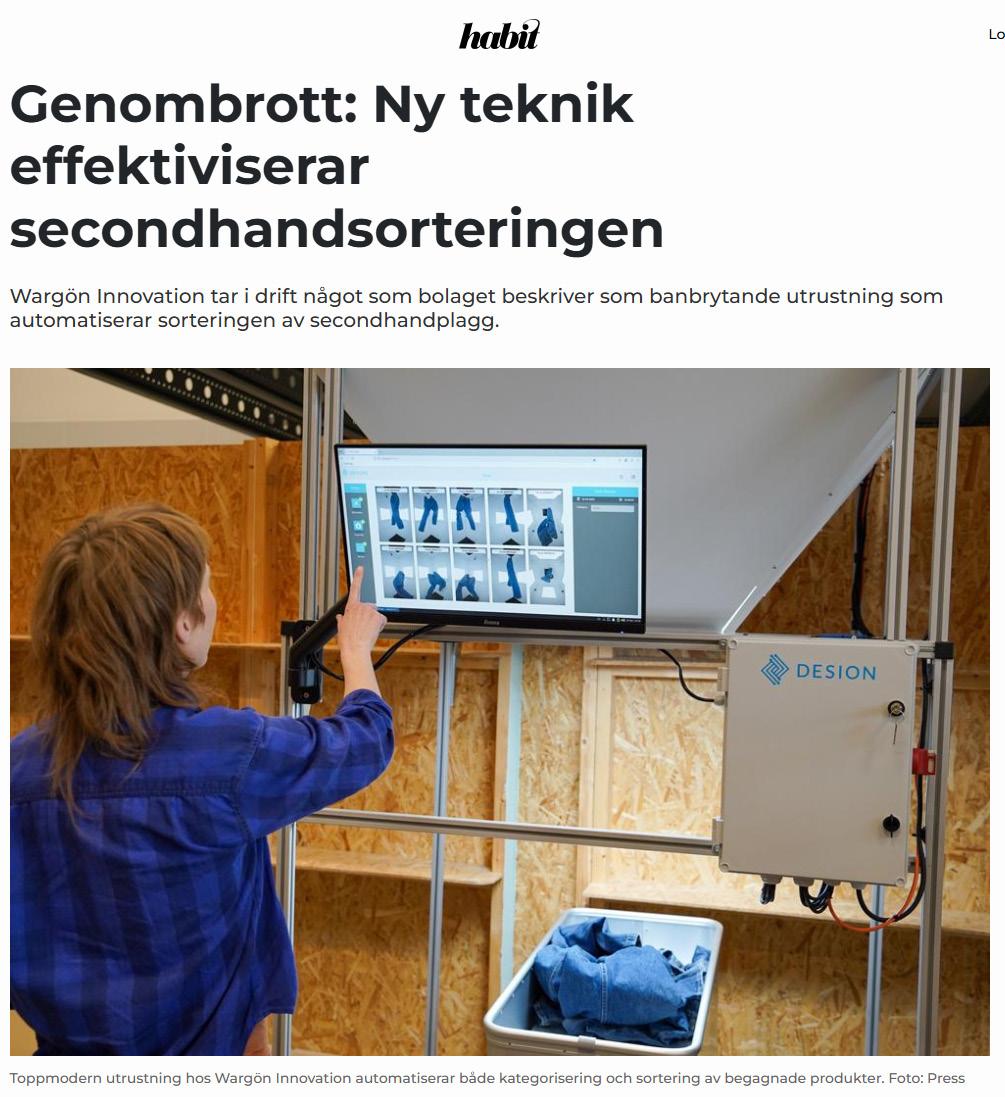

PRESS CLIPPINGS
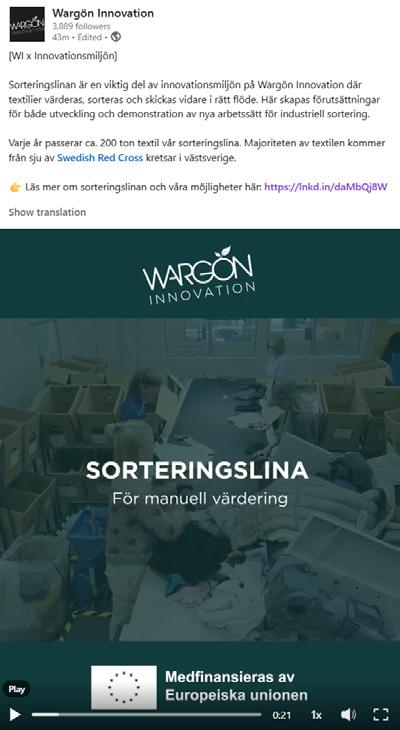
238 POSTS ON SOCIAL MEDIA
21 PUBLISHED ARTICLES
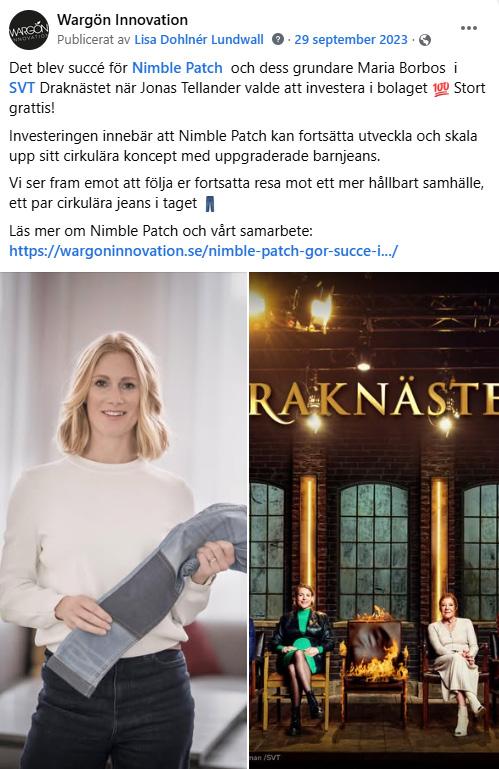
The success of a project like this rests on collaboration — on sharing knowledge, experience and ideas to create something greater than any single actor could achieve alone. By combining different perspectives and competences, both tangible results and real change are made possible.
The collaboration with Science Park Borås is a strong example of complementary expertise creating real value. Together, we have developed support structures that strengthen companies throughout the circular value chain. The collaboration has also improved our understanding of each other’s projects and initiatives, reinforcing the wider innovation ecosystem.
Mathias Bräck, innovation engineer, has played a key role in developing AI based solutions and tailoring technology to our needs, particularly in automation and sorting. His contributions have deepened our understanding of the sorting system and enabled further development of both control systems and new AI functionalities.
Together with designer and innovation engineer Jennifer Tengroth, we have explored waste flows from textile material streams. Using equipment from both innovation environments, she produced samples illustrating how waste can be transformed into valuable new materials and products. Her work connects the project’s technical development with a clear conceptual and visual expression.
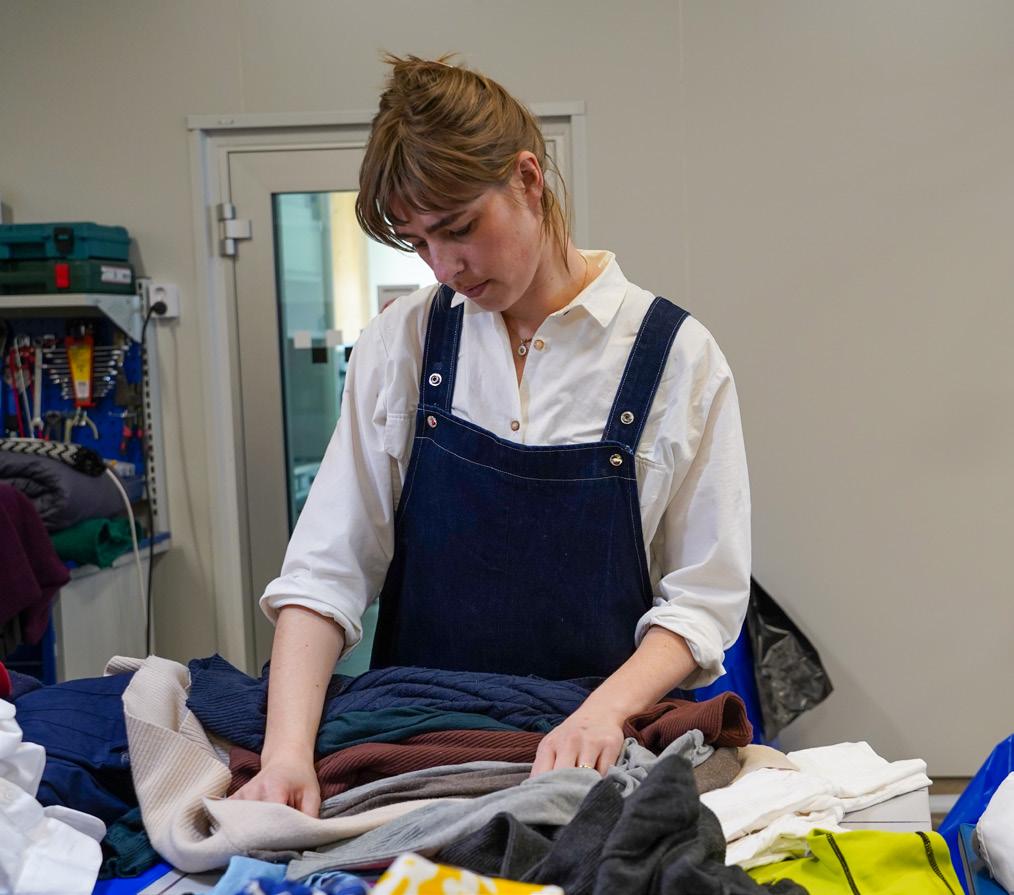
During the project, we worked actively to strengthen collaboration between the six development nodes in the Fyrbodal region. Through close dialogue, joint planning and a series of shared activities, we were able to build on already established structures to reach small and medium-sized enterprises across the region.
A key part of this effort was increasing understanding of the circular transition — both what it means in practice and the opportunities it creates for businesses. We organised our own seminars, while also participating in activities hosted by the other nodes: Mötesplats Steneby, Kristineberg Center, Sotenäs Symbiosentrum, Gröna Klustret Nuntorp and Innovatum Science Park. It has become clear that we share many common touchpoints, and that our respective areas of expertise complement each other well.
Our ambition has been to inspire, spark curiosity and open doors for companies looking to further develop their sustainability work. These efforts have also helped improve access to technology, knowledge and networks for a broader group of companies in Fyrbodal. Through collaboration between the nodes, we have been able to reach further and create new entry points for businesses that might otherwise not have found their way to us.
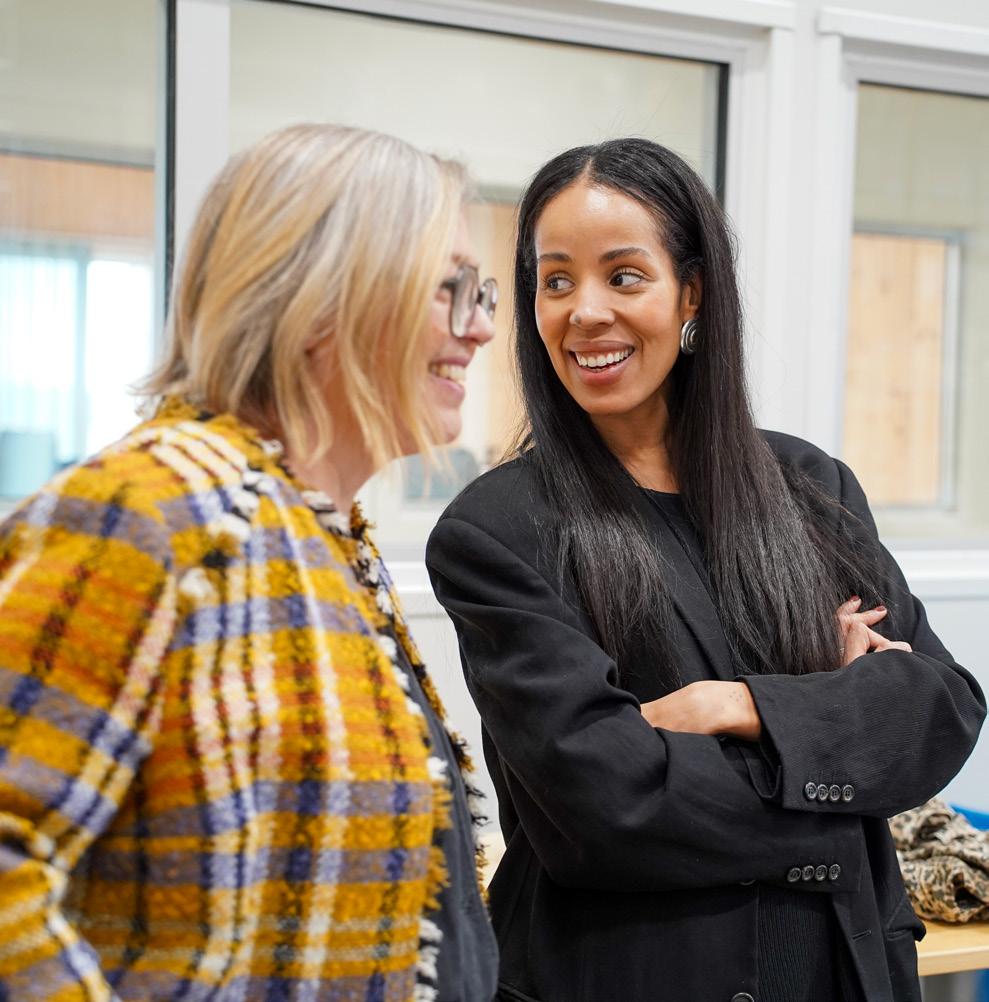
Textile Movement Talent is a programme designed to support emerging talent within the fashion and textile sector in Västra Götaland. Within the programme, we have acted as an enabler by opening up our innovation environment and giving participants the opportunity to work hands-on with sorted materials from real textile flows. Through workshops and access to recovered textile materials integrated into their own business models and design processes, the talents have been able to explore future sourcing and test circular solutions in real-world contexts. We have also supported them in refining their ideas, identifying sustainable pathways forward, and connecting creative design with scalable, competitive business models.
”I’ve gained a much better understanding
of
the
infrastructure in Västra Götaland. I knew who the key players were, but now I understand how I can work with them. The distance to Wargön, for example, feels much shorter now”
– Matilda
Sundkler, founder of Sylvi Sundkler and one of the talents within Textile Movement Talent
Together with WSP, Wargön Innovation has established a collaboration that supports SMEs through both strategic and practical tools. WSP has facilitated roundtable discussions where companies and stakeholders meet to share experiences and identify shared challenges and opportunities in the climate transition.
The collaboration has also resulted in a climate calculation tool tailored for SMEs, making it easier for companies to understand and track their climate impact, as well as educational materials on sustainable communication — supporting transparent, credible and audience focused sustainability messaging. Together, these efforts enable companies to take concrete steps toward more sustainable and competitive business models.
What role does Textile Movement Talent play in developing the next generation of textile and fashion talent in Västra Götaland?
Textile Movement Talent creates meeting points between established and emerging actors, where new ideas, solutions and perspectives can take shape. By supporting designers and creatives within fashion and textiles, we highlight the region’s strong creative potential while providing access to networks, knowledge, materials and workspaces. Making the existing ecosystem in Western Sweden accessible is a key aspect of the programme, particularly as small-scale actors play an important role in the development of circular solutions. The collaboration with Wargön Innovation has been especially valuable — their expertise, experience and resources have provided important insights that support the development of circular business models with long-term sustainability.
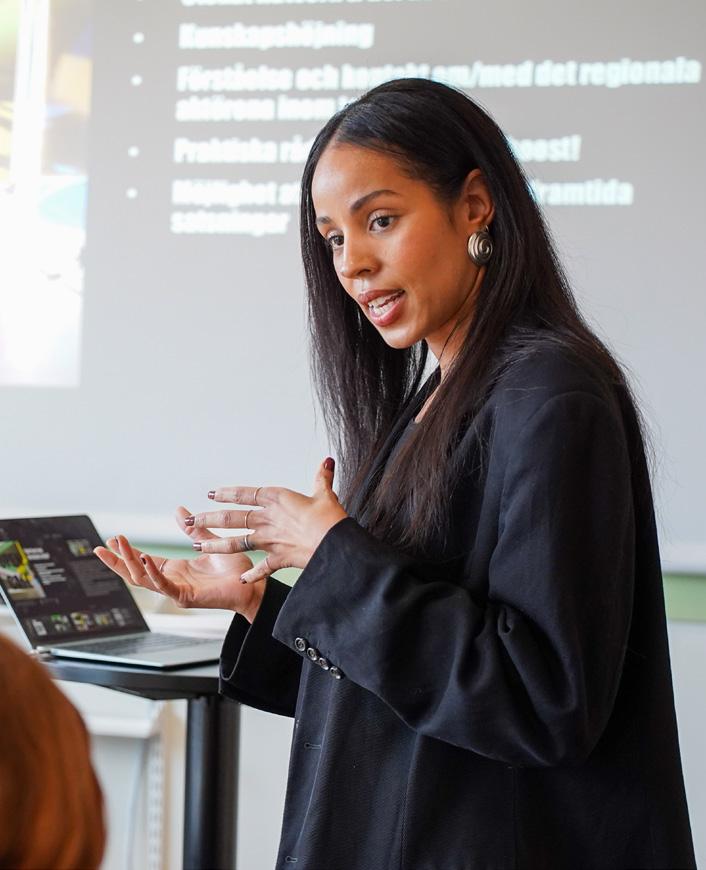
Throughout the project, the UN Sustainable Development Goals have served as our compass, with innovation acting as the driving force. By focusing on Goals 8, 9 and 12, we have supported small and medium-sized enterprises in the transition from a linear to a circular economy. Within our innovation environment, new materials, business models and technologies have been tested, scaled and commercialised. Together with companies, academia and societal actors, we have developed solutions that both strengthen competitiveness and reduce resource use — ranging from semi-automated textile sorting to pilot production of circular and bio-based products.
An important part of the work has been understanding the actual impact of our efforts — primarily the positive effects, but also the potential challenges. By continuously adjusting our direction, we have been able to sharpen the impact of our initiatives.
Through targeted work aligned with Goals 5, 10 and 13, we have integrated equality, inclusion and climate impact as natural parts of the innovation process. Diversity in teams and ideas is viewed as a strategic resource. In this way, the global goals have been translated into concrete projects, prototypes and collaborations that clearly demonstrate how sustainable transition and innovation reinforce one another.
JÄMSTÄLLDHET
The Yes Way has formed the foundation for inclusive and equal innovation throughout the project. Since 2020, its 18 principles have been integrated into recruitment, communication and daily operations.
We have conducted internal training to embed equality and diversity across all initiatives, alongside active work with unconscious bias to identify and counteract hidden structures. This ensures that all entrepreneurs are given an equal opportunity to participate, regardless of gender, ethnicity or background, while strengthening the quality of innovation through broader perspectives. Through The Yes Way communication guidelines, we reach underrepresented groups and ensure that our innovation environment is open and norm-critical. The result is an inclusive ecosystem where diversity drives sustainable growth and competitiveness.
Sustainability is just as relevant in the cleaning industry as anywhere else. Together with Vikur Sverige AB and their customer Ekbergs Fönsterputs & Städ AB, we conducted a circular pilot focused on collecting and analysing worn out microfibre mops.
The aim was to explore ways to extend the lifespan of existing textile products and manage materials in a more resource efficient manner.
After collecting around 200 used mops, a detailed material analysis identified two key improvement areas: worn hook and loop fasteners and melted interlayers. These insights led to concrete actions, including a new repair service to replace hook and loop fasteners, more sustainable design solutions and a new recycling pathway in collaboration with The Loop Factory.
The collaboration shows how small changes in product design and handling can lead to meaningful impact. By testing circular models in real world flows, Vikur took important steps toward a more sustainable business.
”We
want to be at the forefront of reuse and recycling within the cleaning industry, and the collaboration with Wargön Innovation and Ekbergs has been incredibly valuable for us.”
– David Samuelsson,
founder Vikur Sverige AB
We need to transform industry to achieve a sustainable future. The project Innovation Environment for Sustainable Production and Circular Flows has shown a wide range of innovative solutions with significant impact. We have taken important steps toward scaling circular solutions, but the next phase is not only about running more pilot projects. It is about building the systems that make transformation possible at scale.
We believe that collaboration, technology, and transparency are key to success. At the same time, it is clear that sorting is the structural barrier that must be overcome if companies are to gain access to the right materials in the right volumes, and if circular value chains are to become robust, scalable, and profitable. Here, our work at Wargön Innovation serves as an important bridge between development in a test environment and real industrial implementation.
What is needed now is system innovation. We need to complete the value chains, connect technology, data, standards, logistics, and markets, and create a functioning system in which circular material flows become a natural part of industrial infrastructure.
At Wargön Innovation, we bring together leading actors, critical knowledge, and groundbreaking innovations in our physical test and demonstration environment to accelerate circular development and scaling. At the intersection of different industries, new synergies emerge around technology, collaboration, and business development, and it is here that ideas become real solutions.
Sorting, material valuation, and collaboration across industry boundaries are at the core of our work. Together, we make these components key drivers of the entire circular transition.