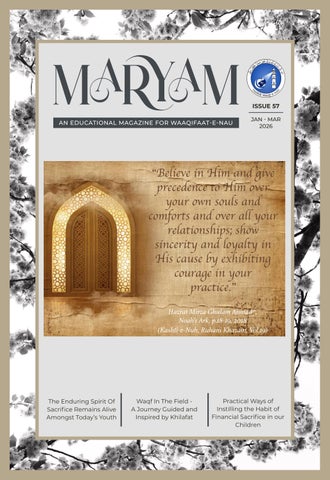
“ Believe in Him and give precedence to Him over your own souls and comforts and over all your relationships; show sincerity and loyalty in His cause by exhibiting courage in your practice.”
The Enduring Spirit Of Sacrifice Remains Alive Amongst Today’s Youth
Waqf In The FieldA Journey Guided and Inspired by Khilafat
Practical Ways of Instilling the Habit of Financial Sacrifice in our Children
“Doing waqf means that: For whatever duty I am called towards for the sake of God, for the cause of the Jama’at, or for a Jama’at-related programme that is beneficial - even if I have to undergo hardships - I shall attend to it.”
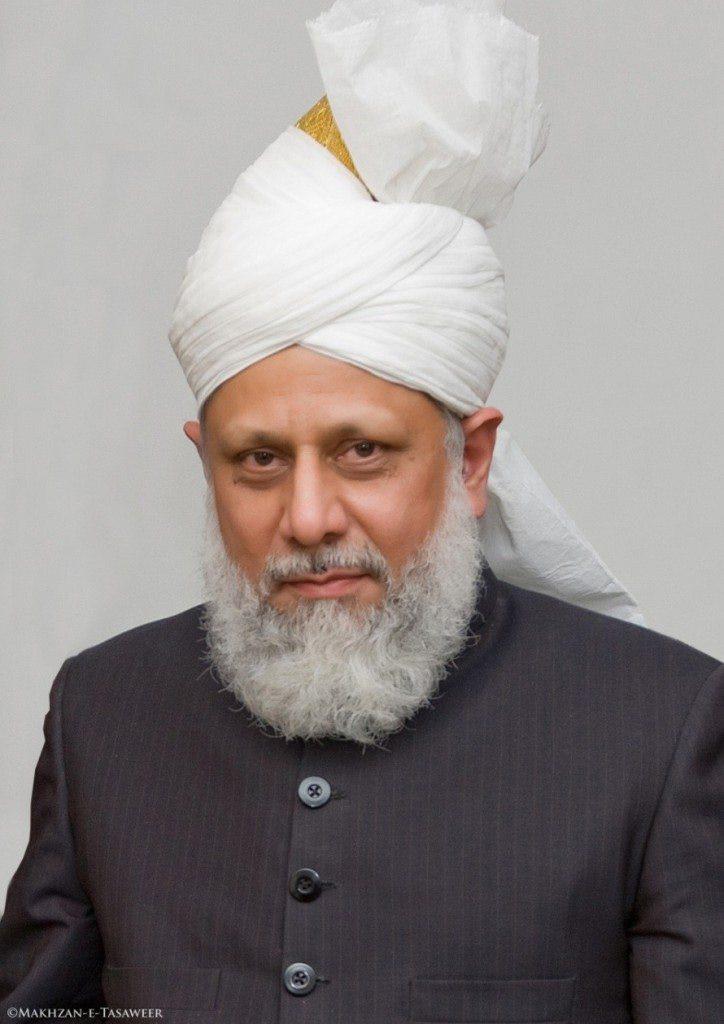
Hazrat Mirza Masroor Ahmad, Khalifatul Masih Vaba Mulaqat with Scottish Waaqifaat-e-Nau, 23rd June 2024 https://www.alhakam.org/scottish-waqifaat/
from the editor
As Waaqifaat-e-Nau, we have been told since childhood that our lives have been dedicated to the service of the Jama’at. But what does this truly mean? True dedication requires readiness to sacrifice all worldly desires and give precedence to our faith in order to bring about a true revolution in the world. Regarding this, Hazrat Mirza Masroor Ahmad, Khalifatul Masih Vaba has given the following guidance:
“Revolutions are never born out of convenience or mere words. They are achieved through sacrifice – by surrendering one’s ego, desires, and worldly interests for a higher purpose. Moreover, children must be trained in this spirit so that the legacy of faith, sacrifice, and steadfastness is carried forward to the next generation.” (National Lajna and Nasirat Ijtema UK 2025)
These invaluable guidelines of beloved Hazooraba must be upheld by each one of us so that we may fulfil the true purpose of our Waqf. Furthermore, on 17th January 2026, at the International Waqfe Nau Refresher Course, Hazooraba said:
“Fulfilling the due rights of worship, increasing religious knowledge, acquiring understanding of the Holy Qur’an, and serving the Community are essential responsibilities that you must instil in the minds of every Waqfe Nau, and you must do so diligently.”
“Waqfe Nau is not merely a title; it is a bond made even before a child is born, and this bond is later (voluntarily) renewed when the individual reaffirms their commitment to continue fulfilling this pledge.” (Press Release by Ahmadiyya Muslim Community Press & Media Office)
May Allah enable us all to follow the guidance of our beloved Hazooraba and inculcate the true spirit of Waqf in our everyday lives so that we may bring about a true revolution. Ameen.
In this edition of Maryam Magazine, readers can enjoy insightful articles written by Waaqifaat-e-Nau, such as ‘The Enduring Spirit of Sacrifice Remains Alive Amongst Today’s Youth’, ‘Practical Ways of Instilling the Habit of Financial Sacrifice in Our Children’ and ‘Waqf in the Field: A Journey Guided and Inspired by Khilafat’.
Hina Ahmedi
ENGLISH EDITOR
Do you have any comments, suggestions or want your article featured in our next edition?
Email us at: chiefeditor@maryammagazine.org
meet the team
CHIEF EDITOR
Zanubia Ahmad
ASSISTANT CHIEF EDITORS
Dure Jamal Mala
Nayla Muzamil
ENGLISH EDITOR
Hina Ahmedi
ENGLISH SUB-EDITOR
Hamooda Arif
EDITORIAL BOARD
Sabah Un Noor Tahir
Hibba-Tul Mussawir
Maleeha Mansur
Meliha Hayat
Salma Manahil Malik
Tahmeena Shamim Tahir
Mashel Chaudhry
Samina Yasmeen Arif
Amatul Wakeel Maha
Sameera Mirza
Kashifa Qamar
Safina Nabeel Maham
COVER DESIGN
Atiyya Wasee
PAGE DESIGN & SETTING
Soumbal Qureshi
Atiyya Wasee
Hina Farooqi
Zara Tahir Ahmad
Wardah Burhan
Printed Under The Central Waqf-E-Nau Department
MANAGER
Luqman Ahmad Kishwar
PRINTERS
Warner Midlands
JANUARY - MARCH 2026 | ISSUE 57
03. The Holy Qur’an
04. Hadith
05. Writings of the Promised Messiahas
06. Tarbiyyat Page: Waqf and Sacrifice
09. An Extraordinary Example set by a Female Companion of the Holy Prophetsaw
10. The Enduring Spirit of Sacrifice Remains Alive Amongst Today’s Youth | Humaira Omer Mustfa
15. Communities of the Prophetsas Only Attain Respect Through Sacrifice | Hazrat Mirza Bashir-Ud-Deen Mahmud Ahmad, Khalifatul Masih IIra
16. Eid Around the World
24. Waqifeen-e-Nau are Ver y ‘Special’: 21 Points from the Essence of Waqfe Nau Friday Sermon | Delivered by Hazrat Mirza Masroor Ahmad, Khalifatul Masih Vaba
26. Kids’ Spread
29. Young Writers Submission: Sisterhood | Tuba Hanif
30. Practical Ways of Instilling the Habit of Financial Sacrifice in Our Children | Samina Yasmeen Arif
36. Comic Strip: Spending in the Way of Allah
39. A Childhood Memor y of Pocket Money
40. Waqf in the Field: A Journey Guided and Inspired by Khilafat | Sehrish Tahir
46. My Reflection of the Canadian AMWSA Trip to the UK | Myra Azmat
49. Poem: Waqf | Sabeeka Maqbool Rana
50. Pearls of Wisdom: Overcoming Negative Feelings, Stress and Pressure | Guidance from Hazrat Mirza Masroor Ahmad, Khalifatul Masih Vaba
The Holy Qur’an ﷽ THE
HOLY QUR’AN
(An-Najm:38-42)
Translation: And of Abraham who fulfilled the commandments? That no bearerof burden shall bear the burden of another; And that man will have nothing but what he strives for; And that his striving shall soon be seen; Then will he be rewarded for it with the fullest reward;
Translation: And of Abraham who fulfilled the commandments? - That no bearer of burden shall bear the burden of another; And that man will have nothing but what he strives for; And that his striving shall soon be seen; Then will he be rewarded for it with the fullest reward;
(English translation by Hazrat Maulvi Sher Ali sahibra)
(An-Najm:38-42)
(English translation by Hazrat Maulvi Sher Ali sahibra)
Hadith
(Sayings of The Holy Prophetsaw)
Inviting People To Allah
Translation:
Abu Hurairahra narrates that the Holy Prophetsaw said:
‘A person who invites people to the truth gets a reward equal to the reward of all those who accept the truth (at his invitation), while nothing will be subtracted from their rewards. Likewise, a person who entices others to sin carries the burden of all the sins committed at his inducement, while nothing will be subtracted from the punishment of those who commit the sins.” (Muslim)
(Selected sayings of the Holy Prophet of Islam, p.34, Hadith No. 45)
Writings of the Promised Messiahas
WHO ARE THE SERVANTS OF GOD ALMIGHTY?
The servants of God are those who dedicate the lives which they have been granted by Allah Almighty in His cause, and who sacrifice their lives in the way of God. They consider it a blessing of God and their own good fortune to be able to spend their wealth in His cause. However, those who deem the wealth and property of this world to be their ultimate objective, being unaware, misjudge the true significance of religion. However, this is not the way of a true believer and a genuine Muslim. True Islam is for one to dedicate all of one’s strengths and faculties in the way of Allah Almighty, until one’s last breath, so that he may receive a pure life. Therefore, Allah Almighty Himself alludes to this dedication in the cause of Allah in the following words:
Whoever submits himself completely to Allah, and is the doer of good, shall have his reward with his Lord. No fear shall come upon such, neither shall they grieve. [Holy Qur’an 2:113]
The meaning in this instance is that one must don the garb of self-effacement and humility and fall at the threshold of God, and dedicate one’s life, wealth and honour—everything that one possesses—for the sake of God, and one must turn the world and all that belongs to it into a means of serving the Faith.
Malfuzat - Sayings and Discourses of the Promised Messiah and Mahdias Volume II (January 1899 to August 1900), p.264 https://new.alislam.org/library/books/malfuzat-volume-2/info
Tarbiyyat
page
“BE
READY FOR EVERY SACRIFICE REQUIRED OF YOUR FAITH”
Hazrat Mirza Masroor Ahmad, Khalifatul Masih Vaba
National Waaqifaat-e-Nau Ijtema UK, 26 April 2025
PRIORITISING ALLAH
“Thus, cast aside all fear that prioritising Allah and making worldly sacrifices for His sake will lead to loss or suffering. Allah will never abandon those who put their trust in Him and who make sacrifices for His sake. He will bless such people abundantly so long as their worship remains sincere.” (Hazrat Khalifatul Masih Vaba, National Waaqifaat-e-Nau Ijtema UK, 26 April 2025)1
HONOURING OUR PLEDGE
“Lajna and Nasirat take the pledge in every Ijtema and at every meeting. Most of you who live in this country, by the grace of Allah, are well-educated. You are mature in your thinking. I hope that when you repeat your pledge, you reflect over the words it contains. Lajna affirm that they shall always be ready to sacrifice their lives, property, time and children for the cause of the faith and the community, shall always adhere to truth and shall always be prepared to make every sacrifice for the perpetuation of the Ahmadiyya Khilafat.
Thus, always remember that in the pledge of offering every form of sacrifice, the foremost is to offer the sacrifice of Jihad (struggle) of the self. If in petty matters you will indulge in worldly concerns, then the capacity to offer sacrifices will also diminish. Thus, for the sake of yourselves and your children, give due importance to every command of Allah the Almighty. Do not treat these commandments like the deaf and blind.
A certain number here belongs to Waaqifeen-e-Nau girls. They should remember that they have a role to play. There should be a difference between them and an ordinary child. They are among those who, realising the sacrifices of their parents and their pledge at the age of maturity, have devoted themselves to earning the pleasure of the Khalifa of the time and that of Allah the Almighty. Some amongst you will be pressed directly into the service of the Jama’at, although there is a percentage that will not be directly required to serve the Jama’at in any department. However, in view of your pledge, you should be mindful that you have to have a comprehensive understanding of the teachings of the Holy Qur’an.”
(Hazrat Khalifatul Masih Vaba, Jalsa Salana USA, 21 June 2008)2
TAKE INSPIRATION FROM NOBLE WOMEN OF THE PAST
“Never waver in your efforts to develop a righteous society in which the teachings of Allah the Almighty reign supreme. Be ready for every sacrifice for the sake of your faith, and take inspiration from those noble women of the past who attained the highest spiritual ranks. Unquestionably, in every era, righteous women have played an outstanding role for the sake of their faith and belief in Allah the Almighty.” (Hazrat Khalifatul Masih Vaba, National Waaqifaat-e-Nau Ijtema UK, 29 April 2023)3
FINANCIAL SACRIFICES
“If you fulfil your pledges and perfect your faith for Allah’s sake, the heavens will open and His blessings shall rain down upon you. In my Friday Sermons and other addresses, I have often mentioned how Ahmadi women are at the forefront of demonstrating their faith and making immense sacrifices. I have recounted numerous incidents of women, often living in remote and challenging conditions, who, guided by their unwavering faith, make remarkable financial sacrifices. In return, Allah always rewards them in many ways. So, if you are determined to be ready for every possible sacrifice, be sure that Allah will never leave you empty-handed. Instead, He will shower you abundantly with His rewards.”
(Hazrat Khalifatul Masih Vaba, National Lajna & Nasirat Ijtema UK, 27 September 2025)4
“Accordingly, every Ahmadi lady and girl, especially members of the Waaqfaate-Nau scheme, must understand that now it is their turn to take up the mantle of being ready for every possible sacrifice for the sake of their faith. There are countless moral ills and vices prevalent in today’s society, and increasingly, people are abandoning religion. Under such circumstances, Waaqifaat-e-Nau must take a stand for the sake of Allah the Almighty. You must strive to eradicate all traces of worldliness from your minds and ensure that you do not fall prey to these superficial attractions and glamour of the world. Instead, seek to live your lives according to Islam’s teachings. Be ever-willing by giving precedence to your religious convictions. Guard your faith and seek to establish an everlasting, living bond with Allah. Bow before Him in all humility and sincerely pray that you can effect a profound change in the world through Tabligh and your righteous conduct.” (Hazrat Khalifatul Masih Vaba, National Waaqifaat-e-Nau Ijtema UK, 29 April 2023)5
BRINGING ABOUT A SPIRITUAL REVOLUTION
“It is easy to speak of bringing about a spiritual revolution, but, in reality, revolutions are never born from convenience, comfort or words alone. They are forged through sacrifice – by surrendering one’s ego, personal interests, trends, and all desires – for a higher purpose. After inculcating this spirit within yourselves, train your children, so that the noble legacy of true sacrifice in the way of Allah may pass seamlessly from generation to generation.” (Hazrat Khalifatul Masih Vaba, National Lajna & Nasirat Ijtema UK, 27 September 2025)6
EXTRAORDINARY EXAMPLE SET BY A FEMALE COMPANIONRA OF THE HOLY
PROPHETSAW
The son of one of the female companionsra, who was her only son, died in battle but she did not cry over his death, nor did she show sorrow at the death of her child. Rather, she remained happy and did not express any sadness over her loss. Every nation has its share of foolish women. Her foolish neighbours would come to her and say, “O heartless mother, you lost your only child, but you did not shed a single tear over his death. Does your heartlessness know no bounds?”
One day, she went to the Holy Prophet Muhammadsaw and asked, “O Prophet of Allah! Did my son enter hell or heaven?” The Holy Prophet Muhammadsaw replied, “Your son certainly went to heaven. He died fighting in the way of Allah, and his life ended in a state of faithfulness.” She asked, “O Prophet of Allah, is his present state in the Hereafter better or is the previous state he had in this world better?” The Holy Prophet Muhammadsaw remarked, “What is this world compared to the next world? He has received a new life in the next world. He has achieved nearness to God Almighty and has become heir to His favours and bounties.” She said, “O Prophetsaw of Allah! When one’s son is in the best state, should one feel happy or should one cry? My son has died in the service of Islam and as you said, he has received a great reward in the next world, as well as a loftier station. On the achievement of such blessings, should I cry or feel happy? My neighbours ask me why I don’t cry. O Prophetsaw of Allah! Why should I cry when my son is in a better state than he was before?” The Holy Prophet Muhammadsaw said, “You are right. Compared to all that he has received in the Hereafter, this world and this life are worthless.”
Hazrat Mirza Bashir-Ud-Din Mahmud Ahmad, Khalifatul Masih IIra, Flowers for the Women Wearing Veils, Volume II, p.78 https://new.alislam.org/library/books/flowers-for-women-wearingveils-volume-ii/info
The Enduring Spirit of Sacrifice Remains Alive amongst Today’sYouth
In an era often characterised by individualism, rapid change, modern advancements, increasing comfort, and materialism, the spirit of sacrifice is at times perceived as now diluted or minimal. However, despite the increasing challenges, life demands, and distractions, far from being a relic of the past, the enduring willingness and passion of sacrifice remains in the growing generation of today. Sacrifice comes in many forms, and the elders and ancestors, both men and women, of Islam and in the history of Ahmadiyyat, left a treasure house of inspiring examples to be followed. Even today we are witnessing this exemplary compassion, determination, and readiness to prioritise faith over worldliness.
Humaira Omer m ustfa
Allah the Almighty states in the Holy Qur’an:
“Say, ‘My Prayer and my sacrifice and my life and my death are all for Allah, the Lord of the worlds.’” 1
This verse beautifully describes the religion of Islam; “the two latter mentioned expressions, viz. “my life” and “my death” correspond respectively to the two former expressions viz. “my prayer” and “my sacrifice.” As prayer imparts life to the worshipper, so it has been followed by the words, “my life.” On the contrary, “sacrifice” kills the self of man, so it has been followed by the words, “my death.” These four words, i.e. prayer, sacrifice, life and death, thus cover the entire field of man’s actions, and the Holy Prophet has been asked to declare that all phases of his life were devoted to God alone. All his prayers were offered to God; all his sacrifices were made to Him; all his life was devoted to His service; and if in the cause of religion he sought death, that was also to win His pleasure. He lived for God and would not die but in harness.” 2
Hazrat Khalifatul Masih Vaba explains that it is the great grace and favour of Allah on the Jama’at of the Promised Messiahas that He has given it people who understand the spirit of their pledges and sacrifice. Through this understanding, they have also set models of it of which many examples can be found in this age.3
“If it is a matter of financial sacrifice, it is the Ahmadis who demonstrate it, if sacrifice of time is demanded, the Ahmadiyya Jama’at present excellent models of it. Examples of sacrifice of honour can be seen among Ahmadis, they dedicate their lives to spread the message of Islam and if a true model of sacrifice of life is to be seen, the history of Ahmadiyya Jama’at has set its seal on it. In short, any sacrifice which is in accordance with the commandment of God and is for God, is given by Ahmadiyya Jama’at.” 3
Sacrifice can be of many forms. Hazooraba has repeatedly reminded members of the Jama’at as Lajna, Khuddam, Ansar, Nasirat, Atfal, and moreover the Waqfe Nau, regarding the passion, zeal and level of sacrifice required to successfully fulfil the objectives and demands of our pledge.
The Promised Messiahas said, “Until a person is completely ready to completely forsake all the pleasures and attractions of the world and until a person is ready to endure every form of humiliation, hardship and struggle for the sake of God, it is impossible to attain the virtue
of truthfulness and sincerity. Therefore, to be truly faithful and sincere to Allah requires a person to be ready to give up all of his desires and worldly pursuits for His sake. It requires a person to willingly withstand humiliation and rejection, to be ready for all possible sacrifices and to absorb every type of torment and grief for the sake of His faith.”4
The efforts and striving in the way of Allah can be observed in our daily lives. Some sacrifices are hidden, whilst others are evident. The qualities to achieve and enhance the levels of sacrifice required to fulfil the pledge of Waqfe Nau include striving to elevate standards of faith in Allah the Almighty and His religion, trust and loyalty towards Allah, attaining nearness to Him, exhibiting patience, sacrificing all worldly pursuits and materialism for His sake, protecting and safeguarding your prayers, prostration in front of Allah with complete humility, studying the Holy Qur’an, writings of the Promised Messiahas, and writings of Khulafa, developing an unbreakable bond with Khilafat, demonstrating the highest possible moral standards and conduct, adopting modesty, demonstrating righteousness and piety, and propagating the teachings of Islam and Ahmadiyyat.5
Allegations and misconceptions against Islam are prevalent, one such example includes the criticism against the concept of Purdah and Hijab in general, worldwide. Unfortunately, immodesty and vulgarity are present all around. In relation to this, Hazooraba has explained:
“In such circumstances, every Ahmadi girl, and especially every Waqifa-e-Nau girl, must show strength of character and pay great care and attention to protect her chastity and modesty of dress. You must seek to embody Islam’s teachings in all respects. Only then will you be able to fulfil the pledge you have made to reform yourselves and to strive to ignite a spiritual and moral revolution in the world.”6 Whilst highlighting the exemplary examples of female sacrifice in history, Hazooraba stated, “Moving forward to this era, with the grace of Allah, many Ahmadi women have also rendered great sacrifices for the sake of their faith. In Pakistan, it is not only Ahmadi men who have embraced martyrdom; Ahmadi women have also given their lives for the sake of their faith. With unwavering courage, they remained firm in their faith till their last breath and never yielded to the brutalities and cruelties they were subjected to.”6
High moral standards and exemplary qualities were displayed by all Shuhada-e-Ahmadiyya, and they have left behind precious inspirations.
Recent examples of youth who sacrificed their lives for the cause of faith also demonstrated a high standard of qualities and characteristics:
Syed Taalay Ahmed Shaheed, was an extremely devoted and passionate servant of the Jama’at. He displayed immense love and loyalty towards Khilafat. Until his last breath, he was concerned about how he could inform the world about Khilafat and provide service towards Khilafat. Syed Taalay Shaheed obeyed and acted upon the requirements of his pledge as a life devotee. The emotions and sentiments of the family members expressed by Hazooraba in his Friday Sermon tribute to Syed Taalay Shaheed, further highlight his trust in Allah, his love for the Holy Prophetsaw and the Promised Messiahas, his kind nature and his religious knowledge. He was truly a role model. Hazooraba referred to him as “a beautiful gem which has left us” and prayed that may Allah continue to elevate the status of Syed Taalay Ahmed Shaheed. Ameen7
Recent martyrdoms also include the Shahadat of Laeeq Ahmad Cheema Sahib of Karachi, and Muhammad Asif Sahib of Kasur. Both Shuhada endured painful persecution by opponents of Ahmadiyyat. Hazooraba described that Laeeq Cheema Sahib was known for dedication and service towards the Jama’at, giving precedence to prayer over his work, and his special bond with Khilafat. He always displayed a fearless character against opponents of Ahmadiyyat. Likewise, Muhammad Asif Sahib was from among a village experiencing a boycotting of Ahmadis. Despite persecution, Muhammad Asif Sahib’s bravery is evident, even at the young age of 19 years. Hazooraba described Asif Sahib as always ready to serve his community, kind, regular in offering prayers, obedient to Khilafat and regular in financial sacrifice. Hazoor-e-Aqdasaba prayed for the elevated station of both Shuhada 8, 9
Persecution and merciless behaviour continue in several countries. Hazooraba regularly requests and reminds of the importance of praying for those suffering difficulties. Bangladesh is among such countries where Ahmadis have been suffering violence and mistreatment for decades. Young Khadim and a convert to Ahmadiyyat, Zahid Hassan Sahib was martyred whilst an attack at the Annual Convention 2023. Ahmadi youth protected the premises with courage, and Zahid Hassan Sahib’s resoluteness and resolve in faith were expressed even in his last letter written to his beloved Khalifa. Hazooraba expressed that the martyr has attained everlasting life. May Allah elevate his status.10
Hazooraba continues to receive letters from the youth in Bangladesh expressing that “if more martyrdoms are required then they are ready”.10
Sacrifice and patience continue to be demonstrated by the youth of Pakistan. The recent attack at Mahdi Mosque, Rabwah is an example of this. The wounded youth were seriously struck by bullets during this heinous crime. Hazooraba prayed for their complete recovery and the protection of all Ahmadis everywhere from every kind of evil in the future.11, 12
Such remarkable sacrifices are exemplary and inspirational. Quoting the Promised Messiahas, Hazooraba has guided that we must strive to achieve the blessings, the glad tidings of which Allah has promised.
The Promised Messiahas says:
“Don’t think that God will let you go to waste. You are the seed which the Hand of God has sown in the earth. God says that this seed will grow and flower and its branches will spread in all directions and it will become a huge tree. So, blessed is one who believes in what God says and does not fear the trials, which he suffers in His path… But all those who remain steadfast till the end - they will be shaken with quakes of calamities, and battered with storms of misfortune, ridiculed and mocked by people, and hated and reviled by the world - shall at last come out victorious. And doors of Blessings shall be thrown open for them.” Insha’Allah13
References
1 The Holy Qur’an, Surah Al-An`am (Ch.6:V.163)
2 The Holy Quran with English Translation and Commentary (Five Volume), Volume 2, p950
3 The Exemplary Ahmadiyya Jama’at, Friday Sermon delivered by Hazrat Khalifatul Masih Vaba, 23rd May 2014, https://www.alislam.org/fridaysermon/2014-05-23.html
4 Al Hakam Vol. 7, No. 10, 17 March 1903, p. 1 referenced in Tafsir Hazrat Masihe-Mau’ud Vol. 7 p. 306.
5 The Sacrifice Required to Fulfil the Pledge of Waqf-e-Nau, National Waf-e-Nau Ijtema UK, 30th April 2023, https://www.alislam.org/articles/ sacrifice-required-to-fulfil-pledge-ofwaqf-e-nau/
6 Waqfaat-e-Nau – Realising Your True Value and Status, Waqfaat-e-Nau Ijtema UK, 29th April 2023, https:// www.alislam.org/articles/waqfaat-enau-realising-your-true-value-status/
7 Syed Taalay Ahmed: A man true to his commitment, Friday Sermon delivered by Hazrat Khalifatul Masih Vaba, 3rd September 2021, https://www. alislam.org/friday-sermon/2021-09-03. html
8 Muhammadsa : The Great Exemplar, Friday Sermon delivered by Hazrat Khalifatul Masih Vaba, 25th April 2025, https://www.alislam.org/fridaysermon/2025-04-25.html
9 Muhammadsa : The Great Exemplar, Friday Sermon delivered by Hazrat Khalifatul Masih Vaba, 2nd May 2025, https://www.alislam.org/fridaysermon/2025-05-02.html
10 The Promised Messiahas : Status and Glory of The Holy Quran, Friday Sermon delivered by Hazrat Khalifatul Masih Vaba, 10th March 2023, https://www.alislam.org/fridaysermon/2023-03-10.html
11 Muhammadsa : The Great Exemplar, Friday Sermon delivered by Hazrat Khalifatul Masih Vaba, 10th October 2025, https://www.alislam.org/fridaysermon/2025-10-10.html
12 Muhammadsa : The Great Exemplar, Friday Sermon delivered by Hazrat Khalifatul Masih Vaba, 17th October 2025, https://www.alislam.org/fridaysermon/2025-10-17.html
13 The Will, The Promised Messiahas, pp11-12
COMMUNITIES OF THE PROPHETSAS ONLY ATTAIN RESPECT THROUGH
Sacrifice
“The truth is that the Prophet’s communities always attain respect by suffering hardships. Their honour does not come from the fact that they have so much money or so much wealth and property. Instead, all their respect comes from how much hardship they suffered in the way of God Almighty, so instil the habit of tolerating difficulties for the sake of religion within yourself.
You cannot please God with only financial sacrifices or simply by speaking. You must make sacrifices. And such sacrifices, compared to which your previous sacrifices pale into insignificance. Until you are ready to offer such sacrifices, you cannot achieve real greatness, and your progeny will always remain slaves to others. Bearing children to be born slaves, oppressed, and degraded by others cannot be an occasion for joy. Instead, it is a cause for disgrace and shame. A woman, who bears ten children, and all ten children lead a life of slavery and humiliation, is not raising her family name any higher, rather she brings shame to it, because she has added ten slaves to the family. Only that woman is worthy of respect who does not raise a child but raises lions, who does not raise human beings but raises angels.
This is the work that was done by the Sahabiatra [female companions of the Holy Prophetsaw]. I have given you dozens of examples of the sacrifices made by the Sahabiatra. The virtue of their passion and the purity of their feelings and importance was such that if you keep that directly before you, it will act as your true model and real guide, helping you to perform your duties well.”
Hazrat Mirza Bashir-Ud-Din Mahmud Ahmadra
Address at the Inauguration Ceremony of Rabwah, (Jalsa Salana, April 16, 1949)
Flowers for the Women Wearing Veils, Volume II, p.78 https://new.alislam.org/library/books/flowers-forwomen-wearing-veils-volume-ii/info
EID AROUND THE WORLD
MAURITIUS
Salma Noor Aullybux, Ani Qurat-ul-Ayn Mohun & Arifa Shania Noor Hosany
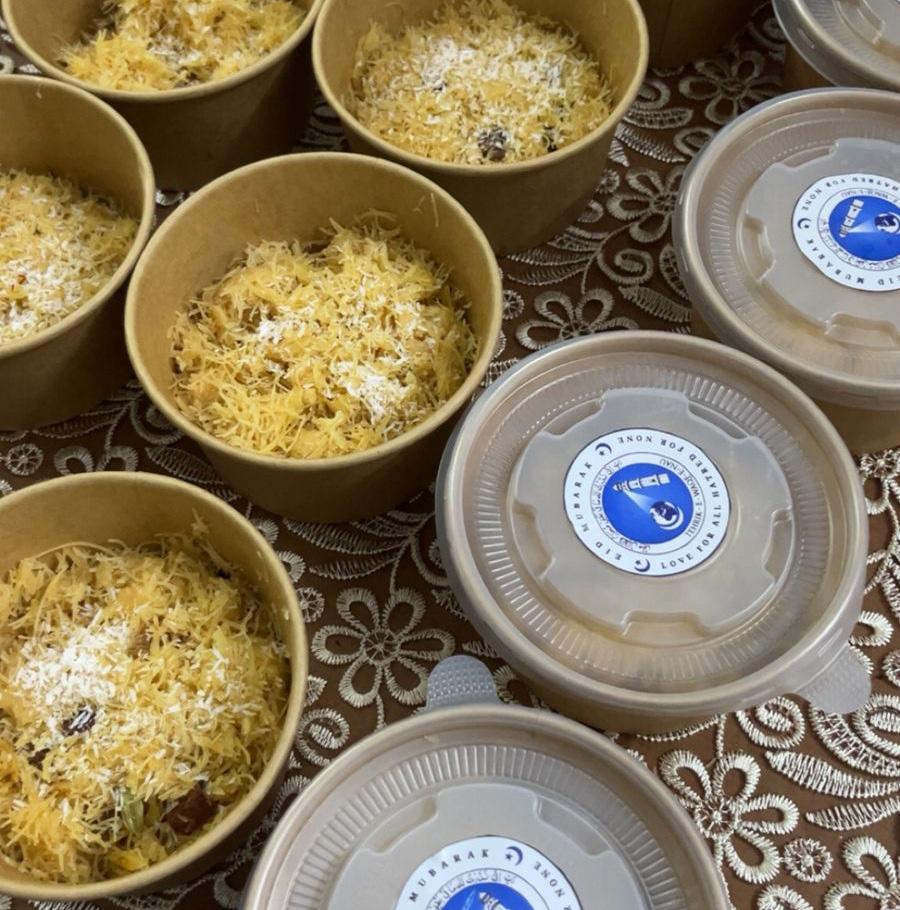
In Mauritius, Eid is celebrated with a warm blend of tradition, family, and generous hospitality, reflected beautifully in the foods prepared for the occasion. The morning often begins with a comforting bowl of vermicelli (sev), a dessert flavoured with cardamom, roasted sev, sugar, and nuts. Simmering gently on the stove, it is the first sweet enjoyed after the Eid prayer and is lovingly shared with relatives and neighbours as a gesture of unity, gratitude, and blessings. This simple yet meaningful tradition sets the tone for the day—welcoming, comforting, and deeply rooted in community spirit.
MauritianStyleDessertVermicelli
Mauritian Napolitaine
Throughout the day, homes fill with the aroma of festive dishes such as biryani scented with saffron, mint, and slow-cooked meats or vegetables, accompanied by fresh salads and spicy chutneys. Alongside these savoury favourites, a colourful spread of traditional sweets brings extra joy to the celebration. Among them are Napolitaines, the beloved Mauritian shortbread biscuits sandwiched with jam and coated in pastel pink icing. Prepared in advance and arranged neatly on trays, they are offered to guests who visit to exchange Eid greetings. Their delicate, melt-in-the-mouth texture has become a symbol of Mauritian hospitality and the warmth of the celebration.
Classic South Asian sweets such as Gulab Jamun, and Rasmalai enrich the festive table, adding creamy, syrupy indulgence that families and guests eagerly look forward to. Sharing these treats—whether sending plates to neighbours or welcoming visitors of all backgrounds—reflects the inclusive spirit of Eid in Mauritius and the Ahmadi emphasis on kindness, community, and togetherness.
Whether gathered around large family tables or visiting one another’s homes, the lovingly prepared dishes, heartfelt conversations, and joyous atmosphere make Eid in Mauritius a vibrant expression of cultural heritage and spiritual happiness.
GHANA
In Ghana, Eid starts with making sure our clothes are ready. Most of us like to wear something new, but even if it isn’t new, we make sure everything is neat and properly ironed. In my family we eat breakfast before going for Eid prayers (Eid-ul-Fitr).
Before we leave, our parents give us some money, which we divide into two parts: one Sadqa, and one to keep for ourselves. We usually end up buying sweets such as toffees, soft drinks, and yoghurt after the prayers.
There are nationwide Eid parties immediately after Eid prayers. Families prepare food and bring it to the Eid grounds. The food is a full display of Ghanaian culture. Families bring local dishes like Fufu, Kokonte, Ampesi, Banku, Tuo Zaafi, Waakye, and different types of rice, especially jollof,
Ghanaian Waakye
Hannet Appiah
fried rice, and plain rice. So, after prayers, everyone walks around choosing whatever they like. We also receive gifts, usually money or sweets, from relatives and friends, and we call family members far away to wish them Eid Mubarak. There is always time for photos before we finally head home.
In our home, Eid morning starts very early. After Tahajjud, the family gathers and wishes each other Eid Mubarak. Throughout the morning, we try to stay focused on saying Takbir throughout the day. Everyone chooses whatever traditional outfit they feel comfortable in. It ranges from Shalwar Kameez to sometimes dresses, so the house looks colourful even before we leave.
Samosas
We have a light breakfast and head to Eid namaz. There we meet neighbours, exchange greetings, and enjoy the biscuits, candies, and juice given at the mosque. When we return, we call relatives who aren’t present with us. It’s a small tradition that keeps family ties strong
After Zuhr, we host a tea gathering for the neighbourhood Lajna and Nasirat. This is one of the highlights of the day: everyone arrives beautifully dressed, and we spend the afternoon catching up on each other’s lives. Our table usually has pastries, Samosas, Gulab Jamun, Pakoras, Chana Chaat, and a rotating list of other favourites.
After Asr, we end the day by spending time together as a family. In the evening, we pray, have dinner, and end the night feeling peaceful and grateful to Allah before going to sleep.
Alia Huda Saqib
OMAN
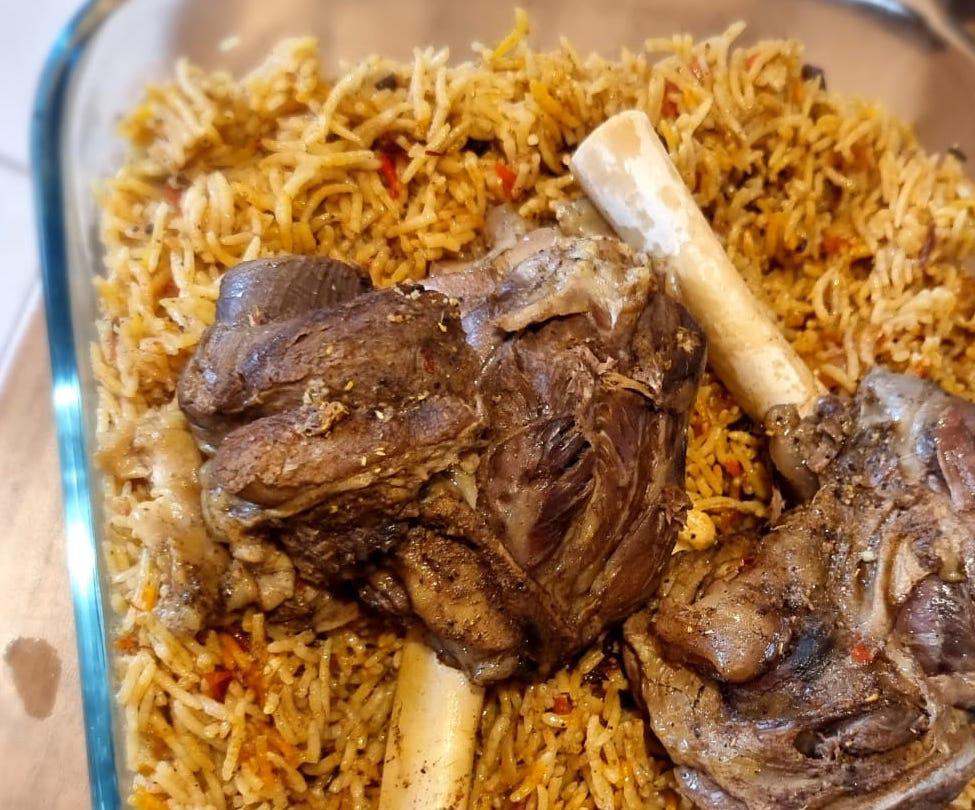
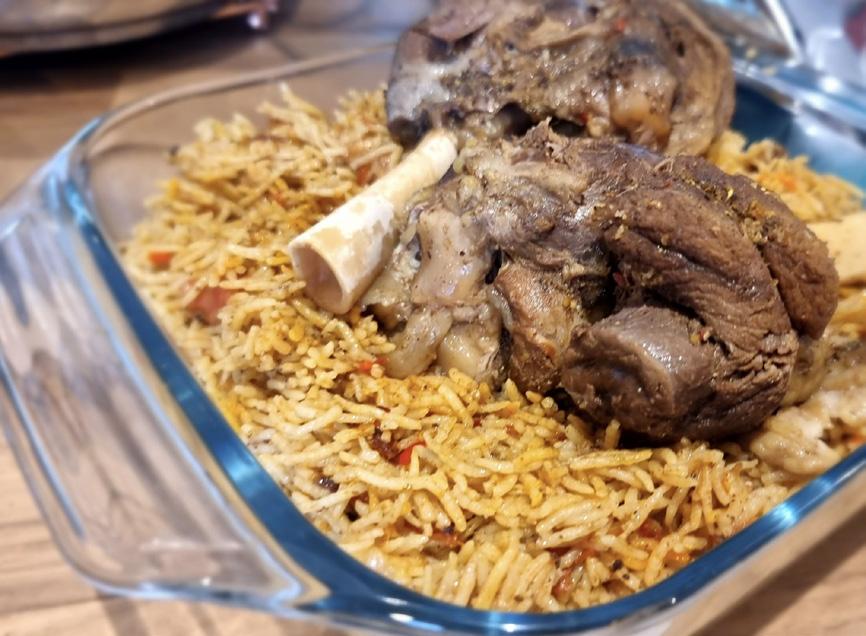
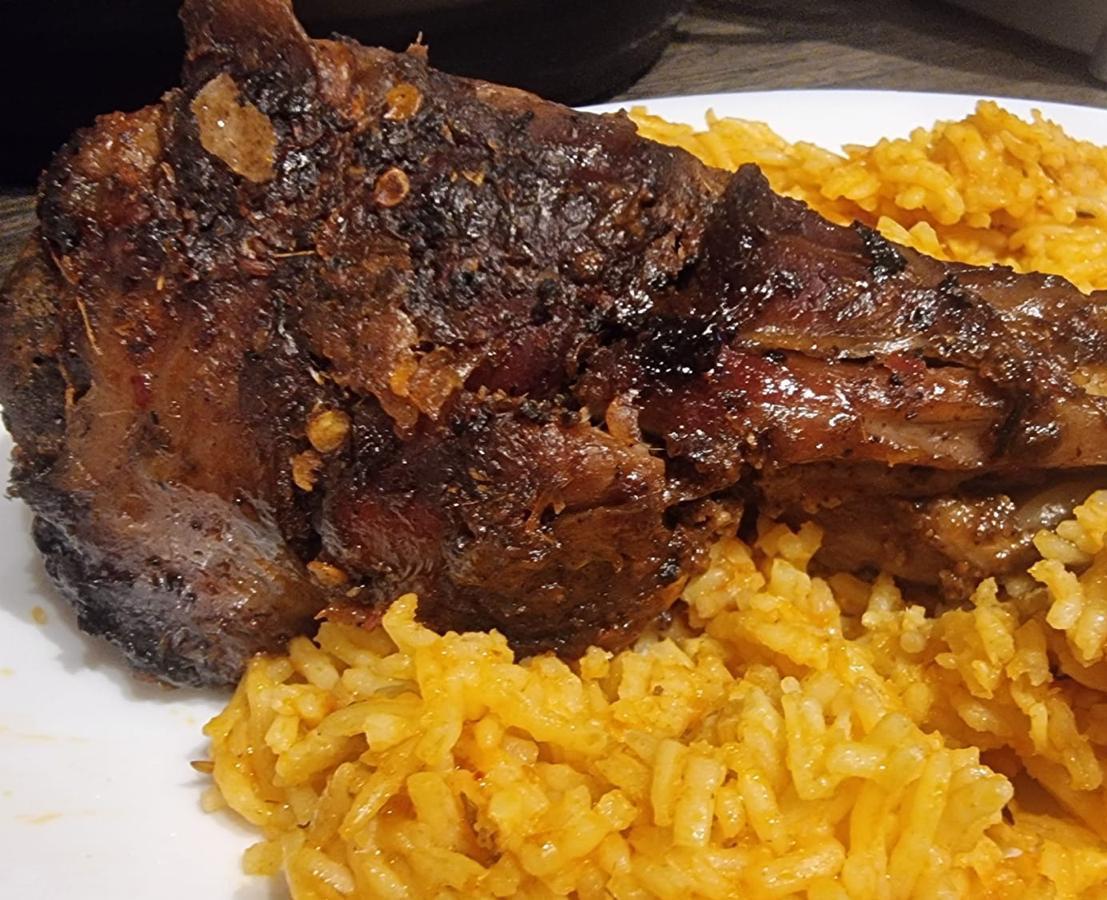
Having lived in Oman, I experienced Eid in a uniquely warm and traditional way, marked especially by the unforgettable flavours that define the celebration. One of the highlights was Shuwa, the famous Omani dish in which marinated lamb is wrapped in palm leaves and slowcooked in an underground oven for up to two days, filling the home with a rich, smoky aroma when finally served.
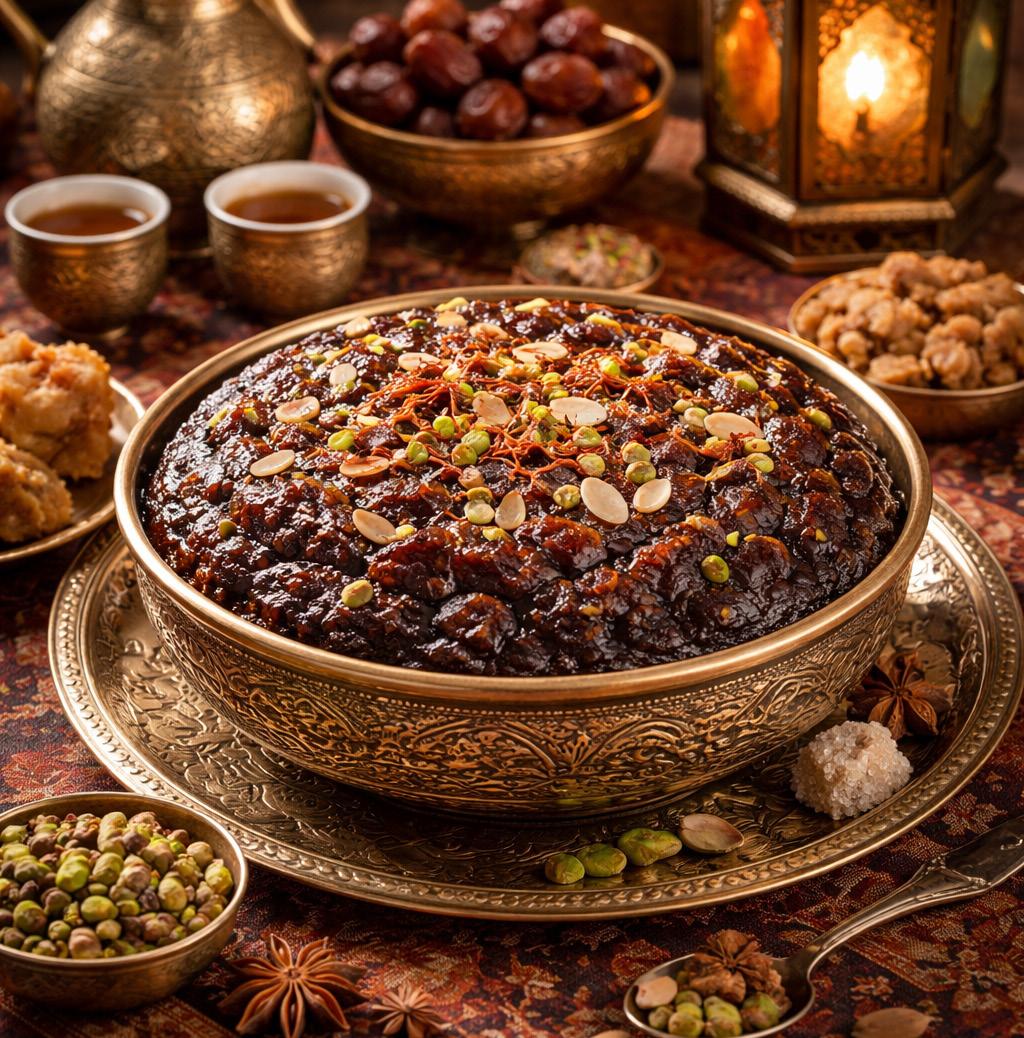
Equally special was the Omani Halwa, a beloved sweet made with saffron, rosewater, and nuts, traditionally shared with guests throughout the festive days. These foods, enjoyed alongside members of the Jama’at and a strong sense of community, made Eid in Oman deeply memorable and spiritually uplifting.
Omani Halwa
Atika Khalid
Omani Shuwa
SINGAPORE
Malihah Mashhood Dar
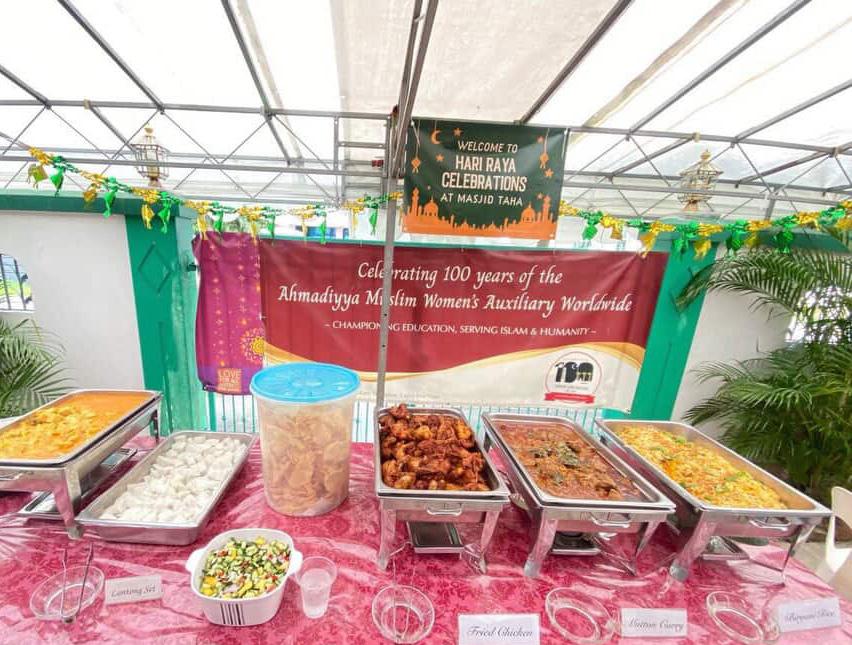
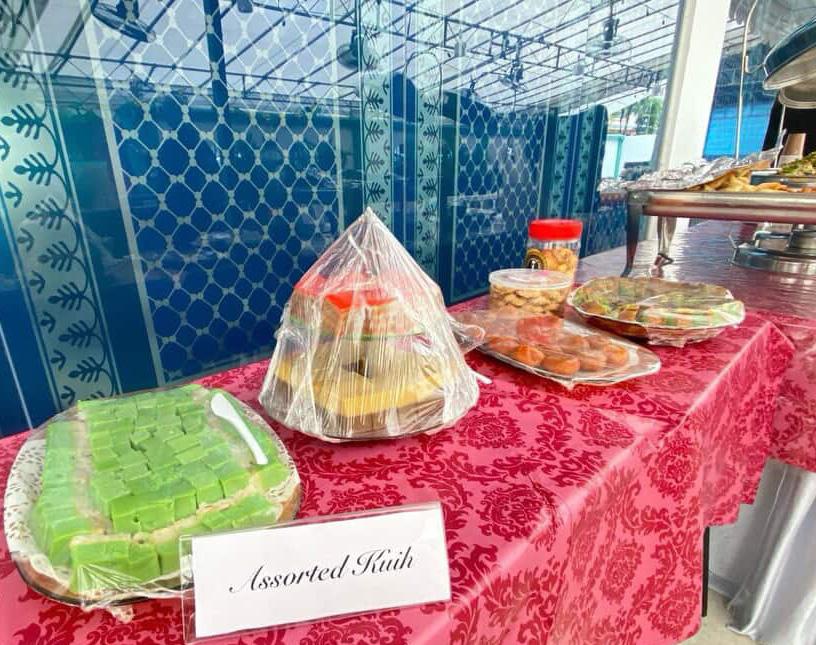
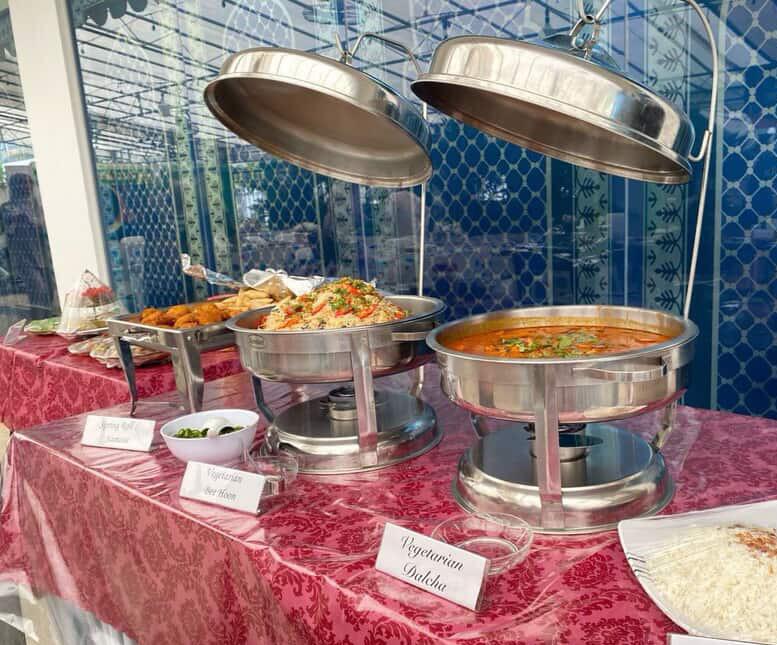
In Singapore, due to its diverse culture, traditional Eid food often reflects Malay and Indian influences, as these communities make up the majority of the Muslim population. In my household, Eid is celebrated in a simple and quiet way, as I do not have relatives here. The day begins early with prayers at the mosque and spending time with my fellow Jama’at members, followed by time spent at home with my loved ones. Our Eid meals are a blend of Indian and Indonesian traditions, as my parents come from India and Indonesia. We enjoy various types of curry served with Biryani or Naan alongside Indonesian dishes such as Lontong and Rendang.
While there are no large gatherings or house visits, sharing these traditional foods allows us to celebrate different cultures together, making Eid meaningful through reflection, gratitude, and togetherness despite its simplicity.
NIGERIA
Maryam Murthida
For Nigerians, the Eid spirit begins a week in advance. By then, our beautiful Eid outfits would already have been sewn or bought. A few days before Eid, my family would visit the Eid prayer ground to help clean and prepare it. Since it is an open field, volunteers come together to clear weeds, organise the parking area, and put everything in place.
The night before Eid is very special. It is customary to sleep late, as everyone eagerly awaits news from the Ameer (National President of the Jama’at) that the moon has been sighted. Family members travel home that day too, and the evening is often filled with reunions.
Eid mornings begin very early. We wake up to prepare yams (a tuberous root vegetable popular in Nigeria) served with scrambled eggs. For Eidul-Fitr, this meal is eaten before leaving for prayers, while on Eid-ul-Adha, we eat as soon as we return from the Eid ground.
Before setting out for the Eid prayers, our parents give us money to give as Sadqa. Once the prayers and sermon are concluded, we walk around greeting friends we may not have seen all year, catch up briefly and take pictures if possible. It is an especially great day for children, as it is customary for elders to give money gifts to every child who comes to greet them.
Another popular Nigerian Eid tradition is taking Fan Milk after prayers. Vendors selling this popular frozen yoghurt (packaged in different sizes and flavours) would line up around the prayer grounds. Young and old, men and women alike, all take part in this shared ritual.
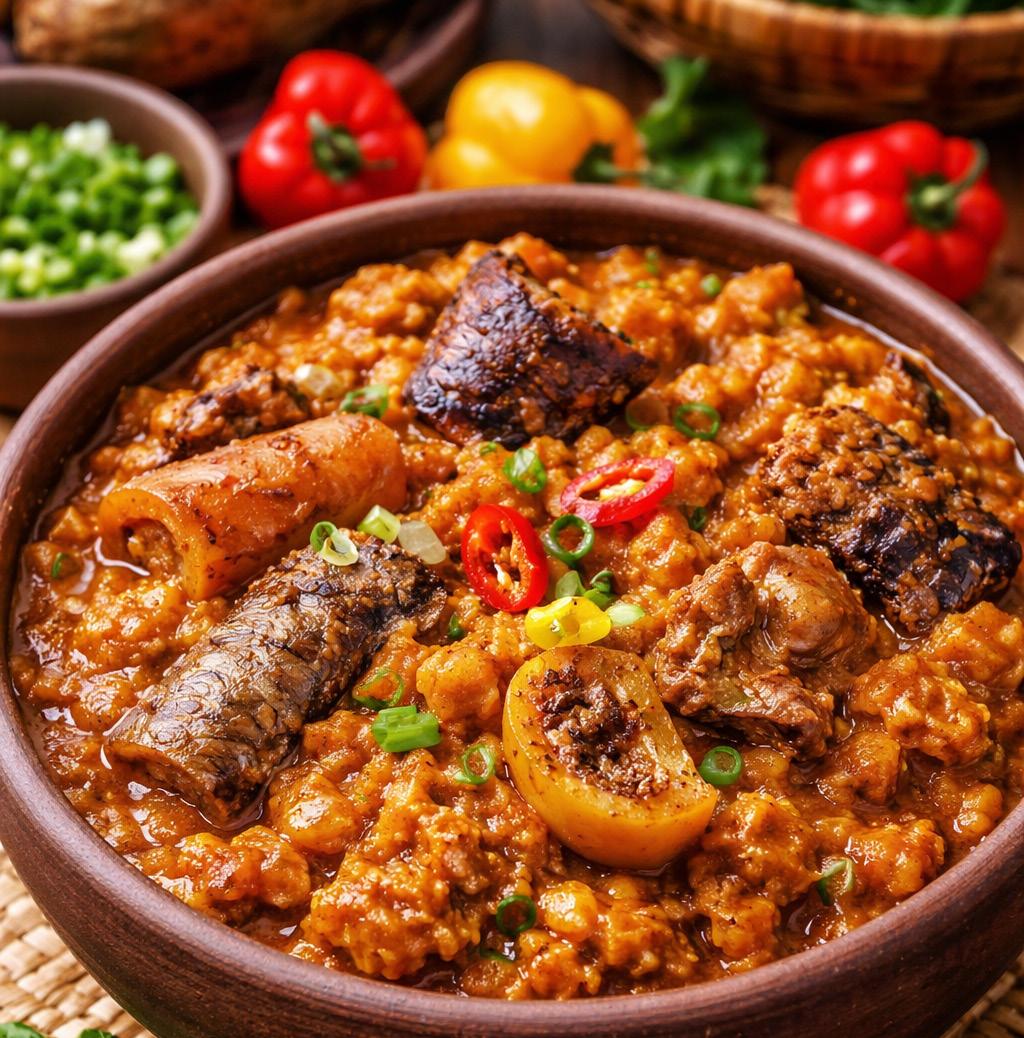
We start the proper Eid cooking after returning home. Dishes usually include Nigerian Jollof Rice and Fried Rice, alongside traditional meals such as Ìkọ́kọrẹ́ (made from grated water yam), Àmàlà (from dried yam flour), Iyán (pounded yam), and ẹ̀bà (made from cassava), all typically served with ẹ̀fọ́ rírò, a rich vegetable soup.
These meals are shared generously with neighbours who do not celebrate Eid, as well as with Muslims who may not be able to afford to prepare meals of their own. The younger ones are usually responsible for delivering the food. As part of the tradition, those who receive the meals often give the children money in appreciation (both for their service and in celebration of Eid).
Jollof Rice & Chicken Skewers
Throughout the day, visitors come by to exchange greetings. They are warmly hosted, fed, and often sent home with food and drinks for their families as well.
For Nigerian Muslims, Eid is always a time of joy, generosity, and togetherness. For some families, the celebrations (cooking, sharing and giving to charity) continue up until the third day.
1
But they will have to prove that:
They are ahead of others in their relationship with Allah;
4 If they offer supererogatory prayers along with the obligatory ones.
2
If they have fear of God more than others.
5 If their degree of general conduct is extremely high.
7
If they are girls, then, their dress and purdah is symbolic of true Islamic education. When others see it, they will be envious and say that despite living in this environment, their dresses and purdah are an extraordinary model.
8
If they are boys, then their eyes will be looking down due to bashfulness and not wandering toward culpable actions.
9 If they will be spending their time to attain religious knowledge rather than looking at the useless things on the internet.
3 If their standards of worship are a lot higher than others.
6
There is a marked difference in their language and talking manners. It is clearly observable that there is a genuinely trained person who prefers faith over worldly matters.
10
If the appearances of the boys will be distinguishable from others. Then they will be distinguishable.
11
If they recite from the Holy Qur’an, look for its commandments, and after finding them, would act upon them.
12
If they regularly take part in the programs of the auxiliary organizations and the Jama’at more than others.
14
At the time of matrimonial match, if they look for faith rather than worldly material, and then get along with their relationships, and can say that while acting upon the religious directions they are the ones who carry on with their relationships.
16
If, in the field of propagation, they take the lead position to fulfil this duty.
19
If they excel in humility and selflessness, hate arrogance and wage jihad against it.
21
17
If they are in the front row to obey the Khilafat and acting upon its decisions.
13
If they excel their brothers and sisters in treating their parents well and praying for them.
15
If they are more forbearing than others and in case of altercation and disorder, they not only refrain from them but become peacemakers.
18
If they are the ones who are more rugged and sacrificing than others.
20
If they are among the ones who listen to my sermons and watch other programs of mine on MTA so that they keep on getting guidance.
If they act upon these and all those matters that are liked by Allah and keep away from all those things that Allah has forbidden. Otherwise, there is no difference between them and others.
Link to Constitution for Waqifeen-e-Nau:
The Essence of Waqfe Nau, Friday Sermon delivered by Hazrat Mirza Masroor Ahmad, Khalifatul Masih Vaba, 28 October 2016
Kids’ Spread
The Essence of Waqfe Nau
Let’s test your knowledge! Below are some activities based on the 21 key points highlighted by Hazrat Mirza Masroor Ahmad, Khalifatul Masih Vaba in the Friday Sermon titled ‘Essence of Waqfe Nau’ delivered on 28th October 2016. These 21 points were outlined on the previous page to refresh your memory.
QUIZ
1. Being Waqfe Nau means:
a) Wearing a special badge
b) Serving Allah and Humanity
c) Getting special treatment
2. Which one is a Waqfe Nau quality?
a) Laziness
b) Fear of Allah
c) Pride
3. True or False:
“A Waqfe Nau must show good manners everywhere.”
4. Which daily action is the most essential for a Waqfe Nau to keep their bond with Allah strong?
a) Playing video games
b) Eating lots of chocolate
c) Praying the five daily prayers
5. How can a Waqfieen-e-Nau stay connected to Hazrat Khalifatul Masihaba?
a) Writing Letters to Hazooraba often
b) Listening to Hazoor’saba Friday Sermons
c) All of the above
Listen to the Friday Sermon here
6. True or False:
“Waqfe Nau should prioritise careers with high salaries rather than those that serve humanity”
7. If a Waqfe Nau is unsure about which field to study, what should they do?
a) Choose whatever their friends choose
b) Pray for guidance and seek advice from Beloved Hazooraba
c) Pick the easiest subject
Following Hazoor’saba Guidance: My 3 Goals
From the 21 points, Write down three good deeds that you will try to improve on during the next month.
We have an exciting challenge for you! Choose any one of the 21 points mentioned in the Friday Sermon titled ‘Essence of Waqfe Nau’ delivered by Hazrat Mirza Masroor Ahmad, Khalifatul Masih Vaba on 28th October 2016, and create a poster about it.
Once your poster is ready, email it to us at: Chiefeditor@maryammagazine.org
We will carefully look through all the entries, and the best posters will be featured in a future issue of the magazine! We can’t wait to see your creativity.
Young Writers Submission Sisterhood
Tuba Hanif
Editor’s Note: The following piece is a special Young Writers submission, which has been lightly edited to preserve the author’s original tone and expression.
Ahmadi women have a responsibility to stay bonded with each other so that we are better able to do Tabligh to non-Muslims, while maintaining the standards of purdah expected of an Ahmadi woman. Sisterhood also helps us support each other by solving problems together and meeting each other regularly at Jama’at events.
This bond increases our punctuality in the Jama’at and strengthens our interest towards our faith, simply through our friendship and connection with each other.
As mothers, or future mothers, we must remember that we are role models for our children. Whatever we do affects them because they copy whatever they see. Therefore, Ahmadi women themselves should have a strong bond with Allah and with their faith. Through this, we will also become great role models for each other, showing how we should be as Ahmadi women.
Today’s generation is often absorbed in technology and devices rather than reading books of the Promised Messiahas, watching MTA or actively attending and taking part in Jama’ati programmes.
There is a Hadith that states: “None of you can be a truly faithful Muslim unless he likes for his brother what he likes for himself.”
This reminds us that we should treat each other as equals. This applies not only to brotherhood but to sisterhood too. We should treat others how we want to be treated ourselves.
We need to help bring women back to faith, especially as today’s generation is becoming more attached to social media as a way of life.
If we see someone going down the wrong path, we should help them and guide them towards the right path.
Practical Ways of Instilling the Habit of Financial Sacrifice in Our Children
Samina Yasmeen Arif
Living in a world where materialism is relentlessly on the rise, it is becoming increasingly easy for both young and old to be pulled into the never-ending rat race. Whether it is the latest gadgets, branded clothes, luxury possessions, or fleeting status symbols that promise to change our lives, the pressure to “keep up” is everywhere. Everything is so readily available, so heavily advertised, and so deeply woven into our social spaces that one can very quickly become swept into the crowd and lost in it.
Research repeatedly shows that this is not harmless. One study concludes that “materialism has become a prominent ideology among adolescents… [and] adolescents’ well-being is negatively correlated with the value they place on materialistic aspirations.”1 But what actually drives a person to join this race? Often, it is the desire to belong, to be accepted, and to fit the image of what the world portrays as success. This is in reality a clouded perception of what the true purpose of life should be.
“Never shall you attain righteousness unless you spend out of that which you love”
As Ahmadi Waaqifaat-e-Nau, we are blessed with a distinct purpose: our lives, abilities, and time are dedicated to the service of our faith. Our goal is to seek the pleasure of Allah alone, avoiding the trap of worldly ‘success’. Amidst the glitz and glamour of society, the Holy Qur’an offers a timeless truth: “Never shall you attain righteousness unless you spend out of that which you love.”2 Here, the word ‘Al-Birr’ signifies not just ‘righteousness’, but ‘goodness of a high order’. Remarkably, modern science has begun to uncover the physiological reality of this “high order” of goodness. Neurological studies show that sincere giving activates the brain’s empathy centres, releasing oxytocin - the ‘feel-good hormone’. This creates what researchers call a “helper’s high”, a profound sense of well-being and emotional stability
that mirrors the spiritual peace promised to the believer.3
This alignment between science and scripture extends even further. Research suggests that humans are born with basic moral intuitions, like fairness, altruism, and empathy, which are then shaped and strengthened by culture and education.4 This concept is deeply rooted in the Holy Qur’an5, which affirms that true faith is ingrained in our very nature. Expounding on this verse, Hazrat Musleh Maudra explains that while our innate nature (Fitrah) is created pure, it is the environment that has the power to corrupt or preserve it.6 It is with this in mind, and recognising the sheer impact of the environment on one’s moral compass, that Hazrat Musleh Maudra, prior to announcing Tehrik-e-Jadid, emphasised:
“No great sacrifice can be offered until the conditions necessary for it have been created… If the circumstances around a person are not conducive, success cannot be attained. Many people are deprived of virtue even though the capacity for virtue lies within them; yet the environment in which the capacity for true sacrifice could flourish does not exist. Therefore, cultivating the right environment is indispensable.”7
A recent study found that social role models, such as parents, siblings, peers, and media, are “strongly associated with adolescents’ materialistic values.”8 This makes our home the first and foremost classroom of character. It is when we, within our homes, follow the commandments of Allah to “spend out of what We have provided,”9 to “spend their wealth to seek the pleasure of Allah,”10 and to “spend their wealth by night and day,”11 that we in return become recipients of His promise. He promises that “it is they
who shall prosper,”12 that “Allah sees what you do,”13 and that they “have their reward with their Lord; on them shall come no fear, nor shall they grieve.”14 When children witness this true essence of sacrifice, their hearts naturally incline to it. We see the pinnacle of this in the household of Hazrat Ibrahimas. He did not merely speak of submission; he lived it, supported by the unwavering faith of his wife, Hazrat Hajirara. When left in the barren valley, she did not hesitate or complain; rather, upon learning it was a divine command, she accepted the sacrifice with absolute contentment. It was because Hazrat Ismailas was raised by parents who embodied such total submission that, when the ultimate demand was made, he unhesitatingly replied: “O my father, do as thou art commanded…”15 . His readiness to sacrifice his life was not accidental, nor was it an isolated act of devotion; it was a direct reflection of the steadfastness he had witnessed in both his mother and father throughout his life. Allah, Who is True to His Promise, rewarded them for these sincerely offered sacrifices in the most magnificent way: He transformed a barren valley into a cradle of blessings and chose it as the birthplace of the Greatest of Prophets saw .
The role of women in creating this flourishing environment is paramount. Hazrat Musleh Maudra understood how important the role of a woman is, not only in her house but also in shaping future generations. Hence, when announcing Tehrik-eJadid, it was the support of women and children that Hazoorra specifically requested. He stated: “The condition
of financial sacrifice is just like that of physical sacrifice; a person cannot endure bodily hardship unless he has cultivated the habit of doing so. Those mothers who do not wake their children on time, who fail to send them to study when they should, and who are not mindful of their food and drink, allowing them to become overly comfortable, how can such children ever learn to make sacrifices? The habits formed in childhood are the true habits.”16
“Charity does not diminish wealth, Allah does not increase a man in anything for his pardoning (others) but in honour, and none humbles himself for Allah but Allah raises him.”
We often find ourselves pouring our time and resources into encouraging our children to excel in their studies and extracurricular activities. We cheer them on even in moments of failure, lifting them up when they fall. Yet, how can we leave them behind when it comes to succeeding in the Hereafter? Why do we not give them a head start in their faith, inviting them to partake in the blessings associated
with financial sacrifice? The Holy Prophetsaw said: “Charity does not diminish wealth, Allah does not increase a man in anything for his pardoning (others) but in honour, and none humbles himself for Allah but Allah raises him.”17 It was to grant children this very spiritual head start that on 7 October 1966, Hazrat Khalifatul Masih IIIrh announced the establishment of Daftar Atfal for Waqf-e-Jadid. He urged Ahmadi children - both boys and girls - to partake in the blessings of financial sacrifice. Hazoorrh said: “Such children who make a habit of financial sacrifices from their childhood become a guarantee of their future generations’ sacrifices.”18 This legacy of training continues today. Instilling these small habits of sacrifice from a young age remains integral to their development. Hazrat Khalifatul Masih Vaba drew the attention of parents to this in a Friday Sermon, stating “Children should be coached in giving, to give out of their pocket money, so that in future it becomes their key preference.”19
It is for this reason that it is of paramount importance that we not
“Such children who make a habit of financial sacrifices from their childhood become a guarantee of their future generations’ sacrifices.”
only set an exemplary standard in our homes, but that we also actively include our children on this path. As Waaqifaat-e-Nau, we must strive to be the most excellent examples of true sacrifice, both physical and financial. It is through such sacrifice that we climb the ladder of spiritual transformation and distance ourselves from the hollow attractions of this world. However, we must recognise that no Nobel Laureate, world renowned scientist, or greatest athlete gained success overnight; it was the result of sheer determination and hard work over several years or even decades. Similarly, if we want to see the spiritual success of our children, we want to raise children following the footsteps of Hazrat Ismailas, we must excel in our own sacrifice. A true Waaqifaate-Nau must recognise that only if she is willing to give for the sake of Allah and lead by true example, will she be able to fulfil her Waqf and pave the way for future generations.
Addressing Lajna Hazooraba guided us on this very point that “If parents are pious, God fearing, and live according to Islam’s teachings, their children will naturally learn from them…. It is easy to speak of bringing about a spiritual revolution, but, in reality, revolutions are never born from convenience, comfort or words alone. They are forged through sacrifice – by surrendering one’s ego, personal interests, trends, and all desires – for a higher purpose. After inculcating this spirit within yourselves, train your children, so that the noble legacy of true sacrifice in the way of Allah may pass seamlessly from generation to generation.” 20
May Allah enable us to be living examples for our children in our homes, so that they walk on the paths of the righteous, forever ready to truly sacrifice their life, wealth, time, and children for the cause of faith. Ameen.
Practical Ways to Instil Financial Sacrifice in Children
1. Let them give from their own pocket money
A Nasira asked beloved Hazooraba at what age he started receiving pocket money and how he used to spend it. Hazooraba shared that he did not receive pocket money regularly in the way children do today. Any money he received as a gift, his mother would keep for him as savings. From this saved amount, he was taught to pay his Chanda for Tahrik-e-Jadid, Waqf-e-Jadid and Atfal-ul-Ahmadiyya.21
2. Share stories of sacrifice and its blessings
Real stories make a huge impact; any personal stories or stories narrated by Hazooraba should be shared with children. Talk about the sacrifices put forth by the companions of the Holy Prophetsaw.
3. Create a family “giving moment”
Once a month, choose a cause together and give as a family. Maybe give up a coffee, burger meal, or toy and instead give that money for a better cause. Go on chanda.org.uk and see all the different charitable endeavours one can gain blessings from.
Hazooraba said he had worked out that if families living in the West, who frequently treated their children to burgers and such like, rather than eat out, if twice a month, they saved the money instead to give it to Waqf-e-Jadid, there could be a 20% to 30% increase in the contribution.22
4. Talk openly about gratitude, sufficiency and contentment
The Holy Prophetsaw said: “Look at those who are beneath you and do not look at those who are above you, for it is more suitable that you should not consider as less the blessing of Allah.”23
Show children to cherish what they already have and practice counting the blessings they already have by saying “Alhamdolillah”. If they ask for something new, speak to them about why they would like it. Is it because everyone has it? Have real conversations to instil contentment and gratitude.
Link giving to faith
Remind them gently and lovingly, that Allah sees everything, values every penny given sincerely, and increases blessings manifold.
References
1. Zawadzka, A. M., Borchet, J., Iwanowska, M., & Lewandowska-Walter, A. (2022). Materialism in Adolescents and the Influence of Social Role Models. Frontiers in Psychology.
2. The Holy Qur’an, 3:93.
3. Moll, J. et al. (2006). Human Fronto–Mesolimbic Networks Guide Decisions About Charitable Donations. PNAS; Zak, P. (2013). The Moral Molecule: The Source of Love and Prosperity.
4. Bloom, P. (2013). Just Babies: The Origins of Good and Evil.
5. The Holy Qur’an, 30:31.
6. The Five Volume Commentary, 30:31.
7. Hazrat Musleh Maudra, Khutba Jummah 23 November 1934, Tehrik-e-Jadid; Aik Ilahi Tehrik, Vol I, p.19
8. Zawadzka, A. M., Borchet, J., Iwanowska, M., & Lewandowska-Walter, A. (2022). Materialism in Adolescents and the Influence of Social Role Models. Frontiers in Psychology.
9. The Holy Qur’an, 2:4.
10. The Holy Qur’an, 2:266.
11. The Holy Qur’an, 2:275.
12. The Holy Qur’an, 2:6.
13. The Holy Qur’an, 2:266.
14. The Holy Qur’an, 2:275.
15. The Holy Qur’an, 37:103.
16. Hazrat Musleh Maudra, Khutba Jummah 23 November 1934, Tehrik-e-Jadid; Aik Ilahi Tehrik Vol I, p.21.
17. Jami` at-Tirmidhi 2029, Book 27, Hadith 135.
18. Khutbat-e-Masroor, Vol. 6, pp. 3-5.
19. Friday Sermon, Hazrat Khalifatul Masih Vaba, 12 January 2007.
20. National Lajna & Nasirat Ijtema UK, September 27 2025.
21. Delegation of Nasirat and Waaqifaat-e-Nau from Ireland Mulaqat with Hazrat Khalifatul Masih Vaba, 12 October 2025.
22. Friday Sermon, Hazrat Khalifatul Masih Vaba, 12 January 2007.
23. Sunan Ibn Majah 4142; Book 37, Hadith 43.
Spending in the Way of Allah
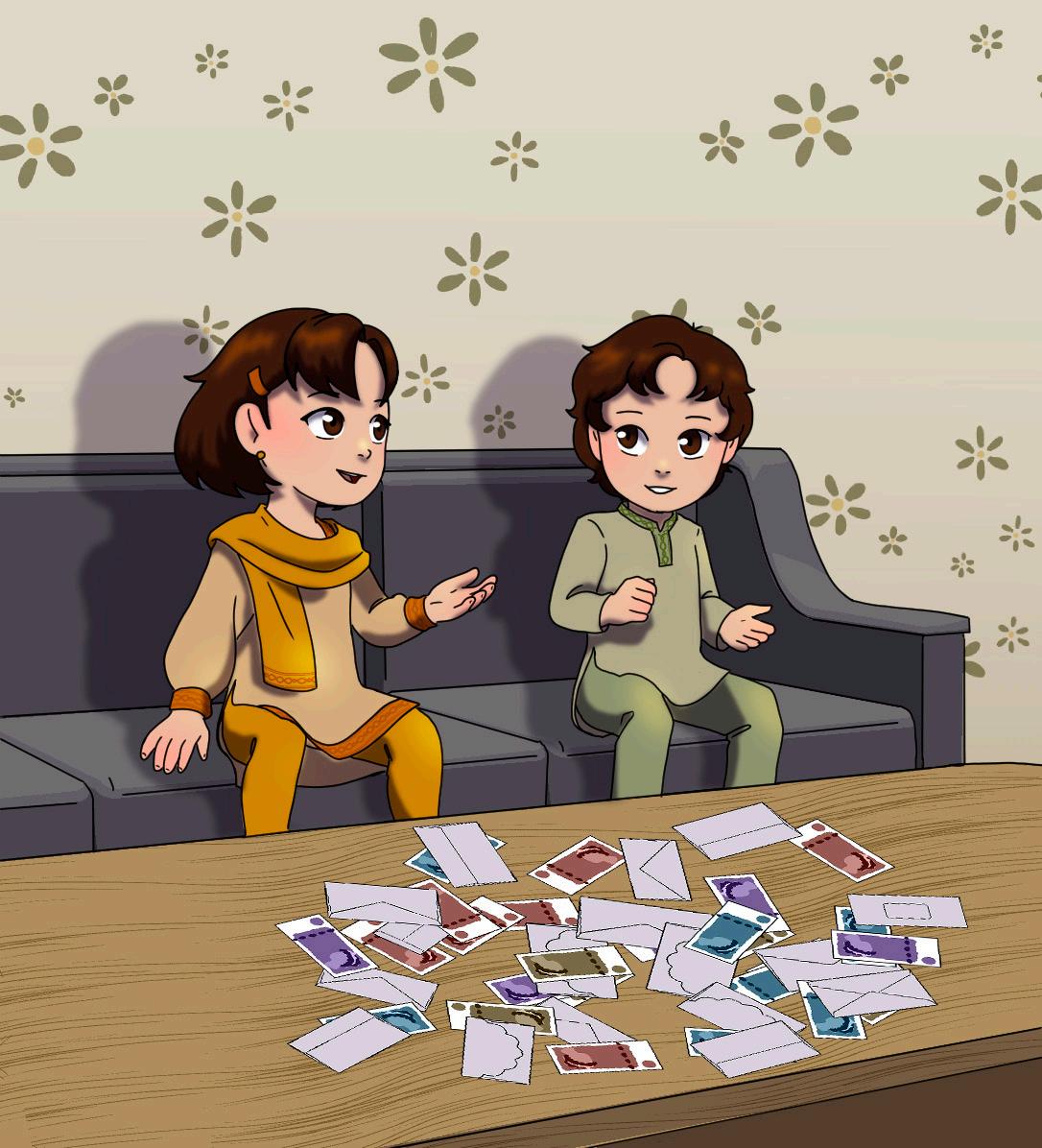
It is the day after Eid.
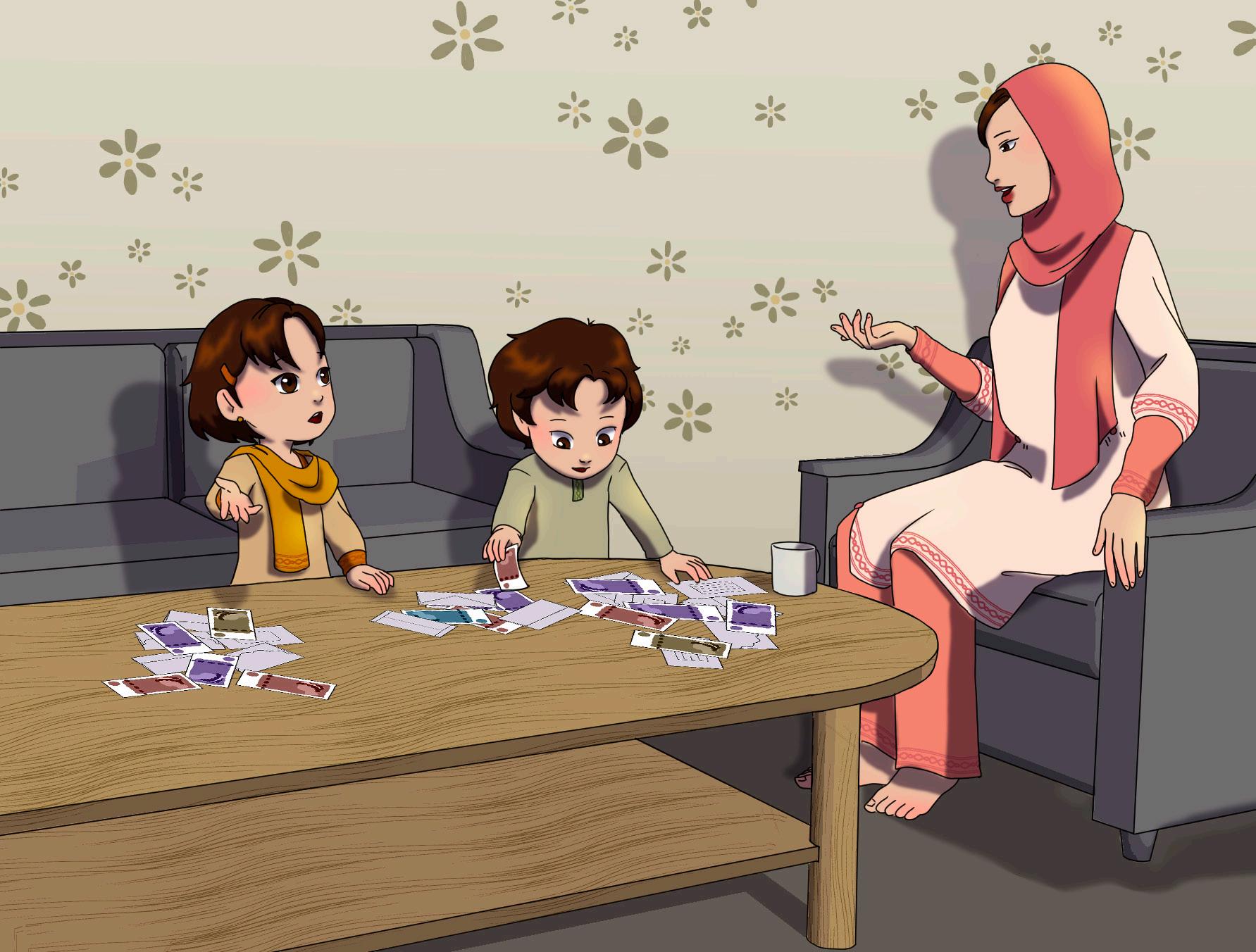
Wow, Zayd, look how much Eidi we got this year!
You mean… spending in the way of Allah?
I know! I’m already thinking about what to buy.
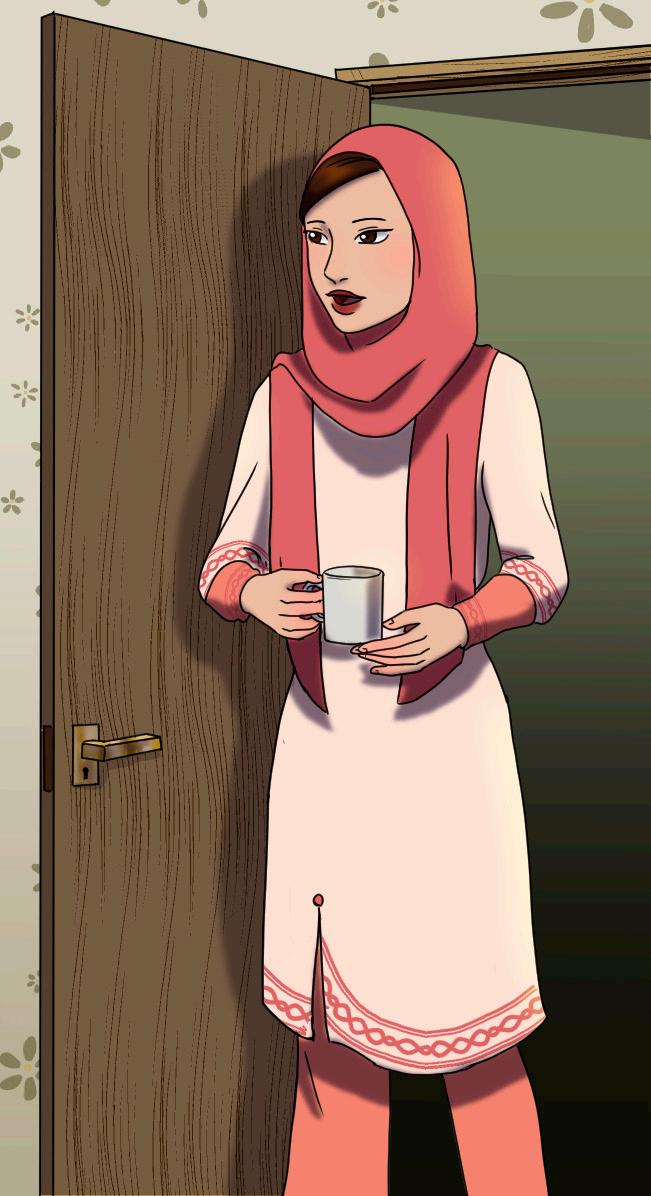
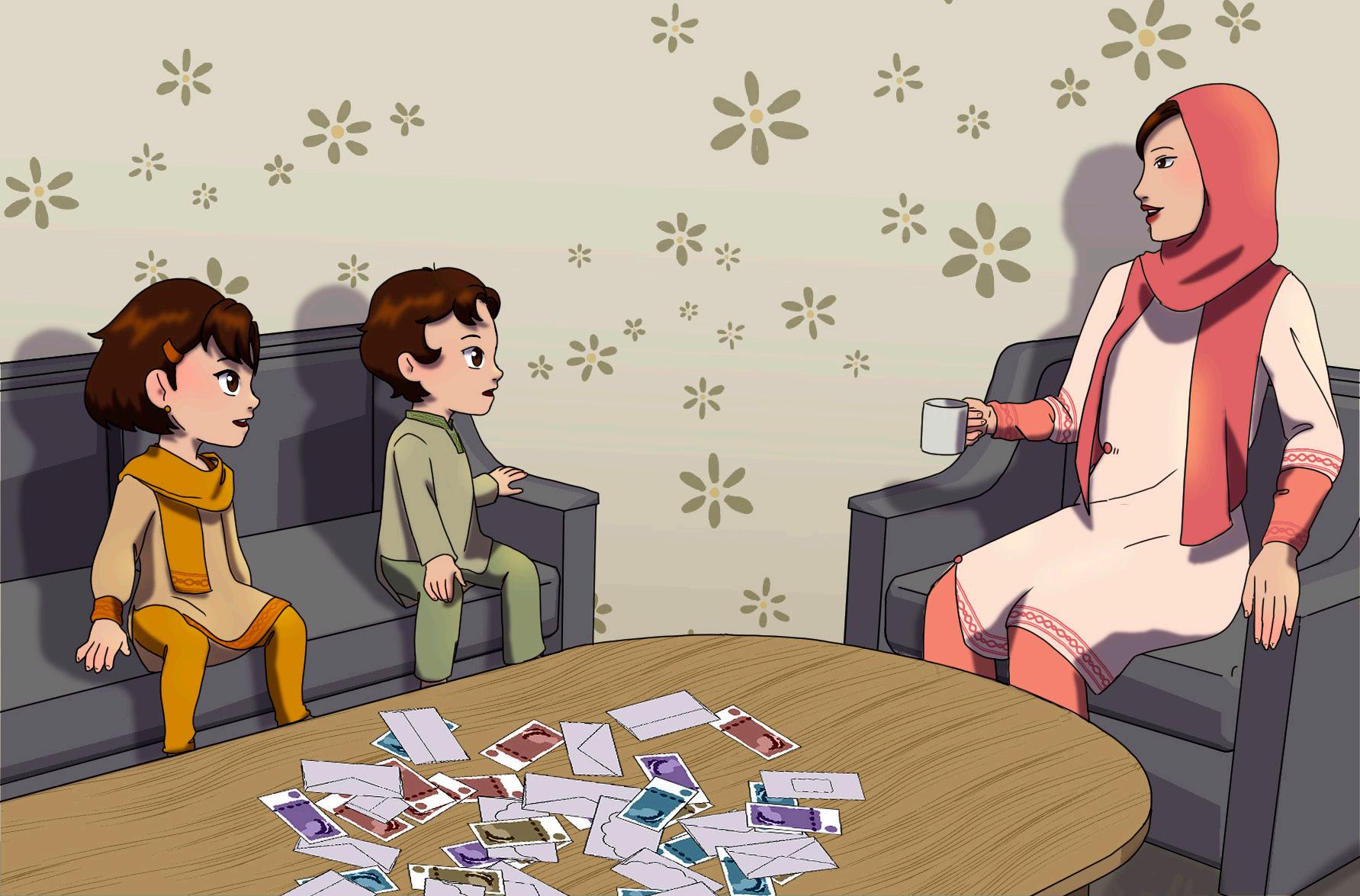
MashAllah, that’s wonderful. But remember, my dears, Allah loves when we share what He has given us.
Yes. Islam teaches us to help others. It’s also a way to clean our hearts and remind us that everything we have is from Allah.
Does that mean Sadqa too?
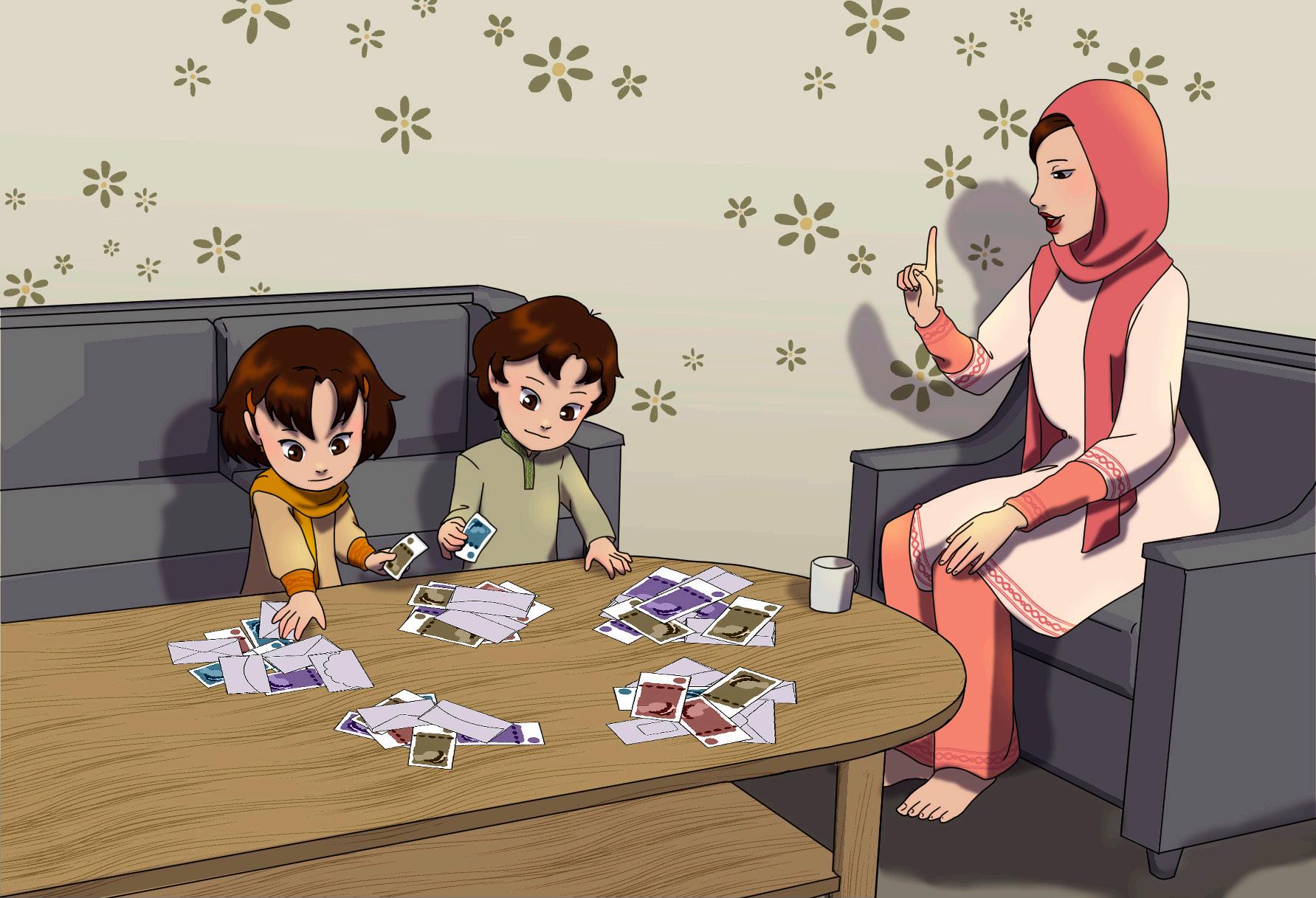
Exactly! Sadqa is any act of giving done sincerely for Allah - money, food, helping someone, or even a kind word.
Does sharing some of our Eidi make a big difference?
Of course, it does. Even a small amount given sincerely can bring big blessings. Allah says that charity never decreases wealth - it actually increases it, in ways we don’t always see.
So, when we give, we’re helping others and ourselves?
Yes, beta. Giving makes our hearts soft, keeps us grateful and makes Allah happy with us.
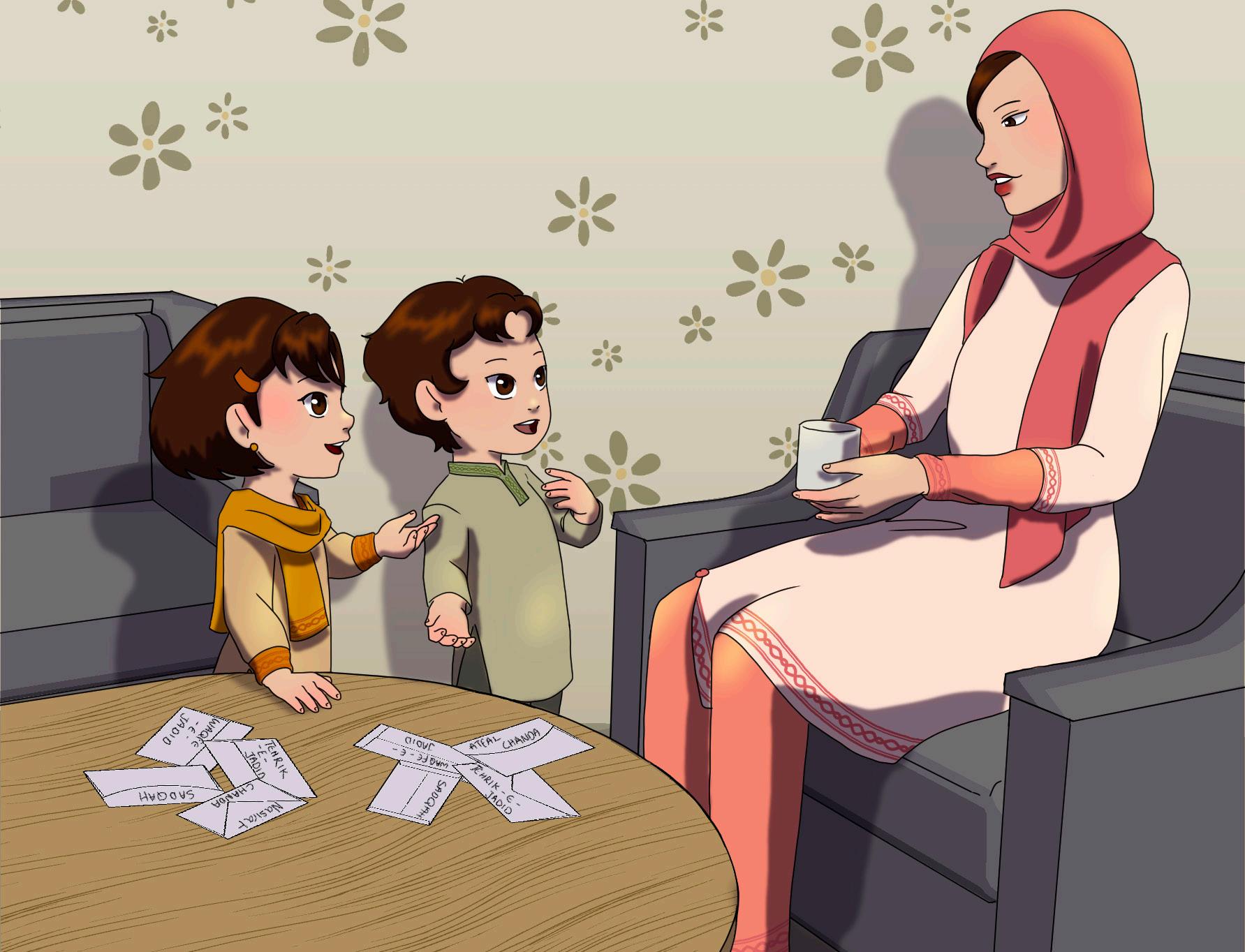
Now, set aside a little for your auxiliary membership Chanda, Tehrik-eJadid and Waqf-e-Jadid.
I’ve taken out money for Nasirat Chanda and my promises for Tehrik-e-Jadid and Waqfe-Jadid!
And I’ve taken out money for Atfal Chanda, Tehrik-e-Jadid and Waqfe-Jadid too!
Well done. May Allah accept it. Ameen.
Prayer to Learn and Remember
Whenever we spend in the way of Allah, we should do so with sincerity and humility. We should also pray:
Our Lord, accept this from us; for Thou art All-Hearing, All-Knowing. (Holy Qur’an 2:128)
Illustrations: Wardah Burhan
A CHILDHOODMemory Of POCKET MONEY
On 12th October, 2025, a delegation of Nasirat and Waaqifaat-e-Nau from Ireland had the honour of an audience with Hazrat Mirza Masroor Ahmad, Khalifatul Masih Vaba .
During the Mulaqat, a Nasirah asked Hazooraba at what age he started receiving pocket money and how he used to spend it.
Hazooraba shared that he did not receive pocket money regularly in the way children do today. His parents would sometimes give him money, such as on Eid. Any money he received as a gift, his mother would keep for him as savings.
From this saved amount, he was taught to pay his chanda for Tahrik-e-Jadid, Waqf-e-Jadid and Atfal-ul-Ahmadiyya. If he needed more, he would ask his mother, who would give him some if she could. If not, Hazooraba explained, he would return in silence and would not quarrel with her.
Nasirat and Waaqifaat-e-Nau Ireland, Mulaqat with Hazrat Khalifatul Masih Vaba Tilford, Islamabad, 12 October 2025 https://www.alhakam.org/nasirat-and-waqifaat-e-nau-ireland-meet-huzoor/
Waqf in the field
A JOURNEY GUIDED AND INSPIRED BY KHILAFAT
SEHRISH TAHIR
In a world constantly urging us to chase material success and measure our worth by outward appearances, it can be easy to lose sight of what truly matters, leaving us eventually unfilled, disconnected and empty. In such a society, how do we, as Ahmadi Muslims, and particularly as Waaqifaat-e-Nau, fulfil our pledges when we are juggling life and everything that it throws at us? How can we balance fulfilling our purpose alongside our daily responsibilities and societal challenges? Islam teaches us to give precedence to our faith and put our trust in Allah. Only by choosing a spiritual path over worldliness can we move away from the constant noise of external expectations and instead turn inward, seeking alignment with our true selves and eventually turning to Allah and our true purpose of His worship and the service of mankind.
My journey as a waqifa-e-nau has always left me astonished by Allah’s immense Grace and Mercy and His constant blessings on the institution of Khilafat-eAhmadiyya. Through this divinely blessed institution of Khilafat I have so often found myself nurtured and sheltered. It is Hazoor’saba guidance and constant support that has continued to bless this journey in so many beautiful ways. I felt humbled that despite the busy schedule of my beloved Khalifaaba, I was able to receive replies from him regularly, be it regarding prayers, my daily worries, my family and my studies. Alhamdolillah!
As I married young and moved from Germany to the UK, I found myself often stumbled, lonely and lost. I wrote frequently to beloved Hazooraba and the replies from him gave me strength and helped me to gather the courage to continue my studies. Upon Hazoor’saba permission to become a teacher, I pursued a bachelor’s degree in education studies alongside marital responsibilities and challenges. Seeking Hazoor’saba permission, I then moved on to do a Master’s in this field. Alhamdolillah, by the Grace of Allah, I did not only pass well but also received honours personally from Hazooraba twice. I cannot fathom myself to be that fortunate. Again, seeking Hazoor’saba permission to work at the educational department at a university for a year, I was successful in securing an interview and even the job itself. Alhamdolillah! Understanding that as a waqifa-e-nau asking for Hazoor’saba prayers and permission for the next steps has indeed always blessed my journey.
By the Grace of Allah and with the prayers of beloved Hazooraba my husband and I were blessed with two children during the time of COVID-19. As they turned 3 and 1 years old, I found myself blessed but simultaneously lost in the trenches of early motherhood. I wrote to Hazooraba about my worries and asked for
permission to pursue a PhD, knowing that it would be a difficult undertaking as a young mother. I particularly asked for prayers regarding securing a scholarship, as this would be the only possibility to afford it. Hazoor’saba reply humbled and soothed my heart. It gave me the courage to trust that if Allah wills and if this is good for me, my efforts of long days and nights of mothering and rigorous application processes will not go in vain. Despite securing PhD places at several universities, all scholarship applications were declined. A sudden relief overcame me because a part of me believed it would be too hard and that I was not ready yet. Despite feeling slightly downhearted, I consoled myself that Allah knew better, and this was probably not the right time.
Weeks went by, and on Eid day, I received an email stating that I was taken off the waitlist and had been granted a fully funded scholarship at a Russel Group University that is close to my house. When I read the email, I felt so perplexed; I could not believe my eyes - filling up with tears of gratitude. I left everything that I was doing and offered a Sajdah-e-Shukr, thanking Allah the Almighty for deeming me worthy of His abundant Grace and Mercy. In the next days, I rushed to write a letter to Hazooraba informing him of the encouraging news. Alhamdolillah!
Currently, I am in my second year of study. My doctoral thesis focuses on the intersectional identities of young Muslim women of colour in white educational spaces, with a focus on how a sense of ethnicity, femininity and spirituality can impact identity formation in often hostile White education. My methodological approach is grounded in Critical Race Theory and multi-modal counternarratives and storytelling. My topic was inspired by an answer given by beloved Hazooraba to a girl during a Waaqifaat-e-Nau class who asked how girls can
navigate the difficulties of living in the West. Hazooraba beautifully answered that if we have a strong bond with Allah, nothing can shake our foundation in this society. This is how I got interested in what factors contribute to this process and how spirituality can play a role in it.
Juggling a PhD whilst looking after two young children and looking after a home and fulfilling family duties as well as Jama’at work is and will always be quite challenging. But then I find myself thinking that Allah does not burden a soul over its capacity. So, I keep trusting that Allah will catch me if I fall, InshAllah! Apart from the PhD, I contribute through Qur’an classes locally, sometimes other duties regionally and nationally, as well through Voice of Islam or other Waqfe Nau events and workshops. But as per instructions of beloved Hazooraba for married Waaqifaat-e-Nau with children,
“…Remember that your first and primary obligation is to give full care and attention to the Tarbiyyat and training of the children who are being brought up by you” 1
the focus of my Waqf is the upbringing of my two Waqfe Nau boys aged 5 and 3. No one knows better than our generation being brought up in the West, how challenging it is to grow up Muslim in an Islamophobic society, but also Ahmadi Muslim in non-Ahmadi circles. We need to not only understand the next generation’s challenges but also find ourselves anew to face those together with our children.
Hazooraba addressing Waaqifaat-e-Nau mothers, highlighted these challenges:
“Most of you have been brought up and educated here and so you understand this society and recognise its ills and vices. Utilise this knowledge to not only save yourselves from its ill-effects but also to guide your children so that they avoid the moral pitfalls and traps that await them as they grow and develop. Without a shadow of doubt, it is a great challenge of the time for Ahmadi mothers to ensure that our future generations remain attached to their religion.” 2
In our busy lives it is not only about the quantity of how much time we are spending in the way of Allah but more so how impactful the quality of our work is. Choosing to do Jama’at work does not mean we are neglecting our worldly responsibilities; rather, it is about shifting our priorities and our willingness to go the extra mile. It is about recognising that without Deen there is no purpose in Dunya and such life cannot offer the lasting contentment that a life lived with purpose and compassion in the way of Allah can. When we embrace our Deen and a bond with Allah the Almighty, we develop resilience in the face of life’s challenges, find fulfilment in simple joys, and cultivate gratitude for the present moment to live a life of meaning, depth, and authentic happiness.
May Allah the Almighty be our constant source of guidance and peace, so that we may inculcate in ourselves the noble teachings of our beloved Master and Seal of Prophets, Hazrat Muhammadsaw. May Allah the Almighty maintain the cool shade of Khilafat upon us all so that we may constantly benefit from the guidance of the Promised Messiahas. This is my heartfelt prayer to all my sisters in faith. May Allah always be your Helper and Protector. Ameen!
1Address delivered by Hazrat Mirza Masroor Ahmad, Khalifatul Masih Vaba at the National Waaqifaat-e-Nau Ijtema UK on 28 February 2015, https://www.alislam.org/articles/address-at-waqf-e-nau-ijtema-2015-girls/
2Address delivered by Hazrat Mirza Masroor Ahmad, Khalifatul Masih Vaba at the National Waaqifaat-eNau Ijtema UK on 29 April 2023, www.pressahmadiyya.com/press-releases/2023/05/be-ever-willing-togo-against-the-grain-by-giving-precedence-to-your-religious-convictions-head-of-ahmadiyya-muslimcommunity-addresses-female-muslim-youth-event-waqfat-e-nau-ijtema-in/
Subscription Contacts:
To subscribe to the Maryam Magazine contact your National Secretary Waqf-e-Nau
UK- Abdul Quddus Arif sec.waqfenau@ahmadiyyauk.org
Canada - Musleh Shanboor waqfnau@ahmadiyya.ca
USA - Mirza Harris Ahmad national.wn@ahmadiyya.us
Australia - Syed Wadood Janud waqfenau.australia@amj org.au
Mauritius - Mohsin Ahmad Ramjeet waqfenaumauritius@gmail.com
Sierra Leone - Shahid M. Korjie waqfenau.sl@gmail.com
New Zealand - Muhammad Yaseen yasinsec681@hotmail.com
France - Usama Chaudhry waqfenau@ahmadiyya.fr
Ghana - Hafiz Abdullah Mohammad Sani waqf-e-nau@ahmadiyya.org.gh
My Reflection of the Canadian AMWSA Trip to the UK
Myra a z M at
A delegation of 147 Lajna members from Canada, which included 107 students from the Ahmadiyya Muslim Women Students’ Association (AMWSA) and members of the National Lajna Amila, had the blessed opportunity of a Mulaqat with Hazrat Mirza Masroor Ahmad, Khalifatul Masih Vaba, on 19 October 2025 in Islamabad, Tilford. One of the attendees, Waqifa-e-Nau, Myra Azmat, reflects on the Mulaqat and the trip.
Being in the presence of Hazrat Mirza Masroor Ahmad, Khalifatul Masih VMay Allah be his Helper during the AMWSA Mulaqat was an experience that touched me deeply on both a spiritual and emotional level. From the moment I entered the room, I felt an overwhelming sense of peace and comfort radiating from Hazoor’saba presence. His gentle demeanour and profound wisdom created an atmosphere of tranquillity that instantly put my heart at ease. As I listened to his words, I was struck by the clarity and depth of his guidance, which spoke directly to the challenges I face not only as a student but also as a young woman navigating life in the West.
Beloved Hazooraba emphasised the importance of maintaining a balance between our worldly responsibilities and our spiritual obligations. He reminded us that while it is essential to strive for excellence in our studies and careers, our ultimate success lies in remaining firmly connected to Allah through prayer and steadfast faith. His reminder that dua is a powerful vessel through which we can achieve true success resonated deeply with me and inspired me to make sincere supplication a more regular part of my daily life.
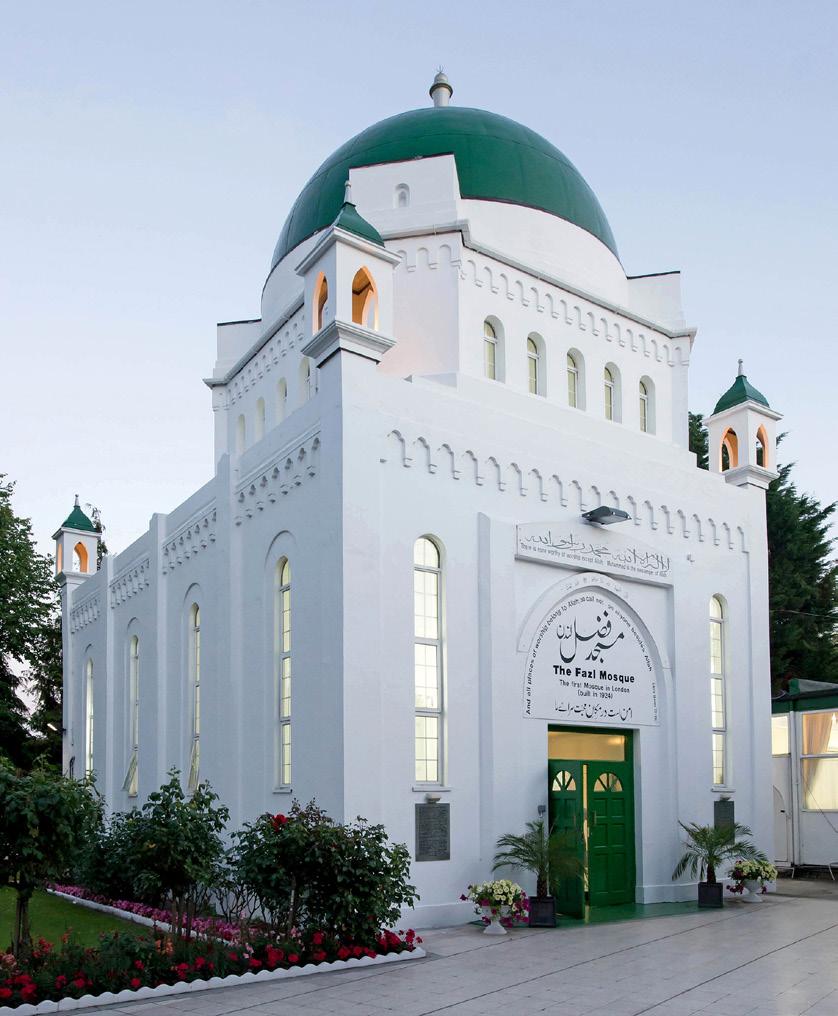
During this blessed trip, visiting the Fazl Mosque was a truly humbling experience. Standing in a place so deeply rooted in the history of Khilafat reminded me of the immense sacrifices and unwavering dedication that have carried the Jama’at through generations.
Similarly, the serene atmosphere of Islamabad (Tilford) reflected a sense of purpose, unity, and spiritual strength, further deepening my love for Khilafat. The Makhzan-e-Tasaweer exhibition beautifully showcased the legacy of faith, service, and sacrifice that defines our community, leaving me with a profound appreciation for those who have served before us.
I left the Mulaqat feeling uplifted, rejuvenated, and filled with gratitude. My heart brimmed with renewed motivation to align my actions with my faith and to serve others selflessly for the sake of Allah.
This experience strengthened my love for Khilafat and reaffirmed my sense of duty as a young Ahmadi Muslim - to uphold Islamic values, contribute positively to society, and remain ever devoted to the spiritual guidance of Khilafat in every aspect of my life.
“ I left the Mulaqat feeling uplifted, rejuvenated, and filled with gratitude. My heart brimmed with renewed motivation
Before I was even born My parents decided to adorn My soul with the most precious gift A life of service. An intention to lift The honour of religion, the light of faith
This scheme, a result of heavenly wishes Is to uphold the good, the righteousness Before it gets weighed down and diminishes By love of the world and it’s temporary riches
It was an answer to a call from the Divine To protect from what is fake but appears fine Materialistic ideas may glitter like gold But compared to true light shall lose all shine
In the eyes of my Lord, I hope I may be special as my parents dreamed, a wish so beneficial May I always uphold my prayers, and love of Qur’an and it’s beautiful layers, May my service be accepted My life, death, and all in between never wasted
After the darkness, may the sun always shine May I always find fulfilment in the will of the Divine.
Sabeeka Maqbool Rana
Pearls OF WISDOM
by Hazrat Khalifatul Masih V aba
On 12th October, 2025, a delegation of Nasirat and Waaqifaat-e-Nau from Ireland had the honour of an audience with Hazrat Mirza Masroor Ahmad, Khalifatul Masih Vaba.
An attendee asked Hazooraba for advice about overcoming negative emotions such as anger, jealousy and pride.
Hazooraba said: “First, make sure you offer all five daily prayers, and in at least one of them, prostrate before Allah and pray that you are not overcome by any negative emotions or harmful thoughts. In addition, whenever such feelings arise, offer Istighfar (the prayer for seeking forgiveness).
“Whenever you feel angry towards someone, offer Istighfar. It is very important to suppress one’s anger, and jealousy should not exist at all. They are not only emotions; they are vices. Indeed, they are sins in the eyes of Allah.
“So, you must give up sins, whether it is anger, jealousy, or pride –abandon them all. If you frequently seek Allah’s forgiveness, you will find that you naturally improve and better yourself.”
There after Hazooraba stated the importance of humility: “Do not think of yourself as being something special. That is why the Promised Messiah (peace be upon him) said: ‘Consider yourself to be lower than everyone else, for perhaps by doing so you will find a place in the abode of union with God.’ When you think of yourself as lower than others, then there will be no jealousy, no anger, and no pride – and through this humility, you will find Allah.”
Another attendee asked Hazooraba about feeling overwhelmed or pressured due to studying, and how one can overcome this by embodying complete trust in Allah the Almighty.
Hazrat Mirza Masroor Ahmadaba responded: “When you feel stressed, offer two Nawafil [voluntary prayers] or go into prostration and pray to Allah. Also, give some charity and help those in need. […] Give Sadaqah [alms]. There are a lot of things you can do to help the poor, and doing so will bring satisfaction to your heart. Allah the Almighty says that He accepts the prayers of those who give in charity. Also, recite Durood Sharif [invoking blessings upon the Holy Prophet (peace and blessings of Allah be upon him)] frequently and do not take unnecessary pressure.
“Your foremost duty right now is to study. If you wish to become a doctor, then study with full focus but without stress. At the same time, do not be so relaxed that you become careless – study properly, revise what you have learned at school when you return home. When your foundation becomes strong, you will not need to feel so anxious. Then place your full trust in Allah – say, ‘I have worked hard to the best of my ability, I have prayed to Allah, I have given charity and alms – now I entrust the outcome to You, O Allah.’
“If you trust in Allah in this way, then He never lets that trust go to waste. […] However, if you keep worrying all the time then it will only harm your mind and do no good. Therefore, you must relax; work hard; pray; give to charity and that is all. That is trust in Allah.”
Towards the end of the meeting, an attendee asked Hazooraba whether certain souls are burdened by Allah the Almighty because He loves them.
In response, Hazrat Mirza Masroor Ahmadaba explained: “The prophets of God are the ones who endure the greatest hardships. Once, a man touched the Holy Prophet (peace and blessings of Allah be upon him) and felt that his body was burning with fever, yet the Prophet (peace and blessings of Allah be upon him) was sitting calmly. The man asked, ‘Do you also fall ill with fever?’ The Holy Prophet (peace and blessings of Allah be upon him) replied, ‘Yes,
I experience illness and suffering even more intensely than others –but Allah the Almighty has granted me the strength to bear it. He gives me endurance because He knows I can withstand it. And despite this, I never abandon my duties.’
“The Promised Messiah (peace be upon him) has also written that prophets face immense trials. For instance, all of the Holy Prophet’s sons passed away during his lifetime, yet he bore each loss with patience. He suffered wounds in battle, but never uttered a word of complaint.
“Allah the Almighty grants strength to His chosen ones. Their trials serve as examples for the world – to show […] they too face pain and suffering. These trials exist so that people may see that even those most loved by Allah endure difficulties – yet Allah gives them the power to persevere.”
Nasirat and Waaqifaat-e-Nau Ireland, Mulaqat with Hazrat Khalifatul Masih Vaba. Tilford, Islamabad, 12 October 2025