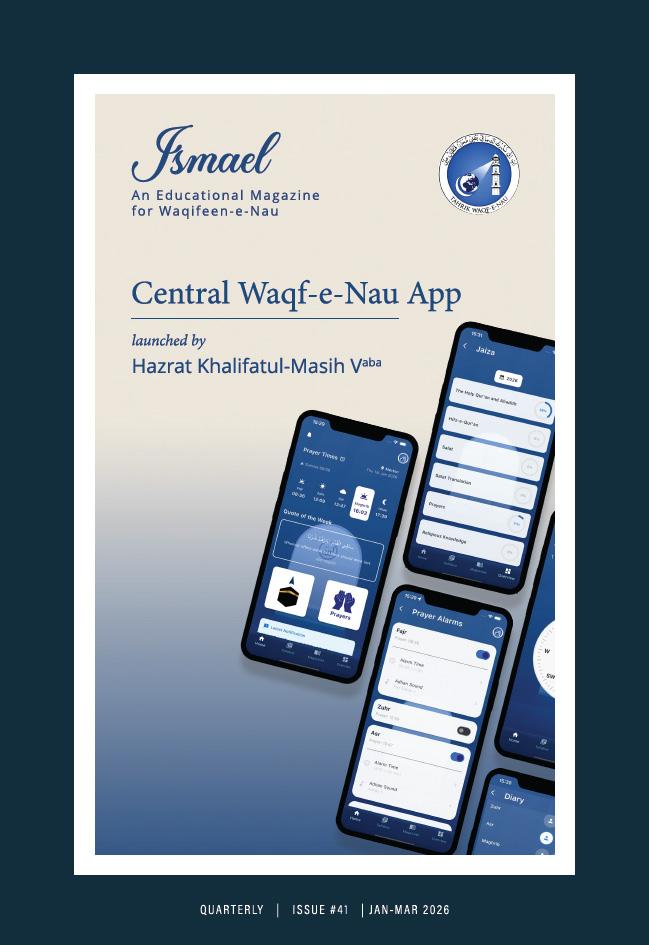
An Educational & Tarbiyyati Magazine for Waqifeen-e-Nau
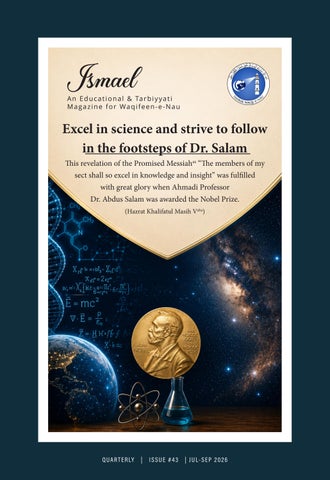
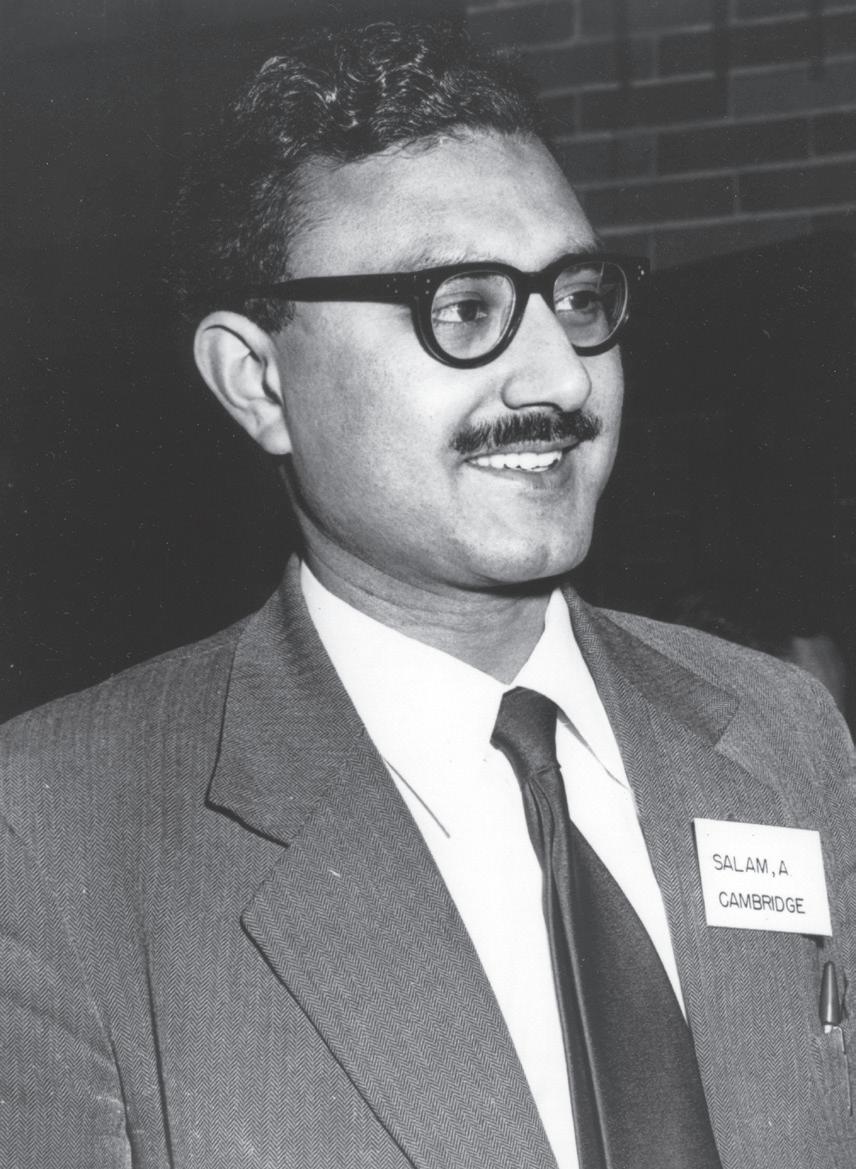
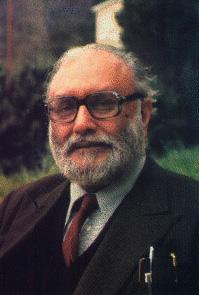
Excel in science and strive to follow in the footsteps of Dr. Salam
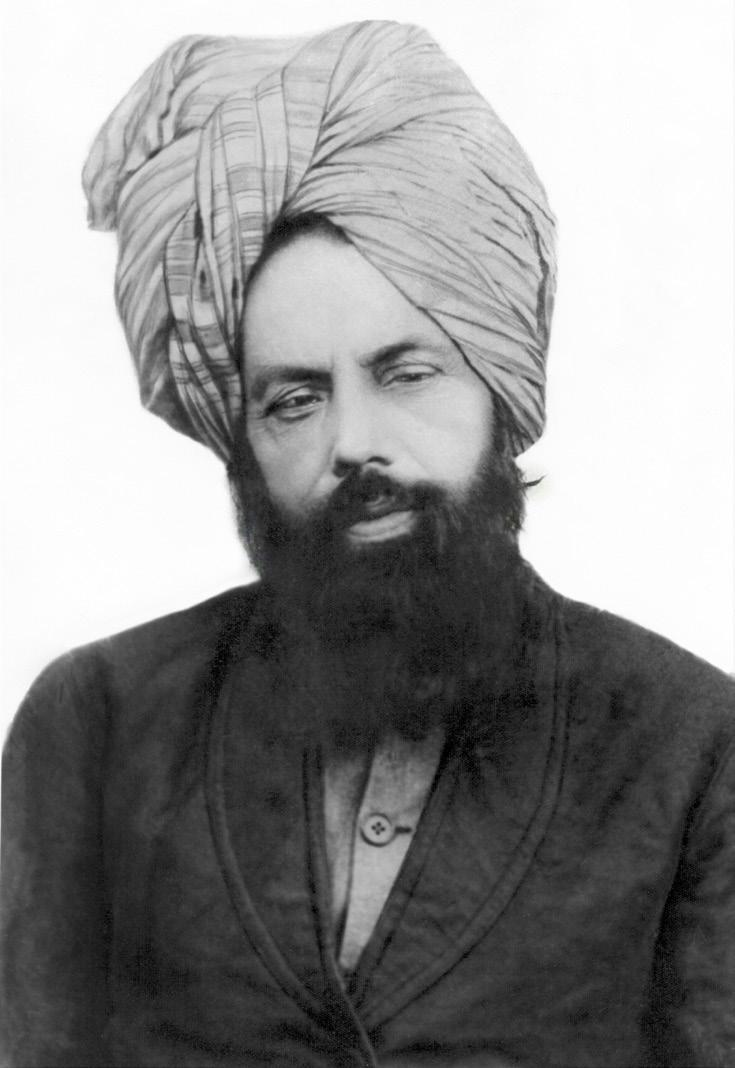
This revelation of the Promised Messiahas “The members of my sect shall so excel in knowledge and insight” was fulfilled with great glory when Ahmadi Professor Dr. Abdus Salam was awarded the Nobel Prize. (Hazrat Khalifatul Masih Vaba)
Subscription Contacts:
To subscribe to the Ismael Magazine contact your National Secretary Waqf-e-Nau
UK- Abdul Quddus Arif sec.waqfenau@ahmadiyyauk.org
Canada - Musleh Shanboor waqfnau@ahmadiyya.ca
USA - Mirza Harris Ahmad national.wn@ahmadiyya.us
Australia - Syed Wadood Janud waqfenau.australia@amj.org.au
Proofreading: Sadiq Ahmed Humza Sikander Noman Ahmed
Cover design: Aleem Ahmad
Designing Team: Fazle Umar Shahid (Lead Designer) Masroor Ahmad
Printers: Warners Midlands
What is Ismael Magazine?
By the grace of Allah Ta'ala, Waqifeen-e-Nau are now spread across the globe, many of whom are studying in their respective fields while others have already fulfilled their pledge of dedicating their lives for the Jama’at. There are many who are Missionaries, practising Doctors, Television producers, Architects, Graphic designers, Engineers, Accountants and much more.
Ismael is an international magazine, which was launched in 2012 by Hazrat Khalifat-ul-Masih the fifthaba specifically for the Waqifeen-e-Nau around the world. At this auspicious occasion, addressing the Waqifeen-e-Nau Huzoor-e-Anwaraba wrote:
“The magazine has been named as “ISMAEL”, which reminds us of the sacrifices made by Hazrat Ismaelas and by Hazrat Hajiraas who spent their lives in a desolate and barren place and instituted exceptional standards of sacrifices for the sake of religion. Likewise, it is expected of every Waqf to uphold the covenant of Waqf (dedication) made by their parents even before their birth, who have in turn themselves reaffirmed the same.”
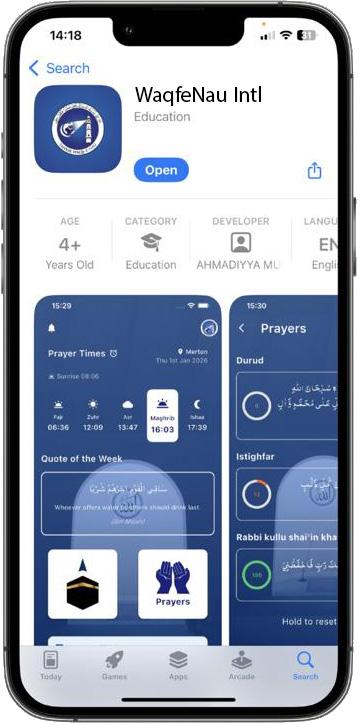
Waqifeen-e-Nau can contribute by sending articles regarding their respective fields of studies. This magazine is published on a quarterly basis as a platform for the Waqifeen-e-Nau to get in touch and express what they have always wanted to. To subscribe to this magazine, you can contact your National Waqf-e-Nau Secretary. You can also read and download the magazine online at: www.waqfenauintl.org/ resources/ismael
Remember, this magazine is for the Waqifeen-e-Nau, prepared by the Waqifeene-Nau. Everyone is welcome to send their articles, contributions and comments. Ismael magazine is the central magazine for Waqifeen-e-Nau from around the globe.
The Holy Quran
In the creation of the heavens and the earth and in the alternation of the night and the day there are indeed Signs for men of understanding; Those who remember Allah while standing, sitting, and lying on their sides, and ponder over the creation of the heavens and the earth: “Our Lord, Thou hast not created this in vain; nay, Holy art Thou; save us, then, from the punishment of the Fire.
The Holy Quran 3:191-192
The Holy Prophetsa
Narrated Abu Musa: The Prophetsa said, "The example of guidance and knowledge with which Allah has sent me is like abundant rain falling on the earth, some of which was fertile soil that absorbed rain water and brought forth vegetation and grass in abundance. (And) another portion of it was hard and held the rain water and Allah benefited the people with it and they utilized it for drinking, making their animals drink from it and for irrigation of the land for cultivation. (And) a portion of it was barren which could neither hold the water nor bring forth vegetation (then that land gave no benefits). The first is the example of the person who comprehends Allah’s religion and gets benefit (from the knowledge) which Allah has revealed through me (the Prophets and learns and then teaches others. The last example is that of a person who does not care for it and does not take Allah’s guidance revealed through me (He is like that barren land.)"
Sahih Al-Bukhari 79
The Promised Messiahas Three Stages of Knowledge
There are three stages of knowledge: knowledge by inference, certainty by sight and true certainty. For example, to believe in the existence of a fire somewhere at the sight of smoke is knowledge by inference. However, to see the fire with one’s eyes is certainty by sight. After this, there is true certainty, which is akin to putting one’s hand into the fire and to know for certain that the fire exists by experiencing its heat and burning sensation. How unfortunate is the one who has attained neither one of these stages. According to the following verse, a person who is deprived of Allah’s grace is entangled in the practice of blindly following others. Allah the Exalted states:
Meaning, a person who strives in our cause shall be shown the ways that lead to Us. Along with this promise, we have also been taught the prayer:
Therefore, man ought to keep this in mind and supplicate fervently in their formal Prayer, lest he departs from this world blind and bereft of insight. Allah Almighty states:
Meaning, whoso is blind in this world shall be blind in the hereafter. This demonstrates that we must take our ability to see from this very world, so that we may be able to witness the hereafter. In order to experience the next life, our senses are to be developed in this very world. Can it be conceived that Allah the Exalted would make a promise and then break it?
(Malfuzat – Volume 1, pages 18 & 19)
Pearls of Wisdom
Certainly, out of all the heavenly scriptures, the Holy Qur’an is unique in terms of the vast amount of insight it has given about the universe and its inception and how it has encouraged scientific research and the pursuit of knowledge.
In this regard, the Promised Messiahas [Hazrat Mirza Ghulam Ahmad of Qadian] has stated that when a believer studies and ponders over the celestial bodies and the entire universe, it causes their minds to open up and for them to become enlightened.
The result is that they are led towards a firm belief in the existence of God Almighty, as they see the signs and evidence for His existence all around them.
On the other hand, the interests of worldly and non-religious researchers are finite and narrow.
When they study something, they assess it in a limited way.
However, a righteous person is not satisfied by merely identifying the dimensions of the world, its material form or calculating the gravitational forces.
Nor are they content by simply determining the main characteristics of the sun, the moon and the stars; rather, a true believer will continually strive and struggle to observe and understand the perfect harmony of nature and the world around us.
He or she will have an unquenchable thirst to identify the hidden characteristics or potential of the physical world and as they realise its brilliance and perfection, they will inevitably be drawn towards their Creator and their faith in the existence of God Almighty will be enhanced.
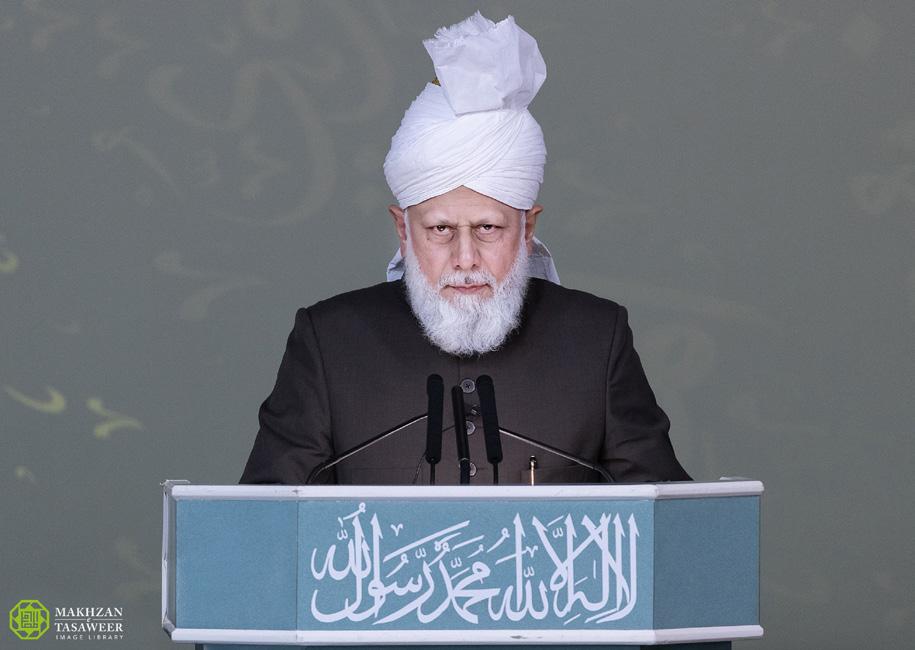
Concluding address by Hazrat Khalifatul Masih Vaba at Ahmadiyya Muslim Research Association (AMRA) Conference on 14th December 2019
Waqf-e-Nau: Faith, Knowledge and Moral Excellence
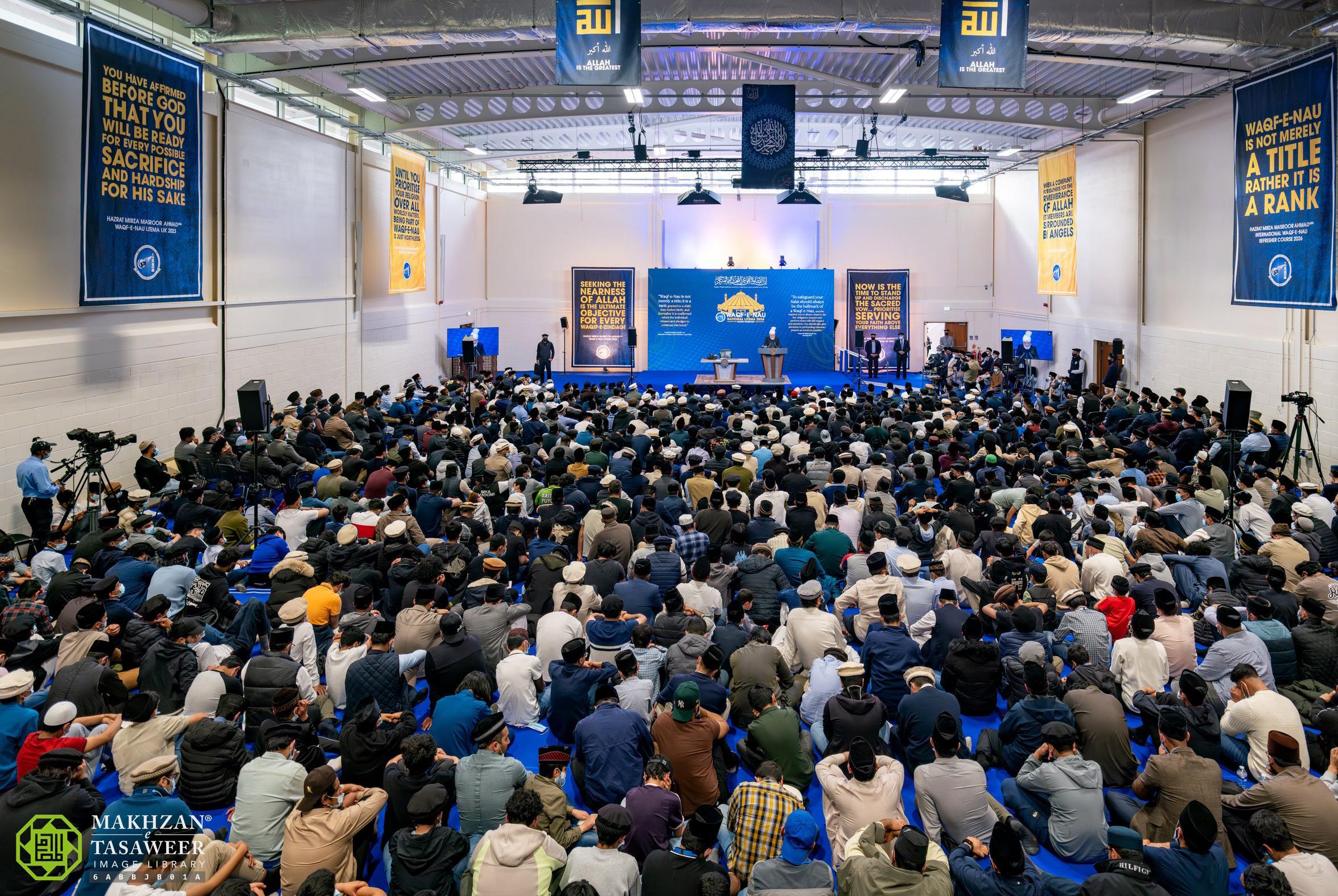
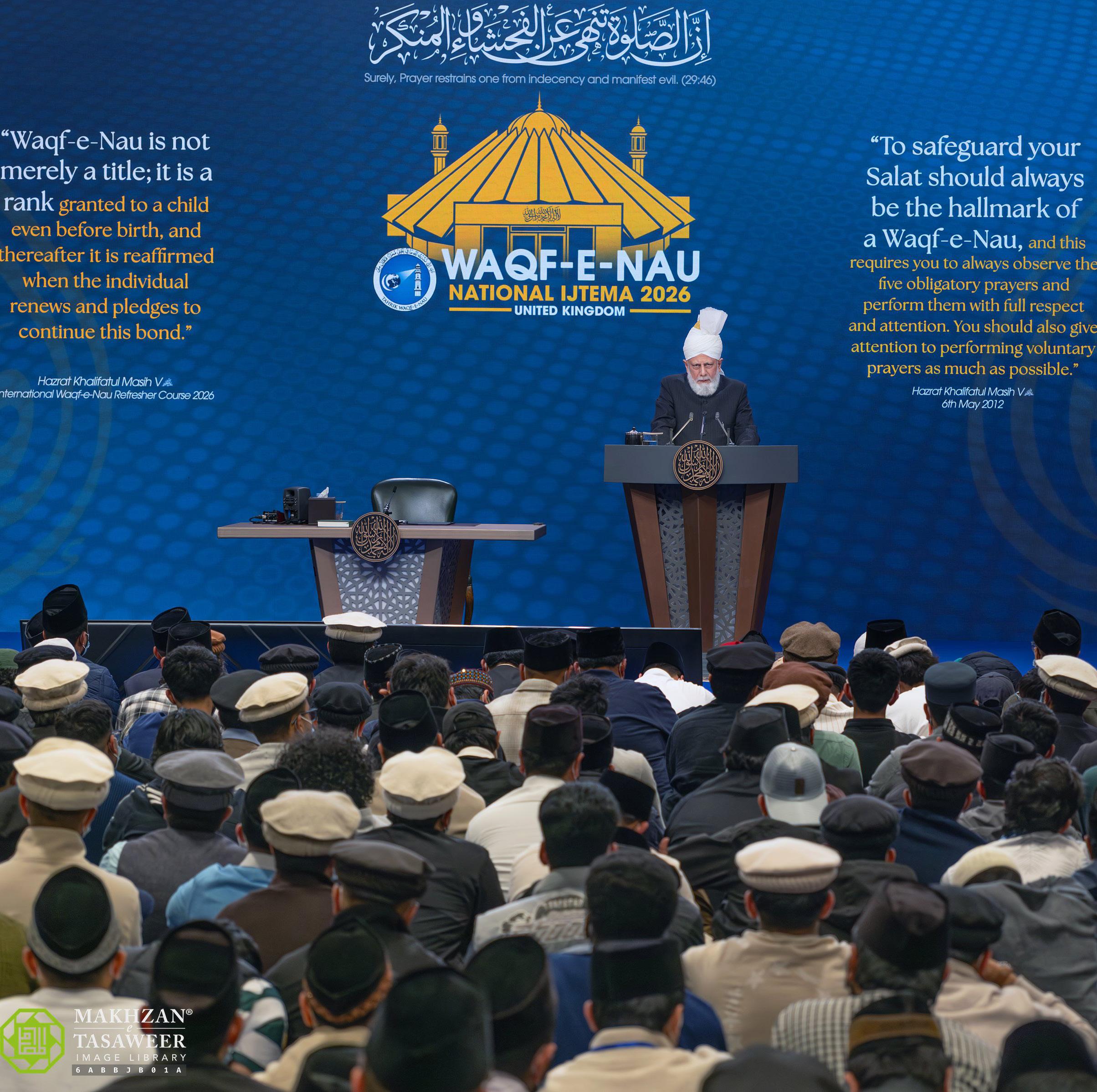
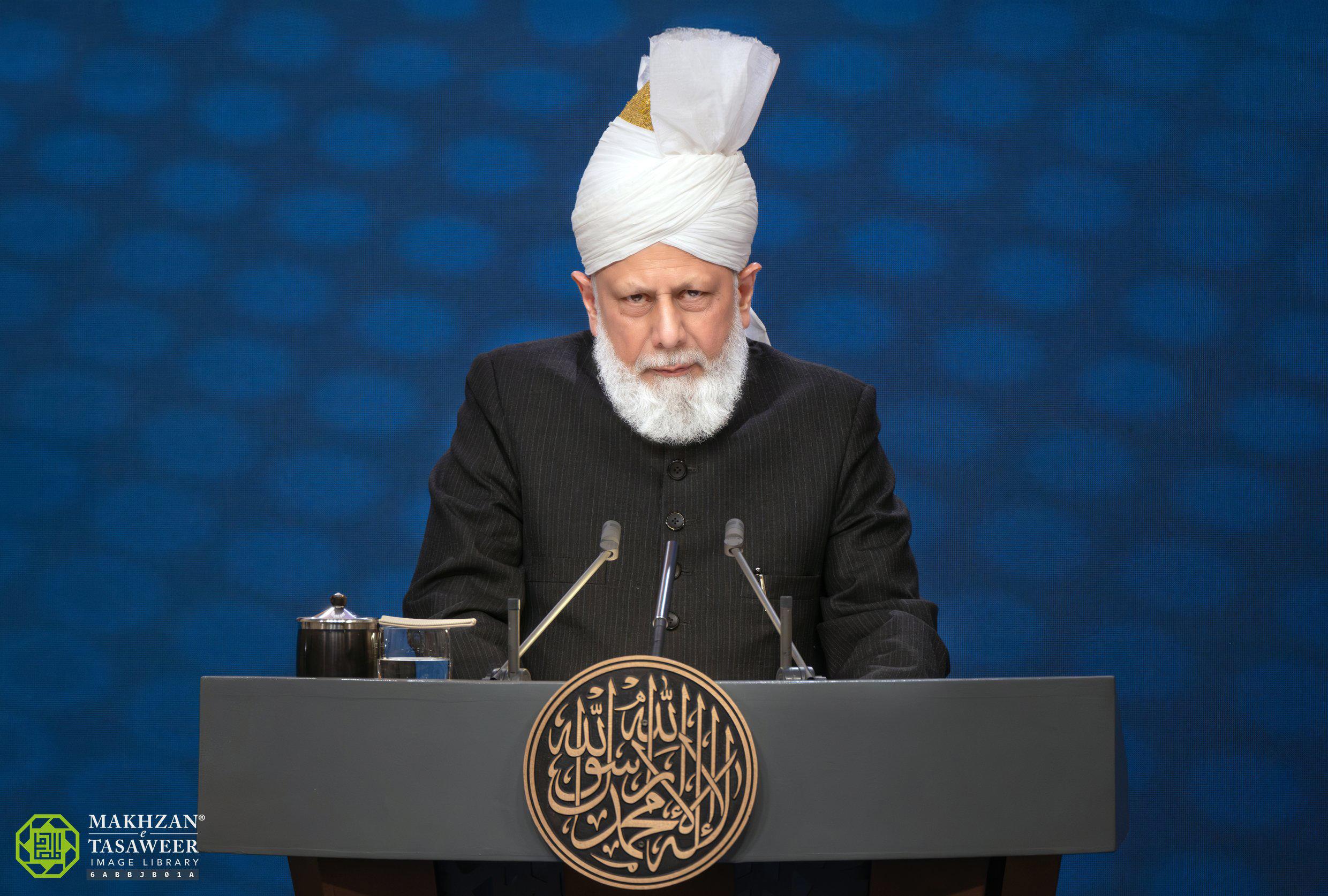
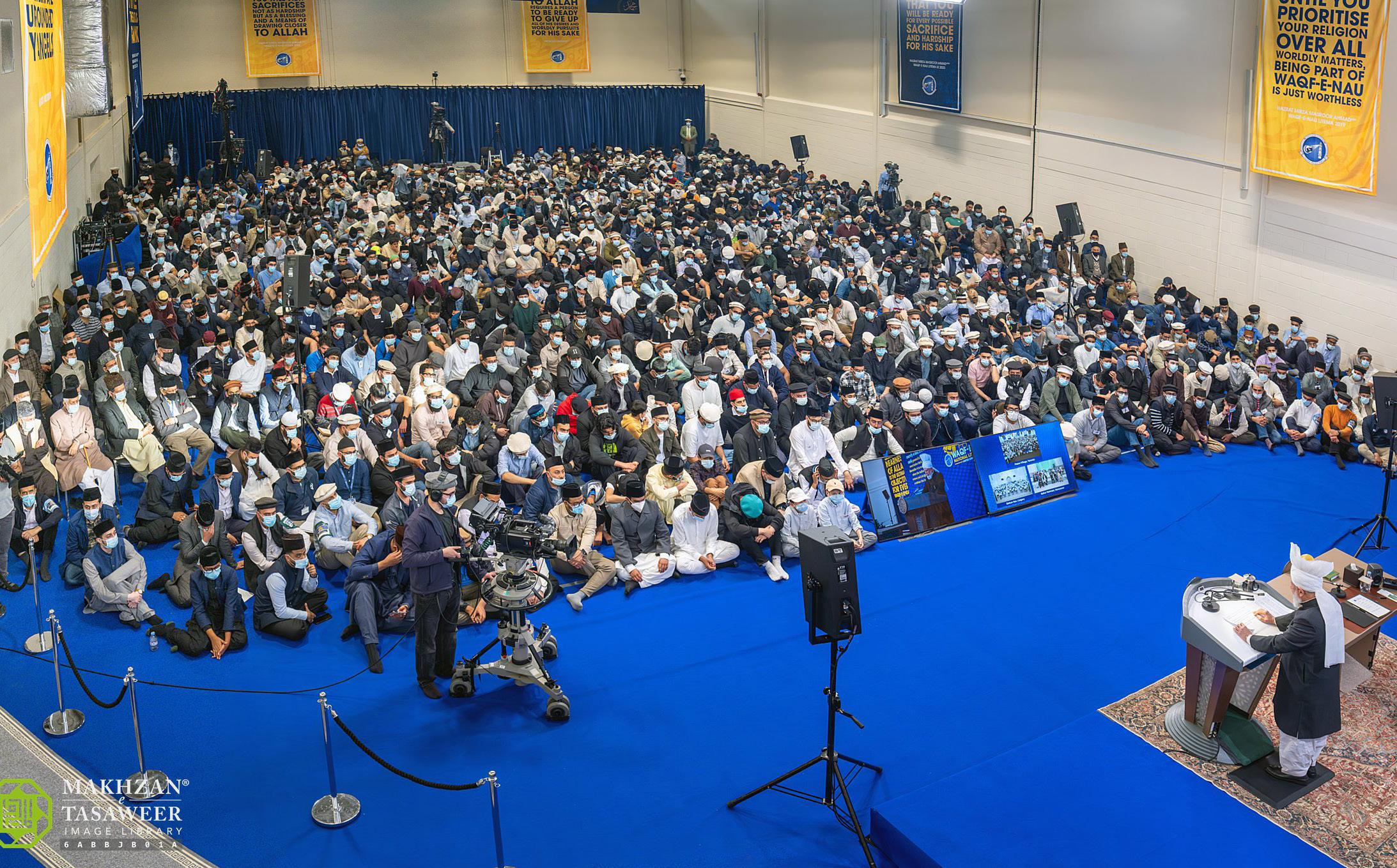
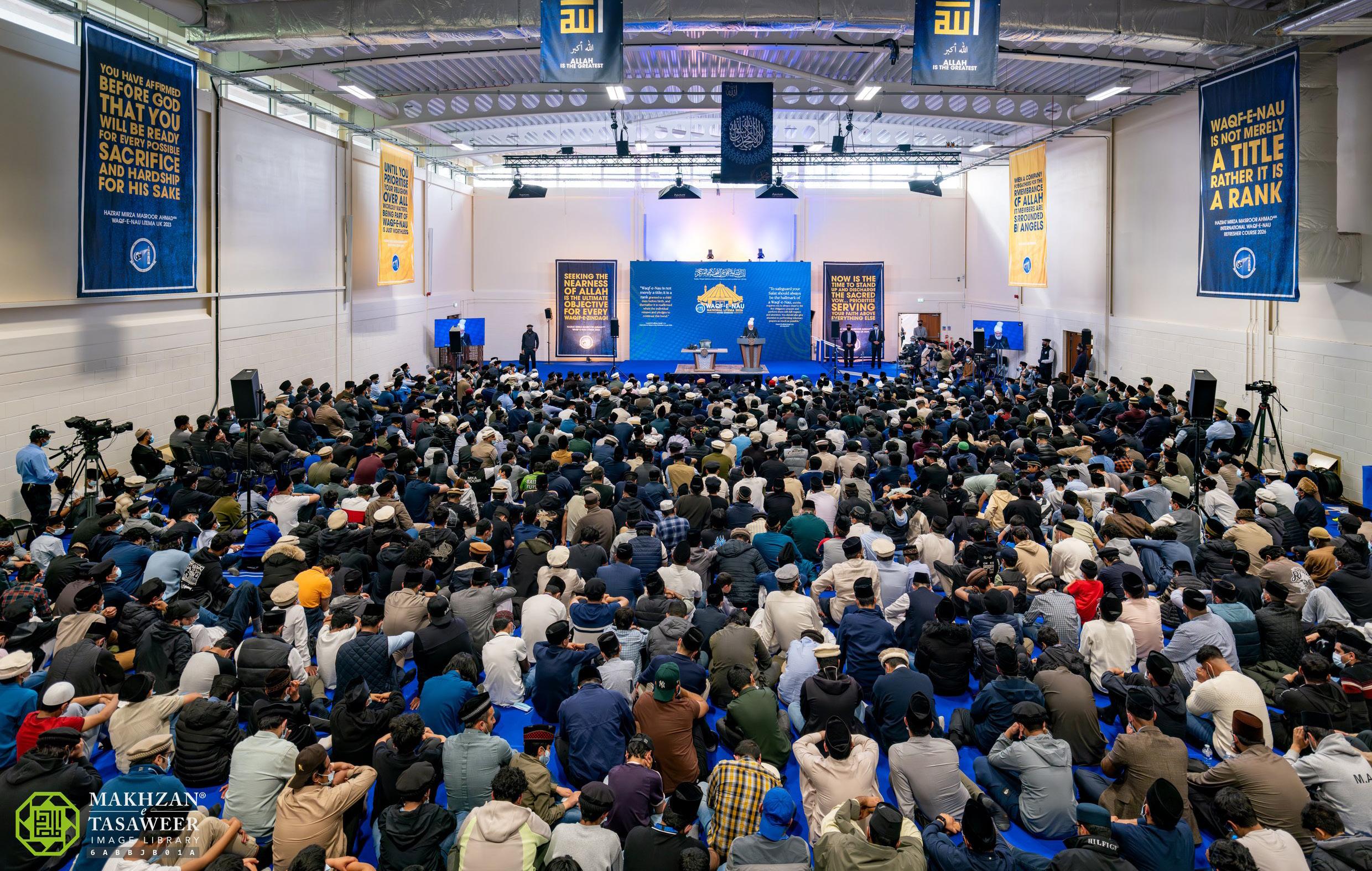
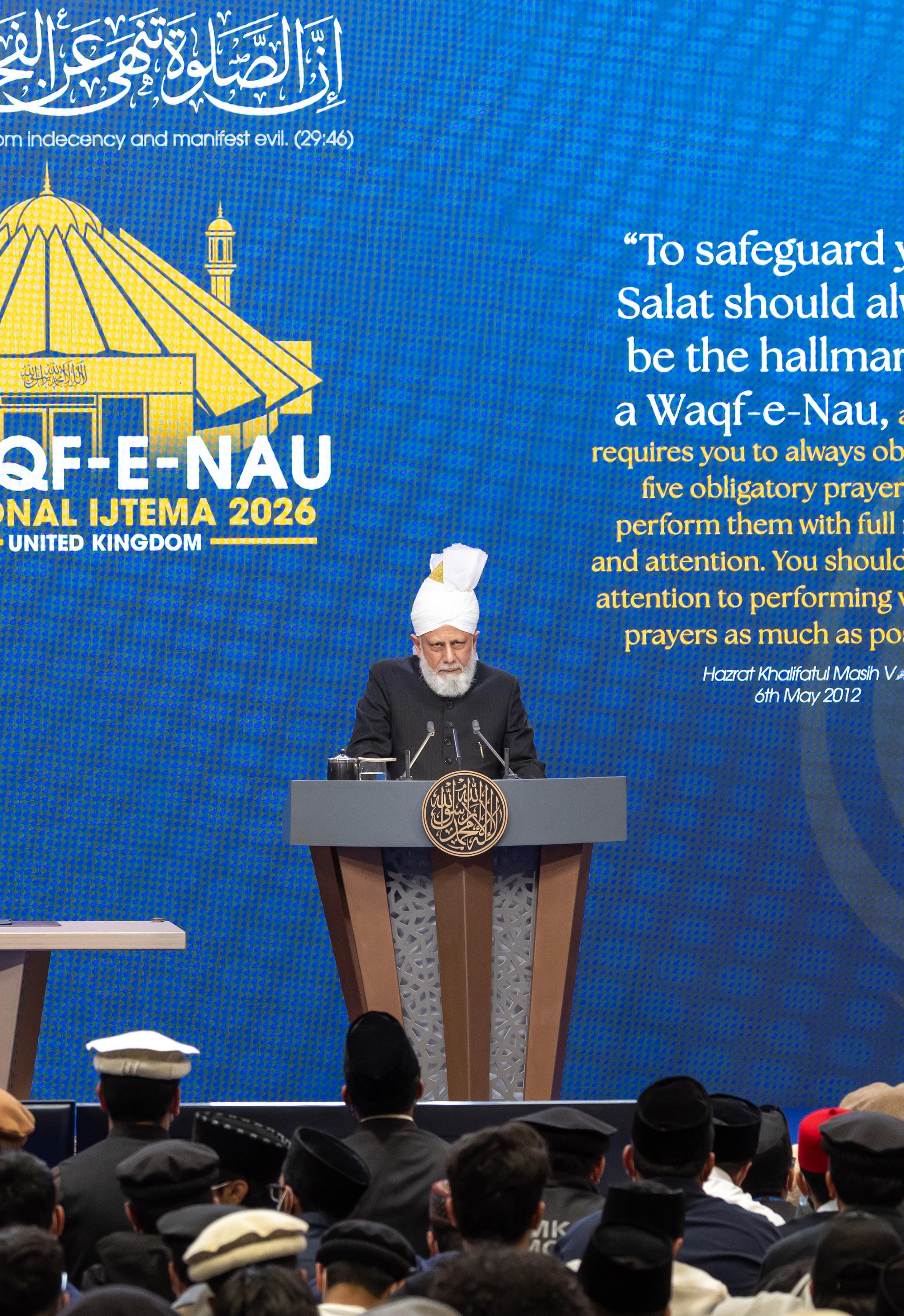
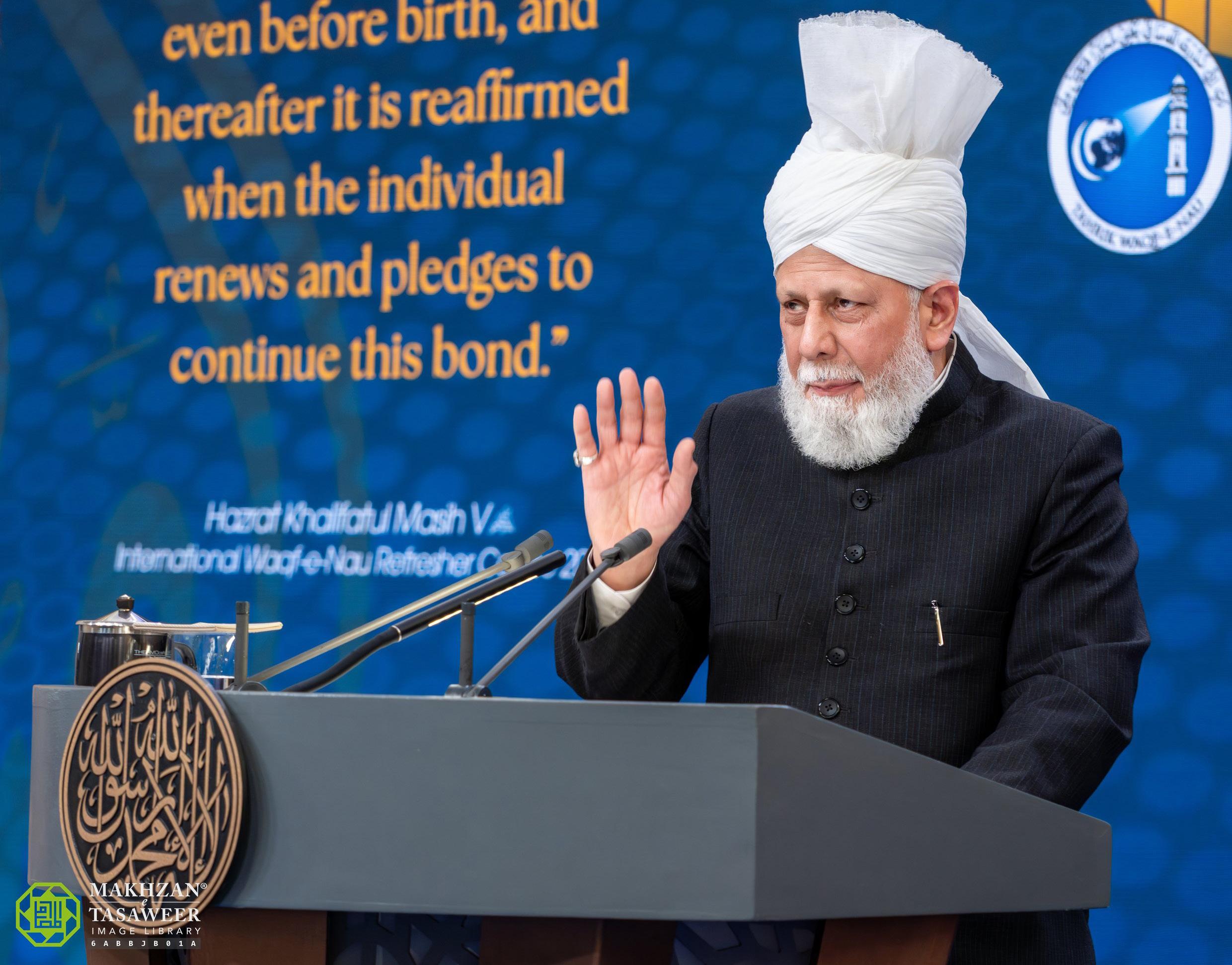
Keynote Address by Hazrat Khalifatul Masih Vaba at the National Waqf-e-Nau Ijtema UK on Sunday, 26th April 2026 from the Masroor Hall in Islamabad, Tilford, Surrey, UK
After reciting Tashahhud, Ta`awwuz and Surah al-Fatihah, Hazrat Khalifatul Masih Vaba said:
‘With the grace of Allah, you are gathered here for National Waqfe-Nau Ijtema, and today we have with us Waqifeen-e-Nau from Canada as well.
As Waqifeen-e-Nau, you hold a unique distinction that you are part of a group of people whose parents, prior to your birth, made a sacred vow to dedicate your lives to the service of Islam. Moreover, having reached maturity, you have independently chosen to renew this bond. In this way, you have transformed that parental pledge into your own lifelong mission.
Let me also be clear that this is not a path of compulsion. Upon reaching an age of understanding, the Jama’at gives each of you the choice to either reaffirm your parents’ pledge or to withdraw from the Waqf-e-Nau scheme. Furthermore, if you choose to leave, you are not guilty of any sin, and nor should you be judged unkindly. Rather, acting with truth is something that Allah the Almighty requires from us and likes. So, if you are open and honest and say that you are unable to fulfil your Waqf, it is your right. Over the years, a number of people have expressed their desire to with-
draw from the scheme, and they are always excused. While this is their prerogative, they should not forget their responsibilities as Ahmadis, and should always strive to honour the conditions of Bai`at and fulfil the rights of Allah and of mankind.
Yet, those who willingly renew the pledge of Waqf-e-Nau must
strive with complete sincerity to fulfil it, recognising that the standard of devotion expected of a Waqif-e-Nau exceeds that of other Ahmadis. As this Ijtema is specifically for the Waqifeen-eNau, I shall now outline the core values you must seek to instil within yourselves to fulfil your duties and to emerge as outstand-
ing servants of the Jama`at.
Most of you have reached an age of maturity and understanding. In fact, many of you are now married and have children of your own. Therefore, you must recognise that now is the time to fully manifest and fulfil your pledge.
With this in mind, I shall now briefly outline the expectations of the Promised Messiahas based on his words and instructions about the fulfilment of our religious duties and attaining the ranks of true believers. As Waqf-e-Nau, your mindset must be that you are the primary recipient of these instructions and that you must fulfil them with greater zeal and devotion than anyone else. If you act upon these instructions, you will live as true Ahmadi Muslims and fulfil your pledge as a Waqife-Nau.
A fundamental instruction of the Promised Messiahas was that his followers must manifest the highest moral standards and etiquette at all times. He emphasised that a person must never allow their passion, anger, or ego to overpow-
er their speech or conduct; nor must they ever let their emotions incite them to injure the feelings of others. The Promised Messiahas further explained that Allah desires for those who have associated themselves with him to be beacons of moral excellence for others to emulate. Therefore, as Waqf-e-Nau, you must not only manifest the highest moral values yourselves but should also become the catalyst for the spiritual and moral reformation of others.
While every Ahmadi should be a positive role model, the responsibility lies even heavier upon Waqifeen-e-Nau, as you have not only accepted the Promised Messiahas but also vowed to stand on the front lines of service and of giving precedence to your faith over all worldly matters. If you fail to uphold your basic duties, the world will rightly wonder how it is that you claim to prioritise your faith, yet the standard of your worship remains poor. They will question why your conduct fails to match your religious teachings. Instead of being
drawn to your character, people will turn away and dismiss your claims as hollow and insincere. So, it is your duty to set an example so compelling and powerful that others are naturally inclined towards you and consider you a true role model. Furthermore, the Promised Messiahas instructed that our belief in the oneness of God, Tauhid, must be unconditional and unshakable. Moreover, Allah’s Majesty and Greatness must be firmly imprinted in our hearts. A true believer should be so conscious of Allah’s power and
greatness that it instills within him a reverential fear that they must never commit any act that might displease Him. Your gratitude and love for Allah should ignite within you a burning desire to utilise all your God-given capabilities in order to gain His pleasure and to become a pious and beneficial member of the Jama`at. When the world looks in your direction, they should recognise that the followers of the Promised Messiahas are those who exhibit superior morals and are consumed by the awe of Allah’s greatness and mercy.
The Promised Messiahas further instructed that his followers must excel in righteousness, Taqwa, whereby our every action ought to be governed by a profound love for Allah and a sincere fear of displeasing Him. This is a theme I often address in my Friday sermon, because the Promised Messiahas taught that Taqwa is the essence of Islamic teaching and fundamental to our faith.
Indeed, in the Holy Qur’an, Allah commands us about the importance of Taqwa on more than 100 occasions. So, always remember that only if we have true righteousness in our hearts can we
become sincere Ahmadis, true Waqifeen-e-Nau and devoted Waqif-e-Zindagi.
Regarding Taqwa, the Promised Messiahas taught that righteousness requires our words and deeds to exist in perfect harmony. If our actions contradict our words, it means hypocrisy has entered our hearts. It means we do not fear displeasing Allah. Instead of reaping Allah’s rewards, such people descend into sin and incur His displeasure. As such, you must all reflect upon whether you are truly striving to achieve these high standards.
If you have exhibited moral or spiritual weaknesses in the past, you must sincerely pledge that from this moment onwards, you will strive to bring about a spiritual transformation in your life. Make a firm resolution in your hearts that everything you say and do shall be governed by a desire to attain Allah’s nearness. Remember, it is not too late to bring about a positive change in your life. The doors to Allah’s mercy and grace are always open to those who sincerely seek them. The Promised Messiahas further explained that Allah has blessed us with many faculties and abilities, but they are not bestowed upon us to be wasted or squandered in vain pursuits. Instead, they are granted for a great and noble purpose. Thus, we must never abuse these God-given gifts. We must use them in the pursuit of goodness and the service of faith, and never in the commission of evil or immoral practices. Today, we often hear about the technological revolution that has taken place in recent decades. Yet,
instead of propelling humanity forward, these modern technologies all too often drive people towards vile and corrupting forces. Unquestionably, the internet, social media, gaming and other platforms are fueling a tide of immorality and misinformation. They are polluting minds and thrusting young people in the direction of depravity, indecency, and destructive addictions. These platforms are designed to take us away from our true purpose and to erode moral values for the sake of profit and pushing a godless agenda.
In the face of such destructive influences, you must exercise absolute self-control and discipline. Instead of succumbing and surrendering your moral values and potential to fleeting temptations, you must maintain control over your emotions and ensure that your God-given capabilities are used in positive ways. Those who do so will be immediately rewarded by Allah.
In the Holy Qur’an, Allah Almighty says that,
“Surely, success does come to the believers.”
)The Holy Qur’an, 23:2(
To attain this success, the Promised Messiahas taught that Salat is fundamental. A believer must be diligent in offering the five daily prayers. Moreover, our prayers should be offered in a state of absolute humility and total submission to Allah the Almighty. A person’s focus must be directed entirely towards Allah alone. It should not be that you rush your prayers merely to fulfil the obligation. Instead, as you begin each Namaz, your mindset should be that you are entering the throne of Allah in order to present all your desires and needs before Him. You should immerse yourselves so fervently in prayer that tears naturally fall from your eyes as you submit and bow down before your Creator. Beseech Him for His help and mercy that you may be counted among the righteous and among those who adopt virtue and abstain from sin.
Pray with all your heart that Allah enables you to utilise the abilities and faculties He has granted you
in a way that leads to His pleasure and nearness. This is the key to success, which leads to the acceptance of one’s prayers.
In today’s world, people are very quick to voice frustration and lament their misfortune without exhibiting patience or self-reflection. Many people, including amongst the Waqf-e-Nau, are quick to complain over trivial matters or worldly desires that have not been immediately fulfilled. However, the Promised Messiahas taught us that our deepest concern and greatest source of restlessness, far beyond any worldly loss or trial, should be whether we are truly walking on the path of righteousness. He taught that if a person is truly grief-stricken over their spiritual state and yearns for Allah’s love beyond everything else, they will find that success and prosperity will begin to gush forth in their direction.
He further stated that if a person aspires to attain true excellence, everlasting felicity, and above all, the pleasure of Allah, there is a clear and definitive path to follow: the Holy Qur’an. By following its
teaching, not only will a person acquire spiritual peace, but they will also win the hearts of their families, their peers, neighbours, and the wider society. Thus, always remember that the Holy Qur’an is our greatest and foremost guiding light.
Immerse yourself in the study and seek to act upon all of its divine commands. Allah has clearly defined what is right and what is wrong. If you inculcate these Qur’anic teachings into the fabric of your character, others will naturally gravitate towards you and your words will have a powerful effect.
Sometimes, complexes emerge amongst young people, where they feel that they must conceal their faith in order to fit in with society. However, remember that others will respect and value you if you are sincere to your faith and practice what you preach.
Therefore, submerge yourselves in Qur’an’s heavenly light and strive to act upon every one of its injunctions.
On another occasion, the Promised Messiahas stated that to have a strong and positive effect on the hearts and minds of others, you must first better your own state and ensure that your conduct is governed by truth and righteousness. Accordingly, it is essential a person continues to reflect upon their character, seeking to eliminate their weaknesses. In terms of discerning right from wrong, as I said, a believer should always seek instruction directly from the Holy Qur’an.
Furthermore, in light of Islam’s teachings, the Promised Messiahas urged his followers to pursue knowledge. He taught that true intelligence and understanding correlate directly with righteousness and that wisdom and foresight are unattainable without turning towards Allah.
It is easy to claim to believe in Allah, but to prove that claim,
we must turn towards Him at all times. An atheist or non-believer may credit whatever they achieve to their intelligence and personal efforts. Certainly, if they work hard, they will attain a degree of success. However, because they are bereft of divine guidance, their knowledge and faculties can only take them so far. Thus, if an atheist and a sincere believer work in the same field, the believers who seek Allah’s guidance and help will immediately reap far greater rewards and enduring success.
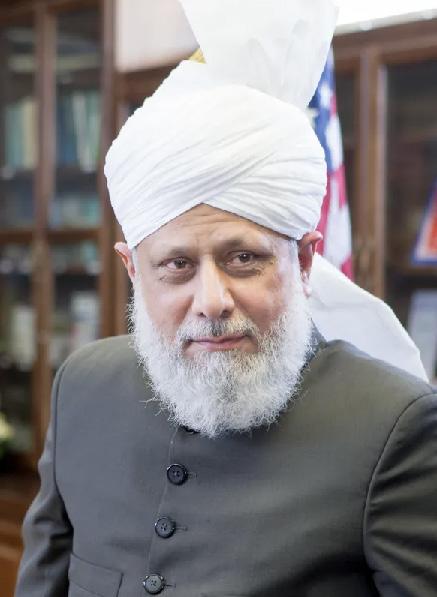
In terms of our Jama`at, so far, we have only had one truly outstanding example of an Ahmadi who reached the pinnacle of the scientific world: Dr. Abdus Salam. In all his ground-breaking works, he drew inspiration from the Holy Qur’an at every step. Today, with the grace of Allah, there are also many Ahmadis who are excelling in academia, research, and a wide
range of professional disciplines. Their work is being recognised by their peers, and their contributions are having a positive impact in their respective fields. Yet, there is much further to go.
Our Jama`at must seek to produce many more people who, whilst bearing witness to the glory of Allah, scale the peaks of human knowledge. It was during the era of Hazrat Khalifatul Masih IIIrh that Dr. Salam Sahib won the Nobel Prize in Physics. The Third Khalifahrh himself had a great passion for learning and education, and so he launched a scheme urging Ahmadis to excel in science and to strive to follow in the footsteps of Dr. Salam. He said that achieving this objective required Ahmadis to relentlessly pursue excellence in their fields, whilst also striving to develop an intimate bond with Allah the Almighty.
Whilst those who deny the existence of God may reap the rewards of their labour, a believer who dismisses Allah’s help and considers their achievements to be a result of their effort alone shall be guilty of hypocrisy and deceit.
Hence, to succeed, a believer must act upon Allah’s commands and combine this with hard work and sincere prayer. If an Ahmadi pursues knowledge in this way, they shall witness the blessings of Allah rain down upon them, and they will be granted success after success.
Regarding the pursuit of knowledge, the Promised Messiahas stated that certain religious people or clerics viewed science as dangerous and believed it led people away from religion or belief in God. The Promised Messiahas categorically rejected this opinion. He said that human knowledge and enlightenment emanate from Allah, and so there is no reason to fear scientific discoveries. He urged his followers to learn modern sciences and affirmed that rationality and reason were entirely in keeping with the teachings of Islam.
In reality, it was a lack of scientific knowledge and understanding that led certain religious figures to reject modern science. Their ignorance left them exposed and fearful. Unsurprisingly, atheists seized upon their hesitancy as
proof that science and religion were inherently incompatible. However, the Promised Messiahas refuted these claims. Instead, he said believers should acquire scientific knowledge and not harbour any form of anxiety or inferiority complex in this regard. He explained that reason and knowledge descended from the heaven as a form of spiritual light, and intelligent minds with the capacity to absorb it remain ever engaged in the pursuit of such enlightenment. He gave a beautiful example of how when rain falls from the heaven, its effect depends on the soil it lands upon. If the rain lands upon fertile ground, the earth draws benefit and produces beautiful, fragrant flowers and rich crops. Conversely, if the same rain falls upon barren land, nothing but weeds and thorns will result. The Promised Messiahas said that the same is true with human intelligence.
If a person sincerely believes Allah to be the Creator of the worlds and earnestly seeks to understand his creation, then Allah opens their minds in a
way that enables them to surpass others. Their minds become a fertile ground absorbing the light of knowledge that remains hidden to others. As I said, the Promised Messiahas refuted those clerics who said science was dangerous and to be shunned. He described the souls of such clerics as trembling in the face of philosophy and modern research. They feared science because they did not understand it and did not possess the wisdom to recognise that it actually went hand in hand with the teachings of Islam. Thus, the Promised Messiahas urged his followers not only to pursue scientific knowledge, but to harness their discoveries in support of Islam’s teachings and to prove its truth.
This is a great challenge for all of you as Waqifeen-e-Nau. Whereas atheists try to use science to disprove the existence of God, it is your duty, especially those who have an aptitude and interest in science, to use it to prove His existence. Seek to dismantle the allegations laid against religion through the power of reason and rationality.
At this time, some of you are serving as full-time Waqif-e-Zindagis, while the majority of you are either working externally or remain engaged in studies. Regardless of your chosen path, you must strive to reach its pinnacle. Thereafter, whenever you achieve success or make a breakthrough, proclaim to the world that the knowledge you gained was inspired by the Word of God, and that the practical manifestation of Allah’s teachings is revealed through science, nature, and the world around us.
At the same time, never let the pursuit of knowledge breed arrogance or take you away from your faith. The Promised Messiahas warned that some people become so infatuated by their knowledge and education that instead of drawing closer to Allah, they join the ranks of those who believe that science and religion oppose one another. As a result, they focus purely on secular knowledge and distance themselves from God. Therefore, as Waqf-eNau, you must heed this warning and remain vigilant against all forms of pride.
As you strive to excel in your pursuit of knowledge, never neglect the rights of worship owed to Allah the Almighty. Crucially, you must never miss any of the five daily prayers. You must read and study the Holy Qur’an on a daily basis, as well as reading the books of the Promised Messiahas and other religious books. Moreover, the Promised Messiahas also said that the cornerstone of your faith required us to adopt the highest moral standards within our homes. Thus, treat your family with love and compassion, and ensure that an atmosphere of loving affection remains present at all times within your home. In this way, your home life will also be a living testament to the blessings of Waqf-e-Nau. Others will see that even if you are not working full-time as an employee of the Jama`at, your homes remain enveloped in Allah’s grace and mercy, proving that those who pledge their lives for the sake of their faith are blessed with true contentment and happiness.
Now, as the Ijtema draws to a close,
I wish to conclude by reminding you again that the Promised Messiahas taught us that the key to attaining all forms of success and prosperity is righteousness. So, strive to adopt it by acting in accordance with the commands of Allah at all times. Only then will you gain the nearness of Allah. Only then will you attain the rewards and blessings of your faith. Only then will you receive the joys of the world. Only then will your homes be content. Only then will you be a means of peace for those around you. Only then
will you be a true role model. And only then shall you do justice to the pledge of Waqf-e-Nau.
May Allah, the Almighty, enable you to understand what I have said, and may you act upon it so that you fulfil the purpose of your lives and guide others towards Allah. May you all prove to be a source of lasting benefit for mankind, and may you fulfil the demands of being a Waqf-eNau and serve the cause of Islam Ahmadiyyat with the utmost distinction throughout your lives. Ameen.’
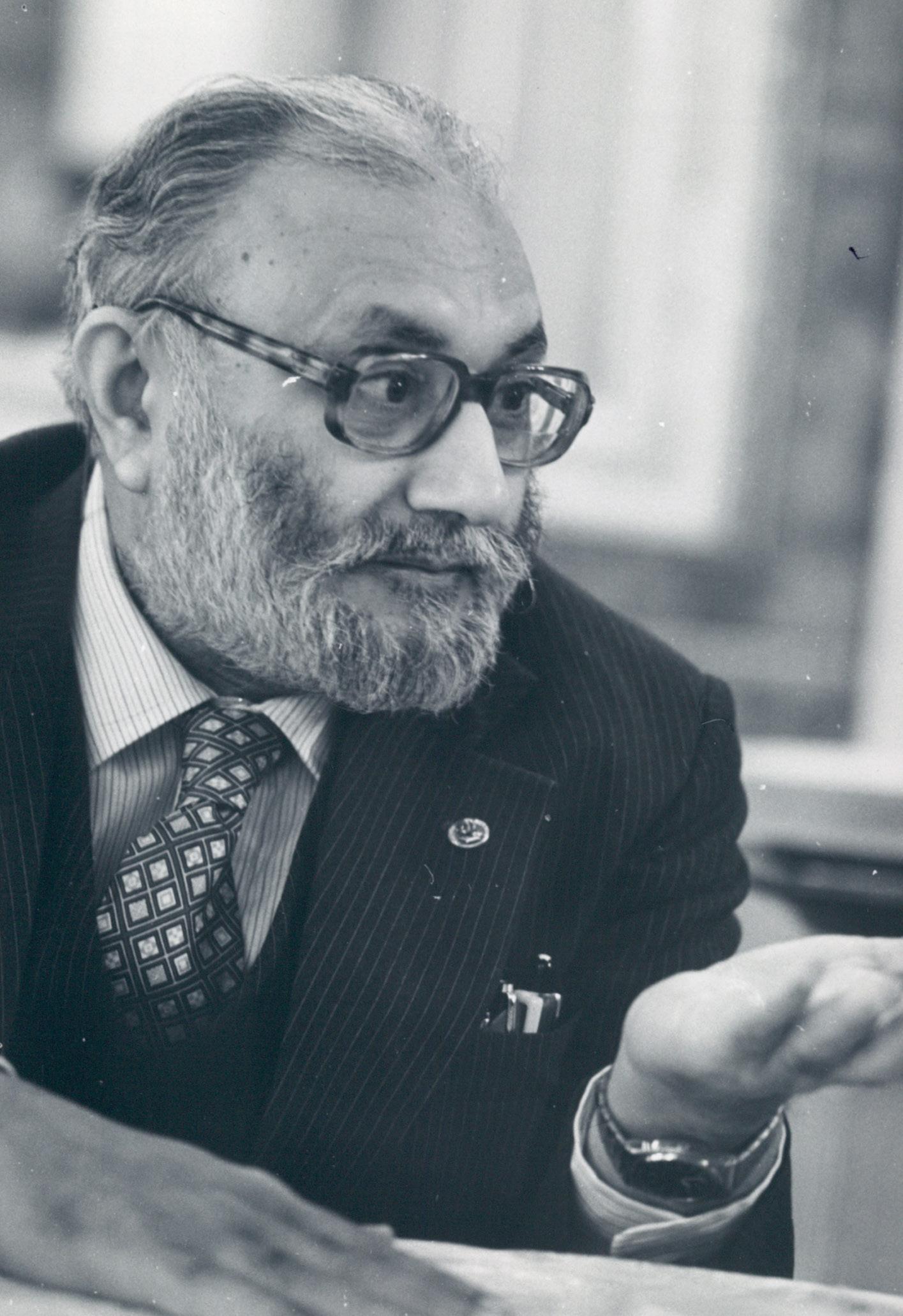
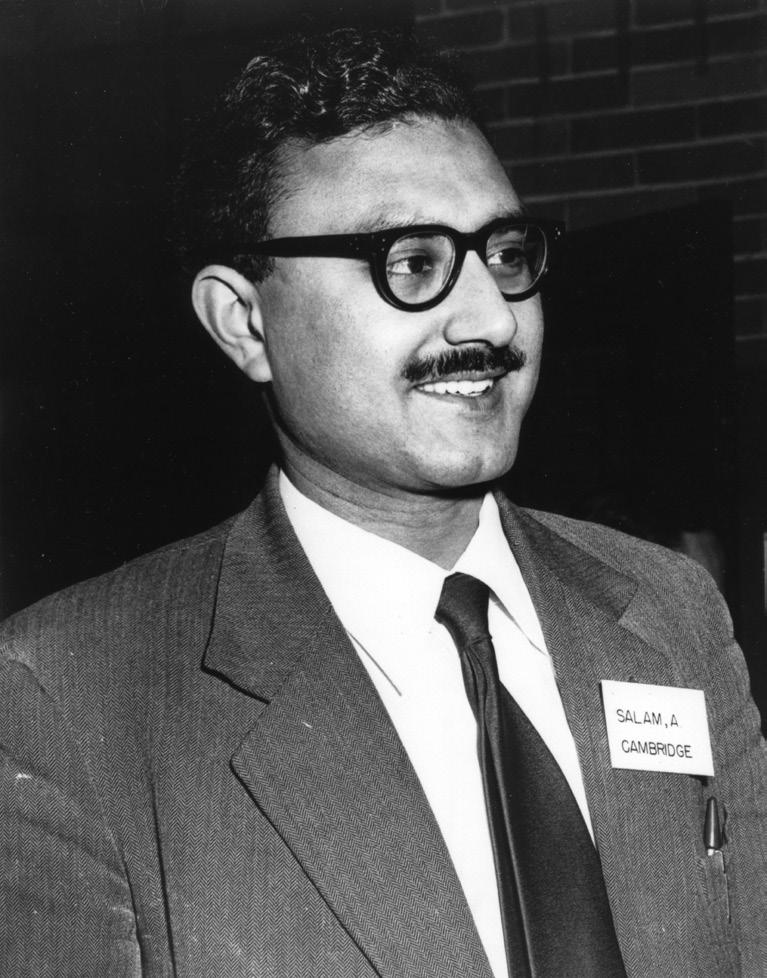
DR. ABDUS SALAM
How Faith and the Holy Quran Inspired a Nobel Prize-Winning Physicist
By Naghman Nasik
Introduction
When Dr. Abdus Salam received the Nobel Prize in Physics in 1979, he opened his banquet address with a verse from the Holy Quran. It was a fitting choice. Dr. Abdus Salam did not see religion and science as rival ways of understanding the world. His faith gave purpose to his work, while physics gave him another way to study creation.[1]
Dr. Abdus Salam shared the prize with Sheldon Glashow and Steven Weinberg for work on electroweak theory. Their research showed that electromagnetism and the weak nuclear force are two forms of the same interaction at high energies. The theory also predicted the W and Z bosons which were later detected at CERN and provided proof for the findings. For Dr. Abdus Salam, however, scientific success was never only about recognition. He believed that studying nature was part of a wider religious duty to seek knowledge.[2]
Early Life and Religious Background
Muhammad Dr. Abdus Salam was born on 29 January 1926 in Jhang, then part of British India and now in Pakistan. His father, Chaudhry Muhammad Hussain, was a school teacher with limited means, but he placed enormous value on education. Dr. Abdus Salam learnt to read the Holy Quran from an early age and grew up in a home shaped by
prayer, discipline and hard work.[1] [3]
His academic ability appeared quickly. He entered school ahead of his age group and, at fourteen, achieved the highest marks then recorded in the University of Punjab’s matriculation examination. His son Ahmad later recalled that Dr. Abdus Salam’s father helped him prepare lessons in advance, a habit that stayed with him throughout his life. The story of his childhood is often told through extraordinary predictions about his future, but the more important point is simpler: his family treated learning as both a responsibility and a form of service.[1][3]
The Quranic Encouragement of Knowledge
Dr. Abdus Salam often argued that the Holy Quran encourages believers to observe the natural world and
use reason. In a lecture on the future of science in Muslim countries, he noted that hundreds of Quranic verses invite reflection on nature, compared with a much smaller number concerned with legislation. He also referred to the teaching that the pursuit of knowledge is a duty for every Muslim.[4]
Several Quranic passages were especially important to this outlook: ‘Observe what is in the heavens and the earth’ (10:102), and the description of believers who reflect on the creation of the heavens and the earth (3:191-192). Dr. Abdus Salam read such verses as an encouragement to investigate rather than simply admire nature. He wrote, ‘As a scientist, the Holy Quran speaks to me’ because it repeatedly points towards the laws of nature and asks people to think about them.[5] This did not mean that he used scripture as a physics textbook. His claim was broader. The Holy Quran created a religious culture in which careful observation, questioning and discovery had value. In his own words, he saw no conflict between his faith and his science.[5]
Dr.
Abdus
Salam Own View of Science and Faith
Dr. Abdus Salam spoke openly about the effect of belief on his scientific imagination. In a 1976 interview, he connected his interest in symmetry with an Islamic view of the universe as ordered, harmonious and created
by God. He described physics as an attempt to discover a small part of the truth behind natural law, while accepting how limited human understanding remains. [6]
One of his best-known remarks was: ‘The Koran places a lot of emphasis on natural law.’ He went on to say that scientists try to understand what the Creator intended and occasionally catch ‘a little bit of the truth’. The language is personal and unguarded. It shows that faith was not something he added to his public image later; it was part of how he understood the work itself.[6]
In a 1990 interview, when asked which Quranic verses inspired him, Dr. Abdus Salam opened his own copy and replied, ‘Every ayat, every ayat inspires me.’ Accounts of his daily life also describe him listening to Quranic recitation while working. These details help explain why his Quranic recitation in Stockholm was more than ceremony.[7][8]
Faith, Ambition and Service
Faith also influenced what Dr. Abdus Salam believed science was for. After completing his doctorate at Cambridge, he returned to the University of Punjab hoping to continue research. The facilities and academic culture made that almost impossible. He later recalled being forced to choose between ‘physics or Pakistan’. He returned to Britain, but the experience stayed with him.[6] That frustration helped shape the
International Centre for Theoretical Physics, which he founded in Trieste in 1964. The centre allowed scientists from developing countries to work with leading researchers without permanently leaving their own societies. Dr. Abdus Salam insisted that poorer countries needed scientists as capable as those in wealthy nations. This was practical work, not simply rhetoric: he used his position to create opportunities he himself had lacked.[9] His religious practice remained part of his routine abroad. Dr. Abdus Salam remembered his father rising at around 3 am to pray and then work before going to Imperial College. He also chose a family home near the Fazl Mosque so that his own father could attend dai-
ly prayers. These habits show how closely devotion, family duty and scientific discipline sat together in his life.[3][8]
Scientific Achievement and Legacy
Dr. Abdus Salam’s main scientific achievement was the electroweak theory. Building on work by several physicists, he helped produce a mathematical framework that joined two fundamental forces and made testable predictions. The later discovery of the W and Z bosons gave the theory strong experimental support and secured its place in the Standard Model of particle physics. [2][10]
He also made important contributions to neutrino theory and parti-
cle symmetries. Yet his legacy reaches beyond equations. The centre in Trieste, now named after him, has supported generations of scientists from the developing world and remains a practical expression of his commitment to international scientific cooperation.[2]
Dr. Abdus Salam passed away in Oxford on 21 November 1996. His relationship with Pakistan remained painful; although he was celebrated as a national hero after the Nobel Prize, his Ahmadi Muslim identity made him the target of official discrimination. The word ‘Muslim’ was later tragically removed from the inscription on his grave under Pakistani law. It is a stark ending for someone who had spent much of his life arguing that Muslim societies should recover their confidence in science.[2]
Conclusion
In the work of Dr. Abdus Salam,
science and religion were not separated. Observing, thinking, and seeking knowledge as mentioned in the Holy Quran provided motivation for him to learn about nature, whereas physics was the practice of that commitment. His religious beliefs played a role in his passion for order and unity, discipline, and dedication to supporting physicists from developing nations. His life should not be reduced to the simple claim that religion caused a Nobel Prize. The relationship was more personal than that. Faith supplied the purpose and the language through which Dr. Abdus Salam understood his work. As he put it, the Holy Quran spoke to him by encouraging reflection on the laws of nature. That idea remained with him from Jhang to Cambridge, Imperial College, Trieste and finally Stockholm.[5]
References
1. Al Hakam, "Becoming Abdus Salam," 25 June 2021. www.alhakam.org/becoming-abdus-salam
2. Al Hakam, "From disowned to being ‘undeserving’: The painful story of Nobel Laureate Dr Abdus Salam," 16 October 2025. www.alhakam.org/dr-abdus-salam-nobel-prize-1979
3. Ahmad Salam, "Professor Abdus Salam - KBE FRS," Al Hakam, 14 November 2021. www.alhakam.org/professorabdus-salam-kbe-frs
4. Abdus Salam, "The Future of Science in Islamic Countries." Al-Islam.org. alislam.org/library/science/future-ofscience-in-islamic-countries
5. Abdus Salam, "Islam and Science - Concordance or Conflict?" Al-Islam.org. www.alislam.org/library/articles/Islamand-Science-Concordance-or-Conflict.pdf
6. Robert Walgate, "An Interview with Dr. Abdus Salam," New Scientist, 26 August 1976; republished on Al-Islam.org. www.alislam.org/articles/interview-dr-abdus-salam/
7. Besmir Yvejsi, "Interview of Dr Abdus Salam given in Muslim Bosnian Newspaper Preporod," Al Hakam, 26 March 2021. www.alhakam.org/interview-of-dr-abdus-salam-given-in-muslim-bosnian-newspaper-preporod-renaissance/
8. Nadeem Ahmad, "Dr Abdus Salam - His Faith and His Science." Al-Islam.org. www.alislam.org/library/articles/DrAbdus-Salam-His-Faith-and-His-Science.pdf
9. Md Asadullah Khan, "Abdus Salam: Profile of a Nobel Laureate," The Daily Star, 3 December 1996; republished on Al-Islam.org. www.alislam.org/articles/abdus-salam-profile-nobel-laureate/
10. Abdus Salam, "Gauge Unification of Fundamental Forces," Nobel Lecture, 1979. www.nobelprize.org
Dr. Abdus Salam
A Life of Scientific Excellence and Service
By Jazib Ahmad
In 1979, Dr. Abdus Salam became the first Muslim scientist to receive the Nobel Prize, after his groundbreaking work in theoretical physics was recognised with the highest honour in scientific achievement.[1] As a devout member of the Ahmadiyya Muslim Community, his success was a moment of immense pride not only for Pakistan but for Muslims across the world. It was a powerful reminder that the pursuit of knowledge, so deeply rooted in Islamic tradition, still has the power to change the world.[2]
For young Ahmadis, especially Waqifeen-e-Nau, Dr. Abdus Salam’s life is not simply a story of personal achievement. It is a reminder that knowledge becomes truly valuable when it is used in the service of Allah, the Jama’at and humanity. His example shows that scientific excellence is not only about winning awards or gaining recognition; it is about using one’s God-given abilities with discipline, humility and a sincere desire to benefit others.
Architect of Pakistan’s Scientific Infrastructure
Upon returning to Pakistan in the 1950s, Dr. Abdus Salam was not
content with simply teaching physics. He envisioned a scientifically empowered Pakistan, capable of standing shoulder to shoulder with the world’s leading nations. As one of the country’s foremost scientific minds, he took on the immense task of strengthening Pakistan’s research and technology landscape. His contributions were not theoretical alone; they were institutional, practical and long-lasting.
One of his earliest contributions was his involvement with the Pakistan Atomic Energy Commission (PAEC), established in 1956, an organisation that became instrumen-
tal in the country’s nuclear research and peaceful energy development. As both a member of the PAEC and later Chief Scientific Adviser to the President of Pakistan, Dr. Abdus Salam worked tirelessly to ensure that Pakistan kept pace with the world’s scientific advancements.[3] He believed that scientific progress was essential for Pakistan’s future, not merely for prestige, but for the practical benefit of its people.
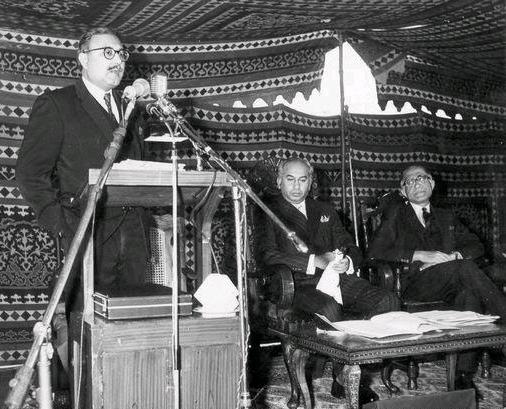
Delivering speech
Seated on the right is Prime Minister of Pakistan, Zulfiqar Ali Bhutto
His influence extended far beyond the atomic sector. In 1961, he helped establish SUPARCO, the Space and Upper Atmosphere Research Commission, which became Pakistan’s national space agency.[4] At a time when very few developing countries were investing seriously in space research, Dr. Abdus Salam encouraged Pakistan to think ambitiously and to recognise that science and technology would shape the future of nations.
Recognising the need for academic
excellence to sustain these institutions, Dr. Abdus Salam also supported the development of theoretical physics in Pakistan. He helped create opportunities for young scientists to receive advanced training and to connect with the wider scientific world. Many Pakistani physicists and researchers were influenced, directly or indirectly, by the programmes, institutions and international links that he helped to build.
Dr. Abdus Salam’s contribution shows that true scientific excellence is not limited to personal success. He did not only aim to become a great physicist himself; he worked to create institutions, train future scientists and build the foundations through which an entire nation could progress. This is one of the clearest ways in which young Ahmadis can follow his example: by using their education to create benefits beyond themselves.
Dr. Abdus Salam’s work for Pakistan shows that his ambition was never limited to personal achievement. He wanted Pakistan to become a country where science, research and technology could improve ordinary lives. His example teaches young Ahmadis that true success is not only reaching the top individually but helping others rise as well.
A Global Scientist, A Pakistani at Heart
Despite his rising prominence on
the world stage, Dr. Abdus Salam never saw himself as separate from Pakistan; he saw himself as its ambassador. Wherever he went, he carried with him not only his scientific expertise but also a deep sense of duty to his country. While many of his achievements belong to the story of international science, he consistently used his platform to open doors for Pakistan and its scientists. He represented Pakistan in influential international forums, including the United Nations conferences on the peaceful uses of atomic energy. At a time when nuclear science was often associated with fear and warfare, Dr. Abdus Salam emphasised its peaceful applications in energy, medicine, agriculture and development. These were principles that he believed could help developing nations improve the lives of their people.
In these roles, he consistently argued that developing nations should not be left behind in the global advancement of science. He believed that scientific knowledge should not remain the privilege of wealthy nations but should be made available for the progress of all humanity. This belief later shaped his work with the International Centre for Theoretical Physics, which he founded in Trieste, Italy, to support scientists from developing countries and give them access to worldclass research opportunities.[5]
Through the International Centre for Theoretical Physics, Dr. Abdus Salam gave scientists from developing countries access to training, collaboration and research opportunities that they may not otherwise have received. This was one of the clearest examples of his belief that knowledge should be shared, not hoarded.
His contributions extended to shaping institutions as well. He was involved in international efforts to strengthen higher education, research and cooperation across the world. Through this work, Dr. Abdus Salam helped to ensure that countries like Pakistan could benefit from the global flow of knowledge and innovation.
In all these roles, Dr. Abdus Salam did not just participate; he elevated Pakistan’s presence in global science. He helped build bridges between Pakistan and the wider scientific world, reinforcing one of the central lessons of his life: science must serve humanity, and no nation should be left behind in the pursuit of knowledge.
Faith, Jama’at and a Life of Discipline
Dr. Abdus Salam’s success in science did not take him away from his faith. He remained a devoted Ahmadi Muslim and saw his knowledge as something that should be used for a higher purpose. His work showed that academic success and religious
commitment can go hand in hand. For young Ahmadis, this is an important lesson. Doing well in science should not only be about awards, careers or recognition. It should also teach humility, discipline and a desire to help others. Dr. Abdus Salam’s example reminds us that knowledge becomes truly valuable when it is used to serve Allah, the Jama’at and humanity.
Following in the Footsteps of Dr. Abdus Salam
Dr. Abdus Salam’s life reminds us that excellence is built through hard work, discipline, prayer and purpose. He did not use his knowledge only for personal recognition; he used it to serve his country, uplift other scientists and contribute to humanity.
For Waqifeen-e-Nau, following in his footsteps means taking education seriously and aiming for the highest standards in whichever field we pursue. Whether in physics,
medicine, engineering, computing, biology or any other science, the goal should be more than career success. The goal should be to serve Allah, the Jama’at and mankind through knowledge.
Dr. Abdus Salam showed that a Muslim scientist can stand at the highest levels of academic achievement while remaining rooted in faith.[6] His example calls young Ahmadis to work hard, think deeply, pray sincerely and strive to become people whose learning benefits the world.
This is why his example remains important today. The Jama’at needs young people who are excellent in their studies, sincere in their faith and ready to use their abilities for the benefit of others. Dr. Abdus Salam showed that these qualities can exist together in one life.
Excelling in Science and Striving to Follow in the Footsteps of Dr. Abdus Salam
By Anas Mehmood Murrabi Silsila
I remember when I visited the Review of Religion’s exhibition in Masjid Mubarak, Tilford last year, certain cassettes containing the recitation of different portions of the Holy Qur’an were displayed. Dr. Abdus Salam used to listen to these portions of the Holy Quran whilst he worked. I was very intrigued to see how such an eminent figure in the field of science took his inspiration from the recitation of the Holy Quran.
One of the most profound endeavours that humanity has embarked upon is pursuit of knowledge in the field of Science. Its academic rigour, its results and essentially the sheer amount of possibilities it opens for humanity are the reason it is so highly regarded in the world we live in. The meteoric rise of Artificial Intelligence needs no explanation. But with all of these advancements in science, a corresponding moral compass is also needed.
The teachings of Islam are no different. The Holy Quran refers to those who ‘ponder over the creation of the
heavens and the earth’ as ones who recognise the Omnipotence of Allah the Almighty:
“Our Lord, Thou hast not created this in vain; nay, Holy art Thou; save us, then, from the punishment of the Fire. (3:192)
Among the modern examples of Muslims who responded to this Qur’anic call, few stand as prominently as Dr. Abdus Salam. As the first Muslim Nobel Prize winner and one of the most influential theoretical physicists of the twentieth century, he has left a shining example for Ahmadis to follow, because to follow in his footsteps is not simply to pursue a career in science. It is to learn how one can embrace a way of thinking and living that places the acquisition of knowledge through
(Rights of Allah and Rights of man)
The very first revelation received by the Holy Prophetsa was a command-
ment. A command to read;
Read in the name of thy Lord Who created. (96:2)
It was this very practice of reading that became a hallmark of Dr. Abdus Salam from his childhood. Accounts from his family describe a household immersed in books. Reading was not a hobby but a way of life. His personal library eventually contained thousands of books spanning not just mathematics and physics, but also history, languages, philosophy, literature, and religion.[1]
This humility coupled with a love for reading set him on a path to making one of the most remarkable contributions in the history of science; developing the electroweak theory, which unified two of the fundamental forces of nature: electromagnetism and the weak nuclear force. This nullified a long held assumption that these were separate, and as a result of his outstanding work, he was awarded a Nobel Prize in Physics in 1979. His legacy did not stop there. He made it his life’s work to help developing countries build scientific capacity. He believed that the division between the developed and developing countries was ‘the real issue’. [2] At his creation of the International Centre for Theoretical Physics (ICTP), he also introduced
the ‘Associateships’ program, which allowed emerging scientists to have a chance to experiment with the technology that their home countries could not provide.[3]
He never forgot his home country. Despite his heartbreak at Ahmadis being declared non-Muslims, he helped lay the foundations of the International Nathiagali Summer College (INSC) to promote science. He also contributed to the Pakistani Space programme.[4]
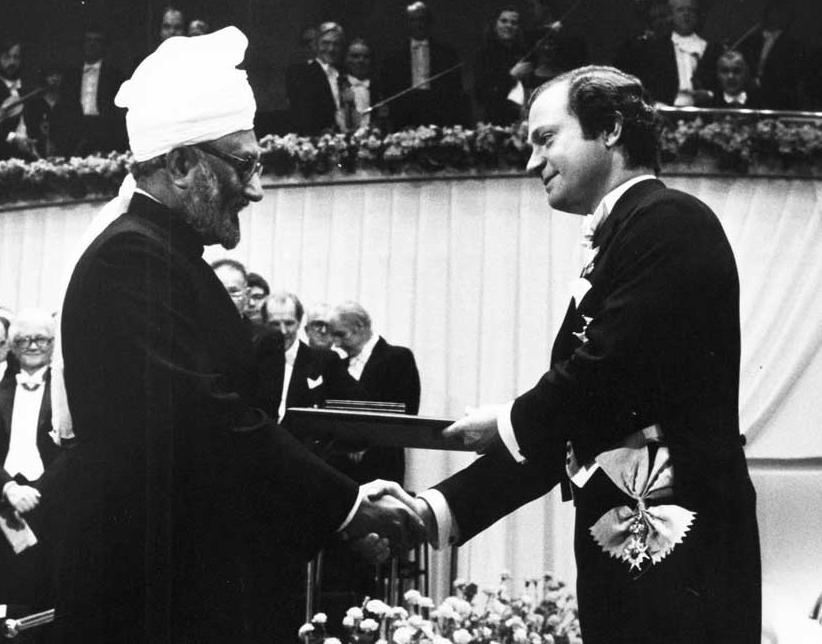
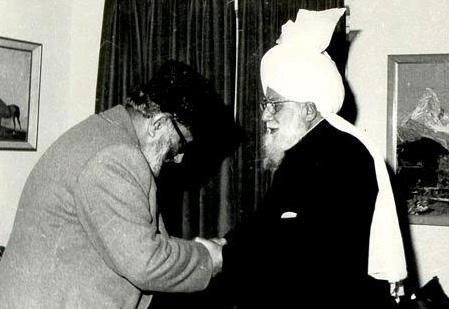
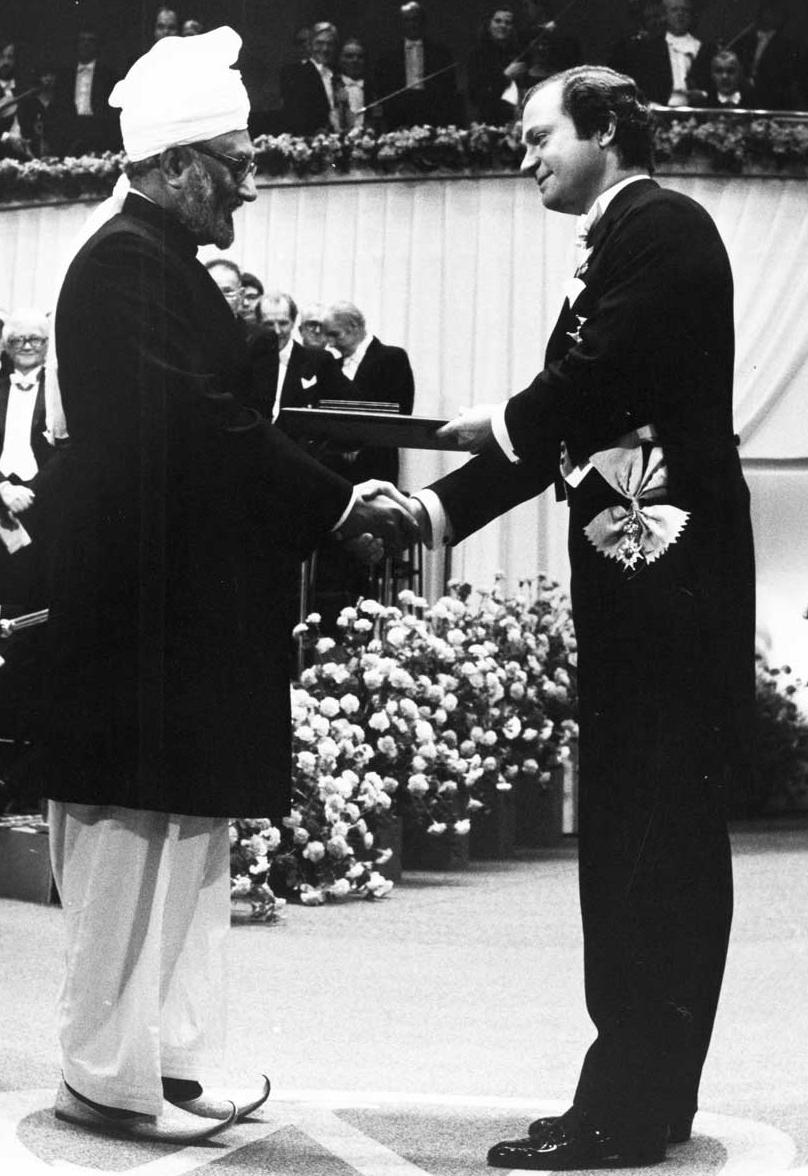
Perhaps one of his most poignant moments in life – in which his true character shone through – was when he travelled back to his home town of Jhelum, and showed his Nobel Prize to his Physics teacher, recognising his contribution to his success. The black and white photo of an ailing elder smiling gleefully at his prize-winning pupil and embracing him leaves one in awe as to how magnanimous the character of Dr. Abdus Salam was.
Hazrat Khalifatul Masih Vaba has given the example of Dr. Abdus Salam on numerous occasions in his desire for the Ahmadi youth to rise up and venture for the betterment of humanity and raising the standard of Islam Ahmadiyyat higher amongst all others.
Huzooraba has stated: ‘In terms of our Jama’at, so far we have had only one truly outstanding example of an Ahmadi who reached the pinnacle of the scientific world, Dr.
Professor Dr. Abdus Salam receiving his Nobel Prize from King Carl XVI Gustaf of Sweden
Abdus Salam Sahib. In all his works, he drew inspiration from the Holy Quran at every step. Today, with the grace of Allah, many Ahmadis are excelling in academia, research and a wide range of professional disciplines. Their work is being recognised by their peers, and their contributions are having a positive impact in their respective fields.
Yet, there is much further to go. Our Jama’at must seek to produce many more people who, whilst bearing witness to the Glory of Allah, scale the
peaks of human knowledge. It was during the time of Hazrat Khalifatul Masih IIIrh that Dr. Abdus Salam Sahib won the Nobel prize. Huzoorrh himself had a great passion for learning and education, so he launched a scheme urging Ahmadis to excel in science and to strive to follow in the footsteps of Dr. Abdus Salam Sahib.’[5]
The truth is, Dr. Abdus Salam has shown us the extent of progress man is able to achieve when he believes Islam and science go hand in hand. In our world today, such teaching is more vital than ever. Scientific inquiry – despite being an essential component of Islamic teaching – is being seen as more and more distant from God Almighty. To honour the legacy of Dr. Abdus Salam in such a manner as our Khalifa expects of us, is a highly honourable contribution to humanity. He did not just unify electromagnetism and the weak nuclear force, he also unified science with the moral compass it was missing.
In this section of the issue, we will explore the incredible lives of the noble Companions of the Holy Prophet Muhammadsa, providing inspiring accounts of faith, courage, righteousness, devotion, and sacrifice that continue to guide and encourage us today.
HAZRAT ABU BAKRra
Hazrat Abu Bakr’sra birth name was Abdullah. He was born in the year 573 CE. He belonged to the Arabian tribe of Banu Taym bin Murrah. He was a trader by profession and possessed a soft nature. Owing to his wealth and excellent moral traits, Hazrat Abu Bakrra had a high standing among the people prior to the advent of Islam. Everyone would seek his advice and he was counted amongst the most pious and virtuous people. He was, likewise, part of the Hilf al-Fudul - the special pact that was formed to help the poor and the oppressed. He would always generously spend his wealth among the needy.[1] It was his habit to regularly free a slave for the sake of Allah the Almighty.[2] He would always sit in respectable gatherings. He possessed the most extensive knowledge about the interpretation of dreams.[1] He also had an interest in poetry.[3] Hazrat Abu Bakrra had, in addition, a good understanding about the lineage of the Arabs and the events that shaped their history in the past. Hazrat Abu Bakrra never practiced idolatry, nor did he consume alcohol at any point in his life.[1]
When the Holy Prophetsa announced his prophethood, Hazrat Abu Bakrra at the time was away from Mecca. When he returned, one of his housemaids said to him, ‘Your companion has lost his senses and he is uttering strange things. He states that angels descend upon him from the heavens.’ Hazrat Abu Bakrra stood up at once and went to the house of the Holy Prophetsa and knocked at his door. The Holy Prophetsa came outside and Hazrat Abu Bakrra submitted, ‘I have only come to ask one thing from you. Have you stated that the angels of God descend upon you and speak to you?’ Thinking that perhaps Hazrat Abu Bakrra may misunderstand, the Holy Prophetsa tried to explain the situation. However, Hazrat Abu Bakrra submitted, ‘Please do not explain yourself. All I want to know is, have you said such a thing?’ Again, thinking that perhaps Hazrat Abu Bakrra may ask questions such as about the appearance of the angels and how they would descend upon him etc., the Holy Prophetsa wanted to say a few words to give some context; however, Hazrat Abu Bakrra again submitted, ‘No, no, just tell me, is it true?’ The Holy Prophetsa stated that it was indeed true. Upon this, Hazrat Abu Bakrra submitted, ‘I profess my belief in you.’ He then said, ‘O Messengersa of Allah! The reason I stopped you from giving any explanation is because I wanted my faith to be on the basis of witnessing the truth for myself rather than pondering over the proofs. This is because after having witnessed you as truthful and virtuous, I am not in need of
any other proof.’[4]
Among his companions, the Holy Prophetsa held Hazrat Abu Bakrra most dear to himself.[1] He was an exceptional preacher and, with the permission of the Holy Prophetsa, became the first of the companions to openly preach the message of Islam in public. Hazrat Abu Bakrra was blessed with the opportunity to accompany the Holy Prophetsa during the Hijra (migration from Mecca to Madinah) and seek refuge from the disbelievers in the Cave of Thaur.[2] Hazrat Umar’sra narrates an interesting incident in relation to Hazrat Abu Bakr’sra financial contributions and sacrifices. He says, ‘One day, the Holy Prophetsa instructed us to offer Sadqah or alms. I had some wealth at the time and I thought that if ever there was an opportunity to surpass Hazrat Abu Bakrra it was today. Hence, I presented half of my wealth. The Holy Prophetsa asked what I had left behind for my family. I said that I had left an equal amount to what I had presented. Then, Hazrat Abu Bakrra presented all the wealth that he had. I had only presented half while Hazrat Abu Bakra brought all that he had. The Holy Prophetsa also asked him what he had left behind for his family to which he replied that he had left them Allah and His Messengersa.’ Hazrat Umarra says, ‘I realised I would never be able to surpass Hazrat Abu Bakrra in anything.’ [5]
After the demise of the Holy Prophetsa, he became his first Caliph. Dur-
ing the time of his Caliphate, he furnished evidence of his unparalleled ability.[2] Hazrat Abu Bakrra passed away at the age of 63. His era of Khilafat spanned two years, three months and ten days.[6]
References:
1. Men of Excellence: Hazrat Abu Bakrra Friday Sermon delivered by Hazrat Khalifatul Masih Vaba December 3, 2021
2. Hadhrat Abu Bakr As-Siddiqra
The Great Lover of Allahs.w.t by Adam Hani Walker, UK 2007
3. Men of Excellence: Hazrat Abu Bakrra Friday Sermon delivered by Hazrat Khalifatul Masih Vaba November 11, 2022
4. Men of Excellence: Hazrat Abu Bakrra Friday Sermon delivered by Hazrat Khalifatul Masih Vaba December 10, 2021
5. Men of Excellence: Hazrat Abu Bakrra Friday Sermon delivered by Hazrat Khalifatul Masih Vaba June 11, 2021
6. Men of Excellence: Hazrat Abu Bakrra Friday Sermon delivered by Hazrat Khalifatul Masih Vaba September 9, 2022
GUIDING LIGHT
Answers from Beloved Huzoor
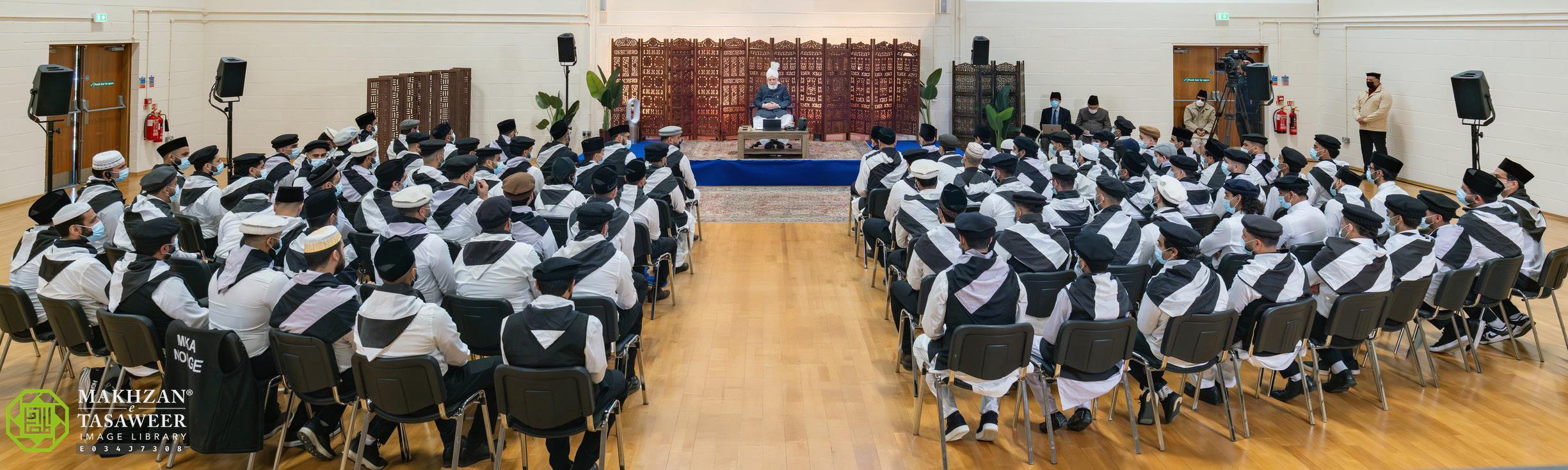
On the 19th April 2026, Khuddam from Majlis Khuddam-ul-Ahmadiyya Norway were blessed with a mulaqat with Hazrat Mirza Masroor Ahmad, Khalifatul Masih Vaba
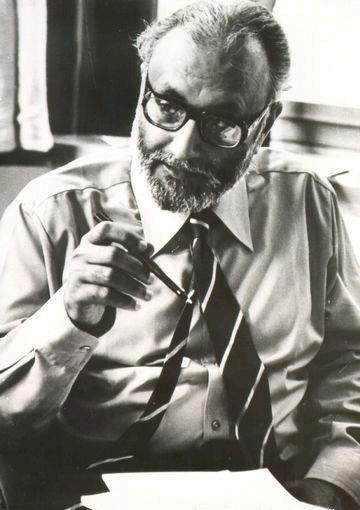
Dr. Abdus Salam took inspiration from the Holy Quran
Q: A question was asked about the great influence of media, wealth and science in the present age and how these things can be used in a way that turns people towards Allah rather than towards worldliness.
Huzooraba replied: He said that it is the work of Majlis Khuddam-ul-Ahmadiyya and the Jama’at to respond to wrong ideas that appear in the media, on the internet and on social media. Religious knowledge should be acquired and then used to respond to false or harmful claims.
Regarding science, Huzooraba explained that science itself is knowledge. He referred to the statement of the Promised Messiahas to a scientist from New Zealand, explaining that there is no contradiction between the word of Allah and the act of Allah. The word of Allah is His revealed knowledge, while science is the practical study of His creation. True science proves the realities that Allah has placed in the world. Huzooraba gave the example of Dr Ab-
dus Salam, who was a scientist and Nobel laureate, yet took inspiration from the Holy Quran. Science did not harm him; rather, he understood science in light of the Quran.
Huzooraba therefore said that science is not the cause of spiritual decline. The danger lies in wrong thoughts, harmful media and the race for money. When a person recognises Allah, worships Him and fulfils the purpose of life, he will try to protect himself from such influences.
Huzooraba advised that Majlis Khuddam-ul-Ahmadiyya should work actively in this field. Teams or cells should be formed to respond to harmful material on social media and to guide those who become distracted by it. Tarbiyat programmes should also identify the modern influences that pollute minds and explain how to protect oneself from them. He said that this requires continuous effort.
— Source: Al-Hakam Weekly, 1st May 2026 —
SUBSCRIBE NOW!
INTRODUCING:
SMALLER SIZE, BIGGER IMPACT
An Appeal of prayers from Hazrat Khalifatul Masih Vaba
In order to safeguard from the onslaughts of Satan and to attain refuge in an invincible and tall citadel of Allah’s protection, Hazrat Khalifatul Masih Vaba encouraged us all to pray these particular prayers:
"Holy is Allah and worthy of all praise, Holy is Allah, the Great. O Allah, send down Your blessings upon Muhammad and upon the progeny of Muhammad."
O my Lord, everything serves You. So, O my Lord, protect me and help me and have mercy on me.
I seek forgiveness from Allah, my Lord, for all my sins and turn to Him.
Those who are of a mature age, between the ages of 15-25, should recite it at least 100 times a day, children should recite it at least 33 times; and younger children should repeat after their parents three or four times. Alongside, everyone should recite Istighfar 100 times.