• Outreach program Fortem services 10 June 2026 Wednesday
• Social connection
• Psychological support
• Career management
• Wellbeing resources
• Fortem Wellbeing Hub
POLICE NEWS
639 Murray Street, West Perth WA 6005
P (08) 9321 2155
E admin@wapu.org.au www.wapu.org.au
OFFICE HOURS
Monday-Friday 8am-4pm
AFTER HOURS
EMERGENCY DIRECTOR 0438 080 930
Follow us
PUBLISHED BY WA Police Union
639 Murray Street, West Perth WA 6005 (08) 9321 2155
ADVERTISING WA Police Union (08) 9321 2155
MEET THE GOVERNING BOARD
SIMONE TAPLIN President
AARON HICKEY Vice President
MATT GREN Senior Vice President
With more than 20 years of service as a WA Police officer, I bring extensive experience across frontline policing, investigations, and leadership roles, including Officer in Charge positions. Throughout my career, I have worked closely with members facing a range of challenges, particularly in regional and remote areas where strong representation is vital.
My experience as a Branch President and active involvement within the Union have provided valuable insight into member priorities and expectations. I am committed to promoting transparency, integrity, accountability, and meaningful engagement, ensuring every member’s voice is heard. Outside of work, I enjoy spending time with family and playing AFL and softball.
With almost 35 years of policing experience, I have been actively involved in the WA Police Union for much of my career. Since August 2023, I have served on the Board of Directors, contributing to significant reforms including the CEO Model and Industrial Agreement bargaining through the Industrial Relations Committee.
My earlier roles across various branches, including as a delegate during the establishment of the Perth Watch House Branch, grounded my focus on supporting members directly. I am committed to ensuring WAPU remains relevant, delivering clear value to members, and strengthening support through strong leadership, transparency, and advocacy across the organisation and community.
With more than 20 years of frontline policing experience, I am committed to ensuring members have a strong, accountable, and effective Union. I believe our greatest strength comes from staying connected to the frontline while building a sustainable future for all members.
Throughout my career, I have been passionate about fostering trust, encouraging member involvement, and strengthening organisational leadership. I believe effective representation means not only addressing today’s challenges but also planning for tomorrow’s opportunities. My approach to leadership is grounded in listening, acting with integrity, and ensuring the Union remains focused on the members it exists to serve.
DISCLAIMER WAPU (‘Publisher’) advises that the contents of this publication are the sole discretion of the WA Police Union and the magazine is offered for information purposes only. The publication has been formulated in good faith and the Publisher believes its contents to be accurate, however, the contents do not amount to a recommendation (either expressly or by implication) and should not be relied upon in lieu of specific professional advice. The Publisher disclaims all responsibility for any loss or damage which may be incurred by any reader relying upon the information contained in the publication whether that loss or damage is caused by any fault or negligence on the part of the Publishers, its Directors or employees.
COPYRIGHT All materials in this publication are subject to copyright and written authorisation from WAPU is required prior to reproduction in any form.
ADVERTISING Advertisements in this journal are solicited from organisations and businesses on the understanding that no special considerations other than those normally accepted in respect of commercial dealings, will be given to the advertiser. All advertising is undertaken in good faith and WAPU takes no responsibility for information contained in advertisements.
SCOTT SULLEY Treasurer
With almost 34 years of police service, I have spent the past 11 years actively involved in Union representation. During that time, I have served as Branch President at Internal Affairs, Joondalup, Maylands, and the Academy, advocating for members and supporting them through workplace challenges.
In 2019, I was honoured to receive the Dowd-Dempsey Award, a recognition I greatly value as it reflects my commitment to the membership. Elected to the Board of Directors in 2021 and re-elected in 2024, I remain dedicated to serving members. As I near the end of my policing career, I am proud of the contribution I have made.
WAPU TEAM
BRANCH PRESIDENTS
Academy Anthony Pymm
Air Wing
Julian Martin-Robins
Armadale Louise Hollands
Avon
Brett Inglis
Bunbury Australind Bryn Papalia
Cannington
Katie Valentine
Causeway Contact WAPU
Central Great Southern Antony Caracatsanis
Central Midlands Michael Paterson
Central West Coast Contact WAPU
Cockburn Central Contact WAPU
Commissioned Officers Martin Voyez
East Kimberley Lindsay Garratt
Eastern Goldfields Luke Mayhew
Eastern Wheatbelt Contact WAPU
Financial Crimes Peter Birch
Fortescue Corey Jouana
Fremantle
Paul McKee
Gascoyne Renno Castro
Geraldton Chad Butler-Henderson
Great Southern Stuart Rogers
Joondalup Brad Marron (Secretary)
Leeuwin Naturaliste Contact WAPU
Licensing Enforcement Contact WAPU
Lower South West Contact WAPU
Major Crime Harry Merttens (Vice President)
Mandurah Kurt Weedon (Vice President)
Maylands Complex Djordje Kandic
Midland
Jon Bailey
Midland Workshops Jeanette Maddison
Mirrabooka Contact WAPU
Multi Functional Police Facility Michael Sedgman
Murchison
Adrian McKeown
North Eastern Goldfields Contact WAPU
North Pilbara Adam Simmons
Northern Rog David Mills
Offender Enforcement Branch Victoria Southam
PAO Property
Josh McDougall
Perth Alex Wright
Perth Watch House Juan Escobar
Police Transport Contact WAPU
Professional Standards Contact WAPU
Prosecuting
Robert Malcolm
Protective Service Officers Wade Van Luyn
Road Policing Group Matt Gren
Road Policing Group South Jacob Parker
Rockingham Kwinana Dayna Rigoir
Serious & Organised Crime Michael Le Poidevin
Sex Crimes
Bec Robinson
South East Eyre Owen Redgrave
South West Hinterland Contact WAPU
Southern ROG
Steve Kent
State Intelligence Contact WAPU
State Operations Command
Paul Smith
Traffic Enforcement Group North Contact WAPU
Upper Great Southern Michael Williams
Water Police
West Kimberley
West Pilbara
Westralia Square
Steve Bradley
Simon Hibble
Ian Zuidema
Robert Bove
GARY
KYLIE DAY Field Officer
MARTINA MALEY Executive Assistant
TARRYN SMITH
NICOLA CHISHOLM Secretary
JOSHUA BRINKMAN Industrial Officer
WAPU GOVERNING BOARD
ADDRESS
Since the last edition of Police News, we have navigated a period of unprecedented change for our Union.
On Friday, 1 May, union delegates gathered at WAPU Headquarters for a Special General Conference to consider a motion regarding the future governance structure of the organisation. The motion to dissolve the Board of Directors was carried, and a new governing body of four was immediately elected:
· Simon Taplin
· Matt Gren
· Aaron Hickey
· Scott Sulley
The newly formed governing body has been established in a caretaker capacity, with a clear mandate to stabilise governance and ensure transparent, accountable processes are implemented.
Our focus is on putting in place the appropriate frameworks that will enable a fair and orderly transition to the election of a new Board of Directors.
Importantly, we want to reassure all members that throughout this period, the CEO and the broader WAPU team remain firmly focused on maintaining the day-today operation and ongoing strength of your Union.
Over recent months, despite challenges and resource constraints, the WAPU team has worked tirelessly to support Members across industrial, welfare, and legal matters. Their dedication during this period has been significant and is sincerely acknowledged.
A key priority for the CEO has been recruitment, and we are pleased to advise that, in the coming weeks, all vacant roles will be filled.
This includes the establishment of a new industrial team, the appointment of a full-time Secretary, and the engagement of a short-term Project Manager to finalise delivery of the new website that will allow for easier and greater Member engagement.
Strategic priorities and key initiatives
In addition to maintaining day-to-day operations, the WAPU team continues to progress a number of important strategic initiatives:
IA bargaining campaign
Planning for the IA campaign is now underway
Dedicated working groups have been established
Key activities and milestones have been identified
Early media concepts are being developed
A Member engagement strategy will commence shortly
This campaign will rely on the collective strength of our membership. Your voice, participation, and support will be critical in shaping outcomes. When opportunities to engage are released, we strongly encourage you to get involved, provide feedback, and stand alongside your colleagues to secure better results for all.
Career Transition Program (CTP)
• Consultation with WAPOL has been extended through to the end of June
• Member concerns are being actively raised and addressed
• Inappropriate inclusions within the CTP have already been rescinded
Our focus is on putting in place the appropriate frameworks that will enable a fair and orderly transition to the election of a new Board of Directors.
WAPU recently circulated a CTP registration form to capture your questions and concerns. We strongly encourage members to engage with this process so we can continue to advocate effectively on your behalf.
Scan to register
Website launch
We are pleased to announce the launch of a refreshed WAPU website, featuring:
A modernised design and improved usability
A new Member portal with easier access to resources
An expanded Member Benefits library This platform has been developed for you. Members are encouraged to register and explore the available resources using the new portal credentials.
Self-Service portal coming soon
• A new self-service portal is in its final stages of implementation
• Members will be able to manage personal details directly
• Enhanced tools for branch delegates, including meeting management and document sharing
Holiday homes
• Assessments of all holiday homes have commenced
• Maintenance and safety requirements are being addressed
• Website booking enhancements are underway
• A longer-term strategy will follow completion of the review
Service recognition dinner
Members recently came together on 13 May at Optus Stadium to celebrate service and commitment. It was a privilege and an honour for us to be part of recognising the dedication, professionalism, and sacrifice of our Members.
The event, well supported by key partners, provided a meaningful opportunity to acknowledge and thank those who have given so much in service to the community.
SUPPORTING YOU
As always, our priority remains the wellbeing and support of our Members.
We encourage you to take the time to reflect not only on how you are supporting your colleagues, but also how you are supporting yourself and your families. WAPU remains committed to ensuring you have access to the assistance you need:
Field Officer support is available upon request
Fortem Australia – The Fortem Wellbeing Hub is a dedicated space designed to support the mental, emotional, and physical wellbeing of first responders & their families.
Scan for more
Better Health initiatives support services including:
Personalised Health Coaching
Better Health App
Health & Wellbeing Workshops
Health Coach Training
Scan for more
We ask for your continued support of the WAPU team as they continue to advocate for and represent you during this important period of transition and reform.
Together, we will shape the future of WAPU and deliver the outcomes our members deserve as we move through this period of monumental change. This is a defining moment, an opportunity for members to have a stronger voice than ever before, to take control, and to help guide the future direction of our Union.
Now more than ever, the strength of our Union depends on the active involvement of its Members. Stay informed, engage when called upon, provide your feedback, and support your delegates and colleagues.
FINANCIAL WELLBEING & WHY IT’S IMPORTANT
It goes without saying: taking money worries off your plate can make life’s demands a bit more manageable. That’s why it’s important to understand the role financial wellness plays in your life, because it’s not always as obvious as you might think.
What is financial wellbeing?
Financially wealthy doesn’t mean financially healthy. Financial wellbeing is all about understanding the way you manage money and how it affects your life. Whether you’re nearing retirement or early in your career, purchasing your first home or paying schoolfees, financial wellbeing is unique to you.
What does it look like?
The signs of poor financial wellbeing aren’t always as obvious as growing debt, living pay check to pay check, foregoing necessities. If you’re only topping up your savings here and there, delaying paying bills, or avoiding money conversations, you may not be as financially well off as you could be. Changing even one of these things can improve mental health and other areas of your life.
Achieving good financial wellbeing through budgeting, saving, paying off debts and facing your finances, gives you security and freedom. It means you may not feel as anxious about the ‘what ifs’ that life can throw at us, like an unforeseen job loss or medical emergency.
We know that’s often easier said than done, but that’s why we have tools and resources to help you achieve and retain financial wellbeing.
How can I improve my financial wellbeing?
P&N Bank prides itself on being different to other banks. We want everyone in WA to achieve financial wellness. That’s why we have a range of services, tools and resources available to anyone, not just our customers.
Our budgeting app mymo by P&N Bank is a personal financial assistant that fits in your pocket. Using Open Banking technology, you can link up all your bank accounts, loans, credit cards, Buy Now Pay Later services, and investments in the one place – even if they’re not with P&N Bank. It gives you a thorough overview of where your money goes and helps you keep track of bills, financial goals and budgets.
We have a range of calculators available to help you with your finances or give you an idea of what you can afford when looking for different banking products. They’re easy to understand and free to use.
Our budget planner calculator can help you get on the right track with your money, while our savings and term deposit calculator can show how much money you can earn from interest, and how it will help your money grow. We have an income tax calculator, a personal loan repayment calculator, and several calculators relating to home loans and ownership.
Our blog and social media pages are updated regularly, from banking basics to simplifying more complex financial topics, there is a lot of information available to you.
Read about consolidating debts to save money, or the differences between Buy Now Pay Later and credit cards. Alternatively, you can learn about reaching your financial goals, teaching kids about money, or your credit rating.
Having enough money to meet your dayto-day needs and allow for treats every now and again, as well as having savings in the bank for the future is what financial wellbeing is all about.
For more, visit pnbank.com.au or scan
Sponsored by
POLICE HEALTH PROUDLY RECOGNISED
Police Health is proud to announce it has been named Roy Morgan ‘Private Health Insurer of the Year’ – the first time we have been a large enough fund to receive this prestigious award.
Presented by Roy Morgan, one of Australia’s most respected independent research companies, the award recognises outstanding customer satisfaction based on the experiences of real Australians.
That makes this achievement especially meaningful, as it reflects the trust and confidence of our members.
For more than 90 years, Police Health has been dedicated to supporting the policing community and their families with quality cover, strong value and personalised service.
To have grown our membership to the point where we have been recognised in this way for the first time is a milestone we are incredibly proud of.
This recognition is also backed by the feedback we receive from our members every day.
“I feel the rebates we get with Police Health far outweigh other health funds. Every time I go to the dentist or need new glasses, they always comment on how good Police Health are. I am more than happy.”1
“I cannot complain at all about Police Health. It has allowed me to have access to so much health care that if I didn’t have insurance I wouldn’t have access to...”1
Strong member satisfaction is also supported by the value we deliver, with Police Health recognised for returning the highest proportion of contributions to members through benefits.
For every dollar paid in contributions, 94% goes toward member benefits, compared with the industry average of 84%2
Police Health CEO, Scott Williams, said the award reflects the trust of members and the commitment of the team who support them every day.
“Police Health is honoured to receive this award, and I would like to sincerely thank our members for their enduring loyalty, and our partners for their ongoing support,” Scott said.
“This recognition belongs to all of you, and inspires us to keep delivering the high level of service you deserve.”
“Our
enduring purpose, to deliver a diverse range of high quality, value for money health services for our members and their families, has never been stronger.”
1. IPSOS Healthcare and Insurance Australia Report 2025.
2. State of the Health Funds Report, 2024-25, Commonwealth Ombudsman.
Sponsored by
Their memory lives on PITMAN AND WALSH
What we know is that grief never goes away for mourning families, and whilst it has been almost 100 years since Pitman and Walsh’s passing, family are here to remember them, police officers are here to remember them, the community is here to remember them, and we all stand on their shoulders for the sacrifice and legacy they have left behind.”
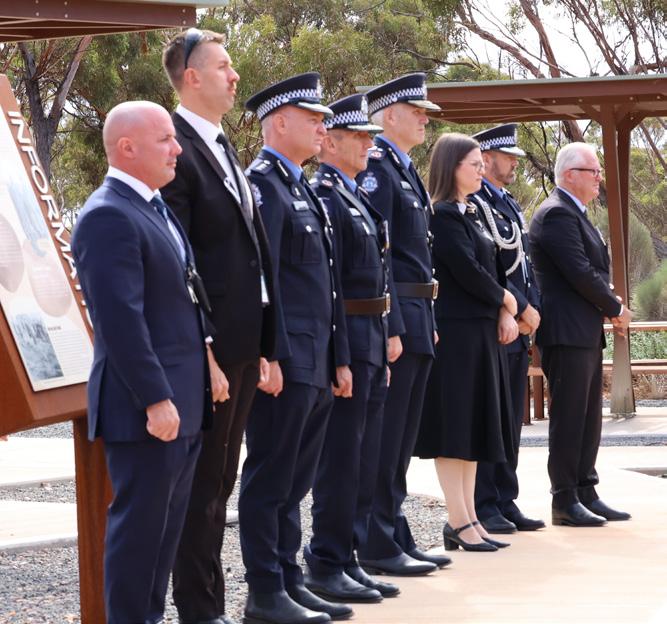
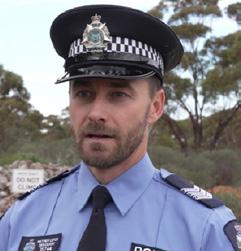
Those were the words of WA Police Force Commissioner Col Blach APM, who tributed the legacy of Inspector John Joseph Walsh and Sergeant Alexander Henry Pitman, who were tragically killed in the line of duty, 100 years ago.
Relocating the memorial
The original memorial, erected in 2015, marked the spot where their bodies were discovered in a mine shaft at Miller’s Find, on the outskirts of Kalgoorlie. However, as the area now lies within a mining lease, public access was limited. To preserve their memory and ensure better public engagement, the memorial was relocated to a new site.
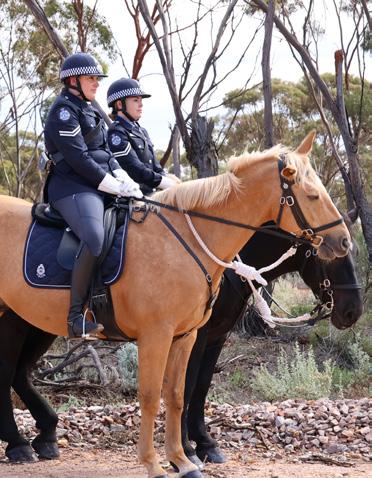
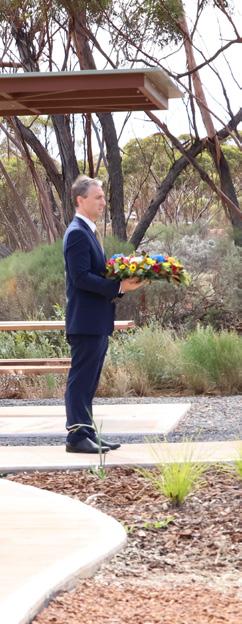
The re-dedication ceremony took place on Saturday, 27 April, at the new site, an accessible location that honours their legacy. The event was a significant occasion, attended by notable figures including WA Governor the Hon Chris Dawson AC APM, WA Police Commissioner, and the descendants of the murdered officers.
A legacy across generations
Among the attendees was Armadale Detective Senior Constable Matt Leitch, the great-great-grandson of Inspector Walsh. He and his family gathered to pay their respects.
“It’s incredible to see that their story still resonates with the community and the police force,” Leitch remarked. “I’ve shared this story with my children, and it’s one I hope will be passed down for generations to come.”
It’s incredible to see that their story still resonates with the community and the police force. I’ve shared this story with my children, and it’s one I hope will be passed down for generations to come.”
BACKGROUND
The gold stealing detection unit
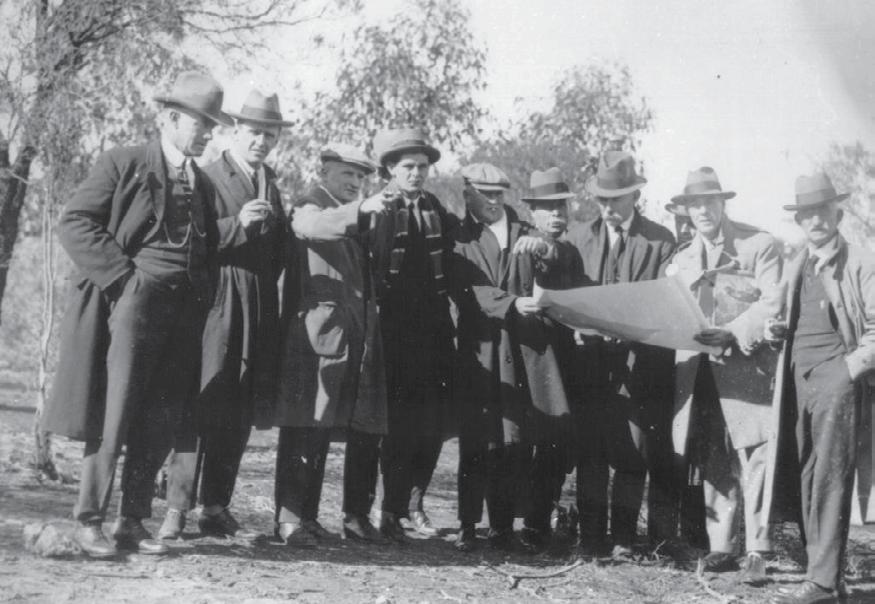
Detective Inspector Walsh and Sergeant Pitman were members of the Gold Stealing Detection Unit (GSDU), which was established in 1907 to combat widespread gold stealing across the Western Australian Goldfields.
The Gold Stealing Detection Unit remains the longest-standing specialist unit within the organisation. On 28 April 1926, the officers departed Kalgoorlie to investigate reports of unlawful gold processing south of the town. When they failed to return within a week, a large-scale search was launched involving police, Aboriginal trackers and members of the local community.
On 12 May 1926, the search concluded tragically when the bodies of the officers were located at a mine shaft about 9.6 kilometres south-west of Kalgoorlie.
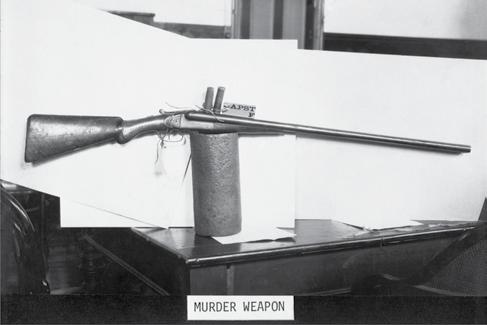
On 6 June 1926 three local men, Evan Clarke, Phillip Treffene and William Coulter were arrested. Clarke turned King’s evidence, swearing he had only assisted in disposing of the corpses.
Treffene and Coulter were found guilty of murder.
A funeral for the two officers was held at St Marys Cathedral Perth on 17 May 1926.
Sargeant Matt Leitch, the great-great-grandson of Inspector Walsh.
Remembering the victims
Facing the reality
The first Wednesday of May marks National Family Violence Remembrance Day across Australia. It is a day to remember those whose lives have been taken through family and domestic violence (FDV), to stand with victim-survivors, and to reflect on the role every part of the community plays in preventing further harm.
Police officers are WA’s primary responders to FDV incidents. Members see first-hand the devastation these situations leave behind, not only for victims, but also for children, families, colleagues and entire communities. But National Family Violence Remembrance Day also asks us to confront a difficult truth. Police officers themselves are not immune from becoming perpetrators of violence.
That reality has once again come into sharp focus following the alleged February 2024 murders of a Sydney couple, one of whom was the accused’s former partner.
The matter, involving a former NSW Police officer, has reignited national discussion about family violence perpetrated by police officers and highlighted how little Australian data exists on the issue.
To help address this gap, the Western Australian Police Union has undertaken research into FDV homicides perpetrated by Australian police officers. The findings are confronting, but they are important.
Why this research matters
WAPU’s research identified at least 43 incidents where serving or former Australian police officers were responsible for FDV homicides dating back to 1828.
Of those, 28 perpetrators were serving police officers at the time of the homicide, while 15 were former officers.
The report does not identify perpetrators or victims, nor speculate on causes. It only attempts to identify trends and provide evidence-based insight into an area where reliable Australian data has historically been limited.
The findings also show that progress has occurred over time. The rate of FDV homicide perpetrators among serving police officers in the 1900s was almost 14 times higher than the rate since 2020.
Further, the report found the current rate of FDV homicide perpetrators among serving Australian police officers is approximately one-third that of the general population.
Perpetrator rates for serving police officers have declined significantly over time. But one homicide victim is still one too many.
The human cost behind the statistics
WAPU’s research documented 46 victims killed by serving police officer perpetrators. Forty victims, or 87 per cent, were female. Thirty-four victims were the perpetrator’s wife, former wife, or daughter.
87% female
Perhaps most heartbreaking is the number of children affected.
19 victims were children under the age of 18, with an average age of just 4.4 years old.
All but one child victim died in murdersuicide incidents.
These figures. They represent lives lost, families shattered, and communities left carrying grief for years afterward.
Understanding the trends
The research also identified several trends among perpetrators.
All 28 serving officer perpetrators were male, with an average age of 35.4 years. Seventy-one per cent were ranked Constable, either in uniform or detective roles.
Firearms were the predominant weapon used, whether service-issued or privately owned. Every documented murder-suicide involved a firearm.
The report found that 13 incidents were classified as murder-suicides, 10 as murder, and five as manslaughter.
For former officers, the research identified a concerning increase in incidents since 2001, with at least eight FDV homicides committed by former police officers during that period. The average age of perpetrators was 51 years old.
Looking after our Members and their families
Family and domestic violence is a wholeof-community issue, and policing brings unique pressures that cannot be ignored. Members regularly work in high-stress environments, attend traumatic incidents, work irregular hours, and carry significant emotional burdens.
None of these pressures excuse violent behaviour, but they do reinforce why early intervention, support services, mental health assistance, and workplace accountability matter.
There is also an important distinction between supporting Members and protecting harmful behaviour. The two are not the same.
Supporting Members means ensuring people have access to wellbeing services before situations escalate, encouraging colleagues to seek help early, and creating a culture where warning signs are recognised rather than ignored.
It also means recognising that victims of FDV exist within policing families too.
A shared responsibility
National Family Violence Remembrance Day is ultimately about remembrance, accountability and prevention.
For WAPU, acknowledging this issue is not about damaging the reputation of policing. It is about recognising that community trust is strengthened when difficult conversations are faced honestly and responsibly.
The research shows there has been measurable progress over time, but it also reinforces that there is more work to do. Every victim matters. Every child matters. Every opportunity to prevent violence matters.
As police officers, Members understand better than most the devastating consequences of family and domestic violence. National Family Violence Remembrance Day is a reminder that preventing that harm is a responsibility shared by all of us, both in uniform and beyond it.
REMEMBRANCE WALKING TOGETHER IN
Every time a police officer leaves for a shift, their family lives with the quiet understanding that there are no guarantees they will come home.
When an officer is killed in the line of duty, the loss ripples far beyond the badge; spouses are left to carry unimaginable grief, children grow up with empty seats at birthdays and milestones, and parents endure the heartbreak of outliving a son or daughter who dedicated their life to protecting others.
The lasting toll on families
In the aftermath, families often face not only emotional devastation, but years of rebuilding their sense of security, identity, and future. That is why events like the Walk to Remember organised by Police Legacy matter so deeply.
They ensure fallen officers are never forgotten, give grieving families a community that understands their pain, and remind the public that behind every uniform is a family who also serves and sacrifices alongside them.
Steps of remembrance
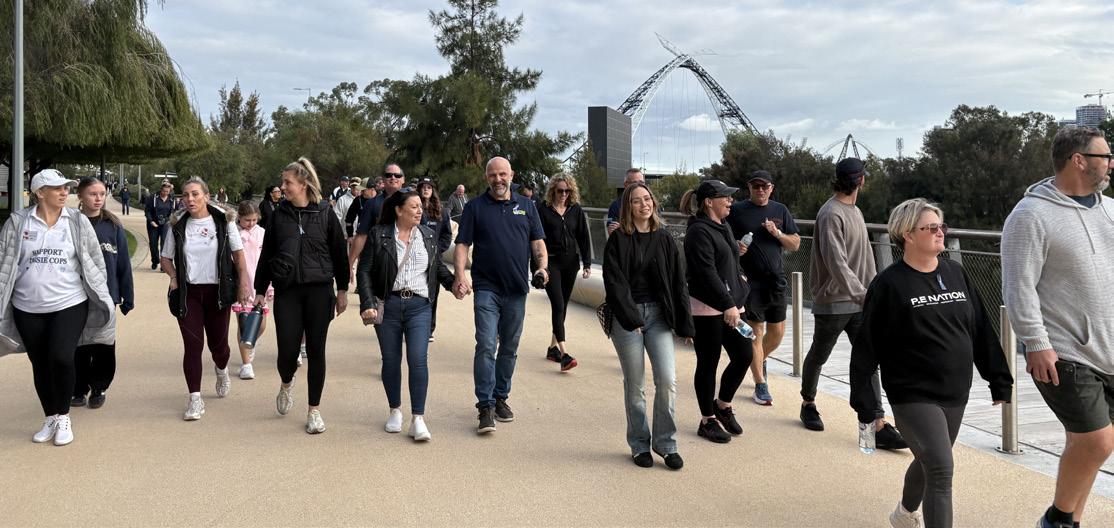
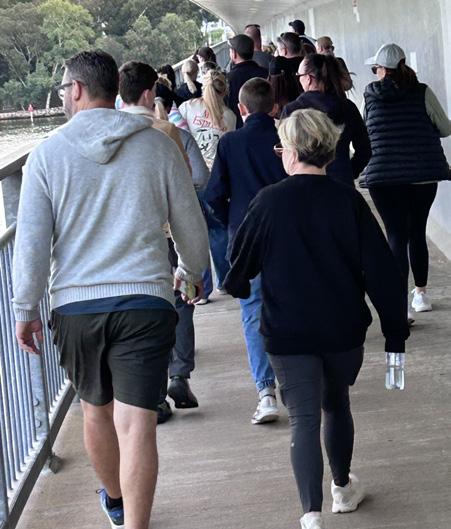
On the evening of 16 May, members of the WA policing community undertook a symbolic 5km walk in honour of fallen police officers. The event provided a quiet and meaningful opportunity to reflect on the dedication of those officers whose commitment to policing and community service continues to leave a legacy.
A community united in grief and hope
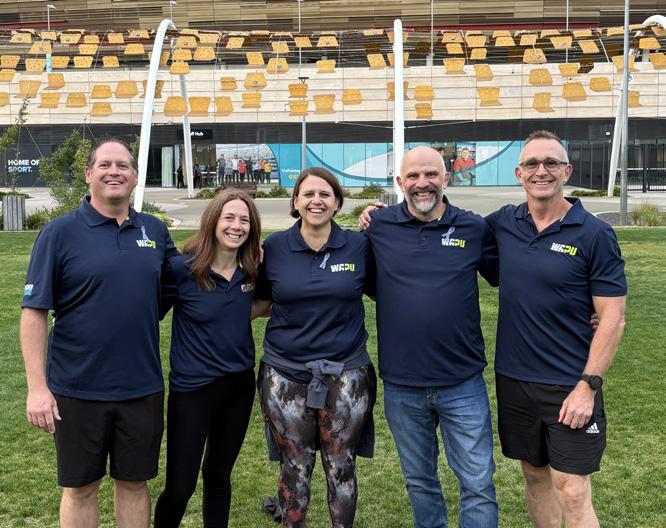
WAPU Leadership Simone Taplin, Matt Gren, Scott Sulley, Aaron Hickey and Sarah Morris, joined by their families, honoured the service and sacrifice of fallen officers, reinforcing the importance of standing beside police families and colleagues through every stage of life and service.
As the sun set, attendees gathered at The Camfield to share stories, memories and conversations about the officers being honoured. These moments of reflection highlighted the strong bonds within the policing community and the importance of continuing to support one another beyond the job.
The WA Police Union proudly acknowledges Police Legacy for the invaluable work they do in supporting the WA policing family and preserving the memory of officers who dedicated their lives to serving the community.
"As a Police officer, events like this matter. But as a dad... They just hit different. Seeing my daughters wanting to be part of the Walk to Remember and learn why we stop to reflect and honour those who came before us, was special."
- MATT
I always attend acts of remembrance with my wife, my biggest supporter over the years and the one who would be impacted the most if I never returned home. It is comforting to know that Police Legacy are there to support those left behind in times of tragedy and anything we can do to support them is important.”
- Scott
“This event humanises policing and reminds us that behind every uniform is a family, friendships and a community that stands together. Walk to Remember shows that no matter where we serve, we are all part of one policing family and I am assured that if the unthinkable happens to me, I know Police Legacy are there and will support the loved ones that have supported me.”
- Simone
"Attending this event to me is about respect, taking the time to honour those we've lost and showing that we genuinely care about the families left behind."
- Aaron
FORTEM OUTREACH TRAILER BRINGING SUPPORT CLOSER TO WA POLICE MEMBERS
For police officers across Western Australia, the job often means more than long shifts and demanding situations. It can also mean extended time away from home, deployments to remote locations and working in environments where support services are not always easy to access when they are needed most.
Meeting the unique demands of frontline policing
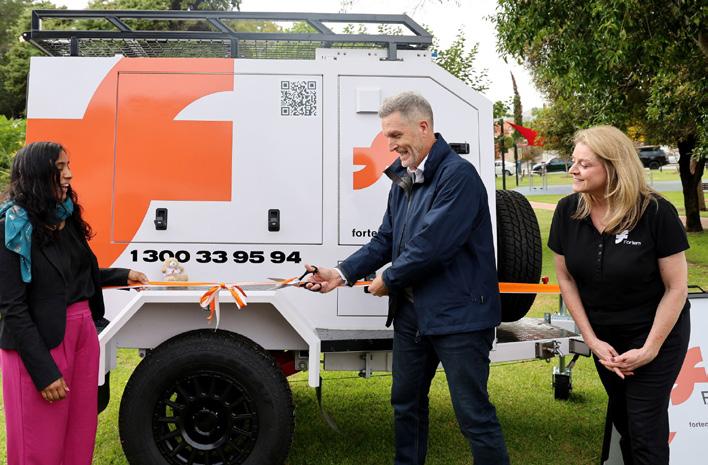
Recognising these challenges, Fortem Australia has officially launched its new Outreach Trailer, a fully mobile wellbeing hub designed to bring practical support directly to WA Police members, their families and other emergency service workers across the state.
The initiative reflects a growing understanding that wellbeing support needs to be accessible, flexible and tailored to the realities of frontline policing in Western Australia.
Whether Members are stationed in metropolitan areas, regional towns or remote communities, the Outreach Trailer has been created to meet them where they are.
A safe space for Members and their families
The trailer provides a safe and welcoming environment where Members and their families can take a moment to connect, access mental health and wellbeing resources, and seek additional support if needed. Importantly, the informal nature of the space is designed to help reduce some of the barriers that can prevent people from reaching out, including stigma, distance and time constraints.
For many police officers, wellbeing does not only affect the individual Member. Families often carry the pressures that come with policing too, from managing long absences and shift work to supporting loved ones after difficult incidents. The Outreach Trailer acknowledges the important role families play in sustaining Member wellbeing and ensures they are included in the support network.
In addition to providing immediate wellbeing resources, the trailer also offers practical guidance and referral pathways to further mental health and support services. This helps make accessing ongoing assistance simpler and more approachable for Members and families who may not know where to start.
Bridging the gap for regional and remote communities
What makes this initiative particularly important is that it is not intended to be a one-off program. Fortem Australia is planning for the Outreach Trailer to operate
as an ongoing statewide capability, supporting station visits, deployments and community recovery efforts across metropolitan, regional and remote Western Australia.
For Members working in isolated areas, this kind of outreach can make a meaningful difference. Support services are often concentrated in larger centres, leaving regional and remote Members with fewer opportunities to engage face-to-face. By taking support directly into districts and stations, the Outreach Trailer helps ensure wellbeing conversations and services are visible, accessible and part of everyday policing culture.
Normalising support and changing culture
The launch of the trailer is another positive step towards recognising the unique pressures emergency service workers face and the importance of early support and connection. It reinforces that seeking support is not a sign of weakness, but an important part of maintaining wellbeing both on and off the job.
Members interested in having the Outreach Trailer visit their district or station can contact Fortem Australia via email at outreach@fortemaustralia.org.au
As policing continues to evolve, initiatives like this help ensure that support evolves alongside it, making it easier for Members and their families to access assistance wherever they serve.
MEMBER LETTER
Dear Colleagues,
After nearly 20 years in policing, I feel compelled to share my experience; one that I believe many of us can relate to but rarely voice openly. It’s not weakness or an inability to cope; it’s the cumulative toll of a demanding profession, compounded by systemic neglect and institutional betrayal.
Throughout my career, I’ve witnessed trauma most people will never encounter once. Working coronials, I’ve stood over, held, and photographed more bodies than I can count – adults, children, babies. These images and experiences change you.
They rewire your brain, disturb your sleep, and shatter your sense of safety. PTSD isn’t just a label for me; it’s become a constant background noise woven into my daily life.
There isn’t a week that passes without me withdrawing, shutting down, or feeling overwhelmed. My family bears the brunt of this invisible burden.
I rely on humour to get through the day, but even that’s now frowned upon, weaponised by those eager to climb the ranks. I’ve been told, “You were trained, you should know what to expect,” but no amount of training prepares you for the brutality and unpredictability of real-life incidents.
Here at the Union we get a lot of feedback, all kinds of feedback. But every now and then something will arrive in the inbox that encapsulates so much about what many of our Members feel and experience, but struggle to put into words. Without any further delay, please feel free to immerse yourself in the account of one of your colleagues…
The hardest part isn’t the trauma itself is how WAPOL treats those of us who are damaged by the job. Non-operational officers are dismissed as inconveniences, burdens, disposable once we’re no longer useful on the front line. This institutional attitude inflicts profound psychological harm. We give everything; our health, peace of mind, years of life and when we break, we’re blamed, made to feel like failures.
What WAPOL refuses to acknowledge is that PTSD doesn’t just affect the mind; it takes a physical toll, especially on the heart. Living in a perpetual state of hyper-alertness keeps your nervous system on high alert, elevating your heart rate, increasing blood pressure, and surging stress hormones. Over time, this strain damages the cardiovascular system, increasing risks of heart disease, arrhythmias, and other health issues.
Sleep becomes fragmented, preventing the body from recovery. Yet, these effects remain invisible to the organisation because admitting them would mean acknowledging the true cost of policing.
My body bears the scars of this trauma. Following open-heart surgery, a mechanical valve, and a pacemaker, my cardiologist provided a clear medical report explaining my limitations and fatigue. WAPOL’s doctor questioned this, suggesting I “should not be tired,” as if cardiac trauma was a personal failing. Despite being on Warfarin and told I would never be operational again, I was pressured to return to work.
We all deserve support, not judgement. We deserve rest, not pressure. And we deserve to be treated with dignity.
When I supported my wife through her leukaemia diagnosis or travelled to the UK for family emergencies, I was met with insensitivity, “The Agency doesn’t employ your wife,” followed by, “What doesn’t kill you makes you stronger.” That’s what passes for support.
When I had to fly back to the UK because my mother was in hospital with cancer and after a serious road accident, I was told that if I didn’t get back to work, I’d be “in a world of pain.”
This lived reality is something many officers talk about privately but feel unsafe saying publicly. The silence isn’t because the issues aren’t real. It’s because the culture punishes honesty.
We all deserve support, not judgement. We deserve rest, not pressure. And we deserve to be treated with dignity.
If you're struggling, please reach out to WAPU or Fortem for confidential support. The police GP and psychiatrist have told me not to feel guilty — because the Agency doesn’t care about us. So, we must care for each other.
as WA records alarming Meth consumption AUSTRALIA'S DRUG MARKET SURGES
The latest findings from the Australian Criminal Intelligence Commission’s National Wastewater Drug Monitoring Program (NWDMP) have painted a confronting picture of illicit drug use across the country and Western Australia is once again at the centre of the methamphetamine crisis.
The data, covering the 2024-25 financial year, estimates that more than 26.9 tonnes of illicit drugs were consumed across Australia, with a nominal street value of $14.3 billion.
For WA Police Union Members, the figures are more than just statistics. They reflect the growing pressures faced by frontline officers responding daily to drug-related violence, organised crime, mental health incidents, property crime and community harm.
A growing national problem
The NWDMP has monitored wastewater at more than 50 sites across Australia since 2016, tracking the use of major illicit drugs including methamphetamine, cocaine, MDMA and heroin.
According to the latest report, illicit drug consumption has surged significantly since the disruption caused by the COVID-19 pandemic. National consumption has increased by 70.5 per cent compared to 2020-21 levels.
Methamphetamine continues to dominate Australia’s illicit drug market, with a record 15.8 tonnes consumed nationally in 202425. Cocaine and heroin consumption also reached record highs.
The ACIC described Australia’s drug market as “highly dynamic, resilient, and profit-driven”, driven by organised criminal syndicates and transnational supply chains.
For police officers on the ground, those words translate into increasingly complex operational challenges.
An estimated was consumed in WA during 2024-25, with a street value exceeding $1.5 billion. of meth
2.1 tonnes
704.9 milligrams per person
WA remains at the sharp end
While larger eastern states consumed greater total quantities of methamphetamine, WA recorded one of the highest rates of meth consumption per person in the country alongside South Australia.
The figures are stark.
An estimated 2.1 tonnes of methamphetamine was consumed in WA during 2024-25, with a street value exceeding $1.5 billion.
When measured against population, WA recorded an estimated 704.9 milligrams of meth consumption per person.
The report notes this is equivalent to approximately seven to eight hits of meth per person across the state.
Perhaps most concerning is that WA’s current meth consumption rate is now worse than levels recorded during the widely publicised meth epidemic almost a decade ago.
For many Members, that reality will come as little surprise.
Police continue to see firsthand the devastating impacts methamphetamine has on individuals, families and communities.
From violent and unpredictable behaviour to repeat offending, family violence, road trauma and serious assaults, the ripple effect reaches every policing district across the state.
Cocaine use also rising rapidly
Although meth remains the dominant concern, the report also highlights significant growth in cocaine consumption in WA.
Cocaine use in WA increased by 188 per cent compared to pandemic-era lows in 2020-21.
The state recorded a per-person cocaine consumption rate of 102.9 milligrams in 2024-25, the highest level on record for WA.
The rise reflects changing trends within Australia’s broader illicit drug market, with cocaine increasingly accessible despite its traditionally higher cost.
At the same time, MDMA and heroin consumption in WA also continued to rise, though at lower rates.
The impact on frontline police
Behind every statistic is an operational reality for WA Police officers.
Drug-related offending places enormous strain on policing resources, investigative units, regional deployments and emergency response capability.
Officers are routinely required to deal with volatile situations involving individuals affected by methamphetamine and other substances, often under dangerous and unpredictable circumstances.
The data reinforces the ongoing importance of specialist drug investigations, organised crime disruption, border protection efforts and community harm reduction strategies.
Importantly, it highlights the broader wellbeing impact on police officers themselves.
Repeated exposure to trauma, aggression and high-risk incidents linked to illicit drugs can take a significant toll on Members both professionally and personally. As drug use continues to rise, so too does the pressure placed on frontline policing.
Looking ahead
The latest wastewater findings are a reminder that despite years of enforcement activity and public awareness campaigns, illicit drugs continue to present one of the most significant challenges facing law enforcement and the community.
For WA Police Union Members, the figures validate what many already experience every shift. The meth crisis has not disappeared. In many respects, it has intensified.
As organised criminal networks continue to adapt and demand remains high, WA Police officers will remain on the frontline of one of the state’s most persistent and damaging social issues.
FROM THE FRONTLINE TO THE HOME
For many of our Members, the job does not end when the shift does. It follows you home, sitting quietly in the background and sometimes showing up in ways that are hard to explain, especially to the people who matter most.
That is something Kim Hicks understands all too well.
A career on the edge
After more than 20 years in policing, Kim built a career across general duties, counterterrorism, child exploitation, trafficking, major crime, and borderrelated corruption. She was also deployed internationally into volatile environments, facing riots and threats to police compounds.
Like so many Members, she took it in her stride.
ONE OFFICER’S MISSION TO HELP FAMILIES UNDERSTAND PTSD
Her outlook was simple. Even if most jobs were tough, making a difference in just one made it worthwhile.
But the impact of those tough jobs does not always show up straight away.
Kim was eventually diagnosed with jobrelated Post-Traumatic Stress Disorder (PTSD). At the time, her daughter was just six years old.
That is when a different kind of challenge began.
Breaking through the silence
“I was trying to find a way to explain what I was going through in a way my daughter could understand,” Kim said. “I wanted her to know I was going to be okay, without scaring her.”
Kim is open about the fact that one of the hardest parts was admitting it.
“There was a lot of embarrassment. I felt like I should have just pushed through.”
That mindset is common in policing. The pressure to keep going, to stay operational, to look after everyone else first.
Kim delayed seeking help because she was worried about what it might mean for her career.
“I didn’t want to lose my operational status, so I held back longer than I should have.”
It is a reminder that early support matters. Looking after yourself is what allows you to keep showing up for others.
At the time, Kim was also navigating this as a single mum, without a strong support network.
Out of that experience came something remarkable.
'Mullet Style': Books and journals for healing
Kim created Feathers From Stones, a children’s book designed to help families explain PTSD in a way that is simple and not overwhelming. It came from a very real need at home.
“It’s written so kids can understand it, but also so parents finally have the words,” she said.
The book introduces concepts like an “invisible backpack” and a “body alarm that will not switch off”, giving children a way to understand what they might be seeing.
Kim describes the format as “mullet style”. A children’s story at the front, with practical explanations for adults at the back.
It is approachable and real, helping break down the stigma that still surrounds mental health in policing families. The impact has been immediate.
“My daughter takes the book to school and can explain to her friends why I was in hospital without it being confusing or scary,” Kim said.
That is what this is about. Giving families the tools to talk. Because when families understand, it changes everything.
Kim did not stop there.
Drawing on her own experience, she developed a Mental Health Journal for first responders.
“I could be struggling during the week, but by the time I got to an appointment, I’d just say ‘I’m good’ because in that moment, I might have been.”
Her journal helps track symptoms, triggers, and patterns over time, giving both individuals and health professionals a clearer picture.
Navigating the system
She also created an Insurance Claim Journal, recognising how difficult it can be to navigate compensation systems while dealing with mental health challenges.
“For many people, the system feels like it works against you,” she said.
The resource breaks the process into manageable steps, helping people stay organised during what can be an overwhelming time.
Her motivation has remained clear.
“I’m not doing this for me. I’m doing it so the next person has a clearer path and can focus on getting better.”
That will resonate with many Members. Looking out for the next person coming through.
Kim’s work has already been recognised by mental health professionals and first responder
My daughter takes the book to school and can explain to her friends why I was in hospital without it being confusing or scary.”
support organisations in Australia and overseas. Just as importantly, she has kept her resources accessible, often receiving very little in return herself.
“It’s about making sure people can access something that helps.”
You are not alone
For our Members, there is a clear message in Kim’s story.
You are not alone in what you experience on the job. And your family does not have to navigate it alone either.
Tools like Feathers From Stones are helping bridge that gap, turning difficult conversations into manageable ones and helping families better understand the realities of policing life.
Kim’s journey shows that even in the most challenging moments, it is possible to create something that helps others.
And sometimes, it starts with finding the right words.
Scan the QR code to purchase 'Feathers From Stones' and other Kim Hicks resources.
Celebrating a Lifetime of Dedication
WA POLICE UNION HONOURS OUR HEROES
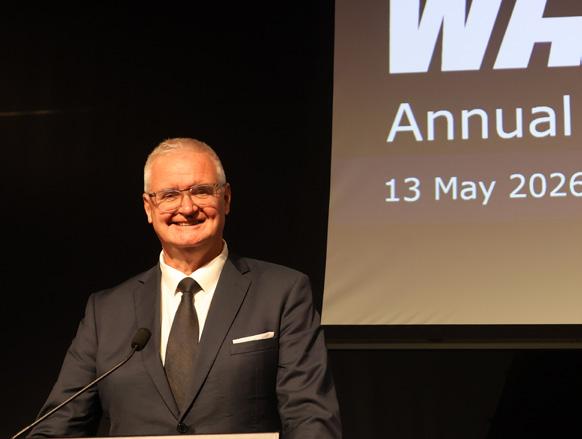
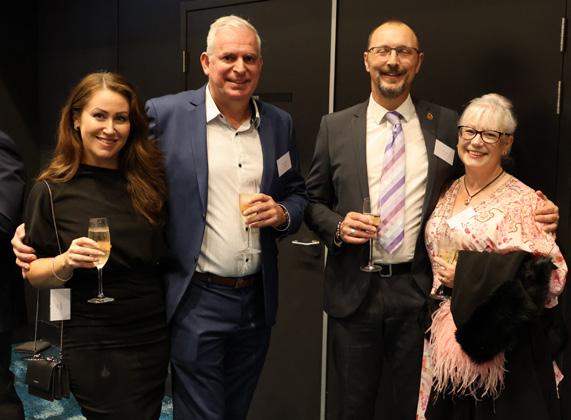
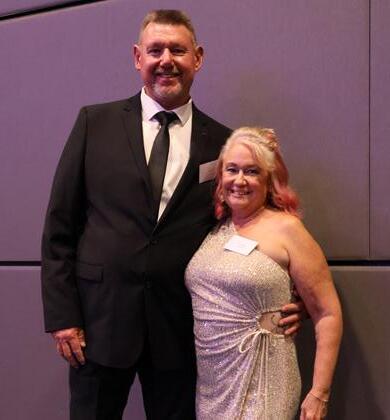
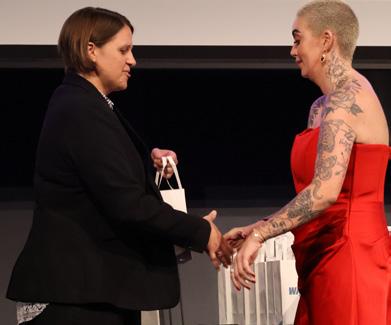
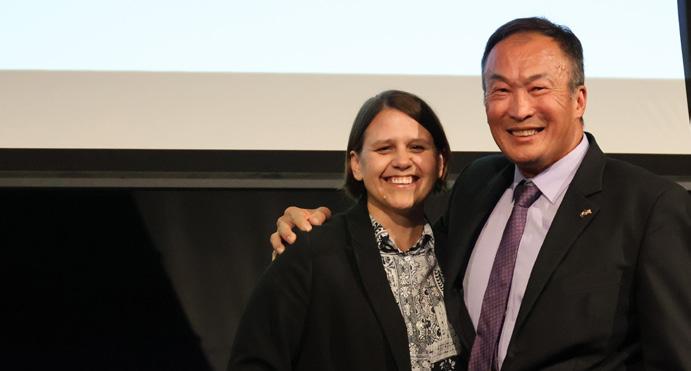
Wednesday 13 May 2026, WAPU hosted its annual Service Recognition Dinner. A heartfelt celebration this year, honouring 200 Members who have resigned or retired after dedicated service ranging from 7 to 52 years.
This event holds deep significance as it acknowledges the unwavering commitment, bravery, and professionalism of our police force throughout their careers. It also serves as a moment for the community, colleagues, families, and stakeholders to come together and express their gratitude.
Our valued partners, P&N Bank and Slater & Gordon Lawyers, proudly sponsored the evening at Optus Stadium, providing an exclusive space with stunning views of the city skyline. We also acknowledge the support of the Western Australia Police Force, whose contribution helped make the event
a success and provided members with the opportunity to come together and celebrate.
The evening was attended by a diverse group of guests, including family members of the officers, Minister for Police Reece Whitby MLA, Police Federation Australia CEO Scott Webber APM GAICD, WAPOL Deputy Commissioner Kylie Whiteley, the Retired Police Officer’s Association, WAPU Executive and staff, along with our trusted partners.
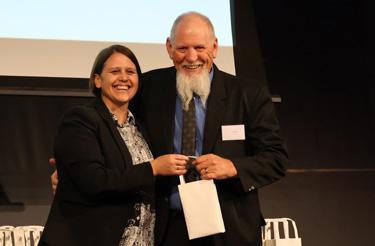
A special highlight of the night was the presentation of WAPU watches to each recipient, symbolising appreciation and recognition for their service.
The event was expertly emceed by the much-loved Tim Gossage, whose warmth and humour helped create a memorable and engaging atmosphere. Overall, the Service Recognition Dinner not only celebrated individual achievements but also reinforced the strong bonds within the policing community and the ongoing support from the wider society.
Celebrating a Lifetime of Service
Bernie's remarkable journey in policing
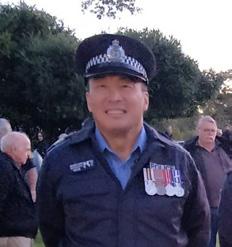
After dedicating 41 years of his life to the Western Australia Police Force (WAPOL), Bernard has officially retired, leaving behind a legacy of commitment, service, and unforgettable moments.
His career is a testament to his dedication to duty, his passion for serving the community, and the bonds formed along the way.
A highlight to remember
One of the most memorable highlights of Bernie's career was serving as a traffic outrider and having the unique opportunity to meet the late Queen Elizabeth II during her historic visit to Australia.
“It was an incredible moment,” Bernie recalls. “Being part of such a significant event and meeting her Majesty was truly special.”
Interestingly, Bernie started and ended his policing career alongside his brother Colin, who was also present at the event. The Hush Brothers garnered headlines across Western Australia as the first Asian brothers to serve in the WA police force.
A diverse career path
Before joining WAPOL, Bernie served in the army, a background that instilled discipline and a sense of duty that he carried into his policing career.
Throughout his time with WAPOL, Bernie served in various locations including Midland, Carnarvon, Fremantle, and took part in weapons training. Yet, it was
his ten years working out in the Wheatbelt district that he particularly cherished.
“The Wheatbelt was special to me,” he says. “The community, the landscape, and the connections I made there made it a highlight of my service.”
What drew him to serve
Bernie attributes his dedication to the uniform, the responsibility it carries, and the people he’s met along the way.
“It’s the people I’ve served with and the community I’ve protected that kept me going,” he reflects. His story is a reminder of the unwavering commitment of law enforcement officers across the country.
Sergeant Bernard Hush 6808, with wife Ling
Sweet Potato and Cheese Muffins
Here’s a simple, nutrition-packed recipe for a meal that you can take on the go.
Serves: 12 sweet potato & cheese muffins
Prep time: 10 mins
Cooking time: 25 min
Ingredients
• Olive or canola oil spray
• 2 cups wholemeal self-raising flour
• ½ cup sweet potato, peeled and grated
• 2 tbs parmesan cheese, grated
• ¼ cup reduced fat mozzarella cheese, grated
• ½ red capsicum, finely chopped
• 3 spring onions (including green tops), ends trimmed, chopped
• Pepper, to taste
• 1 cup reduced fat milk
• 2 eggs
Scan the QR code for more Better Health Co recipes
Method
1. Preheat oven to 200ºC.
2. Lightly spray muffin tins with oil.
3. Sift flours into a medium sized bowl, returning any remaining grain in the sieve to the bowl.
4. Mix in sweet potato, cheese, capsicum, spring onion and pepper.
5. In a separate bowl, whisk milk and eggs together, then add to dry ingredients and mix until combined.
6. Spoon into prepared muffin pan.
7. Bake for 25 minutes until firm and a knife inserted into the centre comes out clean.
8. Allow to cool in the tin for a few minutes then turn onto a wire rack.
AN IMPORTANT STEP FORWARD FOR PAO MEMBERS
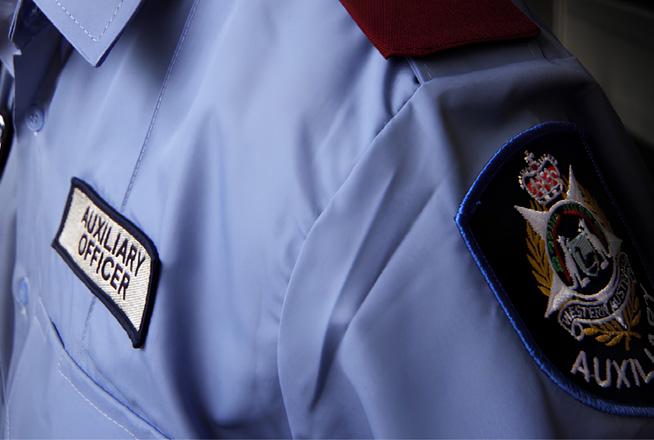
Police Auxiliary Officers play an essential role in policing across Western Australia. They are often the first point of contact for members of the public, supporting distressed callers, assisting victims and helping keep police stations operating under increasing pressure. While their role differs from sworn officers, the responsibility, emotional toll and workplace pressures they face are very real.
That is why the successful registration of the Western Australia Police Force Auxiliary Officers Industrial Agreement 2024 is such an important outcome for PAO Members and the WA Police Union.
On 10 February 2026, WAPU appeared before the Industrial Relations Commission alongside WA Police to formally register
the new Agreement, replacing the previous 2022 arrangement. This represents another important step in ensuring PAO Members continue to receive fair workplace protections, enforceable conditions and recognition for the work they perform every shift.
Evolving roles and workplace pressures
For many Members, the role of a PAO has evolved significantly in recent years. Increasing workloads, staffing pressures and the emotional strain of dealing with vulnerable, distressed or aggressive members of the public continue to impact day-to-day work.
Many PAOs are supporting frontline policing while balancing competing operational demands in high pressure environments. Too often, the work performed by PAOs can be underestimated by those outside policing. Our Members know the reality. PAOs regularly manage confronting conversations, support critical incidents and assist victims during some of the most difficult moments of their lives. They are exposed to trauma, abuse and stressful situations while continuing to demonstrate professionalism and compassion every day.
The value of strong industrial agreements
Industrial agreements are about far more than wages. They provide protections, certainty and support for Members working in increasingly demanding environments.
Every condition and safeguard exists because Members deserve to feel safe, valued and respected in their workplace.
This Agreement reflects the ongoing commitment of your Union to advocate for PAO Members and ensure their voices are heard.
Importantly, it also sends a clear message that PAO Members matter, their wellbeing matters and the work they perform is critical to policing in Western Australia.
While no agreement resolves every workplace issue overnight, securing strong industrial protections is an important step forward. WAPU will continue standing beside PAO Members and fighting for the recognition, support and conditions they deserve.
YOUR VOICE YOUR CONDITIONS YOUR CAMPAIGN
As we head into July, the WA Police Union will officially begin our 2027 Industrial Agreement campaign, and this is one of the most important opportunities for Members to have their voices heard on the issues that matter most.
As we head into July, the WA Police Union will officially begin our 2027 Industrial Agreement campaign, and this is one of the most important opportunities for Members to have their voices heard on the issues that matter most.
The realities of modern policing
Every day, police officers across Western Australia face growing demands, increasing workloads, and the ongoing pressures that come with serving the community. From staffing shortages and fatigue to workplace safety and fair remuneration, the challenges are real, and they continue to impact members both on and off the job.
That is why this campaign matters.
An Industrial Agreement is more than just negotiations around pay and conditions. It is about recognising the value of police officers and ensuring Members are supported, respected, and equipped to
continue doing the work our community relies on. It is also about fighting for meaningful improvements that reflect the realities of modern policing.
A campaign driven by every Member
Over the coming months, Members will play a critical role throughout the entire process. The Union is committed to making this campaign Member driven from start to finish. That means keeping Members informed, seeking feedback, and ensuring your priorities remain at the centre of discussions. Whether you are a frontline officer, investigator, regional member, specialist officer, or support staff member, your experiences and insights are important.
What to expect in the weeks ahead
In the weeks ahead, Members will begin receiving campaign updates directly to their inboxes. These communications will include important information about the negotiation process, campaign priorities, opportunities to provide feedback, and ways Members can get involved and show support.
It is important that Members keep an eye on their emails and take the time to stay engaged throughout the campaign. The stronger and more united our membership is, the stronger our collective voice becomes.
Industrial campaigns are never achieved through the efforts of one person alone. Real change comes when Members stand together and support one another with a shared purpose. Every survey completed, every update read, and every conversation had with colleagues helps build momentum for the outcomes members deserve.
The WA Police Union understands the pressures Members are facing, and this campaign will focus on advocating for practical outcomes that support Member wellbeing, workplace conditions, and the long term future of policing in Western Australia.
Stand together, stay informed
We encourage all Members to stay connected, stay informed, and stay involved. Together, we will continue fighting for the respect, conditions, and recognition that WA police officers deserve.
The ballot will be available on the WAPU website from 13 April 2026
WAPU Holiday Homes
YOUR NEXT GETAWAY COULD BE CLOSER THAN YOU THINK
Between long shifts, missed family events, overtime and the everyday pressures that come with policing, finding time to properly switch off can feel impossible.
That’s why one of the most valued benefits of being part of the WA Police Union is having access to affordable holiday homes designed specifically for Members and their families.
Whether you are planning a weekend escape, a school holiday adventure with the kids, or simply looking for a few days to recharge by the coast, our Holiday Homes give Members the chance to enjoy quality accommodation in some of Western Australia’s most popular destinations, without the hefty price tag.
From relaxing beachside stays to regional getaways, these homes are there for Members to make memories, reconnect with loved ones and take a well-earned break from the demands of the job.
Easy booking process
Our newly updated Holiday Homes webpage makes it even easier for Members to explore available locations, view accommodation details and plan their next trip.
The page includes everything you need to know, including:
Available holiday home locations
Accommodation features and inclusions
Easy online booking
Availability details
Important terms and conditions
Whether you are planning ahead for the next school holidays or looking for a last-minute break, the updated page is designed to help Members quickly find the right getaway option for their needs.
Ready to plan your next escape?
Scan the QR code to visit the Holiday Homes page and start exploring your next getaway today!
MEET THE WAPU TEAM... Ange Naumoski
At the WA Police Union, our Members are at the heart of everything we do.
Over the next couple of editions, we want to introduce you to our team to help Members put a face to the friendly staff who support and serve them every day.
First up, we’re excited to introduce you to the friendly staff at our front desk. They’re the first faces you see when you walk in, and they’re always ready to help with a smile. Get to know them a little better as they share a bit about their day-to-day roles, favourite moments, and what makes their work special.
One of the highlights of the role is going to the academy with Field Officer Gary, seeing recruits develop throughout their careers.
How many years have you been with WAPU?
I’ve been with WAPU for 3 years! How time flies, it’s been a rewarding experience supporting our Members and working alongside a great team.
What's the most common question Members ask you?
A reality is no two days are the same. The most common questions are usually about navigating workplace concerns and knowing what support is available and I’m always happy to help point Members in the right direction.
How do you start your day when you arrive at work?
I like to ease into the day by getting organised, checking emails, planning priorities and ensuring any Members needing assistance are looked after first. With some good morning radio tunes, keeps the flow going.
Do you have a favourite way to relax after a busy day?
My relaxation routine usually involves music, good food, and convincing myself I’ll go to bed early.
What's one thing you enjoy about working with the Police Union?
One of the highlights of the role is going to the academy with Field Officer Gary, seeing recruits develop throughout their careers, knowing we’ve been there from the beginning. Also making sure all the background work is done to make operations run smoothly and the recruits get their packs at induction.
At WAPU, we’re a small, closeknit team, and everyone plays an important part in our members’ journey throughout their careers. I also look forward to bubble tea Fridays.
How would your colleagues describe you?
Bubbly and never a dull moment, always has a smile on my face, even when the pressure is on. Always will hear my laugh down the corridor.
What's a fun fact about you that most people don't know?
One of my many hats involve being a Team Leader at the St Vincent de Paul Emergency Relief Support
Centre, where I volunteer nearly every Saturday. For the past four years I’ve supported individuals and families who are experiencing homelessness or going through tough times and facing hardships.
I’ve also had a moment in the spotlight as a contestant on Channel 9’s TV show The Hundred with Andy Lee, being one of the few to be chosen to speak to Andy.
Can you share a heartwarming moment you’ve had at work?
One of the most memorable moments in my role came from an unexpected email all the way from the United Kingdom.
A gentleman reached out hoping to reconnect with an old friend — a police officer who had packed his bags and moved to Perth nearly fifty years ago to pursue his career. Over time, they had lost contact, and he no longer had any of his friend’s details.
Because of privacy and confidentiality requirements, I couldn’t share the information he was seeking. However, I was able to pass his message on to the member and let him decide whether he wished to reconnect.
A few days later, I received a heartfelt email from the man in the UK. His friend had reached out, and he was absolutely over the moon. After so long, the two had finally reconnected. He thanked me repeatedly for helping make it possible.
It was a simple action on my part, but knowing it brought two old friends back together after so many years was incredibly rewarding. Moments like that remind me how meaningful our work can be.
If you could give Members one piece of advice, what would it be?
Use the support available to you early. With my law background, I’ve seen how much smoother things go when Members reach out before an issue becomes stressful. A quick conversation can save a lot of worry and we’re always here to help.
Penny Brown
How many years have you been with WAPU?
Since 13/12/2010 – 15 years and 5 months.
What’s a typical day like for you at the front desk?
Mostly processing Holiday Homes, bookings, payments, maintenance issues and reporting.
Helping with phones when needed.
Member enquiries for varying offers and procedures we have in place. For example, Simple Wills, and SmartRider procedure.
What’s the favourite part of your job?
Interaction with members and their inquires where I can assist.
Do you have a go-to coffee or snack to get through the day?
Office Moccona coffee and rice cakes with peanut butter for morning tea. Pretzels in the afternoon (stashed in bottom drawer!).
Some weeks a treat of a bubble tea ordered and delivered. I am a new convert.
Understanding that we are sensitive to Members inquiries as they are each important in their own merit.
When you're not working, what do you enjoy doing in your free time?
Spending time with my two grandsons and family, (two more in Melbourne I love to visit) also friend time / wine time together and beach in summer. Cooking.
Do you have any fun or memorable stories from working at the front desk?
We had a rep from a printing company from many years ago, who use to come into the office every couple of months – cold calling trying to get our business. Every time, she came in she pretended that she had never been to the office before. I had about five business cards from previous visits to prove that she had.
What’s one thing people might be surprised to learn about your role?
Understanding that we are sensitive to Members inquiries as they are each important in their own merit.
Also, just how much is done in and for the office by the front desk.
If you could switch jobs with anyone for a day, who would it be and why?
I am happy with what I am doing. Like having Member interactions and a chat!! Ange and I work well together.
NEW CAR, NEW WAYS YOU COULD SAVE
Get a new car with a novated lease from your mates at Maxxia
With a Maxxia novated lease, you could pay less tax, enjoy budgeting convenience and nab the car you’ve had your eye on.
How novated leasing works for you
A novated lease lets you put some of your pre-tax salary towards a car and its associated running costs – things like rego, petrol and insurance.
How you could save on tax
It’s all well and good to say you could get tax savings. But how does it work? Well, here are the numbers that show how a novated lease stacks up – and why it might be a better option than buying outright or taking out a personal loan.
Get the car you want, backed by our experts
Whatever car you’re in the market for, chances are we can get a great lead on it. That’s because for over 30 years we’ve built up a knowledgeable and resourceful national-wide dealer network that spans most of Australia’s favourite brands, all across the country. And if the car you want is used, that’s no problem either. We’re just as knowledgeable at hunting down a pre-loved vehicle that suits your needs.
And if you already own or are paying off that special car, you can still benefit from a novated lease. You can re-lease your car with us, get cash back for any equity and start enjoying the benefits of novated leasing in your current car.
Lease with confidence with our Price Beat Promise
Our Price Beat Promise is the ultimate in reassurance. We’re confident that our prices are among the best you’ll find anywhere. If you find a better price on a new car elsewhere, and if we can’t beat it, we’ll credit $500+ to your Maxxia novated lease account.
Ready
to try novated leasing with Maxxia?
Convenience. Potential savings. Peace of mind. Three great reasons to get a novated lease with Maxxia and hop into the driver’s seat of your dream car. Give
**Displayed costs are based on an annual $90,000 salary, an annual distance travelled of 15,000kms and a 5-year lease term.
^Personal loan example based on a 6.9% interest rate using the Stratton Finance calculator.
*Maxxia running cost figures are exclusive of GST but savings are based on the employer passing back input tax credits (i.e. a refund of GST) Maxxia Novated Lease calculations are based on a 28.13% residual value. PAYG tax rates effective 1 July 2024 have been used when calculating the salary packaging benefit. All figures are indicative only and provided for illustrative purposes. Actual finance rates, residual values, tax outcomes and savings may vary depending on individual circumstances.
+Available to eligible customers who proceed with a novated lease through Maxxia. For full details and terms and conditions on the Price Beat Promise, visit www.maxxia.com.au/pricebeat
Complimentary initial 30-minute chat about your legal issue & a 10% fee discount* for WAPU members, their families and retired members.
* Conditions apply
Criminal & Disciplinary
The Corruption and Crime Commission | Courts of Inquiry | Criminal and disciplinary matters
Personal Injury
Road accident compensation | Medical retirement | Negligence and breach of duty of care claims | Criminal Injuries Compensation
Leading Australian law firm, Tindall Gask Bentley is the legal services provider for members of the WA Police Union.
To arrange a preliminary in-person or phone appointment contact us on (08) 9211 5800
Wills & Estates
Wills and Testamentary Trusts | Enduring Powers of Attorney | Enduring Guardians | Advice to executors of deceased estates | Obtaining Grants of Probate | Estate disputes | Death Benefit claims
Perth | Rockingham tgb.com.au | (08) 9211 5800
Hanna Rogers Daniel Weekley Luke Officer
Denise Abfalter
Lianna Ferraro Tim White
Jacinda Hansen Vanessa Clark
Marry Hutchins Simon Newman
Struggling to switch off at night? You’re not alone
As a cop, your job demands can be intense, unpredictable, and physically and mentally taxing. Long shifts, highstress situations, and the need to stay alert can take a toll on your sleep. Yet, quality rest is essential – not just for your recovery, but for your safety, decision-making, and overall wellbeing.
Why sleep matters: The health connection
Sleep isn’t just about feeling rested; it’s when your body and mind repairs, restores, and prepares for the next shift. Lack of quality sleep can impact your:
• REACTION TIME AND DECISION-MAKING
Critical in high-pressure situations.
• HEART HEALTH
Increased risk of high blood pressure and cardiovascular disease.
• WEIGHT MANAGEMENT
Disrupted hormones can lead to overeating and cravings.
• MENTAL HEALTH
Lack of sleep is linked to anxiety, stress, and low mood.
• IMMUNE FUNCTION
Your body needs rest to fight illness effectively.
Given the unpredictable hours and intense demands of policing, prioritising sleep is an investment in your health, safety, and capacity to serve the community effectively.
Practical tips for you to improve sleep
Building a consistent sleep routine can be challenging with shift work, but small, targeted changes can make a significant difference:
ESTABLISH A SLEEP WINDOW
Linking sleep to your overall wellbeing and performance
Aim for consistent sleep and wake times, even with rotating shifts –this helps your body adapt.
CREATE A RESTFUL ENVIRONMENT
Keep your bedroom cool, dark, and quiet – invest in blackout curtains or white noise if needed.
WIND DOWN BEFORE BED
Turn off screens an hour before sleep, try gentle stretches, or listen to calming music.
LIMIT STIMULANT
Reduce caffeine intake after your shift and avoid heavy meals late at night.
USE STRATEGIC NAPS
Short naps (20-30 mins) can boost alertness during long shifts.
Sleep impacts every aspect of your life
Better sleep enhances focus, judgment, and physical performance.
It supports mental resilience, helping you manage stress more effectively.
It bolsters immune function, keeping you healthier during busy periods.
Start small, sleep better – For you and your community
Better sleep means better health. By making small, consistent changes like setting a bedtime routine and reducing screen time, you’ll feel more energised and improve your overall wellbeing.
If you’re looking for support to build healthier habits, the Better Health Coaching Service provides Members with a FREE telehealth wellbeing service. Across 10 coaching calls you will work with a qualified health professional to set personalised health goals and receive practical resources to help you achieve them. There are no wait lists so you can get started whenever you’re ready.
Scan the QR Code now to sign up to this service.
'QUIET QUITTING A MARRIAGE' WHAT IT MEANS LEGALLY IN WESTERN AUSTRALIA
By Daniel Weekley, Senior Associate & Criminal Practice Leader SA & WA
There are many reasons why people feel unable to leave their spouse at a particular time, despite no longer being happy in the relationship.
Concerns about finances, care of the children, housing availability and employment uncertainty all play a role in when an individual ultimately feels ready to physically leave a marriage.
It is becoming increasingly common for people to either actively or inadvertently "quietly quit" their marriage.
What is “Quiet Quitting” a marriage?
"Quiet quitting” a marriage refers to a situation where spouses remain legally married but gradually disengage from the relationship— emotionally, socially and sometimes financially—without formally ending it. Rather than an explicit separation, the relationship slowly ceases to function as a partnership.
CASE STUDY
Sarah and Daniel had been married for 12 years with two children. Over time, Sarah became increasingly unhappy in the relationship and despite efforts to improve the division of labour and her resentment towards Daniel, she began to accept that the situation would not improve and gradually disengaged from the relationship.
Sarah stopped including Daniel in the weekend plans with the children, ceased cooking meals and doing laundry for him and eventually stopped sharing a bedroom. She also withdrew from joint social activities and began managing her finances independently.
Although they continued living in the same home for practical and financial reasons,
The legal framework: separation and divorce
Under the Family Law Act 1975 (Cth), Australia adopts a no-fault divorce system., This means the court does not examine why a marriage ended. Instead, a party must prove that the marriage has broken down irretrievably, demonstrated by 12 months of separation.
Importantly, separation can occur even if parties continue to live in the same home. This is known as “separation under one roof”, where spouses lead separate lives despite sharing accommodation. In practice, many situations described as quiet quitting resemble this arrangement.
In Western Australia, divorce applications are heard in the Family Court of Western Australia under the Family Court Act 1997 (WA).
The court will consider evidence of separation—such as changes in sleeping arrangements, finances, and social lives— when determining whether the statutory separation period has been satisfied. Accordingly, while “quiet quitting” is not a legal term, the law recognises that a marriage may effectively end well before a formal divorce application is filed.
How “Quiet Quitting” can affect property and parenting matters
However, the “quiet quitting” period can have further legal implications. When determining property settlement, the court may consider that the parties have already been functioning financially independently for a period of time. This can influence how post-separation contributions are assessed.
Additionally, parenting arrangements may be shaped by the reality that parties have already been informally co-parenting with limited interaction.
their relationship had effectively ended. This was a classic example of “quiet quitting.”
After 14 months, Sarah obtained a rental property and shortly thereafter applied for divorce in the Family Court of Western Australia, relying on “separation under one roof”. To support her application, she filed affidavit evidence outlining the breakdown of the marital relationship— separate sleeping arrangements, minimal communication, and independent financial management. A friend also provided corroborating evidence.
The court accepted that separation had occurred despite cohabitation and granted the divorce.
Therefore "quiet quitting" can have significant evidentiary and practical consequences in family law proceedings, particularly in proving separation and shaping financial and parenting outcomes.
When does separation legally occur?
The matters of Pavey v Pavey (1976) FLC 90-319 found that separation occurs when:
→ One party forms an intention to end the marital relationship, and
→ That intention is communicated or acted upon in a way that makes it clear to the other party, and
→ There is a corresponding change in the marital relationship (consortium vitae).
Is express communication required?
The authorities do not require a formal statement such as “the marriage is over with no prospect of reconciliation.” However:
• The 12-month separation period generally runs from the date the intention is communicated.
• Separation is commonly said to begin when one party communicates the decision to end the relationship, even if the other disagrees.
Importantly, courts recognise that communication can be:
Express (e.g. telling the spouse), or Implied through conduct, such as:
→ moving into a separate bedroom
→ ceasing a sexual relationship
→ separating finances
→ presenting publicly as separated
Conclusion
There is no strict legal requirement to verbally tell the other party that the relationship is over. However, Australian case law requires that:
→ The intention to separate must be communicated or made objectively clear, And the relationship must have functionally ended with no reasonable likelihood of reconciliation.
Get in touch
If you are in a situation where you and your partner remain living together but your relationship has broken down, it is important to obtain legal advice early. Understanding how separation is recognised can be critical in protecting your rights in relation to divorce, property settlement, and parenting arrangements.
Arrange an appointment today: 1800 730 842 tgb@tgb.com.au
54562 Dennis Rawlins 56295 Carly Vuillermin 56970 Ian Ryan-Wallace 57900 Md Rizwanul Islam 57928 Maria McGinty 58757 Matthew-Joshua Human 99338 Gemma Todd 99536 Hanna Bradley