MORE PREPARED THAN YOU EVER IMAGINED









Hearing from readers what they especially like in any issue of AlgarvePLUS is a real starting point for planning future content. Knowing your audience and their tastes and wants is vital to the equation; with all the will in the world, and all the material no matter how polished, if it fails to appeal and encourage interest and comment then it simply is not what’s needed.
People keep asking me where the ideas for features come from. Sometimes, our writers, or readers themselves, come up with suggestions about something they have heard about and are curious to know more about. But most of the time, it is what we do – investigating the who, why, where, and when of what goes on around us – and digging deeper to come up with an editorial story idea that will work. And that is always a joy – finding that special something to share with others that they will enjoy reading about as much as we have creating it.
There are two key words in the business of successful publishing and editing –originality and exclusivity – and they are what makes one publication stand out from others and gives it an edge. A message we get back time and time again is that we have introduced something different that intrigues and encourages. Call it product excellence. Am I patting myself on the back? You bet I am, because of the responses from you, the readers of AlgarvePLUS, who confirm we are getting it right each and every month. All praise is very gratefully received, and passed on to our team of writers who take on briefs and make the real difference.

Susi Rogol-Goodkind, EDITOR +351 965 581 831 | susi@rogol-goodkind.com
MARTIN GOODKIND
Publisher
+351 963 146 398 martin@algarveplusmagazine.com
KIM COLLEY
+44 (0)7973 426196 dk.colley@btinternet.com
(COST OF CALLS AT YOUR MOBILE PROVIDER’S RATE)


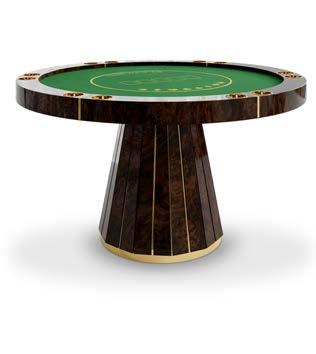

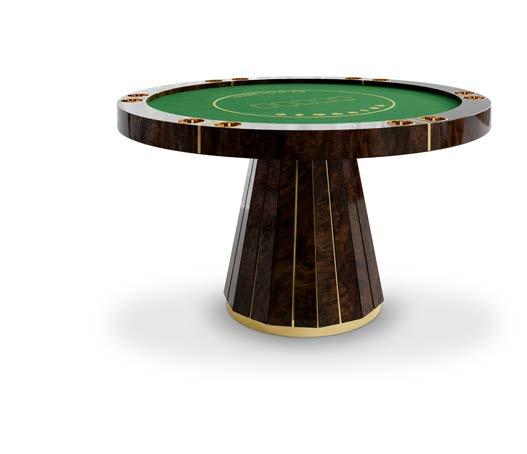
Game for a bit of style?
The Darian poker table is a good-looking solution for any entertainment or gaming environment. The exclusive design features a classic rounded shape, accommodating up to eight players. In polished wood, it showcases great craftsmanship, and the gleaming brass details add a touch of elegance. luxxu.net

Newly-opened Tati Boutique in Loulé, in the pedestrian street Rua 5 de Outubro, specialises in sustainable elegant clothing brands from Portugal and Ukraine, France and Italy. Owner Tatiana is especially delighted with the Ukrainian collections which come in linen and natural organic cotton and a wonderful choice of colours. Insta: tati_boutique_pt
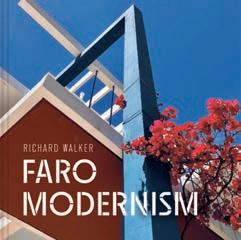
This much-awaited book is now out. Photographer Richard Walker, in a stylish exploration of one of the greatest cities for Modernist architecture, looks at the buildings and heritage of the Algarve capital. This is not a piece of coffee-table dressing... it’s a can’t-putdown book that cannot fail to fascinate. There are over 500 Modernist buildings in the city – from grand houses to highreaching apartment blocks to small and perfectly formed terraces of maisonettes, much the work of architect Manuel Gomes da Costa, himself inspired by the likes of Le Corbusier and Oscar Niemeyer. Faro is regarded as a Modernist paradise in the southern sun and Richard Walker’s passion is evident. Batsford Books, €54.75. wook.pt
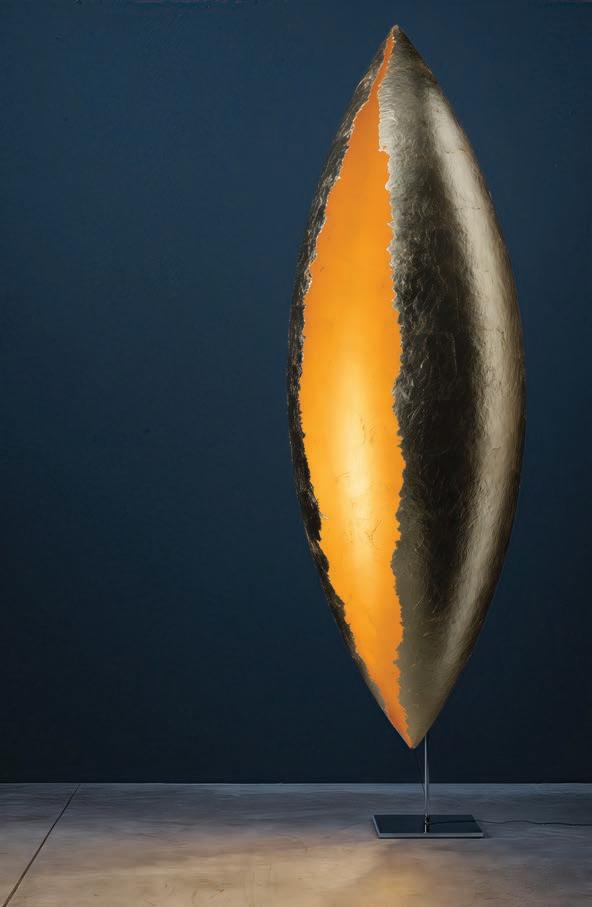
From a dazzling selection of indoor and exterior lights, Sullamp in Quatro Estrados, Quarteira, has something for every taste and setting, from the classical to the ultra contemporary. This standing lamp, PostKrisi 100, is 185cm high and has a metal base and fibreglass shade. It comes in gold, silver, white and nickel, priced from €3,182 sullamp.com

A demonstration of both imagination and strong design skills, this remarkable Klein Blue monochrome console in varnished resin will stand out in any setting. Perfect for living spaces grounded in contemporary style, it expresses a leading-edge outlook through its daring curvy shapes and bold colours. By Covet House. covethouse.eu


tavira - loulé - olhão - lagos
koziishop.com



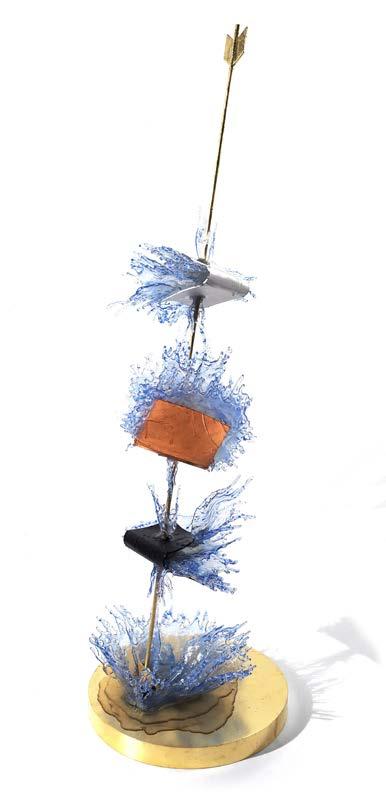
Sagitta, by artist Annalù Boeretto, uses a mix of media – resinglass, gold leaf, silver, copper, ink and iron. See it at ArtCatto Gallery in Loulé. 40x120x40cm. artcatto.com
Why settle for the simple that blends in with the background when you can stand out? Sir Tile is a brilliant Portuguese brand based in Porto that makes socks. But not just any socks. The patterns are bold, the colours bright, the look is adventurous – the inspiration is Portuguese Tiles. Tavira crew socks are €22; Camilla ankle socks €14. And there is so much more.
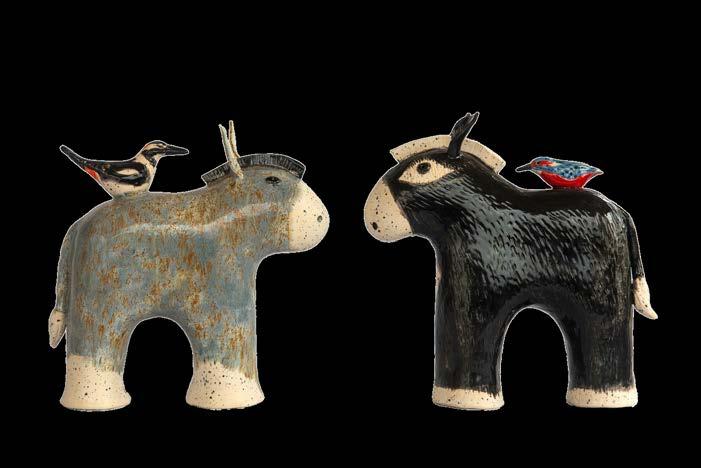
This ceramic candle holder from Les Ottomans showcases a playful yet refined design. The stylized horse features handfinished details in contrasting white and brown tones. Both decorative and functional, it brings a whimsical, artisanal touch to any interior setting. fashionclinic.com


FROM AWARENESS TO ACTION: MAY IS A TIME TO FOCUS ON THOSE LIVING WITH MENTAL AND BEHAVIORAL HEALTH CHALLENGES AND TO REDUCE THE STIGMA THAT SO OFTEN SURROUNDS THEM. IT IS ALSO AN OPPORTUNITYTO RECOGNISE HOW WIDELY MENTAL HEALTH TOUCHES OUR LIVES, SHAPING NOT ONLY INDIVIDUALS BUT FAMILIES, CAREGIVERS AND COMMUNITIES
Words: ELISABETH LEONARD
MENTAL HEALTH is not a marginal issue in Portugal. Around one in five people has experienced a mental health condition, and the country ranks among the most affected in Europe. Anxiety and depression are both common – and increasing. In the Algarve, mental health support is not confined to clinical settings. It is delivered through a network of organisations that provide care, connection, and stability to people navigating difficult circumstances.
ASMAL
More structured, long-term support is provided by ASMAL. Working across the region, the initiative focuses on the rehabilitation and social integration of people living with mental illness. Its programmes include occupational activities, skills development, and family support – helping individuals build stability, independence, and a sense of belonging over time. This sustained, communitybased support plays a critical role in longterm mental health outcomes. asmal.org.pt
Madrugada
At a more personal level, mental health support is also present in moments of loss and transition. Madrugada provides palliative care and bereavement support across the Algarve, working directly with individuals and families facing serious illness and grief. Their volunteers offer companionship
and emotional support during some of life’s most difficult moments, helping to reduce isolation and support psychological wellbeing when it is most fragile. madrugada-portugal.com
Fundação Romão de Sousa
At a broader level, organisations such as Fundação Romão de Sousa work to improve understanding and treatment of serious mental disorders. Through research, advocacy, and targeted initiatives, they contribute to strengthening the overall mental health system and improving outcomes for individuals and families. fundacaords.org
SOS Voz Amiga
There are national organisations that extend mental health support into everyday life. SOS Voz Amiga operates a confidential helpline
staffed by trained volunteers who provide a listening ear to those experiencing loneliness, anxiety, or emotional distress. Services like this are often the first point of contact, offering immediate support and helping to prevent escalation. sosvozamiga.org
What connects these organisations is a shared recognition: mental health is not a single issue, nor is it addressed through a single approach. It spans crisis support, long-term care, family involvement and community integration. Each organisation plays a distinct role within that continuum.
Mental Health Awareness Month invites us to understand this landscape and engage with it. Across Portugal – and within the Algarve – many of these services depend on public support, both through donations and through people willing to give their time. HELPING AND SUPPORTING
For those looking to get involved, volunteer roles often centre on human connection. This can mean offering a listening ear through helplines, providing companionship to individuals facing illness or isolation, or supporting families during periods of grief and transition. Other roles may involve helping to coordinate services, assisting with transport, or contributing to the day-today activities that create stability and routine for those in care.
While professional expertise is essential in many areas of mental
health, these roles highlight something equally important: the value of presence, empathy, and consistency. In many cases, it is this regular human contact that helps reduce isolation and supports emotional wellbeing.
Awareness is where change begins. It shapes understanding, reduces stigma, and opens the door to support. And when awareness is matched with participation, its impact grows –strengthening the network of care that exists across the Algarve, and for which we should all be grateful.
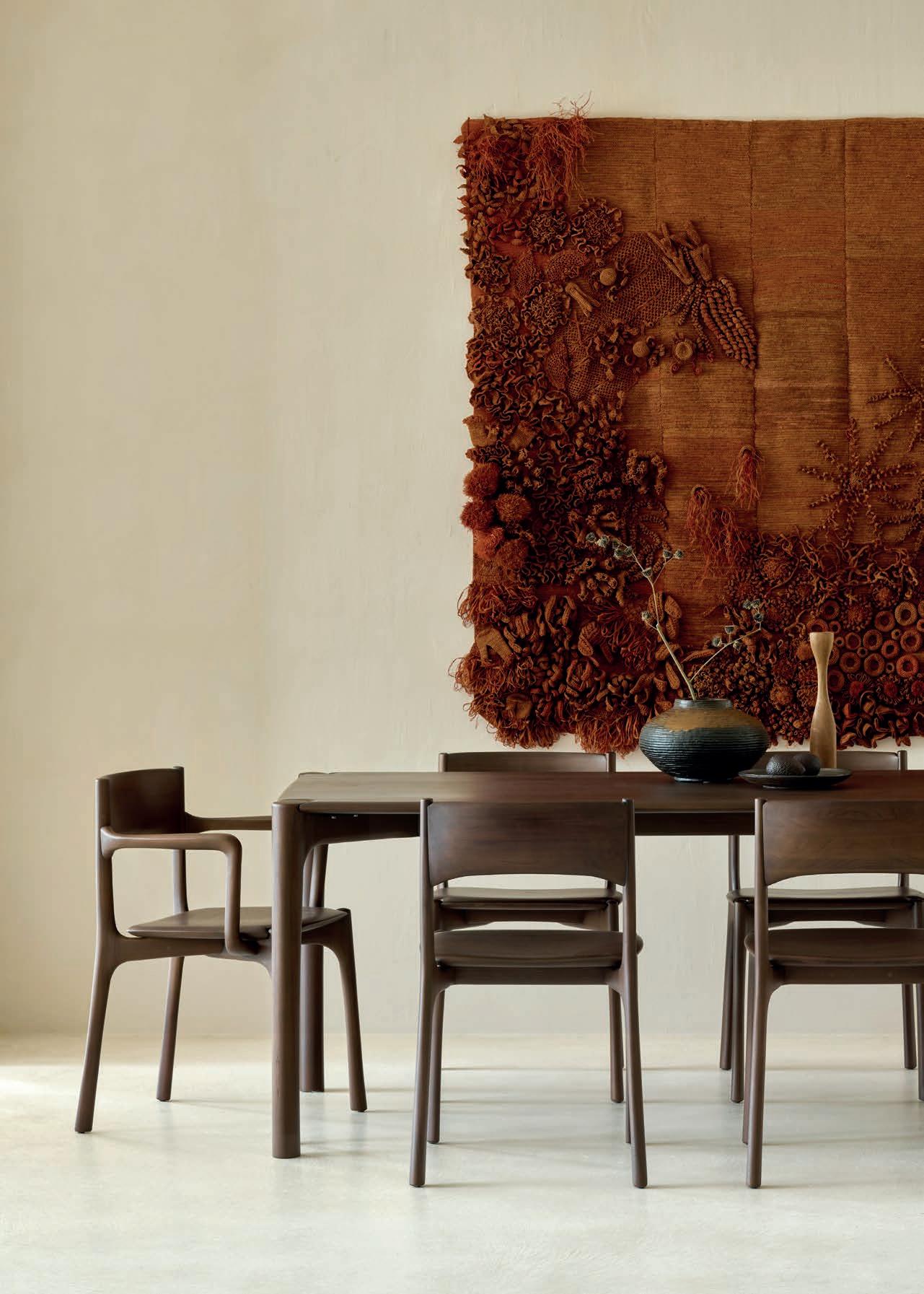
BEAUTIFUL LIGHTING AND DECORATION
INTERIOR DESIGN
PROPERTY RENOVATION
SEATING / DINING / SLEEPING / LIGHTING
MADE TO MEASURE CURTAINS AND BLINDS
TABLEWARE / WALL COVERINGS / RUGS
BIOCLIMATIC PERGOLAS / OUTDOOR STORAGE
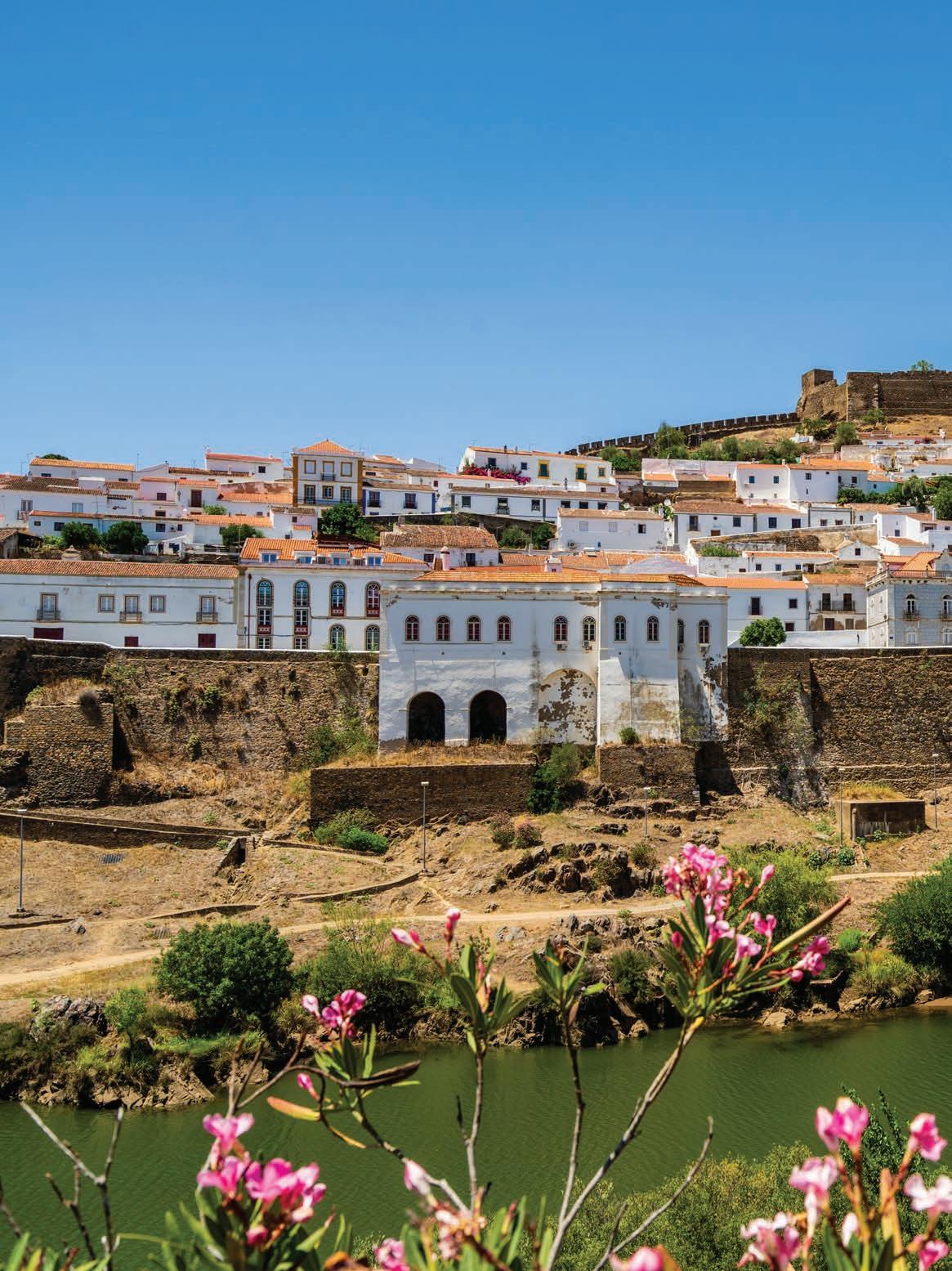
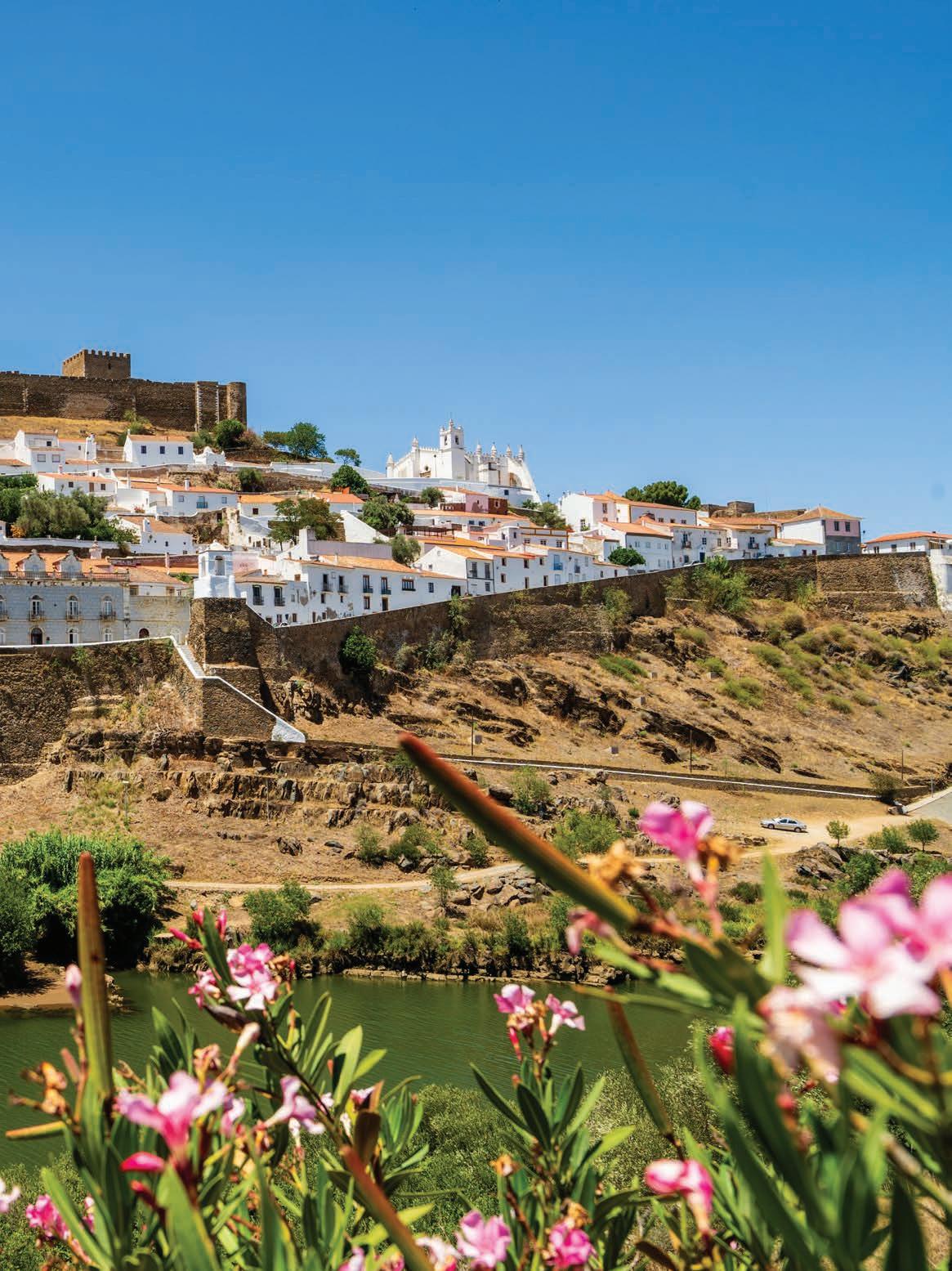
THERE’S SOMETHING ABOUT APPROACHING MÉRTOLA FROM THE WATER THAT JUST FEELS RIGHT. THE GUADIANA RIVER DOESN’T RUSH YOU. IT EASES YOU IN. PADDLE, GLIDE, BREATHE, REPEAT. THE GENTLE SPLASH OF THE PADDLE BECOMES YOUR SOUNDTRACK, AND BEFORE YOU KNOW IT, YOU’RE NOT JUST MOVING THROUGH A LANDSCAPE — YOU’RE SLIPPING QUIETLY THROUGH TIME
Words: NICK ROBINSON, ALGARVE ADDICTS
THE FIRST time I saw Mértola was from a paddleboard back in the summer of 2014. I’d set out on what was meant to be a simple research trip for a new venture – Algarve SUP – but what I found was anything but ordinary. Rising above the river, baked golden under the Alentejo sun, were the ancient walls of a town that looked like it had been placed there by history itself. Not built… placed. Deliberately. Strategically. Almost defiantly.
I remember stopping mid-river, just floating there, staring up at it. That was the moment I knew –this wasn’t just a nice route for a paddle. This was something bigger. A place where adventure and history don’t just coexist… they intertwine.
A year later, I was back – this time with a slightly mad idea. Paddle 32 kilometres from Mértola to Alcoutim. On a stand-up paddleboard. Gruelling? Yes. Beautiful? Absolutely. Worth it? Every single stroke.
But what I didn’t fully appreciate at the time was that this stretch of river had been a highway long before I ever dipped a paddle into it.
As I traced the bends of the Guadiana, I was unknowingly
following in the wake of Phoenicians, Romans, Moors, and Christian Knights. This wasn’t just any river – this was one of the great arteries of ancient Iberia. The Romans knew it well. They called the town Myrtilis Iulia, and they weren’t here for the view.
Mértola was the northernmost navigable point on the Guadiana, which made it gold – strategically and economically. Between the 1st and 2nd centuries, it became a buzzing commercial hub. Goods flowed through here – cereals from nearby farms and minerals like silver, gold, and tin mined from the Alentejo interior. Ships would have been loaded to the brim, heading south towards the Mediterranean. Floating there on a paddleboard, it’s hard not to imagine those vessels. Heavier, slower, creaking under the weight of empire – but following the same current.
Over time, Mértola became more than just a waypoint in my business plans. It became personal.
Four years after that first visit, we pulled off one of the most ambitious things I’ve ever been part of – a mass paddle event from Mértola to Alcoutim with over 200 people on the water. Coordinating something like that forces you to get to know a place. Not just the logistics, but the people, the rhythms, the quirks.
We spent days – weeks – embedded in the town. Eating in local restaurants, chatting with hotel owners, getting tips from people who’ve lived there their whole lives. It’s always the same question I
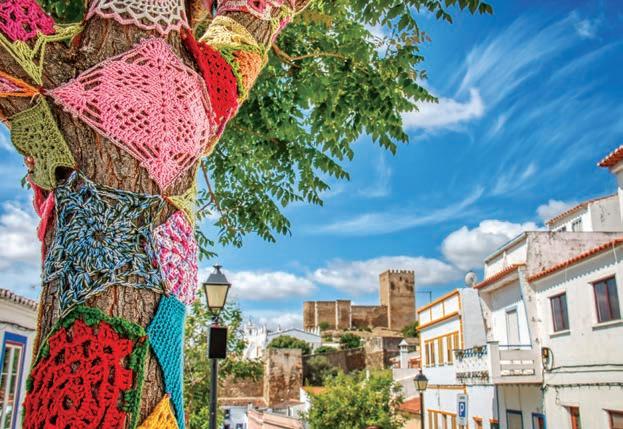
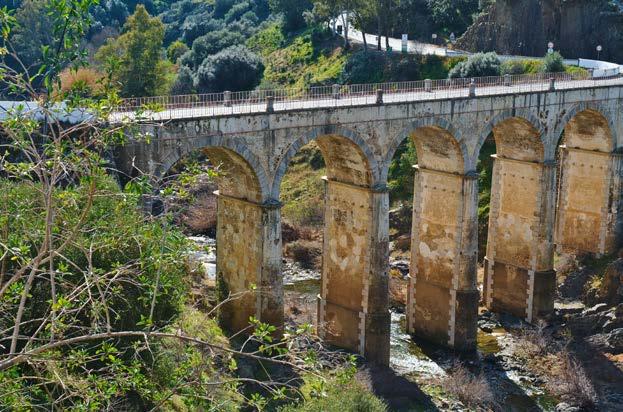
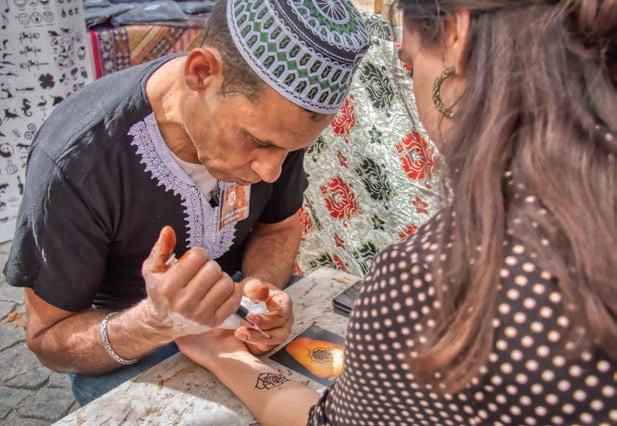
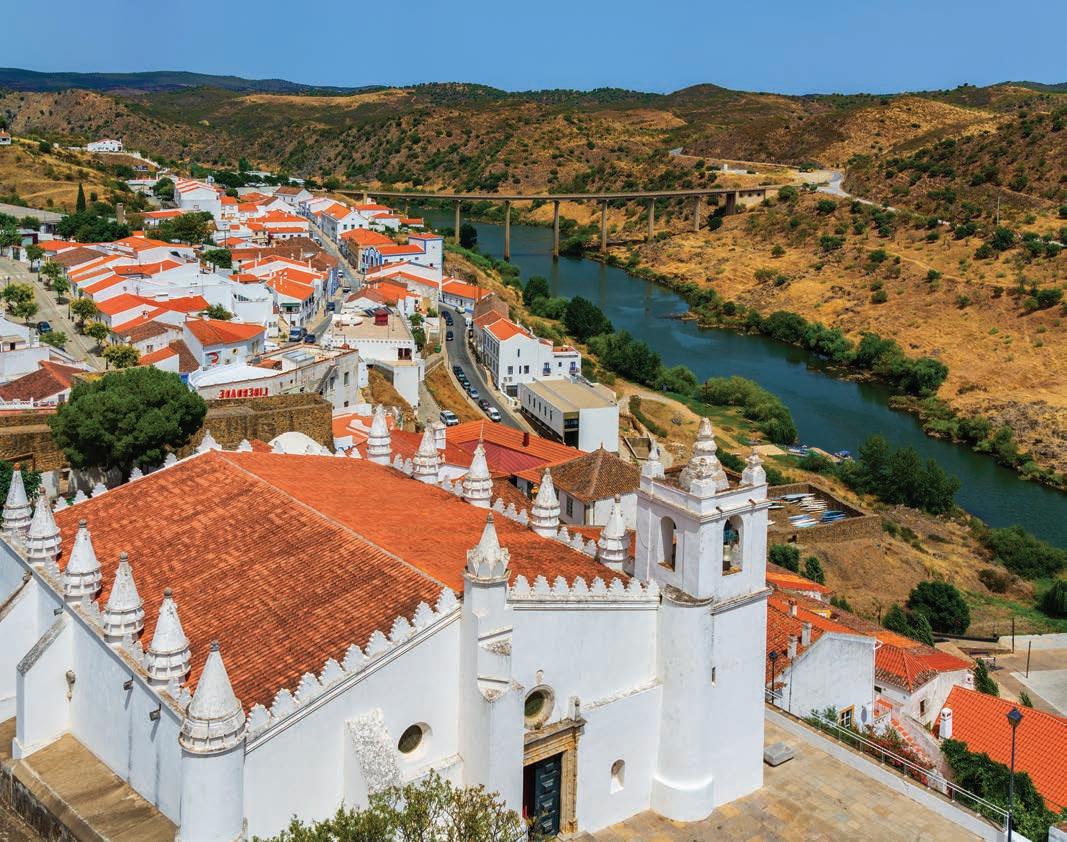
Below. top left clockwise: Trees of the village decorated with a patchwork of crochet; Moroccan craftsman applying a henna tattoo; Steep narrow paths down to the river; The bridge into Mértola. Opposite page: The Igreja Matriz – the Church of Nossa Senhora da Anunçiacão – built in the 12th century originally as a mosque, and later converted after the Christian conquest
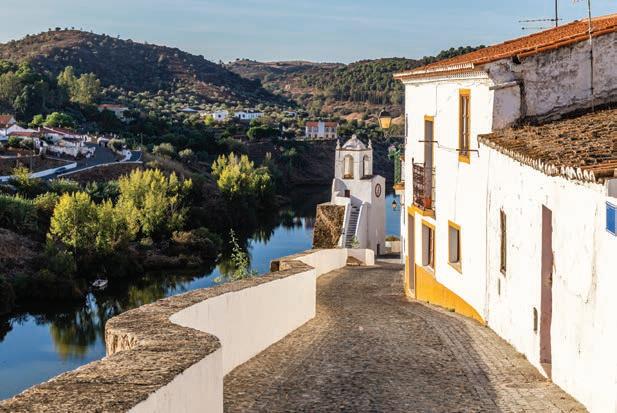
As I traced the bends of the Guadiana, I was unknowingly following in the wake of Phoenicians, Romans, Moors, and Christian Knights. This wasn’t just any river – this was one of the great arteries of ancient Iberia.
ask: “Where do you go to eat?” That’s where the real magic is.
One place that became a bit of a base for me was the Hotel Museu, part of the Hotel Beira Rio. It’s one of those spots where modern comfort meets deep history – and where conversations tend to linger longer than expected. I spent a lot of time there chatting with Paula the owner, who had a way of bringing Mértola’s past to life in rapid-fire Portuguese.
It was through her that I started to see the town differently. She told me about a hidden tunnel inside the castle. Not something you’d stumble across on a casual visit. A secret artery that runs from the fortress down to the river. During sieges – and there were plenty – this tunnel was a lifeline. Horses could be led down for water. Supplies hauled back up. Survival depended on it.
Suddenly, that peaceful river I’d been paddling on took on a whole new meaning. It wasn’t just scenic. It was essential.
To really understand Mértola, you have to rewind to the year 711. That’s when the Moors crossed into the Iberian Peninsula, bringing with them a wave of culture, architecture, and innovation that would shape the region for centuries.
For around 400 years, Mértola thrived under Islamic rule. Trade flourished again, linking the Alentejo with Al-Andalus and North Africa. The town was heavily fortified, building on earlier Roman structures, and for a time it even became its own independent taifa state.
One of its most fascinating figures was Ibn Qasi – a mystic, a leader, and something of a wildcard in history. Between 1144 and 1150, he managed to unify parts of southern Portugal before being overtaken by larger forces. It’s the kind of story that makes you wonder how many layers of ambition, belief and conflict are embedded in these walls.
At first glance, it looks like a modest church. But step inside the Igreja Matriz and you realise you’re standing somewhere truly unique. This isn’t just a church – it’s the only medieval mosque in Portugal that has survived largely intact.
Built in the 12th century, it was later converted into a church after the Christian reconquest. But instead of tearing it down, they adapted it. The structure remained. The soul remained. Inside, you’ll still see the four naves and rows of columns typical of a mosque. And then there’s the Mihrab – the prayer niche pointing toward Mecca – still there, beautifully preserved. It’s one of those rare places where history hasn’t been overwritten… just layered. You feel it. That quiet coexistence
Of course, Mértola didn’t stay under Moorish control forever. In 1238, it fell to the forces of King Sancho II during the Christian Reconquista. The town was handed over to the Knights of the Order of St. James, who turned it into their headquarters.
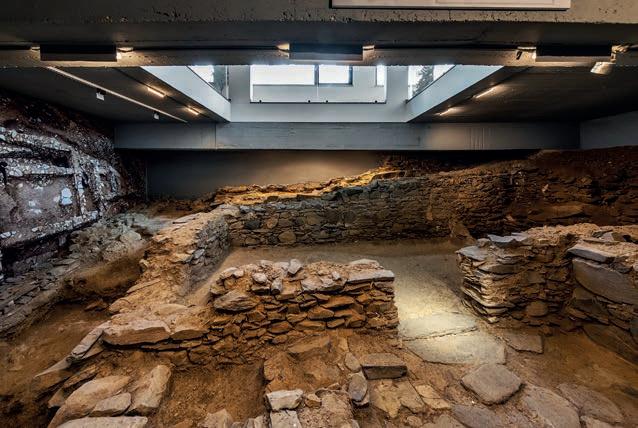
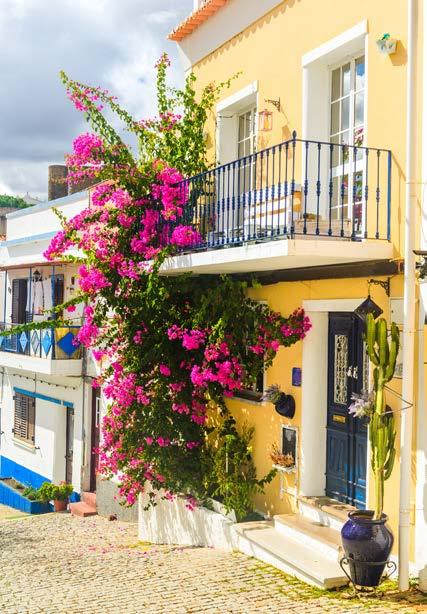
Above left: History tells its own story in this remarkable town where museums, often found beneath the streets, abound with remnants of past centuries. Right: In the cobbled side streets, local homes are full of colour and detail
They didn’t mess around. The castle we see today is largely their doing. While its foundations stretch back to Roman times and were reinforced by the Moors, it was the Christian Knights who gave it its most striking feature – the towering keep.
Thirty metres high and completed around 1292, it dominates the skyline. Climb to the top, and the view is something else. The Guadiana snakes its way through the landscape, calm and unassuming, while the surrounding hills roll out in every direction.
I stood up there a few years ago, camera in hand, filming as part of a personal project – documenting Portugal’s border castles – inspired by Duarte d’Armas, a 16th-century cartographer who mapped these very fortifications. Mértola was one of my first stops.
Looking down at the river from that height, I couldn’t help but think back to that first paddle. Same river. Different perspective. Same sense of awe.
Despite all its strategic importance, Mértola eventually faded into the background. After the Reconquista, its role as a major trading hub diminished. There was a brief revival in the 15th and 16th centuries when it supplied food for Portuguese campaigns in North Africa, but it never quite regained its former glory.
Then came the mining boom. In the 1850s, copper was discovered at the nearby São Domingos Mine, sparking a wave of economic activity. For a while, the region buzzed again. But as with many mining towns, the buzz was short-lived. By 1965, the mines were exhausted, and people began to leave. The population dropped dramatically. From over 26,000 in the
1930s to just a fraction of that today.
And yet… Mértola didn’t disappear. Instead, it reinvented itself. In the 1980s, archaeological efforts began uncovering layers upon layers of its past – Roman, Visigothic, Moorish, Christian. Today, it’s known as a “museum town” and for good reason. The entire place feels like an open-air archive.
CAFÉ GUADIANA
It’s easy and inviting Largo Vasco da Gama 5 286 094 294
maps.app.goo.gl/71w5pY4Et6wKUkcw7
ESPAÇO VILA VELHA
For the stunning rooftop terrace with views down the river – perfect on a hot summer night
R. Dom Sancho II 41 286 094 313
maps.app.goo.gl/brYBws37wyWmpzqd8
TAMUJE
Expect good Portuguese food Rua Dr Serrão Marins 16 286 611 115
maps.app.goo.gl/bHPckUdm8jqtvBF67
HOTEL MUSEU
Great value and a perfect location Rua Dr. Afonso Costa 112 913 244 155
maps.app.goo.gl/XAm7BoaBpL8CmeGs5
MERCEARIA SOUK
Shopping with real charm; local products including wines and cake, pottery and home decor
R. Dr. Manuel Francisco Gomes 53a 927 241 093
The next Festival Islâmico de Mértola will take place in 2027, in late May.
You’ll find collections of Islamic art, ancient pottery, musical instruments, and even Byzantine tombstones. Some of it is housed in the old cellars of the House of Braganza, adding yet another layer to the story.
There’s even a Roman house hidden beneath the current municipal building. Just casually sitting there, as if to remind you that in Mértola, history isn’t behind glass – it’s under your feet.
Every two years, the town celebrates its Islamic heritage with the Festival Islâmico de Mértola, transforming the streets into a vibrant, colourful homage to its past.
Markets, music, food… it’s one of those events that feels both authentic and alive. And perhaps that’s the best way to describe Mértola. Alive. Not in a loud, bustling way. But in a steady, enduring way. A place that has seen empires rise and fall, and still quietly stands, overlooking the same river that carried them all.
From that first paddle in 2014, to leading a 200-person expedition, to filming castle towers and tracing ancient routes – Mértola has left its mark on me.
It’s a place that rewards curiosity. That invites you to slow down. To look closer. To ask questions. And maybe –just maybe – to dip a paddle into the Guadiana and see where it takes you.

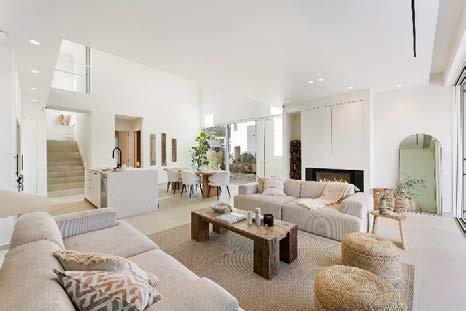
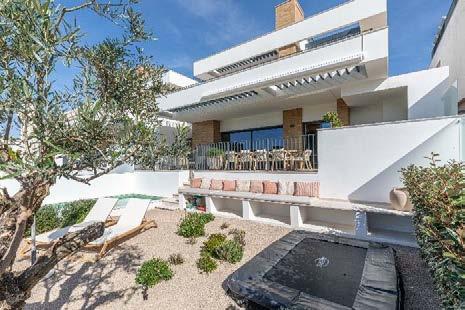
In the sun-drenched Algarve, where golden beaches meet historic towns and olive -covered hills, finding the right home is about more than space or sea views it’s about lifestyle. Quintas & Casas, a boutique estate agency, with offices in Loule, Santa Barbara de Nexe, Sao Bras de Alportel and Almancil, offers a personalised property experience for international buyers and local clients alike.
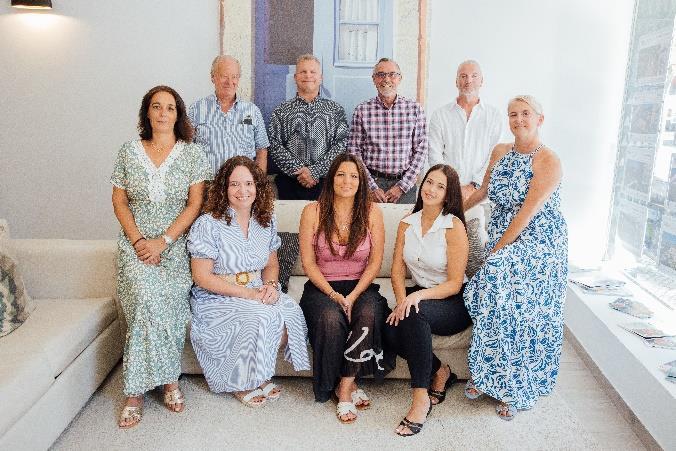
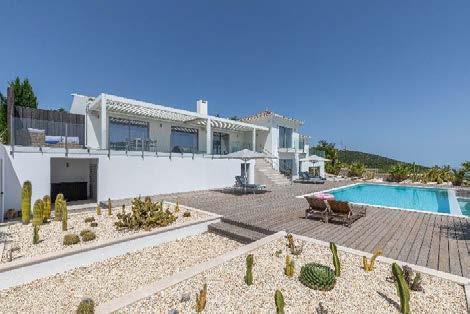
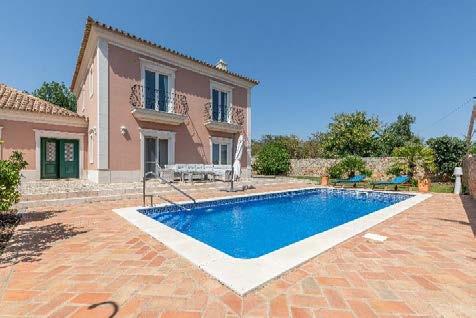
With deep local knowledge and an international outlook, the team treats every client journey as bespoke, providing clear, honest guidance at every stage. Their multilingual team ensure seamless communication for buyers relocating from around the world. From coastal villas to countryside quintas, each property is carefully curated and supported by expert marketing, photography and attentive service

THE CONVENIENCE BUT UNCERTAINTY OF ONLINE SHOPPING, OR THE EXPLORATION EXPEDITION – ALBEIT SOMETIMES FRUITLESS – AROUND THE SHOPS? WHAT’S YOUR PASSION/POISON?
Words: DEBBIE REYNOLDS
BACK IN THE 90s when online shopping started being a ‘thing’, it was definitely not my thing. The thought of swapping my beautifully merchandised exclusive boutiques for massmarket laptop showrooms was anathema to me.
In my naivety I declared internet shopping a fad that would never replace the real thing. It may have taken nearly 30 years, but I’ve finally had to admit defeat and succumb to the inevitable because – well, let’s be completely honest – online options are limitless, mostly convenient and generally less expensive. And did I mention perfect for lazy shoppers who never need leave the comfort of their sofa?
Aligned with the proliferation of mobile phones, navigation apps, smart TVs and all the other digital devices meant to make your life easier, it was only a matter of time before shopping would toe the electronic line.
While experiments with online marketplaces appeared in the early 90s it wasn’t until 1994 when the first secure web retail transactions took place, most famously the Sting CD Ten Summoner’s Tales, on NetMarket on 11 August 1994.
When Amazon and eBay launched in 1995, the basic model of
large, consumer-facing online retailers and marketplaces was established, but it wasn’t until around 2010 that it became more mainstream. Around ten years ago, with the advent of secure payment applications, e-commerce turned the corner from novelty to normal.
According to Eurostat data, approximately 70-75% of Europeans aged 16–75 shop online, with at least 78% of internet users have made at least one online purchase. In Portugal last year around 68% of the population of 15 and over shopped online, with fashion and footwear leading the charge followed closely by electronics and computing equipment.
The online shopping explosion has been caused by several factors, largely accelerated by the Covid-19 pandemic which literally forced people to shop online for everything from essentials like groceries to non-essentials like fashion and furniture. Once the pandemic was over, for many people, the online shopping habit stuck.
Retailers were also forced to adapt or die with big chains building or buying online channels, while many high-street stores that ignored e-commerce sadly disappeared. In their place came the new business model of direct-to-consumer brands (think Shein and Temu) built entirely online using social media instead of physical showrooms.
Plus points
Undoubtedly, having done more and more myself of late, there are several key advantages to shopping online:
Convenience: Thanks to smartphones and fast mobile internet you can now shop 24/7 from home, the beach or the bus, avoiding traffic, parking, store hours and crowds. And you can send gifts to family and friends across the world at the click of a button.
Limitless options: Due to space restrictions, stores obviously have stock limits, while online options are endless, offering anything you want when you want it, so you’re not restricted by seasons or trends. I loved buying solar-powered Christmas lights online when none of the stores here had any stock left.
Easy price comparisons: You can quickly check deals across sites, often with discounts and reviews, so you can make sure you are getting the best bang for your buck. If you’re mall shopping, it can be rather tedious trying to price check across various shops.
No sales pressure: You can browse to your heart’s content without having to deal with pushy or suspicious staff. It’s sometimes nice not to have someone breathing down your neck while you’re debating whether the skinny jeans are better than the slim fit ones, and if they actually make your bum look big?
The key cons
Fit and feel: This is especially true for clothes shopping where sizing is not consistent and varies considerably between brands. Even with the measurement guidelines, it’s not uncommon to receive an item that is too big or too small. And then there’s the feel factor. Often, you’ll buy a garment which looks great online only to find that when it arrives the fabric is awful, or the shoes that look super cool are actually made from sweaty plastic.
Shipping issues: Delays, costs or damage are common, returns can be slow and complicated. It is certainly much easier buying items than returning them, which is why so many people don’t bother, preferring to gift unwanted items to family or friends.
Security risks: While online security has greatly improved, fraud and data theft still happens frequently. Sometimes even trusted platforms cannot be trusted, as I discovered when buying a mobile phone through Amazon, only to have the box arrive minus the phone. Amazon blamed the supplier, the supplier blamed the courier, the courier blamed the supplier. After months of ‘escalations’, bar filing a police report, there was no solution.
Impersonal experience: Sometimes it’s nice to have an assistant assure you your bum doesn’t look big in those jeans or suggest that dress would suit you perfectly, even though you think it’s not your style.
The real trick to online shopping is not to get sucked into all the special promotions, prizes and discounts conning you into
In Portugal last year around 68% of the population aged 15 and over shopped online, with fashion and footwear leading the charge followed closely by electronics and computing equipment.
buying stuff you really don’t want or need. I’m sure many can attest to those times when they were looking for a particular item online but ended up with a box of ridiculous gadgets that serve no purpose whatsoever except to clutter up your house. Being of ‘a certain age’, I love the fact that we can still choose between bricks-and-mortar stores or online platforms. Yes, it was great getting my gold evening bolero online after trawling the malls for days with no luck. But there’s something to be said for making your shopping expedition an experience – hooking up with a friend, enjoying a cappuccino and cake and a whole heap of gossip before setting off on a forage for a special outfit. Then, when you find what you’re looking for, there’s the instant gratification of trying it on knowing it fits and feels good. Call me old-fashioned, but sometimes shopping should just be fun.
CHECK THE SELLER AND WEBSITE: Look for a reputable, well-known store with a clear business name, address, phone number and email. To hear what others say, search the site’s name, plus words like ‘reviews’ or ‘scam’.
WATCH FOR SUSPICIOUS PRICES AND DESIGN: Most things that seem too good to be true are just that. Big brands at extremely low prices are normally a con. Avoid sites with typos, bad spelling, poor design or pressure tactics, like ‘closing down sale’, ‘only one left’ or ‘last of the bestsellers’.
SECURE PRIVACY AND PAYMENT: Preferably use credit cards, PayPal or similar services that offer dispute protection if something goes wrong. Avoid direct bank transfers, gift cards or cryptocurrencies. Make sure the payment page uses https:// and has a padlock in the address bar – don’t enter card details on pages that don’t.
DELIVERY, RETURNS AND HIDDEN COSTS: Before buying, make sure to check shipping costs, delivery times and return/refund policies. Check the total price, including taxes, shipping and fees and watch for fine print, such as compulsory add-ons.
REVIEWS AND FAKE LISTINGS: Don’t always trust the reviews on the seller’s page as it could be paid-for feedback. Rather use independent sites like Google and Trustpilot to get honest reviews.
KEEP EVIDENCE AND PROTECT DEVICES: Save order confirmations, receipts and screenshots of the product page and offer in case you need to complain or dispute a charge. Use up-to-date security software and a separate card (or virtual card) just for online shopping to limit your risk of having your details exposed.

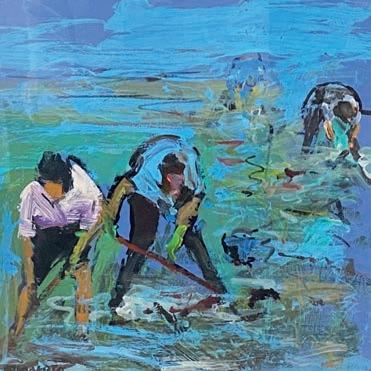
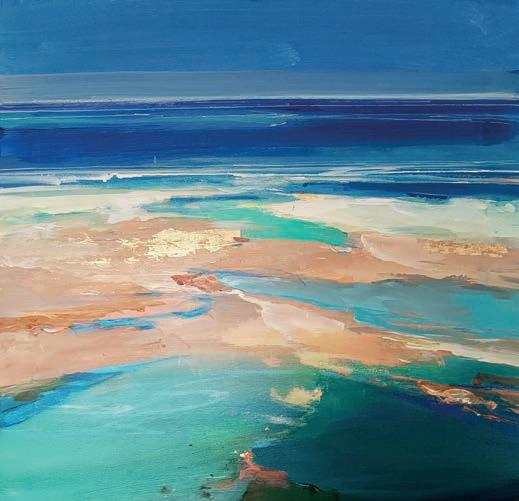
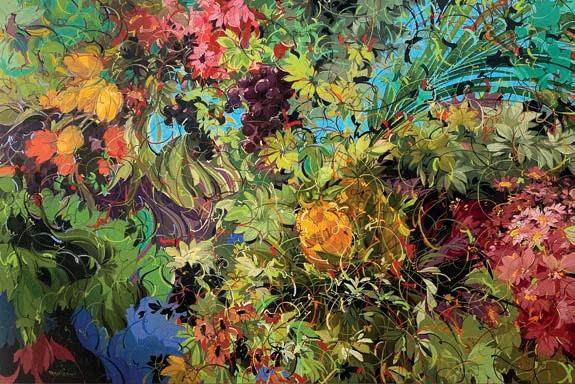
ONE CAN SAY THAT DAVID CAMPUS OF AUSTA HAS A REAL WEAKNESS FOR THE FINER THINGS IN LIFE, ESPECIALLY WHEN IT COMES TO ORIGINALITY IN THE KITCHEN. HE HAS BEEN HIGHLIGHTING FAVOURITE BAKERIES RECENTLY AND BRINGING THEIR WORK TO AUSTA IN WHAT WILL BE A SERIES OF ‘ POPUP ’ EVENTS. SIT BACK AND ENJOY WARM
LATELY AT austa, we’ve leaned into a new event: the ‘bakery pop-up’. The desire to throw them on grew out of a personal craving for bloody good pastries and what feels like psrt of a growing global obsession with hunting down high-quality, truly artisanal bakes: organic flours, real butter, honest ingredients, nothing overworked or over-styled.
Our first pop-up with Tavira locals, Xisto, hit the spot and sold out in just a few hours, but our most recent one came from the west, Black and White Bakery in Lagos, and felt like something else entirely. A fullblown frenzy.
Kevin and Flora, the Londoners behind Black and White, have somehow captured a spirit on the Algarve coast that feels both international and deeply grounded. They’re the same duo who opened the region’s first proper Australianstyle breakfast spot, and their newest
venture is a bakery shaped by the ethos of London and New York favourites like Pophams, Jolene, Leyla, Šor Librae and Levain, where simple things done exceptionally well are the whole point.
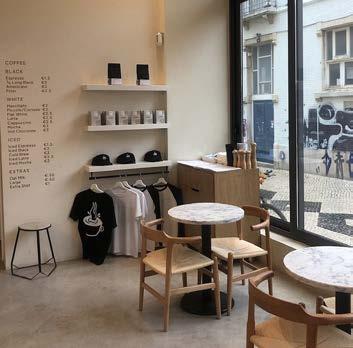
The bakery sits tucked just off a cobbled street in Lagos Old Town, next door to the café. There are no seats in the bakery, no performance, just a warm counter, the smell of butter and a quiet bench outside where you can perch with your pastry, or wander to the beach and scoff it with sea spray on your face.
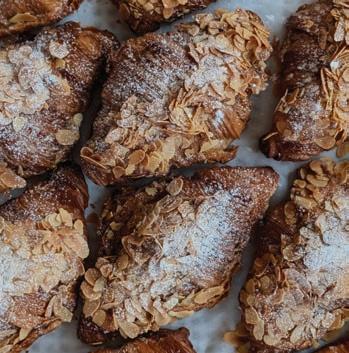
Inside, the shelves are filled with perfectly-laminated croissants, chunky almond croissants, sticky cinnamon buns, glossy pain suisse and their now-famous pastel de nata croissant, a clever and delicious meeting of Portuguese tradition and French-style viennoiserie. Their Portuguese head baker, Emilia, leads the team with precision and soul, and you can taste it in every bite.
And then there’s the coffee. Proper speciality coffee, with
FOOD
Artisanal bakes, including a twist on pastel de nata. Brunch dishes available in the café next door
DECOR
Simple, easygoing, and with merchandise on display in the café
€10–€15pp for some real treats and great coffee €
PRICE
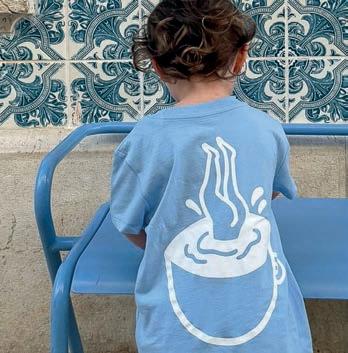
rotating roasters (recently featuring Girls Who Grind Coffee and Origin Coffee Roasters) pulling shots that match the quality of the pastries. You can buy beans, merch, and even Black and White T-shirts, which fans (including Kevin and Flora’s daughter, Daisy) wear like badges of belonging, a gentle way of saying “I’m part of this little community”.
When I drove down to Lagos to pick up the goods for our austa pop-up, I obviously couldn’t resist the ‘research’ – warm pastries in one hand, a flat white in the other, trying to decide which pastry I had to eat immediately (the pain suisse won). Standing there, it made total sense why their following is growing so fiercely. Nothing is over-complicated; everything is done with intention.
But what really sets Black and White apart, beyond the pastry craft and the coffee, are Kevin and Flora themselves, who are warm and open; Kevin even popped down to our event during the pop-up, bringing this brilliant burst of calm energy that lifted the whole room.
We’re already looking forward to doing more bakery pop-ups as the year progresses – if the Xisto and Black and White pop-ups have taught us anything, it’s that people aren’t just craving pastries; they’re craving real quality, simplicity, connection and attention to artisanal craft.

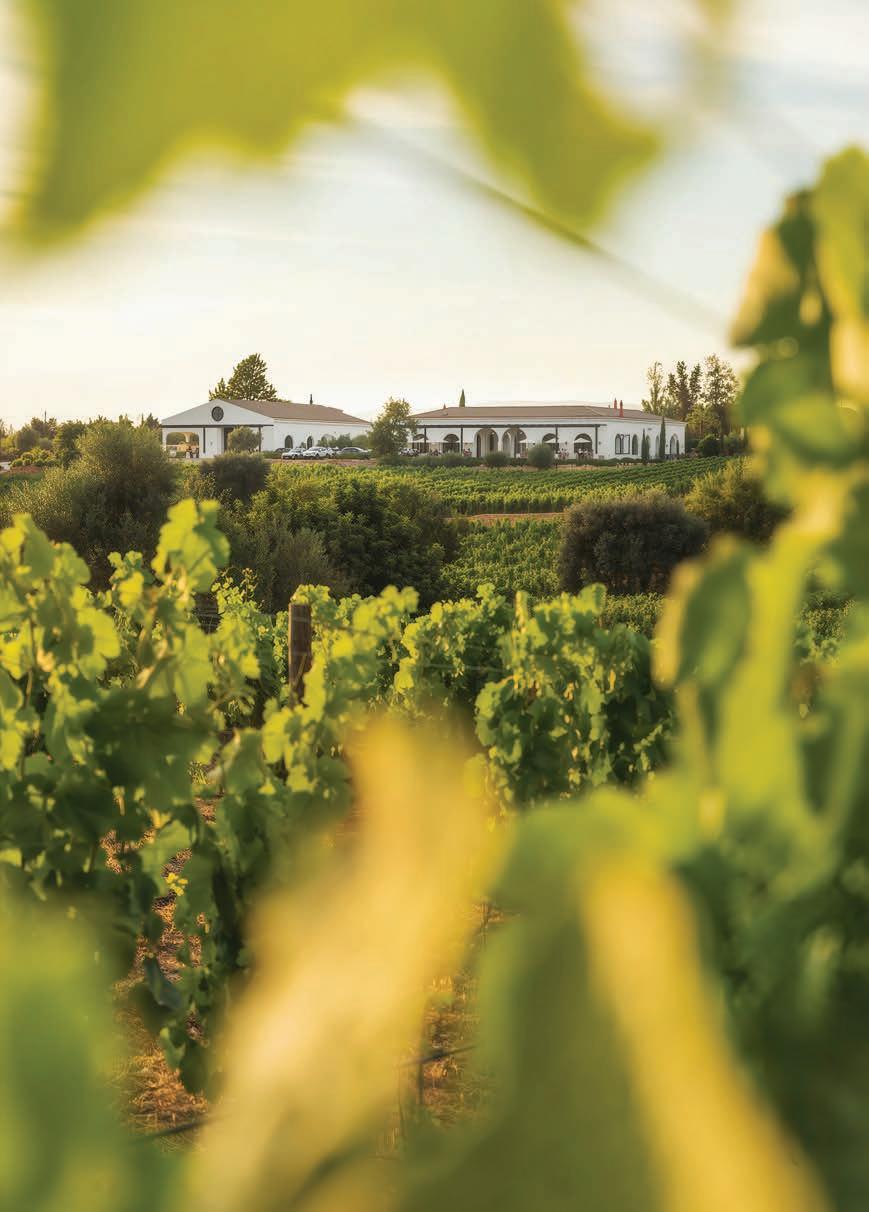
WHEN PLANNING THAT SPECIAL CELEBRATION, NO MATTER HOW BIG OR SMALL, LOCATION IS EVERYTHING. WHETHER YOU FANCY A STRIKING VILLA IN THE HILLS, OR A PRIVATE YACHT WITH AN ON-BOARD CHEF, WE ARE LOOKING AT SIX OF THE BEST VENUES TO HIRE IN THE ALGARVE THIS MONTH
Words: LAURA SHEA
1
Quinta dos Santos, Lagoa
Surrounded by the curated vineyards and restored ancient aquaduct systems, this is a picture-perfect setting to show off the Portuguese countryside. With its fully functioning winery and a contemporary restaurant, Quinta dos Santos can be an incredible venue for a celebration with loved ones. The menu offers regional delicacies such as Alentejo black pork, Algarvian honey and salt cod fritters, just to name a couple of standout dishes, all of which can be washed down with the Quinta dos Santos artisan wines or craft beers. Get in touch to find out more and let the team curate your special event; the only trouble will be choosing a stylish brunch or a vibrant cocktail evening with sharing platters! quintadossantos.com
2
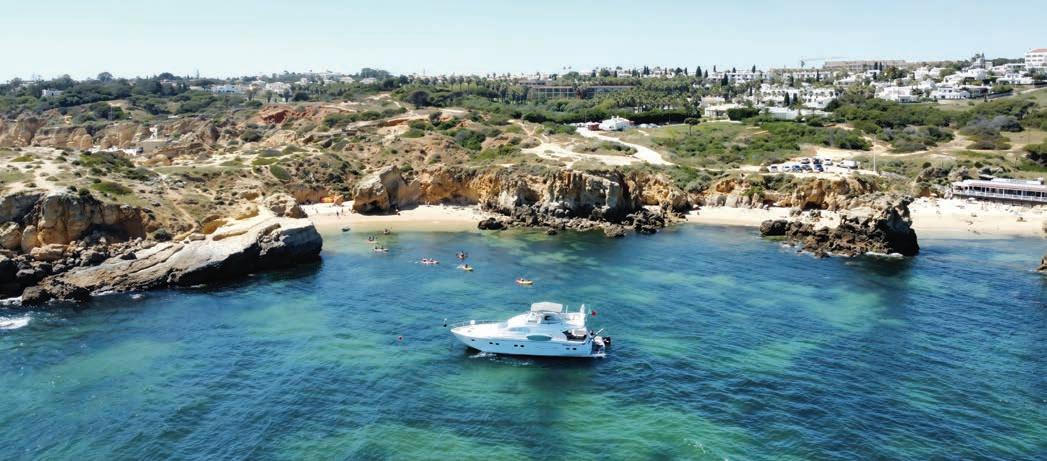
Timeless Moments Yacht Hire
For a truly memorable event, you could literally push the boat out and charter a private yacht for the day. Packages available with Timeless Moments cater for weddings, anniversaries, birthdays or any special reason. The yacht for the day can include a chef to create a bespoke menu for you as well as live music. The team can help guide you on the best boat for your group size, and they supply both half-day sunset cruises and full-day packages. If there is a certain area that you would like to see on your cruise, such as the Benagil Caves, then talk to the planners and let them create your itinerary. What could be better than sipping some sparkling wine, eating an incredible meal and watching the sunset over the sea while on board a luxury ship? This is a way to celebrate a truly special event. For a party that everyone will remember for years to come, this is an impressive choice. TimelessMoments.pt
page: Quinta do Santos. This page above:
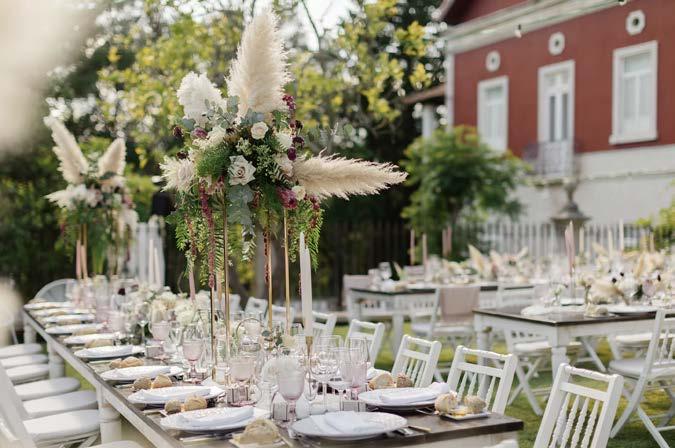
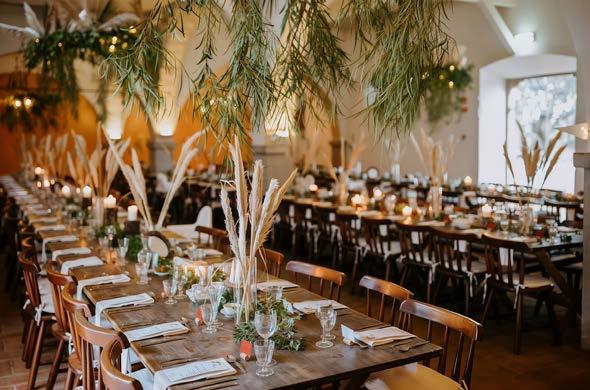
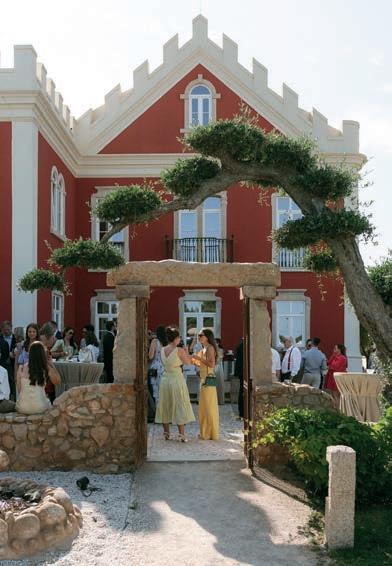
Os Agostos in Santa Barbara offers some of the most visually stunning event decorations in the area, thanks to the highly creative and innovative team, and an in-house florist who will make your dreams come to life.
If you fancy a light, bright and fresh setting then go for the marquee surrounded by orange, almond and fig trees. For something smaller and more intimate, book the stables or if music is your focus then the cellar is the spot for you thanks to the ideal acoustics of the room. For weddings, you can have your ceremony outside and walk down an aisle of fresh petals whilst your guests soak up the sunshine. You can have your wedding breakfast served outside, and then make the most of every inch of the estate for your photos. Cobbled walkways and the orchard of olive and fruit trees will make each snap perfect. osagostos.com/
4
A Quinta Eventos, Tavira
In Santo Estevao, Tavira, A Quinta offers something very unusual for your venue.
An 18th century, 18 hectare farmland, they blend tourism and an authentic rural character into a very special space. Customers can choose whether they would like to use the Rural Theme Park, ideal for birthday parties and fun family gatherings, or the Eventos space for something more elegant and formal. Imagine on the evening of your wedding, warm candlelight and the most stunning food served up focusing on Algarvian seasonal flavours in the setting of the stone-built farmhouse. But there is also the option to have a much more active and fun get-together in the Rural Park. You can get up close and personal with some adorable furry friends on the farm, go on a nature hunt to spot and then identify plants and animals and even bake your own bread in the traditional wood-fired oven. This is a fantastic way to mark a special birthday for the children in your life, that is guaranteed to put a smile on all of the adults’ faces as well. quintaeventos.pt
5
Solar do Paço, Algoz
There are few locations that offer the choice of setting that Solar do Paco does. A 14th-century mansion is only one part of the elegant and impressive estate that could host your ideal party. Perfectly manicured gardens, ponds and bridges wind through the space and offer countless backdrops for photos to immortalise your night. For large events, book the main hall or for something more intimate, look at the barn with its balcony for the ideal sunset views. There is also the theatre, stables or terrace to consider, and professional organisers who can help make sure every detail is exactly as you dreamed. According to the super-experienced team at Solar do Paco who will see to every detail and take the stress out of planning: “For those seeking elegance, character, and a sense of place, we offer a destination wedding experience – and event setting – that is both distinctive and unforgettable”. One look at this venue and its surroundings, and you will agree. solarpacoalgarve.com 6
Açoteia das Estrelas, Castro Marim
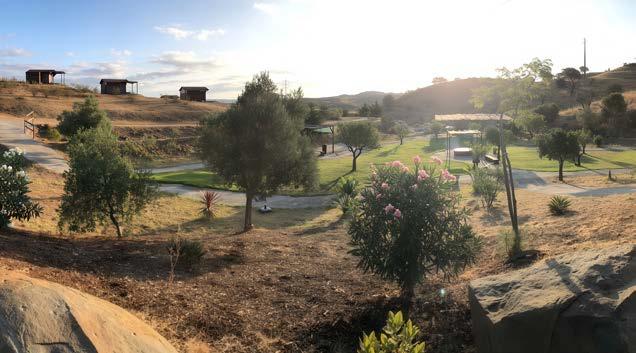
If you have ever dreamt of hosting a rustic, cowboy-themed party, then this is the ideal place for you! Nestled in a hidden valley, the setting provides individual log cabins, sprawling views of unspoilt nature and so much outside space it feels as though you have travelled back 100 years. You can serve up delicious BBQ meats and dance the night away under blossom-heavy trees here, before stumbling back to your cosy cabin. Then spend the next morning taking in the fresh air and sunshine with a coffee, before a dip in the pool to shake off any of the night before. If your dream setting requires the beauty of nature and getting back to what’s really important, and the people around you, then this is the spot. No distractions, no place for people to wander off to and stop in another bar, this is just about being together and enjoying every moment. @acoteia_das_estrelas

WHAT DOES IT TAKE TO OPEN A RESTAURANT WITH NO HOSPITALITY
EXPERIENCE THAT GOES ON TO BE RECOMMENDED IN THE MICHELIN GUIDE? AUSTA IN ALMANCIL WHO ’ VE BEEN THERE AND DONE IT, SHARE THEIR DELIGHT – AND REAL SURPRISE – AT WHAT THEY HAVE ACHIEVED IN JUST OVER TWO YEARS, AND THE UPS AND DOWNS OF GETTING THE EQUATION TO BALANCE
Words: EMMA CAMPUS
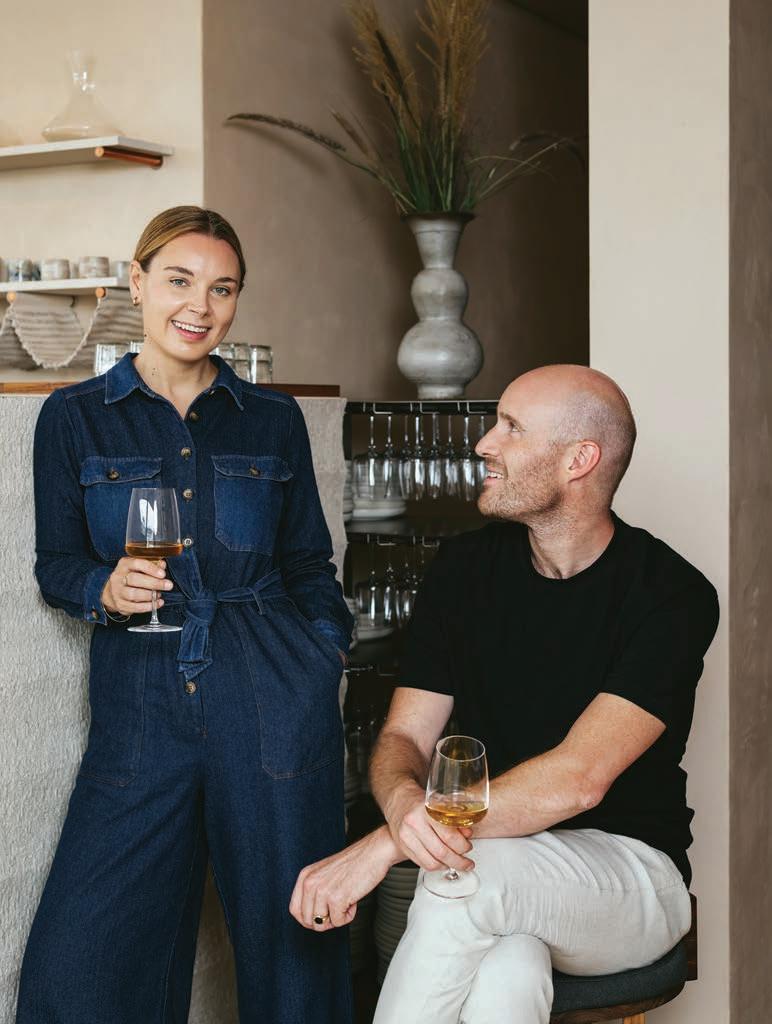
WITH THE beautiful benefit of hindsight, opening a restaurant without experience feels a bit like deciding to sail across the Atlantic because you once sat on a boat and didn’t feel seasick. We thought we’d figure it out. And sure, you do, sometimes. But not in the way you expect (and usually, just as you’ve solved one thing, something else is quietly exploding elsewhere).
There is a lot of Googling. A lot of phone calls. A lot of circular conversations and confusion. And add doing it all in a foreign country and a foreign language to the long list of challenges. There are spreadsheets that start optimistically and slowly become more… well, unsettling. There are also moments where you confidently make a decision and only later realise you’ve done the hospitality equivalent of putting diesel in a petrol car.
You also learn – quite quickly – that you can’t control everything, and that actually feels quite liberating. You can’t control the weather or the suppliers, you can only do so much to control the bookings, or what people think of you. But you can control the controllables – how prepared you are, how you respond when things go wrong, whether you keep going when it would be easier not to. And that, it turns out, is most of the job.
Our fantasy was simple: a small farm-to-table restaurant in the Algarve. Sun-drenched vegetables. Fishermen dropping off still-moving things in crates. Guests lingering over natural wines while the sky turns from that Algarve kind of cerulean blue to the cinematic orange that makes everyone believe they’ve made the right life choices.
It sounds ideal. The reality is almost there, but behind the scenes dramatically less aesthetic. Firstly, it means your menu is dictated by what exists, not what you wish existed. It means the tomatoes are perfect for ten weeks and then disappear like they were never here. It means designing dishes around abundance, then redesigning them again when that abundance inevitably ends. But that ends up being the fun of it.
It also means you develop a very personal relationship with waste – and a slightly paranoid approach to preparation. There are, of course, days when you prepare exactly the right amount, sell out of everything, and feel like geniuses. Other days you stare at a fridge full of beautiful produce and with two reservations think: excellent, we have accidentally opened a very expensive composting facility… Prepping just enough mise en place for your reservations, plus a couple extra if you’re feeling optimistic about walkins, is a special kind of algebra that we still – three years later – haven’t quite mastered. Because occasionally, on
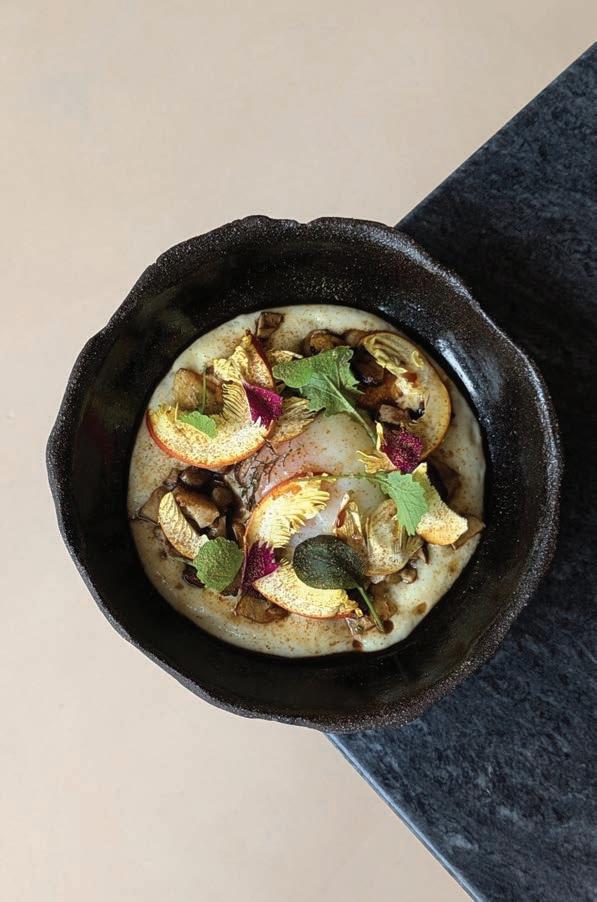
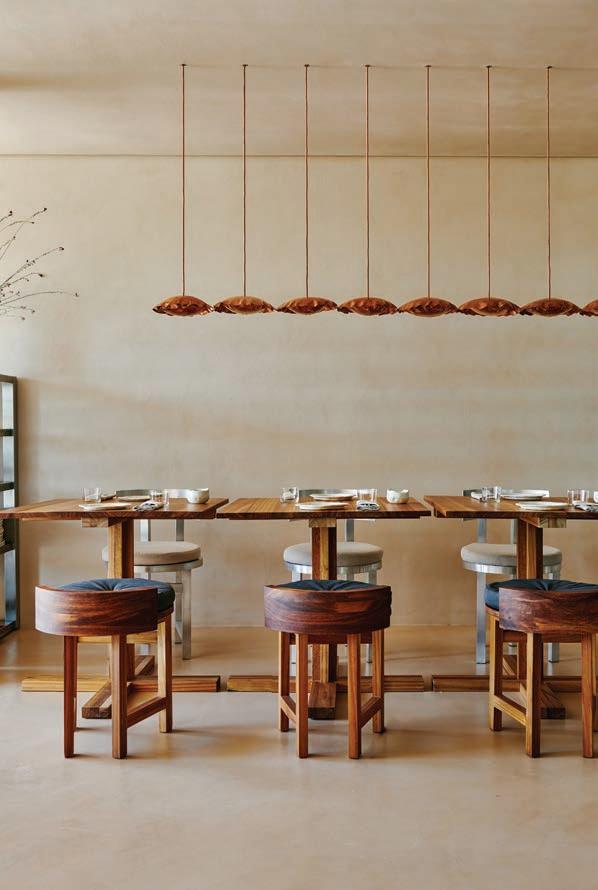
a random night in February, when you have two tables of two quietly enjoying themselves, a game-changing table of ten walks in at 8pm, ready to commit fully to the experience, and you have to turn them away. Not because you don’t want them. Not because you’re full. But because you quite literally do not have enough food.
But then the next day, chef bounds in with an incredible new ingredient, a new dish goes on the menu, a guest gives you that look – plates licked clean. A vegetable you planted months ago is finally ready to be picked and it tastes amazing. Then a guest tells you it tastes amazing, and suddenly you’re back to winning.
Farm-to-table isn’t consistent or convenient. It’s incredibly difficult to scale. It doesn’t always make financial sense. It requires you to care – probably more than is strictly reasonable, and definitely more than is efficient if your only goal is to run a ‘successful’ business. And at some point you realise you’re not just running a restaurant anymore. Like your producers, you’re protecting a way of doing things that only works if you believe in it enough to keep going, even on the nights when it really, really doesn’t.
Doing it with your husband (but not in the way you think)
Opening a restaurant with your husband is either the best or worst idea you’ll ever have. Often both… and within the same
service. People will say: “I could never work with my partner.” Which is fair, because running a restaurant together removes the luxury of passive-aggressive silence. You don’t get to ‘cool off’ when there are 18 people waiting for their mains and another reservation just walked through the door.
You will have conversations about staff costs at midnight. You will discuss table heights, lighting, playlists, menu layouts and how many front-of-house are on duty during ‘date night’ dinners.
Some nights you’re high-fiving each other, excited by how well it’s going. On others, you question every life decision that led you to jointly own a business where the failure rate is notoriously high and divorce rates are even higher. But at the end of the night, when you’re both too tired to speak, there’s something incredibly reassuring about the fact that at least one other person fully understands what you’re going through, even if they were the cause of half of it.
The Algarve is stunning. It is also wildly inconsistent. In summer, you are fully booked with a burgeoning waiting list, smugly delirious, and convinced you could run a small country if asked. You are exhausted but happy. In winter, on a random Wednesday night you serve 30. Then on Friday night you serve two, and
they order one small plate to share and tap water. You briefly consider a career in – well – pretty much anything else.
You learn to ride it out. To prepare without over-preparing. To discuss it at length only to accept that there is no perfect system, and certainly no rhyme or reason for the fluctuation in guests, why it’s busy, why it’s dead.
What we’ve learned about guests
In the beginning we had amazing guests. But we also had some difficult ones. And as with everything in life, the bad ones really get you down and keep you up at night. There were moments in the early days when it was easy to fall into the trap of thinking that they just ‘don’t get it’. But the reality is a combination of two things.
Firstly, not every restaurant is for everyone, and not taking it personally is the hard part, especially when, yes, it is so personal! And secondly – actually mostly –understanding that they do get it. They just want to feel like they made a good decision coming to you and it’s our responsibility to do our best in making that happen.
Yes, sometimes they’ll ask for things that make no sense. Yes, someone will eventually try to order a dish you took off the menu three months ago. But they also notice more than you think.
They notice that you care – and they go out of their way to tell you. They notice when the room feels good. When the
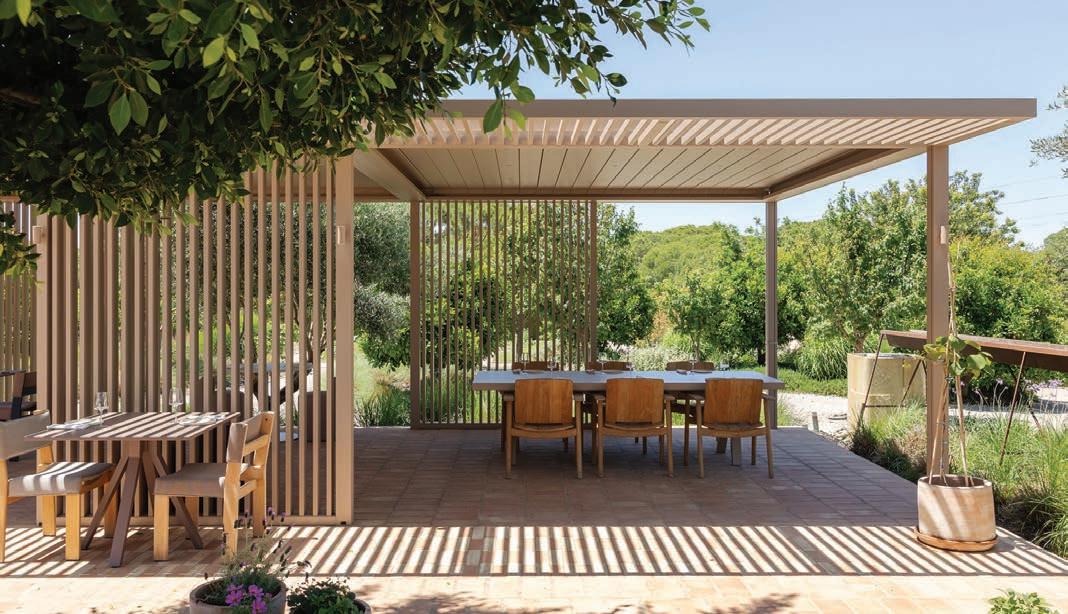
food makes sense. When something feels thoughtful rather than complicated. Like, really notice.
And if you get that right, they come back, again and again, and they bring friends, whose friends bring more friends. This, we have learnt, is astronomically better than any Google or TripAdvisor review, and truly why we are where we are today.
What we’ve learned about money
You don’t open a farm-to-table restaurant to make money quickly. If that’s the plan, there are easier ways to suffer. What you learn instead is how to be dynamic, and how to make decisions with incomplete information. How to price things (with exponentially rising costs of ingredients and overheads) so they make sense without scaring people away, who are also, incidentally, suffering the pinch.
You stop wasting things. You try to fix problems earlier. You start to understand that sustainability isn’t just an environmental concept – it’s operational. And when there’s a month that you aren’t totally in the red, but maybe you’re getting closer to the yellow, it feels disproportionally satisfying.
What we’ve learned about why we’re still doing it
There are easier ways to live. But there aren’t many that feel quite like this: a full room of smiling guests, chatting about what they’re going to order. A service where things flow, where you can sense the team looking out for one another. A dish that arrives just the way you hoped it would. These moments are small, and they’re brief, but they’re enough. Because what we’re building isn’t just a restaurant. It’s a place that exists because we decided to try something a little different. And maybe that’s reason enough.
There are quieter reminders, too. When someone on the team reaches a goal they’ve worked so hard for, or embraces an opportunity and grows into it. When you can see that spark. That feeling that their work means something to them. Those moments make us pause and realise that if we’ve helped someone find purpose or confidence, even in a small way, then this all matters a bit more.
And then there are the visits to our producers. Standing with them as they talk excitedly about their produce or harvest, but then about their challenges, the setbacks, the weather that never seems to make things easy. Year after year, despite
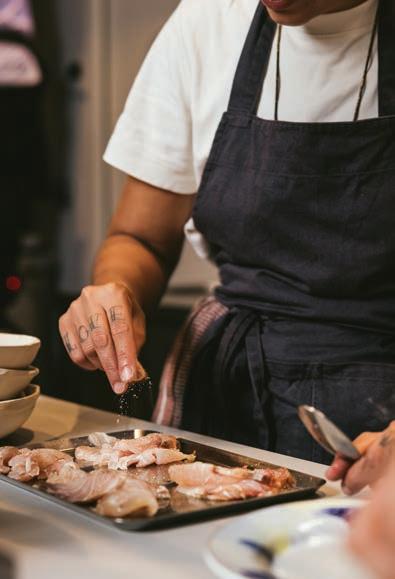
rising costs and the sheer effort required to farm this way, they keep going. Hearing their stories reminds us to stay committed, too. What we do at austa is only possible because they do what they do.
None of this feels grand or perfect. But it feels honest. It feels real. And for now, as long as we can run sustainably, that’s enough to keep us going.
Finally, what we’ve learned about Michelin (while pretending not to care)
You try not to think about it. But rumours about Michelin have a funny way of circulating. People will casually drop hints – sometimes suggesting your food could be star-worthy. It feels AMAZING. In the industry though, you hear whispers of how having the Michelin mark increases expectations, and suddenly every dish is judged more harshly, every service scrutinised. And then there’s the backfire: guests assuming that, rather than just a recommendation, you have a star when you very, very much do not.
But when a table of one books under a suspiciously generic name, you find yourself suddenly rereading menu translations and double-checking table settings – not because you expect an inspector, but because you can’t help yourself.
The truth is, no one actually knows what Michelin wants. There are absolutely amazing restaurants in Portugal that don’t have a recommendation, and others that have not won stars while mediocre ones gain them.
The formula seems to shift by country: Thai street food is judged one way, London ‘casual bistros’ another, and here in Portugal, it seems a crisp white tablecloth is
standard issue for a star.
And ironically, the closer you get to that, the less you think about Michelin at all. You’re too busy making sure the fish is cooked properly, the table by the door isn’t freezing, and that the team isn’t quietly panicking over a last-minute reservation.
For us, honestly, we wanted it not for the accolade or the boast but to get bums on seats. Yes, there’s pressure, and the faint terror that one small slip could feel catastrophic, but at least there’s a better chance at having people in the restaurant in the depths of winter when hardly anyone is around.
So far, mostly, Michelin is a validation that we’re on the right track, that someone liked what we were doing enough to recognise it.
On other nights, it’s just a whisper in the background, impossible to notice or appreciate compared to the real work: the blood, sweat and the many tears spent while making sure that everyone turned up for their shift or reservation, that the oven is fixed and the meat delivery arrived.
Or, because rather than talking about sparkly awards, someone says, simply, “thank you for creating such a wonderful memory for us”.
Now we’re into year three. We’re still open. We’re better than we were. The chaos is (mostly) more organised. And somewhere along the way, someone noticed and ‘slap bang’ we have a red plaque on the door and a chubby Michelin man on the shelf. Not because we chased it. But because we led with our hearts and created something from nothing because we wanted to. Which, honestly, we remind ourselves every day, is the real win.
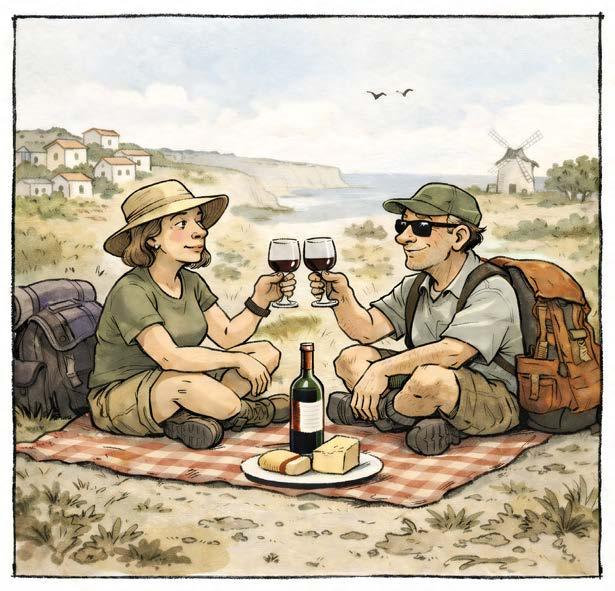
THERE ARE TWO TYPES OF SPRING WEEKENDS IN PORTUGAL: THE ONES YOU PLAN CAREFULLY, AND THE ONES THAT BEGIN WITH “SHALL WE JUST GO FOR A WALK?” IT’S USUALLY THE SECOND KIND THAT TURNS OUT BETTER. NO RESERVATIONS REQUIRED. JUST A PATH, A VIEW, AND A CAREFULLY-CHOSEN BOTTLE
Words: LÍVIA MOKRI
THIS IS the season when wine leaves the dining table. In spring, bottles don’t need white linen or candlelight. They need to travel well. They need to handle an hour in a backpack, a slightly warmer serving temperature, and the possibility of being poured into whatever cups happen to be available. The best walking wines are moderate in alcohol, bright in acidity, and generous without being heavy. They refresh rather than exhaust. They invite another sip instead of demanding attention.
Spring hikes with a bottle don’t require much, but a little planning goes a long way. Choose wines under 13% alcohol. They feel lighter after a walk and won’t tire you out in the sun. Opt for bottles with bright acidity – Arinto, Loureiro, Baga, Jaen –because freshness matters more outdoors than complexity.
Don’t worry too much about temperature. Whites and rosés can start slightly cooler than usual; a short walk will bring them into the perfect range. Light reds? Give them 20 minutes in a cooler bag, and don’t be afraid to serve them with a gentle chill.
Screw caps make life easier. Lighter bottles make your backpack happier. A simple reusable cup works perfectly well –spring hiking is not the moment for fragile stemware.
Most importantly, pack water alongside the wine. Drink both. Take your time. There is something liberating about drinking wine outdoors, mid-walk, without ceremony. No perfect glasses, no ideal temperature, no expectations beyond enjoyment. Walking changes how wine tastes, and how we relate to it.
Movement sharpens the senses. Fresh air clears the palate. A wine that might feel modest at the table suddenly becomes exactly right when opened after an hour on your feet.
Portugal, with its walkable landscapes and
naturally vibrant wine styles, might be one of the best places in Europe for this kind of simple ritual: walk, stop, open, pour.
No grand plan. No perfect pairing. Just the right bottle at the right moment, somewhere between where you started and wherever you decide to end up.
Portugal makes this easy. The landscapes invite you to wander. The wines are ready to travel. All you have to do is choose a path – and remember the corkscrew. Or better yet, skip it.
For centuries, Portuguese wines were made to travel short distances – from cellar to field, from village to riverbank. They were designed to refresh, not impress. That philosophy makes them ideal for spring hikes, when the goal is not conquest, but connection.
What makes a good hiking wine?
A good hiking wine doesn’t try too hard. It’s light enough to carry, fresh enough to revive, and flexible enough to forgive imperfect conditions. It doesn’t require a
corkscrew drama or silent appreciation. It simply works.
Walking changes wine – and us. When we drink while walking, we stop trying to master the experience. We let go of rules and expectations. We allow wine to be what it has always been in Portugal: part of life, not apart from it.
And spring is the perfect season for this shift in mindset.
So take a path. Any path. Bring a bottle that feels light in your hand and honest in your glass. Walk until something makes you stop. Then pour. The wine will understand.
WHERE: Bairrada, Dão, interior Lisboa
THE WALK: gravel underfoot, rows of vines, distant farmhouses
Walking through vineyards in spring is an intimate experience. Budbreak has begun, the land smells damp and alive, and the paths seem to invite wandering rather than direction. These walks call for wines with a little more structure but still light on their feet.
In Bairrada, the Baga grape shines in this role. Known for serious reds, Baga also produces exceptional rosés and light reds that come alive outdoors.
Filipa Pato’s Dinâmica Baga, slightly chilled, offers energy, texture, and a gentle grip that feels grounding rather than heavy. It’s a wine that mirrors the land it comes from: honest, vibrant, and unpolished in the best way.
vinha.pt/vinho/vinho-tintofilipa-pato-dinamica-202475cl-bairrada/
In Dão, a similar role is played by the Jaen grape. Quinta de Lemos Jaen is floral, fresh, and quietly expressive, making it ideal for a mid-walk pause among vines. reserva86.pt/product/quintade-lemos-jaen#


WHERE: Rota Vicentina, Arrábida Natural Park, coastal trails south of Lisbon
THE WALK: wind, cliffs, salt on your lips
Portugal’s coastline is made for walking. Paths follow dramatic cliffs, dip into quiet coves, and stretch endlessly alongside the Atlantic. The air is cool, even on sunny days, and the pace naturally slows. Here, wine needs freshness above all else.
Arinto-based whites from Lisbon or Bucelas are perfect companions. Naturally high in acidity, with citrus and subtle salinity, they feel almost tailor-made for the sea.
A great example is Quinta do Pinto Arinto (Lisboa). It is crisp, linear, and quietly refreshing; it doesn’t demand attention, but it rewards it, especially when opened overlooking the ocean. quintadopinto.pt/ products/quinta-do-pintoarinto-2023-doc-alenquer
For those who prefer something pink, Vinho Rosé Trois Castelão is a coastal rosé from Setúbal, made with the Castelão grape. It offers red fruit and herbal notes with an Atlantic edge. These wines feel alive in motion. pastorwine.pt/pt/vinhorose-trois-castelao-edicaoespecial

WHERE: Minho, Douro tributaries, central Portugal
THE WALK: water sounds, shade, soft light
River paths are spring’s secret gift. They offer coolness, rhythm, and a sense of calm that encourages long, meandering walks with no clear endpoint. Here, wines should feel just as fluid.
Loureiro, one of Vinho Verde’s most aromatic grapes, excels in this setting. Floral, citrusy, and refreshing without being aggressive, it feels like bottled spring.
Aphros Loureiro do Padrão is a beautiful example – textural yet light, expressive

yet easy. It’s the kind of wine that disappears quietly, leaving you refreshed rather than distracted. aphros-wine.com/en/wines/white/ aphros-loureiro-2022/
For something even more casual, Niepoort Drink Me NatCool Branco is hard to beat. Low alcohol, playful, and intentionally uncomplicated, it feels like it belongs on a riverbank, opened without discussion. bodeboca.pt/vinho/ niepoort-drink-me-nat-coolbranco-2024

WHERE: Alentejo countryside
THE WALK: wide horizons, warm light, slow steps
Spring in Alentejo arrives gently. The heat hasn’t taken over yet, and the land feels expansive rather than demanding. Walks here are less about distance and more about atmosphere. The wines should reflect that ease. Forget heavy, oaked reds. This is the moment for light Alentejo reds and rosés, served slightly cool, with soft fruit and generous texture.
Herdade do Rocim Rosé captures this mood beautifully. Ripe without being heavy, fresh without being sharp, it’s a wine that feels sociable, open and forgiving, perfect for sharing mid-walk with friends. rocim.pt/produto/rocimrose/

For red lovers, Monte da Raposinha Ensaio #1 Trincadeira is a Trincadeirabased light red, gently chilled, offering spice and brightness without weight. This wine feels relaxed, never insistent. portugalvineyards.com/en/ alentejo/19742-monte-daraposinha-ensaio-i-trincadeirared-2020-5600271853111.html



Our most adaptive cooling mattress ever. Inside, our new TEMPUR ® Advanced Material relieves 20% more pressure*, adapts even better and absorbs more motion. While our innovative SmartCool™ Cover is cool-to-the-touch and absorbs excess heat to keep you feeling cool and fresh.
Come and discover this unique TEMPUR ® feel and enjoy a different shopping experience in Algarve.


SOME PEOPLE TALK ABOUT REALISING A DREAM. OTHERS – JUST A VERY FEW – WILL ACTUALLY DEVOTE THEIR TIME AND ENERGY TO MAKE THEIR VISION A REALITY, AND THEN TO SHARE IT WITH THOSE AROUND THEM. MEET THE MAN WHO HAS INTRODUCED A NEW CULTURAL SPACE AND CREATIVE EXPERIENCE
Words: ELLI TOWNSEND
MUSIC HAS a remarkable power: it unites strangers in a shared experience, often without a single spoken word. It marks life’s milestones – from the swelling notes of a wedding march to the nostalgic pull of a childhood tune – and defines eras and icons. More than mere entertainment, music acts as a kind of auditory chemistry. It binds people together in what sociologists call ‘collective effervescence’: a lingering sense of joy and positivity that extends far beyond the final note of a live performance. People arrive as strangers but depart as friends. This invisible transformative force is the heartbeat of the Algarve’s newest cultural gem: Songbird Amphitheatre. Nestled in the rolling hills of Loulé Municipality, a short
drive from the quiet village of Querença, is Casa Bela Vista, the home of the Songbird Amphitheatre. German expatriate, Ralph Vogelsang acquired the property in early 2021, and by September of that year, renovations were underway to reimagine the former farmhouse into a space that honours both tradition and modernity. The result is a harmonious blend of Portuguese rustic charm and European minimalism.
Guests can stay in the one-bedroom bungalow affectionately called The Boathouse, or opt for the two-bedroom apartment that accommodates four. The vibe at Casa Bela Vista is intentionally laid-back to encourage guests to shed the pace of the outside world and embrace the rhythm of Portugal’s slow travel movement. While the accommodations offer warmth and comfort, the true centrepiece of the estate is the amphitheatre itself.
Songbird’s design emerged from a moment of quiet revelation. In the early stages of building Casa Bela Vista, Vogelsang discovered the planned retaining wall would obstruct the very views that defined the site’s appeal. Rather than settle for a compromised vision, he reimagined the space entirely, transforming a structural
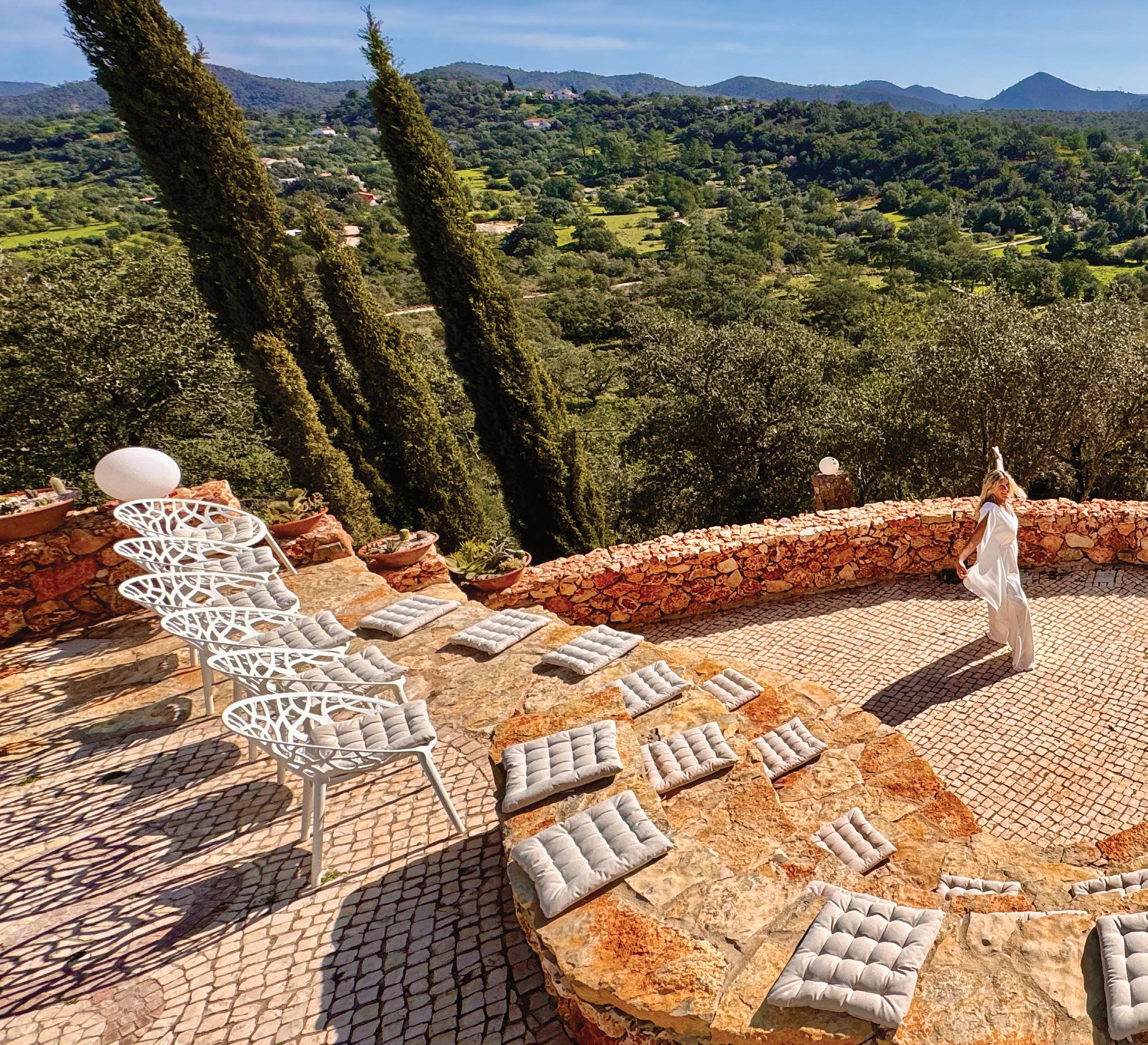
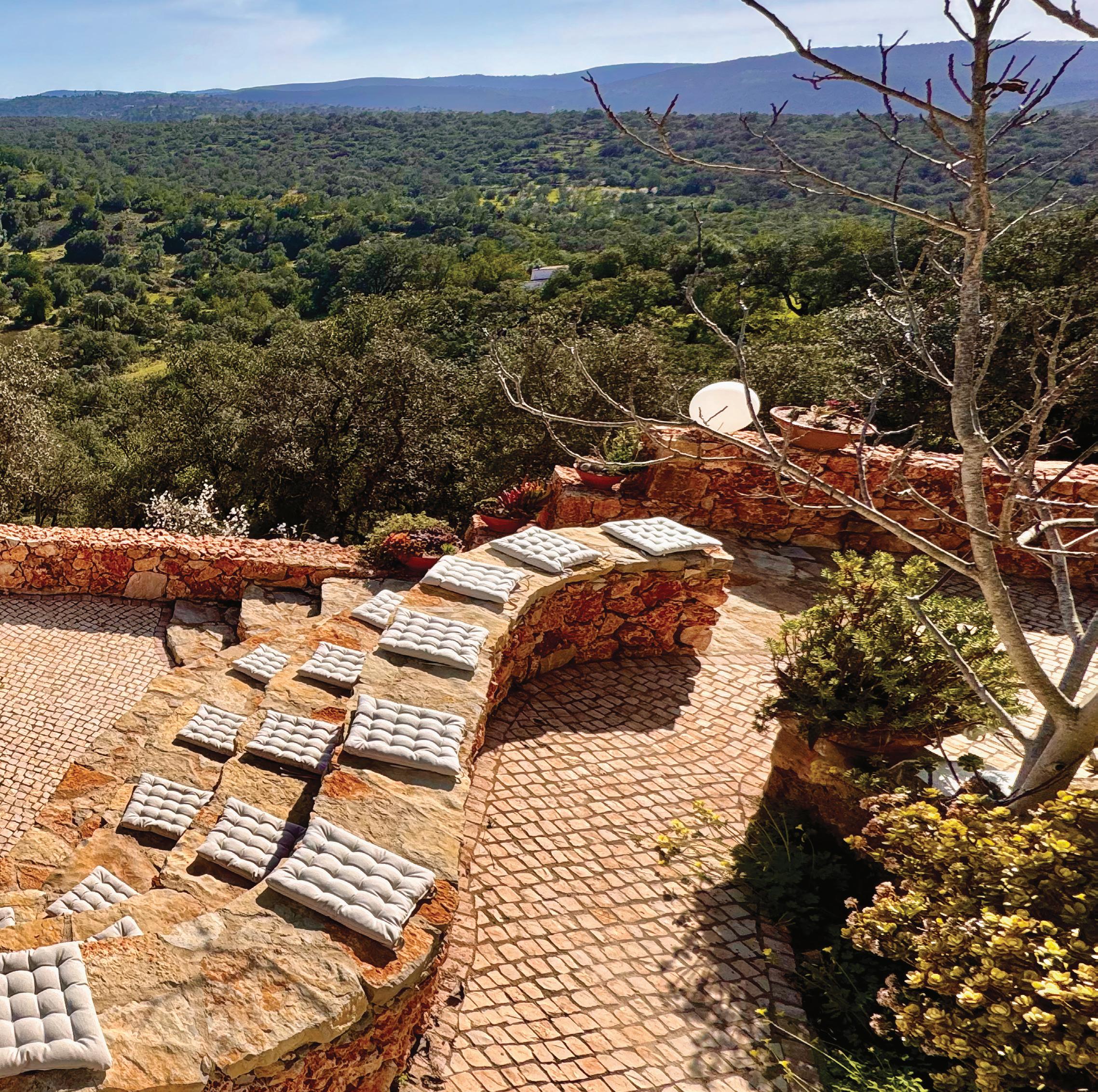
necessity into an opportunity by carving out an amphitheatre that frames the landscape. Local stone became the material of choice, both to harmonise the surrounding ecology and reduce the project’s carbon footprint, a considered step towards the estate’s mission of becoming a designated ecotourism destination.
In just two months, Songbird Amphitheatre was complete. From that point forward, Vogelsang envisioned it as more than a private retreat: it was to be a shared cultural space for the public to connect and bring to life the music he cared so deeply about. For Vogelsang, Songbird’s creation was also driven by a desire to give the Algarve a voice of its own – one capable of drawing artists from the established centres of Lisbon and Porto, and positioning the region as a compelling presence on the wider artistic map. He imagined a kind of creative crossroads, where expression could flourish freely from the constraints of urban life.
The amphitheatre’s name, Songbird, stems from a humble yet poetic origin: a homage to its owner’s heritage rather than grand architectural ambition. His surname, Vogelsang, translates from German as ‘birdsong’, a detail that might easily have remained incidental. Instead, it became the seed of something more deliberate. The turning point came through a creative exchange between Vogelsang and his Canadian friend, jazz singer Allyson Morris, who was staying at the estate at the time. Together, they reshaped the literal meaning into something more lyrical, arriving, almost effortlessly, at Songbird.
The result honours Vogelsang’s roots while capturing the spirit of the performances and the surrounding landscape. Songbird serves as more than a label; it defines a venue whose identity feels less like a constructed brand and more like a natural extension of its creator. With the name in place, Morris invited the Fernando Tavarez Jazz Trio to inaugurate the space. That first performance marked both a memorable opening night and the start of an enduring concert series.
Perched on the property’s upper terrace, Songbird Amphitheatre unfolds like a natural extension of the surrounding landscape. As guests descend into the seating area, the intoxicating fragrance of jasmine drifts through the air, weaving through small coves nestled within the three-tiered design. The space can
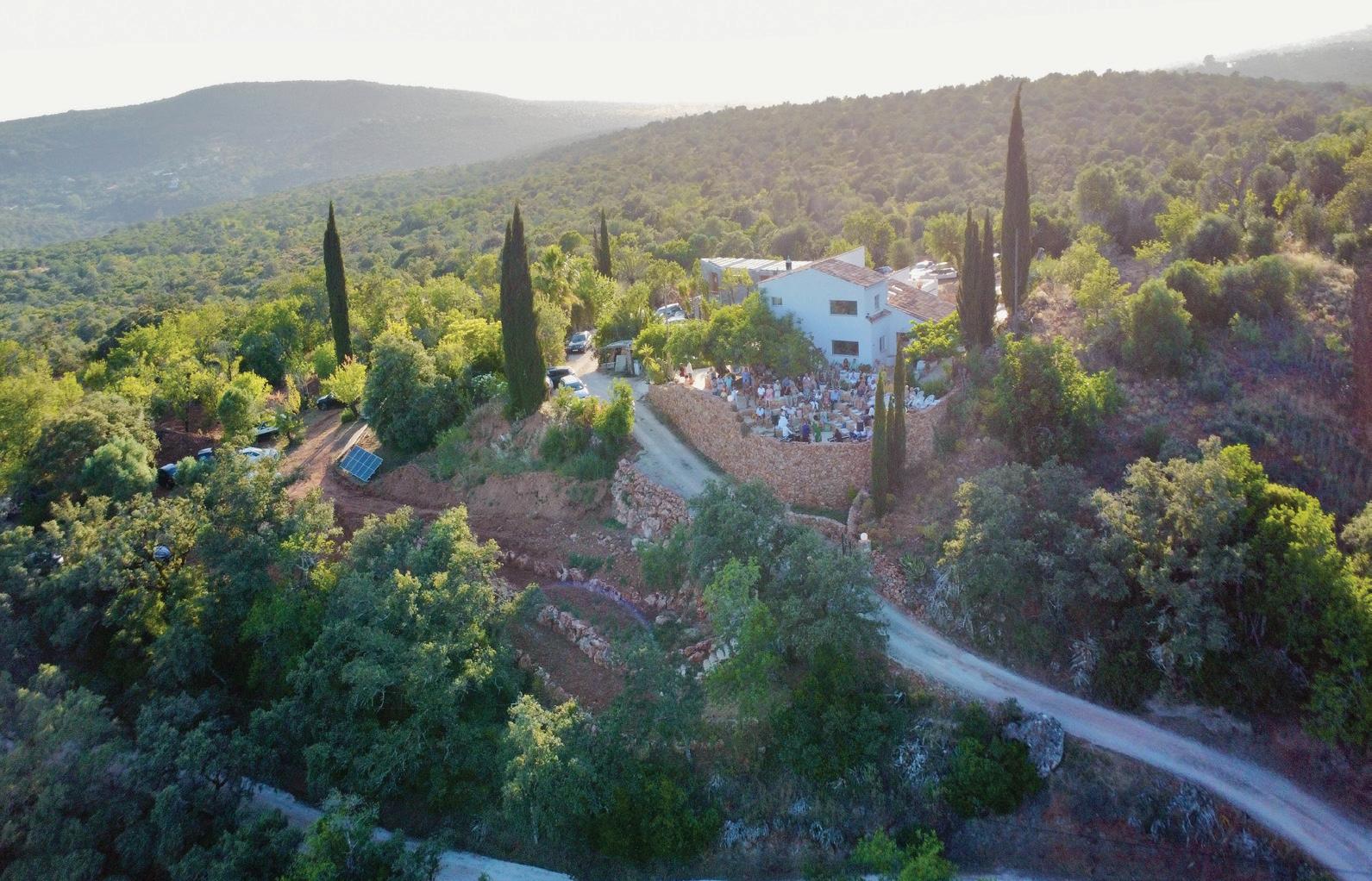
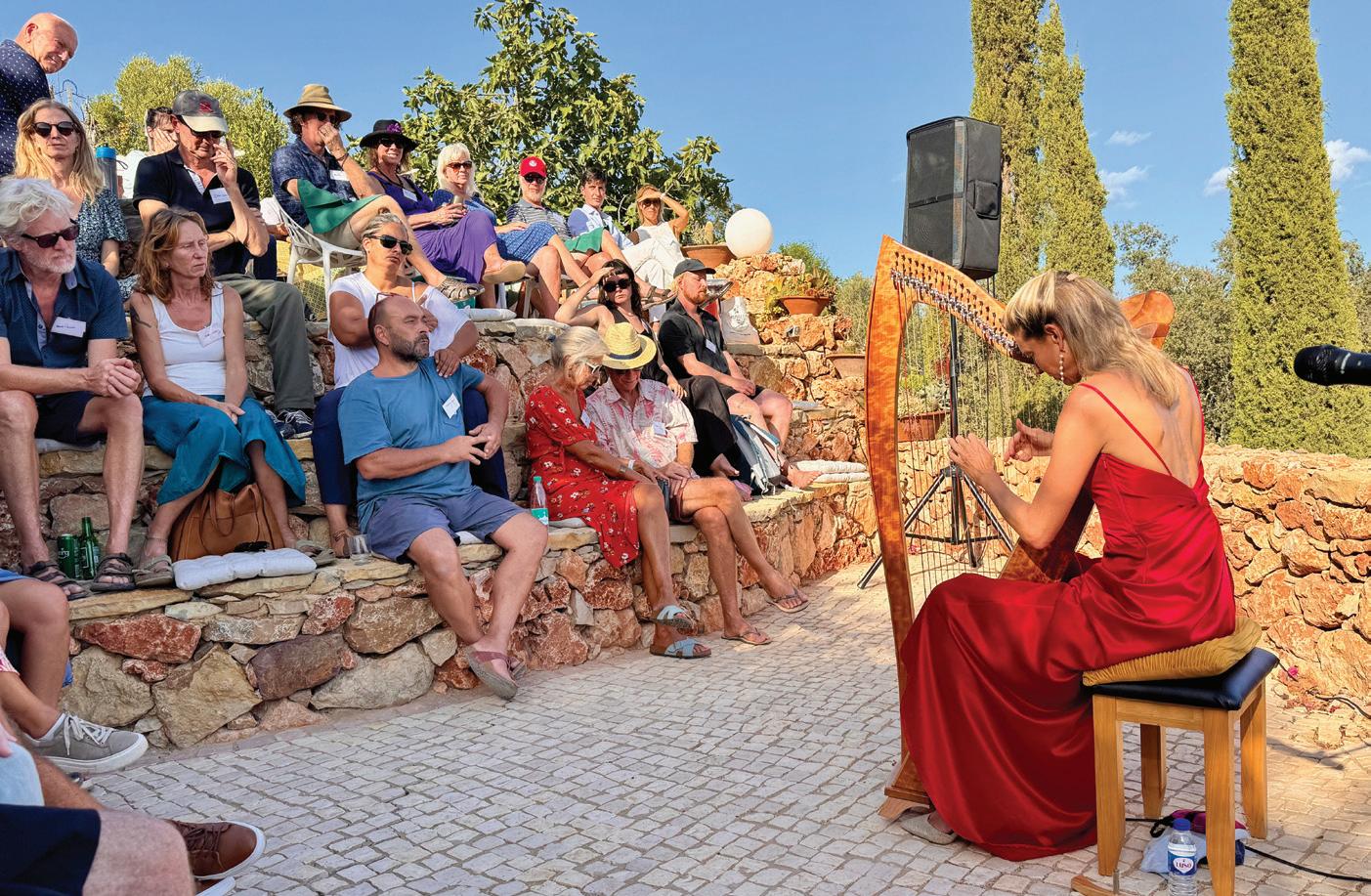
accommodate 100 guests – an intimate size to foster connection, yet grand enough to host meaningful performances. Although concerts typically begin in the late afternoon – thanks to careful planning, natural shade from the home of Casa Bela Vista covers the amphitheatre – a crucial comfort during summer.
Songbird’s distinction lies in its integration of landscape and art. Although both command attention, scenery and artists work in concert to create a performance that seamlessly blends visual and auditory elements. The energy of the space invites stillness and presence, encouraging audiences to absorb both the music and the beauty of the neighbouring Fonte da Benémola Nature Reserve. Here, boundaries dissolve between performer and listener, architecture and nature, moment and memory.
The vision for the estate extends beyond
that of a traditional concert venue. Vogelsang is cultivating a dynamic cultural hub, one designed to attract a diverse mix of artists and audiences from across the region and beyond. Central to this ambition is to shine a spotlight on Loulé and transform the region into a premier destination worthy of broader media attention and artistic recognition.
Yet, the music is only the beginning. Looking ahead, the estate’s evolution includes a sanctuary for wellness and celebration with plans to introduce yoga retreats, intimate weddings, and several surprise projects that are kept under lock and key. While the details remain a closely guarded secret, the trajectory is undeniable: these upcoming ventures are poised to redefine the estate and leave the public hungry for more.
Curating Songbird’s multi-genre concert series is a personal endeavour. Rather than relying on booking agents, Vogelsang
immerses himself in the local music scene, attending events and striking up conversations with artists whose work resonates with him. His authentic personality and undiluted passion for music serve as powerful magnets that convinces talented artists and performers to join this special project. This grassroots approach has sparked a chain reaction; as artists share their experiences, they bring their peers into the fold to create a vibrant community of talent. While budget realities inevitably shape the final roster, the resulting lineup remains impressive, spanning the rich textures of jazz, blues, classical, and world music. Among the season’s standout events is the Full Moon Rise Concert, where performances unfold against a shifting sky as daylight fades and moonlight takes over.
This artistic success mirrors Songbird’s remarkable growth. What began as a spontaneous experiment has evolved into a structured programme of seasonal events, rising from five intimate shows in 2024 to ten in 2025, and now eleven in 2026. Songbird is rapidly expanding its footprint to meet surging demand, with repeat visitors becoming increasingly common.
Bringing a Songbird concert to life, however, requires meticulous preparation. Each event demands careful coordination, from administrative duties to the constant watchfulness necessitated by the Algarve’s occasionally unpredictable coastal weather. Yet these challenges are part of what makes the experience so personal: Vogelsang embraces the freedom the space affords along with the opportunity to welcome each guest himself. Performances take on an intimate, communal character: potluck-style hors d’oeuvres are encouraged, inviting guests to share, mingle, and connect. That sense of connection is further reinforced by a simple gesture – each attendee wears a name tag, turning the audience into a gathering rather than a crowd.
Driven by a profound belief that the universe guided his path to Portugal, Vogelsang – a molecular botanist by training – views the estate as a living ecosystem, one that continues to evolve organically. He sees them as a hub of immense potential, a canvas for artistic performances and memorable gatherings. As this vision takes root, success has become intertwined with local support, which has grown alongside recognition of the estate’s cultural and economic impact on the region.
Vogelsang describes Songbird
Amphitheatre as: “a unique space where the beauty of nature meets the artistry of performance, welcoming a community of passionate souls from around the world.” Here, music, landscape, and human connection converge to create something rare: an experience that feels both immediate and lasting. As digital isolation deepens, venues like this remind us of the irreplaceable power of gathering in person.
Whether it’s an intimate acoustic set, a local ensemble, or a visiting artist, the Songbird Amphitheatre offers something unique: a setting where music doesn’t just play for an audience, but with them. And in doing so, it fulfills music’s oldest purpose: bringing people together, if only for an evening, and often for longer.
(weather permitting)
1 MAY
Full Moon Rise Concert: NUJUM & Rollin Rachelle with Overtones
23 MAY
Robbert Duijf, Blues Gospel
6 JUNE
Quique Bonal & Vicky Luna
Blues Duo
17 JUNE
Ally Garredo, featuring Songs of Amy Winehouse
20 JUNE
Fernando Tavares Jazz Trio & Manuela Lopes (Vocals)
11 JULY
Fernando Tavares Jazz Trio & Gonçalo Sousa, Harmonica
29 JULY
Full Moon Rise Concert, NUJUM
1 AUGUST
Fernando Tavares Jazz Trio & Martha Santamaria
12 SEPTEMBER
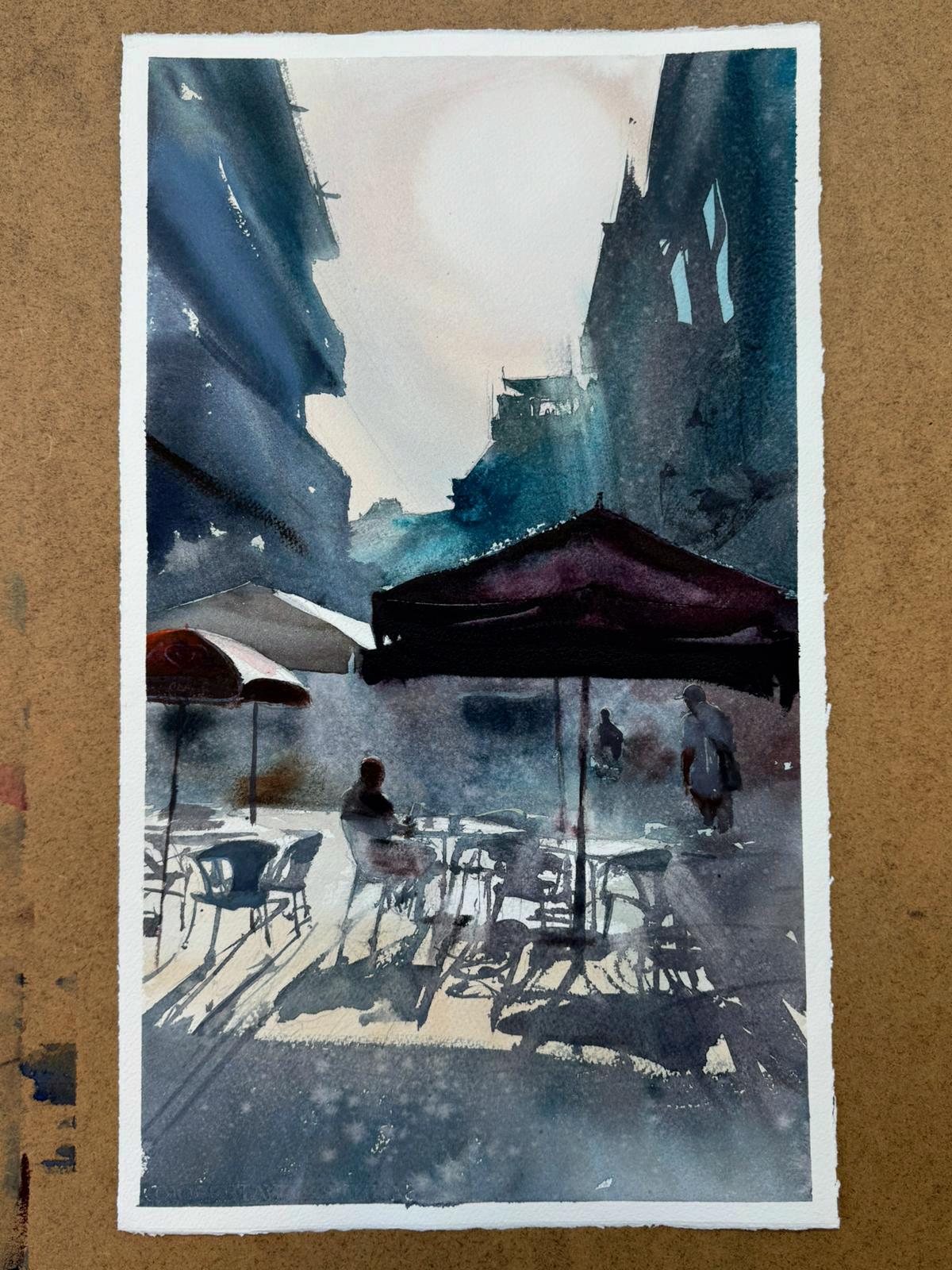
Fernando Tavares Jazz Trio & Sara Esperito Santo
27 SEPTEMBER
Full Moon Rise Concert
Danielle Riegel, Harp
4 OCTOBER
Algarve Music Series – Classical Music Concert
Tickets are €20 each, payable at the door (wine and nibbles provided). Email Ralph Vogelsang directly for more information and to book: ralphalgarve@gmail.com
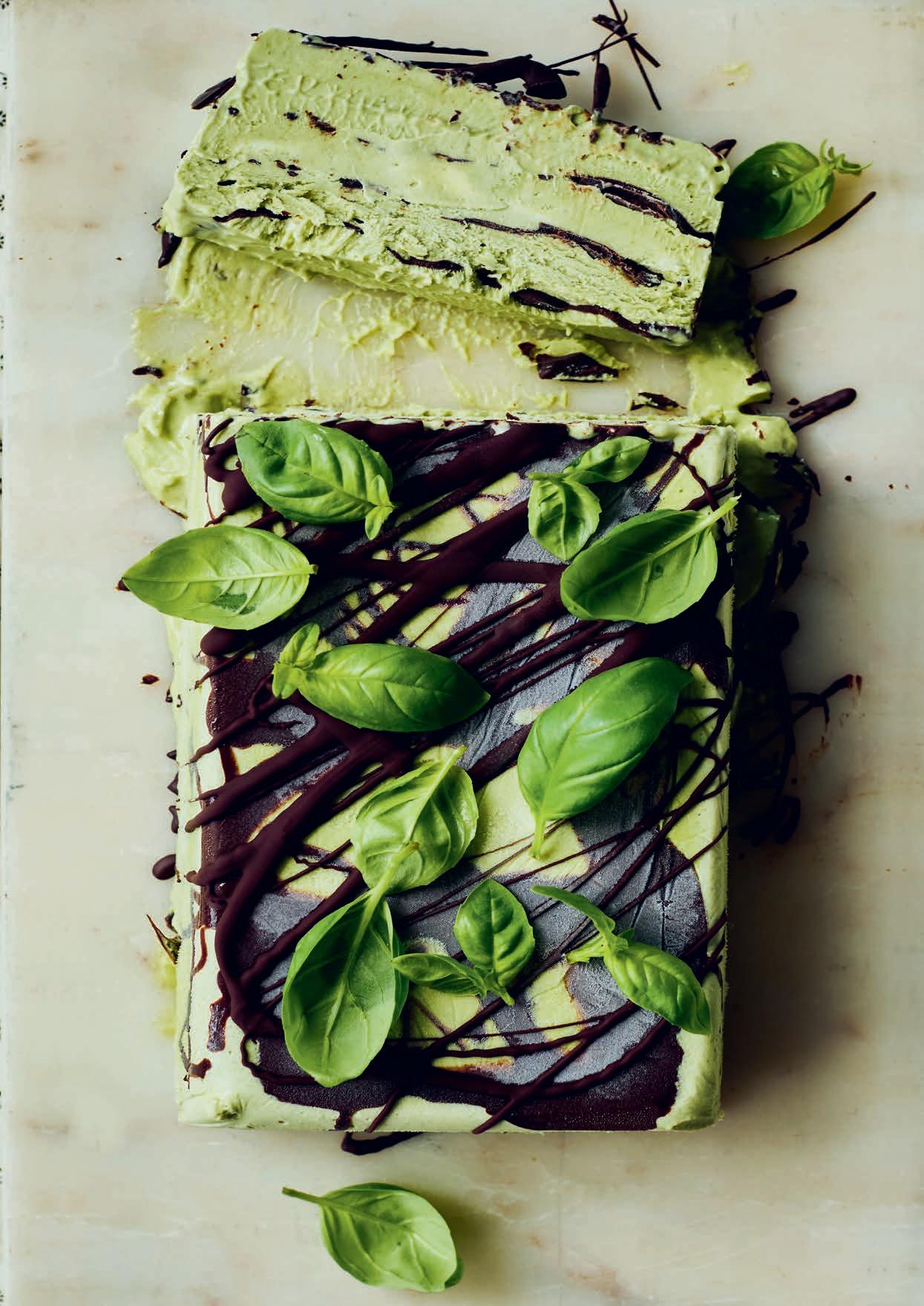
WHEN SUPER-STAR COOK AND TV PERSONALITY GEORGINA HAYDEN WAS TESTING
NEW RECIPES FOR HER LATEST BOOK, MEDESQUE, THIS DESSERT CREATED REAL EXCITEMENT WITH THOSE SAMPLING IT AS THEY TRIED TO FIGURE OUT WHAT THE FLAVOUR WAS. KEEP YOUR GUESTS WONDERING... AND COMING BACK FOR MORE
SERVES 1–12
150g 70% cocoa solids chocolate
A good pinch of sea salt flakes
Large bunch (about 50g) of basil
300g caster sugar
400ml double cream
1 tsp vanilla extract
250g mascarpone
1 tbsp milk
1 Line a 900g loaf tin with cling film, leaving some to hang over the sides.
2 Roughly chop 125g of the chocolate and melt in a microwave or in a heatproof bowl over a small pan of simmering water (make sure the bowl does not touch the water). Keep stirring until just melted, stir in the salt, then set aside for ten minutes.
3 Meanwhile, pick most of the basil, stalks and all, place in a high-speed blender and blitz with 150g of the sugar, 100ml of the double

PREPARATION 20 MINUTES
cream and the vanilla until smooth. Blitz in the mascarpone and milk.
4 Place the remaining double cream in the bowl of a stand mixer (or use a large mixing bowl and electric beaters) with the remaining 150g of sugar, then whip until you have medium to stiff peaks. Fold into the basil mascarpone mixture.
5 Evenly drizzle one-fifth of the molten chocolate into the base of the lined tin, then spoon in a quarter of the basil cream. Repeat these layers with the remaining chocolate and cream: you should have four layers of cream, topped and tailed with chocolate. Cover with the overhanging clingfilm and place in the freezer for at least six hours.
6 When you are ready to serve, melt the remaining 25g of chocolate, then set aside for ten minutes as before. Turn out the ice cream onto a serving plate, drizzle with the cooled chocolate, scatter with the remaining basil leaves (unless you’re keeping the flavour a secret!) and serve.
Medesque, published by Bloomsbury, is a celebration of the very best of Mediterranean food made Georgina Hayden’s way. The multi-award-winning cook and food writer who worked on Jamie Oliver’s food team for 12 years, is inspired by flavours from the coastlines of Italy, Spain, the Baltics and beyond, creating vibrant and easy-going recipes to be cooked at home by anyone and everyone

THE LATE
ONE OF THE MOST INFLUENTIAL MUSICIANS OF THE 20TH CENTURY, KNOWN FOR HIS INNATE ABILITY TO REINVENT HIMSELF TIME AND TIME AGAIN. THE WORLD ’ S TOP PHOTOGRAPHERS CLAMOURED TO WORK WITH HIM AND INTERPRET EACH NEW-FOUND PERSONA; WORKS BY SEVEN OF THEM FEATURE IN BOWIE: THE PHOTOGRAPHERS, AT IN THE PINK, FROM 8 MAY
THERE ARE certain descriptive adjectives that, if used correctly, only relate to a very few people and talents. Extraordinary is one of them; exceptional is another. David Bowie was – and remains today – the personification of those terms, never staying in one place, one thought, one world. And it was not simply his music that made him an unmistakable force, it was his ability to control his own environment, to create his ever-changing self-images, and to re-emerge as a new statement. He was unequivocally curious about how far boundaries could be pushed, and he searched and discovered other significant talents who would work with him, sharing broadened horizons. Across the years David Bowie was photographed by leading names who themselves were inspired by his work, his look, his significant other personalities; the resulting images are vibrant, unforgettable, inspirational and of importance in the worlds of music, visual representation and the value of collaboration. What promises to be a remarkable exhibition features images by Brian Duffy, Terry O’Neill, Denis O’Regan, Rankin, Steve Shapiro, Justin de Villeneuve and Albert Watson.

Brian Duffy (June 1933–May 2010), one of the defining creative forces of the Swinging Sixties alongside David Bailey and Terence Donovan, pointed his Hasselblad at a bare-chested young man in a North London studio and created what has since become known as the Mona Lisa of Pop. Aladdin Sane (1973) is the image that made an incredible statement about the performer and the photographer who captured his insatiable appetite for drama – the lightning bolt, the bare chest, the eyes closed. In November 2025, the original dye-transfer artwork, produced in Switzerland, sold at Bonhams for £381,400 – a world record for album cover art. The lightning bolt, drawn in lipstick across Bowie’s face by Duffy in a matter of seconds, was then filled in by make-up artist Pierre Laroche; airbrush artist Philip Castle added the now-iconic teardrop of mercury to Bowie’s collarbone. Chris Duffy, the custodian of his father’s extraordinary legacy, will be at the opening of the In The Pink exhibition.

Terry O’Neill (July 1938–November 2019) was a working-class boy from Romford who found himself at the epicentre of six decades of pop culture, pointing his lens at everyone from The Beatles and the Rolling Stones to Frank Sinatra and Nelson Mandela.
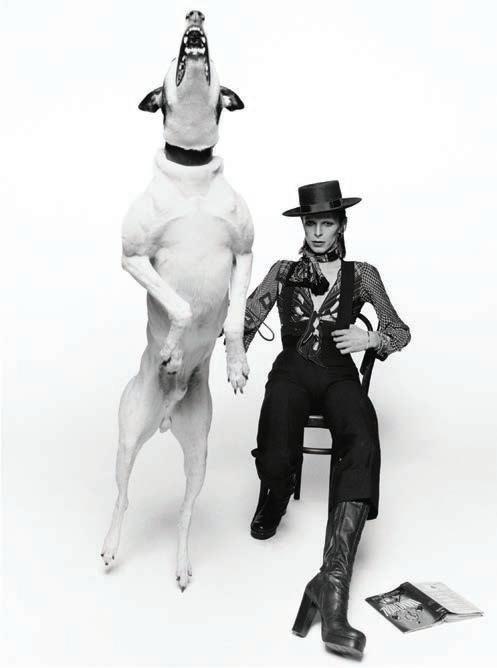
With Bowie, he created one of rock and roll’s most thrilling and enduring images. In January 1974, O’Neill was commissioned to shoot publicity photographs for the forthcoming Diamond Dogs album. Bowie arrived at the studio with a large, sleek Great Dane. Every time O’Neill raised his camera, the strobe lights drove the animal into a frenzy and it began leaping wildly at the flash. Bowie sat completely still, utterly unruffled, radiating an otherworldly calm as the dog soared around him. O’Neill kept shooting. The resulting image – Bowie poised like a statue while a Great Dane lunges through the air beside him – is electric, and unforgettable. It remains one of the most iconic photographs in the history of rock and roll.


John Rankin Waddell, known simply as Rankin, is one of Britain’s most celebrated photographers. Cofounder of the influential Dazed & Confused magazine, he has photographed Queen Elizabeth II, Madonna, Kate Moss and David Bowie, and his images have appeared on the covers of Vogue, Vanity Fair, GQ, Harper’s Bazaar and Rolling Stone. He has exhibited at MoMA in New York and the Victoria and Albert Museum in London.
When Bowie arrived for the 1995 Dazed & Confused shoot titled Lean In: The Changing Faces of David Bowie, he was wearing a wolf mask, which he kept on for quite some time – Rankin thought he might end up photographing one of the most iconic faces in music and no one would know who it was.
One image in particular stops you cold. Bowie holds his own eye open with his fingers, exposing the left pupil in full. He had anisocoria – his left pupil permanently paralysed after a schoolboy fight with his friend George Underwood in 1962. The dilated pupil created the illusion of two different colours, one of the most mythologised features in rock and roll.

In 1973, a teenage Denis O’Regan smuggled a £5 camera into the Hammersmith Odeon and watched David Bowie retire his Ziggy Stardust character. A decade later, he was the official photographer on the most successful tour of Bowie’s career.
Over the years that followed, O’Regan photographed more than 200 Bowie concerts across the world – The Serious Moonlight Tour of 1983 alone spanned nine months, 96 performances and over 2.6 million tickets were sold across 16 countries.
O’Regan’s work is held in the permanent collection of the Victoria and Albert Museum in London. In 2021, he was appointed the first ever Artist in Residence at the Royal Albert Hall. He will be attending the landmark exhibition in Loulé.


In 1974, photojournalist Steve Schapiro (November 1934–January 2022), already celebrated for his civil rights photography and his portraits of Robert Kennedy, Muhammad Ali and Andy Warhol, was invited by Bowie’s manager for a private session with the star in Los Angeles. He expected a flamboyant rock and roll circus, but what arrived was something entirely different.
Bowie came prepared with costumes and ideas. He talked about Aleister Crowley, the controversial British occultist in whose esoteric writings he was deeply immersed, and about Buster Keaton, one of his greatest heroes. He painted diagonal white stripes on his clothes. He drew the Kabbalah tree of life on the studio floor. He borrowed a shirt from Schapiro’s assistant and transformed it on the spot.
The session produced two of the most iconic images in Bowie’s entire catalogue, but the most extraordinary one came last. It was 4am. Schapiro asked Bowie to sit on a motorcycle outside the studio, lit only by the headlights of a car. What resulted was raw, nocturnal, unguarded. A rock and roll star alone in the dark, stripped of every persona.


Albert Watson was blind in one eye since birth. He studied graphic design and film before building a career that has produced more Vogue covers than any other photographer in history. When Watson and Bowie found each other, the result was something singular.
Working in New York in 1996, Watson conceived a series of surrealist portraits rooted in the spirit of Dalí, Duchamp and the great Dadaist movement of the 30s and 40s. Bowie understood the language of the body, of stillness, of transformation, in a way few subjects ever do.
The session produced some of the most powerful portraits ever made of Bowie: images that feel simultaneously timeless and deeply strange, rooted in Watson’s signature command of light, surface and conceptual depth.
Among the works on show at In The Pink Gallery is David Bowie, New York City, 1996, one of the largest and most arresting pieces in the exhibition. It is Watson at his most cerebral. And Bowie at his most enigmatic.



Justin de Villeneuve was not a professional photographer. He was the man who discovered and managed Twiggy, the face of the Sixties. One day, he simply decided he could point a camera, too. What happened next was entirely accidental, and entirely remarkable.
In 1973, de Villeneuve and Twiggy had just returned from Bermuda, deeply tanned. Bowie, recording Pin Ups in Paris, was snow white. In a studio together they looked absurd. Make-up artist Pierre Laroche solved it by painting matching colour masks across both their faces. De Villeneuve looked through the viewfinder and knew he had it on the first shot.
The image had been commissioned for the cover of British Vogue. But when Bowie saw the Polaroid, he asked if he could use it for his album instead. De Villeneuve said yes; Vogue never spoke to him again.
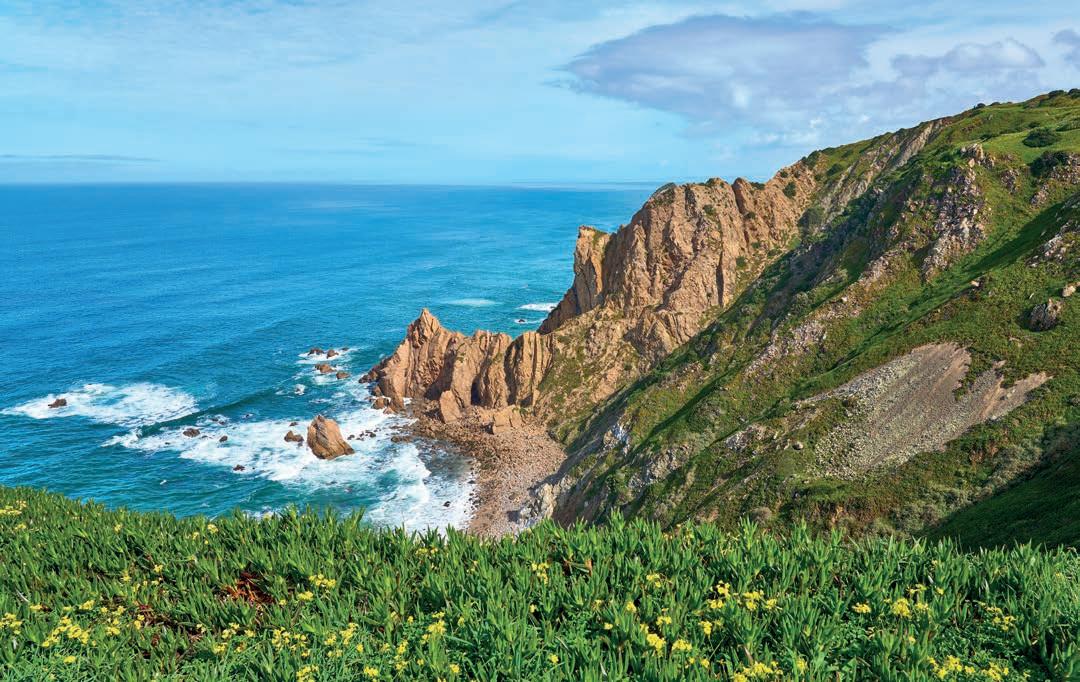
NOW MAY IS HERE, NATURE EXPLODES WITH BEAUTIFUL PROFUSION IN THE HILLSIDES AND ALONG THE COASTLINE OF THE ALENTEJO AND NON-BUILT AREAS OF THE ALGARVE, WHETHER IT ’ S A SEA OF ROCK ROSES, POPPIES BY THE ROADSIDE OR FIELDS OF AZURE CORNFLOWERS.
SOMETIMES JUST A SHORT DRIVE OUT FOR THE DAY WILL BE A DELIGHT AND PROOF THAT THERE ARE SOME PLACES IN THE WORLD WHERE THE EARTH STILL BREATHES FREELY
Words: GILLIAN HISCOTT
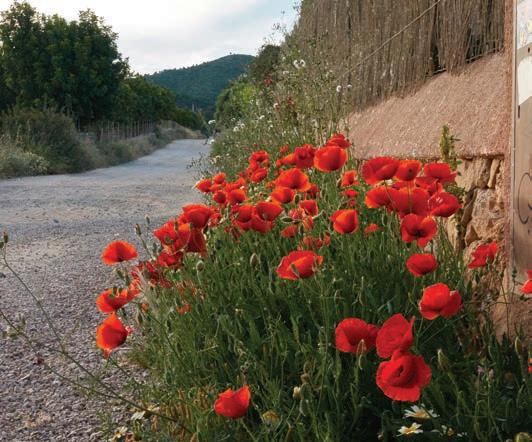
FOR THE a garden of wildflowers, take a trip along the Alentejo coast but give yourself plenty of time – you will encounter so many breathtaking spots along the way, progress will be slow!
Start at Odeceixe in the northern part of Aljezur – a charming town for a morning coffee – then take the N120 north towards Odemira, turning off towards the coast at Zambujeira do Mar – as far as I am concerned, it’s the most beautiful spot not only in Portugal but in the whole world. Park at the top before or near a little chapel looking out to sea, and glance over the wall at the coast. The Atlantic waves rolling onto the golden sand, cradled by rocky cliffs, make a stunning view.
Here the sky is usually blue, the sun warm and the beach is not packed with tourists. Nor are there surfers, even if it looks very much like a surfing beach. During peak season, there will be some lifeguard surveillance and warning flags regarding when and where to swim, but for many months – including May – there will be no warnings. The Atlantic is strong along this coast and rip currents are common, so if you are tempted to venture onto the beach do not take risks with the sea. Its lack of mass tourism attraction is part of the charm of this spot.

To continue on the journey, take the minor road CM1158 towards Porto das Barcas, a traditional little harbour, where there is a popular seafood restaurant of the same name which is a good spot for lunch.
Next, drive along the same road to the viewpoint of Cabo Sardão where you will encounter the creeping succulent Carpobrotus edulis (hottentot fig) which covers vast areas and thrives in sunny, well-drained sandy soil. May is the peak bloom time for it, when it can be truly appreciated. Due to its invasive nature, it is acceptable to take some roots home for the garden – so long as you don’t mind that other plants may struggle against it. Many consider it as a weed but in a contained area it can give more pleasure and less work than a grassy lawn.
Finally, I am going to bypass Vila Nova del Milfontes just for the moment, as it deserves its own feature another month, and urge you on towards Porto Covo.
The cliff-top paths around Porto Covo are part of the famous Fisherman’s Trail and offer stunning views, with carpets of wildflowers right along the cliff edges. Standing amongst bursts of yellow, pink, purple, red, and white blooms against the Atlantic reaching to an azure sky truly feels as if you have entered a dreamscape, and only when you feel the warmth of the sun, the breeze brushing past, and hear the sea crashing below, do you know it’s real.
In the one street of Porto Covo, we had an afternoon tea and a scone. The perfect end to a perfect day!
Gillian Hiscott is a UK playwright and author. You can read about her experience of buying a ruined school with her husband in ‘Alentejo Days, Magical Nights’. Links are available on her website gillianhiscott.weebly.com
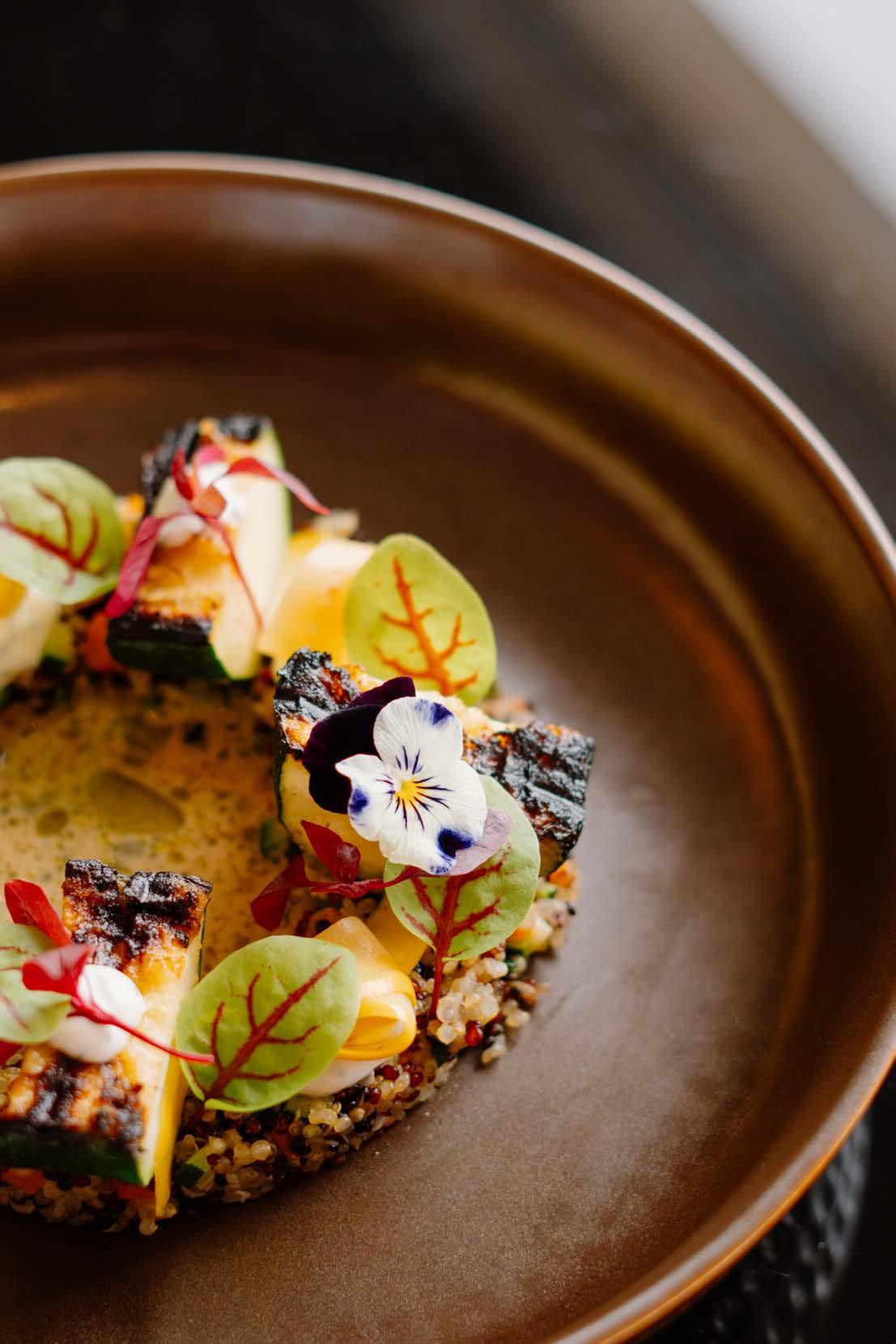
WANT A PROFESSIONAL TO TAKE OVER YOUR KITCHEN AND PRODUCE AN EXEMPLARY MEAL FOR YOU AND YOUR GUESTS? THERE ARE SOME TERRIFIC COMPANIES READY AND WAITING TO COME INTO YOUR PLACE AND COOK FOR YOU. HERE ARE THREE WHO ARE RENOWNED FOR THEIR CATERING
Words: LUCY MAYER
Jonnie Pratt is the mastermind behind this restaurant and home catering company based in Almancil. A classically-trained chef, he has a passion for modern European cuisine and local Algarve ingredients.
Tribulum’s catering services were born out of necessity during Covid, after limitations were put on eating out and more people looked to take the restaurant experience into their own homes. Jonnie says the team realised there was a huge demand for high-end, well-prepared food served with a smile, but in the home.
Since then, Tribulum has gone from strength to strength. The catering staff offer everything from romantic dinners for two to large weddings with big numbers, and meals are planned to suit individual clients’ requirements whether just one chef is needed or the whole team which includes those all-important mixologists and waiters.
Jonnie says it’s important to involve a client in all aspects of the planning process – knowing who they are and what their tastes are allows him to tailor a
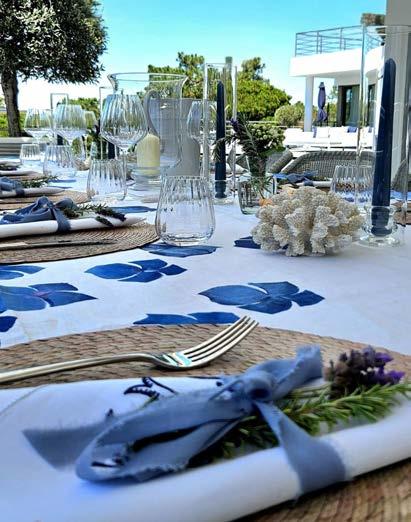
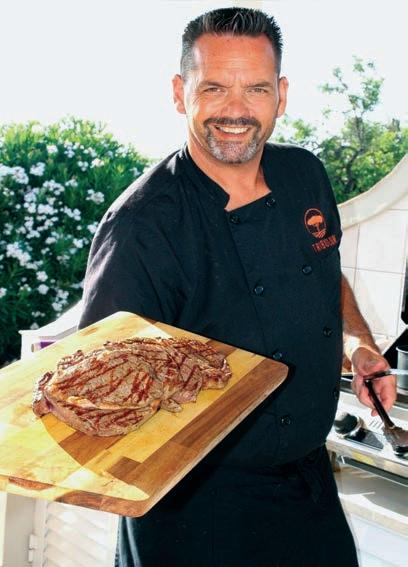
menu tat satisfies their vision for a perfect occasion. He stays away from polarised foods unless it is a gastronomic group wanting to try new things.
He loves his job and the home cooking aspect. “It is the best feeling is when you know you have nailed it and gone above and beyond to have your clients beaming with delight.” Jonnie welcomes his clients into the kitchen so they can see the magic happen, but says it’s best when they are relaxed and experiencing the event like one of their guests.
Tribulum T: 289 397 784 / E: info@tribulumalgarve.com / W: tribulumalgarve.com
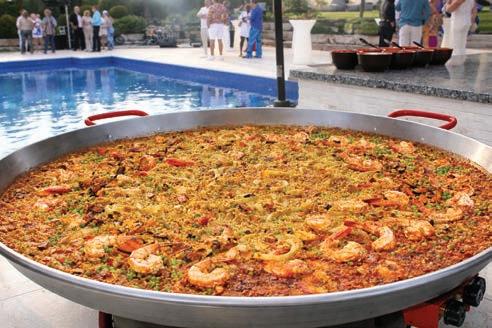
Algarve Chef’s Table is the brainchild of Jonathan Cloake, who has spent the past 25 years in kitchens, and the last 20 as a professional chef.
Jonathan grew up on a farm in Cornwall washing dishes in pubs and working his way through kitchens in London, the South of France, and Thailand before setting up in Portugal a decade ago with his partner Sara, who is “Algarvian through and through.” Together, they founded Algarve Chef's Table, an exclusive private dining service that is capable of hosting events for up to 100 people. It’s made up of a small but passionate team of private chefs cooking regional Portuguese classics and dishes inspired by cuisines from around the world. It includes Portuguese, French, Argentinian, Italian and British chefs, each bringing their own personality and skills to the table.
Wellness retreats form a major part of what Algarve Chef’s Table does. They work with a wide variety of retreats throughout the year from yoga and fitness to detox and holistic wellbeing, primarily here in Portugal but also abroad. Jonathan and Sara focus on venues that genuinely excite them and that sit along the old Portuguese trade routes which are perfect for exploring culinary traditions. The couple says a respect for privacy and sensitivity to each client’s routines is crucial to their work; many of their clients are high-profile and trust them to create a bespoke dining experience.
The range of what they offer is broad by design; on any given week, they say they might be working as a one-off private chef for a villa, providing a weekly chef service for a family, running a cooking workshop, or preparing a selection of meals and stocking a client’s fridge with homemade food to save the hassle throughout the week.
The team also hosts pop-up dinners like the retreats – a recent one took them to the mountains of
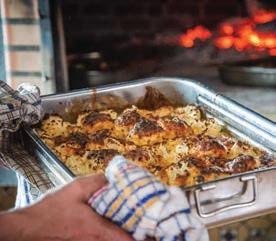
Spain where they set up a picnic for their clients. Jonathan says their menus have been entirely refreshed since the early days, though they have kept the archive for any returning clients. They cover Portuguese food in its fullest sense: not just the Algarve, but the whole country and have been spending time studying the Portuguese trade routes and the extraordinary influence they had on the food cultures of India, Southeast Asia, the Middle East, Sri Lanka, Mozambique, Angola, and beyond. Jonathan says the end result is menus with genuine depth and real storytelling.
Algarve Chef's Table T: 910 572 701 / E: algarvechefstable@gmail.com W: algarvechefstable.com
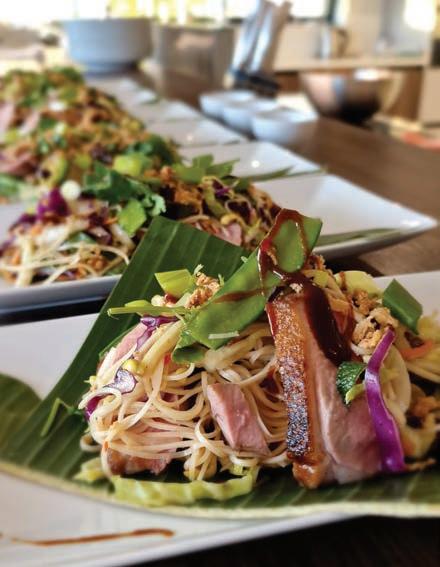
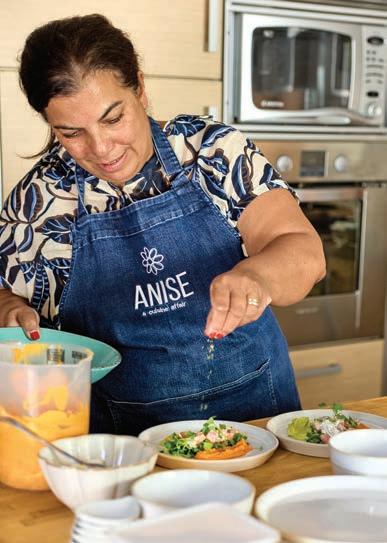
Ana Maria do Carmo Costa is at the helm of the company, Anise – A Cuisine Affair and her motto is “Bringing Beautiful Food into Algarve Homes.” Ana tells me there’s something magical about entertaining at home in the Algarve with its long evenings, warm air, and tables filled with friends and family. “At Anise, that’s exactly the experience I love to create; relaxed, memorable dining in the comfort of your own space, whether it’s a holiday villa, a private home, or a special celebration,” she says.
The beauty here is that Ana and her team will take care of everything so that you don’t have to lift a finger and can become a guest in your own home. Anise is, crucially, very flexible, and offers everything from elegant plated dinners to colourful buffets and family-style feasts perfect for holiday homes and group gatherings.
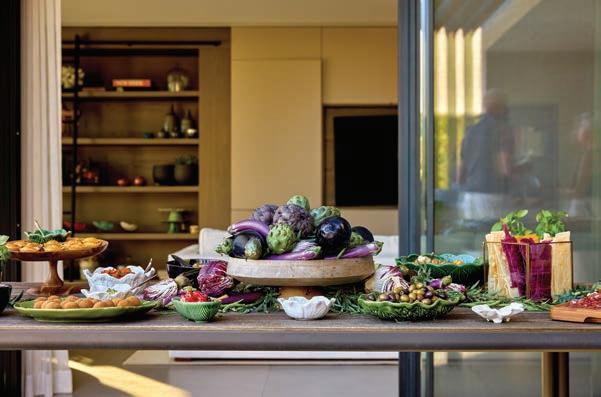
Ana handles the menu planning, shopping, cooking, serving, and she prides herself on leaving the kitchen spotless afterwards. Many of her clients are just visiting the Algarve, and she wants to make sure that they sample the full culinary experience with dishes that are fresh, vibrant, and full of flavour, with the option of including her Goan heritage dishes for something a little different and memorable, if that's what is wanted.
Because every event is different, there is no one set cost and pricing is, helpfully, bespoke. It depends on the number of guests, the style of menu, and the level of service required. A relaxed sharing-style dinner in a holiday villa will look very different to a multi-course private dining experience.
There’s also the chance for clients to get involved, should they want to immerse themselves in the experience. Ana says that while some guests love nothing more than to sit back with a glass of wine and watch the magic happen, others get stuck in, asking questions, learning a few tips, or even helping out a little in the kitchen. One of her most memorable occasions was a villa celebration where a family had gathered from different parts of the world and it turned into “one of those perfect Algarve evenings –great food, laughter, music, and stories being shared late into the night.”
Ana’s biggest advice is to keep things simple and enjoyable. Choose dishes that suit the space and the occasion rather than overcomplicating the menu. If you’re in a holiday villa, think about the flow of the evening, whether it’s indoor or outdoor dining, timing, and how you want your guests to feel: but, most importantly, to let go and enjoy it. That way, you get to be the host without the stress and truly be part of your own celebration.
Anise / T: 919 817 212 / E: ana@anise.pt/ W: anise.pt
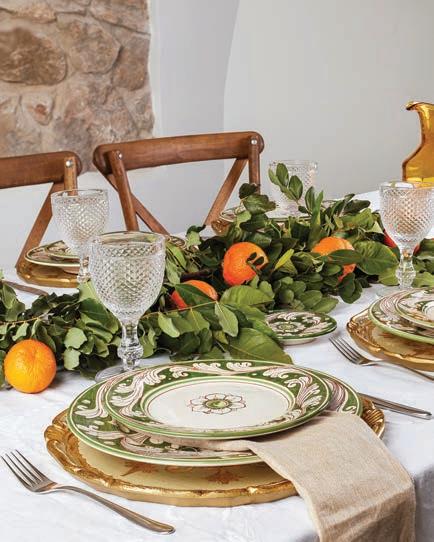

BOTULINUM TOXIN (BOTOX) HAS RECENTLY BEEN THE SUBJECT OF CRITICISM, MAINLY DUE TO ITS APPLICATION BY UNQUALIFIED PROFESSIONALS USING PRODUCTS OF QUESTIONABLE ORIGIN AND INAPPROPRIATE TECHNIQUES. IN REALITY, IT IS A MEDICAL PROCEDURE THAT REQUIRES PROPER QUALIFICATION, PRECISION, AND SAFETY. DR MELISSA AMARANTE SETS THE RECORD STRAIGHT
Words: JO Ã O EDUARDO


AS A HIGHLY experienced dentist, Dr Melissa was one of the professionals qualified to work with specialist treatments, including Botulinum Toxin, which is used in dentistry for both therapeutic and cosmetic purposes, specifically targeting facial muscles for issues like TMJ disorders, teeth grinding (bruxism), and severe facial pain. “Working alongside my mother in Brazil in the field of aesthetic medicine sparked my interest in expanding the use of Botox beyond dentistry to other areas of the face,” she says. “In Portugal, only medical doctors and dentists are authorised to work with Botox. There are no negative aspects when the procedure is correctly performed. Solid medical training with specialized expertise in aesthetic medicine is what makes the difference.”
Based in Ferreiras, Albufeira, Melissa also has partnerships in Almancil, Loulé, and Portimão, and deals with clients from across the Algarve. Her patients are typically aged between 30 and 70 years old, and approximately 15% are men.
What are they asking for, what is their ‘dream’ result? “My clients always say they simply want to look better and feel more confident about their personal sense
of style,” says Melissa. “Botox really achieves that. Its application in the field of aesthetics began in the 1990s, so its success story spans decades. The induced muscle relaxation gives the face a lighter and more harmonious expression, providing a rejuvenating effect.”
The procedure takes approximately ten minutes. That’s all. The areas most treated are the forehead, glabella (the area between the eyebrows which are the first to show frown lines), the jawline, and around the eyes. Botox is also highly efficient when it is used in the armpits to counteract excessive sweating. Other parts of the body can also be treated – lines on the neck are often targeted.
It is vital not only to discuss your desired results with your aesthetic practitioner, but also to consider their views. Results vary from person to person, regardless of age, so a proper assessment is essential. For example, excessive skin laxity may be a contraindication and affect recommendations. “A clinical and physical examination to arrive at the best possible plan and the most appropriate treatment is key,” says Melissa.
The results of any Botox procedure are clearly evident 20 to 30 days after treatment (any minor bruising that might occur as needles are used usually disappears within five days), and the effects generally last three to five months, depending on the type of toxin used. Melissa includes a full follow-up assessment, usually 21 to 30 days after a treatment, and carries out any necessary improvements or corrections, always working with products from accredited laboratories with proven scientific studies.
While Botox promotes muscle relaxation and is used for dynamic wrinkles, fillers are used to restore structure and volume in areas where static wrinkles appear.
“Fillers have been used since the late 1990s,” she explains. “Previously, permanent materials were used; however, with advances in the pharmaceutical industry, products such as hyaluronic acid, which is a biocompatible material, are now available. These are more natural, absorbed by the body, and therefore reversible. Fillers have specific indications and different formulations depending on the area being treated. For example, a filler used for the lips differs from one used to add volume to areas such as the cheeks, chin, jawline, or nose.”
Aesthetic medicine is constantly evolving. We must be mindful of trends, and today there is a greater focus on more natural and harmonious results. There is also growth in regenerative aesthetic medicine, which represents the future of anti-ageing.
But are procedures such as Botox and fillers the best option today when social media platforms are flooded with creams making big claims for rejuvenating the skin, filling out wrinkles and smoothing crepey areas? There appear to be dozens on the market, all promising to work wonders, some priced with a budget tag, others offering deals like three for the price of two, still more with huge discounts on instant purchases. Do they work? Are the reviews genuine?
“There are no miracles in a jar,” Melissa says firmly. “Creams and serums can deliver excellent results but they do not replace effective toxin or filler treatments – they are simply complementary.”
DR MELISSA AMARANTE
Alcar do Algarve Medical Centre, Ferreiras WhatsApp: 963 400 110 / I: dramelissaamarante

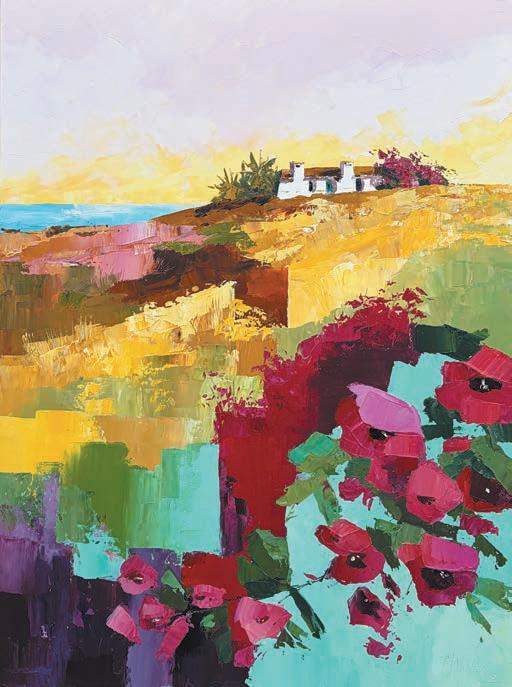
The studio-gallery of painter Corine Thinon in Lagos is open to visitors, offering an authentic and welcoming space where the artist works daily. Guests can experience her creative process up close, watching her bring each piece to life.
Her paintings, created in oil and acrylic, move between realistic, abstract and impressionistic styles. Visitors are also invited to enjoy personal artistic guidance, helping them find the perfect pieces to complement their homes and individual style, with the option of works tailored to their preferences.
Rua Marreiros Netto 15, Lagos Opens 10:30 am - 7 pm (closed Sunday) @art_gallery_corine_thinon ateliercorine.thinon@gmail.com web: corinethinon.com
TOGETHER IN LIFE AND IN THEIR PASSION FOR CREATING SPECIAL FRAGRANCES, CÉLIA AND AMÉRICO PINHEIRO
DESIGNED L’UNPERFECT, A BRAND THAT EMBODIES EVERYTHING THEY LOVE AND BELIEVE IN: ORIGINALITY, AUTHENTICITY AND UNIQUE SCENTS
Words: SANDRA GATO
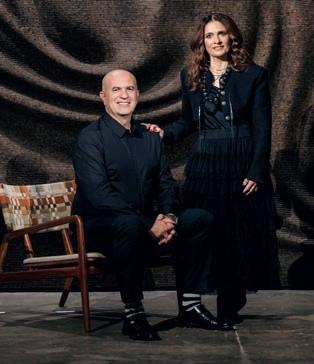
SOpposite page: Célia and Américo Pinheiro have shared past experiences in the industry, having worked with many of the top name international brands. That, combined with their passion to create something new, has resulted in L’Unperfect
OMETIMES you meet a couple like Célia and Américo and, even before you know that they have created a beautiful brand together, you feel the harmony, the good energy, the mutual admiration. And I truly believe those feelings are the best unwritten intentions to start any kind of business. Shared dreams make a difference.
In the case of this Portuguese duo, beauty was always at the core. They met through the highend cosmetic industry so it comes as no surprise that they shared a mutual ambition: to create their own perfume brand.
As the loving couple that they are, they decided to do it together. A kind of life project made of wonderful scents and astonishing packaging. And, of course, the right number of the best contacts in the field.
Even with all that, nothing becomes reality if you lack the two most important ingredients: effort and good taste. Both seasoned with an essential spice – confidence, needed in all areas when the final goal is to build a brand from scratch. I would say it is even more relevant when it comes to something as special – and expensive – as niche fragrances.
For too long, we were made to believe that Portugal is not a country where good perfumes are created. So, the brave souls, such as Célia and Américo, who insist on following their dream, face a double challenge: make it good and make people believe that it is good! And that takes confidence and courage.
Fortunately, there is a growing number of brands now within the beauty industry, that are totally designed in Portugal (even if some parts of
the process still have to happen outside the national borders). The recent international recognition of all Portuguese heritage and savoirfaire helped a lot, for sure.
All is good. Even when perfection is not in the cards. Uniqueness is. Authenticity is. Célia and Américo are L’Unperfect, and they sat down to answer our questions about realising their dream business.
Can you please give us a brief summary of your professional and personal journey (as a couple, together in business) and how L’Unperfect came together as a concept and then to life.
Our paths came together in luxury cosmetics, at Guerlain –Célia by vocation, Américo by chance. From there, we worked with many brands throughout the years – Guerlain, Loewe, Givenchy, Fendi, Pucci, Acqua di Parma – and we embarked in many incredible experiences around the world. However, this shared project had always been on the back of our minds. Launching our own niche perfume brand was simply something that we always wanted to do. And we knew we would.
What exactly is L’Unperfect? What does the name stand for?
L’Unperfect is born from the two of us, and from our interest in everything that is real, imperfect and that most times happens by chance – all those aspects are related to the creative process and to authenticity. Hence the name L’Unperfect, a combination of L’Un (the one, individual, in French) and the word imperfect. Imperfection is what makes us unique.
When did you start designing the brand and how did you bring it to life?
The brand had always been there, in our heads, in some kind of form. The first sketches came during COVID, but turning it into reality was a whole process… Above all, we made a point of choosing people from creative fields – perfumery, design, writing, branding – who shared this imperfect vision of reality that we have and that, together with their huge talent, helped us bring our perfumes to life.
What has been the biggest challenge so far?
In a startup, everything is a challenge… every small detail was done by us. The life of an entrepreneur is incredibly complex – suppliers, warehousing, intellectual property, certifications, clients. But we wouldn’t have any other way!
How did you turn a vision into reality?
Each perfume has a real story written by us, based on experiences we went through. All the creative minds involved in the whole process have access to the same story, and we ensure that the original idea is always reflected in the final result.
Can you please introduce them – your scents – to us?
Sure! Never End is a story about the vastness of Africa, of nature at the centre of everything and how life can be subjective.
Handsome Green tells the story of a path along watermills in the wintertime and the pure bliss of returning home. Midsummer Dream recalls a happy childhood lived in the warmth of Alentejo. Charming Lover is our own story, of course.
We now have three new scents almost ready to launch: Pure Vagabonde is an icy aquatic aroma, inspired by the immense nature surrounding Lake Baikal (in Russia); Tango au Sud is, as the name implies, an intense dance
A huge amount of thinking and planning has gone into the brand packaging. What has emerged is distinct, and it is also very different to that of traditional labels
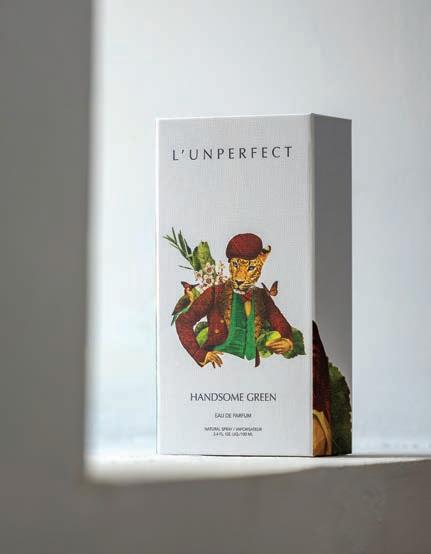
in the south region. And La Rose du Chokwe is a very spiritual perfume inspired by a real story, somewhere between death and kindness.
There is an obvious attention to packaging. How did you reach this final version?
This packaging went through countless versions! Above all, we wanted it to reflect each of the stories we are telling, to clearly express the creative universe we inhabit, and somehow appeal to the senses. We worked extensively on the tactile sensation of the boxes and on details as unlikely as the exact sound of the magnet that closes the box.
Where do you currently sell? Are you planning to expand?
At the moment, we mainly sell through our website whch is lunperfect.com We do have several requests for physical points of sale. We are considering that option, but we want to have all seven perfumes ready to launch before doing so.
Who is your target audience (in Portugal and abroad)?
Our audience is mostly international, especially from central and northern Europe. In Portugal, our customers are mainly foreigners –the Portuguese niche perfume market is still very small.
What are your short and long term dreams for the brand?
Growth is, of course, a goal – not in the sense of building a huge business, but in reaching more people who can be touched by what we do. It will be a journey that takes time: being small is currently a luxury we have… we’ll see what the future brings us.
What is your opinion about 'made in Portugal' perfumery? Are your fragrances fully produced in the country?
Portugal does not have a strong tradition in perfumery. Everything we do is created and made in Portugal, except for the production of essential oils.
Are you planning any other products under the same brand or thinking about collaborations with other brands?
We have our three new perfumes ready to launch, and with them we are adding another creative dimension: a collaboration with the Portuguese fashion designer Constança Entrudo, who made three scarves for this new collection.
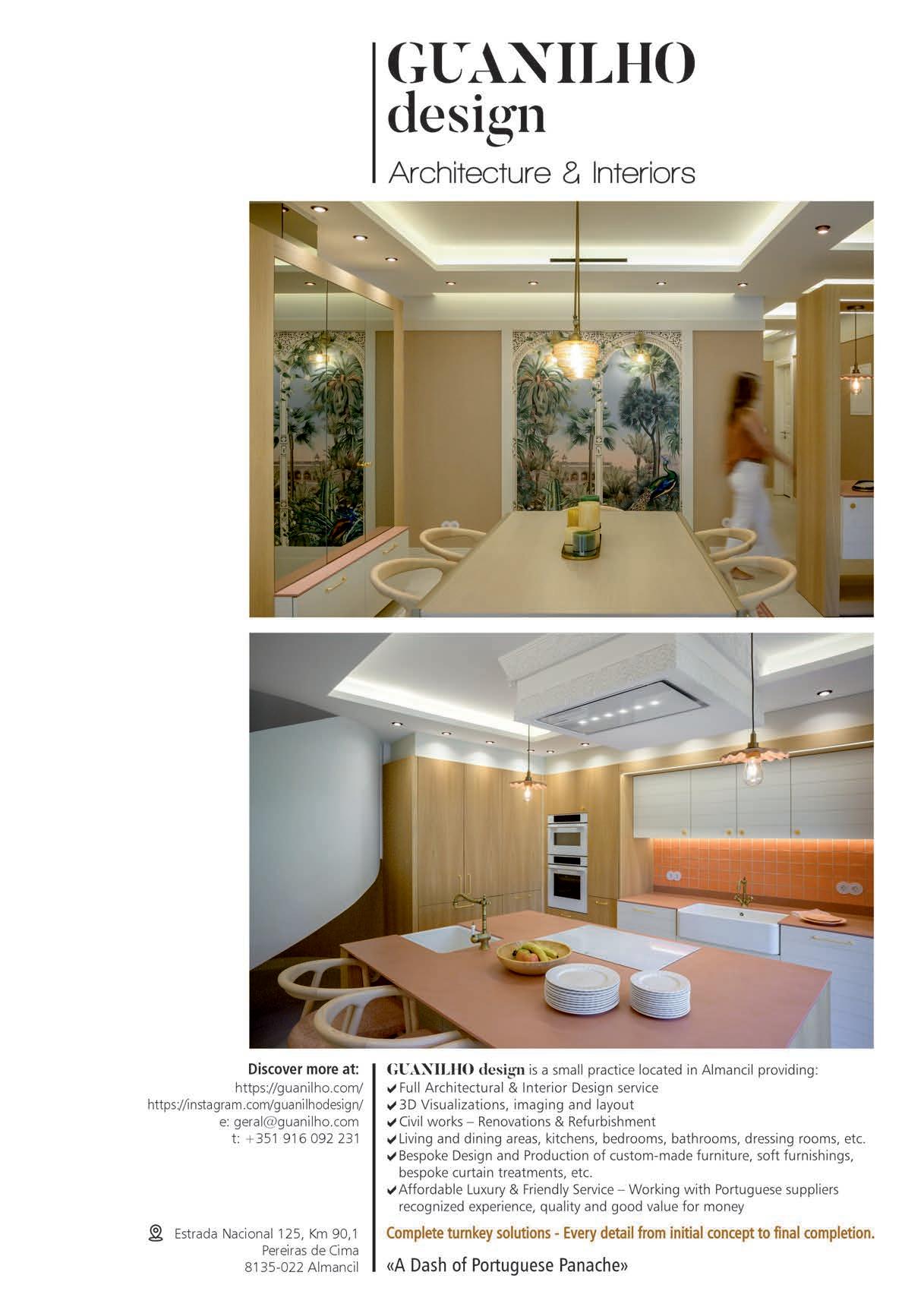
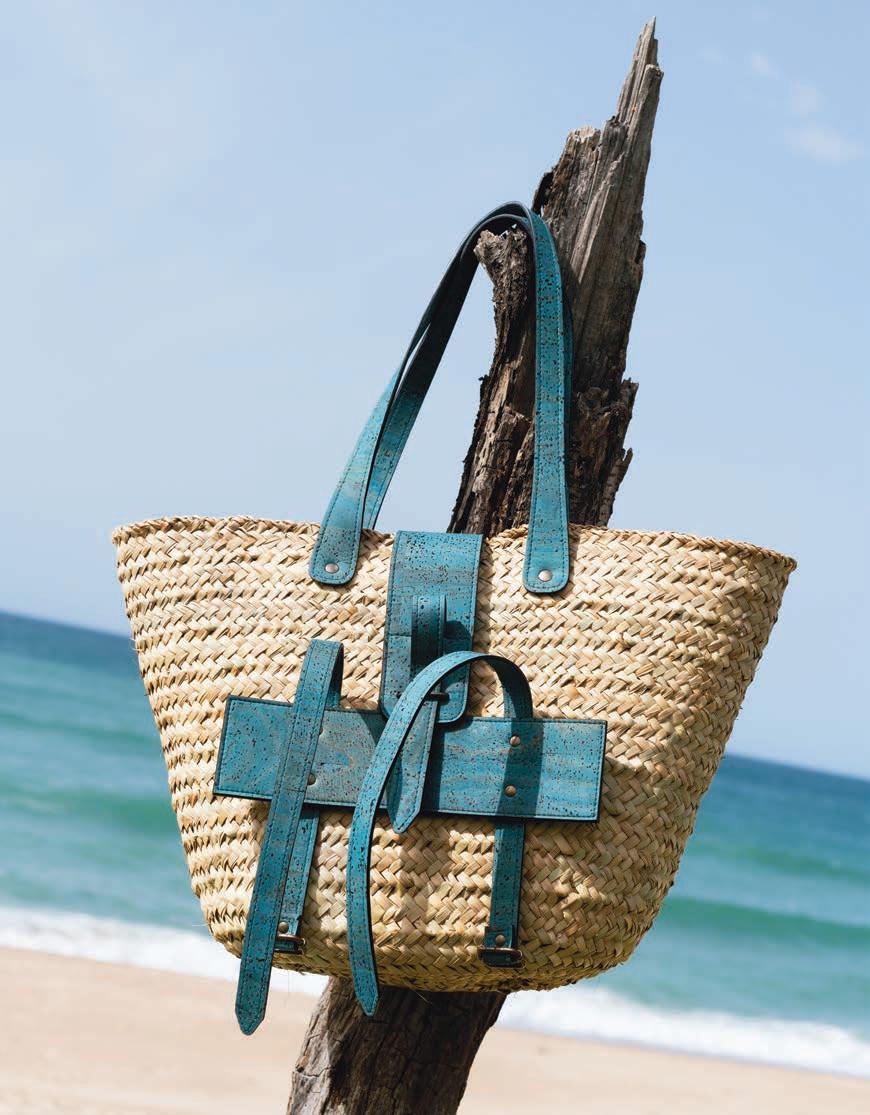
Designed to carry more than essentials, the COMPORTA edition beach bag carries all you need. Exceptional craftsmanship, intelligent details and a design that moves effortlessly from beach to city.
Handcrafted in Portugal from Portuguese reed grass and refined vegan cork leather. Produced in limited numbers.

Available online and at selected stores. HTTPS://THE-B.AG

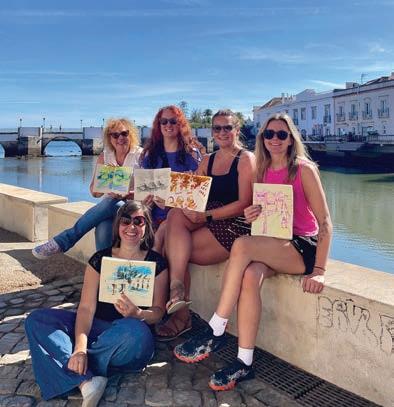
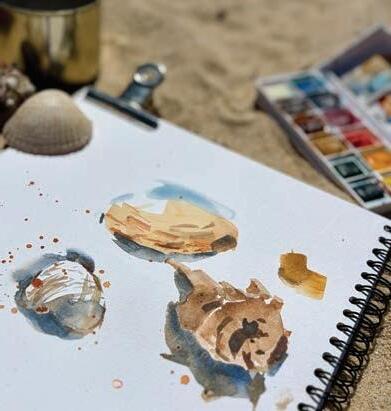
to watercolour became truly hooked and promised to continue practising.
10. Do people come back for more? Yes! And many recommend friends. Wordof-mouth is everything.
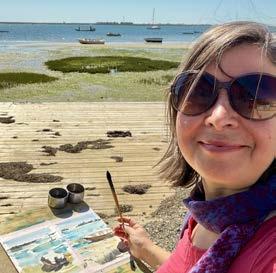
OF FINE ARTS IN WARSAW AND EARNED HER MASTER’S DEGREE THERE. BASED TODAY IN FARO, SHE IS THE MASTERMIND BEHIND LIGHTHOUSE ARTCOURSES, WHICH SHE LAUNCHED IN EARLY 2025
1. When did you arrive in Portugal, and what brought you here? I’d been visiting Portugal for seven years, and Faro has been my home for over a year. It was a conscious, step-by-step choice – not random, not because of circumstances. As a painter, light is everything, and the Algarve has light like nowhere else. The landscapes, culture, and spirit make it a place where my art can truly thrive.
2. What is the concept behind your courses and classes? The full name is Lighthouse Artcourses – Art Adventure Algarve. A bit long, but it says exactly what it is! This isn’t about traditional classes. My aim is to share, guide, and spark curiosity. I paint mainly in oils and acrylics, but I teach watercolour – it’s my medium of choice for plein-air: direct, fluid, and perfectly suited to working outdoors.
3. How do you select locations, and do you have a favourite? For the Faro Sketchwalks, I spent January and February 2025 painting daily in Cidade Velha, creating the 30 Days of Faro series of small acrylic studies of light, shadow, and shape. My favourite spot so far? It is the charming Cacela Velha in the eastern Algarve – an art class there will happen!
4. What is involved in each session? Fridays on Ria Formosa: Ferry, islands, light for quick watercolour studies in the open air. Watercolour multi-day sessions: to
build and refine technique. See page 98 for our May event. Hike and paint mornings: a collaboration with a Portuguese guide, discovering wild orchids in the Barrocal. Faro Sketchwalks: to discover Faro through pencil, observation, and small stories.
5. Who is your target audience... what nationalities are you attracting? They are mostly Algarve residents with a mix of locals (Portuguese) and internationals (English, Germans, Dutch, Americans). Tourists mainly join the Faro Sketchwalks.
6. How do you group different experience levels? Groups are small, and levels are never a big issue. Most participants have some drawing or painting experience – not always watercolour. My goal is to meet everyone where they are and help them grow.
7. How does each event work? I always start with materials. Then we move into observation – quick sketches, tonal studies, or value exercises. I follow a ‘mastery within serendipity’ approach – know your materials, then let creativity flow.
8. Is guidance provided throughout? Absolutely. My aim is that every participant leaves inspired, encouraged, and with a clear sense of progress.
9. Have complete beginners discovered they have talent? Not absolute beginners, but a few newcomers
11. What is provided? For short sessions, all materials are included. For multiday courses: I share a recommended list and encourage participants to build their own kit afterwards.
12. What if you spot real talent?
I always stress daily practice. Talent is an affinity – growth comes from commitment.
13. What happens at the end of a session? Everyone takes their work home, but first we do a group review. It’s a moment to reflect, see progress and learn from each step taken.
14. Does the summer heat affect sessions? Yes – we pause in August to recharge and come back inspired.
15. Are you exploring new locations? Exploration is part of the process. The Algarve remains the focus, and the next step is to create a dedicated studio space – also my own atelier – to complement the outdoor work.
16. How many people do you take in one group? Up to eight for short sessions, ten to 12 for multi-day events with me hosting and another artist teaching.
17. What do sessions cost? Multi-day courses: €600–€900; day sessions: €60–€90; half-days: around €50.
18. What is your future vision? To create a place where like-minded people meet through art, inviting artists to teach, to create, to exchange – and at the same time staying deeply rooted in this region.
19. Where can we see your own work? Visit grazynaostrowska.com
20. Best way to contact you? T: 910 410 268
E: info@lighthouse-artcourses.com
W: lighthouse-artcourses.com
Insta: @lighthouseartcourses
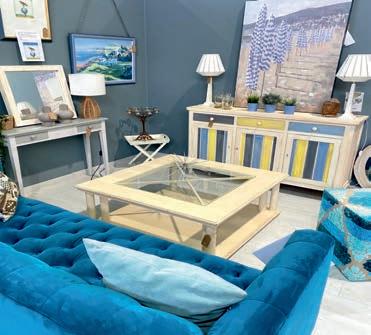

Glistening
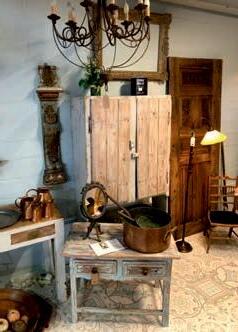
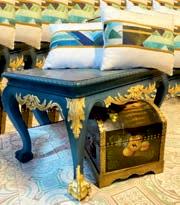
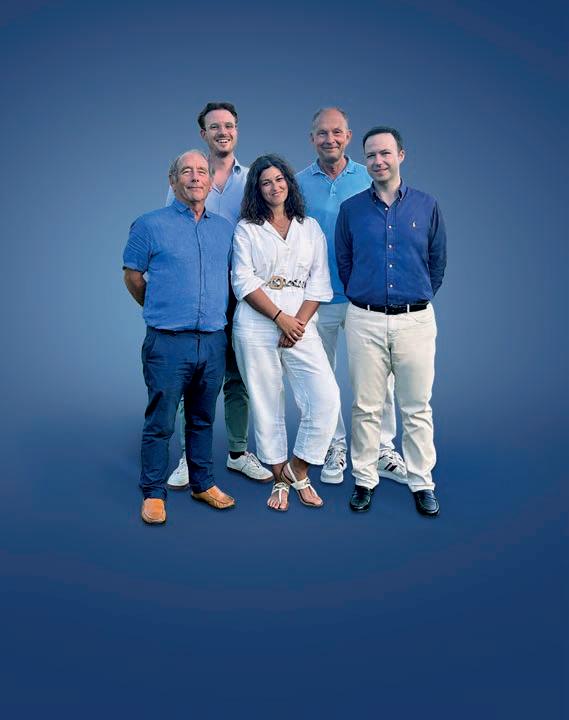

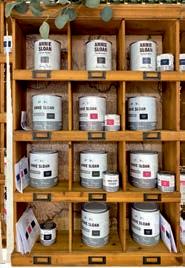
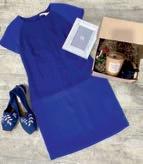

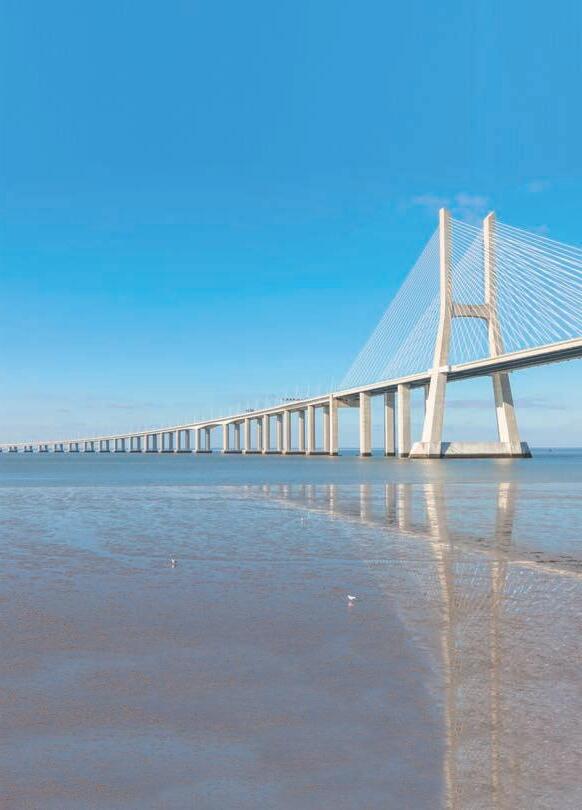
THIS MONTH, BOOKS THAT THRILL, ENCHANT, INSPIRE, MAKE YOU SMILE AND WANTING MORE. AND OUR REVIEWERS – SOME KEEN TO BECOME REGULARS – CAN ’ T WAIT TO IMPRESS YOU WITH THEIR LATEST CHOICES

By Ben Macintyre
Published by Bloomsbury Publishing
Agent Zigzag is one of the most extraordinary true spy stories of the Second World War. The book tells the remarkable life of Eddie Chapman, a charming criminal who became one of Britain’s most daring double agents. Parachuted into England by the Germans in 1942 with orders to sabotage a British aircraft factory, Chapman immediately surrendered to MI5 and offered his services as a double agent, beginning a dangerous game of deception that would last the rest of the war.
Macintyre recounts Chapman’s story with the pace and excitement of a thriller, yet the events are entirely true. Drawing on declassified intelligence files, diaries, and personal accounts, the author reconstructs the complicated world of wartime espionage, where loyalty, betrayal and sheer nerve constantly overlap.
What makes the book especially compelling is Chapman himself. He is neither a traditional hero nor a simple villain. A safe-cracker, womaniser and gambler, he was also capable of extraordinary courage and cunning. The question running throughout the narrative is simple but fascinating: whose side was he really on? Even his own handlers sometimes struggled to decide.

Macintyre writes with wit, clarity and a keen eye for human detail, turning archival history into a gripping narrative that reads like a classic spy novel. The result is a book that is both highly informative and entertaining.
Agent Zigzag is a brilliant piece of narrative history, revealing the strange and often unbelievable realities of wartime espionage – and the astonishing life of a man who managed to fool both the Nazis and the British at the same time.

By Gyles Brandreth
Published by St Martin's Press “Pooh is all about happiness. Pooh Corner is a happy place, it’s as simple as that. There’s so much violence in the world. There is no violence in the Hundred Acre Wood. In the world of Pooh, you will find simple friendships.”
It is perhaps the simplest explanation for why Winnie-the-Pooh has endured for nearly a century. First published in 1926 by A.A. Milne, the gentle adventures of a honeyloving bear and his friends have become a treasured work of children’s literature, beloved across generations.
In his affectionate exploration of Pooh’s legacy, Gyles Brandreth revisits the origins of the Hundred Acre Wood and the family life that inspired it. The stories were written for Milne’s young son, Christopher Robin Milne, whose nursery toys became the unforgettable characters readers know today. Brandreth writes with warmth and humour, bringing the quiet magic behind the stories gently to life.
Yet Milne’s world stretched far beyond children’s books. Educated at Westminster School and later at Trinity College, Cambridge, he moved within a vibrant literary society that included figures such as J.M. Barrie, creator of Peter Pan, and the visionary novelist H.G. Wells. Within this creative circle, Milne developed his career as a playwright, journalist and essayist, even though the gentle tales written for his son would ultimately eclipse his literary work.

Brandreth also recounts the charming origin of Pooh’s name, taken from a Canadian bear called Winnipeg who lived at the London Zoo. Today the original toys themselves reside in the New York Public Library, reminding readers that sometimes the simplest stories endure forever.
A century on, Pooh’s gentle world still offers readers a comforting refuge.

By Ryan J. Stradal
Published by Viking Press
“Some books should be tasted; some devoured, but only a few should be chewed and digested thoroughly.” So said Francis Bacon, and Kitchens of the Great Midwest is definitely one of the latter, not only because food is a central theme, but also because it’s wise and funny with well-drawn, or shall we say meaty characters.
It’s about Eva Thorvald, the daughter of a chef, whom she sadly never gets to know due to a tragic event when she’s was still a baby. But even if her father doesn’t live to feed Eva, the long list of dishes he was planning to cook for her, his passion and talent are in her bones and, against the odds, food becomes central to her life, too.

self-inquiry – her willingness to examine what led her to deny her own feelings and instincts, and what she needed to face in herself to live authentically and fully express herself.
This memoir doesn’t follow a traditional arc. Instead, Smith casts her story in vignettes drawn from everyday life. We glimpse intimate snapshots of home before and after divorce. She explores her inner landscape with striking honesty, sharing the conversations that sustain her through pain – conversations familiar to any woman who has made herself small to keep the peace, or because a patriarchal culture demanded it. In her story, we recognize ourselves.
Ultimately, anchored by a fierce love for her children and guided by a wise therapist, Smith comes to love herself enough to rebuild her life. ''''&Perhaps the title should read You Could Make This Life Beautiful. And by the book’s end, that is exactly what she does.


Playing out in kitchens, farmers’ markets, restaurants and around the family table, the novel pieces together Eva’s story from the different perspectives of people whose lives intertwine with hers. These include her immigrant father, who reminisces about his childhood making the Norwegian speciality Lutefisk, the boyfriends who try to win her heart through food, and a gorgeous culinary star at a supper club, who fears being toppled by Eva. So we’re drawn into their personal dramas too, adding to the novel’s complexity (fans of the Olive Kitteridge novels by Elizabeth Strout will relate to this storytelling device).
On a universal level, the novel explores how one’s experiences and relationships add up to who we are, making it a meaningful read too, and my favourite of the past year.
ALICIA M RODRIGUEZ
YOU COULD MAKE THIS PLACE BEAUTIFUL: A MEMOIR
By Maggie Smith Published by Atria/One Signal
In You Could Make This Place Beautiful, Maggie Smith confronts the quiet devastation of a comfortable life undone by betrayal. Her heartbreak becomes an awakening. The pieces of her world –family, children, friendships, home, work – rearrange themselves into a new portrait, one that had long been buried beneath the weight of pleasing, of gender roles, and of personal insecurity.
What struck me most was her courageous

By Richard Osman
Published by Penguin
Tucked away in the leafy surroundings of Coopers Chase, an upmarket retirement village in the English countryside, four unlikely detectives are about to turn your expectations of a crime novel completely upside down.
Richard Osman’s debut fiction is just delightful. The Thursday Murder Club –Elizabeth, Joyce, Ibrahim and Ron – meet weekly to pore over unsolved cold cases, until a very real and very local murder lands on their doorstep. What follows is an entertaining adventure through intrigue, suspicion and sharp wit, all served with a generous amount of warmth.
What makes this novel so compelling is Osman’s gift for character. Each member of the club is rendered with depth and tenderness, their histories, flaws, loves and losses slowly revealed in ways that make you fall completely for all of them. These are not caricatures of old age; they are vivid, complex, fiercely intelligent people who simply happen to be pensioners.

The pace is perfectly judged, unhurried yet never dull, and Osman’s humour is woven in so naturally that you’ll find yourself laughing out loud one moment and quietly moved the next.
For expat readers of all backgrounds, there is something universally nostalgic about Osman’s warm and very English world, a place that feels like home, even if it isn’t yours. This book is a beautifully crafted cosy mystery. It is an unmissable treat.
LOCATED IN THE COUNTRYSIDE CLOSE TO THE ALGARVE VILLAGE OF PADERNE, GALERIA
C Ô RTE-REAL IS FILLED WITH ART AND BEAUTIFUL CERAMICS, CREATED BY MANY INTERNATIONAL ARTISTS. THE LATEST WORKS ARE BY ABSTRACT PAINTER WILL SWAYNE
Words: CAROLYN KAIN

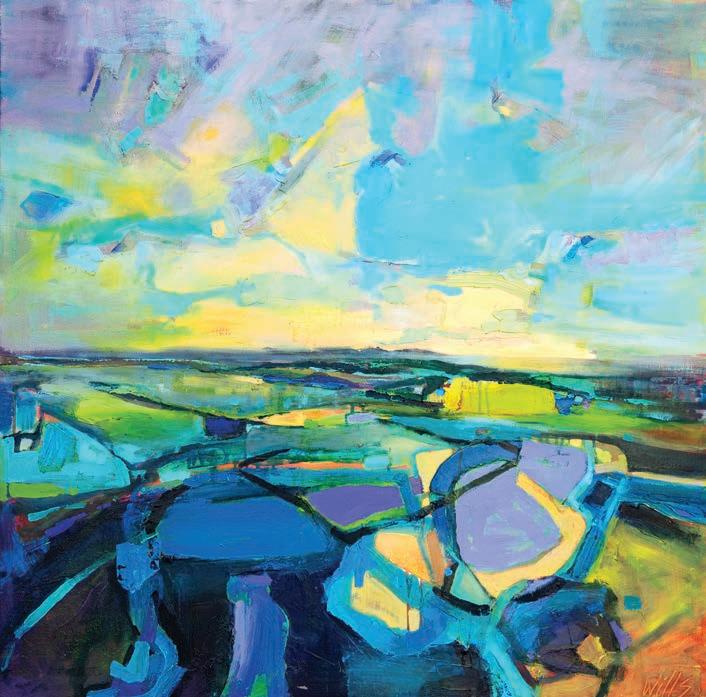
MOVING FROM Devon to the South of France, Will Swayne is currently focused on painting the lush agricultural fields of Portugal’s heartland in the Ribatejo.
Like a jigsaw made of interconnecting shapes and colours, the rich alluvial soils of the Ribatejo grow wheat, millet, rice, grapevines and animal pasture. It is fertile cattle country where the finest animals are bred.
Surrounded by a patchwork of distinct and different fields, Will explains the artistic challenge. “It’s looking for that final piece of the puzzle, the missing bit, the little gem of a touch that makes each painting special.”
Having lived and worked as an artist in many delightful places, Will visually dissects the local landscape into shapes. Using an inimitable style, he has the ability to create perspective from what looks like separate pieces of a puzzle.
Cartographer John Spilsbery first struck upon the idea of cutting maps into puzzle shapes in 1760. Used as educational tools for teaching geography, he named them simply Dissected Maps. A hundred years later, when the tool known as the jigsaw was invented, maps and assorted other pictures pasted onto wood became the jigsaws that remain popular today.
Although Will’s paintings replicate the landscape, they do not replicate the colours. Instead they explode in combinations of brightly-coloured oils that he layers coat upon coat so that they are textured and three-dimensional.
On close inspection, there is great attention to detail in the array of brush strokes and knife marks that control the play of light across his works. He likes to introduce other hidden shapes and symbols, and those familiar with his work will recognise the games he conjures up; there is always more to his pictures than at first meets the eye.
The fields of the Ribatejo are suitable territory for Will and his style of painting, but instead of choosing a rural setting as a place to live, he and his French wife, the artist Agnes Lacombe, have a home and studio in the Knights Templar city of Tomar. It is a place of great historical significance containing the Castle and Convent of Christ, the most impressive Templar buildings anywhere in Portugal. There is a curious coincidence because, like Will, the Knights were well known for their repertoire of secret symbols and sometimes insignia fashioned into the architecture of their buildings. Some of their better-known motifs include the Red Cross of Martyrdom, the Chalice symbolising the Holy Grail, the Sword of Justice and the Cross Pattée of Honour. Similar to Will’s paintings, people are attracted to search for them amongst the Templar buildings.
The River Nabão splits Tomar into two sections and from there Will can easily reach the Seven Hills National Forest, another unspoiled peaceful sanctuary. He agrees that in the Ribatejo he and his wife have found many places of perfection.
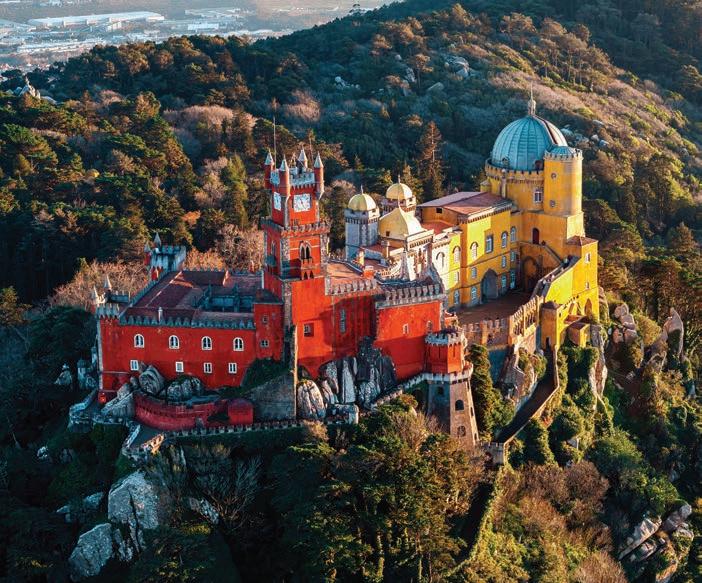
BY MAY, Sintra is no longer in the grip of Atlantic chill, but it isn’t yet in the heat-haze of summer. The crowds are present but manageable, especially if you start early or visit the major sights on a weekday. That means you can wander through the cypress-lined courtyards of the National Palace of Sintra, get lost in the winding paths of Quinta da Regaleira, and still find a quiet bench somewhere in the Parque da Pena without feeling like you’re in a museum queue.
The days are long enough to pack in a palace in the morning, a vineyard in the afternoon, and a beach at the end – all without feeling rushed. It is exactly the kind of month Sintra deserves: lush, a little misty, and designed to be explored slowly.
Your stay in Sintra should feel like part of the story, and Valverde Sintra Palácio de Seteais is the one that delivers that. Perched in the hills above the town, the hotel is a former 18th-century ducal palace with a sense of occasion that feels wholly in tune with Sintra’s romantic identity. The rooms and public spaces are elegant and quietly opulent, the service is polished,
Left: Pena Palace. Opposite page, top row, left to right: the Castle of the Moors; luxury all the way, at Valverde Sintra Palácio de Seteais. Middle row: the amazing swan ceiling in the National Palace of Sintra; wall detail at the Palace; the Palace fountain. Bottom row: Regaleira Palace; restaurant Moinho Dom Quixote
and the terrace and gardens give you those slow, long views that make this part of the world so alluring.
If you prefer something a little more contemporary and nature-focused, Charm Nature makes a good alternative: a softer, greener base with a quieter, more residential feel, ideal if you want to be close to walking paths and the countryside while still within easy reach of the historic centre. Together, they capture the two sides of Sintra that travellers most often want: one stately and historic, the other gentler and more natural.
gardens and a perfect lunch
Begin with the heart of Sintra: the old town and immediate surroundings. Spend the morning at Quinta da Regaleira, where the gardens wind down into tunnels, wells and hidden chapels, and the light filters through trees in a way that feels borrowed from a dream. If you have time and don’t want to overload your trip, continue to the Palácio Nacional de Sintra or the Castelo dos Mouros, both of which slot nicely into a single day if you keep your pace relaxed.
For lunch, few spots feel more in step with the landscape than Moinho Dom Quixote. Tucked into the hills, it balances medieval charm and panoramic views into something that feels like a destination in its own right. You can linger over simple, well-made food, pause for coffee on the terrace, and let the light change over the valley without feeling the need to rush back to the palace circuit.
THE LAST OF THE SPRING SOFTNESS LINGERS IN THE AIR, THE GARDENS ARE AT THEIR MOST ROMANTIC, AND THE LIGHT IS GENTLE ENOUGH TO FLATTER EVERY MIST - SHROUDED HILLTOP AND PASTEL - W ASHED PALACE FAÇADE. IT IS THE PERFECT MOMENT FOR A SLOW, LAYERED ESCAPE THAT SLIDES EASILY BETWEEN PALACES, COASTLINE AND COUNTRYSIDE, WITHOUT THE INTENSITY OF PEAK - SEASON CROWDS
Words: PIPPA O ’ KEEFE, PIPPA ROSE TRAVEL
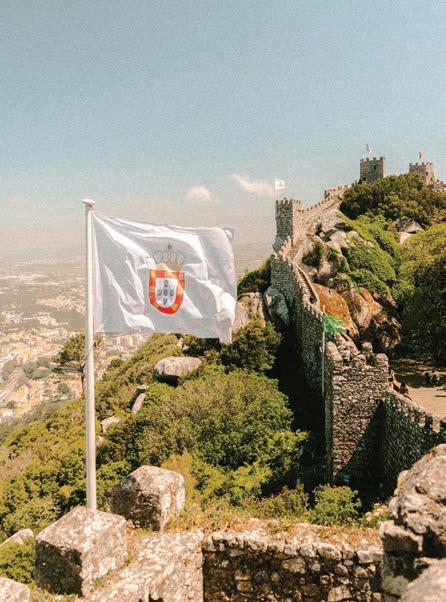
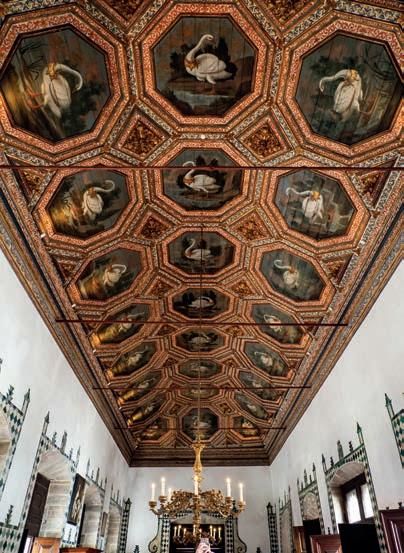
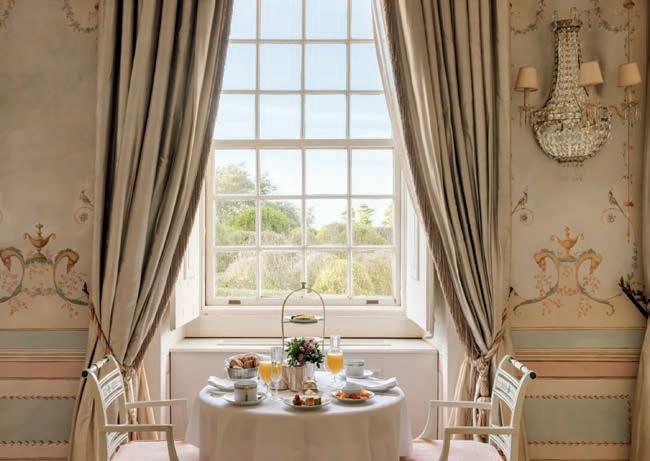
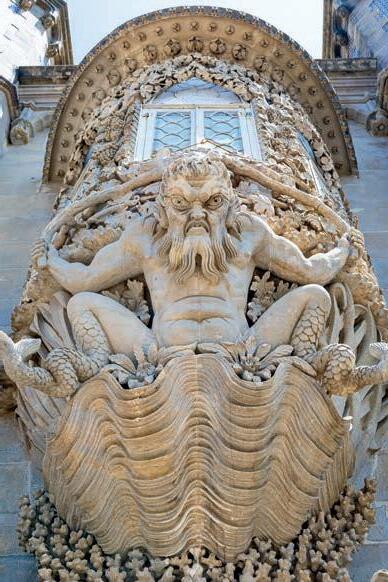
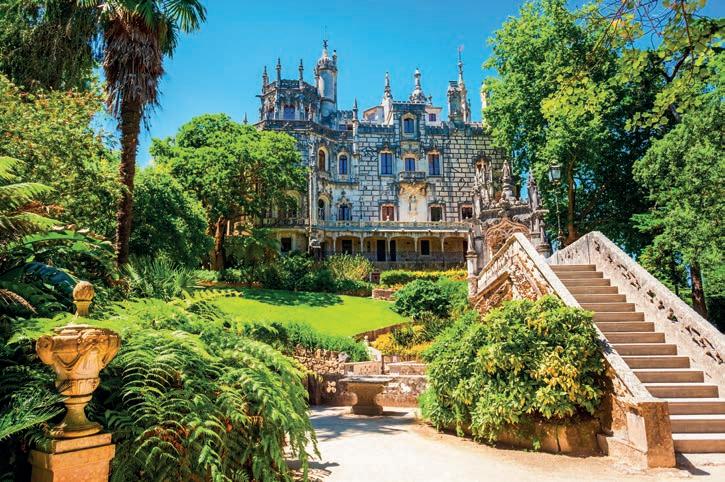
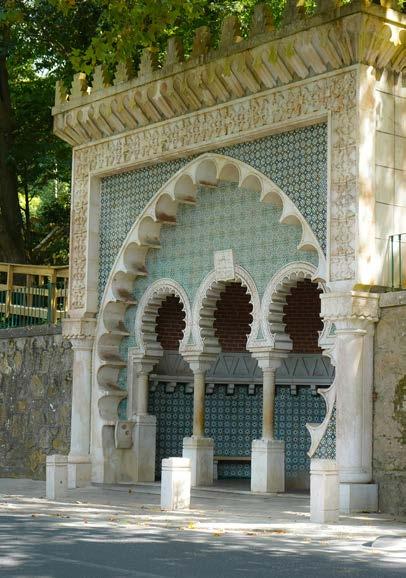
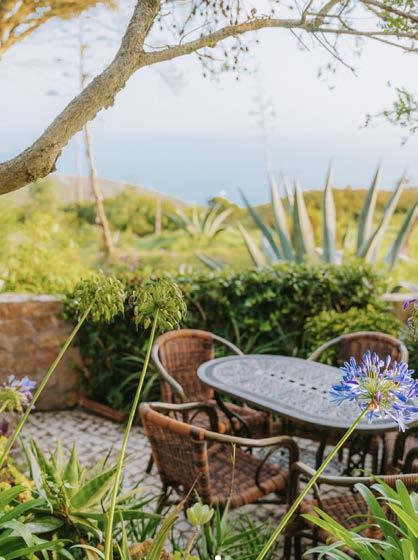
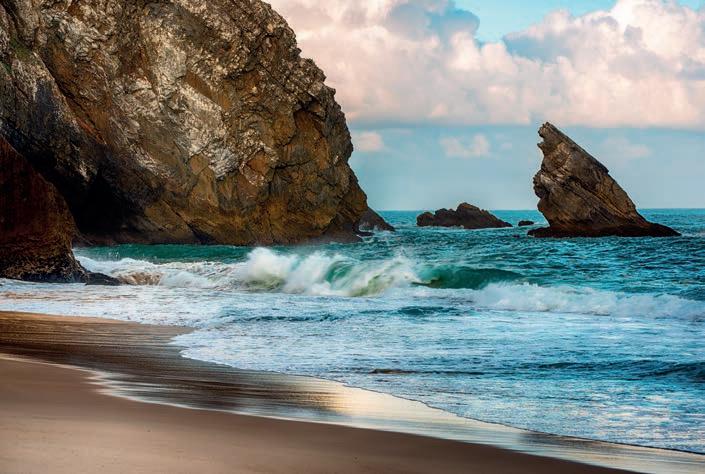
One of the most beautiful ways to spend a stretch of your 48 hours is to slip out of Sintra’s palace-heavy core and into the countryside vineyards of Colares. This is one of the oldest wine regions in Portugal, where vines grow in sandy, seaside-influenced soil, giving the wines a distinctive salinity and intensity that mirrors the coast nearby.
Plan an afternoon at Casal Santa Maria, a boutique winery in Colares that still feels rewarding even if you are not a serious oenophile. The setting is lean and understated, the tasting is intimate, and the wines – especially the reds and the lighter, sun-kissed whites unique to the region – tell a quiet story of sea mist, sand and Atlantic winds. It is the kind of visit that pairs beautifully with a long walk or a short drive through the lanes of Colares, where time feels slower and the landscape feels more genuinely local.
Sintra is not only about the hills; it is also a gateway to some of the most dramatic Atlantic coastline in the region. On the way to or back from Colares, work in Praia da Adraga, a wild, sculpted cove framed by cliffs and powerful waves. Park your car, take the steps down to the sand, and give yourself enough time to sit on the pebbles and just watch the sea for a while.
Right by the beach sits Restaurante da Adraga, a place that locals and in-the-know travellers book ahead for, especially at the weekends. The food is straightforward but generous – the kind of coastal cooking that relies on good fish, simple grills and a few dependable classics – but the real magic is in the setting, where your table is just a few steps from the sound of the surf. Make sure you reserve in advance, and do not leave without ordering the pavlova for dessert. It is the kind of showpiece that feels out of place until you taste it but when tried, you decide quickly that every meal should end with a dish this theatrical.
If you want to sample something more contemporary and surf-adjacent, Bar do Fundo is a very good alternative. It has the same casual, coastal energy, strong coffee and good food, but with a modern, slightly edgier tone that suits spring days when you are in flip-flops and a linen shirt. It is also a lovely option if you are basing part of your day around the beaches and the nearby breaks.
Walks, viewpoints and the local shops
Sintra’s countryside and coast are dotted with walks that feel more like experiences than exercise. In Colares, you can wander along quiet lanes between vineyards and farmhouses, stopping at viewpoints that open suddenly onto the ocean. A little further along the coast, Praia da Ursa and Cabo da Roca are musts: the former for its raw, dramatic cliffs, and the latter for that ‘edge-of-Europe’ feeling as you stand over the westernmost point
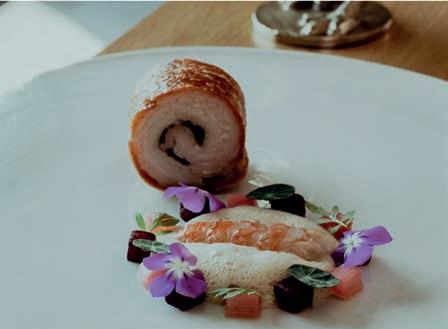
Left: the beautiful Praia da Adraga, where there is a restaurant of the same name. Above: one of the delectable treats at LAB by Sergi Arola, Penha Longa Resort
of continental Europe. For a greener route with gentle inclines, the Barragem do Rio da Mula offers a softer, inland counterpoint to the sea, and it is the kind of place where you can hike or run for an hour without seeing another soul.
For a low-key, high-reward stop in the town of Galamares, slip into Loja da Quinta. It is a ceramics shop with beautiful, hand-finished pottery that feels both traditional and fresh, and the prices are much friendlier than you might expect in a place with this kind of character. The man who runs it is known for being particularly sweet and welcoming, and the shop is a lovely place to slow down, browse, and practise your Portuguese.
Even if the rest of your trip leans casual, one evening should be reserved for something a little more elevated. LAB by Sergi Arola at Penha Longa Resort is the obvious choice for that: a Michelin-starred restaurant with a tasting menu that plays with texture, colour and Portuguese ingredients in a way that feels modern and confident. It is the kind of meal that becomes a story in itself, ideal as a closing act to your 48 hours, when you can linger over wine, look back on the days of palaces and coast, and feel like the trip is winding down in the right way.
If you only have two days, the best version of Sintra is a slow, layered mix: one palace, one long walk, one vineyard, one beach, and one memorable meal. May is the month that makes all of this feel possible without the pressure of summer heat or crowds.
With Valverde Sintra Palácio de Seteais as your stately base, a lighter counterpoint at Charm Nature for certain moods, a tasting at Casal Santa Maria in Colares, a long lunch at Moinho Dom Quixote, an evening at Restaurante da Adraga with that pavlova, and a surf-kissed bite at Bar do Fundo, you have the full picture of Sintra: romantic, grounded, and beautifully coastal, all within 48 unhurried hours.
BY MAGIC BEAUTY
A private sanctuary of calm, inspired by the art of Japanese rituals.
A place where time slows down, the senses soften and every experience restores balance,
A deeply immersive scalp and water ceremony, designed to release tension, quiet the mind and guide you into profound relaxation.
A refined Japanese pressure-point ritual that reawakens natural balance, lifting both facial expression and inner energy.
Foot Ritual
A grounding foot therapy experience that gently rebalances the body and dissolves deep-held tension.
Intuitive body treatments, tailored to your needs, to relax, restore, and reconnect body and mind.
An exclusive journey of private rituals, designed for complete immersion, deep restoration, and lasting renewal.
Rua do Comércio 168, Almancil
+351 927 772 830
By appointment only
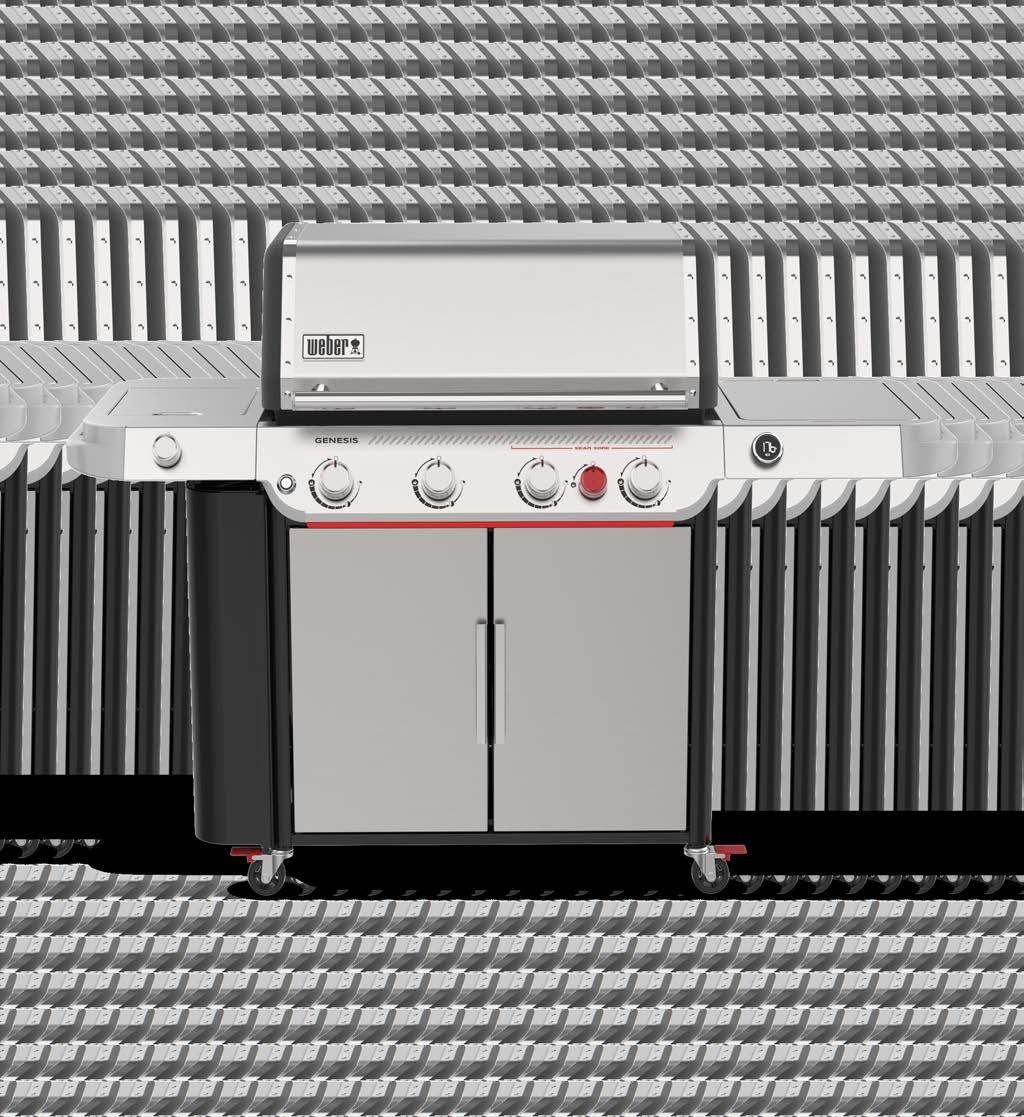


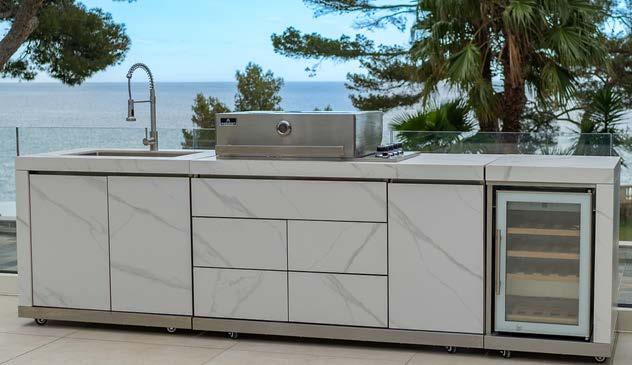
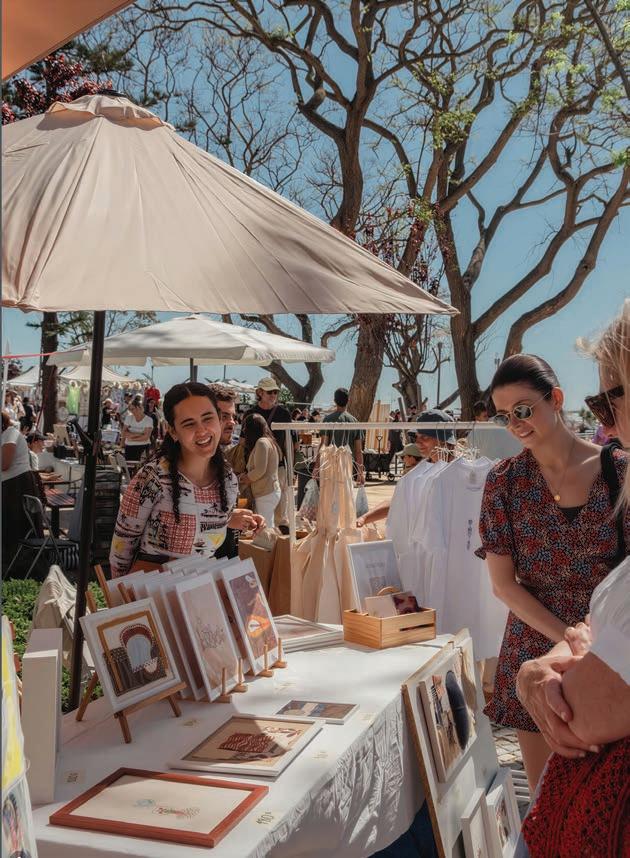
WHO DOESN'T LOVE A MARKET? HERE ON THE ALGARVE THERE ARE MANY – IN VIRTUALLY EVERY TOWN AND VILLAGE – EACH WITH A SPECIAL PERSONALITY AND OFFERING, FROM FRESH FOODS TO FASHION TO ARTISAN HOMEWARES
Words: VERITY THENARD, MY ALGARVE LIFE
WHENEVER I HAVE visitors coming to stay, I always take them to – or suggest – a market. Maybe it’s because my favourite thing about travelling is doing exactly that. That being said, I’ve often struggled to find out what day markets are on and what time they open, so I did some digging online to compile this list. This isn’t a definitive guide and I’ve probably missed a good few. I’m not claiming perfection, but I hope it’s helpful to someone. There is also a great pop-up market that has been travelling around the Algarve called Artists and Fleas (artistsandfleas.pt) which has a variety of handmade items produced by local talents.
But before we get started, note that most markets open early and close by around 12h00–14h00. Each larger town has its own Mercado Municipal, which generally runs every day except Sundays. There are also a few special event or seasonal markets, such as spring, the summer and, of course, Christmas.
Mercado de Loulé, in a stunning Arabic-inspired building, is open every day except Sunday, and on Saturday mornings it is huge with stalls spilling out into the side streets. This is probably my favourite, as Loulé is beautiful. Be warned – it gets very busy on Saturdays during the warmer months! Opening times are 06h00–15h00. There are places to eat inside the main market building, and there is also a gypsy market a walk away, opposite the Convento do Santo António (now a space for creatives) though the number of stall holders has reduced in recent years.
Mercado de Quarteira has a daily fish market and a small fruit and veg market near the beach, which are open 08h00–15h00, and first choice for many restaurant owners. There is a much larger market on Wednesdays in the car park just off the main street, next to the Cadillac Bar. On the first Saturday of the month, there is also a flea market. The bustling gypsy market held in Quarteira on Wednesdays is in the caravan park on EM527, near Lidl.
Mercado de Tavira is open every day except Sundays, from 06h00 to 14h00 with a larger market on Saturdays. On every fourth Saturday of the month, there is a flea and vintage market in the large space next to the main mercado.
This one is open every day except Sundays. It also has a really nice rooftop area. Like other markets, Saturday is the busiest day. The Lagos flea market takes place in the Municipal Sports Hall car park on the first Sunday of the month.
Mercado de Silves is located in the beautiful old town that is topped by a grand castle. The market is open Monday to Saturday from 06h30 to 15h00. The Farmers’ market is larger, and takes place on Saturdays. For a wider variety of goods, you can also visit the monthly market, which will have a broader range of stalls, including artisan and handmade goods.
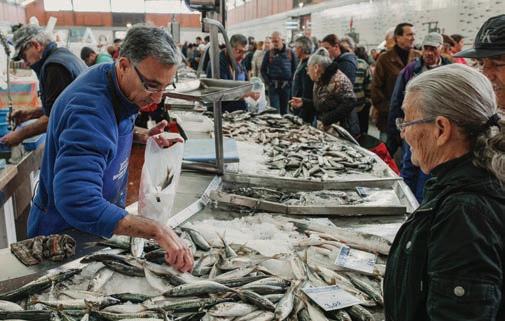
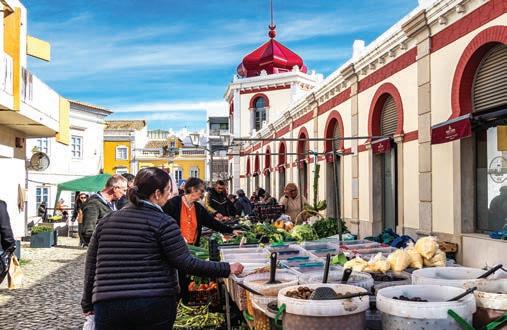
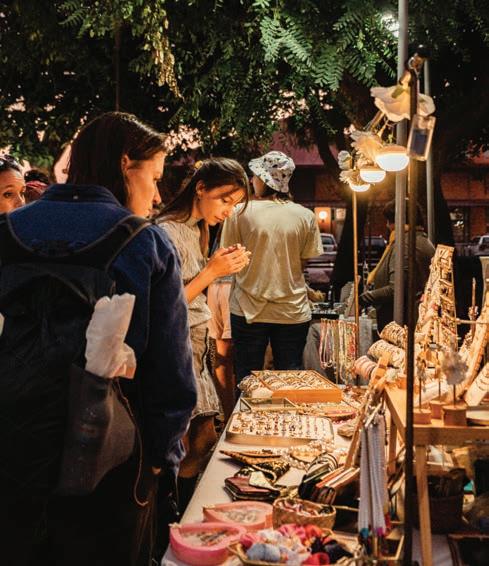
Located near the old town, Mercado de Portimão is open Monday to Saturday from 08h00 to 14h00, with a larger market on Saturdays. The flea market is held on the first and third Sunday of the month, 08h30–12h30, at the Parque de Feiras e Exposições de Portimão.
The main municipal market is open Monday to Saturday from 07h00 to 13h00. Expect fresh fruit, vegetables, meat, fish, and regional products. There is a flea market on the third Sunday of the month, 08h00–14h00, held at the Feira de Velharias de São Brás de Alportel. Additionally, every year on the last weekend of July, the Serra de São Brás de Alportel Fair takes place. This celebration of summer features handicrafts, food, local traditions, and entertainment such as live music, held at Feira da Serra.
Olhão is known for its markets showcasing an abundance of fish and seafood. The fruit and vegetables stalls, and butchery units, are housed in an adjacent hall. The market is open daily from 07h00 to 13h00, and closed on Sundays.
A short drive away in Fuseta, you’ll find the Fuseta flea market which takes place on the first Thursday and second Sunday of the month near Parque de Campismo da Fuseta. In the other direction, the Moncarapacho flea market takes place on the first Sunday of each month from 08h00 to 13h00.
In Quinta Shopping, Quinta do Lago, there is a Farmers’ market on the first Sunday of each month. Estoi hosts a huge outdoor market on the second Sunday of the month, 08h00–3h00, where you’ll find local food products, household goods, plants and fashion accessories. In May, June and September, there’s a street market in Lagoa on Saturday mornings, from 09h00–13h00; in August the market there is held on Friday nights from 18h00 to 23h00. Look out for organic products, local crafts, honey and sweets. And if you fancy something with its own story, Boliquieme’s Antique market on the first Sunday of the month, will tempt you.

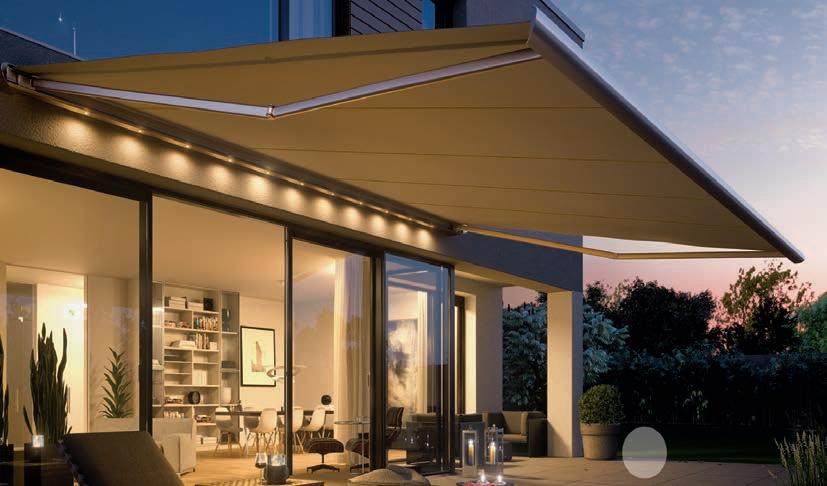
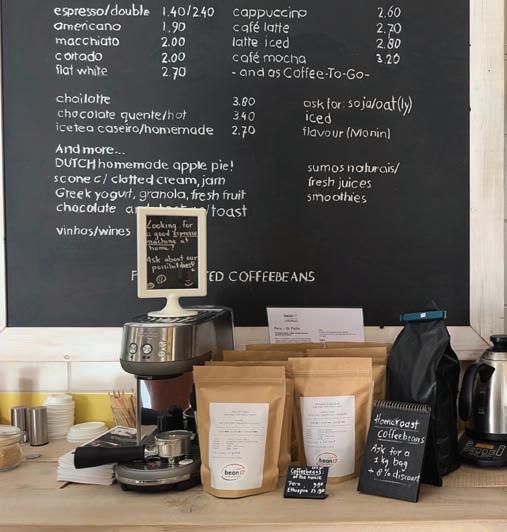

Discover bean17 in Loulé Market! Savour house-roasted Speciality Coffees like espresso or cappuccino, indulge in organic kombucha, and treat yourself to heavenly homemade cakes. Take the magic home with freshly-roasted organic Arabica beans from Peru and Ethiopia. Craving more? There are healthy breakfasts, light lunches, and a curated selection of premium products, including Portuguese olive oil,



THERE ARE TIMES DURING THE YEAR WHEN I WANT SOMETHING DIFFERENT, BRIGHT AND BEAUTIFUL ALTERNATIVES IN THE GARDEN. I WONDER IF YOU HAVE THE SAME NEED AND IF SO WHAT YOU DO TO FILL THE GAP? I ACHIEVE THIS BY GROWING UNUSUAL AND COLOURFUL PLANTS IN POTS
Words: BURFORD HURRY

IT ALL started years ago just after we arrived in Loulé, when a cousin of Richard’s landed here with a suitcase filled with, besides other things, plants. One of these was a flame lily and I was delighted.
Page 74: Zephyranthes candida. Page 75: top left clockwise: Red spider lilyLycoris radiata; Flame Lily – Gloriosa superba; Foxtail lily – Eremurus cristatus; Large Pink Nerine – Nerine bowdenii. This page, left: The Blood Lily – Haemanthus coccineus
New Store Address: Rua Almirante Candido dos Reis, 243, Tavira, 8800-318 (Next door to the Gran Plaza Call: 962 379 584 Email: decor@byoliveira.com @ OliveiraDecor @ Oliveirafurniture www.byoliveira.com
Flame lilies grow in many parts of Africa. I first came across her in the thick semi-tropical bush behind the sand dunes on the beach in the Transkei. Later, when I moved to Zimbabwe, I found her growing everywhere and featuring in publicity from a travel company advertising its Flame Lily Holidays. A clever idea as she is lovely.
I planted her tuber – it looks rather like an extremely large plump worm – in an old blue 20cm-wide enamel cooking pot punctured with holes. Over each hole I placed a curved clay pot shard and then filled the pot with a mixture of my compost and a couple of handfuls of river sand. The bulb was then planted about a centimetre below the surface of the soil. Since then, I repot her every February. Having shrugged off the wet winter in the pot, she usually has grown two or three bulbs so I keep one, replace the soil and plant her back in the pot. That done, I plant the remaining bulbs in individual pots to give to friends. Once planted, I position her under my olive tree close to a small myrtle so she can climb – her leaves have a tiny curly hook at the end which clings onto other plants as she grows. I have a brilliant seasonal summer special when she shows off her arching, flame curly red petals.
The next special was found four years after we arrived in Loulé and were living in an apartment in the historic part of the city. On a walk with the dogs, I noticed a group of gorgeous golden Spider lilies (Lycoris radiata) flowering in the nearby Jardim dos Amuadas park in front of the Matriz Church. As they were 50cm tall, their impressive golden umbels of flowers glowed against the green of the leaves of the surrounding agapanthus and daylilies. Nothing daunted, I asked the gardener to let me have a bulb or two when they fell dormant, which he eventually did. However, I had to be patient as that only happened in the summer.
At the time these bulbs were new to me. I got to know more about them when I did a bit of research and found that they
originally came from the Far East. I was intrigued to learn that Lycoris came in different colours other than golden – in white, orange or red. However, although I have seen them advertised by Dutch bulb growers I have stuck with golden.
When my Flame Lily arrived she was accompanied by two varieties of South African Nerines. One was the sensibly called Large Pink Nerine (Nerine bowdenii) and the other also sensibly called Dwarf Nerine (Nerine humilis).
At first glance, the Large Pink Nerine could be taken as a first cousin of the Spider lilies I found in the park. She has a similarlooking umbel of six or seven pale pink flowers borne on thick stems, the same height as a Spider lily. Their strap-shaped leaves look similar, too, but they are not related. Like Spider lilies, the Large Pink Nerine blooms make an exotic and elegant addition to any flower arrangement.
I have my Nerine bowdenii in a large clay pot, but if I had more sunshine I would be tempted to plant her in clusters at the front of my shrubbery.
A Dwarf Nerine was the other variety that I was given. She is short as her name implies, her leaves look a bit like those of chives, and she has strong little umbelliferous flowers which appear in autumn. They come in various shades of pink or white. Mine are a strong pink. In the wild they grow in crowded colonies and I have planted mine in a long clay trough so they grow in the same way. They have been in that trough in the same sunny spot for a couple of years now and every year reward me with a foam of pink flowers in the autumn. They grow with very little fuss and an occasional drench of water in summer.
One of the most famous nerines is the Guernsey lily (Nerine sarniensis): often regarded as the most beautiful of all the nerines, her impressive glittering blooms range in colour from crimson to scarlet and from pale pink to deep rose. There is also a white form. She flowers in autumn and like the Lycoris radiata and Nerine bowdenii mentioned before, she is a wonderful cut flower. Grow her in a well-drained river sand, loam and compost mix and place the pot in a sunny spot.
Being gorgeous, the Nerine sarniensis also comes with a legend. It is said that centuries ago a shipload of bulbs from South Africa was sailing for Holland when the ship was wrecked on Guernsey. The ship’s contents were rescued and planted, and the growers were so astonished by the beauty of the flowers that they claimed her for themselves and promoted her as the Guernsey lily.
Another suggestion for a brilliantly bright splash of colour is the Kei lily (Cyrtanthus sanguineus) also from South Africa; she is easy to grow and certainly catches the eye in autumn. Because she prefers morning sunshine she is in a pot in the shade of the pomegranate. I also have an Ifafa lily (Cyrtanthus mackenii) with creamy blooms. Not quite so showy as her cousin, she is nevertheless a lovely, hardy, fragrant, and an easyto-grow South African evergreen bulb, popular for her long-lasting, tubular flowers that bloom from September to February. I have left mine to form a large clump as they like to grow undisturbed for at least five years. Like my Kei lily she grows in the shade of the pomegranate. William, my friend in Mediterranean Stellenbosch in the Cape, has brilliant red, white, yellow and apricot Ifafa lilies actually growing in the garden.
My final suggestion for an attractive seasonal special is the blood lily (Haemanthus coccineus). She is a dyedin-the- wool Mediterranean plant if there is ever one, as she comes from the Mediterranean Cape. My bulb came from a large, impressive clump growing in an old garden in Carvoeiro 30 years ago. It is no surprise really, as she is more often found in the older Algarvian gardens.
Early gardeners quickly recognised her as an impressive flowering plant that actually doesn’t need watering in summer. In addition, her powerful broad winter leaves, which she loses with the onset of warmer weather, are as fascinating as her flowers; in fact, I grow her as much for the look of them as her blood red autumn bloom.




Interestingly, PlantZAfrica.com has suggested that this Blood Lily was probably the first flower to be collected from Table Mountain and probably the first illustration of a South African flower to appear in a European publication. The illustration was by the Flemish botanist de L’Obel in 1605. There is also a white variety (Haemanthus alba).
And thinking of white blooms, there was one more bulb, a rain flower (Zephyranthes candida) that arrived in the cousin’s suitcase and although more modest than the ones I have already written about I am very fond of her. Her narrow leaves are a deep glossy green throughout the year and in autumn there are series of small blindingly white flowers. Mine grow in a clay pot under a lemon tree at the entrance to my garden so they get some sunshine and some shade. Near a tap she gets an occasional watering during the summer.
If you haven’t done so already, perhaps you might like to have a seasonal sensation. There are lots of options. For unusual plants like blood lilies and nerines keep your eyes open when visiting friends’ gardens and local nurseries. For others, browse through the selection of bulbs occasionally available at local supermarkets or Google them. Look out for Spanish irises, sparaxis, sprekelia, hymenocallis × festalis and others. You will be spoilt for choice if you do decide to introduce a seasonal sparkle into your patch.






The tranquil village of Monte da Palhagueira in the sun-dappled Portuguese hills has elevated luxury retirement living to new heights.
A traditional development of beautiful villas, houses and apartments, Monte da Palhagueira offers luxury independent retirement living with the added reassurance of qualified medical assistance on hand should it ever be required.
Our English Nursing and Care Home offers a wide range of professional services. From convalescent and respite to full residential care with 24/7 Nursing safety. We offer tailored Person-centric holistic care: it is all about you and your needs.
Contact: Alexandre Neves
mdpmanager@amesburyabbey.com
montedapalhagueira.pt
Tel.: +351 289 990 900


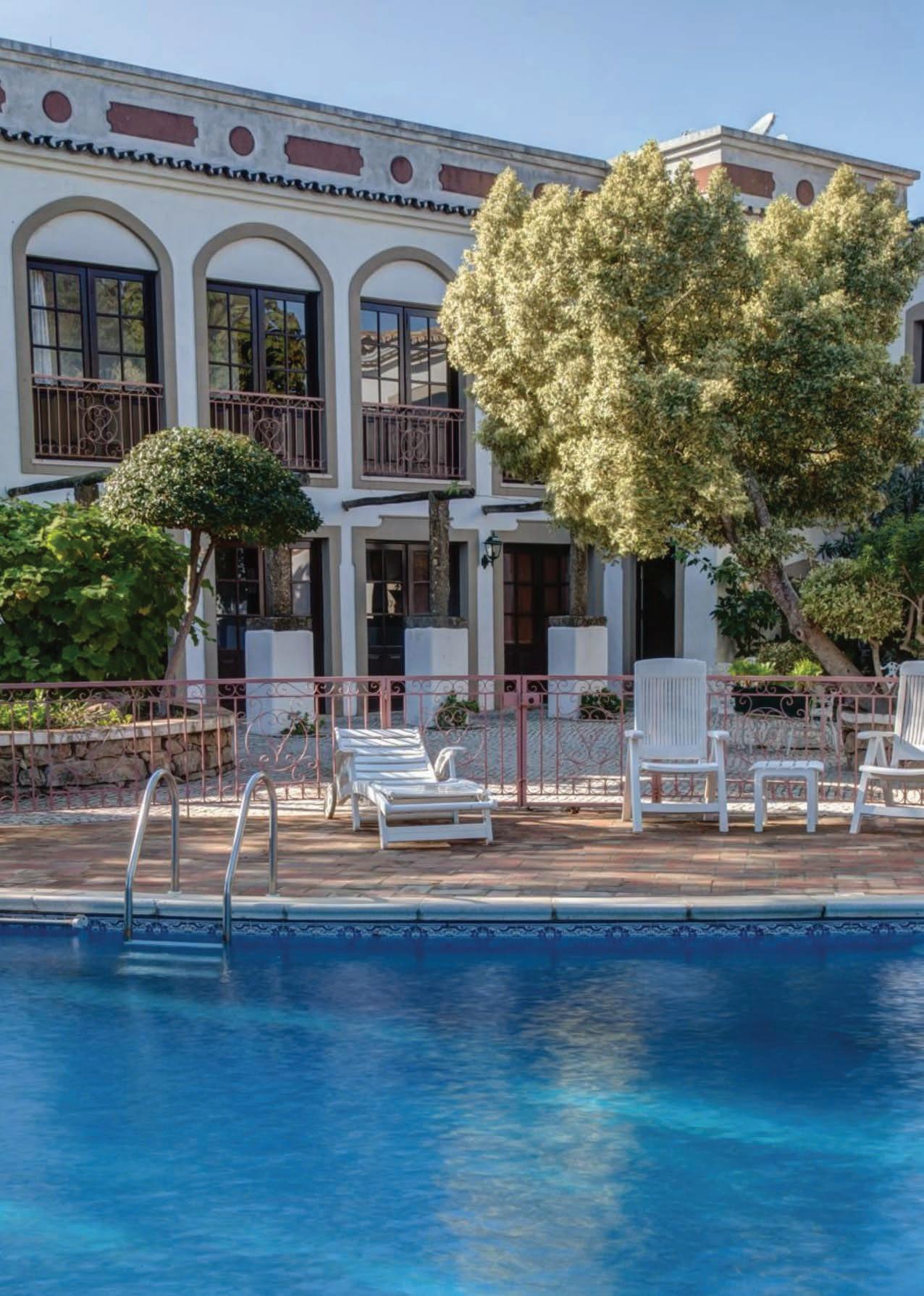
IN ONE OF THE ALGARVE’S MOST POPULAR DANCE STUDIOS, A DIFFERENT KIND OF PRACTICE IS ABOUT TO TAKE SHAPE. IT’S NOT QUITE FITNESS, NOT QUITE DANCE, NOT QUITE MARTIAL ARTS, YET IT DRAWS FROM ALL THREE AND MORE TO CREATE A POWERFUL PRACTICE FOR BODY AND MIND. IT IS SOMETHING WORTH INVESTIGATING
Words: SALLY DIXON
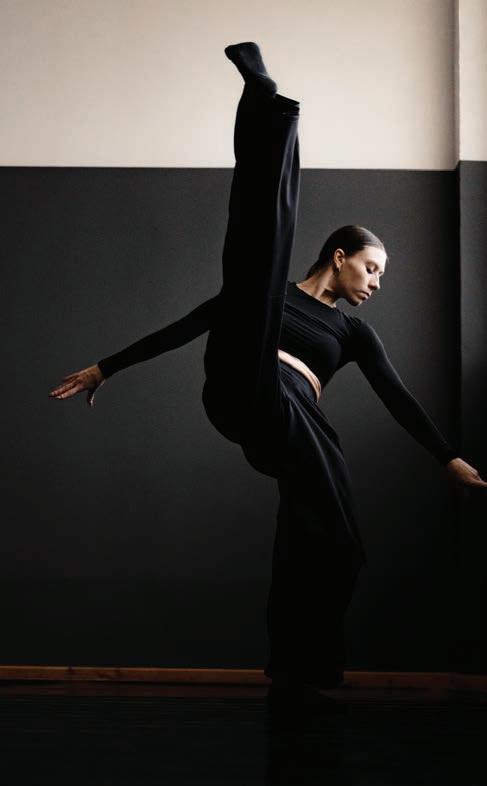
WHAT I LOVE about Portugal is the wonderful creativity and diversity of experiences that find you when you’re least expecting it. A recent ‘follow’ request in my Instagram inbox led to the discovery of a world of movement I can’t wait to get involved in when I finally make my move to the country. At its core is a simple yet profound idea – that movement is not something you do, it’s something you live.
“Movement is a practice of life,” says Tiago Santana, a 23-year-old movement teacher based in Olhão and one of four teachers hosting a unique two-day movement intensive workshop in Faro on 16 and 17 May. “People learn about life practicing movement; it’s not just about learning it, it’s about challenging yourself for longevity, to be your best,” he adds.
Tiago is part of a new wave of practitioners inspired by Ido Portal, whose philosophy has quietly reshaped how many people think about the body. Rather than isolating muscles or chasing athletic goals with specific fitness disciplines, movement culture explores the full spectrum of human capability through strength, agility, coordination, mobility, and play. And perhaps most importantly, curiosity.
With a background in sports science and years immersed in fitness and martial arts, Tiago previously followed a familiar path of traditional gym workouts, machines, and measurable outcomes. But something didn’t quite sit right.
“I started questioning the practice of the people in the gym,” he explains, “always using machines, always in a robotic, isolated way.” Like many who end up immersed in movement culture, Tiago began experimenting with different modalities – kettlebells, animal flow, yoga, calisthenics. Each offered something valuable, but none felt complete. It’s something I can totally relate to, having dabbled in calisthenics, handstand training, dance, breakdancing (!), and ballet through the years of moving my own body. There came a turning point for Tiago when he discovered Movement Lisboa, one of the best movement schools in Portugal. He remembers: “When I discovered movement I thought, ‘whoa, this is another level’. It really opened my mind.”
An infinite practice
To understand what he means, Tiago directed me to Finite and Infinite Games by James P. Carse. In his book, Carse describes two kinds of play: finite games, which are played to win, and infinite games, the purpose of which is to keep playing.
Movement, Tiago insists, belongs firmly in the latter. “It’s an infinite game,” he says. “We always want to remain playing, not win something. You want to stay in the game, stay moving your body. And be capable of
adapting to different situations, environments and challenges.” So, instead of training for a goal like weight loss, strength, or personal bests, movement is an ongoing exploration. There is no finish line, only a deeper awareness of your body’s strengths and capabilities.
“It’s the difference between training and practice,” Tiago explains. “In training you want to lose calories, increase your strength for example, but with practice, you practise something, you hone your skills and with every practice that deepens. It’s about learning to move better, with more efficiency and awareness.”
The art of connection
At the heart of movement culture is connection – to your body, to the ground, to the environment around you, to other people. Tiago hosts weekly movement classes in Olhão, where the demographic is refreshingly broad. While most of his movement enthusiasts fall between 30 and 50; there are also older students in their 60s. Complete beginners are welcomed just as much as experienced movers. “We have tools to adapt always,” Tiago explains.
“Progressions, regressions, adaptations. It is an inclusive practice; it’s not just for experienced athletes.” He emphasises the community feel of the group. “People are open-minded to learn, to connect. It’s not a difficult group to enter, you feel welcome and at home.”
When movement is medicine
If you’re a regular reader, then you’ll know I just started ballet classes again in my late 40s. For those of you who already move, whether through yoga, dance, or sport, you’ll be familiar with that distinct shift in energy after a session. The lightness, the clarity, something that ignites deeply in your soul. Tiago nods when I bring this up. “Movement is life and life is movement,” he says. “People who join movement go with another mindset, to discover new parts of life and of themselves.”
It’s common knowledge that movement doesn’t just change your body; it measurably reshapes your brain and emotional state. Even short bouts of movement have been found to enhance cognitive flexibility and shift perspective when you’re having a crappy day.
An invitation to play
The two-day movement intensive this month will be held at Companhia de Dança do Algarve in Faro. Across six hours’ of practice per day, participants will be guided through a diverse exploration of movement by four teachers – Tiago, Stefanie Rose, Polina Abramova, and Christophe Kerbourch. Each teacher brings a distinct discipline, from contemporary dance to soft acrobatics, creative flow and
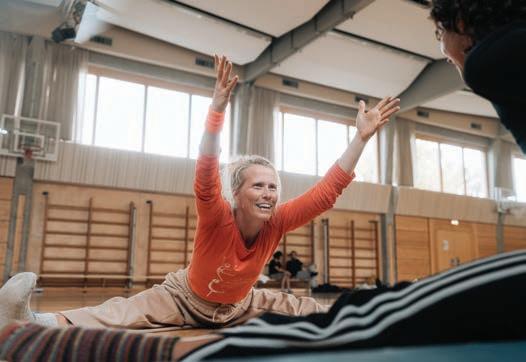
movement improvisation. Christophe, also known as Kerbux, began dancing hip-hop and contemporary at 16 before training for three years at circus school, going on to perform internationally as an acrobat and dancer across Europe and the Middle East. Polina is a contemporary dancer and teacher who began training at age three in Russia, later performing with Companhia de Dança do Algarve and working with international choreographers before appearing in Portugal’s Festival da Canção. Stefanie (Steffi) is a movement artist and somatic practitioner whose background spans gymnastics, ballet, martial arts and yoga, guiding others through embodied, awarenessbased movement while co-creating international movement spaces in Germany and Portugal. “The May workshop is our first edition,” Tiago says, “and we’re very excited to create this event and space for people to move.”
For those willing to try something new, it may just be the beginning of a different relationship with movement, your body, and with life itself. As you will discover, movement is not about mastering a sequence or achieving a specific pose; it’s about staying in the game well into later life. And as James P. Carse reminds us, the goal of an infinite game is not to win, it’s simply to keep playing.
MovaMente movement intensive workshop at Companhia de Dança do Algarve, Faro, 16–17 May. €60 for both days, or €40 for one day. You can book your place on Instagram @mova.mente.algarve via the link in bio.
Tiago teaches weekly movement classes in Olhão at Rua Alberto Lopes 3, Monday at midday; Tuesday and Thursday at 07h15 and 16h45. A summer class will be added at 09h00 on Saturday outside, weather permitting. Find him on Instagram @__tiago_santana. Follow Christophe @kerbux.tv Polina @pols22__
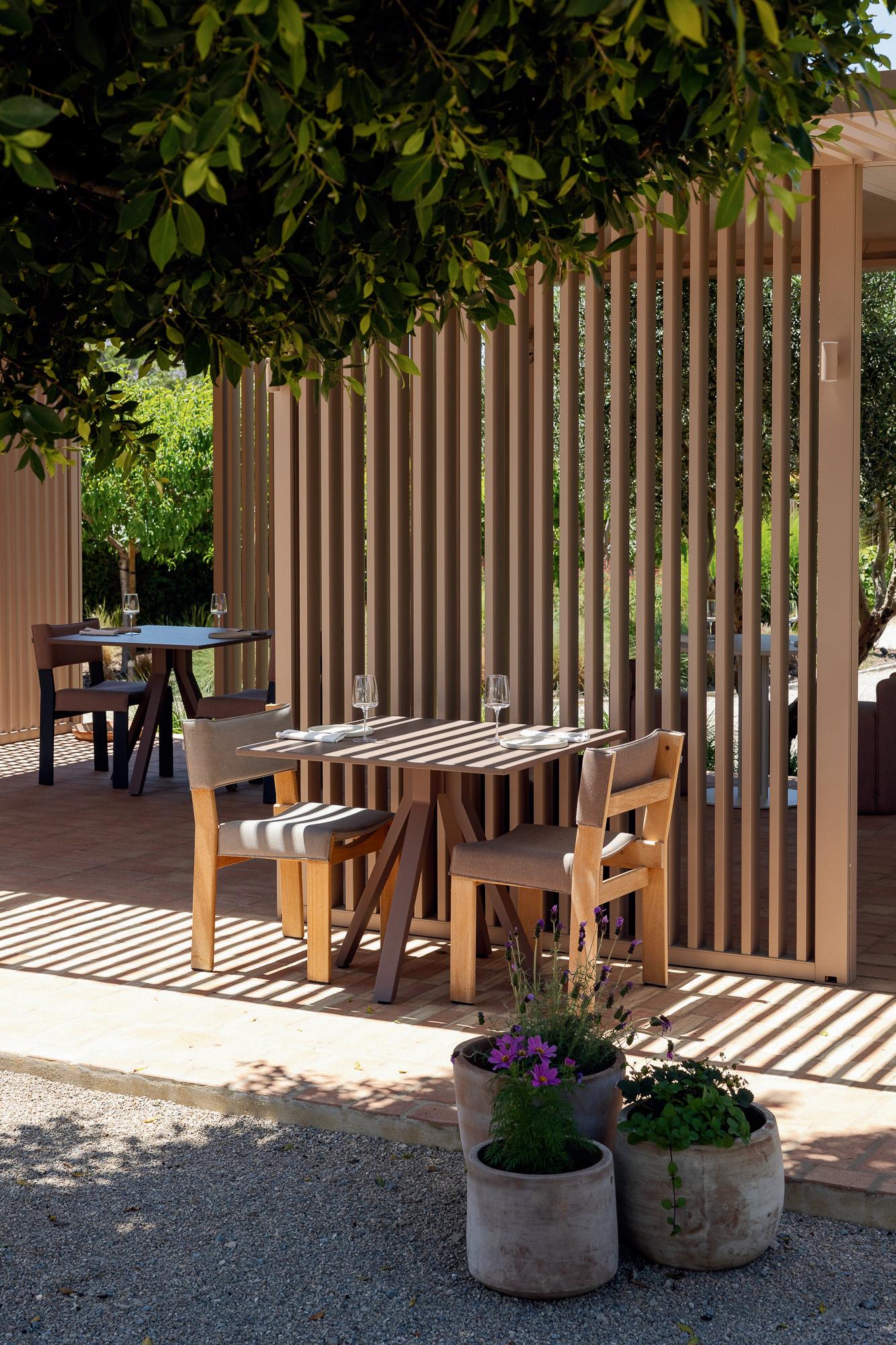




OVER THE MONTHS I’VE WRITTEN ABOUT THIS COUNTRY’S ARTISTS, ARCHITECTS, DESIGNERS, POETS, SCIENTISTS AND OTHER FAMOUS AND HISTORIC FIGURES. AS AN ESTRANGEIRA, THE RESEARCH HAS HELPED HELP ME TO UNDERSTAND MORE ABOUT WHAT MAKES THE PEOPLE OF PORTUGAL TICK
Words: CAROLYN KAIN

THIS MONTH, I have focused on Portugal’s most celebrated fiction writers. Internationally acclaimed, these are the names of authors that most educated Portuguese will know and that should be on the radar of anyone who lives here.
From a humble peasant background, Saramago struggled as a writer, but at the age of 76 he won the Nobel Prize for Literature, becoming Portugal’s most translated novelist. His books are not an easy read; they contain demanding philosophical topics and little punctuation.
Highly complex conversations between characters carry on without quotation marks, and since the concepts under discussion usually challenge views on inequality, injustice and capitalism, the reader is forced to re-read long passages several times before they begin to make sense. Or perhaps that is just me!
By making the text so involved, Saramago is compelling the reader to analyse and question their own beliefs. It says a lot about the Portuguese that such testing novels have become so well admired. His stories experiment with reality picturing scenarios that are entirely implausible, then predicting what the
consequences might be if they came to pass.
Imagine if the Iberian Peninsula broke off from the rest of Europe and became a raft? What might happen if everyone were to become blind? Now envision the degree of satisfaction achieved when drawing conclusions from such improbable situations. It stretches new dimensions of the mind.
Well known for writing poetry as well as prose, Pessoa is especially famous for the invention of 47 heteronyms. These are fictional personalities that are published authors who write in the first person under their own names.
To learn more about the real Fernando Pessoa, readers are encouraged to first turn to Bernardo Soares, an assistant bookkeeper in Lisbon. He writes almost entirely in prose and is classed as a semi-heteronym, being the closest in thinking, personality and character to the actual author who was born in Lisbon but spent much of his childhood in Durban, South Africa where his stepfather was a military officer and Portuguese consul.
Pessoa was an exceptional student, taught by French and Irish nuns. He became fluent in three languages and this was to shape his life ahead so that when he returned to Lisbon at age 17, he easily found employment as a freelance commercial translator. This gave him time to follow his personal passion for writing.
For those of us who live in the Algarve, Alvaro de Campos is perhaps the most curious and unexpected heteronym. By anyone’s standards he has a perverted view of pleasure. He was ‘born’ in Tavira, which is sometimes referred to as the hometown of the man who never was, and at first appears to lead a normal lifestyle becoming a shipping engineer with working visits to port cities such as Newcastle upon Tyne and Lisbon.
It is while Alvaro is in Lisbon that his imagination takes a sadomasochistic turn. At this point perhaps I should remind you that this is Fernando Pessoa writing through his heteronym. To continue... Alvaro pictures himself as a woman on the quayside being attacked and raped by pirates. Filled with indecent references, he dwells upon this fantasy and the enjoyment that can be gained by the suffering of other people. This piece of unsavoury but captivating writing was published in 1915 and there is no wonder that Pessoa had Alvaro’s name associated with it rather than his own.
column Letters from England, published in Gazeta de Noticias, a Brazilian periodical expressing negative views about European factory owners and the upper classes.
The English aristocracy – “the cream” as he called them – were put under his magnifying glass. He ridiculed their inability to appreciate a visit to the Continent, commenting: “The Englishman spends most of his pleasure trip cursing to himself, for neither the Bible nor his respectability allows him to curse aloud. He does not understand foreign languages; he finds the food strange; everything which is foreign – customs, clothes, ways of thinking – everything shocks him; he suspects that he is being robbed; he has the vague belief that the bed-linen in the hotel is never clean and if he loses a cane, or the train is not on time, he will compose a letter of complaint to The Times.”
Comparing the English person of today and the one described above would be controversial. Similarly, the gap in lifestyles and attitudes that exist between the Portuguese of the 2020s and those described in the novels of Eça de Queirós makes for fascinating reading.
When Pessoa died he was recognised in literary circles, but almost all of his writing has been published posthumously.
Before writing a word about Antunes I should say he is the only author in the list that I have failed to sample. He was a psychiatrist by profession and during the 1970s spent time as a doctor during the Angolan Civil War. This period shaped much of his thinking.
He was the winner of the Camões Prize for Literature in 2007 and had frequently been a candidate for the Nobel Prize for Literature. It is acknowledged that the language he uses in his novels is beautiful and filled with emotional intensity, but according to many critics the fragmented narratives are difficult to follow with multiple voices contesting for attention.
When Pessoa died he was recognised in literary circles, but almost all of his writing has been published posthumously.
Queirós was a reformist whose literary realism has been likened to Charles Dickens. His critical outlook on Portuguese society is reflected in many of his novels. It is particularly interesting to read his thoughts on England while he was living in Newcastle upon Tyne, the same great port city where the fictitious Alvaro de Campos worked briefly as a ship’s engineer!
Queirós was posted there with his family by the Portuguese diplomatic service from 1874. Writing to a relative he complained: “I detest England, I am depressed by the dreadful weather, the indecent manner of cooking vegetables but this does not stop me from declaring that as a thinking nation, she is probably the foremost.”
During his time in North East England, Queirós was caught up in a period of social change brought about by the trade union movement. In Durham the Miners’ Gala was already well established and Queirós was able to listen to the vast numbers of notable socialist and communist speakers attracted to the annual rally. Observing the differences between the lifestyles of the poor and the well-to-do, he recognised patterns that reminded him of Portugal.
Queirós supplemented his small diplomatic income by completing a regular
One helpful reviewer suggests that the reader should tackle 30 pages and if they don’t get it they should forget it. Otherwise read on. In other words it’s a very personal matter so my defeat as a reader might be your success! Antunes passed away in March of this year.
JOSĖ SARAMAGO
The Gospel According to Jesus Christ Blindness
FERNANDO PESSOA
The Book of Disquiet (Bernardo Soares)
The Education of the Stoic (Barão de Teive)
EÇA DE QUEIRÓS
O Primo Basílio
The Crime of Father Amaro
ANTÓNIO LOBO ANTUNES
The Land at the End of the World
The Inquisitors’ Manual
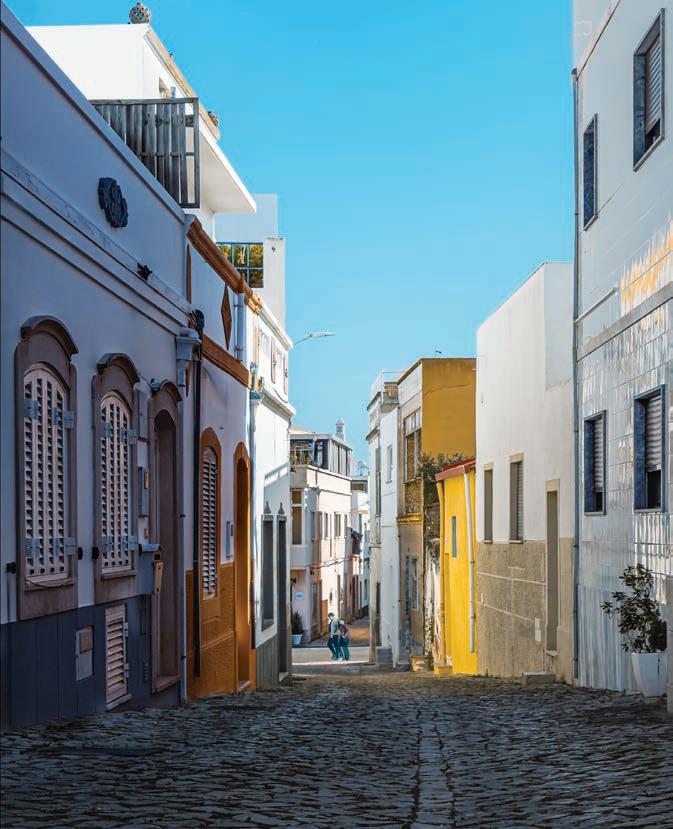
Visual culture critic and curator Avery Holt has again taken on the role of judging submissions from the Algarve Photographers Group. This month’s entries that were clearly focused on the subject matter stood out most, and also presented a story of the Algarve itself

LIGIA GLOVER PLANT POTS AND COBBLED LANES
Serpa, June 2025
Camera: Canon PowerShot SX70
AH: “Excellent architectural framing with the archway and strong layered composition. The foreground plants add depth and interest. Very authentic Algarve aesthetic. A human or narrative element would elevate it from technically excellent to emotionally engaging.”
2nd place
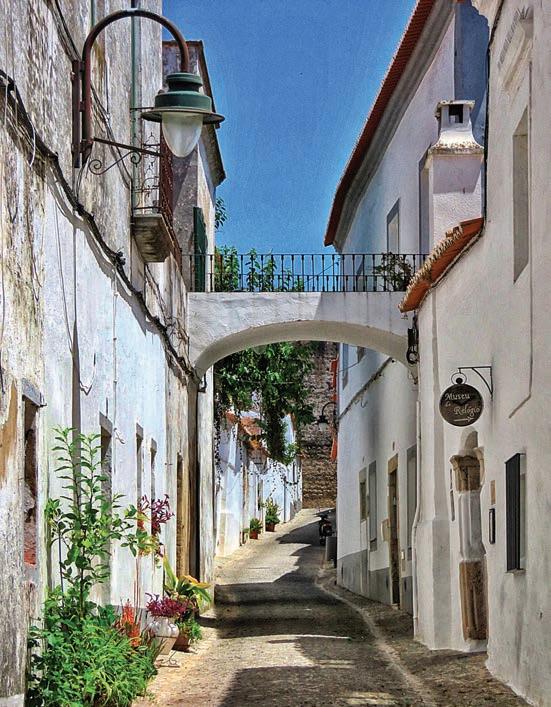

GLYN PARRY STREETS OF FUZETA
Fuzeta, March 2026
Camera: iPhone
AH: “Outstanding leading lines and depth, pulling the viewer naturally through the frame. The human element adds life, scale, and narrative. The strong colour contrast – especially the yellow façade – anchors the composition beautifully. A complete image that clearly represents Algarve village life.”
1st place

END OF THE LANE
Mealhas, March 2026
Camera: iPhone 16
AH: “Strong leading line composition guiding the eye toward the landscape. Good depth with foreground detail and a natural village feel. Highlights on walls are slightly strong and could be better controlled.”
3rd place
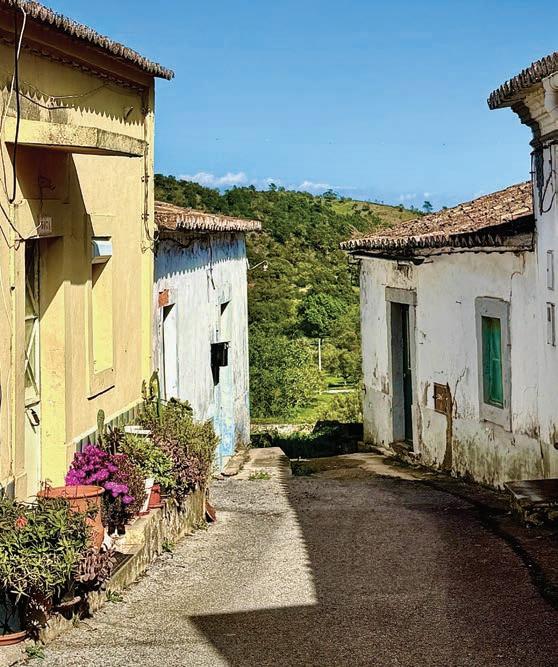
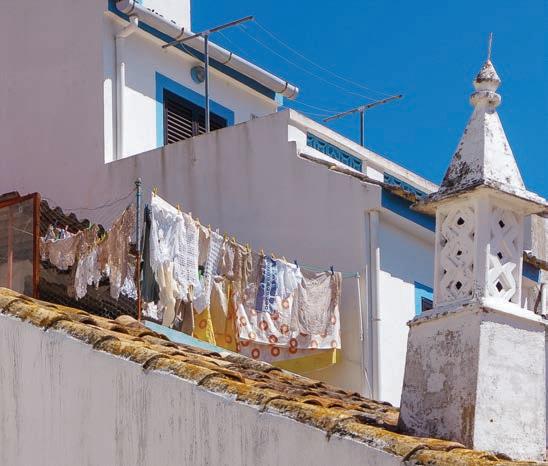

WASH DAY
Alte, April 2025
Camera: Sony A6000
AH: “Excellent storytelling – laundry instantly conveys daily village life. Strong cultural identity and colour separation. A tighter or more deliberate framing would strengthen impact.”
4th place

DARYL GABIN
VILLAGE IN THE HILLS
Tôr, March 2026
Camera: Canon R3
AH: “Good layered landscape composition with a clear focal point. The village is well positioned within its environment. The blur effect reduces authenticity – a more natural rendering would improve both storytelling and technical strength.”
5th place
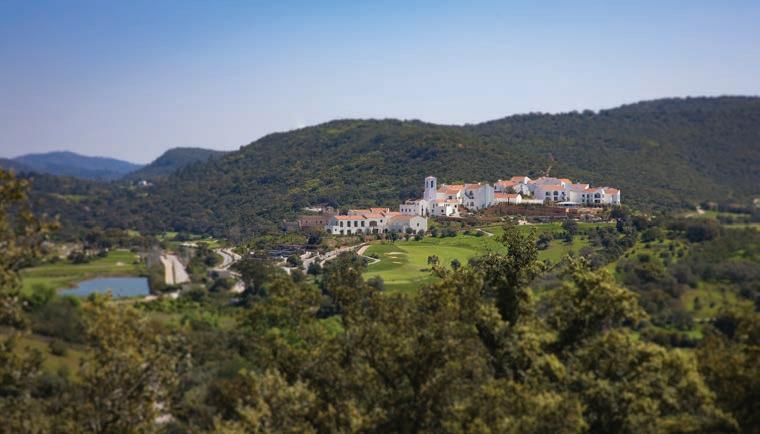

t. +351 917 203 850 . design@suzisteinhofel.com . www.designworks.com.pt

TODAY, MOST BUSINESS SMARTPHONE APPS ARE NEARLY AS POWERFUL AS THEIR WINDOWS OR MACOS EQUIVALENTS AND VOICE RECOGNITION MAKES A KEYBOARD UNNECESSARY. NOW COULD BE THE TIME TO DITCH THAT EXPENSIVE LAPTOP
Words: CHRIS PARTRIDGE
JUST THINK, a whole new way of working. The only insuperable barrier is the limited screen space of the average phone, but this can be easily solved by connecting the phone to a TV set or monitor when back at base, or even with a portable monitor for use on the go.
For people with homes in both the UK and the Algarve this raises the tempting possibility of travelling with just the phone in your pocket rather than a luggage-limit-busting laptop.
Those who live full time in the Algarve may also benefit by being able to use their phone with their TV, saving the space and aggravation involved with housing a desktop.
Did you notice that I am dictating this piece on my Android phone connected via Wi-Fi to my big screen TV? Of course you couldn’t have, so you will have to take my word for it that it is very easy and fluid. It’s been ages since I typed anything.
Getting it right
Simply casting your phone’s screen to a TV may not be absolutely
ideal for serious work because typefaces always look a bit blurry. However, smartphones are increasingly able to provide a desktop experience when connected to a high-resolution monitor. Samsung’s DeX system projects a Windows-style screen to the monitor, complete with multi-tasking and most of the other features you expect from a laptop.
Google itself is also getting into the act with a desktop-like system on its latest Pixel phones, and Motorola offers a rather more limited desktop system.
Sadly, Apple is trailing in this new environment, currently offering little more than screen mirroring.
Samsung DeX remains the gold standard for turning a phone into a desktop computer. Available on many Samsung Galaxy devices, it provides a polished desktop-like interface when connected to a monitor via Bluetooth, Wi-Fi or USB-C cable. In addition, what is hugely helpful is that any TV can be connected with a USB-C to HDMI adapter.
Once connected, DeX launches a desktop UI with a taskbar, app windows, and full keyboard/mouse support. You can resize apps, drag files, and multitask efficiently – similar to Windows or macOS.
DeX works especially well for office apps, web browsing and light media editing. Its biggest strength is consistency – Samsung has refined it over the years. The main limitation is that it still depends on mobile apps rather than full desktop software.
Samsung will soon face competition in the form of Android Desktop Mode.
Features like split-screen, floating windows, and external display support have existed for years, but they were inconsistent across devices and Google is actively developing a unified desktop mode built into Android itself.
Early versions of this mode include a taskbar with pinned and recent apps, freeform resizable windows and multi-app multitasking on external displays.
This marks a shift and one worth noting. Instead of relying on manufacturers like Samsung, Android is becoming desktopcapable at the system level.
Desktop Mode is only available on newer Pixelm devices (Pixel 8 and later) due to hardware requirements like DisplayPort output. Despite this, Pixel desktop mode is a major step forward – it shows Google is serious about turning Android into a desktop-class platform.
Future Android versions (like Android
17 and beyond) are expected to expand desktop features, and more manufacturers can adopt the same system instead of building their own solutions which will broaden its appeal.
However, there are two key limitations, the main one being hardware requirements including ones that not all phones support, such as USB-C DisplayPort output and high-performance multitasking, so budget devices may never support full desktop mode.
Motorola’s Smart Connect system (formerly Ready For) has all the desktop features you could need, but is only available on certain Motorola phones.
Apple’s iPhones take a different path. While powerful, they do not offer a true desktop interface but using screen mirroring with support for Bluetooth keyboards and mice, and they run productivity apps like Safari, Microsoft Office and Google Docs quite nicely.
For a desktop-like Apple experience, an iPad running Stage Manager is far more capable than the iPhone.
For light productivity, travel or backup computing, your phone can already replace a traditional PC. And with ongoing improvements to Android desktop mode, that replacement is only going to become more powerful in the coming years.
Future Android versions are expected to expand desktop features, and more manufacturers can adopt the same system instead of building their own solutions which will broaden its appeal widely.

PORTABLE MONITOR
ASUS ZenScreen MB166CR
A neat, lightweight 16-inch monitor that connects to your smartphone via USB.
PRO: a great screen for under €179.
CON: needs a USB cable and mains power.

PORTABLE KEYBOARD
Logitech Keys-To-Go 2
A super lightweight Bluetooth keyboard with a battery life of up to three years.
PRO: includes a neat cover that protects the keys when it is in your bag.
CON: a bit pricey at over €70.

PORTABLE PHONE STAND
Flight Flap
An ingenious bendable stand that can be set to any angle for standing your phone on a desk or hanging it from the seat in front on an aircraft. Simply bend it flat when you want to put it in your case.
PRO: incredibly versatile and cheap.
CON: covered with branding messages.

Summer, sun and that bare foot freedom.
Or, if you can’t walk shoeless make sure you find some comfortable footwear.
My favorite sandals, called Shangies, come from Denmark and now dominate my shoe cabinet. They are lightweight, comfy and made from natural materials like jute. Available in three styles, a rainbow of colours, and sizes from 35 to 46, they fit every foot and every mood.
Wherever I go, my Shangies follow!
OPEN: Monday - Friday 10.00 - 18.00; Saturday: 10.00 - 14.00
T: +351 964 222 612 INSTA: martina.loule / martina-loule.com
THE WELL-OFF and well-connected have always employed others to design and make their clothes, although the names of many dressmakers have been lost to history.

In the Middle Ages, there were ‘sumptuary laws’, which stated that certain rich fabrics and embroideries could only be worn by the aristocracy to emphasise their status. It is known that Queen Elizabeth I, who owned 1,900 dresses at her death in 1603, was ‘dressed’ by a tailor named Walter Fyshe who made ceremonial garments and farthingales for her. Another name that has come down to us is Rose Bertin, the dressmaker to the French Queen Marie Antoinette, who died in 1793. However, the father of ‘haute
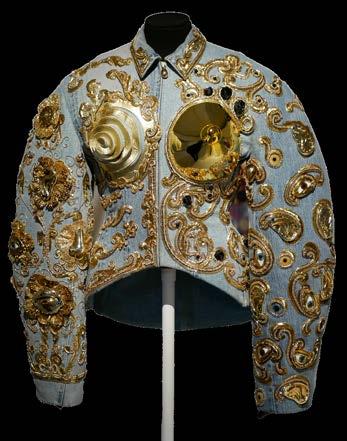
couture’ as we know it today is generally agreed to be a 19th-century Englishman named Charles Frederick Worth. Based in Paris, he began as a draper but then became what we would now call a designer, sewing his own label into garments, setting fashion trends rather than simply taking clients’ orders and displaying his collections on live models. His wife Marie-Augustine was effectively the first professional ‘fashion model’. After Worth, who died in 1895, the most influential designers were Paul Poiret, who freed Edwardian women from corsets, Coco Chanel who pioneered the casual chic of the 1920s, and Elsa Schiaparelli, the first female designer to appear on the cover of Time magazine in 1934.

THESE DAYS, TOP FASHION DESIGNERS MAY BE AS FAMOUS AS THE STARS WHO WEAR THEIR CLOTHES. THE LONG-STANDING NAMES ARE INTERNATIONAL IN EVERY SENSE, WITH STORES IN ALL THE WORLD ’ S CAPITALS, AND THOSE OF YESTERDAY ARE NOT FORGOTTEN, HAVING MADE A LASTING IMPRESSION AND LEFT A LEGACY OF STYLE
Words:



JILL ECKERSLEY
One of the top names in both men’s and women’s fashion, Ralph Lauren began designing back in 1967, with his famous Polo line first appearing a year later followed by the womenswear line in 1971. He came from a modest immigrant family and grew up in New York. His clothes were featured in some of the most successful films of the era, such as The Great Gatsby (1974). The iconic pink linen suit worn by Robert Redford as Gatsby was one of his designs, as were the distinctive waistcoat and patterned tie worn by Diane Keaton in Annie Hall (1977).
Fragrances for both sexes were marketed in the late 1970s and the brand continued to go from strength to strength in the new century. Ralph Lauren himself stepped down as CEO in 2015, but he still remains Executive Chair and chief creative officer.
Married with three children, he is also known both for his philanthropy and for his magnificent collection of rare and luxury cars. His charity work is focused on both the prevention and treatment of cancer. In 2003, he opened the Ralph Lauren Centre for Cancer Care and Prevention in New York City, and in 2014 he became a partner in an initiative with London’s Royal Marsden cancer hospital. His Pink Pony Initiative supports an international network of cancer charities.
As for the cars… he is said to own several Ferraris and Mercedes, a 1929 Bentley, an extremely rare Lamborghini and several Bugattis. His car collection has won ‘Best in Show’ in the Pebble Beach Concours d’Elegance twice.
Best known now as a bridal wear designer – her gowns were worn by Chelsea Clinton, Victoria Beckham and Ariana Grande among others –Vera Wang originally planned a career as a figureskater and was devastated when, after training from childhood, she didn’t manage to make the US Olympic team.
Vera’s parents were Chinese immigrants to New York. Her father was a businessman and her mother worked for the United Nations. After graduating from Sarah Lawrence College and enjoying a summer job at an Yves Saint Laurent fashion store, she was chosen to be one of the youngest editors at US Vogue magazine, before becoming a designer herself. Although her bridalwear made her famous, she expanded her business into ready-to-wear, fragrance, jewellery and homewares.
She has designed bone china tableware and crystal drinkware for the Wedgwood company since the turn of the century and more recently has specialised in ‘gifts to celebrate life’s magical moments’ including a Baby Piggy Bank and silver ‘treasure boxes’ for special trinkets. Now in her 70s, she believes that working at something you love keeps you young and stimulated, insists on eight hours’ sleep at night, and enjoys a special vodka cocktail. Given the opportunity, she still finds time for skating as well, and says that her favourite sport is ‘multidimensional’!
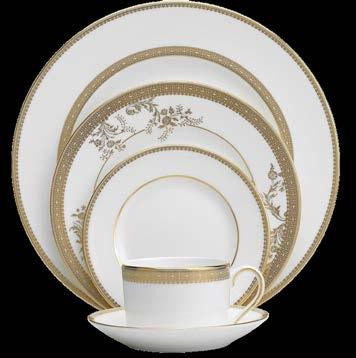
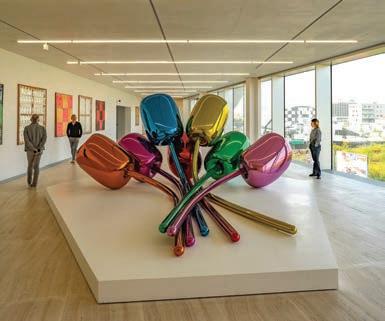


Head designer at the Milan-based fashion house which bears her name, Miuccia Prada still lives in the apartment where she was born. The Prada company was founded by her grandfather back in 1913 and specialised at first in luxury handbags. Miuccia and her siblings inherited the company in the late 1970s and were joined by her husband Patrizio Bertelli.
However, her career path was not the most obvious one. She attended the University of Milan where she studied political science, obtained her doctorate, and joined the Italian Communist party. At the same time, she studied mime at the local Teatro Piccolo and worked for five years as a mime artist. She was also active in the women’s rights movement of the 70s and 80s.
By that time, the Prada brand had expanded into women’s ready-to-wear fashions, with their menswear label following in the 1990s. While other fashion houses such as Jil Sander and Helmut Lang were taken over; Miuccia founded her own Miu Miu label in 1992 based on her personal wardrobe (and given her own nickname!), featuring less expensive garments. She also designed the costumes for the New York Met production of the Verdi opera Attila in 2010. Fondazione Prada, co-chaired by Miuccia Prada and her husband and business partner Patrizio Bertelli since 1995, is an institution dedicated to contemporary art and culture in Milan.

The couple have two sons, the elder of whom is rally driver Lorenzo Bertelli. When asked for the secret of her success she says: “to be curious studying!”

HAIR ARTIST

EXPERTS CAN ADVISE YOU ON HOW TO DEAL WITH BOTH BUSINESS AND PERSONAL TAX MATTERS TO ENSURE YOU ARE IN THE BEST POSSIBLE
QI have bought gold bars over the past ten years, with the intention of holding them as an investment. Is the sale of such gold subject to capital gains tax in Portugal?
Under Article 10 of the Portuguese Personal Income Tax Code, capital gains are defined as gains derived from specific transactions, provided they are not classified as business income, investment income, or rental income.
The sale of physical gold is not expressly included in the list set out under Article 10. As such and in principle, gains arising from the sale of gold held as a private investment do not fall within the scope of capital gains taxation (Category G). This means that occasional sales of investment gold –where no business activity is involved – are generally not subject to personal income tax in Portugal.
However, the situation changes if the activity is no longer considered occasional. Under Category B of the Portuguese Personal Income Tax Code, income is taxed based on the existence of an economic activity, regardless of the nature or origin of that income.
An activity is considered to exist when it is carried out:
On a regular or habitual basis
With the intention of generating profit
If a taxpayer engages in the frequent buying and selling of gold, this may be regarded as a business activity. In such cases:
The taxpayer must register the activity with the Portuguese tax authorities
The income generated will be taxed under Category B
The taxpayer will be subject to the corresponding reporting and compliance obligations
In summary, the tax treatment of gold sales in Portugal depends on the nature of the activity:
Occasional sale of gold held as a private investment are generally not subject to capital gains tax, while regular trading activity with profit intent is taxed as business income under Category B.
QIs the Non Habitual Residency (NHR) scheme still available? I heard that it stopped in 2024 but we only received our residence cards in
February 2026. If we don’t qualify for the NHR, what is the tax liability on our income? We are both retired, with State and private pensions in the UK and rental income from a UK property that we may decide to sell going forward in order to fund our future purchase in the Algarve.
The Non-Habitual Residency tax regime ended in 2024 and some expats who were eligible didn’t apply because they weren’t aware of the programme and its advantages or received incorrect advice or, in some cases, had their visa applications delayed, making it impossible to apply for the NHR before March 31, 2025.
If you were renting a property in Portugal in 2024 and started your visa application in the UK before 31 December 2023, you might still be eligible. Our team has helped many expats in similar situations, and under certain circumstances, you could apply for the NHR regime for the 2024 tax year as a late application, but you would only benefit for eight years instead of the usual ten.
We would need to change your tax address retroactively to 2024, and the NHR application would become effective in 2026. This means that you would be considered a Portuguese tax resident in 2024 and 2025, paying regular taxes during those years.
As a normal resident, your State Pension is taxed in Portugal, not in the UK, and it would be taxed at progressive rates. Rental income earned in the UK is also declared and taxed in Portugal, typically at 25% but with a credit for any tax paid in the UK.
Since the NHR only begins in 2026, as already stated, you would have this status for eight years instead of ten. This means that, from 2026 through 2033, your State Pension would be taxed at a maximum rate of 10% in Portugal, and rental income or capital gains (should you sell the property) would be reported but not taxed during this period.
Be aware that if you sell the property after your NHR status expires, the transaction must be reported in Portugal, and half of the capital gains would be liable for tax here. However, any taxes paid in the UK would be credited in Portugal under the DTA.
Send questions you may have to info@afm.tax for possible inclusion in AlgarvePLUS. To consult directly with the experts at AFM, email info@afm.tax



REMOVALS
REMOVALS
• Weekly removal service to and from the UK, Portugal and Malaga, Spain
STORAGE
• Weekly removal service to and from the UK, Portugal and Malaga, Spain
• Full or part packing and wrapping service
STORAGE
• Storage warehouses located in the UK, Algarve, Lisbon and Malaga, Spain
• Storage warehouses located in the UK, Algarve, Lisbon and Malaga, Spain
• Shop online with any furniture retailer and have your items delivered the following week
• Shop online with any furniture retailer have your items delivered the following
• Full or part packing and wrapping service
• Fully insured, secure and alarmed
• Fully insured, secure and alarmed
• One/multiple items of furniture
• One/multiple items of furniture
• One box to full house removals
• One box to full house removals
• Villa to villa moves within the Algarve
• Storage available for long or short term
• Villa to villa moves within the Algarve
• Storage available for long or short term
• All customs paperwork and procedures taken care by our in house customs experts


QI live full-time in Quinta do Lago and hold investments in cryptocurrency, along with various online accounts such as banking, subscriptions and cloud storage. I have a UK Will but am resident in Portugal. If something happens to me, how are these assets treated under Portuguese law, and will my heirs actually be able to access them?
AFor many expatriates in the Golden Triangle, estate planning has traditionally focused on property, pensions and cross-border taxation. However, an increasing portion of personal wealth and information now exists purely in digital form.
From cryptocurrency portfolios to cloud-stored documents and monetised online accounts, these assets raise a crucial question: not just who inherits them, but whether they can be accessed at all.
Digital assets generally fall into two categories. On the one hand, financial digital assets such as cryptocurrency holdings, online trading platforms and payment accounts; on the other, personal digital assets such as email accounts, cloud storage, social media profiles and digital photo libraries.
While both form part of a person’s estate, they are treated very differently in practice, particularly when it comes to access.
Portugal operates under a forced heirship regime. This means that a significant portion of your estate must pass to your immediate family, typically your spouse and children, regardless of the terms of your Will.
Digital assets are not excluded from this framework. In principle, they form part of
LEGAL EXPERTS NELSON RAMOS AND ROBERTA RAMOS WHO, TOGETHER WITH THEIR SPECIALIST TEAM AT RAMOS & ASSOCIADOS IN ALMANCIL, ADVISE CLIENTS ON VARIOUS ISSUES. HERE THEY
LOOK AT THE NECESSITY OF FORWARD PLANNING AND HAVING THE RIGHT WILL IN PLACE
the estate like any other asset. However, the key difficulty is not legal entitlement but practical control.
Under EU Regulation No. 650/2012, often referred to as Brussels IV, the law governing your estate is generally that of your habitual residence at the time of death, unless you have expressly elected the law of your nationality in your Will.
For many British expatriates living in the Algarve, this creates an important choice. Without an express choice of law in a Will, Portuguese succession law, including forced heirship, will apply. With a valid choice of law, UK law – whether England and Wales, Northern Ireland or Scotland –can apply to the distribution of the estate. However, Brussels IV determines which law applies. It does not resolve the separate issue of whether digital assets can actually be accessed.
Even where heirs are clearly entitled to inherit, cryptocurrency may be permanently inaccessible without private keys or seed phrases. Email or cloud accounts may be protected by strict data privacy rules, and some platforms do not allow transfer or access after death.
In practical terms, assets can be legally inherited but functionally lost.
For expatriates resident in Portugal, having a locally compliant Portuguese Will can be highly beneficial, particularly when coordinated with any foreign Will. It can clearly identify digital assets as part of the estate, incorporate a Brussels IV election where appropriate, appoint individuals responsible for administering the estate locally and reduce delays in dealing
with Portuguese authorities.
It does not solve the issue of access on its own, but it ensures that your intentions are recognised and can be implemented more efficiently.
Cryptocurrency presents a particularly acute risk. Unlike traditional bank accounts, it is decentralised and there is no institution that can grant access upon presentation of probate documents. Access depends entirely on private keys, seed phrases and wallet credentials. Without these, the asset is effectively unrecoverable.
European data protection rules can further complicate matters, as service providers may be restricted in granting access to accounts, even to family members, without prior authorisation.
This can lead to delays, legal uncertainty and, in some cases, permanent loss of both financial and sentimental assets.
It is therefore sensible to prepare in advance. This includes creating a clear record of digital assets, storing access information securely, addressing digital assets expressly in your Will, appointing someone you trust to deal with them, and ensuring consistency between jurisdictions if more than one Will is in place.
Digital assets are now a routine part of modern wealth, yet they remain one of the least planned-for aspects of succession, particularly among expatriates. The law can determine who inherits, but without proper preparation it cannot guarantee that those assets will ever be accessed.
In a region where long-term planning is second nature, this is an area that deserves far greater attention.
Ramos & Associados Sociedade de Advogados SP, RL Avenida 5 de Outubro, 169–171, 8135-101 Almancil
T: 289 413 063 / E: info@nramoslawyers.com / W: nramoslawyers.com


The Algarve’s premier Italian restaurant — and your local reference for tasteful living, in collaboration with our interiors and lifestyle shop.
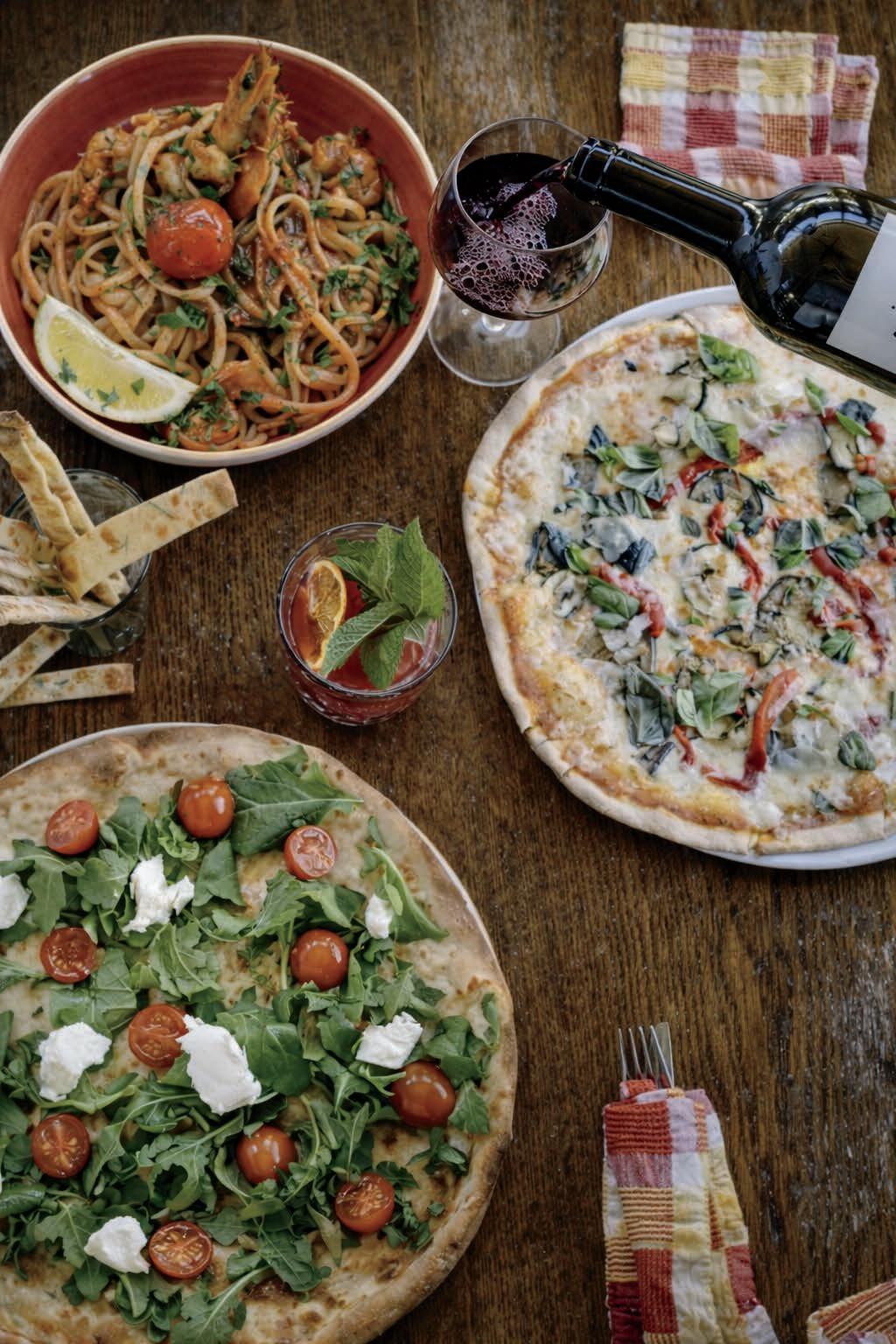

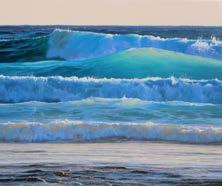
ERIKA TOLIUSIS
ArtCatto, Vila Vita Parc Porches, artcatto.com
Beyond The Blue, oil on canvas, 100x120cm
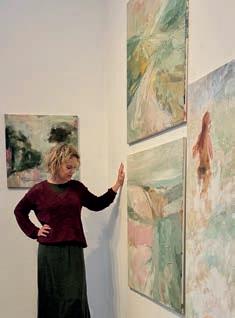
MEINKE FLESSEMAN
Galeria Meinke Flesseman
Portimão
Gallery visits by appointment 917 937 564 galeria.meinkeflesseman@ gmail.com
15 May, 18h00
Summertime, an exhibition of Meinke’s latest works.

DARRYN EGGLETON
ArtCatto, Loulé, 289 419 447, info@artcatto.com, artcatto.com
Savannah King, oil on canvas, 95x95cm
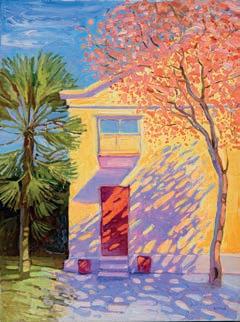
SERGIU CIOCHINA
Galeria Côrte-Real Paderne, 961 528 679 corterealarte.com
Shimmering Light, Flashing Reflections, oil on canvas, 30x50cm
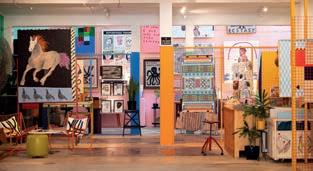
GAMA RAMA
PACO SANTANA
Vale do Lobo d’Artes, Vale do Lobo 962 012 111, taviradartes.com
Alba XXI, oil on panel, 100x100cm

PAULINE HANUISE
Studio open day, Loulé 920 546 908 @pauline.h.art paulinehart.com
23 May, 10h00–18h00
Step inside the studio and meet the talented contemporary artist and enjoy the collection of her latest works.


MANUEL GARRIDO
Tavira d’Artes, Tavira 962 012 111, taviradartes.com
Shar Pei Turquoise Blue, direct carving on polystyrene and turquoise nylon coating, 52x40x20cm
QUINTA ART COLLECTIVE
Pop Up exhibition
Lobos Restaurant Almancil, 29 May, 14h00–21h00
Jessica Dunn, Toin Adams, Tracy Carson, Andrea B Designs and Jane Preza form the Quinta Art Collective, a coming together of friendship, energy, ideas and different ways of seeing the world. If you’re planning to stay and eat, it’s worth booking ahead lobosclub.pt

STEPHANIE HAYMAN
11:11 Yoga Art Gallery
Rua Egas Moniz 11, Loulé 6 May, 15h00–21h00
Faces of Courage is an exhibition of oil paintings that conveys a message of the importance of raising awareness of abuse.
Rua do Prior 46, Faro. gamaramagallery@gmail.com. On until 20 June
Fruta da Época is a group exhibition from 22 Portugal-based artists that reflects on processes of transformation, maturation, and context. Where fruit was once processed, bottled, and distributed, the space now hosts a multiplicity of artistic approaches — works that emerge from specific moments of research and development.
E: loulecriativo@cm-loule.pt
FB: @loulecriativo
IN: @loule_criato W: loulecriativo.pt
FILIGREE WORKSHOP
(MOTHER’S DAY SPECIAL)
Date: 2 May, 11h00–15h00
Location: Palácio Gama Lobo, Loulé
Partner: Angela Gonçalves
Registration: filigranaworkshop@hotmail.com
A special workshop dedicated to the art of filigree, perfect for celebrating Mother’s Day with a unique handmade piece. Fee: €75
CYANOTYPE WITH ALGARVE FLORA
Date: 9 May, 10h00–13h00
Location: Palácio Gama Lobo, Loulé
Partner: Deep Blue Registration: deepblue.hello@ gmail.com
Discover the cyanotype technique using local Algarve flora, creating beautiful blue-toned botanical prints. Fee: €40
HAND WEAVING WORKSHOP
Date: 30 May, 09h30–13h30
Location: Palácio Gama Lobo, Loulé and Casa do Esparto, Sarnadas, Alte
Partner: Susana Mendez
Registration: susana.m.mendez@gmail.com
Using a pre-designed project, you’ll learn how to weave by experimenting with different types of raw materials, and after the session, you’ll take home the samples you’ve created. Fee: €50
910 410 268, info@lighthouseartcourses.com, lighthouse-artcourses.com
OLHÃO EM AGUARELA
23–27 May, 10h00–17h00
5-day intensive watercolour course in Olhão with Daniel López Villacañas offering an immersive approach that deepens technique while staying calm, focused, and inspiring.
ORQUIDEAS DO BARROCAL - IN SANTA BARBARA DE NEXE
3 and 17 May, 09h00–13h00
A guided observation walk and watercolour session in the hills, exploring wild orchids and capturing their subtle forms and colours through quick, attentive studies.
A collaboration with Wild Orchids Algarve. All materials included.
WATERCOLOUR FRIDAY ON RIA FORMOSA ARMONA / FAROL / CULATRA
1 May and 8 May, 10h00–15h00
Outdoor watercolour session on Ria Formosa, focused on observing the luminous coastal scenery of Ilha da Armona and translating light into quick watercolour studies. All materials and ferry tickets included.
FARO SKETCHWALKS
5 and 12 May, 10h30–13h00
Outdoor sketching sessions exploring historical streets and architecture, with insights into local history while practicing quick observational studies. All materials included.
republica14.pt,
Tickets: republica14.bol.pt
2 May, 19h00 and 21h30
BRANCO TOCA MARCO PAULO
Jazz guitarist Pedro Branco along with João Sousa on drums and Carlos Barretto on double bass with a reinterpretation of the vast artistic repertoire made famous by the iconic singer Marco Paulo. The songs are stripped down to their essence and the final result blends contemporary improvisation with classics of Portuguese pop culture.
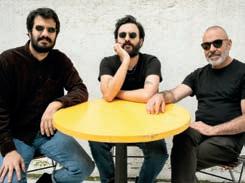
9 May, 20h00
RODA DE SAMBA
With the arrival of warm weather, the Samba Circles at República 14 are back. This will likely be the first outdoor event of the year, and República 14’s courtyard will once again come alive with celebration. Expect a great night, with a menu to match the occasion.
17 May, 21h00 PEDRO JÓIA - GUITARRA SOLO
The incredible Portuguese guitar player that mingles classical and flamenco, will perform a repertoire of numbers from his several albums.
23 May, 21h00
STEAM TRAIN
The trio arrives with a fresh and original approach, blending the energy of rock and roll, the roots of jazz, and the soul of Celtic folk and bluegrass. Dirk Buchwalsky (guitar and slide guitar), Mansel Kedward (vocals, guitar, banjo, and mandolin), and Fernando Júdice (bass), will be joined by Tércio Nanook on harmonica.
30 May, 21h00
RÃO KYAO - FADO BAMBÚ
Rão Kyao presents his fado universe for the first time at República 14, revisiting classic fado themes and introducing new original compositions, where fado is expressed through bamboo flutes. The concert features highly regarded musicians from the Portuguese fado scene: José Manuel Neto (Portuguese guitar), André Ramos (fado viola), and Carlos Lopes (accordion).
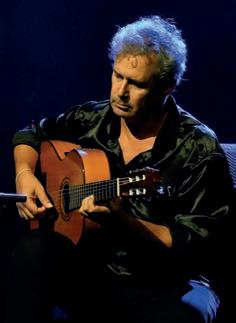
Farmers’ Market
Quinta Shopping
3 May, 10h00–13h00
Os Agostos, Santa Barbara, amigosdemusica.org 12 and 14 May, doors open at 18h15
Keigo Mukava and British-Portuguese violinist
Cristian de Sá will play famous sonatas by Jean-Marie Leclair,
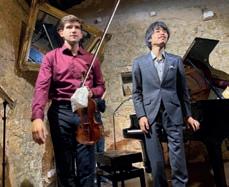
Isaye and César Franck on Tuesday 12th, and Beethoven, Debussy, Fritz Kreisler and Edvard Grieg on the 14th. For programme details, visit amigosdemusica.org
Entry donation including refreshments is €30 per person payable in advance by bank transfer (see website). To book, email reservasconcertos@ gmail.com. For membership enquiries please contact helga.hampton@gmail.com
TED x MARVILA
Anel Imanbay is the mind behind TedxMarvila, a platform that connects people from different cultures and backgrounds through shared ideas and meaningful dialogues. The second edition will take place on 24 May, in Lisbon, and be centered around a fundamental question: What is Love? Not in a romantic point of view but as the base of all things human and a force for transformation. Expect inspirational talks and networking. tedxmarvila.com

Museu do Traje, São Brás, 966 329 073, admin@amigosdomuseu.com
ARCHAEOLOGICAL
TALK (in English)
8 May, 16h00
The Roman Mosaic, a memory of a civilisation, by Dr Maria de Jesus Duran Kremer. Tickets: €5
DOCUMENTARY F ILM (in English) 22 May, 18h00 Democracy Noir, by Connie Field.
Tickets: €4 / Amigos €2 :

QUIZ: HELPING HANDS
ALGARVE (in English)
12 May, 19h00
To take part: €3.50
ART EXHIBITION
Visions of Portugal Will Kellermann 22 May 17h00, Free entrance
SPRING FAIR
24 May, 10h00–16h00 Free entrance
PHOTOGRAPHY EXHIBITION
SMARTPHONE ONLY
29 May, 19h00, On until 30 July Free entrance
S.B. Messines, 969 335 749, hello@figsonthefuncho.com
VEGETARIAN COOKING HOLIDAY
8–12 May
11 May, 11h00–15h00
Workshop 14–20 May
ACRYLIC PAINTING HOLIDAY
15 May, 17 May, 18 May, All day
ACRYLIC WORKSHOPS
30 May–5 June
MAY JUNIOR GOLF ACADEMY
25-29 May, 14h00–16h00
valedolobo.com/en/activities/ event-experience/may-2026junior-golf-academy/ Young golfers can refine their skills through tailored sessions on the course. Designed for those with some experience, it’s the perfect opportunity to progress and enjoy the game in a fun setting.
Well Restaurant
valedolobo.com/en/activities/ event-experience/sunrise-yogamay/ Indulge in a harmonious blend of tranquillity and wellbeing with a 60-minute yoga session led by Vale do Lobo’s yoga teacher. Open to all levels.
24-30 May
valedolobo.com/en/activities/ event-experience/foursomesweek-2026/
FADO
31 May, 21h00
Tickets: €5
To reserve, call Filomena 926 354 516
COLLECTIVE ART EXHIBITION
The Space Between Us Markus Böhler and Gaby Studer On until 18 May Free entrance
STREET PHOTOGRAPHY EXHIBITION
On until 28 May free entrance
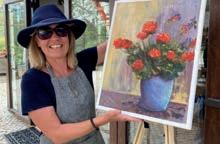
31 May–4 June, 10h00–14h00
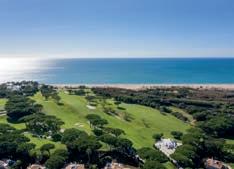
Returning for its 42nd edition, Foursomes Week will see players from around the world competing in pairs. A true test of strategy, skill and teamwork, set against one of the region’s most exceptional courses.
valedolobo.com/en/activities/ event-experience/open-skies/ Experience the beauty of an open night sky through a high-precision motorised telescope. Observe the crescent Moon in remarkable detail and capture your own photograph through the lens. Discover star clusters, galaxies and constellations, with Venus and Jupiter visible after sunset, for a truly magical evening. Just bring your curiosity.
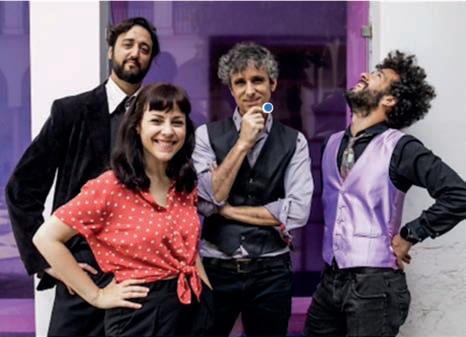
JAZZ IN THE WINERIES
8 and 9 May, Convento do Paraiso, Silves
In this 9th edition, SwingTête & Paula Padilla perform a repertoire with great creative freedom for improvisation, spontaneity, and emotion, creating unique moments intimately connected to swing and dance. Tickets are €25. cm-silves.pt
EIGHTEENTH-CENTURY HISTORICAL FESTIVAL
13–17 May, Vila Real de Santo António
The event features a market, historical reenactments, costume ball, typical dishes, historical parade, banquet theatre, poetry, music, serenades and dances. Free admission. festivalsetecentista.pt
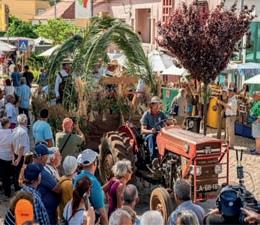
QROM EXPOSITION
República 14, Olhão On until 17 May
In conjunction with Tavirabased photography and poetry magazine, Qrom, the work of Brazilian visual artist Keto, and photographer Rancoeur.
FESTA DA ESPIGA 14–16 May, Salir
In the historic centre, a festival of ethnographic recreation, with entertainment, handicrafts and gastronomy. loule.pt
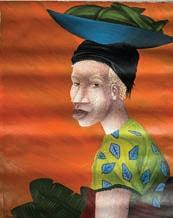
FINANCIAL SERVICES FOR EXPATS AND BUSINESSES IN PORTUGAL
Our dedicated team offers personalised, professional accounting and tax solutions tailored to your specific needs. With deep expertise in Portuguese tax law and international fiscal matters, we ensure your finances are managed with precision, integrity, and care.



Accountancy
Tax advice
Tax Relocation Services (including the
Fiscal Representation
Property Rental Compliance
Personal Income Tax
GROWING UP IN THE HEART OF LONDON, ANTHONY MARTIN NEVER ENVISAGED A LIFESTYLE WITHOUT BEING DRESSED FOR THE OCCASION. HE HAD A CAREFULLY-PLANNED DIARY AND WAS NEVER LATE. AS A RESIDENT HERE IN PORTUGAL, HE LEADS A VERY DIFFERENT LIFE... AND LOVES IT
IT WAS 16 years ago, in early April, that we drove through the gates of our Portuguese home and realised a promise we’d made decades earlier, in 1987. Back then, with few responsibilities and too much London in our lungs, we swore that one day we’d escape the tall buildings, the dust, and the slow crawl of traffic with hours spent staring at the exhaust pipe of the car in front.
We used to come here three or four times a year, mostly in school holidays, and marvel at the silence. Well – almost complete silence. April brought the relentless call of a cuckoo looking for a mate, a sound so persistent it felt almost personal. Not something you hear much in central London.
Sixteen years on, I’ve not only acclimatised, but I’ve started to shed a little of my Britishness.
I’m becoming, slowly but surely, a southern European.
The old mantra – better to be ten minutes early than two minutes late – has loosened its grip. Five minutes no longer means five minutes; it means soon… or eventually. Once, I found this maddening. Now, oddly, it feels liberating. Deadlines still exist, of course, but they arrive gently rather than hammering at the door.
In a crowded room, I say bom dia and shake hands all round. I wait patiently in queues at the supermarket while the person ahead gives a full account of their recent hospitalisation. I smile and nod at strangers.

given my upbringing, still feels like a minor personality transplant. Though, when it comes to greeting a woman from the Netherlands, I never entirely know how to position my head, which leaves me doing a poor impression of a pigeon on crack.
And then there’s the wardrobe. Oh yes, the wardrobe. The English Anthony was somewhat picky regarding his clothing. Everything had to be ‘just so’ and fully co-ordinated. Good Lord, I even owned waistcoats then. On leaving the UK for Portugal, I naturally brought everything with me. So there they are, the suits and ties hanging in neat formation with their covers attracting dust. They are ready and waiting to be given an outing, but to where? Should I don them and be happy to look like a retired bank manager who woke up in the morning and somehow got on the wrong bus?
Portugal has changed me, and I suspect for the better. I’m less tense, less picky, less uptight. More inclined to go with the flow.
I have, I confess, also picked up a few less-admirable habits. I drive a little too fast. Indicators are sometimes treated as optional. And on roundabouts, I’ve come to understand the unofficial rule: priority belongs to whoever gets there first and looks most committed.
It’s a slow cultural osmosis – a gentle unravelling of Englishness, thread by thread. I’ve even grown used to greeting women with a kiss on both cheeks which,
So all my old finery gets ignored as each day I reach – without hesitation – for a hoodie. Yes, a hoodie. The uniform of youth, rebellion and questionable intent. Though, in my defence, I never put the hood up.
Portugal has changed me, and I suspect for the better. I’m less tense, less picky, less uptight. More inclined to go with the flow. These days I probably have more in common with my neighbour, who builds walls from the top down, than with the people I once dined with back in the UK.
I can’t imagine sitting around a London table discussing the finer points of olive oil acidity or the correct positioning of giant strelitzias, but here it seems entirely reasonable.
So will I, as many do as they get older, return to England? Only if circumstances give me no choice. I used to think I could live anywhere, as long as it was a major European city. Sixteen years ago, that idea quietly slipped out of the window.
I didn’t notice at the time. But I’m very glad it did.