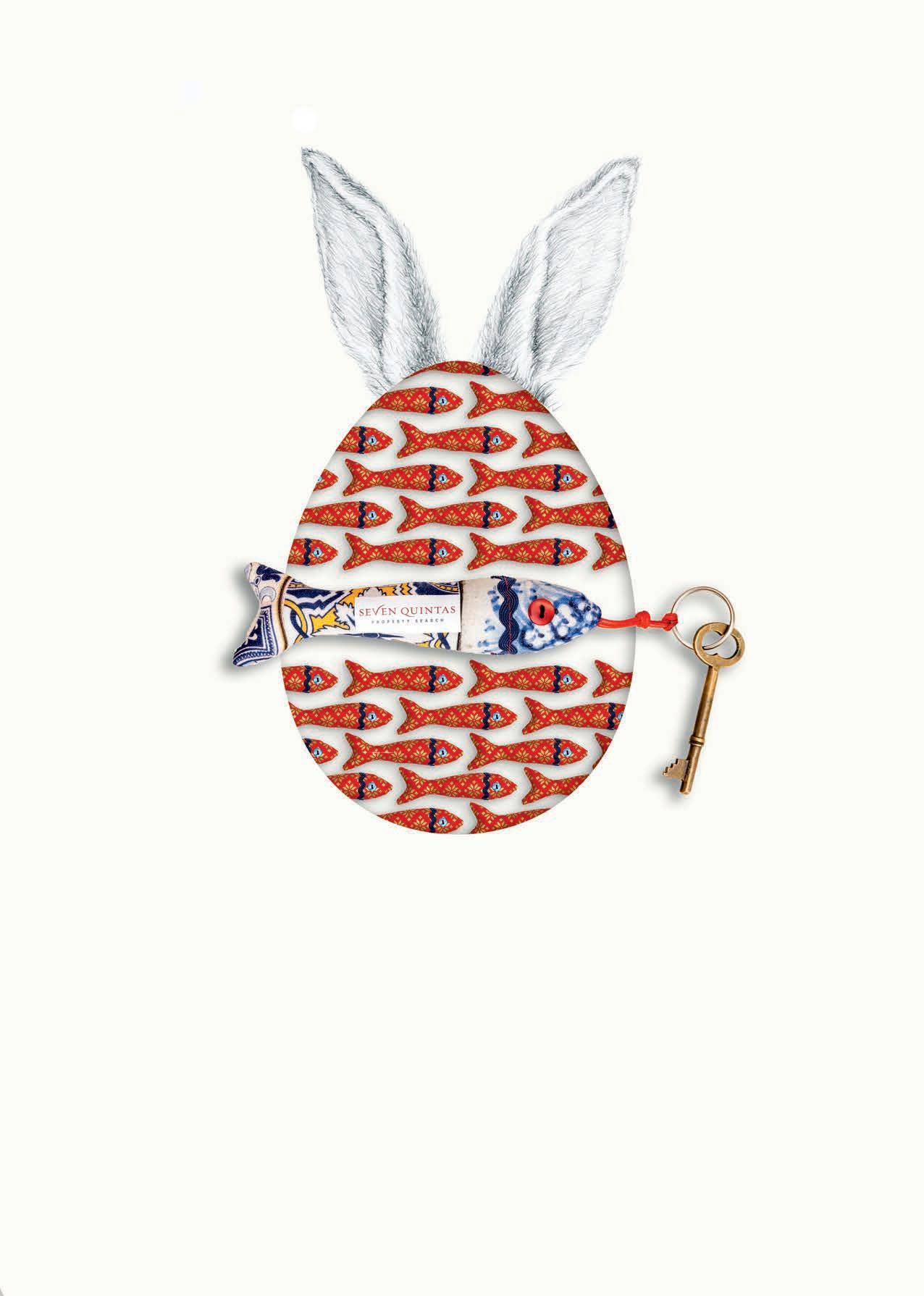
MORE EGGCEPTIONAL THAN YOU EVER IMAGINED










MORE EGGCEPTIONAL THAN YOU EVER IMAGINED
April is always a special month, not only as a celebration of Easter and the true start of spring, but here in Portugal as the anniversary of the 25th, the Day of the Carnation Revolution in 1974. That was the day that a military coup saw the end of the country’s Estado Novo and introduced a new era where freedom, inclusion, respect, dignity and democracy shaped life for the Portuguese. And it was a mostly peaceful coup – there was virtually no fighting, no battlegrounds, no deaths. Just a nation of people whose hearts were lifted and thankful.
Why the name carnation? Lisbon restaurant worker Celeste Caeiro offered the carnations that her boss had bought to gift customers as part of the restaurant’s first anniversary party. Of course, the party, planned for the 25th, was cancelled because of the coup, and the staff were given the flowers to take home. Celeste gave hers to the soldiers in the tanks on the streets, placing them in the muzzles of those silent guns. Her actions became the symbol of the revolution; the crowds celebrating the end of the dictatorship witnessed her actions and did the same. Celeste passed away in 2024, at the age of 91, but has never been forgotten. Every year, the 25th of April is a national holiday, recalling the quiet revolution and its outcome.
Also this month, Loulé’s special annual event takes place with the small procession bringing the statue of Mãe Soberano from the hilltop sanctuary into town and the big event when she returns home – see page 54 for the full story. And on Easter Sunday, a visit to São Brás is a must for the annual Flower Torch Festival – see page 100, and get there early.

Susi Rogol-Goodkind, EDITOR +351 965 581 831 | susi@rogol-goodkind.com
MARTIN GOODKIND
Publisher +351 963 146 398 martin@algarveplusmagazine.com
(COST
KIM COLLEY
+44 (0)7973 426196 dk.colley@btinternet.com

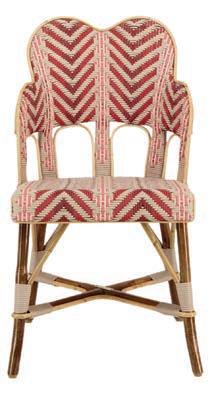
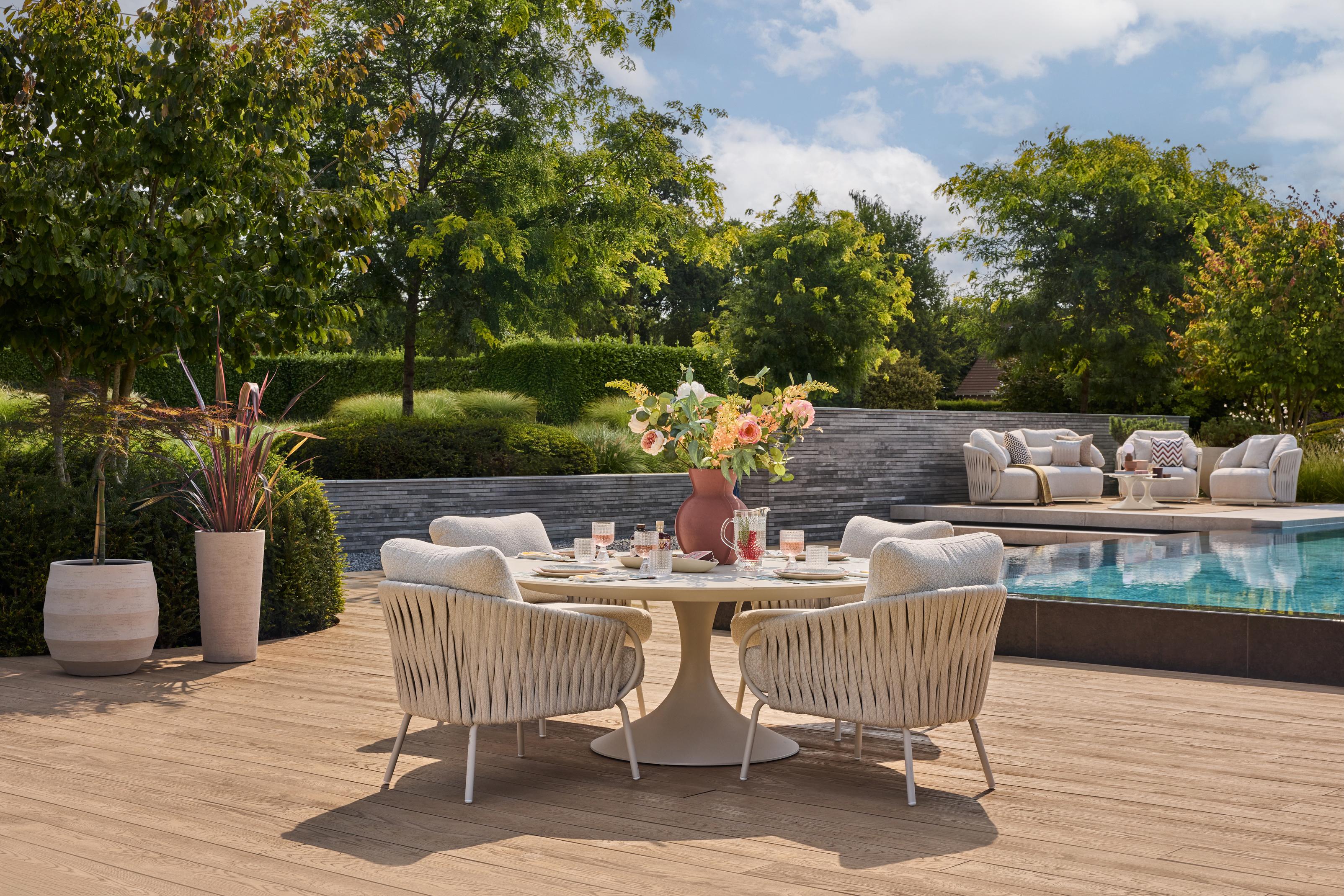
The Rouge Houlgate rattan armchair is a reimagined 1940s Maison Louis Drucker classic. Crafted with a Malacca rattan frame and a jacquard woven satin fibre seat, it combines elegance, durability, and vibrant satin hues for refined spaces. fashionclinic.com
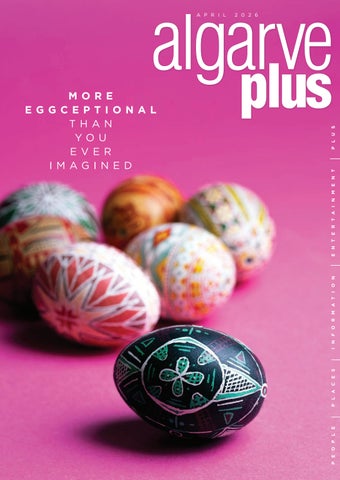
FRONT COVER: Anyone for eggs? Of course... this month it is everyone. Enjoy Easter.

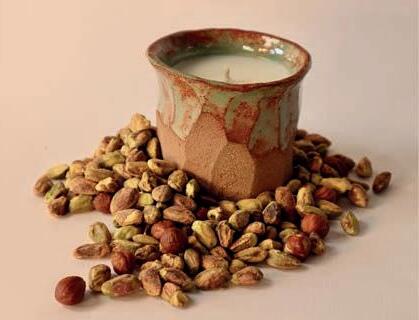
Pistachio Oasis is a special edition of Senferu’s gourmand fragrance Harmony, created by master perfumer Ilias Kakis. Roasted pistachio and hazelnut radiate decadent richness, layered with creamy coconut, toffee and a touch of banana, grounded by white musk and vanilla. Each candle is presented in Sneferu’s signature Oasis stoneware, hand-cut at its Porto workshop. €85. snfru.com
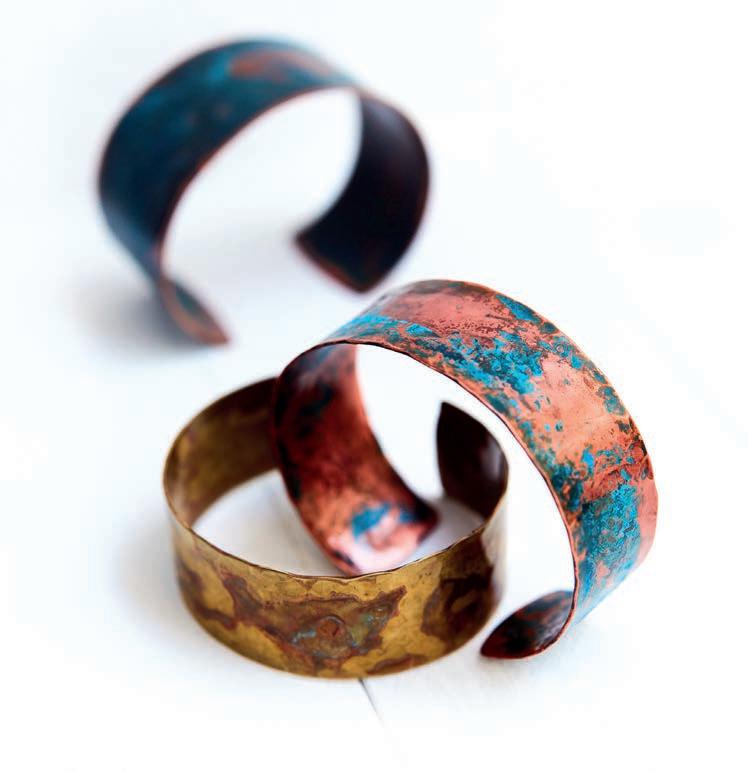
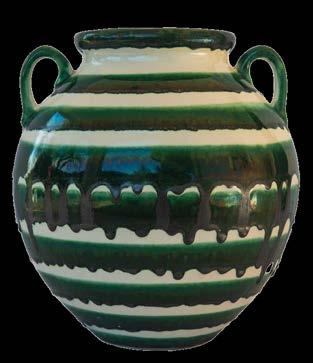
Statement-making style: brass and copper bracelets, handmade in Portugal, €35. From Martina fashion store in Largo Dr. Bernardo Lopes, 5. martina-loule.com
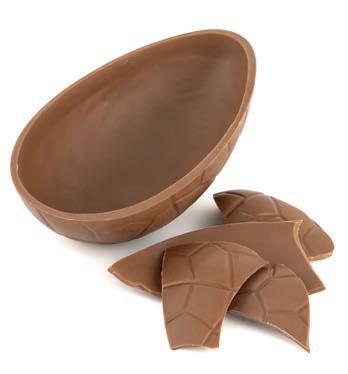
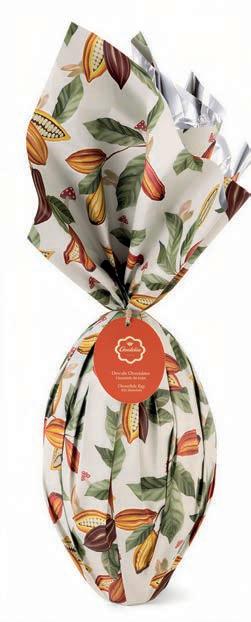
Easter wouldn’t be Easter without chocolate. Portuguese brand Arcádia has the options covered, with eggs, bunnies, covered almonds and more. 125g wrapped eggs, in dark or light chocolate, €11. arcadiachocolates.com
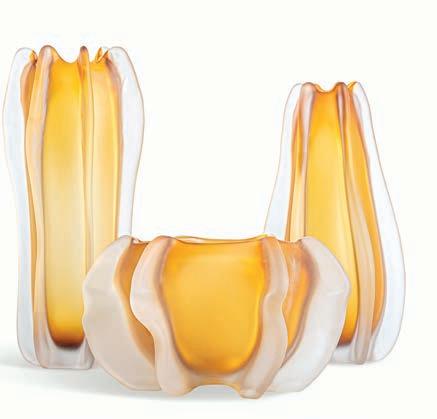
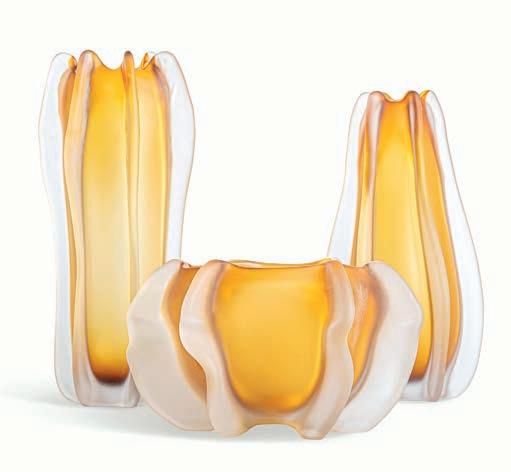
The stunning Mizuki collection of hand-blown amber glass vases in organic, sculptural shapes, can be seen at Oliveira Decor in Tavira, perfect for those seeking personality pieces with a natural twist. From €145. byoliveira.com
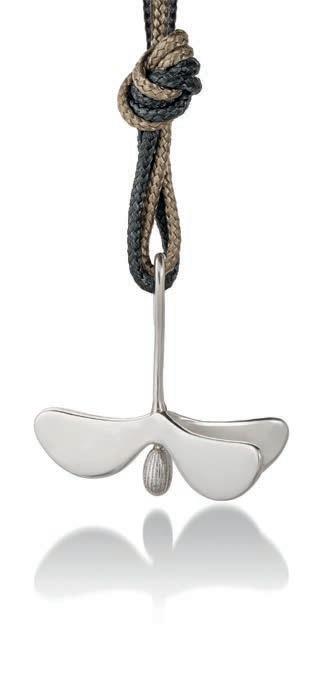
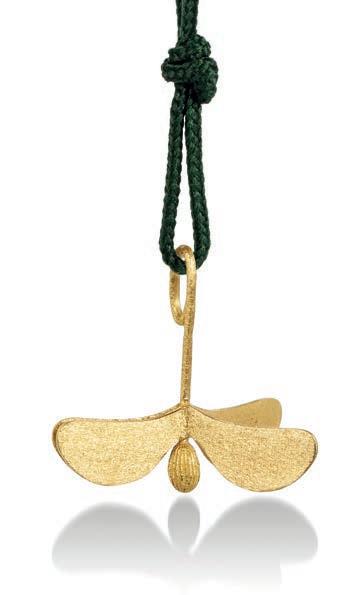
Through the inspired Flying Seeds collection, jewellery designer Luísa Rosas aims to support the mission of the Portuguese Association Corações com Coroa, giving wings to the dreams of girls and women by creating awareness of their rights and female empowerment with dignity, justice and a life full of opportunities. Find out more of the work of the non-profit association at coracoescomcoroa.org
The Flying Seeds pendants are in silver or yellow gold on cotton thread, in both small and large sizes. Prices from €65 to €280. luisarosas.com
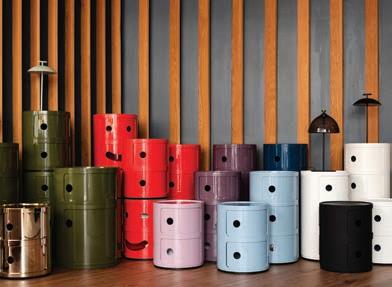
Italian design brand Kartell has opened its first store in Lisbon, in Amoreiras, where its iconic pieces are beckoning everyone from interior designers to someone who just needs a little more sparkle in their home. kartell.com
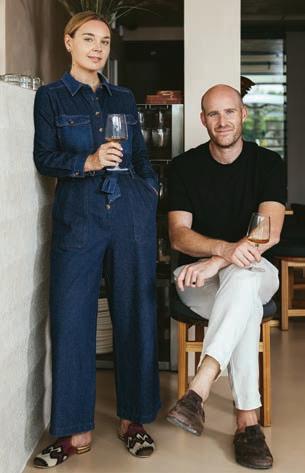
“We are honoured to be included in The Michelin Guide 2026”, said Emma Campus of austa in Almancil. David Campus continues: ''''“This recognition feels quite surreal considering that we did not set out to achieve it, but then we remember that what it actually represents is the hard work and curiosity, not just of our team, but also that of our producers and their relentless ambition to do things differently despite the immense challenges in doing so”.
Head Chef David Barata adds: “Our goal is simple. To cook in a way that honours the craft of our producers while telling the stories and memories of our region and beyond, to value simplicity and transparency and to provide a warm and open hospitality that feels inclusive and comforting but also curious. It’s about continuing to contribute to a conversation about the future of food and hospitality. That’s what motivates us”.

- loulé - olhão - lagos koziishop.com

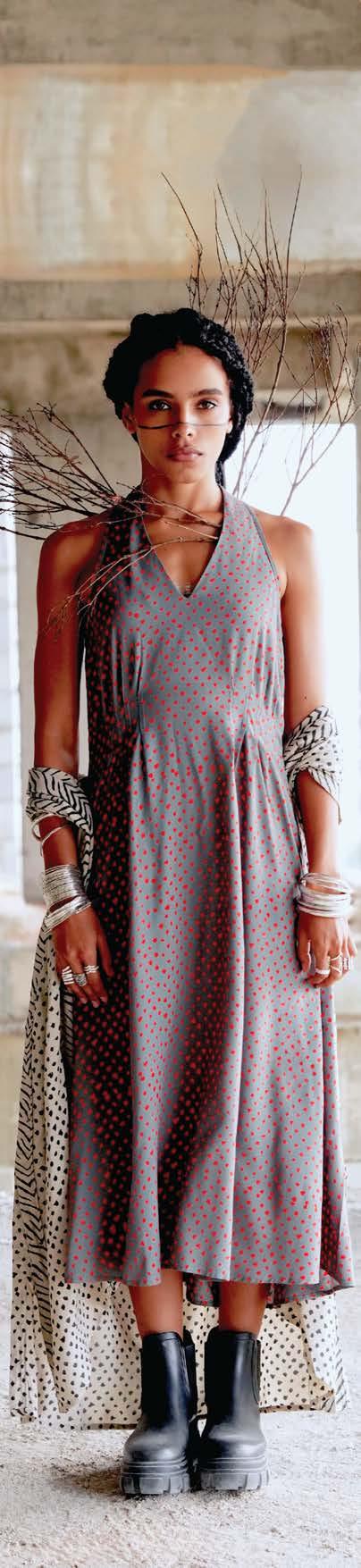

FTHIS IS GLOBAL VOLUNTEER MONTH, WHEN COMMUNITIES AROUND THE WORLD CELEBRATE THE MILLIONS WHO GIVE THEIR TIME, SKILLS, AND COMPASSION TO HELP OTHERS. VOLUNTEERS PLAY AN ESSENTIAL ROLE IN THE ORGANISATIONS THAT SERVE OUR COMMUNITIES, FROM FOOD BANKS AND ANIMAL SHELTERS TO ENVIRONMENTAL AND COMMUNITY PROJECTS
OR MANY people, volunteering begins with a desire to help.
Perhaps a charity needs an extra pair of hands, a community project catches your attention, or a friend encourages you to get involved. But while these efforts clearly benefit the people and causes being supported, research shows that volunteers gain significant benefits as well. Studies in psychology, public health, and sociology consistently find that volunteering improves mental and physical wellbeing, strengthens social connections, and increases life satisfaction.
For people living in regions like the Algarve – where many residents have moved from other countries – volunteering offers another advantage: a meaningful way to become part of the local community. By working alongside neighbours, charities, and community organisations, volunteers frequently discover that giving their time not only helps others, but also enriches their own lives.
The science behind volunteering
Studies link volunteering with improved mental health and indicate that people who volunteer regularly report lower levels of depression and loneliness, stronger selfesteem, and a greater sense of purpose.
Contributing time and skills to a meaningful cause provides both motivation and structure. An additional benefit shown in long-term studies indicates that people who volunteer regularly have a lower risk of mortality than those who do not. Researchers attribute this to a combination of factors: social interaction, mental stimulation, physical activity, and the sense of purpose that helping others provides.
Words: ELISABETH LEONARD
Becoming part of the community
Working alongside local organisations, people quickly become part of the networks, meeting neighbours, learning about local needs, and better understanding their communities. The shared purpose of helping others creates natural opportunities for conversation, collaboration, and friendship.
For those learning Portuguese, volunteering provides opportunities to practice the language. Conversations during projects and events offer a relaxed way to hear and use Portuguese naturally. Over time, these interactions build both confidence and fluency.
Volunteers also gain insight into local customs, traditions, and social norms. This informal learning process helps bridge cultural differences and strengthens the connections that make communities thrive.
Choosing where to volunteer
With so many opportunities available, choosing where to volunteer can feel overwhelming. A good place to start is by considering which causes matter most to you. Some people are drawn to areas such as animal welfare, environmental protection, food security, education, or supporting vulnerable members of the community. Others prefer activities that allow them to use professional skills they already have.
Equally important is considering the type of experience you would enjoy. Some volunteer roles involve regular weekly commitments, while others concentrate on occasional events or seasonal projects. And many organisations welcome volunteers for one-time opportunities, such as helping at a fundraising event.
There are many different types of activities. Some involve physical activity, such as beach clean-ups or community gardening, while others focus on social
interaction, such as helping at charity shops, assisting at community events, or supporting educational programmes.
It is also worth thinking about what you hope to gain from the experience. For newcomers to the Algarve, working with local organisations provides a valuable way to meet people and become familiar with community initiatives.
It is also helpful to remember that many charities operate with small teams and limited administrative capacity. If you reach out to an organisation and do not receive an immediate response, it does not necessarily mean that volunteers are not needed.
Following up politely or visiting in person can be one of the most effective ways to connect. Meeting staff or volunteers faceto-face increases the chances of making contact and helps you better understand the work they do and decide whether it is a good match for your interests and availability.
Before committing, many charities encourage potential volunteers to visit, ask questions, and learn more about the organisation’s mission and needs. Finding the right fit – both for the volunteer and the organisation – helps ensure the experience is positive for everyone involved.
A small step can make a big difference Research confirms that volunteering benefits both the community and the volunteer. Yet beyond the statistics lies something more meaningful: the opportunity to contribute, connect, and be part of something larger than ourselves.
For anyone considering how to become more involved in their community, volunteering remains one of the simplest ways to start. Sometimes finding the right opportunity takes persistence, but the connections and experiences that follow are well worth the effort.
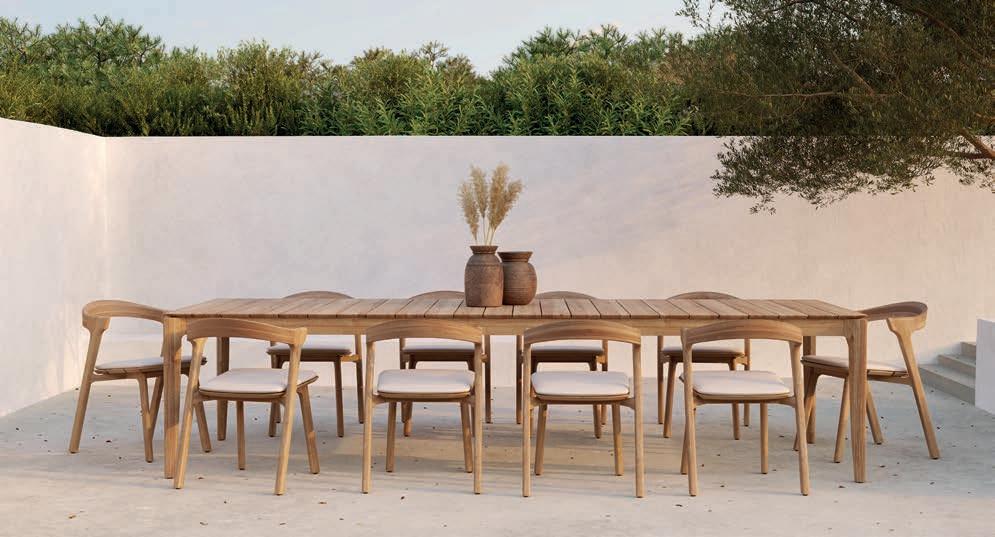
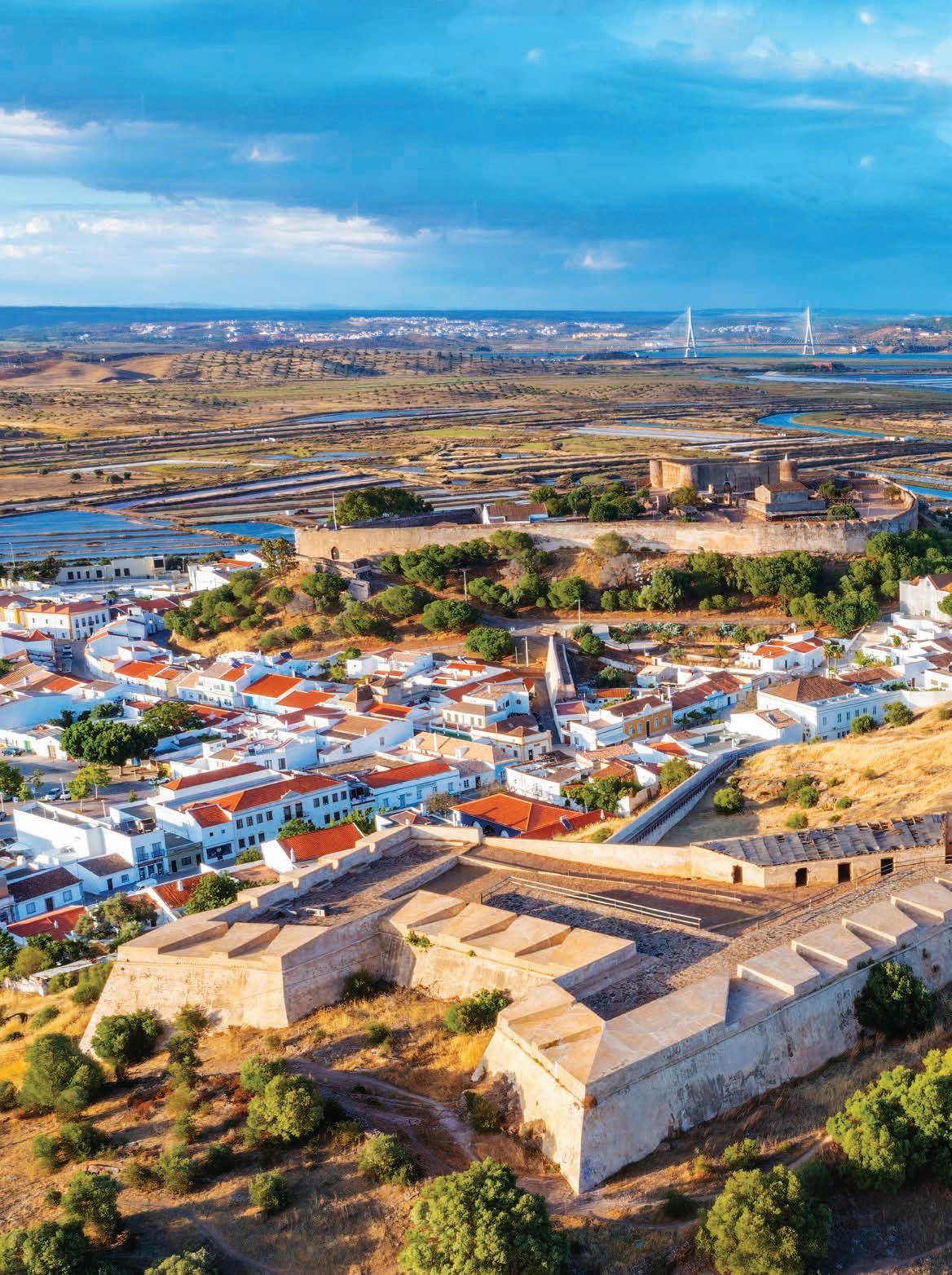
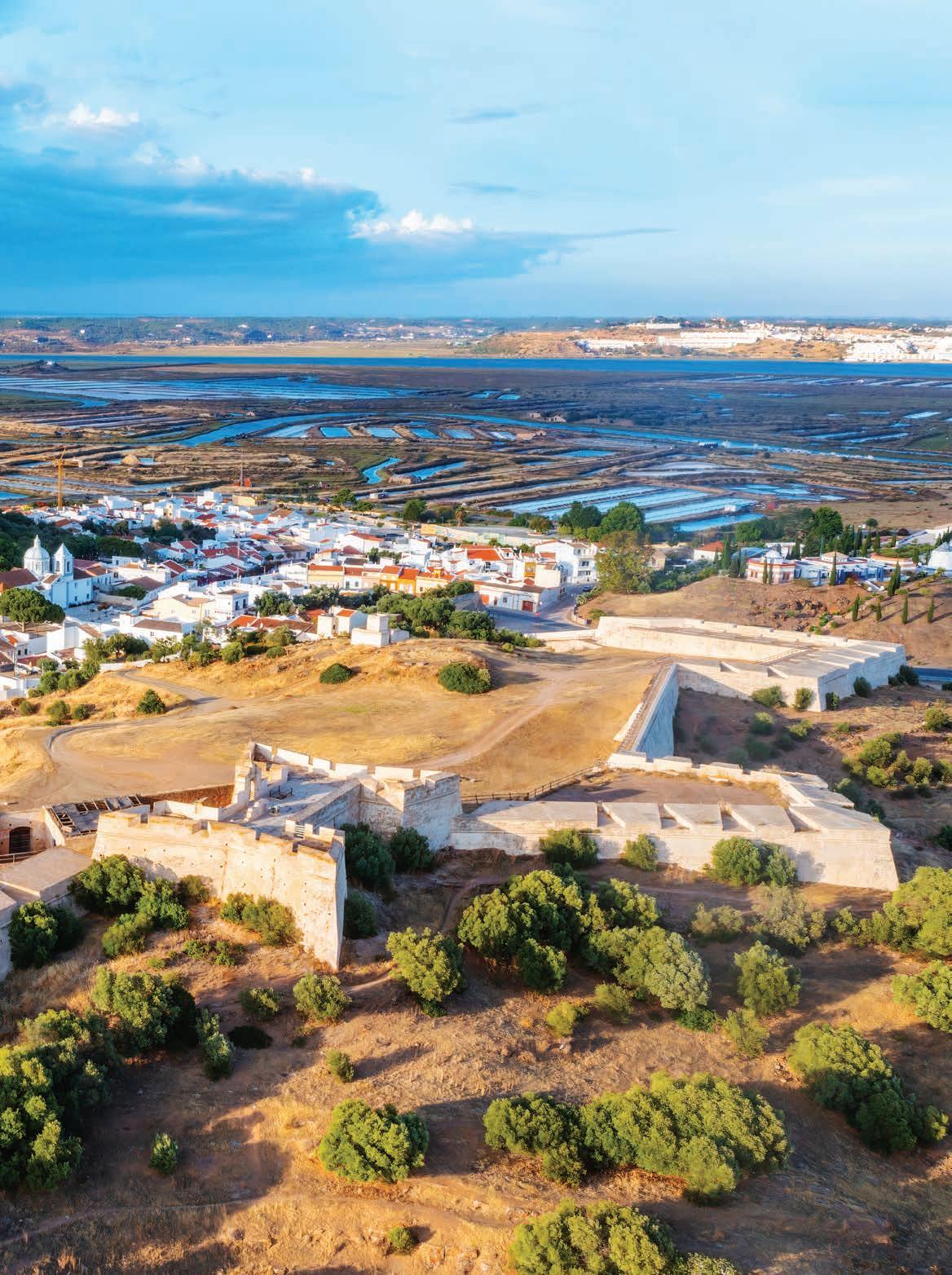
CASTRO MARIM SITS IN THE FAR EASTERN CORNER OF THE ALGARVE, IN THE FARO DISTRICT, PRESSED UP AGAINST THE SPANISH BORDER WHERE THE GUADIANA RIVER DEFINES BOTH GEOGRAPHY AND HISTORY
Words: NICK ROBINSON, ALGARVE ADDICTS
THE FIRST thing you hear, before you even step through the low doorway, is her voice.
Inside a candlelit medieval tavern just outside the ancient castle walls of Castro Marim, my daughter is singing. Rikki, her guitarist, bends over his instrument in the corner, fingers moving quietly across the strings as her voice lifts and fills the stone room.
The other patrons – a mix of locals nursing glasses of Alentejo red and a handful of travellers who stumbled in from the road – have gone quiet. Outside, the castle walls rise against the evening sky, pale and massive and older than memory. In here, the music wraps itself around the rough-hewn beams, around the clay jugs and copper lanterns, and something shifts in the room. You feel it.
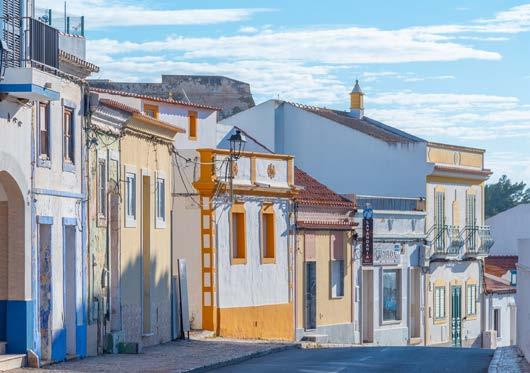
Time has a different weight in Castro Marim. This tavern, open year-round and beloved by those who know it, is one of those rare places that hasn’t been invented for tourists. It belongs to the town the way the salt marshes and the castle do – organically, stubbornly, beautifully. It is the ideal introduction to a place that most visitors to the Algarve never find, and never know they’re missing.
While the rest of Portugal’s southern coast has largely surrendered itself to beach tourism – the golf resorts, the chiringuito bars, the
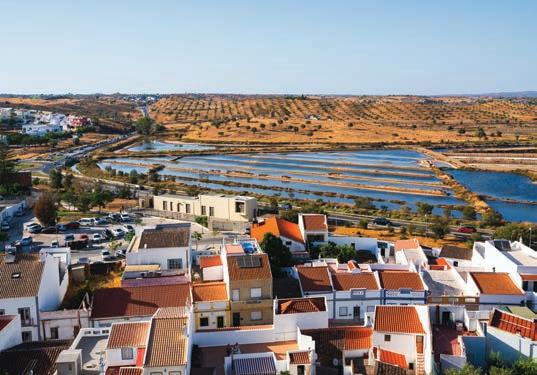
neon-lit promenades – Castro Marim has held something back. Its population is small, just over 1,500 people in the town itself, and it governs a municipality of nearly 300 square kilometres that stretches from the Atlantic-influenced salt flats to the rolling hills of the interior.
What the town lacks in size it more than compensates for in depth. Few places in Portugal – few places in Europe, in fact –have been fought over, occupied, fortified, and reconquered as thoroughly and as repeatedly as this particular hill overlooking the Guadiana. The strategic importance of the location was obvious from the very beginning of recorded human history here, which is to say, a very long time ago indeed.
The Phoenicians arrived around 1000 BC, drawn by the river, the salt, and the commanding position of the hilltop. They were followed by the Greeks, and then the Carthaginians, each successive civilization recognising what their predecessors had already understood: whoever controlled this crossing controlled the movement of trade and armies between east and west. When Rome swept through the Iberian Peninsula from 200 BC onwards, they formalised the settlement and gave it a name – Aesuris – and integrated it into their vast network of borderland fortifications.
The Vandals passed through in the fifth century AD, as empires have a way of doing when they're unravelling. Then, in 780 AD, the Moors arrived and remade the landscape more thoroughly than anyone before them, leaving behind an architectural and agricultural legacy that persists to this day in the shape of the walls, the irrigation channels, and the names of the surrounding villages.
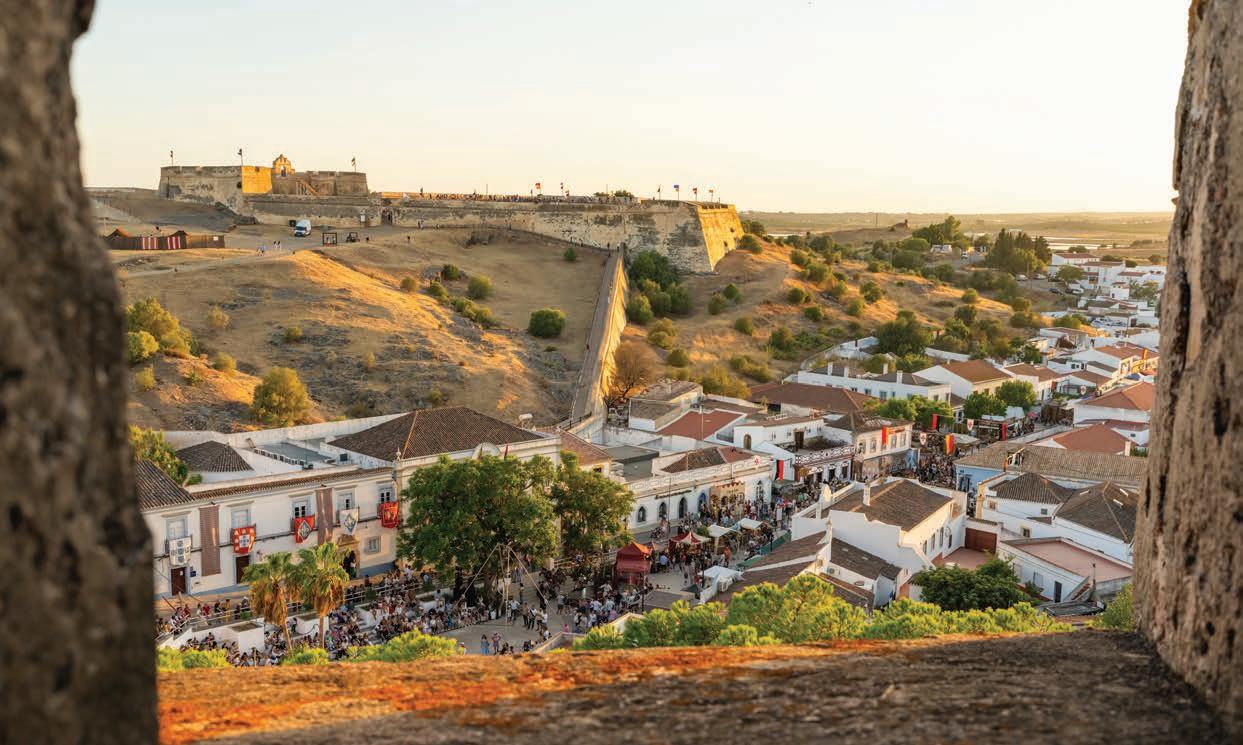
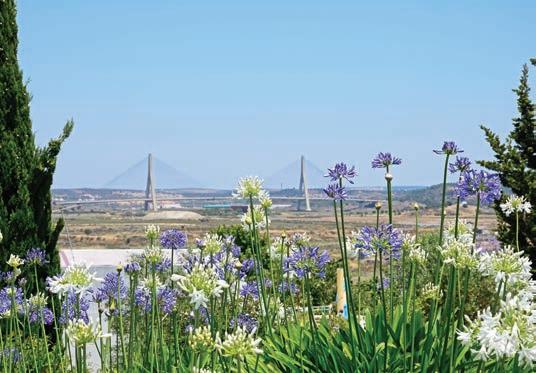
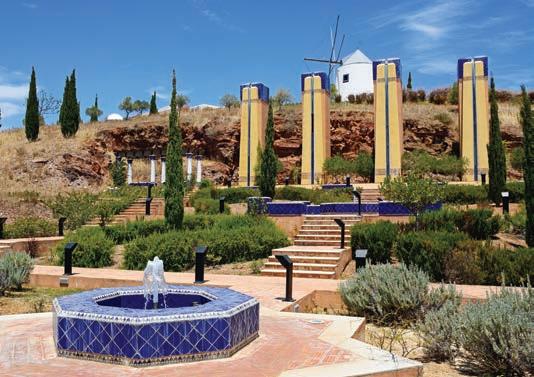
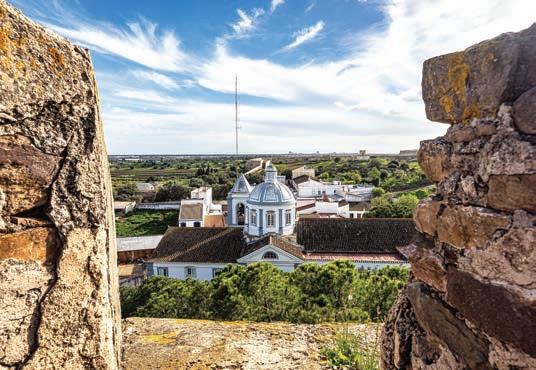
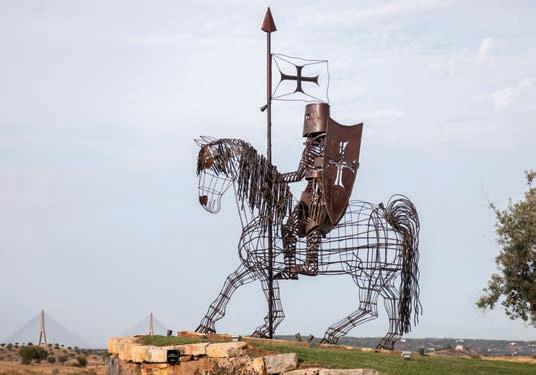
Opposite page: Looking down on the centre of the town, and up at the
see the bridge that joins Portugal with Spain; the church of Castro Marim;
Modern, yes, a viewpoint on the hilltop that tells a story of the past
The Christian reconquest came in 1242, and with it a new chapter that would give Castro Marim its most romantic and enduring historical distinction.
Stand at the top of the castle today and look out over the salt marshes glittering toward the river. It is not difficult to understand why, in 1319, this fortress was chosen as the capital and headquarters of one of the most legendary military orders in history.
The Knights Templar – or more precisely their successor organisation in Portugal, the Order of Christ – were given the castle and the town as their base. For nearly four decades, Castro Marim was effectively the nerve centre of a crusading military brotherhood whose influence stretched from Lisbon to Jerusalem and, eventually, to the far shores of the Atlantic.
The Order eventually relocated its headquarters to Tomar in 1357, but the castle church still holds an exhibition – Castro Marim, Primeira Sede da Ordem de Cristo, or Castro Marim, First Headquarters of the Order of Christ – that brings this era vividly to life. Walking through it, you understand that this was not a minor provincial outpost; this was a place of genuine strategic and spiritual power.
The military importance of the site continued long after the Templars departed. King Manuel I ordered extensive repairs and reinforcements to the fortifications in 1504, and five years later commissioned the cartographer Duarte Armas to travel
Portugal’s borderlands and catalogue its defensive structures in meticulous detail. Castro Marim was considered significant enough to be among the most important sites on that royal survey – a designation that, standing within the walls today, feels entirely deserved.
The castle complex includes more than just the main fortification. The Forte de São Sebastião and the Revelim de Santo António offer a broader lesson in how seriously the Portuguese Crown took this border crossing. For visitors with a taste for darker history, the castle’s museum hosts an exhibition of instruments of torture and punishment that is, to put it diplomatically, memorable.
At the end of every August, Castro Marim performs its most spectacular trick: it simply ceases to be the 21st century.
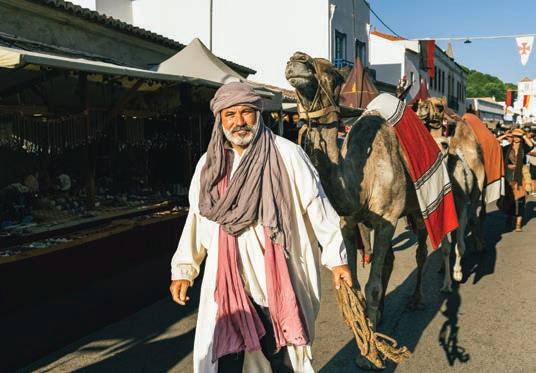
The annual Medieval Fair transforms the castle and its surroundings into a fully realised reconstruction of the town’s historical heyday. The battlements become backdrops for archery demonstrations; the pathways fill with traders in period costume selling ironwork, hand-woven textiles, dried herbs, and ceramic wares from trestle tables draped in rough linen; the smell of woodsmoke mingles with roasting meat and the faint sweetness of beeswax candles.
Musicians with lutes and drums create a constant sonic backdrop that seeps into every corner of the fairground. Sword fights draw gasps from the crowds. Dancers in elaborate
costumes move through the spaces between the market stalls. Children chase each other through archways that were already ancient when their great-grandparents were born.
The food at the fair deserves particular mention. The bifana – a classic Portuguese pork sandwich that has been sustaining travellers and labourers in this country for centuries – is available at stalls throughout the grounds, and it is invariably excellent. Paired with a cup of local wine and eaten while leaning against a castle wall that has stood since the age of crusaders, it achieves a kind of perfection that is difficult to explain to anyone who hasn’t experienced it.
The Medieval Fair draws performers and visitors from across Europe and beyond, but it never feels like a cynical commercial exercise. The townspeople are genuinely proud of this event, and that pride is infectious. It is one of those rare festivals where the atmosphere is created not just by the spectacle, but by the authentic connection between a community and its own extraordinary past.
The history of Castro Marim is not only written in stone and iron. The salt marshes that surround the town represent an equally ancient industry, one that shaped medieval economies and trade routes just as surely as any military fortification. The Casa do Sal – the House of Salt – tells this story with obvious affection, celebrating a craft that has been practised here continuously for centuries. The salt pans themselves are still working, still
producing high-quality salt using methods that would not be unfamiliar to a Roman merchant.
There is also a cultural connection between Castro Marim and the wider world that surprises many visitors. The legendary Spanish flamenco guitarist '' – one of the most influential musicians of the 20th century – had a Portuguese mother who came from this town. He honoured her origins by naming one of his studio albums Castro Marin. The town now maintains a memorial to him, a small but touching acknowledgment that great art often has deep, quiet roots in places the world has overlooked.
It is a connection that feels especially resonant when you think about my daughter and Rikki in that candlelit tavern. Music, it seems, has always known how to find this town.
The song ends. There is a moment of silence – the kind that only happens when something has genuinely moved people – and then the room breaks into warm, unhurried applause. Rikki sets down his guitar and reaches for his wine. My daughter smiles.
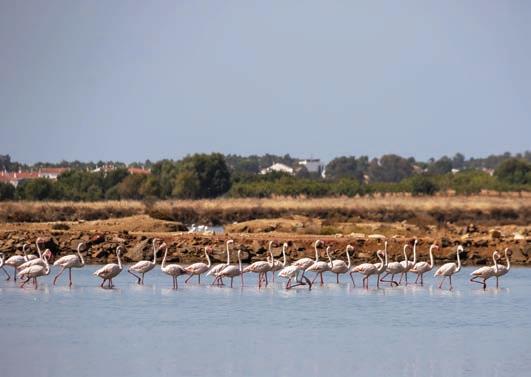
Outside, the castle stands in the dark as it has stood for the better part of a thousand years, patient and immense. The Guadiana moves slowly toward the sea. Somewhere in the salt marshes, a night bird calls.
Castro Marim is not a place that announces itself. It doesn’t need to. It has been here long enough to know that the right people always find their way to it eventually – drawn by a castle on a hill, by the smell of salt in the evening air, by the sound of a guitar drifting through an open door.
Come and find it for yourself. You won’t regret it.

MAYBE IT’S SIMPLY BECAUSE YOU WANT TO RESPECT YOUR NEW HOME BY HAVING THE COURTESY TO SPEAK ITS LANGUAGE, OR IT MAY BE A LEGAL REQUIREMENT FOR A RESIDENCY OR CITIZENSHIP APPLICATION. WHATEVER THE REASON, FINDING THE BEST OPTION CAN BE SOMETHING OF A MINEFIELD
Words: DEBBIE REYNOLDS
agrees that Portuguese is not an easy language to learn, it’s not impossible either. Time, effort and consistency are critical, but more importantly, it’s about wanting to better integrate into the local community. There is no right or wrong way to start the process, but having had considerable experience over the past six years, I can offer some suggestions and perhaps point out some pitfalls.
A year before I moved to Portugal from South Africa, I had already decided to take the most basic stab at learning the language. That was eight years ago and back then the free online platforms were limited, so I ended up choosing Duolingo. Not a terrible choice, but not the best because, unbeknown to me, I was learning Brazilian Portuguese, rather than the European version.
I soon learned that while much of it is the same, there are distinct vocabulary differences and the pronunciation is vastly different. So, if you’re living in Portugal, make sure to learn the local Portuguese or you’ll pick up bad habits that are difficult to break.
Still, arriving in Portugal I thought I had a rudimentary understanding of the language which would help me get by. It was okay in the bigger towns and cities where a lot of people are gracious enough to speak English, but here in the Algarve, in the little town of Luz de Tavira where we live, the only person who spoke English was the pharmacist. And no one understood my bad Brazilian-influenced Portuguese.
So, it was back to the drawing board. My best bet, it seemed, was enrolling in the government’s Portuguese Language of Reception Course (PLA) aimed at foreigners over 16 years old whose first language is not Portuguese. In Tavira, these classes are held at night at the secondary school and candidates need to register at the school during a specified period which is normally in early July, and pay a small fee (around €9).
I arrived on registration day, with my residence permit, passport and NIF, filled out the form and was told I would be contacted in due course regarding the September intake, or I could check online. Unfortunately, due to the long waiting list, I didn’t make the cut that year, so I had to wait for the next year. Impatient to get going properly, I hired a private tutor with the aim of passing the A2 CIPLE exam which is required for permanent residence (for non-EU citizens) and citizenship.
I was lucky to find a highly-competent teacher who was prepared to come to my house for an hour twice a week for an initial 20 hours of tuition (cost €465) to prepare me for the exam, which is taken at official CAPLE centres
across Portugal. Registration is online, but is often not immediate as it depends on availability. For instance, I checked the possibilities every month for three months before being able to register at Lisbon University in May 2025.
Having done regular homework and revision, I realised my speaking and listening skills were less than satisfactory, so I hired my trusted tutor for another ten hours, during which time we largely concentrated on the exam format and its three components – reading, comprehension and writing (75 minutes), oral comprehension (30 minutes) and speaking (ten to 15 minutes).
Then it was off to the Faculty of Arts at the University of Lisbon for the totally daunting process of sitting the exam (the last time I took an exam was 40+ years ago!). It started at 9am sharp with the first two components, followed by a break, the length of which is determined by your surname in alphabetical order. I was lucky to finish at 2.30pm.
It’s worth noting that if you are properly prepared you stand a good chance of passing (pass rate is 59%), but if you are hard of hearing and/or prone to stressing then this is not an ideal choice for you. Every bit of instruction from the moment you arrive at the examination centre to the moment you leave is all done in Portuguese. There was also the constant background noise of a lawnmower and aeroplanes taking off and landing nearby.
I also found the speaking part particularly stressful as you are talking to your examiner and a perfect stranger who you are paired up with on the day. I had a total case of stage fright, because the questions I expected were different from my carefully prepared answers. In hindsight, I should have asked the examiner to repeat the questions to give myself time to re-group.
I waited in nervous anticipation for the results to be announced about six weeks post-exam and was hugely relieved to pass and be able to collect my certificate which is now safely stored, awaiting the citizenship process next year.
Going the PLA school route now seems like the
better bet, judging from Cliff Ferreira’s experience. Originally from Botswana, he arrived in Portugal in March 2022 with the intention of retiring permanently in Tavira.
“My plan from the outset was to learn to speak Portuguese and to integrate as much as possible into Portuguese society and way of life,” he explains. “Initially I had a private tutor as I didn’t know about the government lessons. After my tutor relocated to Coimbra, I was looking for options to continue learning, and friends told me about the classes at the local secondary school.”
Cliff also went through the process of registering at the school only to be omitted from that year’s intake because of the long waiting list. “The registrar explained very kindly that I was number 99 on the list and suggested that I re-register the following year as candidates who had applied the year before would be given preference. I did exactly that and a year later I was accepted in the first year A1/A2 class.”
The course duration is in line with the national government school calendar with classes running from September to June. Classes are two and a half hours long and are held twice a week at night.
“Our teacher made it very clear from the outset that we required at least 90% attendance rate and that active participation was also required,” says Cliff. “In other words, they were unlikely to give an A1/A2 certificate to someone at the end of one year who did not try to participate in class exercises, achieve minimum attendance and do homework.”
Cliff says the class consisted of 25 people from mixed cultures with very little Portuguese ability, so it was comforting to all be in the same boat with no judgement when mistakes were made.
“Our teacher was not fluent in English which was a challenge but the other two teachers giving first-year classes were. Our teacher has a passion for
teaching and what she lacked in English she made up for with sheer enthusiasm and picture-drawing skills. When she did not know the English name for something she drew a really good image!”
Cliff particularly enjoyed being exposed to Portuguese culture, which is part of the course. “We learned some history, listened to local music and went to local art shows. We also learned about each other’s cultures through special event evenings, like all bringing a national food dish and then having to explain the ingredients in Portuguese to fellow students.
“There was also a project we worked on to introduce our country to fellow students. For example, I worked with a group to give information about South Africa. We all presented a large poster with pictures of national animals, famous people, information about government systems, currency and geography. While doing this, we expanded our own Portuguese vocabulary and towards the end of the term we did a presentation in the school hall to our fellow students in Portuguese.”
The challenges, he said, were having to restrict travel plans during the school term because of the mandatory 90% attendance and having to stay focused at night, especially after a day at the beach or a long, lazy lunch.
“I realised as we were coming to the end of the A1/ A2 year that while I had improved significantly in my ability to read, my speech was still very rudimentary and my ability to understand Portuguese people speaking at their own speed was poor.
“I was very happy with the first year and I learned a lot, but I also learned that it was only a step in a process I would need to continue if I hoped to speak Portuguese properly one day.”
Cliff highly recommends the course if you are able to commit to the required hours. “It’s more than just learning the language; it’s also exposure to Portuguese culture, history and way of life.
“Many students do the A1/A2 first year merely to obtain the certificate required for long-term visa/ residency applications. I enjoyed the course to the extent that I am now busy with the second year B1/ B2 course.”
English-speaking South African Anthon Dreyer started his Portuguese journey several years back working with online platforms like Udemy and Talkpal, but knowing that he needed his A2 certification to apply for permanent residence, he recognised that he needed proper tuition.
Having been on a school waiting list for two years, he was short of time and looked to find a quick-fix solution. Anthon began investigating accredited online courses which could be done at home in a shorter period. Also, being hard of hearing this was a better option as he could work at home with headphones.
“I had attended some beginner’s conversational Portuguese classes soon after I arrived in Tavira, but because I wear hearing aids, I battled to keep up with the conversation, especially with people speaking different languages,” he explains.
“I found an online PLA course offered by EdPro Association, which was perfect because while it was intense, it could be completed in around two and a half months. The 150-hour course consisted of four lessons of four hours each per week.
“The course is relatively flexible as you can choose to do lessons in the morning, afternoon or at night. There is also an option of spreading the course out over a longer period.”
The course has the same requirements as the school course, including 90% attendance, class participation and completing tests. “So don’t think you can just switch on your laptop, sign in and read your book, because it is properly monitored and if you’re not there and participating you could easily be failed,” he says.
For Anthon, the biggest benefit was the flexibility of working online. “For example, I had a holiday booked in Madeira and was still able to do my lessons. On departure day I got to the airport early and worked from there and during the holiday I planned our trips around the lessons. I even wrote an exam sitting at
In the little town of Luz de Tavira where we live, the only person who spoke English was the pharmacist. And no one understood my bad Brazilianinfluenced Portuguese.
Faro Hospital waiting for an annual appointment.”
He says the only drawback for many would be the cost, which is not for the faint-hearted at €750 for the course, but he considers it to be money very well spent. “I definitely learned a lot, not only about the language but also the culture and interesting places which I now have on my bucket list to visit. It was also interesting connecting with so many different people. There were 22 students in the class, from all over the world, including Lebanon, New Zealand, Japan and Hong Kong.”
He added that while the thought of sitting behind a screen for four hours was initially daunting, it was broken down into three parts, including a ‘coffee break’ and an interesting 30-minute cultural video at the end. “If you immerse yourself in the lesson and have done your homework the time passes quickly.”
Within four weeks of completing the course, Anthon received his A2 certificate in the post. “Bearing in mind I had spent three years studying intensively on my own, I was elated at having finally reached this major milestone,” he says.
1. Find the course that suits your lifestyle and your pocket and then give it your full commitment.
2. Supplement your official learning with online courses, such as Udemy, TalkPal and PracticePortuguese. Instead of scrolling mindlessly through social media, take ten minutes a day on a Portuguese platform.
3. Practise, practise, practise!vSpeak Portuguese whenever you can, even if people are addressing you in English.
4. Try to learn a practical new mini conversation every day, for example, how to reserve a table at a restaurant; directing someone to your house; ordering food at a restaurant or chatting about the weather.
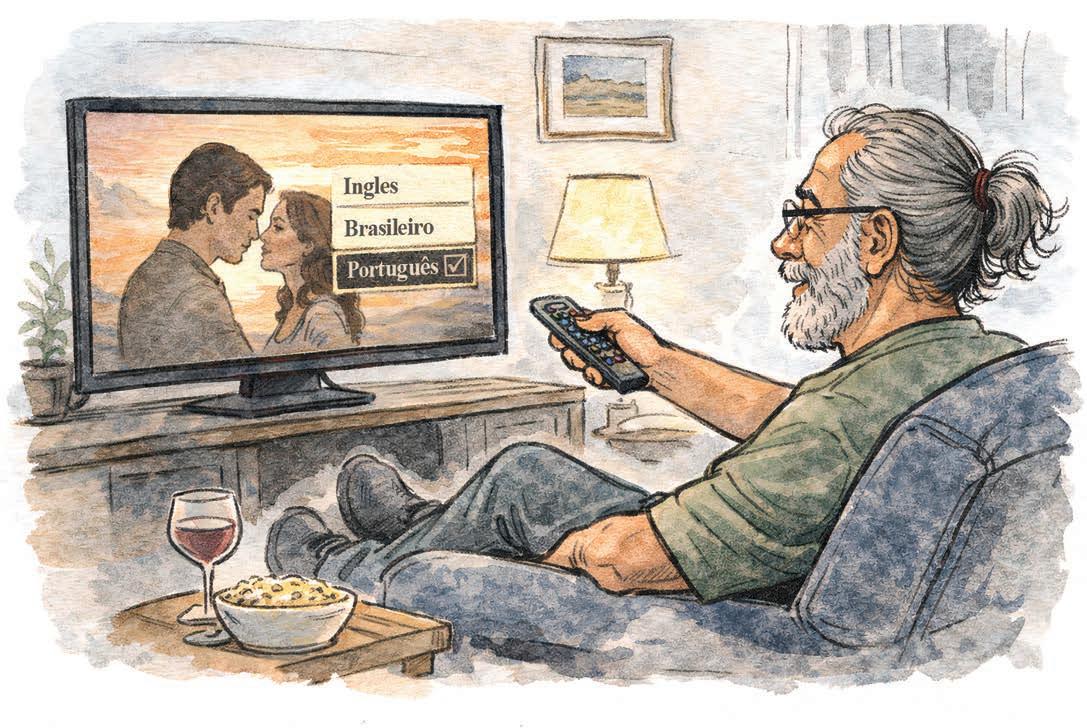
5. Watch movies/series in English with Portuguese subtitles, or vice versa.
6. Don’t stop learning once you’ve received your required proficiency certificate. Keep trying to understand a little more each day.
Mostly offered by public schools, the PLA is also available at various Employment and Vocational Centres and Qualifica Centres. To find out which is closest to you, contact AIMA’s Directorate of Portuguese Language Promotion Services by email at lingua.portuguesa@aima.gov.pt
WHEN AN EMPTY STORE APPEARED NEAR THEIR HOME IN ARMAÇÃO DE PÊRA, NEWCOMERS TO THE ALGARVE, KERRI CLARKSON AND RICHARD JORGE, SAW AN OPPORTUNITY: IF THEY COULDN’T FIND THE KIND OF CAFÉ THEY LOVED, THEY COULD CREATE ONE THEMSELVES. ELISABETH LEONARD CAN ’ T GET ENOUGH OF THEIR SPECIALITY COFFEE AND HOMEMADE CAKES
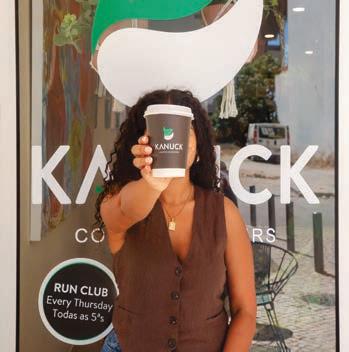
KERRI AND Richard Jorge moved from Canada to the Algarve to help care for Richard’s family, planning at first to stay only temporarily. Instead, they found themselves building a new life in Portugal and gradually embedding themselves in the local community, opening Kanuck Coffee Roasters in October 2024.
Coffee sits firmly at the centre of the menu. Green Arabica beans are sourced from a distributor in the Netherlands and selected not only for their flavour profiles but also for the producing farms’ commitment to fair labour practices, environmental sustainability, and responsible trade.
Once the beans arrive at Kanuck, they are roasted on site to bring out their full flavour. The beans are then left to rest for about 20 days to off-gas and reach their peak taste before being ground and brewed.
The most popular drinks include
bicas, flat whites, and matcha beverages; during the summer, cold brew becomes a favourite and Kanuck sells takeaway bottles.
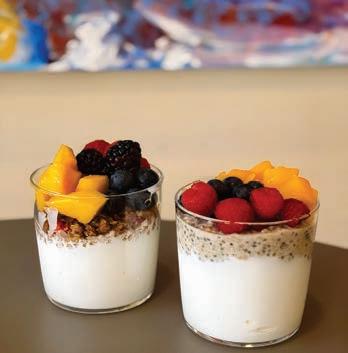
The food menu is designed to complement the coffee, and everything is prepared on site. There are sourdough torradas served with butter or topped with nut butter and banana. There are overnight oats made with gluten-free oats, oat milk, chia seeds, maple syrup, and vanilla, and smoothie bowls with mixed berries, banana, and homemade granola. Cookies range from classic chocolate chip to more indulgent options – pistachio or Nutella-filled – along with vegan varieties. Muffins offer another sweet pairing for a morning coffee.
The bread also has a story.
small and welcoming
A customer once mentioned to Kerri that a baker in nearby Lagoa produced exceptional artisanal sourdough breads. Curious, Kerri tried it – and immediately knew it would fit perfectly with Kanuck’s menu. That conversation turned into
local businesses.
Step inside and you experience more than coffee. You might discover local art, make new acquaintances, borrow a book from the café’s small lending library, or simply sit in the sunshine with a well-made drink. Kanuck blends the easy friendliness Canadians are known for with the warmth of Portuguese hospitality.
DECOR TRENDS CHANGE YEAR BY YEAR AND OFTEN
SEASON BY SEASON, ESPECIALLY WHEN IT COMES TO ACCESSORIES. WE ’ RE TRIPPING THE LIGHT
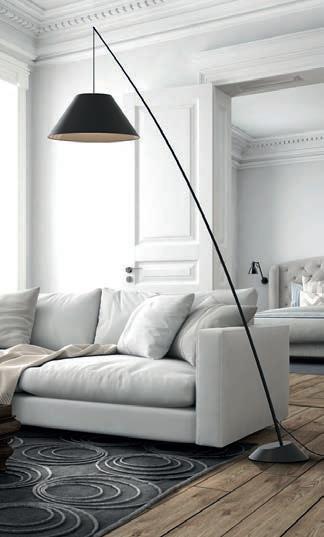
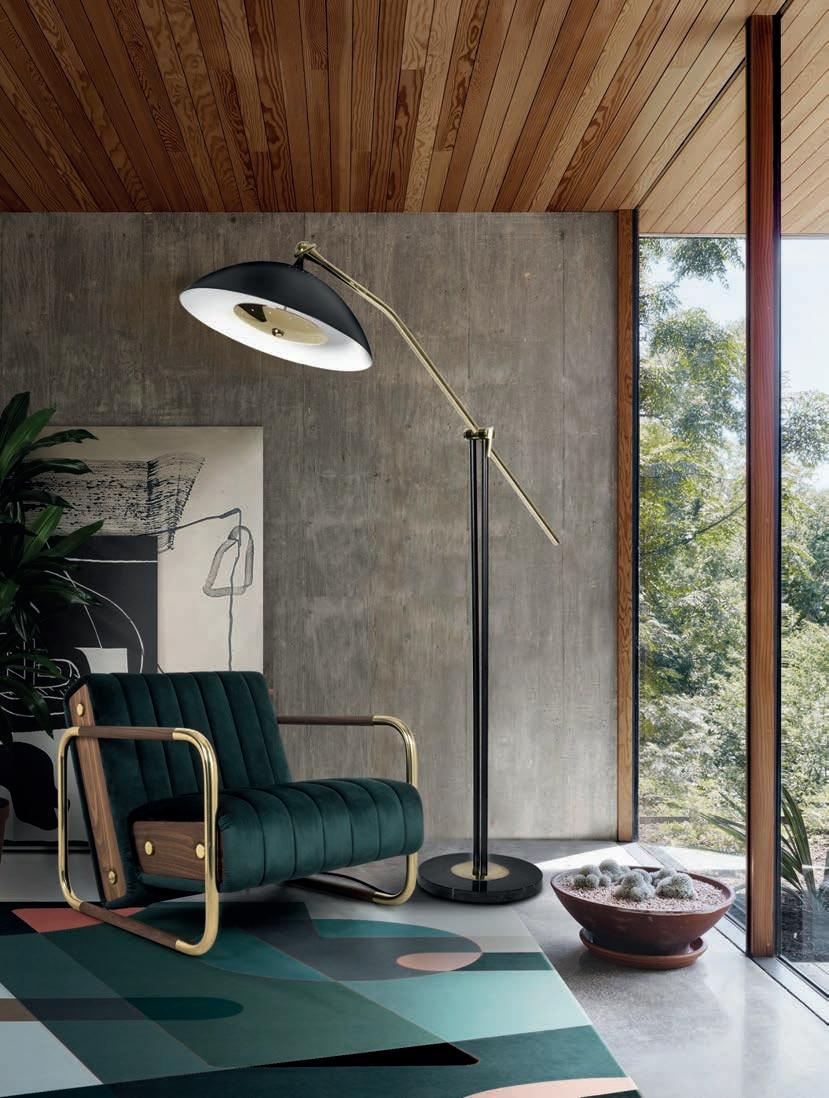
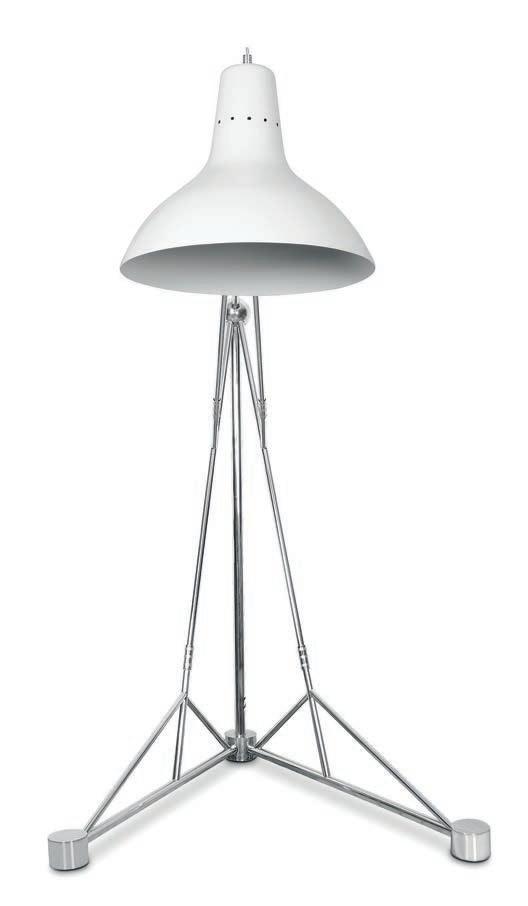
Meet Diana, an industrial-style floor lamp with a midcentury modern design. In steel with a nickel-plated finish, it stands tall at 230cm, and features a giant lampshade. circu.net
FANTASTIQUE TO SEARCH OUT THE BRIGHTEST LOOKS
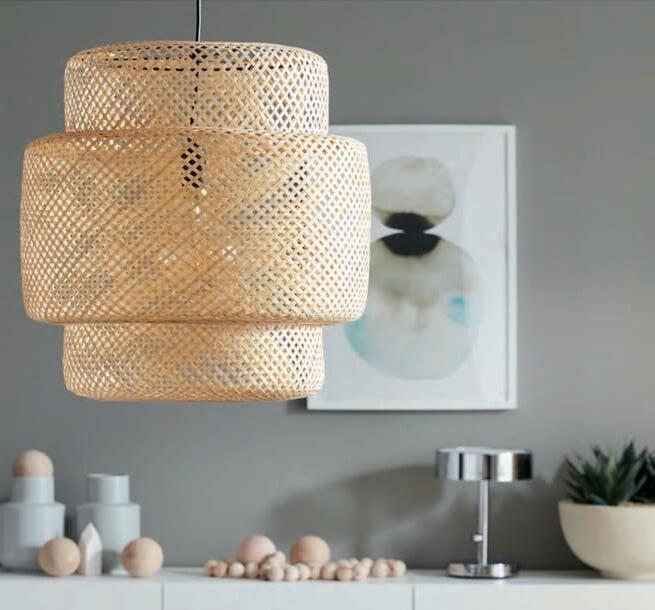
The stainless steel Espresso floor lamp by Caffe Latte is all about minimalism. The silk shade is sized to balance its architectural form. 140cm high. caffelattehome.com
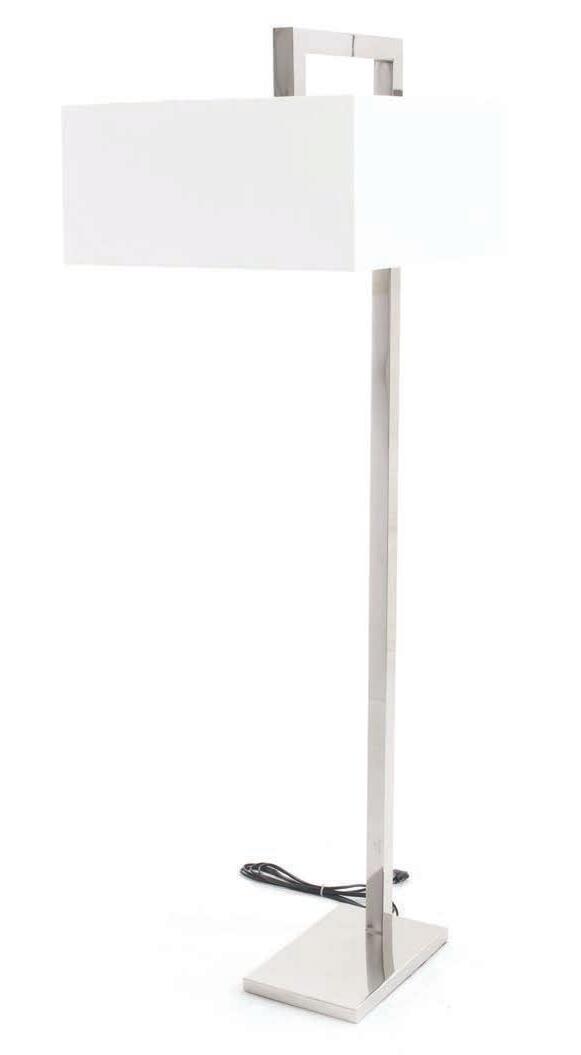
From IKEA comes Sinnerlig, a handmade bamboo pendant lamp, 50cm high. At €65 the price is very right and there are other sizes, too. ikea.com/
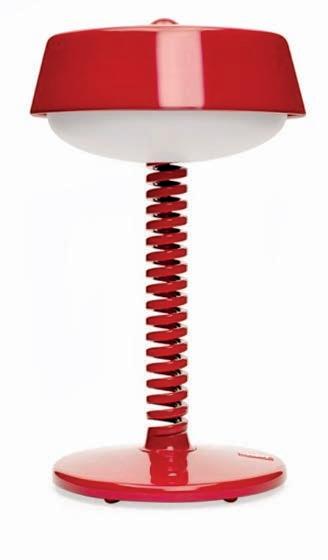
Powder-coated aluminium, Bellboy, from Simple Taste, can be charged with the supplied cable and you can fire or dim his enthusiasm with the touch button on his cap. 30cm high and in a choice of four colours. €99. simpletaste.pt
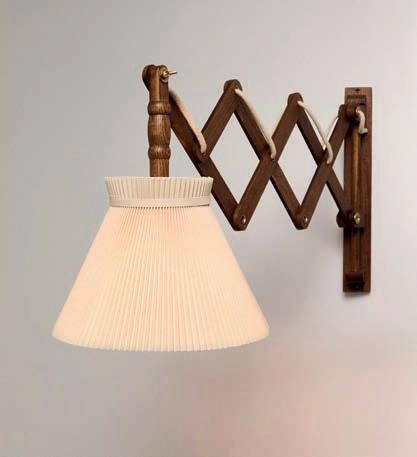
Wooden wall light with an extendible accordion-style arm and conical pleated lampshade. This one would make a perfect bedside light. 31cm high, €79.99. zarahome.com
this house
unique,
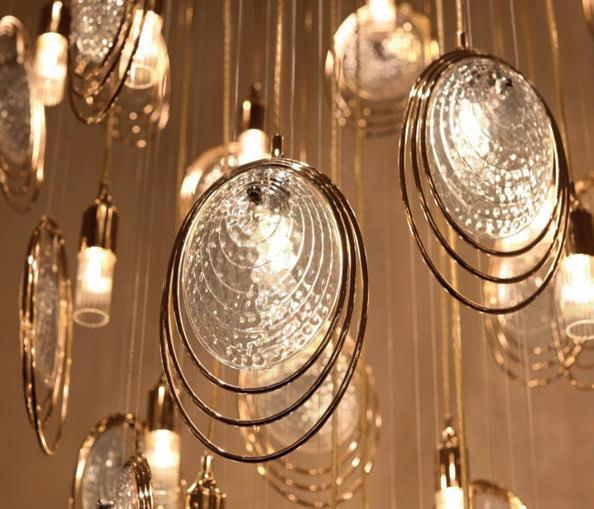
fixtures. Each design reflects refined taste and extraordinary artistry, forged through generations of skilled craftsmanship. Coral Suspension light. castrolighting.com
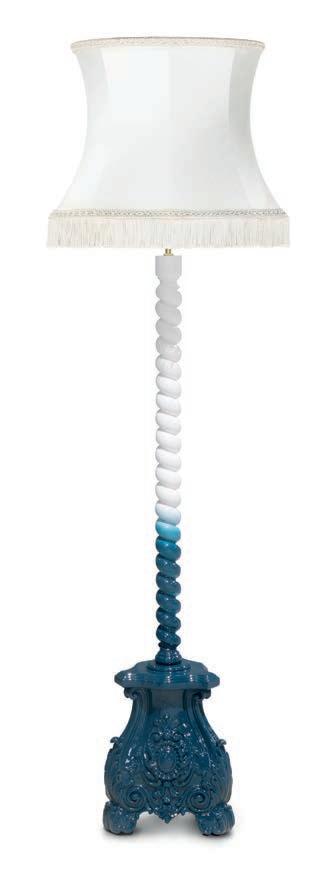
And now for something completely different: the Skyscraper floor lamp spells luxury. Its handcarved mahogany base is finished in white lacquer, with a gradual transition to blue, and the fringed shade makes its own statement. bocadolobo.com
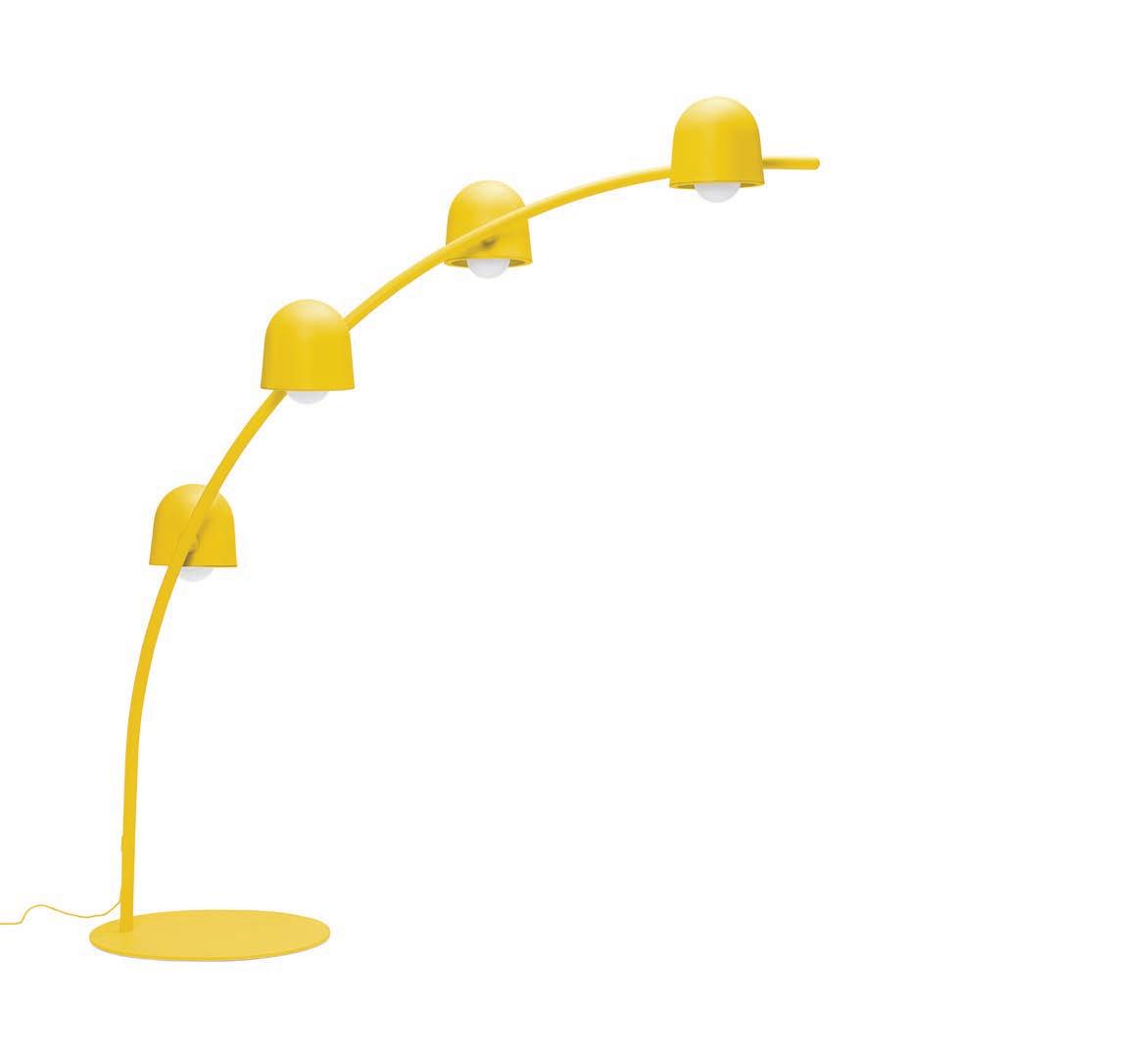
Also from Simple Taste is dimmable Big Lebow, who stands at 186.4cm tall, and comes in a choice of three colours –anthracite, banana yellow and light grey. €1,399. simpletaste.pt
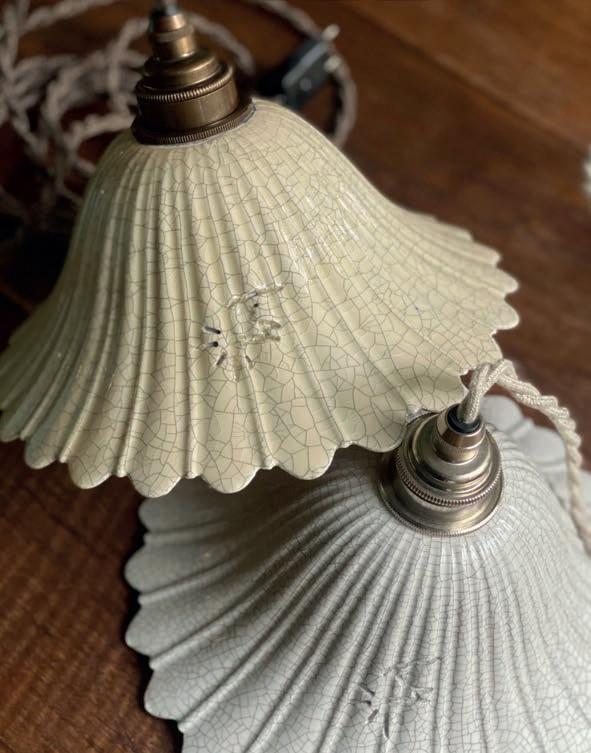
€295 luzeditions.com
OPENING a bottle is only the beginning. When you use the right tools – a well-balanced corkscrew, a carefully chosen decanter, a reliable stopper – you signal something important: that you care about the wine and the moment itself.
From light Vinho Verde to structured Douro reds, Portuguese wines offer extraordinary diversity – and with the right tools at hand, each bottle becomes a small celebration. Today, I’ll walk you through the essential wine tools every wine lover should keep at home.
1. CORKSCREW – THE GATEWA TO EVERY WINE MOMENT
A good corkscrew doesn’t just make the process smoother; it protects the cork and ensures the wine is opened cleanly and properly. The double-lever, stainless steel spiral sommelier corkscrew is the
WINE IS MORE THAN A DRINK – IT’S AN EXPERIENCE. AND JUST LIKE A GOOD STORY, IT DESERVES THE RIGHT SETTING. THE PROPER TOOLS, THOUGHTFUL CHOICES AND A BIT OF KNOWLEDGE CAN TRANSFORM AN ORDINARY EVENING AT HOME INTO SOMETHING THAT FEELS ALMOST SOMMELIER-LEVEL SPECIAL
Words: LÍVIA MOKRI

alpha of home winemaking – it does not break the cork. A good model is balanced in weight, fits in the hand, and will remain a companion for many years. With such a tool, opening is not a rush –but an elegant gesture. What type should you choose?
Sommelier’s corkscrew (the waiter’s friend) – compact, precise, and the professional classic.
T-handle corkscrew – simple and affordable, though less refined.
Stainless steel spiral – durable and resistant, always worth the investment. Buy online Portuguese wine accessory retailer Garrafeira Estado d'Alma offers a wide range of corkscrews. garrafeiraestadodalma.pt RECOMMENDED WINE
Soalheiro Alvarinho
The iconic, clean, elegant Alvarinho of the Vinho Verde region. Fresh, citrusy, with a delicate salty-mineral character. Crisp acids, lime, white flower, slight almond finish. Opening with a good sommelier corkscrew is
almost a ritual – precise opening here is not an exaggeration, but a respect for the wine. Ideal temperature: 8–10°C. vinhalvarinho.pt/soalheiro-alvarinho-classico
Full-bodied red wines, especially those with firmer tannins, benefit enormously from exposure to air. Attached to the mouth of the bottle, an aerator introduces oxygen into the wine as you pour, softening the tannins and opening up the aromas. A good aerator is drip-free, easy to clean, and not too complicated. The difference may be surprising: more fruit, more aroma, less austerity.
What to look for?
Handheld aerators that attach to the bottle neck for immediate oxygenation while pouring.
Simple designs that are easy to clean and store.
Buy online Wines & Co carries a number of accessible and effective aerators –a great entry-level tool for every wine enthusiast.
winesandco.eu/product/wine-aerator/ RECOMMENDED WINE Casa de Santar Vinha dos Amores Touriga Nacional Dão reds are elegant but often tight-structured when young. This Touriga Nacional is a great example: poured with an aerator, it immediately reveals a softer, more open face. Try it with and without an aerator – and discover the difference. 1990.wine/produto/ casa-de-santar-vinha-dosamores-tinto-2

A decanter is not just visually impressive – it serves two practical purposes: separating sediment from older wines, and allowing oxygen contact so the wine can ‘open up’. It’s particularly valuable for structured, complex red wines; the wide-bottomed shape is especially ideal for full-bodied reds. After 30–60 minutes of decanting, the wine becomes deeper, more integrated, and silkier. This is the point in the evening where wine and time work together. What to choose Opt for a widebottomed decanter to maximize surface area contact with air. Crystal or thicker glass models offer both durability and aesthetic appeal. Buy online El Corte Inglés offers several decanter options, ranging from minimalist to more sculptural designs. elcorteingles.pt
RECOMMENDED WINE Quinta do Crasto Reserve Old Vines
A concentrated, deep, complex Douro red that takes on a new dimension when decanted. Rich berry fruit, dark chocolate, graphite, spice, and depth benefit greatly from proper decanting. portugalvineyards.com/ en/douro/714-quinta-docrasto-reserve-old-vinesred-2022-5604123008315.html
Not every bottle is finished in one sitting. A vacuum pump removes excess air from the bottle, slowing oxidation and preserving freshness for
days. Combined with a quality stopper, it preserves the structure of the wine for up to two to three days. What to consider Easy-to-use pump mechanism; airtight stoppers that truly seal. This tool is especially important for those who do not consume a serious red in one evening. Buy online Available through Portuguese online wine accessory shops such as Garrafinhas. garrafinhas.pt
RECOMMENDED WINE Luis Pato Vinhas Velhas Tinto
The main variety of Bairrada, Baga, is often structured and acidic. Such a wine tends to shows its best face – softer, more integrated – the next day, provided it has been it has been properly sealed with a vacuum pump. portugalvineyards.com/ pt/bairrada/18762luis-pato-old-vinesred-2018-5601743001801
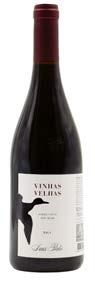
5. DECORATIVE WINE STOPPER – PRACTICAL WITH PERSONALITY
A well-designed wine stopper, especially practical for light wines that we want to enjoy fresh the next day, not only seals the bottle but also adds charm to your table setting. What to consider A good one closes with a silicone seal, fits securely, and does not let air in. Portuguese artisan versions often incorporate ceramic or traditional motifs. Prioritize airtight sealing (silicone or cork elements) before design, but the best option combines both.
Buy online Companhia Atlântica offers hand-crafted Portuguese wine stoppers that add personality to your wine rituals. companhiaatlantica.pt
RECOMMENDED WINE
Quinta da Lixa Touriga Nacional Rosé
A light, strawberry, summer rosé that we often drink more than once. This is where a good-quality stopper comes in handy. portugalvineyards.com/en/ vinho-verde/25425-quintada-lixa-touriga-nacionalrose-2023-5601333057126. html

Serving temperature dramatically affects aroma and flavour: full-bodied reds show better slightly warmer; fresh whites lose vibrancy if served too warm. This little tool is what is needed. Often, a few degrees can make the difference between a good experience and a great one. A wine thermometer ensures your wine is served at its best. What to choose Easy-to-read display; clip-on bottle thermometers are especially convenient.
Buy online Available through Portuguese wine accessory retailers, including Cave Lusa. cavelusa.pt
RECOMMENDED WINE Cartuxa Colheita Branco
The white wines of Alentejo have a richer, more textured style. They can be heavy when too warm, but they become closed when too cold. A wine thermometer makes a real difference in quality here. The ideal temperature is 10–12°C. vinha.pt/vinho/vinhobranco-cartuxa-2024-75clalentejo
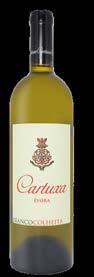
Sparkling wines and espumante quickly lose carbonation once opened. A proper Champagne stopper maintains pressure and preserves bubbles for the next day. It should fit tightly on the neck of the bottle, maintain internal pressure, and can be safely removed. That way, the bubbles do not completely disappear the next day, and the celebration can continue.
Buy online Widely available, and through Portuguese retailers such as Jomafe. jomafe.pt
RECOMMENDED WINE Murganheira Reserva Bruto
The Távora-Varosa region is the centre of traditional sparkling wine production in Portugal. Murganheira Reserva Bruto works with an elegant acidity and delicate bubbles, worth preserving for the next day with a good champagne stopper. acasagarrafeira.pt/produto/ murganheira-reserva-bruto/


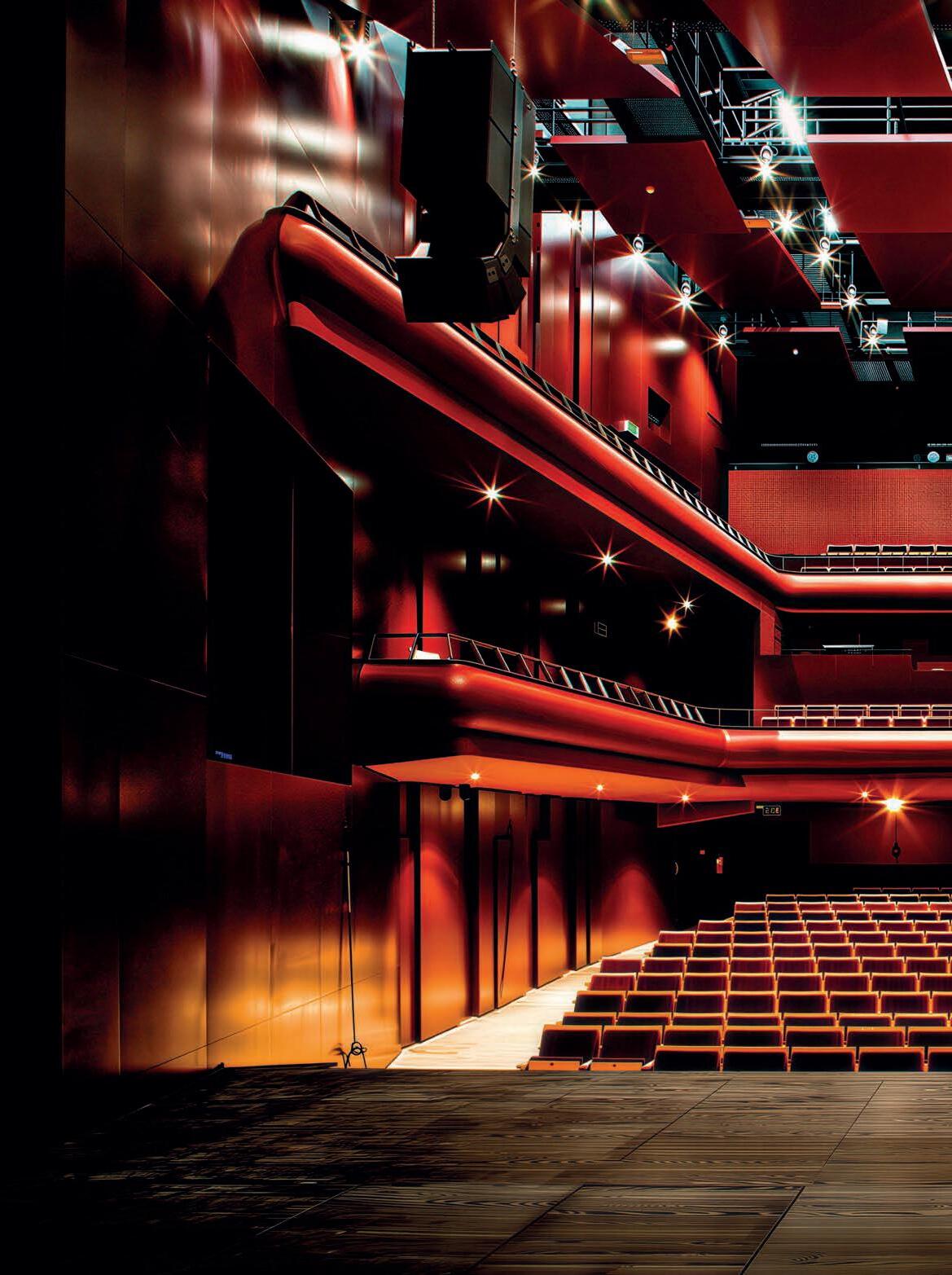
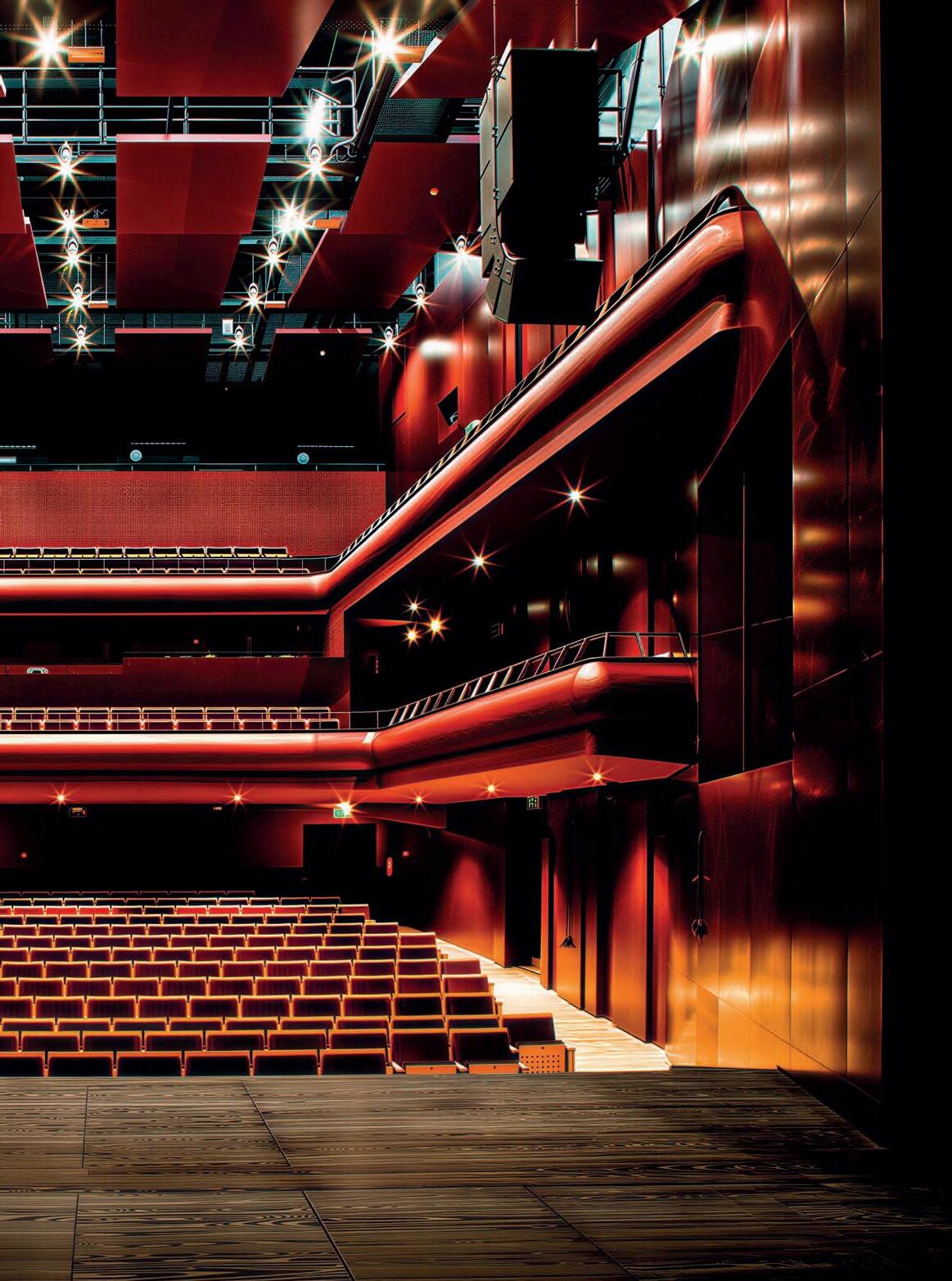
ACROSS THE ALGARVE THERE IS NEVER A SHORTAGE OF CONCERT AND THEATRE PERFORMANCES, SOME IN SMALL, TUCKED AWAY VENUES ONLY LOCALS ARE AWARE OF, OTHERS IN SPECIALIST GALLERIES, AND MORE IN THE BIG HALLS THAT ATTRACT TOP PERFORMERS AND VAST AUDIENCES. HERE IS JUST A TASTER OF THE MAJOR PLAYERS
Words: LUCY MAYER
This theatre has a long and cherished history in Tavira. It was in 1853 that what’s believed to be the first public record calling for a dramatic society in the town was found. The venue, to be known as the Theatro Tavirense, was established next to the Church of Santiago. It has undergone many transformations since then, from cinema in the early 1900s to the public theatre Teatro Popular in 1917. In May 1942 it was suggested that the name be changed to Teatro António Pinheiro after one of Portugal’s best-loved cultural figures.
Over the years the theatre naturally lost patrons as new venues opened up, and the then owners said they had no choice but to sell. Tavira Municipal Council purchased the property in 2001 and refurbishment began in 2018. The historic venue’s name was changed once more as it belonged to the Municipality, and it is now fondly known as the António Pinheiro Municipal Theatre.
Today’s venue is ultra-modern in appearance, in stark contrast to its first incarnation which embodied a classical Portuguese style. It has been undergoing extensive refurbishment and only reopened to the public last year with a new 600-seat auditorium and is now defined by its contemporary look.
The most distinctive feature of the new design is a 14-metre-high ‘black cube’ tower that houses the stage. It is highly visible from various vantage points in Tavira, including the town’s castle, and it caused a bit of a stir among residents and visitors when it opened, due to its size and visibility among the traditional white villas of the town. The programme of events at the theatre widely ranges from contemporary dance, circus, stand-up comedy, theatre performances, opera and music, with something to fit everyone’s cultural needs and wants.
Rua D. Marcelino Franco, 22, 8800-347 Tavira
w: tm-antoniopinheiro.pt
Ticket prices: Ticket prices vary by event, ranging from free for specific cultural events to around €10–€20 for theatre and opera performances.
What is today known as Cineteatro was once The Louletano Cinema-Theatre, established in 1925 under the Louletana
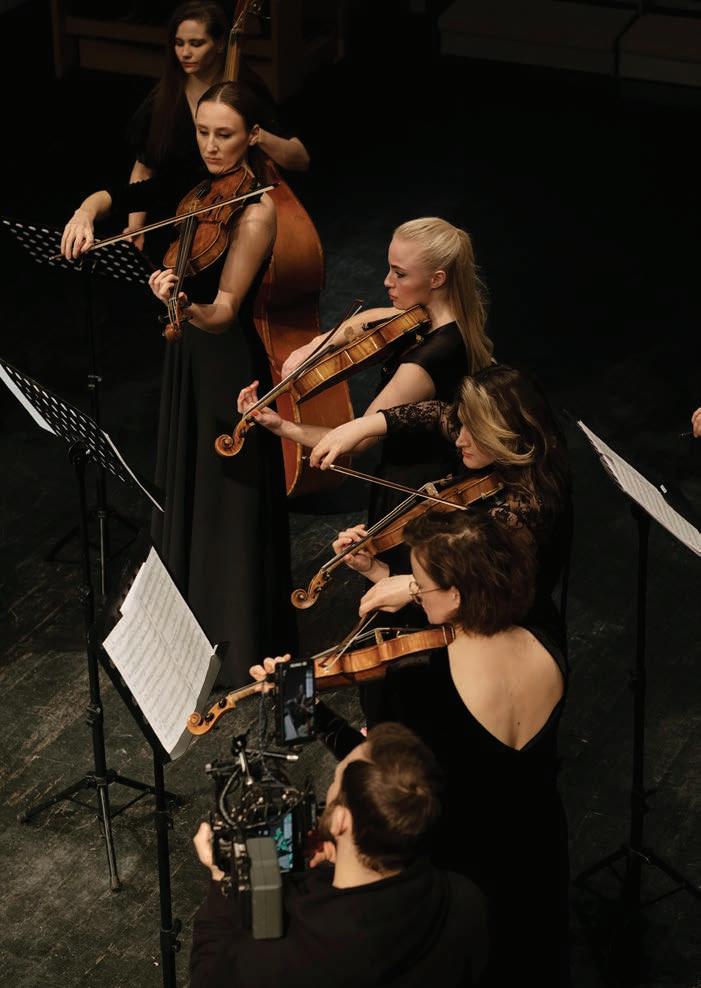
Theatre Society with the aim of bringing theatre and arts to the people of the region. The official inauguration of the theatre took place in April 1930 and for decades it has been home to great on-stage figures such as Alves da Cunha and Chaby Pinheiro. World-famous films have also been projected there and today the venue is considered one of the most culturally significant in the Algarve.
The theatre is housed in a majestic, traditional yellow and white-painted building which stands out on the corner of the road but at the same time fits in perfectly with Loulé’s cobbled streets.
You wouldn’t imagine, just by looking at it, what lies inside – a modern, open auditorium with a capacity for more than 300 people. The theatre offers a Friend Card, which works on a €12 yearly membership and includes a range of benefits such as a 50% discount on some shows. The events schedule includes a wide range of theatre, performance and music.
This year, the theatre’s cinema played
host to the annual Algarve Film Week. Held in January, this event transforms Loulé into a film hub, hosting masterclasses, workshops, industry meetings and the renowned Cinetendinha awards. In the same month this year, the Algarve Chamber Music Festival staged its launch concert at Cineteatro Louletano.
Rua Dr. Frutuoso da Silva, 8100-501 Loulé
w: cineteatro.cm-loule.pt
Ticket prices: Ticket prices vary by show, generally ranging from €8 to €15 for standard performances.
Opened in 2005, the Teatro das Figuras presents an eclectic programme of events – national, international, regional and local. The concert hall-cum-performingarts theatre says its aim is to enrich Faro’s cultural offerings and to continue to nurture the arts.
A new commitment to this aim was reached last year with the launch of the José Louro New Dramaturgies Prize, which will see entrants produce a dramatic writing of an original play in the Portuguese language.
The winning text is to be staged at some point in the first half of this year premiering at the Teatro das Figuras and later at the Teatro Lethes in Faro. The prize aims to honour Professor José Luís Louro, an educator, playwright, and director, one of the most important figures in the history of theatre in the Algarve, who died in 2018.
The contemporary, functional building has been designed to host large-scale productions. It opened in the early 2000s, and its architecture focuses on versatility, with a large, white geometric structure that contrasts with its surroundings rather than the classic Portuguese style.
Upcoming shows include dance, ballet, abstract theatre, children’s theatre and a K-Pop live show. The auditorium is impressive, and the venue is often given over to conferences.
Rua João Brito Vargas, 8005-518 Faro w: teatrodasfiguras.pt
Ticket prices: Many performances, including music, theatre and dance, start at around €10-€20, while specialised or premium shows may cost more. Discounts are available for children, students, seniors, and for those buying season tickets or subscriptions.
The Circle of Music Friends, or Amigos de Música, is a membership club of mainly Algarve residents which was founded in 2014. The club works to enrich the cultural lives of people living here with regular classical concerts featuring world-class musicians.
The club had been successfully active for over 20 years at the Centro Cultural in São Lourenço but found itself without a venue when CCSL closed its doors. Members and supporters got to work on finding a new base, and that’s when Os Agostos opened its gates to play host to the club’s Yamaha concert piano on 23 September 2014.
There have since been regular concerts at the charming Os Agostos from soloists, duos and trios from around the world. The acoustics in the former wine cellar
are deemed as excellent, and the intimate space conjures up a special atmosphere.
Os Agostos has become something of a temple of classical music. The 18thcentury country estate is set amongst former farmland, and is in demand for weddings as well as concerts. Its barn leads into a large room, formerly the wine cellar, which has maintained its original features including the wooden ceiling. The beautifully rustic setting complements classical music well with piano concerts usually taking place twice monthly.
Well-known musicians are said to return to the venue regularly because of its enchanting and unusual nature. Sítio dos Agostos, C.P.195 A, 8005-401 Sta Barbara de Nexe w: osagostos.com/
Ticket prices: For concerts organised by Amigos de Música, entry donations are typically set at €30 per person, which includes refreshments before a performance and often in the interval, too.
TEMPO may be small, but it is mighty. The 165-seat auditorium at Portimão Municipal Theatre is frequently used as a venue for seminars, conferences and business events while the ‘Black Box’ room can hold up to 50 people.
TEMPO, as the theatre is known, also has a rehearsal room, charming terrace and a café-concert space, which can be used for a variety of activities. TEMPO’s intimate setting is best suited for classical concerts, choirs and concertos. Plays take centre stage and pocket performances with smaller casts work really well here. It’s also great for children, who may prefer a smaller venue – the pre-Christmas period saw events like Disney’s Mickey and Friends Christmas Party delight audiences young and old.
Fans of the theatre praise its sound system and acoustics as well as the range of genres of productions staged, and the fair ticket pricing.
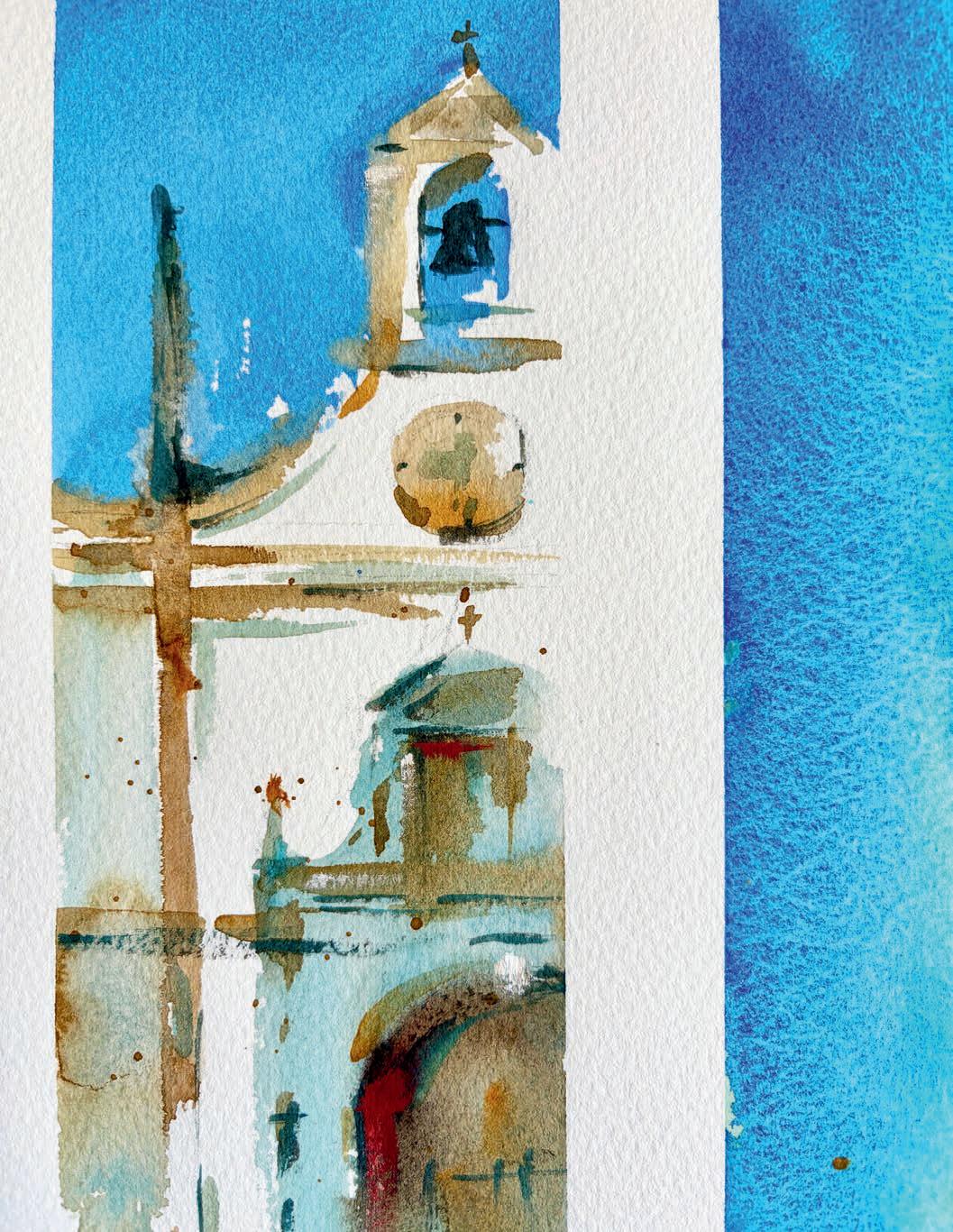
Largo 1º de Dezembro 34, 8500-538 Portimão
w: teatromunicipaldeportimao.pt
Ticket prices: Typically €20 for regular seating and €15 for the balcony, but start as low as €12 depending on the show. Discounts are available for seniors (65+) and students.


TYLER SHIELDS is regarded by many as a pioneer and a visionary. Born in Jacksonville, Florida in 1982, his work has sparked controversy but has also garnered a massive amount of admiration. In many ways he is the complete auteur, whose relentless energy drives him to the limits of creativity and artistic exploration.
AlgarvePLUS sat down at 7am with a cup of coffee to speak to Tyler in LA. The fascinating conversation that resulted covered skate culture (as he used to compete), the internet, AI, controversy, movies and the making of his photography and films. Here’s what the man had to say...
“When you are skating, you fall down; you never do something perfectly the first time. Falling is a huge part of it. You either win or you learn. So, there is no real failure. The skate mentality is part of the art; some people practice for ten years on a trick. It gives you a level of patience. The other thing about skating is that you are really competing against yourself; for me that is what
TYLER SHIELDS IS A PHOTOGRAPHER AND FILMMAKER WHO EXPLORES THE DARK EDGES OF GLAMOUR AND CREATES SURREAL FANTASY SCENARIOS – MONOCHROME SILHOUETTED BUNNY GIRLS, BIRKIN BAGS ON FIRE AND LOTS OF LUSCIOUS LIPS
photography is – you try to be better than you used to be – and work ethic. I have an extremely insane work ethic.
“I started making skate videos, then music videos, at a really young age. I took one picture, and that photo became really famous on the internet, the Subway shot. Then I wrote an algorithm for image coding, so that I could have any one of my images at the top of Google within 15 minutes. The profits from that went back into my photography.
“I saw which way the internet was going. Back then, photographers didn’t even have websites, so the only way to see photographs was in magazines, which were constantly changing. I became more aware of the great photographers like Richard Avedon, Helmut Newton and Irving Penn later on, when I was in an auction at Sotheby’s alongside them.
“Films were a big source of inspiration, I grew up with a lot of war movies – my father was in the military – so Apocalypse Now, Full Metal Jacket, Kubrick, and Coppola. Then of course the classics, like Casablanca. I was also into crazy arthouse cinema; I remember seeing Coffee and Cigarettes and Baraka.
“I have a photographic memory; I can watch a movie once and be able to recite the whole dialogue back afterwards. I can probably do that with about 1,000 movies.
“Douglas Kirkland came to one of my shows. I had this historical fiction piece, with women reading in the newspaper that Marilyn Monroe was dead. He knew Monroe and saw people reading the paper at the time and thought of taking a photograph but he didn’t. Douglas saw it in real life, which was amazing.
“For me, everything is open to interpretation, a great photograph is the middle of the story. The beginning and end are made by the viewer. I feel that if you go out to shock people it wouldn’t work. And nobody knows what is going to be

controversial; when I did the Birkin on fire, people were really upset by that. I got death threats, they were that mad. I guess it was the first time somebody had done something like that, but it was all part of the art – you cannot fake it. I set a Ferrari on fire, too. Some of the best movies in the world have the worst reviews. As an artist, if you make something that someone doesn’t like, that’s okay; keep going.”
Analogue cameras, film stock and his techniques
“Everybody has their tools that they like. I am not going to trash digital cameras. I don’t care if people want to shoot on their iPhone, but I love film cameras, I love the lenses, the feel, the way I can take a film camera and transfer exactly what is in my mind onto the print. Film is way easier than digital, way more reliable. If you gave me a digital camera and I shoot 500 pictures of a portrait, I have to go through all the images to find the one. The sitter loses interest at a certain point. When you take out an 8x10 camera, you take four photos, and the sitter gives you their best. Also, the 8x10 camera captures light in a different way. What you get from the sitter you will never get from rapid fire.
“In terms of production and development, we do everything. Dye transfer printing, silver gelatine, we made one the largest platinumpalladium in the world. We use custom-built lenses; Panavision made me some great ones, so I know exactly what camera, what film stock, what lens is going to get me the best feel.
“I actually own Alfred Hitchcock’s old camera, that he used on Vertigo and To Catch a Thief. Some years ago, I started buying up movie cameras, which help on film with the 8x10 for, say, the Oval Office piece, so why not have the video on film with the same feel? Motion picture film is just better quality. With the photographs some people just assume that things are Photoshopped and that was obviously before AI. When you see the video you know that it is real. And real imagery will only become more valuable; if I want to collect art, I want it to be shot on film.”
His latest project
“I’ve spent the past five years working on a massive movie called Chapter 51 – the first movie in history to shoot every format of film, and it is the first movie ever to shoot in anamorphic IMAX. We put anamorphic lenses on to IMAX film cameras to create the largest picture ever projected on screen. I wrote the script, I directed it, I cast it, I edited it, I shot it, I coloured it, I did everything. It has a crazy cast with two Oscar nominees in it. Howard Hughes, when asked why he flew the test planes when he had all those test pilots, said ‘why should I let anybody else have all the fun?’ That’s one of my favourite quotes.”
Points of references and influences
“Hitchcock, Tarantino, Kurosawa, John Ford are all amazing. Paul Thomas Anderson is also amazing, and you can go back to their sources of reference, too. There is a shot in my movie, where there is a guy running from a helicopter and it’s real; there is not one frame of CGI in my movie. Now you can say that it is inspired by North by Northwest, but you can also say that it is inspired by my childhood as my dad used to fly helicopters – he actually chased me in a helicopter one time. That is what I am really referencing, my childhood experience.

“They say every story has been told; every shot has been done. I don’t think that is true. Look at Pulp Fiction or The Royal Tenenbaums or Apocalypse Now.
“Photography and filmmaking are all the same to me. The stills from the movie, for instance – I debuted one of them at Sotheby’s. I love the galleries I work with; I love making stills, I love doing motion, it’s all the same.”
On fame and success
“I was doing a gallery show in a city and someone came in and said: ‘Oh, I saw your work in the local museum’. I didn’t know that it was in there! When you get to a certain point, you can’t control it and you don’t know where things are anymore. In the beginning, I knew about every piece going into auction and every piece going into a museum and now people send me pictures of my work that they have seen in a museum or in a crazy collection. It’s awesome. I just really focus on making things. The best photo is the next photo.”
On the edition number and formats
“When I started out, really big editions were the norm; a gallerist told me that you can’t do an edition of only three, that’s insane. But that’s what I wanted to do. Also, I’m not going to take one image that I'll sell on and live off; I want to push myself. Today, for instance, we had five calls about five different images in different sizes, which had sold out. That’s it. Now I turn down more money than at one time I made in a year.”
“At my In the Pink exhibition, more than 200 people attended the opening. On Instagram, 100,000 people saw my story from the opening. That’s like a Super Bowl, like a lot of people. But when you go into the gallery and see the work in person you have a different experience. That for me is what cinema is, that is what galleries are. I’ve had gallery shows where kids have driven over 12 hours to be there.”
Fortunately, one does not have to drive 12 hours to see this remarkable exhibition by this bold and ambitious contemporary artist who draws upon popular culture, cinema, performance, fashion and advertising. Tyler is a master of this craft, using analogue film and cameras to create series which are highly stylised and incredibly powerful.
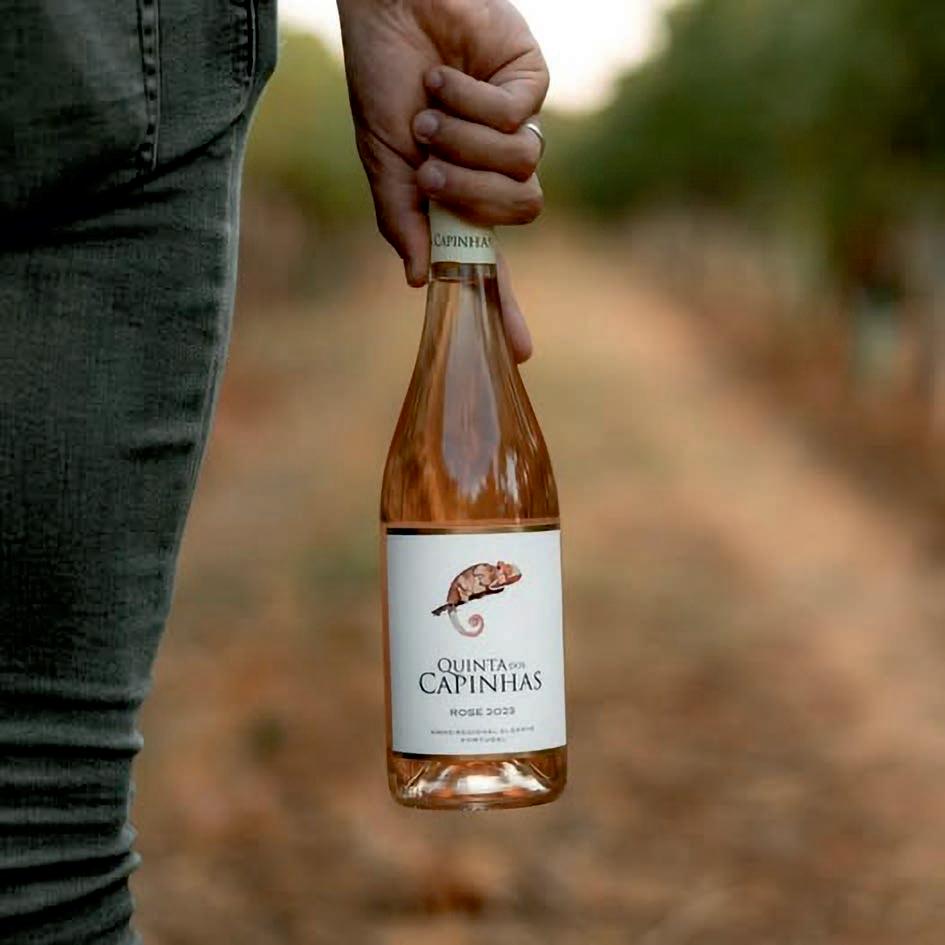
An award-winning taste of the Algarve.
Quinta dos Capinhas is a boutique, family-run vineyard where you can enjoy exclusive dinners, curated tastings, and wines crafted in harmony with the land.
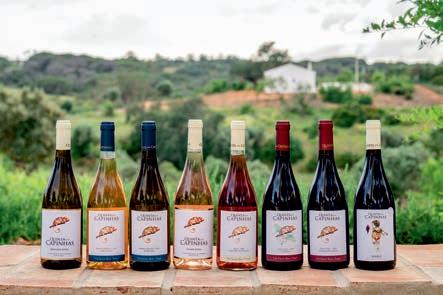
Our range of White, Red and Rosé wines brings together Portuguese and international grape varieties to create a distinctive, award-winning collection. Visit the vineyard and discover them for yourself, or simply scan the QR code below to order a mixed box of six bottles, or six of your favourites to enjoy at home.

Estrada da Carrasqueira, 8400-458 Porches
+351 926 737 798 quintadoscapinhas
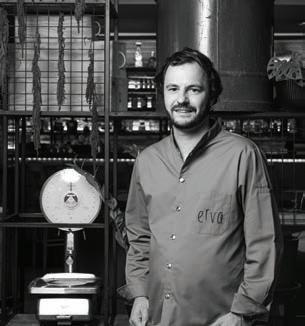
AT ERVA RESTAURANTE IN THE CORINTHIA LISBOA HOTEL, EXECUTIVE CHEF JOÃO MOREIRA BRINGS TOGETHER DISHES INSPIRED BY REGIONAL FLAVOURS, CONCENTRATING ON ONE AREA OF THE COUNTRY AT A TIME. HAVE YOU THOUGHT ABOUT COOKING OCTOPUS? TRY THIS DISH AND SURPRISE YOURSELF... IT COULD BECOME A REGULAR PARTY PIECE IN YOUR OWN REPERTOIRE
FOR THE OCTOPUS
3 octopuses, frozen, weighing 700g each
2 medium tomatoes, cut into wedges
2 medium onions, cut into wedges
5 cloves of garlic, crushed
100ml olive oil
250ml red wine
1 tbsp smoked paprika
Salt and pepper to taste
FOR THE RICE
400g Carolino rice
1 medium onion, chopped
4 garlic cloves, chopped
1 red pepper, chopped
1 green pepper, chopped
100g coriander, leaves and stems separated
70ml olive oil
Octopus stock (about 1.2L – adjust with hot water if needed)
1 Preparing and cooking the octopus: Defrost the octopuses slowly in the refrigerator overnight (avoid thawing them in water).
2 Place the octopuses in a large tray and add the garlic, onion, tomato, olive oil, red wine, paprika, salt, and pepper. Mix everything well and cover the tray with aluminium foil. Let it rest for 30 minutes.
3 Preheat the oven to 180°C.
4 Bake for about 1 hour and 30 minutes, checking the texture at the end of the cooking time. Remove from the oven and let it cool in the refrigerator to preserve the colour, reserving all the cooking liquid.
5 Preparing the rice: In a pot, sauté the onion, garlic, peppers, and coriander stems in olive oil. Add the rice and fry for about one minute.
6 Add the previously heated octopus stock. Cook over a low heat for about six minutes. Stir in the chopped coriander leaves.
7 Final baking: Transfer the rice to an oven tray. Arrange the octopuses on top of the rice. Bake in a preheated oven at 200°C for eight to 10 minutes.
8 Finish with freshly chopped coriander.
The Erva restaurant in the heart of Lisbon in Sete Rios, is where customers can experience contemporary Portuguese cuisine with authentic local flavour – one star region is highlighted per month with special gastronomic treats selected by executive chef João Moreira. There’s a great atmosphere at Erva – artworks by emerging local and international artists are on display and there’s music, supplied by the DJ during the week, and, at weekends, live music during dinner. There is also the Chefs’ Music event, on the last Thursday of each month, with a special menu and an intimate concert by Miguel Gameiro, lead singer of the band Pólo Norte. As well as enchanting with his music, Gameiro takes part in the creation of the dishes, adding his personal touch to the cuisine.

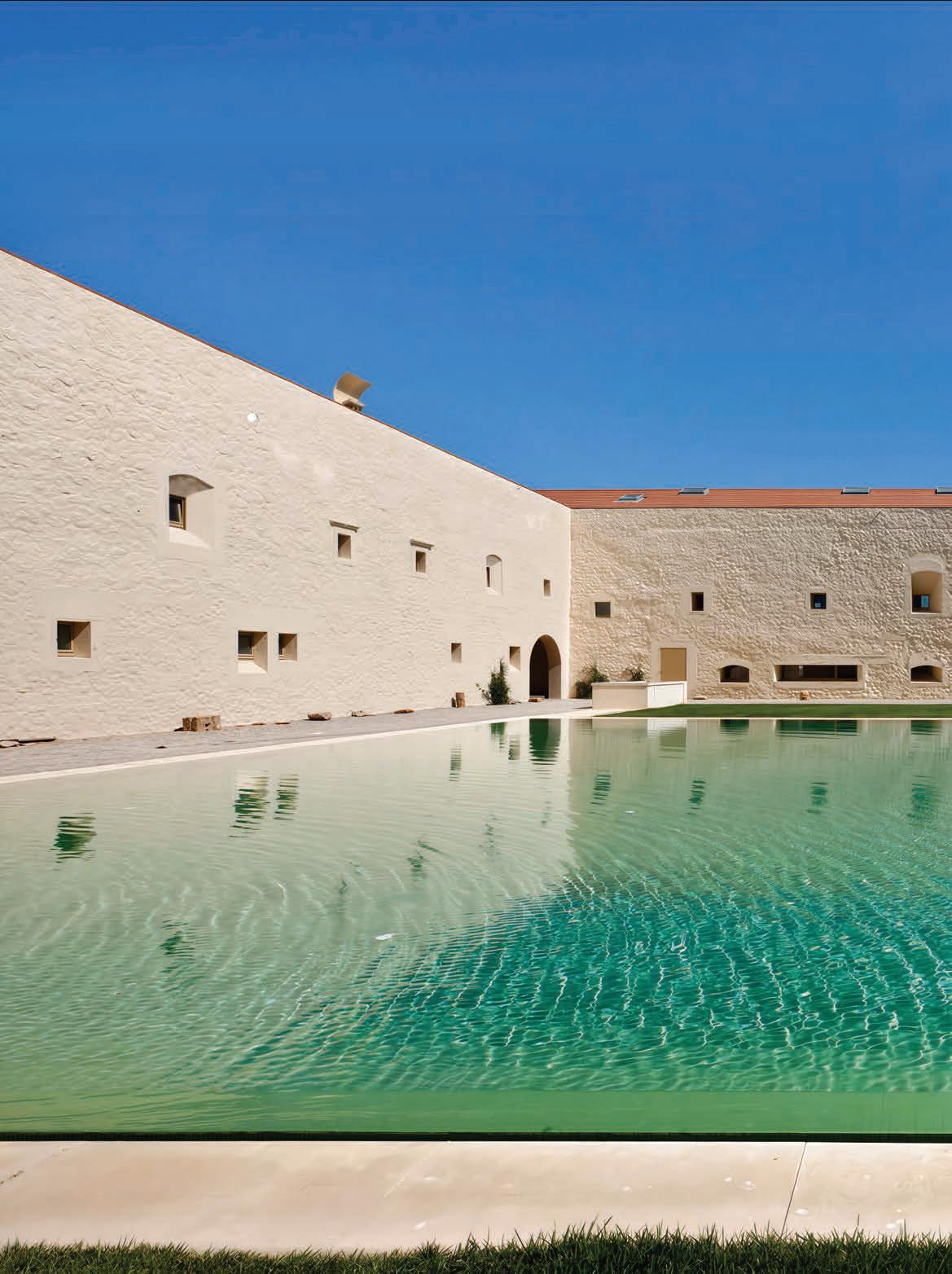
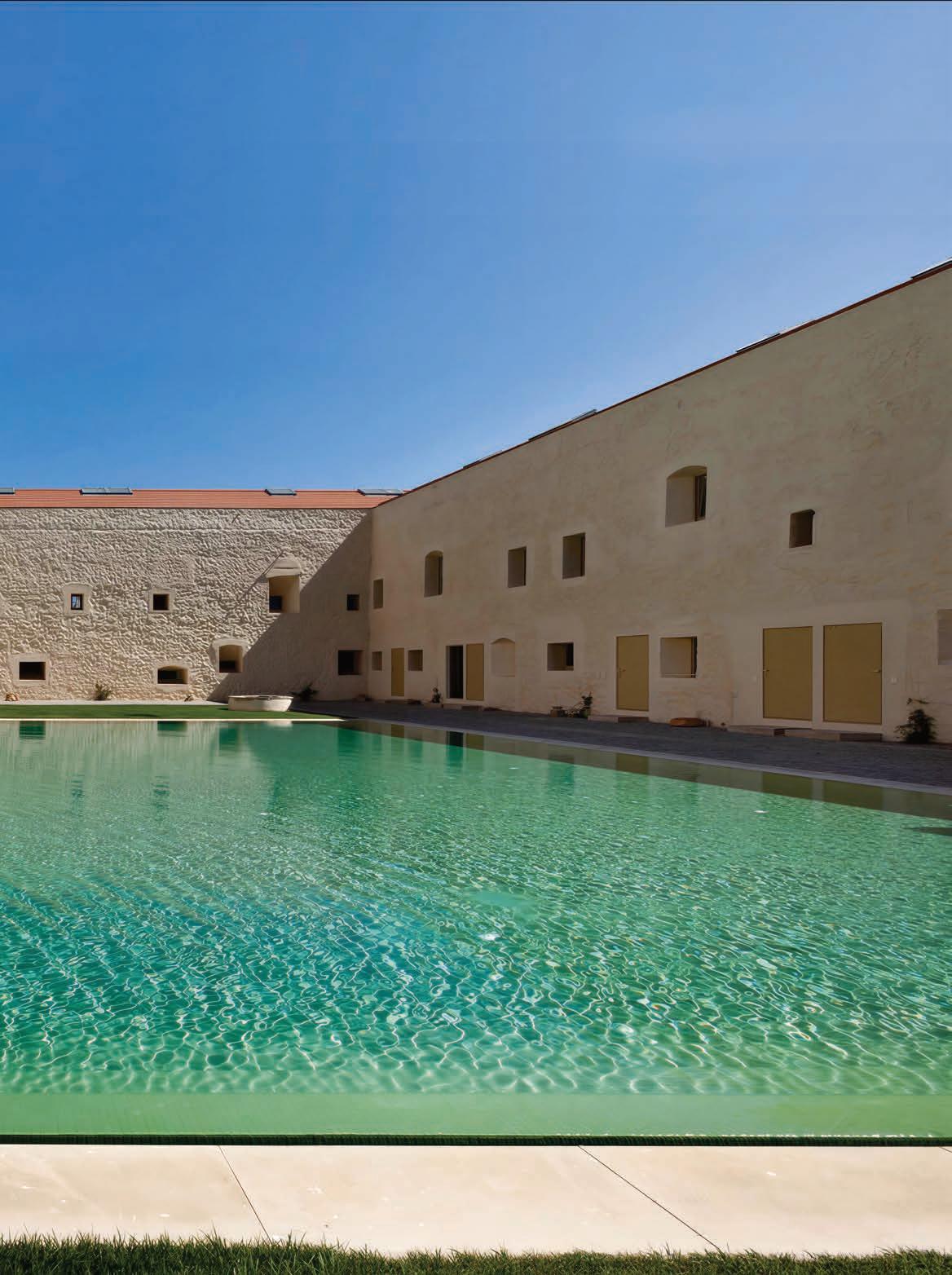
IN THE CITY OF TAVIRA, A STREET BEARS THE NAME OF PORTUGUESE ARCHITECT EDUARDO SOUTO DE MOURA. IT'S NOT JUST ANY STREET, BUT THE STREET THAT RUNS ALONGSIDE ONE OF HIS MOST REMARKABLE RESTORATION PROJECT, THE CONVENTO DAS BERNARDAS
Words: WILL K Ö HLEN
THE FORMER convent, once home to the Cistercian Order, embodies more than five centuries of layered history.
Commissioned in the early 16th century by Manuel I of Portugal, it grew to become the largest convent complex in the Algarve. For over 300 years it functioned as a religious and communal residence for Cistercian nuns. These women were not only devoted to spiritual contemplation but also gained regional renown for their artisanal production – particularly egg-based sweets and toffees – as well as small religious objects.
Architecturally, the Convent adhered to the principles typical of Cistercian design: sobriety, clarity and geometric discipline. Its square plan, organised around cloisters and a central church, reflected the order’s emphasis on enclosure and introspection. The spatial experience was one of quiet rhythm and controlled light, where architecture reinforced a life of contemplation. Like much of Portugal’s built heritage however the Convent did not escape the catastrophic impact of the 1755 earthquake. While Lisbon bore the brunt of the devastation, the shockwaves reached far into the Algarve, severely damaging Tavira and its surrounding structures. The Convento das Bernardas was partially destroyed; its carefully ordered geometry disrupted by the forces of nature.
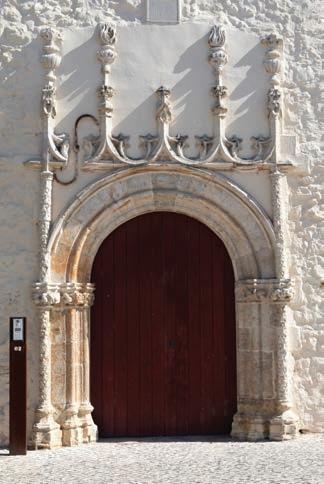
And yet, even in ruin, fragments of its former grandeur endured. Most notably, the monumental entrance portal –executed in a late Gothic or Manueline idiom – survived both
the earthquake and subsequent transformations. To this day, it remains a defining architectural gesture, mediating between the building and the city, and standing as a silent witness to centuries of change.
After the dissolution of religious orders in Portugal in 1834, the Convent entered a radically different phase of its existence. Sold at public auction, it was acquired by an industrial entrepreneur who converted the complex into a pasta factory. The rhythms of monastic life – once defined by prayer and silence – were replaced by the mechanical cadence of production. Spiritual labour gave way to industrial utility.
Over time, however, the building fell into decline. Its vast spaces, once carefully maintained, became increasingly dilapidated. Eventually, the property came into the hands of the development company Entrepots, which recognised both its historical significance and its latent architectural potential.
Rather than opting for demolition or superficial renovation, the developers chose a far more ambitious course. They commissioned architect Eduardo Souto de Moura – already internationally acclaimed – to undertake the restoration and adaptive reuse of the complex. The task was to transform a centuries-old convent into a contemporary residential ensemble of 76 apartments, ranging from compact studios to generous three-bedroom units, while preserving the building’s historical integrity and adding a new architectural layer. The project was completed in 2012 and sales began. In addition to the apartments, the complex has two swimming pools, one of which is a saltwater pool in the courtyard.
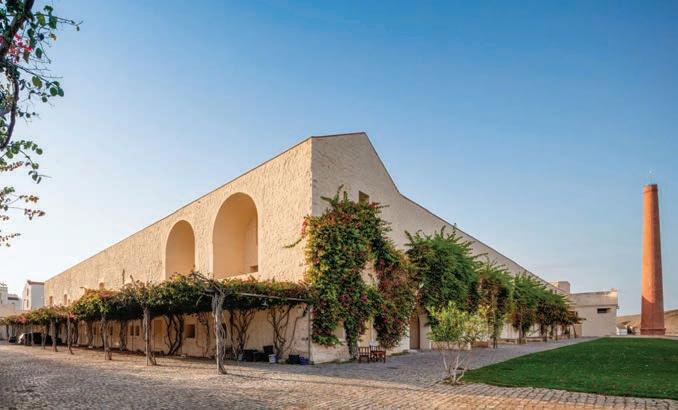
Everywhere you look there is an architectural triumph that has taken an ancient property into modern day life, while always respecting the past and the features that represents. The Convento das Bernardas is the work of Pritzker Architecture Prize winner, Eduardo Souto de Moura
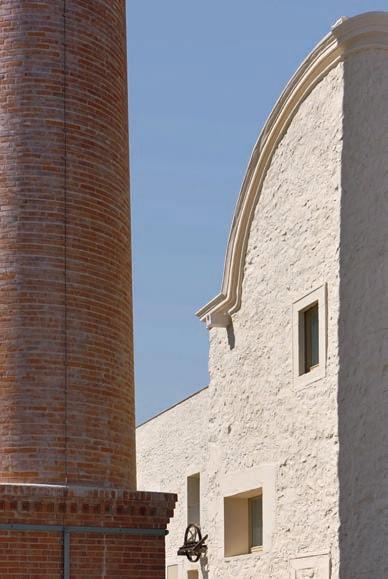
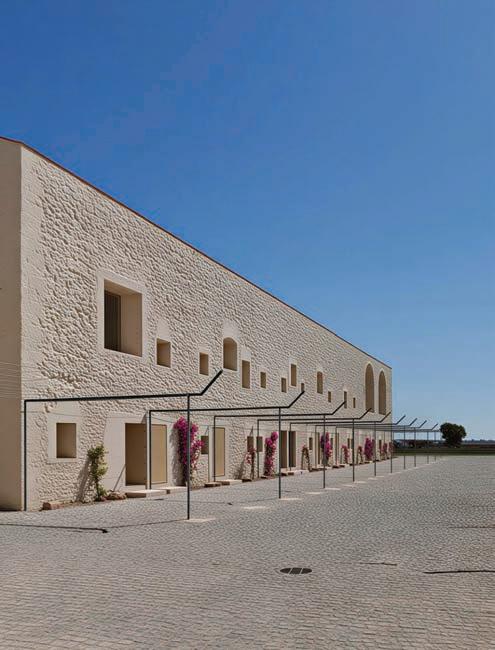

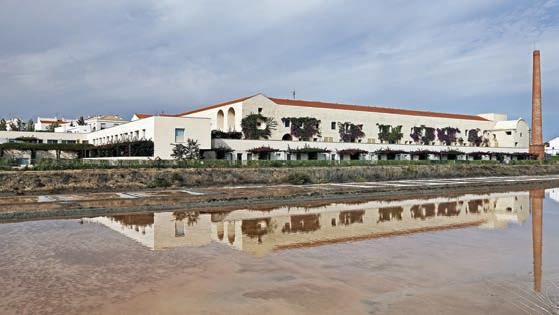
Eduardo Souto de Moura earned the European Prize for Architectural Heritage Intervention in 2017, confirming the project’s status as a benchmark in adaptive reuse.
What architect Souto de Moura achieved here is extraordinary. Despite the substantial interventions required to meet contemporary standards of living, he succeeded in preserving the introspective, almost monastic atmosphere of the original structure.
Openings are inserted with surgical precision into the thick masonry walls, allowing natural light to penetrate deep into the interior without undermining the sense of enclosure. Circulation spaces unfold with a quiet logic, while materials are used with a restrained elegance that enhances rather than competes with the historic fabric.
The newly-added wing, facing the market side of Tavira, is a particularly subtle intervention. Rather than asserting itself, it aligns harmoniously with the existing structure, echoing its proportions and material language while clearly belonging to the present. The dialogue between old and new is handled with exceptional sensitivity – neither nostalgic nor aggressively contemporary.
It is hardly surprising that Souto de Moura was awarded the Pritzker Architecture Prize in 2011, often referred to as the Nobel Prize of architecture. His work is consistently characterised by restraint, contextual awareness, and a profound understanding of materiality – all qualities that are fully evident in this project.
At the heart of the complex lies a courtyard that feels almost cinematic in its composition. Moorish and medieval atmospheres intermingle around a lushly landscaped pool, framed by greenery
and slender palm trees. The space evokes the sensorial richness of an imagined Orient –something akin to the narrative world of One Thousand and One Nights.
This courtyard is both tranquil and theatrical: a carefully orchestrated environment in which history and imagination coexist. One of the most striking architectural moments occurs at its far end. Here, a precisely framed opening directs the gaze outward toward the salt flats – the salinas – where a solitary tree stands in quiet isolation. This subtle gesture transforms the surrounding landscape into an integral part of the architectural experience. The horizon becomes a living painting, constantly shifting with light and season.
Such refined interventions earned Souto de Moura the European Prize for Architectural Heritage Intervention in 2017, confirming the project’s status as a benchmark in adaptive reuse.
For the developers, however, recognition came too late to secure immediate commercial success. The global financial crisis had severely impacted the real estate market, and sales of the apartments stagnated. Legal disputes with financiers further complicated the situation, bringing the project to an almost complete standstill.
Eventually, the bank assumed control of the remaining properties and relaunched them onto the market in 2017.
At that time, my wife and I were searching for a home in the Algarve. When a real estate agent introduced us to the complex,
we were immediately struck by its architectural quality. Yet the experience was not without its surprises. The interior dimensions – approximately 60 square meters – felt noticeably smaller than the exterior footprint of around 95 square meters, largely due to the convent’s massive historic walls.
For us, at that moment, it proved just slightly too compact. And yet, the apartments were undeniably compelling: beautifully finished, intelligently laid out, and often featuring elegant mezzanines connected by sculptural staircases. For investors in holiday properties – or for those seeking a truly unique dwelling – this represented a rare and fleeting opportunity, the kind that presents itself perhaps only once in a lifetime.
In interviews, Souto de Moura has offered a revealing insight into his design philosophy, drawing an unexpected parallel with the German artist Joseph Beuys. He often refers to Beuys’ 1974 performance I Like America and America Likes Me, in which the artist spent three days enclosed in a gallery with a wild coyote.
Wrapped in felt and deliberately isolated from the outside world, Beuys sought to establish a relationship with the animal. By the end of the performance, the coyote was eating from his hand. For Souto de Moura, this serves as a powerful metaphor for architecture. A building, he suggests, is like a wild animal –something that must be approached with patience and understanding. It cannot be dominated; it must be “domesticated” through dialogue.
The Convento das Bernardas was, in his own words, such a creature: complex, unpredictable, shaped by centuries of history and decay. The architect immersed himself in the building, famously walking through its spaces at night, contemplating its atmosphere and, while smoking a lot of cigarettes, listening to what it demanded. Each architect, like each artist, develops their own way of taming the wild.
Will Köhlen, who writes regularly for AlgarvePLUS, worked as a consultant in architecture and urban planning in the Netherlands, Africa (Mozambique, Guinea-Bissau and South Africa) and the Caribbean (St. Maarten). He now lives in Olhão and participated in the book The Smell of Olhão, which he produced together with Arthur van Amerongen, Edwin Hagendoorn and Nelli Konstantinova. The book, like his Cubist Architecture in Olhão and The Architecture of Olhão: Monuments, Modernist & More, is for sale in several shops in Olhão. At architectouralgarve.com you can find information – in English and in Dutch – about architecture in the Algarve, with special attention to mid-century modernist architecture. You can also download Will’s books and the Self-Guided Architecture Walking Tours that he offers through the app STQRY (currently there are nine tours including Faro, Olhão, Tavira, Vila Real de Santo António, Fuseta, Loulé and Portimão and one tour of Huelva in Spain).
Today, visiting the convent is not entirely straightforward. Located near Tavira’s market hall at the edge of the historic centre, the complex functions as a gated community. Access is typically restricted to residents and guests – unless, of course, one is fortunate enough to slip inside, as I once did. On that occasion, while showing the site to friends, we arrived at the closed gate just as a resident was leaving. The gate remained open just long enough for us to place a foot between it and quietly enter – a small, conspiratorial gesture that only heightened the experience.
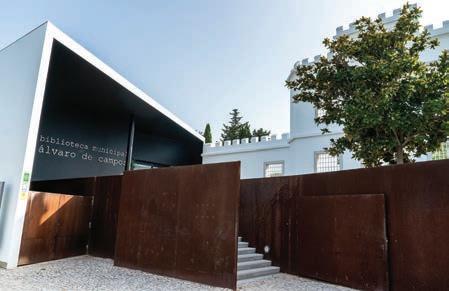
Such improvisation is unnecessary, however, if one wishes to visit another remarkable architectural project nearby: the Biblioteca Municipal Álvaro de Campos. Designed by João Luís Carrilho da Graça, this building stands opposite the small chapel of Ermida de São Sebastião.
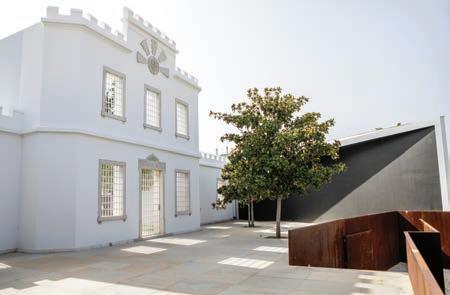
Constructed on a challenging triangular plot, once the site of Tavira’s prison, the library integrates rather than erases the past. The original façade has been preserved and incorporated into the design, forming the boundary of a calming courtyard garden.The result is a building of quiet sophistication. Whitewashed walls, warm Corten steel, and carefully-composed outdoor spaces create an atmosphere of calm reflection. It is a place where architecture, memory, and daily life intersect.
There is something deeply poetic here. Surrounded by the remnants of confinement, one cannot help but reflect on the lives once lived within these walls – the ‘caged’ individuals who, like Beuys’ coyote, underwent their own process of domestication before being released back into society. As you leave the library, do not rush. In the entrance hall, a discreet staircase leads to a large window that perfectly frames the Ermida de São Sebastião. It appears almost unexpectedly – a final, composed image, like a window into the world –offering a moment of quiet reflection before you step back into the city.
The Biblioteca brings together the old and the new, seamlessly

t. +351 917 203 850 . design@suzisteinhofel.com . www.designworks.com.pt

Oliveira, Tavira ~ Love your home? Why compromise?

MY FAVOURITE THING ABOUT ACTIVEWEAR IS THE ILLUSION IT CREATES: DID YOU JUST GO, GO, GO OR ARE YOU ABOUT TO? EITHER WAY, YOU’RE COMFORTABLE – AND THAT’S WHAT REALLY MATTERS. I ’ VE SCOURED THE INTERNET TO BRING YOU THE LATEST AND GREATEST PORTUGUESE ACTIVEWEAR AND ATHLEISURE BRANDS. ON YOUR MARKS, VAMOS
Founded in 2013, Yourself Apparel is a fitness clothing brand conceived, developed and produced entirely in Portugal. Exclusively focused on women’s sportswear, the name ‘Yourself’ reflects the brand’s mission: to inspire women to embrace their truest, strongest selves. Expect everyday sportswear staples – training bras, leggings and shorts – available in a wide range of colours and designed for both performance and confidence. yourselfapparel.com
Words: VERITY THENARD, MY ALGARVE LIFE


Looking for something less form-fitting or a little more relaxed? Meet Barrio Santo. Based in Trofa, this house produces gender-neutral pieces made from sustainably dyed organic cotton and recycled polyester. Think lounge pieces, sweatshirts, gym basics, or elevated everyday leisurewear. Barrio Santo’s goal is to create products that are better for the world. The brand actively works to minimise fashion’s environmental impact while producing quality garments that fit well, look good and feel great on the skin and to the touch. barriosanto.com
Padel – but make it fashion – that’s the vision behind Piiiton. Dedicated exclusively to women, Piiiton is designed to bring elegance to the court, without sacrificing the comfort and freedom essential for sport. The brand was founded by three friends and teammates who initially created two kits for themselves – one for training and one for matches. “As soon as we started wearing them in tournaments, people kept asking what brand they were and where we’d bought them from,” they explain. With growing demand, Piiiton was born at the end of last year, manufactured in the north of Portugal and designed and tested by the founders themselves. The pieces are created to flatter all body types – think skirts with slightly longer built-in shorts and supportive tops that provide hold without heavy structuring – all made from quality mesh fabrics built to last. piiiton.com

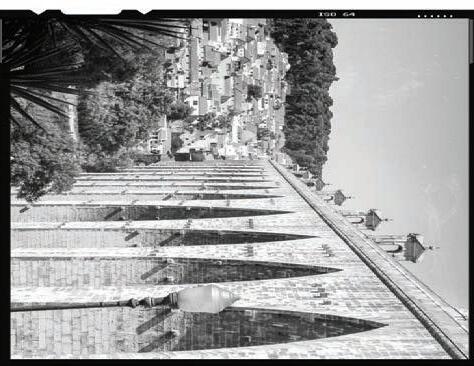
This brand was conceived from the desire to create pieces that accompany you from morning to night, with a minimalist, elegant and timeless design. The label believes comfort and style should always go hand in hand. Practicality is a clear focus, with seamless pieces (no visible seams, that is) designed to mould naturally to the body. The result is clothing that offers complete comfort without compromising aesthetics. oitoum.pt

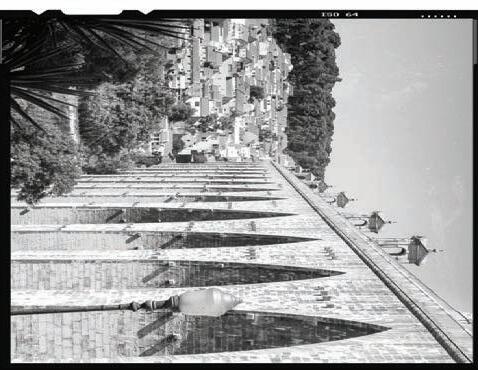
Nutch focuses on creating beautiful pieces in a sustainable way. The brand is committed to fair pricing that respects everyone involved in the production process, while prioritising eco-friendly materials that have a significantly lower environmental impact. Nutch’s activewear is made from ECONYL® – a 100% regenerated nylon fibre created from pre- and postconsumer waste – as well as organic cotton. The result is thoughtful, responsible sportswear that doesn’t compromise on style. nutch-brand.com


And finally, one for the runners: Balibo, a running apparel brand that blends performance with lifestyle. Its pieces are handmade in factories across Portugal using premium materials, with a design approach centred on comfort and functionality. A young company launched in 2024 by founder Dom Guterres, Balibo offers a limited but focused collection of branded racing tights, sunglasses, T-shirts and socks – technical essentials with a lifestyle edge. balibo.co

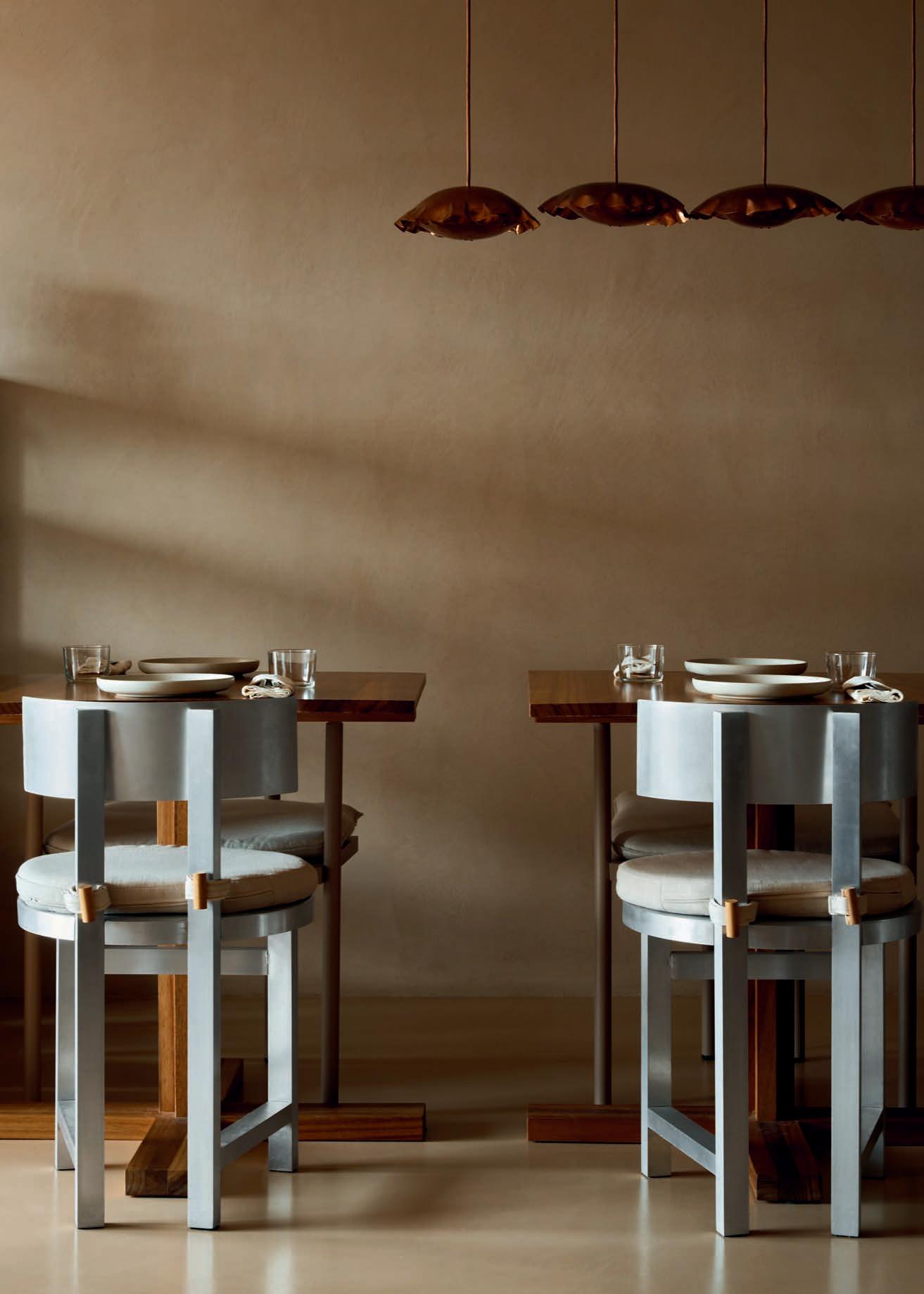

EVOLVING ON A LINEN CANVAS FROM BASIC SHAPES AND VIBRANT COLOURS, FRAN MORA’S STILL LIFE PAINTINGS ARE LUMINESCENT CONTEMPORARY WORKS OF ART. AN EXCITING EXHIBITION OF HIS RECENT PAINTINGS CAN BE SEEN AT GALERIA CÔRTE-REAL IN PADERNE
Words: CAROLYN KAIN
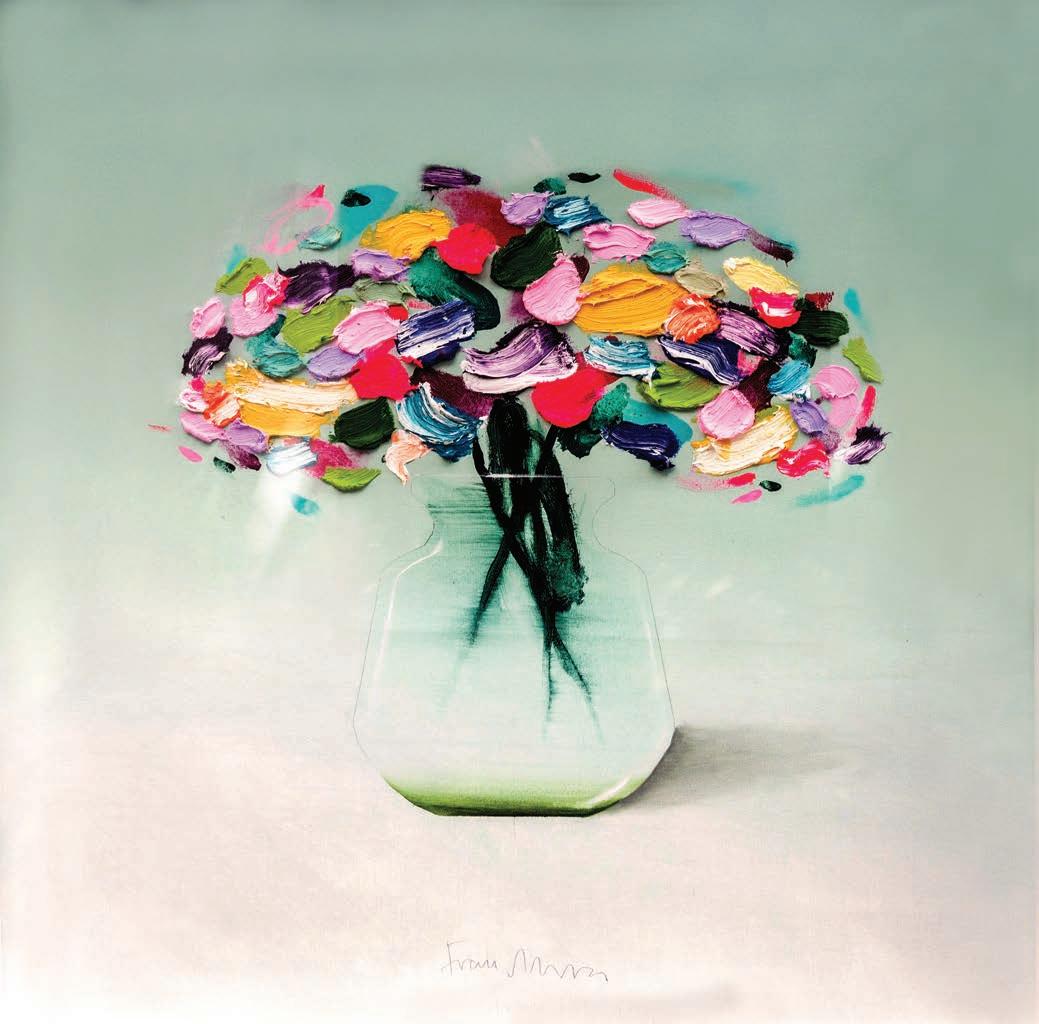

AGRADUATE OF the School of Fine Art in Seville, Fran Mora explains: “The bowl or vase is a recurring theme in my work. They are basic domestic objects that contain the simple pleasures of life.”
A vase of flowers or a bowl of fruit are the sort of everyday items that we might take for granted, but they can be transformed by layering their images with gesso and oils on linen. Sometimes, adding paper and fabric will create texture on the surface. Specific painting techniques will make a glass vase become translucent so that the flowers’ stems are strangely distorted by the water.
Unlike the Grand Masters of the 18th and 19th centuries who painted sombre still-life studies, Mora cannot wait to infuse his canvas with bright colours and markings made by fluorescent paint. This unusual use of luminescence is down to an invention created in 1930, when two brothers – Bob and Joe Switzer – experimenting in a darkened room with their father’s pharmaceutical products and some wood varnish, discovered fluorescent paint. Mora is one of few artists to use it regularly, creating dynamic effects in his paintings. It is now his trademark, distinguishing his work from others. The use of black is another characteristic feature. When challenged about his use of black in paintings, the artist August Renoir replied that Tintoretto called black “the queen of colours”. It seems that what was
good enough for Renoir and Tintoretto is good enough for Mora!
Like the Impressionists, Mora is interested in the transient effects of light. At the same time, every picture he produces is a still life study contributing to the idea of permanence which is the essence of traditional painting. This highlights the contrast between the calm quality of Paul Cézanne’s pictures of fruit, and the vibrancy of Van Gogh’s paintings of sunflowers. Either growing in the fields, or when cut and placed in a vase, flowers are probably the single most important source of artistic inspiration.
Peonies painted by Manet shed petals around the base of a vase as they slowly die, while other perfect specimens are at the peak of their beauty. Edgar Degas pictures a ballet dancer at the moment of the final curtain holding a bouquet. Renoir has Gabrielle with peach roses in her hair, and Claude Monet places Madame Gaudibert standing by two white roses in a vase.
Distinct from these naturalistic studies, Mora’s flowers are deliberately contrived and consciously decorative. Following techniques used by Pissarro when he painted flowering fruit trees, the paint is spontaneously applied. Alfred Sisley used similar daubs when he painted flowers in Misty Morning, and Monet’s later paintings of water lilies take the technique into a far greater realm of abstraction, while Mora’s flowers and fruit use an individualistic and eccentric style.
Galeria Côrte-Real is Fran Mora’s sole representative in the Algarve.
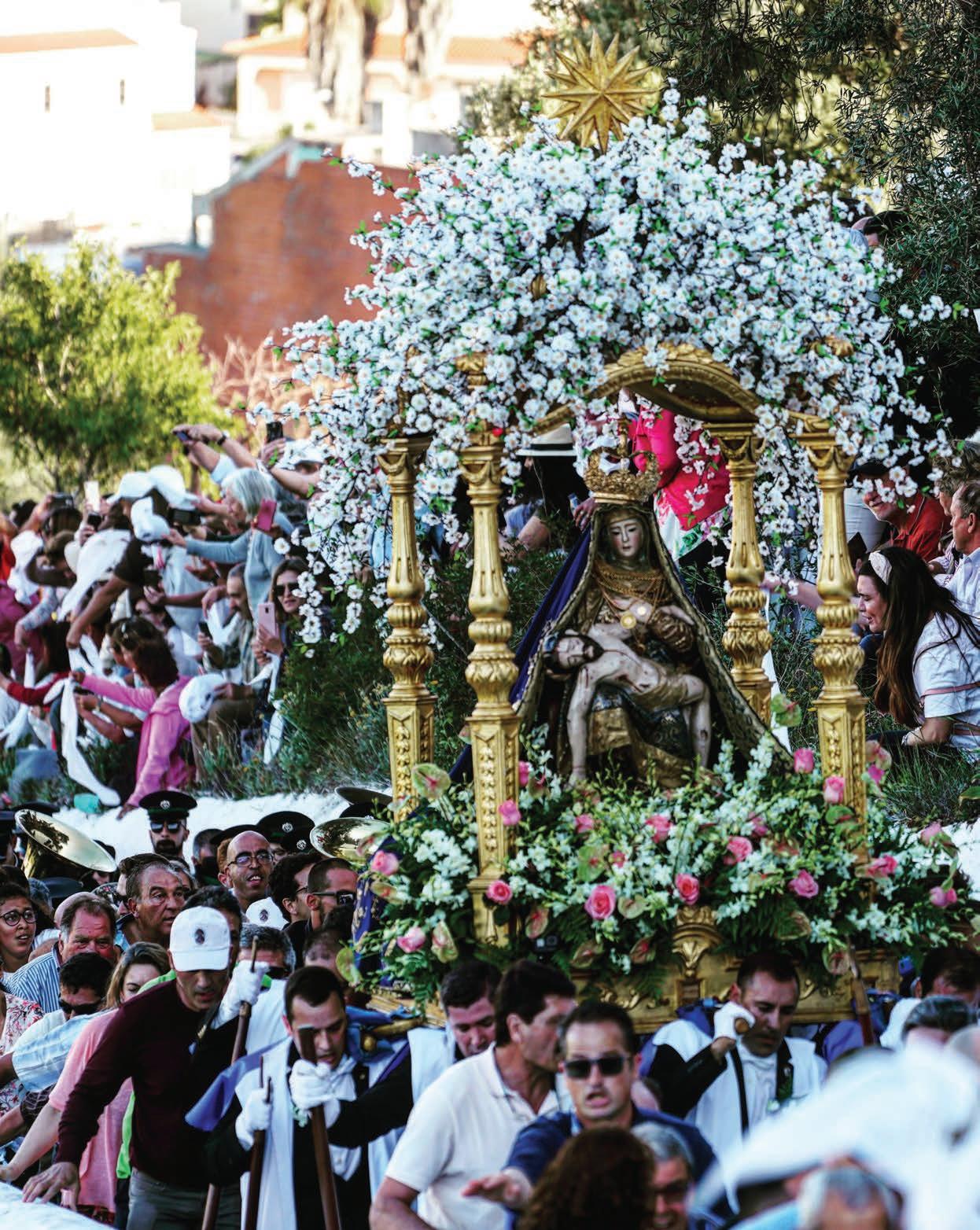

IT IS ONE OF THE BIGGEST EVENTS OF THE YEAR, COVERING A NUMBER OF WEEKS OVER EASTER, AND ATTRACTS MANY THOUSANDS TO LOUL É . IT HAS A HISTORY GOING BACK FOR CENTURIES, AND EACH YEAR IT GATHERS MORE FOLLOWERS WHO JOIN THE RELIGIOUS PROCESSIONS THAT CELEBRATE THE CITY ’ S SOVEREIGN MOTHER
Words: GILLIAN HISCOTT
Photography: JAN M TROMP
HE DREARY winter storms are over at last and springtime is here. This is the best and most joyful season in Portugal – the temperatures are pleasant and the countryside hills in the Algarve and the Alentejo region turn into a glorious wildflower garden. It is hardly surprising that April is such a celebratory time.
To those coming from non-Catholic countries, the religious processions which take place may seem remote. There will be blank looks at the mention of Easter and some people will be wondering which shops will be shut, which towns to avoid and when.
For the record, Good Friday is a public holiday and most businesses, schools, and government offices are closed. Easter Monday is not a public holiday though many local Portuguese, perhaps smaller businesses, will close to allow for family get-togethers and ongoing celebrations. This year, Good Friday falls on 3 April.
Some ex-pats will enjoy the bustle and atmosphere, but for those who shy away I’d like to encourage them to embrace events that are part of the culture and community of Portugal. To many who were not brought up in a religious household, Easter has just meant a holiday and a marker for the Spring. Members of other denominations will understand better the significance of this period.
My family were involved with a Pentecostal church in England and Easter was, of course, acknowledged... but from inside a building. Here lies the difference. The warm Catholic countries shout about it outside in the fresh air and sunshine. Paul the Apostle writes that for believers: “death is swallowed up in victory”. And maybe here we can find a parallel to the natural world which we can all relate to.
The Easter parades through the streets are a celebration of the resurrection and the beginning of a new season and growth. Certainly in sunny climates, this moment in time can be considered all the more ‘victorious’ as the sun bursts through the gloom and warms the earth and the human spirit.
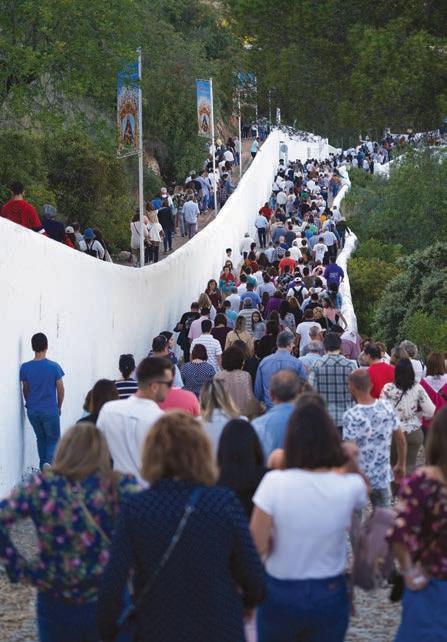
Loulé celebrates
We love Loulé, don’t we? The Saturday morning street market surrounding the iconic Arabian style red and white building, the pavement cafés and art galleries exuding a bohemian aura we can relate to. At Easter, the town elevates to another dimension. The festivity of Nossa Senhora da Piedade, the city’s patron saint known as the Sovereign Mother, has been celebrated in Loulé since the 16th century and is considered to be the largest religious manifestation of Marian worship south of Fátima, and the biggest Easter celebration in the Algarve. One of the main features is that the mother is present when her son Jesus is taken down from the cross. The cult of this image is present to view all year round on a hill to the south-west entrance of the city. The chapel is part of a larger complex built during the 20th century, composing a modern church, a candlelit house and some sanctuary rooms. Worth a visit anytime!
On Easter Sunday the first of the Feasts in Her honour is held. The Pequena Festa, on 5 April, sees her statue carried on the shoulders of eight of the ten Men of Andor to the Church of São Francisco in Loulé, where she resides for 15 days. During this period, a series of themed masses are held in the church that energise and include a large part of the community, and there are other activities including concerts staged in honour of The Mother. It is a time of great joy and religious participation by devoted Catholics.
On the third Sunday of Easter, the Festa Grande takes place, which extends through the day with different moments of celebration, ending with the emotional return to its hermitage at the top of Cerro da Piedade, always led by the men of Andor. This year, the procession will be on 19 April, when the statue of Mãe Soberana is carried back to her home: thousands of locals and visitors will follow the procession from the centre of town up the steep winding walkway to the top which has deep cultural and spiritual traditions. Fireworks and music add to the stunning atmosphere.
Gillian Hiscott is a UK playwright and author. You can read of her experience of buying a ruined school with her husband in Alentejo Days, Magical Nights. Links available on gillianhiscott.weebly.com
The best sources for up-to-date details closer to the event will be on the site of the Câmara Municipal de Loulé – cm-loule.pt – under the mobilidade / eventos section. Also worth checking is the information given by Parish Churches (Igreja de São Francisco, Sanctuary of Nossa Senhora da Piedade) as they often post procession times and routes and local tourism offices.
Palm Sunday: All-day church services and processions.
Good Friday: Church observances.
Easter Sunday: 5 April, Festa Pequena – 16h00 Prayer of the Rosary at the Sanctuary of Nossa Senhora da Piedade; 17h00 Procession with the statue of the Virgin Mary from the sanctuary to Church of Säo Francisco. Solemn Mass here at around 18h00.
Festa Grande: 19 April, after Mass, midmorning to midday the return procession begins. Mass and consecration at the monument (Eng. Duarte Pacheco) around 16h00 with candles and community gatherings. After sunset, there will be fireworks to end the festivities.
Loulé has several public/municipal car parks in and near the town centre, some of which have extended hours during large events. During festival processions (especially the Festa Pequena and Festa Grande), streets around Igreja de Nossa Senhora da Piedade, Igreja de São Francisco and central Loulé may be busy or have restrictions. Local advice often recommends parking a little outside the immediate procession routes and walking in.
Expect street food stalls around the event areas and elsewhere. These will have grilled meats; bifanas; petiscos (tapas-style finger food); sweet treats and pastries; coffee stalls and soft drinks; beer (craft and bottled), local wine and spirits. Restaurants and cafés around the town will be open for business.
If you’re coming from elsewhere in the Algarve, using the train station on the edge of town or regional buses avoids central parking stress. For religious processions like Festa da Mãe Soberana, road management is usually handled by the local police (PSP) and municipality. Expect temporary closure of main streets used by processions on the day/time of the event and check the official municipal or Facebook site before Easter Sunday for official traffic advice and information specifying closure times/streets.

In the sun-drenched Algarve, where golden beaches meet historic towns and olive -covered hills, finding the right home is about more than space or sea views it’s about lifestyle. Quintas & Casas, a boutique estate agency, with offices in Loule, Santa Barbara de Nexe, Sao Bras de Alportel and Almancil, offers a personalised property experience for international buyers and local clients alike.
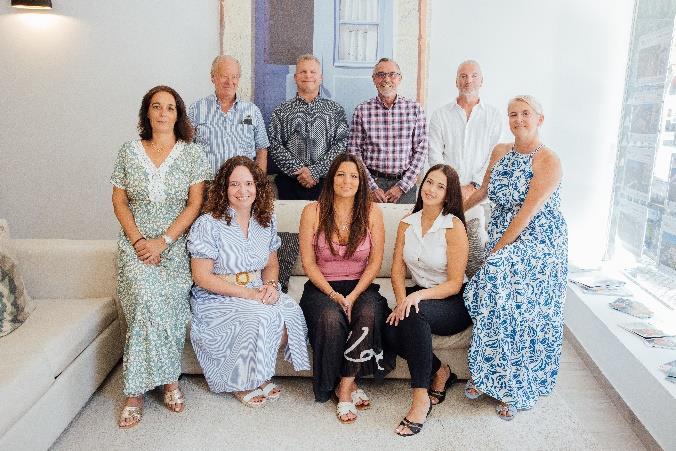
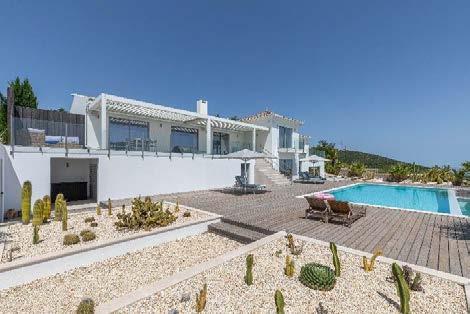
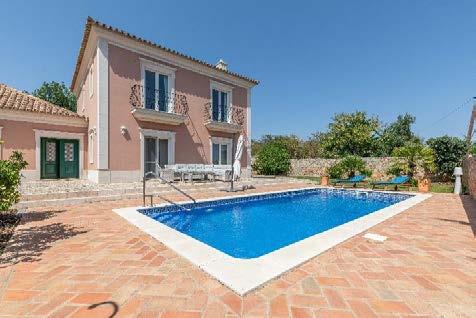
With deep local knowledge and an international outlook, the team treats every client journey as bespoke, providing clear, honest guidance at every stage. Their multilingual team ensure seamless communication for buyers relocating from around the world. From coastal villas to countryside quintas, each property is carefully curated and supported by expert marketing, photography and attentive service
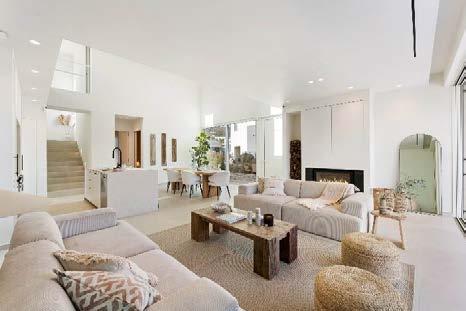
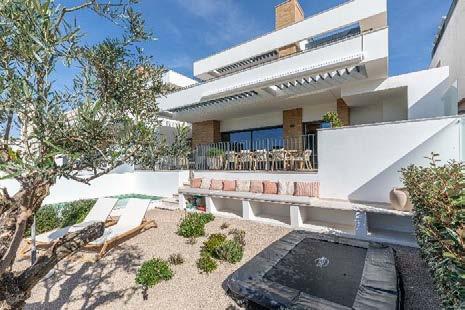
Office + 351 289 419 572
info@quintasandcasas.com www.quintasandcasas.com Top Quintas & Casas Mediação Imobiliária Lda – AMI 19560
BOLD COLOUR, ELEGANT NATURAL PLANTING, LOW-MAINTENANCE GARDENS AND THE USE OF TECHNOLOGY TO SUPPORT BIODIVERSITY ARE KEY THIS YEAR. THE SWEDISH GROUP HUSQVARNA, WHOSE ROBOTIC LAWN MOWERS ARE MARKET LEADERS WORLDWIDE, OFFERS TREND THOUGHTS FROM TOP LANDSCAPE DESIGNERS
Resilient, low-maintenance gardens
Recent summers and the past winter have shown that climate change is a reality; it is becoming increasingly urgent to take action at home to make our living spaces more resilient to extreme weather. If you plan to introduce new plants, choose native or Mediterranean species adapted to the climate of southern Portugal, along with low-maintenance hedges, trees and lawns. Sustainable solutions for garden
care that reduce the use of water, electricity, fossil fuels, and polluting emissions are the way forward; they also make it increasingly easier to automate time-consuming tasks such as watering and mowing the lawn.
2
Technology at the service of efficiency
The Husqvarna Automower® robotic lawn mower, backed by 300 years of experience and the trust of over four million customers, mows the lawn autonomously
and silently around the clock. With Swedish design and European manufacturing, the Automower® has maintained its sales leadership across all continents thanks to advanced technology that delivers a perfect finish and precise cut.
The new generation of Automower® AI Vision robots takes this even further; they are equipped with a camera using artificial intelligence vision technology that can see and interpret its surroundings, stopping or changing direction to avoid
collisions with people, animals, or objects left on the lawn, ensuring a completely safe environment while guaranteeing a flawless result, no matter the size or shape of the garden itself.
Automower® also promotes lawn health by cutting the grass into such fine clippings that they decompose within hours, naturally fertilising the soil and reducing the need for watering.
Automation is becoming vital in garden care, with technologies that are more precise than ever. If you haven’t already done so, consider installing automatic irrigation and smart lighting with solar charging to enjoy a lush, sustainable garden.
While soft, romantic pastel shades have defined trends in recent seasons, they are now joined by the bold intensity of plants and flowers in vibrant colours that will stand out.
4
The sensory garden
Today there is an increasing focus on creating an experience grounded in the principles of neuroarchitecture, combining a wide variety of elements to enhance mood and stimulate the senses.
You could plant aromatic herbs such as basil, rosemary, thyme, oregano, lavender or sage along walkways, create ponds with water features whose gentle sounds encourage relaxation and mask external noise, choose soothing colours for plants and furniture around seating areas, or install warm, indirect lighting that not only adds decoration but also allows you to enjoy a starry night sky.
The artificial intelligence vision technology in the latest generation of Automower® robots makes garden design more flexible than ever. You can set up
temporary exclusion zones, adjust mowing patterns with different styles, or customise your garden by area with varying uses, schedules and cutting heights, all easily controlled from your mobile device.
Your robot can also create intelligent maps of your garden. By combining satellite-assisted navigation with vision technology, it ensures full lawn coverage and a flawless cut, day or night, quietly and without interruption, even in areas with a weak satellite signal.
Just as textures dominate the fashion runways, they are also taking centre stage in gardens. This season, walls, steps and decorative features that incorporate natural stone, rough organic and natural materials such as wood, or large terracotta and raffia pots are all making design trend statements. This emphasis on texture extends to flowers and plants as well, with species such as coneflowers, hydrangeas, amaranth and ornamental grasses providing both tactile interest and vibrant colour.
With temperatures becoming increasingly extreme, creating shaded structures in the garden is not just a trend in European gardening, but a necessity for blurring the lines between indoor and outdoor living. Install pergolas and gazebos to continue your goal of creating a more sustainable garden with memorable spaces to be experienced and enjoyed in harmony with nature.
This respect for the natural environment has inspired Husqvarna to develop the most efficient, innovative and sustainable products that have become international market leaders.
Husqvarna, inventors of robotic lawn mowing, are driven by research, innovation, and the pursuit of green, lush lawns. Here are the key advantages of the Husqvarna forestry and garden machines:
Recharges automatically The robotic mower finds its way back to the charging station automatically. It recharges for about 60 minutes, then resumes mowing — without any effort on your part. Makes virtually no noise It’s so quiet that it can work in the garden day and night – quickly and efficiently.
Manages steep slopes
Thanks to optimised design and all-wheel drive (on selected models), Automower® can cope with slopes of up to 35°.
Covers all areas With intelligent mapping via satellite navigation and vision technology, your robotic mower navigates the lawn for an excellent cutting result.
Manages narrow spaces The robotic mower senses narrow passages and finds its way through gaps as narrow as 120cm.
Works in the rain The robotic mower gives you great cutting results in any type of weather. Its vital parts are protected at all times.
Visit lojahusqvarna.pt to see the many options available in the Husqvarna range.
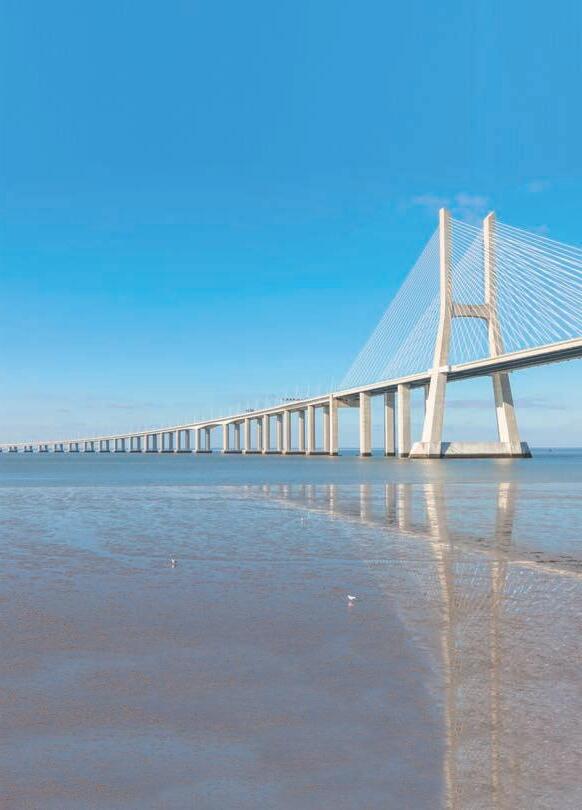

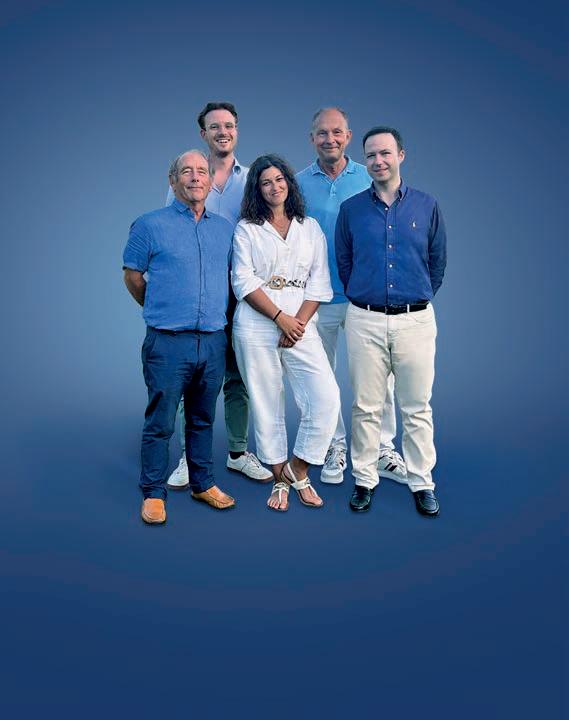

IT IS ALWAYS FASCINATING TO READ ABOUT WHAT CAPTURES THE IMAGINATION OF OTHERS, AND THERE IS PLENTY TO FASCINATE IN THIS MONTH ’ S BOOK SELECTION. OF PARTICULAR INTEREST IS THE CHOICE OF TITLES THAT UNDERPIN A CERTAIN LIFESTAGE

By Sarah Mangusok
Published by Picador
Sarah Manguso’s Liars was my first encounter with her work, and I found it gripping, if at times deeply frustrating. More than once I wanted to scream at Jane, her autofictional stand-in, to wake up and see what is so painfully obvious to the reader. That tension is part of the novel’s power. Manguso captures the maddening logic of staying in a bad marriage, how irrational endurance masquerades as reason, how hope becomes a burden rather than a lifeline.
The dynamic at the heart of Liars feels as old as the marriages in George Eliot’s Middlemarch or The Portrait of a Lady by Henry James: a brilliant woman tethered to a mediocre, self-involved man who cannot tolerate her talent.
Jane and her husband John begin with the promise of a creative, equal partnership, only for resentment and misogyny to calcify as her success outpaces his; his gaslighting – fixating on her past mental health, sabotaging her work, and recasting her competence as cruelty – shrinks her world.
Manguso’s fragmentary, aphoristic style gives the novel a claustrophobic intensity.

The brief yearly summaries Jane writes of her life underscore both the repetition and the erosion of self. At times the characters feel deliberately thin, starved of oxygen, mirroring Jane’s diminishing agency. Yet the prose is sharp, quotable, and often devastatingly precise.
If the book can feel suffocating, it is because it refuses easy explanations. Instead, it anatomises the quiet, grinding damage of heterosexual marriage and asks how a woman so clear-eyed in art can remain so blind in love.
By Christopher L Jones
Self published I began reading Meet the Tugas out of personal curiosity, as someone who has chosen Portugal not merely as a destination, but as a place to live, work and make art.
What I encountered was not a conventional expatriate memoir, but a layered cultural exploration that moves with ease between anecdote, history and reflection.
Over three years of travel, Christopher Jones journeys across the country – from Atlantic islands to northern strongholds – tracing the historical and emotional contours that shape contemporary Portugal. The title draws on ‘Tuga’, an affectionate colloquial term the Portuguese use for themselves, and it signals the book’s true focus: people rather than panoramas.
Jones’s strength lies in his attentiveness; he neither romanticises nor reduces; instead, he situates everyday encounters within the broader sweep of Portugal’s past – empire and loss, revolution and reinvention. His tone remains light without being superficial, informed without becoming academic.

What lingers after the final page is less a catalogue of places than a sharpened perception: Portugal emerges not just as a picturesque backdrop, but as a living, complex culture whose subtleties reward patience and proximity.
Meet the Tugas ultimately reminds us that understanding a country is never about arrival – it is about learning how to look, listen and remain curious.

by Robert Kiyosaki
Published by Warner Books
Rich Dad Poor Dad is a thought-provoking book that challenges the way many people think about money, success, and financial security.
Through the story of two father figures, Kiyosaki contrasts two very different mindsets about earning, saving, and investing money. Rather than focusing on working hard for a wage, the book emphasizes making money work for you through assets, investments, and financial education.
One reason others would enjoy this book is that it is a simple read. Robert Kiyosaki explains complex financial concepts in a way that feels accessible and practical, even for readers with little to no background in finance. His use of personal stories makes the lessons relatable and memorable.
Many readers like myself find motivation in its message: that financial freedom is achievable with the right mindset and willingness to learn. The book encourages readers to question traditional advice, such as relying solely on a stable job, and instead thinking more creatively.


This book resonates with me because it highlights the importance of financial literacy, something that was not taught when I was in school. Its emphasis on mindset and seeing opportunities instead of obstacles feels empowering.
The idea that long-term security comes from smart investments rather than dependence on a salary is both inspiring and transformative. Overall, this book is meaningful because it pushes readers to rethink their beliefs about money and take control of their financial future.
By Brené Brown
Published by Hazelden Publishing
I tend to read self-development books. I’m always curious about how we think especially when, on the surface, everything looks fine.
I read The Gifts of Imperfection by Brené Brown when I was preparing to move to the Algarve, on a journey that was meant to be a fresh start, a new country and new chapter in my life. But
underneath the excitement, I was struggling with imposter syndrome more than I expected.
I had built a business and supported others for years. Yet, as I packed up my life in the UK, I kept thinking: “What if I’ve just been winging it?” It’s amazing how a big move can stir up every insecurity you thought you’d dealt with, and this book came at the right time for me.


Brené Brown talks about vulnerability, shame and the pressure we put on ourselves to prove we’re worthy. What I liked most is that she doesn’t position herself as perfect. She’s researched it deeply and is honest about her own struggles, and that’s something we all need to learn to do.
The message that stayed with me was about being enough. Not more polished or more confident, just enough as we are. It’s not dramatic or life-changing overnight. It’s thoughtful, and for me as I tried to reset my brain and start again in the Algarve, it was exactly what I needed.
by Celia Imrie
Published by Bloomsbury
Celia Imrie’s Orphans of the Storm draws on one of history’s most enduring tragedies, with the author grounding her drama in authentic detail. Rather than simply retelling a well-known disaster, Imrie carefully threads fiction through the documented lives of real Titanic passengers, lending weight and credibility to her narrative.
The heroine, Marcella, has theatrical ambitions but instead finds herself trapped with two young sons in a marriage shaped by abuse and cruelty. In an effort to regain some control, she unwittingly sets a course for catastrophe. The looming presence of the ill-fated voyage provides tension, yet the novel’s true focus lies in the emotional cost of manipulation, separation and survival.

Imrie explores the subtle and overt ways women were constrained – socially, financially and emotionally – within a vividly-drawn Edwardian society. Her portrayal of coercive relationships feels strikingly recognisable, even from a modern perspective.
An absorbing work of historical fact entwined with fiction, the novel invites readers to view a familiar tragedy through a more intimate and compassionate lens.


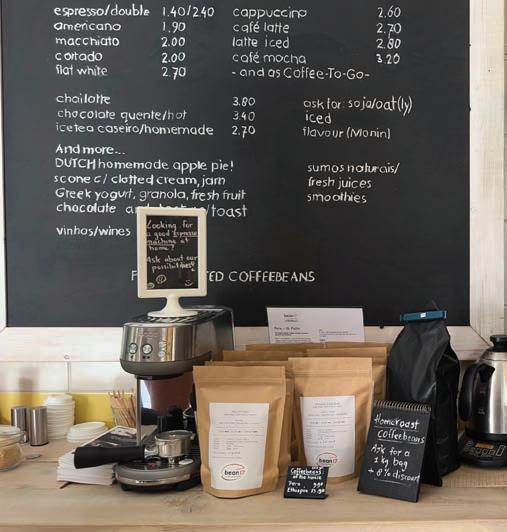
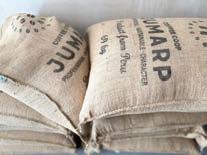

Discover bean17 in Loulé Market! Savour house-roasted Speciality Coffees like espresso or cappuccino, indulge in organic kombucha, and treat yourself to heavenly homemade cakes. Take the magic home with freshly-roasted organic Arabica beans from Peru and Ethiopia. Craving more? There are healthy breakfasts, light lunches, and a curated selection of premium products, including Portuguese olive oil,
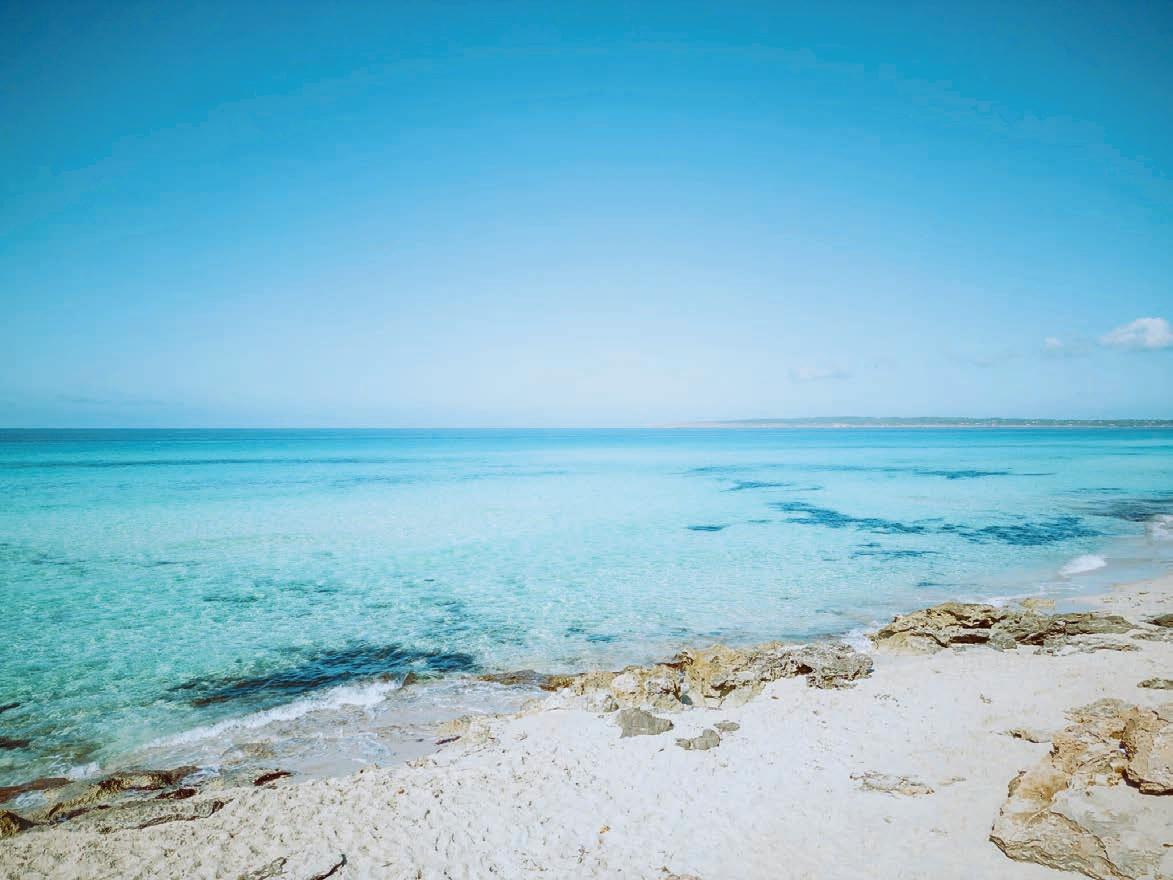

BLUE SKIES, SUNSHINE AND TIME OUT. THERE ’ S LITTLE AS PLEASURABLE AS SITTING DOWN WITH A TASTY SPREAD AND A CHILLED GLASS OF SOMETHING DELICIOUS, SURROUNDED BY NATURE. IN THE ALGARVE THERE IS NO SHORTAGE OF VIEWS... OR PICNIC SPOTS. HERE ’ S THIS MONTH ’ S SIX OF THE BEST
Words: LAURA SHEA
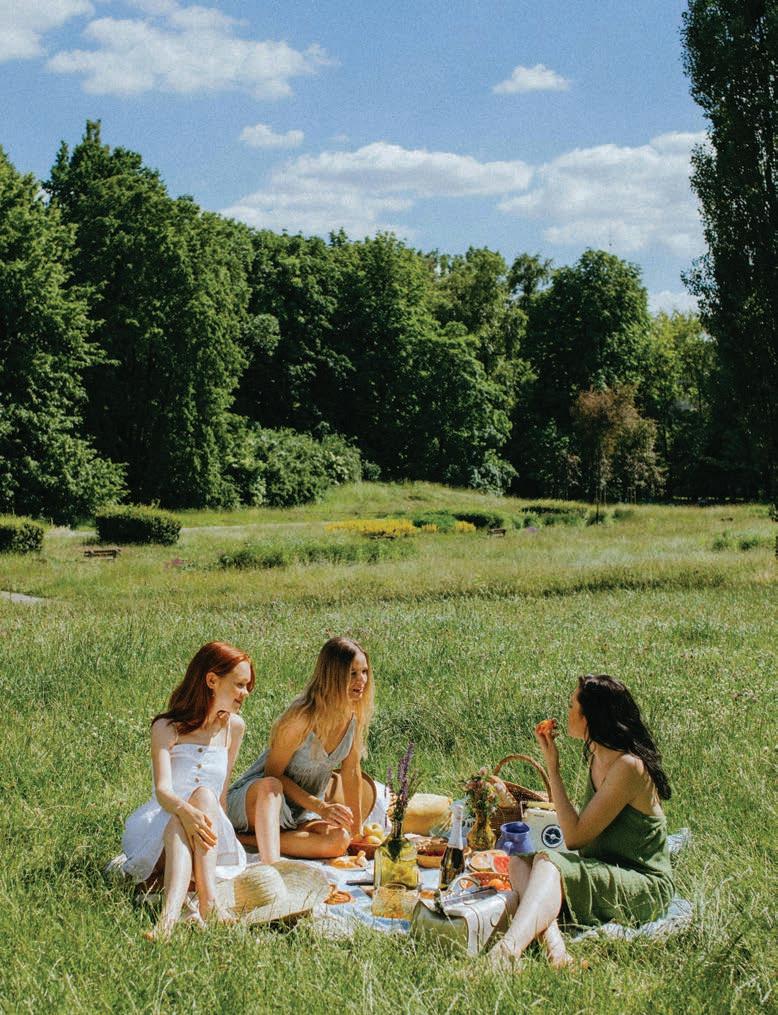
ALWAYS look out for a nearby parque de merendas (picnic park) when travelling around. There are great spaces, each with their own personality, dotted around every town, and in the heart of many a city, that locals know well and visitors are delighted to discover. And don’t forget the range of health benefits of a lazy lunch in the outdoors – the vitamin D from the sunshine, if enjoyed sensibly, is a real bonus, and the fresh air helps clear the mind. Take a moment to appreciate everything that is going on around you. The birdsong, the warmth, music or people laughing, all of these little things together make the picnic experience truly magical.
1
Parque de Merendas da Praia da Marinha, Lagoa
There are few things in life more soothing for the soul than being able to look out to crystal blue waters and listen to the waves rolling in. Luckily for anyone in the Algarve, this is an easy thing to find year-round. The Marinha Beach picnic area gives everything that could be desired from a late afternoon snack spot, and you won’t even get sand in your sandwiches! Perched on the cliff top, this lookout is easy to get to, has plenty of parking and will give breathtaking views any time of the day, 365 days of the year. Either begin or end your day out here, but do not miss the chance to walk part of the famous Seven Hanging Valleys trail from this area.
2
Fonte Grande Parque de Merendas, Alte
A stunning little find, Fonte Grande is a beautifully laid out, stone terraced area that is loved by local families when the sun is shining. Popular with so many due to the spring-fed water in which you can swim, there is a café (open seasonally), toilets and picnic tables dotted around. You can bring your own food and drink, and even make use of the barbecues that are there – you only need to bring your provisions! Shaded areas are available as well, and there is plenty of space to enjoy a walk or some games with the kids. Get there early to nab a table and grill!
3
Parque Municipal do Sitio das Fontes, Estombar
If you fancy having your picnic with a watery view, then this is definitely the spot for you. Located on the left bank of the Arade River, the park gets its name from the many natural springs that are here, and these springs have created an incredible variety of habitats for flora and fauna. Bird watchers love this area due to the kingfisher sightings, but the entire view from the trail is stunning and it is all topped off by enjoying your lunch on one of the many comfy tables laid out. A visit to the watermill and Algarve house is not to be missed.
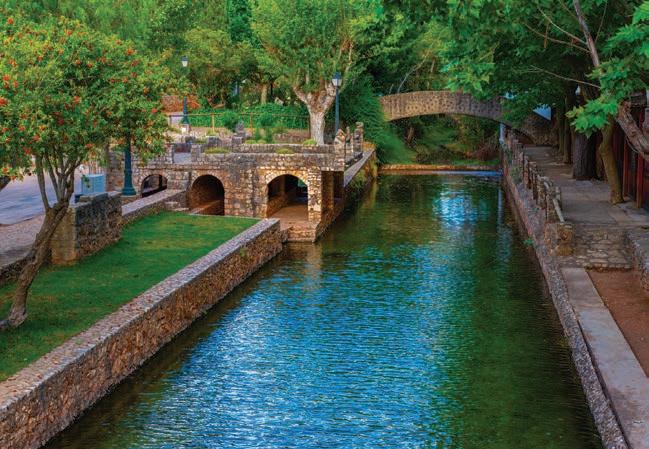
4
Caldas de Monchique, Monchique
Nestled in the Serra de Monchique mountains, this area is well worth an explore, especially for the history buffs out there. The thermal springs here make this a favoured spa retreat just as much today as it was in Roman times, and the beautiful architecture all around tells the stories of times gone by. The Fonte Dos Amores is a stunning little park which provides a perfect afternoon stroll and you will be spoilt for choice on where to stop to enjoy your picnic and soak up the sun. The town itself offers an almost tropical vibe and is a truly special spot in the Algarve.
5
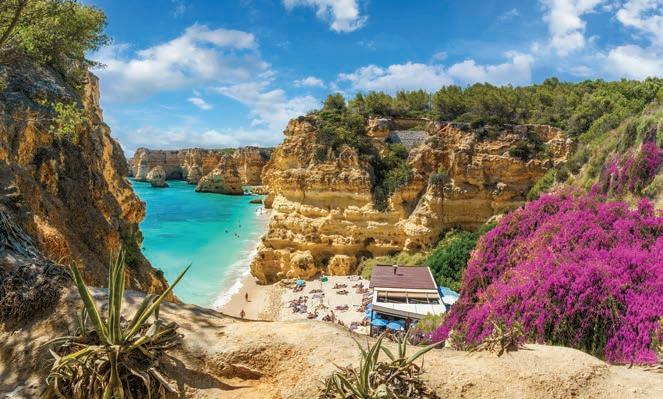
Jardim das Comunidades, Almancil
With a central location and easy parking, this is the ideal place to go to meet friends and hang out on the soft grass with a basket full of tasty goodies. There are clean public toilets, Wi-Fi throughout the park, and a café a short walk across the road if you need a coffee or tea to go with your picnic. The small lake is home to a host of wildlife such a turtles and fish, and an ingenious design of floating cork islands allows plants to grow, improving the water quality and attracting nesting birds. This is one of the nicest picnic spots available if you want convenience, nature and amenities.
6
Jardim da Alameda João de Deus, Faro
This is the ideal spot if you fancy a couple of hours watching the world go by. The park, in the heart of the Algarve capital, is popular with all ages, and the cafés inside get busy with school children grabbing an ice cream as an end-of-day treat. Find a picnic bench, get comfy and spend the afternoon with the peacocks and statues for a mindful meal. On the way out make sure to check out the pond and secret garden for a last shot of fairy tale beauty.
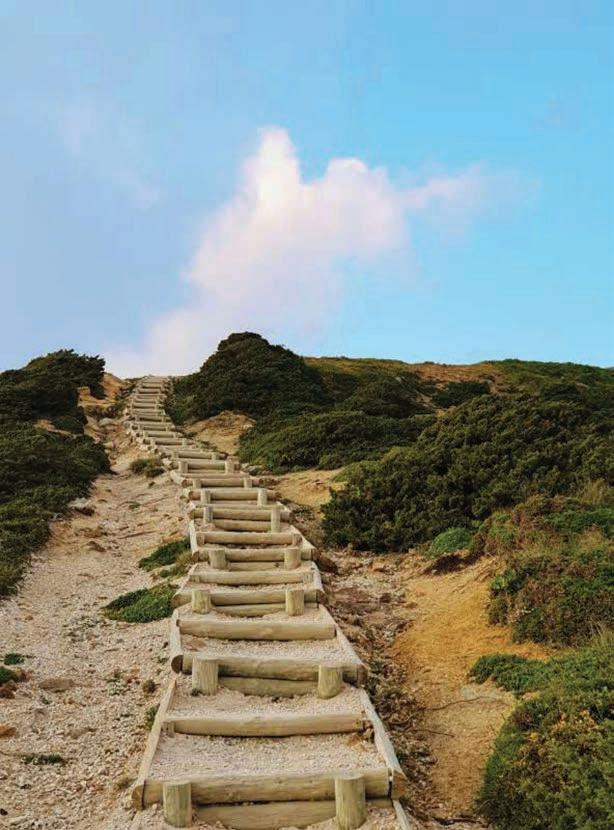
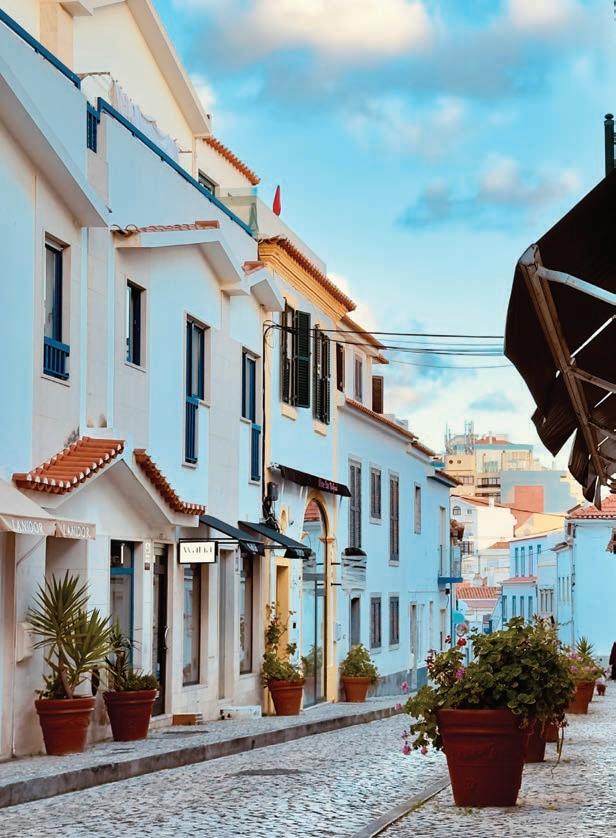
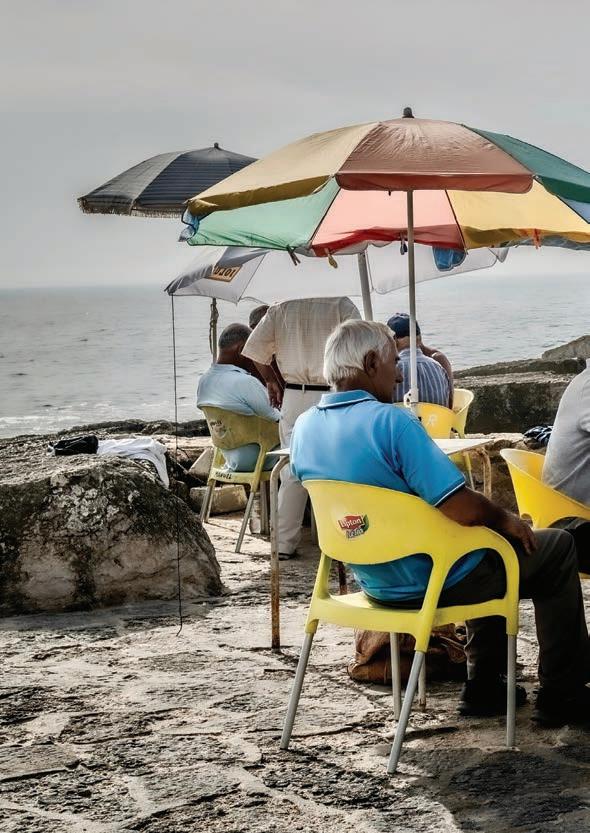
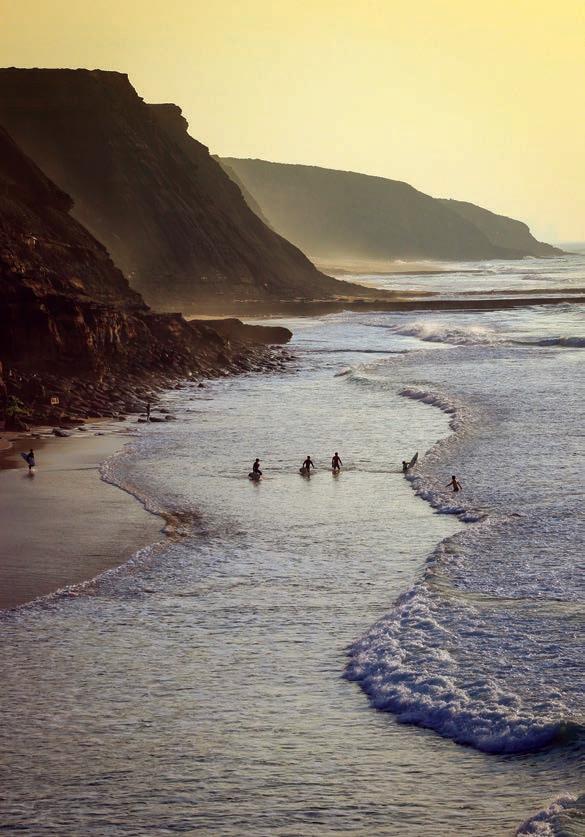
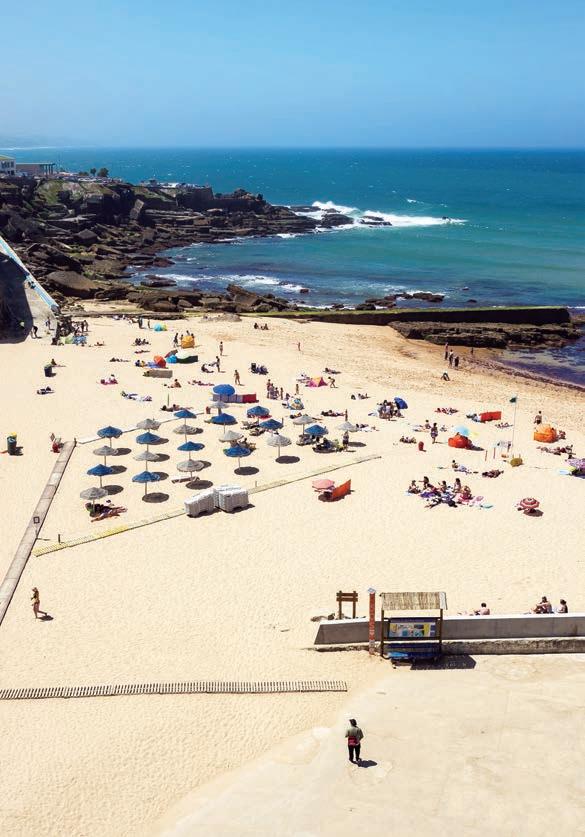
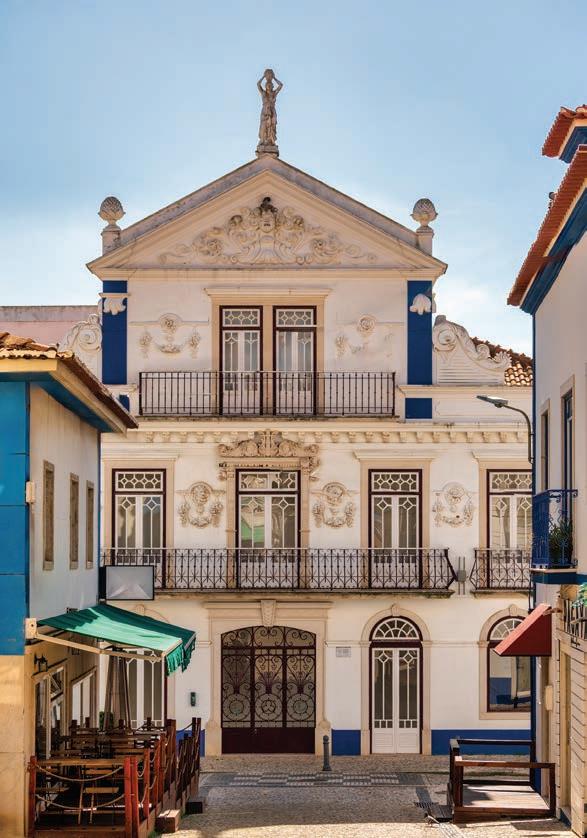
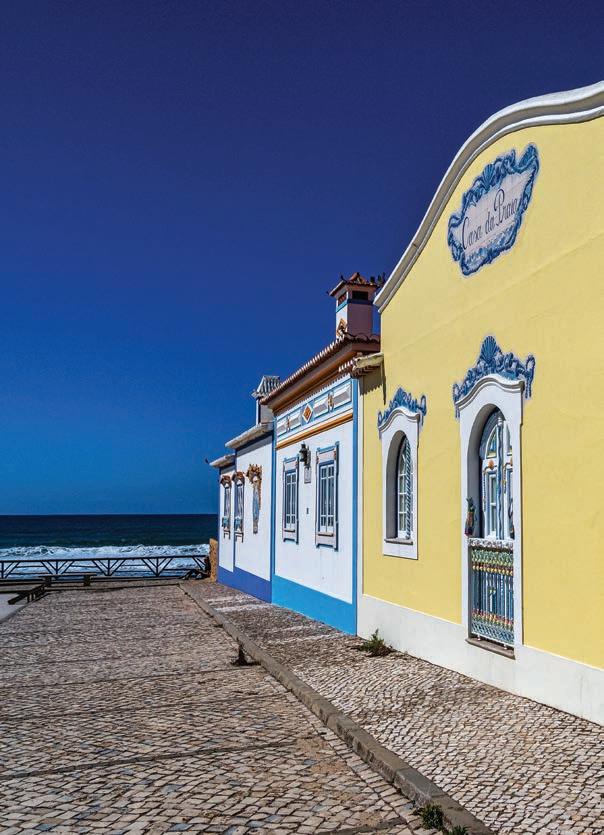
48 HOURS IN
ERICEIRA IS ONE OF THOSE PLACES THAT QUIETLY GETS UNDER YOUR SKIN – ALL ATLANTIC DRAMA, WHITEWASHED STREETS AND SURF - TIL TED ENERGY SOFTENED BY SLOW, SALT - SPRAYED DAYS. IN APRIL, WITH SPRING IN FULL SWING AND THE TOWN GENTLY STRETCHING OUT OF ITS WINTER SLUMBER, IT MAKES A DREAMY TWO - NIGHT ESCAPE: ATMOSPHERIC, LESS CROWDED THAN SUMMER, AND BRIGHT WITH THAT HOPEFUL, FIRST - W ARM - DAYS-OF-THEYEAR FEELING
Words: PIPPA O ’ KEEFE, PIPPA ROSE TRAVEL
APRIL IS when the coast starts to bloom. Wildflowers appear along the cliffs, days are longer, and you’re more likely to get those soft, golden afternoons that call for terrace lunches and coastal walks. The Atlantic still has a nip to it, but the air is milder, perfect for throwing on a light jumper and wandering from beach to viewpoint without the intensity of the July sun. Surfers still chase strong swells, yet the line-ups, cafés and streets are calmer than peak season so you get all the charm of Europe’s only World Surfing Reserve before summer really arrives. It’s also a beautiful time to explore the countryside and vineyards – Adega Mãe is worth visiting – around Mafra and Ericeira, with greener hillsides and plenty of space everywhere you go.
Your base for 48 hours is Aethos Ericeira, a design-driven clifftop hideaway overlooking Praia da Calada at the northern edge of the surf reserve. Perched above the ocean, it feels secluded yet close enough to dip in and out of village life when you wish. Once a traditional farmstead, it’s been transformed into a contemporary coastal retreat where clean lines, warm woods, stone and velvet sit quietly against huge Atlantic views. Rooms and suites follow a soft, coastal palette – sand, sea and dune tones – with king beds, walk-in rainfall showers and big windows framing either the gardens or the ocean.
Life at Aethos flows between the heated saltwater pool, the restaurant, and the wellness spaces. There’s a spa with a hammam, sauna with ocean view and treatment rooms, plus yoga and meditation decks, an ice bath, gym and even martial arts sessions. The restaurant leans into coastal, seasonal cuisine – local fish, vegetables and Portuguese flavours refined rather than fussy – while the bar is made for slow, end-of-day drinks watching waves roll in below. For surfers, there’s easy access to various breaks, board storage, and a dedicated surf school offering tailored sessions from beginner to expert.
Ease into Ericeira by heading into the old village after breakfast. White-and-blue houses tumble down to the sea, narrow streets open suddenly onto Atlantic panoramas, and tiled churches and little squares remind you this is still, at its core, a fishing town. The municipal market is worth a wander in the morning for its fish stalls, flowers and local produce, and you’re never far from a café counter for a bica and a pastel.
For lunch, locals will point you towards Mar d’Areia for some of the best quality-to-price ratios in town. The grilled fish is the star here – simple, perfectly cooked and served without unnecessary complication. Even if they close briefly around spring for holidays, it’s one to keep firmly on your Ericeira list.
Another favourite, especially if the April sun makes an appearance, is Canastra. Sit outside on a good-weather day and order their famous amêijoas à Bulhão Pato – clams swimming in garlicky, lemony, cilantro-laced broth, ideal for mopping up with bread and a glass of crisp white wine. It’s relaxed, convivial and very Ericeira.
If the weather turns, or you simply want to be as close to the ocean as possible, Esplanada Furnas is a classic. Perched directly above the water, it gives you that delicious feeling of sitting almost on top of the Atlantic. Inside, it’s all about views, good service and fish done properly – grilled, baked or in generous seafood platters. Even on an April day when the wind picks up, you can sit by the window, watch waves crash against the cliffs, and enjoy impeccably fresh fish and shellfish.
Spend the afternoon exploring the World Surfing Reserve coastline. From Praia dos Pescadores – a natural balcony lined with fishing boats and cafés – you
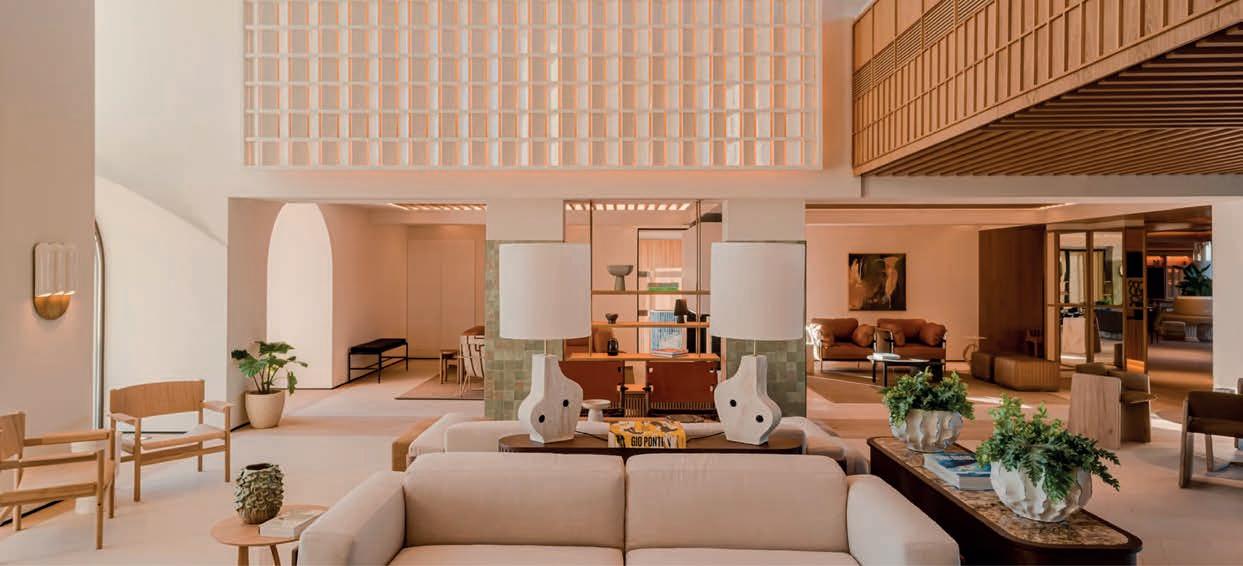
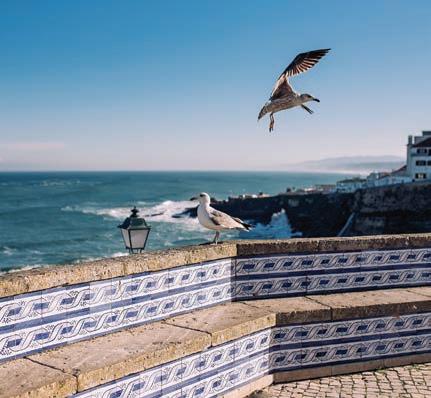
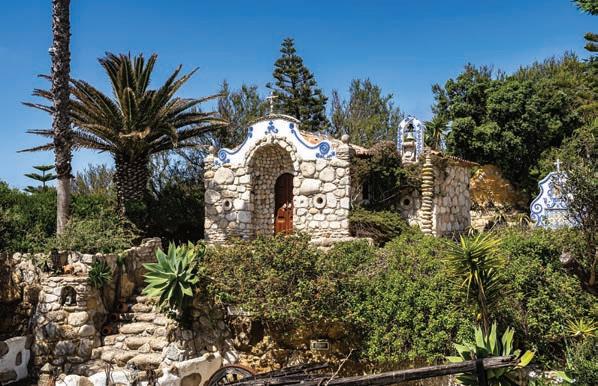
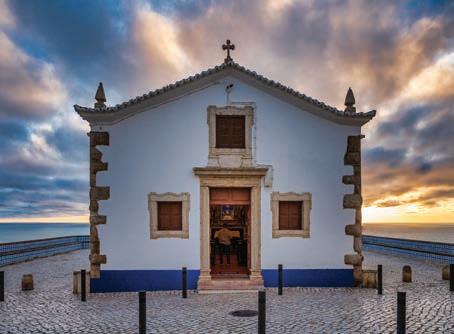
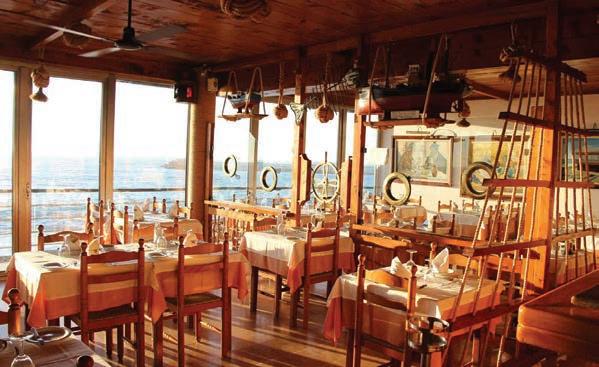
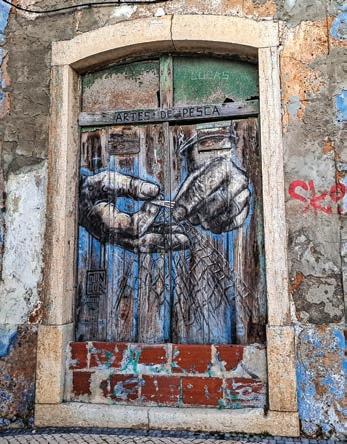
Opposite page: The lounge at hotel Aethos Ericeira. This page, top left, clockwise: Gulls looking out to sea; tiny chapel on Matadouro beach; Fishermen’s street art; Nossa Senhora da Boa Viagem chapel, Mafra; Esplanada Furnas for a delicious meal and spectacular views
can trace the curve of the shore and watch surfers playing in spring swell.
Head north to Ribeira d’Ilhas, one of the area’s most iconic breaks, where surf schools run lessons and the wooden boardwalks are perfect for a late-day stroll. April skies, low sun and a slightly gentler Atlantic give the whole scene a luminous, early-season calm.
Back at Aethos, let the evening slow right down. Perhaps a hammam ritual and massage, then dinner in-house with a menu that mirrors the landscape outside: Atlantic fish, local vegetables, deeply comforting flavours plated with a light hand. Wrap up the night with a drink by the fire or a glass of red on the terrace if the wind is kind.
On your second morning, lean into Ericeira’s brunch culture.
Gig brings an easy surf-meets-Scandi energy, with good coffee, pancakes, bowls and eggs in a bright, relaxed setting that suits slow mornings.
Balagan Ericeira has more of a boho tone – colourful plates, generous portions and a laid-back vibe that works whether you’re fuelling up post-surf or simply enjoying a leisurely start.
Brunch Me does exactly what the name suggests, with a crowd-pleasing menu of classics: avocado toast, fresh juices, pastries and solid espresso.
After brunch, it’s time to step inland. The countryside around Ericeira and Mafra rolls into gentle hills, farmsteads and vineyards, and April is a lovely month to see it, with everything green and waking up for the season. You can join a wine-tasting bike tour that winds through rural lanes between wineries, combining easy cycling with tastings and long, scenic views. Alternatively, arrange a visit to a nearby vineyard for a cellar tour and tasting, pairing local cheeses and petiscos with Lisbon-region wines. It’s a generous way to experience the region beyond the coast and a nice contrast to your
ocean-focused hours.
Back by the sea, spend the afternoon exactly as the weather dictates. On bright spring days, coastal hikes along the cliffs north or south of town are spectacular – sweeping Atlantic views, wildflowers along the path, and the odd hidden cove to discover along the way. You can rent bikes and follow cliff-top trails, browse surf shops in the village, or simply settle on a terrace at Praia dos Pescadores to watch locals fish and surfers.
For a final lunch or early dinner by the water, circle back to whichever of your chosen spots you haven’t yet tried: a lingering seafood feast at Esplanada Furnas if you skipped it on day one, or a second round of clams at Canastra if you’re already planning your return.
As the light softens over the Atlantic, head back to Aethos for one last swim in the heated pool or a quiet drink looking out over the darkening ocean. April nights can still be crisp, but that just makes a steaming hammam, a good glass of red and a sea-view room feel even more indulgent.
Ericeira in spring is all about embracing that in-between season: wild seas without the crowds, sunshine that shares the day with sea mist, and time to enjoy both the surf-reserve buzz and the countryside stillness. With Aethos Ericeira as your clifftop base, 48 hours here can hold long lunches, Atlantic walks, vineyard tastings and spa-soft evenings – a coastal reset that feels quietly, wonderfully restorative.
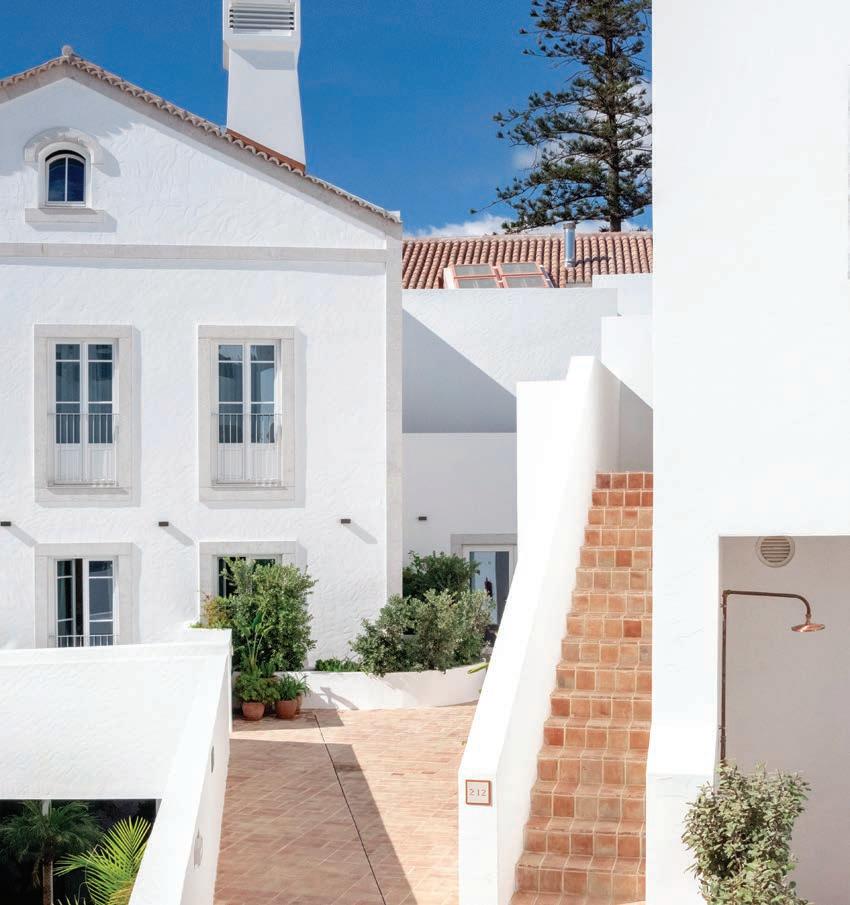
SUMMER IS APPROACHING AND WITH IT THE NEED TO ESCAPE TO PLACES THAT ARE DESTINATIONS IN THEMSELVES. NO NEED TO TRAVEL FAR, JUST SMART
Words: SANDRA GATO
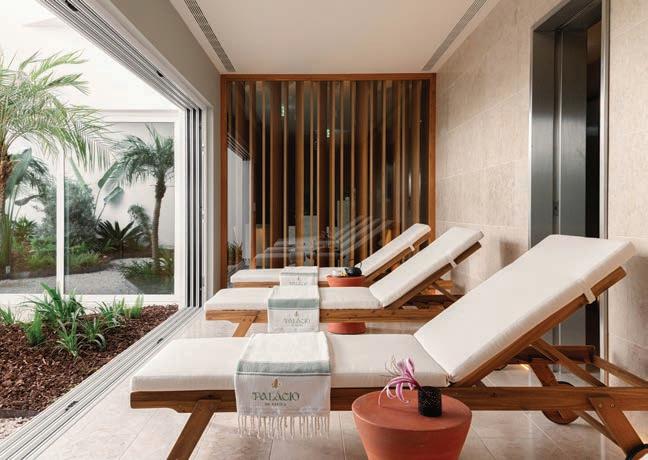
The ‘good’ Algarve is always a great idea for summer. By ‘good’ we mean less touristy areas, of course, away from noisy crowds and too many tourist traps. The city of Tavira is, fortunately, still on the good side. Capable of keeping its soul and authenticity, it has developed throughout the years without losing identity. And, since 2025, it has had a special plus: Palácio de Tavira hotel.
Situated right in the heart of the city, it was once one of Tavira’s great noble residences, built by the Tavares family in the 18th and 19th centuries. Its walls witnessed not only stunning aristocratic parties but also political gatherings – a lively past that one can only imagine when entering such a peaceful site.
In terms of architecture, the restoration project
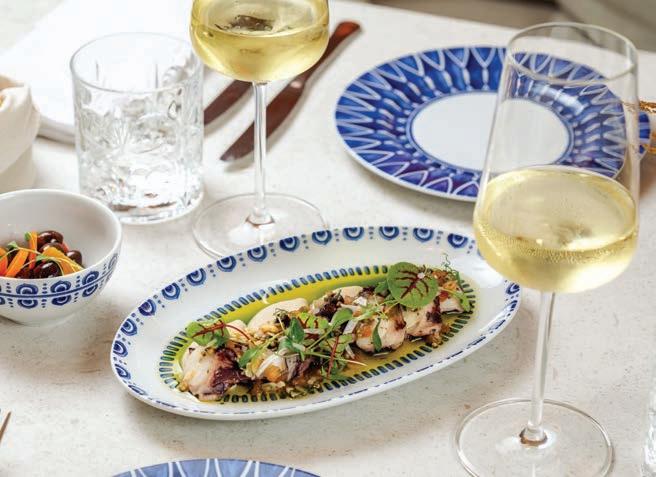
has included the necessary updates but kept the manor house feel in the main building. The big surprise of this hotel is that you can also choose another totally different mood to stay in: the medina.
Acknowledging Algarve’s Moorish roots, the rooms of this part of the hotel have outside patios, basic colours and terracotta materials. So, you can choose between a more classic noble room in the main building or a more Mediterranean cool approach at the medina.
Common to both areas is Mirsal restaurant where all the best produce and flavours from the south of the country are prepared and presented in a contemporary way. And not to be missed – besides the nearby beautiful beaches such as Ilha de Tavira and Cabanas – is a treatment with local herbs and essential oils in Luma, the hotel’s wellness centre, . palaciodetavira.com
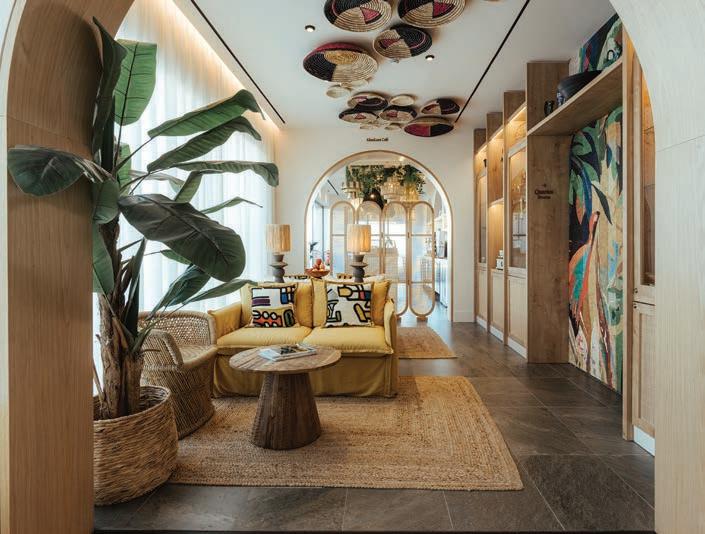
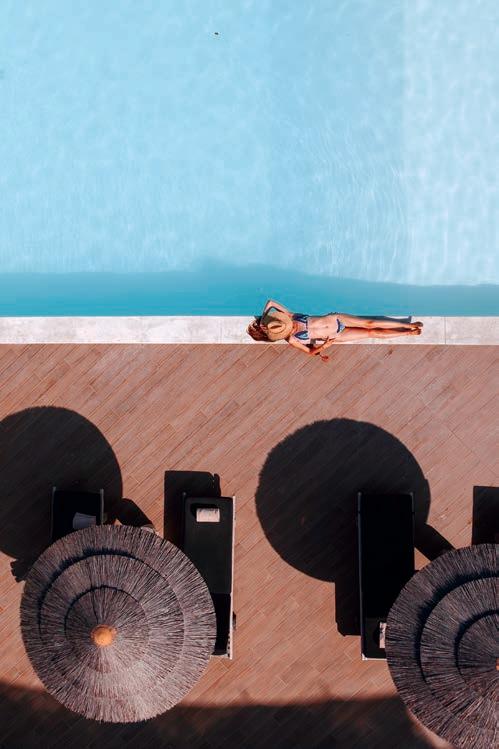
Comporta is just over an hour’s drive from Lisbon but feels like a totally different world. Pristine beaches, fishing villages, sophisticated lodgings and, yes, a lot of expats and foreign tourists. The good news is that Comporta’s essence is still there, you just need to know where to find it. True, there are amazing secluded (and expensive) resorts around, but for the real old Comporta experience, staying in the only hotel inside the village (but still only a 15-minute walk to the beach) is a good start.
AlmaLusa is comfortable in size and has a kind of Miami vibe, with the pool at the centre and all the rooms around. Inside, the earthy colours and soft materials remind us of its Portuguese heritage, with all the wood and wicker work. For the best views, a drink or a light meal on the hotel’s rooftop is mandatory.
For an extra special treat, make an appointment at the Face Lift Gym for 35 minutes of a pure workout for your face muscles. Just let expert hands do what they do best and when you leave the wellness hut, you’ll feel that ten years were erased from your face. Strong steady movements that feel relaxing at the same time.
And since AlmaLusa is right in the village, it is possible to go out to dinner or the shops on foot and have that wonderful feeling of living the village life – as long as the holiday lasts. almalusahotels.com
Can you imagine a whole village turned into a hotel? That is exactly what Villa Pedra is. In the centre of Portugal, 35 kilometres from the city of Coimbra, high in a beautiful mountain, there used to be a village with stone houses of different sizes, roads, terraces, and even a school.
Running away from isolation and at the same time looking for better living conditions, most of its inhabitants left, and when the older ones died, the village was totally abandoned.
That is how the owners of Villa Pedra found it and fell in love with it. They bought most of the houses – some are still ruins, others turned into pretty village dwellings – and have given the area new life.
At the moment, there are 11 villas with private gardens, all charmingly decorated and, despite being made of stone, are warm and comfy inside, even when winter cold strikes hard in the mountains. This is the ideal getaway destination for those who seek solitude and can do without noise and crowds. Nature and silence are the main characters here, taking us back to another place and time.
Running before 10am to breakfast queues in big hotels? Here, part of it (cheese, butter, milk) is already in the villa’s fridge when one arrives and wood-fired bread and homemade cake are delivered at the door, like bakers used to do in the old days. villapedra.com
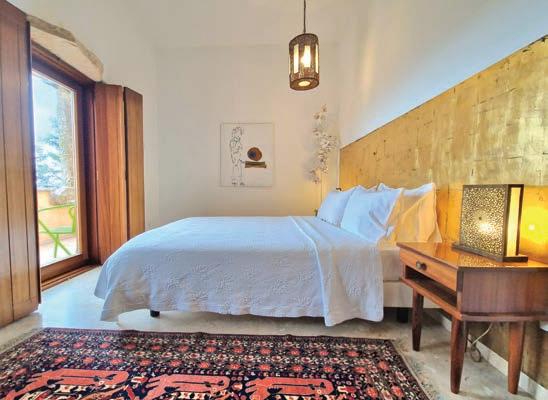
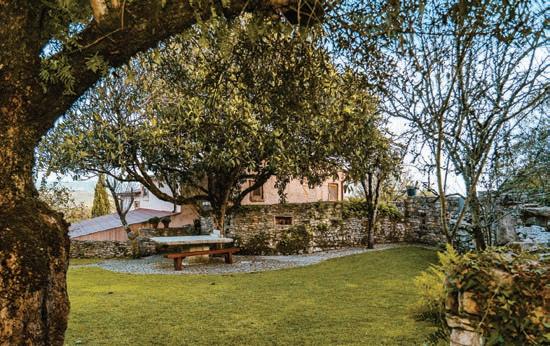
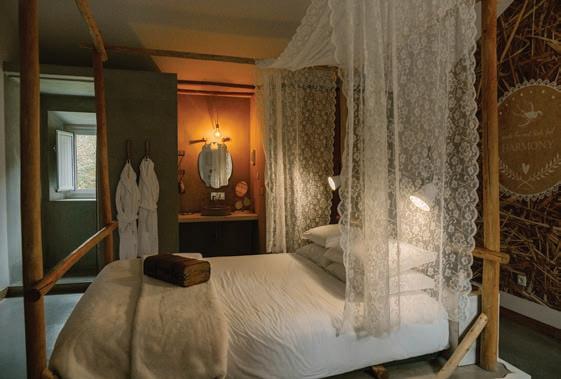
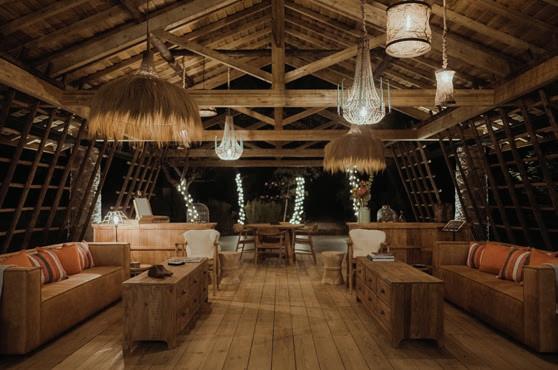
Warning: it is almost impossible to go to Luz Houses just once. There is something about this place that makes you want to come back, again and again. Maybe it is the light (luz is light in Portuguese), but not only the natural light; there’s more of a spiritual one maybe… The fact that the hotel is in Fátima, walking distance from the famous sanctuary, might influence one’s state of mind, but I would say it is something more tangible than that.
Luz Houses is, in fact, formed by a group of small houses –rooms, actually – surrounded by the common areas. The main house contains the reception; the restaurant for breakfast and pre-booked meals; a shop and the living room; the awardwinning swimming pool; an open space lounge, perfect for reading or just feeling connected to the elements; or the hermitage, a space for meditation, contemplation or prayer.
As soon as the gate closes behind you upon arrival, the feeling is similar to that of coming home, which is the best thing you can say about somewhere you go for some time out. It inspires a sense of serenity but, at the same time, you want to explore all its little hidden secrets, the best-kept of which has to be the wellness cave – a spa-treatment room inside a natural cave with all the magic that comes from being underground, listening to flowing water and being pampered. If you think you’ve seen everything in terms of spas and wellbeing, this will make you think again.
All of the above and so many other details – the welcome tea in the fireplace room while checking-in, the meditation path that leads to the hermitage, the terrace overlooking the cistern (used in the past by local shepherds to quench the cattle’s thirst) – makes Luz Houses a place where life feels easy and carefree. As I said, you’ll probably be booking your return whilst checking out… luzhouses.pt
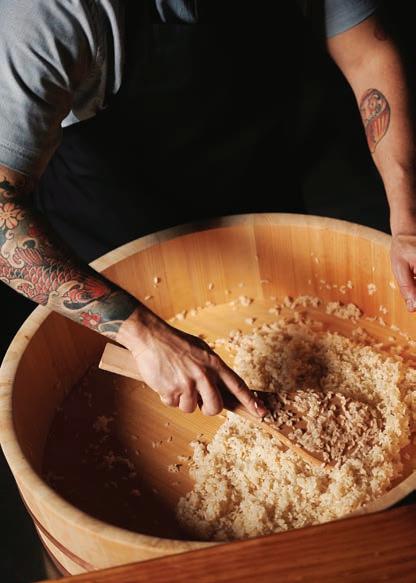
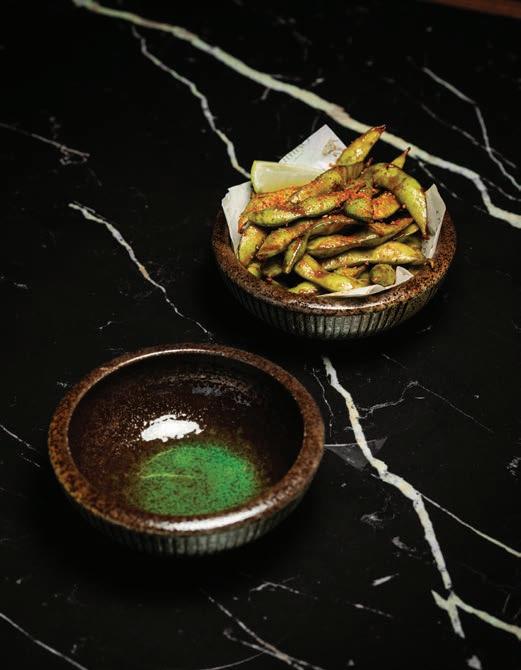
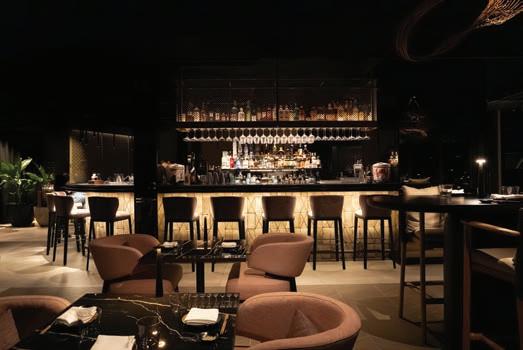
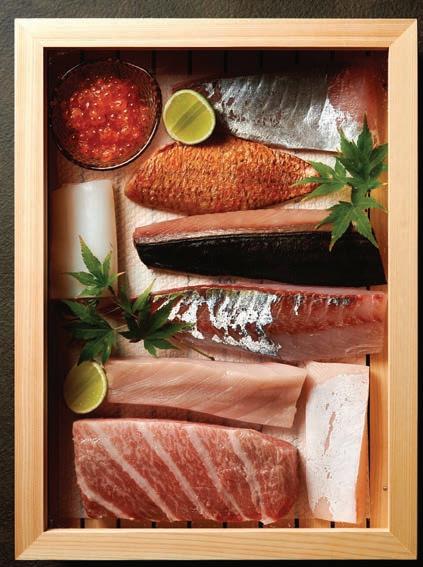
There are two new restaurants that deserve a strategic stopover in the capital.
Omakase means ‘I’ll leave it up to you’ in Japanese. Around the chef, there is a counter for the few lucky people who get to eat what is being prepared right in front of them. There are already several excellent omakase restaurants across the country and Zõ is certainly one of them. In a wooden house in Parque Mayer, chef Thalles Boniatti leads us on a journey of excellence and purity. Like a wellchoreographed dance, every bite that is served has meaning and beauty. It is still something of a hidden secret, but not for long. zojaponesecuisine.pt
This is the new hip spot in town. Summer won’t be complete without a visit to the 12th floor of the ME hotel, located in the heart of the city. After Dubai and Bodrum, Lisbon welcomes this rooftop bar and restaurant where, with the most incredible panoramic view over the city, one can drink an exquisite cocktail – such as a light and floral Momoiro Spritz – and feast on Asian-inspired dishes, the spicy edamame, tuna tacos, truffle wagyu sliders or grilled lamb chops, to name a few. theattiko.com

FOR ME, PALMS BELONGED IN THE GARDENS OF LEGOLAND, WHICH IN ITSELF HAS NO PLACE FOR VOLUNTEERS OR WILDLIFE. I BROUGHT THE LATTER SENTIMENTS WITH ME TO THE ALGARVE – PALMS SHOULD HAVE NO PLACE HERE. AS USUAL, MY GARDEN HAS TAUGHT ME OTHERWISE
Words: BURFORD HURRY
OVER THE years, I have had a troubled relationship with the idea of planting palms in the garden. On the one hand I love their elegant fronds and leaves and admire the tidiness of their growth; on the other, it’s exactly those qualities that speak of an almost unnatural plastic beauty outside nature.
Firstly, to my surprise when we arrived in the Algarve in 1986, the gardens here had a number of different varieties of palms in them. One of the favourites was the Canary Island palm (Phoenix canariensis) – any garden worth its salt had one or several.
The Canary Island palm was no stranger to me; when I was ten and living in a suburb called Orange Grove in Johannesburg, one of our neighbours had one. I was fascinated. I begged, and with permission obtained and sawed off several palm fronds and then used the stiff, tough leaves to weave into all sizes of table mats. It was fun.
We had Canary Island palms in the local park, too. They were respected – almost venerated – and were planted in circular beds of pink begonias, their knobbly trunks planted with nasturtiums. I
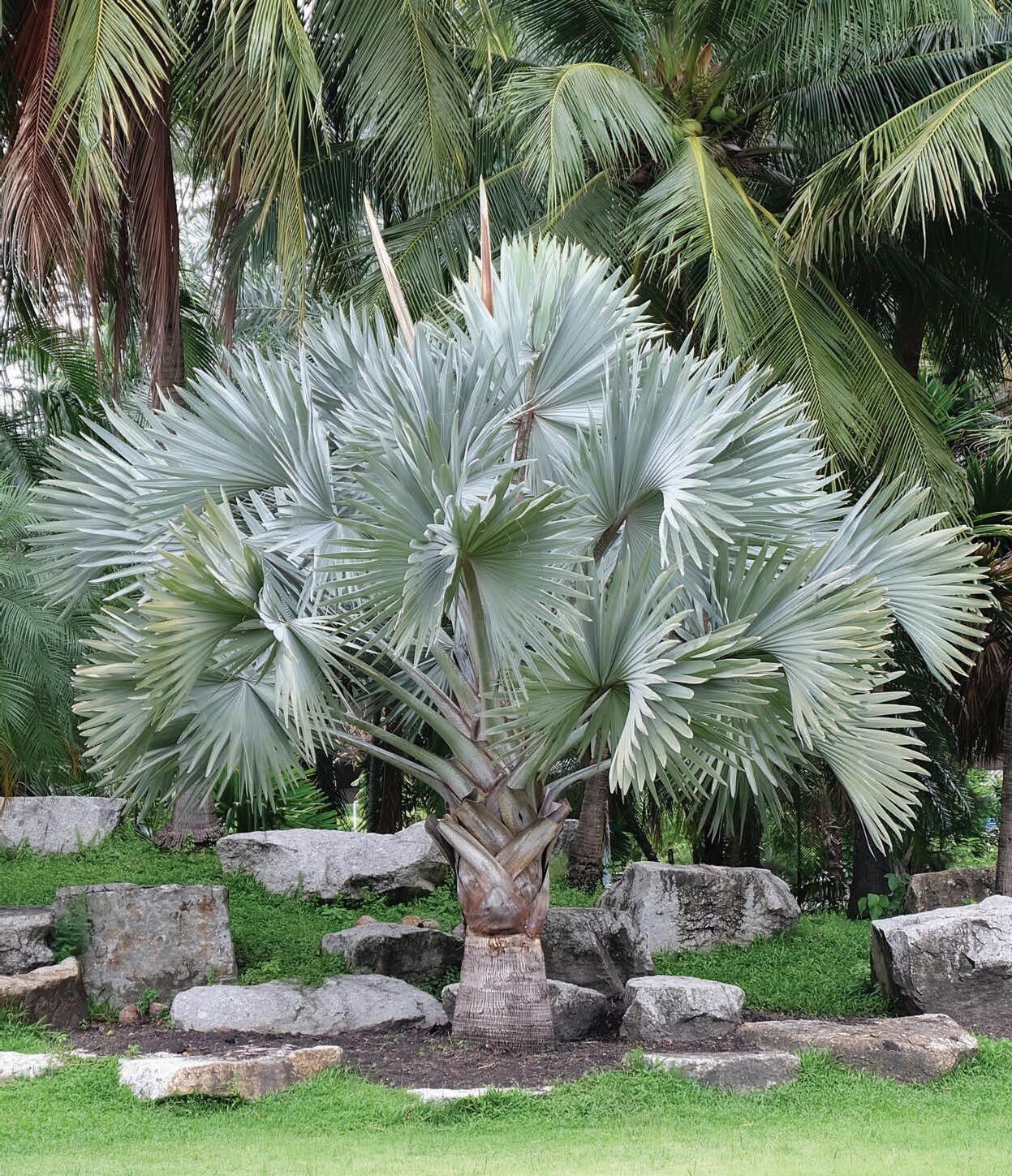


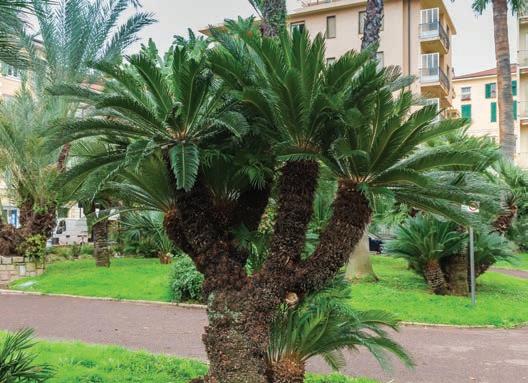

believe in Mediterranean California they, and the native Californian Fan palm (Washingtonia filifera), were also planted in profusion.
The dreaded weevil
I was never enthusiastic about the presence of Canary Island Palms here in the Algarve as somehow they didn’t seem to ‘belong’. It was with the arrival of the plague of the dreaded Red Palm Weevil (Rhynchophorus ferrugineus), that I witnessed firsthand the horror and consternation of the owners as they battled to find a way of either killing the weevils or at least discouraging them.
At the time, I was asked for advice on what to do about the menace. I’m afraid I wasn’t very helpful. I told the enquirers bluntly that my money was on the weevils and suggested that they simply accept the certain death of their palms and cut the trees down, either before or after they were infested.
However, those who asked – usually retired folks rather than dedicated gardeners – were not happy with my response, and having a business mindset rather than that of a gardener, felt there had to be a way to save their treasured palms. Various gardening firms were approached, and offering assurances that the palms’ lives would be spared, were employed to administer the correct antidote.
A complicated, expensive and once-a-month mix to control the weevils followed, which involved using systemic insecticides or biological controls with nematodes. In addition, dead or diseased fronds were carefully removed with minimum injury to avoid attracting the weevils to raw cuts. Even traps were used. Despite all this, the weevils had their victory and gradually, and inevitably,
all that was left were the depressingly dead trunks of the palms.
The property owners, having invested large sums of money over the years, were furious with the garden firms for not fulfilling their contracts, while I took a more sanguine approach having never really liked seeing the palms here in the first place. Also, I was relieved with the palms ‘passing’ as I had been more concerned about the collateral damage inflicted by the controls on local insects and animals that paid with their lives to keep them alive.
However, as we know, the story of palms in the Algarve did not end in tears as the Californian Fan Palm (Washingtonia filifera) had already arrived with the Canary Island palm. A native of the Western United States deserts, the Fan Palms are beloved by our local câmaras as they grow in a very tidy way, do not need much water and enjoy our hot dry summers.
I am not mad on them either. Bas, a friend, summed it up very succinctly by saying that they gave an “LA-by-the-sea look” to his garden, moving his Fan Palms from centre stage to the back of the garden and replacing them with a majestic old olive tree.
Having said that, graceful Fan Palms, LA-style, work well along avenues entering towns and along coastal promenades. The Loulé câmara has them appropriately planted along the road leading up towards town through the industrial area, but the avenue leading into the urban part of Loulé is lined with softer, friendlier trees such as hackberries and Judas trees.
The one palm that has been in the Algarve forever is, of course,
the native Mediterranean Fan Palm (Chamaerops humilis). Traditionally, her adult leaves were used to make baskets, mats and brooms which are still being produced today. When Fernanda, my dear old neighbour, was alive, the leaves were woven into a cross and slid under my door at Easter time.
Be that as it may, Mediterranean Fan Palms were formerly acknowledged for years but never embraced by gardeners. That has changed and now her spikey and dark green leaves are centre stage in gardens and roundabouts such as the ones around Mar Shopping.
And yes, I was given one years ago and she is now part of my viewing garden. She has grown to some three metres tall and will get a couple of metres taller and wider. She has been left to clump with her several side shoots all growing together. The combination provides a fountain of fronds splashing in all directions with the wind.
There is an even more beautiful Chamaerops (Chamaerops humilis var. argentea), a stunning silvery blue to blue-green palm native to the Atlas Mountains in Morocco. Like her European cousin, she is ideal for our Mediterranean gardens.
I have a few other admissions to make. When the property was bought, I had a clump of giant bamboo next to my spring and on the advice of a friend I took it out and replaced it with a Bamboo Palm (Chamaedorea elegans), thinking as I did so that the ethereal look of her delicate fronds and slender trunks would enhance the spring.
I planted her hesitantly as I had been warned that she couldn’t take fierce summer sunshine, but I wasn’t too concerned as she was shaded by my old white mulberry tree (Morus alba). I needn’t have worried; near the river she has vigorously shot up and sideways and stands at least five metres tall now.
Her planting was followed by a female Sago Palm (Cycas revoluta) grown in a pot for several years by an American friend. He offered her to me as he was returning to the States and knew my garden. I planted her close to my Bamboo Palm where she, too, has flourished. The wildlife has taken to her as well; one year I discovered a large horseshoe whip snake (Hemorrhois hippocrepis) sleeping in her open crown.




My next arrival was a Cardboard Palm (Zamia furfuracea) given to me by another friend. She looks like a palm but like the Sago Palm she is not a palm and is more closely related to a cycad. She has been planted on the lip of the riverbank and has fortunately reached her ultimate height of one and a half metres. Be aware, though: although being handsome and neat, she has an unpleasant side as all parts of her are poisonous.
Over the years, despite myself, palms and other fronds have found a place in my garden. Perhaps you, too, will be tempted to plant one, or to add to those you have already planted; and you can make your choice from the many available.
With hindsight, I would have settled on the blue-grey Moroccan Fan Palm (Chamaerops humilis var. argentea) for my viewing garden; the colour alone would have helped her blend into my mato. However, if I had a larger garden, either the Bismarck Palm (Bismarckia nobilis) or the Mexican Blue Palm (Brahea armata) would look good. They are both strikingly handsome landscape plants known for their silvery-blue leaves, and you will be seduced by the glorious fronds and elegance.






The tranquil village of Monte da Palhagueira in the sun-dappled Portuguese hills has elevated luxury retirement living to new heights.
A traditional development of beautiful villas, houses and apartments, Monte da Palhagueira offers luxury independent retirement living with the added reassurance of qualified medical assistance on hand should it ever be required.
Our English Nursing and Care Home offers a wide range of professional services. From convalescent and respite to full residential care with 24/7 Nursing safety. We offer tailored Person-centric holistic care: it is all about you and your needs.
Contact: Alexandre Neves
mdpmanager@amesburyabbey.com
montedapalhagueira.pt
Tel.: +351 289 990 900


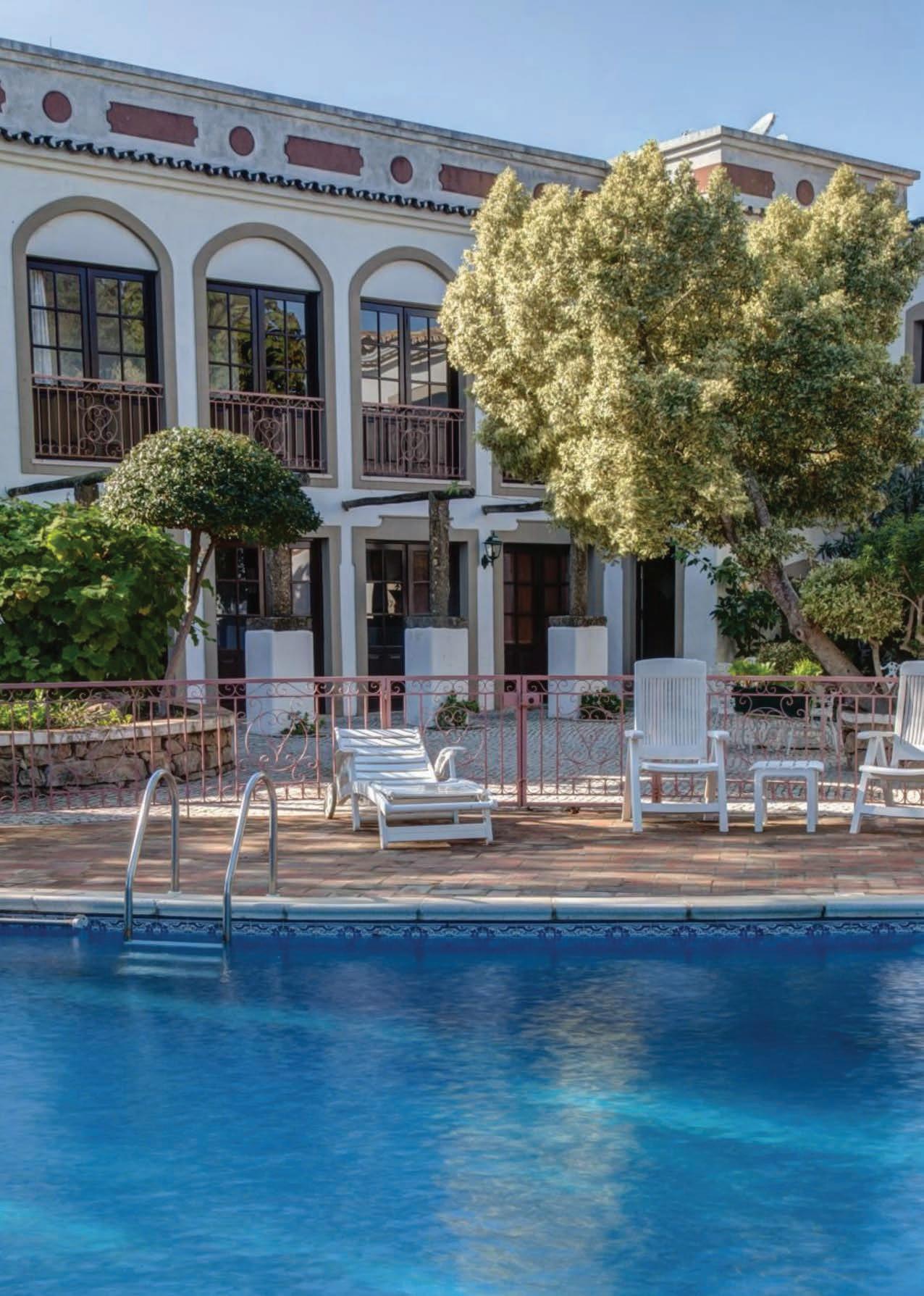
EMPOWERING? DEFINITELY. INVIGORATING? ABSOLUTELY.
MESSING WITH YOUR HORMONES?
QUITE POSSIBLY. READ ON FOR THE LOWDOWN ON ICE BATHS, A FASTGROWING TREND. BEFORE YOU DIP YOUR TOES IN ICY WATERS, LET’S DIVE INTO THE PROS AND CONS OF COLD EXPOSURE
Words: SALLY DIXON
IT’S BEEN A while since Wim Hof burst onto the wellness scene with his below-temperature antics, but cold exposure shows no sign of slowing down when it comes to health trends this year. For athletes, the trend is nothing new; they’ve been using ice baths in their recovery arsenal for years. But for us mere fitness mortals are ice baths helping or hindering our recovery?
Hormesis who?
Although the evidence is still limited, research indicates that cold exposure, such as ice baths and cold swims, can offer benefits for your immune system, resilience, mood, sleep, inflammation and metabolism. How so? This is because ice baths feature in the list of what is known as hormetic stressors (exercise, saunas, and fasting, are also on the list) – a short, controlled, low-dose stress that can trigger beneficial adaptations in the body through hormesis. When you immerse yourself in cold water, a chain of reactions takes place, noradrenalin surges, heart rate spikes, blood vessels constrict. Cold exposure creates a small amount of metabolic and oxidative stress. Normally, oxidative stress sounds like something you’d want to avoid, but in small, controlled doses it can be beneficial. This mild stress can activate one of the body’s key protective regulators –big science-y terminology incoming – nuclear factor erythroid 2-related factor 2 (NRF2 for short). The need to know is that once activated, NRF2 increases the expression of antioxidant genes and detoxification pathways,
helping our cells better manage oxidative stress. Sounds too good to be true, right? Well, for some it may be. But overdo it and cold exposure could shift from beneficial stress to pure survival.
The female perspective
I’ve still not gotten over seeing a 30-weeks-pregnant TikTok influencer doing regular ice baths for likes. That’s a hard no from me.
Despite the potential benefits for non-pregnant women, ice baths can be a significant source of stress on the female body. This is because women’s bodies are highly sensitive to stress, meaning the shock of an ice-cold bath can negatively impact cortisol levels and disrupt hormone balance.
Francesca Lyon is Director of Nutrition at Future Woman, the women’s hormone testing company; who better to give the expert take on cold exposure? Francesca says: “When we are talking about benefits, we need to first determine what is the right cold exposure temperature for women. Most of the benefits from cold exposure can be experienced at about 14ºC rather than the freezing temperatures you may think.”
It’s important you do what feels right for your body. If ice baths feel too much then stick to cold showers instead. It’s not cheating... they’re still classed as cold exposure!
What I gather from Francesca is that if your cortisol is already too high (from acute or chronic stress) or too low (from burnout), shocking the body with a two-minute ice plunge might just be the straw that breaks the hormonal camel’s back. Cue nervous system overload and potential worsening of hormonal symptoms. No. Thank. You.
Francesca adds: “An activation of the sympathetic nervous system and a rise in cortisol from cold exposure can negatively impact hormone production of estrogen and progesterone, and can also impact everything from thyroid function to cortisol production, especially if the woman is in perimenopause (when our stress response and connection from the brain to adrenal glands is under more pressure). Therefore, the individual hormonal picture of the woman should be considered before deciding if cold exposure is right for them.”
Without wanting to turn this article into a total Debbie Downer, if your cortisol levels are balanced and adrenal glands functioning well, then go ahead and take the plunge. One of the best benefits, Francesca says, “is the potential for improved insulin sensitivity from cold exposure, which can help stabilise glucose and blood sugar. This in turn can reduce menopausal and perimenopausal symptoms, PMS, help weight, mood, sleep and more”. Now that sounds more like it!
Opt for cold showers: Women, especially those in their reproductive years, are generally advised to avoid full ice baths. Francesca suggests: “Instead, try a cold shower for one to two minutes, or take a few minutes to immerse your face in cold water (can be a bit colder if it is just the face) in the mornings which can tone the vagus nerve and support the nervous system for the day ahead, without placing the nervous system under excessive stress.”
Test your cortisol first: If you are a big fan of ice baths, then consider testing your cortisol levels first to check your adrenal function. Francesca adds: “If your cortisol is robust and you are not already under chronic stress, a few times a week having some gentle cold exposure can offer really good benefits.”
Avoid during the luteal phase: Just like high-intensity exercise, you should avoid ice baths and cold showers during the luteal phase of your menstrual cycle (the two weeks leading up to your period). During this phase, your body temperature and metabolic rate naturally rise, meaning your body is already under a higher level of physiological stress (My Oura ring always thinks I’m on the verge of dying at this point in my cycle!). So, adding the stress of an ice bath during this time may do more harm than good.
The male perspective
Men get a slightly better deal when it comes to ice baths. As Francesca explains: “Cold exposure can cause a sudden sympathetic nervous system response which can temporarily raise cortisol levels. Some research suggests that over time, this may contribute to an eventual ‘balancing’ of stress hormones in certain individuals, particularly men.”
Another frequently-debated topic in the world of cold exposure is its effect on muscle growth. If building muscle is your primary goal, frequent post-workout ice baths may not be ideal. Cold exposure
can dampen the inflammatory signalling that helps drive muscle repair and hypertrophy. So, if the thought of losing hard-earned gains freaks you out, then you might want to schedule cold exposure away from strength sessions.
If you’re constantly training heavy, are under a high stress load, or have poor sleep, then shocking your body in an ice bath might not be something your body will thank you for. More stress isn’t always better. Long-term effects of cold exposure are unclear and there’s no consensus out there on the ‘optimal dose’ (temperature/ time/frequency). So, it’s important you do what feels right for your body. If ice baths feel too much then stick to cold showers instead. It’s not cheating... they’re still classed as cold exposure!
Trending or not, the takeaway is simple, when practiced with intention and moderation (think short, sharp, and controlled), in the right circumstances cold exposure can support recovery, sharpen mental focus, and build stress resilience in both men and women. But when pushed too far or treated like a test of endurance, it stops being beneficial and starts adding strain to an already stressed-out system.
Those with:
Cardiovascular disease
Uncontrolled hypertension
Raynaud’s Pregnancy
History of cold urticaria
History of arrhythmia
Already under a high stress load
Away Spa at W Hotels, Albufeira awayspawalgarve.com
Moodz Spa & Resort, Silves moodz.pt
Sagres Hub, Sagres sagreshub.com
The Campus, Quinta do Lago thecampusqdl.com
The Viceroy, Ombria viceroyhotelsandresorts.com
The Atlantic Ocean!!
For more information on Future Woman and women’s hormone testing, visit future-woman.com. As with any health or wellness practice, it is wise to speak with a qualified healthcare professional before trying ice baths, especially if you have existing medical conditions or concerns.

EVEN PEOPLE WITH NO KNOWLEDGE OR INTEREST IN THEIR NATIONAL HISTORY CAN USUALLY NAME A KING OR QUEEN THAT ONCE REIGNED IN THEIR COUNTRY. HERE IN PORTUGAL, MANY MORE COME TO MIND BECAUSE OF THEIR SPECTACULAR STORIES
Words: CAROLYN KAIN

WHEN IT comes to English history and the royals who stood out, most people would probably single out Henry VIII, possibly William the Conqueror, or maybe Elizabeth I or Elizabeth II. For the French, Louis XVI and Marie Antoinette would likely come to mind.
The Portuguese would certainly name their first monarch, Dom Afonso Henriques, who founded the country in 1139, and the ‘missing’ king, Dom Sebastião, who followed him 400 years later. To us estrangeiros, it is well worth knowing why they are the country’s most renowned sovereigns and the reason that they shared a common enemy.
Afonso Henriques is regarded as the father of the nation following the Battle of Ourique, where he defeated Muslim forces and declared Portugal a separate country and himself king.
The rest of Portugal was conquered in small stages as the Muslims were forced further and further south into retreat. Consequently, the Algarve has a much stronger relationship with the son of Afonso Henriques, Dom Sancho I, who took Silves in 1189. His statue stands outside Silves Castle walls, but in the Algarve his father is not given similar recognition.
In Faro, showing gratitude to a later king, the people had a statue erected to Dom Afonso III, who expelled the last remaining Muslims in the country in 1249. His statue was prominently placed in front of the convent, which is now the Municipal Museum. A series of azulejos outside Faro’s Castle walls depict the story of Afonso III and his troops and the final battle.
At this point, although conflict with the Muslims continued in Spain after it had ended in Portugal, it is surprising that more than 300 years later the monarch Dom Sebastião should decide to stir up the old rivalry again. A mistake that he and Portugal were later to regret.
Nevertheless, give credit where it is due: Sebastião achieved a great deal in what was to be a short life.
Sebastião’s unconventional upbringing. His Portuguese father died of plague at the age of 16 before Sebastião was born; the baby lived with his Spanish mother until he was three. He was held in high esteem as heir to the Portuguese throne and immediately, on the death of his grandfather, the old king, Sebastião was rushed to Lisbon. His mother returned to Spain to act as Regent for her brother, King Philip II. She and her brother ceased to have any involvement in Sebastião’s upbringing and never saw him again: the Portuguese, meanwhile, had no desire that their monarch should fall under the influence of the Spanish, their customs or their way of life.
Sebastião’s great uncle, Cardinal Henrique, the Archbishop of Lisbon, was appointed as Regent, and a Jesuit priest as his tutor. By the time he was 14 years old, and had officially reached the age to assume power, Sebastião saw himself as ‘Christ’s Field Marshal against Islam’.
Now, able to dismiss many of the long-serving Government Ministers who had worked as previous advisors to his grandfather and great uncle, he appointed hot-headed young men to take their places. Chronicles record how he set about raising money to gather an army together to conquer the Muslims in Morocco. He sold immunities to Jews and others by threatening them with the possibility of being burned at the stake or excommunicated. Over a period of ten years he borrowed more money at home and abroad, recruited mercenary soldiers, promising others a share of the loot when they arrived in Morocco and found many who, like himself, were willing to join the crusade in the name of Christ.
It is well worth knowing who the country’s most renowned sovereigns were and the reason they shared a common enemy.
The establishment of scholarships to study medicine and pharmacy
The creation of two hospitals in Lisbon for victims of plague
The provision of shelters for widows and children
The making of new laws for the military to abide by
The provision of teaching and learning for sea pilots
Special terms allowing poor farmers credit
New regulations to control the actions of lawyers and court officials
To honour Dom Afonso Henriques, he built a Basilica in Castro Verde close to where the Muslims had been defeated. That was an understandable tribute, but why was it necessary for him to take up arms and head off to Morocco? To answer this question we must refer to
His invasion force gathered in Lagos, and Sebastião addressed an international group of around 20,000 soldiers with a stirring speech. It was a festive atmosphere with numbers of unarmed followers coming along to be part of an adventure believing they were about to witness a great Muslim defeat. Five hundred ships set sail on a crusade that was doomed to failure because:
On arrival at the port of Azila, Sebastião was warned that the Emir had massed an army twice the size of his
The five-day march south wearing heavy armour in the blazing August heat was exhausting
At the battle site of Alcaçer Quibir, the Muslim army was fresh with ample food and water for the soldiers and animals
Sebastião, his soldiers and followers were so ill-prepared that less than 100 managed to escape and return to Portugal
The loss of Sebastião was catastrophic; there was no body to bury and only a very old great uncle as an heir who was unable to produce another. He tried to sow his wild oats, but they fell on fallow earth
Ironically, Philip II – whose influence the Portuguese had opposed when Sebastião was a child – became the next Portuguese king.
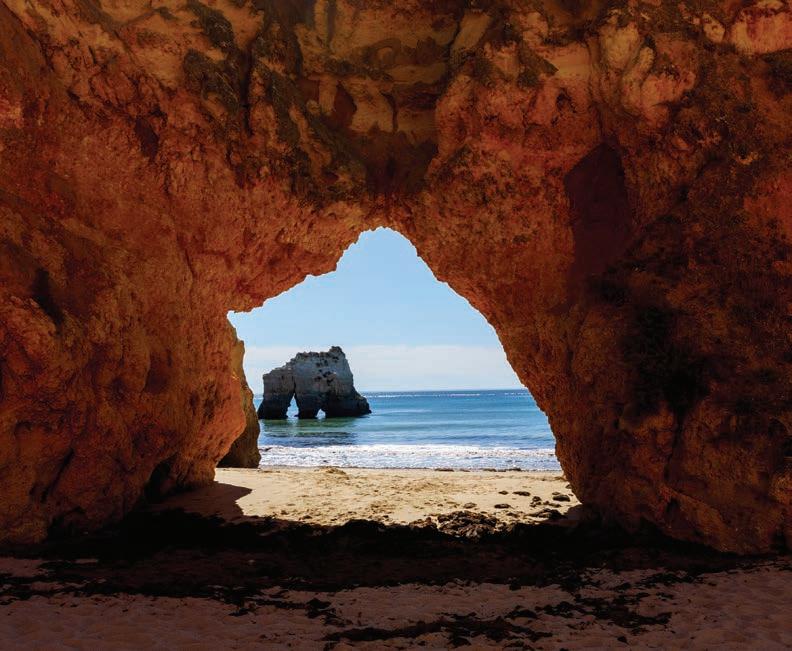
This month’s submissions were judged by visual culture critic and curator Avery Holt, who was impressed with the wide variety of interpretations that minimized distractions and presented a clear focal point. The entries, he says, demonstrated both technical skill and imaginative engagement with the theme, making for a competitive and enjoyable judging process

ARCHES
Praia do Prainha, Alvor, September 2025
Camera: Sony A7R4 + Sony 16-35 2.8 GM
AH: “Excellent framing through the natural arch. Strong depth layering (cave –beach – sea stack). Texture in rock is rich. Compositionally one of the strongest landscape structures in the set.”
1st place

O SAPATEIRO
Almodôvar, February 2026
Camera: Sony Ilce7M4
AH: “Exceptional detail and craftsmanship in sculpture. Strong sharpness. Clean background separation. The mechanical texture is compelling and contemporary.”
2nd place
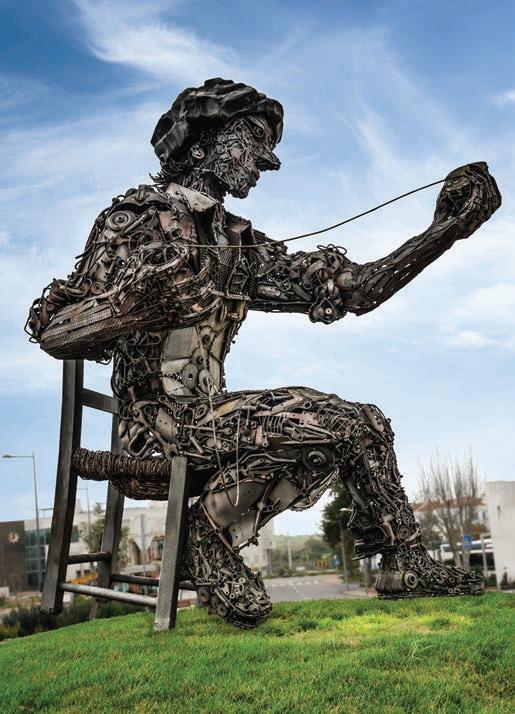
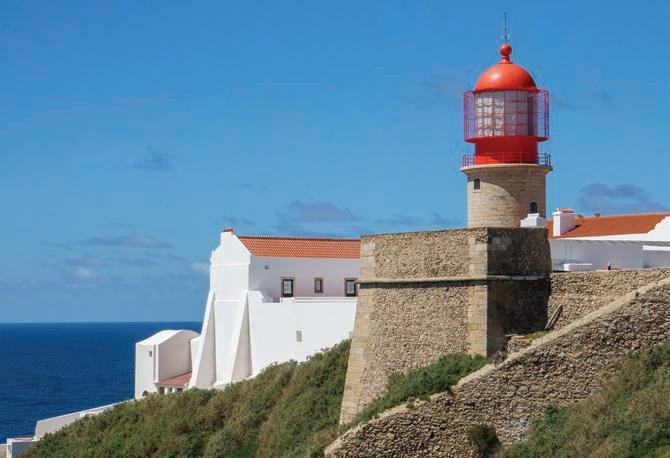

THE VILAMOURA LIGHTHOUSE
Vilamoura Marina, February 2026
Camera: Nikon D5
AH: “Excellent minimalist composition. Strong use of negative space. The long exposure creates serenity and isolates the lighthouse beautifully. Colour palette is cohesive and calming. Technically it is very clean.”
4th place
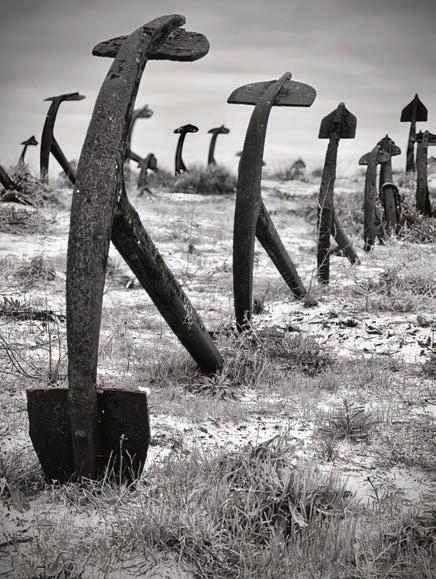
THE LIGHT AT THE END OF THE WORLD
Cabo São Vicente, April 2025
Camera: Sony 6000 (1/2000sec, f/16, ISO 1600)
AH: “Iconic Algarve landmark. Excellent colour contrast (red lighthouse against blue sky). Strong clarity and technical execution. Clean composition and clear focal point.”
3rd place

ANCHOR MONUMENT
Barril Beach, Santa Luzia, February 2026
Camera: iPhone 14 pro
AH: “Excellent use of repetition and depth. Black and white treatment enhances texture and age. Strong foreground anchor leading into frame.” 5th place
Congrats to the following APG members who triumphed at the 5th Annual Awards Ceremony Lunch, held in February: President’s Award Jan Chapman
Veit Muller Award Robert Pool
Govert Sakkers Award Ina Tanzer
Rookie Award Jan Chapman
Mary McClay Award Marijke McBean
The Order of Merit Award was presented to Glyn Parry
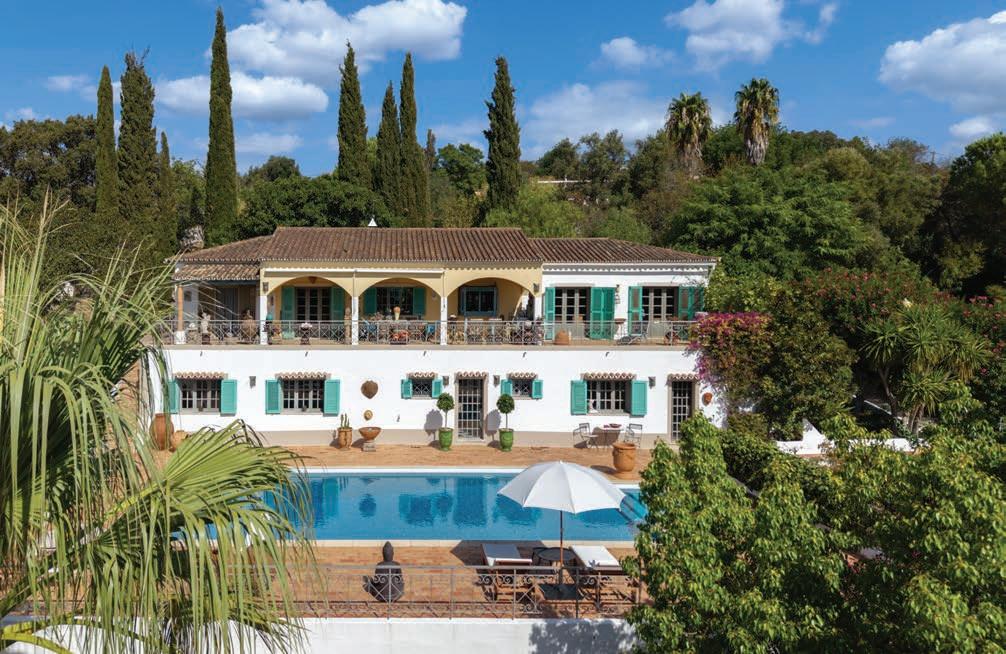
IF YOU have long dreamed of a home that you can truly make your own, this captivating farmhouse-style villa, between Loulé and São Brás de Alportel, just 20 minutes from Faro Airport, could be just what you are searching for.
Originally built in 1988, on 4,100m2 of land rich in glorious fruit trees and shrubs, the outstanding four-bedroom, three-bathroom country house will form the canvas for your designs.
Currently used as two separate apartments, Casa da Luz features an interior staircase, which makes conversion to a single residence straightforward, though some potential purchasers may prefer to retain the option of more private accommodation for visiting family and friends. There is a large south-facing veranda over the full length of the house from where there are uninterrupted views over the rolling hills; and the large sparkling pool is surrounded by sun-filled terraces, perfect for relaxing on warm summer days and, with its barbecue area, ideal for outdoor entertaining. Features include central heating throughout the house, a wood-burning fireplace in the living room, solid wood parquet flooring, a laundry room, a guest WC/cloakroom, garaging, a large storage room, and wonderful outside space ready for a vegetable garden and orchard; there’s even a pet park.
This lovely property offers a serene setting for families seeking an enriching lifestyle. Don't miss your chance to make this tranquil oasis your own.
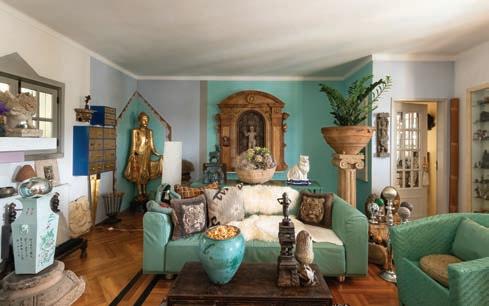



MORE NEWS ON THE CAMERA FRONT WITH THE BIG NAMES INTRODUCING SMARTER, SHARPER MOBILE PHONE OPTIONS THAT ARE CERTAIN TO CHANGE USERS ’ HABITS – THAT IS IF THEY EVER ACTUALLY GET TO THE MARKET
Words: CHRIS PARTRIDGE
LAST MONTH I wrote about the unexpected and slightly mystifying resurgence in popularity of proper cameras – cameras as a thing in their own right rather than just a feature of your smartphone.
This does not mean that the mobile phone makers are throwing up their hands in despair and giving up on photography.
In Barcelona, at the Mobile World Congress, the floor was full of dramatically new smartphone cameras, some of which blur the line between smartphones and professional mirrorless cameras. Indeed, a number of the most impressive smartphone cameras were developed in collaboration with traditional big names in photography such as Leica and Zeiss.
Xiaomi’s new flagship phone, the 17 Ultra, was developed in collaboration with Leica and even comes with a sister phone called the Leitzphone with added features intended to make it feel even more like a traditional camera.
Thinking very big
The Xiaomi 17 Ultra boasts a massive 1-inch main sensor updated with LOFIC (Lateral Overflow Integration Capacitor) technology, which significantly improves dynamic range and prevents ‘blown out’ highlights in bright scenes. It also packs a 200MP periscope telephoto lens with continuous optical zoom up to a massive 100x that can be extended to 120x using a digital zoom that is so good you won’t really notice.
The Leitzphone variant features a unique mechanical optics control ring around the camera bulge. This physical ring allows you to manually adjust zoom, exposure or many other functions, giving it the tactile feel of a traditional camera.
Both the 17 Ultra and Leitzphone have accessories designed to make them feel and operate like proper cameras. The Leitzphone grip is chunky enough to make you think you are handling a real camera, featuring a proper grip with a shutter button, an exposure control and a telephoto lever.





Handily, it also has a battery that not only powers itself but acts as a backup for the main smartphone battery, and it has magnetic rings for MagSafe attachments.
The 17 Ultra version is more like an ordinary phone case with small shutter and telephoto controls on the top. It also needs a battery because it connects to the phone via Bluetooth, and irritatingly the battery needs to be charged with a separate charger that is very easy to forget when you go out shooting.
The one main drawback to both the smartphones is the price: around €1,200 for the 17 Ultra and an eyewatering €2,300 for the Leitzphone. On the other hand, if you want a Leica camera this may be the cheapest way to get one.
A new flagship, the Vivo X300 Ultra, is the latest iteration of its long-term collaboration between Vivo and the other German lens legend Zeiss.
Vivo has focused on extreme telephoto capabilities, positioning the X300 Ultra as the king of long-distance photography. Its standout feature is a 200MP telephoto sensor which on its own makes it probably the best telephoto smartphone camera available.
But if that wasn’t enough, it can be paired with the Vivo Zeiss Telephoto Extender, a 400mm lens attachment looking like a smartphone version of those enormous lenses the paparazzi use to capture poolside shenanigans by film stars. Vivo claims it can deliver a staggering 1600mm lossless digital equivalent when combined with AI processing.
And if you really want to look the part of a professional creative person, Vivo also launched a pro-grade camera cage (made with SmallRig) that adds physical shutter buttons, a cooling pad and cold-shoe mounts for microphones and flashes.
Prices for all this kit are yet to be announced but if you buy everything you will be looking at a serious investment.
Budget brand Honor rejected the bolt-on approach with its latest concept, the Robot Phone, which houses a camera on a tiny robotic arm that pops out from the back of the phone and acts as a built-in 4-axis gimbal for a 200MP sensor. The camera can physically tilt and rotate to track a subject automatically as they move, effectively acting like a built-in cameraman for content creators and video calls. It is a triumph of miniaturisation and should be brilliant for capturing videos on the go if it ever reaches the market.
An even more dramatic case of miniaturisation at the Mobile World Congress is the somewhat bizarrely named Ulefone RugOne Xsnap 7 Pro, a rugged smartphone that features a detachable action camera hidden within its body. Its magnetic ‘Xsnap’ ecosystem allows you to remove the camera module entirely to use it as a standalone action camera, which then snaps back onto the phone to sync and charge. Suddenly you don’t need a GoPro to capture sporting action, all you need to do is take the camera out of your phone and magnetically attach it to your cycling helmet or whatever.
Again, prices are not yet available.

When my children were toddlers, some 25 years ago, their wardrobes held a few quirky, colourful and boldly embroidered pieces of clothing. Pieces from a Dutch brand called Oilily, who celebrated creativity and joy and later expanded into womenswear with the same philosophy.
Oilily still stands for innovative design, attention to detail and unexpected combinations. Clothes for women who are not afraid to stand out.
So when I saw their new summer collection… how could I possibly resist?
OPEN: Monday - Friday 10.00 - 18.00; Saturday: 10.00 - 14.00
T: +351 964 222 612 INSTA: martina.loule / martina-loule.com
STORY-TELLING using a series of pictures or images has been known throughout history, from the Bayeux Tapestry to the folk tales of medieval Persia. Cartoons poking fun at the great and the good, and the manners and morals of the day, were especially popular in Britain in the 18th century, with Hogarth’s famous series of paintings The Rake’s Progress, and the political and social satires of James Gillray.
However, the idea of a ‘comic strip’ as we know it now is a 19th-century invention. The tales of two mischievous boys, Max und Moritz were written and illustrated in Germany by Wilhelm Busch and later inspired the American Katzenjammer Kids. The first real newspaper comic strip was devised in 1896 by William Randolph Hearst. It was called Hogan’s Alley and appeared in a special supplement to The New York Journal. The first comic strip in Britain, Teddy Tail, appeared in the Mail in 1915.


REMEMBER THIS LOT? CARTOON CHARACTERS THAT FEATURED IN THE POPULAR PRESS DEVELOPED THEIR OWN PERSONALITIES AND OFTEN CARRIED A MESSAGE RELATING TO EVENTS – AND PEOPLE – IN THE NEWS. MANY OF THEM REMAIN POPULAR DECADES LATER, AND HAVE HAD STATUES, NAVAL GUNS, AND VIDEO GAMES NAMED IN THEIR HONOUR
Words: JILL ECKERSLEY

Jane, the naughty-but-nice young blonde whose many escapades usually involved her losing some – if not most – of her clothes, was so popular during The Second World War that submarine captains in the British Navy were issued with advance supplies of The Daily Mirror where the Jane cartoon had appeared since 1932.
Jane was the brainchild of one Norman Pett, who had bet a friend that he could create a comic character for grown-ups which would prove as popular as the Pip, Squeak and Wilfred tales were for children during the 1930s.
Pett chose his wife Mary as the original model for Jane whose escapades included falling though a caravan roof, leaving her skirts outside and her undies on view... by accident of course! She remained accident-prone through no fault of her own and retained an air of innocence, although the cartoons became more suggestive as time went on. In a famous episode in 1943, she fell out of a bath, completely nude, into a crowd of Tommies.
By this time, of course, Jane was a Forces’ favourite and her storyline featured her job as driver for a Colonel in the Intelligence Service, with a sinister Nazi spy named Lola Pagola as her bitter enemy. The wartime Jane was intended as a morale boost for Allied soldiers, and a powerful naval gun at Wanstone Battery at Dover was named ‘Jane’ in her honour!
Jane and her pet dachshund Fritz remained favourites in The Daily Mirror until 1959 when Jane achieved every nice girl’s happy ending by marrying her sweetheart, Georgie. Her story closed there, though there were several attempts to bring her back, the latest as recently as the 1980s.
Created by Reg Smythe in 1957 as the archetypal Northern ‘working man’, Andy was rarely, if ever, seen actually working. Andy Capp and his wife Flo remain favourite cartoon characters to this day in The Daily and Sunday Mirror newspapers.
The cartoon was originally criticised for its portrayal of Northern men as work-shy and only interested in beer, football, horse-racing, pigeon-fancying and snooker. But Andy Capp was, and still is, loved by working-class Northerners as well as others! He does have his good side.
He is always loyal to the fearsome Flo, calling her ‘pet’ even when she drags him out of the pub by his shirt front. Flo can always give as good as she gets, despite her pinny and headscarves, and is not above clobbering her hubby with a rolling pin if he steps out of line. Flo works as a charwoman and is often required to lend Andy money when his fancied horse doesn’t even make it to the finish line.
The cartoon has had to move with the times. Back in the early 1980s, Reg Smythe stopped portraying his hero with a fag dangling from his lower lip. Readers complained that the newspaper was guilty of ‘political correctness’ until Reg let them know that as he had been advised to give up the deadly weed, his favourite cartoon creation would have to do the same. However, Andy still spent a lot of time in the pub, sometimes got involved in fights, and more than once he got so drunk that he fell into the canal and had to be rescued by a constable.
Reg Smythe died back in 1998, but his creation lives on, written and illustrated by a team of different artists and writers. There has also been a statue of Andy Capp, possibly Hartlepool’s most famous son, in the city since 2007.



Characters like Snoopy and Charlie Brown are so much a part of our lives that many people don’t realise that they were originally characters in a US comic strip which ran in both daily and Sunday papers in the USA from 1950. The series has been translated into 21 different languages and is estimated to have a readership of 355 million people!
Its creator, Charles M Schulz, was from Minneapolis and became interested in drawing at school. He served in the US Army during the Second World War and worked as a cartoonist afterwards. By the mid-1950s, the strips had been translated into Spanish and the 1960s are now regarded as the Golden Age of Peanuts. The series has won almost every award going and Schulz is known to have influenced many later cartoonists.
Snoopy became the personal safety mascot for NASA astronauts in 1968. The Apollo 10 lunar module had ‘Snoopy’ as its callsign, while the corresponding command module had ‘Charlie Brown’. Extra-terrestrial fame!
Back on Earth, the Peanuts characters regularly appear in US Thanksgiving parades in both New York and Minnesota and have featured on US postage stamps.
Charles Schulz died in 2000, and Sonoma City Airport was renamed Charles Schulz Airport in 2001. There is a Charles Schulz Museum in Santa Rosa, California. Books, theatre productions, video games and American amusement parks all feature the Peanuts characters. And it all started as a newspaper cartoon…


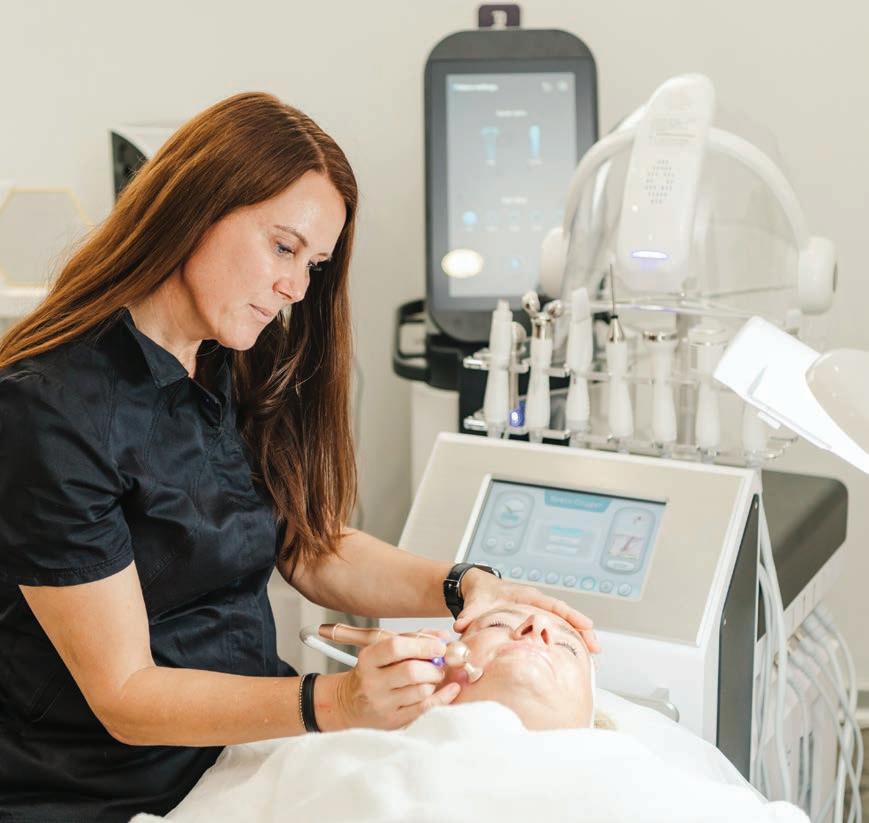
Manuela, a German beautician with 30-years experience, offers the latest technologies at her Almancil salon, including:
•Non-invasive Facial & Body Lifting •Anti-Ageing Treatments •Body Sculpting •Hydrating & Oxygen Facials •Peeling Treatments & more
The newest arrival is the mind blowing Space Oxygen Machine which gives you an instant glow!
Ageing can wait and beautiful skin is no coincidence!
Book your complimentary appointment with Manuela.

RICARDO CHAVES OF ALL FINANCE MATTERS IS HERE TO HELP PEOPLE UNDERSTAND WHAT IS ALLOWABLE – AND NOT – WHEN IT COMES TO FINANCIAL MATTERS IN PORTUGAL. AFM EXPERTS CAN ADVISE YOU ON HOW TO DEAL WITH BOTH BUSINESS AND PERSONAL TAX MATTERS TO ENSURE YOU ARE IN THE BEST POSSIBLE POSITION
QIs the Golden Visa still available? If yes, what are the conditions, and what are the benefits? I was considering buying a property in the Algarve for circa €1.5M, but I understand that property investment is no longer available. I would like to understand what is available now, as we would consider spending half of the year in Portimão and the rest of the time in the US with our grandchildren. The Golden Visa is a Residency Programme based on investment but although property investment is no longer an option, the programme is still available. Providing you make an investment in Portugal, non-EU nationals will get a five-year residency permit, which gives the right to live, work, and study in Portugal and allows free circulation in Europe’s Schengen Area.
Currently, the programme’s focus has shifted entirely toward supporting the national economy through funds, culture, and job creation.
To qualify for the Golden Visa in 2026, investors must choose one of the following options:
1 Investment funds (the most popular route)
The primary alternative to real estate is the subscription of participation units in non-real estate investment funds. The minimum investment required is €500,000 and the fund must have a minimum maturity of five years, and at least 60% of its capital must be invested in Portuguesebased commercial companies.
2 Cultural donation
Investors can support the arts or the recovery of national heritage. The minimum investment is €250,000, which can be reduced to €200,000 if the project is located in a ‘low-density’ area. The purpose of this is funding artistic production or the preservation of Portuguese cultural heritage.
3 Job creation and business investment
For those looking to boost the local labour market, there are two main alternatives: either to create at least ten fulltime jobs (eight in low-density areas) or invest €500,000 to incorporate or increase the share capital of a Portuguese company, provided it creates at least five permanent jobs for a minimum of three years.
One of the main benefits of the Golden Visa is its flexible physical stay requirement. To keep residency, investors only need to spend seven days in Portugal during the first year and 14 days in each subsequent two-year period. With the Golden Visa, you gain residency rights without actually having to live in Portugal.
Holders of the Golden Visa enjoy visa-free travel within the Schengen Area, allowing for tourism for up to 90 days within any 180-day period.
The programme is inclusive, allowing the primary investor to extend residency rights to a spouse or legal partner, dependent children (including adult children, as long as they are full-time students), and dependent parents of either the investor or the spouse.
The Golden Visa also provides a pathway to Portuguese citizenship, as investors can apply for nationality after five years of legal residency (the proposed law-change by the government to increase this period to ten years has not yet been approved). Please note that citizenship applicants must demonstrate a basic command of the language with an A2 level certificate.
QI recently bought a used car here. When is the car tax due in Portugal?
Car tax is due by the end of the vehicle’s registration month. You will not receive a tax bill in the mail and need to log on to your tax portal and search for IUC to generate the car tax bill. Missing the payment date can lead to fines – to prevent this, we usually recommend setting up a direct debit for the tax payment.
Please note that the Portuguese government is looking to implement a new system, where car owners will pay car tax every February, starting in 2027. For taxes under €100, payment is due in a single instalment; for amounts exceeding €100, payments can be split into two instalments: the first in February and the second in October.
This will also change the liability of the car tax. Currently, if you buy a car in February that was registered in March, the car tax is due by the new owner in March; however, according to the new proposal, the tax will be paid by whoever owned the car on 31 December of the previous tax year.
Send questions you may have to info@afm.tax for possible inclusion in AlgarvePLUS.
To consult directly with the experts at AFM, email info@afm.tax



REMOVALS
REMOVALS
• Weekly removal service to and from the UK, Portugal and Malaga, Spain
STORAGE
• Weekly removal service to and from the UK, Portugal and Malaga, Spain
• Full or part packing and wrapping service
STORAGE
• Storage warehouses located in the UK, Algarve, Lisbon and Malaga, Spain
• Storage warehouses located in the UK, Algarve, Lisbon and Malaga, Spain
• Shop online with any furniture retailer and have your items delivered the following week
• Shop online with any furniture retailer have your items delivered the following
• Full or part packing and wrapping service
• Fully insured, secure and alarmed
• Fully insured, secure and alarmed
• One/multiple items of furniture
• One/multiple items of furniture
• One box to full house removals
• One box to full house removals
• Villa to villa moves within the Algarve
• Storage available for long or short term
• Villa to villa moves within the Algarve
• Storage available for long or short term
• All customs paperwork and procedures taken care by our in house customs experts


QI built my home in the Algarve some 35 years ago and am now preparing to sell. During the paperwork review, I discovered that the architectural plans approved by the City Council do not exactly match the house as it stands today. Some internal layouts were altered during construction, and a small terrace was later enclosed. What are the legal implications of this?
AUnder Portuguese law, an urban property must correspond to the architectural project approved by the City Council and the elements in the Habitation Licence (Licença de Utilização) – the approved plans form part of the administrative procedure that authorised the construction. Where the physical building diverges from those plans, the issue does not automatically invalidate a sale, but it does introduce legal, administrative and transactional considerations that should be addressed carefully.
The first and most important distinction is between minor, non-structural alterations and material modifications. Internal changes that do not affect structural elements, or alter the external appearance of the property, or increase the gross construction area, are generally viewed as lower risk.
By contrast, works that increase the total construction area, alter façades, enclose terraces, convert garages into habitable accommodation or add annexes may constitute unauthorised construction if no amendment to the original licence was obtained. In legal terms, these works may fall outside the scope of the approved project.
LEGAL EXPERTS NELSON RAMOS AND ROBERTA RAMOS WHO, TOGETHER WITH THEIR SPECIALIST TEAM AT RAMOS & ASSOCIADOS IN ALMANCIL, ADVISE CLIENTS ON VARIOUS ISSUES. HERE THEY LOOK AT OLDER PROPERTIES THAT MAY NOT CONFORM WITH THE REGISTERED PLANS
The consequences depend on a combination of factors, including the date of the works, the planning regime in force at the time, and whether the alterations would comply with current municipal planning instruments, such as the Plano Diretor Municipal (PDM).
Portuguese planning law provides for limitation periods in respect of administrative enforcement. In many cases involving properties constructed more than 30 years ago, the municipality’s power to impose fines or order demolition will have lapsed, but the expiry of enforcement powers does not amount to formal regularisation. This means that the property may still be technically non-compliant from a documentary standpoint, which can be relevant in the context of a sale.
From a conveyancing perspective, discrepancies are usually identified during the buyer’s legal due diligence. The purchaser’s lawyer will typically request certified copies of the approved plans, the building licence and the Habitation Licence, and will compare these with the current configuration of the property.
Where mortgage financing is involved, a bank-appointed surveyor may flag inconsistencies; even where the risk of enforcement is negligible, documentary misalignment can delay completion or affect negotiations.
Before placing the property on the market, it is prudent to carry out a preliminary assessment. An architect or civil engineer can prepare an updated ‘as built’ survey and provide a technical opinion on whether the differences are material. If the alterations
meet with current planning rules, a retrospective regularisation procedure may be available; this involves submitting updated drawings, technical responsibility declarations and other documentation required, together with payment of the applicable administrative fees. The Câmara will then assess whether the works can be formally legalised – successful regularisation significantly strengthens the property’s market position.
Early legal advice is equally important. A lawyer can evaluate potential exposure and advise on disclosure obligations. Under Portuguese civil law, a seller must not conceal known irregularities that could affect the value or intended use of the property. Where discrepancies exist, they should be disclosed transparently and addressed in the Promissory Contract (Contrato-Promessa de Compra e Venda). In high-demand areas in the Algarve, buyers may accept minor irregularities, especially in cash transactions, but reliance on market tolerance should not replace legal assessment.
In conclusion, discrepancies between approved plans and the existing structure are not uncommon in older Algarve properties and do not automatically prevent a sale. Nevertheless, they should be treated as a legal matter requiring careful evaluation.
A combination of technical review, analysis of planning compliance and tailored legal advice will enable you to determine how best to structure the transaction. By addressing the issue before marketing the property, you minimise uncertainty, protect yourself from future liability and facilitate a smoother and more secure sale process.
Ramos & Associados Sociedade de Advogados SP RL Avenida 5 de Outubro, 169–171, 8135-101 Almancil
T: 289 413 063 / E: info@nramoslawyers.com / nramoslawyers.com


The Algarve’s premier Italian restaurant — and your local reference for tasteful living, in collaboration with our interiors and lifestyle shop.
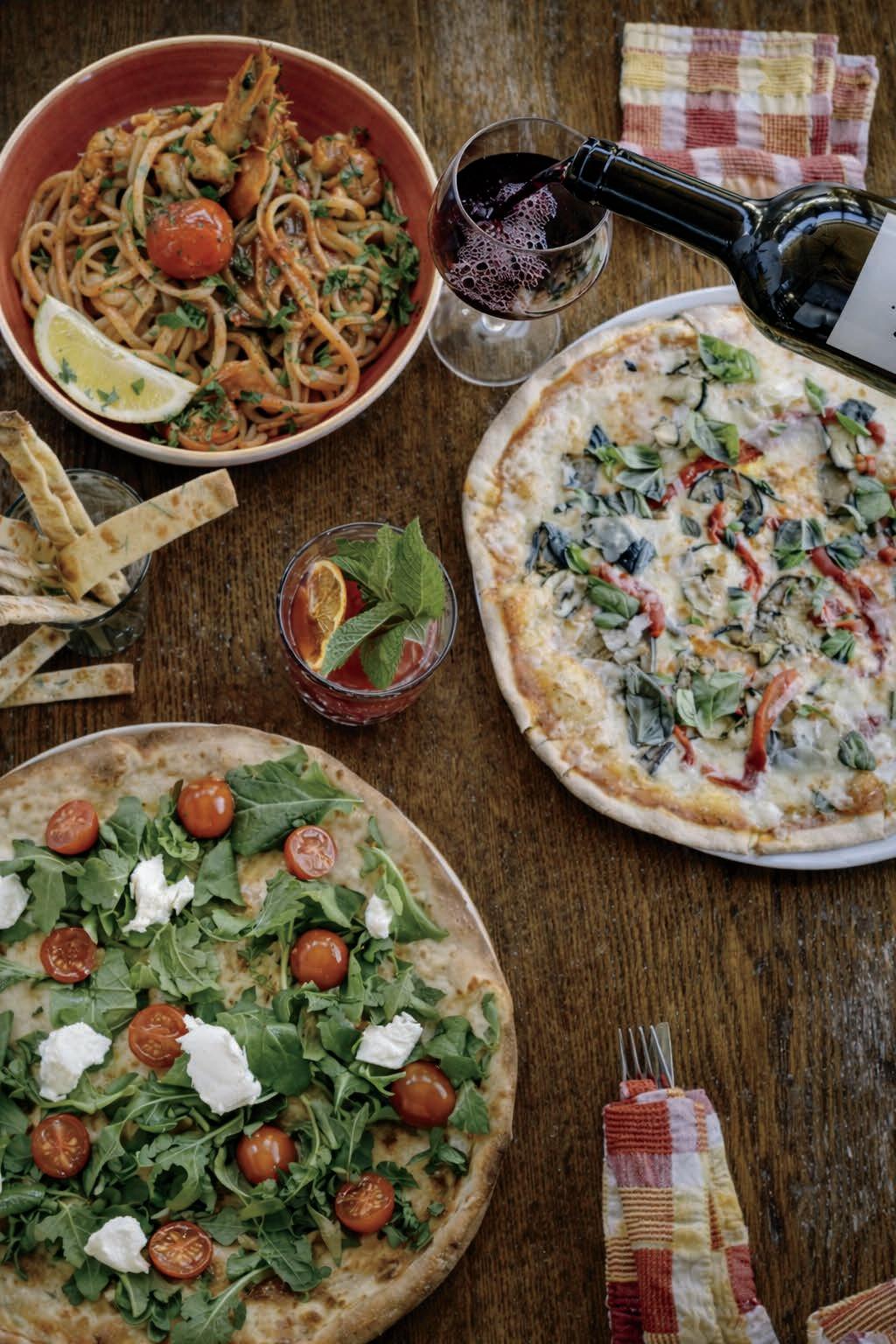

ANGELINA MAIA
Tavira d’Artes Tavira 962 012 111 taviradartes.com
Wall sculpture, cardboard, 80x60x15cm
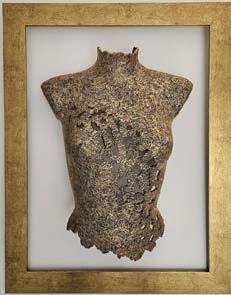
MARI ARP
Galeria Corte-Real Paderne 961 528 679 corterealarte.com
Etienne, mixed media, 100x125cm
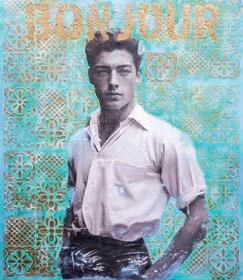
TYLER SHIELDS
In The Pink Praça da República 69-75 Loulé in-the-pink.com
See page 36
ERIKA TOLIUSIS
ArtCatto, Loulé, 289 419 447, info@artcatto.com. artcatto.com
Salt in the Air, oil on canvas, 100x150cm
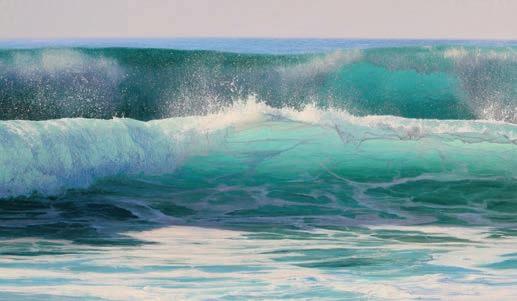

ANA ANT Ó NIO GILL
The Municipal Gallery, São Brás Avenida da Liberdade, 22 anaantoniogill.com
The End of an Era exhibition Throughout April
Revival, acrylic on canvas, 100x120cm
DOM PATTINSON
ArtCatto
Vila Vita Parc Porches artcatto.com
It’s Hip to be a Turtle, mixed media on canvas, 140x140cm
CARMELITA FALÉ
Lagos Cultural Centre
Tuesday to Saturday, 10h00–18h00
Geography of Colours. Without resorting to rigid academic studies, Carmelita finds the impulse for spontaneous gestures on blank canvas or paper, where lines and colours flow until they acquire a unique, intimate ‘geography’ with each action. Until 4 April

ANT Ó NIO BARAHONA
Vale do Lobo d’Artes 962 012 111 taviradartes.com
Solário, oil on board, 50x75cm
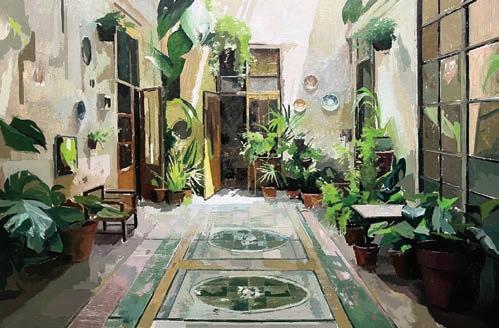
MEINKE FLESSEMAN
Galeria Meinkeflesseman, Portimão, 917 937 564 galeria.meinkeflesseman@gmail.com
Meinke’s solo exhibition, throughout April
E: loulecriativo@cm-loule.pt FB: @loulecriativo IN: @loule_criativo W: loulecriativo.pt
Email Loule Criativo for full details of workshops and courses
CREATIVE TAPESTRIES FOR CHILDREN
Date: 6 April, 14h30–16h30
Location: Palácio Gama Lobo
Partner: Susana Mendez
Registration: susana.m.mendez@gmail.com
A great way to make the most of the school holidays and encourage youngsters to explore their creativi. All materials will be provided and are included in the fee.
Fee: €25
INTRODUCTION TO SEWING COURSE LEVEL II
Date: 9, 10, 11, 16, 17 and 18 April (schedule on request)
Location: Palácio Gama Lobo
Partners: Ana Guerra and Verónica Tomé
Registration: v.tome@sapo.pt
This intermediate-level course allows participants to gain greater autonomy in making textile pieces. Fee: €140
INTRODUCTION TO ESPARTO TECHNIQUES COURSE
Date: 11 April–9 May (schedule on request)
Location: Palácio Gama Lobo and Casa do Esparto,
Sarnadas, Alte Partner: CEARTE
Registration: loulecriativo.oficios@cm-loule.pt
Learn the basic techniques for preparing and working with esparto, contributing to the preservation of a craft heritage that remains part of the cultural identity of the Algarve. Free to participate
BOTANICAL PRINTING ON A SILK SCARF
Date: 11 April, 14h00–16h30
Location: Casa do Artesão, Alte Partner: Gadjodilo Registration: casadoartesao.alte@gmail.com
This ecological printing technique offers a sustainable and non-toxic way to print textiles. Participants will take home a silk scarf that they dyed in the workshop.
Fee: €40
DECORATIVE TAPESTRY WITH ALGARVE PLANTS
Date: 11 April, 9h30–13h30
Location: Textile Studio, Loulé Partner: Susana Mendez Registration: susana.m.mendez@gmail.com
Learn the basic techniques of decorative tapestry using a loom. Fee: €50
Lighthouse
SCREEN PRINTING COURSE
Date: 11 and 18 April 14h00–17h00
Location: Palácio Gama Lobo, Partner: Sérgio Rocha Registration: loulecriativo@cm-loule.pt
This two-day course offers a practical introduction to screen printing, on fabrics, paper and other materials.
Fee: €80
TILE PAINTING
Date: 17 April, 14h30–17h00
Location: Clay Workshop, Loulé Partner: Bernadette Martins Registration: bernadetteceramics@gmail.com
By learning the traditional 17thcentury tile painting technique, participants will recreate tiles with fauna and flora themes.
Fee: €35
INTRODUCTION TO POTTERY
Date: 18 April, 10h00–13h00
Location: Clay Workshop, Loulé Partner: Catarina Gonçalves Registration: catarinagoncalves. ceramics@gmail.com
An opportunity to learn the first gestures on the wheel and experiment with creating simple clay pieces.
Fee: €60
910 410 268, info@lighthouse-artcourses.com, lighthouse-artcourses.com
WATERCOLOUR FRIDAY
10 April and 24 April
15h00–20h00
Ria Formosa - Armona
Focused on observing the luminous coastal scenery of Ilha da Armona and translating light into quick watercolour studies. All materials and ferry tickets included.
WATERCOLOUR SPRING WEEKEND
25-26 April, 15h00-19h00
At Pinta Roxa
Av. 5 de Outubro 28, Olhão
A light-filled spring weekend dedicated to watercolour. Two guided four-hour sessions offering an immersive approach that deepens technique.
FARO SKETCHWALKS
7, 21 and 28 April, 10h30-13h00
It’s the perfect time of the year for outdoor sketching sessions. This series explores historical streets and architecture of the Algarve capital, providing insights into local history while practicing quick observational studies. All materials included.

Rua do Prior 46, Faro gamaramagallery@gmail.com gamarama.pt
TILE PAINTING WITH MARISA MURTINHA
11 April, 10h00–13h00
Register by 8 April
From traditional Portuguese motifs to contemporary imagery, explore different techniques and create three personalized tiles which are then fired and can be collected two days later. No previous experience required.
€45
ANALOG COLLAGE WORKSHOP WITH LIA RODRIGUES
18 April, 10h00–12h30
Register by 15 April
An analog collage workshop inspired by 25 April, exploring freedom and democracy through visual expression.
€30
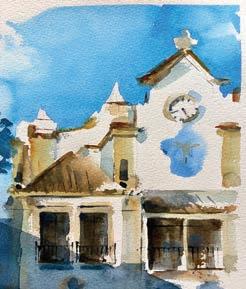
EASTER JUNIOR GOLF ACADEMY
10 April, 14h00–16h00
republica14.pt All performances at 19h30 and 21h00 Tickets: republica14.bol.pt
4 April
SARA BADALO JAZZ QUINTET
Sara Badalo Quintet brings together five musicians with a shared passion for jazz. The group takes a journey through the American and Brazilian songbooks, moving between classics and more contemporary pieces.
5 April, 16h00–19h00 VINYL FAIR
From timeless classics to unexpected finds, you can expand your collection and enjoy the pleasure of music in physical formats.
16 April, 19h00 POETRY EVENING
With Rogério Cão & Guest Poetry Evenings bring new voices and perspectives to the gathering.
Faro, 289 870 077 teatrodasfiguras.pt ticketsbol.pt Ciclo de Solistas by Orquestra do Algarve 3 April, 18h00 Easter Concert where the sung voice reigns supreme. Gustav Mahler’s Symphony No. 4 and Richard Strauss’s Four Last Songs.
Paraíso de Los Negros by María Pagés Compañia 10 April, 21h30 Flamenco choreography that draws from the tension between the principles of freedom and authority.
Sérgio Godinho 11 April, 21h30
The renowned Portuguese singer presents a concert that is a celebration of his career.
18 April
LEON BALDESBERGER TRIO
The three musicians have composed an original repertoire based on jazz tunes and standards, which will be released by MdC Records. This concert results in an engaging sonic experience in which the trio enjoy themselves as much as the audience does.
25 April CANTOS DE LIBERDADE
In Portugal, 50 years ago, one could hear the song of Freedom; in Brazil, 60 years ago, songs were sung for Freedom. Today, both the song ‘of’ and the song ‘for’ freedom are no longer just memories, but also urgent calls as freedom has been threatened.
26 April, 16h00–17h00 CLOTHES SWAP MARKET
On the last Sunday of every month, visitors are invited to bring clothes they no longer wear and exchange them for new finds, giving garments a second life while meeting others in the community. It’s a simple and conscious way to refresh your style and reduce waste.
Every Sunday, 17h00–20h00 DJ SET – Live Music
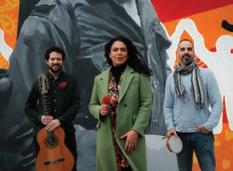
Os Agostos, Santa Bárbara, amigosdemusica.org 21 and 23 April
Leonardo Pierdomenico, one of the dynamic new generation of pianists, will give two concerts with works by Beethoven, Respighi and Liszt. For programme details and to book, visit the website.
PORTUGAL SPICE ROUTE COOKING WORKSHOP
Figs On The Funcho S.B. Messines 969 335 749
hello@figsonthefuncho.com
13 April, 11h00–15h00
A hands-on, small-group cooking workshop in the Figs on the Funcho farmhouse kitchen, focused on seasonal, vegetable-forward dishes. The special experience at the award-winning venue will end with a long, shared lunch enjoying the food prepared together.
HEALTH & PADEL EVENT
Tennis & Padel Club, Carvoeiro lovitall.pt
19 April, 10h00–17h00
In the 5th edition of this event, 30 stands, a padel tournament, workshops, lectures and family activities are the focus. Visitors can meet local health and wellness professionals, discover products and services, and receive free health checks and advice. The padel tournament will be played in the popular Americano format, allowing players to rotate partners during short and dynamic matches.
valedolobo.com/en/activities/ event-experience/easter-2026junior-golf-academy-week-1/ A structured five-day coaching programme led by an experienced golf professional from Vale do Lobo, sessions combine technical development, practical guidance and plenty of on-course enjoyment, all tailored specifically for children.
Well Restaurant
valedolobo.com/en/activities/eventexperience/sunrise-yoga/ Whether you’re an advanced yogi or someone seeking a unique new training experience, this 60-minute class is open to all.
EASTER BRUNCH AND EGG HUNT
Vale do Lobo Tennis Academy valedolobo.com/en/resort/ restaurants/smash-by-vale-dolobo/
Celebrate Easter Sunday with a relaxed Easter Brunch at Smash Restaurant, set in the Vale do Lobo Tennis Academy, while younger guests set off on an Easter Egg Hunt through the natural landscape.
STARGAZING
valedolobo.com/en/activities/ event-experience/live-spring-skystargazing-at-vale-do-lobo/ Using a state-of-the-art motorised telescope, have the opportunity to look up, and discover the wonders of the universe in a unique and memorable setting. A serene and inspiring night beneath the Algarve sky, perfect to share with family, friends, or simply as a moment to contemplate the universe.

FARMER ’ S MARKET
QUINTA SHOPPING
5 April 10h00–13h00
Museu do Traje, São Brás 966 329 073, admin@amigosdomuseu.com
ARCHAEOLOGICAL TALK
7 April, 14h30
Facing the Ancient Egyptians: Art and Imagination by Dr Campbell Price Tickets: €5
DOCUMENTARY FILM
10 April, 18h00
Ai Weiwei’s Turandot by Maxim Derevianko Tickets €4 / Amigos €2
QUIZ: HELPING HANDS
14 April, 19h00
To take part: €3.50
SECOND-HAND BOOKS
With an exhibition of vintage motorcycles 16 April, 10h00–15h00 Free entrance
SÁVIO ARAÚJO JAZZ TRIO
19 April, 17h00
Tickets: €10 / Amigos €8

DOCUMENTARY FILM
23 April, 17h00
(In Portuguese & German) Events of 25 April 1974, and the fall of the dictatorship, by Georg Cabral Tickets: €3
DOCUMENTARY FILM
24 April, 18h00
The Wolves Always Come at Night, by Gabrielle Brady Tickets €4 / €2 Amigos FADO
26 April, 21h00, Tickets: €5
To reserve, call Filomena 926 354 516
PHOTOGRAPHY EXHIBITION
Street Photography On until 28 May Free entrance
COLLECTIVE ART EXHIBITION
The Space Between Us Markus Böhler and Gaby Studer On until 18 May Free entrance
QUINTA SHOPPING
Celebrate Easter, 3 April, 10h00–15h00
Face painting and arts and crafts for children, where you can learn about the art of pyrography, and test your egg tossing skills. All this fun is organised by the Elaine Bain Family Trust on behalf of Espaço K.
SÃO BRÁS FLOWER TORCH FESTIVAL
5 April, 9h30–19h30
In the spirit of faith, every Easter Sunday, the ground is covered with flowers and torches are raised high to the rhythm of the refrain, in honour of the risen Christ. The Largo de São Sebastião is decked out in floral carpets and hosts a display of Easter flavours with local producers. This is a glorious event.
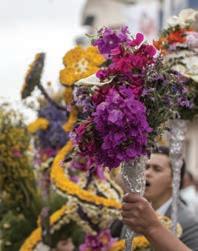
FINANCIAL SERVICES FOR EXPATS AND BUSINESSES IN PORTUGAL
Our dedicated team offers personalised, professional accounting and tax solutions tailored to your specific needs. With deep expertise in Portuguese tax law and international fiscal matters, we ensure your finances are managed with precision, integrity, and care.



Accountancy
Tax advice
Tax Relocation Services (including the
Fiscal Representation
Property Rental Compliance
Personal Income Tax
SOME
PEOPLE THINK THAT A JOURNALIST HAS A MENU OF TOPICS READY AND WAITING TO BE RESEARCHED AND WRITTEN UP. THAT’S NOT ALWAYS THE CASE, SAYS ANTHONY MARTIN WHO STRUGGLED TO FIND ANYTHING SATISFYINGLY AMUSING THIS
IAM WRITING this on 7 March, which is roughly the day each month when I sit down to fill this page for the forthcoming issue hoping that somewhere in the world something mildly amusing has happened. Normally the daily papers provide a useful nudge – a quirky headline, an odd statistic, or some piece of human folly that can be gently prodded into becoming a column. But for the past week, as you will have noticed, humour has been rather thin on the ground.
The news appears to be dominated almost entirely by one man’s quest for the Nobel Peace Prize and, ironically, the manner in which he pursues it is by bombing those who disagree with his ideas for world order. Perhaps he thinks: what the hell? bombs away, at least it will keep the press away from the Epstein files.
May I give you a hint, your Wannabe Royal Highness? If you want to put on your penguin suit and stand up in Stockholm holding your peace prize, renaming the Department of Defence the Department of War was not the best move.
Unfortunately for me, this scenario is neither amusing nor quirky, and building the rest of this page around it is a definite no-no. Which leaves me staring at my screen and wondering where on earth to go from here. Here being the village where I, and the man who builds walls from the top down, live, and where the majority of residents do not spend too much of their time pondering about overseas squabbles, as they are more concerned about the fact that the last harvests of both figs and olives have been among the worst in a long time.

brunt of these forces; they were largely endured in the central area where towns such as Leiria suffered serious damage. And while on that subject, please see the March issue of AlgarvePLUS (you can read it online now we are into April, at algarveplusmagazine.com). Check out page 27 to find out how to help the communities affected. But back to the current ‘what-to-write-about-now’ options. April’s contenders for newsworthy items are, ... drum roll please ... the man who used to be known as HRH the Duke of York, his wife, his two dowdy daughters, (I label them so because of their terrible taste in hats), his nephew Harry and Harry’s wife. Are you beginning to see a pattern here? And this is being written by someone who classifies himself as a monarchist – a man who stands up on hearing the National Anthem and even knows the words; a man who was once introduced to the Queen Mother, the late queen’s mother, that is. I must admit I’m somewhat miffed. I liked it when we knew where we were, royalty-wise.
I am someone who classifies himself as a monarchist – a man who stands up on hearing the National Anthem and even knows the words
Queen Elizabeth II never put a foot wrong and even started to become a little more human when, around the mid-70s, she took the plum out of her mouth and lost the accent that set her aside from us mere mortals. I don’t object to the few bob she costs the taxpayer as the Royal family and their attached traditions bring in, not just tourist dollars, euros and yen to the UK, but a certain respect.
A respect that has survived for 1,000 years, although with the current lot in place, I don’t hold out much hope for its continuance.
The rain has been relentless; fields and roads have flooded, trees and structures have been brought down or damaged by the unholy trio of storms – Kristin, Leonardo and Marta. Luckily for us, the Algarve did not take the
And now I’ve reached the end of the page and exactly where I began: sitting here on the 7th of the month, hoping that somewhere in the world something mildly amusing will happen...
Sadly, it hasn’t yet, but give it another day – someone in the Royal Family is bound to do something laughable.