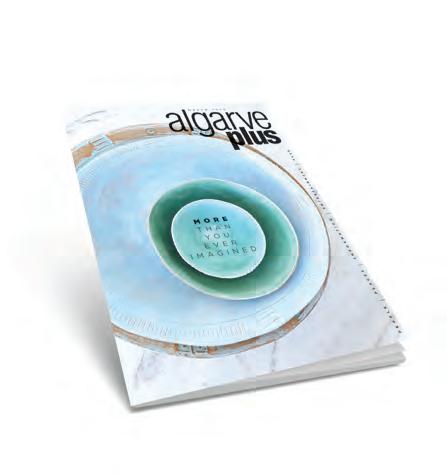
We launched AlgarvePLUS in March 2020. It still seems like yesterday, but it is an amazing 72 issues ago. We came out just as Covid hit – who knew what was about to happen? – and after the launch issue we took the decision to go digital for two months because, unsurprisingly, there were hard copy distribution problems as the epidemic gained ground. This was the message we put out in first issue, announcing our arrival (and unaware of the world’s dilemma):
“Welcome to the first issue of AlgarvePlus, the new monthly magazine that promises to deliver more than you ever imagined. Our ethos is about quality content and that means innovative, original and enticing reads produced by publishing professionals for a discerning audience.
“You will not find where to have your shoes re-soled or your tiles re-grouted here – there are plenty of other publications that serve as good directories. Our passion is directed at feature material that will broaden your knowledge, delight your senses, and have you coming back for more, every month.
“We have highly-respected writers contributing to our mix of comment, opinion, advice and, as of now, you are part of our story.”
And there we were, a little over half the size we are today, full of heart-felt enthusiasm. In six years we have grown in size, in stature, in quality of content, and in readership – we now have more than 120 distribution points, and a readership of around 50k, including online, each and every month. We are very proud of what we have achieved... but we couldn’t have done it without you.
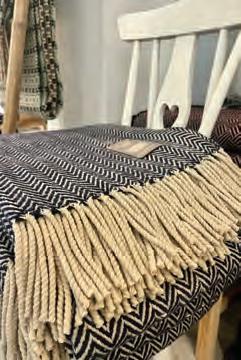
It’s a wrap! A blanket from the Burel Factory in the Serra da Estrela is a stylish accessory for any home... and for any body. 130x180cm, in a choice of vibrant colours, from Casa Amor’s corner shop. €123. casaamor-olhao.com
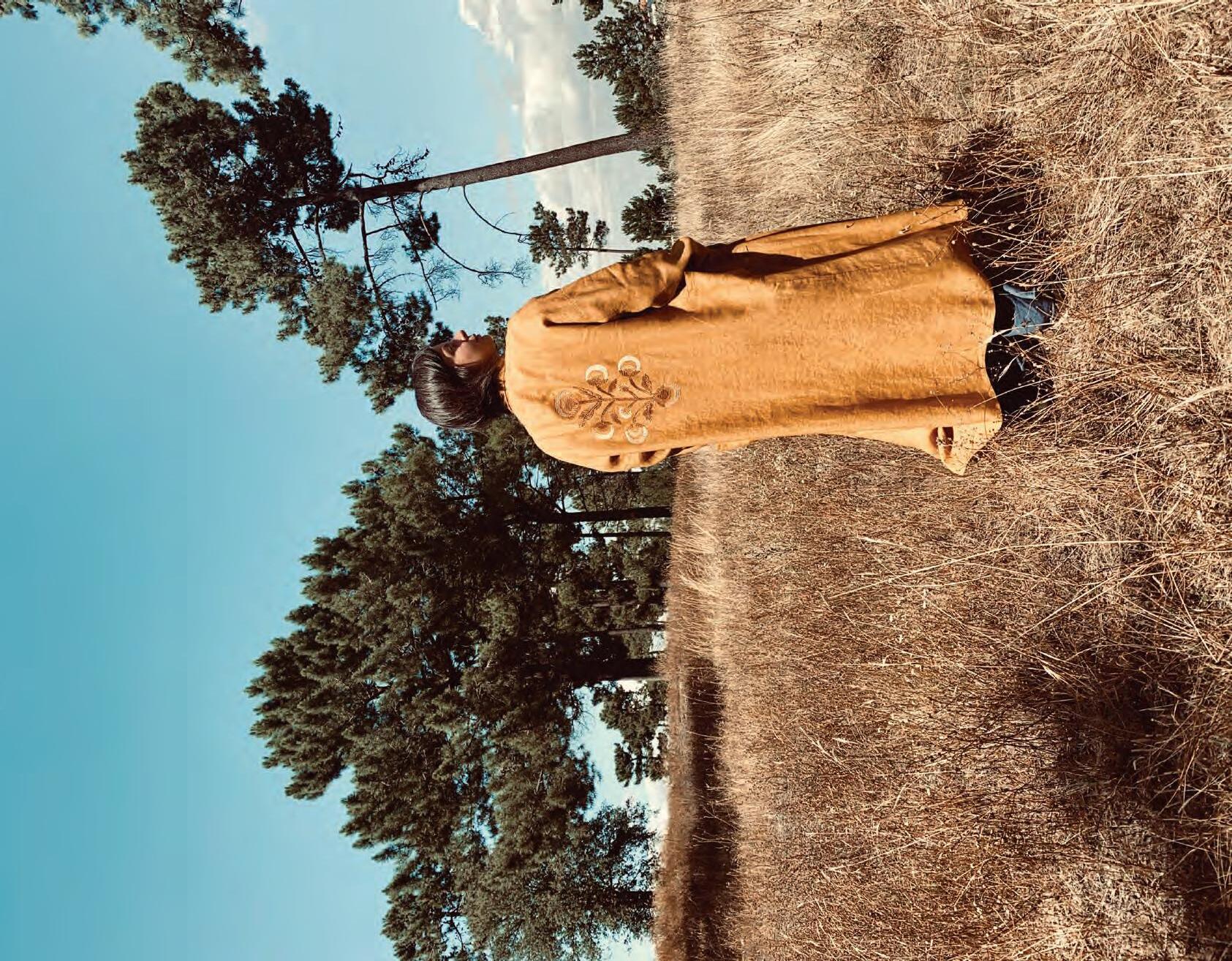
Is it a shirt? Is it a jacket? Leonia is whatever you want it to be. The contrast of two materials and textures, combining the centuries-old Alentejo blanket tradition made on handlooms, with a fine 100% wool fabric tells a story that is the signature of designer Benedita Formosinho. Comfortable, warm, sustainable and made in Portugal. €367. beneditaformosinho.com
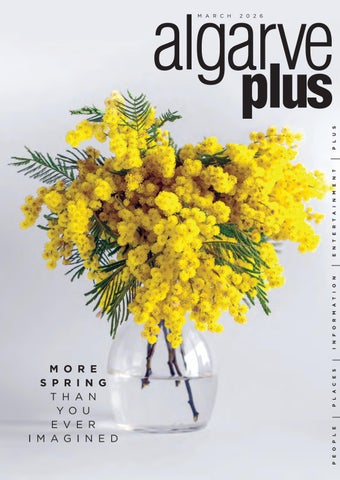
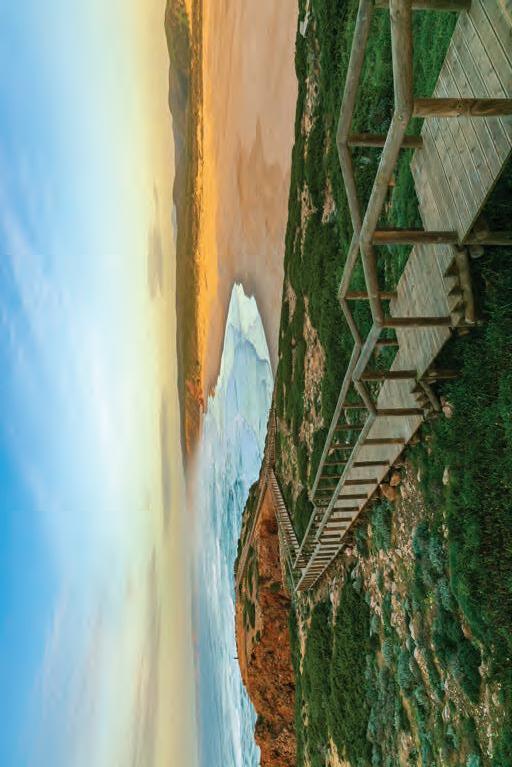
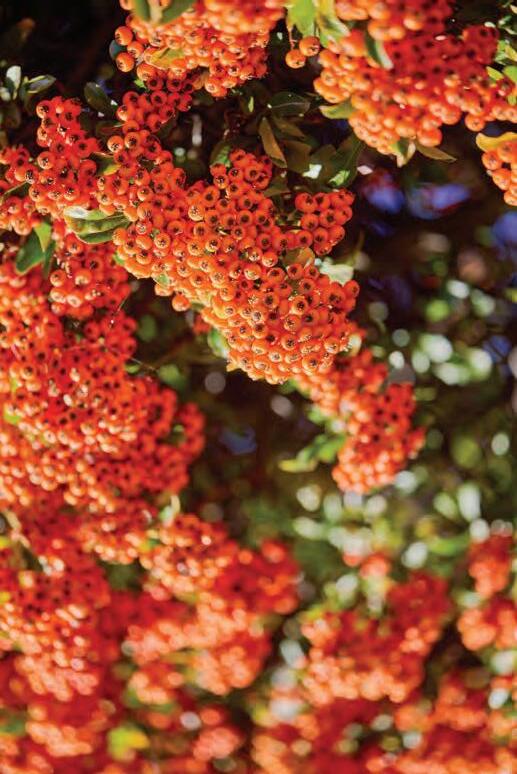
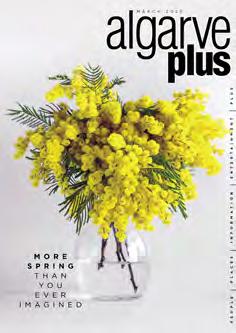
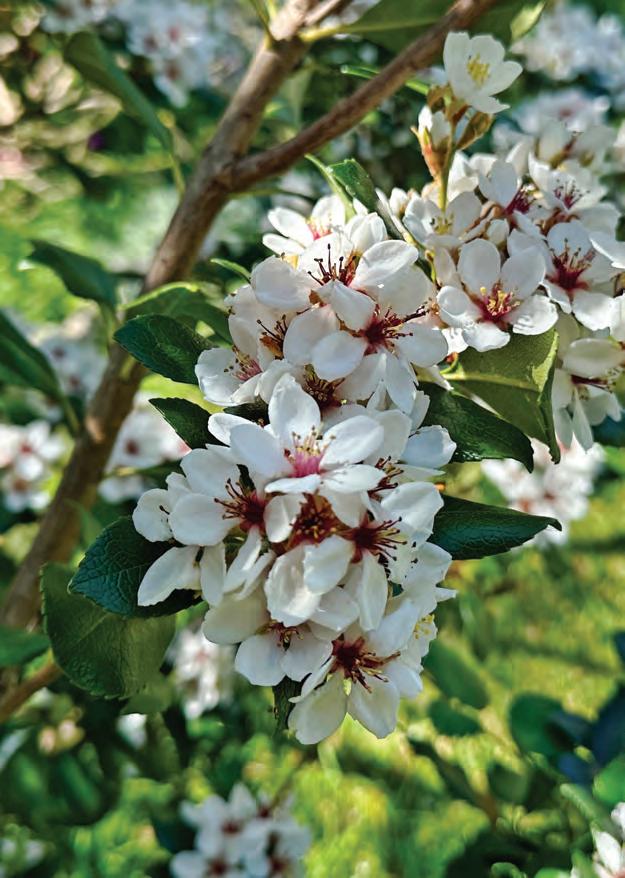
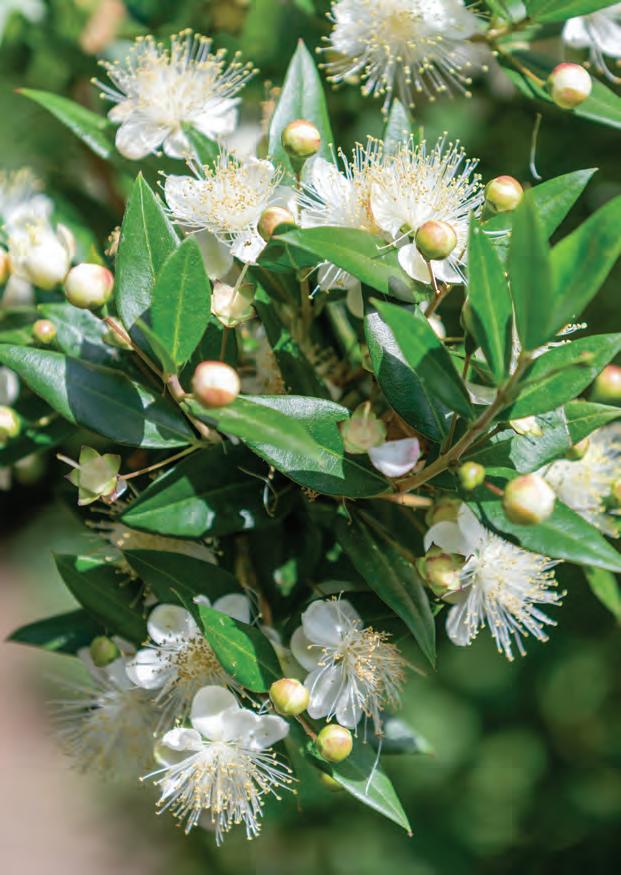
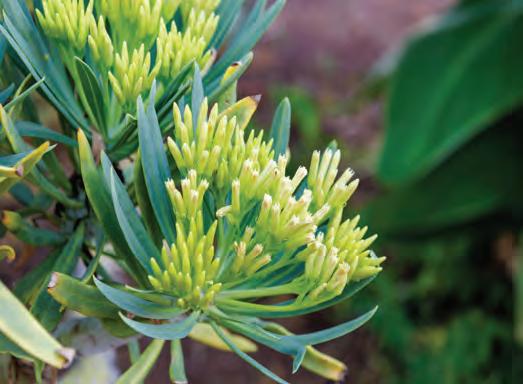
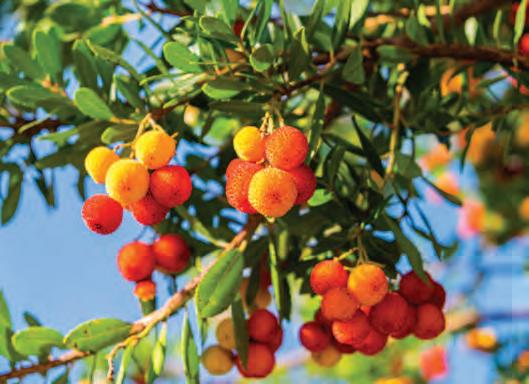
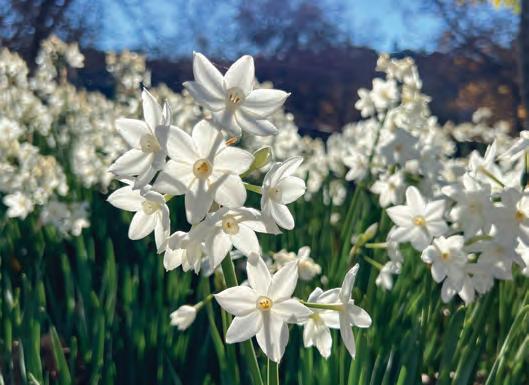
FRONT COVER: March and mimosa go hand in hand, and right now they are blooming gorgeous.
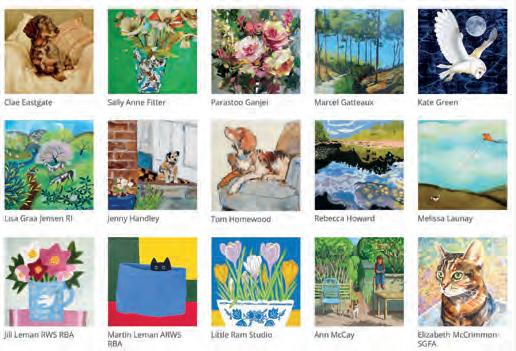
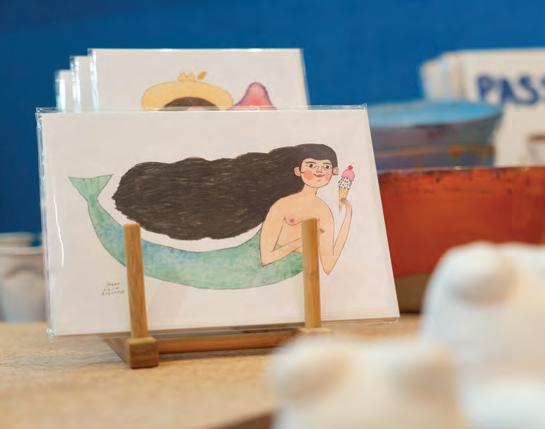
It’s on the cards. Karen d’Oliveira of Tavira d’Artes and Vale do Lobo d’Artes has introduced a special collection of cards, by no less than 15 artists, each with an individual personality. They are 15x15cm, priced at a very reasonable €3.50, and will be hugely appreciated by the recipients. taviradartes.com
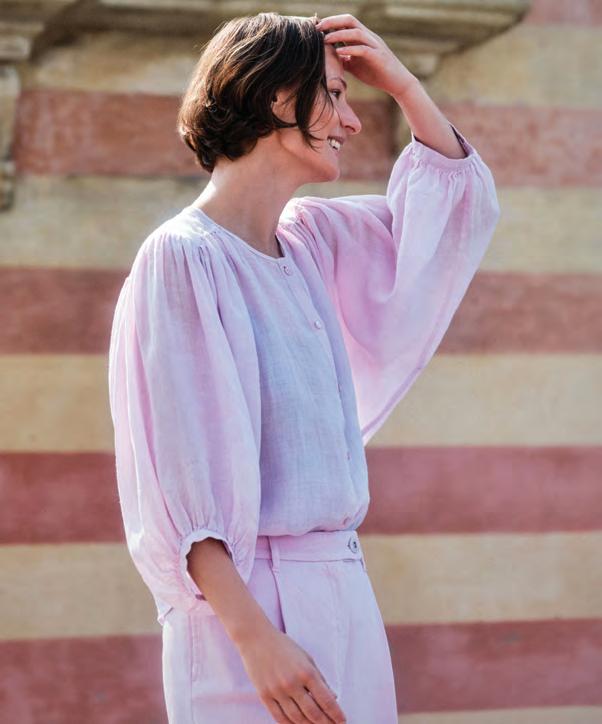
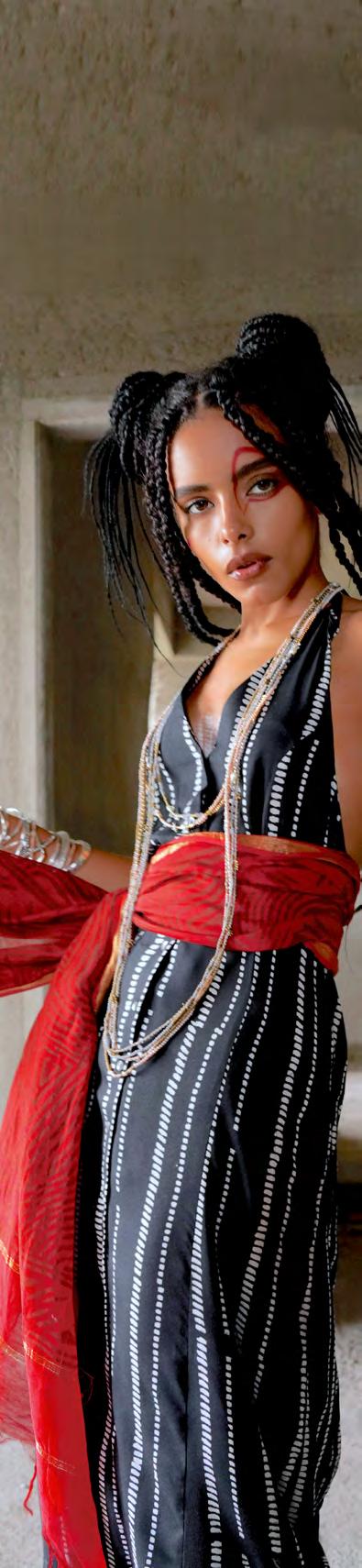
You can always rely on Martina in Loulé to come up with the treats. We love this soft blouse by Lanius in ramie, which is an eco-friendly natural fibre. It comes in orchid – a rose pink –and in chocolate. €119. martina-loule.com
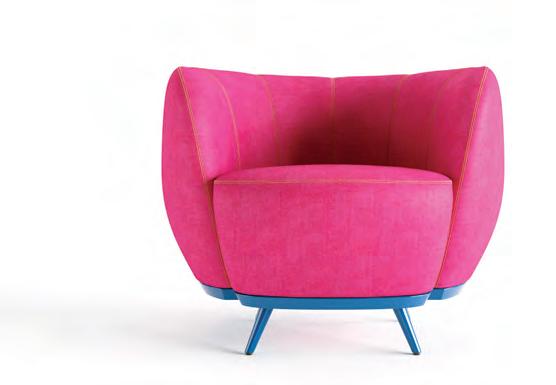
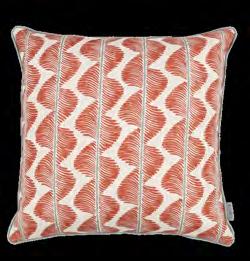
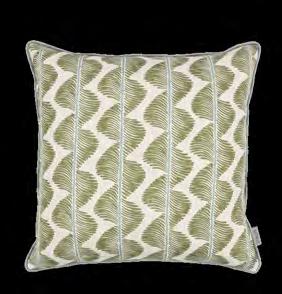
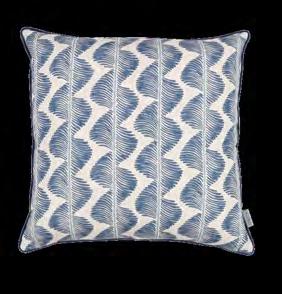
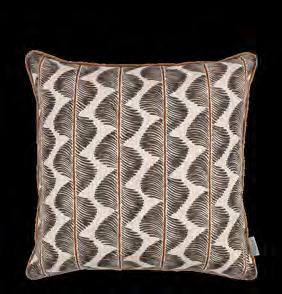
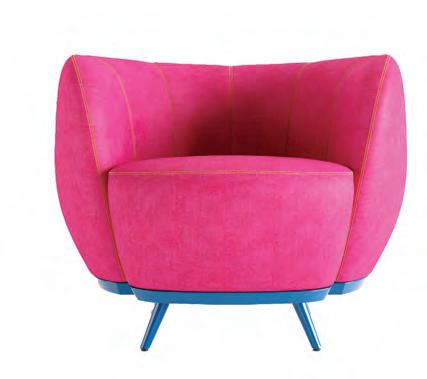
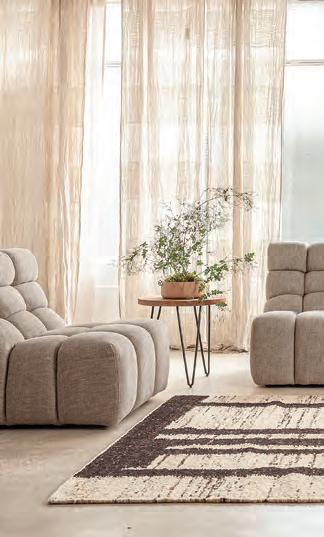
PIPO is a contemporary furniture collection inspired by Porto wine, particularly the vats where the wine develop its flavour and aroma. The result is a set of voluminous pieces with a protective shape, by Sentta. sentta.pt Same cushions, four different colourways. Mix them or match them, they are real winners. 50x50cm square, in 90% cotton and 10% linen. Aubin by Romo, from
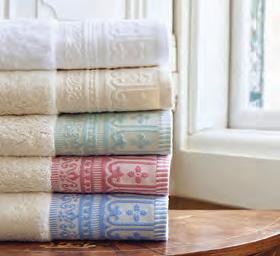
Torres Novas is the big name in bedding, and their towels are terrific, too. The Piazza collection in natural terry combed cotton is soft to the touch and great-looking with its contrasting border. There are bath sheets, bath and hand towels, a bath mat and even towels sized for kiddies. torresnovas.com
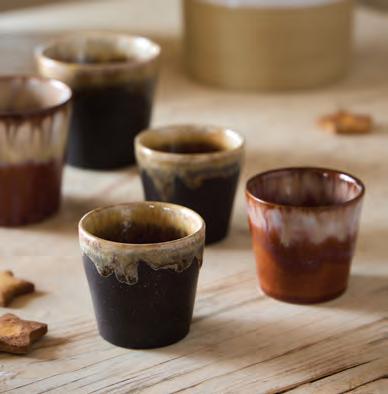
You can find the new Costa Nova collection at Espaço Luzitano’s two stores in Faro, at Rua Ivens 5, and Rua Vaso da Gama 28. The coffee cup range includes two sizes, to cope with all preferences. Large €11.35, small €7. Instagram: espacoluzitano
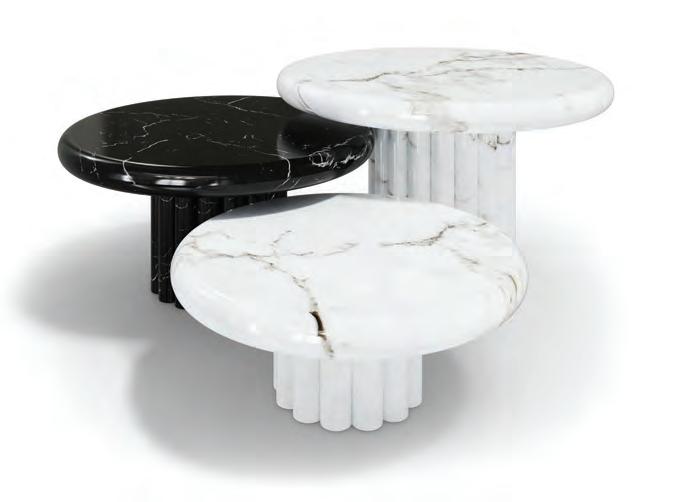
On the table. How’s this for special? The gleaming marble Gere Centre Table set from Covet House will make a statement in any contemporary living space. It consists of three White Vogue Estremoz and Nero Marquina pieces of different heights that can also be purchased individually. covethouse.eu
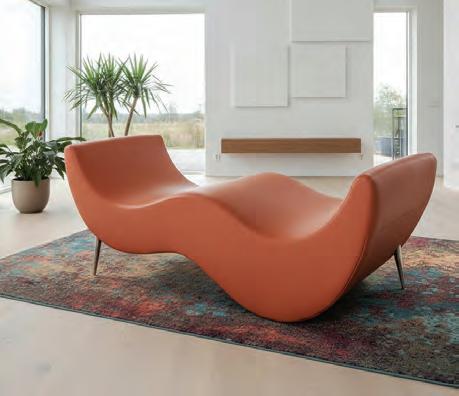
Sit back – or rather lie back – in this luxurious preloved curving tan day bed. It’s an awardwinning design and the price is as attractive as the lines. From Kit & Caboodle in Amancil. €599. kandc.pt
- loulé - olhão - lagos koziishop.com
Campaigns this month
AMARCH IS MARKED INTERNATIONALLY BY SEVERAL AWARENESS CAMPAIGNS FOCUSED ON EQUALITY, HEALTH, DISABILITY INCLUSION, AND ENVIRONMENTAL SUSTAINABILITY. THESE INCLUDE INTERNATIONAL WOMEN’S DAY, WORLD DOWN ’ S SYNDROME DAY, WORLD WATER DAY AND INTERNATIONAL RARE DISEASE AWARENESS CAMPAIGNS
CROSS THE Algarve, charities and community organisations support these global causes through yearround services, advocacy, and inclusion programmes that directly benefit local residents.
International Women’s Day – 8 March
Promoting gender equality and celebrating the achievements of women worldwide, several charities in the Algarve provide practical support aligned with these goals.
Faro-based Associação de Proteção à Rapariga e à Família (AIPAR) supports girls, young women, and families experiencing social vulnerability. The organisation provides residential support, educational development programmes, and family intervention services that help young women build independence and life skills. protecaoarapariga.pt
HOW YOU CAN HELP
International awareness campaigns highlight global causes, but meaningful change often begins at community level. Volunteering remains one of the most valuable contributions. Organisations such as A Rocha Portugal welcome volunteers to assist with conservation projects and environmental education programmes. Social support organisations including NECI and AIPAR benefit from volunteers who assist with educational activities, mentoring, and community inclusion initiatives. Financial donations are also essential. Many of these charities rely on public support to sustain services. Donations,
Words: ELISABETH LEONARD
The national charity Associação Portuguesa de Apoio à Vítima (APAV) also supports women across the Algarve through confidential counselling, legal guidance, and crisis support services, particularly for victims of domestic and gender-based violence. APAV’s free victim support helpline is 116 006, and regional services can be accessed through apav.pt
Supporting migrant communities, Associação Doina Algarve assists families, particularly women, with social integration, access to healthcare, employment, and administrative support. The organisation can be contacted through its Facebook page or by email at doinaalgarve@gmail.com
World Down’s Syndrome Day – 21 March
The Algarve has become an important regional hub for disability inclusion initiatives. The Special21 programme, based in the Albufeira area, promotes inclusive sports participation for athletes
with Down syndrome. The project runs adapted swimming training, supports competitive athletes, and advocates for improved international sporting opportunities. special21.org
In the Lagos area, Núcleo Especializado para o Cidadão Inclusivo (NECI) supports individuals with intellectual and developmental disabilities through specialised education, employment training, residential support, and social integration programmes. NECI works closely with families and community partners to promote independence and inclusion. neci.pt
World Water Day – 22 March
Environmental sustainability remains a key concern in the Algarve, particularly in relation to ecosystem protection. Near Alvor, A Rocha Portugal leads conservation and environmental education initiatives that protect local habitats and promote biodiversity awareness. The charity runs school programmes, volunteer conservation projects, and environmental workshops. arocha.pt
whether one-time or ongoing, help ensure these programmes remain available to vulnerable individuals and families.
Public awareness also plays an important role. Sharing information, attending awareness activities, or supporting fundraising initiatives strengthens the visibility and impact of these organisations. These charities demonstrate how awareness campaigns translate into real support for local residents. By engaging with them – whether through volunteering, donations, or simply raising awareness –residents and visitors can play a direct role in supporting neighbours and protecting
Rare Disease Awareness campaigns aim to increase understanding of genetic and neurological conditions while supporting affected families. The KAT6A Foundation supports individuals and families living with KAT6A syndrome, a rare neurological genetic condition. The foundation provides family support networks, awareness initiatives, and advocacy for improved research and medical recognition. kat6a.org
National charity Associação Salvador supports people with motor disabilities. Its programmes are accessible locally and include employment support, financial assistance for equipment, accessibility advocacy, and adaptive sports initiatives, as well as inclusion education programmes in Algarve schools.
SILVES IT SIMPLY SPARKLES
THE CAMERA LENS CAP CAME OFF WITH THAT FAMILIAR LITTLE CLICK, AND SUDDENLY THERE IT WAS – A VIEW THAT’S BEEN STOPPING PEOPLE IN THEIR TRACKS FOR THOUSANDS OF YEARS. I WAS STANDING ON A HILL ABOVE THE ARADE RIVER, EARLY MORNING LIGHT WARMING THE RED SANDSTONE WALLS OF SILVES CASTLE
Words: NICK ROBINSON, ALGARVE ADDICTS
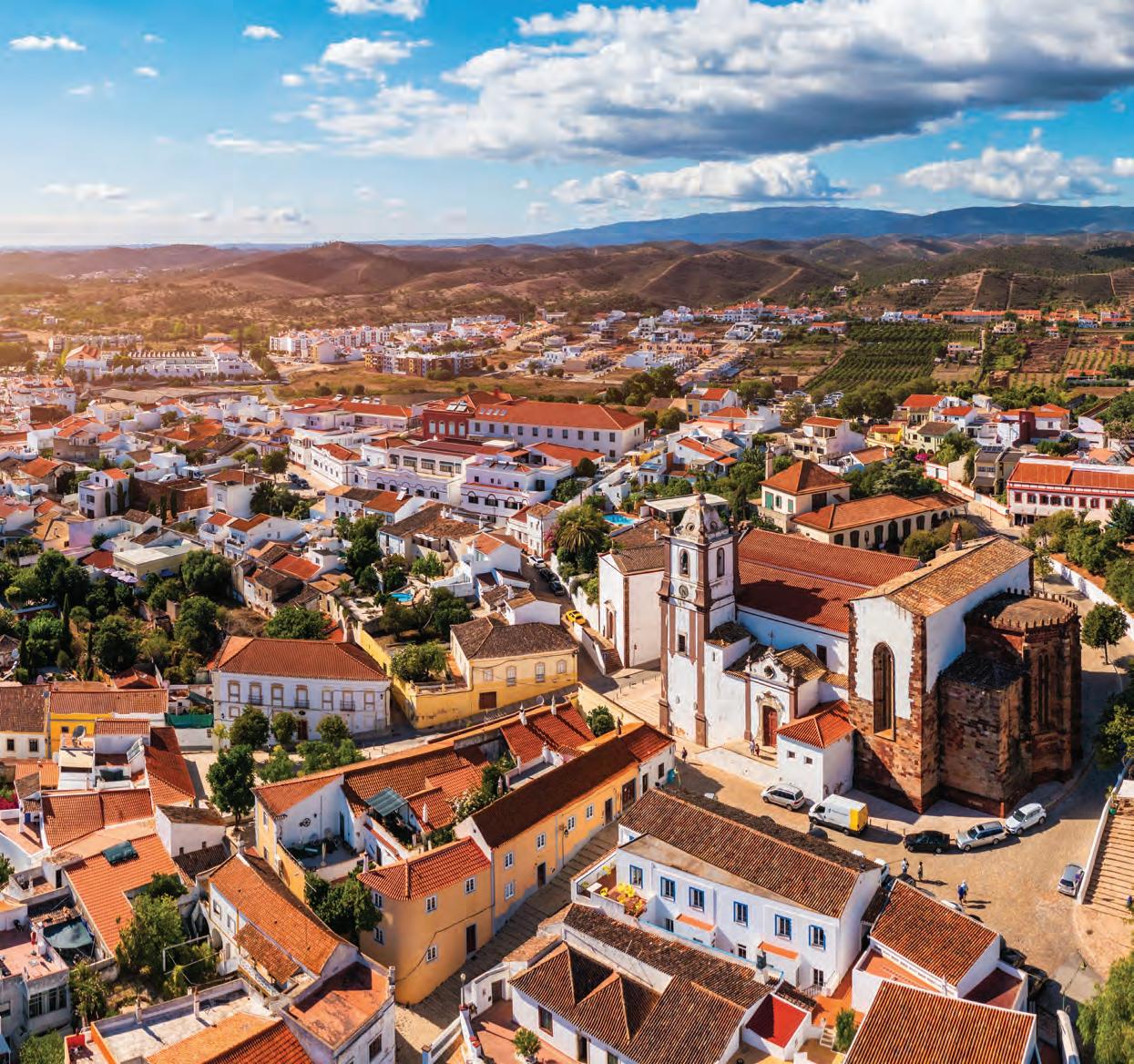
THE ORANGE GROVES below the hill were just starting to glow. And before I could even ask the practical, modern question – “Is it worth living in Silves?” – history barged in and demanded centre stage. This wasn’t just another filming day for our YouTube channel. Silves has gravitas. You feel it the moment you arrive. So before we got into supermarket runs and square-metre prices, I asked viewers to rewind the clock. Way back. To 1189AD. Imagine this same hilltop without cafés or parked scooters. Imagine approaching on foot, through scrub and dust, as a soldier under King Dom Sancho I.
Ahead of you looms a terrifying Moorish stronghold – Xelb, as the Arabs called it – the beating cultural and political heart of the Algarve. This wasn’t some backwater. Silves was a capital. A city of poets, philosophers, lawmakers. In its day, it rivalled Lisbon. Standing there with a wireless mic clipped to my shirt, that contrast hit hard.
Today, the fear is gone. What’s replaced it is something rather special: a wonderfully modern, eclectic town that somehow still feels deeply authentic. As I wandered into the historic centre, I reminded viewers – Seelvsh, not Sil-vesh. Pronunciation matters. So does atmosphere. And Silves has bags of it.
Unlike purpose-built tourist playgrounds like Vilamoura or even Albufeira, Silves feels properly lived in. It’s not performing for visitors. It just… exists. Daily life unfolds against a backdrop of ancient walls and cobbled streets. The town itself has around
10,000 to 11,000 residents, while the wider municipality counts roughly 37,000 souls. Big enough to function. Small enough to feel like a village where people still nod hello.
The weather on filming day was Algarve perfection – blue skies, gentle warmth – but it’s important not to romanticise too much. Silves sits slightly inland, which makes it more ‘continental’ than the coast. July and August regularly hit average highs of around 31°C. It’s a dry heat, but it’s proper summer. Winter, on the other hand, is refreshingly mild: daytime highs of 16–17°C in January and February, though nights can dip to 5–6°C. It’s jumper weather, not hibernation season. Although the winter just gone might make you think twice about THAT comment.
And then there’s that castle
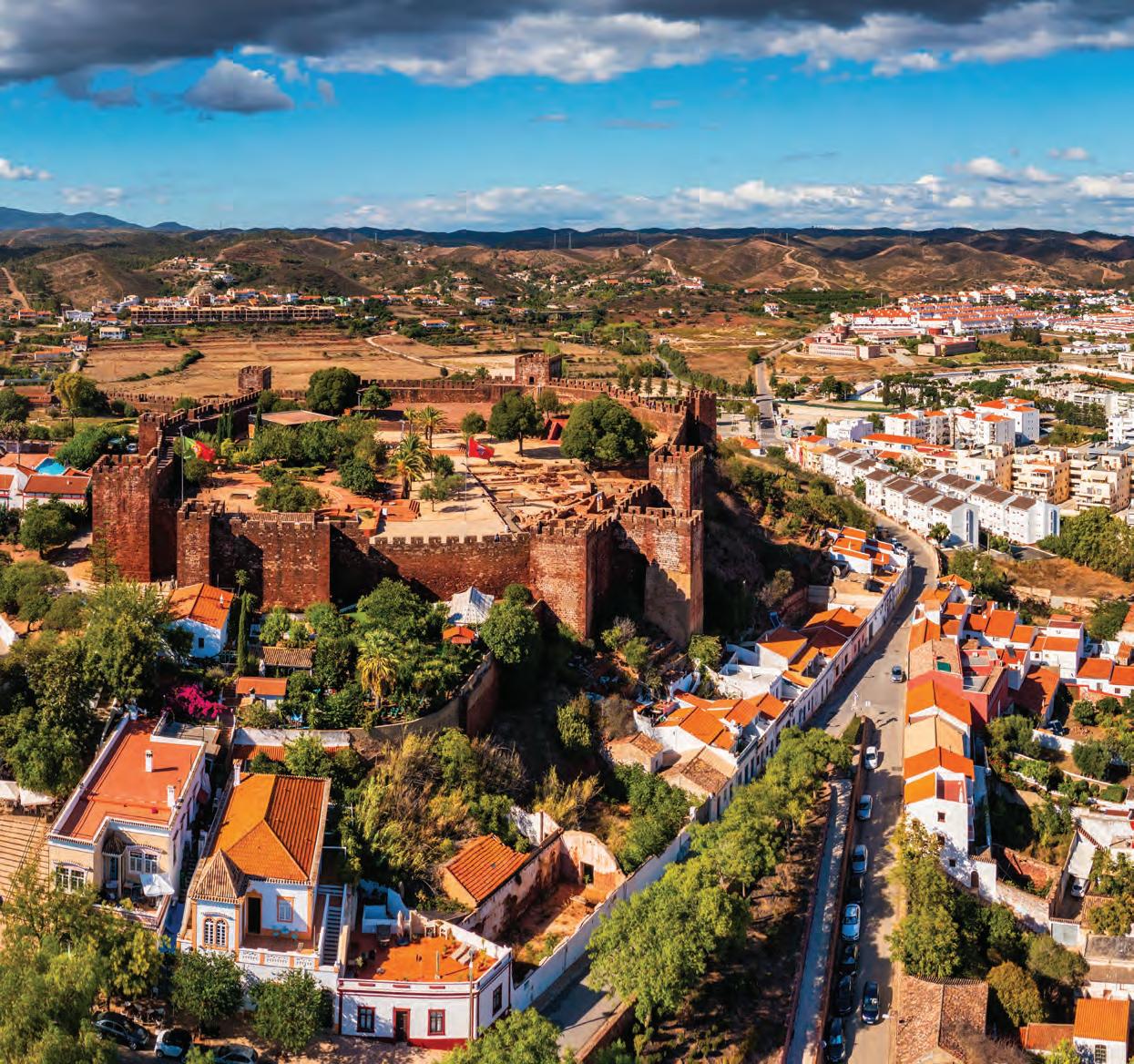
You can’t ignore the casle.. It dominates Silves in the same way it has dominated would-be conquerors for centuries.
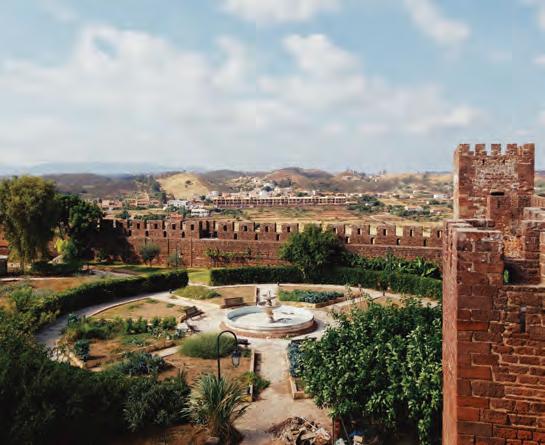
Silves Castle is widely regarded as the finest example of Arab military architecture in Portugal, sprawling over around 12,000 square metres. The hill it sits on has been fortified since Roman times – possibly even earlier. Archaeological signs point to Paleolithic habitation, and there’s a strong likelihood this was once a Lusitanian Castro long before the Moors arrived.
History here isn’t neat. It’s violent, layered, and occasionally brutal. Sancho I captured Silves in 1189 with help from Northern European crusaders – but it didn’t last. The Almohads came roaring back. In 1191, a counter-attack led by the governor of Córdoba resulted in the capture of around 3,000 Christian
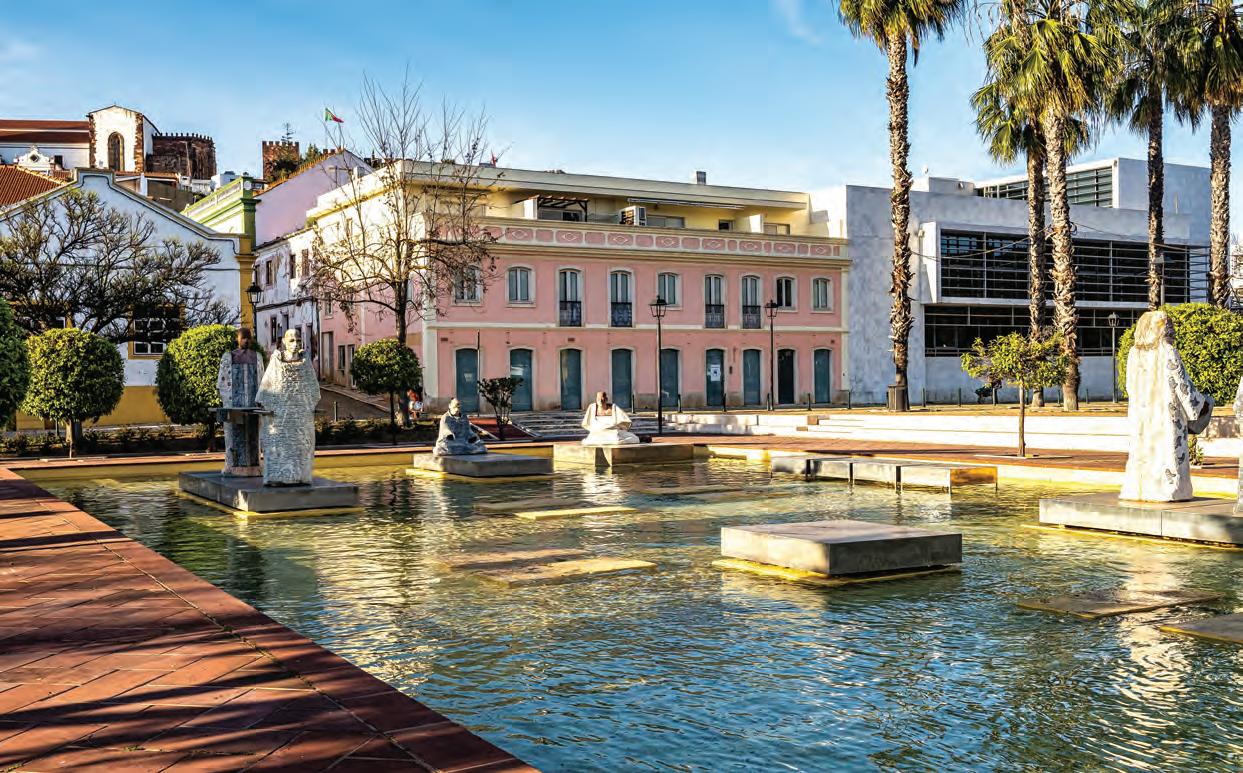
Below: Stone statues of monks in an ornamental pool in
the city; the famous castle and grounds, always worth visiting; bronze
slaves. Let that number sink in. It’s a chilling reminder that these postcard views were once soaked in blood and desperation.
Permanent Christian control only came in 1242, when Paio Peres Correia, Grand-Master of the Order of Santiago, finally secured the city. Moorish rule in the region ended, but its fingerprints never really left.
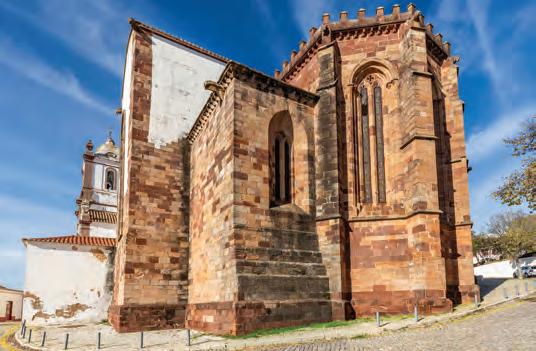
You see that clearly at the Sé Catedral. Built on the site of the former Great Mosque after the 1189 conquest, it’s a powerful Gothic and Baroque structure that quietly tells its story. Inside lie the tombs of crusaders who never made it home. Directly opposite stands the Igreja da Misericórdia, whose intricate Manueline side door hints at the wealth that once flowed through Portugal during the Age of Discovery. Even if architecture isn’t your thing, it’s impossible not to feel the weight of it all here.
But Silves isn’t frozen in medieval drama. One of my favourite curveballs is its industrial past. In the 19th and early 20th centuries, Silves was a cork-industry powerhouse. The town thrived. Jobs were plentiful. Then came the general strike of 1934. The authoritarian government of the time responded brutally, effectively shutting the industry down in Silves. Prosperity evaporated almost overnight. Today, that story could have lived on in the former Fábrica do Inglês – the Englishman’s Factory – now home to a closed museum that documented this lost era. It was a fascinating detour and a reminder that Silves has reinvented itself more than once. Sadly, the museum is now closed and debate still flares up between the owners and government about its future.
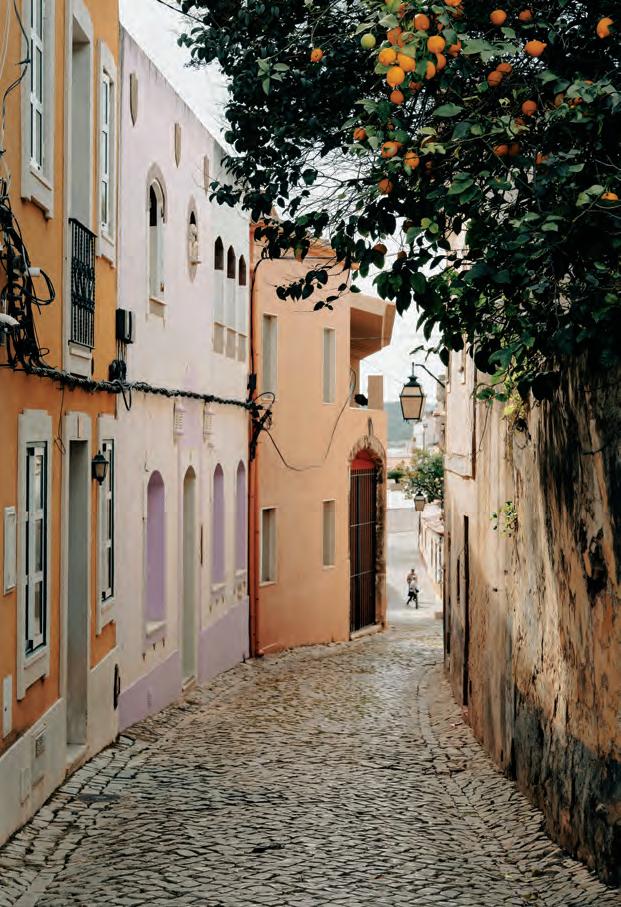
Praça Al-Mutamid Park. Opposite page, top left clockwise: the narrow, winding streets of
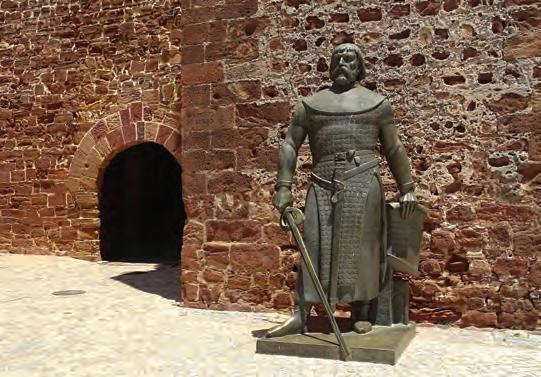
statue of King Dom Sancho I in front of the entrance to Silves Castle
You can’t ignore the castle. It dominates Silves in the same way it dominated would-be conquerors for centuries.
And today...
Of course, my viewers eventually want answers to the practical stuff. And Silves holds up well. Connectivity is excellent. The A22 motorway is right there, and Faro Airport sits around 45 minutes away – roughly 65 kilometres. Close enough to be convenient, far enough to avoid aircraft noise becoming part of daily life.
Healthcare is solid for a town of this size. There’s a public Centro de Saúde in the northeast, backed up by around five pharmacies scattered through town. While Silves doesn’t have a private hospital of its own, Portimão’s public hospital and private clinics in Alvor are only a short drive away. It’s one of those places where you feel quietly reassured rather than overwhelmed by infrastructure.
A SHOPPER ’ S DELIGHT
Wander the streets of Silves and you’ll discover specialist art galleries, locally-made homewares, and designer collectives. ColaborArte, at Rua Mouzinho de Albuquerque 14, is home to the works of six unique talents, Marta Nunes Lourenço, Margarida Goes, Elke Grath-Piro, Susanne Drohla, Manolu Ortiz de la Torre and Patricia Marques. Don’t miss this one out.
Families will also like what they find. The Secondary School of Silves has a good reputation, ranking around seventh in the Algarve. For international education, options include the Deutsche Schule Algarve nearby and the Nobel International School in Lagoa, an easy commute east.
Then there’s real estate – always the hot topic. According to Idealista, average prices for a T2 apartment sit at around €3,292 per square metre. Do the maths and a 100 m² apartment comes in at roughly €330,000.
What’s interesting here is the choice. The old town offers bags of charm, history, and atmosphere – but also narrow streets, cobbles, and limited parking. It’s romantic, but you need to embrace the trade-offs.
On the outskirts, particularly to the northeast, you’ll find more modern apartment blocks. Easier parking. Contemporary layouts. Still walkable to the centre. It’s very much a lifestyle decision rather than a right-or-wrong choice.
Daily life is refreshingly straightforward. You’ve got Continente, Lidl, and Aldi for big shops, plus the municipal market for fresh local produce. Pro tip: go early. I learned the hard way that stalls start closing by lunchtime. Blink and you’ll miss the best tomatoes.
What really elevates Silves, though, is what surrounds it. The Arade River once brought ships straight from the ocean to the
city gates, powering trade and influence. Today, dams like Arade and Funcho upstream have silted it up, but the river remains a beautiful focal point (at high tide). Five minutes outside the centre, you’re suddenly in what I can only describe as absolutely stunning nature.
So many special stories
This municipality is a green lung. It’s home to the Iberian Lynx National Breeding Center, playing a crucial role in saving one of Portugal’s most endangered species. Agriculture still dominates the landscape, especially citrus. Silves proudly wears the title ‘Capital of the Orange’, producing a huge share of the Algarve’s citrus fruit. There’s even an Orange Route –Rota da Laranja – where you can visit orchards and follow the fruit from tree to packing house. Wine lovers aren’t left out either. Vineyards dot the region, and the Algarve Tourism Board has put together guides to local wine farms that are well worth exploring.
If movement is your meditation, Silves also hooks into the Via Algarviana. This longdistance trail stretches around 300 kilometres from Alcoutim to Sagres, and Silves marks the start of Sector 10, linking the interior to the coast. Prefer wheels to walking? Jeep safaris
from Albufeira head deep into the rugged interior and riverboat tours from Portimão, tide-permitting.
EATS
PONTE ROMANA
For traditional good value Portuguese simple food
To give the story a human pulse, I met up with Thyl from Silves Tours (silvestours.com). We chatted on a rooftop overlooking the Arade as he explained his passion for the region. He runs tours in a classic Portuguese UMM jeep and by boat, connecting visitors with both the ancient Moorish capital and the quieter natural side of modern Silves. It’s people like him who turn a place into an experience.
Horta da Cruz Ladeira de S. Pedro 282 443 275 restauranteponteromana.pt
MOSAIKO
Great arabic lunch
R. Elias Garcia 17 969 260 004 mosaikorestaurant.com
As I wrapped up filming and thanked viewers, Silves revealed its true character. This is a town of layers. Paleolithic menhirs. Roman bridges. Moorish walls. Gothic cathedrals. Abandoned cork factories. Orange groves. Vineyards. All just 15 to 20 minutes from the beaches of Armação de Pêra.
The terror that once gripped soldiers under Sancho I has softened into something far more inviting. Silves today offers space, authenticity, history, and a slower rhythm of life – without cutting you off from the modern world. And standing there as the sun dipped behind those red walls, it felt less like a destination and more like a quietly compelling answer to a very modern question.
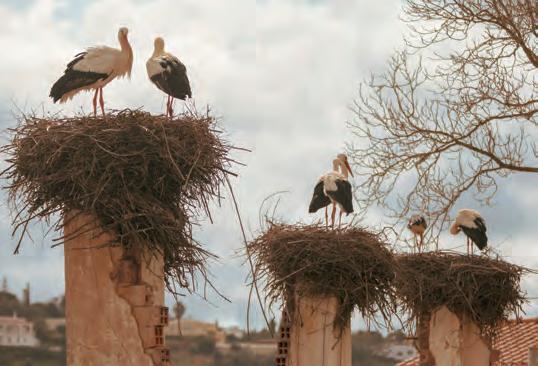
Above, top left clockwise: the storks of Silves are revered as harbingers of good luck; contemporary detailing added to a classical home; blue and white tile work is a feature in many outside spaces; the Cathedral of Silves, a Gothic red sandstone church
MARIA H, UNSPLASH
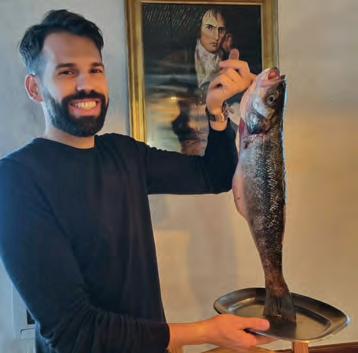
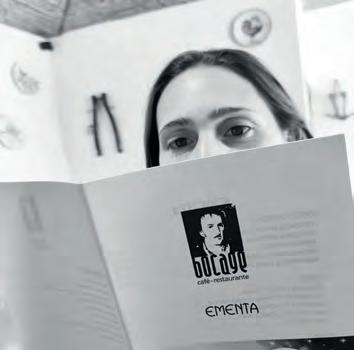
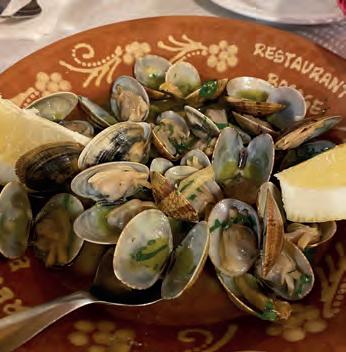
Restaurante Bocage, Loulé
THIS IS A FAMILY BUSINESS THAT HAS BEEN FEEDING FAMILIES FOR DECADES, AND REGARDED AS ONE OF LOULE ’ S LITTLE GEMS. TUCKED IN A BACKSTREET OFF PRAÇA DA REPÚBLICA, IT IS UNASSUMING, INVITING, AND ALWAYS SERVING UP INVENTIVE DISHES OF THE DAY. WHAT MORE COULD ONE WANT FROM A LOCAL EATERIE WHERE THERE ARE ALWAYS QUEUES FOR A TABLE FOOD
FIRST A BIT of background. Bocage was opened in 1984 – more than 40 years ago by Albino Rodrigues.
Originally a tasca (tavern), there was just an upstairs room which served as a shelter for the people who were travelling from the mountains around Loulé.
When Albino met and married Rosa, the tasca became a restaurant, and Rosa became the chef, serving traditional Portuguese food to a growing clientele.
Today, Rosa still works her magic in the kitchen with her team of Margarida, Diana and Delci, while her children – Carina and Micael – take charge of their guests along with Marius, Carina’s husband. It is easy to see why Bocage and family are intertwined.
We’ve been going to this little piece of Portugal for very many years. At lunchtime and in the evenings it is always full (yes, book ahead or
be prepared for a long wait in the alleyway outside), and the menu changes every day with specials added to the regular a la carte menu. What’s on offer in Loulé’s market and the veggies from Albino’s small farm – including lettuce, broad beans, cabbages, olives, and oranges – decide on those dishes.
The restaurant seats 50 inside, plus (weather permitting, of course) ten to 12 on the little outside terrace, and pre-booked groups of up to 25 can be accommodated with a swift re-organisation of tables.
Of course it is the food that brings guests into a restaurant. And it is the quality and variety that has them coming back for more. And come back they do, recognising faces and smiles from previous visits.
Interestingly, according to Carina, there is a distinct difference in what is ordered by tourists – squid and the tuna Algarvia-style, or a Portuguese beef steak, are first choices – and what the locals choose, with fried calves’ liver the most popular dish.
Portuguese, with a daily menu and an especially good choice of fresh fish from the market
DECOR
It is simple, which makes it relaxing. Nothing fancy, just comfortable
If you go through the menu including puds, allow €25pp €
PRICE
If you are a fan of fresh fish, sole is just one of the most welcomed options, and at Bocage it is simply grilled with a sprinkling of herbs, just as it should be. And their giant prawns are butterflied and grilled – no fuss, just flavour. Have one as a starter, or two as a main course, with a tomato salad on the side. That’s about as perfect a light lunch as you’ll find.
Lamb stew, polenta with shellfish and fried fish, roast spare-ribs, chicken peas with pork meat, and pork cheeks feature regularly, and the duck leg special with green peas is another winner. For dishes that require a long cooking time, like cataplana, monkfish rice or pork with clams, it is best to pre-order, otherwise allow a 20-minute wait for your main course to be served.
And now it is time to talk desserts –a favourite topic. They are irresistable at Bocage and home made so there are none of the “just like so-and-so” comparisons. The most in-demand are the dreamy rice pudding and the intriguingly-named Sin of Bocage, a concoction of fresh cream, digestive biscuits and red fruits. The almond, carob and fig tart is in a class of its own. Suggestion: get everyone in your group to order different puds, and then share them.
All the wines in Bocage are Portuguese, and three of them are from the Algarve region. Prices range from a very reasonable €11 to €45.
A WALK
ON THE WILD SIDE
THE ALGARVE IS KNOWN FOR SOME OF THE WORLD’S MOST PICTURESQUE BEACHES AND VISTAS, BUT IT IS EASY TO TAKE ALL THESE VIEWS FOR GRANTED WHEN YOU SPEND EVERY DAY WITH THEM IN FRONT OF YOUR EYES. WE ARE GOING TO KICK OFF OUR SIX OF THE BEST SERIES WITH BEAUTY WALKS AND HOPEFULLY REMIND YOU OF SOME OLD FAVOURITES, AND GIVE YOU SOME NEW ONES TO EXPLORE
Words: LAURA SHEA
1Ponta da Piedade Trail
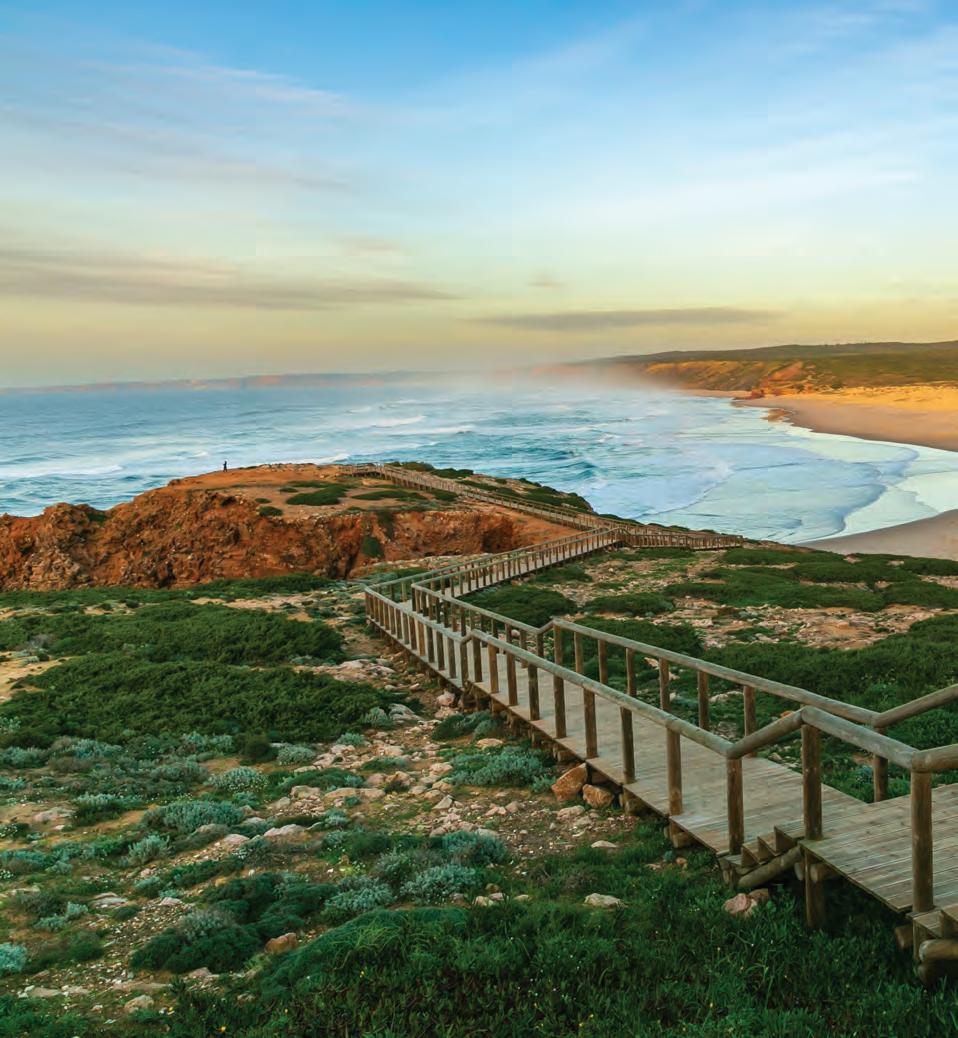
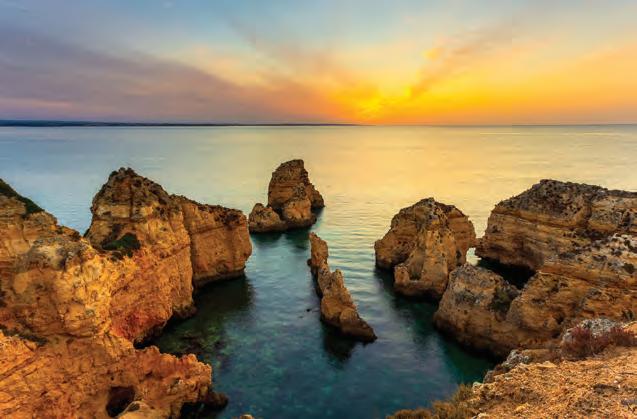
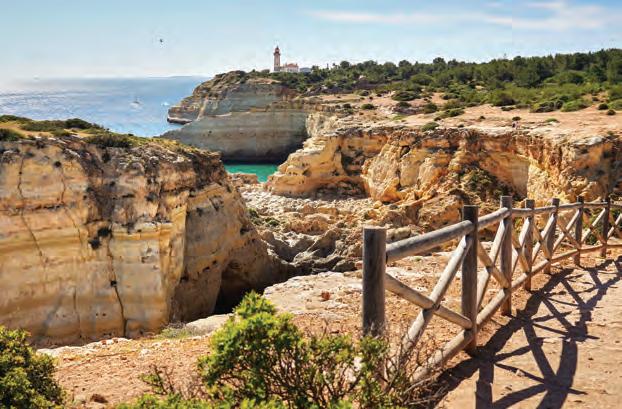
Just outside Lagos you can walk the trail that offers up views of some of the most awe-inspiring coastal formations in the area. A true picture of the force of nature, these views have been shaped by the sea and sky for thousands of years and, regardless of how many postcards you have seen, the real thing takes your breath away. The paths join the Rota Vicentina trail at the eastern tail end, making this an easy and enjoyable walk for those who don’t fancy many hours of hiking. Some areas can be a bit more challenging for the average wanderer, but as the trail is a little less than 10km from start to finish, you can easily avoid tougher bits!
You can drive and park at many points along the way so you don’t need to feel overwhelmed by a mammoth walk ahead. Praia da Luz and Praia Dona Ana are the two main start or end points, with wooden promenades and cafes and restaurants to rest your legs when needed!
2Rota Vicentina
The Fisherman’s Trail
The Fisherman’s Trail is a much larger and longer walk, with the Ponta da Piedade being a small piece in the overall journey. Officially ending at the Lagos train station, many keen out-and-abouters choose to travel this route and then get a taxi or bus back to their start point, which is a great idea for those wanting to enjoy the views and history, but not a full day’s hike. It makes no difference which direction you take, the trails are all signposted.
There are so many bits of the 225km trail to experience and it is easy to see why this is one of Conde Nast Traveller’s top beauty coastal hikes in the world. You can enjoy the walk through the Vicentine Coast Natural Park and soak up the unspoilt views of the sea and sands. Always remember to keep safety in mind as this is a coastal cliff walk, and some of the drops are incredibly high. If sunny and hot, you will need to have proper provisions with you such as water, covers like hats, lightweight shirts and sunglasses, plus sunscreen. You will find spots along the way to rest and buy refreshments, but remember that this is a walk for those confident in their abilities and energy levels.
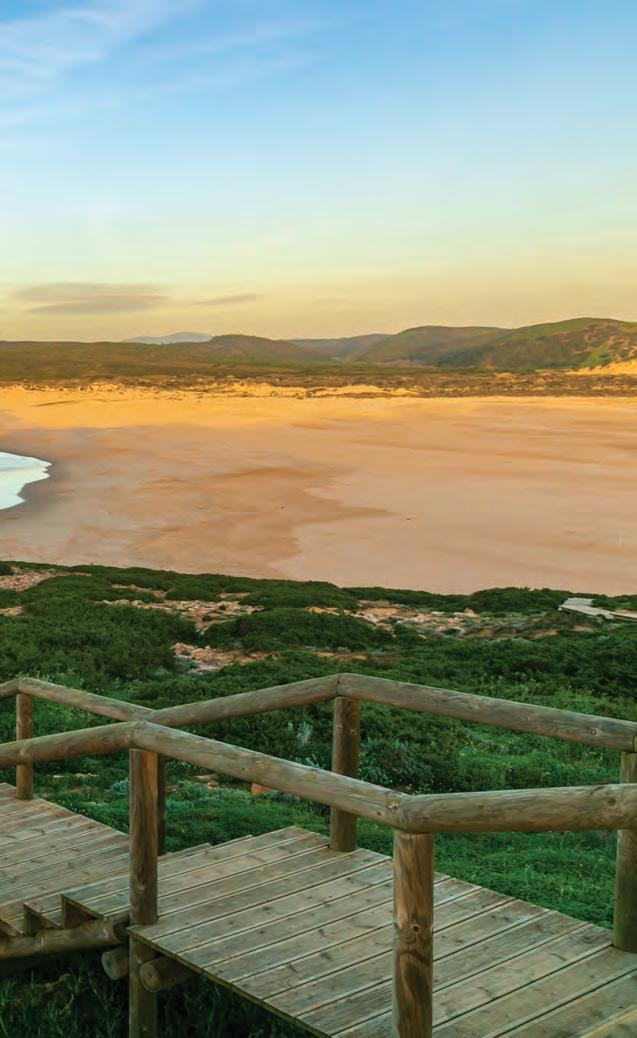
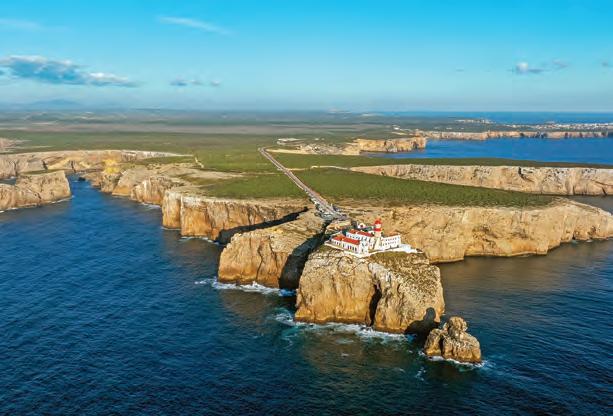
Above: Costa Vicentina coastal trail. Below left: Ponta da Piedade, just outside Lagos; right: the famous lighthouse at Cape St Vincent, the far west of the Algarve and the end of the Rota Vicentina
3Rota Vicentina
The Historical Way
If you have had enough of the fresh sea air, then you can experience the other side of the trail from the Santiago do Cacém Church to Cape St Vincent. To complete the entire walk is only for those who are fully prepared – it stretches for 257km in total through the stunning landscape of the area. However, this more rural trail can be enjoyed in sections, seeing forests, hills, mountains and villages as you go. The best advice is to research the area and pick out the points of historical interest that you most want to visit, and then plan your journey around this.
The cork tree forests are not to be missed, and this hike gives you peace and quiet and moments to stop and reflect on the beauty all around you. Usually this is a less busy route than the coastal walks, so ideal for those who want to get away from the crowds. Perfect for a couple of days away with a stay in a local guest house or hotel, this walk will show you some of the hidden gems of the Alentejo and allow you to see the pilgrim trails, literally walking in the steps of history.
4The Seven Hanging Valleys Trail
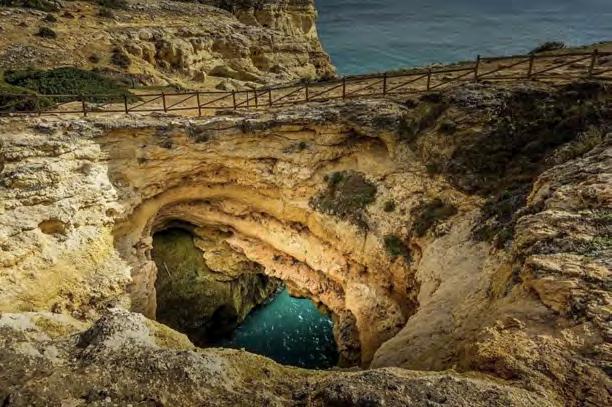
If you have spent any time living in the Algarve then you will know of this area for walking and enjoying what has been dubbed the best hike in Portugal. This 12km trip is hugely popular with tourists, so plan your visit to avoid the peak times if you want an easy journey. Head to Praia da Marinha in Lagoa and park there for ease. You can head down the stairway to the beach if you want to partake in snorkelling or a quick swim, or to just marvel at the natural arches carved into the limestone.
The world famous Benagil Cave is here, but full access is only possible by boat tour. The advice from experts is to avoid this trail in the height of summer due to heat (no shade on the route at all) and crowds. The best times would be September onwards, avoiding rainy days. It is graded as an easy walk, but wear trainers or hiking boots as this is still a natural area so flip flops won’t be ideal! If you have never done this walk and had it on your to do list, now is the time. The cliffs, rock formations and glistening blue water shouldn’t be missed, and if you time it right then why not stop for a sundowner drink to celebrate a hike well done!
5Fonte Benemola, Loulé
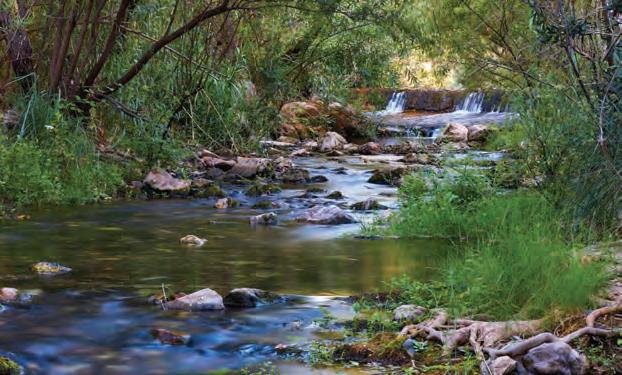
Roughly 4.5km in length, this is a very gentle and enjoyable walk for a lazy afternoon in spring or late summer. Completely inland, you will have the chance to see lush greenery and creeks filled with freshwater fauna, and depending on the time of year so many different plants and flowers. Great for nature enthusiasts, this is the place to go for wildlife spotting and bird watching away from the coast and the crowds. This is one of the most picturesque walks in my opinion, with a combination of rugged tree-lined trails and wide open vistas of rolling hills and sunshine.
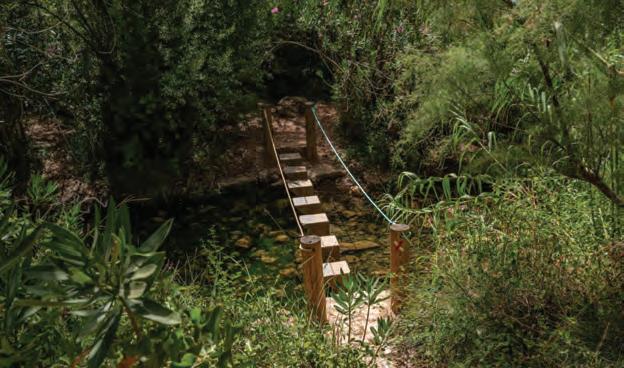
Seasonally, you can see fields of orange, almond and carob trees, and in the spring you will experience heady scents of lavender, rosemary and oleander blossoms. On my visit we were looking for otters who eluded us, but the pond turtles, herons and hoopoes were fantastic to discover. This is an easy-to-follow loop, with great signage dotted about explaining the features, and although it looks daunting, the stepping-stone walkway across water is fun and safe! You can make use of the car park at the beginning of the trail and half of the adventure is finding this hidden gem, so make sure to enjoy the drive.
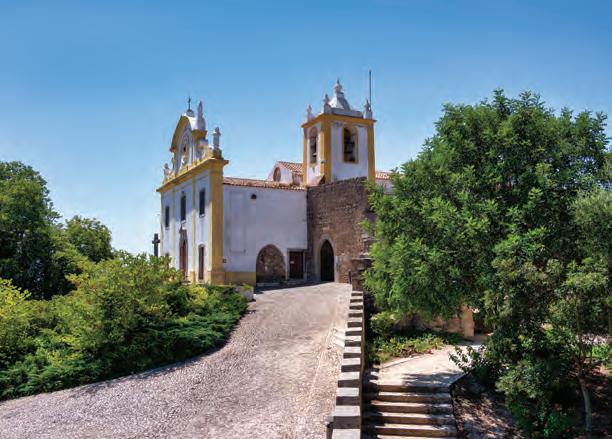
Above: Santiago de Cacém church on the Rota Vicentina trail. Below left and right: The Seven Hanging Valleys Trail
Rocha da Pena
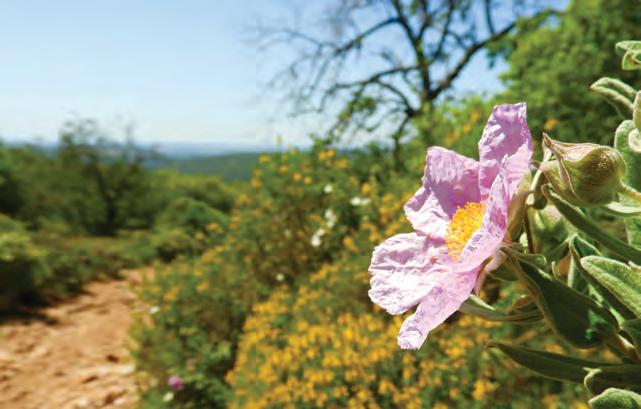
For the last suggestion in this list, Rocha da Pena offers a more challenging trek for those who want to push themselves a bit further. Between Benafim and Salir, this nature reserve offers just over 6.5km of rustic terrain, with an incredibly important blend of three distinct ecological zones across the imposing rock formation. The physical endurance needed to reach the top will be forgotten once you see the reason this plateau of the walk is so special.
If you visit between January and April you will be met with the sheer beauty of a rainbow scene of peonies, orchids and the Portuguese species of daffodil. If you were unaware of this nature reserve, then it is time to see it for yourself, as with over 450 different plants, shrubs and trees living here this is one of the most diverse areas to be found in Portugal. Not just for the budding botanist of course, Rocha da Pena will excite the ornithologist in you, as you may be able to spot eagles, vultures and buzzards. Wear hiking boots and sensible clothing as this is a hardy trek, and always remember to pack water.
Above: Fonte Benemola, Loulé. Below: Rocha da Pena, a true nature reserve
Tufting Talents
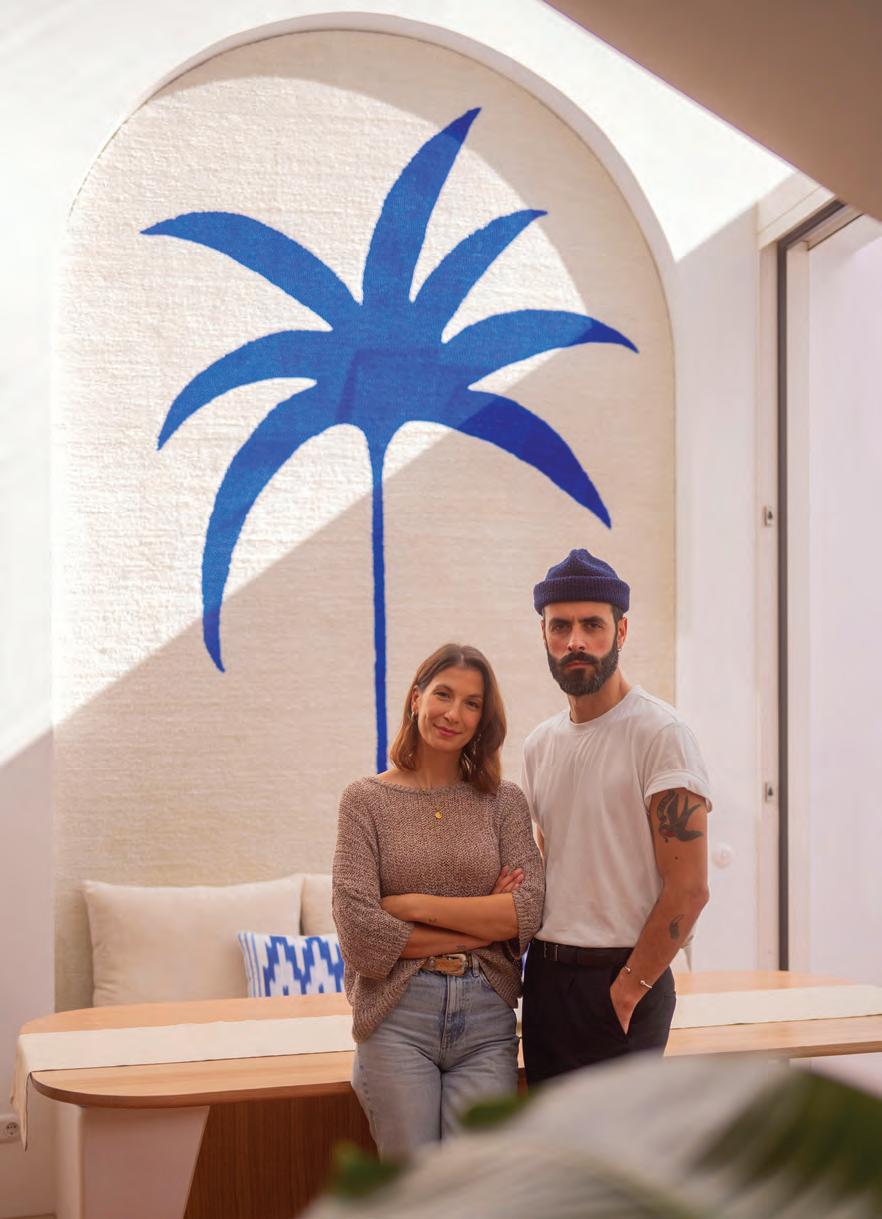
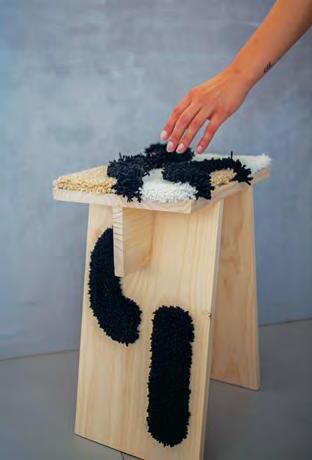
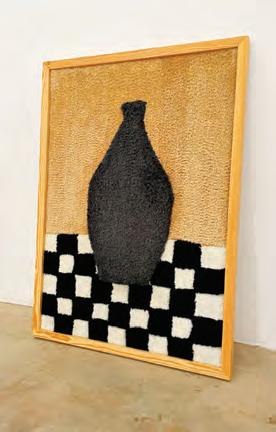
WHY DO ORDINARY WHEN YOU CAN DO SPECIAL? THE COUPLE BEHIND LOUL ÉBASED SÖNMUN, EMILIE CAVACO AND MARCOS ALFARES, CREATE STUNNING
INTERIOR DESIGN PIECES – FROM WALL ART TO TABLE ACCESSORIES – USING AN ANCIENT TECHNIQUE AND A THOROUGHLY MODERN APPROACH
Words: ELAINE JOYCE
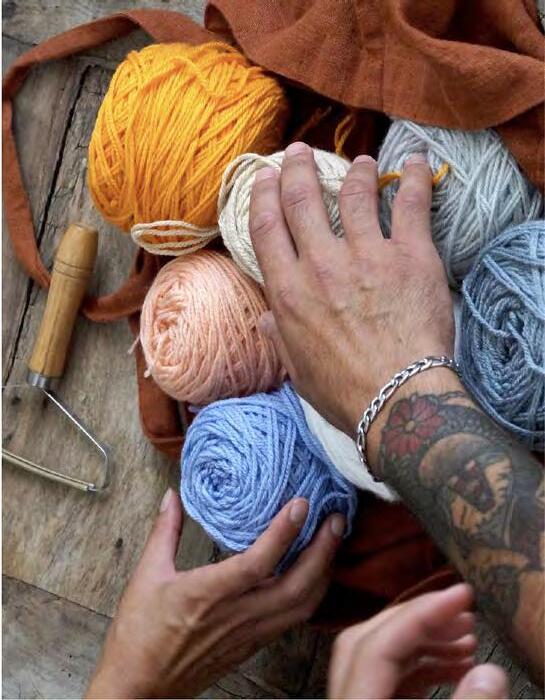
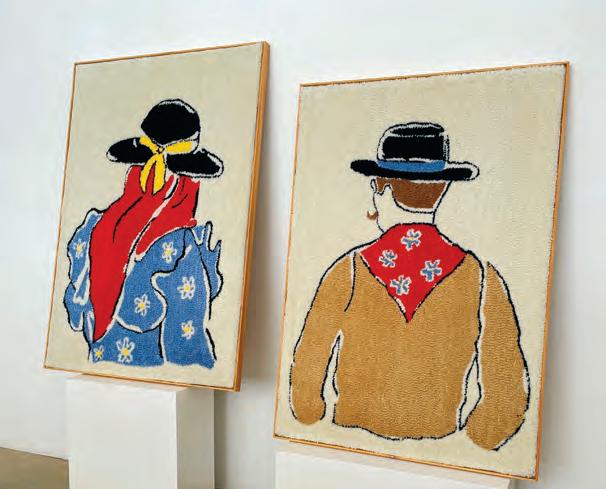
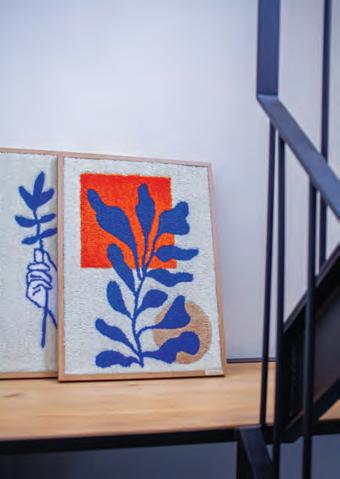
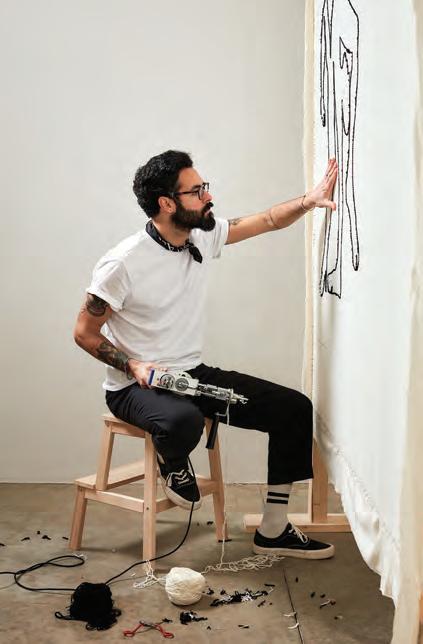
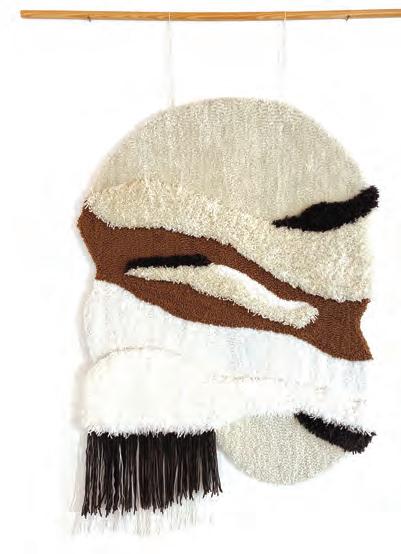
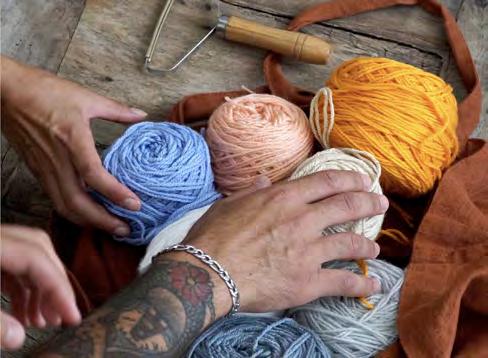
Every design is individual. Most of the yarns Marcos and Emilie use come from local shops or from New Zealand. Depending on the demands on a particular project, the choice is acrylic yarn or sheep wool
MARCOS IS FROM Portimão and an independent artist (musician, singersongwriter) and Emilie, a production assistant and digital artist, is from Paris. The couple met when they were at university in the Algarve, where they studied journalism, arts and fashion, and for several years were visual merchandisers in Paris and Lisbon.
It was while Marcos was looking for a hobby –wanting to get involved with a different artistic medium – that he discovered some videos and a number of articles on the internet explaining the tufting technique. The textures and the colours and the dynamic of the work involved in using a tufting gun both surprised and enthralled him and he could see, he says, infinite artistic possibilities.
And that is how it all started. Marcos got into tufting, fell in love with it and invited Emilie to join the process with her illustrations. That enabled them to work together and by combining their different perspectives and points of view, they developed their own artistic voice.
So what is tufting? Regarded as an early textile technique, it can be traced back
to civilizations in Persia, Egypt, and China, and a system of inserting yarns into a base fabric (think carpets, and even early knitted garments). What was done entirely by hand centuries ago is now handled by a tufting gun, and that opens doors to experimentation and true creativity.
“It’s a craft that requires hours of practice,” says Marcos, “but once you control the tufting gun it can be really satisfying and pleasing. A piece of 50cmx70cm, for example, can take 12 hours from the tufting process to the textile glue application, and the trimming and finishing touches.”
The largest commission the couple have produced so far is a blue palm tree, three and a half metres high, that sits proudly inside a wall niche at a hotel; the smallest pieces are charming little mug coasters of 10cm diameter.
Commissions are, or course, a sign of recognition. “Having our work referenced and our art pieces displayed in public spaces and private homes around
the globe has been our greatest dream,” says Emilie, proudly. “Mostly, people come to us with a simple idea that we can develop and infuse with our own style and vision. And of course we work with interior designers looking to achieve something unique for their clients.”
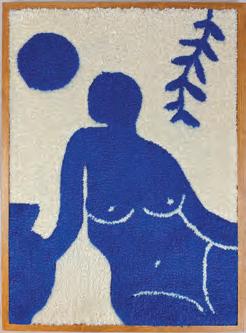
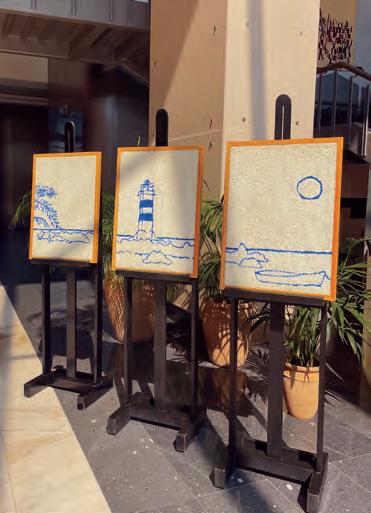
The Algarve – its shapes, colours, nature, botanics – influence this creative pair’s planning. Inspired by the region’s traditions and cultural heritage, their works are at once homage and reinvention. Through wool, they evoke traditions, memories, and landscapes, bringing them into the contemporary context of textile art and interior design.
“We brainstorm to develop new pieces for future collections but sometimes we just feel the urge to create something different, something for us,” says Marcos.
Sönmun sells its products at Casa Mãe Hotel, Lagos; Domes Lake, Vilamoura; Coral, Comporta; Stilbude in Potsdam, Germany, but mainly online and through its website.
Last year they took part in the Arte a Sul exhibition at Centro Porsche, Faro; Memórias Tecidas at Tivoli Marina Vilamoura and Domes Lake Vilamoura. And they plan to participate in more exhibitions this year, bringing their distinctive style to a wider audience. Their finished pieces from their collections range from €100 to €1,200, while special orders for bespoke works depend on the individual design, size and detail.
HAVE A GO
Fascinated? Marcos and Emile are running workshops so you, too, can learn the tufting techniques. Beginners will have the opportunity to create their own tufting project from a drawing, to the handling of the tufting gun. The rest of the process will be done by Sönmun and the finished tufted piece will be ready to pick up in 48 hours. The four-hour session for a maximum of three people includes materials, and is €150 per person.
Inspired by Algarve traditions and the region’s cultural heritage, Sönmun’s works are at once homage and reinvention. Through wool, they evoke traditions, memories, and landscapes, bringing them into the contemporary context of textile art and interior design.
When Marcos first discovered tufting in videos and articles found on the internet, he was curious, and then captivated. Learning to use a tufting gun was the start of the process
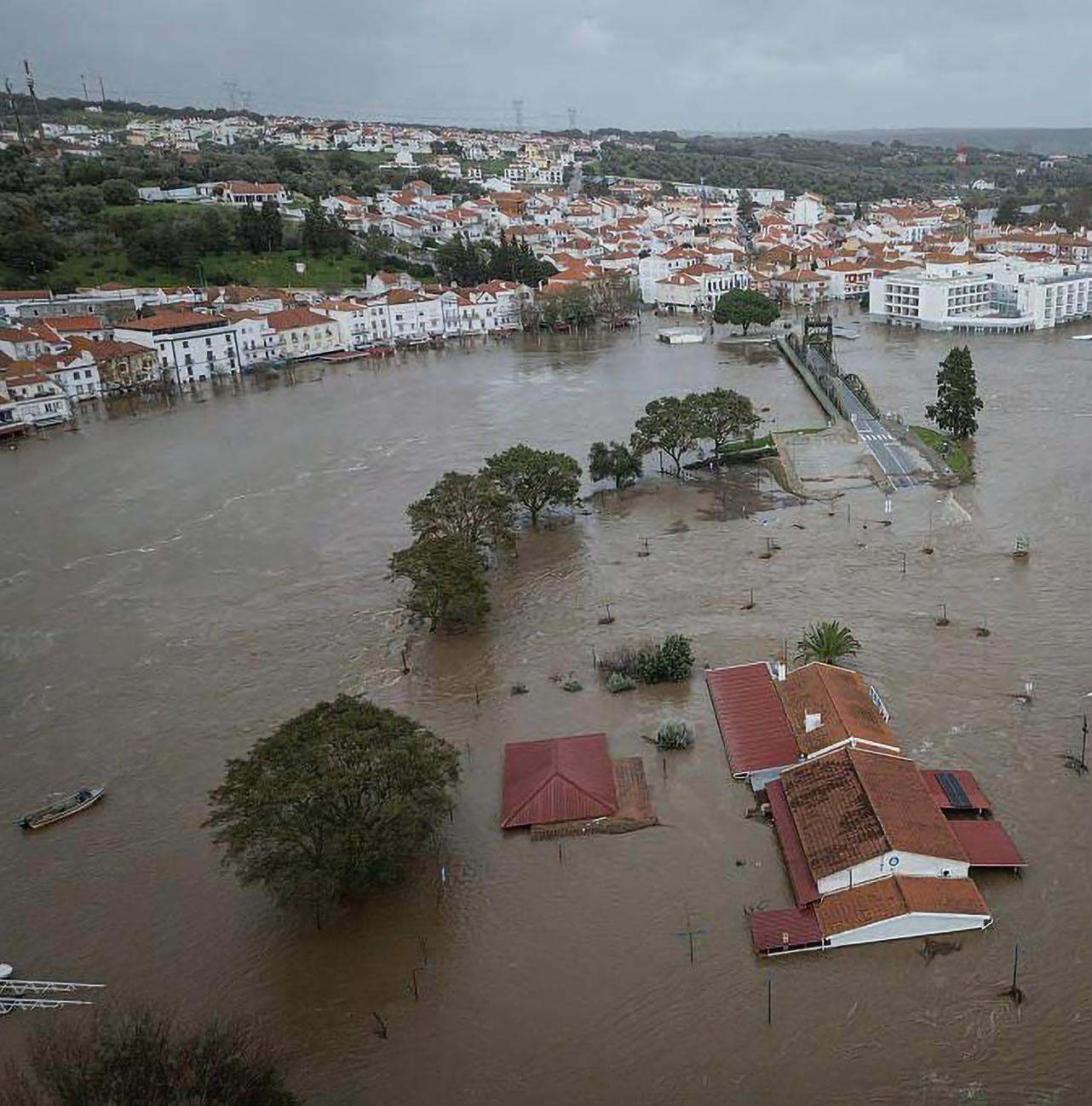
PORTUGAL TOGETHER Storm Relief Campaign
families lost their roofs. Some families
The International Rotary Clubs of Almancil, Vilamoura, and Loulé have joined forces to provide emergency relief and rebuilding support for families affected by the recent storm. This campaign is open to everyone — individuals, companies, institutions, and organisations.
URGENT NEEDS
1. Roof repairs & emergency shelter
2. Construction and roofing materials
3. Financial donations for urgent repairs
4. Builders, electricians, plumbers, technicians
5. Essential household items for affected families
SCAN TO DONATE
HOW YOU CAN HELP
1. Donate Funds
2. IBAN: PT50 0010 0000 5558 1140 0011 6
3. Account Name: AIRC Charity Fellowship Association
4. Reference: Storm Relief
5. Donate Materials or Professional Services – Roofing, Construction, Transport, Technical Support
6. Become a Partner – Companies, Foundations, Municipalities, Associations
email: airc.president.uschi@gmail.com
Organised by Rotary Clubs of Almancil • Vilamoura • Loulé Rotary International Transparency • Accountability • Direct Help to Families
SOME WINES FLIRT IMMEDIATELY, OTHERS KEEP THEIR DISTANCE. SOME DOMINATE THE CONVERSATION, OTHERS LISTEN FIRST. SO LET’S PLAY WITH THE IDEA – GENTLY AND WITHOUT STEREOTYPES – THAT IF PORTUGUESE WINES WERE WOMEN, WHAT KIND OF PERSONALITIES WOULD THEY HAVE?
Words: LÍVIA MOKRI
P IF PORTUGUESE WINES WERE
ORTUGAL IS a country of contrasts: wild coastlines and tranquil inland valleys, ancient vines and innovative ideas. Its wines reflect that diversity, and so do the women they might resemble. These are not caricatures. They are characters – shaped by place, time, and experience.
And perhaps that is exactly why this comparison works so well. Portuguese wines are rarely designed to impress at first sip. They don’t chase perfection, points, or instant approval. Instead, they reveal themselves slowly, often asking for a little patience in return. Much like people, they tend to show their best side once you stop rushing and start paying attention.
Thinking about wine this way isn’t about turning tasting into analysis. It’s about recognising why some bottles feel comforting, others intriguing, and a few quietly unforgettable, and why some suit loud celebrations, while others seem
made for long conversations, soft lighting, and unhurried evenings. It’s also about acknowledging that strength doesn’t always announce itself – and that confidence can be calm, understated, even discreet. Portuguese wines don’t try to impress you. They don’t chase trends or shout about prestige. They invite you in – and let you decide. Perhaps that’s why imagining them as women feels so natural. So, let’s meet them as they are. Because if Portuguese wines were women, they wouldn’t try to be liked by everyone. They would simply be themselves – and that, in the end, is what makes them so compelling.
BAGA
If Baga were a woman, she wouldn’t feel the need to introduce herself. She wouldn’t try to win you over in the first five minutes. In fact, she might seem distant at first –reserved, even slightly intimidating. Baga comes from Bairrada, a region known for firm reds with plenty of acidity and structure. For years, she was misunderstood. Too strict. Too serious. Too much work. But those who stayed
WOMEN
discovered something else entirely: depth, elegance, and surprising charm over time. This is the woman who grows on you. The one whose quiet intelligence becomes magnetic once you slow down and pay attention. She’s not here to please everyone – and she’s perfectly comfortable with that.
MUST TRY
Filipa Pato Nossa Calcário Baga, Bairrada
A precise, limestone-driven expression of Baga that values transparency over force. Floral, saline, and quietly structured, this wine rewards patience and attention. It is Baga thinking rather than performing. garrafeiraterroir.pt/product/ filipa-pato-nossa-calcariotinto-2022
DÃO RED
A classic Dão red is the woman who never raises her voice but somehow controls the room. She doesn’t chase trends or seek
validation. She knows exactly who she is. Shaped by granite soils, altitude, and cool nights, Dão wines are balanced and calm. They don’t overwhelm; they accompany. Think fine tannins, freshness, and an effortless sense of proportion. She’s the friend you trust. The one who always shows up, never overdressed. Reliable, but never boring
MUST TRY
Quinta da Pellada Dão Tinto, Dão
A benchmark for restrained elegance. Built on native varieties and shaped by granite soils, this wine offers freshness, fine tannins, and calm authority. It never raises its voice—and never needs to. vinha.pt/vinho/vinho-tintoquinta-da-pellada-2014-75cldao/
TOURIGA NACIONAL
Touriga Nacional has presence. If she were a woman, people would notice her, not because she demands attention, but because she carries herself with ease. She’s floral, confident, and expressive, but not loud. When handled carefully, she’s all about elegance rather than excess. Yes, she knows she’s impressive – but she doesn’t need to prove it. This is charisma without ego, and strength without aggression – a reminder that confidence doesn’t have to shout.
MUST TRY
Wine & Soul Pintas Character (Touriga Nacional-based), Douro While powerful, this expression of Touriga Nacional remains disciplined and aromatic. Floral notes, controlled structure, and length define a wine that understands its own presence. tourinto.pt/en/product/ pintas-character-2023/
ENCRUZADO
Encruzado would be the woman who always asks the most interesting question at dinner. She listens more than she speaks, but when she does speak, it matters.
As a white grape from Dão, Encruzado is subtle, textured, and quietly complex. No obvious sweetness. No dramatic gestures. Just depth that reveals itself slowly. She’s not here for instant gratification. She’s here for meaningful connection.
MUST TRY
Quinta do Roques Encruzado, Dão Textural, mineral, and quietly complex, this Encruzado evolves beautifully in the glass. It is a wine that invites contemplation rather than immediate judgment –intellectual without being austere. vinha.co.uk/wine/whitewine-quinta-dos-roquesencruzado-2023-75cl-dao/
VINHO VERDE
Forget the cliché. Serious Vinho Verde is not the carefree party girl. She’s energetic and fresh – yes – but she’s also intentional. Bright acidity, low alcohol, and a sense of movement define her style. She enjoys daylight lunches, spontaneous plans, and open windows – but she also knows when to pause. She reminds us that being light doesn’t mean being shallow.
MUST TRY
Aphros Loureiro Phaunus, Vinho Verde Fresh and vibrant, yet layered and thoughtful, this wine challenges the idea that Vinho Verde is merely carefree. It balances energy with depth, proving that lightness can be deliberate. portugalvineyards. com/en/portugal/13506phaunus-amphora-loureirowhite-2022-5600329043044. html
COLARES
Colares is the woman who lives slightly outside the system – and likes it that way. Shaped by sand, Atlantic winds, and stubborn old vines, she doesn’t follow rules. She survives them. Her wines are pale, saline, and unmistakably different. She’s not trying to fit in. She’s too busy being herself. If you want familiarity, look elsewhere. If you want authenticity, stay.
MUST TRY
Adega Regional de Colares Ramisco, Colares Pale, saline, and uncompromising, this is a wine shaped by sand, wind, and survival. It refuses modern polish, offering instead authenticity and persistence – an unforgettable original. shop.theyeatman.com/ colares-arenae-ramisco2001-tinto
DRY MOSCATEL
Dry Moscatel from Setúbal would be the creative soul of the group. Aromatic, expressive, and just a little unpredictable. She’s floral and spicy, confident in her individuality. People often expect sweetness – but she surprises them with structure and seriousness.
MUST TRY
José Maria da Fonseca
Moscatel Roxo Seco, Setúbal Aromatic yet dry, expressive yet precise. This wine defies expectations, blending floral intensity with structure and spice. It is not here to conform – and that is exactly the point. dourado.com.pt/dsf-moscatelroxo-jose-maria-fonseca
BAIRRADA SPARKLING
If Bairrada sparkling wine were a woman, she’d know how to celebrate without losing herself. Elegant, focused, and composed, she understands joy without exaggeration. Fine bubbles, bright acidity, and depth from long ageing make her lively but grounded. She laughs easily, but always with intention.
MUST TRY
Quinta das Bágeiras Espumante Bruto Natural, Bairrada
Long lees ageing, vibrant acidity, and restraint define this sparkling wine. It celebrates without exaggeration, offering depth, texture, and composure in equal measure. cavelusa.pt/loja/espumantee-champagne/espumantes/ quinta-das-bageiras-brutonatural-branco/
TYLER SHIELDS, “NINE MOUTHS“, 2026
AN INTENSE LOVE OF LINGERIE AND NOWHERE EXCLUSIVE TO FIND IT LED SANDRA GON Ç ALVES TO TAKE THE PLUNGE AND OPEN HER OWN BOUTIQUE IN DOWNTOWN TAVIRA. THREE YEARS LATER SHE’S BRINGING THE SEXY BACK FOR MORE MATURE AND PLUS-SIZE WOMEN
Words: DEBBIE REYNOLDS
undercoverstory
BACK IN MY fashion industry days, I remember celebrated designers insisting that while you could have the “best fitted garment in the world”, it wouldn’t be worth anything without appropriate underwear.
They would have loved Miss Silhouette. This unassuming little boutique tucked between a snack bar and clothing store near the Tavira Municipal Market is the cat’s pyjamas of lingerie.
“I don’t just sell lingerie,” says Sandra Gonçalves. “I sell selfesteem.” She also happens to sell quality, durability, comfort and sass, from bras and panties to sleepwear and swimwear. It all began around eight years ago when the only lingerie boutique in Tavira sadly closed its doors. “Suddenly I had nowhere to buy my lingerie and the idea came to open my own shop,” Sandra says. “The problem now is that we have all these malls with chain stores, but none that provide a personal service. When it comes to your underwear, especially as you get older, you mostly can’t find things off the rack that fit properly.”
Sandra took her time researching various brands and choosing those that would fit her vision of focusing on plus sizes, luxury styling and comfort without losing the “sexy” element. She opened her doors in October 2022 but only found her forever home in August 2023.
The right place
“I was at two different premises before, but this shop, across the road from the Vila Galé Hotel in Tavira, has been the place where I feel the most comfortable,” she explains.
“I wanted the boutique to be in Tavira because this is where I have lived my whole life, and I really believe the people here appreciate what I can offer. There are only about eight small retailers left in Tavira with Portuguese owners, and I am proud to be one of them. We bring a personal service that you can’t find in the big stores.”
Most women of a certain age will agree with Sandra that finding quality lingerie with a proper fit is a nightmare.
“Just because we are a little older, and maybe a little bigger, doesn’t mean we don’t want to have pretty lingerie,” she laughs. “We can be comfortable and still be sexy.”
She says it’s all about showing your “best self”, which doesn’t mean wearing big, bulky, heavily under-wired bras or ‘granny’ panties. “If the fit is perfect, then the underwear will be more flattering and comfortable,” she insists. “You would be surprised at how many women don’t wear the right size bra, which only adds to the belief that underwear is uncomfortable and should be ripped off the moment you get home.”
Another issue she encounters is that a lot of women balk at spending over €50 for a bra, not realising that good quality, fabric and fit will cost more than mass-produced chain store alternatives.
The perfect fit
“When a client first comes to me and I’ve done a proper fitting, I generally give them a choice of bras from cheapest to most expensive, and once they’ve tried them all, they almost always choose the most expensive, because it’s the best,” says Sandra.
“It’s not always easy to change some mindsets, especially those of older women who think they are still teenagers. If you wear sizes that are too small you are going to get lumps and bumps in all the wrong places. How many times have you seen women with four boobs?
She says it’s imperative to understand that what is underneath shapes what’s on top and that means proper support.
The brands Sandra stocks can only be found in specialist lingerie boutique stores. Her bestselling bra is from the renowned German lingerie brand Anita, which offers technical features like wide straps, deep cups and seamless designs.
In the panties range, she offers the Spanish brands Janira (recommended by gynaecologists) and Gisela. From Portuguese brand Collady comes the range of tights, socks and “second skins”. She is also particularly proud of stocking another home-grown brand, Impetus, which can be found in topnotch stores like Harrods in London and Galeries Lafayette in Paris.
“It’s a proudly Portuguese brand which was founded 50 years ago in Porto with six employees, and it now
employs around one thousand people,” says Sandra.
She also offers seasonal sleepwear, shapewear for “perfect curves”, deliciously soft nude petticoats for see-through dresses and a luxurious bride’s collection of sexy sleepwear and personalised dressing gowns.
Sandra is also passionate about helping breast cancer survivors with beautiful lingerie designed specifically with pockets that fit breast protheses, such as Anita Care, a specialised range of breast prostheses and post mastectomy products which focus on comfort and natural feel.
This month her store will transform with the season as her exclusive beachwear collection arrives, catering for both women and men, and offering everything from dresses and bikinis to shorts and hats. You can also expect, for the first time, a range of bags, scarves and jewellery.
Sandra, who is married with two grown-up sons, loves cycling and running, and in summer you’ll likely find her on the beach most Sundays. “My favourites are Praia do Barril and Tavira island,” she says.
Having a day off is rather important, considering she also has her own real estate business focusing on long-term rentals in the Tavira area.
“I love everything I do, but there’s nothing better than helping women feel beautiful and happy about their bodies –it’s all about that self esteem!”
FITTING TIPS
1. When first buying a bra, close it at the first or second notch, then as it stretches, close it a notch tighter until it is snug.
2. The back strap should be parallel to your shoulders and should never ride up your back.
3. Wired bras should never have the wire poking into your breasts either on the side or in the middle.
4. Heavier breasts require wider straps and the correct cup size, so the breast fills the cup and doesn’t spill over the top.
5. All straps should stay in place without digging into your skin.
CARE TIPS
1. Never use fabric softener for lingerie and swimwear or anything elastic.
2. Wash lingerie in mesh laundry bags in a washing machine at low temperature.
3. Don’t dry lingerie or swimwear in direct sun and never stretch it while drying.
4. Avoid getting sunscreen on your swimwear.
5. Swimwear should be handwashed and dried flat
OPEN : Monday to Friday, 10h00–13h00 and 15h00–19h00. Saturdays 10h00–13h00
MISS SILHOUETTE Rua 1 de Maio, Loja 45C, 8800-360, Tavira T: 963 579 875
Miss Silhouette focus on key brands known for their perfect fit, including Prima Donna, above left, and Janira, centre and right, and on previous page
Tavira Gallery: Travessa Jacques Pessoa 8, Tavira, 8800-374, Algarve Email: taviradartes@gmail.com Vale do Lobo Gallery: Vale do Lobo, Resort Turístico de Luxo, S.A, 8135-864 Faro Email: VDLdartes@gmail.com Call: 962 012 111 Website: taviradartes.com The finest art in the Algarve - available in two fabulous locations
WINDOW DRESSING
JUST AS THERE ARE TRENDS IN FURNISHINGS STYLES, FABRIC CHOICES AND COLOURS, WINDOW TREATMENTS ARE REGULARLY REVAMPED TO UNDERPIN NEW DESIGN DIRECTIONS. THE TOP INTERIORS EXPERTS AGREE ON THE IMPORTANCE OF GETTING THE LOOK RIGHT FOR YOUR HOME
WITH THE RISE OF lifestyle influencers on the social media platforms, and the constant newness in the furnishings market, window dressing is something that is taken seriously by homeowners wanting to make a statement, and the interior designers who can make it happen.
This year, 2026, is about moving away from minimalism and replacing it with warmth and expression.
There is every indication that earthy clay tones and rich aged woods complimented by artisan textiles is the way forward not only for new builds, but for those refurnishing their home.
Contemporary lines may be cool and crisp, but it is the detail that counts. Yes, of course you can pick up ready-to-hang curtains and blinds in the big mass-market retailers, but what you won’t get is the individuality, or, in fact, the perfect fit. Take advice from those in the know, who create the ideal environment.
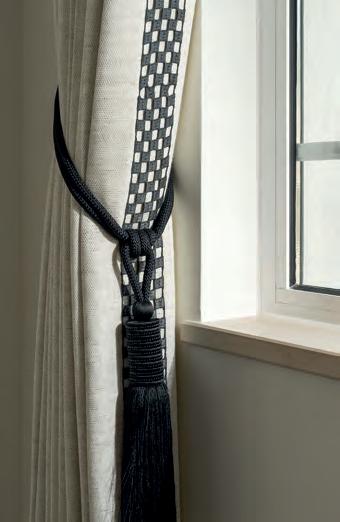
Layering is a much talked about theme. Some designers will translate that by introducing different fabrics types and weights and colour combinations, and partnering them with tradition highlights like tassels and fringing to add a special detail to otherwise simple lines.
“Clients seem to be wanting proper curtains again, and voiles are becoming less popular,” says Ingrid
Parnis of Equilibrio Interiors in Almancil.
“The trend we are seeing is for plain cream or white curtains, lined and even interlined.
Contrast borders tell a distinct story and braiding is a key feature.
“There is no question about it, trimmings are making a big comeback. A word of advice - never do short curtains, they simply don’t work, but Roman blinds always do.”
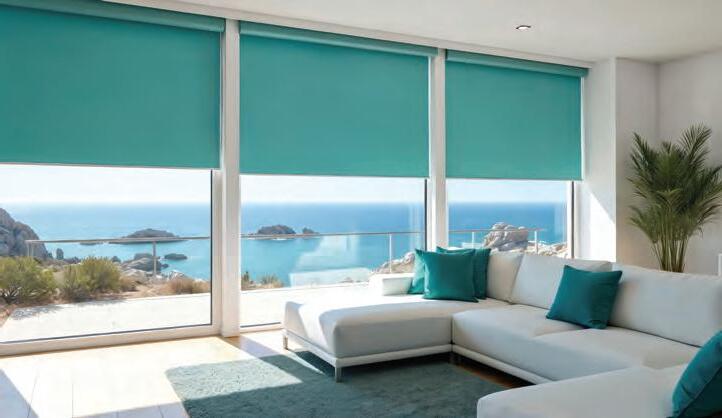
“The choice of window covering and material can totally transform a living space,” says Lloyd Booker of Oliveira Decor in Tavira. “Semi-translucent sheers in natural fabrics are the most popular option right now, but there is a definite return in popularity of blinds.
Roman, roller and even the slatted wood blinds are making a resurgence. Our in-house atelier is seeing a demand for modern wave-style curtains for more contemporary homes, and elegant pleated styles to complement traditional chic interior styles.”
The designers agree: simple, stylish Roman blinds are the key window trend right now, with skilfully-worked trims introducing a classic warmth to spaces. Shades that bring in light are also in demand – a winner in our climate here.
An expert interior designer will give you the best possible advice and suggestion to make the most of your home and its special features. Worth considering for windows are day-and-night blinds which combine different fabric weights, alternating sheer with solid. Indoor shutters are another thing to consider.
CREATING SPACE FOR MEANINGFUL TIME
OBAIRRO – Mini Play provides open-ended play spaces and shared experiences for children and the adults who care for them. Rather than relying on fast-paced activities or rigid programmes, the project focuses on creating opportunities for families to be present with each other, in ways that feel natural and enjoyable.
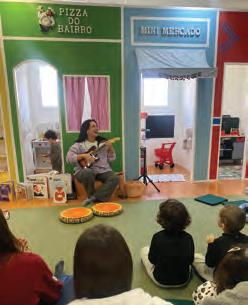
The word bairro means neighbourhood, and that idea sits at the heart of the initiative. A permanent play space in Faro, O Bairro was designed as a small neighbourhood built at a child’s scale. Inside, youngsters find familiar everyday settings such as a mini pizzeria, a garage, and a grocery shop – places they recognise and feel comfortable exploring.
What makes the space different is what is not there. There are no screens, no instructions, and no rules telling children how to play. Children are free to choose who they want to be, what stories they want to tell, and how long they stay with each idea. This type of play encourages creativity, collaboration, and confidence, while also giving adults the chance to step back and observe alongside them.
Alongside the permanent space, O Bairro has grown to include pop-up
IN FARO AND ACROSS THE ALGARVE, O BAIRRO – MINI PLAY OFFERS FAMILIES A CALMER, MORE INTENTIONAL WAY TO SPEND TIME TOGETHER THROUGH AN ONGOING PROGRAMME OF ACTIVITIES AND THOUGHTFULLY-CURATED POPUP EVENTS. THE PROJECT INVITES CHILDREN, PARENTS, AND GRANDPARENTS TO SLOW DOWN, CONNECT, AND SHARE EXPERIENCES
Words: JO Ã O EDUARDO
events in different locations. These gatherings extend the same approach beyond four walls and are often held outdoors or in collaboration with local partners. Nature walks, family yoga, pastamaking workshops, music sessions with visiting artists, and story-led gatherings all form part of the programme. Many events also draw on the Algarve’s cultural heritage, inviting families to explore local traditions and crafts alongside play.
One particularly memorable event took place in Querença, where families went for a countryside walk, letting children set the pace. The day continued at a rural house and water mill, Moinho do Gentil, with storytelling, creative activities, and time spent together around a bonfire. There was no strict schedule and no pressure; children moved naturally between activities, parents talked, and grandparents happily watched their grandchildren explore.
Many of the families who attend events are expats living in the Algarve, often joined by visiting grandparents. Seeing three generations share the same experience has become a meaningful part of the project.
Behind O Bairro is founder Sónia, who grew up in Faro and later spent over a decade living and working abroad, including ten years in London.
After studying Sports Management in Lisbon, she worked internationally in the sports industry, focusing on branding, sponsorship, and live events. Her career included major international projects such as the FIFA World Cup in Brazil and the European Games in Azerbaijan.
After becoming a parent to twins, Sónia returned to the Algarve and began exploring how children play and how families spend time together. Drawing on experiences in neighbourhood play spaces abroad and the slower rhythms of life in the Algarve, she created O Bairro as a calm, welcoming alternative.
Today, O Bairro continues to develop as a flexible, community-led project. There is no single typical experience. Families might attend a small gathering, a themed workshop, a birthday celebration, or an outdoor pop-up. Events usually take place in morning or afternoon sessions, allowing families to choose what suits their routines.
Language differences fade quickly when children play side by side. Many parents have said O Bairro helped them feel more connected after moving to the area or while spending time in the Algarve. For visiting families, it offers a quieter, more connected way to enjoy the region, focused on shared moments rather than busy schedules.
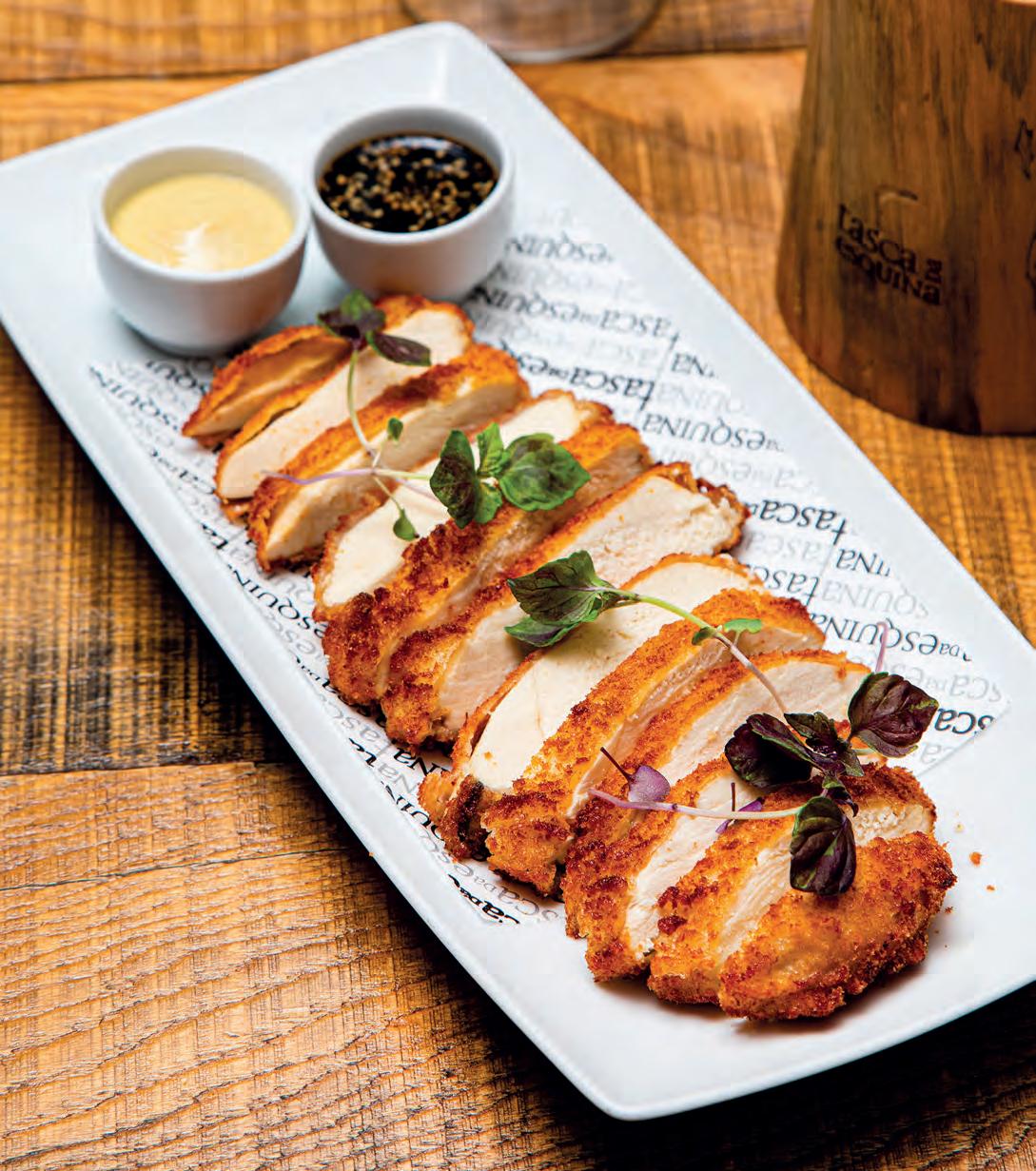
Fried Chicken Breast
with mustard and sweet chili sauce
WANT TO IMPRESS YOUR GUESTS? THIS DISH FROM MULTI-AWARDED CHEF
VÍTOR SOBRAL IS AN ABSOLUTE WINNER. SIMPLE TO MAKE, AND LOADED WITH FLAVOURS, IT TURNS THE HUMBLE CHICKEN INTO INTO A TRIUMPH
SERVES 10 PREPARATION: 90 MINUTES
INGREDIENTS
1.5kg chicken breasts
For the marinade
400ml milk
50ml lemon juice
110g wheat flour
110g mustard
18g sea salt
20g garlic, chopped
8g sugar
7g MSG
2g ground anise
1.5g ground clove
6g Sichuan pepper
5g ground cinnamon
5g ground fenell
For the batter
300g wheat flour
150g potato starch
120g panko crumbs
15g sea salt
5g MSG
For mustard emulsion
1 tsp Dijon mustard
150ml lemon juice
6 cloves garlic
Milk as needed
50ml extra virgin olive oil
10g each blanched chives and mint
Fleur de sel, as needed
For sweet chilli sauce
90g soya sauce
25g white sesame seeds
8g chilli flakes
20ml rice vinegar
30g honey
Sea salt and freshly ground black pepper, to taste
Chives, to taste
ABOUT THE CHEF
Chef Vítor Sobral currently coordinates Carvoaria, Tasca da Esquina and Taberna da Esquina in Lisbon, and the Tasca da Esquina restaurant in São Paulo, Brasil. In 2025 he received the Grand Prize from the Portuguese Academy of Gastronomy, which recognises a chef’s work in promoting and developing national cuisine. He is the author and co-author of more than 20 books, including My Cod Recipes, Petiscos da Esquina (Snacks from the Corner), Receitas lá de Casa (Recipes from Home), and most
METHOD
1 Mix the marinade ingredients together. Place the whole chicken breasts in the marinade and leave to rest for 12 to 24 hours. After marinating, remove the excess.
2 Preheat the oven to 120–130°C. Place the breasts on a baking sheet, lightly covered with aluminum foil. Bake until the inside reaches 63–65°C – this usually takes 20–30 minutes, depending on size. Remove and let the chicken breasts rest for five minutes.
3 Combine all the batter ingredients until smooth. Dip the chicken breasts in this mixture and fry in oil at 1770C until golden brown. Leave to rest.
4 To prepare mustard emulsion, blanch the garlic in milk and set aside. Place all the remaining ingredients in a blender and blend until smooth.
5 To make the chilli sauce, mix the ingredients together in a small bowl. Season with salt and pepper to taste. If the sauce is too spicy, adjust the seasoning by adding a little sugar or more rice vinegar. Finish with chopped chives.
CARVOARIA Rua Nova De São Mamede, N23, Principe Real, Lisboa
Arty facts
IT IS THE BLEND of historical and contemporary expression that captivates both Portuguese residents and an international audience – drawing both travellers who seek more than sun and surf, and a new generation eager to explore culture alongside coastline.
While museums and formal exhibitions remain essential to the art ecosystem, Faro’s historic old town houses Gama Rama, a vibrant nexus that bridges Portuguese art exemplifying a fresh, modernist scene within a very special setting.
While Lisbon and Porto often capture the national spotlight, Faro is quietly emerging as a vibrant artistic frontier. Over the five-year span from its launch in 2020 to 2025, the gallery has delivered an impressive slate of activities that underscore its growing influence on the regional art scene: 92 workshops that engaged 1,380 participants eager to hone their craft; 25 exhibitions; and ten art residencies featuring both national and international creators. Sixteen resident artists called the studios home, contributing to a cumulative roster of 147 artists who have collaborated with Gama Rama. This buzz translated into foot traffic as well – approximately 25,000 visitors have passed through the house, experiencing the vibrant exchange of ideas that defines the space firsthand.
Coming together and moving forward
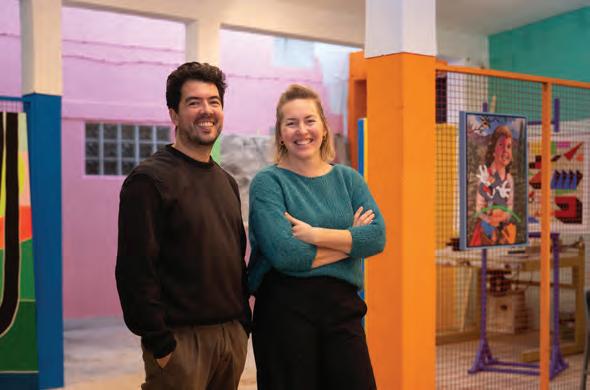
Gama Rama was born from the partnership of Toma Svazaite, a Lithuanian who arrived in Portugal in 2015 for an internship, and Miguel Neto, a Faro native with a background in Art History and Curatorship. Their shared vision forged a professional collaboration
PORTUGAL’S ARTISTIC SCENE HUMS WITH QUIET VITALITY, WEAVING CREATIVITY INTO EVERYDAY LIFE AND LINKING HERITAGE WITH COMMUNITY. ART APPEARS TO HIDE IN PLAIN SIGHT: ORNAMENTAL AZULEJO TILES BLEND FORM AND FUNCTION; BOLD MODERNIST MURALS SPLASH COLOUR ACROSS CITY WALLS; SYMBOLIC SCULPTURES PUNCTUATE ROUNDABOUTS; CENTURIES-OLD TAPESTRY TRADITIONS SHOWCASE MASTERFUL SKILL. AND IN FARO, GAMA RAMA IS A BENCHMARK FOR CONTEMPORARY CREATORS
Words: ELLI TOWNSEND
that has turned Faro into a dynamic canvas for artists. Toma and Miguel spotted a clear gap in Faro’s cultural landscape: the city lacked a venue that combined an art gallery, artist studios, exhibition space, and a workshop under one roof. Their 2019 pop up series, Open Studios Faro, quickly demonstrated the strong demand for such a hub. The overwhelmingly positive response convinced them that the temporary showcase had the potential to become something lasting. Inspired by this enthusiasm, they transformed the concept into a permanent home for creators, and their vision came to life.
Located along a charming cobblestone lane in old Faro – often regarded as the city’s unofficial nightlife corridor – Gama Rama now calls Rua do Prior No. 46 home. From 2020 until the close of 2025, it occupied a historic, tile-faced building just a few doors away. An exciting opportunity arose at the end of last year with the chance to leave their modest 200m² premises and relocate to a vastly larger venue exceeding 500m².
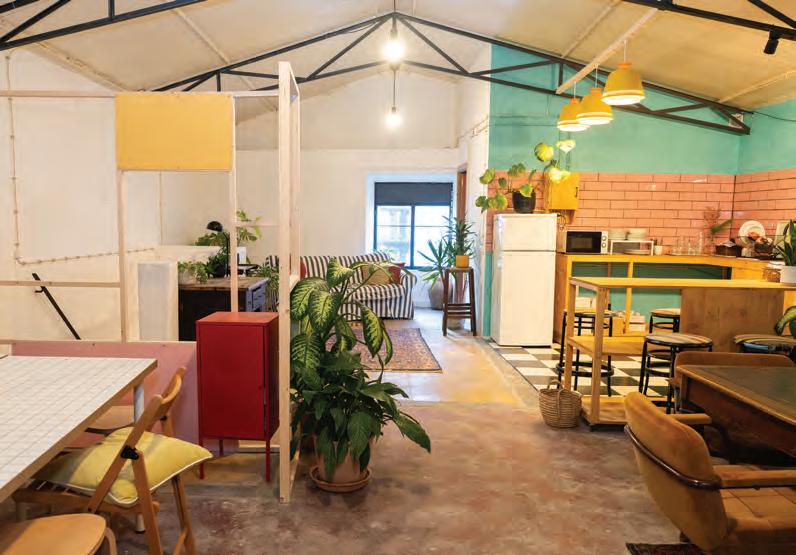
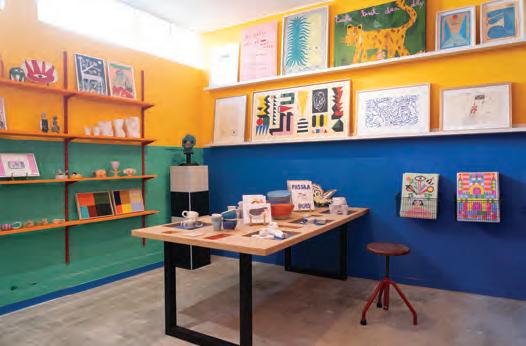
The new space accommodates 15 artist studios, a generous exhibition space on the ground floor, a collaborative coworking area above, an art shop that sells unique handmade pieces by Portugalbased artists, and room for growth.
Recent renovations have transformed a former soda-making facility into a unique, multi-purpose artistic hub – one that nurtures collaboration, attracts a diverse spectrum of talent, and welcomes inclusivity. The aim is to invite artists – local, national, and international – local residents and travellers alike to experience the richness of southern Portugal beyond the conventional image of the Algarve as merely a holiday destination. By fostering open access and shared experiences, the space aspires to become a welcoming crossroads where creativity and connection converge.
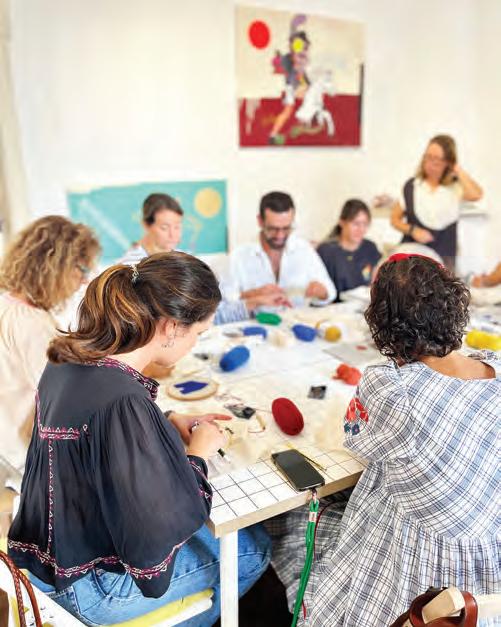
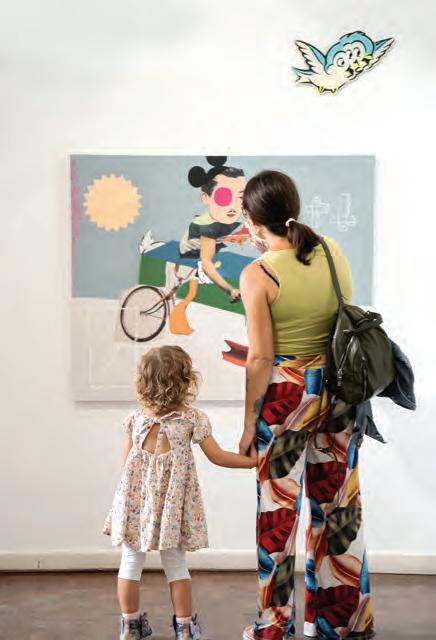
Opposite page: a workshop in action. This page, top left clockwise: the creative incubator; visitors at an exhibition; Toma Svazaite and Miguel Neto
So, where does the name originate? Gama in Portuguese denotes a range, while Rama adds a whimsical rhyme – a nod to a space that is both literally and metaphorically filled with vibrant colour, energy and playfulness. British artist Tom Leamon joined the team as Creative Director of Gama Rama and designed the new warehouse venue. Leamon balances minimalist white in the exhibition areas – allowing artworks to command maximum attention – with bold splashes of blue, ochre, salmon pink, and other lively hues that flow throughout the building to create an inviting atmosphere and with colours that reflect the local area. With Tom’s partnership, the initiative is poised to fulfil its vision of becoming a thriving artistic hub and creative incubator.
Artistic residences
To breathe life into diverse narratives, there is now an International Artistic Residency which invites artists from around the world to immerse themselves in the unique light, landscapes, and culture of the Algarve. Over the course of their stay, residents draw inspiration from the region’s rich heritage and natural beauty, producing new works that are later showcased to the local community. This exchange broadens the creative horizons of the visiting artists and also enriches the cultural fabric of the area, fostering a vibrant dialogue between global perspectives and local traditions.
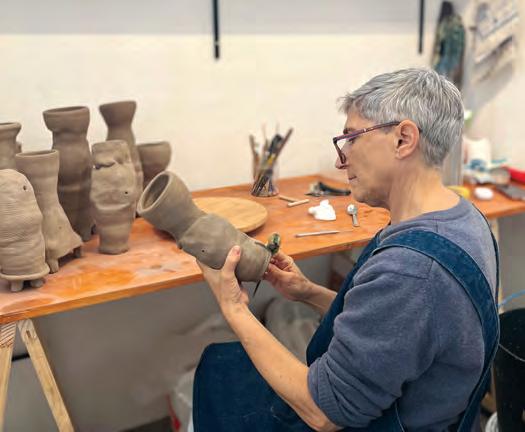
On the other side are the tenant artists, who are selected through a competitive process that prioritizes three key criteria: residency in the Algarve, the demonstrated quality and originality of their portfolio, and the ability to contribute across a diverse spectrum of artistic disciplines. The curated cohort of artists spanning a wide array of disciplines – tattooing, ceramics, painting, sculpture, and
more – encourages interdisciplinary synergies and a cross pollination of ideas. This intentional diversity sparks innovative partnerships, turning the Creative Incubator into a dynamic laboratory where ideas intersect and new artistic directions emerge.
Opening its studios and workshops to the public, Gama Rama pulls back the curtain and invites guests into creative depths to demystify the art-making process and foster a deeper appreciation for how ideas evolve from concept to finished piece. Hands on workshops –ranging from ceramics to jewellery making to children’s programmes – run twice a month. Participants leave with a tangible souvenir of their own creativity and a story to share with friends and family.
Building on community engagement, Gama Rama extends its reach through a programme that partners directly with local schools, universities and cultural institutions. By inviting students of any age to tour the facilities, attend exhibitions and observe the creative process, it provides an immersive, educational experience that bridges casual participation with professional development. These visits give practical insight into building and sustaining an artistic career, while mentorship and tangible support nurture a new generation of creators who will carry Faro – and Portugal – forward on the cultural map.
Diary dates
The upcoming collective show, scheduled for 28 March, will bring together the artists who have been part of Gama Rama since its inception. This retrospective exhibition celebrates the evolution of the community, showcasing the diverse bodies of work that have emerged from artists, workshops, and residencies. Additionally,
two special installations will be presented as part of major regional events. First, the collective exhibition will be featured at Open Studios Faro 2026 during the three-day showcase on 9–11 October, allowing visitors to meet the creators and witness the artistic process in real time. Later, a curated segment of the show will appear at The Modernist Weekend 2026 in November, positioning Gama Rama’s artists within the broader dialogue of contemporary modernist practice.
Looking ahead, the team envisions three core pillars guiding their growth strategy: expanding the community of creators and participants; securing stable, diversified funding; and establishing the space as the premier destination for artists in southern Portugal. Through these initiatives, it strives to revitalize the regional arts landscape, create meaningful employment opportunities, champion sustainability practices, broaden access to cultural experiences for residents and visitors, and raise the profile of local, national, and international artists alike.
To contribute to Gama Rama’s creative engine, the simplest and most rewarding approach is to engage with its offerings. Artwork purchased from the on-site art shop and exhibition feeds directly back into the studio, and participating in a workshop or attending a community-driven activity feeds support for the venture.
Gama Rama’s unwavering dedication to artistic freedom and inclusivity gives Faro a truly distinctive competitive edge. By weaving together diverse perspectives, they are able to create a dynamic exchange that enriches the regional cultural ecosystem and deepens Portugal’s connections to the global art community. So, stroll through Faro’s historic streets and you’ll see why Gama Rama is far more than a gallery; it is a creative incubator where ideas collide, collaborations blossom, and the future of art is constantly re-imagined. In this dynamic space, every creation is an experiment, and every visitor becomes a co-author of the next chapter. Whether you arrive as a seasoned professional, an emerging talent, or simply a curious traveller, you will leave with fresh perspectives, and perhaps the spark that sets your own artistic journey in motion.
If you’d like to stay up to date on every Gama Rama event, exhibition, workshop, and residency, email gamaramagallery@gmail.com and request to join their mailing list. Once subscribed, you’ll receive their regular newsletter packed with behind-the-scenes stories, upcoming programme highlights, exclusive invitations, and details of opportunities to get involved.
Gama Rama has effectively created a home for artists and their work. British artist Tom Leamon, top right, joined the team as Creative Director of Gama Rama and designed the new warehouse venue, and also the art shop, above left
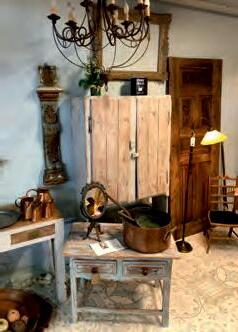
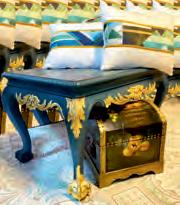
Our showrooms are full of wonderful furnishings for the home. Sofas and pouffes, tables, chairs and many other items.
UPCYCLING
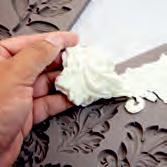
Glistening with creativity, our upcycled pieces make a huge impact on your home.
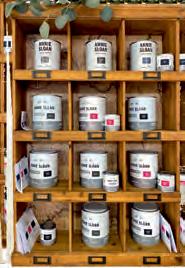
Annie Sloane Chalk Paints are the perfect complement to make a wall zing or that upcycled project come to life.
YOU WEAR IT WELL!
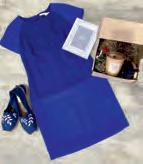
Now that you have the house sorted, it’s time to spoil yourself with a brand name. Let’s go!
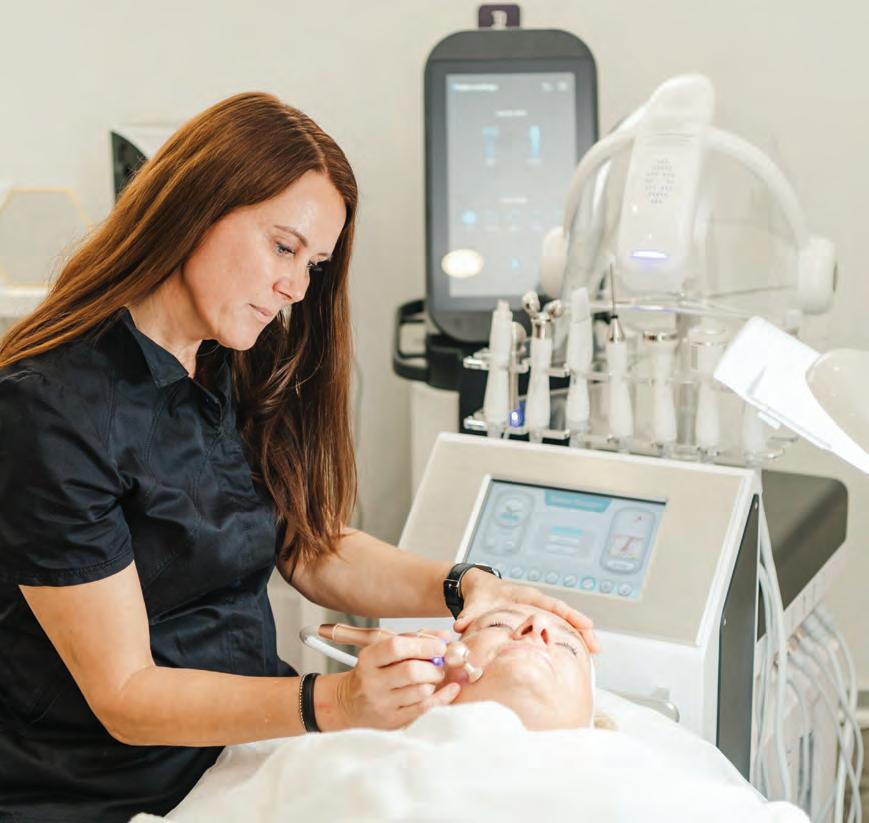
Manuela, a German beautician with 30-years experience, offers the latest technologies at her Almancil salon, including: •Non-invasive Facial & Body Lifting •Anti-Ageing Treatments •Body Sculpting •Hydrating & Oxygen Facials •Peeling Treatments & more
The newest arrival is the mind blowing Space Oxygen Machine which gives you an instant glow!
Ageing can wait and beautiful skin is no coincidence!
Book your complimentary appointment with Manuela.
ONE STEP AHEAD
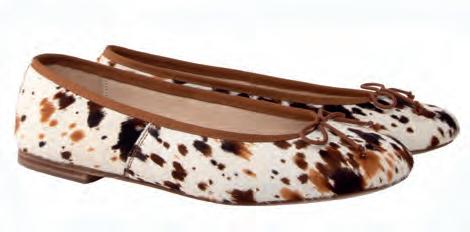
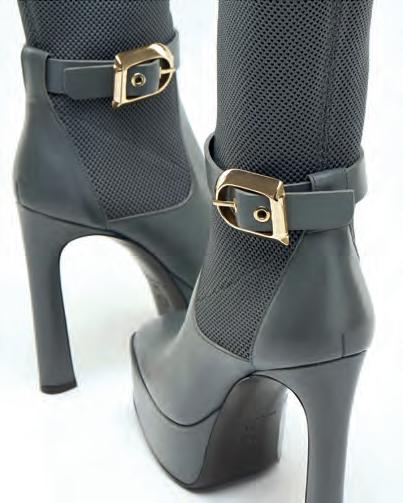
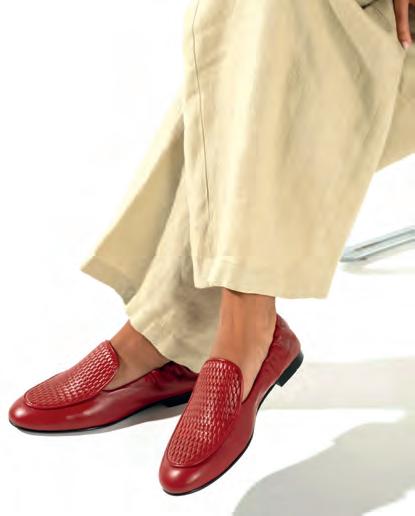
FUN FACT: Portugal’s footwear industry generates over €2 billion annually, with 95% of production exported to 173 countries, cementing its position as a global powerhouse in premium footwear manufacturing. Due to its exceptional craftsmanship and premium quality, Portuguese footwear is the second most expensive globally after Italian shoes. It is highly sought after by luxury brands including Prada, Chanel, Louis Vuitton, Oliver Sweeney, and Russell & Bromley. Did that knock you off your feet, or stop you in your tracks? Perhaps now you need a new pair of shoes. Any excuse will do, right? So let’s explore...
ASPORTUGUESAS
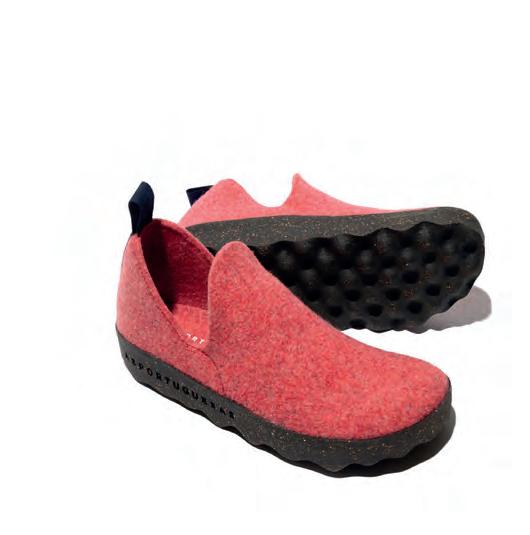
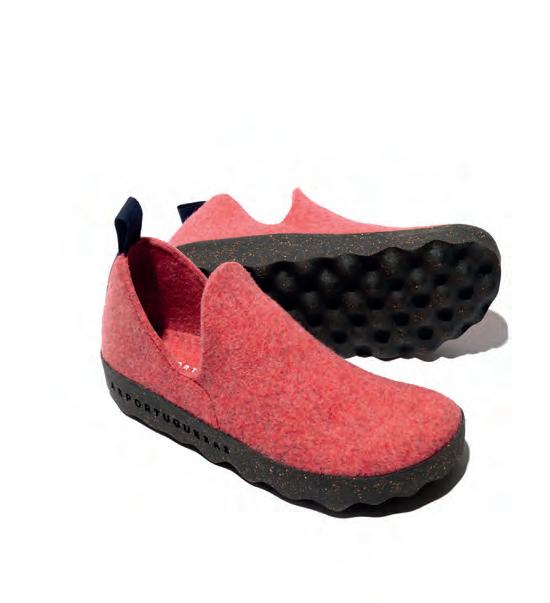
Sustainability, one step at a time. This is the mission that Portuguese footwear brand Asportuguesas is aspiring to achieve, producing footwear with a unique blend of rubber, natural cork, and recycled materials. Not only does cork harvesting pay tribute to the rich artisanal history in Portugal, it is also highly sustainable; providing support to local economies and regenerating without harm to trees. Blending tradition with innovative designs, this is a collection that seeks to create a perfect balance between what is old and what is new. City Ruby Red, €89.99 asportuguesas.shoes
VERITY THENARD, OF THE BLOG AND INSTAGRAM ACCOUNT MY ALGARVE LIFE, WALKS US THROUGH THE LEGACY THAT IS PORTUGUESE FOOTWEAR
JAK
In a world of relentless consumerism, JAK aspires to do things differently. Their focus is on timeless design, sustainable Portuguese craftsmanship and high-quality materials to create wardrobe essentials that match any style and age beautifully – these are pieces that can be appreciated far beyond trends and seasons. JAK was founded in 2014 by Lisbon-based fashion designer Isabel, and entrepreneur José Maria, who set out to solve a problem: the absence of minimalist, superbly designed, and well-made sneakers at a fair price. Blending Isabel’s refined aesthetic with José Maria’s precision-driven mindset, they built JAK on the belief that minimalism can be exceptional. What started as a vision to build a brand of impeccably crafted sneakers, has now evolved into a collection of refined wardrobe essentials that challenge mass consumption. Flow Metallic Silver, €190. fromjak.com/
JOSEFINAS
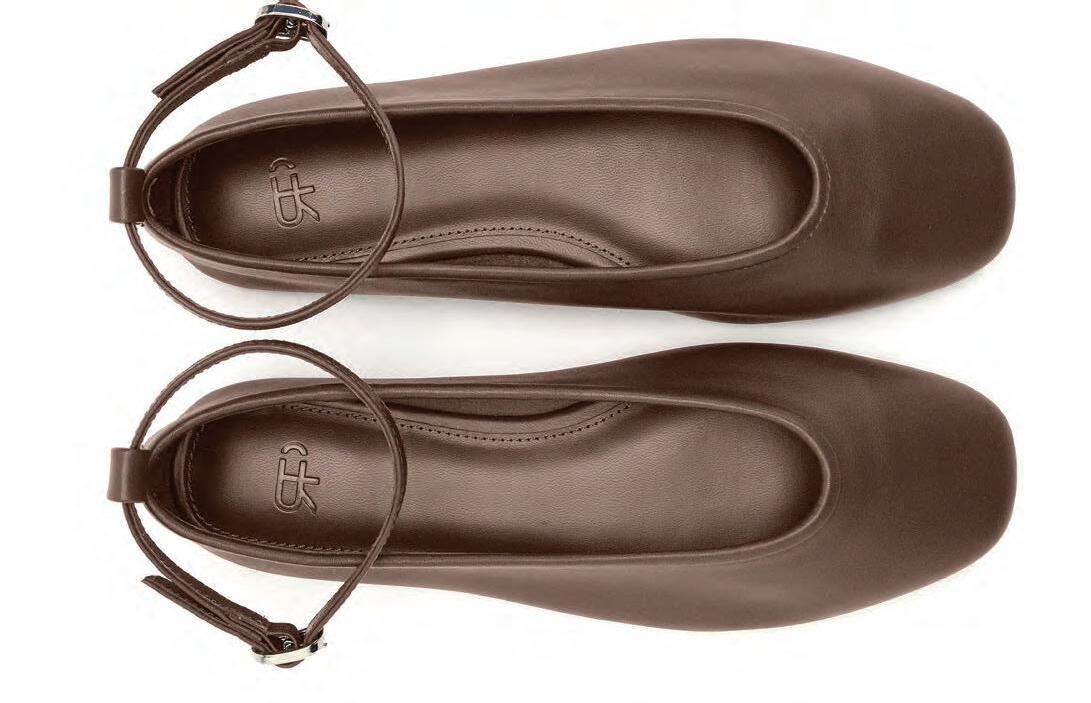
Josefinas is an internationally-renowned brand that has built a cult-like following for their exceptional quality and stylish ballet flats. Interestingly, the name ‘Josefinas’ was given in tribute to one of the founder’s grandmother, who, by taking her to ballet classes, instilled in her the conviction that women are capable of anything. Their collection ranges from shoes for women and children to a collection of accessories.
As the brand defines, ‘artisan’ is someone or something created outside the chain of mass production. Josefinas has incorporated this into its DNA, with every pair of shoes, including the boxes they are delivered in, being handmade. After scrolling through their stylish website, I am now manifesting a matching pair for me and my daughter. Latte Macchiato, €340 josefinas.com
L ACHOIX
Founded in 2018 by Fátima Carvalho, Lachoix takes a name with a French accent, but carries an unequivocally Portuguese soul – quite literally. The brand was born from a simple but powerful desire: to create shoes that offer exceptional comfort, without abdicating the timeless elegance of refined fashion. The collection includes an array of premium quality leather moccasins, loafers, sling-backs and boots. Jade loafer, €285. lachoix.com
PARFOIS
Almost certainly a store you have come across before. Despite the French sounding name, Parfois is a Portuguese brand. Founded in 1994, it specialises in women’s accessories, including shoes, handbags, and jewellery. The brand has expanded internationally, is often spotted at airports, and is known for offering trendy designs at affordable prices. Leather ballerina, €39.99. parfois.com
LUIS ONOFRE
If you are looking to treat your toes to a little bit of designer footwear, meet Luis Onofre. Born into a shoe-making family and learning the trade from his grandparents, initially Onofre didn’t want to follow the family tradition. However, sitting through the process of designing his first shoe, and witnessing that very design come to life in the factory, he radically changed his mind. Onofre’s signature sexy sleek heels, boots, and sandals have been in the hearts and minds of women for more than a decade, and making big strides, having been worn by women in the public eye like Michelle Obama and Princess Letizia of Spain. Eterna Grey, €628. luisonofre.com
Tectonic art
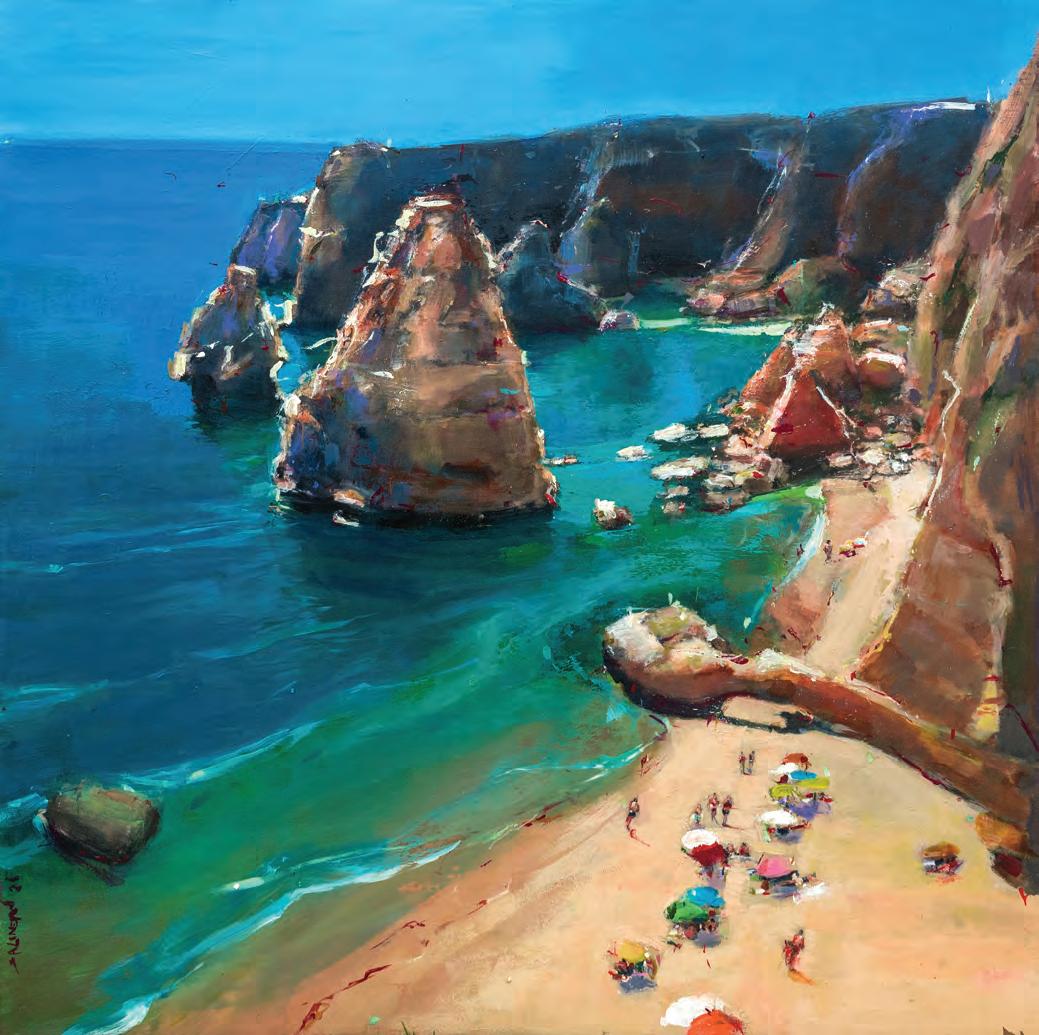
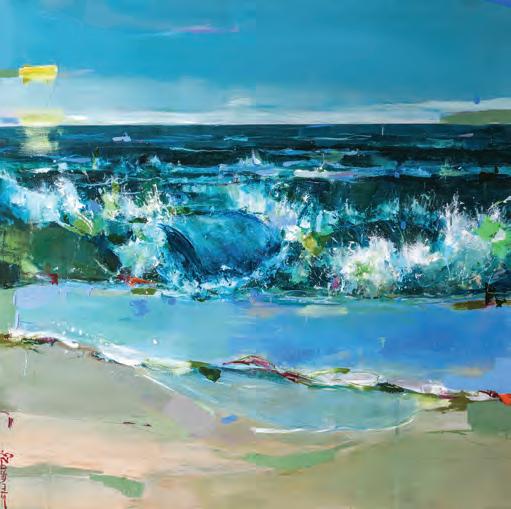
ALTHOUGH AT FIRST GLANCE THE PAINTINGS OF SPANISH ARTIST ROSA SALINERO OF THE ALGARVE’S CLIFF TOPS MIGHT LOOK LIKE ABSTRACT ART, THEY IN FACT REPLICATE THE MAIN FEATURES OF THE COASTLINE WITH IMPRESSIVE ACCURACY
Words: CAROLYN KAIN
ROSA SALINERO artworks that can be seen at Galeria Corte-Real in Paderne are not mere impressions of a few rocks and coves – they are real places created by tectonic activity taken place millions of years ago and eroded by the sea and weather. To understand why her paintings are so different from each other it helps if you appreciate that the Algarve can be divided into two distinct zones.
The younger of these zones is made primarily of limestone, a sedimentary rock that can be dissolved in water. This area stretches from Lagos east towards Albufeira and beyond. Rosa’s glorious views are of beaches peppered with rocks of all sizes, caves and coves carved out of the cliffs. This is due to a process known as karst erosion and wave action. Further east the cliffs are lower and the limestone changes into sandstone which is even more susceptible to erosion. Here, Rosa pictures arches and stacks, the giant sinkholes where cave roofs have collapsed and grottoes emptying and filling with seawater depending on the tide.
A much older and more dramatic zone, reached by far fewer visitors today, is the stretch between Lagos and Cape St Vincent. It is a wild and windswept place, and Rosa’s paintings reflect
the spectacle of what went on there 300 million years ago. Deep beneath the ocean, some distance from the coast, a collision between the underwater plates caused tectonic uplift, faulting and seismic activity. This resulted in massive stretches of land being steeply tilted upwards creating near-vertical cliffs of up to 100 metres in height. Made of schist and greywacke, these rocks are more resistant to dissolving in water. Their resilience and appearance are much different from the limestone and sandstone formations further east. This is a marked contrast to the coastal sea and landscapes that Rosa usually portrays. Since the cliffs are higher and stronger and the primary cause of erosion is mechanical, there are more promontories but few caves and beaches. Adding another dimension in some places there are dark bands of volcanic rock cutting across the cliffs following sloping angles.
Rosa, who is an advocate of painting in ‘plein air’ – that is to say out of doors – spends a great deal of her time in the Algarve where the varied coastal scenery and changing weather conditions present her with constant challenges. She graduated from the University of Castilla La Mancha where she did not encounter windswept Atlantic cliffs! This is the first opportunity to see Rosa’s paintings in Portugal. Her work has been exhibited in Madrid, Cordoba and across Spain but this is a new venture into Portugal.
TAVIRA STORE ~ NOW OPEN
THERE COMES A MOMENT IN A LONG PROFESSIONAL JOURNEY WHEN EXPERIENCE NO LONGER SEEKS GROWTH THROUGH SPEED OR INNOVATION ALONE, BUT THROUGH MEANING. MAGIC BEAUTY IN ALMANCIL IS MOVING INTO A NEW ARENA AND EXTENDING ITS OFFERING TO ENCOMPASS A NEW WORLD OF SKINCARE SCIENCE
Words: JOANA KATYA
A ZENGLOW
space for care, calm and presence
FTER MORE than 30 years working in advanced aesthetics, Manuela D’Oliveira of Magic Beauty is celebrated as a market leader when it comes to technologies, regenerative treatments and visible outcomes. Advanced, resultsdriven aesthetic treatments rooted in experience, science and expertise are her forte. And now she is ready to expand her portfolio with the introduction of ZenGlow.
enriching it, pairing decades of professional knowledge with a fresh, intuitive approach. It is a shared vision shaped by listening, trust and the understanding that true care begins long before a treatment starts.
THE TEAM
Oliveira, Tavira ~ Love your home? Why compromise?
“Over time,” she says, “I noticed that many clients were not only asking only for better skin, but also for calm, for grounding, for a place where they could slow down, breathe and feel supported –without an open door, without noise, without being rushed back into everyday life. It was as a result of recognising this need that ZenGlow emerged: not as a beauty concept, but as a space dedicated to care, a natural extension to Magic Beauty.”
ZenGlow is not a spa in the traditional sense. It is a space for presence, restoration and intentional care. Inspired by Japanese philosophies of simplicity, balance and mindful touch, the vision is to bring together body, nervous system and emotional wellbeing in a quiet, protected environment. Appointments are carefully timed, doors remain closed, and each experience is designed to allow clients to arrive fully and without distraction.
Address: Rua Almirante Candido dos Reis, 243, Tavira, 8800-318 (Next door to the Gran Plaza Shopping Centre) Call: 962 379 584 Email: decor@byoliveira.com @ OliveiraDecor @ Oliveirafurniture www.byoliveira.com
At the heart of ZenGlow is Manuela’s daughter, Caprice. “Creating this space together has been one of the most meaningful experiences of my life,” Manuela says.
“Caprice represents the next generation – intuitive, mindful and deeply attuned to the emotional side of wellbeing. As a qualified beautician, she cocreated the Japanese-inspired rituals that form the foundation of ZenGlow, bringing a modern sensitivity to calm, presence and respectful facial care.”
And Manuela makes it clear that working side by side as mother and daughter is not about stepping away from experience, but about
ZenGlow is shaped by a small, trusted team of women who share the same values: calm, presence and mindful attention. Joining Manuela and Caprice are Grit, a highly experienced practitioner and colleague who specialises in Japanese-inspired facial rituals, including the Japanese Tsubo Facial. Also a Japanese Foot Spa specialist, her work combines precision, calm and deep respect for the skin and the body, offering gentle yet effective treatments that support relaxation, balance and overall wellbeing. And completing the team is Sylvie, holistic massage and body therapist. Trained in Canada and with ten year’s experience in the field, Sylvie’s work focuses strongly on the nervous system and stress regulation. In a time where muscle tension, emotional overload and chronic stress have become part of everyday life, her treatments are designed to help the body let go.
Through holistic massage, lymphatic drainage, Access Bars® sessions, and individually adapted bodywork, Sylvie supports the release of deep muscular tension, fatigue and nervous system imbalance. Her calm, respectful approach allows the body to soften, reset and find balance again.
“Together,” says Manuela, “we have created an environment where treatments are not appointments, but experiences. Our story is about immersive rituals ranging from Japanese Head Spa journeys and facial rituals to holistic body treatments and half-day spa experiences. Each visit is designed to invite guests to slow down, disconnect from external demands and reconnect with themselves – through touch, water, sound and stillness. This is not about appearance. It is about care.”
On 10 April, ZenGlow opens at Rua do Comercio 168, (with Magic Beauty at 164, just 500m from the current salon). Call 927 772 830 for details.
LEFT TO RIGHT: GRIT, CAPRICE, SYLVIE, MANUELA
somosesperancaolhao@gmail.com
www.somosesperancaolhao.com
GREAT BOOKS
AS KEEN READERS SEND IN THEIR REVIEWS, SO OTHERS ARE COMMENTING ON THE BOOKS RECOMMENDED WHICH THEY FOUND LIVED UP TO – OR EVEN BETTERED – EXPECTATIONS. READY FOR THIS ROUND? AS ALWAYS, IT ’ S A FASCINATING MIX OF GENRES
CAROLINE BAGGETTE A FAR CRY FROM KENSINGTON
By Muriel Spark
Published by Virago Don’t be intimidated by Muriel Spark. Best known for The Prime of Miss Jean Brodie and frequently described as “The best English novelist of the last century”, it’s easy to think it’s perhaps not the stuff to read on the plane.
A Far Cry From Kensington is set in London in 1954 in a rooming house, home to a number of genteel folk who cook on gas rings and share the bathroom down the hall. There is a medical student, a young married couple who wear Liberty dressing gowns, a district nurse obsessed with cleaning her room, a Polish dressmaker, and, most importantly, our heroine, Mrs. Hawkins.
Mrs Hawkins, who has a job in publishing, narrates this book, and a large portion of its charm is due to her personality. It is the publishing world that provides us with the villain of the piece, the odious Hector Bartlett, who tries to enlist Mrs Hawkins to further his schemes. He becomes an annoyance, then a pest and finally he pushes her beyond her limits. She hisses at him a vulgar French epithet describing his work... and the feud is on.
Muriel Spark plots like no other writer of fiction, with the possible exception of Agatha Christie. She presents the reader with a puzzle. In this case it is an anonymous letter received by Wanda, the Polish dressmaker. Who sent it and why? We get the feeling that Hector Bartlett has something to do with it but we can’t figure out what. Along the way clues are dropped. But when the realisation comes, our eyes widen in astonishment.
MELISSA VAN MAASDYK
A SMALL DEATH IN LISBON
By Robert Wilson
Published by Harper Collins
Although I generally don’t hunt down crime novels (valuing sweet dreams too much), I picked up A Small Death in Lisbon because it was one of ten books in English on offer in a local bookshop. And I’m very glad I did.
The action kicks off in the late 1990s in Paço d’Arcos (between Lisbon and Cascais), where an attractive, blonde teenage girl is found murdered on the beach, and homicide detective Zé Coelho is called in to investigate. Affable but deceptively astute, Coelho soon finds evidence to suggest this is far more than a straightforward sex murder, and he’s not wrong.
After the opener, the action switches back to 1941 Berlin, where Portuguesespeaking factory owner Klaus Felsen is forced to join the Nazi SS and sent to Portugal to acquire a rare metal called wolfram that’s vital for building tanks. And as the narrative switches between past and present, his story – involving murder, sexual misconduct, war crimes, gold-smuggling, and corruption in the world of high finance – gradually converges with that of the victim in the present day, and Coelho begins to make startling connections.
Apart from being a well-crafted, compelling whodunnit, the novel also provides valuable perspectives on Portugal’s WWII history, life under Salazar and the events leading up to the Carnation Revolution, helping this relatively new resident better understand aspects of her adopted home. A worthy winner of the UK’s prestigious Gold Dagger Award for Best Crime Novel in 1999.
KAREN
D'OLIVEIRA THE PAPER PALACE
by Miranda Cowley Heller
Published by Penguin
Does letting go mean losing everything you have, or does it mean gaining everything you never had? This is a great summer read, a book that will always stand out in my mind as it is unique. The story is set over 24 hours in modern-day Cape Cod, but has a 50-year-long backstory. Beautifully written, very emotional, sometimes heartbreaking, sometimes disturbing and other times sheer joy!
Ever since she was a child, ‘The Paper Palace’ had been a place where Elle and her family would spend their holidays. Now married and with children of her own, it is still a place she visits with her family and friends.
A rash decision, made in the heat of the moment, leads the story to jump between the past and present, revealing generations of complicated relationships and some questionable, heartbreaking outcomes.
At its heart is Elle Bishop, a 50-yearold mother torn between two worlds: the stable, loving life she has built with her husband Peter, and the irresistible pull of her childhood friend and lost love, Jonas.
After an impulsive night with Jonas, Elle spends the next 24 hours reflecting on her life – her memories, secrets, and the traumatic events that have quietly shaped her identity and desires.
capturing the slow disappearance of the person who gave her life.
Over more than a decade, she recorded conversations and fleeting moments of clarity, writing intuitively from fear, love, and the struggle to make sense of the unstoppable decay of memory. These notes remained in a drawer for years, only to be shared later – not to give a single picture of her mother, but to reveal the multiplicity of truths, the complexity of grief, and the human effort to bear witness.
The writer sets the scene with evocative descriptions of the natural works – from the pond where Elle swims to the Paper Palace cabin itself – making Cape Cod feel like a character in its own right.
The book doesn’t shy away from weighty themes – generational trauma, the burden of secrets, the tension between stability and passion, and the way memory shapes self-perception. Heller’s prose makes these psychological layers immersive and thought provoking.
KISCHKA
I REMAIN IN DARKNESS
by Annie Ernaux
Published by Fitzcarraldo Editions
I Remain in Darkness by French author Annie Ernaux is a quiet, deeply moving meditation on love, memory, and loss. Ernaux tells the story of her mother’s long, heartbreaking struggle with Alzheimer’s,
The novel is a book of quiet tones, yet linguistically powerful, where each word carries weight. It’s an intimate reflection on the ties that bind us, the fragility of life, and the courage it takes to confront what is vanishing before our eyes. You are drawn in by its honesty and the emotional resonance of Ernaux’s observations.
I Remain in Darkness is worth reading for anyone who values literature that speaks softly, yet leaves a lasting mark on the heart.
CARA SCHOFIELD CURRY BIBLE: EXOTIC AND FRAGRANT CURRIES FROM AROUND THE WORLD
By Mridula Baljekar
Published by Paragon
If curry is your thing then this is the book for you. It’s my go to recipe book when I’m in need of spice and exotic flavours. The recipes are simple but delicious. There are bread recipes and explanations regarding essential curry ingredients. It explains the various spices from the Spice Route. The bread section is wonderful and the chapati recipe is a doddle. There are even chutney and rice recipes.
So if you want to make fantastic, delicious curries from afar – such as Thailand, Goa and Burma – whether you’re a vegetarian or a meat eater then you cannot fail with this book. Just writing about it makes me want to go and cook na Indonesian Rendang. Yum yum.
HELENA
Lovers
LIKE MANY people who go on to build a business later in life, our story did not begin with a master plan. It began with long careers in another world entirely – one defined by deadlines, complexity, and responsibility – and with that a gradual realisation that there might be a different way to live and work
Before Figs on the Funcho existed, my professional life was firmly rooted in information technology. I spent over 30 years working as an IT consultant for blue chip companies, starting out as a computer programmer and progressing through senior roles including test lead and test manager. In the later stages of my career, I specialised in technical testing – the final phase of testing new platforms before they are released.
That work demanded precision, structure, and an ability to anticipate problems before they arise. And those skills carried directly into setting up and running a retreat business: planning carefully, documenting decisions, and ensuring the guest experience works as intended.
Graham’s career followed a complementary path. He spent more than 30 years managing the implementation of large, complex IT systems for financial institutions, leading globally distributed teams. In recent years he moved into coaching, supporting teams and organisations to work more collaboratively and effectively.
Today, Graham applies those skills to guest care, retreat logistics, and financial management. He oversees bookings, budgets, and accounts, while ensuring guests and retreat leaders feel supported. Within our cooking
holidays, he is also very much hands-on, acting as head chef or leading the cooking sessions, bringing the same clarity, organisation, and calm leadership into the kitchen.
Together, we have spent over 25 years connected to the Algarve. What began as a place we loved to visit, gradually became somewhere we wanted to be rooted. We value creativity, good food, wellbeing, and a healthy work-life balance, and those values shaped the kind of business we wanted to build.
A new chapter
The idea for retreats emerged during an intense working life. I was juggling a demanding IT role, family life, and long commutes on London’s M25, often worrying about being late for school pick ups. Sitting in traffic one day, I found myself thinking about retirement – and realising I had no hobbies or creative outlet left.
We already owned a villa in Portugal, rented for self catering holidays. The idea formed that it could become a place where people could slow down and reconnect with creativity. Hosting painting holidays meant I would be obliged to attend, learn alongside guests, and rediscover my own creative interests.
Art holidays came first, and they remain central to what we do – a natural bridge from instinct to action.
Building a CREDIBLE BUSINESS
WHAT DOES IT REALLY TAKE TO SET UP AND GROW A SMALL BUSINESS IN THE ALGARVE — AND TO BE TAKEN SERIOUSLY ALONG THE WAY? DRAWING ON HER EXPERIENCE FOUNDING FIGS ON THE FUNCHO, CHERYL SMITH REFLECTS ON LEARNING BY DOING, EARNING RECOGNITION, AND USING AWARDS THOUGHTFULLY TO BUILD TRUST, VISIBILITY, AND LONG-TERM CREDIBILITY
Deciding what to offer: learning by doing We did not begin with market reports or competitor analysis. What we had was instinct and a willingness to experiment. At the time, we knew of only one other painting holiday destination in the Algarve. That suggested the idea was viable. The first painting holiday was small and deliberately simple. It worked, guests responded positively, and it felt right.
Rather than scaling quickly, we allowed the offer to grow gradually: two painting holidays the following year, then four. Each step was taken in response to demand and capacity, not ambition alone.
The cooking holidays evolved in the same way. Guests repeatedly asked for recipes and wanted to understand how we cooked day to day. Instead of producing a cookbook, we invited them into our kitchen. Cooking together became a natural extension of hospitality rather than a new product bolted on.
Starting without a rigid strategy turned out to be an advantage. It allowed us to listen closely, adapt quickly, and avoid over-committing to ideas that looked good on paper but felt wrong in practice. That early flexibility later proved essential when we began to articulate the business more formally.
The value of official recognition: what it demands
For a long time, recognition was not something we actively pursued. As the business matured, however, it became clear that formal recognition could help others understand what we were doing – beyond word of mouth.
Applying for awards required us to articulate our work clearly and provide evidence. I also learnt that having a website with clear signals is vital – not only for how your audience perceives you, but for whether you are discoverable at all. Clear structure, language, and validation cues matter just as much for search visibility as they do for human trust.
This meant gathering testimonials, documenting growth, presenting press coverage, and showing how values such as creativity, wellbeing, and sustainability were embedded in daily practice. From the outset, one practical step I took was to create a dedicated press page on our website, alongside a downloadable press kit. Keeping press mentions in one place proved invaluable later, particularly when evidencing award applications and responding to media enquiries. In the same way, having a clear process for collecting guest reviews has been essential, with feedback encouraged on Google, our own website, and a small number of trusted travel platforms.
Looking back, having clearer processes in place to gather and collate evidence would have helped. This only became obvious once I began submitting applications and understood what was being asked for. The process itself was demanding but clarifying. It sharpened our language, strengthened our positioning, and improved the business – laying foundations that later supported visibility and trust.
What winning a title changes
Recognition did not change what we do, but it changed how others perceive it. Titles act as shorthand for trust, particularly for people encountering the business for the first time.
Recognition did not change what we do, but it changed how others perceive it. Titles act as shorthand for trust, particularly for people encountering the business for the first time.
Over time, I learned that not all titles serve the same purpose. Rather than treating recognition as a single badge of success, I began to categorise the titles we received and use them differently depending on context.
Titles linked to place and destination are most useful in guest-facing situations. They appear on our website, on travel platforms, and within introductory material where people are deciding where to go. For someone unfamiliar with the Algarve interior, these titles provide quick reassurance that Figs on the Funcho is established, reviewed, and recognised beyond its own storytelling.
Recognition connected to sustainability and responsible practice is used more selectively. These titles tend to sit within press conversations, partnership discussions, and award applications, where the emphasis is on how we operate rather than what we offer. They help anchor our biodiversity work, bird nesting projects, and slower approach to tourism in externally validated credibility.
Titles relating to hospitality, creativity, or business leadership have played a different role again. They have opened doors to conversations with retreat leaders, collaborators, and media who want confidence that they are dealing with a professionally run operation. Just as importantly, they strengthened my own confidence in articulating what we had built.
We use recognition sparingly and deliberately. Titles sit alongside real stories, guest reviews, and lived experience; they never replace them. Used well, recognition reinforces trust rather than dominating it –and confirms that a measured, thoughtful pace is not a disadvantage, but a strength.
When you’re ready to seek a title
Through experience, I learned that readiness for recognition is not about size or ambition. It is about clarity, consistency, and evidence. The following checks are the ones I now use to judge whether a business –mine or someone else’s – is ready to seek a title.
You can explain what you do clearly. If you cannot describe your business in one or two simple, consistent sentences across your website, profiles, and conversations, it is usually too early. Confusion at this stage will be reflected in an application.
Your website sends the right signals. Your site should make it immediately clear who you are for, what you offer, and why you are credible. Reviews, press mentions, and clear structure matter not only for trust, but for search visibility.
Your social media presence reinforces the same message. Platforms such as Instagram or Facebook should reflect the reality of your business, not a version you are trying to become. Imagery, tone, and content need to align with what guests actually experience, and with the values you want to be known for. If your social channels feel inconsistent or performative, it is worth addressing this before seeking recognition.
Independent reviews reflect your reality. Guest feedback on Google, your own website, and relevant platforms should echo the experience you believe you are delivering. If reviews are inconsistent or sparse, focus there first.
Evidence is gathered, not scattered. Press mentions are logged, testimonials are saved, and milestones are documented. If assembling evidence feels overwhelming, it is often a sign that processes need tightening before applying.
External signals are already appearing. Repeat guests, unsolicited recommendations, press interest, or collaboration requests suggest that recognition will amplify what already exists rather than create it.
You understand what a title will – and won’t – do. If you are hoping an award will fix uncertainty or lack of clarity, it is too soon. Titles work best when they confirm confidence, not replace it.
If most of these points are in place, seeking recognition is likely to be constructive rather than draining.
Is the timing right?
Yes, it is possible to apply too early. Doing so can expose gaps in clarity or evidence and feel discouraging.
AS SEEN ON TV
Being featured on A New Life in the Sun and later A New Life in the Sun: Where Are They Now proved to be a significant moment in raising our profile. When the programme aired on Channel 4, friends, guests, and contacts reached out to say they had recognised us on screen, often commenting on how much they enjoyed watching Graham and me run our experiences at Figs on the Funcho. Taking part was a big step for me personally, as I am naturally camera-shy, but the exposure opened many doors. It led to several magazine features reflecting on our television experience and helped position the business as both credible and established in the eyes of a much wider audience.
I learned that, handled well, early applications can be useful diagnostics. Going through the process showed me where things needed strengthening and encouraged better documentation and sharper storytelling.
Recovery lies in consolidation rather than persistence. In my experience, returning to fundamentals – clarity, evidence, and delivery – is far more effective than chasing recognition. When foundations are stronger, recognition tends to follow more naturally.
Visibility
without burnout: how we communicate
At Figs on the Funcho, we work with a social media plan – but we do not treat it rigidly. During busy periods, when guests are on site, the plan loosens.
These moments often become opportunities for unedited, in the moment, hands on stories: a meal being prepared, a painting session by the river, guests returning from a walk. We also share simple clips of guests cooking together in the kitchen during our cooking holidays, capturing the shared experience. This approach removes pressure and shows prospective guests exactly what the experience feels like. Sustainability is shared as lived practice, not proclaimed.
Alongside our own channels, we actively engage journalists, bloggers, influencers, and specialised travel agents, inviting them to experience our holidays firsthand. This creates credible coverage that extends beyond our platforms and reinforces the trust that formal recognition later amplifies.
How your audience needs to see you
Over time, I learnt that visibility alone is not enough. What matters is how your business is understood once people find you.
For Figs on the Funcho, this meant being seen as calm, credible, and thoughtful – not busy, loud, or overly polished. We wanted guests, retreat leaders, journalists, and partners to quickly grasp what we stand for: small group experiences, depth over scale, creativity grounded in place, and genuine respect for people and landscape.
This perception is shaped through repetition rather than persuasion. Clear language on our website, consistent imagery, independent reviews, and selective use of titles reinforce the same message. Restraint matters too. By choosing carefully when and where to reference recognition, titles act as reassurance rather than promotion.
When perception and reality match, recognition amplifies trust rather than distorting it.
The absolute do’s and don’ts
Do build visibility steadily, document progress, and let real experiences speak.
Don’t chase every opportunity, over claim expertise, or persist with strategies that no longer work.
Above all, recognition is not the goal. Building something credible, resilient, and human is. Titles work best when they arrive as confirmation – not justification.
Figs on the Funcho, Awards 2023–2025
DESTINATION & PLACE RECOGNITION
These titles help position Figs on the Funcho as an established, recognised destination, particularly for guests unfamiliar with the Algarve interior.
(CONFIDENCE SIGNALS FOR PARTNERS, MEDIA, AND COLLABORATORS)
These awards support professional credibility, partnership discussions, and media narratives around how the business is run.
EU Business Awards 2025
Winner Ambitious Business Owner
Ireland Portugal Business Network (IPBN) 2025
Winner Business Success Award
Algarve Business Awards 2025
Winner Tourism & Hospitality Award
Algarve Business Awards 2024
Finalist Tourism & Hospitality Award
Algarve Business Awards 2025
Finalist Marketing Award
Sábado
Saturday
h 28th Março
10H - 16H
Feira de Plantas Plant Fair
Entrada gratuita Free Admission
Museu do Traje
São Brás de Alportel
Organização: Apoio:
48 HOURS IN
THE AZORES
SÃO MIGUEL IS WHERE THE ATLANTIC FEELS ALMOST OTHERWORLDLY – ALL VOLCANIC STEAM, DEEP - GREEN CRATER LAKES AND SLOW, SALTY AIR THAT INSTANTLY SOFTENS YOUR SHOULDERS.
IN MARCH, BEFORE SUMMER CROWDS ARRIVE, THE ISLAND IS LUSH, WILD AND WONDERFULLY QUIET, MAKING IT AN INSPIRED CHOICE FOR A 48 - HOUR ESCAPE THAT FEELS RESTORATIVE AND ROMANTIC
Words: PIPPA ROSE
WHY MARCH, and why São Miguel? March sits in that sweet spot where winter has loosened its grip but high season is still a distant rumour. Showers come and go, but with them arrive impossibly green hillsides, early blooms in the gardens of Furnas and a softer light over the crater lakes. Ocean temperatures are cool, yet the first whale-watching departures begin, with chances to spot resident sperm whales and playful dolphins off the coast. The island feels like it belongs to you: viewpoints are empty, hot springs are quieter, and there’s time and space to linger rather than queue.
Base yourself at Octant Furnas, tucked into the lush Furnas valley, which has one of the highest concentrations of hot springs in Europe. The hotel sits within the crater of a dormant volcano, wrapped in gardens and steam, and feels more like a contemporary retreat than a traditional resort. Inside, clean lines, warm woods and natural tones allow the landscape to take centre stage, while floor-to-ceiling windows frame the surrounding slopes.
This is a property designed around wellness and water: there are indoor and outdoor thermal pools fed by mineral-rich springs, both open 24 hours a day, so you can slip into the warm, iron-tinted water under the stars or at dawn before the island wakes up. A small spa offers massages and body rituals that draw on local ingredients, and there’s a gentle, unhurried energy that makes it easy to surrender to the slower pace of Furnas. The restaurant leans into the island’s bounty – think local fish, Azorean beef, vegetables from the valley and nods to traditional dishes reinvented with a lighter touch. It’s the kind of place where you can happily stay put, yet you’re perfectly positioned to explore the rest of São Miguel.
DAY ONE
Crater lakes, tea and thermal steam
Start with the island’s headline act: Sete Cidades, a vast volcanic caldera on the west of São Miguel, with its twin lakes – one green, one blue –separated by a slender bridge. Drive up to viewpoints like Miradouro da Vista do Rei or Boca do Inferno for sweeping views over the crater,
where March’s moody skies and shifting clouds only add to the drama. There are gentle walking trails along the rim and down towards the lakes, allowing you to dip in and out of the scenery at your own pace.
On your way back east, detour to Lagoa do Fogo, a wild, protected crater lake that feels beautifully remote even though it’s close to the main road. In March, you may find mist rolling in and out, revealing and hiding the water in minutes – a reminder that São Miguel plays by its own rules. Short hikes from the viewpoints lead down towards the lake’s edge for those happy to tackle a few steeper sections.
For a gentle cultural pause, stop at Gorreana Tea Plantation, Europe’s oldest tea estate, where fields of emerald-green bushes roll down towards the ocean. You can tour the factory, learn how the family has been producing black and green tea since the 19th century, and taste a cup with a slice of cake while watching the weather roll over the hills.
Back in Furnas, spend the late afternoon slipping between hot and even hotter waters. Furnas is famous for its steamy geothermal landscape – fumaroles, bubbling mud pools and vents that perfume the air with a faint mineral scent. Take a walk around the Caldeiras, then choose between a soak at Terra Nostra Park, with its iconic iron-rich thermal pool framed by one of the island’s most beautiful botanical gardens, or Poça da Dona Beija, a series of cosy stone pools lit atmospherically after dark. March evenings in warm water, with cool air on your shoulders, feel particularly magical.
For dinner, head to Furnas Lake Restaurant, set in the grounds of Furnas Lake Forest Living. The concept is a multi-course journey built around ingredients from the property’s own quinta and the wider island – a guided ‘walk’ through Azorean flavours, stories and textures led by the chef. It’s refined but rooted in place, and pairs beautifully with the sense of being cocooned in nature that defines this part of São Miguel.
DAY TWO
Pages 64-65, top left clockwise: Natural Park of Ribeira dos Caldeirões; volcanic rock; Santa Bárbara black sand beach; Capela das Vitórias and Lagoa das Furnas; Lakes Lagoa das Sete Cidade; Poça da Dona Beija hot springs; Ponta Delgada City Gates. Opposite page: A walk to Boca do Inferno and the two lakes. This page, top left clockwise: City Hall in Ponta Delgada; whales and dolphins; Gorreana Tea Factory and plantation; a local speciality from Boca Alberta in Lagoa; Octant Furnas hotel, set within the crater of a dormant volcano
Ocean edge, Lagoa and a gin-soaked evening Wake up slowly, perhaps with one more dip in Octant’s outdoor pool as morning mist drifts through the valley. Then set off towards Lagoa, a coastal town roughly halfway between Furnas and Ponta Delgada, to explore a different side of the island.
Book a table at Boca Aberta in Lagoa, a cervejaria and seafood restaurant that “brings the sea to the table” with a menu curated by Michelin-experienced chef Cláudio Pontes. Expect platters of shellfish, sparklingly fresh fish and relaxed, local energy just steps from the water. It’s the sort of place where lunch naturally stretches into the afternoon, especially with a glass of crisp white in hand.
From here, you’re well-placed for an afternoon along the south coast or into Ponta Delgada. On clear March days, consider a whale‑ and dolphin‑watching trip from the marina – the Azores sit on a major migratory route, and spring can bring sightings of resident sperm whales alongside early seasonal visitors. Alternatively, wander Ponta Delgada’s cobbled streets, harbour front promenade and churches, dipping into small shops and cafés as you go.
As evening falls, retreat to one of the island’s most atmospheric addresses: The Gin Library at The Solar Branco Eco Estate just outside Ponta Delgada. This characterful space houses an ever-growing collection of gins from around the world, with tutored tastings and gin-based cocktails served in cosy surroundings that feel more like a private home than a bar. It’s an excellent preor post-dinner stop for those who appreciate good spirits and good stories.
For a final dinner, you can stay in town at one of Ponta Delgada’s contemporary restaurants, which often blend Azorean products with modern
techniques, or return to the sanctuary of Octant Furnas. Either way, end the night outside if the skies are clear –São Miguel’s dark, rural pockets make for unexpectedly beautiful stargazing.
More ways to fill your 48 hours
Even with just two days, São Miguel offers layers you can dip into depending on mood and weather:
Ribeira dos Caldeirões Natural Park on the northeast of the island, where waterfalls tumble through a lush valley laced with walking paths.
Short hikes to viewpoints scattered across the island, each revealing a different angle – from cliff-edge Atlantic vistas to hidden lagoons and forested ridges.
Quiet beaches like Ribeira Quente or the black-sand stretches near Ribeira Grande, where you can watch surfers tackle Atlantic swells while you walk the shoreline.
Cozido das Furnas, the island’s famous stew cooked slowly in geothermal pits beside the lake, which you can see being lifted from the earth.
São Miguel in March is about leaning into whatever the island serves up – sun, mist, sudden rainbows, an extra-long lunch or an unplanned hour in a hot spring. Days shaped around crater lakes, tea fields, coastal tables and gin-laced evenings feel both elemental and quietly indulgent, exactly what an escape should be.
END OF AN ERA
GILLIAN HISCOTT IS A UK PLAYWRIGHT AND PUBLISHED AUTHOR WHO HAS CALLED THE ALENTEJO HOME FOR 18 YEARS. JOINING THE ALGARVEPLUS TEAM, SHE WILL BE SHARING HER SPECIAL FINDS EACH MONTH. HERE, SHE GOES BACK IN TIME TO HER EARLY DAYS IN THE COUNTRYSIDE
WHEN WE FIRST moved here from the UK in 2008 to a remote hamlet in the Southern Alentejo hills, there were still echoes of traditional country living. The shepherd walked alone in the hills with his sheep and dogs, pigs were kept in pens near the house and gardens were tended along the river banks. We had bought the ruin of a school and slept in the remnants of a classroom, kept cool by the gaps in the windowpanes as a pack of dogs howled at night, chickens ran freely and a curious community welcomed us, showering us with eggs, fruit and vegetables.
This way of life in the countryside is fading as the young leave, clutching their mobile phones, looking for education opportunities and employment. Some do return, bringing new knowledge back to the surviving family farms. But once everyone knew and relied on each other and now the old houses are fast falling to ruin in the extremes of weather. But a change has come about, as people from all around the world grow more and more confident and find the houses that they can’t afford in the Algarve or in their own country are now within their grasp.
By the time we left the hamlet in 2021, the native Portuguese had gone. Once they were the only ones. But we had integrated and learnt alongside them. Now, in the same hamlet there is only a handful of ‘foreigners’ who have invaded with their lounger
HONEYMOON | FAMILY | CITY BREAK | VILLA | CRUISE | ADVENTURE | SKI | SAFARI Bespoke holidays, designed with you in mind
WEARABLE TRADITION
IN THE MONTH THAT WE CELEBRATE INTERNATIONAL WOMEN’S DAY, WE TALK TO ONE OUTSTANDING PORTUGUESE TALENT WHO IS BRAVE ENOUGH TO TURN HISTORY, SUSTAINABILITY AND ANCESTRY INTO BEAUTIFUL GARMENTS
Words: SANDRA GATO
IT IS ONE thing to say that history and tradition should be protected at all costs, and another to do something about it. Meet Catarina Tudella, a Portuguese designer who has created a clothing brand – Seda & Companhia – that is all about values, responsibility and proving a point: that heritage can, and should, be updated and worn with pride.
AlgarvePlus: When and why was Seda & Companhia introduced?
Catarina Tudella: Seda & Companhia was born from a deep desire to create. Since childhood, I have always had a special connection with art. It was present in my life from an early age, though never in a leading role. It was simply something that sparked my curiosity, moved me, and lifted me up. In my life, art was always encouraged and explored as an intellectual activity, complementing my academic and scientific education. I experimented with many art forms while growing up, but embroidery was the only one that stayed with me throughout my life – I always felt the needle and threads as an extension of myself. It was around the age of 12 that I began learning traditional embroidery with the ladies of my family. I grew up, took a degree in engineering, and pursued a 15-year career in the industry. However, embroidery always remained my creative refuge. In 2014, I discovered Bordados de Castelo Branco, a specific kind of embroidery that quickly took a central place in my heart. Embroidery became vitally important in my daily life, filling the void left by my professional career. It brought me a sense of fulfillment, tranquility, happiness, and purpose. So, in 2019, at the age of 40, I decided to transform this passion into a new professional path by creating Seda & Companhia.
AP: How would you define the brand?
CT: Seda & Companhia is a brand of clothing, bags, and fashion accessories that differentiates its pieces through design, quality craftsmanship, and the integration of centuries-old tradition with modern innovation. Each piece is born from the rich tradition of Castelo Branco Embroidery, creating an intimate connection between past and present. Our approach deeply respects the cultural roots of this kind of embroidery while also seeking to innovate and adapt this heritage to modern times. Therefore, we can say our pieces represent a fragment of tradition, an expression of authenticity, and an item that transcends passing trends.
AP: Why did you decide to focus exclusively on this type of embroidery?
CT: Castelo Branco Embroidery came into my life through an aunt from Castelo Branco, who taught me the technique. As soon as I began working with this embroidery, the harmony with the materials, colours, and elements was immediate and organic – almost visceral. This feeling led me not only to want to perfect the technique, but also to learn its history and study the pieces that gave it origin.
Each element of the compositions carries meaning – I recognized in this embroidery’s visual language an eclectic and luxurious elegance, resulting from the fusion of East and West. I fell in love with the natural silk thread used to create it, so I can say my choice is connected to a family link to the region and a strong emotional resonance with the technique’s complexity, the natural materials used, and the elegance of its eclectic visual language.
We seek to promote Castelo Branco Embroidery as a form of Portuguese artistic expression.
AP: Do you feel a sense of mission in keeping this tradition alive?
CT: Yes, without a doubt. This project aims to be much more than a brand – it seeks to promote and share Castelo Branco Embroidery as a form of Portuguese cultural and artistic expression.
When I began studying this technique, in 2014, I realized it felt very distant from younger generations who did not identify with the way it was being presented. They saw embroidery as something belonging to their grandmothers’ home décor, not as a cultural element that could be part of their own homes and lives.
I also noticed there had been some attempts at innovation in clothing, but these resulted in conceptual pieces meant for exhibitions or fashion shows. During my studies and visits to Castelo Branco, I also understood that fewer people dedicated themselves professionally to this art form. The complexity and time required to produce each piece, its cost, and the difficulty of positioning it in the market made the profession less attractive.
If it weren’t for the efforts and investment of the Castelo Branco City Council over the years, with the excellent work they have done to keep the tradition alive, it might already have disappeared. I felt an urgent need to act in favour of this art form, with which I had formed such an organic connection. So, yes, this feeling became a mission – a purpose to contribute, on my own scale, to something greater.
I deeply believe that with sensitivity, respect, and understanding, it is possible to combine tradition with contemporary expression and thus create a link between
generations. Innovation is essential so that traditional arts can develop a language that is understood by younger generations, preventing them from becoming mere museum pieces.
AP: Where can we buy your pieces?
CT: As a slow fashion brand that values exclusivity, customization and limited collections, pieces have to be purchased directly from the brand through our website: sedaecompanhia.com or via social media.
Because they are handmade, we only produce to order. We usually do not have much stock available, though there are almost always a few finished pieces in the atelier. Our website features a portfolio of pieces. Clients contact me through the site, email, or social media. We have an initial conversation to understand what they are looking for, and we go from there.
Sometimes clients visit my atelier near Lisbon; other times I travel to them; and sometimes the entire process is done remotely. However, it is always a close, shared, and committed process between me and the client – very different from buying in a common store. More than a garment, the client is acquiring a wearable piece of art.
AP: What do you envision for the future of the brand?
CT: In the short term, we are working on growing and strengthening the brand by creating an artisanal production unit in Castelo Branco. This will allow us to certify our products, which in practice means obtaining a quality and authenticity seal for the client.
In the medium and long term, we aim to promote the brand and the embroidery internationally by participating in major fashion and design fairs; expanding our partner network; diversifying our product range to include an artistic line of decorative pieces; and organizing artistic residencies for Portuguese and international artists as a way of contributing to the innovation, promotion, and appreciation of Castelo Branco Embroidery as a traditional Portuguese art form.
MIX AND MATCH
THE ALGARVE COUNTRYSIDE IS AN AMAZING NATURAL MIX OF GRASSES, SHRUBS, FLOWERS, TREES AND BUSHES. IT HAS DIFFERENT TEXTURES, COLOURS AND SHAPES. IT HAS BIRDS, ANIMALS AND INSECTS, AND GROWS WITH WINTER RAINFALL AND SUMMER DROUGHT. WHY DON’T WE TAKE A PAGE FROM NATURE’S BOOK AND PICK PLANTS THAT GROW AS SEAMLESSLY AND EFFORTLESSLY AS THOSE IN THE COUNTRYSIDE AND LOOK AMAZINGLY BEAUTIFUL ALL YEAR ROUND
Words: BURFORD HURRY
TO CREATE the look and feel of the countryside in your own garden does require some thinking, and planning as it means that you will have to adopt a different approach to your outside space.
Then, in through the gate would come a happy mixture, in no particular order, of diverse plants – solitary or in groups, tall and short, glossy or grey leafed with different forms and colours. Out the window would go ‘lawns’, straight lines, formal flower beds and water-hungry exotic plants, as well as the concept that it is obligatory that our gardens should look gorgeous in the height of summer. That’s not how nature does things here. She looks lovely throughout the year.
We gardeners in the Algarve are at an advantage because we live in a Mediterranean climate, and while we have some lovely local plants to choose from, there are several other regions in the world that also enjoy winter rainfall and summer heat.
I’m thinking of the Mediterranean basin – both the European as well as the African side, California, Chile, the southwest coast of Australia and south west South Africa – as their indigenous plants should thrive here in the Algarve and be an endless source of pleasure while also providing a large palette for choice.
Earth matters
There are provisos, however. Although these regions have
Mediterranean climates, the growth of their plants will also depend on other factors. South Africa has the greatest variety of flowers and plants in the world, but many are dependent on acid soils so they would be no good for most of our gardens, which are usually alkaline. Despite this there are some South African plants that love the Algarve.
I’ve seen plumbago (Plumbago capensis) growing in the mato quite happily. The pink trumpet vine (Podranea ricasoliana) also does very well as do many succulents such as aloes, crassulas and kalanchoes.
Local gardens will also be an inspiration as regards the choice of suitable plants. So forget the car or the bike and take a stroll along a road through your neighbourhood and see what is flourishing in the gardens. Do that in different seasons to get a complete picture of floral and leafy candidates for your slice of heaven. At the same time reserve a spot in your garden for a small nursery. Who knows, friends and neighbours may be willing to give you cuttings of plants for your garden.
The next step and the most exciting one will be to create your own Mediterranean Garden. This has been done before, but your garden will be unique because you will have created it. To do this will take courage and patience and, even on occasions, blind faith, because some of the plants may be new and may not survive; but in a garden there are always risks to take.
Planning positioning
Once plants have been chosen, given or bought, it is time for the planting. If you are planning on having a mato slice of your magic, you will first have to ask yourself if you will have pools or patches or groves or borders of plants. Your answer would probably depend on the ultimate size of your garden. That decided, you know by now that the trees and plants that grow in the mato are not always in competition as they often help each other. You will be planting locals as well as exotics, which complicates the issue a little, but you will learn over time if the exotics help local plants – or are in competition – and you will adjust your choice of plants accordingly. Whatever, it would be a good idea to plant trubs first – they are shrubs with the ambition to become trees. They will grow and provide a backdrop for your lower growing shrubs and herbaceous plants. Remember not to be nervous about what you plant, or anxious about maintaining a ‘good’ distance between plants. Perhaps begin by planting a couple of the locals such as a strawberry tree (Arbutus unedo), or a pistacia, either the mastic (Pistacia lentiscu) or the turpentine bush (Pistacia terebinthus), a myrtle (Myrtus communis) or a Mediterranean buckthorn (Rhamnus alaternus) or others.
So much to choose from
To give more interest and depth to our planting introduce some
Page 74: Lavandula angustifolia Page 75, top left clockwise: Rhaphiolepis indicadem; Plumbago Capensis; Myrtus communis This page, top left clockwise: Kleinia neriifolia; Pyracantha coccinea Orange glow Narcissus papyraceus; Arbutus unedo
Oliveira, Tavira ~ Love your home? Why compromise?
New Store Address: Rua Almirante Candido dos Reis,
exotics trubs between the locals such as Crepe myrtles (Lagerstroemia indica) with their different colours, or crimson, white or yellow bottle brushes (Callistemon citrinus, Callistemon pallidu, Callistemon pityoides).
Try a Cross berry (Grewia occidentalis) and contrast foliage by planting the grey fine-leafed yellow winter flowering Silver Cassia (Senna artemisioides).
Think outside of the box and grow a Canary Island candle plant (Kleinia neriifolia) with its exuberant winter and spring leaves and flowers and its bare fingers and branches in summer, which will intersect the neighbouring summer foliage and provide an interesting and stark contrast.
And why not plant a lemon or tangerine tree and let it grow from the base? She will provide you with blossoms, scent, glossy leaves and fruit.
Another candidate for your backdrop could be the Candelabra aloe (Aloe arborescens) with her spikey jade green leaves and scarlet assegais of flowers. There is also a more gentle lemon yellow form. However, leave a fair amount of space around her as she tends to sprawl.
With our trubs planted, we could give our attention to smaller plants to grow below and next to them.
Rosemary (Salvia rosmarinus) could be one, or another salvia, a laurestinus (Viburnum tinus), a fire thorn (Pyracantha coccinea Orange glow) – the latter is smothered in blossoms in early spring and then covered in orange berries in summer. Other candidates might be Indian hawthorn (Rhaphiolepis indica) or a Natal plum (Carissa macrocarpa) – both have pretty flowers and attractive leaves and are reasonably drought hardy.
Below all their taller neighbours establish pools of low growing aloes such Hedgehog aloes (Aloe humilis) or the Short Aloe (Aloe brevifolia) then soften and frame them with a grey-leafed and glorious purple flowering English lavender (Lavandula angustifolia) as an immediate neighbour. Leafy plants like artemisia (Artemisia absinthium), South African rosemary (Eriocephalus Africanus), Santolina (Santolina rosmarinifolia) or Felicias (Felicia amelloides) with their sky blue daisies would also look good.
With your garden gradually taking shape take a step back and in your mind’s eye imagine your garden in the years to come. Does she need other plants to fill in the spaces or the edges? Tufts of grass such as the Festuca ampla or Festuca, both natives of the Algarve, or a burst of late winter Paperwhite narcissus (Narcissus papyraceus) might be the answer.
Once your plants are in the ground, they will start to grow. Being the Algarve there will also be enthusiastic volunteers; remove them carefully and selectively. Keep your secateurs at the ready as well they may be needed to help leafy neighbours elbow comfortably into one another.
Almost instantly, and certainly within a couple of years, you will have your own Mediterranean garden growing strongly and looking good all year round.
Best of all you will have created a magical slice of mato for yourself and the wild life to enjoy. So, go on, give yourself a pat on the back, relax and enjoy it.
t. +351 917 203 850 . design@suzisteinhofel.com . www.designworks.com.pt
“noRethinking pain, no gain”
HAD ENOUGH OF PUNISHMENT-BASED FITNESS? IT ’ S TIME TO MOVE AWAY FROM TOUGH REGIMES
Words: SALLY DIXON
HARDCORE FITNESS fanatics don’t come at me, but for decades fitness has been framed as something we owe our bodies. Missed a workout? Make up for it with a double session tomorrow. Ate more than planned at the weekend? Burn it off on Monday. Feeling too tired to go to the gym, stressed, or unmotivated? Push harder. If you’re not slogging your guts out at the gym, is it even worth it? This mindset is what many people experience as punishment-based fitness. Exercise becomes a form of repayment, correction, or control rather than care. Thrilling as it may be for some, the truth is that this approach rarely leads to long-term wellbeing. So, what if fitness wasn’t about punishment at all?
What is punishment-based fitness?
Punishment-based fitness treats movement as a response to a perceived failure.
You know the drill: “I need to go to the gym because I ate two doughnuts at Sandra’s work birthday drinks”; “I don’t deserve rest until I’ve earned it”; “I had one too many Whispering Angel at lunch yesterday so I need to hit the StairMaster”; and the infamous “No pain, no gain”.
Hello diet culture and hustle culture. Both of which you would do well to leave behind in 2026.
With punishment-based fitness, exercise becomes something to endure rather than enjoy. This can lead to overtraining, guilt, increased stress, burnout, missing periods for women, dysregulated cortisol in both men and women, and quitting exercising altogether. So far, so bad.
Right now, it’s time for a rethink...
Ditching the punishment-based fitness ethos doesn’t mean giving up on your goals, structure or challenges.
Why it doesn’t work long-term
Punishment may be a short-term motivator but it’s a poor strategy for long-term health and wellbeing. Here comes the science bit. Research into motivation shows that the quality of motivation matters for long-term behavioural change, i.e. sticking to what you started. When our choices are driven by fear or guilt it’s known as an extrinsic motivator. According to Self-Determination Theory (SDT), a widely studied model in exercise science, motivation that comes from personal interest or enjoyment (autonomous motivation) is linked to greater exercise adherence. Meaning you’re more likely to maintain that activity over a longer period of time.
The emotional cost
Many people don’t realise how emotionally exhausting the punishment-based mindset can be. A skipped workout ends up feeling like a personal failure and rest feels undeserved. This is particularly damaging during stressful life phases like illness, grief, a demanding work schedule, or hormonal changes. When we force our bodies to move rather than asking ourselves what we really need, movement becomes an added source of pressure and a drain on our mental health. I’m not saying don’t ever take on any fitness challenges again, but simply to take a step back and really feel into whether your body is loving training for that marathon you signed yourself up for after one too many drinks with friends (yep, that was me 20 or so years ago).
Reframing fitness
Ditching the punishment-based fitness ethos doesn’t mean giving up on your goals, structure or challenges. It means changing the why behind exercise and movement. Some days that might look like strength training that builds confidence and capability (my why last week was being able to lift a dishwasher and a fridge into the back of a 4x4 by myself and haul them out at the tip). Other days it might be a long walk, a yoga class, a padel game with friends, or even choosing a nap over a workout. Care-based fitness focuses on how you can support your body where it’s at, instead of thrashing it to pieces for the sake of a doughnut. Let’s face it, listening to our bodies is an art form many of us have long forgotten.
Let go of the all or nothing mentality
For some reason it’s become de rigueur to spend at least an hour at the gym or in an exercise class. But if you’re just not feeling it, then don’t. A shorter workout still counts. A slower pace is still movement. We don’t all need to be doing marathons, Hyrox, Tough Mudder, Ironman, and 75 Hard.
Brutal isn’t better. I recently joined a new gym in the UK, and I love the fact that 90% of their classes are 30 minutes. It’s not slacking, it’s not a cop out, it’s 30 minutes of focused work. Which beats milling around the gym for an hour, scrolling on a phone in between sets, just because an hour is seen as the norm.
Moving away from punishment-based fitness is choosing to exercise with your body, not against it. Moving towards function, longevity, and improved quality of life is the cultural shift that’s gathering pace in 2026. So, start saying no to punishing workouts this year and yes to movement your body and mind love.
CHECK OUT THESE LOCAL CLASSES THAT OFFER SHORTER WORKOUTS
ACTIVE by Serenity –
Located at Pine Cliffs resort, Active by Serenity has 30-minute classes on their weekly schedule, including Boxing, HIIT, and Pump. activebyserenity.com
Fitness UP, Faro –
A wide range of 30-minute classes including boxing, kickboxing, cross training, body combat, GAP (the Portuguese version of legs, bums, and tums), and cycling. fitnessup.pt/ginasio/faro
Browns Sports Resort, Vilamoura –
For dedicated body and mind classes such as mobility & stretching, and SOS back. brownssportsresort.com
HAIR ARTIST
THE MARCH OF A DICTATOR
ON 19 MARCH 1933, ANTÓNIO OLIVEIRA SALAZAR REPLACED PORTUGAL’S MILITARY REGIME WITH AN AUTHORITARIAN DICTATORSHIP, THE ESTADADO NOVO. MOST ‘ESTRANGEIROS’ ARE AWARE IT ENDED WITH THE CARNATION REVOLUTION ON 25 APRIL 1974, BUT THIS PERIOD OF 41 YEARS IS DISCUSSED SO RARELY THAT WE KNOW LITTLE ABOUT THE DAILY LIVES OF THE PORTUGUESE
Words: CAROLYN KAIN
WORLDWIDE, the names and atrocities of Hitler, Mussolini and Franco have overshadowed Salazar, but his single-minded vision resulted in repression, persecution and the death of many people who attempted to resist.
Initially, he was commissioned to draw up a new civilian constitution and, once completed, he described his method of governing Portugal as, “anti-communist, anti-democratic and anti-liberal. A dictatorship of reason and intelligence”.
As Minister of Finance he had rescued the country from its economic troubles and there were hopes that as Prime Minister he would be equally successful. Instead, the Estado Novo, which was greatly influenced by Catholic values, imposed huge restrictions on people’s daily lives:
Political parties and trade unions were disbanded and replaced by a single National Union Strikes were outlawed
All publications were censored and press offenses judged by political courts
Women lost the vote except for widows or women able to prove a superior education
The woman was the homemaker but husbands had all the authority at home; could read the woman’s correspondence, prevent her from trying to leave, stop her from obtaining a passport, prevent her from getting a job, renounce her if she was discovered not to be a virgin on the wedding night
In the event of the woman committing adultery and the husband killing her, he was to suffer a punishment of six months in exile
Women were to have no access to the following careers – judiciary, diplomacy, military, police
Women were not to marry if they took up certain careers - air hostess, nurse
Oral contraceptives were to be forbidden Abortion was to be punished in all circumstances with imprisonment of two to eight years
Children born out of wedlock were to be given different rights to others
Gender discrimination was to be applied at school to prepare girls for homemaking
Salazar saw all of these restrictions as necessary methods that would improve society, combined into a doctrine that favoured “God, Fatherland, Family and Work.” Paying no attention to key elements of education, by the end of the Estado Novo Portugal had the lowest literacy rate in Western Europe. In preference, to shape the culture of his people, Salazar promoted community associations with carefully controlled agendas.
In rural districts a network of casas do povo were introduced where the idea of joy at work, handicrafts, folk and choral groups reinvented popular traditions. In urban settings there were sports clubs, cultural
centres with censored programmes, regular outdoor organised activities and processions, historical, religious and folkloric festivals, ethnographic and historical exhibitions. Parades with a local basis had to adhere to certain rules and pageants such as the marchas populares, which began in Lisbon and lasted over three weeks in June, soon spread to other towns and cities. These events were quickly nationalised and taken over by the authorities to conform to certain standards. All were intended to promote nationalistic feelings of pride.
Total control was invested in the rules of the Estado Novo, and to achieve his political aims Salazar was willing to have political prisoners arrested, imprisoned, tortured and, in the worst case scenarios, have them shipped abroad and incarcerated on the Cape Verde Islands.
He cannot be accused of mass killings, but certainly hundreds of dissidents died. The secret police, the PIDE that monitored and ran the country with an iron fist, relied upon members of the public who would regularly collude with them, reporting any suspicious activities.
Although Salazar had succeeded in keeping Portugal out of World War II and avoided the threat of a Spanish invasion, the overall atmosphere across the country was tense. Later many people moved to France, young men avoiding being conscripted into the colonial wars, and the lack of free speech hung heavily.
Amnesty International was founded in 1961 as a response to the imprisonment of two Portuguese students who had done nothing more than express their views.
In 1968 the unexpected happened. Salazar, who was fit and well, fell from a deckchair and suffered a stroke. A decision was made that the public should not be told. Fearing that a change of leader might destabilise the country, Marcelo Caetano, his then deputy, secretly took on the duties of Prime Minister.
Since Salazar was incapacitated and unable to deal with matters of state, he was kept quietly at home reading and signing documents whilst believing he was still in charge. For two years the country functioned without anyone realising.
A new satirical drama is to be staged this month at São Brás Museum.
See page 100 for details
Secrecy was not hard to maintain, after all the PIDE had protected Salazar’s privacy throughout his entire political life. His clandestine affairs and lovers had been kept hidden for the past 35 years. With the added use of propaganda, the public believed he led a celibate life and was married to their country. Under his watch, other politicians had attended private parties in Estoril in the company of adolescent girls, at the so called ‘ballet rose’.
At the age of 62, Salazar had entertained special women friends at his holiday home, the Forte de Santo António perched on the cliff top in Estoril. There is a dreadful irony that he did not adhere to the Catholic family values he so vigorously promoted.
In 1970, aged 80, he died. After two years of planning for the inevitable, Caetano and his colleagues decided to update the Estado Novo by dulling its sharp edges. On 25 April 1974, when the revolution happened, this proved not to be enough and the country began to breathe again.
FLYING HIGH
This month’s judge, Avery Holt, a curator and visual culture critic, said it was the entries that minimized distractions and presented a clear focal point that tended to stand out most, while creative interpretations added welcome variety to the competition
NIGEL CHAPMAN
INA TANZER UP!
Montargil, November 2025
Camera: Sony Ilce7M4 –
1/800sec f/7.1 @ ISO 2000
AH: “A hot air balloon with reflection creates calm elegance. Balanced composition and serene storytelling. Very competitively friendly.”
2nd place
CATCH THE WIND
Fuzeta Beach, November 2025
Camera: iPhone 16 - 1/22 sec f/2.8 @ ISO 64
AH: “Bold colour, dynamic composition, and clean execution. Demonstrates immediate energy and with a strong competition appeal.”
1st place
SERGIO PEREIRA
SUN RISE LANDING
Ria Formosa, Faro Airport, May 2025
Camera: Fujifilm X-T5 1/1000sec f/6.4 @ ISO 160
AH: “Atmospheric and cinematic with beautiful light rays. Strong mood and storytelling with wonderful landscape depth.” 3rd place
JAN CHAPMAN
FLYING FREE
Fuzeta Beach, October 2025
Camera: iPhone 16 – f/2.8 @ ISO 50
AH: “Dynamic airborne kitesurfer with good action capture and great colours. Slight overuse of empty space reduces a more powerful storyline punch.” 5th place
PHILIP HOUTEKIER
SOON NOW
Faro Airport, January 2026
Camera: Sony A7R4 – 1/1600sec f/5.0 @ ISO100
AH: “Excellent perspective with aircraft overhead and runway structures leading the eye. Strong symmetry and storytelling.” 4th place
The tranquil village of Monte da Palhagueira in the sun-dappled Portuguese hills has elevated luxury retirement living to new heights.
A traditional development of beautiful villas, houses and apartments, Monte da Palhagueira offers luxury independent retirement living with the added reassurance of qualified medical assistance on hand should it ever be required.
Our English Nursing and Care Home offers a wide range of professional services. From convalescent and respite to full residential care with 24/7 Nursing safety. We offer tailored Person-centric holistic care: it is all about you and your needs.
Contact: Alexandre Neves
mdpmanager@amesburyabbey.com
montedapalhagueira.pt
Tel.: +351 289 990 900
snapshots
YOUR SMARTPHONE CAN TAKE BETTER PICTURES THAN THE MOST EXPENSIVE SLRS BACK IN THE DAYS OF FILM. ADD TO THAT THE FACT THAT THE PICS ARE EFFECTIVELY FREE, THERE IS REALLY NO CASE FOR BUYING A SEPARATE CAMERA NOWADAYS. BUT DEDICATED CAMERAS ARE MAKING A BIT OF A COMEBACK, BOTH IN DIGITAL AND ANALOGUE FORMS, IN A TREND DRIVEN BY GEN Z AND MILLENNIALS
Words: CHRIS PARTRIDGE
ALL THE TYPES of camera we thought were dead and buried are being revived, including disposable film cameras, 35mm cameras and even compact digital cameras.
The appeal of real film cameras is mainly nostalgia, of course, but also about authenticity and imperfection. Disposable film cameras produce grainy, unedited photos that feel more genuine than perfectly edited smartphone shots. The small quirks – light leaks, soft focus, colour shifts – are part of the appeal, and many people prefer that look over polished digital images.
It may also be about digital overload. In a world where photos are instantly taken, edited, posted, then forgotten, film slows things down. You don’t see your shot instantly and you can’t delete it – which encourages more intention behind each photo and reduces screen time.
Social media spreading the word Ironically, it is social apps like TikTok and Instagram that are boosting the film trend. Users share ‘film dumps’ – batches of scan images from disposable cameras – under hashtags like #DisposableCamera, #FilmIsNotDead and #FilmDump, often attracting millions of views.
People who never used film growing up seem to like the ritual of waiting for prints, which used to drive us around the bend. That anticipation and surprise – seeing how shots really turned out days later – is part of the fun and emotional appeal. Budding photographers who see film photography as an art form can also now buy an inexpensive disposable as a starting point instead of diving straight in with an expensive 35mm camera or mirrorless setup. Many people also use them at special events such as weddings, vacations, festivals, or parties to capture candid, unfiltered moments.
The most popular disposable cameras are the Kodak FunSaver 35mm Disposable Camera and the Fujifilm QuickSnap Flash 400. Whoever thought that Kodak and Fujifilm would still be around after 30 years of digital photography?
For monochrome fans, another brand I thought was dead is Ilford. Its XP2 Super Single-Use Camera is loaded with black & white film that can be developed in mainstream colour processing labs. Ideal for moody 1950s style portraiture and street photography.
The AgfaPhoto LeBox 400 disposable includes a waterproof version that is cheap enough to take snorkeling without risking damage to your delicate smartphone. Nobody really trusts those water ingress ratings, do they?
Back in fashion
Another improbable survivor is the Lomo camera, a relic from the old Soviet Union. Its low quality lenses made it a laughing
The appeal of real film ameras is mainly nostalgia, of course, but also about authenticity and imperfection.
stock until artists realised that you could get some amazing effects by exploiting the distortions and fringing. Today, Lomo is based in Austria but made in China, and a wide range of cameras is available using standard 35mm film.
But possibly the most amazing Lazaruslike resurrection is Polaroid. Those of us old enough to remember the 1960s will recall the sense of wonder as an image gradually and rather spookily materialised on that little square of plastic.
The advent of digital photography killed the company, but a group of enthusiasts bought one of the film production plants and kept the brand alive.
Now Polaroid is coming back big time. People love the physicality of watching a photo develop in their hands, its unpredictable quirks, and the satisfying retro look that digital filters can’t fully replicate. Some people even try to speed up image development by putting the print in their armpits, though this has been
unnecessary since at least the 1970s.
The latest Polaroid cameras blend this analogue charm with updated features like USB-C rechargeable batteries, autofocus assistance, and Bluetooth connectivity, making them easier and more reliable for today’s users than vintage models alone.
Polaroid cameras are pretty bulky and the film is not cheap, but are popular at events, travel and parties because prints make beautiful keepsakes.
On the digital front, compact cameras such as the Sony Cyber-Shot or Panasonic Lumix range are still popular because the lenses and sensors they use are much larger than the ones that can be crammed into a smartphone, making for better quality images. Video quality is also good enough to appeal to vloggers and other content creators, and external microphones are easily added for vastly improved sound quality.
At the lower end of the price scale, compact cameras such as the retro style Yashica City 100 Compact Camera offer a fun, everyday point-and-shoot experience without the need to haul out your precious smartphone in a tourist hotspot with phone snatchers about.
One of the most unlikely hit cameras of the last few months has been the Kodak Charmera keyring camera, a tiny yellow cuboid inspired by classic Kodak disposable cameras like the Fling, but digital, rechargeable via USB, and reusable. It has to be said that the picture quality is so bad it is described as “fun”.
Ultra-small and light enough to attach to your keys, bag, belt-loop or backpack, the Charmera shoots photos and videos and saves to a microSD card which is not included; a bit mean as the camera’s builtin memory only saves about two pictures.
The gimmick that seems to have caught everyone’s imagination is that, although it is made in a wide range of colours and designs, the packaging is ‘blind’ so you can’t see which design you are getting – and there is a small chance that it could be the super rare ‘secret edition’ with a transparent case that naturally everyone wants.
Previous page top: Polaroid; below: Fujifilm QuickSnap Flash 400. This page top, clockwise: Kodak Charmera; Yashica City 100 Compact Camera; AgfaPhoto LeBox 400. Below left: Kodak FunSaver 35 mm Disposable Camera; right: Ilford’s XP2 Super Single-Use Camera
When my children were toddlers, some 25 years ago, their wardrobes held a few quirky, colourful and boldly embroidered pieces of clothing. Pieces from a Dutch brand called Oilily, who celebrated creativity and joy and later expanded into womenswear with the same philosophy.
Oilily still stands for innovative design, attention to detail and unexpected combinations. Clothes for women who are not afraid to stand out.
So when I saw their new summer collection… how could I possibly resist?
FASHION AND ACCESSORIES: Largo Dr. Bernardo Lopes, nº5
THE BOOKER Prize is the most prestigious literary prize in Britain and has been awarded every year since its founding in 1969. It is awarded to a novel judged the “best single work of sustained fiction written in the English language and published in the UK or Ireland.” The prize is open to any author regardless of their origin and was founded by two publishers, Tom Maschler and Graham C. Greene. The prizewinning book is expected to be one which “speaks to our current times” but is also great literature. The winning author is awarded a handsome £50,000 and shortlisted authors win £2,500 each.
The annual award has often hit the headlines. In 1972, author John Berger donated half his prize money to
the British Black Panthers as a protest against the slave trade. Two years later Kingsley Amis’ book was shortlisted but eyebrows were raised when it turned out that his wife, Elizabeth Jane Howard, was one of the judges. In 1983, Chair of the judges Fay Weldon made a speech attacking publishers’ treatment of authors. In spite of such objections, the Booker continues with its aim to stimulate the reading and discussion of contemporary fiction. The Booker Foundation now also supports an International Booker Prize and a Children’s Booker Prize. Among publishers, Jonathan Cape has produced the most Booker prizewinners –ten of them – including the 2025 winner Flesh by David Szalay.
FNAC and Livraria Lello are just two of the bookstores in Portugal that offer a wide selection of titles in English and, of course, Booker prize winners.
NEW CHAPTERS
KEEN READERS ARE ALWAYS FAST TO DIP INTO AN AWARD-WINNING BOOK, AND THE ANNUAL BOOKER PRIZE TOME GATHERS WORLDWIDE ATTENTION AND RESULTS IN HEAVY-WEIGHT SALES. THERE ’ S BEEN CONTROVERSY SURROUNDING THE BOOKER OVER THE YEARS, TOO, WHICH MAKES IT ALL THE MORE ATTRACTIVE TO THE AUDIENCE
Words: JILL ECKERSLEY
SALMAN RUSHDIE
Indian-born Salman Rushdie won the Booker Prize in 1981 for his novel Midnight’s Children which, like much of his work, is concerned with the migrations and clashes between Eastern and Western civilisations. The book’s hero is a young man born at the time of India’s independence from the British Raj.
Rushdie has often spoken about growing up in British India where his literary heroes were the characters in PG Wodehouse novels, Alice in Wonderland and Peter Pan! He studied at King’s College, Cambridge, and his first job was as an advertising copywriter. Midnight’s Children was only his second novel.
However, a later work, The Satanic Verses published in 1988, was hugely controversial and was regarded as blasphemy by some Muslims as it was apparently inspired by the life of the Prophet Mohammed. Rushdie disagreed but protests were addressed to his British publishers. In February 1989 the then-leader of Iran, the Ayatollah Khomeini, issued a ‘fatwa’ or religious edict, condemning Rushdie. The book was banned in 20 countries. Rushdie, however, continued to write and was actually knighted in the UK in 2007.
He moved between Britain and the USA over the next few years and in 2022 was attacked and stabbed onstage at a meeting in New York. He survived but was severely injured and lost an eye in the attack; his attacker was later sentenced to 25 years in jail.
He continues to write and speak his mind after his remarkable recovery – a documentary about him called Knife was showcased at the 2026 Sundance Film Festival. He remains a movie buff and even had a small part in an early Bridget Jones movie; he is also a Tottenham Hotspur fan!
MARGARET ATWOOD
Canadian novelist Margaret Atwood is one of only four authors to have won the Booker Prize twice (the others are Peter Carey, J M Coetzee and Hilary Mantel).
Perhaps surprisingly, her best-known novel, the feminist dystopian classic The Handmaid’s Tale, published in 1985, didn’t actually win, although its sequel, The Testaments, was the 2019 winner. She also triumphed in 2000 with The Blind Assassin. Ms Atwood describes her work as “social realism” rather than feminism, admits to being a “terrible speller” and sometimes writes by hand as well as using a computer.
She was born in Ottawa, but grew up in the countryside and didn’t attend school until she was 12, when she also enjoyed being a Girl Guide, and Guides do feature in some of her work. She attended the University of Toronto where she began writing, and since 1961 she has published 18 novels, as well as non-fiction books, short story collections, children’s stories and graphic novels in addition to volumes of poetry, the most recent being Dearly published in 2020. She has also worked as a cartoonist, illustrator, playwright and puppeteer, and has been a Booker nominee on five further occasions. In 2001 her name was added to the Canadian Walk of Fame, a series of maple-leaf-style ‘stars’ in specially-chosen pavements in Toronto, which acknowledge the achievements of eminent Canadians.
DOUGLAS STUART
Both Margaret Atwood and Salman Rushdie were well-known and highly-acclaimed writers when they won the Booker Prize. However, on occasion this highly prestigious award goes to a newcomer, or ‘dark horse’ candidate.
This happened in 2020 when the winner was Scottish novelist Douglas Stuart whose Shuggie Bain, the bleak tale of a young lad growing up in an impoverished Scottish home with an alcoholic mother, took the prize.
Apparently, Shuggie Bain had been rejected by 12 British and 32 American publishers before finding a home with Grove Press in the USA and the Picador imprint of Pan Macmillan in the UK. With the prestige of the Booker behind it, it went on to sell over three-quarters of a million copies worldwide.
Two years later, Douglas Stuart produced another novel, Young Mungo, which some critics preferred to his first. Again, it is set in a poor part of Glasgow and describes the problems faced by young, gay teenagers from difficult backgrounds growing up in a world of bullying, heavy drinking and sectarian violence.
“It’s not a sequel,” the author – who grew up in Margaret Thatcher’s Britain and whose father left the family home when he was four – explained.
“I am just sort of building my world, my milieu.”
Your money
RICARDO CHAVES OF ALL FINANCE MATTERS IS HERE TO HELP PEOPLE UNDERSTAND WHAT IS ALLOWABLE – AND NOT – WHEN IT COMES TO FINANCIAL MATTERS IN PORTUGAL. AFM EXPERTS CAN ADVISE YOU ON HOW TO DEAL WITH BOTH BUSINESS AND PERSONAL TAX MATTERS TO ENSURE YOU ARE IN THE BEST
POSSIBLE POSITION
QI am a software developer who recently relocated to Portugal. I am in the process of establishing a Portuguese IT company and will be working from here for clients located abroad. Could you please advise on the requirements for applying to the new NHR 2.0 programme? Also, I would like to understand the potential tax and VAT implications associated with my activities. I anticipate an annual income of approximately €120,000.
As a software developer who has recently relocated to Portugal and is incorporating a Portuguese IT company to serve international clients, you should be eligible to apply for the new NHR 2.0 programme, officially known as the Tax Incentive for Scientific Research and Innovation (TISRI/IFICI). To qualify, you must demonstrate that your professional activity falls within the scope of scientific research, innovation, or other high-value-added sectors as defined by Portuguese legislation.
The company you work for must be registered as a Startup or export at least 50% of its turnover.
The application for the new tax incentive is submitted through the tax portal, and applicants will need to submit the following documents to the relevant entities:
Copy of the employment contract (when applicable) between you and your Portuguese company Up-to-date company registration certificate (when applicable)
Copy of the scholarship contract/scientific grant (when applicable)
P roof of applicable academic qualifications
Regarding your VAT liability, if you are working with other businesses outside Portugal (B2B), your invoices will be VAT-exempt (reverse charge). In business with private consumers, the exemption will apply only to countries outside the EU.
If you establish your company under the Fiscal Transparency regime, you will pay personal income tax on the business’s profits, irrespective of whether they are distributed. With a favourable tax rate of 20%, this means that the profits are yours, without any additional tax on dividends.
This tax incentive will also normally allow you to benefit from a full tax exemption on your foreign income, except pension income. This means that if you receive dividends or other capital income from other countries, it will not be taxed in the country of source or in Portugal (the country of residence). If you have American citizenship or the investments are sourced in the US, the exemption at source will not apply. However, the double tax agreement between Portugal and the US will allow you to deduct the tax paid in one country from the other.
QHow are dividends from foreign companies taxed in Portugal? I live here, but have a UK company which operates in the UK and has no Portuguese clients.
IMT Dividend income is reported in the country where you are tax resident, irrespective of the source of the dividends. Under the general rule, Portuguese tax residents are subject to a flat 28% tax on dividends received from foreign companies but can opt to aggregate dividends with other income and be taxed at progressive IRS rates (up to 48%). This may be beneficial if tax was paid in the country of source and/or if your worldwide income is lower, resulting in a lower tax bracket than the 28%.
Regarding the UK, the HMRC will not tax your dividends if you are deemed as a non resident taxpayer. However, you must fill the DT form to the HMRC to guarantee that you are effectively taxed as a non resident. Changing your address at the HMRC to Portugal may not be sufficient to avoid paying tax in the UK.
If you have the NHR or the new IFICI regime, your foreign dividends will be tax exempt in the country of source and tax exempt in Portugal. There is a special rule for Small Companies, which states that when dividends are received from small companies (typically defined as companies below certain thresholds and not qualifying for participation exemption rules), only 50% of the dividend is taxable. This means that only half of the dividend amount is subject to the 28% flat rate (or progressive rates if chosen). Effectively, it means that the tax burden is reduced compared to full taxation, but it is not a complete exemption.
Send questions you may have to info@afm.tax for possible inclusion in AlgarvePLUS. To consult directly with the experts at AFM, email info@afm.tax
REMOVALS
REMOVALS
• Weekly removal service to and from the UK, Portugal and Malaga, Spain
STORAGE
• Weekly removal service to and from the UK, Portugal and Malaga, Spain
• Full or part packing and wrapping service
STORAGE
• Storage warehouses located in the UK, Algarve, Lisbon and Malaga, Spain
• Storage warehouses located in the UK, Algarve, Lisbon and Malaga, Spain
• Shop online with any furniture retailer and have your items delivered the following week
• Shop online with any furniture retailer have your items delivered the following
• Full or part packing and wrapping service
• Fully insured, secure and alarmed
• Fully insured, secure and alarmed
• One/multiple items of furniture
• One/multiple items of furniture
• One box to full house removals
• One box to full house removals
• Villa to villa moves within the Algarve
• Storage available for long or short term
• Villa to villa moves within the Algarve
• Storage available for long or short term
• All customs paperwork and procedures taken care by our in house customs experts
QAs a foreign investor buying land in Portugal, what is the legal difference between urban, rural and mixed land, and how does it affect what I can build, use, or sell?
APortuguese law distinguishes between urban land, rural land and mixed land, and these categories are defined by municipal planning and property law, not by marketing descriptions or physical appearance. Misunderstanding these classifications can lead to serious legal and financial risks, including refused building permits, regulatory penalties or unrealistic development expectations.
Urban land is legally classified for urban use that is generally suitable for residential, commercial, industrial or tourism development, subject to licensing and planning approvals. From an investment perspective, it offers the highest development potential and liquidity. Banks are more willing to finance urban projects, and market values per square metre are significantly higher than for rural land.
Urban properties are subject to municipal property tax, additional property tax for highvalue real estate and capital gains tax upon sale. Investors must also consider licensing costs, municipal fees and obligations arising from planning agreements.
Rural land is legally designated for agricultural, forestry, environmental or natural uses and is typically located outside urban perimeters.
Construction on rural land is highly restricted. In many cases, residential development is prohibited, and building is only allowed for agricultural support
Going legal
LEGAL EXPERTS NELSON RAMOS AND ROBERTA RAMOS WHO, TOGETHER WITH THEIR SPECIALIST TEAM AT RAMOS & ASSOCIADOS IN ALMANCIL, ADVISE CLIENTS ON VARIOUS ISSUES. HERE THEY LOOK AT LAND INVESTMENT OPPORTUNITIES AND THE PROS AND CONS OF EACH LAND TYPE
structures or specific licensed projects such as rural tourism developments.
Foreign investors often assume that rural land can be converted into residential plots, but such reclassification is rare, politically sensitive and unpredictable, and involves municipal planning amendments, public consultations and regulatory approvals that can take years and may ultimately fail.
Rural land generally benefits from lower municipal property tax rates and fewer urban regulatory obligations. However, market liquidity is limited, financing options are restricted and banks often consider rural land speculative unless linked to an approved development project.
Mixed land is a legal classification for properties that contain both urban and rural components. This is common in large estates where a farmhouse or villa is located within surrounding agricultural land.
Mixed land properties are legally complex because different legal regimes apply to different portions of the same property. The urban part may be buildable, taxable at urban rates and eligible for financing, while the rural part may be subject to strict restrictions and agricultural land-use rules.
Subdivision of mixed land into separate plots usually requires municipal approval, cadastral updates and compliance with planning and land registry rules. This can be time-consuming and may trigger tax, licensing and regulatory implications.
Urban land typically commands significantly higher prices per square metre, reflecting its development potential and liquidity. Rural land values are lower and more volatile, often influenced by agricultural
productivity, tourism potential or speculative expectations of reclassification. Mixed land valuation depends on the proportion and quality of the urban component.
Land classification may change over time through urban expansion plans, zoning revisions or infrastructure development. However, reclassification from rural to urban is rare, politically sensitive and subject to complex administrative procedures. Coastal zones, protected landscapes, Natura 2000 areas and tourism-sensitive regions face particularly stringent controls.
For international investors, due diligence should include review of municipal zoning plans, confirmation of land classification, analysis of building rights and planning constraints, verification of licensing history and consultation with Portuguese lawyers, architects and planning consultants.
What appears to be a large development opportunity on paper may, in legal terms, be agricultural land with no residential construction rights. Conversely, a modest urban plot may represent a high-value development asset.
The distinction between urban, rural and mixed land in Portugal is therefore not a technical detail but a decisive legal factor that determines development potential, taxation, financing and exit strategy. For foreign investors, particularly in highdemand regions such as the Algarve, understanding these classifications is essential to avoid costly mistakes and to structure property acquisitions strategically. Legal and planning due diligence is a fundamental component of any land investment in Portugal.
Ramos & Associados Sociedade de Advogados SP RL Avenida 5 de Outubro, 169–171, 8135-101 Almancil
Collective exhibition: Alves da Silva, Cláudia Brito, Maria João Castro, Meinke Flesseman, Karlown, Paula Mota and Tiago Estrada.
OLIVIER DE PANNEMAECKER
Vale do Lobo d’Artes, Vale do Lobo, 962 012 111 taviradartes.com
Ria Formosa Islands, oil on canvas, 100x100cm
RUI SANCHES
Serralves Collection Exhibition
Lagos Cultural Centre
Until 4 April
Line and Stain, Body and Machine presents works from the 80s relating to classical painting themes, as well as those from the following decades that display an abstract approach. This exhibition is part of the Serralves Collection Travelling Exhibition Programme, which aims to make the Foundation’s collection accessible to diverse audiences from all regions of the country.
Light Between Tides 1, acrylic, pastels and gold leaf on canvas, 65x81cm
TYLER SHIELDS
In The Pink Praça da Republica 69-75, Loulé, in-the-pink.com
This major exhibition brings to Portugal the work of renowned contemporary artist, filmmaker, and photographer Tyler Shields, a leading voice in visual culture whose practice challenges and expands the boundaries of image.
A practical beginner’s sewing workshop where participants work with a domestic sewing machine and follow the entire process of creating a simple dress without zips, from cutting to final construction.
Participants will be introduced to the fundamentals of this ancestral ceramic technique. Through a practical approach, they will explore the materials, learn the first gestures on the wheel and experiment with creating simple clay
pieces. An opportunity to explore the creative process of ceramics in a relaxed and experimental environment.
Fee: €60
FOLAR DE TACHO (traditional Easter cake)
Date: 15 March, 15h00–17h00
Location: Palácio Gama Lobo, Loulé
Partner: Ana Figueiras Registration: mercadoeuetu@ gmail.com
Learn how to prepare this traditional Easter bread with its distinctive flavour, that includes a specially made tea. The activity includes all necessary ingredients and materials, a participation certificate and light refreshments while waiting for the folar to bake. Fee: €40
CLIMATE TAPESTRIES
Date: 19, 20 and 21 March, 17h00–19h00 / 19h00–21h00
Participants will learn about the different structural types used in jewellery making, the characteristic filigree patterns, specific tools, soldering processes and finishing techniques. At the end, each participant will take home the silver pendant they created.
Fee: €130
Artisan Workshops, Rua António Crisógno dos Santos, 31 8600-687 Lagos, Email for details: info@teiaslagos.pt
Gel Plate Printing 7 March Paper Flower making 14 March
Art & Wine (acrylic painting) 18 March Creative Watercolour Workshop 25 March Ceramic Worshop 28 March
The first outdoor watercolour session on Ria Formosa, focused on observing the luminous coastal scenery of Ilha da Armona and translating light into quick watercolour studies. All materials and ferry tickets included. 27 March, 15h00–18h00
WATERCOLOUR SPRING WEEKEND
At Pinta Roxa, Av. 5 de Outubro 28, Olhão 21-22 March, 15h00-19h00
Two guided four-hour sessions offering an immersive approach that deepens technique while staying calm, focused, and inspired.
SKETCHWALKS
Faro: 19 and 26 March, 10h30-13h00
Tavira: 24 and 51 March, 10h30-13h00
Outdoor sketching sessions exploring historical streets and architecture, with insights into local history while practising quick observational studies. All materials included.
Farmer's Market
at Quinta Shopping Sunday 7 March
7 March
República 14, Olhão
republica14.pt, reservas@republica14.pt, All performances 19h00 and 21h30
SAMUEL LERCHER
Samuel Lercher is a French pianist and composer living in Portugal who, from an early age, showed a strong interest in both the classical repertoire and jazz improvisation and composition. In this concert, he performs solo, presenting original compositions alongside some jazz classics.
Amigos de Música
Os Agostos Santa Barbara amigosdemusica.org 17 and 19 March
German pianist Alexander Schimpf, who has established himself as one of the outstanding musicians of his generation, will play sonatas by Mozart (Piano Sonata in F major, K.533/494), by Russian composer Nikolai Medtner, and by Franz Liszt on Tuesday 17 March, and works by Franz Schubert on the 19th.
For programme details, visit amigosdemusica.org
Entry donation including refreshments is €30 per person payable in advance by bank transfer (see website). To book, email reservasconcertos@gmail.com
For membership enquiries please contact helga.hampton@gmail.com
14
March
TRIO SUL
Following their acclaimed debut album in 2022 and numerous concerts from north to south of the country, Trio Sul continues its journey through the world of Jazz and Portuguese instrumental music. Bernardo Couto (Portuguese guitar), Luís Figueiredo (piano), and Bernardo Moreira (double bass) present Sul Vol. II,
a testament to the trio’s distinctive language and artistic maturity, forged over years of collaboration. The album features new arrangements of works by composers such as Pedro Caldeira Cabral, Bernardo Sassetti, and Carlos Paredes, as well as original compositions by the three members of the trio.
21 March SALLIM & ORCA Sallim and Orca once again join their voices and repertoires in a duo concert of shared songs. Shadows and remnants, legacies, roads and tides, love, ends of the world and new beginnings.
CARLA PONTES
Centro Cultural Convento S. José, Lagoa, ideiasdolevante.info, 8 March, 17h00
The sixth edition of ConVento Levante features the concert O Mar em Mim (The Sea Within Me), headlined by soprano Carla Pontes, performing in an intimate acoustic format alongside guitarist Tiago Valentim. Free admission
Figs on the Funcho
EXPERIENCES
Vale do lobo
FEBRUARY JUNIOR GOLF ACADEMY
30 March– 3 April, 14h00–16h00 valedolobo.com/en/ activities/event-experience/ february-2026-half-termjunior-golf-academy/ The experienced Vale do Lobo golf professional will help children develop and improve their skills through structured and engaging coaching sessions.
SUNRISE YOGA CLASSES
Well Restaurant valedolobo.com/en/ activities/event-experience/ sunrise-yoga/ Whether you’re an advanced yogi or someone seeking a unique new training experience, this 60-minute class is open to all.
STARGAZING
valedolobo.com/en/ activities/event-experience/ inspired-by-the-stars/ Using a state-of-the-art motorised telescope, you will have the opportunity to look up and discover the wonders of the universe in a unique and memorable setting. It will be a serene and inspiring night beneath the Algarve sky, perfect to share with family, friends, or simply as a moment to contemplate the universe. Bring your curiosity, and enjoy a real spectacle
Monte da Ribeira, 8375-013 Santana, S.B. Messines 912 595 539, hello@figsonthefuncho.com, Email for details
COOKING WORKSHOP + SHARED MEAL
2 and 9 March, 11h00–15h00
A hands-on, small-group cooking workshop in our farmhouse kitchen, focused on seasonal, vegetable-forward dishes. The experience ends with a long, shared lunch enjoying the food prepared together. Art Workshop + Lunch
5 and 12 March, 10h00–14h00
A tutor-led art workshop, suitable for all levels, offered
at an unhurried pace in a calm, supportive setting. The session is followed by a nourishing lunch, shared outdoors whenever the weather allows.
BIRDLIFE TALK + NEST BOX BUILDING WORKSHOP + LUNCH
6 March, 10h00–14h00
A relaxed, hands-on morning beside the river exploring local birdlife and biodiversity in the Algarve. Led by Vita Nativa, this limited-capacity experience
includes a birdlife talk, nest box building workshop, and a shared lunch.
GUIDED COUNTRYSIDE WALK + LUNCH
14 March, 10h00–14h00
A gentle guided walk through the surrounding countryside, offering time to notice the landscape and enjoy good conversation. The walk concludes back at Figs on the Funcho with a relaxed, shared lunch.
FAMILY FUN
Amigos do Museu
Museu do Traje, São Brás
966 329 073, admin@amigosdomuseu.com
ARCHAEOLOGICAL TALK (in English)
3 March, 14h30
The Bay of Lagos in Antiquity: the evidence from Monte Molião, by Ana Margarida Arruda. Tickets: €5
CINEMA CLUB
Documentary Film (English) 6 March, 18h00
The Perfect Neighbor by Geeta Ganbhir
Tickets €4 / Amigos €2
Classic Concert
Quas'In Modus Wind Quintet 7 March, 17h00
Free entrance
QUIZ: HELPING HANDS ALGARVE ( English)
10 March, 19h00
To take part: €3.50
CONCERT - JOÃO BARRETO TRIO
Amália Rodrigues - The story in words and songs by Beatriz Pereira 22 March, 17h00
Tickets: €10 / Amigos €8
FADO
29 March, 21h00
To reserve, call Filomena 926 354 516, Tickets: €5
SALE OF SECONDHAND BOOKS
19 March, 10h00–15h00 Free Entrance
PHOTOGRAPHY EXHIBITION
Street Photography Opening 27 March, on until 28 May
Free entrance
PLANT FAIR
See page 63
SALAZAR THE MUSICAL
Old Gallery, Museu do Traje, São Brás 966 329 073, 11, 12 and 13 March, 16h30
Carolyn Kain’s satirical drama is not to be missed. For reservations, email admin@amigosdomuseu.com Tickets are €15 / Amigos €12
ANDORINHA ALGARVE WORKSHOPS Rua de Vale Telherio 86, Loulé, andorinhaalgarve.com
Learn how to make your very own natural skin care and hair care products with informative and practical guidance and using high-quality organic ingredients.
Facial Oil
2 March 11-13:00 5 March 15-17:00
19 March 15-17:00 23 March 11-13:00
Lip Butter Balm 9 March 11-13:00 12 March 15-17:00 30 March 11-13:00
Shampoo Bar 26 March 15-17:30
Lotion Bar 16 March 11-13:00
EXPERT
FINANCIAL SERVICES FOR EXPATS AND BUSINESSES IN PORTUGAL
Our dedicated team offers personalised, professional accounting and tax solutions tailored to your specific needs. With deep expertise in Portuguese tax law and international fiscal matters, we ensure your finances are managed with precision, integrity, and care.
Accountancy
Tax advice
Tax Relocation Services (including the
Fiscal Representation
Property Rental Compliance
Personal Income Tax
And finally M
DOES
ONE LOOK FOR NEW FRIENDS OF THE SAME AGE WITH SHARED TASTES AS THEY GET OLDER? OR DO THEY CONSIDER A YOUNGER OPTION? AND IF THE LATTER, WILL THEY NEED TO CHANGE THEIR LIFESTYLE AND APPEARANCE TO BE ACCEPTED? ANTHONY MARTIN PONDERS
Y FAMILY and I were at the hospital today for a consultation and, while there, bumped into some friends. I made a throwaway comment about how we all seem to frequent the same places and, as the words left my mouth, I realised this wasn’t coincidence at all. It’s generational. It’s how life works.
As we move through life, we collect friends with similar interests, and needs. At 17 I bumped into friends at discotheques. At 25 it was my wife’s prenatal classes. At 32, the school gates. At 35, the children’s riding school and ice rink. At 40 the newest trendy restaurant (you know the one, tiny food on enormous plates and a waiter who insists on giving you a ten-minute explanation which will include the words ‘concept’ and ‘journey’). Then one day we collectively said: “Bugger this, I want to be warmer,” emigrated, and the whole process started again, but in a much smaller community.
As we age, our needs change. We gravitate towards peers with similar interests: grandchildren, restaurants, golf, tennis, Netflix and health – though not necessarily in that order. I’ve also noticed that conversations at other people’s dinner tables have become painfully predictable. Depending on where we’re going, my wife and I can more or less write the script for the evening before we leave the house.
my head, in keeping with the style of the moment. This would be disastrous, as it’s the only part of my head currently growing hair. Would I also have to leave my shirt tails hanging out, wear skinny trousers and throw away my socks?
Would I need another tattoo to add to my collection of one? Would I have to call all other males Bro, Bruv or Dude, and use words like rizz and ick when discussing the lives of Ariana Grande, Bruno Mars and – heaven forbid – Justin Bieber?
Would I be expected to listen to rap rather than Rachmaninov, Springsteen instead of Streisand, and use emojis in emails like a hieroglyphic-wielding toddler?
Would the younger ones really want to hang out with a bloke who talks more about what he’s experienced than what lies ahead?
We’ve reached the conclusion that before we become animated cardigans, we need to mix with a different group. More agile. More vibrant. More get-up-and-go and less sit-down-and-recover – in a word, younger. But not too much younger, otherwise we’d have to give up who we are and become entirely different people.
For a start, I’d be under pressure to shave the sides of
But perhaps I should also look at this from the other side of the coin. I’ve just quizzed ChatGPT and discovered that my age group represents a mere 8-10% of the Portuguese population. Which means there are very many millions younger than me. Surely, out of that many folks, I could find one or two who tuck their shirts into their trousers, wear baseball caps with the peak facing forwards, and have absolutely no idea what half the emojis on their phone actually mean.
However, what I should really be thinking of is whether the group I’d like to integrate with would want me in their midst. Would they really want to hang out with a bloke who talks more about what he’s experienced than what lies ahead? They talk about the generation gap. Rubbish. It’s not a gap – it’s a bloody great chasm.
So am I destined to spend the rest of my days listening to pre-dinner drink discussions about the condition of a particular golf hole, or the chap who drove his buggy onto the green? And eating grilled prawns to the clicking sound of badly-done knee replacements and sit through conversations of prostates gone rogue.
And more worryingly… how long will it be before I start these conversations myself?