
JOHNSON LEXUS OF RALEIGH

JOHNSON LEXUS OF DURHAM AT SOUTHPOINT


Since 1930. Trusted for Generations.

Since 1930. Trusted for Generations.
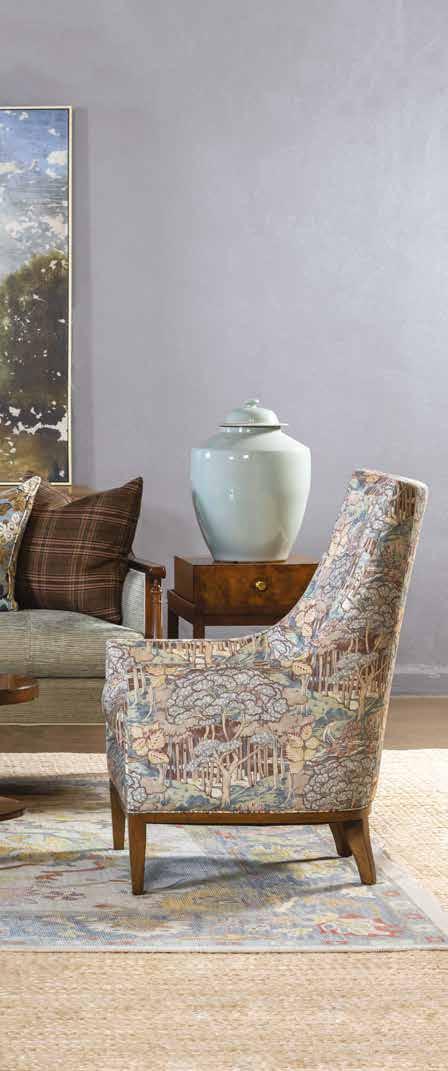
Like the first blush of a slowly unfolding romance, this space lingers somewhere between memory and daydream. Soft blues and muted greens are gently layered and drift through it like a familiar melody — tender, unspoken, and quietly beautiful.
It feels like something that has always been here, waiting to be noticed. An intimate place where time doesn’t rush — it softens.
And like any good love story, it is meant to be felt, lived in, and remembered.
Come experience it for yourself. We will be waiting for you.








The
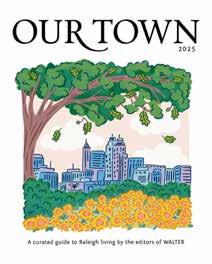
Pick up Our Town, an insiders guide to Raleigh living from the editors of WALTER.
This annual guide is full of ideas for where to eat, drink and shop — plus suggestions to rediscover the neighborhoods, museums and parks that make Raleigh a vibrant place to live, work and play. Find a copy at WALTER partner sites including:
Fink’s Jewelers
Great Outdoor Provision Co.
Haydon & Company
If It’s Paper
Reliable Jewelry
The Umstead Hotel & Spa


Scan below to have a copy mailed to you: waltermagazine.com/ourtown
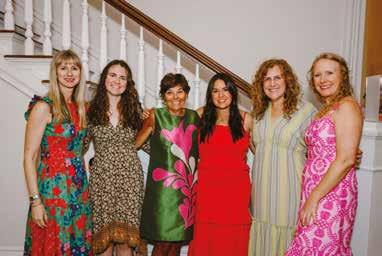
This month, I will celebrate a milestone birthday, one that — had there been any doubt before — plants me firmly in middle age. And as much as I love my birthday (truly, the countdown begins in December) this one, as the kids say, hits a little different. Certainly, many of the recent conversations within our friend group have touched upon the indignities of aging. Wrinkles, age marks, body parts shifting southward, whether or not to dye the grey hairs as they appear. I’ve noticed more grunting and groaning when folks go from sitting to standing (or vice versa), more pops and aches during my workout classes. Recently, I was squinting at a girlfriend’s house as I helped her with a puzzle — quick as a wink, she whipped out an extra pair of reading glasses for me. At least we’re all on the same page!
But halfway through one of these conversations, another friend stopped us. Isn’t that the goal? she asked. To live long enough that we get old and decrepit?
The thought gave us pause. Over the past few years, dear people in our orbit have suffered heartbreaking losses — children, spouses, siblings, parents — loved ones lost well before their time. Suddenly, those things we’d been complaining about seemed like something to
be grateful for, instead.
So heading into this year, my goal is to embrace these signs of aging, to reframe our conversations about these changes we’re experiencing. We might still swap tips on skincare, protein, fiber, vitamins and, not to get too specific here, comfortable shoes we can wear so our feet/hips/ backs don’t ache after walking around Washington, D.C., for three days with a bunch of fifth graders on a field trip. (Who, we observe, are wearing their Crocs-with-socks — Crocs — for 10,000 steps a day without complaining.)
But I’ll also choose to believe that my progressive lenses and wrinkles lend me gravitas; I’ll try to remember that those grunts and pops are signs that I’m still going strong with my hot pilates and aerobics classes at the YMCA. (And lifting heavier dumbbells than ever — though not a number worth publishing.)
And I’ll keep on counting down the days until my birthday, even though that’s as sure a sign as any other that I am, indeed, getting older.

Ayn-Monique Klahre Editor



2026
PUBLISHER
DAVID WORONOFF
EDITORIAL
Editor
AYN-MONIQUE KLAHRE ayn-monique@waltermagazine.com
Creative Director
LAURA PETRIDES WALL laura@waltermagazine.com
Associate Editor
ADDIE LADNER addie@waltermagazine.com
Contributing Poetry Editor Jaki Shelton Green
Contributing Copy Editor Finn Cohen
Contributing Writers
Jim Dodson, Mike Dunn, Hampton Williams Hofer, Colony Little, David Menconi, Rachel Simon, Tommy Tomlinson, Lori D.R. Wiggins, Helen Yoest
Contributing Photographers
Liz Condo, Mehmet Demirci, Melissa Dowland, Terrence Jones, Malcolm Little, Forrest Mason, Matt Ramey, Joshua Steadman
Contributing Illustrators
Alia El-Bermani, Gerry O’Neill, Gary Palmer
Editorial Intern Lily Kane
BUSINESS
Advertising Sales Manager JULIE NICKENS julie@waltermagazine.com
Senior Account Executive & Operations CRISTINA BAKER cristina@waltermagazine.com
Finance HENRY HOGAN 910-693-2497
Distribution JAMES KAY Owners
JACK ANDREWS, FRANK DANIELS III, DAVID WORONOFF In memoriam FRANK DANIELS JR.
GENERAL Inquiries
WALTER OFFICE 984-286-0928 info@waltermagazine.com
Address all correspondence to: WALTER magazine 421 Fayetteville Street, Suite 104 Raleigh, NC 27601
WALTER is available by paid subscriptions for $36 a year in the United States, as well as select rack and advertiser locations throughout the Triangle. Subscribe online at waltermagazine.com/subscribe
For subscription and customer service inquiries, please email us at customerservice@waltermagazine.com or call 984-286-0928. WALTER does not accept unsolicited manuscripts. Please contact Ayn-Monique Klahre at ayn-monique@waltermagazine.com for freelance guidelines.
© WALTER magazine. All rights reserved. No part of this publication may be reproduced in any form without the express written consent of the copyright owner. Published 12 times a year by The Pilot LLC.

Everyday, we work to deliver hope. Hope powered by science.
When someone you love needs cancer care, you want to give them the very best. Specialists across every aspect of care. The most innovative clinical trials. A tailored treatment plan based on the latest breakthroughs and research. At UNC Health Cancer, we do these things every day. Everything we do is informed by the world-changing discoveries we make. We have experts in every cancer specialty, covering every corner of the state. With hundreds of clinical trials powering breakthrough treatments. Here, compassion and innovation go hand-in-hand.
Visit unchealth.org/cancer to learn more.


Amanda Bennett is a poet, public humanities practitioner and Carrboro Poet Laureate. She is the author of Working the Roots and holds a PhD in Literature from Duke University. “I wrote this poem from the feeling that the South is not only a geography, but an inheritance and orientation toward the world. For me, Black Southern life honors history, spirit and revelation at once — keeping one eye on the sparrow, one eye on freedom and both feet planted in the ground of our ancestors.”
Matt Ramey is a North Carolina native whose work has appeared in Vanity Fair, The New Yorker, AP, The Guardian, The New York Times and Garden & Gun. He is the principal photographer for the National Humanities Center and teaches photography at North Carolina State University via the Craft Center. “I have worked with Tift on multiple occasions and it’s always a treat. Sharing our NC upbringing, we bonded instantly — and I think that relationship really shines in these photos. There’s a trust in making portraits that can’t be faked. Tift is kind, generous and a wonderful subject.”
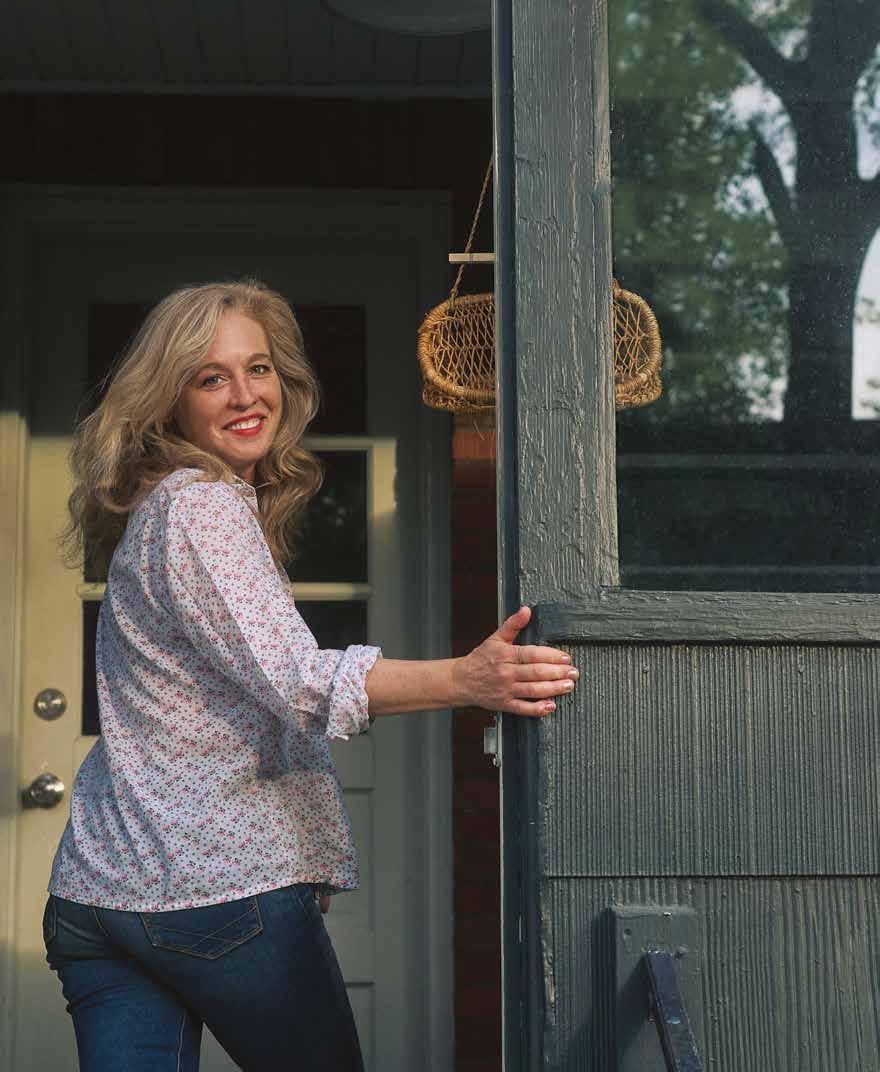
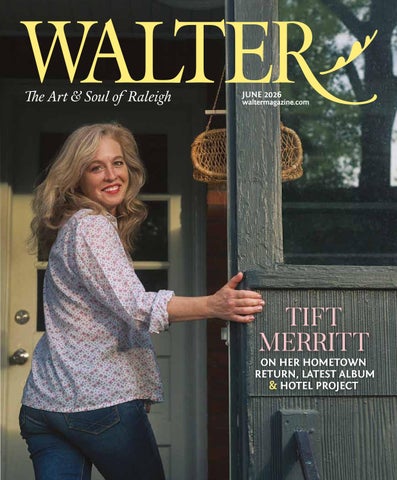
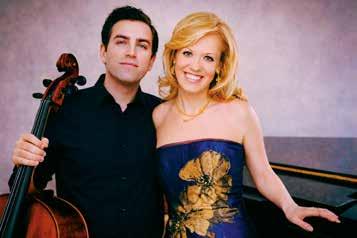
David Menconi has been writing about Tift Merritt for three decades, interviewing her everywhere from the subterranean environs of Chapel Hill’s The Cave to on an airplane bound for the Grammy Awards. For this month’s cover story, he spoke to Merritt at her new venture, Gables Motor Lodge, which is scheduled to open in July. “You were the first person who ever wrote about me,” Merritt told him. “So you really have seen the whole thing.”
LORI D.R. WIGGINS / WRITER
Lori D.R. Wiggins in a longtime journalist with roots in South Carolina newsrooms, The News & Observer, and regional and niche publications. Writing about The Firebirds was particularly special: “I learned to swim at Pullen Park starting in the late 1960s, soon after the public pools were integrated. My father was one of the first Black pool managers for Raleigh city pools, working at both Pullen and Chavis. He was a teacher; this was his summer job. For years, my sister and I spent our summers at the pool with him. We usually were the only Black kids there, except the lifeguards Daddy hired. But at the time, to echo Firebirds dad Arthur Thompson III, we had no idea what we were a part of!”
We also got lots of comments on “A Visual Language,” our feature on graphic artist Paul Tuorto...
“No words to describe how impactful and humble this dude is. What a nice guy too. Very fortunate to know him and the rest of his sweet family. Here’s to many more years of success for you Paul, a much deserved recognition!”
— Sunil Patel
“I was just at Benchwarmers yesterday admiring how cool that design was, Paul. Makes sense now.”
— Jordan Smalls
“More like Sir Walter Paulie.” — Casey Robertson
We also got lots of love for “Singing in the Silo,” about Triangle music collective Weirs...
“Looking forward to their ‘Fly Around’ set this summer.”
— Chris Jude
“North Carolina diamonds!”
— Laura Mooney
“This is a really special band. Really glad that they’re getting some much deserved press. You must see them live. It’s like going to church for those like me who don’t go to church.”
— Eric Chen
Finally, some love for “Support System,” our piece about Filotimo Foundation...
“My husband and I are hiking the 30-mile Extreme Hike for Cystic Fibrosis and are hoping our fundraising efforts help make a difference!”
— Ashlyn Whitford
“Incredible.”
— Alexandra Roulston





After years as friends and neighbors, Dogwood State Bank and TowneBank are coming together – joining hands and hearts to bring Main Street Banking to the Carolinas.
We welcome Dogwood as a Division of TowneBank.
This month, savor the start of summer with outdoor music, food festivals, live theater and Pride celebrations!
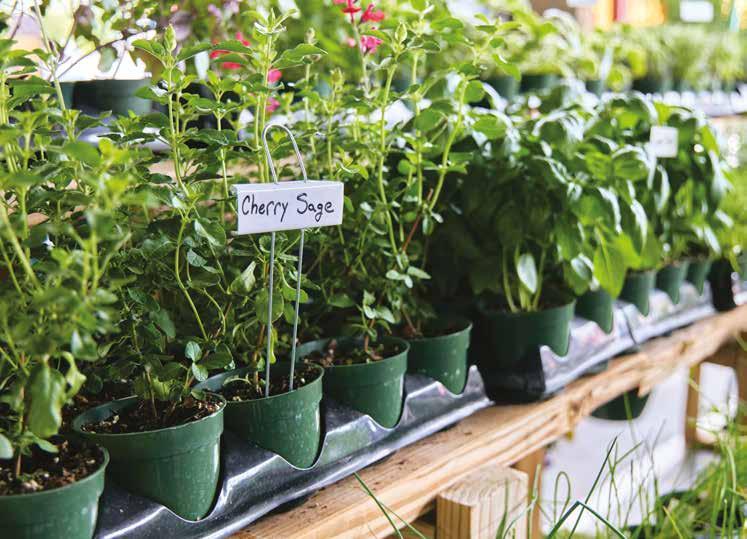
GREEN IT UP Come summertime, you hear a lot about tomatoes and peaches — but don’t forget to stock up on the season’s unsung culinary hero: herbs. “I use herbs not like a garnish, but an ingredient,” says Cheetie Kumar, the chef and co-owner of Ajja and Big Cat. “They can bring out acidic notes, sweetness or spice without hitting you over the head with flavor.” To cook like a chef, don’t buy herbs in clamshells — instead, head to Asian and Latin grocery stores or the NC State Farmers Market to find them in bigger bunches (Kumar recommends Ronnie Moore’s Fruits & Veggies, 8 a.m. - 5 p.m.; 1201 Agriculture Street; ncagr.gov); you can also get potted herbs and grow them at home.
“Adding herbs not only adds complexity and texture, but allows a dish’s flavor to unfold in a new way,” she says. Along with favorites like sweet Genovese basil (which Kumar likes on tomatoes and peaches), parsley, mint or dill, keep an eye out for lesser-known herbs like bronze fennel, purslane or anise hyssop to elevate your summer meals. — Addie Ladner



WALTER’s list of things to see, do and experience this month
by ADDIE LADNER
LIVE AFTER 5
June 4 & 18 | 7 p.m.
Live After 5 offers a chance to explore different vendors, support local businesses and purchase delicious foods and alcoholic beverages — all while dancing along to your favorite songs. This block party-style evening is the perfect excuse to stay downtown for a post-work hangout with friends or to head in with the family for a casual dinner and a show. June brings two installments of the event. On June 4, head to Moore Square to hear Chatham County-based musician River Shook and their unique blend of Americana, country and indie stylings. On June 18, AZUL will be performing at Union Station. Expect to hear Latin-inspired electronic beats from this Raleigh-based Argentinian-American singer. Free; downtown; downtownraleigh.org

June 1 - 21 | Various times
Head to North Carolina State University for this annual celebration of all things theater-related, from acting to scripts to props to lighting. TheatreFEST includes a variety of plays, scriptwriting workshops and a block party at the end. Catch performances like the high-camp, Gothic melodrama The Mystery of Irma Vep (May 28 – June 14; Kennedy-McIlwee Studio Theatre) or

the Agatha Christie murder mystery classic Towards Zero (June 11 – 21; Titmus Theatre). On June 13, there’s an open house with several free, theatermaking activities to enjoy (Thompson Hall). You can also take a stab at being a director, writer or even an actor at QuickSCRIPTS, a fast-paced evening of 10-minute, interactive plays produced with audience participation (June 21). Various prices; multiple locations on NC State campus; theatre.arts. ncsu.edu
Now - June 21 | Various times
Head to Sertoma Arts Center to see Boro Land: Layered Worlds, an exhibition of tapestries by artist Adam Cooley. His work is made entirely
of recycled and reclaimed textiles, an homage to the Japanese tradition of “boro,” a practice of patching and mending clothing and home goods, and serves as a call to recognize the beauty of sustainable reuse. Boro Land, which has been exhibited around the United States and Japan, is one of the last exhibits at Sertoma before the arts center closes down for renovations later this summer. Free; 1400 W. Millbrook Road; raleighnc.gov/arts
All information is accurate as of press time, but please check waltermagazine.com and the event websites for the latest updates.



May 27 - June 1 |
Various times

Part high-stakes tournament, part festival, The Soccer Tournament offers six days of intense play, with more than 60 teams playing 130plus matches — with the winning men’s and women’s teams taking home a milliondollar prize. Expect star players from major teams in both the national and international spheres, including Club América, the most decorated team in Mexico’s Liga MX, and Villarreal CF of Spain’s La Liga, returning for their fourth year running. In between all the exciting soccer matches, enjoy pop-up shops, youth soccer activations, autograph signings and international food options. From $20; 101 Soccer Park Drive, Cary; tst7v7.com

Various dates | Various times What sounds more like summer than the crack of a bat? The Durham Bulls will be hosting two rounds of home games this month, against the Charlotte Knights (June 2 - 7) and the Jacksonville Jumbo Shrimp (June 1621). Keep an eye out for the June theme nights, including Pride Night (June 4) and African American Heritage Night (June 19), as well as ongoing traditions like the Saturday night fireworks and Kids Run the Bases on the earlier Sunday games. From $16; 409 Blackwell Street, Durham; milb.com/durham
KARAOKE + COMEDY OPEN MIC
June 3, 10, 17 & 24 | 7:30 - 11:30 p.m. Break up the workweek by heading to Karaoke + Comedy Open Mic, an ongoing Wednesday night event at Cannonball Music Hall in Raleigh Iron Works’ Salvage Yard. There, you can expect a variety of open mic performances, karaoke and comedy. On the stage: everyone from newcomers to well-loved performers — or, perhaps, yourself? Get there at 7:30 p.m. to sign up for a slot, or swing by anytime (the show goes ’til late!) and see what the night brings. Free; 2304 Atlantic Avenue; raleighironworks.com
June 3 - 21 | Various times
Dear Evan Hansen became an instant classic when it premiered on Broadway 10 years ago, telling the story of a high school student’s struggle to
belong. Now Theatre Raleigh is bringing the story to life with a cast that includes Broadway veteran Catherine Brunell and newcomer Jason Thomas Clyde. With its honest depiction of the challenges of coming-of-age and its soaring score, this musical is sure to tug at the heartstrings. From $42; 6638 Old Wake Forest Road; theatreraleigh.com
June 5 | 7:15 p.m.
The second installment of the Raleigh Parks’ First Friday Market & Movie Night will feature Puss in Boots: The Last Wish. This 2022 animated movie follows the titular character, along with his companions Kitty Softpaws and Perrito, on a quest to find a magical treasure. On the way, they encounter all sorts of quirky fairy-tale characters — and Puss is hunted by a mysterious wolf. Get there early to set up a picnic area, shop
the market, grab something to eat from the food trucks and enjoy live music. Free; 201 S. Blount Street; raleighnc.gov
June 5 - 28 | Various times
Based on the hit Jack Black movie and featuring new music by Andrew Lloyd Webber, School of Rock – The Musical is a fun-filled underdog story. It follows Dewey Finn, a down-on-his-luck rocker who talks his way into a job as a substitute teacher at a prep school. Under his tutelage, his straight-laced students start letting their hair down — and rocking out. Head to the show with the kids or friends for a fun-filled night with thumping tunes. From $33; 301 Pogue Street; raleighlittletheatre.org
June 6 | 1 - 4 p.m.
Now in its fourth year, Parlor Pride is a lively celebration on the grounds of the
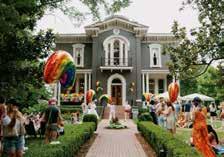
stately Heights House Hotel in Boylan Heights! This festive afternoon features mini golf, on-site tattoos, food trucks (including Kenny’s Smash Burger and Bold Batch Creamery Ice Cream) and a live DJ. The hotel’s Parlor Bar will also offer outside service with its signature cocktails, wine and beer. But the star of the event is its live drag performances, hosted by Chloe Cassidy. Free with reservation; 308 S. Boylan Avenue; exploretock.com




Various dates | 8 p.m.
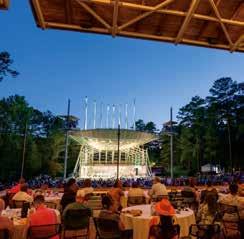
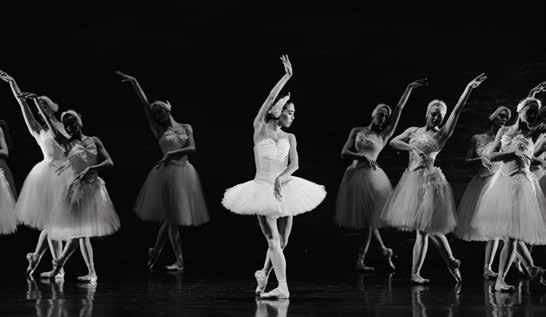
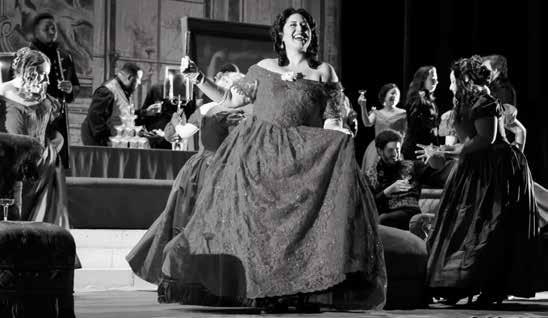
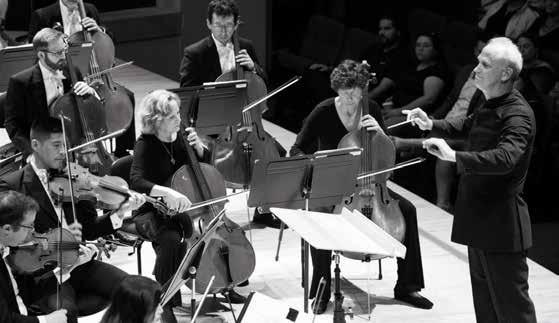
The North Carolina Symphony’s popular Summerfest series brings a range of performances to Koka Booth Amphitheatre. Classical music fans will enjoy Swan Lake Selections (June 5), Mozart by Moonlight (June 20) or Classics Under the Stars (June 26). For those with more pop-y tastes, consider Space Spectacular: Star Wars & More (June 6), Under the Sea (June 13) or The Music of Billy Joel with Tony DeSare (June 27). And in honor of our country’s 250th birthday, they’re offering Patriotic Pops (June 12). Bring your lawn chairs or blanket, pack a picnic and (new this year!) set up with flameless candles to add to the ambiance. From $50 for adults (kids free on the lawn); 8003 Regency Parkway, Cary; ncsymphony.org
June 6 | 11 a.m. - 9 p.m.
Skip the airfare: the International Food Festival brings the world to downtown Raleigh. More than 120 food purveyors representing over 50 countries will be on hand serving authentic global fare — think shawarma bowls, curry, crepes, Italian ice and plenty more. Between bites, catch mesmerizing live music and dance performances from cultures around the world on the City Plaza and Hargett Street stages. The

Truly unique among life plan communities, Hayes Barton Place offers residents exceptional amenities and an unparalleled lifestyle in one of Raleigh’s most sought-after locations.
Until now, Hayes Barton Place has offered rental opportunities only, but with the introduction of Welham Commons, you can enjoy ownership in this luxury community — with all the benefits that brings. You’ll have the flexibility to sell and move, designate your home as inheritance, and enjoy the equity gains that contribute to estate values. Visit HayesBartonPlace.com or call 919.803.6734 to learn more.


evening closes with a festival-wide dance party. Free; 443 Fayetteville Street; theinternationalfestival.org
June 6 |
7:30 p.m.

Khalid is making a stop at Raleigh’s Red Hat Ampitheater on his “It’s Always Summer Somewhere” tour for a sultry night of R&B, pop and hip-hop. Expect songs from his 2025 album, After the Sun Goes Down, as well as earlier hits like “Young Dumb & Broke,” “Better” and “Location.” Opening for Khalid is pop artist Lauv, who’ll be singing his hit “I Like Me Better” along with his signature high-energy electropop and R&Binfluenced tunes. From $32; 500 S. McDowell Street; redhatamphitheater.com
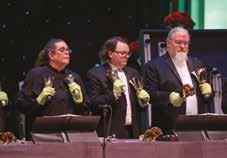
SPRING CONCERT
June 7 | 3 p.m.
Our award-winning handbell choir is known for playing a surprising breadth of pop, rock and classical tunes. Its Spring Concert will also feature Virtuoso, a group of advanced handbell ringers from across the country. It’s the culmination of three days of practice and collaboration under artistic director Dr. William Payn that’s as valuable to the performers as it is to the audience. From $20; 2 E. South Street; rr.org

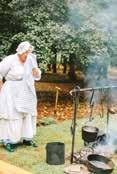



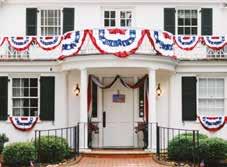

Saturday June 27 10:00am - 4:00pm
Step back in time as we celebrate the 250th anniversary of the American Revolution with a return of Drums of Liberty!
· Reenactor encampment · Family-friendly · · Live demonstrations · Hands-on activities · · N.C. Wyeth exhibit · Period Music ·


Scan the QR code for tickets and additional information!
June 20 | 2 - 6:30 p.m.
Celebrate freedom, culture and community at the Capital City Juneteenth Celebration at Dorothea Dix Park. This free, family-friendly event will feature live entertainment, kids’ activities, local food trucks and a vendor marketplace showcasing Black-owned businesses. Details were still to come for the 2026 celebration as of press time, but expect rousing performances and talks on the caliber of last year’s featured talent: The 82nd Airborne Division Chorus and Mo’Jazz, plus talks from Shaw University’s Dr. Paulette Dillard and WQOK’s Brian Dawson. Free; Harvey Hill, Dorothea Dix Park, 1030 Richardson Drive; dorotheadixpark.org

June 20 - 21 | Various times
For 69 years, sailors have made the pilgrimage to the breezy waters of Kerr Lake for the Governor’s Cup Regatta — one of the Southeast’s longest-running sailing traditions, organized by the Carolina Sailing Club. The two-day event features five races run in shifting wind conditions, with sailors competing for the namesake cup. Clubs travel from up and down the East Coast to take part, creating a lively waterfront gathering. Amateur sailors looking to enter a team of their own are welcome — registration remains open. Free to spectate; 6254 Satterwhite Point Road, Henderson; carolinasailingclub.org









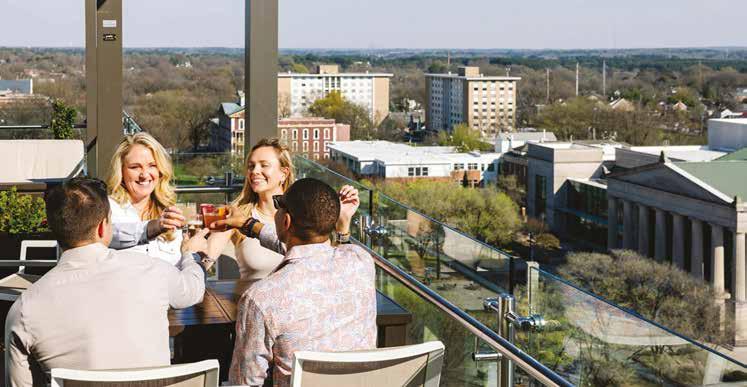
These Raleigh bars offer crafted cocktails with skyline views
by ADDIE LADNER
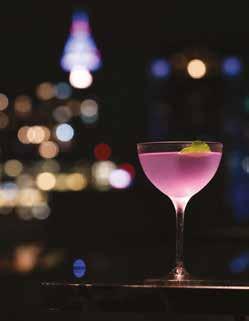
As the days get longer, take an evening to enjoy golden hour with a view of our evolving skyline. These rooftop bars offer big-city vibes and craft cocktails, a combination that can make you feel like a tourist in your own town. Add a gentle breeze as the sun sets, and you’ve got the perfect recipe for a fun night out with friends or romantic evening with a partner.
Find contemporary American small plates with North Carolina accents in this chic, modern space on — as the name suggests — the 10th floor of the Residence Inn. The menu rotates weekly to keep things fresh, with standouts like short rib tacos and a trio of housemade hummus dips served with toasted pita and crudités. With both an inside dining lounge and outside patio, it’s conveniently located steps from Red Hat Amphithe-
ater and the Martin Marietta Center for the Performing Arts, making it a natural choice for a pre-performance drink. Keep an eye on the calendar for special events, like complimentary wine tastings. 616 S. Salisbury Street; 10thandterrace.com
This three-level, floral-themed venue on Glenwood South offers a plethora of opportunities for entertainment, from post-work drinks to a big night out. Food and drink go hand in hand here, where they prioritize fresh, high-quality ingredients and fun presentations for their menu of cocktails and tapas-style snacks. Plus, they’ve got bubbles on draft! The rooftop level of Botanical Lounge offers panoramic views of the city skyline with lush plants at every corner for an urban jungle feel. 419 Glenwood Avenue; botanicalraleigh.com
Perched seven floors above the buzzy Seaboard Station neighborhood at the Hyatt House Raleigh Downtown, High Rail pays homage to the city’s industrial heritage with sleek design (we love those deep velvet booths!) and a globally inspired small-plates menu. Handcrafted cocktails take center stage here, served alongside shareable bites and standouts like the burger and shrimp tacos. The 21+ rooftop is built for grown-up evenings — think date nights, after-work cocktails or a sunset start before dinner downtown. Reservations are encouraged, especially on weekends. 11 Seaboard Avenue; highrailraleigh.com
This ninth-floor rooftop restaurant in The Dillon offers a blend of cuisines from Southern Italy and other Mediterranean regions, like housemade pastas, woodfired pizzas and an octopus crudo. Their cocktail menu leans fresh and seasonal, from the watermelon spritz with gin and prosecco to the Romagna old-fashioned, plus an extensive wine list. La Terrazza has two bars (one inside, one outside) with floor-to-ceiling windows throughout, so guests get spectacular views of the city from nearly every seat. 223 S. West Street; laterrazzaraleigh.com
On the seventh floor of the AC Hotel Raleigh North Hills, this chic rooftop lounge offers panoramic views of Midtown alongside a globally inspired, tapas-style menu. Sip on one of the imported Spanish wines on tap or a handcrafted signature cocktail — try the one with Maker’s Mark, Antica vermouth and Bordeaux cherries — paired with shareable small bites brimming with bold flavors and fresh ingredients. The vibe is sophisticated but unfussy, making it an ideal landing spot for date night, a post-shopping happy hour or a sunset gathering with friends. 101 Park at North Hills Street; level7roofbar.com
RH ROOFTOP RESTAURANT
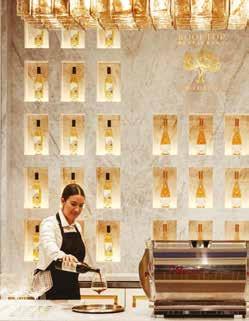
Tucked atop RH Raleigh — the furniture store’s gallery and showroom in North Hills — this polished rooftop conservatory feels more like a European garden than a traditional rooftop bar, complete with potted olive trees, sparkling chandeliers and a cast-stone fountain. The menu includes enduring classics (steak frites, grilled branzino, caesar salad), plus special splurges like its seafood tower and caviar service. To drink, find a curated wine list and signature pours like the RH Mimosa or Cappelletti Spritz. 4120 Lassiter Mill Road; rh.com
URBAN OAK ROOFTOP BAR & LOUNGE
Raleigh’s tallest rooftop bar nestles you into the skyline 14 stories up at Tempo by Hilton downtown. Two outdoor patios wrap around the building for true panoramic views, while the indoor lounge offers booths, an expansive bar and a resort-like vibe. A menu of 12 signature cocktails pairs well with shareable plates like patatas bravas, vidalia onion fritters and spicy cumin lamb meatballs — plus campfire s’mores for dessert. 200 W. Davie Street; urbanoakraleigh.com
At the edge of bustling Glenwood South, this upscale lounge atop the AC Hotel features a cool botanical mural by local artist Taylor White and plenty of seating options for groups or couples. Enjoy specialty drinks or join one of their fun events, like rooftop yoga or stargazing with the Raleigh Astronomy Club. On those nights, they offer themed cocktails — like the Supernova, a blend of Creyente Mezcal, lime, toasted coconut, triple sec and a Tajin rim. 9 Glenwood Avenue; thewillardraleigh.com
Just off the Boylan Bridge, Wye Hill offers one of the most beloved skyline views in Raleigh. There, find their signature small-batch craft beers (brewed onsite!) and Tree Time THC-infused beverages, plus innovative cocktails and a chef-driven menu with vegetarian, vegan and gluten-free options. The patio energy is laid-back and welcoming, equally suited to casual happy hours, post-work catch-ups or low-key dates. Come for the view, stay for the beer flight. 201 S. Boylan Avenue; wyehill.com
by LORI D. R. WIGGINS
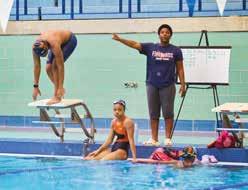
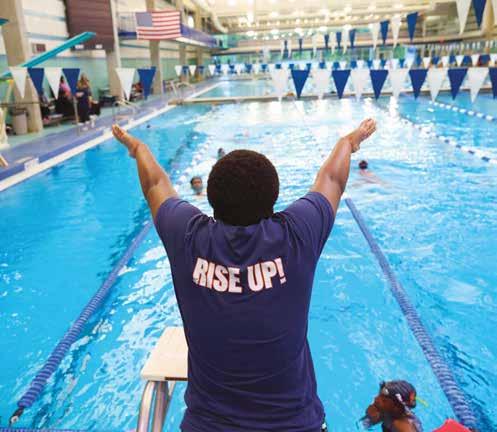
On a weekday evening at Pullen Aquatics Center, young members of The Firebirds swim team glide down three lanes, rotating drills of alternating strokes. Their coach, Zion Hall, moves along the lanes, calling swimmers by name and offering corrections, praise and pushes to go harder. For many of these swimmers, this is still new. Less than a year ago, some were unsure of the water’s welcome, others disengaged by a sport that left them feeling alone in a crowd. But now, these young people — Black, first-generation swimmers in a sport where few look like them — show up ready to learn, race, win and belong.
Their coach didn’t set out to start a movement. She’s been a competitive swimmer since she was 8, a course her
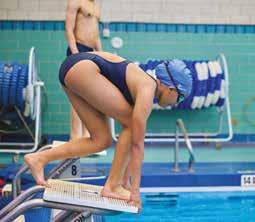

mother, Deidra Hall, never imagined for her children: “I was one of those people saying, What? No! Black people don’t swim!” she’d quipped to her husband Antoine. But her daughter persisted. “Zion really, really wanted to learn,” Deidra says. “And once she got in, she loved it.” Zion pulled her family in, too, convincing her mother to learn to swim, plus her younger brother, Judah — who’d otherwise fought to avoid the water; “Showers included!” he says — to learn to swim and compete as well.
In late 2023, Zion’s competitive swim team abruptly disbanded, leaving many first-generation swimmers like herself without a place to train or a way to stay connected to each other. Instead of joining another team or quitting the sport, Zion and her mother decided to start
their own team.
Then just 18, Hall, a former lifeguard who was homeschooled and finished college early, became a certified USA Swimming coach, a formal certification process that allowed her to step into a role that requires both technical knowledge and leadership. Her mother started a nonprofit, Champion’s Coaching, Inc., to help fund the athletes’ needs for lane space. They named their team The Firebirds, a name that symbolizes the team’s rise from the ashes. Fittingly, the team’s motto is “Rise up!”
Before long, the team earned its own certification from USA Swimming, the sport’s national governing body. Now, Zion is reportedly the youngest Black female head coach of a USA Swimming team in North Carolina. The Firebirds is the first Black woman-run swim team in the Triangle.
Zion’s mission goes beyond skills and scores; her goal is to train young athletes holistically. While rooted in BIPOC swimmer development, the team is open to everyone. By teaching
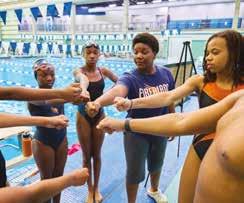
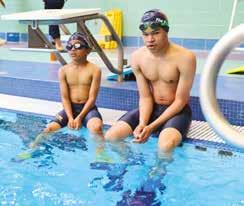
life-saving skills alongside the life-shaping skills of competition, she addresses disparities like higher drowning rates and lack of access for Black, Indigenous and other people of color while building discipline, resilience, focus and accountability. Zion’s fostering a community that is quietly redefining belonging in the sport. “I want to expose swimming as another opportunity for kids who don’t think of it as a competitive path,” she says.
Arthur Thompson III has watched his children, Arthur IV and Amor, transform. “My kids didn’t know how to swim,” he says.
By teaching lifesaving skills alongside the life-shaping skills of competition, she addresses disparities like higher drowning rates and lack of access for Black, Indigenous and other people of color while building discipline, resilience, focus and accountability.
“Within months, everything shifted.” Now they’re competing — and winning. “This team shows them the excellence they were created to have, especially in spaces where success hasn’t always felt expected,” he says. The kids even inspired their mom, his wife Christa, to learn to swim as well.
Deidra, who works with the youngest swimmers, remembers Arthur’s first jump in the pool. “He couldn’t make it halfway, and was grabbing the lane ropes all the way there,” she says. “Now, he’s with the rest of them out there killing the game!”

Like many Firebirds parents, the Thompsons intentionally chose a sport for their children that rarely sees athletes of color. “It has a dual purpose,” Arthur III says. “I don’t want them to feel like they have to fit into a box, or a cookie jar of sports. I want them in places we do not typically dominate, places that seem designed for us to lose. I want them to know that their brilliance can come from being in a minority, even if it starts with struggle.” For them, the swim-team experience goes beyond the typical benefits of youth sports: their children learn skills, discipline and teamwork, but their presence also challenges a legacy of discomfort bred by limited access to pools.
The team has become a community where lived experiences are shared and belonging comes naturally, where relationships form and support flows beyond the lanes. “Coach Zion cares, not just about the team, but about the individual,” says Troy Jiggetts, whose daughter Jael is a Firebird. Agrees her mom, Monique: “Coach Zion will get
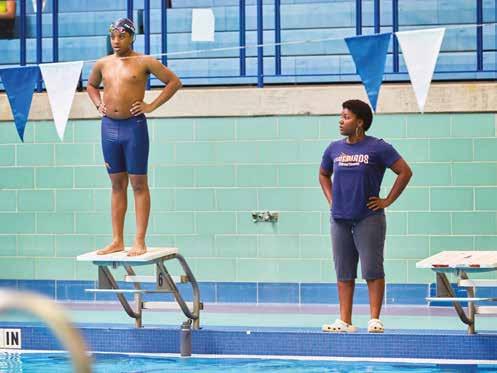
in the water with her and say, Try this, and actually show her the right technique, with no yelling.” Jael now takes the sport seriously, and embraces practice. “It definitely has helped me with all of my strokes,” said Jael, 12, who attends a Johnston County charter school.
The Firebirds have both a competitive team, the Blue Team, and a noncompetitive team, the Orange Team. Ten-yearold Emerie Hamilton is on the Orange Team, which meets twice a week to learn water safety, enhance swim skills, master teamwork and have fun. “What I love is that if they do want to try it out, see what competing is like, they have the option of competing in three meets,” says her mom, Leslie Hamilton. “Plus, I’m honored my daughter gets to see Black leadership. She’s in good hands.”
At their first long-course meet, held at Pullen Aquatic Center in April 2025, some swimmers won their first-ever heats and performed well in the finals, while others achieved motivational time standards and set early team records. Three Firebirds swimmers competed in an Olympic-length pool for the first
time. “They did phenomenal — I’m very proud of them,” says Zion.
This year, Cameron Carless was one of the ones who went for it. In his first competition, he won first place in backstroke in his heat, second place in the 50-meter backstroke and second place in the 25-meter freestyle. Even so, Cameron says, his eyes still glitter Team Orange. “It helps me get better at swimming,” he says. Not to win, he assures, but “to be safe.” For his older brother Christian, who competes on the Blue Team, his list of wins and his goals go deeper. “I lost weight. I got faster. I’ve gained confidence,” the 15-year-old Rolesville High sophomore says. Plus, Christian, who started swimming at 11 to “try a new sport,” feels himself swimming stronger in all of his strokes. “This is a very welcoming community, and the training technique is a good one,” he says. “I’m learning a lot more efficiently.”
For The Firebirds’ first few months, Zion’s brother Judah was both a swimmer and an assistant coach. Now he’s a 19-year-old freshman on a full, four-year swimming scholarship at Lenoir-Rhyne


University in High Point, where he swims the 50-yard butterfly, freestyle and breaststroke. At his first South Atlantic Conference Championships, Judah broke his school’s record in the 50yard butterfly, becoming the first Black male swimmer in the program’s history to break an individual record and medal, earning bronze.
“It was all about perseverance to get there; then, you’ve got to lock in,” he says. “Being the only Black person in the water, all eyes are on you, whether you’re the fastest or not.”
As practice winds down, swimmers climb out of the water, dripping and tired, but energized. Coach Zion gathers the athletes as one. With parting words of both instruction and encouragement, she sends them off carrying something less visible than their towels and goggles: a little more confidence, and a little more awareness of who they are than they had when they walked on deck. “It’s a great, great experience,” says Thompson, father of Arthur IV and Amor. “I don’t even know if my kids know what they’re a part of.”
Hydrangeas are lovely — if you know what you’re working with.
by HELEN YOEST
Come June, the fresh sight of early-blooming hydrangeas has me drawing a deep breath. But simply saying “hydrangeas” can mean so many things! The flowers within the Bigleaf hydrangea family can be globe-shaped (called mophead) or lacecap, in blue, purple or pink; you can also find a cone-shaped white bloom from our native oakleaf hydrangeas.
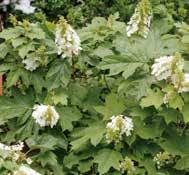
Most of what I find are the big blue, bodacious mopheads. Why blue? Raleigh’s soil is naturally acidic! If you prefer purple or pink blooms, amend the soil annually, adding one cup of garden lime, sprinkled around the shrub’s dripline, each year. (Give it time: Deep purple will appear first, then slowly transition to pink.) Common mophead varieties to look for are Nikko Blue, Endless Summer – The Original and Let’s Dance Blue Jangles.
When I come across a lacecap variety, I stop to admire it up close. Its elegant, dainty appearance comes from a mix of sterile florets and fertile flowers. Like the mopheads, lacecaps’ color can be adjusted in the same manner. Popular varieties include Blue Bird, Tiny Tuff Stuff and Twist-n-Shout.
In my home garden, I prefer the oakleaf hydrangeas. They provide four-season interest, with longer-lasting flowerheads that fade from white to dusty rose to a russet brown. They also require less water than the Bigleaf varieties and are drought-tolerant once established.

I’m often asked why someone’s hydrangeas aren’t blooming — the most common reason is improper pruning. Some hydrangeas bloom on new wood, others on old wood. If you’re not certain which kind you have, don’t prune them to the ground! Leave the stems and check for buds in early spring: if you see them, that means they bloom on old wood — leave them be, because if you cut them back, they won’t bloom next year. If you don’t see buds, feel free to cut back and wait a little longer. These blooms will come from new wood, arising from the ground.













These industrious insects have an unusual role in spreading seeds
words and photography by
MIKE DUNN
Most people I know are not particularly fond of ants. That probably stems from experiences with the insects showing up as unwanted house guests, usually in the kitchen. Or perhaps you’ve had an unpleasant or painful encounter with a couple of our exotic invasive species, like fire ants or needle ants.
But most of our ants are out there doing their thing: pollinating plants; acting as predators, prey and decomposers; and enhancing soil health by aerating it and enriching it with nutrients through their waste. Usually, we don’t even notice them.
Years ago, I learned of another very important role ants play in our ecosystems: seed dispersal. There’s even a cool name for it, myrmecochory (pronounced mur-muh-koh-KOR-ee).
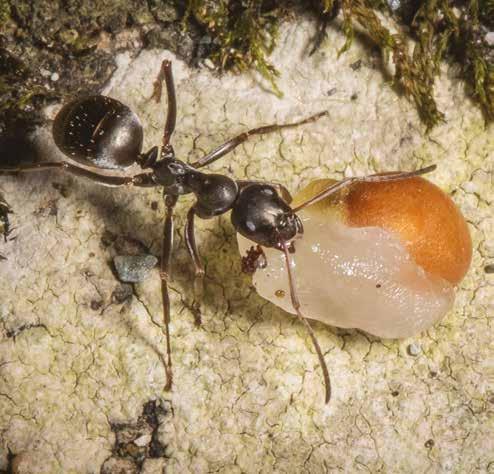
Many plants produce seeds with attached fleshy structures called elaiosomes (pronounced eh-LIE-uh-sohms) which are rich in lipids, proteins and carbohydrates.
The elaiosome is a food reward that is fed to the ant larvae (or sometimes eaten by the adult ant) when it is taken back to the nest. But why would a plant expend precious energy to create a treat for an ant?
There are potentially numerous benefits to the plant. When ants carry seeds away from the parent plant, it may provide a better growth environment for new plants by reducing competition. Additionally, by quickly transporting the seed to its nest, the ants’ behavior reduces the time the seed may be exposed to various seed predators, like birds or mice. After the ants have removed the elaiosome for food, the seed is discarded into the ant “trash pile,” which is an underground chamber filled with plant remains, dead insects and ant waste products. This is a nutrient-rich environment ideal for seed germination.
The most intriguing research I have seen focuses on the reason the ants pick up the seed in the first place. It seems that elaiosomes are rich in fatty acids, including oleic acid. The oleic acid triggers a strange behavior in some species of ants. E.O. Wilson, the dean of ant researchers, showed that a dead ant starts emitting oleic acid about two to three days after its death. This is a signal to other ants to pick it up and carry it to their trash pile to help prevent the spread of disease in the nest. When Wilson added a drop of the “dead ant” acid to a live ant, it was quickly picked up and carried to the ant trash pile, in spite of its thrashing and obviously living qualities.
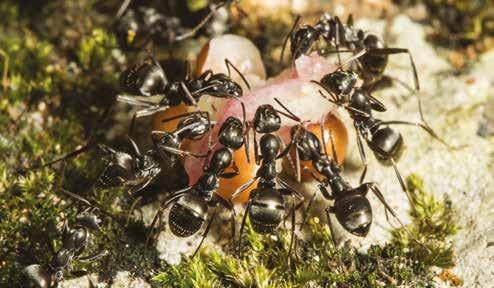
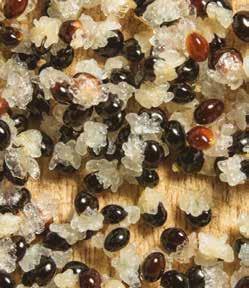
The oleic acid in elaiosomes seems to trigger the same carrying response, making the ants carry the seed/elaiosome combo back to the nest. They remove the nutrient-rich appendage as food and then take the seed itself to the trash pile.
We don’t fully understand the intricacies of this ant behavior, but it may mean that plants mimic an insect chemical in order to get ants to carry out their seed-dispersal tasks. It is a fascinating topic to ponder. Whatever the reason, myrmecochory is an incredibly important phenomenon. Estimates are that 3040% of our spring-blooming woodland flowers rely on ants for seed dispersal and that elaiosomes occur in over 11,000 plant species worldwide!
After learning about ant seed dispersal, I wanted to photograph it. My first attempt was a few years ago in Raleigh. I had attended a plant rescue (when volunteers go to a site prior to development and remove plants, with permission) and planted a couple of trout lilies in the yard. I collected the seeds and laid them out on a piece of paper, hoping to see some ants come and collect them. I went inside to get my camera, but it seems I stayed in for a little too long, because when I returned a short while later, all the seeds were gone.
I finally got a photo on a trip to Great Smoky Mountains National Park. I stopped to photograph some wildflowers and noticed the distinctive leaves and seed pods of a clump of bloodroot. I could see one of the pods had split open and there were only a couple of seeds visible inside, so I looked on the ground below.
The bloodroot seed looked a bit odd, not much like the seeds you buy to plant in your yard — this seed looked like it had a polka-dot slug riding on it. That odd-looking thing was the elaiosome. I looked around the plants and found several ants crawling about. I waited only a few minutes before an ant found one of the seeds. The ant quickly picked up the seed and struggled to carry it off, presumably to its nest. It used the elaiosome as a handle (the slick coating of the seed would undoubtedly make it more difficult to carry without this fleshy appendage).
Then, one day when I was working at the North Carolina Botanical Garden, a coworker alerted me to an ant frenzy on a trillium plant. It was after closing time, but I spent the next hour watching a group of ants dismantle a seed pod and carry off the lipid-rich prizes to their underground nest about 6 feet away. The seed pod was cracked open and ants were
tugging at seeds inside. When one was freed, one or two ants would struggle to get it out of the pod. Then it was carried to the nest, using a similar path in each case, which included a drop off of a large rock. The ant would go to the edge, pause and then simply fall off the rock, holding onto the elaiosome!
This behavior happens every spring and summer in our yard in Chatham County, where we have a variety of other native wildflowers that produce elaiosomes including hepatica, squirrel corn, bleeding heart, spring beauty, wood poppy, wild ginger and violets. Many of these plants require a few years after germinating to produce their first flowers. We have observed the spread of some of our favorite plants, like trout lilies and bloodroot, due to the activities of the ant seed dispersers. We now have patches of some of these gorgeous wildflowers several feet away from where I originally planted them, in areas that I presume were the locations of ant nests.
So now we give thanks that we have ants in our plants. There’s a lot going on out there that we are just beginning to understand. All the more reason to plant some native plants and get outside to observe your wild neighbors.


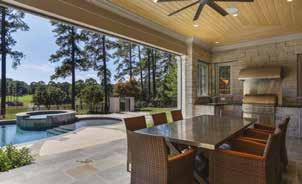
At Wellington Reserve, outdoor living is an everyday indulgence. Thoughtfully designed homes feature expansive outdoor spaces with shimmering pools, relaxing sunning ledges, and serene spas—perfect for unwinding, entertaining, and enjoying resort-style living right at home.



Deeply Rooted in place, people, and possibility, Eastern North Carolina is defined by the stories of those who call it home.
More than a logo or tagline, this identity celebrates the communities, culture, and industries that shape our region while amplifying authentic voices.
From chefs and fishing guides to artists, writers, and small business leaders whose lives and work are deeply connected to Eastern NC.
Designed to strengthen the price, build connection, and elevate rural voices, this brand showcases Eastern North Carolina as a place to live, work, and stay, and build what’s next.


Scan here to experience Eastern North Carolina.
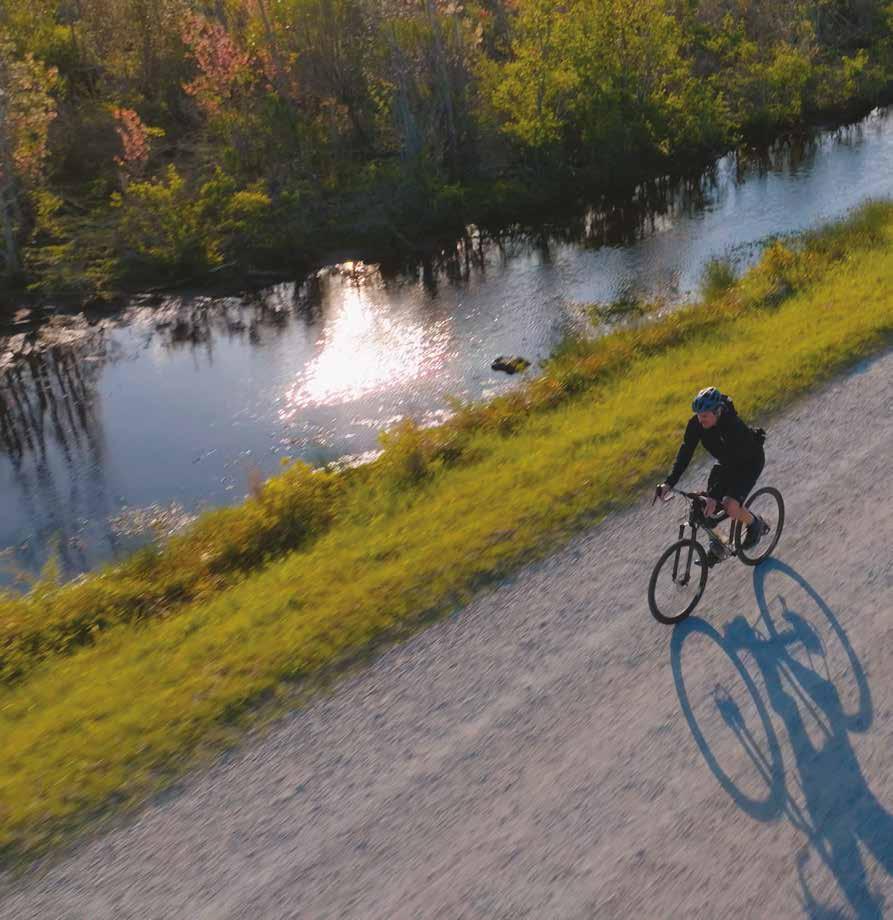
Deeply rooted is brought to you by the NC East Alliance, the organization leading the way to a robust, revitalized Eastern North Carolina.
For more than 30 years, Mario Longo has been bringing Italian food to the Raleigh area
by RACHEL SIMON photography by FORREST MASON
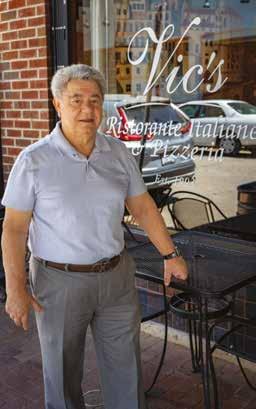
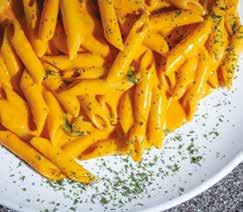
f you’ve eaten Italian food in the Triangle sometime over the last four decades, there’s a decent chance you have Mario Longo to credit. The Italy-born owner of Raleigh’s beloved Vic’s Ristorante & Pizzeria franchise has opened no fewer than 20 heritageinspired restaurants since he moved to North Carolina in the late 1970s — and that was all before taking over the Moore Square eatery. And as anyone who’s ever enjoyed the penne alla vodka or fried calamari at Vic’s can attest, the now-77year-old Longo definitely saved the best for last.
Since its 1993 launch, the family-run restaurant has become one of Raleigh’s go-to Italian dining options. As its footprint has grown — Vic’s now also has locations on Lake Boone Trail, Glenwood Avenue and in Triangle Town Center, plus locations in development in North Raleigh and Wendell Falls — its reputation for “authenticity” has remained steady, says Longo. “There are a lot of
places that open up with Italian names, but they aren’t from Italy,” claims the restaurateur. “If you try my food and then try the other food, you see the difference.”
Born in Calabria, Longo first came to America as a teenager, armed with zero English but an entrepreneurial spirit he immediately put to use. After stints washing dishes and doing similar odd jobs in U.S. cities, including Brooklyn, he moved to Cary in 1979. Here, he started a family with his wife Lucia and launched a pizzeria at what was then the Cary Village Mall. In the early 1990s, after a series of short-lived restaurant attempts, Longo and a business partner learned that the owner of a casual pizza joint in City Market, the titular Vic, was looking to sell. Despite the risk of setting up shop in what was then an unpopular location, the duo opted to “take a big chance,” Longo recalls. “I saw potential.”
A few months later, he bought out his business partner to become Vic’s sole
owner, keeping the restaurant’s name but changing nearly everything else.
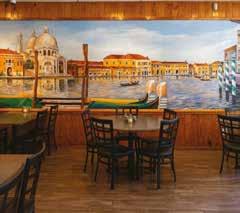
Longo transformed the to-go spot into a sit-down eatery with a long list of homemade entrees and high-quality wines imported from Italy. He had the walls covered in murals depicting scenes from his home country and filled the shelves with collected decor.
Longo’s Calabrian origins also heavily influenced the restaurant’s menu. Dishes like the calamari fra diavolo incorporated the Southern Italian city’s famous love of spice, while vegetable-heavy options like the portobello alla baggio made use of Calabria’s staple ingredients. Longo hired a chef hailing from Naples to educate the staff on Italian pasta-making techniques while relying on his own experience operating New York pizzerias to create all his pies’ sauces and doughs from scratch. To date, the owner says, every one of Vic’s dishes is made “fresh and à la carte” for customers, created “right on the spot.”
As the restaurant gained attention,
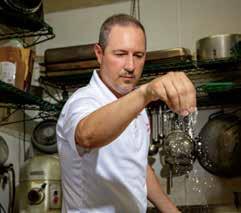
Longo put his three children to work, and all stayed on board: Michael, now 43, runs the Glenwood location and will oversee Wendell Falls after its expected January 2027 opening; Mario Jr., now 45, is the owner of the Lake Boone outpost; and Mia, now 39, runs City Market alongside her father. Their matriarch Lucia, now 69 and an avid baker, heads up desserts like Vic’s legendary tiramisu and limoncello cake.
linguine and regulars who have eaten at Vic’s for decades, its pizza and pasta adorning their whole lives. “We’ve seen kids in strollers come through here, and now they have families of their own,” says Michael.
“I was fortunate enough to have learned from the best.”
MICHAEL LONGO
“I was fortunate enough to have learned from the best,” says Michael of working alongside his father. “My dad definitely showed me the ropes.”
Over the years, all of the Longos’ continued involvement has given the restaurants a family-friendly atmosphere as inviting as their aromas. On a given night, you can find high schoolers grabbing slices before a big dance, tourists enjoying heaping portions of
For some loyal patrons, the menu at Vic’s is only part of why they keep coming back. “Vic’s helps the community,” says Claire Bigham, a 28-year-old Raleigh social worker. The restaurant sponsors the Raleigh chapter of the LGBTQ+ athletic league Stonewall Sports, Bigham explains, and she and her teammates find herself at the restaurant for post-game meals “almost every week.”
That loyalty goes both ways. During the COVID-19 pandemic, which caused small businesses all over the Triangle to permanently shutter their doors, it was Vic’s devoted fanbase that kept it from meeting the same fate. “The community here helped us out,” says Michael, remembering how customers bought Vic’s pizza ingredients to make at home and downtown building managers ordered pies for their tenants. Adds Mario: “They helped us a little bit here, a little bit there. We made it.”
Within a few years, the owner says, he’ll likely step back and pass his duties fully onto his children, who plan to continue growing the Vic’s name across the Triangle. “I want to keep it alive, keep it going,” says Michael. He, in turn, hopes to show his own 8-year-old daughter the legacy of his family business.
For now, though, Mario can still be found working behind the City Market counter or sitting out on its patio every day, proudly watching the restaurant’s steady stream of customers new and old.
“Ever y year, we add something, we take something, but we keep it going,” Longo says. “33 years, and I’m still here.”
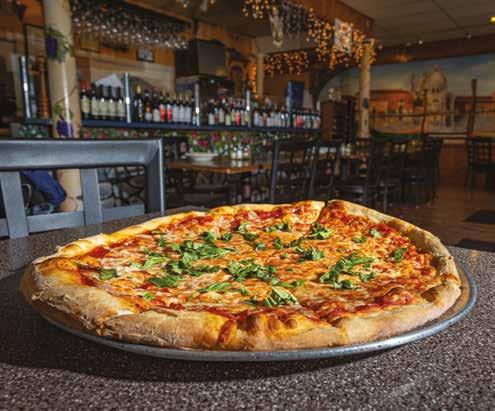
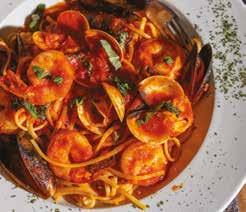
Clockwise from top left: Linguine alla pescatora; a mural inside the restaurant; penne alla vodka; Michael Longo.

The Oaks at Whitaker Glen is ushering in an exciting new chapter, elevating every aspect of the senior living experience in Raleigh.
We’re thrilled to introduce the centerpiece of our community, The Clubhouse, featuring 1-, 2-, and 3-bedroom penthouse-style apartments designed for those who expect the extraordinary.
Our community expansion will feature thoughtfully curated spaces for health and wellness, along with skilled nursing, assisted living, and pharmacy services, ensuring every resident receives seamless support and personalized care, now and for years to come.



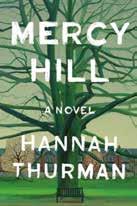
Hannah Thurman’s debut novel explores a family living in the shadow of a mental health institution
as told to AYN-MONIQUE KLAHRE
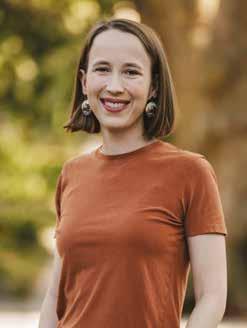
Raleigh native Hannah Thurman has written her first novel — and locals will find it full of references to her hometown. Mercy Hill is a coming-of-age story centered around four brilliant sisters who live on the grounds of a state mental hospital that’s run by their mother. The setting is both insulating and isolating, informing their perspectives about relationships, health care and their responsibility towards others in unique ways. We sat down with the author to learn more.
HAVE YOU ALWAYS BEEN A WRITER?
I am a proud product of the University of North Carolina at Chapel Hill’s creative writing program! After I graduated in 2011, I moved to New York City. I got a job at an advertising agency, but kept writing as a hobby and a passion. I thought I might be a short story writer, but I did have some ideas for novels. I did most of the writing for what became Mercy Hill in 2019, but then I had a baby, so it took a while to get it to publishers.
DO YOU HAVE A BACKGROUND IN HEALTHCARE?
I don’t have an academic training, but the agency I work at does pharmaceutical
marketing, so I do have a lens on mental health and how the way it’s been managed has changed over time. We have more tools now.
HOW DID YOU CHOOSE THE SETTING?
The idea of setting the story at a fictionalized Dix Hospital came from the fact that my mom worked there in the 1980s. She was a speech therapist, and got an offer to live on the grounds, but never did — though in writing the book, I have come across a lot of people who grew up on the grounds of a similar institutions. I thought that would be an interesting premise: What kind of life would that create for a family?
RALEIGH READERS WILL RECOGNIZE SEVERAL FICTIONALIZED LANDMARKS. HOW MUCH OF THIS STORY IS BASED ON REAL LIFE?
I want to state early on that my mom is not the mom from the book. And I do have two sisters, but our family dynamic is nothing like the one in the book! The girls’ school is loosely based on Ligon Middle School and Enloe High School, where I went, so that informed some of the observations that Denise, the main character, has about public and magnet
schools. But I left in some real details, like references to Chavis Heights and Crabtree Valley Mall, to help ground the story while still taking some artistic liberties. What’s interesting is that Dix is a completely different cultural touchstone now than it was when I started the book. Now I have a 5-year-old who climbs all over the trolls — it’s his favorite playground.
WHAT DO YOU HOPE THAT READERS WILL GET FROM MERCY HILL?
The family and the hospital are really connected — Denise grows up in this crucible, but the family is also affecting it. It also represents that they’re part of the larger system, especially as Denise gets to the outside world. We explore how her mother’s upbringing, her religious trauma, affects how she acts towards her daughters. As you read how Denise intersects with people not like herself, when she feels compassion or discomfort, I hope it makes you think about your own experience. What might things be like for people nearby, but not in your community?
This interview has been condensed and edited for clarity.


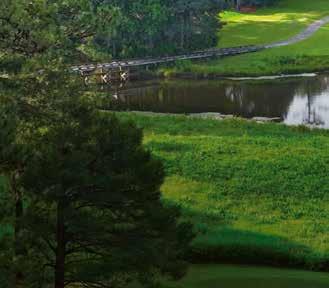
All new and long awaited in the charming Village of Pinehurst – a collection of five free-flowing residences, from 2,600 to 3,800 sf, set among the pines of Pinewild Country Club. Pinewild is a welcoming community featuring exceptional amenities, including 48 holes of extraordinary golf and an expansive new clubhouse coming early 2027.



It’s our game, the American game
by TOMMY TOMLINSON illustration by GARY PALMER
My wife and I had our first date at a Hickory Crawdads game.
Well, OK, I already need to backtrack. Alix says to this day that it was not a date. At the time I didn’t think it was a date, either. But somewhere between the first inning and the ninth, I started to feel that tug of attraction. A little more than a year after that night, we got married. Nearly 28 years of marriage later, we’re still together.
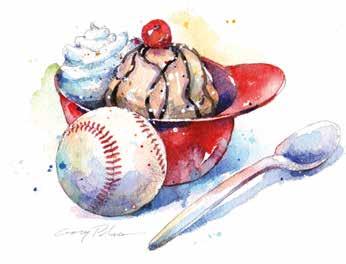
The point here is not to settle the question of whether it was or was not a date. The point is to make our way, eventually, to Brad Pitt’s question from Moneyball: “How can you not be romantic about baseball?”
Nor th Carolina gives baseball romantics so many places to fall in love.
Best I can tell, there are 22 professional baseball teams playing in North Carolina this summer. Nine are farm clubs of Major League Baseball teams. Eleven teams play in summer leagues for college players — they use wooden bats instead of the aluminum bats in college games. Two more teams play in the independent Atlantic League. You could drive around the state and see a different game in a different park every night for three weeks straight, with a game left over.
Minor league team names are
You could drive around the state and see a different game in a different park every night for three weeks straight, with a game left over.
sports poetry. Here in North Carolina we have the Gastonia Ghost Peppers and the Edenton Steamers, the Greensboro Grasshoppers and the Holly Springs Salamanders, the Forest City Owls and the Fayetteville Woodpeckers, the Boone Bigfoots and the Greenville Yard Gnomes. (Should it be the Boone Bigfeet? Sounds like a discussion for the ballpark, between innings.)
Some teams choose names with a local angle. The Kannapolis Can-
non Ballers name-check the Cannon Mills textile company that basically built the town. (The Cannon Ballers’ logo also features a mustachioed figure who looks suspiciously like Kannapolis-born Dale Earnhardt.) Asheboro has the North Carolina Zoo, so their team is the Zookeepers. My favorite, along these lines, is the Winston-Salem Dash. I’ll let you figure that one out — although if you’re strict about grammar, you might not like the answer.
Alix and I have been to minor league games all over the state. Every park has its own quirks and charms. A few years ago, as part of a baseball vacation, we went to see an Asheville Tourists game. I hadn’t been feeling great that week. We had to park at the bottom of a hill, and the stadium was at the top. I was dreading that climb. But then a guy rolled up in an extra-long golf cart. It turns out the Tourists will give fans a lift up to the stadium if they need one. That day, I needed one. I felt like a VIP as the cart zoomed us to the gate. By the way, if you ever take a book to the ballpark — lots of people do! — my suggestion is Ryan McGee’s Welcome to the Circus of Baseball. It’s about the summer
he spent as an intern with the Tourists, and it is jam-packed with stories. I will never forget his tale of the mountain man the team sent into the woods behind the outfield fence to retrieve batting practice homers. He always returned with a bagful of balls — and another bag full of squirrels and such for his supper.
Speaking of supper, the range of what qualifies as ballpark food is so much wider than it used to be. The Durham Bulls, for example, offer pretzels with hummus, gourmet popcorn, Impossible Foods veggie dogs and a ton of local brews. Even the smallest parks often have fancy burgers and IPAs. They still have the classics, too. Nothing says the eighth inning at a minor league park like ice cream in a little batting helmet.
In Greensboro, we cheered one of the team’s bat dogs, who retrieve bats tossed aside when players get a hit.
In High Point, we spotted former World Series MVP Frank Viola serving as pitching coach for the Rockers. In Wilson, years ago, we happened to show up on Pint Glass Night and brought home a Wilson Tobs glass we use to this day.
The Tobs (a nod to Eastern North Carolina’s tobacco roots) have moved to Smithfield, where they’ll start playing in 2027. Wilson’s team is now the Warbirds — they’re a farm team for the Milwaukee Brewers. They replaced the Carolina Mudcats. The old Mudcats’ stadium in Zebulon is now home to the Zebulon Devil Dogz, which will feature Australian players. As they say in baseball, it’s hard to keep track without a scorecard.
The truth is, it doesn’t matter what the teams are called or who’s playing. I’ve been to dozens — hundreds? — of minor league games over the years. The only surefire star I remember

This casual, locally owned shop features an array of wines — from customer favorites to obscure varietals. Learn more about their wines at one of these exclusive tastings!
JUNE 3 Spire Portfolio (Lokoya, La Jota, Mt. Brave) w/ Todd Brentnall $125
JUNE 9 Wines of NC and VA $25
JUNE 13 A Taste of New Zealand $15
JUNE 13 New Releases from Quilt & Co $25
Full calendar at westgatewinestore.com Free Delivery in the Triangle! 6405 WESTGATE ROAD #115

watching is Jim Thome, who mashed baseballs for the Charlotte Knights and went on to hit 612 home runs in the majors. I’m sure there have been other all-stars somewhere in all those games, mixed in with the guys who made it to the bigs for a bit, and the ones who never made it at all. But I don’t remember the players. What I remember are the warm nights and the cold beer and the good company.
I still have my ticket stub from that Hickory Crawdads game back in 1997. I have no idea who won that game. I just remember the fireworks that almost set the woods on fire beyond the outfield fence, and the slow dawning, as I talked to my seatmate, that this might not be just another night at the ballpark.
We still don’t count that night as our first date. But we’ve spent a lot of nights at baseball games since then. And you can bet every one of those counts.




Terms and Conditions: $300 off any order of $1198 or more,$200 off any order of $998-$1198 or $100 off any order of $698-$998, on any complete custom closet, garage,or home office unit. Not valid with any other offer. Freeinstallation with any complete unit order of $600 or more. With incoming order, at time of purchase only. For a limited time SPECIAL FINANCING for 18 months *with approved credit* Expires in 90 days. Offer not valid in all regions.


by AMANDA BENNETT
illustration by ALIA EL-BERMANI
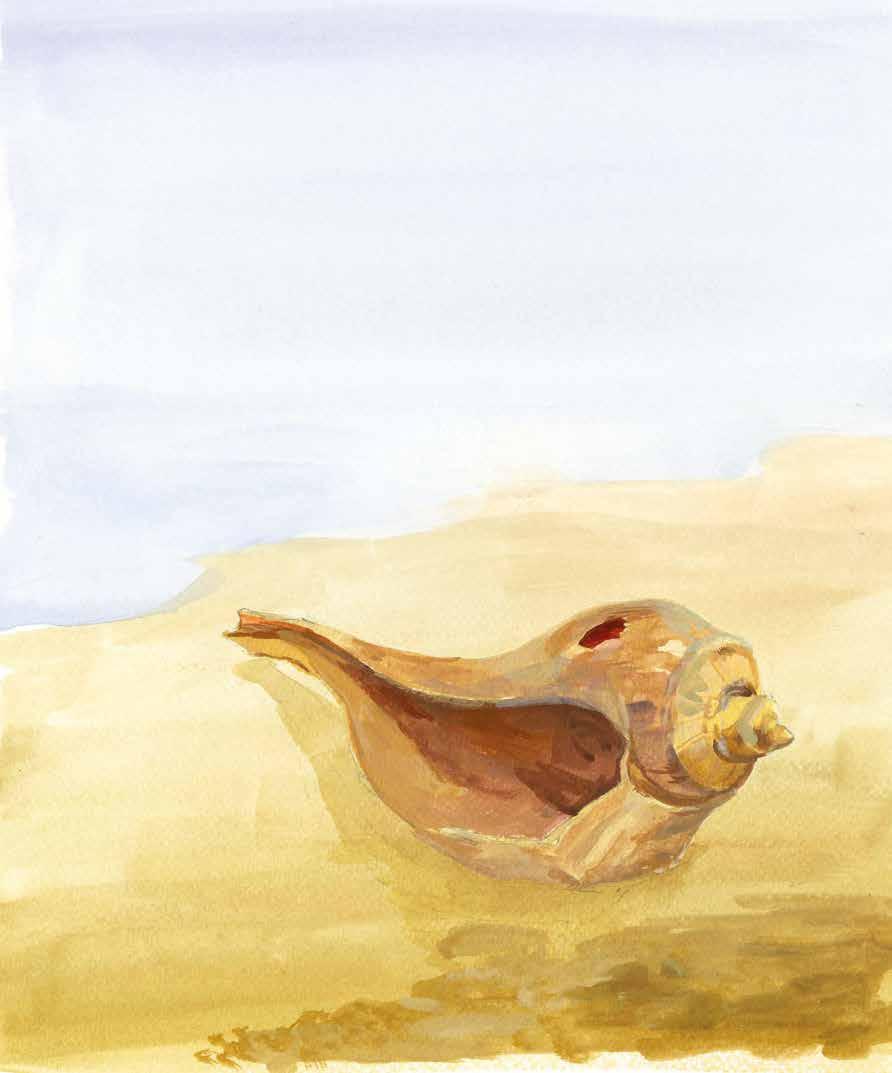
I’m holding the shell I found on the beach in winter, letting the wind cut cold through the organza of my blouse. The sand is packed so tightly it could be red as Georgia clay, if only I close my eyes. I can be anywhere and the clay is still beneath me, its red so warm it calls the cold a liar. In this tender, fervent break between solid and not, South is a state of mind: invisible, familiar, always held lightly in the soles of my shoes.
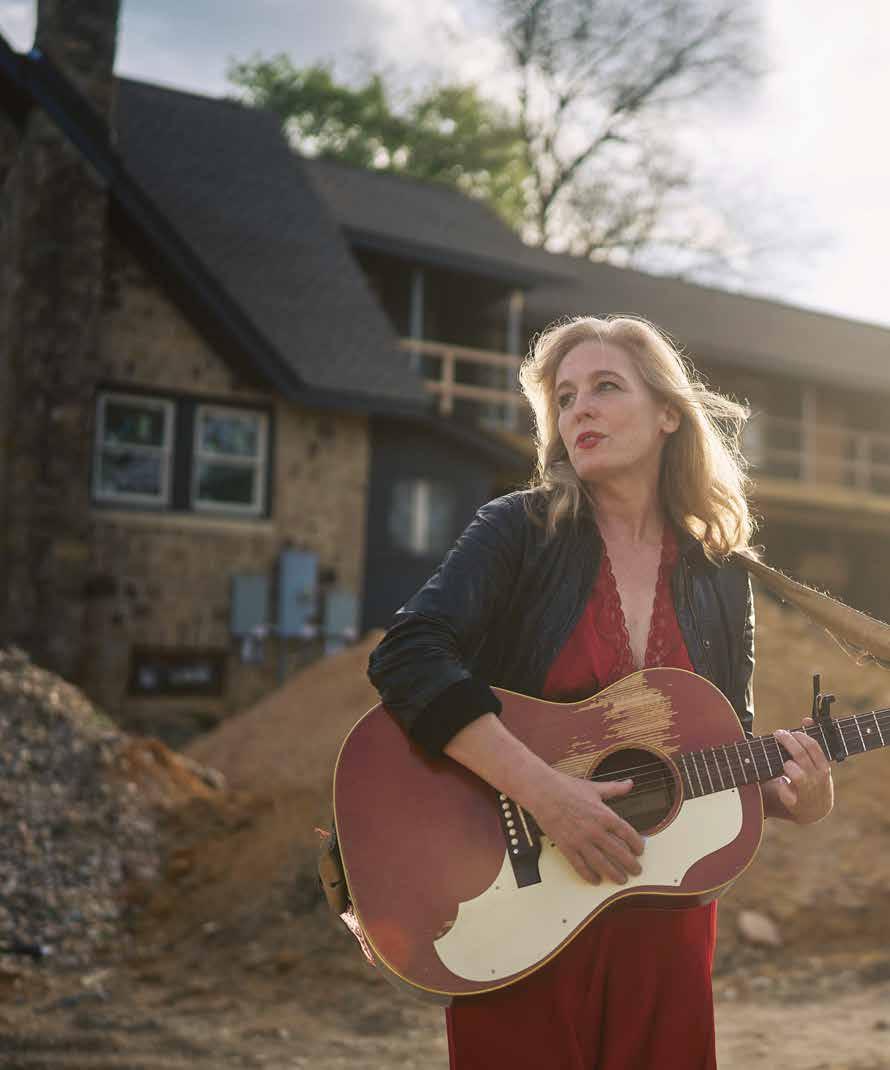

With a new album and a hotel opening soon, Tift Merritt is having a Raleigh renaissance
by
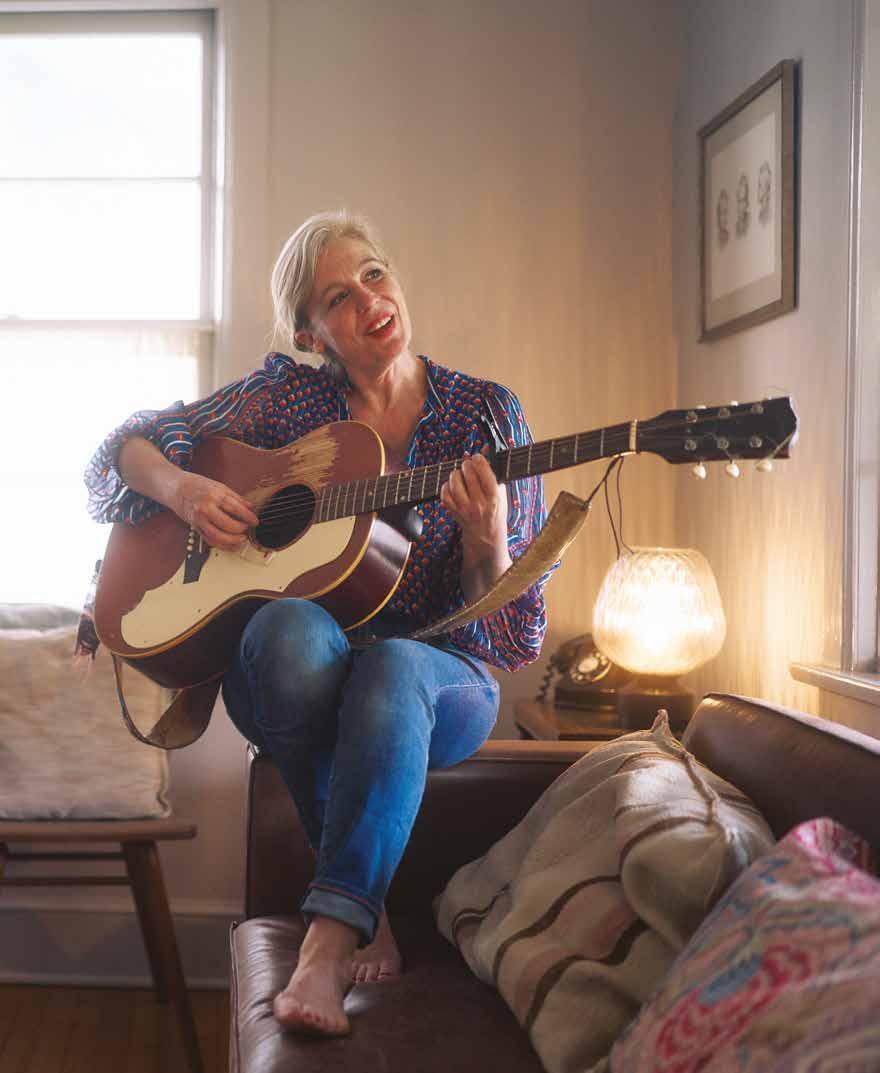
In 2018, Tift Merritt’s musical career was at a low ebb. She was back in her Raleigh hometown after a decade in New York City, a single parent trying to figure out what to do next. Despite acclaim, including a Grammy nomination, none of her albums had broken through commercially. And taking her toddler daughter Jean on tour only convinced her that the endless road grind wouldn’t be sustainable for either of them.
“Moving back here was not a victory lap or glamorous dream,” Merritt says now. “I just knew I could not keep dragging this child around — she needed roots like I’d had growing up. But I really thought it was the end of my career. I didn’t know what I’d do. Maybe get a bartending job.”
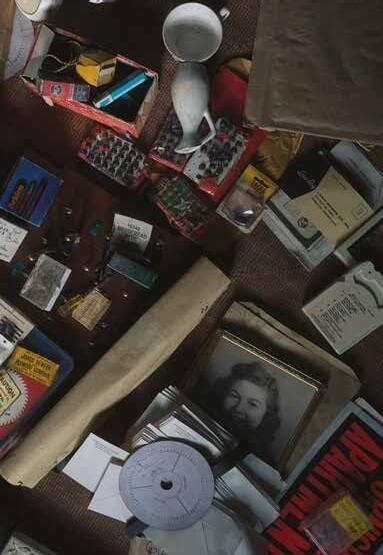
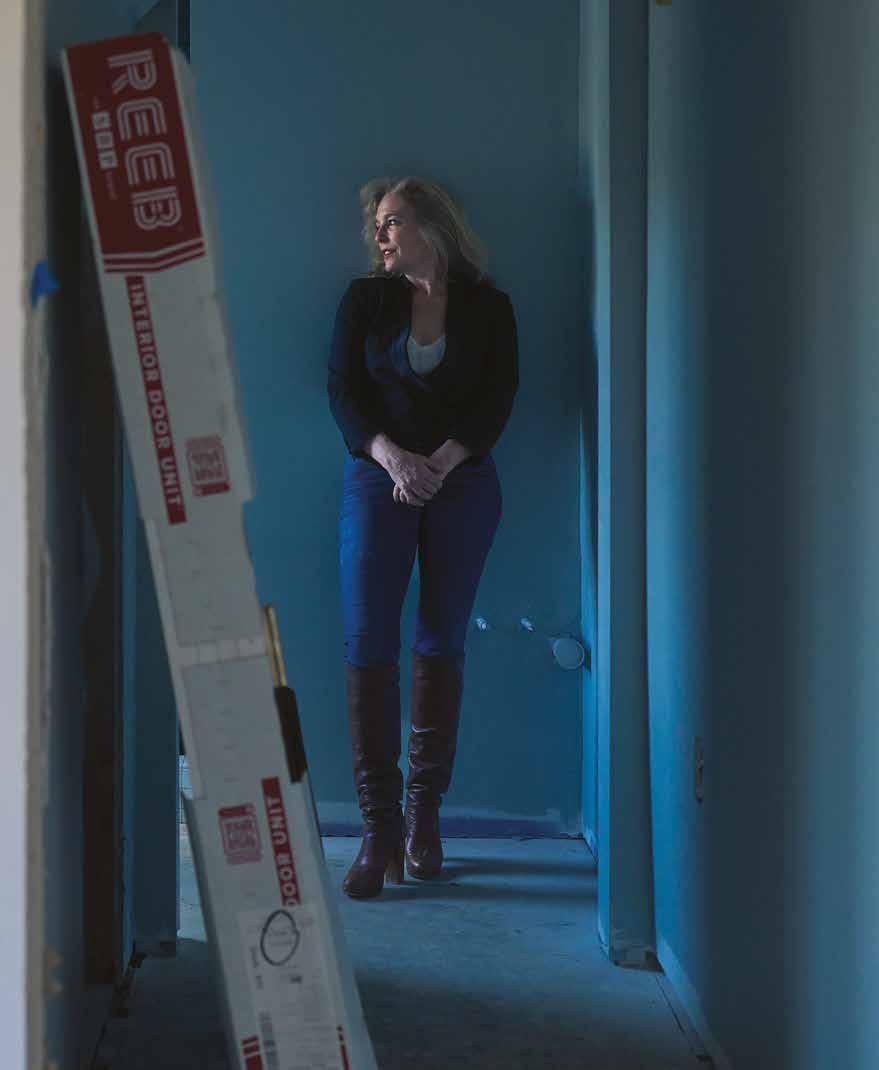
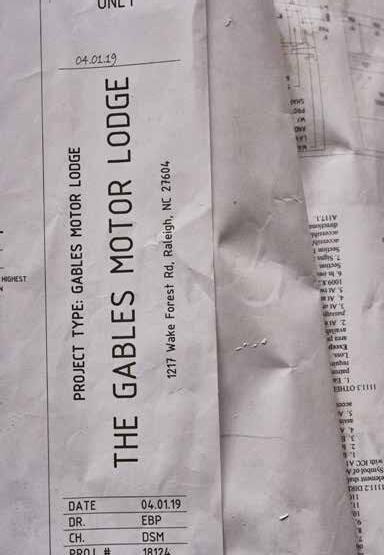
That was around the time a friend sent Merritt a real estate listing for the Gables Motor Lodge on Old Wake Forest Road. She’d been riding by it for most of her life, thinking it looked like the sort of place beatniks might hang around on their Kerouacian journeys. But in 2018 it was vacant, in a state of disrepair and for sale at a greatly reduced price. So she went for it.
Eight years, one pandemic and an ambitious restoration project later, Gables is set to reopen in July with Merritt as co-proprietor. Asked if she’s ever been an innkeeper before, she laughs.
“No,” she says, “but I do throw a mean dinner party.”
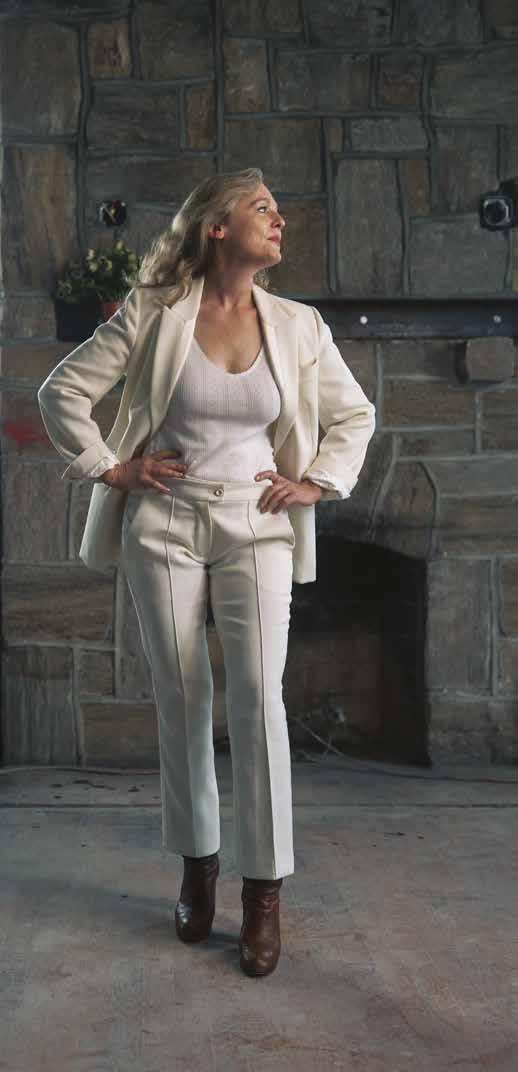
Merritt and her Gables partner, hotelier Daniel Robinson, envision it as a dinner-party kind of place. Billed as an 18-room “travelers retreat,” Gables will be as much a bohemian enclave for the artistically inclined to gather as a place to rent a room.
“We don’t want Gables to be pigeonholed as ‘Tift’s Rock and Roll Hotel,’” says Robinson, whose other area properties include the Durham Hotel. “But anyone who knows Tift will be able to see and feel her involvement as soon as they walk in. In many ways, she’ll be the spiritual voice of the place.”
Gables’ reopening also coincides with

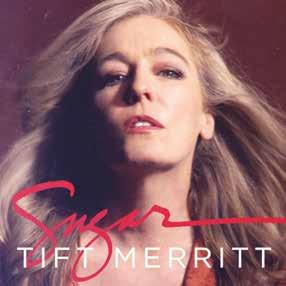
the release of Sugar, Merritt’s first new album since 2017’s Stitch of the World And where her previous albums all had plenty of emotional content, Sugar might be the most overtly personal record she’s ever made. Various interpersonal difficulties (including a divorce during her New York years) provided ample real-life inspiration.
“At one point while I was making this record, my manager Holly (Lowman) told me in so many words, You need to have your story as a woman out there because it’s important,” Merritt says. “As you get older, maybe you have less and less reason to hide what you want to say. This record feels very personal. I mean, they all felt that way at the time. But this one feels more grown-up. More vulnerable.”
Merritt’s favorite role has always been collaborator rather than solo act. She first emerged in the late 1990s while attending the University of North Carolina at Chapel Hill, playing country music in Tift Merritt and the Carbines. But music was hardly her sole pursuit. Merritt has done everything from photography exhibits to hosting a public-radio interview show over the years. Along with working at Duke University as Practitioner-in-Residence, she’s also an activist with Artist Rights Alliance and North Carolina Music Love Army.
“W here I’ve always belonged,” she says, “is some nexus between folk singers, archivists and public-policy people.”
Mu sically, Merritt has recorded with a wide range of artists including Americana stars Iron & Wine and Hiss Golden Messenger, as well as the classical pianist Simone Dinnerstein. Classical remains an ongoing pursuit. Around the time the Gables purchase closed in 2018, Merritt began working with North Carolina State University’s director of orchestral studies, Peter Askim, on an ambitious symphonic song cycle about the history of Dorothea Dix Park. Named after an escape attempt during Dix’s time as a psychiatric hospital, THe Other Side of Hungry River tells its story going back to when

the property was a slave plantation.
Ra leigh Civic Symphony was to debut a work-in-progress version of Hungry River in 2020, but the pandemic scuttled it. The shutdown put the Gables restoration on hold, too.
“We were lucky with Gables to be early enough in the process that we could just wait it out,” Merritt says. “But people stopped asking me about it because they thought I’d cry. They weren’t wrong.”
By last year, work on Gables finally started up. Hungry River has since come back, too. Merritt finally played that work-in-progress premiere this past March with the Wilmington Symphony Orchestra, conducted by Askim.
A few Hungry River songs also found their way onto Sugar. The a cappella chant “Fate of Man Is Sarah’s Eyes” is based on a 1919 description of the sewing room at Dix Hospital, and “Mad, Mad World” describes the facility as “a haunted spot where they sent everybody they did not want… The shamed, the broken and the bad, bad seeds.”
On a more upbeat note, “Everyday Singing” might be the catchiest pop song Merritt has ever put into the world. That one is based on historical correspondence between activists 50 years ago. But the most attention-getting songs on Sugar sound like journal entries from Merritt’s own diary.
Loneliness is a recurrent theme on “Someone to Watch The Band With Me” and the put-up-or-shut-up anthems “Finest Feelings” and “Locks.” Then there’s “Generous,” which goes back to the feelings of Merritt’s divorce from Jonathan Lee “Zeke” Hutchins (who had also been her drummer going back to Carbines days). It’s as pointed a breakup song as anything by Taylor Swift.
“‘Generous’ is a song I’ve needed to write for a long, long time,” Merritt says. “You know, breaking up is hard to do. Disappointing, too. It’s not easy to be by yourself, especially for women in their 50s, and it doesn’t get any easier. That’s what haunts me. But I’m better for all of it and I do mean that. I would not trade a second of it. I’ve got Jean
here and so many friends, real ones. So I’m not alone. It’s not lost on me how good life is here.”
Following two independent-label releases, Sugar will be Merrit’s first album on a major label in 16 years. She’s eager to get back onstage, but returning to the music business on that scale brings some apprehension. Merritt spent over a decade touring endlessly in search of a hit, to no avail. Even a 2004 Grammy nomination wasn’t enough to get her over the hump.
“We drank a lot of champagne that night, then we got dropped,” Merritt summarizes with a laugh. “I was nervous about getting back into this, but singing is my most immediate way to put love into the world. Making this record reminded me that I have a lot more left to say. It’s important to say what it feels to be messy, open and human right now, especially for women. I’ve learned that there are gatekeepers and soul partners, and you should not mix the two up. Right now I’m not talking to the gatekeepers. I’m really proud of this one and excited for whatever comes next.”
A recent afternoon finds Merritt showing off the Gables construction site to a visitor, pointing out cool features from the original structure that they’ve been able to preserve. Given how many local landmarks have fallen to the wrecking ball of gentrification, she’s proud to be a part of keeping this one going.
While Merritt has jokingly called herself Gables’ “mascot,” it’s not yet clear what her day-to-day role there will be. You probably won’t see her behind the check-in desk, but you might well bump into her in the bar or coffee shop.
“I hope to positively influence the cultural experience there,” Merritt says. “It will be an amazing space for me to have some creative gatherings, but it’s not a place where I picture myself singing. I’d love to have bands come in to record in the lobby, or songwriters to come write and talk. We’re all so siloed, it’s important to come together. And we’ll have a coffee shop open all day long where you can do that.”
“Making this record reminded me that I have a lot more left to say. It’s important to say what it feels to be messy, open and human right now, especially for women.”
— TIFT MERRITT

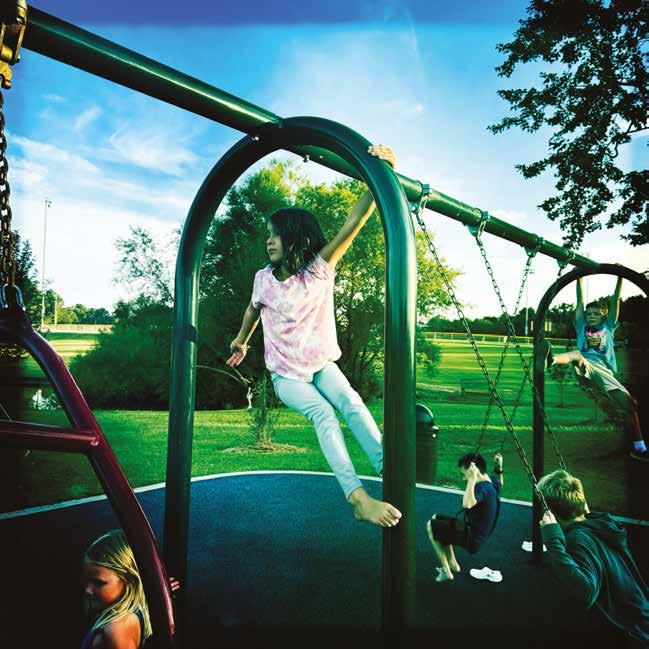
For the past decade, Raleigh photojournalist Mehmet Demirci’s children have served as his art directors. Whenever his son or daughter spotted something worth capturing, they’d tell him — and he’d pull out his phone.
“It started with my son asking, Daddy,
what’s your job? And always seeing me with a camera. Once he understood, he’d say, Take this picture, take that one,” Mehmet says. “Of course, I can’t carry around the big DSLR cameras when I go out with the kids, so this project started with my iPhone.”
From the start, Mehmet used the
Hipstamatic app for these shots. “I was trying to differentiate them from the others on my camera roll, but it also gave me a feeling of the good old days, since I used film when I started as a photographer,” he says.
Today, Mehmet has more than 5,000 of these photos, all directed by his son,
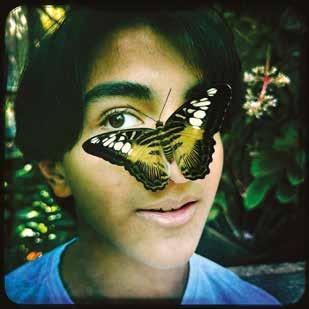
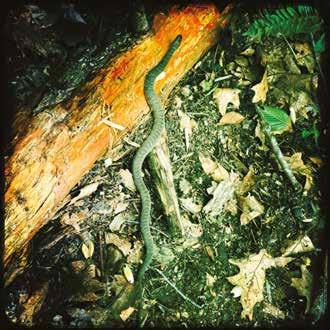
years, we lived happily with a lizard… until the day it quietly left this world.” GEESE: “Sometimes they chased the wild geese, sometimes they chased us.” SNAKE: “I used to be terrified of reptiles, until my children came along and loved them without fear.”
BUTTERFLY: “Butterflies didn’t always land on our floral shirts. Sometimes, they chose our noses instead!”
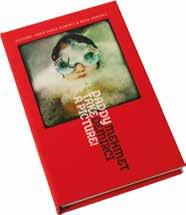
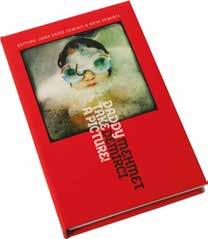
Ömer Deniz, 16, who goes by Deniz, and daughter Neva, 9. Together, they narrowed these down to 40 of their favorite photos, which he’s published in a unique book, titled Daddy Take a Picture! “My son and daughter were my collaborators, my editors,” Mehmet says. “I edited down to 900, printed 200 and put them on the
wall, then asked the kids about their favorites. They chose different photos than I might have.”
The photos are printed on a card stock with perforated edges so they can be torn out and used as postcards. “I’ve always liked sending postcards, so it seemed like a fun idea,” Mehmet says. Each of them
has a short note on the back, a story or a musing about the moment.
Deniz, who helped curate the final selection, took a different approach than his sister. “She’s young, so she just went off what she liked the most — I tried to pick photos that have a deeper meaning, like a story or a photo that could mean
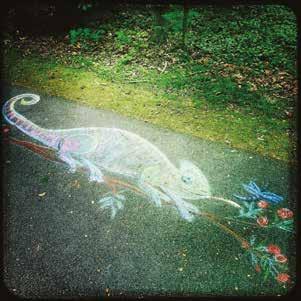
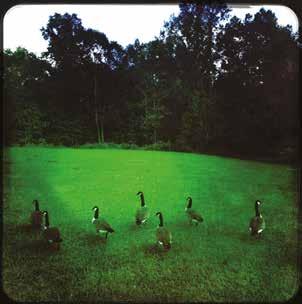

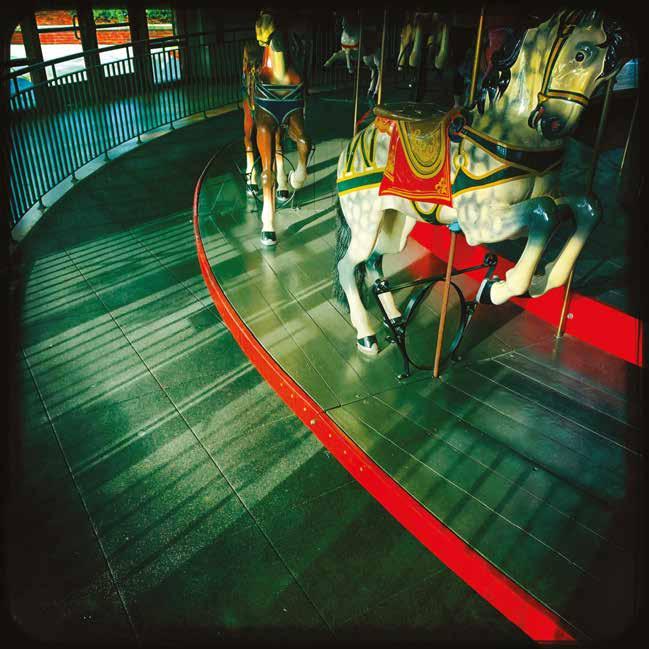
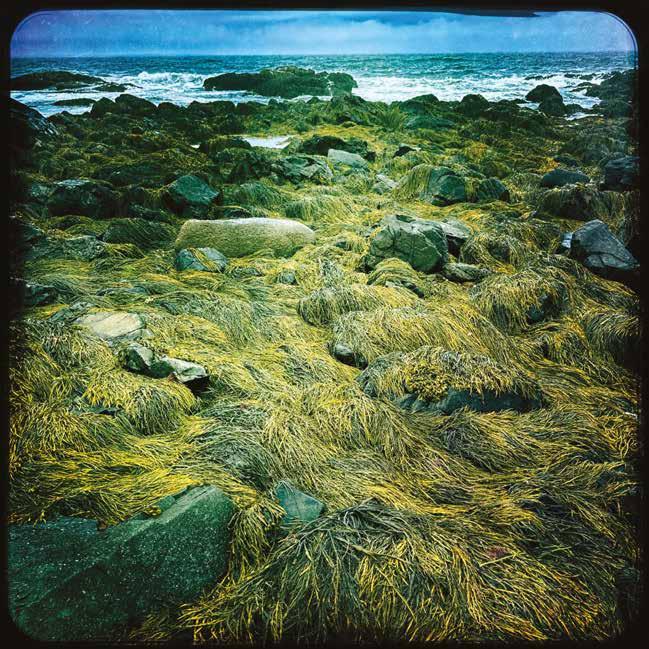
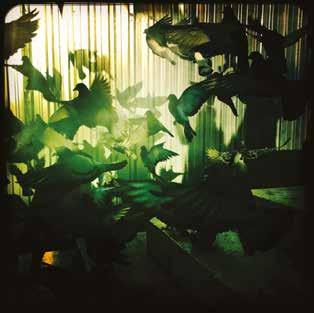
something to someone else,” Deniz says. The subjects of the photos range from their pet gecko, whom they lost last year, to a crowd in traditional Ottoman clothes to the sea on a trip to Maine. “I remember playing there, and seeing my father stand on top of a higher rock to get the photo,” says Deniz.
Through this project and his father’s influence, Deniz has become an amateur photographer himself, accompanying his father on fun shoots, like the Kirby Derby and fox hunting, and capturing sports games at school. He points to one photo in the book, of a lone tree on a hilltop, its branches dusted with snow, as one of the
first times he remembers really thinking about an image as a photographer. “I told my dad, I need to take a picture of this because it’s so beautiful, and he talked me through it,” says Deniz.
Now, when they travel, the family sets a goal of what they want to capture. “If we go to Vegas, we want to take pictures

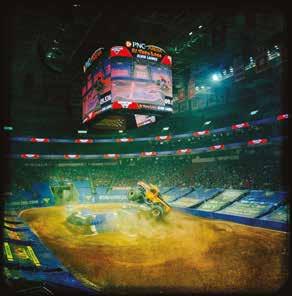
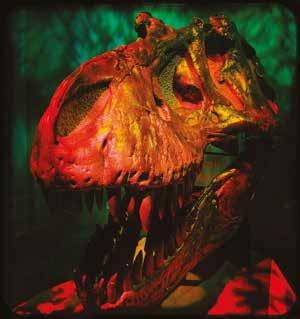
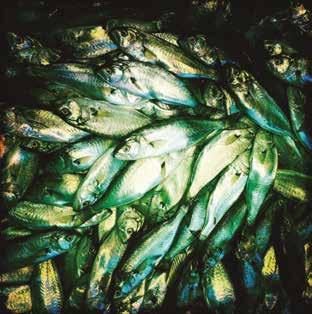
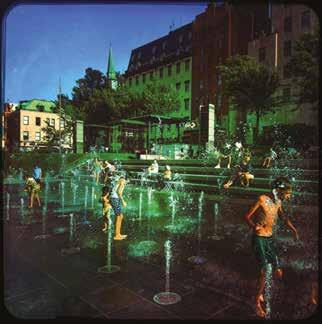

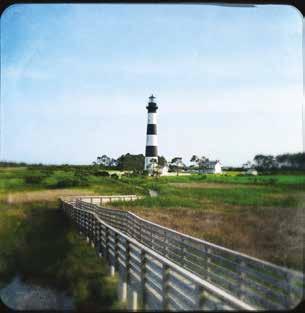
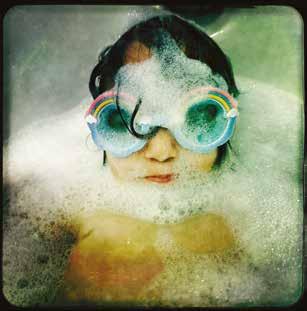
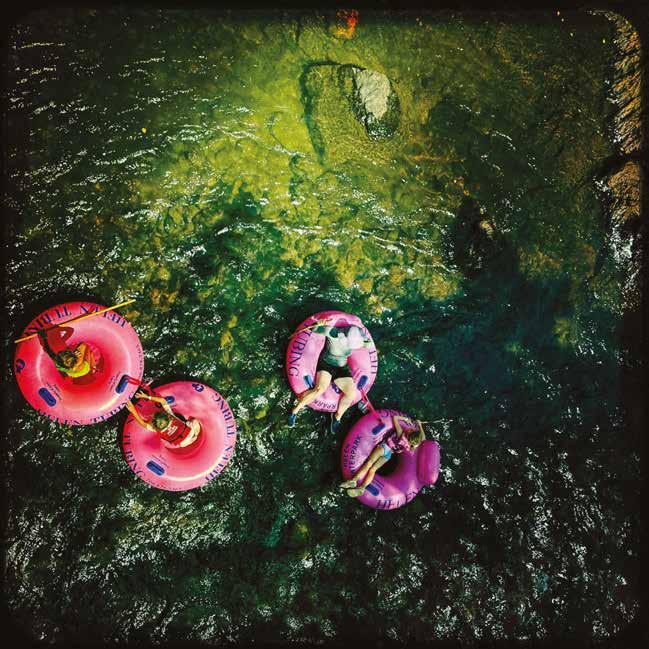
Opposite page: FISH: “Aquarium fish kept us entertained for a while, but eventually we got curious about the ones on the fish market counter.” PARK: “For a little child, joy doesn’t require grand plans — the splash pad was more than enough.” GOGGLES: “Neva: ‘Daddy, take a picture of me!’” LIGHTHOUSE: “The path curved, the wind blew gently. In the distance, a lighthouse.” TUBES: “We let it all flow — both the river and life! Drifting in pink tubes, round and round, we laughed, cooled off and lost our sense of direction a little.”
of the lights, or in D.C. we were photographing these exotic cars,” Deniz says. “But we always have our eyes and ears open for anything else that passes by. I’m starting to capture more little details.”
“People so easily forget that they used to be kids, too — but working on this makes me remember what that feels like,”
Mehmet says. And though he sells the books on his website, the goal isn’t really to make money. “Creating a book — it’s a physical thing, but what we’re really collecting are memories,” he says. “I’m not a rich man, so when I pass this world, I want to leave behind the memories of things I did with my kids.”


A unique program through the N.C. Museum of Natural Sciences inspires educators through travel
by HAMPTON WILLIAMS HOFER photographs by MELISSA DOWLAND
The North Carolina Museum of Natural Sciences is known as a hub for field trips — but for almost 40 years, the museum has been sending educators on inspiring trips far afield from Wake County.
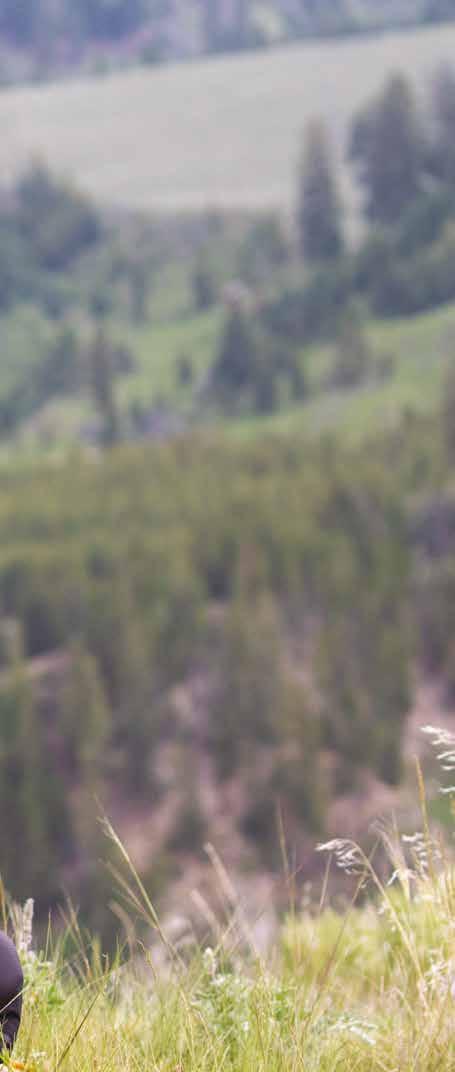
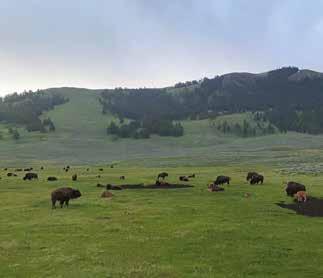
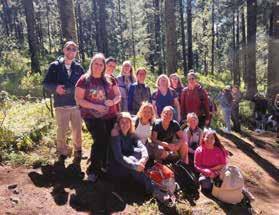
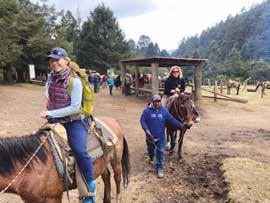
The museum’s Educators of Excellence Institutes allow exemplary teachers from across the state to embark on journeys to places like South Africa, the Amazon, Ecuador, Mexico and Yellowstone National Park, where they experience the natural world in new and thought-provoking ways. “The program offers rejuvenation through firsthand experiences in the natural world, allowing educators to relearn how to be curious, then letting that curiosity and wonder drive future learning and connections to the world around us,” says Megan Davis, the museum’s coordinator of teacher education.
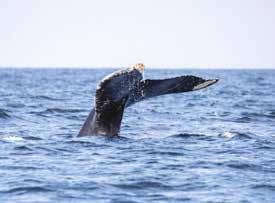
A science teacher who has rocked in a boat on the open ocean surrounded by humpback whales and heard their songs through an underwater microphone would certainly teach sonar with renewed vigor. An art teacher who has stood in awe of brilliant macaws in the wild would recount their color with contagious enthusiasm. “I can’t tell you how many stories I’ve heard of a teacher, drained by the challenges inherent to our education system, whose passion for teaching was reignited after having the opportunity to spend time in outstanding natural places,” says Melissa Dowland, who recently retired after leading the museum’s institutes for more than two decades, where she helped establish travels to the Blue Ridge Mountains, Mexico and South Africa. Since the program’s inception in 1987, the museum estimates that the more than 900 teachers who have participated have, in turn, impacted more than 750,000 students. Any full-time North Carolina educator with at least three years of experience can apply to one of the programs, which are supported by the Friends of the Museum’s Educators of Excellence Fund to help offset travel costs. The ideal applicants foster a deep interest in the natural world and are up for activity — hiking, for example, to a dinosaur nest in
the Maluti mountains, or traversing the snowy trails of Yellowstone in sub-zero temperatures.
When Abbotts Creek Elementary School science teacher Krista Brinchek was selected to join the museum’s “Magical Migrations” trip to Mexico in 2025, it was a full-circle moment for her. She still has a vivid childhood memory from a family trip to coastal Massachusetts, where she encountered a mass of bushes speckled in the deep orange of thousands of monarch butterflies. “The air fluttered with movement as thousands of monarch butterflies surrounded us. Scientists with large nets moved carefully through the brush conducting their research, and a spark was lit in me,” she says.
Many years later, on her trip with the NCMNS, Brinchek fulfilled her dream of seeing monarchs — perhaps distant descendants of the ones she’d seen — in their overwintering grounds. “We journeyed along winding mountain roads, through small towns in the Mexican countryside, until the trail went quiet,” she says. “Then I saw them — trees completely
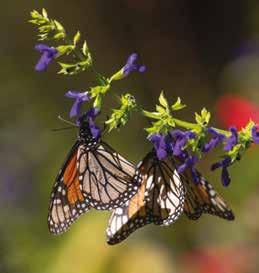
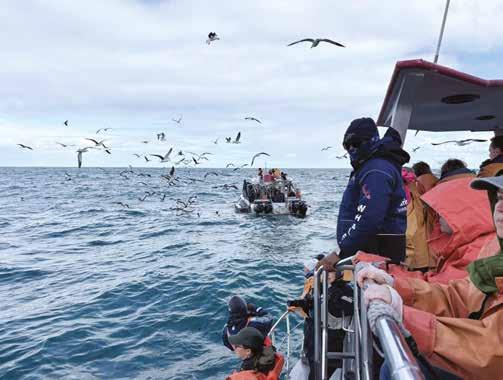
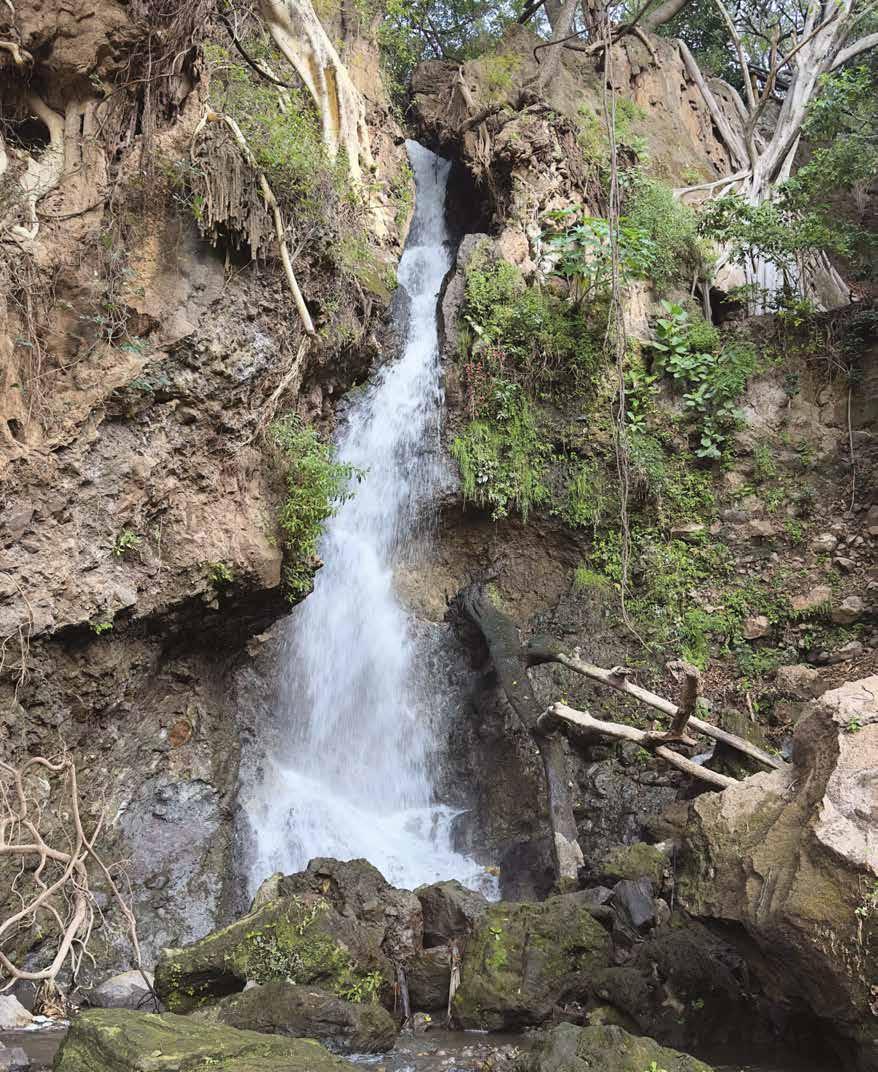
This page: A whale, butterflies and horseback riding in Mexico. Opposite page: A waterfall.
Since the program’s inception in 1987, the museum estimates that the more than 900 teachers who have participated have, in turn, impacted more than 750,000 students.
covered in monarchs, branches bending under their weight. When the sun broke through the clouds, I cried as we heard the soft, steady flutter of thousands of wings.” At Abbotts Creek, Brinchek teaches about migration every year, but now she has actually stood in that place. “The trip deepened my understanding of the natural world and reshaped how I bring it to life for my students,” she says.
Much of the education program that exists at the N.C. Museum of Natural Sciences is thanks to the late Mary Ann Brittain, who founded the Educator of
page: Old

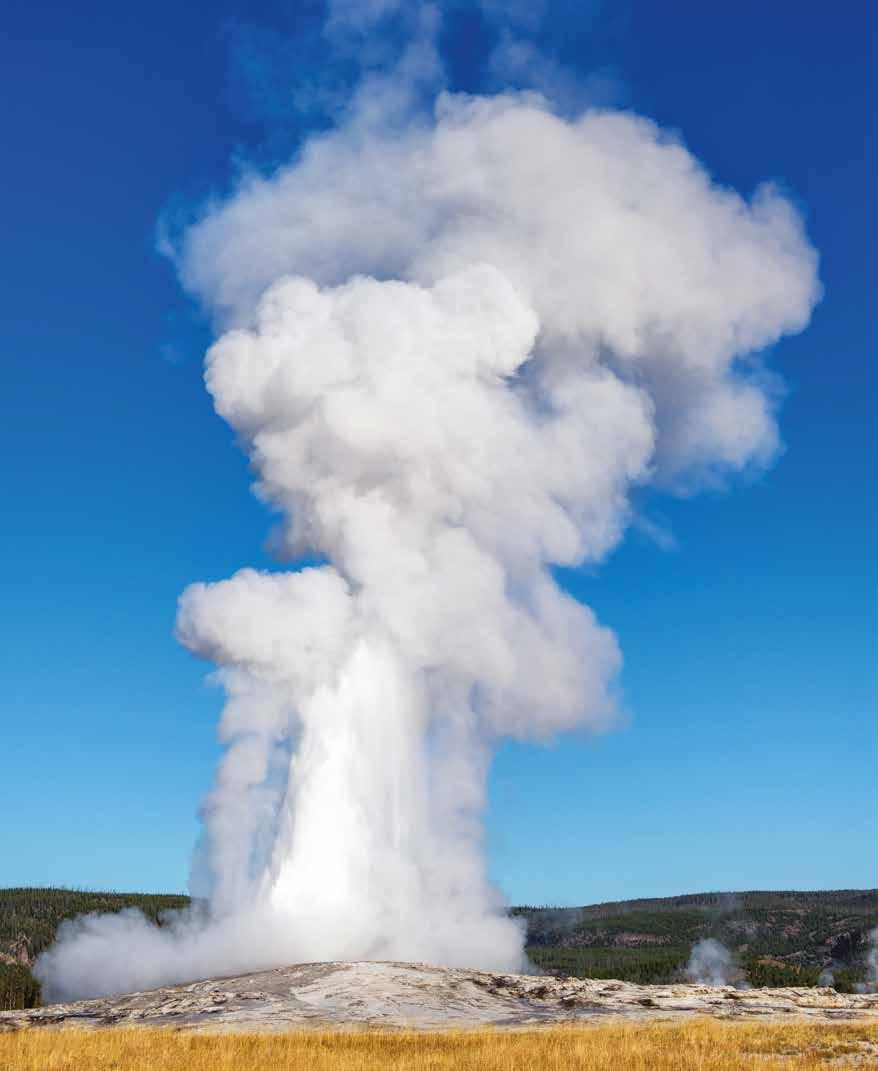

Excellence Institutes, along with the beloved Prairie Ridge Ecostation. Brittain, who was awarded the Order of the Long Leaf Pine for her impact on the state of North Carolina, started the program with a trip to Belize in 1987. Her ardent belief persists: that experiential learning in outstanding natural places can transform classrooms and lives. “The heart of the program remains the same,” says Dowland. “It is built on pillars of authentic experience, growth mindset, and personal and shared reflection.”
Last year, 36 participants, who teach students from preschool-age to adults, joined the institutes from 23 different counties. Some arrived with only a few years of teaching experience, others with decades. And they weren’t just science teachers, but specialists in everything from math to English, social studies and special education.
One of them was Michael Warholik, the vice principal of Conn Elementary School. On his trip to South Africa last summer, 18 strangers came together, including teachers from N.C., museum staff, and a tour guide and local educators from
South Africa. “The awe of seeing giraffes, elephants, lions and so many other magnificent creatures in their natural habitats is difficult to capture in words,” Warholik says. “All the while, we were building relationships with Zulu teachers who taught us about their history and their hopes as educators, something that helped connect the world in a more nuanced way for me.”
Warholik returned to his regular life reaffirmed in the knowledge that there are endless things yet to learn, that there are always new perspectives to explore and that being a well-nourished person makes him a better educator. Not to mention, he’s now part of an active group chat composed of those 18 former strangers, who now check in on each other, offer support and share memories. “I feel sure that I am a better educator today because of what I learned from each person on the trip,” Warholik says. In late July of this year, a new group of teachers will fly to Cape Town with museum paleontologist Dr. Christian Kammerer, who’s newly on board the leadership team.
The 2026 institutes began in January
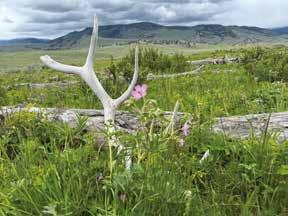
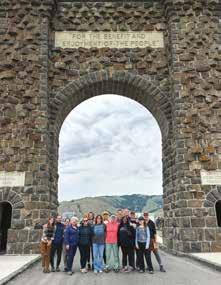

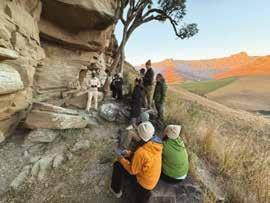
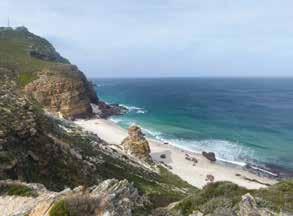
with a Winter Institute to Yellowstone National Park (a new group will visit this month for the Summer Institute). Liz Peeples, a humanities teacher at N.C. School of Science and Math, spent 10 days with her group in Yellowstone in June of 2024. “Getting out in the field around sunrise and staying until sunset, we made the most of our days together in that wild and beautiful landscape,” Peeples says. “Whether we were meeting with a wolf biologist or lying on the ground at Black Sand Pool to feel the thump of the hot spring, we immersed ourselves fully in learning, adventuring and attending to our experiences in nature.”
They hiked to an abandoned wolf den, passing sage bushes along the way, having just learned from the expert that the local wolves smell like sage from living among the plants. They discovered bleached bones, including a bison skull and a complete set of elk antlers. During her trip, Peeples internalized her experience using journal prompts and talking-partner reflection questions provided by their guides, a concept she now uses when she
travels with her own students. “I loved the way our guides and the experts we met in the field were so passionate about the work of paying attention to the natural world and being intentional in their curiosity and learning,” she says. While on their trips, participants also post daily updates via a blog where students back in North Carolina can follow along and ask questions.
Ultimately, the Educators of Excellence program is all about inspiration. “As teachers, we’re so busy doing all of the things all of the time that we aren’t afforded the opportunity to slow down and rest,” Peeples says. “While we were definitely on the go while in Yellowstone — I look back at my journal and am amazed at how much we did — the time there felt like ours, during which we could consider our places in this natural world and further our commitments to helping our students do the same.”
Agrees Dowland: “Teaching is a field that can be incredibly challenging. This program helps teachers rediscover the wonder that comes from being a learner.”
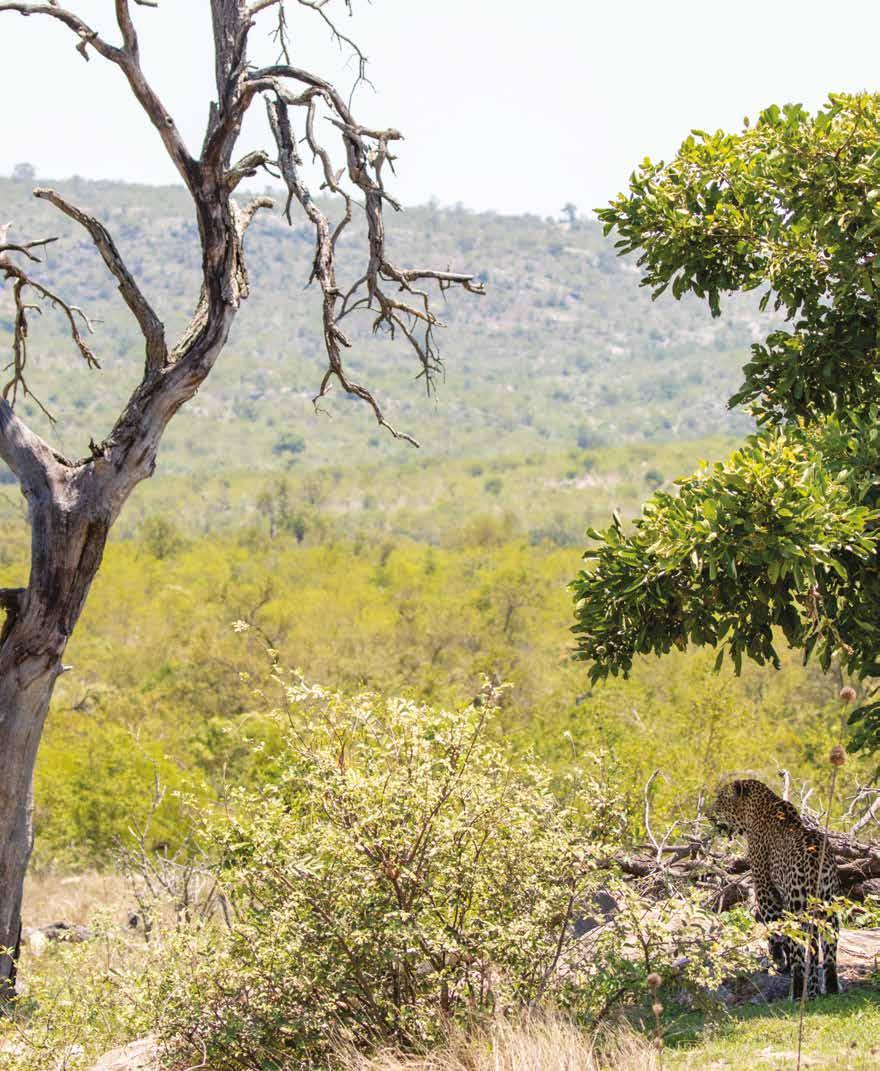
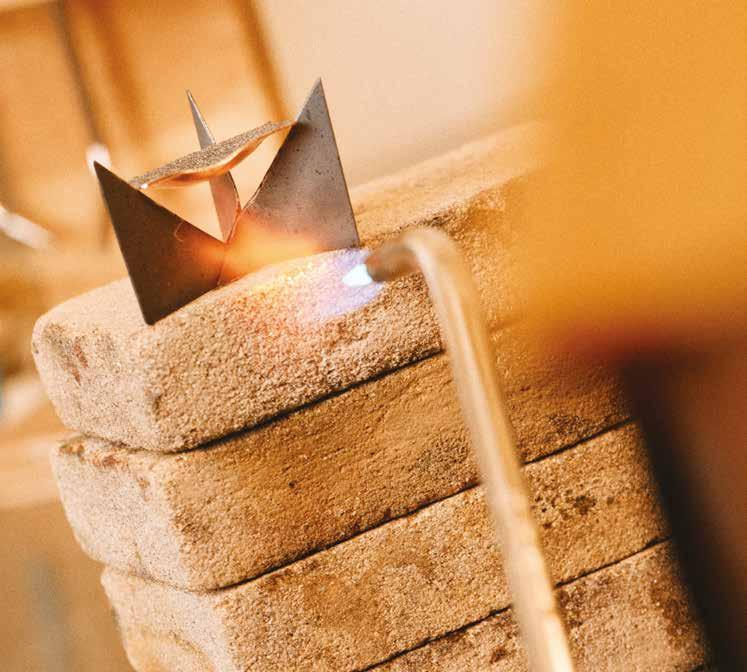
Metalsmith Ndidi Kowalczyk builds skill through teaching and fearless experimentation
by COLONY LITTLE
STEADMAN
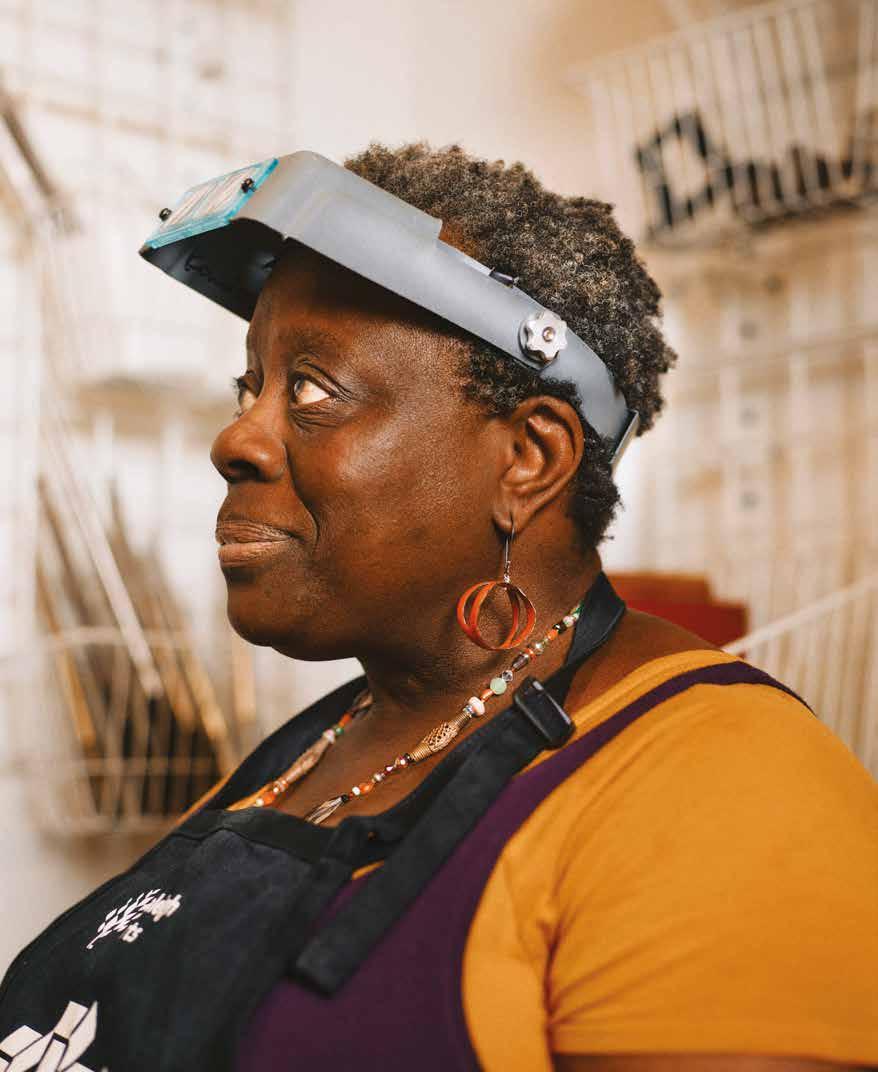
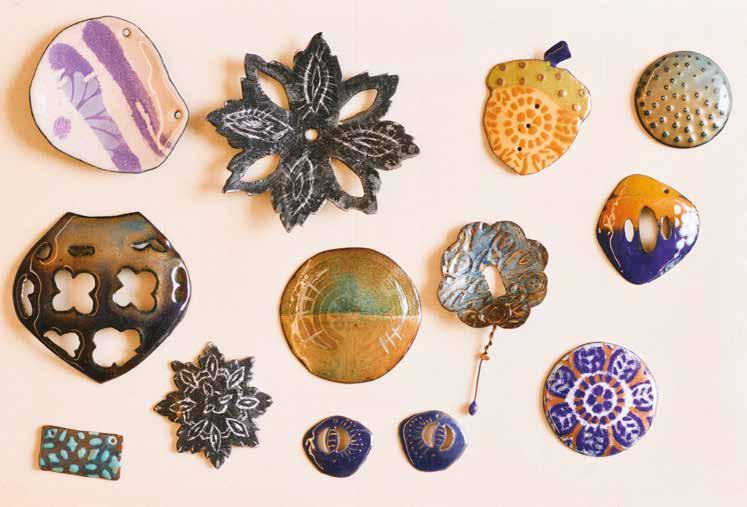
On a recent afternoon at Craft Habit, the classroom was filled with students engaged in various stages of metalworking, from cutting to soldering. The sounds of clanking chisels, sanding files and whooshing blowtorches provided a steady, rhythmic beat in the busy workroom. Occasionally a student would blurt out an “oops” as something snapped or failed to fuse.
“There’s no such thing as a mistake,” encouraged metalsmith Ndidi Kowalczyk, who was leading the class, invoking the “happy accident” ethos of painter Bob Ross. It’s all part of the process, she assured them. Four hours later, a final dip in an acidic pickling bath revealed the final products, stacks of delicate silver rings that each of the students could take home.
Kowalczyk has taught numerous classes in metalsmithing over the years. In addition to Craft Habit, she’s instructed at North Carolina State University and the Pullen Arts Center, teaching artists and novices alike in jewelry making. “I love learning new techniques and teaching them to other people,” she says. “I teach a lot of people who don’t have an art background, or aren’t sure if they’re creative. And I tell them that everything that they’ve ever done will impact whatever art they make… the realm of the creative world is infinite.”
The same spirit of grace and experimentation guides her work as an artist. Kowalczyk currently specializes in enamelling, a form of metalworking that involves fusing pigmented glass powders to metal, creating color gradations and dappled shading. It’s a technique she’s
been honing for well over a decade, making colorful statement earrings and other ornamental artworks she sells at craft fairs, including CenterFest and the Piedmont Craftsmen Fair. Her designs range from abstracted flowers to fluid organic forms in an array of rustic colors like indigo blue, moss green and ginkgo yellow. Patterns and surfaces vary as well — some appear etched, while others contain additional layers of enamel that provide depth and texture.
Kowalczyk grew up in Philadelphia with Nigerian parents who set their sights on their daughter attending medical school. She excelled in science but found that she also loved making clothes. While attending Drexel University, her experience with the ultra-competitive fashion design program and the cutthroat nature of that industry ulti-
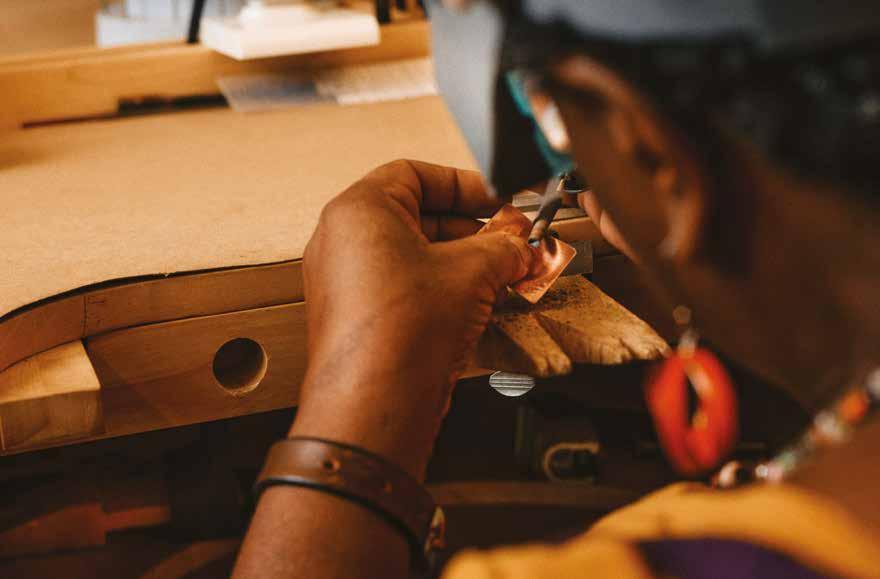
mately left her uninspired. “I came to the decision that what would be required of me to thrive in the industry wasn’t something that I was willing to do,” she says. “By the end of my senior year, I decided I did not want to design clothing, but make fabric and my own printed textile designs for others.” She enrolled in a master’s textile design program at Philadelphia University (now Thomas Jefferson University) to pursue a learning path that merged technology and design.
After she graduated in the mid-1990s, Kowalczyk and her husband moved to North Carolina. They chose it on a whim — “We were astonished at how amazing people were to us and how it felt like home being here,” she says — though she was, in part, drawn to the fabric traditions in the state. “I thought I would find a job in textiles, given my master’s degree, but
what I wanted didn’t quite mesh with what was going on within the industry,” she says. The convergence of globalization and the burgeoning Computer Aided Design (CAD) boom had dramatically changed the industry, influencing how textiles are created and manufactured.
She spent her early days in Raleigh visiting craft stores and eventually took a job at the former craft store Ornamentea, where she strung beads, helped clients with their projects and explored various crafts. While running errands one day, an ad for a six-week immersion course in metalworking at Meredith College piqued her interest. “It was one of those tear-off advertisements at Whole Foods, and I thought, Oh, this is cool, OK, why not? I’ll try it,” she says. There, she learned how to saw, solder and torch metals under the late Mary Ann Scherr, a renowned jewelry
designer and metalsmith.
“Taking a blow torch to a piece of copper or hybrid brass and heating it up until you saw colors — or getting to the point where the change in color of the metal indicated it was soft enough to bend — it was fascinating that I could take something so rigid and make it look like fabric, something I was used to creating,” says Kowalczyk. “We started out sawing things, cutting out shapes and thinking organically.” She found that metalworking synthesized subjects in school she loved. “I didn’t feel so distant from my training in terms of manipulation of a material and being able to add texture to it,” she says.
While the class sparked her love affair with metalworking, adding enamel allowed Kowalczyk to bring color into the work. In enamelling there are two
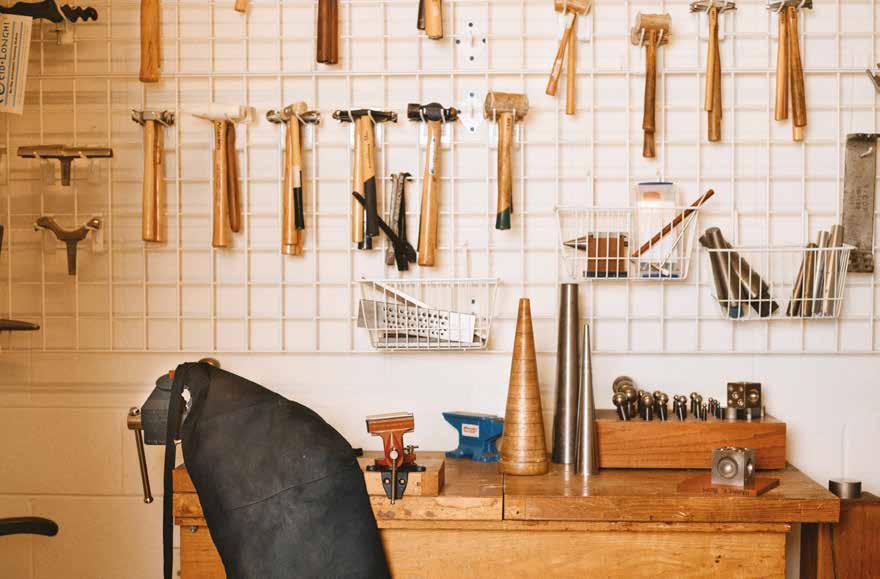
techniques used for fusing glass powder to metal: one uses a small tabletop kiln that evenly and quickly heats objects up to 1,500 degrees Fahrenheit, the other a handheld torch to fire the piece directly. Kowalczyk prefers the latter approach.
The process involves meticulously degreasing the metal surface (copper or silver) with an abrasive cleaner or acetone. The metal is then treated with a bonding oil, after which tiny sifters containing glass powder are used to gently dust the metal surface. Once coated, a torch flame bakes the enamel onto the metal surface. After a base layer of enamel is added, Kowalczyk refines the piece by adding additional layers of texture, pattern and color, using transparent enamels, stencils and a process called “wet-packing” that involves adding liquid to glass powder to create a thin paste that’s added to the
metals. The options are endless, she says, and the experimentation keeps her engaged. “I take classes here and there to learn new techniques, but also while I’m teaching my students, I’m learning things every time as we’re trying to navigate the heat or create an environment for the heat to work better,” she says. “It’s been really fun to learn as I go, both for myself and with my students.”
In her jewelry-making class at Craft Habit, there were audible “oohs” and “aahs” from students as they experienced the alchemy of fire. Kowalczyk fosters that sense of accomplishment in students at all levels. “To see their growth and their confidence in being able to create is really empowering for me,” she says. “I don’t know if I say it enough to my students, but I get as much from teaching them as hopefully they are getting from me.”
Kowalczyk’s husband is the resident
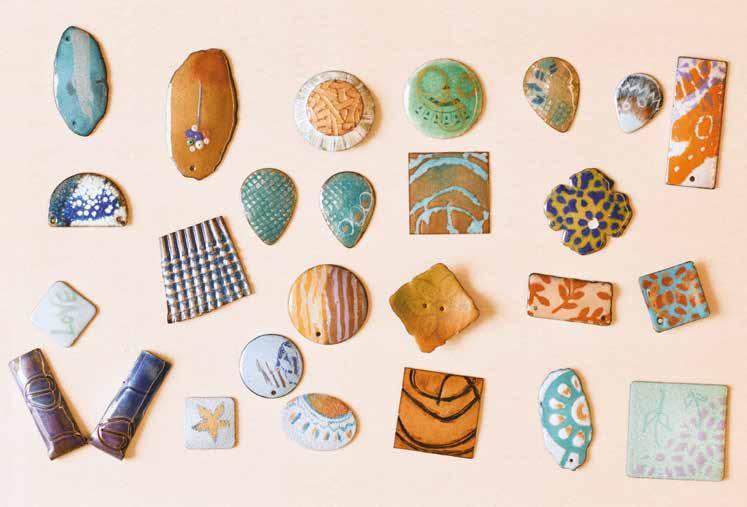
gardener at their home, and the name of her business, Hothouse Posey, riffs off his gardening and her early work in ceramic flowers. “I create inside a lot and at the onset, most of my work was floral inspired, so I thought, You can create flowers in an enclosed space like a greenhouse, what’s another name for that?” she says. She’s dubbed her small home studio The Plottin’ Shed, a name that’s a playful take on a gardener’s potting shed.
Her latest project, which is currently on view at the Pullen Arts Center, is part of a group jewelry challenge organized with instructors Amy Veatch and Terry Thompson. They assembled a series of boxes containing jewelry items and found objects donated by the late jewelry designer and metalsmith Madelyn Smoak. Participants were given the boxes without knowing what was inside,
charged with creating new works of art. The only rule: “We had to use 75% of what was in the box,” says Kowalczyk, who created a series of three small enameled metal jewelry boxes containing earrings, necklaces and other wearable artworks. “Working together with Ndidi is amazing,” says Veatch, who first met Kowalczyk at Ornamentea and has worked with her over the years. “Collaboration is really important, and with this project people were given time to reflect and put their voices in the work. The more we practice celebrating other people’s voices, the more important your own voice becomes, too.”
From wirewrapping and beading to metalsmithing and enameling, participants created a variety of jewelry pieces and sculptural works that challenged them to embrace the unknown. For
Kowalczyk, the project became a springboard for new work. “I am using metal forging and forming in a way that I would like to expand on,” she says. “I started with a version of it for one of the jewelry boxes, and I’m really excited about it.” Evidence of this experimentation is found among her antiqued jewelry boxes, which contain repeating patterns that are embossed, etched and hammered onto the surface — some including florals filled with colorful resin.
These latest works are emblems of a practice that continues to evolve and build upon itself. Twenty years after her first metalworking class at Meredith, Kowalczyk still thinks about what she learned from Scherr: “One of my great takeaways from taking a class from her was that metalsmithing didn’t have to be rigid.”
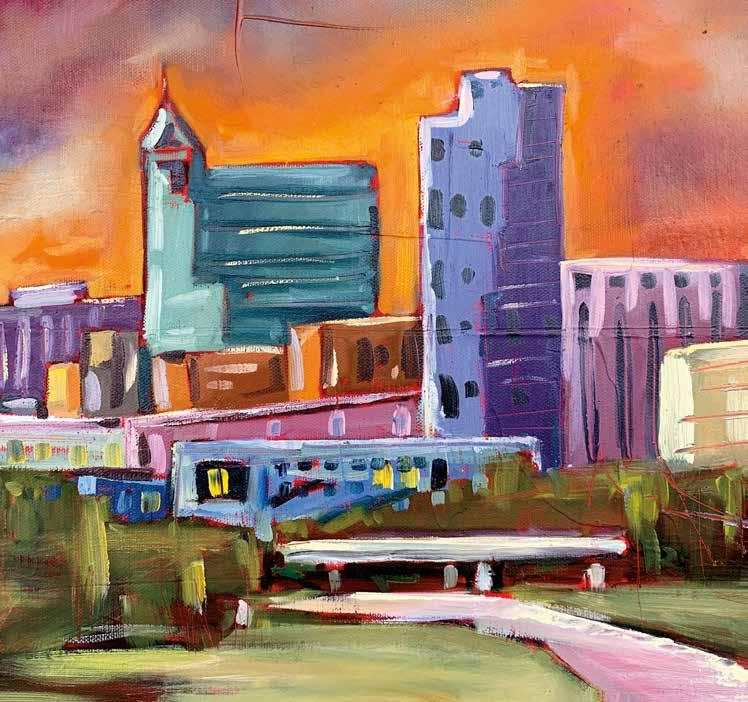
Long days and balmy nights — this season gives us energy to enjoy each day to the fullest. Whether your idea of the perfect day includes an outdoor excursion, theater under the stars or taking in an exhibit within air-conditioned comfort, there are so many special ways to spend your time. Read on for ideas.
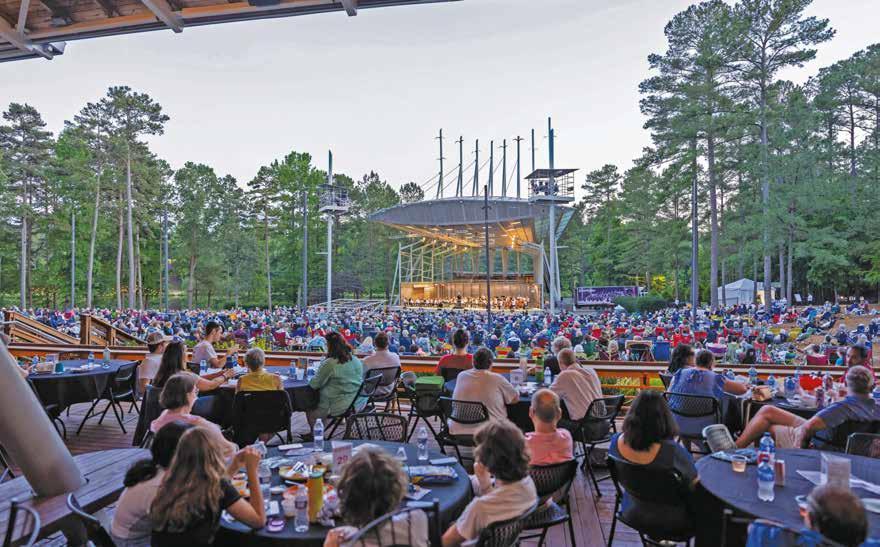
MEMORIAL DAY WEEKEND
THROUGH MID-JULY
Koka Booth Ampitheatre
8003 Regency Parkway
Cary, NC 27518
UNC Health Presents Summerfest with your North Carolina Symphony. Set against the beautiful backdrop of Koka Booth Amphitheatre, Summerfest offers a relaxed, family-friendly atmosphere where music, nature, and community come together. Pack a picnic and participate in the Picnic of the Week to win prizes. Summerfest is designed for easy, joyful evenings — kids can roam, friends can gather, and you can unwind.
Opening Night launches the season with the power and brilliance of Tchaikovsky’s Piano Concerto No. 1 alongside Dvořák’s Symphony No. 8. Film lovers won’t want to miss Epic Film Scores, featuring unforgettable music from The Lord of the Rings, Titanic and more, while A Space Spectacular: Star Wars & More takes audiences on an out-of-this-world musical adventure. Families will delight in Under the Sea, filled with favorites from The Little Mermaid and Pirates of the Caribbean, while Mozart by Moonlight offers a serene evening of classical masterpieces beneath the night sky.
Subscribe for the best prices. Kids 12 and under admitted free on the lawn. Visit ncsymphony.org or call 919-733-2750 for more information.
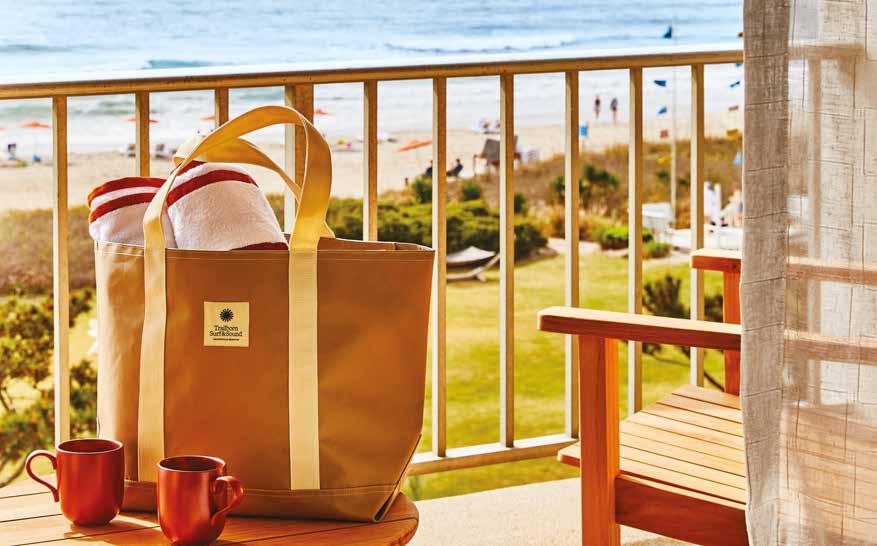
Great American Summer
Trailborn Surf & Sound
275 Waynick Blvd.
Wrightsville Beach, NC 28480
trailborn.com/surf-sound
800-280-9146
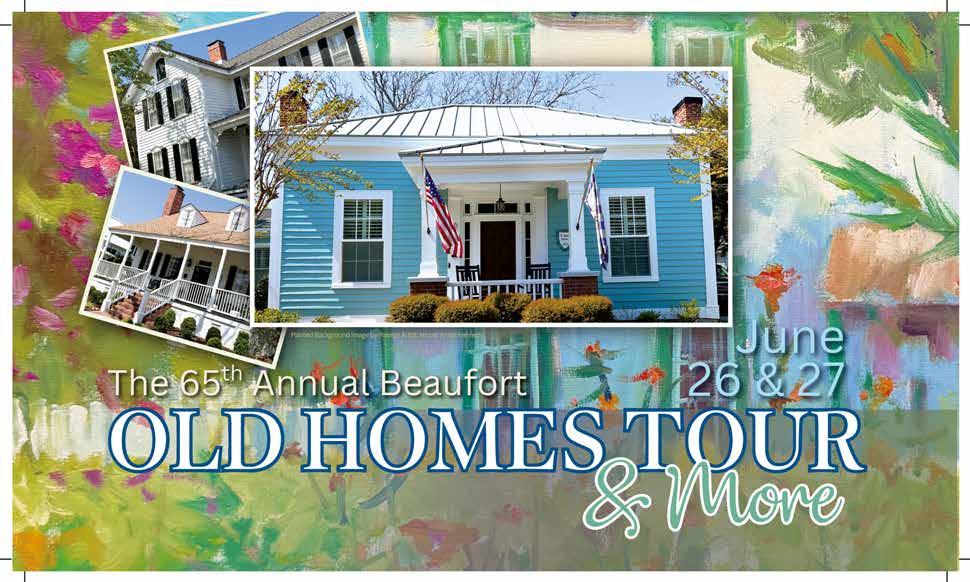
Set between the Atlantic Ocean on one side and the calm waters of the sound on the other, Trailborn Surf & Sound sits on a stretch of North Carolina coastline that families have escaped to for generations. Just two hours from Raleigh, it’s the kind of easy getaway where the drive ends in salt air, wide-open beaches, and days that naturally slow down.
This is summer the way you want it to be — long sandy beach days, kids in the waves, cabanas by the pool, popsicles by the water, afternoons at the Blockade Surf Bar, sunrise paddle sessions, bike rides through Wrightsville Beach and fire-lit evenings. Guests can also savor coastal Italian and Mediterranean-inspired dining at La Duna Paradiso, where relaxed seaside flavors meet warm, inviting hospitality.
Every stay is designed to feel effortless. With the Great American Summer package, guests receive a welcome amenity, a $300 resort credit for dining or on-property experiences and a s’mores kit to end the day. Whether returning or discovering it for the first time, Trailborn Surf & Sound is made for time together, time outside, and long coastal days that linger.
Book your stay and claim your place on the coast.
JUNE 24 - 28
Beaufort Historic Site
130 Turner Street
Beaufort, NC 28516
Proud to be among the oldest towns in North Carolina, the quaint seaport of Beaufort is a storied and picturesque destination. The Old Homes Tour & More offers locals and visitors the perfect opportunity to explore a variety of private homes, gardens, churches, art stops and the Beaufort Historic Site bringing community — both near and far —together. Thousands come year after year to enjoy the Tour, accompanying events, and the countless attractions Beaufort has to offer ranking it among the largest annual happenings in Beaufort.
Over 20 selected stops this year capture authentic Southern Hospitality, honoring American and local history while also showcasing the future as new generations call Beaufort home. Accompanying events happen daily from June 24 through 28 to provide guests with a week full of activities that appeal to lovers of books, history, music, wine and spirits, and gardens. Note: these events sell out quickly! Purchasing tickets and booking lodging early assures your perfect summer coastal getaway. See you soon!
To learn more and get tickets to Old Homes Tour & More events, visit beauforthistoricsite.org or call 252-728-5225.
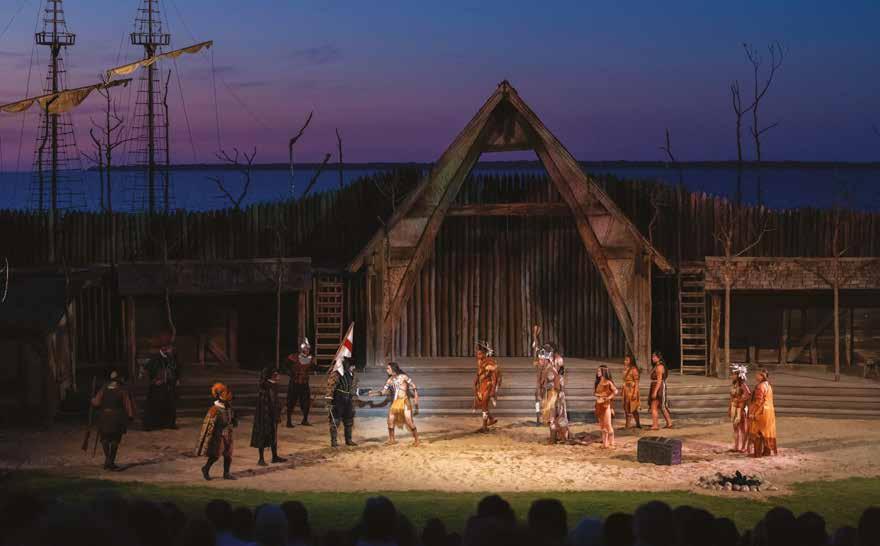
JUNE 4 - AUGUST 22
1409 National Park Drive
Manteo, NC 27954 thelostcolony.org
Now in its 89th anniversary season, The Lost Colony is one of the most exciting nights of theater on the East Coast. An Outer Banks tradition, recently updated to appeal to modern audiences, The Lost Colony is an important part of any trip to the beach.
History comes alive. The Lost Colony tells the true story of the first attempt at English colonization in America and the Colony’s encounters with the Algonquin Native Americans who lived there. In 1587, 117 men, women and children set sail from Devon, England to establish a permanent colony in the New World and eventually landed on Roanoke Island.
Shortly after arriving, the leader of the Colony, Governor John White, returned to England to gather more supplies. War with Spain delayed his return to Roanoke Island for three years, and when he eventually made it back to the island, he found that the Colony had vanished, leaving only the letters “CRO” carved into a tree. Where did the Colony go? Thus one of history’s most endearing mysteries was born.
Fun for the whole family. Featuring spectacular dances, fantastical puppetry, breathtaking costumes, harrowing fights, jaw-dropping special effects and a timeless story, The Lost Colony has something for everyone in the family. Theater lovers, history enthusiasts and everyone in between will leave the show trying to solve the mystery.
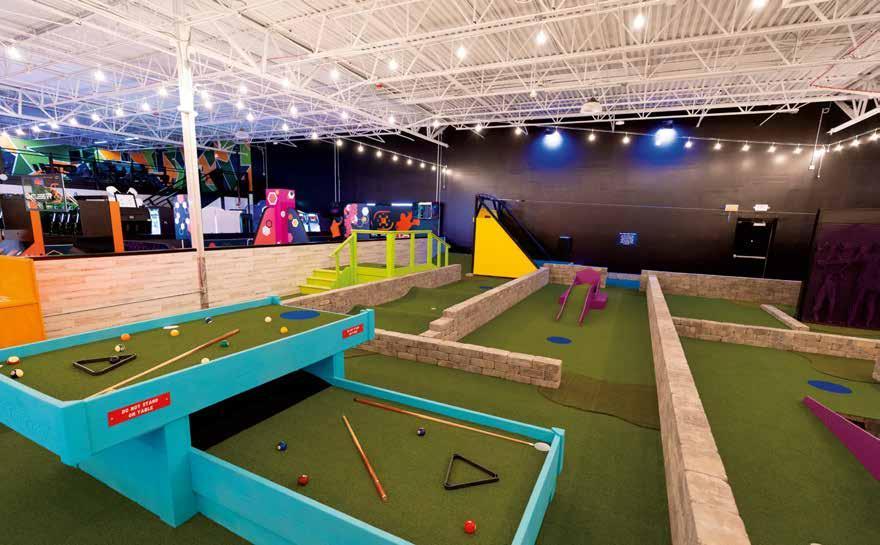
6231 Triangle Plantation Drive
Raleigh, NC 27616
919-766-6743
parteeshack.com
Have you been to ParTee Shack yet? This Triangle-born competitive mini golf and social entertainment brand is a destination worth traveling for — but it’s right here in Raleigh. “We have mini golf like you’ve never seen before — the challenges, the obstacles, the way the courses are designed to put two people head-to-head,” says Danté Valor, chief marketing officer of ParTee Shack. “This is mini golf, reimagined.”
What that means: instead of a classic themed course, each hole features unique challenges. Perhaps you have to sink a basket before making a putt, compete in a game of corn hole or ride down a zip line to roll the ball into the hole. It’s an extra layer of interaction that evens the playing field between experienced golfers and beginners, and keeps things interesting for guests of all ages. In addition to the competitive mini golf, ParTee Shack’s Raleigh flagship has duckpin bowling and VR laser tag, plus plenty of food and drink to keep everyone satisfied for hours of play.
In addition to the Raleigh location, find ParTee Shack in Greensboro, as well as a forthcoming location in Charleston, SC, each big, elaborate venues in some of the Southeast’s strongest tourist markets. “When the experience is genuinely different, people travel for it,” says Valor.



Daily Palace Tours History Programs • Exhibits Gardens • Special Events


Glorious 4th | July 4th
9 AM - 12 PM
Join us at North Carolina’s First State Capitol for a Reading of the Declaration of Independence, Fife & Drum performances, and a Parade in celebration of America’s Semiquincentennial.







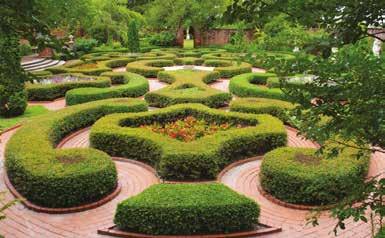



’s roundup of gatherings, celebrations, fundraisers and more around Raleigh
On Apr. 29, WALTER hosted The Art of Aperitivo at the MerrimonWynne House, inspired by VIETRI founder Susan Gravely’s latest book, Italy in a Glass. The evening included wine tastings with Michael Rando of Grapevine Distributors, flower arranging sessions with Kyle Overby of Flowers by Kyle and Darcie Garcia of The Florapist, cocktails with Geremy Prichard and Miguel Torres from Boatman Spirits Co. and music by the Lyricosa Quartet, with support from Chamber Music Raleigh. Thank you to our sponsors Finks Jewelers and Green Front Furniture for making the evening possible, as well as our partners HL Catering, If It’s Paper, Raleigh City Farm, The Country Bookshop and Westgate Wine.
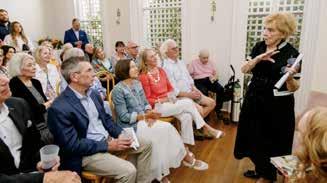
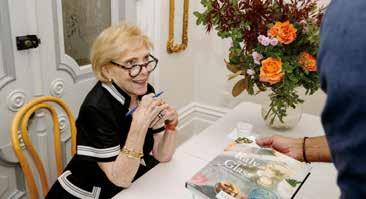
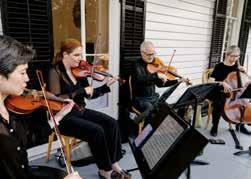

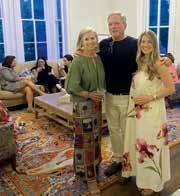
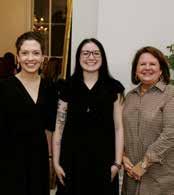


On Jan. 23, guests of Methodist Home for Children came together for the Dream Big gala at the Washington Duke Inn to invest in the lives of children in the social services and juvenile justice systems. Liquid Pleasure provided the dance music, author Lucas Daniel Boyce provided the inspiration — and guests provided the support so that children and teens in need can learn to dream big for themselves.
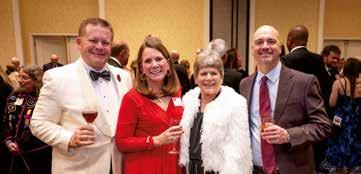
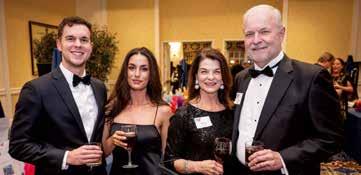
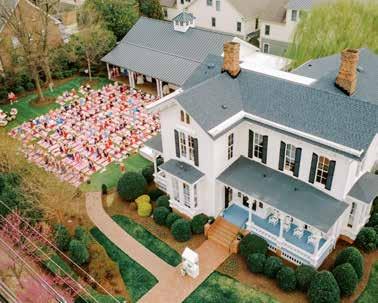
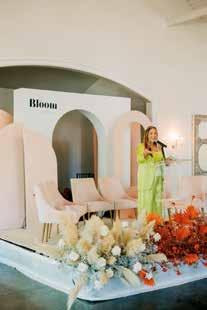

On Mar. 14, North Carolina Opera hosted “A Night for the Arts,” its annual fundraising gala, at the Park Alumni Center. Rosemarie Sweeney was the gala chair. The evening included live performances, fine dining, dancing and an auction to support world-class opera in our region.
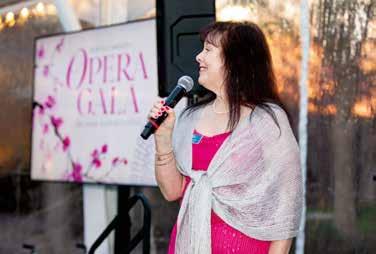






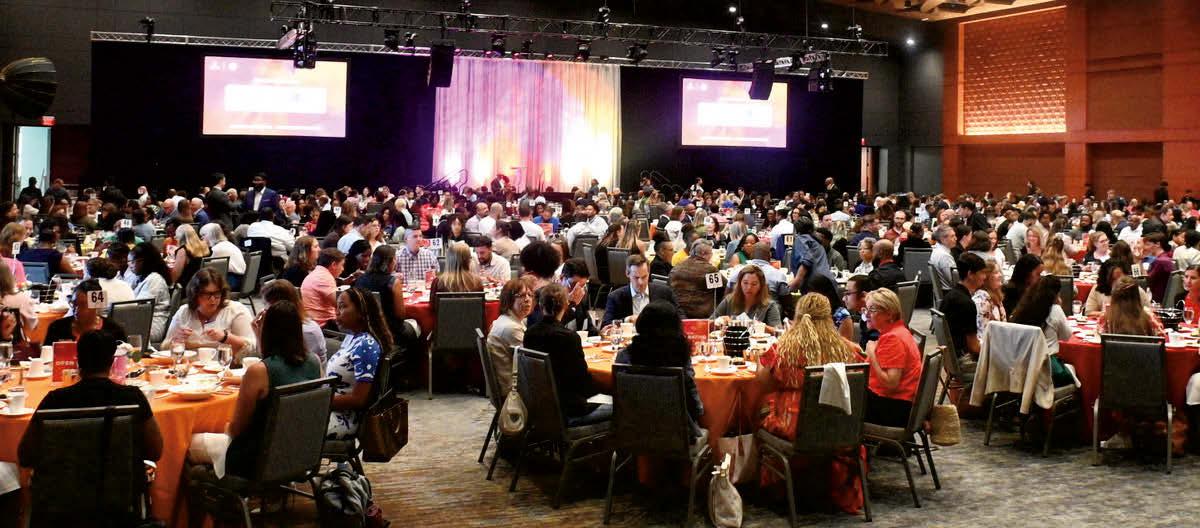
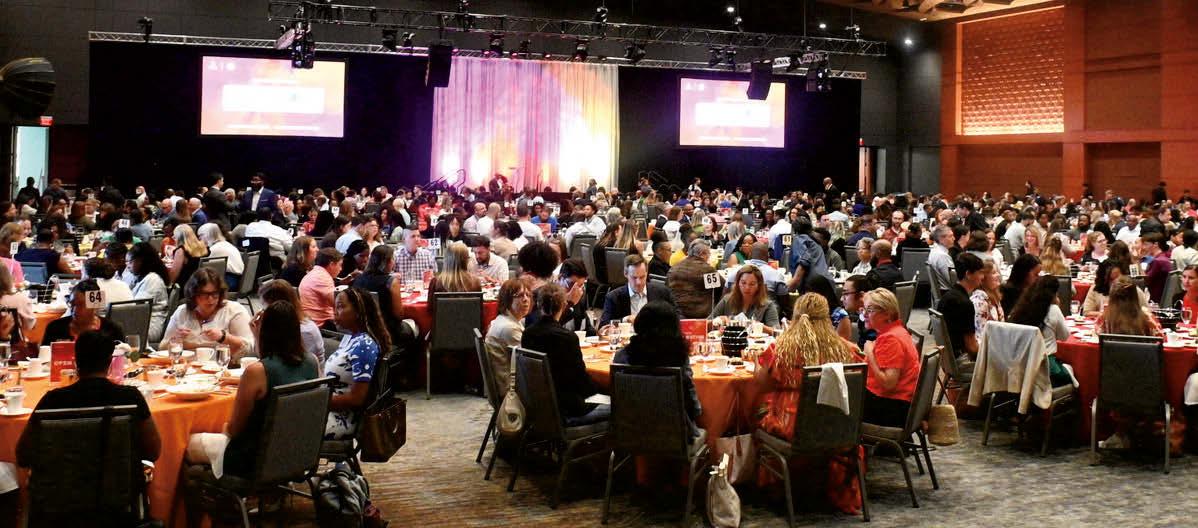
Your talent is your greatest competitive advantage, but only if your culture, practices, and leadership are strong enough to hold everything together.
Perspectives 2026: Strength in Every Stitch brings together HR leaders, executives, and workforce professionals from across the Triangle for expert panels and workshops on employee engagement, HR strategy, AI in the workplace, childcare & economic mobility, and more.
Don’t Miss Your Chance to Learn From:
Donald Gintzig, FACHE
President and CEO, WakeMed Health & Hospitals
Opening Presentation: Healthy People, Strong Workforce

LeVelle Moton
Award-Winning Coach, Motivational Speaker & Community Trailblazer
Key Learning Moment
9, 2026 | 8 a.m. – 2:30 p.m.

Scan


North Carolina, you deserve the spotlight. Day in and day out, PBS NC viewers in every corner of our state enjoy programs that celebrate our unique people and culture thanks to the support of our loyal members. Together, we ensure local shows like Shaped by Sound, Sci NC and NC Weekend continue to shine across all platforms free of charge. Join today at pbsnc.org/donate.
ART ON THE BLOCK
On Apr. 18, Artspace held a block party celebrating the power of community and visual art. Historic City Market and Davie Street welcomed 50-plus local vendors, hands-on artist-led demonstrations, art exhibitions, make-and-take activities, a local DJ and pop-up performances.
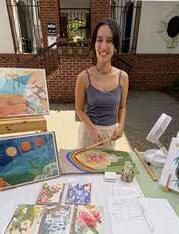
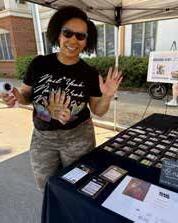
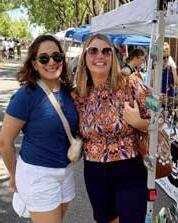
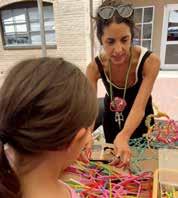
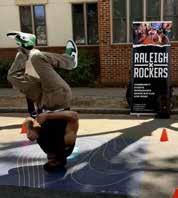



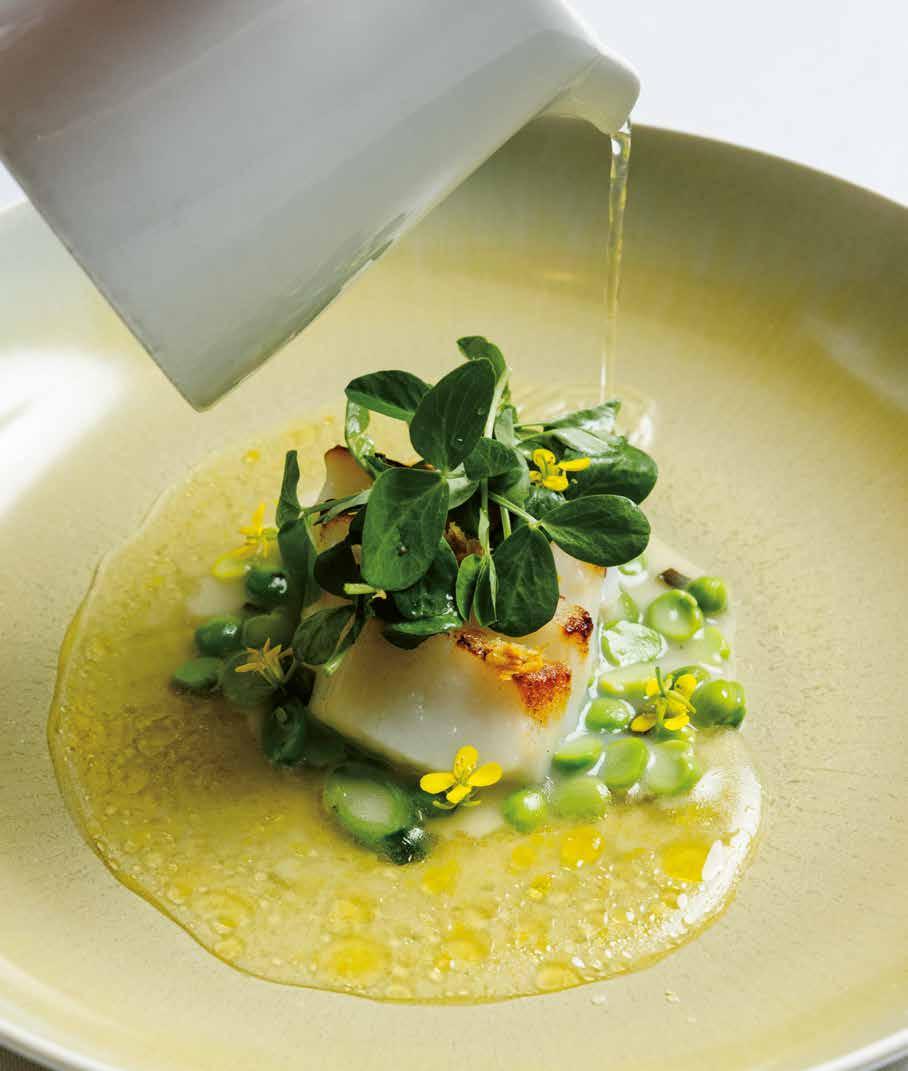


The Home Builders Association of Raleigh-Wake County’s Student Chapter recently celebrated an historic national championship victory alongside their parents, HBA staff and members of the HBA Executive Committee, marking an extraordinary milestone for the students and for workforce development in the home building industry.
On Mar. 21, the Holt Brothers Foundation hosted the Ultimate Gameday. The event featured a flag football tournament, a Gameday Challenge and tailgating activities centered around participation and engagement. Families from their KidsCan program attended and participated as a alongside corporate and community groups.


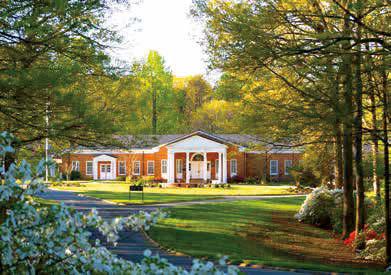











’CUEGRASS
On Apr. 18, Empire Eats hosted ’Cuegrass, an annual barbecue- and bluegrass-centered festival that benefits children’s causes. This year, they supported SAFEchild, The Occoneechee Council of Boy Scouts of America, Freedom Ride Rescue, Broughton Capital Foundation and Arts Together. The festival included live music, a kids’ zone, a mini market and, of course, barbecue.
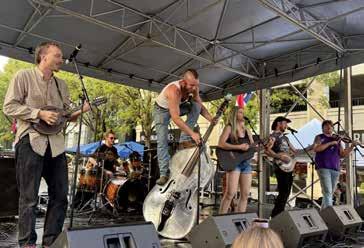


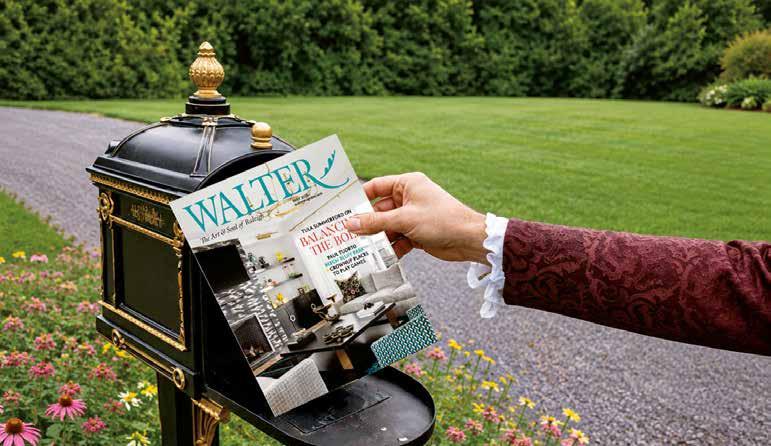

On Apr. 11, Cary hosted its premier festival dedicated to the Southern delicacy, pimento cheese. Visitors enjoyed free tastings and cheese carving competition, live music by The Embers, kids’ games and activities along with 50-plus food vendors — some serving pimento cheese-forward creations.




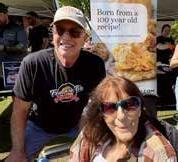
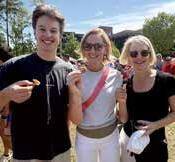


Friday, September 18

A unique public art project highlights the work of the Carolina African American Writers Collective
by LILY KANE
Next time you drive down Poole Road, you may notice something different amid the houses, greenery and sidewalks that line the street. Vibrant abstract art, in eye-catching shades of bright green, orange, lavender and blue, adorns two bus shelters and a sculptural bench along the road. Lines of poetry weave through the art, written in shades of bright pink and dark blue.
The artworks are part of the City of Raleigh’s Percent for the Arts program, an ordinance that allocates 1% of funds for eligible construction projects to go toward incorporating public art into the improvements. Kelly McChesney, the public art director for the city, said that of the variety of construction projects that were eligible under the city’s 2017 transportation bond, the Raleigh Arts Commission chose Poole Road in an effort to bring public art to all areas of the city.
with Dowell that the Carolina African American Writers Collective, a group that supports and fosters Black writers, had been founded there in 1995. After reading some of the collective’s poetry, Dowell decided to center the artwork around them.
Dowell chose verses from poets Valeria Bullock, Patricia A. Johnson and Lenard D. Moore to incorporate into the art. She says she chose the verses based on their relevance to the area’s history, citing a verse about sowing seeds that she placed in a spot that was once farmland. The verses, in turn, inspired the artwork.
“I read the poems, and I immediately had these visuals in my head.”
— SHARON DOWELL
“We didn’t really have any big public art projects out in that southeast, east Raleigh area,” McChesney says.
The city selected Charlotte-based painter Sharon Dowell to design the artwork. Dowell, who works primarily in large-scale art like murals, got to work meeting virtually with Poole Road area residents to talk about the neighborhood and its history. In one of those meetings, a resident shared
“I read the poems, and I immediately had these visuals in my head,” Dowell says. In addition to the blocks of color painted directly on the glass of the bus shelters, Dowell designed large two-dimensional metal sculptures with patterns reminiscent of clouds, trees and spirals. The poetry verses spill from the bus shelters onto the standalone sculptures, weaving the art together.
Dowell says she cherished the opportunity to learn more about the area’s history, and hopes the art inspires passersby to learn more about it, too.
“It’s a great way for people to find out about their own neighborhoods, all the wonderful things that make a city unique and rich,” she says.
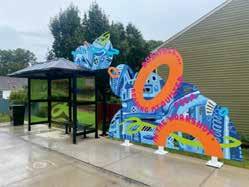
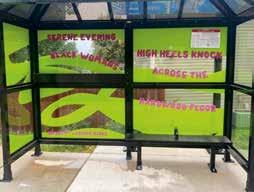
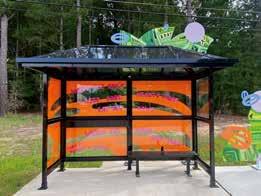
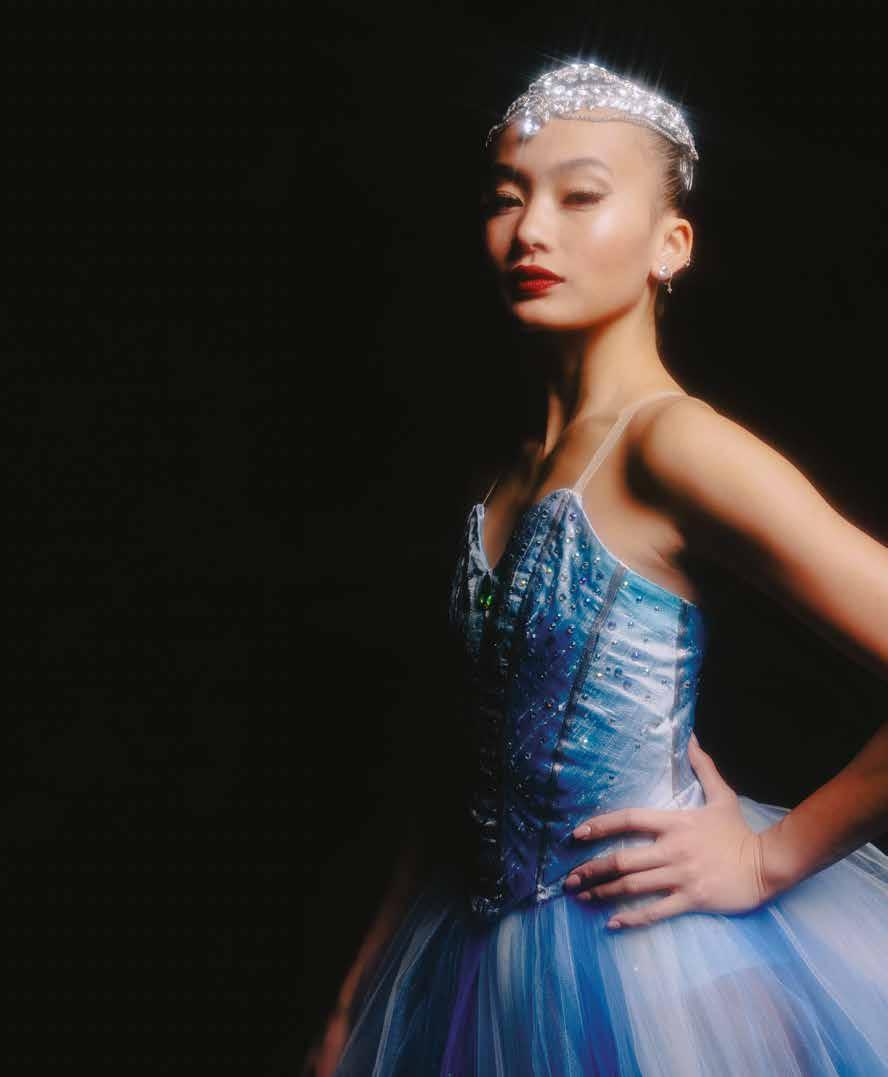
Subscriptions