


Raleigh’s Village District


JOHNSON LEXUS OF RALEIGH
JOHNSON LEXUS OF DURHAM AT SOUTHPOINT
SCULPTED CABLE COLLECTION



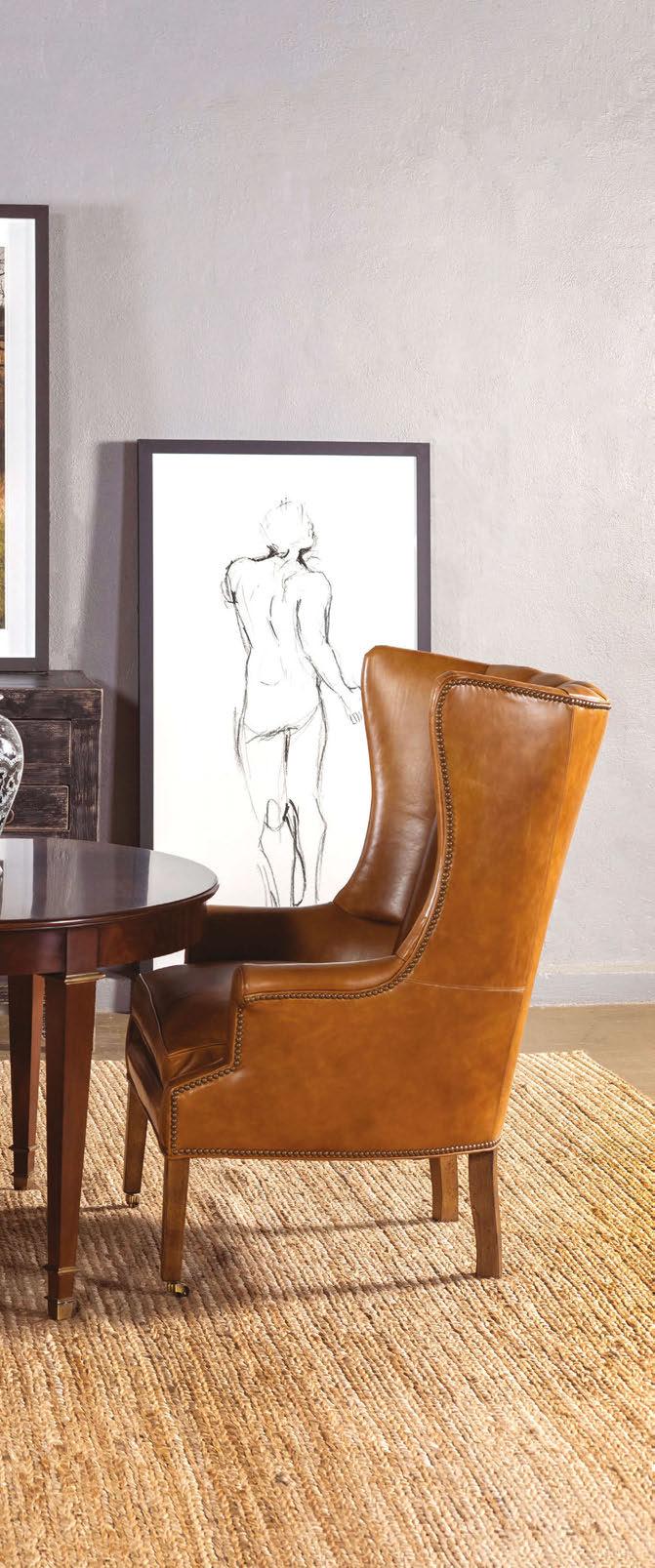
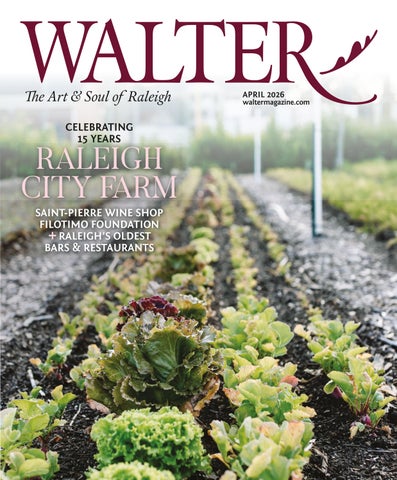
A quiet stillness fills the room, accompanied by the soft light stretching into the longer days ahead. Beyond the windows, a faint April mist lingers after a passing shower, branches darkened and glossy, their buds poised like a held inhale before bloom. It’s the sort of afternoon that encourages you to linger without ceremony. A chair pulled close, a book opened, and a glass poured slowly from the decanter—the amber catching the soft daylight. The day moves easily, measured in small moments: a sip, a page turned, the quiet comfort of simply being. Brighter days will arrive soon enough.
Through the doors of our showroom, rooms unfold in the same quiet spirit—filled with handpicked pieces meant to be lived in slowly. For now, the pleasure is in the pause.
































OUTDOOR LIVING / CONCRETE POOLS / FIBERGLASS POOLS / HARDSCAPES / LANDSCAPES / PERGOLAS
Get a quote for your pool project: (984) 788-5933





Follow along and don’t miss a thing.



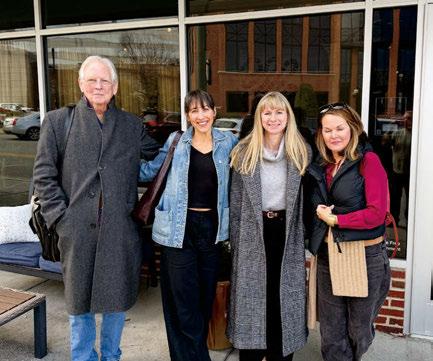
I recently had a lovely lunch with my fellow editors at our sister publications! Left to right: Jim Moriarty of PineStraw, Cassie Bustamante of O.Henry, me and Cathy Martin of SouthPark.
With apologies to my staff for my mood in the morning, I drafted this editor’s letter at 2:37 a.m., having been startled awake from some sort of bad dream.
I was actually surprised it wasn’t later, as it felt like I’d been tossing and turning for much longer. This happens periodically and leads me to wonder what I’ve done “wrong” to get myself in such a state of restlessness. Among the possibilities:
• That half-cup of coffee at 3 p.m. Or maybe the glass of wine at dinner
• Lingering dehydration from my morning hot pilates class — or perhaps drinking too much water to compensate.
• The wrong combination or timing of the vitamins and supplements my doctor recommended to help me sleep.
• The trending TikTok song that’s stuck in my head due to my girls blasting it on repeat.
• Being on my computer too late at night… or checking my phone too late at night… or watching TV too late at night… or reading a too-stimulating book too late at night.
• The room being too hot or, once I crank the thermostat down, too cold.
• Being hemmed in by our tabby cat, Levi, who sleeps nestled up against my feet and legs.
• When Levi’s not there: Feeling like my toes and knees are cold.
• Josh snoring, stealing the covers or encroaching on my side of the bed.
• When Josh is out of town: missing his reassuring presence.
• And especially when Josh is out of town: Hearing every single crack and groan of our old house settling for the night. And wondering if it might be a ghost.
• The moon.
And that’s even without actual interruptions, like a kid coming into our room! I’ve polled my girlfriends and I’m not the only one with the problem, so it’s possible it has less to do with me than it does with hormones or this season of life. Particularly because our days are so chock-full — Who needs to be driven where? What’s for dinner? Did you sign the form? — that the to-do list is usually the first thing that comes to mind when I wake up.
Transferring my thoughts from brain to paper often calms it enough to fall back asleep. I keep a notepad in my nightstand just for that purpose. When I look at it in the morning, I’ll find barely-legible reminders for the next day, turns-of-phrase to open an article, and, sometimes, snippets for future editor’s letters. Guess I checked that off the to-do list!

Ayn-Monique Klahre Editor


APRIL 2026
PUBLISHER
DAVID WORONOFF
EDITORIAL
Editor
AYN-MONIQUE KLAHRE ayn-monique@waltermagazine.com
Creative Director
LAURA PETRIDES WALL laura@waltermagazine.com
Associate Editor
ADDIE LADNER addie@waltermagazine.com
Contributing Poetry Editor Jaki Shelton Green
Contributing Copy Editor Finn Cohen
Contributing Writers
Catherine Currin, Jim Dodson, Ian F. G. Dunn, Mike Dunn, Hampton Williams Hofer, Colony Little, David Menconi, CC Parker, Rachel Simon, Kashiana Singh, Tommy Tomlinson, Helen Yoest
Contributing Photographers
Liz Condo, Bob Karp, Forrest Mason, Catherine Nguyen, Eamon Queeney, Joshua Steadman
Contributing Illustrators
Vinita Jain, Gerry O’Neill, Gary Palmer, Canain Stanley
Editorial Intern Lily Kane
BUSINESS
Advertising Sales Manager JULIE NICKENS julie@waltermagazine.com
Senior Account Executive & Operations CRISTINA BAKER cristina@waltermagazine.com
Finance HENRY HOGAN 910-693-2497
Distribution JAMES KAY
Owners
JACK ANDREWS, FRANK DANIELS III, DAVID WORONOFF In memoriam FRANK DANIELS JR.
GENERAL Inquiries
WALTER OFFICE 984-286-0928 info@waltermagazine.com
Address all correspondence to: WALTER magazine 421 Fayetteville Street, Suite 104 Raleigh, NC 27601
WALTER is available by paid subscriptions for $36 a year in the United States, as well as select rack and advertiser locations throughout the Triangle. Subscribe online at waltermagazine.com/subscribe
For subscription and customer service inquiries, please email us at customerservice@waltermagazine.com or call 984-286-0928. WALTER does not accept unsolicited manuscripts. Please contact Ayn-Monique Klahre at ayn-monique@waltermagazine.com for freelance guidelines.
© WALTER magazine. All rights reserved. No part of this publication may be reproduced in any form without the express written consent of the copyright owner. Published 12 times a year by The Pilot LLC.



Terms and Conditions: $300 off any order of $1198 or more,$200 off any order of $998-$1198 or $100 off any order of $698-$998, on any complete custom closet, garage,or home office unit. Not valid with any other offer. Freeinstallation with any complete unit order of $600 or more. With incoming order, at time of purchase only. For a limited time SPECIAL FINANCING for 18 months *with approved credit* Expires in 90 days. Offer not valid in all regions.



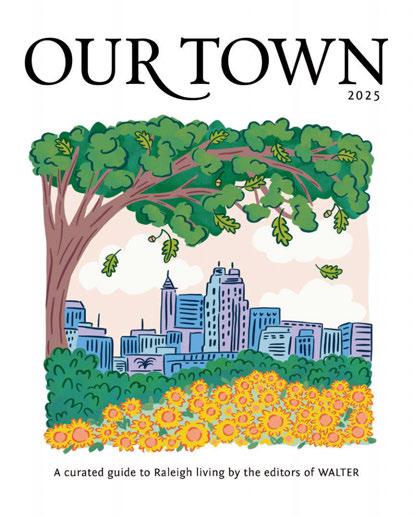
Pick up Our Town, an insiders

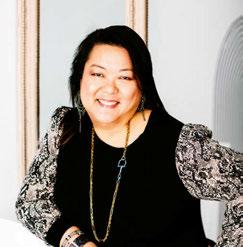
KASHIANA SINGH / POET
The author of five poetry collections, Kashiana Singh lives in North Carolina. Her latest collection, The Dualities of Albireo, was released in June 2025 with The Poetry Box. She proudly serves as managing editor for Poets Reading the News and is president of the North Carolina Poetry Society. “This poem emerges from the tension between inheritance and departure: how ancestry speaks through the body before language is ready, how ritual carries both blessing and rupture. It reflects on displacement not as a matter of land but of voice.”

TOMMY TOMLINSON / WRITER



Tommy Tomlinson is the author of two books, The Elephant in the Room and Dogland. He was a longtime columnist for the Charlotte Observer and has written for Esquire, The Atlantic, ESPN the Magazine and many other publications. His online newsletter is called The Writing Shed. He lives in Charlotte with his wife, Alix Felsing. “I’ve spent 40 years in journalism and nearly all of those years in North Carolina. These days I like to write about the spaces in between the headlines — the moments that often end up mattering the most.”
CATHERINE NGUYEN / PHOTOGRAPHER
Catherine Nguyen is a Raleighbased photographer specializing in residential and commercial design and architecture. A New York native, Nguyen has a background in visual design for banking and management consulting, branding and marketing. After realizing her passion for creative pursuits, she attended The Academy of Art University in San Francisco to study photography. “I was inspired by the unexpected use of color and pattern in this home. It’s an elegant space that doesn’t take itself too seriously.”

For Canain Stanley, every morning starts about the same: brewing a pot of tea, petting the cats, sitting down at his desk and cracking open a bottle of India Ink. He has a passion for traditional media and loves drawing animals. Stanley has worked with the YMCA, Lowes Foods, MDI and Ralph Lauren. He graduated from the University of North Carolina at Chapel Hill in 2023 with a BFA in Studio Arts, and has been filling up a mountain of sketchbooks ever since. “I had a great time expressing the local turns of phrase I grew up with in ink and color.”
We love to hear from you!
We heard from many people who loved nature columnist Mike Dunn’s February article, “The Soul of a Tree”...
“I love this about the winter months and think about it often.”
— Jeanine Brandi
“Stunning!”
— Louise McCoy
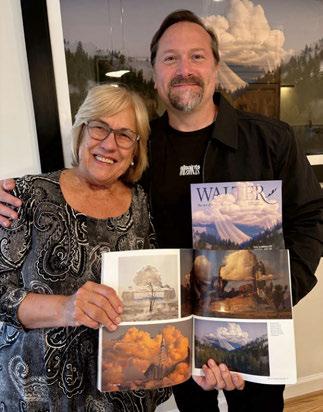
Cover artist Matt Wilson and his proud mama, Janet!
We also got several notes about the home designed by Roux MacNeill...
“Gorgeous! I remember this project well!”
— Leigh Mosby
“Beautiful! Such amazing attention to detail.”
— Paulette Pinder
“I love the play of patterns and colors mixed together.”
— Suzanne Gasperini O’Hara


@waltermagazine www.waltermagazine.com


Campbell University invests in each student. We prepare each one to make a life, to make a living and to make a difference. Our students are welcomed into an inclusive community of family, and mentored to become leaders who will impact the world. Inspired by our Christian faith and belief in the power of education, we encourage each student to grow academically, spiritually and socially through the world of opportunities that surround them.



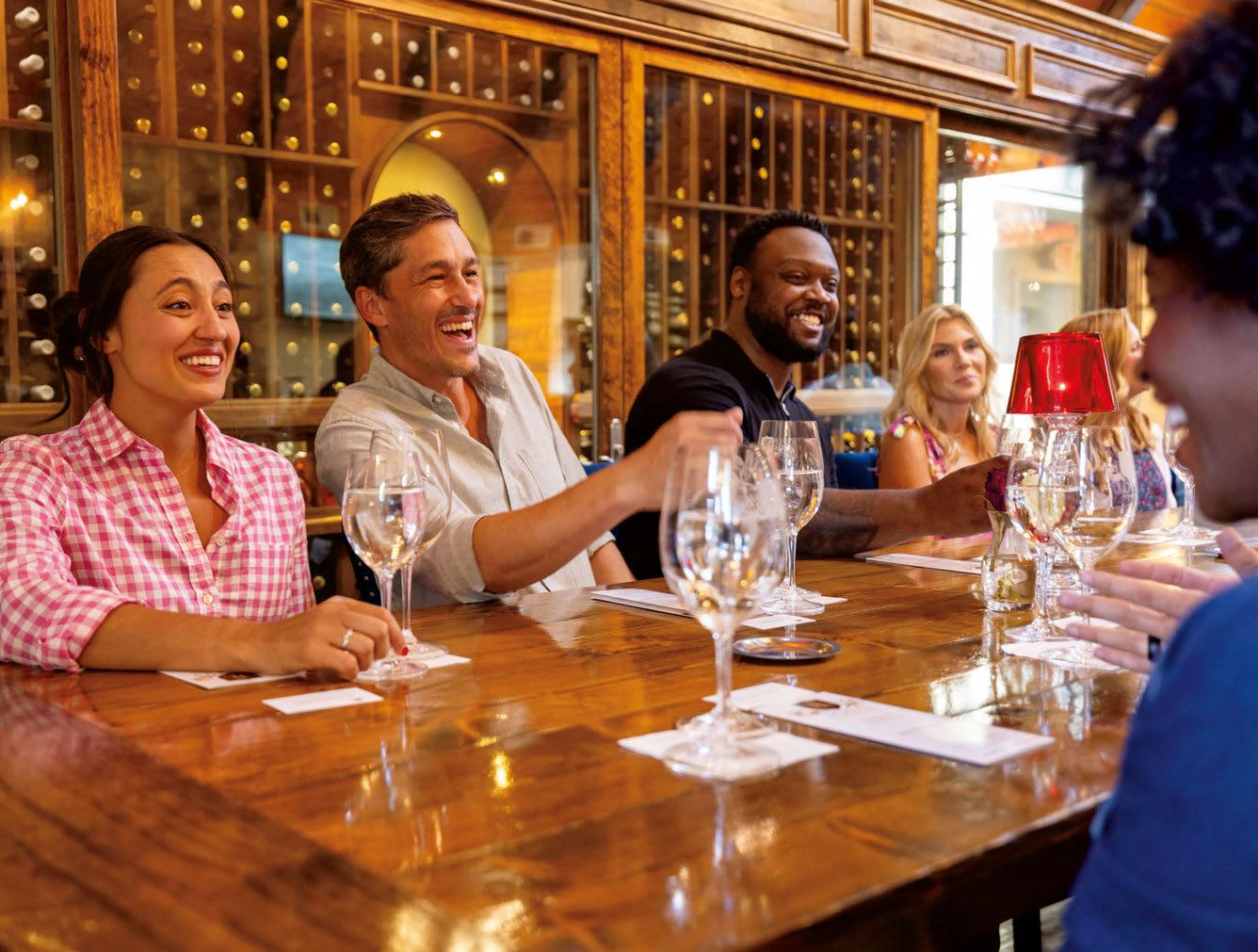
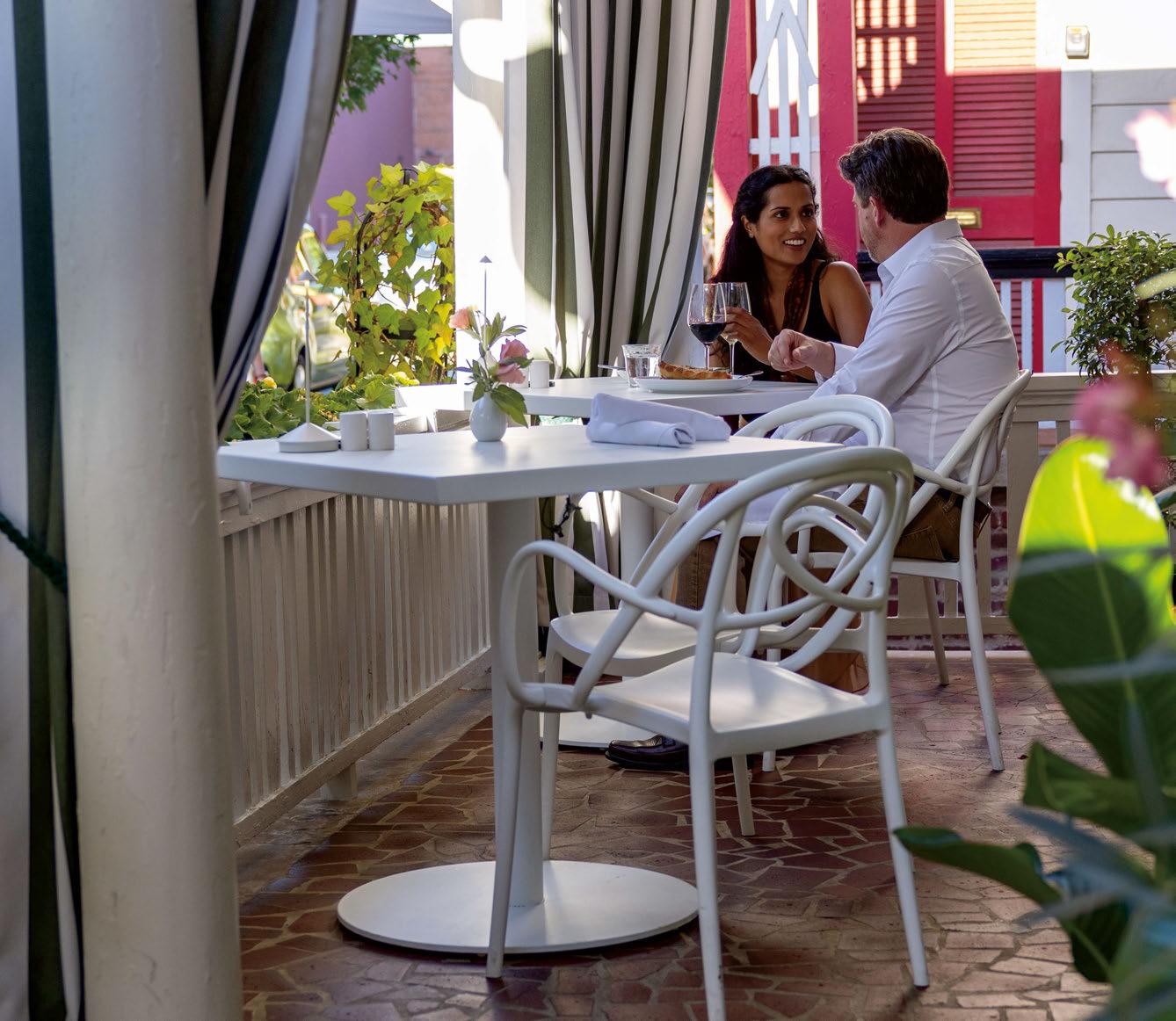
This month enjoy markets of all kinds, Earth Day celebrations, outdoor festivals and Record Store Day!
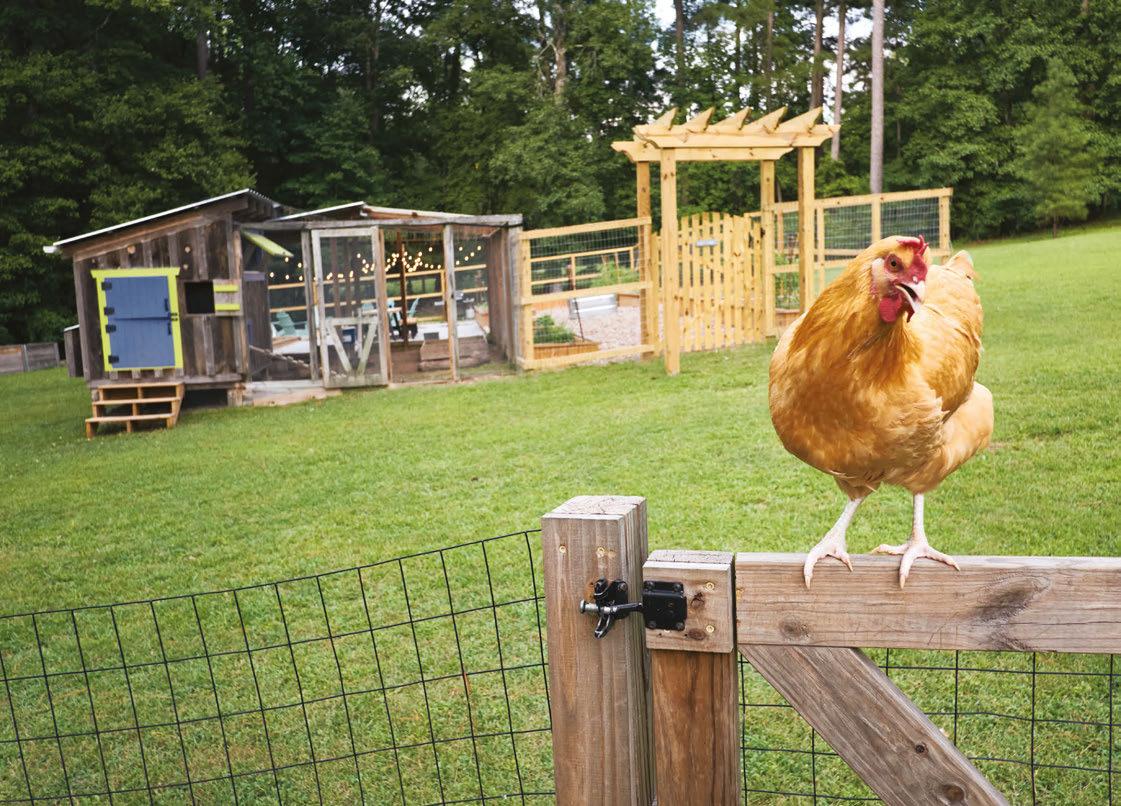
CHEEP CHEEP! Urban chicken keeping has gained popularity in recent years in Raleigh. Chickens are low-maintenance and deliver richly flavored eggs, plus they act as tillers, pest controllers and fertilizers for your yard. But for their owners, that’s only part of the appeal. “Our chickens have such quirky little dispositions! They sit in my lap and will run up when we come out to visit,” says Stacie Kurtz, who keeps five of the birds in her Historic Oakwood garden. If you’re interested in starting your own backyard flock, there are several places that can help. Our local Tractor Supply hosts Chick Days each spring during hatching season, where, in addition to chicks themselves, you can get all the supplies you need, from the feed to the coop. (1201 Mammoth Drive, Knightdale; tractorsupply.com) Raleigh-based farm Barrett Hatchery specializes in selling rare high-laying chickens, such as the Polish, as well as popular breeds like the Silkie, a petite bird known for its charming temperament. (barretthatchery.com) Slightly further afield, Dragonfly Farm offers a variety of breeds known for laying eggs in gorgeous hues, including the Whiting True Blue, whose eggs are a dusty blue; the Ameraucana, which lays slightly green eggs; and the Black Copper Marans, whose eggs are a deep espresso color. (407 Overton Road, Franklinton; dragonflyfarmnc.com) For more information about chicken keeping, check out the North Carolina State University Extension Service. (homegrown.extension.ncsu.edu) — Addie Ladner

WALTER’s list of things to see, do and experience this month
by ADDIE LADNER
April 10 | 7 p.m.
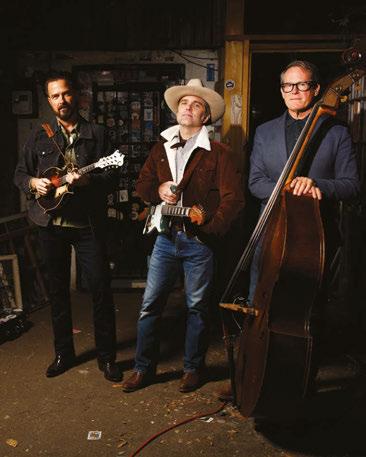
Bluegrass band Chatham County Line, which includes lead singer and guitarist Dave Wilson, fiddler John Teer and bassist and pedal steel player Greg Readling, is playing its Annual Spring Hometown show this month at The Rialto. Expect a range of songs from their long-standing musical career, from Raleigh favorite “The Carolinian,” which was released back in 2008, to more recent hits like “Right On Time.” From $30; 1620 Glenwood Avenue; therialto.com
April 1 - 19 | Various times


Opening Theatre Raleigh’s Main Stage season, the Tony award-winning Broadway musical Come From Away follows the true story of about 7,000 airline passengers who were stranded in the tiny town of Gander, Newfoundland, after the events of 9/11. The surprisingly nuanced, lighthearted production shows how unexpected circumstances can change the course of one’s life and emphasizes the importance of kindness and com-
munity, no matter where you come from. From $42; 6638 Old Wake Forest Road; theatreraleigh.com
April 4 | 6:30 p.m.
It’ll be a match between East and West at this home game for the North Carolina Courage. They’ll take on the Portland Thorns, and in honor of Earth Month, the theme for the evening is Go Green. Expect activities and vendors that celebrate Mother Nature and learn how the team and their venue, the First Horizon Stadium, practice sustainability throughout the season. The first 1,000 fans to show up to this match score a reusable North Carolina Courage tote bag! From $20; 101 Soccer Park Drive, Cary; nccourage.com
April 12 | 11 a.m. - 4 p.m.
Handmade and vintage collective TrunkShow is hosting its annual shopping festival in the shop’s parking lot. Browse all sorts of finds from their vendors, from home furnishings and decor items to jewelry and art, and see if you unearth any treasures. In addition to shopping, you can taste local baked goods, get a tarot reading, enjoy adult beverages or even adopt a pet! Free; 1526 Wake Forest Road; trunkshowraleigh.com
FOREST PARK ART SHOW
April 12 | 2 - 5 p.m.
Thirteen local makers will showcase their work at the Forest Park Art Show,
All information is accurate as of press time, but please check waltermagazine.com and the event websites for the latest updates.
which features varied work including photography, pottery, painting and jewelry. Held in the historic Brown House Gallery on Hillsborough Street, the event is designed to be welcoming and accessible for art lovers, collectors, families and curious passersby alike. Free; 1310 Hillsborough Street; forestparkartshow.com











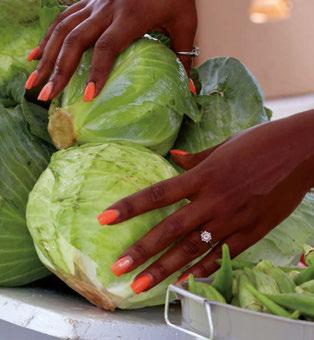

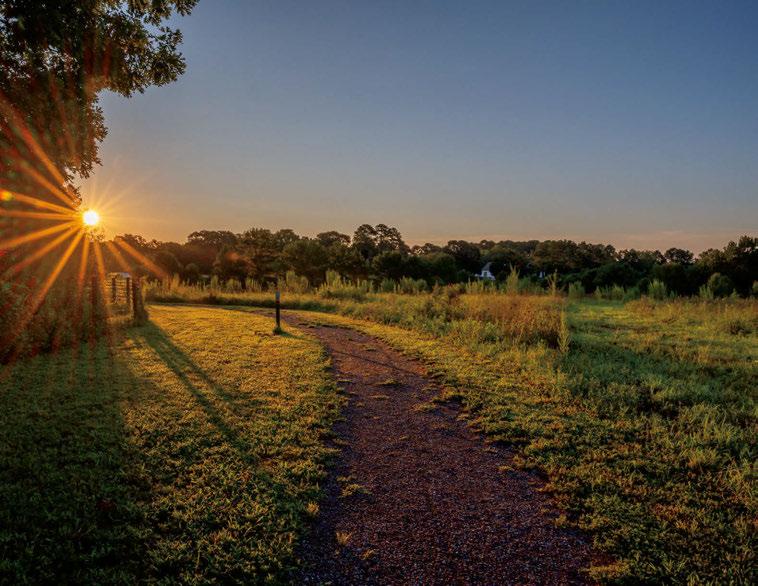

Dive into the bounties of spring by exploring a seasonal farmers market. On the second and fourth Sunday of every month, the Black Farmers Market comes to the Southeast Raleigh YMCA, bringing a mix of locally grown produce, baked goods and wellness products. (April 12 & 26; 1 - 4 p.m; 1436 Rock Quarry Road; blackfarmersmkt.org) The Midtown Farmers Market in North Hills’ The Commons kicks off on April 11 and will run every Saturday through the end of October. (8 a.m. - 12 p.m.; 4191 Main at North Hills; midtownfarmers. com) Charming downtown Cary’s Farmers Market starts its regular season this month on Saturdays and is conveniently located near the recently renovated Downtown Cary Park, in case the kids need to blow off some steam. (8 a.m. - 12 p.m.; 327 S. Academy Street; caryfarmersmarket.com)
April 16 | 6 p.m.
Enjoy a dinner in community for a good cause with Oak City Cares, a publicprivate partnership dedicated to supporting those experiencing homelessness in Raleigh. They’re aiming to raise $225,000 at this year’s Gift of Home Celebration to go toward their efforts to provide healthcare, food assistance, legal aid and other services to those in need. Attendees will also have access to a live auction and raffles. $100; 510 W. Martin Street; oakcitycares.org
April 17 | 6 p.m.
The United Arts Council of Wake County is putting on a unique fundraiser in support of the organization’s Artists in Schools program, which places professional artists in schools across the county to lead workshops and performances. At Wake on Stage, community
leaders and businesspeople will present their hidden talents on stage for an uplifting and entertaining evening. On the docket so far: Raleigh City Council member Christina Jones performing a monologue, former Wake County Commissioner Sig Hutchinson presenting “The World’s Greatest Magic Trick” and former WRAL anchor Valonda Calloway dancing an original piece. In addition to the performances, enjoy a live auction, cocktails and hors d’oeuvres. $100; 123 E. Vance Street, Fuquay-Varina; unitedarts.org
April 18 | 12 - 6 p.m.
Enjoy this barbecue and bluegrasscentered festival, hosted by hospitality group Empire Eats, which benefits children’s causes in the local community. Anchored at the intersection of Hargett and Fayetteville Streets, the festival boasts live music, a variety of smoked



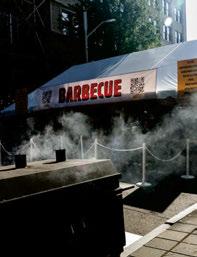
meat dishes, silent auction, kids’ zone, mini market and allaround good vibes. In the evening, head to The Raleigh Times for the official afterparty until 10 p.m. Free; downtown; cuegrass.com
April 18 | 8 a.m.
Independent music shop and venue The Pour House will be celebrating Record Store Day — a national holiday that originated in Raleigh — with an early opening, coffee and donuts, exclusive EP releases, a raffle and more. Get there early to secure your spot — the records are sold on a first-come, first-serve basis and a line usually forms before opening time. Free; 224 S. Blount Street; pourhouseraleigh.com

There are multiple ways to honor Mother Earth this month! Raleigh Brewing is hosting Sound Rivers, a nonprofit that protects the Neuse and Tar-Pamlico River watersheds, for a fun festival on April 22. (6 - 9 p.m.; 3709 Neil Street; raleighbrewing. com) On April 24, North Carolina State University is hosting a Lake Raleigh Clean Up. Meet at the fishing pier in closed-toe shoes to collect litter from the trails to improve the health of this 9-acre forest surrounding a 75-acre reservoir. (10 a.m. - 12 p.m.; free; 2300 Main Campus Drive; calendar.ncsu.edu). On April 26, Dorothea Dix Park is hosting a lively Earth Day Festival that will include the City of Raleigh’s annual Trashion Show, featuring outfits made with recycled materials, as well as awards to recognize sustainability efforts. During the day, shop green-themed vendors, then finish the festival with an outdoor movie. (5 - 10 p.m.; free; 1030 Richardson Drive; dixpark.org)
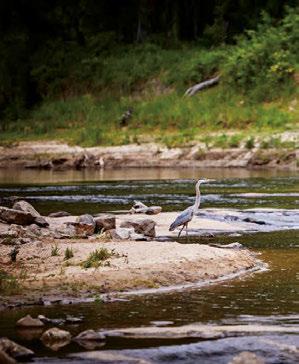
April 18 | 10 a.m. - 12 p.m. Gardener and writer Helen Yoest is hosting an educational program where participants can learn how to attract wildlife like birds, bees and butterflies to their own yards or community gardens. The session will take place at Yoest’s Bee Better Teaching Garden, a space within her own property that has won the City of Raleigh Sustainable Award for its use of native plants. The longtime gardener will be passing out handouts with more information, and her latest book, Cultivating Native Plants for Pollinators: A Comprehensive Guide to Attract Birds, Bees, and Butterflies, will be available for purchase or signing, as well. $25; 3412 Yelverton Circle; beebetternaturally.com


April 19 | 7 p.m.
Hailing from Birmingham, Alabama, this eight-member soul and jazz ensemble is making a stop at The Ritz on their 2026 tour across the country promoting their album, St. Paul and the Broken Bones — Live at Southern Grooves. Known for rollicking live shows, the band — made up of members Paul Janeway, Brown Lollar, Jesse Phillips, Kevin Leon, Al Gamble, Allen Branstetter, Amari Ansari and Chad Fisher — has toured with the likes of Lizzo and the Rolling Stones. $43; 2820 Industrial Drive; ritzraleigh.com
April 23 | 6 - 9 p.m.
Leadership Raleigh and Ripe for Revival are teaming up for Savor the Flavor, an immersive culinary and community experience. The dinner will bring together area chefs, live music and passionate community members for an evening that celebrates good food and raises money to address food insecurity in our region. Jason Smith of Cantina 18, Jake Wood of Lawrence BBQ, Sera Cuni of Root Cellar in Chapel Hill and Katie Featherstone of White Clover Catering in Durham are among some of the chefs participating. All proceeds benefit Ripe for Revival’s Mobile Market program, which brings fresh, affordable food to communities across Wake County as well as eastern North Carolina. From $135; 622 Maywood Avenue; ripeforrevival.com
April 25 | 9 a.m.
Nonprofit Note in the Pocket is on a mission to provide essential clothing items to 12,000 children in Wake County this year. Help them out by participating in this fun community race: register as a timed or untimed participant in person, a virtual participant or as a team of friends or co-workers. Your child can even wear their favorite pair of pajamas to
join in the kids’ fun run! The 5K course starts and ends at Note in the Pocket’s Volunteer & Donation Center (behind the Crossroads Fellowship Raleigh Campus) and weaves up and down Hargrove and Green Roads and their connecting streets. And while some folks do opt to run in socks and undies, most wear their regular workout gear. From $15; 4730 Hargrove Road; noteinthepocket.org
April 26 | 12 - 5 p.m.
Bring the family to this picnic in Clayton benefiting the NC Harm Reduction Coalition. Enjoy small plates prepared by more than two dozen five-star chefs, including Longleaf Swine BBQ’s David Mitchell, Cuya Cocina’s Kevin Ruiz, Mala Pata’s Zack Gragg and Locals Seafood’s Eric Montagne. Set on the pastoral property of the Landon Estate, the
views and live music. $109; 2035 Indian Camp Road, Clayton; undertheoakcatering.com
April 27 - 29 | Various times
Live out your Sandlot or Bull Durham dreams at Historic Durham Athletic Park for this fun baseball event. For the third year in a row, recreational adult baseball teams from all over the country will gather to play in the original Durham Bulls venue in an event organized by the Carolina Sandlot Collective. In addition to area teams like the Raleigh Reapers and Durham Dirtbags, expect the People’s Baseball League of New Orleans and the New York Groove. Admission is free and Lawrence Barbecue will be on-site for vittles, so come by to cheer on your favorite team. Free; 500 W. Corporation Street, Durham; carolinasandlotcollec-


April 29 | 6:30 - 9:30 p.m.
Join WALTER at the historic MerrimonWynne House for an immersive Italian evening in celebration of VIETRI founder Susan Gravely’s latest book, Italy in a Glass. Over wine from Westgate Wine, bites from HL Catering and cocktails from Boatman Spirits Co., the evening will explore the distinctly Italian ritual of aperitivo — a time to gather, unwind and reconnect. $85; 500 N. Blount Street; waltermagazine.com

Hayes Barton offers effortless, refined living with elegant residences, exceptional dining, engaging programs, and warm, inviting spaces to connect and thrive. With Independent Living, Assisted Living, and Memory Care, you’ll enjoy a welcoming community that feels like home—along with the reassurance of supportive care if ever needed.
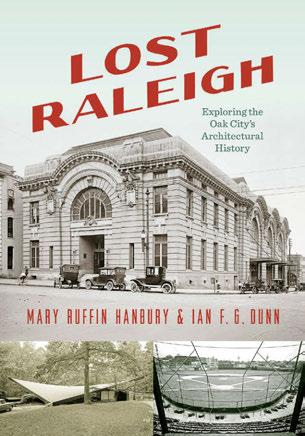


WEDNESDAY, MAY 13 5:30-8 P.M.
THEATRE IN THE PARK 107 Pullen Road, Raleigh
Join WALTER as we host preservation consultant Mary Ruffin Hanbury and archivist/ historian Ian F. G. Dunn, the co-authors of Lost Raleigh. The book shares photographs and stories of businesses, schools, churches and other buildings that are no longer a part of our landscape — and offers a lesson about preservation for the next generation. Your $35 ticket includes a book talk, hors d’oeuvres, wine and beer, and a signing with the authors. $65 for book and ticket





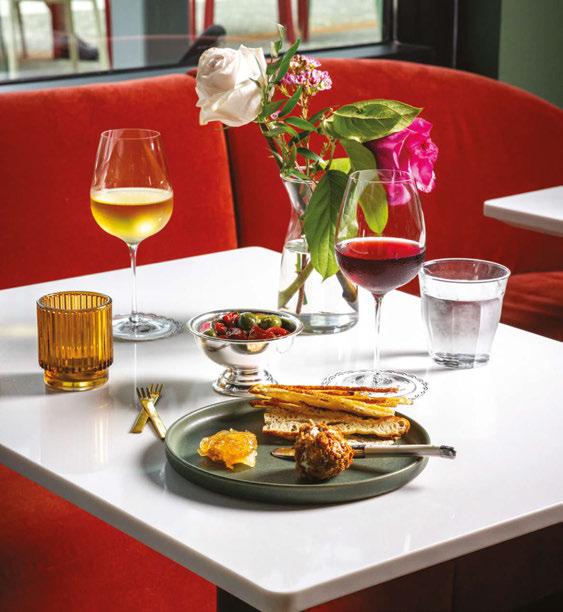
Saint-Pierre offers an elevated wine list within an approachable space in Raleigh Iron Works
by CATHERINE CURRIN
photography by FORREST MASON
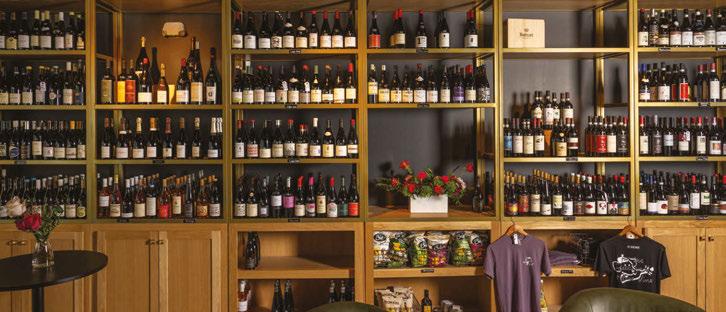
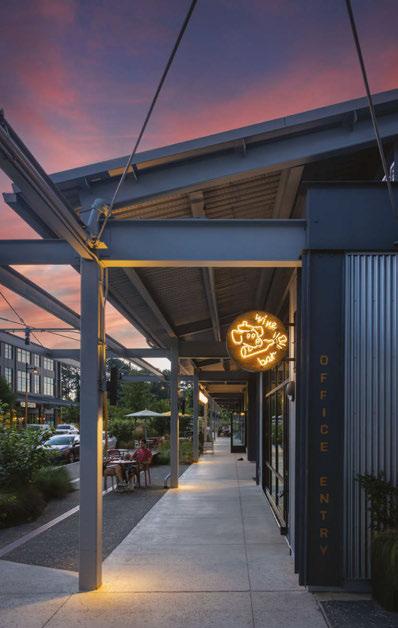
Inside Saint-Pierre Wine Shop + Bar, the walls are painted a deep green and the ceiling — exposed pipes and all — is a matte black. The floor is arranged into clusters of four-tops with cane chairs and lounge seating under dim lighting. A marble-topped bar anchors the right wall, while opposite the bar, wine bottles from around the world line the natural wood built-ins.
If it comes as a surprise that this upscale bottle shop in Raleigh Iron Works is the brainchild of Anthony Guerra, the chef/owner of Oakwood Pizza Box, it shouldn’t be. “I was trained in restaurants at the front of the house before I opened Pizza Box,” he says. A sommelier, he previously ran the beverage program at the former An in Cary and his family’s restaurant in Cary, Bella Mia.
Pizza Box is an intentionally casual
restaurant, but even so, Anthony couldn’t help but offer a curated wine list of over 50 bottles to drink alongside his expertly-made pies. “Some people come in for the wine first, pizza second,” says Anthony’s wife and Saint-Pierre co-owner, Brett. And when the Southern Smoke Foundation described his successful restaurant as “a wine bar disguised as a pizza joint,” the idea to create an un-disguised wine bar started to take hold.
“Saint-Pierre came out of passion, just like Pizza Box did,” Brett says.
Anthony enlisted his friend, industry vet Scott Hardiman Jr., to help run the show as a co-owner. Hardiman had previously served as the sommelier at The Umstead Hotel and Spa as well as in a stint with Crawford Hospitality, and Anthony felt it was important to share the helm of this venture. “So much great talent in my
industry leaves because they don’t ever get to the ownership level,” he says. “I want to create opportunities for people who are really talented.”
Saint-Pierre, which opened last September, offers wines by the glass or bottle. Guests can select a bottle from the shelves, enjoy it at the shop and take what’s left home with them. The staff is approachable and knowledgeable and always happy to recommend wines.
The selection is constantly evolving. “We’ll taste more than a dozen wines, and then vote on what’s offered by the glass and on the shelves,” says Anthony. “We’re looking at what people are liking each week and making edits from there.”
For bar snacks, the Saint-Pierre team partnered with chefs Vivian Howard and Charlotte Coman. Howard is known for her Eastern NC roots, PBS series A Chef’s Life and restaurant Chef & the Farmer. Coman is Howard’s chef de cuisine at Theodosia at the Outer Banks’ Sanderling Resort, and she previously worked in Raleigh with chef Ashley Christensen.
“The opportunity to work with Vivian is amazing and Charlotte is one of the best in the industry,” Anthony says. Howard and Corman worked with the Guerras to dream up an array of bites to accompany the wine. “We could have done it ourselves, but I’m more interested in collaborative efforts that result in something better,” Anthony says.
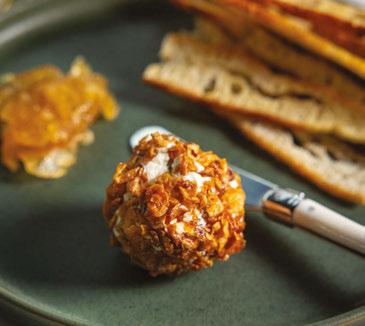
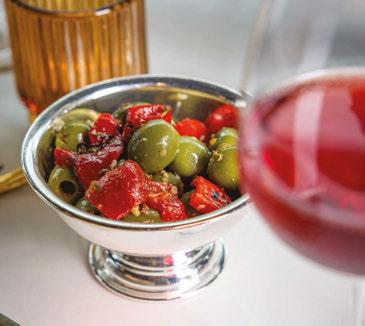
The Saint-Pierre menu emphasizes small plates, with items like pickled shrimp with a garlic aioli and marinated olives and peppers. There are riffs on recipes from Howard’s cookbook, Deep Run Roots, like the Party Magnet Cheese Ball — goat cheese and herbs rolled in crispy country ham, served with Pizza Box crostini. “It’s light, it’s good, it’s filling enough, and it works as a pre- or post-dinner snack,” says Anthony.
Brett says she and Anthony created the place they want to come on their own date nights. “We love to entertain and when winemakers and friends come into town, we want it to feel like they’re in our living room,” she says.
Raleigh Iron Works is conveniently in the Guerras’ neighborhood, and Anthony finally felt like he found the perfect spot for his concept: “I looked at everything and anything, hoping something would be obvious as the space.” Anthony says Jamestown, the developer that partnered with adaptive reuse specialist Grubb Ventures on the reconception of the Iron Works area, was a major reason for SaintPierre’s location. “They seem to really care about the quality of tenants,” says Anthony. “I feel like they’ve done a great job of curating the right mix of vendors. I love it over there.”
The wine bar is named after the Guerra family’s golden retriever, Pierre (you’ll see a nod to him in the bathrooms, which are wallpapered in canine portraits). The Guerras worked with Paul Tuorto on the shop’s logo of their pup. “When we were working with Paul on the design, we decided to give Pierre a martini, a cigarette and a beret. It was perfect,” says Anthony. “He’s a lovable golden retriever — but he’s not always a saint.”
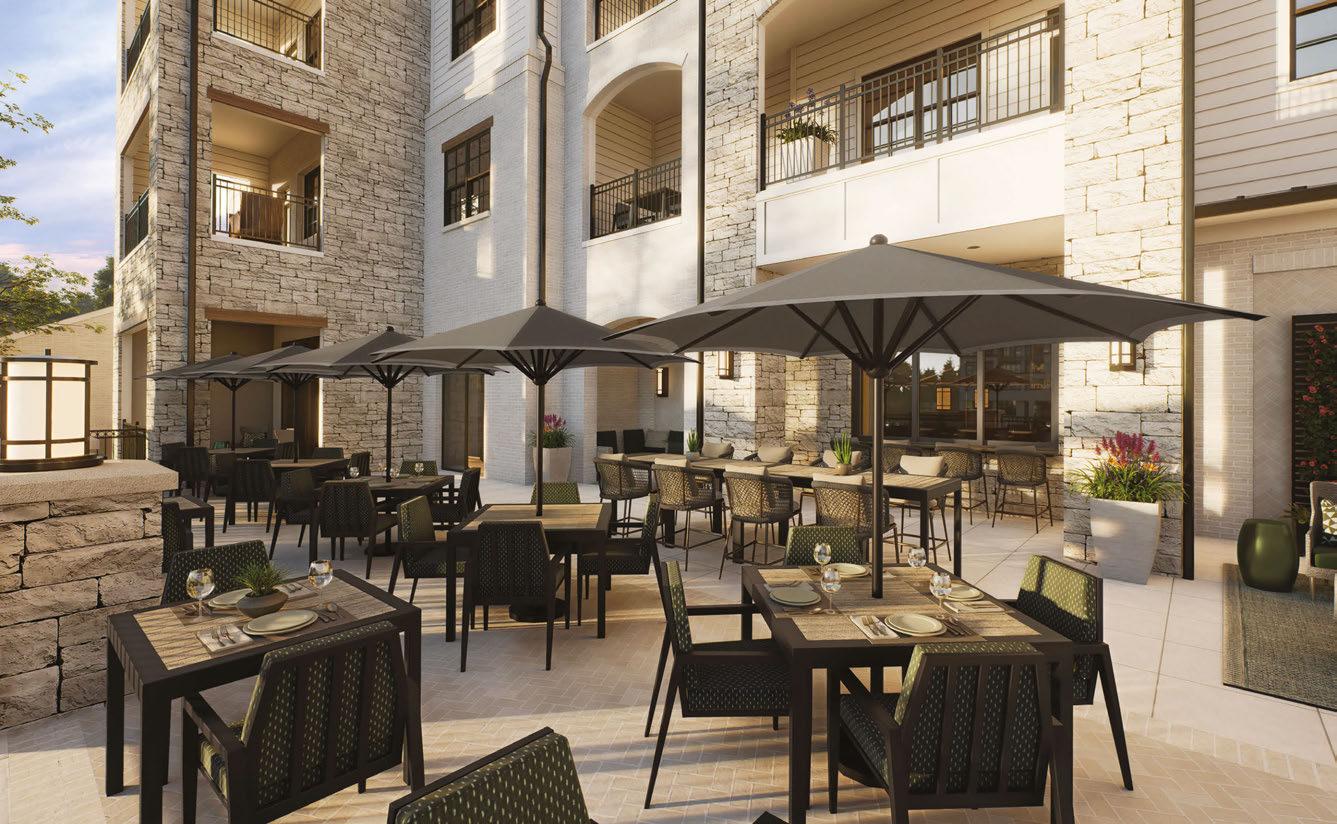
The Oaks at Whitaker Glen is ushering in an exciting new chapter, elevating every aspect of the senior living experience in Raleigh.
We’re thrilled to introduce the centerpiece of our community, The Clubhouse, featuring 1-, 2-, and 3-bedroom penthouse-style apartments designed for those who expect the extraordinary.
Our community expansion will feature thoughtfully curated spaces for health and wellness, along with skilled nursing, assisted living, and pharmacy services, ensuring every resident receives seamless support and personalized care, now and for years to come.




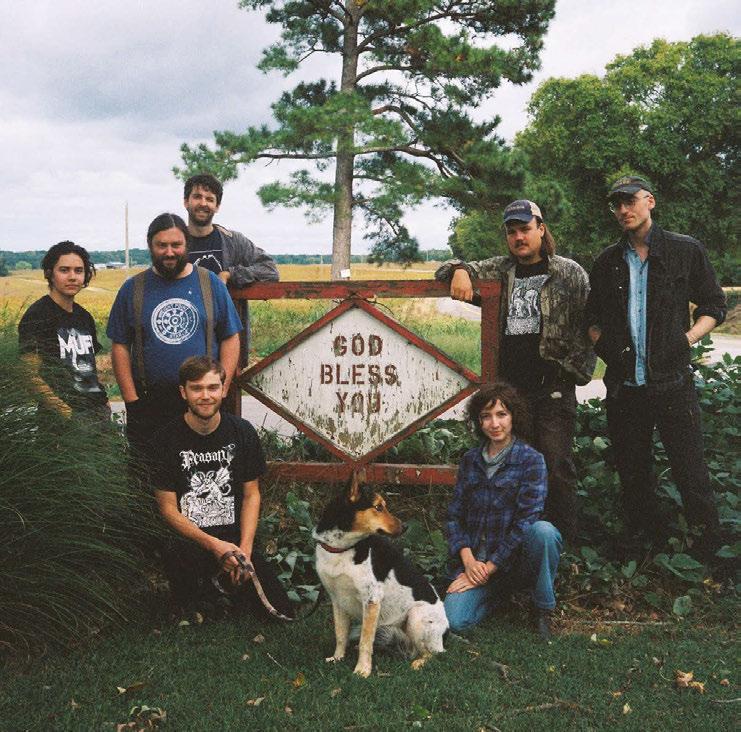
Folk collective Weirs gathers area musicians for otherworldly takes on traditional music
by DAVID MENCONI
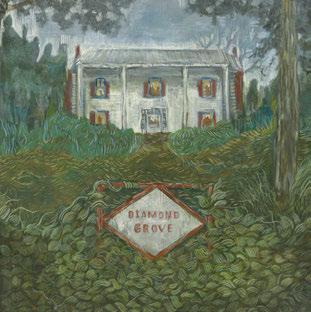
On their second album, Diamond Grove, the local music collective Weirs covers some of the most familiar tunes from the traditional folk music canon. There’s “Lord Randall” and “Edward,” ballads made famous by American folk revival legend Jean Ritchie; the African-American spiritual “I Want to Die Easy”; and two versions of the “Doxology” that you may have sung yourself if you’ve ever attended a Methodist church.
Yet this still might be the most unusual folk record you’ll ever hear. Along with ambient noises typical of field recordings, it also has water dripping onto a grate, looped samples and mind-blowing distor-
tion. One of those “Doxology” versions was recorded through an iPhone for a warped, otherworldly effect, punctuated by the faint sound of dogs baying in the distance.
“This is traditional music as practice, rather than something you try to make ‘perfect,’” said Oliver Child-Lanning, co-founding ringleader of Weirs. “I’m fascinated with ‘cabin records,’ where people go away and make a literal record of a time and place and group of people. Like a snapshot.”
This mindset extends to the band’s name, Weirs, after the low barriers that direct the flow of a river. Child-Lanning captains the ship with a lineup that’s anything from just him and co-founder Justin Morris up to a 12-piece ensemble. Supergroup as well as side project, Weirs draw members from a range of area bands working at the place where experimental improvisation meets traditional folk — including Magic Tuber Stringband, Sluice and Fust, among others.
“We all have some kind of relationship with improv music,” said fiddler Libby Rodenbough, best known for her time in Mipso. “Saying we have a shared ‘vocabulary’ is too precise, it’s more a shared sense of improv, structured in rootedness. There’s something very evocative about these narrative songs. Just listening to the singer, you start to visualize and it leads your hands.”
Child-Lanning has lived most of his 30 years around Hillsborough. He has worked a variety of day jobs, lately for Durham-based Merge Records’ accounting department. But that’s just what he does to get by. What he lives for is making and recording music in unusual places.
Weirs began with Child-Lanning and Morris (whom he supports in Sluice) sending recordings back and forth during the Covid shutdown. Those eventually became 2020’s Prepare to
Meet God, the first Weirs album, with high-tech, low-fidelity renditions of selections from the Great American Folk Songbook. Prepare to Meet God is highlighted by a couple of Doc Watson covers, plus the old spiritual “The Old Rugged Cross” sung by Morris’ grandmother (who has since passed), recorded through her porch screen door during quarantine.
By the time Morris and ChildLanning were contemplating a followup album, Weirs had expanded into a performing band. So they decided to make one of those “cabin records,” decamping to the old Diamond Grove dairy farm owned by Child-Lanning’s family in rural Virginia.
They would start most days with a walk in the woods, recording sounds. Then they’d play some tunes on the porch after lunch and move indoors for evening recording. Among the places they recorded was the farm’s silo, which offered amazing reverb.
“That silo is honestly what drew us to the farm, because it sounds so cool in there,” said Child-Lanning. “First instinct when you go into a space like that is to clap your hands or sing something, so you’ll hear it come back to you. The sound of a space, the character that leaks through, is an obsession of ours. That’s a large part of the charm of old archival recordings.”
The album’s key stretch is side two’s three tracks on the vinyl version. It begins with “(A Still, Small Voice),” a nervous-sounding instrumental made with fiddle, banjo, harmonica and sheet metal. That leads into a 20-minute version of the lovestory epic “Lord Bateman,” followed by a closing a cappella “Doxology (II).”
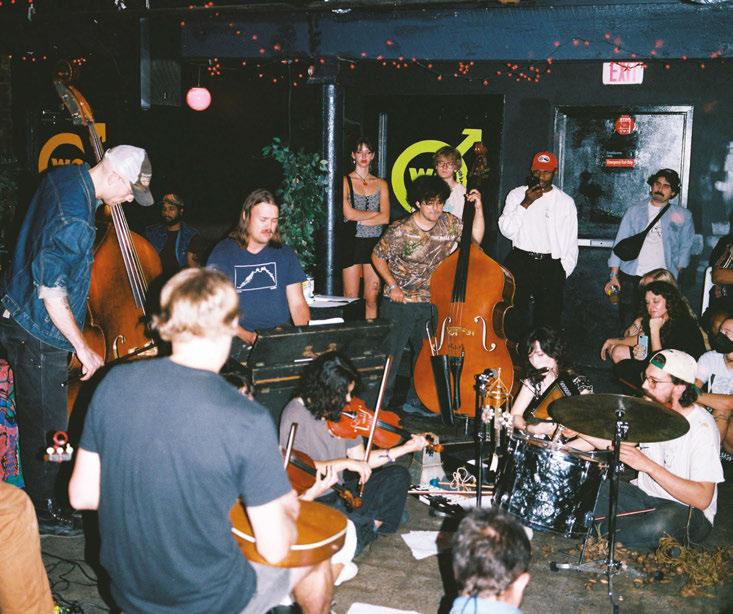
Tuber Stringband tour a few years back, adding more and more to it, and over the course of about two weeks it just got longer and longer. We thought about cutting some verses for recording, but no. Gotta do the whole story.”
“The sound of a space, the character that leaks through, is an obsession of ours. That’s a large part of the charm of old archival recordings.”
— OLIVER CHILD-LANNING
Diamond Grove comes with impressively detailed liner notes laying out inspirations and source material for various songs, like noting which stretch of highway Child-Lanning was traveling while recording samples from his truck radio (US-21 crossing the Roaring Fork River). As for Weirs’ next act, that’s hard to predict.
to Die Easy” and “Doxology (II),” might point the way to the future — unaccompanied singing in the sacred harp tradition.
“‘Lord Bateman’ really is the heart of the album,” said Child-Lanning. “We started playing that one on a Magic
Ever yone in Weirs plays in multiple bands, most of which will release new records this year. But the a cappella songs bookending this album, “I Want
“It feels like I’m hearing a lot of choirs in recorded music lately,” Child-Lanning said. “A zeitgeist thing. I’m interested in assembling a group to sing. We’re playing some festivals this summer, and that usually starts the gears turning. We’ll see where it goes.”









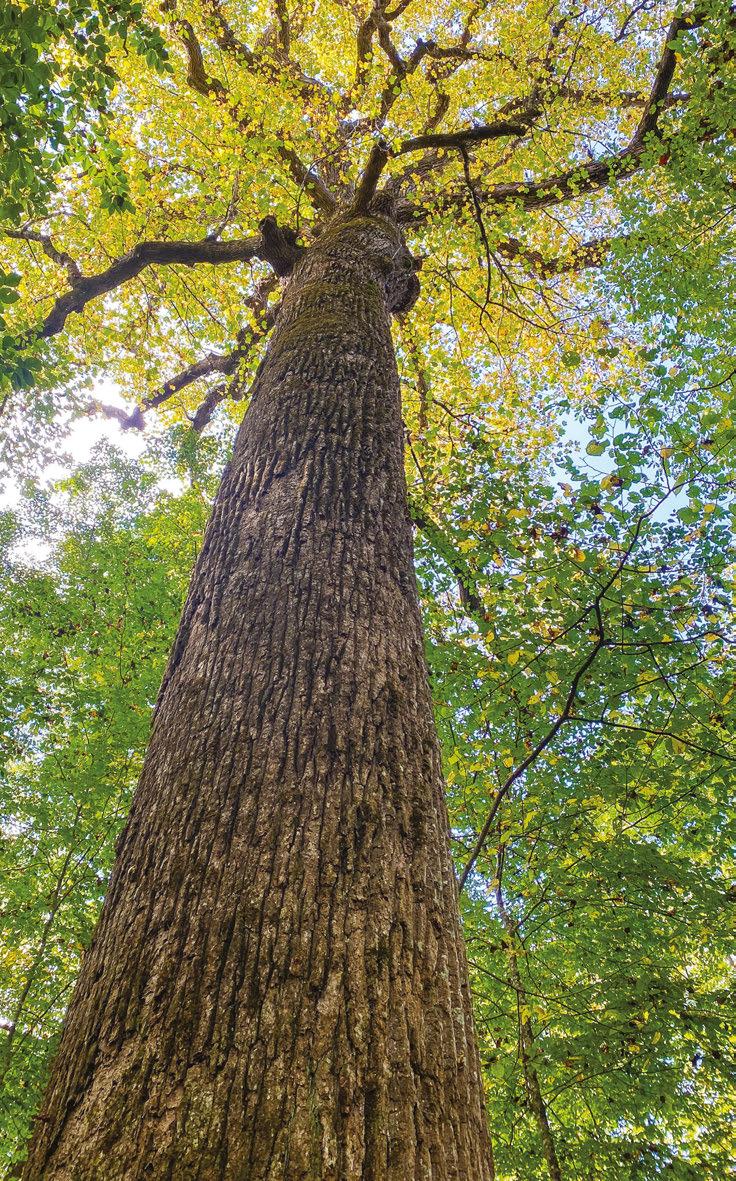
Tulip poplars are beautiful, hardy contributors to the North Carolina landscape
words and photographs by
MIKE DUNN
When I bought our 14 acres in Chatham County back in 1995, the steep topography and large hardwoods reminded me of the mountains of Virginia that I wandered as a child. As we started planning the construction of our home, I would climb up a stepladder at different points on the site to get an idea of what the view out over the ravine might be.
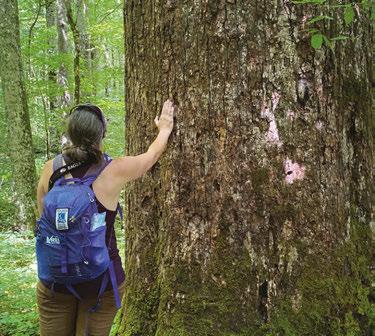
Once I chose the general area for the house, I started looking at the nearby trees to decide what I wanted to save from the construction. One large tulip poplar stood out. Though it was a considerable size — about 4 feet in diameter and close to 90 feet tall — it was not the largest tree on the property. Rather, it stood out because I had never seen one quite like it.
Tu lip poplars are known for their tall, straight trunks covered in thick, gray furrowed bark with an interlacing ridge pattern. But this one had fist-sized bumps sticking out from under the bark all along its trunk. These bumps were new to me. Talking with botanists, it seems these are most likely tree burls triggered by bacteria, fungi or a virus. This unique tree deserved to stay, so I moved the house site to preserve it. Even though I still worry about its massive size and proximity to the house when storms come through, I cherish the beauty of its unusual bark in the late
afternoon sun. And fortunately, the tree still looks healthy.
Of course, we did need to take down several other trees for construction, including some tulip poplars. I really wanted to use some of the wood from these trees for projects around the house. Tulip poplar wood is strong but easily worked, compared to some of the other trees we had to cut, like hickories and oaks. I carved a large fruit bowl out of one log and used a chainsaw to make boards out of another. I talked to the builder and he agreed we could use the straight trunks from two smaller tulip poplars as columns for the front entrance porch. I knew that you could easily peel the bark from tulip poplars in the spring to make bark baskets and other useful items. However, the trees for the columns were cut in the fall, and it turns out that at that time of year it isn’t so easy — it took me hours to shave the bark off the logs. Live and learn, I suppose (though those pillars are still standing!).
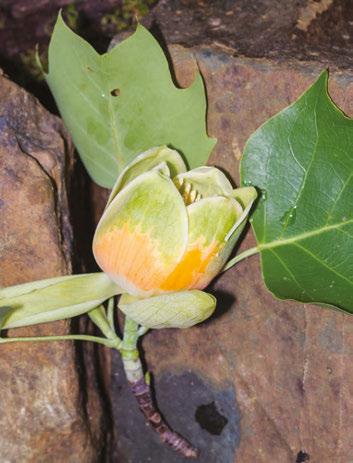
Tu lip poplars are found throughout North Carolina and go by many common names, including yellow-poplar and tulip tree. This species is not related to true poplars, but probably got that part of its name because their leaves often quiver in the wind like those of poplar trees. The tulip poplar is actually in the magnolia family and has large cupshaped flowers like other magnolias. Its scientific name, Liriodendron tulipifera, literally means flower tree and tulipbearing, and it refers to the large yellow and orange flowers that appear high in these trees each spring. Many people aren’t even aware of these abundant and beautiful flowers, unless they happen to find one laying on the ground below a tree. Even the leaves are tulip-shaped, if held up by the petiole. But to me, when turned upside down, they resemble a rotary telephone (your grandparents will have to explain that one to you).
Tu lip poplars are utilized by many species of local wildlife. The flowers are important early-spring nectar sources for many insect pollinators. They are also the primary host plant for one of our


most common and easily recognized butterflies, the eastern tiger swallowtail. I let some of the many tulip poplar saplings that sprout in our yard each year grow to serve as caterpillar food. Their short stature makes them an easy place to find the beautiful green larvae, since I would never be able to spot them on leaves 50 to 100 feet off the ground. Many moths also utilize this species as a host plant, with the tuliptree silkmoth and tulip-tree beauty being the most common in our woods.
In the fall, the cone-like seed structures look like short green-turning-to-brown upright candles high up in the tree. The winged seeds (called samaras) flutter to the ground in late fall and winter, especially when flocks of purple finches arrive to feed on them. Squirrels strip off strands of bark from dead limbs to use as nesting material. Just outside our deer
fence is the largest tulip poplar we have. It is hollow and serves as the home of several of our wild neighbors, including a family of raccoons, a pair of eastern gray squirrels and the occasional southern flying squirrel. Our abundant deer tend to eat any seedlings that sprout outside our one fenced acre. Luckily, tulip poplars are long-lived trees (200 to 500 years) so there should be some around for generations of critters.
There are a couple of places in North Carolina where you can see some truly ancient tulip poplars. Rich cove forests in Great Smoky Mountains National Park are home to some of the largest. One tulip poplar in the park is thought to be the tallest in the United States at just under 192 feet. Another tract of old-growth forest is preserved in Joyce Kilmer Memorial Forest near Robbinsville. A loop trail through the Poplar Grove has some mas-


Saturday, MAY 2, 2026
Free and open to the public 2:00 - 5:00 pm:


Show Jumping Invitational & Showcase
Ticketed: 5:00 - 8:00 pm:
Kentucky Derby Watch Party Bourbon, BBQ and Bluegrass

sive tulip poplars with circumferences of up to 20 feet. Many of them tower over 100 feet above the wildflower-rich forest floor.
Closer to home, you can visit the famous Davie Poplar on the campus of University of North Carolina at Chapel Hill. The tree was said to already be huge when the university was chartered in 1789. It has survived vandalism and a lightning strike and now shares the campus with some large trees grafted from the original Davie Poplar. In 2024, a large colony of chimney swifts was discovered roosting in it during their fall migration (one of the only modern-day documented cases of swifts using a natural tree cavity instead of chimneys for roosting), giving us yet one more reason to honor it.
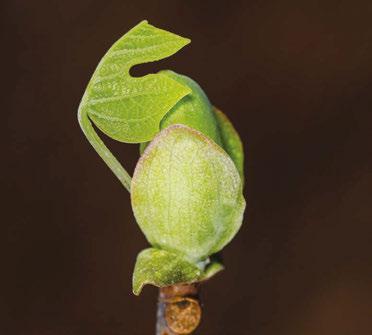
From the delicate beauty of an opening leaf bud to the awe-inspiring height of an old growth tulip poplar, these are trees worthy of our appreciation. The next time you find a large one, walk up to the trunk and touch its ridged gray bark. Keep in mind that this is something that has probably lived for a century or more. Look up at the trunk reaching skyward and admire a living giant that gives so much to so many.




Hearing a hometown accent across the ocean — and tracing its evolution by HAMPTON WILLIAMS HOFER illustration by CANAIN STANLEY
Recently, amid a crowd in Zürich, Switzerland, I heard notes of a North Carolina accent. I sniffed it out until I found a man from Chowan County in a Carolina toboggan (though we were certainly the only ones there who would have referred to it as such) who spoke with long vowels that sounded like home. The coincidence was wild as all get-out, as we like to say, but our accents, though so distinct in that foreign crowd, are only diluted versions of the ones that preceded us. Somehow I just know that his grandparents would have referred to my hometown as Rawlee, same as mine did.
An accent, perhaps the first signal of where someone comes from, may have a person blending in with hometown crowds or standing out in faraway cities — but is, regardless, integral to identity, a direct link to where we came from. But these dialects shift naturally as humans adapt for better communication, experience more exposure and learn integration, with younger generations typically leading the charge. And the old Raleigh accent, like that of all regions across the state, is fading.
For most people in the area, “well” is just one syllable now, and there’s no pronounced “t” in “Wilson.” The way we speak the words has evolved along with the phrases themselves, but you can still butter my butt and call me a biscuit if I hear my kids forgetting their “ma’ams” and “sirs.” And sometimes, letters be damned, there just is a correct way to say things around here, and your car’s GPS is saying them wrong: Blount Street (blunt, don’t you dare make it rhyme with mount), Fayetteville Street (FAY-et-vul) and Mordecai (MOR-duhkee, absolutely not kye) are just a few.
It’s not just me who sees the change. I connected with Dr. Robin Dodsworth, a professor at North Carolina State University who has analyzed spokenlanguage data in Raleigh for nearly 20 years. His research shows that in the Triangle area, a significant decline in Southern drawl began in 1959 with the opening of Research Triangle Park and
the influx of non-Southern speakers. “It’s clear that traditionally Southern pronunciations here have become weaker or less frequent,” Dodsworth says. “The same is true in other Southern cities such as Charlotte, WinstonSalem and Atlanta.”
Indeed, urban areas like Raleigh have seen the most significant linguistic shift. In the western part of North Carolina, plenty of people may still commonly reckon, holler and head over yonder, while in the eastern part of the state, they may mash the button to cut off the lights or just piddle around the house.
“It’s clear that traditionally Southern pronunciations have become weaker or less frequent. The same is true in other Southern cities such as Charlotte, Winston-Salem and Atlanta.”
— DR. ROBIN DODSWORTH
It’s not only the drawn-out sounds of the words themselves that fall away with the generations, but the colloquialisms, too.
Sociolinguistic research at NC State’s Language and Life Project, a nonprofit outreach education endeavor to document and celebrate dialects, languages and cultures across the United States, has revealed five distinct dialects across our state: Southern Appalachian Highlands, Virginia Piedmont, North Carolina Piedmont, Coastal Plains and Pamlico Sound. Not all North Carolina accents are as famous as Ocracoke’s unique “Hoi Toider” dialect, but many did develop in some isolation. Like a map of our state’s history, each dialect is woven through with threads of Na-
tive American languages, speech patterns of European settlers and enslaved people from Africa, and pepperings of pirate slang.
Like many North Carolinians, I have learned to code switch. I remember reading in front of my class at New York University, knowing the word “five” was coming, and willing myself to say the “i” hard and fast, instead of my normal faave, as if the lazy vowel might betray some lesser intelligence. Dodsworth’s research at NC State has shown that the elongated vowels are the first thing to fade across races, age groups and parts of town in the area, especially sounds like the “i” in typically Southern pronunciations of words like “high” or “time.”
From the Blue Ridge Mountains to the Outer Banks, locals will be speaking some ever-evolving variation of the North Carolina vernacular that brims with nostalgia, intrigue and sometimes a dash of the ridiculous. For previous generations, a child was darlin’, a Coke meant any soft drink, and ugly had nothing to do with physical appearance and everything to do with how a person was acting. If someone was being ugly, bless his heart
As accents and common phrases change, it’s safe to say that North Carolinians will still be getting bees in their bonnets about whether barbecue should be vinegar-based or ketchup-based. But at least we can all agree that “barbecue” is a noun.

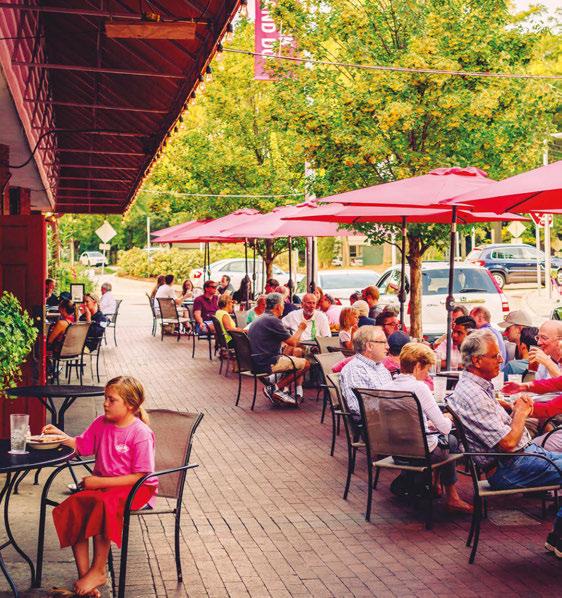
As the City of Oaks has grown and evolved, these classic spots have stood the test of time
by ADDIE LADNER and LILY KANE
It takes a special combination of craveable food, a welcoming atmosphere and consistent service to keep a bar or restaurant open for decades. That’s why we’re celebrating these venues, which have each been in business in Raleigh for more than 50 years. From Southern food and barbecue to some of Raleigh’s first international offerings, these spots paved the way for today’s bustling hospitality scene.
Raleigh’s oldest restaurant, The Mecca, has been serving up classic diner food for nearly 100 years. Opened in 1930 by Nick Dombalis, an immigrant from Greece, the restaurant moved to Martin Street in 1937 and has remained there ever since. Ownership has changed hands over the years, passing to Nick’s son, John, his grandson Paul, and finally to the Hatem
family in 2018. Crowd favorites include their Eastern North Carolina barbecue and their Glorified Jumbo Hamburger, which features The Mecca’s secret sauce. 13 E. Martin Street; mecca-restaurant.com
Started in 1938 by the original Clyde Cooper, this restaurant has since become a legendary institution for Eastern NCstyle barbecue. Over the years, Clyde Cooper’s has garnered accolades and attention from Raleighites and nonlocals alike, including countless awards for the best barbecue in the Triangle and a 2013 appearance on Destination America’s BBQ Pitmasters series. (They even catered to U2 in 2009 when the band performed on tour at Carter-Finley Stadium!) After 88 years serving downtown Raleigh, earlier this year they moved into a new location at the Quail Corners
Shopping Center. 1326 E. Millbrook Road; clydecoopersbbq.com
THE ROAST GRILL, EST. 1940
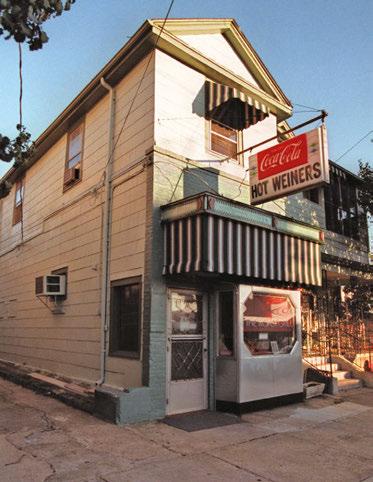
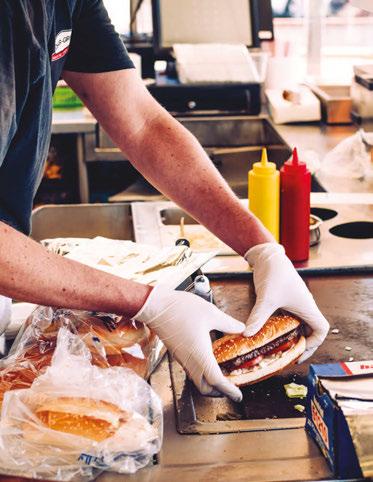
A no-frills, family-owned spot for hot dogs and Greek desserts, the Roast Grill doesn’t offer many of the sides that traditionally come with a hot dog. There’s no relish, no mayo, no fries, no sauerkraut — and don’t even think about asking for ketchup. What they do have: charred hot dogs topped with their signature homemade chili and onions, Coke in glass bottles, baklava and free Tootsie Rolls. Freeda Poniros, the daughter of the original owners, ran this hole-in-the-wall joint alongside her son George for many years. Though Freeda passed away in 2024, George is continuing to carry out the Roast Grill’s legacy. Fun fact: it was featured on Man vs. Food in 2014. 7 S. West Street; instagram.com/theroastgrillhotweiners
WATKINS GRILL, EST. 1947
Watkins Grill has been a Raleigh institution since it first opened its doors. Situated in a modest 1928 building that once housed the Black Hawk Tavern, it serves up classic Southern diner fare to early-risers and longtime locals. Known for hearty breakfasts and homestyle lunch favorites — from grits and corned beef hash to biscuits and gravy and savory burgers — it continues to draw crowds who appreciate generous portions and a down-to-earth atmosphere. 1625 Wake Forest Road; facebook.com
In addition to classic menu items like burgers and oysters, and a late-night menu on weekend nights, the PR boasts the most extensive Scotch collection in the state.
former employee Gus Gusler, the PR has been a hub for college students, alums and other fans for 75 years. Their Hall of Fame, a testament to their enduring legacy, recognizes regulars, local celebrities and longtime employees who have been part of the PR family for decades. In addition to classic menu items like burgers and oysters, and a late-night menu on weekend nights, the PR boasts the most extensive Scotch collection in the state. And after all these years, kids still eat free on Sundays. 105 Oberlin Road; playersretreat.com
grits, hot cakes, ham and more, much of it sourced from North Carolina farmers. Lunch specials become available at 11 a.m., offering hearty, home-style options that round out the restaurant’s all-day Southern spread. 1240 Farmers Market Drive; realbiscuits.com
A classic walk-up burger bar: use a tiny yellow pencil to make your order, then watch it being made. With its quaint feel and 1950s-style architecture, their original cinderblock location on Hillsborough Street epitomizes the nostalgia of their slogan, “Simpler Times, Simpler Choices.” Over the years, the franchise has since expanded to 10 locations in and around the Triangle, all of them serving up fast-food classics: flame-grilled burgers, piping hot fries, barbecue, hot dogs, milkshakes and their signature fried apple turnovers. 618 Hillsborough Street; chargrillusa.com
PLAYERS’ RETREAT, EST. 1951
A Wolfpack institution, the Players’ Retreat — or, as many call it, “the PR” — is more than just your average sports bar. Founded by husband and wife Bernie and Mickey Hanula and now owned by
Especially popular on Sundays for a post-church brunch, the State Farmers’ Market Restaurant serves up a classic Southern farm-to-table breakfast from 6 a.m. to 3 p.m. every day of the week. Menu items include biscuits, omelets,
The Angus Barn has been Raleigh’s go-to spot for a nice meal since the restaurant first opened 66 years ago. Founded by Thad Eure, Jr., and Charles Winston and now operated by Eure’s daughter Van,
this renowned steakhouse offers nine different cuts of steak, as well as seafood, ribs, specialty dishes and an array of award-winning desserts. Explore selections from their extensive wine menu, indulge in their famous chocolate chess pie, or settle into the Wild Turkey Lounge for a drink at this larger-thanlife dining destination. The Angus Barn draws crowds year-round, but especially during the holidays, when the space transforms into a Christmas wonderland of twinkling lights, elaborate decor and festive elves. Reservations during the season (and on most special occasions) are notoriously hard to come by, so plan well in advance. 9401 Glenwood Avenue; angusbarn.com
AMEDEO’S, EST. 1963
Tucked away in an unassuming strip mall off Western Boulevard, Amedeo’s is easy to miss from the outside. Step indoors, though, and you’ll find an eye-catching floor-to-ceiling display of NC State sports memorabilia covering every inch of the bright red walls. Founded by former NC State football player Amedeo “Dick” DeAngelis, Amedeo’s has been serving up heaping family-style Italian meals since 1963. A host of notable figures have dined at this establishment, including Wolfpack basketball coach Jim Valvano, former North Carolina governor Jim Hunt and all-time NCAA basketball top scorer Pete Maravich. 3905 Western Boulevard; amedeosrestaurant.com
JERRY’S GRILL, EST. 1968
Nestled into the busy intersection of Wake Forest Road and Whitaker Mill Road, Jerry’s Grill is easy to miss. But this classic breakfast and lunch spot is near and dear to the hearts of its many loyal regulars, who come by for hot dogs, burgers and home cooking. 813 E. Whitaker Mill Road; instagram.com/vinandjerrys
KANKI JAPANESE HOUSE OF STEAKS & SUSHI, EST. 1972
This family-owned and -operated business was founded in 1972 at its flagship location in Crabtree Valley Mall. Known
Irregardless
for its theatrical hibachi offerings and sushi menu, it’s become a favorite destination for birthdays and other celebrations. Since then, they’ve added locations in North Raleigh, Durham, and Chapel Hill and built a reputation for fostering long-time employees. 4325 Glenwood Avenue, Suite 1070; kanki.com
Push open an unassuming black door on Hillsborough Street, head up a creaky flight of stairs and find yourself in this bustling community hub, where the walls are adorned with eclectic posters and paintings and ambient lighting casts a warm glow over the wooden walls and vinyl booths. This is Mitch’s Tavern, an iconic Raleigh landmark beloved by both students and old-timers. The menu is simple, classic pub food — including hoagies, reubens, chili and their famous gumbo. Founder and longtime owner Mitch Hazouri nearly had to shut the restaurant down when the Covid pandemic forced a two-year hiatus, but Van Alston and Chris Post, co-owners of Slim’s Dive Bar and MoJoe’s Burger Joint, intervened to buy Mitch’s and give the tavern a second act. Though Hillsborough
Street has seen many changes over the years, Mitch’s is one staple that remains. 2426 Hillsborough Street; mitchstavernraleigh.com
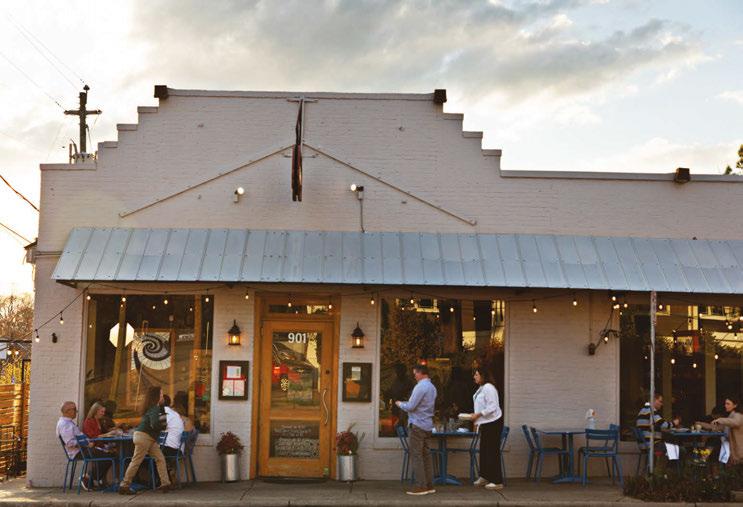
Founded as Raleigh’s first vegetarian restaurant, Irregardless has long been a trailblazer in the Triangle food scene, delivering a delicious mix of fine dining, farm-to-table meals and a familyfriendly atmosphere. The menu has expanded since Lee Robinson took the helm from original owner Arthur Gordon in early 2020, but diners can still expect to find hearty vegan, vegetarian and gluten-free options, now alongside seafood, burgers and sandwiches. Irregardless also supports the community beyond food: many evenings you can find area musicians performing jazz, Latin or bluegrass music, and the cafe’s walls feature work by Raleigh artists. Gov. Josh Stein declared an official “Irregardless Restaurant Day” when the restaurant celebrated its 50th anniversary in February last year. 901 W. Morgan Street; irregardless.com
Change up your thinking to attract insects and wildflowers that benefit your garden
by HELEN YOEST
Hopefully, we will soon experience our last frost of the spring! Typically, this arrives around April 15. It varies, though, depending on where you are in Raleigh. I live inside the beltline, where the last frost can come earlier due to radiant heat from a concentration of asphalt and concrete absorbing more of the sun’s rays than more rural areas, a phenomenon known as the urban heat island effect. But it’s still best to check the long-range forecast.
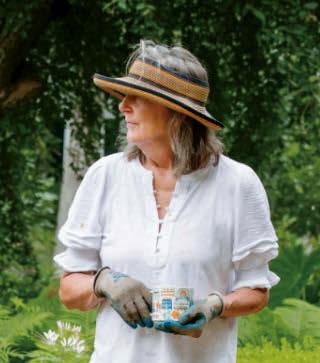
Over the years, I’ve had to learn to practice patience with one too many frost burns on my tomato plants and impatiens. I encourage you to learn from my mistakes! Plant tender flowering annuals like cosmos, lantana, zinnias and coleus, along with vegetables like cucumbers, okra and tomatoes, only after that last threat of frost.
Near the vegetables, go ahead and add some vibrant yellow and orange marigolds. They act as a natural pest control for aphids, nematodes and whiteflies, while also attracting beneficial insects like ladybugs, lacewings and parasitic wasps with their scent. To repel unwelcome insects, like spider mites, I love to make my own repellent spray. I’ll crush marigold petals and leaves and soak them in water for at least 24 hours or up to seven days and then strain the liquid and store it in a spray bottle. I also use an organic neem oil or insecticidal soap at times. Just know what you are spraying: each of these organic sprays can kill beneficial insects, too, including monarch butterflies and other butterflies, so use it only when you notice a problem.
They say April showers bring May flowers, but of course that also includes spring weeds! Common in our area are chickweed, henbit and dandelions. As a child, one of my jobs was mowing the lawn and removing any “evil dandelions” (my Dad’s words, not mine!) — but did you know each of these are edible and are rich in essential nutrients? As a bonus, each significantly benefits wildlife, especially birds. Today, I leave dandelions on the lawn and encourage you to do the same. Welcome what spring brings, weeds and all.





photos and words by CC PARKER
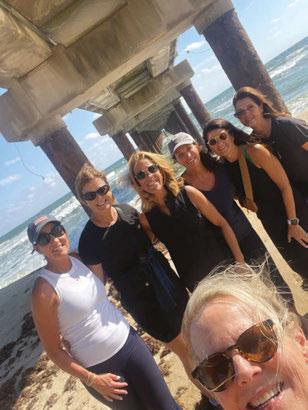
Last spring during book club, two of our members shared fond memories of summers in Duck. I was ashamed to admit I’d never been to the beach north of, well, Beaufort. How could this be?
My mother is a warm-blooded Kinstonian who summered in Morehead City. As a child, when I inquired about visiting the Outer Banks, Mom discouraged the idea, saying that vacationing on the Outer Banks is “not ideal.” Strong currents. Cold water. Sharks. I accepted this assertion the same way people once accepted that the Earth was flat.
But another North Carolina native in the club said that she had never ventured to the northern Outer Banks, either — so the group proposed a road trip for October, when there would be fewer tourists but still great weather. The vision: To
drive down to Ocracoke from the town furthest north, Corolla, along the Outer Banks National Scenic Byway.
We had an easy drive east on Highway 64, passing cotton fields and small towns before we crossed the Scuppernong Bridge onto the Outer Banks. We spent the night at one book club member’s home in Duck, enjoying a glorious sunset on Currituck Sound over wine and appetizers on the deck.
After a brisk morning beach walk, we headed into town. We stopped at Duck’s Cottage Coffee and Books for a mid-morning pick-me-up, then wandered the public boardwalk past the
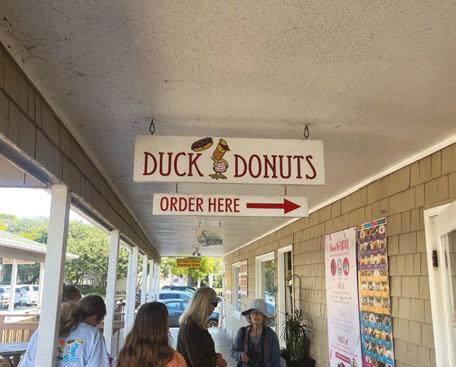
shops and the long line at classic breakfast spot Duck Donuts.
Shortly thereafter, the seven of us piled into my car for the day’s excursion. First stop: lunch at The Sanderling Resort, a high-end hotel I had always hoped to visit. The in-house restaurant, The Lifesaving Station, was a lifesaver, indeed, for our collective “Currituck wine flu” from the night before with its fried pimento hush puppies, salads, burgers and fries. We explored the property to take in the ocean views (no sharks in sight, Mom!), then headed north to Corolla.
I’d previously downloaded the GuideAlong: Outer Banks audio travel guide, an app that tracks your location and tells you about historical sites and landmarks in real time. We jokingly named the animated voice actor sharing the info “Dave.”

Highway 12 continues north onto the beach in Corolla, but only if your car is made for sand. As we approached the spot where the paved road ends and the beach begins, Dave grew anxious. From our dashboard, he warned that this stretch was “the road to nowhere” and urged us to turn around, insisting we needed a permit to drive on Corolla Beach.
Our Duck hostess dismissed his threats and I shifted into four-wheel drive. With breath held and a few silent prayers, my old GMC Yukon rolled onto the sand. From the dashboard, Dave announced, “Well, this is an adventurous bunch!”
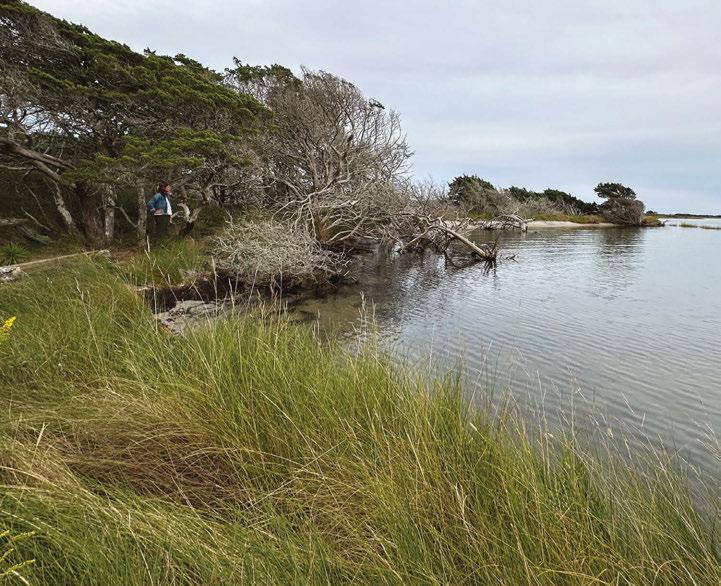
We slid along, scanning for wild horses and dodging the tree stumps that dot the shoreline. We passed homes perched at the edge of the Atlantic and marveled at the idea of hauling groceries over the dunes. We stopped to explore, following fresh dung piles in search of the Corolla wild horses. Instead we found a fallen sign reading, “Warning. Possible Unexploded Ordnance” and quickly returned to the car.
We headed back south for a second night in Duck. Sunset, hot tub, porch cocktails and then a walk to AQUA for truffle fries and seared duck breasts for dinner. Amen.
Bright and early, our group loaded up to head to our next spot. Heading south on Highway 12, we passed through Southern Shores, Kitty Hawk and Nags Head. This corridor is densely populated with housing developments, strip malls and restaurants — it’s hard to know where one town ends and the next begins. We veered onto the Virginia Dare Trail (Highway 64), crossing the Baum Bridge over Roanoke Sound, to make a quick right into the village of Manteo.
The first stop was the Elizabethan Gardens in the Fort Raleigh National Historic Site several miles from downtown. These gardens were created in the 1960s as a memorial to honor the “Lost Colony” of English settlers who
vanished 400 years ago.
Our group meandered through the gardens, which boast 500 varieties of plants, including stunning live oaks and a camellia collection, over 10 acres. Just down the road is the theater that has been hosting the summer performances of THe Lost Colony since 1937. I wanted to check it out, but our troops were ready to shop and eat.
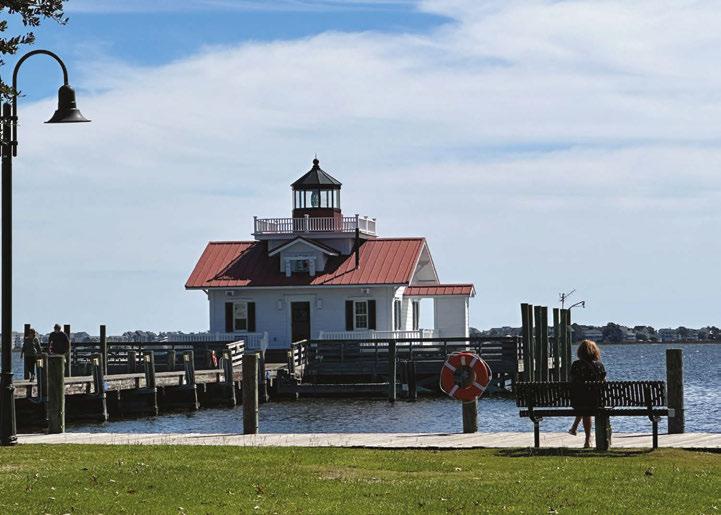
Back downtown, we parked in front of a fabulous home and gift shop, Sam & Winston, with handmade baskets, art, one-of-a-kind jewelry, coffee table books and more. The shop is run by motherdaughter Sheila Silver and Creecy Richardson-Creef in a 200-year-old building. Money spent, we walked to get a closer look at the Roanoke Marshes Lighthouse and peeked in the windows of a few art galleries.
Back on Highway 12, we continued south through Nags Head. We stopped for lunch at Sea Chef, a casual cafe tucked inside the Oregon Inlet Fishing Center, an outfitter just off the highway. We ordered family style, which basically meant every-
thing on the left side of the menu: shrimp burgers, clams in herb chorizo broth with baguette, off-the-boat tuna salad, steamed shrimp, fried shrimp. Then, satiated, our convoy continued south.
We crossed from Nags Head to Hatteras Island on the Basnight Bridge, continuing along the Cape Hatteras National Seashore where we saw pristine sand dunes and unobstructed water views, no other cars for miles. Even Dave ran out of things to say.
Despite our best-laid plans, we barely made it to the hourly vehicle ferry from Hatteras to Ocracoke. Once settled, we ladies walked a large Yeti cooler into the ferry “lounge” to enjoy refreshments on the hourlong ride. (A nearby deckman yelled, “Party time!”) It was almost twilight when we disembarked, but we decided to make a quick stop at Springer’s Point Preserve, the site of Blackbeard’s demise in 1718.
We spent the night at The Castle Inn

at Silver Lake, a rambling inn built in the 1950s as a vacation escape for an eccentric mainlander. We headed to The Flying Melon for dinner, a white-tablecloth spot with a menu that included ricotta dip with local figs, mushroom cheesecake, local fish with crab in beurre blanc and a chilled vermentino. Reservations are essential, as is their basil gimlet.
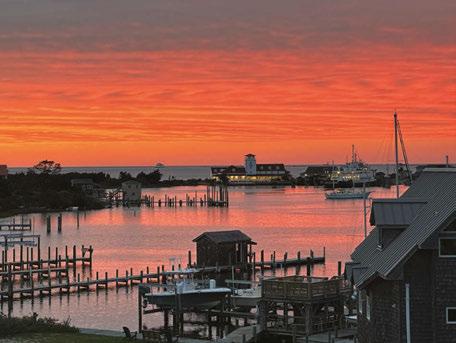
Ocracoke’s sidewalks roll up early, which was fortunate given that we were planning to take a 7 a.m. ferry to make our way home. When we woke up at 6 a.m., we found fresh coffee and fruit laid out for us to pick up. We were grateful for the provisions, since there is no food service on the 2.5-hour ferry ride back to the mainland.
At the ferr y terminal, half of our cars loaded into the Swan Quarter ferry, the
other into the Cedar Island ferry, which departed next. With blown kisses and a toot toot from the captain, we glided back toward the mainland.
On the 3.5-hour drive home, we reflected on the adventure: gorgeous beaches, delicious food, excellent shopping and a bit of history. And, though we didn’t test the temperature of the water, there was not a shark in sight.


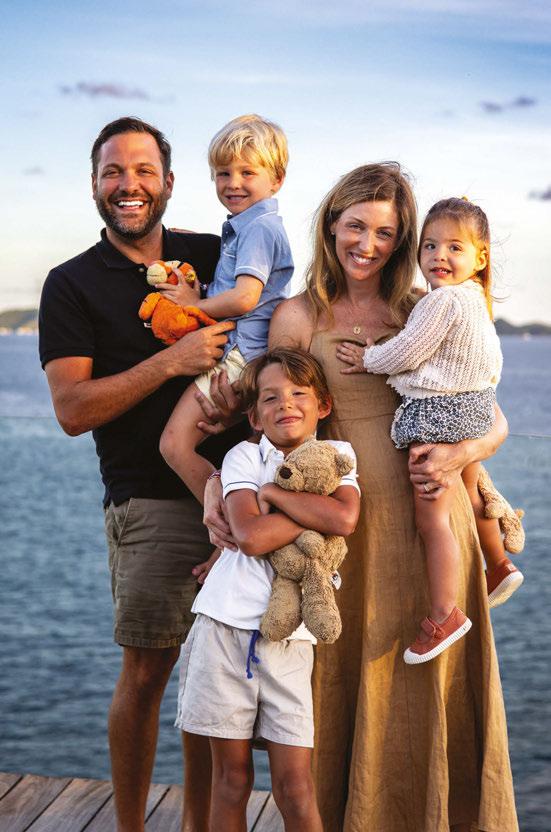
Pete and Annie Proimos and their children.
The Filotimo Foundation provides hope to adults with cystic fibrosis
by RACHEL SIMON
When Martha and Scott Turpin decided they wanted to have a baby, the Fayetteville couple knew it wasn’t going to be an easy road. Scott has cystic fibrosis (CF), a lifelong genetic disease that thickens the body’s mucus and causes serious infections and breathing problems, among other issues. In the majority of men with CF, one such issue is the blocking of the vas deferens, leading to infertility. In order to conceive, the Turpins needed to do IVF. But in addition to the procedure being far from a guaranteed success, it boasts a hefty price tag. Even after contributing much of their savings to the cost in early 2024, they still faced a substantial balance.
“It was a really stressful time,” Scott recalls. “The financial burden was definitely real.”
That burden was lifted, however, after Scott learned from his doctor about the Filotimo Foundation, a then-new North Carolina nonprofit dedicated to supporting the needs of adults with CF, including fertility treatment. With curiosity but low expectations, Scott reached out to founder Pete Proimos, who asked how much money the Turpins still owed.
“I told him we had about $10,000 left, and he said, we got that and sent a check to pay off the rest of our balance,” Scott recounts. “His generosity was game-changing.”
The couple’s daughter, Harper, arrived in November 2024, making her the first baby born with help from Filotimo — but certainly not the last. Since its launch in 2023, the foundation has helped thousands of adults with CF achieve similar dreams, connecting them with fertility clinics for consultations and paying for some or all of the resulting treatment needs.
Filotimo Foundation takes its name from a Greek word that essentially means, “to give without expecting anything in return.” But Proimos says his goal in starting the foundation was less selfless than “selfish.”
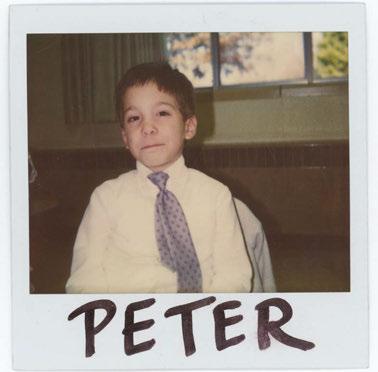
Growing up, “I was told multiple times, do not plan for anything 10 years out,” says the 41-year-old Raleigh resident and parent of three. Like most patients, he was diagnosed with CF as an infant and still experiences complications of the disease. People with his condition rarely made it to their 18th birthdays.
When he was younger, Proimos hid his condition from his peers, making excuses for his constant cough and frequent hospital stays. “You just feel out of place, so you do your best to hide it,” he explains now. “You try your best to not feel like your end is coming while not telling anybody about it. It’s very lonely.”
Still, Proimos did his best to live a full life: attending college, working for his family manufacturing business and marrying his high school sweetheart (one of the few people to whom he revealed his diagnosis). But in 2019, a pivotal drug called Trikafta was introduced, which dramatically improves lung function in most CF patients, including Proimos. Suddenly, his future opened up. But like many other adults with CF who had previously been told they were on borrowed time, he hadn’t planned a long-term career path. He was in the fortunate position of being able to meet his basic needs while he figured out next steps, but he was keenly aware that so many others
“You just feel out of place, so you do your best to hide it. You try your best to not feel like your end is coming while not telling anybody about it. It’s very lonely.”
— PETE PROIMOS

with CF have to deal with large medical bills and disappearing disability coverage on top of a lack of job opportunities.
“The support system for people over 18 doesn’t exist,” he says.
In 2023, he heard that a couple whose daughter passed away from CF were planning to shutter Spiritus Project, the nonprofit they’d begun in her honor to help sick adults. Proimos’ family had just sold their business, and he was out of a job. The timing, he says now, was “divine intervention.” After connecting with the couple, he began working directly with the adults who had been working with the foundation, using funds from the family’s business sale to provide whatever support they needed: commercial-grade medical equipment, car payments and so on. His referrals came through UNC Hospitals, where the couple’s late daughter was treated, but as the number of requests grew, Proimos realized the need — and potential for impact — went beyond what one man or hospital could provide.
“I panicked because I also have a chronic disease that’s killing me,” he says. The organization needed a support system.
Up until that point, Proimos had lied to others about the motivation for his CF advocacy work, saying that he had a cousin with the disease instead of revealing his own fight. But he quickly realized that he’d have a much better shot of convincing people to help if he created his own foundation — and shared his own story.
“I had to have this realization that, if you’re not gonna tell people, this thing’s dead,” he says. As difficult as those conversations were, they resulted in enough donations, action and support to lift Filotimo off the ground.
Today, the nonprofit partners with nearly 60 hospitals and













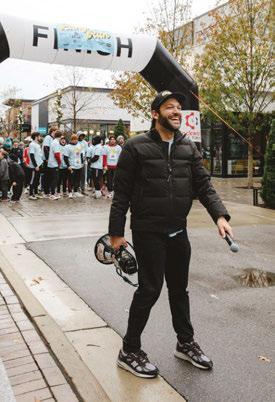
Proimos at the 2025 Filotimo Foundation gala and Lung Run.
over 150 fertility clinics nationwide and is currently testing a program with Wake Tech Community College to help students with CF who miss class due to sickness achieve degrees. To receive financial help, applicants must already be getting medical treatment from a clinic partnered with Filotimo (if they don’t, the foundation will work to create a new partnership) and have doctors and social workers attached to their case. The Filotimo team connects with these professionals to discuss the person’s needs and then provides the appropriate funding, no strings attached, whether it be to help them pay off rent, attain a degree or access life-saving medications.


Under Proimos’ leadership, the Filotimo team has given away about $1.8 million in grants thus far, with a hope of reaching 75 percent of the approximately 40,000 American adults living with CF by the end of the year. In addition to raising funds through donations, the foundation holds multiple events each year in Raleigh, including a gala in May, Cystic Fibrosis Awareness Month (this year’s is on May 29).
The events also give adults with CF the opportunity to connect with one another, something Proimos says is at the heart of Filotomo’s mission. “When you reach out to us, I want that to be the last time you feel you’re doing it alone,” he says. “It won’t be the last time that you go through something hard, but it will be the last time you feel like you’re by yourself.”
The Turpins, now a happy family of three, can attest to that firsthand. Last December, they brought Harper to Filotimo’s Lung Run fundraising event in Cary to meet Proimos and support the CF cause. “Everyone knew who Harper was,” Martha says, adding that the foundation has offered to help her and Scott again if they decide to further expand their family.
For Proimos, helping families like the Turpins solidify their futures is what Filotimo is all about. “In a world where you feel like you’re being destroyed by time,” he says, “there’s nothing more important than trying to create it by giving it to someone else.”
saturday, april 25th from 10am-5pm Sunday, april 26th from 1-5pm thespringhometour.com



• Stunning estate homes from $1.4 million
• Now selling Phase II
• Local custom-builder team
• Large private homesites with water views
• Minutes from downtown Wake Forest
• Close to Falls Lake State Recreation Areas

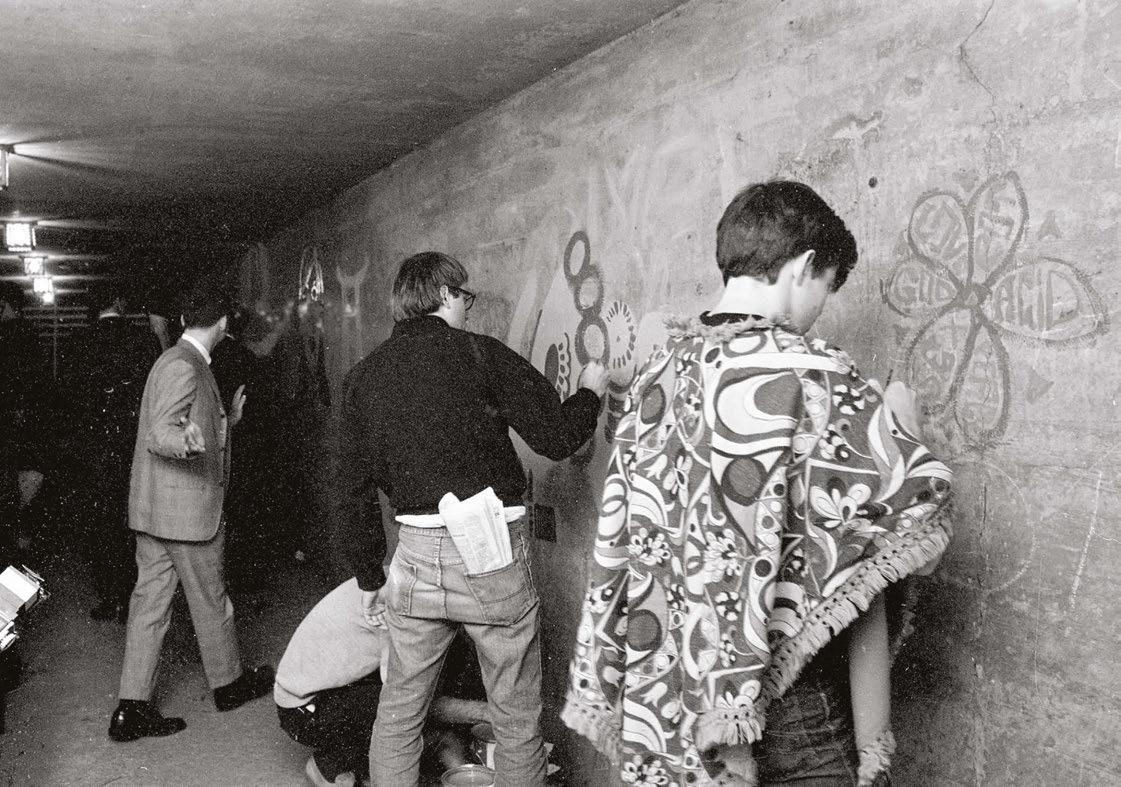
NC State’s Free Expression Tunnel is a landmark that has evolved with the times
by IAN F. G. DUNN
The social upheaval of 1967 was a defining moment in America. Dozens of cities across the country rebuilt after a seemingly relentless summer of riots sparked by racial inequality and unrest. The war in Vietnam had brought nearly half a million American troops to the country, and themes of social justice, free speech and individual expression were at the forefront of the zeitgeist — particularly among university students.
On Oct. 30, 1967, the North Carolina State University Student Government
passed the Student Visual Expression Bill, which appropriated $20 for paints and brushes for a “paint-in” at the Student Supply Store tunnel and permitted further use of the location for student expression.
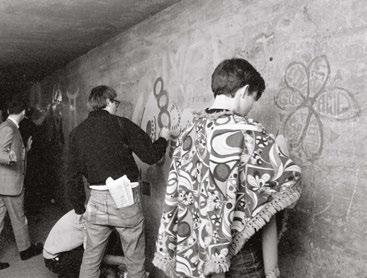
Some of the early works on the walls included a blue flower with the words, “Sex, Acid, Pot, Love” painted on the petals. Another section included an abstract work of colorful circles and shaded shapes. But the Student Visual Expression Bill wasn’t a purely altruistic gift to the student body in the name of the First
Amendment. One of its primary goals was to contain graffiti to one location, with the idea of keeping the rest of the campus graffiti-free. There were also rules and limits to one’s “free expression.”
As the Dec. 5, 1967, issue of the student newspaper, Technician, proclaimed:
• Only the tunnel at the Student Supply Store is to be painted.
• Any use of obscenity or vulgarity will be considered as “ungentlemanly conduct” and a Campus Code offense.
• Any untasteful remarks will be removed at the expense of the student who painted it or of Student Government.
Obscenity and controversy were a constant from the moment the first sanctioned brush graced the wall. In a letter to the editor of the Technician in November of 1967, just weeks after the paint-in, student Reinhard Koch said, “I am saddened to see what has happened to the SSS tunnel. What at first was a showplace of some real artistry and imagination by State students has been prostituted into a billboard for bigots and morons.”
Nearly a year after its inception, the tunnel’s true purpose had been realized: a place for students to express their opinions, be it artistic, political or otherwise. The walls were covered in social commentary from anti-Vietnam War statements to proclamations about the nature of love.
Efforts to censor statements inside the tunnel softened over the years as attitudes about free speech evolved, but there have been exceptions when especially racist or homophobic slurs have been discovered. One even involved the Secret Service, when a threat aimed at President Barack Obama was scrawled in the tunnel after the November 2008 elections.
The Free Expression Tunnel remains not only a beloved NC State tradition, but also a monument to free speech and a looking glass into our societal ills. We may not always like what we see, but we should always be thankful it exists.
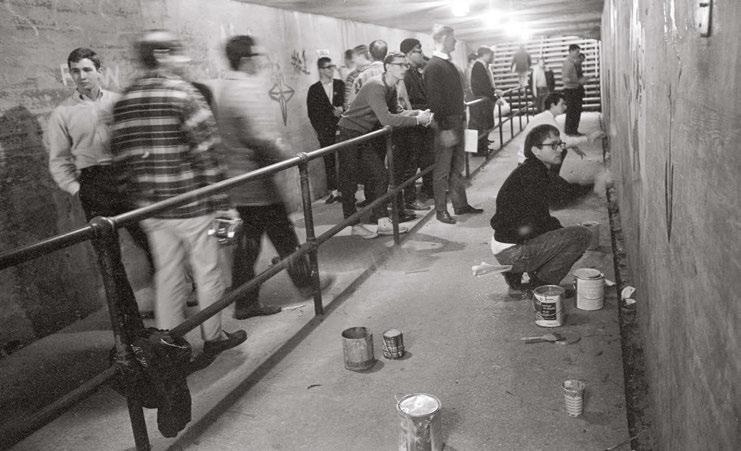
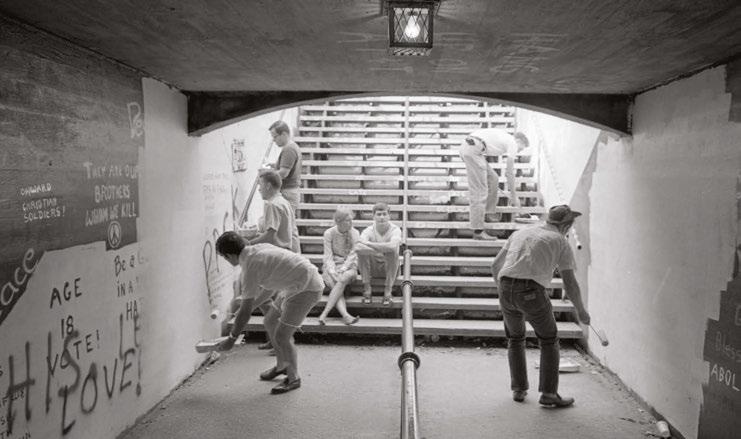
Some of the early works on the walls included a blue flower with the words “Sex, Acid, Pot, Love” painted on the petals. Another section included an abstract work of colorful circles and shaded shapes.
by TOMMY TOMLINSON illustration by GARY PALMER
Every year I mark it on the calendar when it arrives: porch season.
This year we got a dose in the middle of February. We always get a brief false spring right around then. You know winter is coming back for another round so you get outside while you can.
It was 74 degrees one day, 83 the next, and my wife and I took to the porch in the afternoons. The porch was one of the main reasons we bought our house. It was built in 1929, ancient in a modern city of teardowns. When we got the place the porch was half caved in — it had a big crack in the concrete, running down the middle. We got it resurfaced, and over the last 22 years and two sets of porch furniture we’ve spent untold thousands of hours out here.
There are some neighbors we see only when we’re on the porch. They stop by and chat on their way to get a beer down the street or just on their evening walk. Sometimes they come to browse the books in our Little Free Library. Not long after we put the library in, a young couple with a little girl would stop by a few times a week. An older neighbor noticed, found out the girl’s name, and started leaving books in there with notes for her. Then the couple discovered that the older woman had a dog and
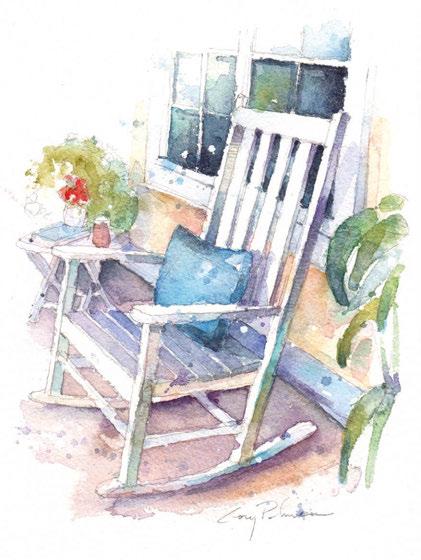
The porch takes us back to those looser, closer times. You don’t have to text anybody from the porch. You don’t need to look up their socials to see what they’ve been doing.
started leaving treats for the dog. I’m not sure that couple and that woman ever met. But those little gifts meant the world to them. And to us.
A year or two ago, a waterlogged
branch fell off our oak tree in a storm and knocked out the library. We had it rebuilt. You can’t let go of a thing that gives you a story like that.
The porch is our party line, our message board, the place where we catch up on news and gossip. It’s where we learn who moved out and who moved in, who got sick and who’s doing better. We have watched children grow from here and watched other neighbors age. This winter was a hard one. We had an ice storm one weekend and 11 inches of snow the next. Other parts of the state got it even worse. We got lucky at our house — the power never went out and the pipes didn’t freeze. But man, a winter storm in the South can be lonely. We went entire days without seeing another soul. My wife is from Wisconsin and cheerfully tells stories about having to shovel the driveway every hour when they had one of their regular blizzards. Some people down here — mostly transplants — take to the snow like golden retrievers. The rest of us just hunker.
A week or so after the last snow melted, I saw the shoots of one of our daffodils poking through the dirt. And I knew porch weather was coming.
I have spent some time over the years developing a theory about why some people believe the South is, let’s say, more eccentric than other parts of the country. I call it the Crazy Aunt Theory. In colder places, if you have a crazy aunt, you can just stick her in the attic. But our summers are too hot for that. So we put our crazy aunts on the porch where they can talk to God and everybody.
The porch takes us back to those looser, closer times. You don’t have to text anybody from the porch. You don’t need to look up their socials to see what they’ve been doing. They are voice and flesh, standing right in front of you, having real conversations. Sometimes, if somebody has a few minutes, they’ll come up on the porch and actually sit with us. Crazy, right? Spending time together, in person? And we will sit there with glasses of sweet tea, or possibly bourbon, and
talk about — well, maybe, nothing. Some days nothing is the best thing to talk about.
And sometimes we are silent because there is so much to see.
There’s a movie from the 1990s called Smoke that features a character named Augie who runs a little tobacco shop in Brooklyn. Every morning at 8 a.m., he takes a single photo of the street corner outside. One of the other characters thinks this is the dumbest thing he’s ever heard — until he looks through an album of Augie’s photos. Slowly he notices the little differences, the way the light changes, the weather, the people walking through the frame. He is deeply moved.
That’s the way I think about our porch.
In my mind I can flip through the album and watch the magnolia on the corner bloom and fade. I can see the wrens who show up every year to
build a nest under one of the eaves, making a warm space for their babies: first eggs, then hatchlings, then gone. I can see the lizards who slink out from under the house to sun themselves on the warm concrete. I can see Alix and myself, who moved here in our 40s and are now in our 60s — and hope to still be around in our 80s.
That second warm day in February, two bluebirds floated into the branches of the ornamental cherry tree in our front yard. Our neighborhood is full of cardinals and robins and swallows. Hawks watch over us from the tops of the trees, and owls call to one another at night. But we don’t get many bluebirds. They felt like a promise. The hard winter was coming to an end. Soon it would be porch season for real. We could live out here again — not virtually, not digitally, but through the rich and beautiful panorama of real life.

by JIM DODSON illustration by GERRY O’NEILL

On a warm and dry afternoon last October, as I mulched and watered my front yard’s 35 parched azaleas in the middle of the most punishing drought in memory, a shiny, white Volvo eased into my driveway. A pair of well-dressed women emerged.
They introduced themselves as Candy Gessner and Lorraine Neill, committee members from the Greensboro Council of Garden Clubs. They had something to discuss.
For an instant, I wondered what crime against nature I might have unwittingly committed. Unnecessary strain on
municipal water supplies? Had neighbors complained about my loud (and entirely inappropriate) oaths issued at the rainless sky?
Instead, Candy smiled and reached for my grubby hand.
“We understand you have a lovely garden,” she said, “We’ve come hoping to view it and ask if you would be interested in having your garden featured on the garden tour in June.”
Between us, they could have knocked me over with a packet of Burpee seeds. In my time on this Earth, I’ve built three ambitious landscape gardens and never
given a passing thought that somebody might wish to see them. Especially a lot of serious gardening somebodies.
My first garden was built on a heavily forested hilltop in Maine, a classic New England woodland garden created on the remains of a vanished 19th-century farm that my cheeky Scottish mother-in-law nicknamed “Slightly Off in the Woods.” It was the perfect name because the only people who ever saw it were the FedEx guy and tourists who’d taken a wrong turn onto our dirt road.
“Nice layout,” the FedEx guy once remarked with a smirk. “But why build
a garden like this that nobody will ever see?”
“Because I see it,” I said. “It keeps me sane in a crazy world.”
He thought I was joking. But any serious gardener will tell you that time spent in their garden is a cure for whatever ails the spirit. Most of us, in fact, never imagine that others will desire to see our gardens. We create them for us. THe closest we can get to playing God, as a famous English gardener named Mirabel Osler once said to me.
My second garden belonged to a cute little cottage in Pinehurst that my wife, Wendy, and I rented in hopes of eventually buying. The previous owner had been an elderly gardener who let his 2-acre garden run amok. I spent a year cutting back overgrown azalea bushes and battling wicked wisteria vines and even recovered a “lost” serpentine brick fence that had been swallowed whole by English ivy. I also built a beautiful wooden fence around the fully restored garden — just in time for disaster to hit.
The week we planned to officially buy the place, the kitchen floor collapsed, and we discovered that black mold was running like a medieval plague through the walls and floors. We moved out that same afternoon. At least the garden looked fantastic.
Finally, there is the garden on which the women from the garden council and I stood that afternoon. It is, without question, my final garden and, therefore, a serious labor of love.
A decade ago, we moved back to my hometown, taking possession of a charming midcentury bungalow that the Corry family built in 1951. I’d grown up two doors away from this lovely old house and always admired it. Al and Merle Corry were my parents’ best friends. Their grown children were thrilled when they learned that a pair of Dodsons would be their childhood home’s second owners.
And so, we set off to fully restore the property.
As Wendy got to work on the interior, I confronted “Miss Merle’s” long-
I spent a year cutting back overgrown azalea bushes and battling wicked wisteria vines and even recovered a “lost” serpentine brick fence that had been swallowed whole by English ivy.

neglected garden. It took a year of weekends just to clear dying trees and dead shrubs from the front yard before I could turn my attention to the backyard that was so wildly overgrown, I nicknamed it the “Lost Kingdom.”
Over the next decade, neighbors and friends got used to the sight of me getting gloriously dirty every weekend, rain or shine — digging holes, building beds, hauling in new soil and manure, eventually planting a dozen flowering trees in the front yard alone, with banks of hydrangeas and 30-plus azalea bushes, inspired by a former neighbor who did the same during my childhood years.
In due course, our “east” garden became a flowering space with a tiered stone pathway and lush beds that are
home to autumn sage, Mexican sunflowers, purple salvia, society garlic, Mexican petunias, Gerbera daises and red-hot pokers. Knock Out and oldgarden rose varieties preside over a trio of butterfly bushes that monarchs swarm upon on late-summer days.
In the former Lost Kingdom out back, I built an Asian-themed shade garden that’s home to nine Japanese maples, scores of autumn ferns and monstersized hosta plants (which I imported from my Maine garden). The final touch was a stone pathway that winds through this tranquil, hidden space — though only I and our three dogs have ever followed it.
Which brings me back to the lovely women from the council.
I thanked them for considering my garden for their June tour but pointed out that drought had taken an alarming toll. Moreover, mine was still a young garden, a mere decade old. It needed time to heal and find its way.
“Another year perhaps?” I suggested. They wouldn’t hear of it. “Everyone’s garden has been beaten up,” Candy reminded me. “But come spring, they always bounce back like a miracle. Yours will, too.”
So now, friends, April is here and I’m a man in constant motion, fussing, fixing, weeding, mulching, trimming, planting new things and getting gloriously dirty. A garden, of course, is never finished. There is always something to do, to change, to add or subtract, or simply fix. Nature abides no slackers.
Nothing could make me happier than to welcome folks to my reborn garden come June.
Don’t mind my grubby hands, though. A gardener’s job is never done.
Sadly, Lorraine Neill passed away earlier this year, on Feb. 6. We offer our condolences to her family and friends and gratitude for the time she dedicated to THe Greensboro Council of Garden Clubs. For more information on the 2026 garden tour, visit facebook.com/gcgcinc


Each home in Wellington Reserve is a refined retreat, where elevated design meets thoughtful craftsmanship. From gourmet kitchens and spa-inspired baths to expansive verandas and resort-style outdoor spaces, every detail has been meticulously curated to evoke comfort, sophistication, and timeless luxury.




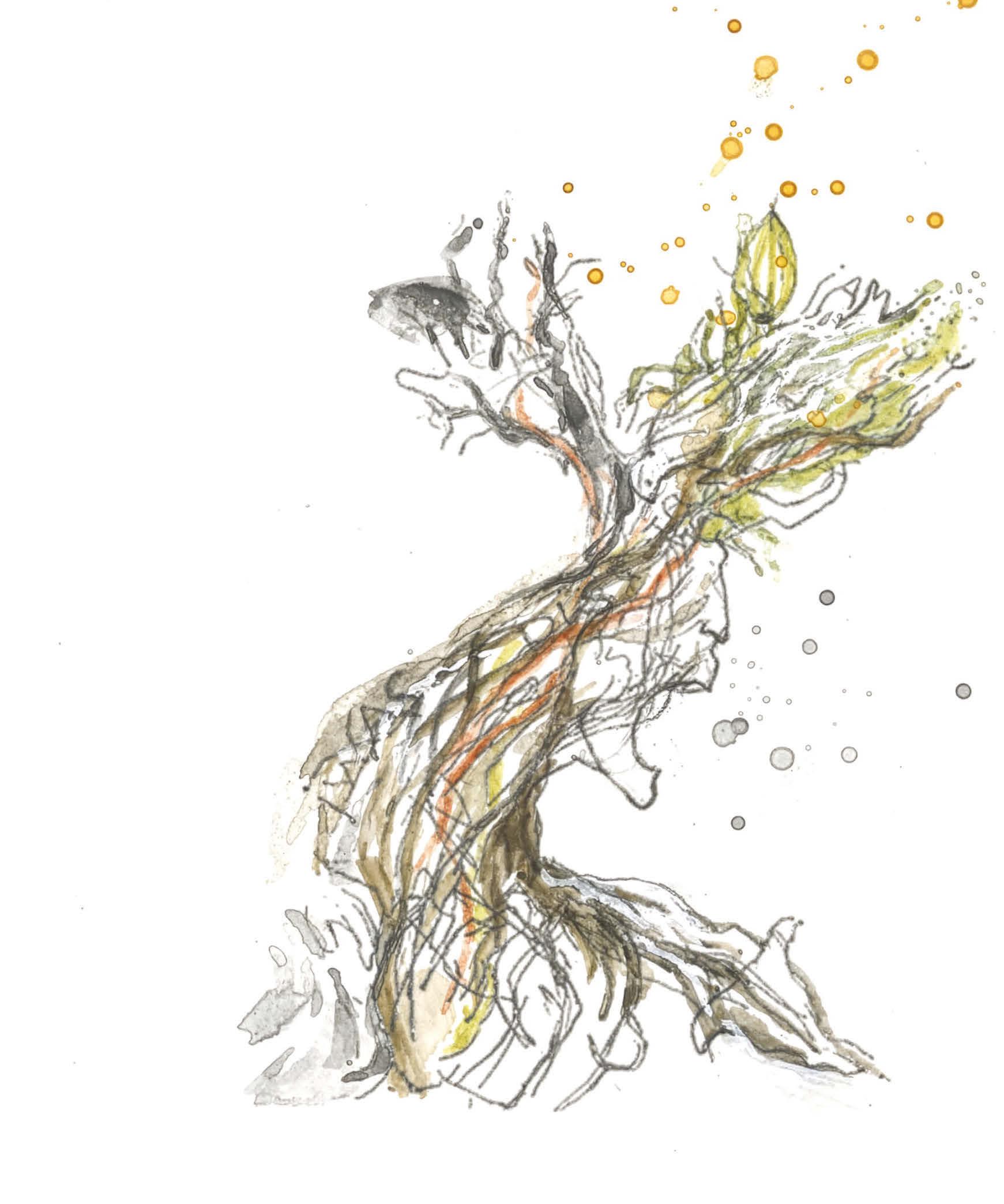
by KASHIANA SINGH
illustration by VINITA JAIN
The phantoms of ancestry do not arrive quietly. They twitch in the tales of my tongue, syllables like misfired bullets, each word a rehearsal of leaving. Displacement is not in the folds of geography but between the friction of laments. Chafed history on my palms, rubbed raw by borders I keep touching. My mouth becomes a hollowed tree trunk where echoes nest instead of birds; what I say returns altered, weathered by transit. Inside my veins, the fragrance of my ancestors’ spices blooms and burns — cardamom and ash, turmeric and iron — seasoning the blood with routes I never chose. Transition is a speckled map, each generation penciled in the margins. The vessel of my memory is now a cauldron of rotting vocabulary: names decomposing, verbs fermenting, meanings scalded down to residue. Doctors of origin listen for a cure and hear only inheritance speaking back, insisting on its symptoms.
distance
from my childhood unbridgeable
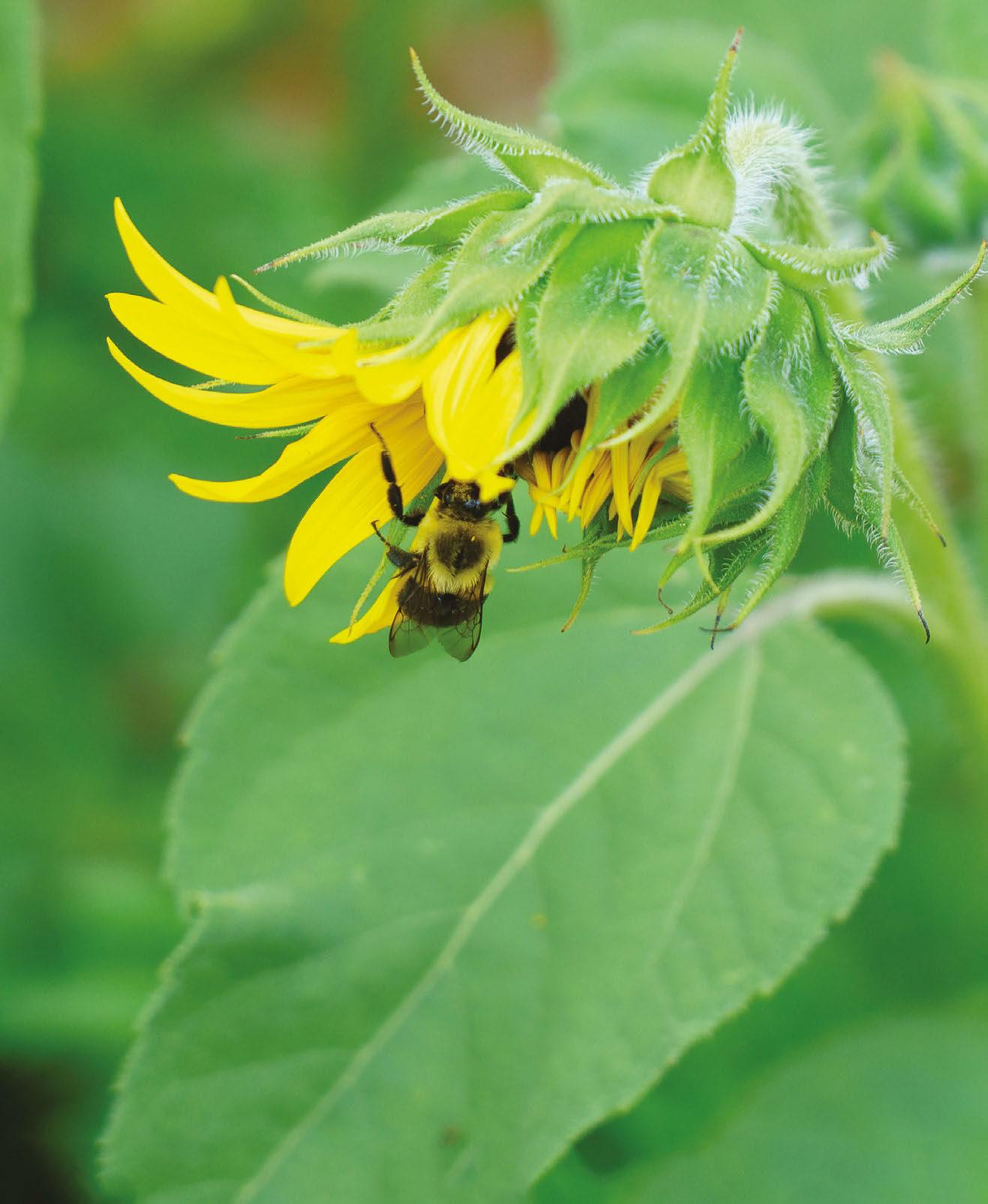
Fifteen years in, Raleigh City Farm’s impact is still growing
by RACHEL SIMON
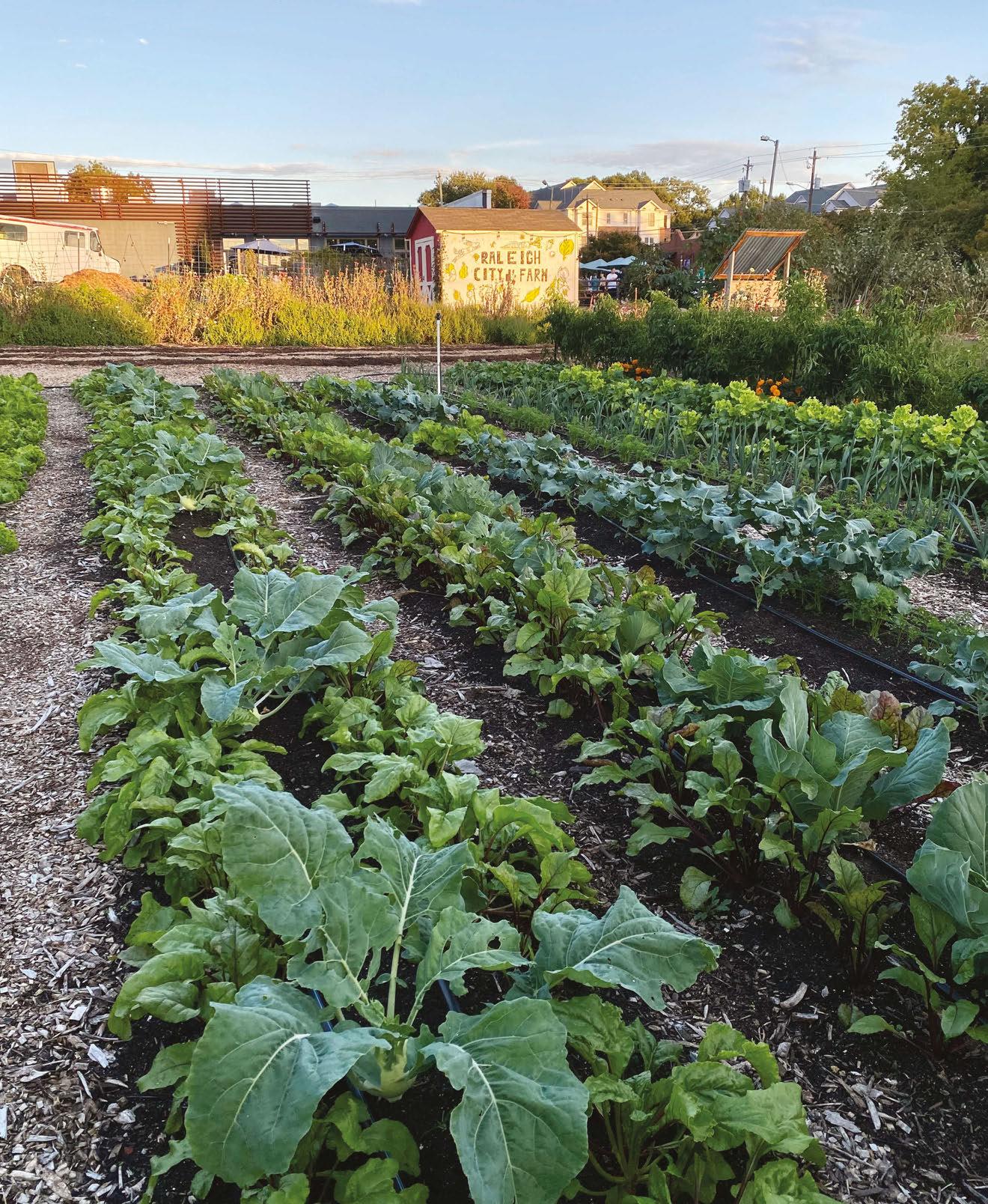
Raleigh City Farm enlists volunteers to assist their full-time staff with weeding, planting and other tasks. It’s an opportunity to connect with North Carolina’s agricultural roots and better understand where our food comes from.
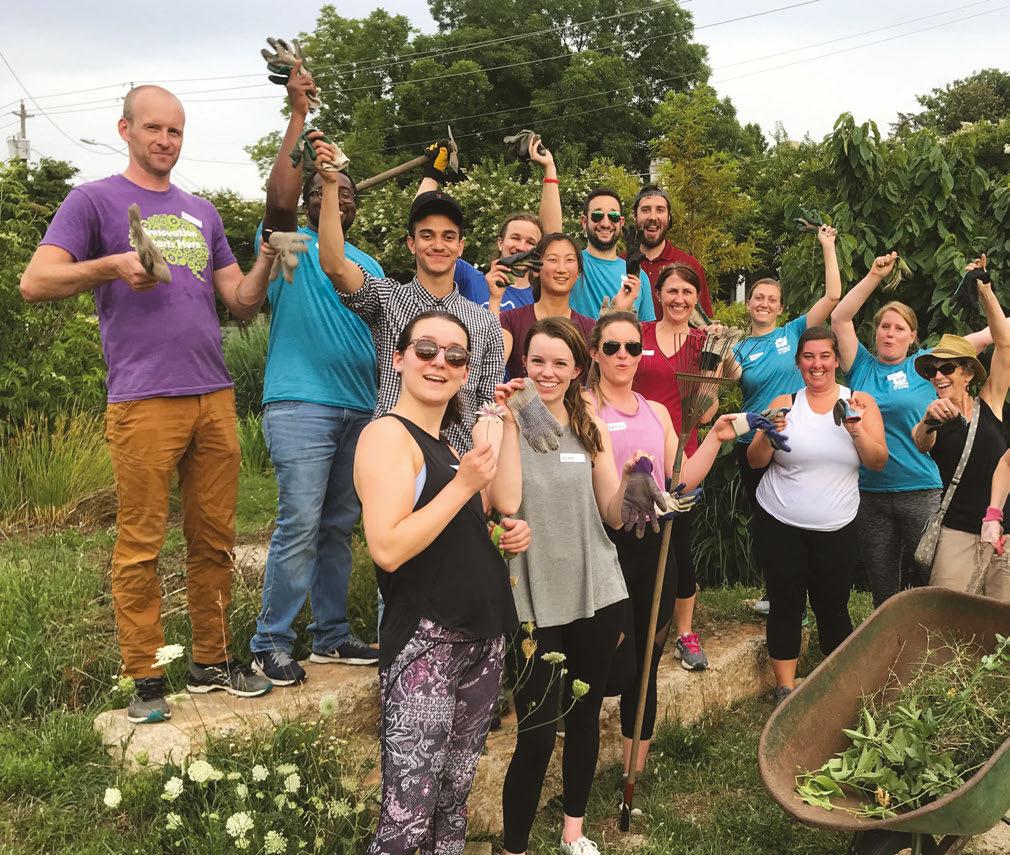
Mordecai’s Person Street Plaza is home to bustling businesses like Edge of Urge and Standard Beer + Food, but the shopping center’s liveliest tenants operate far underground — literally. At Raleigh City Farm, earthworms crawl within freshly watered soil, vegetables stretch their roots downward beneath weather-proof tarps and the stems of ornamentals push through the surface, waiting to be picked.
Situated on a 1.2-acre lot on the corner of Blount and Franklin Streets, Raleigh City Farm (RCF) grows thousands of pounds of produce and plants each year, distributing its products
throughout the city’s community. In the year of the nonprofit’s 15th anniversary, it’s growing even more: expanding into a second location at Marsh Creek Park.
With two sites across the city, four full-time employees and a growing list of local partners with whom it shares its bounty, RCF has come quite a long way since 2011, when five Raleigh residents — Laura Fieselman, Laurel Varnado Passera, Josh Whiton, Erin Bergstrom and Jonathan Morgan — decided to turn a vacant plot near William Peace University into a hub of urban farming. For its first nine years, RCF operated as a communal lot for farmers to grow their own food, but in 2020, the organization changed its model to focus on addressing food inse-
curity throughout Raleigh.
Over the last six years, RCF staff and volunteers have planted, grown and harvested over 56,000 pounds of produce, the majority of which is distributed via its Farmshare program to local nonprofits — including the Inter-Faith Food Shuttle and Carolina Cares — as well as a seasonal pay-what-you-can farmstand. RCF also offers several immersive programs like “weed walks” and “farm camp” to educate Raleighites of all ages on farming and sustainability. “Our goal is to connect and nourish our community,” explains Lisa Grele Barrie, RCF’s executive director. “Being more mindful of where our food comes from is part of the billboard of this little farm here.”
Ever y inch of the farm’s lot is
“Our goal is to connect and nourish our community. Being more mindful of where our food comes from is part of the billboard of this little farm here.”
— LISA GRELE BARRIE
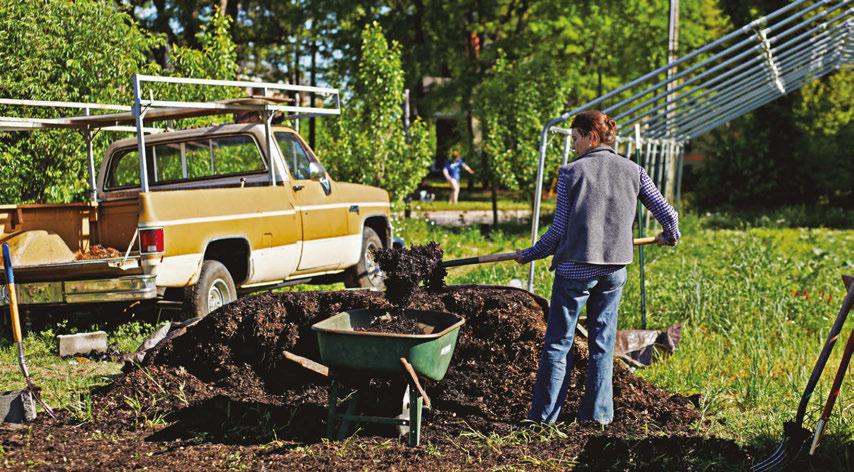
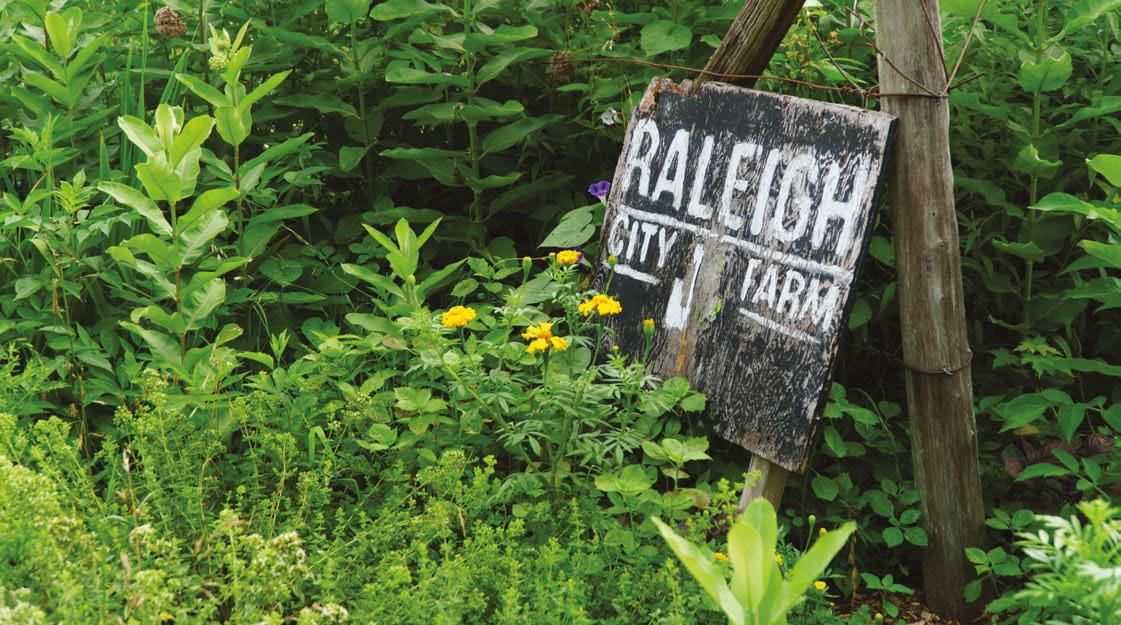

thoughtfully allotted and cultivated to promote regenerative agriculture, which embraces the concept of improving — not just sustaining — an ecosystem. Rain gardens bring storm water from the skies to the fields; veggies like kale and collards grow in tidy greenhouse rows; an apiary produces honey and encourages pollination.
“We’re creating equitable access to healthy food and doing the everyday work to build the next generation of farmers,” says Maria Williford, who manages RCF’s day-to-day operations alongside Colleen Yeager.
With its lush greenery, chirping bird visitors and colorful murals (painted by RCF’s artist-in-residence, Julia Einstein), the farm offers a rustic style of fairy-tale
beauty. “It’s pretty, but the message is that farming and farms are important,” says Barrie, noting that many people take food for granted and don’t question where it comes from or how it’s made. The hope of RCF’s staff and board, Barrie continues, is that “everybody who walks by the farm takes a moment to think about plants, and begins to think about their importance in our survival.”
Many Raleigh residents do far more than just walk by. In May through October, RCF runs a popular “First Saturday” program featuring tours and workshops at the farm, and the farmstand (open on Wednesdays from April through October) supplies countless customers with fresh products like basil, peppers, flowers and more.
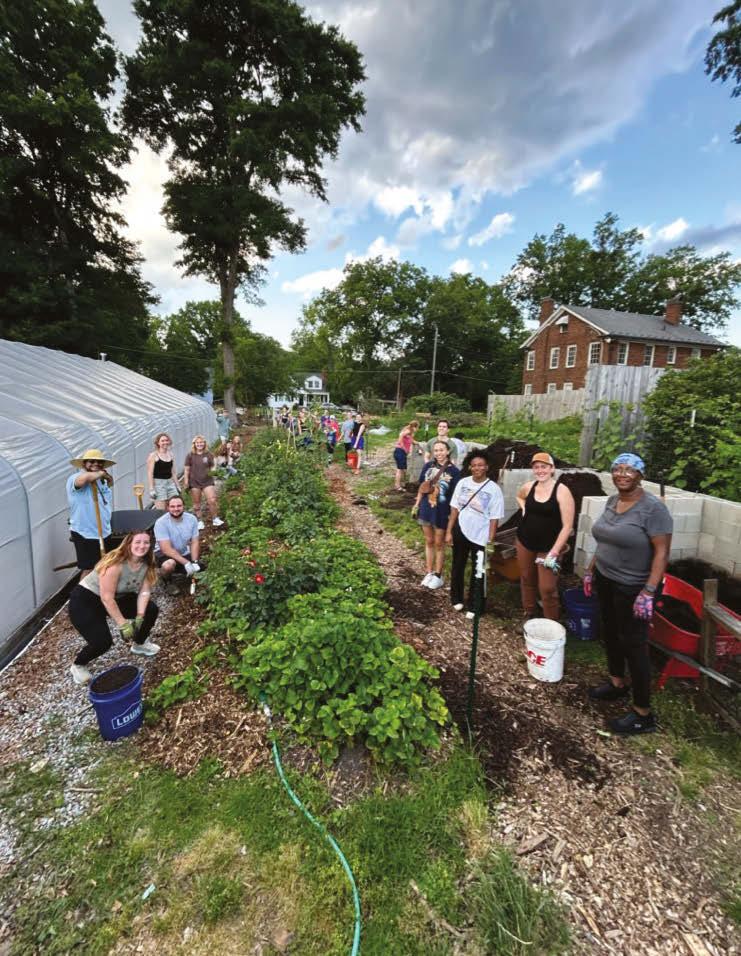
Kids, too, provide their own support to the farm, participating in programs like Farm Camp, accompanying their parents on shopping trips to the farmstand or wandering the grounds in between bites next door at Standard. The more exposure young people have to the plot and its offerings, says Barrie, the better. “If at an early age you care about something, you’ll do something about it. You’ll advocate for it,” she explains. “And while we’re not an activist organization, we’re hellbent on connecting people with plants and making them care more deeply.”
Williford and Yeager run a competitive internship program for adults interested in farming, and volunteering spots are so in-demand that the staff often
Raleigh City Farm’s grounds include various outdoor plots as well as a greenhouse for cooler seasons and more sensitive plants. They grow a mix of herbs, fruits, vegetables and ornamental flowers.
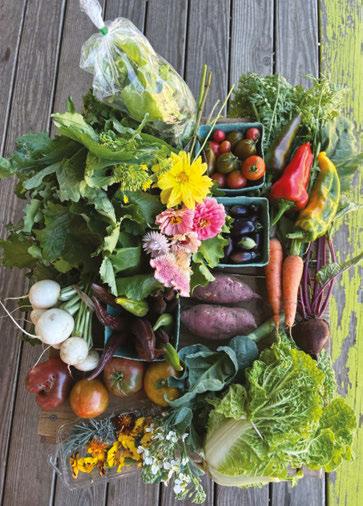
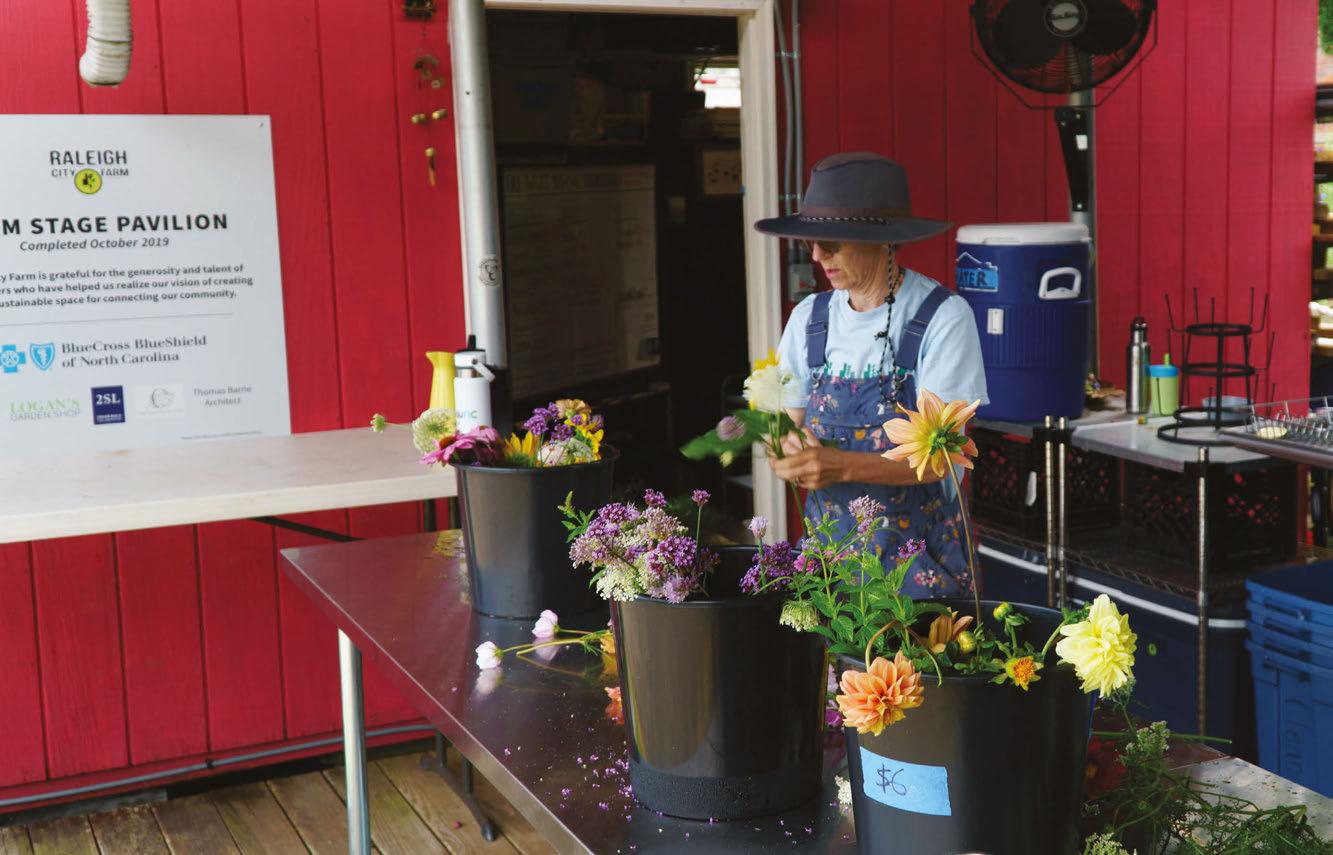
has to turn folks away. “People reach out from all corners,” Barrie says. “It’s really cool how many people contribute to the farm in some way, shape or form.”
For the nonprofits that partake in RCF’s Farmshare program, these contributions make a massive difference. Thanks to RCF’s weekly harvest deliveries, “their produce helps us nourish folks with the freshest, healthiest meals,” says Maggie Kane, founder of A Place at the Table. She recalls a young customer’s delight at realizing he could order a vegetable-filled salad instead of packaged food at the pay-what-you-can cafe and then “devouring” the meal.
“Because of Raleigh City Farm, we got to say ‘yes’ to that kid,” says Kane. “To his hunger. To his dignity. To his desire
for something fresh and beautiful.”
Now, with the new farm at Marsh Creek Park, RCF’s impact will only grow. The 1.5-acre lot, developed in partnership with the City of Raleigh’s Parks, Recreation and Cultural Resources Department, will eventually feature a teaching garden, farmstand, volunteer opportunities and more offerings to nourish and engage the community. RCF staff are currently hard at work treating the soil and getting the ground of the East Raleigh space ready for planting, so that the plot (located in the back of a community center) can one day be productive as its predecessor.
“Creating a network of small, urban farms is one of the best ways to build local food resilience,” says Williford.
And with food insecurity and supermarket prices on the rise, RCF’s “resource abundance” is more important than ever before, she adds. “Farming for ourselves and our communities puts an incredible amount of power back in our hands, and when it comes to food, that’s exactly where it should be,” says Williford.
It all speaks to RCF’s central tenet of “environmental stewardship”— the responsibility of caring for local ecosystems through actions like waste reduction and resource conservation so that future generations can reap its benefits. “I think that’s the impact of RCF — creating meaningful connections to plants and food, and empowering everyday people to engage in the process,” says Williford.
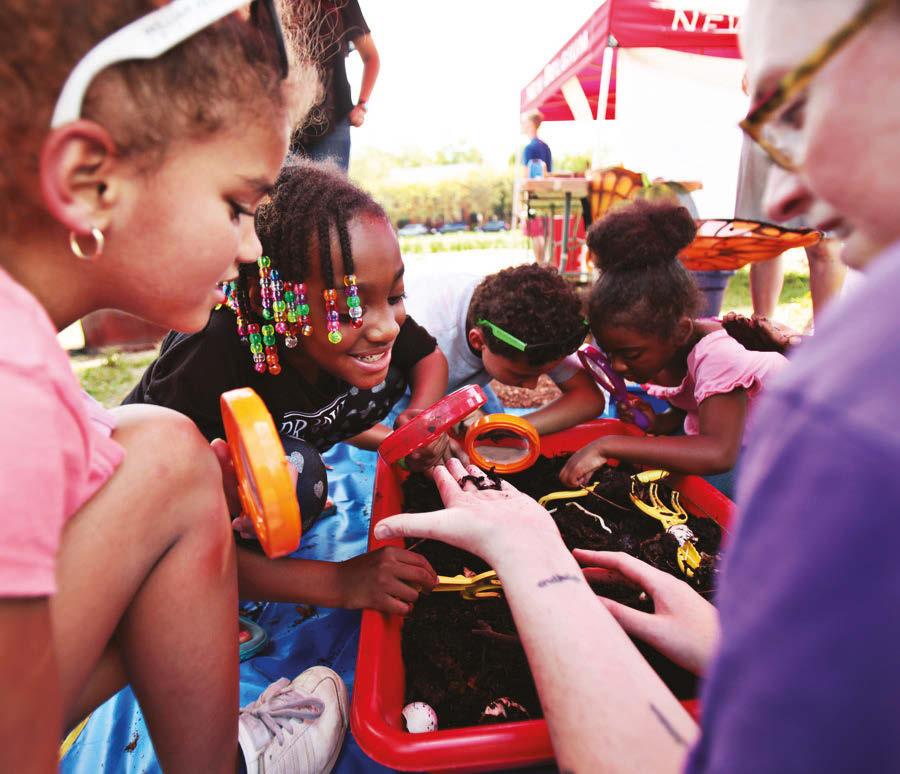
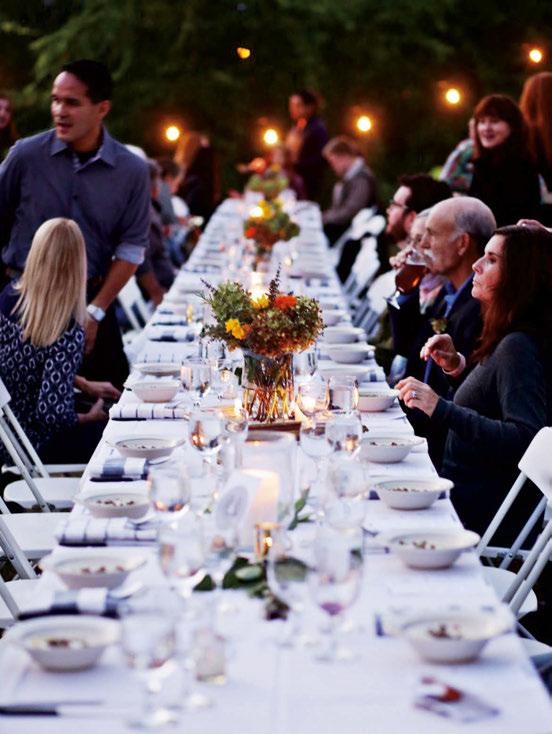
FUN ON THE FARM
The farm welcomes folks to explore its grounds with several events a year, as well as its seasonal farm stand.
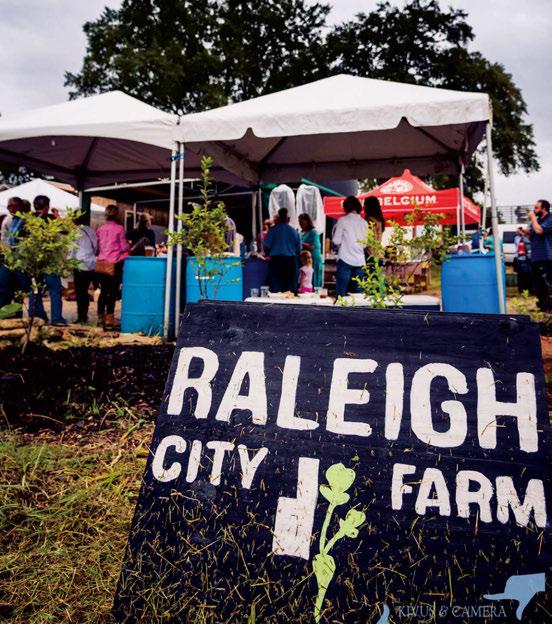


IIn Elizabeth and Matthew Cooke’s home, livable elegance supports busy lives, with two active boys and two puppies at their heels. The family room’s blue-daisy walls have borne witness to book clubs and late-night discos, karaoke sessions and intimate family gatherings. Their home’s as lively as the tortoiseshell ceiling in the bar but as timeless as the teacups in the mahogany china cabinet in the dining room.
The Cookes are the fourth owners of this custom-built, traditional 1962 brick home, situated on nearly an acre in the Lakestone neighborhood. Designed by Raleigh architect Arthur McKimmon — known for the Angus Barn and Martin Middle School, among many local landmarks — the house melds practicality with beauty. Although the Cookes renovated the kitchen, mudroom and back patio in 2021, they ensured that the home’s facade remained unchanged. The classic floor plan now includes formal spaces as well as an open kitchen and den.
When it came to decorating, Elizabeth enlisted the help of the team at Fleur, a North Hills clothing boutique that recently expanded its offerings to include home design. A longtime friend of owners Eliza Stoecker, Louise Stowe and Christina Allen, Elizabeth trusted they would capture her sense of style within her home. “I always felt understood by them,” Elizabeth says, noting the owners will often call when a dress comes in that’s just her. “They took what I cared about in fashion and translated it into my home.”
High-gloss paint punctuates the walls in the dining room and study, as well as the beams in the family room, with a glamour that tempers the traditional wainscotting and heirloom furniture. A showstopping bar nods to the Cookes’ affinity for entertaining, along with the circular dining room table. This was the first “real” piece of furniture Elizabeth ever bought, found at Bulluck Furniture in her hometown of Rocky Mount. “I always wanted a round table — it offers a sense of connection that puts people at ease,” says Elizabeth. The Fleur team in-

“I always felt understood by them. They took what I cared about in fashion and translated it into my home.” — Elizabeth Cooke
corporated inviting layers of color, pattern and textures, often informed by the Cookes’ art collection. “Elizabeth has always had an elevated sense of style,” says Stoecker. “Her fabulous eye for art represents her elegance and taste.”
As for Matthew, he trusted the vision. “I only want to deviate from my lane when I’m confident I can add value,” he says, “so I left decorating in Elizabeth’s capable hands, along with the ladies at Fleur.” Matthew’s favorite space is the covered back patio, where a wood-burning fireplace sits beneath the TV, with grills nearby and a sweeping backyard ripe for wiffleball games. It is home to
their cherished annual Thanksgiving Eve oyster roast and to normal Sunday afternoons. “One day this past fall, my boys and I cooked hot dogs and wings, watching the NFL and throwing the football in the grass, just the three of us,” Matthew recalls. “Toward the end of the day, my youngest asked if we could do this every Sunday. And for the whole fall, we pretty much did.”
The natural flow of rooms in the house lends itself to entertaining and fellowship, but it also allows for necessary retreat. “We don’t have a playroom,” Elizabeth notes, “and there was no way to add it in while maintaining the archi-



In the study, high-gloss paint in a cool gray picks up tones from the fireplace surround and serves as a calm counterpoint to the brightly-painted dining room through the doorway. Warm metallics like brass and bronze in the room’s accents give it a touch of glamour, while hints of green in the textiles and decorative accessories add a little verve. The powder room (bottom left) plays in traditional Chinoiserie motifs. Opposite page: The bar is done in a striking blue with an unexpected twist: a tortoiseshell pattern on the ceiling.

tectural beauty of the house, so our kids live downstairs, and they’re with us a lot.” Her 10-year-old son says this suits him just fine. While he appreciates the home that he calls “fancy, colorful and cozy inside,” he echoes his father’s favoritism for the patio: “You’re sort of outside and sort of inside. It’s the best because there are heaters and you can always sneak in a game of catch in the yard.”
For Elizabeth, serenity lies in the painted cypress-paneled library, functionally her study and office, where the loaded bookcases parade the spines of an ardent reader (as a writer and former high school English teacher, her library brims with well-loved classics and contemporary Pulitzer winners alike). At her desk
is a shell-backed armchair upholstered in green dotted fabric, and behind it are portraits of Ernest Hemingway and Joan Didion.
All of the art in the home is layered with personal meaning. One painting hanging in the bar, a colorful urban cityscape, is the work of local artist Luke Buchanan, whom Elizabeth and Matthew befriended when he worked as a bartender at their go-to, Poole’s Diner. On the shelves in the family room and living room are painted ceramic figures, called Souls, crafted by Asheville sculptor Cassie Butcher. These glazed human forms are stripped of detail, with a simplicity that emphasizes unity, as Butcher sought to represent the commonality in all people.
A gallery of family photos lines both sides of the hallway to the master bedroom. In the family room wall, nestled between portraits of David Bowie and Stevie Nicks, is a portrait of Murphy, a beloved lost pup, painted by friend and local artist Steve Darnell. Of all the art in the home, the Cookes’ 12-year-old son pinpoints this as his favorite.
While thoughtfully designed and decorated, this house is fully lived in: the bold blue stools in the kitchen are no strangers to a little cheeseburger grease, and the dogs have chewed on the caning of a wicker bench.
But in the Cooke family’s home, it all blends right in with the vibrancy that reflects their dynamic lives.
The family room is saturated top-to-bottom in a vivid blue-daisy hue, with a tangerine couch holding court in the middle of the space. These bright colors are offset by a mix of patterned textiles in creams and browns, including a trellis print on the curtains, leopard print and tweed on the side chairs and a subtly geometric rug. Opposite page: Upholstered bar stools carry the blue color into the all-white kitchen, connecting the two spaces. Throughout, the homeowners used Fiber-Seal to protect their fabrics from the kids and dogs.



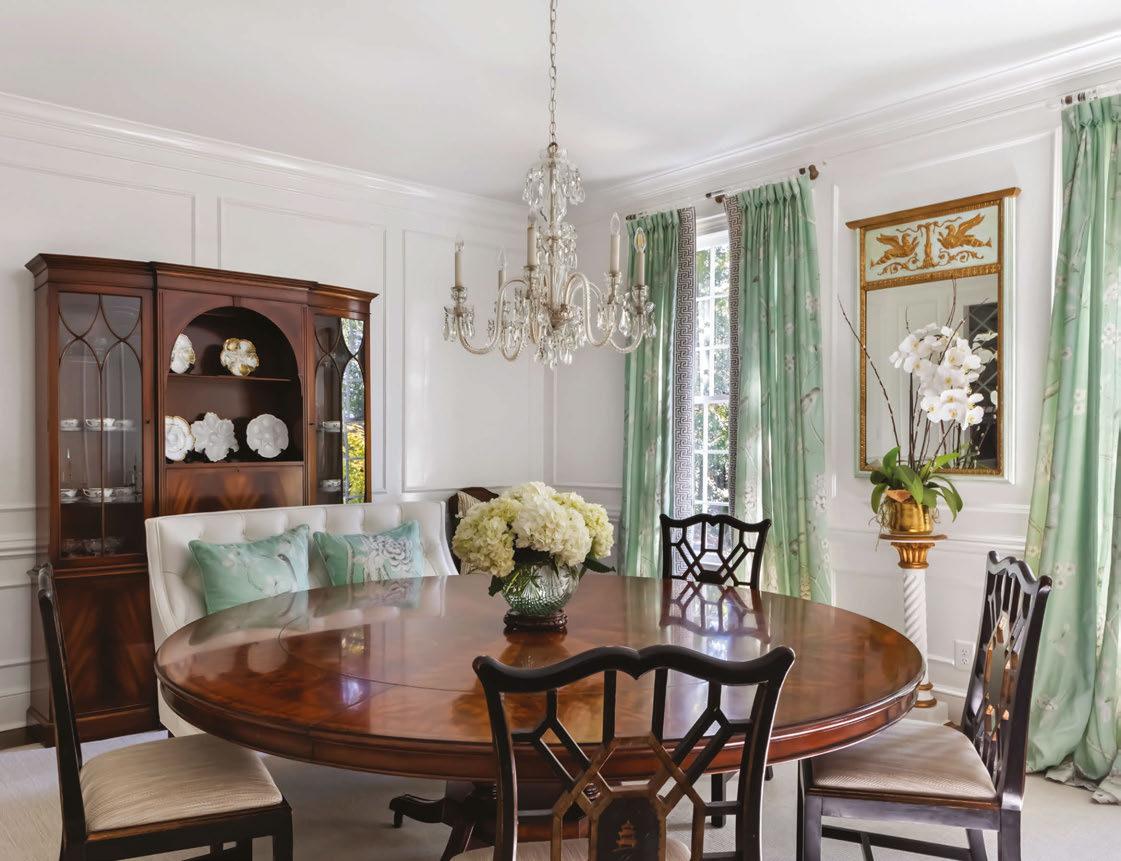
The dining room is one of the most traditional spaces in the home. The round dining table, one of the first “real” pieces of furniture Elizabeth bought as an adult, is a favorite place for entertaining, particularly because the shape lends itself to conversation. A metallic grasscloth in the foyer adds a subtly luxurious touch, and an antique cabinet sets the tone for the rest of the home.



Robin’s egg blue walls trimmed in white molding create a calm backdrop for a mix of antique and contemporary furnishings. All the colors in the room are tied together through the art, but contrasting patterns (like a surprising tiger motif on the side chairs) keep it from feeling too matchy. By a second-floor window, the Fleur team used the same print for the wallpaper, curtain and upholstered seat on a cane chair.
Through quilting, Michelle Wilkie delights in precision, creative freedom and connection

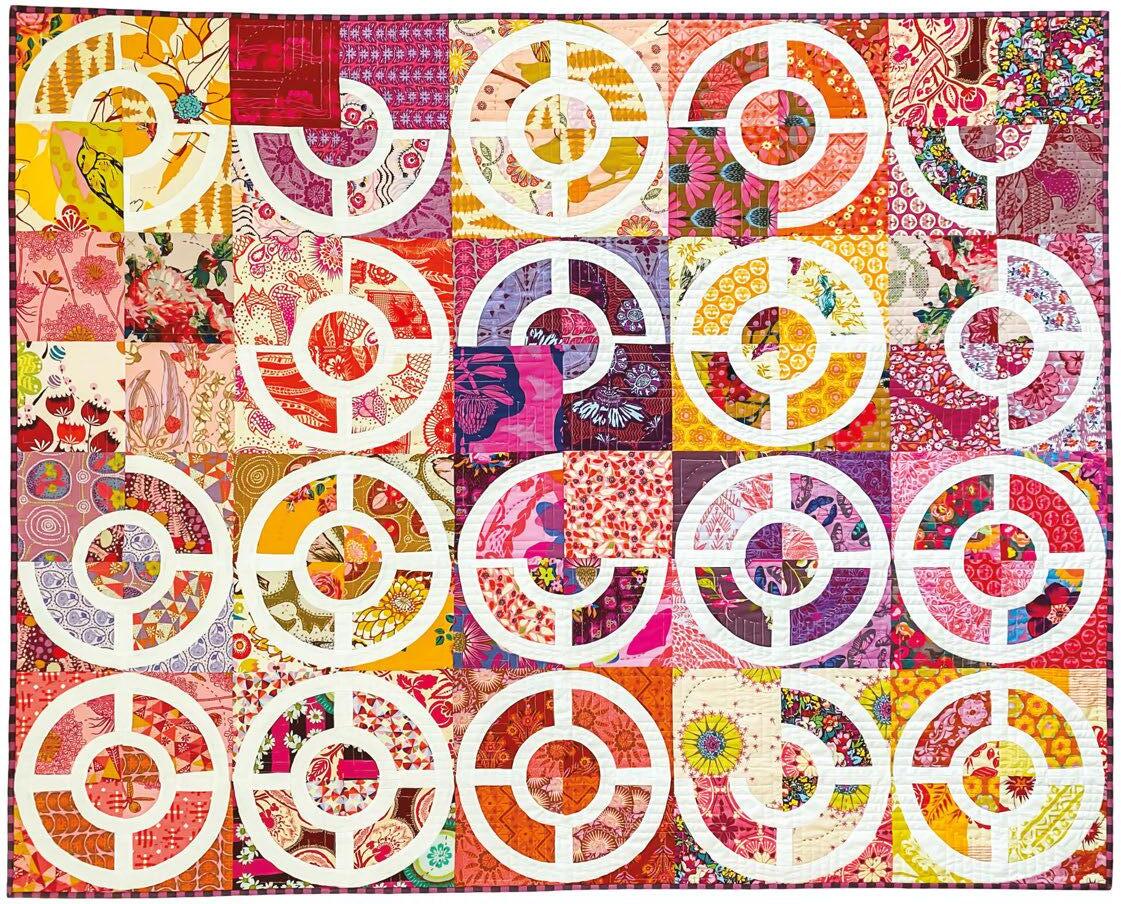

“My love language is color,” says Michelle Wilkie. She creates modern quilts and textile art characterized by clean lines, vivid hues and bold shapes that appeal to both collectors and quilters alike. Wilkie has exhibited her quilts worldwide in group shows and her work can be found in the collections of the City of Raleigh and the SAS Institute.
Wilkie’s quilts reflect a lifelong love of color and design that originated, in part, with her childhood in New Zealand. She was surrounded by creative expression: her father painted and practiced photography, her aunt was a printmaker and her mother was a seamstress. “She made all our clothes growing up,” says Wilkie.
But it was there that Wilkie sharpened her eye for pattern — appreciating, for example, the koru, a spiral shape that’s a traditional Māori symbol representing the unfurling of a fern frond, or the sharp lines in the the decorative woven tukutuku panels found in Māori meeting houses. “The geometric nature of the designs of the Pacific Island cultures
I grew up with have been an underlying presence in my art,” she says.
In New Zealand, she studied marine biology and earned a master’s degree in Marine Science before she began working for SAS in Australia as a product manager. She spent nearly 25 years with the software firm; it took her to Heidelberg, Germany, then to the Triangle 19 years ago, where she and her husband raised a son. Through travel, she developed a love for architecture and photography, each form giving her an appreciation for the beauty found in small details, like the masonry of a building or the patterns created by train tracks. During this time, she mainly practiced art through pastel drawings, creating minimalist, abstract works in colored chalk.
It wasn’t until Wilkie was on medical leave, recovering from surgery 12 years ago, that she decided to take on a sewing project: creating pillows for her sofa.
“Though my mom was an amazing seamstress, I never sewed with her,” she admits. But that project led her to a quilting site, where “I found somebody making modern quilts, and thought, Oh,
that’s my aesthetic,” she says.
Unlike traditional quilting, which is known for time-honored patterns like the Log Cabin, Pinwheel and Eight Pointed Star, modern quilting embraces a more improvisational style. Particularly found in African-American quilting traditions, it allows a freedom of expression and process; these characteristics of the craft drew her in instantly. “I have a little bit of an obsessive personality when I start something; it becomes all I do,” she says.
Quilting also tapped into her aptitude for mathematics and science, using her technical, problem-solving prowess for the precision that goes into the craft. While many of us have long abandoned our need for using geometry or trigonometry in our daily lives, Wilkie has no problem calculating the hypotenuse of a triangle to measure out strips for a quilt or applying sine and cosine functions to create symmetry within her patterns.
Wilkie draws inspiration from myriad sources, from travel and architecture to math and science; these influences show up in abstract shapes and unique patterns. One piece, titled Neighbourhood, is
“I studied the history of quilting in the U.S. so that I could appreciate the craft and its traditions.”
— MICHELLE WILKIE

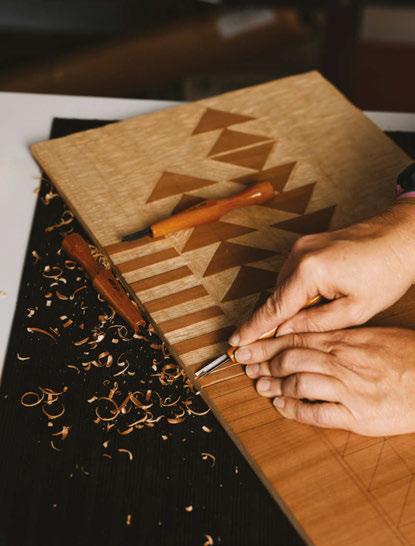

a white quilt with 12 irregularly shaped rectangles in vibrant hues of canary yellow, pink, purple and orange. Using fine stitching, Wilkie creates sharp angles and variegated lines that add unique texture with each quilt square.
Traces of Bauhaus influence are found in some works, like Orange Creamsicle, a hand-pieced work that uses circular segments, thin rectangles and angular shapes together to evoke balance, symmetry and harmony. Others, like Pyramids, a quilt inspired by the palace entrance of the Castle of the Moors in Sintra, Portugal, demonstrate the precise calculations she uses to create repeating patterns of triangles, hexagons and chevrons.
In 2023, Wilkie left SAS to pursue art full-time. This offered the freedom to continue exhibiting her work in both solo and group shows while also exploring new art forms, including printmaking and woodcarving. While attending a three-week artist residency at the Virginia Center for the Creative Arts in 2025, for example, Wilkie created an indigo blue quilt top that combined wood block fabric printing with quilt stitching. The curved lines she printed onto the fabric flow into quilted lines almost seamless-
ly; only when examined up close do the textural differences on the surface reveal her innovative technique.
Wilkie recently received a grant from United Arts Wake County to purchase a printing press; she plans to use it to create patterns that build on the shapes and designs she sews in her quilts. “I love experimenting,” she says. “I just learn the technique to get the design that I want.”
As Wilkie continues to push her work into new areas, another aspect of quilting — its communal nature — has been at the forefront of her practice. “I studied the history of quilting in the U.S. so that I could appreciate the craft and its traditions,” she says, finding herself fascinated by cooperatives and collectives that both shared in the labor of creating quilts and became vital community links, like the Freedom Quilting Bee in Gee’s Bend, Alabama, which provided foundations for economic independence for women.
Inspired by the idea of sewing circles, Wilkie started to host a regular meetup for fellow quilters in her home in Cary where they share their projects. “Michelle is two parts artist and one generous part social coordinator,” says Ginny Robinson, a quiltmaker and schoolteacher who is
part of Wilkie’s quilt circle. “It’s hard to get introverts to move and gather and connect, but she makes it happen — usually serving up some magical cake or muffins to boot.” (Notably, Wilkie’s other love language is baking: “I love making stuff for people; I’m always bringing cake.”) The gathering has become a trusted space of support. “Not only do we lift each other up, but it’s created a circle of friends who are going through similar life experiences and having meaningful conversations,” Wilkie says.
Wilkie recently curated a show for Artspace, Of Place, which featured contemporary quilts from 18 artists, some of them members of her quilting circle. Each of the pieces offered a unique perspective on the art form, from textbased quilts to modern interpretations of traditional styles. In addition to her quilting circle, she also hosts Sip + Stitch, a monthly meetup at Artspace that invites anyone who’s interested to work on a textile project in community. “I love the fact that we all bring different projects,” she notes. “It’s really nice to see what people are making and hear the stories they share about themselves and their lives. I love those connections.”





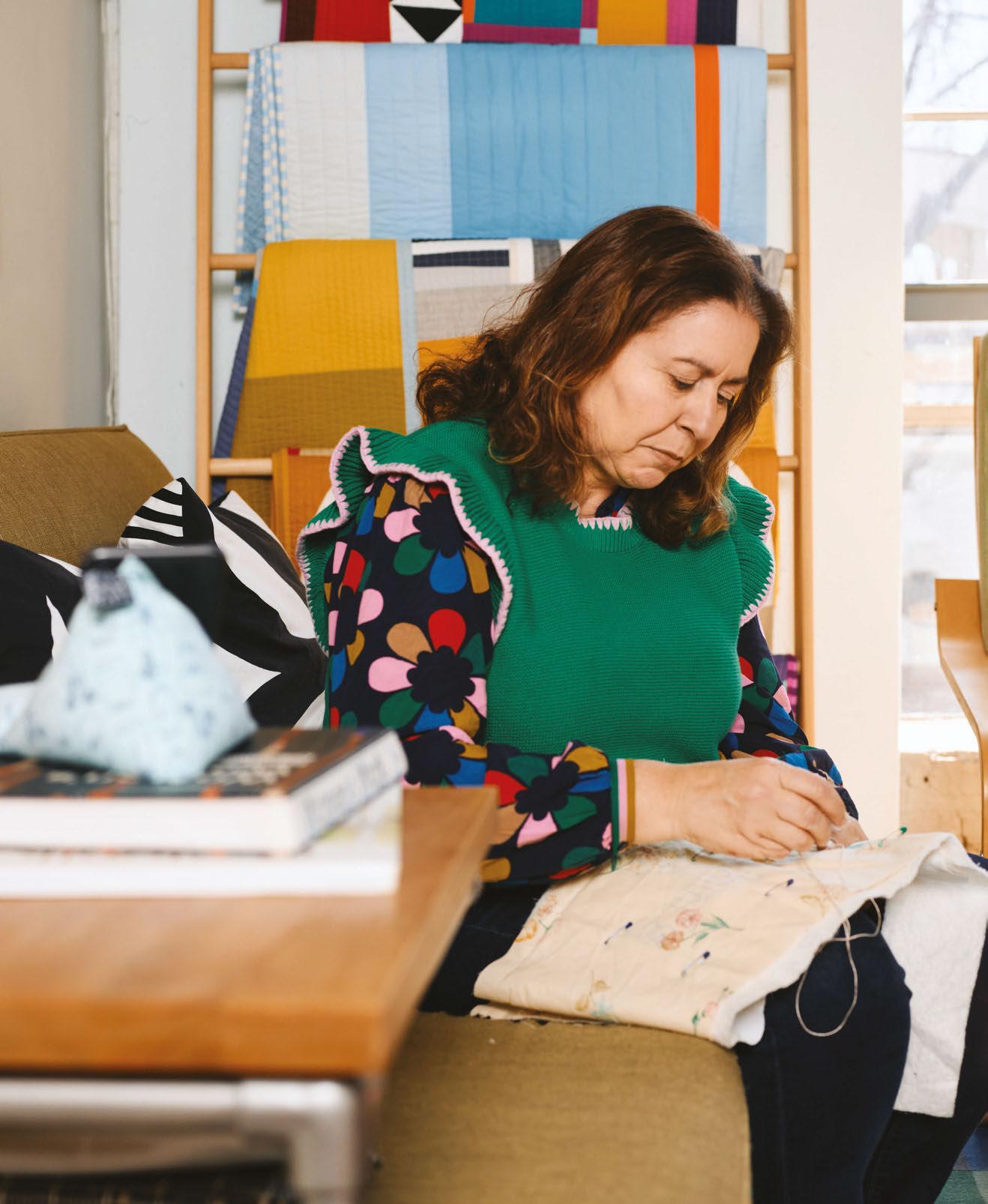


In life, we embrace different seasons — and our homes should evolve along with us. Closets By Design works with clients across central North Carolina, from Winston-Salem to Rocky Mount, to do just that.
These two projects are great examples of how Closets By Design helps homes evolve. In one, recent empty-nesters found themselves with more bedrooms than they needed. They worked with Closets By Design to convert one of those rooms into a private oasis for getting ready with organized, easy-toaccess storage for all of their clothing.
Another homeowner hoped to use her home office as a comfortable retreat for guests without cluttering up her Zoom background. She worked with Closets By Design consultant Nicole Clayton

to create a custom wall built-in with a Murphy bed that looks professional during office hours, but easily converts when folks come in from out of town.
“We are completely custom and we do everything from start to finish,” says Closets By Design CEO Chantale Persinger. That includes meeting with clients to learn their needs, designing a custom system, manufacturing the components on-site and having their in-house team install the new system. Because everything is done in-house, most projects are completed within 3 to 6 weeks, and installs typically take one day.
Whether you want to make a space more functional or totally reimagine a room, contact Closets By Design to get your home working better for your lifestyle today. closetsbydesign.com
“We are completely custom and we do everything from start to finish.”
– CHANTALE PERSINGER




Stories, ideas, and the people behind them — arriving at your doorstep each month.


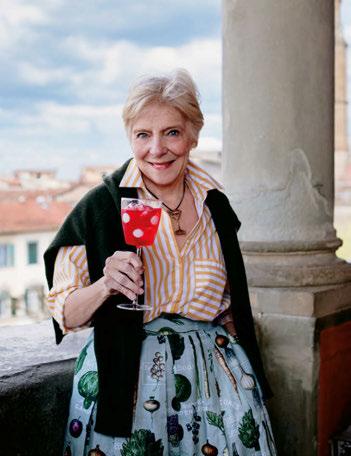

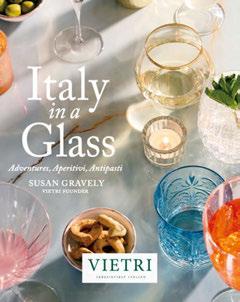
Join WALTER for an immersive evening in celebration of VIETRI founder Susan Gravely’s latest book, Italy in a Glass. Over wine, food and curated experiences, we’ll explore the distinctly Italian ritual of aperitivo — a time to gather, unwind and reconnect.

April 29
6:30-9:30 p.m.
The Merrimon-Wynne House
500 N. Blount Street, Raleigh, NC $85 per person



WALTER’s roundup of gatherings, celebrations, fundraisers and more around Raleigh
In February, the Triangle Land Conservancy (TLC) held the Force for Nature Gala & Art Auction, an event to celebrate its Force for Nature campaign. The effort will leverage financial contributions, land donations and $50 million in public funding to protect more than 9,000 acres of land and other critical natural resources in our area. The gala was held at The Umstead Hotel & Spa. The art auction included work by notable artists including Patrick Dougherty, Chuck Rose, Mark Hewitt, Damian Stamer and more than a dozen others.
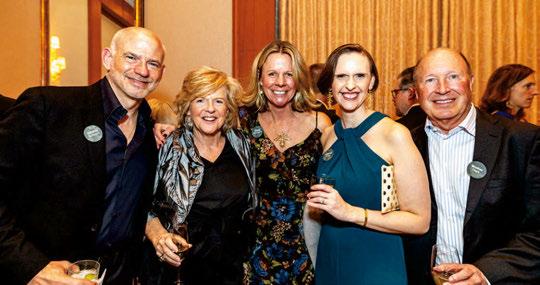
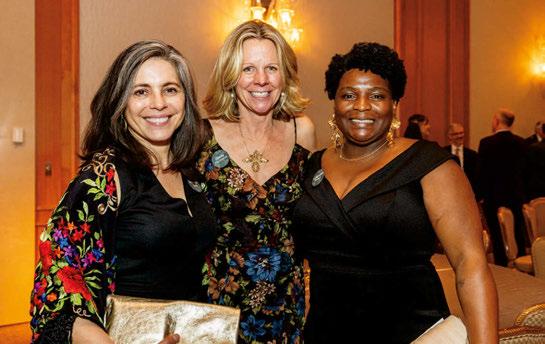
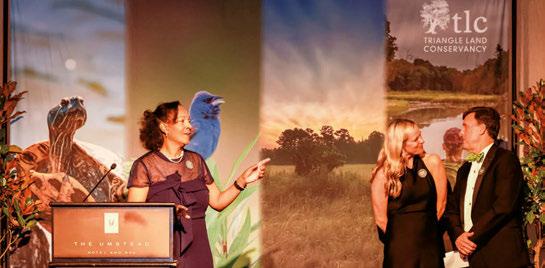
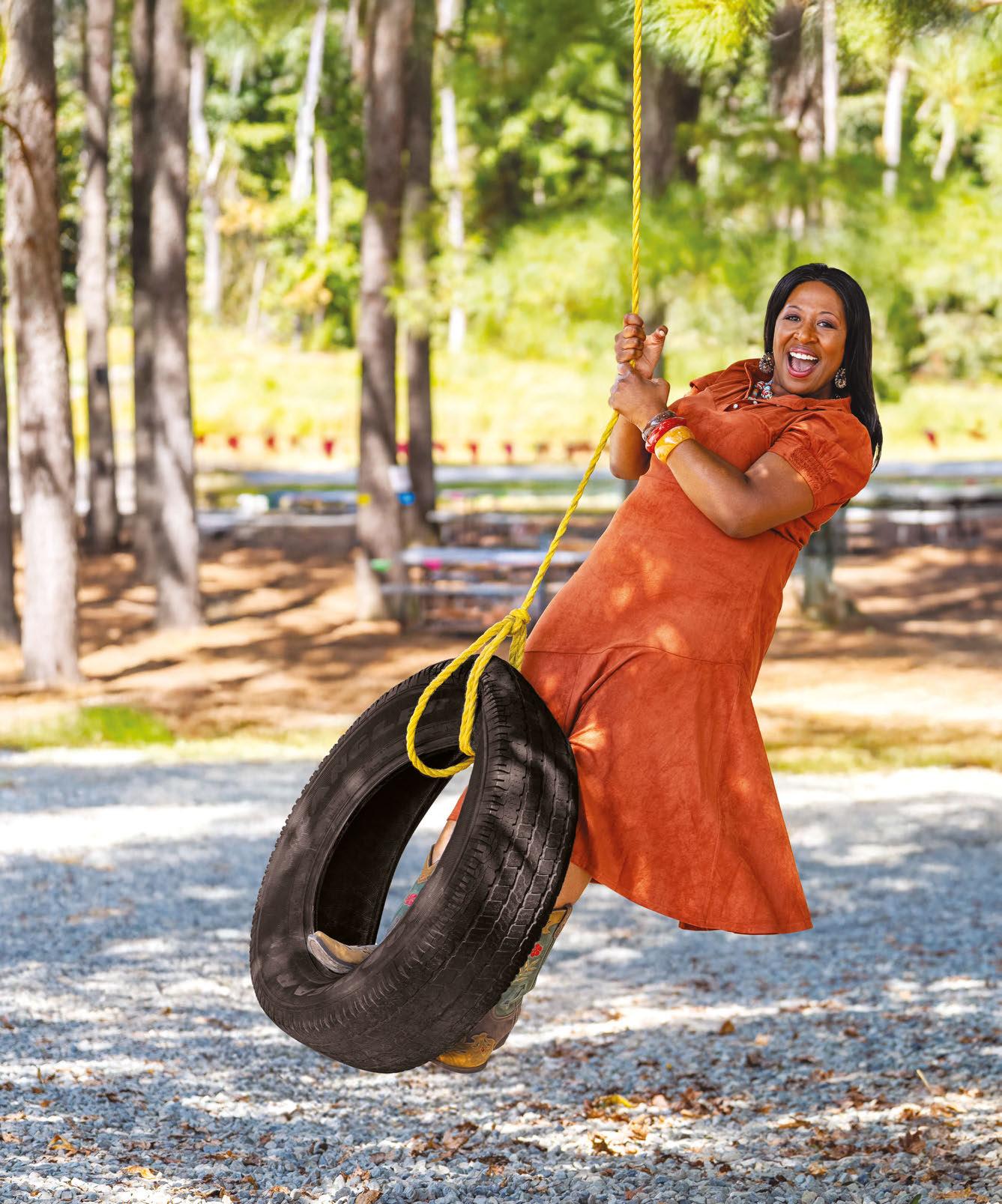
The days are getting longer, and the temp feels just right. Shake off winter with NC Weekend as we explore fun destinations across the state, from mountain gems and beachy getaways to foodie finds and adventures in the great outdoors. You’ll have a spring in your step in no time.
Watch Thursdays at 9 PM or stream anytime.
OPENING RECEPTION FOR “A LIFE WELL LIVED”
On Dec. 5, Gallery C hosted an opening reception for “A Life Well Lived,” a show featuring work by artist Laura Lacambra Shubert. The work by this Durham-based artist included colorful oil and acrylic paintings that recall her youth living in Spain and Florida, then studying in France.
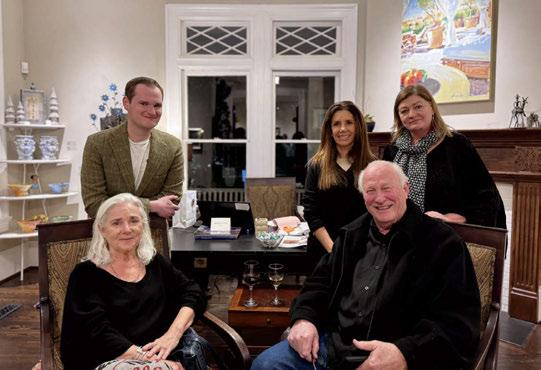

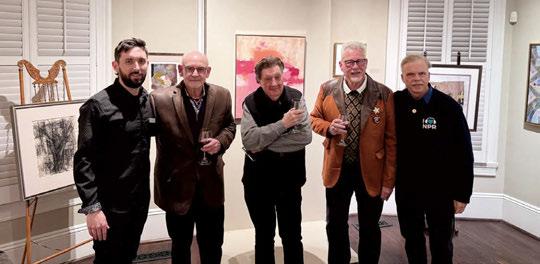







On Feb. 8, Chamber Music Raleigh presented a special concert and reception at the North Carolina Museum of Art celebrating North Carolina arts pioneer Jo Cresimore’s 90th birthday. The concert featured The Juilliard School pianist Shai Wosner along with violinist Julian Rhee, who performed on the 1699 “Lady Tennant” Antonio Stradivari violin.
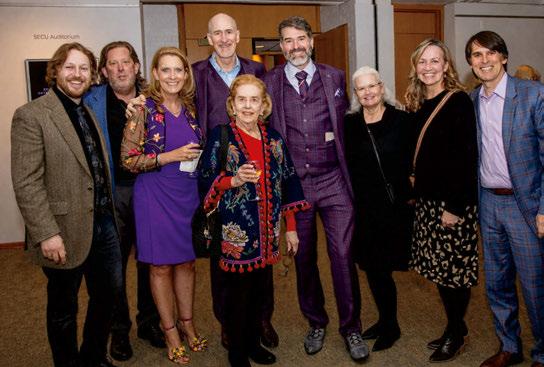


On Feb. 18, Spectrum donated $5,000 to two nonprofits in Raleigh through the company’s employee-driven grants program that recognizes the value of community service, Spectrum Employee Community Grants. The recipients are Congolese Community of North Carolina/Raleigh and Rhoda Generation.


Smash celebrated its grand opening on Mar. 3 with a ribbon cutting and presenting a $5,000 donation to the Cooper Charitable Foundation. Smash is the newest restaurant and bar from LM Restaurants, the Raleigh-based, familyowned hospitality company that operates more than 30 restaurants from North Carolina to Florida.




On
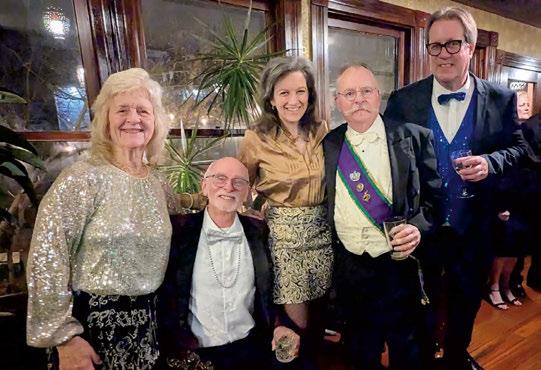

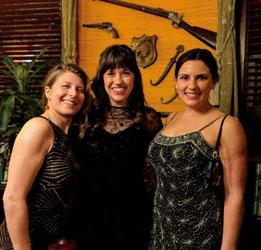
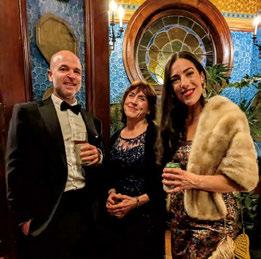

“These guys were amazing. They recently delivered some furniture and it was white glove ++ service. They arrived on time, overcommunicated, and did a great job. They were very professional, courteous, and thorough, and they didn’t leave a speck of trash from the unpacking. Top notch organization... Will use again when services are needed.”

There’s a lot going on in Raleigh this month! Here’s the latest…
by WALTER Staff

NCMNS GLOBE GETS A NEW LOOK
Raleigh’s a city known for its obsession with basketball, so as a nod to its local roots, the North Carolina Museum of Natural Sciences has repainted the 70-foot globe outside the SECU Daily Planet Theater. Passersby will now see a giant orange basketball wedged into the building’s Nature Research Center. “We study natural phenomena,” notes museum director Denise Young. “And in North Carolina, basketball season absolutely qualifies.”

SCHOOLS PLAN FOR “POLLEN DAYS”
In response to complaints about the high levels of tree pollen, some schools
are considering a virtual learning curriculum for potential “Pollen Days.” The worst offender of this long-recognized nuisance is pine pollen, that yellow dust that coats every outdoor surface (and indoor surfaces near doors and windows) through much of April. “This year we’re predicting close to an inch of pollen blanketing surfaces,” says Ethan Clark of North Carolina’s Weather Authority. “Stay inside, stay off the roads, keep your house airtight; no opening of windows or cracking doors. Stock up on Claritin, paper towels and cleaning spray. Remember, it doesn’t snow here — it just pollens.”
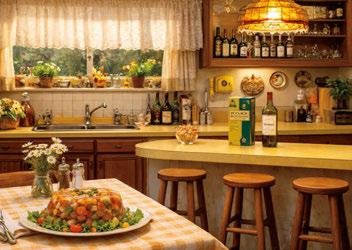
After the successful launches of several tightly themed bars across Raleigh — like the Romeo & Juliet-inspired Capulet Cocktail Club and frat-houseon-steroids Smash Social Club — a local hospitality pro has launched another immersive, out-of-the-box venue. Titled Granny’s Kitchen & Bar, this new concept is located in their actual grandma’s kitchen in Five Points.
All of grandma’s original decor has been preserved, including the 1960sera vinyl flooring, retro wallpaper and inspirational signs. The menu includes small plates like aspic, apple pie and a seasonal rotation they’re calling LFTF (Leftovers from the Fridge). For drinks, Granny’s will exclusively serve box wine, plus sweet tea in the warm months and chamomile tea when it’s cold. Due to the venue’s small footprint, advance reservations are required.

The latest public art in Dorothea Dix Park is a riff on what the locals call our City of Oaks. Styled after the iconic HOLLYWOOD sign, the RALEIGHWOOD sign features 100-foot-tall white letters and is situated on Dix Hill. “The public continues to be excited about the park and all the avenues we’re creating to interact, relax and — most importantly — snap selfies,” said a spokesperson. “Is this the most Instaworthy piece we’ve got? You decide!”
Just kidding! Happy April Fool’s Day!

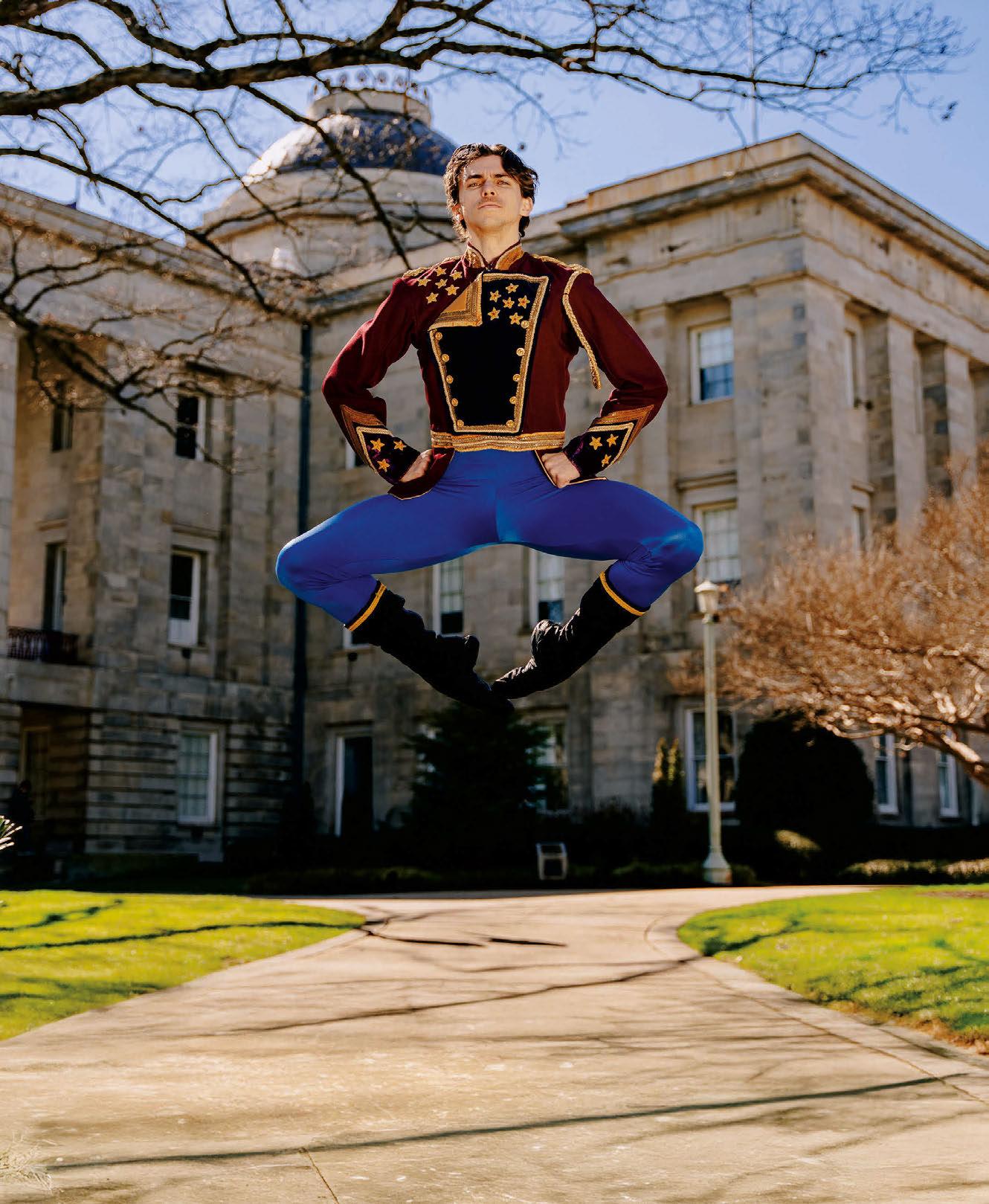



Heart and vascular. Trust and confidence. Generation after generation. As a leader in cardiovascular, vascular and neurovascular care, we offer the latest procedures. Unmatched care and caring. Not to mention, prevention. All that in a program that serves generations of healthy hearts. And will do so for generations to come. Learn more at wakemed.org/hearts. Your heart. Your choice.