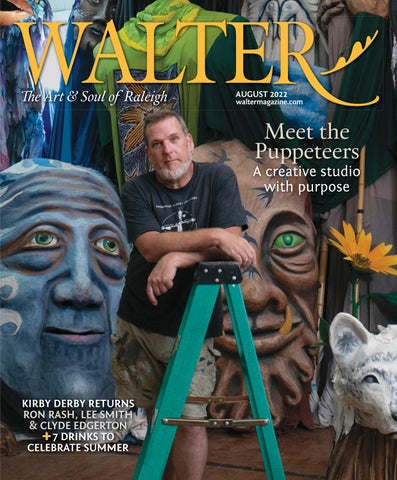





The Art & Soul of Raleigh AUGUST 2022 waltermagazine.com Meet the Puppeteers A creative studio with purpose KIRBY DERBY RETURNS RON RASH, LEE SMITH & CLYDE EDGERTON + 7 DRINKS TO CELEBRATE SUMMER



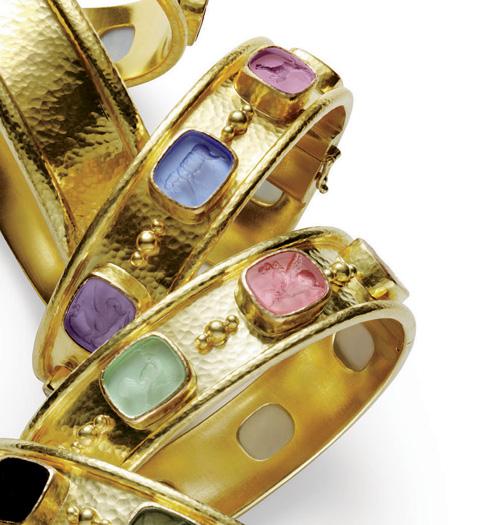



E ver y Wo man Wa n ts a Baile y Bo x R aleigh’s Village Dist rict | Cary’s Fenton | www.baileybox .c om

JOHNSON LEXUS OF RALEIGH 5839 Capital Blvd. Raleigh, NC 27616 (919) 877 - 1800 JohnsonLexusRaleigh.com JOHNSON LEXUS OF DURHAM 1013 Southpoint Autopark Blvd. Durham, NC 27713 (919) 433 - 8800 JohnsonLexusDurham.com


MEET OUR GLOBAL LUXURY SPECIALISTS AT - HPWLuxury.com# 1 IN LUXURY SALES IN THE TRIANGLE More return for your LUXURY INVESTMENT!













2004 YONKERS ROAD, RALEIGH, NC 27604 | 919-754-9754
TAILOR MADE FOR YOU

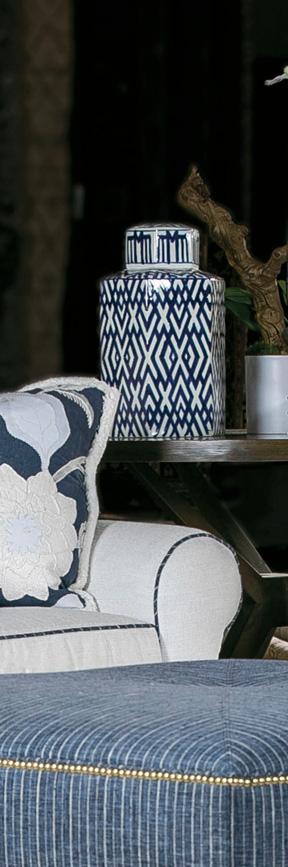
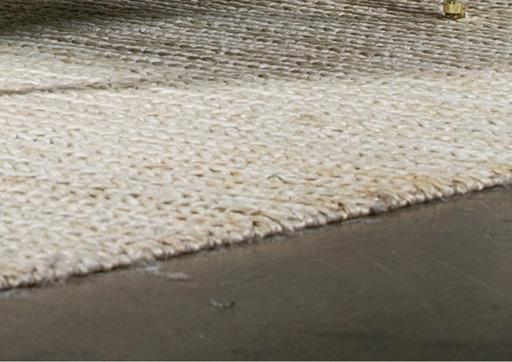
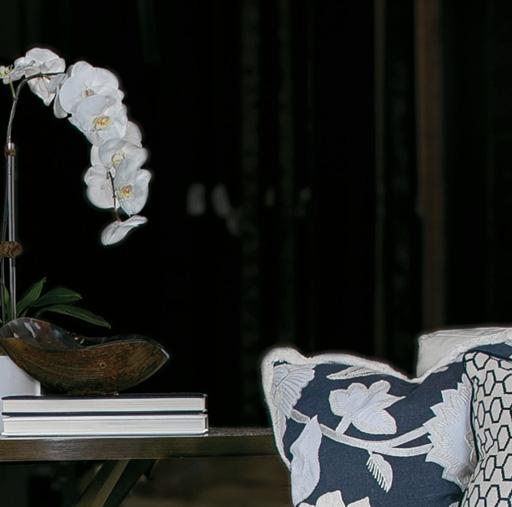
For a truly custom experience, consider a Design Your Own upholstery program at Green Front Furniture. Choose a frame and configuration that works for your space — sectional, sofa, loveseat, chair or ottoman — then pick from more than 1,000 fabric options to cover it. Finally, accessorize with the details of your choice, from nailhead accents to contrasting pillows to trim on a waterfall skirt.

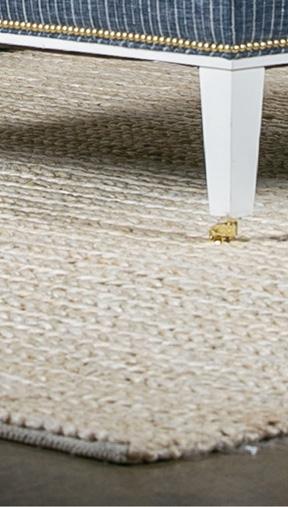
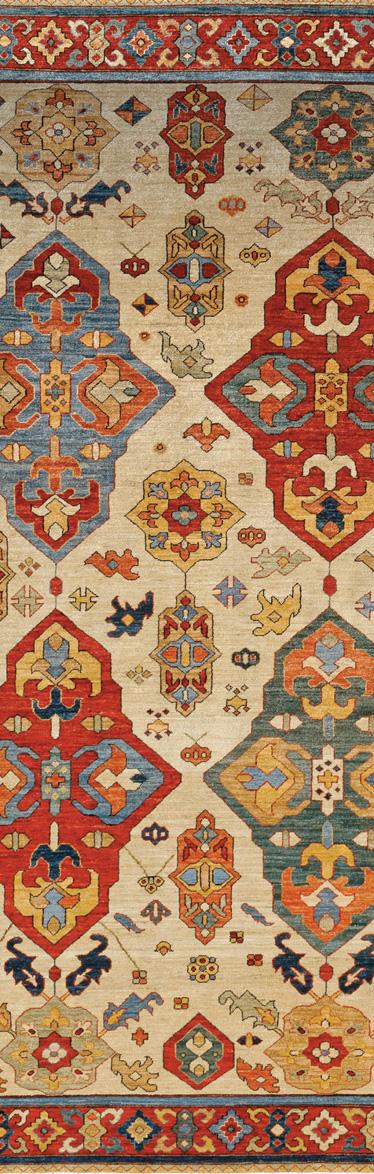
In addition to its customized upholstery programs, Green Front offers a vast array of options to finish any room, including unique furniture, hand-knotted rugs, lighting and decorative accessories. Make your home your own at Green Front.

GREENFRONT.COM
Furnishings by Taylor King — Taylor Made Custom Upholstery Program































UNIQUELY MADE JUST FOR YOU North Carolina’s largest, locally owned fine jewelry showroom, specializing in custom design engagement and wedding rings. DIAMONDS | CUSTOM ENGAGEMENT RINGS COLORED GEMSTONES | CUSTOM JEWELRY MADE ON SITE www.RaleighDiamond.com | 919.725.3444 | 5925 Glenwood Avenue One mile west of the beltline, across from Rooms To Go
27
31ART:


Volume X, Issue III AUGUST 2022
OUR TOWN
Rah-Rah-Raleigh Songs that mention our favorite place
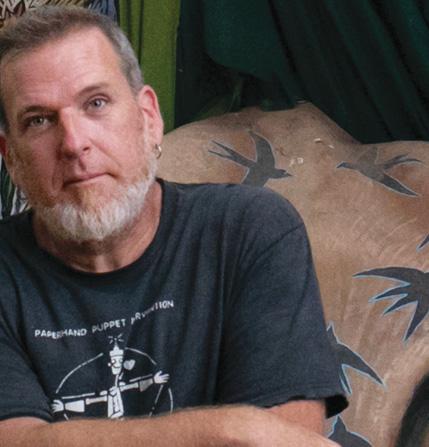
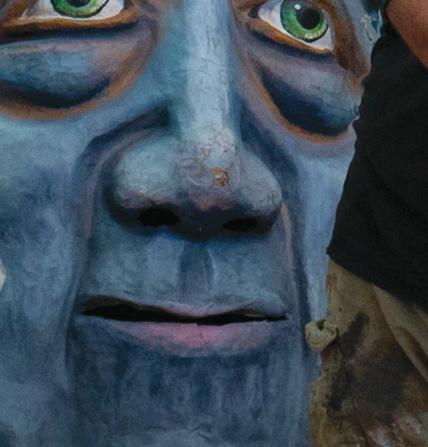
On the cover: Donovan Zimmerman of Paperhand Puppet Intervention. Photography by S.P. Murray.
25MUSIC:
NATURE: Beach Birds
and variety on the shore
Wonder
Into Being Herb Jackson paints detailed, vibrant abstracts
Summer Sips Seven refreshing beverages 38GIVERS: Tend & Mend The Healing Place Courtyard IN EVERY ISSUE 12 Editor’s Letter 16 Contributors 17 Your Feedback 19 Datebook 85 The Whirl 95 Extras 96 End Note
35DRINKS:
Liz
8 | WALTER DEPARTMENTS
Condo (FAMILY); Mike Dunn (BIRD)
the Monsters
creatures that ruled before dinosaurs
41 VAULT: Meet
The
LIFE: Summer Twilight Magic between day and night 56 27
44 SIMPLE
FEATURES
47
48
The
56
A
64
SUMMER READING ISSUE
71 Stories That Transport
72 Romantic Fever
A nice girl does not pet, they say by Lee Smith
illustration by Matthew Shipley

74 Kephart
Finding solace in nature by Ron Rash
illustration
80 The First Funeral
A solemn rite takes a turn by Clyde Edgerton
illustration
48 80
Bryan Regan (KIRBY DERBY); David Stanley (FUNERAL)
Colloquy by Betty Adcock
illustrated by Jillian Ohl
The Circuit
Kirby Derby returns by Emma Ginsberg
photography by Bryan Regan
Deeply Rooted
bonsai collection with history by Addie Ladner
photography by Liz Condo
World of Wonder
Paperhand Puppet Intervention by Colony Little photography by S.P. Murray
by Lyudmila Tomova
10 | WALTER
by David Stanley


carolinacustomkitchen.com Apex Location 123 North Salem Street 919.363.6990 Raleigh Location 8828 Midway West Road Appointment Only
Love Your





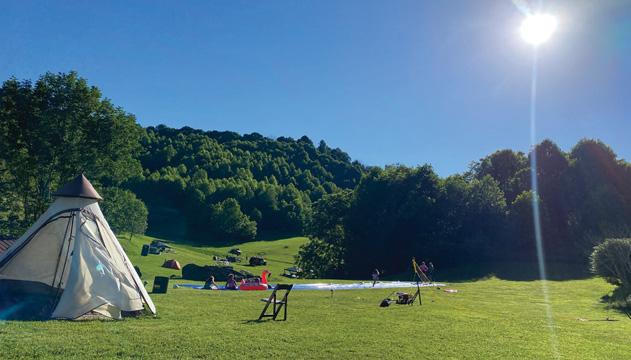
The other day at the crack of dawn, I woke up in a tent with my family. “Woke up” may be an exaggeration — we’d pitched the tent on an incline, so I’d spent most of the night somewhere between asleep and awake, periodically hauling myself uphill against the slow slide of my sleeping bag. Our daughters didn’t seem to have noticed, maybe because we’d let them stay up until 11 p.m. They’d gotten into their sleeping bags and stayed there, slowly migrating southward until they woke up in little cocoons of nylon.
We unzipped the tent to a rising sun and a cloudless sky. There was mist rising off a pond nearby. We put on dew-wet shoes to hit the porta potty, then headed to the pond, where the kids picked up their nets and buckets from where they’d left them the day before.
I kept walking to my friend’s house. We were camping in her yard in Zionville, a few miles outside of Boone. She’s a born-and-bred Raleighite, and my former neighbor, but last year she and her family packed up their urban lifestyle for a mountain house on a sprawling estate complete with woods, a barn, a creek and the aforementioned pond. We and a bunch of other city folk were there for her birthday, taking advantage of the mountain weather. It was in the upper 90s back in Raleigh, but down to the 40s at 3,500 feet.

While I made a coffee, the kids got to work on the pond, stalking tadpoles with their nets. Another kid wandered over, then a few more. Soon, there were about seven of them, ages 2 to 12, in various stages of pajamas. We parents dropped off bagels but otherwise watched from a distance. And for nearly two hours they were totally absorbed in the pond, catching its inhabitants.
They caught 11 large tadpoles, three small crawfish and two very energetic salamanders. The tadpoles and salamanders were together in one of those 5-gallon paint buckets, along with a sprinkling of lettuce for food. Each crawfish was relegated to its own small bucket; apparently, they had been fighting.
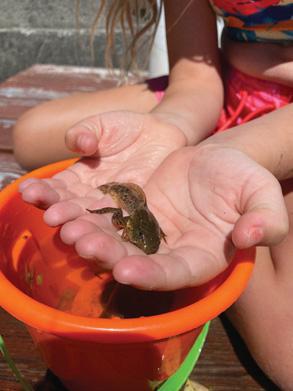
Eventually, the kids lost interest, released the critters and moved on.
But how wonderful to have that gift of time spent fully absorbed. It’s what I love about summer: those long stretches away from work or school, where you can truly lose yourself in the present.
 Ayn-Monique Klahre Editor
12 | WALTER
EDITOR’S LETTER
Left: Setting up camp in Zionville. Right: Tadpole!
Courtesy Ayn-Monique Klahre
www.persiancarpet.com 5634DurhamChapelHillBlvd., Durham,NC Beauty,Artistry&Tradition FOROVER40YEARS
ClosedSaturdayandSunday
OpenMonday-Friday10amto6pm
Exquisite Pavé Diamond Bracelet and Earrings


At Haydon & Company… of course!


Simply Stunning!
18 karat white gold, exhibiting over 51 carats of brilliance in the cuff bracelet and over 12 carats in the earrings.

POPS
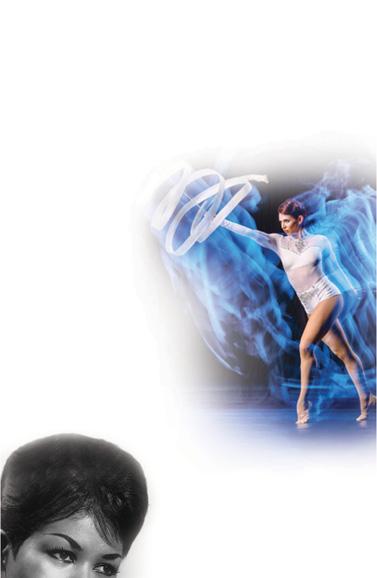
O U P E V E R T I G O TROUPE VERTIGO
FRI/SAT, OCT 7-8 | 8PM
H O L I DAY P O P S HOLIDAY POPS
FRI, DEC 9 | 8PM
SAT, DEC 10 | 3PM & 8PM
ARE THA: A TRIBUTE ARETHA:
FRI, JAN 20 | 8PM
SAT, JAN 21 | 3PM & 8PM
Concert Sponsor: The Forest at Duke
R E V O LU T I O N: REVOLUTION:
T H E M U S I C O F THE MUSIC OF
T H E B E AT L E S THE BEATLES
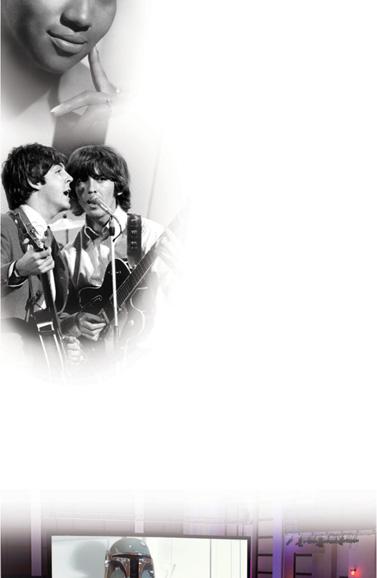
FRI, FEB 10 | 8PM
SAT, FEB 11 | 3PM & 8PM
I N T H E A I R IN THE AIR
TO N I G H T: TONIGHT:
T H E M U S I C THE MUSIC
O F P H I L CO L L I N S OF PHIL COLLINS & G E N E S I S GENESIS
FRI/SAT, MAR 17-18 | 8PM
AN UNFORGETTABLE CINEMATIC CONCERT EVENT
AUGUST 2022, Volume X, Issue III
EDITORIAL
Editor
AYN-MONIQUE KLAHRE ayn-monique@waltermagazine.com
Creative Director
LAURA PETRIDES WALL laura@waltermagazine.com
Associate Editor ADDIE LADNER addie@waltermagazine.com
Contributing Writers
Kara Adams, Betty Adcock, Catherine Currin, Jim Dodson, Mike Dunn, Clyde Edgerton, Hampton Williams Hofer, Colony Little, David Menconi, Ron Rash, Liza Roberts, Lee Smith
Contributing Copy Editor Finn Cohen
Contributing Photographers Liz Condo, Tyler Cunningham, Bryan Regan, Joshua Steadman
Contributing Illustrators
Abra Millsaps, Jillian Ohl, Gerry O’Neill, David Stanley, Matthew Shipley, Lyudmila Tomova
Interns
Reyna Crooms, Emma Ginsberg, Hayli Ira, Ellie Lindsey, Sophia Melin
PUBLISHING
Publisher DAVID WORONOFF
Advertising Sales Manager JULIE NICKENS julie@waltermagazine.com
Senior Account Executive & Operations CRISTINA HURLEY cristina@waltermagazine.com
Events Manager
KAIT GORMAN kait@waltermagazine.com
Finance STEVE ANDERSON 910-693-2497
Distribution JACK BURTON
Inquiries?
WALTER OFFICE 984-286-0928
Address all correspondence to: WALTER magazine, 421 Fayetteville Street, Suite 104 Raleigh, N.C. 27601

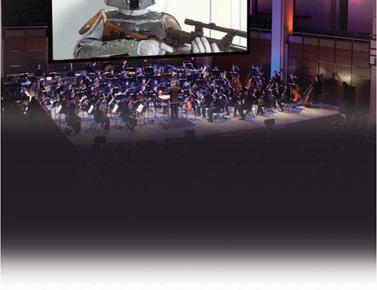
“S TA R WA R S: T H E E M P I R E
“STAR WARS: THE EMPIRE
S T R I K E S B AC K ” I
WALTER is available by paid subscriptions for $25 a year in the United States, as well as select rack and advertiser locations throughout the Triangle. Subscribe online at waltermagazine.com/subscribe
For customer service inquiries, please email us at customerservice@waltermagazine.com or call 818-286-3118.
WALTER does not accept unsolicited manuscripts.
Please contact Ayn-Monique Klahre at ayn-monique@waltermagazine.com for freelance guidelines.
Owners
JACK ANDREWS, FRANK DANIELS III, LEE DIRKS, DAVID WORONOFF In memoriam FRANK DANIELS JR.
© WALTER magazine. All rights reserved. No part of this publication may be reproduced in any form without the express written consent of the copyright owner. Published 12 times a year by The Pilot LLC.
14 | WALTER
O S MIG U EL PRIETO
N CO N C E R T STRIKES BACK” IN CONCERT FRI/SAT, MAY 5-6 | 8PM Presentation licensed by Disney Concerts in association with 20th Century Fox, Lucasfilm Ltd., and Warner/ Chappell Music. © 2021 & TM Lucasfilm Ltd. All Rights Reserved MEYMANDI CONCERT HALL, RALEIGH ncsymphony.org 919.733.2750 C I R Q U E CIRQUE DA N C E S W I T H DANCES WITH T R
Weekend Sponsor: CEI: The Digital Office Subscribe for the best seats at the best prices!
All music and imagery under exclusive license from Sony Music Publishing, Harrisongs Ltd, & The Beatles Book Photo Library to Schirmer Theatrical, LLC. This show is not endorsed by or connected to Apple Corps or The Beatles. Concert Sponsor: WakeMed MyCare 365 Primary & Urgent Care
Art Aficionados, Meet Your Muse

Relaxation and adventure, your getaway is ready. Whether savoring eclectic dishes at our 100+ downtown eateries, exploring historic homes-turned-art museums, creating your own Craft Draft Crawl, strolling through lush heirloom gardens, exploring our great “art”doors, or sampling award-winning wines from our 45+ nearby wineries, you’ll look forward to traveling back to Winston-Salem.
SEPT. 9 - 11
Gears & Guitars
Music Festival
SEPT. 22 - 25

Bookmarks Festival of Books and Authors
Plan your getaway at VisitWinstonSalem.com
NOV. 19 - 20
Piedmont Craftsmen’s Fair


CONTRIBUTORS



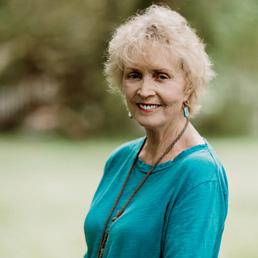
LEE SMITH / WRITER
Lee Smith is the author of 14 novels including Fair and Tender Ladies, Oral History,Saving Grace and Guests on Earth, as well as four collections of short stories. Her novel The Last Girls was a New York Times bestseller as well as co-winner of the Southern Book Critics Circle Award. A retired professor of English at North Carolina State University, she has received an Academy Award in Fiction from the American Academy of Arts and Letters, the North Carolina Award for Literature, and the Weatherford Award for Appalachian Literature. Her latest book, Silver Alert, will be available in the spring of 2023.
CLYDE EDGERTON / WRITER
Clyde Edgerton is the author of 10 novels and two books of nonfiction. His novels include Rainey, Walking Across Egypt, The Floatplane Notebooks, Killer Diller and Lunch at the Piccadilly. Both Walking Across Egypt and Killer Diller were adapted for the screen. He has been the recipient of a Guggenheim Fellowship and has also received the North Carolina Award for Literature. He is the Thomas S. Kenan III Distinguished Professor of Creative Writing at the University of North Carolina Wilmington.
RON RASH / WRITER


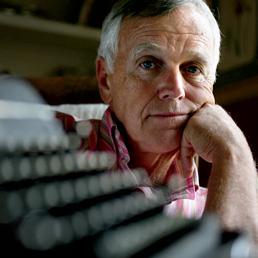
Ron Rash is the author of seven novels, seven collections of short stories and four volumes of poetry. He has been honored with The Sherwood Anderson Prize and was a finalist for the PEN/ Faulkner Award for Fiction for his collection Chemistry and Other Stories and for his New York Times bestselling novel Serena. His other novels include Saints at the River, Above the Waterfall and The Risen He is the Parris Distinguished Professor in Appalachian Cultural Studies at Western Carolina University, where he teaches poetry and fiction writing.
LIZ CONDO / PHOTOGRAPHER

Liz Condo studied photojournalism at Ohio University before working as a staff photographer at The Advocate in Louisiana. Since becoming a freelance photographer, she has pursued a broad range of projects with a focus on conservation and sustainable agriculture. “Milos’ garden is a true labor of love. I was astonished by the level of detail and patience needed to tend a bonsai garden. Milos knows each plant intimately. It was fascinating to have him as my guide, learning about each plant’s origin, what they need to thrive and how he’d spent years shaping them into the works of art they have become.”
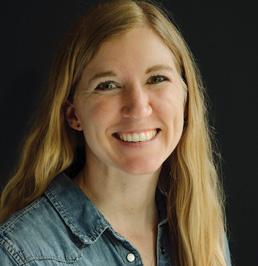 Richard Nourry (RASH); courtesy Charlotte Observer (EDGERTON); courtesy contributors (SMITH AND CONDO)
16 | WALTER
We love to hear from you! A few recent notes from readers...



“So wonderful to hear about the meaningful work the folks at Urban Ministries are doing to keep the Triangle fed. It truly gives me hope. ”
Charlotte Day
“Great editor’s letter. Great question from your daughter also. Next time, you can tell her that teachers get most of the summer off.”
— Frank Tetreault
“Can’t wait to try these fishing spots!”
— P. Bagelle
NEW SHIPMENT OF IMARI


Reader Allison Ottley’s children learn the about Blackbeard in our July issue.
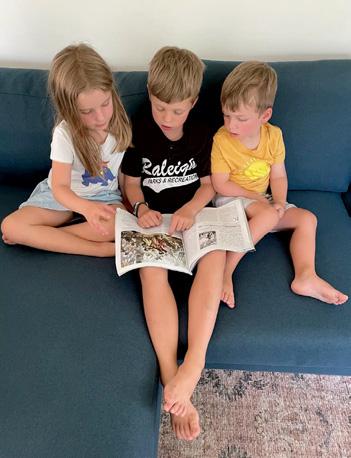
“The story on Blackbeard was fascinating — my nieces and I loved reading it on our trip to Ocracoke!”
— Nancy Dymann-Hopper
WALTER
421 Fayetteville Street, Suite 104 Raleigh, N.C. 27601





@waltermagazine www.waltermagazine.com
The Art & Soul of Raleigh | 17
FEEDBACK
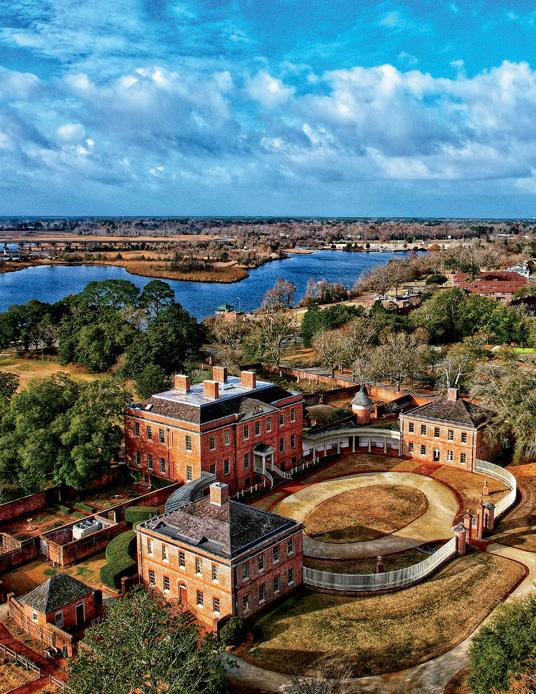
One history, Many voices Palace Tours | Vibrant Gardens | NC History Center Exhibits Historic New Bern, NC 252-639-3500 | tryonpalace.org Scan for full calendar of events! Stanly Spaight Duel Re-enactment Sept. 3 Life on the Lesser Stairs Tour Aug., 4, 11, 18, 25 Tryon Palace Family Fun Day Aug. 13 Sponsored by Optimum Fife & Drum: A Military History of the 18th c. Through Music Aug. 14 Outlander Tours: Spark of the Rebellion & Storm of the Revolution Aug. 20 Behind the Scenes Tours: Conservation Lab Aug. 16 Museum Technology Aug. 23 TryonPalaceLawn PartyFundraiser Sept.10 PHOTO BY BEN LINDEMANN
Fine Porcelains, Fun Furnishings, Vintage Barware, Unique Gifts 1846 Wake Forest Road, Raleigh NC 27608 www.thefabfoo.com • 919-621-1771 Follow us on Instagram and Facebook @thefabfoo



Call for a free in-home design consultation and estimate 919-850-9030 closetsbydesign.com Follow us Licensed and Insured • Locally Owned and Operated IMAGINE YOUR HOME TOTALLY ORGANIZED Terms and conditions: 40% off any order of $1200, 30% off any order $700 or more on any complete custom closet, garage, or home office unit. Not valid with any other offer. Free installation with any complete unit order of $500 or more. With incoming order, at time of purchase only. 18 month financing (with approved credit) Available for a limited time. Expires in 90 days. Offer not valid in all regions. CUSTOM CLOSETS I GARAGE CABINETS I HOME OFFICES I PANTRIES I LAUNDRIES I HOBBY ROOMS 40% OFF + Free Installation
OUR TOWN
Close out summer with rooftop jazz, festivals near and far and tomato-forward fare.
 by ADDIE LADNER and KARA ADAMS
CITY OF ANGELS
Aug. 3 - 14 | See website
For the first production in its new performance space, Theatre Raleigh will present City of Angels, a musical comedy that follows a writer on his journey to adapt his detective novel into a screenplay in the 1940s. Based on a Raymond Chandler novel, this play presents the life of the writer, Stine, alongside the adventures of his main character, a private investigator named Stone, on a split stage. From $30; 6638 Old Wake Forest Road; theatreraleigh.com
THE FATHER

Aug. 5 - 21 | See website
Escape the heat by heading to Pullen Park’s air-conditioned indoor theater for a performance of The Father, an emotionally charged drama by French playwright Florian Zeller. The Tony-nominated play gives a deep look at the physical and emotional impacts of dementia. Directed by Ira David Wood IV, the leading role of Andre is played by Theatre in the Park’s founder and executive director Ira David Wood III. $28.96; 107 Pullen Road; theatreinthepark.com
RALEIGHWRLD FESTIVAL
Aug 6 | 2 - 8 p.m.
SUMMER PASSPORT PROGRAM

All month | See website

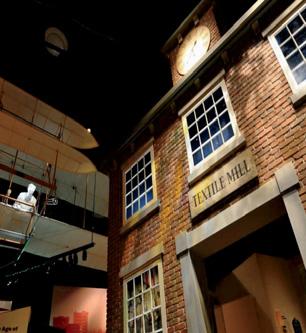
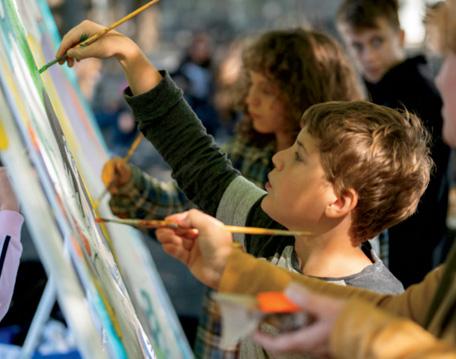
Don’t miss your chance to check out the Summer Passport Program at North Carolina’s Museum of Art, Museum of History and Museum of Natural Sciences. It’s the last month to get your passport stamped by completing each museum’s respective challenges — all of which are in both English and Spanish — like a three-word “I Spy” puzzle to describe historical artifacts, a scavenger hunt of sculptures on the art museum’s grounds and interactive head-scratchers that will lead you through the displays at the science musem. Children who complete all three challenges will receive a free NC Traveler Patch to commemorate the summer. Free; locations vary; ncmuseumofhistory.org, ncartmuseum.org, naturalsciences.org
Celebrate Raleigh artists, entrepreneurs and the well-being of our city this month at Dorothea Dix Park for the RaleighWRLD Summer Fest, hosted by event production company COLLAB Raleigh. Enjoy an upscale gourmet picnic, local acts on stage and panelists discussing their career journeys. From $10; 1030 Richardson Drive; raleighwrld.co
PATCHWORK MARKET
Aug. 7 | 12 - 4 p.m.
Head to the Durham Armory to find gifts for your whole family and meet the folks who made what you’re buying. The Patchwork Market brings together local artisans, creatives and finders of found
All information is accurate as of press time, but please check waltermagazine.com and the event websites for the latest updates
The Art & Soul of Raleigh | 19
North Carolina Museum of History (MILL); North Carolina Museum of Art (KIDS); North Carolina Museum of Natural Sciences (DNA)
NOTED
DATEBOOK
objects for an afternoon of community, with a special emphasis on promoting intentional relationships and mindfulness in consumption. Everything sold at the market is ethically made and independently designed. Free; 212 Foster Street, Durham; thepatchworkmarket.com
it’s a chance to sing along to 1980s hits like “Jessie’s Girl,” “Down Under” and “Who Can It Be Now?” The tour will feature special guest John Waite, playing his 1984 classic “Missing You” and other tracks from his time as lead singer of The Babys and Bad English. From $39; 500 S. McDowell Street; redhatamphitheater.com
SOUTH CAROLINA
NEW PLAY FESTIVAL
Aug 12 -14 | See website
RICK SPRINGFIELD & MEN AT WORK
Aug. 7 | 7 p.m.
Red Hat Amphitheater is hosting Australian acts Rick Springfield and Men at Work for their Working Class Dog Tour. Celebrating 40 years of Springfield’s fifth studio album by the same name,

TOMATO DINNER
Aug. 15 | 7 p.m.
Relish the edible stars of the summer in all forms at Mandolin’s annual Tomato Dinner. The four-course meal showcases the wide variety of tomatoes grown on the bistro’s North Raleigh farm. Start with a Sungold tart topped with whipped mozzarella and herbs, then cleanse the palate with a tomato hibiscus sorbet.

Cross the state line to Greenville for The South Carolina New Play Festival. For three days, the city will be taken over by regionally and nationally known playwrights and performers debuting new plays and musicals at the Peace Center (300 Main Street), Greenville Theatre (444 College Street), Warehouse Theatre (37 Augusta Street) and the South Carolina Children’s Theatre (153 Augusta Street). In addition, there will be a closing-night cabaret at Genevieve’s (300 South Main Street) featuring
Tony-nominated Broadway stars Jarrod Spector and Kelli Barrett. Free admission to see plays and readings; from $75 for some ticketed events; southcarolinanewplayfestival.org
NOTED

As an entrée, dive into grilled quail with rice, stewed German Johnsons and okra. Round the meal out with a Cherokee Purple sponge cake and spiced rum ice cream for dessert. “There are so many signs summer is upon us — trips to the beach, fireflies — but few are as sweet or indelible as ripe tomatoes picked fresh off the vine,” says Mandolin owner Sean Fowler. From $89; 2519 Fairview Road; mandolinraleigh.com
SKYWATCHING: PERSEID METEOR SHOWER
Aug. 12 | 9 - 11 p.m.
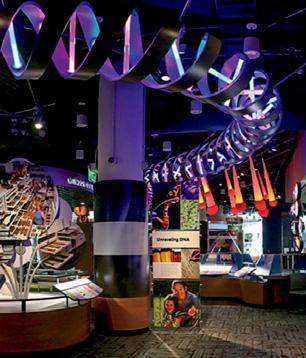
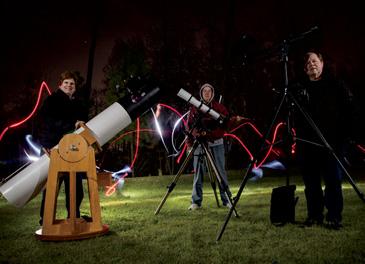
Grab your comfiest blanket and folding chairs to spread out under the stars at the Big Field at Dorothea Dix Park. Morehead Planetarium & Science Center staff and volunteers from the Raleigh Astronomy Club will set up telescopes so guests can view the Perseid Meteor Shower away from city lights. Free; 1010 Blair Drive; dixpark.org
NOMADLAND
Aug. 13 | 8:30 p.m.
Based on the book Nomadland: Surviving America in the Twenty-First Century by Jessica Bruder, the film of the same name follows Frances McDormand as Fern, a woman embarking through the American West in her van after losing everything in the Great Recession. This is a limited chance to see the Academy Award winner for Best Picture back on the big screen. $9.65; 2110 Blue Ridge Road; ncartmuseum.org
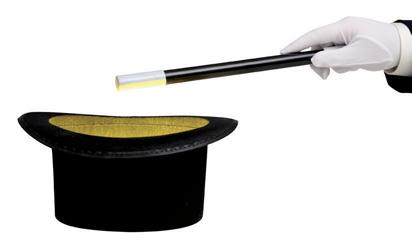
MAGICON

Aug. 19 - 21 | See website
A magician never reveals his secrets — except, perhaps, at MAGiCon. Head to The Clayton Center for a weekend festival of enchantment and sorcery presented by Clayton’s local magic store, The Mystic Tower. Check out the free family shows and classes for all levels,
Juli Leonard (DINNER); courtesy Red Hat Amphitheater (SPRINGFIELD); Travis Long (ASTRONOMY CLUB)
20 | WALTER
or enjoy paid attractions including the Saturday Big Stage Show featuring Vegas performers Alain Nu and Luna Shimada, and Friday night showcases featuring Mystic Tower’s own magicians. Free, ticketed events from $50; 111 E. Second Street, Clayton; themystictower.com
KEVIN HART
Aug. 20 | 7 p.m.
See actor and comedian Kevin Hart at PNC arena for Reality Check, his first in-person tour in more than four years. Hart has produced an Emmynominated Netflix series, authored best-selling books and starred in a number of films, including Fatherhood and Jumanji: Welcome to the Jungle. But, as Hart says in his tour announcement, he still loves stand-up: “There is nothing better than making people laugh. I can feel the energy

NOTED in the venues like caffeine pumping through my veins.” From $49.50; 1400 Edwards Mill Road; pncarena.com

THE SECRET GARDEN SOIREE

Aug. 20 | 12 p.m. - 8 p.m.
Head to Fred Fletcher Park for a rhythm and blues experience at The Secret Garden Soiree. Sip bubbly from a champagne wall, groove to live local R&B acts
and a DJ, and savor local BBQ or a number of other dishes from various food trucks near the verdant park. From $20; 820 Clay Street; search “Secret Garden Soiree” on eventbrite.com
DANCE
GUMBO
Aug. 21 | 5 p.m.
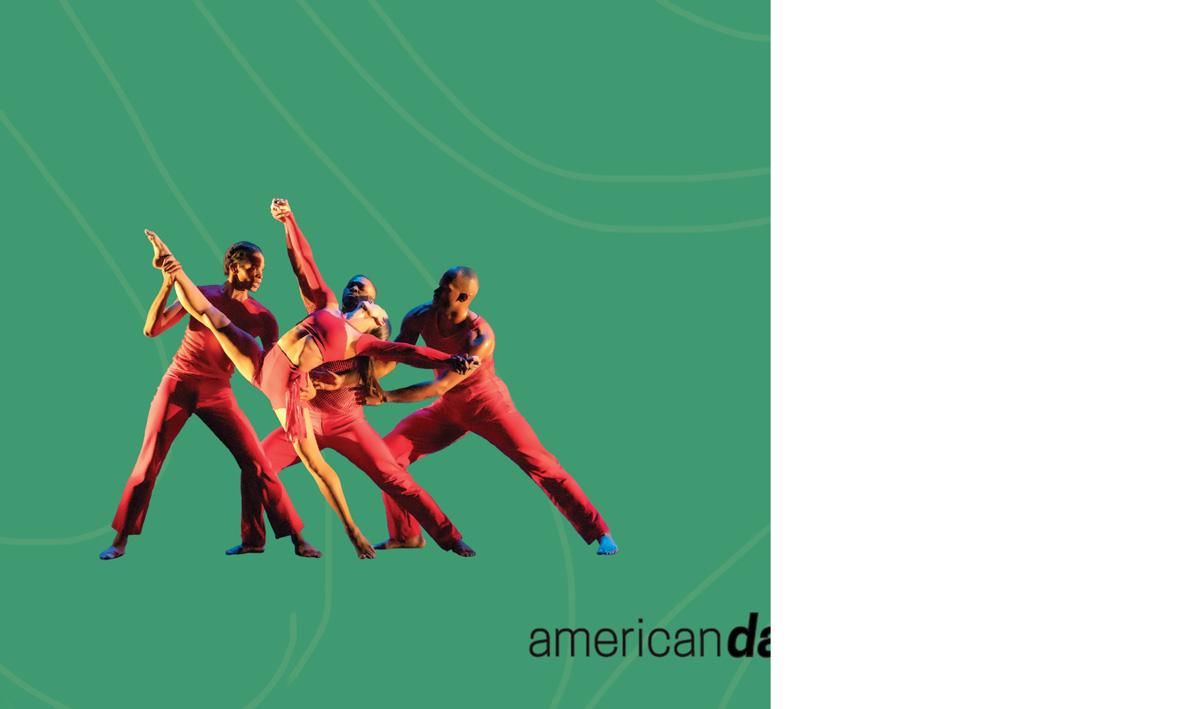
Break a sweat this month while enjoying the North Carolina Museum of Art’s sweeping views at its Dance Gumbo
Courtesy PNC Arena (KEViN HART); Getty Images (MAGIC HAT)
The Art & Soul of Raleigh | 21
DATEBOOK






series. The session incorporates a mixture of pop, Zumba, Latin and hip-hop dance moves for aerobic exercise, all on the Museum Park’s Ellipse lawn. This month’s class is led by actor and dance fitness instructor Byron Jennings. Free; 2110 Blue Ridge Road; ncartmuseum.org


JAZZ ON THE ROOF
Aug 25. | 7:30 p.m.
Head to the Durham Hotel for jazz music and cocktails on the rooftop. Al Strong, a two-time Grammy-nominated artist, will host fellow local jazz musicians for some improvisational tunes. Get there early to grab a seat with a view while you explore chef Sean Ingram’s menu of delicacies like beef carpaccio and oysters. Wash it down with creative cocktails like the Sippin’ Jimmy, a tropical concoction of mezcal, toasted coconut, white peach and pineapple. Free admission; 315 E. Chapel Hill Street, Durham; thedurham.com/roof
HISTORY AND HIGH BALLS
Aug. 25 | 7 p.m

NOTED
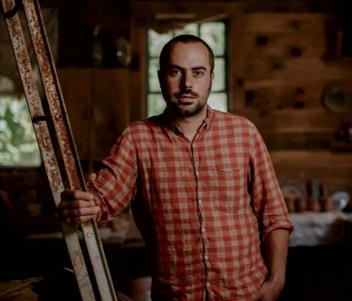
Asheville potter Alex Matisse, known for his earthy, Southern folk-inspired mugs, will be speaking with the North Carolina Museum of History for its virtual lunch talk sessions, History and High Balls. Matisse will talk about his family history (he’s the great-grandson of the artist Henri Matisse), his years as an apprentice to potter Mark Hewitt and the success of his pottery company, East Fork. Free; virtual, ncmuseumofhistory.org
22 | WALTER
courtesy East Fork Pottery (MATISSE & POTTERY)
CHOREOGRAPHERS SPOTLIGHT SERIES

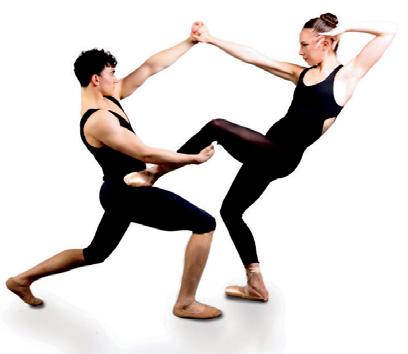
Aug. 26 | 5:45 p.m.
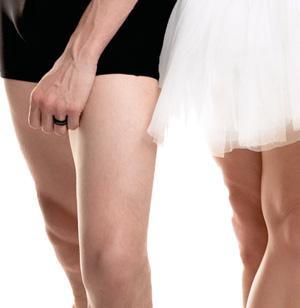
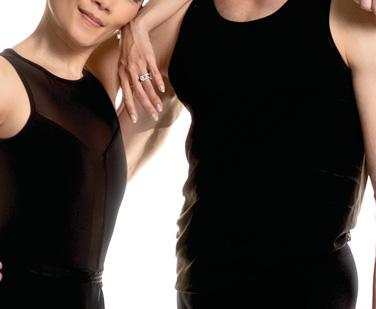
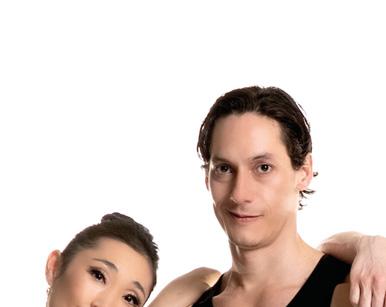
Kicking off the company’s milestone 25th season, Carolina Ballet will visit the Joseph M. Bryan, Jr. Theater at the North Carolina Museum of Art for an interactive ballet experience. It begins with a master class with artistic director Zalman Raffael as well as talks from choreographers Ja’Malik, Heather Maloy and Sokvannara Sar before their new ballets are debuted. A former member of North Carolina Dance Theatre who’s now based in Wisconsin, Ja’Malik says: “I’m so excited to return to North Carolina for this wonderful opportunity to create my first work for Carolina Ballet.”$15; 2110 Blue Ridge Road; ncartmuseum.org
Pigfish Lane Antiques & Interiors
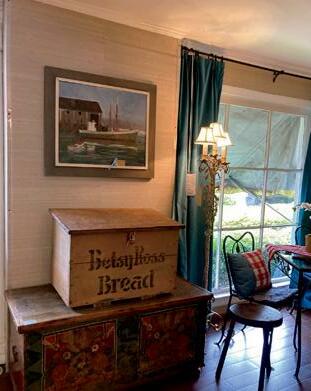
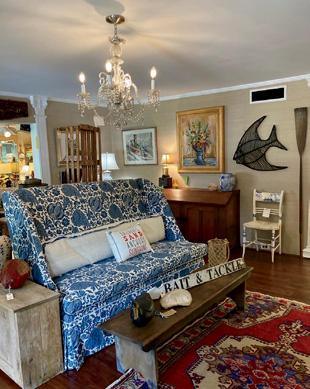



WILD CAUGHT
Aug. 26 & 27 | See website

Celebrate our state’s roots in music, seafood, produce and other long-standing maritime traditions at the Wild Caught festival in eastern North Carolina. Enjoy a complimentary fish-forward lunch on Saturday at 1 p.m. (donations are welcome), regional art, discussions about ocean conservation and musical acts like fiddle player Marsha Harris. Bring your own beverage, chair and enthusiasm for the Atlantic and its many waterways. Free admission; Gloucester Community Center, 476 Pigott Road, Gloucester; unknowntongues.com/wildcaught

The Art & Soul of Raleigh | 23 EVERYONE LOVES SHOES FROM MAIN & TAYLOR Shop Online at: mainandtaylorshoes.com North Hills 919.821.1556 SALE VSSS
antiques • porcelain • art old & new • custom framing • carpets lamp shades & repair • custom-built furniture • (919) 436-4006 • • 5425 Hillsborough Street, Raleigh “INTERESTING
courtesy Carolina Ballet (DANCERS)
STUFF” FOR YOUR HOME & COLLECTIONS
Bringing it home since 1960






Harris Teeter is proud to support more than 500 local businesses with 1,500 plus products in our stores from Charleston, South Carolina to Bethesda, Maryland. We share in your passion to buy local, and when you do, you’re not only buying from them but supporting your community as well. After all, that’s what Home Town spirit is all about!




Find these and many more Home Town brands at your local Harris Teeter


Learn more at HTHomeTown.com
Rah-Rah-Raleigh
This playlist is packed with songs by North Carolina musicians that namecheck our favorite area to live, work and play!
by DAVID MENCONI
From James Brown’s R&B classic “Night Train” to the singalong folk of Old Crow Medicine Show’s “Wagon Wheel,” Raleigh has been known to come up in song lyrics from time to time — and aren’t we excited when that happens? In that spirit, we’ve compiled a mix of tunes by local musicians that give a shout-out to various spots around the greater Triangle. Enjoy!
CHATHAM COUNTY LINE, “LIVING IN RALEIGH NOW” (2013)
We begin with a song that Chatham County Line wrote during the International Bluegrass Music Association’s first World of Bluegrass festival in Raleigh. Eight years later, Raleigh’s more of a bluegrass center than ever.
SOUTHERN CULTURE ON THE SKIDS, “HAW RIVER STOMP” (2000)
…in which the Chapel Hill roots-rock kings take their trailer-park twang to the river that flows through Orange and Chatham counties, before connecting with the Cape Fear River south of Raleigh.
G. YAMAZAWA, “NORTH CACK” (2017)
Durham native George Masao Yamazawa first gained notice at local poetry slams before segueing into hip-hop. Proudly waving the flag for the Bull City, “North Cack” is an ode to Carolina barbecue sauce, with the slaw.
JAMES TAYLOR, “COPPERLINE” (1991)
Before becoming “Sweet Baby James,” Taylor spent his formative teenage years in Chapel Hill’s Morgan Creek
LIVING IN RALEIGH NOW
Chatham County Line
HAW RIVER STOMP
Southern Culture on the Skids
NORTH CACK
G. Yamazawa
COPPERLINE
James Taylor
CHAPEL HILL BOOGIE
John Dee Holeman
DEAR RALEIGH
Kooley High
FARE THEE WELL, CAROLINA GIRLS
Robbie Fulks
PRETTY GIRL FROM RALEIGH
Avett Brothers
LEAVING EDEN
The Carolina Chocolate Drops
WELCOME TO DURHAM
Little Brother
RIVER’S JAW
H.C. McEntire
CARRBORO WOMAN
Eric Bachmann
district. He pays tribute to his bucolic childhood memories with “Copperline,” co-written with the late novelist Reynolds Price. Consider it suitable for humming while crossing the James Taylor Bridge over Morgan Creek on Highway 15-501.
JOHN DEE HOLEMAN, “CHAPEL HILL BOOGIE” (1988)
A venerable blues elder who passed away last year at age 92, Holeman depicted Chapel Hill as a speakeasy party town where you can get a drink of alcohol and do the Chapel Hill boogie-woogie all night long. Same as it ever was.
KOOLEY HIGH, “DEAR RALEIGH” (2011)
The Raleigh hip-hop troupe pays fond tribute to landmarks around its hometown, focused on the Hillsborough Street strip by the North Carolina State University campus. It features a cameo verse from Rapsody (the stage name of Snow Hill native Marlanna Evans), the group’s Grammy-nominated alumna.
ROBBIE FULKS, “FARE THEE WELL, CAROLINA GIRLS” (2016)
Across the Triangle at the University of North Carolina at Chapel Hill campus, Americana singer-songwriter Robbie Fulks chronicles various romantic misadventures from his youth. You can almost feel the summertime humidity in the stories told: Chapel Hill hasn’t done me wrong, it was fine until it wasn’t.
AVETT BROTHERS, “PRETTY GIRL FROM RALEIGH” (2003)
Concord’s folk-punk group has a long list of songs in the “Pretty Girl From”
MUSIC
The Art & Soul of Raleigh | 25
LISTEN UP! Find a link to
this Spotify playlist on waltermagazine.com
MUSIC

series: “Michigan,” “San Diego” and even “The Airport.” Raleigh made it in their 2003 album A Carolina Jubilee.
THE CAROLINA CHOCOLATE DROPS, “LEAVING EDEN” (2012)
Northwest of Durham, Eden became a ghost town overnight in 2004 when its textile plant closed. That inspired this song by Greensboro singer/songwriter Laurelyn Dossett, elegantly sung by The Carolina Chocolate Drops’ Rhiannon Giddens as title track of the group’s 2012 Grammy-nominated album.

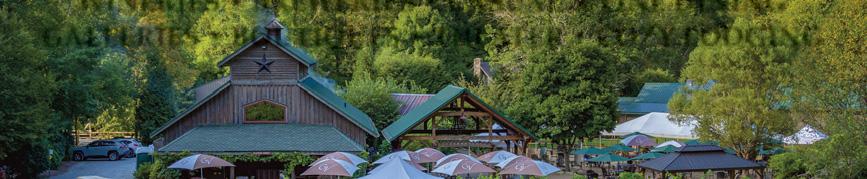
LITTLE BROTHER, “WELCOME TO DURHAM” (2005)
Similar to Kooley High’s Raleigh song, Little Brother pays tribute here to its Durham origins. The group formed around two decades ago at North Carolina Central University.
H.C. MCENTIRE, “RIVER’S JAW” (2020) “River’s Jaw” is the centerpiece to



McEntire’s second solo album, the 2020 Eno Axis. Written while she lived in a century-old farmhouse in the woods near Durham, the somber, rolling song conjures a humid North Carolina night along the nearby Eno River.
ERIC BACHMANN, “CARRBORO WOMAN” (2006)
Formerly the leader of Archers of Loaf, Bachmann came up playing loud, catchy music. This little song is also catchy, but delicate and heartbreaking, too.
26 | WALTER
WINERIES • BREWERIES • CASUAL & FINE DINING GALLERIES • BOUTIQUES • THEATER • COZY LODGING Escape. Unwind. Indulge. BannerElk.com
Getty Images
BEACH birds
Take a closer look at your surfside companions
words
and photographs by MIKE DUNN
We’re lucky to have so many wonderful beaches in our state. And the same things that draw us to the coast — the ocean, sky, wind and long stretches of sand — make it a haven for many other fascinating life forms.
Among them is a wide variety of coastal birds. My fascination with these
animals began when I worked as a district naturalist with North Carolina State Parks. My territory included the eastern third of the state, with such coastal gems as Hammocks Beach, Carolina Beach and Jockey’s Ridge. Part of my job included resource management, like protecting colonial waterbird nesting sites on various beaches and spoil islands (the land built up by dredg-
ing canals), where many birds nest in groups ranging in size from a few pairs to thousands.
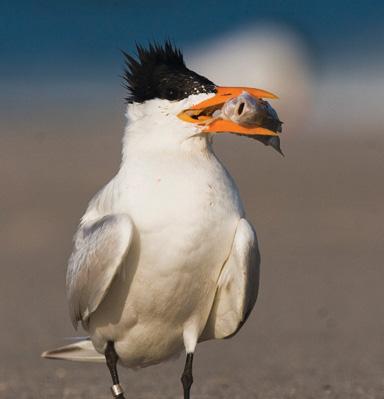
One of my great thrills was cooperating with some research conducted by Dr. James Parnell out of the University of North Carolina Wilmington that involved banding Brown Pelicans and Royal Terns with small metal leg bands. Our research permits gave us access to
NATURE The Art & Soul of Raleigh | 27
Spring Beauty
TK
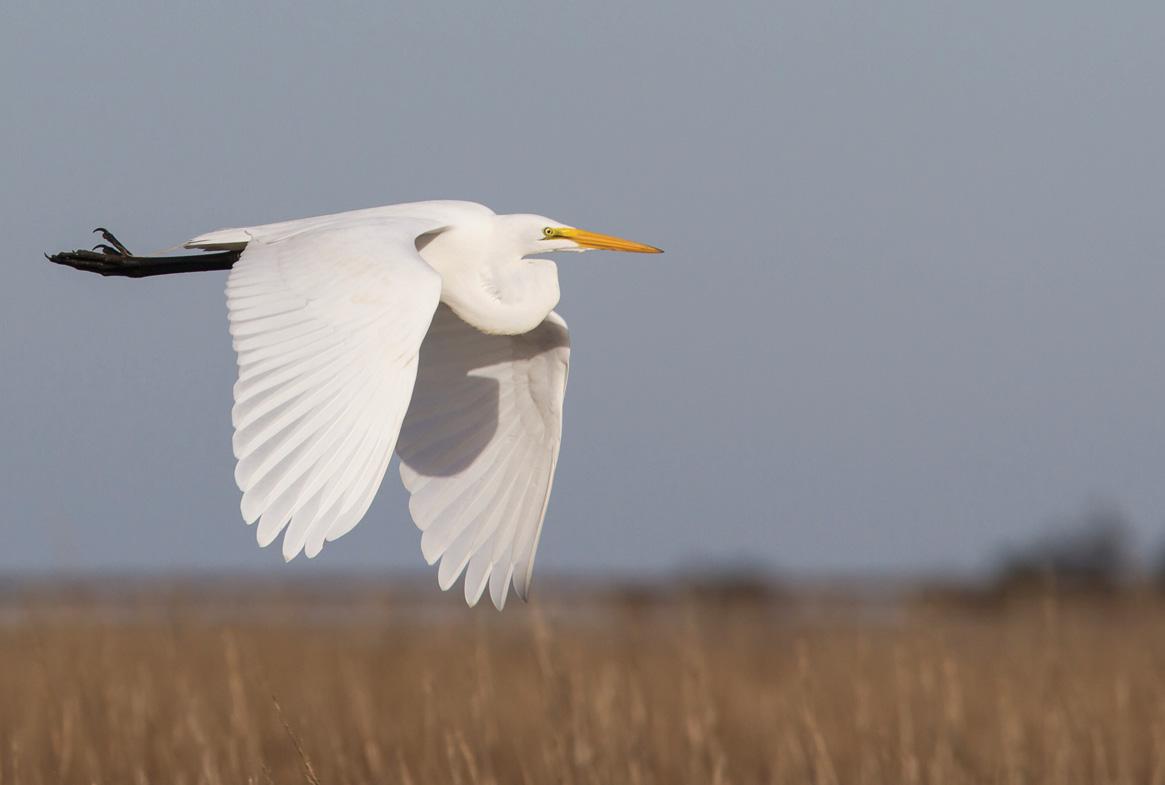
Great Egret
island nesting sites that were generally off-limits to the public. Being surrounded by hundreds of birds in order to help conserve them is something I’ll never forget.
Now, every time I visit the coast, I enjoy watching and photographing the many birds that make it their home. Most beachgoers have watched at least a few of the more common species. The wind-up toys of the beach are the Sanderlings, known for scurrying back and forth with the waves as they probe the sand for food. They can be seen any time of year, though there tend to be more in winter than summer. They do not nest here; rather, they breed in the Arctic, then migrate 2,000 to 6,000 miles to
their wintering sites, including our coast.
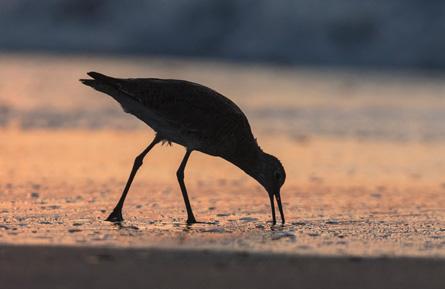
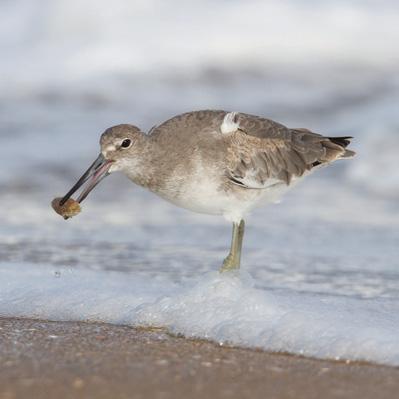
Often seen with Sanderlings on the beach are Willets, which are larger, grayish shorebirds that flash bold black and white under their wings when they fly. Willets are noisy (their pill-will-willet call is often heard as they fly), and they are one of the few shorebirds that nest in North Carolina. They often feed at the edge of the surf zone, grabbing delicacies like Mole Crabs as they move back and forth in the waves.
Gulls are another noisy beach bird — and if you leave your food unattended, one may swoop in and steal a snack off your towel. One of the most common is the aptly named Laughing Gull. It’s easily recognized by its black hood (its breeding
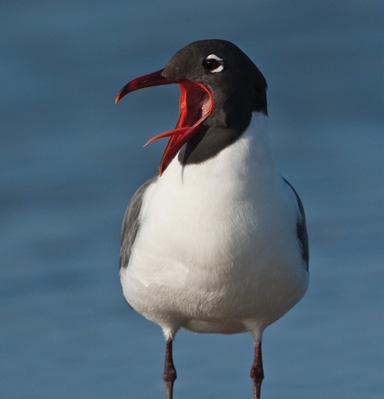
plumage) in summer and has a distinctive laugh-like call, often accompanied by a vigorous head toss. Egg and feather hunting in the late 1800s nearly exterminated Laughing Gulls from their nesting colonies in the northeastern United States, but protections like the Migratory Bird Treaty Act of 1918 helped this and many other species to recover. Today, Laughing Gulls may be the most abundant breeding coastal bird along the U.S. East Coast.
It’s hard not to notice Brown Pelicans. These large birds have wingspans reaching 6.5 feet. Plus, they have some eye-catching behaviors, like diving headfirst from heights of 20 to 60 feet above the ocean to gulp fish in their
NATURE
clockwise from top left: bloodroot flowers; Round-lobed Hepatica; windflower; trout lily
28 | WALTER
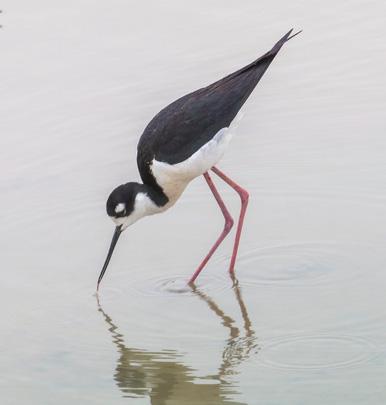
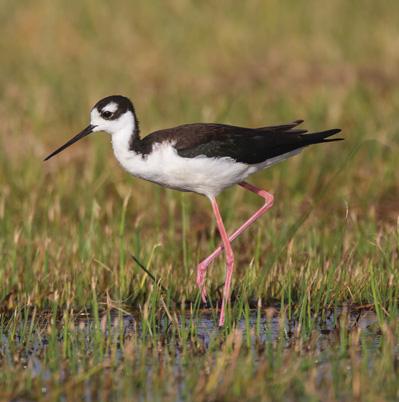
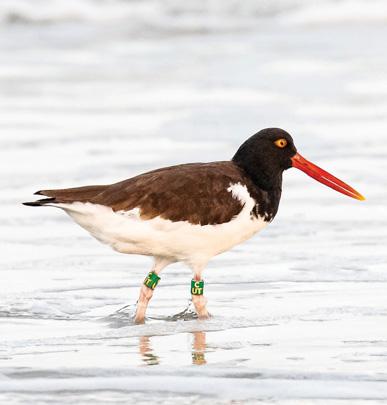
Clockwise from top left: Laughing Gull, Sanderling, Royal Tern with fish, Black Necked Stilts, American Oystercatcher with leg bands.
enormous expandable throats (called the gular pouch) or gliding over waves with ease, often in a group in an undulating line just above the water. By the way, their bill really can hold more than their “belican” (that’s, belly can) — three times more, in fact! This is another of our coastal birds that suffered tremendous population declines, this time in the mid-1900s from high concentrations of pesticides that entered the marine food web. Brown Pelicans were placed on the Endangered Species List, but with protections and the banning of certain pesticides, populations are doing well, with an estimated 4,000 to 5,000 nesting pairs now in our state.
A Black Skimmer is black and white, with a unique knife-like bill in its lower mandible that is longer than the upper one. This unusual beak has its advantages: A skimmer finds food by gracefully flying low over the water with just its lower mandible slicing through the surface. When it hits something like a fish or shrimp, the bird’s head lowers and the bill snaps shut to secure the prey. Skimmers nest on bare sand flats, often with groups of terns and plovers. Many of the birds that nest in these areas are facing population declines from habitat loss and human disturbance, such as when people and unleashed dogs wander through nesting grounds.
American Oystercatchers also sport some bold colors and have a knife-like bill. They are waders, seen at the beach or, more commonly, in the mud flats on the sound side, where they use their bill in a very different feeding strategy. They are one of the few birds that specialize in feeding on saltwater mollusks like oysters. An American Oystercatcher will stab its flattened bill into a partially opened oyster and sever
the muscles that hold the shell together so it can then eat the inner parts.
While camping this spring on Masonboro Island, we spotted some American Oystercatchers with color-coded leg bands. The bands can be read through binoculars or from a photograph (unlike the small metal leg bands from my early banding days), and you can enter the data on the American Oystercatcher Working Group website to discover when and where each of the birds was banded and has been observed in the years since.
One bird I saw had green bands with the letters CUT. It turns out it had been banded there on Masonboro Island six years prior. It flies to the same location in Florida every winter, a distance of 460 miles, before returning in the spring to this same island.
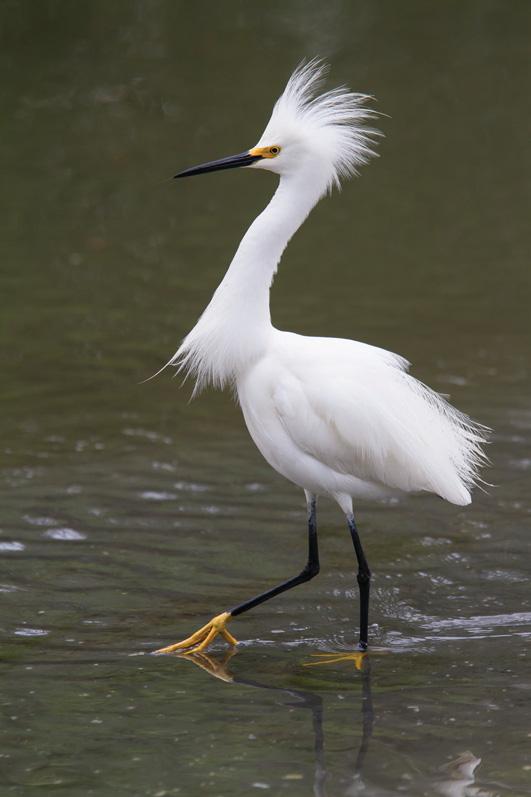
Along with oystercatchers, you may see a lot of other interesting birds on the sound side of your beach location. Large white waders will be Great or Snowy Egrets or White Ibis feeding in the marshes; a larger gray-ish bird could be a Great Blue Heron; overhead you might see an Osprey hovering before a feet-first dive for fish. And if you happen to be near Pea Island National Wildlife Refuge on
the Outer Banks, keep an eye out for two of my favorite small waders: the Black-necked Stilt (they have the secondlongest legs in proportion to body size of any bird — only flamingoes are greater) and the American Avocet (you may see them wading in shallow water, swishing their upturned bills from side to side to capture aquatic invertebrates).
Take some time to observe your fellow feathered beachgoers on your next beach trip — the more you know about them, the more you’ll want to protect them. A few ways to help: respect nesting area closures, keep your pets leashed and don’t litter. Your efforts will help ensure we can enjoy our amazing coastal birds far into the future.
The Art & Soul of Raleigh | 29
Snowy Egret
One bird I saw... flies to the same location in Florida every winter, a distance of 460 miles, before returning in the spring to Masonboro Island.
into BEING
Painter Herb Jackson creates meticulous, vibrant abstracts
by LIZA ROBERTS
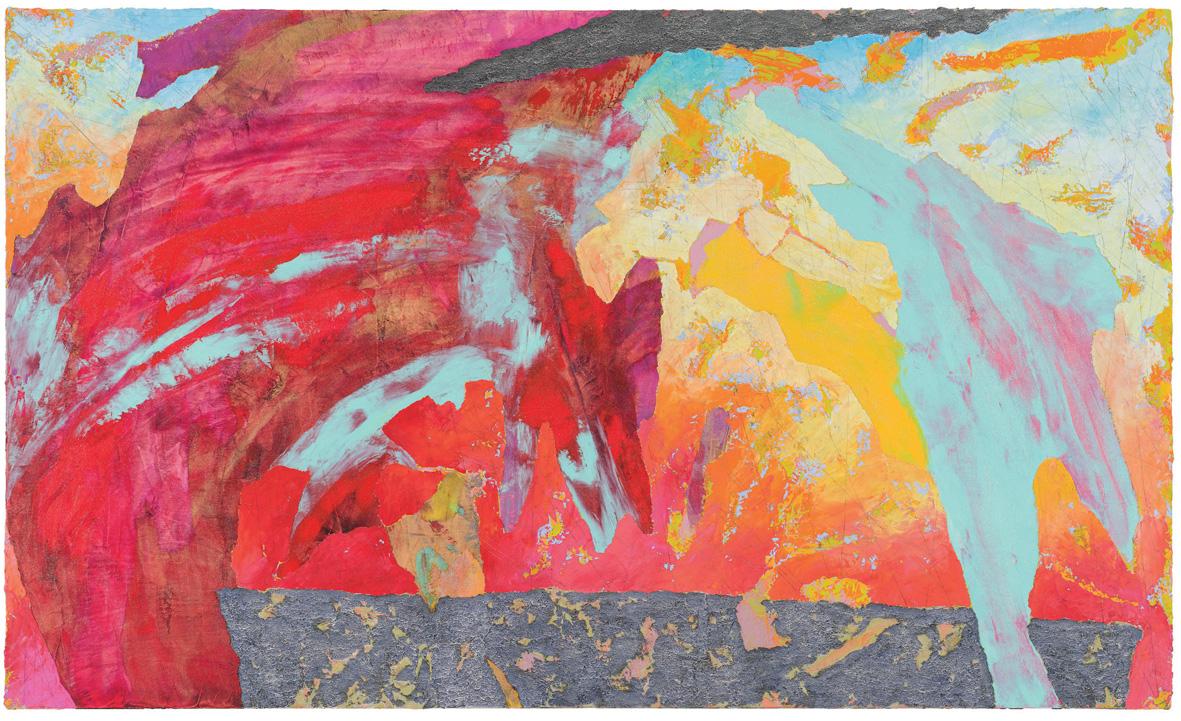
“Idon’t want you to know how I work unless I tell you, because I want it to seem spontaneous,” says Herb Jackson. He’s in his Davidson studio, surrounded by the unmistakable pieces that have made his name; the vibrant, abstract paintings that convey energy and light and appear to have been made with swift, gestural strokes. But in reality, he notes, holding two fingers up in a narrow pinch, “I’m
working about that much at a time.”
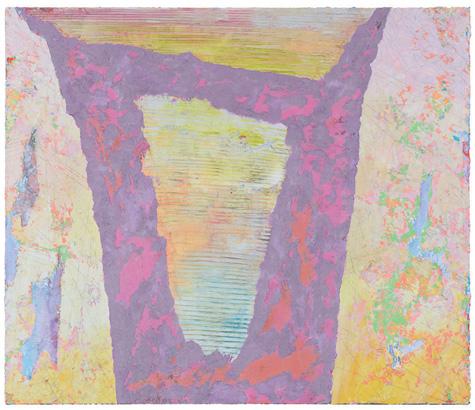
“The tricky thing is to make it not look like that,” Jackson says. “It’s a little archaeological. There’s a lot of drawing that goes on. I can work for hours on an area, and the next day completely cover it.” These palette-knifed layers accumulate, day by day, sometimes into the triple digits; many he scrapes away or sands with pumice. “If it’s not up to what I want it to be, then I just keep working,” he says. Light and shape and color and
texture shift and morph, disappear and reemerge. About two-thirds of the way through, a painting “will begin to assert itself,” and when they’re finished, “they tell me,” he explains.
Art has been communicating with Jackson since he was a child. He won his first art award when he was still a teenager as part of a juried exhibition at the North Carolina Museum of Art; his work has now been collected by more than 100 museums, including London’s
ART
The Art & Soul of Raleigh | 31
courtesy Herb Jackson (ART)
An Herb Jackson painting, Fire Dance.
British Museum, has been shown in more than 150 solo exhibitions around the world and has won him North Carolina’s highest civilian honor. He earned an undergraduate degree at Davidson College and an MFA at the University of North Carolina at Chapel Hill, then returned to his college town to teach, eventually serving as chair of the art department at Davidson for 16 years.
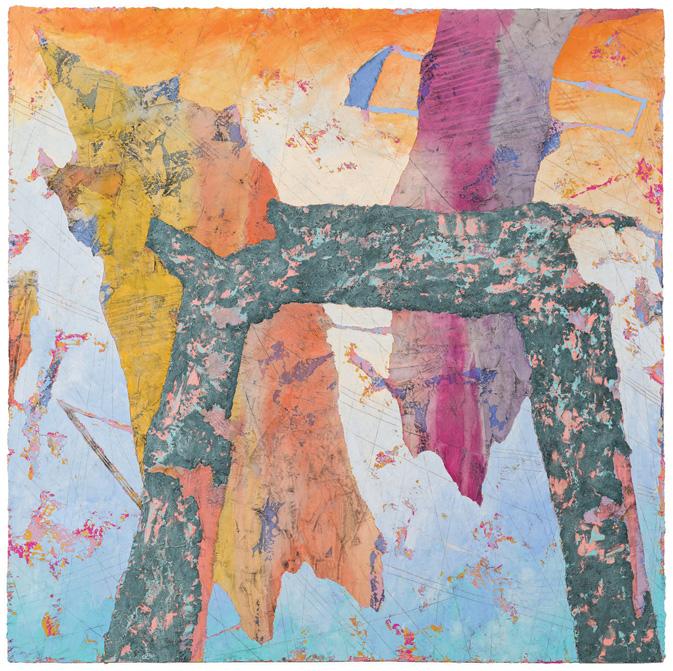
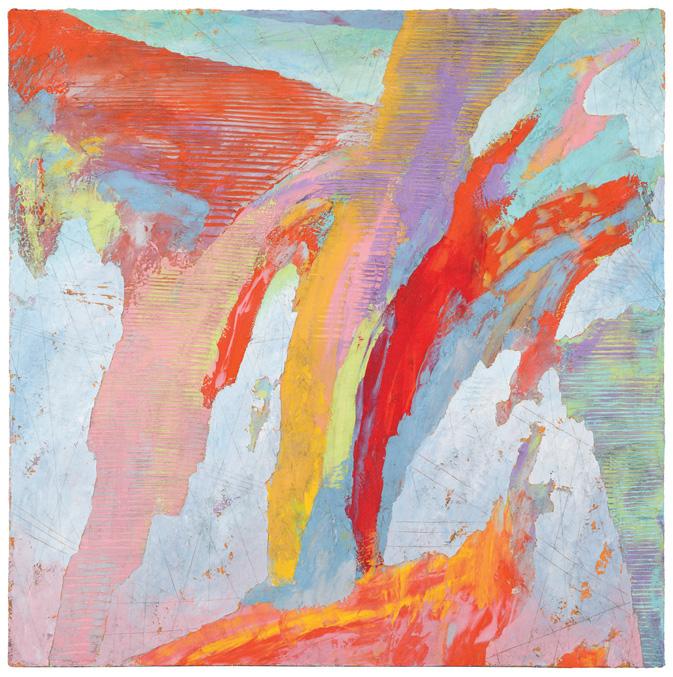
Along the way, Jackson created a prolific and ongoing series he calls Veronica’s Veils, all of the same size (60 by 48 inches) and format. The name refers to the historic Christian relic, a veil imprinted with an image of the face of Jesus that is said to be the one Saint Veronica used to wipe Jesus’ face on the way to his crucifixion. Jackson says these works “have nothing to do with Jesus, but have a lot to do with Veronica and her luck, being at the right place at the right time.” When one of his paintings “comes into being,” Jackson says, “that’s basically my Veronica moment.”
That moment does not cohere to any particular concept, but is the confluence of everything he’s ever experienced, “which is much bigger than any one idea.” All of that can take some wrangling. “Occasionally, they’ll go beyond
32 | WALTER
ART
Clockwise from top left: Herb Jackson’s paintings Liquid Dreams, Jester’s Retreat and Deep Dive.
courtesy Herb Jackson (ART)
what I expected as far as challenging me, and I’ll put them up there and stare at them for several days, to just be absolutely sure,” he explains. “Because once I decide you’re finished, then I don’t go back in.” To do so, he says, would violate a painting’s integrity. “There are paintings from 18 years ago where I spot something I would have done differently — but I was a different artist then.”

For the last 50 years, Jackson has had two or three solo exhibitions of his paintings a year, but has recently decided to curtail those to focus on what matters most: painting for its own sake. “Committing to exhibitions became confining,” he says. “I just want to make my work.”
The Raleigh native has been drawing every day since he was a young child and selling paintings since he was 12, time enough to be many different artists. He’s still amazed by the experience and the process: “Where a painting comes from
and how it comes together for me is still mystical, and has been for 60 years.” He credits his subconscious, but assumes some of his inspiration must come from art and travel and nature, from exploring the woods and creek and digging in the earth near his childhood home near the old Lassiter Mill. Some also must come, he says, from the pre-Renaissance and Byzantine paintings of the Kress Collection, which formed the foundational basis of the North Carolina Museum of Art in its original downtown home — works he regularly took the bus to go see.
“Those paintings were so formative for me. If there hadn’t been the North Carolina Museum of Art, I don’t know what would have happened to me.”
This is an excerpt from the forthcoming book Art of the State: Celebrating the Art of North Carolina, to be published by UNC Press this fall.
The Art & Soul of Raleigh | 33
“If there hadn’t been the North Carolina Museum of Art, I don’t know what would have happened to me.”
— Herb Jackson
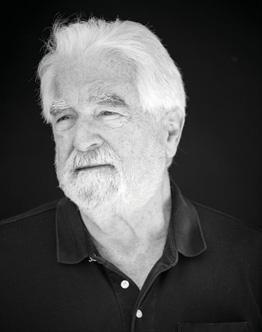
Lissa Gotwals (jACKSON)
THE UMSTEAD.COM | CARY, NC| 866.877.4141
SUMMER SIPS
Seven refreshing drinks to try before the end of the season
 by CATHERINE CURRIN photography by JOSHUA STEADMAN
It feels like North Carolina summers just keep getting hotter, but there’s nothing better than a cool drink on a steamy day. From a non-alcoholic thirst-quencher to icy, refined cocktails, we’ve compiled a list of some of the most refreshing drinks to enjoy before summer comes to a close.
FROZEN G&T
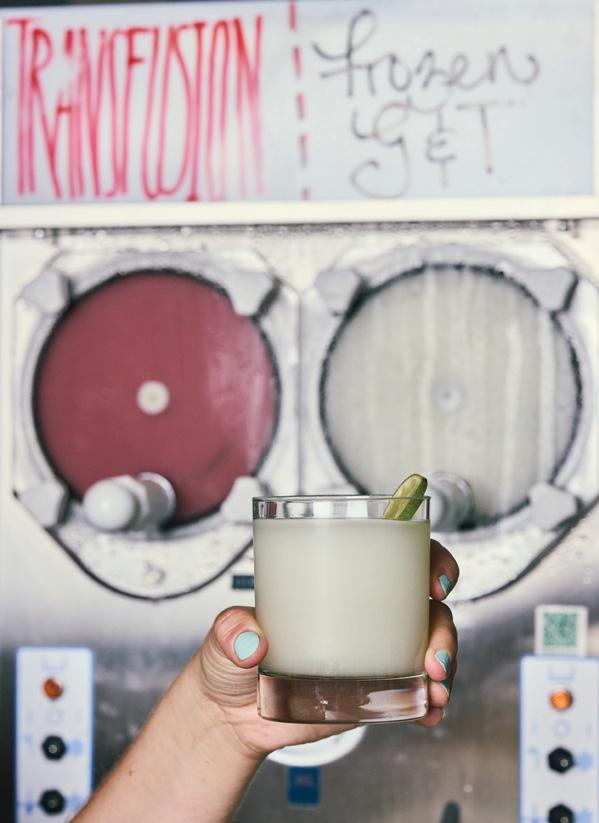
A twist on a summer classic: the Frozen Dry-Hopped Gin & Tonic at Standard Beer + Food. It’s made with citra hops, a signature ingredient they also use in many of their in-house beers. “When we were developing frozen cocktail recipes, we wanted to create something only we were doing,” says Cov Deramus,
Standard’s operating partner. “Adding the hop aroma to a G&T dovetails with our beer program.” 205 E. Franklin Street; standardbeerandfood.com
SEASON’S BROADCAST
Grab a friend — or two or three — and order the Season’s Broadcast at Killjoy. Served as one of their cocktail
The Art & Soul of Raleigh | 35
DRINKS
Left: Frozen G&T
Right: Summer Kolsch
towers, it’s an oversized, tequila-forward beverage meant for sharing. A chilled pitcher of Season’s Broadcast serves four to six with a festive punch of flavors including cinnamon, ginger, pomegranate and lime. 116 N. West Street; killjoycocktail.com
ORANGEADE
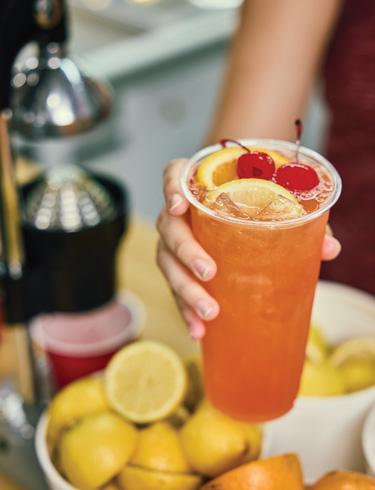
A long-time local favorite, the orangeade from Nancy Jo’s Homemade at North Carolina State Farmers Market is lightly sweet and full of flavor. A made-to-order mix of crushed ice, simple syrup and fresh-squeezed orange juice, you can take it to the next level and add fresh lemon and lime juice.
1201 Agriculture Street (inside The Market Shoppes); nancyjoshomemade.com
LOUD MOUTH

In downtown Cary, SideBar’s Loud
Mouth cocktail offers a smoky, tropical twist on a margarita. Lead bartender Bri Crosby says the inspiration for the drink came from her love of mezcal and mango. “It started as a riff on a classic cocktail, the Clover Club, but I swap the egg white for crushed ice,” Crosby says. “It’s juicy and smoky, perfect for mezcal lovers on a hot day!”
215 E. Chatham Street, Cary; sidebarnc.com
SUMMER KOLSCH
Vault Craft Beer, which recently opened in a renovated midcentury bank on South Street, rotates taps every few weeks, but co-owner Erik Kern always keeps a lighter beer in rotation for hot days. He particularly likes a Kolsch for summer: “It’s light and refreshing with its moderate to low ABV and fruity esters derived from top-fermenting German yeast.” 518 W. South Street; vaultcraftbeer.com
BEE DURHAM
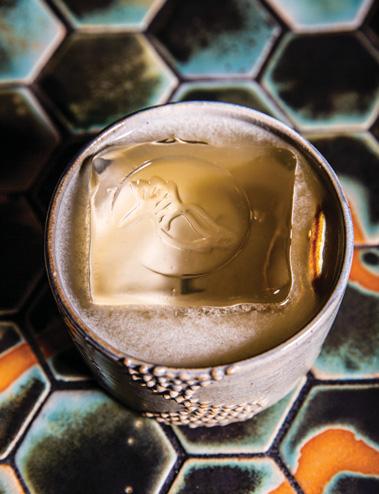
Made with Conniption Navy Strength Gin, local honey and lemon, Kingfisher’s Bee Durham is a summer sour with an outdoorsy feel, says Sean Umstead, the bar’s co-owner. “The honey, beeswax and floral elements of the gin evoke the smells of a summer field,” says Umstead. “And the beeswax infusion helps dry out the drink and lighten the gin and honey.” 321 E. Chapel Hill Street; kingfisherdurham.com
CUCUMBER SAKE MOJITO
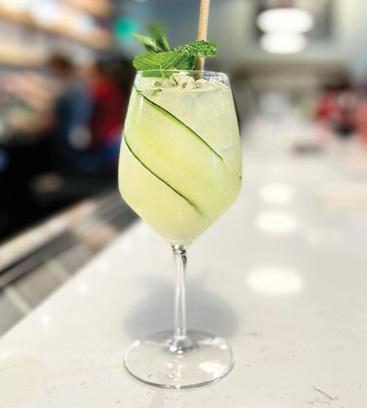
“The Cucumber Sake Mojito is just a little sweet and low-alcohol, too, perfect for drinking all summer long,” says Liz Porcelli, co-owner of the Raleigh Wine Shop. “The cucumber-mint
CUCUMBER SAKE MOJITO
INGREDIENTS
2 ounces Junmai sake
1 ounce lime
1 ounce cucumber-mint syrup
4 dashes lime bitters
Soda water
Mint and cucumber, for garnish
DIRECTIONS
Combine the sake, lime, syrup and bitters with ice in a shaker. Shake and strain into a Collins glass with ice.
Top with soda water and garnish with a big mint sprig and a cucumber slice.
syrup along with fresh lime juice will cool you down in this North Carolina heat.” Porcelli dreamed up this crisp drink along with bar manager Mallory Drake to celebrate the shop’s new location on Bloodworth Street, where they keg the cocktail in-house and keep it on tap behind the bar. “Pouring on draft maintains consistency and freshness, plus it adds a little bubble to keep it light and super thirst-quenching,” Porcelli says. 317 S. Bloodworth Street; theraleighwineshop.com
DRINKS 36 | WALTER
Left: Orangeade
Right: Bee Durham
Stacey Sprenz (BEE DURHAM); Liz Porcelli (SAKE)
SEASON 2022-2023

CHOREOGRAPHERS SPOTLIGHT SERIES











AUGUST 26, 2022




J ER O ME R O BBINS’ THE CO N C ER T










SEPTEMBER 22-25, 2022 Raleigh Memorial Auditorium
DRAC UL A
OCTOBER 13-30, 2022 Fletcher Opera Theater

reasons


B EETH OVEN: SYMPH O NY N O. 9 NOVEMBER 17-20, 2022 Raleigh Memorial Auditorium Memorial Auditoriu











th
22
23
40
23
SPONSORED BY: CarolinaBallet.com 919-719-0900 Ticketmaster.com 800-982-2787
ER THE NUTC RAC K E
DECEMBER 10-24, 20 um DPAC/Raleigh Memorial Auditoriu TO G RIE G : PIAN O CO N C ER T
FEBRUARY 2-19, 20 ter Fletcher Opera Theat
MOZART: SYMPH O NY N O. 4
MARCH 9-26, 20 ter Fletcher Opera Theat CE O RPHEUS & EURYDI C 23 APRIL 27-30, 20 um Raleigh Memorial Auditoriu T Y S LEEPIN G BEAU 23 MAY 18-21, 20 um Raleigh Memorial Auditoriu Presented by
Joseph M. Bryan, Jr. Theater in Museum Park at the North Carolina Museum of Art
TEND & MEND
The Healing Place Courtyard offers a unique opportunity for recovery
by CATHERINE CURRIN
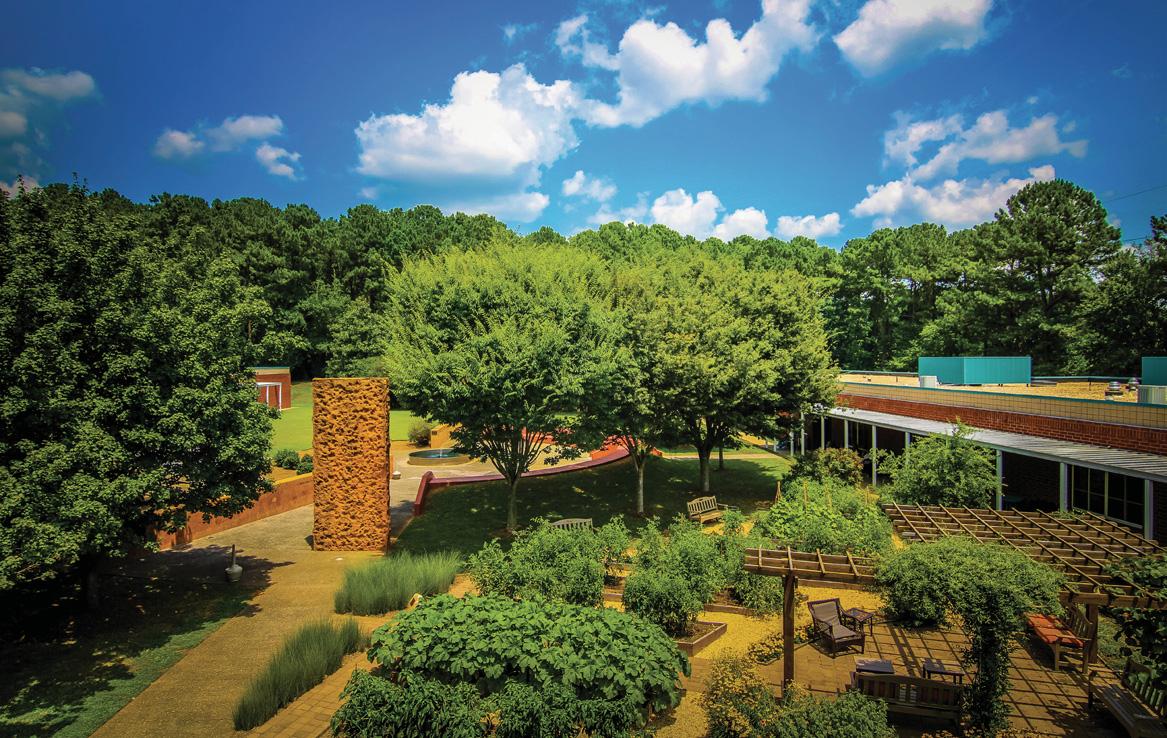
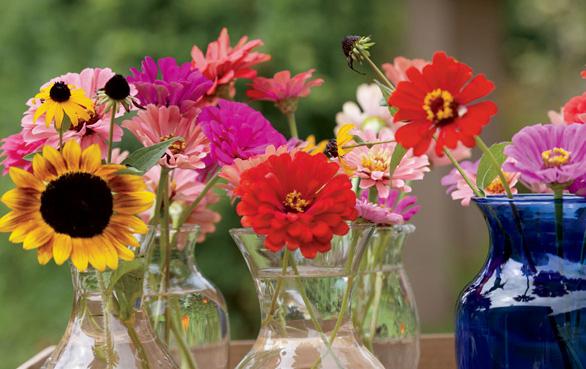
Within the Healing Place Courtyard, an earthcast archway by Thomas Sayre marks one end of a gravel path; a rectangular monolith marks the other, and between them is a reflecting pool. All around is the lushness of summer: jaunty zinnias, sunflowers and cosmos stretching toward the sky; tomato plants heavy with fruit; fragrant basil, bushy and full. The space is striking, but
it serves a deeper purpose, offering both the work and the reward for those recovering from drug or alcohol addiction.
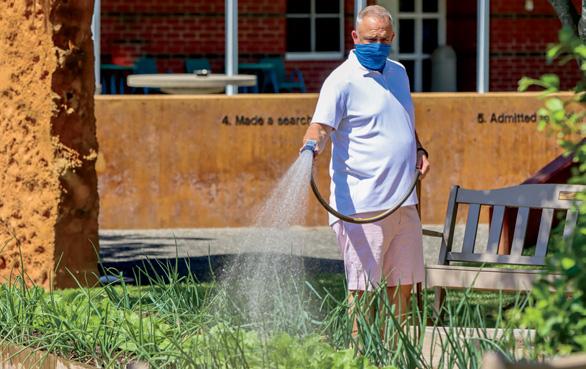
“At first, being a steward to the garden seemed like a strange way to spend time in recovery. I didn’t see the similarities of the two,” says Paul Keelen, a Healing Transitions alumnus. “But today, I’m not sure I can see any of the differences. Water the plants, pull weeds, work hard, get dirty, enjoy the smells and sights all around you, and you’ll reap rewards. The
two are the same.”
The Healing Place Courtyard is part of Healing Transitions’ men’s campus in Dorothea Dix Park. It’s in the center of the organization’s residential facilities, a peaceful refuge to reflect or congregate. Healing Transitions executive director Chris Budnick says that the outdoor space, which was created in the early 2010s, is now an integral piece of a participant’s recovery. “It can help through a number of things — it gives detox guests
GIVERS
38 | WALTER
courtesy Healing Transitions/Chris Budnick
hope to look out and see program participants laughing and smiling, or offers a path forward when new participants interact with older participants and alumni in the courtyard,” says Budnick.
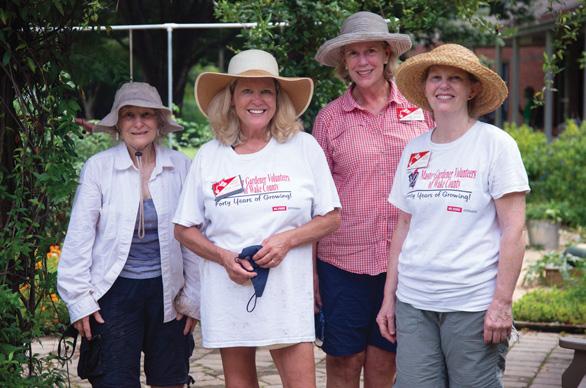
“Slowing down and enjoying the present moment is a big one. This has many parallels with recovery and life,” agrees Keelen, who spent 15 months in the program and is now almost six years into recovery. One of his jobs during the program was working as a “scarecrow,” managing the garden alongside volunteers from the North Carolina State Extension
Master Gardeners of Wake County.
“Working with the master gardeners gave me a connection to folks outside of the recovery world,” says Keelen. “I was able to harvest the garden and prepare and serve the food that I grew to my fellow participants, which gave me a great sense of purpose and joy.”
Master gardener Cris Clemons started volunteering at Healing Transitions in 2014 through the NC State extension program. “I was excited to be a part of this initiative as my brother-in-law was suffering from substance abuse,” says
Clemons. “I loved the idea of helping people that are working toward recovery learn gardening skills and the joy of growing your own food and flowers.”
The courtyard was designed by Sayre, who has said his earthcast sculptures are a metaphor for a healing path away from the stronghold of addiction. “At one side of the space there is a barrier-like structure, a monolith that’s in your way. We all have barriers in our life,” Sayre says. “But across from the barrier is an open door of opportunity. The closed door fits dimensionally within the open arch, but to get to that open door, you have to encounter the sections of Healing Transitions’ program.”
The space is both visually compelling
The Art & Soul of Raleigh | 39
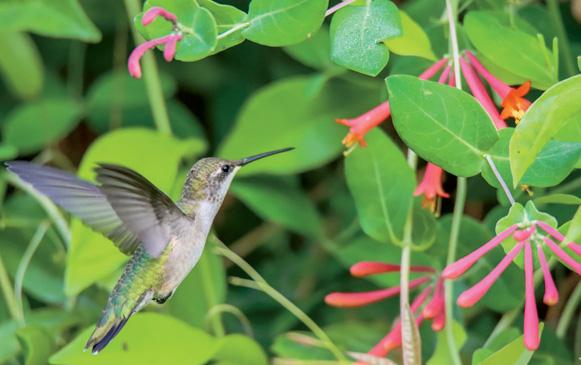
Opposite: A view of the Healing Place Courtyard, featuring Thomas Sayre’s sculptures. This page, clockwise from top: A hummingbird in the garden; volunteers from the NC State Extension program; flowers from the garden; watering the garden.
courtesy
Healing Transitions/Chris Budnick (MAN, HUMMINGBIRD); Tyler Cunningham (WOMEN, FLOWERS)
“Here, I can cultivate a healthy space within myself.”
— Paul Keelen
and extremely functional: the words of the 12 steps of recovery line the walls, while nearby tiered, circular seating lends itself to gathering. Sayre, who creates his signature earthcasts all over the world, says this is one of his most important projects: “It’s not always the case that I can work with a community that’s so focused. The importance of their work made my work important.”
The sculpture in the garden can be seen from across the facility and accessed throughout a participant’s journey with Healing Transitions, says Budnick. “The most significant piece of Thomas’ design is it creates hope to be transmitted, and for recovery to be cultivated,” says Budnick. Sayre is pleased with how the garden has grown and incorporated his work over time: “The gardeners have improved it vastly, tending to the space with care.”
While the Healing Place Courtyard is geared toward participants in Healing Transitions’ recovery program, it offers a

reminder to all of the benefits of slow and steady work, and being present in the moment.

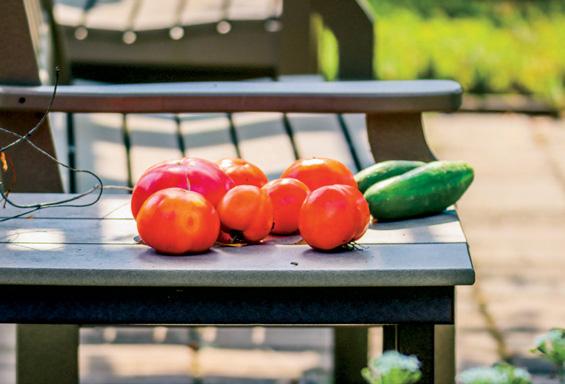
“Gardening can be very meditative, and I think that is beneficial for all of us, not just those seeking recovery,” says Clemons. “It can be hard work, so there is the discipline of doing something for the good of all the participants. It’s very rewarding to see people eating the vegetables you harvested for lunch, or to see the flowers you grew on the dining room tables.”
Keelen, who still attends meetings in the courtyard, says gardening can teach us so many things about life in general — as well as recovery: “While in addiction,
everything was about instant gratification and going a million miles an hour. But here, the process of keeping a neat, weed-free environment for the plants reminds me that I need to weed out the static and unwanted, untrue thoughts in my mind. Here, I can cultivate a healthy space within myself.”
40 | WALTER
GIVERS
919.424.2115 | colorfulconceptsinteriordesign.com Let us create one-of-a-kind spaces for you that make your heart and mind soar on a daily basis. T i me le s s • • S ou l f u l • • S a nc t u a r y
courtesy Healing Transitions/Chris Budnick
Dustin Peck Photography
This home is currently featured in Southern Home
Magazine.
Meet the MONSTERS
The Life Before Dinosaurs exhibit highlights the creatures that preceded dinosaurs
 by HAMPTON WILLIAMS HOFER
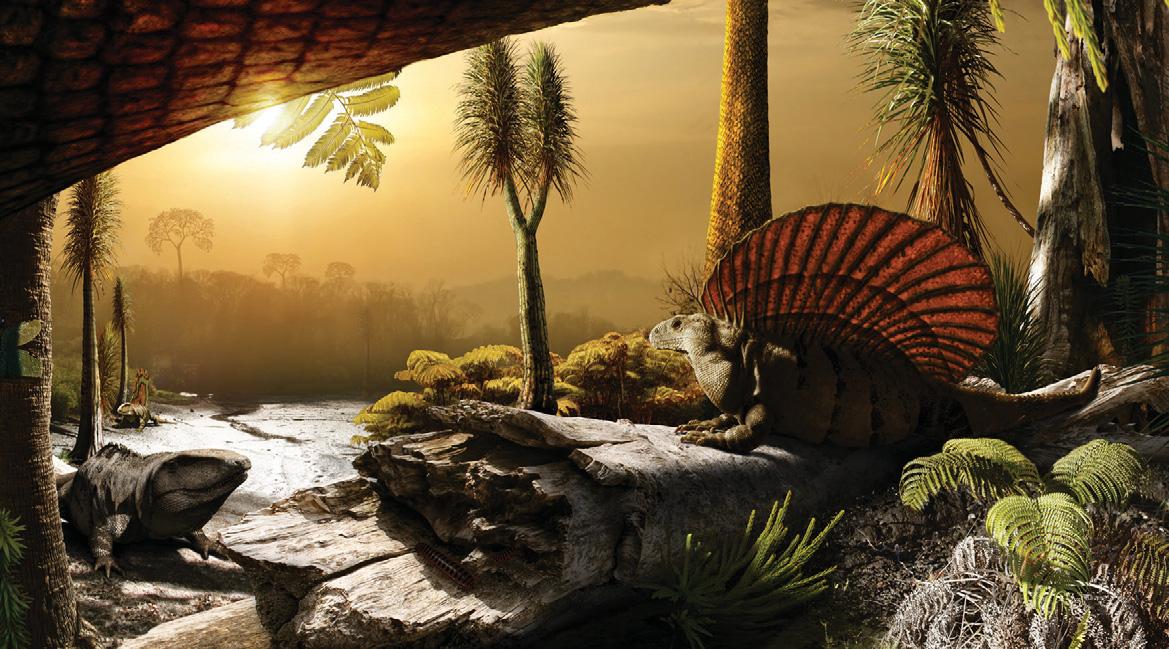
The second floor of the North Carolina Museum of Natural Sciences is full of monsters: saber-toothed mammals the size of bears, dragonflies with 2-foot wingspans and land predators with massive, sail-like fins. These species all dominated planet Earth some 290 million years ago, part of the ancient group called Permian Monsters that thrived before the largest mass extinction in our planet’s history wiped them out. The dinosaurs — who get a lot more airtime — then took their place.
The Permian Monsters are the stars of
Life Before Dinosaurs, a special exhibition at the museum through Sept. 4 that features full-scale, interactive models of the creatures, like a motion-activated model Titanophoneus (“titanic murderer”) that turns its head and opens its mouth to reveal powerful, bone-cracking canines. With shadow play from LED lights and realistic greenery, all the creative work of the NCMNS exhibit team, it’s like stepping into another world.
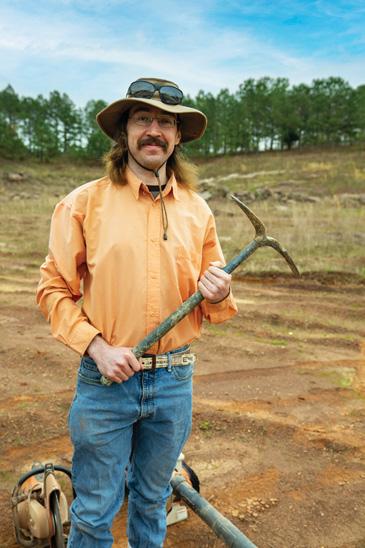
Dr. Christian Kammerer, the museum’s research curator of paleontology, has traversed the globe hunting Permian fossils and has discovered numerous
rare specimens. While visitors to the NCMNS marvel at whale skeletons and rare gemstones, the paleontologist may be just one county west, bent over a round saw, cutting carefully into the roughly 230-million-year-old Triassic rock that runs straight through the middle of North Carolina.
The Life Before Dinosaurs exhibit is especially meaningful to Kammerer in that it has made his work in obscure prehistoric life more accessible to the general public. “Most of these animals have no close living relatives, and just trying to describe what they are can be
The Art & Soul of Raleigh | 41 VAULT
An illustration of a Pelycosaurs, an ancient Permian Monster.
Julius Csotonyi
a challenge,” Kammerer says. For example, one of the major groups of Permian creatures, dicynodonts, were the most abundant herbivores of their day, but there is nothing alive today quite like them. “When forced to describe them, I say they are kind of like pigs with turtle beaks and walrus tusks, but that is very imprecise. So it’s hard to get across,” Kammerer says. “It’s much easier to talk about them when folks can just see their skeletons and life restorations.”
The dicynodonts Kammerer describes are actually our ancestors. “They’re not just long-dead weirdos, but part of our own history as mammals,” Kammerer says. “They help us to understand our far-distant origins.” He notes that rich fossil records of the Permian Monsters show the gradual accumulation of mammalian features in creatures that, if you saw them alive, you would probably think of as reptiles. “But if you look carefully at their teeth and skull, you could see things like canine teeth that are decidedly mammalian,” he says.
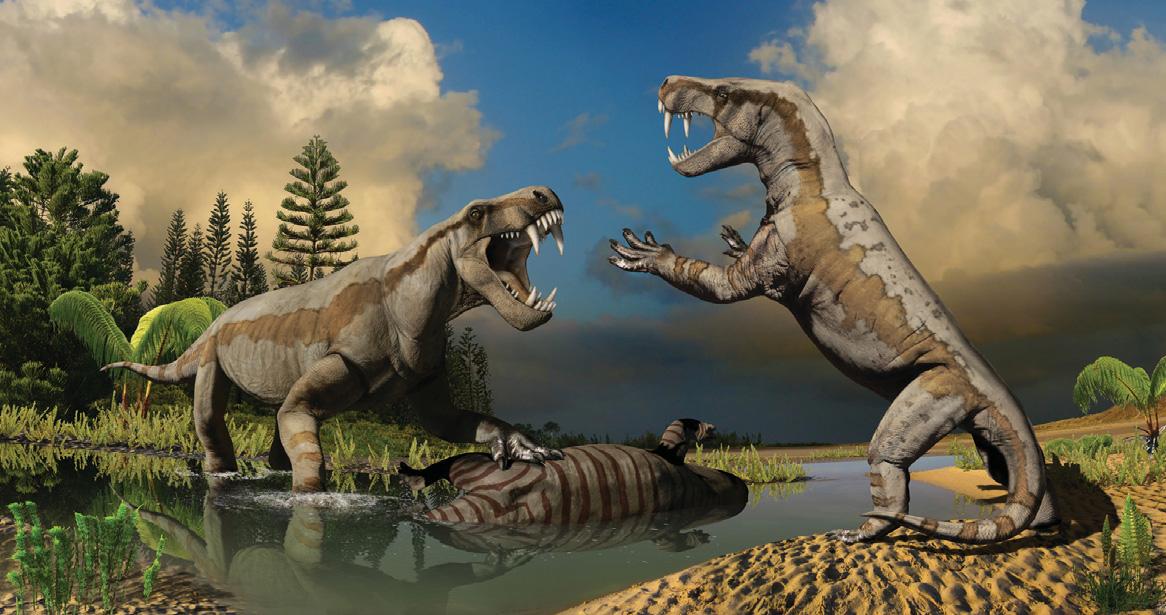
The exhibit also features stunning
murals by Julius T. Csotonyi that show a vivid and volatile Earth where Permian Monsters ruled: red skies, towering ferns, erupting volcanoes. The team at the NCMNS amped up the traveling exhibit for our local audience. They took the motion-activated models of the animals and fiddled with the animatronics to make their movements bigger, wider and more awe-inspiring. They added louder sounds and built their own sets and models of plants and backgrounds that stage the scenes dramatically. In addition, the museum made each panel throughout the exhibit bilingual, with information in both English and Spanish.
For Kammerer and the NCMNS staff, Life Before Dinosaurs is a chance to redefine how people think about the prehistoric world. “I want people to know that there is a whole world that existed long before the dinosaurs ever evolved, which was full of equally incredible organisms,” Kammerer says. At the end of the exhibit is a wall of photos that includes Kammerer in the field, surrounded by rocks and tools, his jeans covered in dust like a
VAULT 42 | WALTER
Top: An illustration of fighting Gorgonopsians, one of the Permian Monsters.
Bottom: Dr. Christian Kammerer. Oppposite: An illustration of the tiny Kongonaphon, which was only about the size of a fist.
Matt Jones / NMNS (KAMMERER); Julius Csotonyi (ILLUSTRATION)
scene from Jurassic Park. He has tracked Permian Monsters from Russia to South Africa, uncovering and naming numerous new species: the Mobaceras (a carnivore with a skull of bony horns, which he discovered in Zambia), the Rastodon (an herbivore with a hole in its skull containing a light-detecting organ known as a “third eye,” which he found in Brazil) and the Bulbasaurus (which may or may not be named for a Pokémon).
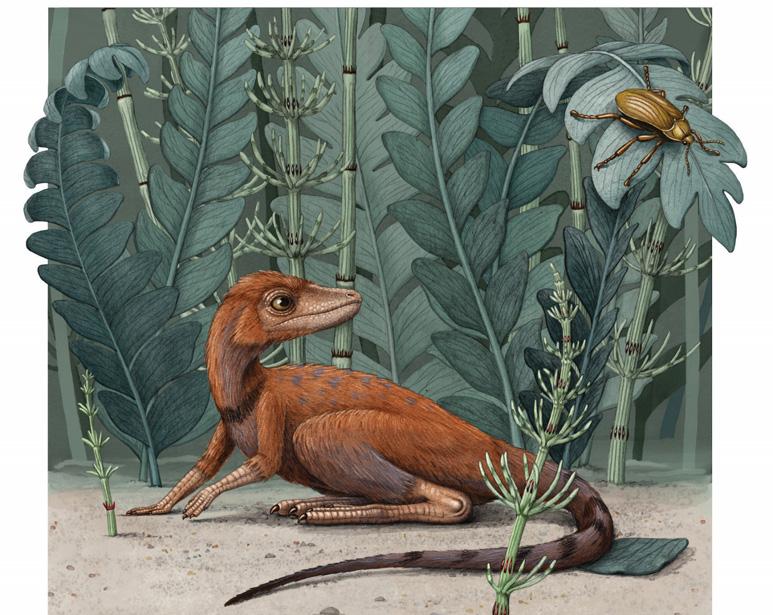
Life Before Dinosaurs winds through realistic creature replicas, fossils in casings, bones, murals and hands-on digging features, ending in a gift shop of carefully curated Paleozoic coloring books and otherworldly stuffed animals. For the roughly 1 million yearly visitors to the museum, the exhibit shows off more than just its subjects, but also the caliber of the institution’s paleontologists and staff.
“Hopefully,” Kammerer says, “visitors come away with an appreciation for the diversity and majesty of some of these creatures.”




Just as much, Kammerer means for the exhibit to serve as a reminder of the end-Permian mass extinction, which he considers the worst crisis in the history of life on Earth. “The mechanisms driving that extinction are very similar to what we’re starting to see now with global warming,” he says. “Our current changes in global climate are unprecedented in human history, so we should be looking into the deep past for equivalents.” He hopes that the exhibit will be a call to action, an opportunity to reformulate how people understand existence on our planet and the way life has evolved — and what lies ahead.

The Art & Soul of Raleigh | 43
@WalterMagazine waltermagazine.com
We like to socialize. Follow along and don’t miss a thing.
“They’re not just long-dead weirdos, but part of our own history as mammals.”
— Dr. Christian Kammerer
Julius Csotonyi
Summer Twilight
The brief, magical time between day and night
by JIM DODSON
illustration GERRY O’NEILL
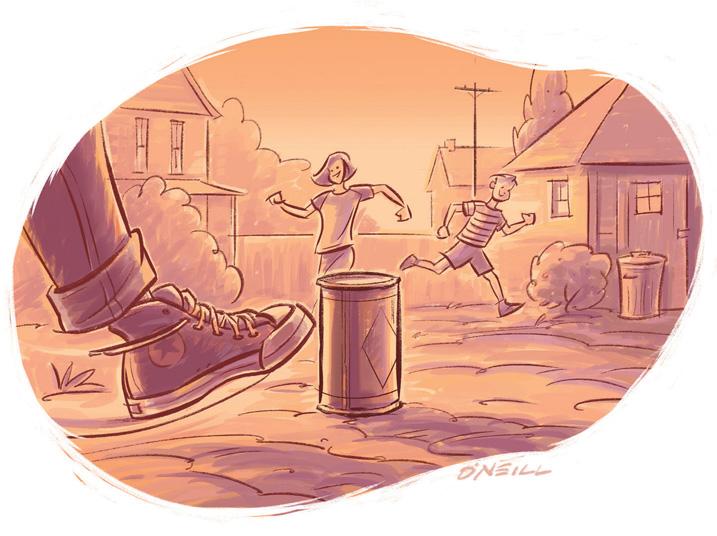
Not long ago, as a beautiful summer evening settled around us, my wife and I were sitting with our friends Joe and Liz on the deck, enjoying cool drinks and the season’s first sliced peaches.
The fireflies had just come out. Birds were piping serene farewell notes to the long, hot day.
“I love summer twilight,” Joe was moved to say. “Everything in nature pauses and takes a breath.” He went on to remember growing up in a family of nine children: “My mother would shoo us all outdoors after supper to play in the twilight until it was dark. It was a magical time between day and night. A glimpse of heaven.”
“We played Kick the Can and Red Light, Green Light,” Liz remembered. “The fading light made it so much fun.”
“And flashlight tag,” chimed Wendy, my wife, sipping her white wine and joining the memories. “We didn’t have to come in until the first stars appeared and my mother called us for a bath and bed.”
In a world that increasingly seems so
different from the quieter, simpler one we grew up in, we all agreed that something about twilight feels timeless: It frames the world with a diffusion of light and dust, heralding either the prospect of rest or awakening.
In truth, our ancient ancestors held much the same view of the changing light that occurs when the sun sinks just below the horizon or rises to it just before dawn. The fertile imaginations of the Greeks held that twilight was, in fact, a daily gift from the celestial deities, created by the marriage of Astraeus, the god of dusk, and Eos, the goddess of the dawn. Their children — Rare Light, Early Star, Settling Dew — appear at twilight.
Like most rare things, the beauty seems to be in its brevity.
Back when I was a small boy in a large world, summer twilight was especially meaningful to me. During my father’s newspaper career, we lived in a succession of small towns across the sleepy, deep South. We rarely stayed in one place long enough for me to make friends or playmates. Because it was a time before mass air conditioning, I lived out of
doors with adventure books and toy soldiers for companions, building forts and conducting wars in the cool dirt I shared with our dog beneath the porch. The heat and brightness of midday made my eyes water and my head hurt.
In the rural South Carolina town where I attended first grade, a Black woman named Miss Jesse restored my mother to health following a pair of lateterm miscarriages. Come midday, while my mother rested, Miss Jesse would haul me out from under the porch and make me put on sandals to accompany her to the Piggly Wiggly or run errands around town in her baby-blue Dodge Dart.
Beneath a stunning dome of heat that lay over the town like a death ray from a martian spaceship, it was Miss Jesse who explained to me that daytime was when the world did its business and, therefore, shoes and good manners were necessary in public. Removing my sandals to feel the cool tile floors beneath my bare feet at the Piggly Wiggly — the only air-conditioned place in town save for the newspaper office — was a tactical error I made only once, as Miss Jesse had
44 | WALTER SIMPLE LIFE
complete authority over my person.
Yet it was also she who had me stand on her feet, dancing my skinny butt around the kitchen as she and my mother cooked supper to gospel music playing from the transistor radio propped in the kitchen window. Miss Jesse also informed me that both a good rain and twilight were two of the Almighty’s holiest moments: the former refreshing the earth, the latter replenishing the soul.
I often heard her singing a gospel tune I’ve since spent many years unsuccessfully trying to find, a single line of which embedded itself in my brain: In the shadows of the evening trees, my lord and savior stands and waits for me.

Miss Jesse was with us for only a single summer and autumn. She passed away shortly before we moved home to North Carolina. But I have her to thank for restoring my mom’s health and giving me a love of collards, a good rain and summer twilight.
The suggestion of that old hymn she loved speaks to another perspective on twilight.
Some poets and philosophers have used it as a metaphor, indicating the fading of the life force. Others view it as the end of life, a dying of the light that symbolizes the coming of permanent night, a prelude to death.
You’ll often hear sportscasters describing an aging professional athlete who can’t leave the field as being “over the hill” or “in the twilight of his career.” Ditto old actors, politicians. Some alarmed environmentalists even warn that the Earth itself may be fast approaching the “twilight” of its existence.
On the other hand, as I read in a science magazine not long ago, all living things would fade and die from too much light or darkness were it not for twilight, that in-between time of day when we see best.
For that reason, it’s worth remembering that twilight also comes before the dawn breaks, marking the beginning of the day, the renewal of activity, a resumption of life’s purposes.
Tellingly, birds sing beautifully at both ends of the day — a robust greeting to the returning light of dawn and a solemn adieu as twilight slips into dusk.
As a lifelong fan of these moments — and fast approaching my own so-called twilight of life — I take comfort in the words attributed to Saint John of the Cross who wrote, “In the twilight of life, God will not judge us on our earthly possessions and human success, but rather on how much we have loved.”
I also love what actress Marlene Dietrich famously said about twilight — namely that seeing it fall should be prescribed by doctors. It certainly heals something in me at day’s end. A friend I mentioned this to not long ago sent me a short poem by a gifted poet named Joshua Henry Jones Jr., a son of South Carolina who passed away about the time Miss Jesse was teaching me to “feet dance” in my mama’s kitchen.
It’s called “In Summer Twilight” and nicely sums up my crepuscular passion.
Just a dash of lambent carmine
Shading into sky of gold; Just a twitter of a song-bird
Ere the wings its head enfold; Just a rustling sigh of parting
From the moon-kissed hill to breeze; And a cheerful gentle, nodding
Adieu waving from the trees; Just a friendly sunbeam’s flutter
Wishing all a night’s repose, Ere the stars swing back the curtain
Bringing twilight’s dewy close.
Now, if I could only find that sweet gospel hymn that still plays in my head.
The Art & Soul of Raleigh | 45
Tellingly, birds sing beautifully at both ends of the day — a robust greeting to the returning light of dawn and a solemn adieu as twilight slips into dusk.










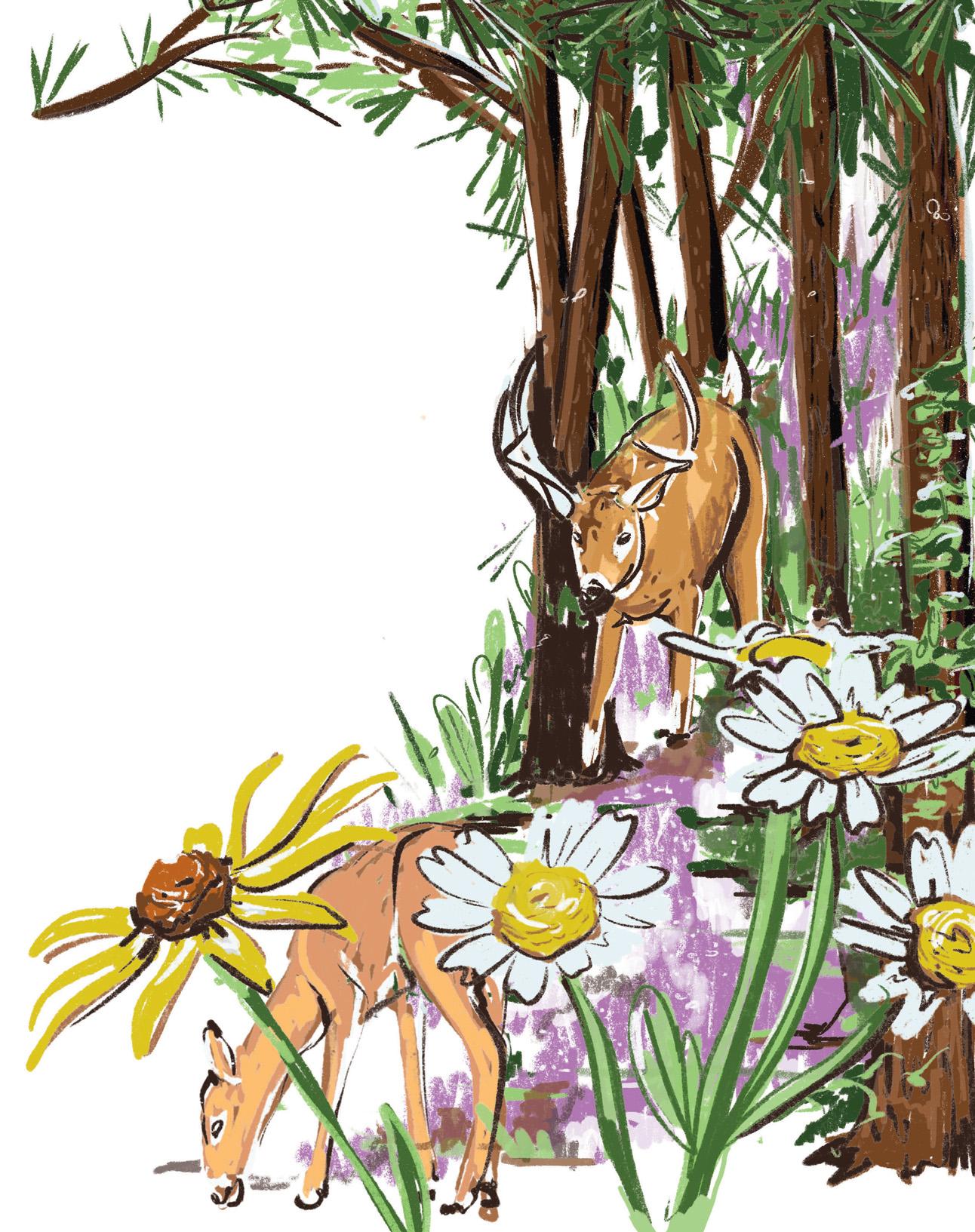
Colloquy


 by BETTY ADCOCK
I asked the creatures of grass and air, the web-weavers and jumpers. I inquired of broken sticks and pebbles worn smooth in the long hyperbole of water.
I asked the trees first, and then their wreaths of birds; queried mouse, cougar, possum, deer. I questioned even the deep halls where a congress of roots holds April a political prisoner.
But there was no word in the earth’s house. Bare branches held the crooked sky without story or prophecy, and the stone was a deaf mirror.
To love the world that cannot answer is to give your children to silence, to the beautiful instructions of millennia uttered only once, then ringing far and clear and perfectly inaudible as the stars.
To love the world that cannot answer — it takes losing. It takes us all our lives.
illustration by JILLIAN OHL
The Art & Soul of Raleigh | 47
Creativity and friendly competition at the Kirby Derby
The CIRCUIT
by EMMA GINSBERG
photography by BRYAN REGAN
48 | WALTER
MEGA FUN
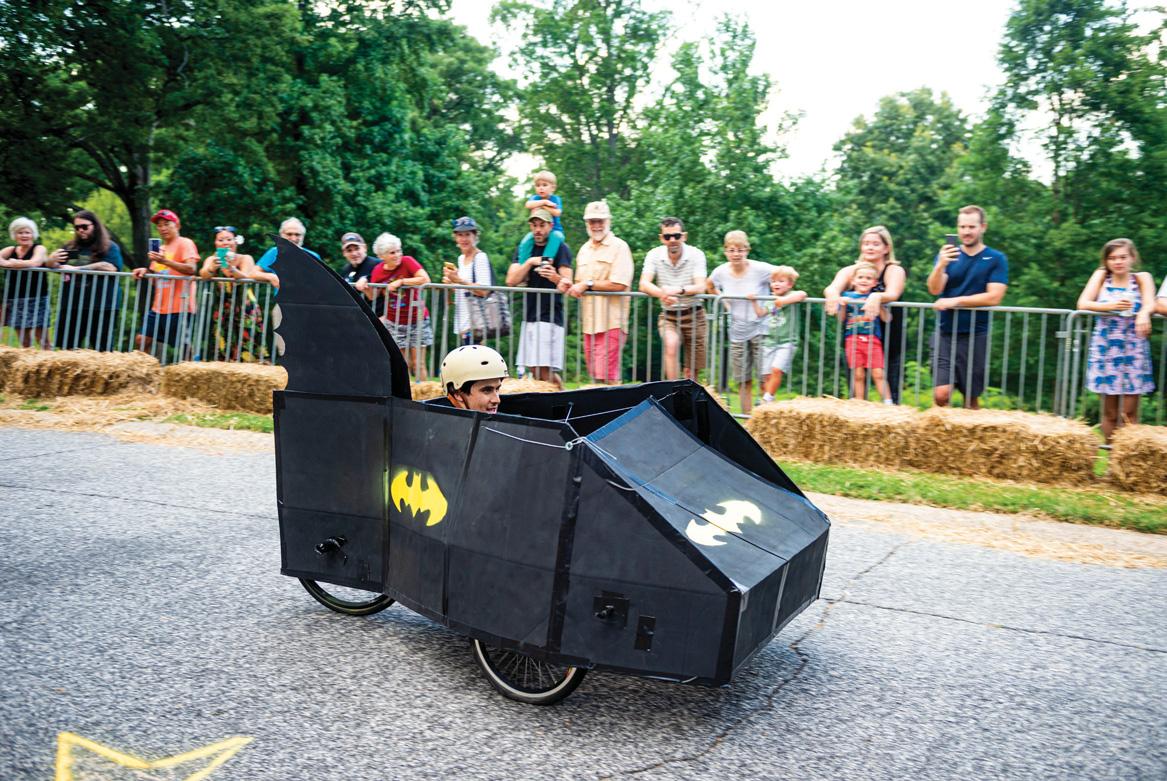
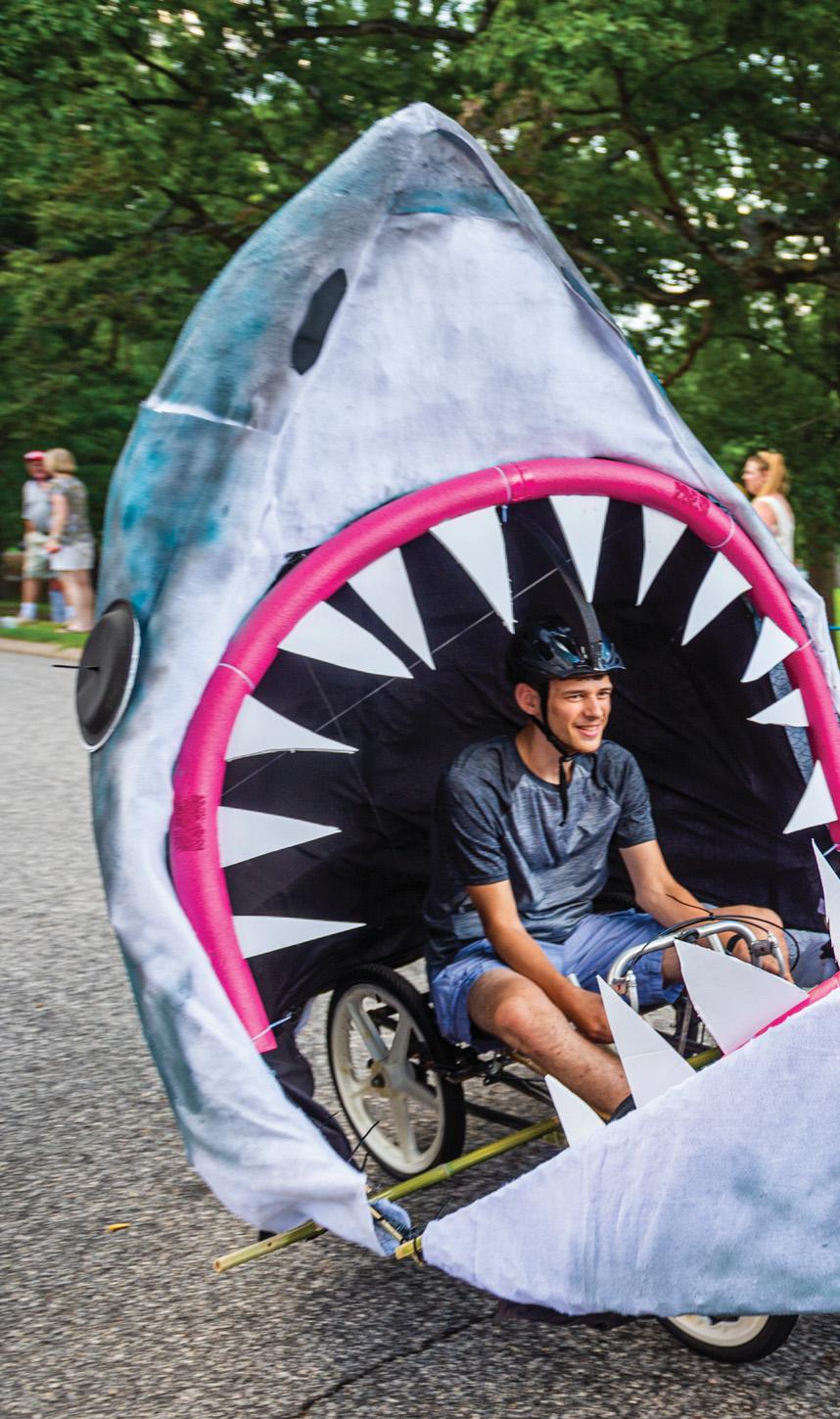
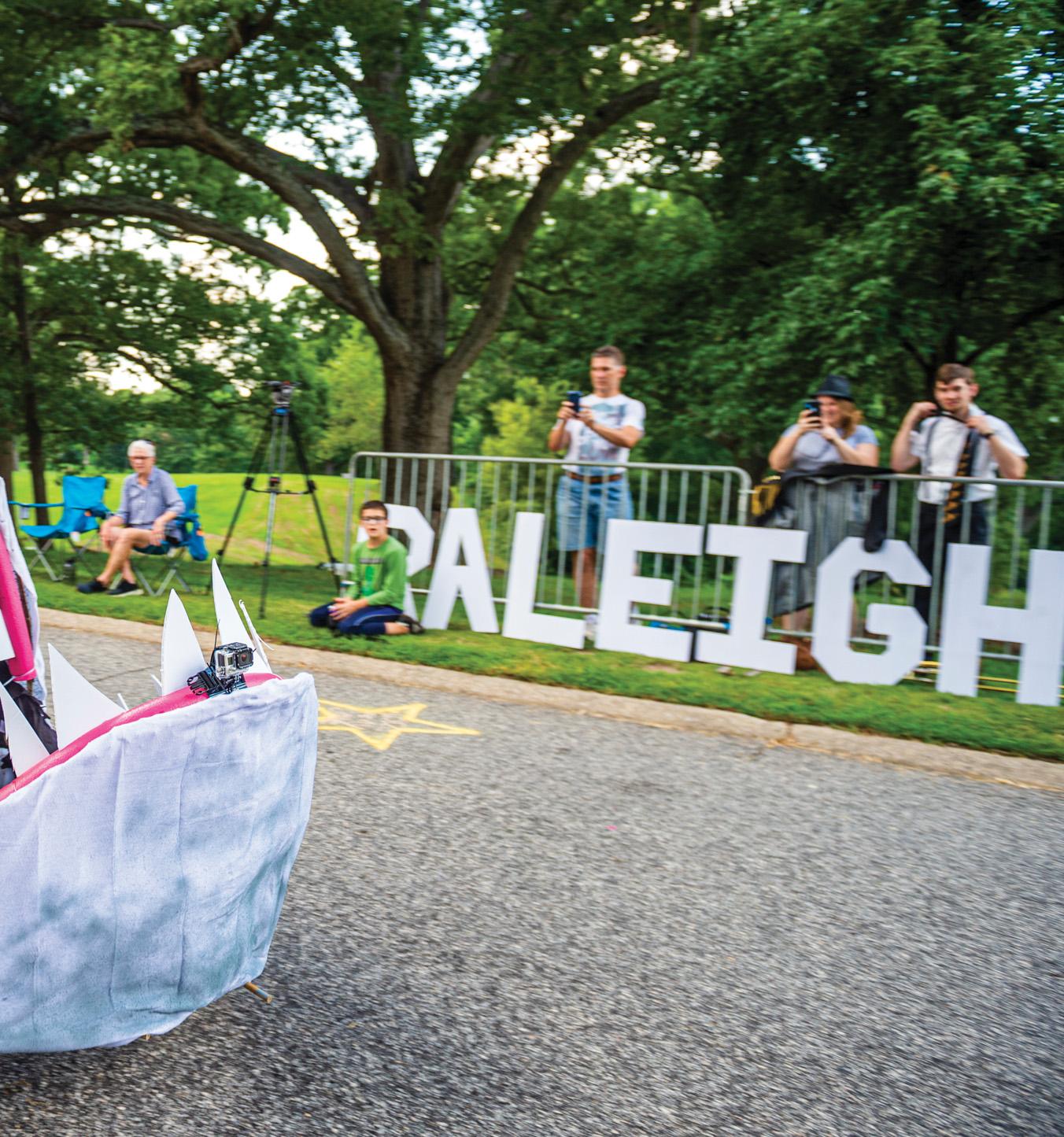
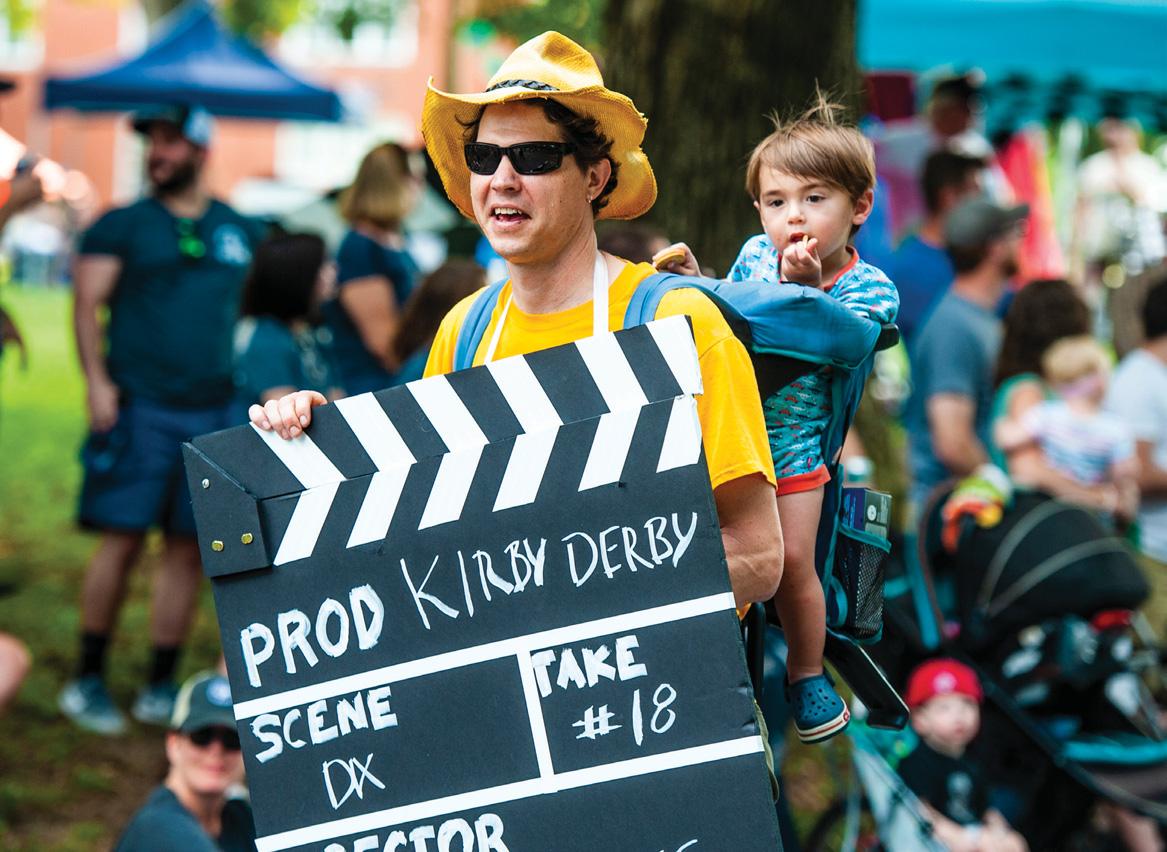
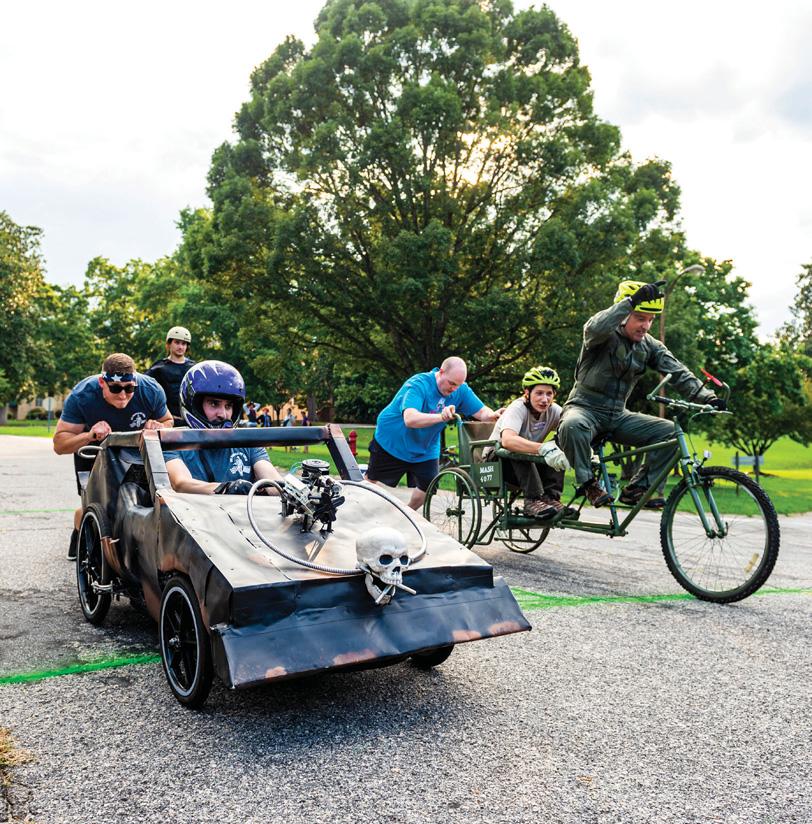
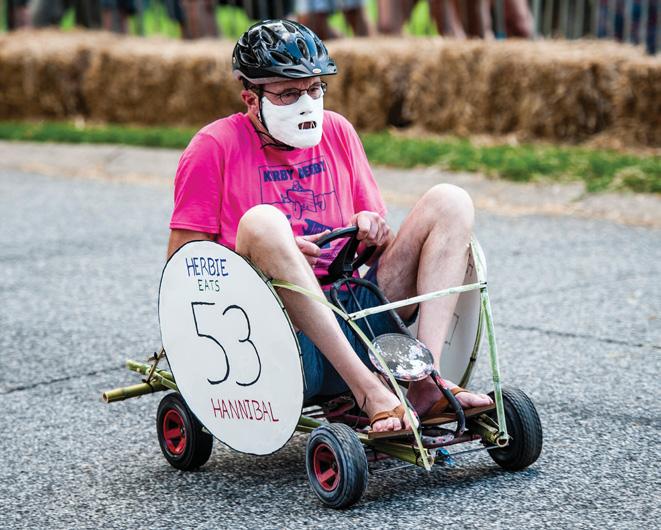
Kirby Derby competitors pull out all the stops to design soapbox cars and parade costumes that capture the annual theme — there’s no such thing as overdressed on Derby Day. In 2019, the theme was “A REEL Good Time,” and participants paid tribute to their favorite movies. Silas Huckins (pictured), who has been in the Derby every year since he was 1, attacked the racetrack in a Jaws-themed car.
The Art & Soul of Raleigh | 49
In June, the early summer breeze carries tantalizing whispers: Dead Man’s Curve… crashes… the Cup. Come July, neighbors run mysterious errands and return with wooden planks and metal pipes peeking out of their shopping bags. They stock their closets with outlandish wigs, face paint and costume jewelry. But their purpose remains a secret.
Then one evening in August, the sound of sawing and hammering hums out of open garages in Pullen Park Terrace. Wheels squeak experimentally down driveways, each trial carrying more weight than the last. In night air palpable with anticipation, neighbors work feverishly to build elaborate structures of every shape and shade, sharing drinks and swapping tools as darkness folds in around the block.
And then, when the sun rises, Kirby Street explodes: It’s Derby Day.
The Kirby Derby soapbox race is a time-honored tradition in Pullen Park Terrace, a small neighborhood formed by Kirby Street and the adjoining Bilyeu Street. “On the night before the Derby, when everyone’s out building their cars, you can carry your drink with you from house to house and have a very social evening,” says Chris Dell’Anno, a Pullen Park resident and the Derby’s official/ unofficial emcee.
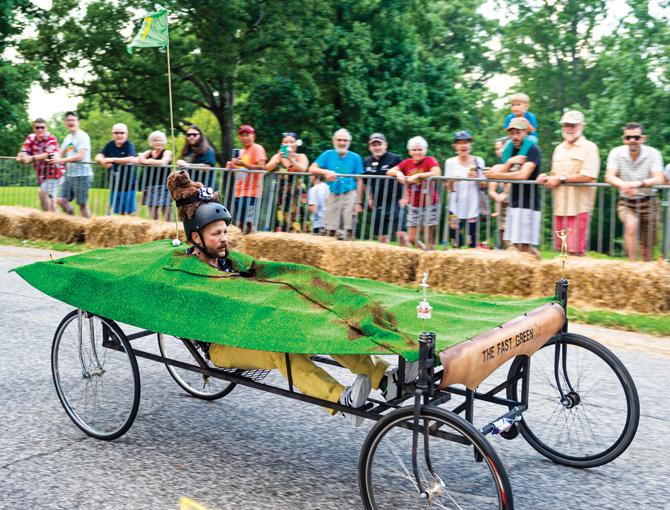
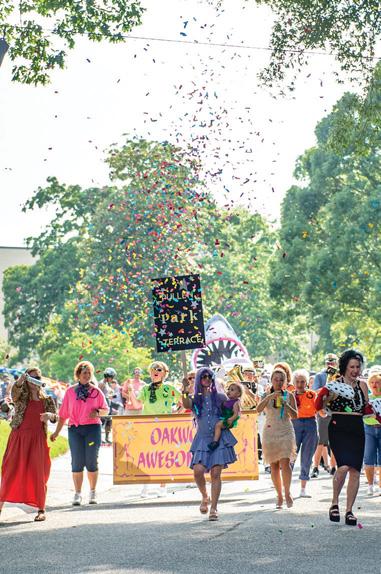
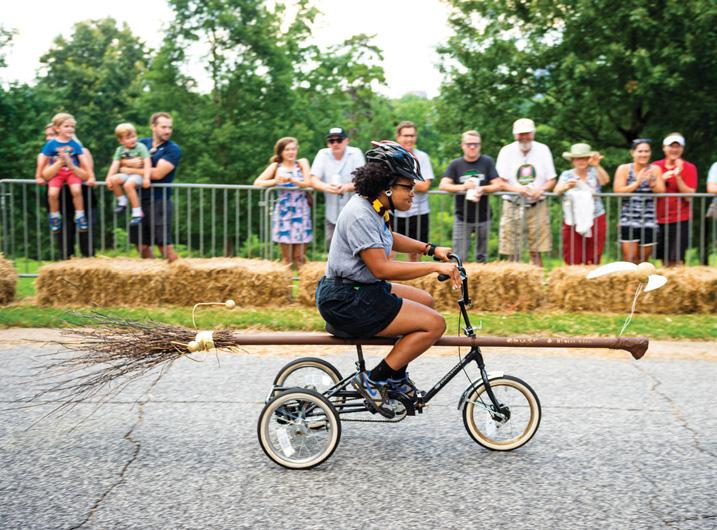
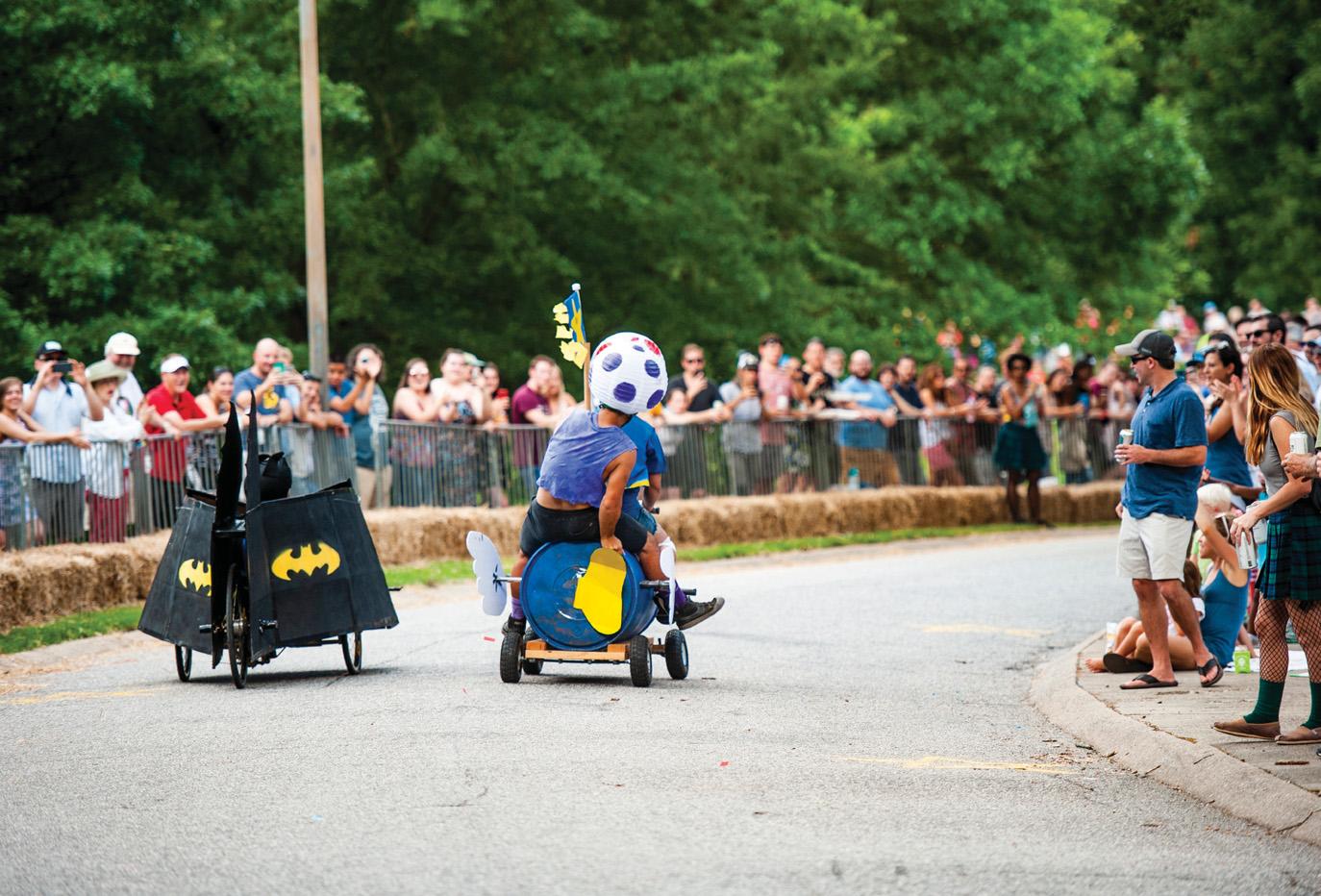
Every year since 2002, residents, friends and curious Raleighites don costumes and line the street to watch the annual event. Handbuilt, gravity-powered cars disguised as everything from sharks to cake slices barrel downhill to the tune of cheering neighbors, all racing for the Kirby Cup. Some cars wipe out early on; others are surprisingly fast. Many creations are there less to race than to be seen, eye-catching spectacles that draw oohs and ahhs from fans as they amble past. Kirby Street may be small, but the Kirby Derby is a huge showcase of residents’ creativity; it’s a celebration of community. “All aspects of it are good-spirited,” says Pullen Park resident Danielle Teed. “It’s just an event full of family and fun, run by people
50 | WALTER
LITTLE MOMENTS
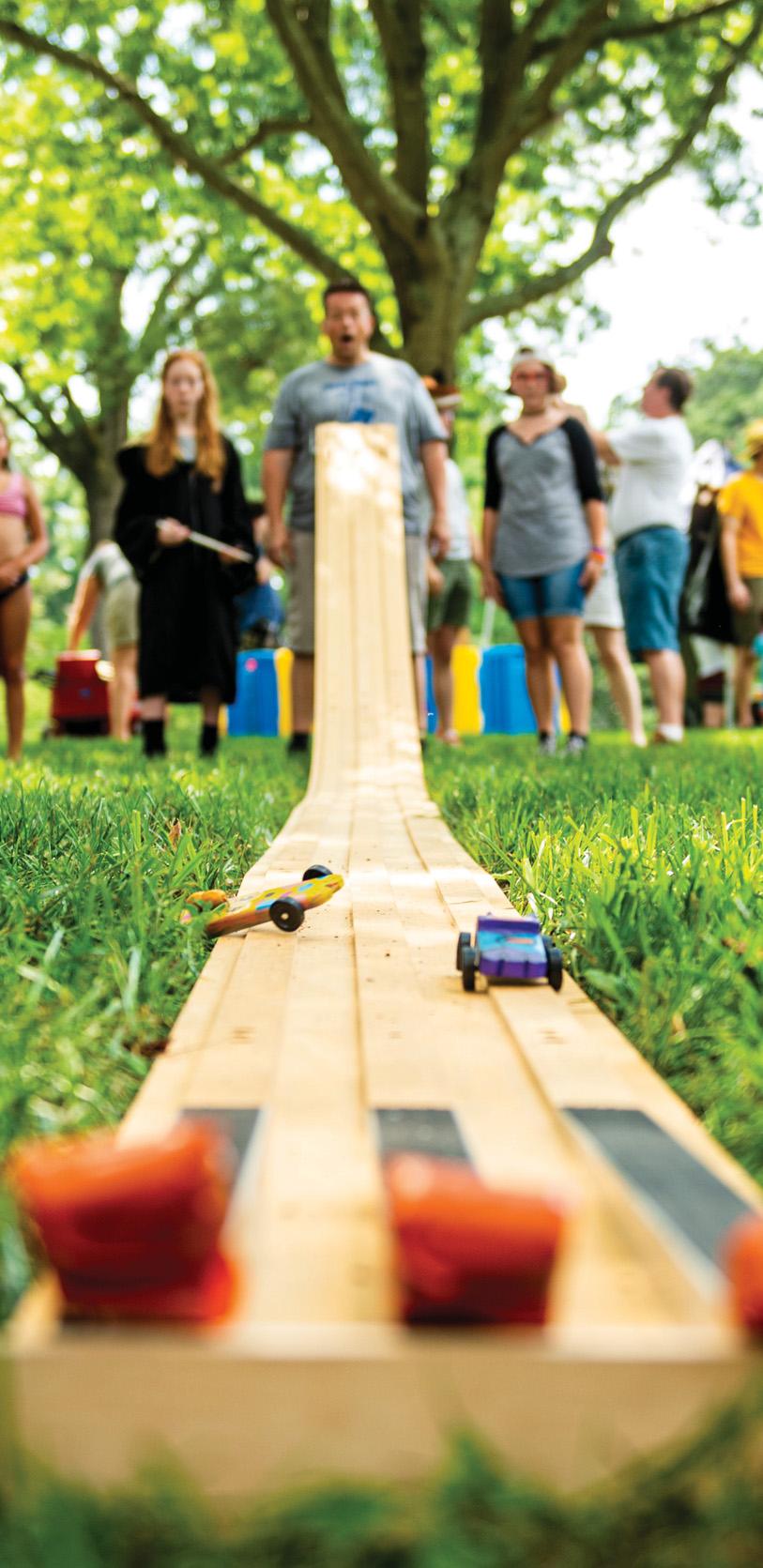
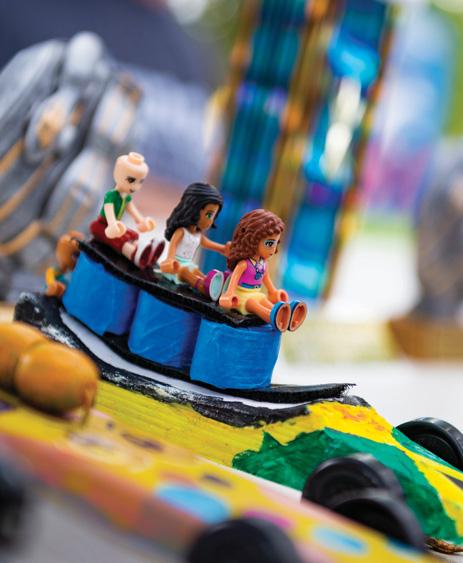
Though driving in the soapbox race is a noble feat best suited for grown-ups, the Kirby Derby is a family affair. Neighborhood kids love dressing up and strutting their stuff in the annual prerace parade, and for little speed demons who can’t wait for their turn at the wheel, there’s a Pinecar Derby to test the best-of-the-best toy cars.
The Art & Soul of Raleigh | 51
AND THEY'RE OFF

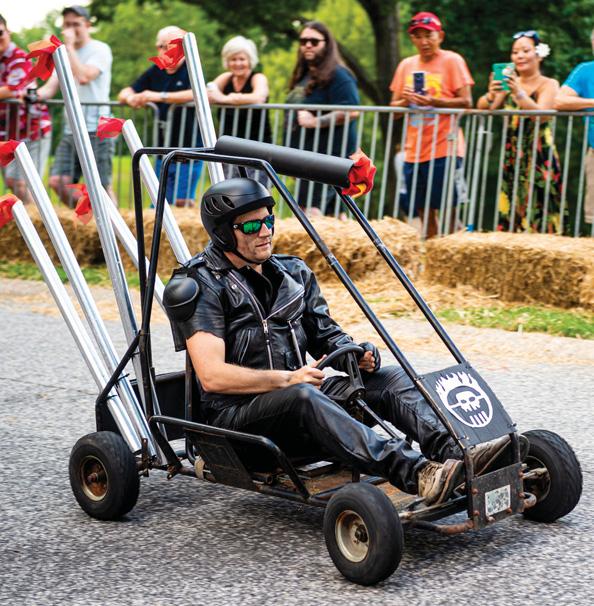
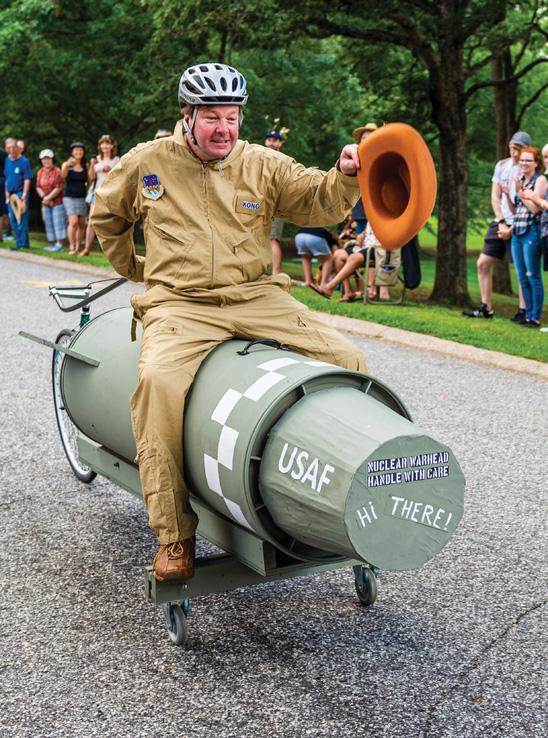
Kirby Derby soapbox cars are traditionally assembled the night before the event. In 2019, Kirby Street residents gathered on driveways to build together in the evening, and transformed into characters from Mad Max and Dr. Strangelove overnight. Many of the cars had their first test drives on the morning of the event.
52 | WALTER
who are very passionate about it.”
“It started as a joke,” says Dell’Anno. “We were at Aly and Beth Khalifa’s house electing a new president for the neighborhood association. Aly left the room, someone nominated him, and he was elected before he even knew he was nominated. When he got back we congratulated him, and he said he would only be president if we had a parade, thinking that would get him out of it. Instead, we embraced the idea.”
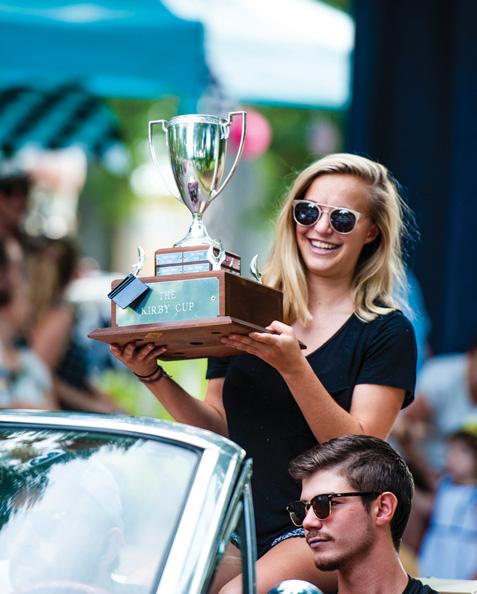
The Khalifas led planning efforts for the first celebration, a simple parade of homemade floats. The crowd-drawing soapbox race (and pinecar derby for younger auto engineers) didn’t become part of the event until the tradition’s seventh year. “People were hemming and hawing about how it was called a derby but there was no race, so we just kind of added one and that’s how we wound up where we are,” said Dell’Anno. The Kirby Cup, the trophy that would eventually be awarded to race victors, entered the picture serendipitously. “A friend of a friend bought the trophy at a yard sale as a gift, and then it got passed on to me,” says Dell’Anno. “We had plates put on it, and now the winner gets their name added to it every year.”
For 15 years, the Derby took place right on Kirby Street, where a sharp turn they call Dead Man’s Curve caused crashes that became the stuff of legends (residents suggest you watch one of the many Kirby Derby crash compilations on YouTube), and spectators mingled while drifting in and out of residents’ homes. It was an invite-only event to keep it small and neighborhood-focused. “We asked media who wanted to write stories about the Derby to do it after the event,” says Dell’Anno. “Then one year, the Friday before the race we were on the front page of the paper.”
The crowds weren’t too bad, and Pullen Park Terrace has had a change of heart in recent years. “Now, we tell people to tell anybody and everybody they talk to about the Derby,” says Dell’Anno. “We want it to be as big as possible.”
Today’s Kirby Derby is a full-blown festival complete with local food trucks
The Art & Soul of Raleigh | 53
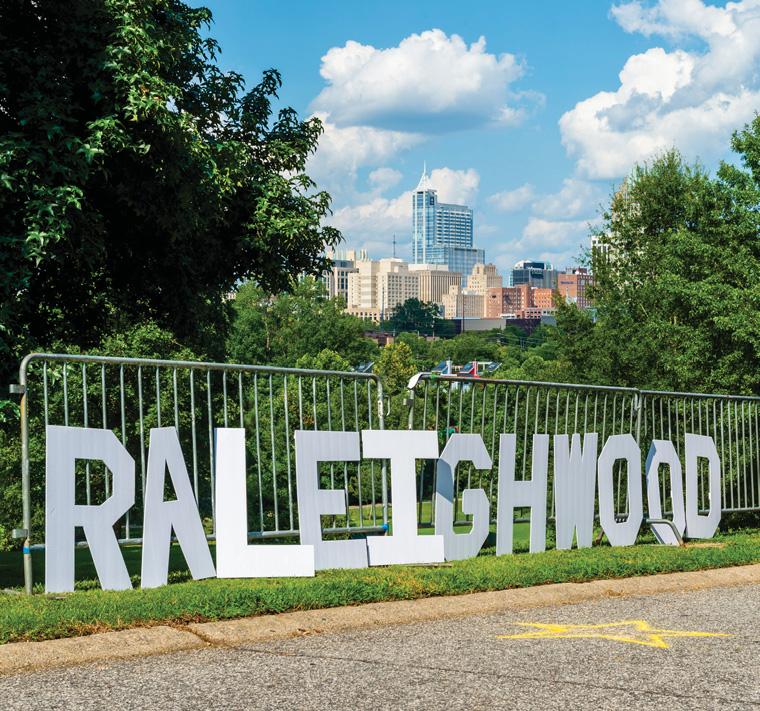
and cold beer, the planning effort still fearlessly led by the Khalifas. Though drivers from around Raleigh can now compete in the soapbox race for the Kirby Cup, the people’s-choice Neighborhood Trophy goes to a Pullen Park Terrace resident as a reminder of the place at the heart of it all. By 2017, the event had gained so much traction that it was moved to nearby Dorothea Dix Park to accommodate growing crowds.
It was a big leap, but the event hasn’t lost its close-knit community roots. “When the Kirby Derby happened in Dix Park, we came together ahead of time and made props. The neighborhood gathered to spray-paint giant stars that we hung from the trees,” says Teed. “I don’t feel like being in Dix Park takes away the neighborhood vibe, because we’re still planning the Derby together.”
The Derby was canceled due to Hurricanes Florence and Michael in 2018 and Covid concerns in 2020 and 2021. But the 2019 Derby (pictured here) drew more adoring spectators than ever before, many of whom are anticipating the Derby’s triumphant return in 2022. The race is planned for Aug. 20, with a Roaring Twenties theme to celebrate the Kirby Derby’s 20th anniversary and kickstart another decade of races.

Teed believes that after such a long hiatus, this year’s Kirby Derby will be especially meaningful. “We haven’t seen each other as much because of Covid, so I think there’s a pent-up desire to come together again. Everybody’s hungry to have these community events,” says Teed. “Also, any ideas from the last two Kirby Derbys that were maybe going to happen but didn’t happen? People are still working on those and ready to use them. I think there’s going to be a bigger response than ever.”
The people of Kirby Street hope their creative momentum will carry through the whole Triangle, inspiring others to celebrate their communities. “I want to encourage other neighborhoods to do similar stuff. The Kirby Derby has really brought our neighborhood together, and it brings out our creativity,” says Dell’Anno. “What Raleigh needs is more parties. More creative parties.”
54 | WALTER
FINISH LINE
What makes a Derby-winning car? Through his years of commentating on soapbox races, emcee Chris Dell’Anno has observed that a car’s performance often depends on having a strong push crew to get things rolling at the start of the race. Frequent competitor and car creator Danielle Teed notes that Kirby Cup victors usually have big wheels for speed and squat, maneuverable shapes for tackling turns. Sometimes, prizes are also awarded for Best Use of Theme and Best Use of Bamboo (to encourage cutting invasive bamboo in Pullen Park Terrace). But the secret of the Kirby Derby is that nobody really cares about the trophies — the real prizes are friendship and happy memories.
The Art & Soul of Raleigh | 55
This University Park bonsai enthusiast’s collection connects him to his past
DEEPLY ROOTED
by ADDIE LADNER photography by LIZ CONDO
56 | WALTER

The Art & Soul of Raleigh | 57
Milos Novak grew up in the village of Dolní Dobrouč in Czechoslovakia. He spent much of his free time wandering the mountains nearby and the streams and forests that wrapped around them, fascinated by the shapes that Mother Nature had created in the larch and beech trees that grew alongside the cliffs.
Born in the late 1970s and raised during the country’s socialist regime, Novak’s family had little income and grew their own produce. He can still recall his hardworking father and grandfather’s bountiful plots of carrots, tomatoes and apple, plum and pear trees, which he would help tend for production. “I learned early on that you could control the growth of a tree, and how to graft and prune just right,” Novak says. “I learned from watching my dad, who learned from his dad.”
During high school, he’d bike 15 kilometers a day to work in construction, and one day discovered a nearby bonsai nursery. “I had nothing else to do, and I love plants so I just popped in,” he says. “That’s when I saw my first bonsai.” A Japanese art form, bonsai are the product of growing miniature-sized plants, trees and shrubs — typically around 12 inches tall — by vigilantly controlling their roots and branches. It was the only nursery of its kind in the area, and Novak became fascinated by this unique and artful way to grow trees. There, he bought The Complete Book of Bonsai by Harry Tomlinson, which he has since read front-to-back dozens of times to perfect his craft.
From Tomlinson’s book, Novak learned that there are two ways to get a bonsai. These diminutive plants can grow organically, trimmed or constrained by wind, animals or difficult terrain. Or they can be slowly, carefully crafted by human hands. “Pretty much any tree can be manipulated into a bonsai, a smaller version of itself,” he says. Inspired by the forms and lines of these living works of art, he attempted
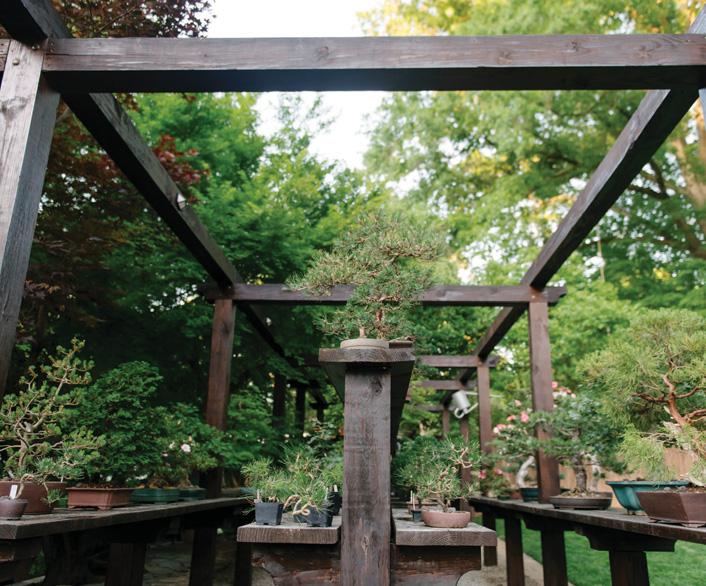
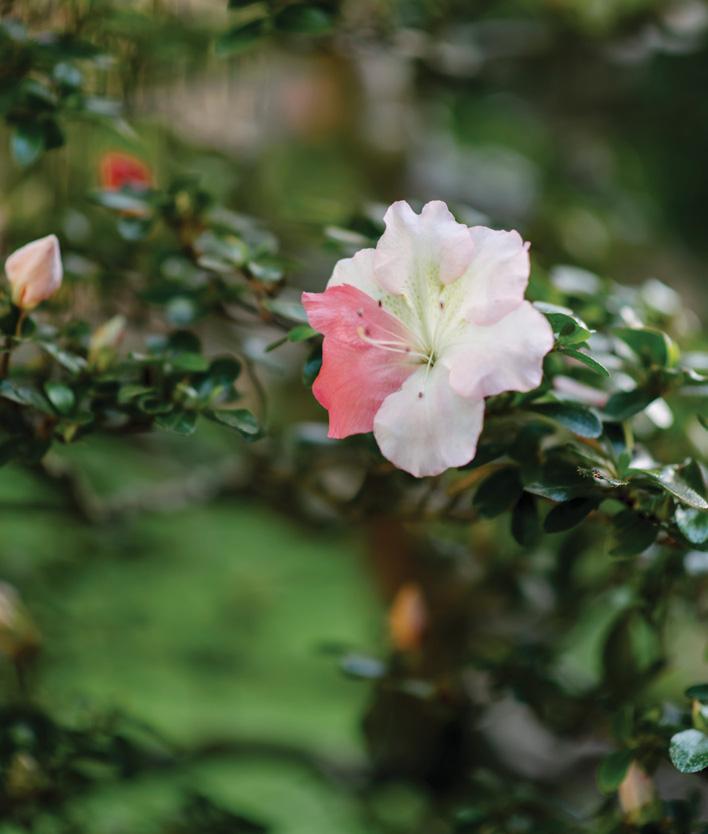
58 | WALTER
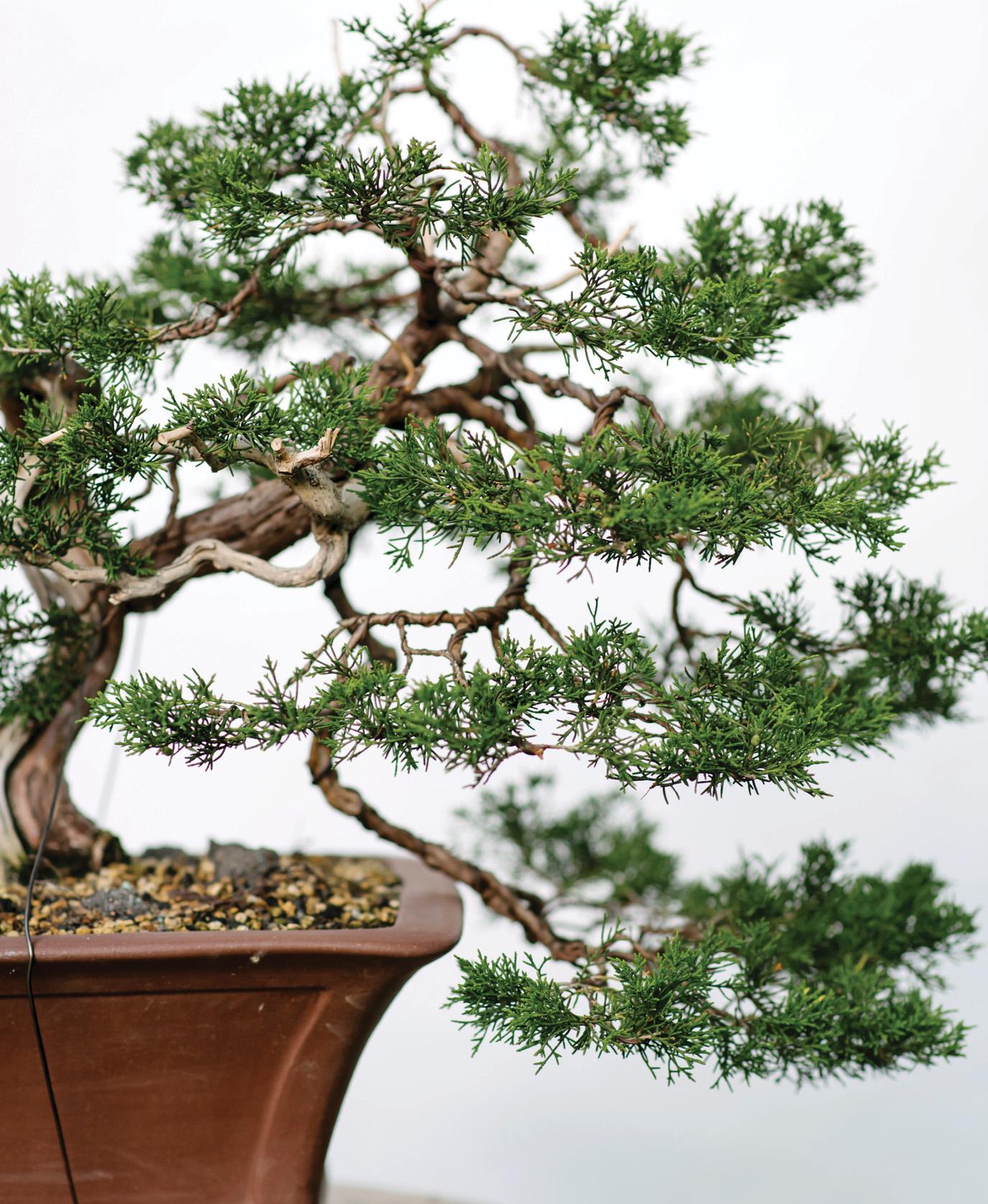
The Art & Soul of Raleigh | 59
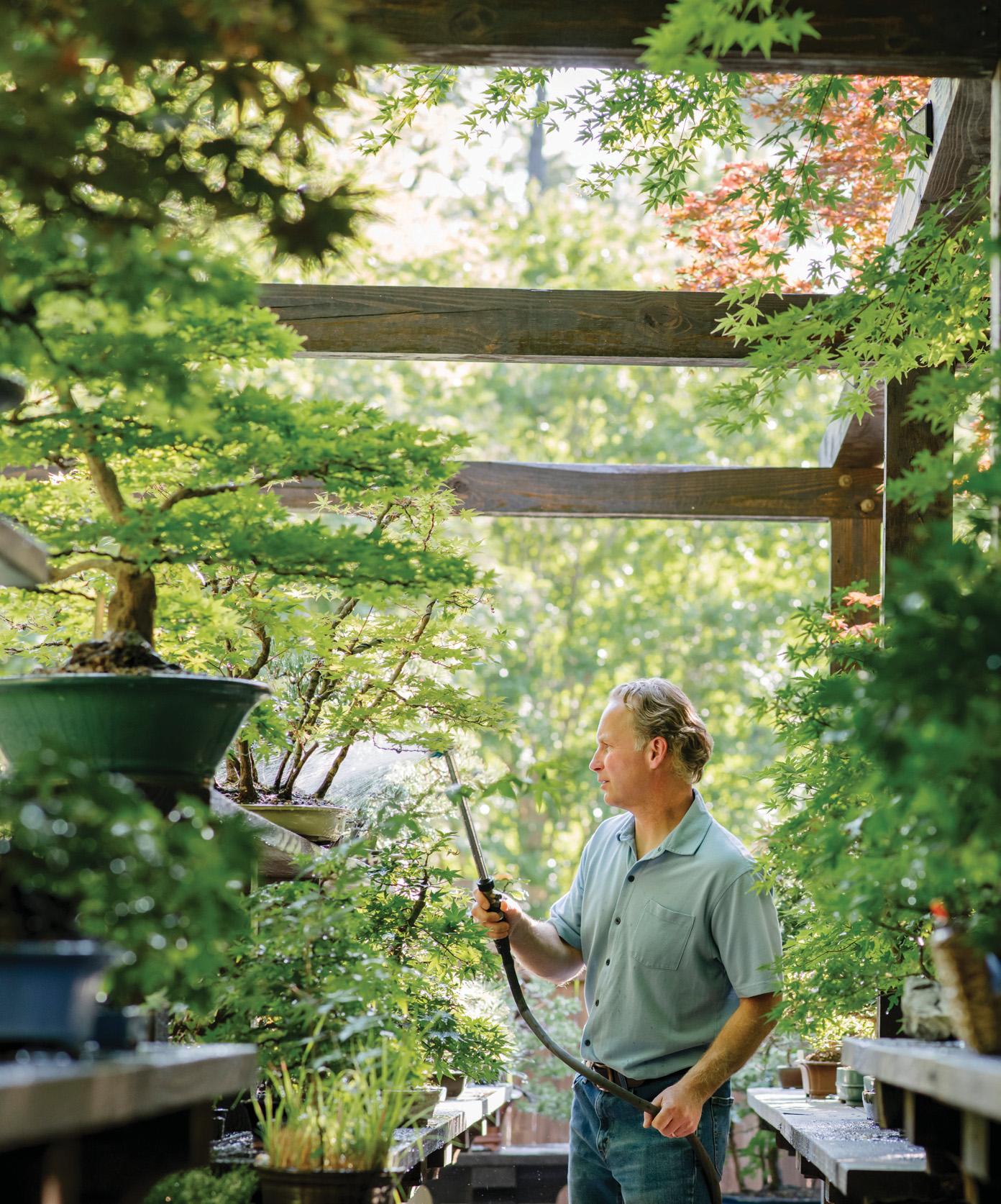
60 | WALTER
his first one, a Shimpaku Juniper (an evergreen conifer native to Japan), at age 18. “It wasn’t perfect, but it was good. I just really enjoyed the process,” he says. He kept practicing.
Novak moved to the United States at age 22 to play semiprofessional sports, then settled here and started working in construction. He left his first collection back home, but he was quick to start a new one. “Even in my first apartment, I had my bonsai and little flowers growing,” he says.
For Novak, who’s now in his 40s, this intense hobby is both science and art. “You’ve got to look at the tree and say, What group is this tree in? What is its potential? What about the foliage? What shape? Is this a young and skinny or an old and round tree? What part do I want the front of that tree to be?” he says. “It is an art. I like to look and I can see styles.”
Gently exposing the roots over time, Novak cultivates branches to grow at certain angles and grafts on new branches to create different shapes. From wisteria to juniper to ficus to cypress, there are few plant species Novak hasn’t raised as bonsai.
For each of his plants, he knows how long he’s had it, what its history is and what he wants it to look like. “One Chinese juniper I have is close to probably 100 to 125 years old. Some of my Japanese maples are probably around 40 years old,” he says.
On some of his bonsai plants, you can see metal wrapped around branches and fresh patches of paste from where Novak sealed spots over after removing branches or adding new ones. “If I think a branch needs to go here, I will find a way to graft a branch there,” he says
He tends to his bonsai for at least an hour each day, and sometimes as many as three. Novak’s bonsai tools include shears, a wire cutter and concave cutters. “When you cut the branches, you want to cut small twigs. For bigger branches, I need a concave cutter, which can help the branch heal the wound. Pliers are used for squeezing and holding things in place.”
The soil requires attention, too. It
The Art & Soul of Raleigh | 61
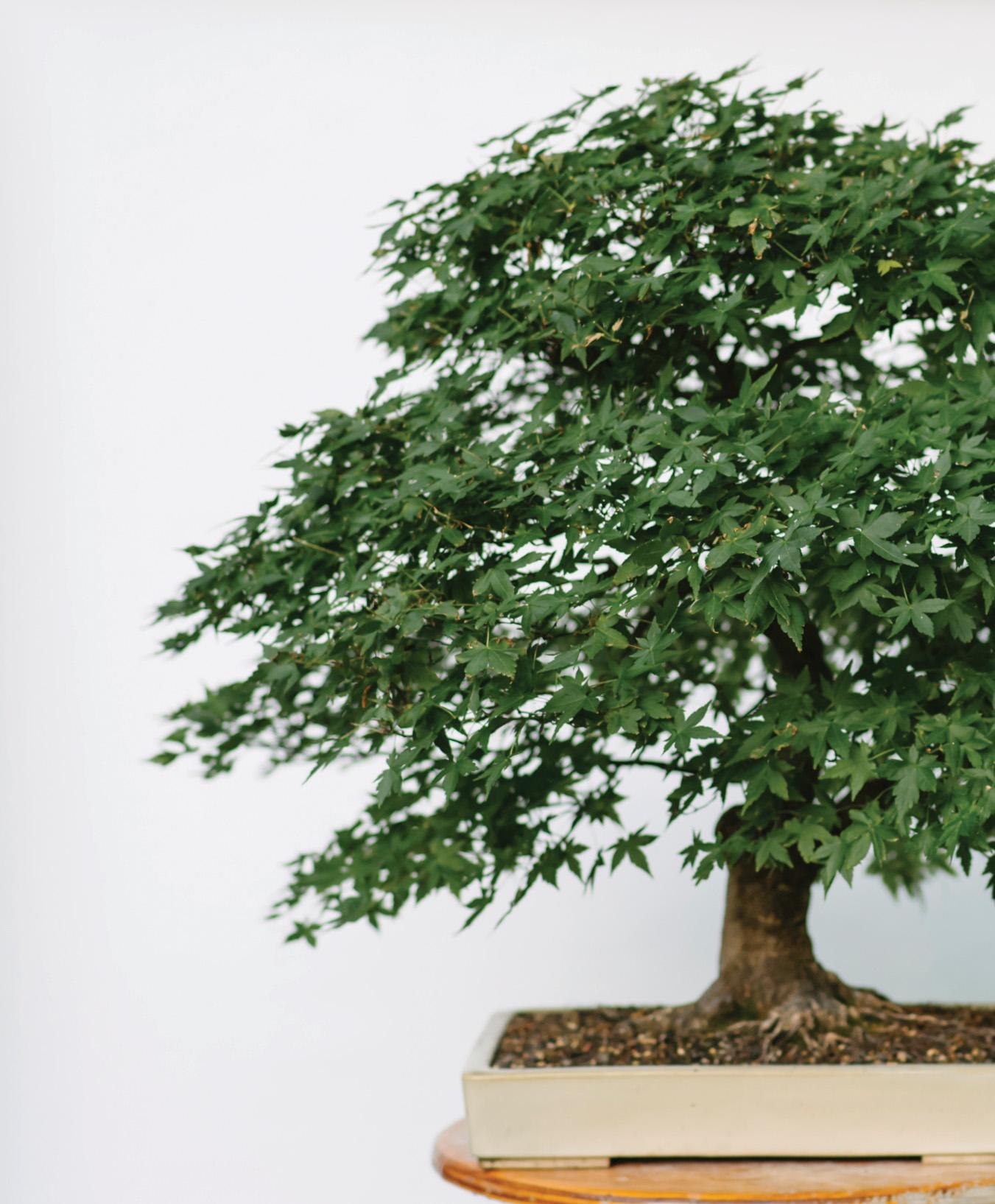

62 | WALTER
“Pretty much any tree can be manipulated into a bonsai, a smaller version of itself.”
— Milos Novak
needs to be more porous than typical organic matter to allow for good drainage, since the bonsai will spend their lifespan in a shallow ceramic vessel. “My stuff is a mixture of lava rock, pumice and Akadama, a red clay. I special-order and mix it myself,” he says.
Novak minds the plants’ roots, and how they interact with the vessel: “With bonsai, the roots are more exposed, but they are still the tree’s foundation, and you want a strong tree.”
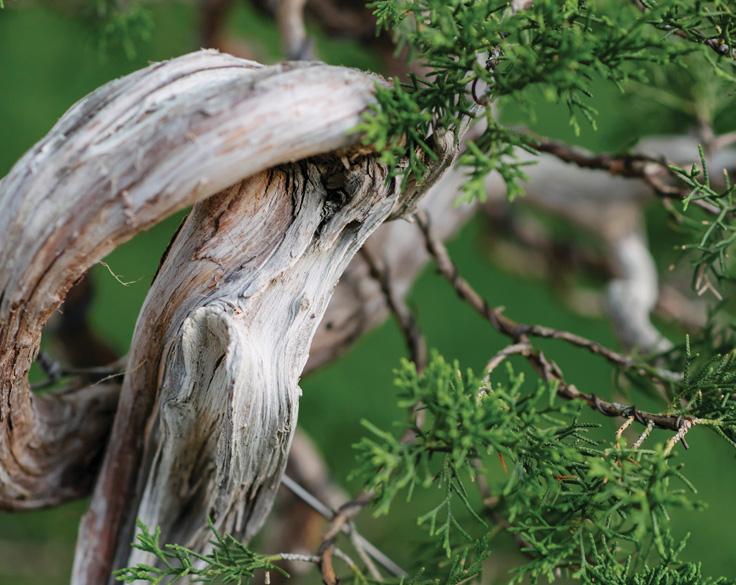
He’s been working on one special bonsai, a petite Japanese Maple, for 10 years. “I’m proud of that one. It has a good root base, good taper, good branch structure, an informal but upright style,” says Novak. “It is mostly straight with some wiggle.” The maple came from Julian Adams, who runs a bonsai nursery in Lynchburg, Virginia. “He’s an unsung hero in American Bonsai,” says Novak.
Another on display is a tri-colored azalea. To create it, he grafted three different azaleas onto one plant — now it displays dainty blooms in pink, red and white. Though miniature, each of his bonsai is majestic with winding roots, knobby edges, delicate leaves and greenery of different shapes.
Today, Novak houses most of his bonsai collection in a 5-by-40 foot wood pergola in his University Park backyard. “At one point, I easily had more than 200,” he says. Since he and his wife Lynn had their daughters Lida and Karlie, his collection has decreased — to no less than 100. (That he can count, anyway.)
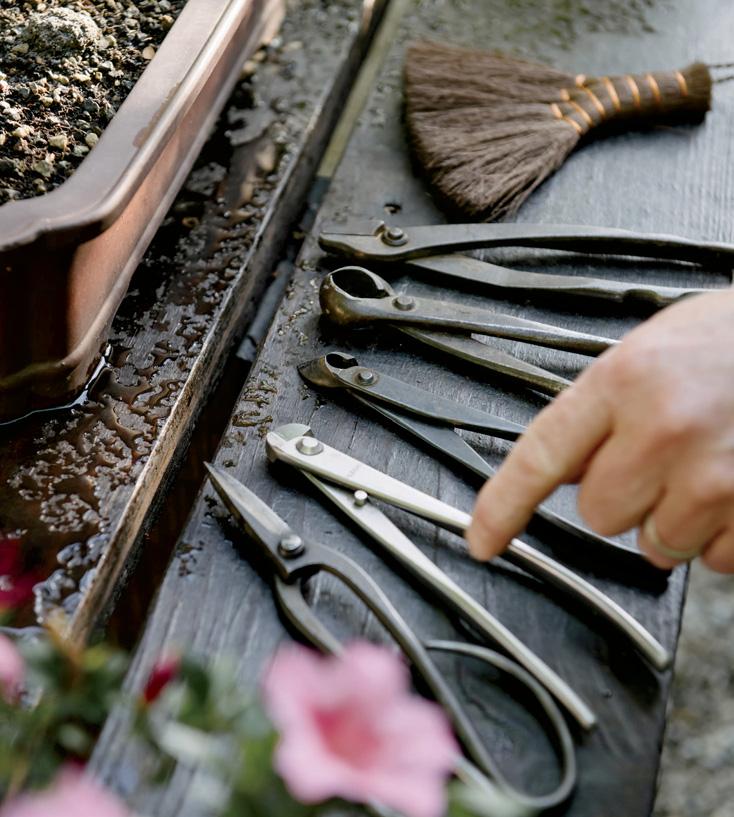
Surrounding the bonsai arbor is a wealth of other lush plants: a full-size Japanese Maple, Rhododendron, evergreens and Lynn’s favorite, roses. But other than the roses, Lynn says, the lush garden is mostly her husband’s doing. “Let’s face it, this is all Milos,” she laughs. “It comes naturally to him; he has this artistic side.”
The word bonsai has Japanese origins and loosely translates to “plant-in-pot.” But to Novak, the petite plants are much more. “This is art,” he says. And just like where he came from, “this is a piece of me.”
The Art & Soul of Raleigh | 63
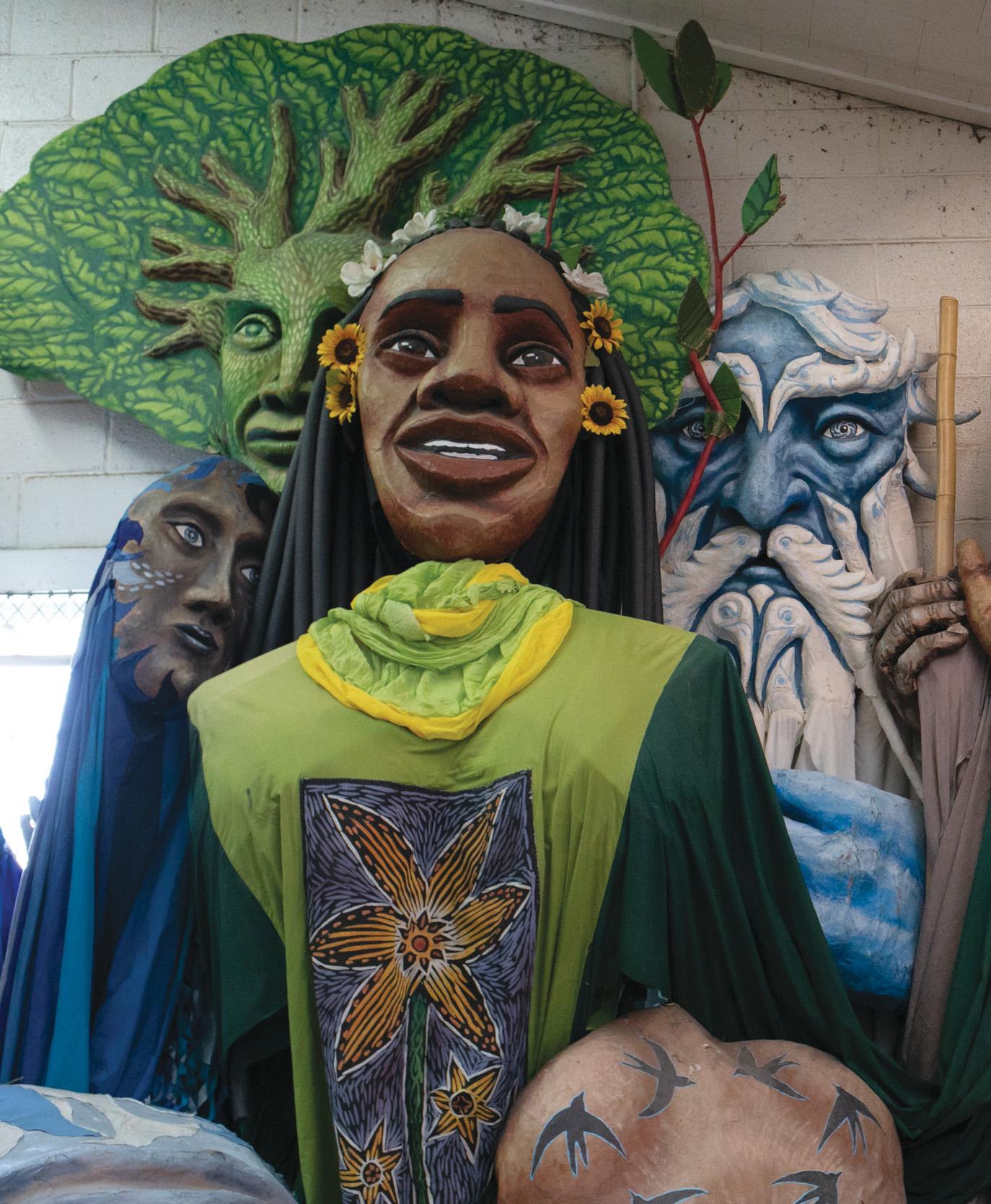
64 | WALTER
Paperhand Puppet Intervention uses art to spark imagination and activism
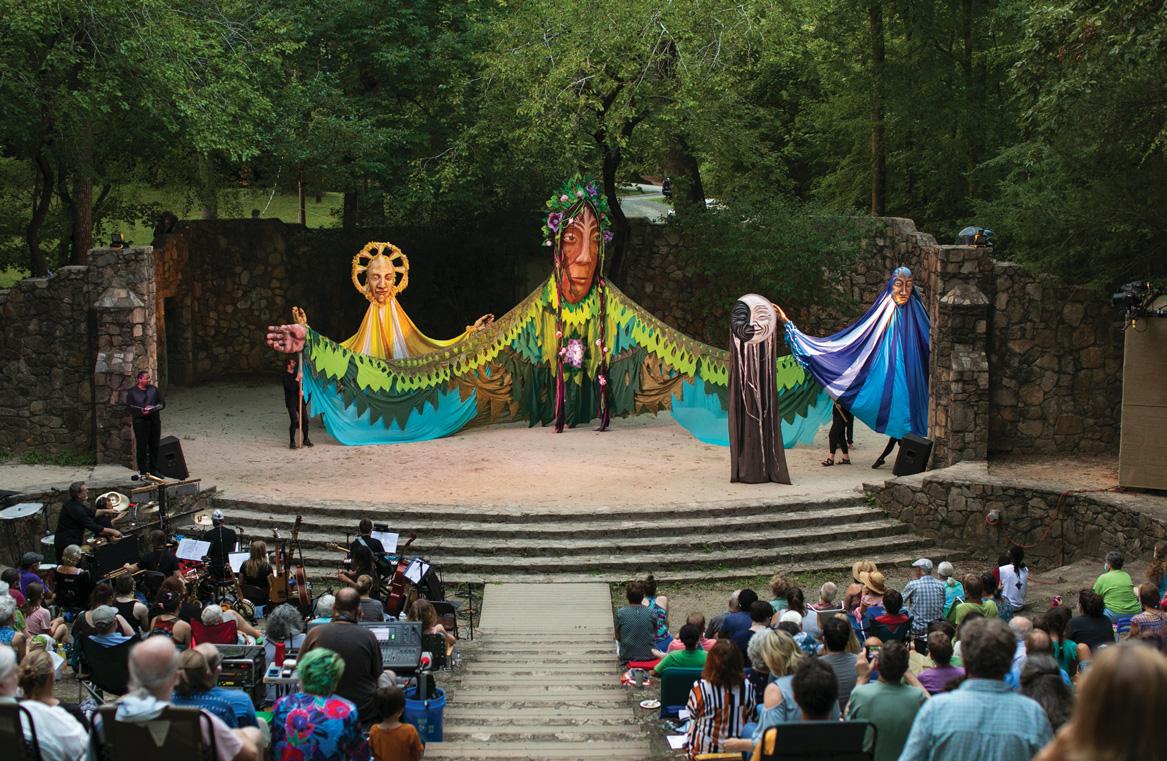
WONDER WORLD of
by COLONY LITTLE
photography by S.P. MURRAY
The Art & Soul of Raleigh | 65
They appear out of the shadows at dusk, emerging from trees and cobblestone walls. There’s a colossal face with exaggerated features and deeply lined wrinkles. Eyes peer from behind a wall of brilliant leaves. A bird of many colors descends, billowing a trail of silk. These figures are both familiar and foreign, materializing from an enchanted world to briefly inhabit ours.
They are all puppets, fantastical creatures that are part of the Paperhand Puppet Intervention. The brainchild of founders and directors Donovan Zimmerman and Jan Burger, Paperhand produces performances that combine multiple forms of puppetry — including rod and hand puppets, shadow puppets and stilt dancing — with live music, poetry and dance. The display is part of their annual summer performance at
the cavernous, open-air Forest Theatre at the University of North Carolina at Chapel Hill. Here, these larger-than-life masked creatures have invited audiences into a world of wonder for 22 seasons.
“Puppetry gives this palpable suspension of disbelief,” says Zimmerman. “I’ll bring a puppet into the audience and I’ll see them with their arms stretched out; I see them wanting to connect in that moment.”
Zimmerman and Burger met while working the Haw River Learning Celebration in 1998 and formed Paperhand one year later. Inspired by the Vermont-based troupe Bread and Puppet, which combines puppeteering with political theater, Paperhand creates work meant to inspire and promote social change around issues like environmental preservation, consumerism and overdevelopment. “We want to touch people’s hearts,” says Burger. “We start with ancient stories but look at what’s
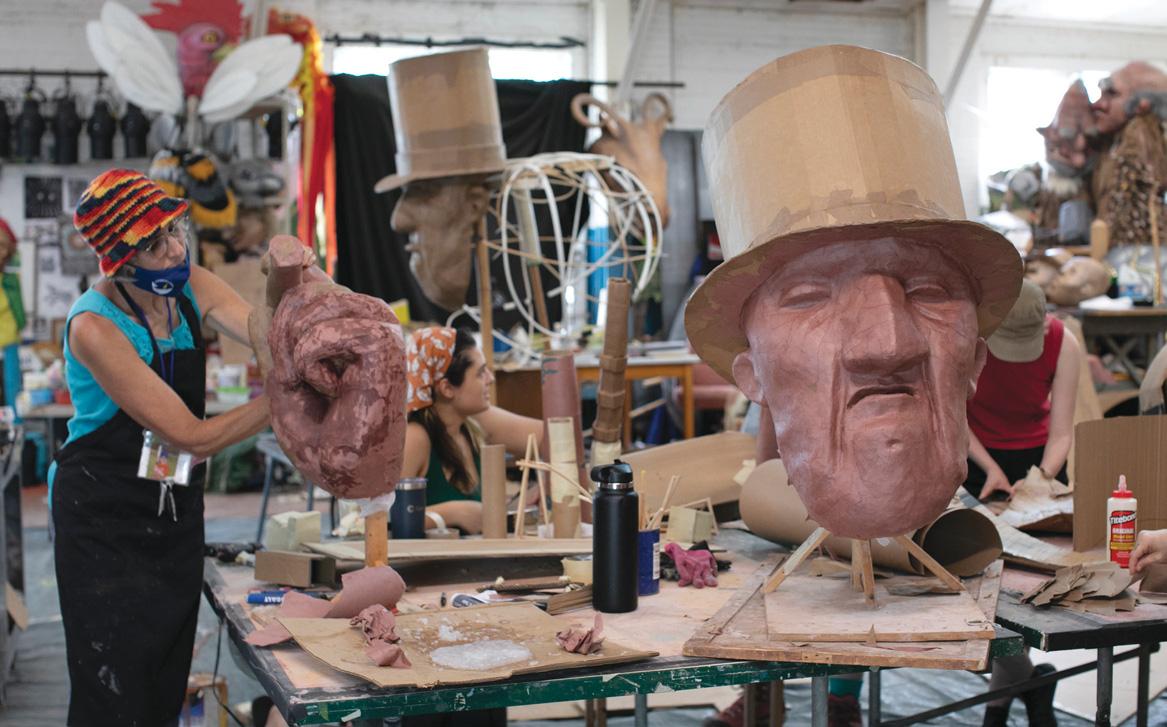
happening in the world and change them to speak to people in a way that’s accessible and not just information.”
Paperhand produces an annual summer pageant that they perform August through September at the Forest Theatre and the North Carolina Museum of Art, then spend the rest of the year performing at parades, special events, protests and through collaborations with other cultural groups, like the North Carolina Symphony.
Paperhand’s biggest time for creation is the summer. Each year, Zimmerman and Burger choose a different story to explore, like 1998’s The Water of Life, 1999’s The Old Cow Who Saved the River or 2013’s Invisible Earth, which used old parables to offer a call to help the environment, or 2006’s As the Crow Flies, which incorporated American folk tales to address social justice.
Then, along with some dozen artists, interns and volunteers, they spend
66 | WALTER
Crafters work on puppets inside the Saxapahaw studio.
Paper mâché masks, ready to be painted. In the background, a mask in progress.
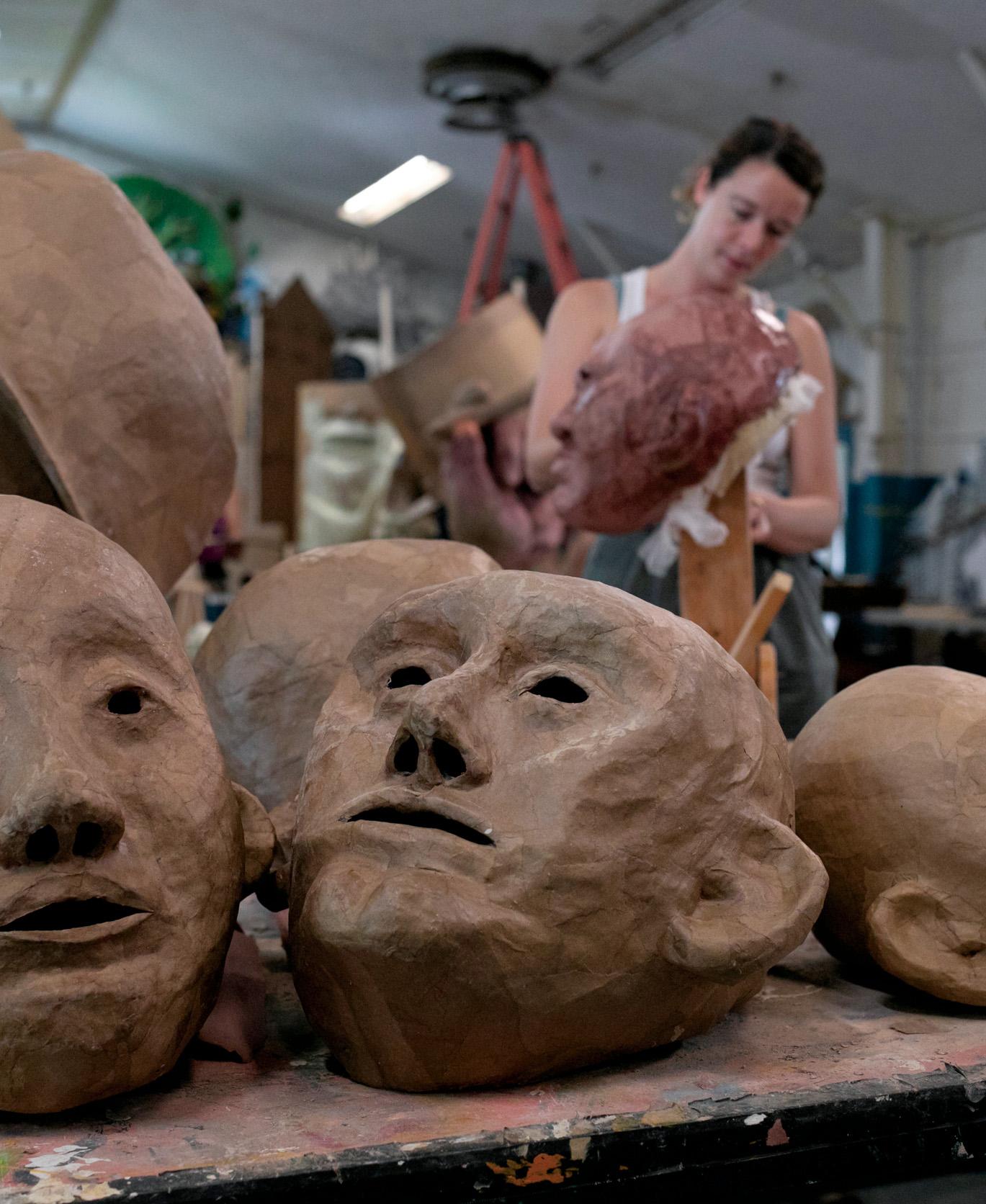
The Art & Soul of Raleigh | 67
months in their Saxapahaw workspace creating the performance: outlining plots, sketching puppets, sewing fabric, writing lyrics and humming melodies. “It’s not the nicest time to be in the studio,” laughs Burger. “It’s ridiculously hot, we’re all sitting in front of fans.”
Piece by piece, the show comes together, each element building on the other. “The show is not written when we start making the puppets, but we generally know where we’re going,” says Burger. As the puppets are made and the puppeteers start to move them, the musicians get inspiration, and vice versa: movement and storylines are inspired as the melodies develop. “The musicians create their own universe; all we can do is give them inspiration,” says Burger. “I’ll say, this part should be energetic or sad, or I’ll feed them words and they’ll come back with a rhyming scheme. Sometimes one sentence will inform an entire piece that
blows us away.”
But the huge puppets, with their overscale faces and dramatic features, are what the studio is best known for. These are mostly made of paper mâché and cardboard, through techniques they’ve perfected over decades. Using found objects, newspaper and clay, the molds are made, and the paper mâché faces are built on top of them. Then paint, fabric and other materials are added for details. “The scale and complexity of the puppets vary wildly; sometimes there are all kinds of mechanisms and rubber bands and ropes to pull to operate them,” says Burger. Paperhand often reuses the molds, too.
They’ll let the clay dry out completely, then break it off; when they need it again, they’ll soak it in water to reconstitute it. And sometimes a mold will get a makeover to make it work for a new project: “Sometimes we’ll take a rat and tear the nose off and make it a turtle, then stick on ears and a nose to make it a human,” says Burger. Zimmerman calls their team of artists, fabricators, interns, musicians and performers his “Paperhand Fam.” “We’re creating this culture of care, creativity and consent,” he says. “Creativity is at the core of it, but it’s also about creating care in how we speak to each other and how

00 | WALTER 68 | WALTER
“We want to touch people’s hearts. We start with ancient stories, but look at what’s happening in the world and change them to speak to people in a way that’s accessible and not just information.”
— Jan Burger
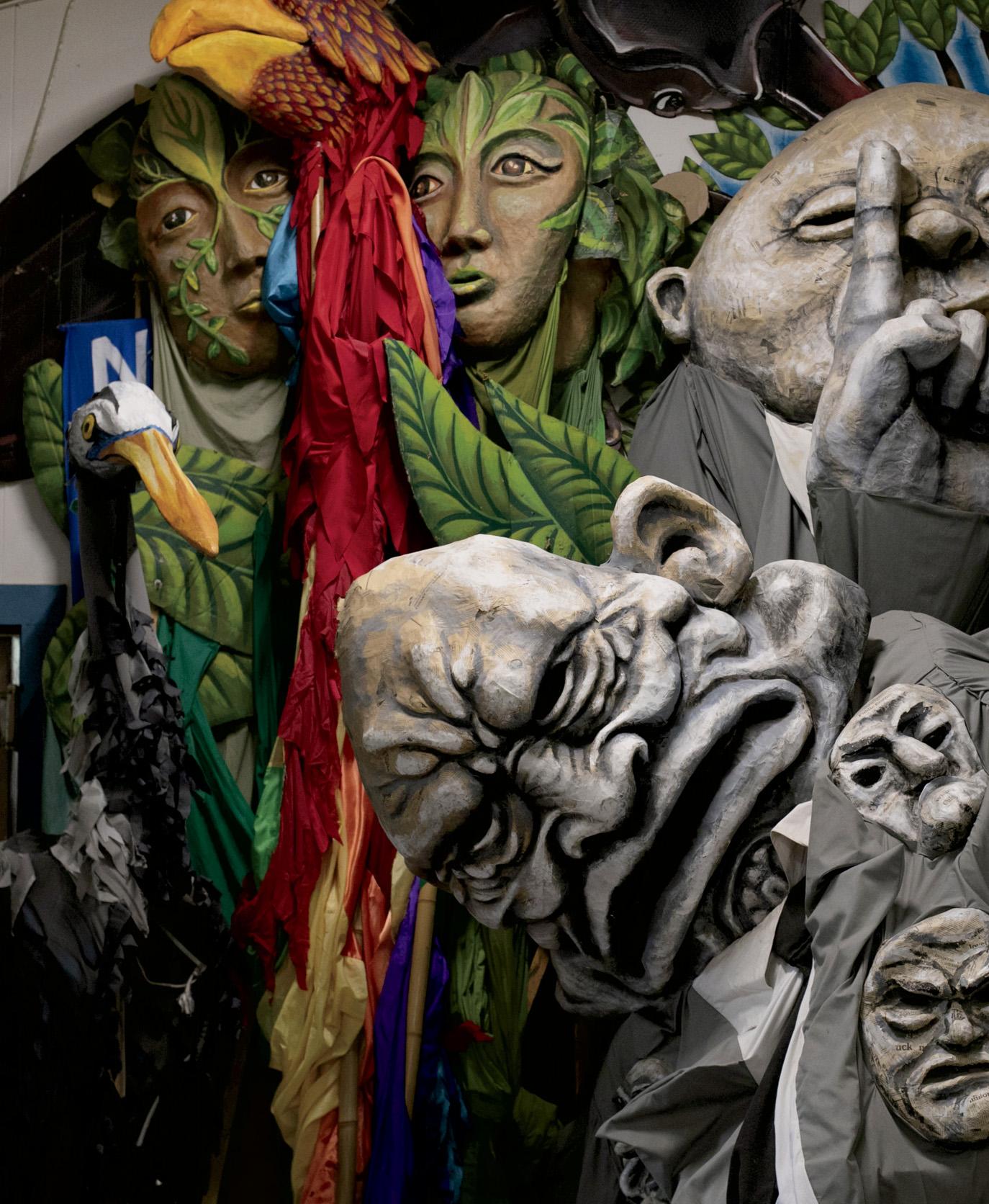
The Art & Soul of Raleigh | 69
This page: Some of the puppets. Opposite page: Zimmerman and his team add layers of paper mâché.
we make space for each other to shine.” Filmmaker Marc Levy followed Paperhand through the final stages of planning their 2019 show, We Are Here, and was struck by its sense of community. “Paperhand seems to function outside of the mainstream confines of the capitalistic system, and it’s also incredibly connected to its purpose of saving the world,” says Levy. “These people live according to their highest ideals.”
This year, Paperhand will explore the theme of time with The Meanwhile Clock: and Other Impossible Dances. The performance is based on Michael Ende’s 1973 fantasy novel MOMO, about an orphaned girl with a gift for listening who is encouraged to be a compliant cog in the wheel of progress. Among the whimsical elements of the show, a specter of chaos and conflict looms.
For Zimmerman and Burger, The Meanwhile Clock is a full-circle moment. “We got introduced to this story at the
inception of Paperhand, when we first started doing the Haw River Learning Celebration,” says Zimmerman, who notes that listening was an integral part of the festival’s team-building practice. “We would do check-ins where everyone would get a chance to speak from the heart and the others would listen actively without commenting.”
“As artists, when you’re painting a picture or sculpting a mask, that’s a practice of being present,” continues Zimmerman. “I think Jan and I framed our own practice as a tool for our own self-healing and a tool for activism to promote more helpful and less harmful ways of being.”
Through all of their performances, the Paperhand Puppet Intervention use the power of storytelling to get audiences thinking. “I don’t believe that Paperhand is in the position to give answers,” says Zimmerman, “but I believe very strongly in leaning into the questions and being present.”
CREATIVE PROCESS
A puppet head mold is assembled on a post made from a two-by-four nailed to a platform. It often starts with a found object (like an old paint can) as the base. Crafters cover the base with thick plastic bags, then wrap everything tightly with tape. Then, they start to add features using balled-up newspaper, tape or thin cardboard stapled in place.
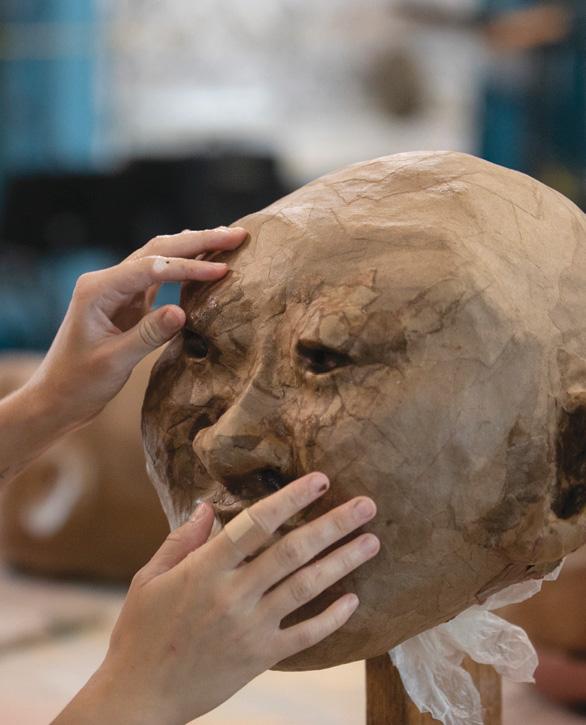
Once they have the likeness they want, crafters cover everything with a thin layer of clay to sculpt the features. When the clay dries, it gets covered with thin plastic. From there, they add six layers of paper mâché. When the paper is dry, the crafter will cut the mask off the base to add paint, fabrics and other detailing, and, finally, the mechanics to make it function as a puppet.
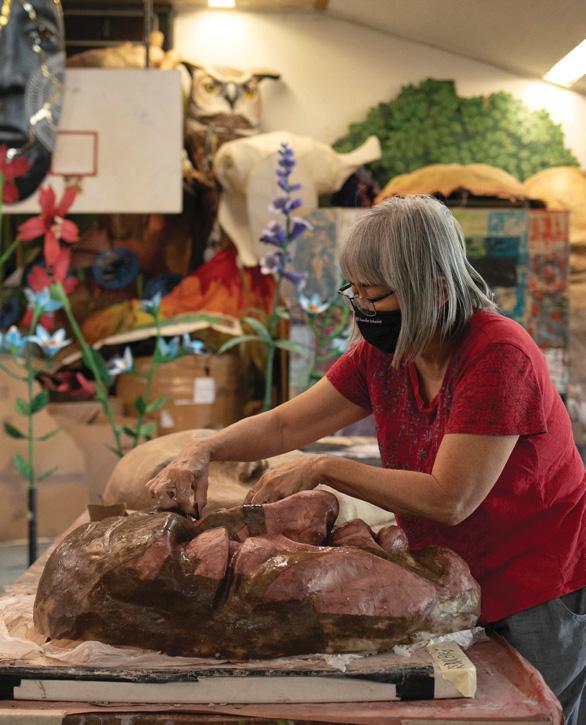
70 | WALTER
Adding more layers to the puppet heads.
STORIES THAT TRANSPORT


Some words have the power to pull you straight from your chair into another world. In this year’s Summer Reading Issue, three of North Carolina’s most prestigious authors have done just that: created narratives with such a deep sense of place that the location becomes a character in itself.
On the following pages, you’ll find original fiction from Clyde Edgerton, Ron Rash and Lee Smith that will pluck you right out of Raleigh. Enjoy the voyage.
The Art & Soul of Raleigh | 71
Romantic Fever
by LEE SMITH illustration by MATTHEW SHIPLEY
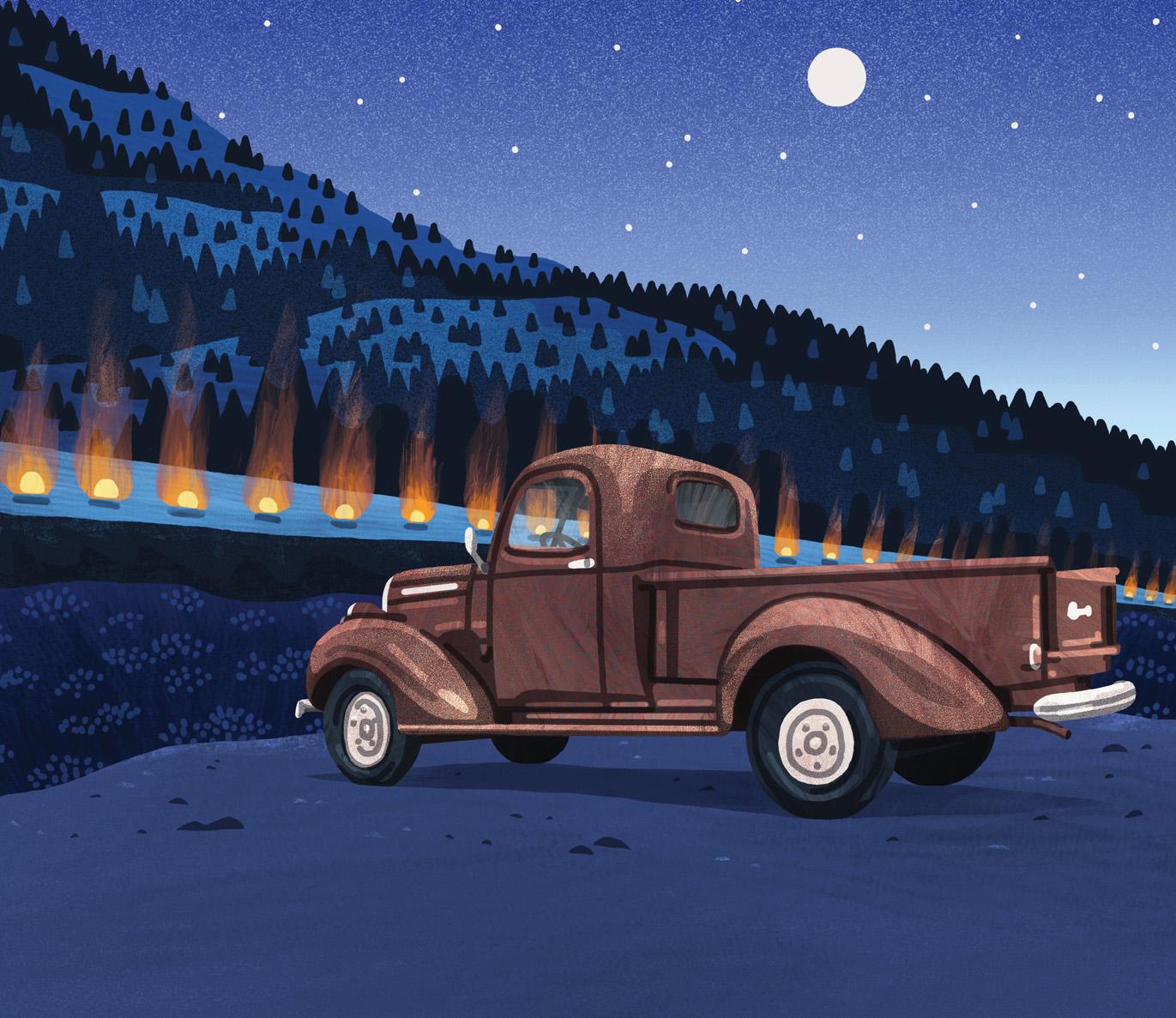
The house I grew up in was one of a row of houses strung along a narrow river bottom like a string of beads. We were not allowed to play in the river because they washed coal in it, upstream. Its water ran deep and black between the mountains, which rose like walls on either side of us, rocky and thick with trees.
My mother came from the flat exotic eastern shore of Virginia, and swore that the mountains gave her migraine headaches. Mama was always lying down on the sofa, all dressed up. But there was no question that she loved my father, a mountain man she had chosen over the well-bred Arthur Banks of
Richmond, “a fellow who went to the University of Virginia and never got over it,” according to Daddy. Mama suffered from ideas of aristocracy herself. Every night she would fix a nice supper for Daddy and me, then bathe and put on a fresh dress and high heels and her bright red lipstick, named “Fire and Ice,” and then sit in anxious dismay while the hour grew later and later, until Daddy finally left his dime-store and came home.
By that time the food had dried out to something crunchy and unrecognizable, so Mama would cry when she opened the oven door, but then Daddy would eat it all anyway, swearing it was the most delicious food he’d ever put in his mouth, staring
72 | WALTER
hard at Mama all the while. Frequently my parents would then leave the table abruptly, feigning huge yawns and leaving me to turn out all the lights. I’d stomp around the house and do this resentfully, both horrified and thrilled at the thought of them upstairs behind their closed door.
I myself was in love with my best friend’s father, three houses down the road. Mr. Owens had huge dark soulful eyes, thick black hair, a mustache that dropped down on either side of his mouth, and the prettiest singing voice available. Every night after supper, he’d sit out in his garden by the river and play his guitar and sing for us and every other kid in the neighborhood, who’d gather around to listen.
Mr. Owens played songs like “Wayfaring Stranger” and “The Alabama Waltz.” He died the year we were thirteen, from an illness described as “romantic fever.” Though later I would learn that the first word was actually “rheumatic,” in my own mind it remained “romantic fever,” an illness I associated with those long summer evenings when my beloved Mr. Owens played the old sad songs while lightning bugs rose like stars from the misty weeds along the black river and right down the road — three houses away — my own parents were kissing like crazy as night came on.
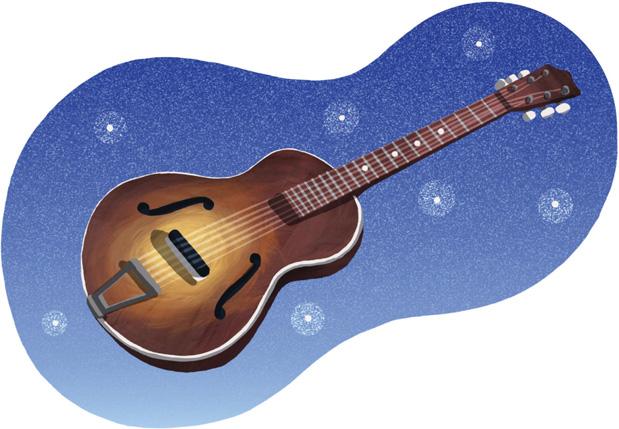
II
The link between love and death intensified when my MYF group (that’s Methodist Youth Fellowship) went to Myrtle Beach, where we encountered many exotic things such as pizza pie and Northern boys smoking cigarettes on the boardwalk. Our youth leader, who was majoring in drama at a church school, threw our cigarettes into the surf and led us back up onto the sandy porch of Mrs. Fickling’s Boardinghouse for an emergency lecture on Petting.
“A nice girl,” she said dramatically, “does not Pet. It is cruel to the boy to allow him to Pet, because he has no control over himself. He is just a boy. It is all up to the girl. If she allows the boy to Pet her, then he will become excited, and if he cannot find relief, then the poison will all back up into his organs causing pain — and sometimes — death!” She spat out the words.
We drew back in horror and fascination.
III
Of course it wasn’t long before I found myself in the place where I’d been headed all along: the front seat of a rusty old pickup, heading up a mountain on a dark gravel road with a wild older boy — let’s call him Wayne — whom I scarcely knew but had secretly adored for months. This was not the nice boy I’d been dating, the football star/student government leader who’d carried my books around from class to class all year and held my hand in study hall. My friends were all jealous of me for attracting such a nice boyfriend; even my mother approved. But, though he dutifully pressed his body against mine at dances in the gym whenever they played “The Twelfth of Never,” our song, it just wasn’t happening. That fiery hand did not clasp my vitals as it did in Jane Eyre whenever she encountered Mr. Rochester.
So I had seized my chance when Wayne asked me if I’d like to ride around sometime. “You bet!” I’d said so fast it startled him. “I’d love to!” Wayne was a big, slow-talking boy with long black hair that fell down into his handsome, sullen face. He wore a ring of keys on his belt and a pack of cigarettes rolled up in the sleeve of his T-shirt. He did not play sports. I admired his style as much as I admired his family — or lack of family, I should say, for he lived with his uncle in a trailer out near the county line. Wayne smoked, drank, and played in a band with grown-up men. He was always on the Absentee Hot List, and soon he’d be gone for good, headed off to Nashville with a shoebox full of songs. We jolted up the rutted road through dense black woods. My mother would have died if she’d known where I was. But she didn’t. Nobody did.
I was determined to Pet with Wayne even if it killed him. Finally we emerged onto a kind of dark, windy plateau, an abandoned strip mine set on top of the mountain. He drove right up to the edge, a sheer drop. I caught my breath. On the mountainside below us were a hundred coke ovens sending their fiery blasts like giant candles straight up into the sky. It was like the pit of hell itself, but beautiful. It was the most beautiful thing I’d ever seen. For some reason I started crying.
“Aw,” he said. He screwed the top off a mason jar and gave me a drink, which burned all the way down. “You know what?” He pulled me over toward him. He smelled like smoke, like alcohol, like the woods.
“What?” I said into the sleeve of his blue jean jacket
“They was a boy killed in one of them ovens last month — fell in, or throwed himself in, nobody ever did know which.”
“Was there?” I scooted closer.
“Yep, it was a boy from over on Paw Paw, had a wife and two little babies. Gone in the twinkling of a eye, just like it says in the Bible.” He snapped his fingers. “Right down there,” he said into my hair.
“That’s awful.” I shuddered, turning up my face for his kiss, while below us the coke ovens burned like a hundred red fountains of death and I felt the fiery hand clutch my vitals for good.
Finally, I thought.
Romantic fever.
The Art & Soul of Raleigh | 73
Kephart
 by RON RASH
 illustration by LYUDMILA TOMOVA

74 | WALTER

The Art & Soul of Raleigh | 75
Horace Kephart Is Held for Observation
FORMER LIBRARIAN ARRESTED AS HE WAS WALKING TOWARDS EADS BRIDGE
Horace Kephart, aged 42 years, residing at 1821 Kennett Place, who was succeeded on February 1 last as librarian of the Mercantile Library by William L. R. Gifford, after he had held the position for 14 years, was arrested at 2 o’clock yesterday afternoon and placed in the observation ward at the city hospital, pending an investigation into his mental condition.
His arrest was brought about by his peculiar actions in Marre’s saloon, 518 Washington Avenue. After buying a glass of beer there yesterday, it is said, he engaged the bartender, Edward Wasen, in conversation, during the course of which he placed in Wasen’s hands a lengthy letter, written in pencil on rough wrapping paper, in which he expressed an intention of committing suicide. Police Officer Mannion was at once notified. After following Kephart a block or so along Washington Avenue toward Eads Bridge the officer stopped him and called an ambulance.
Kephart is a well-known magazine writer. He is a graduate of both Yale and Cornell Universities.
In his insanity, he’d believed two of his closest friends were diabolical enemies. They had hired cutthroats from docks and dim alleys to come in the night and murder him. He heard them pry at his window sill, test the doorknob as they searched for a way inside. He stayed up until dawn, talking aloud, sometimes shouting so they knew he wasn’t sleeping. Only a policeman’s intervention prevented his ending the torment himself. An overwrought brain. That had been a doctor’s diagnosis. When he had finally been allowed to leave the hospital, all the promise he’d shown in college and graduate school, his time at the Yale library before coming to Saint Louis, were meaningless. He was 42 years old, his life reduced to prurient fodder for newspapers.
He had first visited wild places as a teenager, camping and hiking in the Adirondacks of upper New York state. When he’d taken a head librarian position in Saint Louis, there had been camping trips to nearby forests. He’d become proficient enough in woodcraft to write arti-
cles for outdoor magazines. He’d needed these respites from the library work, the rush and clamor of city life, a marriage that had begun to fall apart. But mere respites had finally not been enough.
To find himself, he had to go where he could not be found. Later, when he led the fight to create the Smoky Mountains National Park, he’d write, I wanted to save these mountains because they saved me. But that would be later. When they let him out of the hospital, he sought the solitude of forests. He’d studied a topographical map of the eastern United States, searching for the blank spaces and contour lines that revealed the least inhabited region, the Smoky Mountains of western North Carolina and east Tennessee. He went by train to Dillsboro, North Carolina. Then onward, first by roads, then by trails, and finally following only a narrowing stream into deeper woods. All that he’d brought with him was his tent and an ox sled of supplies. He made a campsite beside the creek, pitched his tent.
For three months, he stayed there. Next to his campsite the stream slowed and deepened. He had never seen
water so pure and clear. He’d read that in India those with afflicted minds were set beside rivers so that the sound of the water’s passage could restore their sanity. He fell asleep and waked to the rhythms of the water. The insomnia that had tormented him for years lessened. All the wilderness asked of him was to listen.
And to see. When he gazed into the pools, he could make out the individual pebbles in the sandy beds. When the midday sun shone on the water, flakes of mica made the white sand spark. The clarity of the water entered his mind. The hallucinations ceased; the melancholy began to lift. One early afternoon he saw his own face in the water. Not a reflection but instead a merging, becoming one with the stream, the forests, the mountains. Sometimes he would see speckled trout. They were the most beautiful of fish — their flanks spotted green, red and gold, their orange fins wavering. They were small, fragile, unable to live anywhere except the purest water. He wondered what it felt like to live inside such weightlessness.
Days passed, then weeks. He grew stronger, both in body and mind. As he explored and observed, the woods became so familiar he no longer needed a compass. Instead of a watch, sunlight and shadows showed him when he needed to turn around, make his way back to his campsite before darkness fell. Unlike in the world he’d fled, seconds and minutes no longer mattered. Wasn’t the awareness of time so much a part of what he’d fled, the way it so often directed his mind to obsess on past regrets or future fears? Wasn’t the numbness he’d sought with alcohol an attempt to escape such awareness? In the daylight, he could believe he was shedding the past as a snake sheds its skin.
But some nights the old torments came. The sound of the water was not enough. The cold light of the moon, the hoot of an owl, became ominous. On such nights, he felt a deep loneliness; he could not completely rid himself of such a deep-rooted human need. Daylight would come and despair, like the dew, evaporated, but he found himself seeking the companionship of others. He came to know some of the scattered families
"
76 | WALTER
ST. LOUIS GLOBE-DEMOCRAT, MARCH 25, 1904
who also lived in these mountains. He occasionally made his way to the village, even had visitors at his campsite. But only occasionally.
As the days passed, senses he had not known within himself awakened. One afternoon he was walking through the woods when a fallen tree lay in his path. He was about to step over it, had raised his foot to do so, when some atavistic impulse made him stop. For a few moments he’d simply stood there, unsure what had happened. What had halted him was nothing seen or heard. For a few moments longer he listened, heard nothing, saw nothing. He walked around, not over, the fallen tree to see what lay where his foot would have stepped. He saw it then, the coiled, satin-black body, the arrow-shaped head, the blunted tail that rattled once, stilled. The snake uncoiled itself and vanished into the underbrush.
Another afternoon while he passed beneath a rocky cliff, he felt he was being watched. As with the rattlesnake, he paused, saw and heard nothing. He’d walked on, but the sense of being observed would not leave him. Twice more he stopped and looked behind him. The third time he looked up, not back, and saw the mountain lion on a ledge. The cat swished its black-tipped tail three times, then turned away. How much had we lost, he’d wondered after such moments — not just knowledge but an expansiveness of being? What more might we discover within ourselves if fully attentive to the world?
After three months, colder weather came. He moved into an abandoned cabin even deeper into the wilderness. The cabin would be his home for three years. He left for days at a time, made the long journey down Hazel Creek to the nearby village.
He wrote and published articles about the wilderness that surrounded him. Other times he shared his cabin with visitors. He had never thought of himself as a hermit, but most days and nights he was alone. The hallucinations did not return, but there were still periods of melancholy, and not always at night.
One autumn morning a soft rain fell; fog wreathed the trees. He had not been here long enough to find, as he later would, solace in such weather. The grayness had turned his mind inward, resurfacing the vexations he had come here to escape. Despite the weather, he left his cabin to walk along the stream, hoping movement might help ease his mind. Then the rain lessened, stopped. The fog unknit itself and the strands drifted away. He was passing through a stand of poplar trees when, like a lamp wick being turned up, the yellow leaves
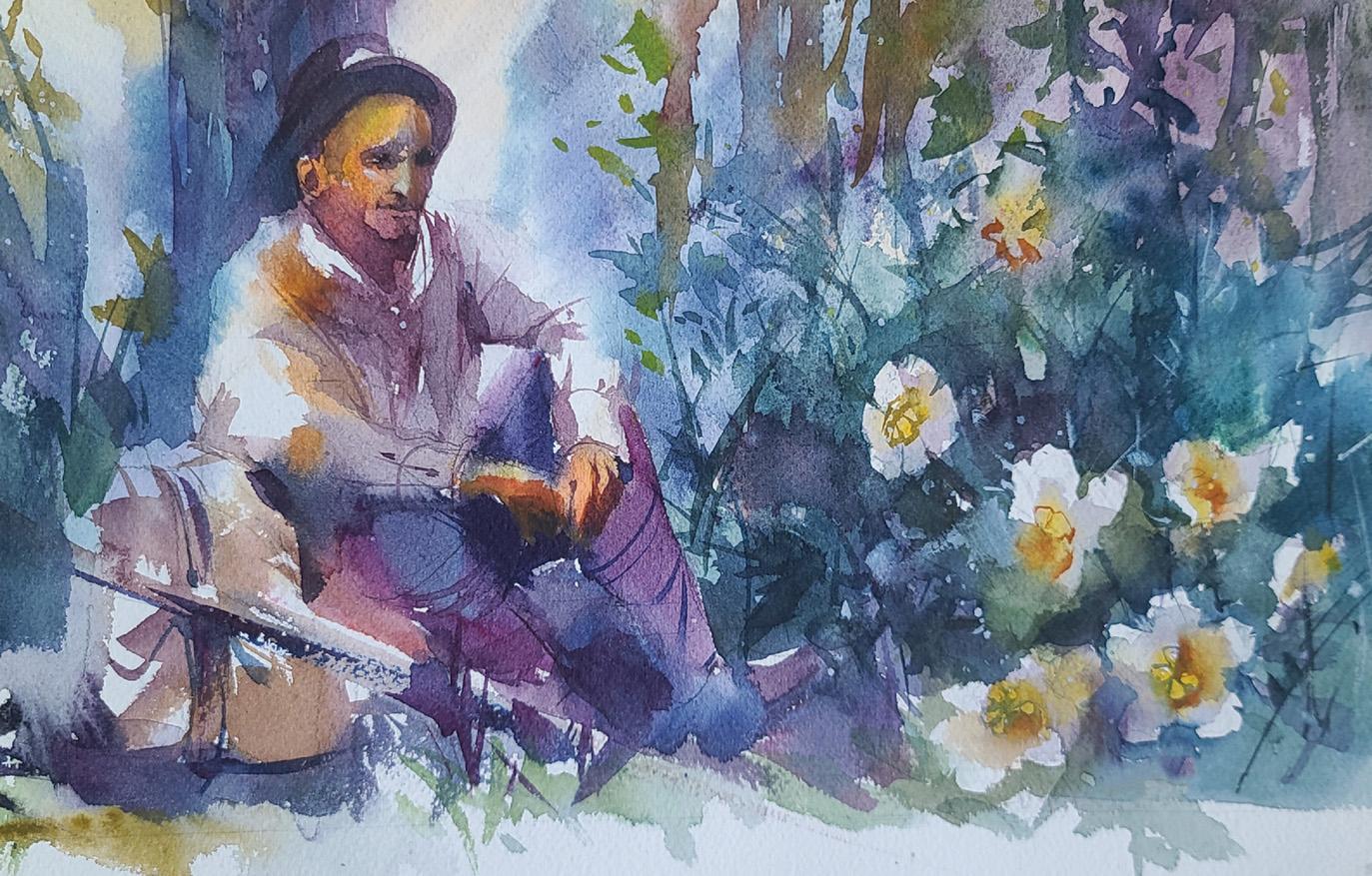
The Art & Soul of Raleigh | 77
brightened and the world shimmered in a golden light. The air was charged, and he felt his heart lift, a sensation beyond words, awe the only word proximate. But that morning it had seemed any attempt to define the sensation with language was such a puny, human thing. Though he would eventually write a whole book about these mountains, describe the plant and animal life in detail, extol the landscape’s pristine beauty, there were moments like this that he would never put on paper.
His detractors, then and now, called him a romantic, which was true. He had read Petrarch, Wordsworth, and Thoreau, learned from and been inspired by them. But he did not believe himself a sentimentalist. A part of what had brought him here was to abide in a world without sham. Arrogance and bluster did not impress nature. It did not suffer fools. A heedless step above a waterfall would
send the rich and poor, the powerful and the powerless, to their deaths. No bribe or petition would make it otherwise. Wilderness could not be corrupted by humans, but humans often destroyed what they could not corrupt.
One summer afternoon he followed the stream beside the cabin to its source, then went farther up the mountain until nothing rose above him but the sky. He looked out at the surrounding mountains and valleys, the virid green of the nearer ridges, the hazy blue of the farther mountains. But he also saw something else, smoke rising from a lumber camp. He knew what would come next, the sound of axes and saws, then the clamor of a train engine bringing more men and axes and saws — a wilderness chained to flat cars and hauled away. Whole mountains scalped, the stumps of felled trees like gravestones. Streams fouled, dead fish clotting the shallows.
He had already witnessed such devastation in the nearby Black Mountains, nothing left but a wasteland of stumps and silt. It would soon happen here too if not stopped. When logging began on Hazel Creek, he was forced to abandon the cabin and move to a boardinghouse on the wilderness’s eastern flank. So he joined others who understood what was being lost. Following the example of John Muir, who’d garnered nationwide support to establish Yosemite National Park, the coalition sought allies both in and outside the Smokies.
For a quarter-century, he and his compatriots fought against the timber companies to create the Smoky Mountains National Park. Though he continued to disappear into the woods, sometimes camping for weeks, most of his energy was focused on helping save the East’s last great forest.
He wrote letters and articles, made
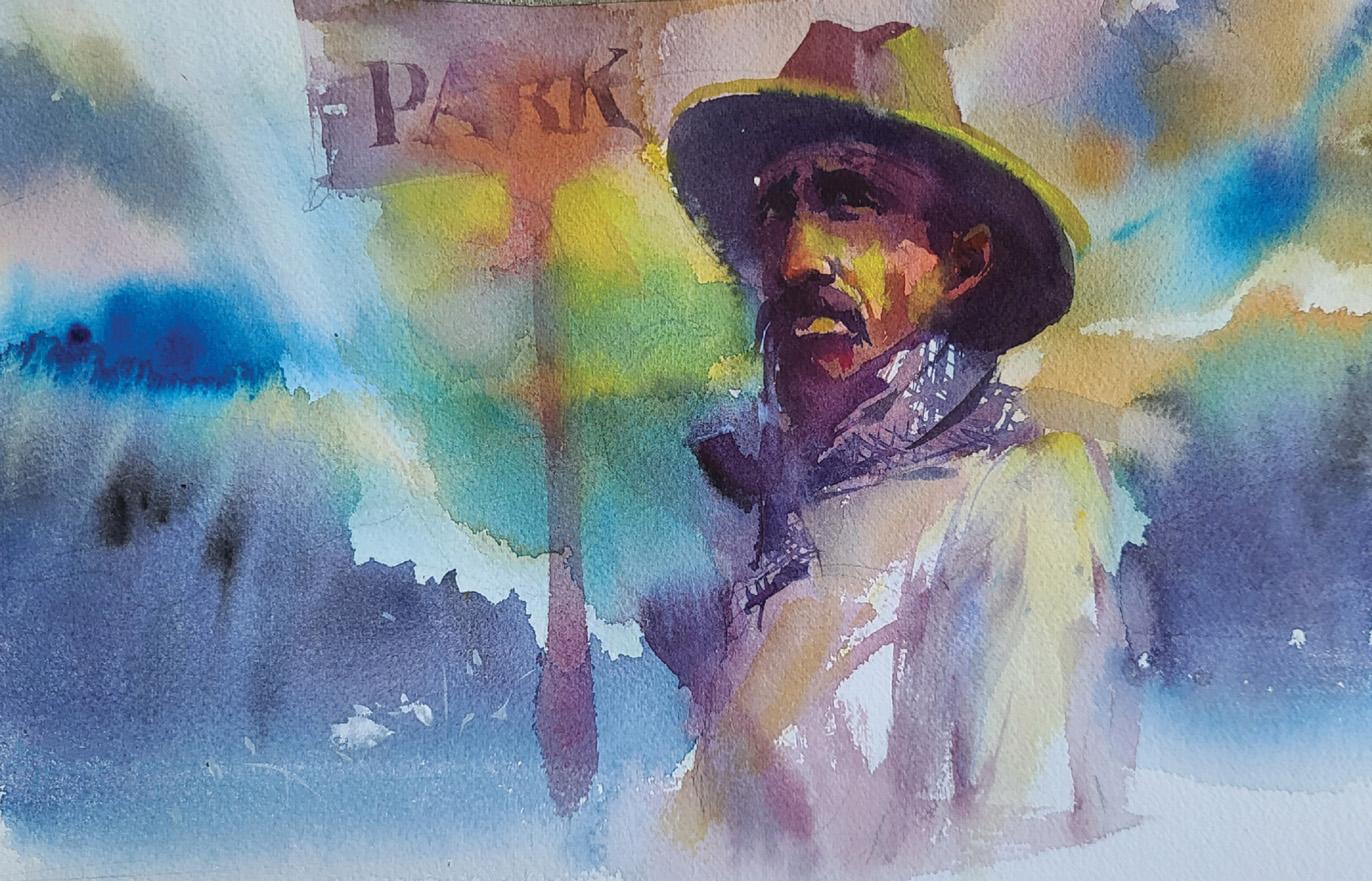
78 | WALTER
trips to Washington. What he and others could not accomplish with words, his friend George Masa did with photographs depicting both the forests that had been destroyed and the ones that might soon be. Wilderness advocates across the nation joined the fight. Newspapers in North Carolina and Tennessee furthered the cause.
But the timber companies had their advocates too. The attacks against the park’s best-known supporters became personal. He found himself denounced publicly as a Bolshevik, an opium addict, a drunk, a man who’d been deserted by his own wife and family. Because of his Japanese ancestry, Masa was denounced as a foreigner. Attempts were made to deport him. The timber companies tried to bribe and threaten politicians who supported the park, and sometimes they succeeded. There were death threats too. Public meetings brimmed with potential violence. Again and again, it appeared the timber companies had won. By 1920, he wrote a friend that there was no hope. At such times the melancholy deepened. He feared the insanity might return.
But each time all had appeared lost, crucial support came. Children gave pennies at school. John D. Rockefeller donated five-million dollars. George Masa’s photographs convinced Grace Coolidge, the First Lady, to join the cause. The governors of Tennessee and North Carolina advocated for the park in their states and in Washington. Newspaper editors in Knoxville and Asheville wrote more editorials. Public opinion became solidly pro-park, even after the stock market crashed, plunging the country into depression.
Now it is April 2, 1931. Two months ago, he went to Washington with Governor Horton and Governor Gardner to hand over to the Secretary of the Interior the deeds to the purchased land. It was only 150,000 acres, three-hundred thousand short of officially being a national park, but enough to satisfy the National Park Service. It will happen, he believes, though it may take another year or two to complete the final deeds and sales.
A light knock at his door breaks his reverie.
Mr. Kephart, his landlady says. Your friend is waiting in the parlor.
Tell Mr. Tarleton I’ll join him shortly, he replies.
Earlier today Tarleton congratulated him, believing the park now an inevitability. But the envelope in his hand, which came in the afternoon mail, makes clear not everyone agrees. Kephart, Go back to St. Louis and your asylum or you will be killed, the enclosed note threatens. A newspaper clipping accompanies the note, dated March 25, 1904. Horace Kephart Is Held for Observation, the headline proclaims. The timber companies and their minions have not yet given up. He places the clipping and the note back in the envelope. In Saint Louis, a diseased mind had convinced him of all sorts of plots to take his life; now sanity argues not to dismiss this threat. But advocating for the park has brought death threats before, to him and others.
In September he will be sixty-nine. He never imagined that he might live this long. Yet his wrinkles and gray hair confirm it. He feels the rheumatism in his knees and back, no doubt in part from decades of hiking and camping. Though still able to hike farther than many men half his age, he knows these ailments may soon force him to spend less time in the forests than he’d wish. But if the time comes when he is confined in this room, he will be able to look out his window and see the mountains, one of which has been named Mount Kephart.
He thinks of the cabin on Hazel Creek. Once the park is complete, neither he nor anyone will live there again. It pleases him to imagine the wilderness slowly reclaiming the cabin. There will come a time when the land itself will have forgotten the cabin’s once-presence. By then the scars left by the timber companies will have healed. Even the railroad tracks will rust away. The envelope with the newspaper clipping and threat is still in his hand. He tears it in half, drops it into the trash can.
I wanted to save these mountains because they saved me, he’d written. It was a grandiose statement. They had indeed saved him, but others had paid a cost, most of all his wife. As for his children, they are all but strangers. Altruism is invariably a means to conceal one’s personal failures. The spouse of a timber baron had told him that three years ago at a public meeting. The statement haunts him. And for all of his words about the healing aspects of nature, his desire for liquor has never been quelled. There continue to be times he drinks himself into unconsciousness.
Perhaps tonight as well. He takes out his pocket watch, checks it. It is almost time to meet his friend Tarleton. They have hired a driver to take them to a bootlegger. They will drink tonight. If he drinks tonight, as is his wont, he will be no good in the morning, he will lie in bed most of the day to recover. But even so, by this weekend he will be revived enough to join George Masa for a hike. He has a surprise for George. Last spring as he was hiking alone, he discovered a patch of Oconee Bells. They are found nowhere else in the world except here and a few neighboring counties. Even here they are extremely rare. In all of his years wandering these mountains, he had never come upon them until last spring. Now it is their bloom time once more, the white flowers rising from the darkgreen glabrous leaves. This late in life, what wonder to have finally seen them. He rises from the chair, fetches the key he will lock his door with, and will never need again.
CODA: Horace Kephart and his friend Fiswoode Tarleton died in a car wreck on the night of April 2, 1931. The driver survived but gave contradictory answers as to what happened. Kephart’s body was discovered 40 feet from the car, the cause of death a broken neck. On September 2, 1940, Franklin D. Roosevelt dedicated The Great Smoky Mountains National Park “for the permanent enjoyment of the people.”
The Art & Soul of Raleigh | 79
"

80 | WALTER
The First Funeral
by CLYDE EDGERTON
illustration by DAVID STANLEY
1977, HURT, TENNESSEE
Agreat big lady goes under the funeral tent in her high heels and sings “How Great Thou Art.” She just belts it out. She’s wearing glasses with thick, black rims. And she’s got on a brown hat with a black feather. It’s Mrs. Britt’s funeral and Mrs. Britt is a hundred years old. Or was a hundred years old.
This is my first funeral in the Funeral Militia, and I don’t want to do anything wrong.
Jimbo Summerlin is the captain and he graduated from high school last year and everybody else in the Funeral Militia is about the same age as him. I’m in the fourth grade. There are seven of us here today. The Quaker’s Son is the head of the Funeral Militia and he works at the nuclear bomb place and had to be there today. He’s the oldest one and his granddaddy was a famous Quaker.
The big lady is singing the song in a real big way.
If we join the Funeral Militia though we sign a contract about never joining the Army. Mama signed mine. This all
started ten years ago, right after some people came home from Vietnam.
Jimbo calls cadence when the Funeral Militia marches. Hup, two, three, four. I want to be the caller when I get big enough.
A yellow lightning bolt is on the left sleeve of my uniform, like the others. There’s a plow on the right side. Then it says Funeral Militia in a curve on my front pocket. The uniform is dark blue and the writing and stuff is yellow.
We stand outside the tent while the funeral goes on underneath it — with the family sitting down. We are at Quaker Field. A lot of people stand around outside the tent listening to the song. The seats under the tent are filled up.
The sun is hot, and you can smell the cut grass from where Dennis Warton just finished mowing around the Quaker House and on out here. I will do a drum roll while Lonnie plays the “Red River Valley” on the trumpet at the very end of everything. Lonnie plays a trumpet instead of a bugle. Jimbo does the fold-upand-present the flag part when it’s a man who has served in the armed forces.
The preacher is talking. Preacher Knight. He is almost all the way
bald-headed and has this big Adam’s apple and is a little bit skinny. The whole funeral was at the Methodist church where we sat in the balcony, but they brought Mrs. Britt here to get buried. The pall bearers loaded her into the back end of the hearse while we stood at attention right there close by. A lot of people get buried out here.
A man from Knoxville came to a funeral one time and said the Funeral Militia is against the law.
We stand in two rows just outside the tent. Today, it’s three in the front row and four in the second row. I get to stand at the end of the second row. The reason Jimbo is in the Funeral Militia is because his uncle got killed in World War Two and some other people got killed and the Quaker’s Son started the Funeral Militia like it had been started a long time ago but died out with Hitler and them. Everybody has to look straight ahead while we stand here, and I think about how Jimbo can run really fast and he throws a baseball side-armed when he pitches. Sometimes he chews tobacco. He’s kind of a buddy with the Quaker’s Son.
I hold my drumsticks in my left hand whether I’m at attention or at ease, and
The Art & Soul of Raleigh | 81
my right thumb has to hold tight against the seam on my pants when I’m at attention. My hands go behind me when it’s “at ease.” I have to keep my drum quiet by not hitting it or scraping against it and all that.
The singer lady is real big and like I said has got this brown hat that has a black feather up out of it. She is wearing a tan dress that kind of holds up her front end. She finishes the song. She sang a little bit like a opera singer. She is wearing high heel shoes that I wonder if they are going to stick in the ground. Mama has some shoes that are a little bit high.
This is the biggest funeral I’ve ever seen at Quaker Field.
Mr. Knight is reading a scripture.
When it’s over, Lonnie plays “Red River Valley” while I do the drum part. It’s not hard.
It’s the next day now and I can tell you what happened right after the funeral finished and we did Red River Valley. The opera lady walked right straight into this open grave that was not Mrs. Britt’s grave. That grave was covered up with a great big green rug that looked like grass. Somebody had covered up the open part of the grave instead of the dirt that came out of the grave. They was supposed to just cover up the dirt and put planks over the grave. It was a big mistake. It might have been Dennis or Tiny, or the Mustees.
I had just looked at her when she was kind of walking out from under the tent — because you kind of wanted to look at her with her big padded shoulders, and then I looked at something else, and was waiting for “attention,” and somebody hollered, and when I looked back I noticed that she had just disappeared from the earth.
Everybody started over toward the open grave, except not the people who were already down where the cars were parked. That’s where Mama was. I slid my drum strap off, put the drum down easy, and ran over to the grave where I got up right to the edge of it. The lady was down in there pretty covered up by the rug.
I had thought about how big she was
when she was singing “How Great Thou Art.” She had these shoulder pads under her dress on her shoulders like Mama does when she dresses up. She had a big, you know, chest, too. The dress was tan, which I think I said.
Then she got part of the rug all moved back and she’s laying on her back looking up. Baby Jesus in swaddling clothes popped in my head. Her head was kind of rolling back and I figured she’d had the breath knocked out of her because she was looking like that, that look, and her hat was still on and it must have been pinned on or something. It is a brown hat with a black feather, if I didn’t say that. But her glasses were gone with the wind.
And she breathes kind of deep and says, “Hell, no. I’m not okay. Jesus God.”
With her talking like that, I looked up at Preacher Knight.
He said to her, “Can you stand up?”
“I wouldn’t be on my ass if I could stand up,” she says. She’s from Nashville, and that’s probably why she talks like that.
The preacher just said, “Well . . . “
Some other people were coming back up from down where the cars were parked. But I didn’t see Mama. All the Funeral Militia were standing around and I wondered what Jimbo was going to do.
The preacher says, “That was a wonderful rendition of ‘How Great Thou Art.’”
Floyd says, kind of quiet, “I’ll say how great thou art.”
More people were standing around now, and some more people were coming up.
Mr. Knight says, “Somebody needs to get down in there and get her out.”
I thought about me. I wondered if Jimbo thought about me or about hisself or somebody else.
Lonnie says, “There ain’t no room down there, man.” Lonnie is the biggest one in the Funeral Militia.
“We need a ladder,” said Kenny.
I thought about me going down in there, but I didn’t know if I wanted to or not. I might do something wrong. And I didn’t know the lady. Then I thought about Jimbo maybe choosing me to go down in there and help her out.
Everybody got quiet and I looked around. Preacher Knight was standing there, and Jimbo was kind of kneeling down across the grave from me. I was wondering about what he was thinking, about what he was going to do.
Preacher Knight said to me, “Son, don’t get too close to the edge.” He said it like he might be a little bit mad, so I backed up.
Jimbo didn’t say anything to me, though. He didn’t even look at me. He started talking to the lady. “Are you okay?” he says.
“Just pull her up with the tractor bucket,” said Lonnie.
“What?” said Jimbo.
“We can get one of those kids’ swings,” said Lonnie, “from behind the Quaker House and hang it on the bucket with some S hooks. She sits in it and we pull her up.”
“Go get the tractor,” said Jimbo. “The keys is in it.” He was getting to be in charge. I figured he would.
I looked at the preacher and wondered what he would say.
Jimbo said to Carl, “Go get a swing down off that swing set.”
82 | WALTER
Everybody got quiet and I looked around. Preacher Knight was standing there, and Jimbo was kind of kneeling down across the grave from me. I was wondering about what he was thinking, about what he was going to do.
Lonnie was walking on toward the tractor. It sits under a shed in the edge of the woods.
Preacher Knight said, “Can’t we just get a ladder?”
“We’re going to rig up a swing,” says Jimbo. “That way she don’t have to climb out.”
“Wouldn’t a ladder be simpler?” says Preacher Knight.
“I’d be nervous on a ladder,” says the lady up to the preacher. “I might be hurt.”
Everybody was quiet and we heard the tractor crank up down at the edge of the woods.
She was still on her back. I looked around. Some people still didn’t know about what happened because they weren’t coming over.
“This will be easy, ma’am,” said Jimbo. I was across the grave, watching him talk down to her. “We got a tractor coming with a bucket on the front, with hydraulics, and we are going to hang a swing set on it.”
“A bucket?” she says.
“Yes ma’am. Kind of like a big shovel. Like a bulldozer blade, sort of. We are going to hook a swing to it. So you can just sit in it and get lifted right up and out.”
Floyd quiet-like started singing, “Love Lifted Me.” Him and Lonnie get goofy sometimes.
Now the crowd is a little bigger and pretty close up to the grave.
“I think we better get somebody down in there and help you stand up. Is that okay?” said Jimbo. But he didn’t look across at me.
“It’s too bad she didn’t land sitting up,” said Lonnie.
“What?” said the lady.
“I was just talking to Floyd,” Lonnie says.
Then Mrs. Knight, the preacher’s wife, walks up from down where the family cars were — where Mama still was. “What happened?” she says. Then she sees and says, “Oh, my goodness.”
“She fell in the grave,” says Jimbo.
“Oh my goodness,” says Mrs. Knight again, and then she says down into the
grave, “Are you okay, Myrtle?”
“I don’t know. I don’t know if I can get up. Is that you, Pauline?” says the lady. “I can’t half see. My glasses fell off. I hope to hell they’re not broke.”
“These boys will get you out,” says Mrs. Knight. “Lord knows they do everything else around here. Where is the Quaker’s Son?”
Lonnie said, “He’s at Oak Ridge today.”
“They’re getting a tractor,” said Mr. Knight. “The boys are getting a tractor.”
“A tractor?” says Mrs. Knight.
Jimbo says, “We’re going to drop down a swing, number one. She sits, number two. We lift her right out. Bingo.”
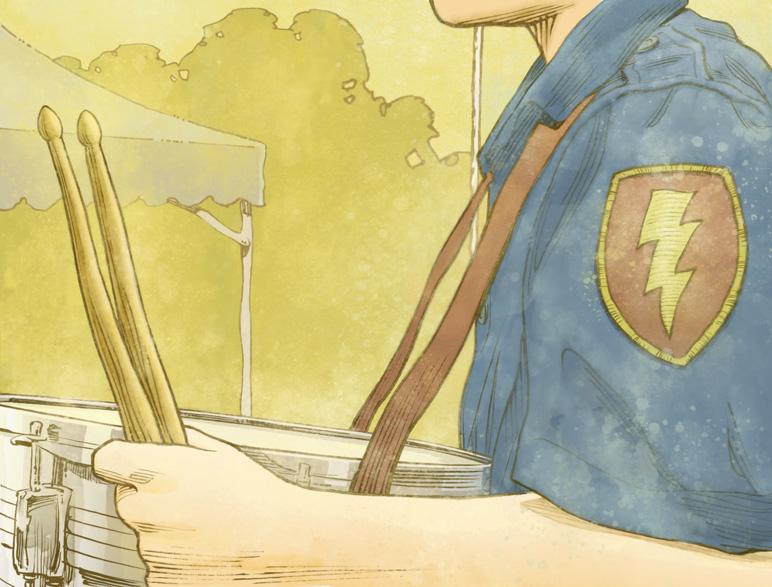
“Oh,” says Mrs. Knight. “The song was beautiful, Myrtle.”
“Well, thank you. Then I busted my ass.”
I looked up at Mr. Knight. I wondered why she kept saying bad words. I wondered who put the rug over the grave.
Mr. Knight said, “Maybe you could just turn over on your stomach and then get up on your knees and hands?”
Floyd said, “That’s easy for you to say.”
The tractor was coming up with the
front-end bucket that you can lift up high. Then in the next minute or two they got it all rigged up so the bucket was up high and the swing was hanging from it.
“How about letting the boy down to help her get set, get that carpet off her?” said Mr. Knight.
Jimbo looked at me, and then at Mr. Knight. And I wondered what he was going to say. But he didn’t say anything. He was going to pick somebody else, I figured.
Then he looked straight at me and here’s what he said, “Go ahead, Gary.” Gary is my cousin’s name. He didn’t know who I was. He said, “Try to get that grass rug — carpet — off her first.”
“Okay,” I said. I wished he’d called me my name, Ozzie. I thought about what if I messed up. “Can I ride the swing down?” I said.
“Good idea,” said Kenny. “Get on there.”
I got in the seat and they let me down and I got off right beside her so I wasn’t standing on her, but I was on the grass rug, and I could smell the inside of the earth and it smelled like fishing worms down in there and mixed in was her per-
The Art & Soul of Raleigh | 83
fume. They pulled the swing back up.
The top of the ground was up above my head. I started pulling back on the rug to get it from around her waist and around her feet, but I had to kind of go slow and keep my balance because the grave was so narrow.
“What’s your name, son?” she said.
“Ozzie,” I said. I looked at her and she had makeup on her eyes. I looked up for Jimbo, but he was over at the tractor, I guess. I could hear the tractor motor.
She was helping me kind of get the rug-carpet thing from around her and kind of working herself out of it, and she was on her side, starting to turn over. She stopped moving and looked at me and said, “Ozzie, where did you get that uniform?”
“I’m in the Funeral Militia,” I said.
“What is that?”
“We do military funerals but they ain’t military funerals. They are CC’s. Commemorative Ceremonies, but they are kind of like military funerals, except that’s not what they are.”
She got all the way out from under the rug thing, and while she was getting out, she said, “Did you know Mrs. Britt?”
“Yes ma’am.”
“She was my aunt. She was my daddy’s sister. She was one hundred years old.” Then she looked at her feet. “Can you pull off my damn shoes?”
“Yes ma’am.”
“Thank you, Ozzie. I hope I don’t last a hundred years,” she says. She was working herself up to a sit-up position. “Do you think you can find my glasses?” she said. “I think they might be under me. I hope they’re not broke. Hell, I could just go ahead and get buried now.” She was looking at me and smiled and I liked her even after she said those words.
I looked around, and there were her glasses in the corner nearest by. “Here they are,” I said. I got over to them and picked them up and handed them to her and all the while I was smelling the damp dirt and the perfume.
“Who the hell would dig a grave and then cover it up with a carpet?” she said.
“I don’t know,” I said.
Jimbo said down to her, “If you can sit
in the swing, we’ll lift you right out.”
She reached out toward me and I grabbed her hand.
“Grab my elbow,” she said, and I did. She almost pulled me right down on top of her, but she got up to sitting, and then worked her way up to standing. She brushed off the bottom part of her dress.
Somebody up top said, “Can she maybe sing a song from down there?”
Somebody else said, “Sentimental Journey.”
“Ha, ha,” she said, but she wasn’t laughing. “I don’t think so,” she said. “I’ve got some pain in my shoulder,” and she gets in the swing, and is just sitting there. “Mercy, Lord,” she says. The swing starts up and it gets her feet almost up to my knees and one of them S hooks
They tried again and lifted her up slow with everybody quiet, and you could hear the seat make a tiny cracking sound, and I heard some crows, until she was up there clear of the grave. Then Kenny turned it and swung her slow over the ground and she did a odd thing right then. I could see her top half over the edge of the grave from where I was — she started swinging like you do in a swing, and then she started singing, “Gonna take a sentimental journey. Sentimental journey home.”
I kind of liked her, except she said those ugly words.
They dropped the swing back down and I got in and rode up and out. We didn’t march in formation back to the Quaker House because it was like a whole different day once we got her out. What happened was they got the rug out and we all started walking back to the Quaker House and just when we started, Jimbo walked over to me and didn’t say anything. He turned me around and put his hands under my armpits and lifted me up till I was on his shoulders and he walked me like that all the way to the Quaker House. I held onto his head under his chin. I felt like it was okay that he got my name wrong. I would ask Mama to tell him who I was. It was the end of my first day in the Funeral Militia.
starts slipping up at the top of the bucket thing, sliding down the edge of it, and the swing goes crooked and she’s got one foot on the ground and one in the air and she starts turning in a little circle, holding on to the chains with that one foot on the ground. “Shit,” she says. “What the hell?” She looks up at the tractor.
“My fault, my fault,” yells Kenny. He was driving the tractor. He let the swing down and she slipped out of the swing and stood up there beside me up close, and I smelled the perfume and she turned toward me and I was sort of looking right at her chest, and I remember dancing with Mama at the Ruritan club one time.
Carl told us the S hook was fixed.
“I don’t think she’s going to get out for awhile,” said Lonnie.
It’s tonight, and all that happened yesterday, and tonight I take Addie out to pee. It’s kind of warm and cloudy. Addie is our dog that stays in the house. I sit on the steps and wonder about what would happen if Addie fell into an open grave. I wonder how many dogs have ever fell into open graves. I get to thinking about all the stars that I can’t see because of the low clouds that are covering up everything.
84 | WALTER
I could smell the inside of the earth and it smelled like fishing worms down in there and mixed in was her perfume.
THE WHIRL THE WHIRL
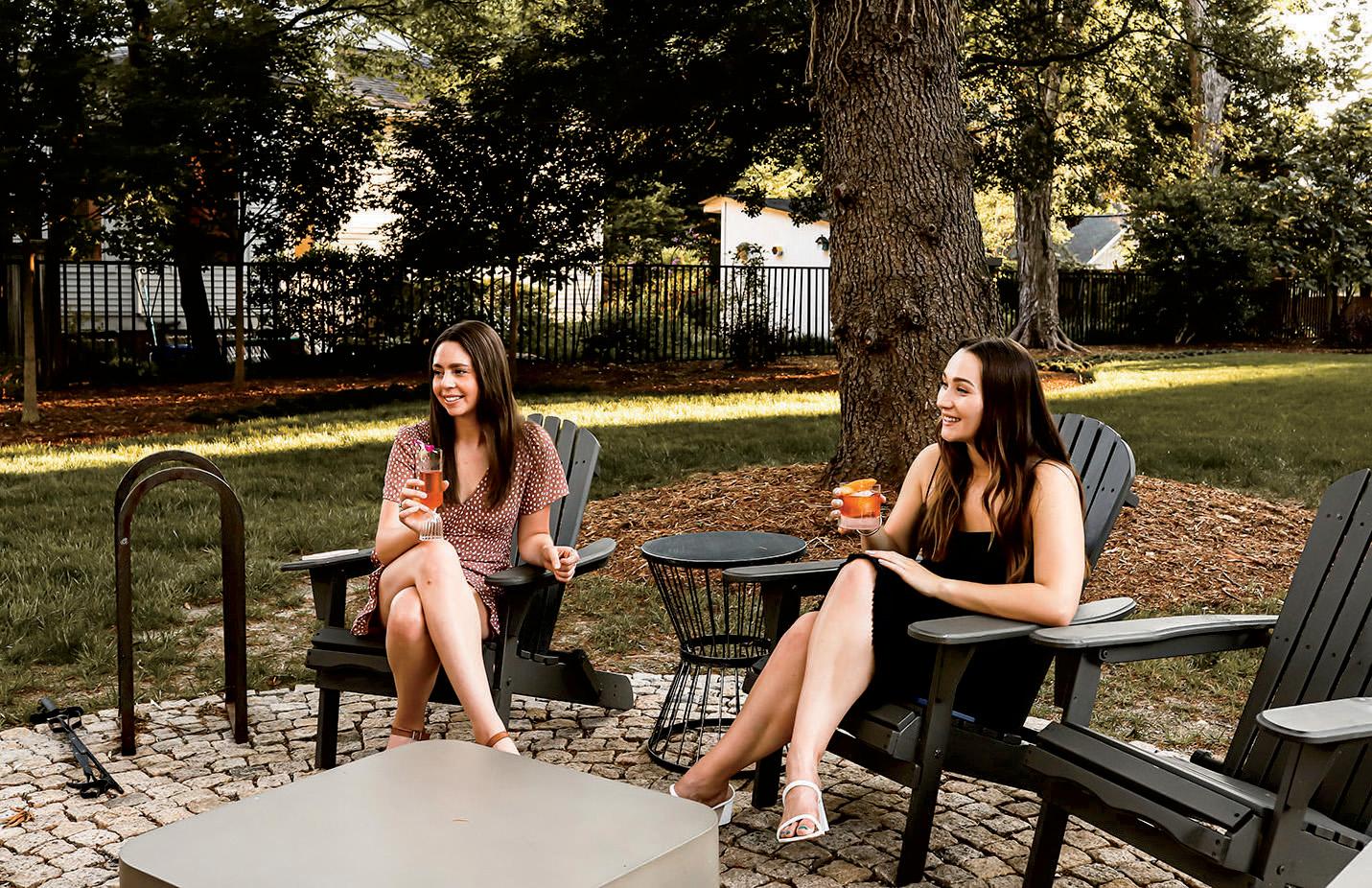
86 Parlor Bar Media Night 88 Operation: Coming Home 89 DAYDREAMS Opening Reception 91 Wendell History Museum Premiere Night 92 Koinonia Foundation Awards 93 Bogue Park Parade 94 Shuping Memorial Courtyard Dedication To have your event considered for The Whirl, submit images and information at waltermagazine.com/submit-photos The Art & Soul of Raleigh | 85
WALTER’s roundup of gatherings, celebrations, fundraisers and more around Raleigh.
Michelle Porizkova
Catherine George, Anne Tate
THE WHIRL


PARLOR BAR MEDIA NIGHT

On May 31, Parlor Bar — the new cocktail lounge inside of the Heights House Hotel — celebrated its opening with a small gathering for media and civic leaders. The bar offers a way for non-hotel guests to explore the historic property that was recently restored by owners Sarah and Jeff Shepherd.

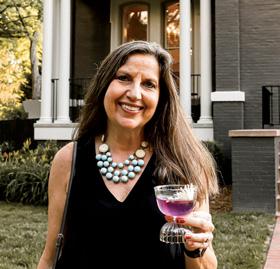

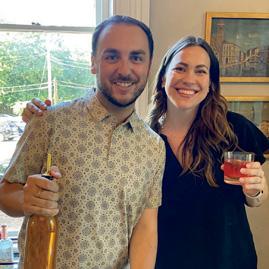
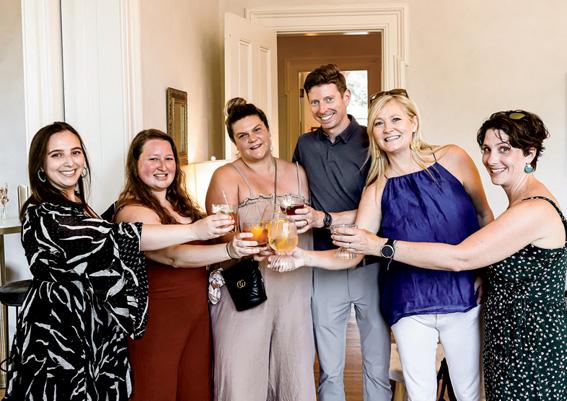
86 | WALTER
Courtesy
JNK
PR (BRYANT & SHEPHERD); Michelle Porizkova (ALL OTHERS)
Will Bryant, Sarah Shepherd
Susan Murphy
Veronica Thring, Jessica Holt, Jenn Rice, Scott Peacock, Jennifer Kelly, Eleanor Talley
Elaina AthansKiara Ruth, Carly Mask
Our signature innovation event returns featuring inspiring workshops and moving talks by local female leaders.




Friday, September 16 at the Umstead Hotel & Spa




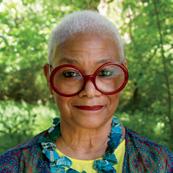

sharing STORIES inspiring ACTION
WINnovation
ANITA WATKINS Managing Director, Rex Health Ventures
JAKI SHELTON GREEN Poet Laureate, North Carolina
VALERIE HILLINGS Director, North Carolina Museum of Art
PRESENTEDBY SUPPORTED BY For tickets and more information: waltermagazine.com/WINnovation
ZENA HOWARD Principal + Managing Director, Perkins&Will
DAY TRIPPERS WELCOME
Saturday, Aug. 6 • 10 - 12 pm
“Storytelling with Gran’daddy Junebug”
Family series
Mitch Capel / “Gran’daddy Junebug” is a master storyteller, recording artist, published author and poet.
Free Admission / Registration required
Sunday, August 14 • 2 pm
Arts & Humanities Lecture: “James Boyd”
Hear about Boyd’s — the author of “Drums” and Weymouth’s founder — view on democracy and the writer’s obligation to speak out in times of civic crisis.
Light Reception to follow.
Members: $20/ Non-Members: $25
Sunday, August 28 • 11:30-2
“Come Sunday” Jazz Series outdoors on our beautiful grounds
Bring your own blanket, chairs, and a picnic, cash bar with mimosas, beer, wine, and non-alcoholic beverages available.
Members/Non-Members Tickets: $25/$35 - Kids 12 and under are free
Sponsored by FirstHealth Concierge Medicine
For tickets visit: weymouthcenter.org
To receive 5% off, use promo code: DTWA
Just a short drive away, there’s a perfect place to escape for the day. Our 100-year-old historic house is a storied venue for events and programs that will spark your mind, and feed your senses. If you prefer, you are welcome to roam our 26 acres of gardens and grounds, or picnic on our lush lawns.
We’re conveniently nestled in the heart of Southern Pines, a quaint town, which boasts a host of restaurants and cute boutiques that also offer something for everyone.
So next time you have the urge to get out of town, put us on your GPS. You can experience a real getaway, but still get home in a single day.
We’re celebrating 100 years of our historic Boyd House with 100 events in 2022.
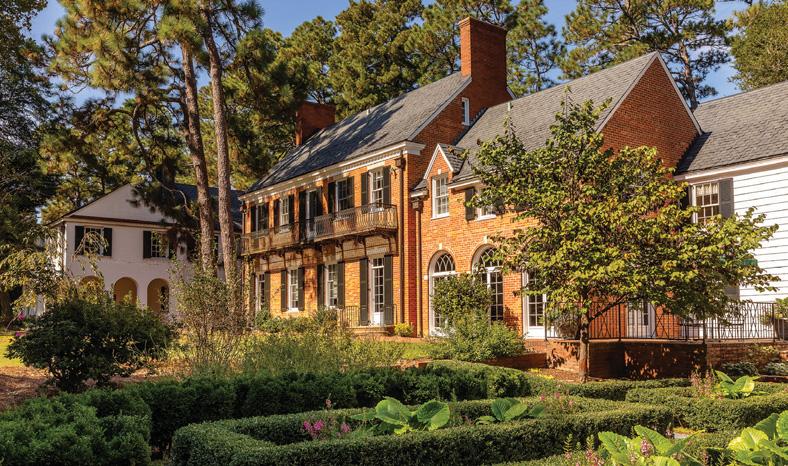
Weymouth Center for the Arts & Humanities
555 E. Connecticut Ave., Southern Pines, NC A 501(c)(3) organization

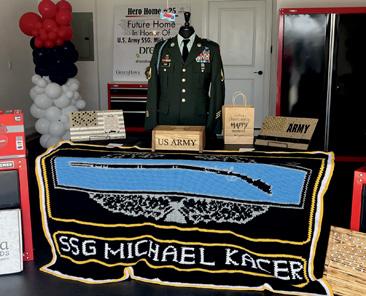
THE WHIRL
OPERATION: COMING HOME
On June 9, US Army SSG Michael Kacer and his family received keys to their new house, presented by Operation: Coming Home. The project by the Home Builders Association of Raleigh-Wake County and the United States Veterans Corps builds and donates homes for combat-injured troops and families of fallen troops.
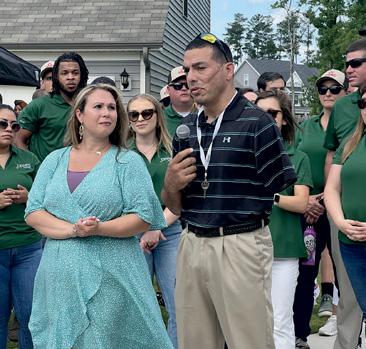 Jill Weaver
Jessica Kacer, Michael Kacer
Jerry Dean, David Hausfeld
Jill Weaver
Jessica Kacer, Michael Kacer
Jerry Dean, David Hausfeld
88 | WALTER
US Army SSG Michael Kacer’s uniform
THE WHIRL





DAYDREAMS OPENING RECEPTION


On June 3, New Bern-based photographer Baxter Miller opened her solo exhibition, DAYDREAMS, at Charlotte Russell Contemporary. Miller’s work is deeply rooted in place and is known for its quiet but graphic compositions, which lean heavily on her unabashed relationship to color.

 Guests at the reception
Fred Miller, Baxter Miller, Irond Miller, Alex Montagnet, Deborah Montagnet, Kay Stancil, Frankie Lynn Goss, Ryan Stancil
Sandy Miller, Charlotte Russell
Guest at the reception
Guests at the reception
Fred Miller, Baxter Miller, Irond Miller, Alex Montagnet, Deborah Montagnet, Kay Stancil, Frankie Lynn Goss, Ryan Stancil
Sandy Miller, Charlotte Russell
Guest at the reception
The Art & Soul of Raleigh | 89 Make a Statement Diamonds, Estate and Antique Jewelry • Loose Diamonds of all Shapes and Sizes • Certified Appraisals • Expert Jewelry Repairs WE BUY DIAMONDS, GOLD AND PLATINUM 345 S. WILMINGTON STREET • 919.832.3461 • RELIABLE JEWELRY.COM
courtesy Charlotte Russell









THE WHIRL

WENDELL HISTORY MUSEUM PREMIERE NIGHT
On June 16, the Wendell Historical Society hosted Premiere Night for major donors to celebrate the Wendell Museum’s opening. The museum, which opened to the public on June 17, presents over a century of the town’s history through vignettes of early businesses, agriculture, notable natives and civic organizations.
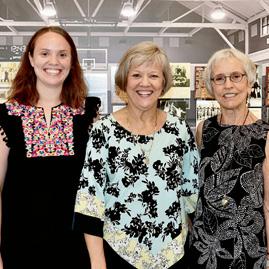
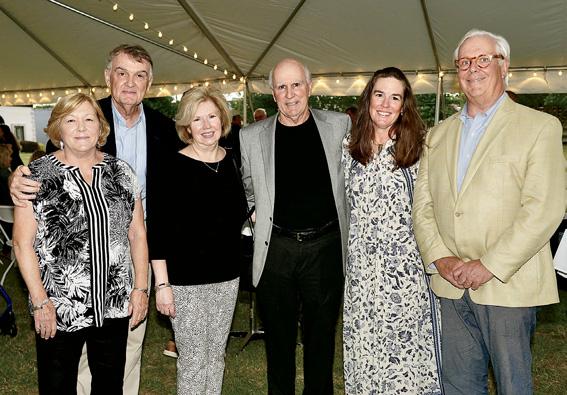
WORK. DINE. LIVE.
This is where Raleigh happens. Vibrant energy meets classic Carolina style at City Club Raleigh, the city’s go-to destination for high-tech business amenities, outstanding personalized service and world-class fun. This is the place where industry, professional and civic leaders gather in the states capital for meaningful business connections and vibrant social activity.
 Gabrielle Parish Howard, Phyllis Parish Howard, Tricia Parish
Joe Ann Wright, Boo Jefferson, Philip Whitley, Tonja Whitley
Annette Kirk, Philip Kirk, Debbie Kirk, Millard Kirk, Melanie Kirk Holton, Mark Holton
Richard Sykes, Barry Perry Steve Wilson, AnLe Wilson, Craig Fitzpatrick
Gabrielle Parish Howard, Phyllis Parish Howard, Tricia Parish
Joe Ann Wright, Boo Jefferson, Philip Whitley, Tonja Whitley
Annette Kirk, Philip Kirk, Debbie Kirk, Millard Kirk, Melanie Kirk Holton, Mark Holton
Richard Sykes, Barry Perry Steve Wilson, AnLe Wilson, Craig Fitzpatrick
The Art & Soul of Raleigh | 91 919.834.8829 I CityClubRaleigh.com I 150 Fayetteville St. Suite 2800 I Wells Fargo Capital Center I Raleigh, NC 27601
Courtesy Wendell History Museum
PROVIDING PREMIER DENTISTRY IN RALEIGH




PROVIDING PREMIER DENTISTRY IN RALEIGH FOR GENERATIONS

THE WHIRL
KOINONIA FOUNDATION AWARDS
At a June 14 reception honoring its 2022 Russell Dew Community Service Award winners, The Koinonia Foundation bestowed $22,000 in grants to local nonprofits. The annual grant funding will help eight charitable organizations in the greater Wake Forest, Rolesville and Youngsville areas contend with human needs not otherwise adequately addressed.
PART OF THE FABRIC OF RALEIGH SINCE 1899
PART OF THE FABRIC OF RALEIGH SINCE 1899
Our patients receive state-of-the-art care in a warm, professional, safe and friendly environment. We welcome new patients!
Our patients receive state-of-the-art care in a warm, professional, safe and friendly environment. We welcome new patients!
OUR SIGNATURE SERVICES INCLUDE:
OUR SIGNATURE SERVICES INCLUDE:
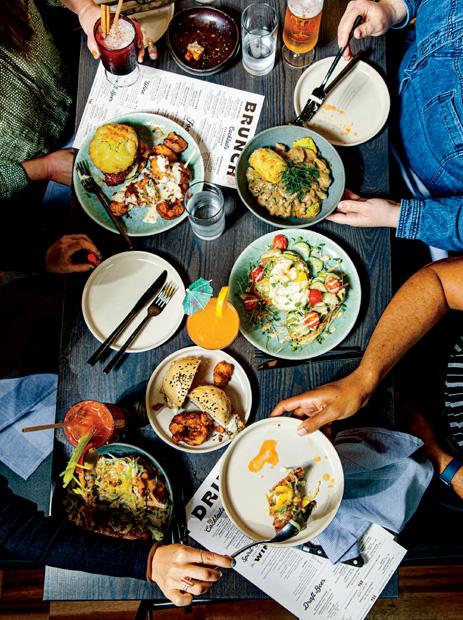
Comprehensive & Cosmetic Dental Care
Comprehensive & Cosmetic Dental Care
Same-Day CEREC Crowns
Same-Day CEREC Crowns
Invisalign Orthodontics
Invisalign Orthodontics
Dental Implants
Dental Implants
Sleep Apnea
Sleep Apnea
TMJ Therapy
TMJ Therapy
919-782-0801
919-782-0801
www.drgregweaver.com
wwwdrgregweavercom
BOGUE PARK PARADE
The 30th annual Fourth of July Parade down Shepard Street in the Bogue Park area of Morehead City included many generations of Raleighites. Kids decorated their bikes in red, white and blue for a parade down the block to the cheers of friends and neighbors.

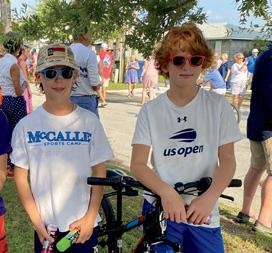
92 | WALTER
Courtesy Koinonia Foundation (KOINONIA); Allison Eckstein (PARADE)
Top row: Paige Bivens, Jonathan Bivens, Dawn Nakash, Gene Cross, Deborah Moye.
Bottom row: Eddie Keith, Joy Shillingsburg, Michael Burger, Rachael Smith
Wilson Eckstein, Gray Coyne, Cross Johnson Thomas Eckstein, Bowen Knight
Jack Eckstein, George Merritt, Bailey Breeding, William Goodwin
SHUPING MEMORIAL COURTYARD DEDICATION





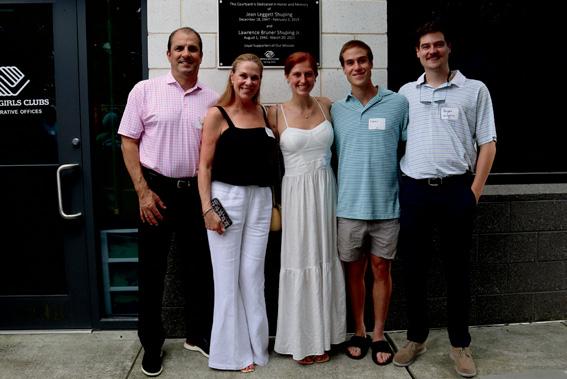
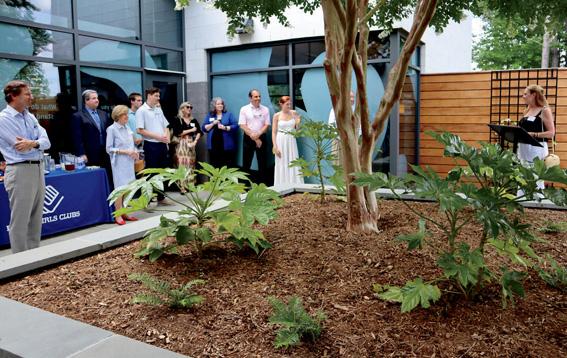
On June 1, Wake County Boys & Girls Clubs dedicated the Lawrence and Jean Shuping Memorial Courtyard at “The Club” Teen Center in Raleigh. The Shuping family joined Club members and staff to celebrate the Shupings’ recent gift — the largest in the organization’s history — and commemorate their longstanding support of Wake County’s youth.
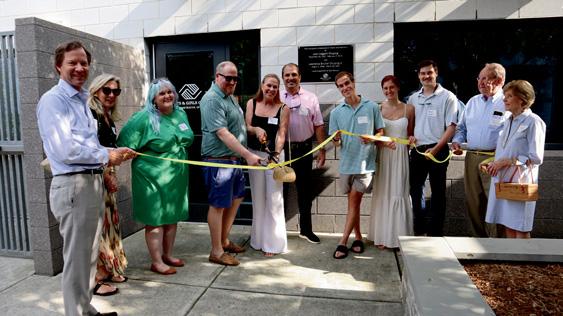
Courtesy Boys & Girls Club The Art & Soul of Raleigh | 93
wrightsville beach (855) 421-2884 BOOK YOUR SUMMER FAMILY VACATION WITH US Stay at North Carolina’s only surf to sound beach resort that is packed with fun for the entire family! BEACH DAYS are the BEST DAYS blockade-runner.com
Al Dada, Jean Dada, Belle Derbyshire, Lanier Derbyshire, Hayes Derbyshire
John Church, Nancy Church, Sara McCord, Zan Shuping, Jean Dada, Al Dada, Lanier Derbyshire, Belle Derbyshire, Hayes Derbyshire, Tom Church, Gillie Church
Jean Dada speaking
DEAN NEFFWYATT DICKSONSEAN WILSON


Chef & Owner, SeabirdPitmaster & Owner, PICNICOwner, Fullsteam Brewery




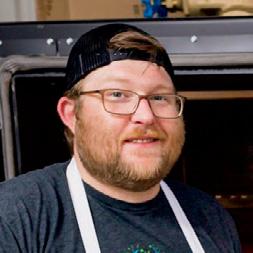
WEDNESDAY, OCTOBER 12




6:00 PM | The Merrimon Wynne House


Join us for a farm-to-table dinner honoring the outdoors. Enjoy a delicious menu from chef Dean Neff, pit master Wyatt Dickson, and brewer Sean Wilson and to hear about why sustainable, local ingredients is important to them.
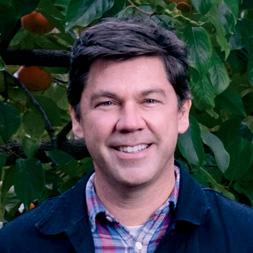
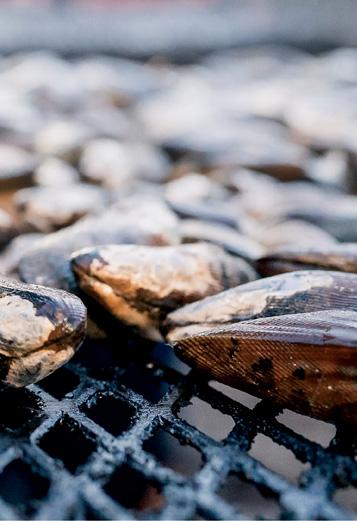
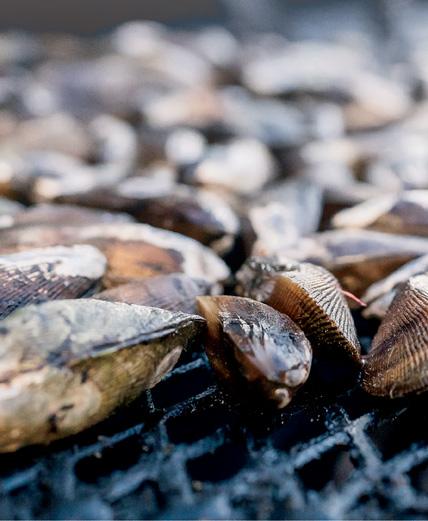

TICKETS + MORE INFO: WALTERMAGAZINE.COM/TASTE
PRESENTED BY WITH SUPPORT FROM


The Home Builders Association of Raleigh-Wake County’s Parade of Homes is recognized as one of the best home tours in the country. The Parade of Homes unparalleled exposure to the Triangle residents who are looking to buy a new home or gather ideas for their existing home. Get in front of this unique audience as they visit the homes on the 2022 home tour.


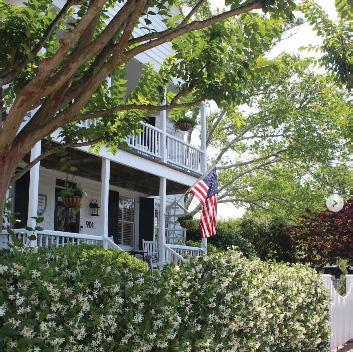




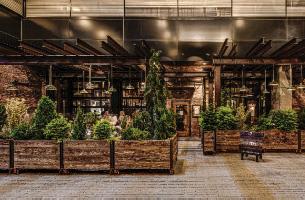
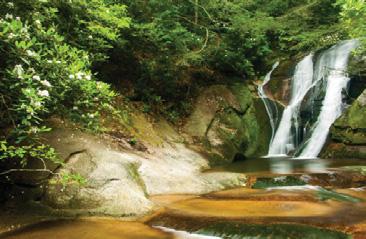













ADVERTISE YOUR BUSINESS DURING THE 2022 PARADE OF HOMES! Two ways to market your company in the 2022 Parade of Homes PARADE PREVIEW VISIT NORTH CAROLINA’S LARGEST OPEN HOUSE OCTOBER 2-3, 8-10, 15-17 AfC Parade Preview Magazine Delivered with WALTER magazine’s October Home & Garden issue, this magazine includes trends and builders to watch. Parade of Homes Guide Book Distributed to all visitors that go on the Parade of Homes Tour has every home on the tour along with the special features. For information email cristina@waltermagazine.com or 919-279-3132 WALTER Archives The Art & Soul of Raleigh | 95 7 WATERY WONDERS TO ESCAPE TO IN WESTERN NC These beautiful creeks, waterfalls, sliding rocks and lakes in the mountains can wash away your worries as temperatures rise. 10+ DOWNTOWN RALEIGH BARS WITH SHADED OUTDOOR SEATING Grab a beer or a cocktail at one of these spots with covered patios and breezy rooftops. Take WALTER to go! There’s always something to discover on our website and social media. FOLLOW US @WALTERMAGAZINE WEB EXCLUSIVE STORIES TRENDING ON INSTAGRAM EXTRAS Neighborhood views of Beaufort. @Kristiekohl Love the magical little town… 339
These quotes have been lightly edited and condensed for space. To hear the full speeches, visit creativemornings.com/rdu.

96 | WALTER
END NOTE
illustration by ABRA MILLSAPS compiled by REYNA CROOMS, EMMA GINSBERG and SOPHIA MELIN










4401 Glenwood Ave, Raleigh, NC 27612(919) 571-2881www.diamondsdirect.com
Innovation.










It’s feeling the pulse of the next level o of cardiac care and wellness. It’s seeing possibilities where others see roadblocks. Pioneering new minimally invasive procedures and robotic-assisted surgeries. Transforming theor y into curative strategies. Even more than that, however, it ’s passion, compassion, th assion, com All joining experience, exper tise and technology. novation forces to create a special place where in saves lives. Visit us at ear ts. wakemed.org/h




Your heart. Your choice.