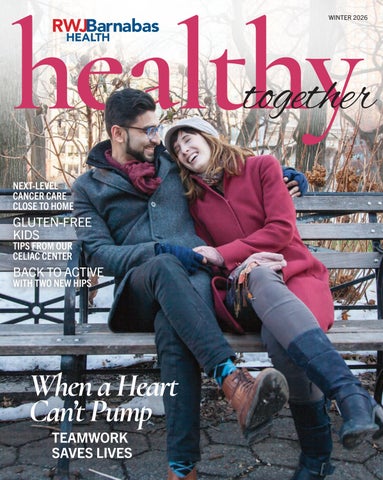
healthy
WINTER 2026
NEXT-LEVEL CANCER CARE CLOSE TO HOME
GLUTEN-FREE KIDS
TIPS FROM OUR CELIAC CENTER
BACK TO ACTIVE
WITH TWO NEW HIPS
When a Heart Can’t Pump TEAMWORK SAVES LIVES
1 HT_STH_Cover_Winter26_Final.indd 1
12/15/25 5:16 PM
together healthy contents WINTER 2026
4. A MIRACLE ARRIVAL. When an expectant mother felt her baby’s movements change, teamwork helped save their lives. 6. SURVIVING CARDIOGENIC SHOCK. Rapid response, collaboration, and advanced therapies help deliver expert care statewide. 8. TO PROTECT AND SERVE. Advanced epilepsy care helps a man achieve his dream. 10. NEXT-LEVEL CANCER CARE. Patients now have the most advanced radiation therapy options close to home. 12. A JOINT DECISION. Double hip surgery after a surprising diagnosis helps a nurse relieve her knee pain. 14. GROWING UP GLUTENFREE. Kids with celiac disease can take steps to manage their condition.
12
16. F OOD WITHOUT FEAR. When it comes to celebrations, there is hope for those impacted by eating disorders.
Healthy Together | 2 | Winter 2026
2-3 HT_STH_TOC_Winter26_Final.indd 2
12/15/25 5:20 PM
www.rwjbh.org RWJBarnabas Health complies with applicable federal civil rights laws and does not discriminate on the basis of race, color, national origin, age, disability, or sex. For more information, see the link on our homepage at www.rwjbh.org. RWJBarnabas Health provides free language services, including qualified interpreters, to people whose primary language is not English. The following Language Assistance Services information is provided in multiple languages. ESPAÑOL ATENCIÓN: Si habla español, tiene a su disposición servicios gratuitos de asistencia lingüística. Llame al 1.844.465.9474
20
繁體中文 注意:如果您使用繁體中文,您可以免費 獲得語言援助服務。 致电1.844.465.9474 한국어 주의: 한국어를 사용하시는 경우, 언어 지원 서비스를 무료로 이용하실 수 있습니다. 1.844.465.9474 로 전화하십시오.
8
14
16
18
PORTUGUÊS ATENÇÃO: Se fala português, encontram-se disponíveis serviços linguísticos, grátis. Ligue para 1.844.465.9474 ગુજરાતી સુચના: જો તમે ગુજરાતી બોલતા હો, તો નિ:શુલ્ક ભાષા સહાય સેવાઓ તમારા માટે ઉપલબ્ધ છે. 1.844.465.9474 પર કૉલ કરો POLSKI UWAGA: Jeżeli mówisz po polsku, możesz skorzystać z bezpłatnej pomocy językowej. Zadzwoń pod numer 1.844.465.9474 ITALIANO ATTENZIONE: In caso la lingua parlata sia l’italiano, sono disponibili servizi di assistenza linguistica gratuiti. Chiamata 1.844.465.9474
CONNECT WITH US @RWJBarnabasHealth @RWJBarnabas RWJBarnabas Health RWJBarnabas_Health l inkedin.com/company/ RWJBarnabasHealth For issues regarding delivery of Healthy Together, please write to HTcirculation@wainscotmedia.com.
2-3 HT_STH_TOC_Winter26_Final.indd 3
18. NOURISHING NEIGHBORHOODS. New initiatives expand access to healthy food and improve community wellbeing.
4
20. A NEW ERA IN NURSING. RWJBarnabas Health School of Nursing expands with a new location in Oceanport. 22. FIGHT FLU. A primary care doctor offers a simple checklist to help you stay healthier when influenza spreads.
RWJBarnabas Health
| RWJBH.ORG | 3
12/15/25 5:20 PM
K
ayla MacNeil awoke one morning last January ready to start a new routine. She had just entered her 36th week of pregnancy. The night before, she and her husband, Christian, had gone out to dinner to celebrate her last day of work before their baby’s due date. But early the next morning, she noticed that something didn’t feel right. “My baby was always most active in the morning and at night,” says Kayla, 29, of Manchester. “On this morning, she was still active, but her kicking was very faint. It was nothing like normal.” Concerned, Kayla phoned Christian, a firefighter who had just started a 24-hour shift. “I asked him to come home so we could get to the hospital,” she says. That decision ultimately saved both her life and the life of their soon-to-be-born daughter, Emilee.
A MIRACLE
CREDIT: RICHARD B FLORES PHOTOGRAPHY
A LIFE-THREATENING SITUATION
When the couple arrived at Community Medical Center (CMC) in Toms River, Kayla and Christian headed straight to the labor and delivery unit. Nurses quickly connected Kayla to fetal monitoring equipment, which revealed that her baby’s heart rate was unusually flat, a sign that the baby might not be getting enough oxygen. “It was almost a straight line,” says Kayla’s OB-GYN, Marie Bonvicino, MD, who is on staff at CMC. “The baby was in grave danger.”
A FAST RESPONSE
Kayla needed an emergency C-section. Thankfully, CMC is fully equipped to handle life-threatening obstetric crises, with a dedicated laborist in-house 24/7 and a team of doctors, nurses, and other highly trained professionals ready at a moment’s notice. “As soon as we knew the baby’s heart rate was concerning, everything
ARRIVAL WHEN AN EXPECTANT MOTHER FELT CHANGES IN HER BABY’S MOVEMENTS, QUICK ACTION AND TEAMWORK HELPED SAVE THEIR LIVES.
STEVEN CULBERT, MD
JAMES MCDERMOTT, DO
MARIE BONVICINO, MD
Healthy Together | 4 | Winter 2026
4-5 HT_STH_WomenKickcounts_Winter26_Final.indd 4
12/15/25 5:21 PM
IT’S EASY TO COUNT KICKS
HOW TO PERFORM KICK COUNTS
Tracking your baby’s kick count during pregnancy can help ensure their wellbeing. To help manage the process, download Count the Kicks’ free app. By entering the average time it takes to record 10 movements each day during your third trimester, you’ll be able to recognize healthy patterns. The app even sends reminders to enter your data. The Count the Kicks website also offers a web counter and downloadable paper charts. For more information, visit www.countthekicks.org.
Doctors recommend that women start monitoring their babies’ fetal movement patterns in the 28th week of pregnancy. “Shortly after you feel your baby start to move, you’ll begin recognizing patterns,” says Marie Bonvicino, MD, a staff OB-GYN at Community Medical Center. “Keeping track of those patterns is the best way to know your baby is healthy and doing well.” To monitor fetal movement, she
was prepared to deliver her as “It was a miracle that Emilee recommends these tips: quickly as possible,” says survived. If it had been • Get comfortable. Lie on your Steven Culbert, MD, an five or 10 minutes later, side or sit comfortably in a quiet OB-GYN and a member we might not have Placental abruption space. of RWJBarnabas Health seen as good an affects approximately • Give it two hours. This accounts Medical Group, who outcome.” for fetal sleep cycles (40 to 75 assisted with the surgery. While Kayla minutes). James McDermott, recovered at CMC, DO, also a member of Emilee needed • Count your baby’s movements. of pregnancies. RWJBarnabas Health blood transfusions Aim for at least 10 kicks. Source: National Library Medical Group, was the and specialized care of Medicine • Choose active times. Babies are in-house laborist on duty at The Bristol-Myers typically active after meals or in that day. He prepared the Squibb Children’s Hospital the evening. operating room for Drs. Bonvicino at Robert Wood Johnson and Culbert, who performed the University Hospital in New Brunswick. • Track your results. Use a chart or a kick-counting app. C-section. “The teamwork of everybody— The facility has a Level IV neonatal the anesthesiologists, nurses, doctors— intensive care unit (NICU) staffed by “If you notice any decrease in was remarkable,” Dr. McDermott says. physicians who are part of RWJBarnabas fetal motion, call your OB-GYN Amid the flurry of activity, Kayla Health Medical Group and Rutgers immediately,” Dr. Bonvicino says. focused on staying strong. “I felt a wave Robert Wood Johnson Medical School. “We can perform tests to assess of calm come over me,” she says. “I didn’t Kayla spent two nights at CMC while your baby’s health.” let fear take over. I figured if this was the Emilee spent a week in the NICU. best way to get Emilee here, let’s get her “Emilee’s care was phenomenal,” here safely.” Kayla says. “The doctors and nurses were absolutely amazing. Being at a teaching JUST-IN-TIME DELIVERY quick-acting care team that saved her hospital made the experience even greater, During and after delivery, the reasons life, Kayla now shares her powerful to have so many people at her bedside for Emilee’s decreased fetal movement story with other expectant mothers, and supporting us as well.” became clear. Kayla unknowingly emphasizing the importance of had suffered two rare but serious EXCEEDING EXPECTATIONS monitoring fetal movements in the complications. First was a placental Almost a year later, Emilee is thriving. “To third trimester. Her message to others abruption, in which the placenta think we once feared she wouldn’t make is a simple one: “Always trust your separates from the uterus, limiting it, and now to see how far we’ve come, is intuition,” she says. “It’s always better to oxygen and nutrients to the baby. The nothing short of a miracle,” Kayla says. get checked out, even if it’s just for peace abruption then caused a fetomaternal Inspired by her daughter and the of mind.” hemorrhage, in which the baby loses significant amounts of blood into the To learn more about maternity care at RWJBarnabas Health, mother’s circulation. “Kayla’s was the most severe abruption visit www.rwjbh.org/treatment-care/maternity. I’d seen in many years,” Dr. Bonvicino says.
0.4% to 1%
RWJBarnabas Health
4-5 HT_STH_WomenKickcounts_Winter26_Final.indd 5
| RWJBH.ORG | 5
12/15/25 5:21 PM
SURVIVING CARDIOGENIC SHOCK RAPID RESPONSE, COLLABORATION, AND ADVANCED THERAPIES HELP DELIVER EXPERT CARE TO PATIENTS ACROSS THE STATE.
C
ardiogenic shock is a lifethreatening emergency. It can strike within minutes, most often after a heart attack or a sudden worsening of heart failure. No two cases are alike, making it tricky to diagnose and stage. And despite advanced therapies, mortality rates remain as high as 50 percent. CHONYANG ALBERT, MD
Quickly identifying and treating cardiogenic shock can be the difference between life and death. That’s why care teams at RWJBarnabas Health (RWJBH) have formed a Cardiogenic Shock Team, bringing rapid response, clinical expertise, and heart-saving treatments to patients throughout New Jersey. “The newest data suggest a golden hour of cardiogenic shock management— so time is ticking,” says Chonyang Albert, MD, Medical Director, Left Ventricular Assist Device & Mechanical Circulatory Support at Robert Wood
Johnson University Hospital, and Advanced Heart Failure and Transplant Cardiologist and Assistant Professor of Medicine at Rutgers Robert Wood Johnson Medical School. “Our team-based approach brings experts together quickly to determine the best path of treatment for each patient.”
HOW IT WORKS
The Cardiogenic Shock Team is activated whenever a patient with suspected cardiogenic shock is identified. Clinicians from multiple specialties—including
Healthy Together | 6 | Winter 2026
6-7 HT_CEN_STH_CardioShock_Winter26_Final.indd 6
12/15/25 4:50 PM
ADVANCED TREATMENTS RWJBarnabas Health (RWJBH) offers multiple innovative treatments for heart attack and heart failure, providing hope and healing to patients with conditions like cardiogenic shock. Advanced therapies include: • Impella–A temporary heart pump for use when a patient’s heart is too weak to pump on its own • Extracorporeal membrane oxygenation–A life-support machine that circulates blood outside the body and adds oxygen, giving weak hearts and lungs time to recover • Ventricular assist device–A circulatory support device that supports heart function and blood flow in people with weakened hearts and is often considered a bridge to transplant for uncontrolled heart failure • Heart transplant–The only heart transplant and mechanical circulatory support program in New Jersey, available at Robert Wood Johnson University Hospital and Newark Beth Israel Medical Center For patients who need procedures such as angioplasty or coronary artery bypass graft surgery after a heart attack, RWJBH offers the largest adult cardiac surgery program in the state and performs more angioplasties than any other health system in New Jersey.
doctors and advanced Shock Team has treated practice providers nearly 100 patients in interventional since its inception No one plans on heart disease, but cardiology, in September 2024, everyone should have a plan for it. cardiothoracic achieving impressive Connect with an RWJBarnabas Health heart and vascular specialist at surgery, heart results. 888.724.7123 or visit failure, and intensive “Some patients walk www.rwjbh.org/heart. care—gather together out of the hospital, follow to discuss each patient’s up with their cardiologists, symptoms and create a and don’t need any advanced personalized care plan. therapies,” Dr. Albert says. “As a group, we make a decision on “Others receive life-saving therapies the next best step for each patient, such and completely recover. They are true as going to the cardiac catheterization miracle stories.” lab for emergency treatment or receiving WHERE IT’S AVAILABLE a temporary heart pump to improve Originally designed to care for patients circulation,” Dr. Albert says. inside RWJBH, the Cardiogenic Shock To help guide those decisions, Team has quickly expanded into a the team grades the severity of each trusted statewide resource. Today, patient’s cardiogenic shock from A providers caring for cardiogenic shock (at risk) to E (extreme). The grades are patients at any hospital in New Jersey based on a framework provided by the can access the team’s expertise. Society for Cardiovascular Angiography “We’re here to act as a resource and Interventions. for other hospitals,” Dr. Albert says. WHY IT’S SIGNIFICANT “We partner with them to identify Research shows that a team approach which stage of shock their patient is in and determine the best place to to cardiogenic shock accelerates timeto-treatment and improves in-hospital receive treatment, whether that’s in survival rates. RWJBH’s Cardiogenic their hometown hospital or through a
WHAT TO WATCH FOR Symptoms of cardiogenic shock can include: Signs of a heart attack: •C hest pain •R adiating pain down shoulders, neck, arm, or jaw Signs of a heart attack or worsening heart failure: •S hortness of breath •C ool, clammy skin •W eak pulse •L ow blood pressure •L ightheadedness or dizziness If you experience any of these symptoms, call 911.
transfer to one of our hospitals.” For patients needing advanced therapies available only at RWJBH, the team determines the fastest and safest transfer method (air or ground transport) and the appropriate plan of action. “Together, we decide where the patient should be transferred, whether it’s directly to the cardiac catheterization lab, the cardiovascular intensive care unit, or the operating room,” Dr. Albert says. “Once the patient arrives, we reassess and pivot to a new game plan based on the patient’s condition if needed.”
IMPROVING OUTCOMES
Because awareness is an essential part of rapid response, the Cardiogenic Shock Team has developed educational resources to aid providers in recognizing the signs of cardiogenic shock. The team also is sharing lessons learned with medical students and other health-care professionals to help save more lives. “We are fortunate to have such high levels of resources and talent across our hospitals,” Dr. Albert says. “By working together, we can give every person with cardiogenic shock in New Jersey a better chance at survival.” RWJBarnabas Health
6-7 HT_CEN_STH_CardioShock_Winter26_Final.indd 7
| RWJBH.ORG | 7
12/15/25 4:50 PM
TO PROTECT
AND SERVE ADVANCED EPILEPSY CARE HELPS A MAN ACHIEVE HIS DREAM OF BECOMING A POLICE OFFICER. Alex Cella, who underwent open brain surgery to stop his epileptic seizures, is now a police officer in Aberdeen.
F
or as long as Alex Cella can remember, he’s been compelled to help people. As a collegiate soccer player, this desire led him to coaching and mentoring others. He was also a teacher’s assistant for students with special needs. Later, Alex began to explore becoming a police officer so he could serve his community. However, a series of seizures suddenly threatened his dreams. Alex experienced several brief and small nonconvulsive seizures followed by three more-significant nonconvulsive and convulsive seizures, preventing him from completing his police academy training. He embarked on a journey of multiple daily antiseizure medications for years, then ultimately underwent open brain surgery at the Level 4 Epilepsy Center at Robert Wood Johnson University Hospital (RWJUH) in New Brunswick. Now seizure-free following the surgery, Alex was able to return to his dreams.
ADDRESSING THE SEIZURES
“In 2019, I started having déjà vu, where I felt that I was experiencing the exact same thing at the exact same time,” Alex
HAI SUN, MD, PHD
RAM MANI, MD, MSCE
Healthy Together | 8 | Winter 2026
8-9 HT_ALL_NeuroEpilepsy_Winter26_Final.indd 8
12/15/25 4:26 PM
RWJBarnabas Health Epilepsy Centers
recalls. “I would sit down and gather SURGERY IS THE SOLUTION For quality care, visit one of myself and be fine. But I would lose two In May 2023, to better understand what RWJBarnabas Health’s highly to three seconds each time.” A neurologist was going on, surgeons implanted seven rated epilepsy centers: diagnosed him with epilepsy and managed thin wire electrodes in Alex’s brain. it with medications, but Alex began to For this procedure, Alex was taken off experience more-severe seizures. all medications and remained in the Level 4 Adult NAEC (National Association of Epilepsy Centers) In July 2021, Alex was coaching a hospital for observation for eight days Epilepsy Centers: high school baseball game when he fell while the epilepsy team recorded the to the ground unconscious. He was details of his brain activity. “We were Cooperman Barnabas Medical taken by ambulance to a local hospital able to watch him seize and record Center, Livingston but was released. “The doctors thought the brain waves, which gave us high Robert Wood Johnson University I’d passed out due to dehydration, but confidence of where the seizures were Hospital, New Brunswick the mother of a player on my team who coming from,” Dr. Sun says. was a nurse said, ‘I hate to tell you, but Drs. Mani and Sun note that Alex Level 3 Epilepsy Centers: you had a seizure.’ She knew exactly benefited from having the The Bristol-Myers Squibb what it was,” he says. procedure performed at Children’s Hospital (Pediatric), After Alex experienced a Level 4-accredited New Brunswick his third severe seizure, NAEC (National his neurologist Association of Community Medical Center Epilepsy is not a rare recommended Epilepsy Centers) (Adult), Toms River disorder—1 in 26 people an evaluation to Epilepsy Treatment McMullen Children’s Center at will develop it during their determine whether Center like RWJUH. Cooperman Barnabas Medical surgery could improve Level 4 Centers lifetime. It can occur on its own Center (Pediatric), Livingston the episodes. He (the highest level or alongside other health referred Alex to Ram of accreditation) conditions of the brain. Mani, MD, MSCE, have highly skilled Source: © 2024 Chief, Epilepsy and his new position, this time as a Law and experienced Epilepsy Foundation Medical Director of the Enforcement Against Drugs officer for multidisciplinary Clinical Neurophysiology Lab the school district. teams that can address at RWJUH, Associate Professor “I couldn’t be happier—there isn’t complex cases like Alex’s. The of Neurology at Rutgers Robert Wood a single day that goes by when I don’t RWJUH and Rutgers RWJMS team Johnson Medical School (RWJMS), think about how grateful I am for the includes epileptologists, subspecialty and a member of RWJBarnabas Health doctors and how everything worked neurosurgeons, neuropsychologists, Medical Group. out,” Alex says. “I’m also beyond neuroradiologists, neuropathologists, thankful for the support I have received Dr. Mani consulted with fellow electroencephalogram technicians, from my mom, dad, brother, and RWJBarnabas Health Medical Group nurses, and more. member Hai Sun, MD, PhD, Chief of extended family. I wouldn’t be where I As a result of the procedure, the am today without them.” Neurosurgery at RWJUH and Associate doctors identified a malformation of By sharing his story, Alex hopes to Professor of Neurosurgery and Director the outermost layer of Alex’s brain as the cause of his seizures. In July 2023, encourage others to keep pursuing their of Epilepsy Surgery at Rutgers RWJMS. dreams no matter what obstacles they Dr. Sun performed open brain surgery Alex’s best treatment options included a may face. “My advice is to not give up to remove this abnormal tissue. Alex minimally invasive procedure that uses on anything,” he says. “I admit I was has remained seizure-free since. heat to ablate scar tissue, tumors, or down when the medications weren’t other abnormal areas of the brain causing A DREAM REVIVED stopping all the seizures and I had to the seizures, or open brain surgery Alex graduated from the police academy leave the police academy. But I want to remove or disconnect those areas. in December 2024 and began his new job young kids and even adults to know Given the severity of his seizures and the as a police officer in Aberdeen, where that if you have a dream—whatever it potential to more precisely remove the he is excited to serve the community. is—you need to have faith in yourself, diseased brain tissue responsible for them, He hopes to continue teaching in your doctors, and God.” Alex chose open brain surgery. “Alex’s previous doctor had tried four different medications—two of To learn more about neurosurgery at RWJBarnabas them are our ‘big guns’ that are highly effective—but he still kept seizing,” Health, visit rwjbh.org/epilepsy. Dr. Mani says. RWJBarnabas Health
8-9 HT_ALL_NeuroEpilepsy_Winter26_Final.indd 9
| RWJBH.ORG | 9
12/15/25 4:26 PM
NEXT-LEVEL
CANCER CARE
PATIENTS NOW HAVE THE MOST ADVANCED RADIATION THERAPY OPTIONS CLOSE TO HOME.
R
eceiving a cancer diagnosis can be overwhelming enough without having to worry about where to find the best treatment— or how to get there. Fortunately for patients in New Jersey, optimal cancer care, including a number of advanced radiation therapy options, is available close to home. RWJBarnabas Health (RWJBH), together with Rutgers Cancer Institute, New Jersey’s only National Cancer Institutedesignated Comprehensive BRUCE HAFFTY, MD
Cancer Center, offers patients access to the latest, most advanced radiation therapy treatments, as well as a team of internationally recognized, boardcertified radiation oncologists. A fully integrated network means that all patients receive the same high level of care at every location in the system. “We have about 30 radiation oncologists throughout the system, and we all use the same quality metrics, the same dose constraints, and the same database,” says Bruce Haffty, MD, System Director of Radiation Oncology at RWJBH and Rutgers Cancer Institute. “This allows us to share information and discuss any case at any time, including a patient’s condition and treatment plan.”
INNOVATIVE THERAPIES
Dr. Haffty says that nearly every radiation therapy technology that’s currently available is offered through RWJBH and Rutgers Cancer Institute, including many cutting-edge technologies. Among these options are: • Proton beam therapy (PBT), which works by directing proton particles toward the tumor with pinpoint accuracy. Protons release their energy only at a certain depth, directly inside the tumor, so radiation is targeted directly to the cancer cells, minimizing damage to surrounding healthy tissues. • Stereotactic radiosurgery (SRS), which uses a high-dose, focused radiation beam. It targets both benign and malignant tumors of the brain. • Radionuclide therapy (RNT), also known as unsealed source radiotherapy or molecular radiotherapy, which relies on radioactive substances called
Healthy Together | 10 | Winter 2026
10-11 HT_NE_NW_STH_OncologyRadiation_Winter26_Final.indd 10
12/15/25 4:27 PM
WHAT IS RADIATION THERAPY? Radiation therapy is a cancer treatment that uses radiation to destroy cancer cells, shrink tumors, and keep them from recurring. In some cases, it can be used to treat benign conditions as well.
THE CYBERKNIFE SYSTEM: HIGH-DOSE RADIATION DELIVERED WITH PRECISION CyberKnife is one of the many advanced radiation treatments offered by RWJBarnabas Health and Rutgers Cancer Institute. Despite its name, CyberKnife is not an actual knife. It is a cutting-edge noninvasive, nonsurgical treatment that delivers targeted, high-dose radiation to cancerous and noncancerous tumors. Its pinpoint accuracy minimizes radiation exposure to surrounding healthy tissue and reduces the risk of side effects. The technology uses a linear accelerator (linac) mounted onto a robot that moves around the patient to deliver accurate radiation from thousands of unique beam angles. It is the only system that verifies the exact position of the tumor and adjusts the robot to target it specifically. It features real-time motion synchronization, accommodating all types of patient and tumor movement, to deliver accurately targeted radiation and enable smaller treatment margins around the tumor. It also enhances patients’ comfort by eliminating the need for uncomfortable restraints or for patients to hold their breath to stay still.
radiopharmaceuticals to treat cancer. Radiopharmaceuticals are approved for a number of cancers, and indications continue to expand. They are available to treat patients at several RWJBH facilities The technology can be used to treat a variety of conditions, including cancers of across the state. the head and neck, brain, prostate, spine, liver, and lung, as well as arteriovenous • Stereotactic body radiation therapy malformations, neuralgia, meningiomas, and neuromas. Good candidates for (SBRT), which delivers high-dose, CyberKnife include patients who: precisely targeted radiation to small, • have inoperable or surgically complex tumors well-defined tumors of the lung, liver, • seek an alternative to surgery or conventional radiation therapy spine, and other sites. It uses advanced linear accelerator (linac) technology with • have recurrent cancer or metastatic tumors image-guided treatment capabilities. • are at high risk of developing complications after surgery • Gamma Knife radiosurgery, which • have had prior radiation treatments uses 192 tiny beams of precisely focused gamma radiation. It treats brain tumors Depending on a patient’s treatment plan, each session lasts 30 to 90 minutes over and other brain abnormalities. the course of five appointments in a two-week period. • Intensity-modulated radiation therapy (IMRT) and image-guided radiation therapy (IGRT), which use advanced imaging Barnabas Medical Center when it opens • Magnetic resonance-guided and computer technology. in early 2026. linear accelerator (MR-Linac), According to the The high-resolution, 3D “Because radiosurgery uses high doses which is a highly advanced American Cancer Society, imaging pinpoints tumor of radiation, patients can often be treated technology that combines a about 60% of people sites while protecting in fewer sessions,” Dr. Haffty says. “For magnetic resonance imaging with cancer in the surrounding healthy example, patients with certain types (MRI) scanner with a linac in United States will have tissue. of prostate cancer can be treated with one system. This allows doctors radiation therapy. • CyberKnife, which stereotactic radiosurgery, which allows to more clearly see the size, uses robotic delivery and realthem to be treated with five radiation shape, and location of the tumor, as well as surrounding organs and time image guidance to direct treatments, as opposed to six to eight tissue, in real time. This helps them deliver high-dose, focused radiation to tumors weeks of radiation.” higher, more effective doses of radiation with extreme precision. It also minimizes While radiation therapy is used with pinpoint precision and adjust the exposure to surrounding healthy tissue. primarily to treat cancer, it can also treat dose as needed during the treatment. (See sidebar for additional information.) benign conditions. Less than 10 percent RWJBH has one of only 100 MR-Linacs in • Brachytherapy, which is an internal of the radiation therapy treatments operation worldwide, and one of just two in radiation therapy. The radiation source is performed by RWJBH and Rutgers New Jersey, available at the Jack & Sheryl inserted directly into or next to a tumor to Cancer Institute are for nonmalignant Morris Cancer Center in New Brunswick. deliver radiation to a precise target. tumors and conditions, such as arterial Another MR-Linac will be available at the • Radioembolization/selective internal venous malformations and some forms Melchiorre Cancer Center at Cooperman radiation therapy (SIRT), which is used of osteoarthritis. primarily to treat inoperable liver tumors and metastatic colon cancer that has To learn more about our advanced cancer treatments, spread to the liver. It delivers radiation using tiny radioactive beads injected visit www.rwjbh.org/beatcancer. directly into the tumor. RWJBarnabas Health
10-11 HT_NE_NW_STH_OncologyRadiation_Winter26_Final.indd 11
| RWJBH.ORG | 11
12/15/25 4:27 PM
A JOINT O DECISION
DOUBLE HIP SURGERY AFTER A SURPRISING DIAGNOSIS HELPS A WALL TOWNSHIP NURSE RELIEVE HER KNEE PAIN.
n warm, sunny evenings, Jazmine Williams loves spending time outdoors. Sometimes she joins her kids in a spirited game of pickup basketball in the driveway of her family’s Wall Township home. Other times, she enjoys a quick hike around the Manasquan Reservoir. But about two years ago, things changed. Even though Jazmine was only in her mid-30s, her knees felt like they were twice as old. “They would completely swell up, and every step was excruciating,” she says. “The pain started the moment I woke up. Even sleeping was hard.” Eventually, Jazmine faced a problem many people in her situation experience: having to soldier on at work despite nonstop discomfort. “I had no choice but to push through it,” says Jazmine, a nurse in a busy cardiology practice. “The bills don’t stop.”
NO RELIEF IN SIGHT
Over-the-counter medications didn’t help. Neither did medication prescribed to combat rheumatoid arthritis, a condition Jazmine was diagnosed with in 2023. Concerned, Jazmine’s rheumatologist referred her to David Chalnick, MD, an orthopedic surgeon with Seaview Orthopaedics, a partner practice of RWJBarnabas Health, and medical director of the Joint Replacement Surgery Program at Monmouth Medical Center (MMC). “I could tell at her first appointment that Jazmine had pretty good range of motion in her knees despite the pain,” Dr. Chalnick says. “But her hips were extremely stiff.” To learn why, Dr. Chalnick ordered X-rays, and Jazmine was stunned to learn the results. She had a rare condition called protrusio acetabuli, in which the ball at the top of the thigh bone protrudes into the pelvis. The condition affected both of her hips, and hip replacement surgery was her best chance at living pain-free again. “I’m thankful Dr. Chalnick saw the bigger picture,” Jazmine says. “He found the real issue instead of just looking at what I came in for.”
WEIGHING HER OPTIONS
To give Jazmine the best chance for a full recovery, Dr. Chalnick recommended performing two hip replacement surgeries, scheduled roughly six to eight weeks apart. Jazmine knew it was the right recommendation, but she still hesitated before scheduling the procedures. “I went for second opinions, but I soon realized choosing Dr. Chalnick was the right move,” she says. “He answered all my questions, didn’t rush me out of the room, had a great bedside DAVID CHALNICK, MD Healthy Together | 12 | Winter 2026
12-13 HT_STH_OrthoDoublehip_Winter26_Final.indd 12
12/15/25 5:23 PM
Faculty members, including many alumni, joined in celebrating the graduation of Dr. Suleiman Sudah, eighth from right, and Dr. Daniel Kerrigan, ninth from right, from Monmouth Medical Center’s Orthopaedic Surgery Residency Program, the oldest orthopedic surgery residency program in New Jersey.
80 YEARS OF ORTHOPEDICS Monmouth Medical Center (MMC), an RWJBarnabas Health (RWJBH) hospital, recently celebrated the 80th anniversary of its Orthopaedic Surgery Residency Program—the oldest orthopedic surgery residency program in New Jersey. To mark the occasion, a special celebration coincided with the program’s 2025 graduation ceremony. The program has a rich tradition of alumni reinvesting their skills and knowledge back into the institution that trained them. Currently, about 20 faculty members are former graduates, and 2025 chief residents Daniel Kerrigan, MD, and Suleiman Sudah, MD, both will return to MMC to join the medical staff following their fellowships. The five-year program is affiliated with Rutgers Robert Wood Johnson Medical School and admits two physicians per year. This year marks the first all-female cohort in its history. The program also has a volunteer faculty model, in which many instructors maintain private practices while contributing to residency training, ensuring that the curriculum remains aligned with academic rigor and real-world clinical practice. With the support of MMC, it also runs an orthopedic clinic that serves uninsured patients. RWJBH additionally maintains a five-year orthopedic surgery residency program at Jersey City Medical Center and Robert Wood Johnson University Hospital in affiliation with Rutgers Robert Wood Johnson Medical School.
manner, and was very confident about what needed to be done.” Jazmine had both hip replacement surgeries—one in March, the second in May—at MMC. “I’m a nurse, so believe me when I say the nursing staff at MMC was phenomenal,” Jazmine says. After each surgery, she underwent two weeks of physical therapy (PT) at home, followed by outpatient PT. “Every day, every week, I felt better and better—stronger and stronger,” she says.
THE ROAD AHEAD
By late September, Jazmine, now 39, felt strong enough to return to work. Today, she’s riding her exercise bike, raking leaves, and even taking short walks outside. And while she’s not quite back to playing basketball with her kids, she expects to be by next spring.
“My knees are so much better now,” she says. “And that’s how I know that Dr. Chalnick made the right diagnosis.” Jazmine’s new hips should last for decades. “The implants she received are extremely wear-resistant,” says Dr. Chalnick, who estimates that the hospital’s orthopedic surgeons perform roughly 1,000 joint replacement surgeries a year. “I expect them to last for 20-plus years, possibly even a lifetime.” For other young people experiencing joint pain, Jazmine has a message: “First, listen to your body,” she says. “Then, when you find out what it is, don’t wait. I hesitated a bit because I wasn’t sure what I wanted to do. But today, I have no regrets.”
RWJBARNABAS HEALTH RECOGNIZED FOR ORTHOPEDIC EXCELLENCE U.S. News & World Report has recognized Monmouth Medical Center (MMC) as High Performing for hip replacement surgery and spinal fusion. The organization evaluates hospitals for their performance in several common adult procedures and conditions. Hospitals that receive the High Performing award deliver care in the top 10 percent of all rated hospitals. In addition, the Total Joint Replacement Center at MMC has received the prestigious Joint Replacement (Hip) and Joint Replacement (Knee) certifications from The Joint Commission. These honors also recognize the hospital’s commitment to excellence in total joint replacement. Healthgrades likewise has recognized RWJBarnabas Health for its outstanding orthopedic care. Community Medical Center has been honored by the organization with an America’s 100 Best Hospitals for Orthopedic Surgery Award for the second year in a row. This reflects the hospital’s superior clinical outcomes in back and neck surgery, spinal fusion, hip fracture treatment, hip replacement, and total knee replacement.
To learn more about orthopedic care at RWJBarnabas Health, visit RWJBH.org/ortho.
RWJBarnabas Health
12-13 HT_STH_OrthoDoublehip_Winter26_Final.indd 13
| RWJBH.ORG | 13
12/15/25 5:23 PM
GROWING UP
GLUTEN-FREE FROM KNOWING WHAT FOODS ARE SAFE TO BECOMING SELFADVOCATES, KIDS WITH CELIAC DISEASE NEED TO LEARN HOW TO MANAGE THEIR CONDITION.
C
eliac disease is an autoimmune disease that can occur any time in life. About 1 to 2 percent of children have it. Although awareness is growing, many with celiac disease don’t realize they have it because they have no symptoms, the symptoms are minor, or they’ve had symptoms for so long that they think what they’re experiencing is normal. Celiac ASHWIN AGRAWAL, DO, MA, MBA disease causes
an autoimmune response to gluten, a protein found in some grains, including wheat, barley, and rye. When gluten is consumed, villi—the small, finger-like projections lining the small intestine that help break down and absorb nutrients—become damaged. This can cause a variety of symptoms, from abdominal pain, bloating, nausea, vomiting, and diarrhea to hair issues, dental enamel problems, rashes, and migraines. In children, it can lead to poor growth, failure to gain appropriate weight or height, and delayed puberty. Untreated, it can lead to more-serious consequences such as increased risk of
Healthy Together | 14 | Winter 2026
14-15 HT_ALL_PediatricCeliac_Winter26_Final.indd 14
12/15/25 4:31 PM
certain cancers, infertility, and liver abnormalities, among others.
A CENTER OF SUPPORT
The Pediatric Celiac Disease Center, part of the Children’s Health network at RWJBarnabas Health, is the only multidisciplinary pediatric celiac disease program of its kind in New Jersey. The center offers comprehensive care throughout the state for kids with celiac disease, including a team of gastroenterologists, dietitians, social workers, and mental health professionals. The center has been honored by the Society for the Study of Celiac Disease as part of its Celiac Disease Unit Recognition Program, affirming that the center has demonstrated a significant commitment to delivering quality celiac disease diagnosis and treatment. It is one of only 10 such centers in the nation to have received this elite recognition. “Having this designation means that when your child comes to us for concerns of celiac disease, they will get the most expert-level, cutting-edge, and evidence-based care available,” says Ashwin Agrawal, DO, MA, MBA, a pediatric gastroenterologist, Medical Director for the Pediatric Celiac Disease Center, and a member of RWJBarnabas Health Medical Group. The center also engages with families and children by offering programs throughout the year that often include gluten-free cooking demonstrations. “We try to help educate and bring a sense of community to people with celiac disease,” Dr. Agrawal says.
TIPS FOR PARENTS
The only treatment for celiac disease is to be on a strict gluten-free diet. While this isn’t easy for anyone, it can be especially challenging for kids, particularly when they’re away from home. Fortunately, there are some simple ways to help kids adjust. Dr. Agrawal has these recommendations for parents: • Seek a 504 plan at school to get special accommodations. Public schools and private schools that receive federal funding are required to provide glutenfree meal alternatives. • Communicate with teachers about upcoming celebrations so that you can
FOR PLAY DATES AND SLEEPOVERS, GIVE YOUR CHILD GLUTEN-FREE SNACKS TO TAKE ALONG IN CASE GLUTEN-FREE OPTIONS ARE NOT AVAILABLE. send in something similar but glutenfree for your child to enjoy. • To help with impromptu food sharing, provide a few nonperishable gluten-free treats that can be kept in your child’s classroom. • For play dates and sleepovers, give your child gluten-free snacks to take along in case gluten-free options are not available. Additionally, there needs to be a plan at home. “When one child in the household has celiac disease, families have to decide if everything is going to be gluten-free in the house for everyone, or if they are going to offer gluten-free things only to the person who has celiac disease,” Dr. Agrawal says. At a restaurant or friend’s house, kids should self-advocate and politely inform waitstaff or caregivers that they can’t eat gluten. They should also learn how to read labels, as there are different levels of “gluten-free”—from items that simply contain no wheat to certified gluten-free products. “When things are certified gluten-free, they’ve been tested by a lab to say they have less than 20 parts per million of gluten, which is the definition of being gluten-free,” Dr. Agrawal says.
HOLIDAY HAZARDS
The holidays can be especially challenging for kids with celiac disease. “The majority of our holidays are food-based,” Dr. Agrawal says. “Relatives often make their favorite dishes, and a lot of those can have gluten.
If you’re going to a party, let others know your child has celiac disease and what that means. A lot of family members want to be supportive.” Parents also can create their own gluten-free fare. Cooking together is a great way to teach kids about dietfriendly dishes and potential hazards, and encourages them to be more adventurous with their food choices. When it comes to shared dishes and buffets, whether at home or in a restaurant, watch out for crosscontamination. Using the same serving spoon for gluten and non-gluten food can pose a problem. To mitigate this risk, when possible, people with celiac disease should try to be the first ones getting food from the communal dishes before the food becomes cross-contaminated. Holiday sweets pose another challenge as not all candy is gluten-free. Dr. Agrawal recommends consulting online resources, such as the Celiac Disease Foundation, to identify glutenfree products and using apps to scan barcodes to tell whether a product contains gluten. With no current cure for celiac disease and a restrictive diet the only recommendation, work is underway to find alternate treatments. “From enzymes that might reduce the risk of contamination to injections and infusions that might be able to modulate the immune system, there’s definitely a bright future,” Dr. Agrawal says.
To learn more about the Pediatric Celiac Disease Center, visit www.rwjbh.org/childrenshealth.
RWJBarnabas Health
14-15 HT_ALL_PediatricCeliac_Winter26_Final.indd 15
| RWJBH.ORG | 15
12/15/25 4:31 PM
FOOD WITHOUT FEAR THESE TIPS WILL HELP THOSE IMPACTED BY EATING DISORDERS AVOID THE CHALLENGES THAT CELEBRATIONS AND SOCIALIZING CAN BRING.
S
ocial gatherings are supposed to be a fun time shared between friends and family. But the combination of bountiful buffets, triggering social media, and stress to impress can create challenges for those vulnerable to disordered eating patterns. “An eating disorder can negatively impact every body system and cause lifelong consequences, so early detection makes a significant difference in positive outcomes,” says Christine DeSouza, MS, RD, CEDS-C, nutrition coordinator for the Eating Disorders Program at Robert Wood Johnson University Hospital (RWJUH) Somerset. “Loved ones are in the best position to notice changes that could indicate an eating disorder, as they know their family and friends the best.” When an evaluation is needed, RWJUH Somerset’s Eating Disorders Program can help. Part of RWJBarnabas Health’s Behavioral Health Services together with Rutgers Health University Behavioral Health Care, the program offers the full spectrum of inpatient
and outpatient care, and provides comprehensive, holistic treatment for adults and teens ages 14 and older in a newly renovated space designed to facilitate healing.
posts, avoid clicking on them or hide those accounts. You also can log off from social media or simply turn off your phone altogether.
NAVIGATING THE NOISE
Coworkers, friends, family, or servers may offer you food that you don’t want at celebrations. Instead of feeling pressured to take it, simply say, “No, thanks, I just ate,” or “I’m saving room for something else.” Family members might make wellintentioned yet unwanted comments that seem judgmental, but don’t engage them. At sit-down meals that make you uncomfortable, excuse yourself to go outside and get some air. You can also use the time to call a friend for support. Additional strategies to help you get through social situations include: • Inviting close family and friends to a trial meal to mentally prepare for a dinner • Rehearsing specific responses to unwanted comments • Role-playing with a therapist or dietitian to handle difficult situations
Whether you know someone who might be facing an eating disorder or struggle with the pressures yourself, these tips can help manage triggers during celebrations.
Social Media An endless feed of recipes, cooking demonstrations, and appearance-focused content can precipitate negative thoughts. “Posts that label a dessert as a ‘better’ or ‘healthier’ version can sometimes feel triggering, because they suggest that the original is less acceptable,” DeSouza says. “This puts unnecessary judgment on food. Instead, we should aim to view all foods as neutral.” The good news is that you have some control over your social media. If you don’t want to continue to see certain
Parties and Dinners
Healthy Together | 16 | Winter 2026
16-17 HT_ALL_EatDisorder_Winter26_Final.indd 16
12/15/25 4:33 PM
CONVERSATION STARTERS Broaching the subject of an eating disorder can be delicate. If an issue is suspected, a caring, nonjudgmental approach can maintain trust and facilitate conversation. It’s helpful to start with the bigger picture and then zoom in. Try these tips for initiating conversation: • Gain a better sense of the person’s mental health. (How’s school or work going? How are things with your friends or family?) • Ask about the person’s physical health and eating habits. (Have you been feeling OK? How have meals been?) If they express difficulty, ask if there is anything you can do to make mealtimes easier. • Thank the person for sharing and express that you can be a trusted resource for help. • If you are a parent, make an appointment with your child’s health-care provider to identify any issues and determine next steps.
Disrupted Routines Attending events can throw off routines and proper nutrition. Don’t skip meals or cut back earlier in the day in anticipation of a big dinner. Instead, try to maintain a regular eating pattern throughout your day.
Food-Focused Socializing Even when it comes to celebrations that aren’t typically centered around food, social events often involve snacks. To minimize your temptation, try standing or sitting away from serving areas. You also can plan activities that don’t leave much time for snacking, such as sporty outings or a game night. DeSouza urges people to remember the purpose of the get-together is to spend time with family and friends—not focus on food.
A CIRCLE OF SUPPORT
Having a strong support system is essential when dealing with an eating disorder. Here are some ways to provide aid to those in need:
Make Home a Haven Home should be a safe place where calm family meals are prioritized. Avoid negative self-talk, comments about dieting, or appearance-focused remarks, as these can unintentionally reinforce harmful ideas. For individuals already more vulnerable, added stress can make it harder to cope. A supportive home environment can make all the difference.
When to Say Something Because everyone has their own patterns, it’s best to look for changes in a person’s
TOP 10 SIGNS TO WATCH FOR “Eating disorders can affect anyone, regardless of body size, shape, appearance, gender, or race—you can’t determine who is struggling based on looks alone,” says Christine DeSouza, MS, RD, CEDS-C, nutrition coordinator for Robert Wood Johnson University Hospital Somerset’s Eating Disorders Program. While it’s not always apparent, picking up on changes in normal lifestyle patterns can help address potential issues before they become a problem. Here are 10 signs to look for:
general demeanor compared with a couple of months ago. (See the sidebar “Top 10 Signs to Watch For.”) “If a person is making negative changes in their life that are not indicative of their normal self, you might want to think about talking to them,” DeSouza says. To open the lines of communication, approach the person in a caring, nonjudgmental way. Instead of focusing on food, weight, or appearance, ask questions about their general wellbeing. (For specific ideas, see the sidebar “Conversation Starters.”) “Just letting the person know you’re there for them can go a long way,” she adds. “Respect their pace and comfort level—they’ll share when they feel ready.”
Seeking Outside Help The Eating Disorders Program at RWJUH Somerset offers a multidisciplinary team of psychiatrists, nurses, dietitians, and therapists who work collaboratively to monitor nutritional rehabilitation. They partner with families and provide education on everything from meal planning and coping skills to identifying triggers and more. Located on the hospital’s Somerville campus, inpatient services include access to additional medical disciplines such as gastroenterology, endocrinology, and family medicine. If a different level of care is needed, partial hospitalization
1. Mood swings, irritability, or anxiety 2. Ongoing complaints of stomachaches, nausea, or dizziness 3. Changes in clothing style or wearing baggy clothing 4. Skipping meals, calorie counting, or excessive exercise 5. Frequently bringing home uneaten food from packed school lunches 6. Regularly using the bathroom after meals 7. Shifting perspectives around food, such as eliminating entire food groups, or making sudden or extreme dietary changes 8. Negative body comments or selfdeprecating statements 9. Frequent mirror checking 10. W eight fluctuations (although this is not a reliable indicator)
and intensive outpatient care also are available. During an initial evaluation, the team decides the appropriate level of care or whether the patient should see an individual local provider. “If you notice that someone is struggling or is not acting like themselves, and you’re concerned for their health or safety, we’re here,” DeSouza says.
For more information about the Eating Disorders Program, call 800.300.0628 or visit www.rwjbh.org/eatingdisorders.
RWJBarnabas Health
16-17 HT_ALL_EatDisorder_Winter26_Final.indd 17
| RWJBH.ORG | 17
12/15/25 4:33 PM
OFFERING HEALTHY OPTIONS
NOURISHING NEIGHBORHOODS NEW INITIATIVES EXPAND ACCESS TO HEALTHY FOOD AND IMPROVE COMMUNITY WELLBEING.
T
he term “food insecurity” may bring to mind hunger or not knowing where someone’s next meal will come from. “But the concern is not just about having food,” says Balpreet Grewal-Virk, PhD, Senior Vice President, Community Health, RWJBarnabas Health (RWJBH). “It’s also about the impact of foods people eat and issues such as affordability and access.” Such issues are known as social determinants of health—nonmedical factors that directly affect health outcomes and overall wellness. “RWJBarnabas Health has always had a critically important clinical focus, but more than ever, we’re also invested in social determinants of health,” Grewal-Virk says. One recent investment is the Sadie Vickers CommUnity Garden in Toms River, an initiative of Community Medical Center (CMC) in partnership with the Sadie Vickers Community Resource Center (SVCR), which connects people to supporting programs that
meet individual needs. There are plans to add a hydroponic greenhouse, further expanding access to nutritious food along with comprehensive wellness education. “These projects are part of a larger, significant initiative that offers programs throughout our health system,” GrewalVirk says. “We’re trying to make access to healthy food as convenient and affordable as possible.”
Almost 1 million people in New Jersey face hunger daily due to food insecurity. What’s more, over a quarter of neighborhoods are identified as food deserts or food swamps. These are areas where fast foods and processed foods are easier to find and are often cheaper to buy than healthier options such as fresh fruits and vegetables. Lack of affordable access to healthy food is associated with higher risks of chronic conditions such as diabetes, obesity, heart disease, and mental health disorders. “As health-care providers, we are committed to helping our communities not only manage or treat disease, but help to prevent it as well,” says Barbara Mintz, Senior Vice President, Social Impact and Community Investment, RWJBH. “We want our communities to be healthy and thriving. A healthy food system is linked to healthier communities. Our programs addresses this by increasing access to healthy farm food and nutrition education, bringing those components together.” The Sadie Vickers CommUnity Garden opened in summer 2024 and provides 100 earth boxes—raised beds that each yield about 30 pounds of fresh produce. Volunteers from CMC and SVCR worked together to prepare the boxes. The garden’s produce is distributed through farmers markets, food pantry programs, and community partner organizations. “Through this project, we not only help provide the community with locally Top: Sadie Vickers CommUnity Garden in Toms River. Bottom: RWJBarnabas Health leadership, along with state and local elected officials and key stakeholders, gathered to announce the plans for Harvest: An RWJBH Farm-to-Community Center.
Healthy Together | 18 | Winter 2026
18-19 HT_STH_CEN_Community_Food_Winter26_Final.indd 18
12/15/25 4:52 PM
Right: RWJBarnabas Health employees volunteered their time to help plant the earth boxes at the Sadie Vickers CommUnity Garden. Bottom: This rendering depicts the demo kitchen at Harvest: An RWJBH Farm-to-Community Center.
grown fresh food but educate community members on the importance of healthy nutrition and wellness,” Mintz says. “Education is an important component when people are accustomed to relatively unhealthy food being more accessible.” Plans for a greenhouse to accompany the Sadie Vickers garden are modeled on a similar program at Newark Beth Israel Medical Center (NBIMC), where fresh food grown at the hydroponic Beth Greenhouse is donated or sold through the Beth Farmers Market in conjunction with education programs.
SYSTEMWIDE SUPPORT
The gardens are among numerous RWJBH programs across New Jersey that expand access to nutritious food. One of the most recent initiatives is Harvest: An RWJBH Farm-to-Community Center in Newark. The Harvest facility provides a centralized hub for storing, packaging, and distributing farm-to-table food from New Jersey growers. Residents gain access to the program’s fresh fruits, vegetables, eggs, meat, and more through community partners such as federally qualified health centers, schools, and food pantries. Harvest concentrates a variety of innovative, holistic services under one roof. In dedicated consultation and wellness offices, registered dietitians educate community members on healthy eating and meal preparation. Supplemental Nutrition Assistance Program (SNAP) Navigators and Community Health Workers also offer
support for new mothers and families, and help coordinate access to food and health-related services. A fully equipped demonstration kitchen at Harvest provides a space for nutrition and cooking education. A separate commercial kitchen is available to local chefs, caterers, food entrepreneurs, culinary students, and local organizations to enhance their operations, support their businesses, and receive training. RWJBH hopes to replicate the Harvest model elsewhere in the state, building on existing initiatives. Examples of programs already in place include four food “farmacies”—one each in New Brunswick and Jersey City and two in Newark— where registered dietitians counsel patients one-on-one, providing tailored recommendations for food choices available on-site. “Food is medicine, and these local food
hubs help manage and prevent diseases and comorbidities,” Mintz says. RWJBH also has SNAP Navigators available at all of its hospitals to guide low-income families through the application process for and enrollment in the federal food-assistance program and connect them with local food resources. Other statewide initiatives include nutrition education available for children and families through KidsFit, which cultivates healthy lifestyles and behaviors through offerings such as a cooking class called Hannah’s Kitchen. In addition, RWJBH recently expanded a partnership with Share My Meals, a food recovery program now operating at all of the health system’s hospitals to redistribute surplus food from cafeterias to local families experiencing food insecurity. “Share My Meals not only feeds people and reduces waste but also reduces our carbon footprint,” Mintz says. By strengthening local food systems, RWJBH and its community partners seek not just to improve food security and equal access to food. “With this focus, we’ll help improve the physical and economic health of individuals and communities,” Grewal-Virk says.
To learn more about healthy food initiatives at RWJBarnabas Health, visit www.rwjbh.org.
RWJBarnabas Health
18-19 HT_STH_CEN_Community_Food_Winter26_Final.indd 19
| RWJBH.ORG | 19
12/15/25 4:52 PM
A NEW ERA IN
NURSING
RWJBARNABAS HEALTH SCHOOL OF NURSING EXPANDS WITH A NEW LOCATION IN OCEANPORT.
N
urses are the backbone of patient care, the essential link between patients, physicians, and families. They combine clinical expertise with compassion, translating complex medical information into meaningful guidance and reassurance. As the eyes and ears of the healthcare team, nurses assess, advocate, and communicate to ensure that every patient receives safe, coordinated, and holistic care. Yet today, the nursing profession faces significant challenges. Across the nation and here in New Jersey, a shortage of nurses continues to grow, driven by factors such as an aging workforce, rising health-care demands, occupational fatigue, and a shortage of qualified nursing faculty. According to the New Jersey Collaborating Center for Nursing, the state is projected to face a shortfall of more than 24,000 nurses within the next decade. To meet this challenge head-on, RWJBarnabas Health (RWJBH) is expanding its investment in the future of nursing through the RWJBarnabas Health School of Nursing. Building on its strong foundation in Elizabeth on the campus of UCNJ Union College of Union County, NJ, the school has opened a second location at Fort Monmouth’s Squire Hall in Oceanport, where the first class of 53 students began its journey this past fall. The 40,000-square-foot, state-of-theart space, which also houses The Institute for Nursing Excellence, features advanced simulation technology, experienced faculty, and immersive hands-on training opportunities. A dedicated Student
Resource Center further supports academic success and professional growth.
HELPING NURSES THRIVE
Nurses are at the core of New Jersey’s largest and most comprehensive health system, which now cares for more than 5 million people each year. “Let me be clear, without our 11,000 nurses, there would be no RWJBarnabas Health,” says Mark E. Manigan, President and Chief Executive Officer, RWJBH. RWJBH’s commitment to nursing extends far beyond the classroom.
Since its founding in 1891 as the Elizabeth General Training School, the RWJBarnabas Health School of Nursing, formerly Trinitas School of Nursing, has upheld a legacy of excellence. It is New Jersey’s longest-operating nursing school and among the oldest in the nation. “Our investment in nursing merely starts with the School of Nursing, but it does not end there,” Manigan says. “Through The Institute for Nursing Excellence and The Center for Professional Development, Innovation and Research (CPDIR), RWJBH provides nurses with support and training, as
Some of the inaugural RN Track students at the RWJBarnabas School of Nursing’s Oceanport location along with Mark E. Manigan, President and Chief Executive Officer of RWJBarnabas Health (RWJBH), and Mary Beth Russell, PhD, RN, Executive Dean of the RWJBarnabas Health School of Nursing and Senior Vice President, The Center for Professional Development, Innovation and Research, The Institute for Nursing Excellence at RWJBH
Healthy Together | 20 | Winter 2026
20-21 HT_ALL_NursingSchool_Winter26_Final.indd 20
12/15/25 4:36 PM
COOPERATIVE PROGRAM FEATURES The RWJBarnabas Health School of Nursing’s Cooperative Nursing program is available at its two locations—Elizabeth and Oceanport. The program offers: • Financial aid and scholarships • Student support and tutorial services • An administrative student liaison • Academic and personal counseling Leaders from RWJBarnabas Health and UCNJ Union College of Union County, NJ, along with state and local elected officials, celebrate the opening of the RWJBarnabas Health School of Nursing in Oceanport.
well as opportunities for growth throughout their careers.” The RWJBarnabas Health School of Nursing—as it was officially renamed in March—will continue to offer programs at its Elizabeth location, maintaining its valued partnership with UCNJ. “We appreciate the incredible partnership and collaboration with UCNJ’s administration and leaders who were instrumental in making this possible,” says Nancy Holecek, MAS, MHA, BSN, RN, FNAP, Executive Vice President and Chief Nursing Officer, RWJBH. “Our collective vision for providing students with a learning environment conducive to developing the knowledge, skills, and attitudes required to become competent, professional nurses will continue to be reflected in our nursing school philosophy.” RWJBH is excited to be a part of investing in the future of nursing. “These students will learn more than they ever imagined, grow into competent and confident professionals, and make a difference that will ripple far beyond those walls,” adds Mary Beth Russell, PhD, RN, Executive Dean of the
RWJBarnabas Health School of Nursing and Senior Vice President, CPDIR, The Institute for Nursing Excellence at RWJBH.
• Computer labs and learning and a simulation center • Clinical hours at RWJBarnabas Health (RWJBH) facilities • Postgraduate employment opportunities with RWJBH • The opportunity to pursue credits toward a Bachelor of Science in Nursing degree
AVAILABLE PROGRAMS
The RWJBarnabas Health School of Nursing offers Generic Registered Nurse (RN) and Cooperative Nursing programs at both its Elizabeth and Oceanport locations. The Cooperative Nursing program awards a diploma in nursing from the RWJBarnabas Health School of Nursing and an Associate of Science degree from UCNJ. Licensed practical nurses (LPNs) who want to
advance their careers can register for the LPN to RN program in Elizabeth. Those who successfully complete their education at the RWJBarnabas Health School of Nursing earn a total of 65 credits and upon graduation become eligible to sit for the National Council Licensing Examination for Registered Nurse Licensure.
PROSPECTIVE STUDENTS
GENERIC RN
FALL 2026 SEMESTER
LPN TO RN
FALL 2026 SEMESTER
APPLICATION SUBMISSION
DECISION NOTIFICATION FROM RWJBH SCHOOL OF NURSING
APPLICANT ACCEPTANCE DECISION BY
MAY 1-JUNE 30
JULY 15
JULY 19
MAY 1-JUNE 30
JULY 10
JULY 14
To learn more about the RWJBarnabas Health School of Nursing, visit www.rwjbh.org/nursingschool.
RWJBarnabas Health
20-21 HT_ALL_NursingSchool_Winter26_Final.indd 21
| RWJBH.ORG | 21
12/15/25 4:36 PM
FIGHT
FLU FOLLOW THIS SIMPLE CHECKLIST TO HELP YOU STAY HEALTHIER WHEN INFLUENZA SPREADS.
I
nfluenza isn’t strictly seasonal: Flu viruses can infect people year-round. But when weather turns colder, respiratory illnesses tend to increase— largely because we spend more time indoors with other people, and drier air makes it more difficult for mucous membranes and other tissues to clear infections. “But there are steps you can take to stay healthier,” says Jean Verlus, MD, a primary care provider with Eatontown Primary Care and a member JEAN VERLUS, MD
of RWJBarnabas Health Medical Group. “By protecting yourself, you’re protecting others as well.” He says you can counter flu’s impact by preventing infection, reducing symptoms, or vanquishing the virus with actions like these:
GET VACCINATED
If you didn’t already receive your annual flu vaccine, it’s not too late for an inoculation that can prevent infection or shorten the duration of your illness if you get sick. Flu typically causes symptoms such as mild fever and decreased appetite but has the potential to overwhelm the body’s respiratory and/or cardiovascular
To learn more about primary care or to make an appointment, visit www.rwjbh.org/medgroupprimarycare.
systems. “The vaccine helps reduce risks from a flu infection, especially for vulnerable people with conditions such as heart disease, diabetes, or COPD [chronic obstructive pulmonary disease],” Dr. Verlus says.
WASH HANDS REGULARLY
Hand washing scrubs away viruses that are easily picked up from contaminated surfaces. Use soap and water, washing each finger individually in addition to rubbing your entire hands. Also avoid touching your face. “Mucous membrane tissue in the eyes, nose, and mouth can very easily adopt viruses,” Dr. Verlus says. In some cases, influenza can team with other viruses or bacteria in combined infections.
PRACTICE HEALTHY HABITS
Maintaining a wellbalanced diet, getting enough restful sleep, and drinking plenty of fluids help the immune system fight off challenges such as viral infections. Also, keeping physically active is especially important in winter, when remaining indoors tends to curtail movement. “Optimizing nutrition, sleep quality, and cardiopulmonary health can boost our immune, brain, and hormonal response, resulting in quicker and smoother recovery,” Dr. Verlus says.
SEEK TREATMENT
Mild flu symptoms might resolve with rest, hydration, and over-the-counter remedies such as acetaminophen or nonsteroidal anti-inflammatory medications; cough and congestion relievers; and warm liquids such as soup and tea. But if symptoms like fever, lack of appetite, or body aches don’t respond to home treatment, or get worse, consult your primary care physician. Your doctor may order a chest X-ray to screen for pneumonia or prescribe antiviral medication that can help control a flu infection, especially when administered within 48 hours of the onset of your symptoms.
Healthy Together | 22 | Winter 2026
22 HT_STH_Primary_Winter26_Final.indd 22
12/15/25 5:24 PM
Nationally ranked three years in a row. Pediatric urology specialists for wherever your child’s life takes you.
rwjbh.org/childrenshealth
23 HT_ALL_FullPageAd_Winter26_Final.indd 23 RWJ-204 ChildrensHealth_Urology_BoyGuitar_8.375x10.5.indd 1
12/15/25 4:39 PM 10/14/25 3:39 PM
NON PROFIT U.S. POSTAGE PAID Harrisburg, PA Permit #324
95 Old Short Hills Rd West Orange, NJ 07052
Comprehensive. Academic. Award-winning. New Jersey deserves nothing less Two of our hospitals, Robert Wood Johnson University Hospital and Cooperman Barnabas Medical Center, have earned recognition as Best Regional Hospitals, ranking in the top 10 in New Jersey, and in the top 25 in the competitive Mid-Atlantic Region. Our hospitals throughout New Jersey have been recognized for quality in a variety of specialties: cardiac and cancer care, neurology and orthopedic surgery, and more. Learn more at rwjbh.org/usnews.
24 HT_ALL_BackCover_Winter26_Final.indd 2 RWJ-204 USNWR_SYSTEM_8.375x7.25.indd 1
12/15/25 4:41 PM 10/14/25 1:20 PM