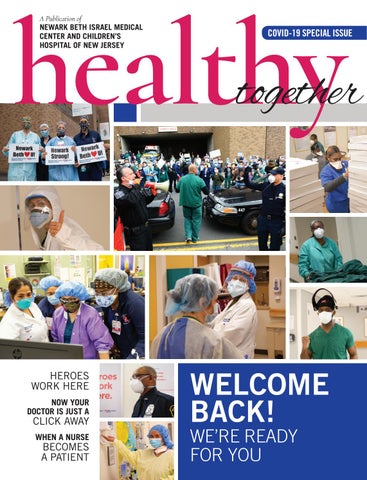
together healthy A Publication of
NEWARK BETH ISRAEL MEDICAL CENTER AND CHILDREN’S HOSPITAL OF NEW JERSEY
HEROES WORK HERE NOW YOUR DOCTOR IS JUST A
CLICK AWAY WHEN A NURSE
BECOMES A PATIENT
NBI_Cover_Covid19_final.indd 1
COVID-19 SPECIAL ISSUE
WELCOME BACK! WE’RE READY FOR YOU
6/2/20 9:50 AM
A MESSAGE FROM LEADERSHIP
Staying Healthy Together
F
or all of us who call New Jersey home, the COVID-19 pandemic has been a sobering reality. Every one of us has been affected in some way, and some have lost loved ones. To them, we extend our sincerest condolences. Throughout these extraordinary months, New Jerseyans have come together to encourage each other and the hospitals that care for their communities. At RWJBarnabas Health, we truly have been inspired by the support we’ve received, and offer our heartfelt thanks for every donation and card, and for the countless other gestures of caring. Most of all, of course, we wish to express our gratitude to our amazing staff— doctors and nurses caring for patients; hospital workers in the offices and on the floors; researchers seeking a cure and a vaccine; those charged with carrying out demanding new cleaning procedures; and those who have quickly adapted our facilities to care for COVID-19 patients. Now, it’s important to look ahead and begin caring for ourselves again. During the height of the pandemic, many people delayed getting healthcare—a choice that can have devastating consequences. Please rest assured that we’ve gone above and beyond all the measures recommended by the Centers for Disease Control and other national and regional experts to keep everyone in our facilities safe. At Newark Beth Israel Medical Center and Children’s Hospital of New Jersey, we never stopped caring for you and your loved ones. Throughout this pandemic, we continued to deliver babies and provide prenatal services, pediatric care, urgent and emergency medical care. Now that we have turned the corner, we must remain steadfast in our efforts to stop the spread. We have implemented social distancing rules throughout the hospital, universal masking and COVID-19 screening of all visitors, patients and employees. In addition, hospital-grade HEPA filters and ultraviolet technology ensure a clean and safe facility for all of our patients. We look forward to supporting your good health in whatever way we can. Welcome back. Yours in good health,
BARRY H. OSTROWSKY
HEALTH NEWS NEWARK BETH ISRAEL MEDICAL CENTER EARNS ACCOLADES Newark Beth Israel Medical Center and Children’s Hospital of New Jersey (NBI) continues to be recognized for excellence in delivery of care. Recent accolades include:
• WORLD’S BEST HOSPITAL: NBI has again been named one of the World’s Best Hospitals by Newsweek magazine. NBI ranked among the top 250 hospitals in the U.S., and is one of only five New Jersey hospitals on this prestigious list.
• “A” FOR SAFETY: Newark Beth Israel Medical Center and Children’s Hospital of New Jersey has again been awarded an “A” Hospital Safety Score rating by The Leapfrog Group, an independent national nonprofit run by employers and other large purchasers of health benefits. The Spring 2020 scores mark NBI’s fourth consecutive “A” rating in a row. An “A” grade demonstrates the commitment and intentional focus on safety and quality by all physicians and employees. This achievement recognizes the highest-quality care for our patients and their families every day.
DARRELL K. TERRY, SR.
PRESIDENT AND CHIEF EXECUTIVE OFFICER RWJBARNABAS HEALTH
PRESIDENT AND CHIEF EXECUTIVE OFFICER NEWARK BETH ISRAEL MEDICAL CENTER AND CHILDREN’S HOSPITAL OF NEW JERSEY
201 Lyons Ave. at Osborne Terrace, Newark, NJ 07112 973.926.7000 | www.rwjbh.org/newarkbeth
CONNECT WITH US ON @NewarkBethIsraelMedicalCenter @Newark_Beth @Newark_BethNJ RWJBarnabas Health Newark Beth Israel Medical Center Newark Beth Israel Medical Center complies with applicable federal civil rights laws and does not discriminate on the basis of race, color, national origin, age, disability or sex. For more information, see link on our home page at www.rwjbh.org/newarkbeth. NBI cumple con las leyes federales de derechos civiles aplicables y no discrimina por motivos de raza, color, nacionalidad, edad, discapacidad o sexo. ATENCIÓN: Si usted habla español, servicios de asistencia lingüística, de forma gratuita, están disponibles para usted. Llame al 973.926.7000. NBI konfòm ak lwa sou dwa sivil federal ki aplikab yo e li pa fè diskriminasyon sou baz ras, koulè, peyi orijin, laj, enfimite oswa sèks. ATANSYON: Si w pale Kreyòl Ayisyen, gen sèvis èd pou lang ki disponib gratis pou ou. Rele 973.926.7000.
Healthy Together
NBI_Memo_Covid19_final.indd 2
| 2 |
COVID-19 Special Issue
6/2/20 1:58 PM
together healthy contents COVID-19 SPECIAL ISSUE
4
4. HEROES WORK HERE. We’re beyond grateful for the incredible work of our teams on the COVID-19 front lines. 6. DONORS ARE HEROES, TOO. A sampling of the valuable—and much appreciated—support we’ve received during the pandemic.
17
18
20
22
14. N EW WAYS TO LEAD IN CANCER TREATMENT. Collaboration and innovation are driving a new era in oncology.
10 2. WELCOME LETTER. A community update from our CEOs.
6
9. STAYING STRONG WHILE SOCIAL DISTANCING. Simple steps can help you regain a feeling of control.
15. A DVANCED OPTIONS FOR TREATING AUTISM. Telehealth services and intensive treatments offer new help.
10. 6 QUESTIONS ABOUT TELEMEDICINE, ANSWERED. You don’t have to be a technology whiz to have a video visit with your doctor.
16. P OWER PARTNERSHIPS. Working together to help make New Jersey healthier.
12. CLINICAL TRIALS: WHAT EVERY CANCER PATIENT SHOULD KNOW. Trials offer patients a chance to benefit from the latest treatment.
17. Y OUR SUPPORT SUSTAINS US. Communities have stepped up for their local hospitals—and you can still help.
Newark Beth Israel Medical Center
NBI_TOC_Covid19_final.indd 3
18. ‘WHAT I’VE LEARNED FROM HAVING COVID-19.’ A seasoned nurse and educator gains new insights from her illness. 20. SAFE AND SOUND IN THE E.D. Rigorous procedures ensure the safety of Emergency Department patients and staff. 22. WELCOME BACK! COVID-19 testing of staff and patients, extreme cleaning and many other measures make our facilities safe for care.
|
RWJBH.ORG/NEWARKBETH
3
6/2/20 2:02 PM
1
2
3
HEROES WORK HERE O
ur providers and staff have risen to—and well above—the unprecedented challenges of caring for patients with COVID-19. Newark Beth Israel Medical Center (NBI) is proud and grateful beyond words for the indomitable spirit and incredible work done by our teams on the front lines.
4
6
5
7
Healthy Together
| 4 |
NBI_Heroes_Covid19_Final.indd 4
COVID-19 Special Issue
6/2/20 9:59 AM
8
10
11
9
1 STAFF SALUTE: NBI Emergency Department frontline staff showed their support for Newark first responders during the Police Officers and Firefighters Heroes Salute on April 8.
7 COMMAND CENTER: Matthew Schreiber, MD, Chief Operating Officer in the NBI Command Center, working alongside the crisis team. The Command Center was open 24/7 from March 13 to May 1.
2 CONVERTED UNITS: NBI had to convert most of its units into COVID-19 units. But by the end of April, a steady decline in new cases and a steady increase in discharges meant it was time to reopen.
8 MOBILE HEALTH: During the pandemic, RWJBarnabas Health Mobile Health Services have stood ready to provide expert care in any emergency.
3 NON-COVID-19 TENT: Like so many hospitals across the state, NBI set up a tent outside of its Emergency Department to ensure rapid, appropriate and safe triage of patients who were not experiencing COVID-19 symptoms.
HEROES ON DUTY: Ki Buom Lee, MD, Internal Medicine; Chaitanya Pal, MD, Internal Medicine; and Okechukwu Okoye, MD, Internal Medicine 4
12
5 THAT’S THE SPIRIT: Respiratory therapists at NBI kept up their spirits, and those of their patients as well. 6 DAILY HUDDLE: ED staff meet for a “safety huddle” to review staffing, patient issues and any concerns for the upcoming shift—an essential element of the hospital’s response.
9 HONORING NBI: On April 8, approximately 30 Newark police officers accompanied Chief of Police Darnell Henry and nearly 50 firefighters accompanied Chief of Fire Rufus Jackson in a parade to honor frontline heroes. Newark Beth Israel and Children’s Hospital of New Jersey President and CEO Darrell K. Terry, Sr., joined staff to greet them. 10 MEETING NEEDS: Dedicated staff and providers from RWJBarnabas Health Behavioral Health Center and Network have been available 24/7 to meet critical needs for patients during the pandemic. 11 RESPIRATORY READINESS: As COVID-19 patients began to stream in, the Emergency Department developed precautions, including a special area for patients with respiratory symptoms. 12 PEER RECOVERY: Certified Peer Recovery Specialists from the RWJBarnabas Health Institute for Prevention and Recovery offer support to patients with substance use disorders.
To share your thanks or make a donation in support of our healthcare heroes, visit www.rwjbh.org/heroes.
Newark Beth Israel Medical Center
NBI_Heroes_Covid19_REV1.indd 5
|
RWJBH.ORG/NEWARKBETH
5
6/3/20 2:53 PM
1
DONORS ARE HEROES, TOO
2
A
t Newark Beth Israel Medical Center (NBI), we’ve dedicated everything we have to fighting COVID-19. And just as we’ve had the community’s back, you’ve had ours, with a steady outpouring of food, supplies, personal items and love. Please know that each and every gift has helped to keep us going. From the bottom of our hearts, thank you!
3 4
5
Healthy Together
| 6 |
6
7
COVID-19 Special Issue
NBI_CommunityDonations_Covid19_Final.indd 6
6/2/20 10:21 AM
8
1 PET THERAPY: The Associated Humane Society of Newark donated some puppy time to the frontline workers at NBI, allowing staff to pet the dogs and de-stress. 2 RUNNIN’ ON DUNKIN’: Frontline workers in the NBI Emergency Department welcomed donations from Dunkin’. 3 SPECIAL DELIVERY: NBI and Children’s Hospital of New Jersey President and Chief Executive Officer Darrell K. Terry, Sr., delivered meals to staff members.
9
4 FOOT REST: Dr. Scholl’s donated insoles to help NBI frontline workers as they worked tirelessly for patients.
GARY’S WINE AND MARKETPLACE provided sweet treats for the Pediatrics Unit team. 5
6 FLAG SALUTE: The Front Line Appreciation Group (FLAG) of South Orange/Maplewood has generously provided meals to NBI staff every day, delivering more than 5,000 meals since late March.
10
7 THE FOUNDERS OF FLAG of South Orange/ Maplewood raised more than $88,000 in support of Heroes in Healthcare. 8 CHILDREN’S SPECIALIZED HOSPITAL: The Long Term Care team at CSH in Mountainside thanks FLAG for a donation of breakfast sandwiches. 9 #GIRLTALKTAKEOVER: Music, Meals & More, a collaborative project with Kerri Berson Levine and Angela Simmons, provided more than 3,500 individually packaged meals and also livestreamed musical performances for the employees of NBI. Girl Talk Takeover raised more than $30,000 to support NBI’s heroes.
11
NBI CLINICIANS get a look at what they can do to help patients connect with loved ones with 20 iPads donated by Princeton Christian Church. 10
NOURISHMENT AND MORE: The KIPP Seek Academy sent positive messages and lunches for the pediatrics team. 11
To share your thanks or make a donation in support of our healthcare heroes, visit www.rwjbh.org/give.
Newark Beth Israel Medical Center
NBI_CommunityDonations_Covid19_Final.indd 7
|
RWJBH.ORG/NEWARKBETH
7
6/2/20 10:21 AM
Don’t ignore the warning signs of a heart attack or stroke. Fast intervention can save lives. If you or a loved one is experiencing symptoms of heart attack or stroke, don’t ignore them. Call 911 and go directly to the closest emergency department. Our emergency department, a certified chest pain and stroke center, is safe and ready to care for you.
Heart attack symptoms include:
Signs of stroke include:
• chest pain or pressure
• face drooping
• pain or discomfort in arms, back, neck,
• arm weakness or numbness
jaw or stomach
• slurred speech or difficulty speaking
• shortness of breath
• sudden confusion
• nausea or lightheadedness
• trouble seeing
Learn more at rwjbh.org/WelcomeBack
RWJ-107 Welcome Back_8.375x10.875_HEART_STROKE_NBI.indd 1 NBI_Ad_Covid19_final.indd 8
5/27/20 2:40 PM 6/2/20 2:05 PM
Dr. Ghinassi. “Create ways to communicate with people who are important to you, using FaceTime, letters, phone calls or whatever medium you do best. And keep in mind that Snapchat and Instagram are oneway communication, not true socializing.”
STAYING STRONG WHILE SOCIAL DISTANCING SIMPLE STEPS CAN HELP YOU REGAIN A FEELING OF CONTROL.
T
he COVID-19 pandemic has brought all kinds of uncertainty— to our finances, our health and our ability to make plans. “People have lost an important aspect of control over their activities,” says Frank Ghinassi, PhD, ABBP, Senior Vice President, Behavioral Health and Addiction, RWJBarnabas Health, and President and CEO of Rutgers University Behavioral Health Care. “As a result, we’re seeing a lot of people feeling stressed—and even a little more than that, feeling distressed. “We all had a rhythm and routine for our days,” he continues, “from what time we took a shower to how we dressed for work to the kinds of things we did for fun. Now all of those old rhythms are challenged, and that makes people feel confused and offbalance.” While that’s a perfectly normal FRANK GHINASSI, PHD reaction, Dr.
Ghinassi says it’s important to take the next step. “Ask yourself, ‘What can I do in this new reality to help myself feel better and more in control?’” The answer lies in reintroducing predictability, to the degree possible in this unpredictable time. • Create a new routine. “Establish a new set of patterns,” advises Dr. Ghinassi. “Go to bed and get up in a regular way. Eat at set intervals, not all day long just because you’re not far from the refrigerator. Work out or take a walk regularly. These new routines will become familiar and comforting.” • Make plans to socialize with others. “Meaningful connection with family and friends is not going to happen automatically,” says
• Build a new set of activities that give you pleasure. “A lot of things we like to do can’t happen now because they involve going to crowded places like movie theaters, restaurants, concerts and stadiums. We need to find activities that will bring us pleasure and are doable within our current limitations,” says Dr. Ghinassi. “That could involve playing or listening to music, streaming films, gardening, painting or any other enjoyable hobby.” If social distancing has led to behaviors that could be destructive, such as overeating or drinking too much, or if the blues have crossed the line into depression, don’t hesitate to reach out for help. “There are many front doors to behavioral healthcare,” Dr. Ghinassi says. “You can ask a trusted healthcare provider to recommend a counselor. If your employer has an Employee Assistance Program, take advantage of that. Seek out your local mental health facility or call the New Jersey Hopeline at 855.654.6735. Call the RWJBarnabas Health Access Center, which is available 24/7, at 800.300.0628.” • And take heart. “We’ll get through this,” says Dr. Ghinassi. “Humans are enormously adaptable. Through millennia of plagues, famines, wars and pestilence, we’ve risen to every challenge. It’s in our DNA. We’re going to learn and restructure, draw strength from each other and find solutions.”
For help accessing mental health services, call the RWJBarnabas Health Access Center at 800.300.0628.
RWJBarnabas Health
System_BehavioralHealth_Covid19_Final.indd 9
|
RWJBH.ORG
| 9
6/3/20 9:29 AM
Q&A
ASK THE DOCTOR
6 QUESTIONS ABOUT TELEMEDICINE, ANSWERED YOU DON’T HAVE TO BE A TECHNOLOGY WHIZ TO HAVE A VIDEO VISIT WITH YOUR DOCTOR.
Healthy Together
| 10 |
System_TeleMed_COVID19_Final.indd 10
V
irtual online doctor visits have been available for some time—but since the COVID-19 pandemic, they’ve soared. “During just one week in April, doctors in our medical group conducted more than 10,000 telemedicine visits,” says Andy Anderson, MD, ANDY ANDERSON, MD President and Chief
Executive Officer of the RWJBarnabas Health medical group. Stay-home orders during the lockdown have played a huge role in the increase, but other causes are also speeding up telemedicine’s adoption. Dr. Anderson tells how and why:
1
What factors are contributing to telemedicine’s surge?
Historically, demand for telemedicine was driven by urgent issues, rather than by routine or other kinds of care. Habit has played a role, too—the expectation that
COVID-19 Special Issue
6/3/20 9:32 AM
patients and physicians need to physically be together in order to get the best possible care. Now, there’s a greater openness to using technology platforms in all realms of our lives. Those platforms are increasingly sophisticated, so that patients and providers can really see each other, see the parts of the body in question and read each other’s expressions. In the RWJBarnabas Health medical group, we have an easy-to-use platform for telemedicine visits. It’s as simple as a click to get into a virtual room for an appointment. It’s also secure and is fully HIPAA-compliant.
2
What are some examples of conditions that can be treated in a virtual visit?
Let’s say a person falls and cuts himself. A telemedicine visit can help determine whether he needs stitches and/or an antibiotic. Symptoms and treatment for a urinary tract infection can also be discussed virtually. If someone has a sore throat, he or she can show the back of the throat and tonsils to the doctor via video. Chronic conditions, such as COPD [chronic obstructive pulmonary disease], congestive heart failure or asthma could be managed through a video visit, as a physician is able to observe whether a person is short of breath, for example, or whether his legs are swollen. Diabetes that is not well controlled can also be discussed, as the patient can report his blood sugar levels and medication can be adjusted accordingly. It’s important to note that in any of these cases, a visit can begin as a video visit and then become an in-person visit if the condition warrants it. If you aren’t sure what the best course of action is— video, in-person office visit or Emergency Department visit—don’t feel you have the burden of having to make the decision on your own. Call your physician’s office and have a conversation.
3
What about well visits and checkups?
Clearly, some exams and procedures require an in-person visit. However, many aspects of a wellness visit, specifically a Medicare Annual Wellness Visit, can be conducted virtually. A physician can ask about, for example, colon cancer screenings or mammograms, home safety and more. Patients like that they can save time and don’t have to travel. In addition, we’re hoping to see increased use of monitoring devices that can transmit information from patient homes to physician offices, including blood pressure monitors, blood glucose monitors, pulse oximeters and even wireless scales.
4
Am I at risk for contagion if I visit a physician’s office?
At RWJBarnabas Health medical group offices, we’ve taken the necessary steps to make it very safe to visit in person. We have social distancing plans, including the use of Plexiglas barriers, a distance line at checkout areas, modified waiting room seating and limitations on the number of patients scheduled during a specified time frame. We also follow rigorous cleaning regimens, offer hand sanitizer stations and more.
5
Are telemedicine visits covered by insurance?
During the early stages of the pandemic, Medicare, Medicaid and many private insurances expanded their coverage for telemedicine. The situation is evolving, so check with your insurer, but our sense is that coverage for telemedicine will continue to expand.
6
How will telemedicine change healthcare in the future?
While the COVID-19 crisis has pushed us into this world fast, I think healthcare will be sticking with telemedicine from now on. Telemedicine is not a solution for everything, but it is a solution for a lot
CHECKLIST FOR THE BEST VIRTUAL VISIT • Be sure the device you’re using (phone, tablet, computer) is fully charged. • Make the call from a well-lit and quiet room to enhance the quality of the video and audio feeds. • If you need an interpreter, let your physician’s office know ahead of time. • In advance, write down your symptoms, when they began and how frequent they are, and any medications you’re taking. • Keep a pen and notepad handy during the visit.
more things than we realized. It’s a great tool to have in our toolkit. The most important message we have for patients is to continue to make your health a priority. Don’t put off care if you aren’t feeling well, or postpone contacting your physician for help managing any chronic health conditions. Whether virtually or in person, your provider is there to help you.
To connect with an RWJBarnabas Health medical group provider, call 888.724.7123 or visit www.rwjbh.org/medicalgroup.
RWJBarnabas Health
System_TeleMed_COVID19_Final.indd 11
|
RWJBH.ORG
| 11
6/3/20 9:32 AM
RWJBarnabas Health, together with Rutgers Cancer Institute of New Jersey—the state’s only NCI-Designated Comprehensive Cancer Center— provides close-to-home access to the latest treatment options. For more information, call 844.CANCERNJ or visit www.rwjbh.org/beatcancer.
CLINICAL I TRIALS:
WHAT EVERY CANCER PATIENT SHOULD KNOW TRIALS OFFER PATIENTS A CHANCE TO BENEFIT FROM THE LATEST TREATMENT.
Healthy Together
| 12 |
System_ClinicalTrials_Spr20_Final.indd 12
f you or a loved one is diagnosed with cancer, you’ll want to seek the highest possible level of care—and clinical trials can be a critical aspect of that care. “Clinical trials offer tomorrow’s treatments today,” says Howard S. Hochster, MD, FACP, Director, Oncology Research for RWJBarnabas Health, and Associate Director, Clinical Research and Director, GI Oncology for Rutgers Cancer Institute. “As the state’s only NCIDesignated Comprehensive Cancer Center, Rutgers Cancer Institute of New Jersey and RWJBarnabas Health provide patients access to a wide range of clinical trials, many of which are not available elsewhere. We do this at Rutgers Cancer Institute in HOWARD S. HOCHSTER, MD New Brunswick and
COVID-19 Special Issue
6/3/20 9:36 AM
across the state at RWJBarnabas Health hospitals.” What should patients know about clinical trials? Dr. Hochster explains:
What happens in a clinical trial? Clinical trials are research studies that evaluate new treatment options for diseases and help doctors learn which treatments are most effective. Generally, clinical trials evaluate the safety and effectiveness of new drugs, use current drugs in a new manner or combine drugs to evaluate their effectiveness. Every clinical trial must be approved by regulatory authorities to be sure the scientific evidence merits this kind of investigation and that it’s ethically sound. Clinical trials are undertaken only when we have evidence that the new approach is likely to be better than the standard treatment. Patients should speak with their physicians about the risks and benefits, including possible side effects, of the treatment being studied. During a trial, patients will have many staff members paying attention to them— physicians and research staff including nurses, data managers and others—whose job is to make sure they get the treatment exactly as written in the protocol.
A CLINICAL TRIAL FOR COVID-19 TREATMENT Rutgers Cancer Institute is spearheading a statewide clinical trial for the drug hydroxychloroquine as a potential treatment for COVID-19 patients. Though the trial is not limited to cancer patients, Rutgers Cancer Institute is well positioned to lead such a study because of its extensive experience with clinical trials as the state’s only NCI-Designated Comprehensive Cancer Center. Hydroxychloroquine, while a subject of much public discussion, has not yet been tested in a large, controlled clinical trial to determine its effectiveness. “Until we get the results of a clinical trial, we just don’t know if there’s any role for hydroxychloroquine in treatment for COVID-19,” says Rutgers Cancer Institute Director Steven K. Libutti, MD, who is also Senior Vice President, Oncology Services, RWJBarnabas Health, and Vice Chancellor, Cancer Programs, Rutgers Biomedical and Health Sciences. “Both the initial hype about the benefits of hydroxychloroquine and the stigma that followed were inappropriate. With this trial, we’ll have well-analyzed data from a well-conducted study in order to make a recommendation about that agent’s use.” THREE PATHWAYS The study consists of three “arms.” One will test hydroxychloroquine in conjunction with the antibiotic azithromycin; one will test hydroxychloroquine alone; and one will provide supportive care for six days, followed by a course of hydroxychloroquine. Patients’ blood will be tested for levels of the SARS CoV-2 virus prior to treatment and at regular intervals thereafter. The study is open to people who are age 18 or over, have been diagnosed with COVID-19 and meet other eligibility requirements. In addition to Rutgers Cancer Institute in New Brunswick, the trial is being offered at Robert Wood Johnson University Hospital in New Brunswick; Monmouth Medical Center in Long Branch; Saint Barnabas Medical Center in Livingston; Morristown Medical Center; Overlook Medical Center in Summit; and University Hospital in Newark.
Who’s eligible for a clinical trial? Every patient who has a cancer diagnosis should ask whether a clinical trial might be right for him or her, and should consider a clinical trial at every step of the cancer journey. Sometimes a trial isn’t appropriate at the beginning, but may be later on. Requirements for participation vary. Criteria may include age, gender, type and stage of cancer, other existing medical conditions and treatment history. Before patients can participate in a clinical trial, they must sign an informed consent document, which explains all aspects of the trial as well as alternative treatment options.
What are some examples of cancer research taking place in clinical trials? For years, everyone with certain cancer diagnoses received the same type of
STEVEN K. LIBUTTI, MD
For information on how to take part in the trial, call Rutgers Cancer Institute’s Office of Human Research Services at 732.235.7356 or email statewide_research@cinj.rutgers.edu.
treatment for their cancers, but not everyone reacted the same way. Now we’re able to use clinical trials to make progress in precision medicine, where we can specifically target, on a molecular level, the gene mutations or changes that make an individual’s normal cells turn into cancer cells. Another exciting area now is immunotherapy—using a person’s own immune system to fight cancer. We’ve learned that cancer cells have ways to mask themselves from the immune system. Today, we’ve seen many breakthroughs in drugs that restore the body’s ability
to fight off cancer cells. CAR T-cell therapy is another promising area of research. It involves obtaining immune cells from a patient, reengineering them in a lab to make them as effective at fighting cancer as possible, then reinjecting them into the patient’s body. This results in a “living” therapy with ongoing benefit. Currently, Robert Wood Johnson University Hospital in New Brunswick, in conjunction with Rutgers Cancer Institute, is one of only two certified programs in the state to offer this form of immunotherapy.
To learn more about clinical trials, visit www.cinj.org/clinical-trials. To speak with a clinical trial navigator to explore your options, call the Oncology Access Center at 844.CANCERNJ.
RWJBarnabas Health
System_ClinicalTrials_Spr20_Final.indd 13
|
RWJBH.ORG
| 13
6/3/20 9:36 AM
NEW WAYS TO LEAD IN
CANCER TREATMENT COLLABORATION AND INNOVATION ARE DRIVING A NEW ERA IN ONCOLOGY.
E
RWJBarnabas Health, together with Rutgers Cancer Institute of New Jersey—the state’s only NCI-Designated Comprehensive Cancer Center— provides close-to-home access to the latest treatment options. For more information, call 844.CANCERNJ or visit www.rwjbh.org/beatcancer.
very week, up to 40 of New Jersey’s top cancer experts virtually convene as part of the new N.J. Statewide Cancer Programs Collaboration—a unique approach initiated and implemented by Steven K. Libutti, MD, Director, Rutgers Cancer Institute of New Jersey, and Senior Vice President, Oncology Services, RWJBarnabas Health. “As the state’s only NCI-Designated Comprehensive Cancer Center, we felt that it was important that we communicate with other cancer programs in New Jersey during the COVID-19 pandemic,” says Dr. Libutti. “We felt we could learn quite a bit from hearing about other experiences, and that each program shouldn’t have to go through the learning curve on its own.” In addition to Rutgers Cancer Institute and RWJBarnabas Health, all major cancer programs in the state participate, including those at Atlantic Health System; Capital Health Cancer Center; MD Anderson Cancer Center at Cooper; John Theurer Cancer Center at Hackensack University Medical Center, Hackensack Meridian Health; Hunterdon Healthcare; Inspira Health Network; Regional Cancer Care Associates; Saint Peter’s Healthcare System; St. Luke’s University Health Network, Warren; Summit Medical Group; Trinitas Comprehensive Cancer Center; and Penn Medicine|Virtua Cancer Program.
MANY MINDS Subgroups in the areas of medical oncology, radiation oncology, surgical oncology and operations meet throughout the week to discuss topics relevant to their programs. On Friday mornings, all participants join a call to exchange information and insights. “We’ve come up with plans for how to safely continue and then augment surgical oncology and other care during the pandemic,” says Dr. Libutti. “What are the right testing regimens to use? How do you open up surgery facilities safely to protect patients and providers from exposure? Which treatment regimens can be delivered at home, and which can be delayed without bad consequences for patients? “Oncology itself is a very collaborative field, because so many modalities are used to treat a cancer patient in a very coordinated way,” continues Dr. Libutti. “It’s not a huge leap for us to extend collaborations beyond the borders of health systems.” Patients in New Jersey will reap the benefits. “Our state sees 50,000 new diagnoses and 16,000 deaths from cancer every year,” says Dr. Libutti. “We’re going to leverage the strengths of STEVEN K. LIBUTTI, MD each program to work together to help cancer patients.” Healthy Together
| 14 |
VIRTUAL CARE FOR CANCER PATIENTS The Rutgers Cancer Institute of New Jersey, in partnership with RWJBarnabas Health (RWJBH), had already begun a pilot program for cancer consultations via video. The pandemic accelerated the expansion of the plan to almost all of the groups’ cancer specialists. The specialists are using a secure platform, which is private and simple for patients to access. In addition to convenience, telemedicine has a number of benefits for cancer patients: • The elimination of potential exposure for patients with compromised immune systems • The ability to have several specialists virtually present at the meeting • The capacity to have geographically distant family members at the meeting • The means to effectively share information with patients. “As I’m talking to a patient, I can show a picture of, for example, lymph nodes, and also type out instructions on the screen and then email these to the patient,” says Andrew M. Evens, DO, MSc, Associate Director for Clinical Services and Director, Lymphoma Program, Rutgers Cancer Institute, and Medical Director, Oncology Service Line, RWJBH. “As we always say, ‘Cancer doesn’t travel well,’” explains Dr. Evens. “Telemedicine doesn’t replace in-person care, but we knew there was an appetite for this service. Who wants to drive an hour or more on the parkway or turnpike for a consult when you don’t have to?” ANDREW M. EVENS, DO
COVID-19 Special Issue
System_CancerLeaders_COVID19_Final.indd 14
6/3/20 10:25 AM
ADVANCED OPTIONS FOR
TREATING AUTISM TELEHEALTH SERVICES AND INTENSIVE TREATMENTS OFFER NEW HELP.
S
tay-at-home orders during the pandemic have posed particular challenges for children and adults with autism spectrum disorder (ASD). Deprived of face-to-face services, they have been lacking the stimulation and training they need, and have spent much less time interacting with others than usual. “It’s a situation where problem behavior is more likely to occur,” says Wayne Fisher, a professor in the Department of Pediatrics at Rutgers Robert Wood Johnson Medical School and Director of the Rutgers Center for Autism Research, Education and Service (RUCARES). “We wanted to provide support for kids and families to help them manage the situation more effectively.” The result was the development of ABA (Applied Behavior Analysis) Short-Term Telehealth Services provided by Children’s Specialized Hospital (CSH). The services begin with a quick-start evaluation. For children with severe problems whose behavior may be dangerous to themselves, a behavior stabilization and safety program is developed in two 90-minute appointments. For children with mild to
moderate ASD, a quick-start behavior management program and behavior management group are available over the course of eight appointments via a simpleto-access, private telehealth platform. Though telehealth services for people with autism have been available in other states, it was not an option in New Jersey until an executive order as part of the COVID-19 response allowed it. Fisher hopes the trend continues. “This method has many benefits. It really helps families, many of whom travel quite a distance for in-person specialized care, in terms of convenience,” he says. “For specialists, there’s therapeutic value in seeing the child and family at home, under naturalistic conditions.”
EXPANDED SERVICES The ABA short-term telehealth program is part of an expansion of autism services that CSH now offers through a collaboration with RUCARES. This summer will see the opening of CSH RUCARES, the first center of its kind in New Jersey dedicated to innovative research, education and service to support children and adults with ASD. CSH RUCARES will accept patients for a new Severe Behavior Disorders Program, which will provide specialized
An RWJBarnabas Health facility
services to children and adolescents with autism and other developmental disabilities who display dangerous behavior such as self-injury and aggression. Patients will undergo intensive outpatient treatment from a team of board-certified behavior analysts and registered behavior technicians. “Our program has a data-based approach based on empirical research, and all of our staff and faculty are highly trained,” explains Fisher, who is the Director of CSH RUCARES. CSH is also expanding its Pediatric Feeding Disorders Program with a new program for children who have not progressed through traditional feeding programs. “It’s a data-based, intensive, goal-driven day program. We see patients for about eight weeks, then transition to outpatient follow-up services once or twice a week,” says Cathleen Piazza, Director of the Pediatric Feeding Disorders Program at CSH and a professor in the Rutgers Graduate School of Applied and Professional Psychology. “We also find telehealth services very valuable because we can work with and see the patient where he or she eats, in real time.” To learn more about Children’s Specialized Hospital, call 888.244.5373 or visit www.childrens-specialized.org.
At Children’s Specialized Hospital, we provide world-class care for children and young adults who face special health challenges across the state of New Jersey and beyond. Our locations in Bayonne, Clifton, East Brunswick, Egg Harbor Township, Hamilton, Jersey City, Mountainside, New Brunswick, Newark, Toms River and Warren treat everything from chronic illnesses and complex physical disabilities like brain and spinal cord injuries to developmental and behavioral issues like autism and mental health.
RWJBarnabas Health
System_CSH_Covid19_Final.indd 15
|
RWJBH.ORG
| 15
6/3/20 9:41 AM
Rutgers Men’s Basketball co-captain Akwasi Yeboah shared important safety information and the need to fight the virus together with fans via social media. The Lakewood BlueClaws held a remote game of “Horse” (renamed “Claws”) to support RWJBH healthcare heroes. The winning hospital gets a private field day at FirstEnergy Park.
NJ Devils Hall of Fame goaltender Martin Brodeur provided video messages of strength and support to our team on the front lines.
Seton Hall Men’s Basketball Coach Kevin Willard sent a video recognizing and thanking our healthcare heroes.
NJ Devils star Travis Zajac led a stick tap at 7 p.m. nightly across social media platforms to celebrate and support all frontline workers.
For the Somerset Patriots’ Virtual Opening Day, Michael Rodricks, MD, threw the ceremonial first pitch to Brittany Roper, RN. Both work in the Critical Care Unit at RWJUH Somerset.
Special Olympics New Jersey athletes offered video recognition for doctors, nurses and hospital workers saving lives and treating patients at RWJBH facilities.
WORKING TOGETHER TO HELP MAKE NEW JERSEY HEALTHIER
A
t RWJBarnabas Health (RWJBH), we have always been committed to meaningful partnerships with organizations that share our vision to create healthier communities. Their efforts during the COVID-19 pandemic, however, have taken their support to a whole new level. “We asked our partners to help us in several ways—through donations, through disseminating educational information and through support for our frontline healthcare heroes,” says Justin Edelman, Senior Vice President, Corporate Partnerships, RWJBH. “The response was beyond what we ever could have imagined.” Our corporate partners had our back. New Jersey Devils/Prudential Center provided a significant and impactful monetary donation in addition to protective equipment and more than 10,000 tickets to future events for our healthcare heroes. Rutgers University Athletics donated protective equipment and used its reach on social media to educate our communities on important safety tips, while the Somerset Patriots raised funds through online memorabilia auctions, merchandise sales and a pop-up food truck event. Too numerous to mention, the supportive efforts from so many of RWJBH’s partners (see list at right) have been crucial to our mission. On behalf of RWJBH and all of our partner organizations, we wish you good health and good fortune at all times. Together, we’ll be there for you.
To learn more about corporate partnerships at RWJBarnabas Health, visit www.rwjbh.org/partnerships.
Healthy Together
| 16 |
System_Partnership_Covid19_Final.indd 16
COVID-19 Special Issue
FRIENDS IN NEED Warmest thanks to these partners: • Cedar Stars Academy • Cure Insurance Arena • George Street Playhouse • Lakewood BlueClaws • Mets Radio Network • Monmouth University Athletics • MSG Networks • New Jersey Devils/Prudential Center • New Jersey Golf Foundation • NJPAC • New Jersey Youth Soccer Association • Novo Nordisk New Jersey Marathon & Half Marathon • Princeton University Athletics • Pure Basketball • Rutgers University Athletics • RWJBarnabas Health Arena • Seton Hall University Athletics • Somerset Patriots • Special Olympics New Jersey • Trenton Thunder • Yankees Radio Network
6/3/20 9:49 AM
$3.2 million in donated PPE and other supplies; and $870,000 in food donations. “RWJBH hospitals have always enjoyed wonderfully generous support from the communities they serve,” Miller says. “In recent months, I think our doctors and nurses were certainly reminded about how much people value them and the work they do.”
YOUR SUPPORT
ONGOING NEED
SUSTAINS US
COMMUNITIES HAVE STEPPED UP FOR THEIR LOCAL HOSPITALS IN A BIG WAY—AND YOU CAN STILL HELP.
T
he offers from the public began as soon as the crisis did. People emailed, texted and called hospitals, some in tears, wanting to know how they could help local healthcare providers. They sent money. They donated dinners. They sent cards. Someone had a friend who had a friend whose company could provide Personal Protective Equipment (PPE). A small painting business had 20 face masks to donate. A hardware store provided gloves. The contributions came in a steady stream. “The donations were from longtime loyal donors as well as those who had never made a gift to one of our hospitals before,” says Glenn Miller, Executive Vice President and
Chief Development Officer at RWJBarnabas Health (RWJBH). “People wanted to make sure that our doctors, nurses and staff had what they needed to stay healthy and do their jobs. “The word ‘heroes’ gets used a lot, and admiration for the dedication of our caregivers was driving this outpouring of support,” he continues. “Supporters saw our caregivers getting up to go to work every day under incredibly difficult circumstances, fighting to save lives.” As of mid-May, the RWJBH system as a whole had received nearly $11 million in support. Of that amount, $6.7 million came in checks and online gifts, large and small;
The money raised goes into the RWJBH system’s Emergency Response Fund, where it’s used to purchase much-needed equipment and supplies. The fund also is used to support frontline hospital workers. “When employees need to be quarantined away from their families, we’ve been able to help make that happen,” Miller says. “Other colleagues needed childcare so they could come to work. And sadly, we’ve lost colleagues, and we’re working to develop resources to address the repercussions of such terrible losses.” Beyond tangible support, the outpouring from the community provided an invaluable morale boost. “For healthcare workers going through this experience, to take a break and find a hot meal or a card or a note—it’s meant the world to them,” Miller says. “When you feed someone, you’re enriching their body, obviously, and also their soul.” The Emergency Response Fund remains open. “We’re in an ongoing crisis, and philanthropy will continue to play an important role in helping us prepare for any surges or future outbreaks,” Miller says. In addition, capital projects, new programs and equipment upgrades will still need to be funded for each medical center. “We’re incredibly grateful for the outpouring of support, and the tremendous positive impact it has on our work and our commitment to keeping communities healthy,” Miller says. “We cannot thank people enough.” The gifts also have a benefit for the giver. “We’ve heard that people in the community want to feel that they have the ability to bring hope,” says Miller, “and that they’re empowered to make a difference.”
To donate to Newark Beth Israel Medical Center or to RWJBarnabas Health, visit the Emergency Response Fund at www.rwjbh.org/give.
Newark Beth Israel Medical Center
NBI_Covid19_final.indd 17
|
RWJBH.ORG/NEWARKBETH
17
6/2/20 2:07 PM
‘WHAT I’VE LEARNED FROM HAVING
COVID-19’
A SEASONED NURSE AND EDUCATOR GAINED NEW INSIGHTS FROM HER EXPERIENCE AS A SERIOUSLY ILL COVID-19 PATIENT.
Healthy Together
| 18 |
NBI_PatientStory_Covid19_final.indd 18
COVID-19 Special Issue
6/2/20 2:11 PM
“I WAS NEVER SO PROUD TO BE A NURSE AS WHEN I SAW HOW OUR DOCTORS, NURSES AND ALL OF OUR STAFF WERE CARING FOR OUR PATIENTS AND DEALING WITH SO MUCH LOSS. YET EVERY DAY THEY GOT UP, GOT DRESSED AND WENT BACK INTO WORK.”
Mary Koch, MSN, RN-BC, CNOR, is the Director of Nursing Education at the Center for Professional Development Innovation and Research at Newark Beth Israel Medical Center and Children’s Hospital of New Jersey.
B
y late February, we at Newark Beth Israel Medical Center had already started discussing the imminent threat of COVID-19. Being in such close proximity to New York and Newark Airport, we knew we had to be able to recognize the signs of COVID-19 and care for those patients. We started preparing nurses, who had long since assumed administrative roles, for frontline work—reviewing the basic functionality of clinical duties such as how to take vital signs, manage IVs and the like. If we had a surge of patients, we wanted to be ready. And we did see that surge. In the beginning, we were seeing very sick people, testing was limited and most people did not recognize the symptoms of the illness, so they came to us when they were really quite ill.
A COMPLEX VIRUS I came home from work on a Friday and when I got out of the car, I realized I had a fever. I stayed home for a week trying to treat myself with Tylenol, hot lemon water and vitamin supplements. We nurses are notorious for being bad patients. What makes this virus so complex is that it hits people in so many different ways. I’ve seen it in my own family: My 92-year-old dad tested positive, but has had no symptoms at all. My two sisters tested positive and one had cough and a low-grade fever; the other had cough, wheezing and a high fever, but they both managed their symptoms at home. I never had a cough, but the tipping point for me came when I was terribly weak and debilitated with vomiting, diarrhea and constant fever. When I finally went to Newark Beth Israel, my oxygen was very low and my lungs were
Mary Koch was “clapped out” and escorted out of the hospital by Newark Beth Israel Medical Center’s President and CEO Darrell K. Terry, Sr., as cheering colleagues looked on.
—Mary Koch
inflamed. They admitted me, and I stayed in the hospital for six days; I was on oxygen the whole time.
GRACE UNDER PRESSURE At that point, in the northern New Jersey area, the news was constantly about the number of cases and deaths. The local Emergency Departments were just flooded. As I lay in bed, I could hear, call after call, the Rapid Response nurses and intubation teams being summoned to respond to codes. This was not our norm. Some of our colleagues started getting sick; it just did not compute. However, I was never so proud to be a nurse and to be in healthcare as when I saw how our doctors, nurses and all of our staff were caring for our patients and dealing with so much loss. Yet every day they got up, got dressed, and went back into work. When the door to my room opened, I could get a sense of what was going on, but through all of this, none of the people who took care of me ever made me feel I was interrupting them. They didn’t mention what was happening on the floors. Every nurse and nurse’s assistant came into my room with a smile. They would help me move, take me to the bathroom, give me Tylenol, put blankets on me and take the blankets off. I will never forget the way those people made me feel. I was scared, but I felt that I was going to be safe and they weren’t going to let anything happen to me.
LESSONS LEARNED I have been orienting and onboarding nurses for many years, and patient experience is always a big part of our program. We review national patient safety goals that come from The Joint Commission. I also like to use storytelling as part of my presentation, because it has such impact when someone can share their own personal experience. I will be telling nurses the story of my time as a COVID-19 patient. I’m going to share my vulnerabilities and my fears. Was I going to get worse? Was I going to be a code? Now I felt it, firsthand, the power that we as nurses and healthcare professionals wield just by our demeanor and behavior. People feel it when you come in positive and greet them, rather than just come in as though you’re ticking off a box. I want each nurse to realize that each person gives off a glow, an aura or personality, whatever you want to call it, and that carries over into the patient room. Whether they are taking care of a patient in the ER, taking them for an X-ray or helping them as they’re lying in bed, the way they approach the job has a big impact on the patient. We all need to remember that. My experience was frightening, but I’m immensely grateful for the wonderful care I received. Once you have experienced this, you see that healthcare workers are truly heroes. You also see how imperative it is for the public to take precautions. This virus is serious and unpredictable. Stay safe!
Newark Beth Israel Medical Center
NBI_PatientStory_Covid19_final.indd 19
|
RWJBH.ORG/NEWARKBETH
19
6/2/20 2:11 PM
SAFE AND SOUND
IN THE E.D.
RIGOROUS PROCEDURES ENSURE THE SAFETY OF EMERGENCY DEPARTMENT PATIENTS AND STAFF.
E
mergency Department (ED) visits fell sharply during the height of the coronavirus crisis, in New Jersey and nationally as well—and that has doctors worried. “In the RWJBarnabas Health system, we’ve seen our ED volume decline by 50 percent overall, and by up to 85 percent for pediatric EDs,” says Eric Wasserman, MD, Chair of Emergency Medicine at Newark Beth Israel Medical Center (NBI).
Healthy Together
| 20 |
NBI_HeartStroke_Covid19_final.indd 20
“The problem is that disease prevalence doesn’t change,” he explains. “Heart attacks, strokes, asthma, intraabdominal diseases such as appendicitis and diverticulitis—COVID-19 didn’t make them go away, but we’ve been seeing these patients in the ED less and less.” The probable reason: fear. “The
ERIC WASSERMAN, MD
SERGIO WAXMAN, MD
likelihood is that people have been putting off care because they’re afraid to go into the hospitals and be exposed to COVID-19,” says Dr. Wasserman. “That concerns us because delaying care for many conditions can lead to disability and even death, and those risks are not necessary. “The main message we want people to hear is, ‘It’s safe to come to the ED, so don’t put it off’,” he continues. “We’ve put many layers of protection in place for our patients KHALID TABBARAH, MD and for our staff.”
COVID-19 Special Issue
6/2/20 2:18 PM
WARNING SIGNS OF HEART ATTACK Pain or discomfort in chest Lightheadedness, nausea or vomiting Jaw, neck or back pain Discomfort or pain in arm or shoulder Shortness of breath
SAFETY MEASURES Safety steps taken by Emergency Departments throughout the RWJBarnabas Health system include: • Separation of COVID-19 and nonCOVID-19 patients upon entry • Setting aside special areas that are completely separate from COVID-19 patients and caregivers • Creation of “negative pressure” isolation rooms that prevent airborne contaminants from drifting to other areas in the hospital • Provision of masks for all staff and patients • Frequent disinfectant wiping of surfaces and equipment. “Our environmental services staff is doing a fantastic job of deep-cleaning our EDs,” says Dr. Wasserman. “Every doorknob, every surface, is continuously being wiped with disinfectant.”
CARDIAC CONCERNS Doctors have long pounded the drum for patients to call 911 if they experience symptoms of a heart attack. “Time is heart muscle,” says Sergio Waxman, MD, MBA, Division Chief of Cardiology at NBI. “The sooner we can treat you after the onset of symptoms—ideally, within 90 minutes— the less damage to your heart.” Dr. Waxman urges people to be aware not only of the classic symptoms of a heart attack (see list, above) such as chest pain or a feeling of heaviness in the chest, but of non-traditional symptoms such as shortness of breath as well. Adding complexity to the situation
is the fact that the novel coronavirus seems to exacerbate a range of other cardiovascular problems. “COVID-19 is a vascular disease as well as a respiratory disease,” says Dr. Waxman. “It can lead to clotting in the arteries. It’s possible that a patient may have heart disease that has not been recognized, and with the stress of COVID-19 illness a cardiac event occurs. The event can be any of the known cardiac syndromes, including heart attack or heart failure. We just don’t have the answers yet.” The important thing to know, he says, is that the advice for going to the ED is the same now as it was before COVID-19. “Pay attention to symptoms,” says Dr. Waxman, “and don’t hesitate to call 911.”
new risk makes it all the more important for people to act when they have symptoms (see list, below). “Pay attention to the suddenness of the symptoms, which could include confusion and severe headache, and call 911 so you can be taken to the hospital right away,” advises Khalid Tabbarah, MD, Division Chief of Neurology at NBI. COVID-19, can affect the nervous system in other ways, too, says Dr. Tabbarah. “One of the most common ways is the loss of smell and/or taste,” he says. “Another is exacerbation of seizures in people who are prone to them. All of these things have to be further investigated.” What’s not in question is this emphatic advice from doctors: Don’t be afraid to go to the hospital if you need to. “You really have to weigh the risks and benefits,” says Dr. Tabbarah, “and realize that the risks are much higher if you stay at home.”
WARNING SIGNS OF STROKE Use the acronym BE FAST to remember these:
STROKE RISK The coronavirus-related clotting that can lead to heart attacks also appears to increase risk for stroke. A stroke occurs when a blood vessel that leads to the brain is blocked by a clot, or ruptures, leading to death of brain cells as they’re robbed of oxygen- and nutrientrich blood. Immediate treatment can minimize the long-term effects of stroke, such as speech and movement difficulties, and even prevent death. People with uncontrolled high blood pressure or diabetes are at increased risk of stroke, as are smokers. But the pandemic has introduced a new wrinkle: a striking increase in strokes among COVID-19 patients as young as their 30s and 40s, who had no stroke risk factors and no other COVID-19 symptoms. This
Sudden dizziness, loss of balance or coordination
EYES:
Sudden trouble seeing out of one or both eyes
F
ACE: Facial weakness, uneven smile
ARM:
Weakness, unable to raise both arms evenly
SPEECH:
Impaired, slurred, difficulty repeating simple phrases
TIME:
To learn more about how we’re ensuring your safety at RWJBarnabas Health, visit www.rwjbh.org/welcomeback.
Call 911 immediately
Newark Beth Israel Medical Center
NBI_HeartStroke_Covid19_final.indd 21
BALANCE:
|
RWJBH.ORG/NEWARKBETH
21
6/2/20 2:18 PM
WELCOME
BACK! EXTENSIVE COVID-19 TESTING OF STAFF AND PATIENTS, EXTREME CLEANING AND MANY OTHER MEASURES MAKE OUR FACILITIES SAFE FOR CARE.
Healthy Together
| 22 |
T
he safety and health of our patients and team members have always been top priorities at RWJBarnabas Health (RWJBH). Now we’ve taken everything the medical profession has learned about COVID-19 and implemented best practices at Newark Beth Israel Medical Center and all of our facilities. “At RWJBarnabas Health, we’ve been
on a safety journey to becoming a High Reliability Organization for three years,” says John Bonamo, MD, Executive Vice President, Chief Quality Officer and Chief Medical Officer for RWJBH. “The high safety standards we had before the pandemic are making it possible for us to come back confident.” Safety is an all-encompassing effort. “Every little thing we do is a building
COVID-19 Special Issue
NBI_WelcomeBack_Covid19_final_REV1.indd 22
6/3/20 6:43 AM
block aimed at making our facilities COVID-free,” says Dr. Bonamo.
WHAT WE’RE DOING Testing is a major way RWJBH hospitals are keeping COVID-19 from spreading. Every admitted patient, every surgical patient and every Emergency Department patient with flu-like symptoms is tested. In addition team members—whether they work directly with patients or not—are tested, many of them multiple times. Hospital administrators and staff also have taken a hard look at all relevant processes, including how rooms are cleaned, how personal protective equipment (PPE) is used—even how air in the hospitals is circulated. “As we discharge COVID-19 patients, the rooms in which they were cared for get a special deep cleaning,” says Dr. Bonamo. “We clean everything in the room to the nth degree, from top to bottom—including changing all the air filters and cleaning all the vents.” RWJBH has taken the enormous step of retooling all of its heating and cooling systems to pull in fresh air from JOHN BONAMO, MD
outside, rather than continuously recirculating the air inside a building. “It’s a big expense for the small number of infections it’s likely to prevent,” says Dr. Bonamo, “but each small yield of prevented cases adds up and is very important because of how quickly this disease spreads.”
WHAT YOU CAN DO Although healthcare is an essential service, many people have avoided going to the doctor or hospital to limit their risk of exposure to COVID-19. That fear is unfounded when visiting RWJBH facilities—and it could be dangerous. Putting off urgent medical care or physician visits for chronic disease management, childhood immunizations and other health services can have devastating effects. “You don’t want the virus, but you also don’t want a heart attack or a stroke, or for your child to get a different infectious disease,” says Dr. Bonamo. “You’re not protecting your health by staying away, you’re jeopardizing it. “We take public health and safety extraordinarily seriously,” Dr. Bonamo continues. “We understand why people might want to avoid coming to the hospital, but it’s important for everyone to know that we can keep them safe and help them get healthy.”
NO EFFORT SPARED Preventing the spread of COVID-19 We’re going beyond the recommendations of the Centers for Disease Control and Prevention, the New Jersey Department of Health and other trusted organizations to implement best practices for preventing the spread of COVID-19. Steps we’re taking: • Stringent cleaning and disinfection of all rooms, including all equipment, surfaces and air vents • COVID-19 testing for all surgical patients, all admitted patients and all patients with flu-like symptoms in the Emergency Department • COVID-19 testing for doctors, nurses and other staff. Those who have a negative test will be retested to guard against false negatives • Continued restriction of visitors based on directives from the state of New Jersey • Active screening of team members, patients and visitors (when permitted), as they enter a facility • Requirement for everyone who enters a facility to wear a mask or face covering • Strict requirements for the use of personal protective equipment (PPE) with both COVID-19 positive and non-COVID patients
TELEMEDICINE AT NEWARK BETH ISRAEL MEDICAL CENTER • If you are not feeling well, telemedicine is an effective and convenient way for you to connect with a Newark Beth Israel Medical Center provider from the comfort of your home. During your virtual visit, a physician will determine the best course of treatment and most beneficial next steps to ensure your healthcare needs are met.
• Social and physical distancing measures for all people in our facilities—in all employee and patient areas • Strict hand hygiene rules, with hand sanitizer in all employee and patient areas
• To make an appointment with a pediatrician at the Children’s Hospital of New Jersey, call 888.41.CHONJ. Our team will walk you through the simple process to launch a video session with your doctor during your scheduled appointment time.
• Retooling of the heating and cooling systems in our facilities to bring fresh air in from outside rather than recirculating inside air
• To make an appointment with a physician at Newark Beth Israel Beth Prime Care, the Adult Health Center or Women’s Health Center, call 973.926. 7300.
• Continued preparation and readiness for potential future surges.
Newark Beth Israel Medical Center
NBI_WelcomeBack_Covid19_final_REV1.indd 23
|
RWJBH.ORG/NEWARKBETH
23
6/3/20 6:43 AM
NONPROFIT
U.S. POSTAGE PAID Lebanon Junction, KY
PERMIT #799
201 Lyons Ave., Newark, NJ 07112
You’ve taken every precaution. So have we. Welcome back. If you’ve put off any medical care due to COVID-19, please don’t delay it any longer. As a high reliability organization, we’ve taken every precaution and continue to provide health care services. We have initiated a resumption of services in adherence to all public health guidance and regulatory policies. Learn more at rwjbh.org/WelcomeBack
RWJ-107 Welcome Back_8.375x7.29_NBI.indd 1 NBI_BackCover_Covid19_final.indd 24
5/21/20 3:31 PM PM 6/2/20 2:26