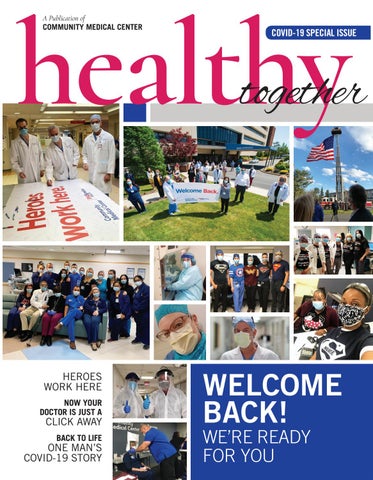
together healthy A Publication of
COMMUNITY MEDICAL CENTER
HEROES WORK HERE NOW YOUR DOCTOR IS JUST A
CLICK AWAY BACK TO LIFE
ONE MAN’S COVID-19 STORY CMC_Cover_COVID19_final.indd 1
COVID-19 SPECIAL ISSUE
WELCOME BACK! WE’RE READY FOR YOU
6/2/20 2:24 PM
A MESSAGE FROM LEADERSHIP
Staying Healthy Together
F
or all of us who call New Jersey home, the COVID-19 pandemic has been a sobering reality. Every one of us has been affected in some way, and some have lost loved ones. To them, we extend our sincerest condolences. Throughout these extraordinary months, New Jerseyans have come together to encourage each other and the hospitals that care for their communities. At RWJBarnabas Health, we truly have been inspired by the support we’ve received, and offer our heartfelt thanks for every donation and card, and for the countless other gestures of caring. Most of all, of course, we wish to express our gratitude to our amazing staff—doctors and nurses caring for patients; hospital workers in the offices and on the floors; researchers seeking a cure and a vaccine; those charged with carrying out demanding new cleaning procedures; and those who have quickly adapted our facilities to care for COVID-19 patients. Now, it’s important to look ahead and begin caring for ourselves again. During the height of the pandemic, many people delayed getting healthcare—a choice that can have devastating consequences. Please rest assured that we’ve gone above and beyond all the measures recommended by the Centers for Disease Control and other national and regional experts to keep everyone in our facilities safe. At Community Medical Center, we are now planning to safely reopen more and more services. It won’t be business as usual because the world has changed. Social distancing will continue, masks will still be worn and everyone entering our facilities will have their temperature checked. Beneath those masks you will find an exceptional team of skilled and compassionate professionals who are committed to caring for you and your families. We look forward to supporting your good health in whatever way we can. Welcome back. Yours in good health,
BARRY H. OSTROWSKY
PATRICK AHEARN
PRESIDENT AND CHIEF EXECUTIVE OFFICER RWJBARNABAS HEALTH
CHIEF EXECUTIVE OFFICER COMMUNITY MEDICAL CENTER
HEALTH NEWS BUILDING FOR THE FUTURE HELIPORT RELOCATED ATOP CMC Construction has begun on the new heliport on top of Community Medical Center (CMC), which will save valuable time when a patient needs to be transferred for a higher level of care. The current heliport is located in Winding River Park across Rt. 37 from the hospital, and requires patients be transferred from the Emergency Department (ED) via ambulance to a waiting helicopter. The heliport move is one of several construction projects underway at the hospital that are focused on improving access to care and patient safety. Patients who need a higher level of care may include accident victims requiring trauma care, individuals with severe burns or those requiring mechanical intervention for acute stroke. These patients are stabilized by the CMC ED team and prepared for transfer. With the new heliport location, patients will be quickly taken by elevator from the ED to the top of the building, where the helicopter will be waiting. The mobile health program, known as LifeFlight, includes RWJBH Emergency Medical Services flight nurses and paramedics who have had extensive training in emergency, air medical and trauma protocols. Construction of the heliport is scheduled to be completed by December 2020.
EMERGENCY DEPARTMENT REDESIGN CONTINUES Community Medical Center’s Emergency Department (ED) renovation project has been underway for several months, and is designed to improve access to care and the patient experience. The project will be completed in five phases to minimize any disruption in services, with phase one on track to be completed by the fall. The new ED design features a soothing and comfortable environment and will include the relocation of some radiology services to within the ED. These changes, among others, will improve patient communication and create greater efficiencies in the department, resulting in an improved patient experience.
99 Highway 37 West, Toms River, NJ 08755 732.557.8000
CONNECT WITH US ON @CommunityMedical RWJBarnabas Health @CommunityMedNJ
Community Medical Center complies with applicable Federal civil rights laws and does not discriminate on the basis of race, color, national origin, age, disability, or sex. For more information, see link on our home page at www.rwjbh.org/community. Community Medical Center cumple con las leyes federales de derechos civiles aplicables y no discrimina por motivos de raza, color, nacionalidad, edad, discapacidad o sexo. ATENCIÓN: Si usted habla español, servicios de asistencia lingüística, de forma gratuita, están disponibles para usted. Llame al 732.557.8000. Community Medical Center konfòm ak lwa sou dwa sivil Federal ki aplikab yo e li pa fè diskriminasyon sou baz ras, koulè, peyi orijin, laj, enfimite oswa sèks. ATANSYON: Si w pale Kreyòl Ayisyen, gen sèvis èd pou lang ki disponib gratis pou ou. Rele 732.557.8000.
Healthy Together
| 2 |
CMC_Memo_Covid19_final.indd 2
COVID-19 Special Issue
6/3/20 8:13 AM
together healthy contents COVID-19 SPECIAL ISSUE
4 2. WELCOME LETTER. A community update from our CEOs. 4. HEROES WORK HERE. We’re beyond grateful for the incredible work of our teams on the COVID-19 front lines.
10 9. STAYING STRONG WHILE SOCIAL DISTANCING. Simple steps can help you regain a feeling of control.
6
17
18
20
22
14. NEW WAYS TO LEAD IN CANCER TREATMENT. Collaboration and innovation are driving a new era in oncology. 15. ADVANCED OPTIONS FOR TREATING AUTISM. Telehealth services and intensive treatments offer new help.
6. DONORS ARE HEROES, TOO. A sampling of the valuable—and much appreciated—support we’ve received during the pandemic.
10. 6 QUESTIONS ABOUT TELEMEDICINE, ANSWERED. You don’t have to be a technology whiz to have a video visit with your doctor.
16. POWER PARTNERSHIPS. Working together to help make New Jersey healthier.
8. THE SOUND OF SUCCESS. The ringing of a ship’s bell celebrates each COVID-19 triumph.
12. CLINICAL TRIALS: WHAT EVERY CANCER PATIENT SHOULD KNOW. A trial offers patients a chance to benefit from the latest treatment.
17. YOUR SUPPORT SUSTAINS US. Communities have stepped up for their local hospitals—and you can still help.
Community Medical Center
CMC_TOC_Covid19_final.indd 3
18. BACK TO LIFE. One puzzling thing about COVID-19 is how differently it affects people. A couple shares their story. 20. SAFE AND SOUND IN THE E.D. Rigorous procedures ensure the safety of Emergency Department patients and staff. 22. WELCOME BACK! COVID-19 testing of staff and patients, extreme cleaning and many other measures make our facilities safe for care.
|
RWJBH.ORG/COMMUNITY
3
6/3/20 8:16 AM
1
HEROES WORK HERE
2
3
O
ur providers and staff have risen to—and well above—the unprecedented challenges of caring for patients with COVID-19. Community Medical Center is proud and grateful beyond words for the indomitable spirit and incredible work done by our teams on the front lines.
4
5
6
Healthy Together
| 4 |
CMC_Heroes_Covid19_Final.indd 4
COVID-19 Special Issue
6/2/20 2:32 PM
7
8
9
12
1 HERE COMES THE SUN: When a patient beats COVID-19, the Community Medical Center team gathers for a “clap out” while “Here Comes the Sun” plays overhead. 2 COVID-19 BUILDING UPDATES: As part of Community Medical Center’s efforts to ensure a safe environment, the Facilities Management team designed and installed a new air filtration system, built walls and spent countless hours on other projects to protect patients and staff.
KEEPING PATIENTS SAFE: To protect everyone, patients seeking care in the Emergency Department (ED) are triaged immediately as they enter and placed in separate areas to keep them safe. The staff cares for COVID-19 patients as well as those seeking emergency care for other illnesses and injuries. Here, some ED team members take a much-needed breather. 3
10
4 SPIRIT BOOSTERS: Countless cards, letters and tokens of appreciation raised the spirits of staff and served as a constant reminder that their work was greatly valued and appreciated by so many.
11
7 MISSION CONTROL: The Command Center was a centralized resource for staff and the community at large. Those who worked it provided guidance and information to assure continuity of operations in response to the pandemic. 8 PEER RECOVERY: Despite the pandemic, babies were still born, patients requiring cancer treatments were cared for, and those suffering from substance use disorders continued to be helped by the Peer Recovery Specialists. 9 SECURITY AND SUPPORT: The CMC Security Team helped out in many areas throughout the building, including the outpatient entrance, which was decorated with some of the many thankyou cards and posters from our community. 10 MOBILE HEALTH: During the pandemic, the first responders of RWJBarnabas Health Mobile Health Services have stood ready to provide expert care in any emergency.
5 TOP PRIORITY: Keeping the hospital clean and safe for patients and staff was priority No. 1 for the Environmental Services team.
11 BEHAVIORAL HEALTH: Dedicated staff and providers from RWJBarnabas Health Behavioral Health Center have been available 24/7 to meet critical mental and emotional health needs during the pandemic.
6 DRESSING THE PART: Staff in Community Medical Center’s ICU have revealed their true identities— superheroes—while caring for patients during the coronavirus pandemic.
12 A BUSY LAB: Every department was integral in caring for patients during the pandemic, including the Laboratory. Lab staff processed well over 10,000 tests to confirm or rule out COVID-19 diagnoses.
To share your thanks or make a donation in support of our healthcare heroes, visit www.rwjbh.org/give.
Community Medical Center
CMC_Heroes_Covid19_Final.indd 5
|
RWJBH.ORG/COMMUNITY
5
6/2/20 2:33 PM
1
DONORS ARE HEROES, TOO
2
S
ince the beginning of the pandemic, the outpouring of support from our community has been overwhelming. People have done everything possible to make our healthcare team feel supported and loved—from homemade masks and parades in their honor to significant monetary donations. During this most difficult time, your outreach has helped to lift our spirits and protect the staff when they needed it most.
3
Healthy Together
| 6 |
CMC_Donation_Covid19_Final.indd 6
4
COVID-19 Special Issue
6/2/20 2:51 PM
5
1 HEROES HONORING HEROES: The Toms River Fire Department and other local municipality first responders honored our healthcare team with a 3.5-mile-long parade of fire engines, ambulances and other emergency response vehicles. They surrounded the hospital to show their appreciation while a massive American flag hung over the hospital entrance. Hundreds of team members came outside to watch the parade, and patients and other staff members watched and waved from the windows above. The Toms River Fire Department also provided dinner for staff following the parade. 2 FUEL FOR THE TEAM: Staff prepare to deliver nearly 600 icecream sundaes and 90 pizzas and drinks to the evening shift at Community Medical Center. This special delivery was provided by members of the Community Medical Center Medical Staff, who are members of MOCAAPI (Monmouth Ocean County American Association of Physicians of Indian Origin). The organization is a longtime supporter of the hospital and works to improve the overall health of the community at large.
6
3 FUNDRAISING SUPPORT: A Need We Feed and Farro’s Tees partnered to support the Community Medical Center team. Staff at CMC benefitted from their efforts, enjoying delicious pizza and T-shirts specially designed by Farro’s. From left: Daniel Wong, RN; Cliff Baker, A Need We Feed co-founder; Karen Rawls, RN, Director of Patient Care Services, CMC; and Lisa and Dominic Farro, owners of Farro’s Tees. 4 CHILDREN’S SPECIALIZED HOSPITAL (CSH): The Long Term Care team of CSH in Mountainside thanks the Front Line Appreciation Group for a donation of breakfast sandwiches. 5 KEEPING US IN CAFFEINE: Toms River coffee shop Bubby’s Beanery and their generous customers have made daily coffee and tea deliveries possible to the grateful staff of Community Medical Center. Their connection to CMC runs deep—the owners’ son, AKA “Bubby,” was born at the hospital. Seven years later, they are still touched by the care and dedication of the nurses, doctors and staff they met.
7
6 LEGGINGS BY LuLaROE: Twyla Orosz, a Community Medical Center employee (center), coordinated with area LuLaRoe sales representatives to donate more than 400 pairs of leggings to her fellow CMC workers, complete with inspirational messages. She provided them so her colleagues could change out of their scrubs and into clean clothes before returning to their homes and families. She presented the donation to Donna Bonacorso, RN, Chief Nursing Officer (left), and Teri Kubiel, RN, Vice President, Patient Experience and Community Affairs (right). 7 THE OFFICE RESTAURANT & LOUNGE: Nick Pagano, Treasurer, CMC Foundation Board of Trustees, and manager of The Office Restaurant & Lounge (center), organized multiple food donations to the hospital through the generosity of others in the community. Many individuals purchased meals to help support the frontline workers in the fight against COVID-19. Nick and restaurant employees line up for the distribution of food.
To share your thanks or make a donation in support of our healthcare heroes, visit www.rwjbh.org/give.
Community Medical Center
CMC_Donation_Covid19_Final.indd 7
|
RWJBH.ORG/COMMUNITY
7
6/2/20 2:51 PM
THE SOUND OF
SUCCESS THE RINGING OF A SHIP’S BELL—GIVEN TO THE ICU TEAM BY THEIR PARTNERS IN PLANT OPERATIONS— CELEBRATES EACH COVID-19 TRIUMPH.
T
he pandemic has forged strong bonds between healthcare workers as they battle COVID-19 together. At Community Medical Center, nowhere is that bond clearer than in the relationship between staff in the Intensive Care Unit (ICU) and the construction and engineering professionals in Plant Operations. “Our two teams have become so close during this time,” says Theresa Ferretti, MSN, RN, Director, ICU. “The Plant Operations team members are our heroes. Whatever we need, they accomplish.” Several projects—from changing the way air circulates through ICU rooms to making it possible to move and connect medical equipment outside of patient rooms for easier access—were vital to providing the best possible care to COVID-19 patients as safely as possible. “And they all happened in a matter of days,” says Ferretti. “We’re so blessed!” Healthy Together
| 8 |
CMC_StaffBell_Covid19_final.indd 8
Top: Members of the ICU and Plant Operations teams. Bottom: Adam Tart, Director of Plant Operations, and Theresa Ferretti, MSN, RN, Director, ICU.
“They had quite a battle in the ICU,” says Adam Tart, Director of Plant Operations. “Through their dedication and hard work, they’ve saved a lot of lives. We’re happy to be able to contribute to that. “I’m very proud of my team for what they’ve done,” Tart continues. “They worked under difficult conditions, but achieved whatever was asked of them.” One day, staff announcements included mention of a new tradition: ringing a small bell each time a patient comes off a ventilator or is discharged from the ICU. “I thought about that,” says Tart, “and wanted to step it up a bit to show our support for the ICU team.”
CELEBRATING EACH VICTORY Tart, a former Navy and Merchant Marine officer, ordered a 12-pound brass bell from a company in North Carolina. “I wanted something that the whole unit can hear,”
says Tart. “Plus, a ship’s bell has many great meanings and is often considered the heart of the vessel.” In a letter to the ICU staff, Tart wrote: “You have shown great commitment to this hospital, our patients and humanity, with an unending dedication to your craft, no matter the obstacles. “May the pure sound that rings from this bell for each victory warm the hearts of everyone who hears it, and bring a smile so big no mask can hide it.” The bell is engraved with the words: Community Medical Center ICU. Heroes Work Here. “I wanted them to understand how we feel about them, what an awesome job they’re doing and how honored we are to help them out,” says Tart. “Now,” says Ferretti, “when a patient reaches a landmark in treatment, we celebrate in Navy fashion. It has lifted our spirits so much at a difficult time.”
COVID-19 Special Issue
6/3/20 9:01 AM
Dr. Ghinassi. “Create ways to communicate with people who are important to you, using FaceTime, letters, phone calls or whatever medium you do best. And keep in mind that Snapchat and Instagram are oneway communication, not true socializing.”
STAYING STRONG WHILE SOCIAL DISTANCING SIMPLE STEPS CAN HELP YOU REGAIN A FEELING OF CONTROL.
T
he COVID-19 pandemic has brought all kinds of uncertainty— to our finances, our health and our ability to make plans. “People have lost an important aspect of control over their activities,” says Frank Ghinassi, PhD, ABBP, Senior Vice President, Behavioral Health and Addiction, RWJBarnabas Health, and President and CEO of Rutgers University Behavioral Health Care. “As a result, we’re seeing a lot of people feeling stressed—and even a little more than that, feeling distressed. “We all had a rhythm and routine for our days,” he continues, “from what time we took a shower to how we dressed for work to the kinds of things we did for fun. Now all of those old rhythms are challenged, and that makes people feel confused and offbalance.” While that’s a perfectly normal FRANK GHINASSI, PHD reaction, Dr.
Ghinassi says it’s important to take the next step. “Ask yourself, ‘What can I do in this new reality to help myself feel better and more in control?’” The answer lies in reintroducing predictability, to the degree possible in this unpredictable time. • Create a new routine. “Establish a new set of patterns,” advises Dr. Ghinassi. “Go to bed and get up in a regular way. Eat at set intervals, not all day long just because you’re not far from the refrigerator. Work out or take a walk regularly. These new routines will become familiar and comforting.” • Make plans to socialize with others. “Meaningful connection with family and friends is not going to happen automatically,” says
• Build a new set of activities that give you pleasure. “A lot of things we like to do can’t happen now because they involve going to crowded places like movie theaters, restaurants, concerts and stadiums. We need to find activities that will bring us pleasure and are doable within our current limitations,” says Dr. Ghinassi. “That could involve playing or listening to music, streaming films, gardening, painting or any other enjoyable hobby.” If social distancing has led to behaviors that could be destructive, such as overeating or drinking too much, or if the blues have crossed the line into depression, don’t hesitate to reach out for help. “There are many front doors to behavioral healthcare,” Dr. Ghinassi says. “You can ask a trusted healthcare provider to recommend a counselor. If your employer has an Employee Assistance Program, take advantage of that. Seek out your local mental health facility or call the New Jersey Hopeline at 855.654.6735. Call the RWJBarnabas Health Access Center, which is available 24/7, at 800.300.0628.” • And take heart. “We’ll get through this,” says Dr. Ghinassi. “Humans are enormously adaptable. Through millennia of plagues, famines, wars and pestilence, we’ve risen to every challenge. It’s in our DNA. We’re going to learn and restructure, draw strength from each other and find solutions.”
For help accessing mental health services, call the RWJBarnabas Health Access Center at 800.300.0628.
RWJBarnabas Health
System_BehavioralHealth_Covid19_Final.indd 9
|
RWJBH.ORG
| 9
6/3/20 9:29 AM
Q&A
ASK THE DOCTOR
6 QUESTIONS ABOUT TELEMEDICINE, ANSWERED YOU DON’T HAVE TO BE A TECHNOLOGY WHIZ TO HAVE A VIDEO VISIT WITH YOUR DOCTOR.
Healthy Together
| 10 |
System_TeleMed_COVID19_Final.indd 10
V
irtual online doctor visits have been available for some time—but since the COVID-19 pandemic, they’ve soared. “During just one week in April, doctors in our medical group conducted more than 10,000 telemedicine visits,” says Andy Anderson, MD, ANDY ANDERSON, MD President and Chief
Executive Officer of the RWJBarnabas Health medical group. Stay-home orders during the lockdown have played a huge role in the increase, but other causes are also speeding up telemedicine’s adoption. Dr. Anderson tells how and why:
1
What factors are contributing to telemedicine’s surge?
Historically, demand for telemedicine was driven by urgent issues, rather than by routine or other kinds of care. Habit has played a role, too—the expectation that
COVID-19 Special Issue
6/3/20 9:32 AM
patients and physicians need to physically be together in order to get the best possible care. Now, there’s a greater openness to using technology platforms in all realms of our lives. Those platforms are increasingly sophisticated, so that patients and providers can really see each other, see the parts of the body in question and read each other’s expressions. In the RWJBarnabas Health medical group, we have an easy-to-use platform for telemedicine visits. It’s as simple as a click to get into a virtual room for an appointment. It’s also secure and is fully HIPAA-compliant.
2
What are some examples of conditions that can be treated in a virtual visit?
Let’s say a person falls and cuts himself. A telemedicine visit can help determine whether he needs stitches and/or an antibiotic. Symptoms and treatment for a urinary tract infection can also be discussed virtually. If someone has a sore throat, he or she can show the back of the throat and tonsils to the doctor via video. Chronic conditions, such as COPD [chronic obstructive pulmonary disease], congestive heart failure or asthma could be managed through a video visit, as a physician is able to observe whether a person is short of breath, for example, or whether his legs are swollen. Diabetes that is not well controlled can also be discussed, as the patient can report his blood sugar levels and medication can be adjusted accordingly. It’s important to note that in any of these cases, a visit can begin as a video visit and then become an in-person visit if the condition warrants it. If you aren’t sure what the best course of action is— video, in-person office visit or Emergency Department visit—don’t feel you have the burden of having to make the decision on your own. Call your physician’s office and have a conversation.
3
What about well visits and checkups?
Clearly, some exams and procedures require an in-person visit. However, many aspects of a wellness visit, specifically a Medicare Annual Wellness Visit, can be conducted virtually. A physician can ask about, for example, colon cancer screenings or mammograms, home safety and more. Patients like that they can save time and don’t have to travel. In addition, we’re hoping to see increased use of monitoring devices that can transmit information from patient homes to physician offices, including blood pressure monitors, blood glucose monitors, pulse oximeters and even wireless scales.
4
Am I at risk for contagion if I visit a physician’s office?
At RWJBarnabas Health medical group offices, we’ve taken the necessary steps to make it very safe to visit in person. We have social distancing plans, including the use of Plexiglas barriers, a distance line at checkout areas, modified waiting room seating and limitations on the number of patients scheduled during a specified time frame. We also follow rigorous cleaning regimens, offer hand sanitizer stations and more.
5
Are telemedicine visits covered by insurance?
During the early stages of the pandemic, Medicare, Medicaid and many private insurances expanded their coverage for telemedicine. The situation is evolving, so check with your insurer, but our sense is that coverage for telemedicine will continue to expand.
6
How will telemedicine change healthcare in the future?
While the COVID-19 crisis has pushed us into this world fast, I think healthcare will be sticking with telemedicine from now on. Telemedicine is not a solution for everything, but it is a solution for a lot
CHECKLIST FOR THE BEST VIRTUAL VISIT • Be sure the device you’re using (phone, tablet, computer) is fully charged. • Make the call from a well-lit and quiet room to enhance the quality of the video and audio feeds. • If you need an interpreter, let your physician’s office know ahead of time. • In advance, write down your symptoms, when they began and how frequent they are, and any medications you’re taking. • Keep a pen and notepad handy during the visit.
more things than we realized. It’s a great tool to have in our toolkit. The most important message we have for patients is to continue to make your health a priority. Don’t put off care if you aren’t feeling well, or postpone contacting your physician for help managing any chronic health conditions. Whether virtually or in person, your provider is there to help you.
To connect with an RWJBarnabas Health medical group provider, call 888.724.7123 or visit www.rwjbh.org/medicalgroup.
RWJBarnabas Health
System_TeleMed_COVID19_Final.indd 11
|
RWJBH.ORG
| 11
6/3/20 9:32 AM
RWJBarnabas Health, together with Rutgers Cancer Institute of New Jersey—the state’s only NCI-Designated Comprehensive Cancer Center— provides close-to-home access to the latest treatment options. For more information, call 844.CANCERNJ or visit www.rwjbh.org/beatcancer.
CLINICAL I TRIALS:
WHAT EVERY CANCER PATIENT SHOULD KNOW TRIALS OFFER PATIENTS A CHANCE TO BENEFIT FROM THE LATEST TREATMENT.
Healthy Together
| 12 |
System_ClinicalTrials_Spr20_Final.indd 12
f you or a loved one is diagnosed with cancer, you’ll want to seek the highest possible level of care—and clinical trials can be a critical aspect of that care. “Clinical trials offer tomorrow’s treatments today,” says Howard S. Hochster, MD, FACP, Director, Oncology Research for RWJBarnabas Health, and Associate Director, Clinical Research and Director, GI Oncology for Rutgers Cancer Institute. “As the state’s only NCIDesignated Comprehensive Cancer Center, Rutgers Cancer Institute of New Jersey and RWJBarnabas Health provide patients access to a wide range of clinical trials, many of which are not available elsewhere. We do this at Rutgers Cancer Institute in HOWARD S. HOCHSTER, MD New Brunswick and
COVID-19 Special Issue
6/3/20 9:36 AM
across the state at RWJBarnabas Health hospitals.” What should patients know about clinical trials? Dr. Hochster explains:
What happens in a clinical trial? Clinical trials are research studies that evaluate new treatment options for diseases and help doctors learn which treatments are most effective. Generally, clinical trials evaluate the safety and effectiveness of new drugs, use current drugs in a new manner or combine drugs to evaluate their effectiveness. Every clinical trial must be approved by regulatory authorities to be sure the scientific evidence merits this kind of investigation and that it’s ethically sound. Clinical trials are undertaken only when we have evidence that the new approach is likely to be better than the standard treatment. Patients should speak with their physicians about the risks and benefits, including possible side effects, of the treatment being studied. During a trial, patients will have many staff members paying attention to them— physicians and research staff including nurses, data managers and others—whose job is to make sure they get the treatment exactly as written in the protocol.
A CLINICAL TRIAL FOR COVID-19 TREATMENT Rutgers Cancer Institute is spearheading a statewide clinical trial for the drug hydroxychloroquine as a potential treatment for COVID-19 patients. Though the trial is not limited to cancer patients, Rutgers Cancer Institute is well positioned to lead such a study because of its extensive experience with clinical trials as the state’s only NCI-Designated Comprehensive Cancer Center. Hydroxychloroquine, while a subject of much public discussion, has not yet been tested in a large, controlled clinical trial to determine its effectiveness. “Until we get the results of a clinical trial, we just don’t know if there’s any role for hydroxychloroquine in treatment for COVID-19,” says Rutgers Cancer Institute Director Steven K. Libutti, MD, who is also Senior Vice President, Oncology Services, RWJBarnabas Health, and Vice Chancellor, Cancer Programs, Rutgers Biomedical and Health Sciences. “Both the initial hype about the benefits of hydroxychloroquine and the stigma that followed were inappropriate. With this trial, we’ll have well-analyzed data from a well-conducted study in order to make a recommendation about that agent’s use.” THREE PATHWAYS The study consists of three “arms.” One will test hydroxychloroquine in conjunction with the antibiotic azithromycin; one will test hydroxychloroquine alone; and one will provide supportive care for six days, followed by a course of hydroxychloroquine. Patients’ blood will be tested for levels of the SARS CoV-2 virus prior to treatment and at regular intervals thereafter. The study is open to people who are age 18 or over, have been diagnosed with COVID-19 and meet other eligibility requirements. In addition to Rutgers Cancer Institute in New Brunswick, the trial is being offered at Robert Wood Johnson University Hospital in New Brunswick; Monmouth Medical Center in Long Branch; Saint Barnabas Medical Center in Livingston; Morristown Medical Center; Overlook Medical Center in Summit; and University Hospital in Newark.
Who’s eligible for a clinical trial? Every patient who has a cancer diagnosis should ask whether a clinical trial might be right for him or her, and should consider a clinical trial at every step of the cancer journey. Sometimes a trial isn’t appropriate at the beginning, but may be later on. Requirements for participation vary. Criteria may include age, gender, type and stage of cancer, other existing medical conditions and treatment history. Before patients can participate in a clinical trial, they must sign an informed consent document, which explains all aspects of the trial as well as alternative treatment options.
What are some examples of cancer research taking place in clinical trials? For years, everyone with certain cancer diagnoses received the same type of
STEVEN K. LIBUTTI, MD
For information on how to take part in the trial, call Rutgers Cancer Institute’s Office of Human Research Services at 732.235.7356 or email statewide_research@cinj.rutgers.edu.
treatment for their cancers, but not everyone reacted the same way. Now we’re able to use clinical trials to make progress in precision medicine, where we can specifically target, on a molecular level, the gene mutations or changes that make an individual’s normal cells turn into cancer cells. Another exciting area now is immunotherapy—using a person’s own immune system to fight cancer. We’ve learned that cancer cells have ways to mask themselves from the immune system. Today, we’ve seen many breakthroughs in drugs that restore the body’s ability
to fight off cancer cells. CAR T-cell therapy is another promising area of research. It involves obtaining immune cells from a patient, reengineering them in a lab to make them as effective at fighting cancer as possible, then reinjecting them into the patient’s body. This results in a “living” therapy with ongoing benefit. Currently, Robert Wood Johnson University Hospital in New Brunswick, in conjunction with Rutgers Cancer Institute, is one of only two certified programs in the state to offer this form of immunotherapy.
To learn more about clinical trials, visit www.cinj.org/clinical-trials. To speak with a clinical trial navigator to explore your options, call the Oncology Access Center at 844.CANCERNJ.
RWJBarnabas Health
System_ClinicalTrials_Spr20_Final.indd 13
|
RWJBH.ORG
| 13
6/3/20 9:36 AM
NEW WAYS TO LEAD IN
CANCER TREATMENT COLLABORATION AND INNOVATION ARE DRIVING A NEW ERA IN ONCOLOGY.
E
RWJBarnabas Health, together with Rutgers Cancer Institute of New Jersey—the state’s only NCI-Designated Comprehensive Cancer Center— provides close-to-home access to the latest treatment options. For more information, call 844.CANCERNJ or visit www.rwjbh.org/beatcancer.
very week, up to 40 of New Jersey’s top cancer experts virtually convene as part of the new N.J. Statewide Cancer Programs Collaboration—a unique approach initiated and implemented by Steven K. Libutti, MD, Director, Rutgers Cancer Institute of New Jersey, and Senior Vice President, Oncology Services, RWJBarnabas Health. “As the state’s only NCI-Designated Comprehensive Cancer Center, we felt that it was important that we communicate with other cancer programs in New Jersey during the COVID-19 pandemic,” says Dr. Libutti. “We felt we could learn quite a bit from hearing about other experiences, and that each program shouldn’t have to go through the learning curve on its own.” In addition to Rutgers Cancer Institute and RWJBarnabas Health, all major cancer programs in the state participate, including those at Atlantic Health System; Capital Health Cancer Center; MD Anderson Cancer Center at Cooper; John Theurer Cancer Center at Hackensack University Medical Center, Hackensack Meridian Health; Hunterdon Healthcare; Inspira Health Network; Regional Cancer Care Associates; Saint Peter’s Healthcare System; St. Luke’s University Health Network, Warren; Summit Medical Group; Trinitas Comprehensive Cancer Center; and Penn Medicine|Virtua Cancer Program.
MANY MINDS Subgroups in the areas of medical oncology, radiation oncology, surgical oncology and operations meet throughout the week to discuss topics relevant to their programs. On Friday mornings, all participants join a call to exchange information and insights. “We’ve come up with plans for how to safely continue and then augment surgical oncology and other care during the pandemic,” says Dr. Libutti. “What are the right testing regimens to use? How do you open up surgery facilities safely to protect patients and providers from exposure? Which treatment regimens can be delivered at home, and which can be delayed without bad consequences for patients? “Oncology itself is a very collaborative field, because so many modalities are used to treat a cancer patient in a very coordinated way,” continues Dr. Libutti. “It’s not a huge leap for us to extend collaborations beyond the borders of health systems.” Patients in New Jersey will reap the benefits. “Our state sees 50,000 new diagnoses and 16,000 deaths from cancer every year,” says Dr. Libutti. “We’re going to leverage the strengths of STEVEN K. LIBUTTI, MD each program to work together to help cancer patients.” Healthy Together
| 14 |
VIRTUAL CARE FOR CANCER PATIENTS The Rutgers Cancer Institute of New Jersey, in partnership with RWJBarnabas Health (RWJBH), had already begun a pilot program for cancer consultations via video. The pandemic accelerated the expansion of the plan to almost all of the groups’ cancer specialists. The specialists are using a secure platform, which is private and simple for patients to access. In addition to convenience, telemedicine has a number of benefits for cancer patients: • The elimination of potential exposure for patients with compromised immune systems • The ability to have several specialists virtually present at the meeting • The capacity to have geographically distant family members at the meeting • The means to effectively share information with patients. “As I’m talking to a patient, I can show a picture of, for example, lymph nodes, and also type out instructions on the screen and then email these to the patient,” says Andrew M. Evens, DO, MSc, Associate Director for Clinical Services and Director, Lymphoma Program, Rutgers Cancer Institute, and Medical Director, Oncology Service Line, RWJBH. “As we always say, ‘Cancer doesn’t travel well,’” explains Dr. Evens. “Telemedicine doesn’t replace in-person care, but we knew there was an appetite for this service. Who wants to drive an hour or more on the parkway or turnpike for a consult when you don’t have to?” ANDREW M. EVENS, DO
COVID-19 Special Issue
System_CancerLeaders_COVID19_Final.indd 14
6/3/20 10:25 AM
ADVANCED OPTIONS FOR
TREATING AUTISM TELEHEALTH SERVICES AND INTENSIVE TREATMENTS OFFER NEW HELP.
S
tay-at-home orders during the pandemic have posed particular challenges for children and adults with autism spectrum disorder (ASD). Deprived of face-to-face services, they have been lacking the stimulation and training they need, and have spent much less time interacting with others than usual. “It’s a situation where problem behavior is more likely to occur,” says Wayne Fisher, a professor in the Department of Pediatrics at Rutgers Robert Wood Johnson Medical School and Director of the Rutgers Center for Autism Research, Education and Service (RUCARES). “We wanted to provide support for kids and families to help them manage the situation more effectively.” The result was the development of ABA (Applied Behavior Analysis) Short-Term Telehealth Services provided by Children’s Specialized Hospital (CSH). The services begin with a quick-start evaluation. For children with severe problems whose behavior may be dangerous to themselves, a behavior stabilization and safety program is developed in two 90-minute appointments. For children with mild to
moderate ASD, a quick-start behavior management program and behavior management group are available over the course of eight appointments via a simpleto-access, private telehealth platform. Though telehealth services for people with autism have been available in other states, it was not an option in New Jersey until an executive order as part of the COVID-19 response allowed it. Fisher hopes the trend continues. “This method has many benefits. It really helps families, many of whom travel quite a distance for in-person specialized care, in terms of convenience,” he says. “For specialists, there’s therapeutic value in seeing the child and family at home, under naturalistic conditions.”
EXPANDED SERVICES The ABA short-term telehealth program is part of an expansion of autism services that CSH now offers through a collaboration with RUCARES. This summer will see the opening of CSH RUCARES, the first center of its kind in New Jersey dedicated to innovative research, education and service to support children and adults with ASD. CSH RUCARES will accept patients for a new Severe Behavior Disorders Program, which will provide specialized
An RWJBarnabas Health facility
services to children and adolescents with autism and other developmental disabilities who display dangerous behavior such as self-injury and aggression. Patients will undergo intensive outpatient treatment from a team of board-certified behavior analysts and registered behavior technicians. “Our program has a data-based approach based on empirical research, and all of our staff and faculty are highly trained,” explains Fisher, who is the Director of CSH RUCARES. CSH is also expanding its Pediatric Feeding Disorders Program with a new program for children who have not progressed through traditional feeding programs. “It’s a data-based, intensive, goal-driven day program. We see patients for about eight weeks, then transition to outpatient follow-up services once or twice a week,” says Cathleen Piazza, Director of the Pediatric Feeding Disorders Program at CSH and a professor in the Rutgers Graduate School of Applied and Professional Psychology. “We also find telehealth services very valuable because we can work with and see the patient where he or she eats, in real time.” To learn more about Children’s Specialized Hospital, call 888.244.5373 or visit www.childrens-specialized.org.
At Children’s Specialized Hospital, we provide world-class care for children and young adults who face special health challenges across the state of New Jersey and beyond. Our locations in Bayonne, Clifton, East Brunswick, Egg Harbor Township, Hamilton, Jersey City, Mountainside, New Brunswick, Newark, Toms River and Warren treat everything from chronic illnesses and complex physical disabilities like brain and spinal cord injuries to developmental and behavioral issues like autism and mental health.
RWJBarnabas Health
System_CSH_Covid19_Final.indd 15
|
RWJBH.ORG
| 15
6/3/20 9:41 AM
Rutgers Men’s Basketball co-captain Akwasi Yeboah shared important safety information and the need to fight the virus together with fans via social media. The Lakewood BlueClaws held a remote game of “Horse” (renamed “Claws”) to support RWJBH healthcare heroes. The winning hospital gets a private field day at FirstEnergy Park.
NJ Devils Hall of Fame goaltender Martin Brodeur provided video messages of strength and support to our team on the front lines.
Seton Hall Men’s Basketball Coach Kevin Willard sent a video recognizing and thanking our healthcare heroes.
NJ Devils star Travis Zajac led a stick tap at 7 p.m. nightly across social media platforms to celebrate and support all frontline workers.
For the Somerset Patriots’ Virtual Opening Day, Michael Rodricks, MD, threw the ceremonial first pitch to Brittany Roper, RN. Both work in the Critical Care Unit at RWJUH Somerset.
Special Olympics New Jersey athletes offered video recognition for doctors, nurses and hospital workers saving lives and treating patients at RWJBH facilities.
WORKING TOGETHER TO HELP MAKE NEW JERSEY HEALTHIER
A
t RWJBarnabas Health (RWJBH), we have always been committed to meaningful partnerships with organizations that share our vision to create healthier communities. Their efforts during the COVID-19 pandemic, however, have taken their support to a whole new level. “We asked our partners to help us in several ways—through donations, through disseminating educational information and through support for our frontline healthcare heroes,” says Justin Edelman, Senior Vice President, Corporate Partnerships, RWJBH. “The response was beyond what we ever could have imagined.” Our corporate partners had our back. New Jersey Devils/Prudential Center provided a significant and impactful monetary donation in addition to protective equipment and more than 10,000 tickets to future events for our healthcare heroes. Rutgers University Athletics donated protective equipment and used its reach on social media to educate our communities on important safety tips, while the Somerset Patriots raised funds through online memorabilia auctions, merchandise sales and a pop-up food truck event. Too numerous to mention, the supportive efforts from so many of RWJBH’s partners (see list at right) have been crucial to our mission. On behalf of RWJBH and all of our partner organizations, we wish you good health and good fortune at all times. Together, we’ll be there for you.
To learn more about corporate partnerships at RWJBarnabas Health, visit www.rwjbh.org/partnerships.
Healthy Together
| 16 |
System_Partnership_Covid19_Final.indd 16
COVID-19 Special Issue
FRIENDS IN NEED Warmest thanks to these partners: • Cedar Stars Academy • Cure Insurance Arena • George Street Playhouse • Lakewood BlueClaws • Mets Radio Network • Monmouth University Athletics • MSG Networks • New Jersey Devils/Prudential Center • New Jersey Golf Foundation • NJPAC • New Jersey Youth Soccer Association • Novo Nordisk New Jersey Marathon & Half Marathon • Princeton University Athletics • Pure Basketball • Rutgers University Athletics • RWJBarnabas Health Arena • Seton Hall University Athletics • Somerset Patriots • Special Olympics New Jersey • Trenton Thunder • Yankees Radio Network
6/3/20 9:49 AM
$3.2 million in donated PPE and other supplies; and $870,000 in food donations. “RWJBH hospitals have always enjoyed wonderfully generous support from the communities they serve,” Miller says. “In recent months, I think our doctors and nurses were certainly reminded about how much people value them and the work they do.”
YOUR SUPPORT
ONGOING NEED
SUSTAINS US
COMMUNITIES HAVE STEPPED UP FOR THEIR LOCAL HOSPITALS IN A BIG WAY—AND YOU CAN STILL HELP.
T
he offers from the public began as soon as the crisis did. People emailed, texted and called hospitals, some in tears, wanting to know how they could help local healthcare providers. They sent money. They donated dinners. They sent cards. Someone had a friend who had a friend whose company could provide personal protective equipment (PPE). A small painting business had 20 face masks to donate. A hardware store provided gloves. The contributions came in a steady stream. “The donations were from longtime loyal donors as well as those who had never made a gift to one of our hospitals before,” says Glenn Miller, Executive Vice President and
Chief Development Officer at RWJBarnabas Health (RWJBH). “People wanted to make sure that our doctors, nurses and staff had what they needed to stay healthy and do their jobs. “The word ‘heroes’ gets used a lot, and admiration for the dedication of our caregivers was driving this outpouring of support,” he continues. “Supporters saw our caregivers getting up to go to work every day under incredibly difficult circumstances, fighting to save lives.” As of mid-May, the RWJBH system as a whole had received nearly $11 million in support. Of that amount, $6.7 million came in checks and online gifts, large and small;
The money raised goes into the RWJBH system’s Emergency Response Fund, where it’s used to purchase much-needed equipment and supplies. The fund also is used to support frontline hospital workers. “When employees need to be quarantined away from their families, we’ve been able to help make that happen,” Miller says. “Other colleagues needed childcare so they could come to work. And sadly, we’ve lost colleagues, and we’re working to develop resources to address the repercussions of such terrible losses.” Beyond tangible support, the outpouring from the community provided an invaluable morale boost. “For healthcare workers going through this experience, to take a break and find a hot meal or a card or a note—it’s meant the world to them,” Miller says. “When you feed someone, you’re enriching their body, obviously, and also their soul.” The Emergency Response Fund remains open. “We’re in an ongoing crisis, and philanthropy will continue to play an important role in helping us prepare for any surges or future outbreaks,” Miller says. In addition, capital projects, new programs and equipment upgrades will still need to be funded for each medical center. “We’re incredibly grateful for the outpouring of support, and the tremendous positive impact it has on our work and our commitment to keeping communities healthy,” Miller says. “We cannot thank people enough.” The gifts also have a benefit for the giver. “We’ve heard that people in the community want to feel that they have the ability to bring hope,” says Miller, “and that they’re empowered to make a difference.”
To donate to Community Medical Center or to RWJBarnabas Health, visit the Emergency Response Fund at www.rwjbh.org/give.
Community Medical Center
CMC_Foundation_Covid19_final.indd 17
|
RWJBH.ORG/COMMUNITY
17
6/3/20 8:20 AM
BACK TO
LIFE ONE PUZZLING THING ABOUT COVID-19 IS HOW DIFFERENTLY IT AFFECTS PEOPLE. A COUPLE SHARES THEIR STORY.
Vito Fredella (at left and with his fiancé, Donna Chojnowski, on the next page) is grateful for the care he received at Community Medical Center, where he was treated for COVID-19.
Healthy Together
| 18 |
CMC_PatientStory_Covid19_final.indd 18
COVID-19 Special Issue
6/3/20 9:04 AM
F
or Donna Chojnowski of Bayville, COVID-19 started with a cough and a low fever on Thursday, March 19. When her fever shot up the next day, her fiancé, Vito Fredella, took her to an urgent care center, where they did a flu test, which was negative. They also tested Donna for COVID-19, but it would be eight days before she’d have the results. She began to notice other symptoms, including loss of taste and smell. Donna’s fever was gone by Saturday, but it returned a few days later, followed by Vito developing a fever on Friday, March 27. He rested, hoping it would go down. On Monday, they went to the Emergency Department (ED) at Community Medical Center. Donna was examined and told that she had COVID-19, but the chest X-ray they took looked good. Vito was tested for COVID-19, and both were released. By the time Vito got his positive test result, Donna was feeling better. But he was getting progressively worse, spending more time in bed and spiking a fever of 104.7. He couldn’t taste or smell, and had a cough. The morning of Sunday, April 5, Donna became very worried. “Vito’s breathing wasn’t normal,” she says. “He was taking very short, quick breaths, and each one came with a moan. I called his primary care doctor, and they told me to call 911.” “The last thing I remember,” says Vito, “is the emergency team taking me out of the bedroom. I don’t remember anything else until they pulled the ventilator tube out of my mouth.”
“DONNA HAS BEEN AN ANGEL THROUGHOUT. I WANT TO THANK HER FOR EVERYTHING SHE HAS DONE FOR ME TO THIS POINT, AND ALL SHE WILL DO UNTIL I’M 100 PERCENT AGAIN.”
A FRIGHTENING FEW DAYS In the ED, Vito was found to be in respiratory failure, intubated and put on a ventilator. Wajahat Khan, MD, a specialist in caring for critically ill patients in the Intensive Care Unit, was part of Vito’s care team. “At that time,” says Dr. Khan, “we had about 32 patients on ventilators. I was very concerned about whether we’d be able to get Vito and the other patients off ventilators. We’ve developed a treatment protocol based on the most current best practices and what we understand assists in the disease process, but we can’t predict who will come off and who won’t.” Vito was lucky—he was removed from the ventilator after only three days. But he spent another 16 days in the hospital. “These patients have severe lung disease,” says Dr. Khan, who estimates he has treated 70 to 80 COVID-19 patients. “When they come off the ventilator, they still need a lot of oxygen and care.” During his remaining time in the hospital, Vito says he was cared for by many wonderful nurses who helped him through a challenging time when no loved ones could visit. “I’d like to thank Nicole Starr, Alyssa Kuklo and all the other registered nurses and nurses’ aides for taking very good care of me,” says Vito. “They truly made me feel special.” Vito was discharged on April 23, accompanied by a “clap out.” This small but very meaningful celebration is held for COVID-19 patients when they’re discharged. Staff line the hallway, clapping and cheering as the patient is wheeled out of their room and out of the unit. “It gives both the providers and the patient a time to smile and celebrate our hard work and one another’s health,” says Jennifer Nugent, WAJAHAT KHAN, MD RN, one of Vito’s nurses. “We celebrate that
our patient is able to go home to their loved ones, who they’ve missed for weeks.” When the team found out that Vito was going home, they were very excited, says Nugent. “We made signs and decorated the wheelchair. Because Vito used to box, I downloaded the “Rocky” theme song to my phone for him to be wheeled out to. Unfortunately, in all the excitement, I forgot, but we played it in the elevator instead.”
LOOKING AHEAD As businesses around the state open up, Vito advises continued caution. “Don’t take this lightly,” he says. “Don’t think it can’t happen to you. Make sure when you go out to wear a mask, and keep up social distancing, handwashing and other precautions.” “I don’t think people understand how lethal COVID-19 is,” says Dr. Khan. “People will sometimes compare it to influenza. But I’ve seen more death in two months from COVID than I have in 10 years from influenza. We’re a very well-equipped ICU with an exceptionally trained team of nurses and intensivists. But we’ve all been stunned by the amount of death COVID-19 brings.” Vito continues to recover at home. “I’m feeling pretty good,” he says, “but they tell me it’s a slow process. I’m doing my breathing exercises and walking. Donna has been an angel throughout—I want to thank her for everything she has done for me to this point, and all she will do until I’m 100 percent again.” At the end of July, the couple is going to the Bahamas for a family vacation that will include a wedding ceremony for Vito and Donna on the beach. Community Medical Center
CMC_PatientStory_Covid19_final.indd 19
|
RWJBH.ORG/COMMUNITY
19
6/3/20 9:04 AM
SAFE AND SOUND
IN THE E.D.
RIGOROUS PROCEDURES ENSURE THE SAFETY OF EMERGENCY DEPARTMENT PATIENTS AND STAFF.
E
mergency Department (ED) visits fell sharply during the height of the coronavirus crisis, in New Jersey and nationally—and that has doctors worried. “In the RWJBarnabas Health system, we’ve seen our ED volume decline by 50 percent overall, and by up to 85 percent for pediatric EDs,” says William Dalsey, MD, Chair, Emergency Medicine at Community Medical Center (CMC). “The problem is that disease
Healthy Together
| 20 |
CMC_HeartStroke_Covid19_final.indd 20
prevalence doesn’t change,” he explains. “Heart attacks, strokes, asthma, intraabdominal diseases such as appendicitis and diverticulitis—COVID-19 didn’t make them go away, but we’ve been seeing these patients in the ED less and less.” The probable reason: fear. “The likelihood is that people have been
WILLIAM DALSEY, MD
JAY STONE, MD
putting off care because they’re afraid to go into the hospitals and be exposed to COVID-19,” says Dr. Dalsey. “That concerns us because delaying care for many conditions can lead to disability and even death, and those risks are not necessary. “The main message we want people to hear is that it’s safe to come to the Emergency Department, so don’t put it off,” he continues. “We’ve put many layers of protection in place for our patients and for GERALD FERENCZ, MD our staff.”
COVID-19 Special Issue
6/3/20 8:25 AM
WARNING SIGNS OF HEART ATTACK Pain or discomfort in chest Lightheadedness, nausea or vomiting Jaw, neck or back pain Discomfort or pain in arm or shoulder Shortness of breath
SAFETY MEASURES Safety steps taken by Emergency Departments throughout the RWJBH system include: • Separation of COVID-19 and non-COVID-19 patients upon entry • Setting aside special areas that are completely separate from COVID-19 patients and caregivers • Creation of “negative pressure” isolation rooms that prevent airborne contaminants from drifting to other areas in the hospital • Provision of masks for all staff and patients • Temperature screening for all patients on arrival to ED • Frequent disinfectant wiping of surfaces and equipment. “Our environmental services staff is doing a fantastic job of deep-cleaning our EDs,” says Dr. Dalsey. “Every doorknob, every surface, is continuously being wiped with disinfectant.”
CARDIAC CONCERNS Doctors have long pounded the drum for patients to call 911 if they experience symptoms of a heart attack. “Time is heart muscle,” says Jay Stone, MD, Medical Director, Cardiac Catheterization Lab and Interventional Lab at CMC, and a member of RWJBarnabas Health Medical Group. “The sooner we can treat you after the onset of symptoms—ideally, within 90 minutes—the less damage to your heart.” Dr. Stone urges people to be aware not only of the classic symptoms of a heart attack (see list, above) such as chest
pressure or a feeling of heaviness in the chest, but of non-traditional symptoms such as shortness of breath as well. Adding complexity to the situation is the fact that the novel coronavirus seems to exacerbate a range of other cardiovascular problems. “COVID-19 is an illness that affects the lungs as well as the circulatory system, which includes the heart,” says Dr. Stone. “It can lead to clotting in the arteries. It’s possible that a patient may have heart disease that has not been recognized, and with the stress of COVID-19 illness a cardiac event occurs. The event can be any of the known cardiac syndromes, including heart attack or heart failure. We just don’t have the answers yet.” The important thing to know, he says, is that the advice for going to the ED is the same now as it was before COVID-19. “Pay attention to symptoms,” says Dr. Stone, “and don’t hesitate to call 911.”
STROKE RISK The coronavirus-related clotting that can lead to heart attacks also appears to increase risk for stroke. A stroke occurs when a blood vessel that leads to the brain is blocked by a clot, or ruptures, leading to death of brain cells as they’re robbed of oxygen- and nutrient-rich blood. Immediate treatment can minimize the long-term effects of stroke, such as speech and movement difficulties, and even prevent death. People with uncontrolled high blood pressure or diabetes are at increased risk of stroke, as are smokers. But the pandemic has introduced a new wrinkle: a striking
To learn more about how we’re ensuring your safety at RWJBarnabas Health, visit www.rwjbh.org/welcomeback.
increase in strokes among COVID-19 patients as young as their 30s and 40s, who had no stroke risk factors and no other COVID-19 symptoms. This new risk makes it all the more important for people to act when they have symptoms (see list, below). “Pay attention to the suddenness of the symptoms, which could include confusion and severe headache, and call 911 so you can be taken to the hospital right away,” advises Gerald Ferencz, MD, Medical Director Primary Stroke Center at CMC. COVID-19 can affect the nervous system in other ways, too, says Dr. Ferencz. “One of the most common ways is the loss of smell,” he says. “Another is exacerbation of seizures in people who are prone to them. All of these things have to be further investigated.” What’s not in question is this emphatic advice from doctors: Don’t be afraid to go to the hospital if you need to. “You really have to weigh the risks and benefits,” says Dr. Ferencz, “and realize that the risks are much higher if you stay at home.”
WARNING SIGNS OF STROKE Use the acronym BE FAST to remember these:
BALANCE:
Sudden dizziness, loss of balance or coordination
EYES:
Sudden trouble seeing out of one or both eyes
F
ACE: Facial weakness, uneven smile
ARM:
Weakness, unable to raise both arms evenly
SPEECH:
Impaired, slurred, difficulty repeating simple phrases
TIME:
Call 911 immediately
Community Medical Center
CMC_HeartStroke_Covid19_final.indd 21
|
RWJBH.ORG/COMMUNITY
21
6/3/20 8:25 AM
WELCOME
BACK!
EXTENSIVE COVID-19 TESTING OF STAFF AND PATIENTS, EXTREME CLEANING AND MANY OTHER MEASURES MAKE OUR FACILITIES SAFE FOR CARE.
Healthy Together
| 22 |
CMC_WelcomeBack_Covid19_final.indd 22
T
he safety and health of our patients and team members have always been top priorities at RWJBarnabas Health (RWJBH). Now we’ve taken everything the medical profession has learned about COVID-19 and implemented best practices at Community Medical Center and all of our facilities. “At RWJBarnabas Health, we’ve been on a safety journey to becoming a High Reliability Organization for three years,” says John Bonamo, MD, Executive Vice President, Chief Quality Officer and
Chief Medical Officer for RWJBH. “The high safety standards we had before the pandemic are making it possible for us to come back confident.” Safety is an all-encompassing effort. “Every little thing we do is a building block aimed at making our facilities COVID-free,” says Dr. Bonamo.
WHAT WE’RE DOING Testing is a major way RWJBH hospitals are keeping COVID-19 from spreading. Every admitted patient, every surgical
COVID-19 Special Issue
6/3/20 8:28 AM
patient and every Emergency Department patient with flu-like symptoms is tested. In addition, team members—whether they work directly with patients or not—are tested, many of them multiple times. Hospital administrators and staff also have taken a hard look at all relevant processes, including how rooms are cleaned, how personal protective equipment (PPE) is used—even how air in the hospitals is circulated. “As we discharge COVID-19 patients, the rooms in which they were cared for get a special deep cleaning,” says Dr. Bonamo. “We clean everything in the room to the nth degree, from top to bottom—including changing all the air filters and cleaning all the vents.” RWJBH has taken the enormous step of retooling all of its heating and cooling systems to pull in fresh air from outside, rather than continuously recirculating the air inside a building. “It’s a big expense for the small number of JOHN BONAMO, MD infections it’s likely
to prevent,” says Dr. Bonamo, “but each small yield of prevented cases adds up and is very important because of how quickly this disease spreads.”
NO EFFORT SPARED
WHAT YOU CAN DO Although healthcare is an essential service, many people have avoided going to the doctor or hospital to limit their risk of exposure to COVID-19. That fear is unfounded when visiting RWJBH facilities—and it could be dangerous. Putting off urgent medical care or physician visits for chronic disease management, childhood immunizations and other health services can have devastating effects. “You don’t want the virus, but you also don’t want a heart attack or a stroke, or for your child to get a different infectious disease,” says Dr. Bonamo. “You’re not protecting your health by staying away, you’re jeopardizing it. “We take public health and safety extraordinarily seriously,” Dr. Bonamo continues. “We understand why people might want to avoid coming to the hospital, but it’s important for everyone to know that we can keep them safe and help them get healthy.”
Preventing the spread of COVID-19 We’re going beyond the recommendations of the Centers for Disease Control and Prevention, the New Jersey Department of Health and other trusted organizations to implement best practices for preventing the spread of COVID-19. Steps we’re taking: • Stringent cleaning and disinfection of all rooms, including all equipment, surfaces and air vents • COVID-19 testing for all surgical patients, all admitted patients and all patients with flu-like symptoms in the Emergency Department •C OVID-19 testing for doctors, nurses and other staff. Those who have a negative test will be retested to guard against false negatives • Continued restriction of visitors based on directives from the state of New Jersey •A ctive screening of team members, patients and visitors (when permitted), as they enter a facility
STAYING SAFE MEANS CONTINUING TO: Staying safe means continuing to:
•R equirement for everyone who enters a facility to wear a mask or face covering
Avoid crowded places
Wear a mask
• Strict requirements for the use of personal protective equipment (PPE) with both COVID-19 positive and non-COVID patients
Stay 6 feet away from others
• Social and physical distancing measures for all people in our facilities—in all employee and patient areas • Strict hand hygiene rules, with hand sanitizer in all employee and patient areas
Avoid touching your face with unwashed hands
Avoid contact with others
Wash your hands for at least 20 seconds
Be extra careful to stay safe from the virus.
• Retooling of the heating and cooling systems in our facilities to bring fresh air in from outside rather than recirculating inside air •C ontinued preparation and readiness for potential future surges.
Community Medical Center
CMC_WelcomeBack_Covid19_final.indd 23
|
RWJBH.ORG/COMMUNITY
23
6/3/20 8:28 AM
NONPROFIT
U.S. POSTAGE PAID Lebanon Junction, KY
99 Highway 37 West, Toms River, NJ 08755
PERMIT #799
You’ve taken every precaution. So have we. Welcome back. If you’ve put off any medical care due to COVID-19, please don’t delay it any longer. As a high reliability organization, we’ve taken every precaution and continue to provide health care services. We have initiated a resumption of services in adherence to all public health guidance and regulatory policies. Learn more at rwjbh.org/WelcomeBack
RWJ-107 Welcome Back_8.375x7.29_CMC.indd 1 CMC_BackCover_Covid19_final.indd 24
5/21/20 3:33 PM 6/3/20 8:30 AM