Coolin g Tra de- of fs
Cooling without the cold
Mapping the liquid cooling boom
Cooling innovations in Nordic data centers
SIJORI Supplement
Johor's thirsty data centers

Cooling without the cold
Mapping the liquid cooling boom
Cooling innovations in Nordic data centers
Johor's thirsty data centers
From concept to operations and beyond, Wesco Anixter is your strategic data centre partner.
Wesco Anixter’s lifecycle approach ensures every phase – from pre-construction through gray and white space to operations – is supported by specialised expertise and tailored services and solutions, setting the foundation for long-term success.
R E A D M O R E
We build, connect, power, and protect your world.


Cooling without the cold: Lessons from the hottest regions
Mapping the liquid cooling boom
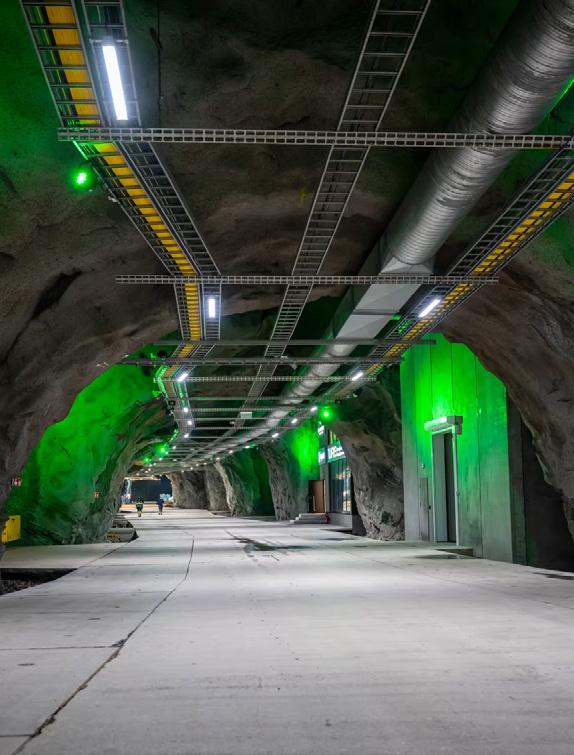
Cooling innovations in Nordic data centers
Thirsty data centers: How Johor’s water stress serve as a cautionary story
40 India’s Quantum Gambit
Why Negeri Sembilan is the next DC hotspot in Malaysia
The cold plate problem
22 How Bridge Data Centres is engineering a sustainable future
The overlooked bottleneck in AI cooling
44 Coming back to Chennai with CDC and Interconnect World!
45 What’s new at SIJORI Week: Get ready for a deep dive into HPC and data center investments
Johor’s big renewable energy push
Why Singapore is building data centers on Jurong Island
Batam’s connectivity play
From tee off to kick off: SIJORI Week 2026 promises excitement!
When I originally set out to pen this letter, I was going to open with a joke about the ubiquity of data centers to the point that I do my sun salutation yoga facing a tier IV facility every morning. But the day we were planning to close our pages, a war broke out in the Middle East.
Now, as I rewrite my opening letter from the Editor, I’m just glad that all the industry contacts in the region I had reached out to, emailed back saying they, and their loved ones, were doing okay. And while we have adhered to the original theme of “cooling tradeoffs” in this issue, the impact of that escalation of violence lingers, much like the thick smoke rising from at least three data centers that have been impacted by drone strikes so far.
Remember, this is one of the fastest growing data center markets in the world, and giga projects worth billions of dollars are in the pipeline across the region. Some global tech giants have temporarily shut down their offices in affected regions, while some others are trying to help personnel stranded in the war zones. This is a sobering reality check, one that drives home the impact of global geopolitics on our industry
- the infrastructure itself, the supply chain, the people.
Coming back to cooling. Almost a lifetime ago, liquid cooling meant lemonade, coconut water, or elderflower cordial, to be enjoyed on a hot summer afternoon, sitting next to a friend or a grandparent on the front porch. Now, it sparks images of a dielectric fluid spa for servers. But building the infrastructure to support new cooling technologies, better suited to cater to burgeoning AI workloads, comes with its own challenges.
In this issue, we hope to take a deeper dive into what these challenges are, specifically, the tradeoffs industry leaders are mindful of, and how we plan to navigate the path forward.
Also, check out our Special SIJORI Supplement to find out all about what to expect at SIJORI Week this year. Singapore-Johor-Riau Islands (SIJORI) represents one of the most vibrant data center markets in Southeast Asia, and a
global connectivity hub.
It is our honour and a privilege to bring you this issue, and we hope you find it informative, and interesting.
Deborah Grey Editor-in-Chief w.media
Meet the team




As AI reshapes industries, we’re redefining the modern data centrewhere purpose meets performance and sustainability.
Partner with us to deploy leading edge energy-efficient infrastructure capable of handling your most demanding workloads. We empower you to








EdgeConneX, a global data center provider and developer, plans to acquire a Lyten data center site in Skellefteå, Sweden, marking its entry into the Swedish market. Supported by EQT, the site could be developed into a 1 GW campus supporting AI and cloud computing workloads and powered by renewable energy.
Social media giant Meta has started building a new 1GW data center campus in Lebanon, Indiana, through a US$ 10 billion investment, its second in the state. Meta says that the data center will use a closed-loop liquid-cooled system and will use zero water for a majority of the year.
Mistral AI, a French generative AI company, and EcoDataCenter, a sustainable data center operator and high-performance computing (HPC) service provider, have announced a €1.2 billion (US$ 1.4 billion) partnership
New York State Senator Liz Krueger and Assemblymember Anna Kelles have recently introduced legislation to impose a temporary, three-year moratorium on new data center construction across the state. The legislation responds to growing public pressure since December 2025, when over 50 groups called for a moratorium, citing unsustainable resource use and rising utility costs.
to build an AI-focused data center at EcoDataCenter’s Borlänge site in Sweden. The project, set to open in 2027, marks Mistral AI’s first AI infrastructure investment outside France.
Yondr Group, a hyperscale data center developer, owner and operator has raised £532 million (US$ 670 million) through its first public capital market transaction after pricing securitised term notes backed by data center assets. The issuance also marks the company’s first bond transaction under its Green Finance Framework. The term notes will be used to refinance part of Yondr’s campus in Slough, one of Europe’s major data center clusters near London.
The momentum from a brisk H2 2025 in Asia Pacific continues in 2026 with large investments pouring into AI data centers providing over 100MW capacity on top of robust demand for both colocation and hyperscale data centers, says CBRE. The region will also be a key beneficiary of the US$ 400 billion forecast digital infrastructure capex from Big Tech for 2026 globally. The region has overtaken Northeast Asia and Australia/New Zealand in both capacity growth and pipeline expansion, having recorded significantly higher compound growth rates over the past three years, according to data center research firm DC Byte. It is a hive of activity attracting hyperscale and AI data center operators from the US and China due to its many inherent advantages such as land availability, improving infrastructure, and more permissive policy environments
At a White House roundtable, President Donald Trump announced the Ratepayer Protection Pledge, a voluntary agreement signed by major technology companies aimed at preventing electricity costs tied to data center expansion from being passed to households. The effort is intended to counter public concern that data center growth is driving higher residential utility bills. The pledge was signed by officials from Amazon, Google, Meta, Microsoft, OpenAI, Oracle and xAI.

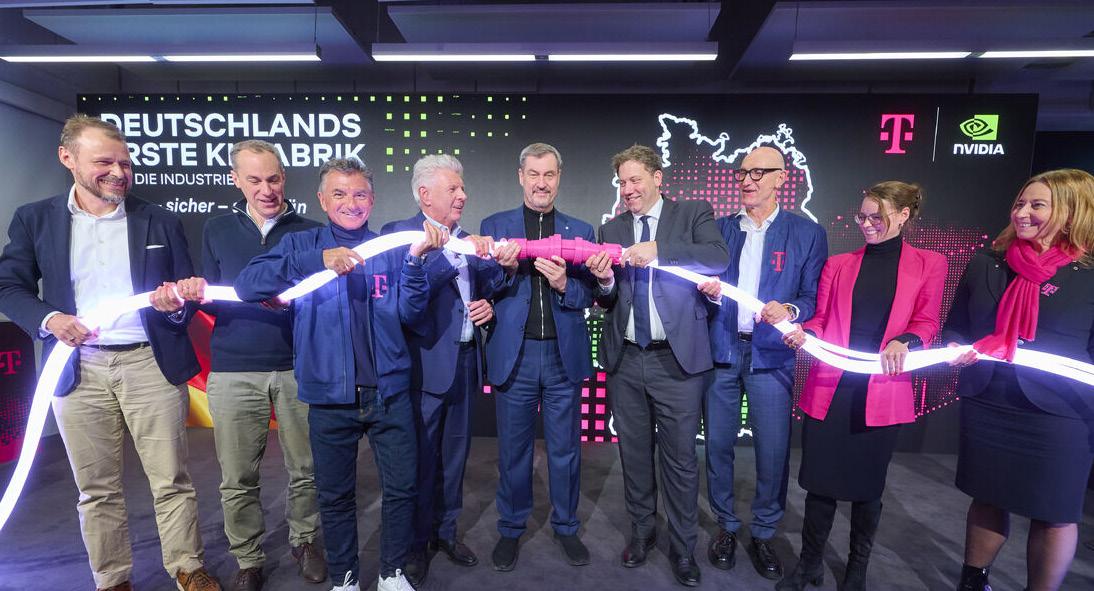
European telecommunications giant Deutsche Telekom has announced the launch of its Industrial AI Cloud, supported by one of the largest AI factories in the region.
The AI factory has been built at Munich’s Tucherpark, in association with NVIDIA and data center partner Polarise. The infrastructure is built on nearly 10,000 NVIDIA Blackwell GPUs, including NVIDIA DGX B200 systems and NVIDIA RTX PRO™ Server GPUs — to deliver a computing power of up to 0.5 ExaFLOPS. This would allow all 450 million EU citizens to use an AI assistant or chatbot at the same time.
Vantage Data Centers, Altarea to build AI data center in France
Vantage Data Centers, a hyperscale data center provider, and Altarea, a low carbon urban transformation group, have signed a partnership to develop an AI and cloud data center campus in Bordeaux, France. It has secured a 400MW power connection with a French utility.
Equinix, CPP Investments to acquire at North for US $4 billion
Global digital infrastructure provider Equinix, and Canada Pension Plan Investment Board (CPP Investments), have announced they have entered into a joint agreement to purchase atNorth, a leading Nordic high-density colocation and built-to-suit data center provider, from Partners Group, one of the major players in the global private markets industry. The duo have provisionally agreed to a financing package of US $4.2 billion (€3.6 billion), underwritten by a group of European and Canadian lenders to fund the transaction and capital required to fund the business expansion.
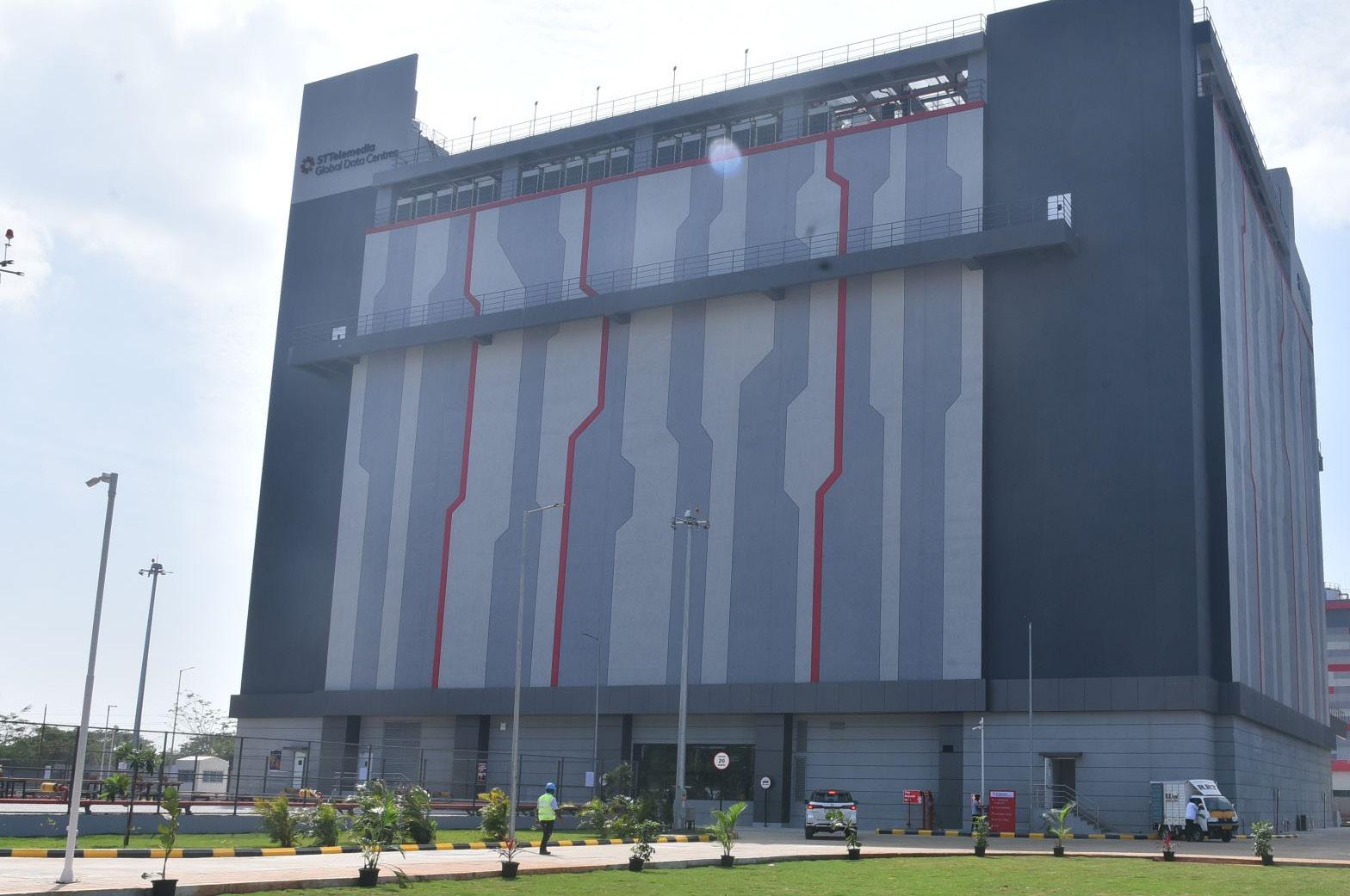
ST Telemedia Global Data Centres (India), an AI-ready colocation data center services provider, has announced the launch of its fourth data center in Chennai, India’s second largest data center market. The new data center – STT Chennai 7 – marks the expansion of STT GDC India’s second campus in the city at the upcoming digital infrastructure hub of Siruseri. The campus is designed as a 45 MW AIready facility, with the first phase of 7.2 MW now operational.
Microsoft has confirmed that customers will be able to run cloud
Singapore-based DayOne Data Centers is said to be mulling a public listing in the United States which could value the data center operator at US$20 billion. It is also considering a dual listing in Singapore, with sources from Bloomberg saying the listing could take place as soon as this year. The planned US$5 billion raise is led by some of America’s top banks namely JPMorgan, Morgan Stanley, Bank of America and Citigroup. Also in a bid to raise funds is Australia-based data center operator AirTrunk, which is considering a potential real estate investment trust (REIT) listing in Singapore this year, which could raise more than US$ 1 billion. Noteworthy too is the potential sale of a major stake in NeutraDC by Telkomsel, Indonesia’s telecom operator, which is seeking between US$1 billion and US$1.5 billion.
workloads from its Saudi Arabia East data center region from Q4 2026. The new Microsoft Azure cloud data center region, located in Saudi Arabia’s Eastern Province, will include three availability zones, each with independent power, cooling, and networking infrastructure.
inks
Equinix Inc. has signed a 15-year virtual power purchase agreement (vPPA) with ENEOS Renewable Energy Corporation to source renewable electricity from the 121 MW Sanda Mega Solar Power Plant in Hyogo Prefecture, Japan. The facility is among the largest operating solar plants in the country.
India offers tax holiday till 2047 to foreign cloud providers
India is offering foreign cloud service providers a tax holiday till 2047 if they use data centers in India to offer services globally. This is subject to these foreign companies also providing services to Indian customers through an Indian reseller. The move aims to attract foreign investment, as well as enable growth of Indian data centers.
Three Amazon digital infrastructure facilities have reportedly been affected by drone strikes due to the war in the Middle East. While two of these are in the UAE, one is in Bahrain. A post on the AWS Health Dashboard on March 2 stated: “Due to the ongoing conflict in the Middle East, both affected regions have experienced physical impacts to infrastructure as a result of drone strikes. In the UAE, two of our facilities were directly struck, while in Bahrain, a drone strike in close proximity to one of our facilities caused physical impacts to our infrastructure.”
Abu Dhabi will establish a nationalscale AI supercomputer in India with 8 exaflops of compute capacity, marking a new phase in India’s AI infrastructure development. The system will be delivered by G42, the Abu Dhabi-based global technology group, and Cerebras, an AI inference provider, in partnership with Mohamed Bin Zayed University of Artificial Intelligence (MBZUAI), and India’s Centre for Development of Advanced Computing (C-DAC).
ESR, an Asia-Pacific focused real asset owner and manager, has announced its entry into India’s data center market with a hyperscale-ready, multi-storey data center in Rabale, near Mumbai. The new ESR Rabale MU1 Data Centre (“MU1”) represents a total investment of ₹900 crore (approximately US$ 100 million), and is being built on a 3.25-acre site. MU1 will support a facility load of up to 60 MW.
SGC Energy to build 300 MW AI data center in South Korea
SGC Energy, a South Korean energy company, will build a 300 MW AI data center in Gunsan, North Jeolla Province. The AI data center will be built within Gunsan National Industrial Complex 2 on a site spread over nearly 115,000 sqm. Construction for the first phase comprising a 40 MW modular data center is expected to commence by the end of this year, and operations scheduled to begin in 1Q2028. The facility will eventually be expanded in stages to a total capacity of 300 MW.
Singapore will impose PUE requirements on all data centers – new and existing – in the upcoming Digital Infrastructure Act (DIA) expected to be tabled in Parliament later this year. No PUE figures are mentioned but it is expected to be within a range that’s “practicable and consistent with international benchmarks”. In Malaysia, a new policy has been implemented to combat speculative power demands by data centers that has so far been endemic in the industry. New data centers now have to declare their annual demand rather than locking in maximum power capacity immediately. To ensure compliance, the Energy Commission will engage with hyperscalers directly to validate their data.
Agencia Comercial Spirits Ltd., a Taiwan-based importer and distributor of whisky products, has announced that it has entered into two separate non-binding letters of intent as part of its potential plans to diversify into AI computing infrastructure and data center related opportunities, in addition to its existing whisky business. Agencia is considering leasing AI computing servers based on the NVIDIA B300 platform (Blackwell architecture) from Ricloud AI Inc.
OpenAI has launched its OpenAI for India initiative with Indian partners to
expand access to AI in the country. It also revealed that as part of the global Stargate initiative, it is partnering with India’s Tata Group to develop local, AIready data center capacity designed for data residency, security, and long-term domestic capability. What will begin with a 100 MW project, will have the potential to scale up to 1 GW over time.
Data centers to comprise 75% of Goodman’s jobs by FY2026
Australian-based property firm Goodman Group reported that by June 2026, it expects to have about AUD 18 billion of work in progress, of which more than AUD 14 billion (73%) will be data center projects. The group is targeting 0.5GW of data center capacity in projects by the end of FY26. At the same time, it has expanded its global “power bank” – sites it owns with secured or allocated power – from 5GW to 6GW, primarily across Australia and continental Europe.
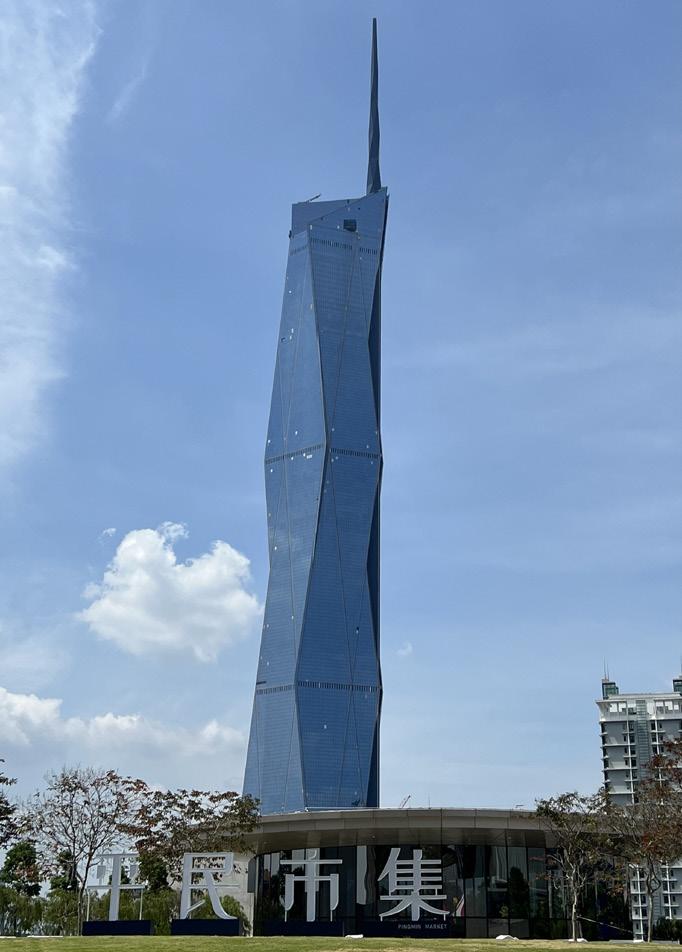
One of the clearest signs of SEA’s continued magnet for foreign data centers is
news of the recent debut of global data center provider Digital Realty in Malaysia through the acquisition of CSF Advisers which owns TelcoHub 1 data center, one of Greater Kuala Lumpur’s most established data center hubs
Also being splashed across headlines is the US$ 4.5 billion investment to build CGK Campus, a 500MW hyperscale AI-ready data center in Greater Jakarta, a project by Singapore-headquartered Digital Edge. Ho Chi Minh City wastes no time in expediting the building of a US$ 2 billion AI data center, a joint venture project by Kinh Bac City Development Holding Corporation and its foreign partner, Accelerated Infrastructure Capital (AIC). The city has recently formed a 15-member strong task force to expedite regulatory approvals and compliance fulfilment.





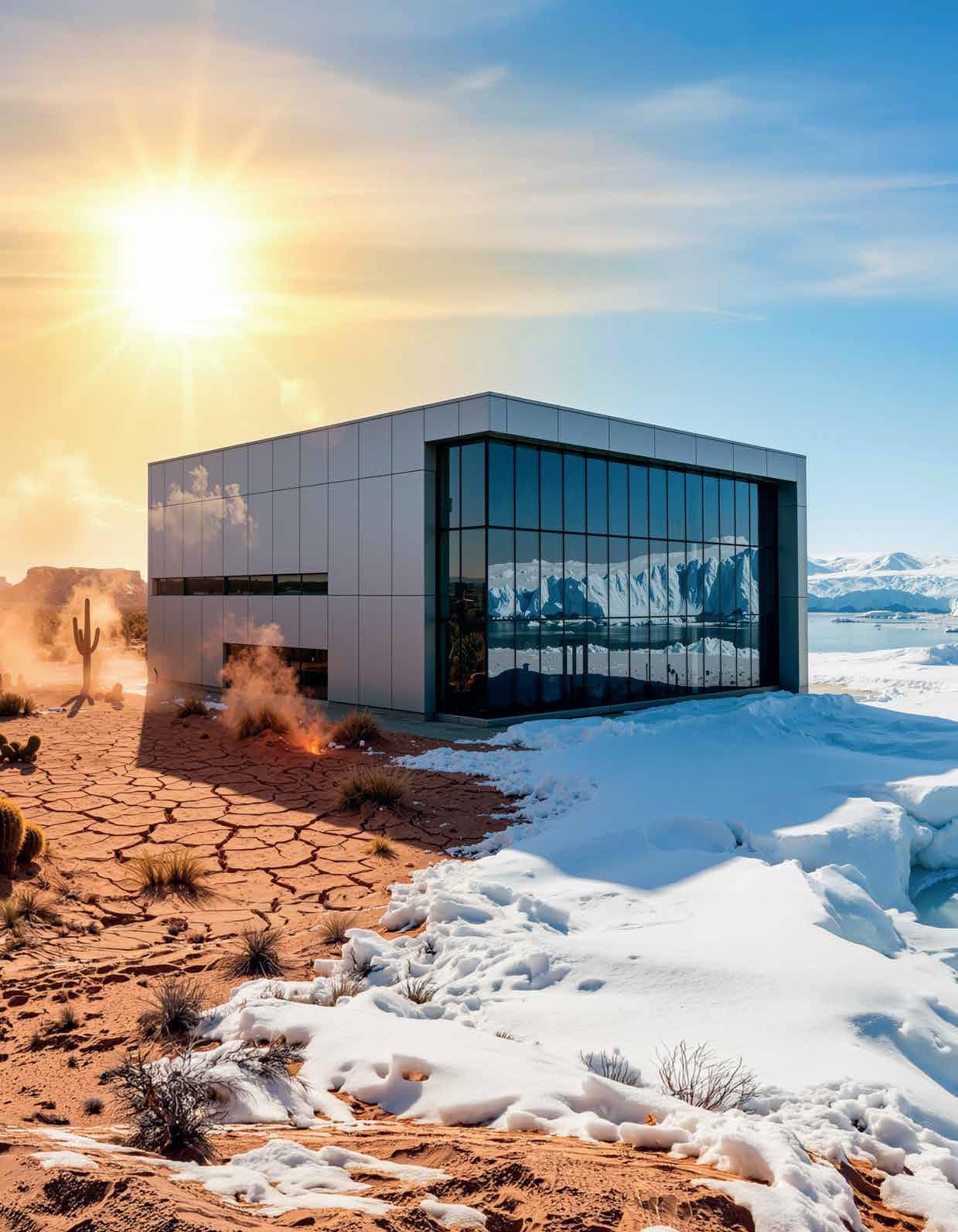
Liquid cooling is fast becoming the default for AIdense data centers. But what happens when your facility sits in one of the hottest regions on earth, where ambient temperatures offer no relief and water is scarce?
By Deborah Grey
Technology leaders and data center operators across the Middle East, South Asia, and Southeast Asia share how they choose their cooling mix and navigate the tradeoffs.
Designing for heat: How local climate shapes the cooling mix
“In the Middle East, ambient temperatures, humidity patterns, and water availability are critical design parameters. We adopt a climateresponsive approach, optimizing for high dry-bulb temperatures while minimizing water dependency wherever possible,” says Himmath Mohammad, Chief Information Officer, Gulf Data Hub (GDH), illustrating how climate and geography shape the cooling mix for data centers.
He highlights three core inputs: IT load density profile, climatic conditions, and long-term scalability.
Therefore, he says his organization’s thought process includes:
• Forecasting rack density evolution (particularly AI-driven high-density workloads)
• Evaluating air-cooled versus hybrid or liquid-cooled architectures
• Designing for modular scalability without stranded capacity
• Balancing PUE improvement against lifecycle cost and operational resilience
“Ultimately, cooling is not selected as a standalone system, it is integrated into the overall energy, sustainability, and uptime strategy of the facility,” he elaborates. The UAE-based GDH is also expanding its footprint across North Africa, with plans to build a data center complex in Egypt.
Next door in Saudi Arabia, DataVolt’s upcoming facility in NEOM is also making the most of available natural resources, especially seawater.
“DataVolt’s AI factory site in NEOM is designed to use innovative seawater cooling. Seawater provides 100 percent of the heat rejection,” says Somen Mathur, VP, Engineering & Design, DataVolt. “Under full (100 percent) AI data center load, the 70 percent liquid-cooled portion is rejected directly to seawater through a plate heat exchanger (PHE), while the remaining 30 percent air-cooled portion is served by water-cooled chillers, with condenser heat ultimately rejected to seawater,” he explains.
In South Asia, tropical conditions prevail across key markets including Mumbai, Chennai, Hyderabad, Pune, and Delhi NCR. Nxtra, the data center arm of Airtel, a homegrown telecommunications major, has built its data centers keeping ground realities in mind.
“In a country like India where the weather can be extreme, we must think
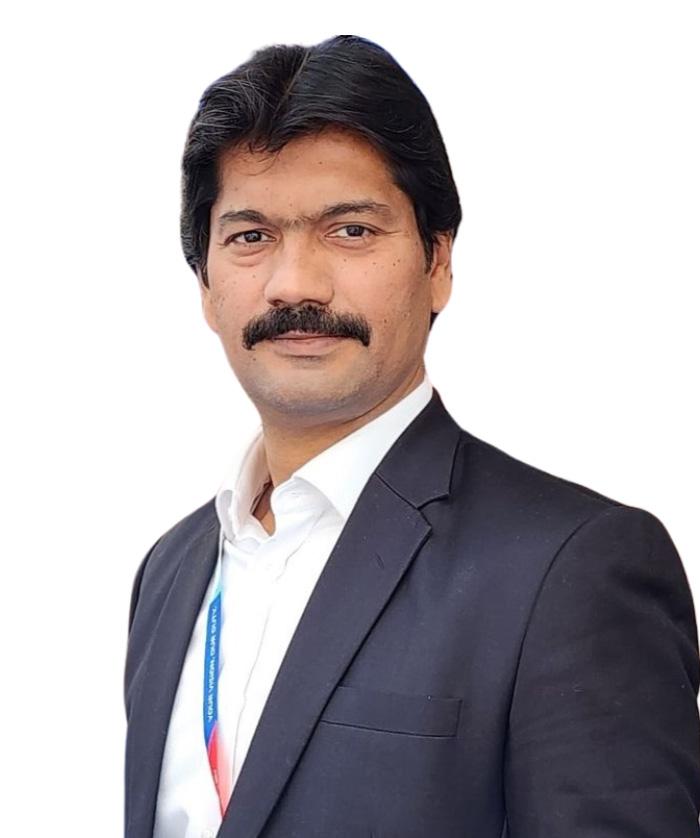
“The future of cooling is not about a single technology winning; it is about designing flexible, adaptive infrastructure that can evolve with workload demands, while maintaining sustainability and resilience.”
_______ Himmath Mohammad, CIO, Gulf Data Hub
and move beyond ‘keeping things cool’. In the AI environment, sustainability in India is a conscious choice that is necessary to efficiently handle heat and humidity. There are multiple geographical studies done even before site selection to determine feasibility of data centers from a network, power and cooling perspective as well,” explains Ashish Arora, Chief Executive Officer, Nxtra by Airtel. “We believe that cooling should be a foundational design, and not an afterthought. For this reason, our hyperscale data centers are modularly designed from the ground up to seamlessly support air, liquid, direct-tochip and immersion cooling techniques across any floor/ section, providing our customers with the flexibility to choose precisely what is right for them,” he says shedding light on Nxtra’s thought process.
In Southeast Asia, most data center markets sit in tropical regions close to the Equator, contending with
persistent heat and humidity. “The primary challenge in markets like Singapore and Indonesia is the high ambient humidity, which limits the effectiveness of traditional free cooling methods, meaning we cannot simply pull in outside air to cool the facility. This forces us to be far more innovative with our internal mechanical chilling and heat rejection cycles to maintain optimal conditions at the rack,” says Ng See Kian, Senior Director, Mechanical Engineering, ST Telemedia Global Data Centres. “We must maintain a delicate balance between keeping the air cool enough while ensuring that moisture does not trend too high or too low to damage sensitive electronics.”
As far as the thought process goes, he says, “Our starting point is that we are no longer just cooling data halls

and racks, but the silicon itself. As such, we evaluate our cooling strategy based on the specific power densities of the IT workloads we host,” adding, “While traditional air cooling remains highly effective for many cloud and enterprise workloads, the 30kW to 250kW densities required by AI and highperformance computing require that we also deploy advanced liquid-based solutions where necessary.”
“In a country like India where the weather can be extreme, we must think and move beyond ‘keeping things cool’. In the AI environment, sustainability in India is a conscious choice that is necessary to efficiently handle heat and humidity.”
_______ Ashish Arora, CEO, Nxtra by Airtel

He continues, “To that effect, we adopt a design philosophy that is both modular and flexible. Instead of forcing a choice between air or liquid, we build data halls that support both technologies simultaneously, ensuring we can host a client’s legacy stack while also able to scale the appropriate cooling solutions needed for next-generation GPU clusters. The fundamental ingredient is ensuring we have facility water at the perimeter of every data hall, which affords tremendous flexibility to accommodate air-based cooling (using CRAHs and/ or fan walls) or liquid cooling (using CDUs).”
The tradeoffs: Water, cost, complexity, and speed
GDH’s Himmath Mohammad identifies four key tradeoffs:
1. Water vs. Energy Efficiency“Evaporative cooling offers strong energy performance but increases water consumption, which is an important consideration in arid regions like the UAE,” he explains.
2. CapEx vs. Future Density Readiness
“Over-designing for ultra-high density increases upfront capital cost, while underdesigning risks expensive
retrofits later. The balance lies in phased, modular deployment,” he says.
3. Complexity vs. Reliability
He points out, “Advanced cooling technologies can improve efficiency but introduce operational complexity. Simplicity often enhances uptime, which remains the ultimate priority.”
4. Sustainability vs. Speed to Market “AI demand is accelerating timelines. However, sustainability targets cannot be compromised for speed. We ensure that rapid deployment does not undermine long-term ESG goals,” he explains.
Meanwhile, DataVolt’s Somen Mathur says, “Some of the key cooling tradeoffs we are carefully considering include the capital cost of seawater infrastructure, long-term biofouling control in seawater piping and equipment, and material durability in corrosive marine environments. These factors significantly influence our approach to future projects, pushing us to optimize system configurations, select corrosion-resistant materials, and incorporate maintainable biofouling mitigation strategies to ensure longterm reliability and cost-effectiveness.”
In India, sustainability is the key consideration. “When we plan our cooling strategy, the primary tradeoff is balancing maximum efficiency with environmental responsibility. Keeping the consequences of global warming in mind, we must construct facilities that remain resilient even as outside temperatures rise,” says Nxtra by Airtel’s Ashish Arora. “Even Original Equipment Manufacturers (OEMs) today recommend optimizing our internal environments in accordance
“Some of the key cooling tradeoffs we are carefully considering include the capital cost of seawater infrastructure, longterm biofouling control in seawater piping and equipment, and material durability in corrosive marine environments.”
_______
Somen Mathur, VP, Engineering & Design, DataVolt
with the ASHRAE standards that recommend having a maximum set-point temperature of 26–27 °C. Also, the decision to follow cold aisle containment vs hot aisle containment is another choice that weighs impact, costs and convenience.”
Arora also delves into other considerations. “Another critical tradeoff involves resource scarcity. Utilizing liquid-cooling methods would require additional resources, higher costs, and increased maintenance, and may not be the most sustainable choice in water-stressed regions. We manage this by conducting water-stress analysis during site selection and aiming for zero liquid discharge,” he says. “We have built future-ready infrastructure equipped with a cooling mix that allows
us to pivot between air and liquid cooling based on both the environment and the customer’s requirements. That way, we ensure that the best cooling mix (air + liquid) is considered for the respective servers to ensure optimum utilization and useful life as well as minimize resource consumption.”
STT GDC’s Ng See Kian raises similar concerns around sustainability, power, and water consumption. “One of the most critical balances we manage is the relationship between water and energy consumption. In water-stressed regions, we often face a choice between evaporative cooling, which offers lower PUE but higher water use, versus dry cooling, which preserves water but can increase energy demand. We are increasingly pivoting toward aircooled chiller plants and closed-loop systems for new data centers to achieve high efficiency without taxing local freshwater resources,” he says.
Much like his contemporaries in other geographies, he also acknowledges the tradeoff between complexity and operational resilience. “Liquid-to-chip cooling offers superior heat rejection but introduces more installation cost and complexity in maintenance. This has fundamentally influenced our building blueprints. Our AI-ready facilities now support higherdensity racks and advanced cooling technologies such as immersion and direct-to-chip solutions, powering training and inference workloads while maintaining peak efficiency,” he says.
As AI continues to develop into a formidable gamechanger for the digital infrastructure industry, and billion-dollar investments continue to pour into these regions, it is clear that the data center cooling mix will have to evolve across all these markets. Despite the ambient disadvantage, South Asia, Southeast Asia, and the Middle East must accelerate adoption of liquid cooling and hybrid options if they are to evolve into global AI hubs.
Himmath Mohammad sums it up best when he says, “The future of cooling is not about a single technology winning; it is about designing flexible, adaptive infrastructure that can evolve with workload demands, while maintaining sustainability and resilience.”

“One of the most critical balances we manage is the relationship between water and energy consumption. In water-stressed regions, we often face a choice between evaporative cooling, which offers lower PUE but higher water use, versus dry cooling, which preserves water but can increase energy demand.”
_______ Ng See Kian, Senior Director, Mechanical Engineering, ST Telemedia
Global Data Centres
As AI workloads push rack densities beyond the limits of air cooling, the liquid cooling market is surging across every major region. Here’s where the numbers stand.
By Deborah Grey
The global liquid cooling market is growing fast, but not evenly. Regions with mature data center industries, established sustainability mandates, and high AI adoption are pulling ahead, while emerging markets are starting from a lower base but growing at steeper rates. Though market estimates vary widely, the direction across every major region is clear: Liquid cooling is moving from option to necessity.
Let us start with Europe, a continent with diverse cultures and climates across different regions. While on the one hand, the Nordics are blessed with a naturally cold climate that enables data centers to rely on cold glacier water and ambient cooling, on the
other, there are the warmer regions in Southern Europe like Italy and Spain, where the temperatures are much warmer.
Mordor Intelligence valued Europe’s data center cooling market at US$8.74 billion in 2025. It estimates it to grow from US$10.16 billion in 2026 to US$21.56 billion in 2031, at a compounded annual growth rate (CAGR) of 16.23 percent. “Demand for AI-ready capacity, tougher energy-efficiency rules, and persistent supply constraints in the FLAP-D corridor have combined to accelerate investment in advanced thermal management,” it says, adding, “Natural free-cooling conditions across the Nordic region, together with mandatory waste-heat reuse for sites above 1 MW, are reshaping technology choices toward liquid systems and districtheating integration.”
This is also in line with its findings compared to the size of Europe’s AI data center market. According to Mordor

Intelligence, the European artificial intelligence data center market was valued at US$17.39 billion in 2025, and estimated to grow from US$21.67 billion in 2026, to reach US$65.18 billion by 2031, at a CAGR of 24.65 percent during the forecast period (2026-2031).
Meanwhile, Grand View Horizon delves specifically into Europe’s liquid cooling market and expects it to reach “a projected revenue of US$6,062.8 million by 2033”, growing at a CAGR of 19 percent from 2026 to 2033.
The African continent is home to over 50 nations, and many of them are emerging as global technology hubs. There are several emerging digital infrastructure markets in different parts of the African continent, such as Morocco and Egypt in North Africa, Kenya in the East, Nigeria in the
Liquid cooling is moving from option to necessity.
West, and the well established South African data center market that has been successful in drawing attention of, and investments from, top global hyperscalers.
Mordor Intelligence estimated Africa’s data center cooling market to be worth about US$0.13 billion in 2025, and further predicts it to grow at a CAGR of 31.56 percent between 2026 and 2031 to reach US$0.68 billion. “The increasing demand for cloud computing among SMEs, government regulations for local data security, and growing investment by domestic players are some of the major factors driving the demand for data centers in Africa,” it says, estimating the upcoming IT load capacity of the African data center construction market to reach 3,182 MW by 2030. It further says that the region’s construction of raised floor area is expected to increase by 11.4 million sq. ft by 2030.
“Average temperatures in Africa range from 15°C to 36°C in summer and -2°C to 26°C in winter. Africa’s heavy reliance on rain-fed agriculture makes it highly vulnerable to climate variability and change,” it says. “The choice of cooling technology is typically based

on the geographic location of the data center.”
Meanwhile, Research and Markets estimates the Africa Data Center Cooling Market size at US$240.70 million in 2024, and further expects it to reach US$505.20 million by 2029, growing at a CAGR of 15.40 percent during the forecast period (2024-2029).
As we head east toward South Asia, India is the next big digital infrastructure market, with official government estimates placing its data center capacity at around 1.5 GW in 2025. And while major Indian markets like Mumbai, Chennai, and Hyderabad, may not be as hot as the Middle East, South Asia’s tropical climate poses cooling challenges, not to mention water shortages during summer months.
Moreover, India has aggressively courted global hyperscalers, and is offering sops to international and domestic players to build large AI factories, and one of its most promising upcoming data center hubs is the port city of Vishakhapatnam, which has multiple AI projects in the pipeline. India’s liquid cooling market is also poised to grow rapidly.
Estimates for India’s cooling market vary significantly depending on factors such as methodology. According to IMARC Group, India’s data center cooling market size reached US$605.5 million in 2024. Looking forward, IMARC Group expects the market to reach US$2.1 billion by 2033, exhibiting a CAGR of 13.82 percent during 2025-2033.
Meanwhile, as per Grandview
Horizon, the figures are more upbeat. It found that India’s data center cooling market generated a revenue of US$1.2 billion in 2025, and now expects it to reach US$12.4 billion by 2035, growing at a CAGR of 26.3 percent from 2026 to 2035.
East Asia and Southeast Asia: The density challenge
In Japan, the data center cooling market was valued at US$2.8 billion in 2025, according to IMARC Group. Looking forward, IMARC expects the market to reach US$7.2 billion by 2034, at a CAGR of 11.02 percent during 20262034. “The market is being driven by several significant factors, including the increasing need for high-performing data centers, a heightened emphasis on energy efficiency and eco-friendliness, and the expanding adoption of cloud computing to offload routine operations and manage extensive data volumes,” says IMARC.
Meanwhile, according to Grandview Horizon, Japan’s data center cooling market generated a revenue of US$871.5 million in 2025. It further estimates that this market could reach a projected revenue of US$7.6 billion by 2035, growing at a CAGR of 24.7 percent from 2026 to 2035.
Estimates for South Korea differ considerably. Mordor Intelligence estimated South Korea’s data center cooling market size to be at US$176.67 million in 2025, and expects it to reach US$454.12 million by 2031, at a CAGR of 17.04 percent during the forecast period (2025-2031).
According to IMARC Group, South Korea’s data center cooling market
size reached US$329.71 million in 2025. The market is projected to reach US$1.05 billion by 2034, at a CAGR of 13.85 percent during 2026-2034. “Edge computing supports applications like 5G, which generate continuous data traffic and require stable performance. Edge data centers need compact, efficient cooling due to space limits and high heat loads, especially in urban areas. Besides this, government initiatives aimed at promoting digital infrastructure and smart cities are fueling the South Korea data center cooling market share,” finds IMARC.
Southeast Asia is characterized by tropical and equatorial climates, with persistent heat and humidity yearround. This region is a hub of digital infrastructure with a vibrant data center industry spread across Singapore, Malaysia, Thailand, Indonesia, Vietnam, and the Philippines.
When it comes to the overall SEA data center cooling market, Mordor Intelligence expects market size to increase from US$3.56 billion in 2025 to US$4.09 billion in 2026, and reach US$8.26 billion by 2031, growing at a CAGR of 15.09 percent over 2026-2031. “Accelerating adoption of generative-AI servers, mandatory efficiency codes such as China’s PUE ≤ 1.3 rule and Singapore’s SS 715:2025 standard, and hyperscale build-outs by Microsoft, Google, Alibaba, and Tencent are expanding demand for high-performance thermal systems,” it says, adding, “Liquid architectures are gaining traction because air-based cooling reaches economic and technical limits above 30 kW per rack, yet air solutions still dominate legacy estates and sub-30 kW deployments.”
Singapore stands out in particular. Mordor Intelligence estimated Singapore’s data center cooling market size to be US$130.62 million in 2025, and further expects it to reach US$209.83 million by 2031, at a CAGR of 8.22 percent during the forecast period (2025-2031).
Across every region, liquid cooling is shifting from limited, niche use cases to the mainstream. Europe and East Asia are furthest along, driven by regulation and hyperscale density. Africa, South Asia, and Southeast Asia are earlier in the curve but growing at the steepest rates. The variation lies in pace and scale, but the destination is no longer in doubt.
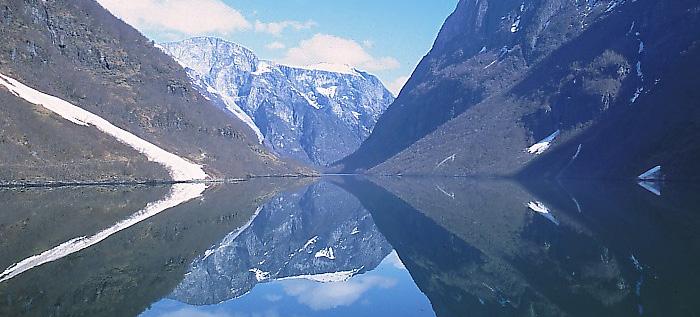
The Nordic region has become one of the world’s most important locations for new data center construction. Hyperscale cloud operators, colocation providers and edge facilities are increasingly building infrastructure in Sweden, Norway, Finland, Denmark and Iceland. One of the main reasons is cooling.
By Conor McNevin
Instead of relying on energyintensive mechanical airconditioning systems, Nordic data centers use a range of cooling methods that harness the region’s natural cold climate, water resources and urban energy networks.
The Nordic climate has a strategic advantage with average annual temperatures below 10 °C providing up to 8,000 hours of free-air cooling each year, enabling data centers to operate with facility-level PUE as low as 1.09.
Four cooling approaches dominate the Nordic region, these are free-air cooling, deep-water cooling, hybrid evaporative systems, and heat-recovery cooling integrated with district heating.
Free-air cooling using the Arctic ambient temperatures
Free-air cooling is the most widespread cooling strategy among Nordic data centers. Facilities pull cold
outside air through heat exchangers to remove heat from server halls. This is an efficient method because average temperatures remain low for most of the year thus mechanical chillers are often unnecessary for long periods.
A prime example of how data center operators are using the Nordics’ natural cold environment for cooling purposes is when Compute Nordic Ltd, a Norway-based data center developer and operator, selected Mikkeli, Finland to develop a 212 MW Campus for AI Training and Inference.
“The datacenter is located in a valley which receives a cool wind going down the Valley all year. The reason for the
cool wind is the glacier which surrounds the area. This gives us an average temperature over the year of about 2 degrees Celsius,” explains Harald Riise, CEO, Compute Nordic Ltd.
Shedding light on other ways in which Compute Nordic is making the most of the natural ambient temperature, he says, “In our traditional DC with adiabatic cooling it means free air cooling most of the year. For our High density compute we use chillers but as with the adiabatic cooling the actual chillers only run a few weeks every year. This means that the Tier-3 DC runs on a PUE on less than 1.1 and the high density compute PUE is below 1.15 over the year.”
He continues, “The location was chosen based on the ambient cool climate and the fact that the DC runs on 100 percent hydropower undiluted from the grid with direct access to substations which are fed by up to 1.1 GW of Hydro power generation from a total of 9 independent hydro power plants.”
Hyperscale facilities located near the Arctic Circle can rely on outside air almost year-round. The cold climate allows the facility to maintain extremely high energy efficiency, with a power usage effectiveness (PUE) as low as 1.07.
A prime example is when APL Group, a global private investment firm in real estate, renewable energy and digital infrastructure, announced the development of a hyperscale data center1 campus in Varkaus, Finland.
Located on a 28-hectare site, the data center is designed to support up to 100 MW of capacity and use Finland’s highly reliable energy infrastructure and low-risk grid environment. The development will be carried out in close coordination with local stakeholders, while Scale42 served as an advisor for the project.
Colocation operators have adopted similar strategies. For instance, atNorth runs large campuses in Iceland and Finland designed to exploit the
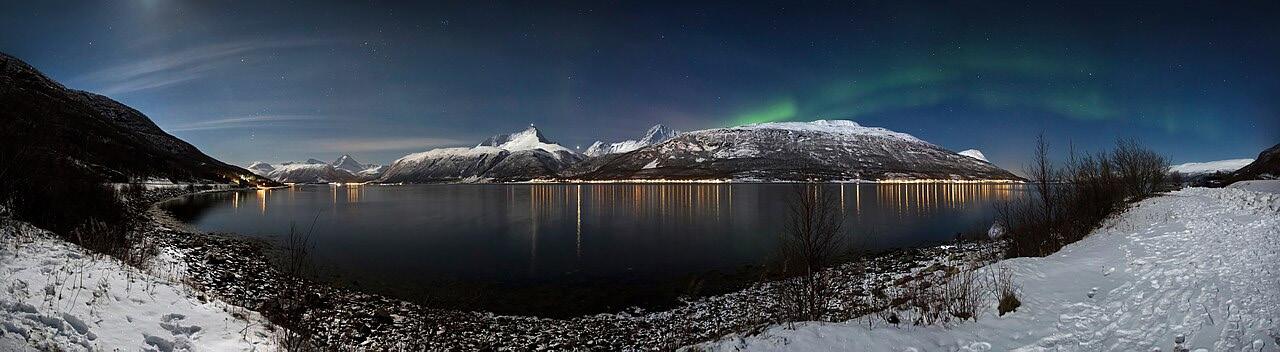
region’s cool ambient temperatures. At its Icelandic sites, the naturally cold climate enables efficient free-air cooling that keeps PUE values close to 1.2 while supporting high-density computing workloads. atNorth also plans to develop a 300 MW data center in Sollefteå Municipality, Sweden and is expected to be operational in H1 2028.
In fact, at the recent launch of this facility, Eyjólfur Magnús Kristinsson, CEO, atNorth, acknowledged the need for more sustainable data center operations saying2, “We face a critical point in time right now, where we must balance unprecedented growth in high density workloads with an increasingly urgent need for sustainable, scalable digital infrastructure.”
Free-air cooling works particularly well in the Nordics because outside temperatures frequently fall within the range recommended for modern server equipment, ranging from -5°C in the winter to highs of 20°C to 25°C during the summer months. Air can therefore be used directly or indirectly through heat exchangers that remove heat from server racks.
Fjord and seawater cooling
In coastal areas, some data centers rely on cold seawater rather than air. These systems pump water from deep fjords or the ocean into heat-exchange systems that absorb heat from the facility’s cooling loop.
One of the most distinctive examples is the fjord-cooled campus operated by Green Mountain on the island of Rennesøy in Norway. The facility draws seawater from a nearby fjord at a depth of about 100 meters, where temperatures remain close to 8 °C year-round. The water circulates through heat exchangers that remove heat from the servers before being returned to the fjord in a closed loop. Because the cold water provides most of the cooling capacity, the system requires very little electricity beyond pumps and control systems. Operators use this natural cooling approach to deliver extremely low PUE levels compared with traditional airconditioning systems.
Another well-known example is the Lefdal Mine Datacenter3 in western Norway, which pumps cold seawater from a nearby fjord to cool servers located inside a converted mountain
References: [2] [3] [4] [5]
mine.
Interxion leverages seawater heatexchange systems to reduce cooling costs, at its Stockholm campus saving roughly US$ 1 million annually and recouping the additional civil-works investment in less than a year.
GlobalConnect has piloted submerged cooling technology that cuts cooling energy use by as much as 90 percent while supporting rack densities of up to 100 kW. As generativeAI clusters generate three to five times more heat than traditional workloads, these natural and technological thermal efficiencies are increasingly positioning the Nordic region as a compelling destination for next-generation data infrastructure.
Even in cold climates, data centers must handle warmer summer periods. To ensure reliability, many Nordic facilities use hybrid cooling systems that combine free-air cooling with evaporative or adiabatic technologies. These systems spray small amounts of water into the cooling airflow during warmer days, lowering air temperature through evaporation. When outside temperatures fall again, the facility switches back to full free-air cooling.
The Norwegian site operated by Green Mountain4 in Rjukan uses an indirect adiabatic air-cooling system that provides nearly 330 days of free cooling each year. Only during the warmest periods does the evaporative system activate to maintain optimal server temperatures.
Hybrid systems provide operational resilience while still dramatically
reducing energy consumption compared with traditional mechanical cooling plants.
Another defining feature of Nordic data centers is what happens to heat once it is removed from servers. Instead of being released into the atmosphere, many facilities capture the warm water generated by cooling systems and send it into municipal heating networks.
For example, Equinix operates facilities in Espoo, Finland whose cooling systems recover heat from servers and transfer it to the regional district heating grid. The recovered heat around four megawatts in the initial phase can supply enough energy to warm roughly 2,000 homes each year.
Timo Kivi, Sales Director of Projects in Fortum’s Heating and Cooling Business, Equinix, has previously5 explained, “Heat generated by cooling can be efficiently transferred to buildings connected to the shared heating network. At the same time, Equinix’s data center carbon dioxide emissions decrease, and our customers, i.e., households, services, and companies, get competitive, clean, and reliable electricity-based district heating.”
This integration between digital infrastructure and urban energy systems is one of the most distinctive features of the Nordic data-center model.
These approaches which include free air, seawater cooling, hybrid evaporative systems and heat recovery
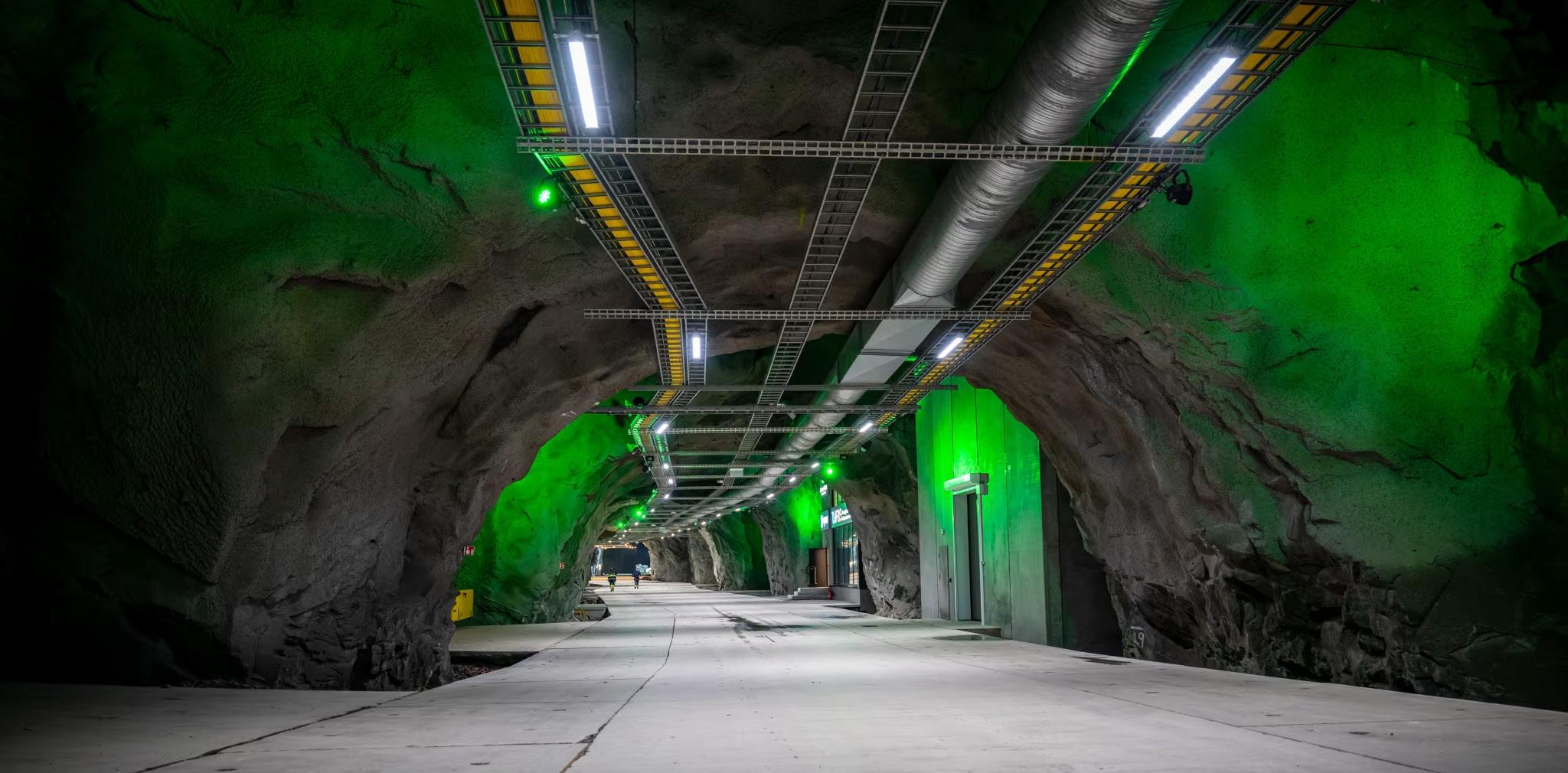
reflect a broader design philosophy. Nordic operators build data centers that take advantage of their environment rather than fighting it with energyintensive equipment.
The combination of cold climates, abundant water resources and extensive district heating networks has allowed the region to pioneer some of the world’s most efficient cooling strategies for digital infrastructure.
As demand for cloud computing and artificial intelligence continues to rise, the cooling methods developed in Nordic data centers may increasingly shape how large-scale computing infrastructure is designed around the world.
Nordic Power: What do the numbers say?
Data center power consumption in the Nordic region (Denmark, Finland, Iceland, Norway and Sweden) has grown rapidly and is now measured in the low single-digit terawatt-hour (TWh) range per country, supported by large installed power capacity and access to low-carbon electricity.
The region hosts more than 200 data centers with total installed IT power capacity exceeding 600 MW, with Sweden and Norway alone each approaching or exceeding 1 GW of installed capacity.
In Norway, government data shows that digital infrastructure consumed around 3.7 TWh of electricity in 20246 , with approximately 2.6 percent of national electricity use and data centers accounting for about 41 percent of that total, and official projections suggest data center demand could rise to 6–8 TWh by 2030.
In Sweden, data center electricity consumption is estimated to have increased from roughly 2.8–3.2 TWh in 2022 to around 4.0–4.4 TWh by the mid2020s7. Across the Nordics, demand is expected to grow strongly, potentially tripling by 2030 driven by cloud services, AI and high-performance computing.
The Nordic data center market reached approximately 1.32 GW in 2025 and is projected to increase to 1.98 GW by 2031. This expansion is driven by several factors, including access to affordable renewable energy, naturally cool climates that improve power usage effectiveness (PUE), and rising demand
References: [6] [7] [8] [9] [10] [11]
for infrastructure capable of supporting AI workloads as per research by Mordor Intelligence8
Demand for data centers is increasing unprecedentedly across Europe and the main hubs such as the FLAP-D markets are reaching maximum capacity and land availability is becoming scarce.
By mid-2025, Nordic governments, particularly Norway, Sweden, and Finland, have each updated data center policies around three core pillars: sustainability (notably wasteheat reuse), national security, and energy efficiency, with an explicit regulatory distinction between AI/cloud infrastructure and cryptocurrency mining.
Norway has taken the most interventionist approach9, introducing regulations effective January 1, 2025, and an updated national strategy in June 2025 that classifies data centers as critical digital infrastructure, and must register with the Norwegian Communications Authority for facilities exceeding 500 kW. These mandates require enhanced security, customer transparency, local representation, and impose a temporary ban on energyintensive cryptocurrency mining. This further enforces cost-benefit analyses for surplus heat utilization for facilities over 2 MW (effective April 1, 2025), and proposes prioritizing grid access for data centers serving national security or essential societal functions.
Sweden’s 2025 framework10 emphasizes sustainability and efficiency through alignment with the EU Energy Efficiency Directive, introducing mandatory energy-use reporting effective July 1, 2025, maintaining electricity tax relief subject to stricter compliance on efficiency and heat reuse, and continuing streamlined permitting to attract hyperscale investments.
Finland is recalibrating its incentives by removing its long-standing preferential electricity tax rate in March 2025 raising it substantially, altering the investment calculus while still promoting sustainable data centers, waste-heat recovery, and the development of AI-focused facilities within broader EU initiatives.
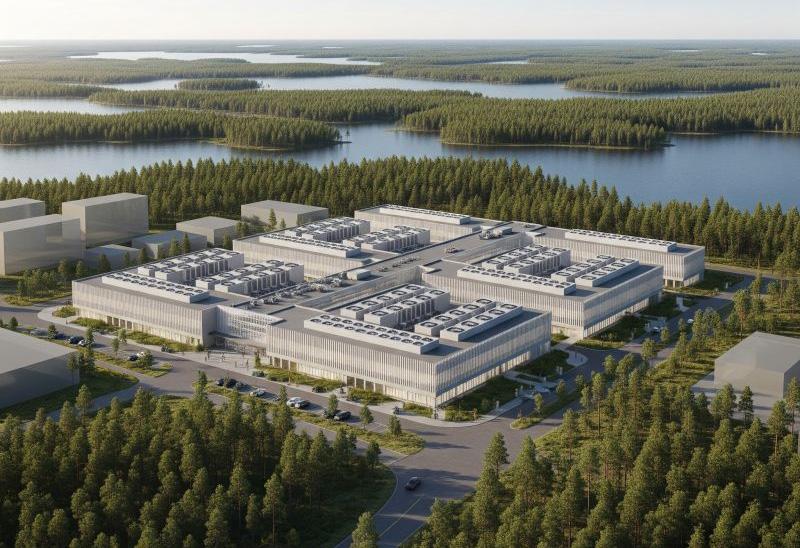
According to a report from Grand View Horizon11, the Nordic data center cooling market is projected to generate approximately US$ 5,367.5 million in revenue by 2035. The market is anticipated to expand at a compound annual growth rate (CAGR) of 23.2 percent between 2026 and 2035, reflecting strong growth in data center infrastructure and cooling demand across the region.
The Nordic data-center model illustrates how infrastructure can evolve when engineering is aligned with geography. By combining climate-assisted cooling, water-based heat exchange and large-scale energy integration, operators are reducing both operational costs and environmental impact. Hyperscale facilities such as those supporting workloads for companies like Meta Platforms, Inc. demonstrate how computing density can be sustained even as artificialintelligence workloads grow more demanding.
The approach is also gaining attention from energy planners. According to the International Energy Agency, global electricity demand from cooling systems could rise sharply in coming decades, making low-carbon cooling architectures increasingly important. The Nordic region’s model - treating cooling as part of a broader energy ecosystem rather than an isolated technical problem - offers a scalable blueprint for future digital infrastructure. As cloud computing expands, the integration of climate, water and district energy networks may become a defining feature of sustainable data-center design worldwide.
Johor looks set to conquer a potential water crunch, judging by current initiatives taken by both the state and private sector.
By Jan Yong
Perception is a powerful force – it can be both constructive and destructive. It can shape policies for better or worse. And Johor is facing a major perception problem right now from local communities. This is evidenced by recent viral allegations that water supply disruptions in Pontian and Simpang Renggam districts were linked to data centre development when in fact there were no such developments there, as clarified by Johor State Work, Transport, Infrastructure and Communications Committee chairman Mohamad Fazli Mohamad Salleh. The water supply disruption was an ongoing scheduled event due to a prolonged drought which had depleted the level of raw water source, he said.
Even so, there is widespread perception that the state’s water supply will be adversely affected, if not now, then in the future. The narrative goes that the proliferation of data centers in Johor would eventually put pressure on the municipal water supply system meant for community use. Hence, every time there is any water supply disruption, fingers are immediately pointed at data centers. In the eyes of many locals, these massive “compute houses” do not benefit them at all but instead are taking away essential public resources from them.
Fortunately, the situation has not reached crisis proportions yet. Johor, which will be the biggest data center hub in Asia (ex-China) come 2030, has quite judiciously taken note of how other data center hubs are dealing with the tight water supply situation.
To put in perspective, the situation in Johor is more of a potential water distribution issue and not an actual

shortage per se, as noted by Lee Ting Han, Johor’s state executive councillor for investment and trade. “It’s not the sufficiency, it’s the management … how to make sure that water is channelled to the right place,” he told the state assembly.
As a pre-emptive measure however, Johor has started to implement precautions at the outset which is at the application stage. It has set up a Special Technical Committee to vet data centre development applications. Each project will be assessed holistically, especially water and electricity supply requirements, and utility issues. It will be a comprehensive assessment by the committee which includes looking into the location (site suitability) and the development cluster.
Hence, every time there is any water supply disruption, fingers are immediately pointed at data centers.
Mohamad Fazli believes that in 10 – 20 years’ time, a major risk will not originate from a single data center, but from the cumulative effect of multiple data centers in clusters operating simultaneously. “When development of water-intensive facilities occurs in clusters, it will inevitably place significant pressure on the state’s utility systems,” he reportedly said. “Water and energy supplies that appear sufficient at present can be at risk

when disruptions occur, such as during extreme weather, rapid development or interruptions at water treatment plants.”
Approvals will hinge on fulfilment of all the criteria including any additional conditions that the committee imposes to ensure sustainable development of data centers in the state. Incidentally, there have been many proposals submitted to the state to control data center development – among them are setting development capacity ceiling, long-term impact assessments including taking into account 10- to 20-year projections, potential droughts, population growth, non-revenue water rates and the needs of other sectors.
The best solution, from the point of view of the state, is for data centers to simply build their own facilities or invest in securing their own water sources, including exploring the potential of
groundwater. The rationale is that this should be part of the capital and operating expenditure of data centers which typically save a lot on labour costs due to its low need for manpower.
This is not to hinder investment but rather to ensure that data centre development in Johor takes place in a more balanced, responsible and sustainable manner, Mohamad Fazli explains. Moreover, this approach is also in line with the principle that the polluter or beneficiary who reaps economic benefits from development should bear the costs of the additional impact on natural resources.
The good news is several data center developers and operators in the state have already put that into action –a prime example is Bridge Data Centre’s water reclamation plant which treats sewage effluent which is then piped to its upcoming Ulu Tiram hyperscale data center. Using reverse osmosis similar to Singapore’s Newater technology, the plant currently processes five million litres of water daily, with plans to expand to 20 million litres depending on demand.
Other data centers using alternative water sources include DayOne, Computility Technologies, a subsidiary of Beijing-based Zdata Technologies Private Limited, and AirTrunk. Alternative water sources include treated wastewater, treated river water, and water from rain harvesting. Currently, Indah Water Konsortium Sdn Bhd, in collaboration with Johor Special Water Sdn Bhd, is supplying 12 million litres of treated effluents from 13 waste treatment plants, a day to data centres in the state, according to reports.
In terms of design, data centers could also pivot to a waterless or low water usage solution although retrofitting older data centers will come with additional costs.
Johor is not just relying on the private sector; it has taken the bold step of banning Tier 1 and 2 data centers in November, saying these consumed too much water compared to highertiered data centers which are more water-efficient. Additionally, it has told data centers using evaporative or water-intensive cooling systems that they have had to wait until 2027
The best solution, from the point of view of the state, is for data centers to simply build their own facilities or invest in securing their own water sources, including exploring the potential of groundwater.
for their water supply request to be approved. Since August, Johor has also raised its water tariffs for industrial and high volume users reflecting the latter’s outsized consumption compared to residential use.
Furthermore, Johor is rushing the construction of two water treatment plants to meet the rising demand. To be completed within the next two years, the plants are located at Semanggar Plant Package (50 MLD) for the Kulai and Sedenak areas; and the Layang 2 Phase 2 plant (160 MLD) for the Johor Bahru and Iskandar Puteri areas. Two others, namely Semangar 3 and Kayu Ara Pasong, are currently at the conceptual and detailed design stages. They have a combined capacity of 290 MLD and will supply to Johor Baru, Kulai and Pontian.
The state currently hosts 48 water treatment plants with a total design capacity of 2,352 MLD. According to experts, a data centre with a capacity of 100MW uses about 4.16 MLD for cooling, equivalent to the daily water usage for a town of 10,000 people.
The state now hosts 17 operational data centers with about 11 under construction bringing the total capacity to possibly more than 5GW by 2030 (by then, about 48 will be fully operational). Cooling them, as per experts’ estimates, might require about 675 million cubic metres.
Possibly, the most positive outcome from this potential water constraint scenario is that more and more data center operators will start investing in water treatment or more sustainable methods to reduce their reliance on municipal supply. Johor can look forward to more ESG-compliant data centers which would help in managing the huge water and power consumption needs of the over 51 data centers the state has approved as of November 2025.
The data center sector currently sits at the beginning of one of the largest infrastructure investment supercycles seen in the modern era, according to JLL at the beginning of 2026. How do companies in the industry prepare for the elevated rate of activities in the coming days and months in the midst of this historic digital infrastructure boom?
For one, sustainability, a buzzword for years, is now a given – regulators globally are catching on and are tightening up rules and making minimum sustainability standards mandatory for data centers. This, coupled with community and political pressures, have had the effect of raising the bar for a greener data center landscape globally.
Asia Pacific is no exception –data center capacity is projected to almost double to about 57 GW by 2030 from the current 32 GW driven by the relentless growth of digital transformation, artificial intelligence and cloud adoption. With aggressive growth comes unprecedented demand for power and water, the two resources most needed to run data centers. As power and water supply
constraints spiral out of control in some jurisdictions, there are those who watch and adapt even before any crisis hits them.
The current industry blueprint must change in order to keep up with the lightning-speed changes. News of racks approaching 600 kW for nextgeneration AI applications is proof that silicon speed waits for no one. And while the industry currently debates on stranded infrastructure assets being a possible outcome of such speed, for Bridge Data Centres (BDC), it has already embedded the future into its design from the ground up. Its design philosophy takes into account all possible outcomes, hence it has prioritized sustainability, intelligent engineering and deep collaboration –all while controlling the entire stack as ecosystem architect.
With Environmental, Social, and
As power and water supply constraints spiral out of control in some jurisdictions, there are those who watch and adapt even before any crisis hits them.
Governance (ESG) now dictating investment and customer decisions, BDC wields sustainability as a business strategy rather than a compliance exercise. Its recently unveiled ‘BRIDGE’ ESG framework gives a very transparent look at where it stands in terms of every metric that investors might look at including its decision to join the RE100 initiative for 100 percent renewable energy by 2040, and its commitment to science-based emissions reductions.
“Resiliency today means more than just physical durability—it means creating adaptable, sustainable, and future-proof systems,” says Eric Fan, CEO of Bridge Data Centres. This future forward view, often spanning a 20-year operational horizon, justifies upfront investments in green technology as well as funding innovative solutions for potential problems.
In tandem with higher rack density, the rest of the data center architecture and components may also need an overhaul to keep up. Cooling, in particular, has moved from a supporting function to being a critical component, with liquid cooling becoming a mandatory feature in new hyperscale data centers. BDC’s response is a hybrid cooling architecture designed for flexibility - its facilities cater for every need - from traditional air-cooled racks using efficient perimeter fan-walls to high-density AI racks employing directto-chip liquid cooling. This system is engineered for subtropical climates, using warmer cooling tower water where possible and integrating smaller “trim chillers” only for premium GPU workloads.
When it comes to construction, BDC leverages advanced prefabrication and modular building models, slashing build times and enabling it to deliver a campus in Malaysia in a record eight months. This speed-to-market, all part of its 2024-launched AI-Ready Data Centre Total Solution 2.0, is crucial in a region racing to add capacity.
BDC is also ahead of the curve when it comes to power and water; its approach is multi-pronged and partnership-driven.
On the power front, the company is actively securing its renewable future, having locked in nearly

1GW of renewable energy reserves through multiple Memorandums of Understanding (MOUs). It’s also an early participant in Malaysia’s Corporate Renewable Energy Supply Scheme (CRESS), enabling direct access to green electricity via the national grid—a model that enhances reliability while decarbonizing, in addition to its 400MW Renewables Electricity Supply Agreement with TNB, Malaysia’s national electricity provider.
BDC is translating ESG commitments into measurable operational outcomes: at its Thailand facility, on-site distributed PV generated 511.00 MWh in 2024, meeting nearly 50% of annual electricity demand—demonstrating near-term decarbonization progress while strengthening long-term energy resilience and supporting a scalable renewable strategy across the platform.
The region’s digital future can’t be built on yesterday’s assumptions— that water and power will always be abundant, and that scale is simply a matter of adding capacity. BDC’s vision is to lead APAC into a new model of data center growth: beyond scarcity, beyond compromise, beyond linear consumption.
From pioneering a Johor Water Reclamation Plant using Membrane Bioreactor MBR and Reverse Osmosis (RO) to produce high-grade cooling water from treated municipal effluent, to extending closed-loop refresh cycles from two months to over six months, BDC is engineering circular, resilient systems that protect performance while reducing resource intensity. In a resource-constrained decade, the winning platforms won’t just be bigger—they’ll be smarter.
As ecosystem architect, BDC has forged several collaborations ranging from a joint venture with BCA International to promote global green data centre standards, to a 10-year sustainable water supply agreement in Thailand, and its pivotal public-private partnership with Johor authorities for water reclamation. Not only do these enable the firm to secure essential resources, but they also embed the company within the community and
regulatory fabric.
Underpinning the technical achievements is a commitment to social resiliency and human capital. BDC’s focus on local talent development—with 85.5 percent local hires—and its leadership in gender diversity, with women holding 33.3 percent of executive management roles, builds a stable, skilled workforce. This ensures long-term operational resiliency.
Beyond the 2026 debate on chasing lightning-fast silicon evolution versus stranded infrastructure assets, what is still commanding sustainability headlines in Asia Pacific is the convergence of explosive AIdriven demand and acute resource constraints. BDC is responding with an integrated blueprint that connects modular, climate-adapted engineering with circular resource management and strategic ecosystem partnerships.
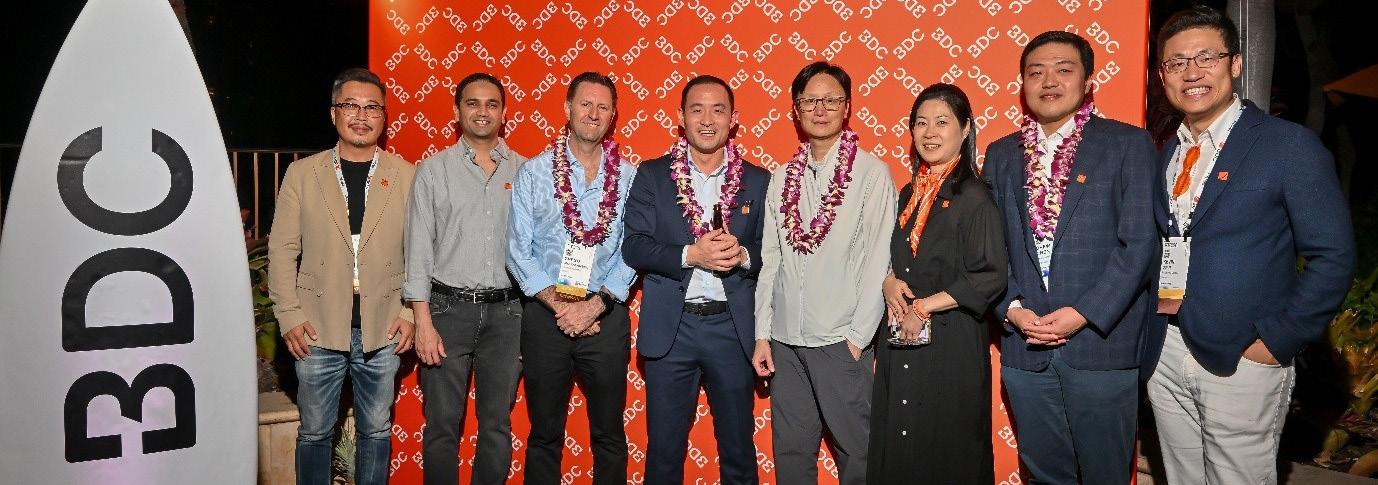
The company’s recent accolades, including the IDC Future Enterprise Award for ESG, Singapore’s Green Mark Platinum certification, as well as w.media’s Hyperscale Infrastructure Leader and Strategic Network Infrastructure Leader awards, presented to Sandy Xiao and Eric Fan, President and CEO respectively, validate this approach.
BDC is preparing for the future by being scalable, resilient and innovative – ensuring it remains a leader and innovator in a field where competition and technological obsolescence are constant threats.
To this end, the company is starting 2026 with a new brand identity to reflect its leading position as a fast-adapting hyperscale and AI-infrastructure builder with a growing network of mega-campus developments in Asia Pacific. Its existing hyperscale campuses in Malaysia and Thailand are approaching 700 megawatts of operating capacity in 2026, with concrete plans to expand into other regions. This aligns with BDC’s operating model as a global platform combining regional scale with deep local execution underpinned by strong cash flows.
“Our new identity reflects who BDC is today; a platform built on disciplined execution, certainty of delivery, and the ability to scale with our customers,” said CEO Fan, elaborating on the brand refresh.
The data center industry has evolved rapidly in the last few years, with growing awareness of energy efficiency and resource consumption driving much of that change
Yet it is the rise of AI that is putting those ambitions to the test, fundamentally changing how data centers are built and operated. Take power density. From singledigit kilowatt (kW) racks that were the norm for over a decade, the rush to deploy GPUs has pushed modern facilities past 100kW per rack. And with discussions of 300kW racks and beyond already underway, conventional approaches to cooling, piping, and facility design are being pushed to their limits.
The difficulties begin with sheer thermal load. Higher densities mean significantly more heat to dissipate, though that is only part of the equation. The enforcement of sustainability requirements means operators are simultaneously being pushed to lower their PUE and reduce water and energy usage. They are
being squeezed from both sides: far more heat to manage, with tightening regulations offering less room to maneuver.
Cooling technology is evolving to address these challenges, but not in a coordinated way. While directto-chip (DLC) technology is not new, previously limited adoption and a surge of new vendors have fragmented the landscape. Multiple cold plate designs, different manufacturers, and a wide range of connection methods exist without a common standard. With no clear baseline to work from, consultants and engineers face slower decision-making and added iteration cycles.
Compounding this is the intense pressure to deliver facilities in less time, with contracts often going to those who can meet the tightest deadlines. In this climate, engineering and design quality can suffer as overwhelmed teams default to what has worked before, rather than implementing solutions that can truly accommodate AI-scale workloads.
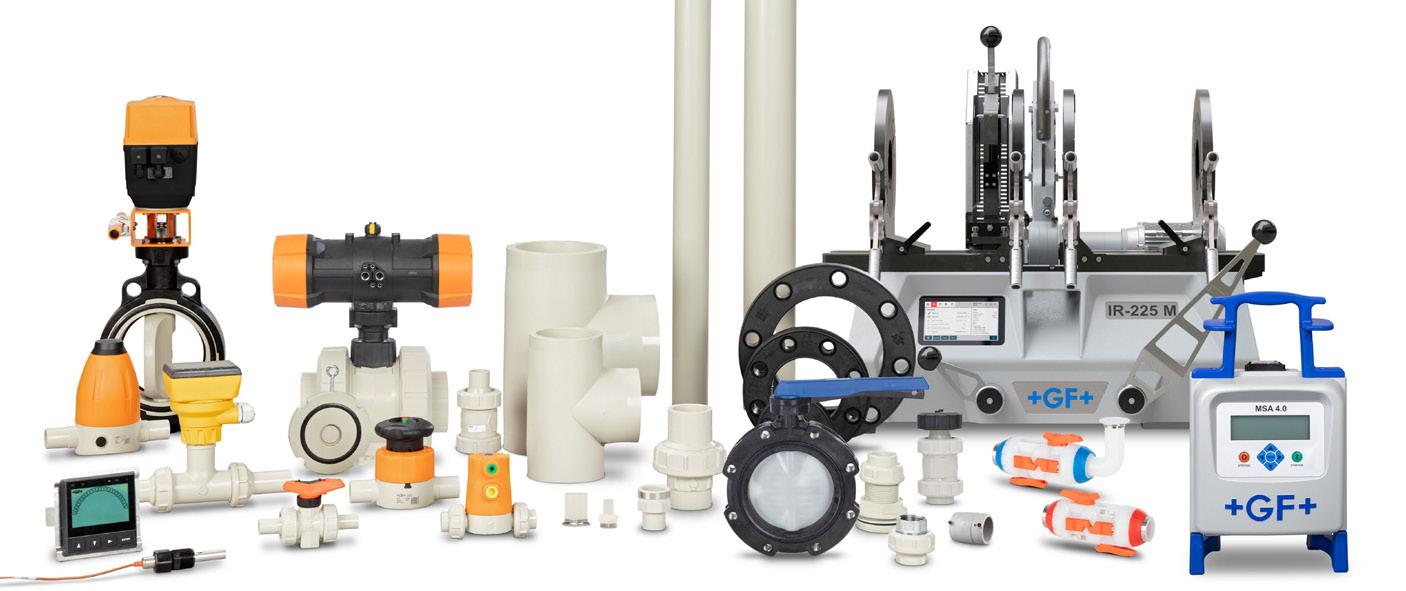
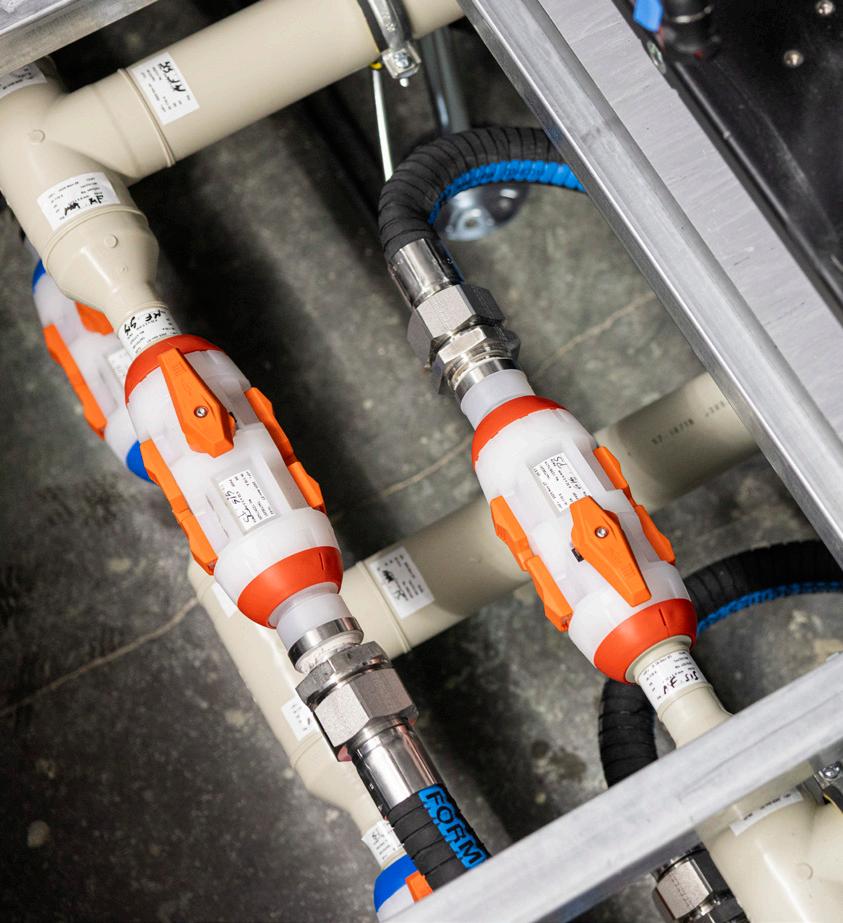
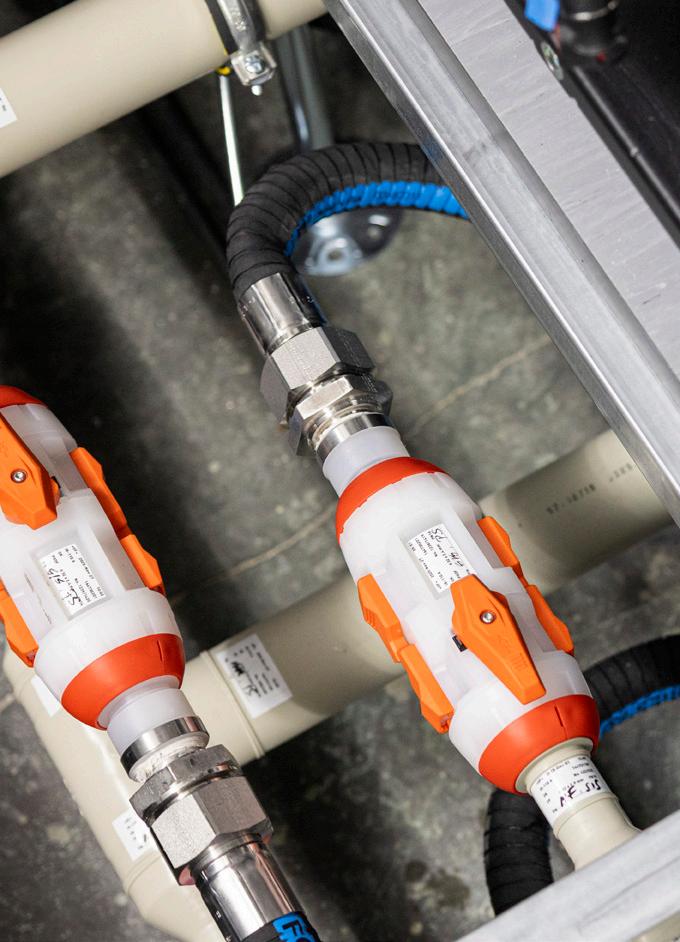
LiquidCore is engineered for efficient cooling in the white space, and its polymer components ensure ultimate coolant purity
They are being squeezed from both sides: far more heat to manage, with tightening regulations offering less room to maneuver.
A material misunderstood
Among the assumptions rarely questioned is piping. Metal piping has long been the standard in data center cooling systems, but polymer piping offers a set of advantages that make it well suited for AI-scale infrastructure. Yet the material is often dismissed out of hand, held back by misconceptions rather than any real technical shortcoming.
A common perception, for instance, is that polymer cannot handle pressure because it is not as hard as metal and does not carry the visual authority of stainless steel. But this perception is not grounded in fact. Polymers have been used for decades in pressurized settings in multiple industries such as microelectronics and utilities, handling the required pressures, temperatures, and purity requirements as well as their metal counterparts.
Much of the skepticism appears to stem from people equating polymer with materials such as residentialgrade PVC, the most recognizable polymer in everyday use. But just as there are multiple grades of steel, not all polymers are the same. PVDF, for
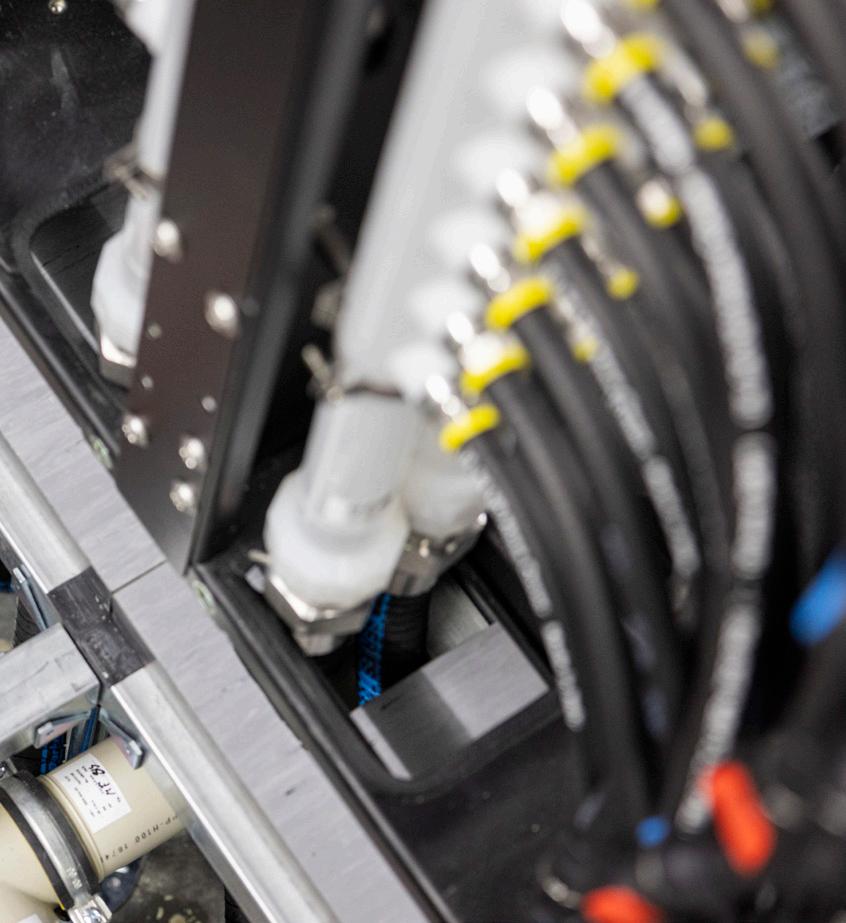
instance, is an industrial-grade material widely used in the semiconductor industry, capable of withstanding ultrahigh-purity water conditions. It bears little resemblance to the plastic piping found in residential plumbing.
Where polymer makes the difference
Once those misconceptions are set aside, the practical advantages of polymer piping stand on their own. This is particularly true in high-density AI data centers, where the requirements placed on piping are fundamentally different from conventional facilities. Perhaps the most notable is corrosion resistance. Metal piping can corrode from the inside out, with no outward signs until the pipe fails and floods the data hall. Polymer eliminates this risk entirely. It does not lose strength or erode over time, effectively allowing it to last the lifetime of the data center.
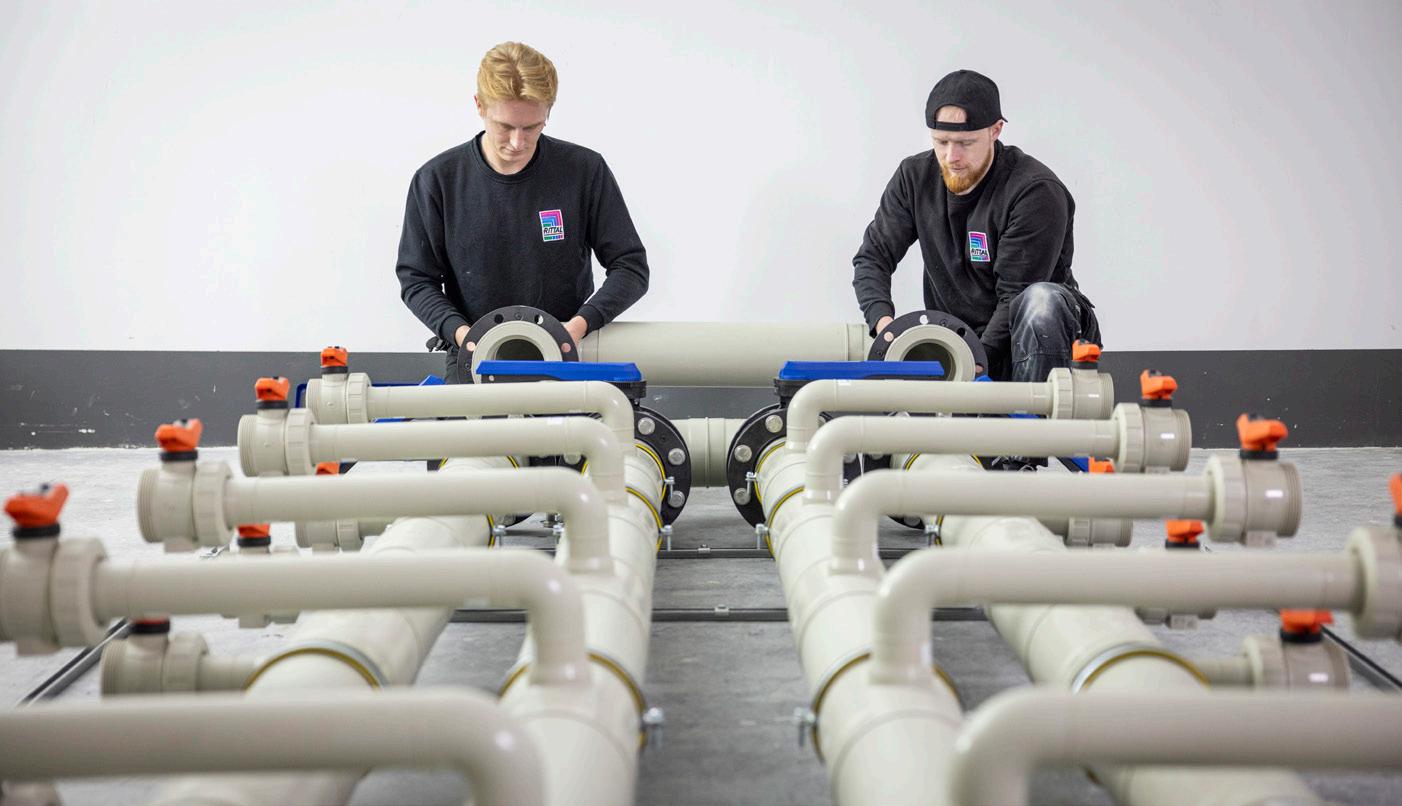
Speed of installation is another significant advantage, and one that matters when every day of delay on site can cost operators heavily in liquidated damages. Polymer pipe is significantly lighter than steel, which makes onsite handling easier and allows for larger prefabricated modules. Joining polymer also does not require hot works, which means no open flames, grinding, or sparks on site, making for a safer working environment. The material is straightforward to work with
and lends itself well to prefabrication, with sections that can be assembled off-site and delivered ready to install. These factors can meaningfully compress installation timelines and reduce schedule risk.
Finally, polymer piping delivers around 80% less embodied carbon compared to metal piping. As facilities scale up to accommodate higher cooling loads and more piping is required, this contribution grows proportionally. For operators working toward net-zero commitments within the next five to ten years, the choice of piping material is one more lever available to them.
But material selection is only one piece of the puzzle. Without the right engineering support, even the best piping material can be let down by poor design or installation. For GF, the value proposition extends beyond supplying pipe. With the demands of AI infrastructure reshaping facility design, the company works closely with clients from the early design stages to accommodate evolving requirements.
With over 20 years of experience with Data Center projects, GF is actively executing projects across the Americas, EMEA and APAC including hyperscale projects in the Philippines, Indonesia, Malaysia, and Japan.
If you’re exploring more effective solutions for your cooling infrastructure, polymer piping systems
These factors can meaningfully compress installation timelines and reduce schedule risk.
may be a practical option to consider. Discover how they can transform performance and efficiency in the in-depth whitepaper, “The Role of Polymer Piping in Direct Liquid Cooling."
Backed by data and technical analysis, this comprehensive brief delivers a clear comparison across key criteria - from material selection and reliability to lifecycle performance and sustainability.
As the digital infrastructure industry continues to grapple with the demands of AI-scale infrastructure, the willingness to reconsider longheld assumptions may prove just as important as the technology itself.

Download the whitepaper now to uncover the insights you need to stay ahead
Alternatively, contact : Gregor Poeltl, Regional Data Centre Lead, Southeast Asia Pacific gregor.poeltl@georgfischer.com
Setting near-term carbon-reduction targets aligned with the Paris Agreement.

BCA Green Mark Platinum Award Awarded for MY06 Campus (Building 1) in Johor, Malaysia
Driving towards 100% renewable energy across all operations by 2040.
Recognised among Asia’s most sustainable digital infrastructure leaders.
Together, we bridge the future for a sustainable digital tomorrow. Scan
Inside:
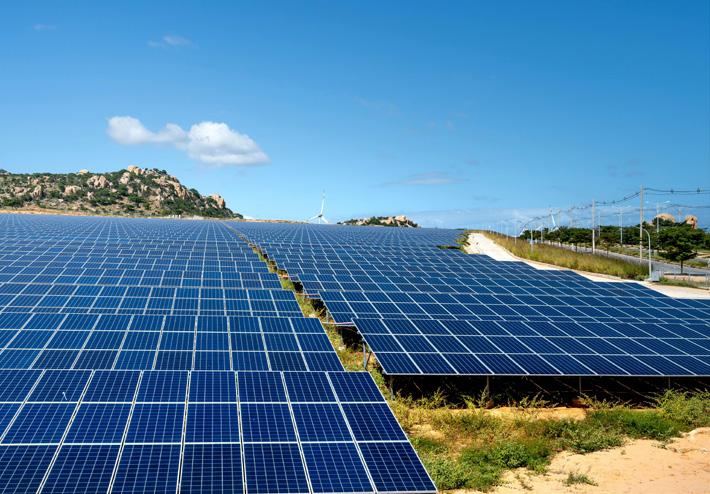
Johor’s big renewable energy push
Why Singapore is building data centers on Jurong Island
Batam Subsea connectivity
From tee off to kick off: SIJORI Week 2026 promises excitement!
Johor is building one of the world’s largest renewable energy zones, partly to meet the demand of insatiable data centers.
By Jan Yong
Johor is tipped to become Southeast Asia’s largest data center hub by 2030, and its power consumption will surge accordingly. To meet that demand, the state has contracted one of the world’s largest renewable energy zones.
The Southern Johor Renewable Energy Corridor (SJREC) is a US$6 billion hybrid solar and battery storage project spanning 2,000 square kilometers. It sits within the Johor-Singapore Special Economic Zone (JS-SEZ), a bilateral initiative that pairs Johor’s land and labor resources with Singapore’s capital and technology.
The initial phase of SJREC targets up to 4 gigawatts peak (GWp) of solar capacity and 5.12 gigawatt-hours of energy storage, which will be supplied to hyperscale data centers and large corporations in the state as well as transmitted across to Singapore. The SJREC will be co-developed by the World Bank Group, Permodalan Darul Ta’zim (PDT), the strategic investment arm of the Johor State, and Ditrolic Energy, an integrated energy company based in Malaysia.
With this, Johor will also scale up to become the primary renewable energy hub for the ASEAN Power Grid (APG) initiative, which aims to interconnect
It
is a tightrope between growth and decarbonization that Johor has, so far, managed to walk.
regional electricity networks by 2045 to enhance energy security and sustainability.
From 1 percent to leadership
Both the SJREC and the simultaneously launched Johor Renewable Energy Policy 2030 framework are anticipated to thrust Johor into a regional leadership position in clean energy. It is a tightrope between growth and decarbonization that Johor has, so far, managed to walk.
The framework is a comprehensive roadmap outlining 12 strategic pillars and 38 implementation initiatives to decarbonize the state’s energy system. As of 2024, only about 1 percent of Johor’s energy mix — about 199 megawatts — comes from renewable sources. JLL’s James Rix, Head of Data Centres Practice for Southeast Asia and Korea, however reckons it’s closer to 17.7 percent, citing figures from the Grid System Operator (GSO), an entity authorized under Section 22A of the Electricity Supply Act 1990.
“The power generation mix for renewables from GSO shows it generates 3,774MW of renewables against a total Grid demand of 18,761MW which comes up to 17.7 percent,” he explains.
The policy sets a target of at least 600 MW of renewable capacity by 2030, which could reduce annual carbon emissions by up to 2.1 million tons. With the many opportunities to explore clean energies in the state, the framework anticipates about US$2.5 billion (RM10 billion) in investment creating an additional 15,000 jobs.
Among all the renewables, solar is being prioritized due to its availability, relative ease of conversion and affordable costs. As photovoltaic efficiency improves and panel costs decline, the case for using solar energy is further strengthened. Large-scale solar (LSS) deployment is expected to take place in Mersing and Kota Tinggi districts —particularly around Pengerang. Johor reportedly has 68.9 MW of LSS capacity currently. Apart from ground-mounted photovoltaic farms or rooftop installations, floating solar installations are also being

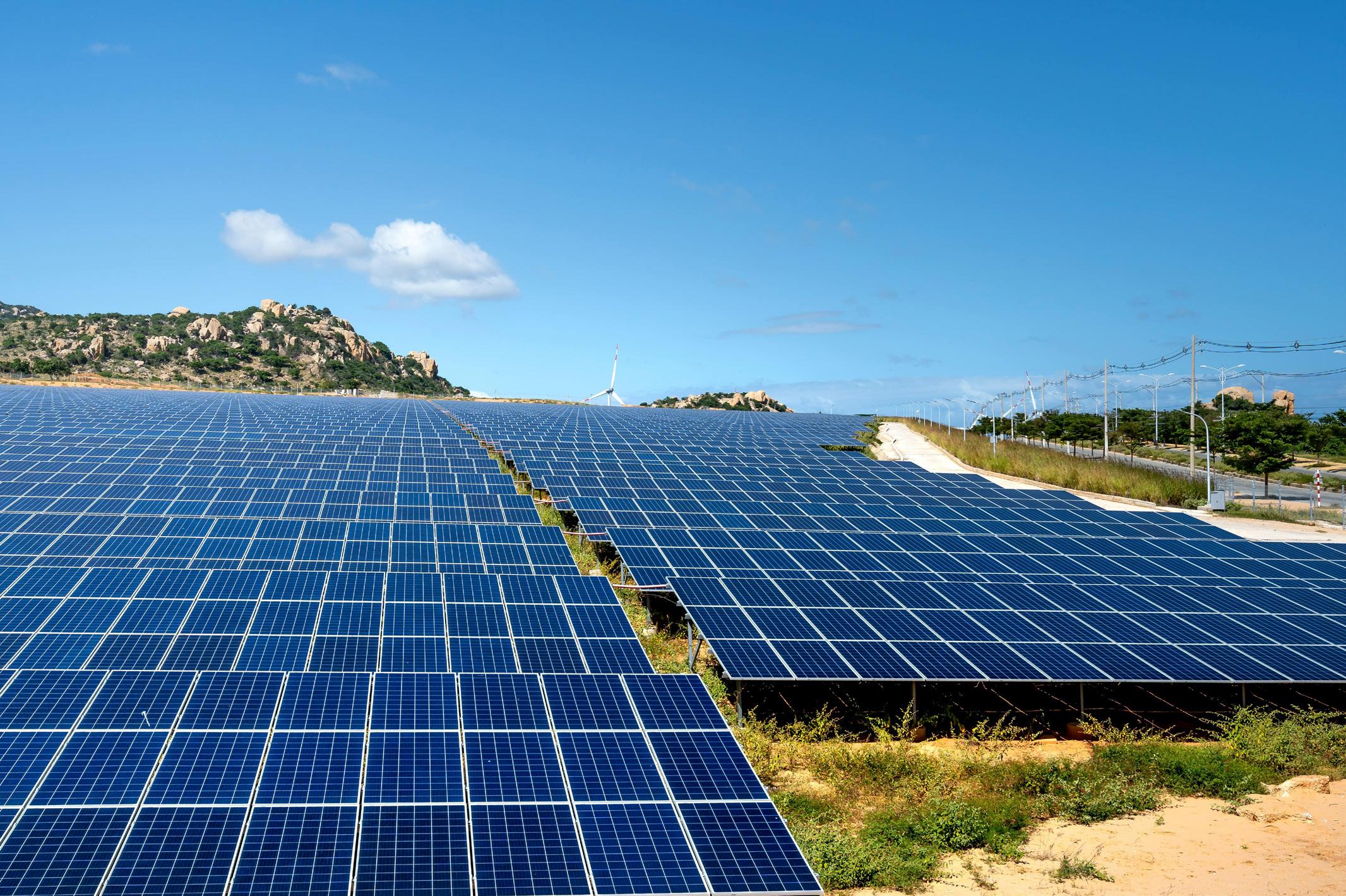
seriously considered in coastal areas and lakes.
JLL’s Rix thinks solar is the only viable renewable energy in the state now as “wind does not blow strong enough or long enough to make it viable.” But for renewables to be truly used in a facility, the building must be directly connected to the grid where the renewables are being injected into, he adds.
“Furthermore, a large Battery Energy Storage System (BESS) would need to be built to store this energy. The BESS needs to be able to support 100 percent of the load for an extended period - or as a bridge before either utility power or back up power generation is used,” he said.
“This intermittency means that BESS may only be suitable for noncritical loads such as lighting. Also, land and capital constraints mean the operator may have to resort to buying electricity through the CRESS system.” Corporate Renewable Energy Supply Scheme (CRESS) is
an open-grid, market-driven program allowing companies to directly procure green electricity (primarily solar) from developers.
Johor has the advantage of large land acreage, out of which about 670,862 hectares (as of 2023) are planted with oil palm, Malaysia’s fifth biggest export. Oil palm plantations produce over 16 million tons of biomass annually, which can produce an estimated 3.2 GW of potential energy from biomass and biogas. The policy envisions the establishment of a centralized biomass collection hub, and converting biogas to biomethane for injection into the natural gas grid.
Other potential renewables that Johor can explore include green hydrogen, mini-hydro systems, and solid waste-to-energy facilities. Modernizing the grid is crucial to enable renewables to reach end users. In this regard, the framework proposes
The policy envisions the establishment of a centralized biomass collection hub, and converting biogas to biomethane for injection into the natural gas grid.
privatizing a dedicated renewable energy grid within the SJREC to bypass national grid constraints. To manage the issue of solar intermittency, the policy recommends the deployment of BESS.
Johor’s transition to fully renewables usage is however not a smooth path. Challenges include high upfront costs for energy storage, inconsistent biomass quality, fragmented land ownership complicating LSS acquisitions, and the lack of recycling facilities for end-of-life solar panels.
The policy proposes some solutions
including creating a state land bank of agricultural reserves earmarked for renewable projects; offering tiered tax incentives based on solar irradiance and grid proximity; developing standardized biomass quality protocols, and incentivizing private investment in solar PV recycling infrastructure.
The Singapore connection
The green initiatives above align with Malaysia’s National Energy Transition Roadmap as well as Johor’s Sustainable Development Plan 2030, emphasizing sustainability while
aspiring to economic prosperity. It is also a vital link to Singapore’s longterm energy needs. Singapore has a projected energy demand of 83.5 TWh by 2050 with limited domestic renewable capacity. The nation-state has started importing hydropower from Laos through Malaysia (Johor) and Thailand, marking the first renewable energy import into Singapore.
Thanks to Johor’s strategic proximity to Singapore, and at times acting like the island state’s hinterland, their decades-long symbiotic relationship will further extend into supplying Singapore with solar-generated electricity and
renewable energy certificates (RECs) well into the next few decades. Under the APG’s Southern System, Johor is positioned as a critical node for regional green energy trade through exporting its surplus renewable energy.
The success of Johor’s renewable energy transition depends on coordinated action among government agencies, utilities, private investors, and communities. The potential economic benefits are significant, but they must be balanced with environmental safeguards to ensure long-term energy security.
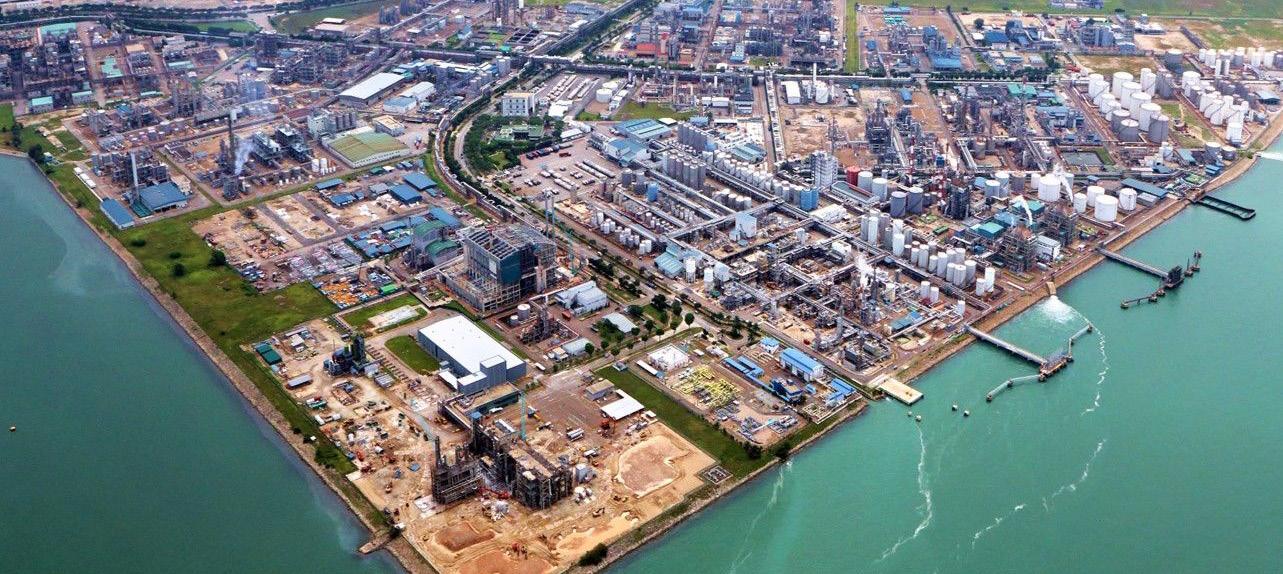
Singapore's plan for a 700MW data center park on Jurong Island is as much about kickstarting a renewables economy as it is about expanding capacity.
By Paul Mah
Jurong Island is one of the world's largest energy and chemicals hubs, housing over 100 companies with investments of more than S$50 billion. It is also the site of a massive land reclamation project, completed in 2009, that merged seven smaller southern islands into one.
Now, Jurong Island is set for another transformation. A multi-agency plan for a data center park of up to 700MW on the island was unveiled late last year, catching the attention of data center operators across the region. Why is this happening, and what is it about data centers that makes them perfectly suited for Jurong Island?
Renewables hub
To understand why Singapore is building data centers on Jurong Island, we must first start with its attempt to meet its climate commitments. Singapore takes these seriously, and has a plan to reduce its emissions to 60 MtCO₂e, or megatonnes of carbon dioxide equivalent, and to achieve netzero by 2050.
For a tiny, densely-populated island state, this is a herculean task. After all, even the ongoing initiative to pack much of its surface with solar panels, including reservoirs and the top of high-rise apartments, would yield less than 7% of its total energy requirements by 2030 by even the most optimistic estimate.
The only rational approach would be to import renewables. And while
The only rational approach would be to import renewables. And while doing that, why not transform Jurong Island into a renewables hub?
doing that, why not transform Jurong Island into a renewables hub? It is not as far-fetched as it might sound. After all, Jurong Island is an undisputed oil hub, complete with massive refining, storage, and trading operations, despite Singapore having no indigenous oil reserves.
But oil has the advantage of established global supply chains built over decades. Renewables such as hydrogen do not, and face a supply and
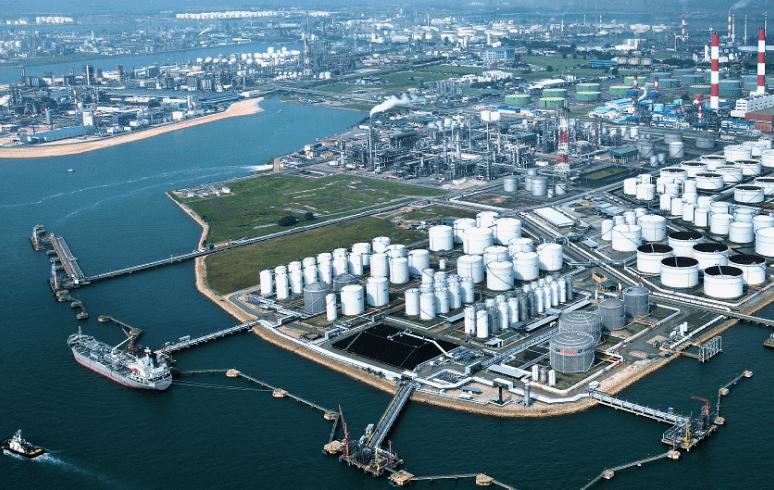
demand conundrum. Producers won't build the needed plants if there's no demand. Consumers can't move ahead if there's no supply. Shippers can't get the financing they need to build a new generation of specialized shipping vessels to transport low-carbon fuel without proven demand. It is precisely to address this gap that Singapore is building new hydrogen-ready power plants. There will be at least nine by 2030, and they are all located on Jurong Island.
While decarbonizing the power sector is essential to achieving these targets, data centers can play an important role in Singapore's energy transition journey, too. As a top data center hub, the aim is to leverage this demand to accelerate the process, by using data centers as a catalyst in two distinct areas: pioneering nascent low-carbon technologies, and importing low-carbon electricity in the form of carriers such as hydrogen and ammonia.
This is why the second Data Centre Call for Application (DC-CFA2), which has emerged as the main route to building new data centers in Singapore, was crafted the way it was. It stipulates a requirement for low-carbon fuel sources for at least 50% of energy needs. This is an incredibly high standard, and has no precedent as a national policy anywhere else without an abundance of renewables.
This is an incredibly high standard, and has no precedent as a national policy anywhere else without an abundance of renewables.
To help data center operators meet this bar, the DC-CFA2 has defined eligible green energy pathways for access to the "at least" 200MW of new data center capacity. These include biomethane, low-carbon ammonia, lowcarbon hydrogen, fuel cells with carbon capture, and photovoltaics in the form of vertical building-integrated or building-applied varieties. The Jurong Island data center park, with its planned capacity of up to 700MW, is expected
to be a key site for this new wave of capacity.
But the case for Jurong Island isn't just about renewables. The island was built with an integrated ecosystem and infrastructure in mind. Shared services and utilities, delivered by utility providers on Jurong Island, reduce capital outlay, lower operating costs, and allow companies to begin operations quickly.
Though data centers don't need a lot of the shared infrastructure created for the petroleum industry, some existing services make sense, such as demineralized water, water for firefighting, and seawater cooling circuits, along with wastewater treatment facilities. Others could be explored, including district cooling, pooled diesel fuel storage, and off-site Battery Energy Storage Systems (BESS). The idea is to leverage economies of scale for cost savings, or to tap into capabilities that would otherwise not be practical, such as off-site BESS.
Still, there is no shying away from the fact that this will increase data center costs at a location that is already one of the priciest in the world. Is the data center sector paying an unfair price? Perhaps. But the payoff isn't just greener data centers. Cracking the puzzle of importing renewable energy at scale and at competitive prices will open the floodgates to renewables. If Singapore succeeds, it won't just have redefined sustainable data centers. It will have removed the single biggest constraint to building them.

Batam is emerging as Southeast Asia’s next major subsea cable hub.
By Jan Yong
Subsea cables are undergoing a major transition globally. Gone are the days when only telecom operators built them and no one outside of the industry paid much attention.
New investors, new routes
Two shifts changed all that: the exponential growth of data centers worldwide, giving rise to a new class of subsea investors in the form of data center operators, and the alarming rise of cable sabotage in the Baltic Sea since 2022.
The new class of subsea investors are redefining the routes and technology – for example, Google
is investing in non-commercially viable routes that traditional telecom operators would never go such as the Australia–South Africa corridors. Meanwhile, Meta’s proposed “Waterworth” envisions cables spanning several continents. This means new hubs will be developed along the new routes.
The importance of subsea cables cannot be overstated. They go hand in hand with data centers and telecommunications infrastructure. They are the foundational connectivity underpinning cloud services, financial platforms, and AI infrastructure.
Subsea infrastructure has now become both a critical and strategic asset, sought after by tech giants which are incorporating it into their increasingly vertically integrated supply chain structure. And this is only the beginning, an industry veteran observed.
In Southeast Asia, Singapore stands
They are the foundational connectivity underpinning cloud services, financial platforms, and AI infrastructure.
out as the most connected nation with 44 landing points including 12 in the pipeline. But as the island nation runs out of suitable sites for landing points, the attention has spilled over to its neighbors, namely Johor and Batam island as alternative locations.
While Johor hosts the bulk of data centers, Batam island, located 20 kilometers south of Singapore and 25 km from Johor, is emerging as a feasible alternative for cable landings. Batam, almost the same size as Singapore, has gradually overtaken Malaysia in terms of landing stations per square kilometer. There are 20 landing stations (including five in the pipeline) on the tiny island compared to 25 (plus seven under construction)
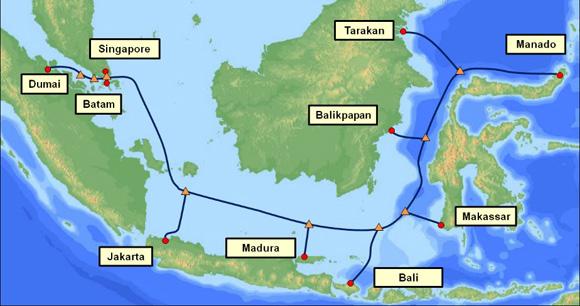
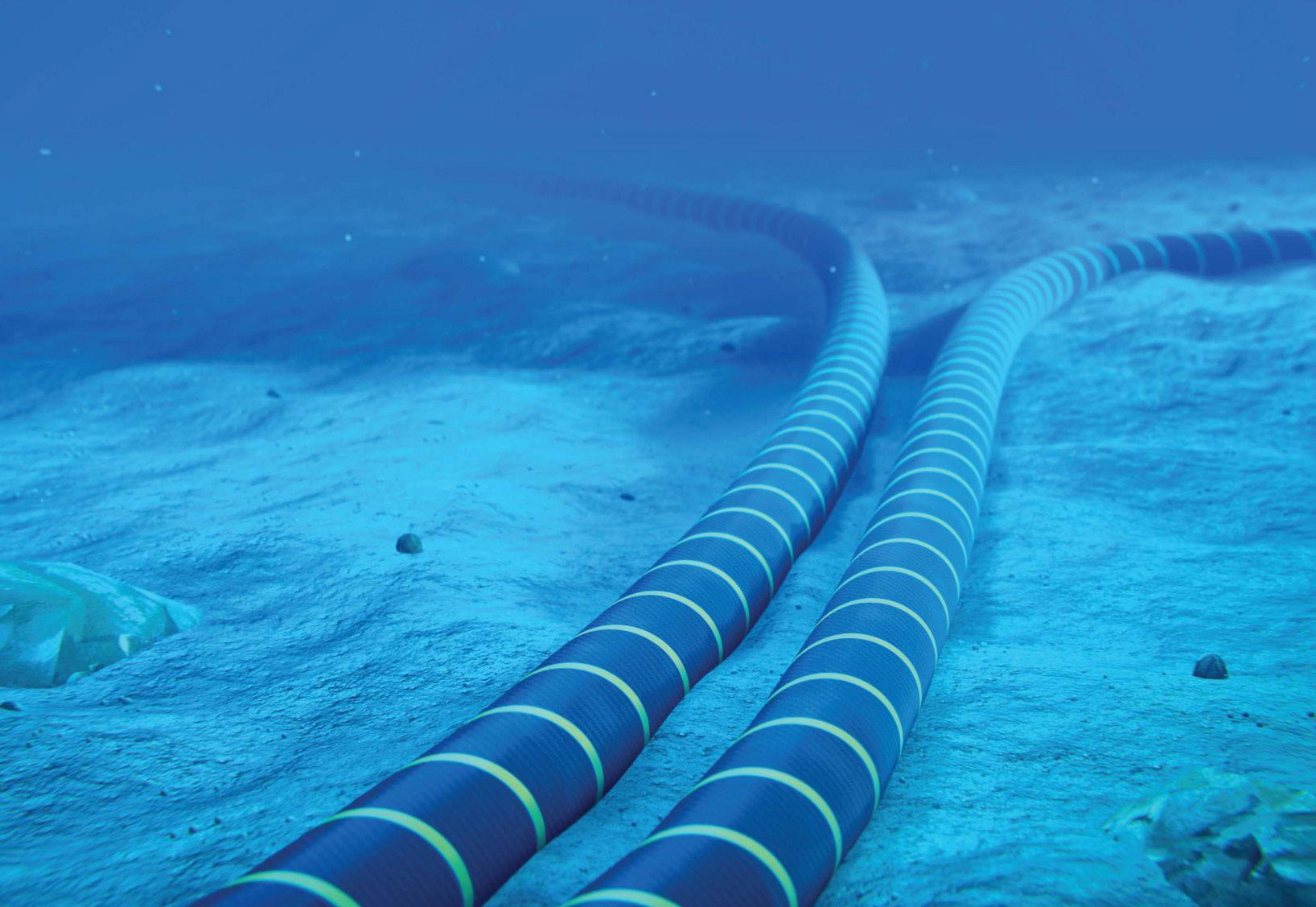
for the entire Peninsular Malaysia. That speaks a lot about Batam’s comparative advantages.
As the largest city in the Riau Islands Province in Indonesia, Batam is a free trade zone, and is Indonesia’s equivalent to China’s Special Economic Zones (SEZs) – a test hub for the country’s planners for new economic policies. Spread across 715 km² is an industrial hub comprising electronics factories, oil service sector, ship repair industry and Nongsa Digital Park which houses most of the island’s data centers.
Batam’s biggest advantage is its strategic location right next to Singapore, currently the largest data center hub in Southeast Asia. Abundant coastal land and lower power costs converge to create ideal conditions for cable landing stations. The Indonesian island already has several active cable landing points facilitating direct international connectivity. Nongsa in particular is connected to more than a dozen international subsea fiber-optic cable segments that land about 5 km away with direct links to other parts of Indonesia, Singapore, and the US West Coast. “The very close proximity of Nongsa to Singapore allows for planned new additional submarine fiber optic capability to reach directly Nongsa with repeaterless cables that drastically reduce latency, making the data center infrastructure in Nongsa “as if” it was in Singapore,” an industry expert reveals.
“Compared to Batam, Johor
currently does not have any direct international connectivity as everything backhauls into Singapore first,” says James Rix, Head of Data Centres PDS Southeast Asia & Korea at JLL. “This can result in bandwidth issues,” he adds.
“As the number of data centers grows, this will only drive more submarine cables and landing stations. Connectivity will be enhanced and latency will reduce. Also, the restriction on bandwidth will dissipate,” Rix reckons.
Adding to Batam’s appeal is its ‘safe
Batam’s biggest advantage is its strategic location right next to Singapore, currently the largest data center hub in Southeast Asia.
harbor’ status due to its low disaster risk profile. It is seismically stable unlike some of Indonesia’s bigger islands like Java and Sumatra. Investors also have the benefit of tax incentives in addition to a welcoming environment for them.
The island of over one million people can expect more subsea cable landings as demand for cable systems rises alongside the growth of data centers worldwide. The global subsea systems market is projected to grow by about US$4 billion over the next four years, driven by a surge in cloud adoption, hyperscale data center expansion, and the growing bandwidth appetite of AI workloads.
With Johor set to become the biggest data center hub in Southeast Asia by 2030, more undersea cables are expected to land in the SIJORI Growth Triangle (Singapore-Johor-Riau) of which Batam is a key player. With ready infrastructure and a growing concentration of cable landing stations, Batam is well positioned to capture that demand.
19,000

Get ready for SIJORI Week, w.media’s premier weeklong curated experience encompassing industry networking sessions, conventions, panel discussions, round-table discussions, and loads of fun activities.
By Conor McNevin
From June 21–27, 2026, you can join over 3,000 digital infrastructure leaders from more than 10 APAC countries including the digital infrastructure community across Singapore, Johor, and the Riau Islands (SI-JO-RI), and discuss the future of Asia’s digital infrastructure. Built for leaders in cloud, data centers, and connectivity, the week blends high-level strategy, cross-border engagement, and curated networking experiences. But, w.media understands that not all bonds are built inside convention centers, many friendships are built on the golf course!
Therefore, SIJORI Week tees off on June 21 with an exclusive Golf
Networking Session at Padang Golf Sukajadi in Batam. This invitation-only event convenes senior executives from across the cloud and data center ecosystem for meaningful conversations in a relaxed setting. Following last year’s strong turnout at the same venue, this year’s edition is set to raise the bar even higher.
James Loggie, Business Analyst, w.media, who is overseeing preparations for this year’s Golf Networking and oversaw preparations in 2025 said, “SIJORI’s Golf Tournament marks the start of SIJORI Week, bringing together over 100 golf players, more than 50 company representatives, and 27 sponsors and partners for an outstanding day in Batam, this is the biggest data center golf outing in the region. From the first tee-off to the final
From June 21–27, 2026, you can join over 3,000 digital infrastructure leaders from more than 10 APAC countries including the digital infrastructure community across Singapore, Johor, and the Riau Islands (SI-JO-RI), and discuss the future of Asia’s digital infrastructure.
putt, there is nothing but good vibes and a great start for the week ahead.” Throughout the week, SIJORI Week will host a series of conferences,
executive forums, and curated meetings across Singapore, Malaysia, and Indonesia. The agenda will focus on hyperscale growth, cross-border interconnection, digital infrastructure investment, and the region’s evolving connectivity landscape. Attendees gain direct access to decision-makers, operators, investors, and technology partners shaping Southeast Asia’s next wave of expansion.
The week concludes on June 27 with the world’s most popular sport in a high-energy soccer tournament at The Cage Dempsey in Singapore. Mixed teams representing cloud providers, data center operators, telecom companies, and technology firms will compete in a format designed to foster both friendly rivalry and industry collaboration. It’s a dynamic close to a week defined by partnership and progress.
James Loggie reminisces, “w.media’s football tournament in 2025 was absolutely terrific, with over 130 people coming down for a lovely game of football. It was nothing short of a great time with 11 teams competing for bragging rights. In last year’s game we saw Airtrunk secure first place followed by Digital Realty and STT. I can only imagine how much bigger 2026’s

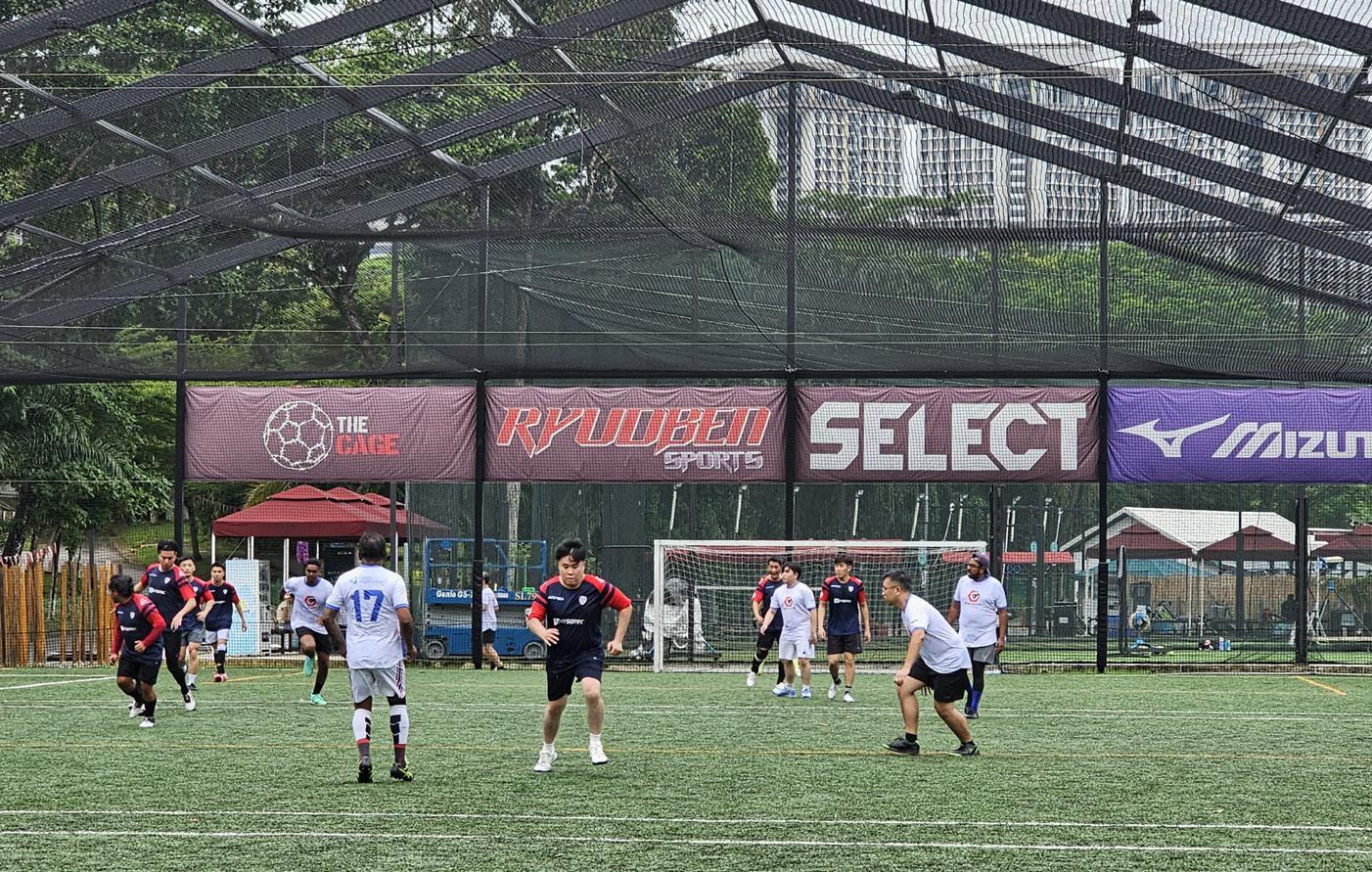
tournament will be.”
SIJORI Week also spotlights purpose-driven impact. Engineering Good Ltd, a Singapore-registered charity, will be featured during the program. The organization mobilizes volunteers with engineering and technical expertise to deliver practical technology solutions that support underserved communities reinforcing the industry’s broader commitment to
SIJORI Week is more than a conference series.
social responsibility.
SIJORI Week is more than a conference series. It is where Southeast Asia’s digital infrastructure leaders connect, collaborate, and build the future of the digital economy.
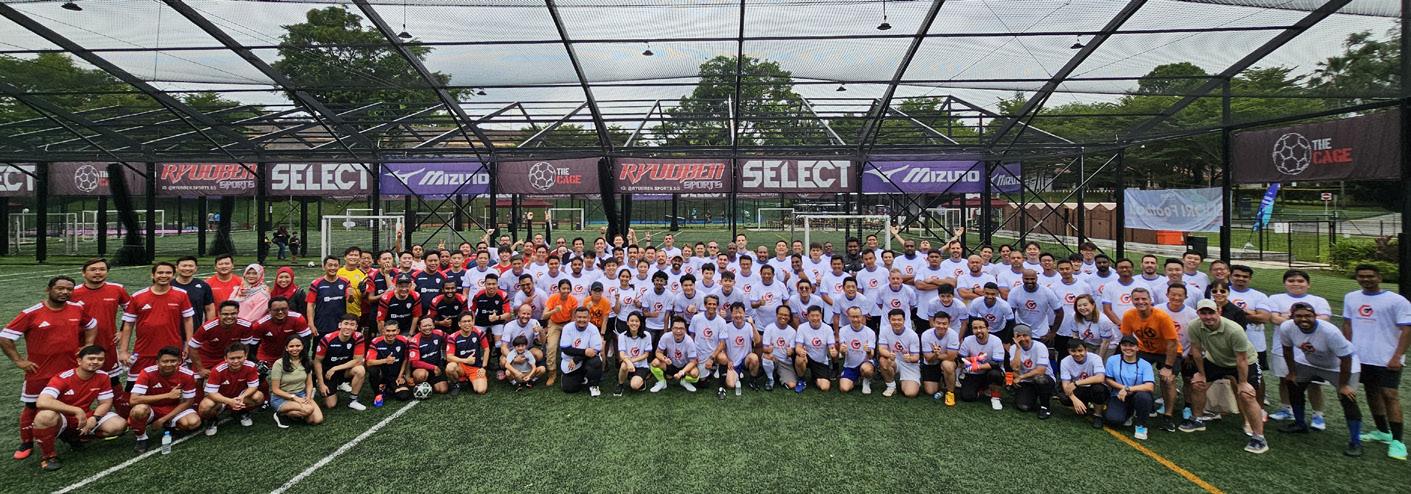



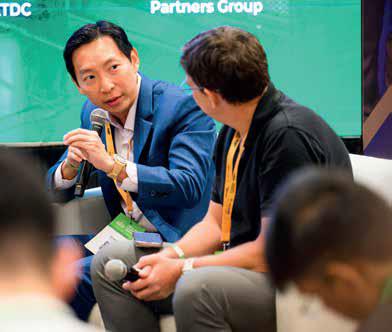

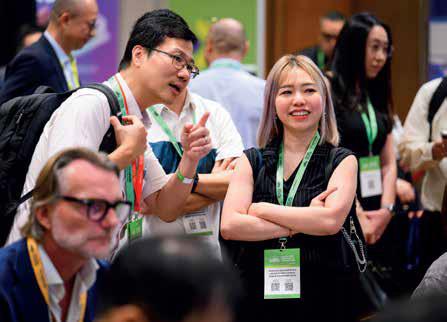

Global Switch data centres provide high-density-ready space, located in prime connectivity hubs across Europe and Asia-Pacific.


India’s roadmap to become one of the world’s top three quantum computing powers by 2035 is a representation of Asia’s ambition in the global quantum race.

By Alexandra Beckstein, CEO and Founder, QAI Ventures
The region is focusing infrastructure investments on QuantumAI, where the integration of related hardware and intelligent systems will become a matter of national and economic security. This commitment could shift Asia from being a contender in the next era of computing.
This ambition is backed by the National Quantum Mission (NQM), and Semicon India Programme, which aims to position India alongside the US, China, and Europe in pursuit of technological supremacy and economic advantage. Its immediate objective is to incubate at least 10 quantum startups, each generating over US$100 million in revenue. The ultimate national goal however, is to capture over 50% of the international quantum software and services sector.

Shifting from lab to market-ready operations
India’s shift from academic curiosity to industrial application is already a live operation. As of 2026, the National Quantum Mission has activated four Thematic Hubs (T-Hubs) as independent Section-8 companies, coordinating 152 researchers across 43 institutions. These hubs, such as the Foundation for QC Innovation at IISc Bengaluru, function as the primary engines for incubation and cross-border industry collaboration.
This infrastructure is already yielding domestic milestones. In April 2025, the Bengaluru-based startup QpiAI launched ‘Indus’, India’s first full-stack 25-qubit superconducting quantum processor. This was followed by an $8.4

The ultimate national goal however, is to capture over 50% of the international quantum software and services sector.
million order in early 2026 from the Centre for Development of Advanced Computing (C-DAC) for a 108-qubit system from Rigetti Computing, scheduled for the deployment in late 2026 as part of India’s Hybrid HPCQuantum Mission.
However, these successes also expose a bottleneck. Despite contributing 11% of the top 10% of most-cited research papers globally, India’s path to commercialization is hindered by low venture capital investment and bureaucratic hurdles. This is further complicated by structural fragmentation, which creates regional imbalances and uneven digital maturity, leading to disconnected innovation streams.
The roadmap identifies weaknesses in both the IP pipeline and domestic supply chains - an admission that signals India’s intent to stay front and center. However, if these gaps remain

unbridged, the nation risks devolving into a passive consumer in the very quantum economy it set out to lead.
Ecosystem Building and the QuantumAI Advantage
Commercial viability in the quantum sector is not a byproduct of capital alone; it requires an ecosystembuilder ethos. While government grants provide spark and support, scaling requires venture builders to match academic breakthroughs with marketready businesses. Startups are the primary vehicles for this acceleration, and their agility is indispensable for managing the staggering risks and requirements of deep tech.
Recognising this, India’s NQM has bypassed traditional bureaucracy, implementing exclusive guidelines to onboard eight pioneer ventures as of late 2025. The most imminent economic arbitrage, however, lies in the convergence of Quantum and AI.
India’s established software capabilities position it well for the hybrid era. Long before fault-tolerant hardware arrives, the nation is positioned to lead in QuantumAI applications by merging classical
High-Performance Computing (HPC) with early-stage quantum processors. Partnerships such as the MOU between C-DAC and Rigetti Computing are early indicators of how this hybrid future is being formalized.
This momentum is rippling across the Asia-Pacific. QuantumAI is gaining traction throughout the region, with venture builders
Startups are the primary vehicles for this acceleration, and their agility is indispensable for managing the staggering risks and requirements of deep tech.
increasingly positioning themselves at the intersection of research and commercialization. QAI Ventures, which the author founded and leads, expanded operations to Singapore and Japan in 2025 as part of this trend.
India’s roadmap now is consistent with established regional powerhouses, such as Singapore’s Research, Innovation and Enterprise (RIE) 2030 plan. This is beneficial for the region because Singapore’s focus on bilingual researchers in AI and scientific domains, complements India’s massive talent pool. Together, they create a connected innovation across the region.
Ultimately, achieving “Quantum Atmanirbharta” is a race for digital sovereignty. For India to achieve its goal of becoming a top-three quantum power by 2035, it must prioritize the systematic commercialization of its academic IP.
Missing this opportunity would not only stifle domestic growth but could also amplify vulnerabilities in defense and cybersecurity. Without early industry adoption and a role in global standard-setting, India risks falling behind in the very race it has committed to leading.

With Johor and Greater KL operationally stressed and highly saturated, respectively, the next logical path of least resistance for new investors is Negeri Sembilan, an adjacent state, writes Sr (Dr) Samuel Tan.
By Sr (Dr) Samuel Tan, Founder & CEO, Olive Tree Property Consultants
Negeri Sembilan is rapidly emerging as a “secondary hub” to complement Greater KL (Klang Valley) and Johor in the data center sector. Its main advantage is being a spillover beneficiary of the Klang Valley. As land and power become harder to secure in Cyberjaya and Kuala Lumpur, Negeri Sembilan, a state adjacent to the Klang Valley, offers immediate proximity to these business and industrial hubs at a lower cost.
Klang Valley is highly saturated in terms of land and power grid density. New projects are increasingly forced into fringe areas like Elmina or Bukit Raja, or moving south into Negeri Sembilan.
In Johor, the data center (DC) space is not physically saturated but operationally stressed. In late 2025,
As land and power become harder to secure in Cyberjaya and Kuala Lumpur, Negeri Sembilan, a state adjacent to the Klang Valley, offers immediate proximity to these business and industrial hubs at a lower cost.
Johor began tightening approvals, specifically moving away from Tiers 1 and 2 DCs that consume excessive water without high economic value.
The market is still growing (projected to be 60 per cent of Malaysia’s capacity by 2030), but the easy approvals are over, making Negeri Sembilan the next logical path of least resistance for new investors.
Unlike other states, Negeri Sembilan (aka NS) maintains a healthy reserve margin of about 16.2 per cent (as of 2024). Furthermore, the state is pioneering a self-sufficiency model. For example, Gamuda is building a 65 MLD water treatment plant (WTP) specifically to support data center campuses, with
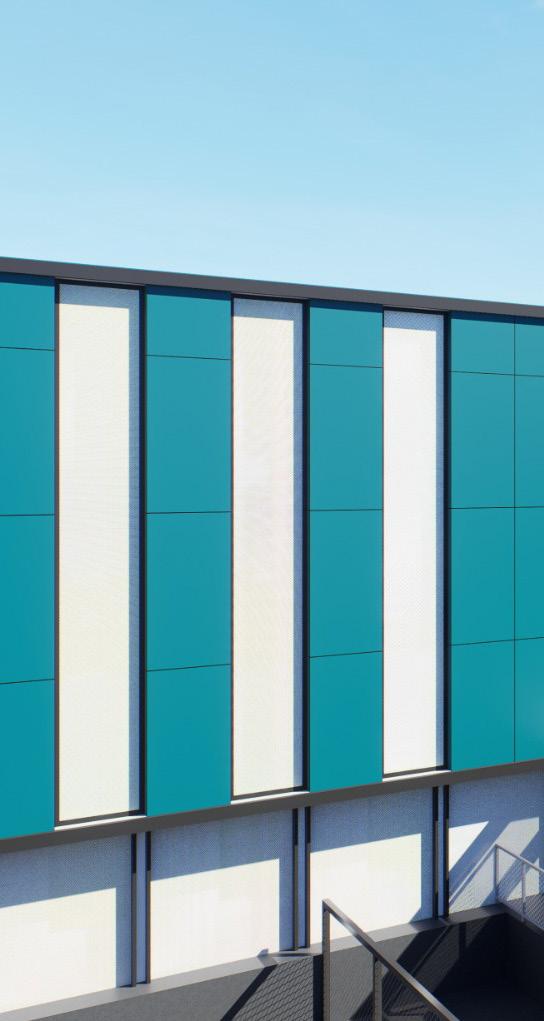
25 per cent of the capacity shared with the local community.
Negeri Sembilan is well-integrated into the national grid. The new wave of data centers (DCs) in the state is focusing on Green DCs that incorporate renewable energy and battery energy storage systems (BESS) to mitigate grid strain.
While Negeri Sembilan is smaller in land area than Johor or Selangor, it possesses large undeveloped brownfield and greenfield sites within the MVV 2.0 region specifically zoned for industrial use, making land acquisition smoother than the fragmented plots often found in Selangor.
Furthermore, the state government is moving towards a controlled growth policy to avoid issues seen in other states. The Chief Minister has stated
that future approvals will be “cautious”, focusing on Tiers 3 and 4 facilities that meet strict Environmental, Social, and Governance (ESG) standards.
The state leverages federal frameworks like Malaysia Digital (MD) status, which offers tax exemptions, but adds local ease-of-doing-business facilities through the Invest Negeri Sembilan agency.
Data center policies now require developers to contribute to state utility infrastructure, for example, building their own WTPs rather than solely relying on existing public resources.
Three primary areas have emerged as data center magnets, largely driven by the Malaysia Vision Valley 2.0 (MVV 2.0) growth corridor. The hotspots
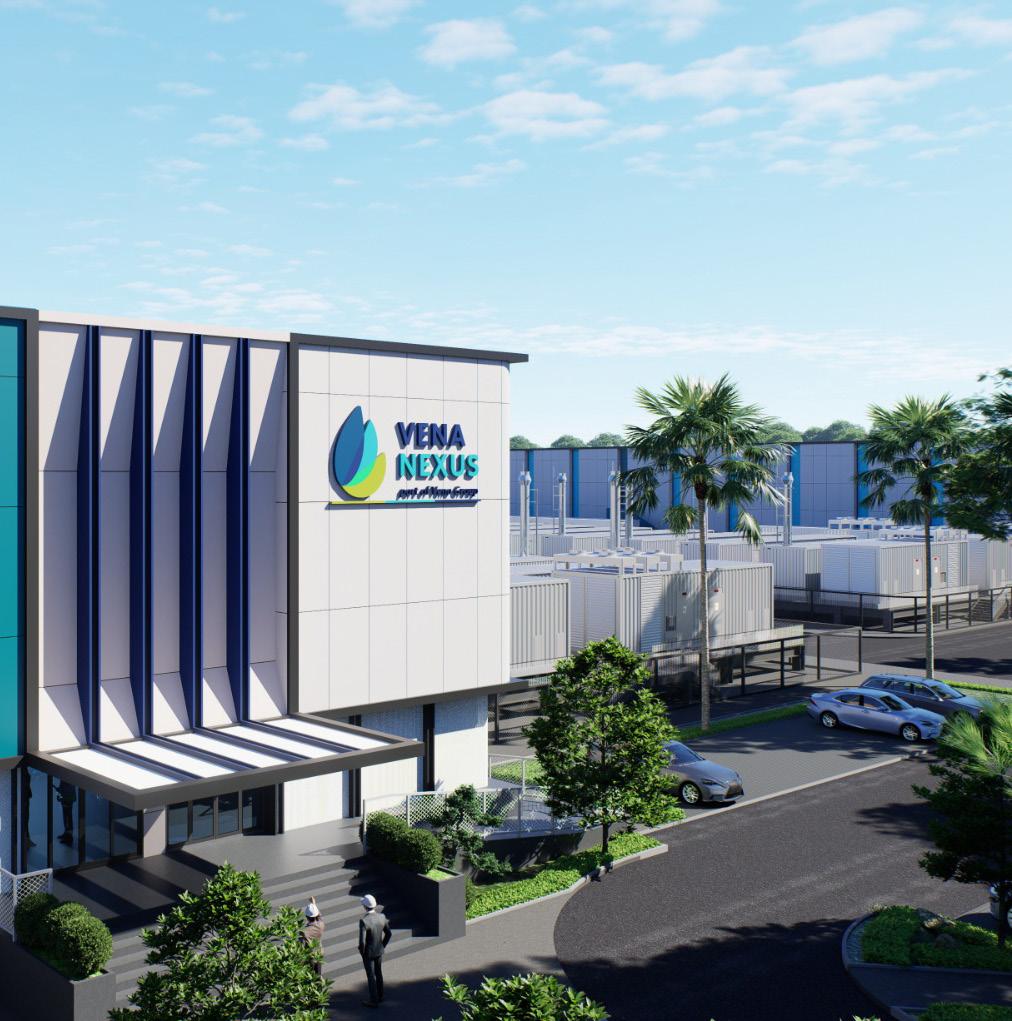
There are many established industrial parks in Sendayan/ Seremban like Sendayan Techvalley, which provides “plug-andplay” infrastructure that appeals to secondary service providers and tech-adjacent industries.
to watch out are Nilai (Enstek/Nilai Impian), Bandar Springhill/Lukut in Port Dickson, and Sendayan/Seremban.
The current frontrunner is Nilai which is located closest to Kuala Lumpur International Airport (KLIA) and the Klang Valley. It is already seeing construction from US-based multinational corporations (MNCs) as well as the massive Nexus Campus in the Negeri Sembilan Semiconductor Valley.
Bandar Springhill/Lukut became a hotspot due to Gamuda’s large-scale land acquisition of 389 acres. Its coastal proximity is strategic for future subsea cable landings or dedicated utility infrastructure.
There are many established industrial parks in Sendayan/Seremban like Sendayan Techvalley, which provides “plug-and-play” infrastructure that appeals to secondary service providers and tech-adjacent industries.
Among the notable DCs in Negeri Sembilan are a green data centre developed by US investors in Nilai, while the Gamuda Data Centre Campus is an AI data centre in Bandar Springhill, Port Dickson. Earthworks and enabling works are underway as of January 2026.
Nexus Yang Green Data Centre is a major 350 MW, AI-ready, and renewable-powered facility in NS’s Semiconductor Valley. It is developed by Vena Nexus from Vena Group. This project is expected to be completed by the first quarter of 2027.
Negeri Sembilan Semiconductor Valley (NSSV) AI Data Centre (Parcel F) is at the planned/predevelopment stage. This project with investment from Australia is expected to kick off in 2026, with the first phase costing RM10 billion.
On May 21, 2026, we are returning to Chennai with the fifth edition of Chennai Cloud and Datacenter Convention (CDC).
By Deborah Grey
Simultaneously, we will also be hosting the second edition of Chennai Interconnect World, a technology conference focused on India’s connectivity ecosystem.
The day-long event will be held at ITC Chola on May 21, and is expected to bring together over 1,500 delegates, including C-level executives, digital infrastructure professionals such as architects, engineers and consultants (AECs), key buyers, decision makers, data center owners and operators, representatives of government agencies, telecom majors, submarine networks and services.
Chennai is India’s second largest data center market, next only to Mumbai. According to Mordor Intelligence, Chennai’s data center
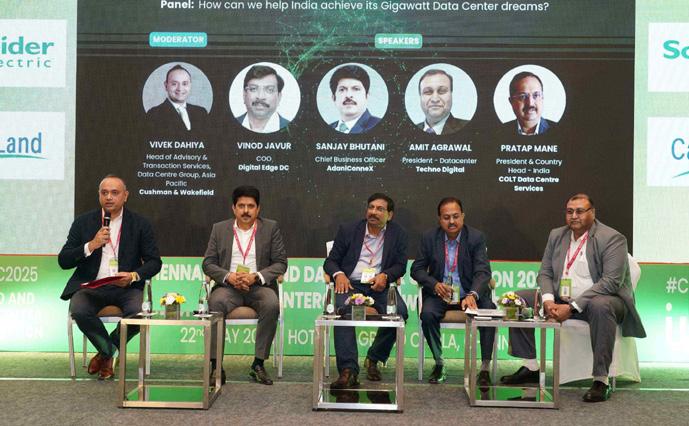
have cable landing stations in Chennai, the SEA-WE-ME-6 cable is expected to land in 2027.
This year, too, w.media will celebrate everything that makes Chennai such a sought after digital infrastructure hub. Expect power-packed panel discussions, where the best and brightest minds in the industry will share their ideas on important subjects such as the impact of emerging technologies like Artificial Intelligence (AI), developing the connectivity ecosystem, new innovations in liquid cooling, the regulatory environment, and strategic investments, among other hot topics.
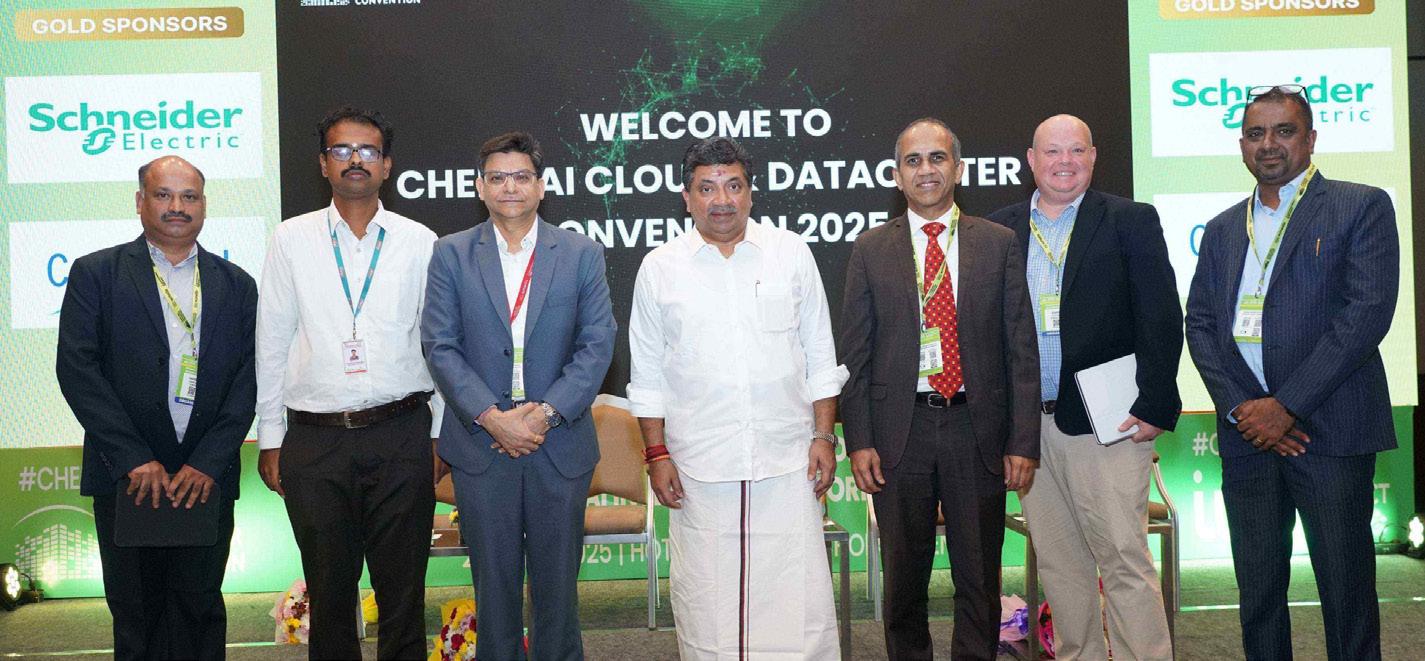
market is expected to grow from 0.55 GW in 2025, to 0.67 GW in 2026. Moreover, it is forecast to reach 2.11 GW by 2032, growing at a Compounded Average Growth Rate (CAGR) of 21.19 percent over 2026-2032.
Today Chennai is home to data centers by AdaniConnex, CapitaLand, Colt DCS, CtrlS Datacenters, Digital Connexion, Equinix, NTT, Nxtra by Airtel, Sify, STT GDC India, and many others such as Yotta have projects in the pipeline. Ambattur and Siruseri have emerged as locations of choice for data centers in Chennai. Billion dollar investments into building data centers and AI infrastructure have been announced by global giants such as Blackstone.
It is also a major hub of subsea cable landing stations. While seven such international subsea cable systems, namely - Bay of Bengal Gateway (BBG), Chennai-Andaman& Nicobar Islands Cable (CANI), i2i cable network, India Asia Xpress (IAX), MIST, SEA-WE-ME-4, and Tata TGN-Tata Indicom - already
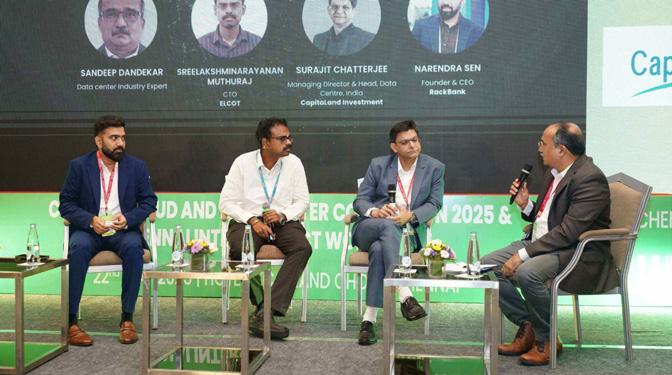
“This is our fifth edition of the Cloud & Datacenter Convention. Also, given the success of Interconnect World last year, we are bringing it back as well for a second edition,” says Naveen Lawrence, Managing Director – South Asia & Middle East, W.Media. “But that’s not all. We will also host CenterStage, our special breakout session in the Expo area, where industry leaders will brainstorm about out-of-the-box solutions in a more informal and intimate chat among peers.”
The Convention will also include a modest technology expo that will showcase the latest innovations and futuristic technologies and advancements in the cloud and data center industry.
This year, w.media is bringing you some new and exciting industry summits focused on key developments in the digital infrastructure ecosystem.
By Deborah Grey
After the huge success of Cloud & Datacenter Conventions (CDC) and Interconnect World across APAC and MENA, we are thrilled to bring you not one, but two brand new perspectives - High Performance Computing Summit and Data Center Investment Summit.
Our first first HPC Summit will have a Southeast Asia focus, and will be held in Singapore on June 24, this year, as part of the wider SIJORI Week. The HPC Summit Southeast Asia 2026 is the definitive convergence point for the pioneers of high-density computing. We bridge the gap between cuttingedge AI workloads and the massive data center infrastructure required to power them.
At the HPC Summit Southeast Asia,
delegates including HPC integrators, network providers and industry leaders from the GPU & Silicon sector from 15 countries will engage in 25 sessions dedicated to the AI-Infrastructure Intersection, and dive deep into the GPU-powered ecosystems, liquidcooling revolutions, and lightning-fast interconnects that are setting the new standard for the industry.
James Loggie, Business Analyst, w.media, who is overseeing preparations explains, “The rise of AI is pushing the limits of power, cooling, and compute density in ways the industry has never experienced before. Traditional data centre models were not designed for the scale of GPUdriven workloads we are seeing today. This summit was created to bring the industry together to share knowledge, exchange ideas and collaborate on solutions.”
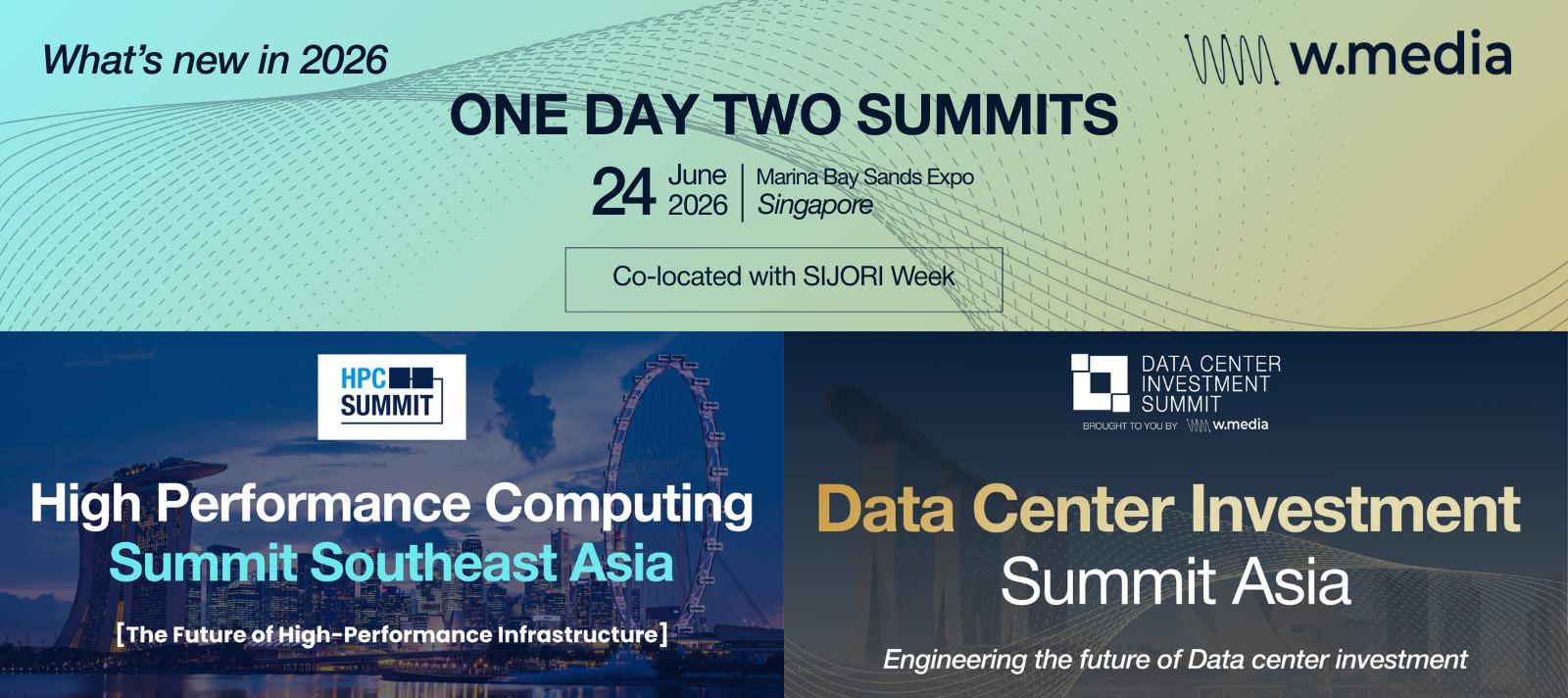
We bridge the gap between cutting-edge AI workloads and the massive data center infrastructure required to power them.
Colocated with HPC Summit Southeast Asia, the inaugural Data Center Investment Summit has been envisioned as a premier gathering for investors, operators, and policymakers navigating the fastest-growing asset class in global infrastructure. The Data Center Investment Summit Asia will expand the conversation beyond hardware and architecture to the financial frameworks shaping the future of digital infrastructure. Together, they bring capital providers, policymakers, operators and chip manufacturers into one forum to examine how the region is mobilizing investment for AI-ready and energyresilient infrastructure.The first data center investment focused summit in Asia will take place in Singapore during the SIJORI week.
“Data centers are becoming a strategic asset class for investors due to surging demand from AI, cloud computing, and digital infrastructure needs. In addition, data centers have emerged as a top commercial real estate asset class, with REITs like Digital Realty and private equity pouring billions into them for long-term revenue,” says Neli Dicheva, Head of Production and Research. “So data centers are evolving from niche to core real estate investments, offering long-term leases, diversification, and resilience amid market volatility. The demand for data centers tied to AI and cloud is driven by big and power-hungry compute growth, which is only going to grow.
The inaugural edition of the summit will address the financial frameworks shaping the future and next stage of build behind AI and next-gen infrastructure.”
Join us on 24 June - one day, two summits, different parts of the data center ecosystem brought together.
Book your tickets at: w.media/dcis and w.media/hpc
The industry spent billions on liquid cooling infrastructure. Frore Systems thinks it's been ignoring the part that matters most.
By Paul Mah
The data center industry has poured enormous energy into the shift from air to liquid cooling: CDUs, piping, facility plumbing are all now familiar sights. But the cold plate itself, the component that actually touches the chip, is still largely made the way it has been for years. Same copper, same long straight channels, and the same brute-force approach.
So people took note when Frore Systems showed off a different solution at the OCP Global Summit last October. “Everyone's talking theory,” said Sue Ryan, VP of Marketing at Frore Systems. “[At OCP] People were amazed we actually had them working.” What’s more, the units were hitting their claimed performance numbers on thermal test vehicles mapped to real chip heat profiles.
The problem with liquid cooling
According to Ryan, traditional cold plates are manufactured using skiving: cutting and bending metal to create long, straight fins and channels. The process dictates the design. Because skiving can only produce long channels, the fluid has to travel the full length of the plate before it exits. And that's where the physics works against you. Ryan says: “The longer a channel is, the more the heat removal capability of the fluid goes down, because the liquid starts to heat up, and the difference is smaller, therefore it can't
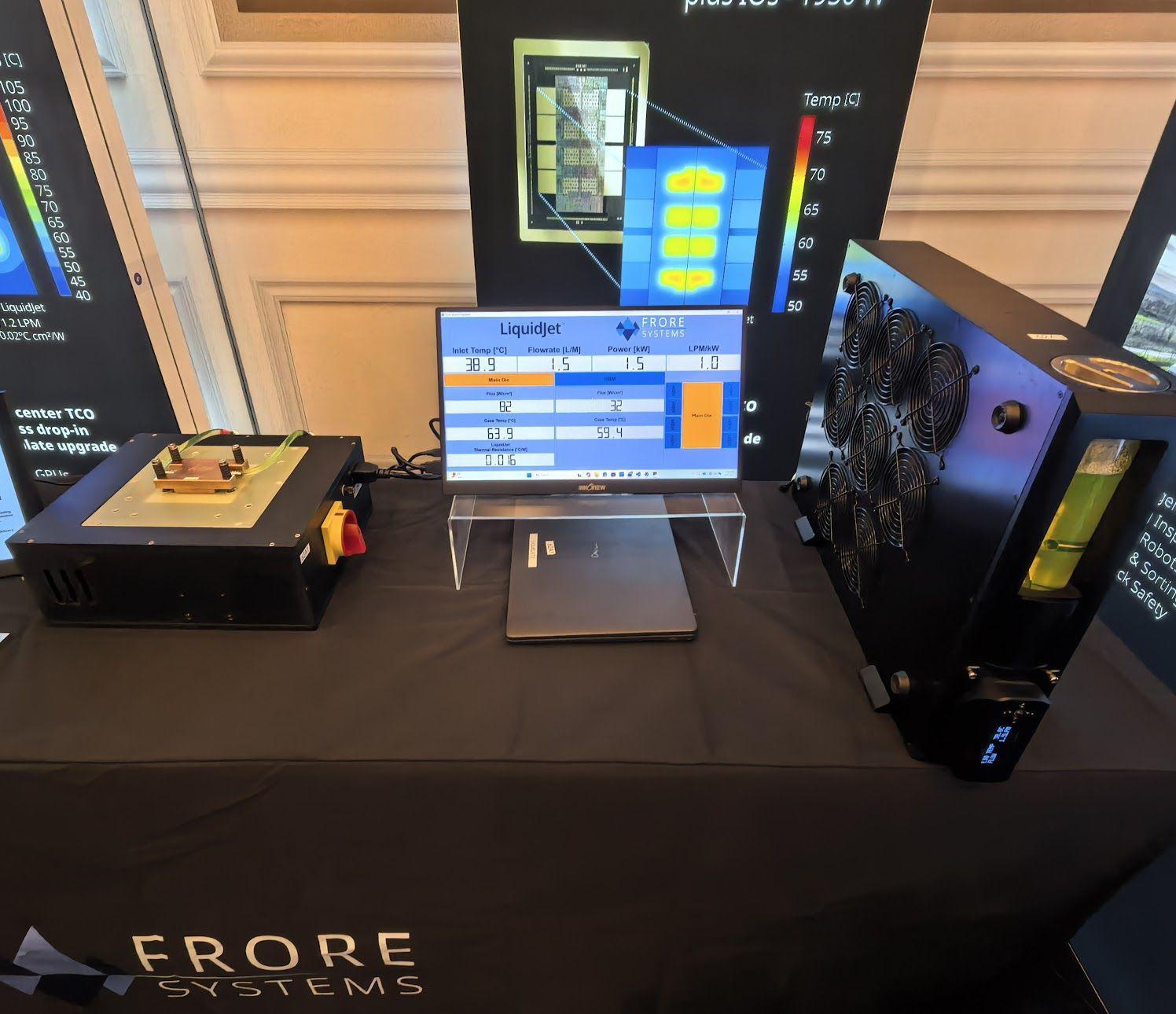
Fresh coolant enters on one side, heats up as it runs across the surface, and exits on the other.
absorb as much.”
The result is what's effectively a 2D cooling approach. Fresh coolant enters on one side, heats up as it runs across the surface, and exits on the other. There's no way to direct cooling to specific hot spots. Fluid is uniformly pushed across the whole plate, regardless of where the chip actually needs the most cooling.
That mattered less when chips ran cooler. Next-generation GPUs
concentrate enormous heat in small, specific areas, and a long uniform channel simply can't respond to that. Frore argues that the cold plate needs to work in three dimensions, going down to target heat at its source rather than across. “We can go down and pinpoint exact spots of heat,” Ryan said. “We can take out 75% more with this because we can target it specifically, rather than this kind of brute force across long channels.”
Going down, not across
Frore's answer is the Liquid Jet, a cold plate built using semiconductor manufacturing techniques rather than traditional metalworking. That's an unusual pedigree for a cold plate,
but Frore already had the fabrication infrastructure from its earlier product lines. Ryan says that meant the company could move fast: “We were able to bring this to market so fast, because we've done all the learning. We have the fab, we have all the tooling.”
Instead of long channels, the Liquid Jet uses what Ryan describes as a “cellular approach”, microstructures that push coolant down into the plate rather than across it. Each cold plate is customised to the specific chip's heat map, with cooling staged in a deliberate sequence. Ryan explains that coolant is routed to the hottest area of the chip first, then moves through progressively cooler zones in sequence. “So we can not only specifically target heat areas, we can also precisely control the flow.”
The claimed numbers are striking: significantly more heat removal on Blackwell Ultra compared to conventional cold plates, 50% lighter by using copper with aluminium, and a drop-in replacement for existing single-phase loops. Those figures are based on Frore's own testing as far as I'm aware, but the live demos at OCP and CES 2026 earlier this year suggest this isn't just paper performance.
Liquid Jet launched at the OCP Global Summit in October 2025. But Ryan argues adoption will be fast. The value proposition is harder to ignore when it's a direct drop-in swap with a 75% performance gain. “The adoption for this has been much, much faster because, number one, there's a huge value prop,” she said. “It's a direct dropin.” In comparison, Ryan notes that uptake has been slower with Frore's consumer products. “[OEMs] move slower. They're more protective of their brand.”
There are open questions. The current product is single-phase only, and while Ryan says two-phase capability is coming, noting that the physics support it, it's not there yet: “We have a very robust roadmap.” She describes manufacturing cost as “a very comparable cost” at volume, and is more bullish on the competitive moat: “We can manufacture it fairly easily because of the development we've done, but somebody coming in
Those figures are based on Frore's own testing as far as I'm aware, but the live demos at OCP and CES 2026 earlier this year suggest this isn't just paper performance.
starting fresh, harder.”
Whether Frore can deliver on these
claims at scale remains to be seen. Two-phase is still on the roadmap rather than on the shelf. But investors appear convinced: earlier in March, Frore closed a US$143 million Series D that values the company at US$1.64 billion. It also announced a new integrated cooling system designed for next-generation half-U compute trays. If the performance numbers hold up in production, the cold plate, long the least interesting part of the liquid cooling stack, might turn out to be the component that mattered most.

Is Your Business Ready to Take the Spotlight? Get in touch with us today at media@w.media
Scan to watch our exclusive interviews with Industry leaders.
With a readership of top decision-makers across APAC, we’ll ensure your message reaches the right audience. Our Offerings Include:
• Magazine – Onlin ne
• Interviews - In person & Virtual
• Editorial content
• Newsletter Features
• Digital Ad Campaigns
• Annual APAC Cloud and Datacenter Awards Our Community at a Glance:
• 80,000+ Subscribers across APAC
• 100,000+ Monthly Website Visits
• 47,000+ Social Media Followers
• 16,000+ Industry Decision-Makers Engaged


As we wrap up another successful Awards season, it’s time to gear up for an even stronger edition in 2026
1.
After two memorable ceremonies in Singapore, the Awards will now travel to Bangkok, Thailand - a booming hub for digital stage for our annual celebration.
This year ’s Gala Ceremony will also take place earlier than usual, on 27 November 2026, giving the accolades out just in time for end-of-year celebrations.
2 .
Get ready to nominate the outstanding achievements pushing boundaries across Asia and prepare for your nomination in June:
• Your projects and initiatives must take place from 1st June 2025 – 31st May 2026
• Detailed categories and requirements will be unveiled in due course
• Entry remains free, and organizations are welcome to submit multiple nominations
3.
Sponsorship Oppor tunities: Early
Interest Now Open
As the industry is set for an even bigger boom in 2026, landmark projects and new innovations will certainly reshape the regional landscape.
By joining early as a sponsor, your brand will be in the spotlight from the start of the nomination phase all the way through the Gala Dinner.
Any further inquiries, please contact awards@w.media REACH OUT TO US NOW TO GET A HEADSTART !
By Conor McNevin
The data center industry has a cooling problem. Compute density, driven largely by AI and accelerator-based workloads, has outgrown traditional thermal management. Operators are now redesigning cooling architectures and reconsidering the balance between energy use, water consumption, capital expenditure, and operational complexity.
This has resulted in the sector moving away from monolithic air-cooling towards more complex thermal architectures that include liquid cooling and more water-efficient infrastructure. Hyperscalers are also adopting divergent cooling strategies based on specific constraints such as AI workload density, regional resource availability, and the feasibility
of retrofitting existing facilities. This has led to several distinct cooling philosophies among the largest operators.
These tradeoffs are no longer isolated engineering choices. They are expressions of long-term business strategies. The industry continues to balance water and energy efficiency as cooling architectures continue to evolve. Capital expenditure must be weighed against future density readiness, because facilities built only for today’s workloads risk premature obsolescence given the rapid pace of workload consolidation and AI deployments.
Greater system sophistication can unlock performance and sustainability gains, but excessive architectural complexity often undermines operational reliability. Operators are therefore shifting towards new designs that favor predictable
behavior, simplified maintenance, and automated fault management.
The broader trajectory of the sector reflects a convergence of environmental responsibility and commercial urgency. Organizations such as the Green Grid have emphasized that efficiency must extend beyond PUE to encompass lifecycle sustainability. At the same time, market pressure demands faster deployment cycles, forcing planners to reconcile long-term ecological goals with the need to bring capacity online quickly.
The winning data center model will not eliminate these tradeoffs but will optimize across them. The future belongs to designs that treat efficiency, resilience, scalability, and sustainability as coupled variables rather than competing priorities.