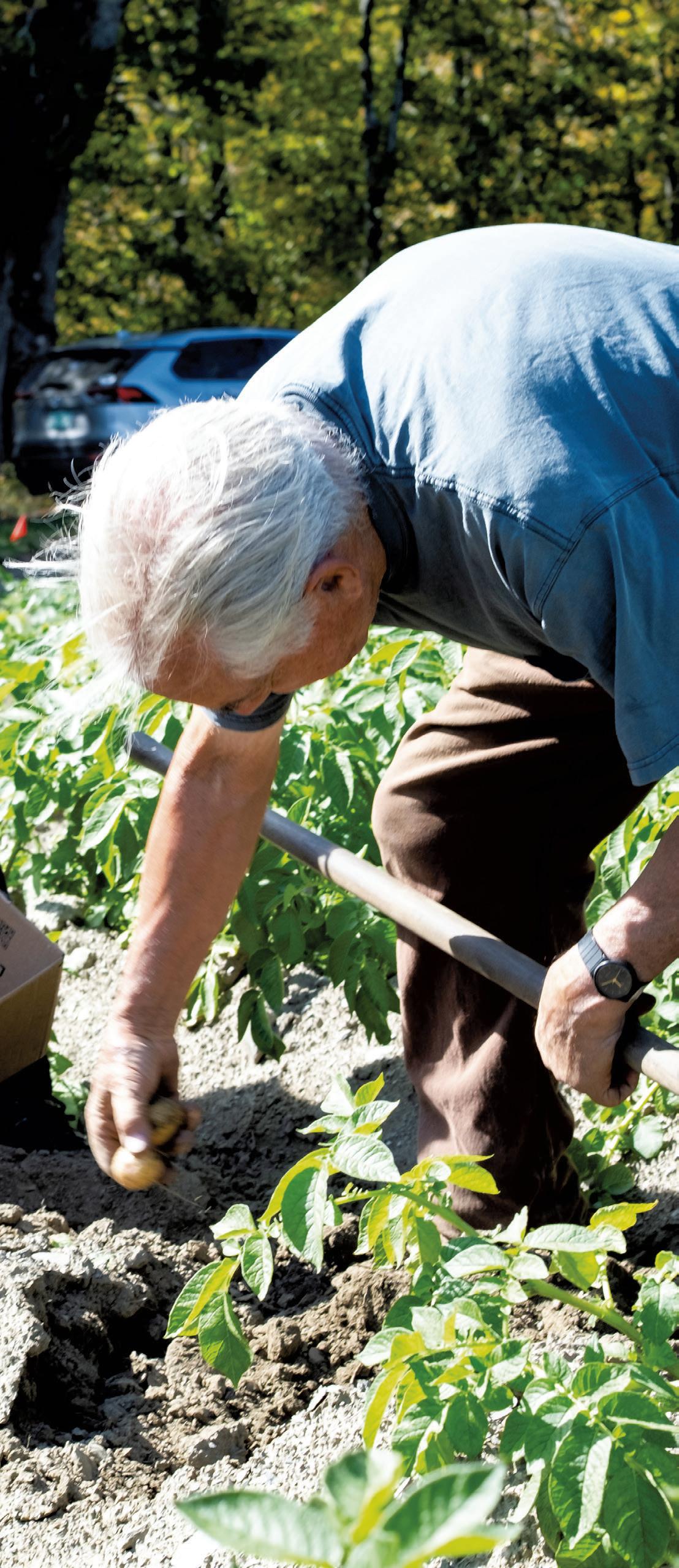
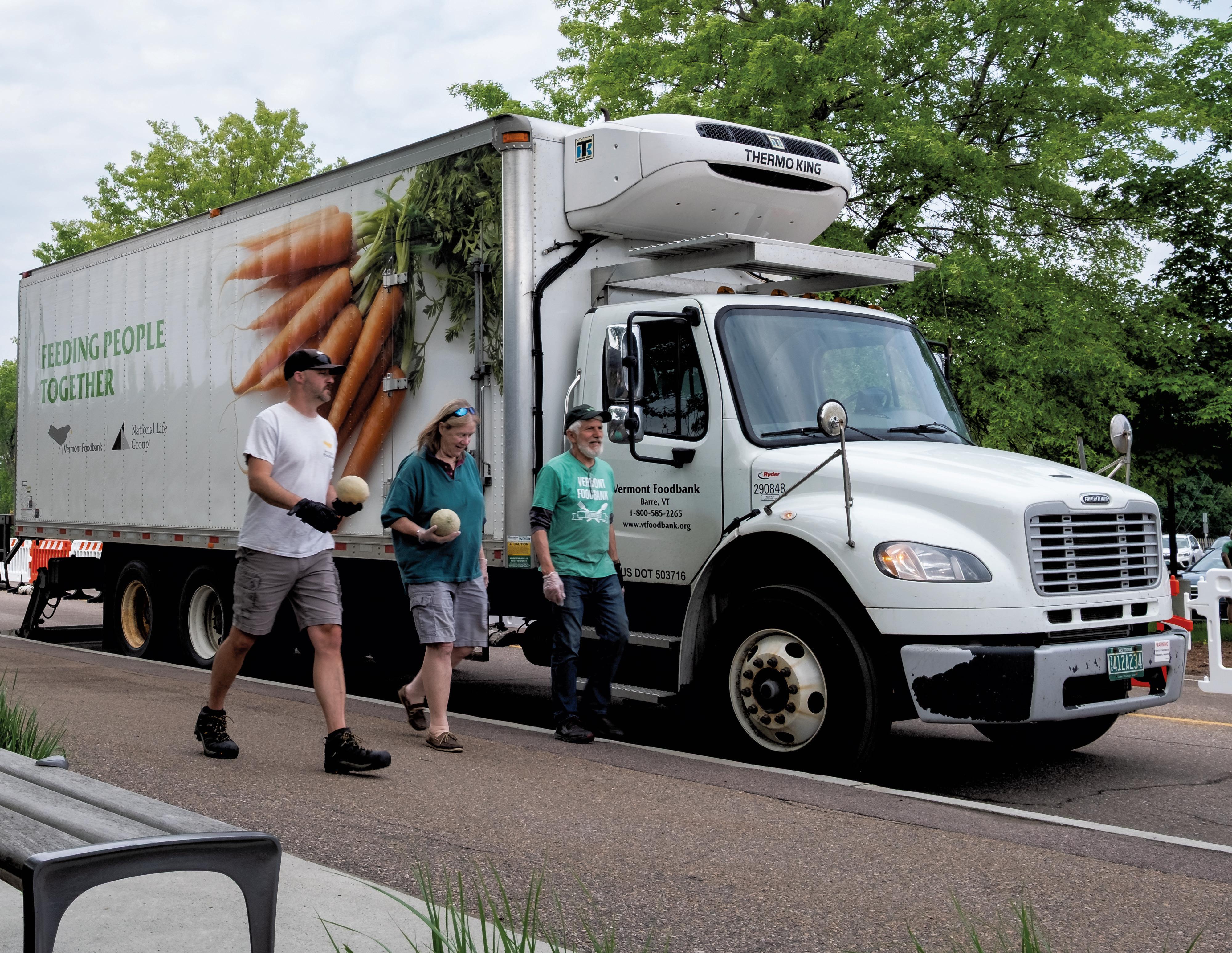
“Local food and community engagement strengthen our entire community by ensuring that everyone has access to the nourishment they deserve and the opportunity to give back. We do this work to address immediate needs, foster relationships, and create pathways to long-term resilience.”
~ Hardwick Area Food Pantry
ONWARD
Vermont Foodbank is the state’s only food bank and is a proud partner of the national Feeding America network. In 1986, Vermont Foodbank opened its doors and distributed 145,000 pounds of donated food to 43 community organizations. In 2025, we shared over 14 million pounds of food from three distribution centers and distributed $1.3 million in grants to a network of 330 partners.
We are launching this strategic plan in a time of turmoil and uncertainty. Food insecurity is an emergency for approximately 70,000 people who access food assistance via our network every month, and the long-term solution is to address the root causes of hunger through policy and systems change.
This plan positions Vermont Foodbank to meet today’s needs and sets the stage for a food-secure Vermont. Over the next three years, the Foodbank will move toward specific goals: provide equitable and dignified food support to neighbors, build network partner capacity to respond to neighbor needs, develop a people-centered culture that achieves operational excellence while keeping up with technology, and change systems that perpetuate hunger’s root causes—all while keeping our neighbors’ experiences at the center.
We invite you to join us in creating a Vermont where everyone has access to enough nourishing food to thrive, together.
John Sayles
CEO
June 2026
BUILDING A FOOD SECURE VERMONT
Mission
Gather and share quality food and nurture partnerships so that no one in Vermont will go hungry.
Vision
Everyone in Vermont has equitable access to enough nourishing food to thrive.
Beliefs
• Food is a human right.
• Hunger is solvable.
• Listening to neighbors with lived and living experience is essential to our work.
• Solving hunger requires community-wide action beyond the Foodbank alone.
Values
Dignity
We honor the full humanity of every person and treat others with respect in all our interactions, both within our organization and externally.
• We treat people with compassion and respect.
• We listen actively and value diverse perspectives.
• We honor and uplift the expertise and lived/living experience people bring.
Inclusion
No one knows everything, but together we know a lot. We build spaces, systems, and practices that welcome and recognize people of all backgrounds, identities, and experiences.
• We work to remove barriers that prevent full participation in our programs.
• We create opportunities for meaningful collaboration in decision-making, especially with people most impacted by our work.
• We provide culturally inclusive services and honor diverse needs, preferences, and practices.
Partnership
Our work is only possible through collaboration and co-creation with each other, our partners, and our neighbors.
• We practice shared leadership within our organization and with our partners.
• We work in community with volunteers, advocates, donors, neighbors, and partners.
• We lift up the voices of people most impacted by the problem we are working to solve.
Accountability
We follow through on our commitments with consistency and integrity. We hold ourselves responsible for our impact and the trust our community places in us.
• We prioritize operational excellence and safety.
• We take ownership of our actions, decisions, and outcomes.
• We are adaptable, resourceful, responsive, and careful stewards of our resources.
• We acknowledge we are always learning. When we fall short, we commit to doing better.
Equity Commitment
At Vermont Foodbank, we work to center equity in all we do. We recognize that hunger is rooted in intersecting systems of oppression, such as racism, classism, and ableism. These systems disproportionately impact Black, Indigenous, People of Color, and other marginalized communities in Vermont. Read our full equity commitment at vtfoodbank.org/equity.
What We Know is True
• Access to food is essential for human thriving.
• There is enough food to eliminate hunger.
• Food insecurity is a systemic problem driven by policy choices, economic conditions, and structural inequities.
The Problem We Address
People across Vermont wake up every day without reliable access to food.
Our Approach
• Gather and share nourishing food
• Support the food security movement
What We Do
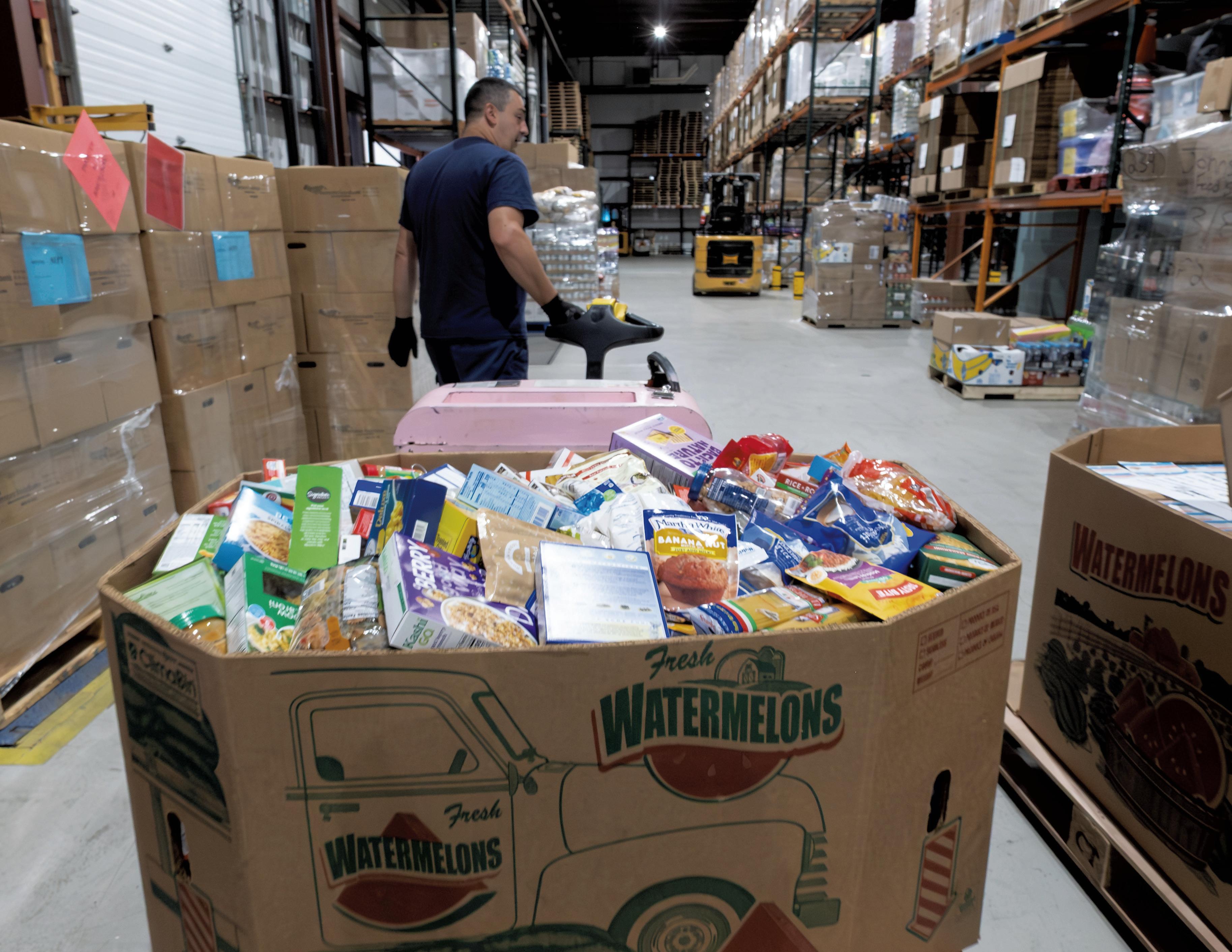
• Gather and safely store food; distribute food to partners and directly to community members
• Facilitate collaboration, sustainability, and resilience across our network of partners
• Provide training, guidance, and financial support, including grants, to network and program partners
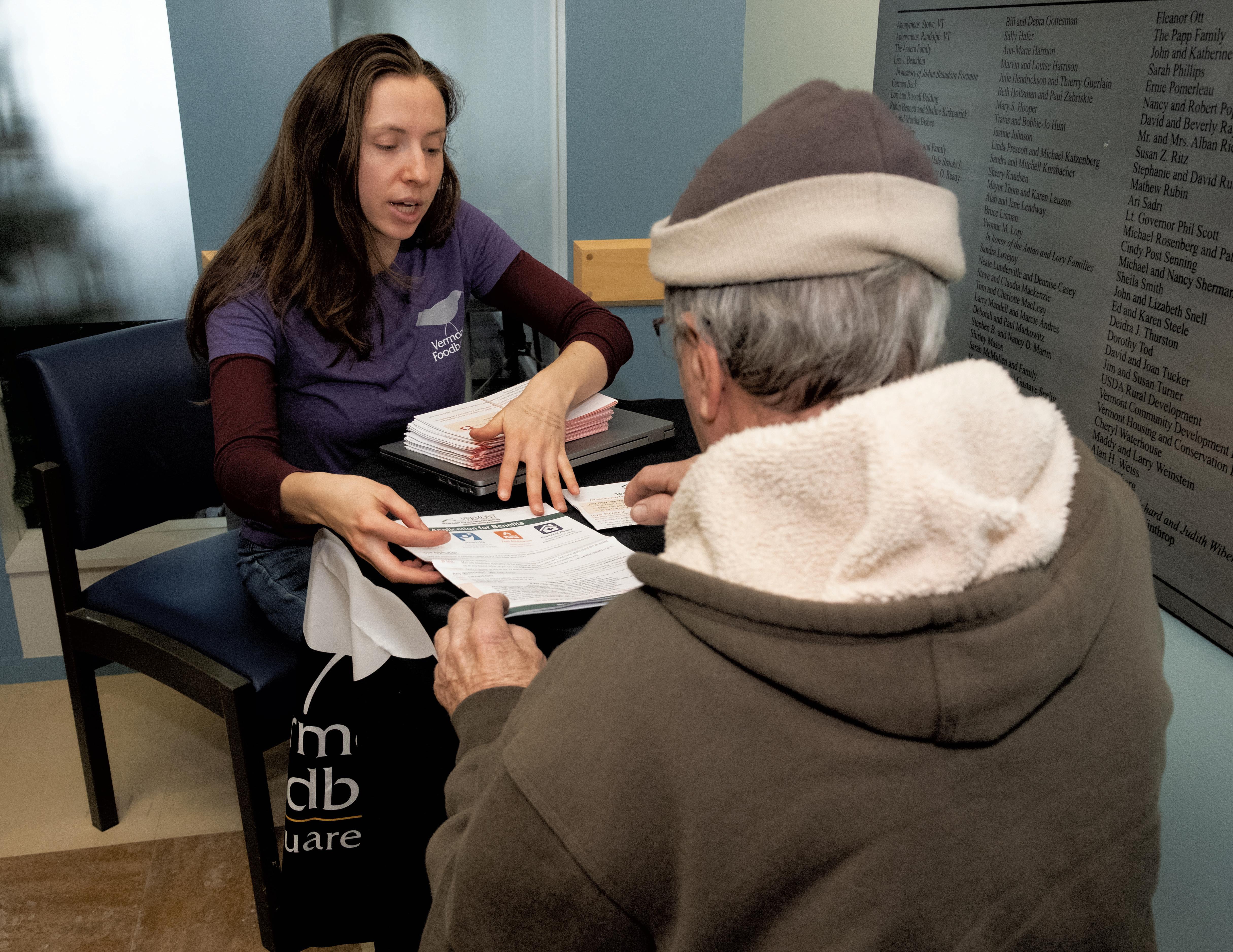
• Provide 3SquaresVT (SNAP) outreach and application assistance
• Deliver rapid, short-term assistance through our network of partners and our own distributions that support individuals or communities experiencing acute need
• Model equitable workplace practices
• Advance Vermont Food Security Roadmap objectives; participate in local and regional coalitions addressing food security
• Engage in policy advocacy at the state and federal levels
• Center our values and equity commitments in all that we do
STRATEGIC PILLARS
2027 – 2029
PILLAR ONE
Establish and support equitable, dignified distribution of food resources and services.
Outcomes
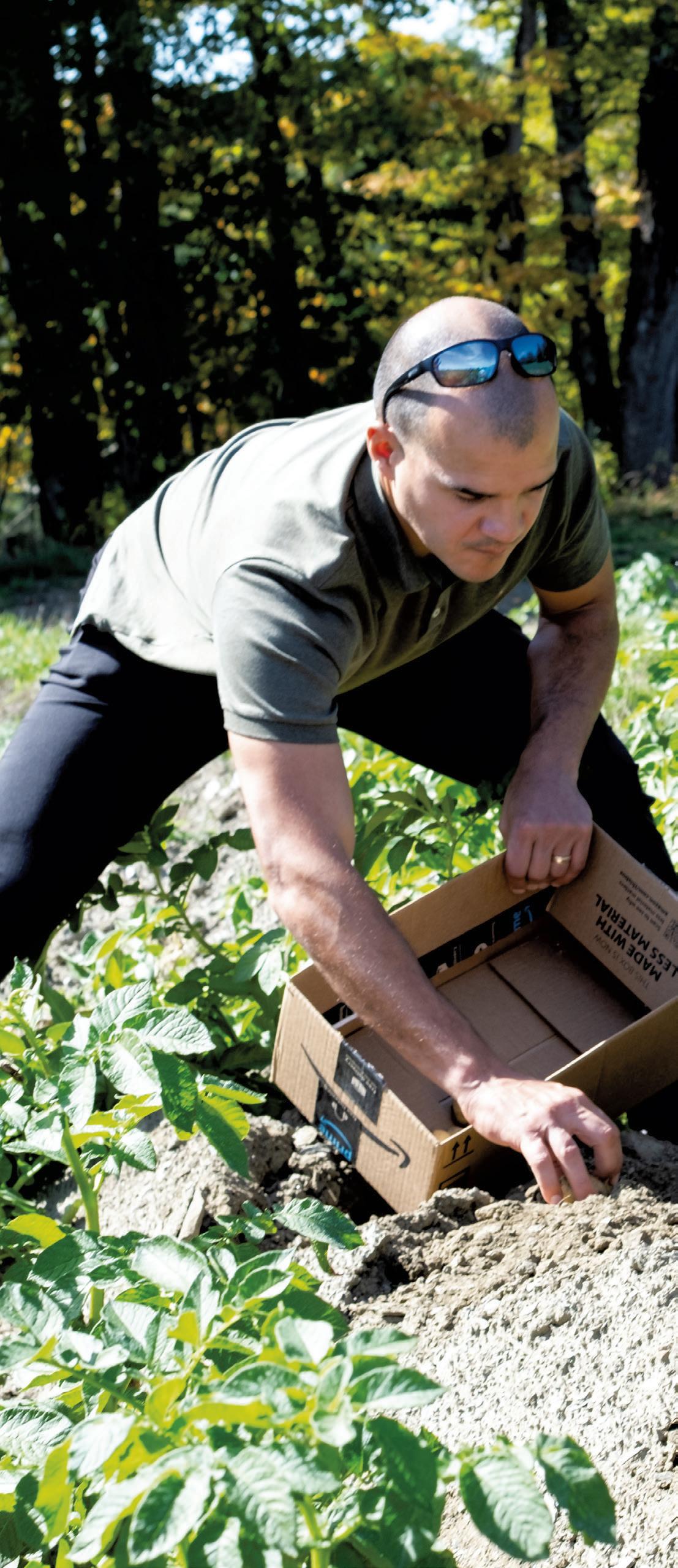
• Vermont Foodbank sustains responsive food sourcing and distribution, including fresh and locally sourced food.
• Vermont Foodbank consistently applies a shared definition of equitable and dignified distribution, resulting in measurable shifts in distribution patterns aligned with community need.
• Vermont Foodbank uses a coordinated and aligned approach to its direct distribution programs, grounded in data, operational effectiveness, and flexibility.
• Neighbors experience food access programs as dignified and respectful, and engage with structured feedback systems that allow Vermont Foodbank and our Network Partners to gather and act on neighbor input.
• Vermont Foodbank identifies priority gaps in 3SquaresVT (SNAP) access and partners effectively to address them.
PILLAR TWO
Build the capacity of Network Partners to provide high-quality responsive services and strengthen the resilience of the food distribution network.
Outcomes
• Vermont Foodbank implements a plan and establishes internal systems to improve the financial and operational capacity of Network Partners.
• Vermont Foodbank is structured and resourced to support Network Partner sustainability and responsiveness and uses a framework to track and strengthen partner resiliency.
• Vermont Foodbank has reduced redundancies and strengthened regional systems beyond the current network.
• Vermont Foodbank and its state, community, network, and program partners are prepared to respond effectively to emergencies, with defined roles, systems, and coordination mechanisms in place statewide.
PILLAR THREE
Invest in our staff, people-centered culture, and effective internal communication.
Outcomes
• Internal communications are clear, accessible, and people-centered, enabling collaboration across departments and understanding of and participation in decision-making.
• Vermont Foodbank has a performance assessment system that supports the management and development of its employees.
• Learning and development systems are in place, and staff across all departments are accessing relevant training, leadership development, and professional growth opportunities.
• Vermont Foodbank continues to prioritize a fair, transparent, and sustainable total rewards system, promoting internal equity, staff engagement, and long-term retention.
• Vermont Foodbank continues to embed equity and inclusion in leadership, operations, and culture, with staff experiencing a strong sense of belonging, fairness, and shared values.
PILLAR FOUR
Support organizational sustainability through fundraising, operational excellence, and systems evolution.
Outcomes
• Vermont Foodbank’s operations are effective and responsive, allowing the organization to reach communities across the state using delivery approaches that can adapt to local needs.
• Philanthropic efforts and revenue align with strategic priorities and are funding the stated work and goals of the organization.
• Financial stewardship and budgeting are transparent and accessible, and support shared accountability across the organization.
• Technology systems are compatible and used consistently—reducing duplication, improving data quality, and freeing staff capacity for mission-critical work.
• Data integrity and analytics inform decision-making at all levels, strengthening trust, compliance, and organizational effectiveness.
Advance systems change through collaborative advocacy that centers the perspectives of neighbors with lived experience of hunger and poverty.
PILLAR FIVE Outcomes
• Vermont Foodbank and its partners have created and are supporting pathways for people with lived and living experience of hunger and poverty to meaningfully engage in advocacy for policy, program, and systems change.
• Vermont Foodbank partners are equipped and activated as advocates— building skills, engaging neighbors’ voices, and contributing to shared policy goals.
• Vermont Foodbank actively co-leads systems and policy change through the Vermont Food Security Coalition, driving the objectives of the Vermont Food Security Roadmap and broader collective impact efforts.
• Vermont Foodbank federal and state advocacy helps protect and expand funding for nutrition programs and related anti-poverty initiatives, while making benefits easier for neighbors to access.
• Vermont Foodbank’s role in coordinating with the state government in emergency and disaster response is clearly defined and funded.
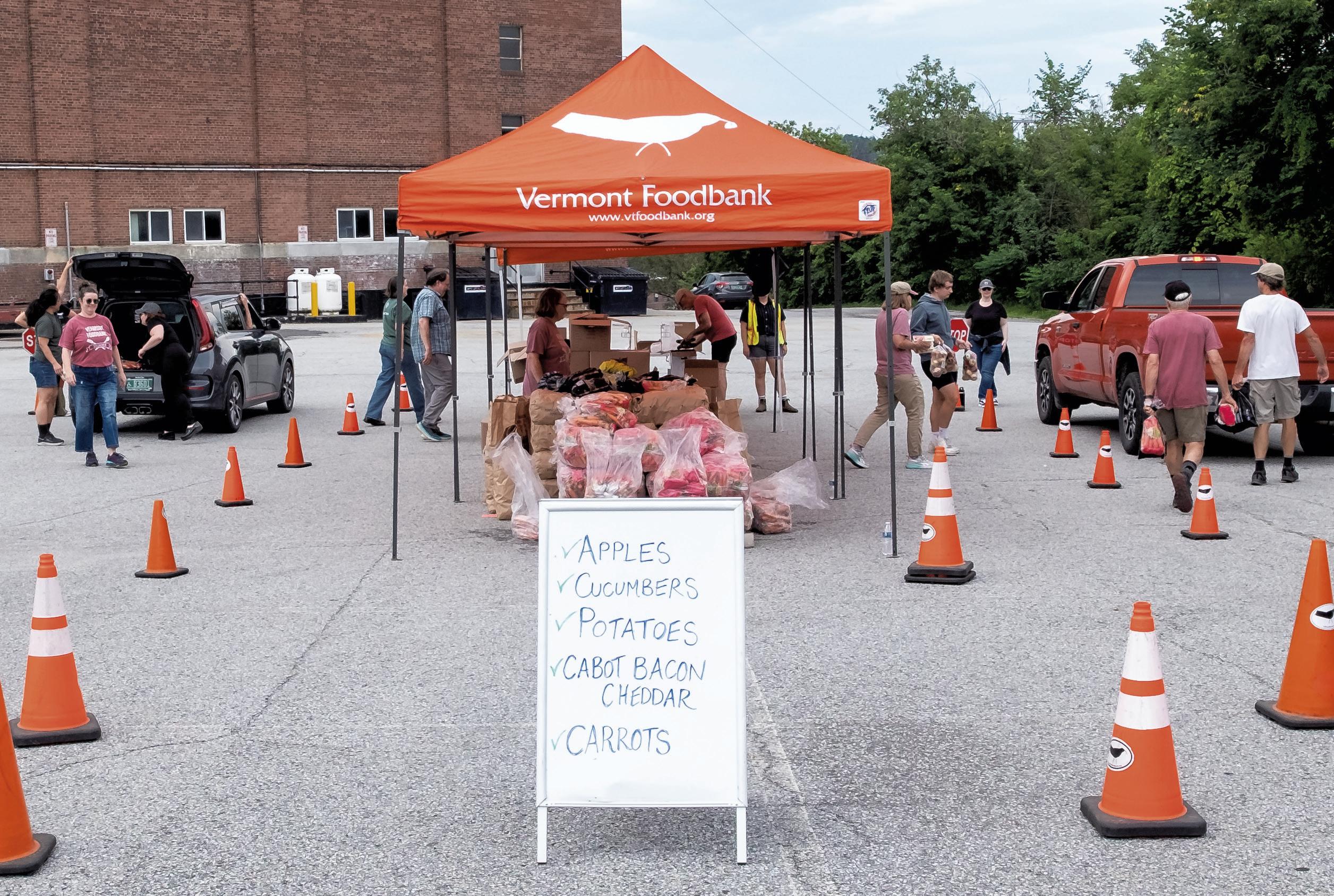
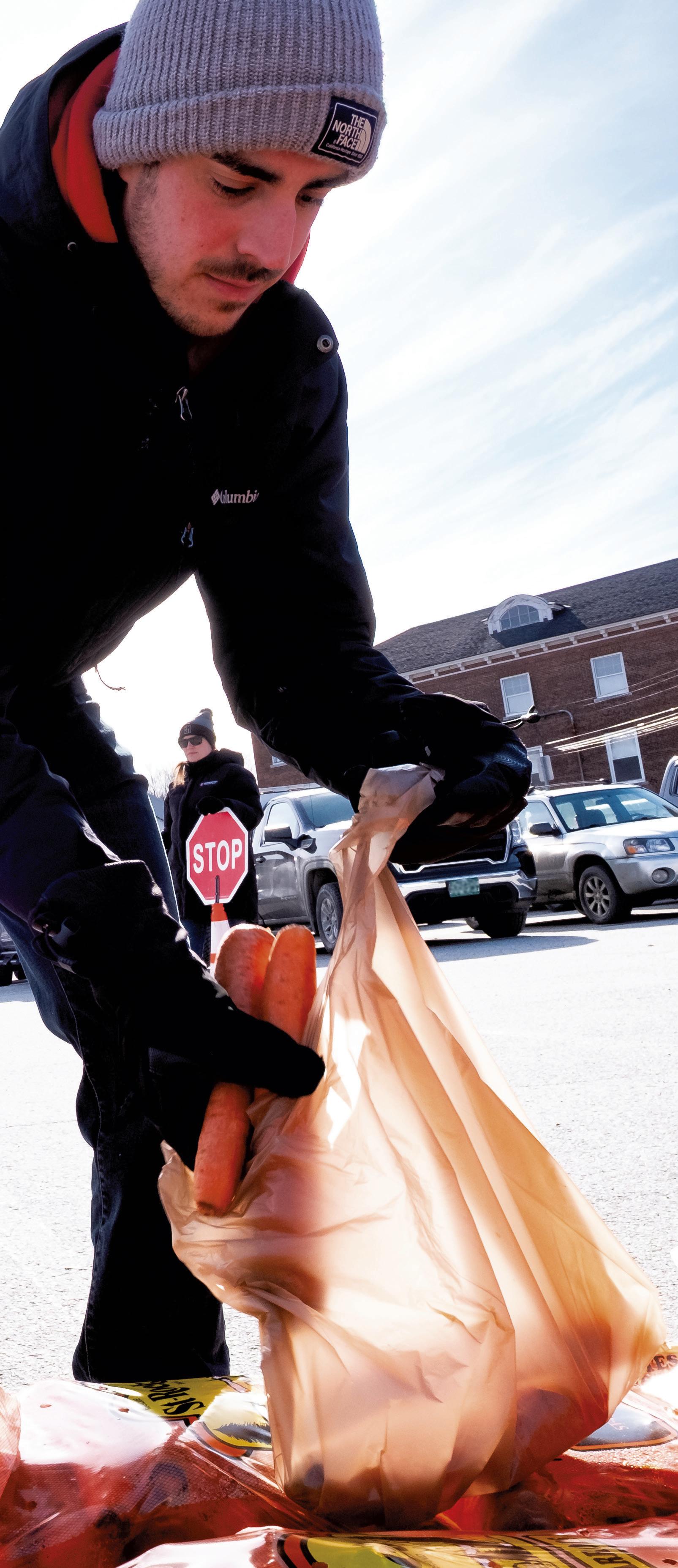
“Many of us ‘make too much’ to get any kind of financial or food assistance so having a no-questions-asked food program is vital for our survival as we may be better off than others but still struggle with food insecurity. VeggieVanGo allows me to eat WITH my children instead of sitting with them while they eat and try to share their food with me not knowing there’s just not enough for all of us.”