
Sarah Jayne Kennelly of Burlington dreamed of being a scientist as a young girl, fascinated by the examination of life and the desire to explore.
Now an adult, she keeps that desire alive in a different kind of lab — the photo lab.
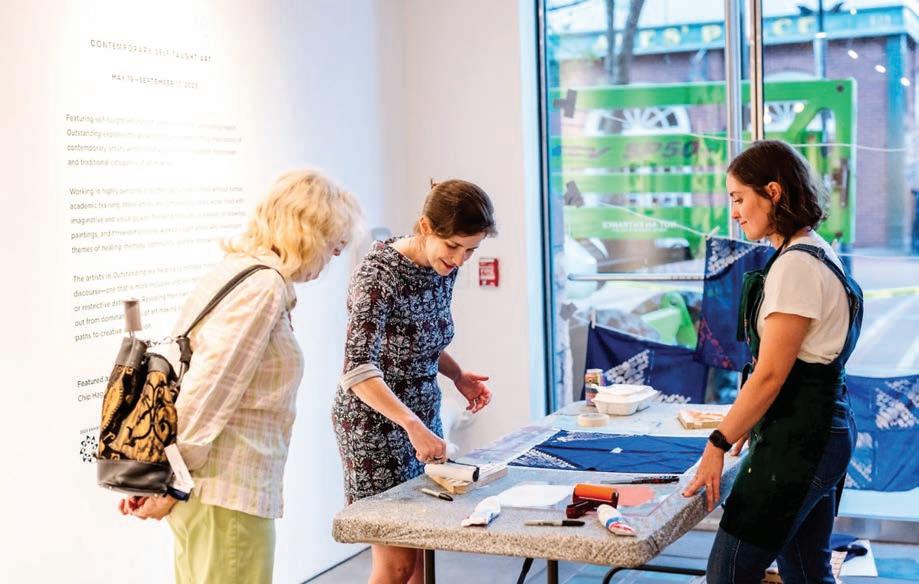
Kennelly draws on the same curiosity of her youth as a local artist specializing in photography, darkroom photographic processes and printmaking.
“I love the experimental nature of alternative photo processes. There’s a lot of control you can have over certain processes, and there’s a lot of experimentation in it,” she said.

Now, she brings that spirit of exploration and experimentation to the city of South Burlington.
Kennelly was appointed curator by the South Burlington Public Art Committee in the spring. She creates showcases in the city’s Public Art Gallery, placing the
See CITY CURATOR on page 12
What should be done about Vermont’s education funding system?
It seems the question looms in everyone’s mind — taxpayers and legislators alike — after a year that saw a third of Vermont’s school budgets fail and as another budget season begins.
The issue helped overturn the Democratic supermajority in the Statehouse this November, with many Republicans centering their campaigns on affordability and education reform in a year that saw an average 14 percent education property tax increase statewide.
While South Burlington’s Democratic House representatives all ran unopposed this year, they have all argued that affordability will be top issue as they prepare to head back to Montpelier in early January. But on a particularly snowy and blustery Monday night this week, the five House representatives got an early start on that conversation with constituents. More than a dozen residents filed into the library’s community room — and on Zoom — to discuss ideas, solutions and questions about Vermont’s complex education funding system.
To understand some of those solutions, it’s important, at least

for legislators, to look back on how Vermont’s education finance system got to where it is. Most notable is Act 60, passed in 1997, the monumental law that separated a school district’s tax rate from the property wealth in every town. That law followed the Vermont Supreme Court’s Brigham decision, which found Vermont’s education funding system to be unconstitutional.
Prior to 1997, towns with more property wealth had well-funded schools with lower tax rates and property-poor towns had to tax themselves at high rates to afford adequate schools, Act 60 proponents said.
With Act 60, Vermont set up a system to finance education that lets school districts approve spending plans and collect local school taxes, which are then sent to the Montpelier for redistribution to towns to equalize spending.
This year, Vermont will spend roughly $2.3 billion on education, legislators said Monday night.
“It was an effort to preserve local control while the funding system went to the state level,” Brian Minier, Chittenden-11, and member of the House Committee on Education, said of Act 60. “We Vermonters always pride our local
See LEGISLATORS on page 13






South Burlington’s largest natural area is now permanently protected.
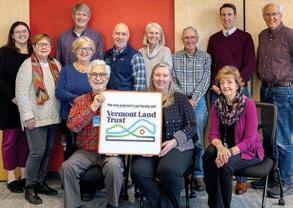
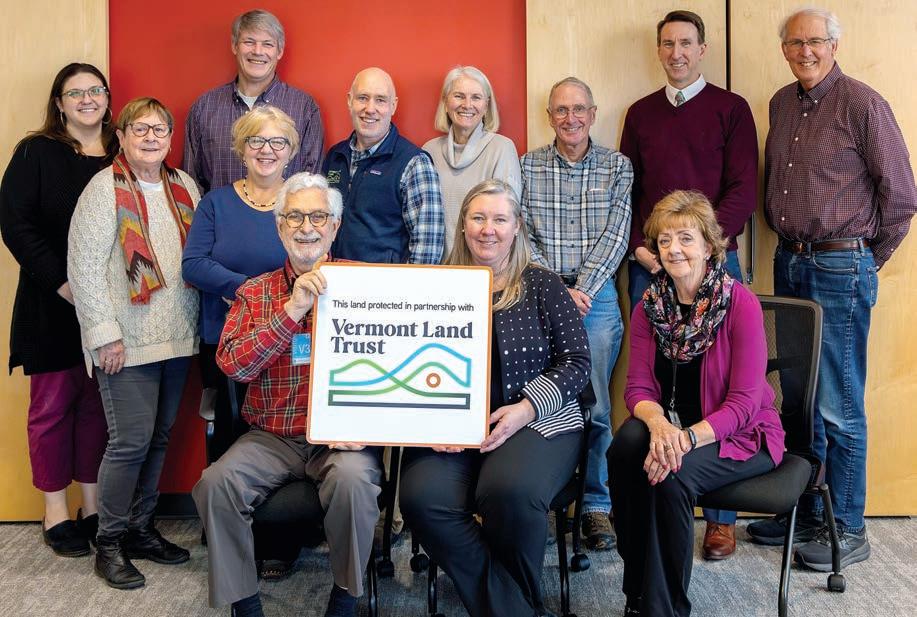
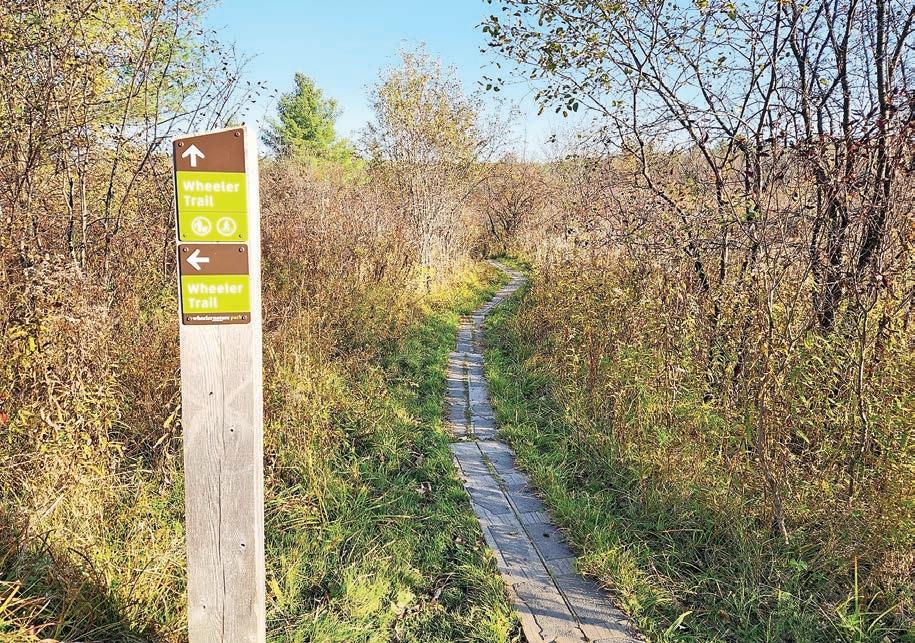
On Dec. 3, the city conserved nearly 105 acres of the centrally located Wheeler Nature Park with Vermont Land Trust “to safeguard the park as a vital community resource for residents of the city and neighboring towns into the future,” according to city officials.
The land will now be kept open for outdoor recreation, education and other community uses, and protect the property’s biodiversity, wildlife habitat, water resources, forest and fields.
“Since summer 2016 when a taskforce was convened to start the process of conserving the Wheeler Nature Park, the council’s objective has been to secure this jewel
of our public open space for future generations to enjoy without the fear of development,” South Burlington City Council chair Tim Barritt, said. “From the insights that the council gained during interim zoning, we understand the value of this land for its passive

LIBERTY DARR STAFF WRITER
The South Burlington School Board last week appointed Karen Van Gilder to the seat vacated by Elaine Cissi.
Cissi was voted to the board on Town Meeting Day this year, filling the two-year seat vacated by former board chair Kate Bailey. She told her fellow board members in September that the decision to resign was a challenging one, but unexpected family responsibilities would make serving out her term difficult.
The school board extended its application deadline for a new member twice due to a lack of applicants. The board received two applicants at its last go-around and held an open interview with them on Wednesday night before entering executive session to deliberate.
Van Gilder has been a resident and parent in South Burlington since 2017. She said she lived in Vermont 20 years ago but left to pursue other work opportunities. Through her experience in planning, she said she has years of experience attending similar meetings like school board meetings.
“I’ve been watching the dynamics, and I really love South
WHEELER PARK
continued from page 2
recreation, positive effects on water quality and its carbon benefits. As our city adds housing and infill development, this property will always be a refuge for us and our wildlife.”
The park was acquired by the city in the 1990s and is a green space open to all. It boasts an extensive trail system developed over the decades that winds through the wooded areas and open land, with signage, boardwalks, stream crossings and bridges. The property is also used by students and teachers for outdoor education.
Burlington and the school district, and I love the experience my kids are having,” she said. “I just feel like we are at a critical moment and a good moment to have as many people around the table as possible. I feel like I understand how the table works and that I could be an asset in that way.”
She noted that one of her top priorities is maintaining communication with the public, something she said is part of the board’s core mission.
“Communication is everything,” she said. “This is a tough world that we are living in right now. Everyone’s attention is so scattered. Trying to find a way
to engage people, I think that’s actually at the core of the whole mission here, to be honest. How do we make this a place that people want to come and feel like they can say what they have to say?”
When asked what difficulties the school district will face over the next five years, she said that the school’s aging facilities remain on the top of the list and will be a pressing priority for the district as it continues through difficult budget conversations.
“I’m concerned about the buildings,” she said. “I’m concerned about getting lead testing emails from the high school. I’m concerned about the temporary buildings at Rick Marcotte Central School. Everything is sort of held together with duct tape and in the next five years there must be some decision about what’s going to be done about that cause I don’t know how much longer that can be held together that way.”
Van Gilder will hold the seat from Dec. 18 through March, when the seat will come up for reelection on Town Meeting Day.
“I really believe in this type of governance, and I really believe in this type of system the way that we have done this for a long time,” she said. “I believe it works.”


Wednesday, Dec. 18, 6:30 p.m.
A service for those feeling down during the holidays.
Christmas Eve, Tuesday, Dec. 24, 7 p.m.
All are Welcome! Accessible Entrance Live Stream Available: facebook.com/faithsbvt
nent protection of Wheeler.
“This treasured community asset provides easy access to the natural world close to where people live, all in Vermont’s second largest city,” Bob Heiser, project director for Vermont Land Trust, said. “We are excited to be part of ensuring it remains a place for nature to thrive and for people to connect with it.”
“It will remain a prized ecological preserve and a source of wonder and enjoyment for generations to come.”
— Michael Mittag
The conservation effort began after a 2016 task force of city committees and the South Burlington Land Trust was brought together to chart a course for the perma-
The park will continue to be owned and managed by the city within the limitations of a permanent conservation easement held by the Vermont Land Trust.
“After decades of advocacy by the South Burlington Land Trust, this wonderful natural area is now permanently protected through a
conservation easement,” Michael Mittag of the South Burlington Land Trust said. “It will remain a prized ecological preserve and a source of wonder and enjoyment for generations to come.”
Beyond the conserved acreage, the park also contains the area around the Wheeler Homestead, which contains the historic farmhouse, parking, community gardens and a dog park. The conserved acreage does not include a 7-acre parcel next to the park, at the intersection of Dorset Street and Park Road, that was once part of the park but that the city no longer owns.
The conservation effort permanently protects over 35 acres of forest, 65 acres of open land, and streams and wetlands. The wooded areas include a former sugarbush with sugar maples, a stand of white pine and hardwood trees such as shagbark hickory that provide food and habitat for wildlife.

The protected streams include tributaries of Potash Brook, which flows into Lake Champlain.
Total incidents: 222
Agency / public assists: 27
Directed patrol: 9
Traffic stop: 15
Accident: property damage: 15
Alarm: 16
Foot patrol: 8
Suspicious event: 12
Retail theft: 14
Motor vehicle complaint: 7
Welfare check: 9
VIN verification: 6
911 hangup: 3
Fraud: 4
Trespass: 6
Threats: 5
Paperwork: 5
Stolen vehicle: 4
Operations: patrol: 4
Domestic: 2
Suicidal person: 2
Disturbance: 7
Accident:
insurance purposes: 3
Leaving the scene of an accident: 4
Larceny from a vehicle: 3
Accident: injury: 3
Larceny from a structure: 3
Mental health issue: 3
Arrests:
Jashaun J. Justice, 27, of Burlington, was arrested on an in-state warrant stemming from a Nov. 24 incident on Market Street.
Dec. 2 at 8:51 p.m., Jonathan D. Brathwaite, 44, of Hinesburg, was arrested for driving under the influence, first offense, on Williston Road.
Dec. 4 at 1:39 pm., Alison L. Glidden, 51, of Richford, was arrested for fentanyl trafficking on Shelburne Road.
Dec. 5 at 11:29 a.m., Tanya L. Francis, 41, of South Burlington, was arrested on an in-state warrant on Dorset Street.
Dec. 5 at 2:38 p.m., Thomas E. Knowles II, 46, of Barre City, was arrested for false pretenses on Shelburne Road.
Dec. 6 at 6:18 p.m., Daniel P. Culver, 51, of Burlington, was arrested for possession of stolen property on Dorset Street.
Dec. 7 at 2:22 p.m., Donovan L. Desmaris, 30, of Burlington, was arrested on an in-state warrant on Dorset Street.
Dec. 7 at 8:21 p.m., Sabrina N. Craig, 22, of South Burlington, was arrested on an in-state warrant on Garden Street.
Note: Charges filed by police are subject to review by the Chittenden County State’s Attorney Office and can be amended or dropped.
South Burlington’s Community Newspaper Since 1977 A publication of Vermont Community Newspaper Group LLC otherpapersbvt.com
Advertising Director
Judy Kearns judy@otherpapersbvt.com (802) 864-6670 x21
Advertising Wendy Ewing wendy@shelburnenews.com (802) 985-3091 x12
News Editor Tommy Gardner
Staff Writers
Aaron Calvin Liberty Darr Patrick Bilow
Production Manager Stephanie Manning stephanie@shelburnenews.com
Editor/Publisher Gregory Popa gpopa@stowereporter.com
Billing inquiries Leslie Lafountain leslie@stowereporter.com (802) 253-2101
Advertising submission deadline: Thursday at 5 p.m. advertising@otherpapersbvt.com classifieds@otherpapersbvt.com
Editorial submission deadline: Friday at 5 p.m. news@otherpapersbvt.com
Calendar submission deadline: Friday at 12 p.m. news@otherpapersbvt.com
Contact: 1340 Williston Road South Burlington, VT 05403 (802) 864-6670
The Other Paper is published weekly and mailed free to South Burlington residents and businesses, and rack distributed in select high-traffic areas. The Vermont Community Newspaper Group LLC assumes no responsibility for typographical errors in advertisements and reserves the right to refuse advertising and editorial copy.
eligible for rebates, cash
A suite of flood recovery rebates is now available for households and businesses impacted by last summer’s flood through Efficiency Vermont.
The Vermont Emergency Board and Gov. Phil Scott authorized the Vermont Public Service Department to extend the rebates first launched after catastrophic flooding in 2023.
Income-eligible homeowners and renters impacted by flooding in 2023 and 2024 can access up to $29,500 per household in rebates to replace critical heating and water heating systems and appliances, upgrade or replace a home electric panel and incorporate weatherization into rebuilding efforts.
Flood-impacted businesses can also get up to $16,000 cash back on eligible heating systems and commercial kitchen equipment like freezers, refrigerators, dishwashers and more.
Support now available to low- and moderate-income households damaged by flooding includes:
• Free virtual home energy visits by an energy expert who can provide guidance on a home’s specific needs.
• Up to $10,000 to replace home heating systems and appliances. This covers new or
replacement heat pump heating system (ducted or ductless) or central wood or pellet boilers, furnaces and stoves, plus Energy Star -certified replacement appliances like refrigerators, clothes washers and dryers, and more.
• Low-income households can receive 100 percent of the equipment and installation costs of a new heat pump water heater, while moderate-income households can get 90 percent cash back. Projects over $5,000 require additional review.
• Up to $9,500 to weatherize your home as you rebuild.
Weatherization projects can also take advantage of up to $15,000 through Efficiency Vermont’s Home Repair program to address underlying issues in a home that needs to be fixed before weatherization can happen. Low-income households can also get free weatherization through the state’s Weatherization Assistance Programs.
• Up to $10,000 for home electric system updates
• Zero percent interest on up to $30,000 for a home energy loan.
For more details, go to efficiencyvermont.com.
Coldwell Banker real estate agencies merge
Coldwell Banker Classic Properties is merging with Cold-
well Banker Hickok & Boardman.
This partnership will further strengthen the services and tools available for both consumers and agents, according to a press release.
“We are excited to join Coldwell Banker Hickok & Boardman,” Sue Aldrich, owner of Classic Properties, said.
“This merger is a natural fit,” Leslee MacKenzie, president and owner of Coldwell Banker Hickok & Boardman, said. “Both firms share a deep commitment to Vermont communities, and together we are elevating the resources and reach available to home buyers and sellers across Vermont and especially deepening our capabilities in central Vermont.”
Coldwell Banker Hickok & Boardman, established in 1958, operates in Chittenden, Franklin, Grand Isle and Addison counties. With the merger, Coldwell Banker Hickok & Boardman will welcome Aldrich, Alex Aldrich, Janel Johnson, Ken Jones, Lorraine Checchi, Nate Ball, Barbara Taylor Blythe, Theresa Murray-Classen and Craig Durham to its team.
The combined firm will operate as Coldwell Banker Hickok & Boardman, with its headquarters in Burlington, and offices in East Montpelier, St. Albans and Vergennes.

Guest Perspective
Sandy Dooley
Developing a city green and purchasing 92 percent of the Long property are two projects South Burlington city councilors are currently working on among their multitude of duties. Their plan is to use open space tax dollars for purchasing the Long property on Spear Street.
Expending open space tax dollars for this project would perpetuate the practice of limiting open space land purchases solely to parcels in the southeast quadrant. Since its creation in 2000, $4.1 million in open space dollars have been used to purchase seven parcels, a total of 626 acres, all located in the southeast quadrant. Neither open space tax dollars nor any public funds should be used to purchase the Long property because such an action would be in direct conflict with a key principle in City Plan 2024. That principle reads as follows: “Inclusive,
Fair, and Just. Be equity-oriented, transparent, equitable and fiscally responsible in governance. Support high quality of life, community belonging, public safety, housing affordability, and education for all people of varying incomes, lifestyles, and stages of life.”
A better use of public money that is inclusive, fair and just would be to use open space tax dollars toward making a city green in the city center a reality. It will take some heavy lifting to accomplish this because the estimated cost of a basic, no-frills city green is $4.5 million. According to the city, the purpose of the city green is to provide “a gathering space and green respite within city center for residents, visitors and employees that will support events and infor-
mal unprogrammed activities near restaurants, cafes and retail. Land will be required to advance the park into a design process.”
In addition to being in conflict with the city plan, continuing to invest open space tax dollars solely in southeast quadrant land is in conflict with Vermont’s environmental justice policy, which reads as follows: “
Continuing to invest open space tax dollars solely in southeast quadrant land is in conflict with Vermont’s environmental justice policy.
‘Environmental justice’ means all individuals are afforded equitable access to and distribution of environmental benefits; equitable distribution of environmental burdens; and fair and equitable treatment and meaningful participation in decision-making processes, including
Guest Perspective
John Bossange
No one can say that South Burlington is not doing its share to help alleviate the housing shortage. Since 2020, 1,320 zoning permits have been issued. In terms of known development, about 370 are in the pipeline and their preliminary plans have been approved. Another 650 have final approval, and 300 more are now under construction.
Specifically, in South Burlington, we’ll see 200 dwelling units at Larkin Terrace, 580 at Kennedy Drive, 350 more in the City Center on Market Street and an additional 100 in the Cider Mill development and Spear Meadows. Following interim zoning and the pandemic, this is a remarkable jump in much needed, new dwelling units.
As has been noted many times before, 1,320 new homes built within five years will quickly require more infrastructure and
municipal services, and most important, the homes will bring more families with school-aged children. Unlike most of the state, South Burlington is one of the few communities in Vermont where student enrollment is actually increasing.
Using data from the National Association of Home Builders, we know that on average, for every 100 people living in a separate single-family home will yield 41 school-aged children (ages 5-18). A new single-family detached home will yield the most, 62 school-aged children per 100 units, while new manufactured housing will yield 60 school-aged children. A new single-family attached (duplex) home will yield 30 children per 100 units, while new multi-family buildings will average less with 22 kids.
The math and the research reveal the undeniable truth: 1,320 new homes will place many more students in our schools. New single-family attached homes will

yield 818 students, new manufactured homes will yield 792, singlefamily attached 296, and finally multi-family units will yield 277 more students.
In South Burlington, we are building many detached, singleunit homes, some duplex and triplex homes, combined with larger multi-unit buildings and cottages, depending upon the approved plans for each of the five current building sites.
The immediate question for all residents is what will this growth in school-aged children do to our property tax bills? No matter how we divide up the types of dwelling units constructed, we are talking about many new students enrolled in one of our five schools in a very short period.
My tax bill is like everyone else’s, where 74 percent of it goes to our fine school system, and 26 percent to essential municipal

To the Editor:

At dusk in November, lights will flicker on in thousands of deer camps in the hills, dales and deep woods throughout rural Vermont as hunters gather for Vermont’s unofficial 16-day holiday otherwise known as rifle season.
Many hunters take a two-week vacation so they can be at camp for the entire rifle season. Some are so in love with the hunting way of life that they will hunt deer in more than one state. Some camps are many decades old, some a century or more. Generations of family and friends have been part of camp lore.
Come Saturday morning, after a big hunter’s breakfast at camp or at a local breakfast spot, hunters will filter into the woods, some under the cover of darkness, in hopes of bagging the ever-elusive white tail buck at first light. Soon, shots will ring from the hills.
If a hunter hears nearby shots, he or she hopes it was one of their campmates who bagged a first-day buck. Or, if the shots missed, the hunter hopes the deer is heading on its way.
Shortly after dawn, deer reporting stations in small towns throughout Vermont will come alive with hunters reporting their bucks per state law. The stations record weight and other information. Many also run buck pools and post photos of each successful hunter. There is a buzz from all the activity that opening day creates.
Even though in recent years there has been an option to report deer online, there is still something special about the camaraderie and pageantry surrounding these check stations, and many folks are eager to see, be seen and swap stories at these social hubs.
Back at camp, it will be a festive 16 days where participants hunt hard — some harder than others — eat hearty and enjoy leaving life’s daily problems far behind. Rural businesses throughout the state benefit from all the hunters suddenly in their midst — tourist revenue for non-tourist towns.
Camps generally have a large dining area to accommodate everyone, and many
meals are common. Camp participants range from kids to some of Vermont’s oldest citizens and from first timers to those who only join us in memory.
Steve McLeod Bolton
Steve McLeod is former executive director of the Vermont Traditions Coalition, and president of the Champion Lands Leaseholders and Traditional Interests Association.
To the Editor:
On Nov. 18, the Burlington City Council passed a resolution and then adopted an ordinance to ban possession of firearms in any establishment that sells liquor.
By taking those two actions, Burlington City Council broke Vermont law, known as the pre-emption statute. The law is clear:
“Except as otherwise provided by law, no town, city, or incorporated village, by ordinance, resolution, or other enactment, shall directly regulate hunting, fishing, and trapping or the possession, ownership, transportation, transfer, sale, purchase, carrying, licensing, or registration of traps, firearms, ammunition, or components of firearms or ammunition.”
By enacting that statute, the Legislature wisely decided that Vermont would not become a patchwork of conflicting ordinances that change at town lines, thereby ensuring uniformity and consistency of firearm laws as Vermonters travel around the state.
Burlington is experiencing more violent crime, and Vermonters, in general, are bypassing the city for shopping and entertainment. Many Vermonters believe this shift in crime is the result of the questionable move by the city council to defund and reduce the size of the Burlington Police Department, coupled with the desire to never incarcerate people even though they may repeatedly do bad things.
For many law-abiding citizens, the result of these changes regarding the punishment of criminal activity, both















Carole Vasta Folley
Nineteen days remain until the end of the year. That is all I will focus on right now. Really, for me, it’s all I can focus on presently, although many would recommend I should only pay attention to today, the hour or the minute of right now. Others would advocate for thinking ahead and the necessity of making a plan for next year.
Me? I’ll hold firm on the 19 days. I shall consider each one an opportunity. Not in a self-help catchphrase, seize-the-day, kind of way, but more in simply being aware of each day, its passage of time. My time. My life. Nineteen dawns and 19 dusks. Approximately 57 meals, 152 hours of sleep, if I’m so lucky, and the myriad of things that come in between. I want to notice all of it, as much as I can. Nineteen days seems a reasonable amount, an achievable goal for my driven-to- distraction self. It’s a good compromise between “the power of now” and masterminding the future.
ing turkey out of the oven? The commercialized Yuletide that strong-arms the meaning of the season and wears out your credit card? That one.

This means I will add to my overstuffed life decorating, shopping, attending events, making dinners, baking cookies and pies and, oh, don’t forget to buy a tree. I’ll probably throw in a bevy of carols and most definitely celebrate the winter solstice. A real must this year as it honors the return of light, hope in the face of darkness. This mightily ups the ante for my 19-day endeavor. OK, life, I see you — all provoking and anxious-making. But, no, I’m not going to bite. In fact, you’re on! I will now take this 19-day consciousness-thing as a challenge. I’ll even raise the stakes and add in a few extra gauntlets as well. Maybe in the next 19 days I’ll get a colonoscopy or have a busted boiler?
Imagine the dire possibilities.
all, life is already generous in its struggles and plot twists. So, what will my plan be? Well, first let me rid myself of any faddish, hackneyed ways to proceed. There’ll be no “19 Steps to Awareness,” no gratitude journal, no mantras and absolutely no cleansing. Or fasting! I’m counting on the eggnog and tourtière for fortification.
This could be a gargantuan task or even mission impossible, because almost two weeks into these 19 days rests Christmas. You know, the holiday that starts when you take your Thanksgiv-
“Wait a minute! Hold on there,” my better-self yells. And she’s right. Please, there’s no need to add probing procedures or furnace failures to the holiday season. I’m more than content to stick with simply paying close attention to each day of the 19 days left in this year. I do not want extra stressors. No need to be all “Games of Thrones” about it, after
Instead, my plan is uncomfortable to practice and revealing to admit. Here it is: I don’t know. I don’t know how I’ll suddenly manage to be mindful and present for 19 days in a row. Currently, for me, this is a good thing. Believing I have to know how to do something ahead of time has been the incessant fool’s errand of my life. When I’m willing to be uncomfortable not knowing how and still endeavor toward a goal, it turns out to be the magic formula I’d been missing all along. There are so many things in my life I’ve wanted but because I didn’t know how, I let them go, until they were nothing but an echo of desire in absentia. I have learned the long, hard way it is in the not-knowing where the how is found.
I look forward to the discovery. How will I notice each of these next 19 days of the year? This precious 456 hours? Check back next year. I can’t wait to tell you.
Carole Vasta Folley is an award-winning columnist and playwright. Visit carolevf.com.








































Orchard neighborhood food drive supports others
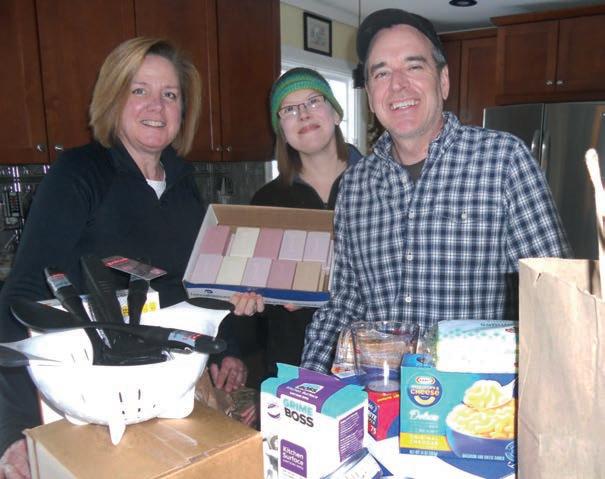
South Burlington residents in the Orchard neighborhood and local friends once again will be collecting items in support of their Champlain Valley neighbors through Food Drive Plus.
To date Food Drive Plus has raised over 12,000 pounds of donations.
“We will be helping our
neighbors in Chittenden County,” Louis Godin, South Burlington resident and event organizer, said. “We once again will be supporting Feeding Champlain Valley, Community Health Center of Burlington and Humane Society of Chittenden County.”
Visit the Food Drive Plus website for more information on donation drop off dates, times and items needed at fooddriveplus. org.
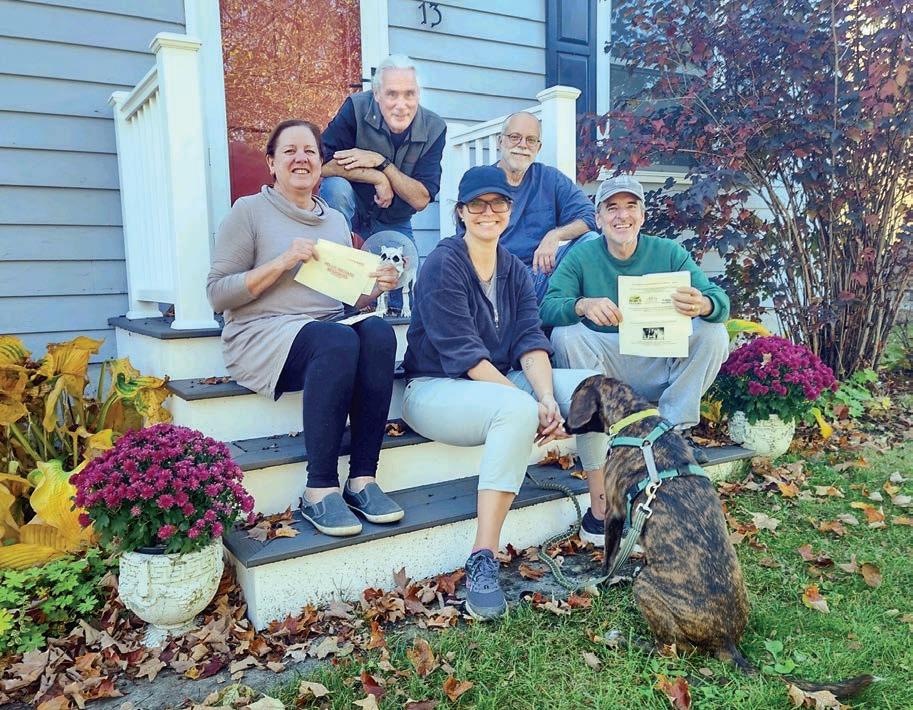
The collection will run through Dec. 31, ending with the Orchard neighborhood’s annual New Year’s Eve Glow Parade
(orchardglowparade.org).
The event is organized by Orchard Neighbors Helping Neighbors Project, which has
raised over 63,000 pounds of donations with various organized neighborhood projects and events.
Stay warmer all winter and stop wasting the heat you’ve paid for!
• Get up to $9,500 off comprehensive home air sealing and insulation projects with an Efficiency Excellence Network contractor (or $4,000 depending on household income)
• Plus, income-eligible Vermonters can now get up to an additional $15,000 for home repairs that are necessary prior to completing a weatherization project
• Financing options start at 0% interest, or add the monthly payment to your utility bill
Income-eligible Vermonters may also qualify for free weatherization services.
*Subject to availability and eligibility.
Carrie is your South Burlington neighbor and local housing expert. See what her past clients are saying about her personalized service.
From our first interaction, Carrie was my ideal realtor to partner with. She walked in with a solid plan, followed through with her promises, kept me on task, and was responsive to my needs. In times of my own uncertainty with the inherently complicated process, Carrie listened to my concerns and gave her thoughtful advice to help me make my decisions. Thank you, Carrie!
— DEREK, WILLISTON
My home value report provides data and insight to sell your home smarter.

Carrie Paquette
REALTOR® 1161 Williston Road
South Burlington, VT 05403
+1 802 373 1722 Mobile carriepaquette@vtregroup.com vtregroup.com


An independently owned and operated franchisee of BHH Affiliates, LLC. Equal









Begin using now to purchase fresh, nutritious meals on Tuesdays and Fridays and farmstand items in season. Also receive discounts on Chef culinary lessons and other special programs offered year round.


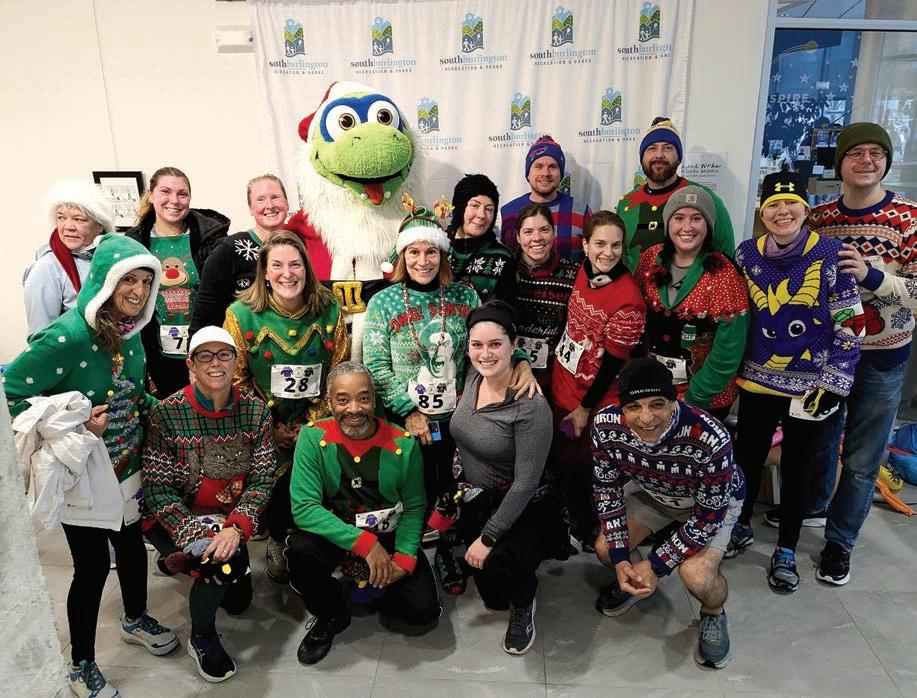
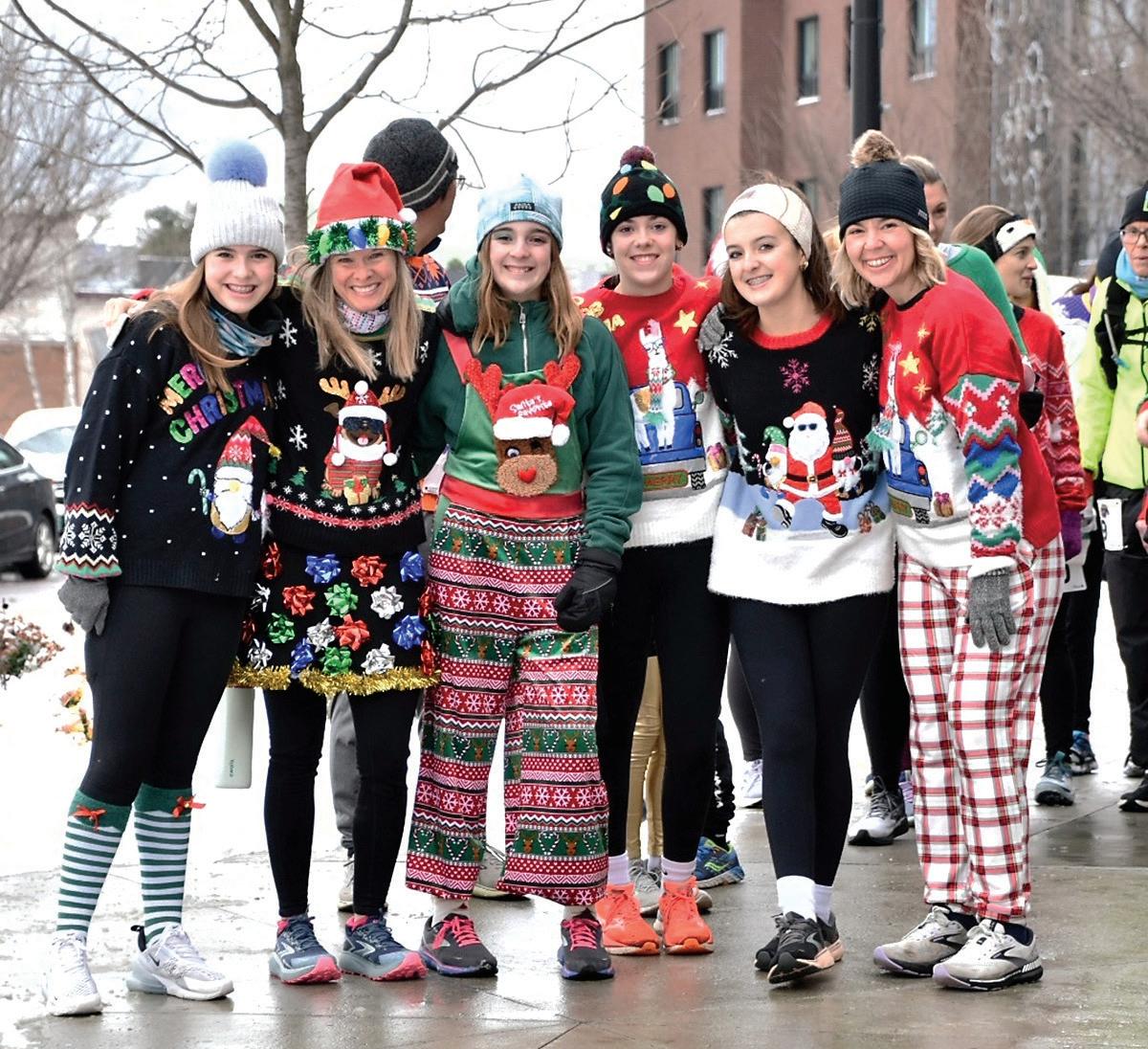



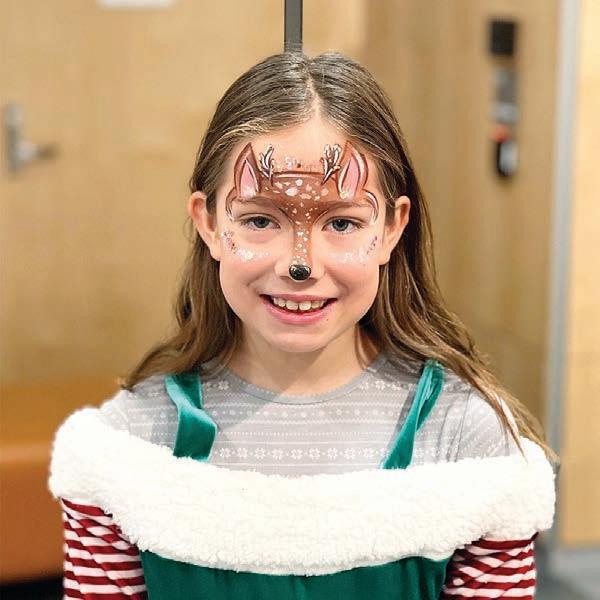
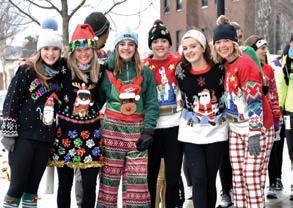
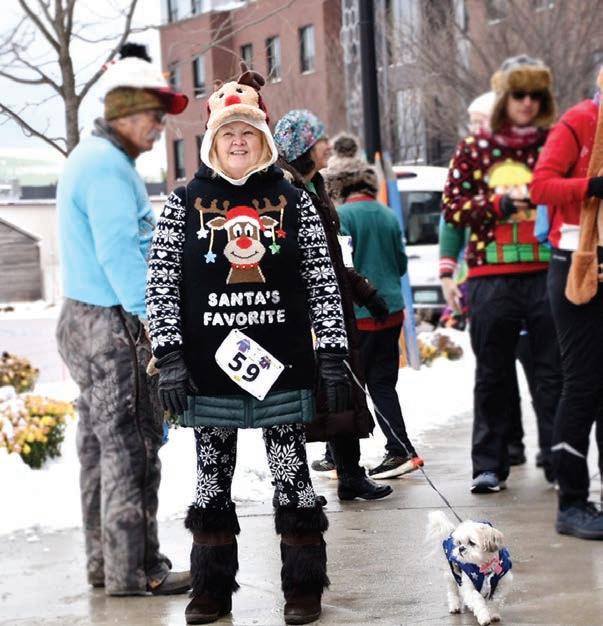
The South Burlington Recreation and Parks Ugly Sweater Fun Run/Walk on Dec. 8 brought out runners, walkers and gawkers to city center for a good cause — and to see everyone’s tackiest, craziest and ugliest sweaters. The annual event raised funds for the community programs put on by the parks and rec department, including free shuttles to events, community dinners and barbecues, the scholarship fund, among other things. The event featured ugly sweater judging, of course, food, silent auction, arts and crafts, face painting and a donation drive for the South Burlington Food Shelf.

continued from page 5
services. Make no mistake about it, people expect municipal services to continue, but they move here so their children can be raised in a wonderful community and attend an excellent school system. As important, good schools improve the financial value of everyone’s home and property and sustain a high quality of life for all residents.
At the bare minimum, just using the real estate association’s average of 41 school-aged children per 100 housing units, at the minimum, we will place 541 more kids in our schools. Already there are plans to move fifth grade into
DOOLEY
continued from page 5
the development, implementation, and enforcement of environmental laws, regulations, and policies. Environmental justice recognizes the needs of individuals of every race, color, income, class, ability status, gender identify, sexual orientation, national origin, ethnicity or ancestry, religious belief, or English language proficiency level.”
According to the 2022 American Community Survey, the median household income for South Burlington’s four census tracts are: $154,182 (#33.01), $93,086 (#33.04), $70,489 (#36), and $74,599 (#40.02). Median household income for census tract 33.01 (southeast quadrant) is the highest in Vermont.
In general, households that live in the southeast quadrant have substantially more economic resources than households residing in South Burlington’s other three census tracts.
LETTERS
continued from page 6
minor and major, has encouraged more people who have never owned a firearm to purchase one. It has also encouraged gun owners, law-abiding people who can pass background checks without any problem, to conceal carry for their own protection.
In recent memory, there has been only one well-publicized incident of a woman shooting a man outside of a bar in Burlington. She pulled a pistol from her purse and then committed cold-blooded murder.
The creation of a gun-free zone, which is not enforced, will be nothing more than a false sense of security for anyone who chooses to enter an establishment that sells liquor. Passing a law that says “no guns allowed” does nothing more than create a zone of illusionary protection, which is no protection at all. Beyond
the middle school to free up more classroom space in the elementary schools, which still have multiple trailer classrooms next to the original buildings to accommodate the student growth experienced during the past five years.
Those 541 additional students, no matter how they are spread out between the grades, will require more teachers, special educators, classroom aids, more bus routes and drivers, books and supplies, custodians and cafeteria staff, just for starters. Even if the new students are distributed evenly between the 12 grades, that will
mean 45 more students in each grade, K-12. That’s two more teachers per grade, which could mean 24 additional teachers to keep classes just above 20. Want higher class sizes? Thirty students per class would still mean 18 more teachers.
How do we pay for this growth in student enrollment resulting from the 1,320 new housing units? The answer is what no one wants to hear: higher taxes. Forget about changing the funding formula, using impact fees or growing the grand list. None of that will cover the dramatic increase in the cost to educate all the new students coming to our schools in this short
Moreover, households in the southeast quadrant already have access to substantially more city-owned open space than other South Burlington households. A city green in the city center makes it easily accessible to most city residents. The same cannot be said about the Long property on Spear Street. Investing open space funds to purchase land for the city green is a more equitable, inclusive and environmentally just use of tax dollars than using these resources to purchase 92 percent of the Long property. It is also very much needed for city green.
Sandy Dooley is a 50-plus year resident of South Burlington. She is a member of the newly established housing committee and served for several years on the now discontinued affordable housing committee. The views expressed here are her own.
that, this is not just “guns in bars,” it bans guns in any establishment that sells alcohol, which would also mean restaurants and other venues.
In a utopian world, there may not be any need for firearms, but in today’s world that is not the case. Innocent people are being horribly affected by violent crime across Vermont and especially in Burlington, and people have a right to defend themselves.
Now, it would seem appropriate for Vermont’s attorney general to inform the Burlington City Council that it has broken Vermont law, with these actions properly set aside as being illegal.
Chris Bradley President and executive director Vermont Federation of Sportsmen’s Clubs
period of time without substantial tax increases.
In South Burlington, building more homes means more kids, which means higher property taxes.
Further, as a retired publicschool principal, I know it’s impossible to cut enough money from annual budgets year after year to cover the cost of so many more students enrolling year after year without completely decimating one of the best school systems in Vermont. Municipal services are essential, but they are not the primary driver of tax increases. Schools are.
The construction of 1,320 new housing units has placed the school
district in a box and leaves the residents of South Burlington little choice. Higher tax bills are in our future. Those bills will be difficult for me to pay because I’m living on a fixed income. I assume that will be the case for many other homeowners as well.
So, until we put another moratorium on housing starts, or require developers to pay up front for the educational and municipal impacts brought on by these 1,320 new homes and other future developments, we will have no room to complain about our tax bills.
John Bossange lives in South Burlington.




Natural gas is normally odorless. VGS adds an odorant similar to the smell of rotten eggs, so it can be easily recognized.
You may see a white cloud, mist, fog, bubbles in standing water, or blowing dust, or vegetation that appears to be dead or dying for no apparent reason.
You may hear an unusual noise like a roaring, hissing, or whistling.
Protect Meters and Vents from Ice and Snow
Don’t push or pile deep snow around meters and ensure whoever removes snow from your property knows meter and appliance vent locations. Use extreme caution when clearing snow and large icicles near meters and vents. If your meter gets encased in thick ice, please call us.

Move immediately to a safe location. Call VGS at 800-639-8081 or call 911 with the exact location. Do not smoke or operate electrical switches or appliances. These items may produce a spark that might result in a dangerous condition. Do not assume someone else will report the condition.
Have a happy and safe holiday season!
More safety information here:


work and connecting each piece through written descriptions.
The Gallery, at 180 Market St., sits alongside city hall, senior center and public library. It was created to make art accessible to both artists and residents of South Burlington.
The gallery’s home in the center of the community provides unique challenges in terms of the wide variety of people who will view it, Kennelly said.
“It’s not just putting the art up on the wall, but thinking through how the different work will live with one another, and how it will communicate,” she said.
“Interwoven” is the first exhibit she organized as curator in August. It featured a collection of fiberbased works from four regional artists in contemporary craft practice, including Karen Cygnarowicz, Janet Fredericks, Bradie Hansen and Trista Ringer.
“Art challenges us when we’re looking at art made by others, to think through different perspectives and experience viewpoints outside of our own,” Kennelly said.
The creation of spaces where others can experience the world through art drives Kennelly. Visual language
“Art is a visual language. It’s how we learn and interpret the
world through making our own art or viewing art,” Kennelly said.
Her own work focuses on memory, relationships and time — all of which influenced her decision to become an artist.
She grew up alongside her mother and artist grandmother who encouraged her creativity by enrolling her in art camps. High school teachers, passionate about art themselves, pushed her to pursue advanced classes, while classmates guided her to the path of art education.
Kennelly came to Burlington to work with Reformed University Fellowship, a campus ministry organization at the University of Vermont. In her work, she focused on supporting students and building community.
Although her move coincided with the start of the pandemic, Kennelly noticed Burlington’s vibrant art scene and looked to be a part of it.
“I started getting involved in the local community by volunteering as a studio monitor at Burlington City Arts for the dark room,” she said. “That kind of grew into meeting other artists and getting some work there.”
Alongside her curation work, Kennelly works for Burlington City Arts in various roles: drawing, painting and print studio manager, public programs assistant, gallery


educator and teaching artist.
Now that she’s established, Kennelly takes pride in helping other artists find their way.
“For one student in my class, it was one of the first non-work-related things she had done for herself in years, so that was really exciting
to see her step out and do something more creative,” she said.
In South Burlington’s Public Art Gallery, Kennelly continues to encourage artists to follow their dreams.
The current exhibit features the recent works of illustrator
and comic artist, Julianna Brazill, whose work is inspired and imagined by the beauty of the Vermont landscape and the natural world. It will be on display until Jan. 24.
Curating “Recent Works” was an exciting mark in the career for both Kennelly and Brazill, as its display coincided with Brazill’s decision to pursue art full-time.
“It’s really inspiring to see someone take that leap. It was cool to create this exhibition in tangent with that shift for her,” Kennelly said.
Kennelly’s biggest advice for artists and community members is to get involved.
“There are so many volunteer opportunities to get experience and build community. That’s something I wish I had known earlier,” she said. “I was really glad to have people encouraging me to get involved.”
The South Burlington Public Art Gallery is open Monday to Thursday, 8 a.m.-7 p.m., Friday 8 a.m.-5 p.m., and Saturday 9 a.m.-3 p.m. Burlington City Arts on Church and Pine streets in Burlington.




Via Community News Service, a University of Vermont journalism internship, on assignment for the Other Paper.
and
faucet. 37in x 22in x 30in. $99. Call or text (540) 226-4478.
continued from page 1
town meetings and figuring out everything at the local level but we’re now funding education, at least notionally, at the state level.”
Education fund revenues largely come from homestead and non-homestead taxes, but also through sales taxes, rooms and meals taxes and lottery taxes.
While Minier said there have been many tweaks to the state’s education funding formula in the past few decades, Act 127, passed in 2022, was an effort by the Legislature to better equalize educational opportunities across the state. While well-intentioned, many have blamed the new funding formula for the exponentially high tax increases.
“This was a long time in the making, and it’s a really good idea, and it’s a really fair idea,” Minier said. “It came from the realization that not all students cost the same to educate. High schoolers are more expensive than middle schoolers. Students living in poverty are more expensive than others. Students in rural areas are more expensive than others, for example.”
But Minier likened last year’s double-digit tax increases to a perfect storm: the end of pandemic relief money and the value of houses statewide grew considerably, which is another factor in the state’s education funding formula used to formulate tax rates.
“All these things come together to create a very large year-over-

year jump,” he said.
The Vermont Department of Taxes announced in its Dec. 1 letter that residents would likely see a 6 percent increase in property taxes next year. While a relief from the double-digit predictions last year, Gov. Phil Scott noted that even with the single-digit tax hike prediction this year it still reflects a 33 percent increase in property taxes over three years and urged the Legislature to act.
This is part of the mission of the newly formed Commission on the Future of Public Education, which is tasked with studying Vermont’s public education system and making recommendations to the Legislature on how to ensure “all students are afforded quality educational opportunities in a sustainable, and equitable education system.”
Rep.-elect Bridget Burkhardt, Chittenden-8, has been keeping close tabs on the commission’s work and laid out a few preliminary ideas it has been exploring. Some ideas include maximizing revenue sources by potentially taxing second homes slightly higher, for example. But one of the most debated topics to bring down expenses, she said, is school consolidation.
“We’re waiting for data to see if school consolidation is even something that will lower expenses because so far, the anecdotal experience is that we did all this Act 46 consolidation, and it was
extremely painful for communities to see schools closed and to try to consolidate with neighboring districts, but spending hasn’t necessarily gone down,” she said.
The Vermont chapter of the National Education Associa-
that’s totally changed.”
Officials with the South Burlington School District were present for the forum Monday night. While the team anticipated presenting a first pass at next year’s budget at the school board
“You have to look hard at spending at the local level. But it’s also our job to say, is there a better way to structure education finance?”
— Rep. Brian Minier
tion recently proposed a process that would gradually phase in an income tax-based education fund as opposed to one based on property taxes.
“Anecdotally, in some of these meetings I’ve been having, too, 10 or 15 years ago the argument was you can predict more readily what’s going to happen with property values year over year than you can with income. That was one of the arguments for going to a property-based system,” Minier said. “It sounds like since Covid,
meeting Wednesday night, it scrapped most of the plans after receiving the long-awaited letter from the tax commissioner estimating next year’s property tax increase.
Figures in the letter, like the estimated yield — another contributor in the education funding formula used to configure homestead tax rates — offered a glimmer of hope for the district, which at one point had been anticipating another year of double-digit increases.
But district officials expressed cautious optimism, knowing that each school’s funding decisions ultimately affect the state’s taxes as a whole.
“I’m a little concerned that people were predicting that we were going to see the Dec. 1 letter estimating double-digits. My concern is because it came in at 6 percent, that districts are going to put things back to the budget, and then it will be worse,” Rep. Martin LaLonde, Chittenden-12, said. “That’s my concern, that we shouldn’t be happy with the 6 percent because where the yield ends up depends certainly on where the budgets end up and we need to keep them tight across the state.”
The South Burlington School District will reveal more concrete budget scenarios at its Dec. 18 meeting.
“It’s easy to point the finger,” Minier said. “The truth is, yes, you have to look hard at spending at the local level. But it’s also our job to say, is there a better way to structure education finance?”





Piano and Composition Lessons
Give the gift of music-making
Basic, intermediate - children, teens, adults National Keyboard Arts Curriculum References, scholarships available Edward Darling, So. Burlington edwardjohndarling@gmail.com • 802-318-7030 Remote and In-Person Lessons





617-283-6010





























Keep the glow going with special deals and o ers from local shops, restaurants, and hotels just for Winter Lights ticketholders.
RESTAURANTS
Simply show your Winter Lights ticket to unlock special deals.