TheUltimateGucciBagsGuide:Legacy,
Craftsmanship,Materials,andIconic Designs
Gucci stands today as one of the most influential fashion houses in the world, but its story began far more modestly. The brand was originally founded as a leather goods and luggage shop, attracting wealthy aristocrats who frequently traveled and prized refined craftsmanship. Many of these early customers were passionate about horses, and their lifestyle deeply inspired Guccio Gucci. Recognizing their devotion to equestrian culture, he crafted products that reflected their values, which ultimately led to the birth of the iconic Horsebit and other equestrian-inspired motifs that still define Gucci’s identity.
In the early days, sourcing luxurious materials was extremely difficult due to wartime shortages. Instead of halting production, Gucci adapted with creativity, turning to canvas, hemp, and jute as alternative materials. These choices, born from necessity, later became signatures of the brand. Even today, these fabrics remain central to the design vocabulary of many classic Gucci bags.
After Guccio Gucci's passing, the family and the company found themselves navigating turbulent times. Despite a wave of international expansion, internal disputes and unclear brand direction threatened to derail the label’s legacy. The transformation came in 1994 when Tom Ford, the American designer known for his bold modern vision, was appointed creative director. His influence was immediate and
profound. The brand’s aesthetic shifted dramatically toward glamour and sensuality, and sales soared by an astonishing 90 percent. This era marked Gucci’s rebirth as a global powerhouse.
In 1999, Gucci aligned itself with the company now known as Kering, forming what became the Gucci Group under the leadership of Ford and CEO Domenico De Sole. Years later, when that chapter closed, Alessandro Michele stepped into the creative director role in 2015. His eclectic, vintage-romantic style propelled Gucci into an entirely new era, attracting global admiration and giving the brand a renewed sense of individuality. Even today, carrying a Gucci bag is a statement recognized instantly thanks to distinctive materials, bold creativity, and unmistakable craftsmanship.
Gucci’s reputation is further strengthened by its use of diverse and often unconventional materials. The famous GG canvas, the elegant Diamante pattern, the vibrant Flora print, and the luxurious Guccissima leathers each represent a unique chapter in the brand’s evolution. The GG canvas is perhaps the most iconic, featuring the double-G monogram arranged in diamond shapes, originally introduced in the 1960s. This design remains the face of Gucci’s heritage, woven from durable canvas and enhanced with refined leather trims.
Another beloved style is the Vintage Web, instantly recognizable by its green-and-red stripe. Inspired by equestrian saddle girths in the 1950s, this stripe has grown into one of Gucci’s most important symbols. The Guccissima leather, created in 2006 by accessory designer Frida Giannini, offers a luxurious take on the GG motif, embossed directly onto supple leather. The Microguccissima is its smaller, more delicate counterpart, featuring tiny embossed Gs for a subtle yet sophisticated look.
Among the earliest patterns is the Diamante design, woven into hemp bags in the 1930s during a period of material rationing. Despite originally being a wartime solution, the diamond-shaped pattern quickly earned its own place as an elegant hallmark of the brand, now seen on both leather and canvas pieces. The Flora print, commissioned in 1966 for Princess Grace Kelly, stands apart as one of Gucci’s most artistic designs. Vibrant, romantic, and instantly captivating, the Flora pattern continues to decorate bags, shoes, and accessories, embodying elegance with a whimsical touch.
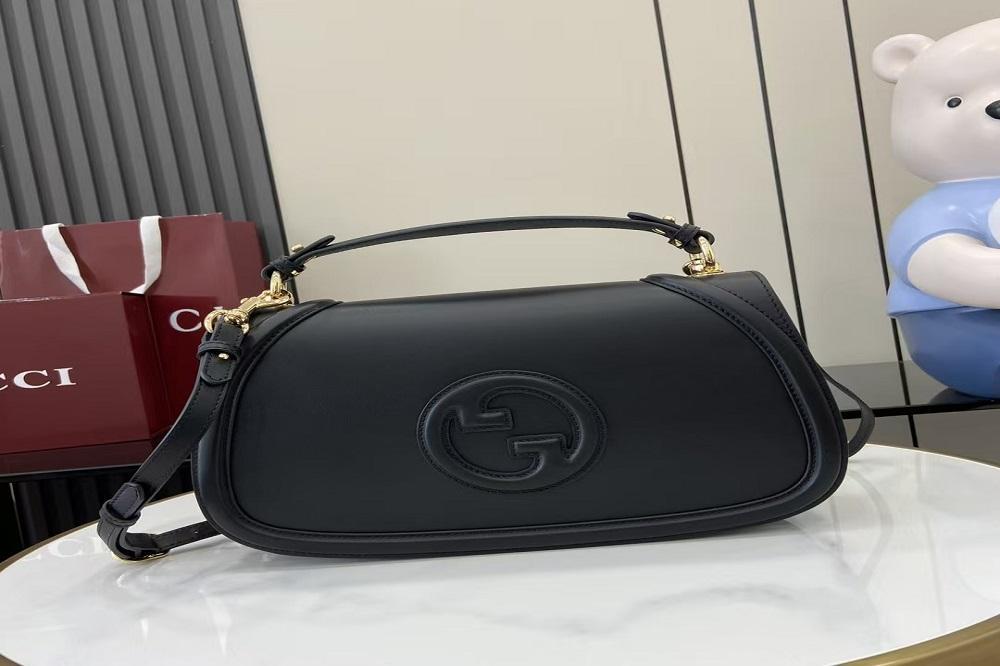
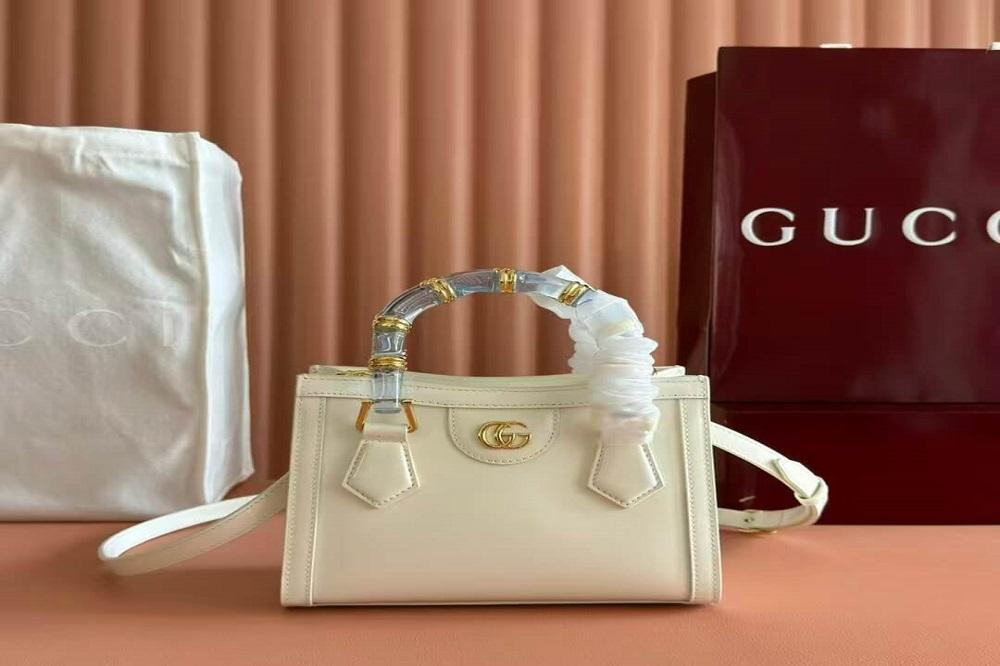
While Gucci’s fabrics play a major role in defining the brand, the finishing touches its hardware and accents are what truly elevate each bag into a work of art. The interlocking GG logo, created in the 1960s, remains one of the most recognizable brand symbols in the world. The Horsebit, inspired by riding equipment, first appeared in 1953 and still graces bags, loafers, and jewelry. Bamboo handles, introduced in the 1940s, were crafted by heating and bending cane sticks into curved shapes reminiscent of a saddle. This innovative detail captured the attention of royalty and became a signature element revived repeatedly throughout Gucci’s history. The Piston Lock, frequently seen on the Jackie bag, offers a sleek, functional accent, while the Gucci crest, featuring a knight, shield, and ribbon logo, symbolizes prestige and heritage. In more recent years, the Lady Lock hardware introduced in 2013 contributed a modern, minimalist touch.
Over its long history, Gucci has introduced countless bag designs, but a select few have become legends. The Bamboo Bag, beloved for its lightweight bamboo handles and effortless elegance, remains one of
the brand’s most celebrated creations. Its hybrid structure featuring both a long strap and short bamboo handle makes it functional as well as iconic.
The Queen Margaret bag is another standout, admired for blending vintage flair with contemporary charm. Its pearl-and-crystal bee closure symbolizes love and wisdom, while an attached ID tag embossed with the word “Loved” adds sentimental appeal. Fashion enthusiasts continue to prize this design for its emotional richness and timeless beauty.
The GG Marmont collection, spanning handbags, shoulder bags, belts, and backpacks, has become a modern favorite. Known for its quilted textures and bold gold GG hardware, the Marmont line is adored by celebrities and trendsetters. Its versatility allows each wearer to express their own style while remaining anchored to Gucci’s heritage. Get more info about Replica Designer Handbags for women
The Jackie Bag, named after Jackie Kennedy, stands as one of Gucci’s classic masterpieces. Its graceful, curved silhouette and piston lock closure merge sophistication with practicality. After its relaunch in 2009, it regained widespread popularity, proving its timelessness across generations.
One of the newest icons is the Dionysus bag. Inspired by the Greek myth in which Dionysus transforms into a tiger to save a nymph, the bag features a tiger-head closure and often displays elaborate embroidery of flowers, bees, and animals. Although relatively recent, it has already become a staple within the luxury fashion world.
Across all these designs, Gucci bags remain symbols of innovation, opulence, and cultural relevance. Every stitch, pattern, emblem, and material reflects the brand’s rich history while embracing modern evolution. From the earliest horse-inspired motifs to the experimental artistry of contemporary collections, Gucci continues to shape the world of luxury fashion one iconic bag at a time.