Ice, ice maybe
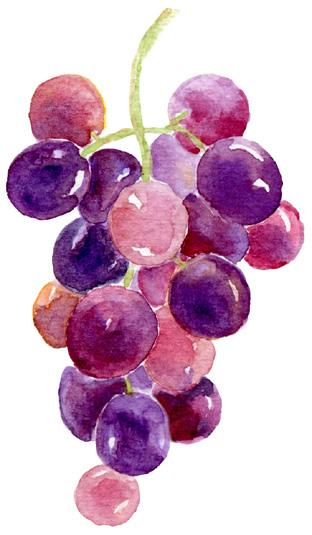
Winter is almost here, which means some regional farmers are gambling part of their grape crop to make ultra-sweet ice wine BY AARON REISS
There’s risk in producing wine this sweet.
Making ice wine — which has a more concentrated, sweeter flavor than most wines because it comes from semi-frozen grapes — requires more time on the vine compared to wine made from regular-season grapes. But nature dictates that the longer the grapes hang, the greater the chance that pesky predators will ruin them.
“There could be disease or rot that destroys your crops,” says Tony Kooyumjian, owner of Augusta Winery and Montelle Winery, in Augusta, Missouri. “We had (rot) happen before. We were waiting for a hard freeze and while we were waiting, the grapes ended up getting lost.”
Ice wines are heavily produced in Canada, where the climate aids their production. It’s not always possible to make
DEDICATE GRAPES
Most wine grapes in Missouri are harvested between late August and October, so during the first harvest, vineyards set aside grapes for later. Because it’s not certain Missouri wineries will be able to make ice wine, wineries only set aside a small amount. Owner of Augusta and Montelle Wineries Tony Kooyumjian says his wineries designate about 5 percent of their grapes for later harvest. His Vidal Blanc grapes are away from trees and are toward the middle of the vineyard.
FERMENTING TIME
MONITOR THE TEMPERATURE
Ice wine requires grapes frozen on the vine. Wineries in Missouri must monitor temperatures and wait for a sustained freeze. “You’ve got to have temperatures below probably 20 degrees for at least overnight,” says Dave Johnson, senior winemaker at Stone Hill Winery. The grapes are harvested first thing in the morning.
ice wine in Missouri. It requires weather conditions that prevent rotting and a fairly early hard freeze. Kooyumjian says the weather isn’t looking too favorable this year for Missouri farmers. But a good harvest is worth the risk, says Dave Johnson, senior winemaker at Stone Hill Winery in Hermann, Missouri.
“Ice wines are more like a concentrated version of regular wine,” Johnson says. “People like them because they’re sweet, they’re rich, they’re concentrated, flavorful.”
Kooyumjian says ice wine is a popular gift to bring to dinner parties and holiday gatherings for New Year’s Eve and Christmastime.
As colder temperatures approach, take a tour of the production process for this sweet wine.
JUICE ‘EM
1 2 3 5
The juice then goes into another tank. Yeast is added, and the juice ferments. This can take between two and three months, and the temperature in the tank — because of the higher sugar content in ice wine — tends to be cooler than when other red wines ferment, Kooyumjian says. The tank starts out at 55 degrees, but it might end up near 70 degrees.
BOTTLE IT UP
Ice wine typically arrives in 200 or 375 milliliter bottles. After waiting a few weeks for yeast to settle at the bottom of the tank so it can be filtered out, the winery tests the wine for remaining yeast particles. The winemakers don’t want sugar to crystallize in the bottle. Once it is stable, the winery bottles the ice wine. “If everything went perfectly, we could get it done in two months,” Kooyumjian says. “But, if the fermentation is slow, it could take four to five months.”
Because wineries are pressing grapes that are frozen, Johnson says the juicing takes longer with ice wine — from 10 to 24 hours compared to about three for typical reds. The juice is frozen, but the grapes’ sugars are not, which leads to ice wine’s concentrated sweet flavor. There’s less juice per grape, which results in less volume.
VINE TO VENDING
If you want to drink regional and continental ice wines for the holidays, here are some suggestions from Schnucks.
MONTELLE WINERY; Augusta, Missouri; $14.99: Here’s the local stuff. Montelle’s Vidal Icewine has rich body and peach and apricot flavor, according to Missouri Wine Country.
MARY MICHELLE WINERY; Carrollton, Illinois: $12.99: Mary Michelle offers a budget-friendly Vidal Ice Wine with a “caramel, buttery nut aroma,” according to the winery’s website.
KIONA WINERY; Benton City, Washington; $26.89: Kiona’s award-winning Chenin Blanc Icewine has “notes of kiwi, pineapple and mango,” according to Wine Enthusiast
JACKSON-TRIGGS WINERY; Niagara-on-the-Lake, Ontario; $21.09: This Canadian Vidal Icewine features “tropical aromas of papaya, mango and apricot,” according to Great Estates.
INNISKILLIN WINERY; Niagara-on-the-Lake, Ontario; $61.29: It’s a lot of money, but GQ says the brown sugar and mango aromatics make Inniskillin’s Vidal Icewine one of the most critically acclaimed.
The last time Stone Hill Winery was able to harvest its ice wine was in December 2013.
You don’t have to bundle up to shape up
Explore new ways and places to stay healthy this winter BY WILL JARVIS
Whether you’re trying to lose those post-Thanksgiving pounds or just put your mind in a better place before the hectic holiday season, Columbia has a variety of options to better both the body and the mind. Running around an indoor track is boring. Lifting weights gets repetitive. Scaling a 35-foot wall by pushing your body and mind to its limit? Now we’re talking.
Ew, no thanks.
Not at all?
Fine. I’ll shower after I work out.
Nope.
90 degrees plus
Mind over matter
What’s your ideal workout temperature?
Non-desert temps are chill.
But a healthy mind is equally important as a healthy body. Harmonize your body by practicing meditation or playing tai chi. Indulge in a sense of calm during hot yoga, or let out a little bit of aggression in a safe and productive manner by kickboxing. Work your way through the Columbia fitness flowchart to see which activity is best for you.
MEDITATION
SHOW ME DHARMA
No movement is necessary at Show Me Dharma. Guests are invited to sit in a comfortable position, making sure their back is straight, and participate in the bi-weekly, half-hour meditation. Studies have shown silent meditation to be beneficial for one’s blood pressure and heart rate. “When we practice meditation, we’re able to see our lives more accurately, and those things go a long way” teacher Joe McCormack says.
HOT YOGA
SUMITS HOT YOGA
Looking to stay warm this winter? At Sumits Hot Yoga, instructors pump up the heat to over 100 degrees, which creates a high-sweat environment that provides an intense workout and mental meditation. “Your body feels more fluid and more relaxed,” instructor Kelsey Underwood says.
Cost: First class is free, and unlimited monthly classes cost $139. By-the-class passes are also available.
Class times vary, 505 E. Nifong Blvd. #103, 474-9642
Do you want to focus more on the mind or the body?
I like a routine.
Not the best.
TAI CHI
Cost: Free Class times vary, 1600 W. Broadway, 355-5303 do you want to sweat?
HEART, BODY & SOUL
Tai Chi is not practiced; it’s played. This Chinese martial art is similar to yoga, but it keeps the body constantly moving and focuses on balance, as well as harmonizing the entire body. “It’s all about generating energy,” instructor Mary Cruise says. “You should have a vitality to your life, and this helps.”
Cost: $10 per class Tues.–Wed. 5 p.m. Thurs. 10:30 a.m., 1004 W. Worley St., 777-6771
Body
How adventurous are you?
It’s not fun if you’re not a little scared. No? Cool. Enjoy your perfect life.
It’s not a workout if you don’t sweat!
How do you feel about a sore body?
Bring it on.
Need to let out a little frustration?
ROCK CLIMBING
MU RECREATION COMPLEX
Want an activity to test both the mind and the body? Rock climbing can. Mapping a route up the wall and actually making that climb are barriers in themselves, says Wil Palmieri, an experienced climber. He and two partners are working to open Columbia’s first full-service climbing gym, but for now, there is the Rec’s climbing wall and the bouldering wall, which is open during regular facility hours.
Cost: $19 per semester for Rec members Mon.–Fri. 2–8 p.m., 213 Student Recreation Complex, 884-5600
KICKBOXING
9ROUND
High-tempo, high-energy and known for stress reduction, kickboxing is a total-body workout beneficial for both muscle strength and weight loss. Classes at 9Round last 30 minutes. There are no class times; just show up whenever.
Cost: Varies
Hours vary according to location. 901 E. Nifong Blvd., 445-3152, 104 S. Providence Road, 441-5425
Cafe Home
In a city where new real estate casts a shadow on local businesses, Iwona Galijska and her son Robert Burlinski fight to keep their haven of Polish culture alive
By MIKE TISH
Photos by ASA LORY
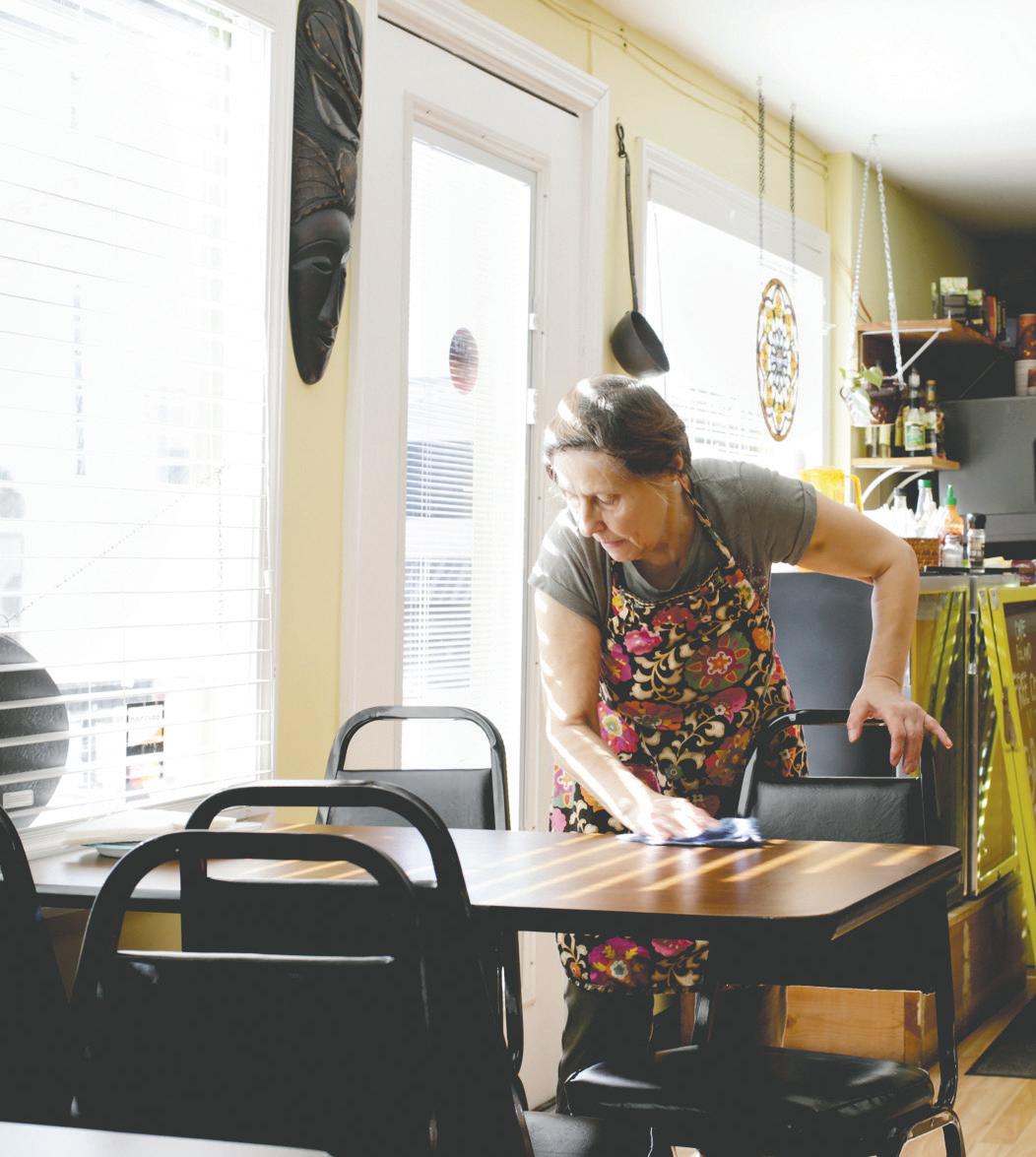
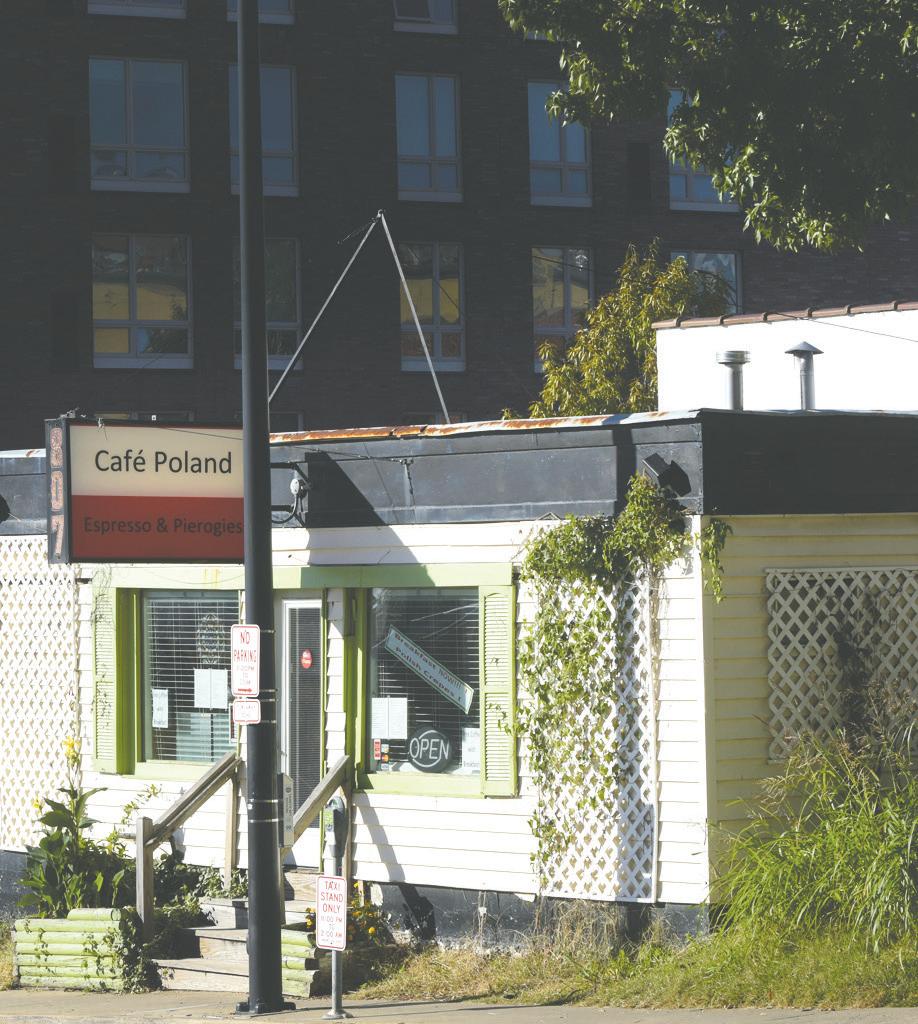
One light never turns off at Café Poland. Even after the shop closes at 8 p.m., the large acrylic sign that reads “Café Poland Espresso & Pierogies” illuminates the tiny trailer until daytime. Although this might be comforting to some residents who take it as a reassurance that one of Columbia’s most unique sources of culture is still open, it is a source of much frustration for Iwona Galijska.
“The light, it is always on, and we have to pay the city,” Iwona says about the light-sensitive fixture that was falsely advertised to only turn on in response to daylight, but stays on throughout the night. “I told them I cannot turn it off, but it does not matter because they say it is ours.”
High utility costs are nothing to trifle with, not when there’s a fledgling business on the line, or when Columbia is seeing record development on what feels like every corner.
Iwona’s oldest son Robert Burlinski, 46, opened Café Poland in January 2013, but left it under the care of his mother while he studies at Aureus University School of Medicine in Aruba. The cafe isn’t bringing in enough revenue to pay her, so she instead volunteers six days a week.
Before moving to Columbia, Iwona, 65, owned a profitable farm in Poland and did not imagine herself moving to the U.S.
“I am lucky and unlucky,” Iwona says. “All my life I was climbing, and then it all fell out of my control.”
When Iwona first came to the U.S., she arrived in Anchorage, Alaska. Waiting for her in a neurological clinic was her son, Krystian, who was 22 years old at the
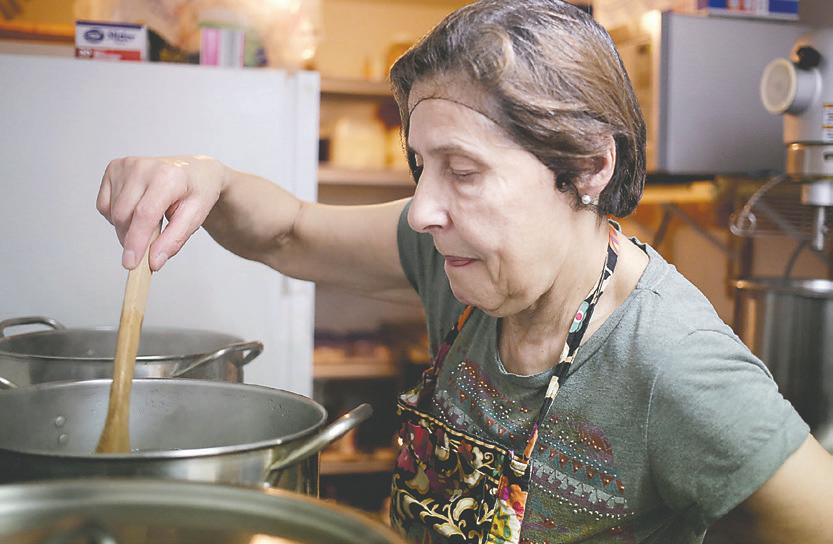
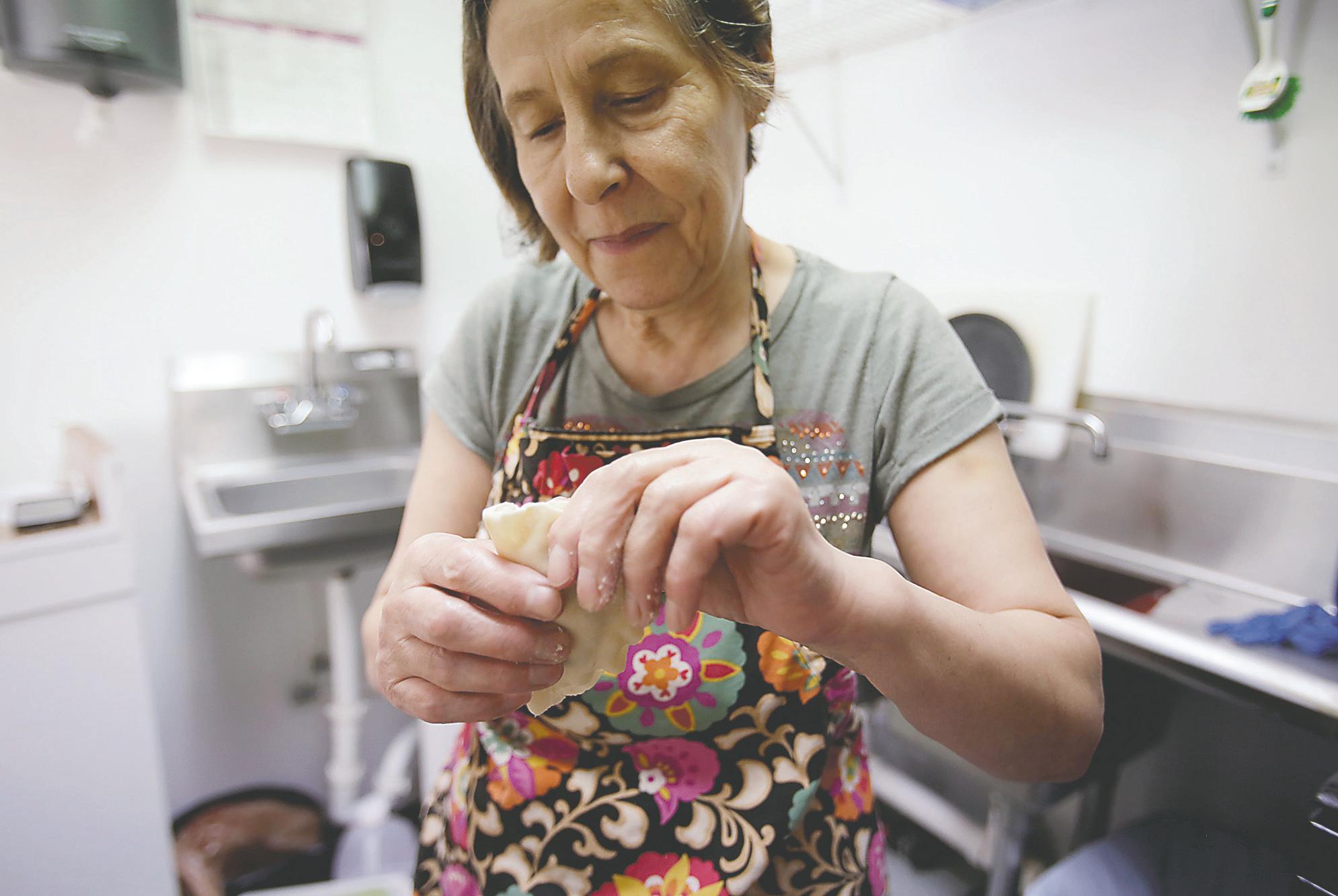
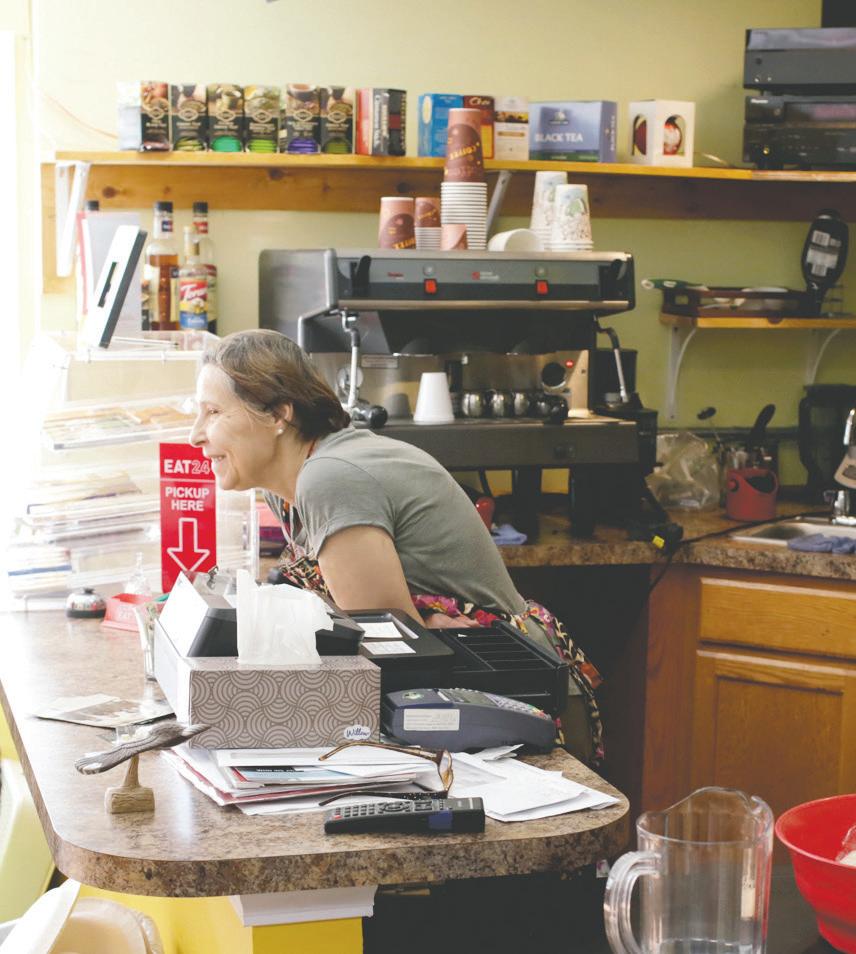
Iwona Galijska’s Polish pierogies were deemed, “little pouches of rainbows and everything good in the world” by a customer in her guest book. Iwona volunteers at the restaurant six days per week because Robert cannot afford to pay her.
time. His father, Iwona’s ex-husband, had just died, and Krystian needed family. He was living with epilepsy and Post-Traumatic Stress Disorder.
Iwona arrived on a temporary visa, and the plan was to follow the clinic’s treatment protocol, then return to Poland. However, Krystian’s treatment was going to require him to stay in the U.S. for an extended period.
When Iwona returned to Poland for harvest, she had a life-changing decision to consider.
She could bring Krystian to Poland, where Robert made a modest living as the farm director and owner of a popular restaurant in their hometown. This would come at the expense of Krystian getting better treatment in the U.S. The other option was a permanent move to a country where the family knew no one, but where they could give Krystian the chance to recover.
“For Krystian, of course I would care for him,” Iwona says. “I don’t want to go back to my country without Krystian.”
Iwona returned to Alaska two weeks later. U.S. law permits immigrants to legally enter the country when they are taking care of family members. Because of this, Iwona was able to stay in the U.S. while Krystian was receiving treatment. Robert already had a green card
because his father was a U.S. citizen, so in 2002, they made the permanent move. Neither of them have been back to Poland since.
The move was a chance for the family to start fresh. Iwona and Robert attended the University of Alaska-Anchorage, where Iwona worked toward a degree in human services and Robert worked toward a degree in phlebotomy, the practice of drawing blood from patients.
In 2005, Robert opened a restaurant in Anchorage, which he called Café Polonia. Business was good, thanks to sailors from the nearby U.S. Navy base who became frequent customers. But it would not last. In 2007, President George W. Bush ordered a surge of more than 20,000 U.S. troops deployed to Iraq. Those sailors disappeared. A year later, they declared bankruptcy.
Iwona picked up a job at the supermarket. She also began work as a sterile processing technician at the local hospital. Robert found work at another facility as a phlebotomist. They managed to make a living in Alaska while Iwona finished earning her citizenship. In 2010, Iwona became a legal U.S. citizen, and the family had an opportunity for another fresh start.
“Because of good medical school, Robert wanted to go to Austin,” Iwona says. “We stayed only for a half year because the out-of-state tuition was too expensive. Even at community college, which Krystian was taking, was the same. Very, very expensive.”
With no possibility of opening up another restaurant, they were in a tough spot, but a stroke of luck changed everything. Iwona had reached out to the Polish Interior Ministry to find out the status of her father. She was kept from him as a child by her godmother, who raised her because her mother could not. Then, one day, she received contact from a woman also named Iwona Galijska. As it turns out, Columbia Iwona’s father had two more daughters and named one of them Iwona after his first daughter. Poland Iwona Galijska reached out to Columbia Iwona Galijska because she thought she had stolen her identity. Once it became clear they were half sisters, Poland Iwona Galijska acted out of the same interest that brought Columbia Iwona Galijska to the U.S.: for family. She loaned Iwona, Robert and Krystian $4,000 she got from selling their father’s home. It was enough to get them to Columbia, where education would be cheaper for Robert and Krystian.
When the family arrived in Columbia, they had no intention of opening a restaurant. However, after sending in multiple job applications, they were unable to find jobs. Then, one night, Robert came upon the little box building that is now Café Poland and decided to give the restaurant business another try. They were rejected for low-interest business loans because, as Robert puts it, “They said no one would buy our product.” He was instead forced to use his student loans to start a new restaurant, in addition to the $4,000 from Poland Iwona Galijska and an additional $15,000 loan from his aunt on his father’s side of the family. Without family, Café Poland might not exist.
Now, it’s midday on a Tuesday in October, 15 years after Iwona and her two sons reunited in Alaska. Iwona is watching over the intimate cafe Robert owns in downtown Columbia. A few customers are grabbing a bite for lunch at Café Poland. It’s the only place in town
that serves authentic Polish food — the pierogies are a taste of home for those who grew up with the cuisine. Iwona is up on her toes as she leans her petite frame up against the railing. She’s glancing through a guest book inside Café Poland. Business has been slow as of late, but these guest books — some completely filled with glowing reviews — are evidence of dedicated customers who have grown to adore this place. “I am from Saudi Arabia,” one review begins. “I am in love with this restaurant. When I eat, I remember my mom. Thanks a lot.” The lines of Iwona’s face are deep and stuck in a sort of half-frown that might be a result of the struggle she and her family face every day. Iwona is in the restaurant six days per week, but every time a customer opens the door, a smile pushes those lines up into her cheeks and closer to her ears.
A bell rings, and the silence is broken. Iwona snaps up, turns around and takes notice of the young man’s attire. A backpack implies school, and she asks how the semester has been treating him. He replies that he just got out of a quiz. She throws up her arms. “Oh, you have a quiz,” she says. “Robert says, ‘I have a quiz,’ and he does not like them. How did yours go?” As she pours him a coffee, she talks to him as if catching up with a distant relative or friend. He leaves, and Iwona waves with one arm on her hip as she wishes him well.
“I hope people who come through here feel at home,” Iwona says. “Because to me, it is home, and I want to show everyone maybe a little something about Poland, about where I come from.”
The restaurant has a special place in the hearts of its frequent customers. Students, local business owners who
take employees out for weekly lunches and fellow immigrants all rave about the pierogies, borscht and gulash. Late one Thursday night, a young Russian man stops by. He and Iwona converse in Russian for a while, and Iwona appears completely at ease. He orders pierogies, and as he leaves, he calls out Russian to Iwona. She laughs, replies and waves him off. As he leaves, a visible smirk appears on Iwona’s face.
“He says he hopes his grandmother makes pierogies as good as mine,” she says. “He is from Russia, and his grandmother is Russian. I guess she makes pierogies differently.”
It’s high praise, to best a grandmother.
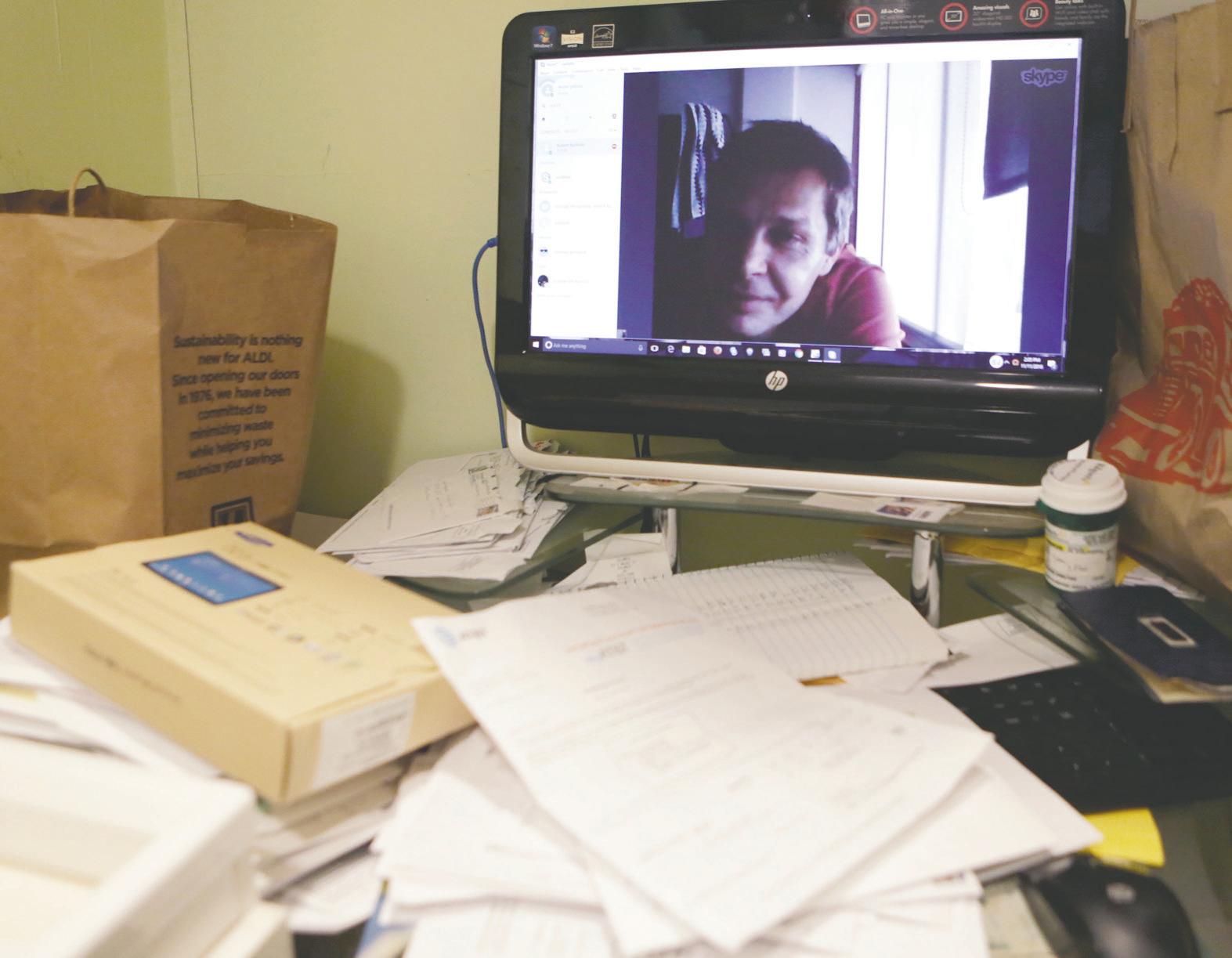
Robert Burlinski uses video chat to help with the cafe while he studies at Aureus University School of Medicine in Aruba.
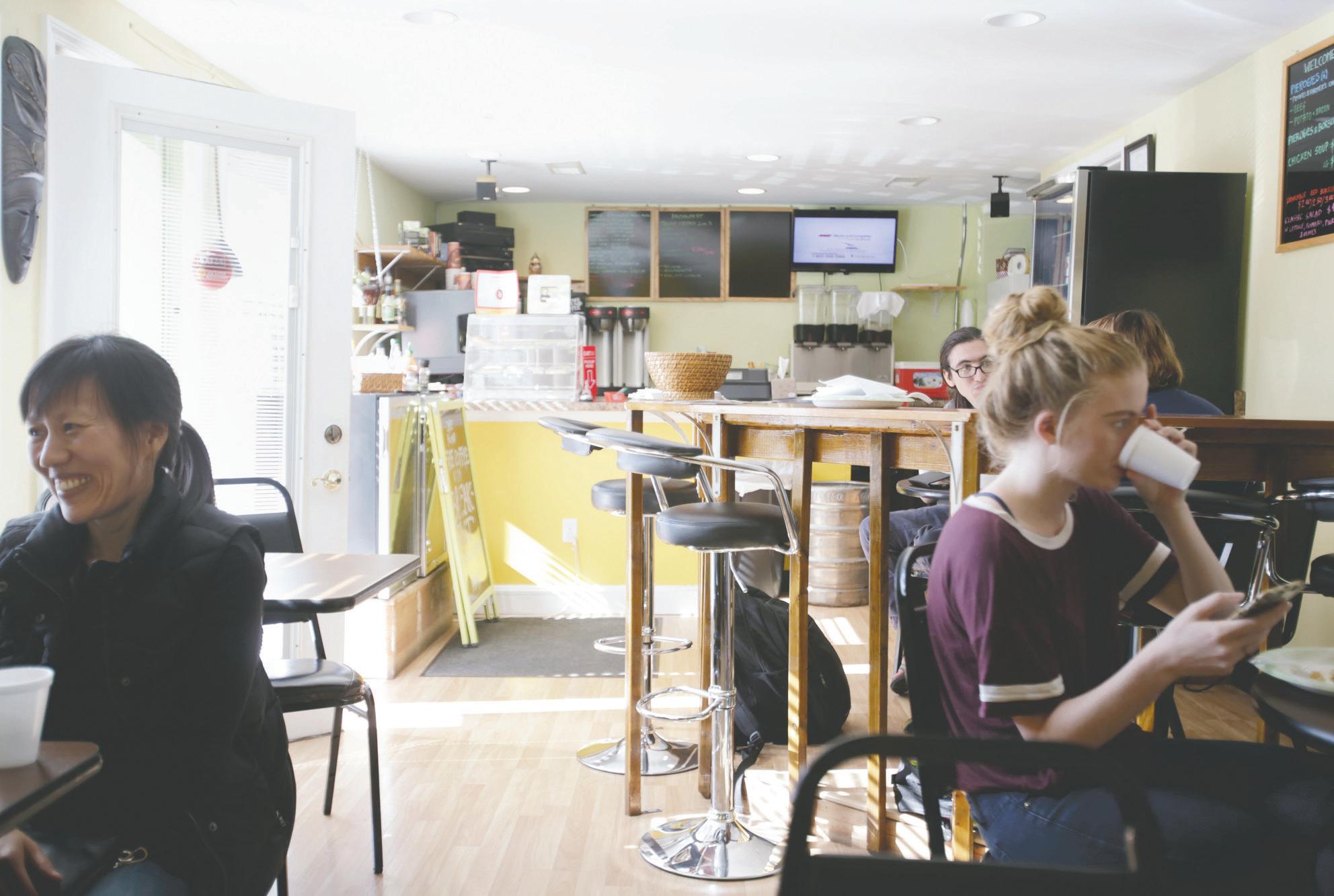
Lunch is the busiest time at Café Poland. Customers converse over pierogies and golbaki, or stuffed cabbage and potatoes.
Making Café Poland work has demanded a lot of each family member, especially as Robert and Krystian are both studying to earn degrees. Robert is currently in his second year at Aureus University School of Medicine in Aruba. While he studies abroad, he communicates with Iwona via Skype on a small desktop in the back corner of the restaurant. He helps her keep the books, crunch numbers and answers questions on how to fix the various coffee and cooking machines in the shop. Krystian, now 38, is studying photography and painting at Columbia College, and he is not expected to graduate until at least 2018.
“I see myself, in five years, hopefully as a successful doctor,” Robert says from his dorm room in Aruba. “I want my mother to not work as much, or at all really. I hope Krystian is being able to support himself as an artist, and we are happy.”
This Skype call with Robert has lasted more than 18 hours. The lighting and quality of the camera are not great, but it’s easy to see the same bags his mother has forming under Robert’s blue eyes. His brow is furrowed as he looks down and tilts his head back and forth, like he’s willing himself to imagine the future he is talking about.
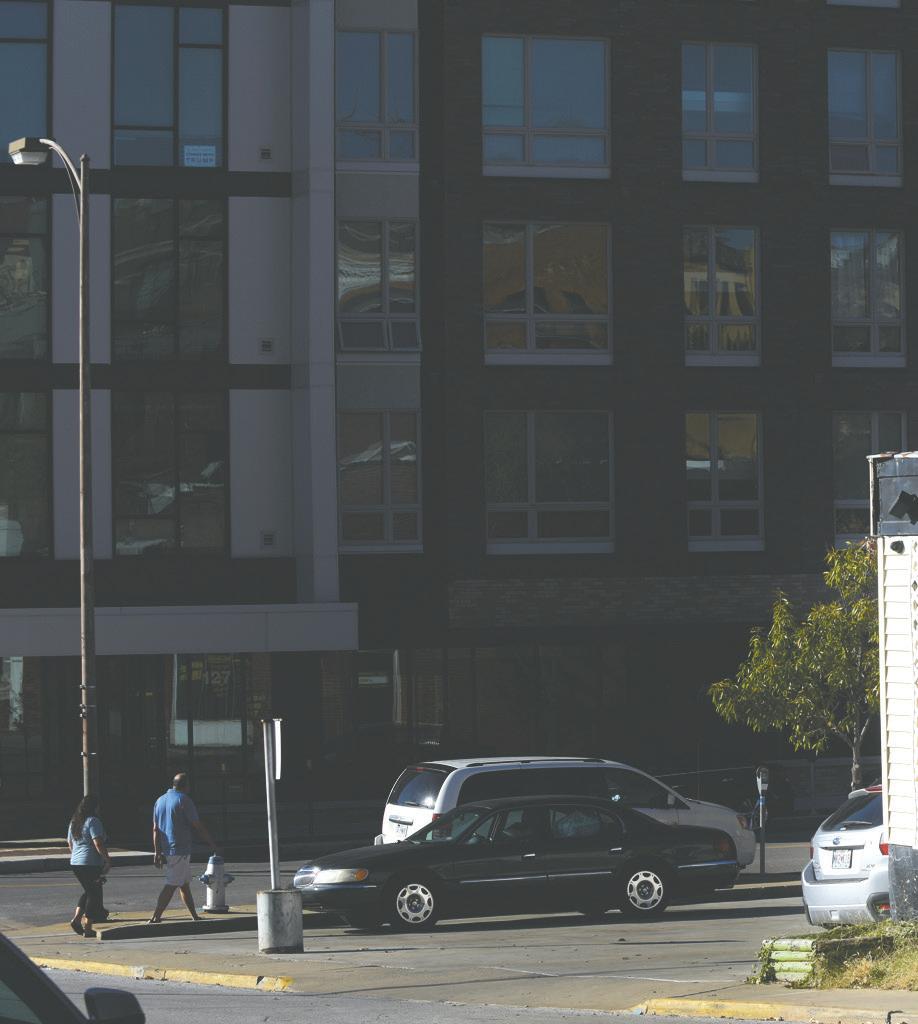
The family recently renewed its lease on the cafe for one more year — a short-term victory. Although the city of Columbia is likely to extend its current moratorium on new multi-family housing within a mile of MU campus, there’s still the chance that after the one year, landowner Steve Pohl could sell the property on which Café Poland, Tiger Cleaners and the parking lot are located.
Keeping Café Poland open will take more than just paying the rent, and the decline in Café Poland’s business means Robert’s family will continue struggling to keep the lights on.
The sole responsibility for the restaurant falls on Iwona while her sons are attending school. She also receives help from her fiancé Daniel Karlov, an architect in Jamestown, who visits on the weekends and helps attract customers. Despite his help, on some days, business is slow, and she is there with perhaps one other worker while TV Land plays reruns of classics such as I Love Lucy and Leave it to Beaver. Sometimes she throws classical music, her favorite, on the Numark record player that rests on the shelf. Through conversations with her newly discovered family, Iwona has learned she shared this passion with her father, who was the president of a music society back in Poland.
On this day, though, Iwona plays Bob Dylan in the cafe — in honor of his Nobel Prize. She has one Bob Dylan album, a gift from a friend, but she says she does not like it.
“I do not know what Bob Dylan is saying with the lyrics,” she says. “I do not think he is a very good singer. But when someone is able to tell me what it is he is saying, I actually have come to like him more.”
More than just the record player, Café Poland has an aura of intimacy. Artwork takes up most of the available space on two of the cafe’s four walls.
A raised seating section guarded by a railing helps give the restaurant a homey dynamic, but it wasn’t always this way.
The space was previously home to another immigrant-owned business, Carpe Diem, which hosted different arts and culture events. It was in bad shape when Café Poland moved in. Robert used money from loans to purchase new walls, electric work, chairs, tables, cooking equipment, coffee machines and everything else. On the walls, Iwona has hung up some of the cooking equipment from the original shop Robert owned back in Poland.
On the counter is a photo of Iwona and her children, all smiles and all together. The place starts
“i see myself, in five years, hopefully as a successful doctor. i want my mother to not work as much, or really at all. i hope krystian is being able to support himself as an artist, and we are all happy.”
— Robert Burlinski
to feel like a home. The smell of pierogies, borscht and fresh coffee fill the air, which combine to make the unique aroma that is Café Poland.
Before long, the workday has come to an end. For Iwona, Robert and Krystian, it is one day closer to what they hope will be a more relaxing life. Passersby can be faintly seen through the open shutters. Iwona repeats her nightly routine. Sweep up the floors. Put tomorrow’s food in the refrigerator. If Robert is still awake, she wishes him good night. One more time around the cafe, double-checking all of the cooking equipment and making sure all is where it should be. Off go the lights.
Well, all except one.
The lunch rush comes to an end, but Café Poland is not silent. Whether Iwona plays classic TV reruns or symphonies on the record player, sound fills the air.
SEE THIS OR SEE THAT: together PANGEA and David Wax Museum
These genre-spanning bands are set to close out the month BY MIKE TISH
See this: together PANGEA
This California band wants to be in its own class, so don’t call it punk rock
Sound
Often, together PANGEA gets lumped into the garage-punk rock category for a very simple reason: that’s the tone of its music. The band’s guitarist and lead singer William Keegan’s distaste for that label, he says, comes from what he sees as a misogynistic culture in a lot of today’s punk bands. Instead of calling its sound punk rock, let’s just stick with real.
Columbian Kirsten Burton is one of the people who have become hooked on the kind of high-energy tunes the band is producing, which transport her on a musical journey to a run-down garage in Southern California. “Sick Shit” off Badillac, the band’s most recent full-length album, is the song she has in her head right now.
work, The Phage EP, which marks its fourth EP since 2009. The band’s first full-length album, Jelly Jam, came out on cassette tape.
See that: David Wax Museum
This duo is one of few contemporary bands blending indie rock with folk music from both Mexico and the U.S. — and one is a CoMo native
Sound
TOGETHER PANGEA
Cafe Berlin
Nov. 30, 9 p.m., $10 in advance, $12 day of, 441-0400 cafeberlincomo.com
The band released its second album through Burger Records, a Southern California outlet with a reputation for pumping out garage-punk and garage-rock in massive quantities. Burger Records became more popular after backing West Coast products such as Thee Oh Sees and Ty Segall. For together PANGEA, things really picked up following the 2014 release of Badillac
What to expect Columbia is not known for its thriving garage-punk scene, but that is why this show is so exciting.
The band’s timbre is something fans of other West Coast garage rockers might recognize. Headbanging percussion runs reckless, and upbeat guitar riffs make listening an adrenaline rush. But self-deprecating singles such as “Sick Shit”, which uses garage-pop choruses and heavy power chords, have marked a move away from the stereotypical garage-punk sound.
Albums released
The band is touring its most recent
“There’s a culture to it,” Cafe Berlin concert promoter Jon Hadusek says. “It’s not just in California anymore. There’s a garage-punk scene in Austin, and it’s popping up in Kansas City and Minneapolis.”
That scene is full of the kinds of people you might expect, which is mostly folks who just want to enjoy the unrefined sound these bands produce. “I think people gravitated to it because it’s just got that raw rock ‘n’ roll vibe to it,” Hadusek says.
The band promises to leave your ears ringing with its noisy guitars and lo-fi vocals.
David Wax Museum is the result of two distinct musical styles meshed together to form something entirely new — a cross of Mexican and American folk music. Similar to together PANGEA, band members David Wax and Suz Slezak, who are married, have found it difficult to pigeonhole their band with a label. They use Mexican folk instruments such as the jarana, a ukulele-sized instrument with eight strings, and the quijada, which is a percussion instrument made from a donkey’s jawbone. These highlight a definite Mexican folk presence, but Wax says the band works with indie-rock producers in order to balance out the genres.
DAVID WAX MUSEUM
Rose Music Hall
Nov. 26, 9 p.m., $10 in advance, $12 day of, 874-1944, rosemusichall.com
album I Turned Off Thinking About, and with it, the band’s project was introduced to the world. It wasn’t until 2011, though, with its third album, Everything Is Saved, that David Wax Museum received a notable number of positive reviews. Guesthouse, the band’s most recent effort, is another success and stays true to their Mexo-Americana style. Songs such as “Guesthouse” showcase what has become the band’s classic sound: bluesy lyrics and complex rhythmic patterns that are still steeped in Mexican folk tradition.
What to expect
Wax, who spent his summers as a Harvard undergrad working on agriculture development on farms in Mexico, got a graduate fellowship studying Mexican folk music there. He became versed in the Son Jarocho style of Mexican folk music, which blends Spanish musical elements with African styles.
Albums released
Once Wax, a Columbia native, returned to the U.S., he and Slezak got right to work. In 2008, David Wax Museum debuted with the
David Wax Museum’s current tour will celebrate its most recent release, A La Rumba Rumba, which came out Nov. 11. The band’s fall tour is a celebration of this release, Wax says. The six-track EP is almost entirely sung in Spanish. The record’s upbeat tunes powered by masterful instrumentation are sure to inspire dancing. Fans will be able to purchase copies at the show, but it’s available on Apple Music, Spotify and on the band’s website davidwaxmuseum.com.
Listen to the bands and read more about Wax’s life in CoMo at VOXMAGAZINE.COM
PHOTOS COURTESY OF ALEX BAXLEY AND TODD ROETH
Art outside the lines
embraces imperfect creativity
Two-year-old Brooklyn Crabtree puts her shoes in a cubby hole and twirls around in her socks on the hardwood-floored entrance of The Atelier. She drags her mother, Kristin Crabtree, into a room where paint, crayons, paper and kitchen utensils are assembled on short tables to spark her imagination.
The Atelier is a creative studio that offers art and music classes for children between the ages of 5 months and 5 years as well as a homeschool program for through fifth grade. The curriculum is based on the Reggio Emilia method, which co-owner Kara Hook learned during her time working at a labresearch preschool at the Virginia Polytechnic Institute.
“I just fell in love with it,” Hook says. “It naturally mimics how I’ve been taught to teach, my beliefs about children, respect for children, the role of the environment and that it should be a pleasing and calm space.”
The Reggio Emilia method originated in Italy and was founded by Loris Malaguzzi. Malaguzzi sought to help children who’d been devastated by World War II express themselves and understand the world through a creative lens. Teachers who ascribe to this philosophy make tools accessible to inspire children’s independent and creative action. “It is more of a challenge as a teacher to follow this approach because there’s a lot of setup, there’s a lot of thought and there’s a lot of cleanup,” Hook says.
Benjamin Hook, Kara’s husband and business partner, earned a doctorate in earth sciences from the University
BY ANNA SUTTERER
of Toronto, but he also plays several instruments. He says students learn science, math and history concepts through the lenses of art and music.
Brooklyn started classes at The Atelier in the spring, shortly after the studio’s opening in March. Crabtree says Brooklyn has learned new singing techniques, and socializing with other children in class has helped her become less shy.
“The best thing for her is that she feels like she’s making her own choices and that she’s in charge of her learning,” Crabtree says. “She likes that there’s lots to do, and it keeps her attention.”
Brooklyn spends little time with the crayons and paint and instead fixates on clumps of colored string, which she calls “spaghetti.” Crabtree says Brooklyn is a naturally tidy girl and is often weary about mixing shades when coloring.
“I’ve done too good a job,” she laughs.
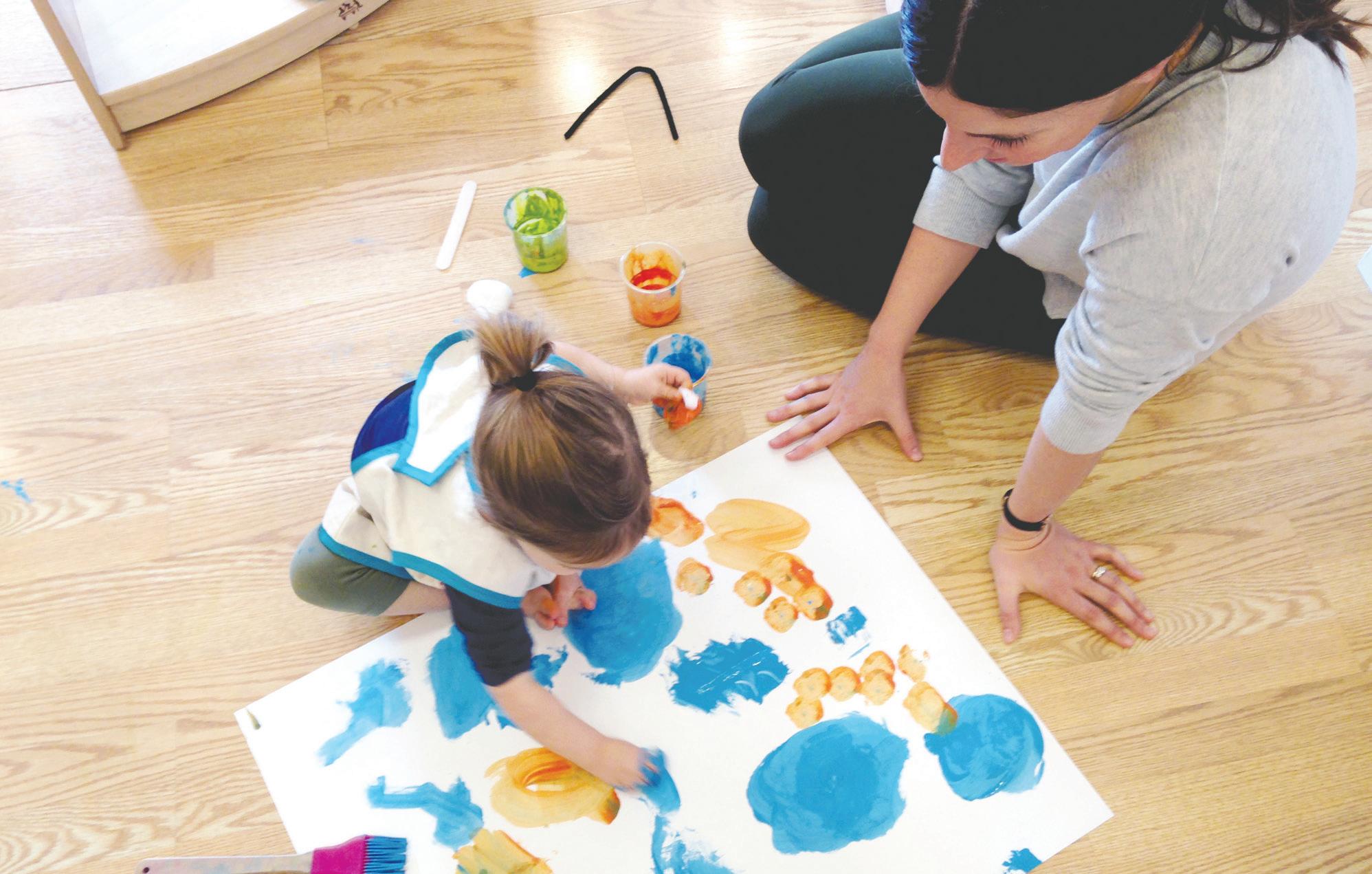
Toward the end of class, Benjamin Hook kneels down next to Brooklyn and encourages her to use a kitchen whisk to drip yellow paint onto her paper. She mixes in blue to make green streaks across the page, prompting encouraging “Whoooas” and “Oooohs” from her mother.
THE ATELIER 1609 Chapel Hill Road Suite E Mon.–Sat., 9 a.m. to 4 p.m. Class registration bundle prices range from $87-535 445-2747, theatelierstudio.com
For more kid-friendly artsy outlets, go to VOXMAGAZINE.COM
The Atelier
Two-year-old Hattie Beshore and her nanny Jessica Zuberek use their fingers and paint brushes to craft a masterpiece on the studio floor.
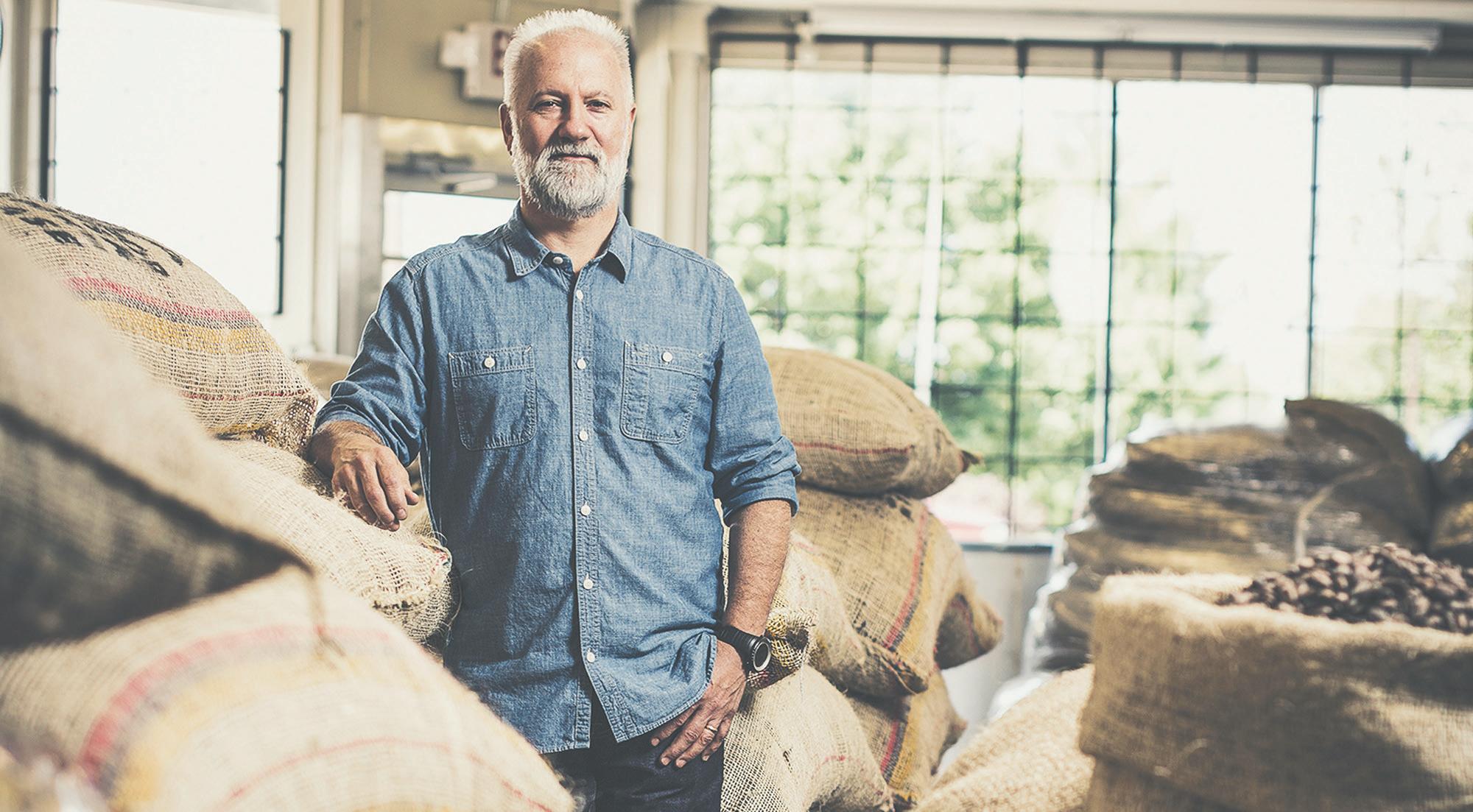
SHAWN ASKINOSIE discusses the importance of finding meaningful work and how careers shape individuals’ world views
After 20 years of being an attorney, MU graduate Shawn Askinosie, 55, closed his successful criminal law practice and opened Askinosie Chocolate in Springfield, a small chocolate factory that has 17 full-time employees. He’s since made Forbes ’ list of 25 best small businesses in America and earned recognition from entrepreneur Seth Godin, The New York Times and more.
When he was 40 years old, Askinosie felt he was reaching the pinnacle of his career and realized he needed a new passion in his life. He prayed for change for years. Grilling, cooking and baking became his new hobbies. Lawren Askinosie, Shawn’s daughter, says he was doing something new by working with his hands; it was a different, creative side of her dad.
From his baking hobby came an interest in making chocolate from scratch. Within three months, he was in the Amazon rainforest learning how to make chocolate from the source — the cocoa bean.
He built a business with a faith- and compassionbased philosophy that means more to him than the financial success of the endeavor ever could. Askinosie discussed how this experience has changed his world views.
Why are you passionate about making quality chocolate?
One of the reasons is there isn’t really a true mastery of chocolate. I believe it’s really a never-ending skill set that can’t quite be completely mastered. But I think the thing that I love the most about it is developing relationships
with farmers who grow the beans that we buy. I’ve been doing this for over 10 years. I have been working with some farmers for a very long time, and I think that having the opportunity to travel to really remote places and see another life and experience the hospitality and joy of people on the other side of the globe is one of the most meaningful things I’ve ever done.
What makes the work so meaningful?
It’s how much the farmers give me. I am sure that I receive way more than I give. This experience working with people, working with farmers who happen to be, in many cases, very poor but at the same time are filled with joy, has given me a real perspective that I would have never had but for doing this work. When you have a business that lets you, in a very small way, have your own heart transformed by the joy and kindness and hospitality of other people, then that’s a good day. It’s the hope that many of us have in business — that we can have meaningful work that is significant to the person we’re working with but also for ourselves.
Explain your life philosophy and where it came from.
It’s the philosophy of compassion, and it’s a combination of everything I’ve been through and seen, but the foundation of it is really coming from my faith. It started when I was 13 years old, when my father was diagnosed with lung cancer. He
was my hero, and he died when I was 14. It was a very impactful part of my life to see him in pain, to help take care of him and to be with him when he died. That experience gave me the opportunity to recognize when I should be compassionate. Over the past 10 years, I have had the opportunity to exercise my compassion muscle again. I hope and pray that my life is one of compassion and kindness. I aspire to those things.
What advice would you give to those who want to start their own businesses?
From a practical standpoint, for college students thinking about starting their own business, I strongly, strongly encourage them to take as much accounting and finance as they can, even if they’re a political science major or journalism major. I believe that one of the things that has hurt the American economy in the last decade or more is a financial illiteracy among business people. I also think it’s important for people to know how to write and communicate. And from a more philosophical standpoint, it’s important for people to determine their vocation and figure out who they are. Reading, writing, meditation, prayer and service — these are things people can do to figure it out. It’s hard sometimes, but it’s rewarding. The quicker you can get to that place in your life, no matter your age, the better off you’ll be.
— ABRIANA GREEN PHOTO COURTESY OF SHAWN ASKINOSIE
THE TO-DO LIST this week in Columbia
ARTS & CULTURE
Millennial Broke Folk: DIY Gifts on a Budget
The holiday season is a season of giving, but giving can get expensive. Find out ways to gift to family and friends without running your pockets dry. Online reservations are recommended. Monday, 6:30–8 p.m., Missouri River Regional Library’s Art Gallery, Jefferson City, Free, 634-6064
Rudolph the Red-Nosed Reindeer: The Musical Beloved TV classic Rudolph the Red-Nosed Reindeer soars off the screen and onto the stage this holiday season. Come see all your favorite characters from the special, including Santa and Mrs. Claus, Hermey the Elf, Bumble the Abominable Snow Monster, Clarice, Yukon Cornelius and, of course, Rudolph, as they come to life in this musical. Monday, 7–10 p.m., Jesse Auditorium, $30-50, 882-2121
University Wind Ensemble
If wind instruments strike a chord for you, join the University Wind Ensemble for a performance at the Missouri Theatre. Wednesday, 7 p.m., Missouri Theatre, $5, MU community free with ID, 882-3781
Pints & Punchlines: Rose Comedy Club
Sip some brews and see what Columbia’s humorists have to offer at Rose’s Comedy Club. Wednesday, 8:30 p.m., Rose Music Hall, Free, 874-1944
CIVIC
Turkey Trax 5K
The main Thanksgiving Day activity — eating — is fun, but getting a bit of exercise beforehand makes it even better. This race gets the family up and moving early on Thanksgiving so everyone can go home and gorge themselves on yummy eats. Today, 8:30 a.m., Ultramax Sports, $40, 445-2664
Thanksgiving Day Pie Run
Thanksgiving means indulging on delicious food. Why not start it off in the healthiest way possible? The Thanksgiving Day Pie Run in Jefferson City will offer both 5K and 10K runs. Participants are encouraged to bring canned food items for the local food pantry, so stock up on some beans, soup, or fruits and vegetables. Today, 8:30 a.m., 427 Monroe St., Jefferson City, $15 adults, $10 children, 616-9233
Santa Claus in Jefferson City
Have you been good this year? If so, take the family to see Mr. Claus, and he might bring you something this Christmas season. If not, some coal might be in the works. Saturday, 10 a.m. to 1 p.m., Central Bank Downtown, Jefferson City, Free, 634-1234
Physiological Mechanisms Underlying Behavioral Convergence in Caribbean Lizards
Learn about lizards with associate professor Michele Johnson from the Department of Biology at Trinity University in San Antonio, Texas. Her talk will discuss the work her lab is doing on Caribbean lizards and the diversity of lizards that inhabit SouthCentral Texas. Tuesday, 3:30 p.m., Bond Life Sciences, Monsanto Auditorium, Free, 882-4421
Winston Churchill Birthday Celebration
Celebrate a global democracy with Winston Churchill’s birthday celebration down at the National Churchill Museum in Fulton. There will be cake, special guided tours and a featured movie, That Hamilton Woman, at 6 p.m. Wednesday, 10 a.m. to 8 p.m., National Churchill Museum, Fulton, Free, 592-6242
FOOD & DRINK
Thanksgiving
Buffet
Gather around the table and feast on some delicious, gourmet turkey day eats. The menu will feature Thanksgiving classics, as well as less-traditional dishes such as broccolini, acorn squash soup and more. Thursday, 11 a.m. to 3 p.m., Holiday Inn Executive Center, $28, adults; $25, seniors; $12, kids ages 5–12; Free, kids under 5, 445-8531
Growing Blackberry Production and Sales in Missouri Southwest Research Center
As delicious as blackberries are to eat, they also offer huge potential for farmers because they’re in high demand in Missouri. Local and nationally known blackberry specialists and farmers will discuss the crop and tour innovative blackberry farms. Wednesday, 1–4 p.m., MU Southwest Research Center, $10, 417-881-8909
MUSIC
The Last Waltz: 40th Anniversary Celebration
Forty years have passed since The Band’s farewell concert. Martin Scorsese made that night into a documentary. The Blue Note will present a recreation of the legendary night with Sean Canan’s Voodoo Players performing as The Band. Friday, 8:30 p.m., The Blue Note, $8 in advance, $10 day of, 874-1944
Carcass with Deafheaven and Inter Arma
Carcass proudly represents the extreme metal scene and is considered one of grindcore’s founding fathers. Formed in 1985 in Liverpool, the band has released six studio albums, even after a long period of disbandment and shuffling members in and out. Saturday, 8 p.m., The Blue Note, $25, 874-1944
SPORTS
Missouri Football vs. Arkansas
This is it, folks — it’s the football season’s last hurrah. Join your fellow Tigers at Memorial Stadium as they take on the University of Arkansas Razorbacks. Friday, 1:30 p.m., Memorial Stadium, $25-75, 882-6501
Columbia College Basketball vs. William Penn University
After the big meal, come cheer on the local Columbia College basketball team in its match against the William Penn University Statesmen. Friday, 7:30 p.m., Southwell Complex, $8, adults; $5, students; Free, Columbia College students, 875-7433
Missouri Men’s Basketball vs. Northwestern State University
Cheer your Tiger men's basketball team to victory as it takes on Northwestern State University. Saturday, 2 p.m., Mizzou Arena, $15–30, 882-6501
Missouri Men’s Basketball vs. North Carolina Central University
Throw on your black and gold and head to watch the MU men’s basketball team take on the Eagles. Monday, 7 p.m., Mizzou Arena, $10-25, 882-6501
Missouri Women’s Basketball vs. Western Illinois University
The MU women’s basketball team will tip off against Western Illinois University. It’ll be the team's first game back after a tournament in the Bahamas. Tuesday, 7 p.m., Mizzou Arena, $8; $5, ages 2-17 and seniors, 882-6501
SCREEN
Moana (PG)
Moana Waialiki embarks from her home in Polynesia to save her people. The demigod Maui joins her to help navigate the dangerous oceans.
F, R RUNTIME = 1:32
Also playing
Allied (R) F, R
Arrival (PG-13) F, R
Bad Santa 2 (R) F, R
Doctor Strange (PG-13) F, R
The Edge of Seventeen (R) R
Fantastic Beasts and Where to Find Them (PG-13) F, R
Hacksaw Ridge (R) F
Loving (PG-13) RT
Moonlight (R) RT
Trolls (PG) F, R
Theaters
F = Forum RT = Ragtag
R = Regal = Available in 3-D