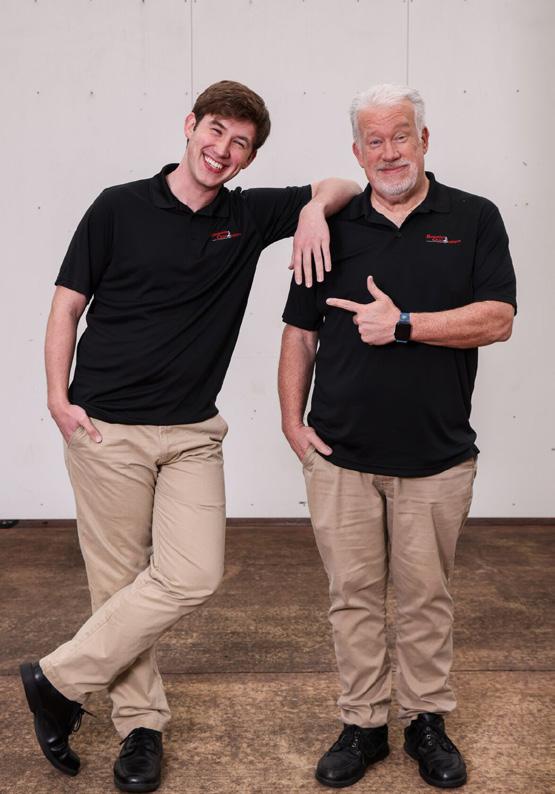
Baseball is a sport built on stories. Columbia’s Bill Clark has a lifetime of them.
PAGE 12
THE SCOOP ON BUSINESS LOOP PAGE 5
BILLIARDS: MORE THAN A GAME PAGE 18
STOP AND DRINK THE LAVENDER PAGE 23
NEW KIDS ON THE PITCH PAGE 28
VOICE OF COLUMBIA JUNE 2026
Save a life. Don’t D rive H o M e buzze D. BUZZED DRIVING IS DRUNK DRIVING.
IN THE HOME STRETCH
It’s hard to describe the feeling of attending my first sports game. I was a kid — barely old enough to remember and certainly too young to know what was going on. But what I do remember was the roar of the crowd, the bitter rivalry between two teams — the Seattle Seahawks and the San Francisco 49ers — that absolutely hated each other (and still do). I remember the feeling of being part of something that connects people across cultures and differences. Loving sports meant belonging to something. It meant being a part of a team. As I grew up, I realized how much my feeling of belonging came from having a shared sense of place. My favorite sports teams were always the ones representing Seattle — Washington’s biggest city, located just north of my hometown. No matter where I went, people always said something, for better or for worse, about my team when I wore the jersey of my favorite Seahawks player, cornerback Richard Sherman.
This sense of place can exist anywhere. In Columbia, that feeling exists through our sports culture, whether that be through our
identity as Mizzou Tigers or connections to places such as Kansas City, where soccer fans await the start of the 2026 World Cup. In this issue of Vox, we show how sports and history are intertwined through our feature on Columbia resident Bill Clark, a former MLB scout with three championship rings and a passion for civil rights (p. 12). We open the door to the world of competitive cue sports through our guide to pool in Columbia, helping beginners figure out where they can enjoy a fun night out or offering the pros locations to compete (p. 22). We highlight the importance of teaching kids how to be on a team, whether they’re on the rugby pitch, immersed in the game or interacting with opposing teammates and supporters (p. 28).
Through history, life lessons and just some good, old fashioned fun, Columbia’s sports culture provides people with community connection that ties us all together. So, as I write my last editor’s letter for Vox Magazine, it’s important that I emphasize how grateful I am to have become a part of this team, to become a Missouri Tiger and to take this same pride with me as I start my next adventure.
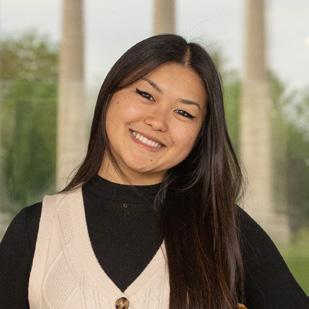
Cayli Yanagida Editor-in-Chief
Behind the issue
As many of our staffers prepare to graduate this month (by the time you read this, they already will have accepted their diplomas), we wanted to introduce you to some of the people Vox run every day.
SOCIAL & AUDIENCE CAM HART, JAZMYNE MARTINEZ, AVERI NORRIS
DIGITAL PRODUCERS PARKER BRANDT, EMILIA HANSEN, ELIJAH JAMES, ISABELLE PALEY, KATE SCHREIBER, BRIANNE TREMPER
CONTRIBUTING WRITERS MAYA DAWSON, JAKE LOURAINE
EDITORIAL DIRECTOR HEATHER ISHERWOOD
DIGITAL DIRECTOR LAURA HECK
WRITING COACHES CARY LITTLEJOHN, JENNIFER ROWE, SARA SHIPLEY HILES
FOLLOW US
Magazine @VoxMagazine @VoxMagazine
WANT TO BE IN-THE-KNOW?
Sign up to receive Vox ’s weekly newsletter, the “Vox Insider.” We’ll tell you how to fill up your weekend social calendar and keep ahead of the trends. Sign up at voxmagazine.com.
CALENDAR send to vox@missouri.edu or submit via online form at voxmagazine.com
VOLUME 28, ISSUE 5 PUBLISHED BY THE COLUMBIA MISSOURIAN LEE HILLS HALL, COLUMBIA MO 65211
Cover design: Lauren Johnson
Cover photography: Ava Kitzi
Photography by Valerie Tiscareno
Briana Davis
She’s our website queen.
Aminah Jenkins
She’s the multimedia master.
Austin Garza He makes features happen.
Valerie Tiscareno She makes everything look good.
Cayli Yanagida She’s our fearless leader.
Claire Williams
She’s the brains behind IG gains.
Ally Schniepp She enforces deadlines.
Life as a highway
Business Loop 70 is turning 100 — here’s what the road means to the city. 07
Black stories on display
Ja’ Licia Gainer has spent years showcasing Black artists across time.
08
Vox Picks
Scream for ice cream and roam with the dinosaurs this June. CULTURE
Finding perfect hair-mony
The owners of A-List Salon & Barber combine expertise in various hair types.
Like fathers, like sons
Singing keeps family together in this multigenerational barbershop group.
A league of his own Bill Clark reflects on his advocacy work and MLB scouting career.
Calling the shots
New owners put their own spin on one of Columbia’s beloved pool halls.
Where to play pool
No matter your billiards skill set, find a place and table that works for you.
EAT + DRINK
Calm down with lavender
Find a lavender-infused drink to sip under the summer sun. CITY LIFE
Keep the cameras rolling
Plot twist: Vidwest Studios refuses to call “scene” amid city funding cuts.
They speak for the trees
Learn how the Columbia Tree Board advocates for the city’s lofty greenery.
Here’s the pitch
Columbia is at an advantage as the youth rugby scene continues to grow.
Photography by Ava Kitzi and Kris Sand
Life as a highway
Business Loop 70 fits into many Columbia residents’ daily lives –but there’s much more to its story.
BY CORY BEXTEN
Americans love to travel. Going cross-country on U.S. highways is a fond pastime for many adventure-seekers and a crucial pillar in the growth of the United States. People know the iconic Route 66, which is celebrating its 100th anniversary this year, as one of the first major U.S. highways spanning most of
However, there is also another historic U.S. road that has guided travelers across the country. Not only was it founded the same year as Route 66, but it’s also still in use — and part of it runs right through Columbia.
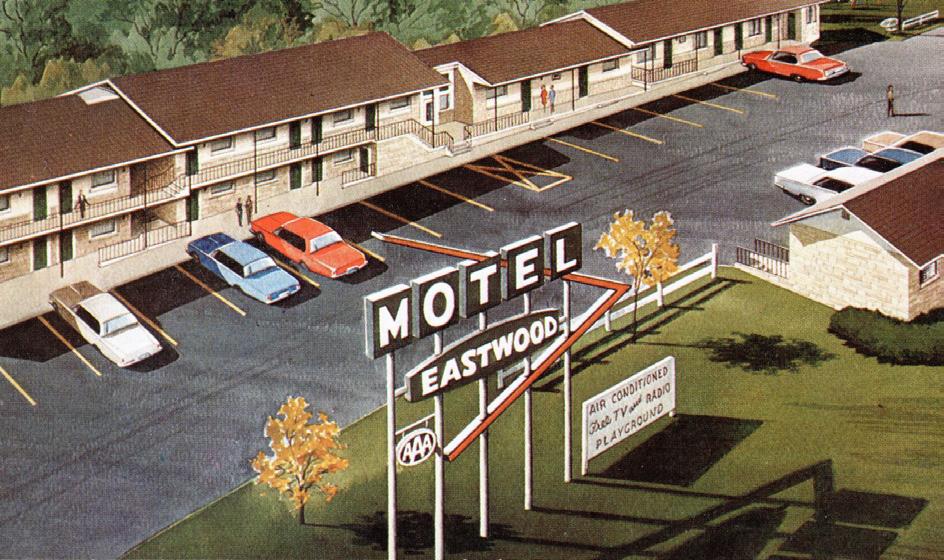
Stretching from New Jersey to Utah, U.S. Route 40 is known as the “Main Street of America.” But since 1960, it’s gone by a different name in Columbia: Business Loop 70. Sometimes referred to as The Business Loop or simply The Loop in its early decades, it drew travelers into Columbia by the carloads with its massive variety of businesses, restaurants, hotels and people.
Although Route 40 was founded 100 years ago, Matt Fetterly, a local historian, says that this general route was used before then. Fetterly says the route from St. Louis to Kansas City (the portion of Missouri Route 40 travels through) might have always existed — even before construction of the road.
“Going all the way back, there’s sort of a natural ridge that runs north of the river,” Fetterly says. “The current thinking is there was an Indigenous trace or trail — sort of a pathway they followed
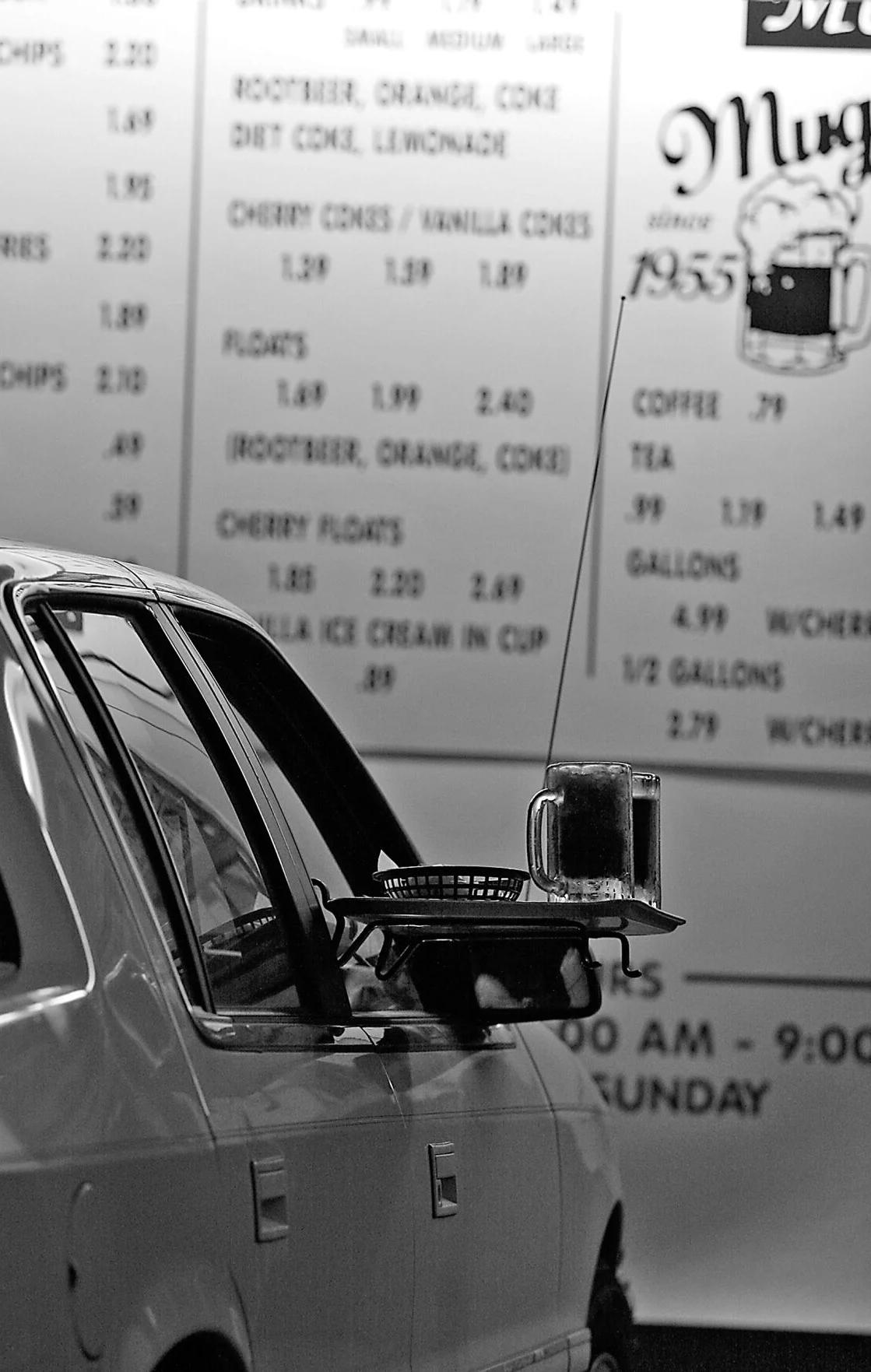
Mugs Up has served customers since the 1960s. Cars have changed a lot over time, but its service on The Loop has been a mainstay.
— that ran along that ridge from the St. Louis area all the way through the Columbia area and Boone County to where it would cross the river at Arrow Rock.”
After the Louisiana Purchase in 1804, the trace was used by settlers bringing their carts, oxen and horses to the territory. It’s still known today as Boone’s Lick Road, and when U.S. Highway 40 was established in 1926, it followed the same general route as that trail. “So, you can draw a direct line from that Indigenous trace to Boone’s Lick Road to U.S. Highway 40 to I-70,” Fetterly says. “It’s all the same road, in a way.”
As part of the U.S. National Highway System, Route 40 allowed travelers, motorists and commuters alike to travel faster and more efficiently. In Columbia, it created not just a central hub for businesses and commerce, but also places
where history was made. “There is no more important long distance road in America,” Fetterly says.
Fetterly attended Hickman High School, which is located on Route 40.
On this same stretch of road was the Pierce Pennant Motel, where Harry S. Truman found out about the Japanese attack on Pearl Harbor in 1941 during World War II.
By 1960, Route 40 began to see fewer visitors following the establishment of Interstate-70. The new highway was an even faster and more efficient way to get across the country. The same year I-70 was established, Columbia’s portion of Route 40 changed its name to Business Loop 70, and while it saw less use, it still remained a hot spot for visitors and local businesses to thrive in the heart of the town.
“Coming on board 10 years ago,
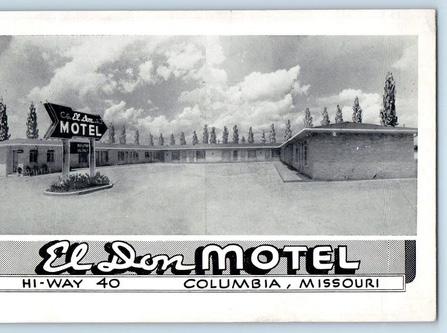
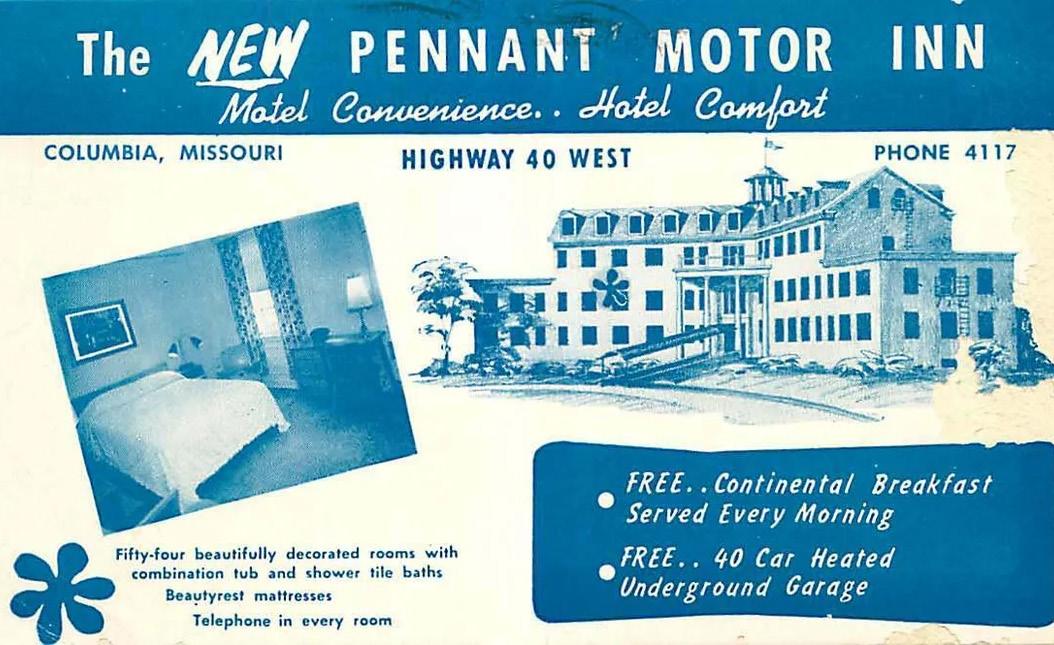
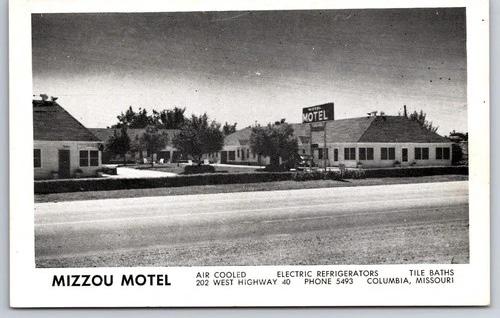
Route 40 has served Missourians for nearly a century, as evidenced by this advertisement for a motor inn on Highway 40. Postcards for motels highlight the route’s identity as a gateway.
there’s a lot of great long-term businesses on the street whose owners have been really loyal to The Business Loop,” Gartner says. “What I’ve found over those 10 years, and particularly now that we’re really highlighting the history of Highway 40, is that there’s some great memories that people in Columbia have up the street.”
ANOTHER LAP
Route 66 has remained a classic Americana staple and is referenced countless times in music and pop culture. Chuck Berry, a rock-androll artist from the 1950s, wrote a song titled “Route 66,” and in the movie Cars, Pixar Studios took heavy inspiration from Seligman, Arizona, a real life Route 66 town, to create the quiet community of Radiator Springs.
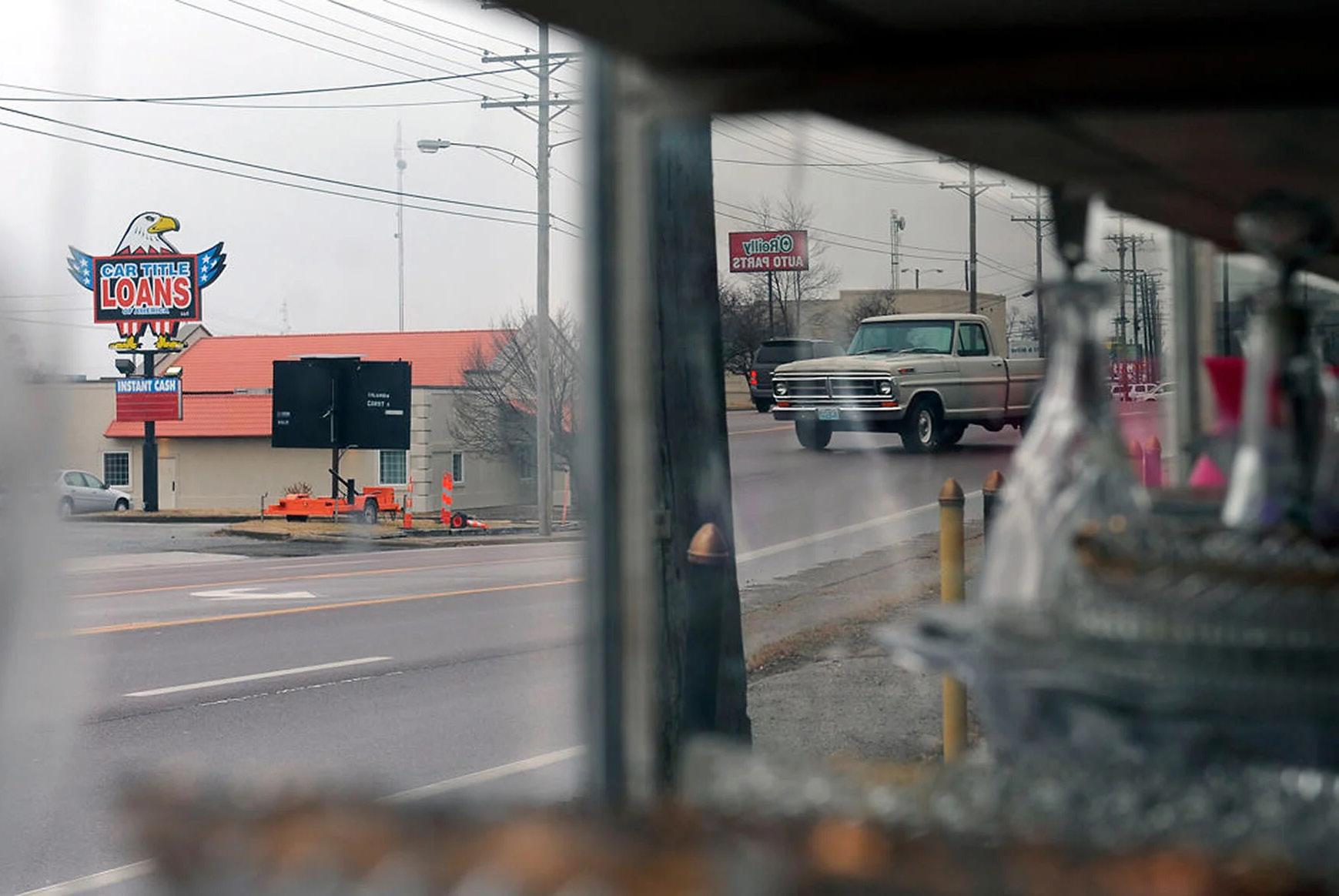
Many businesses, like Car Title Loans, have come and gone on The Business Loop over the years — a testament to the road’s 100-year history and seasons of change.
The Business Loop still remains an integral place for business. Emily Schatzlar, a service writer at Tom’s Auto and Imports, says the shop still receives a very diverse group of customers. “We have a lot of great people that come in here that are dedicated to Tom,” Schatzlar says.
“Our goal here is to really promote the street, whether that’s economic development, urban planning or highlighting the history of the area,” says Carrie Gartner, the executive director of The Loop. “That’s really what we do. And the goal is to really make this a gateway into Columbia that the people of the city can be proud of.”
Whether it’s remembered as Route 40 or The Business Loop, Fetterly says that there are a lot of places and businesses along this route that Columbians wish to see preserved. Places like Mugs Up, Parkade Plaza, Gateway Tire and more, have operated on The Business Loop for decades. In addition to small parks and some beautification improvements, several studies are focusing on providing better pedestrian accessibility in several locations.
“The Loop, in some ways, still is sort of the gateway to Columbia,” Fetterly says. “It’s a front porch along I-70, which is why it’s so important we take care of it now.”
Photography courtesy of Matt Fetterly and Illustrations courtesy of Adobe Stock
Black stories on display
As a curator specializing in African American art, Ja’ Licia Gainer wants to elevate and highlight artists across generations and mediums.
BY MADISON FARLEY
If only more kids drew on walls. The joys of spreading Crayola wax across bumpy white paint, accompanied by the sweet song of an upset parent — that’s where it started for Ja’ Licia Gainer.
As a graduate student in art history at the University of Missouri’s School of Visual Studies, Gainer has spent years honing her craft — carefully creating exhibits that showcase the experiences of Black artists across time, mediums and focuses. From unearthing historic archives to searching shelves at auction houses and connecting with the emerging artists of tomorrow, one thing is certain: Her work is rooted in intention.
Through her work with the State Historical Society of Missouri and Orr Street Studios, Gainer has curated exhibits that center African American artists across generations. Her spring exhibit, “Continuum: 100 Years of African American Art in Missouri,” brought together several paintings, sculptures and archival pieces to connect past and present voices.
At the same time, her work with contemporary artists highlights local Black creatives, giving them space to share their stories and build community. For Gainer, curation goes beyond choosing artwork — it’s about researching, representation and making sure those stories are seen.
What kinds of stories draw you in when you’re curating a show?
Going back to my childhood and going back to material culture within the Black community — traditions and growing up and girlhood — those really stick out to me because it is very prevalent to not only my community as an African American woman, but a lot of sisterhoods and girlhoods across different ethnicities and races.
How do you bring individual pieces together to create a cohesive narrative?
With past historical artists, let’s say for the State Historical Society, I am digging and doing as much research as I can — looking at archives, looking at old newspapers, looking at different biographies and also if there are the artists’ own words and interviews to say, “OK, what could this specific artwork here possibly mean and be about?”
For example, I was able to collect and curate selected artworks from Esquire magazine. The editorial cartoonist is E. Sims Campbell — Elmer Sims Campbell. He’s from St. Louis and he was able to rise and get this critical acclaim as a Black artist in this time from the ’20s, ’30s, ’40s and ’50s — that was not seen as possible in America. And he was a painter and he would document his travels, his vacations, his stories about how he grew up in St. Louis.
So, I was able to find some (of his work) through auctions, through marketplaces, through house sales or word of mouth, and be so lucky to curate them, collect them for the show.
Seeing their work and feeling like these do have a cohesive conversation — These artists deserve to be represented, deserve to have a spotlight and be able to showcase at least one, two, three artworks with that specific show.
Why is making space for Black artists important to you?
There is a big gap between Black artists — local or even national — versus non-Black artists or white artists, local, national or international. That’s just how it’s been systematically.
It’s of key importance to highlight local Black men and women artists. And it is OK, because when looking at these artworks and getting to know these artists, there is going to be a lot of similari-
GAINER’S GALLERY
Want to learn about more Black artists?
Start by checking out some of Ja’ Licia’s suggestions from past and present — each connected to Columbia: Kenny Greene, Jessie Housley, Asia Long, Byron Smith, T’Keyah Thomas, William Wallace and Amani Zaire. Follow Gainer on Instagram at @jaliciagainer for more artists and updates.
Ja’ Licia Gainer is an artist herself, using her role as an exhibit coordinator to display the art of other Black creatives.
ties and a lot of life journeys. And that is relevant. And that is important to see as a viewer, to see as an audience member, to see as an artist yourself, and being able to learn something from that and take away something like, “oh, yeah, I learned this.”
What do you hope exhibits like these can accomplish?
It’s a joy to see the public’s reaction, to see viewers’ reaction — whether they are interested in art or history, if they have some knowledge or not. I want everybody to come into a show, an exhibit, a space, and maybe they can learn at least one thing from it and learn about an artist, learn a cool fact about the artwork that’s on display, materials that are on display. And it continues on — that story continues on.
Vox Picks for JUNE
Each month, Vox curates a list of can’t-miss shops, eats, reads and experiences. We find the new, trending or underrated to help you enjoy the best our city has to offer.
BY ALEX GOLDSTEIN, WEI HE AND RAPHAEL STERNADORI
ROAM through Earth’s vast halls of evolutionary history at the “Step Back In Time Exhibit: Dinosaurs” at the Columbia Art League. At the heart of the exhibit is a refusal to pretend art and science can’t coexist. CAL artists buddied up with Mizzou paleontologists to reimagine what flora and fauna would’ve looked like millions of years ago. The exhibit should appeal to both Jurassic Park aficionados and art connoisseurs, but you don’t have to be a nerd about either to enjoy a peek at life before the asteroid. 11:30 a.m. to 6 p.m., until June 11, Columbia Art League, 207 S. Ninth St., columbiaartleague.org
EXPLORE work from over 100 artists at Art in the Park, a stunning transformation of Stephens Lake Park into an open-air gallery. Since 1959, artists from across the country have been showcasing paintings, photography, ceramics, jewelry and more at the annual event. Consider busting a move to the live music or participating in hands-on activities. Can’t decide what to do? Consult with a Columbia Art League concierge by the entrance. 10 a.m to 5 p.m. June 6, 10 a.m. to 4 p.m. June 7, Stephens Lake Park, 2001 Broadway, free, columbiaartleague.com
WANDER into a kaleidoscope at the Ninth Annual Butterfly Festival. Float around with these visually striking pollinators in the native butterfly house, or choose to tour gardens and wildflower meadows hosted by Heart of Missouri Master Gardeners. About 130 butterflies representing eight to 10 different species will be at the festival. 9 a.m. to 2 p.m. June 13, Jefferson Farm and Garden, 4800 E. New Haven Road, free, extension.missouri.edu/events/9thannual-butterfly-festival
SCREAM for the coolest news in local ice cream since the invention of Tiger Stripe. While there’s no official opening date, a Columbia location of Clementine’s Ice Cream is set to open this summer on Broadway. Clementine’s got its start in St. Louis in 2014, with a keenness for locally sourced ingredients and specialty ice creams. So special, in fact, that owner Tamara Keefe, along with food scientists and chemists, found a way to freeze alcohol into its Naughty line of ice cream. While it’s not the invention of the wheel or fire, it’s pretty dang close. 904 E. Broadway, clementinescreamery.com
JOIN Mid-Missouri PrideFest and the Quorus — Columbia’s LGBTQ+ community choir — in a concert and game show extravaganza. The formula is simple: The Quorus and The Blue Note’s house band will play a few seconds of a particular pride anthem selected from a plethora of genres and decades — you, dear contestant, shall guess which song it is. All girlies, gays and allies (and singing pipes) are welcome. 7:30 p.m. June 5, The Blue Note, 17 N. Ninth St., $19.25, thebluenote.com
Working in perfect hair-mony
The A-List Salon & Barber owners take pride in running a shop that can serve all hair types and genders.
BY EMILY EARLY
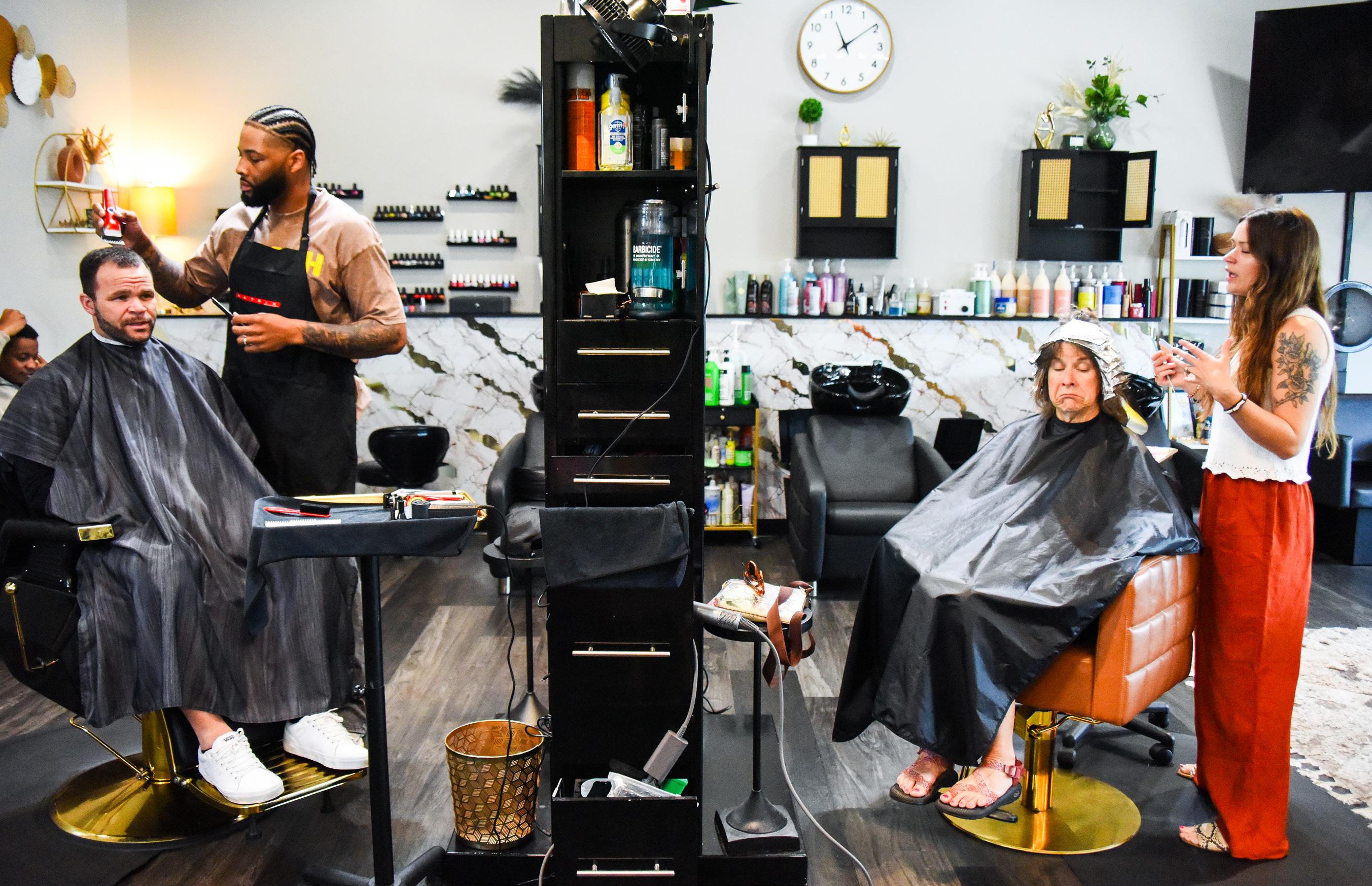
Watching from the tan leather couch at the front of A-List Salon & Barber, it’s clear the shop is full of life. Conversations fill the room, abstract black and gold artwork decorates the walls, clients sit at each hair station and Benji,
the store dog, is undoubtedly charming customers. Two hair stations sit at the center, facing each other. They belong to Aleigh Coles and Terrence Coles Sr. — owners of A-List.
The Coles opened their one-stop
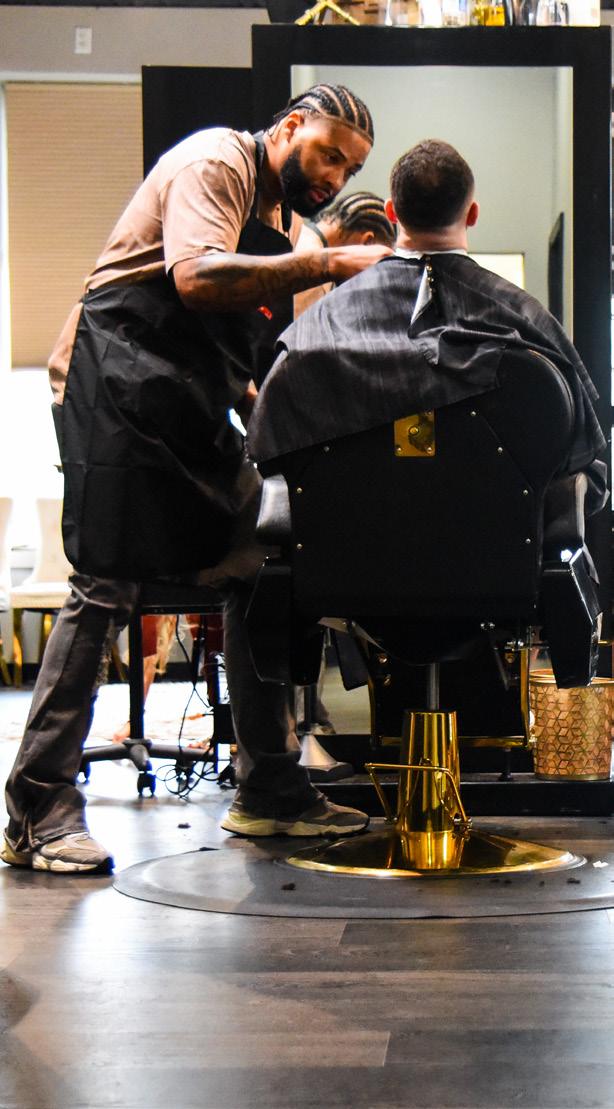
Aleigh and Terrence Coles style Dana and Stephone Frink at their salon stations. They utilize their individual skills to serve clients’ needs.
shop in February 2024, aiming to serve anyone who walked through the door. Their combined expertise in various hair types and styles allows them to style entire families in one visit. As parents of five, the convenience of taking a fami-
Photography by Kris Sand
BEAUTY
ly to one place with both barbers and hairstylists was an appealing idea. The business has expanded to meet the beauty needs of all genders and hair types.
“We can take any client that comes in our door comfortably,” Terrence says. “No matter your skin color, no matter what your hair type is.”
The specialists at A-List understand the importance of recognizing how skin and hair vary by person. Natisha Pettigrew is a natural hair specialist and loctician who contributes to the shop’s mission of making people with different cosmetic needs feel welcomed.
Pettigrew has been doing hair for most of her life. She attended Lux Beauty and Barber School with Terrence. Her services include afros, locs and any curly or textured hair maintenance. “Everybody wants their hair to look good,” Pettigrew says. “Everybody wants to have a nice appearance, so it’s very empowering to be able to do that for everybody.”
A place to let your hair down
About five specialists run their own
businesses as independent contractors in the salon. They aren’t employed by the Coles, but they work side by side, promoting each other’s services and finding a sense of togetherness.
“We are a family,” Terrence says. “We’re not just your employers. This isn’t just a place where you go clock in, you knock your clients out and go home.”
The Coles feel like they’ve come to better understand Columbia’s communities since opening the shop, and they’ve seen that same impact on their children. Sometimes younger clients will play basketball outside the back of the store with the Coles’ kids.
“I hope they see us as a salon they can go to and feel comfortable,” Aleigh says. “We’re always here for any type of need that they have as far as the beauty industry, to make them feel the best version they could be when they leave our salon.”
Client and salon regular Karlee Shaffer says you can be yourself the second you walk in, and that the owners’
Check out @alistsalonbarber on Instagram, and visit alistsalonandbarber. com.
energy makes you want to bring other people. You’ll leave the salon with nice new hair and a boosted mood.
“You can sit in that chair and you’re not being judged,” Shaffer says. “You’re able to talk about real life and know that next time you come back, she’s going to ask how everything’s going.”
Shaffer has appreciated the business so much that she now runs its social media and website.
Building a suite life
In the future, the Coles want to open private beauty care suites in addition to the current shop. Terrence dreams of creating a reality television show based on the salon’s workplace dynamic and story.
The business started the couple’s first dream, strengthened by their partnership. Terrence could always envision its success. “I knew it was gonna work the moment my wife was like, ‘Yes, go get your license,’ ” Terrence says. “So, with both of us supporting each other, it couldn’t go wrong.”
SHOPPING LOCAL JUST
Illustrations by Brooke Riley
Like fathers, like sons
Singing brings three father-son duos together in Columbia’s barbershop quartet-style chorus group.
BY ELIZABETH DORMAN
For decades, the Boonslick Chordbusters have kept the melodic tradition of barbershop performance alive in Columbia. The all-male-presenting chorus debuted in 1997, when several local quartets joined forces with fellow barbershop enthusiasts across mid-Missouri. Today, they gather every Tuesday night for rehearsals. The four parts — lead, tenor, baritone and bass — work together to create the genre’s signature sound. But in this group of about 30 singers, it’s a full chorus with the close-knit feel of family. Vox sat down with three father-son duos who share the stage together.
Trey Thompson, bass
Trey Thompson is a senior at the University of Missouri pursuing a bachelor’s degree in psychology. He is also a part of Mizzou University Singers and is on the Chordbusters board of directors.
Q: What is it like singing with your dad as an adult?
A: After moving to college, I didn’t see my parents that much anymore. So, having a designated day of the week that I can always see (my dad) has been really good for our relationship. Getting to sing with him again has been such a gift for me.
Tommy Thompson, baritone
Tommy Thompson is a business manager in the College of Veterinary Medicine’s Department of Biomedical Sciences at the University of Missouri. He is also on the Chordbusters board of directors with Trey.
Q: What is your favorite memory with Trey in Chordbusters?
A: Last spring concert, the choir sang the song “Lullaby” by Billy Joel. It hit because I used to sing that to Trey all the time when he was a baby. We got to the outro, which goes, “Someday, we’ll all be gone, but lullabies go on and on. They never die. That’s how you and I will be,”
Photography by Thomas Raymond
and I didn’t exactly hold it together. But it was a very powerful moment, and I’m thrilled I got to sing it with him — and to him — again.
Ian Gawenis, lead
Ian Gawenis is 14 years old and the youngest member of Chordbusters. He stays busy with many extracurricular activities.
Q: As a young and busy teenager, what do you do outside of Chordbusters?
A: I have a black belt in taekwondo. I do a bunch of instrumental music on my ukulele, a little bit of piano and bagpipes. I used to swim and dive. I’m also a percussionist. Oh — and dance.
Jim Gawenis, bass
Jim Gawenis is a chemist, entrepreneur and engineer. He is the chief chemist at Sweetwater Science Labs and says science and music overlap quite a bit.
Q: Describe the community of the Chordbusters group.
A: We haven’t even been there a year, and those guys are all family already. They are just my brothers — there’s a sense of community there. You hear about the camaraderie of sports teams and stuff, and it’s like that.
Khagan Rice, bass
Khagan Rice is a freshman at the University of Missouri studying music education and sings in many choirs.
Q: How was music present in your childhood?
A: Growing up, my father and mother singing “A Whole New World” from Disney’s Aladdin in the car was one of my favorite things about my childhood. I know there’s just that level of interconnectivity I have with him that not many others have.
Tom Rice, lead
Tom Rice is the chief executive officer of Flaktgroup SEMCO. Musically, he a background in band, but decided to join
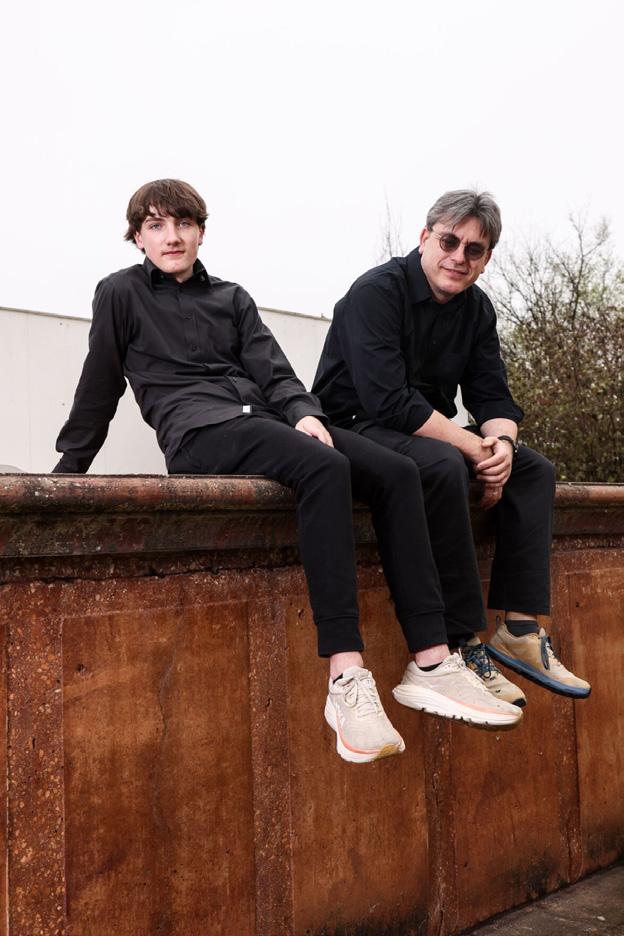
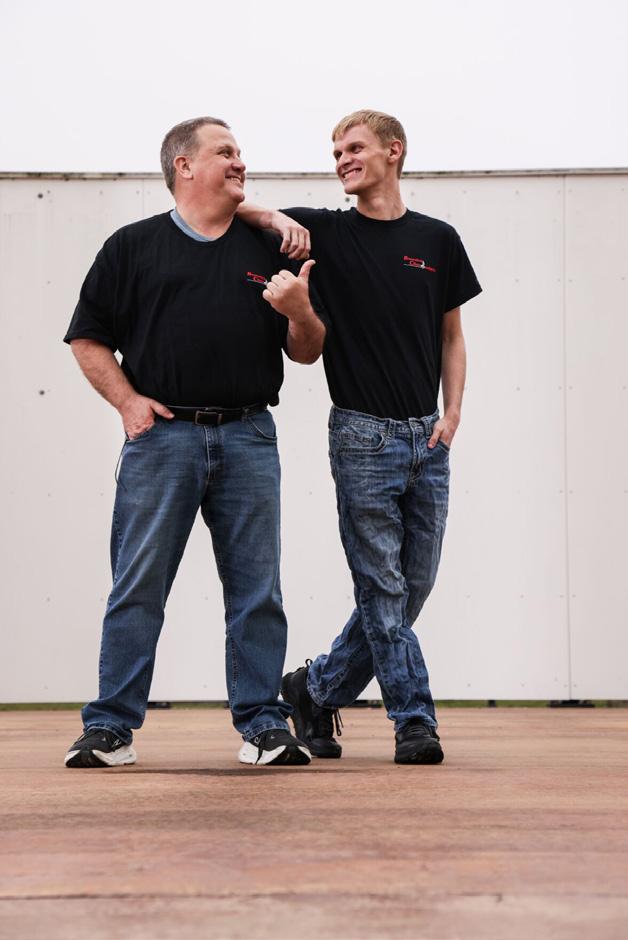
Chordbusters fatherson duos (from top) are Ian Gawenis and Jim Gawenis, Tom Rice and Khagan Rice and Trey Thompson and Tommy Thompson. Trey has been singing with his dad, Tommy, in the car since he was little. Trey joined Chordbusters first, and now he is the secretary while his father is the group’s librarian.
CATCH THE DUOS LIVE
The Boonslick Chordbusters get together and conduct rehearsal 7-9 p.m. every Tuesday at Whitmore Recital Hall on the MU campus. They perform four-part a cappella harmony. To learn more, visit chordbusters.com.
Khagan in the choir anyway.
Q: Why did you follow Khagan in joining Chordbusters?
A: Basically, (Khagan) just said, “Can you come out? I’d love to have you in.” It’s a very welcoming group. His passion for it is what really drew me to go. Then, the passion the group has led me to continue staying.
a league of his own
Bill Clark has three World Series rings as a scout, but is better remembered locally as a community leader.
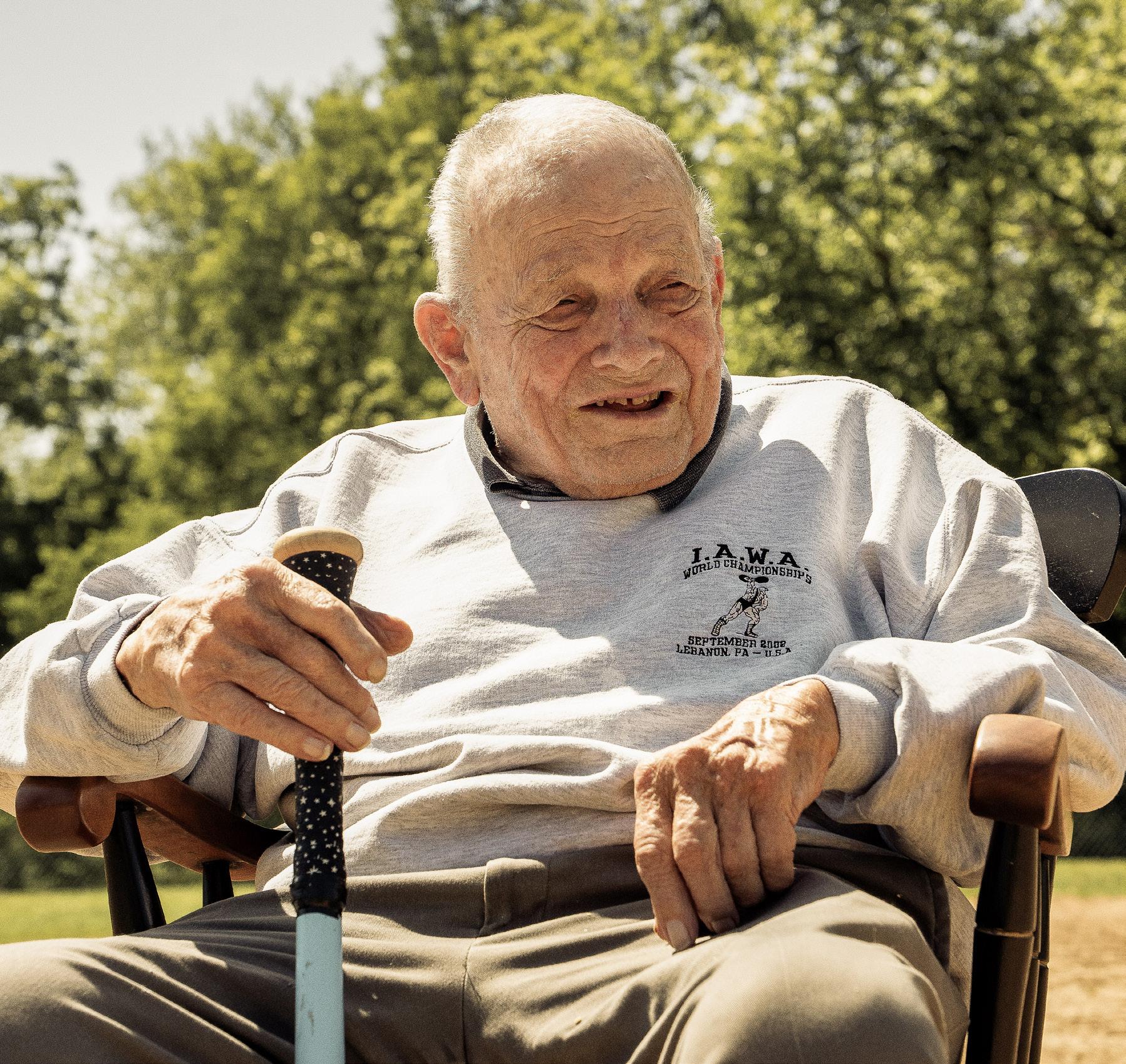
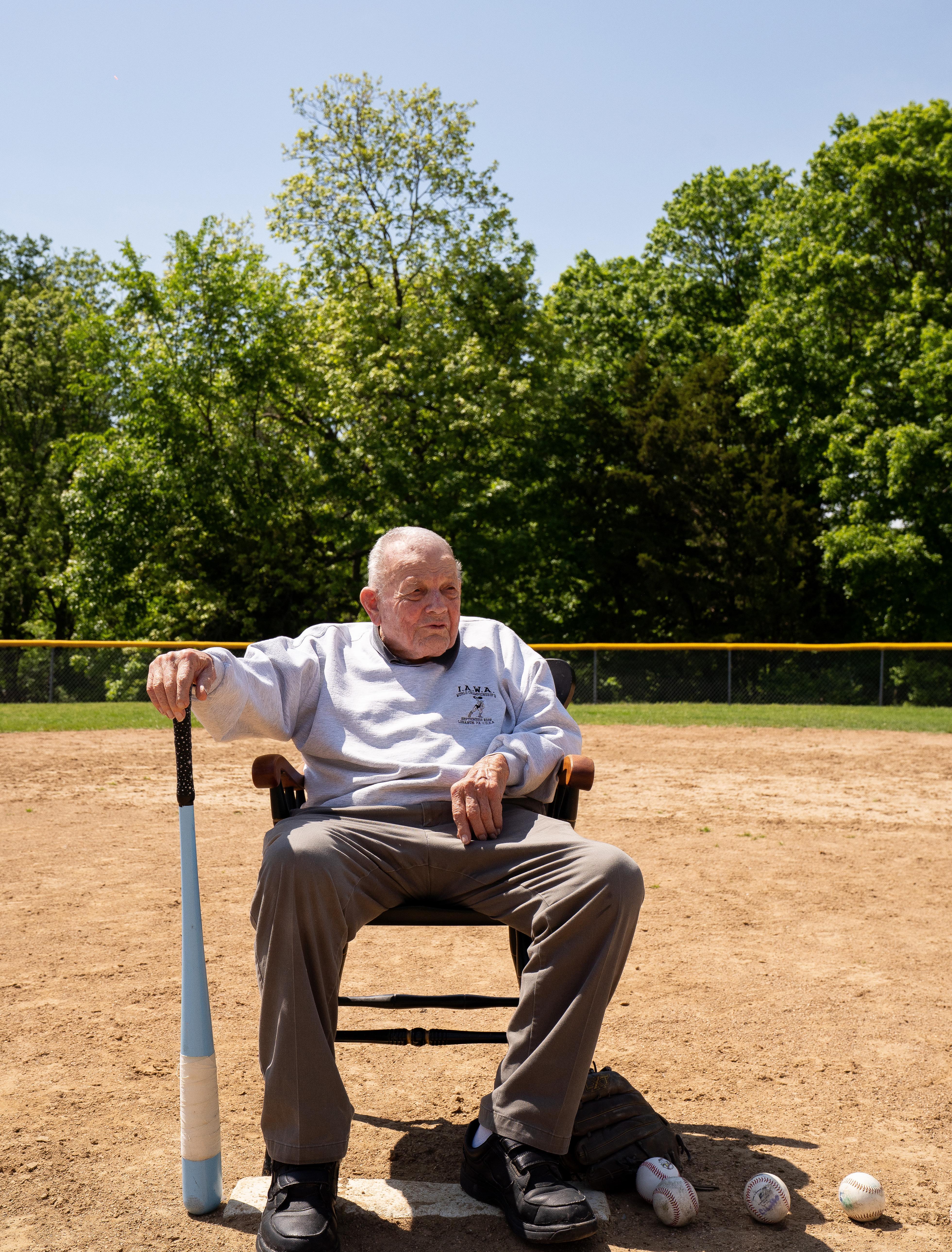
He didn’t look like a giant. But when Bill Clark started speaking, I realized that a giant had, indeed, walked into my Baseball and American Politics, History and Culture class that day.
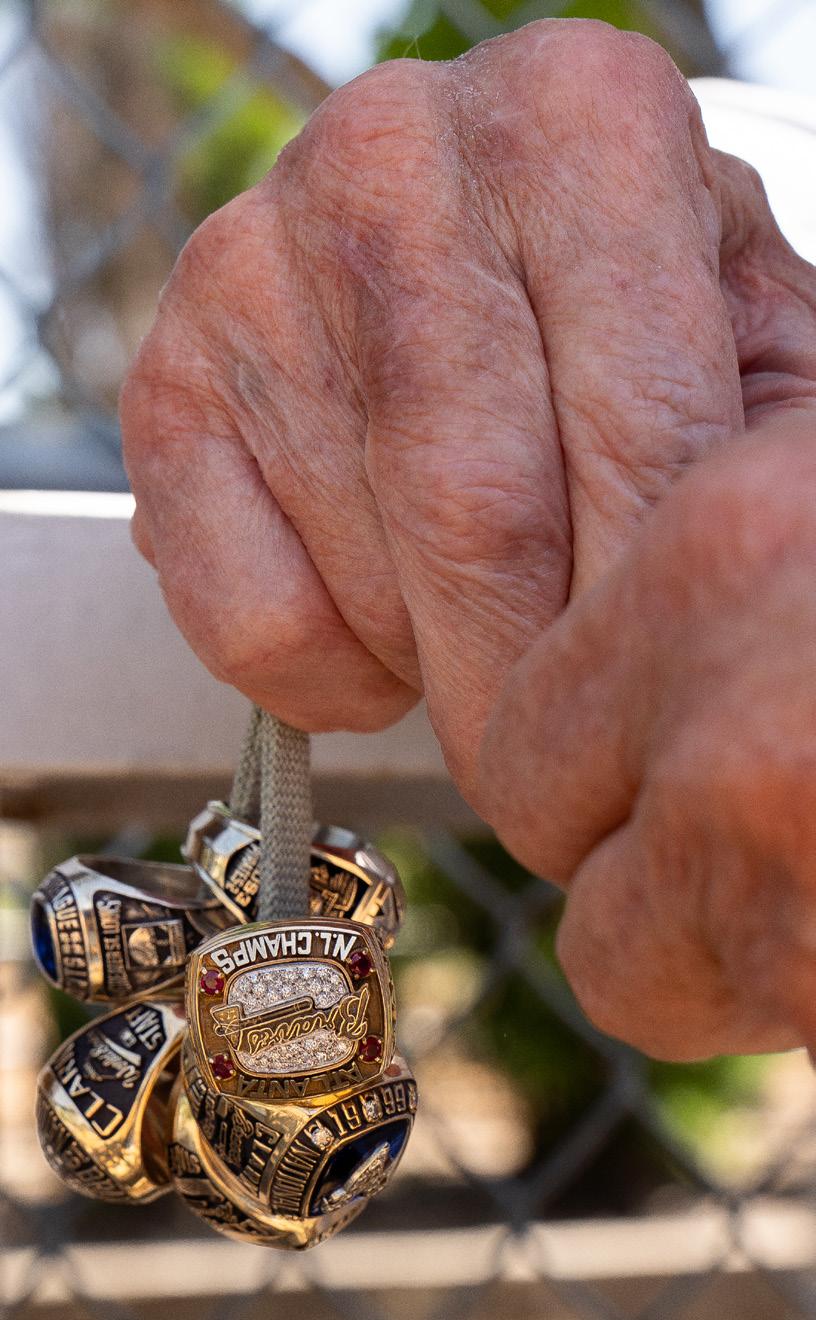
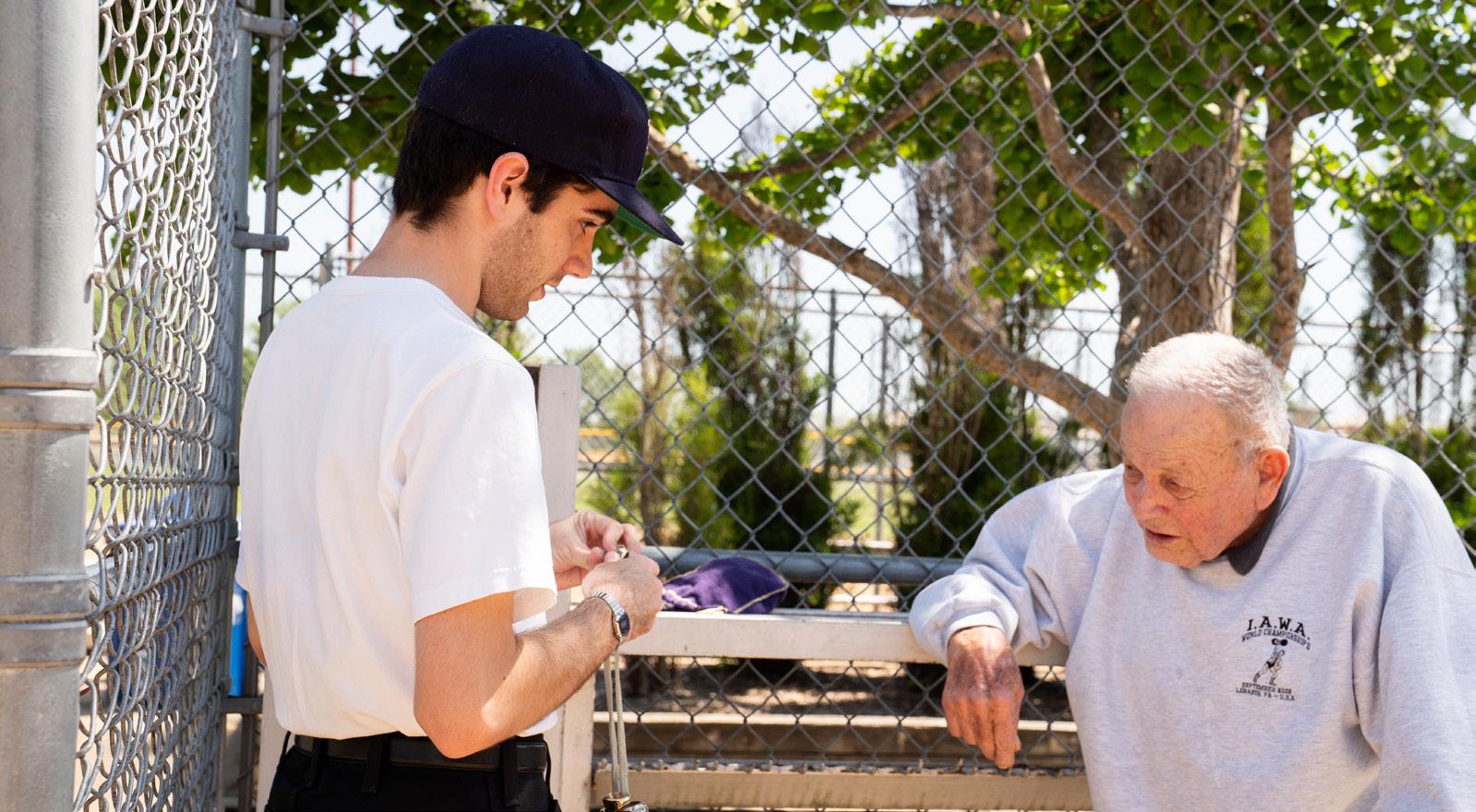
Clark is 93 years old, maybe 5 feet, 5 inches tall and walks with a cane. He was wearing a yellow San Diego Padres polo shirt, chinos and inexplicably held a purple Crown Royal bag. He opened it and poured out a handful of large rings — including three commemorating World Series victories. The red and blue gems were paired with deep gold and shimmering diamonds. Two from wins with Cincinnati’s “Big Red Machine” in 1975 and 1976 and one with the 1995 Atlanta Braves — both had “Clark” engraved on the sides. Why store them in a Crown Royal bag? Even he wasn’t sure.
Story by Austin Garza
Design by Lauren Johnson
Photography by Ava Kitzi
Editing by Faith Boyd
“I’ve never had a drink of alcohol in my life,” he says. “For years, my wife had them somewhere in the house. I figured she sold ’em.”
Clark, better known around Columbia as Ol’ Clark, was a professional baseball scout for 36 years. A Missouri native, he moved to Columbia in 1954 and started a family here. While he had a successful career as a scout, he also was known for his work with the Black community — especially as director of recreation for the Columbia Parks and Recreation Department.
I was transfixed by his story. I haven’t always loved baseball. I don’t understand every intricacy of the sport,
Ol’ Clark is a giant in Columbia and beyond. He has made his mark through years of Major League Baseball scouting and advocating for social change.
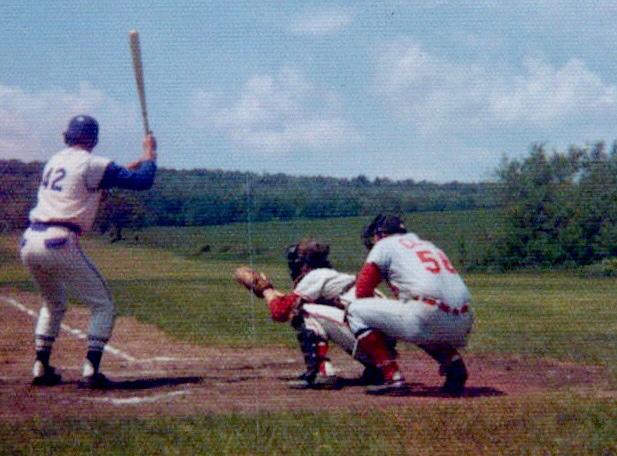
Bill Clark was a professional baseball scout for 36 years. He worked closely with the local Black community after settling down in Columbia in 1954.
I could count.
Ol’ Clark grew up in Clinton, Missouri, when baseball was everything to everybody. It was the mid-20th century, and baseball was the national pastime before the rise of basketball and football.
Ol’ Clark’s journey into professional baseball started at age 16, when he tried out for the St. Louis Cardinals. He was cut after the first day, but he couldn’t stay away from the game. He attended umpire school with aspirations to be a major league umpire, but he only ever made it to the semipro level and the Mexican Central League.
Umpiring led to Clark’s first foray into scouting in 1956, after the Milwaukee Braves gave him a “bird dog” contract. “That was a term for a guy who was not really a professional, but he could figure out who was the best ball player in the area,” Clark says.
Ol’ Clark’s proximity to professional baseball wouldn’t come any closer until 1968, when he got the chance to cover the Midwest as a scout for the Pittsburgh Pirates. He didn’t stay with Pittsburgh long. “You know, in those days you couldn’t leave a ball club for better jobs, and that applied to scouts as well,” Clark says. “(So,) I told the scouting director in Pittsburgh what I thought of him. They fired me.”
Ol’ Clark jumped around teams — including a one-year stint with the ill-fated Seattle Pilots that went bankrupt its first
Heart of MarathonAmerica
In 1960, Clark organized the first Heart of America Marathon. It was meant to be boxers trying to run a marathon, but Ol’ Clark says that the first attendees were one race walker, two distance runners, two weightlifters and zero boxers. The Heart of America Marathon is one of the oldest marathons in the U.S.
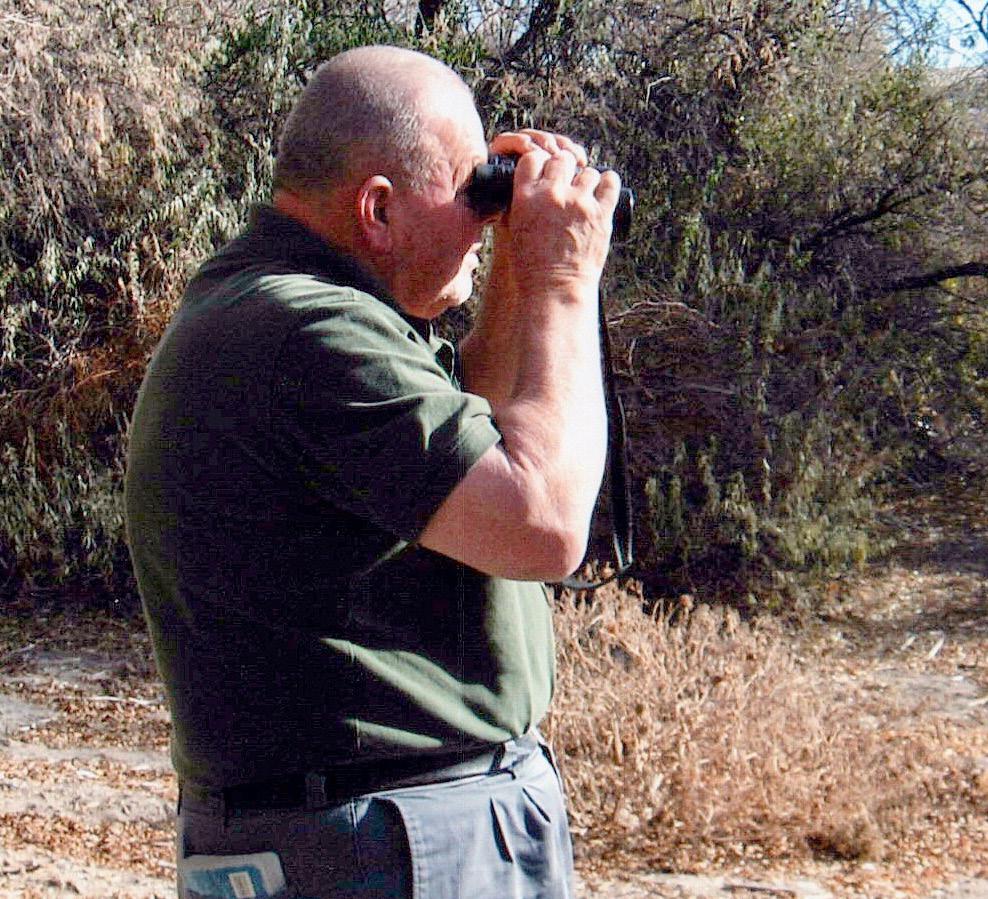
Birding
While traveling the world as a professional scout, Ol’ Clark would go birding in his spare time. He says he now has a bird list of 2,500 different species he’s seen. “If I went to Venezuela, I’d have a day off and go out to the wild country and say ‘To hell with baseball,’” he says.
Clark holds the many rings from throughout his scouting career. Three of them commemorate World Series victories — two with the Cincinnati Reds and one with the Atlanta Braves.
Photography courtesy of Sean Clark
Clark’s legacy
(The condensed version)
1948: Clark tries out for the St. Louis Cardinals — he doesn’t make it past day one of tryouts.
1949: Clark starts taking umpire classes. He’s the youngest person in his class.
1951-1954: Clark serves in the U.S. Army and notably spends one year in Korea as a truck driver.
1954: Clark returns to Missouri and studies journalism at the University of Missouri.
1956: Clark becomes the only Columbia Missourian writer to cover Douglass High School.
1956: The Milwaukee Braves hire Clark as a “bird dog” scout.
1958: Clark graduates from the University of Missouri with a degree in journalism.
1960: Clark organizes the first Heart of America Marathon.
1964: Clark helps organize powerlifting as an organized sport.
1968: The Pittsburgh Pirates hire Clark as a scout.
1969: The Seattle Pilots hire Clark as a scout.
1970: The Seattle Pilots go bankrupt, and Clark begins scouting for the Cincinnati Reds.
1989: Clark begins scouting for the Atlanta Braves.
2000-2003: Clark begins working for the San Diego Padres.
2007: Clark receives the Society for American Baseball Research’s Roland Hemond Award.
2012: Clark receives the Legacy of Scouting Award from the Professional Scouts Association of Los Angeles.
2026: Andruw Jones becomes the first player signed by Clark to be inducted into the National Baseball Hall of Fame and Museum.
and current director of Program Development, first met with Ol’ Clark at a Columbia Denny’s in 1989. Clark would regularly recommend players for Mizzou’s baseball team. “He had a really good feel for what type of player he felt could be successful at the professional level,” Jamieson says. “Not everybody has that.”
When I asked Jamieson for his favorite Ol’ Clark story, the question made him smile — even though he didn’t have a clear answer. “He had this gait about him and this look about him,” Jamieson says. “Bill just wanted to show up, do his job, and he wore the colors of whatever team he represented at the time.”
Stepping up to the plate
Before Ol’ Clark was traveling internationally in search of premier baseball players, he served in the U.S. Army as a truck driver in Korea during the Korean War. During this time, entering Korean villages and eating local food was prohibited due to fears of contamination, but he didn’t let that stop him.
Growing up in small-town Missouri in a prejudiced Southern Baptist family, Clark’s time in Korea was life-changing. He had friends who were different from him for the first time in his life. When he returned home, he was no longer a Baptist. “That was my first understanding — I
Writer Austin Garza chats with Clark during a photo shoot for Vox at Cosmo Park. Garza met Clark through a Mizzou class about baseball and culture. Clark also teaches a baseball class at Osher Lifelong Learning Institute.
When scouting, Clark would run tryout camps from the umpire position. Throughout his career, he estimates he saw over 25,000 players and about 2,500 of them were signed to teams.
Weightlifting
Ol’ Clark is in seven weightlifting halls of fame — and for good reason. In the ’60s, he started a national prison weightlifting program in Leavenworth, Kansas. This led to him and four others organizing powerlifting as a professional sport in ’64. Clark also organized the first women-only weightlifting meet in Columbia, which became an Olympic sport 12 years later.
Photography courtesy of Sean Clark
A new crew is calling the S T H
in columbia
The new owners put their own spin on one of our city’s most beloved pool halls while honoring its local origins.
Stories by Grace Romine and Jackson West
Edited by Lauryn Rhodes and Raphael Sternadori
Design by Isabelle Paley
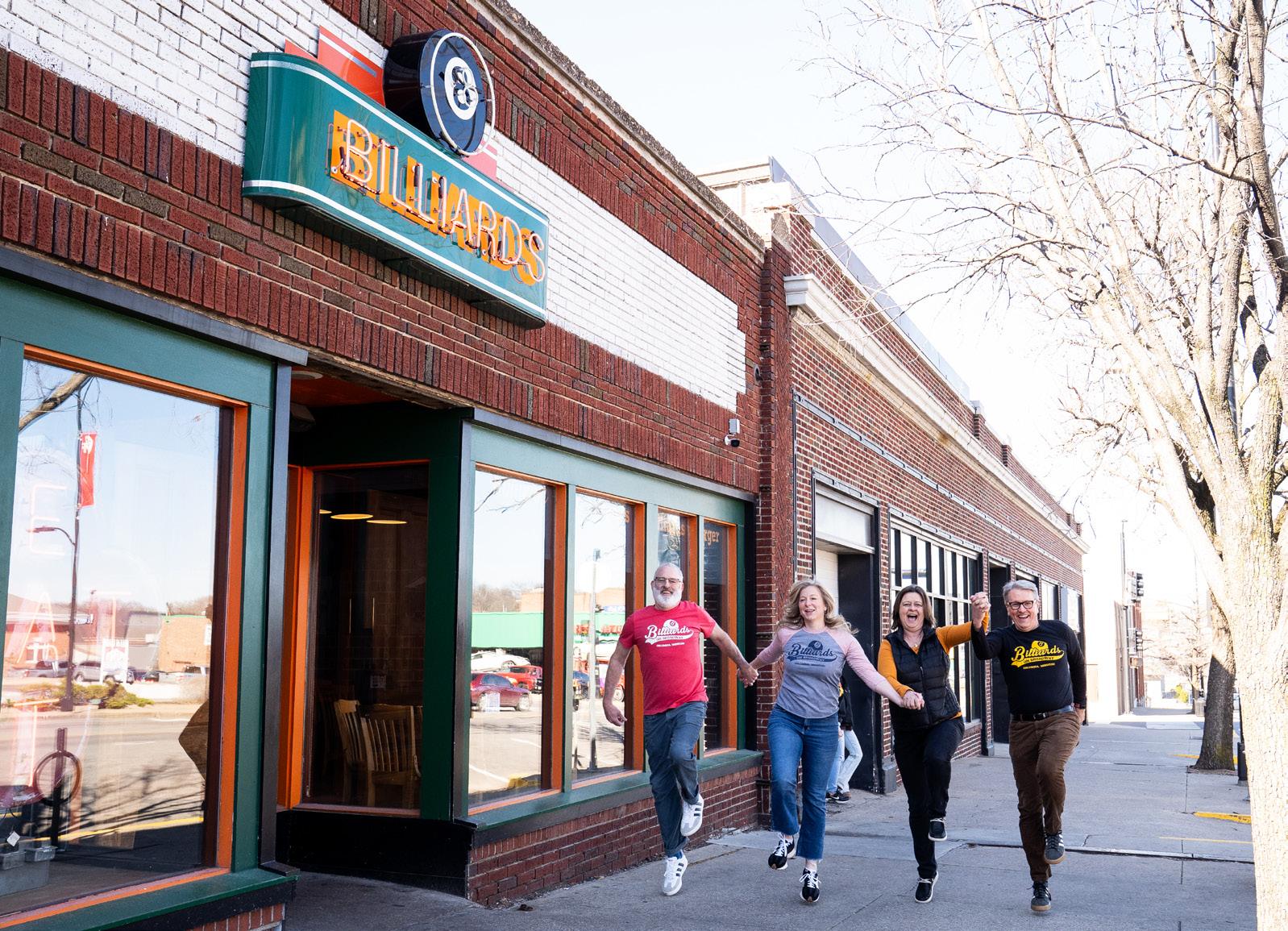
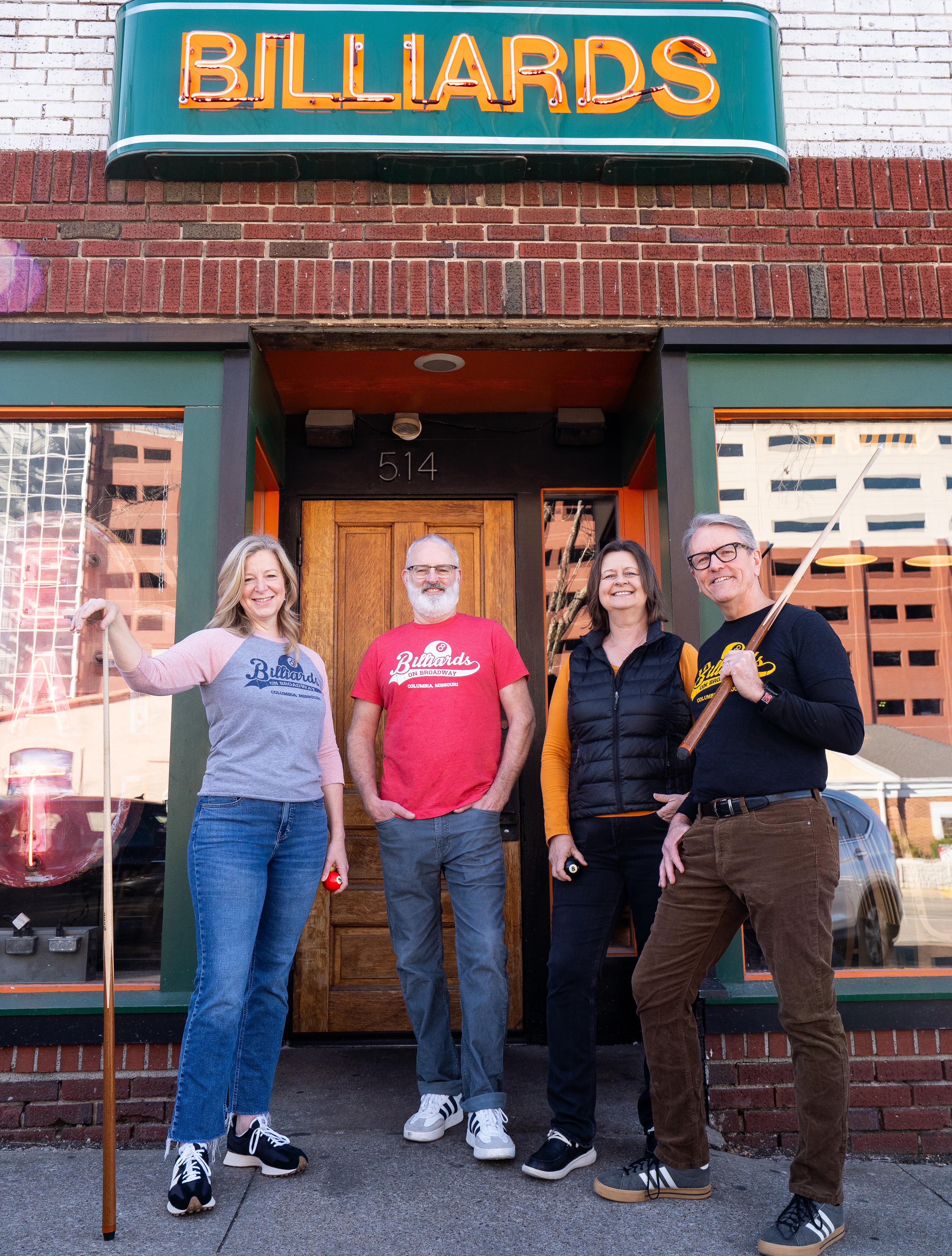
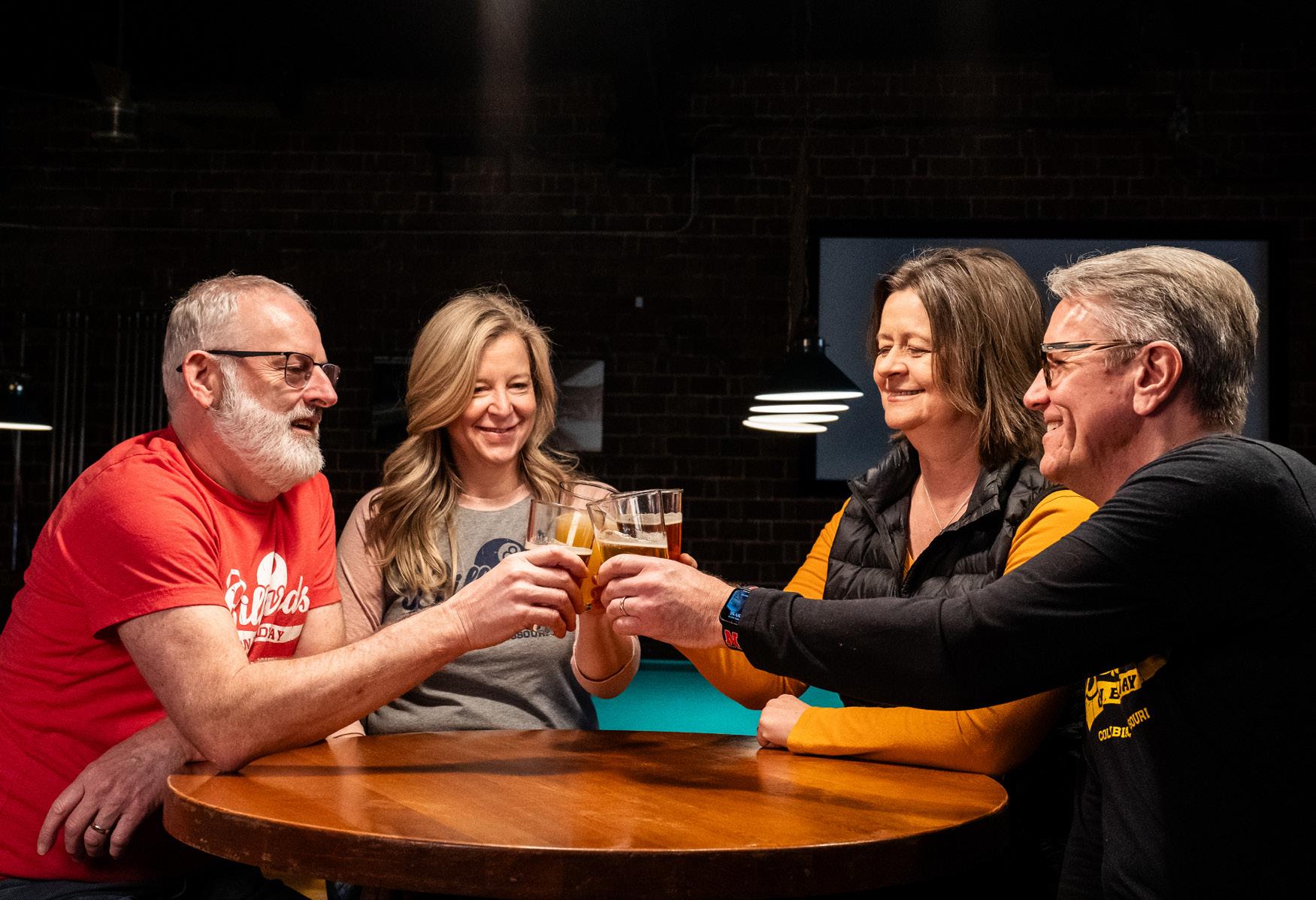
Billiards’ new owners (from left) Lisa Morrissey, Bill Morrisey, Laura Kingsley and Kurt Kingsley share a love for Columbia and wanted to expand into running another local business.
wo local pharmacists, a chef and an investment banker came together to purchase the beloved Billiards on Broadway in February. What could these pharm-to-table entrepreneurs possibly know about running a pool hall in Columbia? I met with them at Billiards to ask this very question. What unfurled was a story of pride and real love for local business.
To be fair, Bill Morrissey and Laura Kingsley aren’t just any pharmacists — they’re co-owners of Kilgore’s, one of Columbia’s largest independent pharmacies with three locations in Boone County. They, along with their spouses Lisa Morrissey and Kurt Kingsley, are the new owners of Billiards. Lisa and Kurt take the lead running the pool hall and restaurants.
“We know the people we take care of at the pharmacy. You get to know what their struggles are. You get to know their families and their backstory and all the different connections, because we’re all
connected in different ways,” Bill says. “With everything going corporate in the world, not being part of that is definitely something we support.”
Laura threads the needle by working as a pharmacist at Kilgore’s while advocat ing for the profession in Jefferson City as a board member of the Missouri Pharmacy Association.
Both Bill and Laura say they value their role as an institution that Columbia relies upon. Seventeen years into their business partnership, Bill and Laura decided to ex plore this additional local business venture with Lisa and Kurt.
Setting the shot up
The four of them were already friendly with Molly Wagner — the previous own er of Billiards — and were regulars at the restaurant. Molly’s husband, Les, jokingly hinted to Bill that they were interested in moving on from Billiards.
“Bill’s first inclination was that he didn’t
Burger Bar
Billiards is known for its stand-out burgers, so Bill Morrissey gave some tips for what’s the best on the menu.
“My personal fave is a Billiards Burger with bacon, pepper jack cheese and all the toppings. It’s by far my personal goto,” he says. “My niece has her fave of the pork tenderloin sandwich. Those who want something spicy typically hit The Roomie sandwich. There’s something for everyone.”
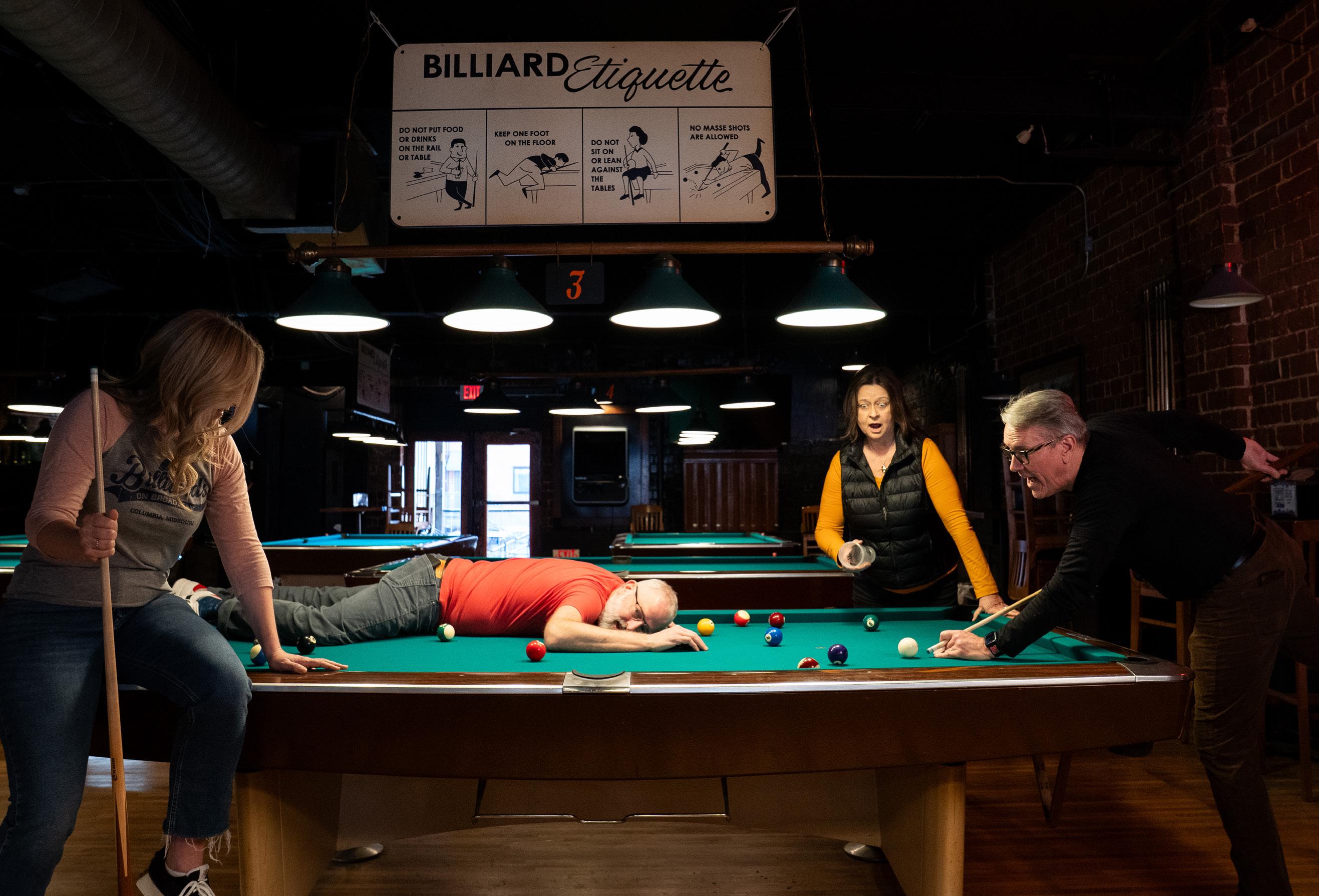
Pharmacists Bill Morrissey and Laura Kingsley, longtime Columbia chef Kurt Kingsley and investment banker Lisa Morrissey laid the process of taking over Billiards all out on the table to Vox.
know how to run a restaurant,” Laura says. But Bill was intrigued, so he and Laura brought the idea to their spouses. The Fantastic Four-like team were all on board. All they had to do was pitch it to the Wagners.
“We literally had conversations with Molly and Les in their kitchen on the lowdown and just talked it through. They were looking for somebody to keep it what it was, with some new energy,” Bill says. “We love it the way it is. We’re not going to make sweeping changes.”
New spin, same local vibe
Kurt started as a Shakespeare’s Pizza cook in 1990, and since attending culinary school has worked as a chef at some Columbia staples including. Lisa has an extensive background in investment banking, so managing
Billiards’ finances fit like a glove. The four had everything they needed to keep Billiards owned and operated by locals. Fast-forward two months — it has been a resounding success in the new owners’ eyes.
“I walk in here and I smile,” Kurt says. Yes, all of the other jobs I was good at, so I did it. But this is my own.”
“Columbia has always struck us as a place that has preserved that love of locally owned business,” Lisa says. “So many cities and towns in the country have lost that. We want to keep that intact here, it’s a very special thing.”
Keeping ownership local is critical to not alienate the core customer base. Many Columbians spend their time here. You’ll observe bona-fide pool-sharks cueing up their next truly miraculous shot, families
with kids looking to chow down on a handsmashed burger or college students and working-class folks looking for craft beer.
The newly formed team is also going out of its way to select beer from local breweries.
“How many of those beers are not from Missouri?” Kurt says, pointing up to a chalk board on the wall that displayed more different ales than I could count. “That’s all Missouri beers. There’s nothing on it that’s not from Missouri.”
That pride in local businesses and those community connections are what keep your favorite restaurants, stores and services around. Because of the work of Bill, Lisa, Laura and Kurt, Billiards on Broadway is here to stay.
Jackson West
The pride in local business includes a focus on Missouri beers at Billiards.
hether you’ve never picked up a pool cue before or are looking for weekly tournament play and cash prizes, there’s a pool hall in Columbia for you. Here’s what Vox racked up about the local billiards scene.
For the amateur players, try Billiards on Broadway
In February, Lisa and Bill Morrissey and Laura and Kurt Kingsley took over ownership of Billiards on Broadway from Molly and Les Wagner.
The Wagners opened Billiards nearly 18 years ago, wanting to create a place to play pool. They secured the Broadway location, purchased tables from the closed Columbia Billiards Center on Ninth Street and opened Billiards in 2008.
Grab your spot in the queue for a pool table and check in with the bartender. When there’s a waitlist, pocket the opportunity to try one of Billiards’ specialty burgers or sandwiches. Standouts include The Roomie, with jalapenos, pepper jack cheese and buffalo sauce, or The Love Story, with ham, bacon bits, Swiss cheese and house-made buttermilk ranch.
Best for: Casual games, first dates and focusing on your buds and beer.
Setup: Eight regulation (7- to 9-foot) tables, two bar tables. $7.20/table Mon.-Thurs. before 5 p.m. and $9/table until close. Friday through Sunday, the rate is $10.20/table all day.
Pro tip: Nosh on the burgers between racks. Find them: 514 E. Broadway, 4 p.m. to mid night Mondays, 11 to 12:30 a.m. Tues.-Sun., 573-449-0116
Honorable mentions: Deuce Pub and Pit, Klik’s Deli and Bar, Jake’s
where to play
LPNo matter your shooting level, there’s a Columbia pool hall that fits your bill.
For intermediate players, try Booches
This historic, no-nonsense pool hall opened in 1884 with a few rules — no liquor, no gambling and no women. Women could eat, drink and play when new ownership took over in 1974, according to Booches’ website. Charlie Kurre and Rick Robertson purchased Booches in 2004, and then Robertson sold it to longtime Booches employees Jeff Bossaller and Josh Fuller in 2024.
For an intermediate pool shooter with a moderate handicap, Booches is the right place.
USA Today named Booches’ burgers one of the top 25 “cheap-eat classic” dishes in the United States in 2009, but don’t expect elegance. Your burger, “somewhere between a slider and a full-size burger,” according to Booches’ website, will come in wax paper, straight off the flattop grill and served with onions, pickles, ketchup and mustard.
Best for: Award-winning quarter-pounders, catching the big game and escaping from the college pool-shooting crowd.
Setup: Three full-sized (9-foot) pool tables, two snooker tables and one pocketless billiard table for three-cushion billiards play. $5/hour for one player, $8/hour for two players and $10/hour for three or more players.
Pro tip: Leave your credit card at home — this establishment is cash only.
Find them: 110 S. Ninth St., 11 a.m. to 10 p.m. Mon.-Sat., 573-874-9519
For expert players, try Missouri River Pub and
Pool
Matt Sommer says he played pool in college but didn’t become a serious player until about six years ago. Now, he is the Columbia league division representative for the North American Pool Shooters Association of Central Missouri — a league with nearly 150 players.
It all started at Missouri River Pub and Pool. Owner Troy Ennis was searching for a lower handicap player — meaning a beginner to intermediate — to join his team. “You’re here every night anyway,” Ennis told Sommer. “I know you play some pool.”
Sommer says Missouri River is conducive to playing and practicing pool — quiet and frequented by shooters who know their pool etiquette.
The Ultimate Pool USA league plays there, too. The league sends a mid-Missouri team to the Grand Finals National Shootout each year. “They’re really competing to go play hundreds of teams for a very big, large amount of money,” says Joshua Stone, a league operator whose group plays on Monday nights in Millersburg.
Best for: Meeting the “who’s who” in Columbia’s pool scene, league matches and national tournaments.
Setup: Eleven pool tables. Pricing varies by tournament or league play. Check out the Missouri River Pub and Pool Facebook for more information.
Pro-tip: Visit on Fridays for Missouri River’s weekly 10-ball chip tournament.
Find them: 1624 Jade Road, 5 p.m. to 12 a.m. Mon.-Thurs. and until 1 a.m. on Fridays, 573-814Grace Romine
Ronyn Cunningham (top) watches an 8-ball go into the pocket at Missouri River Pub and Pool. A Booches sign (below) marks a spot for matchups.
PHOTOGRAPHY BY EMMA LEHMAN AND BRANDON MIODUSZEWSKI
LCALM DOWN AND DRINK LAVENDER
Sip your way through the day with these three lavender-infused drinks.
BY ADELA RAKOSKI
avender: Is it a sweet treat or pungent perfume? Although haters would say it’s soapy, when paired with the right flavors, lavender can complement and amplify even the most bitter or powerful notes. It just requires the correct amount of lavender and combining it correctly with other ingredients — otherwise it could taste like bubble bath. But when a floral flavor is paired with, for example, a fruitier one, something beautiful happens. June is a perfect time to incorporate lavender-based drinks into your meals. Here are three to try.
BREAKFAST
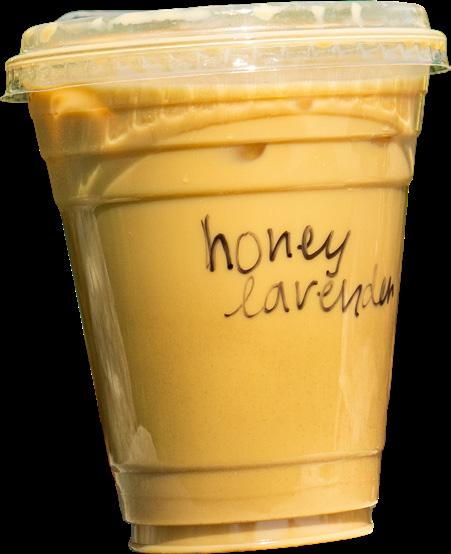
Toasty Goat Coffee — Honey Lavender latte
Toasty Goat’s lavender honey syrup is locally sourced and simple as can be — organic honey and locally grown lavender from The Lookout Farm in Rocheport — but it carries a layered note.
Medium and light roasts often have a more fruity or floral flavor, allowing the lavender to balance out the bitterness of the espresso.
For an accompanying pastry, Michaela Meiners, assistant manager of The Toasty Goat, says that lavender honey syrup pairs well with the cafe’s Grandma’s Chocolate Chip Cookie. The rich chocolate brings out lavender’s earthy essence.
Location: 515 S. Scott Blvd.
Cost: $6 for 12 oz.
Hours: 7 a.m. to 5 p.m., Mon.-Sat.
Website: toastygoatcoffee.com
LUNCH
Bur Oak Brewing Company — Lily Ale
Nurse this canned beer from Bur Oak Brewing Company with your lunch (or dinner). The Lily Ale is a wheat beer on the lighter side with a medium-bodied finish. It offers a dreamsicle-like floral and fruity blend, with orange and raspberry aromas, complemented by lavender. Crisp, refreshing foods like salads, grilled chicken and seafood pair well with the sub-
Photography by Ava Kitzi and art courtesy of Adobe Stock
tle, sweet flavor of the light beer. Try it with burgers or tacos, so the lavender can cut through the richness. The beer also complements salty snacks such as chips or fries.
The Lily Ale is available for purchase both in-person at the brewery or from local stores such as Macadoodles.
Location: 8250 E. Trade Center Drive
Cost: Six-pack for $7
Hours: Noon to 7 p.m., Mon.-Sat. Website: buroakbrewing.square.site
BEDTIME
Steep and Bloom — Lavender tea
Located in Serendipity Salon and Art Gallery, Steep and Bloom offers a wide range of teas and tisanes — which are herbal teas — each crafted for flavor or health benefits. Owner Christa Holtzclaw flips through books and combs through internet pages to produce new, bold flavors, handcrafting each of her teas in-house.
“For lavender, you have to be careful with it, because they can fight pretty hard from a flavor profile standpoint,”
Holtzclaw says. “For example, with the two blends that I use with lavender in my core line — one (being) a tea and one a tisane — I use different flavor pairings to accentuate each one.”
If you’re looking for strong flavor, make sure to check out their lavender-enhanced black tea, the Rise + Bloom. When brewed, it produces a warm amber-to-deep-copper color, with a fragrant steam carrying a gentle herbal scent and a malty flavor.
If health benefits are what you have in mind, take a deep inhale of the Calm + Collected tisane which features lavender and passion flower. Perfect for bedtime, lavender’s aroma is a “tonic for your nervous system to help you relax and calm down,” Holtzclaw says.
Location: 1020 E. Walnut St.
Cost: Rise + Bloom starting at $8, Calm + Collected starting at $6
Hours: 11 a.m. to 6 p.m., Tues.-Sat. Website: steepandbloomtea.com
by Ava Kitzi
Photography
Keep the rolling
With its funding at risk, calling “cut” on Vidwest Studios is not in the script for its members.
BY GRACE DEEN
The birth of platforms like YouTube and Discord made it easy for creators to share their art — but what does it take to create that digital content?
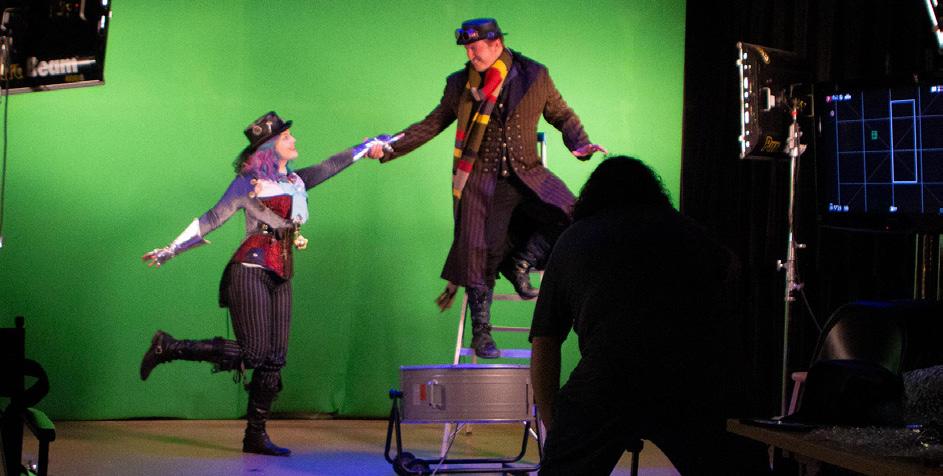
Anyone can snap a photo for Instagram or upload a singing video from their phone straight to TikTok. But a lot more goes into producing a quality video than you might think. Lighting equipment, sound gear, studio space and skills training don’t grow on trees. That’s where Vidwest Studios presses play.
And...Action!
Formed in 2019 after the elimination of Columbia Public Access Television, the nonprofit, volunteer-led studio offers affordable memberships and access to recording spaces, equipment, editing software and personal instruction to its 270 members. Essentially, it’s a modern-day media library.
“It’s an accomplishment to have these $5,000 cameras, all this really expensive equipment, all these cords — to
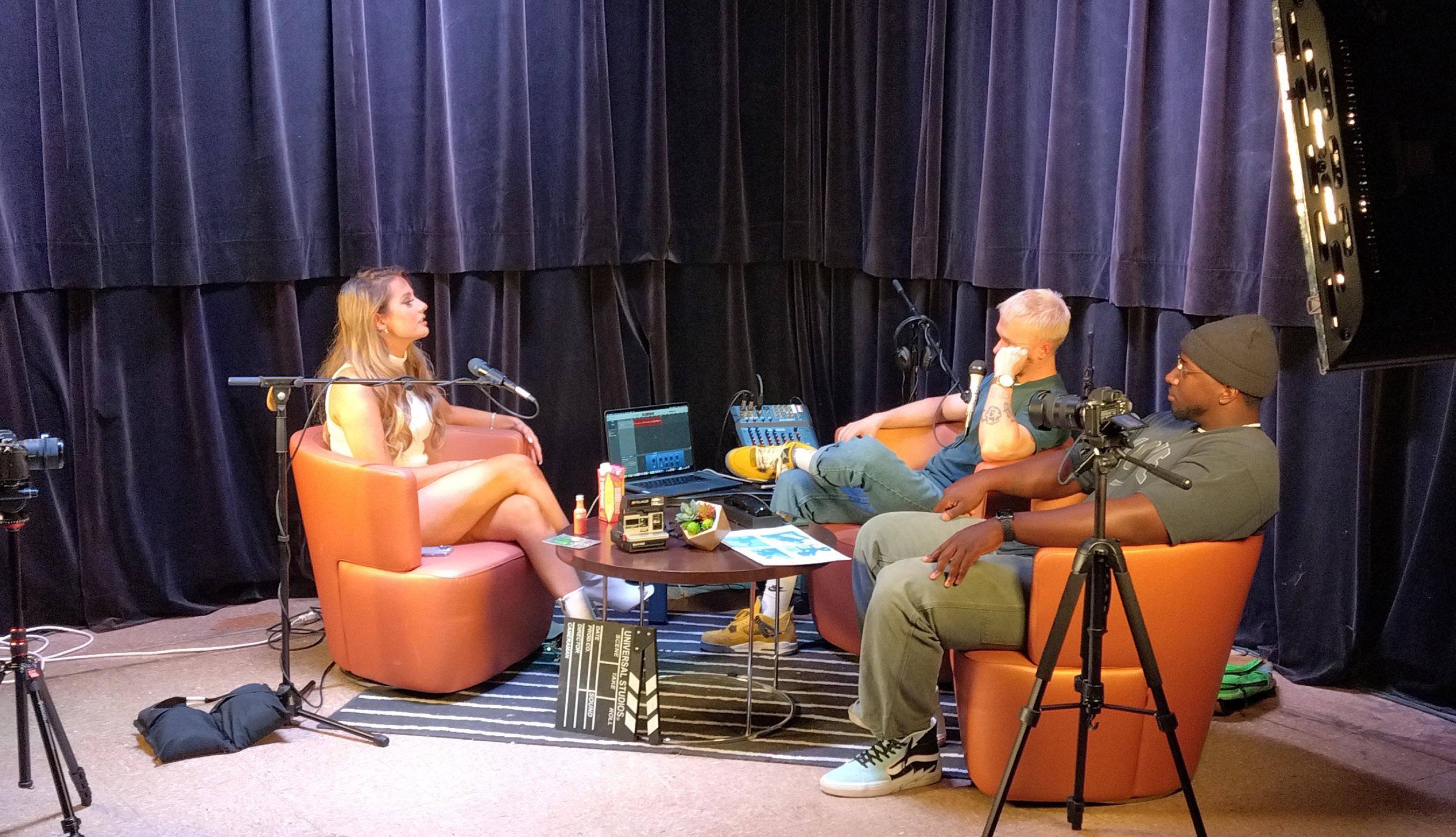
By providing professionalgrade equipment, Vidwest Studios removes a major financial barrier and gives members the freedom to create, experiment and level up their work, such as these podcast creators (above).
get it all up and running and actually do it is amazing,” says Doug Miller, a member since 2022. Miller and Elizabeth Keach founded Detect Nerd, an improvised comedy-adventure podcast on YouTube, with Vidwest serving as the duo’s base.
As an extension of what was public access television, the studio inherits funding from the city of Columbia, amounting to approximately half its operational costs. These funds help to
cover facilities, equipment, contract fees and insurance expenses.
Plot twist
That funding might not last. In June 2025, the city announced its funding contract with the studio would not be renewed beyond 2026. Since October, a Vidwest representative has spoken at every council meeting. And on May 4, supporters staged a protest outside the city building to urge officials to reconsider before the contract ends.
One of Vidwest’s co-founders, Matthew Schacht, compares the studio to an old tree in a town — a sign of warm familiarity, something the community would be sad to see cut down. It might not be something every passerby notices, but it’s a pillar for those who do.
“When someone pulls up to a studio, I can give them a camera and say, ‘Here you go, bud,’ ” Schacht says. “It may seem like a small thing in the world, but for somebody who’s been told, ‘this is all you get,’ that camera just means so much.”
Sarah Dresser, manager of the
city’s Office of Cultural Affairs, says the $35,000 contract requires Vidwest to monitor the Columbia Access Television channels, operate the community media center and provide various other services. The city extended the contract terms through September 2026 using 2025 fiscal funds. Once the fiscal year ends, the Public Access Channel programming will cease. However, Vidwest is a nonprofit and can continue to operate the community media center and its own programming.
Schacht and other Vidwest veterans question why a public service tied to cable franchise fees is being eliminated while franchise revenue continues. To them, it raises concerns about how those funds are being redirected, effectively phasing out a public service despite ongoing public contributions. Schacht also notes that Vidwest represents just 0.0002% of the city’s budget while serving hundreds of Columbians, making its removal feel disproportionate to its cost.
“As a city, all departments were looking at ways to reduce costs, what contracted services we have and whether
THE QUEST TO SUPPORT VIDWEST
BECOME A MEMBER
Get access to studio space, pro-level equipment and a built-in creative community. Memberships start at $3/ month. To learn more visit vidwest.org.
HOW
TO DONATE
As funding cuts threaten the studio’s future, consider donating money or equipment to help keep resources accessible.
those are essential for our mission as a city,” Dresser says. “So, considering those factors — whether the service is still a priority, whether it’s being fully utilized, and the budget realities that require hard decisions — that led to the decision.”
Don’t roll the credits
For many members, losing the studio isn’t just about access to equipment — it’s about losing a creative lifeline.
Hickman High School graduate Allison Calkins turned to Vidwest while co-founding her school’s film club during her senior year in 2024.
“I didn’t have any resources,” Calkins says. “Without Vidwest, I wouldn’t have been able to do a lot of stuff that I got to — so if my voice mattered at all, I wanted to share how it helped me.”
Beyond its services, members say the studio fosters a sense of community.
“It’s important for artists, musicians and creators to have this space because everyone’s got their own story to tell,” Keach says. “And it’s really important for any city that voices are heard.”
They speak for the trees
Here’s how the Columbia Tree Board manages and protects the city’s greenery.
BY LAUREN JOHNSON
Picture this: The sun is shining on the trees in Kiwanis Park, casting a perfectly shaded path for your stroll. Now imagine the same stroll without those trees. It’s hotter, there are no birds singing or insects buzzing — it’s not as pleasant, right?
Native trees offer shade, lower urban temperatures, provide clean air and support biodiversity. But who is behind protecting our communities precious foliage? The Columbia Tree Board is an advisory panel of seven volunteers who manage and protect the city’s trees. They discuss invasive and residential trees, local education and volunteer programs, then share their conclusions with the Columbia City Council, which decides how to move forward.
Here are three ways the tree board speaks for the city’s trees — supporting many future perfectly shaded strolls.
Reducing interlopers
One threat to native trees is the explosion of invasive species, also known as non-invasive plants. Two of the most prevalent in Missouri are the Bradford
pear tree and honeysuckle bush — both of which can crowd out native trees. By comparison, natives host insects that provide food for birds, and don’t grow out of control.
Several volunteer organizations work to remove trespassing trees. About five years ago, the Missouri Conservation Corps set out to eradicate honeysuckle bush from Kiwanis Park, though it still thrives throughout Columbia. The results have been successful so far, with volunteers removing honeysuckle from more than 16 acres. But leftover honeysuckle berries allow the bush to return, requiring frequent management of the area by applying herbicide to the invasives.
Stephen Bybee, one of the members of Columbia’s tree board and the project director for MCC, says the volunteer efforts are vital for many reasons. “It’s giving volunteers the ability to see their impact on the invasives and to understand that after a few hours of work,” Bybee says. “We can effectively clear an area and make it look like a native habitat again.”
PLANT SEEDS OF CHANGE
MISSOURI CONSERVATION
CORPS is a nonprofit that addresses invasive species, urban tree planting, and environmental education, creek cleanups and community engagement. To learn more about how to get involved, missouri conservation corps.org.
MISSOURI INVASIVE
PLANT COUNCIL is associated with the Missouri Prairie Foundation and Grow Native! Find more resources, volunteer opportunities and top invasive plants at moinvasives.org.
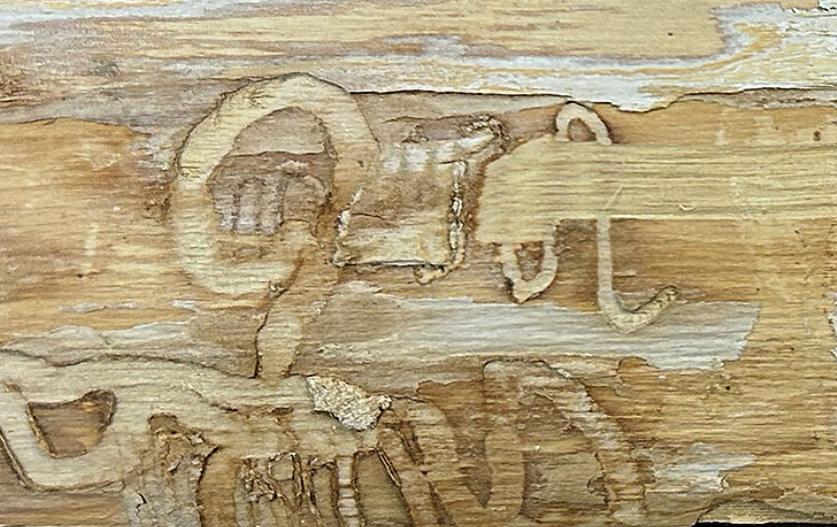
The wood displays what a destroyed tree may look like when it is infected by Emerald Ash Borer larva. The larva destroys the internal parts of trees by cutting off the needed nutrients.
Help them grow
Another effort of the tree board is planting more trees in city neighborhoods — specifically in areas with newer construction. “A lot of older Columbia has these big, huge trees, but a lot of new Columbia — they just scrape all of the land,” says Renee Scheidt-Hahn, the tree board’s president. “They take everything out, and then don’t put anything back in.”
The city’s tree board promotes canopy programs — which are combined efforts to increase tree plantings, tree management and tree maintenance. Two programs showing successful results are CoMo Canopy and Columbia Tree Core. The city’s Office of Sustainability promotes the canopy program, which works to plant trees in areas of Columbia with higher urban heat. Columbia Tree Core works with neighborhoods that need trees. In fall 2025 — its inaugural year — the tree core program helped plant about 90 trees in different areas.
Don’t be pests
The tree board also educates the public about how pests affect tree health. When the organization was created in 2019, it detected a pest that was destroying Columbia’s ash trees — the emerald ash borer. The group worked to educate residents about the two options to manage the pest: chemically protect the trees or totally remove the trees. The tree board chose both approaches.
Several city departments worked to replace trees as the removals occurred in city spaces. Six years later, city arborist and tree board liaison Steve Fritz says he has seen positive results following citywide action.
The future looks bright for the tree board, as it works with the city to establish a tree fund. “None of that money would be for tree removal,” Fritz says. “The goal would be to enhance our tree canopy.”
Photography by Alyssa Counts/Archive and illustration by Isabelle Paley
Here’s the pitch
Columbia’s youth rugby teams are looking to create scrum-thing special one player at a time.
BY C.J. HANAUER
In the past two decades, youth rugby participation has been on the rise. In 2024, USA Rugby recorded over 50,000 registered players at the youth and high school level for the first time in its 51-year history. “We’re now at a stage where (it’s) the highest registrations have ever been in rugby,” says David Pool, president of USA High School Rugby.
Columbia already is home to several rugby teams for adults, including men’s and women’s clubs at the city and collegiate level. Much like the national trend, there’s an increasing number of teams for youth. Nearly 500 kids in Missouri play rugby. If your child is interested in joining them, here are a few things you should know.
Getting started
One of the clubs leading the growth is the Columbia Rugby Football Club, better known as the Outlaws. For younger ages, the program aims to teach off-the-field lessons.
Sarah Little, vice president of Columbia Youth Rugby Club, says the sport helps teach kids values and ways of conducting themselves off the field. “You come to the game and learn a new skill, and you leave with a mindset that kind of carries with you,” Little says.
One of the values that the Outlaws and Columbia Youth Rugby emphasize is respect. “When the game is over, everyone is friends,” Little says. “You don’t carry any animosity after the game — you enjoy a burger
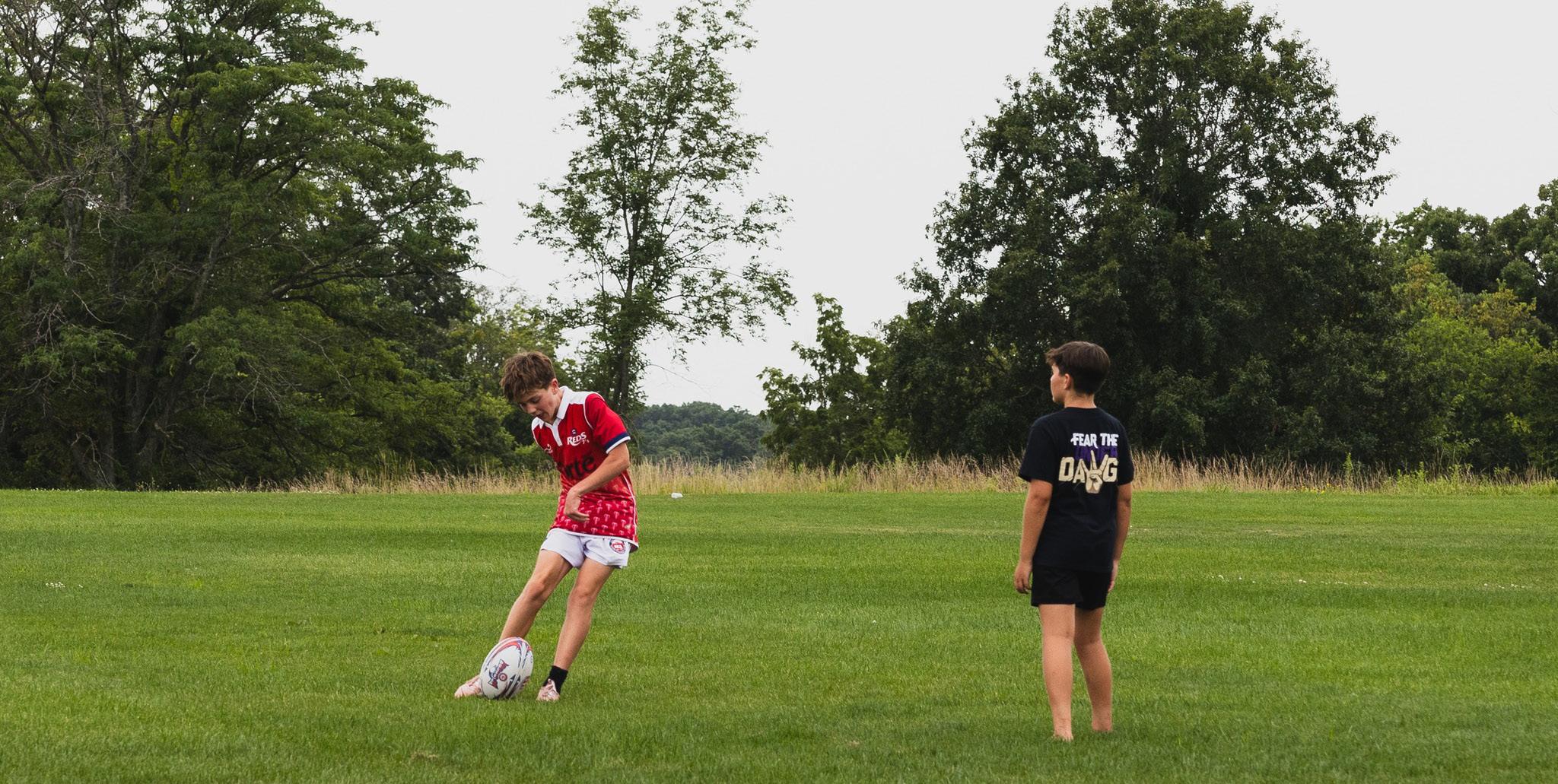
The Show-Me State Games offers rugby opportunities for local kids (above), in addition to youth clubs. “The goal of the program is really just to have kids run and have fun,” says Sarah Little, vice president of Columbia Youth Rugby.
RUGBY RULES
Passing: The ball can only be passed backwards or sideways. Scrum: Eight players from each team push against each other and try to get the ball for their team. Scoring (called a try): Once a player with the ball has entered the try zone, the ball needs to be placed with downward force to score a try.
with the guy you were just going up against. It’s like a network of people who just want to see you succeed in the sport.”
Don’t cause a ruck-us
For young players, contact isn’t introduced into the game yet. Regardless of the rough-natured reputation of rugby, safety is of utmost importance for youth events. “For the younger kids it’s all non-contact, and it’s flag,” says Jeff Noe, head coach of the Outlaws. “They’re really just working on getting good passes, playing a good, solid defense, but since there’s no contact, it’s just going low at the hips to grab the flags.”
All referees and coaches go through a rigorous training process before making any kind of contact, and tackling techniques prioritize limited contact with the head. “It’s getting in the habit of running straight up into each other, but to lower your body so you’re not colliding heads,” Noe says.
Protected punt
Despite the lack of padding, the contact rules taught in youth rugby programs are part of what makes the sport safer than playing on an American football team.
“You look at football teams, you’ll see casts and knee braces and crutches. You don’t see that on a rugby team,” says Bill Evors, head of the Youth Rugby Program for the Bel-
mont Shore Rugby Club in California, one of the premier youth rugby programs in the country. “It’s a much safer game without blocking, and if you have the right techniques you can reduce (injuries) significantly.”
Crouch, bind, set
This summer, the Outlaws will host an eight-week youth rugby clinic at Gans Creek Recreation Area in partnership with Columbia Rugby and Columbia Parks and Recreation for children ages 5 to 12.
Noe, who’s also leading the youth summer program, says one of its major goals is just for kids to run and have fun. “For the two hours, they’re probably running 75 to 80 percent of the time, so there’s not a lot of downtime,” Noe says. “You get to get out and exercise, and it’s not stop-and-go like a lot of sports. You just move from one drill to another, grab a drink and keep moving.”
What’s next
The Outlaws have a high school boys team, with hopes of forming one for girls. Previously, high school players had to join club teams in nearby cities, like St. Louis and Kansas City. The high school level brings youth rugby up to a more competitive level, introducing full-contact games and that give athletes the opportunity to show college teams their skills and potentially secure scholarships.
TO-DO LIST
Your curated guide of what to do in Columbia this month.
BY ANDREW DAVIS, LAUREN JOHNSON AND CLAIRE MCLAUGHLIN
ARTS
Dr. Strangelove or: How I Learned to Stop Worrying and Love the Bomb
Stop the ticking clock and attend an absurdist dark comedy directed by Stanley Kubrick. The film is a part of SHOW ME: Season Five. It follows a high-stakes situation to stop a nuclear strike with help from a group of politicians, military leaders and a Russian diplomat. 7 p.m. May 28, Ragtag Cinema, free, 573-441-8504
The Trail to Oregon!
This show puts the story in your hands. In this interactive musical based on the 1985 Oregon Trail video game, the production follows a family on a dangerous trip to Oregon in 1848. You, the audience, get to decide the fate of the family. 7:30 p.m. June 4-6 and June 11-13; 2 p.m. June 7 and 14; Columbia Entertainment Company, $20; $15 students, 573-474 3699
Little Women
March right in and grab your seat as you follow the four March sisters: Meg, Beth, Amy and Jo on their journey to be brave young women. Based on Louisa May Alcott’s book Little Women, the story is set during Civil War as the sisters grow from childhood into womanhood amid society’s expectations. 7 p.m. June 18-20 and June 25-27; 2 p.m. June 21 and 28, Maplewood Barn Community Theatre, 573-227-2276
Photograph 51
Shhh — can you keep a secret? Step into 1953 London and discover “the secret of life” as scientist Rosalind Franklin uncovers the key to the structure of DNA. The film shines a light on Franklin’s discovery, despite not being credited for her findings. 7:30 p.m. June 25-27; 2 p.m. June 28, Talking Horse Productions, $20; $18 students, 573-607-1740
Photography by Sophie Chappell/Archive
COMMUNITY
An Introduction to Birdwatching
Bring the family and birdwatch with pros from the Columbia Audubon Society at the A.L. Gustin Golf Course. Hop in a golf cart and ride through the course as you learn about local birds and their habits. If you don’t have your own binoculars, feel free to borrow a pair — just arrive 15 minutes early. 6 p.m. June 11, A.L. Gustin Golf Course, free, 573-882-4240
Make Music Columbia
Celebrate the summer solstice and listen to all genres in honor of Make Music Day. Want to perform? Use the organization’s matchmaking system to connect with a hosting venue and make some noise. 11 a.m. to 9 p.m. June 21, various venues in Columbia, free, 573874-6387
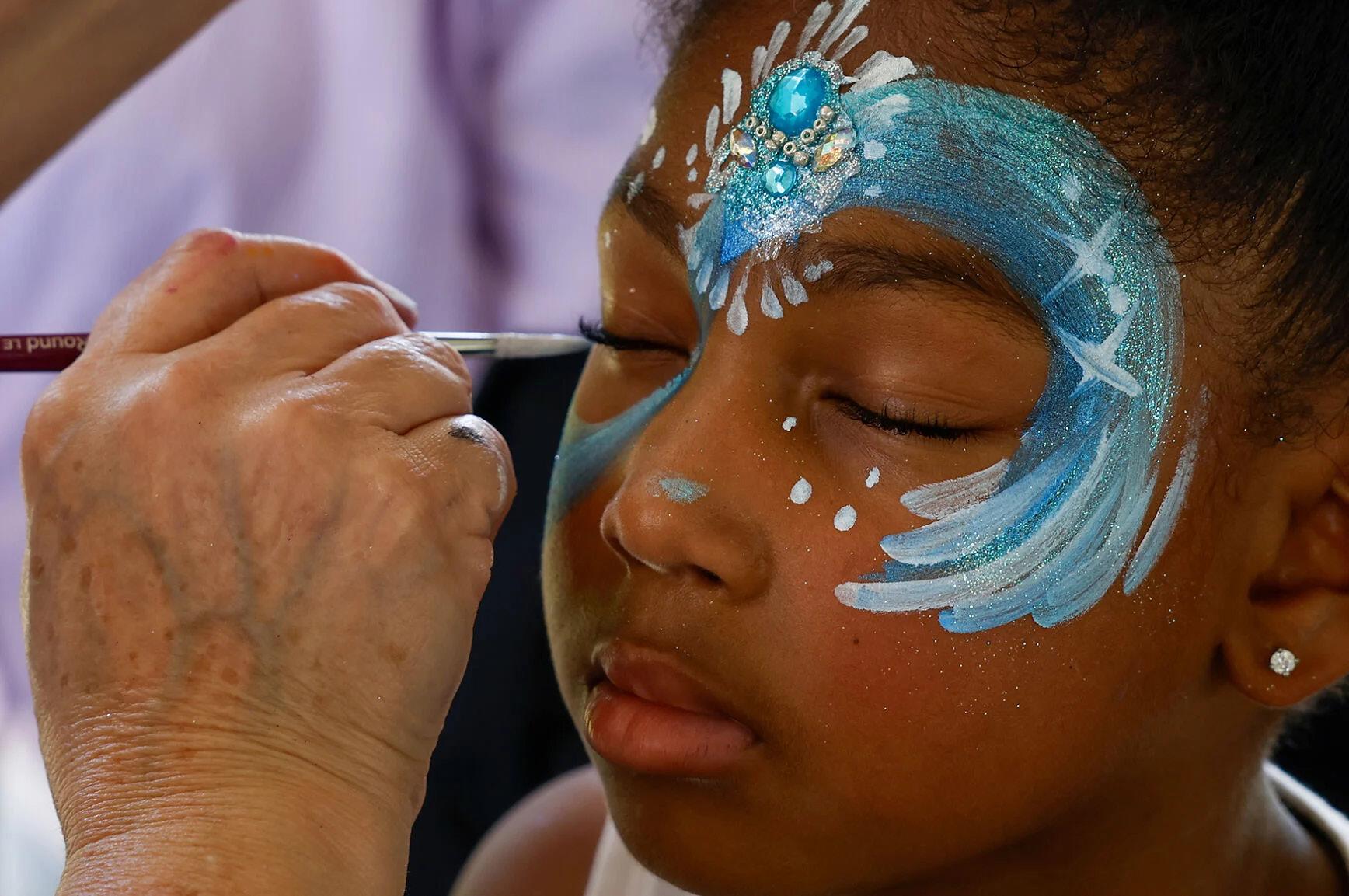
Join one of the many Juneteenth celebrations taking place in Columbia. The Powerhouse Juneteenth Third Annual Event focuses on historical displays and educational activities. At last year’s event, Ava Copeland (above) got her face painted. Or join the Celebration at Douglass Park featuring food, music and culture. Both events are free. Douglass Park: 8 a.m. to 3 p.m. June 19; Cosmo Park: noon-4 p.m. June 19
FOOD
Bikes, Bites & Brews
Bike down to CycleX and roll with the Local Motion crew through downtown Columbia. The route will guide you to local microbreweries to sample beer and enjoy classic Columbia eats. 6 p.m. June 10, CycleX, $45 preregistration, $55 day of, 573-999-9894
MUSIC
Atomic Junction
Described as “the bastard love child of early-Replacements and Reba McEntire” by producer Greg Griffith, Atomic Junction seamlessly mixes punk, outlaw country and rock into a gritty, genrebending sound. The St. Louis-based band will return to Columbia’s lively Dive Bar on the Business Loop. 8 p.m. May 29, Dive Bar, free, 573-607-9523
Dawson Hollow
Dawson Hollow brings its indie, folk and rock style to the Arcade District. The band includes five siblings from the Ozark Mountains and will deliver a performance full of Americana strings, colorful pop music and five-part harmonies. 7 p.m. June 6, The Arcade District, tickets not yet on sale, 210-882-6591
Onyankopon, Kill Screen and Zone Outer
The St. Louis-based emo duo Onyankopon brings its “ghost-haunted aesthetic” to Cafe Berlin. Along with local openers Kill Screen and Zone Outer, Onyankopon promises to bring chaos and energy to the Columbia cafe. 8 p.m. June 13, Cafe Berlin, $10, 573-441-0400
The Kay Brothers’ Summer Fish Fry
Celebrate the diversity that makes America, America. Add your photo to the true portrait of America at lovehasnolabels.com
Forget Tinder or Bumble, we’ve found your perfect match: bluegrass, Logboat beers and fried food. Family band The Kay Brothers is hosting its annual fish fry at Rose Park. Enjoy a relaxing evening with some live music and cool down with snow cones from VooDoo Sno. 6 p.m. June 20, Rose Park, $16.15, 573-874-1944
Central Bank Downtown Live:
The
Dead South
+ Amigo The Devil Folk-bluegrass is the name of the game for Canadian band The Dead South. They’ll be performing at Rose Park in collaboration with Central Bank Downtown Live, supported by American singer-songwriter Amigo the Devil. 8 p.m. June 23, Rose Park, $49.15, 573-874-1944
OUTDOORS
Hope for Heroes 5K
Fly the flag in this race that supports food security for local veterans. The ninth annual 5K raises money for the Food Bank for Central & Northeast Missouri’s veterans programs. 7:45 a.m. June 13, Cosmo Park, $35, 573-474-1020
Criterium at The Columns
Criterium returns to Columbia with a race through The District and Mizzou’s Columns. Attendees can stop at restaurants along the course. USA Cycling license-holders are able to compete in men’s and women’s races for Missouri State Championships. 9 a.m. (first race) June 14, Eighth and Elm streets, $20-50; free for 10 and under, 573-874-7044
AMERICA’S MAIN STREET
PHOTOGRAPHY BY MINH CONNORS/ARCHIVE
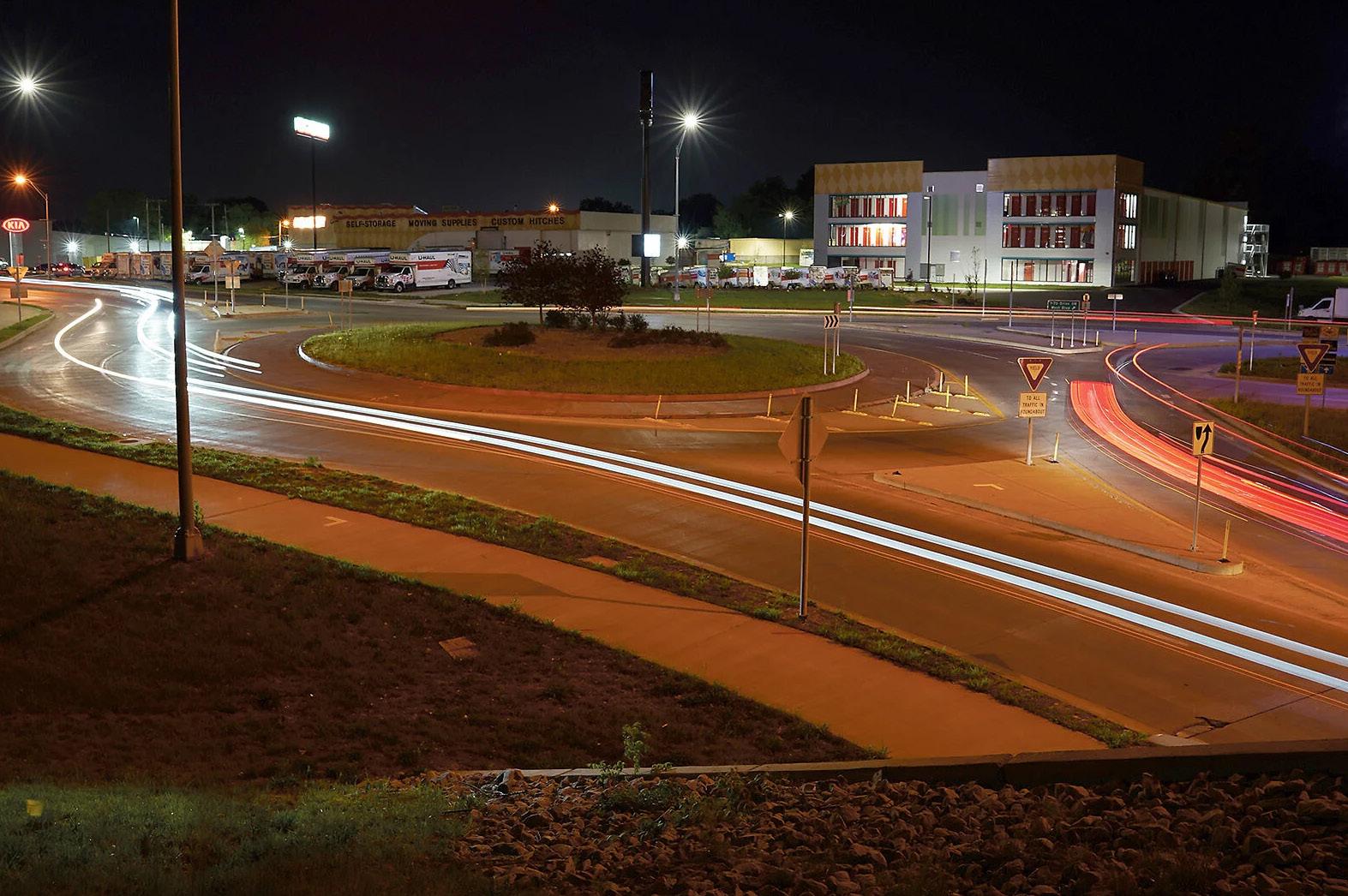
The roundabout on the west end of Business Loop 70 (above) was part of a 2016 project to control traffic. This was just one of many transformations along The Loop over the past 100 years that took the “Main Street of America”— also known as Route 40 — from a national thruway for travelers to a local resource. Route 40 was established the same year as Route 66, and is home to local staples such as Vidwest Studios, MACCLab Makerspace and CoMo Cooks Shared Kitchen. Check out page 5 to travel through the history of Columbia’s beloved Business Loop 70.