

Don’t miss Columbia’s storied book festival. Page 16
MORE THAN A LOVE STORY PAGE 11
UNDERGROUND SOUND PAGE 22 FROM DOUGH TO DELI PAGE 29
AGING WITH GRACE PAGE 33
THE VOICE OF COLUMBIA APRIL 2026




Don’t miss Columbia’s storied book festival. Page 16
MORE THAN A LOVE STORY PAGE 11
UNDERGROUND SOUND PAGE 22 FROM DOUGH TO DELI PAGE 29
AGING WITH GRACE PAGE 33
Human imagination is a powerful thing. As a kid, my imagination took me outside. I would run around in the woods with my friends, pretending we were being chased by dragons. I loved to sit in the grass and stare at the clouds, finding animals within the shapes. I would ride my bike to the beach and build fortresses in the sand, collecting small crabs hidden under rocks and giving them names — before sneaking them back into my house as pets. (My mom always made me put them back.)
As I grew older, my imagination led me to write. I would sit with a pen and notebook and write the most fantastical plagiarism of whatever my favorite book was at the time. I would create maps of my little worlds and proudly show my parents. I was obsessed with stories and storytelling, whether that was through playing games outside or scribbling like a tortured 9-year-old poet. I would like to think that my imagination led me to journalism, and that even now I still have the same imagination — the same interest in the world — as I did when I was a child.
I think it’s common for people to forget the stories that made them who they are. I think people sometimes believe having an imagination
is childish and unserious. They might believe that there comes a time when we all need to grow up. But I don’t think storytelling has an expiration date. I don’t think anyone should ever forget what beauty comes from having an active imagination.
In this issue of Vox, we encourage you to dream of a more environmentally friendly future with Columbia’s annual Unbound Book Festival coming in April (p. 16). We shine light on a community that uses live action roleplaying to stay active and bond with others (p. 14). We show the importance of books and the action of reading (p. 9) and we highlight the need for spaces that encourage learning in one of Columbia’s best third spaces: the Columbia Public Library (p. 36).
During a time when literacy rates have fallen — kids only play games online and computers think for us — it’s important to remember a few things: It’s OK to fall into a book and read all night. It’s OK to go outside and play games with your friends. It’s OK to be where your feet are. It’s OK to remember the parts of us that make us human. I hope that when you open up this issue and take a look at the stories we tell, it’ll make you feel like a kid again.
Cayli Yanagida Editor-in-Chief
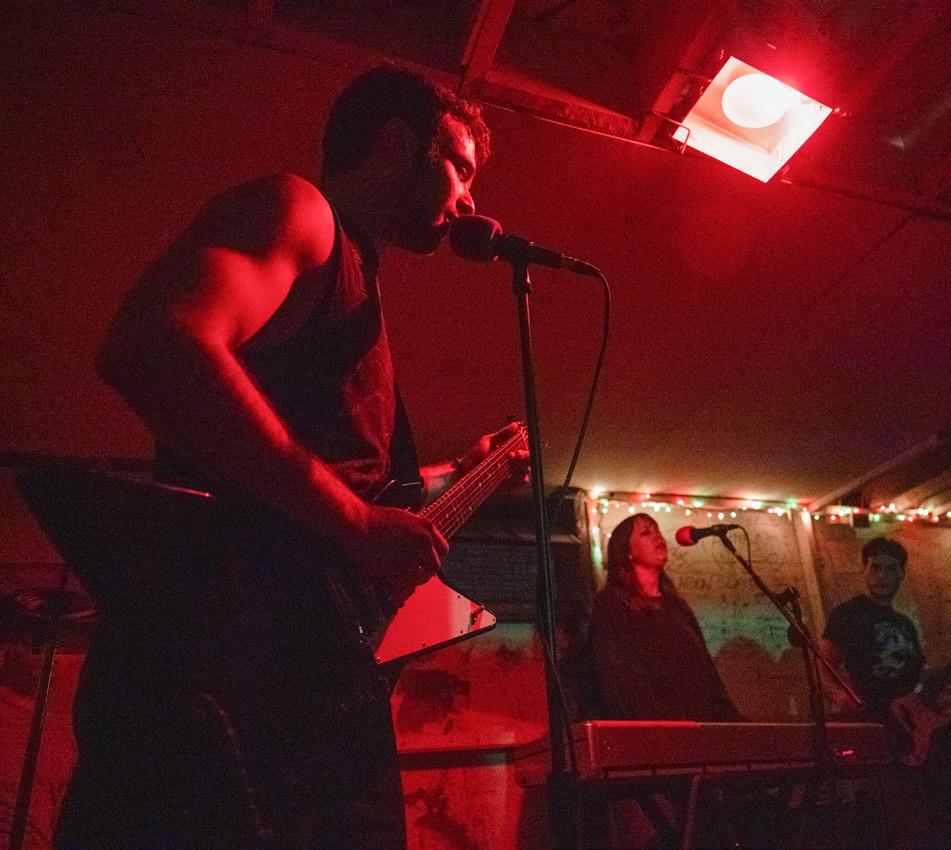
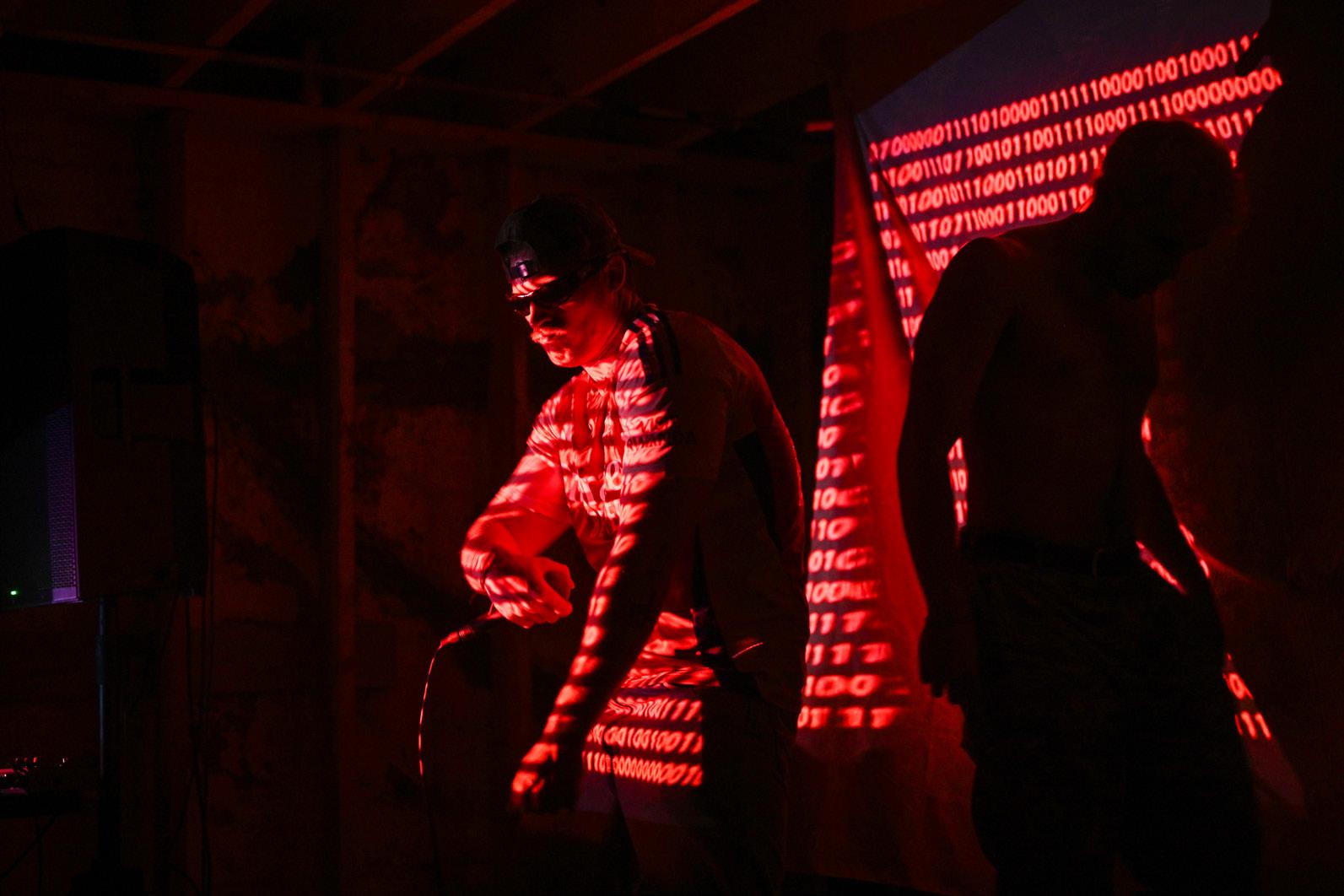
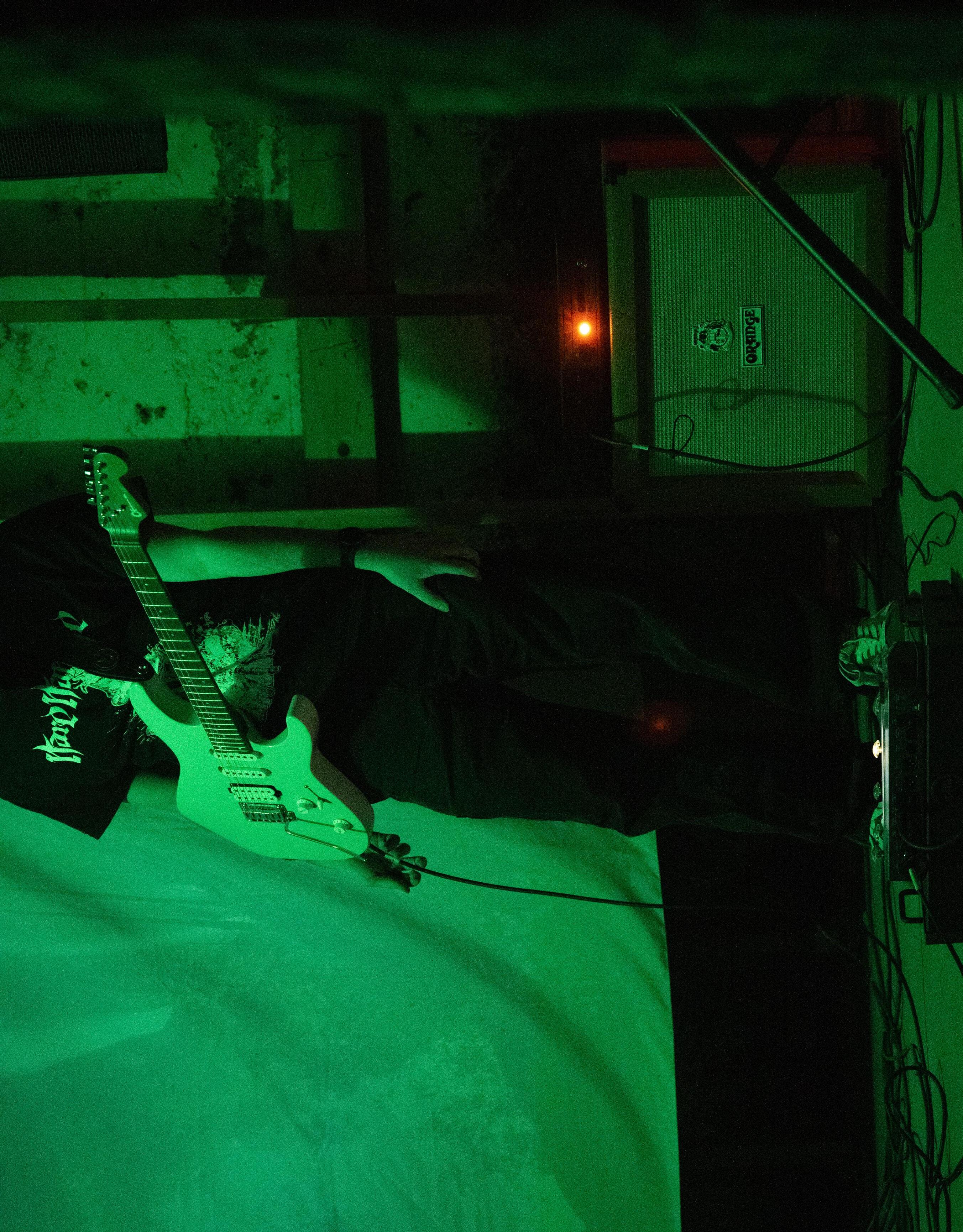
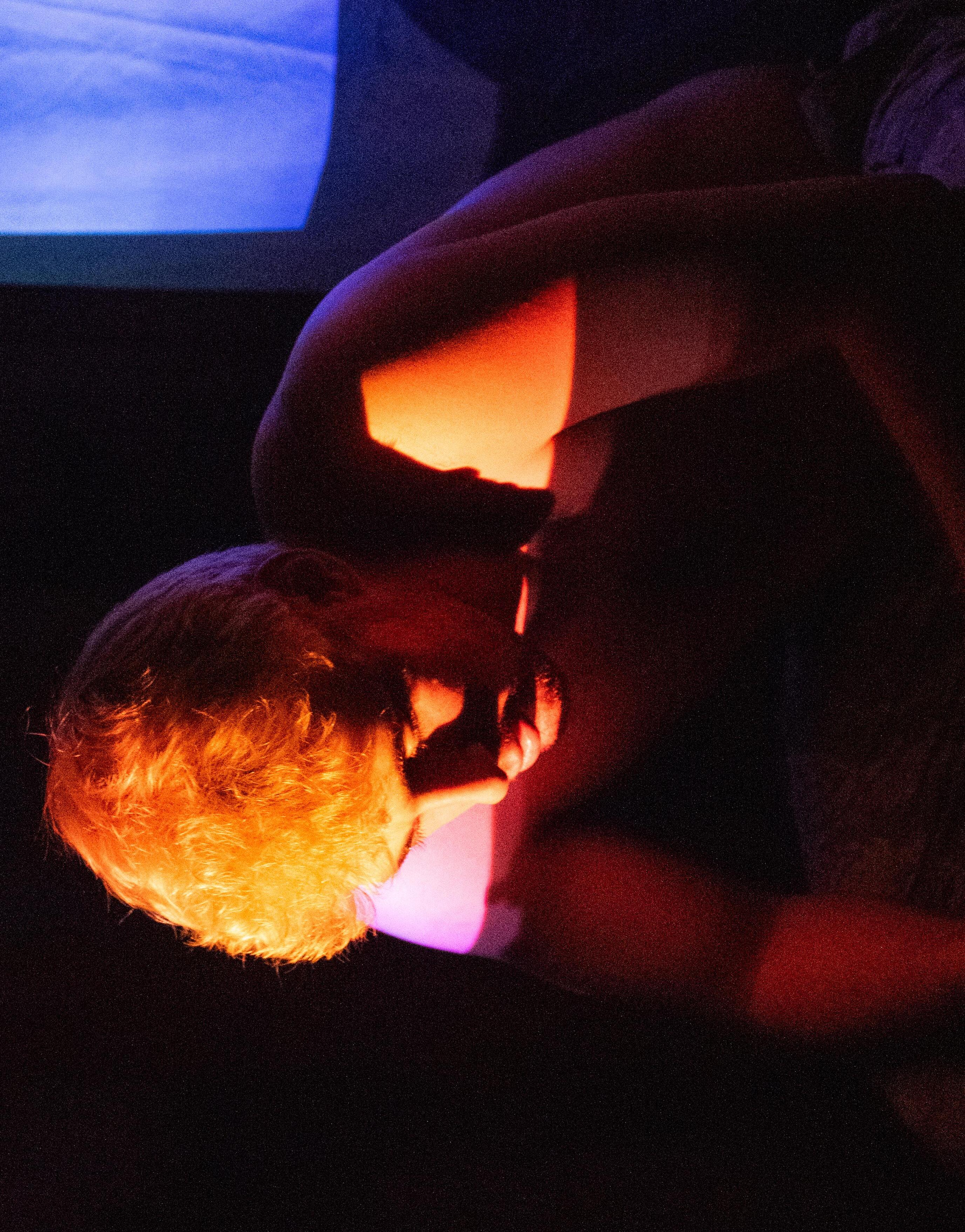
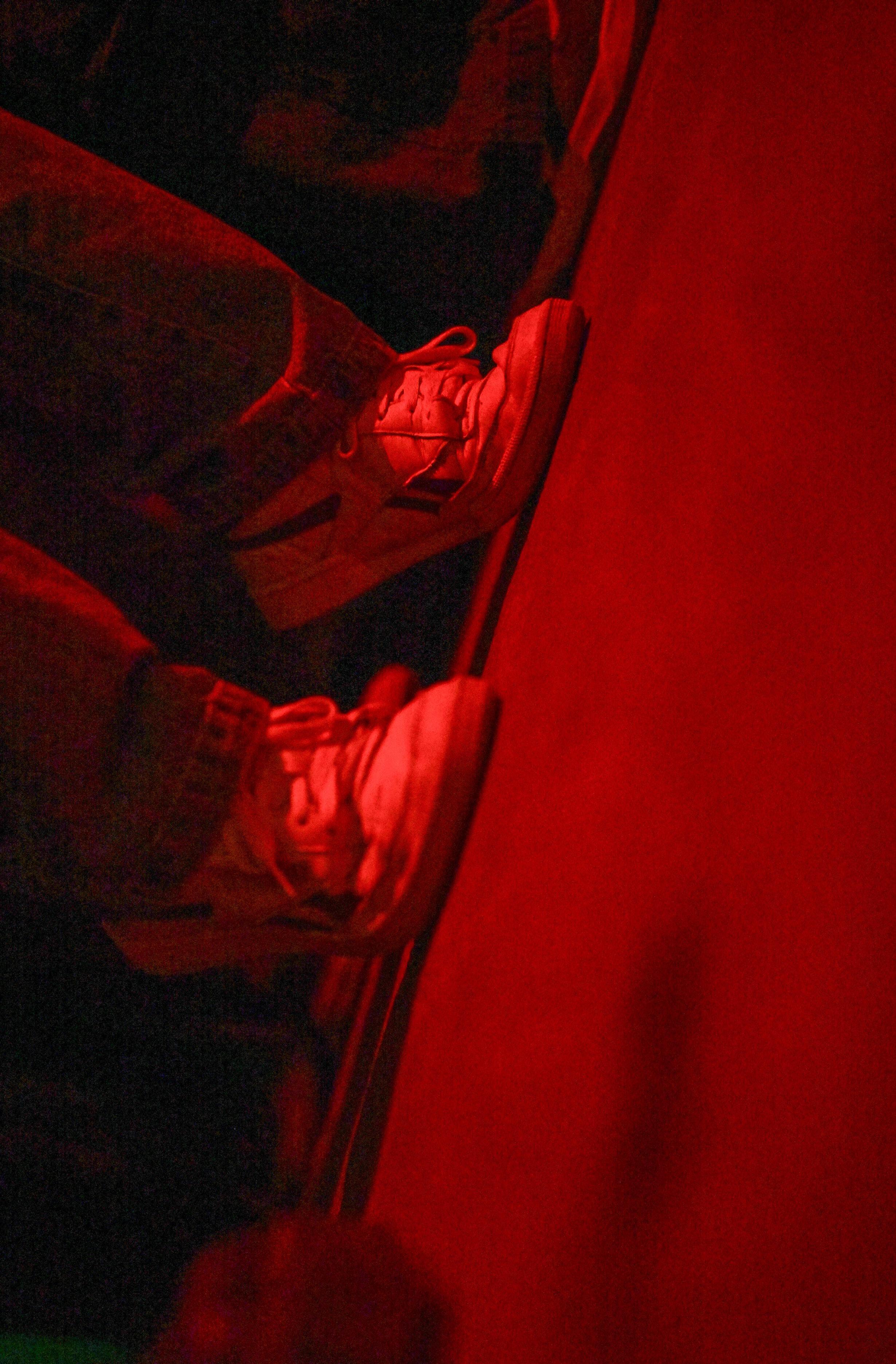
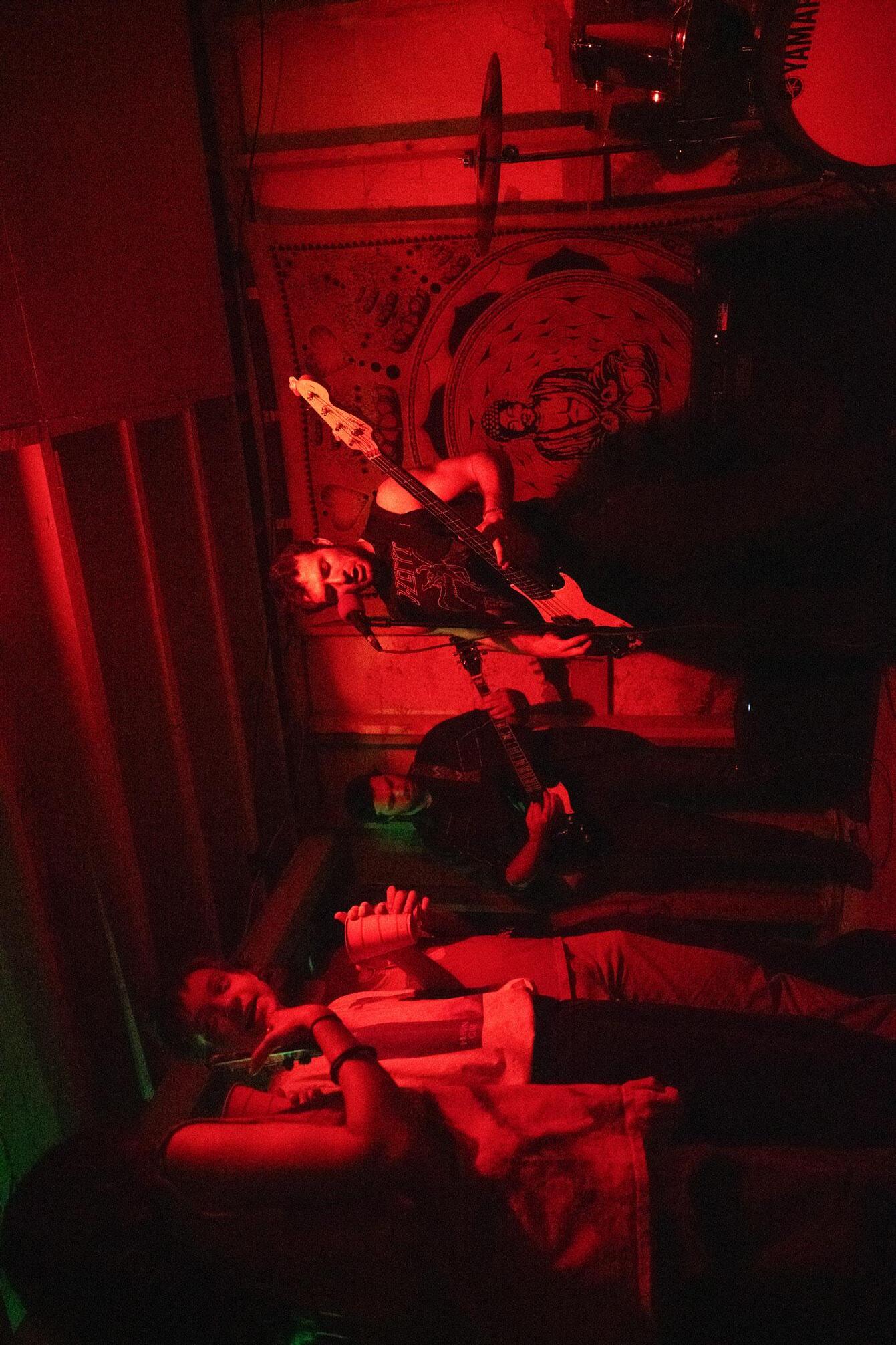
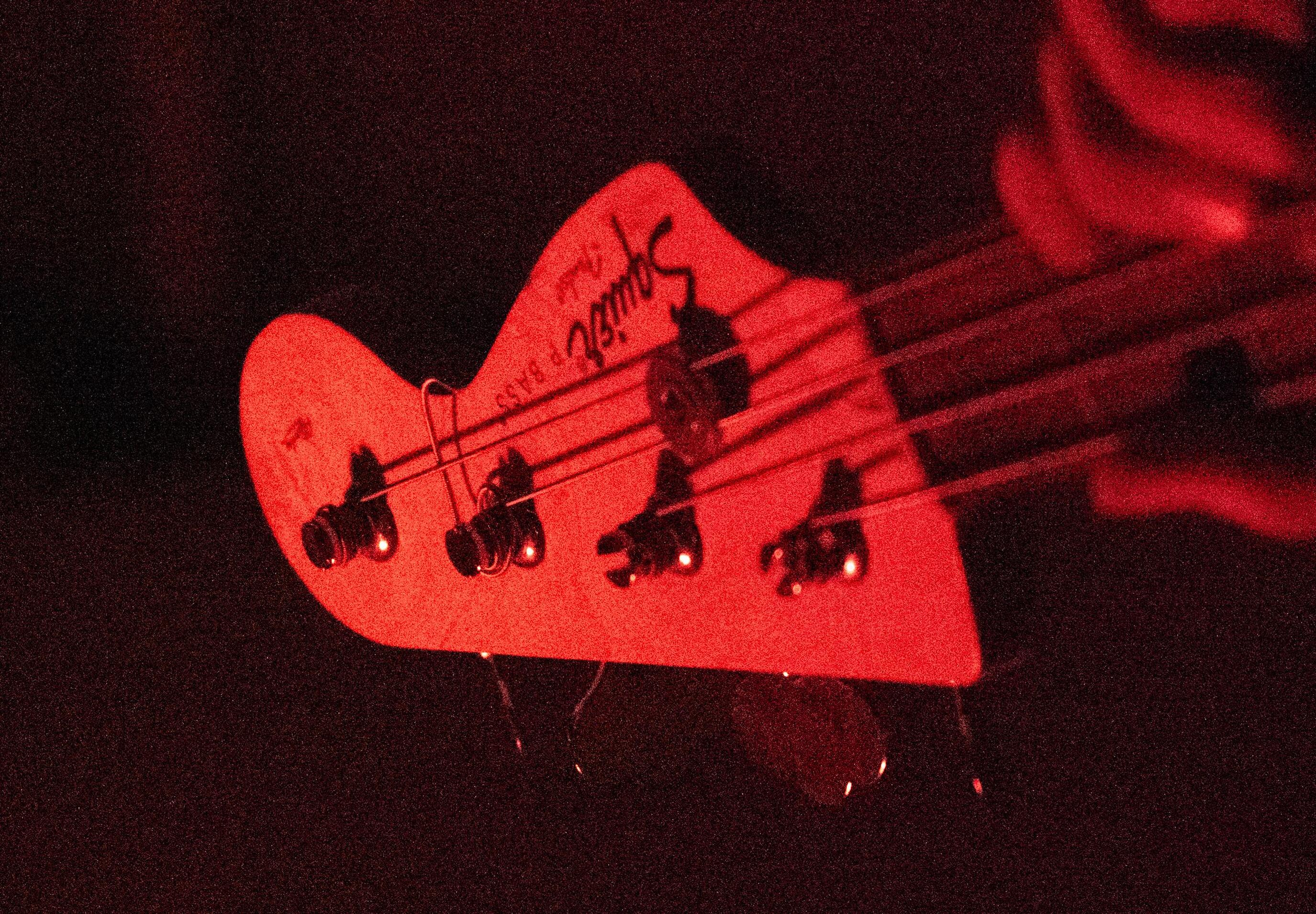
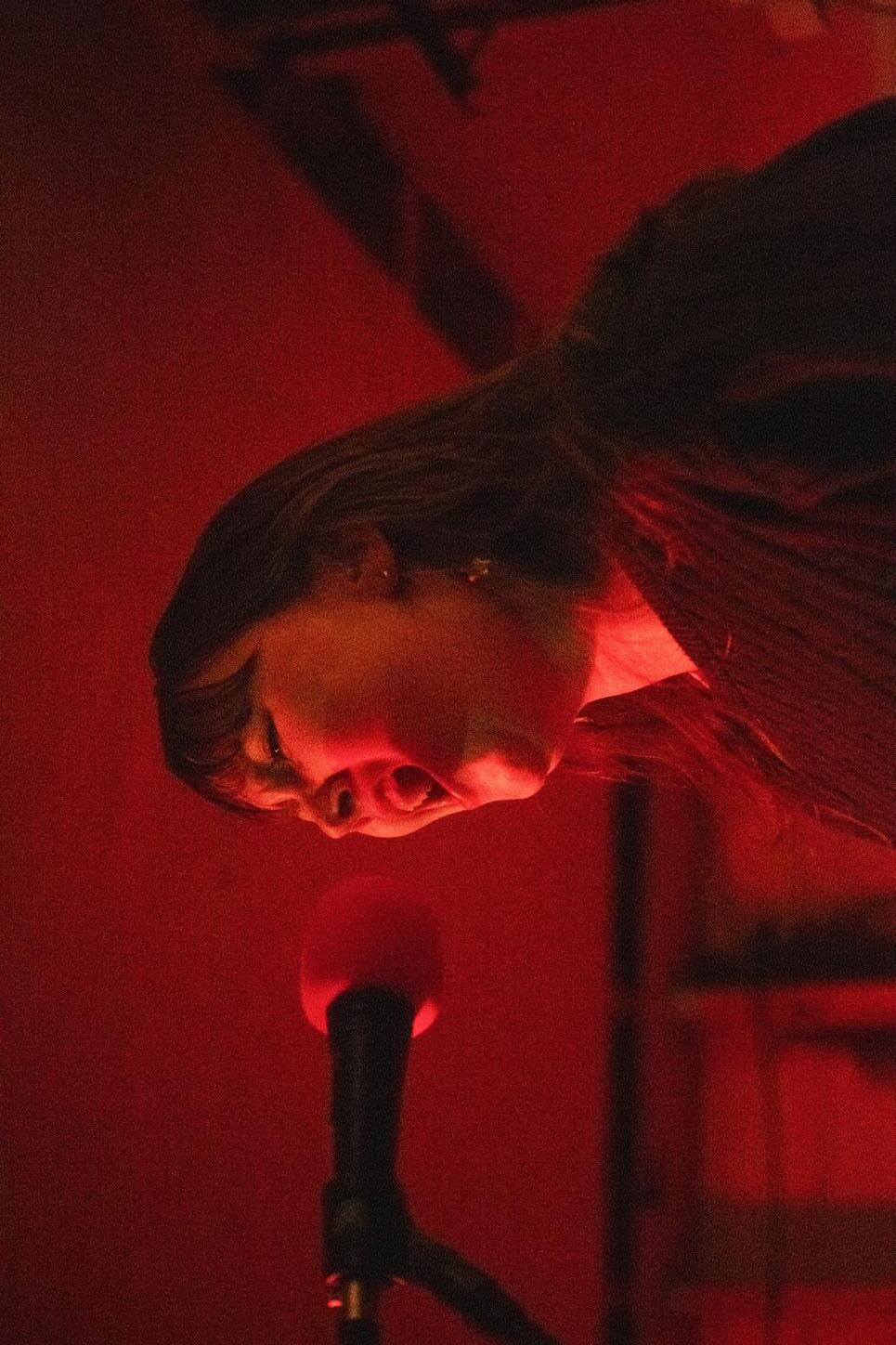
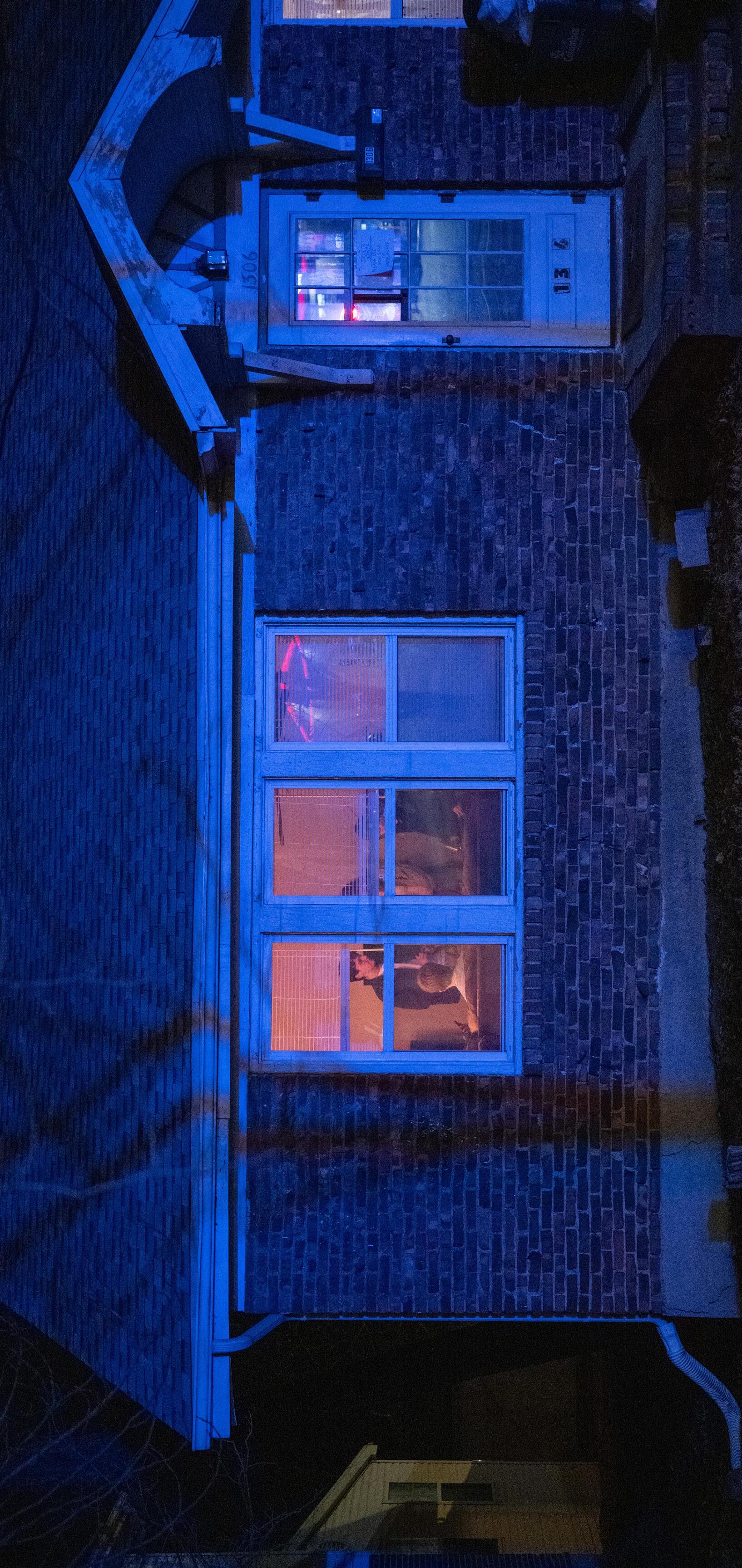
When I was conceptualizing the design for the house shows feature (p. 22), I looked back at Russ Bray’s photos from Vox’s story about The All American Rejects in November, and one image was especially striking. It showed people sitting on a roof and standing on the first floor of a house next door. The design concept then became the idea of flipping concerts on their heads. Valerie Tiscareno took photos with the natural red, blue and green lighting of a recent house show that fit perfectly with this idea of exploring new perspectives — and then we pushed the concept further and flipped the whole story on its side. We begin on the first floor and descend to the basement where the performances are. We enjoy the show, feel the music and become part of this intimate community.
—Brooke Riley, Vox designer
EDITOR-IN-CHIEF CAYLI YANAGIDA
MANAGING EDITORS AVERI NORRIS, ALLY SCHNIEPP DEPUTY EDITOR AUSTIN GARZA
DIGITAL MANAGING EDITOR BRIANNA DAVIS
SENIOR DIGITAL PRODUCER ALLISON BEALMER
AUDIENCE ENGAGEMENT EDITOR CLAIRE WILLIAMS
ART DIRECTOR VALERIE TISCARENO
ASSISTANT ART DIRECTOR LAUREN JOHNSON
PHOTO DIRECTOR AVA KITZI
MULTIMEDIA EDITOR AMINAH JENKINS
ASSOCIATE EDITORS ALLISON BEALMER, FAITH BOYD, EVAN CROWELL, ALEX GOLDSTEIN, WEI HE, LAURYN RHODES, NEALY SIMMS, RAPHAEL STERNADORI
STAFF WRITERS CORY BEXTEN, MORGAN CHU, MACY CRAIG, ANDREW DAVIS, GRACE DEEN, ELIZABETH DORMAN, EMILY EARLY, ACIYA EL TAJOURY, MADISON FARLEY, ADDISON GERTZ, C.J. HANAUER, LAUREN JOHNSON, SOPHIE LINDBERG, EMILIA MCCANN, CLAIRE MCLAUGHLIN, MIKALAH OWENS, ADELA RAKOSKI, GRACE ROMINE, LILLIANA SEWELL, LORELEI SKURZEWSKI, ALLIE TRIBE, JACKSON WEST, JESSICA WOOTEN
DESIGNERS ABIGAIL DURKIN, ISABELLE PALEY, BROOKE RILEY
SOCIAL & AUDIENCE CAM HART, JAZMYNE MARTINEZ, AVERI NORRIS
DIGITAL PRODUCERS PARKER BRANDT, EMILIA HANSEN, ELIJAH JAMES, ISABELLE PALEY, KATE
SCHREIBER, BRIANNE TREMPER
CONTRIBUTING WRITERS MAYA DAWSON, JAKE LOURAINE
EDITORIAL DIRECTOR HEATHER ISHERWOOD
DIGITAL DIRECTOR LAURA HECK
WRITING COACHES CARY LITTLEJOHN, JENNIFER ROWE, SARA SHIPLEY HILES

WANT TO BE IN-THE-KNOW?

CALENDAR send to vox@missouri.edu or submit via online form at voxmagazine.com
Sign up to receive Vox ’s weekly newsletter, the “Vox Insider.” We’ll tell you how to fill up your weekend social calendar and keep ahead of the trends. Sign up at voxmagazine.com. FOLLOW US APRIL 2026 VOLUME 28, ISSUE 3 PUBLISHED BY THE COLUMBIA MISSOURIAN LEE HILLS HALL, COLUMBIA MO 65211
Cover design: Isabelle Paley
Illustrations courtesy of Adobe Stock
Save or safe
Uncover the hidden costs of living with alpha-gal syndrome or celiac disease.
OneMic, many stories
Both performers and audiences foster an inclusive space at open mic events.
Booked and ready to read
Books move people, and BookDrive founder Nick Domitrovich moves books.
From THC sodas to fashion runways, this month’s picks are fun and refreshing.
From honored to ousted
A local author battles book bans while his work provides refuge to trans youth.
Yarn can keep you happy
Needlework provides more than just practical value.
For the love of LARPing Through Live Action Roleplaying, these folks bring fantasy to life.
does the band take the basement floor?
Columbia’s house show scene is the answer to rising concert ticket prices.
Upon Unbound
Columbia’s

The owners of the new downtown deli draw on decades of experience in the restaurant biz.
Iraqi
is the beating heart of this local Iraqi food truck, Babylon Taste.
As spring flowers blossom, so do the flavors of Tina Harmon’s sweets.
Columbia’s seniors don’t cave into the pressure of looking forever young.
The Columbia Public Library is a resource hub with kits and device help.




Understanding the costs of eating with celiac disease, alpha-gal syndrome and diabetes.
BY SOPHIE LINDBERG
I only recently understood my parents’ struggle of raising kids with celiac disease. By age 5, my sister, Stella, and I were diagnosed with the autoimmune disorder that causes immune responses to wheat, barley and rye. That meant bunless, condimentless hot dogs and sad salads of iceberg lettuce and colby jack made up our diet.
The Gluten-Free Certification Organization established its certified gluten-free food label only in 2005, four years before I was diagnosed. But a different obstacle persists, even if aisles are now lined with the label — price.
A typical budget-friendly, convenient lunch of a sliced-turkey-and-cheese
sandwich — without mayo — costs me $12.58 in ingredients and requires stops at two different stores.
I’m not the only one affected by rising prices. Food prices increased 3.1% in 2025 alone, according to the Bureau of Labor Statistics. That’s greater than the 2% average food inflation before the pandemic, says University of Missouri food policy economist Hoa Hoang.
When it comes to medically imposed diets for conditions such as celiac disease, diabetes or alpha-gal syndrome — a condition caused by a tick bite that makes people allergic to all mammalian products — it’s not shocking that specialty products cost more.
Since 2005, gluten-free foods have been designated with their own labels in grocery stores. But for shoppers seeking out food options tailored to their autoimmune disorders, finding the right price point remains the primary obstacle.
Hy-Vee dietitian Victoria Chouklina says that products aiming to replicate something, like vegan cheese for people with alpha-gal syndrome, would cost extra in part because they contain more ingredients to achieve a similar end product.
On the other hand, ensuring that certain ingredients don’t cross-contaminate with other products can cost just as much.
“(Companies) might have to invest in a separate processing line or they completely clean out everything before they make that kind of restrictive diet foods,” Hoang says. “Compared to the regular foods, it costs them more.
So there’s the justification for them to charge more to cover those costs.”
In a time where rising food prices are affecting households in Columbia and across the nation, I set out to explore just how much more it costs to eat as a person with celiac disease, alpha-gal syndrome or diabetes.
I built a budget consumer basket of groceries based on the USDA’s Thrifty Food Plan. Then, I made the necessary substitutions for each of the three conditions, looking for the cheapest options available at Columbia stores.
Julia Henry, a nutritionist at Bamboo Nutrition, says that tolerance levels vary by the individual, so each consumer basket may not be suitable for every person with celiac disease and alpha-gal syndrome. People with diabetes don’t necessarily need low-sugar products, as this diet has more to do with balance, not specific specialty products.
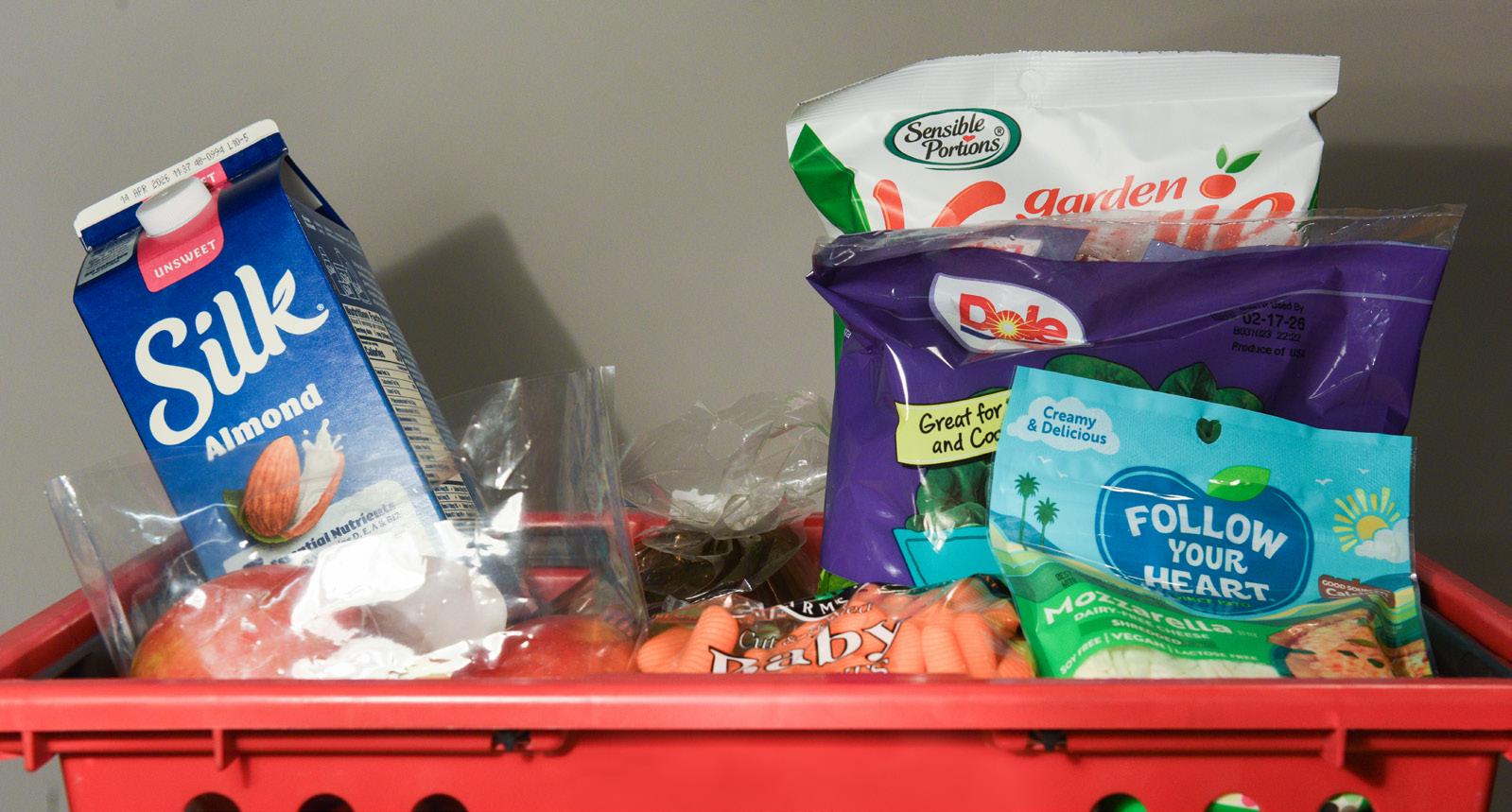
Each swap is as direct as possible — normal bread for gluten-free bread, normal beef for plant-based beef. Any product that said “natural flavorings” automatically did not make the cut, in addition to tallow, whey, gelatin, glycerin, vitamin B, carrageenan and bone char for alpha-gal-free folks, per Henry and Chouklina’s direction.
Things aren’t that different from my childhood, when my mom would commute to at least two stores every grocery run to find safe food. Costco, Hy-Vee, Natural Foods, Trader Joe’s, Walmart or Price Chopper — pick your expensive, specialty (non)poison. Fifteen years later, it’s now my reality while running Sunday errands.
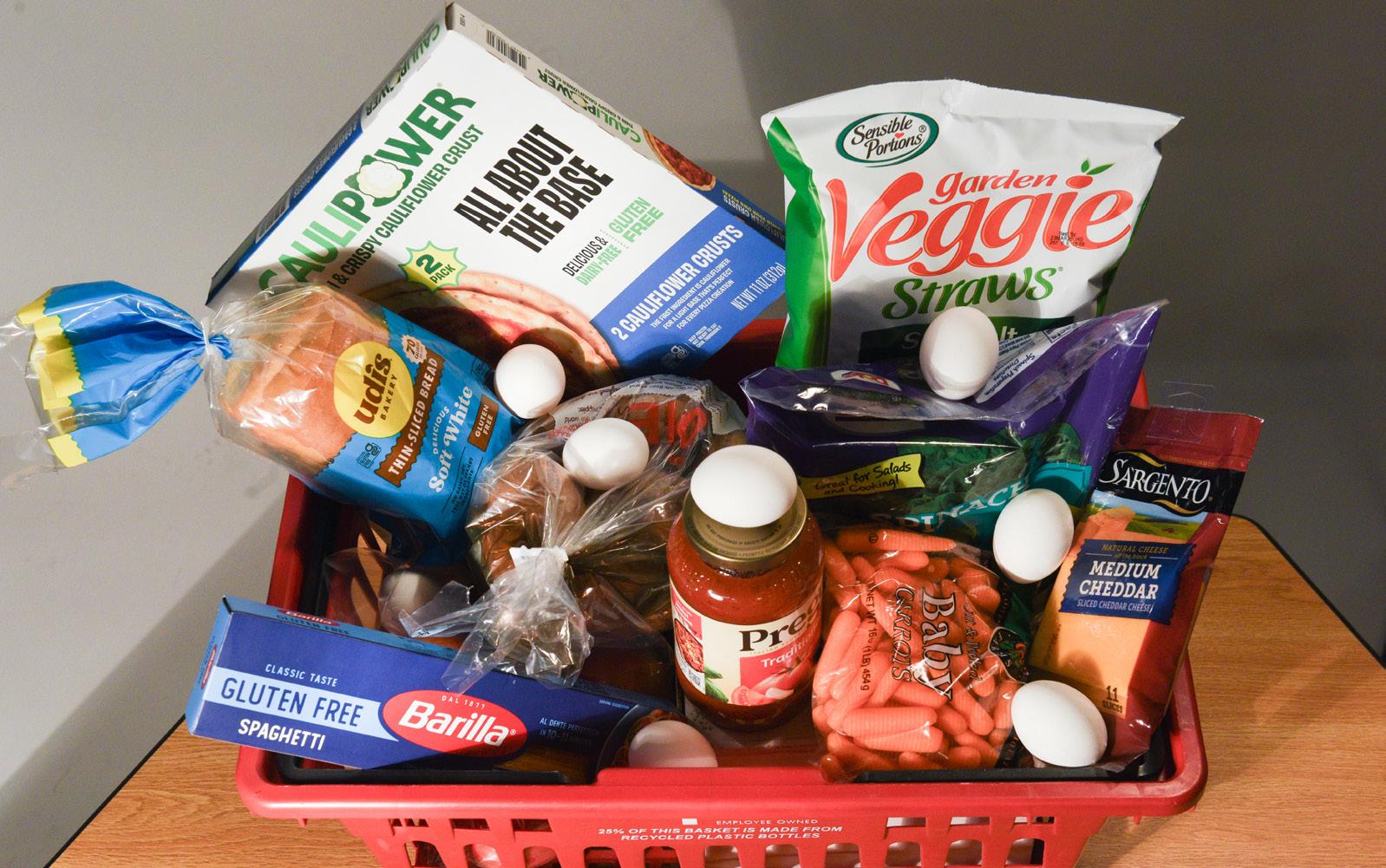
Based on USDA’s Thrifty Food Plan, each basket of 23 items included standard items such as apples, spinach, carrots and potatoes that were the same across all three baskets. Also included in the totals are staples such as flour, pasta and pasta sauce, pizza, snacks and the makings for sandwiches. These varied depending on the dietary restrictions. We shopped at Walmart, Aldi, Hy-Vee and Clovers Natural Market.
Regular basket: $63.05
Low sugar: $89.95
Gluten-free: $92.44
Alpha-gal: $129.90
Compared to a full basket of standard groceries, which might cost around $63.05 for one person, your gluten-free options could run you about $92.44.




For alpha-gal shoppers — who need to avoid mammalian meats like pork or beef, dairy products and natural flavors or flavorings — a full trip might cost around $129.90.


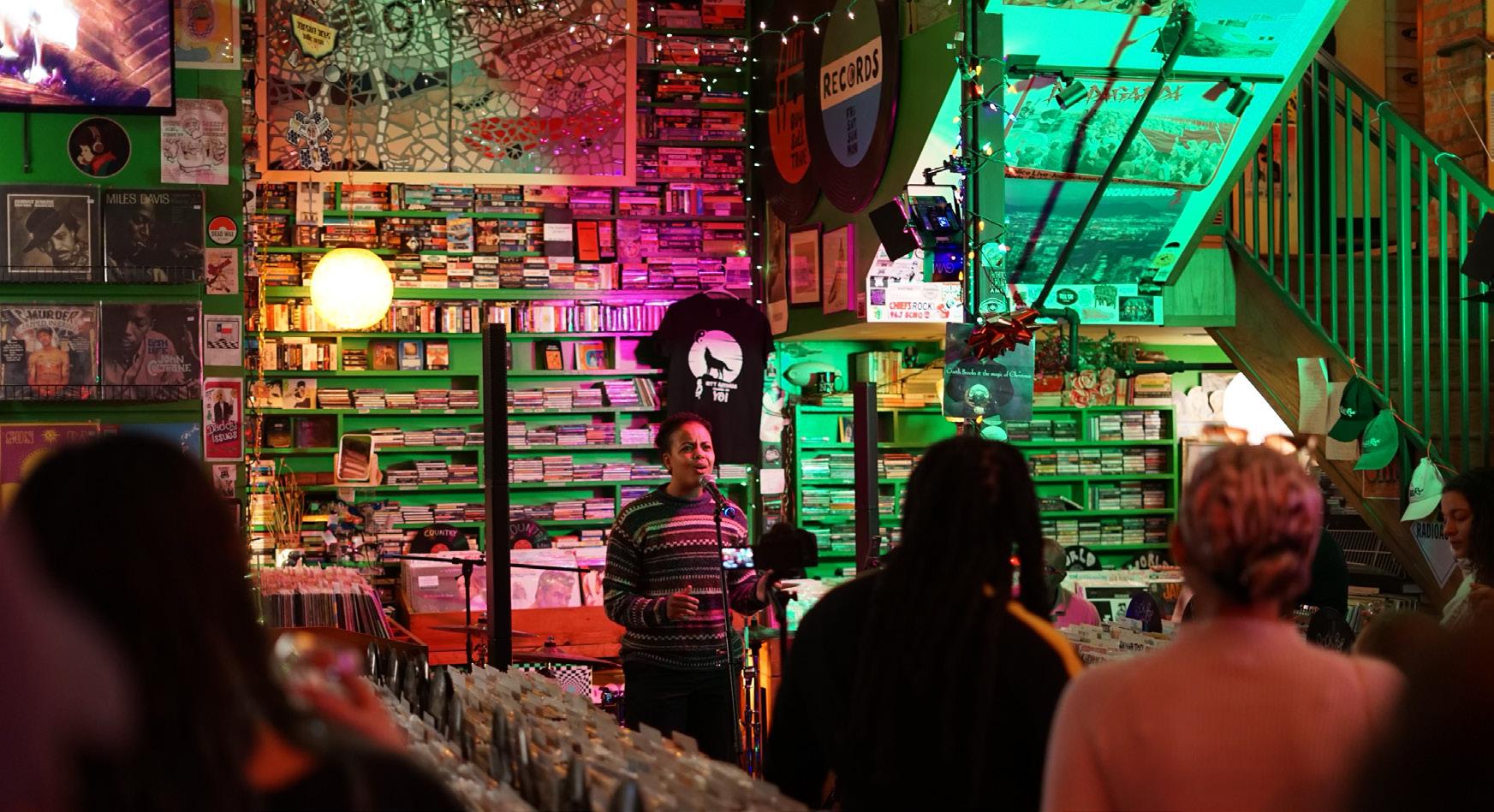
A variety of artists perform at these open mic nights, bringing people together and embracing diverse and inclusive creativity.
BY GRACE DEEN
Inside the Herbal Joint on a Wednesday evening sits a full house. Viewers take to spacious couches and chairs lining the wall, huddling together to listen intently. All eyes look toward the lone speaker as they follow with snaps that can be heard from outside the door.
Founded in 2014 by T’Keyah Thomas and Andrew Hutchinson, OneMic is a collective that seeks to create a diverse and inclusive space for its members. The audience features a wide range of fans who focus on their unique experiences and passions through live performances.
Performers include poets, comics, singers, rappers and storytellers. “It’s not about competition, but it’s about getting in the same room and bringing the community together,” Thomas says. “It’s an invitation.”
When the COVID-19 pandemic hit in 2020, OneMic suffered — like many other local businesses. While people may
not have gathered in person for routine spoken-word kickbacks, OneMic’s radio show, broadcast on KOPN, which began in 2014, continued to operate with Peter Kouba. Meanwhile, OneMic veterans were behind the scenes planning artists’ and the community’s return to the open mic sanctuary.
With patience and determination, the microphone was turned back on for live shows in 2024 and has remained on bimonthly for fresh faces and seasoned speakers. Here are some of the people who made it happen.
Beginning as a performer with OneMic in 2014, Miranda Craig felt as though something was missing when the pandemic halted the collective’s in-person
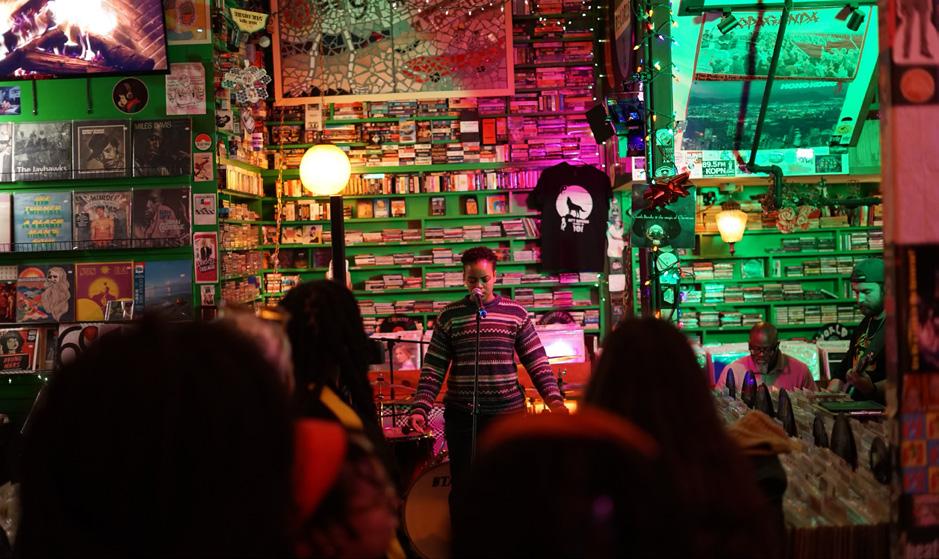
if you’d like to perform at a OneMic event (like Alex Gordon above), sign up on the OneMic Facebook page. The open mic nights are held on the last Wednesday of every other month. If you want to receive a monthly OneMic newsletter, sign up via a form on its Facebook page.
gatherings. It was like a dam for her flood of ideas for future gigs.
So, when presented with the opportunity to reopen OneMic’s doors at a physical venue, Craig took the reins as a steward of the organization. “I love reflecting and knowing that some of those dreams and visions came to fruition,” she says.
The forum for community engagement that the open mic provides has kept her coming back for more than a decade, eager to extend OneMic’s hand to all of Columbia. “I would often go to OneMic alone without wondering if my friends were going to be there,” Craig says.
Although there can be a certain vulnerability when entering a space alone, Craig sees a special alchemy in doing so anyway, finding confidence in the new community. At its core, the collective allows attendees to learn about the lived experiences of their neighbors.
“We get to relate about what’s going on in our world,” Craig says. “OneMic is whatever the community will make it — so if you want a space where you can have and use your influence, OneMic is the place to stop by.”
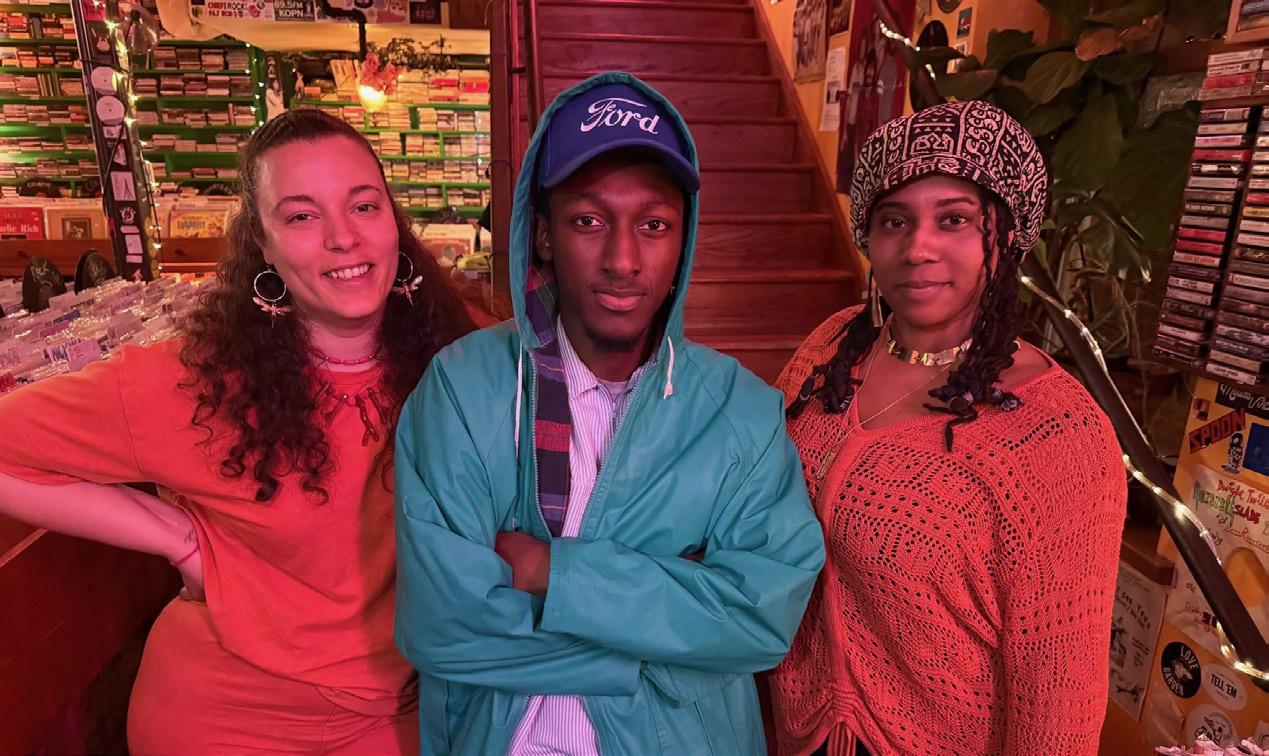
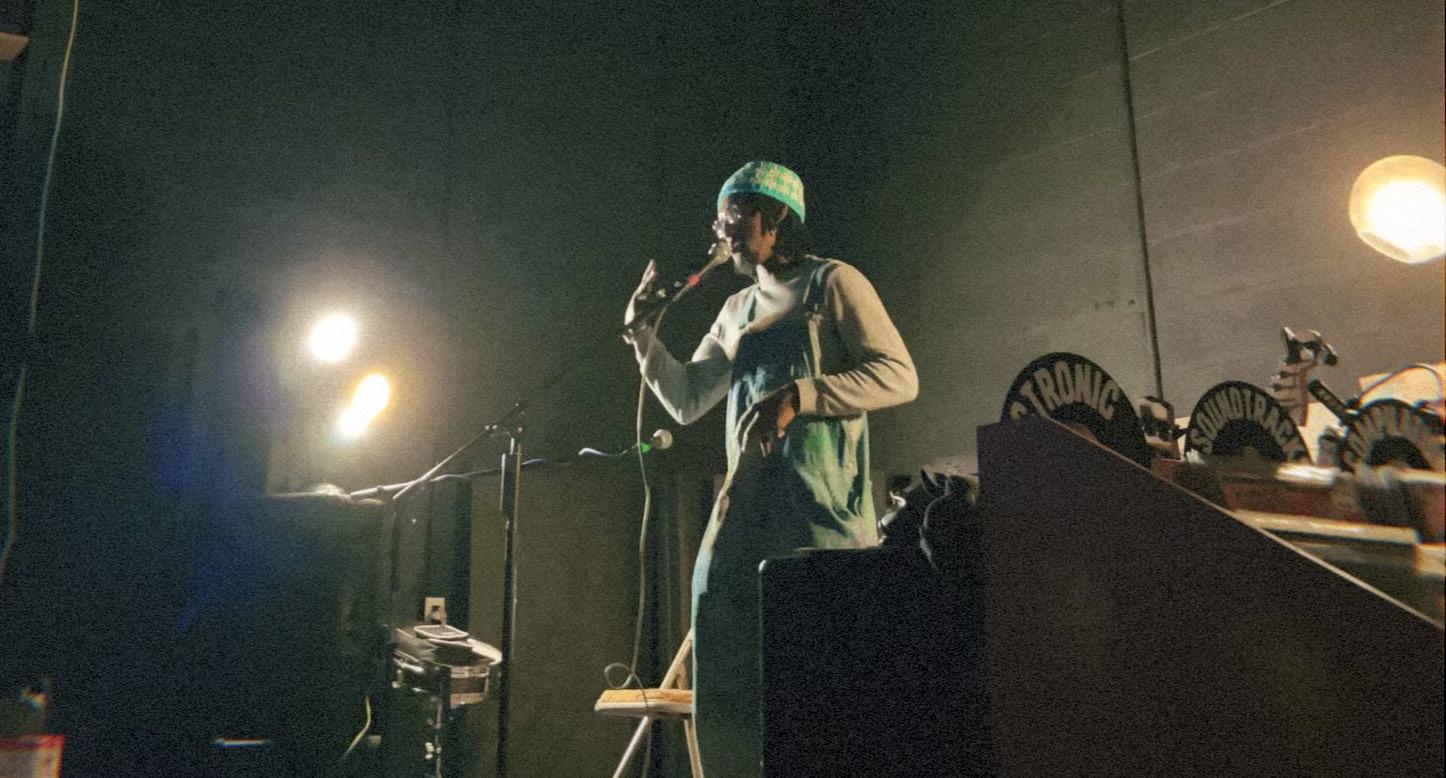
For Miranda Craig (from left), Devin Gains and T’Keyah Thomas, OneMic is a place for anyone and everyone to come together and share their creative passions.
KvreeM — co-host/DJ/performer Time with OneMic: two years
Devin Goins, aka DJ KvreeM, has not found many other launchpads for artists like OneMic. As the owner of Cozy Sessions — a showcase for local artists
— he understands the need for people to come together and create.
“I’ve seen poets and musicians gain confidence and collab with one another,” Goins says. “It’s a place where you can start projects outside of the show because of those connections.”
OneMic is where Goins’ focus lies, even if it means he’s not always the one in front of the audience. Being both an observer and a performer only builds his respect for OneMic’s growing family — never failing to show support, no matter who is on the sign-up list.
“Being on the stage — you have to control the vibe of the room, so it can be a little nerve-wracking,” he says. “You know how people say they get butterflies? For me, in the beginning, it’s more like moths.”
However, Goins says that despite the jitters, the love from the crowd is a give-and-take concept. When he gets positive feedback from the crowd — whether on stage or behind the DJ booth — he returns the sentiment by
showing his love of the craft and giving everything he has.
“He was just hungry to get his hands dirty in the creative scene in Columbia,” Thomas says. “I really do want to give KvreeM his flowers.”
Being on the stage of a busy venue was not a new feat for musician Alex Gordon, yet they remember the swarm of moths in their stomach during their OneMic set in December. The setting was smaller, but the intimacy was amplified.
Even after watching the footage of their first-ever solo set, Gordon could hear the nerves in their voice.
“Half the people going up there are performing for the first time, and you can see them shaking through it,” Gordon says. “But it’s a training ground open to everyone — if not, I wouldn’t be there.”
For Gordon, what’s liberating about OneMic is the sense of control within
Comedian Sereous Black performs his routine during a OneMic event at Eastside Tavern. OneMic features a variety of art forms, from music to games to jokes.
the space. They can control their energy, where they spend their time and who surrounds them. Sometimes, the biggest tool for art is not a paintbrush or a microphone, but simply the right group of people.
When asked what their biggest piece of advice is for those nervous about stepping up onto the OneMic stage, Gordon says the best thing is to just do it.
“The quicker you fall, the quicker you can figure it out,” they say. “Get over yourself and figure out how to do it the right way.”
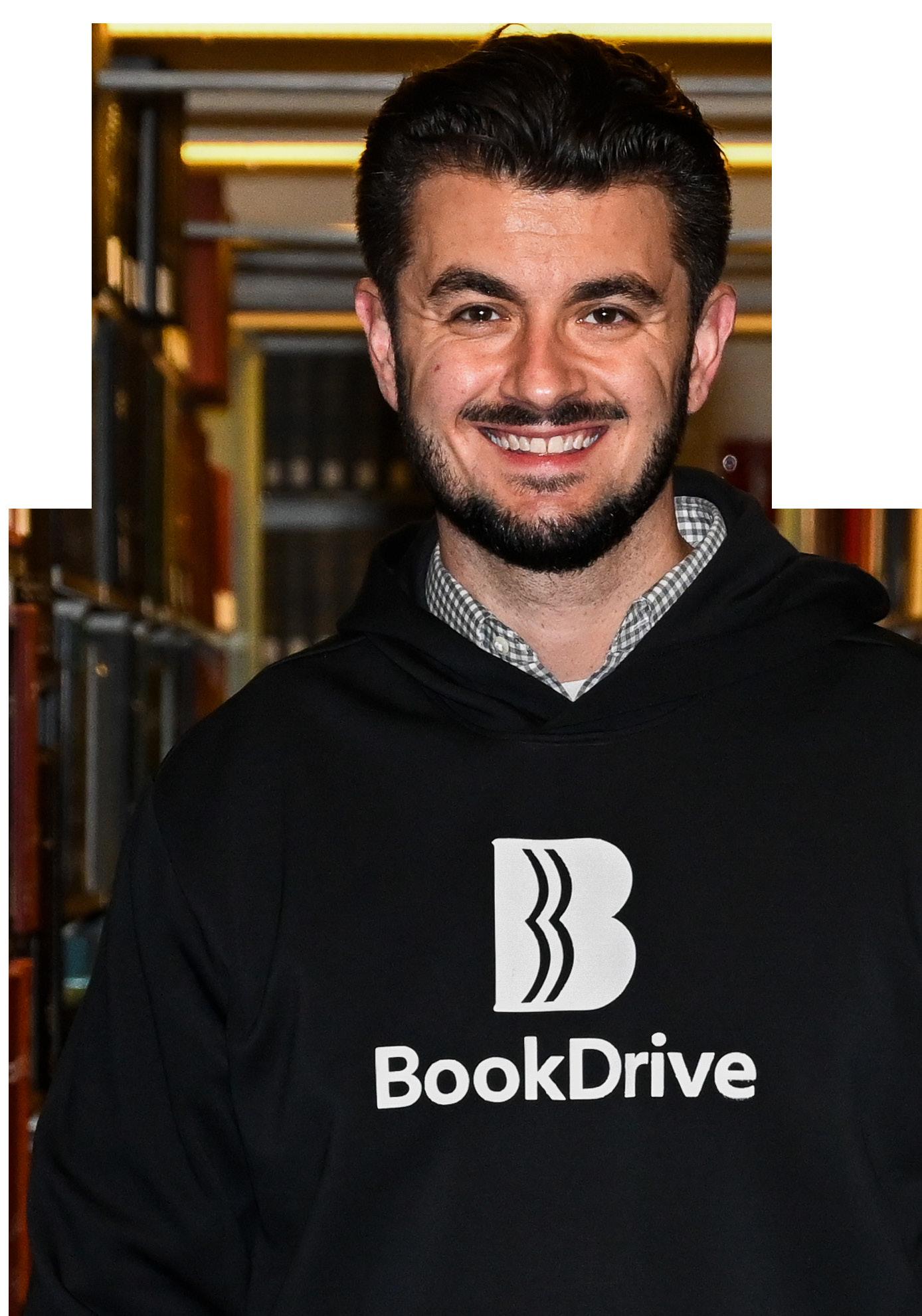
Lifelong book lover Nick Domitrovich launched BookDrive, a mobile pop-up book store, to make reading more accessible in Columbia.
BY JASMINE JACKSON
Wherever Nick Domitrovich travels, a visit to the bookstore is always on the itinerary. He strolls the aisles, scanning hard covers and paperbacks before selecting his next read. Whether he’s reading a self-help staple, a classic or a thriller, Domitrovich strives to be more than just another reader. He’s a reader on a mission to make you one — by bringing the bookstore experience to you.
This past October, Domitrovich founded BookDrive, a pop-up bookstore on wheels. Domitrovich will transport books with his BookCart, an expandable book closet with shelves inside.
BookDrive joins Black Tea Bookshop in the pop-up book business. Founded by Candace Hulsizer in late 2023, Black Tea celebrates Black experiences through Black authors and illustrators. Hulsizer wanted to create a place where people of color could easily find stories that represented them.
Hulsizer says the pop-up’s small size helps her get to know customers. “The goal is to make literacy accessible, and we’re going out to where the people are,” she says. “We just might be able to get in touch with a new audience.”
Domitrovich hopes to be at craft fairs, local businesses and Speaker’s Circle. “Books move people,” Domitrovich says. “And I move books.”
Vox spoke with Domitrovich about how he sees BookDrive fitting in with Columbia’s readers.
Where did the idea for BookDrive come from?
I wanted to start something small and intentional. Whenever I was little, I’d go into a bookmobile at school, and you’re surrounded by books. It always fascinated me. So, the idea hit me: I love books. I want to bring that same passion and share it with others. A bookmobile is
definitely a goal in the future, but starting small allows me to build intentionally and sustainably — curating books that move people.
How would you describe the BookDrive experience?
It’s personalized to the customer. You go into a bookstore or library, and it’s a very solo experience most of the time where you’re not engaging with anybody. If somebody comes up to the BookCart, I’m going to ask what books they’re looking for. What kind of books do they like? Not like? (I’ll be) starting those conversations and ultimately trying to fulfill them with the inventory I have or going out and finding that for them. I want to build a community around books — and having those personal connections is important for a community to grow.
What is your mission for BookDrive?
I’m going to offer both new and used books, and my idea is to make books accessible, find people and meet them where they are, whether they’re a reader or nonreader. I think that price is a big barrier to people when they’re looking for books. One promise I have is I’ll never sell a book at sticker price. It’s always going to be at a price that’s affordable and easy for people to pick up and take home.
What book had the greatest impact on you as a reader?
The Grapes of Wrath by John Steinbeck. It’s not a happy-go-lucky book, but it moved me and changed the way I think about the world. You follow a family that is going through struggle, strife and just a terrible situation. I read it 10 years ago, and I can still remember that last line. I’m not gonna share because I want you to experience it yourself, but I promise you, it’ll be the most moving thing you read.
BookDrive founder Nick Domitrovich selected three books he recommends.
The Power of Your Subconscious Mind by Joseph Murphy
How to Win Friends and Influence People by Dale Carnegie
Why is reading important to you, and why should it matter to Columbia?
I always enjoyed the ability to jump into a new world or see a different perspective. You could read something once, but then go back and read it again and get a whole new perspective on it. I think reading should be important to everyone, everywhere, but my roots are in Columbia. It’s a fantastic town with lots of different communities, but a lot are siloed in their own communities. I want to bring them together.

Each month, Vox curates a list of can’t-miss shops, eats, reads and experiences. We find the new, trending or underrated to help you enjoy the best our city has to offer.
BY LAURYN RHODES AND NEALY SIMMS
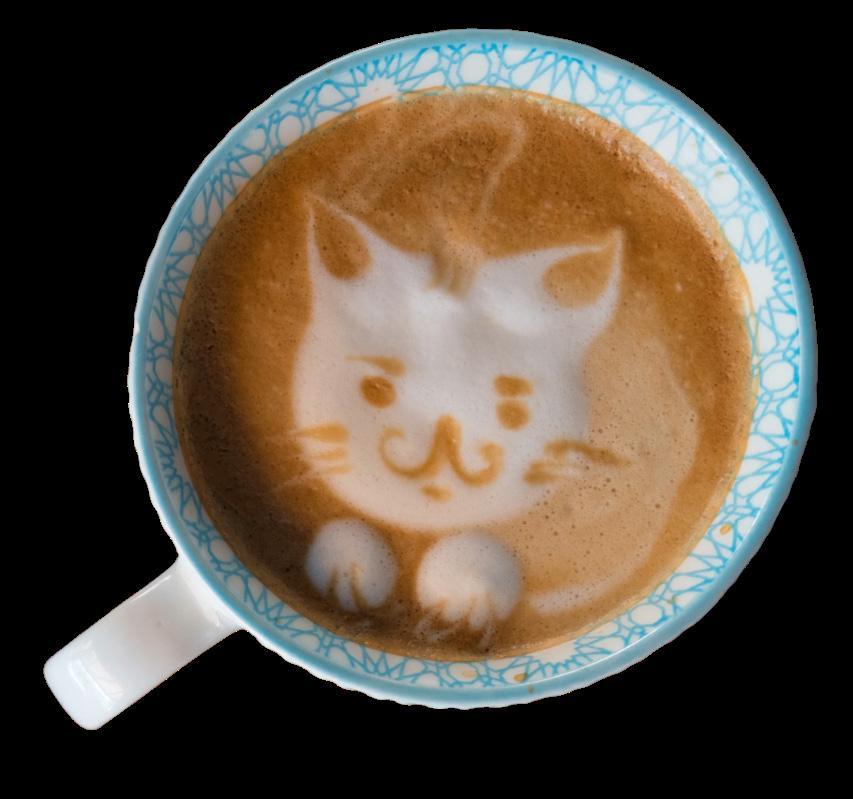
Cuddle up and enjoy a cup of coffee at Bertha’s Beans. Named after owners Jessica and Kyle Schlosser’s beloved cat, this local cat café has teamed up with mid-Missouri rescue group Columbia Second Chance to create a space for adoption and relaxation. Formerly Papa’s Cat Cafe, it has been a staple for those interested in adopting a feline friend. It celebrated hitting 500 adoptions in early March. Stop by to decompress with food, snacks and kitty cats — you might even find a new, furry addition to your family.
14 Second St., Sunday and Monday 10 a.m. to 5 p.m. and Thursday to Saturday 10 a.m. to 7 p.m., $7 for 30 minutes, $12 for 60 minutes, free under age 2, berthasbeans.com
Dig out your Von Dutch hat, pop on a pair of low-rise jeans and charge that Motorola Razr, because the early 2000s are making a comeback for one night only. Slacker Media Group invites everyone (well, those 18+) to take a trip back to the turn of the millennium for a night of nostalgia at the It’s a 2000s Party. IM your friends, slip on some sneakers or sparkly wedges and dance to the sounds of the greatest pop, hiphop and rock tunes that defined 9 p.m. April 10, The Blue Note, $20-$72, 17 N. Ninth St., thebluenote.com.
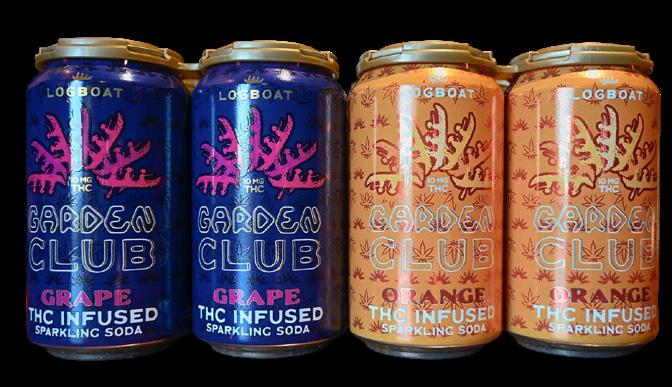
Sip Logboat Brewing Company’s latest beverage for those who want an alternative to alcohol. The local brewing operation began offering 10-milligram THC-infused sodas as part of its new Garden Club line. Missouri has not set clear regulations on hemp-derived drinks, so it could be a short-term product. Those 21 and older can choose either of the two available flavors — juicy grape or bright orange. 504 Fay St., Monday to Thursday 3-10 p.m., Friday and Saturday noon to 11 p.m. and Sunday noon to 7 p.m., logboatbrewing.com/garden-club
Surround yourself with sculptures that play with color, shape and texture from local ceramic artist Bianca Turner at an upcoming Nightjar Arts Collective exhibit, “Submissive Bloom.” Each of Turner’s pieces explores personal themes of identity — from their Jamaican heritage to the human body and layered ideas of emotion. Their nationally acclaimed pieces have made it back to the town where they first specialized in their practice. Be one of the lucky locals to engage with their many stories of “strength, vulnerability and transformation.” Opening reception during First Friday on April 3, exhibit April 1-30, Monday to Friday 6-9 p.m., 810 E. Walnut St., nightjarartscollective.com/events



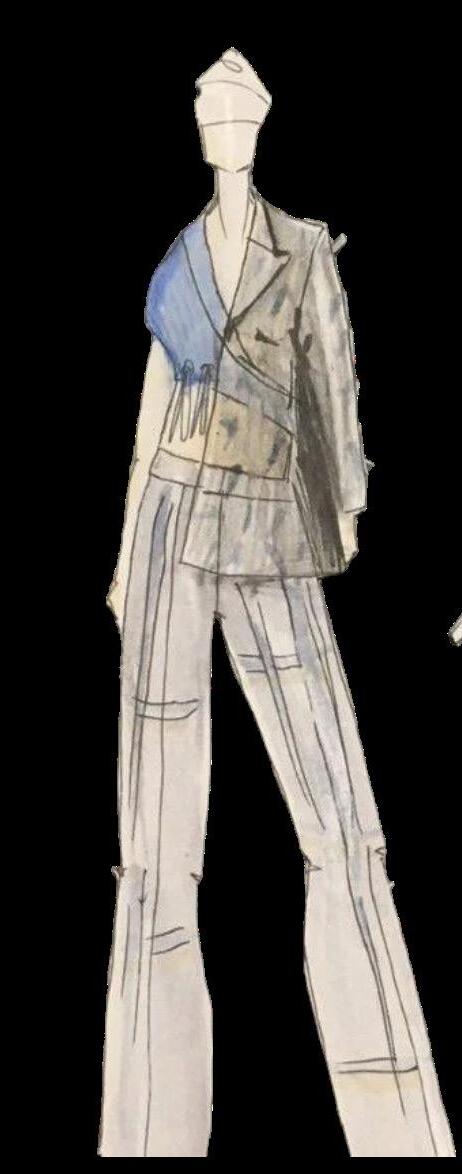
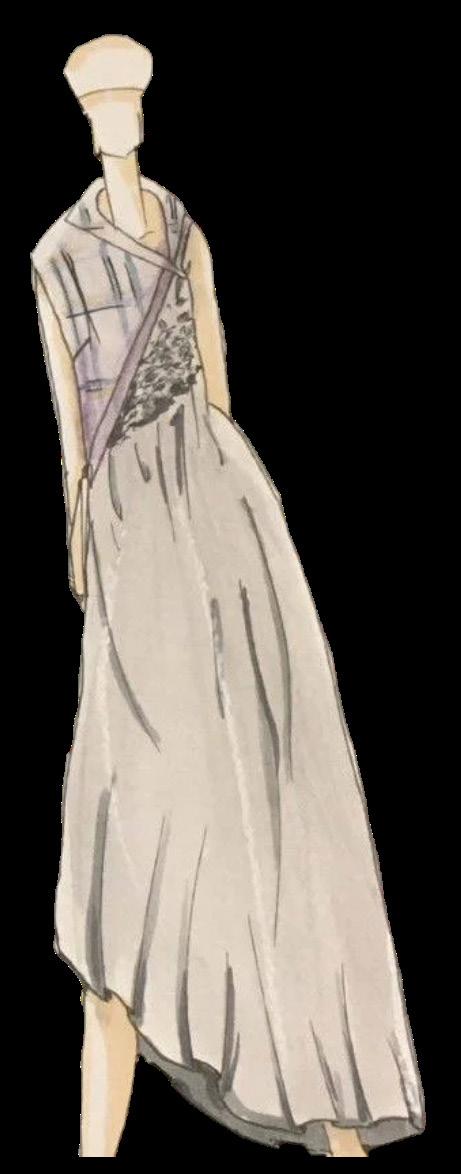
Strut over to the hottest runway show as the next generation of designers step into the spotlight at Stephens College’s 82nd annual Collections Showcase. This year’s theme, Interwoven, highlights a chic display of pieces that explore themes of memory, identity and the invisible threads that connect us all.
2 p.m., 4:30 p.m. and 7 p.m. April 25, Windsor Auditorium, thecollectionsfashionshow.com




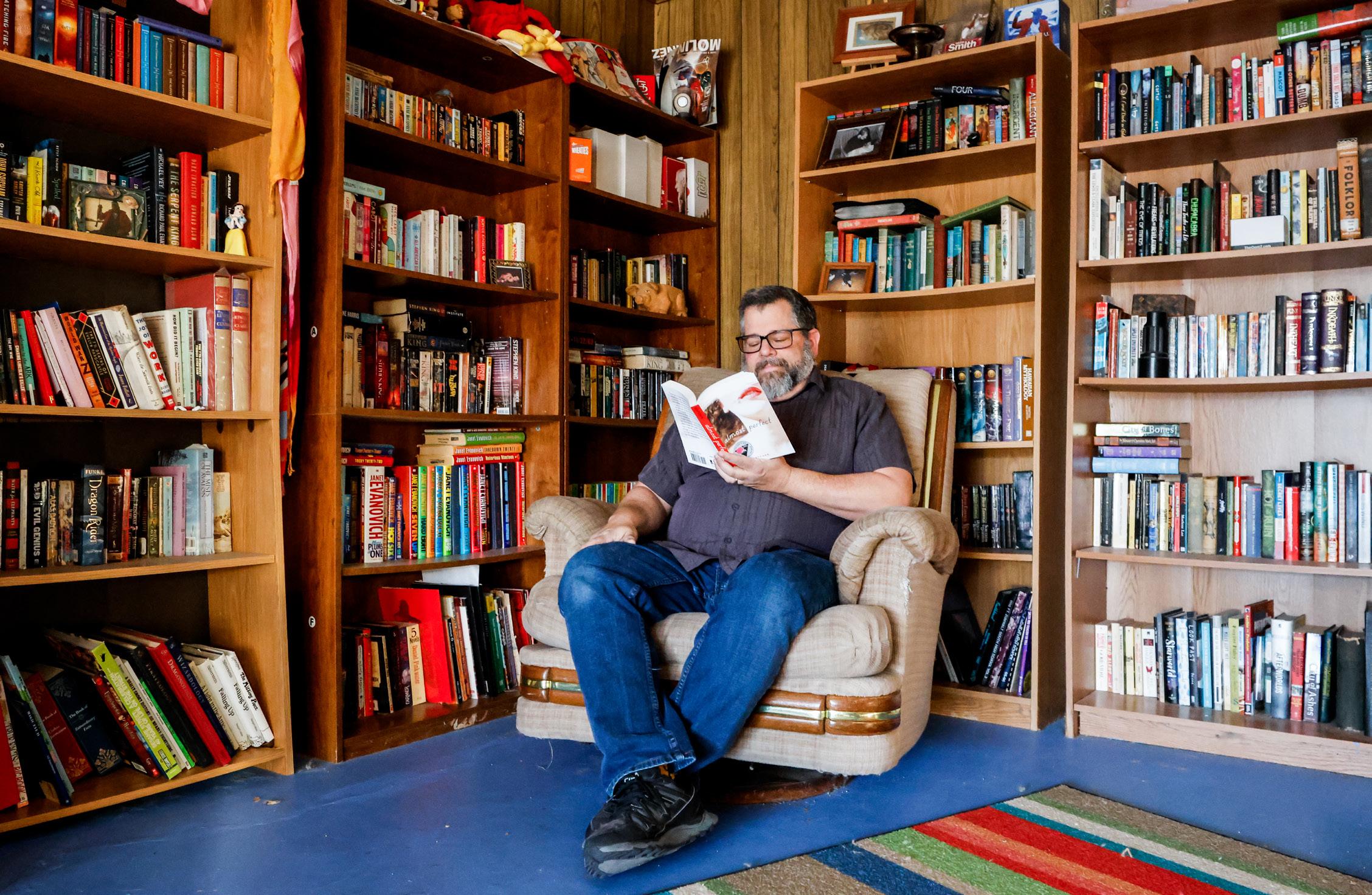
Brian Katcher’s young adult novel, one of the first to feature a transgender protagonist, consistently faces book bans.
BY ALLIE TRIBE
Boy meets girl, and 200 pages later, they live happily ever after. It’s a tale as old as time, and Brian Katcher is tired of it.
Katcher is the author of the 2009 novel Almost Perfect , one of the first young adult romances to feature a transgender protagonist. The book has been lauded for its authentic representation of transgender people’s experiences. But over a decade after it was published, it is a title often ousted from libraries.
As transgender stories are more important than ever in the current
political climate, Vox looked back at the tumultuous journey of the title.
2007: A thought arises
Katcher, an author and school librarian from Moberly, was awaiting the publication of his first novel, Playing With Matches. For his next novel, he wanted to write a fresh boy-meets-girl story. An idea began to take shape as he mulled over the concept: what happens when a small town Missouri high school boy falls hard for the new girl — who turns out to be transgender?
Brian Katcher approached Almost Perfect with a uniquely Midwestern perspective: the plot and characters are all centered around a small Missouri town.
When Katcher landed on the plot of Almost Perfect, he knew research needed to be his first step. He’s a straight man, a child of the 1980s from St. Peters, Missouri. Over the year and a half that he wrote Almost Perfect, Katcher would pop in and out of transgender support groups, asking questions about the technicalities of hormone treatments and striving to understand the lived experiences of transgender women. From his research and his desire for a fresh take on teen love, Katcher crafted the story of Logan and Sage. Told from
Logan’s perspective, the novel follows the complicated reality of a straight boy falling for a transgender girl.
Oct. 13, 2009: The debut
When Almost Perfect made its debut in 2009, it was on the cutting edge of a social issue that would come into the spotlight throughout the 2010s. “Coming out as transgender — that was very unheard of, especially in the Midwest,” Katcher says. “After talking to people online, I just wanted to say these people are not freaks. These people are just trying to live their lives, and we owe them respect.”
The reception of Almost Perfect over the next two years proved to be beyond Katcher’s expectations. He noticed the book making recommended reading lists and watched as positive reviews rolled in. A steady stream of fan mail started to pop up in Katcher’s inbox, proving that Sage’s story was resonating with readers. “It blows my mind when I’ll open up my email and somebody will say, ‘this book really changed my life. This is exactly what I went through,’ ” Katcher says.
January 2011: Stonewall award
First awarded in 1971, the Stonewall Book Awards recognize novels with exceptional LGBTQ+ representation. It’s the longest running award for LGBTQ+ books.
In January 2011, Katcher learned that he had won the Stonewall Children’s and Young Adult Literature Award. “I just thought, ‘I’m just the school librarian from rural Missouri. How the hell have I won?’ ” Katcher says.
Jessica Fox read the book in 2013; she found it at her local Pride center. Almost Perfect stood out to her as one of the few stories that heavily featured a trans character. Fox has revisited the book over the years and developed a special connection to Sage.
In her transition, Fox even adopted Sage as her own middle name. “It got me through the beginning of my transition and gave me something to strive for,” Fox says.
Carietta Dorsch, a North Carolina native, views Almost Perfect as a stepping stone in her transition. She picked up the book along with two others featuring trans characters in 2017. For her, the story of Logan and Sage represented the reality of being trans — not an idealized fairytale. “I think the approach between their love story was really authentic, raw and honest,” Dorsch says. “It’s a touching and emotional read that really stays with you because of how honest it is.”
In 2020, the American Library Association included Almost Perfect on its list of the top 100 most challenged books of the last decade. Katcher’s novel, along with countless other LGBTQ+ novels, became a target for book bans. Additionally, according to the ALA, the number of books challenged has spiked since 2020. Samuel Cohen, a professor of a banned books course at Mizzou, says a wave of “educational intimidation bills” have driven the book banning conversation in the last three years. Rather than listing specific books, educational intimidation bills make it illegal for teachers or librarians
Katcher is an author and school librarian from Moberly. His second novel was Almost Perfect in 2009. He has since penned four more books.
Nearly 300 titles labeled as obscene had been removed from Missouri school libraries since the 2022 law passed. Of those, 220 were banned by the Wentzville School District. The most banned book in the country is Gender Queer, banned in 41 districts. The second most is All Boys Aren’t Blue, banned in 29 districts.

You can pick up a copy of Almost Perfect at Daniel Boone Regional Library, Skylark Bookshop and at most major book retailers. It’s also available in audiobook and ebook formats at DBRL.
to promote any books that are labeled as obscene by lawmakers.
“What people who study this have shown over and over again is that it’s only certain books that get stuck with that label,” Cohen says. “And it’s often books by or about people of color or LGBTQ+ people. So, it’s a very selective use of obscenity.”
Aug. 28, 2022: Legislation passes
In August 2022, Missouri passed into law its own bill regarding books in schools, The law included a provision that made it a misdemeanor for any school employee to provide students with material that is deemed sexually explicit. According to the law, this includes material portraying sexual intercourse, genitalia or “sadomasochistic abuse.”
Nov. 17, 2025: Law in flux
Three years after the 2022 law was passed, a Jackson County judge declared it was unconstitutional and barred its enforcement. While Missouri has no current educational intimidation laws in effect, similar laws are in place across the country.
Such restrictions deprive libraries of diverse stories, and the impact doesn’t hit all readers the same. Vera Elwood, youth program coordinator at The Center Project, says libraries are most often utilized by disadvantaged people.
“It will mean that the kids who most need access to it, the kids who have the least safe home environment, who are the most likely to have negative consequences (from not seeing themselves), won’t be able to see themselves and won’t be able to find themselves on the shelf,” Elwood says.
Katcher’s novel is just one small piece in the book banning puzzle. Often, it’s challenged alongside dozens of other LGBTQ+ books held in schools or public libraries. The ramifications of calling queer stories into question goes deeper than taking a book off the shelf. To Elwood, it’s the removal of someone’s refuge.
“For someone, that book is representative of their lifeline and that book is the thing that is keeping them alive right now,” Elwood says. “It’s never just a book.”

The fiber arts weave together relaxation, sustainability and community for Columbia.
BY GRACE DEEN
Crochet, knitting, embroidery and sewing were once a matter of necessity for clothing and warmth. Nowadays, more and more people are unraveling yarn for stress relief, a creative outlet or just plain fun. Columbia’s fiber artists engage with the medium in a multitude of ways — here’s why.
Find a community
Molly Means found her fiber arts community in 2023 after purchasing Castaway Yarns on I-70 Drive Southeast and renaming it The Knotty Goat. She created a sanctuary for fellow artists, which includes a lounging space for customers to sit and stitch with friends.
The shop offers a free lending library of crochet and knitting books to take home, as well as support from employees. “I had a stitch group that would meet at my house before I had the store,” Means says. “Even when I would go on vacation, they would still meet at my house when I wasn’t there.”
The Knotty Goat has become a home away from home for local fiber artists. Employee, avid knitter and crocheter Brittany Hentges says the community gives her something to look forward to while working her weekday job.
Before diving into the world of crochet, you need the right supplies. Visit a local craft store or shop online to stock up on supplies. Yarn — you can’t crochet anything without it. Hooks of different shapes and sizes depending on what you’re making — thicker yarn needs a larger hook. Scissors to cut yarn.
Becoming a designer is a great way to push back against a fast-fashion world. Kerri McBee-Black, assistant director of the Textile and Apparel Management Department at Mizzou, says she has noticed her students resisting overconsumption.
“The creativity of fiber arts and crafting gives us an opportunity to live a more sustainable life in a fun way that’s not as boring as recycling your paper products,” McBee-Black says.
Strengthen motor skills
Occupational therapy is not just about building up a person’s strength, but also about improving coordination skills, says Associate Clinical Professor Gina Pifer of the Mizzou Department of Occupational Therapy. In 2021, Pifer and two of her students worked closely with a patient who used her passion for crochet to recover from a stroke.
Pifer says that implementing exercises in the patient’s crocheting was essential to the motivation toward recovery, reminding them that it was not a passion that had to be given up. Beginning with larger hook sizes and thicker yarns, the patient continued practicing and advancing toward more challenging exercises using hooks and yarn that she knows and loves.
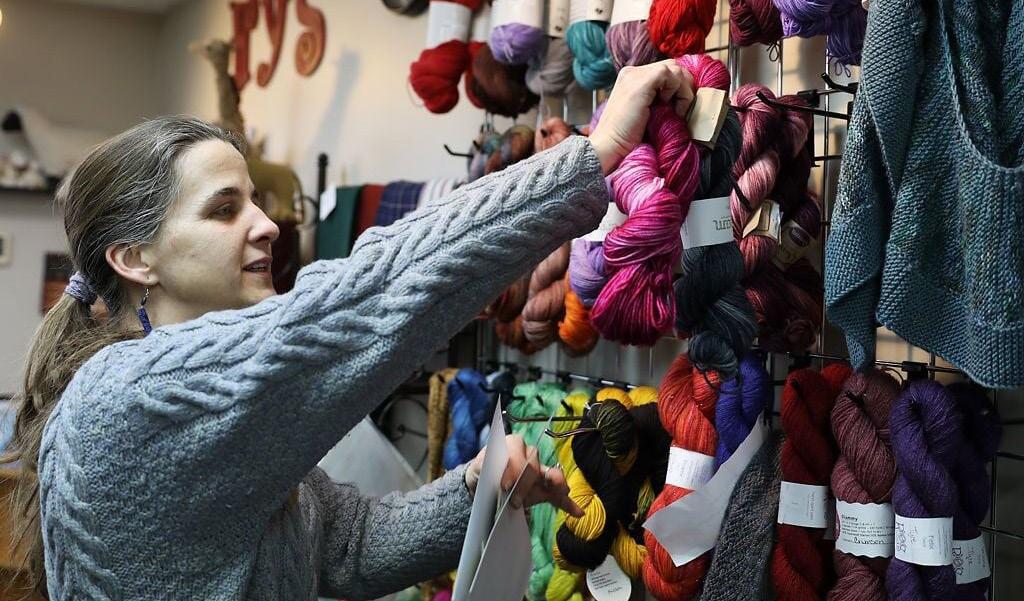
Many fiber artists picked up their craft during the height of the COVID-19 pandemic, making use of a surplus of free time without reaching for a phone or turning on the TV.
Mizzou student Ava McCluer’s interest began while watching her mom crochet a baby blanket. She says she remembers being entranced by the movement of the hook, leading her to
watch YouTube tutorials and join online crochet groups to learn how to do the movements herself.
Although McCluer also works in other art forms, she always finds herself going back to crochet. With the amount of attention to detail required, she describes it as meditative. Repetitive hand movements also require “brainwork,” distracting fiber artists from feelings of stress or worry, according to the Anxiety Resource Center.
For many of Columbia’s fiber artists, a common source of motivation is the gratification of having an end product to show for the time and effort.
In a National Library of Medicine study of over 8,000 individuals, 75% of respondents said they crocheted to feel a sense of accomplishment.
McBee-Black picked up her knitting needles in 2022 to honor her late sister. The two of them took a knitting class together about 25 years ago — with McBee-Black struggling to learn and her sister being a natural knitter. McBee-Black says her sister tried to help her during the class, and she was “having none of it.”
After her sister died of pancreatic cancer, she was inspired by memories of her sister and that class to try again on her own. “It was an opportunity to feel connected with her,” McBee-Black says. “It helps tremendously, figuring out how to find peace through creativity, even if you’re not good at it yet.”
Even though hands-on art is no longer as crucial for our basic needs, fiber arts can still be essential in ways that are not always seen.
“We need joy, and knitting and crocheting brings joy,” Means says.
Falcon Tor, Columbia’s Live Action Roleplaying chapter, opens its gates to anyone seeking adventure.
BY DAVID ALDRICH
The tower shook with the fury of battle. Sam “Dorgan” Hall pushed up the stairwell with his shield raised, bracing against a storm of blows from the defenders above. Behind him, Charles “Beldin” Snow gripped his spear, waiting. Outnumbered and pinned down, the two were stuck. But Hall had a plan. On the count of three, Snow stuck his spear up the stairwell, bouncing his weapon off the walls, pushing everyone back. In that instant, Hall surged forward, cutting down any defenders in his path. With the help of their friend “Wildcat,” the three men stood victorious atop the tower, completely wiping out everyone in it.
The story sounds like something out of a Dungeons & Dragons game, but this battle actually took place on a paintball course near the Illinois-Indiana border. It was part of a Live Action Roleplaying, or LARP, event held by Amtgard, a nonprofit organization dedicated to the promotion of LARP games.
In Amtgard, people use safe, foam-padded replicas of Medieval weaponry to live out the experience you might find in tabletop or video games. Except, instead of rolling dice, players are doing the actions themselves.
Throughout the organization, there are 22 kingdoms that encompass 49 of the 50 U.S. states (sorry, Hawaii). Within those 22 kingdoms, there are local chapters that let members get together and play the game.
The Columbia chapter is called

Falcon Tor, and it’s a part of the Kingdom of Tal Dagore. So, when they’re not storming distant towers, Hall and Snow come home to Columbia to continue playing the game.
Rooted in the spirit of Dungeons & Dragons, The Lord of the Rings and Game of Thrones, LARPing thrives on people’s love of fantasy, combat and imagination. For some players, LARP games fit the fun found in those worlds while also being good exercise. For others, the idea of slipping into another reality or character can be freeing.
“I would say that I’m a little bit looser whenever I’m playing Beldin than I am whenever I’m Charles out in real life,” Snow says.
Bella “Freya” Hoover, a current admin of the group, felt that same attraction to the game and used it as a way to grow. Participating in LARP games helped her gain control amid an eight-year relationship that was harmful. “He was really abusive toward me, (and) I wanted to be somebody different,” Hoover says. “I wanted to grow and have a sense of strength, and so I took from the goddess Freya, and I just used that as my name.”
LARPing is like living a board game, encouraging people to immerse themselves into another character and a world of fantasy.
If the battle and fantasy of the game are the hook, the community is the anchor. Falcon Tor prides itself on being a place where newcomers are always welcome. It was that hospitality that made him stay, Adrian “Kenji” Schaefer says.
The nonprofit LARP organization Amtgard was founded in El Paso, Texas, in 1983 and has since spread throughout North America and the rest of the world.
“When I was new and I first started, what got me to come back was the fact that not only did I have fun, but when I screwed up, no one yelled at me,” Schaefer says. “Nobody is going to go hard on you, and in fact, they’re going to do everything to make you feel like you can play.”
Adam “FinnTroll” Freund, who runs the business side of the Missouri chapters, says that a lot of the people who play the game “are very shy, very nerdy.”
“In a lot of cases, it’s the kids that didn’t have a ton of friends in high school and stuff like that,” Freund says.
For many of those players, finding a space where they can be themselves adds something they didn’t have before. The game gives the kids Freund mentioned a chance to build friendships and feel like part of a community. It’s no wonder, then, that the people who participate in
the game are a tight-knit community that can only be described as a big family.
“Family — it’s real weird,” Hall says. “It’s one of the things that keeps me around, but it’s not something I really thought of whenever I first got into it. (Snow) and I, we’re best friends now.”
After traveling thousands of miles and working tons of events with each other, Hall says he’s grown close not just with Snow but with everyone who is a part of the community. “You get a weird
bond with all of them, that you just kind of live in this almost family-esque environment,” he says.
Falcon Tor forever
When they were kids, Schaefer says, people like them could connect through video games or the Internet, but it all slowly goes away as you get older. “Nowadays as adults, you go, you get a family, you have kids, you go to work, you go home,” he says. “There’s not really any
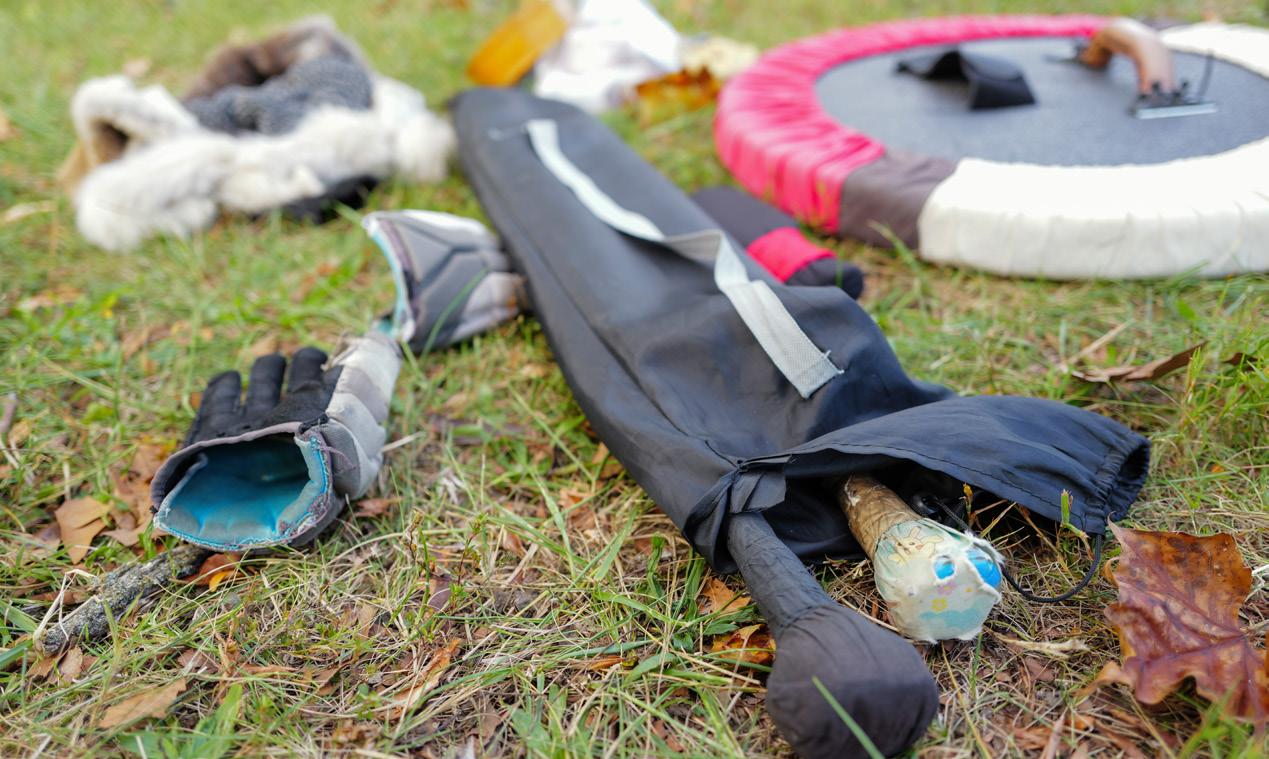
The Falcon Tor chapter meets regularly, and newcomers are always welcome. For more information, join Falcon Tor’s Facebook group or Discord.
When: 1-4 p.m. every Sunday Where: Albert Oakland Park near Shelter #1
socializing. This gets us out, gets us to meet new people, form bonds with people, create a community. We’re like a little family over here.”
For Freund, the biggest showcase of the community occurred at his wedding. “When half of your people that are attending your wedding are people from this game, you can’t say that there isn’t some sort of outside community to it,” he says.
Snow, too, shares the same sentiment, attributing the strong community to having a lot of members from different backgrounds.
“We have several transgender people. We have several people that are bisexual or gay. We have members of every race. We have players from a whole spectrum of differences, and yet they all find their place here,” he says.
The hallmark of LARP weapon legality is player safety, according to the Amtgard rulebook. So, safety will always trump technical compliance.

While the tower siege is just one of many stories — it captures what Falcon Tor is all about. The swords might be fake, but the victories are real. The laughter afterward is real. And the connections made with the people along the way are very much real.







Get lost in good books at this year’s Unbound Book Festival.














Uncover how some Unbound authors gather inspiration for their writing.
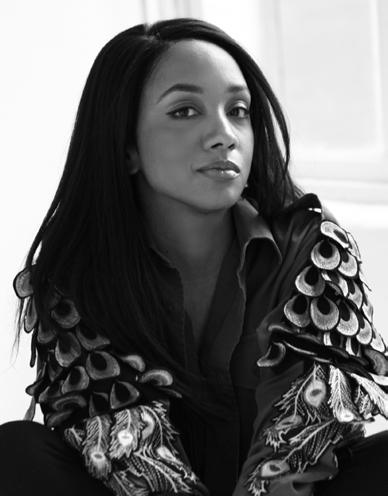
From actress to author, Erin E. Adams has discovered a passion for writing. But this passion didn’t spark out of nowhere — the origins of Adams’ writing career go back to her early years where she would fill notebooks with her writing.
“I would write short stories and attempt to write novels. Once I pivoted to acting at the end of high school all the way through undergrad, I just really stopped writing.”
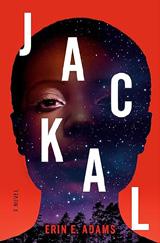
Adams reignited her love for writing after finishing college, when she wrote her debut horror novel, Jackal, which captures the bloodcurling story of a society tainted by racism and tragedy, from the perspective of a young Black woman investigating the cases of missing Black girls.
“I really try to write what scares me and what terrifies me to the fundamental core of my being,” Adams says. “And something I find terrifying is that for many reasons, which are really explored in the world (I wrote), if I vanished tomorrow it’s a high probability that nobody would look for me except for my family. And so that was where the seed of it all started.”
Adams takes pride in Jackal. She describes the novel as nuanced and multi-layered, like “biting into French cakes.”
Adams has continued to write novels that rattle readers with horror. Her 2027 book One of You also covers mystery and tragedy, exploring the grim parts of the world.
Unbound panel: To be announced. Check Unbound’s site for updates.
—Lilliana Sewell
Author and writing instructor Julie Carrick Dalton is being recognized for her work exploring an element of the climate crisis — the extinction of bees.
The Last Beekeeper is Dalton’s dystopian novel where bees have become extinct, leading to the destabilization of global food security. It follows Sasha Severn, who returns to her childhood farm and discovers a bee — leading her to uncover her father’s secrets. Dalton’s idea behind the story came from an experience she had as a beekeeper, when about 40,000 of her honey bees were poisoned by a neighbor’s lawn product that carried a toxic chemical.
“Looking at that pile of bees made me wonder what was happening to all the wild pollinators,” Dalton says.
The climate crisis is a challenge that Dalton draws inspiration from in all of her books. She explores the fear surrounding climate change, but also identifies hope and expands on it.
“The things that keep me awake at night, I write about them,” Dalton says. “I kind of hand them off to my characters and let them play out my worst-case scenarios. There’s something kind of empowering about that.”
Dalton doesn’t have a clean-cut process for her books — she has to be in a flow of writing. But she does need to have peppermint in her mouth when it comes to writing creatively.
Unbound panel: Talk with Dalton at the What’s the Buzz panel, joined by Andrea Rexilius and RK Fauth.
—Lauren Johnson
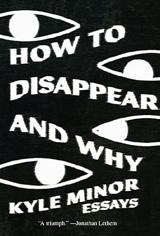
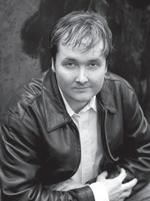

Kyle Minor — author and winner of the 2015 Story Prize Spotlight Award — sheds light on the details of humanity and disappearing in his most recent set of essays, How to Disappear and Why.
In his essays, Minor inspires readers to take a step back from reality for a moment — to take in the world around them and see the colors of life in different tones. Through his essays exploring “transcendent” things, he gives readers a glimpse into the deeper aspects of human history, connections and culture.
“It’s like when you walk into a movie theater and you’re taken to another place,” Minor says. “Or when you read a book and get to experience 200 pages or 600 pages of the interior life of a different person.”
Minor continues to awe his audience with the use of fiction and nonfiction writing and exploring philosophical themes that humanity often chooses to ignore. He discusses similar topics in Praying Drunk, his set of fictional short stories that won the 2015 Story Prize Spotlight Award.


Unbound panel: Talk with Minor at the Disappearing Acts panel, joined by Naeem Murr and Mitchell Douglas. —Lilliana Sewell
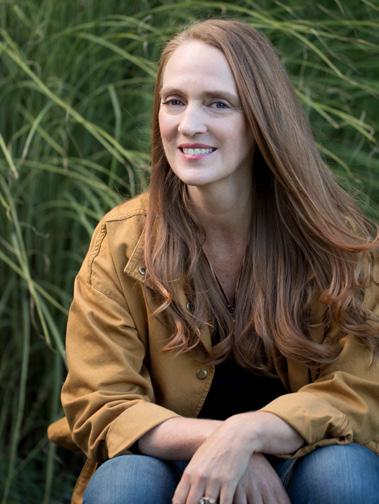
RK Fauth
RK Fauth is a poet who takes everyday environmental elements and expands on them in her poems, describing her work as the “ecology of language.”
“You’re trying to use language in a way that is, in some way, surprising,” Fauth says. “You have to kind of also surprise yourself when you’re writing.”
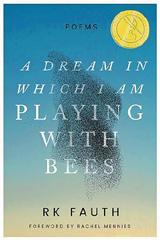
Fauth’s latest book features their first collection of poems, A Dream in Which I Am Playing with Bees.
“I thought about bees just as that little peg in the environment that often is overlooked and otherwise makes so many things happen,” Fauth says.
Writing was a demanding process for Fauth, as they had to write 70 pages of poetry within six weeks to be considered for a poetry competition. Fauth decided on a writing prompt by starting with bees as the subject, then asking herself: “What are the poems I could not write if there were no bees?”
“It was really generative for me in this way that mimics the premise of the book,” Fauth says. “This idea that bees are the thing that makes so many other things proliferate and happen.”
Fauth turned to writing poetry during the COVID-19 pandemic, where she began to believe that writers work in solitude. However, after becoming a published author, they realized that there are communities of people who want to listen.
Unbound panel: Talk with Fauth at the What’s the Buzz panel, joined by Andrea Rexilius and Julie Carrick Dalton.
—Lauren Johnson



Samuel Cohen’s book Banning Books in America: Not a How-To is a collection of essays written by different authors on the history and impact of book banning in America.
Cohen started compiling essays on book banning after his banned book panel at a Modern Language Association conference, when an editor approached him and gave him the idea to write a book. He then gathered essays from different sources to create the final product.
Cohen is an English professor at the University of Missouri. One of his courses, called Reading Literature: Banned Books, became an inspiration for his book. He says academic freedom is not about professors’ right to say whatever they want — it’s about students’ right to learn what they want, and professors using their expertise to decide what should be taught.
“It’s actually, I think, really important to democracy that it’s not in the hands of the government,” Cohen says. “State senators and representatives shouldn’t be deciding what professors talk about in our classes.”
Cohen fittingly used the course syllabus he created for his class in his book. Using the syllabus as the bones of his essay, he adds mock lecture notes and jokes about teaching a banned books course.
Unbound panel: Talk with Cohen at the Community Silences panel, joined by Gwendolyn Paradice and Wright Thompson.
—Elizabeth Dorman

Sarah Kendzior
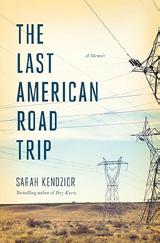
Sarah Kendzior’s book The Last American Road Trip chronicles a journey Kendzior takes with her two kids, traveling across the United States to experience the nation’s beauty firsthand.
The book is more than just a travelogue — it’s inspired by the history and politics of the United States. One of Kendzior’s driving factors of this journey was to show her kids the good parts of the country as they witness political unrest.
“I feel like they’ve kind of seen a version of every 20th century atrocity play out in a very short period of time,” Kendzior says, going on to mention attacks on national parks, the presence of ICE and the threatened “sense of freedom the open road offers.”
Kendzior is most well known for writing about the Jeffrey Epstein case and Donald Trump’s rise to power. She is no stranger to heavy topics, but familiar work doesn’t mean it’s easy work.
With The Last American Road Trip, Kendzior takes a step in a new direction to appreciate the beauty in all parts of the country. Kendzior notes that a lot of its beauty is thanks to the people, and says it’s been painful to see attacks on immigration and on Indigenous people.
“The diversity of our country, I think, is a really beautiful thing,” Kendzior says. “It makes for great travel and a great experience of countries within the country, and I always have enjoyed that.”
Unbound panel: To be announced. Check Unbound’s site for updates.

—Elizabeth Dorman
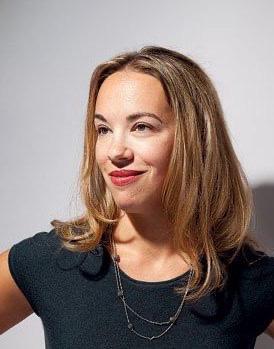

The 11th annual Unbound Book Festi val is almost upon us, and with it comes new leadership. This year marks Kerry Townsend’s first year as sole executive director. Townsend co-directed last year’s festival with its founder, Alex George. Townsend says it has been a learning curve, but she has received support from many different outlets.
“I was a co-director last year, but actually being responsible for everything, there’s been some learning,” Townsend says. “Everyone has been super supportive — community members, members of the boards, authors and people that have worked with the festival in the past.”
The 2026 festival will include some new developments and unique aspects. For the first time in the festival’s history, a nonfiction writer, Terry Tempest Williams, will serve as keynote speaker.
Williams is the author of environmental literature pieces such as Refuge: An Unnatural History of Family and Place and
By Claire McLaughlin
An Unspoken Hunger: Stories from the Field.
Another addition under Townsend’s leadership includes a new lunch block in the middle of the festival. The block takes place from noon to 1:15 p.m. April 18. Attendees will have the chance to relax and enjoy everything Columbia has to offer.
“It will be nice for people to kind of take a break,” Townsend says. “They can walk around downtown, go to some local restaurants and get some coffee.”
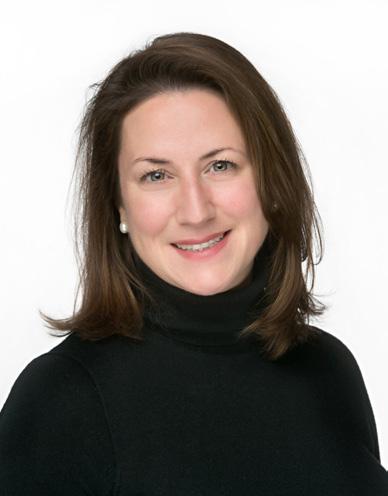
you’re managing a lot of different types of things,” Townsend says. “As the director, you’re helping with logistics, making sure you have reservations at different locations and working with different entities to make sure you have a contract signed or rooms for the authors at the hotel.”

Before becoming director of the fes tival, Townsend worked as the library media coordinator at Columbia Public Schools from 2006 to 2025. She said this position helped her prepare for her work in the new position.
“As the library media coordinator,
April 17-19
With all of the new factors and adjustments in leadership, Townsend wants to keep the true spirit of the festival alive. She intends to continue bringing in diverse authors, and keep the high-quality nature of the event.
“I want the festival to continue to be high quality. I want it to continue to have a lot of interesting authors, and I want people to be thinking when they’re here,” Townsend says. “We want to continue to grow the festival. We want to add venues, increase fundraising and continue to bring in diverse authors.”
There are lots of events to check out — with most panels taking place April 18. All events are free. See the Unbound Book Festival Facebook page or unboundbookfestival.com for details.
Keynote speaker Panels
Terry Tempest Williams 7:30 p.m. April 17 Missouri Theatre Register for a free ticket at unboundbookfestival.com.
First Page Rodeo April 19 Stephens College Helis Communication Center Submit first page (only first page) by April 3 to writeon@unboundbookfestival.com.






By Macy Craig
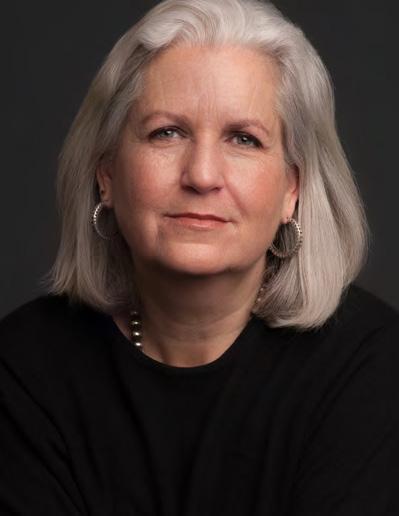
In her recent essay Retreat, which is nestled in the landscape photography of Thirst — Great Salt Lake by artist Fazal Sheikh, Terry Tempest Williams starts with pelicans on the horizon, navigating the dried-up landscape. She then weaves together narratives — the displacement of the Latter-Day Saints church, her mother’s battle with cancer and her journey in the lake basin with Sheikh.
Williams will be the 2026 keynote speaker for the Unbound Book Festival. Her work exists in a long line of environmental nonfiction writers and essayists who interconnect their stories and essays with that of the land around them in ways that go beyond the realm of traditional storytelling.
This is the magic of Williams’ writing. She does not write about her experiences or the experiences of others alongside the American West — she writes her experiences through it. These two aspects seemingly could never be separated.
Williams’ work is a more modern iteration of the nonfiction genre, says Sean Ireton, an associate professor of German in Mizzou’s School of Languages, Litera-
tures, and Cultures. His research involves the German philosophy that inspired early writers in the genre.
“I think environmental literature now has moved past the kind of naive phase of writing about pure and intact landscapes, and we must reconnect with those landscapes,” he says.
In her collection of mini essays titled Red: Passion and Patience in the Desert, Williams writes from the perspective of a conservationist. Her short story Bloodlines follows a tailor in an almost parable-like story. After being raped, the tailor experiences her grief through her connection to the desert and in the passing of the seasons.
deal with fiction,” Ireton says. “So obviously (at) the language level there’s going to be some sort of beauty of language. You should pay attention to that, but also you should all pay attention to the tropes and metaphors.”
Readers picking up one of Williams’ books for the first time might be struck by its richness. It isn’t nonfiction in a journalistic sense.

“Just because it’s kind of a nonfictional account about something doesn’t mean that it doesn’t have literary merit in other ways that we are more used to when we
Kerry Townsend, executive director of Unbound Book Festival, has been reading Williams’ most recent book The Glorians: Visitations from the Holy Ordinary, which begins during the onset of the pandemic, and says she is excited for the opportunity to have Williams as keynote speaker.
“Our goal at Unbound is to bring high-quality writing, free and available, to the people of Missouri in general, or anybody who wants to come,” Townsend says. “Terry Tempest Williams is definitely a writer who’s been writing high-quality literature for a long time.”
Valerie Tiscareno
PHOTOGRAPHY
STORY Tyler White
Brooke Riley EDITING Alex Goldstein
DESIGN
House shows provide a stage — usually a makeshift one — for many up-and-coming Columbia bands, flipping the local concert scene upside down.

erage price of a concert ticket has soared. According to an analysis by USA Today , the average ticket price in 2024 was $135.92, an increase of over $100 from 1996. “What’s happening today is what I expected was going to happen,” King says. “And that would be, prices would skyrocket.” House shows, though, provide a space for concertgoers to appreciate up-and-coming artists in an affordable way. In a 2024 story in The Washington Post , Annie Midori Atherton says house shows have grown in popularity among a variety of genres. House shows, she writes, are intimate experiences that build community. “There’s no comparison, though, between piping music through a speaker and sitting close enough to a singer to feel their breath.”
‘THERE’S NO COMPARISON’
Luke Sabath is the guitarist and vocalist of Find Fiona, a local band that recently moved into a house with a basement practice and performance space. The band has since hosted two shows there — one on Nov. 22 with Nightstand and the other on Jan. 3 with Wilson Park Rangers. For Sabath, accessibility is a core char -
In 2011, Richard King, co-founder of The Blue Note, switched the venue’s ticket provider from Ticketmaster to eTix. After using Ticketmaster for about 10 years, the high service fees and increasing ticket prices bothered King. “I just wanted to make it as easy as possible for people to come to shows,” he says. “That was why I really sort of championed the lower ticketing fee.” For years, King tried to keep Ticketmaster from acquiring the ticket promotion process for The Blue Note. After selling The Blue Note and Rose Music Hall to Scott Leslie and Matt Gerding in 2014, another company, Frank Productions Concerts Live, began handling ticket promotion. In 2018, Live Nation Entertainment acquired a majority interest in Frank Productions, which meant the two local venues became part of the Ticketmaster and Live Nation network. The two companies are at the center of the debate about concert prices. In 2024, they were sued for monopolization and anti-competitive conduct, according the U.S. Justice Department, and the trial began in March. At the same time, the av -
few days before I attended my first house show in Columbia, a friend sent a flyer with three bands on the bill: The Park, Wilson Park Rangers and Pink Houses. The bands were largely unknown to me, aside from a few songs I’d heard through friends. But who cares? A concert’s a concert. The house we arrived at looked abandoned. The windows showed no signs of life. A sign on the front door said something along the lines of “head down to the basement.” The basement was a different dimension. We walked into a room filled with speakers and colorful lights shimmering on an array of instruments. In one corner, people gathered around a TV, playing some preshow video games. In another sat the house’s furnace and piping that funneled out to the rest of the place. It was a surreal scene. Slowly but surely, people filled the basement with a vibrance that is hard to put into words. As the show began, the band members walked through the crowd to their stage — a spot on the floor — and amplifiers suddenly engulfed the room in noise. There were no more than 100 people packed in, but the atmosphere felt like thousands. A trance-like feeling took over as each band performed its setlist, a full showcase of the local music scene. House shows — turning homes into makeshift concert spaces — are a vital part of the Columbia music ecosystem. Through house shows, local bands can attract grassroots support for their music when they don’t have the notoriety to play at venues like The Blue Note or Rose Music Hall. The All-American Rejects amplified the national significance of house shows with its 2025 House Party tour, which made a stop in Columbia in May. The significance of Columbia’s house show scene is growing as climbing ticket prices and conglomeration of ticketing companies makes larger venues less accessible to both local artists and fans.

BY
There are various safety and regulatory factors that apply to house shows.
AUDIENCE SAFETY To comply with fire codes for large gatherings, in its new basement space, the band Find Fiona needed two accessible exits. It also provides water and first aid supplies, including Narcan.
STAYING NEIGHBORLY To reduce noise, Find Fiona enclosed its basement with sound blankets and foam paneling. Two city ordinances — about loud music and loud parties — could apply to house shows.

WHO’S LIABLE In Missouri, for gatherings such as house shows, liability issues would only arise if hosts knowingly allow underage drinking or ignore potential dangers.
need to be aware of as they prepare to host house shows. One of those is noise.
According to noise complaint response data from Boone County Joint Communications, there were six noise complaints related to house shows in 2025. Mark Fitzgerald, an assistant chief with the Columbia Police Department, says he hasn’t seen noise complaints from house shows as a constant issue, but it is important for bands to be aware of their neighbors and the city noise ordinances. “Just because you want to have a good time and play some music, you can’t infringe on a neighbor’s right to be able to sleep through the night or go to work the next morning,” Fitzgerald says. Schmitz says Nightstand goes out of its way to confirm that its house shows happen at times that don’t cut into neighbors’ weekend plans or early weekday mornings.
“We’re not trying to upset anybody with the concert or ruin their night,” he says. Moreover, the band makes sure the house is clean and free of potential property damage, also providing water for concertgoers during the performance to prevent sickness or health issues. Jalen Julian, drummer for Find Fiona, used to be a part of local band Wilson Park Rangers. He has been a part of three shows that were shut down. It usually goes like this: An officer comes by and asks the bands to stop playing, bands want to keep playing, so the officer hangs around until
“Over the course of a couple shows you really get to know them.” Adrienne Luther Johnson is the marketing and events director at Cafe Berlin, a restaurant and music venue that hosts community showcases for local and international artists. She says house shows help empower music fans to combat the issues that come with Live Nation taking over the concert industry. “I think that folks in college who primarily frequent the house shows — they have the ability to determine what that scene looks like,” Johnson says.
“It’s not a market for them. So, that allows them to really empower some of these house shows as almost a response to some of these developments that we’re having.”
Before bands can get together and open up a house to a crowd, there are factors artists
acteristic of music. “There’s such a special place for house shows because it embodies the community aspect. There’s no money involved, there’s no business,” Sabath says.
“It’s just some people, word of mouth, and it’s like, you want some art going on in your community.” While local bands value playing at venues like The Blue Note and Rose Music Hall, they acknowledge that there is something different about a house show. Noah Schmitz, one of the vocalists and guitarists of Nightstand, says venues provide bands a great opportunity to perform with better sound and more scene exposure. However, it is less economical for college students who might only have a few bucks lying around to attend those shows. House shows are generally free or donation-based, with all of the profits going directly to the artists or the cause they are supporting. During shows, Schmitz says bands like Nightstand try to create the “best possible vibe” for people to enjoy their time engaging with new music. “Oftentimes, it’s the same people who are into your music that come back time and time again,” he says.
Many people who want to attend shows would not be able to afford to and bands searching for a stage would not have one. Max Doolady, Find Fiona’s bassist, says house shows are vital to our music scene for fans and musicians. Artists can thrive on the engagement. The community can feed off the energy of the artists. It takes me back to my first house show with the bands mere inches away. It was an intimate feeling as if we were part of the performance. Without the division of a physical stage, the line between community and band is blurred. The basement floor that night was more than just a part of the house — it was a source of life for the music scene and everyone involved.
intimate experiences with their crowds.
“The reason we were able to start playing shows, in general, was because we live in a place where house shows are pretty prominent,” Roberts says. “I think the reason that we are continuing to play to this day and have gotten so many opportunities as a band is because we were so down to just play house shows where we didn’t know if there was going to be anybody there.”
If Columbia’s house shows disappear, Sabath says we’d be losing the most human part of experiencing music in Columbia.
John Roberts, guitarist of the band King Socks & the Unrelenting Funk, says house shows help cement local bands into the music scene. When his band started in 2021, it played a couple house shows that led to opportunities to perform at venues with other bands. For Roberts, house shows remove the barrier of a stage so bands can create more
While King ran The Blue Note, he prioritized booking local acts. However, running a concert venue of that caliber meant he couldn’t always highlight the bands the way he wanted to. That’s where he thinks house shows provide an opportunity. “It’s a great way for an artist to enter the market and try and develop,” King says. “I think when you have house concerts, there’s a genuine interest in the artist, whether you get 20 people together or 50 people together.”
THE THREAT OF HAVING A HOUSE SHOW SHUT DOWN HAS LED MANY LOCAL BANDS TO ADVERTISE PERFORMANCES MORE SECRETIVELY, WITH “DM FOR ADDRESS” AS PART OF A CONCERT ANNOUNCMENT. the music stops. House show over. That’s what happened on May 18 during The All-American Rejects’ stop in Columbia. The threat of concerts being forced to end early has pushed many bands to advertise shows on social media with a simple “DM for address” instead of openly sharing the location.



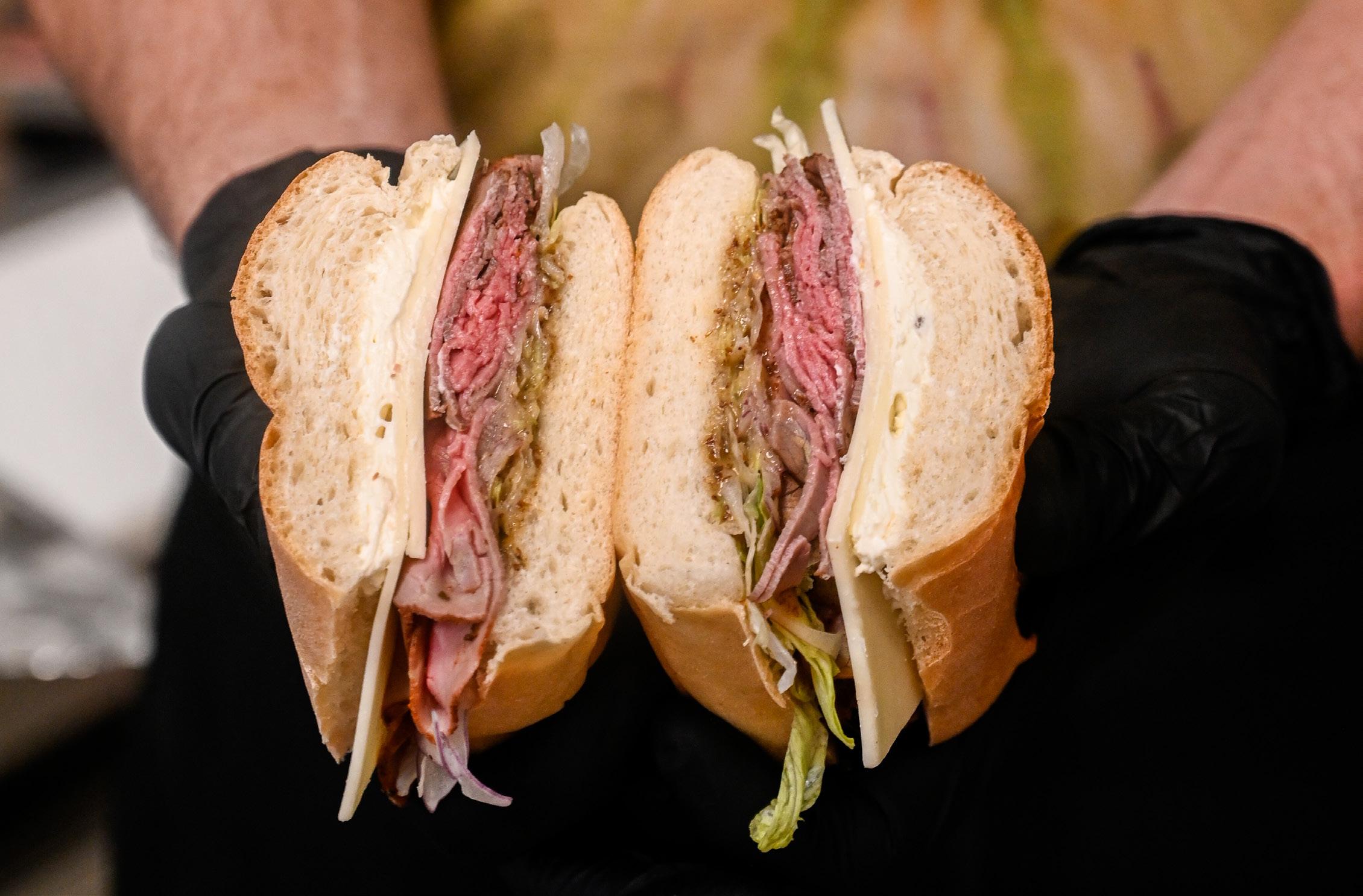
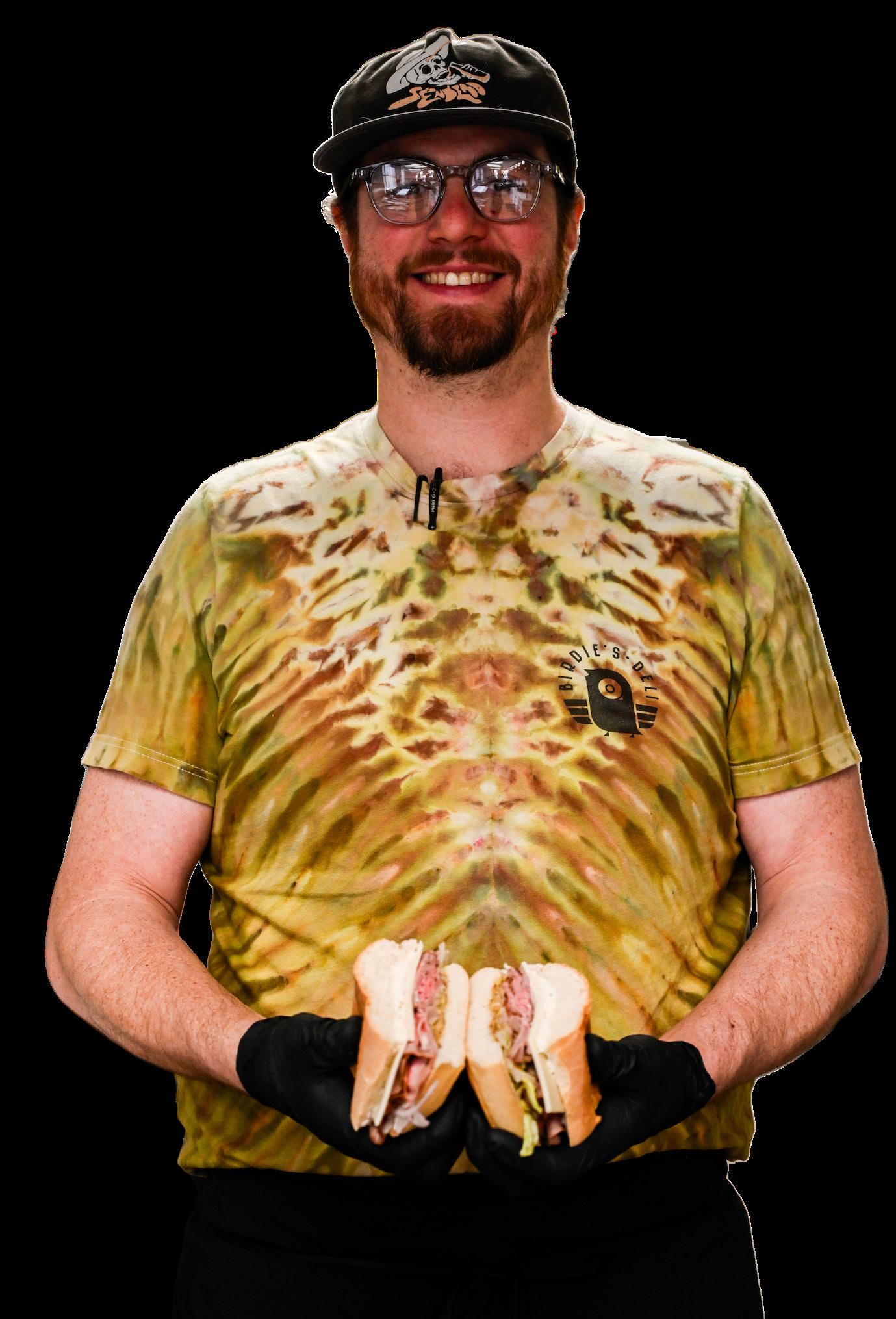
Paddy and Chelsea Jernigan introduce Birdie’s Deli to bring local subs back to Columbia.
BY GRACE ROMINE
Chelsea and Paddy Jernigan spent decades building careers around longstanding culinary institutions in Columbia like Shakespeare’s Pizza and Logboat Brewing Company. The longevity of those places — and the legacy of others that have been left behind — inspired the couple to build something of their own.
Over a year of planning went into Chelsea and Paddy’s mom-and-pop venture. For a time, the former home
of Seoul Taco was messy. A makeshift folding table office, an armada of chairs still covered in Styrofoam wrap and an empty glass deli case were all symptoms of a business still in the process of establishing itself. Birdie’s Deli welcomed its first few customers during True/False Film Fest. Combined, Chelsea and Paddy have more than 30 years of restaurant experience in Columbia. Most recently, Chelsea worked as an off-site event manager
Paddy Jernigan created his sandwich The District as a homage to the former Ninth Street Deli.
for Logboat Brewing Company. Paddy worked at Shakespeare’s Pizza during college and spent 10 years with Ozark Mountain Biscuit and Bar. Switching from dough to deli, Chelsea and Paddy say, was “a need meeting an opportunity.” Chelsea is from the St. Louis suburb of Kirkwood. Paddy’s mom is from St. Louis, too, although he grew up in Dallas until his preteens, when his family moved to Cape Girardeau. They still visit St. Louis often, and they say that
during each visit, it’s a struggle to decide which sandwich to get.
“There’s a little neighborhood deli on every corner there, and it’s just something Columbia is really missing,” Paddy says. “A lot of those smaller neighborhood spots you walk in, even though you’re not from the neighborhood, you were made to feel like you are.”
Birdie’s came together officially in January 2025, but Chelsea and Paddy have done about five years of research, including an anniversary trip to Chicago in September 2025. In that time, they traveled and took notes on the variety of delis they encountered, looking for inspiration.
In the past two decades, multiple locally owned sandwich spots have shut their doors, limiting the Columbia sub scene to franchise. In November 2024, Sub Shop closed its doors after 49 years in business. Ninth Street Deli — which Paddy frequented a couple days a week in college — closed in 2011. For Paddy, Ninth Street Deli was a hidden gem that felt like home.
Paddy will pay his homage on the Birdie’s menu with The District, a spin on his favorite Ninth Street Deli sandwich. It’ll feature roast beef with roasted garlic cream cheese, honey mustard and thinly shaved red onion.
Unleashing culinary creativity
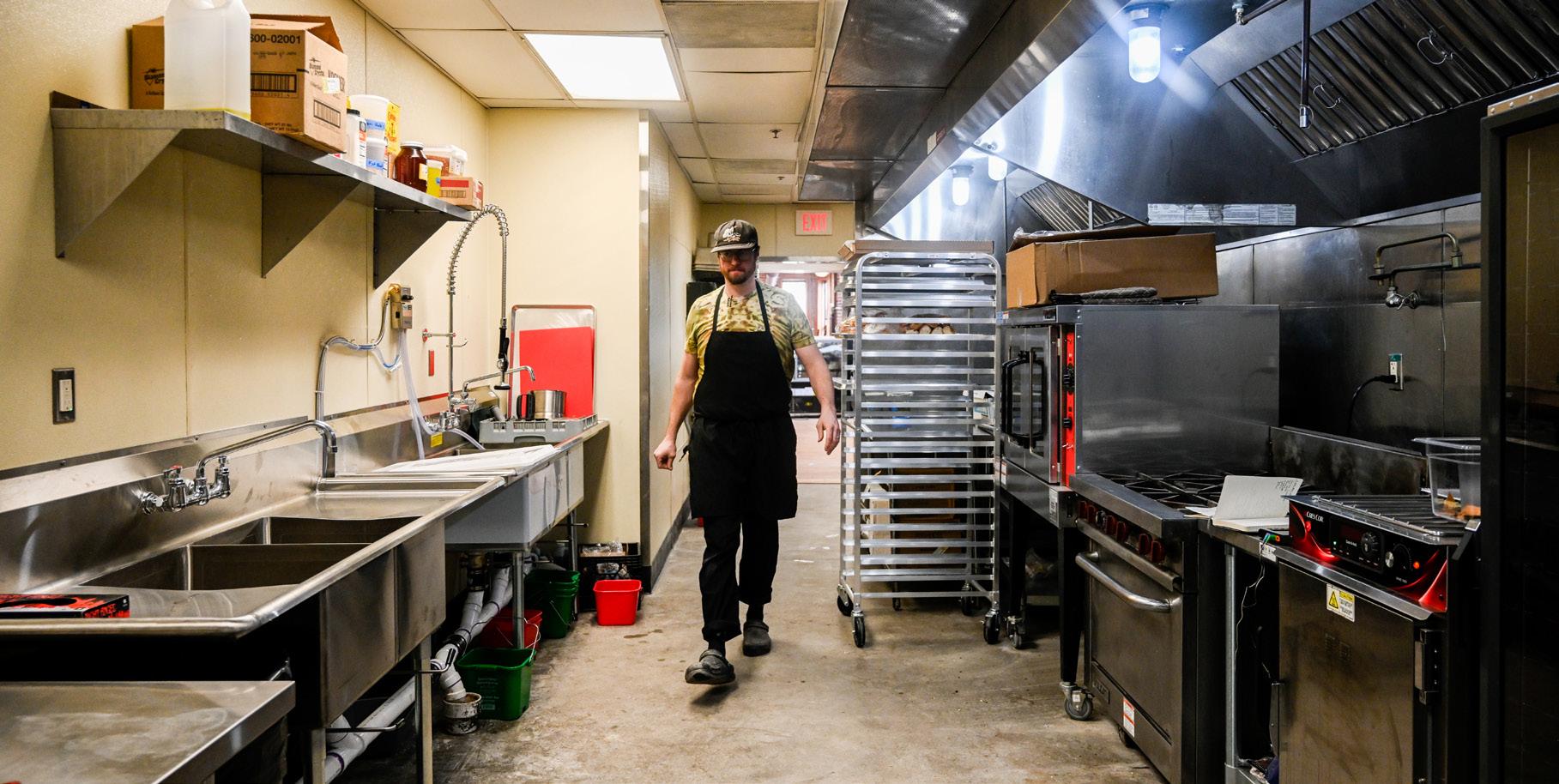
Birdie’s is a scratch kitchen — meaning that Paddy and Chelsea prepare all their foods, down to the condiments, salad dressings and soups, from scratch. They roast their beef and smoke their pastrami in-house. They also source their ingredients locally, like cured meats from Principe in Columbia, beef from Springfield Grocery Company and produce from local farmers. “We definitely want to support and use those local farms as much as possible,” Paddy says.
Paddy’s earliest memories of cooking come from watching Great Chefs of the World on PBS after elementary school. By junior high, he was cooking meals for his family solo.
“Mostly it was just being exited about cooking and wanting to start getting hands on with it,” Paddy says.
Paddy chose to learn from experience, getting his first job at CiCi’s Pizza
in Cape Girardeau at 15.
Paddy got to put his well-rounded background on display as the chef and general manager of Ozark Mountain Biscuit and Bar, which he helped bring from food truck to brick-and-mortar.
Paddy has also helped open local businesses like Pizza Tree and Mojo’s — now known as Rose Music Hall. Mojo’s was where Paddy and Chelsea first met and where the original Pizza Tree was located. They still call the concert venue by its maiden name.
Toby Epstein, a general manager at Shakespeare’s Pizza’s downtown location, has witnessed Paddy’s emergence onto Columbia’s restaurant scene.
“Columbia is kind of the right size to have a lot of different restaurants, but small enough to where those that work in the industry are all sort of connected,” Epstein says. “Everybody knows everybody.”
One item Birdie’s has offered at each pop-up was its Pig Pen sandwich, which had four different iterations, but its foundation is mortadella and hard salami. Paddy says he’s most proud of the Lazio, named after the Italian region where porchetta (rolled pork belly) originated. It comes toasted, with sauteed greens and provolone.
There will be other deli classics, such as the turkey bacon club, better known as the Birdie’s Club. But Birdie’s offers more than just sandwiches.
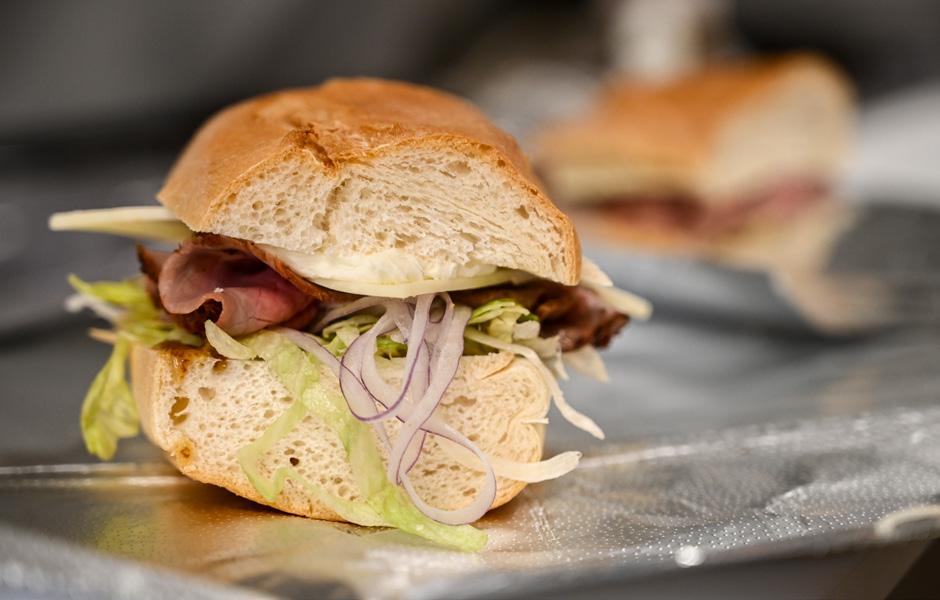
Paddy Jernigan reminisces about the vibe at Ninth Street Deli, his favorite place to frequent in college. “I have my place (where) I sit and know exactly what I want when I walk in,” he says. “I think the staff kind of knows that about you as well.” The District sandwich (above) is a homage to the deli that closed in 2011.
Head to 1020 E. Broadway to give a new sub a try. Birdie’s Deli is open from 10 a.m. to 6 p.m. Tuesday through Saturday. Find them on Instagram @birdiescomo.
Paddy says there will be a deli case full of potato salads, pasta salads, soups and green leaf salads.
Birdie’s menu fills Columbia’s local sub sandwich void but still scratches an “itch” for Paddy to be creative as a chef. He plans to offer two soups per day, with one vegetarian or vegan option. “That allows me to be creative and kind of switch those soups up every week or so,” he says.
For Paddy and Chelsea, expanding their range in Columbia’s culinary scene goes hand-in-hand with expanding their family.
Birdie, who is Paddy and Chelsea’s daughter and the restaurant’s namesake, will turn 3 in May. Chelsea is due with her second child at the end of March, just weeks after Birdie’s Deli opens.
Naming their deli after their daughter was Paddy’s idea. “I don’t even know that he really tossed around other ideas for names,” Chelsea says. “Now she comes here, she calls it ‘her deli.’ ”
Owner Ahmad Ali brings his family recipes to Columbia’s table with his food truck, Babylon Taste.
BY MATTHEW OSTHOFF
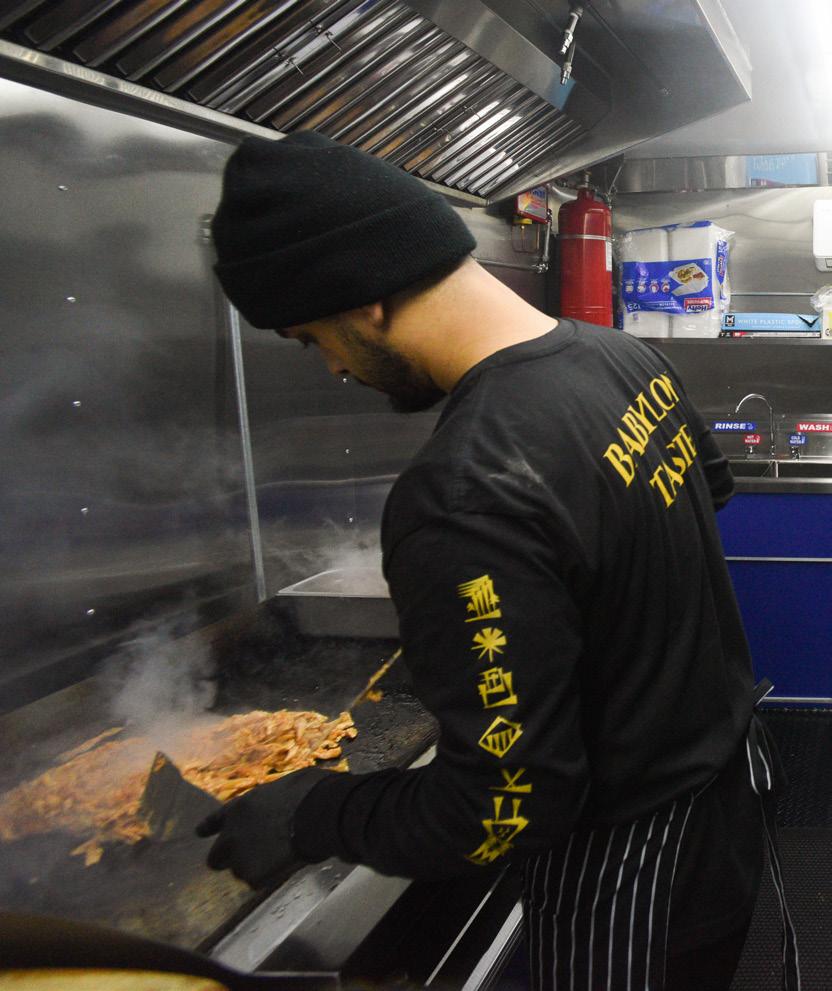
Amid the towering apartment complexes of downtown Columbia, the distinct blue of Babylon Taste’s truck draws in customers with the scent of shawarma, the hiss of its grill and the sound of people conversing in Arabic.
Inside — dressed in a shirt with Babylon Taste emblazoned on its back — you’ll find owner Ahmad Ali. Ali takes pride in sharing the food of his home country, Iraq. “I just want people to taste our country’s food and our culture,” Ali says. “One of the biggest moments for me was deciding to share authentic Iraqi food with my community. I wanted people in the U.S. to taste the same flavors I grew up with — real homemade dishes — not the Americanized versions.”
This dream wasn’t started on a whim. It has been in the works for at least seven years. Ali, along with his mom, dad and sister, moved to Columbia in 2013. His aunt and uncle were already living here at the time. At that point, he had almost a decade of experience in the
food industry — both in Iraq and Syria.
A few years ago, Ali worked at Boone Health, helping the chef in the cafeteria so he could “see how the system runs here.” He worked side hustles to fund the truck, on top of his full-time position as a team lead at American Air Filter.
The food truck is just a stepping stone on the way to his end goal: owning a restaurant. Ali fell in love with cooking when he was young. He would watch his mom, Jamela, cook many different dishes. “She used to be the best one in my village,” Ali says. “So a lot of people used to come to her (to) learn how to cook.”
To this day, his mom supports the business by occasionally helping him prep at CoMo Cooks Shared Kitchen. “I wouldn’t do this without my mom,” Ali says. “She’s the one who taught me about recipes and how to cook.”
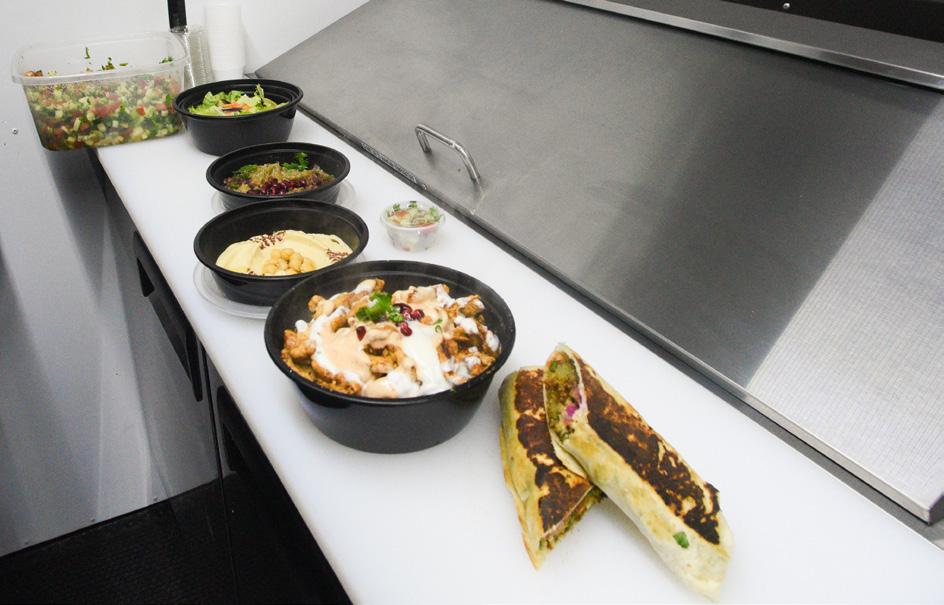
The family heirloom recipes that have been passed down are at the heart of Babylon Taste. If you’ve never had Iraqi food, Ali suggests the kubbat tenman, which is the food truck’s signature dish. It’s also specific to Iraq — unlike
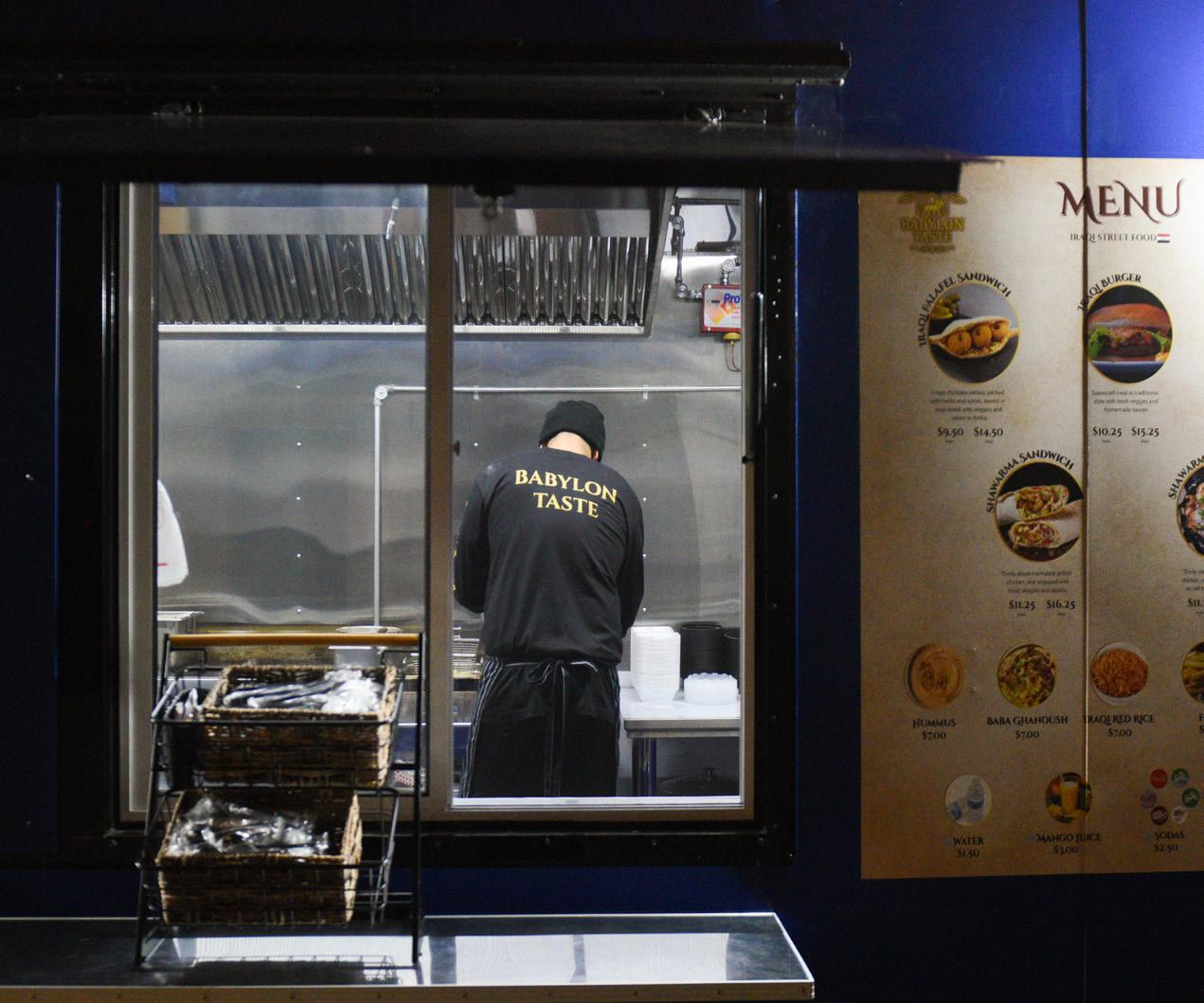
Owner Ahmad Ali (right and below) strives to shine a positive light on Iraq through Babylon Taste and its many dishes. Some menu items (below) include the shawarma bowl and sandwich and kubbat tenman.
Follow the truck on Facebook and Instagram @babylontaste to find out when they’ll be open. For catering options, contact 573-8086657.
shawarma, which is common in many Arab countries. Kubbat tenman is a rice dough spiced with turmeric and then rolled out. Its then wrapped around a filling of meat and onion before being fried.
All of their food — from shawarma bowls to sandwiches — are full of seasoning and flavor. Humam Ali, Ahmad’s cousin who helps out as cashier, says it’s all about encouraging people to try dishes they haven’t had before. “We just want some people to taste something different,” he says.
Tina Harmon is building a mid-Missouri baking business from inside her own home kitchen.
BY MARISSA HORN
When health concerns altered Tina Harmon’s work life, she didn’t slow down — she reinvented herself and turned her love for baking into a thriving business.
Harmon is the owner of Blossom Bakery, where she creates handcrafted desserts from her home kitchen in Ashland to sell throughout mid-Missouri.
She always had an interest in baking, but between raising her daughter and working as a nurse, she never had the time to really pursue it. However, with her daughter now in kindergarten and a recent shift to a remote nursing role, she has extra time to focus on her passion for baking. Living with autoimmune diseases, Harmon was seeking a creative outlet that would supplement her income and without compromising her health.
“I was looking for a way to be creative, something I enjoy doing. While also working within my means with my health concerns,” Harmon says.
Scrumptious specialties

Blossom Bakery has been operating for about a year. Harmon sells her sweets through her own Facebook and at popup shops. Her main specialties include specialty bundt cakes and modernized
Tina Harmon is a cottage baker, which means she can make and sell homemade goods without having to follow certain state food regulations. Since she bakes her specialty treats in her home, Harmon is mindful of the possibility of cross contamination and is transparent about it with customers. Find out more at dot.cards/ blossomfarmstand.
rosettes — crispy deep-fried cookies sprinkled with powdered sugar.
Harmon says while other local cottage bakeries tend to specialize in breads and cookies, her business features her own personalized sweets. “I’ve never seen one cottage baker in a 200-mile radius make rosettes,” she says.
Try, try again
In order to craft the perfect rosette, Harmon says practice and a well-ventilated workspace is necessary. “It is a very tedious process with lots of casualties,” Harmon says. She uses a corner in her three-car garage to deep-fry the treats.
When making her bundt cakes, Harmon focuses on reducing the amount of icing to prioritize the cake’s flavor in each bite.
special sweets. She intentionally keeps her designs and dessert molds to herself — which makes the treats all the more unique.
Elizabeth Jordheim, who operates the Market at Serendipity, has had Harmon as a vendor and is a personal fan of the sweets she sells.
“I think she’s really great at presentation and making things beautiful as well as delicious,” Jordheim says. “She cares very much about her products and how she presents them to people.”
From specialty bundt cakes to snowflake-shaped rosettes, Harmon adds a distinct touch to all she creates. Within her home kitchen, Harmon has kneaded her passion for baking into a blossoming business dedicated to delivering delicious baked goods.
A protein pancake mini bundt cake (right) is one of the items from Blossom Bakery. Harmon says it just might help your kids eat breakfast.
“My philosophy is, I don’t want to drown anything that I’m making in a thick sugary coating to cover up the taste of the cake,” Harmon says. “If I’m getting cake, I want to taste the cake.”
Harmon says she won’t re veal the secret ingredients behind her

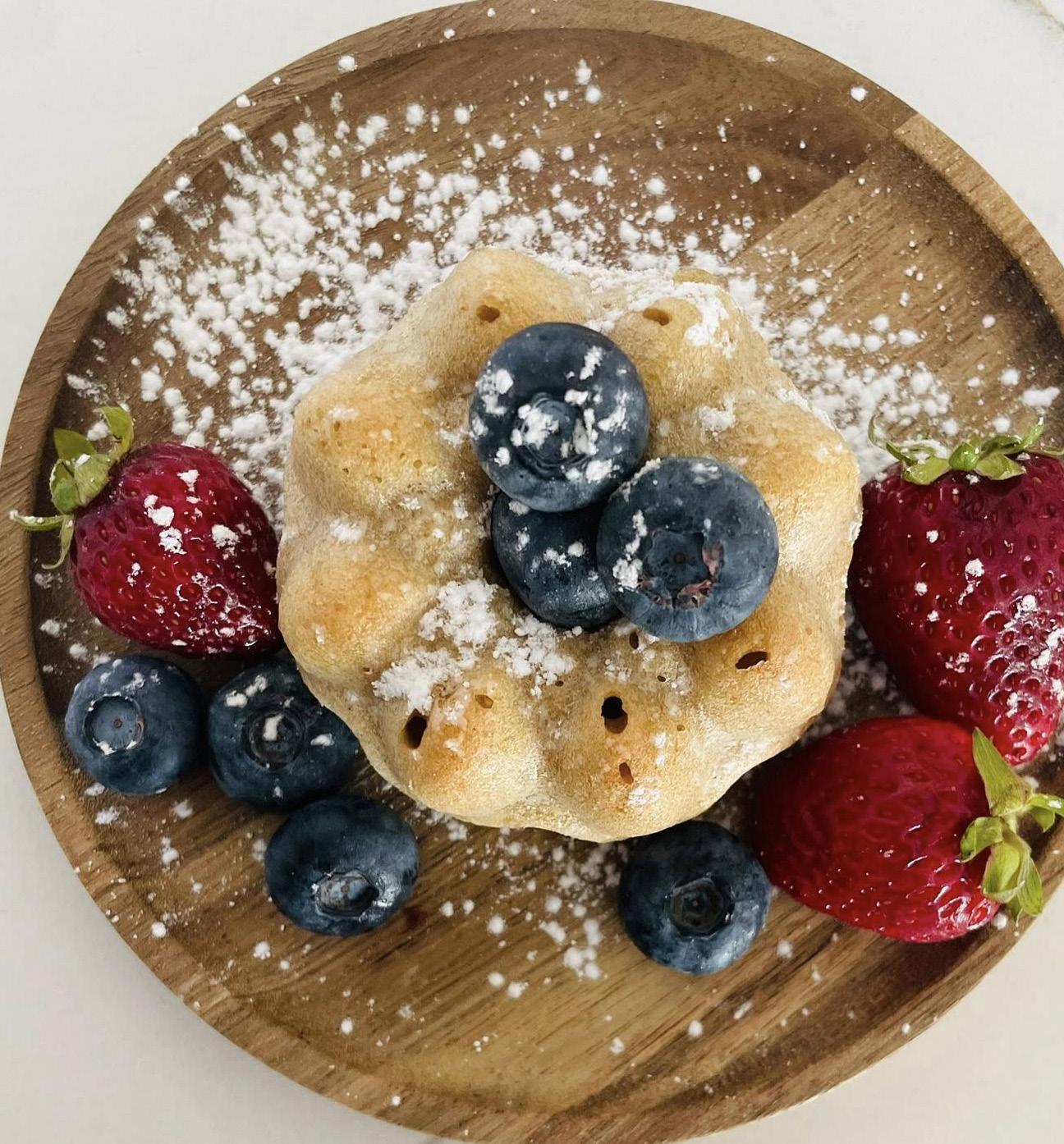




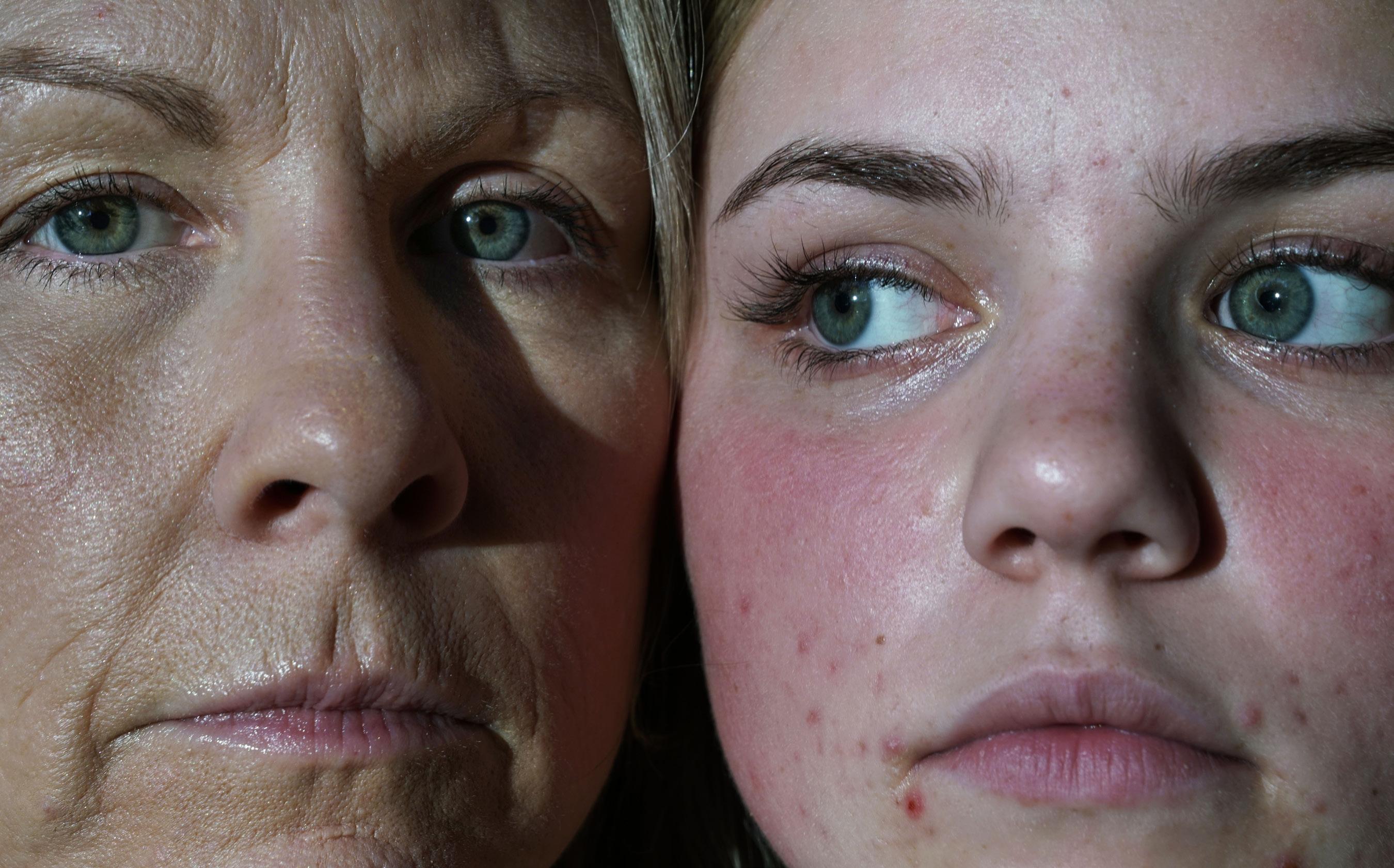
Older women push back against anti-aging procedures and products as they find beauty on their own terms.
BY GRACE DEEN
For the Silent Generation, TVs were a commodity. For the Baby Boomers, owning a TV was a household staple. That means most people have grown up with a TV and have likely seen an anti-aging commercial or two or 20. It may have been a hair product that claims
by Audrey Pinson
to flawlessly conceal every gray strand or a cream erasing 30 years worth of wrinkles in four weeks.
The world has not just witnessed the yearning for youthful appearances on-screen. We have witnessed it while driving past medical spas and cosmet-
Among the advice Sandra Lonergan, 56, says she’d give her daughter Ryan and other young women is “you never have to change who you are to be loved.”
ic surgery centers, seeing social media content focused on revitalizing injectables and advertisements offering body contouring opportunities.
Younger audiences are constantly being told to take preventative action against aging, while older viewers are
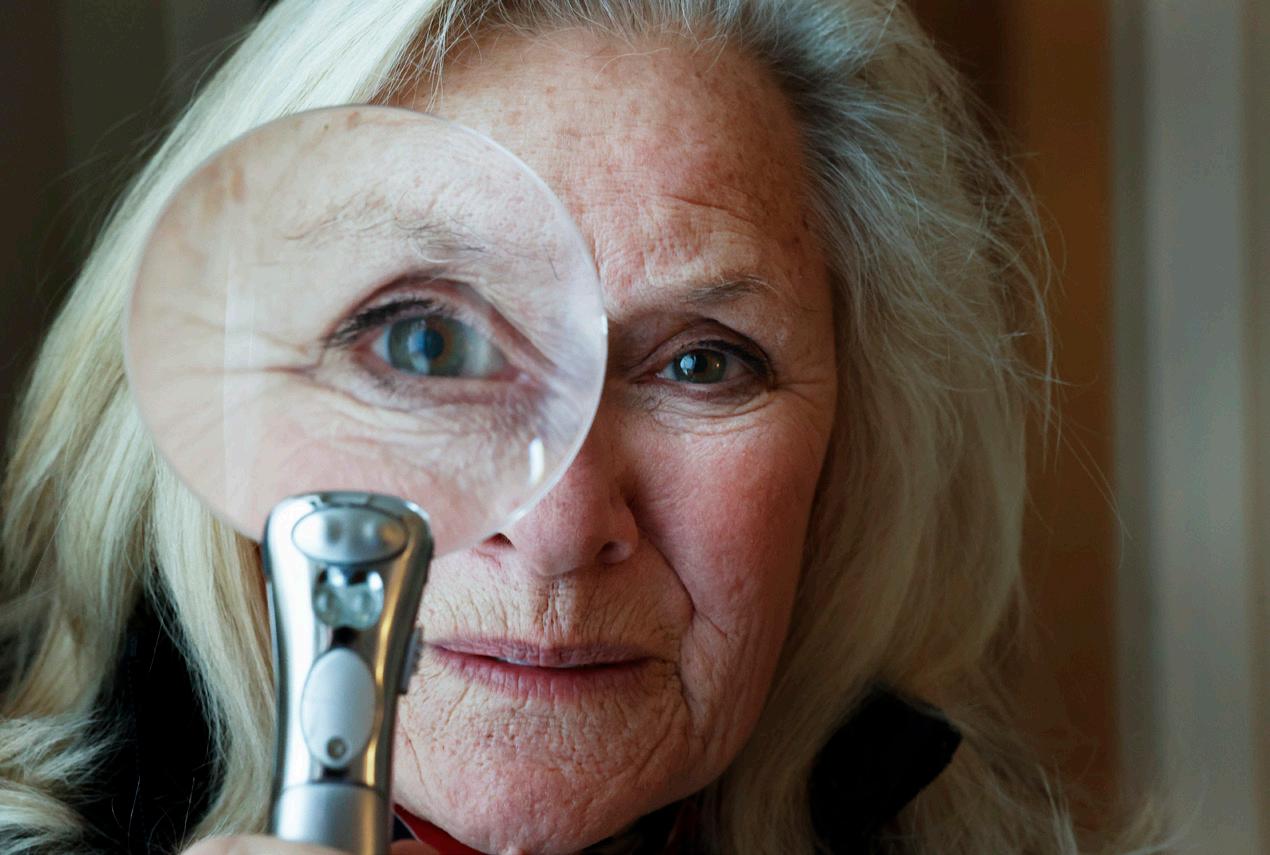
given remedies to revert the gray and wrinkled tolls of time. Given that much of the pressure to remain youthful falls on those in their later years, what do some of Columbia’s seniors think makes them beautiful?
Barbara’s joy for living makes her sparkling Barbara Clark, 82, says she does not think too much about her appearance these days. She would rather focus on celebrating her birthdays to come.
“I’m the first woman in my family to make it past 80,” Clark says. “The joy I have in just living — that’s what makes me beautiful.”
Not only does she find joy in living, but she finds beauty in the lives and stories of friends at The Westbury Senior Living. The weekly “lunch bunch” meeting is a favorite pastime of Clark’s. She gets together with her group of Westbury girlies and chats about chosen topics.
“We have beautiful discussions, and I have learned so much,” Clark says. “There’s so much beauty in that kind of understanding of who you’re with and what they have done in their lives.”
The doctorate holder and former Gonzaga University professor gave enough attention to her looks as she paved her way through the professional world. But years ago, when she put down grading papers for good, Clark decided to do the same with her lipstick.
“There are people in my age group that do wear lipstick, and I’m always
complimentary of them,” she says. “It’s just that I retired 42 years after teaching and always thinking of my dress and approach to my profession, and I said no more of that.”
Clark prefers to observe the beauty of the world and the friends around her at Westbury, rather than what she sees in front of the mirror.
Carolyn is stunning when she is being herself
Fellow Westbury resident Carolyn Mulford acknowledges the feared downsides of getting older — worsening memory, poor eyesight and losing teeth. However, the 86-year-old published fiction author and former journalist says that aging is more of a trade-off.
“You become more accepting of the fact that you’re all flawed,” Mulford says.
“And you don’t expect yourself to be perfect — and thank goodness you do not expect it from others.”
Mulford says the years of youth are challenging, taking place when a person is trying to form their own perceptions of themselves and the world around them. Aging also comes with a sense of freedom stemming from simply caring less about the opinions of others.
“You earn the wrinkles, you earn the gray hair,” Mulford says. “I think denying them is a foolish approach to life.”
For her, finding beauty — whether in nature, people, literature or music — is essential for a person’s health. It is human nature to want to see something beautiful each day, and if one does not
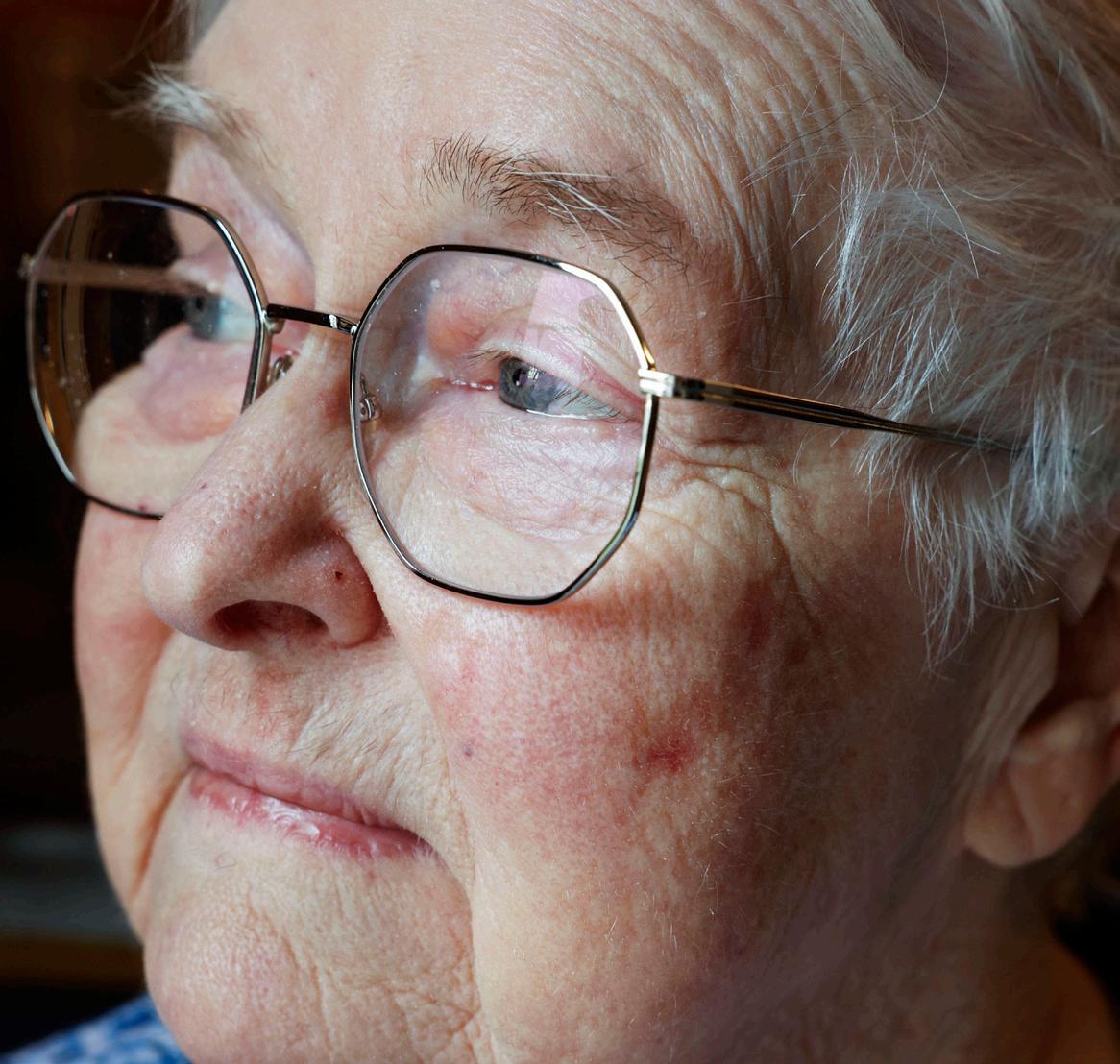
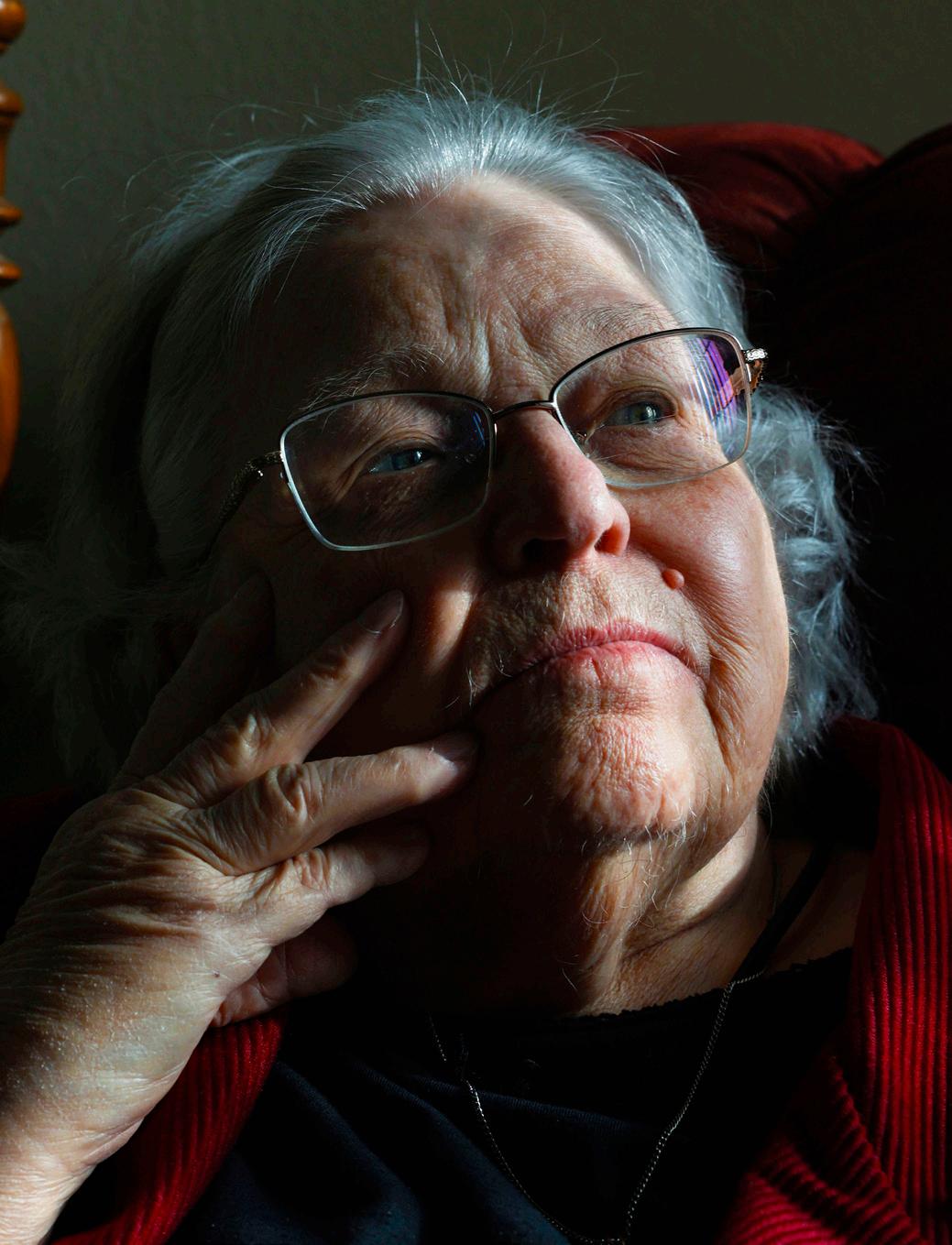
find it in the mirror, it is important to look for other avenues.
“I was never very beautiful outwardly or inwardly,” Mulford says. “But I like that I am myself.”
Mulford’s 86 years of living experi-
ence taught her inner beauty will always be one of the most — if not the most — important trait of every person.
Cheryl feels beautiful because of the love around her
As an actress, Cheryl Black had no choice but to worry about visible signs of aging. Since her 20s, Black has been
Clockwise from above, Lisa Moscoso, 58, Anne Guthrie, 83, and Natalie Pinson, 56, were part of Audrey Pinson’s photo essay. “In a culture that often stigmatizes older women as invisible, incapable or burdensome, these portraits tell a different story,” Pinson says.
Audrey Pinson worked on a series shaped by conversations with women in their 50s through 80s. She asked each woman what she has learned over their lifetime, what beauty means to her now and what advice she would offer her younger self. “You earn the wrinkles, you earn the gray hair,”
Carolyn Mulford says. “I think to deny them is a foolish approach to life.”
in the spotlight. From acting, directing, playwriting and teaching theater, she has witnessed peers undergo cosmetic work to erase any trace of wrinkles or gray hair. At 71, Black is all too familiar with the entertainment industry’s pattern of diminishing job opportunities when an actress enters her 40s and 50s. However, Black has seen less of it now than a few decades ago. Older actresses like Meryl Streep, Angela Bassett and Michelle Yeoh are still going strong.
“Now I’m at such an age where I’m free of that, and I think of beauty in a more soulful way related to the inside rather than outside,” Black says.
The self-proclaimed “recovering actress” thinks about her mother, grandmother and other women in her life whom she observed aging — how
beautiful they all are in her eyes. Her mother would use the phrase, “pretty is as pretty does,” still reminding Black decades later that beauty stems from love and generosity.
“I’m definitely not here to tell you I have lost all my superficiality,” she says.
“It was quite a dilemma for me in many ways, to be an actress and have to think about what I look like.”
Black may have stepped out of the spotlight years ago, but she took with her a refined perspective on the beauty of those she loves and those who love her.
These seniors understand something that many younger folks are still grappling with — that the products pushed by beauty brands, cosmetic spas and appearance-based standards are not what make us beautiful.
BY MADISON FARLEY
The quiet flutter of pages turning can be heard inside the Columbia Public Library, but it’s not the only sound. The library is a resource hub that extends far beyond the stacks of books. Columbia Public Library also offers hobby kits, device help and technology classes.
The library circulates a number of different kits that provide the materials you might need to start an activity. Kits available for checkout include book discussion, crochet and knitting, puzzles and even a telescope kit. Llibrary staff typically develop kits based on what they think will interest the community.
In the case of the telescopes, the kits tied into the space theme for the library’s 2019 summer reading program, and have remained in circulation since.
“They still check out very well — we only have a handful,” says Kirk Henley, Daniel Boone Regional Library collection services manager.
If you ever find yourself wanting to
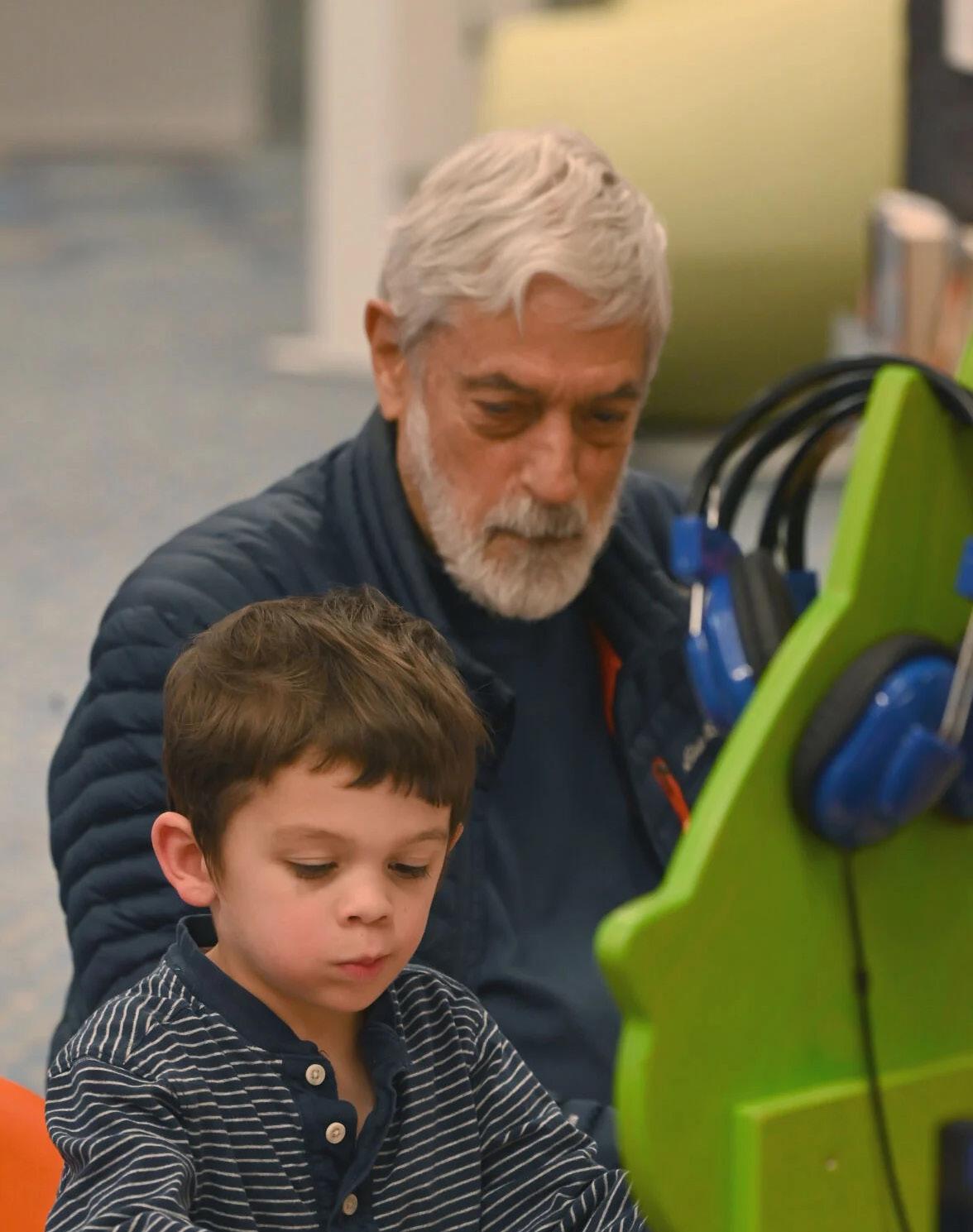
People browse a craft supply swap at Columbia Public Library in 2023. It is one of the many events the library organizes to serve community needs and interests.
Each collection serves a different purpose and comes with its own checkout period. Book discussion kits are available for eight weeks, while puzzle kits can be borrowed for four weeks. Telescopes circulate for one week without renewals, and knitting and crochet kits are available for four weeks.
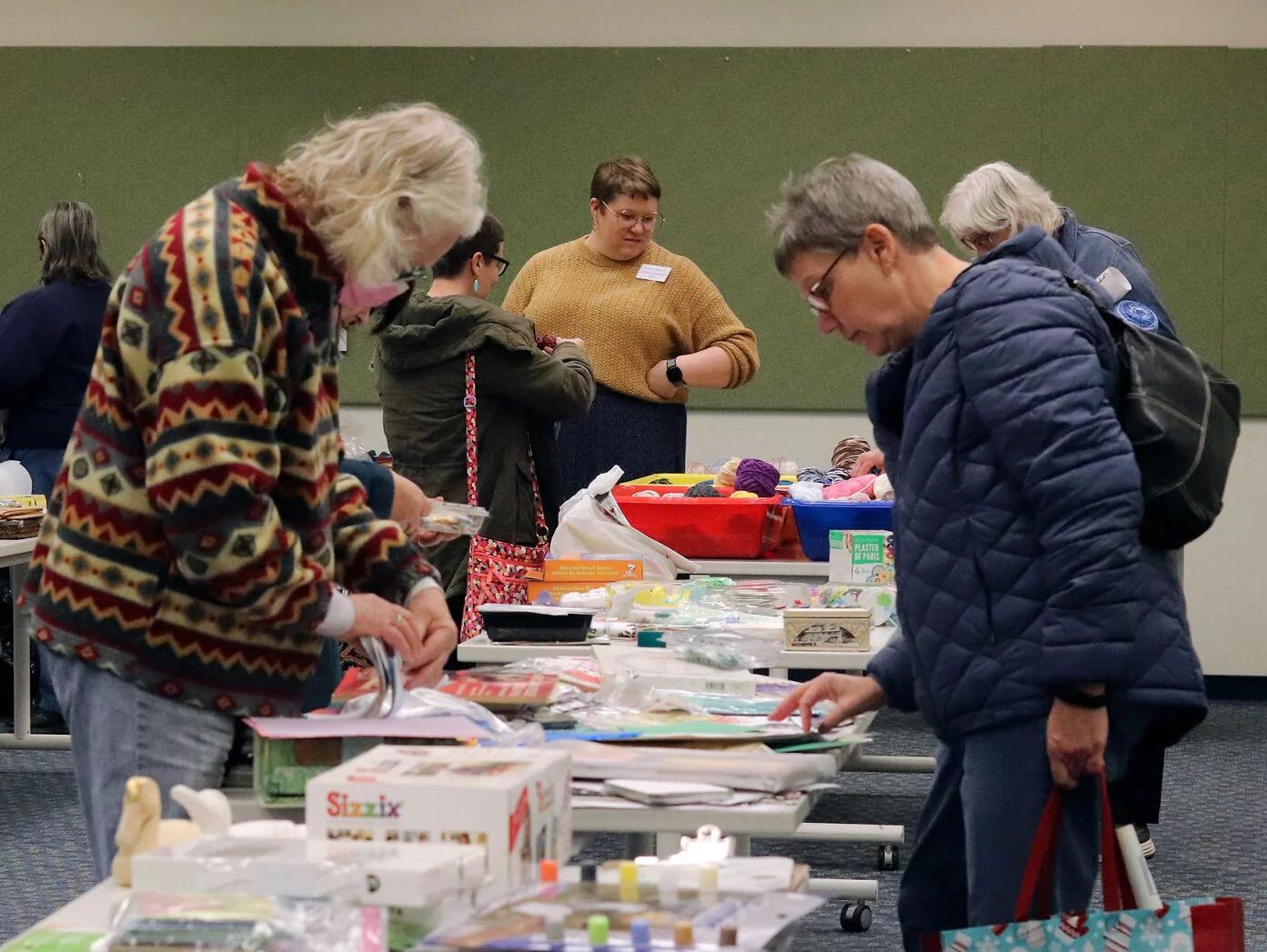
unpack a book with other readers, the library has you covered with over 100 book discussion kits. Henley says they’re well used by library patrons. The kits include a set of 10 books and a discussion guide with questions.
“Anyone who wants to do a book discussion can call us or go online to find a list of what we have available,” Henley says.
Charlie Starbuck and his grandfather Chris Starbuck play games on a computer at Columbia Public Library. It’s an example of the many ways the community can use the library for activities beyond books.
Whether patrons want to navigate Google Workspace, troubleshoot technical issues or digitize works, this environment is equipped for teaching tech skills.
The library offers take-home resources, and it also lets you bring items in with its digitization program. Since summer 2025, people have brought in various pieces of artwork, photos, documents or slides and scan them to be uploaded on a computer — digitally moving them wherever they please.
Another popular resource is Device Advice, free and open drop-in sessions
dedicated to helping people with their technology. From 2-3:30 p.m. on Tuesdays and Fridays, anyone can come in with devices such as computers, laptops, iPads and more to learn about how they work or fix an issue.
“We had someone who had been released from a penitentiary come in, and we were able to help with their brand new laptop, getting them started with a job search on Indeed,” says Seth Smith, DBRL public services librarian.
The library is currently working on its future programs, like a 3D printing class. Beginner classes provide an introduction to the new technology, and in the coming years, the library hopes to offer services for creating 3D printed objects.
Anyone can access the library’s resources in several ways, including visiting the assistance desk in person, exploring the library’s website or calling 573-4433161. DBRL also offers live chat support on its website so community members can receive guidance remotely.
Your curated guide of what to do in Columbia this month.
BY MORGAN CHU, MACY CRAIG, ELIZABETH DORMAN AND ADDISON GERTZ
Rick Tulsky discusses Injustice Town Pulitzer Prize-winning journalist Rick Tulsky brings courtroom drama to life with his book Injustice Town, a gripping true-crime exposé that unravels decades of corruption inside Kansas City’s police department. Expect sharp reporting and candid storytelling as Tulsky dives deeper into this story. 6:30 p.m. April 2, Skylark Bookshop, free, 573-777-6990
The nation’s largest touring children’s theater is bringing fairy tale magic to Columbia with a production of Cinderella through the University Concert Series. There’s just one twist — the cast hasn’t been chosen yet. Missoula Children’s Theatre will hold auditions in Columbia on March 30 to cast 50 to 60 local students in the production. Then there is a week of rehearsals before the performance date. 3 and 6 p.m. April 4, Missouri Theatre, $17.85, tickets @concertseries.org or 573-882-3061
Disney’s Alice in Wonderland Jr.
Are you feeling curiouser and curiouser? If so, come to Wonderland to meet White Rabbit, Queen of Hearts, Cheshire Cat, caterpillar and, of course, Alice herself in this tale of whimsical fantasy and self discovery put on by TRYPS Children’s Theater. 7 p.m. April 10-12; 2 p.m., April 11; Columbia Entertainment Company, $15; $10 children, 573-474-3699
Teachers: Is It Friday Yet?! Comedy Tour
They’re not just teachers — they’re comedians. Come for a comedy show with these “teachers off duty” to celebrate, laugh and learn a little from their classroom experiences. 3 p.m. April 12, Missouri Theatre, $42-108, 573-882-3781
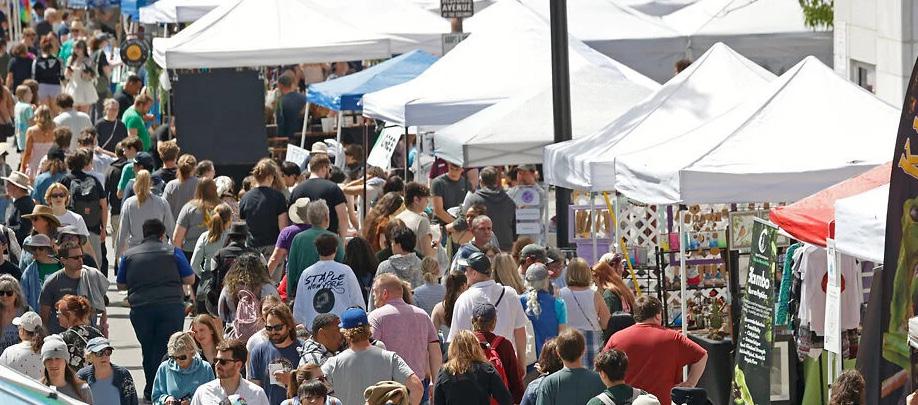
To ring in spring, the Museum of Art and Archaeology pairs works of art with fresh flowers, complementing the paintings and sculptures in this annual exhibit. The flower arrangements take on a life of their own — becoming the true art themselves. Noon-4 p.m. April 25-26, Museum of Art and Archaeology, free, 573-882-3591
5th Annual Princess Tea for St. Jude
Dress to impress and celebrate the fifth Annual Princess Tea for St. Jude. Breakfast will be served alongside a princess performance and dancing. In addition, there will be opportunities throughout the event to support St. Jude Children’s Research Hospital and its mission to end childhood cancer. 9:45 a.m. to noon April 11, Country Club of Missouri, $39, (573)4497201
Learn how to transform your kitchen scraps and yard waste into nutrient rich soil with this workshop from the city of Columbia. Composting can greatly reduce household waste and is a rewarding way to live a more sustainable lifestyle. Register at como.gov to receive full details on the
Need a spot to celebrate Earth Day? Look no further than this Columbia tradition that transforms Peace Park and Elm Street into a vibrant hub of sustainability and education. The event features over 200 vendor booths, live music and “Eco Avenue,” where festivalgoers can learn more about how to make lifestyle changes to reduce environmental impact. Noon to 6 p.m. April 26, Peace Park, free, 573-882-2121
workshop, but walk-ins are also welcome. 6-7 p.m. April 23, Daniel Boone Regional Library, free, 573-874-6271
St. Louis-based singer Malena Smith will perform at the Missouri Theatre as a part of the Missouri Arts Council’s Creative Missouri event. The event showcases talent across the state and will run from 10 a.m. to 3 p.m. Smith’s EP, 27 in Maine, released Nov. 7, 2025. 10 a.m. March 28, Missouri Theatre, $19.65, 573-882-3061
Experience sludge metal at The Blue Note with genre staples Eyehategod and Crowbar. HardHanded and Orphan Source will open the show. Sludge metal is a genre fusing the slow growl of doom metal with the fast speeds of hardcore punk. 7 p.m. April 9, The Blue Note, $31.60, 573-874-1944
The Choral Arts Alliance of Missouri is hosting a sea shanty sing-along fundraiser at Cafe Berlin. The event is open to wantto-be sailors and deckhands of all skill

Celebrate the diversity that makes America, America. Add your photo to the true portrait of America at lovehasnolabels.com

levels. Money raised goes toward CAAM’s mission of providing singing experiences to Columbia. 6 p.m. April 10, Cafe Berlin, $10, 573-441-0400
Best known for his seven-week No. 1 hit “Crank That (Soulja Boy),” the rapper will be performing along with Lil Xan as one of Rose Music Hall’s spring outdoor concerts. Leave all blankets and chairs at home for this concert and be ready to “crank that.” 8 p.m. April 16, Rose Park, $38.70, 573-874-1944
With a setlist ranging from “At Last” by Etta James to DNCE’s “Cake By the Ocean,” there is bound to be something for everyone when The House Band plays at the historic Pierpont General Store. The House Band is a seven-piece cover band from Nashville, Tennessee. 6 p.m. April 25, Pierpont General Store, free, 573442-2701
Pedal your way to the car-free celebration of cycling at the Bear Creek Bluegrass social — an 11-mile live music tour along the Bear Creek Trail from the folks who bring you Pedaler’s Jamboree. This event features live trailside performances, including a mid-ride stage show from Front Porch at Albert Oakland Park. Then make your way back to Cosmo Park for the main stage with Arkansauce and The Mighty Pines. Tickets are available for the full ride or just the concert. Those 18 and older receive a T-shirt with registration. 3-10 p.m. April 18, Cosmo Park, $65, pedalersjamboree. com/bearcreekbluegrass
Lace up to run Molly’s Miles in the 5K, 10K or a virtual run to raise money in support of family members of police officers who lost their lives in the line of duty. Whether you’re racing for your own personal record or walking in honor of those who’ve fallen, every registration raises funds for the Missouri Chapter of Concerns of Police Survivors. 8 a.m. April 25, 900 W. Nifong Blvd., 5K $38.96; 10K $44.30; virtual run $28.29, mollysmiles.com
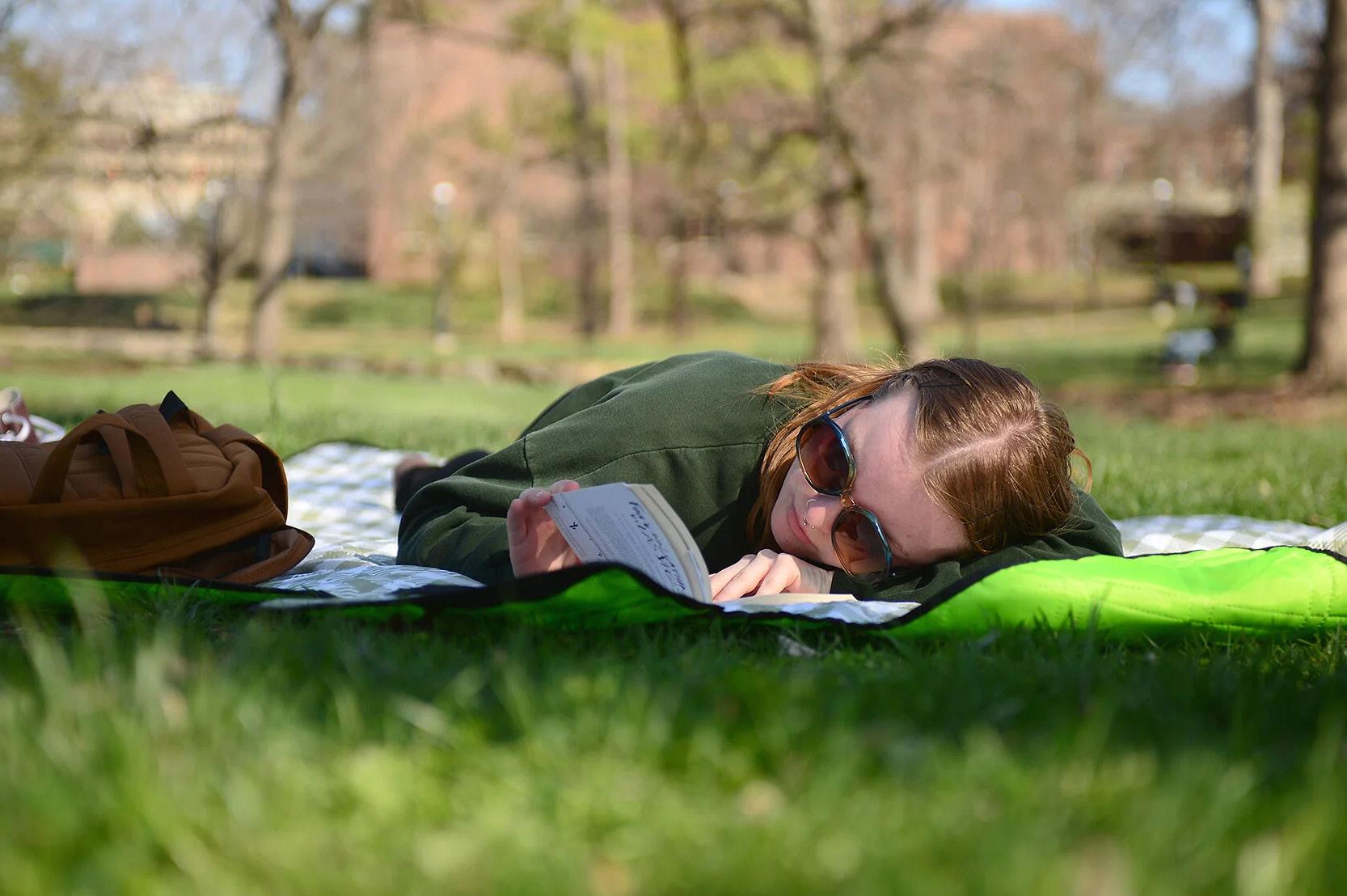
PHOTOGRAPHY BY VALERIE TISCARENO/ARCHIVE
Ava McCluer, a journalism student at the University of Missouri, settles in the shade at Peace Park to enjoy a book in March 2024. “I’m reading Fear and Loathing in Las Vegas,” McCluer says. “I honestly think every journalist should read it.” If you want to dive into the world of literature, check out the upcoming Unbound Book Festival, which will make its way to downtown Columbia April 17-19. Find out more in Vox’s feature (p.16) or at unboundbookfestival.com.