Exploring the people, history and places that make the city’s art scene shine
THE ART OF FOOD
Who doesn’t love food? Especially when it looks as good as it tastes. Local chefs, bakers and culinary instructors give insights on the art that goes into creating plates that appeal to the eye. PAGE 4
FIND YOUR INNER ARTIST
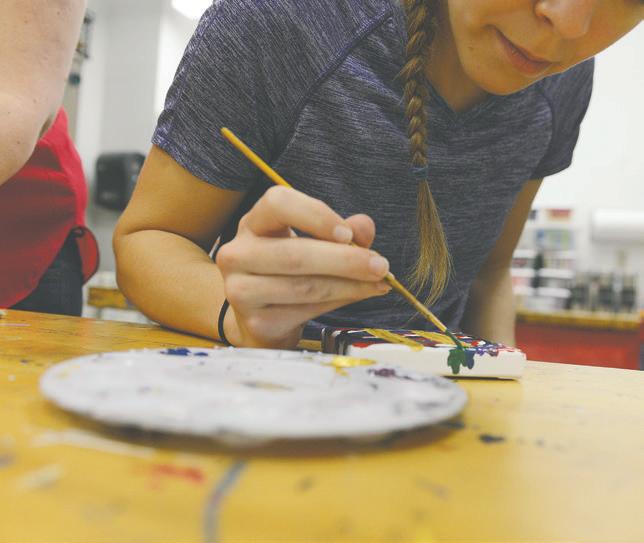
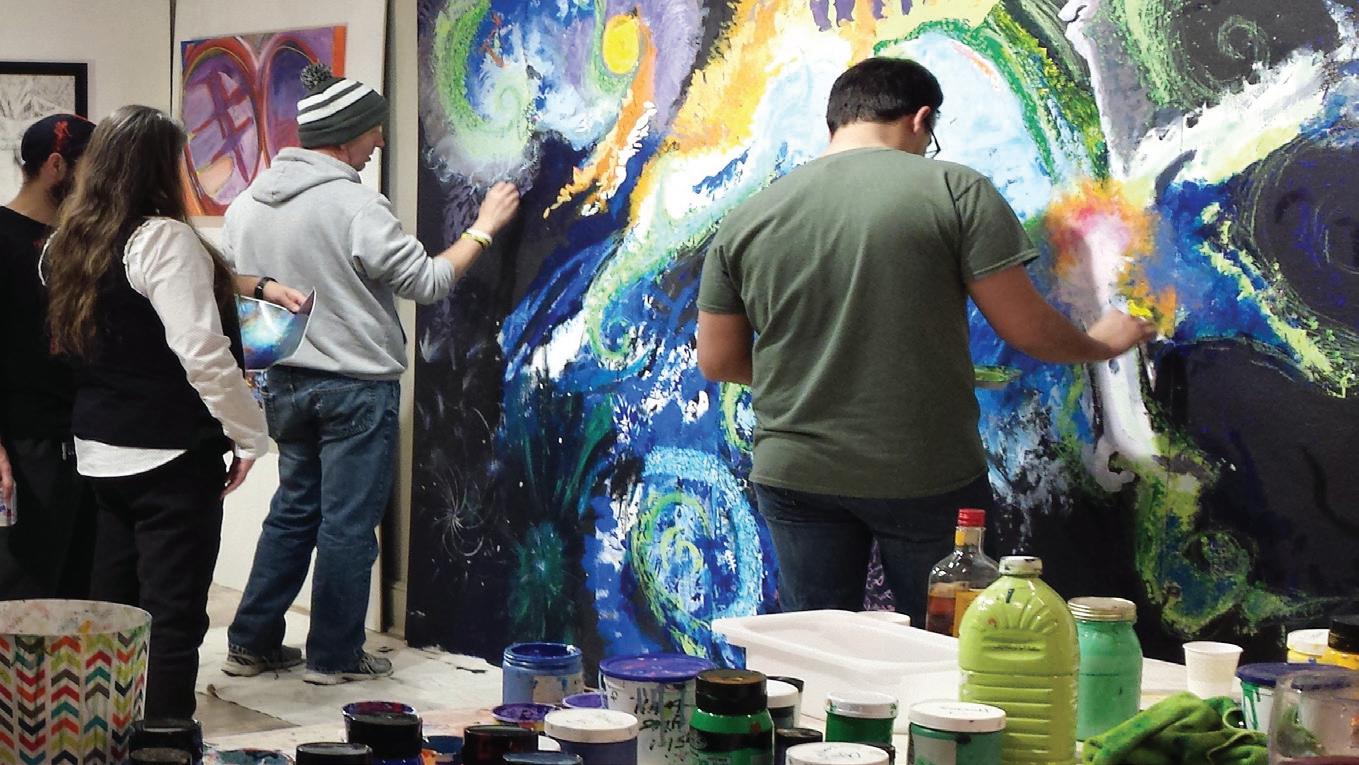
There are no limits to creativity in Columbia’s DIY art studios. Local instructors help residents express themselves and discover their inner artistic abilities. PAGE 8
ACTS OF THE PAST
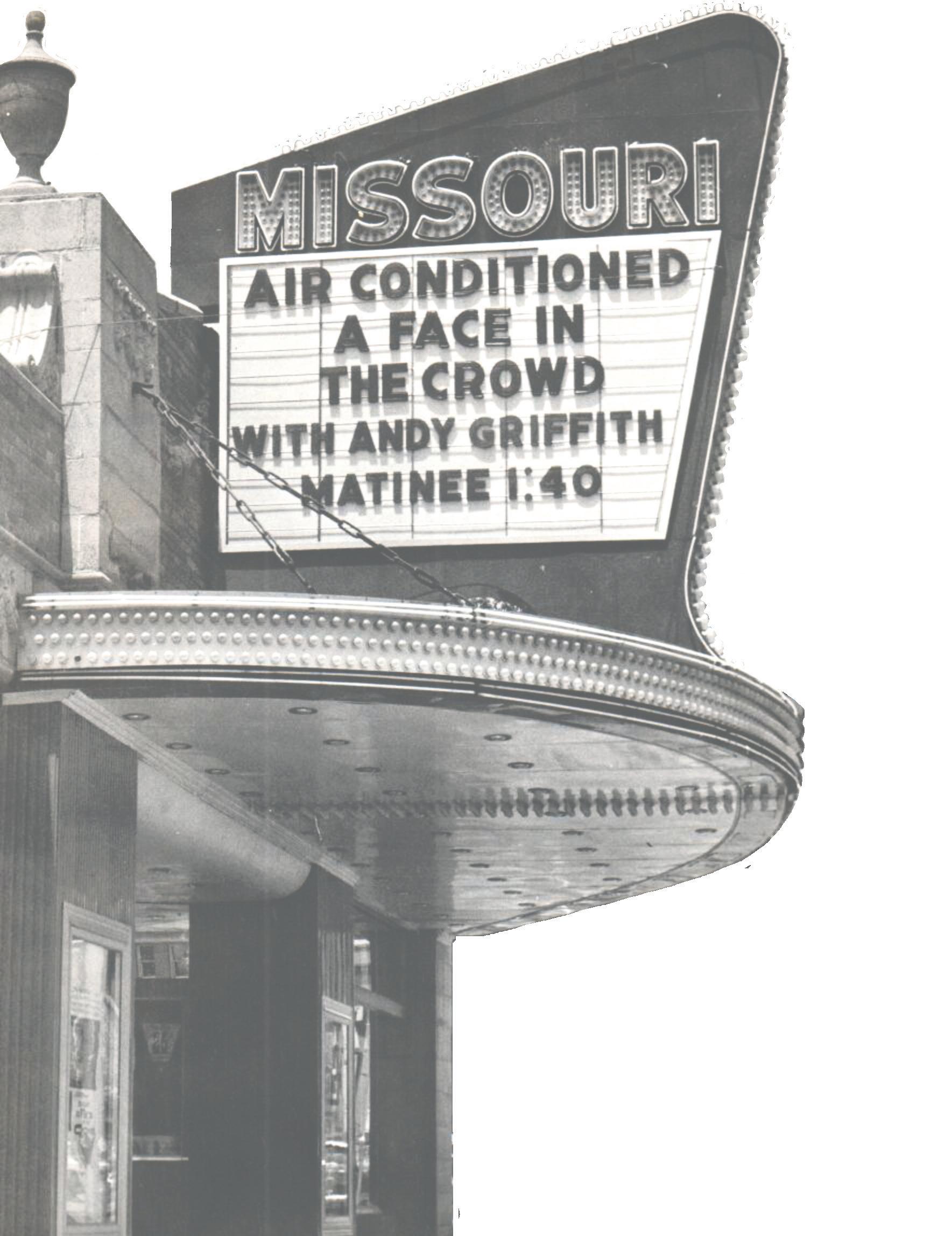
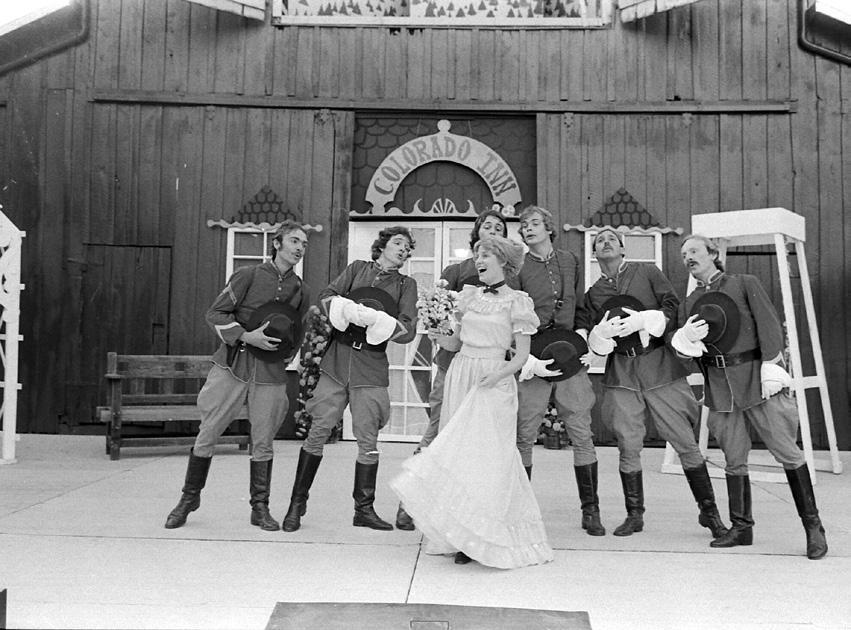
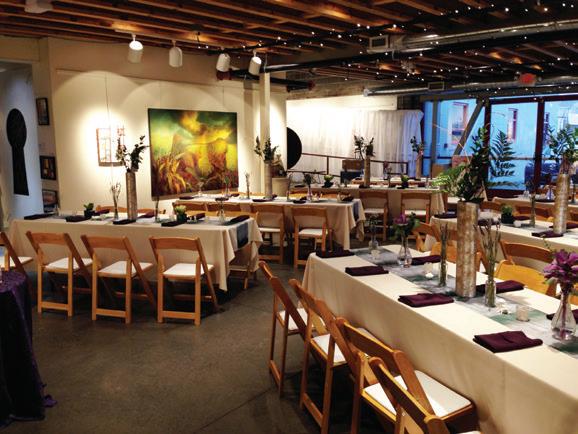
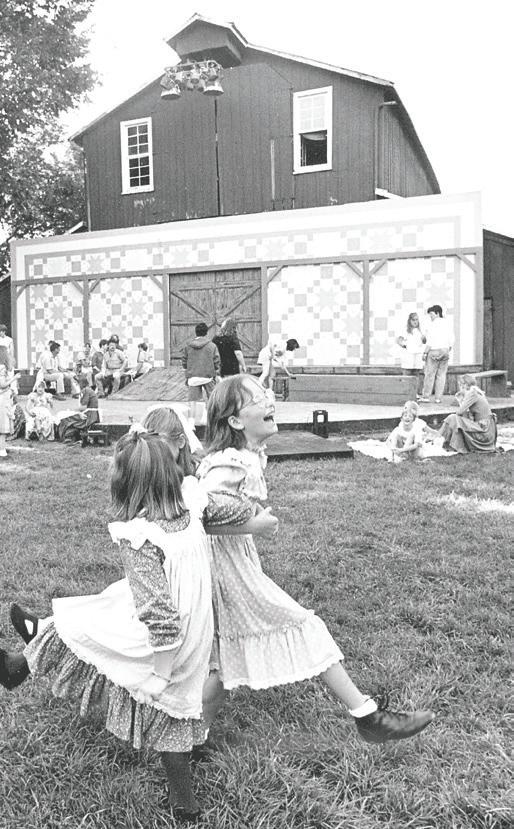
Whether it’s Maplewood Barn (above), Missouri Theatre or the historical but empty Hall Theatre, these spaces are filled with decades of art and history. PAGE 10
MOSH AND NOSH
These venues serve more than one purpose and allow you to eat to live music. PAGE 18
ALL THAT JAZZ
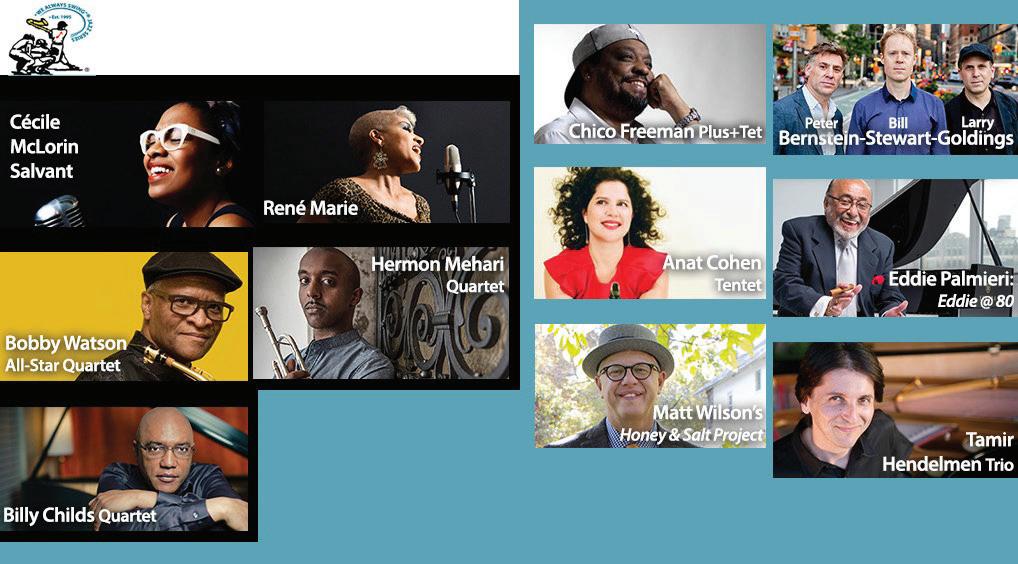
Who says jazz is dead? The “We Always Swing” Jazz Series contributes to Columbia’s reborn and thriving jazz scene. PAGE 22
A YOUTHFUL VOICE
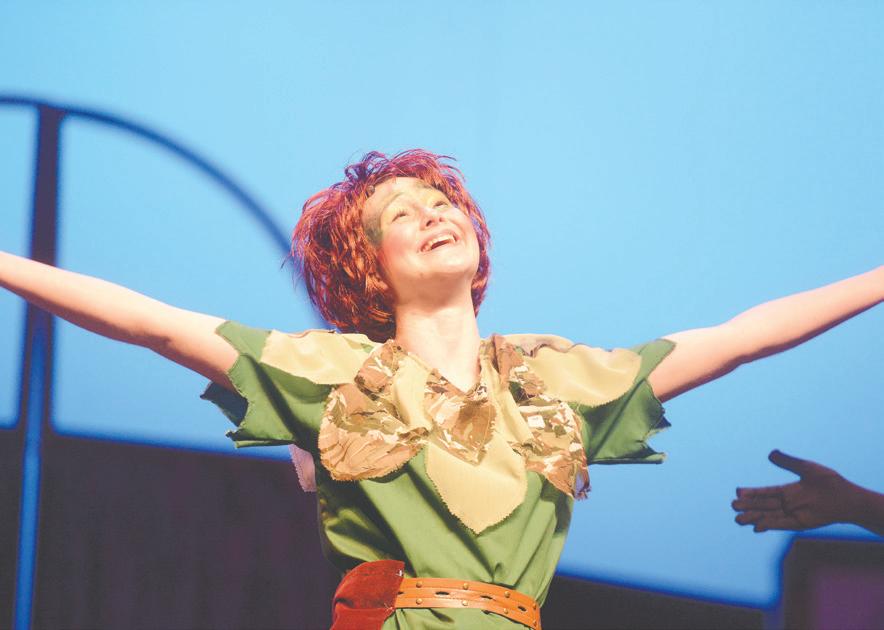
Young thespians, like Peter Pan (above right), enhance their creative chops with the guidance of Columbia theater troupes and instructors. The kids learn how to become actors. PAGE 25
EDITOR’S LETTER
STREET ART
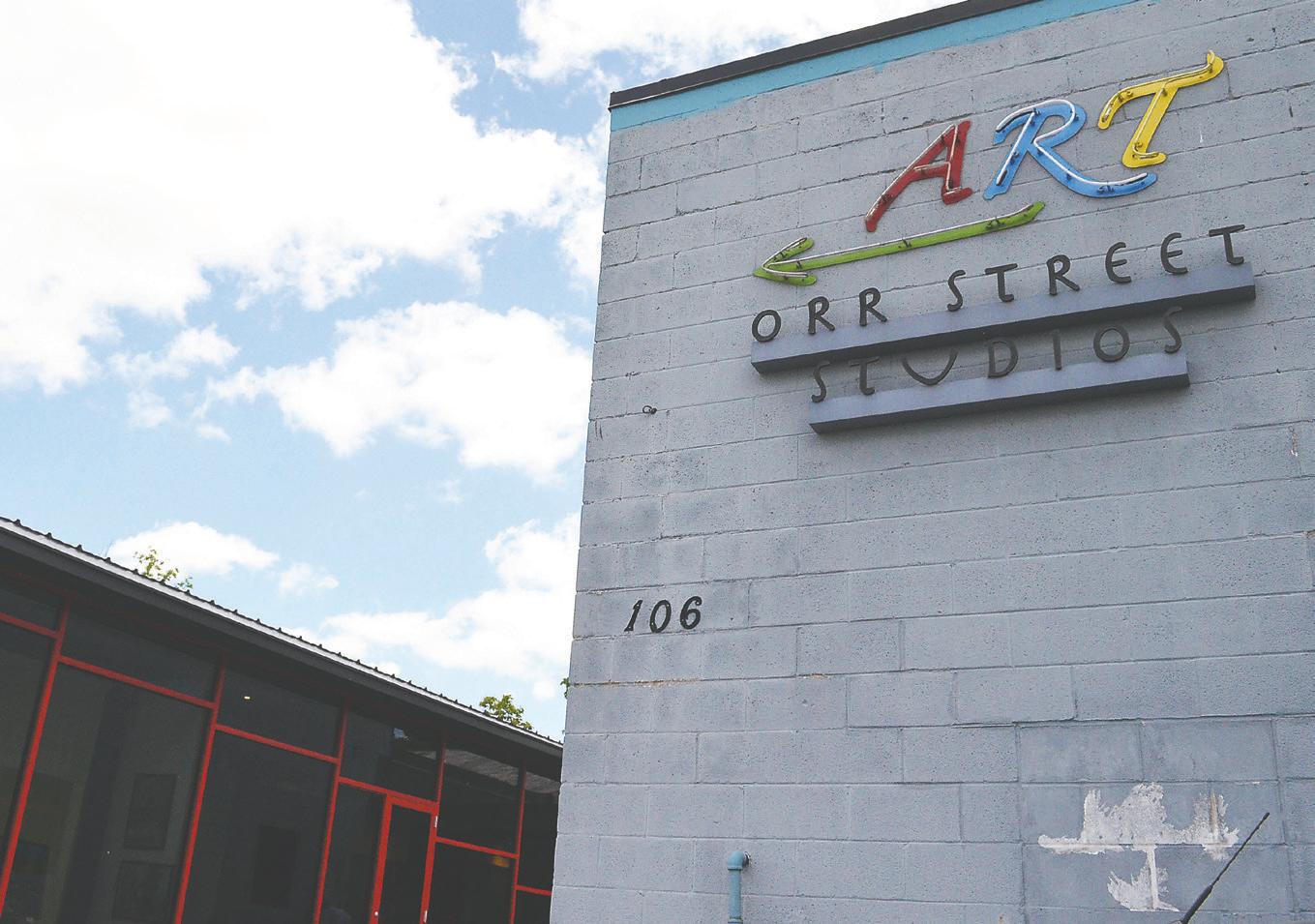
Orr Street Studios provides a home to dozens of artists. PAGE 28
FACES TO KNOW
ED HANSON: Talking Horse Productions founder and artistic director PAGE 6
DAVID WILSON & PAUL STURTZ: Co-conspirators of True/False Film Fest PAGE 14
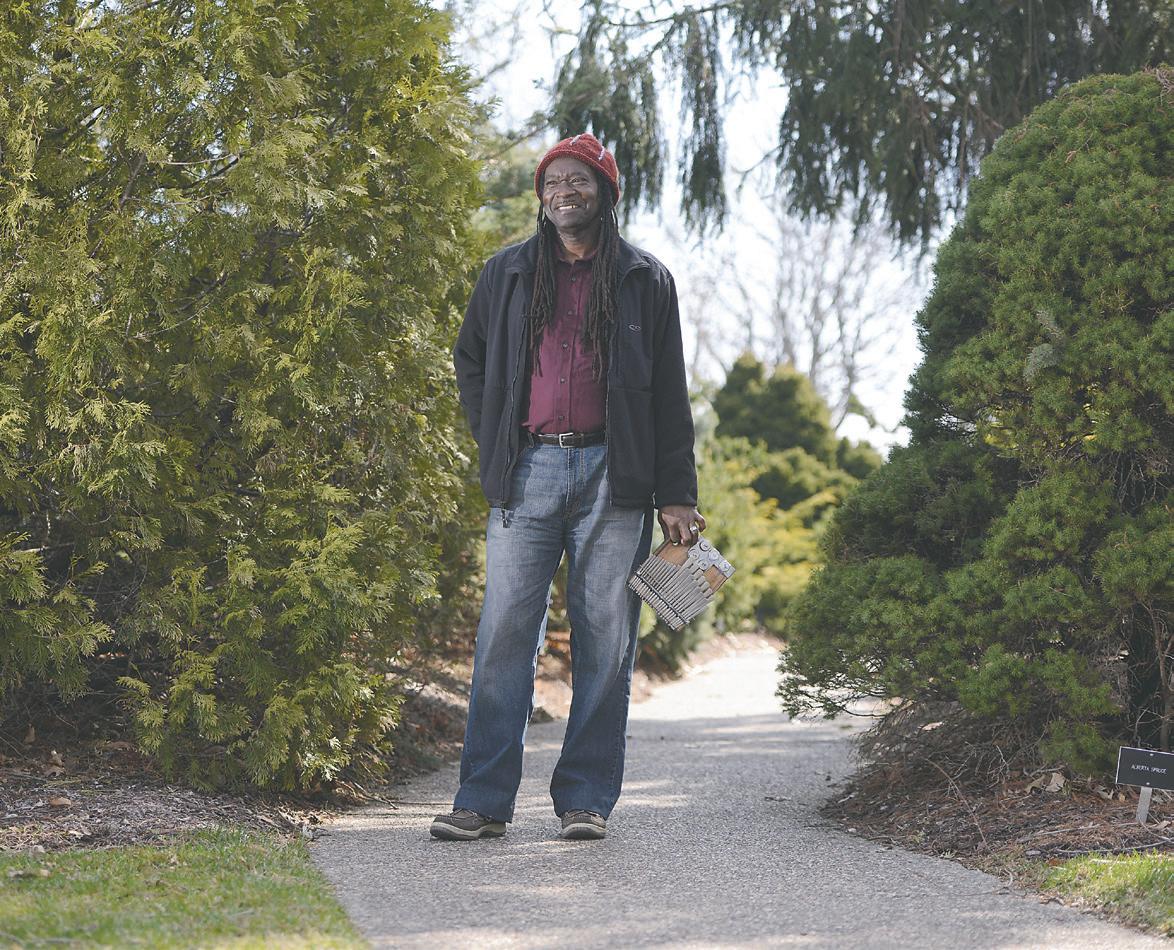
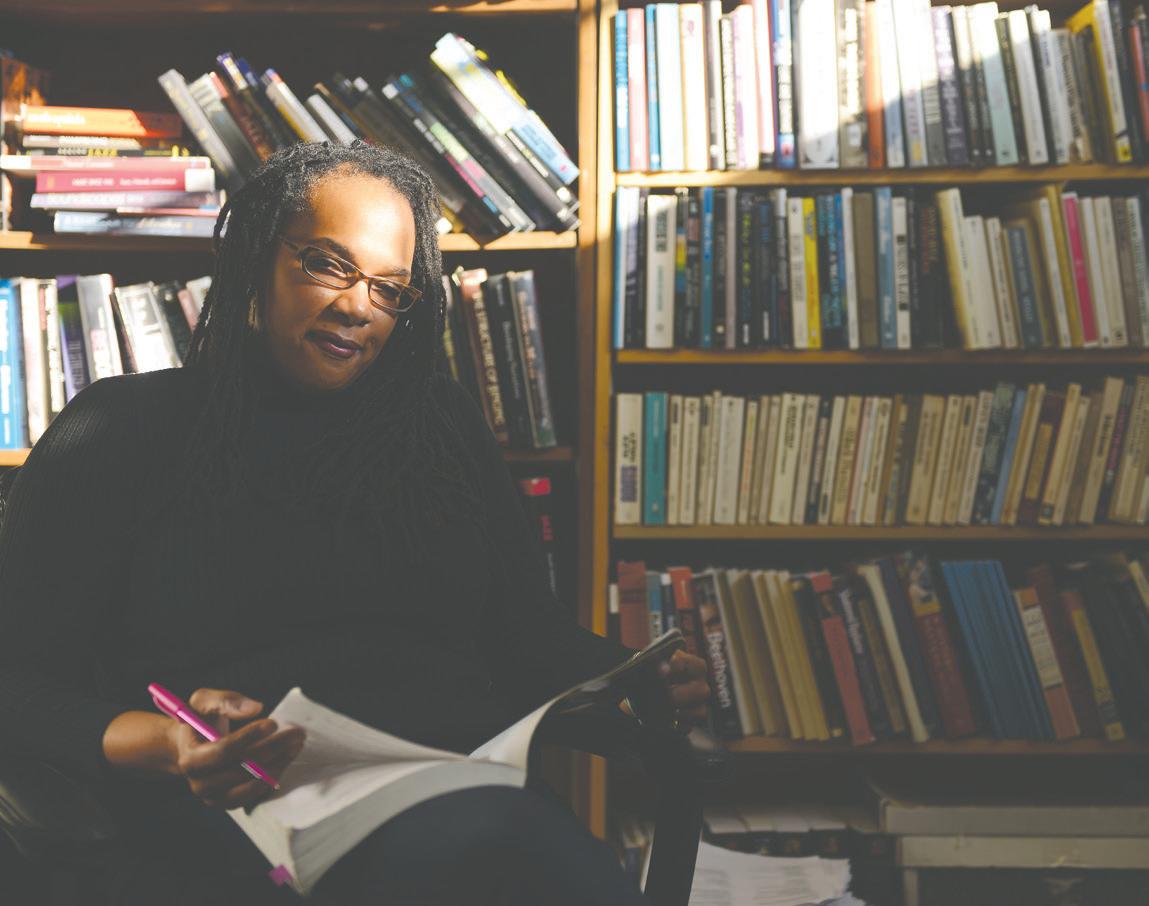
ANAND PRAHLAD: Local poet and MU English Department director of creative writing PAGE 20
ELIZABETH PALMIERI: GreenHouse Theatre co-founder PAGE 21
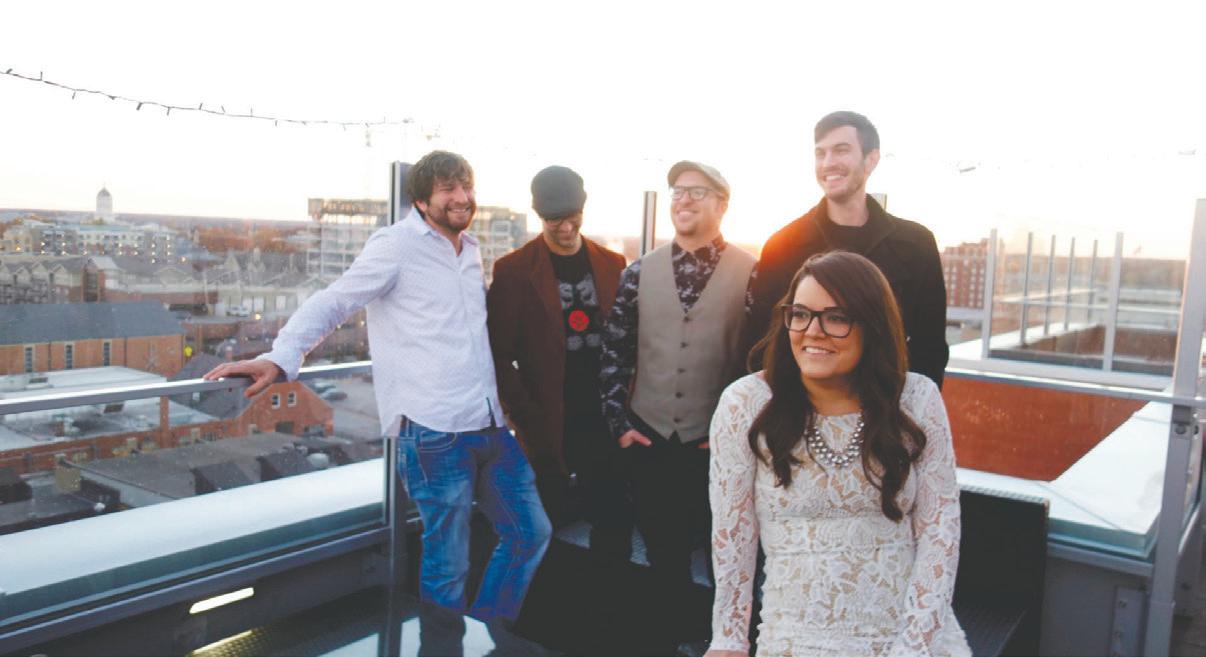
JENNY TEATOR & THE FEVERS: Local rock-funk band PAGE 24
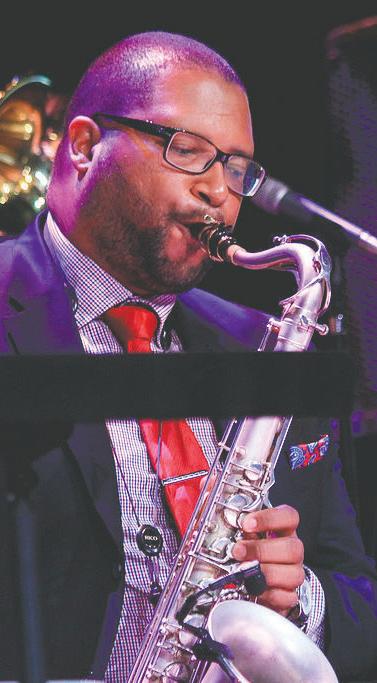
MAYA GIBSON: Professor of music at MU and author PAGE 26
JOEL SAGER: Co-owner and curator of Sager Braudis Gallery PAGE 29
HEATHER CARVER: Local comedian and playwright PAGE 31
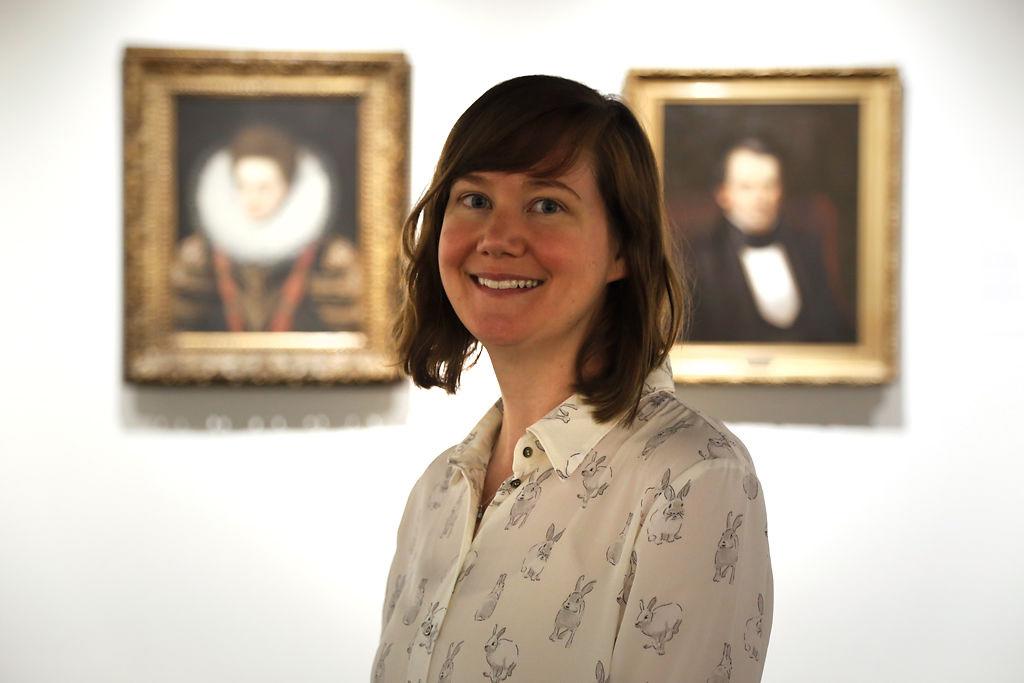
ALISA CARLSON: Associate curator at the Museum of Art and Archeology PAGE 31
VOLUME 19 ISSUE 18 | PUBLISHED BY THE COLUMBIA MISSOURIAN
EDITORIAL: 573-884-6432
vox@missouri.edu
ADVERTISING: 573-882-5714
CIRCULATION: 573-882-5700
TO SUBMIT A CALENDAR EVENT: email vox@missouri.edu or submit via online form at voxmagazine.com
TO RECEIVE VOX IN YOUR INBOX: sign up for email newsletter at voxmagazine.com
VOX STAFF
Editor: Madison Fleck Creative Director: Madalyne Bird Digital Managing Editor: Dan Roe Photo
Editors: Ryan Berry, Liv Paggiarino Arts Editor: Briana Saunders Contributing Writers: Niamh Cremin, Max Havey, Kaylin Jones, Lis Joyce, Jared Kaufman, Bennito Kelty, Brooke Kottmann, Meghan Lally, Miranda Moore, Amanda Postma, Lauren Puckett, John Sadler, Mica Soellner, Zach Van Epps
Editorial Director: Heather Lamb Executive Editor: Jennifer Rowe Office Manager: Kim Townlain
When I moved to Columbia almost a year ago, I was unaware of the eclectic art scene the city houses and supports. I grew up taking near-annual trips to New York City to see the Broadway shows that won the most Tony Awards that year. My parents sent me to art camps and made sure I took time to ponder and appreciate pieces of art anytime we were in a museum. And I definitely saw classic films such as Gone with the Wind and The Shining when I was too young to understand them.
So I was genuinely pleased to find a community like Columbia that not only has artistic cultures, but promotes them as well. As I got to know some of the city’s staple artsy scenes — Ragtag Cinema, Rose Music Hall and North Village Arts District to name a few — I knew I could thrive here.
Vox has been diving into this pretty diverse arts scene for the last seven weeks — with a team of nine writers and one editor.
You’ll discover how chefs make dinner plates look like works of art (Page 4). And if you’re like me and find yourself calling your doodles art, we have a guide on places that foster your inner Van Gogh (Page 8). You’ll find the histories and stories behind three of Columbia’s oldest theaters (Page 10). Meet prominent Columbia artists, and learn ways to immerse yourself in art communities with our Faces to Know and Check It Out segments scattered throughout the issue.
Needless to say, Columbia’s vast artistic community warrants an entire issue to itself. Enjoy these pages filled with the creativity of our fair city. Vox is taking a break for a few weeks, but we’ll be back with weekly issues on Aug. 24. See you then!
MADISON FLECK EDITOR-IN-CHIEF
THE PROCESS OF PLATING
For Ben Randolph, chef de cuisine at Eleven Eleven, presentation is second to flavor. Classic art concepts are used to balance out the ingredients on the plate and make it a work of art.
PAINT YOUR CANVAS
Randolph will puree something to “paint the plate with,” whether drizzling it or creating a “swoosh” with a spoon. “We want to give the plate a small amount of volume,” Randolph says. “If you’ve got mashed potatoes and asparagus, we can prop the asparagus up on the mashed potatoes, put the steak on top of that, and we can let the sauce dribble down.”
CHOOSE AN ARRANGEMENT
Randolph shapes the potatoes, slices the filet, cuts the asparagus into ribbons and uses the sauce in a more decorative way. He pulls “basic art class concepts,” such as contrasting colors, elements in odd rather than even numbers and balance on the plate.
1 2 3
PUT THE ‘CHERRY’ ON TOP
The finishing touch is a garnish. He only chooses garnishes with flavors that complement the rest of the dish. You can’t sacrifice the flavor of the overall dish for the sake of looks, he says.
Transforming a plate into a canvas
How local chefs use artistry and flavors to balance presentation and palate
BY JARED KAUFMAN
When a younger cook in Ben Randolph’s kitchen at Eleven Eleven comes to him with a brand new dish idea, he’ll coach them through how to make the flavor pairing work. But he also makes sure to discuss how they’ll present the dish on the plate and shows his cooks how to make it visually pleasing.
He says seeing a plate artfully laid out simply makes people want to eat it more. “Sight is the first sensory experience they’re going to have with the dish,” says Randolph, the chef de cuisine at The Broadway hotel’s restaurant. “And I think, at the very core of it, something primal: It looks like I should eat this. And then something much more beyond that — is it beautiful? Does it appeal to my senses? Am I getting something more than simply nourishment?”
Randolph says food presentation, like clothing and art, is about what’s in style. Popular trends cycled through plating, including presenting food on black tiles and butcher blocks or the intricate, organic style of Denmark’s Noma, what Randolph says is one of the top restaurants in the world. Now the trend is shifting back toward a classic, clean and elevated plating style, with chefs using sauces like a painter’s acrylics.
Beautifully done plating, according to Randolph, is like fine art. The white circle of the plate, he says, is “a canvas for food” — just like in an art class, colors and balance play a role in how the finished product is perceived. “Depending on the way we choose to present things, we can evoke an entirely different emotional response if we plate it messy or we plate it all very fanciful and use tweezers,” Randolph says.
However, no matter how beautiful or deliberate the presentation is, it’s worthless if the quality of the food itself doesn’t follow through, says Brook Harlan, a culinary arts instructor at the Columbia Area Career Center.
“That’s probably worse than if it didn’t look good in the first place and tasted better,” Harlan says. “You never want something to look better than it tasted, in my opinion. You want them to both be up there.”
When Randolph is devising his dishes, for instance, he considers every component — even the garnishes he’ll use. “I don’t want inedible garnishes or any garnishes that don’t actually make the flavor pairing better,” Randolph says. “Synergistic flavor pairings are a huge starting point and strategy for dishes. That comes before we decide what it’s
going to cost or what it’s going to look like, or even how we’re going to cook it.”
Natasha Myrick knows all about edible, artful food. She spun her wedding-spurred interest in baking into her business, Mama T’s Cupcakes, which has a location at Plume, a craft shop in south Columbia. She often bakes cupcakes in the store’s pastel pink 1950s-era oven. She builds intricate floral designs on the cupcakes from scratch.
“When you see something that’s visually appealing, it strikes something in you that says — maybe subconsciously: ‘I want that,’” she says. “A lot of people will say, ‘Those look too beautiful to eat,’ and I’m like, ‘No, eat it!’”
Because of this, Myrick doesn’t use fondant, the stiff, clay-like icing bakers can roll out and cut into shapes. Generally, flashy designs shown on TV shows like Cake Boss and Ace of Cakes are made with fondant, but Myrick says she stays away from it because she says it tastes awful. “I want my cupcakes to also taste good, not just look good.”
Harlan says effective presentation techniques show that the chefs considered in advance not only their flavors, but also the basics of cooking — like making sure a sauce doesn’t turn breading soggy. He trains his students to think several moves ahead. “Once you have these techniques
Natasha Myrick runs her cupcake business, Mama T’s, with the help of her husband. She creates intricate floral designs that are both visually appealing and delicious. This sentiment is echoed by other local chefs who want their dishes to taste as good as they look.
down, you know that the food is good; then it’s time to start tweaking those and finding a way to push the envelope with your plating,” he says.
This is where chefs have room to play around with their food presentation. Chefs flambé desserts like baked Alaska and bananas foster right in front of you. Some Japanese restaurants, like Geisha Sushi Bar, serve sushi boats over dry ice for a smoky effect. At Alinea, a three-Michelin-starred restaurant in Chicago, chef Grant Achatz serves an edible helium-filled balloon made entirely of green apple taffy. “At the very high end of it, let’s say that dinner is theater,” Randolph says. “You go to be entertained for several hours and see something you wouldn’t ever see in your home kitchen.”
Depending on the way we choose to present things, we can evoke an entirely different emotional response.
ben randolph , chef de cuisine
The world of beverages is no different from food. Abagael Cornelison, the shop manager and latte art trainer at Fretboard Coffee, says latte art makes drinking a coffee at a cafe more of an experience than it would be at home. “Instead of just putting the lid on and giving it to you — that’s only flavor,” she says. Plus, beautiful latte art assures the customer that the barista is skilled in all aspects of making the drink.
Steaming the milk and pulling the espresso shot in a meticulous, delicate way determines not only how good the latte looks, but also how it tastes, she says. “So it’s not just aesthetic, it’s also quality guarantee.”
Latte art, which even 30 years ago was a specialized practice reserved for the highest-end coffee houses, is now a standard practice nearly everywhere and a training requirement for new baristas at coffee shops such as Fretboard and Kaldi’s Coffee. Harlan says artful food presentation has also moved from the vanguard of food culture into the mainstream over the past few decades.
He attributes this increase in national focus to growing demand for farm-fresh food. Now, local and organic food has become more common, but it’s still expensive. So, Harlan says, chefs need to get creative with their presentation to avoid wasting anything. “A lot of times, some of these presentations will come from, ‘Here’s all these scraps we had, that before we’d just throw them out or we’d make them into stock,’” Harlan says. “Now they’re blanching them, pureeing them, making them into sauces. So you have this huge array of different sauces, but a lot of that is because you’re paying $9 per pound for this asparagus because it’s organically grown.”
When approaching their cooking, chefs have begun to turn an eye toward the form, rather than just the function. And the time they spend on aesthetics is changing the dining experience.
“When you come in, at the bare minimum, yes, we nourish you,” Randolph says. “Hopefully, we can even provide you with a sense of adventure or maybe give you some food you’ve never had before. Or entertain you, evoke an emotional response you didn’t expect.”
ART OF LATTE TULIPS
Beautiful latte art depends on the espresso and steamed milk being made properly, says Abagael Cornelison, the shop manager and latte art trainer at Fretboard Coffee.
To make a beautiful seven-tiered tulip latte, she first “dials in,” or grinds and tamps, the espresso. When she pulls the shot, she says she needs to make sure it has a layer of golden crema, a foam that forms as a result of the extraction of the espresso shot. This layer is where she’ll do the latte art. Once she steams her milk, she taps the pitcher on the counter to get rid of any large bubbles, so the milk foam is thick enough to make the designs. Holding the mug of espresso slightly angled toward the pitcher of milk, she pours seven separate “blobs” of milk. “The seven layers of the tulip are a succession of layers of foam,” she says. After the final pour, with the milk still slowly flowing, she pulls the stream across the mug with a flourish.
PHOTO BY MONIQUE WOO
FACES TO KNOW
ED HANSON
Talking Horse founder sees community in creativity
BY BROOKE KOTTMANN
Ed Hanson remembers the first time he took the stage. He was a seventh-grader acting as an extra in his sister’s high school performance of Oklahoma! He instantly fell in love with the idea of creating his character and delving into the life of a Midwestern farm kid from 1906.
Now, he’s the artistic director of Talking Horse Productions, the intimate black box theater he founded in 2012 in the North Village Arts District, which performs edgy, contemporary and socially aware scripts. This past season had more than 20 sellout shows and performed its first international show.
WHAT WAS YOUR VISION WHEN STARTING TALKING HORSE PRODUCTIONS?
I didn’t want to produce one show and then try to figure out where to go from there. I wanted to say, “We’re in this for the long haul. Here is an entire season of shows, and the season is balanced.” That first year, it was making sure that the perception the community had was that Talking Horse was going to be a major force in the theater world — that we weren’t going to be some little company that needed to claw it’s way into view.
HOW DO YOU SELECT SCRIPTS?
When a play is so rich, there’s a lot of meat there to
discuss and digest with other people who’ve seen it. To me, that’s the mark of great theater. If it was lightly entertaining but easily forgotten, it’s probably not what I want to do here.
WHAT DOES ACTING MEAN TO YOU?
It’s being able to totally lose yourself into a character and still maintain the control that you need to get timing right, the look just right, the emotions just right. It’s really a balancing act. But (it’s also) being able to feel like you’ve really immersed yourself in a character because you’ve worked really hard to get there. It’s not the audience’s reaction, but it’s the feeling that you’ve accomplished something.
WHAT MAKES COLUMBIA’S THEATER SCENE UNIQUE?
There’s traditional theater groups. There’s outdoor park theater. And you’ve got all the things that go on with the university—both university theater with a university department and then the concert series that brings in touring groups. To me, our goal is to build a theater audience for the entire community. We need to be thinking about each other as teammates trying to build a theater community. I think it’s really good for the community to see that there’s a cooperative spirit between companies.
PHOTO
Eas(el)ing away your stress
You don’t have to be Picasso or Da Vinci to express yourself and become an artist
BY NIAMH CREMIN
Art really should be for everyone, and there are several spots in town that allow locals to delve into their creative sides and explore art in a fun setting. In an effort to combat the lingering fear that plagues amateur artists when attempting to create art, Amy Hay, advisor of MSA/GBC Craft Studio, says she tries to “tailor the project to the skill level of the group.” The MU Craft Studio is one of multiple hubs for no-pressure art — the stated goal on its website reads “to help people overcome their fears about art and discover their inner creativity” — but so are the profusion of painting and craft shops, including The Canvas on Broadway, Confetti Craft Company, Craft and Canvas Studio and Paint the Town.
Hay says that as an instructor working with novice art explorers, it is important to adjust her expectations while also managing others’ expectations of their abilities, “I’m not going to ask a bunch of people who have
never picked up a paintbrush before to paint Starry Night,” she says.
If you’re looking for a fun and artsy activity, the Craft Studio also offers Crafternoon workshops. “We curate projects that anybody can do, and we provide all of the supplies and enthusiasm and the instruction,” Hay says, “It’s a good way to unwind after a stressful week. It’s (also) a great way to build some basic skills or to brush up on your skills.” Hay says the goal is to initiate fun and simple projects college students can pick up on quickly.
TAP INTO YOUR INNER ARTIST
Situated just a few blocks from the MU campus in downtown Columbia, The Canvas on Broadway — a studio that also prides itself on encouraging local residents to further explore art.
Stephanie Hall, co-owner of the shop, says one of the benefits of classes offered in summer is the flexibility in scheduling. Summer sessions don’t require an ongoing schedule, allowing individuals to pop in one week and then
Dr. Larry D. Clark and Yvonne Clark Summer Repertory Theatre Rhynsburger Theatre on the MU campus
July 13, 14 and 20, 21, 22 at 7:00 pm • July 15, 16, 19, 23 at 2:00 pm Tickets: $15 Adults, $10 Youth 17 and under Rhynsburger Theatre box office, Mon - Fri, 2p - 5p (573) 882-PLAY (7529) or online at theatre.missouri.edu/onstage
out the next if they want. Hall is also responsible for creating the majority of original sample paintings used as a guide for each class. “We want everyone to know that anyone can do it.”
Hall says she feels lucky to be in a great art-involved community such as Columbia. “Our business fits right in with it because we have some amazing
artists, and we can kind of create that bridge between a true professional artist and someone who just enjoys doing it,” she says.
(PAINT)BRUSH AWAY
YOUR TROUBLES
Although art might be a way for some to indulge their niche for creating, for others it can be a therapeutic
PHOTO BY ERIN QUINN
The Canvas on Broadway encourages artistic expression, such as this couples painting event. Co-owner Stephanie Hall says customers find relaxation through painting.
Jessica Cochran draws a peace and equality symbol on a miniature canvas at the Craft Studio. Cochran is an MU environmental engineering graduate student whose mother survived a mass shooting. She participated in last year’s Love to Orlando event. The goal of the Craft Studio is to initiate simple projects college students can pick up on quickly.
outlet that offers an escape from the burdens of everyday life. Hall says that she frequently hears people in the studio say that as soon as they started painting, they were able to relax and get their head away from things that were bothering them.
“It helps you to get your feelings out,” she says. “Whether they’re good or bad—or you just had a bad day or a good day—art is definitely a way of expressing one’s self.”
CHECK IT OUT
MU CRAFT STUDIO
DIY craft workshops and “crafternoons,” painting, button press
11B Gentry Hall 882-2889
CRAFT AND CANVAS STUDIO
Painting, hanging wall art, small crafts and homemade crafts boutique
3605 S. Providence Road, Suite 4 447-2738
PAINT THE TOWN Painting
2703 E. Broadway, Suite 127 777-7795
THE CANVAS ON BROADWAY Painting
706 E. Broadway, Suite 100 443-2222
CONFETTI CRAFT CO.
Wooden, picture, jewelry and small DIY crafts 1201 E. Broadway 424-3624
17 N. 10th St. Downtown Columbia 874-8600
Mon-Sat: 10am - 8pm Sun: Noon - 5pm
Since 1968
Stop in at Aardvarx where you are free to be.. fun, loud, crazy, or hip..whatever defines YOU. We have everything you need to express yourself.
T-ShirTS, CloThing, CandleS, inCenSe, PoSTerS, TaPeSTrieS, TobaCCo, Smoking aCCeSSorieS, Jewelry, body Jewelry, TaroT CardS CrySTalS & muCh more!
“What
3 THEATERS HISTORIES
hall, missouri & maplewood barn each are rooted in como’s rich past
PHOTOS BY OR COURTESY OF MISSOURIAN ARCHIVES, ALEX SCIMECCA , MAPLEWOOD BARN THEATRE
All that glittered is gold again
Missouri Theatre remains city’s jewel for 80 years
BY MIRANDA MOORE
It was a night to remember.
The theater was filled to capacity. More than 300 of the 1,600 guests were specially invited, representing “every village and city” within 60 miles. Congratulations rolled in by telegraph from Hollywood VIPs such as Samuel Goldwyn, from famous MGM Studios, and Charlie Chaplin, the 1910s silent comedic film star. Theatergoers were treated to a newsreel, a cartoon and the film Steamboat Bill, Jr. starring Buster Keaton and Ernest Torrence, as well as performances by an eight-piece orchestra, the Missouri Rocket Girls and
Bob Crowley on the organ. An unknown comedian, so obscure he was left off the billing, performed a routine for the crowd. His name was Bob Hope.
The Missouri Theatre on South Ninth Street celebrated its opening night on Oct. 5, 1928. The theater billed itself as “a $400,000 show house of unrivaled beauty and extravagance,” that would be about $5.7 million in today’s dollars. Patrons could buy a ticket for opening night at the bargain price of 35 cents for an orchestra-level seat (about $5 today), where they were waited on by a uniformed staff.
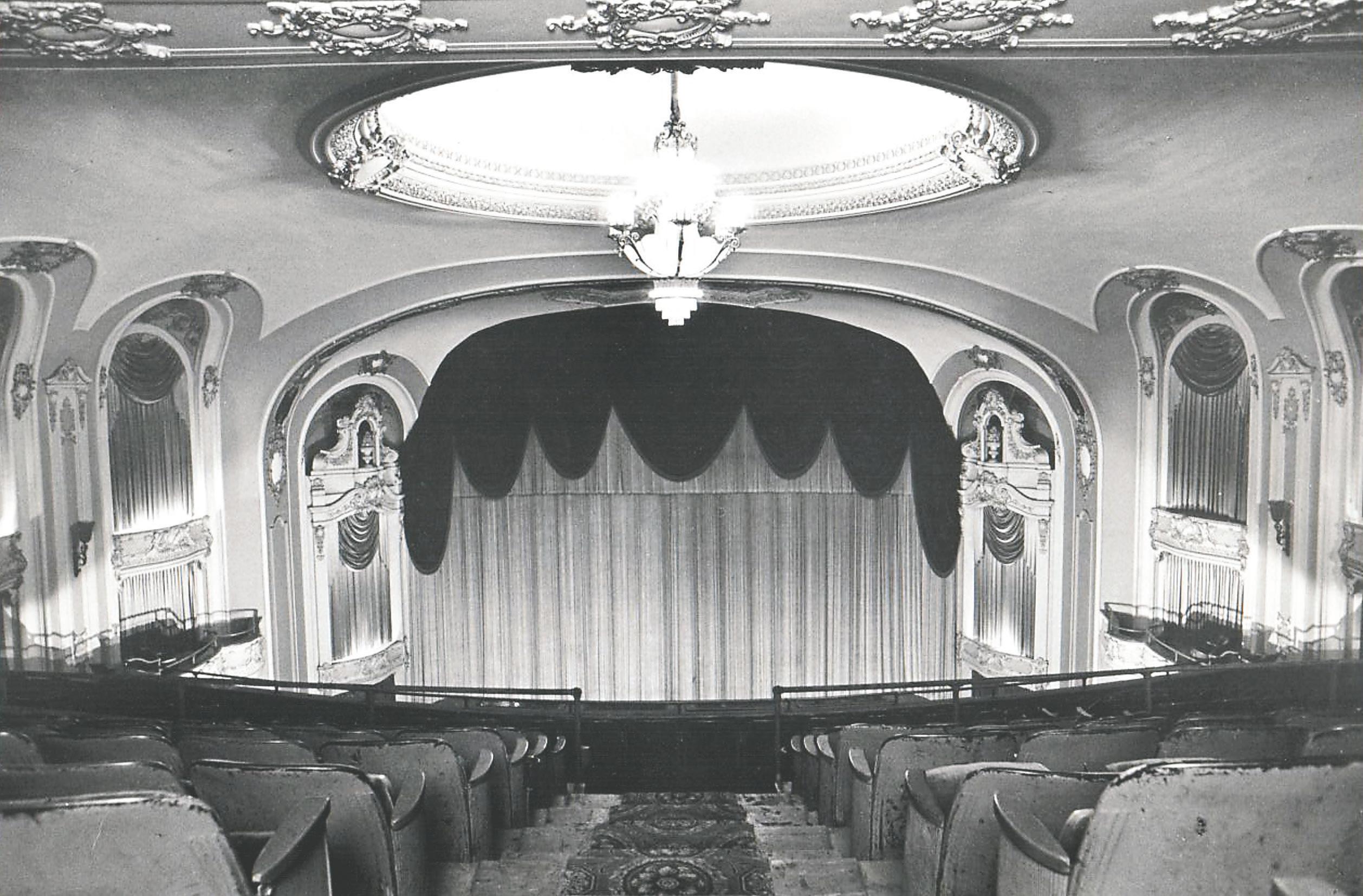
It was the first palace-style movie theater in mid-Missouri and the only one built before the Great Depression. Designed by the Boller Brothers of Kansas City, the architects drew inspiration from opera houses in
France and Germany. The interior was reminiscent of the splendor of King Louis XV of France.
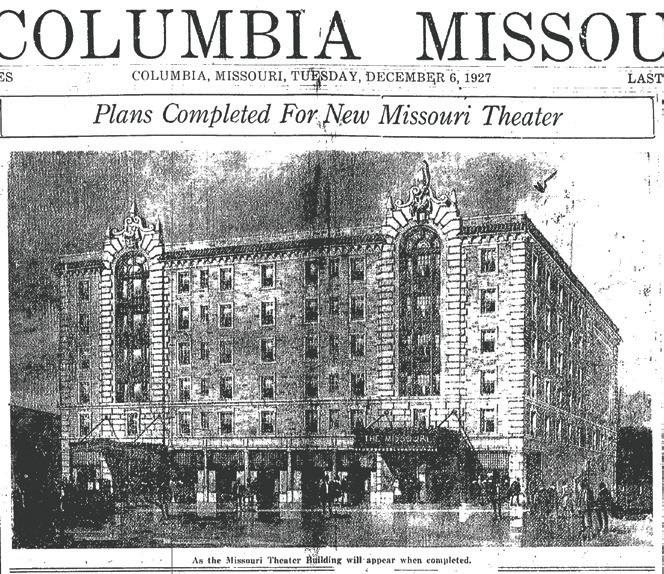
Construction started on Jan. 10, 1928. The original plans called for an five-story building, with apartments in the floors above the theater and storefront that stands today. But when the Great Depression took hold after the Missouri Theatre opened, those plans were cast aside.
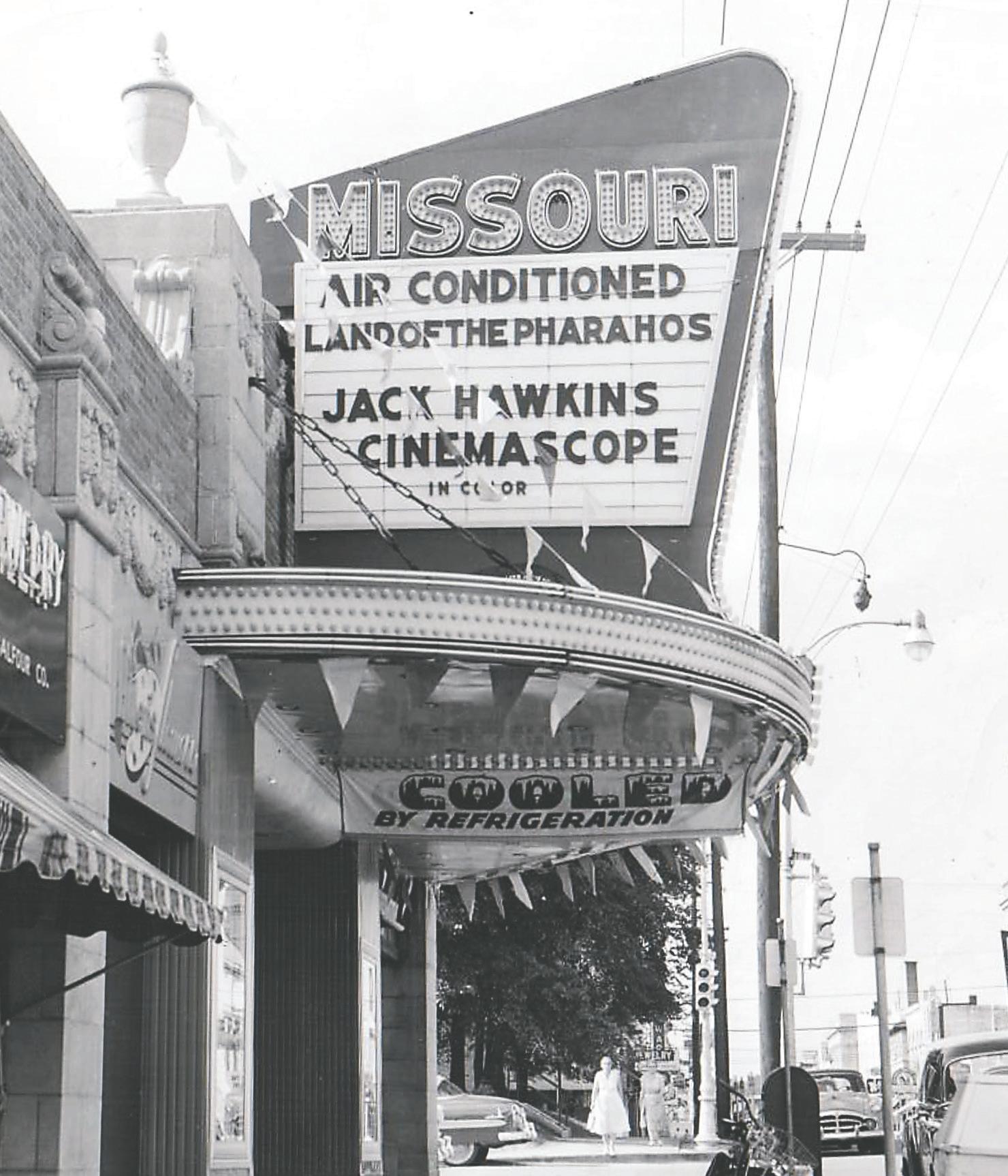
In the 90 years since the theater opened, it has undergone many transformations. In 1953, five years after the original owner and builder, Columbia attorney J. Dozier Stone, died, the Missouri Theatre was leased to Commonwealth Theaters, a now-defunct movie theater chain out of Kansas City. After the theater was leased, extensive renovations were made. To accommodate
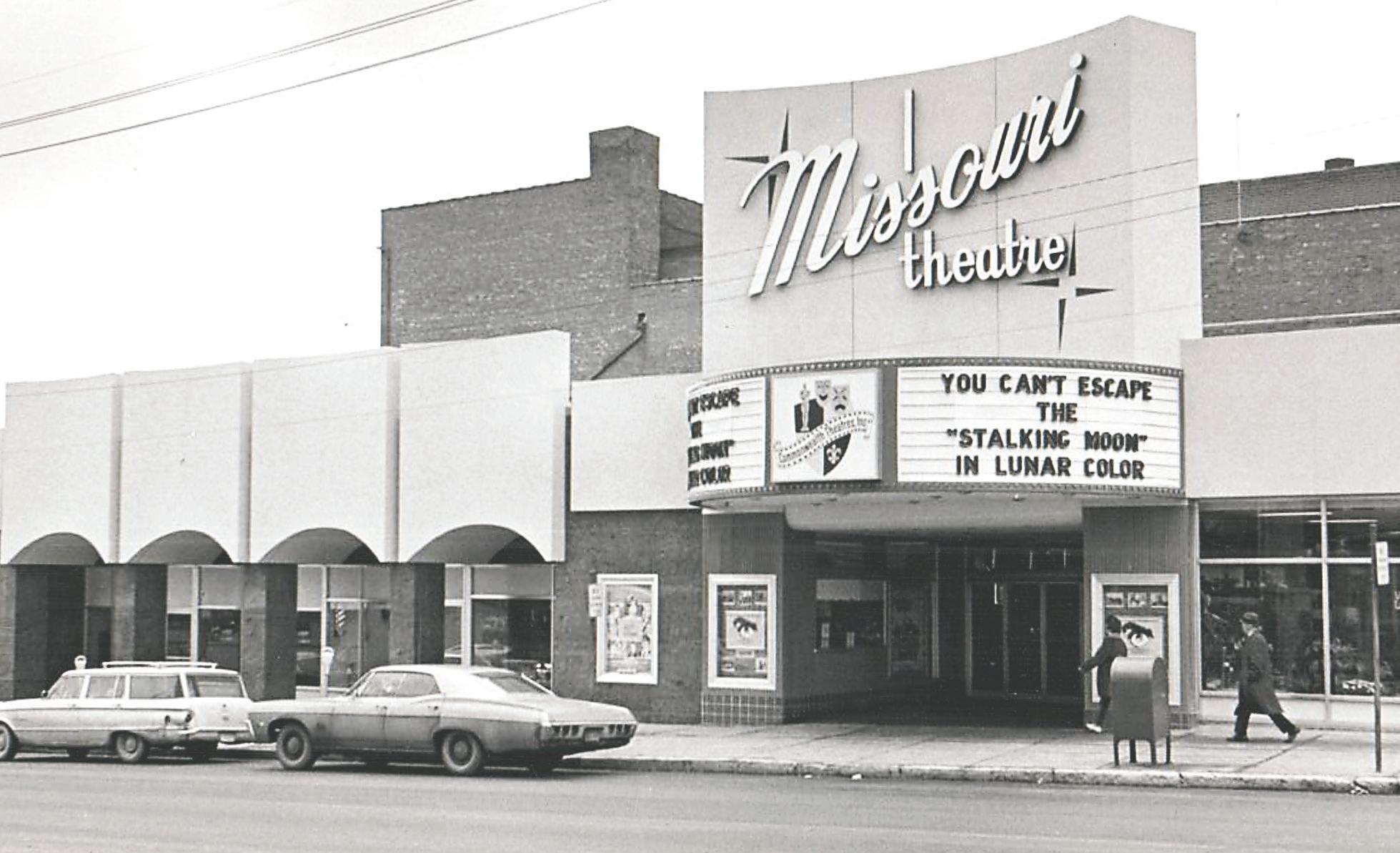
wider CinemaScope, an anamorphic lenses series used from 1953 to 1967, movie projections, the proscenium stage was widened by 20 feet. The ticket booth, originally in the middle of the entrance way, was relocated to the southernmost portion and a concession stand was installed. In 1968, The Ninth Street facade was remodeled.
Commonwealth Theaters would continue to operate the Missouri Theatre through most of the 1980s at their financial loss.
The Missouri Symphony Society purchased the theater in 1988 for $370,000 — less than the cost of construction 60 years earlier. Financial woes beset the theater for the next 20 years, largely fueled by the costs associated with restoration.
In the mid-1990s, Columbia city
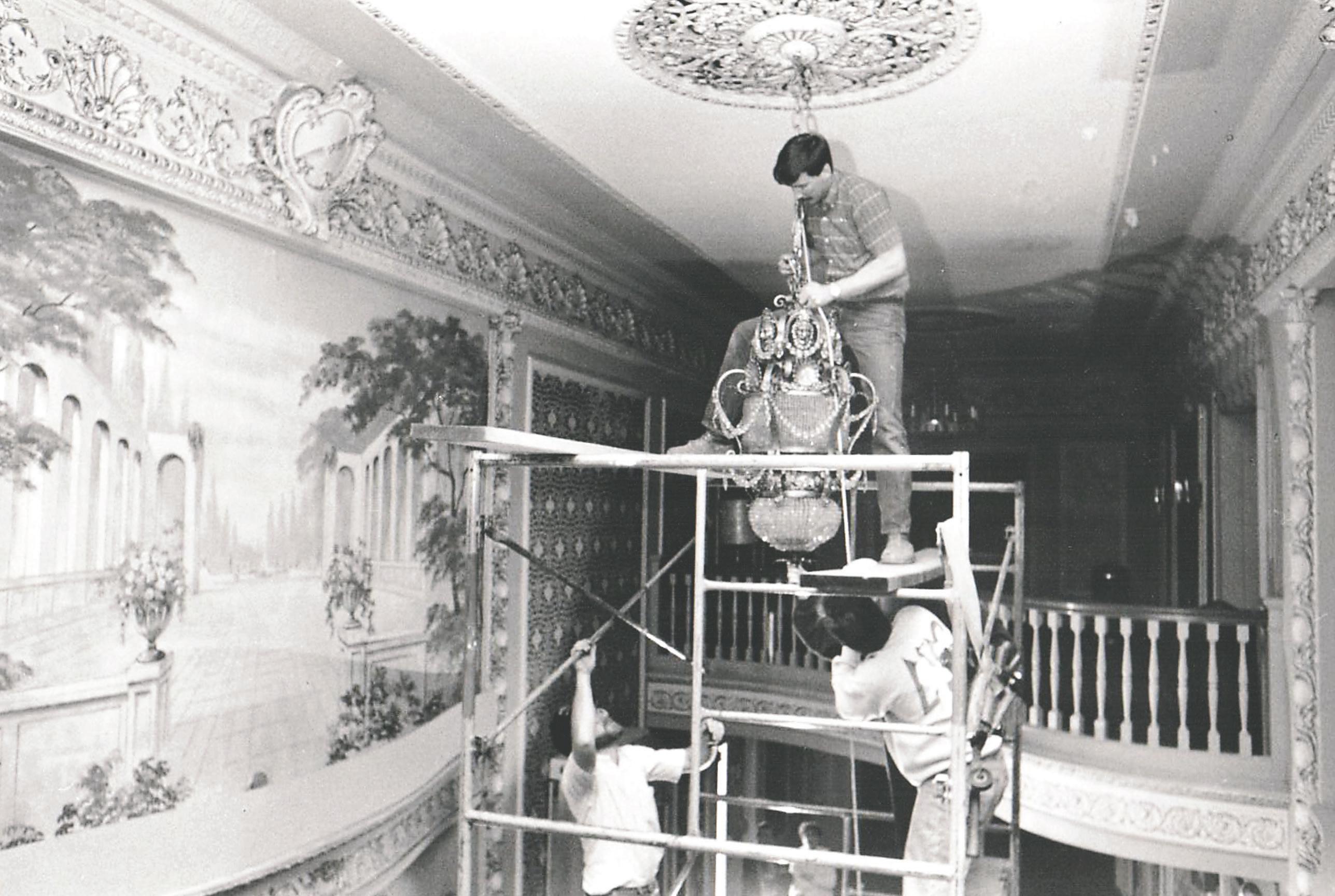
When the Missouri Theatre opened its doors in 1928, it billed itself as a “$400,000 show house of unrivaled beauty and extravagance.”It was the first palace-style movie theater in mid-Missouri.
Before
the theater actually played widescreen Cinemascope films and was known for its movie-palace style architecture.
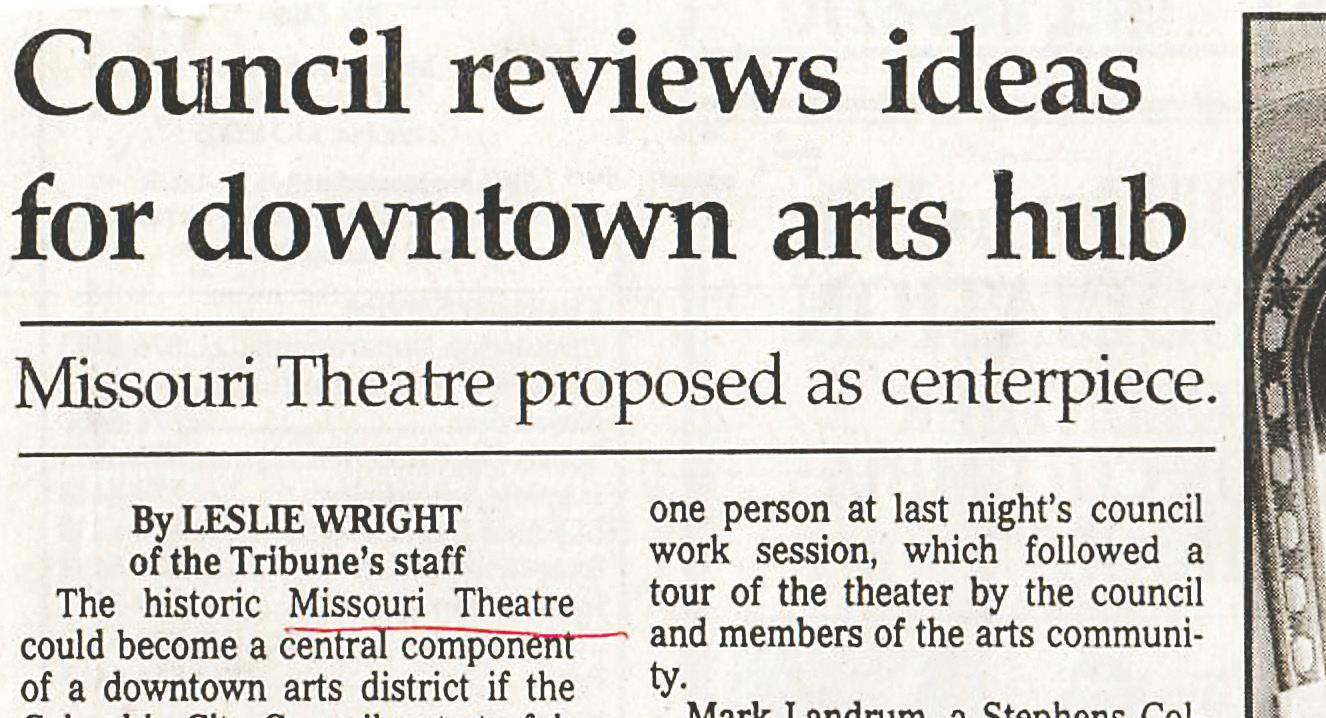
officials wrestled with the idea of making the Missouri Theatre the epicenter of an arts and culture hub. But a failed ballot measure and power struggles between the city and the Symphony Society over management of the theater doomed any chances of municipal ownership.
The Symphony Society eventually succeeded in renovating the theater in 2008 and celebrated the grand reopening with a performance from Tony Bennett. The renovations came with a multimillion-dollar price tag, however, and the theater had to briefly close in 2010 as a cost-saving measure. In 2011, the Missouri Theatre was leased by MU, which went on to purchase the theater in 2014 for $3.7
million — the amount of the remaining debt owed by the Missouri Symphony Society.
Since the days of its glittering premiere, the Missouri Theatre has transformed into multiple spaces — an extravagant movie palace, run down arts space and now a performance space for MU-sponsored shows. It has hosted musicians, filmmakers, intellectuals and yes, even films — the theater has served as one of the cornerstone venues for the True/False Film Fest since its inception. For nearly 90 years, as downtown Columbia changed around it, the Missouri Theatre remained. And with its future currently secure, it will remain longer still.
MISSOURI THEATRE HISTORY
Despite its changing appearance, the theater has kept name and storied legacy
BY MIRANDA MOORE
1894 – Cinema architecture, the architectural tradition in which the Missouri Theatre was designed, starts to appear in Paris. In its infancy, cinema was seen as analogous to traditional theater, and the architecture of early movie palaces reflects this.
1927 – Plans for a combined hotel and movie palace theater are announced.
OCT. 5, 1928 – The Missouri Theatre opens to the public with a showing of Steamboat Bill, Jr
MAY 1, 1948 – The original owner of the Missouri Theatre, J. Dozier Stone, dies after a long illness.
1953 – Commonwealth Theaters, a Kansas City-based chain of movie theaters, leases the Missouri Theatre for an initial term of 15 years.
1967-1968 – The Ninth Street façade undergoes extensive renovations, designed by local architect Wynn Brady.
1979 – An architectural historian at the Missouri Department of Natural Resources’ Office of Historic Preservation nominates the Missouri Theatre for the National Register of Historic Places—it was accepted the same year.
DECEMBER 1987 – The Missouri Symphony Society purchases the Missouri Theatre to use as a performing arts center, effectively saving it from being turned into a multi-screen movie complex.
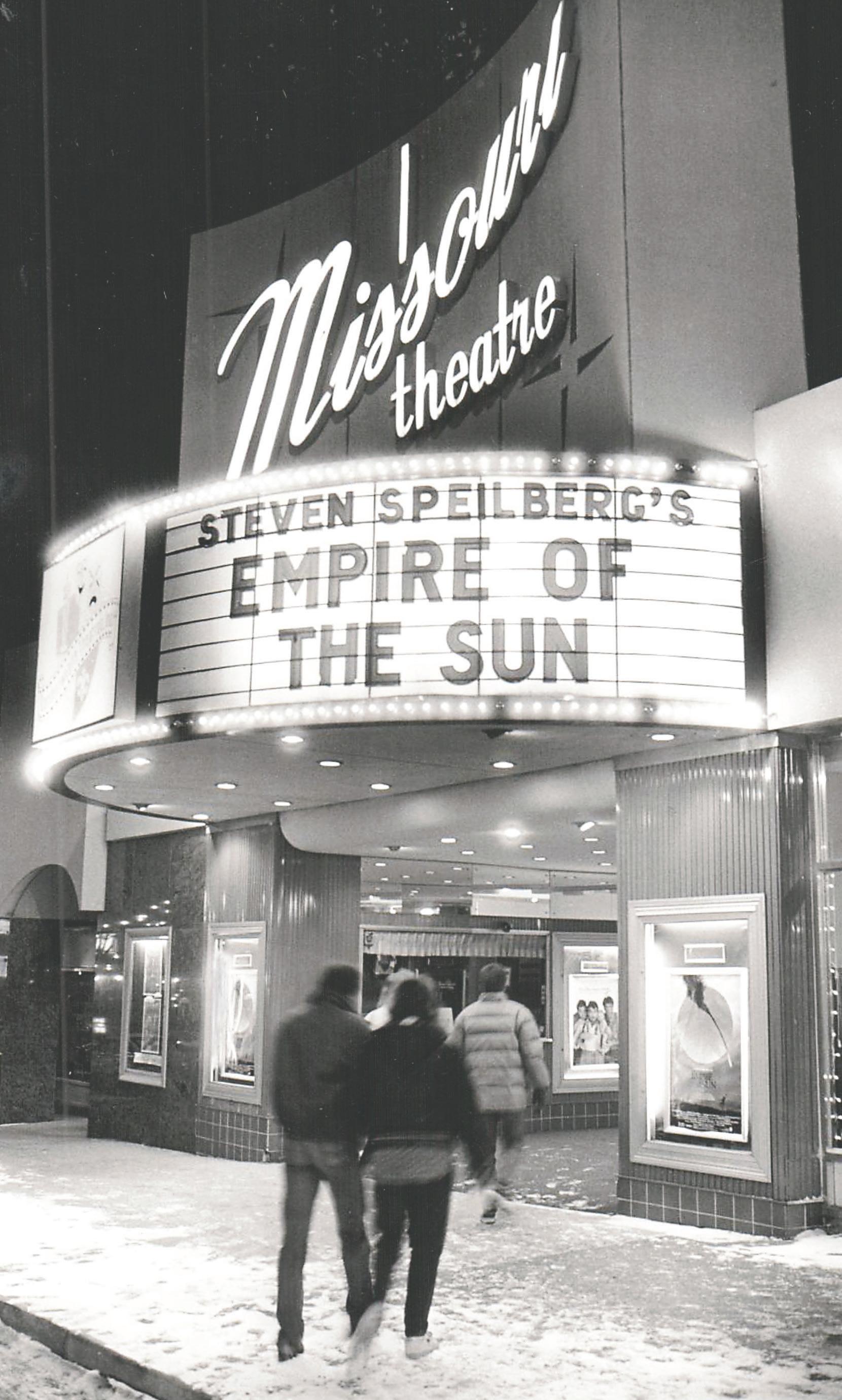
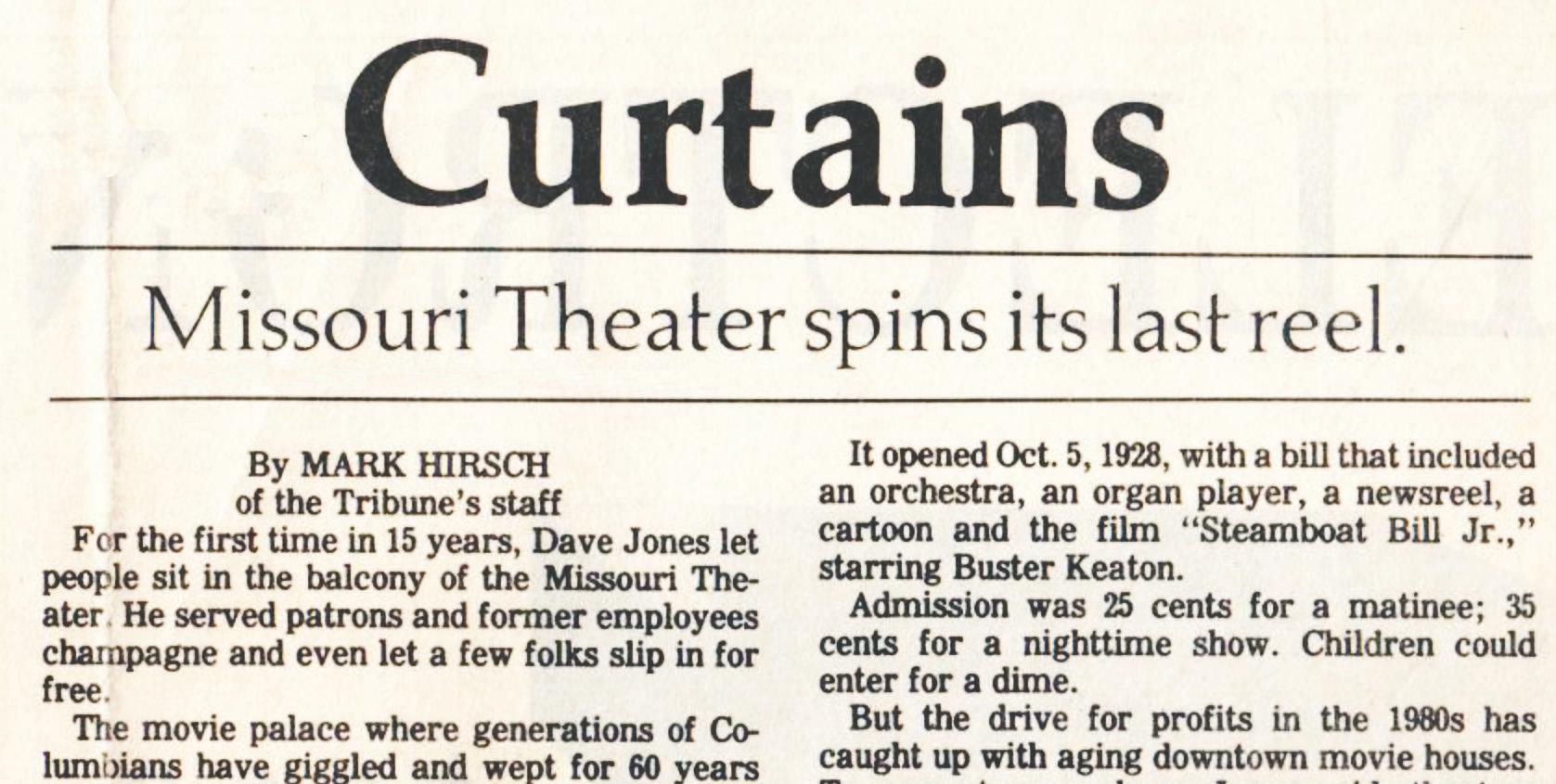
JAN. 7, 1988 – The Missouri Theatre shows its last movie reel as a cinema, Steven Spielberg’s Empire of the Sun
JULY 21, 2010 — The Missouri Symphony Society announces it will close the Missouri Theatre temporarily as a cost savings measure.
JUNE 14, 1995 — Pianist Andre Watts performs at the Missouri Theatre. Gov. Mel Carnahan attended and presented to Watts a proclamation in his honor.
FEB . 27, 2000 — Community leaders, including Al Plummer and other members of the mayor’s Race Relations Task Force, dedicate a plaque that represents the segregation that existed when the theater opened, with black patrons using a back entrance and stairs that led to the balcony. The plaque reads “Lest We Forget, Never Again!”
FEB . 13, 2004 — The Missouri Theatre is one of several local venues for the first-ever True/False Film Fest.
MAY 21, 2008 — The Missouri Theatre celebrates its grand reopening with a performance by Tony Bennett following a $10 million renovation. The renovation was $4 million over budget and created financial troubles that lasted years, including lawsuits filed by subcontractors who were never paid for their work. The bills to pay down debts topped $23,000 monthly.
AUG. 25, 2011 — MU and the Missouri Symphony Society reach an agreement for MU to lease the Missouri Theatre for three years at the rate of $12,000 per month, with an option to purchase the theater for $3.7 million.
JUNE 19, 2014 — MU purchases the Missouri Theatre. The purchase was said to have saved the university nearly $60 million it would have otherwise cost to build a new performance building for the School of Music.
Missouri Theatre housed plays and musicals,
The 1927 plans for the Missouri Theatre called for a five-story building. The onset of the Great Depression prevented that from becoming a reality.
Field of dreamers
For 44 years, Maplewood Barn Theatre has hosted generations of “Barnies”
BY KAYLIN JONES
The Maplewood Barn Theatre, tucked away on East Nifong Boulevard, has a history that started before any thespians took a bow on the stage. It is a history the Barnies — as they call themselves — are proud of. It is a history that once did not even include the arts.
Sitting on 60 acres, what is affectionately known as The Barn started out as a working animal farmhouse owned by Slater Ensor Lenoir and his wife, Margaret Bradford Lenoir, who were Boone County pioneer families in the 1870s. Four people lived in the home: the Lenoirs, their daughter, Lavinia, and later Lavinia’s husband, Dr. Frank G. Nifong.
In 1970, the city of Columbia bought 60 acres of the Lenoirs’ land, which included their house, remaining furnishings and the adjacent farm buildings, and the area became the Frank G. Nifong Memorial Park, says Chris
Campbell, the executive director at the Boone County Historical Society. Today, the park is called Historic Nifong Park to recognize the historic preservation done largely by the Office of Cultural Affairs and the society. It wasn’t until 1973 that The Barn became a performance space and continues to be. Randall Bane, a professional performer, moved to Columbia to finish his master’s degree on the GI Bill at the University of Missouri. The plans to turn the barn into a summer theater were first proposed by the director of the parks and rec commission at
MAPLEWOOD BARN HISTORY
From farmhouse to performance space, the Barn’s past is rich
BY KAYLIN JONES
1877:
NOV. 8, 1970: Historic Nifong Park, then known as Frank G. Nifong Memorial Park, is dedicated as a feature of the Columbia-Boone County Sesquicentennial Commission activities.
JULY 21, 1973: Maplewood Barn Theatre opens with its very first performance ever, Trial by Haunted House
JULY 3, 1976 : Maplewood House officially dedicated and opened to the public.
1978-1979: Maplewood considers adding an additional winter season, but reverts back to doing only summer shows.
APRIL 13, 1979: The barn listed on the National Register of Historic Places.
2000-2001: Courtrooms in the Missouri School of Law used for two productions, Inherit the Wind and Twelve Angry Men for a realistic setting.
the time, Bill Crawford, but it was Bane who took the initiative as a part of his master’s degree project. The first show, Trial by Haunted House, took the stage on July 21, 1973. There has been a full season of summer shows ever since, making Maplewood Barn the first theater in Columbia and the first and only outdoor theater in mid-Missouri.
“The vision I had was to turn it into a performing arts park, modelled after Wolf Trap in the Virginia D.C. area,” Bane says. “It used the arts as focus of recreation rather than parks. It’s kind of like having children; you don’t know how it’ll turn out. I came back after the first season of the new barn. I was gratified to see so many had continued it on.”
On average, Maplewood Barn Theatre puts on five shows from May to September in the six months the Barnies have the barn. The year is split with Parks and Recreation, which uses the barn for meetings, weddings and retreats. The Barn puts on a variety of shows each season, including classic and
2008: The Front Page performed in the centennial celebration of MU School of Journalism.
APRIL 6, 2010: The 140-year-old barn burns down.
MAY 2010: The Phoenix Season opens with the help of Parks and Recreation and other sponsors, and continues its performances in Stephens Lake Park Amphitheater, and on the Maplewood Stage.
MAY 24, 2012: The rebuilt Barn has its first performance, Fiddler on the Roof
2013: Maplewood Barn Radio Theatre debuts in conjunction with KBIA on Friday nights during the fall and winter.
2016 : The Maplewood Barn house receives an infrastructure renovation with funds provided by the city of Columbia and the Boone County Community Trust.
2017: The first time Maplewood Barn Theatre featured an all black cast was in their production of Raisin in the Sun
The Lenoirs build Maplewood House.
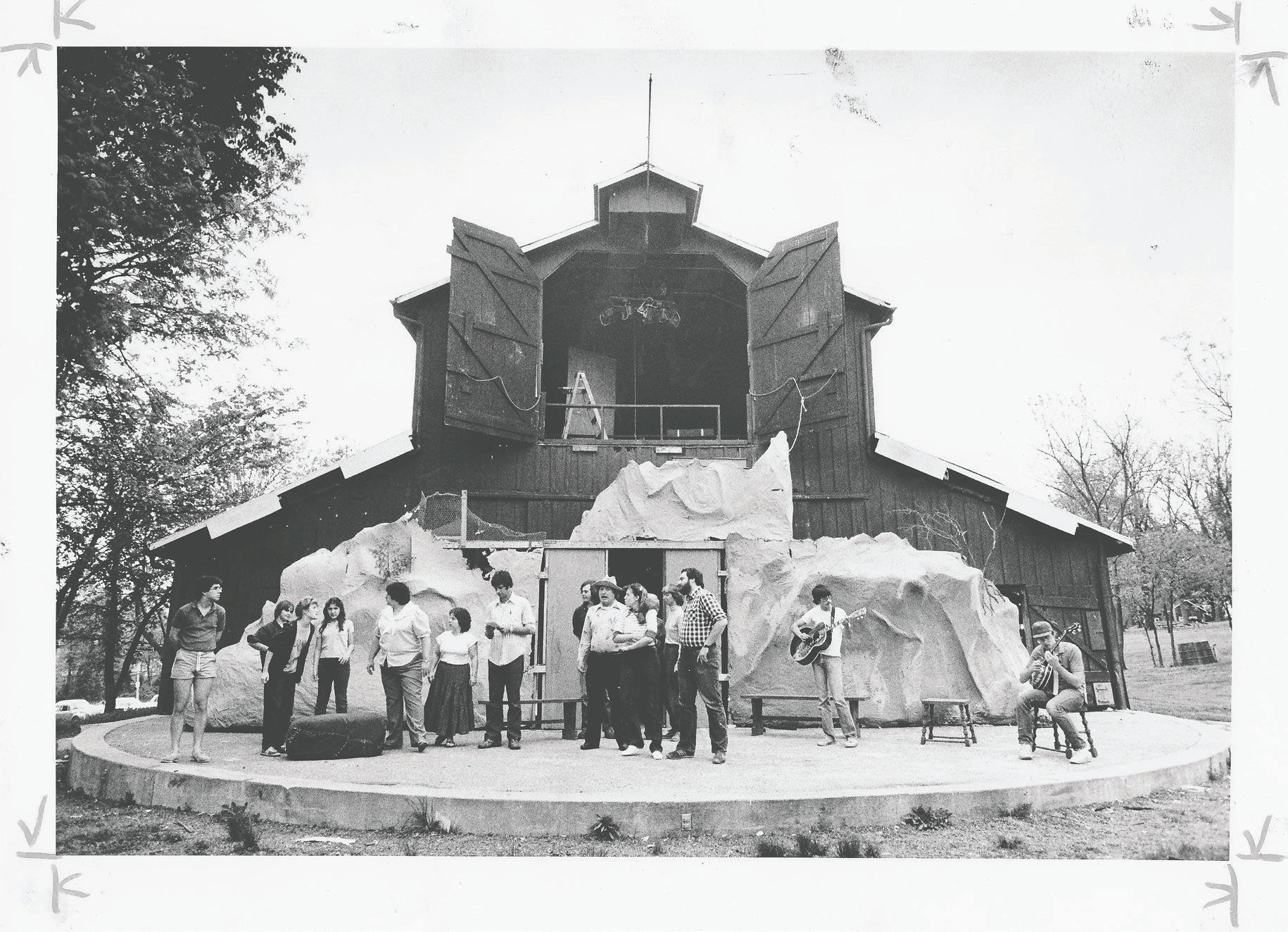
Maplewood Barn Theatre sits on 60 acres of what used to be farm land and the barn was once owned by the Lenoir family. It didn’t become a performance space until 1973 and still serves as an outdoor summer theater attraction.
Summer performers have to learn how to project during performances due to the open, outdoor space.
modern plays, as well as little-known and iconic musicals. Audiences are encouraged to bring blankets and lawn chairs to set up in front of the stage. Some have been known to bring a bottle of wine or a picnic.
Over the years, very little had changed for the Maplewood Barn Theatre. Despite being a place for actors in the community to use as a creative outlet, the barn was still very much a barn. There was no air conditioning, running water or bathrooms. The casts dress in stalls.
though we aren’t getting paid.”
The Barn is definitely no stranger to challenges. The playhouse has been a target of vandals on numerous occasions, including the theft of copper elements.
CHECK IT OUT
2900 E. Nifong Blvd. 227-2276
Laughing Stock
June 29–July 2; July 6–9
Cost: $10, adults; $3, children under 10
Beauty and the Beast
July 27–30, Aug. 3–6, Aug. 10–13
“We’re now in this situation where people have acted in our shows, and now their children and their grandchildren are starting to act in the shows,” says Byron Scott, former Maplewood Barn president. “I think being a Barnie, and being proud to call myself a Barnie and being proud of the people around me is what it’s about. As much stress and strain as it is sometimes, it all balances out because it’s fun even
Cost: $12, adults; $3, children under 10
An Ideal Husband
Aug. 31–Sept. 3, Sept. 7–10
Cost: $10, adults; $3, children under 10
On April 5, 2010, the 140-year-old barn burned down. The following day, the firefighters of Local 1055, the firefighter’s union, showed up with tools to repair the stage since everything had been lost in the fire.
The whole community rallied around Maplewood Barn and donated money needed to rebuild the original outdoor theater.
“It was our greatest test. We’d lost everything in the fire,” Scott says. “We could’ve just turned out the lights and gone home, but we didn’t. There was never any doubt that Maplewood had to continue.”
And Maplewood Barn and its generation of Barnies have done exactly that.
david wilson and paul sturtz
How well do the True/False Film Fest co-conspirators know each other? FACES TO KNOW
BY MADISON FELLER
David Wilson and Paul Sturtz are the masterminds behind Columbia’s True/False Film Fest. — or co-conspirators rather. Wilson’s film career began back in his teen years when he took inspiration from the Coen brothers, Spike Lee and John Waters. Sturtz got his start in newspapers before being captured by the world of films that “keep you on the edge of your seat.” The two have worked together for 19 years and counting, so we’d say they know each other pretty well. Vox put their knowledge to the test when we asked them about each other.
IN ALL YOUR YEARS WORKING TOGETHER, WHAT WAS THE BEST IDEA THE OTHER HAS EVER HAD? THE WORST?
PAUL: Best: David drew the first, crude logo for True/False. It was refined by designer Mike Lising, but it still holds as a concise image for the fest. Worst: He got really psyched about getting everyone to wear tank tops for the Boone Dawdle T-shirt.
DAVID: Best: To start the Ragtag Film Society. Worst: The illfated True/False tent. It was a tent that we put up one year when we were using Stephens College as part of our venues. And it was real muddy and didn’t fully work.
WHAT WOULD HE SAY IS THE BEST PART ABOUT BEING A COCONSPIRATOR? THE WORST?
PAUL: Best: The pride in building something bigger than yourself. Worst: The way it blots out the rest of your life for four months every year.
DAVID: Best: Having someone else do the heavy lifting sometimes. Worst: Having to fight for ideas that seem obvious to you.
WHAT’S THE ONE CREATIVE THING YOU DO THAT HE CAN’T STAND?
PAUL: I’ll say things that I think are funny and off-the-cuff, and sometimes it comes off sarcastic or off-putting.
DAVID: Use hyperbole.
On the night of April 5, 2010, the original 140-year-old barn burned to the ground. It wouldn’t be until May 24, 2012, that the barn on the same site would return.
A ghost of the past
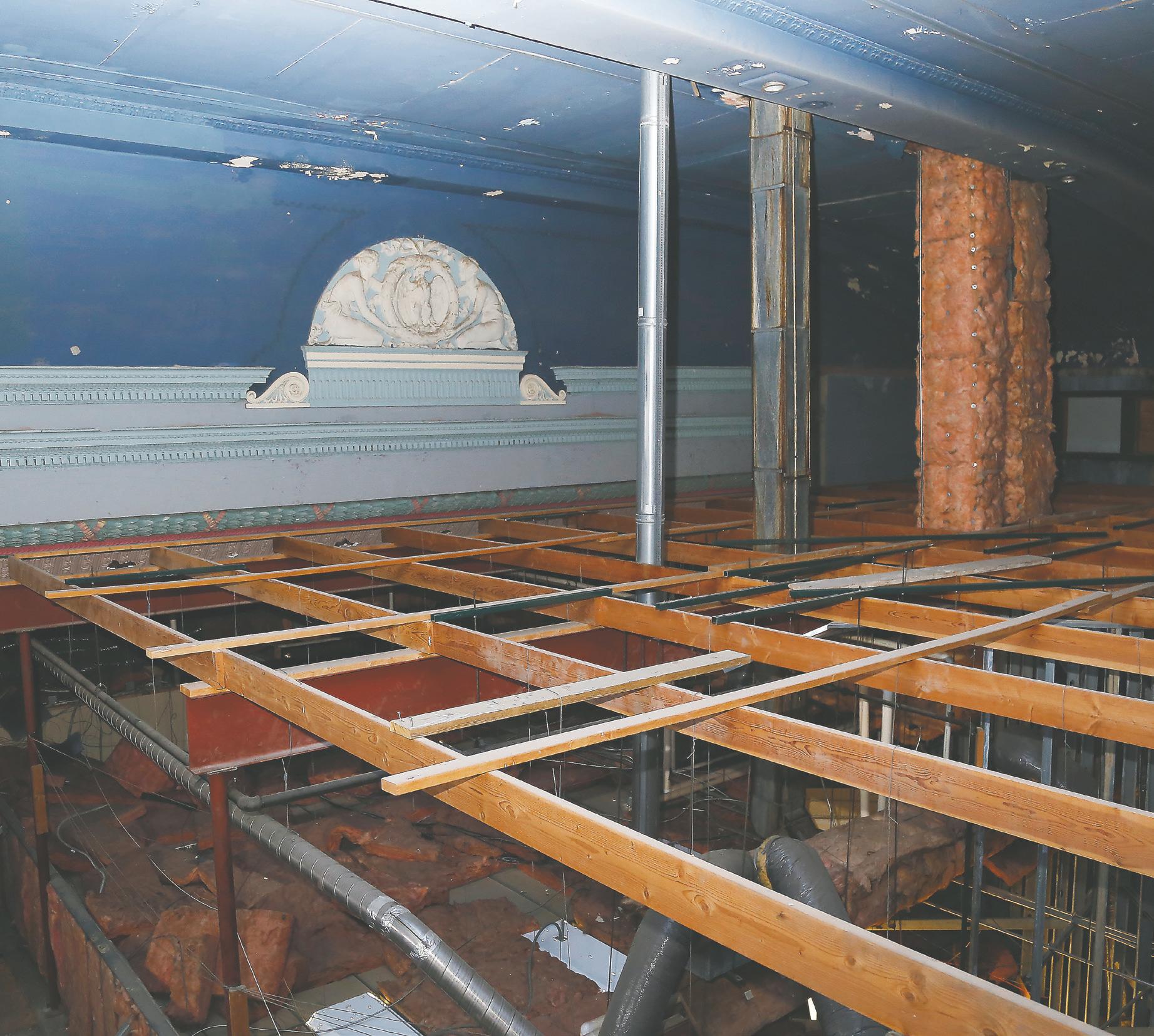
Historic Hall Theatre remains vacant for years
BY ANNIE REES
Downtown Columbia is booming. Construction cranes puncture the skyscape and usher in new buildings. But amid the growth and expansion, a noticeable vacancy still remains.
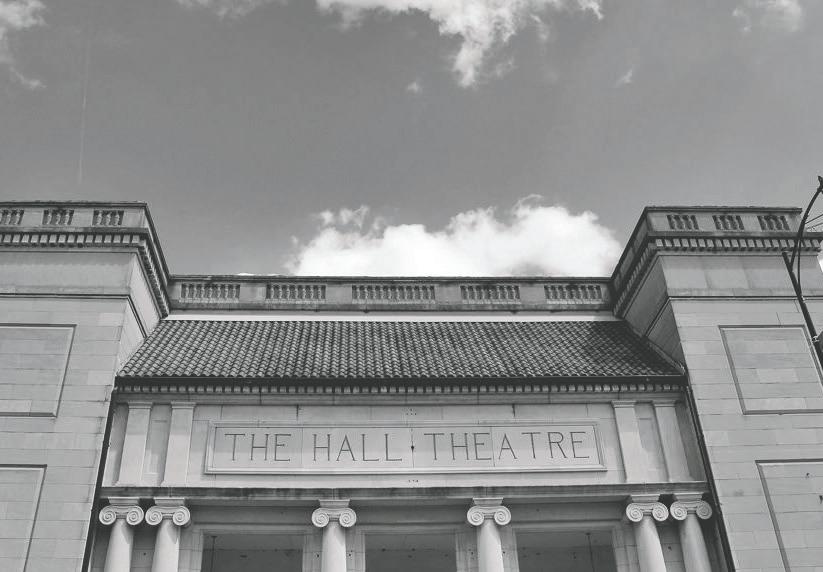
Since Panera Bread moved out of the old Hall Theatre more than four years ago, the majority of the building on the corner of Ninth and Cherry streets has been vacant. Its alcoves often shelter homeless people, and the Hall has become a canvas for occasional graffiti.
The Shot Bar occupies the northern third of the space. But the Hall Theatre is more than just a classic façade. Its surprising, sometimes rocky past is filled with ups and downs that mirror ongoing issues in a growing Columbia.
So what are the plans for the space? Who will move in? Although
The Kroenke Group owns the Hall Theatre, Maly Commercial Realty is in charge of leasing it. Gina Rende, an agent at Maly Commercial Realty, said in 2016 that though there had been multiple offers, none had materialized.
After Panera vacated the space, Maly cleared it out and brought it to one level, Rende says. The realty company also is installing a 25-foot glass storefront to be completed in August or September. With taxes
HALL THEATRE HISTORY
A rich history but still mostly vacant for decades
BY ANNIE REES
1916 — Moberly businessman Tom Hall opens the Hall Theatre as vaudeville and silent-film space. The theater employs a small orchestra to accompany silent pictures on weekend nights.
1928 — The Hall installs a sound projector. The theater can now play talkies, so the pit orchestra is no longer necessary.
1955 — The Commonwealth Theater chain, a former national chain based out of Kansas City, Missouri, buys the Hall and turns the space into an independent movie theater, open only during the winter.
1971 — Commonwealth Theaters decides the theater is unprofitable.
1971-78 — The MU University Singers begin performing concerts and operas in the theater.
1978-84 — The University Singers stop using the Hall, and it sits vacant for six years.
1984-87 — The Downtown Business Association and its director, Ed Gaebler, purchase the Hall in 1985.
1987 — Gaebler realizes he’s not equipped to run the theater and sells it to Garry Lewis, a local attorney and developer.
and insurance, the monthly lease costs of the building are about $12,500, Rende says.
Dan Rader, whose family previously owned Bengal’s Bar & Grill, considered renting the Hall as a space for his next bar. Ultimately, he chose a different location. “The substantial level of investment required by any new tenant to make the space code compliant means it will likely sit empty for a long time,” Rader wrote in a Facebook post in October 2015.
And so, as it has before, the theater remains vacant. Meanwhile, Columbia looks on and waits to see who the Hall’s next tenant will be. Vox published a version of this story Feb. 11, 2016.
1990 — Lewis sells the Hall to businessman Max Gilland.
1993 — Gilland completes his renovation and opens his jewelry store, Bermuda Gold, in the corner that would later become Panera Bread, then St. Louis Bread Co.
2005 — Gilland sells the theater to the Kroenke Group.
2012 — The Shot Bar moves into the space formerly occupied by Bermuda Gold.
2013 — Panera announces it’s leaving the location.
2017 — The Kroenke Group still owns the Hall Theatre, and Maly Commercial Realty is in charge of leasing it.
Hall Theatre started as a silent-film space in 1916 and later was a movie theater until 1979. Parts of the stage remain visible as the building has gone through changes and renovations. The last performance it saw was the University Singers in 1984.
Rhynsburger, Jesse who?
The stories behind these structures’ names have more importance than many locals know
BY BENNITO KELTY
We walk by Jesse and Rhynsburger without a second thought of why these buildings carry those names. It turns out there’s more significance and history behind these historical venues. Vox dug into the history of these buildings to find out why Jesse is Jesse.
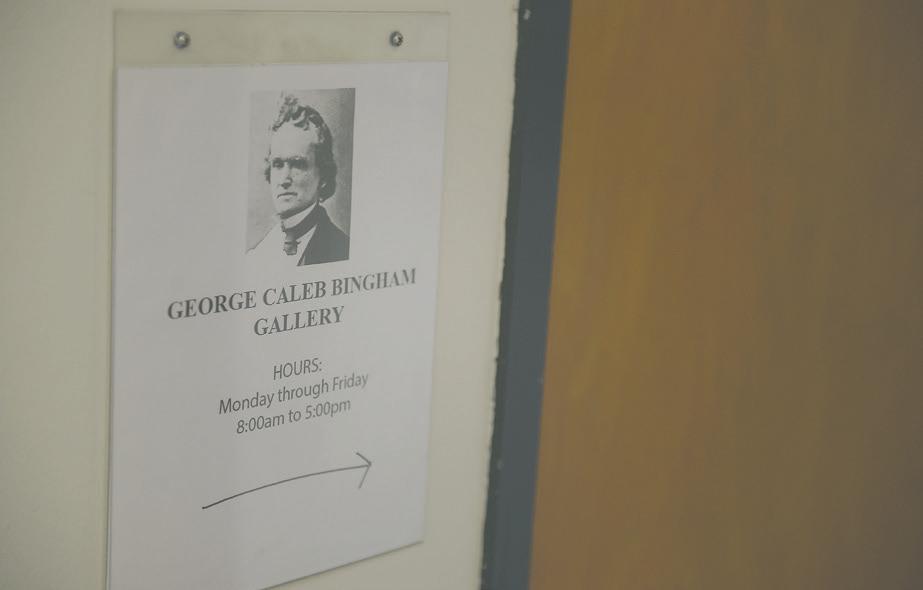
BINGHAM GALLERY
fine arts building, room a125
The gallery was named in 1960 after George Caleb Bingham, who is perhaps Missouri’s most recognized artist for his prints Fur Traders Descending the Missouri, but it isn’t just his prominence that earned him a gallery with his name. When Missouri curators established the School of the Arts at MU, they appointed Bingham as the first professor of the arts. Bingham only served for two years until his death from pneumonia in 1879. In the years that followed, the arts department flourished despite not having a building. They taught all over campus and used the Hall Theatre for plays. When the arts department finally received the Fine Arts Building in 1960, it recognized Bingham’s contributions with the gallery.
JESSE AUDITORIUM
jesse hall, 801 conley road
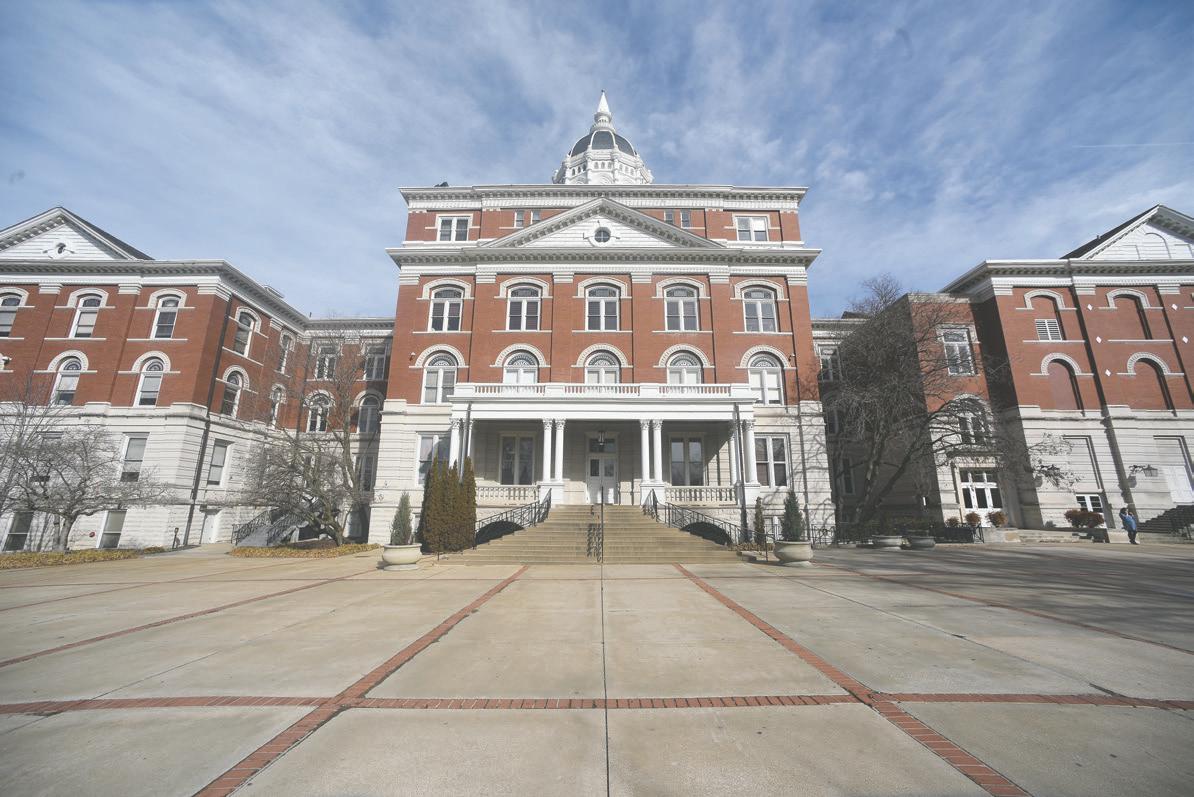
The auditorium is named for former MU president Richard Henry Jesse. During Jesse’s 17 years in the position from 1891 to 1908, he became most famous for his response to the fire which destroyed Academic Hall in 1892, his second year in presidency. Jesse ordered the immediate construction of a new building without canceling classes. In the new building, Jesse approved plans for the new Jesse Auditorium in place of the meeting room where the fire began. He also opposed the removal of the columns despite a Board of Curators’ vote to remove them. After Jesse’s death in 1922, the new Academic Hall was renamed Jesse Hall.
Jesse Hall deals with the inner-workings of MU and its auditorium has seen decades of shows.
Bingham Gallery has both world-renowned artists’ and MU students’ work.
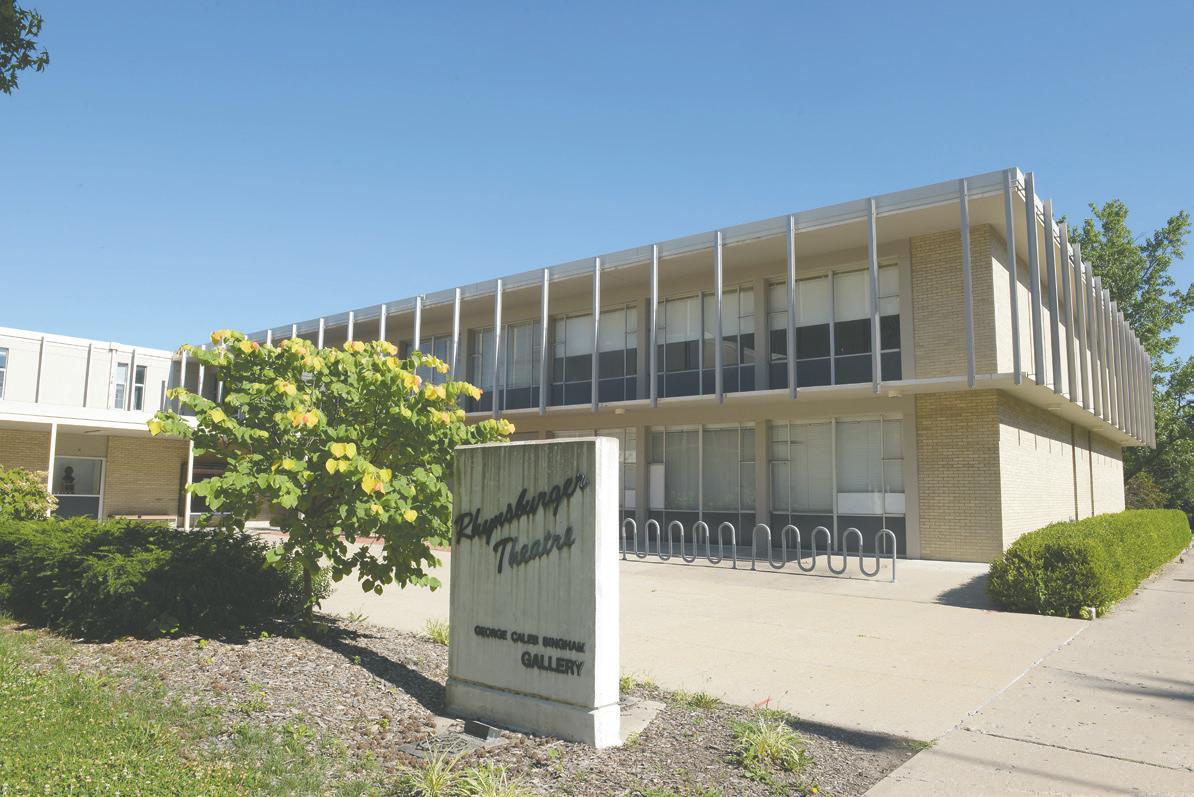
Rhynsburger Theatre is home to MU Theatre’s bigger-scale productions.
Montminy Gallery both displays and sells artists’ work in the Historic Nifong Park.
MONTMINY GALLERY
boone county historical society, 3801 ponderosa st.
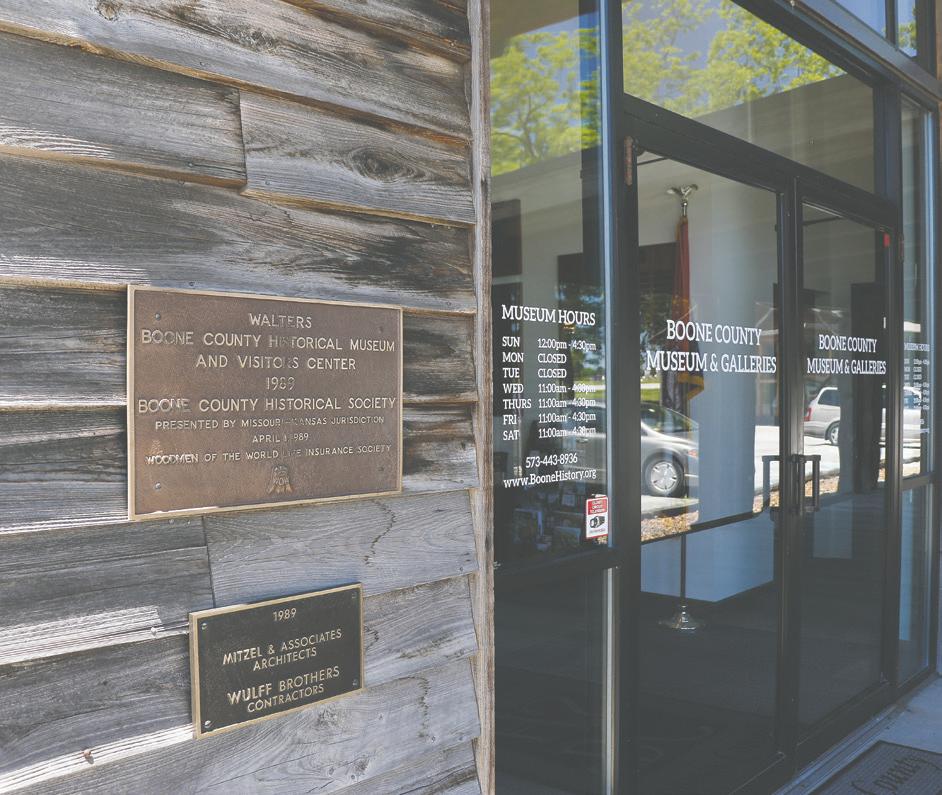
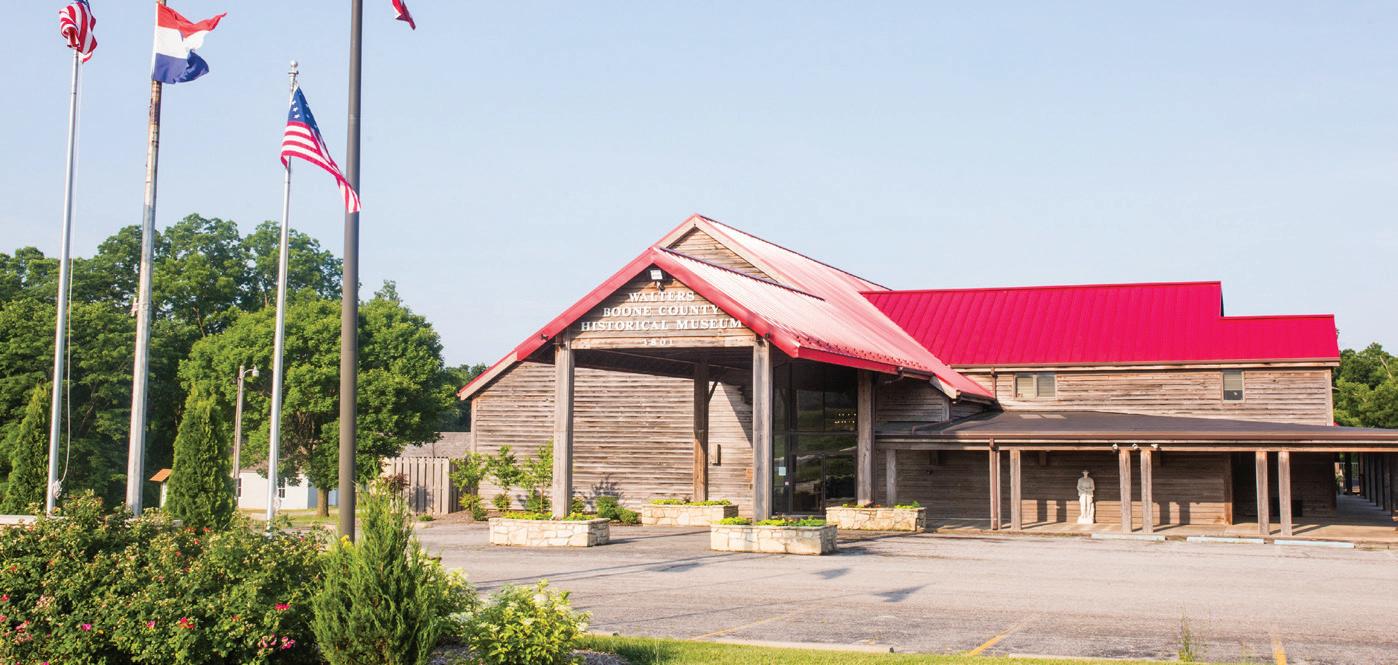
At the Boone County Historical Museum off Grindstone Parkway and U.S. Highway 63, the gallery has carried the name of Columbia artist couple, Tracy and Pierre Montminy, since 1993. Born Mary Elizabeth Tracy in 1911, Tracy was a muralist who taught at MU in 1948. Her murals are displayed throughout Columbia including at Stephens College, MU’s engineering building and Tucker Hall. Her husband, Pierre Montminy, taught at Stephens College from 1946 to 1972. Together they accumulated a large personal art collection from local and regional artists. In 1993, they donated their collection and money to the Boone County Historical Society to open a gallery. Today, the gallery displays photos and local and regional artists’ work alongside J.W. “Blind” Boone’s grand piano.
RHYNSBURGER THEATRE
fine arts building, 505 hitt st.
This theater was renamed in 1983 to honor English professor Donovan Rhynsburger, who also had a background in theater and established the successful MU Theatre Department. Rhynsburger came from Iowa in 1925 and became the first producing director of the Missouri Workshop Theater. With the small new workshop, he created an official theater program, producing more than 200 productions. He also created popular events like The Rooftop Theater Under the Stars and the One-Act Playwriting Contest. On two occasions of the One Act Playwriting Contest, Rhynsburger gave an honorable mention to the young Tennessee Williams who was studying journalism at MU, and, while George C. Scott attended, Rhynsburger gave him the lead in five productions. Originally, when MU created the Theatre Department in 1960, the theater was constructed and named the University Theater. It was renamed the Rhynsburger Theatre in 1983 when he retired.
PHOTOS BY GABBY RENEAU, DAVIS WINBORNE,
WE BUY & SELL GOOD BOOKS
YELLOW DOG BOOKSHOP
Making music and menus
These nontraditional venues offer a mix of scenes
BY BROOKE KOTTMANN
Let’s face it: Drinks, eats and live entertainment can get expensive. But you don’t have to break the bank to check out the latest bands. Columbia is home to multiple restaurants and bars that double as music venues. We’ve got the scoop on the best places to get sustenance while taking in shows. As a bonus, the cover charges won’t be more than $15 tops, we promise.
FOR A HOMEY FEEL
Cafe Berlin’s mismatched coffee mugs and varied music selection bring a welcoming and friendly vibe to its guests. By day, the bartender crafts bloody Marys, but after the cafe closes at 2 p.m., workers sound check equipment for the best quality sound, and the eclectic brunch spot turns into a live music venue for the evening. Grab a local Missouri beer on tap at the bar, and enjoy a variety of shows that includes jazz and punk, says booking manager, Em Downing. Cafe Berlin is known among recurring artists as a home away from home on the road because of its comfy vibe and warm hospitality.
TIP: Want to find new music? Search the record wall adjacent to the bar where Cafe Berlin features cover art from past performers’ albums.
TRY: A screwdriver made with fresh-squeezed OJ paired with potstickers from Sidebar’s June menu, which pop-ups several times per month outside.
COVER: Free–$15
FOR A FAMILY-FRIENDLY SUMMER EVENING
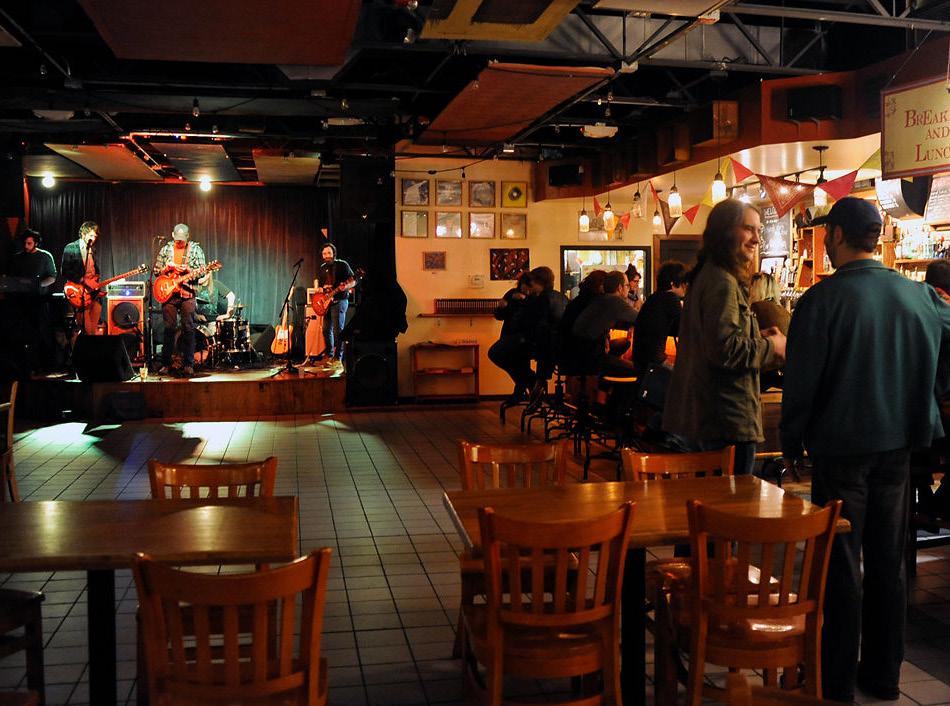
The interior of Rose Music Hall mimics a typical music hall but with an edgy punk twist. With vibrant colors spread across the hall’s walls, stage and flooring, there’s an eclectic energy that surrounds the venue. Pepe’s of Columbia brings Mexican cuisine to fuel this music scene and its patrons. The hall welcomes all genres including folk, bluegrass, metal, blues and hip-hop. In order to get the best Rose Music Hall experience, Owner Matt Gerding says to give all artists a chance. “You never know, you just might discover your next favorite band.”
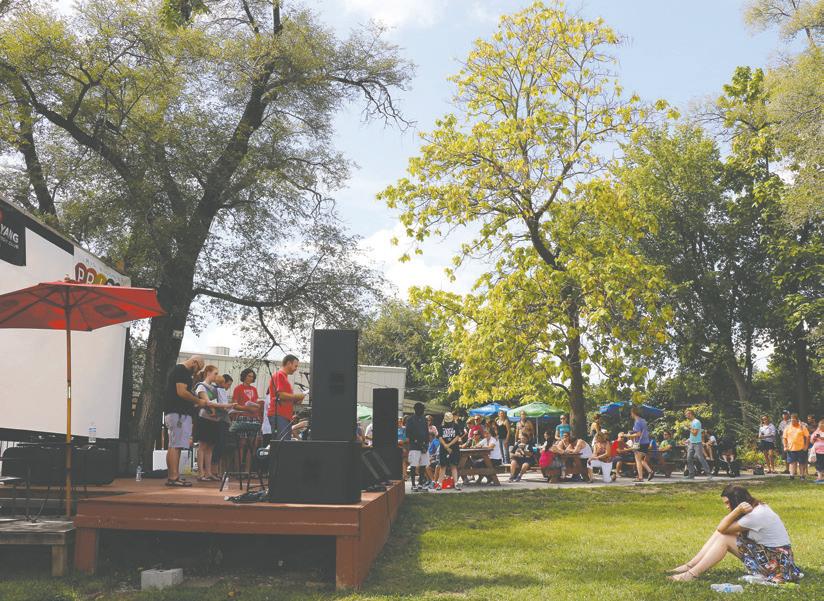
TIP: Mark your calendars for July 5: The classic coming-of-age film E.T. is playing in Rose Park right outside. Stop by the bar for cocktails inspired by the film.
TRY: $3 Logboat cans and $7.50 bean and cheese nachos from Pepe’s
COVER: Free–$15
FOR A GREAT ESCAPE
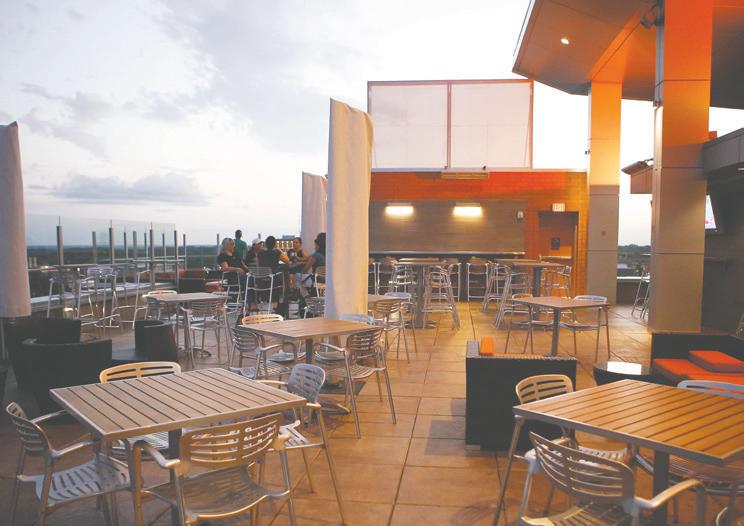
Step off The Broadway hotel’s elevator and into The Roof, a laid-back happy hour spot by day and a party penthouse by night. Recline on couches overlooking the cityscape, flock to the indoor and outdoor bartop, or gather around glass firepits: All will give a perfect view of the live band. On weekends, expect a range of talent from new pop-to-modern, folkto-country classics. Relax during the week, and share small plates of smoked salmon flatbreads, crawfish spring rolls or grilled romaine salads during Martini Monday, Tap Tuesday and Wine Wednesday.
TIP: Download the Nightlife mobile app to keep up with daily drink specials and musical performances.
TRY: A Black Jack Lemonade cocktail with the lemon creme brulee
COVER: Free; $5, Fri.–Sat. after 9 p.m.
FOR AN ALL-NIGHT PARTY
Leave downtown Columbia at The Penguin Piano Bar’s glass doors, and enter a modern-day Great Gatsby affair. Turquoise walls, gold art deco embellishments and a shiny chandelier give off a jazzy flair on the way to the full bar. Bar Manager Travis Oakley says the Penguin is a piano party bar—not a dueling one—so drop a request with a pianist. Head up to the mezzanine, and order a Sex on the Peach with peach-infused vodka, and watch the double piano sets from a bird’s-eye view. The bar might not serve its own food, but don’t let hunger get you down. Buy a hot dog from the Disco Dogs stand outside.
TIP: For those who like to sit and enjoy the show, arrive before 10 p.m. for a table. Seating is limited and goes fast.
TRY: The Mexican mule, a tequila take on the Russian classic
COVER: $5
FOR A TRIP TO THE WORLD’S JAZZ CAPITAL
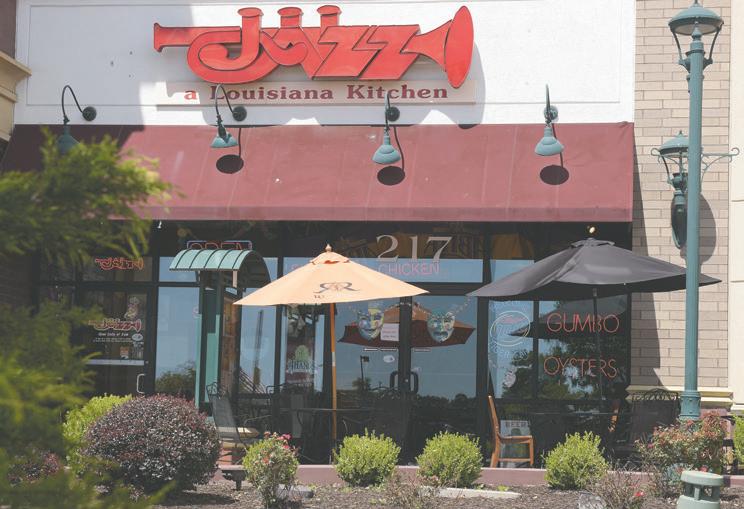
You don’t have to travel outside of Columbia to experience the local culture of New Orleans. At Jazz, A Louisiana Kitchen, grab a stage-side table “outside” in the French Quarter beneath Mardi Gras beads, jester puppets and brass instruments. Come for the Cajun-spiced food and Creole classics such as jambalaya and shrimp étouffée, but stay for the live music. Jazz, blues and rock performers play Wednesday through Saturday nights to keep the party alive.
TIP: Need to cool down? General manager Mike Smith says almost any dish can be prepared sans Cajun seasoning.
TRY: A tropical Hurricane paired with Cajun fried pickles
COVER: 50 cents added to each item on your check while a band is performing
2017 / JULY 24-29 / COLUMBIA, MO
Four Performances:
MUSIC OF MICF ALUMNI & MORE Monday, July 24 • 7:30 PM • Whitmore Recital Hall
ALARM WILL SOUND Thursday, July 27 • 7:30 PM • Missouri Theatre
MIZZOU NEW MUSIC Friday, July 28 • 7:30 PM • Missouri Theatre
ALARM WILL SOUND Eight World Premieres Saturday, July 29 • 7:30 PM • Missouri Theatre
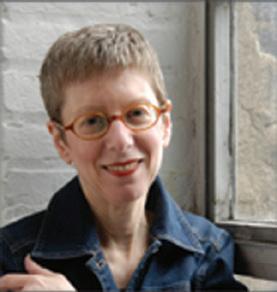
Anand Prahlad’s life has been filled with artistic vision, which he uses to write poetry, music, novels and memoirs. A professor of poetry and director of creative writing in MU’s English Department, he was born in Virginia and moved around a bit — including time in the Bay Area — before settling in Columbia in 1990. He’s working on his second music CD and a new manuscript of poems and takes his influences from the American imagery that has filled his life as well as the people and places he’s seen.
WHAT’S YOUR APPROACH TO DIFFERENT ARTISTIC GENRES?
My poetry is a process that includes different phases. I get ideas for poems and then there’s the revision phase that can happen over a period of months or years. The same thing would apply to creating different nonfiction. It’s a longer process, but I can do it even if I have other things to do. If I’m teaching a class and I have an hour in between that class and a meeting, I couldn’t work on music because I would need a long period of time where I don’t have any interruptions, but I could sit down and work on revising part of a poem.
WHAT DREW YOU TO TEACHING?
I think I started teaching because I’m really excited about knowledge and ideas and thinking. The process of learning excites me. I’ve always had great teachers, and so I had great role models on how to teach and how not to teach. Being a student all my life, it was a natural thing to do to teach.
HOW WOULD YOU DESCRIBE THE LOCAL ARTS SCENE IN COLUMBIA?
It has grown a lot since I came here in 1990. When I came here, there was no North (Village) Arts District the way there is now. The galleries that are here now and a lot of the things like Artrageous Friday weren’t there. As far as visual arts go, I think Columbia has grown a lot in the last two decades. Music is a different thing. When I came here, there were clubs that highlighted acoustic music; there are no clubs in Columbia like that anymore. I think during my generation, a lot of kids thought they were going to be in a band or put together a band even if it was just a garage band. We might just be living in a different age when it comes to music.
PHOTO
FACES TO KNOW
ELIZABETH PALMIERI
GreenHouse Theatre Project co-founder values life experiences
BY TAYLOR GRACE OSTROWSKI
When she was 25, Elizabeth Palmieri was living in a dormitory apartment at a New York boys boarding school where her soonto-be husband taught. Palmieri worked for a theater company, a wine bar and as a substitute teacher. She was also a personal assistant to a woman Palmieri describes as “totally nutty.”
When she moved from New York to Columbia in 2010, she helped launch GreenHouse Theatre Project, a professional theater company. The project, dedicated to performing classical and new works in a progressive way, allows Palmieri to write original plays. She says sometimes they perform in unorthodox environments such as art galleries, rooftops, alleys and yoga studios.
Palmieri says she is realistic about her goals and tries to keep herself grounded. “Everyone’s idea of success is different; for some people, it’s to get up in the morning,” says Palmieri. “I have always been able to not judge people based on what I think success means to me. I think I am successful because I am happy.”
Looking toward the future, Palmieri and her business partner and co-founder, Emily Adams, are starting a sister company in the UK. She attributes much of her success to her 25-year-old self. “Maybe I wasn’t a millionaire,” Palmieri says. “But it was the experiences and the ideas that have given me a wealth of material to work with now.”
Vox published a version of this profile Aug. 20, 2015.
CHECK IT OUT
This collection of more than 7,000 recordings and books is open to the public during “We Always Swing” Jazz Series office hours.
21 N. 10th St. Mon.–Fri. 9 a.m. to 5:30 p.m. Closed Saturdays and Sundays
Entertaining, educating and all that jazz
“We Always Swing” presents, promotes and preserves jazz
BY MEGHAN LALLY
More than two decades ago, Jon Poses was a freelance jazz writer. Poses’s friends, jazz restaurant Murry’s co-owners Bill Sheals and Gary Moore were searching for entertainment for their new business, so in 1985, Poses began booking the jazz artists he interviewed for magazines such as Downbeat to play at the restaurant.
“Jon kinda fell into booking musicians really almost on accident,” says Josh Chittum, the “We Always Swing” Jazz Series public relations director. Ten years later, Poses’ casual bookings brought a large enough audience to bring the concert jazz series to Columbia.
Since 1995, the nonprofit series presents, promotes and preserves jazz through performances and educational activities. This concert series brings acclaimed artists and outreaches to children with Jazz in the Schools. Today, the nonprofit offers a jazz library and office on Tenth Street.
Wide open doors and jazz music pump through overhead speakers, welcoming guests at the “We Always Swing” Jazz Series office. A lending library, formally known as The Earle LeVon ‘Vonskis’ Freeman Memorial Library, intended to educate the community on jazz through the ages, monopolizes most of the front room.
Jazz in the Schools allows mostly MU students
“
Believe me, it’s really not a money-making business, but we’ve actually had the conversation and said, ‘It’s jazz, of course it’s not about the money, but it’s beautiful creative music that is based in the roots of America.’
to travel to elementary and middle schools in the Columbia area to celebrate jazz and expose young musicians to more experienced talent. For younger students, that might mean playing at an assembly, while older students might play music with the visiting jazz musicians in band classes.
Chittum says at one particular event, the power of jazz became clear. A class of special needs students attended the assembly, but before the music started, the principal warned Chittum that the students might need to leave in the middle of the concert. “The show went, and I didn’t notice anyone leave, and the principal came up to me and said, ‘That was basically a miracle. That was the first assembly they’ve ever been able to make it all the way through,’” Chittum says.
Each year, “We Always Swing” sets a series of concerts complete with renowned jazz artists. Chittum says the series has changed Columbia’s music scene by providing locals with the opportunity to hear prominent jazz artists who ordinarily wouldn’t play shows in mid-Missouri. Past performances have included Lonnie Smith, Donnie McCaslin and Jimmy Greene.
Jefferson City local Jeff Bassinson has listened to jazz his entire life and often makes the trip to Columbia to take advantage of the jazz shows “We Always Swing” provides. Bassinson is on the
board of directors for a different jazz nonprofit called the Jazz Forward Initiative, which hosts a one-day jazz festival every September in Jefferson City. Bassinson knows all about chasing after the dream and not after the money.
“They’ve been topflight and always bring in good quality stuff, and that’s hard to do as we all know,” Bassinson says. “Believe me, it’s really not a money-making business, but we’ve actually had the conversation and said, ‘It’s jazz, of course it’s not about the money, but it’s beautiful creative music that is based in the roots of America.’”
While “We Always Swing” sets its own concert series, the nonprofit also makes it a point to helps promote other local jazz artists such as Lisa Rosenkrantz’s group Lisa Rose Music which plays every Thursday at The Vault in the Tiger Hotel. Rosenkrantz says organizations such as “We Always Swing” are important to communities because of the experience they provide listeners.
“(Poses has) cultured us here in Columbia by bringing people in Columbia’s ears to places where they normally wouldn’t listen or hear,” Rosenkrantz says.
The “We Always Swing” Jazz Series not only focuses on promoting Columbia jazz artists and educating young people, but also exposing residents to jazz stars such as (from left) Jimmy Greene, Lonnie Smith and Donnie McCaslin. With about a dozen featured shows each year, “We Always Swing” has made an impact on Columbia’s jazz scene.
JENNY MCGE E
FACES TO KNOW
JENNY TEATOR & THE FEVERS
Local band’s lead singer sets sights on Nashville
BY NIAMH CREMIN
Since the band’s start in 2012, Jenny Teator & the Fevers became an integral part of the Columbia music scene. With strong vocal influences such as Grace Potter and Susan Tedeschi, lead singer Teator developed a distinct sound that allowed her to flourish and ultimately lead to her decision to further pursue her career in Nashville, Tennessee. Band members Zach Harrison, Bradley Leatherman, Cy McConnell and Rob Watson and will play with her when they can. The band had a farewell show at The Blue Note May 20. Teator and Harrison discuss past and future plans.
WHEN DID YOU BECOME PASSIONATE ABOUT MUSIC?
TEATOR: I was in grad school, and I’d been working at the Thompson Center doing applied behavior analysis, which is a type of therapy for autism. I had a relationship fallout that brought more clarity to what I really want to do, and with all the other things that were going on in the ABA master’s program and the realities of that job, I decided that it wasn’t something that I wanted to do for the rest of my life.
So I made the decision to drop out of that program and it opened up my entire schedule. I had all that time to work on music and I really liked that. So the motivation was through the roof. I had all of these music ideas, and was like, “I think this is something I really want to do.”
HARRISON: I’ve played music my whole life, as far as I can think back. When I was 3 1/2, I started piano lessons and started playing in bands in high school and college. The Fevers felt like a group of friends. So we started hammering songs out, and that’s always been a good outlet for me because, kind
of similar to Jenny, I was in a job that was a very good job, but I was just immediately coming home and working on music until 2 or 3 in the morning and sleeping three hours then going back.
HOW WOULD YOU DESCRIBE YOUR SOUND?
TEATOR: Lately, I feel like I’ve been telling everyone we’re rock-funk. Because when we had Ted (former pianist), there were keys, so it had more of a bluesy feel to it, especially the sounds that we were making. But once we lost him, I think we became more rock-based. So there’s a couple different genres that go into what makes up our songs — but I like that, it’s kind of just like a melting pot.
HOW WAS YOUR LAST SHOW?
TEATOR: It was amazing. It was definitely the best show we’ve ever played. Everyone that’s supported us for the last five years was there. My dad flew out for it; he’s never seen me play live because he always lived in another state.
Band members (from left) Brad Leatherman, Zach Harrison, Cy McConnell, Rob Watson and Jenny Teator plan to have reunion performances in the future.
CHECK IT OUT PACE TARZAN
July 27–29, 7 p.m.
July 30, 2 p.m.
Hickman High School
Cost: $12, $10 for students/seniors, $8 for children
Contact: 443-0541
TRYPS
HIGH SCHOOL MUSICAL JR.
July 28–29, 7 p.m.
July 29–30, 2 p.m.
Warehouse Theatre,
Cost: $12, $7 for children under 18
Contact: 449-4536
Young performers become pros in the art of playing make-believe
Columbia troupes let kids explore acting and theater
BY AMANDA POSTMA
The last school bell of the year rings, and kids rejoice. For some, it means summer school or camps. For others, it’s show time.
The stage calls young performers to dedicate part of their summers to becoming characters from High School Musical or Tarzan. Columbia has active children’s theaters, including TRYPS Children’s Theatre Institute at Stephens College and the Performing Arts of Children’s Education, or PACE, and camps such as Maplewood Barn’s summer theater camp.
At PACE, summer shows are cast, produced and performed in a matter of only three and a half weeks, which makes them “fast and furious,” Coartistic Director Kathleen Johnson says. But this is what makes the
summer season so much fun. With a concentrated time period, the kids have to come in every day ready to learn their parts. And there’s a secret to keeping the kids focused while still having a good time, Johnson says: Treat them with respect.
“The best compliment you can get is ‘I believe you,’” says Colton O’Neal, a 13-year-old actor. “Because if you’re believed, then that means that they believe that you are that character.”
Johnson says the directors expect a lot out of their kids and give them big roles to fill, even behind the scenes. Kids are encouraged to be a part of the technical crew by having a hand in lighting, sound and scenery. Johnson says PACE alumni often return to assist in directing roles like stage manager and assistant director. However, to help with the Tarzan production, they will have a student from Hickman High School help with lighting.
Most of the actors are kids, but there are a few shows that require the presence of an adult. For those roles, PACE isn’t looking just for a professional, but instead someone who is willing to work with kids and teach them valuable techniques, Johnson says.
“Expect the unexpected, and always roll with it,” says PACE Assistant Director Tyler Mccutchen. “Working with this age (of) kids, you never know what to expect. You never know what’s going to happen, but really why would you shut down such a creative mind?”
Although the kids are learning valuable skills to help them become successful, PACE is not looking for the next Broadway stars. “(PACE’s goal is) to help give voice to the next generation,” Johnson says. “We bring in kids who already have a love for performance and those who just want to become more confident.”
Molly Gibson, right, receives help from Angela Howard to prepare for a dress rehearsal of Tinker Bell on Aug. 9, 2016. Both PACE alumni and directors give their students room to grow and take responsibility for their roles in a production while also learning from those students.
FACES TO KNOW
MAYA GIBSON
MU professor teaches and writes about the importance of music
BY GRIFFIN MATIS
Gibson’s voice is soothing, but her questions about problems in Missouri and at MU have a pained edge that humanizes and educates. In a group lecture with two other professors, Gibson astonishes the group by making a serious subject approachable. Since Gibson started teaching at MU in 2011, she has taught several music classes such as Perceiving Musical Traditions and Styles. Her classes allow her to share the power of music.
WHAT ROLE DOES MUSIC PLAY IN YOUR LIFE?
Music offers me the opportunity to emote, to cry, to dance (and) the opportunity to congregate around my friends. It offers me solace, and it gives me an opportunity to jam.
WHY DID YOU CHOOSE BILLIE HOLIDAY AS THE SUBJECT FOR YOUR NEW BOOK?
She’s unafraid to show vulnerability. I feel like there are tons of lessons we can take from
that approach to singing. Billie Holiday teaches me about failure, and I feel like in this world, we’re so obsessed with getting everything right and being perfect. That’s no way to learn. You have to fall down and get up again and try again.
WHAT ARE YOUR FAVORITE TOPICS TO LECTURE ON?
I love doing lectures on funk because I just love funk music, too. Just philosophically, I find that my spirit aligns with that kind of music.
WHAT DO YOU THINK PEOPLE NEED TO KNOW ABOUT COLUMBIA, MUSICALLY?
The “We Always Swing” Jazz Series is totally, absolutely worth it. It’s one of the greatest things about Columbia. The other thing I would say is, if you want to know more about black music, you should visit a black church.
WHAT DO YOU THINK OF THE REBIRTH OF PROTEST MUSIC ACROSS THE COUNTRY? The movement desperately needs music.
It seems like slowly but surely with Janelle Monáe, with Kendrick Lamar and with J. Cole, that music is coming, bubbling up. “Be Free”(by J. Cole), that’s an amazing song. There’s a strong vulnerability in his voice as he’s singing it. We need that expression of black masculinity to know that, to recognize sometimes that we’re in a moment of pain.
Vox published a version of this Q&A Jan. 21, 2016.
PHOTO
Orr Street Studios flourishes as an artist hub
Building provides a creative space for Columbia artists
BY LAUREN PUCKETT
Twelve years have passed since Mark Timberlake purchased three warehouse buildings without knowing what to do with them. They were old, striped with rust, cutting a line along Orr Street like an ugly grey scar. Like the rest of northern downtown, which wasn’t a desirable area at the time, Timberlake says, the buildings, once home to Watkins Roofing, lay parallel to Wabash Station, where trains rolled through Columbia’s shipping district. When owner Dan Watkins put them up for sale, Timberlake swept in with no concrete ideas for transforming the place. He just knew there was something he could do here.
Today, Timberlake can glance
out the front window of his business, Timberlake Engineering, and see the rewards of that risk. Just up the street is Orr Street Studios — a stripped-down, glass-and-metal warehouse now swept clean of roofing supplies and replaced with paintings, sculptures and twinkling fairy lights. The building is now the home of 21 artist studios and about 25 artists. After 10 years in business, these studios have transformed the whole neighborhood, helping the North Village Arts District flourish.
Artists have a well-documented history of moving into poorer, industrialized areas in the search for inspiration and cheap rent. As Timberlake puts it, Orr Street was just another example. “I feel like the farmer,” Timberlake says. “He provides the seedbed and puts the seed there, but then he’s done. God does the work after that,
I think. Here, the artists have taken the ball. We just provided the framework for them to build on.”
COMMUNITY OF CREATORS
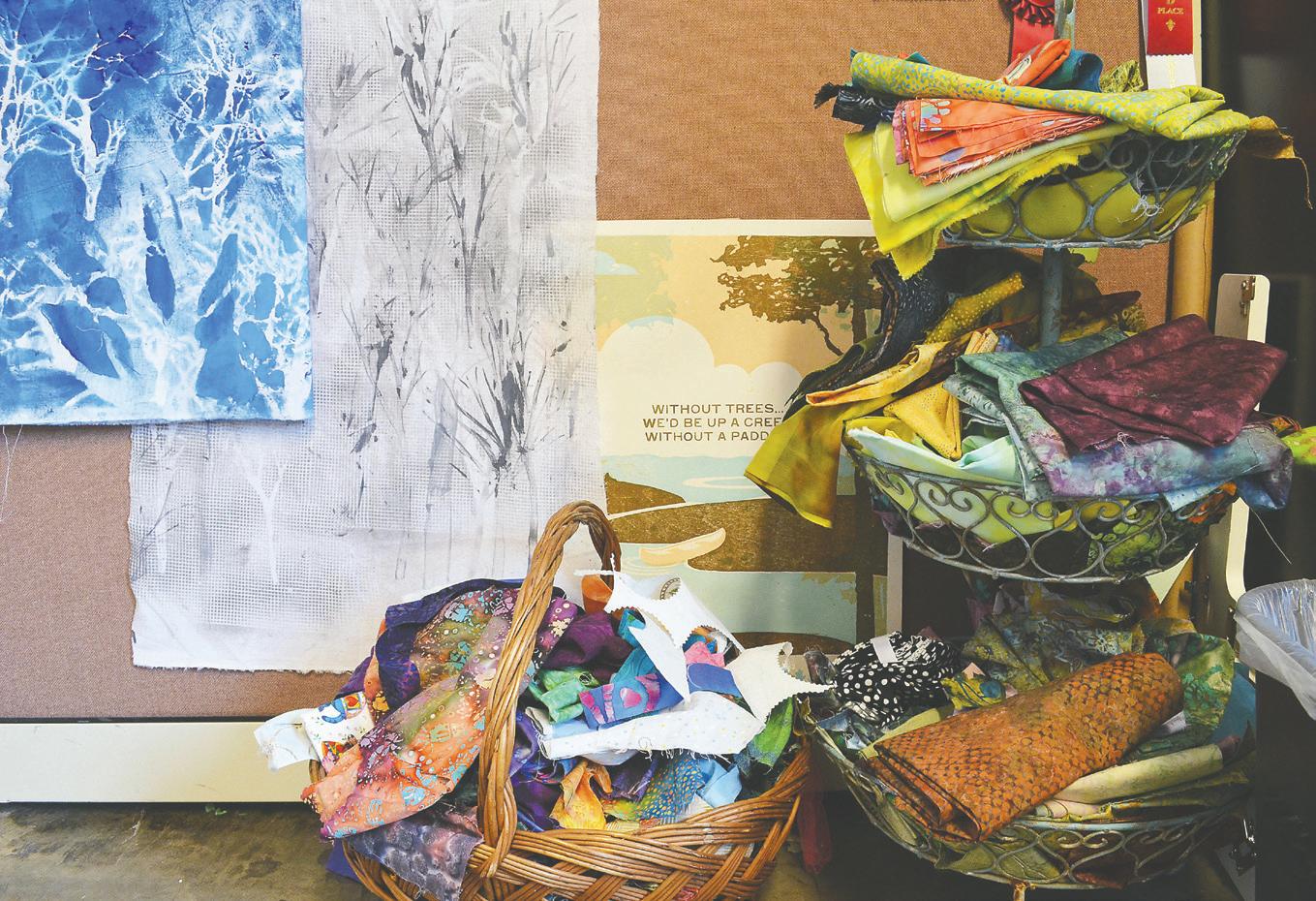
Past the front entrance of the modern Orr Street Studios — a welcoming foyer of black leather couches, stained concrete floors and artwork dotting every surface — Rebecca Douglas walks down a hallway into her studio. She bends to rummage through a set of sliding drawers, and her fingers return with tufts of fabric: squares of blue fringe, crosshatched strips of orange and one swatch that looks like a purple robe took a dip in an acid wash. Behind her, the big wooden table that serves as her desk is coated with works-in-progress. A blue quilt piece hangs halfway out of a sewing machine, still punctured by the needle. A fresh sketch on white paper rests
uncomfortably close to a coffee cup. A stack of history books about, as Douglas calls it, “women’s lib” — Women Are Here to Stay; One Woman, One Vote; The Shriver Report — dominate the table corner. She’s working on something new, and everyone she has talked to is excited about it.
She’s not normally one to make political pieces, she admits. But this time is different. Her new project is a fabric mural of the women’s rights movement, complete with images of a Sojourner Truth and a Susan B. Anthony, rows of pussy-hatted girls and a quilt composition of Douglas’ own daughter and granddaughter clutching a sign demanding “Equal Pay for Equal Work.” She gets consumed in her art quilting, in “which fabric goes with that fabric?” Sometimes she’ll miss meetings or even forget daily errands.
It’s a psychological state shared
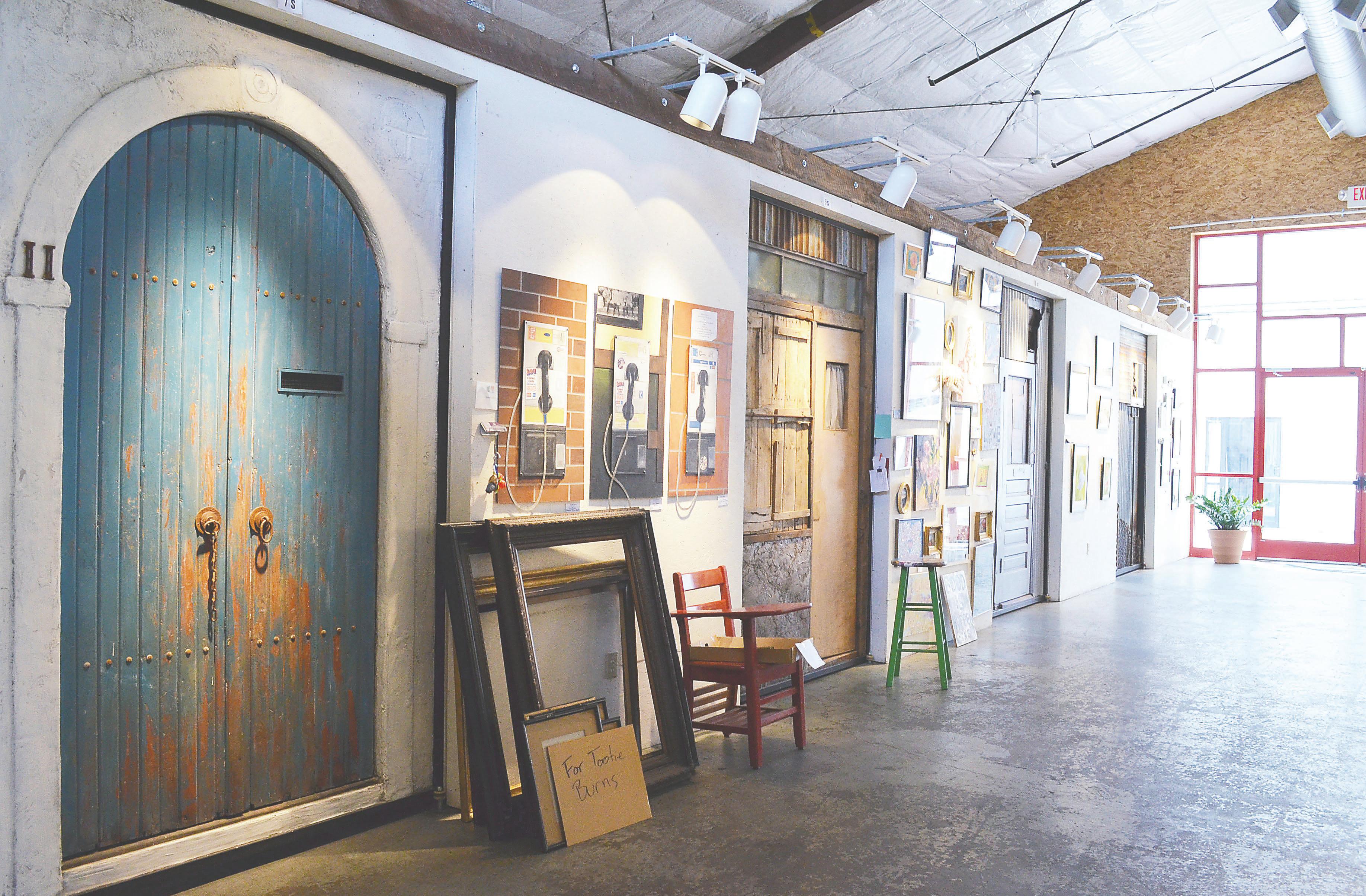
Orr Street Studios allows local artists such as Chris Teeter to display artwork in their rental studios. Studios owner Mark Timberlake approached Teeter to create “The Doors at Orr” in the studio’s hallway, a display that has become synonymous with the 10-year-old studio.
Quilts always have been a part of the life of artist Rebecca Douglas (top). She acquired her love for art quilting from her mother and today uses it as a way to process emotion. Photographer Stacie Pottinger runs Rogue Studios. She lives by words her mentor taught her: “I’m not taking a picture, I’m creating an image. I’m not taking anything.”
by the other artists inhabiting Orr Street Studios. Just around the corner, Hannah Hollister Ingmire loses herself in mixed media, where she can scatter the sand she collected off of Cape Cod, Massachusetts, onto a canvas, oblivious to the rest of the world.
Ingmire, a spunky 73-year-old wearing a pair of dangling homemade earrings, says she never gets tired of painting. If a day goes by where she hasn’t painted, that’s a day wasted. That logic makes sense considering Ingmire has studied with art teachers since she was 5 years old; her printmaking instructor was Mauricio Lasansky, a friend of Pablo Picasso’s. She adores Paul Klee and Vincent Van Gogh. She sometimes struggles to part with pieces she’s sold: “You don’t want someone to take it who just thinks it looks good over
FACES TO KNOW
JOEL SAGER
Sager balances creating and distributing art
BY GERARD EDIC
Ethe toilet.” But, more than anything, she loves that art has given her a vessel for her love of nature. Her paintings are covered in curiosities such as driftwood, sand, beads, discarded plastic and beer bottle caps. She wants to call attention away from our mechanized world and toward our natural one — even when the two collide.
FREE TO BE YOU
Such is the case with Orr Street Studios itself, a non-profit art gallery where some artists work with sea shells and others with sculpted metal or camera machinery. The studios are known for being a place where artists can indulge in any medium or activity they desire. “I came (to Orr Street Studios), and I just fell in love because it’s the best of everything,” Ingmire says. “You can
very morning, Joel Sager, co-owner and curator of Sager Braudis Gallery, follows the same routine. He wakes up, takes care of his three boys and arrives at his workroom at Orr Street Studios at 9 a.m. For Sager, co-owner and curator of the Sager Braudis Gallery, a daily routine is important for creativity. “I’m very regimented,” Sager says. He’ll spend the morning working toward a new cohesive series of artwork. Locking himself for hours in his studio, or “fortress of solitude,” Sager tunes out the world to focus on the work at hand.
Sager, who loves both curating and creating his own works, has to balance his two voices as an artist and a curator. He describes his art aesthetic as “something found in the attic,” not literally, but figuratively. But it’s not like he just walks up into an attic and sees something interesting. Rather, it’s finding something after digging through everything else. The antique is then placed in a modern setting to create a new type of iconography. This found-in-the-attic style is a vintage one that, when taken out of context and placed in the modern world, can create a new narrative and reflect his Midwestern roots.
Although many of Sager’s pieces are still-life paintings, he considers all of his works to be a portrait of some kind. “You capture some psychological moment,” Sager says. “With things it’s with context, add a bit of narrative to think of your own psychological state.” He says that each subject in the paintings were inspired by someone he knew.
Vox published a version of this profile April 20, 2017.
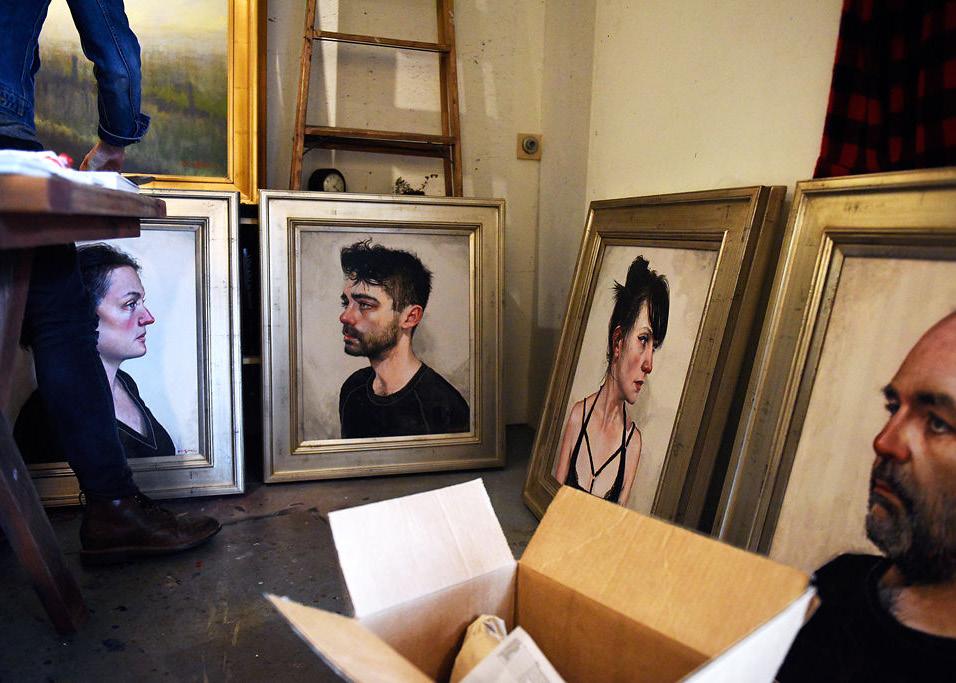
A portrait series of local artist Joel Sagers’ lines his studio at Orr Street Studios in Columbia. Sager says each subject in the paintings was inspired by someone he knew.
CHECK IT OUT
FIRST FRIDAY
Check out all the North Village Arts District has to offer during First Fridays, the first Friday of each month.
July 7 and Aug. 4, 6-9 p.m.
teach, you can paint, you can exhibit, and you can sell. I’ve been here ever since.”
The galleries rotate artists as needed, so “whatever space is available, you fill,” Ingmire explains. Studio spaces are snatched up quickly, especially the ones with gorgeous doors decorated by metal sculptor Chris Teeter. Artists can teach classes to children, serve as mentors for private lessons, run small businesses and participate in events like Second Saturdays and First Fridays all from within the warehouse.
KEEPIN’ IT YOUNG
Behind one of Teeter’s sculpted doors, Anastasia Pottinger, known to many as Stacie, rests her phone on the couch beside her, and every few minutes she pauses conversation to play Pokemon Go. She’s doing it for her nephew, she assures: She promised she would make use of her studio’s location as a PokeStop to collect Pokeballs for him. It is this inherent playfulness — and, though she fears the cliche, her “kid at heart” personality — that makes her fit in the Orr Street crew despite being the only resident commercial portrait photographer who makes her living that way. That doesn’t bother her much, however. She sees photography as an equally legitimate and challenging art form. Not everyone can take a picture like she can.
Three years ago, one of her special projects went viral on the internet. Titled “Centenarians,” the collection of photographs documented close-up images of senior citizens, zooming in on the folds of their skin, the jut of their lips
or the veins of their hands. This sort of work was, and continues to be, part of why Pottinger considers photography such a special art. Older citizens are devalued in society; putting them in front of a camera forces audiences to pay attention, and it retains a piece of their stories. “One thing I’ve learned over the years is when you die and go to a person’s funeral, everyone has a scrolling slideshow,” Pottinger says. “That’s what you have left. … In that respect, it’s quite an honor to be the person who gets to make those for people.”
If anything unites the artists at Orr Street Studios, it is this emotional devotion to the craft. It is what allowed Timberlake’s building project to become a vision of artistic collaboration and community impact in downtown Columbia. It’s a place where artists can vent to one another over the sounds of The Avett Brothers or Neil Young. It’s a recreated warehouse, now a place of creation.
Glancing at the sketch for her next work, the one depicting the fight for women’s rights, Douglas admits she’s nervous to get it right. Her mother wore a Susan B. Anthony silver dollar around her neck “for as long as anybody can remember.” This is personal.
But around the corner, in her own studio, Ingmire isn’t worried. She’s an important cog in the Orr Street Studios’ support system, and when she talks about Douglas’ sketch, she starts grinning. “Rebecca’s working on a wonderful piece.”
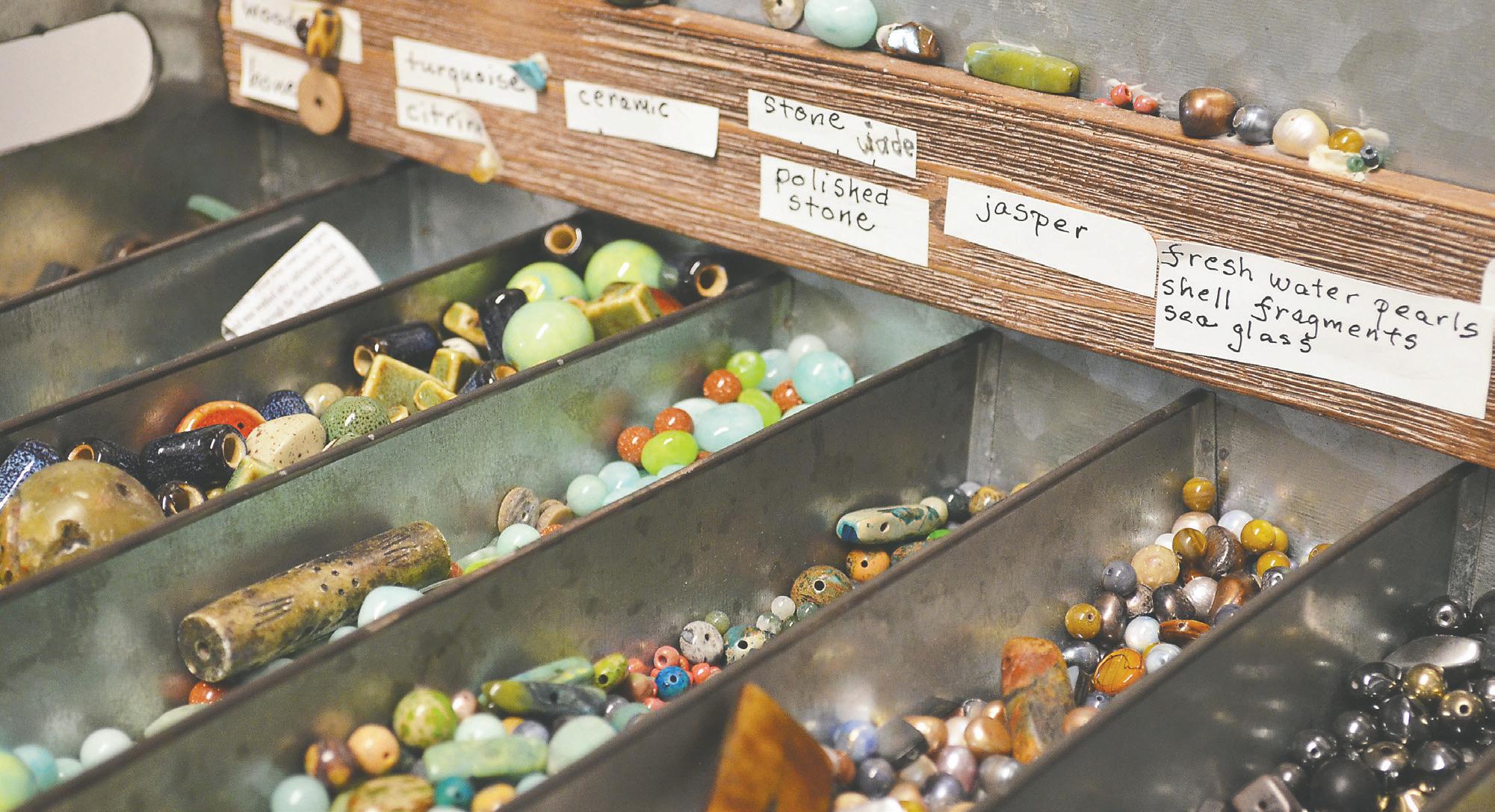
The studio welcomes various types of artists in the space. Artists such as Hannah Ingmire and Rebecca Douglas use unconventional materials, including Ingmire’s rocks and jewels, and Douglas’ fabric, for their work.
FACES TO KNOW
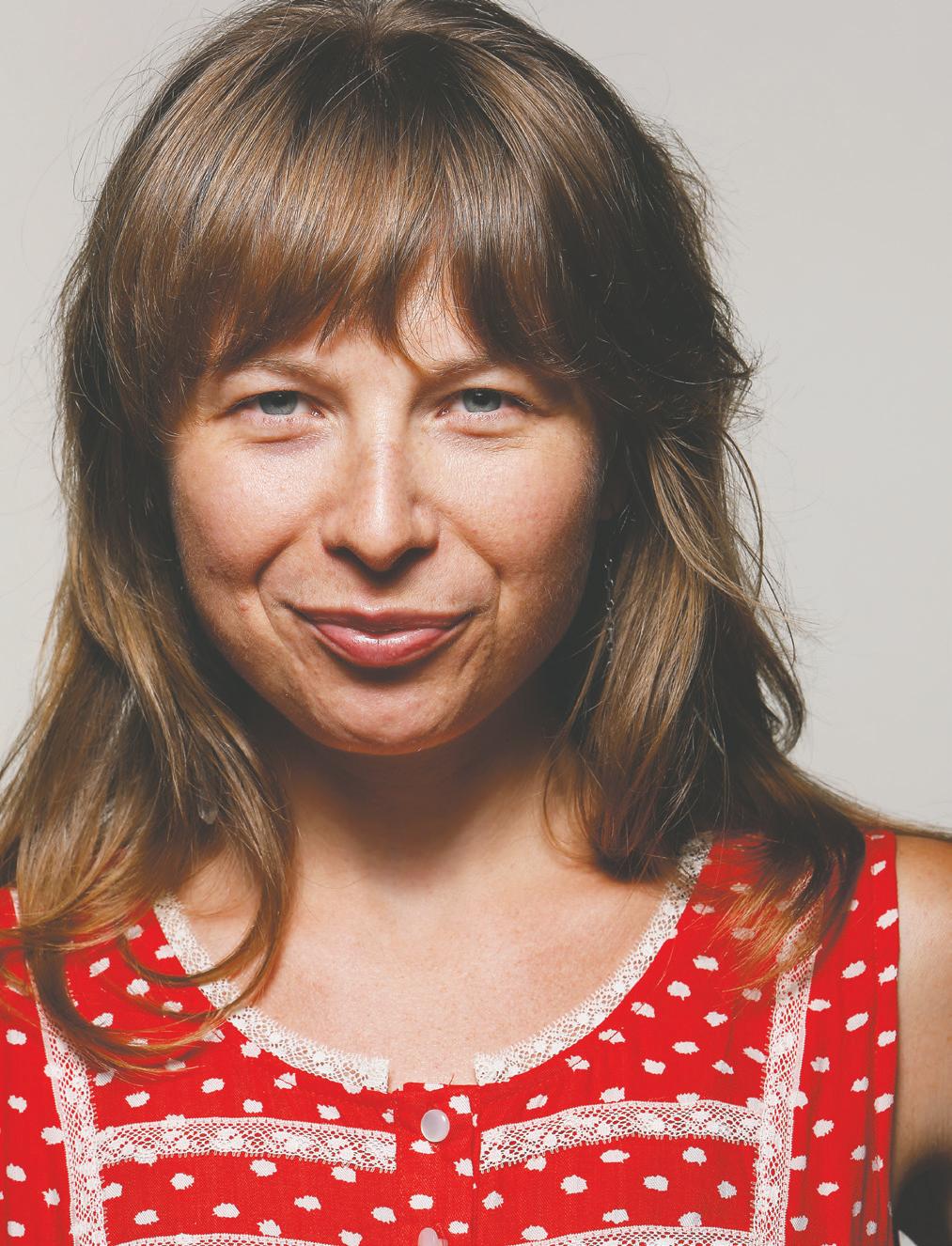
HEATHER CARVER
Playwright offers dark comedic approach to
BY CLAUDIA GUTHRIE
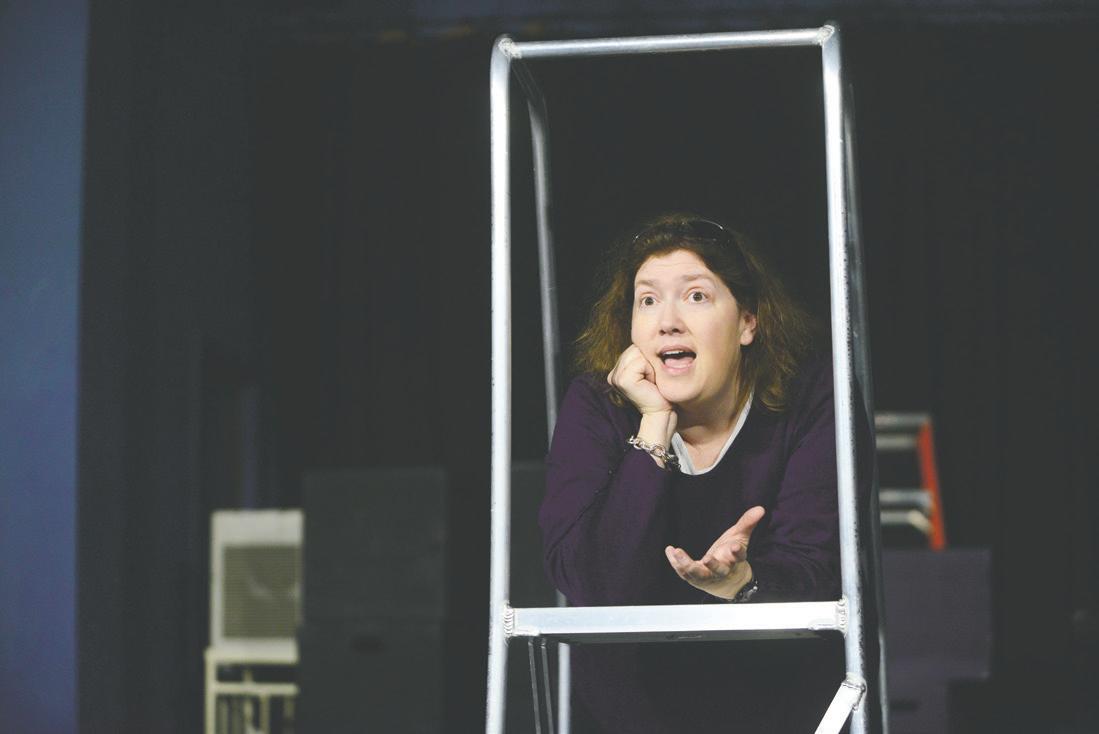
Heather Carver wants people to know that she’s still here, and she’s still funny, even though cancer isn’t.
Doctors found a grapefruit-sized tumor in her left breast in October 2005. Carver underwent a double mastectomy, six rounds of chemotherapy and radiation treatments.
Throughout this process, the MU theater professor and department chair wrote about her experiences. Carver turned her writings into a one-woman play, Booby Prize: A Comedy about Breast Cancer, in 2007. Four years later, she wrote Booby Trap, focusing on living with the fear of death.
In 2016, after her diagnosis, and with no active tumors, Carver released a new play. Booby Hatch: A Hysterical Musicale, the third in her trilogy. It premiered at MU that Carver has mastered turning serious experiences into hilarious tales for the stage.
WHY DID YOU TAKE A COMEDIC APPROACH TO A SUBJECT THAT NORMALLY ISN’T FUNNY?
Part of it is that, honestly, my life kept being funny.
illness
I think a lot of times, people think of Hollywood movies where people’s lives are awesome. Then they get cancer, then they die, and everybody’s sad. But there’s a lot of the person getting sick and having cancer and still living his or her life. And there can still be humor happening.
ARE THERE ANY PARTS OF YOUR CANCER EXPERIENCE THAT YOU DON’T WRITE ABOUT?
I’m pretty open. I tend to offer insight into how I’m feeling, and humor is a way to get there together. Not everything is a story. But the more the audience knows me, the more they can understand the impact a cancer diagnosis would have.
WHAT DO YOU WANT AUDIENCES TO TAKE AWAY FROM YOUR PLAYS?
Everybody’s story is different. There is no one cancer story. It’s really frightening to hear you’ve got cancer. I’m not saying my play is going to take the fear away from people being told that. But the more we share our experiences, then someone who is going through cancer doesn’t have to feel the weight of it alone.
Vox published a version of this Q&A March 3, 2016.
ALISA CARLSON
What it takes to be a curator at the Museum of Art and Archaeology
BY CAROLYN HEGER
Alisa Carlson, the associate curator of European and American art at MU’s Museum of Art and Archaeology, possesses a diverse art history background. Although she primarily studies early modern Northern European art, the Cannon Falls, Minnesota, native interned at the Museum for African Art in New York as an undergraduate student at Hamline University. From 2011 to 2012, she also completed a Fulbright fellowship in Berlin, where she researched the portrait drawings of German artist Hans Holbein the Elder. Carlson chose her job over teaching positions at other schools because she would be a curator at a museum associated with a university — a detail important to her.
WHAT INTERESTS YOU ABOUT CURATING?
That I’d work with objects on a day-to-day basis as opposed to if I were teaching or if I were working for an auction house. Usually, professors are teaching from PowerPoints. Something that did not appeal to me was showing slides for the rest of my career,
as much as I really love teaching and working with students. If I were to be working in, say, an auction house or a gallery, then it’s essentially just a monetarily driven system.
HOW DID YOU CURATE YOUR FAVORITE EXHIBITION AT THE MUSEUM?
The Distinction exhibition (through December 2016) is probably my favorite. Part of the reason I like it is I had to dig into the MAA’s collection more. This exhibition required me to do a lot of drawing out on “What are all of the examples we have of portraits?” The vast number we had was not even possible to put into this smaller exhibition. That required me to start being more selective.
WHAT IS ONE OF THE MOST CHALLENGING ASPECTS OF YOUR JOB?
Time management and keeping up with the different areas I am involved in at the museum, like leading tours. It’s trying to balance that with my ongoing research and writing. It’s balancing the day-to-day pulse and the slower kind of ebb and flow that goes with a big research writing project.