
IN THIS ISSUE ONLINE
FEATURE
Suicide rates are high throughout Missouri, but they’re particularly high among teens. They don’t have to be, though. One of the most important solutions is recognizing the problem exists and understanding it’s preventable, as one local family has done. PAGE 6
NEWS AND INSIGHT
See how Columbia Public Schools are adjusting to later hours and taking the phrase “Stay in school, kids” to a new level with breakfast, lunch and, now, dinner. PAGE 4
THE SCENE
Make a pit stop at FlyOver restaurant on the south side of Columbia, where the constantly changing, tapas-filled menu of Midwestern fare is taking off. PAGE 5
MUSIC
Cheer up and turn up — the music, that is. California band The Mowgli’s is bringing social issues to light with sunny tunes and vibrant beats, and it’ll soon bring the positive feels to Columbia. PAGE 13
ARTS & BOOKS
Leaf through the pages of these new fall books that will keep you reading all the way to the first snowfall. PAGE 14
Read a book that’s almost as young as its main character. Nutshell, narrated by a fetus, is hot off the press, and Vox has all the details on this Hamlet-esque story. PAGE 14
COVER DESIGN: JULIA TERBROCK
COVER ILLUSTRATION: HUNTER MYERS
VOX STAFF

TAKE THE SCENIC ROUTE
The leaves are changing, and harvest spice candles are lining store shelves. Autumn is here. Experience the beautiful fall sights with a quiet, winding drive. These picturesque routes on Columbia’s back roads will get you the best views before the leaves disappear.
SLICE, SLICE, BABY
Columbia’s got a lot of pizza to offer, but which slices are worth dropping dough on? We’ve made our rounds to help you decide which piece is the best for you.
STRANGER READS
The popular Netflix series Stranger Things is over for the season, but that doesn’t mean the sci-fi fun has to end. Switch off the screen, and open one of these horror or sci-fi books that will keep the strange withdrawal to a minimum.
EDITOR’S LETTER
CHRISTINE JACKSON EDITOR-IN-CHIEF
SEPTEMBER 22, 2016
VOLUME 18 ISSUE 30 | PUBLISHED BY THE COLUMBIA MISSOURIAN
Shock is a strange emotion. It numbs us and tries to shield us from pain. In my experience, it’s what follows news of the death of a loved one.
Shock is what I felt when, at the beginning of this week, I learned that a once-close friend had killed himself. A knot formed in my chest as the rest of my day went on something near normally. I spoke to friends. I went to the grocery store. I edited this magazine.
But when activity lulled and I was left to my own thoughts, I kept coming back to the same one: “How did this happen?” I’ll likely never know the answer, yet it’s a question people are forced to ask themselves all too often.
This week’s feature (Page 6) examines the continued rise in the number of suicides in Missouri. It aims to illuminate the many ways that state funding and attention for suicide prevention are horrifically lacking, and ways the state is trying to be better. Perhaps it will leave you, too, asking, “How does this happen?”
There are many resources dedicated to helping people at risk for suicide; several are listed in the feature. But the most accessible resource people have is their friends and family. Better understanding suicide prevention will make us all more equipped to look out for the people we love. If they’re struggling, knowing the signs and the resources can help us help them, or find someone who can. Paying attention could be the difference between life and death.
Schrader, Jessica Sherwin, Brooke Vaughan Music Editors: Marlee Ellison, Meredith McGrath
Bobby Ceresia, Corin Cesaric, Mitchell Forde, Max Havey, Kelsey Hurwitz, Lis Joyce, Rick Morgan, Rachel Phillips, Karlee Renkoski, Stephanie Sandoval, Alex Schiffer, Guimel Sibingo, Mike Tish, Carolina Vargas, Catherine Wendlandt, Clara Wright, Taylor Ysteboe Editorial Director: Heather Lamb
Jennifer Rowe
Director: Sara Shipley Hiles Writing Coach: John Fennell Office Manager: Kim Townlain
Editor: Christine Jackson Deputy Editor: Dan Roe Managing Editor: Madison Fleck Creative Director: Ben Kothe Digital Managing Editor: Abby Holman Art Directors: Madalyne Bird, Elizabeth Sawey Photo Editor: Mary Hilleren Online Editor: Lea Konczal Multimedia Editor: Mitchel Summers News & Insight Editors: John Bat, Katelyn Lunders The Scene Editors: Kelsie
Arts & Books Editors: Katie Akin, Luria Freeman Contributing Writers:
Executive Editor:
Digital
ONE IN A (FEW) BILLION
Donald Trump Jr. tweeted an image of a bowl of Skittles this week to express his opinion about Syrian refugees. He asked if people would eat the candies if they knew there were three poisonous ones in the bowl. Beyond being offensive, the statement also is wrong. The bowl would have to hold 10,930,000,000 Skittles for the comparison to work, according to Cato Institute statistics. Rounding up, that’s a 0.0000000003 percent chance of encountering a Skittle that could kill you. Turns out, Trump Jr.’s racism is much scarier than those odds.

Travel around the world through canvas and clay. The Museum of Art and Archaeology has reopened at its MU campus location in Swallow Hall. The museum has been housed at Mizzou North for the past two years during renovations to buildings on the quad.
ABC Notorious Tonight at 9 p.m.
READY, SET, DVR: IT’S PREMIERE WEEK!
Don’t worry if you missed the tons of new shows that premiered earlier this week. Here are a few coming up this weekend to keep you pop cultured:
OKAY SUMMER, YOUR TIME IS UP.
Thanks to the sweltering heat, you’d never know today is the first day of autumn. We can all agree it’s time summer took a hike because sweating while sipping a pumpkin spice latte is really not festive.
CBS MacGyver Friday at 8 p.m.
FOX
Son of Zorn Sunday at 8:30 p.m.

So long, Brangelina Based on his academic performance at MU, we knew Brad Pitt couldn’t commit. The couple of 12 years will divorce after two years of marriage.
Written by: Katie Akin, Madalyne Bird, Luria Freeman, Christine Jackson

It figures: Serving up school dinner
High schools are making cafeteria meals a three-a-day activity
BY KATELYN LUNDERS PHOTO BY STEPHANIE MUELLER
Once 4:05 p.m. hits, the bell goes off at Muriel Williams Battle High School, and hundreds of students file out of their classrooms. Dozens of hungry teenagers holding white paper lunch bags begin to form two lines at cook and cashier Rucole Stapleton’s checkout counter — a fast line for kids taking the bus home and a standard line for those in extracurricular activities on campus.
It might come as a surprise to those who have mystery-meat-filled lunch memories, but Columbia Public School District’s students race to get in line. Beginning this fall, the high schools are dishing out dinners, so students can dig into a chicken sandwich or a meatball sub after school.
The district decided to offer the meals as a solution to the backward shift in the high school schedule. Starting in fall 2013, students attend school from 9 a.m. to 4 p.m. As a result, extracurricular activities convene later and often conflict with dinner. The program is relieving hunger pains: Students no longer have to wait until they get home to eat their third meal of the day.
Food is served Monday through Friday at 4:15 p.m. The dinner rush is usually over by 4:45 p.m. at Battle because students sprint to the cafeteria to grab a to-go bag before the buses depart. Up to five hours have passed since the first lunch shift at 11 a.m. — enough time to tempt some to students to sneak a second cheeseburger into their bag.
Director of Nutrition Services Laina Fullum and Battle Principal Kim Presko recently served Vox a little sample of school dinner.
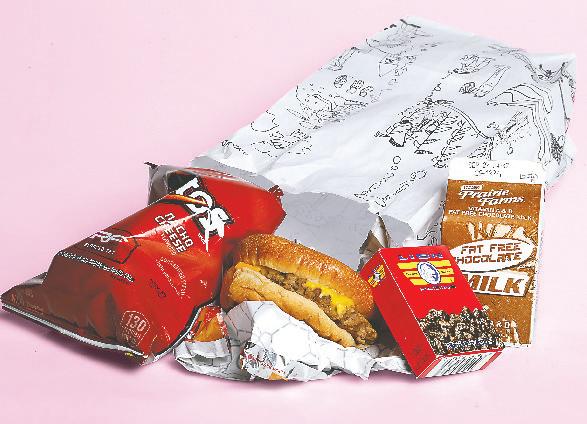
On a recent afternoon at Battle, dinner consisted of a cheeseburger, Doritos, raisins and milk. In the new dinner program, students can also purchase a la carte items, such as salads, energy drinks and cookies.
68 600 60 63 ONE
Cost of a single dinner for students at the high schools. The price is 40 cents for a reduced-price meal, $3.60 for a second
Estimated number of meals served in the first two weeks of the school dinner program at Muriel Williams Battle High School.
Average number of students who receive free dinner in all three high schools combined. An average of nine students receive dinner at a reduced price.
The number of 30-hour-per-week employees at each high school to manage school dinners. Rucole Stapleton is in charge of Battle’s dinners and says the favorite item is the ham sandwich, which students have been picking over tacos on Thursdays. “Who chooses cold cuts over tacos?” she jokes.
FOUR
Average number of football players who eat dinner at Battle. Presko attributes much of the program’s early success to the school’s athletic teams.
Types of items represented. A typical dinner includes a main course, side, fruit or vegetable and one carton of milk.
Average number of meals served at Battle per night. The 1,430-student school is serving the most meals out of the district. Sixty-eight is the average, but recently Presko says as many as 141 students have frequented the cafeteria for dinner.
Home flown
FlyOver fare creates an identity for Midwestern food BY
Most restaurants have classic staples. The chefs carefully craft menus to feed the cravings of their hungry customers, but those menus might never change.
FlyOver
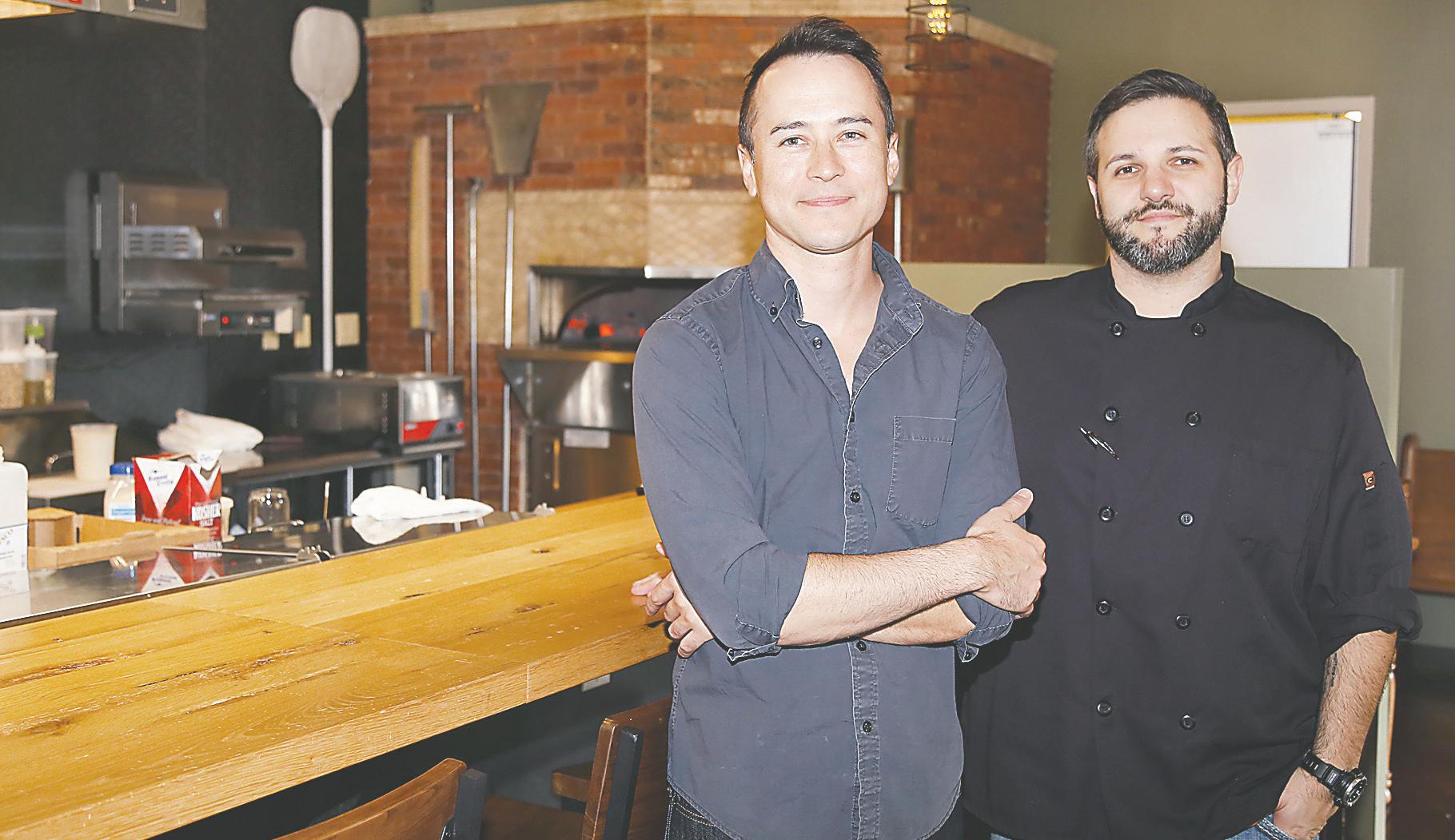
At FlyOver, a new tapas-style restaurant on the south side of Columbia, head chef Adam Wells-Morgan and head bartender Dan Dethrow are working as co-owners to prove that an ever-changing menu creates a unique environment that keeps customers coming back for more.
212 E. Green Meadows Drive
REBEKAH HALL
bar-hoppers downtown. Aiming for customers in their mid-to-late 20s with a love for flavorful eats, Dethrow says their place on Green Meadows Drive has contributed to the new business’ success.
Tues.–Sat., 5 p.m. to 1 a.m. 825-6036, flyovercomo.com
One dish in particular has stolen the spotlight at FlyOver: the Bistro Filet. Because Wells-Morgan changes the menu almost daily, opportunities to try the dish are sporadic, and customers grab it when they can.
Wells-Morgan and Dethrow both grew up in Columbia. They’ve strayed from the Midwest throughout their lives, but they have returned home to create and serve food and drinks they love — that are specifically Midwestern.
“All of our friends called the middle of the country flyover states — like there’s nothing worth stopping and seeing — when the majority of their food actually comes from this part of the world,” Wells-Morgan says.
While considering locations for FlyOver, the pair wanted to reach a crowd a little bit older than the
The Bistro Filet is a particular cut of beef shoulder that is tender and flavorful.
Wells-Morgan cooks the meat using a method called sous vide. The technique involves sealing meat and seasoning in an air-tight bag and cooking it in a temperature-controlled water bath, which prepares the entire piece of meat at the same temperature. This imparts a tender flavor and keeps the meat from becoming tough.
The Bistro Filet is then removed from the water bath, basted with butter and thyme, seared and served with parmesan fries, wilted greens and Worcestershire butter. The crisp, cheesy
and
restaurant and bar industry for years. The wood-fire oven built into the corner is a signature element of the restaurant, and Wells-Morgan describes it as “worth every penny.”
fries complement the rich earthiness of the meat to create a dish that smells like a mixture of fine dining and fried goodness.
Dethrow says FlyOver aims to deliver excellent customer service along with its food. In the next five years, Wells-Morgan and Dethrow hope to maintain quality
and flavor and to create a name for the food of the Midwest.
“I think we just want to continue making people feel at home and give them a good, comfortable experience,” Dethrow says. “We want to take the pretension out of it, while still pushing the boundaries of what food and drink can be.”



Dan Dethrow
Adam Wells-Morgan, co-owners of FlyOver, have had their hands in the
THE ROAD
to PREVENTION
Missouri has a growing suicide problem.
To solve it, we need to stop ignoring it.
S tory by BRIELLE GREGORY


Students gathered at Francis Quadrangle in September 2014 to light lanterns in remembrance of loved ones lost to suicide. All proceeds were donated to the Mid-Missouri Crisis line.
PHOTO BY LAUREN KASTNER
On roads marked with speed limits 50 mph or higher, half-inch strips of concrete rise up a foot away from carefully painted white lines. These notches, which first popped up in Missouri in 1991 and are commonly called rumble strips, shake sleepy drivers awake when they drift from the road to the shoulder. As states across the country began installing the strips throughout the ’90s, the Federal Highway Administration reported that run-off-the-road crashes decreased by up to 88 percent.
“What a brilliant thing that was to prevent untold numbers of deaths,” says Paul Thomlinson, vice president of research and quality assurance at Burrell Behavioral Health in Springfield and a psychologist of about 20 years. “What a brilliant and simple thing.”
And that’s not the only thing preventing drivers from untimely death. There are also airbags and seatbelts. There are giant flashing signs shouting warnings to put down the phone and bright orange barrels that can be spotted from a mile away.
In 2014, about 30,000 people died from motor vehicle accidents across the U.S., with 766 of those deaths occurring in Missouri. By comparison, about 42,000 Americans died by suicide that year, and 1,017 were from Missouri. The suicide rate in Missouri has been higher than the national rate for over a decade with about 16 suicide deaths per 100,000 people, according to the Missouri Institute of Mental Health.
But for those who are contemplating suicide, there are no flashing, blinking or illuminated signs telling them to slow down. “The point is, there’s more suicide than all of those car accidents,” Thomlinson says. “But where are all those analogous ways of preventing suicide? Where are the airbags and the rumble strips and the flashing signs?”
Suicide has continued to grow as a leading cause of death in the United States, especially in the past two decades. From 1999 to 2014, the suicide rate in the U.S. climbed 24 percent, according to the Centers for Disease Control and Prevention. The only group that didn’t experience an uptick in suicide rate was the 75 plus group.
By contrast, teenagers experienced a much more drastic increase than the rest. For teen girls in particular, the number was nearly triple that of 1999.
According to the CDC, suicide is the second leading cause of death for ages 10 to 24, a ranking trumped only by car accidents.
“Those are incredibly hard numbers to read,” Thomlinson says. In 2014, 11.7 percent of Missouri high school students reported seriously considering suicide, with that number climbing to 15 percent among college students. According to the Missouri Assessment of College Health Behavior administered last spring (1,318 respondents at MU), 39 percent of students reported having thought about suicide at some time in their lives, 19 percent reported thinking about suicide in the past year, and two percent reported they had made a suicide attempt in the past year. For teens in Missouri, firearms were the means
“ but where are all those analogous preventing suicide ? where are the airbags rumble strips and the flashing
paul thomlinson
analogous ways of airbags and the flashing signs ?”
for about 50 percent of suicide deaths, with suffocation following closely after.
People often misperceive suicide as an act of impulse — that someone might suddenly get upset and kill themselves, especially teenagers managing frantic hormones and heavy social pressures. But Thomlinson says that’s rarely the case. “It doesn’t come out of the blue,” he says. “They’d been thinking about it for a long time.” In a 2001 study, researchers found that identifying depression is particularly difficult among teens who often confuse depression with other emotions because of biochemical, psychological and social processes they experience during adolescence.
That’s the scary thing about suicide. It could happen to anyone, at any time, after months or years of contemplation without anyone ever noticing. It could even happen to the all-American, football-tossing kid next door.
the scope of the problem
13.4
National average suicide rate in 2014 (suicides per 100,000)
16.8
missouri suicide rate in 2014
10th
2nd
Ranking of suicide as a cause of death among Americans in 2014
Ranking of suicide as a cause of death among Americans aged 15 to 24 in 2014
Stuart Eiken had what his mother, Beth Eiken, calls a 100-watt smile — and what his best friend, Kyle Willcoxon, calls the best laugh. He played football for Rock Bridge High School, had a lot of friends and loved to joke around. One night, when he and Willcoxon were in the Wendy’s parking lot near the Columbia Mall, they started laughing hysterically. Stuart hit his head on the steering wheel, blasting the horn, which only made them laugh more.
“He was the kind of person who really enjoyed being around other people,” Willcoxon says. “He was just a very loving, outgoing person.” Stuart was, by any standard, a typical teenage boy.
But after completing middle school at Columbia Catholic School (now called Our Lady of Lourdes Interparish School) and moving on to Rock Bridge, Stuart started showing signs of depression. He became less interested in things he used to love, such as football. His mom noticed Stuart’s attitude had changed, and she encouraged him to see a counselor, but he refused. “He was afraid that if someone in the community knew he had a problem, people would look at him differently,” Eiken says.
Then the hammer hit. Eiken and her then-husband, Brad, announced they were getting a divorce. “After that, he did say, ‘It’s time to go to therapy,’” Eiken says. Stuart was prescribed antidepressants, which helped him until he eventually stopped taking the medication. He started doing drugs and drinking frequently, he was mean and agitated, he started to lose friends, and his girlfriend broke up with him.
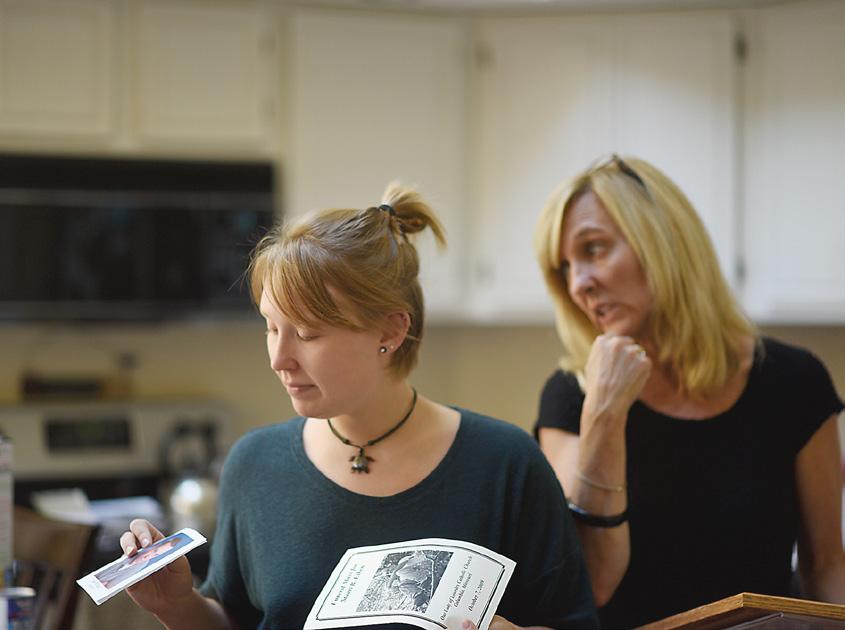
On Oct. 3, 2009, Stuart Eiken, 17 years old and a senior in high school, hung himself near a water treatment plant in McBaine.
“There was this very empty, kind of distraught feeling throughout the whole school for a while,” says Willcoxon, who is now an MU student. “It was hard to joke as much. We lost one of the big jokesters.”
5,079
4,144
u s suicides among 15- to 24-year-olds in 2014
u.s. homicides among 15-to-24-year-olds in 2014
number of suicides in the u s
42,773 117 in 2014 per day
29,971
number of u s suicides by white males in 2014, which is 70 percent of the total
6.3 million
number of americans who knew someone who died by suicide in 2014
1 in 9
suicide attempts that result in death
Since 2008, the Columbia Public School District has lost five teens to suicide. In 2012, the district implemented a four-year program to educate its students on teen suicide. Students receive suicide prevention education in the sixth, seventh and eighth grades, and then they receive advisory education in the ninth grade. Students are taught about healthy relationships and healthy choices through a variety of lessons, though the program’s main goal is to dispel the stigma that mental illness is not a treatable disease. “It helps kids understand that if you’re depressed, you can be treated for that, just like you can be treated for a
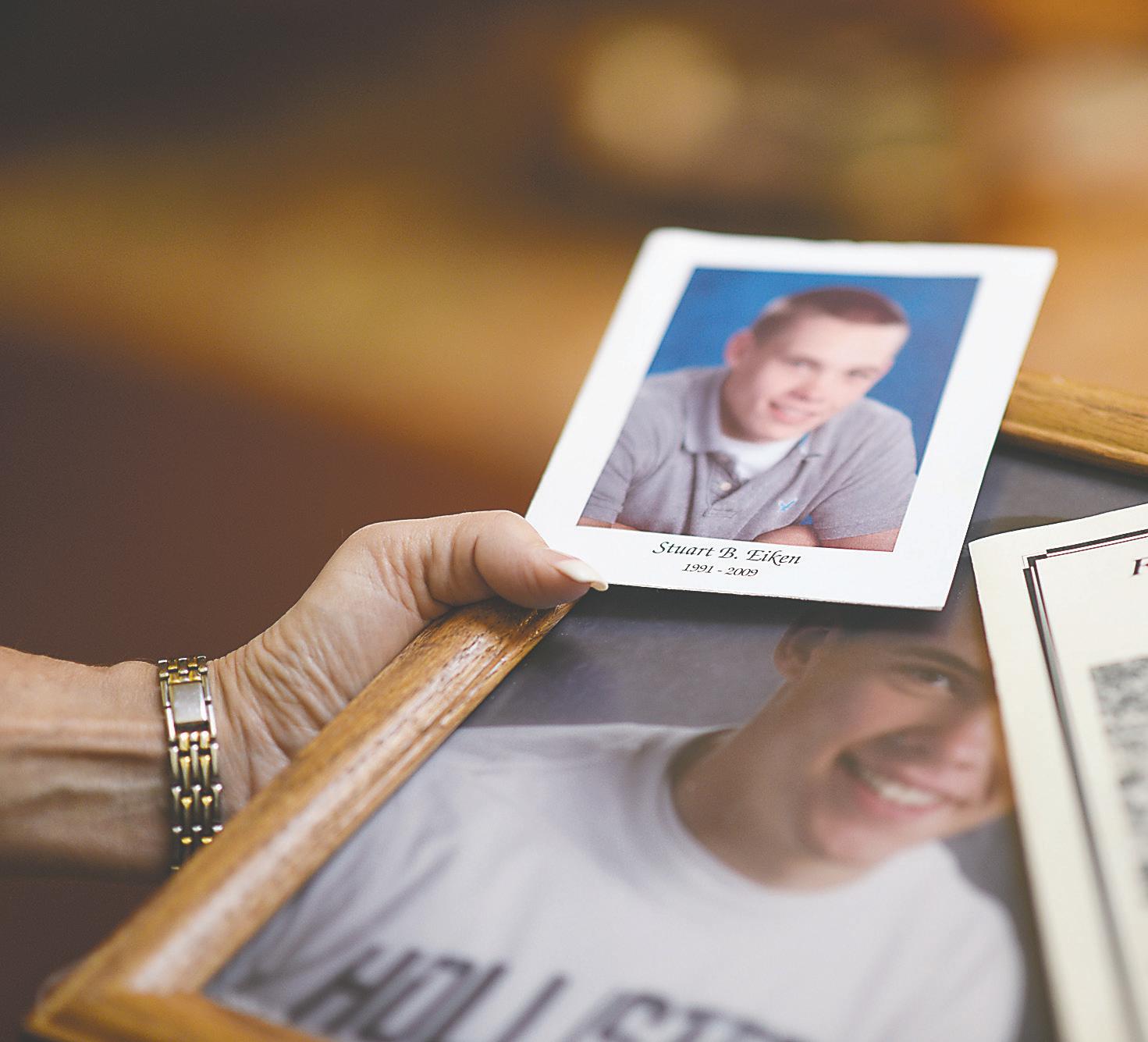
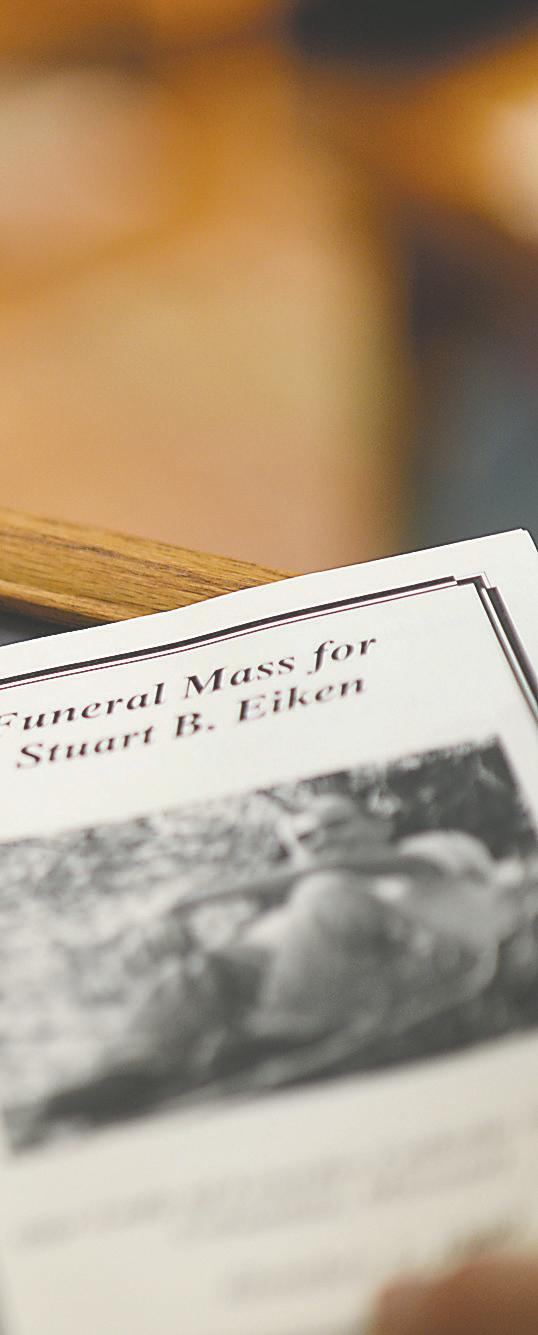
Beth Eiken holds images of her son, Stuart Eiken, including his funeral card. Stuart Eiken died by suicide on Oct. 3, 2009.
broken arm,” says Betsy Jones, the district’s coordinator for guidance and counseling and Rock Bridge’s director of guidance.
The program is modeled after a national organization called SOS Signs of Suicide High School Prevention Program, which was created by Screening for Mental Health, Inc. According to its website, the SOS program saw a 40 percent decrease in self-reported suicide attempts during a 2007 study.
Jones believes one driving factor of the increase in suicide rates over the past two decades is social media. “I’m over 50, so when kids were being bullied all those years ago, they could go home and they weren’t continuing to be bullied,” she says. “Now, because of social media, that never stops.”
Thomlinson agrees that social media could be at the root of increased suicides, particularly for teens. Destiny Gleason, a Warrenton teen whose suicide story went viral in April of this year, is an example of this. Gleason, 14, killed herself amid constant bullying both at school and on social media.
“In some fashion, social media is the blessing and the curse,” he says. There are now tweets, Facebook and Instagram posts meant to increase awareness of prevention techniques, he adds.
The downfall of social media, however, is that it plays into the basic elements of human nature. “Social psychology has taught us that dehumanization happens very quickly when one is separated physically,” Thomlinson says. “People can be breathtakingly cruel and mean online and say things that they never in a million years would say to your face.”
Although many argue social media plays a role in the uptick, the root cause of the problem consistently boils down to two things: belongingness and burdensomeness. Thomlinson says that if someone feels like they don’t belong or are a burden to loved ones, they’re more likely to have suicidal thoughts. “That’s the desire part of it,” he says. “There are a lot of people who feel that way, and they end up dying of old age not having killed themselves.”
That’s because killing oneself is against human nature, Thomlinson says. “We’re biophilic,” he says. “We’re continually focusing on our own survival and love of life. That’s a deeply ingrained thing in human beings.” So how do people kill themselves if it’s so unnatural? Thomlinson says people have to be frequently exposed to death, destruction, pain or suicidal behavior to obtain a fearlessness about death.
For teens, that fearlessness often comes in the form of self-inflicted injury, such as cutting. “Causing your own death is not something most people would be able to do,” he says. “The barrier’s too high. But (self-inflicted pain) can actually lower that threshold.”
Missouri has been in the spotlight for its high suicide rate. It’s now worth considering whether we’re doing enough to stop it. The state has been a national
warning signs AND how to help
what you should watch for
Talking about wanting to die or wanting to kill themselves
Mentioning feelings of emptiness, hopelessness or having no reason to live
Expressing great guilt or shame
Talking about feeling trapped or that there are no solutions
Feeling unbearable pain (physical or emotional)
Abusing alcohol or drugs
Acting anxious or agitated
Withdrawing from family and friends
Changing eating and/or sleeping habits
how you can help
ask “Are you thinking about killing yourself?” keep them safe by reducing access to potentially lethal items or places. be there, listen carefully and try to sympathize with what the person is feeling. connect them with resources (below). stay in touch after a crisis or after being discharged from care can make a difference. identify ways to support their recovery, such as reducing their workload, allowing others to help them with daily responsibilities and socializing with supportive people.
local crisis hotlines
Missouri Suicide Hotline
800-395-2132
MU Counseling Center
Business hours: 882-6601
Weekends and holidays: 882-6601
New Horizons
443-0405
The Trevor Lifeline (LGBTQ specific)
866-488-7386
leader in a program called Mental Health First Aid, which is geared toward teaching participants the protocol of dealing with people who might be at risk. Although the nearest program is in Jefferson City, 29,491 people have been trained in Missouri, with more than 660,000 people trained across the country. Michelle Obama is an avid supporter of the program, and in 2014, Congress funded an annual appropriation of $15 million for suicide prevention training, according to the National Council for Behavioral Health.
That appropriation is a start, but states such as Missouri are perpetually behind due to certificate of need laws. These laws force health care providers to get state approval for each care-related expenditure, meaning that providers who want to help are at the mercy of the state for funding. A 2016 St. Louis PostDispatch analysis showed that “of the 34 states with suicide rates higher than the national average, 24 have certificate of need laws.”
Combining lifetime medical and work loss, each 2010 Missouri suicide death cost the state $1.8 million, according to the American Foundation for Suicide Prevention, totaling more than $1 billion in suicide-related lifetime expenses. Missouri has money in other budgets, though. The Missouri Department of Transportation 2016 budget request was $2.7 billion.
So does the federal government. The U.S. Department of Transportation’s 2014 federal highway budget was $77 billion. By comparison, the National Institute of Mental Health showed that between 2008 and 2013, the federal government invested only $400 million into suicide research. Yet a 2008 study in the American Journal of Psychiatry noted that untreated mental illnesses cost the federal government $193 billion per year — nearly three times the annual highway budget.
Suicide costs the federal government and the Missouri state government a lot of money. One might assume that would be reason enough to reallocate some funds for preventative measures, like we do with our roadways. But then, our policy makers would first have to acknowledge that suicide is preventable.
September is National Suicide Awareness Month, and people across the country are pushing for education to identify those at risk and ultimately decrease suicides. The first step is noticing the signs.
Dr. Laine Young-Walker, division chief and training director of the Division of Child and Adolescent Psychiatry at the MU School of Medicine, says that among the top signs for suicidal teens are showing rage, sleeping too little or too much and talking about wanting to die or being a burden.
If someone close to you exhibits signs of suicidal behavior, stay with them until you can get help. “Listen without judging, and show you care,” Young-Walker says.
Stuart Eiken’s mom believes his feeling that he had no one to rely on played a significant role in his death. Eiken says when her son told her he wanted her to stay away, she now realizes that was a cry for help. “People take their lives because they’re in so much pain that they don’t know of any way out,” she says. “If there’s change happening, you can detect it. Keep asking the questions. Keep pushing the issue.”
There might not be reflective white lines for those contemplating suicide. But the signs are still there, hidden beneath angry words and silent cries. These are the rumble strips — listen for them. You might save someone’s life.
“ if there ’ s change happening , you can detect it . keep asking the questions . keep pushing the issue .” beth eiken

Beth Eiken and her daughter, Maribeth Eiken, talk about their family at their home in Columbia.

The Mowgli’s beam sunshine with upbeat tunes
This California-based band knows life’s chock full of hangups, but it helps spread the love
BY DANIEL CHRISTIAN
For The Mowgli’s, music is a vehicle for joy — both yours and theirs.
The upbeat, indie-rock group from Calabasas, California, is “quintessentially Californian,” a definition that seems vague yet appropriate, says vocalist Katie Earl. She says California’s atmosphere influences its musical vibe. “The weather is good,” she says. “There’s a certain energy, a certain openness to all people.”
Their music is energetic, packed with skittering yet simple guitar riffs and keyboard rhythms that lead into catchy group choruses where all the members chime in on vocals. It’s the kind of music that gets you to move, to dance along to the band’s own exuberance. It’s alternative but laced with undercurrents that encourage a sing-along.
The sound is a way for The Mowgli’s to bridge gaps and spread positive energy, so their music is both political and humanitarian. The song “I’m Good” was recorded for an anti-bullying campaign, and “Room For All Of Us” supports refugee relief and benefits the International Rescue Committee. The Mowgli’s played a concert for the Occupy movement in 2011.
“I think Occupy was a good example of people coming out and saying, ‘We don’t really know what the problem is, but there’s a problem,’” Earl says. “There are too many homeless people and too many empty buildings. The wealth distribution in this country is really, really insane, and people work really, really hard just to have a pretty basic standard of human living … We’ve definitely shared some of those thoughts and feelings.”
After listening though, the band
wants its listeners to pull out their headphones with a lightened mood.
Earl hopes people feel better and even less isolated than they did before.
She recognizes that the band’s music is a necessary outlet for emotion, a prism through which people will look in hopes of seeing something to smile about. If The Mowgli’s can bring a shared sense of joy, they’re succeeding, she says.
“Music is a tool for connecting people and sharing your thoughts and feelings,” Earl says. “And in doing that, we feel less alone in the world, and you realize that your pain is shared, your fears are shared, your dreams. All of those things. You’re not alone.”
Yuna Ferguson, an assistant professor of psychology at Truman State University, has done research on how listeners respond when instructed to feel happy while listening to music. She says it’s perfectly feasible that people can manipulate their own listening experiences: If you tell yourself to be happy while listening to upbeat music, it could work.
“I think people really do benefit from having that intention going in — that ‘Oh, I need a break from something,’ or ‘I need an emotional pick-me-up,’” Ferguson says. “And if they choose a good piece, then I think they would benefit.”
Moreover, she says music and emotion share a synergetic relationship. This is what the Mowgli’s so frequently aim to tap into.
“There is actually research, specifically on music, about how emotion just seems to be inherent within music,” Ferguson says.

Earl is excited to be playing songs from their forthcoming album, Where’d Your Weekend Go?, on their tour, which stops in Columbia. The new album is a sort of a culmination that “taps into social and societal angst,” she says.
The band found its groove after working on three albums: “We’re all braver and more talented … It’s like we’ve graduated from some band boot camp in the record industry, and now we feel like we’ve got it,” Earl says.
The band’s new album comes out Sept. 30 and will be available on Spotify,
THIS WEEK IN MUSIC: INDIE EVOLUTION AND JAZZ LEGENDS
BY MARLEE ELLISON
iTunes and Amazon. When it does, turn on the tunes to get into a sunshine state of mind.
THE MOWGLI’S WITH COLONY HOUSE AND DREAMERS
The Blue Note Sept. 24, doors at 8 p.m., show at 9 p.m. $15 in advance, $17 day of 874-1944
thebluenote.com
Two distinct genres bring a lot to the table this week with new releases and intimate concerts.
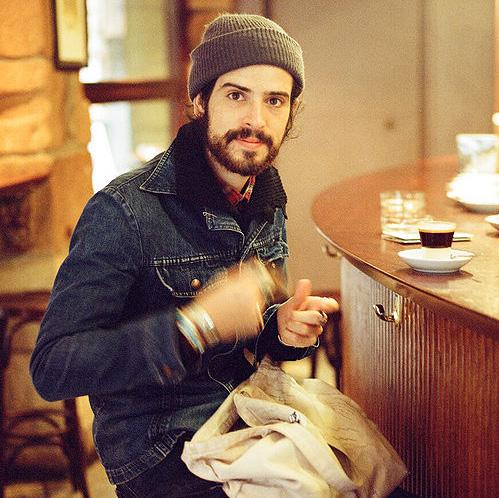
DEVENDRA BANHART RELEASES APE IN PINK MARBLE
Over the past few years, Devendra Banhart has swapped his psych, freak-folk influences for a softer, more produced musical style. The transition has gone smoothly. “Saturday Night,” his single from upcoming album Ape in Pink Marble, hearkens more to 2013’s soft Mala than older experimental albums.
Available Friday on iTunes, Amazon and Nonesuch Records
DR. LONNIE SMITH EVOLUTION QUINTET
Deemed in the jazz world as master of the Hammond B-3 organ, Lonnie Smith has been a forerunner of experimenting with jazz by crossing it with soul, funk and bop. Over the years, he has collaborated with many artists and has been featured on more than 70 albums. The doctor’s first album, Finger Lickin’ Good Soul Organ, was released in 1967. Smith’s latest album, Evolution, comes to us nearly 50 years later.
Sunday, 7 p.m., The Blue Note, $10–37, 874-1944, wealwaysswing.org
DESTROYER WITH ZACHARY CALE
Vancouverite Dan Bejar is one of the creative forces behind indie acts Destroyer and The New Pornographers, and he never falters in his musical explorations. Bejar has recently done a bit of rebranding and released a collection of songs in Spanish. Be sure to catch him and Zachary Cale in CoMo.
Monday, 8 p.m., Cafe Berlin, $15, 441-0400, cafeberlincomo.com
The Mowgli’s, a six-member group formed in 2010, is best known for blending West Coast pop and rock to create upbeat music with infectious positivity.
Devendra Banhart
Let’s get au-tome-nal
Local booksellers lend their expertise to recommendations for your fall reading list BY MAX HAVEY
Even if the 80-degree weather makes you skeptical of its arrival, fall officially starts today. Soon, the days will be shorter, leaves will change color, and brisk winds will send you searching for a cozy blanket, a warm, nutmeg-y drink and a good book.
Don’t waste time sifting through the stacks upon stacks of new fall releases. Vox sat down with Joe Chevalier, owner of Yellow Dog Bookshop, and Lisa LoPorto, community development manager at Barnes & Noble, to match a new book to each of your needs this autumn.
Ready to embrace the chill?
Upstream by Mary Oliver
Known primarily for her work as a poet, Oliver has released a new collection of essays just in time for fall. The essays cover subjects such as her relationship with nature and literature. It should serve as a perfect companion to watching the leaves change to their autumnal colors, Chevalier says.
Book club need a new read?
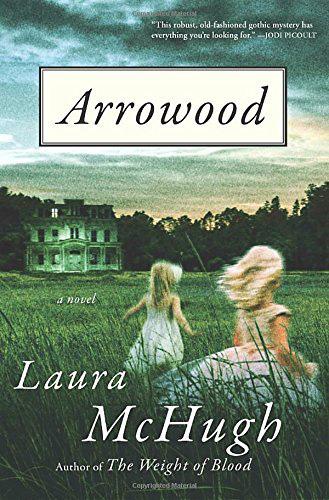
Arrowood by Laura McHugh
The latest from local author Laura McHugh, who also wrote 2013’s The Weight of Blood, is a gothic mystery that LoPorto says you should not miss. It tells the story of a young woman returning to her family home, the titular Arrowood, after 19 years. There, she confronts the mysterious disappearance of her two younger sisters, who vanished while she was watching over them.
Not ready to let go of summer?
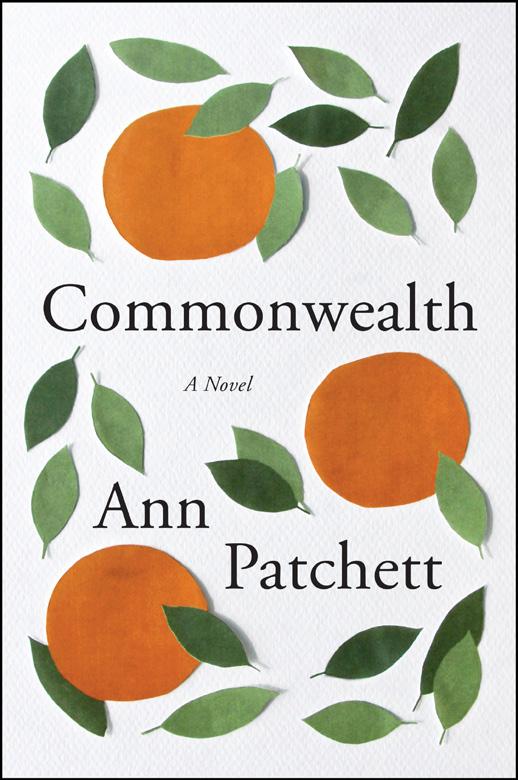
Commonwealth by Ann Patchett
One of the hot new novels LoPorto is excited about is the latest from Ann Patchett. It follows the dissolution of two families brought back together under odd circumstances and the writer who turns the story of their lives into his latest book. The sunny Southern California setting will draw in those readers looking to soak up the last of the summer with one more beach read.
Going through a transition?
Born a Crime by Trevor Noah Chevalier recommends Daily Show host Trevor Noah’s memoir. It details his upbringing as a mixed-race child in Apartheid-era South Africa, as well as his eventual move to the U.S. and entrance into the world of comedy. This is an excellent read for anyone striking out on their own for the first time in a new place.
Major cinephile? Hidden Figures by Margot Lee Shetterly
As for the next great book-to-movie adaptation, Chevalier recommends Hidden Figures, which follows the story of the female African-American mathematicians who made NASA’s early space missions work. The book will be adapted into a 2017 film starring Taraji P. Henson, Octavia Spencer and Janelle Monae. Film fans who want to be ahead of the curve should put Hidden Figures at the top of their reading lists.








Review: Nutshell explores family drama from the womb
Ian McEwan offers a new twist on a Shakespearean tale BY
Many authors have tackled the enduring storyline and thematic concepts of the Shakespearean classic Hamlet. Ian McEwan spins them in an unorthodox yet thought-provoking and amusing way in his latest novel, Nutshell. His twist comes in his choice of narrator — an unborn child who hears things unfold from his cramped lodgings in his mother’s womb.
The premise, in a nutshell, is the murder plot of discontented Trudy, our young narrator’s mother and McEwan’s version of Shakespeare’s Queen Gertrude, and her dull (at least
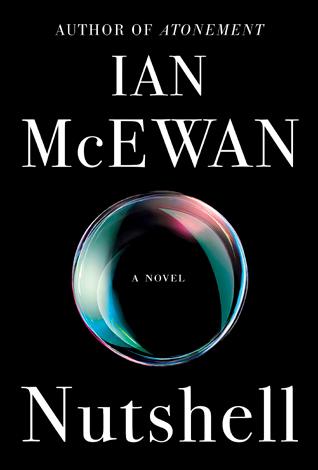
by the narrator’s standards) paramour, Claude, the stand-in for the murderous King Claudius. The pair wishes to dispose of Trudy’s husband, (who, in keeping with Hamlet’s plotline, is also her lover’s brother), sell his decaying Georgian family home and run off together.
The idea of a fetus telling this
RACHEL PHILLIPS
story is intriguing, but readers cannot completely buy into this narration.
The fetus often seems to be wise beyond his gestation period, as he uses words that might be found on an SAT vocabulary list, shares his impeccable taste in wine and gives opinions on current events. This is explained as knowledge the fetus has gained through listening to podcasts and the radio. But it is the narrator’s immense knowledge that halts the action.
Despite these pauses, McEwan is a master of suspense. He leaves the reader attempting to answer the same questions
the narrator asks himself as the action unfolds.
Does the fetus have the power to stop the murder? How will he get revenge? Should he be loyal to his mother or his father? Although it’s not a literal mystery, as the conspirators are known from the beginning, similar tensions exist.
McEwan’s ingenuity and wit sparkle. His main character is not tied closely to the physical world and can only hear and think, freeing McEwan to flex his creativity. He creates the rules for this journey into the brain of a fetus, and he does so with utmost care.
PHOTOS COURTESY OF HARPER COLLINS/ AMAZON, SPIEGEL & GRAU/
ARTS & CULTURE
Poetry in the Park
Enjoy free food and drinks while listening to poetry readings and performances. If Missouri weather acts up, the rain site is The Shack in the MU Student Center. Tonight, 6 p.m., Traditions Plaza, Free, 882-3780
Best of the Year Student Films
Students studying digital filmmaking at Stephens College give others a look at their hard work from the past few years. Hear the impactful stories they tell through film at the Best of the Year event. Friday, 7 p.m., Charter Lecture Hall, Stephens College, Free, 442-2211
Earthdance Columbia
In 1996, a man had a vision, and in 1997, the 20-year-long mission called the Earthdance Global Peace Party was formed to promote peace around the world. Earthdance events have been held in 1,000 locations in 80 countries, and Cooper’s Landing is bringing the party to a location near you. Saturday, 3–9 p.m., Cooper’s Landing, Free, 864-4710
STAGE
Family Weekend Comedian: Justin Willman
Comedian, magician and TV host Justin Willman will make an appearance during
MU’s Family Weekend. Doors open at 6 p.m., so grab your seats, and prepare for some good laughs and family fun. Friday, 7 p.m., Jesse Auditorium, $10; $8, MU students, 882-3780
CIVIC
The Food Bank Celebrates 35
Join this local organization as it celebrates its 35th anniversary with tours, cooking demonstrations, family-friendly activities, appetizers, wine, beer and more. Today, 4–7 p.m., The Food Bank for Central & Northeast Missouri, Free, 447-6611
S.A.F.E.
Sexual Awareness and Family Empowerment (S.A.F.E.) is a two-day seminar designed to equip parents to be the primary sex educators of their children by teaching tools to engage in these conversations. Friday, 5–8 p.m., First Baptist Church, $25–40, 442-1149
MUSIC
Gabe Dixon and David Ryan Harris: Twobadours on the Run Tour
If this duo isn’t on your radar yet, they should be. David Ryan Harris was an active member in John Mayer’s band and is signed to Columbia Records, and Gabe Dixon has made multiple TV appearances and enjoyed

critical acclaim. Watch these two talented musicians create harmony on stage. Tonight, 7:30 p.m., Rose Music Hall, $15, 874-1944
Fred & Toody of Dead Moon and Pierced Arrows with Weird Vibers
Rock band Dead Moon formed in Portland, Oregon, in the ‘80s and ended its run in 2006. Now, band members and spouses Fred and Toody Cole are touring and performing stripped down sets of the band’s songs. Tonight, 8 p.m., Cafe Berlin, $10, 441-0400
Killing in the Name: Rage Against the Machine Tribute
Local band Decadent Nation will bring Rage Against the Machine’s legacy to life on Friday night. Rock and rage to songs such as “Killing in the Name,” and release all of those anti-establishment feelings. Friday, 8:30 p.m., The Blue Note, $5, 874-1944
SPORTS
Mizzou Football vs. Delaware State
The Missouri Tigers have put up a fight at their first two home games, and the players are ready to take on the Hornets during their third game at Faurot. It’s the team’s last one until mid-October, so cheer them on in-person while you can. Saturday, 3 p.m., Faurot Field, Price varies, 800-228-7297
SCREEN
The Magnificent Seven
A seven-man group is hired to protect a small town from a greedy gold miner who wants to forcefully take the land.
F, R RUNTIME = 2:12
Storks
A stork who was long-retired from the baby-delivery business works with his human friend to bring a baby girl to her family.
F, R RUNTIME = 1:32
Still playing
Bad Moms (R) R
The Beatles: Eight Days a Week — The Touring Years (NR) RT
Blair Witch (R) F, R
Bridget Jones’s Baby (R) F, R
Don’t Breathe (R) F, R
Hell or High Water (R) RT
Hunt for the Wilderpeople (PG-13) RT
Kubo and the Two Strings (PG) R
The Light Between Oceans (PG-13) R
The Secret Life of Pets (PG) R
Snowden (R) F, R
Suicide Squad (PG-13) R
Sully (PG-13) F, R
When the Bough Breaks (PG-13) R
The Wild Life (PG) R
Theaters
F = Forum RT = Ragtag
R = Regal = Available in 3-D