
FEBRUARY 23, 2023 • FREE • VOLUMEONE.ORG

2023 36 www.VolumeOne.org | FEBRUARY 23, 2023
+ presented by
Here in the Chippewa Valley, we can be thankful there’s no shortage of remarkable people fostering growth in our communities through truly amazing work. Individuals from all walks of life, with diverse passions and varied resources, put in signi cant e ort every day to improve this place and the lives of people who live here. To celebrate the kinds of leaders, thinkers, and doers who inspire others through this work and dedication, Volume One and Northwestern Bank have sonsored the Chippewa Valley Vanguard Awards. These awards recognize high-level community achievers who have made a signi cant local impact in any number of disciplines, including the arts, entrepreneurship, social action, government, education, philanthropy, health, business, and more. Nominations from the public yielded an impressive slate of candidates for this year’s awards. Those honored here are just a few of the many individuals blazing a trail in the Valley as it grows into a vibrant, innovative, and healthy place to live. Visit VolumeOne.org/Vanguard to see videos of the honorees, as well as learn how you can nominate candidates for next year’s Vanguard Awards. We’ve only just begun to scratch the surface; there are many more stories to be told.
–Nick Meyer
Read on to learn about the projects and progress spearheaded by this year’s honorees.
words SAWYER HOFF + TOM GIFFEY + MCKENNA SCHERER video MA VUE
WATCH VIDEO PROFILES OF THIS YEAR’S VANGUARD HONOREES AT VOLUMEONE.ORG/VANGUARD 37 | FEBRUARY 23, 2023
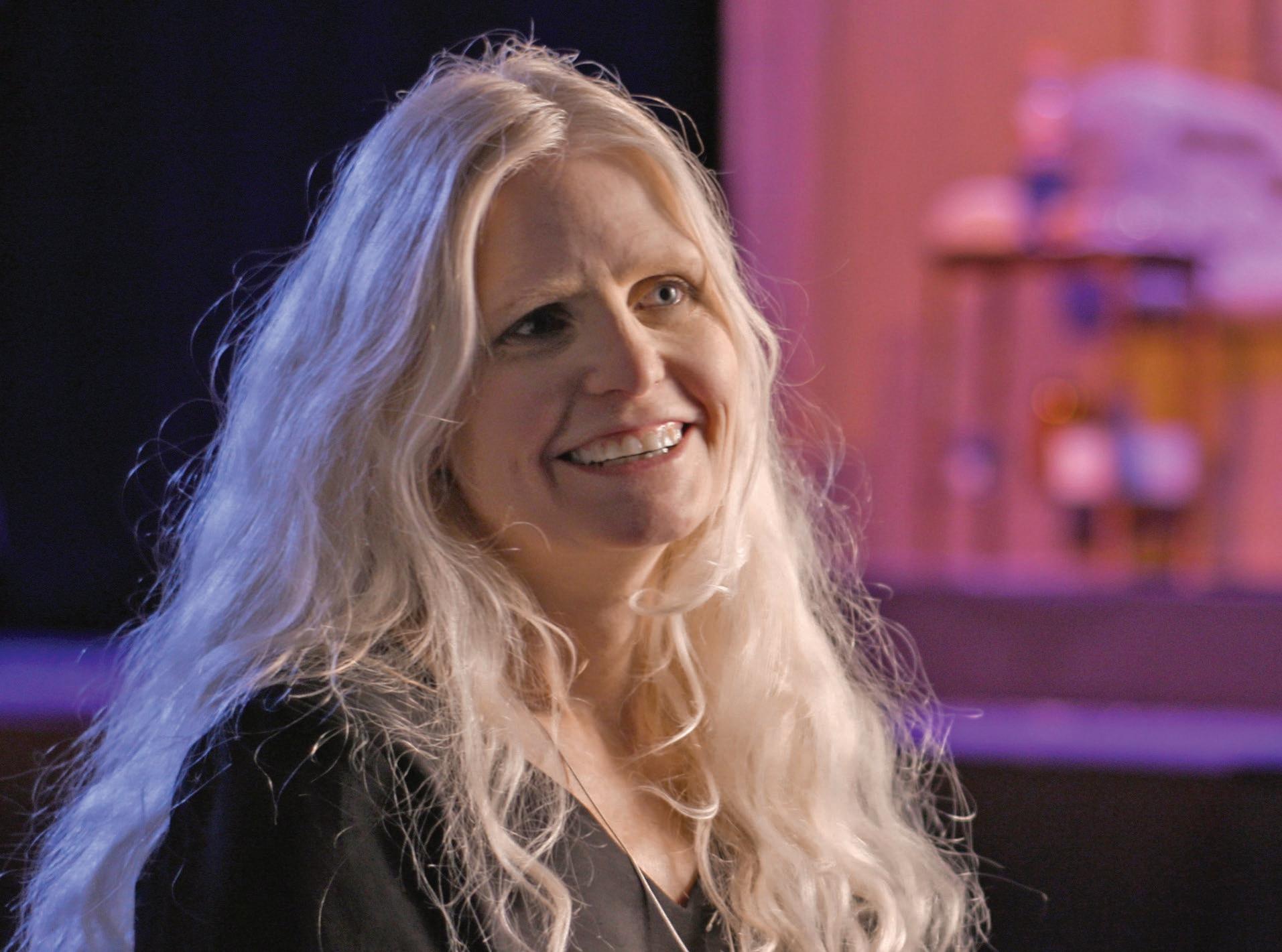
As executive director of the Chippewa Valley Theatre Guild, Ann Sessions has made it a goal to make space for community members to express themselves onstage and off. Sessions’ commitment to the community doesn’t stop there. She sits on the Board of Directors for Downtown Eau Claire Inc. and the West Grand Avenue BID District. She’s also on the Local Arts Advocacy Committee for Pablo Group to continue to promote the arts and growth of the Chippewa Valley.
Ann Sessions is a woman of many hats. She’s on the Board of Directors for Downtown Eau Claire Inc. (DECI), Board of Directors for West Grand Avenue bid District, on the Local Arts Advocacy Committee for Pablo Center at the Con f luence, and most notably is executive director of the Chippewa Valley Theatre Guild.
“When people come to the theater, it’s just a great place to learn and experience things together and to discover that we have way more in common than we have different,” Sessions said. “People come here to be able to express themselves. They come in here so that they can be themselves and sometimes they’re being themselves while they’re actually being somebody else on stage. Art, I feel like, is this kind of great uniter and it’s so exciting when you see people involved in theater right there because they form this community, they form this sort of family and their excitement about doing something together.”
The Chippewa Valley Theatre Guild has held countless shows in the 40 years that they’ve been active in the community. Ever since taking the executive director position in 2001, Ann has been passionate about involving anyone she can in the local theater scene and creating spaces for people to try it out.
Working with the Boys and Girls Club of the
ann SESSIONS
Greater Chippewa Valley and the Eau Claire Area School District, Ann helped build the Summer Youth Drama Camp and Shakespeare workshop for teens that the guild hosts in order to give kids in the community a chance to perform on stage – and learn some valuable lessons along the way.


“We have hundreds of kids here during the summer and just hearing their voices is so upli f ting and so hopeful,” Sessions said.
“I mean, these are our future leaders of the world and letting them grow and be themselves and improve their skills and talents, is a joy and that’s why I spend so much time here working on it.”
“Kids involved in theater just become better communicators,” she added. “They work better with other people. They’re more likely to be involved in their community and they just have more empathy for other people.”
Even through the COVID-19 pandemic and the subsequent shut down of all businesses, Ann worked on virtual proj -
ects – including “Much Ado About Nothing” and “The Legend of Sleepy Hollow” – in order to keep the theater scene thriving in the area.

“I think we learned a lot and I feel like we’re more resilient than we knew we were,” Sessions said. “I think we worked better together and I think people really figured out what was important because you’re missing the things that you didn’t have and one of those things was art. Being together and being able to experience something together was important, and we’re grateful that it’s back.”
The Eau Claire community is incredibly important to Ann, which is why she works so hard and with so many different groups to make the area more well-rounded, allowing opportunities for everyone.
“I feel like it’s my responsibility to just be a good citizen and be involved in taking this city to another level,” Sessions said. “You know, it’s important to me. I love the people here, I loved raising a family here. So being involved is important and sometimes it’s just important that you step up and make things happen.”
“When people come to the theater, it’s just a great place to learn and experience things together and to discover that we have way more in common than we have different.”
38 www.VolumeOne.org | FEBRUARY 23, 2023
Dennis Beale is dedicated to uplifting underserved and underrepresented groups within his community through his non-proft, Power of Perception Inc. Beale founded the organization in hopes of giving black, bi-racial, and minority students more opportunities in the community through mentoring programs, activities, and excursions.

Dennis Beale is a familiar face to many in the Chippewa Valley –especially to its minority youth populations – thanks to his extensive advocacy and mentorship.
Founder and CEO of Power of Perception Inc.; operator of his own consulting business, Beale Consultant; and a member of the Pablo Foundation Board, Dennis is practically a jack of all trades. Arguably most impactful, though, is his sheer presence: Dennis a vital force in the growing advocacy in and diversity of the Valley. As he makes sure to point out to others, though, it didn’t come easy and the grind doesn’t stop.
Originally from inner-city Chicago, Dennis made his way to our slice of the Midwest back in 2009 when he came to study at UW-Eau Claire. A er completing his bachelor’s degree, he was excited to nally move back to the city he’d grown up in, now with a completed college education. However, it was there that Dennis realized how much he’d changed, and he remembers those rst few months out of school as a turnout point.
“I wanted to be back home and around my people, around what I knew and was comfortable with,” he recalled. “But having a di erent mindset a er ge ing my degree, being around people that were successful and taught me the di erent ropes. … I just remember going back home and losing everything a er being there for about six months. That was one of the hardest times of my life.”
A er returning to Chicago he went out with one of his friends and had a gun pulled on him. His life ashed before his eyes at that moment. Dennis remembers looking to God, his family at home, and the family he’d made back in Eau Claire, for guidance.
“I remember calling my old coach in Eau Claire and just telling him, ‘Look, I feel like I’m either gonna end up dead or in jail.’ Chicago is di erent than Eau Claire, and obviously, you hear the stories, but it’s real out there,” he said. “My coach was like, ‘I will always look out for you; Come back to Eau Claire, come get into grad school and take your education to the next level.’ So, that’s what I did.”
Dennis had worked at the Menards Distribution Center through his undergraduate years, and when he moved back to Eau Claire to a end graduate school at UWEC, they readily o ered him his position back, something that reminded him to never burn bridges and stick to the grind.
“Don’t get me wrong, it wasn’t all peaches and cream a er that,” he recalled, laughing. “The grind got real when I got back.”
dennis BEALE
Dennis graduated with his master’s degree from UWEC and worked for the university that helped shi and nurture his outlook on the life and world ahead of him, working in the recruitment and retention of minority students. It was through that position Dennis would found the Black Male Empowerment organization at the school, igniting his passion for connecting with youth who just needed someone in their corner, the way Dennis’ mentors at UWEC had been for him.
Working for years at the university only deepened the roots he had begun pu ing down in the Chippewa Valley. His career, too, continued to grow and a er four years working at UWEC, he moved to Minnesota. That chapter of his life overlapped with the COVID-19 pandemic as well as the growing con icts across the nation and in Minnesota.
“When I moved to Minnesota, I was there at the heart of everything that was going on with COVID and George Floyd,” Dennis recalled. “I’ll be honest with you: Eau Claire has been a good place to raise children. I’ve got three babies – a four-year-old, a two-year-old, and a 10-month-old – I just wanted a safe place for them.”
“I remember telling my wife, ‘I think I go a get back, I just don’t think my time in Eau Claire is done yet. I feel like I still got more to give,’” he said.
Since moving back to the Chippewa Valley with his wife and children, Dennis has been full-steam
ahead, creating and opening more and more doors of opportunity for the youth part of Power of Perception and throughout the community. He isn’t the type of person who relies on a kick of ca eine in the morning or a ernoon or needs to reach for motivation. His reason for “why” is simple: to change lives.
“My life mo o is, ‘to change lives daily,’ and that’s what I live by,” he said. “I do it through conversation, through my presence, my advice; I love to help people and see people get to where they’re trying to go. One of the biggest things, and one of the other things I live by – especially through Power of Perception – is that in order to create change, you must create opportunity.”
And creating opportunity is what he continues to do. He recently solidi ed one of his biggest dreams for Power of Perception – taking some of the mentee youth on an out-of-country trip. Now, that trip has been funded thanks to a $150,000 grant from the Pablo Foundation. Next summer, Power of Perception will be taking 15 of the mentoring group’s youth on a two-week trip to South Africa. For many of the kids, it will be there their rst time traveling out of the country.
“I want my legacy to be about this hard work; my dedication and passion for our world,” Dennis said. “If I was to die tomorrow, I just want people to understand how much e ort, dedication, and passion I put behind every single day.”
39 | FEBRUARY 23, 2023
“In order to create change, you must create opportunity.”
Dr. Tom Sather, a professor of Communication Sciences and Disorders at UW-Eau Claire and a medical professional at Mayo Clinic Health Systems, focuses his talent and energy on helping facilitate authentic, meaningful communication among people dealing with serious challenges. Among other things, Dr. Sather helps lead groups and camps for those with aphasia, or the loss of the ability to communicate. He also helped bring Reel Recovery, a program for men living with cancer, to the Chippewa Valley.
Dr. Tom Sather is a natural communicator. In conversation, he is articulate, personable, and passionate about his career and community involvement. But his biggest passion isn’t communicating his own message: It’s creating authentic opportunities for other community members to engage in meaningful communication, make human connections, and increase their wellbeing.
Professionally, Sather has several roles including that of associate professor in the Communications Sciences and Disorders Department at UW-Eau Claire (where he received his bachelor’s and master’s degrees) and speech pathologist at Mayo Clinic Health System in Eau Claire. Yet his impact on the community goes far beyond his professional work, as important and as it is.

Throughout his career, Sather has worked with individuals who have aphasia, a language condition that may occur because of a stroke or other damage to the area of the brain that controls language. “Language is a ected, but cognition, intellect, and memory remain intact, so it creates this unique situation where somebody knows what they want to say, but can’t always say it,” he said. While a stroke is o en the cause of aphasia, the condition can also be the result of a degenerative condition known as primary progressive aphasia. In these cases, Sather said, what begins as a mild di culty with language progresses to impact more parts of the brain, eventually impacting cognition and memory.
“Frustration is certainly one of the primary things that people with aphasia report, as well as their care partners and family,” he said. “Communication is fundamental to what a lot of us do, and so having that impacted can have catastrophic results.”
Sather’s interest in facilitating that communication through multiple means has led him to be heavily involved in the Chippewa Valley Aphasia Group, which was founded in 1997 by two of his mentors and fellow speech pathologists, Mary Beth Clark and Tom Hintgen.
“I did some volunteer work and some clinical experiences where I sat at kitchen tables with people with aphasia and did things in the community with people with aphasia, and that gave me a broader perspective of not just the hospital room, but also the community lived experience as well,” he said.
Sather describes the aphasia group as ahead of its
tom SATHER
time, providing a space for those with aphasia to work on their communication abilities while also participating in the wider community. Among these activities is an annual aphasia camp at Camp Manitou near New Auburn, which is operated by a partnership between UWEC, Mayo, and the YMCA. The camp gives people with aphasia a chance to be around others who can understand their experiences.
“What people say is, ‘I don’t have to explain to people what aphasia is, I can just be myself,” he said.
Sather is also involved in a community gardening project that brings together UWEC students and faculty with people with a variety of communication needs, from youngsters working on speech sounds to members of the aphasia group, who gather at a plot in the Forest Street Community Garden on Fridays in the summer to plant, weed, and harvest as well as engage in authentic communication experiences.
If a stroke has a ected someone’s ability to have a conversation with people that they don’t know well, Sather noted, “What be er place to practice that than at the garden where somebody walks by and says, ‘Hey, what are you guys growing here?’”
Sather’s enthusiasm for fostering communication also led him to help bring a program called Reel Recovery to the Chippewa Valley last September. Reel Recovery is a nationwide nonpro t group for men with cancer of any stage and any form. It involves three-day y- sh-
ing retreats featuring meals, camaraderie, and “Courageous Conversations” led by a trained facilitator. These conversations are especially meaningful for the men involved, who may otherwise be reluctant to talk about their feelings and experiences, Sather said.
“You can probably guess (that) the y shing is kind of secondary to the relationships, the conversations, and the interactions,” said Sather, who co-chaired the retreat, which paired 10 cancer survivors with 10 volunteer shing buddies.
There’s a common thread connecting Reel Recovery to Sather’s work with people living with aphasia.
“Part of this is the fundamental idea of being human: that you’re involved in meaningful, authentic experiences,” Sather said. “Whether you have aphasia, whether it’s cancer, whether there’s some other condition that might limit you otherwise, there’s opportunities to do that, and being mindful that it’s not tokenism. It’s not doing something out of sympathy. It’s doing something because it’s part of what a community is about.”
Sather said he feels fortunate to be part of these initiatives, adding that “I think that we have to keep our foot on the gas to keep them happening.”
“I think that we’re turning the corner from trying to be the xers and saying, ‘Hey, you have something that needs to be xed,’ to saying, ‘How do we all participate authentically in the community,’ and that’s exciting.”
40 www.VolumeOne.org | FEBRUARY 23, 2023
“One of the mottos that I have is ‘ engage, connect, and communicate.’ ”


















41 | FEBRUARY 23, 2023
