
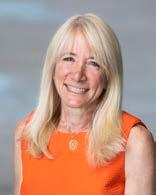

Dear alumni and friends,
As we unveil our annual report for 2025, I am pleased to invite you into the dynamic world of the Sid and Reva Dewberry Department of Civil, Environmental, and Infrastructure Engineering at George Mason University (CEIE). This year’s theme, “A SEAT AT THE TABLE ,” illustrates our commitment to inclusivity and collaboration, reflecting the foundational ethos of our department.
From our earliest existence, our industry and government partners have worked by our side in building a premier civil, environmental, and infrastructure engineering department. They incorporated and formed the Civil Engineering Institute (CEI) from the start. Our industry partners have supported us through raising funds for student scholarships, sponsoring and advising our American Society of Civil Engineers (ASCE), Engineers for International Development
(EfID), and Society of American Military Engineers (SAME) student chapters, naming us, endowing us with chaired positions, and working with us to create and retain a curriculum that is cutting-edge. This curriculum is bolstered with a plethora of opportunities for work experience through internships. Together, we are creating a workforce for the region that is ready for the job with today’s technologies and tomorrow’s innovations.
Our adjuncts also have a seat at the table. This past year, we were strengthened by 18 adjunct professors with years of practical experience to bring to bear. Our adjunct professors, and the guest lecturers they engage, provide insights into industry practices and practical problem-solving techniques. Through real-world examples, they bridge the gap between theoretical learning and practical application. This combination of specialized scientific understanding, provided by full-time faculty and practical knowledge from our adjuncts, gives our students the essential skills to make them career ready.
Also at the table are our colleagues from nonprofits and local, state, and federal government. They engage our students in civic challenges and develop public sector solutions. They support and even collaborate on research.
No R1 Research University would succeed without crossuniversity collaboration. We cherish our relationships with our academic colleagues across the United States and the globe. There is always an open seat at the table in CEIE at George Mason for cooperation.
Our table is large and our seats many—we invite you to sit with us. I hope you enjoy reading about some of our accomplishments and the many ways we work together. We remain grateful for your interest in civil engineering at George Mason!
Sincerely,

Elise Miller-Hooks PhD, Professor,
and
Department Chair
Bill and Eleanor Hazel Endowed Chair in Infrastructure Engineering

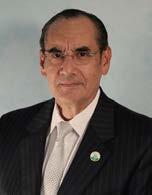
Dear members and friends,
George Mason University’s CEIE continues to uphold its distinction as one of the leading civil engineering programs in Virginia. The CEI Advisory Board is honored to play an integral role in supporting and advancing the department’s ongoing success.
As Chair of George Mason University’s Civil Engineering Institute (CEI) Board of Directors, invite you to take a moment to review this annual report and explore the remarkable work being accomplished by students, faculty, and staff. From pioneering research to handson learning, the department exemplifies innovation and excellence in civil engineering education.
The CEI Board is composed of top-tier professionals from industries such as consulting, construction, utilities, academia, and government. Together, we bring a wealth of expertise and a shared commitment to advancing CEIE’s mission. In addition to providing strategic guidance, CEI plays a key role in helping George Mason’s civil engineering programs maintain the highest educational standards, including ABET accreditation.
One of CEI’s key initiatives is the annual Engineering Excellence and Leadership Award Luncheon, which reflects our mission to celebrate and promote engineering achievements locally and beyond. Last year, we honored Army Lieutenant General Thomas Bostic for his distinguished career, and this year, we proudly recognized Michael Rolband, Director of the Virginia Department of Environmental Quality, for his tremendous contributions to the field.
If you are ready to inspire the next generation of civil engineers, the CEI invites you to join us in advancing George Mason’s thriving engineering community. Your expertise, involvement, and support can play a pivotal role in shaping the future of civil engineering and empowering tomorrow’s workforce. Reach out to
us; we’ll gladly answer your questions and explore how you can help make a lasting impact.
Sincerely,

Helman A. Castro PE Chair, Civil Engineering Institute Board of Directors

At the Sid and Reva Dewberry Department of Civil, Environmental, and Infrastructure Engineering, we build the structure for innovation— where ideas take shape through connection, collaboration, and dynamic activity. Through our partnership with the Civil Engineering Institute, we engage in continual brainstorming and creative exchange, exploring the many facets of infrastructure that shape our world. We’re inviting
and be part of what’s next.
George Mason’s civil engineers are assessing the climate change challenges facing some of the world’s highest mountain ranges, creating better ways to measure the melting ice in high elevations where temperatures are rising faster than the average, putting pressure on the livelihoods of fragile cultures and ecosystems.
Funded by the National Aeronautics and Space Administration (NASA) and led by Associate Professor Viviana Maggioni the researchers teamed up with Chile’s Universidad de la Frontera. Together, their analysis encompasses the mountain regions of Asia, which include the world’s highest mountains and support drinking water and food production for nearly three billion people. Their efforts also stretch across the globe to the Andes of South America: the highest mountain range on Earth outside of Asia.
“It is essential to understand how hese high mountain areas are responding to climate change, since their melting permafrost has major impacts on surrounding regions and the people living nearby,” said Maggioni.
To access and analyze these remote and geographically diverse locations, the researchers use advanced data assimilation algorithms, multiple satellite-based sensors, and NASA’s Glacial Melt Toolbox: a cutting-edge collection of remote sensing, digital elevation, and mapping technologies that help measure and forecast changes in ice, water, snow, and other natural phenomena.
The research aims to identify regional hotspots in the high mountain areas of Asia and the Andes where the permafrost is melting rapidly. Those hotspots are where local communities and natural cycles are most threatened, especially as warming continues.
“The melting and permafrost loss in these areas has not been widely studied before,” Maggioni said. “This is alarming, since water availability and security are at risk.”

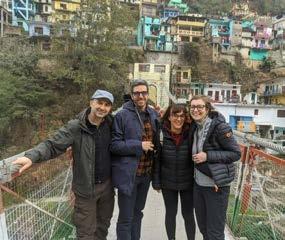
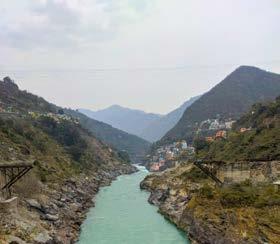
The George Mason researchers are part of a larger effort to develop resilience, solutions, and technologies through close collaboration with Indigenous communities, industry partners, government agencies, and six academic institutions.
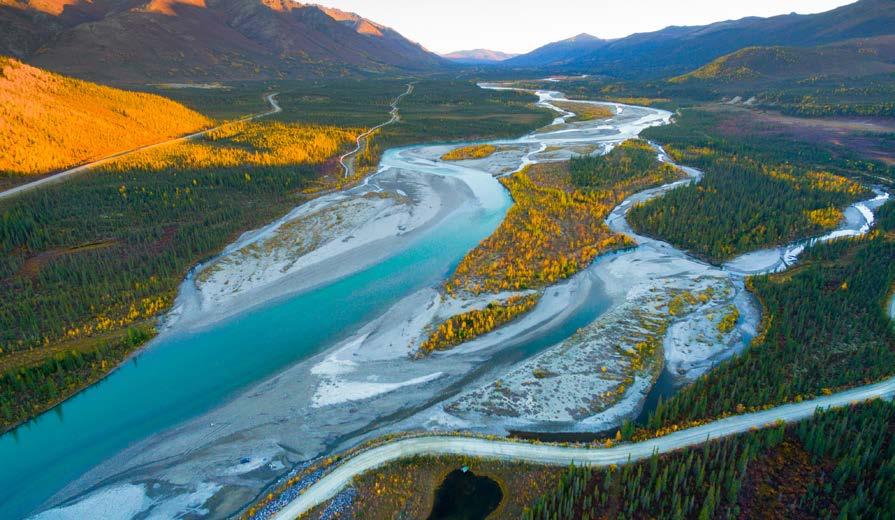
In 1967, Alaska adopted the slogan “North to the Future” for its centennial. Now, as researchers at George Mason collaborate on an a National Science Foundation (NSF) planning grant, they look north to Alaska and the future. The planning grant lays the groundwork for the development of an Alaska Innovation Incubator (AI2) for Resilient and Smart Infrastructure in Extreme and Changing Environments.
“The Arctic presents both challenges and opportunities, demanding strategic planning and robust infrastructure support,” said Professor Elise Miller-Hooks who is spearheading the team for George Mason. “With AI2, we’re not only responding to environmental changes; we’re proactively shaping a resilient future for the region. We’re hoping to create forwardthinking solutions for maritime
development, performance of civil infrastructure, climate hazards, and workforce development.”
Though still in its preliminary stages, the planning grant outlines five interrelated thrusts. These thrusts will develop smart sensing technologies for the changing Arctic environments;
new technologies that lead to innovative, economical, and resilient infrastructure; adaptive and economical solutions and system-level decision-making tools for securing Arctic coasts; a prototype for an automated digital twin of communityscale coastal infrastructure and permafrost systems; and a pipeline for workforce development of future scientists, engineers, and skilled workers with expertise in U.S. Arctic environments.
The George Mason researchers are part of a larger effort to develop resilience, solutions, and technologies through close collaboration with Indigenous communities, industry partners, government agencies, and six academic institutions. The societal impacts of this initiative could be far-reaching, promising enhanced wellbeing and resilience for U.S. Arctic communities, increased economic competitiveness, improved national security, and greater public engagement with science and technology.
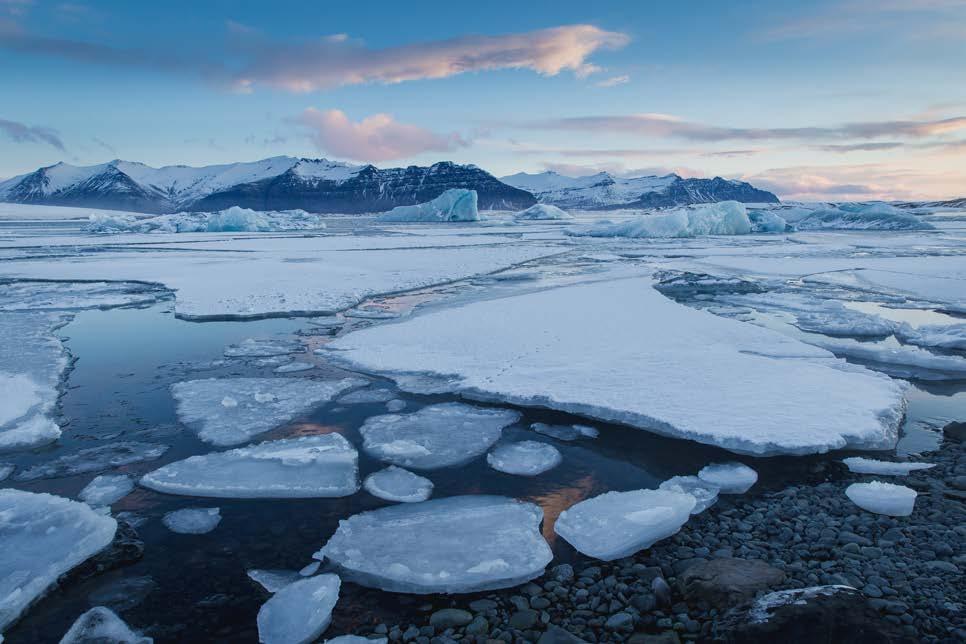
To achieve this, through AI2, the team aims to deliver a suite of transformative solutions. One example is the development of Arctic coastal hazard early warning tools, designed to provide timely alerts to communities facing environmental threats. The project will also pioneer innovative foundation insulation technologies and thermosyphon systems, specifically tailored for permafrost regions, alongside
economical pre-thawing techniques for construction in warmer permafrost areas.
The researchers hope to create adaptive solutions and systemlevel decision-making tools to ensure the security of Arctic coasts for the future. With the potential of new shipping lanes opening, Alaskans see opportunities for new ports, and the team will explore both the opportunities and challenges. A prototype for an automated
digital twin of communityscale coastal infrastructure and permafrost systems will be developed, offering a cuttingedge approach to monitoring and managing the environment.
Finally, the initiative led by Pennsylvania State University (Penn State) a longtime research partner, will focus on workforce development, nurturing future scientists, engineers, and skilled workers
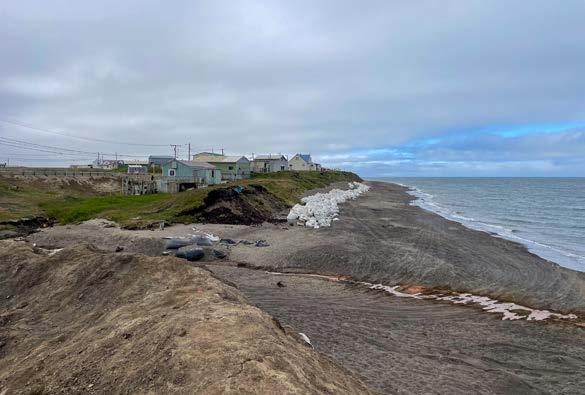
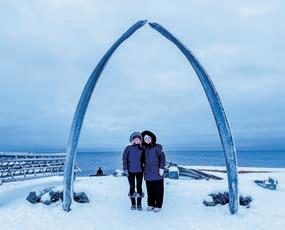
with expertise in the unique challenges of U.S. Arctic environments. “Through the envisioned AI2, it will be possible to generate new insights into the interactions between the natural and the built environment—including regional weather dynamics, permafrost, and coast-land interfaces—and the built and sociocultural systems, laying the groundwork for effective solutions,” said Miller-Hooks.
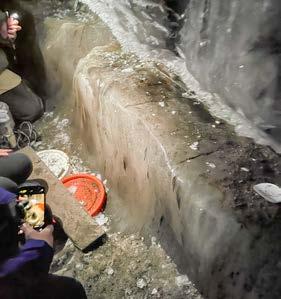
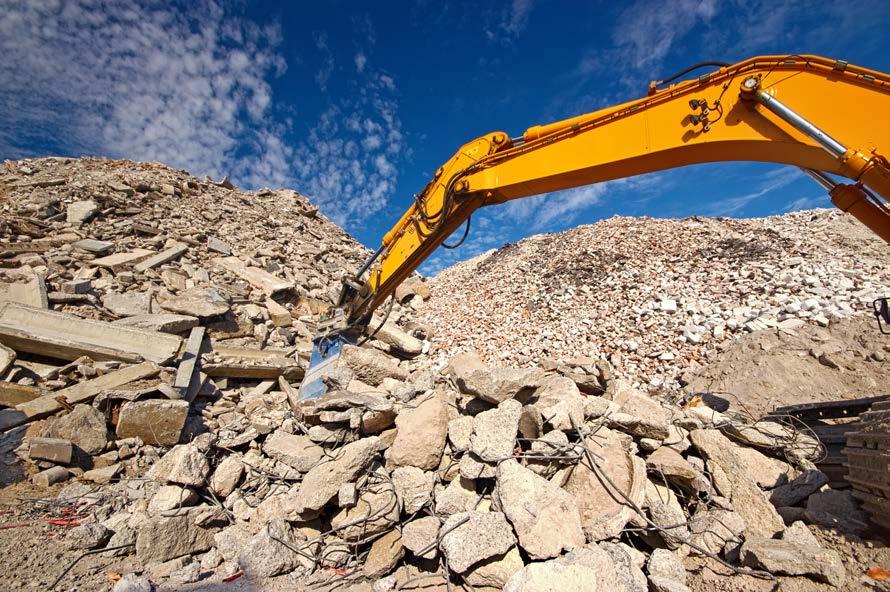
Each year, the United States generates an estimated 600 million tons of concrete waste. Left untreated, it piles into landfills or requires harsh chemicals and significant energy to break down, threatening communities and the environment. But Assistant Professor Emma Zhang is partnering with Brookhaven National Labs to find a better solution.
Traditionally, recycling methods for concrete and other construction debris require extreme heat, high pressure, and harsh chemicals. These processes demand enormous amounts of energy and often create additional harmful byproducts. Zhang and her team, however, are exploring a new, environmentally friendly way to treat this waste: biology.
“We propose an innovative biobased treatment method,” she said. “We don’t need to use high temperatures, high energy input, or corrosive chemicals. Instead, we use organic molecules produced by plants or bacteria to reconstitute the waste material.”
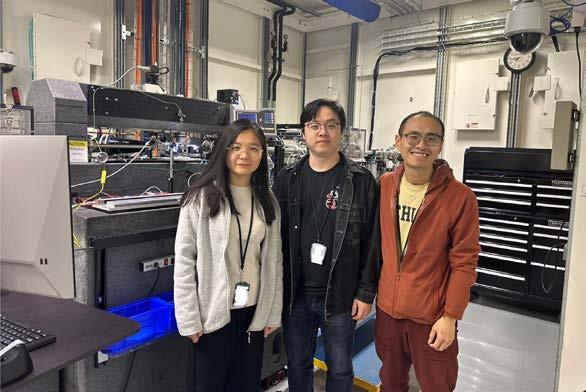
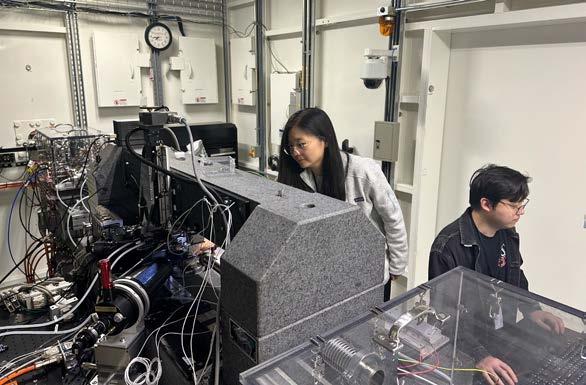
This innovative approach is still in its early stages, but the potential impact is extensive. To understand the science at a deeper level, Zhang is collaborating with Brookhaven National Laboratory in Long Island, New York, where advanced X-ray technology allows her to see the impact of bio-based treatments at the nanoscale. She is particularly
tapping into the extensive beamline science expertise of Brookhaven’s Zhongshu Ren. Supporting her in this work is PhD student Junyi Wang who has traveled with her to Brookhaven for experiments.
“Brookhaven’s technology provides us with high-resolution, dynamic characterization,” she
said. “We can actually capture how the bio-based treatment interacts with the material in real time.” And the results so far have been promising.
“We saw the results partially verify our hypothesis, which built our confidence to continue,”
Zhang is collaborating with Brookhaven
National Laboratory in Long Island, New York, where advanced X-ray technology allows her to see the impact of bio-based treatments at the nanoscale.
she said. “Every cycle, we reflect on how to improve our experiments, what we will do next, and how to prepare for our next round of experiments.”
For Zhang, the project not only opens new scientific territory, but also builds on her own research background in biobased methods for materials engineering.
“This is a new area for me, but it still connects to my expertise. In past and other ongoing work, I have focused on using biology to enhance existing construction materials, such as fungi-enabled self-healing concrete. Now, want to reverse that, using biology to treat waste materials and turn them into something new,” she said.
As U.S. infrastructure ages, the need for sustainable solutions grows more urgent. With millions of tons of concrete set to reach the end of its service life in the coming decades, Zhang hopes her research will provide a pathway to reuse what might otherwise be discarded.
“We can avoid the harsh chemical residuals,” she said.
“We can avoid the energy waste. And at the same time, we can create new, valuable products.”
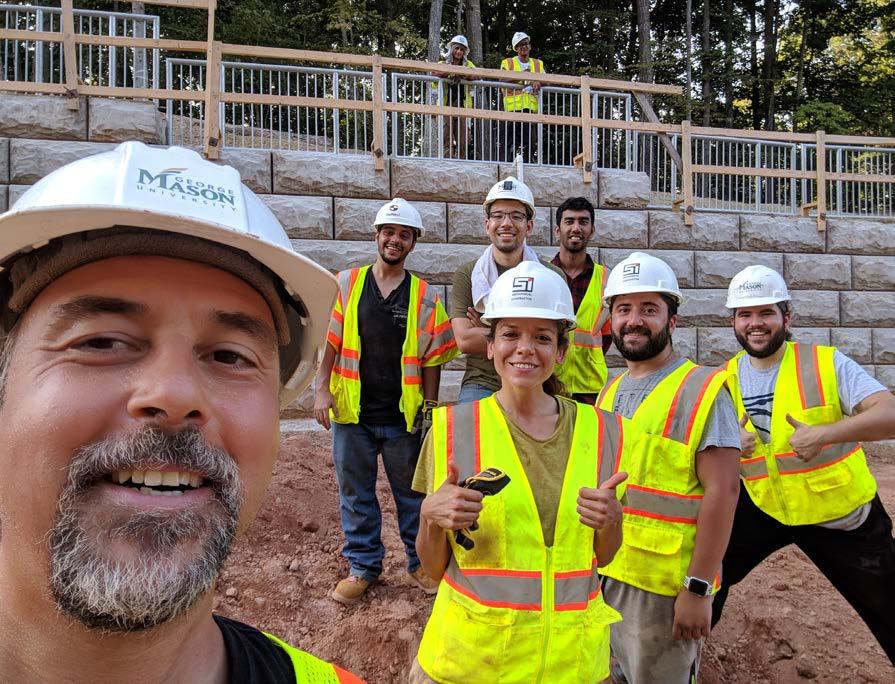
The SGI group’s commitment to quality ensures that George Mason has a seat at the table working with mission agencies and private entities. The team has designed and constructed an actual bridge, a roadway, and three full-scale test sites, translating their academic findings into practice.
Through numerous projects, Professor Burak Tanyu and the Sustainable Geotransportation/ Geoenvironmental Infrastructure (SGI) research group exemplify how university research can directly address physical infrastructure challenges in the region and beyond. Their collaborations with public agencies and private industry create pathways for innovations to move beyond the lab and into practice.
The SGI group’s commitment to quality ensures that George Mason has a seat at the table working with mission agencies and private entities. The team has designed and constructed an actual bridge, a roadway, and three full-scale test sites, translating their academic findings into practice. “I don’t believe in telling external sponsors what they should be working on; that’s not my role,” said Tanyu. Instead, he sees his and the group’s role as uncovering new research-based ways to assist the sponsors with their projects.
Before joining George Mason, Tanyu was a senior engineer at Geosyntec Consultants, where he worked on landslide forensic analyses, earth retention system designs, design and permitting of residual waste landfills, and seep investigation and embankment stability. To develop SGI’s capabilities, Tanyu leveraged his industry experience and relationships, securing donations from private firms such as ECS Limited, Geokon, and Geocomp for equipment and data collection systems. He remains deeply grateful for these contributions, as they made a significant difference in the group’s early years.
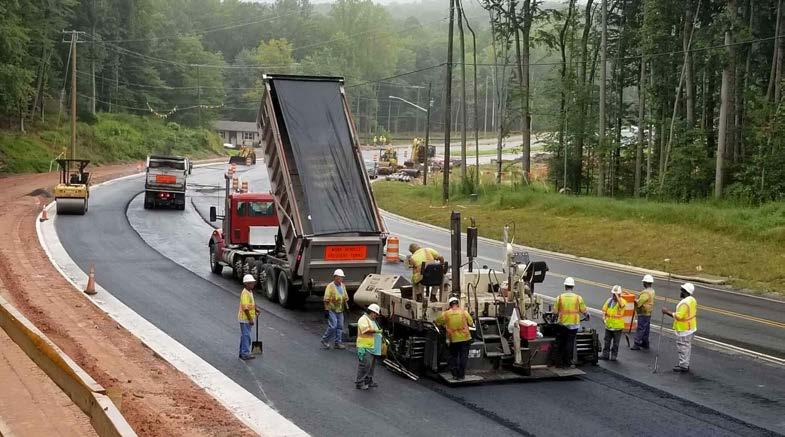
One of SGI’s notable projects is a roadway designed and constructed in Manassas, Virginia, as part of an ongoing partnership with the Virginia Department of Transportation. The project explores methods developed in SGI’s labs for
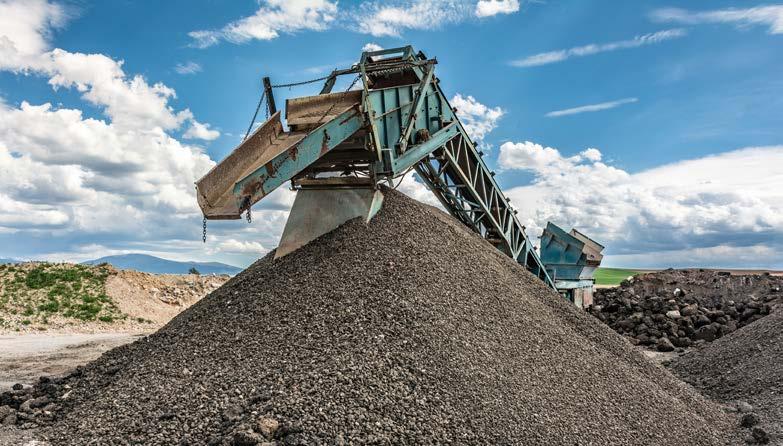
recycling the commonwealth’s 4.7 million tons of excess reclaimed road surface material. Quarries within Virginia and the Virginia Asphalt Association were integral in supporting the implementation of this project.
The constructed roadway, now open to traffic, serves as a demonstration of how reclaimed asphalt can be used as an aggregate, reducing cost and environmental impact.
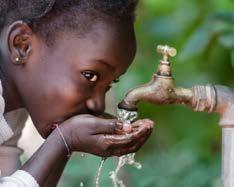
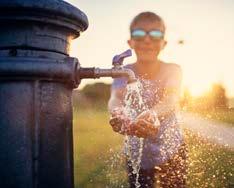
“Why just study engineering when you can instead take that research and put it to practical use?”
That’s the question driving George Mason’s newest civil engineering professor, Daniel Smith who brings over twenty years of research and field experience to CEIE at George Mason. Smith’s engineering career in water quality and treatment has regularly taken him from the lab to the field and back again, allowing him to apply rigorous scientific analysis to real problems.
“My preferred approach is to partner with local organizations— such as governments, nonprofits, and enterprises—to ensure that my research is locally grounded, practically applicable, provides community benefits, and engages students in the process,” Smith said.
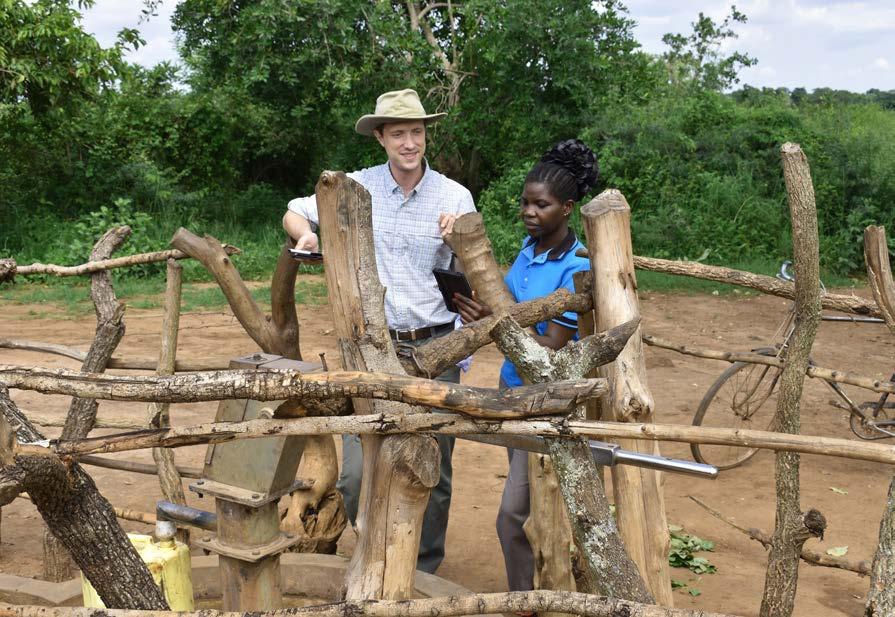
Smith’s work often centers on large field experiments that test engineering and water service innovations in real settings, focusing on topics like drinking water quality, water source reliability, and the economic and social factors underlying water quality investments. He has previously worked as an environmental engineer, researcher, and global water and sanitation development manager in private, nonprofit, multilateral, academic, and government organizations.
This work has sent him around the world, from Honduras— where he has spent almost two decades on water treatment plant construction and community engagement—to Uganda, where he studied the economics behind water supply improvements. Smith has also lived and worked on water and environmental issues
in Mexico, Guatemala, Peru, Ecuador, the United Kingdom, The Gambia, and Bangladesh. He has trained more than 40 professionals in those countries on drinking water treatment, household survey methods, water laboratory methods, environmental sensing, and data analysis.
More locally, Smith’s recent projects include measuring water utility consolidation in the United States and other high-income countries.
“I’ve found that studying the many interactions between engineering, economics, and institutions can be a useful method to address water and human development issues,” Smith said.
After years of globe-trotting, Professor Smith is happy to have joined George Mason’s academic and engineering community, where he is setting up his water quality lab and teaching introductory and graduate courses in environmental engineering. He’s particularly excited to be supporting the EfID student group at George Mason, which shares his passion for turning research into practice. Smith lives in Washington, D.C., —his hometown—with his wife, two children, and 10-pound Italian greyhound.
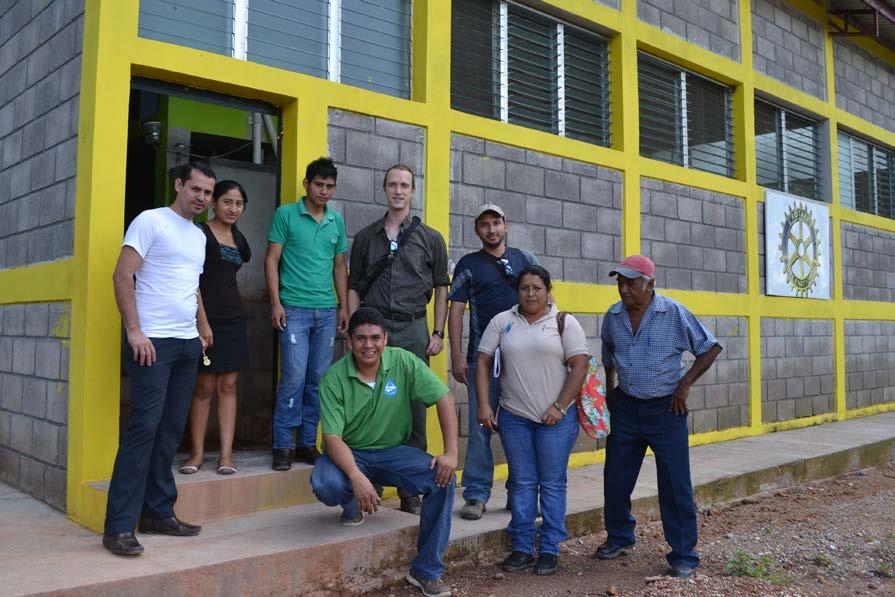
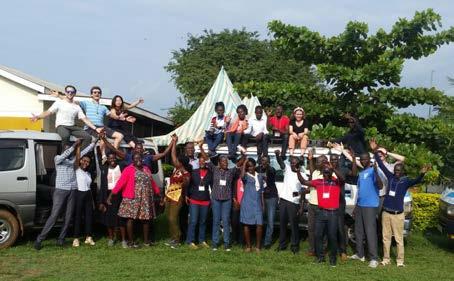
(Far left, photo at a hand pump well) Dan Smith and Paska Sizella collect data at a well with a hand pump in Apac, Uganda, as part of their study of the demand for and impacts of professionalizing community water supply operation and maintenance services. (2019) Above: Smith with colleagues from Agua Para el Pueblo, Water For People, and the community Water Board at a water treatment plant in Atima, Honduras, that serves about 4,000 people with clean water without needing electricity. (2014)
Left: Dan Smith with his team of Stanford graduate and undergraduate students and data collection professionals during fieldwork for his study of professionalizing community water supply in Apac, Uganda (2019)
My preferred approach is to partner with local organizations—such as governments, nonprofits, and enterprises—to ensure that my research is locally grounded, practically applicable, provides community benefits, and engages students in the process.
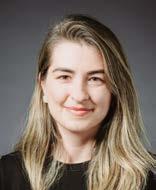
Veronez’s doctoral work evaluates urban drainage and flood hazards and how impacted stakeholders should work together to manage such risk.
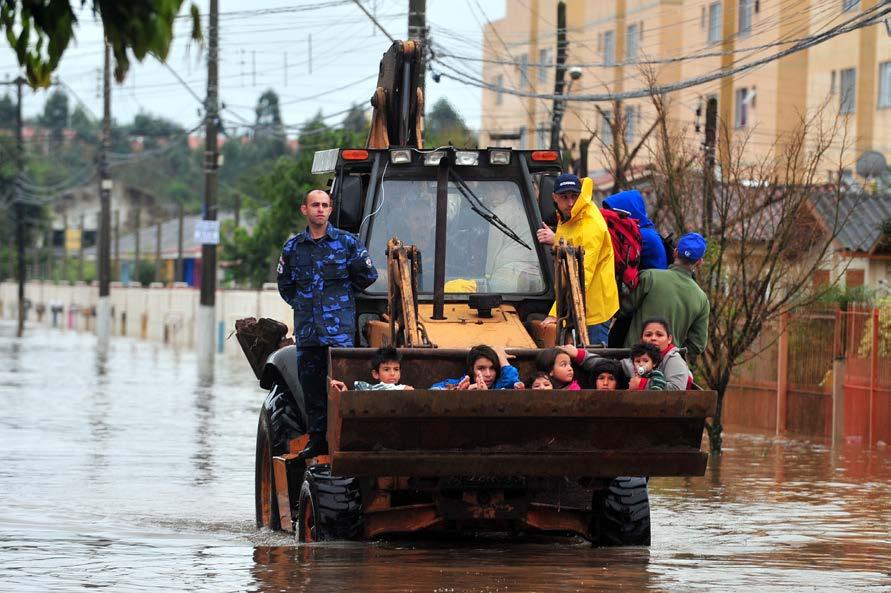
Diana Veronez was working on flood hazards and water resource management in her native Brazil when the opportunity to study at George Mason University’s Flood Hazards Research Lab for her PhD proved too strong a current to resist. She packed up her husband and toddler son (right) and took the plunge with a move to Northern Virginia (NOVA).
It was no accident that Veronez came here, considering that lab director Celso Ferreira professor in the CEIE, also hails from Brazil. She reached out to him and found him receptive to the idea of working together.
“Diana stood out among a host of qualified applicants for her hands-on experience addressing real flood challenges in urban Brazil,” said Ferreira. “From the moment she reached out, it was clear she brought not only technical expertise, but a deep personal commitment to community resilience. Her journey has enriched our lab and inspired our students.”
Veronez’s doctoral work evaluates urban drainage and flood hazards and how impacted stakeholders should work together to manage such risk.
Veronez uses a numerical model called the Hydrologic Engineering Center’s River Analysis System, developed by the U.S. Army Corps of Engineers. The model identifies areas likely to experience flooding and that require attention or mitigation measures. Based on these simulations, she analyzes both current and future conditions to predict potential flooding impacts.
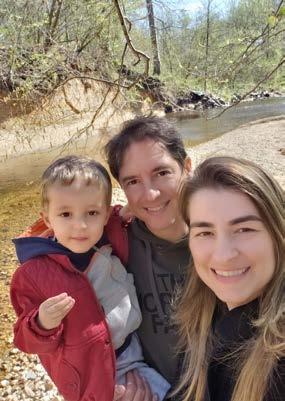
In addition, she applies different adaptation strategies to evaluate how they influence flood extent and community resilience. To assess and visualize results, she integrates the model outputs with geographic information system tools and Python coding to perform spatial analysis and automate data processing.
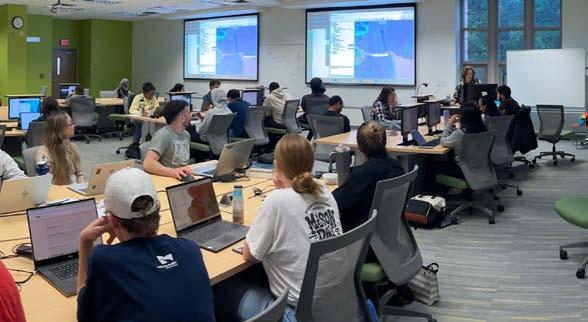
A current project at George Mason involves the translation of flood hazards to real life problems, such as when during flood events schools may become isolated when nearby roads are underwater, making it difficult for students to get to or leave school safely; she enjoys teaching these to undergraduate students.
“The project connects real clients with our students, and it’s really a translation for everybody, not just the students and not just the community, but also for our faculty,” she said. “When students see the problem in class at first, they can’t understand how to get to the solution, but along the way they build confidence and see that what they are applying is for different adaptation strategies and scenarios.”
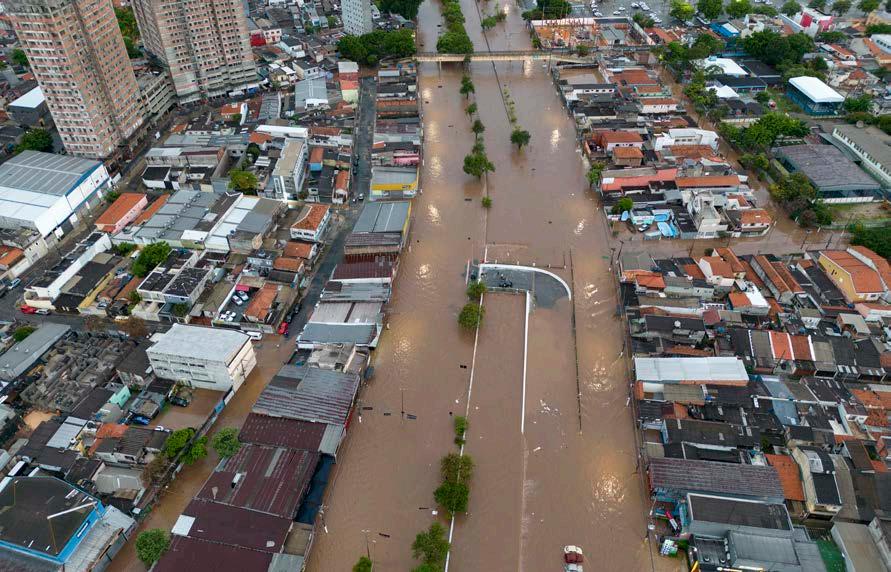
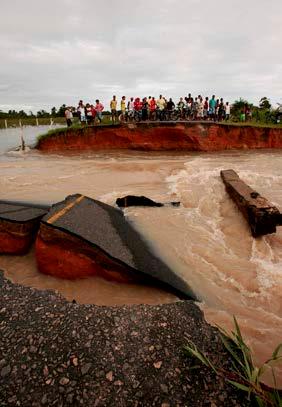
research also draws inspiration from recurring events in Brazil, where extreme rainfall, rapid urbanization, and inadequate drainage infrastructure have intensified flood risks for communities across the country.
George Mason has launched Virginia’s first public standalone Master of Science in Artificial Intelligence (AI), a milestone program designed to prepare students for the rapidly evolving demands of AI in industry and government. The program offers a rigorous, interdisciplinary education that blends foundational theory with hands-on experience.
This [new AI] program is carefully designed to meet the needs of our community, whether that is government or business.
Vadim Sokolov, associate professor in the Department of Systems Engineering and Operations Research and affiliate faculty in CEIE, played a leading role in shaping the curriculum. Sokolov, who taught George Mason’s first deep learning course in 2017 and has a strong background in mathematics, helped design a curriculum that is both accessible and technically robust.
“The idea is students are not just ‘prompt engineers’ but are supposed to understand the basics of the models and be able to tune them and train them for specific tasks,”
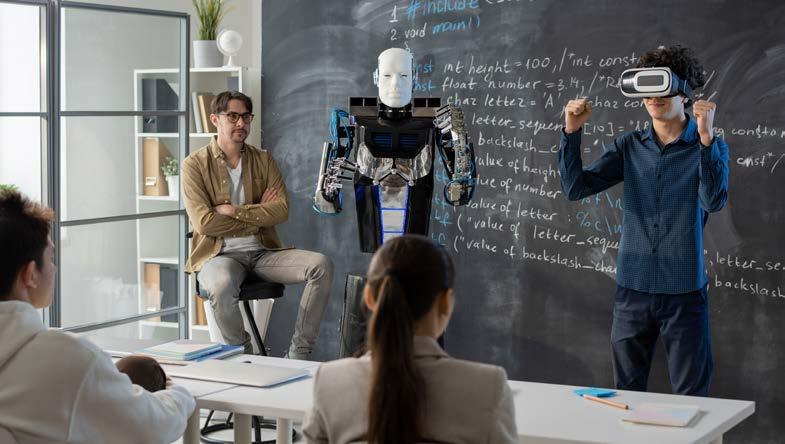
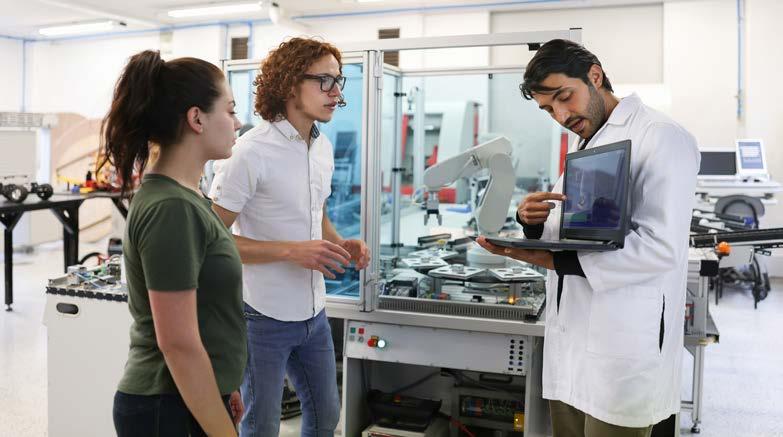
Sokolov said. He emphasized that the program goes beyond technical skills, integrating real-world applications and ethical considerations to ensure graduates are well-rounded AI professionals.
Students will explore core domains such as machine learning foundations, intelligent agent decision-making, and deep learning fundamentals. They’ll also gain expertise in managing the full machine learning operations lifecycle, integrating open-source AI frameworks, and developing secure, scalable AI systems.
“This program is carefully designed to meet the needs of our community, whether that is government or business,” Sokolov added. “But it also provides a holistic experience to students—from AI ethics to AI policy, and from scalable and secure AI to advanced AI solutions.” The program was developed through a collaborative effort across departments, including contributions from Amarda Shehu inaugural vice president and chief AI officer at George Mason, associate dean for research in the College of Engineering and Computing, and professor in the Department of Computer Science.
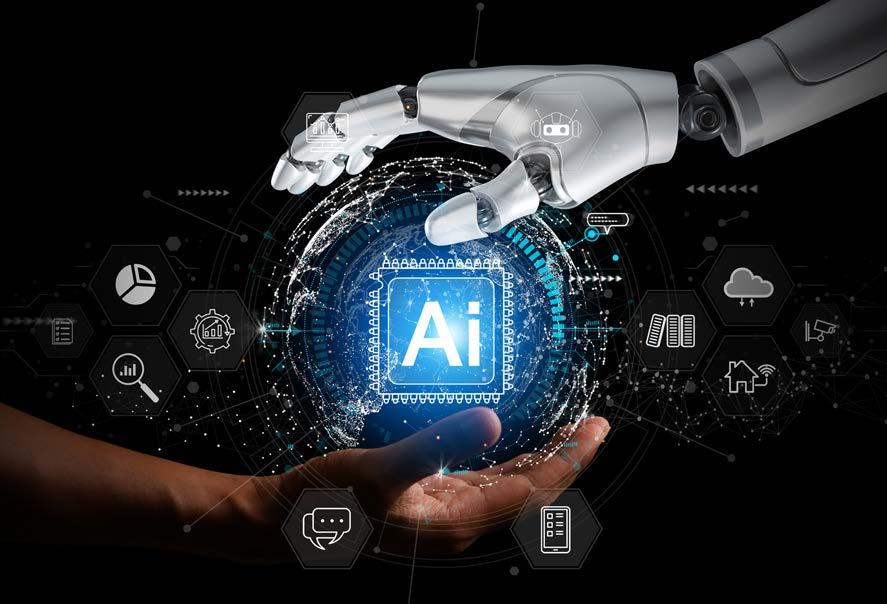
“At our monthly CEI Board meetings we have been discussing how AI is and will impact the practice of civil engineering and how best to train our students for a future with AI,” said Department Chair Elise Miller-Hooks. “The board members can advise us from their unique perspective, and we value their contributions.”
George Mason’s new AI master’s program positions the university at the forefront of AI education in Virginia, and CEIE is also working with Sokolov to develop a Bachelor’s to Accelerated Master’s program in this field.

AI is revolutionizing how we design, maintain, operate, and repair our civil infrastructure systems—driving smarter, datadriven decisions, predictive maintenance, and more resilient, efficient, sustainable, and adaptive communities for a safer, connected, and innovative future.
Our 18 adjunct practitioner faculty play pivotal roles in enhancing our students’ educational journeys. Their sustained involvement ensures that students not only gain theoretical knowledge but are ready to sit at the table with them in the professional world.
The adjuncts work in consulting firms, construction companies, and engineering and infrastructure firms. They lead within government agencies and are active in professional organizations. The breadth and depth of their knowledge and experience provide insights into industry practice and exposure to inthe-field processes and safety standards. They do this not only through real world-based classroom activities and homework assignments, but also by inviting civil engineers from local companies into the classroom. Outside of their classes, our adjuncts work to create networking opportunities and provide mentorship for our students. Together with our adjuncts, CEIE’s faculty ensure that our students possess both the theoretical knowledge and
practical application skills necessary to address today’s infrastructure problems and the challenges of tomorrow.
We are fortunate to be located in the NOVA region, home to such extraordinary professionals whose expertise and experience are always at the ready to work with us around our table.
Rich Benton PE, F.ASCE, FDBIA
SR Benton & Associates, LLC
Cerasela Cristei PhD, PE, PMP, PTOE ATCS, PLC
Matthew Doyle, PE, ENV-SP Fairfax County Department of Public Works and Environmental Services
Amr El-Sayed PhD, CCM EPC Consultants, Inc.
Alex Faghri PhD, PE Virginia Department of Transportation
Soroush Fakhri-Yazdi PE WSP
Chowdhary Gondy CES Consulting LLC
Erol Güler PhD Visiting Scholar, Bogazici University
Bill Haight, PE, F.ASME, ASME WSP
Sean Hajilar, PhD, PE TYLin Group
Matthew Hardy PhD ITE—A Community of Transportation Professionals
Cody Johnson PE, SE Complete Structural Consulting, Inc.
Sean Kennedy PE Kennedy Structural Engineers, PLLC
Syed R. Khan PE, PMP, CCM, DBIA CES Consulting
Harold Rodriguez PE Gordon
Velmurugan Subramanian PhD, PE, BCEE, PMP, LEED AP Kimley-Horn
Eric M. Teitelman PE, F.ASCE Fairfax County Department of Transportation
Richard Thoesen, PE City of Fairfax
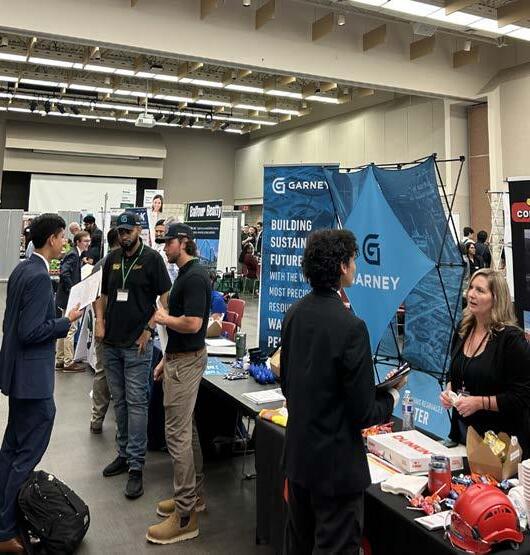
To help prepare for life after graduation, George Mason offers students opportunities to network and job hunt before they receive their diplomas. On October 1, 2025, more than 150 civil engineering students gathered in the HUB Ballroom to meet with over 50 companies at the 21st Annual George Mason University American Society of Civil Engineers (ASCE) Career Fair.
“The ASCE Career Fair offers opportunities for students at all levels— both undergraduate and graduate— whether they are just beginning to explore civil engineering or already have some industry experience,” said Doaa Bondok the ASCE faculty advisor. “This event connects students directly with potential employers, provides insights into various career paths, and helps them build essential professional networks.”
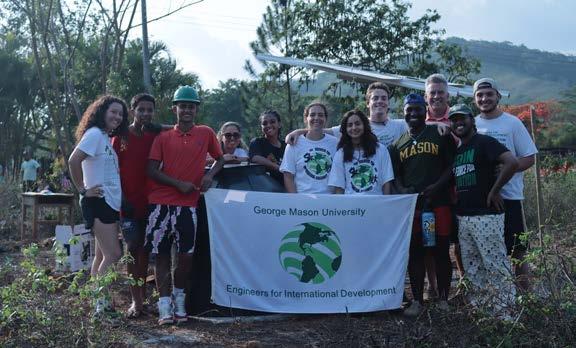
Engineers for International Development’s (EfID) next field trip is planned for January 2026, when a team of about 20 students and faculty will travel to Los Andes, Costa Rica. This trip continues their multi-year partnership with the local community to expand their
water distribution system, improving access to safe and reliable drinking water. EfID continues to grow and strengthen each year, with increasing student involvement, faculty support, and community partnerships that make their work more impactful than ever.
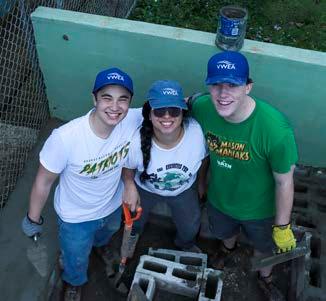
CEIE launched new student chapters of the Virginia Water Environment Association (VWEA) and the American Water Works Association (AWWA). The chapters quickly became active, competing in both organizations’ student design competitions and earning first-place honors in each, a testament to the dedication and excellence of George Mason’s environmental engineering students.
ASCE earned honorable mention for the third year in a row for their Annual Report
2025 ASCE NCS Scholarship awardees:
Sydney Pettit and Hasnaa Mohammed Graduating Seniors: Elizabeth Quimby and Phillip Hunt
The chapter competed in Steel Bridge, Surveying, Sustainable Solutions, 3D printing, and Ethics Paper during the 2025 ASCE Mid-Atlantic Symposium hosted by Penn State.
ASCE sustainable solutions won first place overall and advanced to the National Championship.
Omar Abu Khalifa won first place in the Ethics Competition.
Three ASCE student leaders attended the 2025 Multi-Regional Leadership Workshop by ASCE in Memphis, Tennessee.
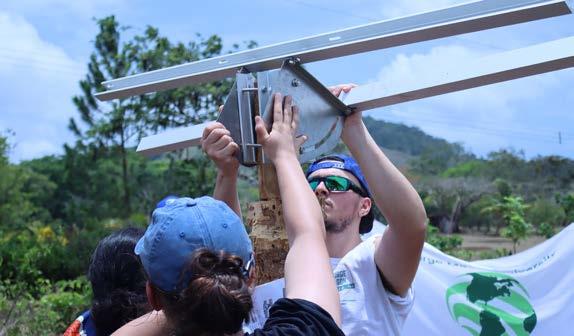
Student Chapter members Jack Tigani Caleb Fink Tyler Yared and Noemi Umanzor earned first place nationally in the 2025 SAME Undergraduate Innovation Design Challenge, where they constructed a solar-powered water supply system in Los Andes, Costa Rica.
SAME NOVA Post events included: a live U.S. Army performance event showcasing ceremonial units and military bands; the 10th Annual SAME NOVA Post Business-toBusiness (B2B) Engagement; and assorted networking, social, and service events.
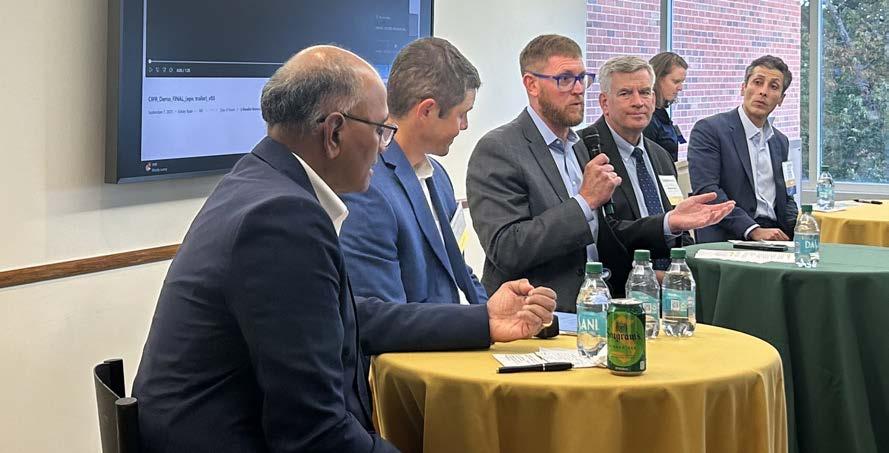
The second annual fall industry event at George Mason set the stage for a vibrant exploration of advancements in construction practices and technology. Moderated by Frank Homer, PE, from Whiting-Turner Contracting Company the panel brought together industry leaders from Fairfax County CES Consulting, LLC Ozone Reality Capture and Pennoni to delve into the transformative power of innovative technologies in the construction sector. Building on the success of last year’s inaugural event, the discussion was a catalyst for networking and learning among students, faculty, and professionals. “Any time we can bring students, faculty, and industry together to network and learn is a win-win-win,” said Department Chair Elise MillerHooks “Technology is revolutionizing the way we design, build, operate, and maintain the built environment.”
The panelists engaged in a lively exchange about the practical applications, potential risks, required resources, costs, reduced incidents, and opportunities associated with emerging technologies. Particularly of interest is a new product that will enable visualization of underground utilities soon to be introduced by Ozone Reality Capture. They highlighted the exciting possibilities of AI and machine learning for project management, construction, and maintenance via drones for site surveying and monitoring, robotics, and more.
The conversation spanned a wide range of topics, and the insights shared during the event offered a glimpse into the future of civil engineering practice, showcasing innovative solutions that promise to enhance the resilience and efficiency of modern construction systems.
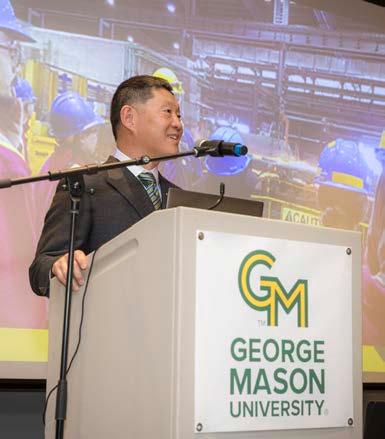
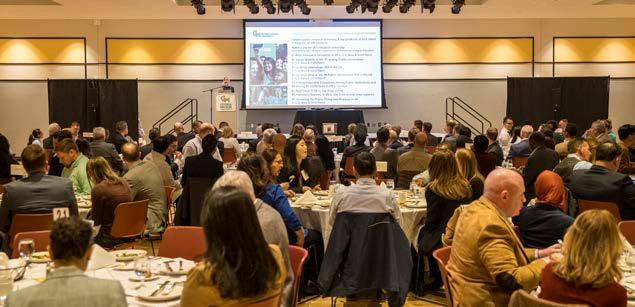
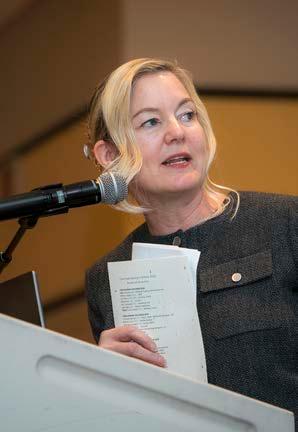
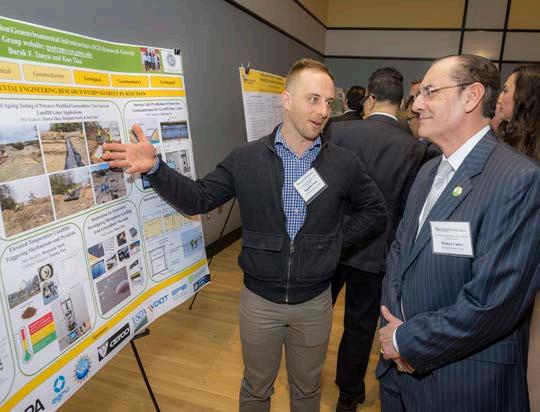
Faculty, staff, students, alumni, board members, and guests gathered in Dewberry Hall on March 21, for the 2025 Engineering Excellence and Leadership Award Luncheon
Prior to the business meeting and the awards ceremony, students were on hand to greet guests and discuss their research posters.
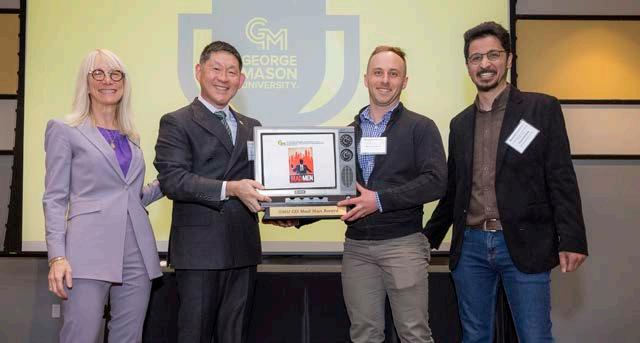
Then CEI Chair George Guszcza and Department Chair Elise Miller-Hooks introduced and recognized the following awardees: CEI Award for Academic Achievement, David Prester; CEI Award for Leadership, Omar Abu-Khalifa CEI Award for Outstanding Contributions to Research, Daniel Cardona
Michael Rolband received the Engineering and Excellence in Leadership Award and gave the Awardee Address. Rolband started his career in the construction and development world, founding a real estate development company in 1988 and Wetland Studies and Solutions, Inc., (WSSI) in 1991. In 2007, he established the nonprofit Wetland Research Initiative to fund applied research in wetlands creation, restoration, and enhancement.
After 30 years leading WSSI, in 2022, Rolband was appointed director of Virginia’s Department of Environmental Quality by Governor Glenn Youngkin; from there, he launched initiatives that have reduced permit and compliance times by over 70 percent and consolidated and updated erosion control and stormwater management requirements for the Commonwealth. Rolband’s lifelong interest in wetlands and stormwater management and its interactions with natural waterbodies has led to changes in Virginia’s environmental laws and stormwater regulations.
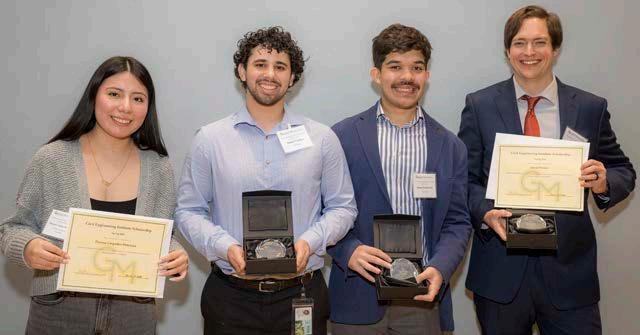
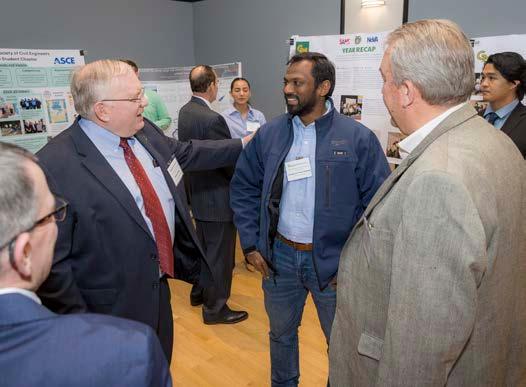
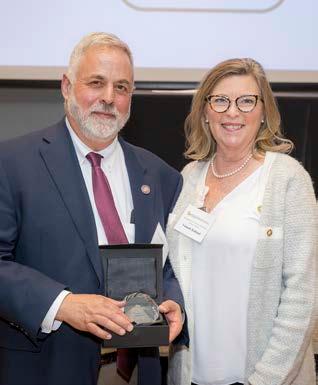
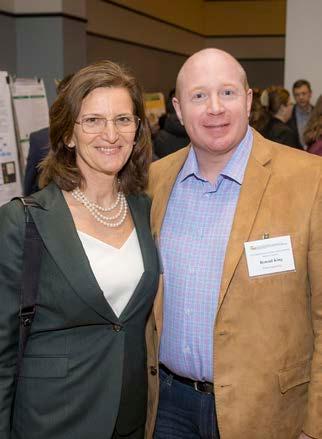
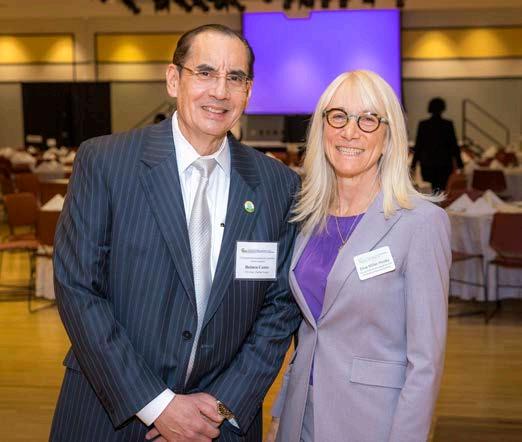
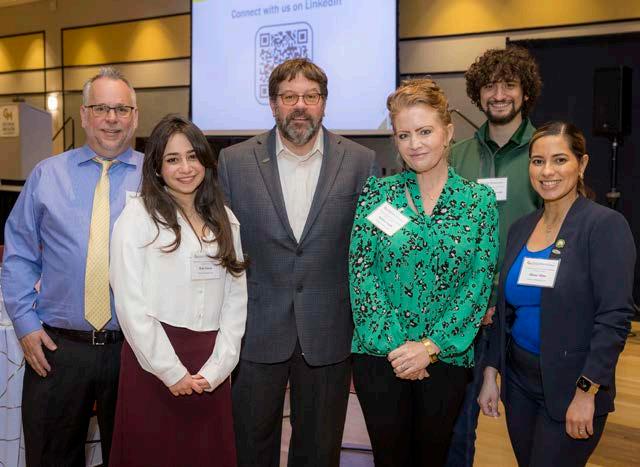
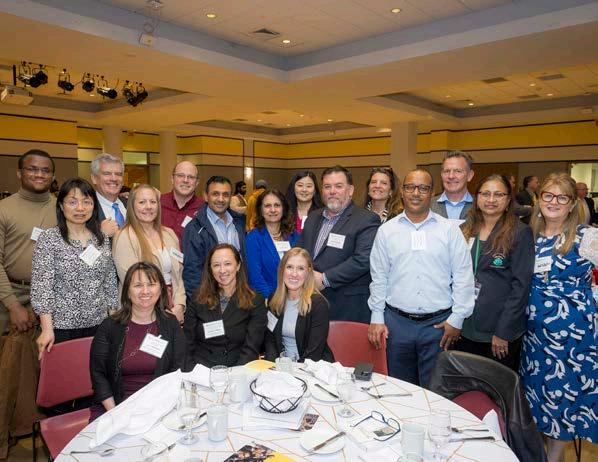
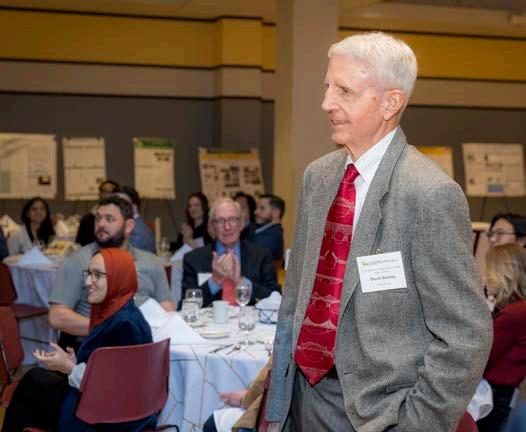
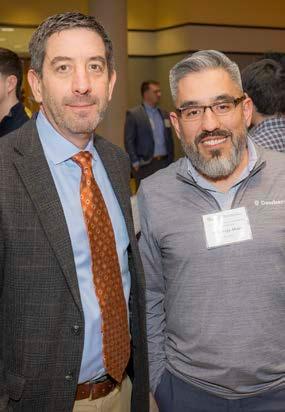
The CEI Board of Directors meets regularly to conduct its business, interact with the department, and report on committee activity. Directors are elected by the CEI membership and serve threeyear staggered terms. The board elects its officers from among its ranks.
Chair
Helman Castro PE, Fairfax County
Vice Chair
Kelsey Ryan PE, Gordon
Treasurer
Brian Chromey PE Wetland Studies Solutions Inc.
Executive Director
Elise Miller-Hooks PhD George Mason University
BOARD OF DIRECTORS
Present—2026
Brian Chromey PE – Wetland Studies and Solutions Inc.
Bill Haight III PE, F. SAME –WSP
Lara Hegler PE –Alpha Corporation
Immanuel Samuel PhD, CMIT, PMP – Garney Construction
Kelsey Ryan PE – Gordon
Francis Homer PE – Whiting Turner
Kurt Thompson PE – Retired, Dewberry
Present—2027
S. Richard Benton, PE, F.ASCE, DBIA – SR Benton & Associates LLC
Helman Castro PE – Fairfax County
Abdul Hammadi PE – VDOT
Jamie Bain Hedges PE –Fairfax Water
Douglas Kennedy PE –Pennoni
Stephen D. Lisse PE – Retired, Naval Civil Engineer Corps
Michael E. Post – Shirley Contracting Company, LLC
Present—2028
Carmen Bere PE – Fairfax Water
Cerasela Cristei PhD, PE –ATCS
Ingrid Davis-Colato –Michael Baker International
George Guszcza D.Eng, CPEM, CCM – National Institutes of Building Sciences
Hardeep Rana PE – Retired, Washington Gas
John F. Roddy – William A. Hazel Inc.
Terry Suehr PE, PMP, DBIA –Transurban
CEI INSTITUTE MEMBERSHIP
Organizations
Alpha Corporation –
Lara Hegler PE
Arcadis – James Kelly PE
Balfour Beatty Construction –Alan Le
Bowman – Brad Gladfelter PE
Dewberry – Jerry Sparks
ECS Mid-Atlantic, LLC –
Bryan C. Layman PE, LPSS, AOSE, LEED AP
Fairfax County – Helman
Castro PE
Fairfax Water – Jamie Bain Hedges PE
Garney Construction –
Immanuel Samuel PhD, CMIT, PMP
Gordon – Kelsey Ryan, PE
Land Design Consultants –Carlos Flores-Garay PE
Michael Baker International –Ingrid Davis-Colato
National Institute of Building
Sciences – George Guszcza D. Eng, CPEM, CCM
Pennoni – Douglas Kennedy PE
Shirley Contracting Company, LLC – Michael E. Post
Transurban – Terry Suehr PE, PMP, DBIA
Urban – Clayton Tock, PE
Wetland Studies and Solutions, Inc. – Brian Chromey PE
Whiting-Turner Contracting Company – Francis Homer PE
William A. Hazel, Inc. –
John F. Roddy
W SP – Bill Haight III PE, F. SAME
Individuals
S. Richard Benton PE, F.ASCE, DBIA
Cerasela Cristei PhD, PE
Abdul Hammadi PE
Hank Hatch, PE
Ron King PE
Stephen D. Lisse PE
Hardeep Rana, PE
Scott Swilley
Kurt Thompson PE Emeritus
David Binning PE
Michael S. Bronzini PE
Charlie C. Crowder Jr.
Deborah Goodings
H.S. Hulme Jr. PE
Sidney O. Dewberry PE, LS, in memoriam
William Fry PE CEIE Faculty
David Binning PE
Doaa Bondok
Liza Wilson Durant
Celso Ferreira PE
Catalina Gonzalez-Duenas
Lucas Henneman
Wenying Ji
Laura Kosoglu
David Lattanzi PE
Viviana Maggioni
Elise Miller-Hooks
Sam Salem
Daniel Smith
Burak Tanyu
Kuo Tian
Mohan Venigalla PE
Ken Walsh
Emma (Xijin) Zhang
Shanjiang Zhu


GEORGE MASON UNIVERSITY
4400 University Drive, MSN 6C1
Nguyen Engineering Building, Suite 1300 Fairfax, VA 22030
703-993-1675 | ceie@gmu.edu civil.gmu.edu @GMU CEIE | CONNECT WITH US