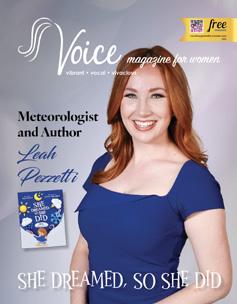
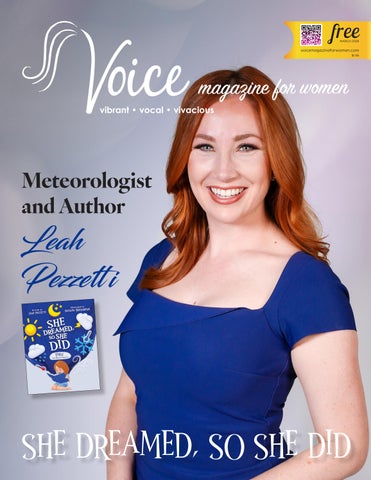
Meteorologist and Author








pring…are you out there?
The past few weeks have given us winter at its finest—or fiercest—with cold, blustery winds, freezing temperatures, and blankets of snow. But the calendar tells another story. We’re stepping into March, which means spring is waiting in the wings. Soon we’ll feel the shift—milder days, changing skies, and yes, the clocks springing forward an hour.
With a new season comes transformation. Flowers begin to bloom, grass stretches toward the sun, and before long, fireflies will return to light up warm evenings. Growing up on the farm, Sunday nights often meant gathering at my grandmother’s house after church. The adults would visit while we children were handed Mason jars and sent into the yard to catch “lightning bugs,” as we called them. We’d run through the dusk, chasing those tiny flickers of light, carefully collecting them in our jars—our own little constellations glowing in the dark.
Each year, the annual lottery opens for a chance to witness the synchronous fireflies at Great Smoky Mountains National Park. In late April 2026, visitors may register for viewing dates May 28 through June 4, when thousands of Photinus carolinus fireflies gather at Elkmont and flash in perfect unison—followed by complete darkness. It’s not fantasy; it’s one of nature’s rarest and most breathtaking spectacles right here in Tennessee. (CHECK OUT JCP’S BOOKS FEATURING FIREFLIES: Piddle Diddle, the Widdle Penguin, and the Synchronous Fireflies of the Great Smoky Mountains; Moondance of the Fireflies; and Fireflies Dancing in the Night.)
I’ve never attended the event myself. Still, on some summer evenings, my own backyard seems filled with hundreds of glowing lights. It’s beautiful. It stirs memories. But no—these days, I simply watch. I no longer try to capture them in a jar.
As this new season approaches, we at Jan-Carol Publishing are embracing change as well. Spring brings fresh opportunities—author appearances, special events, and new connections. Books make wonderful gifts, and JanCarol Publishing offers a wide variety of genres, from children’s literature to cozy mysteries to fantasy. With our ambitious 2026 goal of elevating our children’s books to a new level of recognition, we believe this season of growth will lead us in a positive and exciting direction.
Be sure to listen to our weekly podcast, Bookmarked . If you’re interested in being a guest, please contact Draco at communications@ jancarolpublishing.com.
We’re also thrilled about the continued growth of our online literary journal, Tapestry Journal, and we welcome submissions. Please email tapestryjournal@jancarolpublishing.com for details.
Stay connected with us on social media! Join the fun with giveaways and special happenings, and don’t forget to sign up for our newsletter, which features a “Book of the Month” at a discounted retail price. To subscribe, email communications@jancarolpublishing.com
From all of us to all of you—Happy Spring and Happy St. Patrick's Day!
Thought of the Month: “Take one day at a time. Today, after all, is the tomorrow you worried about yesterday.” — Billy Graham
Verse of the Month: “Hope deferred makes the heart sick, but when the desire comes, it is a tree of life.” — Proverbs 13:12, New King James Version (NKJV)
Celebrating our 22nd anniversary! We wouldn’t be here and there without all of you!





















PUBLISHER
Jan-Carol Publishing, Inc PO Box 701 Johnson City, TN 37605
EDITOR-IN-CHIEF
Janie C Jessee, 423.502.6246 publisher@jancarolpublishing.com
CONTRIBUTING WRITERS
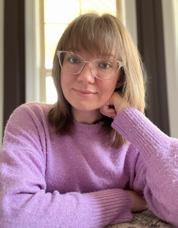
Draco Bailey
Communications Director & Publishing Assistant communications@jancarolpublishing.com
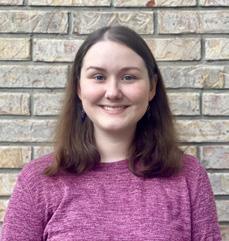
Allison Lawson Magazine Content Editor & Editorial Assistant office@jancarolpublishing.com
GRAPHICS/PRODUCTION

Tara Sizemore Senior Graphics Designer tara@voicemagazineforwomen.com graphics@jancarolpublishing.com
Office Phone/Fax: 423.926.9983
DISTRIBUTION
Staff
PUBLISHED BY JAN-CAROL PUBLISHING, INC. (Volume 23, Issue 3)
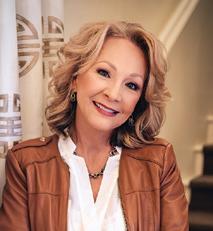
(Janie Jessee’s Photograph: Rebecca Griffin/London Vine Studios)
While every precaution has been taken to ensure accuracy of the published material, Jan-Carol Publishing, Inc./Voice Magazine cannot be held responsible for opinions or facts provided by its authors, advertisers or agencies. All rights are reserved. Reproduction in whole or part is prohibited without written permission. Agencies, Advertisers and other contributors will indemnify and hold the publisher harmless for any loss or expense resulting from claims or suits based upon contents of any advertisement, defamation, libel, right of privacy, plagiarism and/or copyright infringement. The views expressed in Voice Magazine for Women are not necessarily those of the publisher. © 2026
EDITORIAL MISSION:
Voice Magazine for Women wants to provide a useful and complete reliable source of information for women and their families. We seek to celebrate women’s successes, and support their growth by defining and recognizing their needs and providing a concentration of resources for them. We want to be that “link” to all women.
Janie C. Jessee, Editor-in-Chief
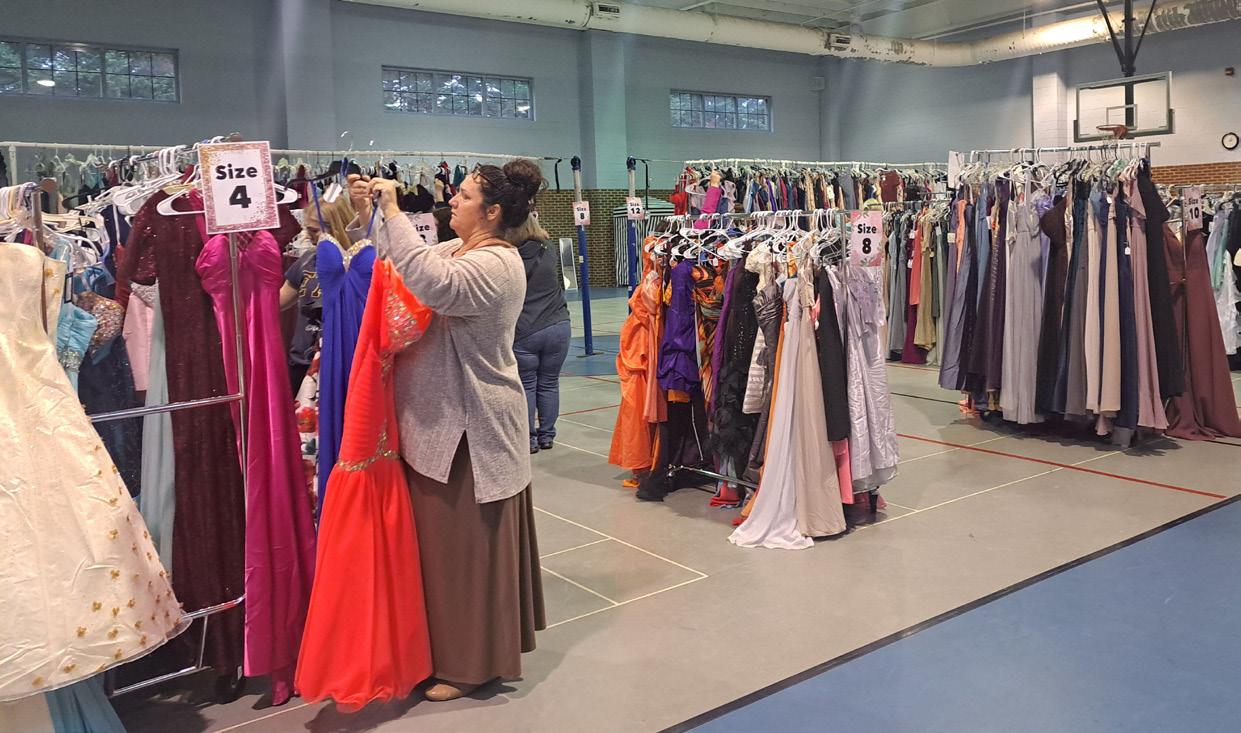
YWCA Northeast Tennessee and Southwest Virginia is once again hosting their highly popular annual Prom Dress Sale, scheduled for March 13 and 14, 2026. This community-driven event features a wide variety of donated formal gowns, all at only $25, ensuring every student can experience their high school prom at affordable prices. In doing so, YWCA aims to eliminate barriers that might prevent students from participating in this memorable coming-of-age experience.

The need for affordable options has never been greater, as the cost of prom—including dresses, tickets, and transportation—continues to rise. For many families, spending hundreds of dollars on a single garment is simply not feasible.
“Prom is more than just a dance; it’s a milestone that celebrates the end of the academic year and, for some, the end of their high school journey,” said Caitlin Talley, YWCA Director of Teen Pregnancy Programming and one of the facilitators of the event. “We believe no student should have to sit out of this celebration because of a price tag—or spend more than they reasonably should in order to attend. Our goal is to provide an empowering shopping experience where every girl feels beautiful and celebrated without worrying about budget.”
The success of each year’s YWCA Prom Dress Sale relies heavily on the generosity of area residents. To that end, YWCA has been accepting donations of new or preloved formal wear. There is still time for community members to look through closets and drop gowns off at YWCA’s main campus at 106 State Street in Bristol ahead of the event. By donating, they can give a second life to a cherished garment while directly impacting a local student.
Not only that, but proceeds from each sale support YWCA programming, which empowers women, strengthens families, and fosters confident, successful, and healthy girls and women throughout the region.
Beyond donations, YWCA is also seeking volunteers to assist with event setup and breakdown and helping customers with their shopping experience. In a unique effort to support those who give their time, YWCA offers a “Volunteer for a Gown” program: any student or family member who completes a 2-hour volunteer shift will be eligible to receive a prom dress from the collection at no cost.
Those wishing to volunteer can sign up at: www.signupgenius.com/go/ 10C0548AAA72EA2FBC61-61799464-prom#/.
YWCA Northeast Tennessee and Southwest Virginia is on a mission to eliminate racism, empower women, stand up for social justice, assist families and strengthen our community. With a goal of supporting family resiliency in our region, as well as to foster confident, successful and healthy girls and women, the YWCA is part of an international movement serving over 2 million in the United States and 25 million worldwide. For more information on how to shop, donate, or sign up to volunteer for the 2026 Prom Dress Sale, please contact YWCA at 423-968-9444 or ywca@ ywcatnva.org.

Women born in the United States have had a profound impact on the nation’s history. Women have led social revolutions, pioneered scientific discoveries and broken various glass ceilings. Here’s a look at a handful of noteworthy women who have helped to shape the United States.
Anthony was a central figure in the women’s suffrage movement, traveling the country giving speeches and organizing for the right to vote. Although Anthony died before the Nineteenth Amendment was passed in 1920, it is often referred to as the “Susan B. Anthony Amendment.”
Johnson’s calculations of orbital mechanics were critical to the success of the first and subsequent U.S.

crewed space flights. A brilliant mathematician at NASA, Johnson’s work was essential for the Apollo 11 mission, which helped to land the first humans on the moon.
When she was appointed to the U.S. Supreme Court by President Ronald Regan in 1981, O’Connor became the first woman Associate Justice of the Supreme Court of the United States. O’Connor served for 24 years and frequently became the swing vote on many noteworthy cases.
When she refused to give up her seat to a white passenger on a Montgomery, Alabama, bus in 1955, Parks became a key figure in the Civil Rights Movement. Her quiet defiance sparked the Montgomery Bus Boycott and served as a pivotal moment that helped end legal segregation in the U.S.
Roosevelt was one of the most active First Ladies in history. She redefined the role by becoming a diplomat, politician and activist in her own right. Roosevelt became the first chair of the UN Commission on Human Rights and was a champion of civil rights.
Widely considered one of the greatest athletes of all time, Williams won 23 Grand Slam singles tennis titles. Apart from her work on the tennis courts, Williams is a prominent advocate for maternal health and a successful venture capitalist.
Ocasio-Cortez, widely referred to as “AOC,” is the youngest woman ever to serve in the U.S. Congress. She was elected at age 29 and has become a leading voice for a new generation of progressives. She has championed issues like climate change and economic inequality.
The United States has been transformed by key women throughout the nation’s history.

“International Women’s Day ( IWD) was started in 1911, and remains an important moment for working to advance women's equality with the day belonging to everyone, everywhere. InternationalWomensDay.com
International Women’s Day celebrates the broad spectrum of achievements in every area by women around the world. It also serves as a call to action for propelling progress toward gender equality.
Purple, Green and White are the colors of International Women’s Day
Purple = justice and dignity
Green = hope
White = purity
The colors originated from the Women’s Social and Political Union (WSPU) in the UK in 1908
The first official National Women’s Day celebration took place in New York City
1911
The first International Woman’s Day was held, drawing more than 1 million people to rallies worldwide
We Asked our Readers:
The United Nations began celebrating March 8 as International Women’s Day, during International Women’s Year
1 Thank the women who have a positive impact on your life or community
2. Support a woman-owned business
3 Donate to an organization that supports women You can start by learning about these International Women’s Day Charities of Choice:
• World Association of Girl Guides and Girl Scouts (WAGGGS) wagggs org Helping over 10 million women and girls across 152 countries take the lead in creating a fair, equal and sustainable world
• Catalyst catalyst.org Dedicated to accelerating progress for women through workplace inclusion
• IWD Charity Alliance internationalwomensday com/ Fundraising Supporting female-focused charities and promoting awareness-raising efforts
68.1%
The global gender gap has been closed by 68.1%
It will take 132 years to reach full gender parity at the current rate of progress
leads the world in achieving gender parity at

Who’s an influential woman in your life, past or present, and why does she inspire you?
Today we recognize all of the women whose hard work and achievements in business, culture, politics, motherhood, education, leadership and beyond keep us moving forward Thank you for your immeasurable contributions to making our community, our country and our world a better place!
Temple Reece: Many would agree with my answer because it’s my mom, Shirley Odom. She is strong, faithful, and beautiful, and has done so much with so little in her lifetime. She continues to build a lasting legacy. I can name many others—among my family and friends, as well as more widely known women—and I’m in awe of them all. So many wonderful women have helped shape the person I am today and continue encouraging me to be my best.
Pam Rhea: My mom, Sue Reynolds, she passed about 3 years ago, but she instilled in me good moral principles. Taught me to cook, clean, care for a family on a small amount, to garden, and to follow God's instructions in all l do. My mom was a Godly, hard working woman, and she influenced my life greatly.
Tara Sizemore: My mom, Kay, has always been my guiding light. Compassionate, kind, intelligent, spiritual, adventurous, resilient, hard-working, generous, and witty—I admire her endlessly!
Jan Howery: My maternal grandmother. She was one of strength and perseverance, and she always showed kindness to others. She shaped my attitude toward life and toward myself.
By Allison Lawson
Leah Pezzetti wants to break stigmas.
The Washington-based meteorologist and children’s author says she has been fortunate to find a bridge between her technical and creative sides, and she pairs those with her love of science.
“We always talk about ‘right brain’ and ‘left brain’ and never welcome a little bit of both or a link between the two,” she said.
Leah grew up surrounded by science, but she says she didn’t discover a passion for it herself until college. “Both of my parents are scientists,” she said. “They’re geologists who—fun fact—actually met in Antarctica doing research. Because I grew up in a science house, I always stayed away from it as a child. I rolled my eyes at the constant ‘look at that obsidian’ comments from my parents on various camping and hiking trips.”

As a child, Leah was more of the creative type and spent her time writing, dancing, and singing. “I personally discovered a passion for science when I was 21 and working my first job out of college doing weekend forecasting in Bakersfield,” she said. “My chief meteorologist at the time was amazing, and she encouraged me to go back to school, so I did!”
“I want to write stories on every male-dominated field: STEM (Science, Technology, Engineering, and Mathematics), first responders, the trades, military—you name it, I’ll write."
— Leah Pezzetti
Now, Leah serves as meteorologist for KING 5 News in Seattle, where her focus is lifting up women and inspiring the next generation to love science.
“I’ve realized science has a stigma, and that’s what I want to help break,” she said.
In her line of work, Leah says she has faced challenges as a woman. “I could write a whole book just about this,” she joked. “My first day on air at my current job, I finished my very first forecast on live TV. I sat down at my computer to a message from a man who asked me if I was ‘just another pretty face, or if I knew what I was talking about.’ I was shocked. If any man had his debut, would his credentials
be questioned if he was handsome? I’d guess not.”
Leah says that while she does receive many positive, kind messages from people online, thanking her for the work she does, her social media is full of critiques from women and sexualizing comments from men. “It’s everything from ‘that dress makes you look fat’ to ‘you have ugly knees,’” she said. “I didn’t realize that ‘ugly knees’ was something people paid attention to.”
Leah has always been a “girly girl,” and she wants to prove to other young women that you can be a girly girl and still love learning. “I grew up in a world where beautiful meant dumb,” she said. “Dorky meant smart. There was no in between. Personally, I love girly things. I love wearing dresses and high heels and doing my makeup. But I also love talking about drought and identifying cloud types and having thoughtful

conversations on our changing climate’s impact on endangered species.”
One of Leah’s favorite parts of the job is to visit classrooms and make young learners excited about science. “One of the points I always make to them is that meteorology is special because it impacts everyone,” she said. “I tell them that it doesn’t matter how old or young or rich or poor or tall or short you are— everyone cares about the weather and is impacted by it.”
Leah shared that there is a saying in TV news: weather wins. “In an era of people cutting cable and local news, trying to figure out what platform we should focus in on to continue keeping the public informed, the number one reason people say they’ll watch the local news is for the forecast,” she said. “And I’m so honored to be the one to give that information.”
In addition to being a meteorologist, Leah is also a children’s author with Jan-Carol Publishing. Her series, She Dreamed, So She Did, has one book published so far, called Emily the Meteorologist, which is based on Leah’s career experiences. The series’ focus is to tell true stories of women in traditionally male-dominated fields.

Leah hopes this series will inspire young girls to “shoot for the moon” and never doubt their dreams. “I’ve already had people reach out to me and say that their little one read my book, and it’s changed them,” she said. “My gosh, I could cry just thinking about that. I had a woman tell me that her granddaughter always seemed to like science but didn’t know how to channel it. After reading the book, she’s ‘become obsessed with studying the sky,’ just like Emily in the story, and will investigate any bit of nature she stumbles on. I can’t begin to describe how good that feels. That is the heart and soul of this book—making science cool!”
Leah notes that she also hopes little boys will read her stories and see representation of strong female characters. “I want little boys to grow up with respect and admiration for girl-power energy,” she said. “It’s important for men to be good advocates and supporters of women as well.”
Leah says she always thought it would be fun to write a children’s book, but she didn’t know what to write about. “Then, I was driving home late one night after work, and the idea came to me,” she said. “A series about girls who pursue male-dominated jobs, all based on real women. As soon as I had the idea, the wheels started turning.”
The first step in writing Emily the Meteorologist, Leah said, was reaching out to another meteorologist who had published a book. “She gave me so many tips on how to find an illustrator, planning, timeline, expenses, etc.,” Leah said. “She was so helpful! Then, I just did it. I never stopped to question it; I just did it.”
Leah hopes to carry this series as far as possible. “I want

to write stories on every male-dominated field: STEM (Science, Technology, Engineering, and Mathematics), first responders, the trades, military—you name it, I’ll write. I could keep going and going and never run out of cool careers and women to base the books on.”
Leah’s second book in the series, she says, is based on a woman named Brenna, who is a wildland firefighter. “Brenna is amazing,” Leah shared. “Writing that book was a totally different experience for me, because Emily was based off of my own skillset, but Brenna has a job I know little about. I had to lean into Brenna’s knowledge for both the story and illustrations for accuracy.”
Leah says she interviewed a few female firefighters for the book, and they all had similar stories. “They all had stories of being told they couldn’t do something because of their gender,” she said. “I hope little girls read Brenna’s story and feel the inspiration and motivation to become firefighters!”
When looking to the future, Leah says she’d like to create a scholarship fund one day. “I’d like to build up some funds to pay for the next few books, but once I do that, I really want to create a scholarship,” she said. “My goal would be for a portion of profits from each book to go to a scholarship to a girl in that field, so she can have an easier time entering the industry. And while we’re manifesting, maybe even a She Dreamed convention!”
Leah says becoming an author has been incredibly rewarding, with the best part being the feedback. “I love hearing that my story has touched a child’s life,” she said. “That’s the core of why I wanted to do this. This is the thing I think about on my drive home. This is the thing that fills my cup, and I hope everyone can feel that.”
By April Hensley
time in. Your family, pets, and wildlife will be looking for cooler places too. Walk around your property during the time you would usually be outdoors to see where the shade falls. If you have a porch, pergola, or a big shade tree, you are set! If not, use the shade from your home or create artificial shade with help from things like a pop-up gazebo or shade cloth.
children to have to place to play, a BBQ area, or a place to nap in a hammock? You can create an outdoor area for family get-togethers or a nice quiet spot to unwind and relax.
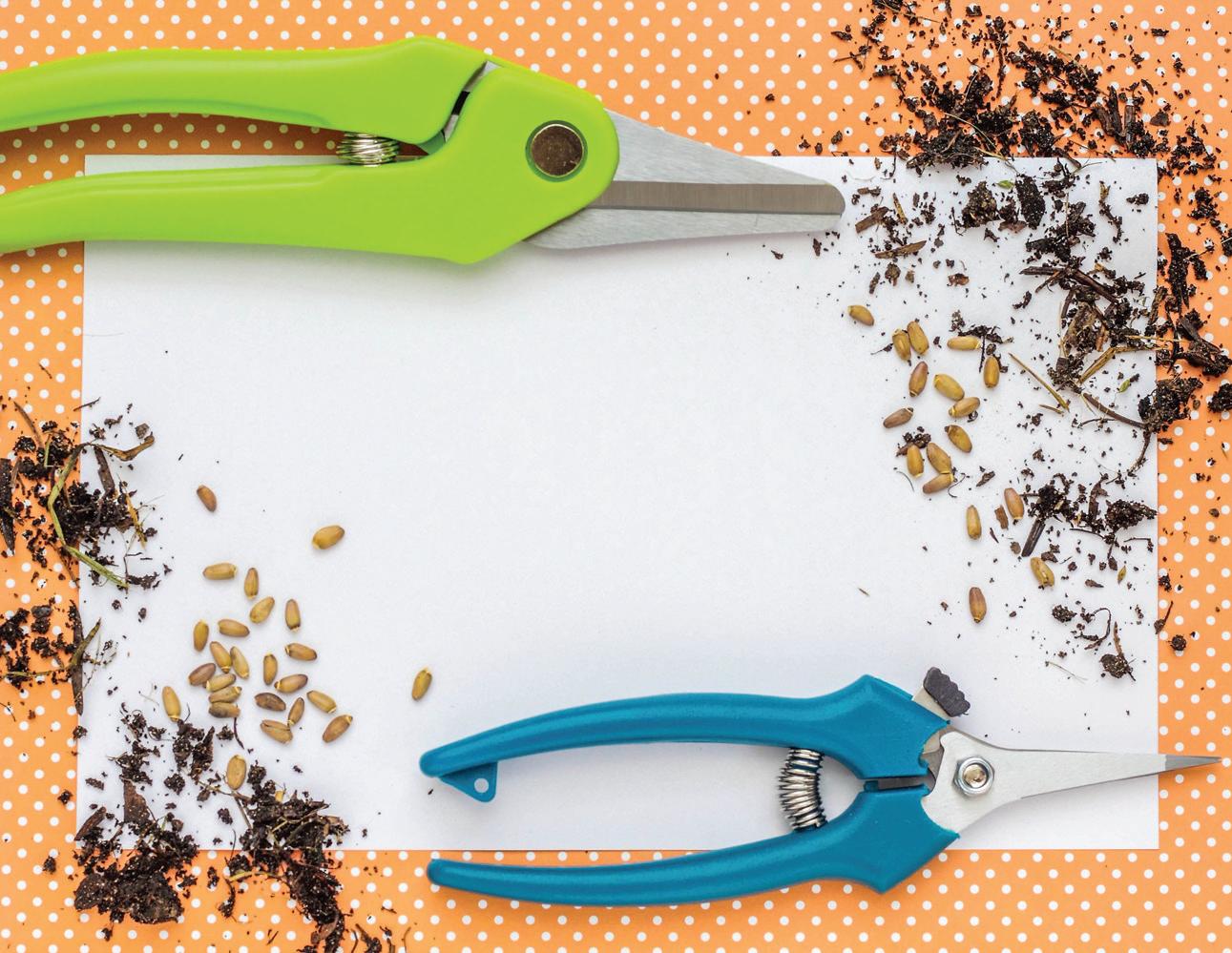
Hbecome ash-like, and dry up quickly, not holding water well, so you know something is wrong right away. It’s time to find out what needs to be added to make the soil a good place for plants to make a home again.
Soil tests look for nitrogen (N), phosphorus (P), and potassium (P). They also test the pH level and other nutrients like calcium and magnesium. Soil tests can be purchased from garden supply stores. You can also contact your local extension office about sending your soil to them for testing.
By April Hensley
ow many times have you grown the absolutely most beautiful flowers or vegetables and then the next year, the same soil and seeds fail either by stunted growth or diseases and pests? The soil could be depleted from overuse. Nutrients in the soil help plants not only grow strong but also help fight off diseases and pests. It’s really difficult to know what is going on in the soil without a test. Sometimes the soil will get a grayish hue,
• Test before planting. If you need to add any amendments it will be hard to do after planting without disturbing seeds or roots.
If you like being outdoors during the summer, you will be spending a lot of time here through the next three months. Let’s jazz up your outdoor living space to suit your style and purpose and make it more inviting.
• Most garden plants and flower beds like a pH of 6 to 7.
• Remove any kind of mulch and old plant debris from the top of the soil. Dig down a few inches with a clean trowel. Get a sample from the bottom of the hole, around one trowel full.
• Some colorful shade lovers include hydrangeas, ferns, Japanese maple trees, begonias, azaleas, hostas, and evergreens.
• Garden gnomes and concrete statues make a cute addition.
• If you have different beds, keep the samples separated and labeled.
• If using the space for an eating area, look for sturdy table and chairs that will survive windy storms.
• Get some shade-loving plants together. These can be planted in-ground or arranged in pots to brighten your space. Special pots are available for deck railing, and shepherd’s hooks can be used for hanging baskets. For pots, you can do not only plants but bushes and trees.
• Follow the directions on the test kit or the instructions from the extension office.

• Compost helps lower pH if it is too high.
• A large patio umbrella can create temporary shade for your outdoor space or picnic area. Umbrellas come in many shapes, colors and sizes and some can be adjusted for the movement of the sun.
• Wood ashes and garden lime raise pH.
• Look into seating, whether to unwind or gather. can be as simple as a couple of folding chairs to large outdoor sectional with side tables.
• Testing early is better so you can add amendments slowly and retest to make sure you are not adding too much or can add more without slowing down your planting schedule.
• Make sure even after supplementing the soil, to rotate your plants to a new area or pot that wasn’t used for the same kind of plant the year before.
• Garden helpers like instant liquid fertilizers work quickly to add nutrients but wash away with rain and time. Compost and well-aged manure along with fish emulsion and bloodmeal build up the soil and continue improving it year after year.
• Sometimes we like being outside after the sun sets when it’s cooler. In that case, look at solar lights. They have them for in-ground, steps, railing, hanging, and rope lights that give a magical feel. These are great safety features, too. Shepherds’ hooks can be used to help suspend the lights.
• Mosquito repellants and traps will be a must whether during the day or night.
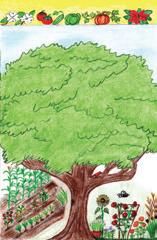
As the days lengthen and the weather warms, spring cleaning takes center stage. Spring cleaning is more extensive than simply washing away grime, as cleaning a home often offers a psychological reset for the coming months. A clear strategy can make the task of spring cleaning feel less daunting, and these tips can help cut down on clutter and other interior annoyances that have arisen after months spent indoors.
The rule of thumb when starting on spring cleaning is to combat clutter before cleaning. Trying to clean around clutter is inefficient and may result in throwing in the towel prematurely. It is important to remove as much as possible from each room before you begin cleaning. As homeowners move through each room, they can assess whether they’ve used items in the last year or whether they serve any functional or aesthetic purposes. If not, they can be trashed or donated.

ceiling and working down towards the floors will help people avoid having to clean the same surface twice.
Using a duster or a microfiber cloth, individuals can clear cobwebs from corners and dust from crown molding. Fingerprints will accumulate near light switches and door handles, so those areas should be wiped down, too.
Homeowners can conduct a thorough cleaning of heating and cooling output and intake vents as they likely have gathered dust over the winter. A down of floor moldings can get to any area near the floor or under furniture that doesn’t get frequent cleaning.
Focusing attention on the kitchen, which tends to be the busiest room in the house, is a wise idea for spring cleaning plans. This is the time for
individuals to pull everything out of the refrigerator and pantry and check for expiration dates. Wiping down the shelves means cleaning away any accumulated food drips or spills. Additional areas to consider include behind the refrigerator, inside the dishwasher filter and inside the microwave.
It’s key to replace the HVAC system filters come springtime, as well as any air purifiers in the home. This will help reduce allergens and ensure that the cooling system will run efficiently when it’s time to turn it on.
Spring cleaning takes place each year. Prioritizing decluttering and following a systematic path through the home helps people eliminate stress and mess at the same time.

It’s important to follow the rules of science when spring cleaning. That means that dust and debris will be affected by gravity. Engaging in a topdown approach will help make cleaning more efficient. Beginning at the
Thinking
The importance of a good credit score cannot be overstated. Adults who handle credit responsibly may save tens of thousands of dollars in interest charges over the course of their lives, as a strong credit history helps to elevate credit scores. The higher an applicant’s credit score, the more favorable loan terms for big-ticket items like vehicles and homes will be. The following are some common credit missteps that consumers can look to avoid as they seek to build strong credit histories.
• Missed payments: The credit reporting agency Equifax ® notes that even a single late or missed payment can lower a person’s credit score. Though it’s always best to set up automatic payments so no payment is ever missed, those who haven’t taken advantage of that capability who miss a payment should know that it generally takes 30 days for a missed payment to affect a credit score. If you simply

forget to make a payment, Equifax ® indicates that some lenders and creditors may not even report a missed payment if a full payment is made within 30 days of the initial due date. If you missed a payment because you can’t afford to pay off the balance, then chances are you’re committing another common misstep.
Sheila Wandell CLU® ChFC®
• Overreliance on credit: Utilizing credit too much is another common mistake that can quickly land consumers in debt. Resist using credit to finance unnecessary expenditures, like dining out or a night of entertainment. Only use credit to make purchases you know you can afford to pay off in full come your monthly due date. Credit utilization ratio is another metric used to determine credit score, and it refers to the percentage of your overall credit availability you use each month. The financial experts at Chase suggest a good credit utilization ratio is 30 percent or less. If you’re routinely maxing out your credit card(s) and can’t afford to pay the balance in full each month, then your utilization ratio might be around 100 percent and might even be higher once interest charges are factored in. A high balance on an existing card too often compels young consumers to make another costly misstep.
• Opening too many credit accounts: It’s hard to turn down what feels like “free” money, and many consumers new to credit might open new credit cards, particularly if a current account has a high balance. Too many credit cards can land consumers in considerable amounts of debt. Equifax ® notes it’s generally recommended that consumers have no more than three credit cards, but some consumers who struggle to make payments each month might be better off with just one card.
Some common missteps can make it easy to fall into credit card debt, which can adversely affect consumers’ credit scores. Avoiding those missteps can set borrowers up for a lifetime of financial freedom.
By Stephanie Cox
Thistime of year, many people begin thinking about purchasing new furniture for their homes. A fresh sofa can completely change a space. Yet while shoppers often focus on fabric, color, or price, very few ask about the most important element: how the piece is constructed. Understanding construction is one of the smartest things you can do before making an investment.
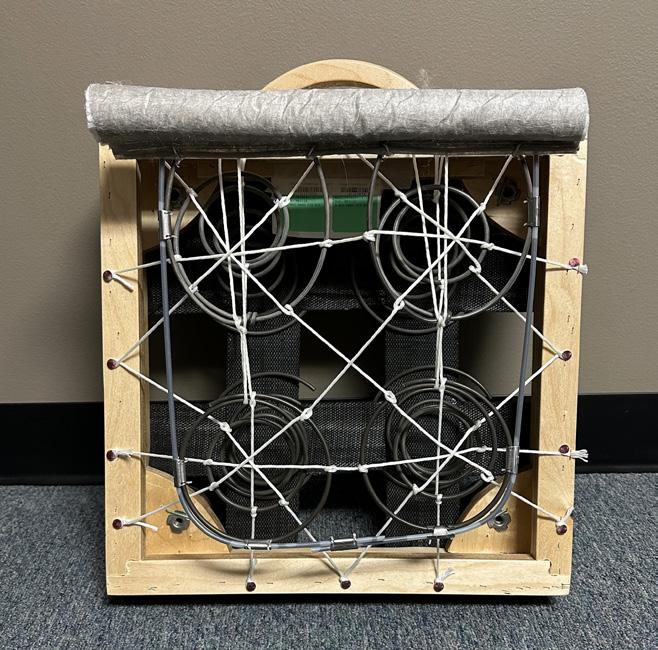
Let’s begin with what you’ll most commonly find in today’s market: sinuous springs. These are metal zig-zag wires that run from the front of the frame to the back. In a well-made sofa, sinuous springs can provide good initial support and comfort. When paired with a solid frame and quality materials, they can serve a household well.
However, not all sinuous construction is created equal. Some manufacturers use thinner-gauge steel, softer wood, or particleboard frames and minimal reinforcement. While the sofa may look beautiful on the showroom floor—and may even carry a higher price tag—these shortcuts can lead to uneven support and premature sagging. This is where many buyers experience regret. Price does not always indicate quality. A sinuous sofa can be affordable and wellmade, or it can be expensive and poorly built. Without asking questions, it is difficult to know the difference.
On the other end of the spectrum is the eight-way, handtied spring system. In this construction, individual coils are tied by hand in eight directions—front to back, side to side, and diagonally. This method takes considerably more time and craftsmanship. The result is a seat that distributes weight evenly and tends to maintain its comfort and structure for many years. It is often considered the gold standard in upholstered furniture. That said, it comes with a higher initial cost and is not carried by every retailer.
So, what should you do when shopping? Start by asking a simple question: “What is the construction of this sofa?” That one question shifts the conversation. It helps you
understand what is beneath the fabric and allows you to compare pieces more intelligently. It is important to remember that the spring system is only one component of overall construction. The frame can vary. The cushion quality can vary. Even the gauge of the steel can vary. All of these elements work together to determine how a sofa will perform over time. Understanding the support system simply gets you on the right path and helps you begin asking better, more informed questions.
Furniture is an investment in how you live every day. The goal is not to buy the most expensive piece; it is to understand what you are purchasing. This is not an all-comprehensive buying guide, but it will get you off to a strong and informed start.
If you would like to see a sample of the eight-way, handtied system, Abingdon Interiors has one available to view in our storefront location.




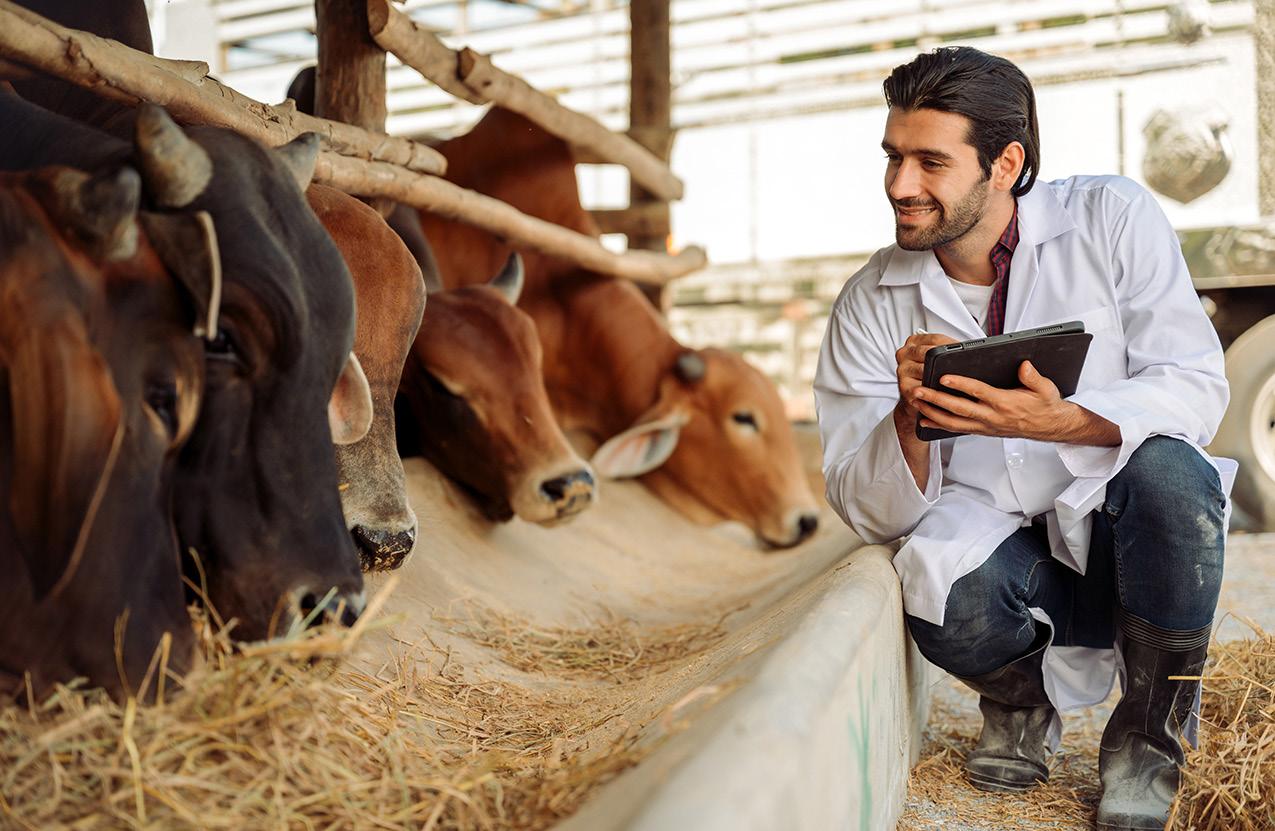
Theimage of farmers clad in flannel shirts while livestock pull plows through the fields may still be foremost on the minds of individuals asked to imagine farm life. But such images may no longer reflect an industry increasingly governed by advanced technology.
Even small-scale family farms have recognized the advantages of embracing technology to help make their operations more efficient and successful. Manual plows and tractors largely have been replaced by fleets of autonomous machines and precision farming technology.
Experts agree that the evolution of modern farming is a case study in the application of Science, Technology, Engineering, and Mathematics. STEM is helping to address the problem of global food security and widespread climate change. U.S. News & World Report says 27 percent of new high-skills jobs in agriculture will require a STEM
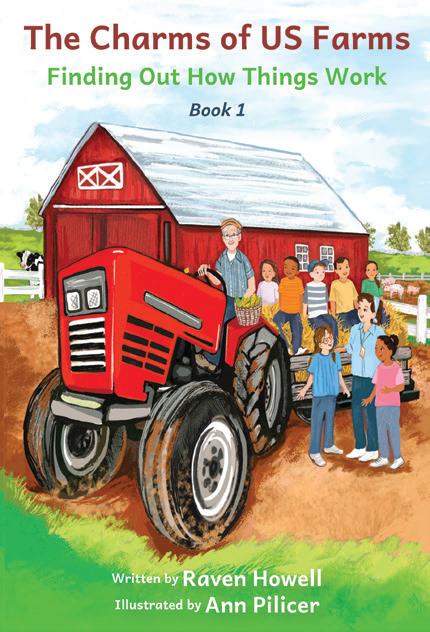
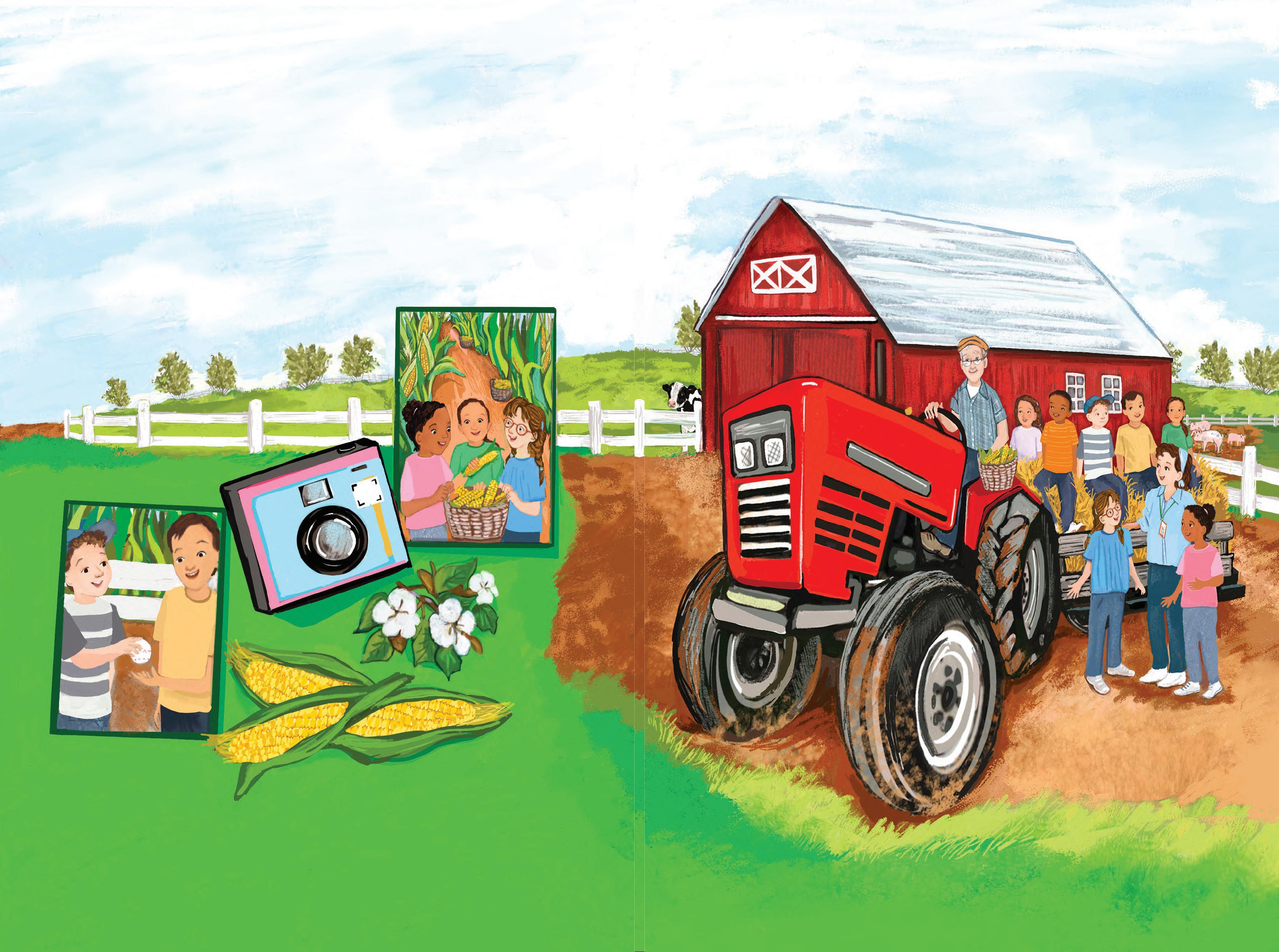
Students are in for surprises when Ms. Miller takes her class on a farm trip. They learn how tall corn grows, what a jujube is, where clothing materials come from, and how many stomachs a cow has. Everyone enjoys the adventure—except Billy, until Farmer Dole’s “magic” baseball trick changes his mood
education. There are many ways STEM is utilized within the agricultural sector.
• Genomics and biotechnology: Scientists can now identify specific traits in plant DNA that will allow for more drought-resistant crops or those better equipped to tolerate problems like downy mildew. Other traits may make plants more capable of thriving in saline soils. Soil science also enables farmers to learn more about the complex microbiome of the soil, which ultimately can help to maximize nutrient uptake.

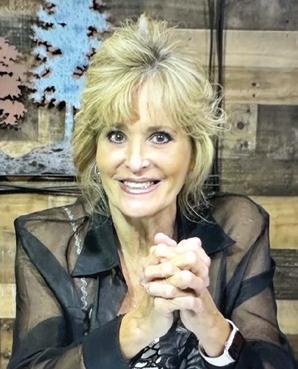
By Tracy Fletcher McGlothlin
rowing up in the Appalachian Mountains of Southwest Virginia, life was all about family, friends, and good food. Family reunions, dinner at grandma’s after church, and of course the occasional church dinner were among the greatest memories of our sleepy little town. Coal was booming and everyone worked hard for what they had. People didn’t mind hard work, and they certainly didn’t mind sharing with others who may have been less fortunate. Yes, those were the good ole days. Everyone had each other’s back and didn’t mind to pitch in and help or pick up the slack in order to provide food for everyone’s table. Growing our own food and sharing with others made the hard work just a good reason to get together and visit with neighbors.
The kitchen was the heart of the home—where families gathered to share stories and love. With these memories tucked inside my heart, and recipes hiding in my head, it is my pleasure to relive and recreate the recipes that kept our tummies full of goodness and our hearts full of love.
Mamaw’s Kitchen is a cookbook that contains 250 delicious, mouthwatering recipes from the Appalachian Mountains that were served on many tables throughout Southwest Virginia. These recipes were passed down from generation to generation. The cookbook is written in Appalachian dialect, as if Mamaw were personally talking to you. Don’t worry if you aren’t from the Appalachian Mountains and are not familiar with our dialect, I have provided a translation page for you. The cookbook is perfect for those who love our unique Appalachian recipes and a perfect gift for those curious minds who want to learn more about our culture.
Bread was a must at every meal and of course it was home made. You could smell the bread in the oven as soon as you stepped on the porch. I want to share one of the bread recipes from the cookbook. I hope this recipe, along with others, will take you back to that simple time in life that we never thought would end.
1 pkg yeast

1 cup lukewarm water
½ cup sugar
1 tsp salt
1 beaten egg
7 cups self-rising flour
3 tbsp melted butter
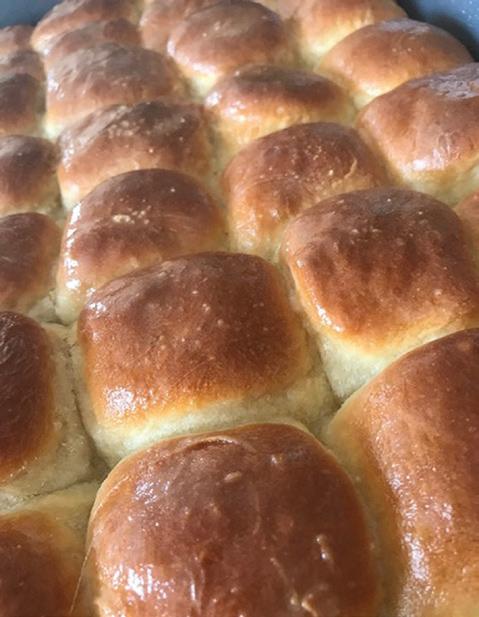
Put ya yeast, water, sugar, and egg in a bowl. Mix it up good. Add ya bout 3 tablespoons melted butter. Mix all at up. Add ya flour. Knead it an’ let it rise till it’s double in size. Ya can either make 2 loaves outta it or a bunch rolls. If ya make the loaves, ya need to bake em in a hot oven at 400 degrees for bout an hour. If ya make rolls, ya need to bake em for bout 25 minutes in a hot oven at 400 degrees. Make sure ya keep ya some a that dough. Spread it in a pan an’ sprinkle it with some streusel toppin’ (1/4 c sugar, 2 tsp cinnamon, 2 tbsp flour an 2 tbsp butter). Bake it all up for bout 30 minutes at 350 degrees. It’s great with cup a coffee in a mornin’!
Mamaw’s Kitchen cookbook will be available to purchase online and in stores soon. Follow us monthly at Mamaw’s Kitchen in Voice Magazine for Women for updates, recipes and tips. May you and your family also be filled with delicious food and the warmth of love.
Tracy Fletcher McGlothlin is an energetic, inspirational speaker and fashion designer from Southwest Virginia whose passions include cooking, interior design, her love of animals, and anything outdoors. In 2023, Tracy was diagnosed with a life-threatening disease and spent several months at the Mayo Clinic. After extensive surgeries and several months of recovery, she embraces each day and its importance. Her motto is, “Make the most of the blessing of every day, never take one second for granted, and don’t forget to live out your dreams!” When asked what she would do if she had to do her life over, she said, “I would work harder, accomplish more, and set bigger goals.”



By Kelly McFadden
Jesus answered and said unto them, Go and shew John again those things which ye do hear and see: The blind receive their sight, and the lame walk, the lepers are cleansed, and the deaf hear, the dead are raised up, and the poor have the gospel preached to them. —Matthew 11:4–5 KVV
Interpretation: Jesus told them, “Go back to John and tell him what you have heard and seen—the blind see, the lame walk, the lepers are cured, the deaf hear, the dead are raised to life, and the Good News is being preached to the poor.” –Matthew 11:4-5 (NLT)
I was thinking the other day about blinders. You’ve probably seen a horse wearing blinders before. They are used to keep the horse’s eyes focused on its destination, by preventing them from seeing anything but what is immediately in front of them. Without those coverings, the horse can become easily distracted. With blinders, the horse is only aware of what is ahead of it. For horses, blinders are useful.
Sometimes, people wear blinders too. They aren’t physical blinders, mind you, but ones of the heart and mind that serve to focus our attention. These blinders can serve a positive role, but, oftentimes, they are negative, especially when we become focused on our problems and miss the bigger picture of what God is doing.
For an example, the Gospel of Matthew relates a story about John the Baptist. From prison, John the Baptist sends his disciples to ask Jesus if he is the One. As a result of his ministry, John had been thrown into prison. Now, this same man who clearly recognized Jesus as the Messiah, suddenly couldn’t see past his own circumstances. His circumstances had blinded him to the bigger picture, causing him to doubt who Jesus was. Jesus’ response to John’s question is found in Matthew 11. He told John’s disciples to report to him what they have seen. In essence, Jesus was asking John to remove the blinders caused by his circumstances; to see beyond his cell walls and realize all that Jesus was doing.
What is your vision like? Is it hard to see God working because you have blinders on? Is it hard to believe or trust or take steps of faith because all you can see is what’s right in front of you? Sometimes life is not as you thought it would be and you’ve put blinders on and can only see life based on your circumstances. Maybe you wonder why God isn’t working in your life or showing Himself to you anymore. Perhaps you need to stop wondering where God is and take off the blinders that hinder your vision. Understand that our circumstances never change who God is. Our challenge is to trust God even in the midst of our circumstances. When you doubt or find it difficult to trust God, know that He wants to help you take off your blinders. Don’t get trapped in your circumstances and lose sight of who you know the Lord to be. www.homeword.com

















Jan-Carol Publishing, Inc. is a small independent publishing press with a motivated force of authors. Mountain Girl Press, Little Creek Books, Broken Crow Ridge, Fiery Night, Skippy Creek, and RoseHeart Publishing are all imprints of Jan-Carol Publishing, Inc.
Written by Donna Snow King
Where else but in Texas can rodeos and radios come together to save a small town? In this captivating small-town adventure, the world of high school rodeo collides with the hidden magic of amateur radio. When Donna Snow King and her lively cast of characters spanning three generations join forces for the good of their community, nothing can stand in their way. Amid the dust and laughter at “The No Gotty,” discover an unforgettable story of courage, hope, and the joy of learning something new. Bulls, horses, cattle, and radios are a combination that will win every time!
Online readers: click here to order.
Written by Joe and Regina Kralik
Illustrated by Juliet Frost
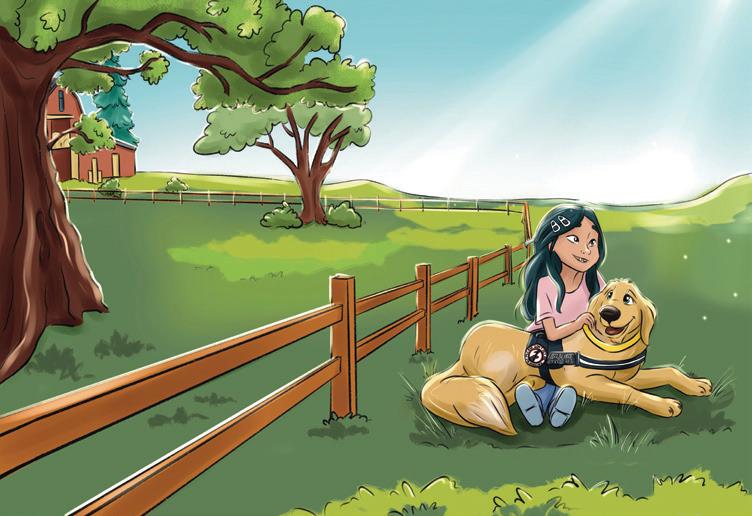
Sunshine Becomes a Service Dog is an important story to tell for those who have children who live with special needs and sometimes with very special dogs who literally save their lives! How does a dog become a service dog, and for whom? Read on to find out!
Online readers: click here to order.







Written and Illustrated by Tina Timlin Sohn


Written
by Carol Ann Patterson
Illustrated by Ava Beshears
Boyles-Jernigan
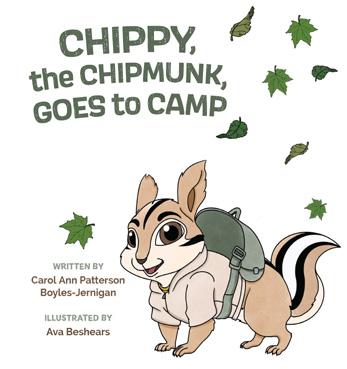
When Chippy wakes from his long winter sleep, at Chipmunk Hollow, he's surprised to find the Jefferson County Girl Scout Council bustling around inside his hollow. Delighted by the girls who arrive to spend several weeks living in tents at this rustic camp, Chippy eagerly joins in. His playful antics entertain the scouts as he trails them through all their activities. Online readers: click here to order.

Written by Elizabeth McCormick COMING SOON!
Dive into the captivating journey of Julie, a single mother turned aspiring nurse. This compelling narrative follows Julie as she bravely navigates the trials of her everyday life, including her demanding job as an insurance claims adjuster and the mysterious events that unfold around her. As she questions her career satisfaction and contemplates a bold change, readers will be drawn into Julie’s world, rooting for her every step of the way. Through the highs and lows of nursing school and the challenging realities of healthcare, Julie’s unwavering determination shines as a beacon of hope.



Written by Carol Owen Reynolds COMING SOON!



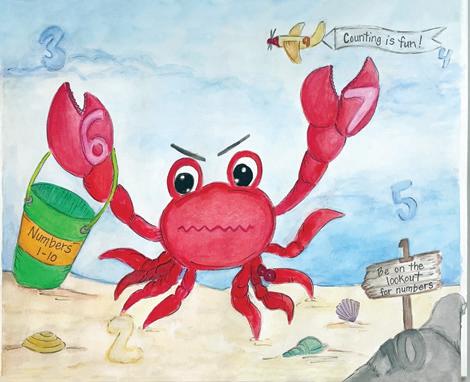
Join the little Crabby Crab on a colorful, number-filled adventure! This interactive children’s book makes learning numbers fun, exciting, and full of discovery.
Online readers: click here
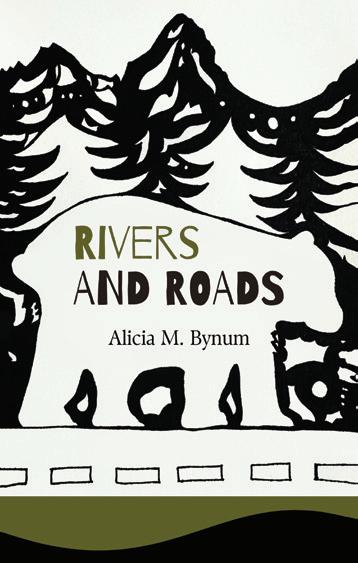
Written by Alicia M. Bynum





When Millie was confronted by the reality of her mother’s mental health, she wasn’t prepared for the weight of responsibilities that prompted her to abruptly switch family roles. Between jobs, relationships, and travels, Millie took a journey that seemed like more of an escape at first. With roots extending for generations through Appalachia, Millie chose to leave her hometown and explore paths less traveled. With the companionship of her two dogs, they set out into the unknown, meeting new and familiar faces along the way. Rivers and Roads is a story of a sacred bond between a mother and daughter and learning to navigate grief, acceptance, and new beginnings. Online readers: click here to order.













Thiis book presents a few stories from the author’s life in Fessenden, North Dakota, up until she left the community after graduating from high school and moving to California. Sometimes, we can’t wait to leave a place, thinking somewhere else will be better, greater, or more exciting. Yet hometowns often take unexpected twists. One day, we may look back fondly and appreciate those twists. For Carol, Fessenden was one of those places.
Written by Carol Owen Reynolds COMING SOON!



























Holy Land Journal 2016 is a record of the author’s reflections on the experiences she witnessed during her pilgrimage. It is not a pictorial record or a detailed description of the sites she visited, as such information can be easily found elsewhere. The photographs included were taken by other visitors, since the author chose not to bring a camera. Instead, this journal presents her emotional responses to what proved to be the experience of a lifetime.


Sunshine Becomes a Service Dog is an important story to tell for those who have children who live with special needs and sometimes with very special dogs who literally save their lives! How does a dog become a service dog, and for whom? Read on to find out!

PAWS FOR READING is a literacy program where children improve their reading skills and confidence by reading aloud to trained therapy dogs in a non-judgmental, relaxed setting. Often hosted in libraries and schools, this program helps reluctant readers practice without fear of correction, fostering a love for books.

Daisy Diana Discovers: The Wonders of Weather is an entertaining and infor mative story that teaches the reader the science behind different types of weather and how to stay safe if severe weather occurs. Whether you love meteorology or are reading this to ease storm anxiety, you'll have fun learning along the way with Daisy Diana and friends.










journey through the Tennessee hills and hollers to get to the Smokies' peak. Y'all will encounter funny characters like Smoggy Smoke, Two Strangers, and Mr. Quackers along the way. You'll feel right at Home Sweet Home.
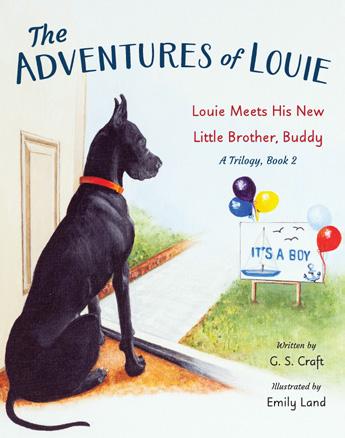
The Adventures of Louie: Books 1 & 2
Meet Louie, the author’s beloved Great Dane and a gift from God! Based on Louie’s true story, these beautifully illustrated adventures are full of fun, learning, and heart. From playful escapades to gentle lessons about colors, concepts, and life, Louie’s joy leaps off the page.
Celebrate the wonder of being yourself! The Joy of Being You uses the playful personalities of two very different dogs, Mia and Beau, to introduce children to the concept of the Myers-Briggs Type Indicator (MBTI) personality preferences. Through their adventures, readers discover that differences aren’t just okay—they’re what make each of us special.
Order this book series directly from JCP — for a discounted price! Go to the “JCP Book Shop” at www.jancarolpublishing.com.

Short and sweet film reviews of old, classic movies perfect for a girls’ night in!
By Allison Lawson
Happy International Women’s Month! In March, there’s lots to celebrate: Mardi Gras, St. Patrick’s Day, Daylight Savings Time, the Spring Equinox, National Reading Month, and, of course, International Women’s Month.
In honor of the latter, I wanted to recommend a cult classic from 1980 that has come to be known as a girlpower touchstone: 9 to 5, directed by Colin Higgins and starring Jane Fonda, Dolly Parton, and Lily Tomlin as three

Tuesday, March 10, 2026
Appalachian Authors Guild General Meeting –1 p.m. – 3 p.m.
Michael Gryboski
Author of the Carla series
Saturday, March 7, 10 a.m. – 4 p.m. Williamsburg Book Festival
The William & Mary School of Education 301 Monticello Ave, Williamsburg, VA 23185
Linda Hudson Hoagland
Author of The Lindsay Harris Murder Mystery Series, The Best Darn Secret; and anthologies Easter Lilies; Broken Petals; Wild Daisies; Scattered Flowers; Daffodil Dreams; Christmas All Year Long: An Anthology of Holly Jolly Tales; and These Haunted Hills: A Collection of Short Stories Books 1–7
Friday, March 6, 10 a.m. – 3 p.m.
Book Signing at Food City Bluefield, VA
Saturday, March 7, 10 a.m. – 3 p.m.
Book Signing at Food City Big Stone Gap, VA
secretaries who decide to get revenge on their horrible, sexist boss. This movie is a screwball comedy, but it has a lot of heart, too, and it’s made even better by the iconic performances from Fonda, Parton, and Tomlin. If you’ve never seen it, or even if you have, March is the perfect time to give it a watch. And, of course, you’ll be able to sing along to the catchy tune “9 to 5,” which was written and recorded by Parton as the movie’s theme. So, get your best girlfriends together and enjoy!
Pour yourself a cup of ambition as Dolly’s song suggests, and try an espresso red blend of wine, a growing trend that incorporates notes of coffee.

If you love 9 to 5, you’ll love She Dreamed, So She Did: Emily the Meteorologist by Leah Pezzetti.
Program – “Turning Folklore into Fiction” Presenter: J.C. Schweingrouber Fiddler’s Restaurant at Abingdon, VA
Friday, March 13, 10 a.m. – 3 p.m.
Book Signing at Food City Claypool Hill, VA
Saturday, March 14, 10 a.m. – 3 p.m.
Book Signing at Food City Wytheville, VA
Friday, March 20, 10 a.m. – 3 p.m.
Book Signing at Food City Wise, VA
Saturday, March 21, 10 a.m. – 3 p.m.
Book Signing at Spring Festival Nuckolls Hall – Fair Grounds Tazewell, Va
Friday, March 27, 3 p.m. – 7 p.m.
Book Signing at Blue Ridge Artisans Meadowview in Kingsport, TN
Saturday, March 28, 9 a.m. – 3 p.m.
Book Signing at Blue Ridge Artisans Meadowview in Kingsport, TN
Poem Contributed By Jacob Hope
If your life were to end today, Would you be able to say, I have tried to do with all my might What is God’s will, And to do it right.
For if you have not, Then let it be said, There will be no rest for you, When you are dead.
Email your submissions to tapestryjournal@jancarolpublishing.com
This Women’s History Month, Voice Magazine for Women highlights stories of courage, adventure, and resilience. These powerful reads celebrate women breaking barriers, chasing dreams, and leaving their mark on the world.
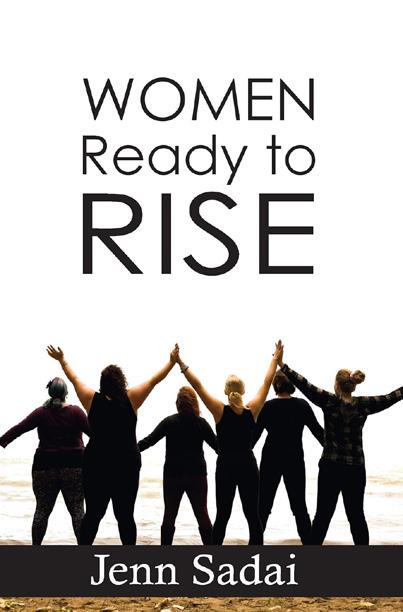
Women Ready to Rise is empowering, thoughtful, and inspiring as twenty-two women share their secrets, stories, and survival voices. All women share their experiences, with each being so different but at the same time, there is a common thread that ties them all together. Their voices will resonate with all women. From suicidal thoughts, depression, extreme anxiety, social anxiety to acceptance of who they are, every reader will walk alongside these women and feel their contagious triumph and power.

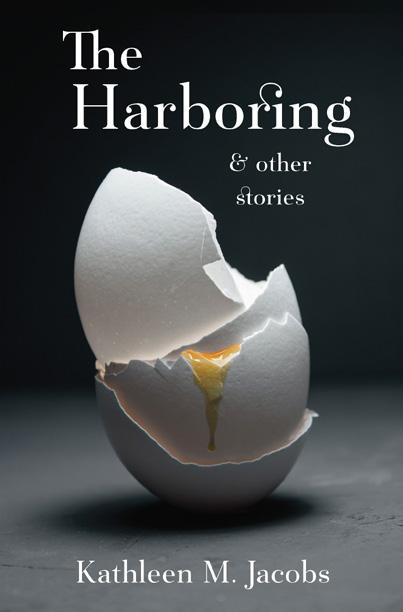
The Harboring & other stories is a collection that weaves together the resiliency of Appalachian women— in fact, all women—as they meet their seemingly insurmountable challenges with grace, celebrate their joys, and find ways to resolve all that remains unresolved in their lives. Each story finds a connection with the others until "The Harboring" brings it to an unexpected crescendo.

In Carol Owen Reynolds' The Locas , come on a journey as the author regales readers with stories and accounts involving her best friends and influential women in her life-the locas (in Spanish, a "loca" is a crazy woman). This personal book about Carol's life before and after the interference of the Catholic Cursillo will make readers both laugh at some of the more humorous stories and reflect on past memories held dear.

The author shares her personal acquaintance with Marie McGrath. Marie McGrath dreamed of being a stewardess, flying on Pan American World Airlines, and speaking her college French. When hired, she flew to London, Paris, Rome, Johannesburg, Singapore, and other faraway places. She loved the thrill of visiting many countries and meeting famous people. Flying High in the Sky reflects on her journey as she was living it, and on the crash that ended her life.

Jan-Carol Publishing has produced seven editions of their most beloved anthology series since the debut of These Haunted Hills Book 1 in 2017. Each new short story collection is packed with frightful tales that keep readers on the edge of their seats. The next installment, These Haunted Hills Book 8, is scheduled for publication in autumn 2026.
Stories submitted to These Haunted Hills Book 8 should follow the theme of spooky or supernatural stories set in the Appalachian region. Stories must be fiction and should be between 1500 and 3500 words. Please include a short author bio that is written in third person and no more than 50 words.
Authors may submit up to two stories for a fee of $25 per story. You may call the office at 423.926.9983 with a credit card number or mail a check to JCP at P.O. Box 701, Johnson City, TN, 37605.
Authors accepted to the anthology will receive two free books upon publication and can order additional copies at wholesale pricing.
The deadline for submissions to These Haunted Hills Book 8 is May 31, 2026. Send your submissions to submissions@ jancarolpublishing.com.
Stories submitted to Tinsel & Tales should be themed for the holiday season and must be fiction. Stories should have between 1500 and 3500 words. Please include a short author bio that is written in third person and no more than 50 words.
Authors may submit up to two stories for a fee of $25 per story. You may call the office at 423.926.9983 with a credit card number or mail a check to JCP at P.O. Box 701, Johnson City, TN, 37605.
Accepted authors will receive two free copies of Tinsel & Tales: A Holiday Anthology and can order additional copies at wholesale pricing.
The deadline for submissions is May 31, 2026. Send your submissions to submissions@jancarolpublishing.com.
Submissions are now open for Jan-Carol Publishing’s first non-fiction anthology, What Happened Next: Stories of LifeAltering Encounters. The collection highlights true stories featuring life-changing events.
This collection highlights true stories featuring life-changing events. We want to hear about your near-death experiences, your medical miracles, your true-life supernatural encounters, and more! For this anthology, we are seeking personal experiences rather than commentary or opinion pieces.
Stories submitted to What Happened Next must be non-fiction and should have between 1500 and 3500 words. Please include a short author bio that is written in third person and no more than 50 words.
Authors may submit up to two stories for a fee of $25 per story. You may call the office at 423.926.9983 with a credit card number or mail a check to JCP at P.O. Box 701, Johnson City, TN, 37605.
Accepted authors will receive two free copies of What Happened Next: Stories of Life-Altering Encounters and can order additional copies at wholesale pricing.
The deadline for submissions is June 30, 2026. Send your submissions to submissions@jancarolpublishing.com.
JCP is now accepting submissions for our second holi day-themed short story collection, Tinsel & Tales: A Holiday Anthology.
This collection comes after the widespread success of Christmas All Year Long: An Anthology of Holly Jolly Tales company’s first holiday anthology, which released in 2025.




Serves 4–6
2 tablespoons extra-virgin olive oil
2 tablespoons fresh lemo
n juice
1 garlic clove, grated
1 teaspoon Dijon mustard
1 teaspoon sea salt
Freshly ground black pepper
3 cups cooked chickpeas, drained and rinsed
2 cups mixed yellow and red grape tomatoes, halved
½ English cucumber, diced
½ cup Pickled Red Onions
½ cup kalamata olives, pitted and halved
½ cup chopped fresh parsley
¼ cup chopped fresh dill
¼ cup chopped fresh mint, plus whole mint leaves for garnish
1. In a large bowl, whisk together the olive oil, lemon juice, garlic, mustard, salt, and several grinds of pepper.
2. Add the chickpeas, tomatoes, cucumber, pickled onions, and olives and toss to coat. Add the parsley, dill, and mint and toss again.
3. Season to taste, garnish with fresh mint leaves, and serve.
Source: www.loveandlemons.com/chickpea-salad

Serves 4
⅓ cup store bought pesto (start with ⅓ cup and add more to taste.)
12 ounces spaghetti pasta
Freshly grated Parmesan cheese, for serving
Fresh basil leaves, for garnish
Sea salt and freshly ground black pepper
1. Bring a large pot of salted water to a boil. Prepare the spaghetti according to the package instructions, cooking until al dente. Reserve 1 cup of the pasta cooking water, then drain.
2. Transfer the pasta to a large skillet. Add the pesto and ½ cup of the starchy pasta water and toss to coat, adding more pasta water as needed to coat the pasta in a lightly creamy sauce. If desired, gently warm the pasta over low heat.
3. Season to taste and serve topped with freshly grated Parmesan and lots of basil.
Source: www.loveandlemons.com/pesto-pasta
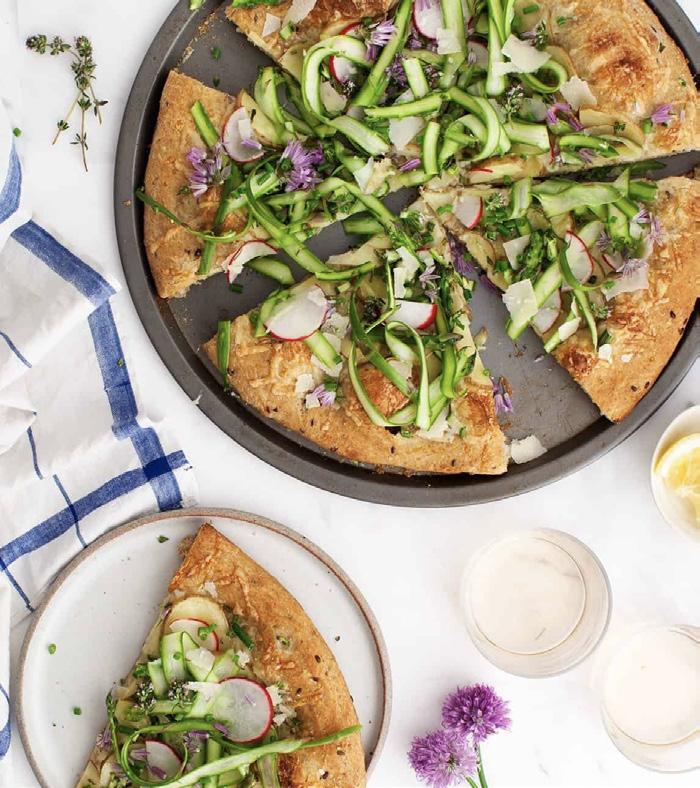
Serves 4
6 to 8 thick asparagus spears
3 to 4 small Yukon gold potatoes
1 recipe pizza dough
Extra-virgin olive oil, for drizzling
1 garlic clove, minced
1½ cups gruyere or white cheddar cheese
2 tablespoons chopped chives
2 radishes, thinly sliced, optional
Squeezes of fresh lemon juice
5 chive blossom flowers, optional
1 tablespoon thyme flowers or fresh thyme leaves
⅓ cup shaved fresh Parmesan cheese
sea salt and freshly ground black pepper
1. Preheat the oven to 450°F.
2. Use a vegetable peeler to peel the asparagus vertically into ribbons. Set the ribbons aside and finely chop any leftover bits of the tender parts of the asparagus, avoiding the fibrous inch or so on the ends.
3. Use a mandoline or a sharp knife to slice the potatoes paper thin.
4. Stretch the pizza dough to fit a large pizza stone or pan. Brush the dough with olive oil and sprinkle with the minced garlic. Top the dough with three-fourths of the gruyere cheese, and then layer the potatoes in circles, starting from the outside of the pizza working in. Let them overlap just slightly. Sprinkle on the remaining gruyere cheese and half of the chives and bake for 12 to 14 minutes or until the dough is cooked through and the potatoes are tender.
5. Remove the pizza from the oven and top with the radish slices, if using, and the asparagus ribbons. Squeeze lemon over the asparagus and sprinkle with a few pinches of salt and pepper. Break apart the chive blossoms and sprinkle on top along with the thyme flowers and/or leaves. Return the pizza for the oven for 3 minutes to lightly warm the toppings.
6. Remove from the oven and top with the Parmesan cheese and freshly cracked black pepper.
Source: www.loveandlemons.com/farmers-market-asparagus-potato-pizza/
Parents of young children know that a day doesn’t go by when they don’t spend some portion of the day thinking about their youngster’s health. Whether it’s getting kids to bed on time so they can reap the rewards of sufficient sleep or taking steps to protect children’s mental health or encouraging kids to be physically active, parents make various daily decisions with their youngsters’ health in mind.
Parents choices regarding kids’ diets are equally important and consequential decisions. Ultraprocessed foods have garnered increased attention in recent years, and curious parents can consider this rundown as they seek to make healthy dietary choices for their children.
The National Academy of Medicine notes that the term “ultraprocessed foods” is typically defined as any food containing an ingredient not typically found in a home kitchen or restaurant. Ingredients such as high fructose corn syrup fit that description.
Much of the concern about ultraprocessed foods is not necessarily the items themselves but the frequency with which they tend to be eaten. Consuming the occasional food containing high fructose corn syrup likely won’t have a significant impact on a person’s overall health if that individual is consuming sufficient amounts of fiber-rich fruits, vegetables and whole grains as well. But the NAM notes that ultraprocessed foods are engineered to feature an almost irresistible flavor profile, which makes it difficult for anyone, but especially children, who have limited impulse control, to avoid overconsumption. Therein lies the danger of ultraprocessed foods, which tend to contain higher amounts of sugar, salt and saturated fat than whole foods or minimally processed items. Adults may recognize when it’s time to stop eating less nutritious foods, regardless of how appealing they might be. But children are unlikely to stop eating something if it tastes good, regardless of its questionable nutritional profile. Kids who grow accustomed to eating large amounts of ultraprocessed foods could be in jeopardy of developing conditions such as obesity or heart disease that are linked to overconsumption of sugar, salt and saturated fat.

The World Health Organization notes that sugary snacks, including candy and baked goods, and sugar-sweetened beverages like soda, are some popular examples of ultraprocessed foods. Potato chips and some commercially produced breads, including white bread sold at supermarkets, are some additional examples of ultraprocessed foods.
Parents concerned about the effects of ultraprocessed foods on their children’s health are urged to discuss alternatives with a pediatrician. Children old enough to understand the benefits of a nutritious diet can be included in such discussions so they gain a greater understanding of the dangers of excessive consumption of ultraprocessed foods.





By Dr. Jami Lee
Marchis National Nutrition Month. And if we’re being real?
Nutrition has gotten loud.
One expert says load up on protein. Another says cut the carbs. Social media tells us to track every macro while quietly making us feel like we’re still falling short.
It’s exhausting. But what if nourishment wasn’t about getting it perfect? What if it was about building a healthier relationship?
Because honestly, the way you relate to food often mirrors the way you relate to yourself.
Food isn’t just calories. It’s communication. Every bite sends signals to your hormones, your gut, your brain, and your nervous system.

What you eat influences your energy, your mood, your sleep, and even how well you handle stress.
When processed inflammatory foods become the norm, your body adapts—sadly, not in the way you’d hope. Blood sugar spikes. Insulin rises. Cortisol follows. Inflammation builds quietly in the background. Over time, you feel foggy. Tired. Maybe even disconnected from your own body.
That’s biology doing its job, so don’t think it’s lack of willpower. And the most amazing part is that your body is always trying to protect you!
When you choose whole foods—leafy greens, colorful vegetables, quality proteins, healthy fats—you’re sending a message of safety. Stable blood sugar tells your brain, “We’re okay.” Healthy fats support hormones. Mineral-rich foods restore what chronic stress has drained.
But nourishment doesn’t stop at what’s on your plate. How you eat matters just as much as what you eat.
Are you rushing through meals? Eating in the car? Standing at the kitchen counter while answering emails? Your body digests more than food—it digests environment. When you slow down and eat calmly, you activate the parasympathetic nervous system—the “rest and digest” state where real nourishment happens and healing begins.
Fueling your body is physical. Feeding your soul is intentional.
Feeding your soul might look like pausing in gratitude before you eat. Cooking with care instead of convenience. Honoring your hunger instead of pushing through it until you crash. Choosing foods that energize rather than numb.
I know that I had to ask myself, does this meal support the woman I desire to become? Will it bring guilt and resentment about my body? Am I coping or nourishing?
Nutrition isn’t punishment. It’s partnership. This month, instead of chasing the latest trend, come back to simplicity. Eat foods your great-grandmother would recognize. Sit down when you eat. Take a breath before your first bite. Chew slowly. Drink water with intention.
We tend to think our body is working against you, but truthfully, it’s working for you.
When you fuel your body wisely, you strengthen your soul with stability, clarity, and resilience. And when your soul feels steady, everything shifts—your confidence, your focus, your presence.
You deserve steady energy. You deserve vibrant health. And it starts with what you choose to place on your plate.
Want support creating balance in your life? Join our community at www.join-ahs.org and reset your rhythm alongside women who walk this path with you.

By Cindy Sproles
Theclock on the wall continues to tick. Each round of the second arm brings about another minute and then...it has passed. We could fill this article with cliches like time is of the essence, or time waits for no man, but in reality, all we can do with time is take advantage.
This month, I want to share from personal experience—both my years in the eldercare business and my family’s own journey. For twenty-one years, I worked for a non-medical, in-home care company that placed caregivers with the elderly. Combined with the fact that our mother turns 100 this year, the advice I offer comes from real life, not research.
My brother and I are fortunate to still have our mother. There is rarely a day that passes that we fail to recognize the gift we’ve been given. A second gift is that our mother is in wonderful health. When others find a bag full of medications for their parents, short of a blood pressure tablet and one for her thyroid, Mom’s list is short. She is in excellent health. Her mind, short of a few slip-ups, is good as her 100th birthday rolls around. She is healthy and happy, content to spend her days doing the things she is passionate about—quilting amazing quilts and reading. But time continues to tick away, and my brother and I recognize this could end in a split second.
Mom has her moments when she can be exasperating and a tad demanding—who wouldn’t at nearly 100? There are weeks when the little things take a toll—arranging doctor’s appointments around a family schedule, making sure the few meds she does take are filled and ready for her daily use. Heaven forbid, should we miss getting her to the bi-weekly hair appointment. In the midst of these little things, there is nothing more vivid than her life clock that hangs heavy in our minds. Still, we have our mother, while others do not.
Families can plan everything—advance directives, power of attorney, final arrangements—but nothing outweighs time spent together. Too often, families let grudges or disagreements fester. Eventually, it’s more important to set aside resentment and embrace compassion.
• Make things right – Regret is an ugly bedfellow. During my years in eldercare, I saw many families who couldn’t resolve their differences. After their loved one passed, they often said they wished they’d made things right. Death offers no second chance—when the door closes, it never reopens. An elderly man once told his family, “It’s always better to say I’m glad I made things right than to live with the guilt of ‘I wish I had.’” Wise words every family in conflict should take to heart.
• Forgiveness is not always for the offender – More often than not, the offender reaps no real benefit from your forgiveness, but you do. It’s a matter of letting go of the things that have haunted you and taking control of what your future holds. Find forgiveness. It’s well worth the effort. Any step forward leads to securing your happiness.
• Make memories and get family history before it’s lost
– Most elderly require little of us other than our time. After all, they spent their younger years raising you and maybe, helping raise your children. Make memories while you can. Then enjoy learning their history. Find out what their life was like in the early 1900s. What were the things that they saw change in the world that impacted them the most. Our caregivers once cared for a gentleman who turned 102. During our time caring for him, we asked, “You’ve lived 102 years. What is the greatest invention you’ve seen?” He rubbed his stubbly chin, grinned, and said, “Toilet paper.” Those moments are valuable. Take the time to hear about them.
• Talk – You may talk about the same thing over and over. It doesn’t matter. What matters is the time you are spending soaking in the essence of who your loved ones are.
• Heed their advice and experience – Listen to their advice. It doesn’t mean you take it, but the life lessons learned from their mistakes and misgivings will offer you a strong platform to stand on when you face difficulties.
Our family has felt all the ups and downs of caring for an elderly parent. We’ve rushed to the hospital, held our breath when she tripped, and shaken our heads when she wouldn’t listen—but there isn’t one moment we regret sharing with her. One day the clock will stop, and until then, we’re cherishing every minute.
Every family has its moments. Some are amazing, others are unrepairable, but time is of the essence. Make the most of the time you have left with your loved ones. The day will come when you hold that time close to your heart.
Cindy K. Sproles is a novelist, speaker, and conference teacher. She is the cofounder of ChristianDevotions.us and the managing editor for Straight Street Books and SonRise Devotionals, imprints of Lighthouse Publishing of the Carolinas. Visit Cindy at www.cindysproles.com.

Identifying the symptoms of allergies is key to distinguishing them from a cold or another infection and to ensuring fast relief. Spring allergies typically peak from March to May and may even continue into July. Physicians will look for specific physical markers to confirm allergies.
1. Sneezing: Sneezing can occur in rapid-fire patterns, known as paroxysmal sneezing, especially after spending time outdoors. These intense episodes can be tied to allergies or be symptomatic of another condition, says the National Institutes of Health.
2. Itchy, watery eyes: Allergic conjunctivitis is the medical term


for this condition, which is a hallmark of spring allergies. Eyes will appear red, feel gritty or drip clear fluid.
3. Nasal congestion/runny nose: A thin, clear discharge typically is a sign of allergies, whereas any mucus that is thick, yellow or green could indicate an infection. Constant upward rubbing of the nose from allergies (called the allergic salute) often causes a permanent transverse nasal crease at the junction of the nose tip and the bridge, says Healthline.
4. Itchy throat and ears: Pollen may cause a scratchy or tingly sensation in the throat and in the ear canals. Medical professionals warn

that chronic inflammation from allergies is a primary risk factor for secondary bacterial infections that can occur in the sinuses and ears. Eustachian tube dysfunction occurs when fluid builds up behind the eardrum because the eustachian tubes become blocked or don’t open properly to let fluid drain to the nose and throat, says the Cleveland Clinic. Pressure imbalances, muffled hearing, popping sounds, and even pain can occur.
5. “Allergic shiners”: Nasal congestion can cause swelling and increased blood vessels to the small veins in the infraorbital area, causing dark, bluish circles under the eyes called periorbital hyperpigmentation, says the Center for Orofacial Myology. This makes allergy sufferers appear as though they have two black eyes.
6. Cough: Post-nasal drip occurs when mucus drips down the back of the throat from the nose. This can cause a persistent, dry cough that’s often worse at night. Postnasal drip also may result in a sore throat and a “cobblestone” appearance in the back of the throat that’s visible during a medical exam.
7. Fatigue: Insufficient rest due to allergy-related discomfort can cause those with spring allergies to feel fatigued. The constant immune system response to allergies also can lead to daytime tiredness and lack of focus.
Allergic rhinitis is a problem for millions of people each spring. A combination of avoiding triggers and using allergy medications can help calm any symptoms that crop up.
Preventative veterinary medicine is a cornerstone of pet health. Vaccinations are a major part of that care that protect pets from highly contagious and potentially fatal diseases. Vaccines tend to be the safest and most cost-effective ways to protect companion animals from preventable diseases.
I
t’s important for pet parents to always be mindful of their dogs’ behavior when out and about, or even hanging closer to home. Dog owners can follow these dog etiquette pointers to be responsible pet owners.
Specific schedules will vary based on the type of pet and the advice of a vet, but there are standard protocols recommended by most professionals.
• Quiet nuisance barking. Do not leave your dog outside unattended for a long time. This can cause what the American Kennel Club characterizes as boredom barking. Quiet your dog if he or she is barking, or bring the pet indoors.
• FVRCP: Kittens receive the feline viral rhinotracheitis, calcivirus, and panleukopenia generally between six and eight weeks of age. It is repeated every three to four weeks until around 16 weeks of age
• FeLV: Feline leukemia virus is non-core in low-risk adult cats but often is considered core for all cats less than a year old. Kittens will get the first FeLV vaccine between nine and 11 weeks of age, then a booster three or four weeks later. Adult cats who spend time outdoors should get this vaccine booster annually.
• Aways leash your dog. Some people are not comfortable around dogs. And even if your dog is friendly, others met on walks or outings may not be. To prevent uncomfortable situations or even dog bites, it’s best to always leash your dog. Choose a leash short enough to prevent your dog from jumping on passersby.
• Ask permission first. Check to see if your dog is allowed to greet people or other dogs. If someone says, “no,” respect that answer.
• Clean up after your pet. Always have waste bags at the ready so you can clean up after your dog. This also applies indoors, should your dog have an accident inside a pet-friendly store.
• FIV: Feline immunodeficiency virus is spread through bite wounds. It is no longer considered core, nor available in North America.
• Be mindful of shopping with pets. Many stores do not allow dogs inside, but employees may be
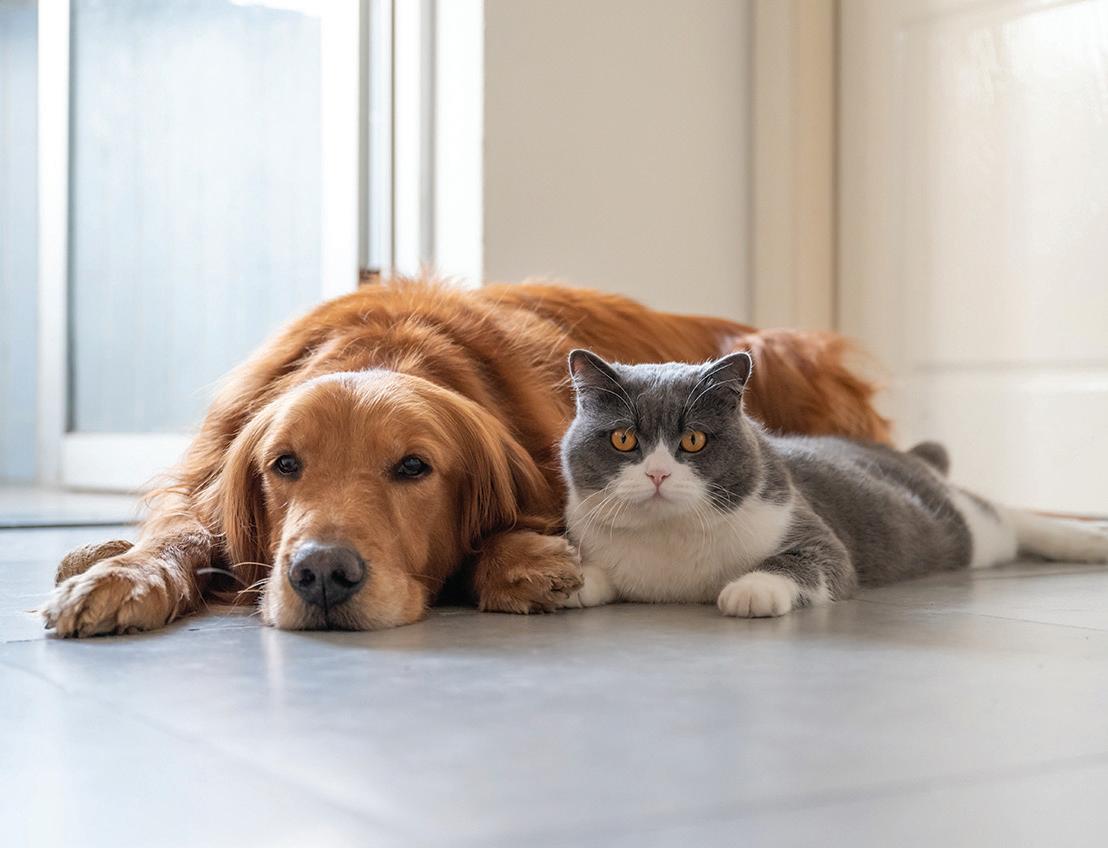
Send us a photo of your Pet Pal for a chance to be featured!
• DA2PP/DHPP/DAPP: Canine distemper/adenovirus-2 is commonly given as one vaccine referred to by these acronyms. The first dose of this vaccine tends to be administered between six to eight weeks of age, then boosters again between 10 and 12 weeks, and 14 and 16 weeks of age. From then on, it is an annual vaccine.
• Rabies: Around the age of 14 weeks, dogs will get a rabies virus vaccine. The rabies vaccine will be an annual shot unless the vet administers the three-year vaccine.
• Leptospirosis: Leptospirosis is a bacterial disease caused by the leptospira bacteria. It affects dogs who come in contact with infected animal urine or contaminated water or soil. The leptospirosis vaccine will protect against the bacteria and symptoms.
• Bordetella: Also known as kennel cough, bordetella is a highly contagious respiratory infection. Dogs who spend a lot of time in social settings are recommended to get this vaccine, first between age six and eight weeks, and later as an annual vaccine.
• Lyme: Vets recommend that dogs who live in areas where Lyme disease is prevalent receive the Lyme vaccine at around age 10 weeks, and yearly thereafter.
hesitant to approach pet owners about such policies. Many stores only allow trained service dogs that are Americans With Disabilities Act-compliant. Service animals are defined as dogs that are individually trained to work or perform tasks for people with disabilities. Service animal designations are exclusive to dogs. However, a number of people have “emotional support animals,” which are not recognized as service animals. As a general rule of thumb, know a store’s policy on non-service animal pets before visiting. And, when shopping at food stores, it’s best to leave the dog at home.
• Canine influenza: This vaccine is recommended for dogs who go to daycare, boarding facilities, the groomer, or any places where they will spend time among other dogs.
• Train your dog . A dog that knows basic obedience training will behave better in the community. If you are having trouble training your dog alone, consider working with an experienced dog trainer.
Dogs are beloved members of the family. However, pet owners should practice proper etiquette when dogs are out and about.
Various vaccinations are recommended for companion cats and dogs to keep them safe and healthy. Pet owners are urged to speak with their animals’ veterinarians to get pets on the right vaccination schedule.


Afamily-friendly spring break will require some planning to ensure such an excursion is within budget and appropriate for travelers of all ages. With that in mind, parents planning a spring break getaway with their children can consider these tips.
• Book flights as early as possible. If the family aspires to take to the friendly skies during spring break, then book flights well in advance so the cost of air travel doesn’t bust the budget. According to
the affordable travel experts at Dollar Flight Club, fares for flights between mid-March and early April can spike by anywhere from 20 percent to 50 percent. That’s because airlines know spring break is a popular time to travel. While booking early might not lead to huge savings, it will give parents more freedom to pick and choose flights based on variables important to them, like flight times and ticket costs. The longer you wait, the more expensive and less accommodating a flight may be.
• Avoid hotspots. Spring break hotspots tend to be overcrowded and a little raucous, which is less than ideal for families with young children. When planning a family-friendly spring break, look for locales off the beaten path. Early to mid-March is peak spring break season for many colleges and universities, so if children’s schools let out for spring during this time it may be wise to avoid oceanfront destinations that typically attract lots of college students. If the budget allows, spring break might prove an ideal time for an international trip with the family.

Patrice D. Wilkerson is an award-winning author from Virginia
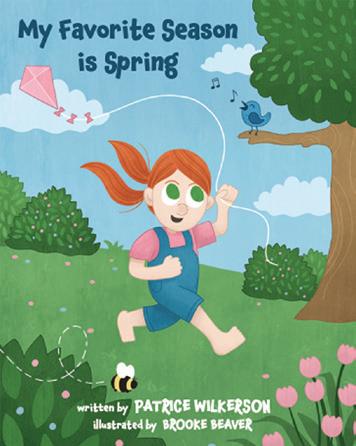

• Emphasize outdoor activities. As winter winds down, people from all ages tend to get a little cabin fever. Come spring break, look for destinations where outdoor activities abound. Access to activities like hiking, kayaking, swimming, and other outdoor favorites can provide a necessary escape from the cold weather back home.
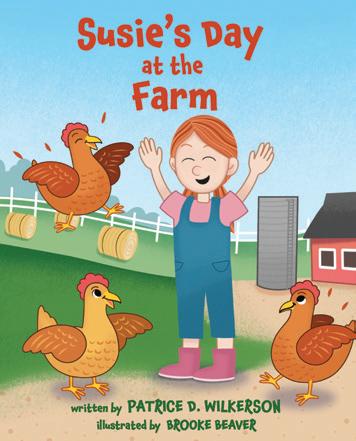




• Visit a big city. Beaches draw crowds come spring break, but cities tend to be less overrun by tourists during this time of year. Consider visiting a big city and taking in all it has to offer. Flights and accommodations to such locales might not cost as much as travel and lodging to oceanfront destinations, so this can be a great time to visit a big city and take advantage of the cultural and culinary offerings it serves up.
Spring break need not be a budget buster for families looking to get away this March or April.

Jan-Carol Publishing, known as JCP, is recognized as the largest book publisher in the region with over 400 titles of books and publishing the monthly magazine, Voice Magazine for Women, for over 20 years. We are locally owned and operated
• How do you get your book published?
• How do you submit your manuscript?
• What steps are needed for editing?
• How do I get an ISBN?
• Will your book be on Amazon, Barnes and Noble, etc?
Let us assist you in navigating through the book publishing process!
423.926.9983 submissions@jancarolpublishing.com www.jancarolpublishing.com













Focused. Con sultative. Fully Custom
•Newly designed space to better serve you
• Shifting to a consulting & design model centered on personalization, superior quality, and true value
•From outdoor kitchens to architectu raldesign patios – and ever ything in between
•94% of our sales are custom order s
•Enjoy attentive, concierge-level service