Tapestry Journal
Indie Publishing
Stitching together literature, art, and indie spirit.

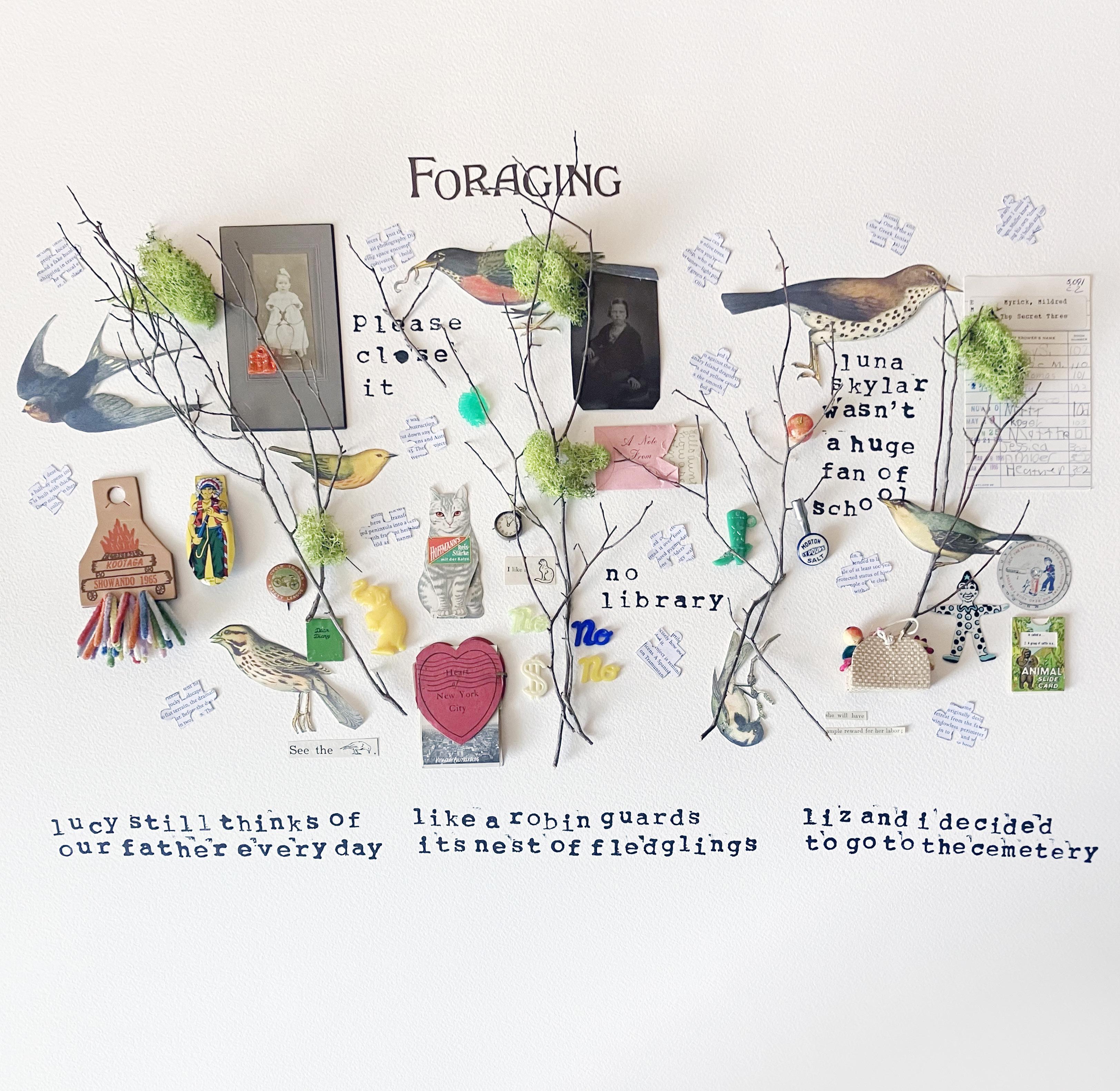
BY KATHLEEN M. JACOBS
“FORAGING”

Stitching together literature, art, and indie spirit.
BY KATHLEEN M. JACOBS
Welcome to the March/April issue of Tapestry Journal , where we celebrate springtime and the spirit of renewal. As the season begins to shift and the first signs of growth return to the world around us, we’re reminded that creativity often follows the same cycle of resting, gathering strength, and eventually blooming in unexpected ways.
This issue brings together voices and visions that reflect that sense of reawakening through small yet powerful poetry, inspired art, thoughtful book reviews, and more.
You’ll also find a particularly special feature in this issue that comes from the classroom. We are proud to present a project showcasing 25 short stories written by high school students. These young writers approached storytelling with imagination, curiosity, and a refreshing willingness to take risks. Their work reminds us that renewal is not only a seasonal experience, but it is also a literary one. My hope is that through this journal, new voices will continue to emerge and bring fresh ideas and perspectives that keep storytelling alive and evolving.
In an issue like this, the name Tapestry Journal feels especially fitting; a tapestry is made by weaving together many individual threads. In these pages, poetry, art, and storytelling come together to create a vibrant tapestry of creativity.
As you read, we hope you experience a bit of the energy that springtime brings—the sense that something new is always beginning. Whether you find yourself lingering over a poem, discovering a book to add to your TBR list, or being inspired by the bold imagination of young writers, may this issue offer its own moment of renewal.
Thank you for reading and for being part of our journey!
Warmly,
Allison Lawson
Managing Editor
Tapestry Journal: Indie Publishing

MISSION:
Tapestry Journal: Indie Publishing is a literary journal dedicated to celebrating the vibrant world of independent
We weave together voices from across the creative spectrum—featuring compelling short fiction, insightful author interviews, evocative photography and art, thoughtful book reviews, and more. Our mission is to champion emerging and underrepresented voices, foster creative dialogue, and provide a platform where storytelling in all its forms can flourish. Like its namesake, Tapestry Journal brings together diverse threads to create something rich, textured, and meaningful. While every precaution
or
PUBLISHER
Jan-Carol Publishing, Inc. PO Box 701 Johnson City, TN 37605
EDITOR-IN-CHIEF
Janie C Jessee, 423.926-9983 publisher@jancarolpublishing.com


Allison Lawson Managing Editor
Tapestry Journal: Indie Publishing tapestryjournal@jancarolpublishing.com
Draco Bailey Communications Director & Publishing Assistant tapestryjournal@jancarolpublishing.com


GRAPHICS/PRODUCTION
Tara Sizemore Senior Graphics Designer tapestryjournal@jancarolpublishing.com
Reading is a beloved pastime that’s having a moment. A number of variables have helped to renew people’s interest in reading. BookTok, a popular subcommunity on the social media platform TikTok in which users create videos to recommend and discuss books, is one such variable.
The BookTok trend has helped to spark and revive many people’s interest in reading, and that’s paid dividends for the bookseller Barnes & Noble, which plans to open 60 new stores in 2026 after opening 30 new stores in 2023, 61 in 2024 and 67 in 2025. Reading more also pays considerable dividends for readers, particularly schoolaged book lovers. Research has found that reading has a notable impact on brain development in children.
• Reading can foster critical thinking skills. Reading fosters critical thinking skills by engaging readers in a story and encouraging them to ask questions about its characters and plot. The tutoring experts at Readability, who specialize in helping a diverse group of readers in making the shift from learning to read to reading to learn, note that reading helps students assess situations logically and form reasoned opinions.
• Reading can help build language skills. Reading helps children build their vocabularies by enabling them to read new words. Reading aloud to children can be especially beneficial for young children, but reading to themselves also encourages kids to learn new words. As children read and learn new words, their language skills expand.
• Reading fosters a sense of wonder about the world. The wide range of literary genres, from sci-fi to fantasy to history, can instill in children a sense of curiosity and wonder about the world they live in. That can spark interest in other subjects at school, including science, mathematics and art.
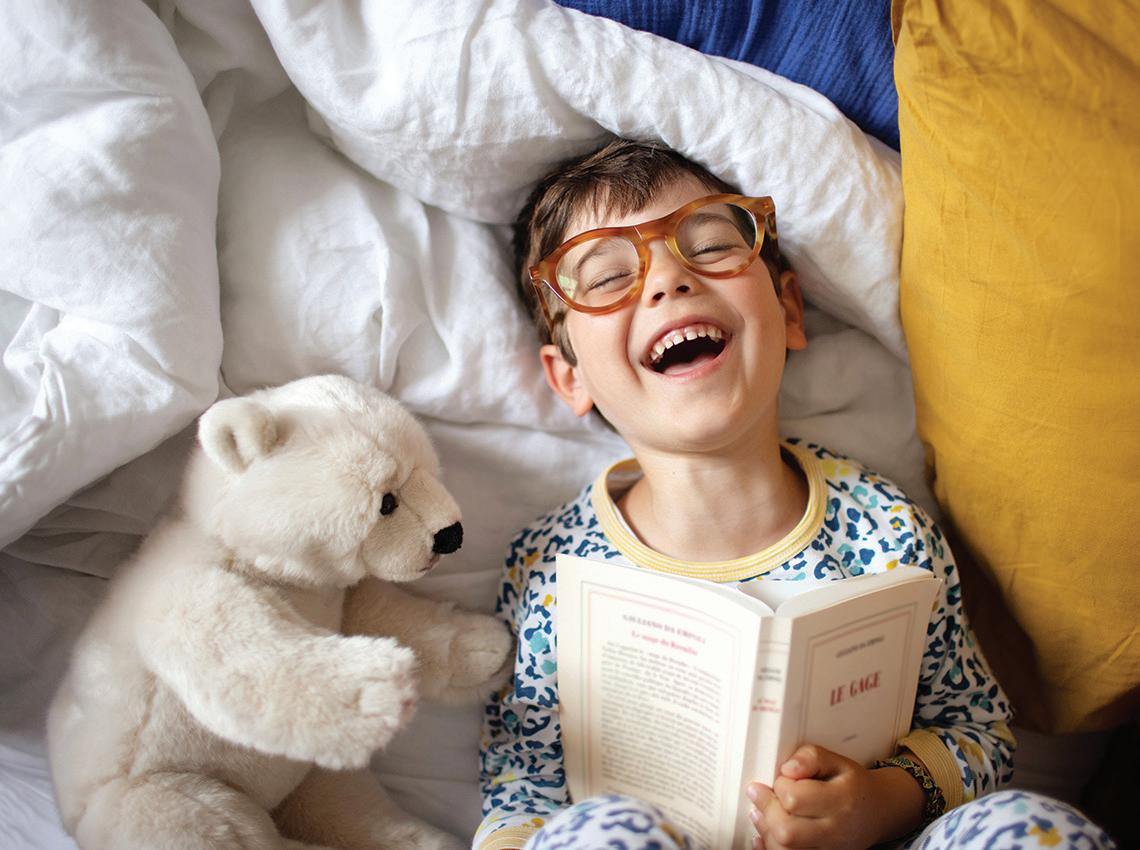
• Reading can benefit youngsters’ attention spans. Modern children are inundated with stimuli that does not necessarily foster longer attention spans. Social media videos and even some children’s television programming may have an adverse effect on kids’ ability to build a strong attention span. Reading helps kids to strengthen their focus by requiring them to concentrate on a narrative and process information as the story unfolds. That requires kids to maintain their attention for far longer than the average social media video.
Reading has a profound impact on the development of young children’s brains. That makes it both an enjoyable and effective pastime.

“I really enjoyed th is book .”
“Real-life stories of women who know what they wa nt and ma ke it happen al ways inspire me.”


The Little Orange T by
George Bove


“I discovered this book on my most recent trip to Tennessee. I am a huge Tennessee Vols fan. Tennessee is my second home. I was visiting a sick aunt and found this in Alumni Hall. I am so glad I bought this book. I have read it to both of my kids countless times now, and not only does it make them smile, but it brings me some peace too and brings back joyful memories of being at Tennessee football games as a child. Thank you for writing this so I can share it with my kids. We will treasure this one forever!” — A m A zon R eviewe R
By Kathleen M. Jacobs
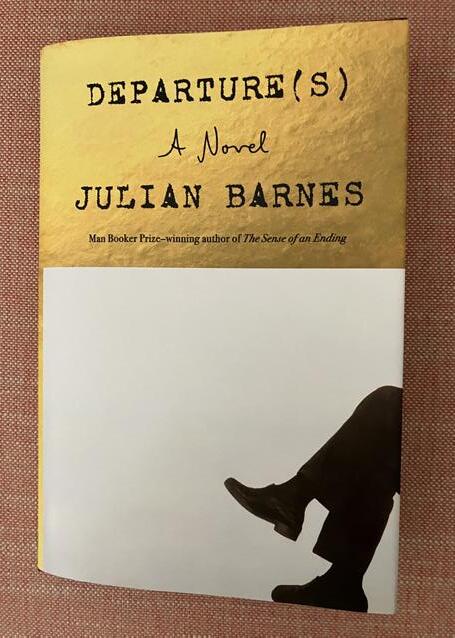
Onentering my seventh decade, I found it somewhat incredulous. I could not recall marking a previous decade that awakened me to how quickly life was moving along. I enjoyed and was grateful to enjoy relatively good health, was nearing thirty years as a published writer, and although I had always and intentionally kept my world small, my friends and I had walked alongside each other through the peaks and valleys of this thing we call life. Upon reaching this milestone, a dear friend, who was in the middle of his fifth decade remarked, “You give me something to look forward to when I celebrate my seventh decade.” And that’s when I knew that I had to have done a few things right. It was also the year that I would celebrate a

Our Blood Runs Black: McClure #1
Mine Explosion by Marsha Sutherland Self and Rebecca Riner White
“Our Blood Runs Black is a deeply moving account of the McClure #1 Mine Explosion. It is one of the most sober events in Appalachian mining history. It captures the human side—the grit, anxiety, and brotherhood felt by the families of miners every time their loved ones went underground. I have enjoyed reading it. My Papaw was a miner, and it made me want to research more about him and what he went through. This is an historical must-read for everyone, especially those who want to know more about their Appalachian history.” — A m A zon R eviewe R
fifty-year marriage, one that has had equal amounts of joy and sorrow. I’m grateful that I remember most vividly the moments of joy, even or perhaps particularly because I choose to walk those paths instead of the challenging ones. I’m not necessarily a Stoic, but my attempts are genuine.
It was in reading Julian Barnes’s most recent release, Departures(s) that I found a way to move towards not only an acceptance but a full embrace on the certainty of aging and the gifts that those experiences might bring to the table. Barnes writes so evocatively that he makes aging something to anticipate, even with all its challenges, both certain and not. His exploration of the role memory plays is inviting, bringing with it a curiosity that is longed for. He doesn’t shy away from the inevitable and, in a sense, encourages us to look at it as something that just might very well bring an unexpected enlightenment. “‘You’re allowed to be old, but you’re not allowed to behave like an old person.’”
Barnes’s work promotes thought. And that’s his gift with every publication. And if a writer can do that then he has most assuredly accomplished more than he set out to do.
“Life and memory can be so . . . quixotic, don’t you find?” Indeed. And isn’t that a lovely thought.
Kathleen M. Jacobs is a JCP author who lives in NYC.

Jan-Carol Publishing has produced seven editions of their most beloved anthology series since the debut of These Haunted Hills Book 1 in 2017. Each new short story collection is packed with frightful tales that keep readers on the edge of their seats. The next installment, These Haunted Hills Book 8, is scheduled for publication in autumn 2026. Stories submitted to These Haunted Hills Book 8 should follow the theme of spooky or supernatural stories set in the Appalachian region. Stories must be fiction and should be between 1500 and 3500 words. Please include a short author bio that is written in third person and no more than 50 words.
Authors may submit up to two stories for a fee of $25 per story. You may call the office at 423.926.9983 with a credit card number or mail a check to JCP at P.O. Box 701, Johnson City, TN, 37605.
Authors accepted to the anthology will receive two free books upon publication and can order additional copies at wholesale pricing.
The deadline for submissions to These Haunted Hills Book 8 is May 31, 2026. Send your submissions to submissions@ jancarolpublishing.com.
JCP is now accepting submissions for our second holiday-themed short story collection, Tinsel & Tales: A Holiday Anthology.
This collection comes after the widespread success of Christmas All Year Long: An Anthology of Holly Jolly Tales, the company’s first holiday anthology, which released in 2025. Stories submitted to Tinsel & Tales should be themed for the holiday season and must be fiction. Stories should have between 1500 and 3500 words. Please include a short author bio that is written in third person and no more than 50 words.
Authors may submit up to two stories for a fee of $25 per story. You may call the office at 423.926.9983 with a credit card number or mail a check to JCP at P.O. Box 701, Johnson City, TN, 37605.
Accepted authors will receive two free copies of Tinsel & Tales: A Holiday Anthology and can order additional copies at wholesale pricing.
The deadline for submissions is May 31, 2026. Send your submissions to submissions@jancarolpublishing.com.
Submit your true-life stories to JCP’s first non-fiction anthology
Submissions are now open for Jan-Carol Publishing’s first non-fiction anthology, What Happened Next: Stories of LifeAltering Encounters. The collection highlights true stories featuring life-changing events.
This collection highlights true stories featuring life-changing events. We want to hear about your near-death experiences, your medical miracles, your true-life supernatural encounters, and more! For this anthology, we are seeking personal experiences rather than commentary or opinion pieces.
Stories submitted to What Happened Next must be non-fiction and should have between 1500 and 3500 words. Please include a short author bio that is written in third person and no more than 50 words.
Authors may submit up to two stories for a fee of $25 per story. You may call the office at 423.926.9983 with a credit card number or mail a check to JCP at P.O. Box 701, Johnson City, TN, 37605.
Accepted authors will receive two free copies of What Happened Next: Stories of Life-Altering Encounters and can order additional copies at wholesale pricing.
The deadline for submissions is June 30, 2026. Send your submissions to submissions@jancarolpublishing.com.
By Amanda Reed
Looking out from weathered window seals, Beyond to rings of daffodils
Planted there so long ago, peeking gently from dusted snow.
Spring’s early beauties there are unfurled, Placed there by hands no longer of this world.
Your winsome ways are not native to this land; A legacy not for all to understand. If not for them, you would not be a radiant reminder for all to see. You line foundations no longer there, Memories etched in time, structures that succumbed to years of wear.
A cheery reminder of history, your untold stories call me. For years you graced the gardens of your hosts. Still, you remain, and I chase ghosts.
Amanda Reed is a resident of Kingsport, Tenn., a Christian wife, mother, careerwoman, and small business owner. She graduated from King University with a Bachelor of Business Administration and a minor in Appalachian Studies. She enjoys writing about the Appalachian Mountains and landscapes she calls home.
By Jacob Hope
If your life were to end today, Would you be able to say, I have tried to do with all my might What is God’s will, And to do it right.
For if you have not, Then let it be said, There will be no rest for you, When you are dead.
By James Carroll
The first of the season out on the lawn looks for protein, caterpillar or worm. Nothing escapes your eyes and hearing, the stab of your bill and the red breast of your butcher’s apron.
You fly back to the nest to your young with their bills swaying like crocus, the broken shells heavenly blue. This is noble work, killing and giving like your seasonal going and coming to the table of Spring.
By James Carroll
An old man works to pick a jonquil, pinches off the bottom of the stem and takes it inside.
Pure yellow in from rain and wind. Maybe I’ll forget my repaired heart and terrible knees.
I look at you from my chair. Stay as long as you can and so will I.
James Carroll, a retired landscaper, currently lives in Easton, Maryland, where all his rejection notices are sent. Born in Texas, he graduated from George Washington University. His poem, “Nick’s Diner,” was a runner-up in the 2015 Pratt Library Poetry Contest. His poem, “Morning Glory,” placed in a subsequent Pratt contest.

By Allison Lawson
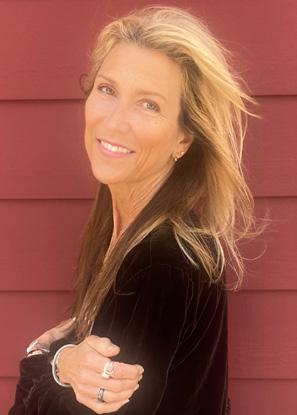
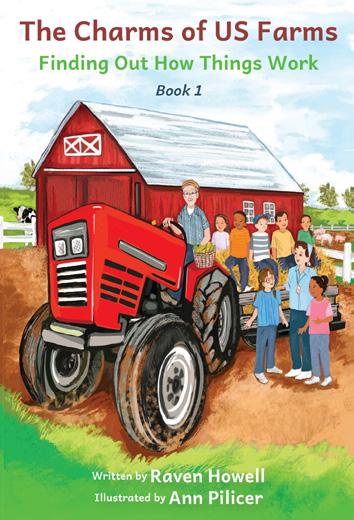
We sat down with author Raven Howell, who has authored more than 20 published children’s books and writes poetry for a variety of magazines. She is also a journalist and illustrator. Her latest book, The Charms of US Farms: Finding Out How Things Work, is available now.
Q: Tell me a bit about your background and how you first got into writing!
A: Poetry, music, art, and storytelling was the prevalent creative environment in our household during my childhood. Growing up, I marveled at the talents my parents and siblings sparkled with. Writing, composing music... It was inherent in my homelife, and my creative switch was always on the “on” position.
Even preschool, and then elementary school and onward, I wrote and wrote and wrote—anything and everything that I could imagine. I have compilations of poems, fairytales, songs, and even plays I’d copy in notebooks and diary-like journals.
Q: When did you realize you wanted to write children’s books? What is it about children’s books that drew you in?
A: Because during youth, music and songwriting gave me the most joy, I originally focused on a career in the music industry. I started out working in several smaller record companies in New York City and eventually ended my music career in publishing and songwriting at Time Warner’s Atlantic Records.
From there, it was an easy transition to children’s writing, since a lot of my material and compositions were inherently whimsical. I spent time studying children’s literature more seriously and dove in! Children’s books and children’s

literature in general have always been a space I love to dwell in. After all, imagination and all the magical possibilities of the universe reside there.
Q: In addition to writing children’s books, you’re also a journalist. Could you talk a little bit about this chapter of your life and what you’ve learned about journalistic writing versus fiction writing?
A: Through journalism, I have the delightful opportunity to spotlight the wonderful talent and beautiful components in our communities. Communicating inspiring, loving qualities of our world, and promoting that beneficence, is very special to me.
It’s funny, but many of my articles for children’s magazines read like a story. Somehow, I end up incorporating a few of the elements used in writing a book! But the gist, the motivation, and the messaging is completely different than when I write my own material.
Writing my own books or poetry is more like being in an open field, a meadow of a thousand wildflowers under an endless blue sky. It’s like having an artist’s palette—I can pick colors, brush boldly, or swirl gently. It’s an invitation to connect in creative and playful ways.
Q: I know you also take your books on the road a lot. What have been some of your favorite or most memorable encounters at these community events?
A: Every fair and book festival has its own unique flair and fun. I’ve met many families and children whose smiles
forever remain in my heart. It’s the best place for sharing and making new friends. Books bring communities together!
Q: Your latest children’s book, The Charms of US Farms: Finding Out How Things Work, follows a group of kids on a school trip visiting a farm and learning about the importance of farming. What message do you hope kids reading this book take away?
A: I hope children have a better understanding and appreciation of where the comforts and daily needs of our lives originate. I think the young reader will awaken to the value of nature and planet Earth, and perhaps the story will help in becoming more conscious of treating our land and what it offers us with extra care.
Q: How important do you think illustrations are in a children’s book? And could you talk a little bit about the process of working with an illustrator?
A: Illustrations really can make or break a book. If the visuals don’t evoke the emotions or imagination that the words define, no matter how hard you try reading the story, it’ll fall flat.
The process of working with an illustrator can vary, depending on the publisher and illustrator/writer relationship. Artist Ann Pilicer and I worked on our book, The Charms of US Farms, together as a team. She was motivated by the story’s theme, and envisioned the tractor, children in the classroom, and began forming and drafting various images that came to her of farm animals.
We also decided much of the content together, like the age ranges of characters, or how grumpy or happy they should appear, and what the book cover would look like. And many times, I would revise my text and we’d continue back and forth, a true collaboration.
Q: This is a bit of a broad question, but what kind of advice would you give to writers who are just starting out who have dreams of becoming a published author?
A: You know, I can give you a real-life example, albeit a
unique one! A couple of years ago, I was selling my books at a library book fair event. A woman who was interested in getting her children’s story published asked me about my books, and I offered her information about an organization I had published with, imagining my editor would possibly consider reading her manuscript. And within a year, she was thrilled to receive a book contract from them!
So, making friendly, personal connections is one of the best ways to learn more about the book business and authorship in general. If you’re just starting out, dream big, and get involved with the community. We all have the ability to help each other.
Q: In your career, you’ve done children’s book writing, poetry, journalism, you’ve illustrated a bit, and you have a blog... Do you have a favorite creative project?
A: Not so much termed a “project,” but I’m well aware that I’m here to work with children. My kids’ events—whether that’s story time, a writing workshop, or a book presentation—are my favorite creative moments from my writer’s life!
Q: When you aren’t writing, what hobbies do you enjoy?
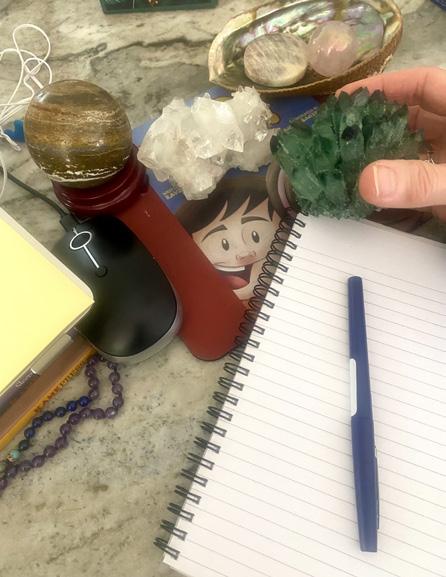
A: I love nature, and if I’m not writing or reading something, you’ll find me on a nature trail, mountainside. I practice yoga daily, am a creative cook/baker, and have a great affinity for crystals. In fact, my favorite crystal stones encircle my writing space and offer my muse an occasional nudge!
Q: Is there anything else you’d like to add for our readers?
A: Whether you’re a reader, a writer, or an accountant or store clerk, it makes no difference—keep expanding the light that shines inside of you. We all make an impact, and most of the time, we don’t even realize that a small smile, sharing one kind word, goes a long way. You are the inspiration. Thanks for connecting with me, and warmest wishes to everyone!
You can find Raven Howell’s books through Amazon and Barnes & Noble. Visit her website, ravenhowell.com.
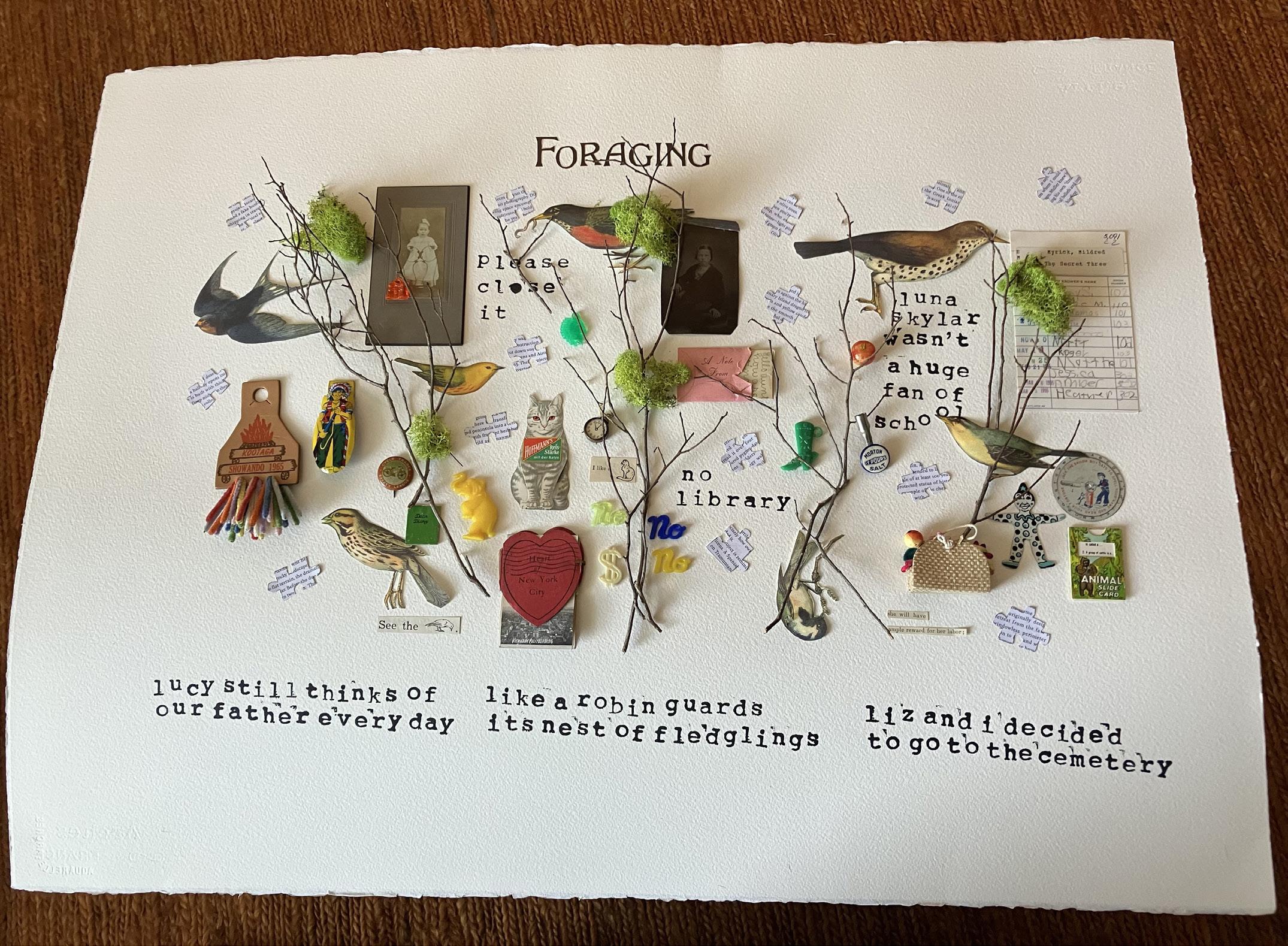
Kathleen M. Jacobs | “Foraging”
Mixed media collage
For many years, I gathered found objects to express and understand myself through visual artworks. I created “Foraging” in an effort to invite fresh story ideas into my world of creative writing. My visual art has been shown at the River Gallery in Chattanooga, Tenn.
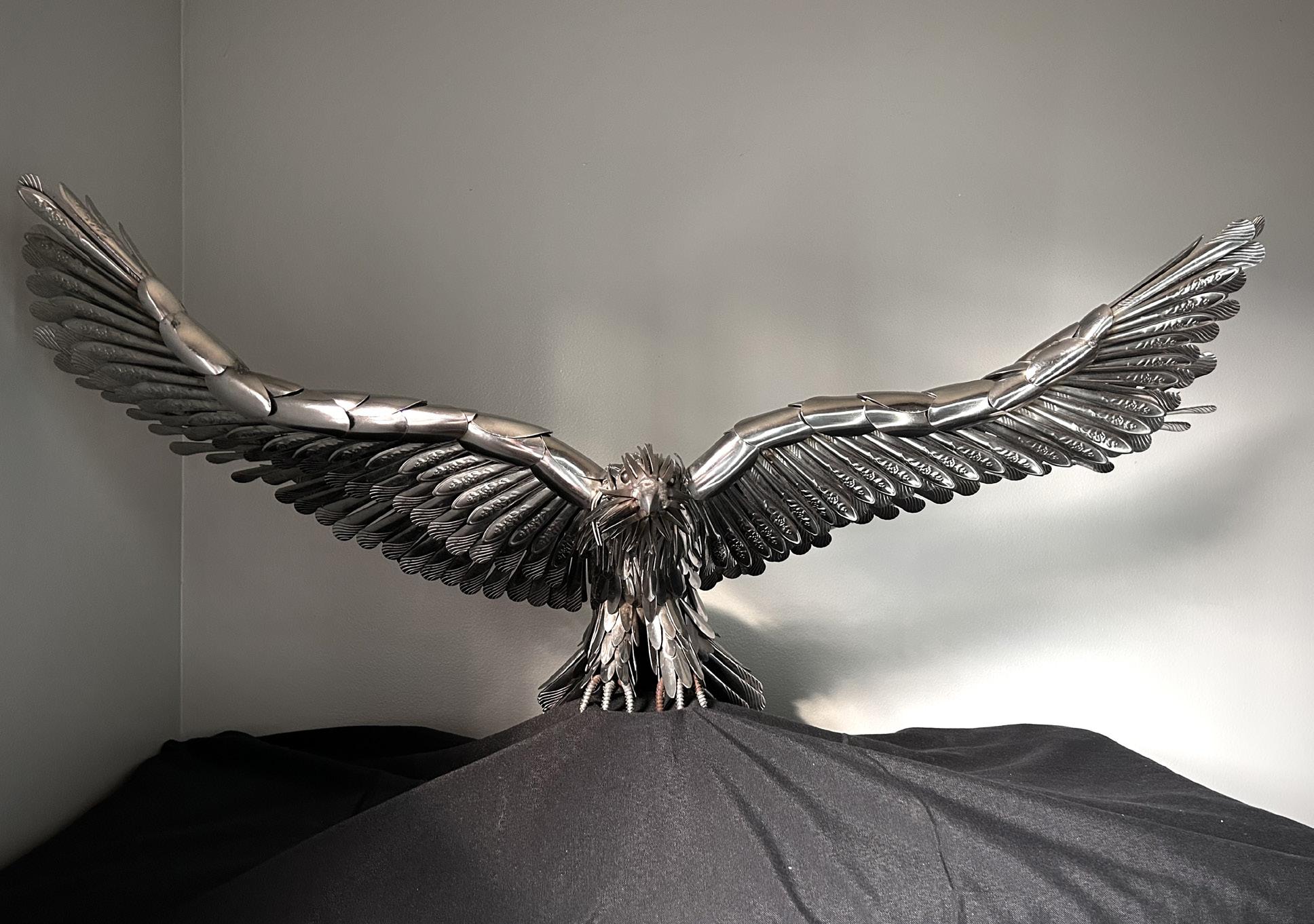
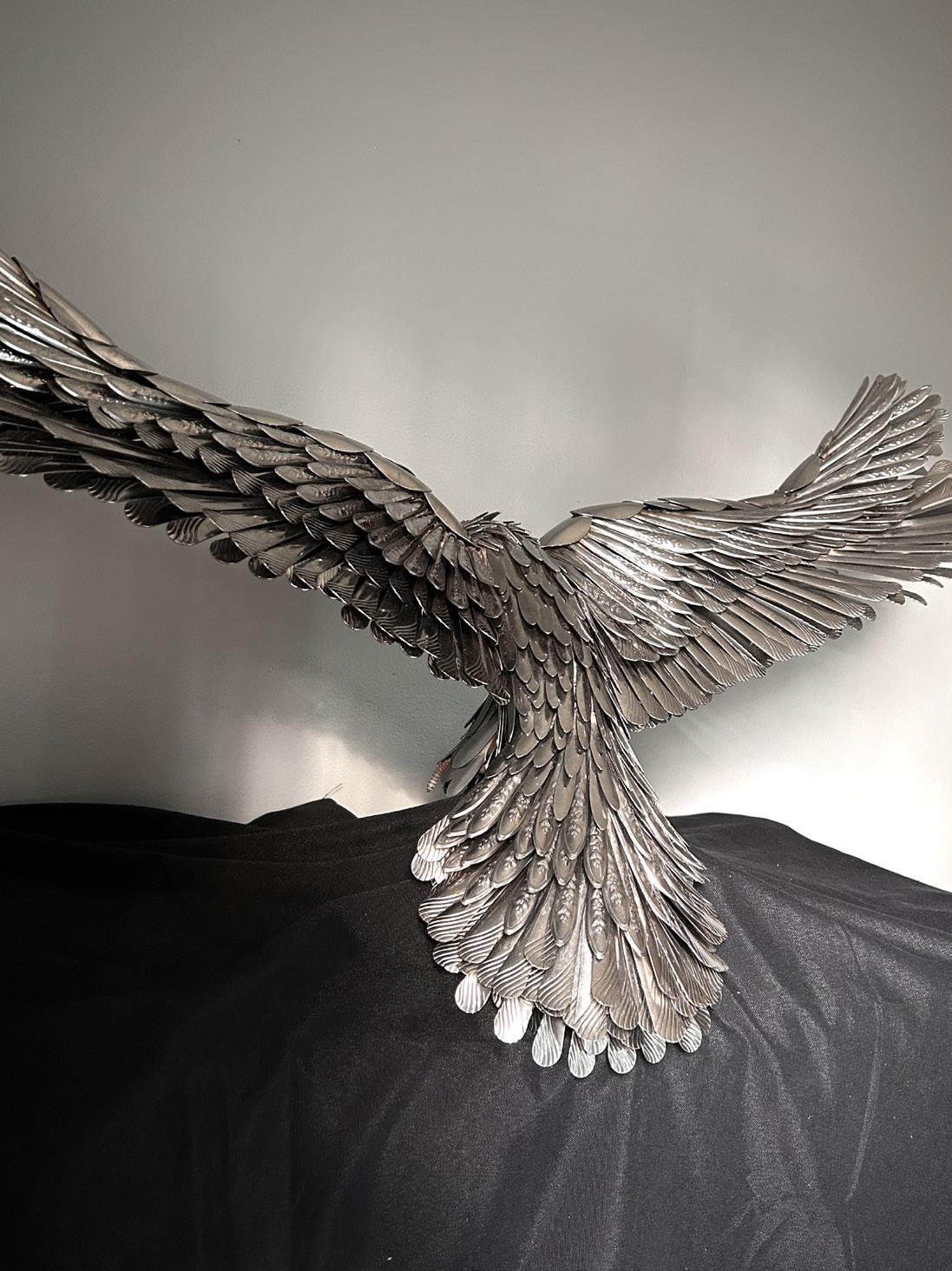
Trinity Elliott is an East Tennessee-based metal sculptor and founder of A Spark of Creation Studio. Working from her independent studio, she transforms steel and reclaimed materials into organic sculptures that explore themes of resilience, renewal, and human connection. Her work reflects a hands-on process that honors the marks, history, and inherent honesty of the material.
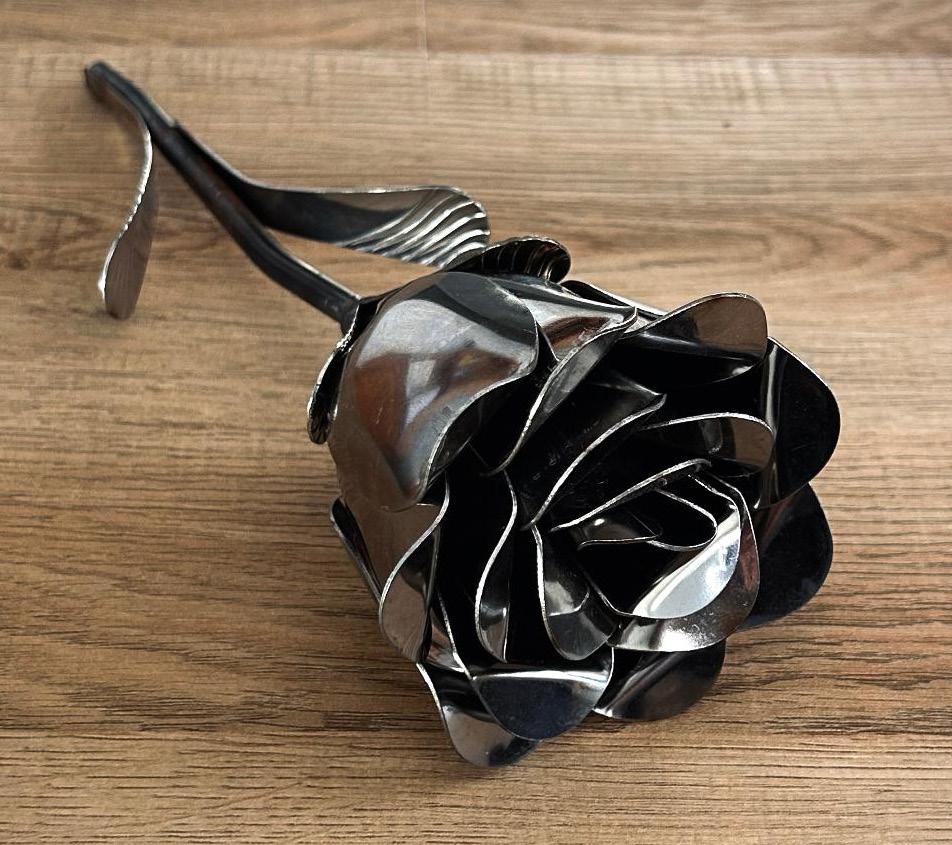
By Kathleen M. Jacobs
Thegraduating class at our city’s only parochial high school rushed to their final class of the day, Creative Writing. They tripped over each other as they rushed into Room 105, Mrs. Anderson snickering at their zeal. She too was clearly anxious for the bell to ring, so that we could all be accounted for and make a mad dash to turn around and exit the room, rush to the front door of the school building, and walk hurriedly, with the limited time given, three blocks west along Virginia Street, crossing the street and proceeding to the next block on Capitol Street.
The wind was whipping that day, but we were unfazed. In fact, its energy fed our own. Mrs. Anderson allowed us to whisk past her, breaking a school uniform rule by tugging our shirttails out of our navy cords and letting them, too, roam free. We were looking for Mortar Man. The search to find him was often likened to an Easter egg hunt.
We knew that he was wedged between two buildings, across from the public library and very near to The Peanut Shoppe, where, after spotting him, we’d rush inside for a handful of salted cashews or chocolate raisins or handmade caramels.
That year, our class had created a school literary journal, and we had yet—so close to the release of its first issue—been unable to agree on a name for the journal. That day, it would come to us almost in unison as we spotted Mortar Man. No one could remember who said it first, and it didn’t matter because it was the perfect moniker.
It was early spring, and as we gazed to the buildings on Capitol Street and inhaled the intoxicating aromas from The Peanut Shoppe, the wind made a sudden change to warmth. And there he was, as six students pointed their fingers to what would inspire the title of their literary journal: Emergence.
Mortar Man was barely visible, measuring only two by four inches. A sculpture made of mortar by artist P. Joseph Mullins in 1994, it is hidden 12 feet high up in the brickwork between two buildings. He appears to climb out of the wall. Mullins created him during a lunch break using leftover concrete while working on a nearby building.
We stood in awe, in a near-reverent silence, unable to move or talk, until Mrs. Anderson reminded us of the passing of time and we rushed into The Peanut Shoppe for fuel to rush back to campus before the bell rang, each of us tucking Mortar Man in our back pocket, the wind having calmed and our spirits soaring.

























COREY W. GIBSON
A raw, intimate collection of poems exploring the depths of schizophrenia, addiction, heartbreak, and eeting love. Each verse reveals a journey toward clarity, capturing the struggle and beauty of a mind trying to be free.
Collection of Poems
“Everything I have read by JC Gilliam has been excellent and inspirational to me. His writing never fails to touch my heart and o en brings a tear or two to my eyes. I see myself and my life, o en my childhood, in his beautiful words. His writing de nitely warms my heart and leaves a lasting impression.”
— CAROL BRANNIN, author

Jan-Carol Publishing, a small book press, brings book publishing tips, changes in the book publishing industry, introduction to authors, books, and working behind the scenes in the book publishing industry. Listen, learn, and enjoy the interviews with different authors.
By Draco Bailey
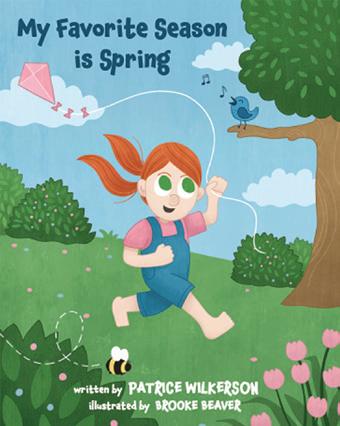
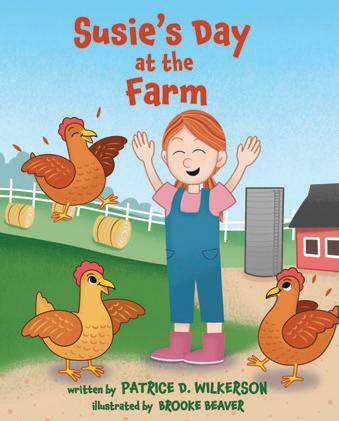
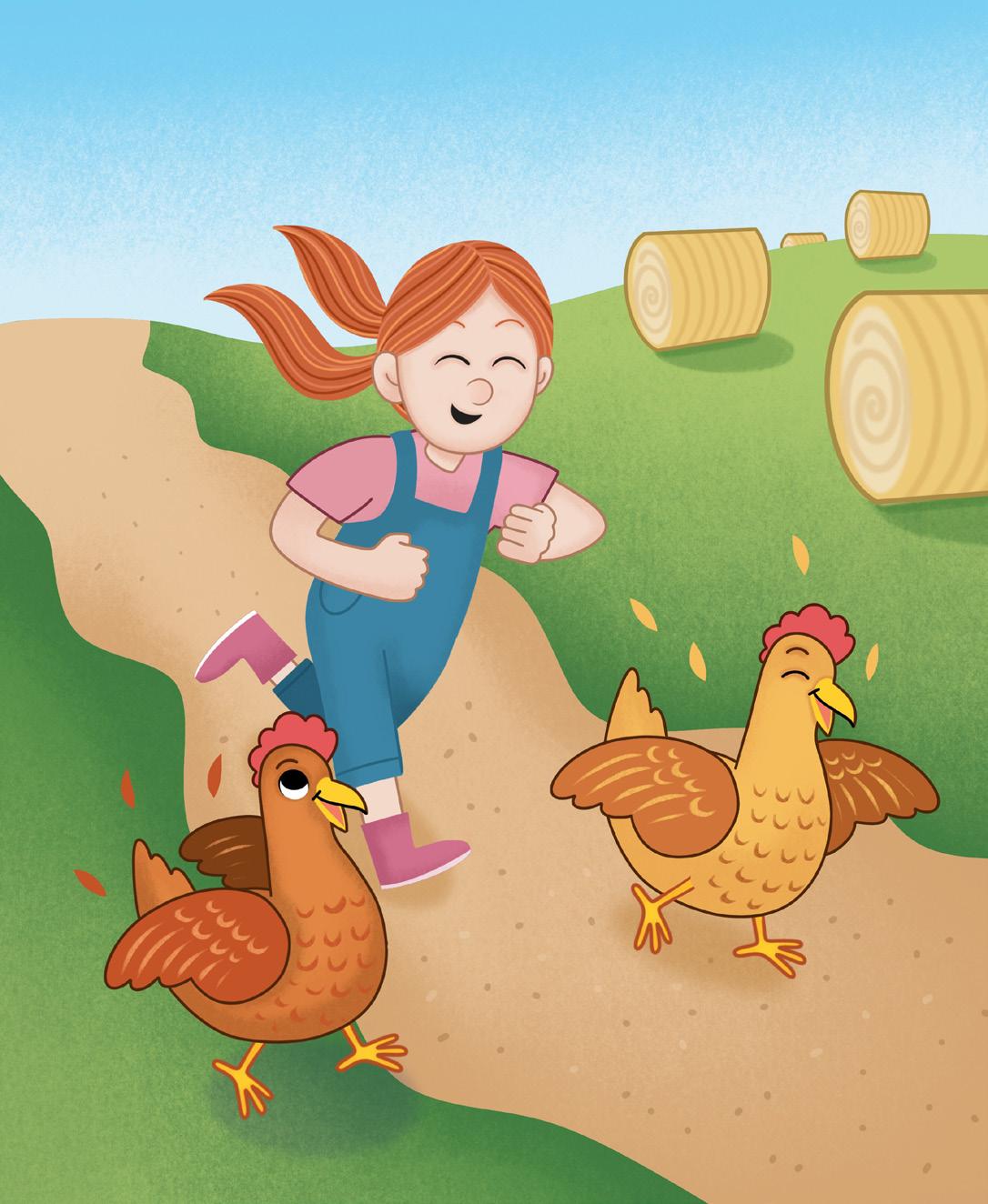
Spring is here, and what better way to celebrate than with award-winning author Patrice Wilkerson. Her debut children’s book, My Favorite Season is Spring Monsters Approved award winner. Her second chil dren’s book, Susie’s Day at the Farm in 2025 and features more warm-weather adventures. We chatted with Patrice to learn more about her writing experiences.
Q: What encouraged you to start writing and publishing your work?
A: Well, I have been writing since I was eight years old. I would write poetry and put all of my poems in a binder. Getting published was a goal of mine, but it wasn’t until my dad passed away suddenly in 2008 that I put the gears in motion. His passing taught me that tomorrow isn’t promised, so I turned that pain into a purpose and worked hard to get my poems published.
Q: You first started publishing poetry with your book, Through It All, I’m Going to Make It. What made you want to start writing children’s books as well?
A: When my nieces and nephews were little, I would read children’s books to them, and I was really drawn to the stories and the illustrations. I loved how the stories would allow them to create a magical world filled with imagination. So, reading other children’s books and seeing their reaction to the stories is what made me want to start writing children’s books. I wanted to create entertaining stories that children will enjoy.
Q: How does your writing process for children’s books differ from your writing process for poetry?
A: When I write poetry, I focus on emotions and feelings

Patrice D. Wilkerson is an award-winning author from Virginia






and rhythm, whereas when I write children’s books, I focus more on telling a story that children will enjoy through rhyme. I also focus on themes that children will find interesting.
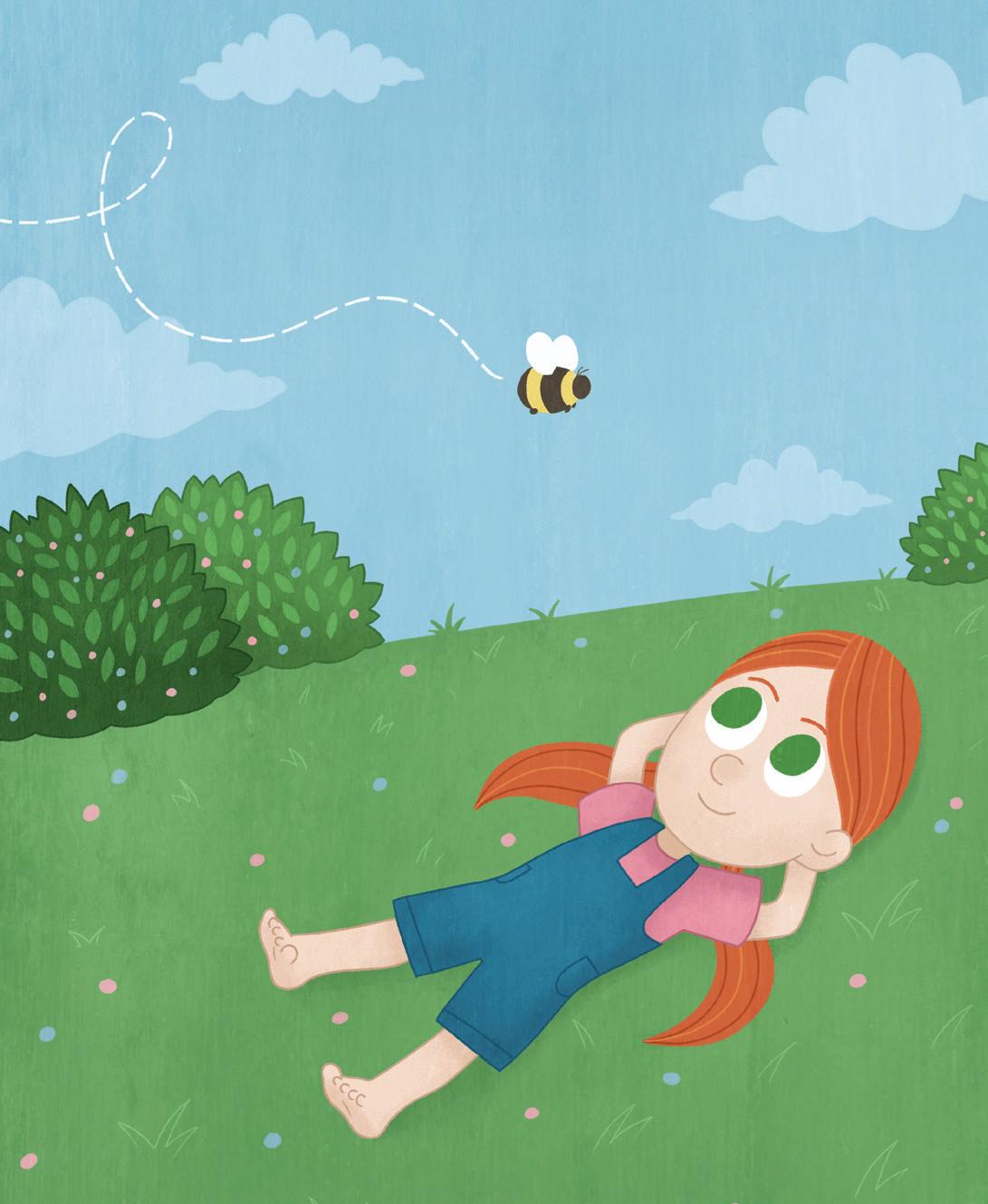
Q: Your children’s books, My Favorite Season is Spring and Susie’s Day at the Farm, both feature Susie in her adventures. Who, or what, inspired Susie?
A: Susie was inspired by my aunt, who passed away. She was such a joy to be around, and she had an infectious spirit. So, when it came time to pick a character name, I immediately thought of her, because I wanted to create a character that young readers will love.
Q: Your children’s books highlight some of the exciting and wonderful things surrounding outdoor life. Are you a nature lover too? Do you hope your books encourage children to explore the outdoors more?
A: Yes, I am a nature lover. Being in nature is my happy place. Nature provides me with a sense of peace and calmness. I love going to the lake and enjoying the soothing sounds of the waves and the view of the water.
I do hope my books will encourage children to explore the outdoors more. There are so many fun and exciting things that children can do outdoors instead of spending so much time on their phones or iPads. I remember when I was a child, my brother and I would spend so much time playing together outside, and we would have the best time.
Q: What other things do you hope young readers gain from your children’s books? What about adult readers from your poetry?
A: I hope young readers will gain a love for reading and the ability to use their imagination and creativity.
For my poetry collection, Through It All, I’m Going to Make It, I hope adult readers can gain the strength to find purpose through their pain. I published the collection after my dad’s passing, and I was able to find healing through my writing.
Q: How has your perspective on writing and publishing changed since you first started? Are there aspects of the process that surprised you?
A: When I first started writing poetry, I was writing strictly for myself. I would jot down my feelings and emotions, and then I turned my poems into a poetry collection. When writing my children’s book, my perspective changed because I was no longer writing for myself; I was writing for a young audience. So instead of just jotting down my feelings, I created a fun and engaging story.
I initially thought that getting published would take a very long time, but I was surprised at how easy the publishing process was. Jan-Carol Publishing does a great job in simplifying the process.
Q: What advice do you have for aspiring writers?
A: Read and write as much as you can to perfect your craft. I would encourage aspiring writers to read books that are in the same genre that they want to write in, so they can see what is out there. When I had the idea of writing my first children’s book, I read a lot of books in that same genre to understand modern market trends.
Q: Can we expect more adventures for Susie, or other children’s books in general, in the future?
What about future poetry collections?
A: Yes, you can expect more adventures from Susie. I plan on creating a series of children’s books based on Susie’s character, and I plan on incorporating my late father, David, as a character in my upcoming book. So, stay tuned! I’m excited about writing more about Susie. I don’t foresee writing any more poetry collections. I want to focus more on my series of children’s books.
Q: Do you have any reading recommendations you would like to share?
A: Yes, I highly recommend The Book of Boundaries: Set the Limits That Will Set You Free by Melissa Urban. It is an excellent self-help book that teaches you to put yourself first and protect your peace in order to live a happier life.
You can purchase Patrice’s books through Amazon and Barnes & Noble.
“Voices of Tomorrow” showcases the creativity and insight of young writers and artists ages 10–18. This section celebrates emerging talent, offering a platform for the next generation to share their unique perspectives through words and visual art.
Asher O. Akers
We all long for tomorrow, hoping it will bring something new.
We all aspire to that next morn, knowing that with it comes the chance to re-do, to gain, perhaps, a new perspective, a fresh thought.
We all hope that this day can hurry on, so that the next can quickly come.
But for what do we hurry?
For the next day has just as many moments as this.
Why can we not be thankful, for the moment in which we now live? For life is made up of these moments; they shape us to be who we will be.
I know this, and yet—still, I long for those things long distant, the things thought of yet vague.
Yet, I do not rush the moment.
For I know something few live to learn. I know that time comes and that time goes; I know that the moment in the future, that seems so far away, is really the moment of the present, on another day.
Soon my future will be my present; I know this with no doubt.
So, I do not waste this moment that our God has given me.
Asher Othaniel Akers is a 16-year-old writer from Greeneville, Tennessee. His work often reflects on time, gratitude, and his faith in Christ, which stands at the center of his life. An avid reader from a young age, he continues to develop his craft through poetry, short plays, and prose while balancing dual enrollment and homeschooling. He is grateful for the opportunity to share his work with Tapestry Journal.

AVAILABLE!
Stories by Meteorologist Meaghan Thomas
In HEART OF HEARING, children learn to embrace their hearing aids and the beautiful world of sound.
Then, join DAISY DIANA DISCOVERS: THE WONDERS OF WEATHER for a fun journey into meteorology that teaches storm safety and sparks curiosity.

By Olivia Matras
One day,
I’ll sit at my desk, Thinking of a day
Where I would write and write, Till the sun no longer shined And the birds no longer sang.
I’ll have a little one at home, Running with their friends, While I ponder and think About where you are right now.
Or maybe we’ll be in touch. Our kids will be best friends.
Our glasses won’t run dry
As time continues to fly.
Until we’re old
And have no job, I’ll be right with you With a memory in my eye
As we were kids And played all day.
And our mothers, They would drink.
Our siblings, they would cry, As we’d be in my room
Speaking of our future— The future I have with you.
By Olivia Matras
One filled with love, Another filled with grief. One soaked in peace, Another in chaos.
One bearing pride, The last petal, its shame.
No tulip or rose, No sunflower or magnolia Blooms without petals, Or without a story.
We grow from our mistakes And cherish our success.
We show beauty on our face, While our minds continue to learn. Our story just begins When petals have arisen.
Olivia Matras is a 13-year-old poet and writer from Kansas and enjoys writing heartfelt and emotional pieces. When Olivia isn’t writing, she plays competitive volleyball and enjoys reading. Her purpose of writing is to make others feel seen and show that every story deserves to be told.
By Raven Howell

By Sofia Balli
Awoken after a cold, deep slumber, Trees lift their branches
Towards the bright blue skies, No longer burdened with blankets of ice. They sway in the wind, no longer a frigid blast, But a gentle breeze
Carrying cheerful laughs.
And up above,
Among the fluffy white clouds, Birds flit and fly
In merry, chirping crowds.
The endless rolling hills, Still damp from the last snow, Burst with life, And everything green Rapidly grows.
Beautiful, blooming flowers, In blues, pinks, and purples, Oranges, reds, and yellows, Scatter the earth—
Some bright, some mellow, Their sweet scent wafting in the air.
Gardeners begin to sow Their tiny seeds, Which slowly grow. Helped along By April showers,
The garden produces Fruit, vegetables, and flowers.
Springtime is a season for growth, A time for mistakes, A time for hope.
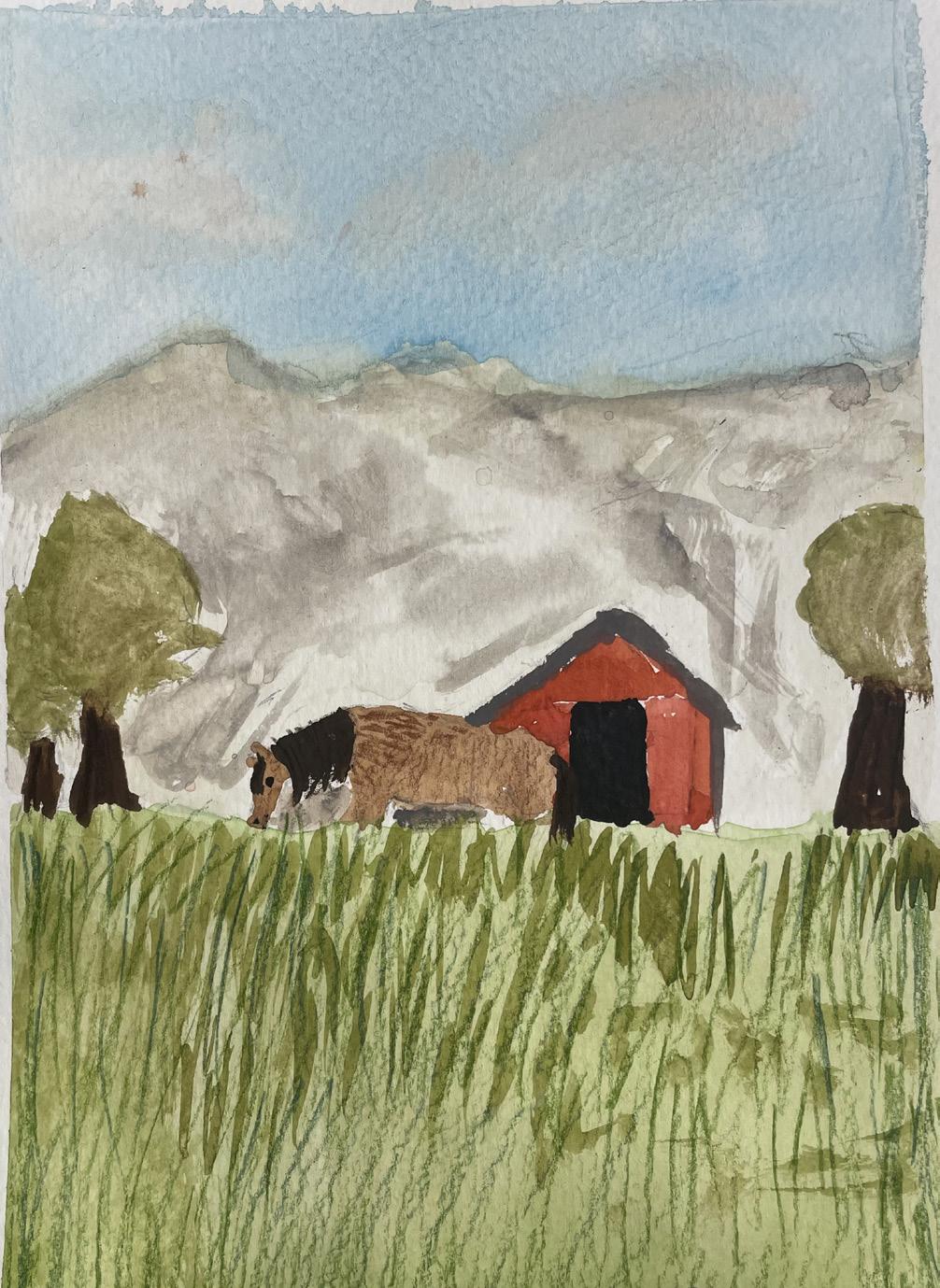
I created this piece because I love horses and nature. I also enjoy seeing old barns and imagine horses running in and out of them.
Savannah is a 10-year-old homeschooler from Greeneville, Tenn. She loves to read, draw, and spend time with her animals.
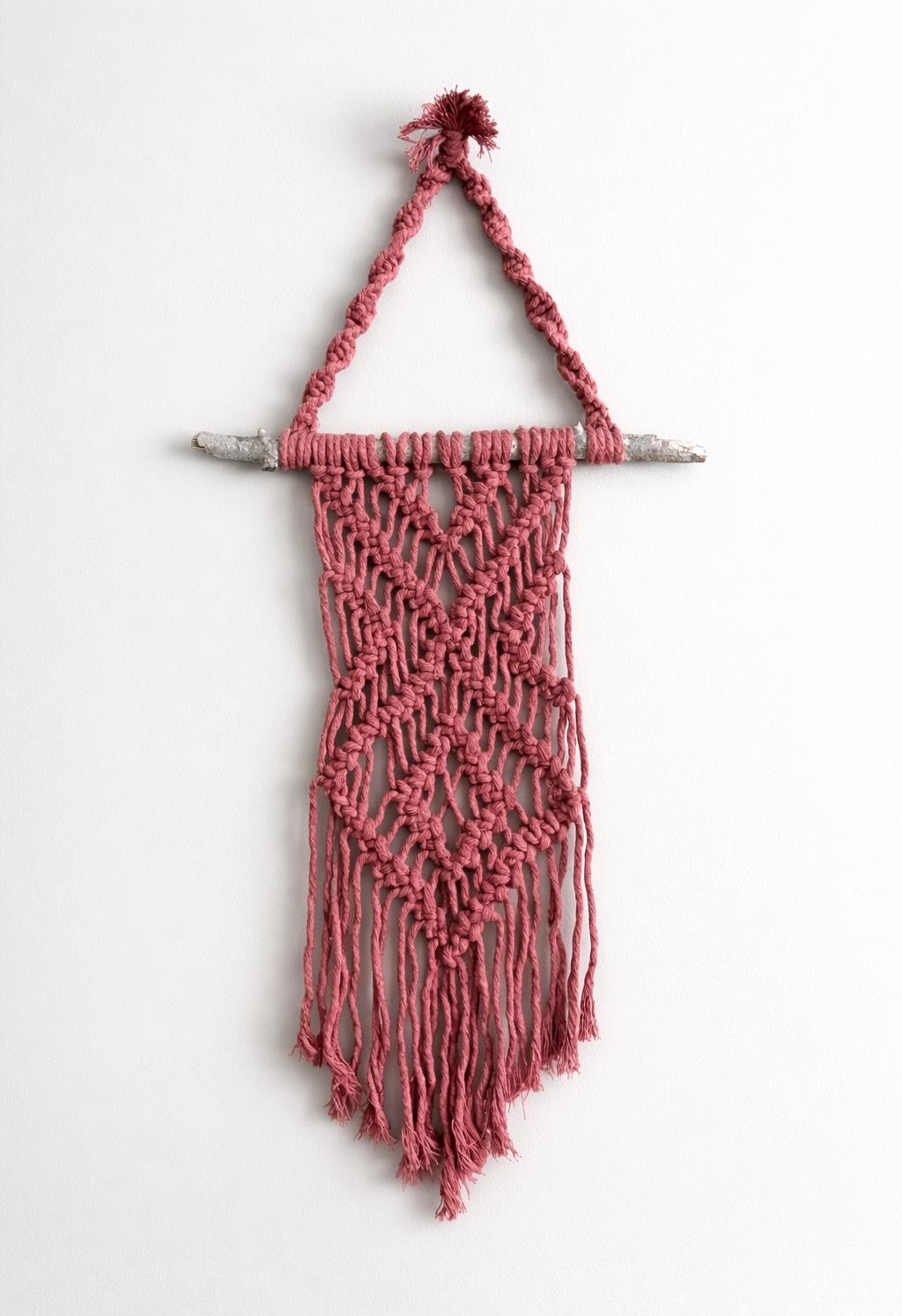
“Spring Rose”
Cotton cord and branch hand-knotted macramé
Maya Sizemore is a 15-year-old freshman from East Tennessee who loves all kinds of art. She enjoys drawing, crafting, and graphic design. In addition to visual art, Maya plays viola, guitar, and mandolin.
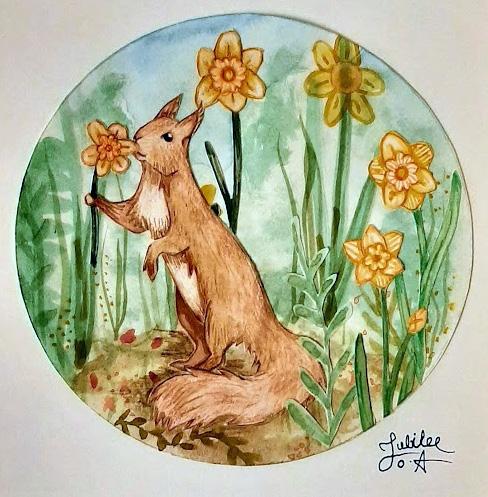
I just love painting little critters! I wanted to try a new kind of art, so for this one, I tried to cut out art. If you look closely, you can see the different layers of paper!
Jubilee Akers is a 16-year-old watercolor artist who loves creating small storybook worlds inspired by nature, animals, and things around her. She lives in East Tennessee and has a very cute bunny named Bunchkin. Her work often focuses on quiet, cozy moments and small details that let a story unfold without words.
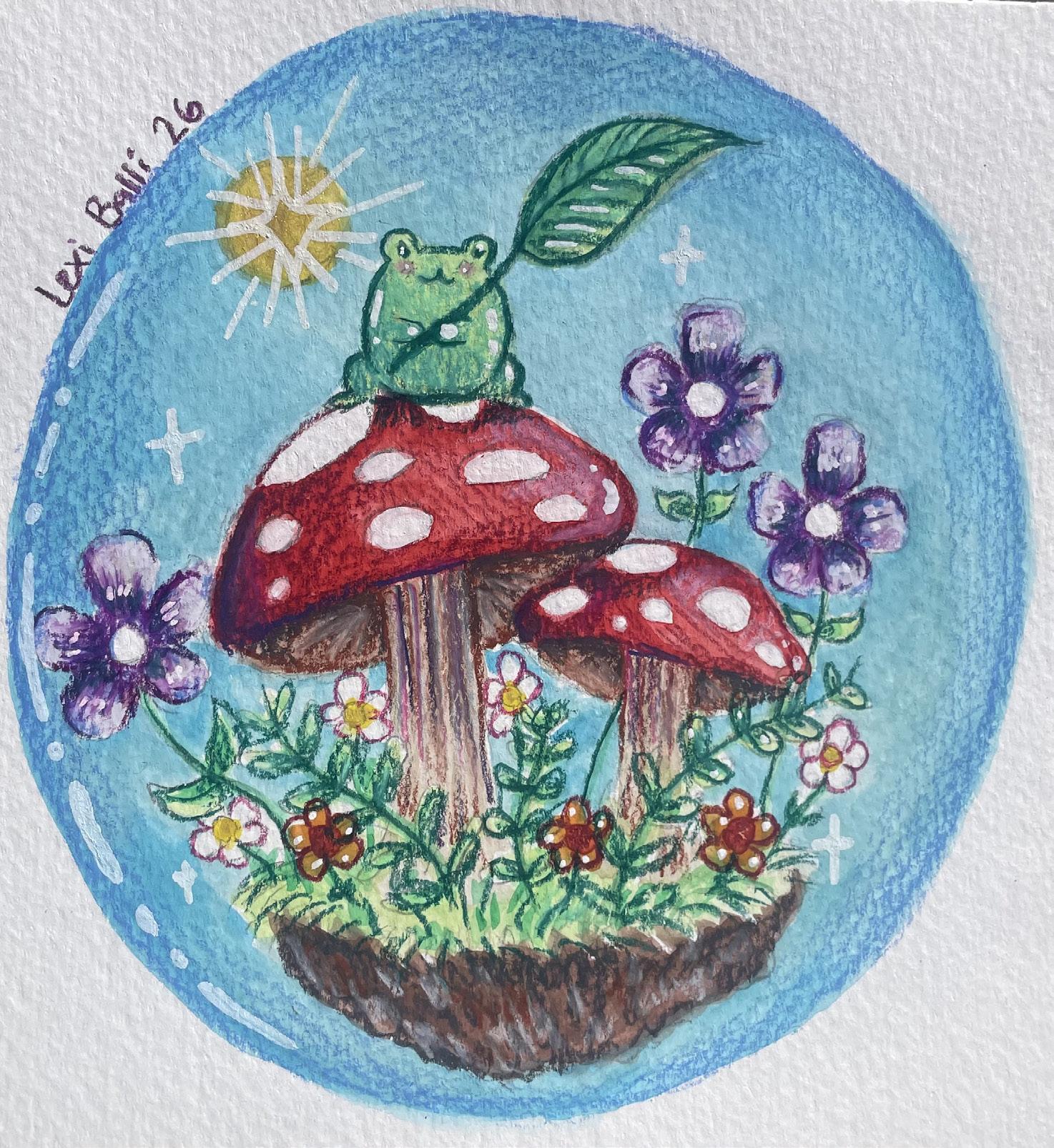
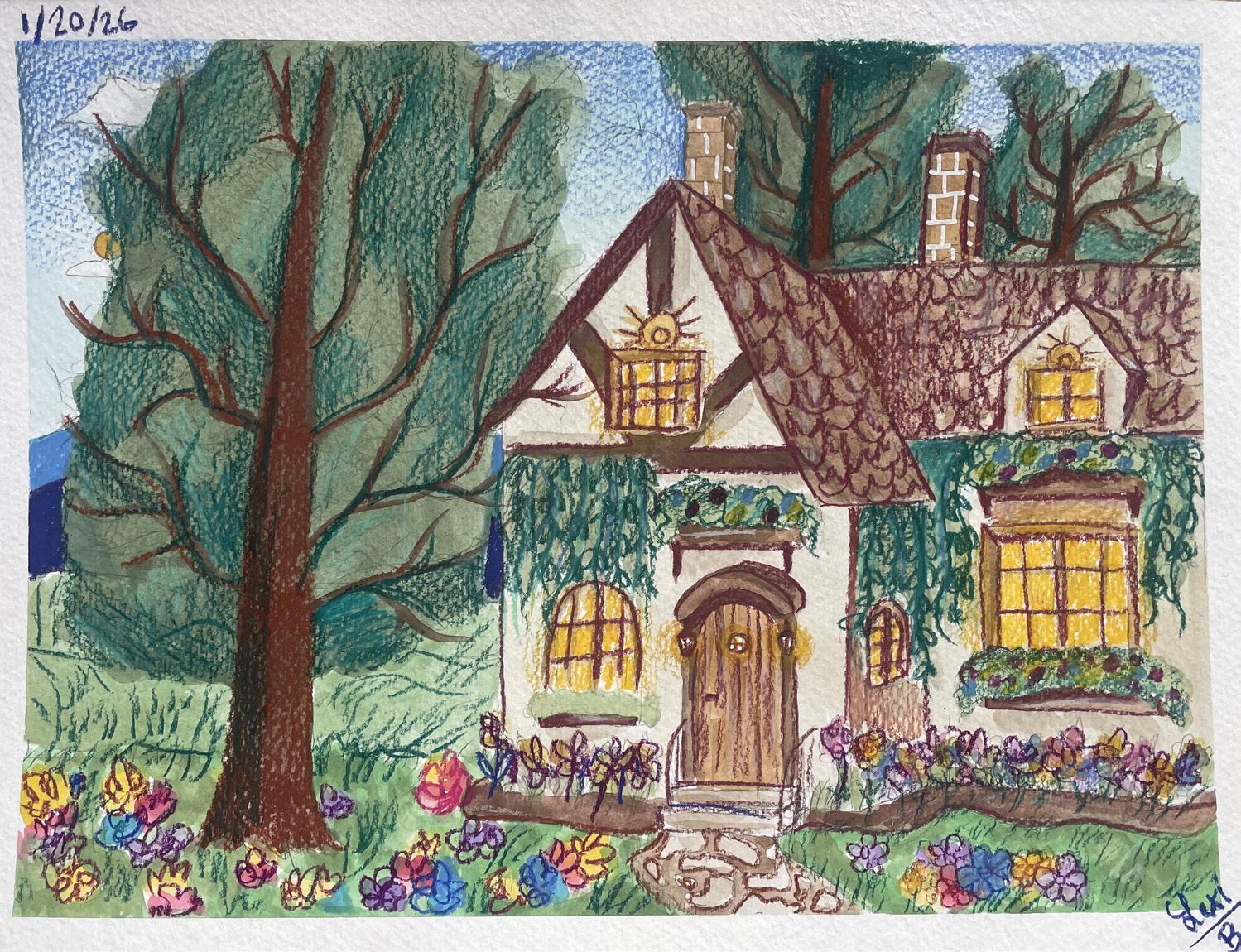
Lexi Balli
Mushroom:
I wanted to create the Mushroom painting to show the vibrant colors that symbolize spring. The frog sitting on the mushroom illustrates all of the animals that come out in the springtime.
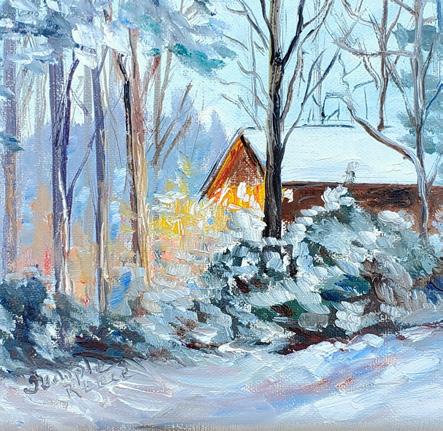
Spring House:
I created the Spring House painting to show the world transitioning from winter into spring, when plants are beautiful and colorful, skies are blue, and birds sing.
Lexi Balli is a 7th grade homeschooler from Tennessee who loves art in any way, shape, or form.
In this featured showcase, you’ll find 25 short stories written by high school English students. These students were given the assignment of writing a short story with Gothic or Magical Realism elements. They are taught by Michael Grindstaff, who is an author as well as their teacher.
By Kamora Cline
I brought the portrait with me the day I left home. It was small enough to fit in my trunk, wrapped carefully so that the frame would not crack during the ride. My mother had painted it years ago. It showed the four of us standing in front of our house with sunlight behind us. My father’s hand rested on my shoulder, steady and warm. My little brother was smiling too wide, like he always did. My mother stood in the center, proud and calm. Whenever I looked at it, I felt grounded.
The academy did not feel grounding. The stone buildings were cold, and the air always smelled like smoke from the training fields. We were constantly reminded that hesitation could get someone killed. Doubt was a weakness. Loyalty to the academy came before everything else. On nights when training felt overwhelming, I would sit on my bed and look at the portrait to remind myself why I was there. I told myself I was doing this for them.
The first time it changed, I thought exhaustion was playing tricks on me. Earlier that day, I had frozen during a combat drill. It was only for a second, but my instructor
noticed. He did not yell. He just watched me with a look that said he was reconsidering my place there. That night, when I unwrapped the portrait, something felt off. My mother’s smile looked thinner than I remembered. My father’s eyes seemed less warm. I stared at it for a long time before convincing myself I was imagining things.
But I wasn’t.
After a difficult flight trial, my father’s hand was no longer resting on my shoulder. It hung stiffly at his side. A few days later, my brother’s smile did not reach his eyes. The bright sunlight behind us looked dull, like a storm was building in the background. The changes were small, subtle enough that I could doubt myself, but clear enough that I began hiding the portrait whenever my roommate entered the room.
Everything shifted after the storm exercise. The wind was violent that day, strong enough to knock even experienced cadets off balance. A younger student lost control midair, drifting too close to a tower. I saw it happening. I knew I should react immediately. Instead, fear locked my body in place for half a second too long. Someone else corrected it before disaster struck. We survived, but I could not forget my hesitation.
That night, my hands were shaking as I unwrapped the portrait. The house behind my family was gone. In its place stood the stone
courtyard of the academy. My father and brother were no longer wearing their everyday clothes. They wore dark uniforms like mine, their expressions serious and distant. My mother was no longer standing in the center.
I was.
Painted in uniform, shoulders straight, face harder than I recognized. My eyes looked colder, almost empty. I stared at the canvas, trying to understand what I was seeing. This was not my family changing. It was not some curse attacking them. It was me.
Over the next week, the portrait became clearer. The background remained the academy. The warmth in my parents’ faces faded completely. My brother no longer looked like a child. He looked like a cadet standing at attention. The sunlight never returned.
Then I finally understood. The portrait was not a rewrite of my family. It was showing what was happening inside me . Every time I chose survival over compassion, discipline over fear, and the academy over everything else, something soft inside me disappeared.
The portrait was not erasing my family. It was erasing the version of me who belonged with them.
The final change came quietly. After another long day of training, I unwrapped the portrait and felt how light it had become in my hands. When I looked down, there were no
parents, no brother, no house. The canvas showed four cadets standing in perfect formation in the academy courtyard.
I recognized three of them as upperclassmen. The fourth was me. There was no sign that we had ever been a family.
For a long time, I just stared at
it. I tried to remember the way my house looked in the evening light, the sound of my brother laughing, the warmth of my father’s hand on my shoulder. The memories felt distant, like stories I had heard instead of lived.
The portrait had not forced me to forget. It had simply kept track of the
By Jaxson Jenkins
Bob is at school and turns down a hallway that he’s never seen before.
He gets a weird feeling entering it. The lights are dimmer than in any other hallway. There are no classrooms, just lockers. He can see the end of the hallway, but it’s very far down. He takes a few steps inside. Everything is fine as he continues. The lights are buzzing. He continues walking, but it looks like he hasn’t gotten any closer to the end of the hallway. He looks back, and the beginning of the hallway is far back. His feet hurt.
It’s been about twenty minutes. He looks at the lockers on the walls as the numbers keep going up. They’re in the thousands now. The end of the hallway still looks to be the same distance from where he started. The buzzing is
By Madison Barnett
Everyone in town knew about the grocery store on Maple Street, even though no one could remember when it had opened. It sat between a laundromat that rattled like loose change and a bakery that never seemed to sell anything. The sign above the grocery store door was faded so badly you couldn’t read it anymore. Still, the windows always glowed warm at night, like someone had left a lamp inside.
My name is Madison, and the first time I went in, I wasn’t looking for magic. I was looking for bread.
My mom had been sick for weeks. Not hospital sick, but tired sick. The kind where she sat at the kitchen
changes. And now, when I look at the canvas, I no longer feel comfort. Only pride.
Kamora Cline is a high school sophomore student who loves music, reading, and doing nails. She spends most of her time immersed in fantasy books and enjoys escaping into different worlds through stories.
annoying. He looks back, and the start is even farther. He continues on down the hallway. His legs hurt.
It’s been thirty minutes. He looks down as he walks; he can’t tell if he’s moving. He looks at a locker that says 2039. The buzzing is louder now. He looks back and can barely see where he started. The end of the hallway is still the same distance away. His head hurts.
It’s been an hour. He looks down. The buzzing has stopped. His feet don’t hurt. His legs don’t hurt. His head doesn’t hurt. He looks forward. The end of the hallway is close. He looks back and can’t see where he started. He approaches the door at the end of the hallway. He closes his eyes.
He opens them, and he’s back to where he started. The hallway is gone. Bob goes to his class.
table too long after dinner, staring at unpaid bills. We were down to one apple and half a box of pasta. I remember standing outside the grocery store with my friend Sydney.
“Have you ever been there?” I asked her.
Sydney shrugged. “My grandma goes sometimes. She says it’s different.”
“Different how?”
“She won’t explain it. She says you don’t go unless you really need to.”
I rolled my eyes, but I pushed the door open anyway. The bell above it chimed. It didn’t echo. It sounded almost like a soft hum, like someone singing from far away.
Inside, the air smelled like cinnamon and something sweet I couldn’t name. The lights flickered gently, but
not in a broken way. More like they were breathing. An older man stood near the produce section, staring at an empty crate. A little boy tugged at his mother’s sleeve in the cereal aisle. Behind the counter stood a tall woman with dark curly hair and blue eyes.
“You’re welcome,” she said. “Take your time.”
I grabbed a basket and walked down the bread aisle. It was empty.
“Great,” I muttered. “Of course.”
But as I stepped closer, a single loaf appeared on the middle shelf. Not dropped. Not rolled. Appeared. I froze.
Sydney bumped into me. “Why’d you stop?” She went quiet, too.
The loaf was fresh and warm. Steam curled from its crust.
“Did you see that?” I whispered.
“See what?” she asked quickly, but her eyes were wide.
Another item blinked into existence beside it. A jar of honey. Then a bag of oranges. My throat tightened. Oranges were my mom’s favorite when she didn’t feel well.
Across the store, the little boy gasped. “Mom! It’s the dinosaur one!” A bright red box of cereal had appeared in front of him. His mother covered her mouth like she was trying not to cry.
The older man near the produce reached out as apples slowly filled his empty crate, one by one. No one screamed. No one ran. It felt too calm for that.
I carried the bread to the counter. “How much?” I asked.
The cashier glanced at the register. The screen stayed blank.
“Just take it,” she said softly.
“That’s not how stores work.”
She smiled. “Maybe not most.”
After that, I couldn’t stay away. I went back the next week alone. The bell hummed again when I entered. Mrs. Reece from down the street stood by the dairy section. She always worked two jobs and still looked exhausted.
“I forgot my wallet,” she murmured.
As if answering her, cartons of milk appeared in neat rows. Eggs followed. A block of cheese.
Mr. Bembry, my history teacher, stood near the
canned goods. A stack of soup cans formed beside him.
The store felt alive. The floors rippled faintly under my shoes. The shelves shifted slightly when someone walked by, stretching longer or shorter depending on who needed them.
One night, I came in angry after arguing with my mom about money. The bell rang sharp. The store felt colder. The shelves were empty.
“What are you looking for?” the cashier asked.
“Food!”
She shook her head. “What do you need?”
I stared at the freezer doors and saw my reflection: angry, scared, tired.
“I’m scared,” I admitted. “I don’t know if we’re going to be okay.”
The air warmed again. The shelves began to fill not just with bread and milk, but with a flyer for a parttime job at the library, information about a free health clinic, and an envelope with bus money inside. A small card rested on top. It read, “Don’t lose heart.”
“Why help us?” I whispered.
“Because no one here is forgotten,” she said.
In the weeks that followed, I got the library job. Mom visited the clinic. Things weren’t perfect, but they were steadier.
One evening, I walked in and found the counter empty. The shelves were bare. For a moment, panic rose in my chest. Then I stepped forward.
“I need courage,” I said quietly.
The lights brightened. A set of car keys appeared on the shelf—my first car, the one I’d been saving for. Beside it were scholarship forms and a notebook.
I smiled.
Maybe the store wasn’t magic the way fairy tales are magic. Maybe it was something quieter. Something that met you halfway. Something that seemed to know what was in your heart before you had the words for it.
When I stepped outside, the windows didn’t glow as brightly as before. But the warmth followed me home. And somehow, I knew that even if the shelves were empty one day, I wouldn’t be.
Madison Barnett is a sophomore in high school. She plays on the school’s basketball team, and in her free time, she enjoys going to church and watching crime shows.
By Cody Hughes
Grayson
is in a coffee shop, getting his usual French vanilla iced coffee with two pumps of cream, before he has to head to his job.
On the drive to work, he gets a call from his sister Kayla; it’s about their mother. She’s in the hospital with kidney disease. Grayson does not have a good relationship with his mom, because when he was younger, he and his sister had to go through her drug abuse. Shea, Grayson’s mom, would sleep all day, and the only thing she provided was an EBT card. She never kept a job for more than a month. Grayson resented his mom for putting him and his sister
through that, so he refused to see her or speak to her when he moved out.
Grayson has to make a decision: to go see her or keep the 16-year grudge. Grayson can’t get over what his mom put him through, so he decides not to go see her in the hospital. Each day that his mom is there, the worse he feels, but he can’t forget what she did to his family.
Kayla pleads with Grayson because she might die soon, but he won’t change his mind. Soon after they have that conversation, Shea passes away in her sleep. The nurses say the only thing she wanted was to see her son before she died.
The guilt from Shea’s death starts eating away at Grayson, and this quiet rhythm starts to play in his head. The rhythm mainly consists of drums, bass guitar, and saxophone.
By Addison Barnett
It was a normal day in town. Everyone was just minding their own business, and I was heading home from the grocery store. The sky hung low and gray, pressing down on the field behind my house, where the grass appeared yellow, brittle, and lifeless. As I walked up the cracked tiles of the footpath, I gathered the stack of mail and the newspaper. Before long, it was about lunchtime, so I walked down the long hallway into the kitchen and sat down to eat. The house felt unusually still. Even the ticking clock seemed hesitant, like it was afraid to break the silence. As I ate, I opened the mail carefully so as not to tear the paper. Suddenly, I paused as one letter caught my attention. It was tattered, weathered, and yellowed at the edges as though it had traveled through decades instead of days.
I examined the letter closely to satisfy my curiosity; however, the content only confused me further. The letter
The singer sounds just like his mom. He can’t get rid of the song or the feeling of guilt he has surrounding her death.
He decides to go home and try to sleep, but he becomes restless.
A week later, Kayla goes to see Grayson in his apartment. As she walks in, she smells this foul odor. She proceeds to walk toward the kitchen, thinking about the worst possible things. The smell gets worse the closer she gets to the kitchen. Then, she hears a ruckus from the bathroom.
She walks in, and all she sees are the words “I’m sorry” written in blood on the mirror. The door slams and the power cuts. Grayson is nowhere to be found.
Cody Hughes is a high school English student.
contained a group of events that seemed to be a timeline of someone’s life. My life.
“No,” I whispered, my hands beginning to shake. “That’s not possible.”
It stated that on November 3rd, a date in the near future, someone important to the receiver would go missing. I convinced myself that the letter had gone to the wrong address or the wrong person. I shoved it into a drawer and tried to forget it. But I couldn’t.
Every night after that, I lay awake listening to the house settle. Each creak sounded deliberate. Each shadow seemed to stretch closer to my bed. You’re imagining things, I told myself. You’re being ridiculous.
Then, November 3rd arrived. My sister, the person closest to me in this world, suddenly stopped replying to my messages. At first, I blamed poor service, a busy schedule, anything logical. But days passed. Then weeks. She was gone. The words of the letter echoed in my mind: Someone important to the receiver will go missing.
“No…no, no, no,” I muttered, pacing the hallway. “This isn’t happening.”
During this drastic time, I continued to journal as I
normally would in order to cope with my loss. But one night, as I turned to a blank page, a folded piece of paper slipped out and landed in my lap. The letter. My heart pounded violently against my ribs. I had locked it in the kitchen drawer. I remembered the exact sound the drawer made when it closed. My hands trembled as I opened it again. There was still no name written anywhere. No address. No sender. Just events. And at the bottom—something new. A date. Tomorrow’s date.
My stomach dropped. I hadn’t seen that before. I was sure of it. “I’m losing my mind,” I said aloud, pressing my palms to my temples. “This isn’t real. Paper doesn’t rewrite itself.” But what if it did?
After that night, things grew worse. I started noticing patterns. The same car was parked down the street every evening. The same faint footsteps sounded outside my bedroom window at 2:13 a.m. The same whisper brushed against my ear when I tried to sleep. I refused to leave the house. I retrieved the letter from the drawer one night, determined to prove its impossibility. My hands trembled as I unfolded it. There was a new line at the bottom: “You will begin to notice the truth.” The ink was darker there. Fresher. I examined the handwriting more closely. My pulse quickened, each beat heavy and uneven. The loops of the letters. The slant of the lines. The way certain words leaned forward impatiently. I had seen this handwriting before. On birthday cards. On grocery lists. In old
By Kamilah Santa
Kaylee, the girl with beautiful brown hair and thick eyebrows that made her dull eyes seem brighter on certain days, was my best friend. We met in seventh grade in PE class. She was a new student. She was quiet, awkward, the easy type to bully. I remember the way she stood slightly behind everyone else, like she was trying to make herself smaller. Within
journals tucked away in the attic. It was mine.
“No,” I whispered, backing away from the kitchen table as though the letter might lunge at me. “That’s not possible.”
I raced upstairs and tore open a storage box buried in the closet. Beneath old sweaters and photographs, I found my high school notebooks. Pages filled with poems, diary entries, and fragments of thoughts. I laid one beside the letter. The same crooked “N.” The same sharp tail on the “Y.” The same uneven pressure where I always pressed too hard. The date on the notebook froze me in place. Ten years ago. I sank onto the floor, the air thinning around me.
“I didn’t,” I said aloud. “I wouldn’t.”
Had I written the letter to protect myself? Or to curse myself? A deeper horror settled in. If I had written it… Why did I not remember? My gaze drifted back to the letter. There, beneath the newest line, faint indentations marked the page—as though more words pressed upward from beneath, waiting. Slowly, reluctantly, I turned it over.
On the back, barely visible in faded ink, was a sentence so light I nearly missed it: “You will forget writing this. That is the only way it works.”
____________________________________________
Addison Barnett is a high school student. She participates in cheerleading and dance. Addison enjoys being engaged both in and out of school, striving to balance her academics, faith, and the activities she is passionate about.
the first week of class, we bonded like two raindrops sliding down the same window, always finding each other no matter where we started.
It began with small conversations. Complaints about running the mile. Jokes about our teacher’s whistle. But soon, our talks turned into something deeper. We related not only in similar interests like books, music, and drawing during class when we weren’t supposed to, but also in problems. Family problems. She would open up to me about her unfair parents, how nothing she did ever seemed good enough. I would open up to her about my unforgiving parents, about the pressure to be perfect. In each
other, we found understanding.
Every day after school, we walked to my house together. The strange part was that her house was in the opposite direction, but she never complained. She would walk me all the way home, then turn around and make the longer walk back alone. She never stayed to hang out. She always said she “had to get back.” I never asked why.
Kaylee got bullied often. People whispered about her awkward personality and picked apart her appearance. I would stand next to her, silent, pretending not to hear. I was never brave enough to defend her, fearing the attention would turn to me. That guilt sits differently than
other ones, quieter, but still heavy.
Every year in our small town, there was a massive storm called “Remembrance Day.” The adults said it brought memories flooding back, like the rain pulled things out of you that you tried to bury. Most people stayed inside, curtains drawn, waiting for it to pass. Kaylee and I never believed it. We thought it was just dramatic superstition.
Three years ago, during the storm, we went down to the river just to prove we weren’t scared. The rain soaked through our clothes, and the river rushed louder than usual, swollen and wild. We giggled and shoved each other playfully, daring each other to do childish things like we always did.
“I dare you to jump across the rocks,” I said, pointing at the slick stones cutting through the current.
Kaylee nodded, but I didn’t think she’d actually do it. She wasn’t reckless like that.
Seconds later, her foot slipped.
It happened too fast. The splash, the sharp scream, the way the current grabbed her like it had been waiting. I remember reaching forward but not moving. I remember screaming her name. The river carried her away before I could think to jump in.
She never made it out. I have blamed myself ever since.
After that day, “Remembrance Day” was no longer a superstition. It was a punishment. Every year, the memory replayed in brutal detail. The sound of rushing water, her soft smile, the moment before she stepped. I planned to avoid the storm for the rest of my life.
This year, I watched it from my bedroom window, convincing myself I was safe. The rain tapped against the glass, steady and relentless. Around noon, I heard the front door creak open. I looked down and saw my little brother running outside, laughing as he jumped into puddles.
Without thinking, I ran out after him. The rain soaked me instantly. I wrapped myself around him, trying to shield him, lifting him into my arms to carry him back inside.
And then it came back. But this time, it was different.
Instead of just remembering it, I was inside it. I heard Kaylee’s laugh. I saw her dark eyebrows arch slightly the way they always did before she did something brave. But I wasn’t in my body. I was watching.
“I dare you to jump over the rocks!” I heard myself shout. I saw my past self standing confidently near the riverbank, fingers dipping into the cold water. When I looked at Kaylee, I noticed something I had never seen before: an empty, tired expression behind her soft smile. She glanced at me, almost
searching my face for something. Approval. Encouragement. Escape.
Her foot hovered over the rushing water. She smiled at me. Not nervous, not scared. Almost peaceful. Then she shifted her weight forward. The river took her.
The memory faded as quickly as it came, and I was back in the present, clutching my brother tightly as rain poured around us. That was when I understood. She chose to step forward.
The storm didn’t come to torture me. It came to show me what I hadn’t allowed myself to see. The choice was hers. The guilt I carried all these years wasn’t something she would have wanted for me.
The next year, when “Remembrance Day” came again, I didn’t hide. I stepped outside alone. I let the rain soak my hair and run down my face. I looked up at the gray sky, eyes open. Not because I wanted to suffer, but because I wanted to remember my best friend with love instead of guilt.
Kamilah Santa is a sophomore in high school and proudly maintains a 4.0 GPA. She moved to Tennessee from Puerto Rico when she was five to be closer to relatives. She is part of Ballad Health Academy and loves being involved in school clubs and staying active in her community. Her goal is to become a doctor and make a difference in the medical field.
By David Wright
“Stellan, come on, say something! You made it home!” Hands clasped on my back, fingers curling around my worn shoulders, but the laughter from the party blurred into just a distant sound. The room was full of faces I had known my whole life, yet they smeared at the edges like wet paint. Only one thing had stayed sharp. The door at the end of the hall.
It hadn’t been there when I left for war. I knew the map of the house like it was the back of my own hand: two bedrooms, a bathroom at the end of the hall, a closet or two on the right, nothing on the left except for that old wallpaper and the crack that went up to the attic. Now, shoved into all of it, stood a narrow, wooden door, its surface smooth and untouched, like it had just been placed there. The brass doorknob gleamed, catching the light in a way that made me feel nauseous.
I took a step toward the door, not even realizing I had
moved. Someone grabbed me by the arm, laughing, thinking I was just wandering out for a smoke.
“Hey, man, where are you going?” someone laughed, grabbing my arm. “You just got here. At least pretend like you’re happy to see us.”
I didn’t look at him. The person was just a sound, a distraction, from what I was so focused on. Every step, the door felt farther and farther away, as if the space between me and the door had stretched into something deeper, darker. Every time I blinked, every time I took a breath, the noise from the party faded a little more, but the gleam from the doorknob stayed. I took another step, the floorboards creaking under my boots. The hand on my arm tightened, playful at first, then insistent when I didn’t stop.
“Seriously. The cake’s this way. Your mom has been working on it all day. You can’t disappear just yet.”
I could feel the pull now, not from the fingers on my sleeve, but from something behind my ribs, like a hook reeling me in. It was the same sensation I had felt behind metal and sand, waiting for someone to shout, “Go!” The sickening moment when your body agreed to move before your mind had. At this point, the hall had stretched even farther. The wallpaper had dimmed, and the family photos along the wall were losing the detail in their faces until all they were oval shaped frames with spirals in place of a photo. The closer I got to the door, the more certain I became that the door was not new whatsoever, but old—older than the house, older than the town—something that had been waiting.
“Come on,” the voice at my side said again. The grip on my sleeve was firm, almost fearful. “You’re scaring people.”
I didn’t mean to resist, but when they pulled, my muscles locked, my boots dragging on the floor, heels digging lines into the old wooden floors. It took real force to turn me away, to turn my body so my back was facing the door. As soon as the door had vanished from my sight, all of the noise slammed into me. The scratching of the record, the clinking glasses, someone yelling my name. I blinked, trying to swallow the stone in my throat, trying to focus on the blur of smiling faces that were in front of me. But over my shoulder, past all of the moving bodies and the smiling faces, I could still feel that sickening pull from the door, as if a hand on the other side of it had a grasp on my back and was waiting for me to come back.
Someone turned up the music and shoved a plate into my hands. A slab of cake was on it with a layer of white frosting on top. I nodded whenever people spoke to me, letting their words fall over me without catching them, but my focus was
still on that door with its glowing brass knob. My mother caught my wrist.
“You haven’t eaten,” she said. Her face came into focus for just a moment—new lines, gray embedded into her hair, eyes shining and looking like she might cry. “You’re home. That is all that matters right now.”
I tried to answer back, but something had shifted in the hallway, over her shoulder.
“Bathroom’s still down there?” I asked.
“Same as when you left,” my mother said. “Don’t be long. Your father wants to make a toast.”
I set down the cake on the nearest table and moved toward the hall. People parted without bumping me, their voices whispering as I passed. The farther I walked, the softer the party became. The darkness peeled back. The door waited at the end of the hall where the bathroom should’ve been. For just a moment, I saw both—the old, chipped away paint flickering beneath the smooth wood—then the familiar vanished. Up close, the door was almost too smooth, too perfect. It was untouched, and that doorknob was shining, looking at me like the door was alive.
I stopped at its shadow. The air coming from the door was cooler, thin and salty, tinged with the stench of blood. It felt like the past was trying to burst through.
I should tell someone, I thought. Tell them there’s a door where the bathroom should be.
Instead, my hand lifted, muscles locking as if I was pushing up against an invisible weight. My fingers hit the knob. It was cold. Colder than anything inside of a crowded house party.
I turned the doorknob.
The latch clicked, soft and final. No one shouted my name. No one grabbed my sleeve. No one came looking. The door swung inward into an eerie darkness that no room should know. From what felt like miles behind me, I thought I heard my father raise a glass, my name being chanted. I stepped over the edge, and the hallway and party dropped away.
The dark was not empty.
It lay thick as a cloth, silencing the sound of the party, of the guests, of everything. The scent of salt hit me as soon as I entered. I heard my feet hit metal and men running. I was back, the day the sky fell apart. Thick sheets of metal raised up on my sides; the floor vibrated on my boots. A red light flashed at the edge of my vision, swinging as the ship sailed. I tried to grab the wall to stand myself up, but my fingers hit metal, cold and rusted. The air reeked of oil, bodies, and
most of all, fear. Men pressed shoulder to shoulder, rifle to rifle, and helmet to helmet. No matter how many faces I tried to focus on, all of them fell into an uncanny blur I had only seen in movies. The faces slid out of clarity, eyes and mouths fuzzing like a bad reception.
Except one.
A familiar profile came into my focus, jaw clenched, lips moving through prayer. The prayer was the one last hope we had before being thrown into the fire of war. I remember every word of that prayer. The way he whispered it, lips barely moving beneath the loud thunder of shells. I should have said something to him, but my throat locked. Then, the lights shook, and the deck split into two.
Paul.
His name came to me right when the deck split. The ship lurched, water spilled in, and he was there. Paul was pinned by a collapsed bulkhead, shouting out over the roaring sea for someone to save him. I knew this moment. I had lived that moment only a few weeks back. I left him there, shouting.
“Grab my hand!” I yelled, forcing my way towards him. My boots splashed through the seawater streaked red with blood. The salty air burned my lungs. I reached him, our gloves just barely touching.
He looked up at me. “You’ve already tried.”
The world around me shook. Water turned into fog. My boots in the seawater turned into me standing in the soil, and when I blinked, the ship disappeared in the fog. I was in the trenches. The mud, the rain, the smell of rusted blood; I was back again. I felt my rifle digging into my right shoulder. Then, I saw the outline of a man, shouting orders.
Captain Harvey.
He was the one who taught me how to hold my rifle, how to make sure my uniform was always clean, and how to keep breathing when everything went silent. He turned toward me, eyes blazing behind the smoke.
“Move, soldier!” he roared.
I tried, but I couldn’t. It felt like the mud had its fingers wrapped around my ankles, pulling me down. I could only stand there and watch my mentor, Captain Harvey Roysdon, charge into the dark. The flash from a muzzle lit his face once, and he was gone. A high, unbearable ring filled my ears. When it faded, I was no longer in the trenches with Harvey.
The air turned foul with the stench of gunpowder and blood. The fog cleared, and I was no longer in the middle of the trenches. I was in the middle of a medical tent, with my brother, Maverick. He had bandages covering half of his
beaten face, and gauze, soaked in blood, tightly wrapped around his chest. The canvas walls of the tent shook with each distant shell. The oil lamp swung on its hook, casting Maverick’s face into flickers of shadows and gold. I hadn’t seen him like this since before the deployment—his grin always crooked, his words always too big for the room. Now that grin was gone, replaced by teeth pressed tight in pain.
He looked up as I called his name.
“You shouldn’t be here,” he said softly, voice raw. “You already left me once.”
I stepped forward, breath catching. “I didn’t mean to. I couldn’t—”
Maverick’s hand lifted, fingers trembling like a child’s. “Go home, Stellan,” he whispered. “It’s time.”
Before I could reach him, the cot dissolved. The mud vanished. The smell of smoke and rain slowly changed into salt and cleaning supplies. Only one shape remained: the door, standing alone in the dark, its brass knob no longer gleaming. I moved to it. I didn’t know if I was moving or being pulled. Either way, I reached it. The metal was colder than before, biting deep into my palm. When the latch clicked, something inside me cracked.
The door opened.
A blinding light poured through, washing away the sight of war. I stumbled forward into my hallway again, except it wasn’t the same. The wallpaper hung in strips. Rot lined the floorboards. The air smelled faintly of formaldehyde and flowers. From down the hall came a distant, steady beep. The sound grew sharper. The beeping became mechanical and rhythmic. I looked at my right arm, tubes hanging from my arm. Sheets clinging onto my body.
The sight of doctors blurred at the edge of my sight.
“Pulse dropping.”
“Blood pressure is failing.”
“Time of death?”
The beeping slowed, each sound dragging farther than the last, until there was nothing. From somewhere beyond, the sea whispered. Voices drifted in the sound. It was Paul, Harvey, and Maverick calling my name with neither anger nor mercy.
My chest lifted once, then refused to fall again. The long tone filled the room, steady, endless. I tried to turn my head toward the sound, to tell someone I was still here, but my voice didn’t come. Only the machines answered, whispering into the dark that I was finally gone.
By Aubri Cline
Wehad arrived at Rockwell Manor during the bewitching hour of the wolf. The moonless night had been veiled by a phantom, lingering fog, which ominously developed midway through our arduous crawl to the desolate estate. Our skittish chauffeur hastily unloaded the carriage with evident intentions to steal away from the ancestral seat. I surveyed the exterior of the home, my gaze dissecting every decaying detail. The abnormally massive steel doors groaned, and the secluded servant’s quarters seemed as though they had been neglected by time itself, deteriorating in centuries of darkness. My unfortunately God-given father, Cain Berkovich, acquired this Manor from his half-brother, whose soul had suddenly been snatched away by an unexplainable demise. Excitement stirred within me; my uncle’s suspicious death had sparked an interest in my personal investigation.
As I opened the decaying door, a chorus of spectral whispers clawed at my sanity. The chilling whispers, like the hoarse breath of phantoms, guided me to the upper east wing, where I found my bed chamber. Within my dormitory, I unlocked my iron-bound portmanteau, its rustic hinges groaning like a tormented soul, and prepared for a ghostly night, awaiting the arrival of my dear sister and beloved Mother in the dawn.
When the pallid morning broke, Cain and I took a dreadful communion in the breakfast nook. The silence between us was as if there had been a void that swallowed all sound. Mother and Ophelia arrived with wearied faces that had matched my own. It was much less frightening outside as the sun had risen and the fog had subsided. I led them through the labyrinthine passageways to their rooms, our footsteps mimicking the faint voices of the home’s past tortured souls. In the privacy of Ophelia’s chamber, I confided in her.
“Cain is possessed by an irate spirit of agitation, almost as if this Manor has been steeped in the blood of generations, awakening an unholy spirit within him. I fear he knows secrets that could destroy us all.”
“You know his sunless identity,” Ophelia murmured, her gaze haunted by the possibility of discovery, for speaking of father’s wicked transgressions had been prohibited by our mother. “Mother spoke in the carriage of his spiral into madness. We must uncover his secrets and escape this
wretched place before it consumes us.” As those words left her lips, the door creakily opened, as if unlatched by hidden hands.
We flung the door wide, but only shadows greeted us. The outside decorations of Ophelia’s chamber were the same; however, something had shifted. The eyes of our Uncle’s large portrait were now vacant sockets, and upon the hickory table lay a Bible, its pages bulging with a sinful secret. Within the hallowed pages laid the meticulously oil-painted eyes upon the story of Cain and Abel, an account of fratricide and evil. “How sinister,” I gasped, trembling. Could this have been caused by a vengeful spirit bound to the home?
The following evening, Ophelia, Mother, and I advanced into the ground’s burial site, where generations of our relatives rested in silent judgment. Equipped with glimmering lanterns, we navigated the claustrophobic mausoleum, the air thick with the scent of damp Earth and decay. The burden of our family history pressed upon us, each stone sarcophagus a pillar to forgotten lives and buried secrets. We sought answers but found only dread. Near the mausoleum of our dead uncle, a symbol of twisted thorns was carved into the cold stone, a mark of a forbidden ancient ritual developed in the dark arts. The realization struck me like a physical blow: Cain’s descent was not madness, but a pact of evil.
As we made our way back up, the Earth began to tremble. Dust rained from the vaulted ceiling as a monstrous roar etched through the mausoleum. Cain appeared, his eyes glowing with an unholy light, a demonic figure emerging at the end of the aisle. “You should not have sought these answers,” he growled, his voice a guttural mockery of our uncle’s. “Now, you will become part of it.”
Mother lunged forward, attempting to reason with him, but he swatted her away with a supernatural force. Ophelia and I scrambled for the exit, but the heavy iron gates slammed shut, enclosing us in the tomb. With a chilling cackle, Cain pounced, the ghastly whispers now a chorus of conquering glee. Our escape was cut short, as our family’s history became our tomb.
Aubri Cline is a high school student in East Tennessee with a passion for storytelling and literary expression. She is heavily dedicated to her academic future and plans to attend East Tennessee State University before continuing on to medical school. Alongside her studies, she loves embracing her creative side through her art and writing with hopes to stay grounded in her faith while exploring diverse cultures through travel.
“SoBy Broc Mosley
that’ll be $42.83. Do you want your milk in a bag?”
I really needed this lady to head home so that I could finally be done with my twelve-hour shift. I would like to say that this was my most grueling shift, but I know for a fact that it wasn’t. I had spent all day dealing with rude customers who tried to suck what little soul I had left in my body out.
The lady finally left so that I could close up the store. It was another day where I wasn’t able to take my lunch. I hadn’t eaten all shift, so I was beyond dragging. As I was locking the main doors, I vaguely saw a light in the back of the store. I was curious, but too tired to care, and I figured that my hunger was playing tricks on my brain. I quickly decided that the light, if it was real, was a problem for the people on the morning shift, so I headed home.
The walk home felt like a marathon, despite it only being a little less than a mile. As soon as I made it up the stairs to my apartment, I flopped on the bed, face down, and zoned out for a while. When I decided that I wanted to get out of my uniform, I turned on the TV so I would be entertained while I was getting ready for bed. For some reason, none of the channels were working except for the local news channel. I decided that the news was better than silence, so I turned it on. While brushing my teeth, I heard the news blare. They were talking about some person who had gone missing that day, but this happens all the time in Manhattan. Although this is a
common occurrence, something told me to go see who it was.
I made my way out of the bathroom to see the news flashing the mayor’s headshot on the TV.
“Mayor Potter has gone missing. The authorities have been unsuccessful in their searches, but we hope to release more information at a later date. Please keep Mayor Potter and her family in your prayers, and please contact the number below with any leads or tips.”
I had never met the mayor personally, but something drew me to her disappearance. From what I had heard, she sounded like a good woman with pretty good morals. I decided to drop to my knees and pray for her family, as asked by the news. I wasn’t a very religious person, but something about this situation felt special to me.
I finally finished getting ready for bed and tried to shrug off this weird feeling of dread so that I could get some rest. After what felt like an eternity of staring blankly at the ceiling, I dozed off.
I awoke to silence, but something in the air felt wrong. I tried to shrug it off and go about my day, but it felt as if it was following me. Like most mornings, my manager had already blown up my phone saying that they needed me at work as soon as possible. I hated my job because we were so chronically short staffed, but more hours meant more money, so I reluctantly got ready. When I finally made my way out the door, I saw the same glow that I had convinced myself wasn’t real the night before but now seemed to be in my peripheral vision constantly.
Honestly, it started to freak me out. I tried to ignore the light the whole way to work. Even when I got to work and
clocked in, it still wouldn’t go away. Throughout my whole shift, it shone just on the edge of my vision like it was hiding from me but not very well, like a toddler playing hide and seek. It felt as if it was trying to show itself just enough to keep me intrigued.
By the time the end of my shift rolled around, I was annoyed and curious. Since I was stuck with the closing shift once again, I had to lock up the store, but this time I was gonna find out what the weird light was. I made sure that everyone was gone so that I wouldn’t look crazy. The lights were programmed to turn off in five minutes, so I had to hurry up and find out what this light was.
I made my way to the back of the store towards the refrigerator section, because that is where the light seemed to be most prevalent. Once I made my way to the back, I started to overthink the light and almost turned around. Eventually, my curiosity got the better of me and I got close enough to the light to determine what was trying to get my attention.
It was a key. Just a weird, floating, shining key. Was I overreacting that whole time? I couldn’t believe that I was freaking out about being followed by a key. Even though I may have been overreacting, it was still weird that there was just a floating golden key. I lived alone and didn’t have many friends or family to talk to about this, so I just kept it to myself.
A couple days had gone by, and even though I figured out what the weird floating light was, it wasn’t going away. Even though it hadn’t left, I did notice something. The key had a tendency to glow brighter than normal when I went a certain direction. This piqued my interest, but I didn’t have
enough time to do anything about it, and I was still trying to convince myself that I wasn’t losing my mind.
The weekend had come, and for some reason, this Saturday felt different. I woke up to complete silence, which I would normally find peaceful, but this morning, it was almost eerie. I sat up to grab my phone, and when I leaned over, the key was floating right above my bedside table. I jumped and then remembered that it had shown itself several nights in a row. I checked my phone, and my boss texted, telling me that I didn’t need to come in today. This was weird, but I tried not to think anything of it until I looked through the rest of my phone. I tended to close all of the tabs on my phone every night before I went to sleep, but there was one tab open.
It was Google Maps. There were directions to an address that I had never been to or even been near. It felt as though the key was trying to lead me somewhere. I was so desperate to find out what this key meant, I didn’t hesitate to get dressed, get in my car (that I never use), and drive to this address outside the city in the middle of nowhere.
I started my forty-five-minute drive to the middle of nowhere in Upstate New York, and I noticed that the key, which was conveniently floating outside of my car, started to get brighter as time passed and we got closer to our destination. Once I turned off the highway and got onto the backroads leading me to this house, it started to get sketchy. The roads just got more and more winding, and it almost felt as though they were trying to get me as far away from anyone else as possible. While the roadways no longer had streetlights to light the way, the key just got brighter and brighter.
“Your final destination is on your left! End route?”
I had finally made it to what appeared to be the most rundown house in all of New York. The house itself looked tired, as if it was barely holding together. The paint was faded and chipped from years of neglect. The yard was completely overgrown and wild enough to appear abandoned for decades. All of the windows were either boarded up or extremely cloudy. The house itself wasn’t necessarily scary, just desperate for someone to take interest again.
I got out of my car that was parked in what I believed to be the driveway that was taken over by weeds. I stepped out, almost running into the key that seemed to be waiting for me to enter the house with it. Every step I took closer to the house, the key became more blinding. I started to climb the steps onto the porch when the very first step gave
out, and my foot fell through the rotten wood. It felt like it was trying to deter me from entering the house, but the blinding light of the key reminded me why I was here. I wiggled my foot out of the hole and made my way up the rest of the stairs onto the porch. I started to knock on the door, but after the first knock, the door swung open with a deafening creak. The sound alone almost made me scream.
I calmed myself and took my first step into the house. With my first glance around, I determined that this just looked like any other old home. Honestly, it felt like walking into my Nanny’s place. Nothing creepy, other than the fact that I followed a floating key all the way to this random address in the middle of nowhere. I had a feeling in my gut that was telling me to search the house, and I tried to ignore it, but what else was I here for? I made my way into what looked to be the living room and the kitchen. It was a completely open space, with nowhere for anything to be hidden if there were something to hide. I slowly made my way through the rest of the house with everything seeming relatively normal. Of course, the house was creaky, rundown, and smelled of mothballs, stale air, and a hint of nicotine that reminded me of my late grandfather who smoked Marlboros until his final days.
My spirits started to lower as I made my way back down the stairs from the second story after not finding anything whatsoever. I started to leave when the key began floating towards the kitchen. I didn’t have anything to lose, so I followed the key into the kitchen. I turned around and saw that, on the wall across from the fridge that is blocked by the staircase when you first enter the house, there was an open door that led to a basement. The key was floating in the doorway, and it felt like it was urging me to make my way downstairs.
I had been there for at least an hour, and I wanted to leave, but I knew that I couldn’t until I had searched every part of the house. I slowly made my way into the basement, when I caught a whiff of the most foul odor I had ever smelled. There was no way to describe it, because the smell was so repulsive. It was something I had never experienced. It caught me off guard, but my determination to see what was in the basement held strong, so I plugged my nose with my fingers and continued my descent.
It got darker as I went down the stairs, but the key kept shining and I had remembered seeing a light switch at the top, so even though the key was providing plentiful light, I still forced myself to climb all the way back up just in case
by some miracle there would be electricity to the house. Once I made it back up and turned the lights on, they actually worked. I realized then how interestingly long the staircase to the basement was. It didn’t feel natural for such an ordinary old home.
I made my way back down the staircase, nose still plugged in an attempt to block out the revolting stench. I finally made it to the bottom of the stairs, and the second I turned to face the basement, I realized what the stench was. It wasn’t just any other stinky smell; this was the smell of a human body already in a state of decay.
My brain couldn’t process what I was seeing. My vision got blurry, and the rest of my senses felt dulled. Despite these feelings, I needed to get a closer look, which I soon decided was a mistake. I got closer to the dead body, when all my hair stood on edge. Every bone, every muscle, and every fiber in my body tensed up. I knew whose body this
By Elijah Trivette
My name is Denis Davidson. I’m 24 but remember little of my childhood.
After my parents died, my aunt, Zoya Davidson, raised me. I often wonder what my parents were like and if I resemble them. That question always lingers in my mind.
I recall one day in the garden with my aunt, her laughter loud as she showed me how to plant tulips. That memory comforts me. The smell of earth always brings back her steady care. I’m grateful for her kindness and strength, though I miss the parents I never knew. Our house is old— maybe ancient, as my aunt says. Sometimes, I get a fleeting sensation I’ve lived through the same moment, though the Cleveland Clinic says I haven’t.
The wooden floorboards creak, and the air smells of dust and old wood. The wallpaper is faded, and a draft moves through the narrow halls. The silence feels heavy, like the house is keeping secrets. There’s an old book in the kitchen, and my aunt never says where it came from. That book has always made me uneasy, as if it wants me to open it. More than once, I considered sneaking into the kitchen after midnight. Tonight, I couldn’t resist. After dinner, I pretended to sleep, waiting until the house was quiet. When it felt safe, I went downstairs, careful not to make the floorboards creak.
was, but I didn’t want to admit it. Who would want to admit that they found their dead mayor’s body in the basement of a run-down house? Is this why I felt called to watch the news report on Mayor Potter’s disappearance? But who would do this? Why would they do this? This whole time, this is what the key was leading me to.
But why me? Why now? Why here?
Broc Mosley is a sophomore in high school and is very involved in school. He is a member of the track and field team, a student ambassador, sophomore class president, and he participates in many clubs, including the Student Government Association, Key Club, Ballad Health Academy, advanced chorus, and the leadership team for HOSA. In the future, he hopes to graduate from medical school and become an Interventional Radiologist.
The book was there, mysterious and inviting. My heart pounded as I touched the cover. The air buzzed around it, as if hiding something. Suddenly, a noise broke the silence. I turned, but the hallway was empty. When I looked back, the book was open, though I hadn’t touched it. Words stared up at me, and a chill ran through me. The sentence read: “Denis looked at the book, not realizing he was only words himself.”
For a moment, I couldn’t breathe. Was my mind playing tricks? The world felt thin, like everything could disappear. I blinked, and the words had changed. All I wanted was to run back to bed and pretend nothing happened. The next morning, I didn’t think about what happened the night before. I just went about my day. While cleaning my room, I found a note. The handwriting was messy, and it said, “It’s not real, nothing is.”
Even though it was vague, I suddenly felt a strong sense of déjà vu, and my head started to ache. The phrase echoed in my mind: Not real. Not real. The room seemed to shimmer around the edges, as if I were waking from a dream. When I walked down the stairs for breakfast, the book was gone, as if it had never been there. I looked closely where it would have been, but to no avail.
My aunt came around the corner with breakfast in hand. She said, “I made the family recipe,” but as I looked, I saw a dish I’d never seen before.
For a split second, it felt like I was reading a story, waiting
for the next sentence to appear. But it never came. My aunt set the plate before me with a gentle clatter. The dish was unfamiliar, golden and steaming, its smell oddly sweet and foreign. I forced a smile, but my stomach twisted.
“Go on, dear,” she urged, her voice warm but somehow distant, like an echo in an empty room.
I picked up my fork. The metal felt cold and heavy in my hand. I hovered over the food, watching the steam curl and fade away.
Every movement felt practiced, as if I were following steps I couldn’t see. My aunt watched me, waiting. With a slow breath, I speared a piece and lifted it to my mouth. The taste was unclear—neither good nor bad, just there. And yet, as I swallowed, an empty feeling spread through me, as if the act itself was only being described, not really happening. That’s when the thought struck me, sharper than hunger: What if I wasn’t real at all? No, I must be crazy.
Then I thought about it. I’ve never been hurt, I don’t have memories, and I’ve never even really tasted food. I brushed this off and went about my normal day, but I kept thinking about that note. One thing that has always stood out to me about living with Aunt Zoya is her determination to keep the kitchen off-limits. Whenever she cooked, especially on weekends, she insisted I stay far away, claiming the family recipes were “too complicated” for me, echoing the way some people lack confidence or interest in cooking, as noted in reports about young people’s experiences in the kitchen. Sometimes, late at night, I’d catch the smell of something sweet and spicy drifting down the hallway, and I’d hear her whispering—or maybe chanting—over simmering pots.
By Rachel Swain
Lucas Coupeland. Brown hair, tall, 24 years old, and a little too charming. He asked me out at the campus coffee shop, and I thought I was lucky. Now, here I am, sitting in the bathroom on our first date with blood dripping from my nose. Not the dreamy date I’d pictured.
My breath grew heavy; my hands
I used to think it was just an old person’s habit, but lately, I’m not so sure. It’s almost like she was protecting something in there, something she didn’t want me to find. And the more she tried to keep me out, the more I wondered what would happen if I finally crossed that line.
It was four a.m. I had been woken up to whispers and footsteps from outside my room. At first, I didn’t move. Then I got up and started looking for a flashlight. It was so unnecessarily dark at this time, I stumbled around desperately searching. At last, I found one. It didn’t work very well, but it worked nonetheless. I prayed that my aunt wasn’t awake.
I crept past her room. She was asleep, so I just keep going. Then, I heard it: this humming. It was driving me insane to the point of biting down on my lip to stay silent. Suddenly, I hit the floor and started to faint. My head was hot.
When I came to, I was tied up in a chair, my hands were bound, and I had a bag over my head. My aunt started talking to me, but it was muffled. She said, “You had to start to remember. I hoped that you would just forget, but no. It had to be complicated.”
“What are you talking about?!” I exclaimed.
“Nothing,” she said. “Just eat.” And she forcefully fed me a plate of food. Then it all started to fade to black.
My name is Denis Davidson. I’m 24 but remember little of my childhood.
in North Carolina and Tennessee and lives with his grandmother and little sister.
shook. Get it together, Julianna. I forced myself to calm down, cleaned up, and returned to the table, but when I returned Lucas was gone, with a yellow sticky note that said, “I had a great time. It seemed like time stopped.” Really? Couldn’t even say goodbye in person? I thought.
I finished my food, because he’d already paid, but the spaghetti tasted off, almost sweet and cinnamon-like. I didn’t care. I was too hurt to care. I got up to leave, but I felt dizzy. My legs went numb. I gasped, vision fading, and everything went black.
I awoke to silence. No birds, no cars. Just stillness. I pushed myself up and froze. Everyone in the restaurant was motionless, mid-bite, mid-sentence. Time had stopped.
“Hello?” I called out. Nothing. I waved a hand in front of an elderly woman and poked her forehead, but nothing happened. I tried to move a plate and a glass, but nothing budged, as if it was fused to the table. Even the waitress was a statue, forever balancing her tray full of food.
“This isn’t funny!” I shouted into the abyss. Silence. I was desperate as I
shoved a table with all my strength, but it wouldn’t move. I panicked and ran into the street. The crowd remained frozen while walking. Cars stopped. The world was stuck in silence.
I rushed home, hoping for comfort from my family. They were there, just as I’d left them.
“Mom! Please, just move,” I yelled, but she stayed frozen. “Dad? Lilly? Charlie?” I apologized for being mean and promised I’d change if they’d respond. Nothing. The TV was paused on a cartoon. Everyone was gone, yet still here.
Tears streamed down my face as I
curled up in the corner. The silence was so loud, my heartbeat the only sound. My words to Lilly and Charlie replayed in my mind. Was this punishment? Would I ever see them move again? I remembered my mother’s embrace, my siblings’ laughter. I wanted to scream, but no one would hear.
Then, a memory flashed through my mind. Lucas’s note (“It felt like time stopped”) and the strange taste of the food. Could he have done this? But that was impossible. Still, I needed answers. I hurried back to the restaurant, combing the street for clues. And then I saw Lucas, strolling as if nothing had
By Keira Blackston
Invisiblethreads connect people who are meant to be together. The thing is, only I can see them. Over the years, I have noticed that some threads have a different glow and are different colors. I’ve noticed strings between children, teenagers, friends, elders, and families. I’ve also noticed over time that some strings are thicker and full, while others are thin and frayed.
As I’m walking down the street, passing a café, I notice a blue string connecting a couple that is fighting. I start eavesdropping, even though I shouldn’t. I hear the guy apologizing for cheating. I notice the flowers around them droop, and the string starts to fray.
“It was an accident, I didn’t mean to! I’m so sorry, I was drunk,” the male says, grabbing her hands.
“It doesn’t matter, you still did it,” the lady states as tears begin falling.
I notice the string starts to fray more as tiny threads fall to the ground, keeping a thin blue strand between them.
She throws the engagement ring from her finger onto the ground, then turns around and walks away.
I walk away, feeling as if I was intruding. As I pass the elementary school, I see two little kids holding hands. They couldn’t be older than seven. As I observe the scene in front of me, I see a pink thread connecting them; it has a thickness to it but isn’t as thick as others I’ve seen.
happened. Anger surged through me. I tried grabbing a knife from a table, but it wouldn’t budge. Giving up, I ran at him, fists flying.
I hit him again and again until he, too, finally stilled. I waited, expecting the world to snap back to normal. But nothing happened. I was left with blood on my hands and the same unending silence.
Rachel Swain is a high school student who loves to write in her free time. She goes to a Baptist church, where she helps run the sound booth. Rachel hopes to go to law school to put her writing and speaking skills to good use.
I see an elderly couple walking through the park with a withering purple thread connecting them. The man has a walker he leans into, and the lady is in a wheelchair.
I continue walking home, and I keep seeing strings connect people. I go up to my room and open my laptop, looking for something to do. I come across an obituary as I scroll. I notice that it is the lady from the park. I continue to examine the obituary and notice that it was a sudden death. I don’t think too much of it and go to bed.
I wake up and continue on with my daily schedule. I walk down the street, and I notice the man sitting alone on the park bench. I keep walking and notice the little girl from earlier swinging on the swing set at her school, alone.
I keep walking and notice the man who got broken up with, sitting at the base of a tree. I notice the lady is nowhere in sight.
* * *
A few days later, I am doing my homework on my laptop and come across the obituary for the little boy and lady from before. I start researching recent deaths in my town and notice that there have been a lot of them. I end up spending hours looking through the obituaries and rabbit holes revolving around them.
I feel a pulling feeling and quiet whispering in my ear that says, “Go to the cemetery.” Despite my best judgment, I listen to it. Even though it is a dark, dull evening, I walk
to the cemetery. Once there, I feel a wave of uncomfortableness come over my body. I keep walking closer and notice thin, see-through figures of all the people from the obituaries I have seen. I notice thick, bright red strings connecting me to each one of the graves.
I start to see a string dim and brighten, dim and brighten, dim and brighten. As it flashes, I look at the grave with deeper thought. That’s when I notice who it is: my ex-boyfriend. Memories flood back to me. I haven’t seen or heard from him since a week after our breakup. My eyes flicker to
By Trevor Irick
During the hot months of summer, in a small town of Canada named Harrison Hot Springs, there are two brothers that go by the names of Andrew and Carson Fields. They are the only two people left in their family. This town is one of many that is prone to lake tsunamis, a lesser known but significant threat. Harrison Hot Springs has had many large tsunamis, but they have never been too extreme to where it has caused significant damage. Since these two brothers are the only ones left in the family, they have never seen where any of their family has been laid to rest.
Andrew and Carson have never been the type of people to get out of the house and interact with others, so they are not exactly friendly or welcoming. Carson has always struggled with his mental disorder; he struggles with his insanity and crazy ideas. Andrew, on the other hand, never really had any problems with his mind or actions but has had to make sure that his brother won’t do anything insane, which has drained him for most of his life. Now, he is a depressed and quiet person who stays to himself and likes to visit graveyards to distract his mind.
In these months, there have been multiple tsunamis in other towns around them, but one has finally hit their small town. The tsunami that hit their town is almost twelve feet tall, and it destroys a lot of homes. One morning after this storm occurs, Andrew and Carson decide to go exploring, to see all the damage that came from the tsunami. When they leave the house, they realize that the ground in their backyard has been peeled up out of the ground that exposes what looks like crooked iron gates. A path of headstones leads into a hollow that had not existed before the storm. The air feels
the grave next to it, which happens to be my cousin’s. Then I notice more and more graves of people who I know and were in contact with.
That’s when it clicks. I’m connected to death.
Keira Blackston is a 4.3 GPA student. She is involved in Key Club. She is currently a travel volleyball player for Sullivan County Volleyball Club. Her hobbies include reading, writing, playing volleyball, and traveling.
colder than usual, kind of like the water brought out something forgotten. Andrew feels a heaviness first that presses against his chest, as if the air has changed. Carson stands in silence, staring at the dates that are carved into the stone.
The graveyard stretches farther than it should, disappearing into a thin ray of mist that stays stubbornly on the ground. The names are very worn out and unfamiliar, yet some have the same last names as families still living in the town. The realization makes Andrew’s stomach drop. It’s as if this has been built upon memory buried, a secret that was hidden by time and tide.
A rusty old bell hangs from the bent archway at the entry of the cemetery, swaying even though there is no wind around. Its hollow clang rings once, low and mournful, and Carson flinches at the sound.
That night, the brothers can’t find any way to sleep. From their bedroom window comes the light sound of water hitting against stone, even though the shoreline is miles away. When Andrew finally finds his sleep, he dreams of figures standing in between the trees, their bodies blurred like a reflection on dark colored water. The figures do not move, but he feels that he is being watched. Carson claims he hears whispering under the floorboards, voices sounding like they are layered on top of one another, repeating a single phrase he can’t quite understand.
By morning, the grass around their house has changed to a sickly gray, bending toward the graveyard as if by random gravity.
The brothers return at dusk because of the curiosity that fills their heads. The mist has parted for them as they start to walk down the path, revealing a new unearthed monument at the center of the graveyard. Upon it is a big slab of blackened stone layered with salt, and it is carved with two empty spaces where names should be. As Andrew traces the cold surface, the bell rings again, way louder than it was
before, and the ground under them trembles. Carson’s reflection shines in the polished stone. Andrew notices with rising horror that beside it stands another shadow, taller and indistinct, even though no one else is there. In the suffocating twilight, the brothers begin to understand that the tsunami has not uncovered the graveyard by accident. It revealed it because something within has been waiting on them.
Andrew feels a growing misery settle into his body as he stares at the two open graveyard spaces that are carved into the stone. The air thickens around them, heavy with the scent of the salt of the black stone, and the mist seems to get closer as if it were alive. Carson steps forward slowly, his eyes locked in on the monument almost like he is
relieved. As he brushes the mud from the lower part of the stone, faint letters begin to reveal themselves under his hand, as if the grave itself has been waiting for his touch. Andrew’s breath catches in the back of his throat when he sees the names on the stone: first Carson Fields, then Andrew Fields just below it. The bell rings once again, but it’s louder than last time, and the ground rumbles like a heartbeat.
Before Andrew can say anything, the ground around the monument starts to break open. Pale hands, very thin and covered with mud, reach out of the ground grasping for air and trying to grab one of their legs. Carson stays, staring at his own name carved into the tombstone as if he is accepting his fate he knew was coming.
By Yasmin Mendez
There is only one bird in the world that can do it. It has no name in any language. No cage can hold it. No camera can capture it. It appears only to the one it chooses—and it never brings letters.
It brings objects. And the objects speak.
Esteban Morales was a landscaper.
He knew the language of soil better than paperwork. He could read a line the way scholars read books, seeing where roots were suffocating, where water lingered too long, where something needed pruning so something else could grow.
“Everything wants to live,” he used to tell his daughter. “You just have to give it room.”
Her name was Marisol, sun and sea in one small body. She had dirt under her nails by the time she was ten. She liked to follow him on jobs, carrying a plastic shovel, announcing herself as “Assistant to the Assistant Gardener.”
Then the new policy came. The company that hired
Andrew tries to pull him away, but the ground swallows their feet, dragging them slowly into the darkness below them. The mist closes in, muffling their voices until there is nothing but silence among the headstones. By morning, the graveyard looks as if nothing changed. Yet, at the monument’s middle, the two freshly carved names are now fully complete, waiting quietly for the lake to bring others who might adventure too close.
Trevor Irick is a high school student who enjoys staying active and working on cars. In his free time, he likes improving his skills, whether that’s in the gym or learning more about automotive projects. He is focused on building a strong future and continuing to push himself to get better.
Esteban lost a contract after an inspection. Names were checked. Documents were rechecked. Deadlines were moved. Hearings were postponed. What had once been tolerated was suddenly criminal.
“Just until we sort it out,” the lawyer had said. But “until” can stretch like a desert.
Marisol, born here, was allowed to stay with her aunt. Esteban was told to return “voluntarily” while his case was processed. He left before sunrise so she wouldn’t see the fear on his face. But she saw it anyway.
The first time the bird appeared, Esteban was kneeling in unfamiliar soil miles away from daughter. He had found work maintaining a public plaza in a border town, trimming hedges into careful shapes that felt like cages. The air was dry. The earth resisted him.
“You’re not the same,” he muttered to the ground. “You don’t know me.”
A shadow crossed the sunlight. He looked up. The bird stood on the handle of his rake. Its feathers shimmered like leaves in different seasons, green one moment, autumn gold the next. Its eyes were deep and patient.
“You’re far from home too, huh?” Esteban said softly.
The bird stepped forward and dropped something at his knee. A small, plastic ring of toys. Not keys
for doors. Toy keys. Pink, with a cracked purple heart. Marisol’s favorite toy when she was little. She used to jingle them seriously while he worked. “I’m in charge of the garden, Dad.”
His hands trembled. “How did you–?”
The bird said nothing. It never did. It only delivered.
The same evening, in the aunt’s apartment in the city, Marisol sat by the window with a small pot of basil she was trying desperately to keep alive.
“It’s turning yellow,” she whispered. “I’m trying.”
A soft tapping interrupted her. A bird perched on the fire escape. It looked at her as if it knew her favorite color, her favorite bedtime story, the sound of her laugh.
She opened the window without thinking. The bird hopped inside and dropped something into the soil of her basil plant. A worn leather glove. Her father’s landscaping glove—the right one, with a tear near the thumb where thorns once caught him. She gasped.
“He’s working,” she said to the bird, voice shaking. “He didn’t leave because he wanted to.”
The bird blinked. That was enough. Weeks passed. The bird appeared only to them.
To Esteban, it brought a tiny packet of basil seeds, Marisol’s careful handwriting on the back: For when we plant together again.
To Marisol, it brought a small stone shaped like a heart. She recognized it instantly. They had found it buried in a client’s yard while planting lavender. Esteban had told her it was proof the earth kept secrets but returned them when the time was right.
It was simple, a thin cord with a small silver leaf pendant. Esteban had given it to Marisol the day she learned to transplant seedlings without breaking their roots.
“So you remember,” he told her, fastening it around her neck, “that even when you move something, even when you change its soil, its roots still know where they began.”
The morning he left, she had tried to hang it around his neck instead.
“You need it more,” she insisted. He smiled and slipped it back onto her. Each believed the other had it.
The climax came on a day the plaza ordered Esteban to remove a row of young trees.
“They’re not in the approved plan,” his supervisor said briskly. “They were planted without authorization.”
Esteban stared at the saplings. They were healthy.
Strong. Their roots had just begun to take hold. “They just need time,” he argued.
“Remove them.”
His hands shook as he gripped his shovel.
That was when the bird appeared to him again. It landed directly on one of the forbidden trees.
Esteban froze. “What do you want from me?” he demanded softly. “I can’t fight policies with a shovel.”
The bird leapt down and dropped something at the base of the trees. A thin cord. A silver leaf pendant glinting in the sun. The necklace. His breath left him.
“She didn’t lose it,” he whispered. “We both did.”
He picked it up, the metal warm against his palm.
“I can’t uproot everything,” he said, tears in his eyes. “Not anymore.” He lowered the shovel.
That night, he made a decision. Not to disappear quietly. Not to accept erasure as pruning. He would fight the order. File appeals. Stand with others like him—gardeners, roofers, cleaners—people who kept the country alive from beneath its surface.
Roots, after all, are strongest underground.
Across the border, Marisol woke to the bird perched at the foot of her bed. It carried nothing. Instead, something cool rested already against her collarbone.
She touched her chest. The necklace. The silver leaf lay exactly where it had always belonged. Tears streamed down her face.
“He’s not giving up,” she said fiercely. “I can feel it.”
Outside, sirens wailed somewhere distant. Televisions debated numbers and laws. Adults argued about who belonged and who did not. But Marisol pressed the pendant between her fingers and felt steady.
Roots know. Even when moved. Even when cut back. Even when someone tries to call them weeds.
The bird was never seen by anyone else.
It crossed checkpoints without papers. It flew over fences without casting a shadow. It ignored the borders drawn by hands that had never planted anything.
Because love, like seeds, travels. And there will always be one bird in the world that understands: You can separate soil from soil. But you cannot convince a root it does not remember where it began.
Yasmin Mendez is a 16-year-old high schooler who plans to become a nurse in the future. She enjoys reading books in her free time and spending time learning new things that interest her.
By Addison Merryman
Today was the Heart of Time Fes-
tival in town square. Once a year, people came from all over to see the clock tower glow. We didn’t know why it glowed, or even how. All we knew was that once a year on the same day at the same time, the face of the clock tower glowed a certain color. Some years it was red, others it was blue, yellow, or green. However, the clock hadn’t always been like this. For years, it had been nothing more than an iron hand and a chipped marble face, always ticking like any other clock. But one autumn night without warning, the clock face glowed a bright crimson red. That was the day we all realized the clock was no longer keeping time; it was keeping something else.
Ever since then, there have been many theories of what the clock could now be keeping. Some people thought the clock had been enchanted long ago in order to warn the town of potential dangers. My theory, however, was that the clock displayed feelings. I believed that the clock reflected the mood of the entire town, blending thousands of hearts into a single color.
I was sitting outside a café with my friend, James. We were talking about the clock just like everyone else around us.
“What if the clock is trying to tell us something?” James said randomly.
I froze and considered his statement for a moment. “No, it couldn’t be. The clock is enchanted, not alive. It can’t think for itself. It only displays feelings,” I said, quickly dismissing the idea.
“Perhaps,” he responded skeptically. “But just think about it. What if the clock is really trying to warn us, and we are just ignoring it like sitting ducks. Imagine how stupid it thinks we are because we won’t heed the warning.
We are ignorant, so stupid.” His voice was frantic, like he was desperate to make me understand.
My eyes widened. “Okay, okay I understand,” I exclaimed, trying to calm him down. Then hesitantly, not wanting to upset him again, I asked, “What do you think it’s warning us about?”
He paused, a long, almost dreadful pause, then whispered, “I don’t know.” I watched him for a few beats, trying to read his mind as he sat there silent and still. “Alora,” he said my name, then paused for another beat. “I have a bad feeling about that clock. You have to believe me.”
All I did was nod, and he switched subjects abruptly.
James didn’t mention the clock again, but I could tell it hadn’t left his mind. His body was rigid and restless, and every so often, his eyes would flicker toward the clock tower that was rising above town square. The marble face was still a dull, harmless gray just like it had been for years before that first glow of color. But tonight was the festival, and by sunset the square was crowded. Shoulders touched shoulders, but nobody seemed to mind. Lanterns hung from the shop windows; children ran through the square with sticky hands and messy faces from the candied apples and funnel cakes.
The mayor stood at the base of the clock tower. He gave the same speech that he did every year about the tradition of the festival and how it brings the town together. Everyone cheered, their anticipation to see the tower’s magic growing. James didn’t cheer; he stood there rigidly and just stared at the clock face as if he was trying to process what was about to happen.
I squeezed his hand gently and said, “It’s going to be okay.” He just looked at me and nodded but I knew he didn’t believe me.
Suddenly, the sky deepened, and a hush slowly fell over the crowd. My heart thudded in my chest, not from excitement but from something heavier, like anticipation and a hint of fear.
The clock struck once.
A low, hollow sound rolled across the square, deeper than it had ever sounded before, as if it had traveled from somewhere far beneath the earth instead of from the tower above us. The iron hands trembled against the marble face, shuddering like bones in the winter cold. Then the marble began to glow. At first it was faint, like a candle flickering uncertainly in the wind. A soft pulse. A hesitant shimmer. But it grew steadily brighter, pushing through the cracks in the marble, until the entire face of the clock was illuminated.
But the color wasn’t red. Or blue. Or yellow. It was black. Not the soft black of night, but a deep, endless void that seemed to swallow the lantern light around it. The golden festival lights dimmed against it, as if they were afraid. The glow did not shine outward; it absorbed everything, pulling warmth and color into itself. Confusion passed through the crowd.
“What does black even mean?” someone behind me whispered, their voice thin with unease.
A nervous laugh rose from somewhere to my left, but it died quickly. The air felt heavier, thicker, like the moment before a storm breaks. I felt James grab my wrist, his fingers cold and tight.
“Alora,” he breathed, his voice barely steady. “It’s not reflecting the feelings of the town.”
Before I could respond, a sharp crack split across the clock face. The black color fractured like shattered glass, thin silver lines cutting across the marble. Through those cracks seeped an aching purple: bruised, sorrowful. It pulsed slowly and rhythmically.
And then I felt it. A pressure built in my chest, subtle at first, then overwhelming. It was as if invisible hands
were pressing against my ribs from the inside. A wave of emotion crashed through me: thick, suffocating grief. Not mine alone. It was layered and multiplied. Hundreds of hearts tightening at once. It was loneliness stretched across years. It was longing and sorrow that seemed to never end.
All around me, people had gone silent. A woman near the fountain lifted a trembling hand to her mouth as tears spilled down her cheeks, though she looked confused by her own reaction, almost like she didn’t understand why she felt this way. A little boy clutched his father’s coat, his face pale, his wide eyes darting toward the tower as if he sensed something he could not name.
The clock wasn’t showing a warning. It was crying and grieving, and suddenly I understood, and the realization made my breath hitch.
“It’s alive,” I whispered, the words barely leaving my lips. “James…It’s alive.”
The iron hands began to move, not in their steady circular path, but erratically, jerking and twisting as if reaching for something just out of grasp. The purple glow pulsed faster now, unmistakably like a heartbeat. It was a slow, heavy, and wounded heartbeat. Then James stepped forward.
“No,” I hissed, grabbing his arm, but my voice lacked conviction. “What are you doing?”
He didn’t look at me. His eyes were locked on the tower, shimmering with unshed tears. “I’ve felt it for weeks,” he said softly, his voice fragile but certain. “That bad feeling? It wasn’t my fear. It was…It was someone else’s.”
My stomach dropped, and I asked, “What do you mean?”
He swallowed hard. “You know how the clock changed that autumn night? The first time it glowed?” I nodded slowly, my gaze never leaving the fractured marble. “That was the night my brother, Hudson, disappeared.”
The words struck like ice water poured over my skin. “James…,” I whispered. I thought about telling him that it was a coincidence, but something pulled me back like my body knew the truth before my brain.
“They said he ran away.” His voice trembled, but he kept speaking. “But he wouldn’t have. He loved this town. He loved his family. He loved me.” He let out a shaky breath. “We used to climb the old scaffolding inside the tower when we were kids. He would tell me how he liked listening to the gears move. He said it sounded like a heartbeat.”
As if responding to his words, the purple light flared violently. The iron hands froze. Then they turned inward, both of them pointing directly at the center of the clock face. A jagged crack split the marble from top to bottom. The sound was sharp and echoing, like stone breaking under too much pressure. Thin fractures split outward, and from inside the clock came a sound, but it was not mechanical, not metallic. It was a breath. A long, aching breath that seemed to exhale years of sorrow.
The tower doors burst open with a thunderous bang. Wind tore through the square, rattling shutters and toppling lanterns. Festival banners snapped wildly in the air. The purple glow poured out of the tower, swirling through the crowd, brushing against faces and hands. Wherever it touched, people gasped, their expressions shifting from fear to recognition.
And at that moment, I saw it. Not with my eyes, but with something deeper. The unmistakable eyes of a little boy being reflected on the face of the clock. A boy climbing the scaffolding years ago, laughter echoing in the hollow tower. A loose beam shifting under his weight. A sudden slip. A fall swallowed by darkness. Silence where there should have been shouts. A body hidden within the walls, unseen and undiscovered. A soul too frightened to leave, too bound to the ticking gears that had unknowingly taken his life.
The clock hadn’t been enchanted. It had been inhabited. It wasn’t keeping time. It was keeping him. It was keeping that single secret. It was keeping his soul.
James staggered forward, tears spilling freely down his face. “You don’t have to stay,” he whispered, his voice breaking as it carried toward the tower. “You’re not forgotten. I’m here. I never stopped looking.”
The purple light flickered wildly, as if it couldn’t decide whether to hold on or let go. The pressure in my chest swelled. The grief, loneliness, and longing consumed me, but beneath it, something softer began to rise. Hope. The glow shifted gradually from purple to gold. Not a blinding gold, but warm and steady, like sunlight at dawn. The fractured marble crumbled away in gentle pieces, dissolving into the air like dust, like it was never there in the first place.
Then for the briefest moment, a silhouette stood within the glow. It was the outline of a boy, no older than eight, his outline faint but unmistakable. He lifted a hand, almost shyly, and a small, peaceful smile touched his face. It wasn’t him physically, but we could all feel his spirit.
Then the light thinned and he was gone. The iron hands fell still against the marble face, and the glow faded completely. For the first time in years, the clock face was nothing more than stone and metal. No pulse. No color. Just silence. The crowd stood frozen, the wind settling around us. No one cheered. No applause broke the quiet. Yet the heaviness that had lingered over the town for years had lifted like fog burned away by the morning sun.
James sank to his knees. I knelt beside him, wrapping my arms around his shoulders as his sobs finally came. They weren’t frantic or fearful, but deep and cleansing, the kind that follows truth and closure.
“I miss him so much, and all this time his spirit was in the clock,” James sniffled through his tears.
“He has always been here with you,” I whispered, reassuring him, “and now he is resting peacefully. He isn’t hurting anymore.”
The Heart of Time Festival was never the same after that night. People still gathered in the square each year, but not to wait for colors. They came to remember. To speak the names they had once been too afraid to say. To share stories. To listen. To hold one another a little tighter. Because we
learned something that night: a heart, whether made of flesh or gears, cannot carry grief forever, and sometimes, the bravest thing you can do is finally let that grief be heard.
However, I had one persistent feeling, one thought that consumed me for years after the clock stopped glowing. Why did the tower hold onto Hudson’s soul for so long? I couldn’t shake the feeling that somewhere deep inside the stone and iron, the clock
By Colin Miller
“JacobEmmet!” my stepmom screamed from down the dark hallway. I heard my name ringing through the house and it was terrifying, as I knew nothing good would come out of this. My steps echoed as I trudged down the winding staircase to face my punishment. Her shadow covered the wall as she towered over me, a look of absolute fury on her face.
“Why in the world is there a flower in our yard?” she screamed at the top of her lungs, making my brain rattle around in my skull. That was my stepmom, Sarah. She was the epitome of a kid’s worst nightmare. The flower she was talking about was a lunaria, a flower as bright as the sun that appeared in your front lawn when you told a lie. My brain scrambled, trying to figure out what I had lied about this time. This was not my first time having this issue; sometimes a white lie just slipped out unnoticed and then, boom, there was a flower in our yard.
“Sarah, I really don’t know why there’s a flower this time. I promise I haven’t lied since the incident last year…” My voice trailed off, thinking back to this time last year. The grass was as green as a fresh lime, but with a blanket of white on top of it. The sun was hiding behind a monster of a cloud, yearning to be free in the air. The air was crisp and cold as it hit my face, bringing a puddle of tears to my eyes that were uncontrollable from the cold.
Small bushels of flowers were shining brightly in people’s yards, a mark of embarrassment to the family that lived in that house. As I was riding around, something strange caught my attention. A small, barren house sat upon the hill, looking down on the entire town. The strange thing
was still listening and waiting for the next lonely heart to join it.
Addison Merryman is a sophomore in high school. She is a member of the track and field team, advanced chorus, and Student Government Association. She enjoys reading, writing, and hanging out with friends. After high school, she plans to major in criminal psychology so she can one day become a forensic psychologist.
was, there wasn’t a single flower in their yard.
“Every house will have at least one flower; no one is a perfect person,” Sarah had told me long ago. This sparked my curiosity so much that I just had to venture up to this house to investigate for myself. Drenched in sweat and gasping for air, I finally made it to the house. My heart was racing—not just from the bike ride, but for the anticipation of seeing who lived at this mysterious house. I knocked on the door, nervously waiting for someone to crack it open. After my third time knocking, the door creaked open in what seemed like slow motion. A tall woman stood in the doorway, her face blank and hollowed. She looked much older than Sarah but had the same stiffness as someone who lived a life of careful truths and lies.
“Yes?” she said in a soft voice.
“I…I’m sorry to bother you,” I stammered, suddenly wishing I had never come to this house in the first place. “I was just…curious.”
“Curiosity usually brings people here,” she said, a faint smile tugging at the corners of her mouth. “You’d better come in before anyone sees you up here.” I hesitated, but something in her voice made it hard to refuse. The inside of the house was warm, almost unnaturally warm. The walls were lined with shelves, all filled with pots of flowers, some vibrant and blooming and others wilted and gray. I stared, my heart beating out of my chest.
“How…how did you get them out of your yard?” I stammered, trying to wrap my head around the fact that I was in a house of lies.
“Just a shovel and a lot of work is all it took,” she calmly stated. “No one else ever thought to hide the flowers like I do.” I thought of the lunaria in our yard, glowing like an accusation under the sun.
“Can you get rid of them entirely?” My voice was getting louder.
She shook her head slowly. “You don’t remove them, you understand them,” she said mysteriously.
Her words struck me as I rode home later that day. The cold didn’t seem as biting, and for the first time, the flower in our yard didn’t feel like a punishment. It felt like a message. That night, I lay awake, replaying every lie I had told. Not the big ones, but the small, careless ones. The ones told to avoid trouble, to spare feelings, or to protect myself. I realized how easily they had slipped out, how normal they had become.
The next morning, Sarah stood by the window, staring at a flower.
“We need to talk,” she said flatly. “This is the first time a flower has appeared because of you. What happened?”
“I know,” I replied. My voice was steadier than I expected. “But I think I know why.”
She turned, arms crossed, bracing herself. For once, I didn’t rush to defend myself or make excuses. I told her the truth, about the lies I had brushed aside, about how scared I was of disappointing her, about the house on the hill and the woman inside it. She listened in absolute silence. When I finished, the flower shimmered, its petals trembling as if caught in a breeze that didn’t exist. Slowly, it began to fade away. It didn’t disappear, but it blended into the grass instead of being a sore thumb in the yard. Sarah exhaled, the tension draining from her face.
“Every house has at least one flower,” she said softly. “I just wish you had trusted me enough to tell me sooner.”
“So do I,” I admitted.
By Aldyn Hicks
Istill remember the day, down to the frigid temperature that could freeze your tongue if you yawned for too long. It was a rather chilly day, the coldest it had been in a while, in the enormous concrete jungle known as New York.
It was a Thursday in early January
Over those next few weeks, I noticed the town changing, not physically, but in the way I saw it. Flowers bloomed in yards everywhere; some were bright and vivid, while others were slowly fading into the grass. I stopped seeing them as symbols of shame and started seeing them as proof that no one was perfect, no matter how clean their lawn looked. One afternoon, I climbed the hill again. This time, the woman’s house had a single flower blooming near the porch—small, but alive. She caught me looking and nodded.
“Truth doesn’t erase the past,” she said. “But it lets something new grow.”
As I walked back down toward home, I realized something important. The flowers weren’t there to punish or embarrass us. They were reminders that honesty is uncomfortable at first, but necessary.
Looking back at these confusing yet revealing few days in my past, they have shaped me into the honest person that I am today. Yes, a lie still slips out every now and then, but I always admit my wrongdoings and move along with my day. Our yard now is green and unbroken. The past flowers that once littered the lawn wilted away, blending into the green grass. For the first time that day, I understood that the absence of flowers didn’t mean perfection; it showed that I had the courage to face the lies I told.
I decided that was something worth protecting.
Colin Miller is a 16-year-old sophomore. He has lived in East Tennessee for his entire life and loves the outdoors and sports. He is a die-hard University of Tennessee fan and wants to attend college there. He runs track and field for the school and has competed all across Tennessee for pole vaulting. He hopes to be a lawyer when he grows up.
of 1981, and the “Christmas craze” was finally dying out. The streets were returning to normal, even though normal is still packed tighter than a box of Thin Mints. I had woken up to discover I had slept in and was now begrudgingly over an hour late to my office job in the World Trade Center. The temperature, which I have chosen to blame my fatigue and weariness on for the past 17 years, had plummeted to an astonishing 24 degrees. Upon waking from my slumber and coming to my senses, jolting out of
bed faster than I could process what was going on, and stumbling over the shaggy carpet in my old, decrepit, run-down apartment, I made it to my bathroom, flipped the light switch, and the lights starting emitting a low humming sound before finally dimly lighting the room.
The building in which I resided had many overlapping problems, including wiring that broke more safety codes than a shady circus. You have a chance of shocking yourself to death with every electronic device you
use or light you turn on. Throwing my shirt over my head and hopping out my door, fiddling with my belt while trying to button my shirt onehanded, I entered the elevator only to find a sign that read “out of order.”
I let out an audibly loud sigh before darting for the stairs. Luckily enough, I had chosen a room only on the fourth floor. I had already approached the lobby exit before realizing my glasses had been forgotten on my nightstand. I don’t necessarily need them to see, as they only make my vision a little clearer than usual, so I decided to leave them behind as they would only further delay my late arrival to work. Briskly walking down the sidewalk, the thick air quality, mixed with the foul smells of homelessness and overpacked dumpsters, hit like a tube of smelling salts on steroids. Had it not been so cold out, or rather had I not been so fatigued and overworked, I could’ve prevented the events that followed.
Picking up my pace, I approached a crosswalk to an overly crowded and busy street, but right before I could make it to the edge, I tripped over something. No, I tripped over someone, a man who had hunched over, making himself impossibly short and quite hard to spot. He had been wearing a dark, thigh-length trench coat, almost forming a dark cavern around himself. Scraping my hands on the concrete, I noticed his glasses had been knocked out of his pocket. I quickly retrieved them and stood up to apologize for my lack of awareness, but the strange man had vanished into the crowd. Not wanting to be further behind schedule, I brushed the overly strange interaction off, stuffed the glasses in my pocket, and
continued on with my journey to my office.
The hours that followed were as usual. Aside from spilling a cup of near boiling coffee on my dress pants, my routine stayed relatively the same. I sat at my cubicle, in the finance department of which I had the displeasure of being placed in, looked over our usual client portfolios, and broke for lunch around noon.
By the time I was ready to leave and checked my watch, it was 8 p.m. sharp, the sun was setting, and what little warmth was left in the air ceased to exist. Upon plunging into the essentially arctic atmosphere, I began fumbling through my thick, near bottomless pockets trying to locate my keys. My hands brushed against a slim, cold, metallic object. It had not felt like my keys, but I decided to withdraw it from the cavernous hole in my jacket.
To my astonishment, it was a pair of glasses. Out of pure fatigue, I instinctively threw them on my face as if they were my own and went back to digging for my keys. My fingers wrapped around the keyring, and I froze. I’m unsure whether it was the tiredness, or if I had just not been paying attention, but there were luminescent strands of light flooding the streets. The strands, which slightly resemble that of a laser on a children’s toy, were branching off of pedestrians, flowing out of the sides, backs, and every appendage possible. The sight was amazing, like that of a constant, soundless firework show, so surreal I thought it was for sure an illusion of sorts, or a trick being played by some reality television group.
As amazing as the sight before me was, when I took the glasses off, these
rays of light disappeared. It was puzzling. I spent the better part of the night wandering around the streets, admiring the sight. It was not until I saw a lovely couple strutting through the dimly lit park, with the lines connecting each other, that I realized the threads, as some would call them, connected those with meaningful relationships. Eventually I found myself sitting in the booth of an old, but tasteful, diner. After placing my order and staring out the window at the shiny threads for a good bit of time, I felt a gentle tap on my shoulder, followed by a man’s voice saying, “Hey, man, it’s been a while.”
To my amazement, it was one of my peers from high school, accompanied by his girlfriend, the same one with whom he had been with back in our youth. We talked all the way up until the waiter brought out my meal. Only then did my peer stand up and tell me, “We will leave you to your meal; have a great night,” before starting to walk away. As the two disappeared into the hallway leading to the farthest exit of the diner, something caught my eye, something that was not quite right. The spot in which there should have been a thread connecting the couple was barren, except for two threads, both going separate ways, bringing onto me a feeling of sadness. I wrapped up with my meal, paid, tipped the waiter, and got on my way.
Upon exiting the building, I spotted a really bright entanglement of threads dragging behind a group of friends enjoying the night. I smiled and reminisced about my youthful times with friends, but we have all long
since dispersed and gone our separate paths. Beginning to follow and marvel at the sight of the threads, I froze in my tracks. The same man, of which I had bumped into and led to all of these past events, was trailing behind the group with a pointy metallic item.
Frozen, not being able to do anything, I watched as he bent down and cut one of the threads. The thread lost its glow, withered up, and began to crack while turning to dust. Two of the guys in the group, who were just laughing and enjoying what little there was to enjoy in the cold atmosphere, were now yelling at each other. One of them began to walk away, but as he turned, the second friend clenched his fist and connected it to the first one’s head, clashing with a street-silencing crack.
A crowd began to form, no one intervening, no one helping—just standing around watching. I began to fade into the crowd, still frozen in my spot, so much so that I hadn’t even noticed the weird man who had caused all this destruction walking my direction, until he brushed by me. Snapping out of it, I made a quick, precise decision. I was not going to let that evil, scum-of-the-earth man ruin anyone else’s life. I turned and located him right as he started to disappear into a dark alley. Not wanting to let him get away again, I fell into a full sprint and turned right as he was lowering himself into the sewer.
I stopped and asked myself if it was really worth the smell, before snapping back out of it, dropping into the sewer, and silently following the echoing sound of his footsteps. When the sound of his footsteps stopped, so did mine, only daring to move when I knew the sound of my feet would be lost in the sound of his own. After what felt like forever, I found myself at the foot of a tall, rough wooden door, with a rusted spherical handle. Grabbing the handle and pushing on the door, I let myself in, still retaining the element of silence.
I located the weird man, slumped out in a reclinable chair, with an old television propped up on a pallet, illuminating the small room. The light bounced off his face, and for the first time in my life, I was truly scared. His face was all deformed and covered in seemingly self-inflicted slashes, his cheeks were bumpy from burn scars, and his lips were cracked apart, resembling a dried-out pond. I spotted the scissors on a cardboard box posing as a nightstand beside the recliner, but as I began to reach for them, my foot caught the TV cord, and the room went silent.
A low rustling sound began echoing through the room. It was hard to tell where it was coming from, but before I could comprehend anything, the TV powered back on, lighting the room once again. The man, who had before been laid out in a deep slumber right in front of my eyes just moments ago, was now lingering in the corner hunched over, mumbling to himself. In his hands were a pair of slightly rusted scissors. Glancing down, I noticed something shining in the crease of the chair. I thought about reaching for it, but before I could even attempt to, the man spoke, “I knew I should have hunted those glasses back down. It’s only caused me to have to do so much more harm.”
To which I replied, “I know you gain pleasure out of ruining other people’s lives, and I’m not going to let you do that anymore.”
The deranged man began to let out an ear-piercing laugh, followed by, “You don’t know the slightest about what you’ve got yourself into, do you, boy?”
But before he could continue, I dove for the item tucked between the couch and withdrew it. The item in question was a newer, more shiny pair of scissors. The maniac lunged at me and began wildly slashing the blade, but I noticed a pattern, a detail so small I almost missed it. He wasn’t aiming for me; he was aiming for the threads on my back. I also noticed he only had a single thread branching off of him. Reacting quickly, I dove for his legs, knocking him off balance and sending him stumbling to the floor. I regained my footing instantly and spun around, locking eyes with him. Wrapped in my hands was the lonely thread of his.
His eyes widened, followed by a fearful plead, “Woah, calm down, kid. You don’t know anything about those glasses, or what the threads represent.”
To which I responded with a witty, “I know enough. I know that the strings attach people who have meaningful relationships, just like I know you weren’t aiming your blade at me while slashing.”
A long, deafening silence lingered before I followed up with, “Which leaves me with one more theory. If I cut this single thread you have, something bad is going to happen to you. And that’s one I’m willing to test.”
I began to tighten the slack between the blade and his thread. His eyes got wider as he began to lunge at me again, only this time out of fear. I severed the thread right before he could get close to me. The thread slowly lost its
glow, shriveled up, and turned to dust. Maintaining eye contact with the man, I watched as his skin blackened, his hair fell out, and his eyes started to resemble raisins.
He let out one last sentence before he cracked and turned into a pile of dust. He told me, “You don’t have the slightest clue of what you’ve just done, and you’d better learn quickly, or it’s going to end terribly for you, boy.”
Those words have been stuck in my head, replaying nonstop for the past 17 years, and not a day goes by where I
By Anna Hill
It had been two years since I’d been locked up in this horrible place. Two years of straitjackets, no sunlight, and being fed red pills in pudding cups. I was sick of it, sick of being framed as schizophrenic. So, I vowed to escape.
My plan hatched when I realized my caretakers had left behind a giant metal shovel after feeding me my daily pudding infused with medicine. I started to dig out a hole, hidden by my old, stained, rickety bed. The hole had started out the size of a pebble but had widened enough for me to escape.
Unfortunately, as I was leaving, a worker spotted me and sounded an alarm. Loud whistles began to blare at me, and I could see workers coming towards me from all directions. They weren’t mad, just disappointed.
“Rupert,” one of them said, “we aren’t mad, just disappointed. Put down the shovel and we won’t put you in a straitjacket.” So, I grabbed a syringe from the worker closest to me and warned them not to come close. Now I was finally able to escape what would’ve been my life-long prison.
The first thing I wanted to do was go to my house and find the documents
haven’t tried to decipher what he meant. It has been driving me insane, like the words bouncing off the walls of my head want to escape but can’t find a way out.
Aldyn Hicks is a 16-year-old sophomore. He enjoys many hobbies, including art, reading, and hanging out with his friends. He hopes to one day become an artist and writer for a major comic book company, such as DC or Marvel.
that contained proof that I wasn’t actually schizophrenic, that I was framed by my sixth cousin, seven times removed. Unfortunately, I quickly realized how difficult it would be to get there. I had no money to take a taxi, and my home was too far away to attempt to travel on foot. I began to think my plan was ruined—the insane asylum would start printing posters of my face soon, so I didn’t have long before half the state was on the hunt for me—when I looked across the street and saw an elderly couple walking together. This was perfect. Everyone knows how all old people (with no exceptions) have dementia, so I decided to pretend to be their grandson.
“Hi Grannie, hi Gramps,” I said, strolling up to them. I was wearing a very realistic disguise of a brightly colored propeller hat and was holding a giant lollipop. “Nice to see y’all out and about.”
“Um, do we know you?” asked the supposed dementia-riddled grandpa. “Please leave us alone or I’ll have to get my grandpa friends to jump you.”
I was about to start crying, when thankfully the grandma decided to believe me. “Oh, is that you, Bartholomew? You look a lot different since we last saw you doing your rituals at the worm cult.”
“Yeah, you’d be surprised how
much being a part of a worm cult can change you. Oh well. Do you think we could go home now? I need to borrow your car and ninety dollars,” I replied.
Despite Gramps’ protests, Grannie was thrilled to take me home. She led me to their car—a 1998 Ford pickup truck with neon orange trim—and from there, it was a forty-minute drive to their quiet mansion.
“Now, Bartholomew,” Grannie began, “it’s getting dark, so get ready for supper. The soup’s been simmering on the stove for hours now, so it should be nice and ready for us to dig into.”
It took me a while to find Bartholomew’s room, but I finally did. After I put my singular bag on the floor, I went down into the kitchen. “Wow, this smells good, Grannie,” I beamed. It was the best soup I’d ever had; in fact, I felt like I’d never had another soup like it before.
After dinner, I went to bed and had the longest, most peaceful sleep I’d had in two years. When I was woken up by an offkey rooster, I decided to unpack my singular bag. It had five pudding cups (infused with my schizophrenia medicine), two bright green straitjackets, and sixteen slices of sharp cheddar cheese that was already beginning to mold. I went downstairs and immediately got interrupted by Gramps.
“Now, sonnie,” he said disappointedly, “I don’t know what kind of a trickster you are, but if you try to pull something on us...Let’s just say, heh, you’re gonna regret it...”
Undeterred, I found my way to the kitchen where Grannie was making green eggs and ham. She smiled at me. “Hello, dear,” she said. “I am just so happy that you decided to leave the worm cult and come back home to your dear old Grannie’s house. We’ve missed you a lot, you know.”
I smiled back almost guiltily. “I missed you too, Grannie.” I quickly fell into an ordinary routine at their mansion. I would be woken up at dawn by a mysterious rooster I could never find, eat breakfast, play board games, eat lunch, help Grannie in the garden, eat dinner at precisely eight o’clock, and go to bed. Grannie served us the same soup for supper every evening; it was a thick, bisque-y soup that smelled like cinnamon and had a faint shrimp-like taste. Gramps never ate it, though; in fact, he hadn’t come to dinner with us at all. Grannie told me it was because he was too busy selling books in Canada, a polite term for money-laundering.
It had been about a week since I’d arrived—I think. It was very easy to lose track of time in a place like this. One morning, as I was opening my dresser, I found to my surprise five pudding cups hidden on top of a shelf. Who on earth did they belong to? I was about to report it to Grannie when I suddenly remembered that they belonged to me. “Oh, oops,” I said to myself. “I wonder how I forgot something like that.”
At supper, I had an extra serving of soup. “Hey, Grannie?” I asked her. “What exactly do you put in here that makes it taste so good?”
“Well, thank you, Bartholomew,” she replied pleasantly. “It’s an old family recipe. It’s been around since as long as I remember. My mother served it, my grandmother served it...I can’t remember a time when it hasn’t been around.”
Suddenly, feeling very tired, I decided to go to bed early. I hadn’t seen Gramps at all today, but that wasn’t surprising because he’d started making it a point to avoid me. As I turned off my lights, I thought I saw a figure running out past the front gate. Oh well. Maybe I really was schizophrenic after all.
The next day, Grannie seemed very upset. I thought she might like to be alone, so I had lunch in my room instead of in the kitchen. After I ate, I decided my room could use a bit of tidying-up. I opened a drawer and found sixteen slices of slightly molded sharp cheddar cheese. What in the
world? How did all this sharp cheddar cheese get in here? Who did it belong to? I opened the drawer underneath it to another surprise. It was a pair of bright green straitjackets. Who on earth put these here? I threw everything away.
I was going to tell Grannie about this strange incident, but she seemed very upset. At supper, she still appeared distant; her eyes had started to water. “Bartholomew, I have something to tell you,” she said. “Gramps...has passed away.”
I gasped dramatically. I was pretty sure I’d known Gramps my whole life...right? Even when my other grandparents had abandoned my parents to become full-time gamblers in Las Vegas, Gramps had never given up on us. At least, I think that happened. My memories had started to blur these past few weeks, staying in such a lovely place. But was he really gone, just like that?
“Holy guacamole,” I cried. “I can’t believe it...”
After I went to my bedroom, I started to look for my pajamas when I found something very mysterious: five pudding cups on my shelf. It was labeled Rupert — Schizophrenia Pills — DO NOT FEED TO REGULAR PATIENTS.
Who on earth was Rupert? My name was Bartholomew. I had so many questions, so I decided to open one. Hey, it actually smelled pretty good! This would go very nicely with Grannie’s soup. I’m sure there’s no possible side effects of consuming mysterious schizophrenia pills in a pudding cup.
After I woke up, however, I found the pudding cups missing from my shelf. All of them were gone, except for the one I’d hidden under my pillowcase. I must’ve thrown them away and forgotten. At dinner, I tried to sneak my soup into my room, but Grannie stopped me. She looked very tense. “Bartholomew, dear, my strong little penguin, you’re not supposed to eat supper in your room.”
I waited for her to fall asleep and then I dumped the pudding into my soup. Hey, I was right, it did taste good together. Whoa—my memories were coming back. The chemical reactions from the schizophrenia pills must have reversed my soup-induced amnesia. I remembered I wasn’t Bartholomew, Grannie’s grandson, but instead I was Rupert, the framed schizophrenic Frenchman. I couldn’t believe Grannie was trying to trick me! As I was seething with rage, the door creaked open.
“Bartholomew, dear,” Grannie said disappointedly, holding a knife. “Put down the pudding.”
“Ahh!” I screamed. I ran away and Grannie chased after
me. I stole her wallet from off the counter, grabbed ninety dollars out of it, grabbed her car keys, ran out to her car, and drove home.
At home, I found the papers that proved I was framed and not actually schizophrenic. One day, I tried to tell the police about the homicidal grandma lurking in the woods. But no matter how much we tried to search for the
By Millie Mosley
There we were, getting off at the bus stop at three o’clock on a Friday evening. We already had our plans ready for this coming Saturday; we were gonna build a tree house! Roggie was a very playful kid. Ever since I moved to this perfect neighborhood, he’s kept me on my feet. We were exactly two houses down from each other, yet not close enough.
My parents had been acting a bit off lately, but I decided to shrug it away. Mom and Dad usually never let anyone stay the night at my house, but this weekend they did. Roggie and I both found it a bit weird. I begged them to tell me what was happening, but they wouldn’t. It stressed me out so bad not knowing what was wrong. I tried to overlook it and continue with our weekend plans. Disregarding my parents, we headed outside to begin chopping down trees.
After a hard day getting to work on our new treehouse, my parents called us in for dinner.
“Do you wanna hear before or after dinner?” Mom questioned. “It may make you feel uneasy.”
“Save it for after!” Roggie and I both replied, not expecting much.
“Okay then,” my parents stated in doubt.
We prayed, fixed our plates, and
mansion...we could only find a spilled pudding cup with red schizophrenia pills inside.
ate. Tonight, we were having chili. Chili is one of my favorite comfort meals; it makes me feel at home. Home? I questioned myself. At this moment, I realized this house is the first place that ever felt like a home. It’s almost as if Roggie was waiting on someone like me to join this neighborhood. Before I came, Roggie was almost like a neighborhood warning, but that brought me closer to him. I was always taught the golden rule, so the first night I was here, I invited him to dinner. Ever since then, we have become inseparable.
“Are y’all ready?” said Mom. “Yes!” we said, not expecting much.
“So, me and your dad realized that this neighborhood is not for us,” Mom muttered. “We will be moving in a few days.”
What? I thought to myself, so confused. I never expected this. This is the first place that has felt like home. I immediately looked at Roggie, starting to tear up. After the harsh news, we marched up to my room in silence. The first few minutes were pretty awkward; we both looked at each other and cried. I’d miss Roggie a lot. He was like the friend I had been waiting for all my life.
“Looks like we’re not finishing this treehouse anytime soon,” said Roggie.
“I mean, yeah, I can always come back and visit!” I said, wiping my tears away.
Roggie and I soon realized that
everything might just be okay. Depending on how far I moved, I might be able to come and visit him a lot. We had thought ourselves to sleep, waking up at nine a.m. the next morning to my mom telling me I needed to start packing up. I walked Roggie downstairs and said goodbye for now.
We all started packing up pretty fast. Since my dad was in the military, we were pretty used to moving with speed, but this was the fastest change yet. Within two days, we were ready to leave town. I walked over to Roggie’s house and said my final goodbyes. It was pretty emotional, considering the fact that I was moving four hours away.
“We shall see each other soon!” said Roggie. “Don’t see this as a goodbye; see this as a see you later.”
I nodded my head and hopped in the car. Then, we headed off to a new state.
We had been in a car for a bit when we passed the “Welcome to California” sign. This made me realize we were about there. Soon, I woke to the car stopped and my parents telling me we were there. All I could think about was Roggie. I looked out the car window. Our new house was in the middle of nowhere. Almost like we were stranded in the dry and dusty desert.
After moving in, my parents seemed to love it. Days and nights passed, soon leading me to forget all
about Roggie. This place became home to my parents.
Three years went by, but I grew up a lot. My only friend was my garden that I watered and soiled three times a day, every day. That’s how I spent my free time. While filling up the watering bucket, my parents looked at me and told me to get in the car.
“Roggie, here we come!” Dad shouted.
“Actually?” I questioned in shock.
“Yep, we’re going back to visit for a few days!” my parents exclaimed.
All I could think about was the fun memories Roggie and I were gonna make that week.
We were about two hours out when I started getting a weird feeling. I just brushed it off, though. Before long, we made it there.
We made it a little earlier than we’d expected, but that was okay. We were in middle school now; the middle school bus got off an hour earlier! Roggie and I used to have nonstop discussions about how much extra hang-out time we could have with that hour.
By Annaha Stonecipher
Iretched, hunched over the broken, red markings that were draped across the sullen ground. The breeze brushed against my ears—and it was cold. Something was wrong. Beneath me, the floor cracked steadily. I lifted my head to see the lightning strike against the clouds. Leaves flurried around me as the markings started to glow.
“...What has’t I done?” a quiet, meek voice whispered. Was it mine? The walls creaked and shivered; they were almost on edge—and retreating backwards. Ebony leached off the floors, which settled on top of the gleaming markings. I turned my eyes to see the scroll laid an arm’s length away. Hastily darkening, the phosphorescent floors felt hot as I lunged for the scroll. A scroll that made letters skip and leap; a scroll that left words jumping through time and space. They were running from me. My eyes chased them earnestly, for I had no time.
A ghastly fog enriched my senses. My head held no sweat as my hair tangled around me—my empty ebony. The strands flowed and ebbed through the fissures of
While I was lost in thought, I heard the bus start pulling up. I got so excited that I started running towards it, but something was off. Roggie’s whole class got off the bus, except him. There was no sign of Roggie. I waited and thought maybe he missed the bus and walked home, but there were no signs.
Soon, the elementary school bus pulled up. The first person to walk through doors of the fuming fourth-grade bus was…Roggie. He had the same nine-year-old smile he did three years ago. He hadn’t aged a bit since I last saw him. I ran. Ran as fast as I could, back to where we were staying, never to go back again.
“I should have listened to the warnings!” I whispered to myself.
the cold ground, narrowly surrounding the markings left untouched. I watched as the letters rearranged; they were spinning, changing sizes, and changing colors. I was so close to finally seeing—finally realizing—until it all went dark. * * *
She was awake—alive even. She was flourishing. The sunlight gleamed into her room, resting on her shoulders. A certain warmth leapt from her canvas; she was painting. Her eyes were closed as she darted through strokes, playing with colors, shapes, and sizes. Each stroke was almost joyful. Slowly, she opened her eyes, but she saw something rather peculiar. Her lines, almost always full of color, had taken a new form. They were black. She blinked again—and again. Gazing upon the strokes, it almost seemed as if they weren’t hers—like they belonged to something or someone else. Again, she blinked.
The strokes were splayed against the canvas. Each line was emerging from the canvas, for they seemed to start forming something. But it was only a moment before it was gone; thus, it was only her imagination. Struggling to focus, her eyes couldn’t help but dart across the canvas and
then to the room around her. She looked at the wooden floors; they seemed to be wet, almost patchy. It was almost as if she had to take a moment to breathe—something that had once come easily to her. Moisture filled the room, and the sunlight within it seemed to dim. “How strange,” she questioned.
She looked back to her canvas—had it really been that long? And only then did she find something surprising, for her strokes were slowly encasing a new art medium— again? Small dots and splotches had risen from the canvas. It seemed as if they were trying to go towards her. A few strands of hair had made their way out from her neatly kept bun. Suddenly, her shoulders took on a slouch. Exhaustion filled her body steadily—had she even noticed it? Her hand reached towards her canvas, her paintbrush nowhere in sight. She had told it not to move. The hand jolted. It was unbiddenly touching the rising strokes. She watched as the lines continued to rise until it eventually POPPED!
Something new was in her hands. They turned to graze each cranny and curve of the object, studying each line and surface. Jolting, she turned to look at the window as lightning struck. Confused, she looked at her watch; it was three o’clock. Rather than ponder the perplexing weather—whether the world spinned or stopped didn’t seem to matter—she turned to face the object that was once in her hands. It had disappeared. Furthermore, even her hands seemed to be disconcerted.
Ringing came from the hallway. It echoed, and the sound seemed to reflect her introspective. Noise darted through her head like lines sketched in a rush. Penetrating unease crept down her spine. A sheen of sweat dripped from her palms. She stood slowly, her senses seemingly diluted. The walls felt farther away than they should have.
“Too much,” the back of her head screamed, yet she couldn’t hear it. One step found its way from her stool, and then it slowly approached the floor. Dazingly, she placed both feet on the ground and allowed herself to stand up—although it was unsteady. Muted beeping still found its way to her ears. She could hear something else muffled—something distant.
Thus, her feet stepped out of the room. Limbs were moving absentmindedly, almost as if it took too much thought to move them. Finally, she arrived at the ringing room. The culprit of the incessant ringing was a phone laid across her bed. Covers seemed to be tasseled and messy—had it been
like that before? Moving almost in a daze, she picked up the phone and answered it. Someone she once knew seemed to be speaking.
“Hey! Have you been checking your socials? Someone tagged you in something SUPER WEIRD!” they shouted blaringly into the phone.
“What?” she questioned.
“Um, helloooo! Bestie! I know you spend all day painting, but you have to get online someday!” the girl on the phone said, almost panting in slight frustration.
Oh, it’s someone I do know, she thought absentmindedly. Covers brushed against her legs as she splayed them out on her bed; her back also hit the covers. The conversation continued, her mind swaying and only returning to consciousness when she heard a certain word. What was it again? The call had finally ended when she looked at her watch; it was four o’clock. Belatedly, she decided to check something on her phone.
Her fingers darted across the phone screen, which was conjuring different hues as her eyes tried to focus. Then, she opened up a social media app for artists. Scrolling, she finally came across a post. Although she didn’t know why, she was drawn to the post. Swishing, her stomach turned. It all became too hot. Her eyes scanned the screen anxiously. She saw—she knew—something familiar. The same object she had felt was under a post stating, “Please help. My art is gone, and I’m left with this.” Her chest rose increasingly, for she recognized those shapes; they were her own.
“What will happen to my art?” she said, staring blankly at the screen. She looked further at the post; each detail seemed to be her own. But she saw someone different. It was just posted. A loud thump sounded from the floor. Underneath her, the covers veered away from the object. Her back fell slowly, seemingly deeper into the covers. She froze . Physically, her body locked up, but her mind finally awoke. Her pupils shrunk as they focused on the loud thump. It was back.
Then, it was gone. Yet, she felt something pulsing within her—not her own heart? Slowly, she ebbed away into the darkness as her eyes flurried, glassed over, and finally shut. * * *
I was asleep. For darkness had been encasing me for a multitude of years. Remorse and regret had seeped into my being; furthermore, I wasn’t here. At least, I wasn’t anymore. I had given up my soul for a contract. My vision had ceased, but I could still feel something. I was brought down and up in a series of strokes and forms. Effectively, I was molded into what I wanted to be. It was what I asked for— a mistake.
Slowly, her eyelids opened; she was seated on a stool. When had I gotten here? she questioned. Her paintbrush had somehow found its way back into her hand; coincidentally, her phone was in her other hand. First, her gaze turned to her phone, her hands unwillingly clicking on that same social media app. Simultaneously, her other hand lifted the paintbrush to the canvas as she scrolled to yet another post. The same object had appeared again.
“Why?” a voice called out. A voice that wasn’t hers. It echoed and enclosed her senses. Why did it seem to overtake her? Her legs were angled at an uncomfortable position, almost pivoting inward. When she finally looked back at her canvas, she realized something. Her art did change. Her hands drew as if she were leading each stroke with a broken leash. Each line had strayed from her, for she could no longer control her own hands. Her own ability, which had taken years of craftsmanship to develop, had suddenly left her. Had she even had time to think?
She blinked once, twice, and finally three times. Too much was known to her. Aching sprouted underneath her ribs, as if something inside of her was starting to find its way out. Fearfully, she noticed she could no longer see. Her clothes felt too tight; her own body was trying to suffocate her. While she lost her breath, she felt the canvas start to heave and let out pants. She shouldn’t be doing this.
Her eyelashes brushed against her sullen cheeks, for all she wanted to do was close her eyes. Limp, her arms laid on her lap as her head leaned forward. She didn’t want to avoid the canvas. BEEP. BEEP. BEEP. More and more posts seemed to ring out from her phone.
“When did I become this indulged with social media?” she pondered, yet her question went unanswered as her
eyes looked at the screen again. She saw it. The exact same story. She looked at the object, her eyes unable to focus. Could she even recognize what it was anymore?
Eyes shut, her body collapsed, falling from the stool. Echoes of her phone and her paintbrush hitting the floor traveled throughout the apartment as she was met with the darkness. * * *
Man
“Don’t make the same mistake I did,” I called out to her. She couldn’t hear me. * * *
Woman
The darkness paved way to light. A light that was dim and fleeting. She was there, clouded and confused. Standing on the sullen ground, she felt the textured cracking of the ground. Her eyes met old, dark red markings bleeding into the ground. It flickered. The markings turned bright red—they had some darkness to them, and a figure was hunched over them. On the ground lay a scroll that was so far—yet so close. The figure lunged for the scroll. The letters were running away from him; they were fleeing towards her. Biting, the wind blew against her ears before it settled. It flickered again.
“...What has’t I done?” echoed quietly in her ears. As the letters ran for her, the scroll slowly caught up with them—as if it was taking its time for her. For her final decision. But she heard something; she heard something far in the distance.
“Don’t make the same mistake I did.”
The scroll finally caught up to her, and it waited. Lightning struck the sky, and she remembered that figure. Her fingers twitched for something. She was wanting something. It all went quiet. A scroll stood between her and the lost figure. The scroll did not move, but her shadow did.
Annaha Stonecipher is a 15-year-old sophomore in high school. She participates in after-school activities such as Mock Trial Club and Upward Bound at ETSU. When writing this gothic short story, she wanted to convey themes of media overconsumption, always having a choice (even if it doesn’t seem like it), and choosing between doing something for personal gain or the gain of others.
By Madison Scalf
The thunder roars as lightning crackles outside, each strike illuminating the sky into short, sharp, violent flashes of light that hide the darkness. The rain pours, hitting the concrete with a distinct hollow sound, soaking through the grass, gathering in deep puddles across the uneven ground. The air feels dry and suffocating as if it were stealing the breath from within my lungs. The trees sway in the windless night, bending, twisting, and turning as if a massive storm were passing through—but there is no wind, not even the smallest whisper. The sky isn’t a normal darkness. It’s darker, as if all the stars had been ripped out of the sky, leaving behind a dark void.
I sit at my old wooden desk, watching the storm instead of doing my work. When my gaze finally drifts away from the raging, unusual storm outside, I reach for my pen. It’s gone. I search my desk, the floor, my desk drawers, but it’s nowhere to be found. I know I just had it.
“You’re just being messy, Rose,” my brother Silas says as he sits on his bed across our giant, dimly lit room, watching TV. The light from the television flickers against his face, creating a pale, unnatural look in his eyes. “It’s a big house; stop losing your things.”
But I didn’t lose it. Someone—or something—is taking it. I started keeping a notebook to track everything. First, my pen was missing, then my blanket, my computer mouse, then my sweater was gone. Even my shoes disappeared. All within three days.
“Silas,” I say in a shaky voice as my chest tightens with an overwhelming feeling of doom, unsure of my words as the fear begins overtaking my body, consuming me. “The house… I think it’s eating my stuff. Things keep disappearing. It’s eating it, I can feel it. It’s taking my stuff; I just know it.”
Without looking up from the television, with the light still flickering off his face, Silas snorts, “Houses can’t eat things; they’re not alive. You’re being dramatic.”
“No! Believe me, I need you to please trust me. Just please belie—” My words tangle over themselves. “Something is very wrong. Really wrong!” I yell as I storm out of the house.
The night is cool, maybe too cool. Too still, way too still. Walking down the sidewalk, unsure where I’m even going, all I know is that I couldn’t stay in that house, not a minute
more. As I walk, I notice that things aren’t only going missing in our house. Things are beginning to disappear everywhere, all throughout our tiny town. I’m the only one who seems to care, or maybe I’m the only one who noticed.
The first thing I notice missing is the old rusty stop sign at the end of the sidewalk. It’s gone, and in its place is a tall, bare metal pole sticking out from the wet, muddy grass. I stare at it. My heart beats faster and faster as I break out into a cold sweat.
I hurry off, trying to get away from it, running towards the park, my former safe space. I reach the park and stop, staring at the big empty void that used to be the slide. My stomach drops, and shivers crawl up my spine as the hairs on the back of my neck stand. I want to run, but I’m unable to move. Finally, I break into a run, passing by houses and trees that seem to be somehow thinner, disappearing, or fading at the edges. The small coffee shop between the bank and the old library is gone. Just a hollow gap in its place. Buildings don’t just disappear.
I run faster and faster until I finally reach my house. The steps are smaller, shorter, like they’re shrinking right before my eyes.
“Everything’s gone! It’s disappearing. I was wrong. It’s not just the house—it’s the whole town!” I cry as I burst through the door. “It’s disappearing, it’s all disappearing.” I freeze at the entrance of the house, standing just within the doorway. The walls are now darker, stained in a murky brown. The carpet sags unevenly on the floor like someone has taken bits and pieces out of the floor beneath. The old, tall staircase now lacks many steps.
I turn back towards the open door. The grass is now a deep, dull green. The sky is now a sick and washed-out gray. Leaves vanish from the tree, dissolving into nothing right before my eyes.
“Rose, honey,” my mother says gently. “What are you talking about? Nothing’s missing,” she reassures.
“The playground! The slide! The stop sign! The building! The stairs—the colors!” My voice cracks. “It’s all disappearing.”
“What slide?” she questions. “There never was a slide at that playground. And what stop sign? Quit your rambling, crazy talk,” my mom complains as she sits with my brother, watching TV.
“Yeah,” Silas adds, still not looking up. “She’s been talking crazy for weeks.”
“No,” I whisper. “I’m not crazy. Please, you have to believe me, I’m not crazy.”
Nobody sees it, and nobody believes me that something is terribly, horribly wrong. I run upstairs, stumbling on the steps that are disappearing right beneath my feet. I quickly throw myself onto my bed. Looking around, I see the picture frame on one wall shift. One vanishes into thin air. Then another one, until almost all of them are gone. The walls inch inwards, the rooms shrinking. The ceiling begins lowering, inching closer and closer to me. The wallpaper begins to peel off in long strips; there’s nothing behind them, nothing at all. I scream until my throat burns raw.
By Avery Sliger
Elara had always listened too carefully. As a child, she could recognize the tone of a dying lightbulb or guess which page her mother would turn next in a book, just by the soft crackle of paper. In the city, that sensitivity made her restless. She moved through every apartment like a migrating bird, never quite settling because each space held a sound she couldn’t live with: a whistle in the vent, a neighbor’s careless humming, the endless congested heartbeat of traffic.
When she found the top-floor flat on the edge of the canal, she thought she’d finally discovered stillness. The walls were thick, and the window looked out onto mist. Even the water below seemed to sleep.
The first week, she almost forgot what noise felt like. Then, one night near midnight, her radiator fell silent mid-tick. The world held its breath. And inside that vacuum came a hum—soft, wavering, too low to be mechanical.
She sat up in bed, pulse hammering in her throat. The sound shifted, folded, and became a word.
“Elara.”
No one comes. The room grows smaller, darker, quieter. “They don’t believe me,” I whisper as all the color drains from the world, leaving nothing behind. It’s all gone as the room goes dark.
Madison Scalf is a sophomore in high school. She enjoys arts and crafts and has a strong passion for writing. In her free time, she loves expressing her creativity through both storytelling and hands-on projects.
Her name, carefully spoken.
She waited for it to repeat, but it didn’t. After an hour of motionless dread, she convinced herself it had been half a dream, a fold in sleep.
The next night, it said, “You dropped your key near the stairs.”
Her heart pounded as she turned on the lamp, but she went to check. The key was there, glinting faintly on the landing tile.
By the third night, the voice spoke longer sentences, murmuring about neighbors she hardly knew, a pipe on the verge of bursting, a cup that would slip from her hand tomorrow morning. All of it, true. She was unsettled, yes, but also fascinated. It knew so much, yet never sounded cruel—merely attentive, like a weathered caretaker whispering from behind the walls.
Elara began writing down each phrase. Her notes filled quickly: Midnight hum, just before the tram bell outside.
Mentions the broken kettle before I see the steam change.
“Don’t be afraid.” Why would it say that?
Days grew translucent with exhaustion. She caught herself listening even before the sun went down, anticipating the hush that heralded
the voice. Each night felt like a door sliding open farther.
Then came the warning.
“There is a crack behind the painting.”
The painting hung over her bed, an oil seascape of black waves. She had left it there, too heavy to move. The command rattled her. But curiosity was a hunger sharper than fear; by morning, she’d pulled away the frame.
There was indeed a thin fracture, no wider than a fingernail. When she held her ear to it, a faint draft brushed her cheek: cool, pulsing, rhythmic.
“Do you see me?” asked the voice. She stepped back. “No. Who are you?”
Its reply came softly, with the weight of an old truth: “You’ve heard me always. I live where sound ends.”
From then on, the boundaries of day and night wavered. She began to hear the voice in running taps, in the breathing of the refrigerator, in the thin whistle of her own lungs. It threaded itself through every silence, making the world feel stitched together by invisible chords.
Her friends noticed her distraction. “You should sleep,” one told her. “You look transparent.”
She smiled faintly. “I can’t. It’s listening when I close my eyes.”
The neighbor downstairs was called Helena. White hair like cobwebs, eyes the color of storm glass. She brought Elara soup one evening. When she opened the door, the smell of wax and damp drifted out from the flat. Helena hesitated, peering past her shoulder.
“Do you hear it, too?” Elara asked.
“Hear what, dear?”
“The quiet,” she whispered. “It’s talking.”
Helena’s expression tightened. She placed the bowl on the floor and left without another word.
That night, the voice trembled with urgency, “Open the wall.”
Elara didn’t move at first. But her hands, almost without her, reached for the hammer she used to hang shelves. The first strike sent a dull, disappointing puff of dust into the air. The second released a hollow thump, and the third, soft warmth. The air beyond the plaster was thick and moist, as though someone had been breathing in there for years.
The whisper unfurled, no longer distant but beside her, “Don’t be frightened. You’re not breaking me. You’re letting me in.”
Her last entry in the notebook was dated that night: The air is alive. I can feel its pulse beneath mine.
By Carolina Odom
In2015, a massive, destructive flood hit Charleston, South Carolina. The flood poured up to 25-plus inches of rain in the span of five days. This flood is known as the 2015 “thousand-year” flood. It was a widespread, catastrophic, historic, and deadly flood. It also exposed some of the secrets that lay upon the dead.
Salley walked through the City Market before a Pilates class with her friends. Before the class started, she usually went on a walk. The walk always consisted of passing by a few places that have haunting backgrounds, but today, she decided to change her usual route.
She approached St. Philip’s Church when she heard someone cry for help, like they were attempting to find something or a specific someone.
“Help! Help!” the person yelled in the distance.
Salley stood there in shock, drawn back by the translucent, glass-like human figure. “It’s a ghost!” she said.
Helena heard the cracks first. She told the landlord about the hammering, the low groan of settling boards. By dawn, the sound had stopped. Elara’s door, when they finally forced it open, stuck halfway. The apartment smelled faintly of iron and burnt sugar. Her furniture remained exactly in place; only the bed had shifted closer to the wall, as if drawn.
Near the window lay her notebook, its pages damp. The final sentence, written in larger letters, read, “Silence is the truest sound.”
No one rented the apartment after that. Yet people said, on windless nights, if they paused on the canal bridge below, they could hear a faint hum high above the water—a voice that seemed woven from breath and stone, whispering names to anyone who lingered too long beneath her window.
Avery Sliger, a sophomore in high school, has a strong passion for both theater and marine life. She has been writing stories since the start of middle school, and this is her first published work. Avery aims to refine her voice as a published author while pursuing a college degree in marine biology. Throughout her remaining high school years, she is looking for additional opportunities to express her creativity to a wider audience.
“Please help me find my baby! It’s in the pile of bodies!” the ghost screamed, weeping.
Salley looked around to see if anyone else could hear the screaming, but no one showed any signs of remorse. As she looked around, time became paused for her. She checked her watch, and it was already 9:30 p.m.
“Crap, I missed my class,” Salley said to herself. “Why has no one called me yet? Can no one see me?” She turned to the weeping woman now. “Hey, who are you? And how can I see you so clearly? Why me?” she asked directly.
“My name is Sue Howard Hardy,” the woman said with a slight smirk. “I summoned you to help me. You are the perfect match to help.”
“How do I help you?” Salley said, confused. “Woah! I’m levitating!”
Salley was then lifted off the ground and into the graveyard. She looked around and saw different names that sounded familiar to her. She realized they were the names of her ancestors.
“Great-Grandpa? I’m not even a Charlestonian, so why is my past showing itself to me?”
“Oh sweetie, I changed the gravestones,” Sue said,
trembling. “I’m able to do that, since you’re inside this forgotten graveyard!”
As Salley helped Sue, she noticed that Sue began to have more humanlike features. She didn’t question it because she figured it was just her mind making things up.
“Thank you for helping me,” Sue mumbled. “It’s going to affect you in the long run.”
“What did you say? Why are you whispering?” Salley asked.
“You will find out, sooner than later!” Sue said, chuckling.
As Salley continued to explore the graveyard, she saw a mirror in the distance. She looked down at her clothes and noticed how dirty they were. She didn’t know it yet, but she was about to find out who she had become. As she approached the mirror, she turned around and didn’t see Sue at all. She was confused.
How and why did Sue disappear?
“Sue! Sue! Where are you, Miss Hardy? Where are you? Hello, where did you go? Stop playing tricks on me! I demand to see your presence!” Salley called out, petrified.
“Boo! Look up!”
“Ahhhh! Wha...what have you done? Why am I translucent?” Salley asked, looking at the mirror now.
“I don’t know what you’re talking about,” Sue said, attempting to gaslight Salley.
“Sue! You know exactly what you’re doing. Stop trying to act all innocent.”
Once Salley spoke, she started to feel off. She felt like she was having motherly thoughts. I don’t even have a child, Salley thought to herself.
“What are you thinking about, Sue? Wait…I mean Salley,” Sue laughed.
“I feel off…almost like I’m being controlled by someone else. Is it you
By Grayson Brookner
It was April 14, 1997. I just moved into a new house in New Orleans. Me and my brother were moving our boxes into the two rooms farthest apart on the second floor. I didn’t have a great relationship with my older brother. He was always trying to impress his friends and girls by picking on me because I was smaller. So, I always tried to stay away from him.
My mom was downstairs. I heard her subtly say, “Andrew, come down here.”
I replied, “Okay, on my way,” and went downstairs into the living room, where she was standing in front of a painting on the wall. It looked like a family portrait that got left behind by another family. It looked very aged and dusty. The paint was once vibrant, but it was now faded into the decomposing canvas.
My mother said, “Look at this painting. Isn’t it weird?”
“Wow, that looks old,” I said in an unamused tone. “I wonder how long this has been here?” My mother
who’s controlling me?” Salley asked with concern.
“Wha…why would I do that?” Sue asked, confused.
“Sue! Tell me if you are. What do you want from me?”
“Your soul!” Sue chuckled evilly. Then, Salley had no time to react. She became Sue Howard Hardy. Her personality was frozen in time, just like her own life. Her true self was taken over by Sue. She became the mother who was known for screaming to find her stillborn baby. Salley would forever be Sue, and her past would remain a memory, frozen in time.
Carolina Odom is a high school student who loves traveling and enjoying the company of her friends and family. Her short story takes place in Charleston, South Carolina, which is her favorite place to travel to.
looked around, trying to describe it.
“It looks almost ancient,” I said, trying to lighten the eerie mood.
“Yes,” she said laughingly, “I guess you could say that.” We stood awkwardly in front of the portrait for a few seconds before she said, “Well, I won’t hold you any longer. Go get yourself unpacked.”
I ascended the steps and took a right and walked through the cramped hallway to the backroom, which I decided was mine. I moved my boxes into the room and started opening them up, trying to make the new place feel like home. After a few hours, I was done. I had everything where I wanted it. I felt hungry, so I decided to go downstairs to get something out of the pantry. The painting caught my eye. Before I went to the pantry, I decided to take a closer look at the painting. I took it off the wall and examined the back of it and looked for a name, or date, or even an artist.
My brother followed down the steps shortly after. “What are you looking at, geek?” he said to me.
“None of your business, Issac.”
“Let me see it!” he demanded. I handed it to him to keep us from arguing. He examined it and thought it was
stupid, so he handed it back without saying a word. But he was shaking his head, almost in disappointment. I then hung the portrait back on the dusty hooks where it was before. I continued on with my original plan of going to the pantry. I grabbed a snack and went back to my room for a while. I binge-watched my favorite show for a few hours before falling asleep.
I woke up at 4:47 a.m. I decided to not go back to sleep and head downstairs for some breakfast instead. Heading downstairs, I picked my head up, and the first thing I noticed was that the painting looked faded, more than it already was. I thought that was strange, but also, it’s pretty normal for something that old to fade quickly.
I sludged on over to the pantry, grabbed the Fruit Loops, got the milk out of the refrigerator, and poured a bowl. I went back up to my room and watched my show where I left off previously, until it was time to leave for school.
Time had passed, and I finally heard Mom yell, “Boys, let’s go!”
Me and Issac came out of our rooms almost simultaneously and went to the car. On the way to the school, Mom asked how our first night at the house was. We both had the same boring morning answer: “Good.” She was glad we had a good first night. After that, we were almost at the school. Me and Issac weren’t too excited for the big changes. New friends, new teachers, new lunch table, new administrators.
We arrived, and Mom said her usual, “Love you both! Have a great day, boys!”
We shut our doors and were on our way in. The school was big, and quite luxurious. Me and Issac went through our day and just got it out of the way. When the final bell rang, I believe I was the first kid outside. I made my way to the car and took the front seat before Issac got there.
Mom asked me how my first day was, and I gave the same bland answer as this morning: “Good.” We sat for only a minute or two before Issac and his already new friends made it outside.
He walked over to the car and sat in the backseat with no complaints. He, too, was asked how his day was. He said, “The best first day I’ve ever had.”
Mom seemed pleasantly surprised and responded with, “Oh, that’s great, honey!”
“I know! They already put me on the basketball team, and already got me on the football roster, so it was amazing!”
I sat there silent, not out of jealousy, but out of
embarrassment. I was never good at sports, but Issac was one of the best athletes I’d ever met. He made me seem like I was nothing to the family. Mom always tried to comfort me about it, because she knew that got to me, but it never worked. I always still felt less than Issac.
As we made our way home, Issac, seemingly wanting to flex, asked me, “Why did you never get into sports, Andrew?”
I responded with, “Why does it matter to you?”
“Maybe because I want to know why I’m the only sporty child in our family.”
“I just never got into them the way you did. Now stop talking about it.”
“Dang, I didn’t know you were a sensitive little girl.”
Issac didn’t know it, but him saying that made me feel something deep in my heart. It was a pain, a burning sensation that felt like he had finally woken up something in me I was never meant to feel. Maybe it was hate. Did I really hate Issac?
We made our way home and pulled into the tuckedaway driveway. As soon as we pulled in, I got out quickly and went inside. Mom stayed in the car talking to Issac for some time, and I was just talking to myself on the couch downstairs about how I’m a failure to our family. I wanted Issac gone.
I looked up and noticed something different about that old portrait. There was only one person left on the canvas. The only person who hadn’t faded away was a young boy. I was struck with fear and confusion, but I was also intrigued. I pulled the canvas off the wall and investigated it some more. This time, I noticed a note in the back. I slipped the note out and read it.
To whomever this message may reach, I, Arnold McCollum, am a 12-year-old student attending school at Miles Newman School of Technology.
I thought for a moment and realized he attended the same school I was currently attending. After my realization, I continued reading.
My family doesn’t support me in the way I wish they did. They always make me feel down about myself because my older brother is talented in every aspect. He’s tall, tanskinned, has muscles, he’s athletic, and he makes me look like a nobody. So, one day, I decided to make a painting
with my whole family, and leave him out, so I could always imagine what it would feel like without him. I left this note in the back of the portrait in case anyone else ever moved in. I want a friend in this painting. It’s boring by myself.
At this moment, I was confused. At first, I thought I had read a word wrong, or maybe I had skipped a word. But I reread the note, and sure enough, it said the same thing. I proceeded to the last line, still confused.
You’re coming with me.
— Arnold
I hesitated between dropping the painting out of fright and just hanging it back on the wall. The note didn’t scare me, but it did freak me out. So, I hung it back on the wall and let the thoughts of the note go.
A few hours passed. Mom and Issac had gone to get pizza for a simple and quick dinner. I was in my room for the last three hours, so before I went back downstairs to get a drink, I had to use the bathroom. After using the bathroom, I washed my hands. That’s when I realized something was extremely wrong. I couldn’t see my hand or forearm on either of my arms in the mirror. I took a second and attempted to touch my face to see if I was just seeing things. Sure enough, when I went to touch my face, I didn’t feel a thing. I was now the one fading.
I panicked and went downstairs to look at the painting. Beside the boy, who was the only one in the painting, there was a pair of hands and forearms. I was now fading away from real life and into the painting! I didn’t know what to do. Did I call the cops?
Did I tell my mom? Maybe I should see a doctor? These thoughts ran through my mind at a billion miles per minute. I looked back down at the hands, and I watched as my skin pigment began fading away from life and onto the canvas. After about 15 minutes of watching this happen, my whole body was gone; it was now on the canvas. I was now with the boy in the painting.
Now, being in the portrait, I could only see what the portrait could see. I was alive, but I was in the painting. I couldn’t move, I couldn’t speak. I could only sit there and look around.
Out of my peripheral vision, I saw the boy who was formerly there. He was smiling, and he said, “Welcome home.” I wanted to cry, but I couldn’t make expressions. I couldn’t make sounds.
Some time passed. Mom and Issac pulled into the driveway. I saw the lights from the car flash through the blinds in the front window. They took a second to grab everything, and then they walked in the house. Mom called me down for dinner, and she got no response. She said to Issac, “I guess we took too long. I think he’s asleep already.”
It was only 8 p.m., way too early for my normal bedtime. I don’t know how she didn’t realize this was too early for me, but she didn’t. Issac nodded his head and agreed with her.
I was stuck in the painting all night. I couldn’t sleep. It was impossible to close your eyes in the painting. A whole night passed. It was dead silence besides the spring crickets in the front yard. It was pitch black. I couldn’t see a single thing. It was boring and terrifying. All I wanted to do was cry, and every time I glanced over, the other boy, Arnold, smiled cheek to cheek.
In the morning, Mom did her usual
thing and called us down for breakfast. When she again got no response from me, she went and took a look in my room to see if I was still sleeping. When she walked in, she saw the TV on, my sheets and blankets thrown messily on the bed. She then realized I wasn’t there. Horrified, she called the sheriff’s department, asking for a search to be put out for me. They said they would warrant a search and a reward of my mother’s choosing. She put a reward out of five thousand dollars for the person who found me.
The whole town searched for me. A week passed. Nothing. Three weeks passed. Nothing. A month, three months, six months, an entire year. I was never found. My mom was depressed. Issac was worried like no other. Every day, I saw them walk around the house. I could only watch them struggle and worry. All I needed was one speakable word.
Arnold spoke for the first time in a year, “How do you think I felt all those years ago? I have been here for over 25 years. Watching happy families go in and out of this place. When I painted this portrait, do you think this is what I wanted? Well, it wasn’t. All I wanted was to imagine life without my older brother, and instead I made the opposite happen. I made myself disappear.”
He then fell silent. I was silent. For years and years, I was stuck there, watching my family slowly crumble because they could never find me. I was right in front of them all along. I became the portrait my mom noticed the first day I ever moved into this place.
The portrait had officially changed. For good.
Grayson Brookner is a high school English student.
By Lorelei Townsend
Iremember the exact day Big Bear started breathing. It was January 30 th . I know because Mom made me write a diary entry that morning.
“To record life,” she said. “Even if it feels like nothing.”
The day had started off as normal as any other. I woke up and got dressed for school. I grabbed an apple and pushed my bike from beside the front porch down to the road. It was only a five-minute ride to school, but I always met my friends beside the Sandler’s house, which added an extra five. When I pulled up, Drew and Rachel were already standing there. Their bikes leaned against the house.
“Is Michael late again? I thought he promised to be on time today,” I sighed, running my fingers through my hair in frustration. Michael Goldberg could not be on time if his life depended on it.
Drew shrugged and took a bite of the breakfast sandwich I just realized he was holding. “It’s your own fault for thinking he would keep his word,” he started, but as he spoke, Michael finally came around the corner, huffing and looking more disheveled than usual.
“Sorry I’m late! I…” He stopped peddling and leaned over his handlebars to take a deep, loud breath. “My alarm didn’t go off.”
Rachel scoffed and crossed her arms, raising an eyebrow at him. “You can’t be serious, Michael. We’re going to be late to school because of you!”
After listening to the bickering between Michael and Rachel for another few moments, we finally got back on our bikes and started the journey to school. The cold morning wind hitting our faces relieved the tension that was there only minutes before.
That afternoon, Rachel pointed at the storefront on Main Street. “Cecilia, did you see that? The light moved.” We were standing outside on our bikes after school. The wind was blowing, and the sky seemed too blue to be real.
Big Bear Market had been there since forever—a big red sign above gray concrete walls covered in peeling “TODAY’S SPECIALS” posters taped over each other like layers of old skin.
But today? One of its windows flickered from
inside—not electric light but something...pulsing?
Drew laughed first, “Maybe you’ve finally gone as crazy as the rest of your family, Rach.”
Rachel turned to glare at him “You’re not funny, Drew.”
Then…the manager walked out.
He wore a striped shirt buttoned all wrong and held a clipboard with hands stiff as wooden spoons...but he smiled . Not friendly-like, or even weird-friendly—the kind where teeth don’t match your face anymore.
Rachel whispered into my ear, “He isn’t blinking.”
I didn’t answer right away because then he looked straight at us—not past us or through us—really looked, like he could see straight into us, into our souls. Like being noticed by death dressed up as management policy number 7-B.
“You kids looking for a cold drink? It’s a hot day.” His voice was too cheerful. Like a 1940s love song played in slo-mo.
“No, sir, we were just passing,” I spoke slowly, still trying to figure out what was wrong with him. I climbed back on my bike, ready to get away from him. The other three mimicked my actions silently.
We were all stunned. We’d all known Mr. Reynolds since being in diapers. His wife owned the floral shop downtown and he’d been the manager at Big Bear since…well, forever.
After five tense minutes of cycling in silence, Michael spoke, “Did you see his face? I’ve never seen him look so…creepy.”
“It was unnatural, dude,” Drew agreed with him.
Though the interaction was strange, the four of us had brushed it off as Mr. Reynolds just having a bad day.
Even so, I first noticed something was actually wrong with the store on a Thursday.
Rachel said the milk tasted like copper. The store was so empty that Michael joked that Big Bear must’ve finally run out of normal people to hire. We all laughed—but then I saw it: Mrs. Kline from Aisle 3, trembling in line at checkout, her eyes glassy as if she’d forgotten how to blink. That night, I dreamed of frozen peaches singing lullabies in steel drawers labeled “Best by Sept. 2.”
Over the next few months, strange things started happening around town. Disappearances, the police turning a blind eye, and every day it seemed like Big Bear became more…alive.
People called it a “miracle” when the store started to respond to its customers. No, not in words but actions. When a customer would be going about their shopping, items that were on their list would just appear in their cart when they weren’t looking. People from all over the United States were coming to Meyer just to get a chance to shop in the “Magical Big Bear.” At least, that’s what the news called it. Those of us who were paying attention knew better than to let its magic tricks fool us.
We didn’t say it aloud—none of us dared—but we all felt it: that heavy pull near the sliding doors when no one was around; how Manager Reynolds smiled just too wide these days; how his hands moved like he had extra joints under his sleeves.
Drew tried logic. “It’s just a grocery store! They sell expired canned beans and overripe bananas—that’s not evil!”
But then came something none of us expected—the bloodstain by register seven where someone had been reaching for cigarettes.
No body. Just shoes left behind. Soles still damp with sweat.
Yet, we found a nametag, left behind and shoved under the counter. Dust covered it. I had to wipe it away on my shirt to be able to read the name “Abel.”
“Mrs. Baker?” Michael chimed in behind me.
“What in the world could have happened to her?” Rachel looked over my shoulder and reached for the name tag in my hand. I gave it to her willingly and stepped back to let them have a look at the shoes and blood.
The four of us stood around the crime scene, other people passing by like nothing was there. The streak of blood left an uneasy feeling in my gut. “What do you think happened?” I asked, my voice quieter. It was as if the scene was belittling me, making me feel small and timorous.
Thoughts ran through my head: Who did this? Why? When? And why was everyone around us acting as if they couldn’t see what was happening?
Michael was the first to speak. He said quietly, “Maybe she just hit her head? Fell?” It’s like we’d all just decided to talk in murmurs.
“This is no accident.” Rachel looked over at him. “I know that I for one have not seen Mrs. Baker around in a few days.”
It continued like this for months. People who worked at Big Bear would go missing during work hours, and it seemed no one but the four of us noticed the disappearances. Then, people started getting sick. The milk that tasted like copper? It put Mrs. Benson in the hospital. The can of green beans that Drew’s mom bought on sale? His dad had an allergic reaction, when he had never been allergic to them before. But our breaking point for needing to solve the mystery came when Mr. Hill passed away after eating an apple he got the same day from Big Bear. His autopsy couldn’t find a cause of death, but we knew.
I decided to call a meeting at my own house. Usually, we would meet at Drew’s, but his dad was still recovering from his reaction, and Mrs. Sandler didn’t want us to disturb him. It took half an hour for everyone to get there, my house not being as centrally located as Drew’s. After I finally ushered everyone into my room, and my mom wasn’t trying to shove Kool-Aid and Dunkaroos down our throats insisting we hadn’t eaten, I started to speak.
“Clearly, there are some things going on in town that we’ve all witnessed.” It was hard to raise my voice above a whisper as I addressed the group. “Drew, you know first-hand that there is something wrong with this grocery store.” I glanced towards Drew, whose black hair was unbrushed and who had dark circles under his eyes from sleepless nights at the hospital. “My point is, we can’t just sit around any longer and hope that these things will just go away. Who knows how many people have disappeared in this store, and we’re the only ones who noticed. It’s our job to help them.”
As I spoke, my voice became stronger, a sense of righteousness starting to flow through me. I knew that we had to try to help the people who had been taken and try to stop this grocery store from spreading its disease.
“Cecilia,” Michael spoke up with a sigh, “though I appreciate your…enthusiasm, you’re forgetting we don’t actually know what’s going on.”
“So? We’re the only ones who see what’s going on! We have to act before more people get sick, or someone else dies.” I frowned, an expression of exasperation coming to settle on my features.
Rachel spoke up, seeming timid, “I have to agree with Cecilia.” She looked over at Michael. “I went over to the Levi’s on Friday to bring them some of the bread my
mom made, and…” She paused, seeming like she was choking on her words before muttering, “It was like they had just vanished. There were dishes in the sink, but they were molded, and when I was riding by the grocery store later that day, I saw their car in the lot. But when I went in, I couldn’t find them. They were just…gone.” She sniffled and Drew reached over to pull her into his side.
“If it’ll end this nightmare, I say we go for it,” Drew agreed with us. “I do get where Mike’s coming from, though. We don’t know exactly what is inside the store or doing all this.” He waved his hand at the room and nodded at Michael.
We all spent a few minutes just thinking over what we’d discussed. It was as if we’d all come to a unanimous decision. We had to act. Later that afternoon, we pulled up beside Big Bear, our bikes leaning against the side of the old building as we cautiously walked to the entrance.
“Remember,” I reminded the group, “don’t talk to anyone, don’t trust anyone, and don’t touch anything it tries to give you.”
We made our way into the building. I noticed how empty it was; it’d been packed for weeks because of the “magic” people thought surrounded it. It was almost eerie how vacant it was.
The atmosphere was tense and heavy as I led my group farther into the store. It felt like the aisles were watching us, monitoring our every move like spectators. My heart hammered as we reached the door at the back of the store, big red letters that read “RESTRICTED” gleaming above it. I took a deep breath and pushed the door open. Inside was a big warehouse, stacked floor to ceiling with boxes upon boxes of different items. To our right was the room to enter the walk-in freezers behind the dairy coolers, and to our left was a small room with a placard above the door that had “Nathaniel Reynolds” in gold scribbled letters.
I heard Michael pipe up behind me, “I say we check out Mr. Reynolds’ office. Maybe he’s got something in there to give us a clue.”
I turned around just in time to see Rachel grimace at his suggestion. “No way,” she said. “I want to explore around more before we just go barging in there. We don’t even know if he’s gone yet. He could still be in there.”
“I agree, I don’t want to go in there.” I looked at
Michael. “We should look around first, try and figure out what’s going on.”
Michael’s expression changed to one of annoyance. “Fine. Drew and I will look around the warehouse. Cecilia, you and Rachel check out the freezers.”
I nodded and moved closer to Rachel. “Come on, Rach, let’s see what’s going on back here, shall we?” I was already walking towards the big, stainless-steel door that looked like it could lead to a spaceship. I pulled on the door, but it didn’t budge. Rachel came in beside me and grabbed the other half of the handle. We both yanked, and finally the door opened with a swish and a putrid smell came wafting out, causing us both to cover our noses and getting the attention of the two boys who wandered away to explore the warehouse.
“What is that awful smell?” Drew gagged dramatically as they walked back over to us. “It smells like death.”
“Don’t be dramatic. You’re a big baby.” Michael rolled his eyes and hit Drew’s shoulder.
“Come on, let’s just see what’s in here so we can shut it.” Rachel pulled the door open wider, making me hop out of the way so I didn’t get hit. The smell only grew stronger as the door opened. But when I looked into the room, I froze in horror. Bodies, piled. There had to be at least a hundred people in there, just stacked around the back corners like shipping crates.
“Oh my god.” I turned away and closed my eyes, trying to get the image out of my head. I heard as the others moved to look, and I could feel the mood in the room shift as everyone saw the horrible scene.
“No,” Rachel gasped.
“Who would do this?” I heard Michael’s voice quiver. Drew didn’t say anything, just walked behind the door as if he was unable to stand the sight. I decided to do us all a favor and shut the door back.
“Mr. Reynolds’ office seems much more appealing now.” Rachel quickly backed away from the door and started walking towards the office. “I hear something moving,” she whispered as she looked back over her shoulder.
“I’ll go first,” Drew said. He immediately stepped up and reached for the door handle. He pushed it down and let the door swing open. Inside was an awful sight. A huge, throbbing, brain-like parasite filled the room. Connected to it was Mr. Reynolds, his head sucked into a huge tentacle.
It made Rachel gasp, and Michael physically stepped back.
“What is that?!” I looked in horror.
“I don’t know, but I’m not standing around and finding out,” Michael said. He didn’t waste another second before he bolted for the door we came from. As if his movement had stirred it to life, the large tentacles, like ropes, started to wave around. The other three of us took the hint to follow Michael.
As we pushed the door open, the store was in shambles. The food was thrown onto the floor, the dairy cases were open, and there was a line of pasta boxes blocking the entrance to the store. Everything was completely different from when we entered.
“What do we do?” I frowned and scanned the store. My eyes caught on the camping aisle. Wood, matches, oil.
Drew followed my gaze. “Cecilia, are you thinking what I’m thinking?” he asked.
“Come on!” I took off sprinting across the store. As the others followed, it was like the items were trying to attack us. Things that were still on the shelves flew off at our heads as we passed. The milk cartons on the floor mysteriously burst open as we jumped over them. Despite that, we managed to get to the camping aisle.
“Grab whatever you can. We need fire. We’ve all seen Alien .”
I grabbed two flamethrowers and tossed a box of matches at Rachel. Just as I thought we might have time to get through the store before the thing found us, a loud crash came from the backrooms, and suddenly the wall came tumbling down as the parasite seemed to quadruple in size. The cream, almost skin-colored mass had hundreds of other bodies just like Mr. Reynolds swinging off of it.
“That’s disgusting,” Rachel gagged.
“Come on, let’s just get out of here before that thing takes over the entire store!” Michael ducked down behind a fallen aisle, shuffling along the floor towards
the door. I mimicked him first, then Drew dragged Rachel down, and they weren’t far behind. The parasite was growing rapidly, having already taken over the entire back of the store.
“I’m not doing this,” I huffed and stood up, deciding to take my chances and run towards the exit. I almost made it there when I tripped over a large, slimy rope. Falling straight on my face, my arms did no good to help soften the fall. As I tried to get up, I noticed the “rope” was wrapped around my ankle, keeping me in place. I grabbed the flamethrower that dropped when I fell and aimed it at the part not touching my leg. A loud, horrific screech echoed through the store and the mass on the back wall seemed to severely reduce in size.
“Come on, we need to hurry up!” I called as I started to torch the items jumping off the shelves at me. After a great effort, we managed to get out the front doors of the store.
“Quickly! Before that thing gets any bigger, torch it!” Drew yelled and threw the turned-on flamethrower through the automatic doors. The entire building erupted into flames as if it was made of paper.
It took less than half an hour for the entire town to be surrounding the store. The flames started to die down with the water from the fire department. The news broadcasted the wreckage, yet as I looked back at what should have been complete rubble, one stainless steel, terrifying aisle stood just as tall as before.
It made me shudder and think that, only a few months ago, we didn’t know about parasites. Didn’t know they lived under fluorescent lights, growing roots between shelves stacked too tight, feeding off fear when no one was looking.
Lorelei Townsend is a sophomore in high school. She is an active member of the culinary team and business club. Enjoying baking and photography, she fills her days with sweet treats and rubber ducks from her small business, The Lucky Duck (theluckyduck.org).







By Janie C. Jessee
Step fully into your identity as an author. Connecting with readers is essential—communication is part of the job. You may not think of yourself as a salesperson, but if you want people to discover and enjoy your work, you have to tell them about it. No one will advocate for your book more than you.
Take advantage of the knowledge around you. If your budget is limited, there are plenty of free ways to learn— join writers’ groups, connect with authors in your genre, and engage at events. Ask questions, observe what others are doing, and identify strategies that align with your style and your book.
If you’re serious about your writing career, build a strong foundation. A professional website, a book trailer, and fully
Are you a writer, published or unpublished? Do you want to be featured in Tapestry Journal’s first-ever Writers’ Spotlight? Just answer these three questions below for a chance to be showcased in our upcoming May/June issue!
1. What writing accomplishment (big or small) are you most proud of?
2. In 2–3 sentences, tell us about a project you’re currently working on.
3. What’s your secret weapon for pushing through when writing gets tough?
Please email your responses to tapestryjournal@ jancarolpublishing.com. Include your name and any writing achievements or awards you’ve received. Your responses may be featured on our social media accounts and in future issues of Tapestry .
utilizing free promotional tools on platforms like Amazon can significantly boost your visibility and help establish your brand.
Consistency builds trust and keeps readers engaged. Whether it’s a newsletter, blog, or social media presence, show up regularly. Share more than just promotions—give readers insight into your life, your inspiration, and your journey as an author. Let them connect with both your work and who you are.
Engage with others in the literary community by joining groups, attending events, and offering readings. Networking isn’t just about selling books—it’s about building relationships, sharing experiences, and inviting people into the joy of your stories. Listening and connecting are just as important as promoting.
Brought to you by Jan-Carol Publishing, INC.


We’re looking for work that captures the feeling of early summer: its warmth, restlessness, freedom, and change. Think about first long days, late sunsets, road trips, new beginnings, nostalgia, or the quiet (or chaotic) shift from one season of life to another. Whether your interpretation is literal, emotional, or unexpected, we want to see how you weave this moment into your work.
We’re seeking original works in the following categories:
• Short Stories
• Poetry
• Photography
• Art (digital or traditional)
• Book Reviews
• Opinion Pieces related to the literary world

Submissions Deadline: April 30th , 2026
How to Submit: Email us your submissions at: tapestryjournal@jancarolpublishing.com.
Full submission guidelines will be shared soon.
Questions? Reach out to us at: tapestryjournal@jancarolpublishing.com.
We can’t wait to see what summer looks like through your eyes!

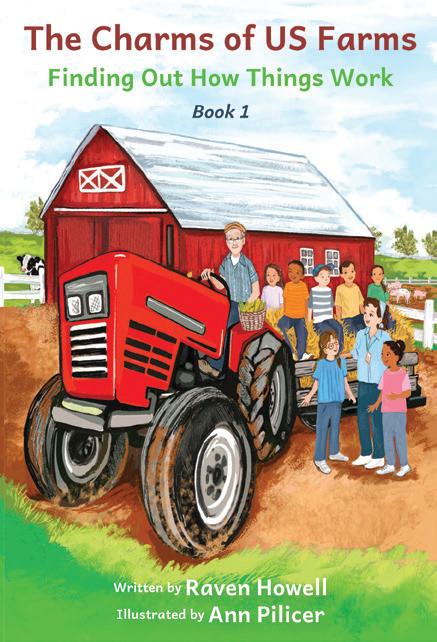
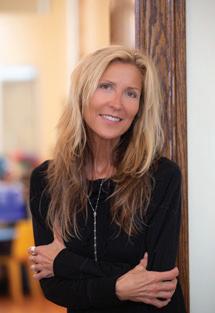



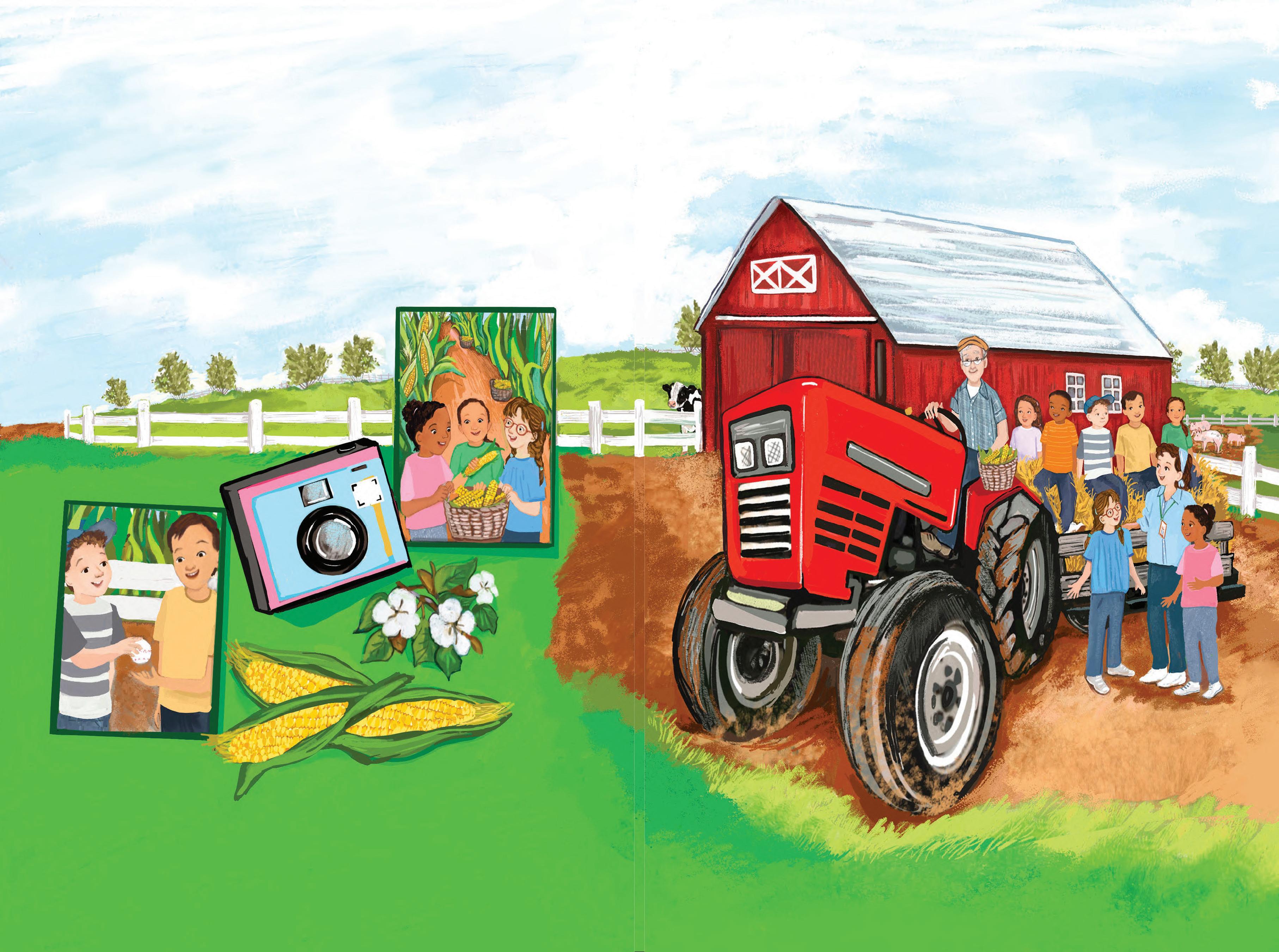

Jan-Carol Publishing, known as JCP, is recognized as the largest book publisher in the region with over 400 titles of books and publishing the monthly magazine, Voice Magazine for Women, for over 20 years. We are locally owned and operated.
• How do you get your book published?
• How do you submit your manuscript?
• What steps are needed for editing?
• How do I get an ISBN?
• Will your book be on Amazon, Barnes and Noble, etc?

Let us assist you in navigating through the book publishing process! 423.926.9983
submissions@jancarolpublishing.com
www.jancarolpublishing.com