



























































































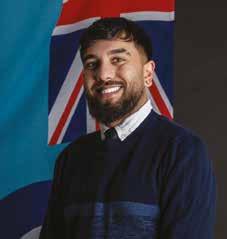
MCO/Editor in Chief: Sahil Karra
Editor: Sarah Vecchio
Submissions To: sahil.karra100@mod.gov.uk
All articles are to be in ‘Word’ format with separate JPEG images.
Designer: Holly Daniels
Email: holly@lancemediagroup.co.uk
Cover Photo: xxx ©
Advertising: Jayne
Email: jayne@lancemedia.co.uk
Published by:
Lance Media Group Ltd
1st Floor, Tailby House, Bath Rd, Kettering, NN16 8NL
Tel: (01536) 334222
Fax: (01536) 515481
Email: info@lancemediagroup.co.uk
Printed By: Micropress Printers Ltd
Spring seems to have definitely sprung and I for one am glad to see fleeting glimpses of the sun after what has been a winter of never-ending rain. Despite the damp weather, activity across the RAF High Wycombe enterprise continues at pace, driving the Station forward whilst also celebrating some of the successes over recent months and, most importantly continuing to incrementally improve the lived experience of all those personnel who work and reside on the site. Numerous plans are afoot for 26/27 as part of a wider Station
development plan that I hope to write about in more detail in a later edition of this magazine once details have matured.
Submission Deadline...
All articles for Issue 2 of Wycombe World to be sent in no later than 22nd July 2026 to sahil.karra100@mod.gov.
uk. Please send all articles as a word document with all photos and images imbedded within the article.

IThe Station recently hosted a very successful display of Boxing prowess, hosted in the Officers’ Mess by the RAF Boxing Association and covered in this edition. Not only was this an excellent evening in itself, and my thanks go to RAF Boxing for organising to such a high standard, it also served as an example of how we are seeking to bring new approaches and new events to the Station that perhaps had not existed before. Again, we have more in the
pipeline so do keep your eyes peeled for events across the station as the weather improves and we look to use the outside spaces.
Please enjoy this edition of Wycombe World, there is more to come as we seek to drive the station forward and take you all with us.
Sarah Vecchio
t is with great excitement that I write to you as the new editor of Wycombe World. Taking the reins of this respected publication is a responsibility I do not take lightly, and I am grateful to be given the opportunity.
First and foremost, I would like to extend my thanks to the outgoing editor, Cpl Lewis Jacks, and the previous MCO, Laurence Parker, for their dedication and hard work in steering Wycombe World to where it is today. Their commitment to showcasing the very best of RAF High Wycombe and its vibrant community has been inspiring, and I know that I have big shoes to fill.
As we move forward, I am excited to build on this strong foundation and continue to make Wycombe World a publication that reflects the energy, diversity,
and camaraderie of our community. You can expect to see all the features you know and love, from coverage of local events and sports to the Padre’s Ponderings as well as the introduction of some new regular features.
These will provide fresh perspectives, highlight unsung heroes, and delve into topics that matter most to our readers in these changing times. We will be celebrating achievements, sharing stories, and keeping you informed. My goal is to ensure Wycombe World remains a magazine that connects and inspires us all.
RAF High Wycombe also welcomes the new station MCO, Sahil Karra, who like me, has a passion for storytelling and exploring new ideas. I look forward to the energy and insight they will bring to the issues ahead.
In this issue we cover some key sporting events that took place over the winter, including the RAF Boxing Associations exciting event that was hosted by HWY back in February along with some local gems that deserve to be celebrated such as the National Trust's Coombe Hill and Chequers Trail for those who love exploring beautiful places.
I look forward to hearing your thoughts, ideas, and feedback as this magazine grows. Your suggestions will help shape future issues and ensure that the content reflects what matters to RAF High Wycombe and the local community. Whether you have a local story, event you wish to highlight, recommendations or any other comments, your input will play an important role in this magazine’s development.

While we weren’t able to bring you a Winter 25/26 edition of Wycombe World , this was due to a change in the team, which temporarily impacted production. That said, the winter months still saw important and meaningful moments across our community that are well worth reflecting on.
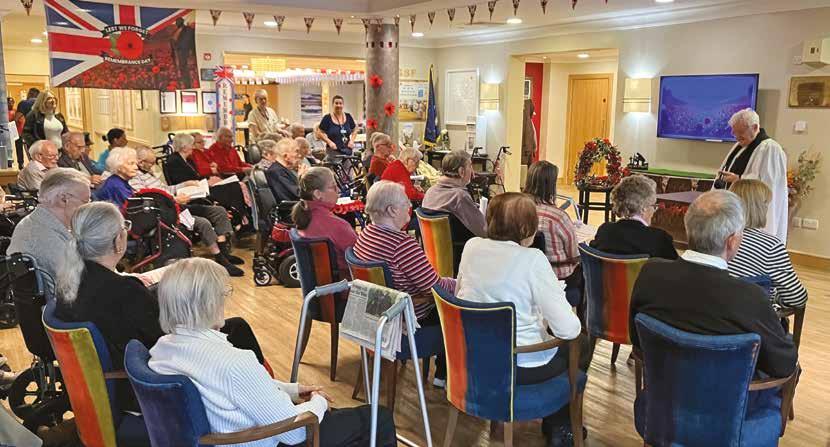
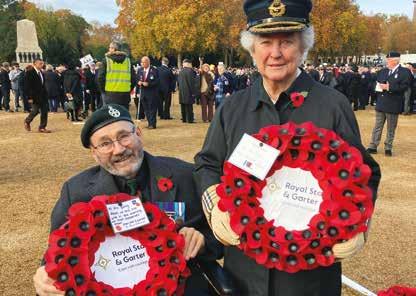
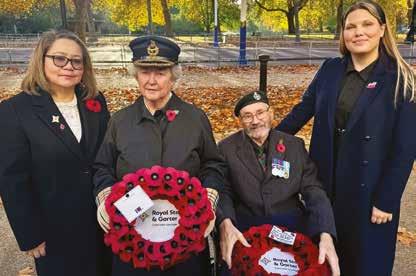
One such occasion was Remembrance Day in November 2025, where residents and veterans of Royal Star & Garter in High Wycombe came together to mark the event through local services. For two residents, this also included the honour of taking part in a march past of the Cenotaph. We’re proud to look back on this and share their story.
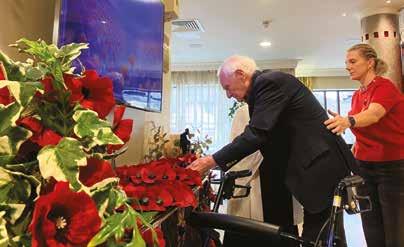
RAF veteran Norman lays a wreath at the Royal Star & Garter service in
Veterans from Royal Star & Garter in High Wycombe have marked Remembrance.
Two residents from the Home attended the National Service of Remembrance and marched past The Cenotaph on Remembrance Sunday 9 November. The Padre from RAF High Wycombe held a service for residents on Monday 10 November and Home also held its own service on Armistice Day on Tuesday 11 November.
Royal Star & Garter is a charity which provides loving, compassionate care and support for veterans and their families, living with disability or dementia, through its Homes in Solihull, Surbiton, High Wycombe and Worthing. It also provides services reaching into the community, including Lunch Clubs, Day Care and a national Telephone Friendship Service.
The High Wycombe Home
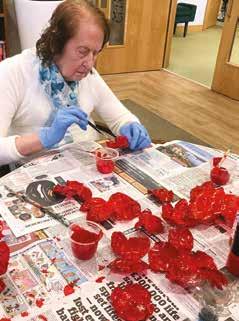
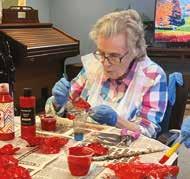
hosted several events in the run-up to Remembrance, including poppy-based arts and crafts activities.
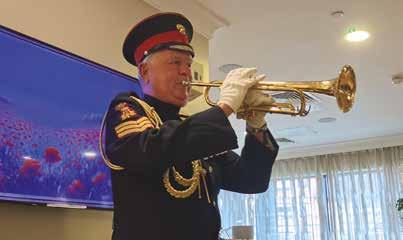
The Armistice Day service featured a two-minute silence, hymns and the Last Post played by Grenadier Guard veteran Tony Adie on trumpet. There were readings from residents, staff and volunteers, before wreaths were laid. Afterwards residents took part in a Remembrance tea party which was attended by High Wycombe Mayor Majid Hussain and members of RAF High Wycombe.
Royal Star & Garter in High Wycombe is welcoming new residents. For more information on this, its other services or to work at the Home, go to: www.starandgarter.org/hw
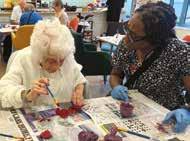
Residents and Day Care users painted poppies in the run-up to Remembrance, which were decorated around the Home
Taylor-Drew is a Wellbeing Coordinator at Royal Star & Garter in High Wycombe, and part of the Home’s dedicated Wellbeing Team. She was at the National Service of Remembrance at The Cenotaph on Remembrance Sunday, along with residents from the Home. Here, she reflects on an emotional day.
Attending the National Service of Remembrance at The Cenotaph this year was an experience I will never forget. Standing in the heart of London, surrounded by veterans from all branches of the Armed Forces, I felt a deep sense of pride and gratitude. These were emotions which continued to grow as the day unfolded
We started off our journey to the Horse Guards Parade at 7am, accompanied by a lovely breakfast by our kitchen team and packed lunch for after our march.
The first thing that struck me was the atmosphere. Despite the crowds and the significance of the occasion, everything felt calm, respectful and united. It was a beautiful moment where you could truly feel the weight of history pressing gently on the present − a reminder that the freedoms and peace we enjoy today are built on the sacrifices of so many.
As the veterans marched past The Cenotaph, each step carried a story: memories of comrades, moments of courage, and the silent strength of those who carry scars both seen and unseen. Being able to have the privilege to take two of our very own veterans from our High Wycombe Home who have given so much of themselves in service, was incredibly moving.
Supporting our veterans on this day meant more than simply attending a ceremony. It was a chance to honour their legacy in a distinct way: to stand with them, applaud them, and show them that our country remembers. I felt proud to be part of Royal Star & Garter.
This was my first time attending a Remembrance Sunday service at The Cenotaph, and it exceeded every expectation. Watching the wreaths being laid, hearing the Last Post echo along Whitehall and joining in the two-minute silence − each moment added another layer of meaning and emotion.
I was glad that High Wycombe veterans Cynthia and Mick were there to share the day with other members of the Royal Star & Garter family. They both found the experience incredibly emotional.
Mick told me afterwards how seeing the people of London line the street applauding the veterans marching was something he would never forget and he felt a deep sense of gratitude.
We spent time afterwards and the following day talking about those that had marched with us and being saluted by The Duke of Edinburgh at the end. For all of us, it was a reminder not just of the past, but of the importance of continuing to support and care for our veterans.
As we made our way home, I found myself reflecting on everything I had witnessed. Being at The Cenotaph was not just about acknowledging sacrifice, but about feeling deeply connected to those we care for at our High Wycombe Home, and it is something that will stay with me for years to come.
It was a privilege to be there and a responsibility I will continue to uphold.
We will remember them.
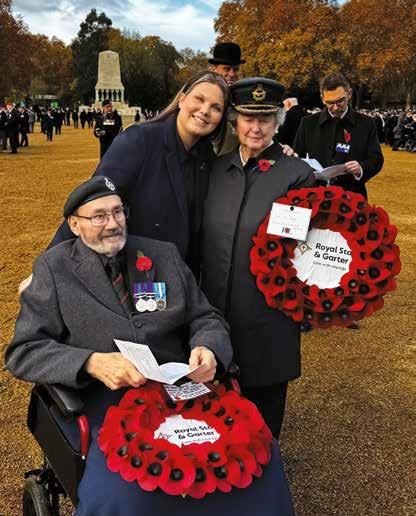
High Wycombe resident Mick, who served in the Army for nine years, and Cynthia, the first female RAF Air Commodore, with Royal Star & Garter poppy wreaths


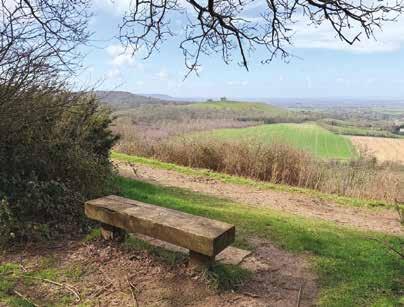
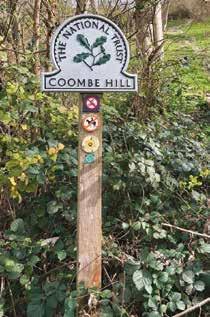
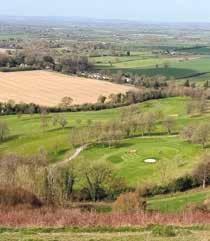
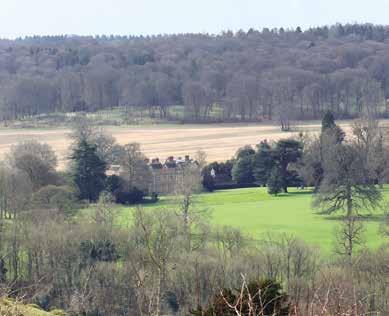
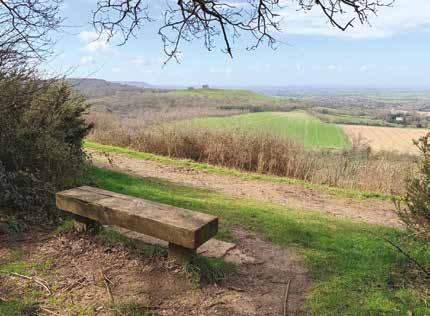
Coombe Hill in Buckinghamshire is just a short drive away from RAF High Wycombe and is a stunning destination for walkers and nature enthusiasts alike. It forms part of the Chiltern Hills, an Area of Outstanding Natural Beauty (AONB) and offers a wonderful combination of stunning landscapes and rich history. It’s the perfect escape from the hustle and bustle of daily life where you can take a moment to just pause, breath and simply be present. At 260 meters above sea level, Coombe Hill is the highest point in the Chilterns, providing breathtaking views of the surrounding countryside
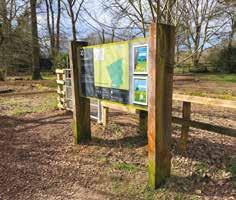
The walk is a firm favourite for both locals and visitors, with several routes to choose from, ranging from a gentle stroll to a challenging hike, making it accessible to all ages and fitness levels. A popular starting point is the National Trust Coombe Hill car park, which provides easy access to the main trail. From here, you can find well-maintained
paths that wind through a mix of woodland, grassland and chalky hillsides ready to be explored.
We were lucky enough to have a day of sunshine on our recent visit, albeit a little cold, which allowed for the most spectacular views. We were able to see for miles across the Aylesbury Vale, and we stood for some time taking in the rich countryside and quaint villages. The area is a haven for wildlife, and we were treated to an exciting aerial display from the flurry of Red Kites soaring above us, gliding effortlessly through the clear sky. Every now and then, one would tilt sharply, using its distinctive forked tail to twist and turn with perfect precision.
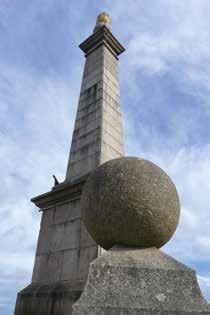
The Boer War Memorial stands at the summit of Coombe Hill and serves as a striking focal point for the walk. The monument was erected in 1904 to commemorate the men of Buckinghamshire who lost their lives during the second Boer War (1899-1902).
Made of Portland stone, the obelisk is an impressive sight and is inscribed with the names

of the fallen soldiers. A poignant reminder of their sacrifice.
The views from the summit are of course, incredible. Aylesbury Vale stretches out to the north, with rolling hills that seem to go on forever to the south. I love that you can almost trace the entire walk in your mind as you stand there, with the beautiful Church of St Peter and St Paul, the well-trodden chalk path across the fields and the Prime Ministers country retreat all visible in the distance. We followed the National Trust Coombe Hill and Chequers trail which takes approximately 3 hours to complete. Coombe Hill is an area that is steeped in history, with evidence of ancient settlements and pathways that have no doubt been used for centuries. The area offers stunning views, diverse wildlife, colourful wildflowers, and ancient woodland set within expansive countryside. It’s the perfect way to slow down and reconnect with nature. If you are looking for a day out that offers peace and tranquillity you can be certain to find it here.
By Sarah Vecchio








1. What part of the job gives you satisfaction? Working within the HQ element surrounded by experts within their fields, I have had a fantastic opportunity to expand my knowledge of Logistics & supply policy and been able to influence future changes in support of the downstream delivery of Air power.
2. And the least?
Implementation of change and seeing real world impact can at times be slower than is desirable.
3. What's the best advice you have ever received? Don’t seek perfection at the expense of looking after people.
4. Can you describe yourself in six words? Driven, disciplined, adaptable, enthusiastic, excellent & modest.
5. What career would you have followed if not the current one? Management consultancy.
6. What would be your first act as world leader? Address inequality by examining how resources are distributed and by strengthening systems that support long‑term investment, productivity, and sustainable growth.
7. Name your desert island essentials: Food, Water, Shelter, a durable water purification system, a volleyball & a very long book.
8. Who do you most admire in the world? My dad – he has been both an excellent parent & role model.
9. What 4 guests would you like to see around your dinner table and why?
a. Gordon Ramsay
b. David Mitchell
c. Romesh Ranganathan
d. Keanu Reeves
10. Is there one piece of criticism that sticks out in your mind? If you expect everyone to do things exactly as you would, you’ll never be happy with anything and might as well just do it yourself.
11. How would you like to be remembered? For fun memories and being dependable.
12. In a film of your life who would you cast to play yourself? Brad Pitt

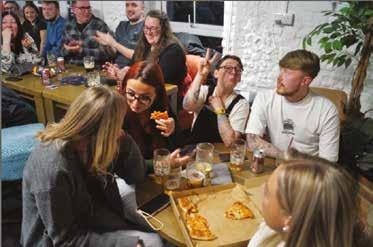
The No.1 Space Operations Squadron Charity Fund aims to raise donations through the organisation of station wide events here at RAF High Wycombe. Currently supporting Combat Stress UK we hosted our first event of the year on the 17th February, with the team putting together a great night of interactive gameshow classics such as Catchphrase and The 1% Club. Turnout for the event was excellent and far exceeded the expectations of the Committee so thankyou to all those who attended! We raised over £200 for Combat Stress UK which is a great start to our year of fundraising We have lots planned for 2026, so keep your eyes peeled for the details on our next event!
Daniel Mason, 1SOS Ops
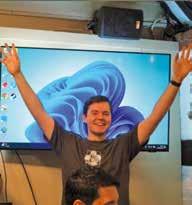
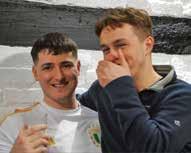

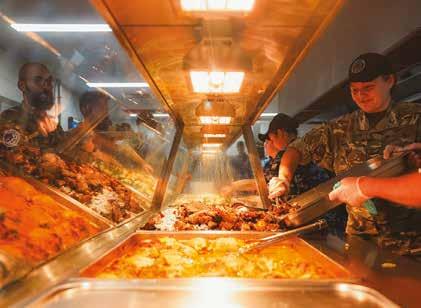
1. What is your name, role and how long have you been a chef at RAF High Wycombe?
My name is Irinel Ungureanu, I work as a chef at RAF High Wycombe, and I have been working here for 2 months.
2. What does a typical day look like for you?
A typical day is fast-paced and structured around service times. It involves preparing ingredients, cooking meals, coordinating with the team, and ensuring everything is ready on time. There is also a strong focus on maintaining high standards of food quality, hygiene, and organisation throughout the day.
3. How does your day normally start in the kitchen?
The day usually starts with checking deliveries, ensuring all ingredients are available and fresh, and setting up the kitchen stations. We review the menu for the day, plan the preparation tasks, and begin prepping ingredients so everything runs smoothly during service.
4. What parts of your job would people be surprised to learn about?
Many people would be surprised by how much planning and organisation happens behind the scenes. It’s not just cooking — it involves stock control, time management, teamwork, and strict adherence to hygiene and safety standards.
5. What is the atmosphere like during busy meal times?
During busy meal times, the atmosphere is intense but very focused. Everyone knows their role, communication is key, and the team works closely together to ensure meals are served quickly and to a high standard.
6. What do you enjoy most about the job?
I enjoy the teamwork and the satisfaction of preparing meals that people enjoy. It’s rewarding to see the results of our work and know we are contributing to everyone’s daily routine.
7. What do you find most challenging?
One of the biggest challenges is managing time and pressure during busy periods while maintaining consistent quality. It requires focus, organisation, and good communication within the team.
The Charity Race Night held at the WOSM on 15 April was a huge success, with a fantastic turnout and great atmosphere throughout the evening. Pig, dog, and horse-and-cart racing helped raise £180 for
Station charities, thanks to the enthusiasm and generosity of everyone involved. A massive thank you to all who came along, took part, and supported the event. It wouldn’t have been possible without you! Abi, Admin Officer
8. Any memorable or funny moments from the kitchen recently? There are always small moments that keep things interesting, especially during busy services when something unexpected happens. Whether it’s a quick joke between colleagues or a small mistake that turns into a laugh later, these moments help keep morale high.
9. What do you enjoy about working at RAF High Wycombe? I enjoy being part of a structured and professional environment, working alongside a supportive team. It’s a unique place where you feel that your role contributes to something bigger.
10. What are your favourite meals to prepare for everyone?
My favourite meals to prepare are well-balanced dishes that are enjoyed by many people, especially classic comfort food. It’s satisfying to cook something that brings people together and is appreciated by a wide range of tastes.
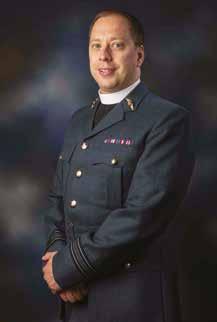
Posting life in the RAF is, by its nature, a life of movement. New stations, new teams, new rhythms. For many, the challenge is not just the move itself, but how to remain grounded while everything around you changes.
For the Station Padre at RAF High Wycombe, the answer is simple, even if living it is not always easy.
“When you’re posted frequently,” the Padre reflects, “you quickly learn that your sense of identity can’t be rooted in buildings or locations. For us as a family, it’s about staying rooted in each other.”
That sense of family has been the constant thread throughout a career that has involved moving stations, supporting others through challenge, and absorbing the quiet weight that often comes with pastoral work. While postings can be particularly tough on spouses and children, he acknowledges that shared values, faith, and togetherness make the transitions manageable.
There is also something quietly special about this posting. “I’m actually from High Wycombe originally,” he says. “So coming back here genuinely feels like coming home.”
Ask the Padre to describe himself and you’ll quickly discover that humour plays a big part in how he connects with people.
“Three words?” he laughs. “A god amongst men.”
Pause.
“Don’t write that.”
Pressed further, he settles on empathetic, determined and, with a grin, “absolutely hilarious.” The humour is dry, often selfdeprecating, and very much part of how he builds rapport across the station. It disarms, it reassures, and it reminds people that they are talking to another human
being, not just a role.
That humanity is shaped by life experience, some of it unexpected. His earliest memory, remarkably, is surviving the 1989 San Francisco earthquake.
“I remember sitting on the sofa and suddenly everything started shaking,” he recalls. “My mum grabbed me and we all went under the kitchen table. My parents shielded me until it stopped.” He was only three years old, but the memory stayed. It’s a reminder that moments of instability can arrive early and leave lasting impressions.
Outside of work, the things that keep him grounded are refreshingly ordinary. His children come first. Then Wycombe Wanderers FC. And Lego.
“Yes, Lego,” he says. “Currently the Disney Castle. About 4,800 pieces. I started it on my birthday and I’m only a third of the way through, which probably says
more about my free time than my patience.”
It’s those small, joyful distractions that matter. And it’s something he encourages others to protect fiercely.
“The people who struggle most with stress or anxiety often stop doing the things they enjoy first,” he explains. “That’s usually the warning sign.”
When someone comes to see the Padre, the instinct might be to expect advice or answers. But that isn’t where he starts.
“Giving people space to tell their story is the most important thing,” he says. “Everyone wants to feel heard. Being heard doesn’t magically solve the problem, but it matters. Once someone feels heard, you can build from there.”
Across ranks and roles, he sees the same truth repeated. Life does not discriminate.
“Unexpected things happen
to everyone,” he says simply. “Nobody is immune.”
That understanding shapes how he approaches resilience. Not as something dramatic or heroic, but as something built quietly, day by day.
“Resilience takes conscious effort,” he says. “Sleep, diet, exercise, relationships, doing things you enjoy. We go to the gym not just to pass a test, but because it’s preventative healthcare. Mental resilience works the same way.”
Despite the physical spread of RAF High Wycombe, the Padre believes the strength of the station lies in human connection.
“You don’t have to be best friends with everyone,” he says. “But genuine connection matters. It supports wellbeing, strengthens teams, and creates a
healthier community.”
Sometimes, those connections start with something very small.
“Smiling,” he offers. “I know it sounds cheesy, and sometimes maybe a bit awkward, but smiling and saying hello can genuinely change someone’s day. You never know what someone is carrying.”
During his time here, the Padre is keen to continue building links across the station and the local community. One idea close to his heart is the introduction of resilience walks.
“The idea is simple,” he explains. “Getting people out of the office, into nature, creating space to reflect on life and whatever they might be carrying. We’re hoping to trial them around
the Safety, Health and Wellbeing Day.”
Supporting others comes with its own challenges, and he is open about the need for self-care.
“If you’re highly empathetic, you naturally carry other people’s burdens as well as your own,” he says. “You have to find things that allow you to switch off properly, otherwise you end up carrying too much.”
Tea or coffee?
Coffee. Proper coffee. Not instant.
If you weren’t a Padre? Professional footballer.
Favourite posting so far? This one.
Best advice ever given?
“Don’t worry about tomorrow. Today has enough worries of its own.”
In a fast-paced, demanding environment, Padre’s Ponderings reminds us that resilience is not about doing more, but about reconnecting with what already grounds us. Family. Community. Small joys. And sometimes, a smile in passing.
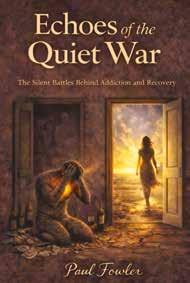
Sqn Ldr Paul Fowler has served in the RAF for over 40 years. During that time, he has witnessed a significant cultural shift in how alcohol use, trauma, and mental health are understood - moving from an era where struggles were often masked behind mess-room culture, to one where conversations about
vulnerability are gradually becoming more open.
His book, Echoes of the Quiet War, did not begin as a formal project, but through conversations with individuals working in addiction recovery. What followed became a deeply personal exploration of addiction through the lens of trauma, shame, masculinity and survival.
“Addiction is the failed coping mechanism people have with trauma,” Paul explains. “Many people see it as weakness or bad choices, but there’s usually something deeper driving it.”
Initially asked to help write a short story based on one person’s experience, Paul soon found himself immersed in the subject - researching medical literature, psychological studies and personal accounts to better understand the realities of addiction.
“I’d never written like that before,” he says. “I needed to understand it properly - not just the stories, but what sits underneath them.”
That focus on understanding
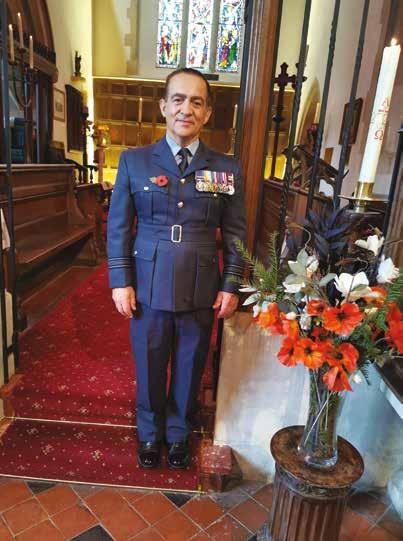
runs throughout both the book and his message. Rather than pity, Paul emphasises compassion - and the importance of recognising the human stories behind addiction.
“There are still people who see someone struggling and make assumptions,” he says. “They don’t see the trauma that may have led them there.”
The book draws on real experiences, covering themes such as isolation, abuse and shame. However, Paul was careful to present these stories with dignity, deliberately avoiding graphic detail.
“The aim was never shock value,” he explains. “It was to tell people’s stories respectfully, in a way that others can understand.”
One story, in particular, still causes Paul to reflect - a man in recovery who had struggled to explain his experiences to his father. After reading the book, his father recognised a character whose story mirrored his son’s.
“That moment created a conversation they’d never been able to have before,” Paul recalls. “That’s what this is about - understanding.”
The title, Echoes of the Quiet War, reflects the often unseen internal battles people face. As Paul describes it, it is possible to feel completely alone, even when surrounded by others.
“That’s the quiet war,” he says. “Everything around you feels normal, but internally, there’s a battle going on.”
Within a military context, this message resonates strongly. While attitudes towards mental health have improved significantly over recent decades, stigmaparticularly around men showing
vulnerability - still exists.
“Admitting vulnerability can still feel difficult,” Paul says. “But staying silent is far more damaging.”
Organisations such as Andy’s Man Club, Men’s Sheds, and veteran charities like Combat Stress are helping to challenge that stigma by creating spaces where people can talk openly and support one another.
For Paul, these conversations are vital.
“People can’t begin to recover until they feel understood,” he says. “And understanding starts with listening.”
Despite tackling difficult themes, the message of Echoes of the Quiet War is ultimately one of hope - showing how empathy and connection can change outcomes, sometimes in life-saving ways.
At its core, the book asks readers to reconsider the people they may overlook, and the struggles they may never see.
“Compassion and understanding,” Paul says. “Not pity - compassion”.
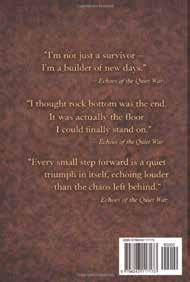
Echoes of the Quiet War: The Silent Battles Behind Addiction and Recovery is available to purchase online. Proceeds from the book support addiction recovery services and safe housing initiatives.
To find out more or to purchase a copy, search Echoes of the Quiet War via Amazon.
NOTE: *If you don’t understand the
Military jargon has a strange ability to sound both deeply serious and faintly absurd at the same time.
Spend enough time around military spaces and conversations can begin to feel almost abstract. Meaning arrives in fragments: clipped responses, acronyms, inherited shorthand, references delivered with such immediacy that they appear already understood by everyone else in the room.
There is something slightly surreal about it at first. The rhythm arrives before the meaning does.
Ranks are shortened. Departments become initials. Training, security, operations and processes contract into shorthand that seems to operate at speed, often carrying entire meanings in just a few syllables.
To outsiders, the language can feel momentarily disorientating, operating slightly ahead of comprehension. But beneath the abbreviations and clipped responses sits something more interesting than bureaucracy or institutional habit.
Military language is not simply communication. It is accumulated history.
Much of military jargon was never created for style or ceremony. It emerged
from necessity. In aviation, on operations and over radio communications, brevity is not aesthetic. It is practical. Words needed to travel quickly, clearly and without room for dangerous misunderstanding. Misheard information could carry consequences far greater than confusion.
Entire communication systems evolved around precision. “Roger”, now almost caricatured through popular culture, originally served a practical purpose in confirming a message had been received.
“Wilco” compressed “will comply” into two syllables.
The NATO phonetic alphabet, Alpha, Bravo, Charlie, Tango, exists because language under pressure must survive urgency, noise and the possibility of error.
Some phrases were designed for efficiency. Others for secrecy.
Military history has always existed alongside espionage, intelligence gathering and operational concealment. Language often functioned as protection as much as communication. To outsiders, terminology could sound cryptic because, in many cases, it was intended to be.
Yet perhaps the most interesting thing about military jargon is how much of it escaped military life entirely and embedded itself into civilian culture.
We casually refer to “intel”, “stand down”, “zero hour” and being “AWOL” without always recognising where those terms came from. “Scramble”, once associated specifically with rapid fighter deployment, now describes almost any rushed response. The jerry can, now an unremarkable object sold in garages and camping shops across the country, carries linguistic traces of the German equivalent during the Second World War. Even the “X Factor”, now firmly embedded in entertainment culture for us Gen Zs, in fact has roots in military and psychological attempts to describe intangible qualities that affect performance under pressure.
Language born from conflict rarely stays there. It travels.
The same is true culturally. Modern workplaces increasingly speak in operational metaphors: strategy, targets, missions, tasking and chains of command. Popular culture has absorbed military terminology so thoroughly that many phrases no longer register as military at all.
And yet, despite its spread into everyday life, military jargon still performs a distinct function internally. It does something beyond communication. It creates belonging.
Shared language has always
been central to institutional identity. Universities, medicine, law and politics all possess vocabularies that simultaneously signal expertise and preserve culture. Military jargon functions in much the same way. To understand the language is, eventually, to understand the values beneath it: clarity, discipline, trust and collective understanding. That does not mean the tension around accessibility disappears. For newcomers, especially civilians entering military environments for the first time, the density of shorthand can still feel alienating. There is a fine line between camaraderie and opacity. Institutions must constantly think about who language includes and who it unintentionally leaves behind. But reducing military jargon to mere bureaucracy misses something important. Military jargon does more than communicate information. It preserves continuity. Many of these phrases have survived across generations of service personnel, carried forward through repetition, routine and institutional memory. Behind even the most clipped acronym sits an inherited understanding of what came before: lessons learned under pressure, systems shaped through experience and traditions preserved through language. In that sense, jargon becomes more than shorthand. It becomes a form of respect, both for the discipline of the institution and for the generations that shaped it.



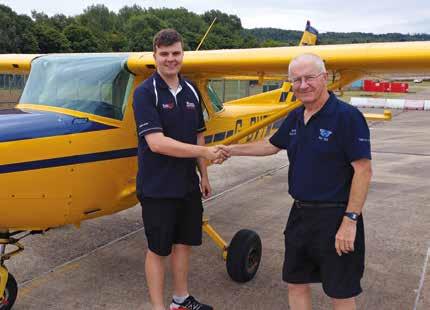
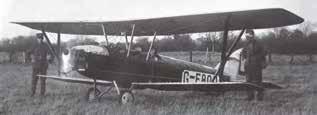
The Halton Aero Club was formed in November 1925 and provided flying training for its RAF Apprentice members – 100 years later, assisted by the RAF Charitable Trust, this concept continues.
BY AIR CDRE MARK MANWARING, OFFICER IN CHARGE, HALTON AERO CLUB
Shortly after forming, the Halton Aero Club (HAC) had in excess of 1000 members and it would appear that all trainees were ‘voluntold’ to join the HAC! Activities for those that attended regularly included flying training, building an aircraft (that became known as the Mayfly and participated in the 1929 King’s Cup Air Race) and aviation-related visits. One of the founding members, Cecil Hugh Lattimer-Needham, went on to write 2 books on aircraft design, one of which found its way into a library in a German castle in the mid-1930s. Some years after this, that castle (known as Colditz) became a prisoner of war camp. In an error of judgement, the prison guards loaned the book out to RAF WW2 POWs Flt Lt’s Bill Goldfinch and Jack Best who used it to design the glider that was secretly built in the loft as an escape attempt. Fortunately, the War finished before this daring plan came to fruition
The walk is a firm favourite for both locals and visitors, with several routes to choose from, ranging from a gentle stroll to
a challenging hike, making it accessible to all ages and fitness levels. A popular starting point is the National Trust Coombe Hill car park, which provides easy access to the main trail. From here, you can find well-maintained paths that wind through a mix of woodland, grassland and chalky hillsides ready to be explored.
Fast forward to 2025, the club is a Royal Air Force Sport Aircraft (RAFSA) Flying School that is based on RAF Halton Airfield and has the Mission:
‘To afford Servicemen and Women, irrespective of rank or profession, the ability to learn to fly at the minimum practical cost’.
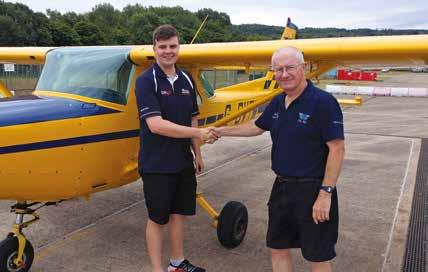
In fact, successful applicants to the RAFSA Junior Rank & Officer Pilot Scholarship Scheme (JROPSS) can learn to fly for free!
Kindly funded by the RAF Charitable Trust, the JROPSS has been running for a decade and has funded flying training for nearly 200 RAF personnel. Due to the

size of the HAC (in comparison to the other 9 RAFSA Flying Schools), they have been responsible for training more than a third of that number. In 2025, the HAC trained 10 Scholars on a mix of initial scholarships (to first solo) and advanced scholarships (to award of Private Pilot’s Licence). The scheme returns service personnel back to their primary roles more ‘air aware’ and with a significant boost to their confidence. To date, 6 HAC scholars have successfully gone through Officers’ & Aircrew Selection Centre and are now serving as commissioned and non-commissioned aircrew.
In addition, flying training can be supported by Enhanced Learning Credits and the HAC currently has many members using this form of funding.
Beyond flying training, the HAC has had an outstanding season to commemorate the 100 years since its formation, this has included numerous UK fly-outs, a 6-aircraft overseas expedition to Poland and participation in the RAF Cosford Air Show and Royal International Air Tattoo. So, a century after its formation, the HAC continues to reflect the ideas of those who had a vision for enhanced ‘air awareness’ in the RAF ranks. 2025 was a fantastic year (helped by the excellent summer weather!) and a full programme is already planned for 2026.
For further details search www.haltonaeroclub.co.uk and www.rafsa.co.uk.


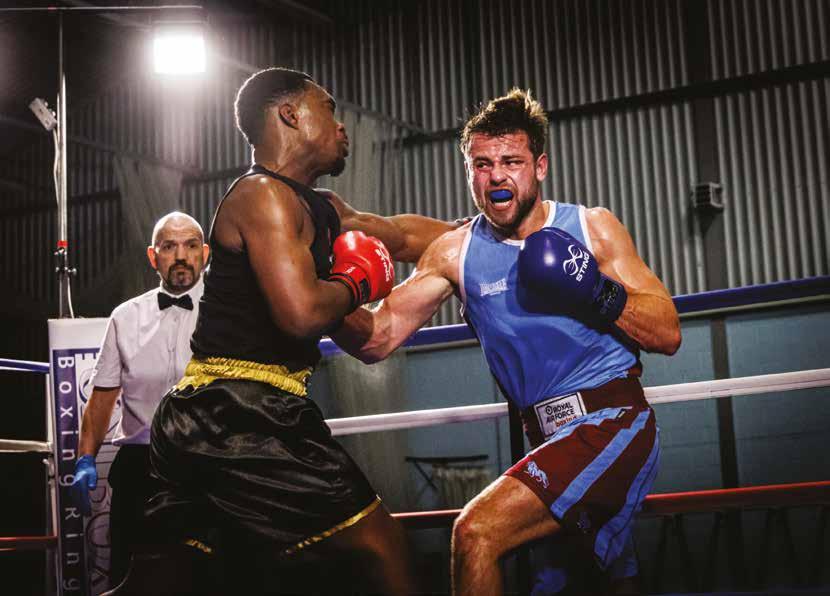
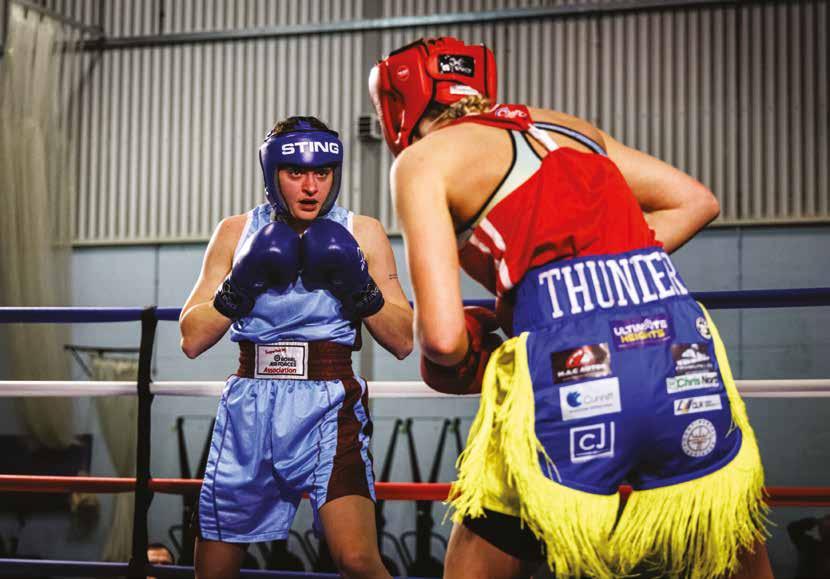
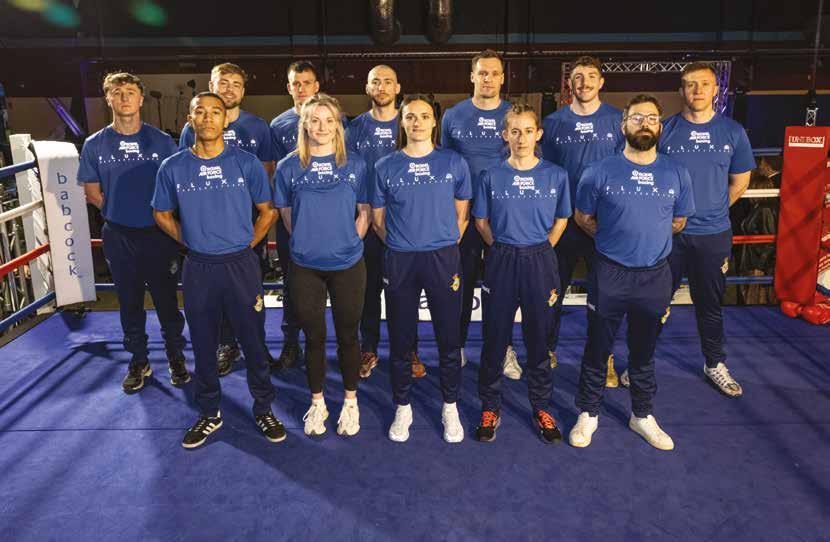
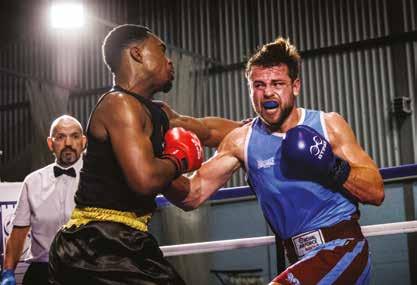
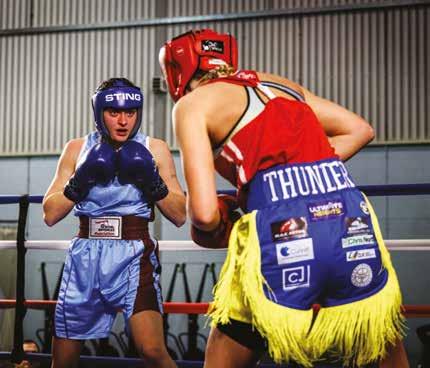
In February, RAF High Wycombe played host to a spectacular evening of boxing as the Royal Air Force Boxing Elite Team, supported by the Development Squad, competed against a selection of Southern Counties most accomplished civilian and army opponents in what proved to be an exciting display of skill, strength, and sportsmanship.
The Royal Air Force Boxing Association (RAFBA) event was a formal occasion that combined the thrill of competitive sport with an atmosphere of sophistication and entertainment. Guests enjoyed a well-curated evening, complete with a variety of food and drink that added to the sense of occasion. RAF High Wycombe Officer’s Mess was transformed into a vibrant setting, with DJ Phil McNulty from Elite Entertainment providing music to energise the crowd and maintain the lively atmosphere between bouts.
The evening’s programme featured an impressive lineup of nine matches, each consisting of three intense two and three-minute rounds. This format ensured a fast-paced and dynamic display of boxing, keeping the audience engaged throughout the night.
The Elite’s, renowned for their exceptional discipline, unwavering focus, and rigorous training regimes, entered the ring with confidence and determination. Facing off against skilled civilian counterparts, they engaged in a series of fiercely contested matches that showcased precision, strategy, and resilience.
Each round was a testament to the team’s commitment as they demonstrated their ability to adapt to challenging opponents and deliver exciting performances. Not to be outdone, the Development Squad brought their own energy to the event, proving that the future of RAF boxing is in capable hands. Among the evening’s most memorable moments was a standout performance by Cpl Sumpter, whose speed and skill culminated in the only knockout of the night.
The team’s dedication to training and their commitment to the sport was evident in each round, as they demonstrated technical skills against tough components. This event highlighted the rising talent within the RAFBA and underscored the commitment of the association to developing future champions.
Boxing is far more than a test of physical fitness; it is a sport that demands mental fortitude, unwavering determination, and self-respect, all of which were highlighted in this event, where success was not solely defined by physical prowess but also by the ability to remain composed under pressure and persevere through
challenges. For military personnel, boxing is a natural extension of the values they uphold in service; teamwork, discipline, and courage.
This event also served as a celebration of the sport’s ability to unite individuals from diverse backgrounds, pushing them to their limits and inspiring others. It was a powerful reminder of the mental and physical strength that defines this sport. It would be remiss not to acknowledge the professionalism and dedication of the coaches, officials and all personnel from across the station who worked so hard to ensure the events success. Their commitment, expert guidance, and fair adjudication created an atmosphere of respect and sportsmanship that allowed the
boxers to shine and the audience to enjoy an amazing night.
The evening concluded with a thrilling final bout featuring the Elite Squads Sgt Lewis, whose skill and determination secured a hardfought victory. The match was a fitting finale to an action-packed event, showcasing experience and composure in the ring.
The Royal Air Force Boxing Association is a fantastic sports organisation, but it is more than this. It’s a community that embodies discipline and camaraderie. Whether you are a seasoned boxer or a complete novice, RAFBA offers an incredible opportunity to build confidence, challenge yourself, and represent the RAF in one of the most demanding and rewarding sports.
By Sarah Vecchio
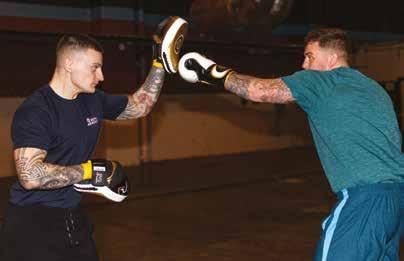





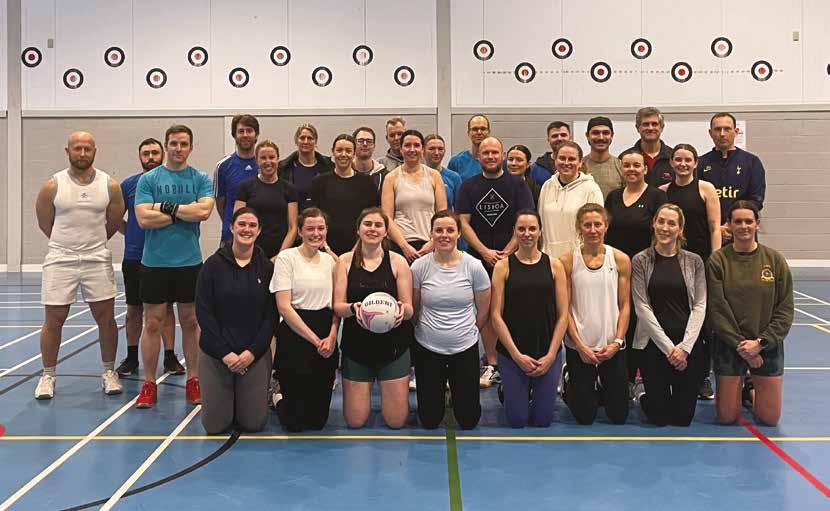
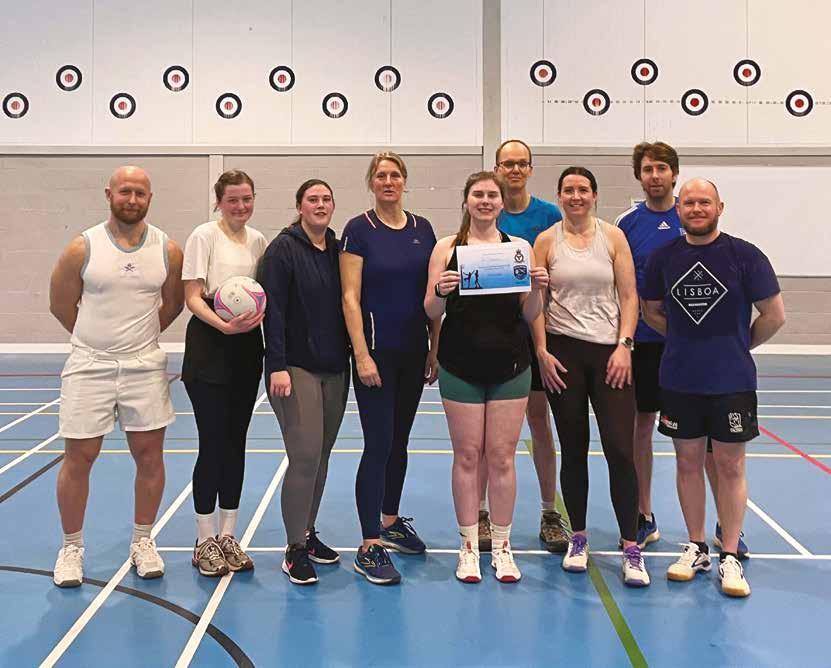
As I stood on the sidelines of the CO’s netball tournament back in February, I wasn’t quite sure what to expect. Traditionally regarded as a female-dominated sport, netball has undergone a remarkable transformation in recent years, becoming increasingly diverse and welcoming to players of all genders.
This year’s tournament was a shining example of that evolution, with mixed-gender teams taking to the court to compete in this high-energy sport. It was a testament to RAF High Wycombe’s dedication to fostering inclusivity, teamwork, and a sense of unity among its personnel and what unfolded before me was a fast-paced display of athleticism, and camaraderie that left me thoroughly impressed.
The tournament featured six ten-minute matches, each packed with intensity and excitement. From the first whistle, it was clear that the personnel taking part meant business. The players, some of whom were new to the sport, quickly adapted to the unique demands of netball, it’s rapid transitions and precise passing. The pace was relentless, with players sprinting to intercept passes, and leaping to make crucial pinpoint shots. The competitive spirit was alive and well, but so too was the teamwork, as all sides encouraged and supported one another.
The mixed-gender format added a unique dynamic to the matches, with players adapting their strategies to complement each other. The diversity of skills and playing styles made for an unpredictable and exciting spectacle, and it was clear from the start that everyone was having a blast.
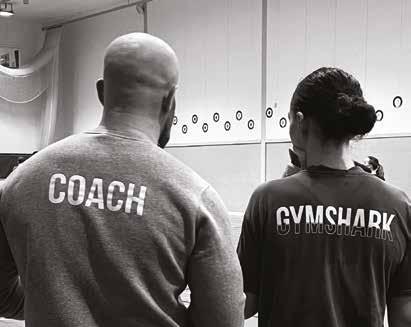
Another standout on the day was the enthusiasm of the Physical Training Instructors. From the moment the players arrived
they set the tone with their energy and encouragement. Their welcoming approach ensured that everyone felt supported, including me.
One team, boldly calling themselves ‘The Champions’ lived up to their name and emerged victorious, collecting their winner’s certificate to cheers and applause.
The resounding success of this tournament was a testament to the dedication and hard work of its organisers, Miriam, Jill, and Becca. From planning the event to ensuring everything ran smoothly on the day, their passion and enthusiasm was evident throughout. Promoting netball as a sport for everyone was clear, as they worked tirelessly to create an inclusive and welcoming environment for all.
By encouraging participation from all skill levels and fostering a sense of fun, they showcased netball as a dynamic and accessible sport.
Whether you’re looking to improve your fitness, build on teamwork skills, or simply just have some fun, netball at RAF High Wycombe offers something for everyone. Training sessions are open to all personnel across the station, both military and civilian. It’s the perfect opportunity to try something new and meet colleagues so head over to Southdown Gym and give it a go. Training takes place every Wednesday, between 12:10-13:00 with all skillsets welcome, from complete beginner to seasoned pro.
By Sarah Vecchio
Or

We took a good look at our lives during Covid-19, evaluating our passions, strengths and expertise. With the support of our families and friends we gathered together financial and practical resources to establish “Badgers Auctions Ltd”, online auction’s every weekend, with a friendly & welcoming atmosphere! We are promoting a strong environmental ethos for re-use and up-cycling and discovering the value in good quality lot items!
Services we provide: General Auctioneers, Valuations, House & Garage Clearances and Probate services.
DROP OFF
MONDAY and TUESDAY: 9am to 5pm WEDNESDAY: 9am - 12noon
Use these days to drop off your entries for the following Sunday’s auction.
AUCTION OPENING
SATURDAY VIEWING: 10am - 4pm CLOSED
THURSDAY, FRIDAY and SUNDAY: Closed to the public




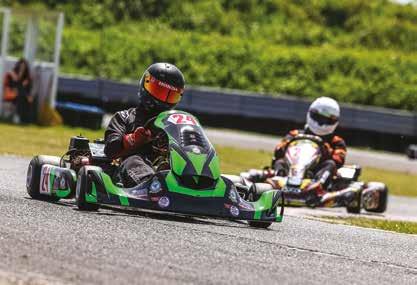
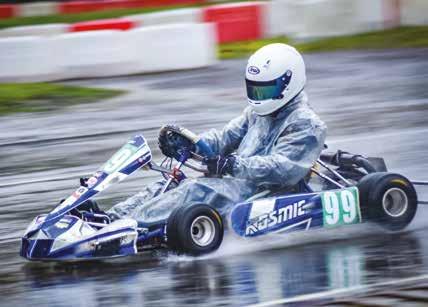
RAF HIGH WYCOMBE AND HALTON KARTING TEAM GEARS UP FOR A NEW SEASON
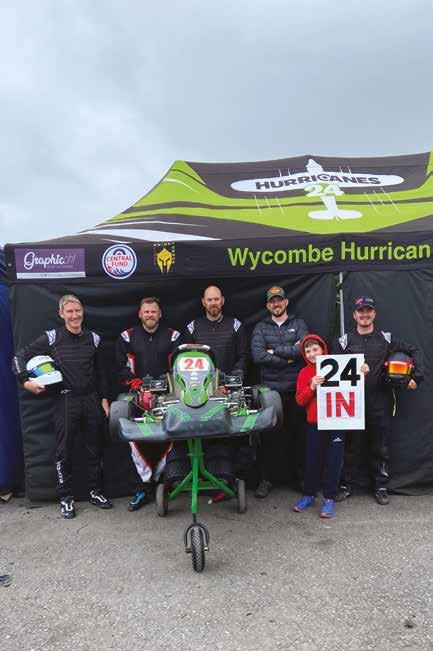
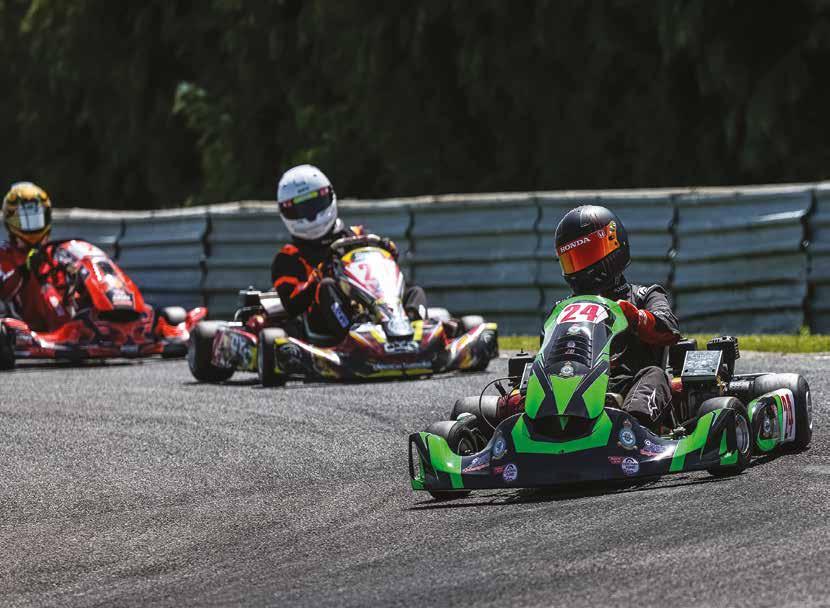
For the RAF High Wycombe and Halton Karting Team, success is not just measured in podiums.
Sometimes, it is measured in turning up. In getting the kart to the track. In fixing what breaks, learning what works and making sure High Wycombe’s name is on the leaderboard.
After the team ceased to operate around COVID, Squadron Leader Jake Garbett arrived at RAF High Wycombe hoping to get involved in karting. Instead, he found himself inheriting the team.
“I wanted to do something else other than just work,” he explains. “I reached out thinking I could be part of the team. What actually happened is I ended up inheriting the team, which is always fun how things turn out.”
Since then, Jake, who is the OC and Team Principal, has helped re-establish the RAF High Wycombe and Halton Karting Team as
part of the Armed Forces Karting Championship. The championship runs across seven rounds each year, bringing together teams from across the RAF, Army, Navy and civilian competitors at tracks around the UK.
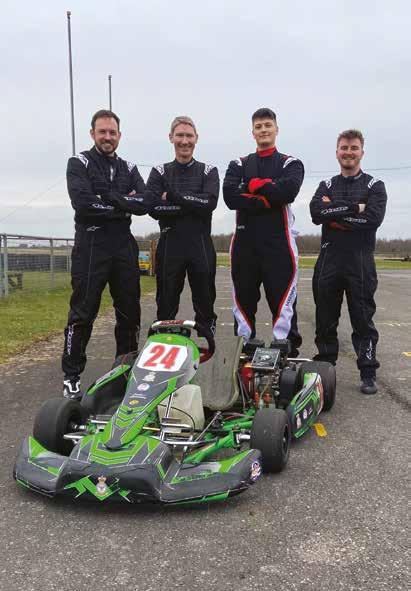
For High Wycombe, the 2025 season marked an important milestone. The team started and finished all seven rounds, giving eight Service personnel the opportunity to race and represent the station.
“We’re not quite competing at the front of the grid yet,” Jake says. “We’d like to get there one day. But right now, it is about being able to turn up, compete, give people the opportunity to go racing and build from there.”
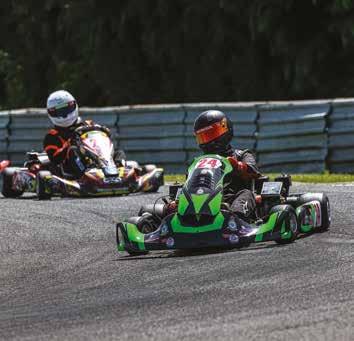
That sense of rebuilding gives the team its current momentum. High Wycombe and Halton currently run a single kart, shared between personnel from both stations. The partnership with Halton was a practical one, designed to increase the pool of
available people and make the team more viable.
The racing itself is not simply a case of turning up and driving. A typical round involves travelling on a Thursday, practising on Friday, and racing on Saturday. The team maintains and prepares the kart themselves, adjusting it to suit the characteristics of each track.
“It’s not just sport,” Jake says. “It’s where sport meets engineering.”
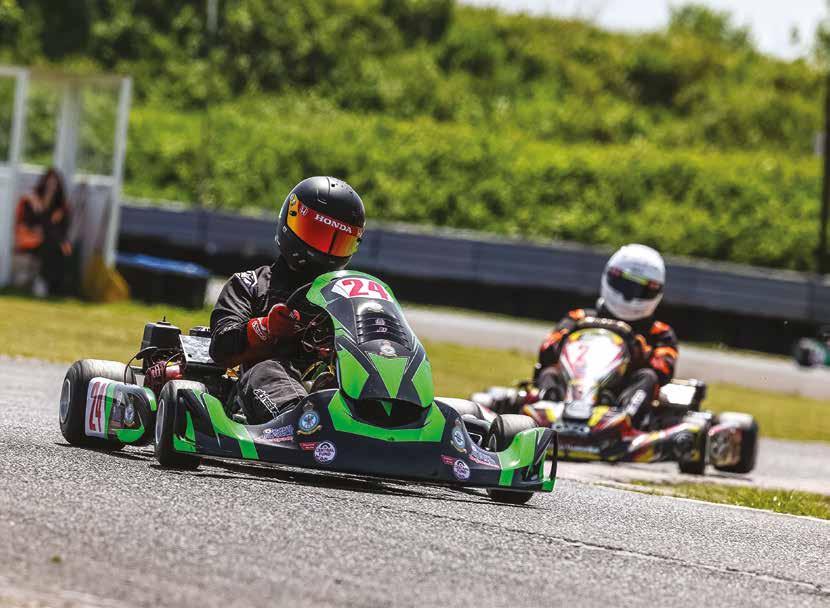
The kart is a twin-engine Honda-powered pro kart, capable of reaching around 50 to 55 miles per hour on the straights. That may not sound extreme until you remember the driver is sitting just inches from the ground.
“If it doesn’t seem quick, it definitely feels quick,” Jake says.
The championship is endurance racing, with races lasting from around one to two hours and involving pit stops, refuelling and constant adjustment. Every team runs the same type of
kart, meaning performance often comes down to how well the kart is set up, how well the team works together and, ultimately, driver skill.
“There’s a huge amount of skill coupled with a lot of engineering,” Jake explains. “You’re trying to find those small marginal gains, that extra second in the corner that might make the difference.”
But this is not a team obsessed only with winning. In fact, one of the most striking things about speaking to Jake is how clearly he defines success.
“Where we finish on track is not the important part,” he says.
“It’s the fact that we’ve given people the opportunity. We’ve represented the station. We’ve got a name on the leaderboard.”
That does not mean the team lacks ambition. Far from it. Jake is clear that the team would like to improve, attract more interest and, eventually, expand. But High Wycombe faces challenges that larger stations do not.
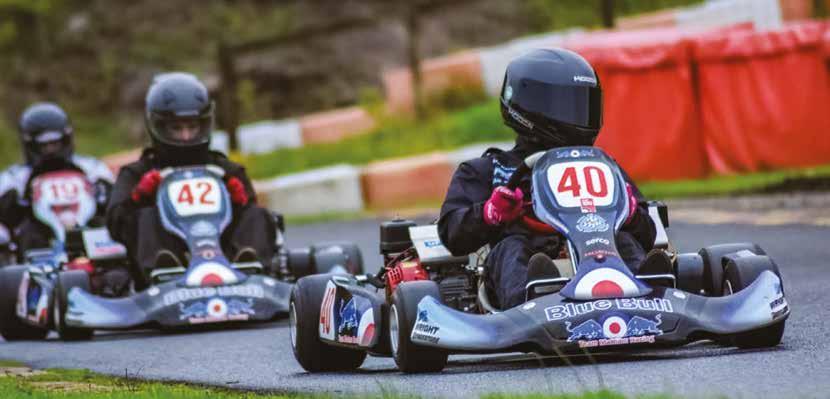
Some RAF stations have their own tracks, more personnel and greater access to regular practice. High Wycombe does not have that luxury.
“We’re probably one of the more junior teams in the RAF,” Jake says. “But we’re here to take part. We’re involved. That’s far better than not being involved.”
There is also a strong community element to the championship. While RAF, Army and Navy teams naturally bring a degree of friendly rivalry, Jake is keen to stress that the atmosphere is supportive rather than hostile.
“The Navy won the championship last year, and the RAF were very competitive,” he says. “But ultimately, we all have day jobs. We use this as an opportunity to get away from work, do something we’re passionate about and have the best weekend we can.”
Civilian teams also compete in the Armed Forces Karting
Championship, drawn by the quality of the racing and the atmosphere around it. For Jake, that speaks to what makes the championship special.
“We just want to go racing,” he says. “We want to be competitive, try and win, try and overtake the next person on track. But the priority is that we support each other.”
Karting also offers something relatively rare in motorsport: accessibility. Motorsport can be expensive, with costs for vehicles, tyres, fuel, insurance and equipment quickly becoming prohibitive. Karting, particularly through the Armed Forces Karting Championship, offers a more affordable route into competitive racing.
“It’s the most affordable way of going racing,” Jake explains.
“You still put your overalls on and your helmet on and you still go racing. It gives you a little taste of what it’s like to be Lewis Hamilton or Max Verstappen,
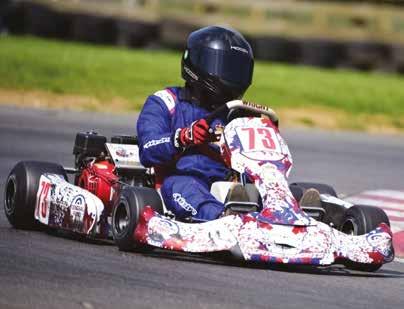
just on a much smaller scale.”
For anyone wondering whether they need to be an expert driver, Jake is reassuring. Road driving and karting are very different skills. What matters more is willingness to learn, commitment and the confidence to get involved.
“Rank is no barrier to entry,” he says. “We’ve got Wing Commanders, Squadron Leaders, AS1s and Corporals racing together. Rank goes by the wayside when we go racing.”
The ideal recruit, Jake says, is not necessarily the fastest person on station. It is someone committed, willing to learn, happy to get involved and prepared to do the work behind the scenes as well as on the track.
“You can’t just turn up and only go racing,” he says. “You need to be willing to do the dirty work on the kart as well.”
For now, the team has one kart and a small group of
personnel, but the ambition is clear. More interest could help justify future investment, potentially allowing the team to expand to two karts and offer more people the chance to race.
“If I got everyone on station together and said, ‘Hands up, who wants to go racing?’ I know I’d get more than enough people to justify a second kart,” Jake says. “It’s just about unlocking that opportunity.”
That is where visibility matters. The more people know about the RAF High Wycombe and Halton Karting Team, the more likely they are to get involved, whether as drivers, mechanics, supporters or advocates.
The team begins the 2026 season with a clear goal: keep building. Keep learning. Keep representing the station.
And maybe, one day, bring home a trophy
For now, though, being back on track is already a win.
















10% o for all RAF servicemen and families
River Cruises from £999PP
European Tours from £559PP
Worldwide Tours from £999PP








Ocean Cruises from £1,749PP Scan the QR code for our full collection