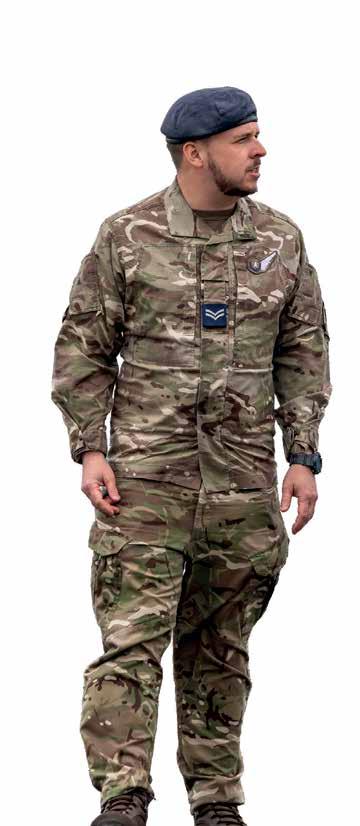
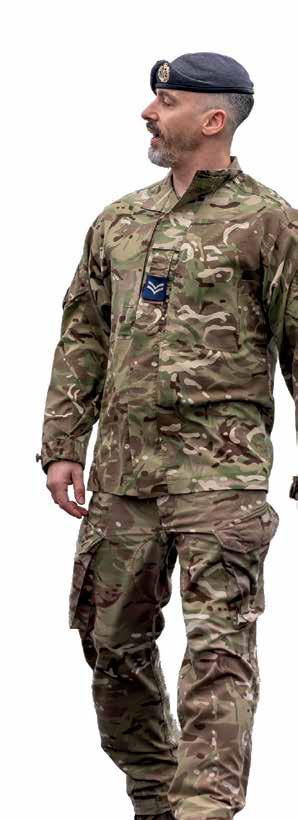
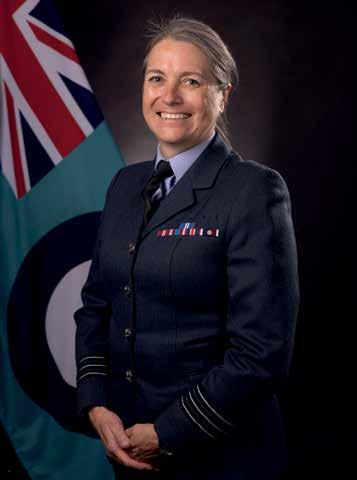
Now that we are in July, we have firmly moved into the summer months, providing a welcome opportunity to reflect on what has been a busy and highly successful first half of 2026 for RAF Cosford. This edition of the Apprentice Magazine captures the breadth of activity across the station and highlights the dedication of our whole force.
The RAF Cosford Air Show once again proved to be a tremendous success, and I would like to extend my sincere thanks to everyone involved in its delivery. From the planning carried out over many months to the collective effort on the day, it was a showcase of professionalism, teamwork and commitment that we should all be proud of.
Across the station, the pace has not slowed. This issue reflects a wide range of achievements, from the many graduations marking key milestones in training, to Adventurous Training opportunities such as the DSAE Skiing Expedition. There have also been some fantastic sporting accomplishments, including AS1 Clark’s outstanding performance at the Birmingham Half Marathon, alongside AR Lefley-Kemp’s
impressive glider display at the Air Show. Together, these stories demonstrate the talent, ambition and resilience that define RAF Cosford.
After such a busy period, I hope that everyone has the opportunity to enjoy some well-deserved downtime over the summer. Whether you are spending time at home, travelling further afield, or continuing to support operations, I encourage you to take time to recharge and make the most of the warmer months.
This edition is a testament to what you, our whole force, have achieved over the past few months, and it is a credit to you all. I hope you enjoy reading it and take pride in the accomplishments it represents.
FROM THE EDITOR
As we move into the height of summer, it is hard to believe that we are already in July. The year seems to be racing by, and this edition reflects just how much has been happening across RAF Cosford.
With the RAF Cosford Air Show 2026 now behind us and RIAT postponed until 2027, there is a slightly different rhythm to the season this year. Although some personnel will continue to support operations over what would have been the RIAT period in mid July, for many of us this year allows for a slightly
earlier easing into summer, something I am sure will be appreciated after what has been a packed and busy period.
As you will see throughout this edition, station life has been full to the brim with activity. From a multitude of graduations across the station, it is clear that the effort, commitment and professionalism of our apprentices and staff continue to make a real impact. Every achievement featured here is a testament to the dedication across the station and something we can all take pride in.
After such a busy first half of the year, a well-earned summer break is firmly on the horizon. Whether that means relaxing in the garden with a nice cold drink, making the most of the sunshine here in the UK, or heading further afield for some time away, I hope everyone takes the opportunity to recharge. Equally, we recognise those who will be spending the summer months deployed; your contribution does not go unnoticed.
With the summer holidays now upon us, whatever you do over the summer months, enjoy.
RAF Cosford Youth Club Awarded Club of the Year
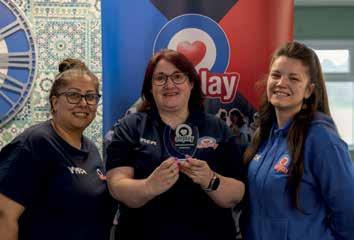
We are incredibly proud to share that RAF Cosford Youth Club has been named Club of the Year at the Airplay Young People’s Awards 2025!
The club was proudly nominated by our young people, parents, station staff and other supporters, who highlighted why the club means so much to them and the positive impact of the work delivered by the team. To make the achievement even more special, their Young Leader, Caleb Jackson, who has recently moved on to RAF Cranwell, was awarded The Growth Award 2025 in recognition of the exceptional personal development he has shown across all Airplay members.
Reflecting on the achievement, Allison said:
“I am immensely proud of the RAF Cosford Youth Club after being awarded Club of the Year in the Airplay Young People’s Awards 2025. Winning this award has been the icing on the cake after a year of hard work that my team and I put into delivering an engaging activities programme for our young people, and it follows on from last year’s award for Team of the Year 2024.”
Driving diversity and innovation:
RAF Personal Support and Social Work service welcomes milestone moment as first apprentice lands permanent role.
“I always knew university wasn’t for me, I wanted to get working straight away — being boots on the ground support for those in need. With my dad and grandad being part of the Armed Forces community, the RAF PS&SWS apprenticeship was the perfect fit.”
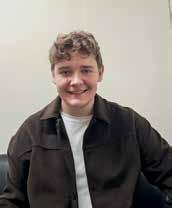
Born and raised in Shropshire, Jacob Mason, 20, always knew he wanted to dedicate his life to supporting others. After leaving school at 18, Jacob knew university wasn’t the route he wanted to pursue, instead an apprenticeship where he could gain real-world experience whilst making a real difference to people’s lives – enter the RAF Personal Support and Social Work service (PS&SWS) at SSAFA, the Armed Forces charity.
Developed to introduce fresh perspective, improve longterm staff retention and create a passionate workforce, the apprenticeship is the first of four to be completed as part of its “grow your own”’ initiative. Since finishing the course, Jacob applied for a full-time position within the PS&SWS service and was hired following his successful apprenticeship and interview.
Jacob said: “With a dad who served as a Motor Transport Technician in the RAF and a
grandfather who served as a Supplier for the RAF, working for an Armed Forces charity specialising in its RAF service was the obvious route forward.”
During the 12-month apprenticeship, Jacob balanced his formal coursework while also managing a real caseload. Jacob said: “From day one I loved the culture of the team and the support provided was next level. Despite being a new programme, the team were open and made me feel so welcome.
“Being able to develop transferable skills straight out of school from communication, organisation and case management has been fantastic. My confidence has grown as I’ve seen the real impact my work is having on individuals and families. After spending my first few weeks shadowing, I started building up my caseload and, after a training period, I was handling between five and 10 cases independently. While daunting, this has been the highlight of my apprenticeship and was exactly what I was hoping it would be.”
Karen Woodcock, Social Work Team Lead said: “Jacob exceeded all expectations and illustrated that age does not define capability, and his fresh
perspective brought diversity and enthusiasm to the team. I was apprehensive about taking on an apprentice, especially one just out of school. We deal with some really complex cases, and I was concerned about his lack of lived experience and how it could impact his ability to be an effective welfare officer. How wrong I was. We’re thrilled to have him onboard as a fulltime employee.”
Speaking on his new role, Jacob said: “I’m excited to continue learning and growing. No two cases are the same, and each one helps me develop into a better, more effective welfare officer.”
When asked what advice he would give to someone looking at applying to SSAFA’s PS&SWS apprenticeships, he said: “Go for it! Be open to every opportunity you’re given and take them on board. Say yes to everything and get as much experience as possible.”
SSAFA, the Armed Forces charity is a trusted source of support for serving personnel, veterans, and their families. SSAFA has operated the RAF Personal Support and
Social Work Service for more than 35 years, providing tailored advice and practical guidance confidentially and independent of the chain of command. The service supports the whole RAF family: for the person behind the uniform and their loved ones, including both regulars and reservists.
An outstanding result, and a huge congratulations to everyone involved
BAE Systems Apprentices Visit DSAE at RAF Cosford
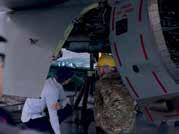
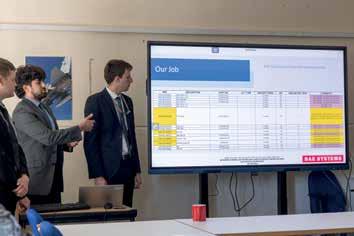
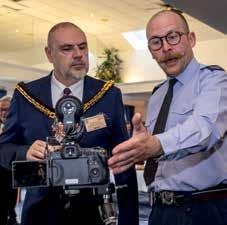
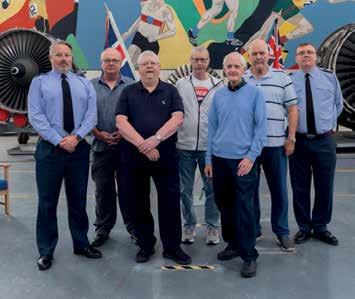
The Defence School of Aeronautical Engineering at RAF Cosford, welcomed six graduate apprentices from BAE Systems, who were on station to deliver a presentation in support of an obsolescence exercise focused on sourcing alternative components and spares to allow continued use of Tornado Airframes as Training Aids.
DSAE regularly engages with industry and external manufacturers in sourcing much needed and scarce spares for the Training Aids, so when a former RAF Tornado Technician working in BAE Systems became aware of the challenge, the task was passed onto his apprentices.
The exercise not only provided DSAE with much needed information that would have otherwise taken much longer to obtain but also benefitted the apprentices in achieving seven of their nine Key Learning Points (KLPs) towards their degree.
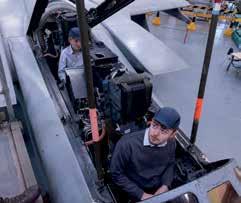
The presentation and visit were rounded off with an up close tour for the apprentices of the Tornado airframes used in the delivery of training at the Mechanical Training School.
DCTT Commandant Visits RAF Cosford
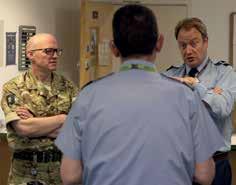
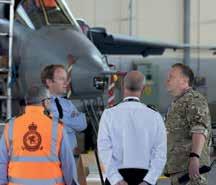
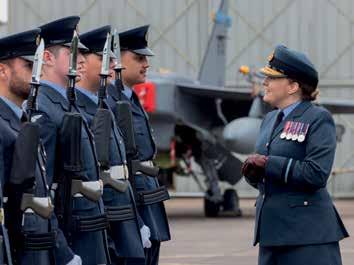
The Commandant of the Defence College of Technical Training, Air Commodore Gareth Bryant, visited RAF Cosford on 13–14 May 2026 to provide assurance on the delivery, governance and coherence of Defence technical training across the station. The visit also helped to inform future priorities, ensuring that training at RAF Cosford continues to meet the evolving needs of Defence.
RAF Cosford Hosts Annual Community Reception
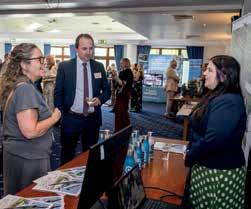
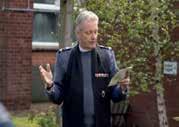
On 14 May 2026, RAF Cosford welcomed members of the local community to its Annual Reception, taking the opportunity to thank them for their ongoing support.
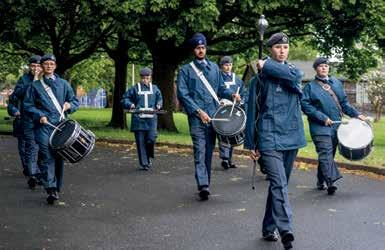
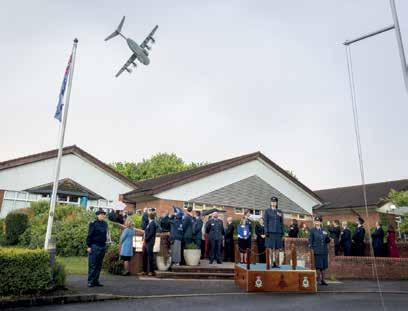
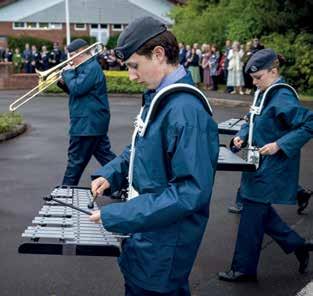
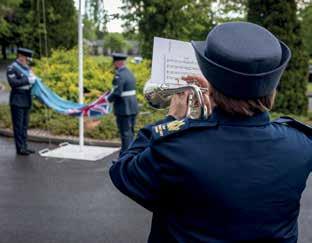
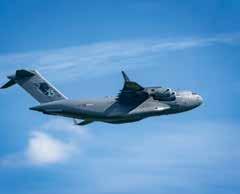
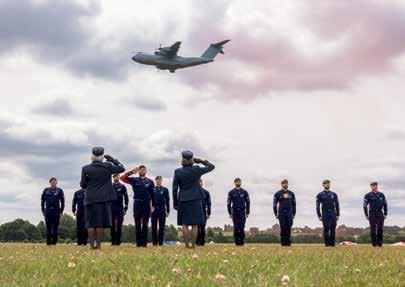
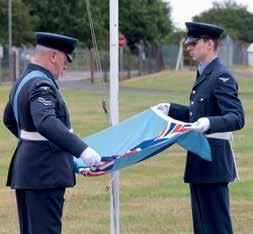
A beautiful Sunset Ceremony closed the event, with music from 2497 (Cosford) Squadron ATC and a spectacular flypast by an RAF Brize Norton A400M Atlas.
RAF Cosford Supports Annual Museum Reception
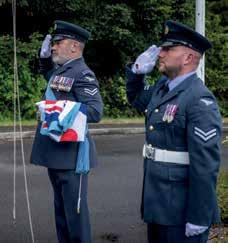
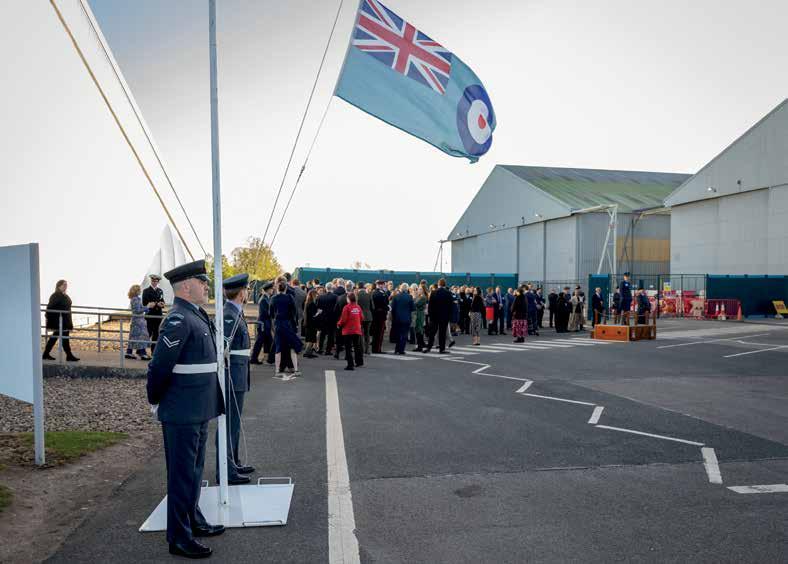
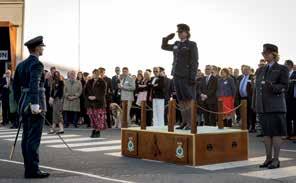
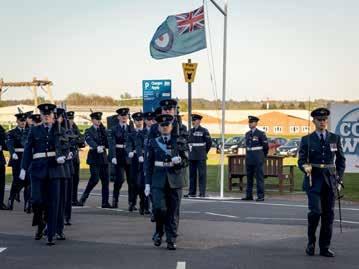
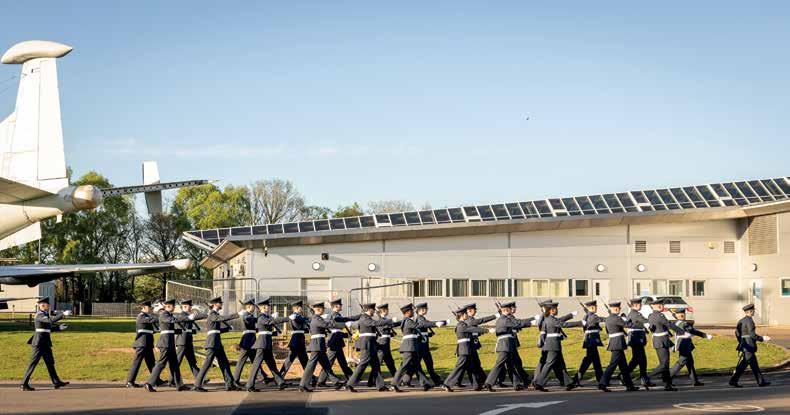
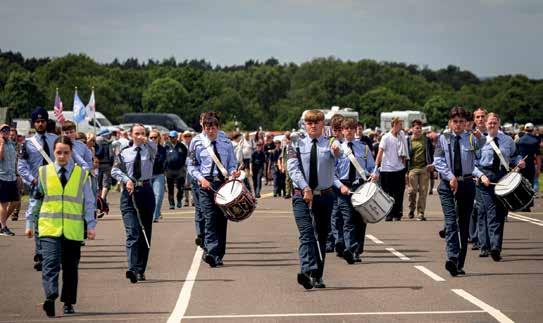
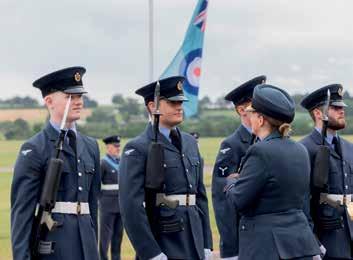
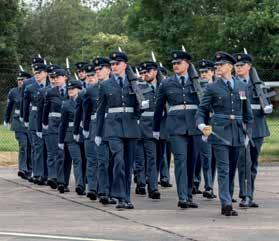
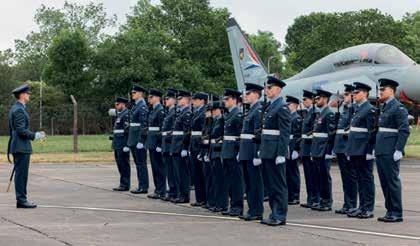
Personnel from RAF Cosford were honoured to attend and parade at The Royal Air Force Museum Midlands Annual Reception on 21 April 2026, representing the Station and the Royal Air Force with professionalism and pride.
The annual reception celebrated the RAF’s rich heritage and the strong links between the Service, the Museum, and the wider community.
RAF Cosford was proud to support the event and contribute to an evening recognising the history and values of air power.
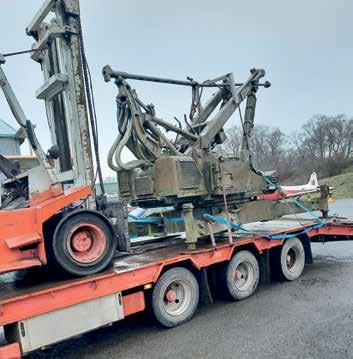
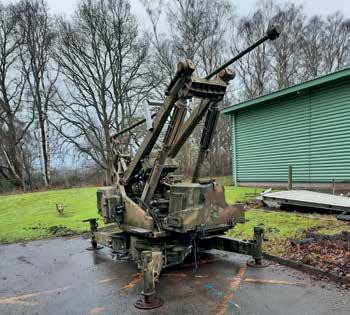
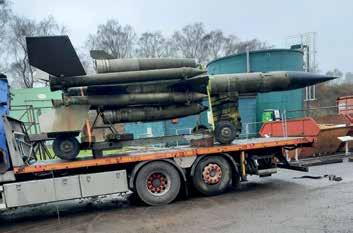
A Bloodhound Missile Returning Home
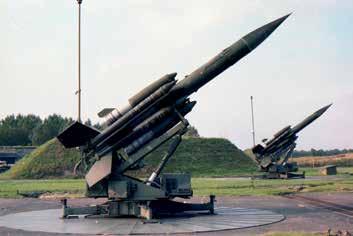
In the days of the Cold War there was a requirement for a long-range Surface to Air Missile (SAM) system to protect the UK and its overseas bases.
After years of research and development in the UK, following WW2, Bloodhound MKI entered service with the RAF in 1958. Technology was developing quickly and a reengineered Bloodhound MK11 replaced the MKI in 1963 which became operational with the RAF in 1964.
Bloodhound MKII was deployed across the world by the UK and other countries proving to be an effective deterrent, it was never fired in anger. Bloodhound MKII was regularly updated to take advantage of new technologies and to counter new threats. Originally designed to engage high level bombers Bloodhound was adapted to also counter
low-level attacks. Trials and operational evaluations of Bloodhound were carried out with test firings taking place at the Aberporth range in Wales.
In the latter years of the Cold War Bloodhound MKII was deployed to six RAF stations in UK. The Headquarters for the Bloodhound Force and the operational control center was located at RAF West Raynham being part of the UK’s integrated air defence system linked to the RAF’s air defence Sector Operations Centre at RAF Neatishead. When the Berlin Wall came down at the end of the Cold War and to show the West were fully accepting the changes
in the Soviet Union it was decided that a missile system should be decommissioned and Bloodhound MKII was stood down in 1991. Most of the Bloodhound system was scrapped but some parts were given to museums.
In 2012 a Bloodhound Launch Control Post (LCP) and Radar Type 86 were acquired by the Bloodhound Missile Preservation Group (BMPG) who spent the next 12 years refurbishing them. The LCP, with its engagement simulator working again, and the Type 86 radar are now on display at the RAF Air Defence Radar Museum, Neatishead.
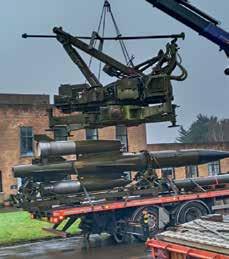
In 2021, with plans to expand the RAF Museum site at Cosford the museum decided to dispose of some of their stored assets. BMPG were approached and offered a Bloodhound missile and launcher. As BMPG are keen to preserve what remains of Bloodhound they said ‘yes’. However, transferring the missile and launcher from the RAF Museum was the start of a very long process as several regulations had to be complied with. It took five years before clearance was finally obtained to move the Bloodhound missile and launcher to a new home.
Due to the delay between the RAF Museum offering the Bloodhound missile and launcher to the BMPG their facilities for restoration had changed. As a result the missile and launcher were offered to the Veterans Centre at West Raynham, who were prepared to restore the missile and launcher and place on public display.
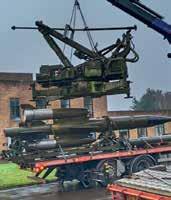
After a great deal of work thanks go to Neil Cartman (No 1 Radio School), on behalf of BMPG, Tom Hopkins (Curator - Aircraft and Exhibits) for the RAF Museum, at RAF Cosford and Ken Delve of the Veterans Centre West Raynham, the Bloodhound missiles and launcher and have now been transferred to West Raynham for the start of their restoration.
Europe, with the best views of the river
October
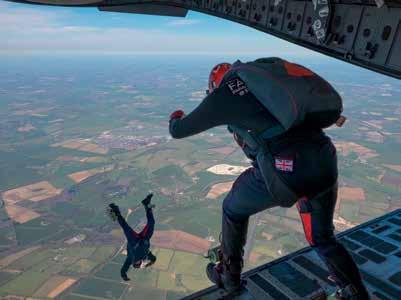
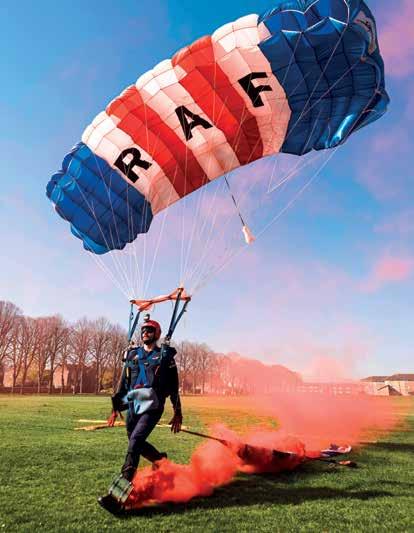
RAF Falcons gain their Public Display Authority for the UK
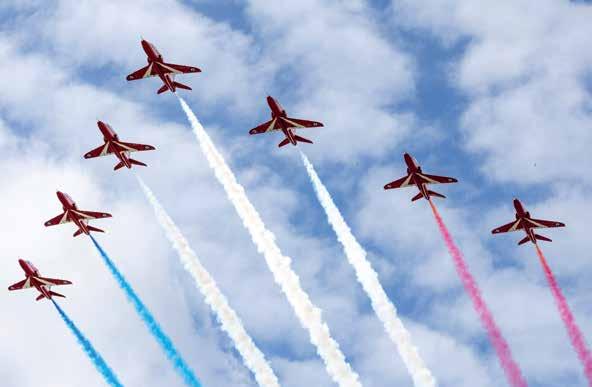
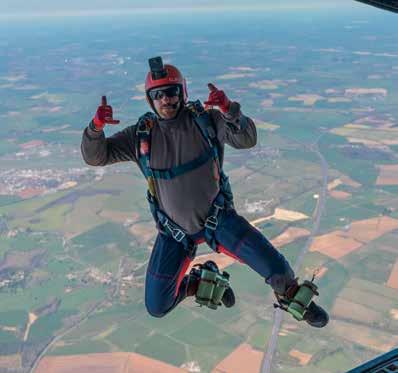
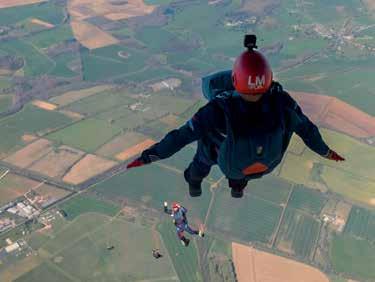
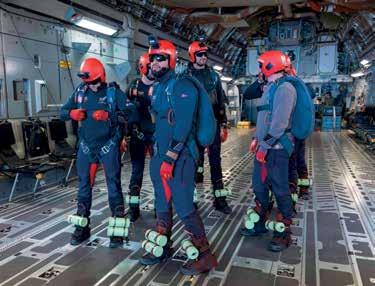
Back in April 2026, the RAF Falcons gained their Public Display Authority for the UK, marking the start of a new air show season.
To capture the moment, AS1 McKee of RAF Cosford’s Vis Com Section, took to the skies, photographing the team from the rear of a C-17 as they carried out their displays. The result is a striking collection of images, offering a unique perspective on the precision, skill and professionalism of the RAF Falcons in action.
AwArd winning Studio 1B ChurCh rd, Brewood. St199Bt
A Studio Built on Respect
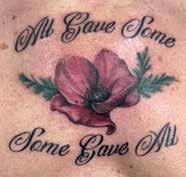
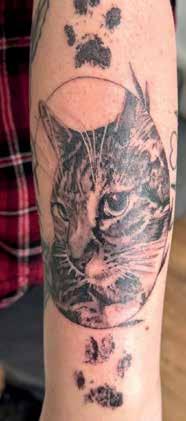
More Than Just a Tattoo
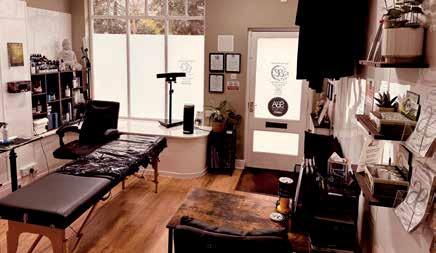
Tattoos mark moments — grief, growth, love, change, memories. My job is to honour that moment with care, intention and skill. With twelve years behind the machine, I know the best tattoos start with trust — the trust you place in me to change your body permanently, and to do it with respect. At Autumn Eclipse Tattoo Studio in Brewood, I take the time to listen and understand exactly what you want.
I’m Nat, owner and artist. I specialise in black and grey, realism, floral and pattern work, but I work across a range of styles to suit each client. Whether it’s a memorial piece, a large project or a standalone design, every tattoo is approached with care and precision. I never take lightly the trust you place in me when choosing something permanent.
Autumn Eclipse is a private, clean and nonjudgemental studio offering weekday and weekend appointments. You’ll also meet my wife, our studio manager, who keeps everything running smoothly so your experience feels calm and organised. We’re proud to be fourtime finalists in the SBA UK Awards 2026, including Best Tattoo Artist and Best Tattoo Studio.
As a thank you to those who serve, we offer 10% off for military personnel, NHS staff and emergency service workers. At the heart of Brewood every client receives the same level of respect, time and attention no matter the size of the tattoo.
Padre’s Corner
Padre Dave Skillen
I have been at RAF Cosford for over a year now; blink and a whole year passes in an instant!
As I sit to contemplate what I might offer in the following words, the word “rest” comes to mind. I realise that rest for me, as for most of us, can be so hard to find and, when we do take a break, we can find ourselves feeling a bit uneasy – even guilty – about it. After all, there’s always something we should be doing, right?
In her book titled, “Sacred Rest”, American medical Doctor Saundra Dalton-Smith, speaks of 7 types of rest. A committed Christian, Dr Dalton-Smith brings together her medical and spiritual knowledge and experience, and she seeks to encourage us to take seriously the duty and discipline of genuine rest for the good of our whole self.
Here are Dr Dalton-Smith’s 7 types of sacred rest:
‘Physical Rest: Can be passive (sleeping, napping) or active (yoga, stretching, massage) to improve body circulation and flexibility.
Mental Rest: Quieting the mind to ease racing thoughts and irritability. It involves taking breaks from tasks requiring high focus, such as journaling or meditation.
Sensory Rest: Disconnecting from sensory overload—screens, bright lights, and noise—to allow your senses to recalibrate.
Emotional Rest: Allowing the space and courage to be authentic by removing the mask of people-pleasing. It is the freedom to express true feelings.
Social Rest: Balancing relationships by reducing time with draining people and increasing connections with supportive, nurturing people.
Creative Rest: Reawakening awe and wonder by appreciating natural beauty (oceans, mountains) or man-made art (music, theater) to refill creative energy.
Spiritual Rest: The ability to connect beyond the physical and mental to a higher power, fostering a sense of belonging, love, and acceptance.’
Do any of the above types of rest come as a surprise to you, as if you are seeing them for the first time?
Do you rest in all of these ways?
Do you acknowledge, honestly, the need for rest for your own well-being? Are you willing to commit to building rest, in these 7 ways, into your daily (and if not then your weekly) lives? Why not personalise, under each heading, how these types of rest might look in your life (e.g. what might you do to build in, say, “sensory rest”, for example?)? You could write a list for each!
For the Christian, rest ought to be an instinctive feature of their lives. After all, we frequently read in the Gospel narratives that when things were getting a bit too much for him, Jesus would slip away from the crowds to a quiet place to find rest, ‘sacred rest’ (eg. see Luke 5:16). Pausing for contemplation (or mediation) and prayer ought to be a given for the person of faith but in fact rest can be such a difficult
thing to “do”. Stop, and the mind races and wanderers, it often refuses to be silent and still. It can feel difficult to know what to “say” in prayer.
However, what if my invitation to you as you read this article, whether you profess a religious faith or not, is to not worry about your racing thoughts or about not having a shopping list of ‘asks’ for God in prayer? What if my invitation to each one of you (and I speak to myself too, of course) is to just bring yourself to stillness and to simply allow the mind to do its thing?
One technique in contemplative mediation or prayer is to pick a word, any word, that conjures thoughts or images of peace and calm. The word might be, ‘Peace’, ‘Gentleness’, ‘Rest’. For the Christian, it might be something more faith-based, like ‘Come, Lord Jesus’, or, ‘Lord, have mercy’. Bring your word or phrase to the front of your mind as you try to rest.
Each time you realise your mind is wandering or that you have busy thoughts, simply call to mind the word(s) you have chosen. Focus again on this. You don’t have to fight your thoughts, simply return to the chosen word or phrase and think of this. Do this as often as you need as you seek to help yourself to be still and to rest. In time, and with practise, you can train your mind to become more used to the discipline of rest.
I think rest in this way can be called “sacred” because it is about
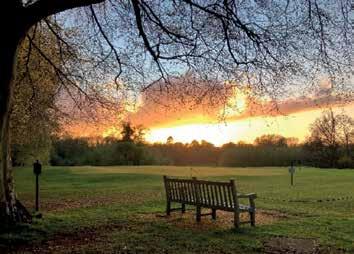
our holistic well-being, and about our nature. Sacred rest is about resting our inner, as well as our outer, self. Sacred rest is not a luxury nor its it a form of slopeyshoulders, but it is about doing what our very nature demands of us for the good of the life within us. Jesus says, ‘come to me, all you who are weary and burdened, and I will give you rest’. (Matthew 11:28). On 21 April this year, we were delighted to host in the chaplaincy, the Chaplain-inChief, Padre Giles Legood. Padre Giles blessed and dedicated 6 new garden benches with the following words:
“Here, in this garden and upon these benches, may those who visit here find a place to be still and to rest. Here, in this place and upon these benches, may those who pass by pause from the busyness of life and work, and take time to sit, reflect and to find refreshment for their soul. Here, in this garden of peace and upon these benches, may those who come here enjoy fellowship with others and with you, and may they find consolation, joy and peace”.
To help you kick-start your journey into ‘sacred rest’ why not visit the Station chaplaincy garden to the rear of the church in the days ahead, and simply sit a while on one of the benches –these are your benches – and find rest for your soul.
Rev (Wg Cdr) Dave Skillen, Senior Chaplain
RAFA Visit
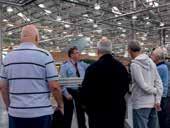
On 17 June 2026, RAF Cosford welcomed a group of Royal Air Forces Association (RAFA) members and aviation enthusiasts from Northern Ireland for a full-day visit, offering a comprehensive insight into current technical training and facilities.
The structured programme included escorted tours across both No.1 and No.2 Schools of Technical Training, showcasing key areas such as Mechanical Training Squadron, Aerosystems Training Squadron within AVTF, and 238 Squadron. Visitors were able to see first-hand the modern engineering and avionics training capabilities being delivered to today’s trainees.
The visit also included time at the RAF Museum, providing an opportunity to reflect on RAF heritage and draw links between past and present training. The day concluded with a social engagement at the Warrant Officers’ and Sergeants’ Mess, allowing for further discussion and reflection. The visit was arranged and hosted by Sgt Russell.
The visiting group included several former RAF personnel with distinguished careers, united by a shared passion for aviation and military history. Among them were former instructors and technicians who had previously trained at RAF Cosford, making the visit particularly meaningful. Their continued involvement with RAFA and ongoing efforts to support the veteran community highlight the enduring connections forged through service.
605 (County of Warwick) Sqn RAuxAF revives historic Mosquito Trophy
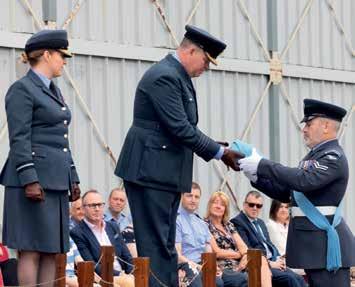
On the evening of 16 June 2026 at the International Bomber Command Centre in Lincoln, 605 (County of Warwick) Sqn RAuxAF marked a defining moment in its history with the revival of one of its most iconic wartime awards, the Mosquito Trophy.
The trophy has been resurrected for the annual Veterans in Defence (ViD) Awards, linking today’s veteran community with a significant milestone in the Sqn’s operational legacy.
The story begins in Jan 1944, when 605 Sqn achieved its 100th aerial victory of the Second World War, a milestone that reflected both its Battle of Britain heritage and its evolution into a highly effective night intruder force whilst operating the de Haviland Mosquito Night Fighter variant.
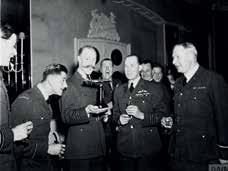
At the centre of that moment was the Sqn’s CO, Wg Cdr Bertie Hoare, one of the RAF’s most accomplished night fighter leaders. Flying with Sqn Ldr Robert Muir DFC as his navigator, Hoare recorded this symbolic victory on 10 January 1944: ‘Intruder - Chievres - 1 JU188 destroyed - 2 bursts cannon’. In recognition of this milestone, the Sqn was gifted a silver Mosquito model during a celebratory party at the Dorchester Hotel in London in April that year (see photo below). This became known as the 605 Squadron Mosquito Trophy.
Today, that same trophy returns on temporary loan to ViD for use during its annual awards ceremony, ensuring the Sqn’s history continues to influence generations to come.
For its modern role, the award is titled the ‘Colin Bell Award’, in
honour of Flt Lt Colin Bell DFC BEM - a veteran Second World War RAF Mosquito bomber pilot. As a member of the elite Pathfinder Force, Flt Lt Bell flew 50 missions over occupied Europe, helping to guide and enable precision air operations at a critical point in the war. His presence, and use of his name, provides a direct and powerful link to the era in which the trophy was first awarded.
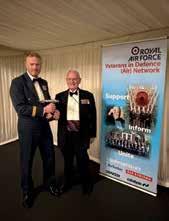
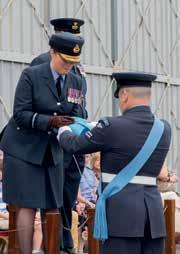
The reintroduction of the Mosquito Trophy has already brought together generations of service. The award was presented by Flt Lt Colin Bell, under close supervision of 605 sqn OC Designate, Flt Lt Braddick, showcasing the enduring connection between those who served in wartime and those who lead today (see photo above).
From the skies over occupied Europe to modern Defence operations, the message remains clear: Service evolves, but it does not end. The return to use of the Mosquito Trophy ensures that the legacy of 605 Sqn continues not only to be remembered, but actively lived, influencing and inspiring Veterans in Defence.
THE RAF COSFORD AIR
SHOW
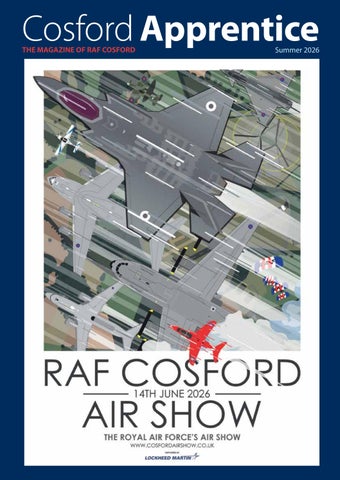
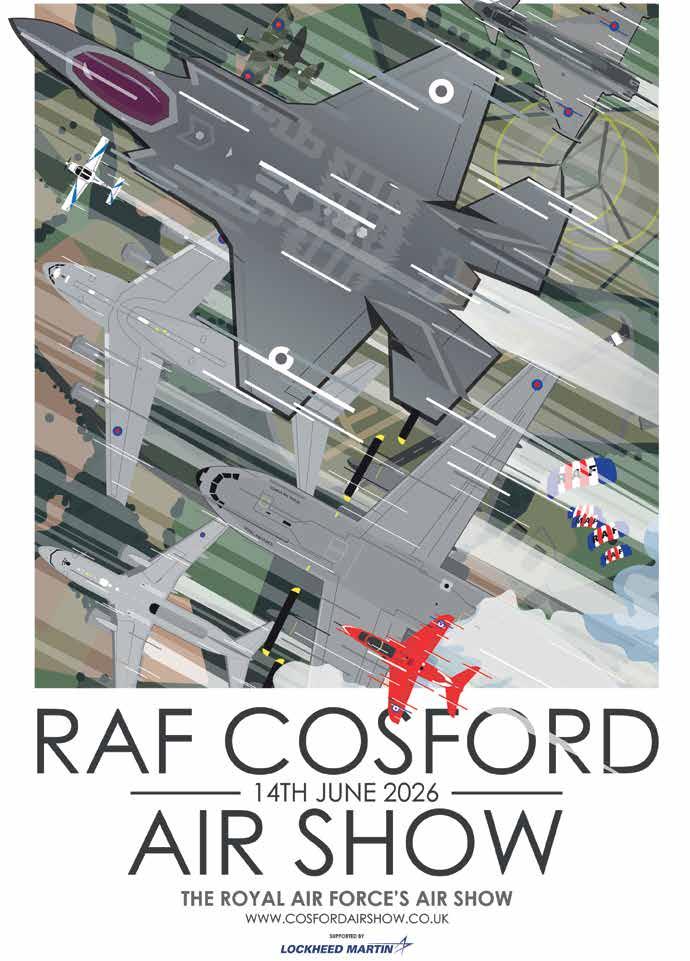
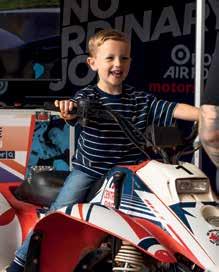
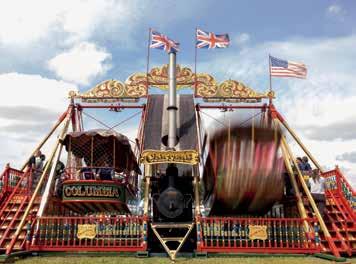
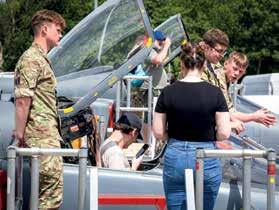
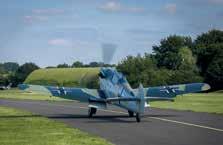
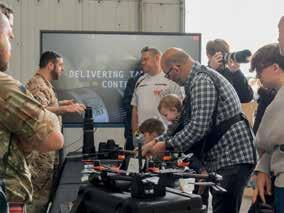
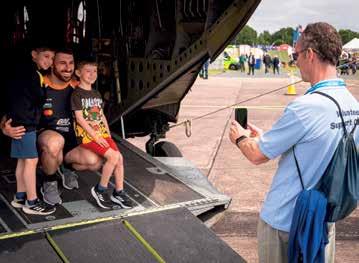
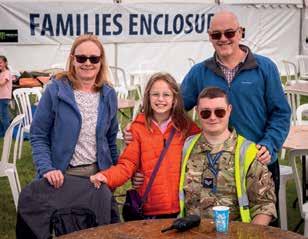
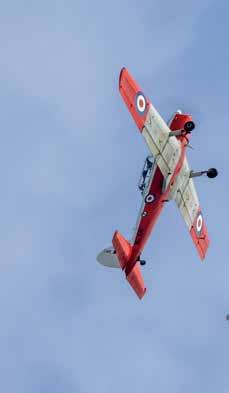
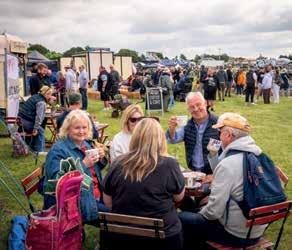
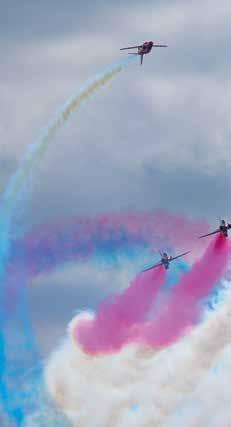
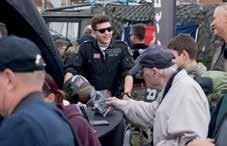
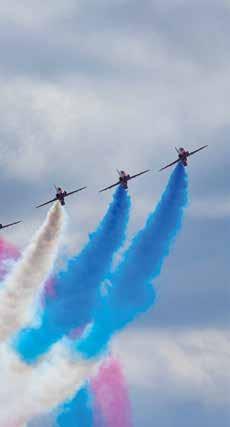
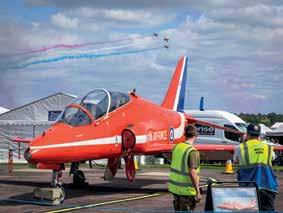
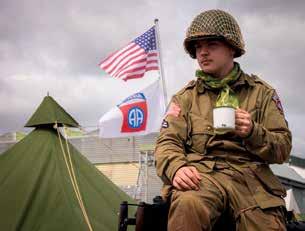
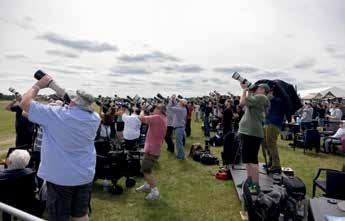
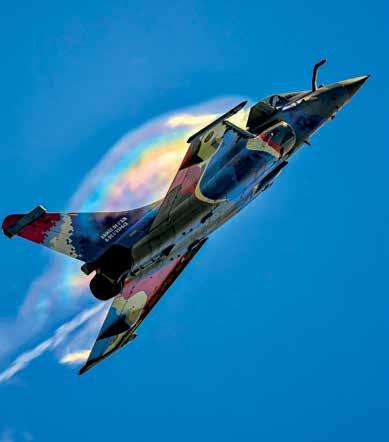
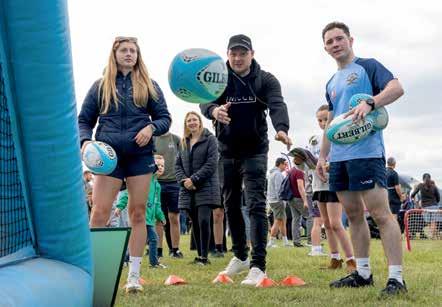
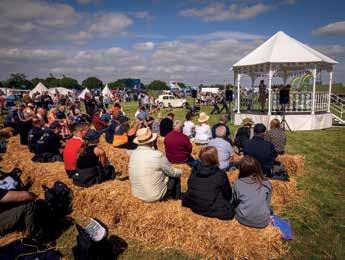
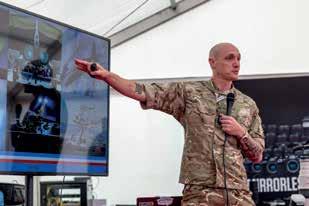
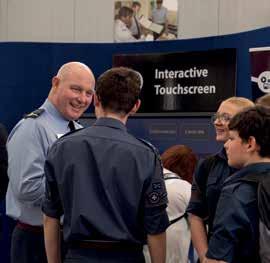
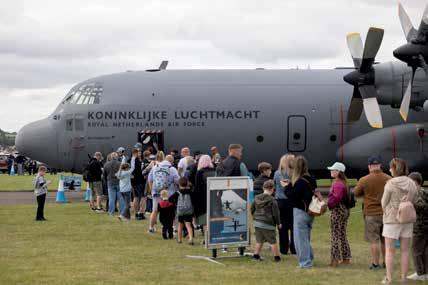
The RAF Cosford Air Show 2026, supported by Lockheed Martin, took place on Sunday 14 June, delivering a highly successful day of aviation and public engagement. Centred on the theme Engineering the Future, the event highlighted the Royal Air Force’s technical excellence while inspiring the next generation.
The Air Show Office worked alongside key station personnel throughout the year, with the whole station coming together on the day to deliver a highly successful event. The dedication, professionalism and teamwork of RAF Cosford personnel and trainees were key to ensuring a safe, engaging and memorable
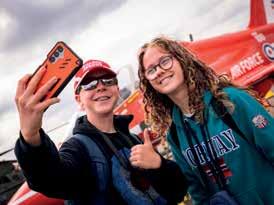
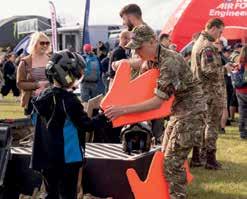
experience for all who attended. Visitors enjoyed a varied flying programme, international participation and a wide range of ground displays, showcasing RAF capability and career opportunities.
As the Royal Air Force’s only remaining air show, Cosford continues to play a vital role in engaging the public and showcasing Defence at its very best.
Photo credits: RAF Visual Communications Specialists and Threshold Aero
THE RAF COSFORD AIR SHOW
Post Air Show FOD Plod
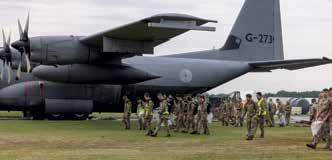
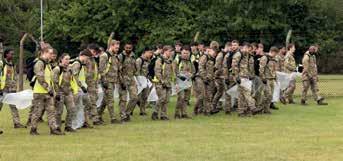
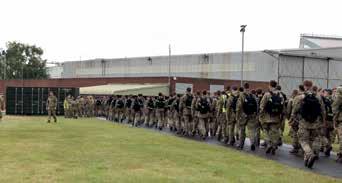
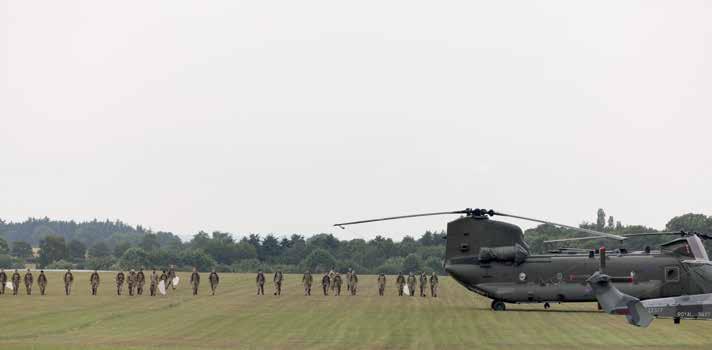
Following the RAF Cosford Air Show, station personnel and trainees took part in the traditional FOD plod, ensuring the airfield was cleared of any foreign object debris.
The activity saw teams working together across the station to safely restore the airfield to operational condition, demonstrating both teamwork
and attention to detail. The FOD plod remains a vital part of postevent activity, helping to maintain safety standards and support the continued use of the airfield.
RAF Cosford Conducts Air Show Emergency Exercise
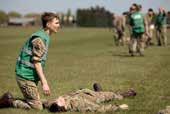
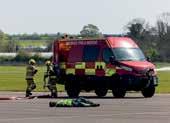
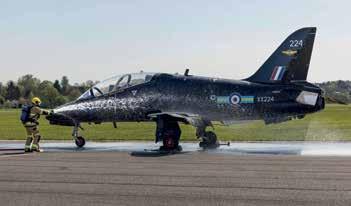
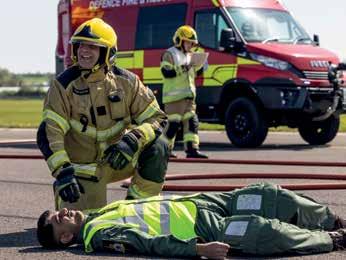
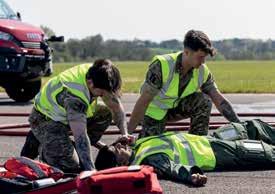
Station personnel and trainees took part in a simulated aircraft incident in preparation for the RAF Cosford Air Show, featuring mock casualties and safety hazards, including fire risks.
The exercise saw the medical centre, air traffic control and other station personnel respond to the scenario by providing first aid, securing the incident area and relaying critical information to relevant agencies, including local emergency services who were also in attendance.
Exercises such as this are essential training tools, enabling the station to assess its response and, where necessary, adapt procedures to ensure continued readiness for real world incidents.
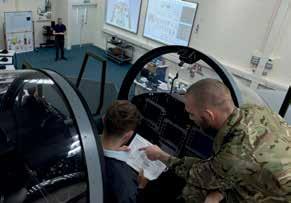
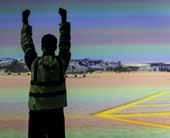
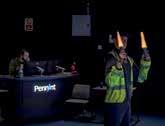
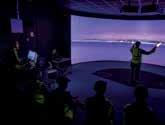
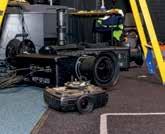
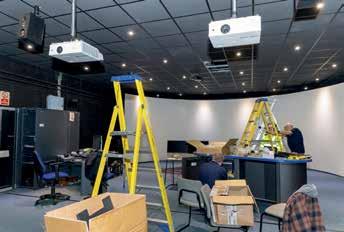
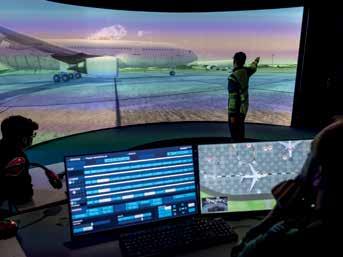
RAF Cosford’s Synthetic Environmental Procedural Trainer (SEPT) has recently undergone an update and is now in use with trainees.
The system provides vital aircraft handling training, simulating an active aircraft dispersal environment where personnel can practise in realistic conditions. Capable of replicating a variety of aircraft types, weather systems and potential hazards, the SEPT allows trainees to develop their skills safely by day or night.
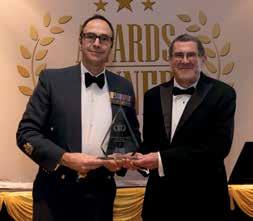
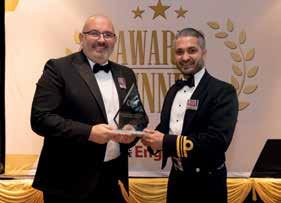
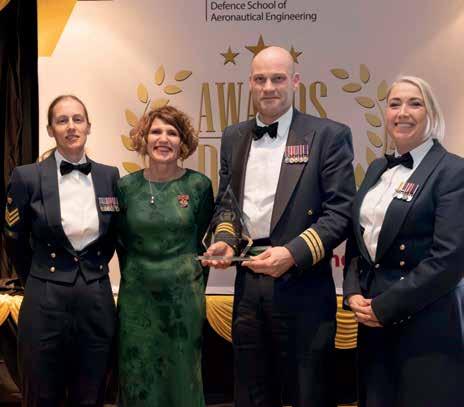
DSAE Hosts First Annual Awards Evening
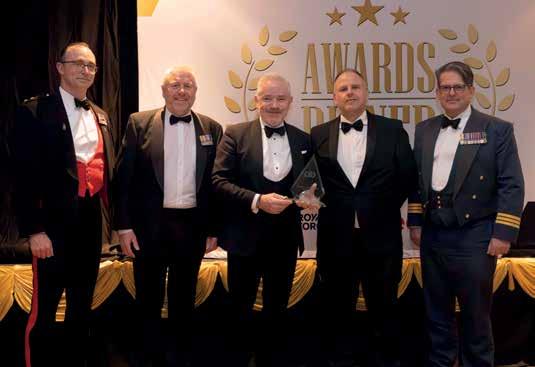
On 26 March, the Defence School of Aeronautical Engineering (DSAE) hosted its first annual awards evening in the Warrant Officers’ and Sergeants’ Mess, celebrating excellence across the organisation.
A range of awards were presented recognising outstanding achievement in areas including professionalism, innovation, leadership and collaborative working. Highlights included the DSAE Excellence Award for embodying the school’s core values, the Inspiring the Next Generation Award for exceptional mentorship, and the BAE Systems Innovation Award for forwardthinking contributions to training.
Team achievements were also recognised through awards for collaborative working and outstanding contribution to training support, reflecting the collective effort required to deliver high quality training and develop the aeronautical technicians and physical trainers of the future.
DSAE Marks Change of Command
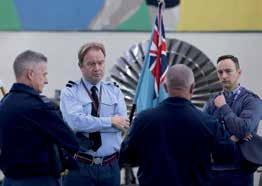
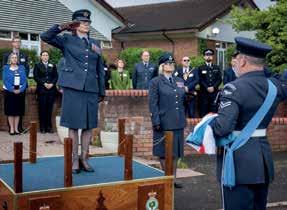
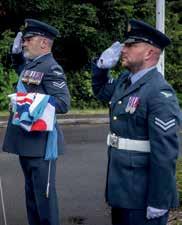
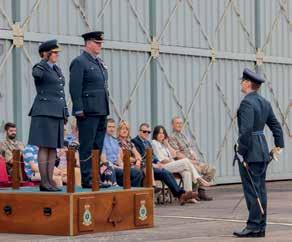
On 29 May 2026, the Defence School of Aeronautical Engineering (DSAE) marked a significant moment with the formal handover of Commandant responsibilities at RAF Cosford, held during a ceremony outside Number 2 School of Technical Training.
Newly promoted Air Commodore Liz O’Sullivan handed over command to Group Captain Ben Trapnell.
The ceremony brought together personnel from across the station, DSAE and DCTT, marking the transition of leadership and the
continuation of DSAE’s role in delivering high quality technical training in support of Defence. Assuming command, Group Captain Trapnell now takes on responsibility for shaping the future of technical training at DSAE, building on the strong foundations established.
DSAE Ski Expedition:
to Montgenevre, France, 21-28 March 2026
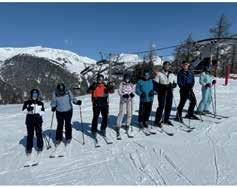
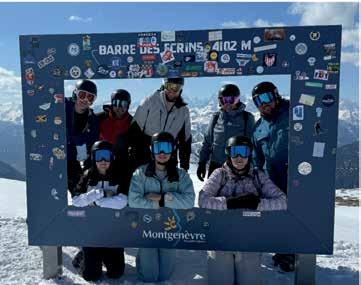
Some 42 personnel from DSAE at RAF Cosford recently completed a week-long ski expedition to Montgenevre at a ski resort located on the French Italian border.
The aim of the trip was to develop skiing ability, build resilience and teamwork in a demanding environment. The week encouraged rapid learning through being in a constant “stretch” mindset whilst being surrounded by unforgettable scenery.
Montgenevre proved to be the perfect place for adventure training. As part of the wider Via Lattea ski area, the resort offered access to hundreds of kilometres of pistes stretching across France and Italy. Many groups found themselves crossing the border multiple times in a single day allowing them to experience different terrains with a variety of snow conditions and pistes ranging from easy greens to more advanced blacks allowing instructors to easily tailor the day to the overall ability the group.
To ensure development was as efficient as possible, personnel were split into 6 groups depending on their ability and previous experience. These ranged from complete beginners to highly experienced skiers. This structure allowed instructors to deliver appropriate training whilst ensuring everyone was in a stretch mindset throughout the day. Results showed the effectiveness of this as Group 1, many of whom where brand new to the activity, were all progressed to red pistes by the end of the week with some even skiing the black pistes too.
The days were always physically and mentally demanding. Skiing for several hours both morning and afternoon. Each day required, maximum concentration and willingness to learn and continue pushing outside of their comfort zones. Personnel were constantly challenged with more difficult terrains, new techniques, steeper gradients and varied snow conditions. The challenges of the week, although in a completely different environment, mirrored the challenges met by RAF personnel every day in their careers.
Despite the intensity of the training the week offered many moments of enjoyment and awe. The environment constantly delivered blue skies, panoramic views and the unique experience of skiing above the clouds. Regular breaks were held at mountain side cafes allowing us to refuel with coffee and pastries and time to really absorb the breathtaking scenery around us. These stops were a highlight of the trip and were always well earned, they, without a doubt, contributed to the overall experience.
Accommodation was in a modern chalet equipped with a large kitchen, multiple bathrooms and lounging areas, with access to saunas and hot tub to aid in post-ski recovery. This allowed personnel to full relax and recover after a tough day on the mountain and never failed to boost morale. Evenings were often spent reviewing progress
and preparing for the day ahead. Equipment was provided by a small ski rental shop in the resort and allowed us to borrow boots, helmets and skis, all fitted to our height, weight and experience to allow for the best experience possible.
Beyond the technical development, the whole expedition delivered significant personal and professional benefits, improving confidence, decision making and the ability to operate under pressure, all skills that will transfer and come into assistance in the wider Air Force. The DSAE ski expedition to Montgenvre was not only a week of learning and progression, but a reminder of the importance of stepping outside routine and embracing new challenges that adventurous training can provide.
It was in every sense a successful and highly rewarding week for DSAE personal.
AS1 Drew Clark Excels at Birmingham Half Marathon
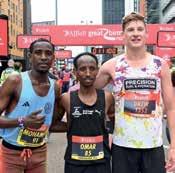
AS1 Drew Clark (HR West, RAF Cosford) produced an outstanding performance at the Birmingham Half Marathon on Sunday 3 May 2026, finishing the 13.1mile course in an impressive 1 hour 9 minutes 49 seconds.
Racing against a field of approximately 16,000 runners, Drew achieved this result despite not starting in the elite pen. He finished behind only two athletes, Omar and Mohamad, both highly accomplished international runners with personal bests of around 1:02 for the half marathon, highlighting the calibre of competition on the day.
Drew is a High-Performance Athlete supported by RAF Triathlon and represents RAF Athletics, balancing his demanding training schedule alongside his role within the HR
Department at RAF Cosford. His performance is a testament not only to his dedication and discipline, but also to the environment that supports him daytoday.
RAF Cosford’s on station facilities, including the swimming pool and running track, play a key role in supporting personnel like Drew as they pursue excellence both professionally and athletically.
As the Home for many RAF Sports and PTI training centre of excellence, Cosford continues to demonstrate the value of accessible, highquality sporting
infrastructure in developing athletes and supporting operational readiness. Currently working towards personal bests in middle distance triathlon this season, Drew will also be appearing as a guest speaker on @UKTriChat in the coming weeks, where he will share his journey of combining Service life with a developing highperformance sporting career. Reflecting on his progress, Drew highlighted the importance of wellmaintained sports facilities in enabling performance, recovery, and resilience, benefits that extend beyond competitive sport to mental wellbeing, physical readiness, and the development of future PTIs. Investment in these facilities ensures that the RAF can continue to support both
elite performers and the wider Service community.
Drew’s achievements are another example of how RAF personnel continue to excel on and off duty, representing the Service with pride while reinforcing the enduring value of sport within the Armed Forces.
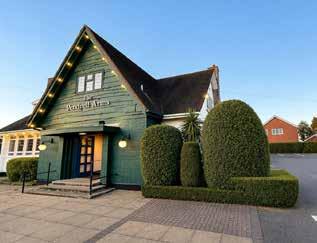
Traditional Country Pub & Kitchen Serving Authentic Punjabi Food
The Pendrell Arms is ideal for
• Family Meals
• Events
• Parties
• Entertainment
To book please phone 01902 847788 after 2pm. Please note we are closed Mondays.
The Pendrell Arms
Welcome to The Pendrell Arms.
Your friendly country, family pub where great food, great company, and great entertainment come together.
Enjoy delicious home-cooked meals, a wide selection of drinks, live sports on the big screens, a traditional game of darts, or challenge your friends on our PS5 gaming area. Whether you’re stopping by for dinner, cheering on your favourite team, or spending quality time with family and friends, there’s something for everyone at The Pendrell Arms. Great Food | Live Sports | Darts | PS5 Gaming | A Warm Welcome Awaits
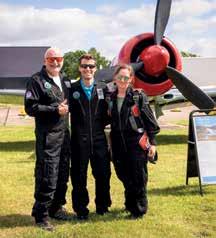
Soaring to new heights with RAF Air Recruit Bradley Lefley-Kemp
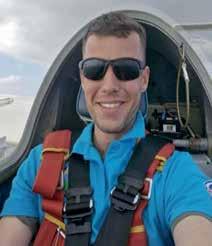
RAF Shawbury Gliding Club’s CFI Ian “Gally” Gallacher had asked me to meet with him after summer grant; he had been working on a plan over the past year, and apparently, it involved me…
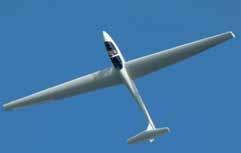
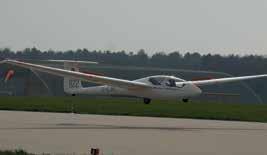
“Brad, how would you like to display our ASK21 at the 2026 RAF Cosford Air Show?”, he said.
I’ve never pinched myself harder; I was adamant I was going to wake up any second then and I couldn’t quite believe what he was saying, thoughts were tumbling around in my mind. Was he sure, would I be good enough, how was I going to find time whilst recruit training, what about funding?
After a long pause, “Don’t worry about the detail at this stage,”
Gally said, “we’ve got plenty of time to sort the details out, but it is something that I have every confidence that you can aspire to, would you like to do it?”
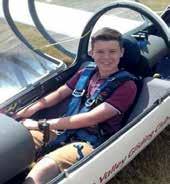
With a smile on my face that, by this stage, would have to have been surgically removed, I accepted the opportunity. I remember once watching a programme on TV about becoming a pilot, during which I was surprised to learn that you could fly a glider solo from the age of 14 and, being 13 at the time, I was very keen to inform my parents of this. With thanks to my grandparents buying me a trial flight experience for my birthday, I took my first flight in a glider the following summer, and after a soaring flight over Lincolnshire, became instantly hooked. In August 2018, I took the plunge and became a junior member of Trent Valley Gliding Club (TVGC). After five months of dedication and effort, I reaped the rewards of my training and was sent on my first solo on 5 January 2019.
Keen to progress, I took my bronze test and cross-country endorsement, and in August of 2020 flew my first cross-country flight of 143km from TVGC to Buckminster GC and back. I have since gone on to obtain my 100km diploma, full FAI silver badge, gold distance and diamond goal and cloud flying endorsement, become a qualified glider winch driver and my most notable achievement, gaining my basic instructor (BI) rating.
These successes could not have been accomplished if it weren’t
for the instructing team and the brilliant membership of TVGC.
Since the age of 2, I had been attending the BBMF Members Day at RAF Coningsby, along with my family, where we were fortunate to see the Lancaster, Spitfires, Hurricanes and Dakota perform countless displays.
Aged 4, and dressed in my brand-new Red Arrows flight suit, my Nan and Grandad took me to RAF Scampton to watch the Red Arrows practice their display. Years later, aged 8, in my BBMF flight suit this time, my grandparents took me to East Kirkby, where I was lucky enough to have a tour inside the “Just Jane” Lancaster. It was because of these events, that it became my ambition to fulfil a childhood dream to become a pilot.
In September 2020, I enrolled onto a Level 3 Air and Defence course in mechanical engineering at Lincoln College. The course consisted of studying the various aspects of the RAF, including its mission, operations, current assets, leadership and followership within the force, the RAF’s role in the wider defence picture and closely mirroring elements of the BRTC syllabus. I also covered mechanical engineering and aviation technology, which included learning basic hand tools, machining skills and studying principles of flight and engineering science.
The course provided a valuable insight into both the RAF and STEM, and upon graduating, I applied to the RAF for a pilot role. However, I was unsuccessful in passing the final selection phase of selection (OASC). It was after this that I reflected on my work experience I had back in school, where I had spent a week alongside an aircraft mechanic technician in the Typhoon Maintenance Facility at RAF Coningsby.
I remembered how interesting I found the week and the buzz I got from working around Typhoons and decided then that I would like to become an aircraft
technician myself, with a view to commission later in my career. I was successful in my application for this role. After graduation from Phase 1 training RAF Halton, I moved on to RAF Cosford, where I am now studying towards my Level 3 apprenticeship in aircraft maintenance.
And it is during my time at Cosford, that I joined the RAF Gliding & Soaring Association (RAFGSA) and RAF Shawbury Gliding Club (RSGC), which has enabled me to continue to glide and progress my flying beyond a level that I thought were available to me.
RSGC has allowed me to venture further into the technical side of gliding. I have been able to assist with rigging and derigging multiple gliders, help with servicing aircraft, and gain a depth of understanding and appreciation of their inner workings.
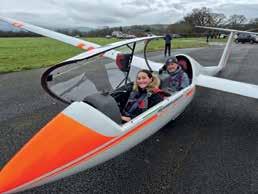
Undoubtedly the highlight for me as an RSGC gliding instructor and Air Recruit in training at RAF Cosford was to take fellow Air Recruit Rebecca Hall on her first flight as the club’s 100th Mechanics Endowment Fund (MEF) bursary student.
Sponsored by the RAF Charitable Fund, the popular and oversubscribed MEF programme teaches students to fly, with eight aerotows (including an aerobatic flight), an hour’s flight in one of the club’s motor gliders to consolidate skills learnt in the gliders and use of the club’s simulator, and all for £30. There’s more funding from the RAFGSA to go solo.
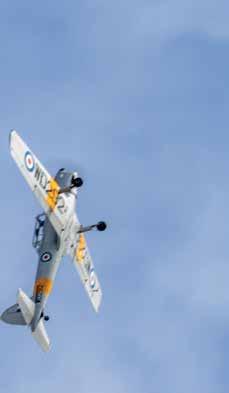
To have been selected as the 2026 glider aerobatic display pilot for the 2026 RAF Cosford Airshow has been such an incredulous, humbling privilege. To learn that my training to reach the level required is to be funded by Capita feels surreal and I am incredibly thankful to Capita, Gally, Group Captain Carl and RSGC club member and aerobatics instructor Laura Martin for their instruction and support in this venture. It’s
the realisation of a dream that I had all those years ago as a kid, dressed in my Red Arrows and BBMF flying suit, but never thought that I would be good enough perform at an airshow.
Gliding is very much a team sport and open to everyone. Without every member pulling together, our sport could not happen; it’s a point that sets gliding apart from other flying activities.
I hope that by performing at the 2026 that Cosford Airshow, I can prove to junior ranks, in particular recruits, that you can step out of Phase 1 training and have access to the cockpit of an aircraft, be it a glider, microlight, or powered aircraft. Flying in the RAF can be for everyone, not just pilots. To young people in civilian street as well, it is far easier to get into gliding than you think. A quick search on the British Gliding Association (BGA) website can direct you to your nearest club. If flying is your ambition, gliding is a fantastic avenue into this amazing industry. The funding opportunities are there, all you need is the drive and fervour and you will succeed.
Per Adua ad Astra
RAF Shawbury Gliding Club (RSGC) –The Mechanics’ Endowment Fund (MEF) Gliding Bursary Programme
Challenge yourself and experience true flight by piloting an aircraft using nothing but nature’s energy to stay aloft.
RSGC has secured generous funding for another two years from the RAF Central Fund to provide gliding courses to personnel of any rank attending a Phase 1 or Phase 2 course at RAF Cosford. If you are one of those RAF service personnel who aspire to fly but never had the opportunity, then the MEF gliding bursary programme at RSGC is for you.
Join the 136 students who are in, or who have already completed the programme. It really is the cheapest way to get hands on flying and all for a £50 membership fee. This comprehensive programme covers:
• 9 x 2000ft Aerotow in an ASK21 Training Glider (Ford Fiesta)
• 2 x 2000ft Aerotow in our Duo Discus Advanced Training Glider (Porsche 911)
• 1 x 4000ft Aerotow in ASK 21 for an Aerobatic Lesson with an Aerobatic Instructor
• 1 x 1hr duration consolidation of training in a Powered Motor Glider
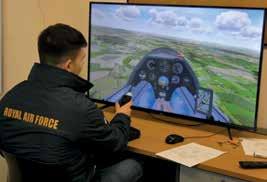
• 2 x 1hr duration Training Sessions on the Club Glider Simulator
• 1 x British Gliding Association Pilot Logbook
• 1 x Glider Pilot Student Manual
• Involvement in day-to-day maintenance tasks on powered and non-powered aircraft, supervised by Part 66 Licenced Aircraft Engineers.
You will also learn that to get airborne requires a team effort. The programme offers a valuable opportunity for personal development, for confidence-building, and personal challenge. The sense of achievement after your first flight piloting a glider is no different to that of any other pilot in the RAF completing their first flight.
Equipped with head and tailplane mounted GoPro cameras, AR Brad Lefley-Kemp and instructor Laura Martin land after an aerobatics flight
If you are in Phase 1 and 2 training at RAF Cosford further details and an application form are on the RSGC website at https://www.rafshawburygc.co.uk/ mef-bursary
Club Membership is open to Service Personnel and their families, MOD Civilians and Defence partners. For enquiries contact: Flt Lt Ben Braddick Benjamin. Braddick337@mod.gov.uk or Ian Gallacher ian. gallacher375@mod.gov.uk both of whom will be delighted to answer your questions. Additionally, they are available by either ModNET or on Teams.
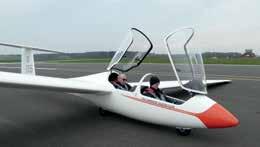
Flying training in our DuoDiscus advanced training glider. AR Becky Hall is preparing to launch at Denbigh with CFI and instructor Ian Gallacher
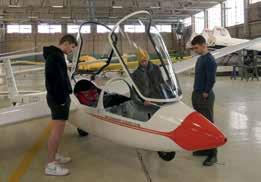
Introductory cockpit and flight safety brief by RSGC instructor Laura Martin with AR Kyle Allen and AR Barny Bennyworth.
Pre-flight checks for AR James Douglas who is with RSGC instructor and veteran Nigel Readman
On the club simulator AR Ethan Burton takes a flight around RAF Shawbury
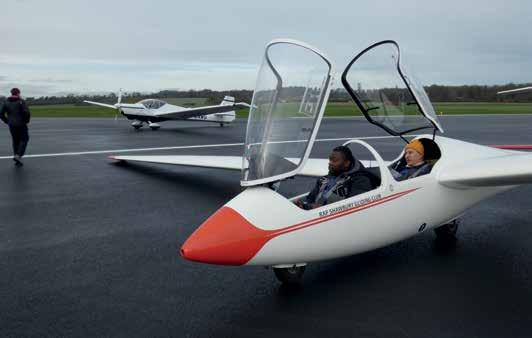
On the launch point for your first flight. AR Elijah Olushoga is with RSGC instructor and veteran Nick Lewinton in a club ASK21 Glider
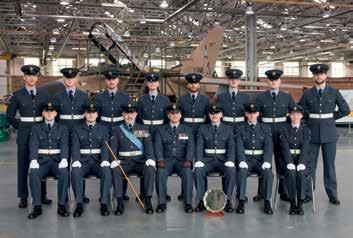
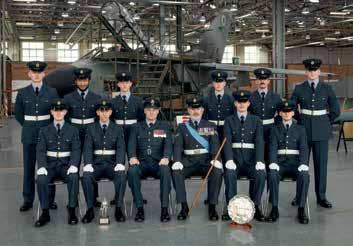
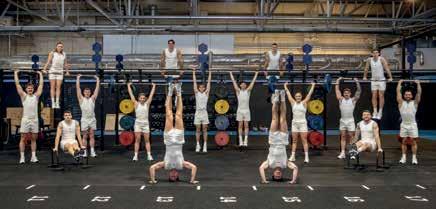
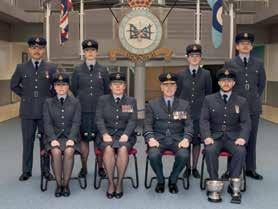
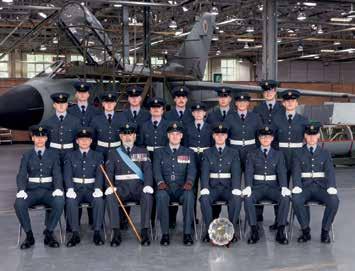
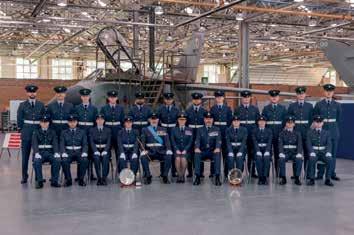
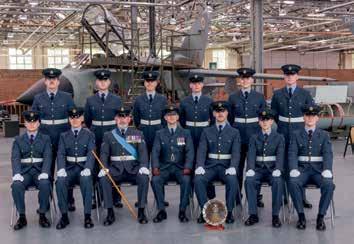
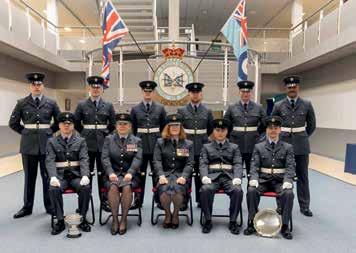
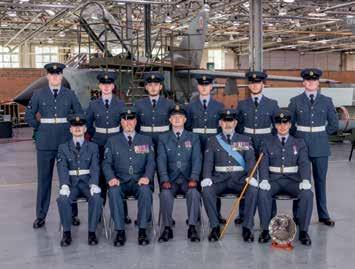
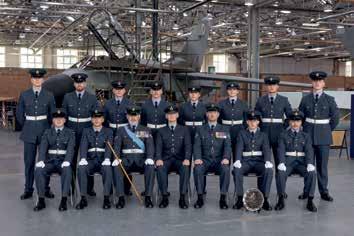
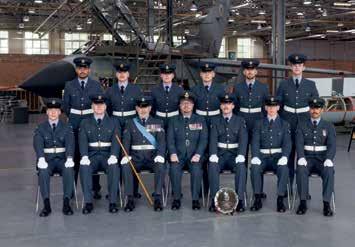
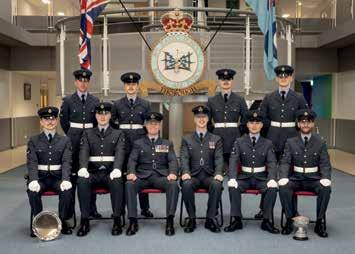
GRADUATIONS
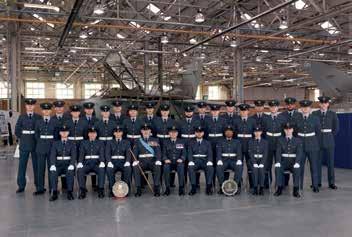
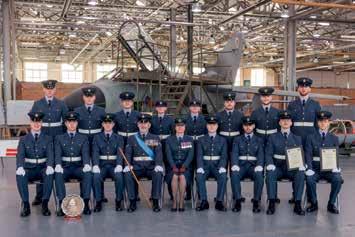
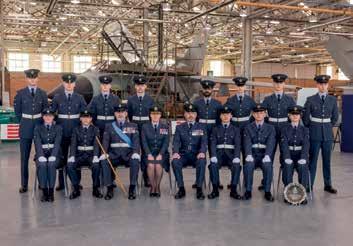
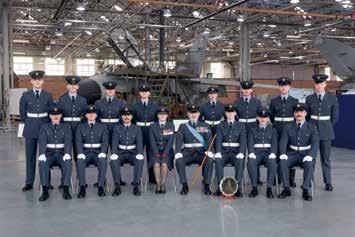
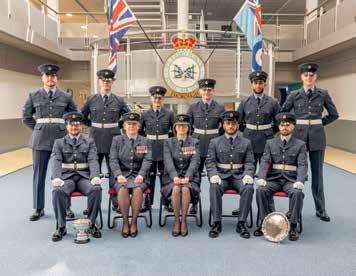
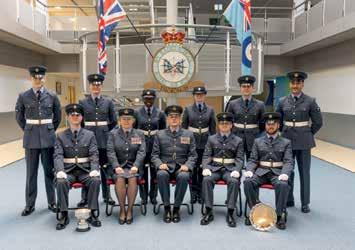
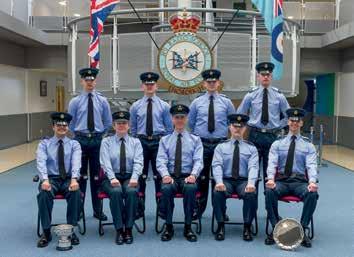
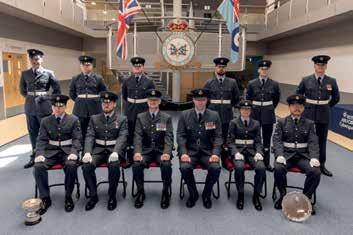
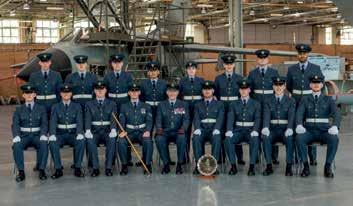
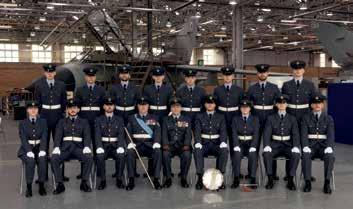
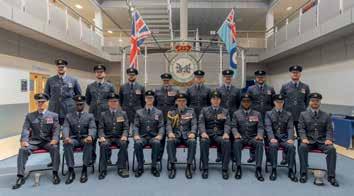
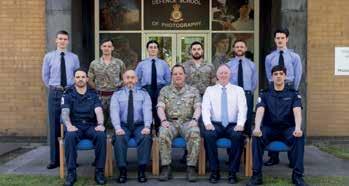
Celebrating some of 2026’s graduations so far…
AWARD MEDALS LIMITED
At a time when identity is increasingly digital and fleeting, there is something profoundly grounding about choosing to wear your pride. It is a quiet declaration of who you are, where you come from, and what you stand for. At Award Medals, that belief sits at the heart of everything we create. Pride is not abstract to us, it is lived experience. As a company owned and managed by a UK military veteran, we understand the weight of service, the meaning behind every ribbon, and the deep respect carried in every emblem, garment, and keepsake.
Pride can be worn in many forms. For some, it is the unmistakable gleam of a medal that tells a story of commitment, courage, or achievement. For others, it is the comfort of a garment embroidered with a regimental badge, a club crest, or a symbol that connects them to a community larger than themselves. And for many, it is found in everyday objects that accompany life’s moments, glassware etched with insignia, personalised gifts that honour milestones, or commemorative pieces that keep memories alive.
These items are more than products. They are expressions of belonging. They are reminders of service, heritage, and shared identity. They are gifts that say, “I see you. I honour what you’ve done. I’m proud of who you are.”
In the military community especially, pride is woven into the fabric of daily life. It is present in the discipline of routine, the bonds forged between comrades, and the traditions passed from one generation to the next. That is why authenticity matters. When someone chooses to wear or gift something that represents their service, or the service of someone they love, they deserve to know it was created by people who understand that meaning firsthand.
At Award Medals Ltd, that understanding guides every decision we make. From the precision of our medal craftsmanship to the care taken in every embroidered stitch, we approach our work with the same values that shaped our time in uniform: integrity, respect, and attention to detail.