First GRIP Graduation at CCWF
By Sagal Sadiq
On Jan. 25, Guiding Rage into Power (GRIP) graduated its first women’s cohort in Central California Women’s Facility (CCWF). Somehow, the gym’s vast interior was made intimate by the presence of guests and a huge Zoom screen filled with the faces of loved ones. Pride was in session: proud graduates, prouder facilitators, and proudest of all, their loved ones in attendance.
Kelly Blackwell, GRIP graduate said, “I was ecstatic and delighted that participants’ family members could share in this moment with us.”
GRIP is a 13-week immersive, intensive program designed to discover root causes of trigger issues and engage the mind in discovering healthy neural pathways. GRIP promotes prosocial behavior, paves over the pitted ruts of roads that lead to nowhere, and ultimately creates peacemakers out of incarcerated people.
“GRIP taught me emotional intelligence, to reframe my thinking, and to persevere
through suffering by healing myself,” Francisca Carmona, GRIP graduate, said.
Participants in GRIP, called tribes, commit to 13 weeks of deep self-reflection.
Unified through pain and suffering, like infantrymen in a foxhole, they become bonded through shared trauma in their war against angry false personas while they seek to become their authentic selves.
“As much as I dreaded the small circles, I was able to pour out my heart and find comfort with my tribe members. That was as essential part of my healing journey and transformation,” Lupe Barragan, GRIP graduate, said.
“I know GRIP changes lives because it changed mine,” Rosemary Ndoh, associate director of CDCR said,
When asked to encapsulate GRIP in a word, regional manager of GRIP, Andrés Rodriguez, said, “Healing.”
However, Kim Grose Moore, executive director of GRIP, cheated and answered in two words, “Transformation and accountability.”

Rage is not the only defect that can lead to incarceration, though it is a big one because the ways women end up in prison are myriad. And it is not the rage per se; it is the undealt-with, underlying emotions which cause the rage that also contribute to the ranks of the incarcerated, because grief, sadness, loss and trauma can all transmute into rage.
The reductive phrase “hurt people hurt people” gets
bandied about and is often used to justify reasons for misdeeds. So, it was gratifying to hear individuals quoted in the GRIP video played during the graduation add the other half of that oft-quoted phrase “healed people heal people.”
The two concepts go together. Damage done requires repairing, and harms caused require healing. And broken individuals doing time and seeking
By Kanoa Harris-Pendang
The CCWF Mural project started in 2022 with formerly incarcerated persons Angela Zuniga and Sheila Sikat at the helm.
“The vision started with livening up the dark tunnel for those on their way to BPH,” explained Vegas Bray, institutional muralist. In coordination with inside residents and staff, murals started to appear throughout the institution.
One special place a mural appeared, and for a special reason, was the Board of Parole Hearings (BPH) waiting area tunnel. Being the walls were previously bare, one
healing require building instead of blaming. That is the essence of GRIP.
Vegas Bray, GRIP graduate said, “GRIP taught me to no longer react when someone hurts me. Instead, I look at the underlying emotions that drive them and I choose to feel empathy for them.”
Our trauma experiences are as unique as fingerprints. Unique responses to
had to sit on a bench, anxiously waiting and stressing for their name to be called for their day of judgement. Now when residents go to BPH, they see words of inspiration and brightly colored pictures, including a tiger and a meditative woman with butterflies around her.
“It is not a solitary effort, it is a shared responsibility. By fostering an environment of encouragement and inspiration, we take meaningful steps towards building a system that prioritizes transformation over punishment,” Zuniga said,
When asked what the biggest challenge was when
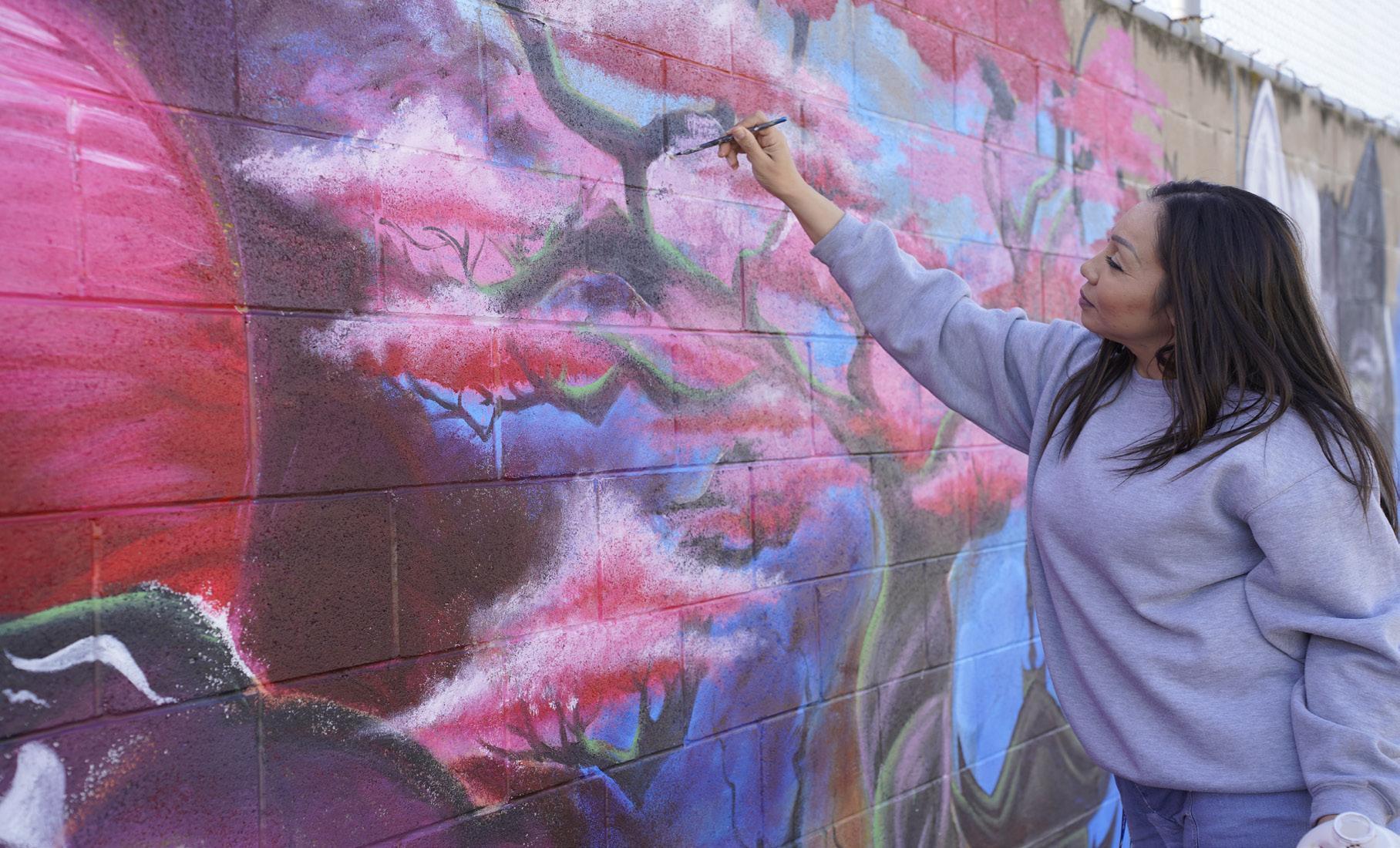
CCWF muralist Maria Alaniz places final touches on the Facility B mural wall.
Photo by Paper Trail
Photo Courtesy of GRIP
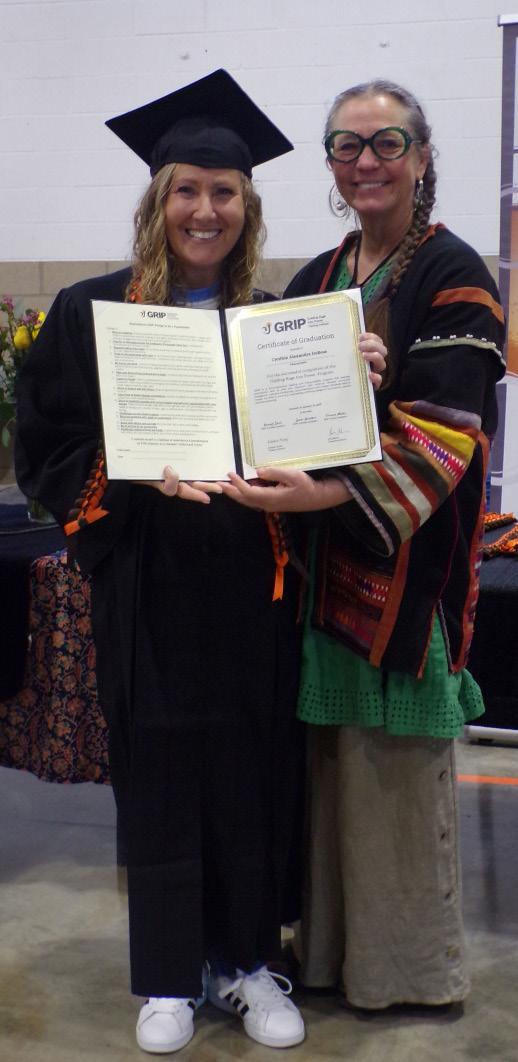
First women’s cohort graduate from the GRIP program in caps and gowns waiting for ceremony to start.
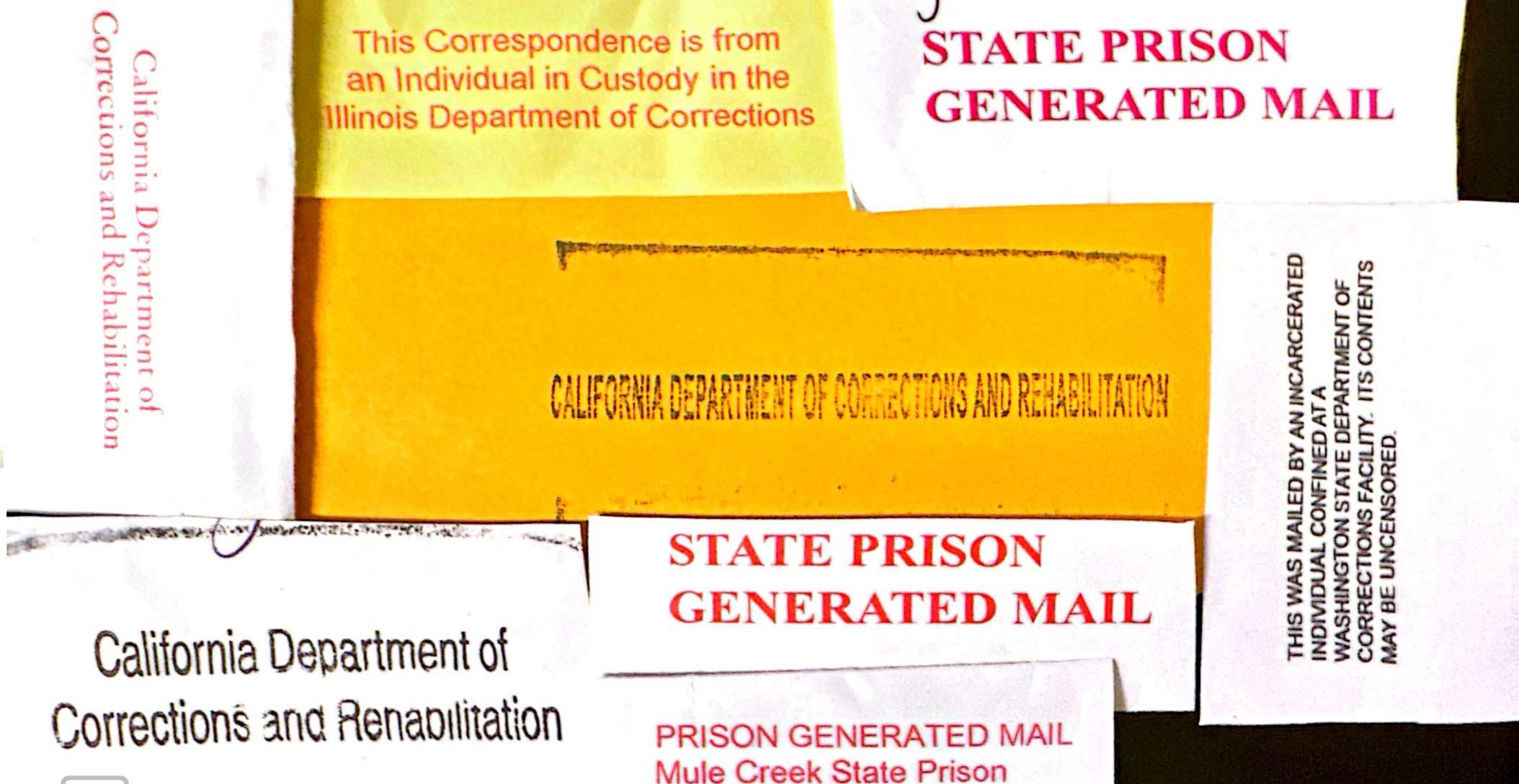
Inside the CCWF Paper Trail Mailbox
By Paper Trail Editorial Board
This month marks six months since CCWF Paper Trail’s inception. During this time, Paper Trail’s editorial board and contributors have settled into the business of crafting stories and gathering news.
We invite letters to the publication, whether feedback, critique, submissions, or ideas. As we stated in our first editorial, we welcome an open dialogue with our readers to better serve our audience.
Paper Trail has received numerous letters. Some congratulate Central California Women’s Facility (CCWF) for having the first syndicated newspaper at a women’s facility. Others are reflections on articles or submissions from prisons that don’t have a newspaper. We’ve received everything from poems to art to photos to policy questions.
Based on conversations with our advisors, who support newspapers in men’s facilities, one thing separates some of our letters from mail sent to them: We receive many letters designed to solicit pen pals or relationships with members of the paper.
Given that San Quentin News and other publications at men’s institutions have existed for decades, the question arises: Why are so many of these letters being sent to this newspaper? Since the only difference is that CCWF is a women’s facility, one conclusion may be that women are viewed differently and are easily objectified by people who see only their pictures.
Historically, women have dealt with unsolicited comments, catcalls, and wolf whistles when men wanted to get their attention or demonstrate their physical admiration. What may be intended as flattering verges on insulting, degrading, or presumptuous when the two people don’t know each other.
In short, the Paper Trail website is not a dating site. Our profiles are intended only to give an idea of who our hard-working journalists are and what we’re working to achieve. Personal information is notably missing – for example, orientation and preferences, relationship status, and interests outside of journalism.
Some incarcerated individuals are open to correspondence, and various websites showcase profiles of people seeking pen pals. However, writing to Paper Trail or Pollen Initiative is not a way to find a pen pal or begin a relationship.
Members of Paper Trail are journalists. We are professionals working hard to present different perspectives from incarcerated individuals at CCWF. We strive to help those who’ve been marginalized tell their stories and have a voice. We promote accurate news, productivity, and engagement with community – in short, we prioritize substance over the superficial.
As our tagline says, “Amplifying voices. Empowering choices.”
We look forward to receiving correspondence that helps us establish more trust and an open dialogue with you, our
CCWF Paper Trail
EST. 2024
CCWF PAPER TRAIL IS A PIONEERING PUBLICATION THAT SERVES THE LARGEST WOMEN’S PRISON IN THE WORLD. IT ENGAGES WITH COMMUNITY, PROMOTES HOPE, CREATES POSITIVE SOLUTIONS, AND AMPLIFIES VOICES RARELY HEARD.
CCWF Paper Trail Staff
Amber Bray
Editor-in-Chief
Kanoa Harris-Pendang
Managing Editor
Delina Williams News Editor
Sagal Sadiq
Features Editor
Nora Igova
Art and Layout Designer
Diana Lovejoy
Journalism Guild Chairperson
Administrative Review
Anissa De La Cruz
Warden
Cynthia Rojas
Chief Deputy Warden
Monique Williams
Public Information Officer
Todd Javernick
Information Officer I
Kate McQueen
Editorial Advisor
Jesse Vasquez
Editorial Advisor
Jake Custodio
Logo and Flag Designer
CURRENT AND PAST STORIES OF THE CCWF PAPER TRAIL ARE AVAILABLE ONLINE AT: CCWFPAPERTRAIL.ORG
FOLLOW US ON INSTAGRAM @PAPERTRAILCCWF PERMISSION IS GRANTED TO REPRINT ARTICLES
APPEARING IN THE CCWF PAPER TRAIL PROVIDED CREDIT IS GIVEN TO THE AUTHOR AND THIS PUBLICATION, EXCEPT FOR ARTICLES REPRINTED HEREIN FROM OTHER PUBLICATIONS.
THE CCWF PAPER TRAIL ENCOURAGES INCARCERATED, FREE STAFF, CUSTODY STAFF, VOLUNTEERS AND OTHERS OUTSIDE THE INSTITUTION TO SUBMIT ARTICLES, POETRY AND ARTWORK. CONTRIBUTORS RETAIN THEIR INTELLECTUAL PROPERTY RIGHTS BUT ALL SUBMISSIONS BECOME PROPERTY OF THE CCWF PAPER TRAIL.
GUIDELINES FOR SUBMISSION:
» ARTICLES SHOULD BE LIMITED TO 350 WORDS AND MAY BE EDITED FOR CONTENT, CLARITY AND LENGTH.
» ARTICLES SHOULD BE NEWSWORTHY AND PERTAIN TO THE PRISON POPULACE AND/OR THE CRIMINAL JUSTICE SYSTEM.
» LETTERS TO THE EDITOR SHOULD BE SHORT, CLEAR AND TO THE POINT.
» WE WILL NOT PUBLISH MATERIAL THAT IS OFFENSIVE, RACIST, SEXIST OR DEROGATORY TOWARD ANY GROUP.
SEND YOUR SUBMISSIONS TO: POLLEN INITIATIVE P.O. BOX 1493 ALAMEDA, CA 94501
Thank you Kim D.
individual traumas then result in unique maladaptive coping mechanisms that are also as singular as the individuals affected.
And while it may be easy to dismiss how an individual is coping as ineffective or just plain wrong, it is imperative to accept every individual where they are in their recovery journey.
Diana Jordan, GRIP graduate, said, “Your trauma can be the source of your power, if you choose, and not your downfall.”
The “what” is a known variable –that which the individual did to end up in prison. However, the “why” is often the unknown variable. Solving for “X” requires a deep dive into causative factors and character defects. What mentality allowed them the crime-centric attitude that made bad behavior OK in their minds? In the small circles, all these crucial aspects are addressed.
GRIP is not unlike being dissected like frogs in a high school biology lab, innards picked through and the malignant areas excised, so the end result—when all is put back together— is only the original authentic self.
And every program is only as good as its facilitators and coordinators. It is evident GRIP is a calling and not a job for them.
Formerly incarcerated Teresa “Tree” Moses, GRIP facilitator said, “I found it impossible to forget the ones I left behind; I had to go back and show them what they are capable of.”
GRIP is offered in seven prisons and graduates 500-700 students each
CCWF and Soledad Meet in First Debate
By Delina Williams
In November 2024, educational communities at both Central California Women’s Facility (CCWF) and Correctional Training Facility in Soledad (CTF) anticipated a history-making virtual debate between the CCWF Fresno State Debate Team and the CTF Toastmasters Club.
Originally scheduled for Nov. 20, 2024, the war of words was postponed for nearly a month due to technical glitches. But on Dec. 17, 2024, the action finally began. It was hosted through Microsoft Teams. CTF teacher Roberta Schweers coordinated the event from the Soledad side, and Correctional Sgt. Ronald Glaze assisted with the day’s technology access.
The CTF team included Christopher Butler, Kenneth Guest, Rafael Hunt, Tramal J. Thomas, Bilji P. Varghese, Michael Washington, Anton Butler, Orlando Creswell, and Esteban Campos. The CCWF team included Mo Tien, Jennifer Fletcher, Valerie Nessler, Michelle Souza, Erica Olson, Mimi Le, Kandace Ortega, and Rebecca Braswell. They were coached by Douglas Fraleigh, professor of communication; Monica Summers, professor of criminology; and student coach Rhiannon Genilla, all from Fresno State.
This debate was part of an effort to build community, with the goal of launching a statewide debate league. This is the first inter-prison debate that has been held at CCWF.
The participants trained diligently
year. There have been 1700 GRIP graduates in the state of California, and 800 of those have been released. It costs the state $121,000 to incarcerate one person and just $4000 to fund one GRIP participant.
The number 612 for this year’s graduating tribe is not a number that was chosen at random – it indicates the number of years the graduates have been incarcerated. Interestingly, according to numerology, the number 612 aptly represents happiness and joyful beginnings. The first GRIP tribe in a women’s prison is truly the definition of joyful beginnings.
Tribe 612 has a chant that brings forth immediate thoughts of the United States Marines’ chant “Semper Fi, hoorah.”
They are a tribe. A family. Peacemaker swords forged through the fire of mutual hardship. And there can be no sword forged without setting the spirit on fire and without the pounding of said spirit by the vicissitudes of life’s blacksmiths.
The finest of swords are those that are set ablaze, pounded, folded and molded again and again, that errant will pounded into submission and folded, creating layers made up of fortitude, resilience and grit only
to be folded again – the result – fire forged formidable females.
Your trauma can be the source of your power, if you choose, and not your downfall.”
Participation-heavy, small circles teach listening, humility, and conflict management; the GRIP program participants study and develop attitudes that align with servant leadership, understanding that giving back and integrating purpose with doing good is a core part of their mission. In this way, participants are able to heal and transform from the inside out.
Picture this: The palpable symbolism created by Tribe 612 wearing black, sophisticated graduation gowns and running through a “tunnel” created by the adjoining hands of everyone present. Theirs was a hard job. Theirs was a heart job. Today, their job is complete. Today, they emerge reborn as peacemakers.
Let’s hear it once again for these formidable warriors: “Tribe 612, for us, by us, from us, hoorah!
for weeks to prepare for the challenge before them.
The teams debated two topics: whether “work-from-home” jobs — jobs that would allow those incarcerated to work remotely from their institutions –should be made available for incarcerated individuals and whether Norway’s criminal justice system is better than the American justice system.
In the first debate, CCWF’s Erica Olson argued that work-from-home jobs should be made available to incarcerated individuals. Olson’s main points were about flexibility as well as the ability to perform duties remotely and develop different technological skills.
“Establishing responsibility [constructive criticism, good work place ethic and honesty] not only helps promote rehabilitation but creates successful and productive members of society,” Olson said in the debate.
The Toastmasters delivered their counterargument maintaining jobs for incarcerated individuals would undermine the employment opportunities for citizens in the free world. Mimi Le brought the remarkable negative cross-examination. This speaker questions the opponent and where their evidence came from. Le declared they “had no data that is relevant to 2024.”
Jennifer Fletcher added that if people convicted of a crime worked from their cells, it would lessen costs for the state — they wouldn’t have to pay to incarcerate them

and that person would still be paying taxes. Those who employ them could also receive tax breaks, she said.
In rebuttal, CTF argued that work from home wouldn’t be so different because individuals convicted of a crime still wouldn’t be paid a fair wage and incarcerated individuals are not given negotiation rights. Valerie Nessler came back at them with the conclusion, that through “marketable job skills, training, and free market capitalism, incarcerated individuals are worthy of the job at hand.”
CTF’s Christopher Butler offered a stirring thank you as he brought up the disadvantages for corporations “bringing jobs to incarcerated individuals when those jobs are equated with the loss of jobs in the community.” CTF’s team concluded that the community is better off with skilled labor being kept away from the system-impacted population.
In the second debate, CCWF’s affirmative team heralded the cause for Norway.
CCWF team member Souza opened with supporting evidence on Norway’s “increased rehabilitative programs which improve the standards overall.”
“The California Model, by contrast,
is punitive and leaves much to be desired,” she argued. “Norway has proven to dramatically improve the rehabilitative procedures through the programs which led incarcerated individuals outside and into nature.”
CTF came back with the statement that a lower recidivism rate is possible through the rehabilitative work incarcerated individuals do.
CCWF team’s Braswell rebutted, “The punitive justice system the U.S. is over 70 years old. Norway overhauled their system from a cost perspective to human culture as they allot time and care for their citizens.”
The first debate went to CCWF. The second debate was a tie due to the strength of both sides.
Salina Medina, assistant principal of CCWF’s college programming, said, “This is obviously helping the students/graduates learn to debate in an educated fashion where the practices learned will help them with their rehabilitation journey.”
There are plans to expand the debate circuit throughout California prisons. Until then, both teams will continue to hone their skills and prepare for the next time they go head-to-head.
Graduate Cindy Dubose displays her GRIP certificate.
AI Image generated by Kate McQueen
Photo Courtesy of GRIP
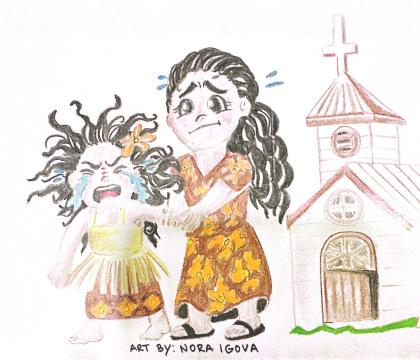
I Don’t Wanna Go to Church
By Simaima Ohuafi
Growing up, everything in my household consisted of church. When we ate, we prayed. Seven nights a week, we prayed. Four nights a week, we went to church — choir practice, meetings, Bible study, hula practice, etc. My father was the reverend.
I just didn’t understand why I had to participate in any church dealings. I wasn’t an important member. I was only seven years old. I couldn’t sing, and I kept my eyes open throughout prayer. It didn’t matter who was preaching, whether it was my daddy or my uncle, I’d fall asleep during every sermon because it was of no importance to me. Things couldn’t continue being this torturous.
My church had a total of three families who attended faithfully. My family and my two uncles’ families, each family consisting of 10-12 members. So yes, I went to church with my cousins. During one of those church nights, my cousins and I conjured up a plan on how to make church fun. We created the best escape route: prayer time! All of
COVER STORY: MURALISTS
...CONTINUED FROM PAGE 1
those times I kept my eyes open during prayer, so did my cousins.
We all lurked, waiting for the moment to escape the church house. One, two, three… to the bathroom we go! Of course, it was me, the risk taker, who had to go first. One by one, the other 25 kids made it out during prayer as well.
Those long, dreadful prayers became exciting moments in our lives because we didn’t find church boring anymore. Prayer time gave us enough time to escape, go play, fight, makeup, and get back into our pews — all dirty — in time for the “Amen.” And we made it through another day in church.
I share this story because all those dreadful nights of church and prayer time became my savior moments in my adulthood. I didn’t even realize how strongly prayer was embedded in me until someone asked me, “Do you pray every time you eat?”
“What?” I responded. “Duh, that’s what you’re supposed to do.”
painting the murals located on the facility yards, the muralists all agreed it was supplies.
If one can imagine three walls the length of two football fields each that the residents would love to paint. Two of those walls are black in color. The mixing of the primary colors they receive takes up most of the paint.
“Creating is hard work, getting that perfect color is also hard,” Maria Alaniz said.
Another huge challenge is the weather. One day it’s sunny and artists chalk a lot of pictures for the painters to paint; the next day it rains and washes the chalk away.
Dawn Godman recently appeared before BPH for a parole suitability hearing. When asked about the murals, she said, “They helped me relax, ground and center myself before board, which helped decrease my anxiety level. I could look at something I found beautiful and inspirational.”
Each yard has their own ideas and visions for their wall. B Facility is culture and inclusion, C Facility is inspiration and motivation, while D Facility is indecisive. For the residents on D Facility, there is a great piece of art to start a journey, it is up to the facility to keep the momentum and create the world around them.
“We want to bring light and inspiration and provide a positive and uplifting space for those trying
My Higher Power has a great sense of humor. During most of my incarceration, I didn’t trust anyone. I felt like I could handle any and everything life threw my way on my own. It wasn’t until I hit rock bottom and needed a lifeline to make sense of all the mess in my life that I turned back to church. There, I found I was once again surrounded by my “cousins.” Like me, all of them had hit rock bottom. But they had found their way out, holding services,
to change their life,” Lila Alligood said. “Paint looks good outside of the room too,” Alaniz said.
Lynne Acosta from Anti-Recidivism Coalition (ARC) described how she sees moods change when seeing the beautiful colors of the murals. There are varying descriptions when it comes to what these murals can do for one’s soul or represent in one’s heart.
The sentiment on D Facility is that one butterfly is just not enough, they want and need something more. Residents on B and C Facility, however, sometimes use the murals as backdrops on picture day, a meditative space, or conversation starter with staff and other residents.
The muralists’ next vision is to invite staff artists to come and sketch out some art and paint with the residents. In the coming year it is the hopes that more residents will join the small group of dedicated muralists and painters.
As we see this awesome endeavor continue to shape and turn a dull place into a vibrant, awe inspiring, make you want to get up each day space, it is important to remember that we all contribute in some small way to making our environment a better place to live.
While we are here, it would benefit residents to take full advantage of self-help programs, workshops, and practice self-care. Try something new, start a new hobby, join team “community.”
prayers, self-help groups, and more.
The clarity I received that day was what forged my path toward rehabilitation. Realizing I couldn’t do it on my own was a difficult pill to swallow, but it became my daily medicine. I learned how to reframe my mind and heart with humility and receptiveness. I replaced my mistrust in others with forgiveness. I grew willing to trust myself as well.
Finding out that so many of my peers in CCWF are spiritually guided by a Higher Power or positively driven by something greater than themselves was a beautiful experience. Learning how deeply rooted my spiritual beliefs are was unexpected and humbling.
By the way, all those times I thought I escaped church and prayer as a child was just my imagination.

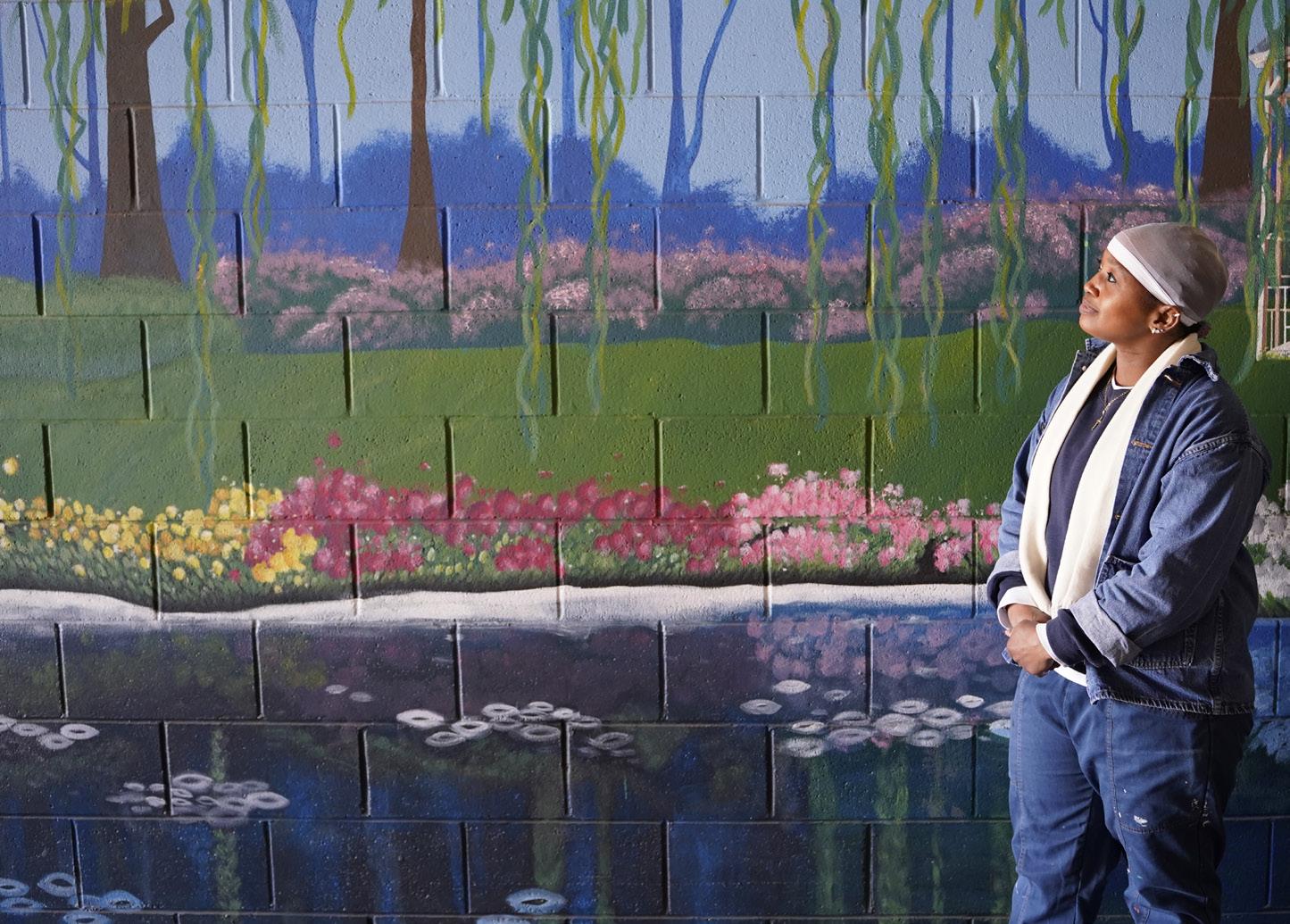
Top: C yard mural of people saving starfish
Bottom: CCWF Muralist Vegas Bray poses in front of a mural she completed in the hallway leading to A yard
How California Can Train More Incarcerated Firefighters
By Amber Bray
Growing up in southern California, I often marveled at the beauty of the landscape. Going to the beach was one of my favorite activities. Sitting on the sand on a warm summer day, looking up at the ubiquitous palm trees, and running into the waves with the squishy sand under my feet filled me with joy. It made me grateful to have been born in this state.
Now, those places I love lay in ruin, devastated by January’s wildfires. The pictures and videos I have seen from the fire-ravaged cities are incomprehensible. They are reminiscent of scenes from some sort of post-apocalyptic science fiction film.
I’ve been at CCWF for years, but I still speak with loved ones in Los Angeles. They’ve told me how unbelievable it all seems, how surreal, and how long it will take to recover from this unprecedented firestorm.
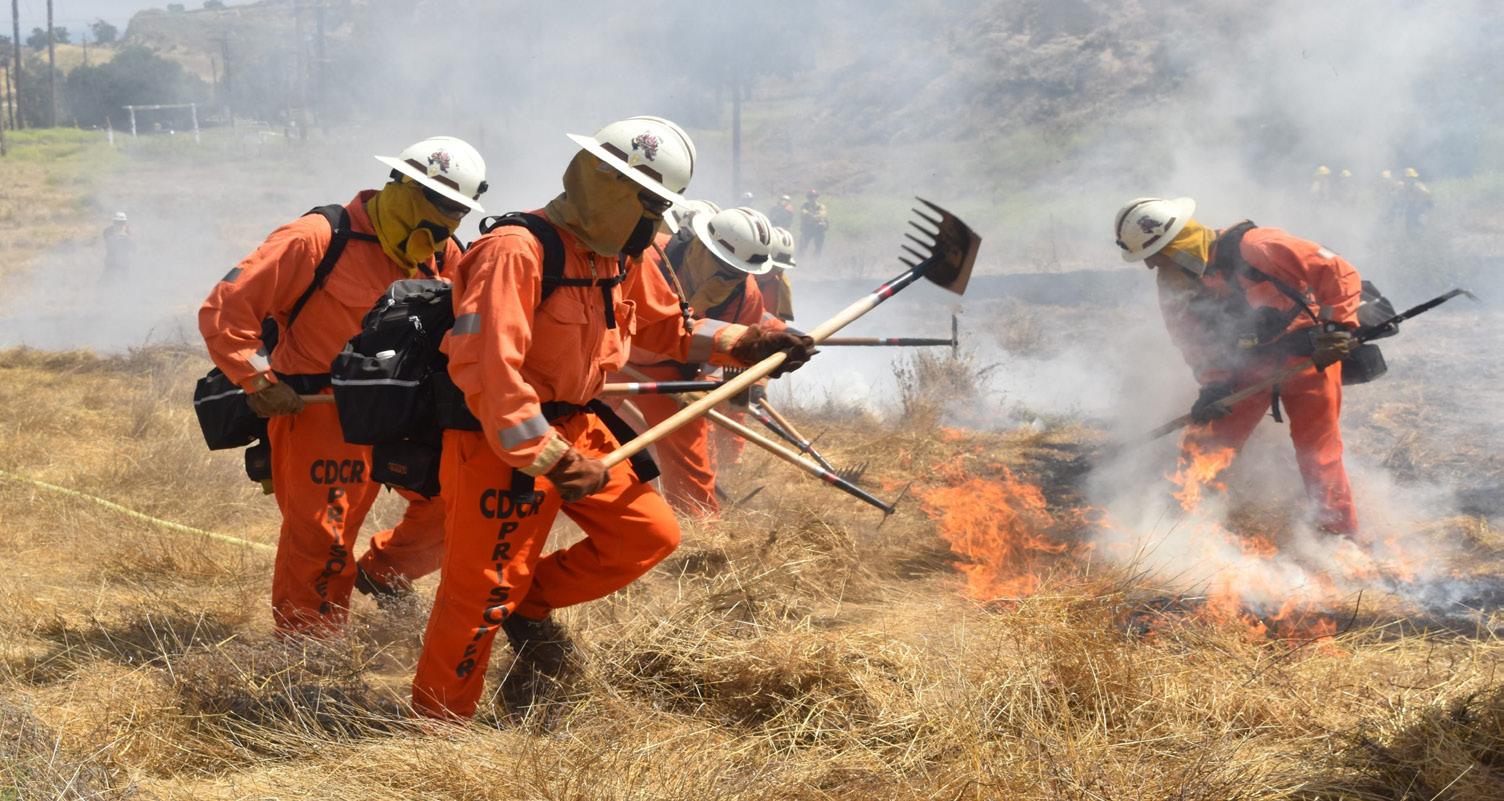
One contingent of firefighters that helped my home of Los Angeles County consisted of incarcerated firefighters who are assigned to various fire camps throughout the state to assist fire departments.
The California Department of Corrections and Rehabilitation (CDCR) operates 36 fire camps with support from the California Department of Forestry and Fire Protection, the Los Angeles County Fire Department, and other agencies. Participants receive training in wildland firefighting, leadership, public safety, first aid, hazardous materials response, structural firefighting, and rescue.
The mission statements of some camps, like Ventura Training Center’s fire camp, highlight the opportunity for a career in firefighting
after release. Thanks to this training, some incarcerated individuals were well prepared to respond to the call for help when the fires raged across Los Angeles County.
Many more incarcerated people long to give back in this profound way, especially those from impacted areas. We look on with horror while our communities burn. But that is unlikely to happen soon.
Unfortunately, recruitment for fire camps is down. Over the last year, fire captains have come to Central California Women’s Facility (CCWF) to recruit incarcerated people to serve the remainder of their terms of incarceration at a fire camp.
In early 2024 and again in November 2024, a total of four different conservation camps gave presentations at CCWF to showcase the program and expand upon the benefits participants can receive from joining their ranks.
One reason for low recruitment is eligibility. Currently, only those under minimum custody can be assigned to a fire camp. Minimum custody equates to lower security.
The biggest concern in assigning incarcerated individuals to camps is the possibility of escape, which is why a classification committee “carefully evaluates the escape potential of [incarcerated individuals] assigned to a camp,” according to the CDCR Department Operations Manual.
The biggest factor relative to custody is the amount of time an individual has left to serve. Incarcerated individuals with less time to serve are those who are assigned lower custody classifications and are eligible for fire camps and other offsite assignments.
Fire camps also have to compete with other programs that may be more enticing. For example, the Female Community Reentry Program — which allows incarcerated women to serve the remainder of their sentences under supervision in the community rather than in prison — pulls from the same pool of eligible individuals as a fire camp.
Still, many at CCWF would love to go to a fire camp, like Rebecca Braswell, a physically fit Navy veteran.
“I’d leave today if I could. I’d wear an ankle monitor. I would love to help,” she said.
But Braswell is sentenced to life without parole, so she does not qualify for a fire camp assignment.
Interestingly, individuals with life sentences who have been found suitable for parole and have undergone the administrative review process can be eligible for assignment to a fire camp, provided they meet all the criteria.
The existence of this exception suggests that it is possible to open the eligibility criteria even further, provided there is the political will to do it. In order for these criteria to be modified, stakeholders within CDCR and the Governor’s office would have to endorse such a change.
The benefits of being assigned to a fire camp include an onsite canteen, recreational tournaments, onsite family leave unit, onsite visiting, selfhelp groups, tattoo removal, general education courses, college courses, FEMA courses, expungement support provided by the Anti-Recidivism Coalition, and higher pay.
However, the greater benefit is seeing the impact that first responders have on their communities firsthand.
With wildfires becoming more and more prevalent in California, brave firefighters will undoubtedly continue to battle blazes throughout the year.
Since incarcerated individuals can fight fires alongside first responders, California communities will unquestionably benefit from more people bringing their efforts to the frontlines.

By Sagal Sadiq
Felon’s Alphabet
According to human resources professionals, empathy is considered a “soft skill”- along with listening, communication, and conflict resolution. But is it really? What’s soft about putting on another person’s size 11 shoes and walking a rough country mile. What’s soft about internalizing the pain a peer is experiencing to such a degree that you can quite literally “feel their pain?”
“E” is for empathy.
According to Webster’s Dictionary, empathy is defined as “the ability to share in another’s emotions, thoughts and feelings.”
Let’s get complete clarity on what empathy is and isn’t. Empathy isn’t sympathy. Empathy isn’t pity. Empathy isn’t a simple “I feel bad for you”, it’s an “I’m feeling with you.” When we have empathy for another person, a unique bond of sorts is created. What they feel begins to matter, how they are doing, begins to matter — the person in their entirety begins to matter.
Did you know that a lack of empathy is a symptom of sociopathy?
Really. It’s true. But before we get into an uproar about this. I am not suggesting that those of us incarcerated for violent crimes (myself included) are sociopathic. Not at all. What I am saying is that there was a definite shortage of empathy, where we cared less about our victims and more about ourselves.
Back then, prior to beginning our rehabilitative journeys, we weren’t as adept as we are today at putting ourselves in our victims’ shoes and really feeling their pain.
Let us collectively remember every missed opportunity for empathy every moment we failed to take into account someone else’s feelings, causing all kinds of distress because we were single-mindedly pursuing our desires — whatever they were at that moment in time.
Our sins are many: A robbery, an assault, a kidnapping, and even murder. What do they have in common? None of these offenses, ranging from major to heinous, are possible with empathy.
To err is human, and so often we fall short. So, what? Try again and
again. Work that empathy muscle until it becomes second nature. When you invariably screw up, apologize, make amends and then go forward.
If you believe you could use a refresher course on empathy, take one of the victim-impact self-help groups available in your yard. Not only will increased empathy help you in your everyday life, it will also help you get out of prison.
Empathy is vital to our rehabilitative success. Developing empathy for our victims will allow us to “feel” their pain and take accountability for the harm we have caused, which will deepen our feelings of remorse, increase the depths of our insight, and finally, make sure we do not re-offend.
I would go so far as to suggest that empathy is a human requirement. Look around you. We are social, hive creatures, who are reliant upon one another. Not a one of us exists in a vacuum. And what keeps the wheels of community and goodwill running smoothly is the grease of empathy. Remember, it’s “We, we, we,” not “Me, me, me, me.”
Photo Courtesy of CDCR
Sierra Conservation camp during training with the Los Angeles County Fire Department.
A Day in the Life of a Disabled Prisoner
By Christine Loyd
Disabilities can make life anywhere a heap of problems culminating with constant delays and massive stress. Central California Women’s Facility (CCWF) is no exception to this, even though some effort is made to accommodate those like myself with limiting disabilities.
Most of us with disability can attest to having to learn coping skills never imagined outside of prison. Our experiences show a wide range of access problems and the level of frustration we feel on a daily basis.
For a disabled prisoner on any given day, the first morning stirrings on a prison bed are filled with pain. It takes a number of stretches and movements to even get off a cold metal bunk.
A hot shower helps unless it’s one of the electric models in certain ADA rooms. For these, it takes two to three minutes (at 10 seconds a push on a sharp, narrow, stiff button) to get warm water that occasionally spurts out scalding hot. The buttons are real nail breakers, actually breaking the skin on some of the users.
Next on the daily agenda is getting out of the cell door to get to chow. On a good day with good staff, the five-minute warning will be announced for breakfast release, but we usually get the “unlock ambush” and have to try several times to catch the door.
Then the bizarre wait for an ADA pusher begins since we have anywhere from six to 50 wheelchairs in a given building and less than three able-bodied workers available at any time.
Disabled residents have actually missed meals waiting for a pusher to get them to chow.
ADA workers currently “relay” up to 10 wheelchairs every meal every day, due to the shortage of capable pushers and volunteers.
Problems with special diets occur daily, as the food is delivered from the medical kitchen in building 805. If items are missing, a call can be made from the yard chow hall to replace needed food. Resident Rita Meserve has reported numerous problems.
“I am on the Renal diet that restricts proteins and certain minerals like potassium,” Meserve said. “I still get a lot of broccolis and bananas in spite of constant complaints. I don’t get 1800 calories consistently. The muffins are almost never in the lunch bags. It takes more than a phone call to fix these kinds of problems. And the replacements have to come all the way from the infirmary kitchen.”
Dining staff have been supportive in dealing with missing food, but the bottom line is that no one knows for sure what is supposed to be on each diet and on the tray each day.
The shortage of ADA workers cre-

Most of us with disability can attest to having to learn coping skills never imagined outside of prison.”
ates the similar problems for getting to our programs. Education classes have been missed, we’ve been dropped from groups we need after missing too often, or we can’t make it to chapel for worship.
All these concerns have been reported monthly to the Inmate Advisory Council. ADA Associate Warden Michael Dunn said he is fully committed to addressing this problem with administration and Sacramento.
Announcements over the PA system are often missed and not just by deaf or hearing impaired. The system is old, defective and decrepit, so speakers are barely understood.
The “Flashing Lights” and bulletin boards are rarely used, so no one gets a heads-up for unlocks or any important messages, like shopping. Meserve, for example, is designated as deaf and said she has to remind staff continuously to flash lights for unlocks and announcements.
“It’s especially tough to get out of the room when regular staff is not here or we’re our unit program is modified,” Meserve said. “If broadcasts could be repeated twice with IP’s name, last two digits of the ID and room number, we might have a chance to find out what was announced.”
Some dispatcher training would go a long way to solving this problem. At least, using a normal tone instead of bellowing or shrieking would be tremendously helpful. Luckily, some disabled IPs have friends and cellmates who can occasionally translate the garble into understandable information.
Maneuvering the degraded asphalt throughout this facility has pits, ridges and potholes which present a great danger to anyone using a walker or pushing a wheelchair. It’s a long walk from the housing
units to any building behind work change. Tipping over happens regularly and is usually not reported unless the injury is significant. The rough surface grinds down the wheels, which can cause the brakes to fail. Resident Virgie Moor experienced this and decided to change jobs for a safer commute.
“I had to replace my walker,” she said. “I couldn’t cope with the instability.”
Repairs to the pathways have been delayed for years, although some areas have been patched-up on a complaint basis. We are looking forward to some support by CDCR Administration as some of these plans have been pending since the ADA audit in 2015.
It is significant to remember that at one time we did not even have any ADA helpers so we have seen positive changes over the years. Some of the old timers from the 90’s recall when porters did all the pushing, fetching and carrying for ADA residents and many of us offer special thanks to those who still volunteer for these tasks.
“I’ve seen some great improvements over the years,” said resident Donna Andrews. “Our local administration seems willing to help. We can all take a more proactive approach and work with staff and Medical more.”
Many ADA class members have to endure transport to an outside medical facility for care. This is one of our worst experiences as the vans do not accommodate mobility impaired residents appropriately or even comfortably.
The rides often take several hours in a cramped cage on hard seating. Vans are not clean, much less disinfected, so no one feels safe going out to medical.
Resident Donna Lee has gone out recently and reported these continuing issues.
“The vans get dirtier every trip,” she said. “I have filed 602’s, but see no improvement.”
This view is shared by some who have refused care rather than ride in the vans. The good news is that plans are being discussed with Plant Operations to set up a cleaning schedule for the vans here on grounds. Captain K. Seeger, Health Care Access, has already approved this procedure.
Dunn and his staff encourage suggestions for improvements. There are two ADA Compliance Sergeants whose rounds include all the units and facilities. Sgt. Vang is assigned to A/B Yards and can be approached in the mornings. Sgt. Garcia, assigned to C/D Yards, is also available during second watch.
“We are here to help and can assist IPs in a variety of ways,” said Dunn, adding a reminder to all ADA class members, “Remember to utilize the 1824 Accommodation form for concerns about access to programs, as well as physical issues. Talk to IAC Representatives. Put in a 7263 Request for assistance from Medical. We have numerous ways to help anyone with a problem. Your safety is important to us.”
It is important to use the institutional process for reporting every problem on the form 602, which now includes an 1824 section.
So, at the end of the day, ADA residents are giving the facility a mixed review as we face the challenges of positive programming in an environment built without a thought to the disabled or elderly.
As many of us have learned, we have to advocate for ourselves. Keep reporting obstacles to our reasonable access all the way up the chain of command.
For our safety and sanity, we must take the time and make the effort to be part of the solution to these issues. Time has a way of catching up to all of us.
ADA class members with their assistants at the Grandma’s hands event last year.
Photo by Paper Trail
Photo Courtesy of Lt. Monique Williams