
Key Insights from Marine Lightning Market:
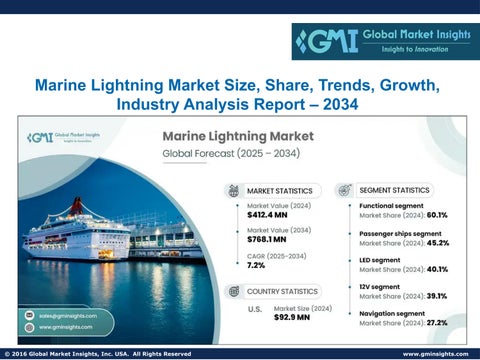
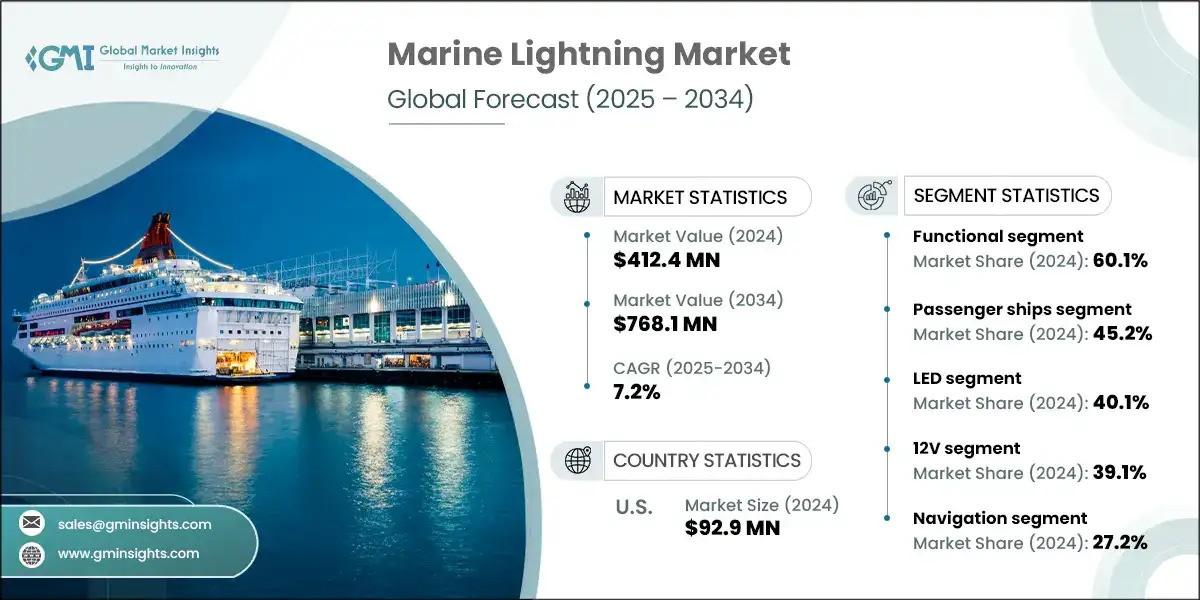
The global marine lightning market was valued at USD 412.4 million in 2024 and is estimated to grow at a CAGR of 7.2% to reach USD 768.1 million by 2034. This upward trajectory is primarily fueled by the rising adoption of sustainable and energy-efficient technologies in maritime operations. As the global marine industry transitions toward environmentally responsible solutions, LED and solarpowered lighting are being rapidly integrated to meet strict efficiency and emission standards.
The shift is most apparent in fishing fleets, patrol vessels, and passenger boats, where performance and sustainability must go hand in hand. In addition, the growing trend of integrating automation and smart lighting technologies has made marine lighting more functional and connected, improving onboard safety and efficiency while reducing long-term maintenance demands. The evolving expectations of vessel owners and operators are propelling demand for customizable, high-performance lighting solutions across commercial and recreational marine sectors.
Growth Drivers:
• Increasing focus on energy-efficient lighting (LED & solar).
• Expansion of maritime trade and port upgrades.
• Growth in recreational boating and luxury yachting.
• Naval & coast guard fleet modernization.
• Innovation in smart, IoT-connected lighting systems.
The marine lightning market from functional marine lighting category held the largest share of the market in 2024, valued at USD 311.5 million. This category encompasses vital lighting systems, including docking lights, emergency lighting, safety illumination, and compartment lighting-all designed to ensure visibility, safety, and regulatory compliance in marine environments. Such systems are indispensable for operations in harsh or low-visibility conditions and remain mandatory on all types of commercial, military, and offshore vessels. This segment's sustained leadership stems from its necessity in meeting maritime safety standards and its ability to withstand demanding operating conditions.
Browse key industry insights spread across 170 pages with 548 market data tables & figures from the report, “Marine Lightning Market” in detail along with the table of contents @ https://www.gminsights.com/industry-analysis/marine-lightning-market
Get sample copy of this research report @ https://www.gminsights.com/request-sample/detail/14534
In terms of application, the passenger ship segment generated USD 233 million in 2024. Vessels in this category rely heavily on diverse lighting systems to enhance onboard ambiance, operational visibility, and passenger safety. Lighting is especially important in areas ranging from navigation bridges to entertainment lounges. The increasing growth of the cruise and ferry industries, along with the demand for luxurious onboard experiences, is driving the need for modern lighting systems that combine energy efficiency with aesthetic appeal.
U.S. marine lightning market was valued at USD 92.9 million in 2024 and is expected to grow at a CAGR of 8.1% through 2034. The region is seeing consistent growth due to strong demand for smart and efficient lighting across recreational boating, commercial shipping, and naval fleets. Fleet modernization, infrastructure upgrades, and increasing adoption of environmentally compliant lighting systems are among the major factors shaping this market. Regulatory pressure and safety standards are pushing both new-build and retrofit projects toward advanced LED and automated lighting systems, creating a favorable environment for local manufacturers and solution providers.
The leading players in the global marine lightning market include KOITO MANUFACTURING CO., LTD., OSRAM Licht AG, Lumitec LLC, Aqualuma LED Lighting, and Hella GmbH & Co KGaA. Top marine lighting companies are focusing on product innovation by developing robust, high-efficiency lighting systems that meet international standards while reducing energy consumption.
To capture emerging demand, they are investing in LED technology, automation features, and corrosion-resistant materials tailored for marine conditions. Businesses are expanding their product lines to include integrated control systems and smart lighting with adaptive brightness, diagnostics, and remote access capabilities. Collaborations with shipbuilders and naval authorities enable early product inclusion in fleet modernization efforts. Manufacturers are also strengthening after-sales support and global distribution channels to enhance service reliability.