

Vital magazine is a news and media resource managed by POET, the world’s largest producer of biofuels. Since 2008, Vital has provided readers with forward-thinking content that helps to advance an industry that provides renewable energy and bio-based products from the surface of the Earth. Vital seeks to educate readers about the state of the biofuels sector today and the breakthrough stories of innovation and sustainability of tomorrow by presenting a variety of insights and perspectives.
Each issue features in-depth, quality reporting on important topics, such as domestic energy security, innovation in agriculture, local and national policy landscapes, and stories of the men and women advocating to advance bioethanol and other renewable bioproducts.
Vital by POET is committed to editorial excellence, along with high quality print production and distribution. In the spirit of its continued commitment to being good stewards of the environment, POET is proud to produce Vital using recycled paper when printed.
Additional reporting can be found online at vitalbypoet.com. The opinions and statements expressed by content contributors and advertisers in Vital are their own and do not necessarily reflect those of POET. Neither POET nor its third-party content providers shall be liable for any inaccuracies contained within Vital, or for any actions taken in reliance thereon.
Contact
4615 North Lewis Avenue Sioux Falls, SD 57104
vitalbypoet.com
Article Submissions
Direct all questions, comments and story ideas to: vital@poet.com
Advertising Information
605.965.2200
vital@poet.com
Publication Design & Layout
POET Communications
To Subscribe
Visit vitalbypoet.com to receive a digital magazine
Vital is published biannually by POET, LLC and other individuals or entities. All materials within are subject to copyrights owned by POET. POET, BPX, and other associated designs and logos are registrations or trademarks of POET, LLC. Growth Energy is a registration or trademark of Growth Energy, a non-profit corporation organized under the laws of the District of Columbia. Any reproduction of all or part of any document found in Vital is expressly prohibited, unless POET or the copyright owner of the material has expressly granted its prior written consent to so reproduce, retransmit or republish the material. All other rights reserved. For questions, contact the POET legal department at 605.965.2200.
The opinions and statements expressed by content contributors and advertisers in Vital are their own and do not necessarily reflect those of POET. Neither POET nor its third-party content providers shall be liable for any inaccuracies contained within Vital, or for any actions taken in reliance thereon.
©2026 POET, LLC. All rights reserved.

08 | How Biofuels Can Energize
American Agriculture
S&P Global report makes the case that biofuels aren’t just an energy solution — they’re an economic engine that could transform farming’s future
18 | You Can’t Beat Zero
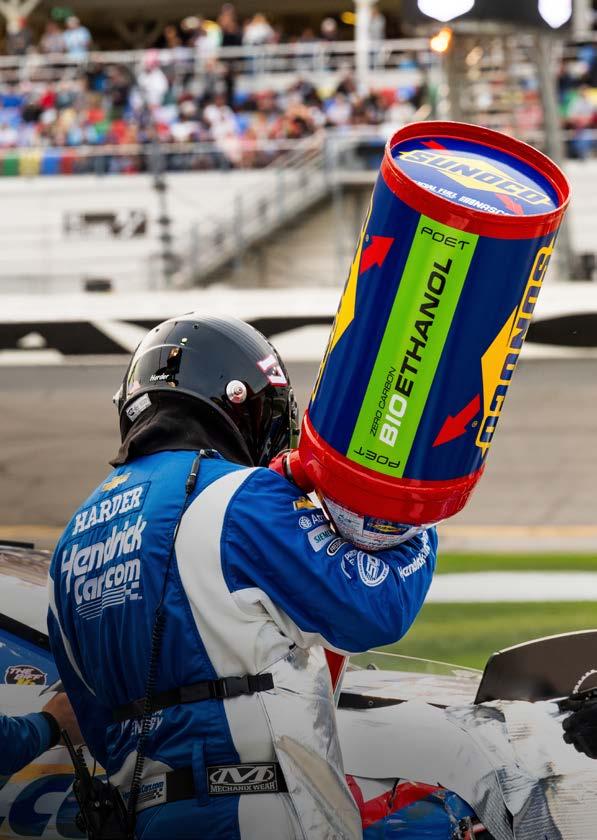
POET becomes the Official Bioethanol Sponsor of NASCAR, launching the firstever zero-carbon liquid fuel at the track
32 | Homegrown Horsepower
The opportunity for bioethanol to power farm equipment
40 | Casting a Wider Net
POET expands its global, animal feed footprint with launch of POET de Ecuador
48 | Built to Last
POET’s recent acquisition of its Obion, facility brings improved reliability, stronger operations, and optimism for the future
06 | In Sight By Jeff Broin
14 | Mechanic’s Corner
Automotive advice from Dr. Andrew Rudolph 38 | Farm Fresh By Clayton Rye
| Out Of Left Field
Johnson


By Jeff Broin, Founder and CEO of POET
This year, America celebrates its 250th birthday.
Two and a half centuries ago, the American experiment began when ordinary citizens stood up and demanded something revolutionary: the right to have a voice in their own government. This nation was built on the radical idea that people should be free to petition their leaders, to influence the decisions that affect their lives and livelihoods, and to have a role in shaping the future for their children and grandchildren.
Our founders understood that true freedom is contingent on the right to speak and be heard — a principle that remains one of the defining strengths of our democracy today. In fact, it was Benjamin Franklin who said, “Freedom of speech is a principal pillar of a free government; when this support is taken away, the constitution of a free society is dissolved.”
That belief became the cornerstone of the First Amendment, which protects not only freedom of speech, but also “the right of the people…to petition the Government for a redress of grievances.”
From the very beginning, Americans have exercised that right by gathering to share ideas, concerns, and solutions with elected leaders. Citizens were practicing what we now call “lobbying” long before a term for it existed; in fact, the word itself originated from people gathering in hotel lobbies and other public spaces to speak with key decision makers.
Lobbying remains an essential part of our political system today. Although it occurs on a much larger scale today, the fundamental principle of it hasn’t changed — it is simply one way that free speech is exercised in a democracy. At its core, lobbying is telling your story, sharing your expertise, and ensuring your voice is heard.
The reality is, policy gets written by those who show up. If you aren’t telling your story, someone else is telling theirs.
That’s especially true for biofuels and agriculture. The decisions made in Washington, D.C., directly impact rural communities, farmers, biofuel producers, and the families whose livelihoods depend on a strong Midwest economy. At the same time, our competitors are investing enormous resources to influence those discussions. Many of them have more funding, larger organizations, and louder voices.
That’s why POET PAC exists.
POET PAC was created to give POET, the biofuels industry, and rural America a voice. It allows supporters of biofuels to collectively engage in the political process and ensure policymakers understand the value our industry brings to America. And unlike many organizations in Washington, POET PAC does not focus on party affiliation — we believe biofuels are a bipartisan issue.
When lawmakers understand the economic opportunity, energy security, environmental benefits, and rural prosperity that biofuels create, good things happen. But those conversations
don’t happen on their own. They require engagement. They require education. And they require people willing to invest in protecting the future they believe in.
We recently saw the impact of that engagement when the U.S. House of Representatives passed legislation to allow year-round sales of E15 nationwide. This win didn’t happen overnight but was the result of many years of investment by POET PAC and advocacy from biofuel producers, champions, and industry leaders who refused to stop telling the biofuels story.
The House vote represents meaningful progress toward expanding consumer access to E15, but the work is not finished.
America’s founders understood something profound: the future is shaped by those who choose to participate. That same principle applies to our industry today. If we want biofuels to remain a growing force in America’s energy future, we must be willing to engage, advocate, and invest in protecting what we’ve built.
POET PAC needs you! If you haven’t already, I hope you’ll consider joining and supporting this critically important effort. To our current PAC contributors, thank you. Your investment is driving a stronger biofuels industry today and a better world for generations to come.
After 250 years, America’s promise remains the same: when ordinary people unite and use their voices to create change, extraordinary things are possible. Together we can pass year-round E15 and shape the next chapter of our industry — and the next chapter of America.
Contributions to POET PAC are not tax-deductible for federal income tax purposes. Contributions to POET PAC will be used in connection with federal elections and are subject to the limits and prohibitions of federal law. The maximum an individual may contribute to POET PAC is $5,000 per year ($10,000 per couple). Corporate and foreign national contributions are not permitted under federal law. Please make checks payable to POET PAC. Federal law requires us to use our best efforts to obtain and report the name, mailing address, occupation and name of employer for each individual whose contributions aggregate in excess of $200 per calendar year. Your contribution to POET PAC is strictly voluntary.
S&P Global report makes the case that biofuels aren’t just an energy solution — they’re an economic engine that could transform farming’s future
By Kevin Burkum, CEO of U.S. Farmers and Ranchers in Action
American agriculture is facing a moment of reckoning. Crop yields are surging, harvests are hitting record highs, and yet the farmers and ranchers who feed this nation are struggling to keep the lights on. And it’s not getting better. The U.S. Department of Agriculture projects net farm income to decline again in 20261, for the fourth consecutive year.
This irony of abundance is playing out across rural America: the more our fields produce, the smaller producers’ profit margins become. Commodity prices have flattened; margins continue to shrink, and for many farm families, the echoes of the 1980s farm crisis are getting harder to ignore — when an estimated 300,000 farms defaulted on loans and rural communities collapsed.
The solution to these issues, then and now, may lie in biofuels. When expanded markets for bioenergy helped rescue American agriculture a generation ago, they did more than restore farm profitability — they drove investment, expanded capacity, and positioned U.S. agriculture as a force that could both feed and fuel the world.
A groundbreaking new study from S&P Global offers evidence that biofuels have the potential to do this again. It shows that closing today’s widening demand gap, accelerating energy innovation, and building markets that reward farmers for doing the demanding work of producing more with less could all be possible with biofuels.
https://www.ers.usda.gov/topics/farm-economy/farm-sector-income-finances/farm-sectorincome-forecast#:~:text=Summary%20Findings,to%20fall%20relative%20to%202025.
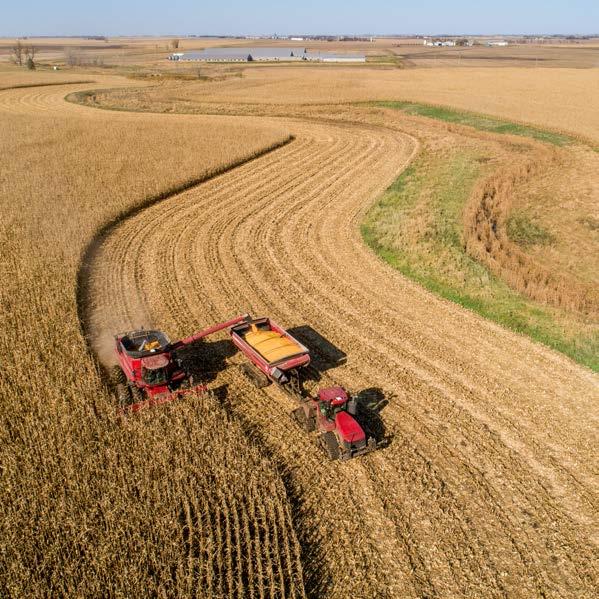
The challenges facing American agriculture are real and urgent — but so are the opportunities. The industry possesses something no other sector can claim: the ability to address society’s most pressing challenges, all at once.
Let’s consider what a thriving, biofuel-powered agricultural economy could look like. Expanded demand for renewable fuels would help stabilize commodity prices, providing relief for lower-income consumers and communities hit hardest by food and energy cost volatility. At the same time, global biofuel output could triple by 2050, supplying a new generation of renewable products, including sustainable marine and aviation fuels that the global economy increasingly demands.
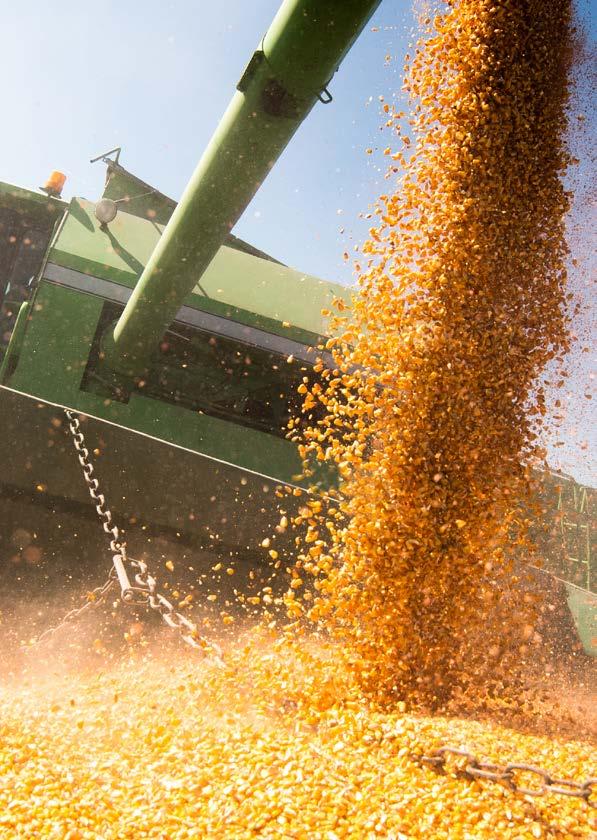
Most importantly, a robust biofuel market would unleash the kind of sustained investment that modern agriculture desperately needs — investment in precision farming, higher-yield crop varieties, and conservation practices that can boost productivity while reducing the environmental footprint of every acre farmed. According to S&P Global’s report, in a high-growth scenario, the U.S. alone has the potential to increase corn yields by approximately 1.6% annually, driving a 50% jump in production on existing cropland by 2050.
To understand the full scale of what’s possible, U.S. Farmers and Ranchers in Action and its partners commissioned a first-of-its-kind study with S&P Global to put hard numbers behind this vision. In concrete terms, the research illustrates how greater biofuel consumption could reverse the troubling decline in working farmland, accelerate the broader energy transition, and eliminate the most serious risks to the long-term food supply. The findings are striking — and for an agricultural sector searching for a path forward, they arrive at just the right time.
What the research reveals: A data-driven case for biofuels
The new study, “Fueling Agriculture: Biofuels as the Catalyst,” identifies three structural trends converging to create today’s agricultural crisis.
1) Population growth has begun to slow and is expected to reach ~0.4% by 2050.
2) Gasoline demand is declining as vehicle efficiency improves and demographics shift.
3) Agriculture yields are outpacing food and fuel demand. Farmers are producing more bushels per acre than markets can absorb.
The result is a persistent oversupply that is hurting commodity prices and pushing farm margins to the breaking point.
The study is clear about what happens without intervention (shown in Figure 1): lower prices, reduced planting areas, slower technological progress, and a significant drop in farm income. For rural communities already stretched thin, the consequences could be generational.
The research also presents a clear solution. Biofuels provide something that no other market can: scalable, sustained demand for agricultural commodities that grows alongside, rather than in competition with, food markets. The post-2005 expansion of agricultural capacity in response to U.S. biofuel policy proved the model works. Corn and soybean production surged. Farm income rose. Investment flowed into yieldenhancing technologies, processing infrastructure, and export capacity. Rural economies that had languished began to recover.
The S&P Global analysis shows that market-driven biofuel demand consistently outperforms direct government subsidies — not just in boosting farm income, but in accelerating the adoption of modern, lower-carbon farming practices like cover crops, precision nutrient management, and regenerative agriculture. When farmers are rewarded by the market for doing the right thing agronomically, innovation follows.
The path forward is clear. Expanding biofuel demand — with higher bioethanol blends on road, to off-road solutions such as marine and sustainable aviation fuel, and beyond — can close the demand gap threatening today’s farmers. Biofuels have the potential to reignite growth in struggling farm communities, drive innovation, and expand agriculture’s capacity to feed and fuel the world — all while using fewer resources than before. The research doesn’t just make the case. It shows exactly how to get there.
As a farmer-led organization representing 700,000 farmers and ranchers, USFRA is excited about this research and the role biofuels can play in unleashing agriculture’s potential.
To learn more about the new study, visit www.fuelingagriculture.com.




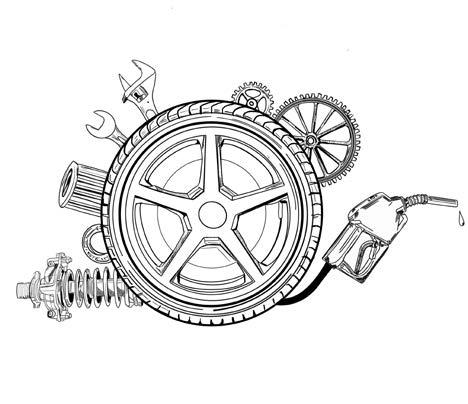
By Dr. Andrew Randolph, Former Technical Racing Fellow at Richard Childress Racing
Grassroots racing has been a mainstay since the automobile was invented, an interesting and competitive combination of mechanical aptitude and physical talent. Humans have a predisposition for speed — we want to know who can run the fastest, ride a horse fastest, eat fastest, ride a bike fastest, and yes, drive a car fastest. Indeed, NASCAR was born during Prohibition from an entrepreneur who realized the public would be interested in which rum runner could develop the most capable vehicle and drive it the fastest.
In racing, speed requires both talent and resources. In fact, it is often a combination of the most talented driver and the most capable vehicle. This creates situations that follow the golden rule: He who has the most gold rules.
In the early days of professional motorsports, there were no rules; you raced what you brought. The results were often dictated by who had the best equipment (most gold), regardless of driver talent. Subsequently, rules were instituted that defined the equipment and thereby limited the advantage of wealth. This addressed the cost of entry but did not address operating costs, much of which is fuel-related.
Engine efficiency, defined by the amount of power produced from a given amount of fuel, is proportional to compression ratio. Racers covet more power, and hence highercompression-ratio engines. Compression ratio is the volume of an engine cylinder at the bottom of the piston stroke divided by the volume at the top of the stroke (this figure illustrates an engine cylinder with a compression ratio of 10).
High-octane gasoline is expensive because it requires disproportionate amounts of highoctane constituents from a barrel of oil, thus increasing the cost. Racing consumes lots of fuel, particularly on courses with frequent acceleration and braking. Every time a vehicle is slowed using the brakes, that kinetic energy loss must be recouped by burning fuel during acceleration. Moreover, engines running at high load generally use up to 20% excess fuel to provide cooling. A typical Saturday night racer can burn between 20 and 40 gallons of fuel at each event, costing literally hundreds of dollars.
E15 is a readily available fuel option that delivers higher octane than standard E10 gasoline at a price that’s often lower than regular unleaded. Containing 15% American-made bioethanol, E15 typically offers an octane rating around 88 — giving drivers a performance boost while helping engines run cleaner.
Compression ratio increases as the cylinder volume at top dead center decreases, producing more power. However, the maximum compression ratio is limited by the propensity of the fuel to autoignite, or knock. Autoignition occurs when the compression pressure and temperature become high enough for the fuel to ignite spontaneously and uncontrollably. The parameter quantifying the propensity of a fuel to autoignite is octane, with higher octane able to withstand higher pressures and temperatures (higher compression ratio).
Approved for use in all 2001 and newer vehicles, E15 is a smart, affordable choice for everyday drivers looking to stretch their fuel dollars without sacrificing performance. The added octane supports smoother operation and reduced engine knock, while the renewable bioethanol component lowers emissions compared to traditional gasoline — making E15 a win for both wallets and the road ahead. Many racers are aware of this and have embraced bioethanol as the fuel of choice for many racing series. The benefit is a significant reduction in the cost of competing, emphasizing driver talent over driver bank balance: a Saturday night racer’s dream!
By Emily Skor, CEO of Growth Energy
We’re less than halfway into 2026, yet it’s already been an action-packed year for biofuels. For the eighth year in a row, E15 will remain available all summer long thanks to federal waivers. Biofuel producers are hard at work planning new investments that will take advantage of the expanded 45Z clean fuel production tax credit. And the Renewable Fuel Standard (RFS) is on track to deliver at least 15 billion gallons of conventional biofuel demand in both 2026 and 2027. At the same time, we’re expecting a banner year for biofuel exports, building on the record set in 2025.
To top it off, a bill to permanently allow the year-round, nationwide sale of E15 passed the House on a strong, bipartisan vote. That took an all-out sprint on Capitol Hill unlike anything our industry had done before. Three fly-ins in five weeks. Three-hundred Hill meetings. Five separate ad campaigns. Thousands of calls and letters into congressional offices. Growth Energy was relentless — and we won.
Now we’re bringing that same energy to the Senate, but all signs suggest the farmers, workers, consumers, and communities that benefit from bioethanol have reason for optimism. And the stakes are too high to let our foot off the gas. Farmers are struggling to close the gap between supply and demand, and rural communities are suffering. With the largest corn harvest ever recorded, the need for more certain and reliable markets for U.S. corn has never been more urgent.
So how do we keep building momentum for bioethanol?
First and foremost, from the marketplace to public policy, bioethanol is on the rise because bioethanol works. We are the only fuel that lowers prices at the pump, backstops rural prosperity, ensures cleaner air, and underwrites American energy security, all at the same time. It’s the same in the political arena. Republicans are focused on lower prices and U.S. energy dominance. Democrats want to continue lowercarbon progress in a changed landscape. And both sides want to strengthen the farm economy. Only one energy source checks all these boxes simultaneously. Bioethanol works for everyone.
The other driving force behind our momentum is strategic and practical: our industry makes sure we are in the room.
Leading Growth Energy, I’ve seen it time and again. There is nothing more powerful than an in-person interaction between a policymaker and a bioethanol producer from their state or district. Yes, our scientific expertise and research matter. Yes, events and press coverage make a big difference. But the key point where all that groundwork turns into an outcome is when you sit down face-to-face with your Senator or member of Congress and make it personal.
It’s not enough to win support. We also have to drive urgency. An elected official may fully grasp the benefits of bioethanol, but the instant that our meeting concludes and we exit their office, a dozen other urgent priorities and constituent requests come rushing in. The solution is relentless, respectful consistency. Call, write, and reach out more than you think you need to.
And take advantage of every opportunity to keep bioethanol front-and-center. For example, in January, the team at POET swiftly and effectively mobilized biofuel supporters to attend President Trump’s speech in Iowa. Their presence was seen and heard. And, cheered on by the crowd, the President called on Congress to send year-round E15 legislation to his desk without delay. That’s how we secure more big wins for the American people.

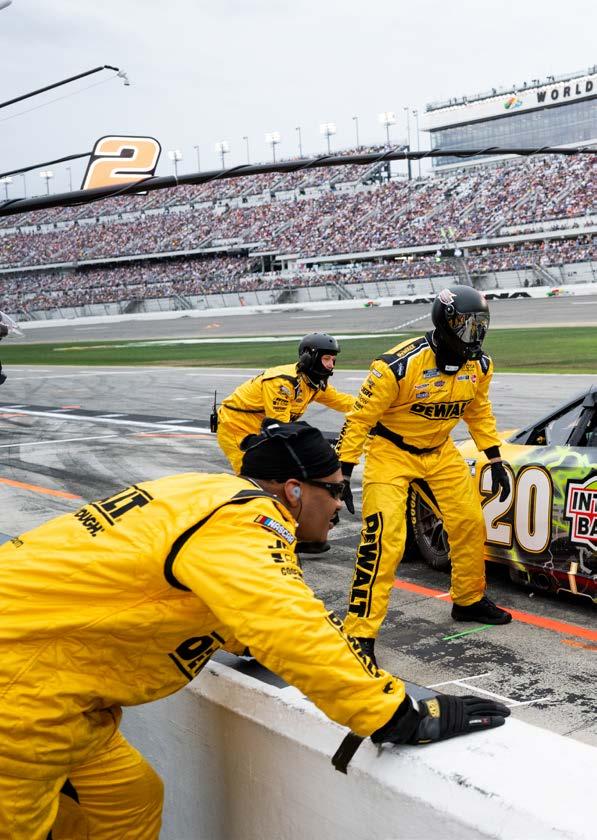
POET becomes the Official Bioethanol Sponsor of NASCAR, launching the firstever zero-carbon liquid fuel at the track
By Erin Branick, POET Media Manager
The engines roar. The grandstands shake. The green flag waves over the Great American Race.
The Daytona 500 is a tradition like no other — but this year, something new is in the tank.
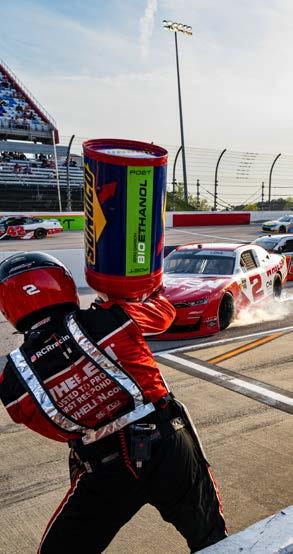
For the first time in any internal combustion engine, NASCAR is being powered by zero lifecycle carbon bioethanol produced by POET, the league’s first Official Bioethanol Partner.
This fuel of the future isn’t just a concept. It’s not a pipe dream or a pilot project.
Zero-carbon bioethanol is here today, and it’s being produced commercially at POET bioprocessing facilities across the U.S.
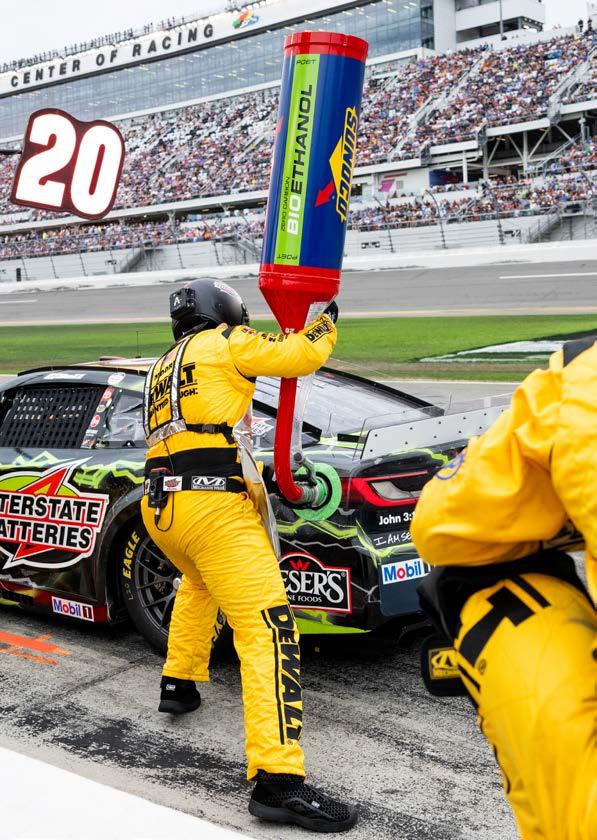

Zero carbon. Full throttle.
Over the past 15 years, NASCAR racecars have driven over 25 million miles on E15, a 15% bioethanol blend. While the fuel blend itself hasn’t changed, the difference is in the carbon score. The average bioethanol blended in consumer fuel is 50% lower carbon intensity (CI) than traditional gasoline; POET’s zero-carbon bioethanol is 100% lower.
Made entirely from American-grown grain, POET’s zerocarbon bioethanol is cleaner-burning, higher-octane alternative to traditional gasoline with zero lifecycle carbon emissions. Using Argonne National Laboratory’s GREET model, CI is calculated by examining the full lifecycle of bioethanol and assigning a score to the emissions at each step. The lower the total, the lower the carbon intensity.
By combining regenerative ag practices with carbon capture, utilization, and sequestration (CCUS) and advanced biotechnology, POET’s bioethanol achieves zero and beyond; in fact, some bioethanol achieves a CI score as low as -14.
In other words, this fuel still provides the high-octane power and maximum performance elite racing demands — now with zero carbon intensity.
“POET is thrilled to announce this historic partnership with NASCAR and introduce zero-carbon liquid fuel to the world,” said Jeff Broin, POET Founder and CEO. “This truly changes the game — not just for racing, but for the future of energy.”
Built for speed. Proven under pressure.
In racing, there’s nowhere to hide. Fuel must deliver superior performance for every lap, every restart, and every victory.
“Obviously, when it comes to our race fuel, it starts and stops with superior performance in our competition product,” said Eric Nyquist, Chief IMPACT officer at NASCAR. “The innovation and technology POET is bringing forward allows us to push the bounds of technology around how we operate efficiently and what we use to power our vehicles.”
Bioethanol’s natural high-octane properties enhance engine performance while contributing to cleaner combustion and fewer toxic emissions — benefits that support a healthier environment for every driver, crew member, and fan at the track. It also represents a home fuel advantage, pairing a great American sport with energy produced by American farmers and manufacturers.
It’s real-time innovation on one of the most iconic proving grounds in motorsports.
And if bioethanol can perform exceptionally under the extreme conditions of NASCAR competition — at 200 miles per hour, inches from the wall — drivers everywhere can trust it in their own tanks.



From field to finish line
But zero-carbon bioethanol doesn’t begin at the racetrack, or even at the plant.
It begins at the farm.
POET sources grain from more than 30,000 farmers at its 35 bioprocessing facilities across rural America. Many are implementing regenerative farming practices, including reduced or no tillage, organic fertilizers, crop rotation, and precision nutrient application. These strategies lower carbon intensity while strengthening the land for the next generation.
It’s a quiet ag revolution happening one acre at a time.
Phil Ramsey, a fourth-generation Indiana farmer, has seen the transformation firsthand on his land.
Producing zero-carbon bioethanol, he explains, means growing corn “with the lowest possible carbon footprint, both in production of the corn and the production of bioethanol, and using responsible practices throughout the year to retain as much carbon as possible in the soil.”
Technology has changed everything.
“We’re using GPS in virtually everything that we do,” Ramsey said. “We’re able to place fertilizer exactly where it needs to be. It’s a world of difference between when I was a kid and today.”
It means less fuel, fewer passes across the field, and fewer disturbances to the soil. And that matters — not just environmentally, but economically.
“Bioethanol has been somewhat of a savior to the corn market,” Ramsey said. “We’re producing a good product, but we need somebody to buy it. It’s nice that we can be our own customers.”
Bioethanol was born out of surplus grain, tough times for farmers, and a desire for energy independence. Today, it supports five billion bushels of corn demand and thousands of jobs across rural America.
“This whole industry was born out of a need for ag markets and domestic energy,” Broin said. “Over the past four decades, it has truly transformed the Midwest economy and the entire country, while also putting an Americanmade fuel in the gas tank.”
From 1 billion gallons to 16 billion gallons of annual production capacity nationwide, bioethanol has reshaped the energy landscape. Now, zerocarbon bioethanol can drive it even further.
It proves something powerful: ag-based bioenergy solutions are not only possible — they’re essential.


For NASCAR, this partnership is more than a sponsorship. It’s a signal to the world.
“We have a responsibility to lead with innovation,” Nyquist said. “If we can enhance performance while also making meaningful progress in how we power our sport, that’s a win for racing, our fans, and the future.”
By adopting zero-carbon bioethanol, NASCAR becomes the first major motorsports series to take this step, demonstrating that performance and progress are not mutually exclusive. Speed and sustainability can coexist. Power and responsible stewardship can run in the same lane. This is bigger than one race or one season.
POET is producing zero-carbon bioethanol at a commercial scale today, and as regenerative ag practices expand and market demand grows, that volume will grow with it.
From the precision of a GPS-guided planter to the veracity of a pit stop. From the quiet of a crop taking root to the thunder of engines at full throttle — it’s all connected.
When the green flag waves this season, fans will see horsepower, strategy, and split-second decisions. What they may not see is the humble cornstalk swaying in the breeze, the tens of thousands of farmers harvesting their grain, or the cutting-edge biotech innovations in the lab.
But they’ll hear it in the roar of the engines and the cheers on victory lane, every lap powered by a better fuel for a better future.
Beat that.
By Susanne Retka Schill
Most colleagues know Tim Cao as the analytics guy. The one building dashboards and automating data systems at POET’s Wichita office. What they don’t expect is that he once spent his childhood under Broadway lights, performing in major musicals.
He doesn’t usually lead with that part.
Family and friends sometimes give him a hard time about withholding his fascinating origin story. “I don’t share it when I first meet people, but then conversations start to brew,” Cao said. “They talk about football, they talk about sports, and then I say I used to dance. And you can just see their brains starting to go, ‘Whoa, what?’”
Cao started in dance classes at three years old alongside his sister, partly due to the advice of a doctor who said music would help his hearing (it did) and partly due to his mother’s own childhood dream. After appearing in The King and I in Wichita, the dream took hold of Cao. Beginning in third grade, his mother would take him for auditions in Hollywood every summer for a couple of weeks. He got a few gigs, but nothing major.
They headed to New York, where he landed a big role in the musical Oliver as the Artful Dodger. “My mom was sending me to auditions while we were there, trying to pursue a dream and make it as cost-effective as possible,” he recalled. They were back in Wichita when they got a call back for a second audition, returning to New York with three days’ worth of clothes. He wouldn’t go home for two years.
Around 12 at the time, he appeared in an average of 10 performances a week in Matilda the Musical , kept up with schoolwork on his laptop, and started ballet lessons. Then he aged out of the part at 14 when his voice began to change — and it was time to go home.




Back in Wichita, “I remember being so unhappy. I just wanted to dance, and my mom could tell.” The closest similar training to New York was in Kansas City. “My mom would drive me every weekend. Three hours there, three hours back. I remember going into the Love’s gas station, putting on my tights, my white shirt, my ballet socks, and then finishing the last 30 minutes of the drive.”
He soon joined the Kansas City Ballet daytime program and, throughout his high school years, would dance all day, do online classes, and dance at night. “I thought to myself, ‘If I could make this a career, I’d really like to.’”
After high school, he started in the Kansas City Ballet traineeship program and was ready to advance, he said. “I was starting to get paid more — starting to get paid at all — but then Covid hit. I knew I had to fit college in somehow, but I didn’t want to be taking classes from my living room. So I completely switched gears.”
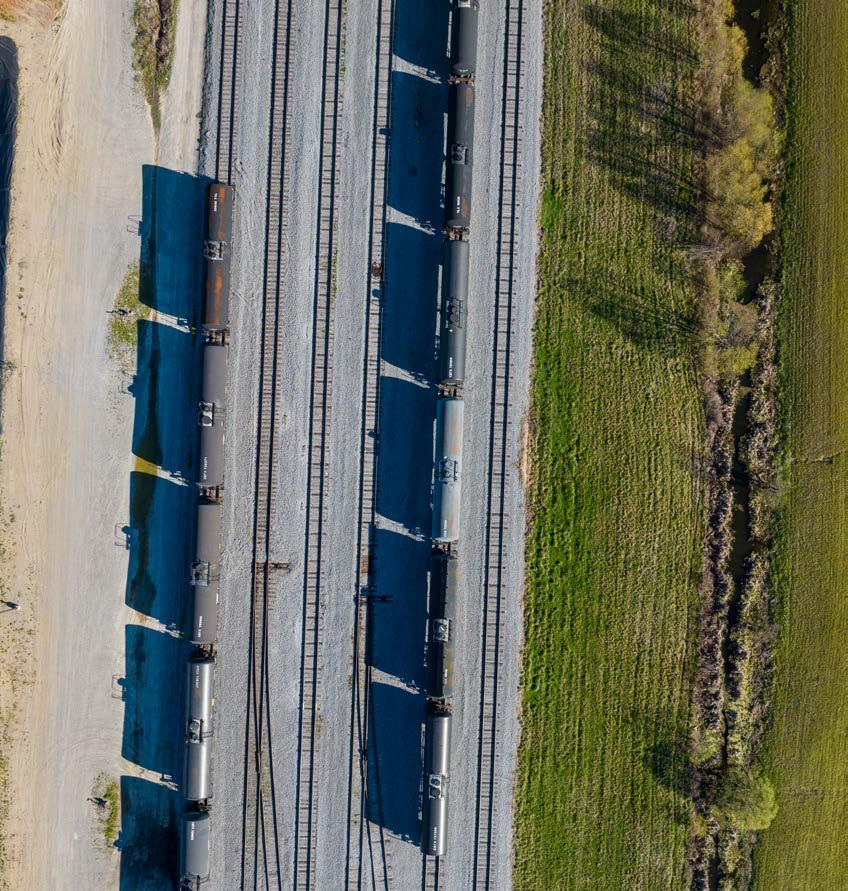
Cao enrolled at Wichita State University in economics, where a professor spotted his interest, which led to an accelerated program with a focus on business analytics and a master’s degree. “I really like business analytics, and I can’t dance forever,” he explained. “Normally, guys who dance retire at about 30.” Nonetheless, he continued to dance after college classes. Recalling his job search, he laughed, “It’s crazy how different theater resumes are compared to corporate resumes.” Cao landed an internship at POET’s Wichita office that has transitioned to a full-time job. He says it reminds him of his days in New York and Kansas City, where he would sit down and get lost working at the computer. Now he crafts data solutions, such as a system to automate what had been hand-entered railcar data for tracking and forecasting.
“Tim Cao is a standout contributor to our BSA (business support analytics) team — analytically sharp, energetic, and always willing to share his expertise. He’s exactly the kind of person who makes a team stronger,” said Pauline Alcocer, Cao’s supervisor.
Although the two worlds — dance and business — are incredibly different, Cao sees synergies. “They are two separate worlds,” he said. “But I think my work ethic is a strength. A willingness to think outside the box stems from being in the arts. I notice when I build dashboards, they’re more colorful. I’m thinking how does this flow, because in dance we think of being organic with our movements.”
Now working full-time, Cao is also following another family influence: real estate. He recently bought and began renovating a house. But, ballet isn’t totally off his radar. Last December, with just two weeks’ notice, he replaced an injured dancer in The Nutcracker at the Wichita Ballet.
And he realized he missed it.
So he’s back in the studio, getting back into shape and planning to audition once again. Because even when life takes an unexpected turn from Broadway to business analytics, some passions never really leave the stage.

By Buddy Kavalier, Research Strategist, John Deere Power Systems
For decades, agriculture has relied primarily on a single fuel solution to power its most demanding equipment. Diesel earned that role by delivering the torque, durability, and reliability needed for long days in the field and heavy seasonal workloads. Tractors and combines were built around those requirements, and diesel delivers them consistently, making it the standard across the agricultural industry.
Today, that foundation set by diesel remains important. But as the agriculture industry looks ahead, fuel choice is becoming part of a broader conversation about performance, economics, and the long-term health of the agricultural industry. Farmers are beginning to explore how different fuel options can fit alongside established solutions, giving them more flexibility to choose what makes sense for their operations and the broader agricultural ecosystem.
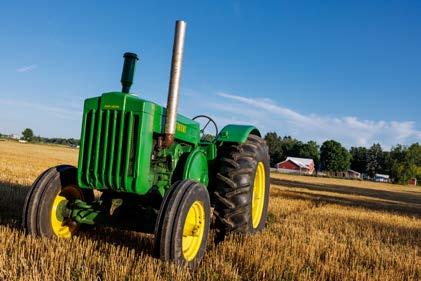
Bioethanol is beginning to emerge as part of that evolving landscape — and today, John Deere is actively testing bioethanol-powered equipment with customers on 8R tractors, helping to bring greater visibility to bioethanol’s engine performance and its potential role in modern agriculture. While the tractor remains a prototype, early customer testing has offered important insight into bioethanol’s ability to deliver the level of performance farmers expect.


Long before today’s discussions about renewable fuels, agricultural equipment was designed around the fuels farmers had access to at the time. In the early decades of tractor development, John Deere built machines capable of running on a range of fuels, including alcohol-based options, supporting farmers through the fuels they had access to and the economic realities of the time.
As farming operations grew and evolved, diesel emerged as the dominant fuel for highhorsepower equipment. Its energy density and durability made it a great fuel choice, and for decades, it has remained the backbone of agricultural power systems.
What has changed in recent years is the technology surrounding the engine itself. Advances in controls, combustion systems, and fuel delivery now allow modern spark ignition engines to manage heavy, changing loads and support farmers’ demanding work in the field.
The prototype bioethanol-powered John Deere 8R tractor emerged from a broader effort to understand how future fuel options can support large agricultural equipment. Deere’s work reflects the ongoing evaluations of fuel pathways that can align with agriculture’s long-term needs.
Beyond performance, bioethanol’s role in agriculture resonates because of how closely it connects fuel usage back to farm production.
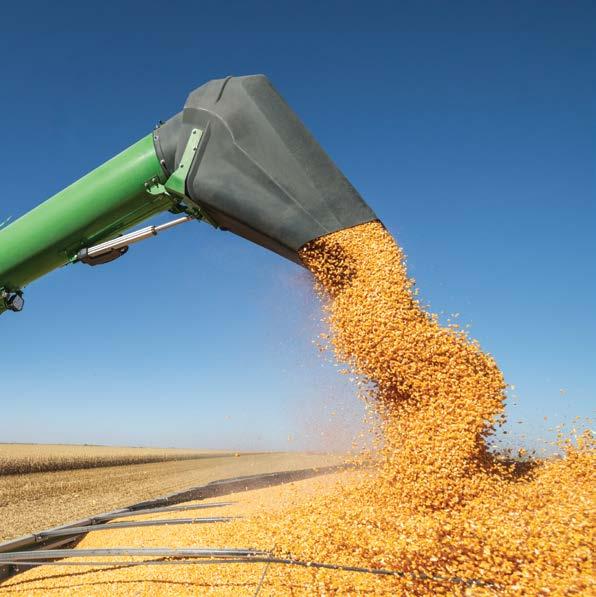
Produced from crops like corn and sorghum in the U.S., bioethanol supports a circular economy in which farmers are often both producers and stakeholders. On average, U.S. farmers plant about 90 million acres of corn each year, with approximately 40% of that used in bioethanol production. In many cases, farmers are also connected to local bioethanol plants through cooperatives, partnerships, or community investment. In the U.S., bioethanol production exceeds 16 billion gallons annually. This demand helps support agricultural markets and rural communities.
Using bioethanol in agricultural equipment ties crop production and economic benefits together. In 2024, the bioethanol industry directly supported 56,000 jobs and contributed $53 billion to the U.S. GDP. It reflects agriculture’s essential role across the entire value chain.
This connection is extremely meaningful as farmers think about long-term resilience for both their operations and their communities.
Another area where bioethanol is drawing attention is emissions management. Bioethanol burns cleaner than diesel, creating opportunities to simplify exhaust aftertreatment systems.
Modern diesel engines rely on complex emissions systems made up of multiple components, along with the ongoing use of diesel exhaust fluid (DEF). Required by Federal regulations, these systems add layers of operational complexity, maintenance, and cost considerations for farmers.
Bioethanol-powered engines offer a different approach. Because bioethanol is a cleaner-burning fuel compared to diesel, there is potential to simplify aftertreatment designs and reduce reliance on some of the emissions-related components farmers manage today. Over time, that simplification could reduce operational friction and improve the overall experience for farmers. In other words, using bioethanol could result in not needing DEF.

Bioethanol’s potential in agriculture comes down to a few practical benefits: it can deliver the power and performance farmers need and support the agricultural system that produces it. Those benefits are reflected in how bioethanol performs in real-world conditions.
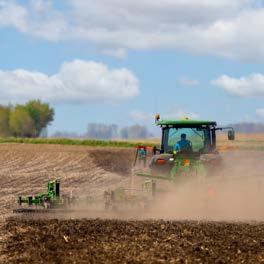
Early field demonstrations of the bioethanol-powered 8R tractor took place across multiple Midwest farms and included demanding conditions such as tillage & grain cart applications — jobs in which power and reliability matter most.
Early field evaluations on select Midwest farms allowed farmers to experience the prototype bioethanol-powered John Deere 8R tractor in typical tillage and grain handling applications. Farmers involved in these demonstrations noted that the tractor supported familiar implement loads for its horsepower class. While these initial results are encouraging, continued testing will help us better understand performance across diverse operating conditions, workloads, and duty cycles. These early insights are essential as we work toward diesel-like performance outcomes while evaluating bioethanol as one of several potential future fuel pathways.
Looking ahead: Fueling the future of agriculture with homegrown horsepower
John Deere’s approach to bioethanol-powered equipment is focused on understanding performance, durability, and how bioethanol-powered systems integrate into agricultural operations.
At its core, this work recognizes farmers as the foundation of the agricultural system — producing the crops that feed communities, provide fuel, and sustain rural economies. Deere’s exploration of new fuel options starts with supporting that role and ensuring equipment continues to meet the demands farmers face every day in the field.
With any change in fuel systems, there are always hurdles. John Deere has been actively exploring solutions to energy density, on-board fuel storage and tendering, on-farm storage of E98, as well as distribution of bioethanol to farms. But as customer testing continues and farmers gain firsthand experience, bioethanol’s role in modern agriculture is coming into a clearer focus.
It offers a compelling combination of performance potential and application benefits that go beyond the engine itself. For farmers thinking holistically about their operations, bioethanol is increasingly part of the conversation that connects crops, equipment, and rural economies in a meaningful way.
As agriculture continues to evolve, so will the technologies that power it. Bioethanol-powered equipment represents one way the industry is exploring how performance and the agricultural ecosystem can move forward together.
By Clayton Rye
During his life, my dad, along with his father and brothers, saw farming evolve from horsepower on four legs to horsepower on steel wheels and then on rubber tires.
My dad passed away in 1999 at age 83, a third-generation farmer on a farm that began when his grandparents bought 160 acres of virgin north Iowa prairie in 1875. I am the fourth generation on this farm, and today my son operates it as the fifth.
Since my dad’s time, the changes have continued, but at a much faster pace. My son and I will occasionally talk about what Grandpa would think if he could see how farming has changed in a mere 27 years.
Back then, I saw my dad pull a four-row planter with a John Deere A. No cab, no lights that could be called useful for working after dark, and what really amazes me is that he started after midMay and hoped to be done by the first days of June. That was planting corn only, no soybeans, on a 260-acre farm that also raised oats, hay, cattle, hogs, and chickens.
By 1999, I planted corn with a 12-row planter, guided by a mark in the soil made in my previous pass across the field. When the sun set, I had to quit because I could not see the line. My rows were not as straight as my neighbor’s. I described them as “having a graceful arc.”
My son now plants using a 24-row planter, guided by satellite, and when the sun sets, he keeps going as long as he wants. His rows are arrow straight.
About 25 years ago, I invested in a bioethanol plant a few miles north of here, across the state line in Minnesota, to create a stronger market for corn. I was tired of selling for less than $2 a bushel.
In addition to that first facility, a field across the road from our farm became the site of another bioethanol plant that has now been in operation for over twenty years.
Today, bioethanol has become a dependable demand source for a crop that has grown beyond what we once thought possible. We’ve seen a rapid increase in productivity and corn yields. Last year, we grew a 16-billion-bushel corn crop in the U.S. That caught the corn market (and us corn growers) by surprise. A crop of that size was unthinkable in 1999. We need more bioethanol to continue to be a dependable market for our huge supply of corn. I like being our own best customer. I made a point to know which stations sell E15, and I buy my gas there.
But there are still limits to each planting season that no amount of bigger and better equipment can change. The growing season begins with the last frost each spring and ends with the first frost each fall.
We can plant faster and cover more acres than ever, but when corn sits in the ground for three weeks, without emerging, it tells me that nature’s growing season is going to have the last word on when our race to the finish starts and ends.
Maybe that won’t always be the case. Somewhere, a seed geneticist could be working on a corn seed that grows like tulips, pushing through at the first warmth, shrugging off a late frost, and standing straight and tall by noon.
Or how about a variety of corn that is high in starch, producing more bioethanol per bushel? That seed will probably have its own herbicide, too.
We might even see a day when both harvesting and planting take place in the fall, with new machinery without cabs or steering wheels to accomplish the new fall harvesting-tilling-fertilizing-planting operation.
Instead of sitting in a cab, farmers will be remote, sitting at a desk, watching the work being done on a computer screen from wherever they want to be. Maybe Miami Beach?
Think of it: The only activity each spring will be pickup trucks driving up and down roads looking for that first newly emerged corn. Muddy fields? Who cares.
And you know what? It will still be a race to get it all done.
Some things don’t change.


POET expands its global animal feed footprint with launch of POET de Ecuador
By Erin Branick, POET Media Manager
POET has taken another major step in its global growth strategy with the launch of POET de Ecuador, a new international location designed to meet rising demand for high-value, nutrient-dense feed ingredients like corn fermented protein (CFP) across Latin America’s rapidly expanding aquaculture sector.
The decision to establish a presence in Ecuador was driven by both opportunity and experience. POET has been exporting products to the country for years and has built strong relationships with several leading shrimp producers, an industry that represents one of the world’s fastest-growing and most technologically advanced aquaculture markets.
The expansion also builds on POET’s strength as the 11thlargest container shipper in the U.S., a logistics advantage that positions the company to compete globally with confidence and scale.


“We already had a solid customer base in Ecuador,” said POET Latin America Merchandising Manager Edgardo Cazares, who leads POET de Ecuador in addition to the POET de Mexico team. “Ecuador’s shrimp production is a sophisticated, high-tech market that’s been growing near double digits. Once we saw how receptive producers were to the innovation behind POET’s Corn Fermented Protein, establishing a permanent presence just made sense.”
According to POET Director of High Protein Ingredients Derek Balk, the new location strengthens POET’s competitive position and offers advantages that simply weren’t possible through exports alone. “For POET to continue to grow, we have to be willing and able to go international,” he said. “North America represents only about a quarter of global animal feed production. If we want access to the broader market, we need to bring the POET experience directly to the customer’s door.”
Launching a formal subsidiary also reflects POET’s disciplined, intentional approach to international expansion.
“We’re very calculated in what we do,” said POET Bioproducts Vice President of Business Operations Trevor Freudenthal. “We don’t take these decisions lightly, but once we aligned on the opportunity, our team moved fast, and everyone was all in.”
That company-wide engagement was a defining part of establishing the new operation. “It was definitely a cross-department initiative,” said Freudenthal. “It involved our bioproducts team, legal, tax, accounting, communications, everybody.” The cross-functional effort not only accelerated the launch but also ensured that POET de Ecuador would be built on the same foundation of quality, compliance, and dependable service that defines POET’s domestic operations.



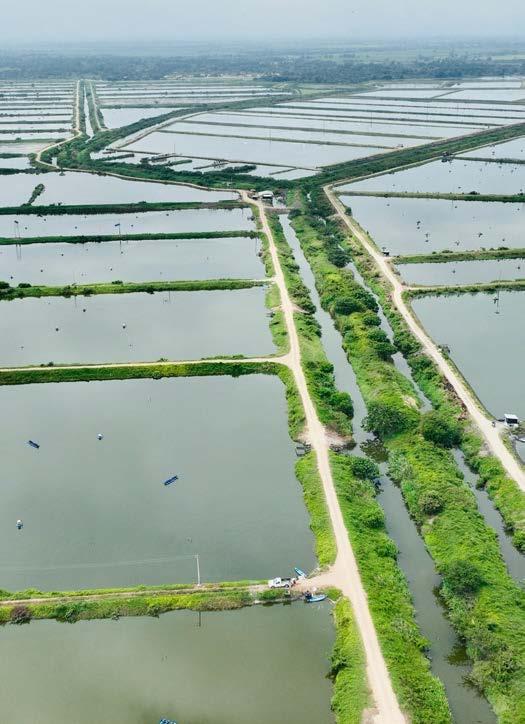
POET’s investment in Ecuador delivers significant value for local aquaculture operations. By importing products directly, managing inland logistics, and keeping inventory on hand in-country, the company can ensure consistent supply and reliable service — key needs for an aquaculture industry that depends on predictable feed inputs.
“Before this, each customer was managing their own supply chain,” Balk explained. “That made it difficult for POET to optimize shipments, especially during periods of high demand. With POET de Ecuador, we can ship when production is strong, build inventory ahead of peak seasons, and smooth out the peaks and valleys.”
POET’s investment also builds on the company’s expanding logistics footprint, including the significant growth at POET Terminal – Savannah, which serves as the origin point for product moving to Ecuador. “Owning that site has been a game-changer,” Cazares noted. “We always know we’ll have the capacity we need, and as Savannah grows, POET can grow with it.”
Ecuador’s aquaculture industry — particularly shrimp — has proven to be an ideal fit for POET’s CFP. Producers there are highly educated, disciplined, and quick to adopt innovations that improve feed conversion, health, and overall performance.
“Shrimp production sees significant value created with their use of CFP,” Cazares said. “Producers can measure improvements quickly, even small ones, because their operations are run so efficiently.”
According to Balk, that performance edge is a major driver of demand. “They’re looking for digestible, nutrient-dense protein sources,” he said. “CFP typically provides a $7 to $12 per ton advantage depending on proteins replaced; combine that with producers seeing about a 5% improvement in survivability. That’s huge.”
POET’s history in Ecuador illustrates both the potential and the momentum of its new investment. “We started with one container in 2018,” Balk recalled. “By 2022 and 2023, we had grown exponentially. POET de Ecuador builds on that strong foundation and positions us to grow even further as demand continues to rise.”
With a dedicated local presence, a strengthened supply chain, and a product uniquely suited to the region’s needs, POET is poised to play an even larger role in one of the world’s most dynamic aquaculture markets.
“Ultimately,” Cazares said, “this is about giving producers in Ecuador consistent access to a high-quality, reliable, innovative protein source, and supporting them as they continue to lead the global shrimp industry.”
Congresswoman Haley Stevens
By Paige Lindgren, POET Director of Public Affairs
Haley Stevens, one of the most effective lawmakers in Congress on science and innovation policy, is leading the way in Congress to fuel innovation for farmers, biofuel producers, and American manufacturing.
A Michigan native who grew up in an entrepreneurial household, where her parents ran a landscaping business and hauled equipment in their Ford F-150, Congresswoman Haley Stevens learned the importance of hard work, grit, and determination from a young age. Sharing those principles with Michigan farmers, she has been a champion for American innovation and agriculture since coming to Congress in 2019.
Congresswoman Stevens has long recognized the benefits of bioethanol over traditional fuels. She’s supported efforts to allow for year-round E15, expand infrastructure for higher fuel blends, and build and grow America’s energy landscape. As a cosponsor of the Nationwide Consumer and Fuel Retailer Choice Act, Stevens has touted expanded E15 access, praising the policy to “lower gas prices at the pump and open new opportunities for Michigan farmers to sell their crops.”
Representing the state that put the world on wheels, Stevens is the strongest advocate in Congress for Michigan autoworkers and manufacturers. Her district in Metro Detroit is home to many of the Big Three’s suppliers, often small-to-medium size manufacturers that require affordable fuel options to make and transport the building blocks of American cars.
A self-proclaimed “manufacturing geek,” she’s held nearly 200 ‘Manufacturing Monday’ visits to these manufacturers, going straight to the source, hearing directly from leaders and workers about what Michigan manufacturers need. She’s always focused on new solutions to innovate here in America while lowering costs across the board for American families, including legislation she’s spearheaded to advance clean energy practices, including the expansion of biofuels. As Stevens put it, the United States must adapt to growing international demand for clean fuels because “the future of America’s auto industry and Michigan’s economy depends on our nation’s ability to compete in the global transition to clean transportation.”
At POET, we know America’s bioprocessing sector is essential to meeting that challenge. Policies like 45Z ensure that farmers and biofuel producers can invest in technologies and practices that unlock new markets and increase demand for bioethanol and corn produced right here in the U.S. As one of the earliest advocates for 45Z, Congresswoman Stevens led over 100 of her colleagues in pushing for clean energy tax incentives during her first term in 2019. A few years later, thanks to her efforts, 45Z was secured in the Inflation Reduction Act of 2022.
Congresswoman Stevens’ commitment to expanding bioethanol markets and strengthening domestic energy production helps ensure farmers and biofuel producers remain competitive while delivering affordable, cleaner fuel options for consumers. POET PAC, Michigan, and America’s farmers have a strong champion in Congresswoman Haley Stevens.
Ready to join the thousands of members who are already making their voices heard? Visit www.poetpac.com or email poetpac@poet. com to join POET PAC today!
Contributions to POET PAC are not tax-deductible for federal income tax purposes. Contributions to POET PAC will be used in connection with federal elections and are subject to the limits and prohibitions of federal law. The maximum an individual may contribute to POET PAC is $5,000 per year ($10,000 per couple). Corporate and foreign national contributions are not permitted under federal law. Please make checks payable to POET PAC. Federal law requires us to use our best efforts to obtain and report the name, mailing address, occupation and name of employer for each individual whose contributions aggregate in excess of $200 per calendar year. Your contribution to POET PAC is strictly voluntary.

PAID FOR BY POET PAC

POET’s recent acquisition of its Obion, TN facility brings improved reliability, stronger operations, and optimism for the future
By Andrea Van Essen
“When I see and talk to our farmers, they’re perfectly happy. It’s not a small change we have seen; it’s an enormous change the whole community has seen,” said Mandy Correa, Quality Manager at POET Bioprocessing – Obion.
Every bioethanol plant has a story shaped by the people who built it, the farmers who supply it, and the team members who keep it running every day. In Obion, Tennessee, that story spans nearly two decades.
The facility has long been supported by a dedicated local team and loyal farmers. Like many industrial operations, it also faced periods where aging equipment and limited resources made daily operations more challenging. But the strong foundation built over the years never disappeared — it simply needed renewed investment and support.
Today, under POET’s ownership, that foundation is being strengthened, bringing new reliability to the plant and renewed confidence to the farmers and community who depend on it.
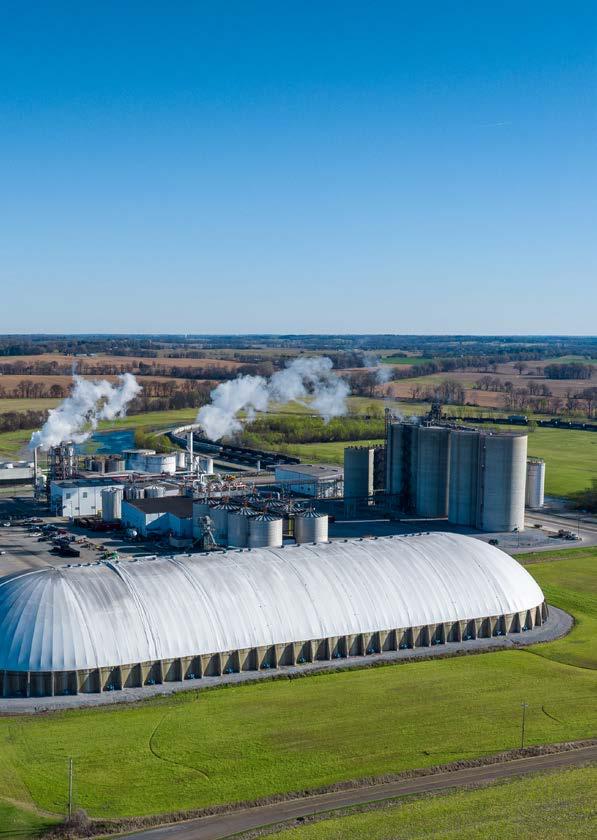



In September 2025, POET acquired the Obion facility, which has a production capacity of 120 million gallons of bioethanol per year, from Green Plains Renewable Energy. Commissioned in 2008, the facility also produces corn fermented protein, complementing POET’s portfolio of animal feed ingredients alongside DDGS and distillers corn oil.
The acquisition expanded POET’s network to 35 bioprocessing facilities across nine states, bringing the company’s total annual bioethanol production capacity to more than 3.1 billion gallons. The Obion location also strengthens POET’s reach into southeastern markets for bioethanol and bioproducts while diversifying the company’s corn draw.
“Obion is a strong facility with a talented team and long-standing relationships with local farmers,” said Jeff Lautt, POET COO and President. “Bringing the plant into the POET network underscores our confidence in the future of biofuels and American agriculture. It has allowed us to expand our reach and produce even more high-quality biofuels and bioproducts for the markets we serve.”
After POET took over, the 76-person team continued to focus on what they do best: working together safely and efficiently.
Many pieces of equipment have been repaired or upgraded, and new communication systems have been put in place. Local farmers have taken notice.
“We have a text messaging system now so that the farmers can get notified if something is down, so they don’t come down and waste their time,” said Correa.
And inside the plant, morale has improved, too.
“A big thing for us is that Obion is a plant full of working managers,” said Allan Dotson, General Manager. “We don’t sit in our offices; our team sees us. As the general manager, I turn wrenches, I shovel corn off the ground, whatever needs to get done, we’re all here as one.”
Many of the team members at Obion have been there since day one, including Dotson, who was one of the original four shift supervisors when the plant opened in 2008. His plant manager, Shaun Bailey, has also been there from the start, and Correa celebrates 13 years at Obion this year.
“We have a lot of tenure and a lot of knowledge on our site,” said Dotson.
That combination of experience and trusted relationships has built a strong foundation for the plant’s success. They just needed the organizational investment to back it.
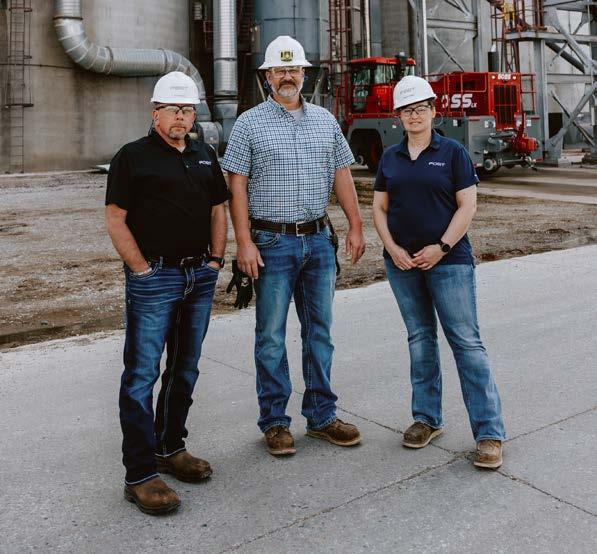
Both Dotson and Correa note that POET has come into this new relationship looking for ways to provide support.
“You can tell they respect the people who work at the plant,” said Correa. “Allan and I were just up at the corporate office, and you get the sense that the people at corporate understand that the people at the plants are the ones making these products, and they’re looking to help you out.”
That kind of support reinforces the “One POET Team” concept, which is a concept the Obion plant has embraced amongst its own team for years.
“Everybody who’s here does things every day that are not part of their job. We just do what we do because we know it’s important. There’s nobody who isn’t going to help you out. I help you, you help me. It’s a two-way relationship,” Correa said.
Now, with the plant running more reliably, the Obion team can set maintenance concerns aside and look ahead to expansion projects and new opportunities that will improve the facility even further. Perhaps just as important, they’re focused on improving visibility and engagement with the community.

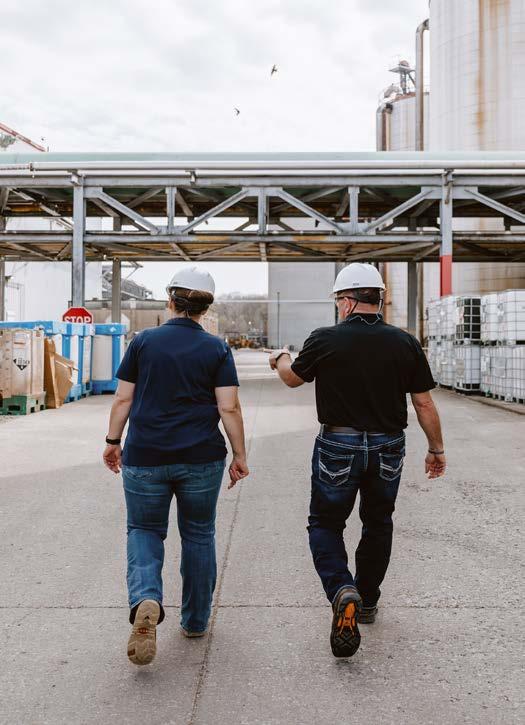
For Correa, that’s an area where POET’s involvement stands out. The Obion plant, which has always been known as a local grain processor, is now part of local conversations for a different reason.
“POET offers the Never Satisfied Scholarship, and I actually just reached out to our local high school about it,” Correa said. “People are starting to get to know us now, so we’re excited to get the word out about the scholarship.”
Correa, who worked as a preschool teacher before coming to the plant, also appreciates the chance to return to schools and share what a career in bioprocessing can look like.
“We get to go out into the schools and talk to them about what we do at the plant and what our job entails,” she said. “As a former teacher, I love getting back in the schools, and that’s something we weren’t doing before.”
Dotson adds that the team has always valued community involvement, even when it wasn’t feasible.
“In the past, we had been reaching out to the community, sponsoring baseball teams, that kind of thing, but in recent years, we had gotten a bit limited in what we could do. Being involved locally has always mattered to this team. You’ve got to have the back of your community,” said Dotson.
“It’s about being a good steward of your community — for example, the local volunteer fire department was down to one battery running four pieces of equipment, and we were recently able to purchase several batteries for them. That’s a big thing for a small town, and we look forward to doing more in the future,” he said.
Dotson says he’s also noticed something else changing in town.
“You see team members wearing POET-branded gear around town now, which speaks volumes to their support for the plant and the company,” he said.
In a small town like Obion, those positive connections matter. For the team, being able to show up for their neighbors is a sign that the plant is moving in the right direction — efficiently, safely, and together.
By Matt Ward, POET Senior Manager of Government Affairs
After years of uncertainty, Congress is closer than ever to delivering a permanent solution for year-round E15 sales.
The U.S. House of Representatives recently passed bipartisan legislation allowing the nationwide, year-round sale of E15 by a vote of 218-203. This could not have happened without biofuels champions on both sides of the aisle. Representatives held press conferences, advocated personally to their colleagues, and spoke on the House floor in support of E15. Because of their efforts, Members of Congress from both parties and states well beyond the Midwest joined in supporting and passing this bill.
Rep. Michelle Fischbach, R (MN-07), sponsor of H.R. 1346 said upon passage, “This bill will provide certainty for our rural economies, lower costs for families, and strengthen our national energy independence. I am incredibly proud to have supported this legislation and see it pass the House Floor.”
The legislation now moves to the Senate, where Majority Leader John Thune has been tasked by President Trump with advancing E15 legislation and finally providing the certainty consumers, fuel retailers, farmers, and biofuel producers deserve.
This is a big win for biofuels champions, but we’re not done yet.
This summer marks the fifth consecutive year that emergency action by the Environmental Protection Agency (EPA) has been required to ensure drivers can continue accessing E15 during the busy driving season. While those emergency waivers have helped avoid disruption, they were never intended to be a long-term solution. Retailers making investments, farmers planning for future demand, and biofuel producers serving growing markets need consistency and reliability — not annual uncertainty.
A permanent legislative fix would accomplish exactly that.
Most importantly, it would give consumers year-round access to a more affordable fuel option. E15 can sell for 30 to 40 cents less per gallon than conventional gasoline, providing meaningful savings for families, commuters, and businesses at a time when every dollar matters. The legislation doesn’t require anyone to purchase E15. It simply gives retailers the option to offer another fuel choice and allows consumers to decide what works best for them.
Today’s E15 market is already substantial and growing. More than 5,000 retail locations across the country offer E15, and the fuel is approved for 96% of vehicles on the road today. Many consumers are surprised to learn that the vast majority of existing fuel infrastructure, like pumps, hoses, and storage tanks, can already handle E15 just as it handles E10, making expanded availability both practical and cost-effective.
Beyond affordability, E15 strengthens American energy security. Every gallon contains more homegrown fuel produced from crops grown by American farmers and processed in American communities. At a time when global energy markets remain unpredictable, increasing access to domestic energy sources helps reduce dependence on foreign oil and keeps more energy dollars circulating within the United States.
E15 also offers environmental and public health benefits. Bioethanol displaces aromatics and other petroleum-based compounds commonly found in gasoline, helping create a cleaner-burning fuel while reducing the need for chemicals that contribute to harmful emissions.
Perhaps most importantly, E15 represents a uniquely American success story. It is made right here in the United States by hardworking people in communities that embody the values of hard work, innovation, and common sense. It supports rural economies, creates jobs, expands markets for farmers, and provides consumers with a cleaner, more affordable choice at the pump.
“Today’s House passage of my Nationwide Consumer and Fuel Retailer Choice Act marks a historic win for America’s consumers, farmers, and energy independence. For over a decade, I have championed nationwide, year-round E15 to end years of patchwork regulations and expand muchneeded market access for Nebraska’s biofuels producers.”
Said Rep. Adrian Smith, R (NE-03) via a press release, “While I am grateful for the bipartisan support of my colleagues today, I know there is still more work to do. I urge the Senate to take up this bill and send it to President Trump’s desk so he can sign it into law and make nationwide, year-round E15 a reality once and for all.”
The House has done its job. Now it’s time for the Senate to do the same.
Democrat co-sponsor Rep. Nikki Budzinski (IL-13) said, “Today’s bipartisan action shows what’s possible when we put American energy, rural communities, and working families first. I’m proud to have helped lead this effort and urge the Senate to quickly pass this bill and get relief to the American people.”
Year-round E15 isn’t a partisan issue. The bipartisan House vote demonstrated that lawmakers from both sides of the aisle recognize the benefits of greater fuel choice, lower costs, and stronger American energy production. The Senate now has an opportunity to deliver a permanent solution that consumers, farmers, and retailers have sought for years.
Shortly before the house took the bipartisan vote, cosponsor Rep. Shontel Brown, D(OH-11) stated at a press conference in front of the Capitol, “After all the noise and all this delay, Congress will arrive at the same conclusion communities across Ohio and the Midwest understood for years, and that’s year-round E15 just makes sense.”
The finish line is finally in sight. Congress should cross it.





By Scott Johnson, A Thinker of Thoughts (and POET Data Systems Administrator)
My son Brooks was in fifth grade. A recent winter storm dumped a foot of snow. Snow clearing on the playground created man-made mountains for kids to explore. Brooks and his buddies claimed one of the hills as their own.
Brooks shimmied his way to the top, momentarily declaring himself “king of the mountain,” and leaped from the peak. He landed partway down the slope, sinking waist-deep into the snowbank.
When he popped back out, one shoe was missing.
There was a clean hole where his legs had gone in. The shoe had to be right at the bottom of the hole. The kids dug into the opening, scooping snow, confident the search would take seconds. But it didn’t.
They widened the initial hole. They flung snow with urgency and optimism. The shoe hadn’t vanished — it was merely hiding where they hadn’t yet looked.
Recess ended. No shoe. Disappointed, Brooks finished the school day with one wet sneaker and one wet sock (a one-shoed 5th-grade boy is shockingly more common than one would think).
That evening, we continued the search with shovels and adult capabilities. Surely we would resolve this conundrum.
We dug where Brooks said the shoe had to be. We dug where logic suggested it could have sunk to. We dug in places not yet disturbed. We excavated a huge section of the pile, creating something that looked less like a snow hill and more like a poorly planned mining operation.
Still no shoe.
Over the next several days, the legend of the missing shoe spread around school.
The search became a unifying challenge. Kids searched before school. During recess. After school. Efforts were heroic. Everyone agreed: the shoe was in the snow pile, and it would be found. Each failed attempt only reinforced the belief that more explorers and more effort were the only solution.
Until the search stopped.
Not because the shoe was found, but because exhaustion and frustration set in. Many concluded the shoe was gone. Or maybe never existed in the first place. “Are you sure you wore two shoes that day, Brooks?” Whatever the explanation, the outcome was the same. Our intense, dedicated efforts failed. After some deep sole-searching, we moved on. Defeated (also a shoe pun, if you squint really hard).
Eventually, winter loosened its grip. Spring arrived. The massive snow piles began to shrink. One day, a second grader spotted something poking out of the slush. He tugged it free.
The shoe.
A dirty, wet, white (originally), size six sneaker. Problem solved, almost accidentally.
We like problems that respond to effort. Ones we can outwork. Outthink. Out-organize. Stopping the effort feels like failure.
But sometimes letting go isn’t failure. It’s the only option that leaves room for resolution. Some problems don’t yield to effort. They yield to time.
The shoe wasn’t gone. It just wasn’t ready to be found.
Sometimes what we’re searching for is still there. It’s just…seasonally unavailable.