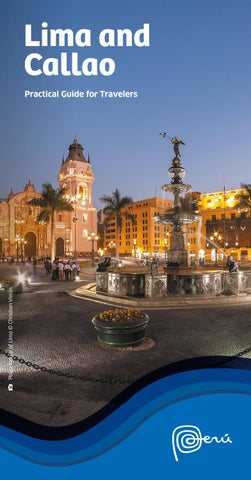
Lima and Callao
Lima and Callao
Location
West Central Coast of Peru
Weather
Temperature
Summer
Max.: 81 °F (27 °C)
Min.: 66 °F (19 °C)
Min.:
Max.: Altitude
10 ft (3 m) (Ancón)
2,823 ft (861 m) (Chosica)
Winter
Max.: 66 °F (19 °C)
Min.: 59 °F (15 °C)
Nov-Mar Jun-Sept Mar-Jun Sept-Nov
How to get here?
By land
From the north and south coast on the Panamericana highway. From the mountains and the central jungle on the Carretera Central highway.
By air
Regular flights from the main cities of the country and the world to Jorge Chávez International Airport (Callao), located approximately 30 minutes from the city of Lima.

Parque de
Museo Larco
January 18
April
July 28 & 29
July
August
August 30
October
October 31
Agenda
Anniversary of Lima
Official National Competition of the Peruvian Paso Horse
Lima International Book Fair
National Holidays
Lima Film Festival
Festivity of Santa Rosa de Lima
Month of Señor de los Milagros
Día de la Canción Criolla
Tours
1 day
1 day ½ day
day ½ day
3 days (minimum recommended stay)
Historic Center: Plaza Mayor, cathedral, convents, churches, and museums
San Isidro, Miraflores and Barranco: archaeological sites, museums, and parks
Pueblo Libre Tourist Route: Plaza Bolívar, Santa María Magdalena church, and Museo Larco
Santiago de Surco Tourist Route: Museo Oro del Perú, Parque Voces por el Clima and Parque de la Amistad
Lurín and Pachacamac: Sanctuary of Pachacamac and Peruvian Paso Horse show
What to buy?
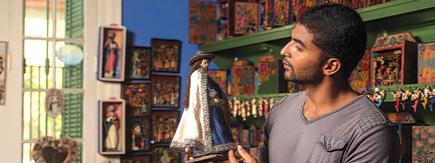
Artisan markets in Miraflores and Pueblo Libre offer representative pieces from all corners of the country. At Lima malls, you will find local and international products and brands. There are also fine and modern alpaca and vicuña garments in exclusive stores, and pieces of art and antiques along La Paz street or at Kennedy Park, both in Miraflores. For those interested, there are also remarkable gold and silver jewelry designs in sophisticated boutiques throughout the city.
What to eat?
Peru has been named Best Culinary Destination in the World for six consecutive years (2012-2017), and Lima is known as the gastronomic capital of Latin America, as it brings together and enriches coastal, Andean and jungle traditions — many of its restaurants are among the best in the world (50 Best). The creativity and skill of its chefs play a significant role, but so do the variety and freshness of the ingredients.
Iconic dishes, such as lomo saltado, also express this pairing; while ceviche, arroz con mariscos, and conchitas a la chalaca pay tribute to the sea that washes the coast of the city. Maíz morado (purple corn) acquires its maximum expression in the form of mazamorra and chicha morada. In Lima, you have to try ají de gallina, anticuchos, causa, and cau cau, and desserts, such as suspiro a la limeña or picarones. In the capital, the content of each dish, served in the simplicity of a market bar or in a sophisticated restaurant, is an endless recipe.
Crafts © Sandro Aguilar / PROMPERÚ
What to visit?
Centro Histórico
Due its history and architecture, the Historic Center of Lima has been declared Cultural Heritage of Humanity by UNESCO. The heritage is formed by “Lima cuadrada” (Squared Lima) or “Pizarro’s Checkerboard” and the Rímac district.
Plaza Mayor
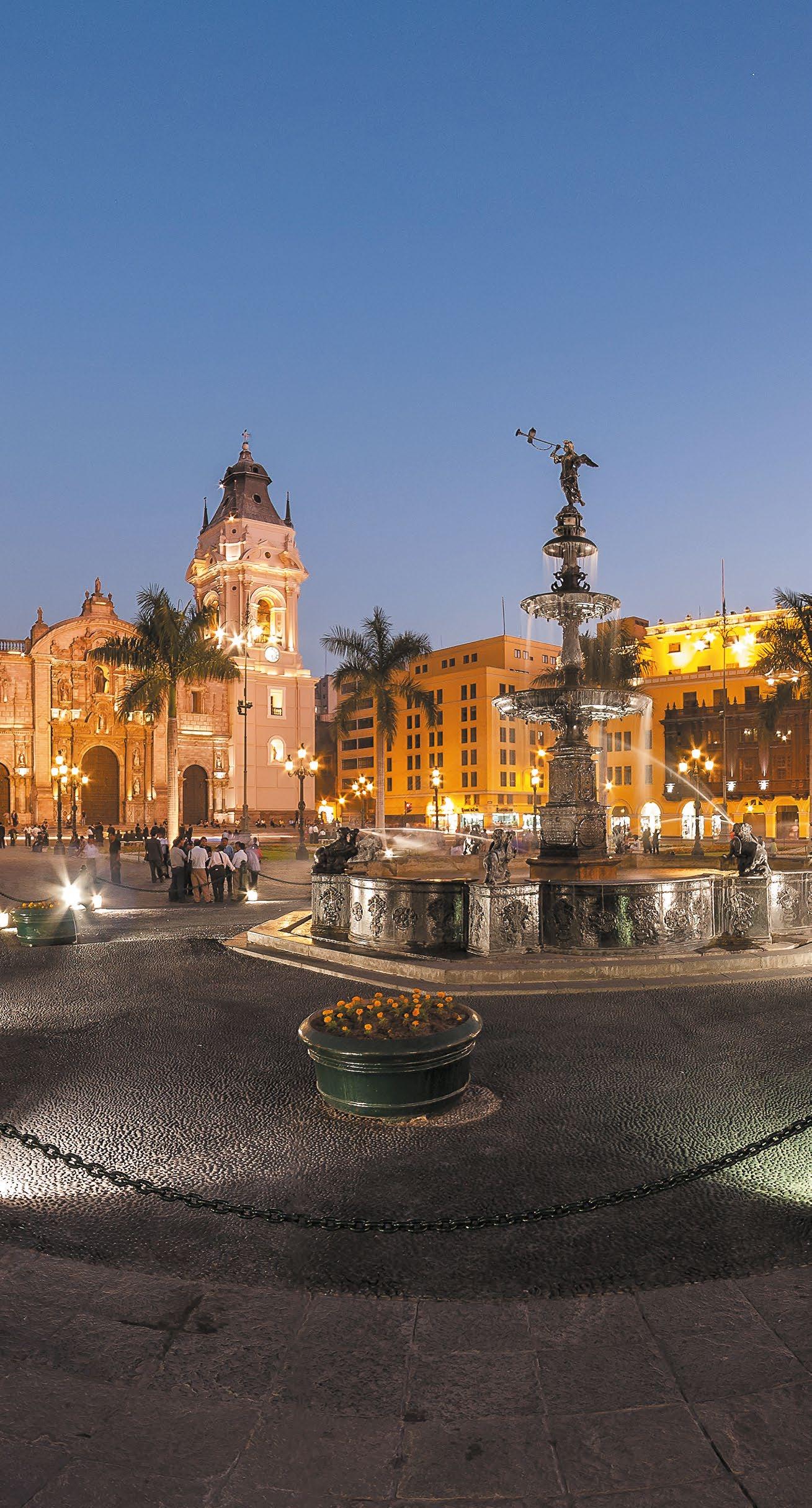
The Main Square is located in the center of Pizarro’s Checkerboard, and it is surrounded by the cathedral, the Government Palace, and the town hall. It is adorned by a 17th-century bronze fountain.
Basílica catedral y Museo Palacio Arzobispal
Visits to the Museum of Religious Art: Mon-Fri, 9:00-17:00; Sat, 10:00-17:00; Sun, 13:00-17:00
It stands over the foundations of the original Main Church. In addition to art pieces, it keeps the remains of the Spanish conquistador Francisco Pizarro and a museum of religious art. The Archbishop’s Palace Museum displays a collection of canvases, sculptures, and liturgical ornaments from the 16th to the 19th centuries.
Jirón Áncash
In the second street of Jirón Ancash, rise the beautiful structures of the Casa de las Trece Puertas (“House of the Thirteen Gates”), Casa del Rastro, Casa Mendoza, and the Casa del Balcón Ecléctico (“House of the Eclectic Balcony”).
Iglesia y convento de San Francisco
At Jr. Áncash and Jr. Lampa. Entrance fee charged to the museum and the catacombs. Visits to the San Francisco Convent Museum and Catacombs: Mon-Sun, 9:00-17:30.
Built in the 17th century, San Francisco Church and Convent has a Baroque façade with two imposing towers. The catacombs, an ancient underground cemetery, are the foundations of this monumental complex made up of the church and convent (museum), the Sanctuary of Nuestra Señora de la Soledad and the Capilla del Milagro: declared a Cultural Heritage of Humanity by UNESCO. The walls of the cloister are decorated with Sevillian tiles, in addition to a beautiful Mudejarstyle dome and a library with about twenty-five thousand books.
Museo de sitio Bodega y Quadra
Jr. Áncash 213. Tue-Sun, 10:00-18:00. Entrance fee charged. The mansion of the distinguished Bodega y Quadra family is today a site museum, and one of the greatest testimonies of colonial urban life. Its halls exhibit objects from the Colony and the Republic times.
Casa de la Literatura Peruana
Jr. Áncash 207. Tue-Sun, 10:00-19:00.
The literary history of our country is housed in the old Desamparados train station, a beautiful building from 1912. It is a meeting place for writers and readers, in which cultural activities, such as concerts, conferences, and theatre plays are also held.
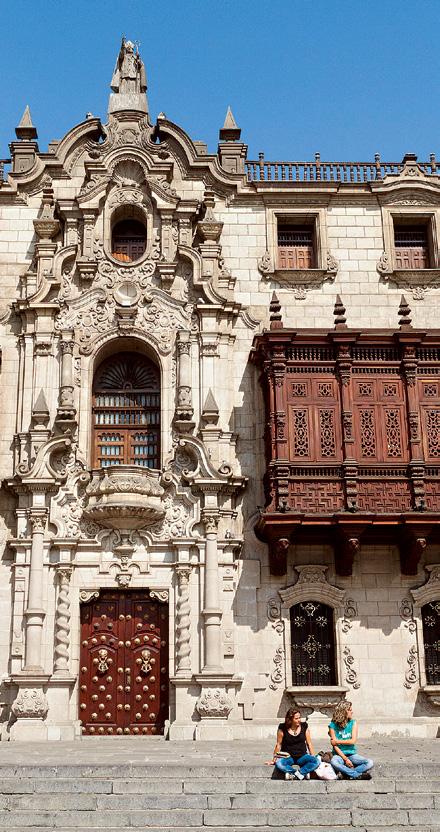
Palace (Historic Center of Lima) © Carlos Ibarra / PROMPERÚ
Palacio de Gobierno
Plaza Mayor. Visits after coordination. Tel. (01) 630-5600, Ext. 4308 / 4309.
Also known as the House of Pizarro for having been the place where in 1535 the conquistador settled, it is the center of the country’s political power. The current building was built in the 1920s, with halls named after prominent figures in Peruvian history. Every day at 11:45 you can witness the change of the guard in the Court of Honor.
Casa de Aliaga
Jr. de la Unión 224. Mon-Sun, 9:30-17:00, Please contact +511 427-7736 / +51 993-756-773 or reservas@casadealiaga.com to make a reservation.
Entrance fee charged.
Built in 1535 on the foundations of a pre-Hispanic building, the Aliaga House stands out for its colorful courtyards, and the Republican balcony on its façade. Currently, the house is still owned by the Aliaga family.
Iglesia y museo del convento de Santo DomingoSantuario de los Santos Peruanos
Jr. Camaná 170. Tue-Sun, 9:30-17:00. Entrance fee charged. In 1551, Universidad Nacional Mayor de San Marcos, known as “the Dean of America”, was inaugurated in this place. The museum keeps the tombs of Santa Rosa de Lima and San Martín de Porres, and the church hosts the Altar to the Peruvian Saints.
Museo de los Combatientes del Morro de Arica
Jr. Cailloma 125. Entrance fee charged.
The hero Francisco Bolognesi was born in this house in 1816. Today it displays his gala uniform, as well as other personal items. There are also halls dedicated to combatants Joaquín Inclán, Alfonso Ugarte, and Roque Sáenz Peña.
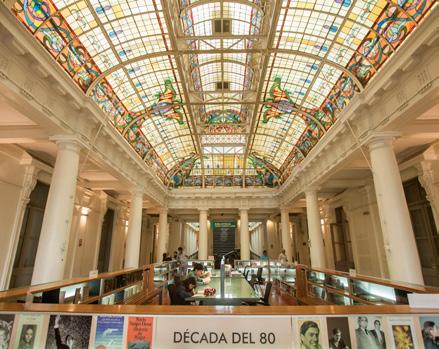
Casa de la Literatura Peruana © Adrián Portugal / PROMPERÚ
Teatro Municipal de Lima and Museo Municipal de Teatro Jr. Ica 377. Open during season.
Museo Municipal: Jr. Huancavelica 338
Since its inauguration in 1920, important national and world stars have walked on this stage. It was reopened in 2010 after the fire of 1998. Plazuela de las Artes and the Museo Municipal de Teatro, which houses the history of theatre in Peru, complement its monumentality.
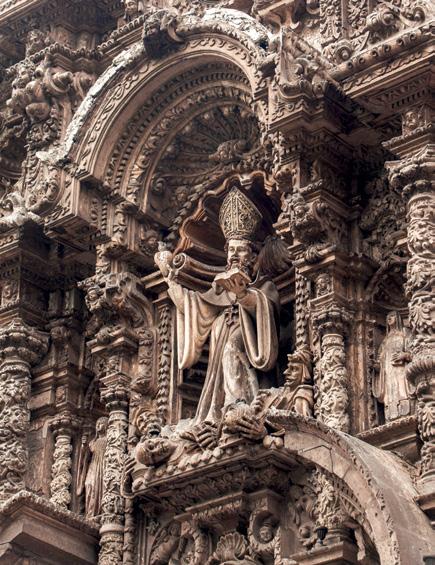
Iglesia San Agustín
Jr. Ica 225
Originally founded in 1573, the imposing Churrigueresque façade of the San Agustín church was restored after the devastating earthquake of 1746.
Church of San Agustín © Adrián Portugal / PROMPERÚ
Museo de Artes y Tradiciones Populares
Luis Repetto Málaga
Jr. Camaná 459
Since 1979, the Luis Repetto Malaga Museum of Popular Arts and Traditions has displayed more than 10,000 pieces of popular art, including textiles and imagery.
Museo Naval Casa Grau de Lima
Jr. Huancavelica 170. Entrance fee charged.
Admiral Miguel Grau and his family lived in this late 18th-century mansion, and today it houses this museum that displays photographs and furniture from the time, as well as the letters written by the Peruvian hero to his wife.
Casa O’Higgins
Jr. de la Unión 554. Tue-Sun, 10:00-20:00.
This 19th-century mansion was home to Chilean politician and military officer Bernardo O’Higgins. Currently, it is a cultural space with temporary exhibitions.
Jirón de la Unión
A historic shopping street, but one that is also home to beautiful mansions, such as the Courret house, with a façade in the Art Nouveau style.
Iglesia y convento Nuestra Señora de La Merced
Jr. de la Unión 621
Nuestra Señora de la Merced church and convent, founded in 1535, has a beautiful façade made of grey and pink stone. Every September 24, Armed Forces cadets carry Virgen de La Merced in procession on their shoulders.
Museo Central (MUCEN)
Jr. Ucayali 271
Behind its large iron door, MUCEN exhibits interesting architecture from the 1920s. It has four halls dedicated to archaeology, to republican and contemporary Peruvian painting and popular art, to Hugo Cohen gold collection, and to children’s cinema and theatre.
Casa Goyeneche
Jr. Ucayali 358
The Goyeneche House is a private property whose façade highlights the Rococo style which in 1771 turned it into one of the first mansions with French influence.
Palacio de Torre Tagle
Jr. Ucayali 323
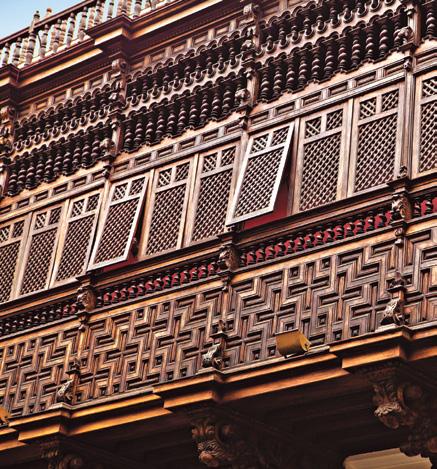
The Torre Tagle Palace is the headquarters of the Ministry of Foreign Affairs and a fine example of the residential architecture of 18thcentury in Lima, with its lattice balconies with fine carved details.
Centro Cultural Inca Garcilaso del Ministerio de Relaciones Exteriores
Jr. Ucayali 391. Tue-Fri, 10:00–20:00; Sat-Sun and holidays, 10:00–18:00.
The former house of the Aspíllaga family, dating back to the 19th century, houses Inca Garcilaso Cultural Center, with exhibition halls, auditoriums, and a large library.
Iglesia de San Pedro
At Azángaro and Ucayali streets
Opened in 1638, the church of San Pedro boasts an impressive collection of 17th- and 18th-century altarpieces, its 19th-century neoclassical main altarpiece, and colonial paintings.
Gran Biblioteca Pública de Lima
Av. Abancay, cdra. 4
This building is now the Great Public Library of Lima and was the original home of the National Library for its first 184 years. The construction we can see today dates back to the 1940s.
Barrio Chino
At Ucayali and Andahuaylas streets, Barrios Altos
The hub of Chinese culture in Peru can be found by walking across the Monumental Gateway, which welcomes visitors to this emblematic neighborhood. The “chifas” are popular restaurants where you can enjoy the extraordinary fusion of Chinese and Criollo food, and there are galleries where traditional Chinese products can be found.
Balcony of Torre Tagle Palace © Carlos Ibarra / PROMPERÚ
Cementerio y Museo de Sitio Presbítero Matías Maestro
Jr. Áncash 1611, tel. (01) 352-6208. Entrance fee charged.
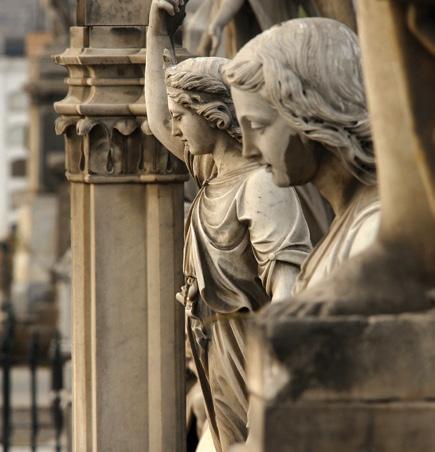
Opened in 1808, this Cemetery and Site Museum is named after the Spanish architect who designed it. Its 766 monuments are examples of the finest colonial and republican art. Important characters from our history have been laid to rest within its grounds. Guided night tours are organized every month.
Santuario de Santa Rosa de Lima
Av. Tacna, cdra. 1
The Sanctuary of Santa Rosa de Lima was built between the 17th and 18th centuries, around the shrine that the patron saint of the Americas, the Indies and the Philippines built in 1614, the lemon tree she planted, and the well where she threw the key to her belt, and to which the faithful come to make wishes.
Museo Etnográfico Amazónico
Jr. Callao 574. Entrance fee charged.
The Amazon Ethnographic Museum is dedicated to disseminating the culture and traditions of the ethnic groups that inhabit the Peruvian jungle.
Casa de San Martín de Porres
Jr. Callao 535. Entrance fee charged.
This 16th century building was the house where San Martín de Porres was born and lived until he was five years old. A chapel was built in his mother’s room, while the museum that exhibits his relics is located on the second floor.
Iglesia Las Nazarenas and Santuario del Señor de los Milagros
At Jr. Huancavelica and Av. Tacna. Entrance fee charged.
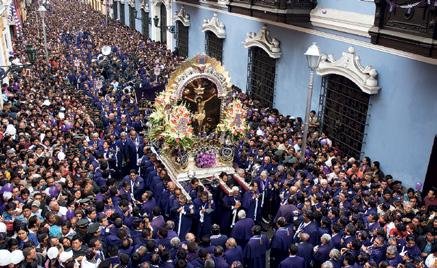
Las Nazarenas church is dedicated to Señor de los Milagros, who is venerated on its main altar. This image of Señor de los Milagros, placed at the center of the altar, was painted on a wall that survived the earthquakes of 1655, 1687, and 1746. Every year, in October, the image of the “Purple Christ” or “Christ of Pachacamilla,” as he is known, is carried through the main streets of the city in one of the most crowded and important processions in the country.
Museo Nacional de la Cultura Peruana
Av. Alfonso Ugarte 650. Entrance fee charged.
The collection of the National Museum of Peruvian Culture includes archaeological, colonial, and republican exhibits that explain the continuity of artistic processes of traditional folk art from different regions of the country to this day.
Plaza San Martín
At Jirón de la Unión and Av. Nicolás de Piérola
Officially inaugurated in 1921, one hundred years after the Independence of Perú, San Martín Square is a tribute to the Argentine liberator José de San Martín. In its surroundings you can see architectural beauties, such as portals, buildings, old cinemas, the Colón theater, and the Bolívar hotel. There is also a circuit of nightclubs nearby, offering a variety of entertainment options.
Museo de Minerales Andrés del Castillo
Jr. de la Unión 1030. Entrance fee charged.
This 18th-century mansion houses the Andrés del Castillo Minerals Museum and exhibits the largest collection of crystallized minerals in the country, as well as ceramics from the Chancay culture and clothing from ancient Peru.
Presbítero Matías Maestro Cemetery Museum © Paolo López / PROMPERÚ
Museo Arqueológico Josefina Ramos de Cox
Jr. Rufino Torrico 1164, plaza Francia
The exhibits of the Josefina Ramos de Cox Archaeological Museum consist of collections donated to the museum, and pieces obtained during excavations conducted between the 1960s and 1980s, in Tablada de Lurín and Pando.
Plaza Francia o de la Recoleta
Jr. Rufino Torrico, cdra. 12
This triangular-shaped square is surrounded by the church of Los Sagrados Corazones (“The Sacred Hearts”) and the Hospicio para Mujeres Vergonzantes (“Hospice for Shameful Women”), a neoclassical manor house that sheltered those women who fell into bankruptcy after the civil and Pacific wars. At one point in time, a market was located here. The sculpture of Liberty was a gift from the French colony.
Casona de San Marcos
Av. Nicolás de Piérola 1222, Parque Universitario. Entrance fee charged.
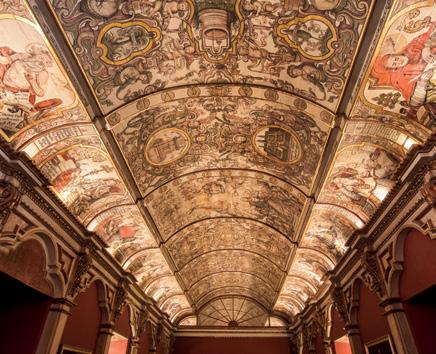
The San Marcos Manor House was built in the 17th century as part of a Jesuit convent. Currently, it is the headquarters of the Cultural Center of the Universidad Nacional Mayor de San Marcos, which includes an art museum.
Parque Universitario
Av. Nicolás de Piérola
A space for the political and intellectual debate of San Marcos students, the park was inaugurated in 1921, as part of the celebrations for the centenary of the Independence of Peru.
Museo de Arte Italiano
Av. Paseo de la República 4675. Entrance fee charged.
With an architecture and decoration that evokes Italian masters, such as Michelangelo or Donatello, the Italian colony built the Museum of Italian Art in commemoration of the centenary of Peruvian Independence.
Paseo Colón
Paseo Colón or Av. 9 de Diciembre
This promenade is located along the old colonial wall that was the southern limit of Lima. It got its name because the statue of Christopher Columbus was placed here after being removed from the Acho Boulevard. There are sculptures of the four seasons and large manor houses around, testimony to what the city looked like at the beginning of the 20th century.
Museo de Arte de Lima (MALI)
Paseo Colón 125, Parque de la Exposición. Entrance fee charged. The Exhibition Palace, built in the 19th century, houses an important display of Peruvian art. Its collection includes 18,000 pieces dating back from the pre-Columbian period to the present day.
Parque de la Exposición
At 28 de Julio and Inca Garcilaso de la Vega avenues
This park was opened in 1872 and features monuments, such as the Moorish and Byzantine pavilion, the seismograph, the Chinese fountain, the botanical garden, and the Japanese garden. It also has spaces dedicated to entertainment such as the Kusi Kusi puppet theater and is home to the National School of Dramatic Art (ENSAD).
Circuito Mágico del Agua at Parque de la Reserva
Av. Arequipa cdra. 6. Entrance fee charged.
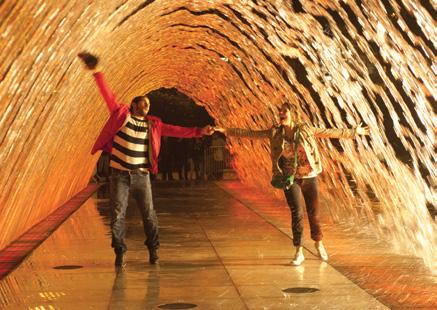
The Reserve Park was inaugurated in 1929 in tribute to the reservists who trained in that area to fight in the Pacific War. Today it houses the largest water fountain complex within a park in the world, according to the Guinness World Record. The Magical Water Circuit is made up of 13 fountains that create a wonderful spectacle of water and lights.
San Marcos Manor House © Adrián Portugal / PROMPERÚ
Rímac District
It is located across the river that gives it its name and which is also part of the Historic Center of Lima. Since 2015, Rímac is a member of the Organization of World Heritage Cities. It keeps testimonies of pre-Hispanic life and, above all, colonial life, with the presence of manor houses and convents.
Plaza de Acho
Intersection of the Hualgayoc and Marañón streets
Opened in 1766, Acho is the first bullfighting complex in the Americas and the third oldest in the world.
Paseo de Aguas
Jr. Madera 265
With a deep sense of aesthetics and urbanism, Viceroy Manuel de Amat y Junyent ordered the construction of this promenade, a great public work of his time, in 1770. Its design incorporates large gardens, French-style arches, and sets of waterfalls, which were fed by a canal connected to the Rímac river.
Museo de los Descalzos
Cl. Manco Cápac 202-A, Alameda de los Descalzos, Rímac.
Entrance fee charged.
This museum is located in a 16th-century convent of the Discalced, built at the bottom of the San Cristobal hill. It exhibits relevant paintings from the Lima, Cusco, and Quito schools.
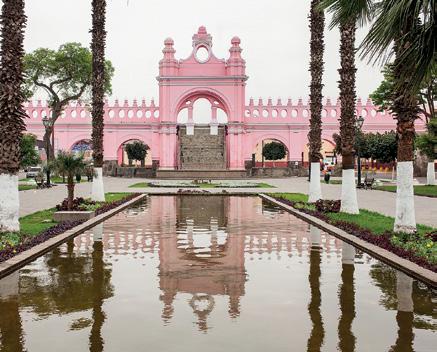
Alameda de los Descalzos
Built in 1611 as a path for devotees heading to the Convent of the Discalced. It has twelve marble sculptures (depictions of the zodiac) and iron gates imported from England.
Pueblo Libre District
Also known as the “Villa of the Liberators” for the illustrious characters who lived there. The history of this district dates back to the times of pre-Hispanic cultures, such as Lima and Ychsma, and to the times of the Curaca of Maranga. During the colony, a doctrine of Indians (a type of religious education and government center) known as “Magdalena Vieja” was also established here.
Plaza Bolívar
Av. General Vivanco, cdra. 8
Historic core of Pueblo Libre, where the liberators José de San Martín and Simón Bolívar stationed their troops during the Emancipation. It has a bronze fountain from 1742 and a monument to Bolívar donated by Venezuela.
Iglesia Santa María Magdalena
Av. San Martín 1138
It is the oldest rural church in Lima, founded in 1557 by the Franciscan fathers on land ceded by Gonzalo Taulichusco, cacique of Lima. Although its façade is neo-colonial in style, it has Baroque pulpits in addition to colonial canvases and beautiful altars.
Museo Larco
Av. Bolívar 1515. Entrance fee charged.
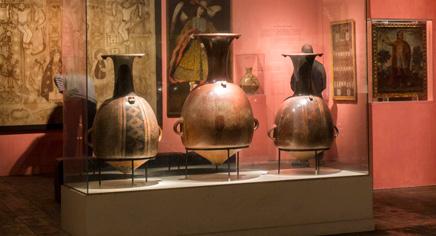
Included in the list of the 25 best museums in the world, the Larco Museum is located in an 18th-century colonial mansion with beautiful gardens. It displays ceramics, gold objects, textiles, and other pieces of pre-Columbian art, among which its collection of erotic huacos (pottery) stands out. This collection, with about 45,000 archaeological objects, is the only one in Peru and one of the few in the world open to the public.
Complejo arqueológico Mateo Salado
Av. Mariano Cornejo, cdras. 12 and 13, 200 m from Plaza de la Bandera. Entrance fee charged.
The Ychsma or Ichma (1100-1450 AD) built what is now the Mateo Salado Archaeological Complex, an administrative and ceremonial center with five truncated step pyramids. The Ychsma were later under the rule of the Incas between 1450 and 1532, who connected this center with their domains through the Qhapaq Ñan (Inca Trail).
Larco Museum © Luis Gamero / PROMPERÚ
San Miguel District
The ancient inhabitants of the Lima and Ychsma culture inhabited the area, as well as the Curaca of Maranga, whose presence left behind the huacas that remain to this day.
Parque de las Leyendas
Av. Parque de las Leyendas 580. Mon-Sun, 9:00-17:00.
Entrance fee charged.
This zoo houses animals grouped according to their region of origin (coast, mountains, jungle, even from abroad). It includes a botanical collection, a site museum, huacas, and recreational areas.
Parque de la Imaginación
Av. José de la Riva Agüero, cdra. 8. Mon-Sun, 9:00-18:00.
Entrance fee charged.
The Park of Imagination has an aquarium, an animatronic animal area, and other spaces, which allow you to get to know nature in a playful and creative way.
Santiago de Surco District
This traditional and historic district was the site of a great agricultural development. In the mid-nineteenth century, vine cultivation took hold and wineries appeared in this area. Today we continue to enjoy its green spaces and the benefits of its climate.
Fundación Miguel Mujica Gallo, museos Oro del Perú y Armas del mundo
Av. Alonso de Molina 1100. Entrance fee charged.
A wide variety of gold items made in pre-Inca and Inca times are on display on the halls of this museum, as well as huacos, textiles, ceramics, and a collection of weapons from all over the world.
Parque de la Amistad
At Caminos del Inca and Nazarenas
Called the “Friendship Park,” this is the main lung of this district and is over 322,917 ft2 (30,000 m2) of extension. From the top of the Moorish Arch (95 ft / 29 m high), you can enjoy a panoramic view of the city.
Plaza Mayor de Santiago de Surco
Between Av. Batalla de Ayacucho and Jr. Francisco Bolognesi
A traditional meeting point where you can see a very peculiar fountain, a roundabout surrounded by gardens and the Santiago Apóstol church, a historic building dating back to 1571. During Easter Week, this square revives Lima traditions and is also the scenario for the floral carpet contest.
Parque Voces por el Clima
At Av. Los Castillos and Jr. General Belisario. Tue-Sun, 10:00-18:00. It is the first theme park dedicated to climate change. There are five themed pavilions, a recycling plant, a plant nursery, and a bamboo house.
San Borja District
This district is renowned for its green spaces and sustainable practices. In addition, it is the new home of the Monarch butterflies, an endangered species that can be found in its parks.
Gran Teatro Nacional
Av. Javier Prado Este 2225. Open during show season
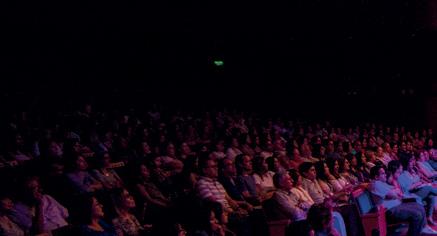
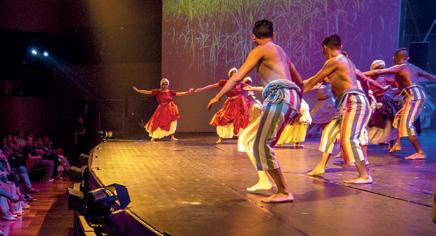
The largest theater in Peru presents national and international shows, as well as presentations by national troupes. It also offers guided tours and open rehearsals.
Biblioteca Nacional del Perú
Av. De la Poesía 160
Opened in 2006, the new headquarters of the National Library has halls for manuscripts and collections of great historical and academic value. It is also a center of exhibitions and conferences.
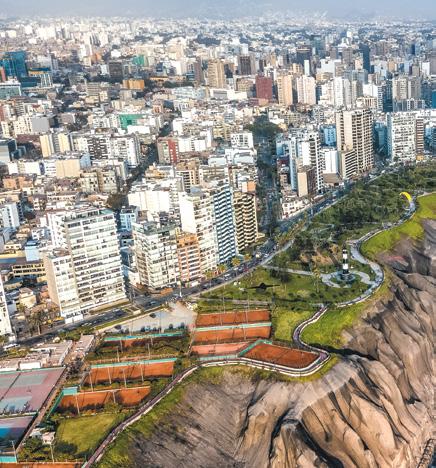
Miraflores Waterfront © Shakedown team / PROMPERÚ
San Isidro District
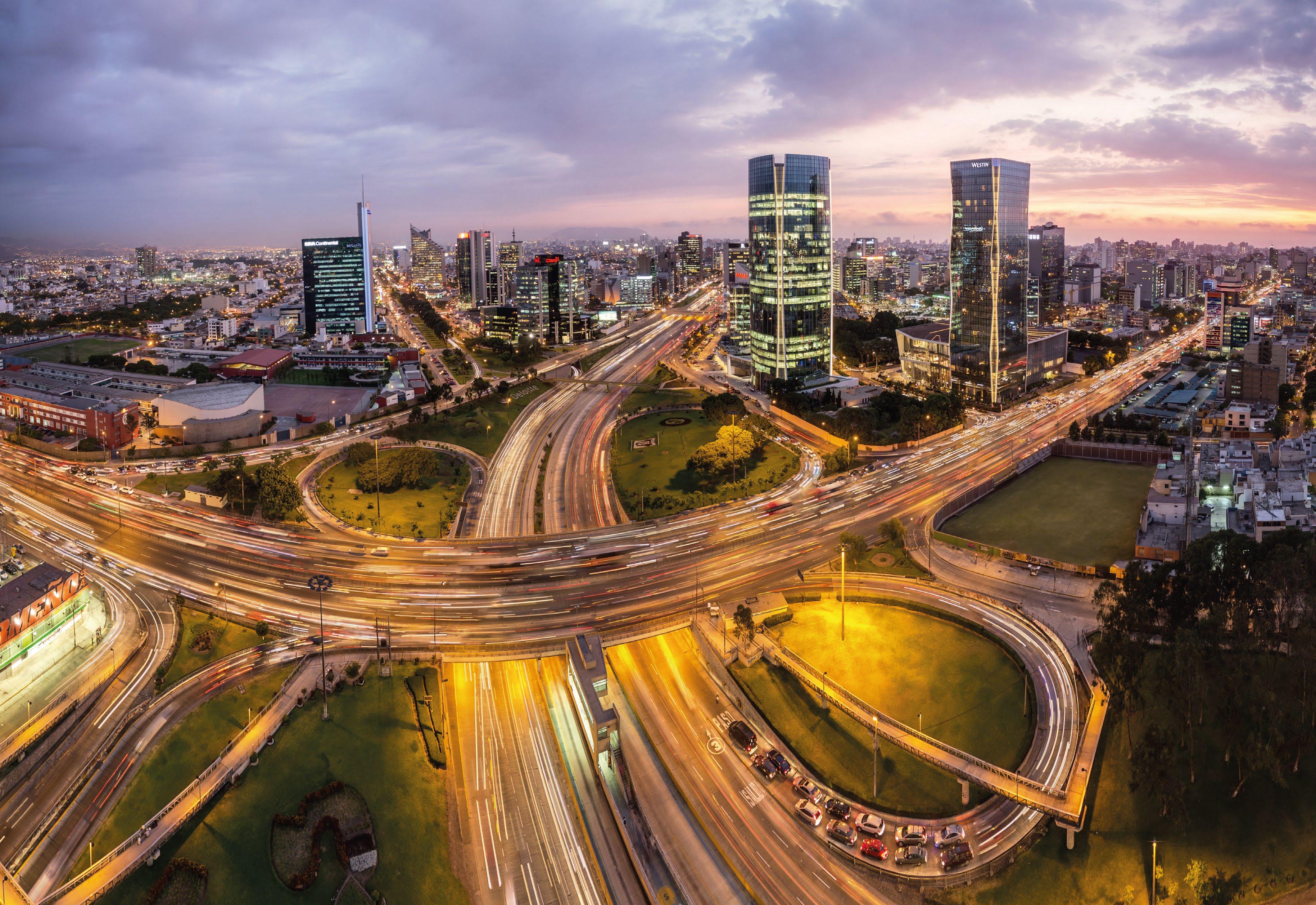
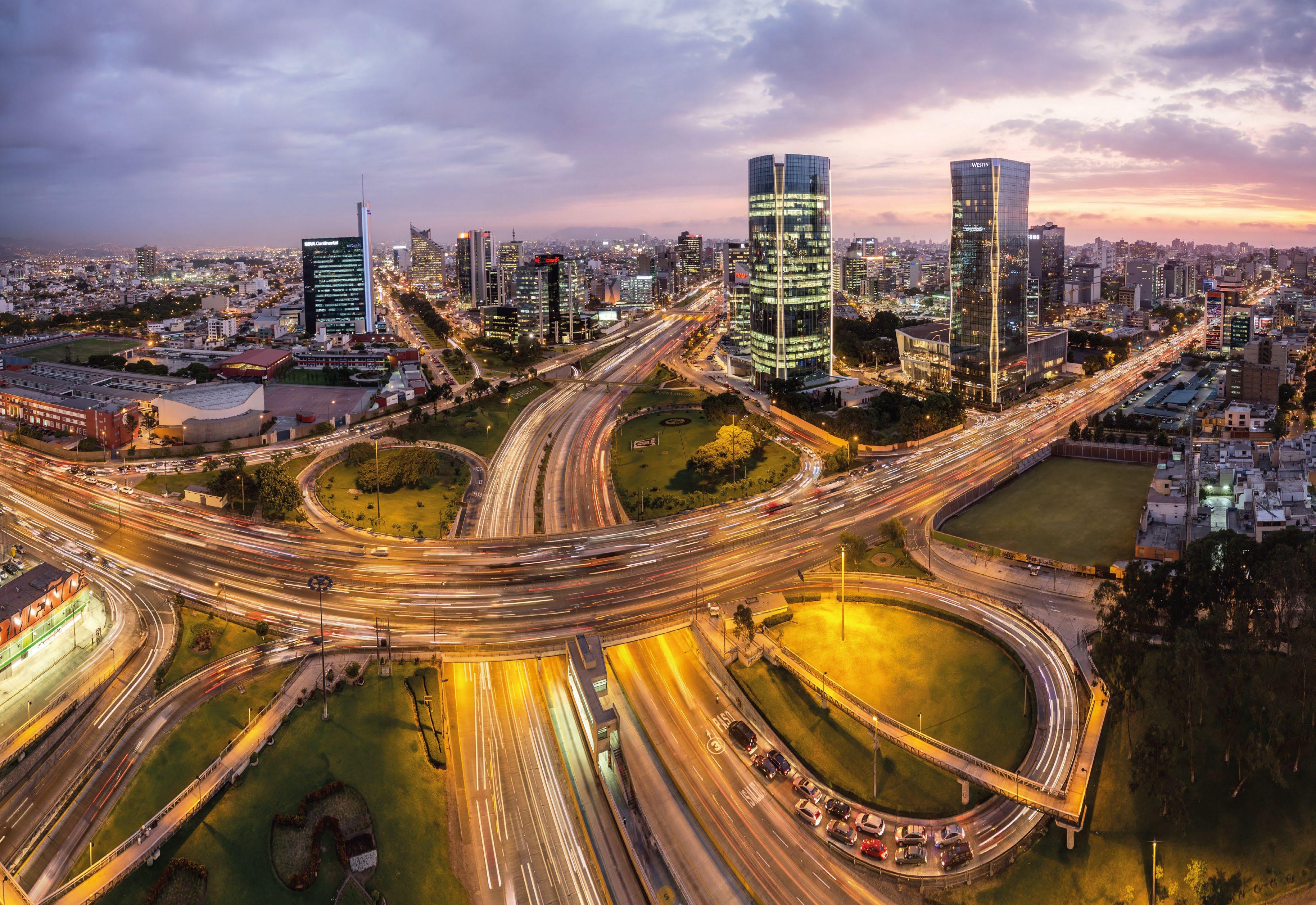
In addition to the exclusive residential neighborhoods, San Isidro stands out for being the business center of the city and for its varied gastronomic offer.
Bosque El Olivar
Along Av. Los Incas, Calle La República, Pasaje Constancio Bollar and Calle Antero Aspíllaga
This extensive forest lies in the heart of the district, with olive trees over 350 years old, including one that was planted by San Martín de Porres himself in 1620. It is home to around 22 species of birds, making it one of the best spots for birdwatching in the city.
Museo de sitio Huallamarca
At Av. Nicolás de Ribera 201 and Av. El Rosario. Entrance fee charged. The Huallamarca Site Museum is a temple in the form of a truncated pyramid, later converted into a cemetery of the Lima, Huari, Ychsma, and Inca cultures.
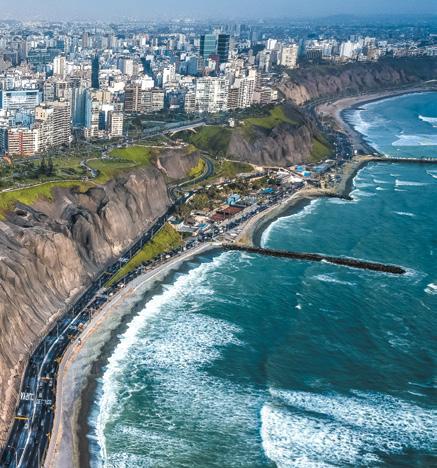
Miraflores District
An important ceremonial center dominated this area in pre-Hispanic times. Later, Spanish clergymen settled in it, and, during the Pacific War, it became the last bastion of Peruvian resistance. Today, Miraflores is one of the most important residential and commercial neighborhoods in the city.
Parque Central de Miraflores
Between Larco and Diagonal avenues
Formed by the 7 de Junio and Kennedy parks, the Central Park of Miraflores is one of the emblematic places of this district. Walk around the Chabuca Granda amphitheater, the painters’ alley and enjoy classic Lima desserts on the go.
Ruta Vargas Llosa
The Vargas Llosa Route follows the places where Mario Vargas Llosa, winner of the 2010 Nobel Prize for Literature, spent moments of his life or where scenes from his most famous novels were set. The tour begins in Parque 7 de Junio (in front of the main church of Miraflores) and continues through Pasaje Champagnat, Avenida Pardo, the Raúl Porras Barrenechea House-Museum and Institute, and Salazar Park.
Larcomar
Malecón de la Reserva 610
The modern Larcomar shopping center is located at Parque Salazar and has an unparalleled view of the Pacific Ocean. There are shops, restaurants, and a theater.
Malecón de Miraflores
Bordering the cliff and with a unique view of the bay of Lima, the Miraflores boardwalk is a perfect place to take a stroll, walk pets, or practice sports, such as paragliding or skateboarding, and for leisure activities, including bicycle rides, yoga classes, juggling, and skating. Along the boardwalk there are restaurants, a shopping center, and open parks, such as El Faro (the Lighthouse), María Reiche, and Parque del Amor (Love Park). There are also sculptures by Fernando de Szyszlo and José Tola.
Museo Textil Precolombino Amano
Cl. Retiro 160. Entrance fee charged. Shows a chronological exhibition of textiles and instruments of Chavín, Paracas, Nasca, Wari, Chimú, and Chancay cultures.
Museo de Sitio Pucllana
Cl. General Borgoño, cdra. 8. Entrance fee charged, prior reservation. Between 200 and 700 AD, the Lima culture dominated the area, and this ceremonial and administrative center of adobe is testimony to it. The site museum exhibits the pieces found during the excavations. There is also a tourist restaurant.
Santuario Patriótico de Lima – Reducto de Miraflores n.° 2
At Paseo de la República and Benavides avenues. Admission to the museum with a ticket and prior reservation. This space preserves a barricade from where the people of Lima (including children and teenagers) defended the capital against the Chilean occupation during the War of the Pacific, in 1881. The park is home to the Mariscal Andrés Avelino Cáceres Museum, where relics of the national hero are kept. In addition, every Saturday there is a biofair where organic products can be purchased.
Lugar de la Memoria, la Tolerancia y la Inclusión Social (LUM)
Bajada San Martín 151, pedestrian access through the Bonilla stadium
The Place of Memory, Tolerance and Inclusion is a space that presents and starts a conversation regarding the acts of violence that occurred in Peru between 1980 and 2000. The LUM has permanent exhibitions, cultural activities such as film exhibitions, concerts, dance shows, performances, and talks.
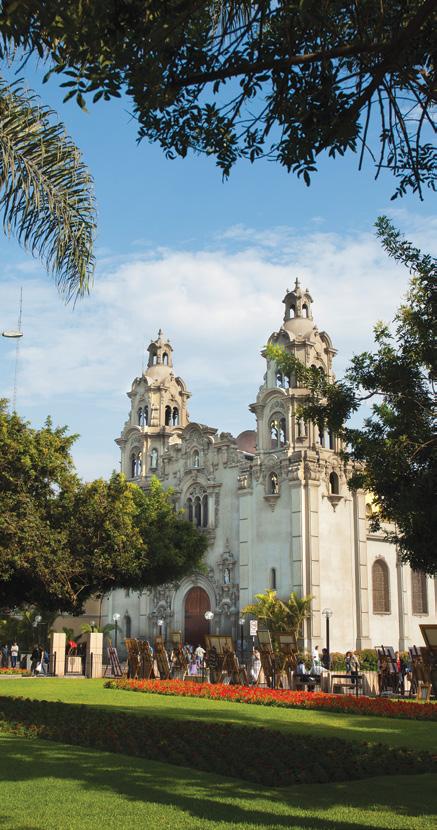
Miraflores is simply the best district for tourism. It offers accommodations for all budgets, shopping for all tastes, and restaurants for all palates, as well as parks for walking, enjoying art, or cycling.
Miraflores Central Park © Fernando López / PROMPERÚ
Barranco District
A former seaside town in Lima and the bohemian neighborhood par excellence, it has a hectic cultural and nightlife with traditional bars, nightclubs, and musical shows.
Museo de Arte Contemporáneo - Lima
Av. Grau 1511. Entrance fee charged.
The Museum of Contemporary Art – Lima is the only museum in the city focused on modern and contemporary art. It houses temporary exhibitions by renowned Peruvian and foreign artists.
Puente de los Suspiros
From the Main Square, following Pasaje Chabuca Granda, or from San Martín Avenue by Bajada de Baños.
Barranco bridge of lovers was built in 1876 and rebuilt after the Pacific War. A space of inspiration for musicians and poets, the “Bridge of Sighs” allows access to the Bajada de Baños, an old route that was followed by fishermen in the past, from which there is a wonderful view of the sea.
Ermita de Barranco
Legend has it that the Shrine of Barranco was built in a place where a luminous cross appeared and guided a group fishermen lost at sea towards the coast.
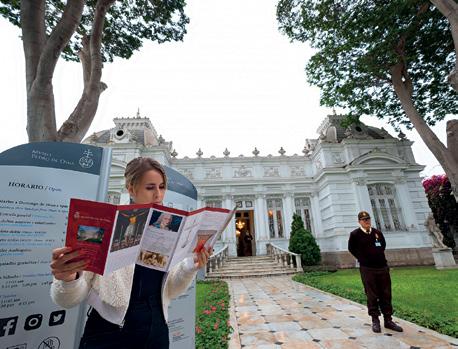
Museo Pedro de Osma
Av. Pedro de Osma 421. Tue-Sun 10:00-18:00. Entrance fee charged. In the former house of Pedro de Osma, built at the beginning of the 20th century, fourteen centuries of art from the Andean south are on display, represented through Tiahuanaco, Inca, colonial, and republican objects.
Pedro de Osma Museum © Miguel Mejía / PROMPERÚ
Chorrillos District
Fishermen from Surco and Huacho were the first residents of this area around 1688. This district was home to the martyr of the Emancipation, José Olaya, and one of the scenarios of the Pacific War. On its boardwalk you can still see old manor houses with a scenic view of the sea.
Salto del Fraile
Billinghurst promenade, beach circuit
Among the myths of historic Chorrillos, one of the most popular ones is the romantic story of a friar who threw himself into the sea after his heart was broken. From this point along the cliffside you can see the recreation of the jump of this tragic story. It was also one of the last points of resistance at the Battle of San Juan on January 13, 1881.
Morro Solar
At this natural viewpoint of Lima, you can find the Monument of the Unknown Soldier, in tribute to the soldiers who died during the Pacific War, a planetarium and the “Pope’s Cross,” a symbol built from the remains of high voltage towers in occasion of the visit of Pope John Paul II, in 1988.
Refugio de vida silvestre Los Pantanos de Villa
18 km south of the city of Lima (40 min by car).
Entrance fee charged.
The Pantanos de Villa Wildlife Refuge is the only protected natural area in the city and a popular spot for birdwatchers. Its fauna is very varied, especially due to the considerable number of migratory birds that have made these wetlands their habitat.
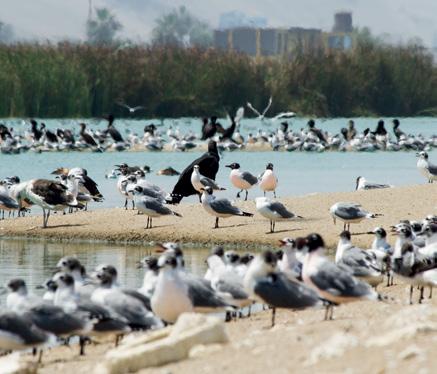
Pantanos de Villa © John Calixto / PROMPERÚ
Nearby destinations
Santuario arqueológico de Pachacamac
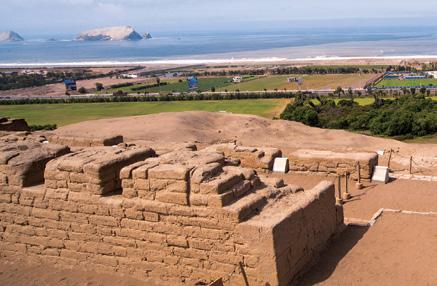
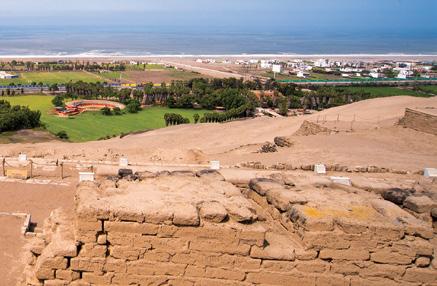
At kilometer 31.5 of Antigua Panamericana Sur highway (45 min by car). Entrance fee charged. Palaces, squares, and mud temples built in different periods make up the Pachacamac Archaeological Sanctuary, the most relevant ceremonial center of the Peruvian coast. The Acllawasi and the Temple of the Sun belong to the time of Inca rule. It has a modern museum that explains the importance of the archaeological center in pre-Hispanic history. From the top of Pachacamac, and when the sky is clear, you can see the mythical Cavillaca Island, whose legend evokes a princess and her son who were lost at sea.
Catedral San Pedro
Jr. Huáscar 328, at Plaza de Armas of Lurín
This rural Baroque-style temple was built around 1700. The cathedral of San Pedro is the hub of all the parishes in the south of Lima and a National Cultural Heritage Site.
Lomas de Lúcumo
Pachacamac District. Entrance fee charged. The dense fog condenses and covers the hills and streams with vegetation between June and November. During the walk (3 or 6 hours depending on the route chosen) you can see altars, sinkholes, cave paintings, a variety of flora and fauna, such as vizcachas and scarlet flycatchers.
Museo Nacional del Perú (MUNA)
At kilometer 31 of Antigua Panamericana Sur highway, Lurín. Visits prior reservation.
The National Museum of Peru is a cultural space that holds archaeological relics from the pre-Columbian period and the Inca culture. The MUNA functioned as a collector of pieces from other Peruvian museums, you can see archaeological pieces that at one time were part of the Museum of the Nation and the National Museum of Archaeology, Anthropology, and History of Peru.
Archaeological Sanctuary of Pachacamac © Yayo López / PROMPERÚ
Cieneguilla
12 miles (20 km) southeast of Lima
In this district it is possible to camp or spend the day. Enjoy the cuisine of country restaurants and a fantastic warm weather all year round.
Museo de sitio Arturo Jiménez Borja - Puruchuco
Av. Prolongación Javier Prado Este, cdra. 85. Entrance fee charged. The Arturo Jiménez Borja Site Musem is located on a former Inca administrative center in which more than 2,200 funerary bundles and burials have been discovered, which make it the largest Inca’s cemetery in the country.
Parque zoológico Huachipa
Av. Las Torres, Ate Vitarte (at kilometer 9.5 of Carretera Central). Mon-Sun 9:00-17:30 h. Entrance fee charged. It is home to more than a thousand animals. You can visit the “Forest of Birds” which recreates a tropical area, and the aquarium.
Zona arqueológica Cajamarquilla
Av. Cajamarquilla, Lurigancho-Chosica. Please contact +511 618-9393, Ext. 4117 (Ministry of Culture) before your visit.
The Cajarmarquilla Archaeological Area was a complex built by the Lima culture around 600 AD. One of its best-preserved areas is known as “the labyrinth.”
Constitutional Province of Callao
Just 14 km from Lima City Center, Callao is home to the country’s main port and Jorge Chávez International Airport, both of vital importance for Peru’s tourism and commercial activity. In its streets, its manor houses and balconies are impressive, along with a fortress rich with history, which evokes times of battles and pirates, and a sea of great hydrobiological and landscape richness wealth where imposing islands lie.
Plaza Emilio San Martín
Across from the old barracks of the Arsenal, Posts and Telegraphs (which is now the Naval Museum of Peru)
Built without any monuments in 1892, on an earthen base with cobblestones, the Emilio San Martin Square was destroyed by fire. Later it housed the grandiose monument honoring Admiral Miguel Grau, which was finally moved to the new Plaza Grau, next to the dock.
Iglesia Matriz or Catedral del Callao
Plaza Grau, Jr. Constitución, cdra. 2. Opening hours: during Mass. Originally known as the Church of San Simón and San Judas del Callao, the Parent Church or Cathedral of Callao was built in 1833. On its façade, the images of these two saints stand out. It was rebuilt in the second half of the 19th century with a neoclassical style.
Zona Monumental Callao
Independencia and Constitución streets, next to the Cathedral, the Ronald building, and the Galvez passageway make up the new cultural boulevard of Callao. The architectural wealth and the offer of cultural activities are the main attraction of this area.
Edificio Ronald
Jr. Constitución 250. Tue-Sun, 11:00-18:00. This building from 1929 was considered the most modern of its time. It has an English-style passageway, decorated with the busts of fourteen universal artists, including Wagner and Michelangelo. Between this building and the Valega House (Jr. Independencia) CasaCor has been successfully held, the main design and architecture expo in the country.
Fortaleza del Real Felipe
Plaza Independencia, at Av. Sáenz Peña, cdra. 1. Mon-Sun, 9:00-16:00. Tel. +511 429-0532 and +511 465-8394. Entrance fee charged. The Fortress of Real Felipe was built in 1747 to defend the capital of the Colony from the attacks of pirates and privateers and was at the time one of the largest fortresses on the continent. During the war with Spain, it was the main defense of the patriot side in the combat of May 2, 1866. You can now tour its facilities as part of your visit to the Peruvian Army Museum, which displays uniforms and weapons.
Museo Naval Julio Elías Murguía
Av. Jorge Chávez 123. Tue-Sun, 9:00-16:00.
Tel. +511 209-9300, Ext. 6794. Entrance fee charged. The Julio Elías Murguía Navy Museum tells the maritime history of the country through the display of oil paintings, photographs, jewelry, navigational instruments, and weapons. It also holds a collection of pieces from the Nasca, Moche, Chimú and Lima cultures.
Museo de sitio flotante naval submarino Abtao
Av. Jorge Chávez 120 A. Tue-Sun, 9:30-16:30.
Tel. +511 453-0927. Entrance fee charged.
The Abtao Submarine Naval Floating Site Museum is the only submarine open to the public in Peru. Within, you can see a torpedo, the bow and stern weapon stations, the command station, the engine room, and the submarine’s engines. The tour also shows the routine of the naval officers who would stay between 30 and 40 days aboard it.
Pintoresco
barrio de Chucuito
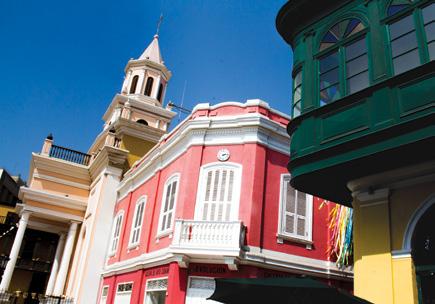
The picturesque neighborhood of Chucuito is a traditional and colorful fishermen’s quarter. Some houses are in Gothic or Neo-Renaissance style and were built between 1900 and 1920 by Italian migrants who sought to replicate the architecture practiced in Europe at that time.
Muelle Dársena
The construction of the emblematic pier was commissioned to the Templeman Bergman from England, it began in 1870 and was completed in April 1875. Its administration passed into the hands of the company Societé Generale de Paris. Center of port activity in Peru during the 19th century and much of the 20th, the clock lighthouse that guided merchants on the high seas still stands today.
La Punta
Seaside town that occupies the end of the Callao peninsula, in whose streets Republican-style mansions still stand. Enjoy marine cuisine at the restaurants by the boardwalk that runs along cold and cobbled beaches.
Islands
Sea wolves, guano birds, a mysterious moon-worshipping center, and a former prison can be found in the Cavinzas, San Lorenzo, El Frontón, and Palomino islets. Enjoy the nature and history of Callao on a four-hour tour, departing from the docks of Callao and La Punta between 10:00 and 14:00.
Houses and Parent Church of Callao © Fernando López / PROMPERÚ
Lima and Callao
Plaza Mayor
Basílica Catedral y Museo Palacio
Arzobispal
Jirón Áncash
Iglesia y convento de San Francisco
Museo de sitio Bodega y Quadra
Casa de la Literatura Peruana
Palacio de Gobierno
Casa Aliaga
Iglesia y Museo del convento de Santo Domingo
Casa Osambela
Museo de los Combatientes del Morro de Arica
Teatro Municipal de Lima y Museo Municipal del Teatro
Iglesia San Agustín
Museo de Artes y Tradiciones
Populares Luis Repetto Málaga
Museo Naval Casa Grau de Lima
Casa O’Higgins
Jirón de la Unión
Iglesia y convento Nuestra Señora de La Merced
Museo Central (MUCEN)
Casa Goyeneche
Palacio de Torre Tagle
Centro Cultural Inca Garcilaso del Ministerio de Relaciones Exteriores
Iglesia de San Pedro
Gran Biblioteca Pública de Lima
Barrio Chino
Museo Nacional Afroperuano
Santuario de Santa Rosa de Lima
Museo Etnográfico Amazónico
Casa de San Martín de Porres
Iglesia Las Nazarenas y Santuario del Señor de los Milagros
Museo Nacional de la Cultura Peruana
Plaza San Martín
Museo de Minerales
Andrés del Castillo
Museo Arqueológico
Josefina Ramos de Cox
Plaza Francia o de la Recoleta
Casona de San Marcos
Parque Universitario
Museo de Arte Italiano
Paseo Colón
Museo de Arte de Lima (MALI)
Parque de la Exposición
Jorge Chávez
Zona Monumental Callao
Edificio Ronald
Fortaleza del Real Felipe
Museo de Sitio Naval Submarino Abtao
Museo Naval Julio
Elías Murguía
Elmer Faucett
Río Rímac
Iglesia Matriz o Catedral del Callao
Av. Sáenz PeñaAv.GuardiaChalaca
Mora
to the Cavinzas, San Lorenzo, El Frontón Islands, and Palomino islets
Parque de Museo Larco Muelle Dársena
OCÉANO PACÍFICO
Parque de las Leyend
Vía de Evitamiento
. Junín
Iglesia
N DE LA
EYNOSO
gentina
Av Venezuela
Complejo arqueológico
Mateo Salado
Av Mariano Cornejo
la Imaginación
Iglesia y convento de los Descalzos
Paseo de Aguas
Alameda de los Descalzos
Cementerio y Presbítero Matías
Plaza de Acho
Circuito Mágico del Agua del Parque de la Reserva as
Av. Bolívar
Plaza Bolívar
Av.Antonio José deSucre
Av. Javier Prado Oeste
Santa María Magdalena
Javier Prado Este CircuitodePlayas
Lugar de la Memoria, la Tolerancia y la Inclusión Social (LUM)
Gran Teatro Nacional Biblioteca Nacional del Perú
Museo de sitio Huallamarca
Bosque El Olivar
Museo Textil Precolombino Amano
Museo de Sitio Pucllana
Av. Angamos Este
Parque
Plaza Mayor de Santiago de Surco
Parque Voces por el Clima
Salto del fraile
Morro solar
Río Rímac
Museo de sitio Matías Maestro
Parque zoológico Huachipa Nacional
Zona arqueológica Cajamarquilla
CarreteraCentral
avera
P ana meric ana Sur
Parque de la Amistad
SURCO LA MOLINA SAN JUAN DE MIRAFLORES SANTA ANITA ATE
Av.SalvadorAllende aminosdelInca VíadeEvitamiento
CarreteraCentral
Av. La Fontana
Museo de sitio Arturo Jiménez Borja - Puruchuco
Av.RaúlFerrero
Av. José Pardo
Museo de Oro del Perú
Av. La Molina
Casa Museo Ricardo Palma
Parque Central de Miraflores
Av. Roca yBoloña vA. uarG Diagonal
Ruta Vargas Llosa
Av. Benavides
Malecón de Miraflores
Av. José Lar co CircuitodePlayas
Av . 28deJulio
Larcomar
Av . La Paz
Av Ricardo Palma
Av . Paseo d e la República
Parque Reducto 2
Museo de Arte Contemporáneo - Lima
Av. San M art ín Av. Migu el Gr au
silvestre Pantanos de Villa, de Pachacamac, Lomas de Lúcumo
200 m
Av. Benavides . P
acilbúpeR manaá
Av. Fco. Bologne si
Av.JorgeChávez
Ermita de Barranco Puente de los Suspiros
A v . Pedro de Osma
Museo Pedro de Osma
to Cieneguilla
Lima
PROMPERÚ, San Isidro
Av. Jorge Basadre 610, San Isidro
Callao
Jorge Chávez International Airport
Mezanine Sur Of. 220, Domestic departure and international arrival halls
iperu@promperu.gob.pe
www.peru.travel www.ytuqueplanes.com
The information contained in this brochure has been updated in September 2023. To prepare it, PROMPERÚ has used official information sources, such as the Ministry of Culture, SENAMHI, SERNANP, the Regional Government of Callao, tourist information offices of the district municipalities and representatives of tourist attractions. The opening hours and telephone numbers are subject to vary at each tourist attraction. Please confirm hours and telephone numbers with IPERÚ.
Published by PROMPERÚ - Peru for Exports and Tourism Promotion Agency
Calle Uno Oeste 50, 14th Floor, Urb. Córpac, San Isidro, Lima, Perú
Tel. +511 616-7300
www.promperu.gob.pe © PROMPERÚ. All rights reserved
Legal Deposit at the Biblioteca Nacional del Perú
Printed by WORK UP E. I. R. Lima, October 2023