La Libertad
Practical Guide for Travelers
Min.:
Max.:
Location
North Coast of Peru
Capital
Trujillo (at 112 ft / 34 m)
10 ft (3 m) (Salaverry)
13,150 ft (4,008 m) (Quiruvilca)
Weather
Temperature
Coast
Max.: 86 °F (30 °C)
Min.: 57 °F (14 °C)
Mountains
Max.: 66 °F (19 °C)
Min.: 40 °F (4.5 °C)
By land
Dec-Mar Mar-Jun Jun-Sept Sept-Dec
Lima-Trujillo: 348 miles (560 km) / 9 h
Chiclayo-Trujillo: 130 miles (209 km) / 3 h 30 min
Piura-Trujillo: 261 miles (420 km) / 6 h
Tumbes-Trujillo: 434 miles (698 km) / 11 h
By air
Lima-Trujillo: 1 h
LAMBA YEQUE
to Chiclayo to Piura
Playa Chérrepe
Guadalupe
Department capital
Province capital
District capital
Tourist attraction
International border
Provincial border
Main road
Dirt road
Complejo arqueológico San José de Moro
Complejo arqueológico de Pakatnamú
Jequetepeque San José
Balneario de Pacasmayo
PACASMAYO CHEPÉN Chepén
Bosque seco El Cañoncillo
San Pedro de Lloc Cascas
Puerto Malabrigo
ASCOPE
Ascope
Chocope
Magdalena de Cao
Complejo arqueológico El Brujo
Huaca El Dragón
Balneario de Huanchaco
Chicama
Complejo arqueológico Chan Chan Campiña de Moche
Otuzco
Complejo arqueológico Marcahuamachuco
Huamachuco Trujillo
Huaca La Esmeralda
Salaverry
Proyecto especial de irrigación Chavimochic
Playa Puerto Morín
Islas Guañape
VIRÚ TRUJILLO
Julcán
Cachicadán
Complejo arqueológico Huacas de Moche Museo Huacas de Moche
Santuario Nacional de Calipuy
Virú
Chao
Reserva Nacional de Calipuy
Santiago de Chuco
SANTIAGO DE CHUCO
a city populated by splendid and luxurious
decorated with magnificent balconies, elegant doorways, and spacious hallways. It was built during the Colony and the early years of the Republic.

2 days
2 days
Wine Route, Tree of a Thousand Roots and Cristo de las Rocas
Pacasmayo Province: Pacasmayo seaside town, El Cañoncillo natural forest, San Pedro de Lloc town
Sánchez Carrión Province: Marcahuamachuco, Wiracochapampa, Miraflores hill, visit to the Sausacocha lagoon and Yanasara hot springs
The cuisine of La Libertad is enriched by the use of marine and mountain products to create dishes of intense flavors. Ceviche, shambar (a soup prepared on Mondays), patitas en fiambre, sopa teologa, pato guisado and are some of its typical preparations. A must is the classic seco , an emblematic lamb dish of the Moche region.
Crafts such as wood carvings and ceramic figures are very popular. Trujillo is a major exporter of footwear and leather accessories, and Otuzco is renowned for its ponchos and wool blankets.
Plaza de Armas de Trujillo
Martín de Estete designed the Main Square of Trujillo, as the center of the city, in 1534. In the center lies the “La Libertad” monument, a magnificent sculpture in the marble Baroque style, designed by the German Edmund Müller between 1921 and 1929.
In front of the Plaza de Armas. Mon-Sat, 7:00-13:00 and 16:30-20:00; Sun, 6:40-13:00 and 16:30-21:00.
It dates back to the 17th century. It houses important works of colonial art, such as the canvas The Transverberation of Saint Teresa, and on its main altar rests the only free-standing altarpiece in the city. One of its towers displays a clock brought from Spain during the first half of the 19th century.
Iglesias
Due to its importance during the Colony, Trujillo has several churches which show the finest colonial art:
• Iglesia San Agustín Jr. Bolívar 508. Mon-Fri, 9:00-12:00 and 16:00-19:00; Sat-Sun, 7:00-12:00 and 16:00-20:00.
• Iglesia San Francisco
Intersection of the Independencia and Gamarra streets. Mon-Sat, 8:00-19:00; Sun, 9:00-11:00 and 18:00-19:00.
• Iglesia Santo Domingo
Intersection of the Pizarro and Bolognesi streets. Mon-Sun, 8:00-20:00.
• Monasterio e iglesia El Carmen At Colón and Bolívar streets. Mon-Sun, 7:00-8:00.
Manor Houses
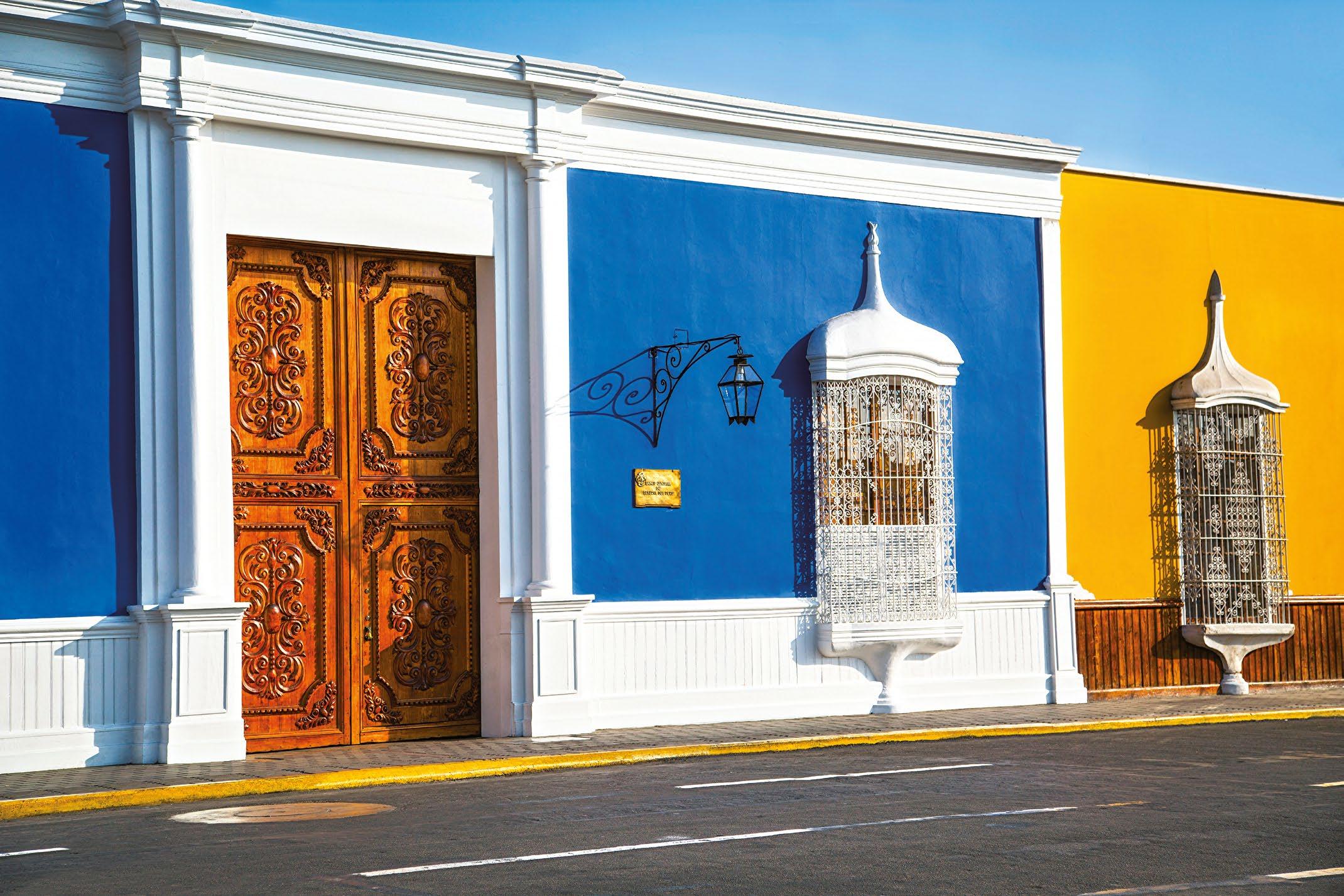
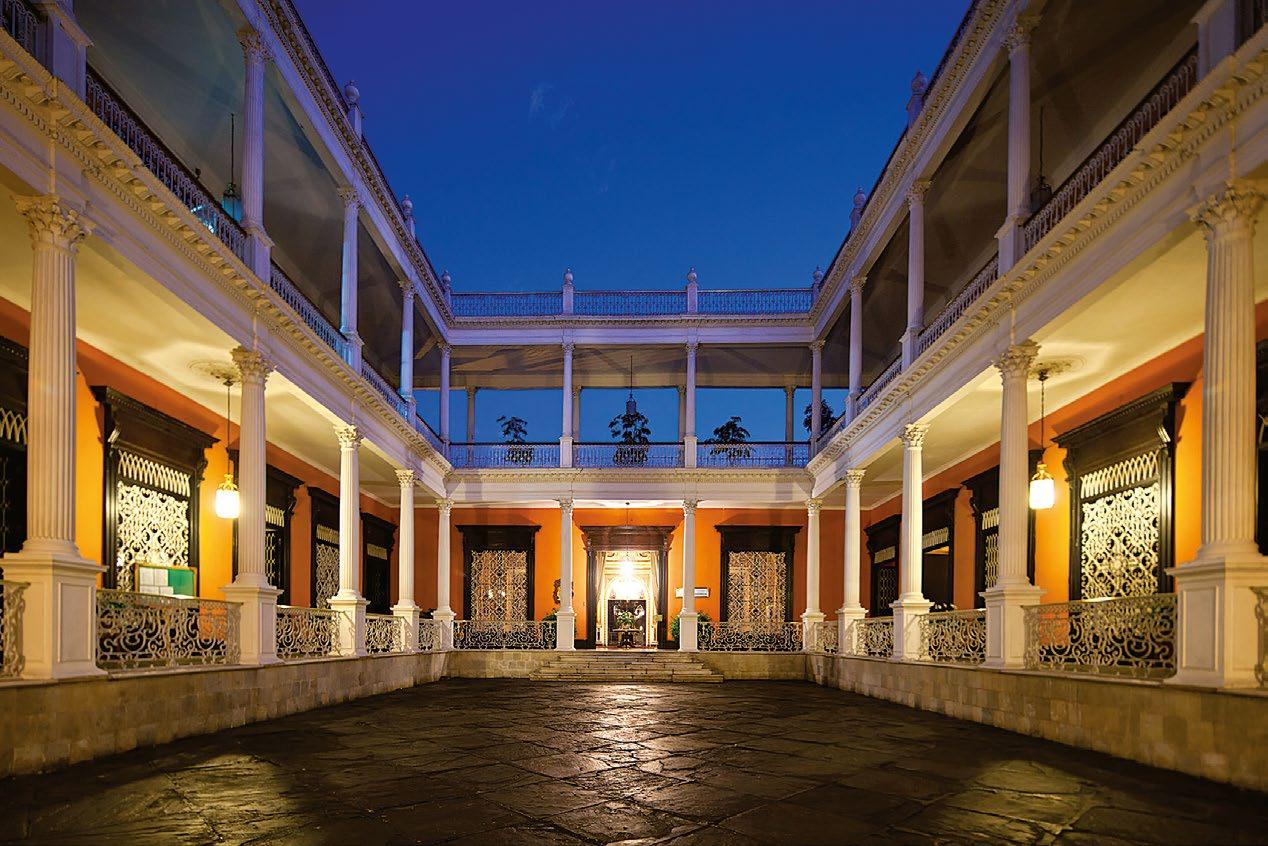
The old Trujillo houses are a testament to Republican and Colonial architecture. Some have great historical value: the House of Independence, for example, hosted the first Constitutional Congress of Peru.
• Casa Urquiaga Jr. Pizarro 446. Mon-Sun, 9:00-17:00.
• Casa del Mariscal de Orbegoso At Orbegoso and Bolivar streets. Visits are restricted.
• Casa de la Emancipación or de Madalengoitia Jr. Pizarro 610
• Zaguán del Palacio Iturregui Jr. Pizarro 668
• Façade of the Casa Ganoza Chopitea or Ramírez y Laredo Jr. Independencia 630
• Casa de la Identidad Regional Jr. Almagro 418. Mon-Fri, 9:00-16:00.
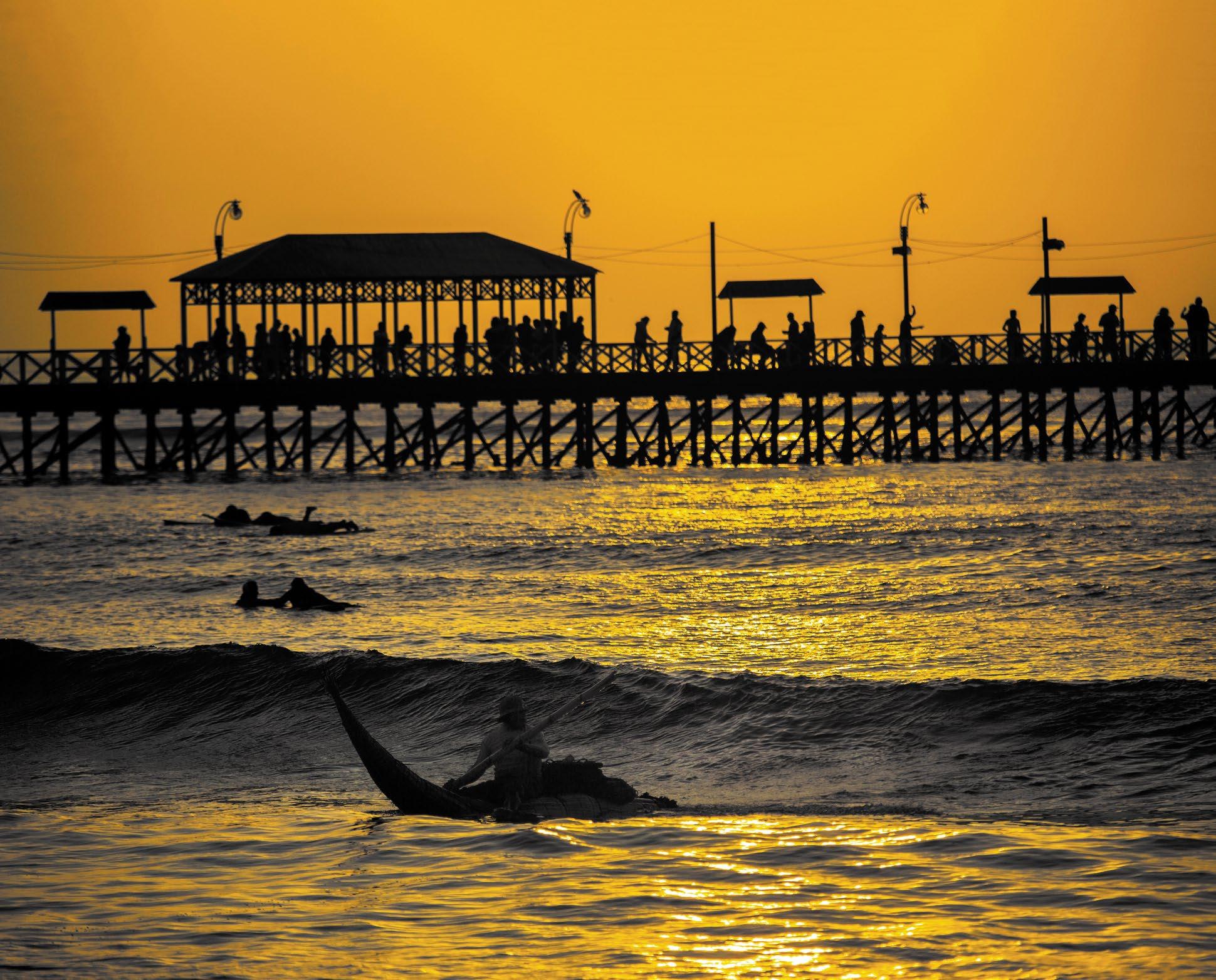
Since 2013, Huanchaco has been recognized as a world surfing reserve, and a place from where it is possible to see fishermen riding totora horses.

Museos
Trujillo is a land of traditions and one of the most populous cities in Peru. Within its cultural offer, museums stand out. Lovers of art, history and science will find spaces that match their interests.
• Museo Catedralicio Jr. Orbegoso 419
• Museo del Juguete Jr. Independencia 705. Mon-Sat, 11:00-18:00.
• Museo de Zoología
Jr. San Martín 368. Mon-Fri, 7:00-19:00 and Sat, 7:00-13:00.
• Museo de Arqueología, Antropología e Historia de la Universidad Nacional de Trujillo
Jr. Junín 682. Mon, 9:00-14:00 and Tue-Sat, 9:00-16:30.
• Centro Cultural de Trujillo Jr. Orbegoso 652. Mon-Sat, 9:00-12:00 and 16:00-19:00.
• Museo Jardín de los Sentidos
At kilometer 3.5 of the Industrial Highway-Villarreal Avenue. Wed-Mon, starting at 11:00, prior reservation at 949-963-830 / 947-825-431.
Plazuela El Recreo
Jr. Pizarro, cdra. 9
The water box that during the Colony supplied the residences of Trujillo is located here. Among its architectural attractions are the marble Baroque-style fountain that used to adorn the Main Square between the years 1841-1929, and its imposing facade that commemorates 450 years of the foundation of Trujillo.
Complejo arqueológico de Chan Chan
4 miles (6.5 km) northwest of Trujillo, Moche Valley (16 min by car).
Tue-Sun, 9:00-15:00
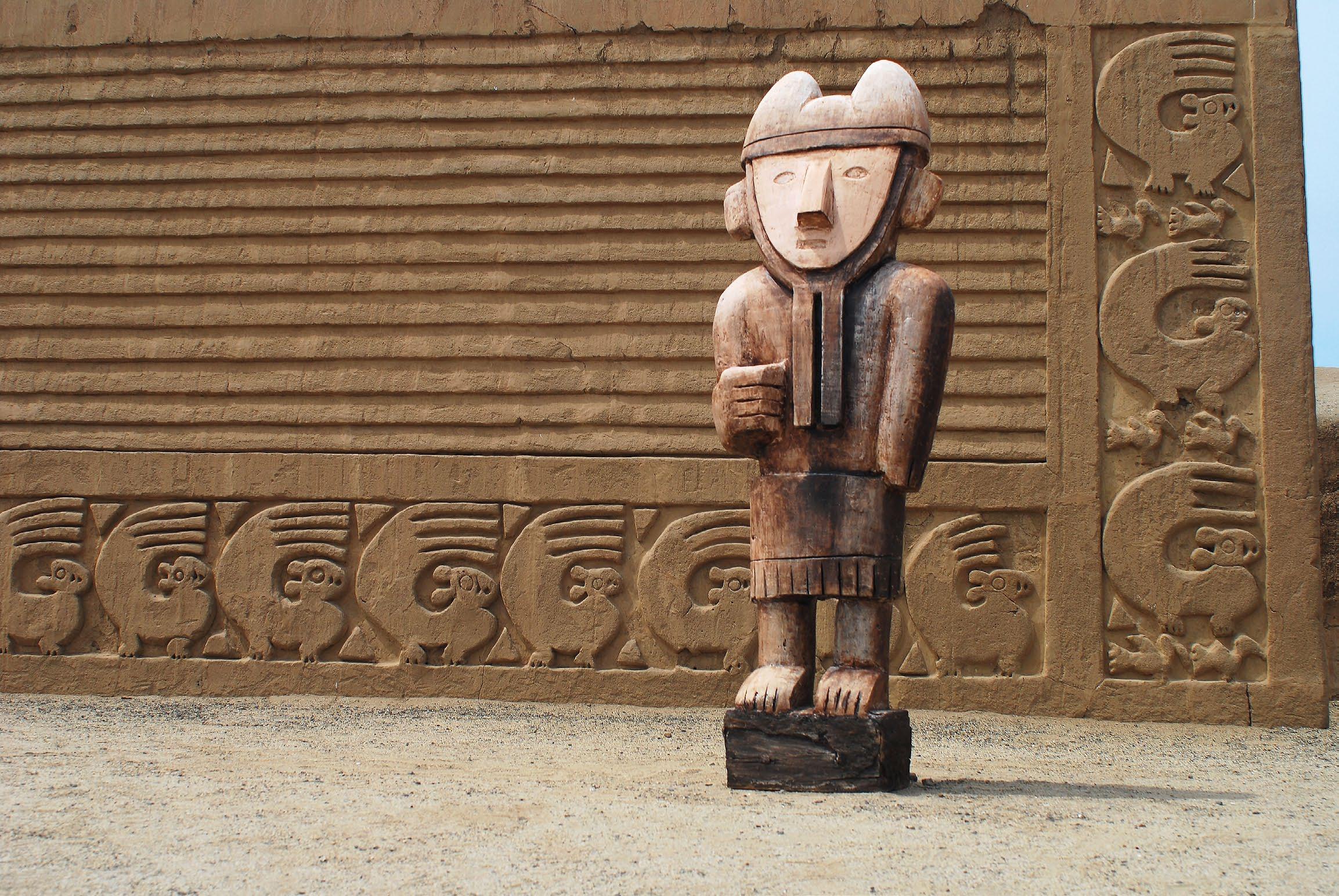
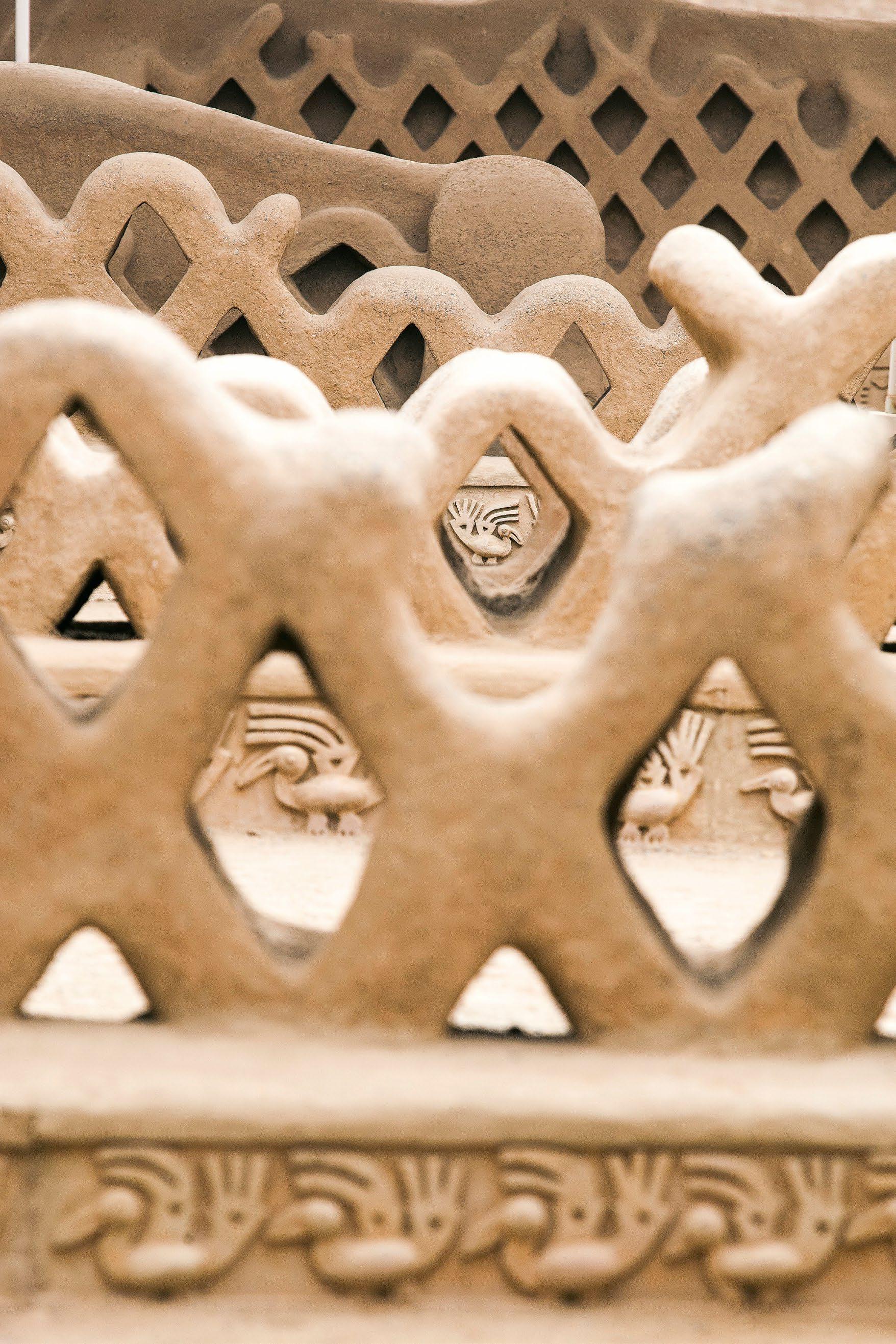
Declared a World Cultural Heritage Site, it was the main center of the Chimú kingdom, and is the largest pre-Hispanic mud city in the Americas. It was made up of streets, walls, and pyramidal temples. Of this complex, only the Nik An Walled Complex can be visited, a place to appreciate its majestic walls decorated with reliefs of geometric, zoomorphic, and mythological figures. It has a site museum.
Huaca La Esmeralda
2.4 miles (3.9 km) north of Trujillo (10 min by car)
This huaca, or archaeological site, is associated with the Chimú culture. Its base is rectangular and has two platforms with central ramps. Its walls adorned by high reliefs with zoomorphic and geometric motifs are remarkable.
Campiña de Moche
4 miles (7 km) south of Trujillo (15 minutes by car)
Located in the Moche district, the countryside stands out for its beautiful landscape of farmlands and its traditional adobe buildings. Its inhabitants are usually engaged in agriculture and cattle ranching.
Complejo arqueológico Huacas de Moche
4.7 miles (7.5 km) south of Trujillo (18 min by car). Tue-Sun, 9:00-16:00.
The dazzling Moche buildings of the Huacas de Moche archaeological complex face each other: the Huaca del Sol (“Huaca of the Sun”) was an administrative center, whilst Huaca of the Moon was a ceremonial center. Today only the latter is open to the public. On its walls you can see colorful murals and representations of the god Ai-Apaec; a tomb with more than 40 sacrificed warriors was discovered.
Museo Huacas de Moche
656 ft (200 m) south of Huaca de la Luna. Tue-Sun, 9:00-15:00. This museum complements the visit to the Huaca of the Moon. Its three themed rooms delve into the stages and construction techniques of the Moche culture.
Virú City
30 miles (49 km) south of Trujillo (50 min by car)
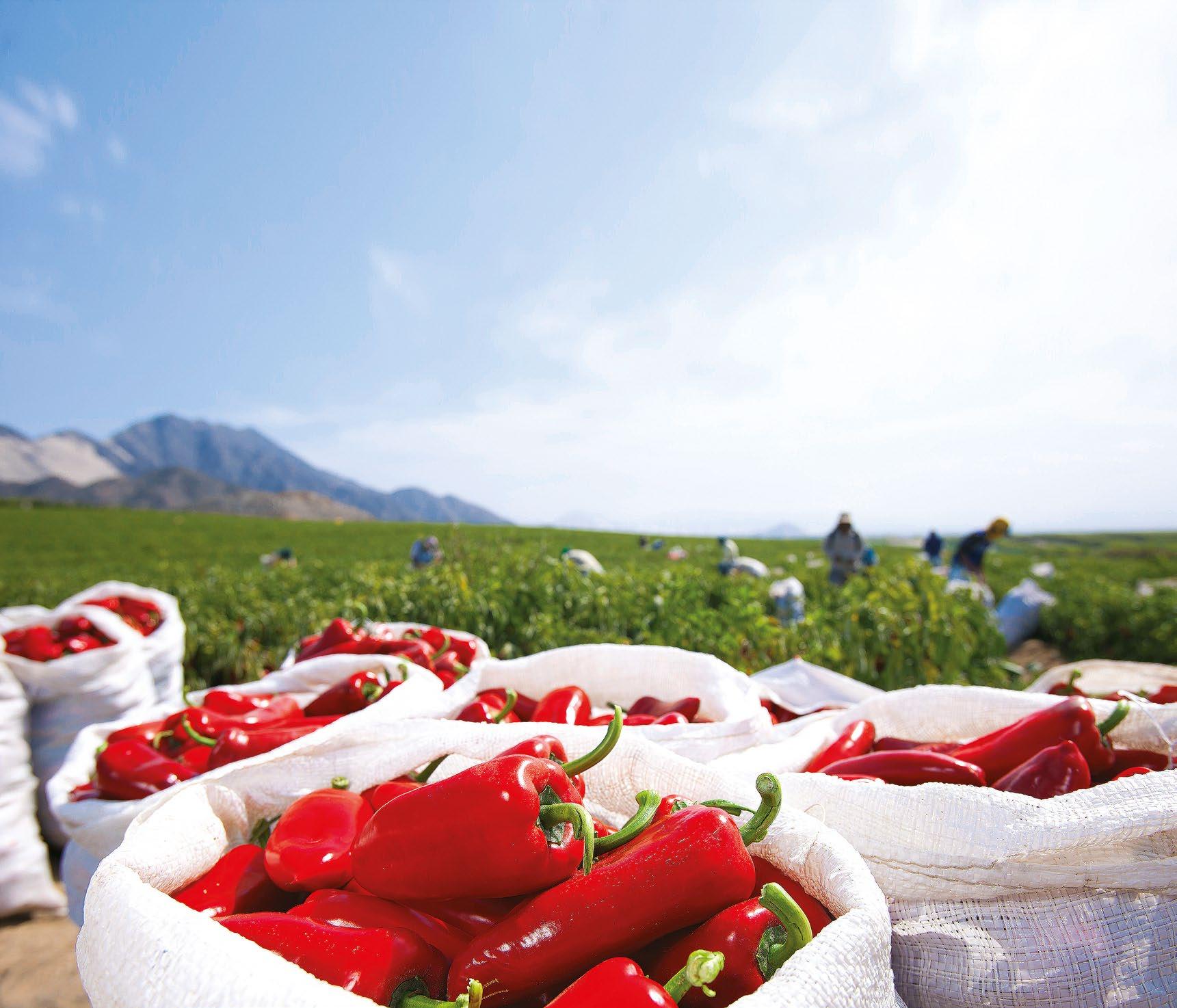
Located in the fertile Virú valley, this city is home to an important agricultural activity. Products for local consumption and export, such as asparagus, peppers, and artichokes, are grown on its land.
At kilometer 526 of the Panamericana Norte highway (45 min by car from Trujillo) Protected by Cerro Negro, the Puerto Morin beach, with calm waters and gentle wind, is ideal for kiteboarding, camping, and walking.
Islas Guañape
10 miles (16 km) offshore from Puerto Morín (40 min by boat)
The Guañape Islands are a group of islands and islets that host a wide variety of guano birds, sea lions, Humboldt penguins, and other marine species.
Proyecto especial de irrigación Chavimochic
At kilometer 508 of the Panamericana Norte highway (45 min by car from Trujillo). Visits prior coordination with the Proyecto especial de irrigación Chavimochic, tel. (044) 272-286, ext. 104.
The Chavimochic Special Irrigation Project channels the waters of the Santa river to the valleys of Chao, Virú, Moche, and Chicama to increase agricultural land and supply Trujillo with electricity and drinking water. Lovers of outdoor activities find it an ideal setting for hiking.
Puerto Malabrigo
Detour at kilometer 614 of the Panamericana Norte highway, 43 miles (70 km) north of Trujillo (1 h 30 min by car)
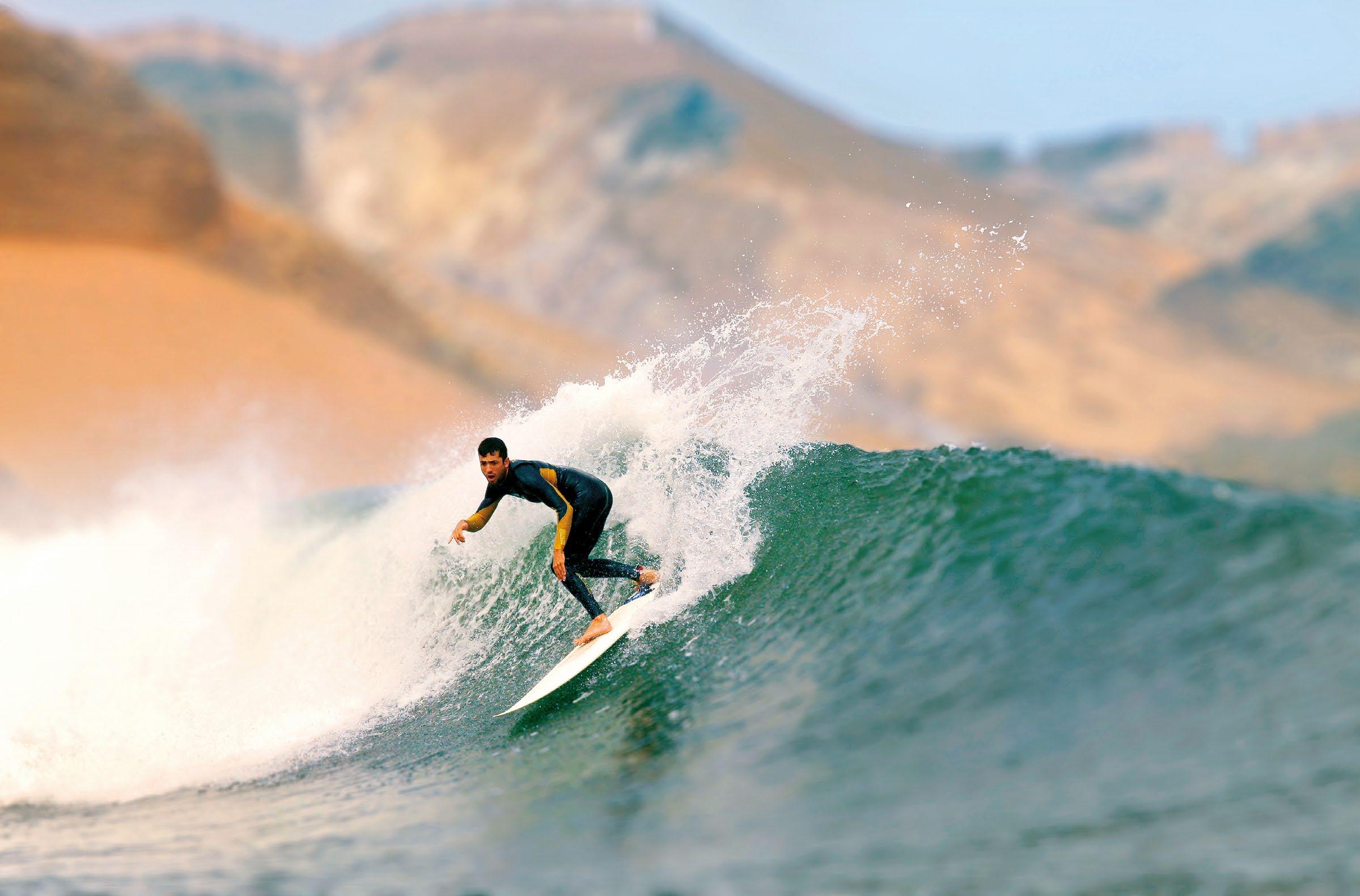
The Malabrigo port was used by the Casa Grande sugar plantation. It is the perfect place for surfers. Its wide beach has the longest left-hand wave in the world and for that reason it is the scene of surfing championships. It has a 2,428 ft (740 m) long tourist boardwalk.
Complejo arqueológico El Brujo
Chicama Valley, town of Magdalena de Cao, 37 miles (60 km) northwest of Trujillo, (1 h 20 min by car on the Panamericana Norte auxiliary and 1 h by the Costanera highway). Mon-Sun, 9:00-16:30.
El Brujo Archaeological Complex was built in the pre-ceramic period and is made up of three huacas: Prieta, Cao and Cortada. The Moche painted their worldview on its high adobe walls, where the figure of the cutthroat stands out. Its museum exhibits the Lady of Cao, the mummified body of a Moche dignitary.
San Pedro de Lloc
62 miles (100 km) north of Trujillo (1 h 15 min by car)
The capital of Pacasmayo has a vast paleontological and archaeological heritage that shows a whole occupational sequence from the preceramics period to the present day. It is surrounded by large accumulations of sand, where dry forests, beautiful lagoons and wetlands emerge.
Playa de Puémape
5 miles (8 km) south of San Pedro de Lloc (15 min by car). Free admission. Puémape Beach is a peaceful fishing cove characterized by its cliffs and wide beaches. In its surroundings there are archaeological remains of the Cupisnique culture, the first civilization of the northern coast of Peru. Lovers of swimming, surfing, windsurfing, and kitesurfing come to this beach to practice their favorite sport. Artisanal fishing and other activities also take place, such as walking, camping, horseback riding and ATV riding.
Bosque natural El Cañoncillo
11 miles (17 km) from the Main Square of San Pedro de Lloc (30 min by car) Mon-Sun, 9:00-16:00
The El Cañoncillo Natural Forest is located in the district of San Pedro de Lloc, on the left bank of the Jequetepeque River. This ecosystem is part of the natural formations of the dry forests on the north coast and is characterized by its beautiful natural lagoons that emerge from the subsoil and its dunes, which have made it a destination for trekking, camping, sandboarding, and dune buggies.
de Pacasmayo
67 miles (108 km) north of Trujillo (1 h 30 min by car)
The Pacasmayo seaside town, characterized by being frequently visited by surfers from different countries, is the ideal destination for those who want to practice water sports and boating. It is a boardwalk dating back to the Republican era. It is possible to visit the old railway station, the boardwalk, and the statue of Christ the Redeemer.
Complejo arqueológico de Pakatnamú
9 miles (14 km) north of Pacasmayo (30 min by car). Mon-Sun, 9:00-15:00.
The Pakatnamú Archaeological Complex is a mud city, the largest after Chan Chan. It was a ceremonial and administrative center, whose extension covers 90 hectares and belonged to the Moche culture. It is made up of 50 truncated ceremonial pyramids, as well as rooms, ceremonial courtyards, squares, corridors, and walls with reliefs.
Ciudad de Chepén
82 miles (132 km) north of Trujillo (2 h by car or 3 h by bus). Visits during daytime. This land was populated by ancient cultures such as Chavín, Moche, Wari, and Chimú. In the current day, it is dedicated to the cultivation of rice, sugar cane, and mango.
Vía crucis
5 min from the main square of Chepén (at the top of Cerro Chepén)
A one-hour walk to one of the highest via crucis in the world. It consists of 777 steps, 14 stations that group 22 life-sized statues, reminiscent of the events of the Road to Calvary. The tour ends at the top of the hill with the 11 m high image of Christ the Redeemer.
Las ex casas haciendas de Talambo y Lurifico
5 min from the Main Square of Chepén
Each of these former plantation houses, located in Talambo and Lurifico, maintains an imposing architecture from the Republican era, which shows vestiges of the great industrial development of rice, sugar, alcohol, soap, and oils, and were unique to the north of the country. They are now recognized as historical monuments of Peru.
arqueológico San José de Moro
Pacanga District, 3 miles (5 km) north of Chepén (10 min by car)
In the San José de Moro Archaeological Complex, human sacrifices were practiced, as evidenced by the discovery of the tombs of Moche priestesses. It also was a cemetery for the elite. It is a National Cultural Heritage.
Playa Chérrepe
Pueblo Nuevo District, 23 miles (36.4 km) northwest of Chepén (40 min by car)
Chérrepe Beach is an artisanal fishermen’s cove that was one of the most popular seaside towns of the Colonial city of Zaña. You can enjoy fishing and ride totora horses. There is public transport to this quiet beach from the Santa Rosa settlement.
Ciudad de Otuzco
49 miles (79 km) east of Trujillo (1 h 30 min by car)
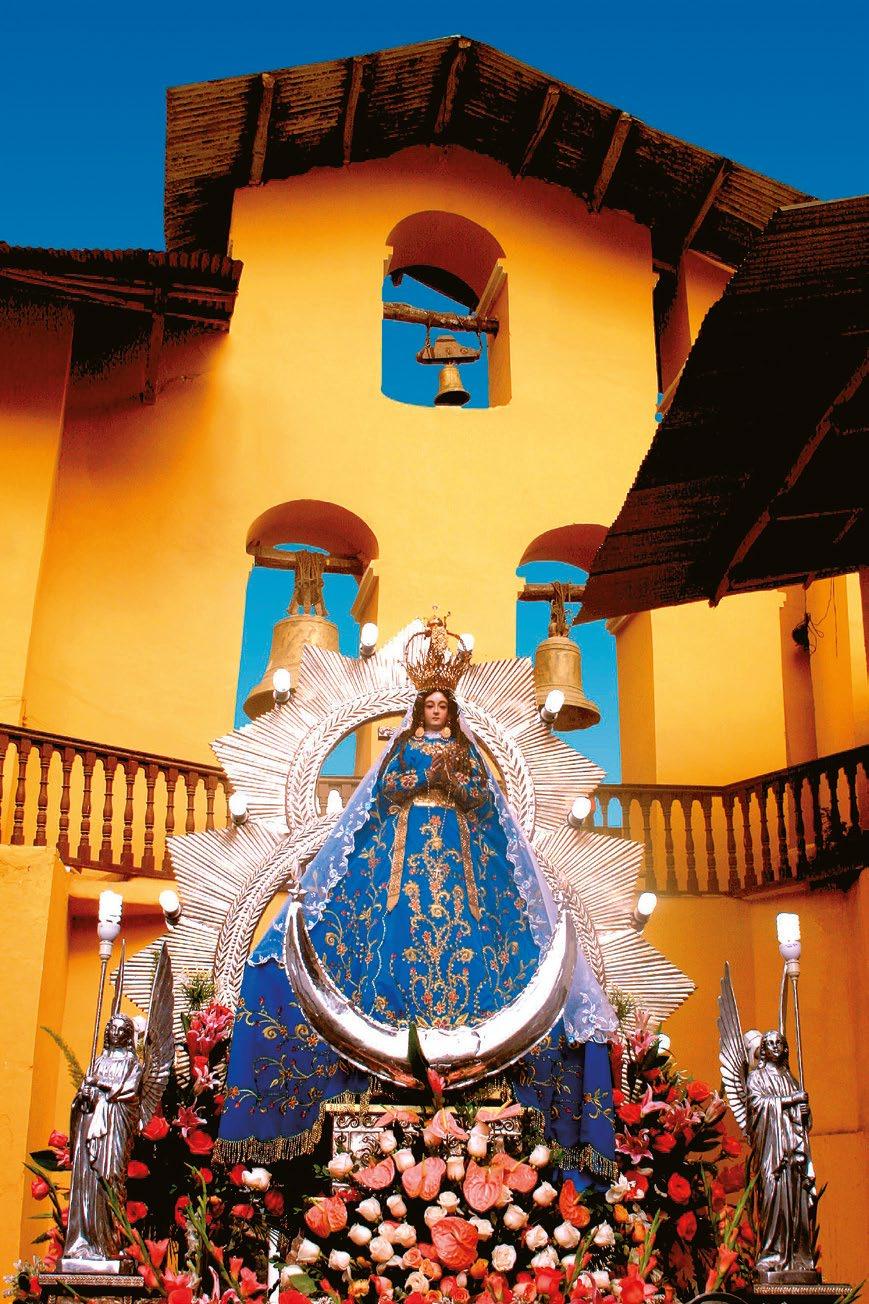
It is known as the Capital of the Faith for its devotion to the Virgen de la Puerta. In the middle of this traditional mountain panorama, with narrow streets and wide-door houses and roofs, the cross of La Ermita stands out.
Ciudad de Cascas
64 miles (103 km) northeast of Trujillo (2 h by car)
Cascas enjoys a spring-like climate all year round and is known for its countryside and vineyards, where exquisite wines and grape distillates are produced.
Árbol de las mil raíces
The imposing “Tree of a Thousand Roots” belongs to the fig tree species; it has aerial roots, that is, its branches and trunk sprout, and they grow downwards looking for soil.
Cristo de las rocas
The “Christ of the Rocks” is a rock formation surrounded by dense vegetation. It shows the profile of the face of Jesus Christ carved by nature: his eyes, mouth, nose, and crown of thorns.
Wineries and wine tasting
In the surroundings of Cascas there are wineries, farms, and vineyards, where the process of making, fermenting and bottling wines and puros (distillates) can be seen.
Huamachuco
109 miles (176 km) east of Trujillo (4 h by car)
The capital of the province was founded in the middle of the Andes Mountain Range in 1554. Its inhabitants are engaged in cattle ranching, potato and corn cultivation, and mining. Huamachuco has beautiful green landscapes.
Complejo arqueológico de Marcahuamachuco
5.6 miles (9 km) northwest of the city of Huamachuco (30 min by car).
Mon-Sun, 8:00-16:00.
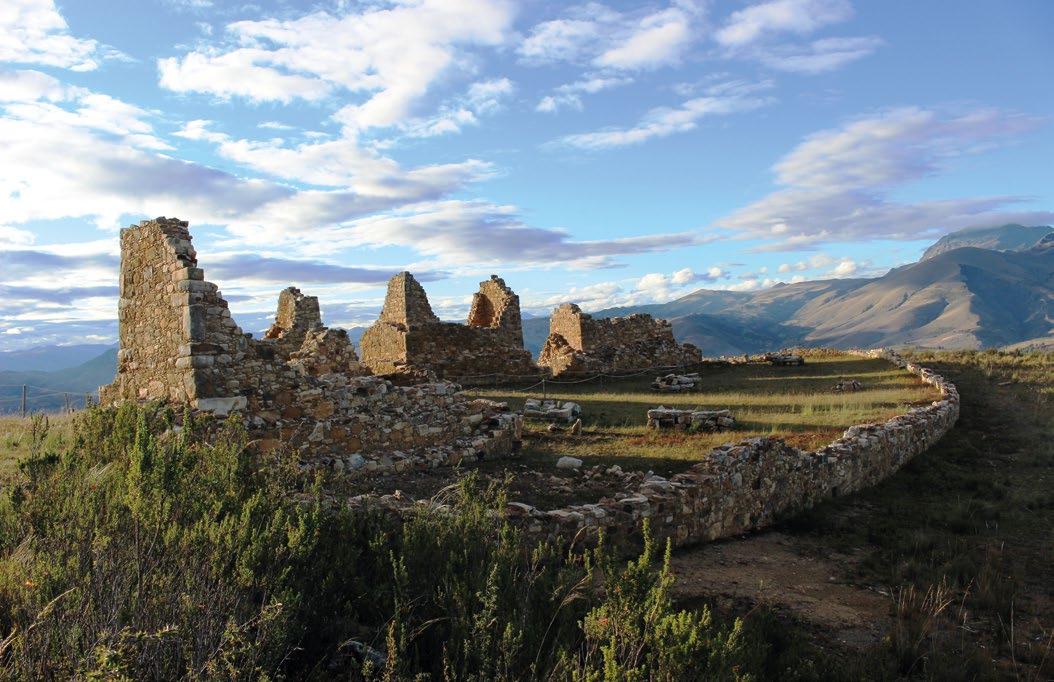
Located at 11,975 ft (3,650 m), the Marcahuamachuco Archaeological Complex presents several occupancy stages. It is one of the largest archaeological complexes in the northern mountains, and one of the seven wonders of Peru. The stone walls of the complex rise on a 1.9 sq. mile (5 km2) plateau, built over dangerous abysses and deep ravines. The circular towers can exceed 33 ft (10 m) in height.
Sitio Arqueológico Wiracochapampa
1.4 miles (2.3 km) north of the city of Huamachuco (10 min by car).
Mon-Sun, 8:00-16:00.
The Wiracochapampa Archaeological Site dates back to 600 AD. Its stone structures make up an octagonal plane and is located on a plain at an elevation of 10,026 ft (3,056 m). The cultural exchange that took place between the Huamachuco and the Huari can be seen here. According to the research, this city was abandoned without its construction being completed, as evidenced by unfinished walls and spaces that denote not having been inhabited.
Santiago de Chuco
102 miles (164 km) east of Trujillo (4 h by car)
Birthplace of the poet César Vallejo, this town pays homage to him in all its corners. A sculpture of the poet stands in its main square, while posters with portraits and verses of his authorship appear in the streets. The house where he was born is now the César Vallejo House Museum (Cl. César Vallejo 1030 and 1046; Mon-Sun, 8:30-13:00 and 14:00-18:00).
Baños termales de Cachicadán
12 miles (18.6 km) northeast of Santiago de Chuco (40 min by car).
Visits during the day.
Located at 10,427 ft (3,178 m), the thermo-mining-medicinal springs of Cachicadán are located on the slopes of Cerro La Botica. Reddish in color, and rich in iron and magnesium, they reach an average temperature of 158 °F (70 °C).
Santuario y Reserva Nacional de Calipuy
42 miles (68 km) south of Santiago de Chuco (2 h by car). Visits after coordination with the office of the National Service of Natural Areas Protected by the State (SERNANP), at (+51) 968-218-433 (sanctuary) and (+51) 968-218-452 (reserve).
The 4,500 hectares of the Calipuy Sanctuary and Natural Reserve were protected to preserve the Puya Raimondii, the longest-living and tallest plant in the world. This plant, a member of the bromeliad family, lives up to 100 years and blooms annually. in a process that takes 9 months. The reserve is home to the northernmost population of guanacos (Lama guanicoe) in South America. Its goal is to preserve and protect the last groups of its rural population, as well as the flora and fauna of the area.
Casa Urquiaga
Casa del Mariscal de Orbegoso
Museo de Zoología
Casa de la Emancipación
Museo de Arqueología, Antropología e Historia de la Universidad Nacional de Trujillo
Casa Ganoza Chopitea
Palacio Iturregui
Museo del Juguete
Museo Catedralicio
Centro Cultural de Trujillo
Catedral
Iglesia San Francisco
Iglesia Santa Clara
Iglesia San Agustín
Iglesia Santo Domingo
Monasterio e iglesia El Carmen
Garci Holguín
Baluarte Herrera
iperu@promperu.gob.pe
The information contained in this brochure has been updated in September 2023. To prepare it, PROMPERÚ has used official information sources, as well as the Regional Directorate of Foreign Trade and Tourism (DIRCETUR) of La Libertad. The opening hours and telephone numbers are subject to vary at each tourist (+51-1) 574-8000 (+51) 944-492-314
Published by PROMPERÚ - Peru for Exports and Tourism Promotion Agency Calle Uno Oeste 50, 14th Floor, Urb. Córpac, San Isidro, Lima, Perú Tel. +511 616-7300 www.promperu.gob.pe © PROMPERÚ. All rights reserved
Legal Deposit in Biblioteca Nacional del Perú No. 2023-10890
Printed by WORK UP E. I. R. L. (Calle Albert Einstein 165, Ate, Lima) Lima, October 2023