Huancavelica
Practical Guide for Travelers
Huancavelica
Location
Central mountain area of Peru
Capital
Huancavelica (at 12,060 ft / 3,676 m)
Elevation
Min.:
Max.:
6,233 ft (1,900 m) (Ocoyo)
17,398 ft (5,303 m) (Huamanrazu Mountain)
Weather
Temperature
Max.:
61° F (16 °C)
Min.: 36° F (2 °C)
How to get here?
By land
Lima-Huancavelica (via Pisco): 499 km / 10 h
Huancayo-Huancavelica: 144 km (4 h by bus, 3 h by car)
Ayacucho-Huancavelica (via Rumichaca): 245 km (5 h)
Huancayo-Huancavelica: 128 km (5 h by express train and 3 h 30 min by coach) (see departure schedule) By train
Huancavelica
Department capital
Province capital
District capital
Tourist attraction
Provincial border
Main road
Paved road
Dirt road
Railroad
Protected Natural Area
River
Lake or lagoon
Laguna Astococha
Acobambilla
Ñahuimpuquio
Puente colonial Izcuchaca
Huachocolpa
Aurahua
Pazos
Acostambo
Izcuchaca
HUANCAVELICA
Aguas termales Seccsachaca Villa Cariño
Panao
Huancavelica Huancayo
Sacsamarca
Mina de Santa Bárbara
Bosque de piedras de Sachapite
Salcahuasi
Salcabamba
TAYACAJA
Pampas
Mariscal Cáceres
Acoria
Colcabamba
Tintay Puncu
Chinchihuasi
CHURCAMPA
Complejo arqueológico de Uchkus Incañan
Yauli
ANGARAES LIMA
ACOBAMBA
Manantial del Inca Willka Puquio
Acobamba
Ccochaccasa
Lircay
Churcampa
Tumbas preíncas de Allpas
Huayllay Grande
Antigua casa hacienda de Ocopa
Huachocolpa
Santa Ana
Laguna de Pultocc
CASTROVIRREYNA
Laguna Orccococha Laguna de Choclococha
Pueblo de Santa Inés
Cocas
Castrovirreyna
Pilpichaca
Santo Tomás de Pata
Cusicancha
Huaytará
Centro arqueológico de Incahuasi
HUAYTARÁ
Santiago de Cochorvos
San Juan de Huirpacancha
Córdova
Querco
Santiago de Quirahuara
AYACUCHO
to Ayacucho
Tambo
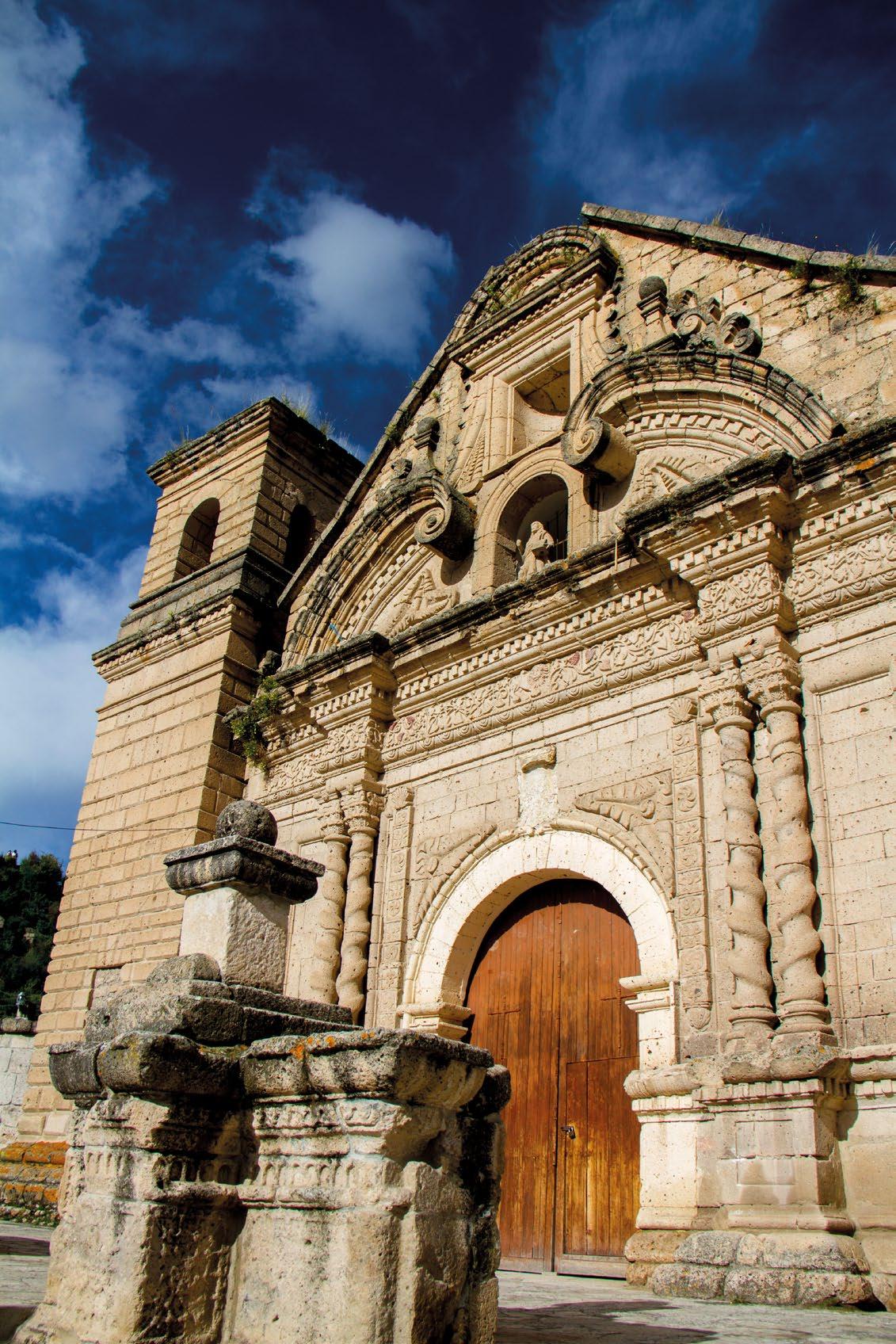
Colonial Church of San Juan Bautista © Fernando López / PROMPERÚ
Distances
Lircay (Angaraes Province)
(Castrovirreyna Province)
(Acobamba Province)
(Tayacaja Province)
Huaytará (Huaytará Province)
(Churcampa Province)
Tours 2 days (minimum recommended stay)
½ day
City Tour of the city of Huancavelica (main square and churches, museum, hot springs of San Cristóbal and Seccsachaca Villa Cariño ecotourism complex)
Sacsamarca and former Santa Barbara mine 1 day
1 day
Pultocc and Choclococha lagoons, Orccococha, San Francisco, Pocococha and Bella Dormida
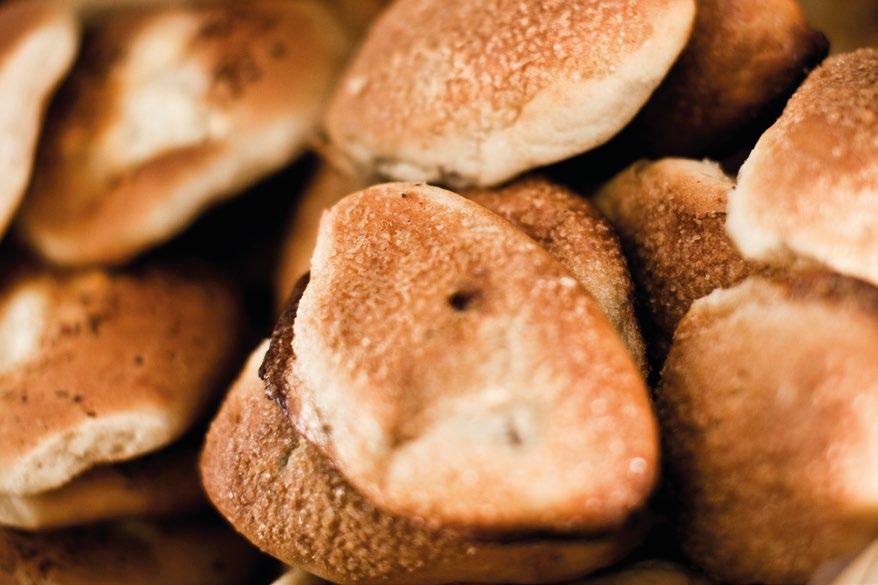
Huancavelican bread © Musuk Nolte / PROMPERÚ
Agenda
Dec 31 - Jan 2
January 4-8
January (varies)
March-June (varies)
May-June (varies)
December 24-28
Niño Callaorcarpino y Jacobo (Huancavelica)
Adoración de Reyes Magos (Huancavelica)
Fiesta del Niño Dulce Nombre de Jesús (Huancavelica)
Easter Week (Huancavelica)
Fiesta del Espíritu Santo Pentecostés (Huancavelica)
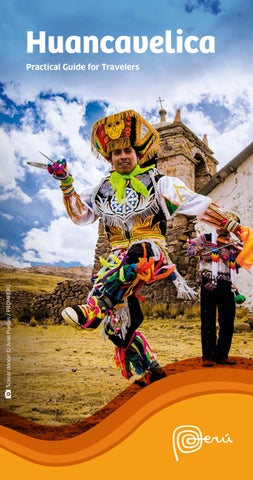
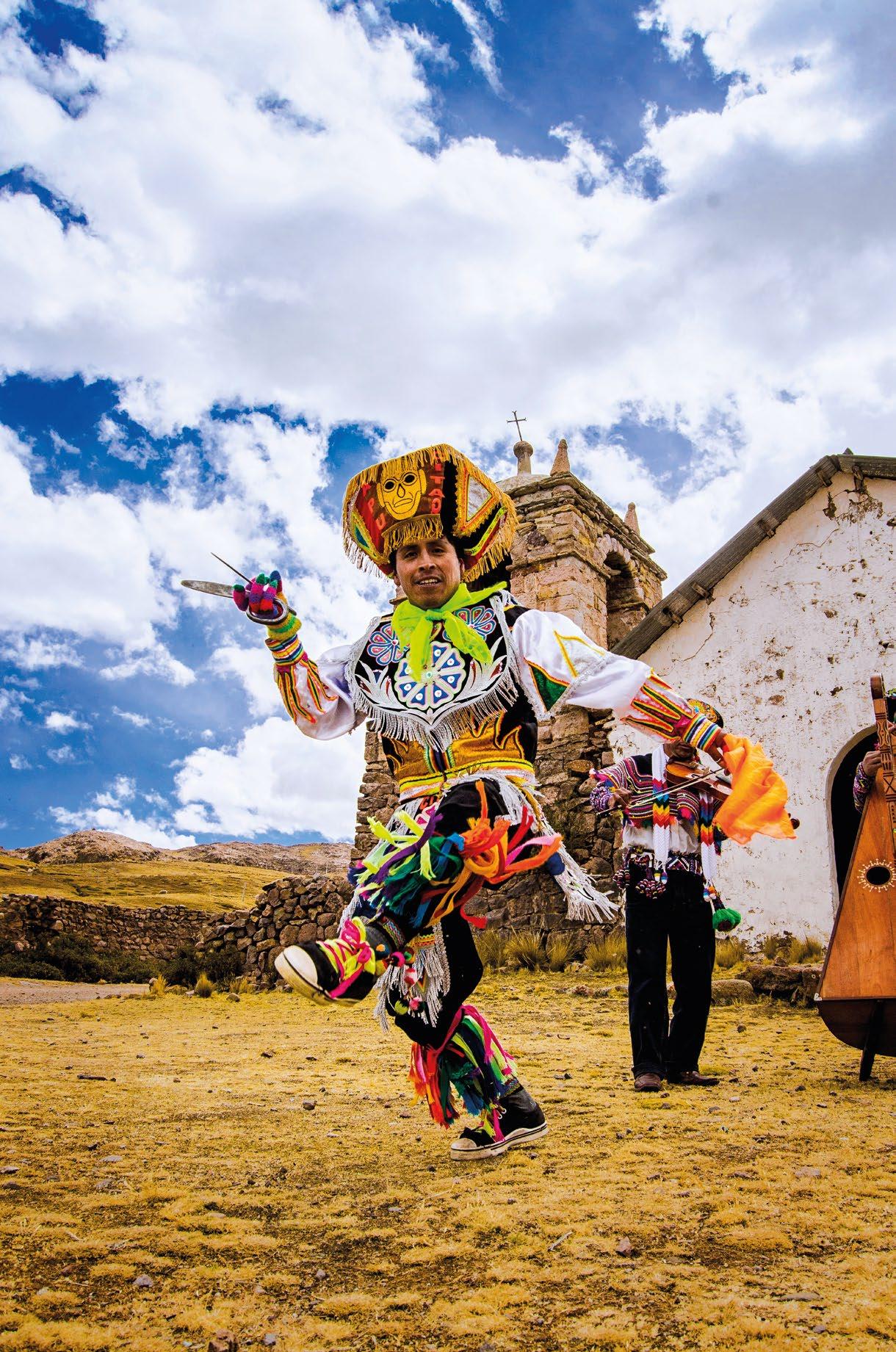
Galas, Laiccas, scissor dance or Tusuq (Huancavelica)
What to eat?
Huancavelican cuisine uses a variety of meats, such as guinea pig for its picante de cuy and alpaca for apanado (breaded meat served with rice, potatoes, and salad). Pachamanca, which is a popular tradition in the Andes, is based on the buried cooking of diverse types of meat, potatoes, and corn. Ropa vieja, a stew of meat with beans, accompanied with potatoes, rice, and cabbage. Breadmaking is also representative of the region; popular products are cheese buns, pumpkin empanadas and wheat bread. Among the best-known desserts are corn mazamorra and ayrampu.
What to buy?
There is a strong pottery tradition in the region. Its containers, vessels and other decorative objects worked in baked clay are renowned. Its inhabitants are also skilled in textile art, creating beautiful cloaks and clothing. Saddlery is also a tradition, artisans make straps, bags, and saddles. These products can be purchased in artisan markets in the city of Huancavelica.
What to visit?
Huancavelica Province
Plaza de Armas
Since its creation, the main square has been known as Plaza de la Independencia and Plaza Leguía. Since 1869, it has been adorned by a pool carved in stone. On the perimeter is the 18th-century “Casa Consistorial,” its Town Hall or Municipality, with eleven semicircular arches on its façade.
Churches
• Iglesia San Antonio de Padua
Plaza de Armas
Mon-Fri, 6:00-7:00 and 19:00-20:00 / Sun, 6:00-7:00 and 19:00-20:00.
Known as the Cathedral, it keeps behind its reddish baroque façade, altars worked in gold leaf and canvases of the Cusco and Huamanguina schools.
• Iglesia Santo Domingo
Jr. Carabaya s/n, Plaza Santo Domingo
Among the treasures it holds, the church preserves the images of the Virgin of the Rosary and Saint Dominic, which were brought from Rome, and a 1666 canvas depicting the Lord of Judgment and Resurrection.
• Iglesia San Juan de Dios
Plaza San Juan de Dios. Mon-Sun, 6:00-8:00.
Works from the Huamanga school adorn this 17th-century church.
• Iglesia y antiguo convento de San Francisco
Plaza Bolognesi
Mestizo style church — its Baroque altarpieces of wood and gold leaf stand out.
• Iglesia San Sebastián
Plaza Bolognesi. Mon-Sun, 7:00-8:00.
The church was built in the 18th century and is remarkable due to the ceiling of its right nave, completely sheathed in gold leaf.
• Iglesia de la Ascensión
Plaza principal de Ascensión. Mon-Sun, 7:00-8:00.
With a single nave with a gabled roof, archways, and a tower in the corner, it is of mestizo architecture. Inside it is adorned with two crosses that reach the ceiling and, on one of its altars, the image of Saint John the Evangelist.
• Iglesia San Cristóbal
Barrio de San Cristóbal. Mon-Sun, 7:00-8:00. Built in 1770, it houses mestizo-style murals that narrate the passion and death of Jesus Christ and paintings depicting the birth of the Child Jesus.
• Iglesia Santa Ana Plaza Ramón Castilla. Mon-Sun, 7:00-8:00.
The first church built in the city (16th century) is adorned with a canvas from the Cusco school, among others painted by disciples of El Greco.
Museo regional Daniel Hernández Morillo
Second block of Jr. Demetrio Molloy, plaza San Juan de Dios.
Tue-Sun, 8:30-17:00. Tel. (067) 453-420. Entrance fee charged.
The regional museum Daniel Hernández Morillo displays works of art of Peruvian artists, such as Daniel Hernández and Fernando de Szyszlo. It also presents archaeological finds of the first settlers in the area. The Museo de Arte Popular Sergio Quijada Jara is also in the same space and contains pieces from diverse cultural events in the region.
Puente colonial de La Ascensión
Jr. Tambo de Mora s/n.
This bridge was built in the 17th century to connect the city centre with La Ascension district. Despite the time that has passed since then, it retains its original structure with side arches.
Aguas minero-medicinales de San Cristóbal
Av. 28 de Abril s/n, Barrio de San Cristóbal. Mon-Sun, 6:00-16:00.
Entrance fee charged.
The greenish water of these pools rise from Potoqchi Hill, a dormant volcano and reaches 64 °F (18 °C).
Tambo de Mora
On the right bank of the Disparate River, city center
A colonial construction that served as a resting place for muleteers arriving from the regions of Ica and Ayacucho, or travelers on their way through Huancavelica.
Sacsamarca
2 miles (3.5 km) southwest of the city of Huancavelica (15 min by car or 45 min walking)
Andean village at an elevation of 12,401 ft (3,780 m), surrounded by mountains and where the Disparate River flows. The houses and the main buildings of the place (the church, the square and the bridge) are made of stone.
Mina de Santa Bárbara
9 miles (15 km) southeast of the city of Huancavelica (30 min by car) or 4 miles (6 km) (1 h 30 min walking)
During the Colony, mercury was extracted from Santa Bárbara mine to amalgamate silver. The site was known as the “Mine of Death”, due to the extreme working conditions. You can visit constructions of the mining settlement. At the entrance, a stone engraving of the coat of arms of San Cristóbal represents the Spanish Crown.
Bosque de piedras de Sachapite
11 miles (18 km) northeast of Huancavelica (30 min by car)
Emanations of volcanic ash have given way to the formation of a stone forest with curious figures, some of them rise from the ground like towers or watchtowers, others create beautiful shadows.
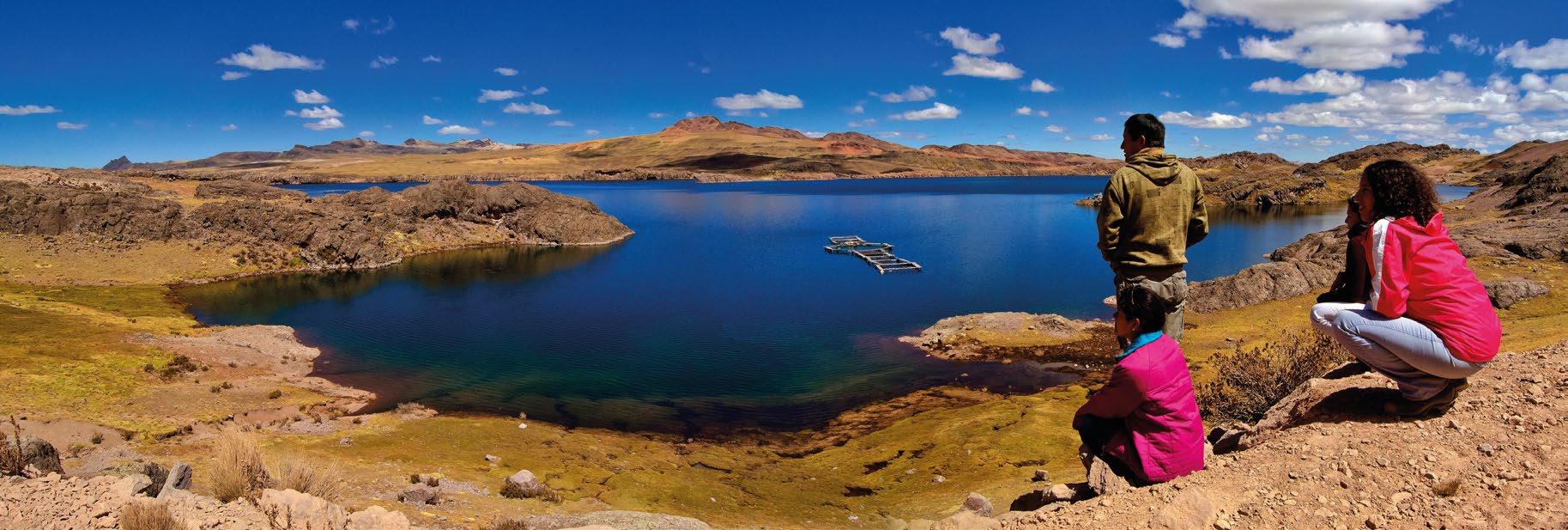
Pultocc Lagoon © Juan Puelles / PROMPERÚ
Complejo arqueológico de Uchkus Incañan
16 miles (26 km) east of the city of Huancavelica (40 min by car)
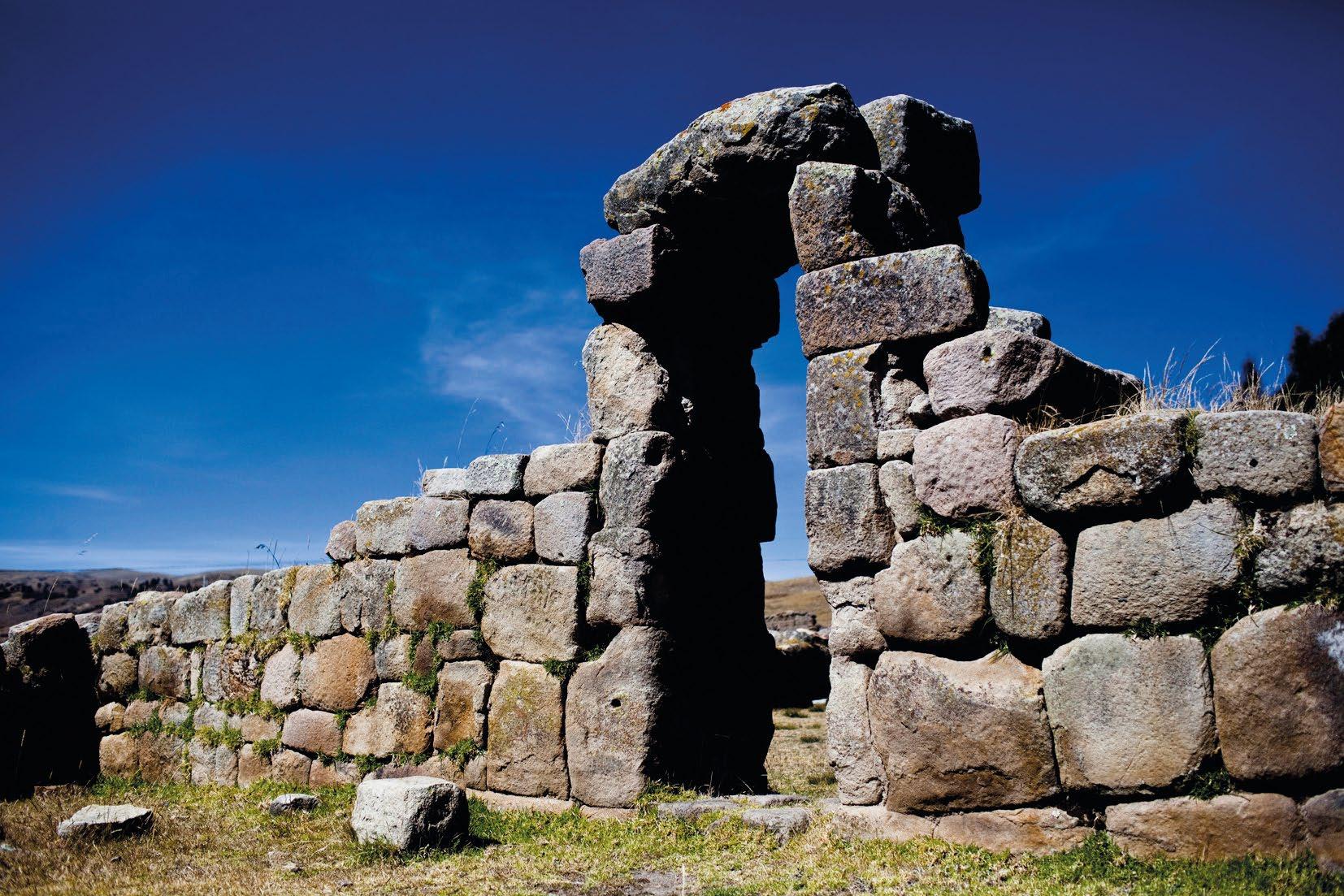
The Uchkus Incañan archeological complex used to be an administrative, religious, and astronomical observation center divided into three sectors. At the foot of Chuncana hill there is a platform system with five platforms. In one of them there are water mirrors, which were used to follow the movements of the Sun and the Moon. During the colony, the Spaniards opened a mine-mouth in the area hoping to find gold.
Puente colonial Izcuchaca
45 miles (72 km) north of the city of Huancavelica (2 h by car), 35 miles (56 km) from the city of Huancayo (1 h by car)
The colonial bridge Izcuchaca was built on Inca foundations to connect Ayacucho, Huancavelica, and Junín. Gypsum and lime from the Aguas Calientes quarry were used for its construction. Its 54 ft (16.5 m) high semicircular arch stands out.
Castrovirreyna Province
Laguna de Pultocc
40 miles (64 km) south of the city of Huancavelica (2 h by bus)
2.5 miles (4 km) from the community of Choclococha (10 min by car).
Surrounded by snow, the Pultocc lagoon serves as a source of water for livestock. It is a habitat for wild ducks, huallatas, vizcachas and there is a trout hatchery that uses floating cages.
Pueblo de Santa Inés
2.5 miles (4 km) south of the city of Castrovirreyna (20 min by car)
A mining town surrounded by the Orccococha, San Francisco and Pacococha lagoons. It is a good place to try trout and alpaca meat dishes.
Laguna de Choclococha
42 miles (68 km) south of the city of Huancavelica (2 h by car)
At 15,108 ft (4,605 m), Choclococha lagoon is a must-see place for nature lovers and fishing enthusiasts. The calm waters reflect the surrounding landscape and create a beautiful scenery.
Bella Dormida
2.5 miles (4 km) south of the city of Castrovirreyna (20 min by car)
The silhouette of Santiago hill, whose summit reaches 15,341 ft (4,676 m), gives life to a sleeping lady who adorns the landscape. This shape can be seen from the road. If you prefer a trekking route, you will need to hire the services of a guide.
Huaytará Province
Templo del Inca
A 5-minute walk from the main square of Huaytará. Entrance fee charged. The colonial church of San Juan de Huaytará was built on the foundations of the temple of the Inca. Details of its original design can still be seen in its polished ashlar walls, such as niches and trapezoidal doors. Next to it are the Baños del Inca.
Museo arqueológico Manuel Humberto Espinoza
Behind the Municipality of Huaytará. Tue-Sun, 9:00-16:00. Entrance fee charged. This archeological museum exhibits a collection of more than a thousand pieces of ceramics, gold and silver jewelry, fossils, funerary bales, and fabrics from the Nasca, Paracas, Wari and Inca cultures.
Centro arqueológico de Incahuasi
14 miles (22 km) north of the city of Huaytará, through the Los Libertadores road (30 min by car)
Rooms, squares, warehouses, palaces, and canals created with perfectly carved stones. Due to the presence of Intihuatanas or sundials, it might have functioned as an astronomical observatory.
Acobamba Province
Iglesia colonial de San Juan Bautista
Pueblo Viejo neighborhood
The façade of San Juan Bautista colonial church mixes baroque and churrigueresque in its stone carvings. Inside, it is decorated with carved wooden altars.
Tumbas preíncas de Allpas
3 miles (5 km) south of Acobamba (25 min by car or 1 hour 30 min on foot)
The pre-inca tombs are located near the community of Allpas, carved into stone cliffs, similar to those of the Cajamarca culture.
Laberintos Virgen de Lourdes
2.5 miles (4 km) northwest of Acobamba (15 min by car, then a ten-minute walk)
The labyrinths Virgen de Lourdes attract adventure sport fans, who will enjoy practicing trekking or rock climbing. Walks in the area lead to the cave paintings of Quillimachay and petroglyphs of Qellqacha, where in 6000 BC its ancient inhabitants left evidence as testimony of their presence.
Manantial Willka Puquio
1.2 miles (2 km) southwest of Acobamba (10 min by bus)
The seat and baths of the Inca are surrounded by stone sculptures representing felines and anthropomorphic beings.
Churcampa Province
Baños Termales de Coris Pampalca
101 miles (162 km) east of the city of Huancavelica (6 h by car)
46 miles (74 km) east of the city of Huanta (Ayacucho) (4 h by car).
The thermal springs are located in the district of San Pedro de Coris. The temperature of the miraculous waters varies from 77 °F to 113 °F (25 °C to 45 °C). They contain chlorine, iron, sulfur, manganese, iron, copper, chromium, and arsenic, which gives them therapeutic and medicinal properties to alleviate ailments caused by rheumatism, arthritis, skin diseases, among others.
Parque ecoturístico El Chorro
259 km east of the city of Huancavelica (6 h by car)
The ecotourism park is located in the Chorro neighborhood, in Churcampa district. People preserve local customs, including the safacasa, Qarawis, sowing, and pincullo. The groundwater fall, “chorro” (water stream), has been used by the population since Inca times.
Angaraes Province
Ciudad de Lircay
47 miles (75 km) southeast of the city of Huancavelica (1 h by car)
The provincial capital is blessed with its temperate weather and beautiful landscapes. You can find colonial buildings in the Pueblo Viejo (Old Town) neighborhood. Just 2.5 miles (4 km) away is the Huapa area, where a pool of medicinal and tempered water welcomes visitors looking for relax.
Cementerio general
At the main entrance to the city of Lircay
A walk through the general cemetery allows you to appreciate the mausoleums of the most powerful landowners of the 18th century. Some of them are true works of art.
Parque de la identidad Anqara
Intersection of Jr. Libertad and Av. 9 de Octubre, Bellavista, city of Lircay. Mon-Sun, 10:00-16:00. Entrance fee charged.
The Park of the Anqara Identity brings together stone sculptures that represent diverse cultural manifestations, such as traditional landscapes and traditional scenes from Lircay. Representative fauna of the area is also observed.
Antigua casa hacienda de Ocopa
3.7 miles (6 km) northeast of the city of Lircay (20 min by bus)
Neoclassical in style, this villa is more than 100 years old. Its main balcony has a privileged view of the countryside that surrounds the hacienda. The living rooms and bedrooms retain elements of their original decoration.
Huayllay Grande
6 km northwest of the city of Lircay (20 min by car)
Old Andean colonial town with cobbled streets. In its main square, surrounded by portals, stands out a colonial church that keeps the image of the Lord of Huayllay.
Huancavelica
City Center
0 100 200 meters
Catedral de Huancavelica
Iglesia Santo Domingo
Casa consistorial y portada del Mercado Antiguo
Museo Regional Daniel Hernández Morillo
Iglesia San Juan de Dios
Iglesia San Francisco
Iglesia San Sebastián
Tambo de Mora
Puente colonial de La Ascensión
Iglesia de la Ascensión
Aguas minero-medicinales de San Cristóbal
Iglesia San Cristóbal
Iglesia Santa Ana
Oropesa
Cl. Mariano Melgar
Cl. Juan Velasco Alvarado
Av. Ernesto Morales
Jr. San Juan Evangelista
Cl. Hildaura Castro
Jr. 5 de Agosto
Jr. Sinchi Roca
Altitude: 12,060 (3676 m) Plaza de San Cristóbal Plaza de toros de Huancavelica
principal de Ascensión
Cl. Ubalgo
Av. 28 de Abril
Av. San Cristóbal
Jr. Huayna Cápac Jr.HipólitoUnanue
Jr. Nicolás de Piérola Pje. Versalles
Pje. Varela
Jr. 20 de Enero Jr. Pampas Jr. Acobamba Jr. Juan García de los Godos Jr. Manuel A. Segura
Jr. Huancavelica
Av. Mariscal Andrés A. Cáceres
Jr. Solís Jr. Jorge Chávez
Jr. Ricardo Palma
Jr. Sinchi Roca
Pje. Mariscal Castilla Jr.PabloSolís Pje.Independencia Jr. Coronel Cabrera Jr.MarianoCataño
Jr. Sebastián Barranca
Jr.AgustínGamarra
de Armas
Jr. Carabaya
Jr. José M. Chávez
Jr. Victoria Garma Jr.VirreyToledo Jr. Inca Roca Av.ManchegoMuñoz
Estadio municipal
Pje. Toril
Estación del tren Mercado Central Pje.Huaytará Jr. Pachacútec
Jr. Augusto B. Leguía
Yupanqui Jr.Colonial
Jr. Arica Jr.Huancayo
Jr. Manco Cápac
Jr. Torre Tagle
Jr. Raimondi Pje.Grau
Jr. Carabaya
Cl. Puno
Av. Los Chancas
iperu@promperu.gob.pe
The information contained in this brochure has been updated in September 2023. To prepare it, PROMPERÚ has used information from the Regional Directorate of Foreign Trade and Tourism (DIRCETUR) - Huancavelica and other official sources. The opening hours and telephone numbers are subject to vary at each tourist attraction. Confirm the hours and telephone numbers with IPERÚ.
Published by PROMPERÚ - Peru for Exports and Tourism Promotion Agency Calle Uno Oeste 50, 14th Floor, Urb. Córpac, San Isidro, Lima, Perú Tel. +511 616-7300 www.promperu.gob.pe © PROMPERÚ. All rights reserved
Legal Deposit in Biblioteca Nacional del Perú No. 2023-10874
Printed by WORK UP E. I. R. L. (Calle Albert Einstein 165, Ate, Lima) Lima, October 2023