Arequipa
Practical Guide for Travelers
Altitude
Min.: Max.:
30 ft (9 m) (Punta de Bombón, Islay)
16,109 ft (4,910 m) (Patapampa, Caylloma)
Weather
Temperature
Max.:
73 °F (23 °C)
Min.: 49 °F (9 °C)
How to get here?
By land
Lima-Arequipa: 627 miles (1,009 km) / 16 h
Cusco-Arequipa: 320 miles (515 km) / 10 h
Puno-Arequipa: 202 miles (325 km) / 6 h
Tacna-Arequipa: 229 miles (368 km) / 6 h
Moquegua-Arequipa: 141 miles (227 km) / 4 h
By air
Lima-Arequipa: 1 h 15 min
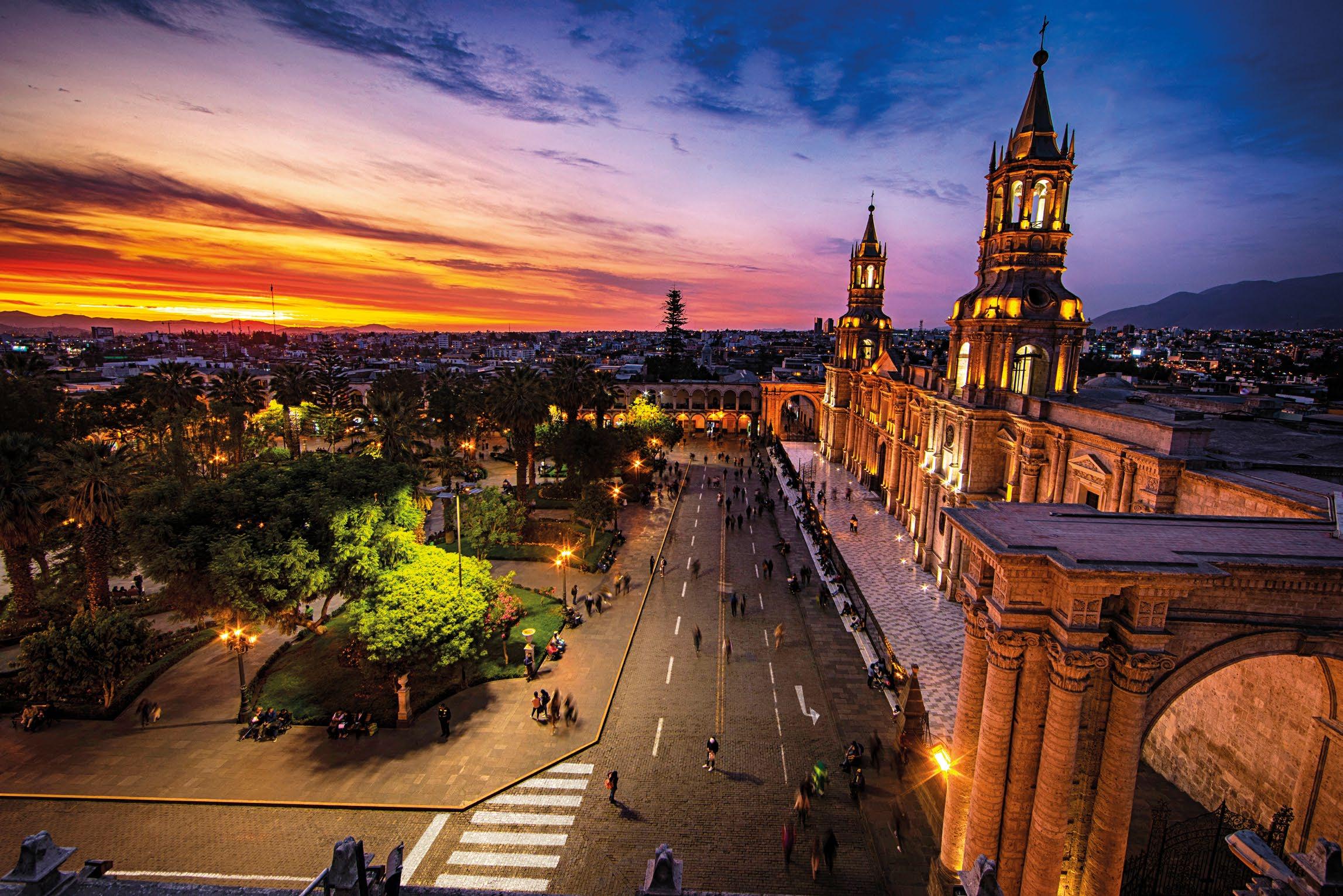
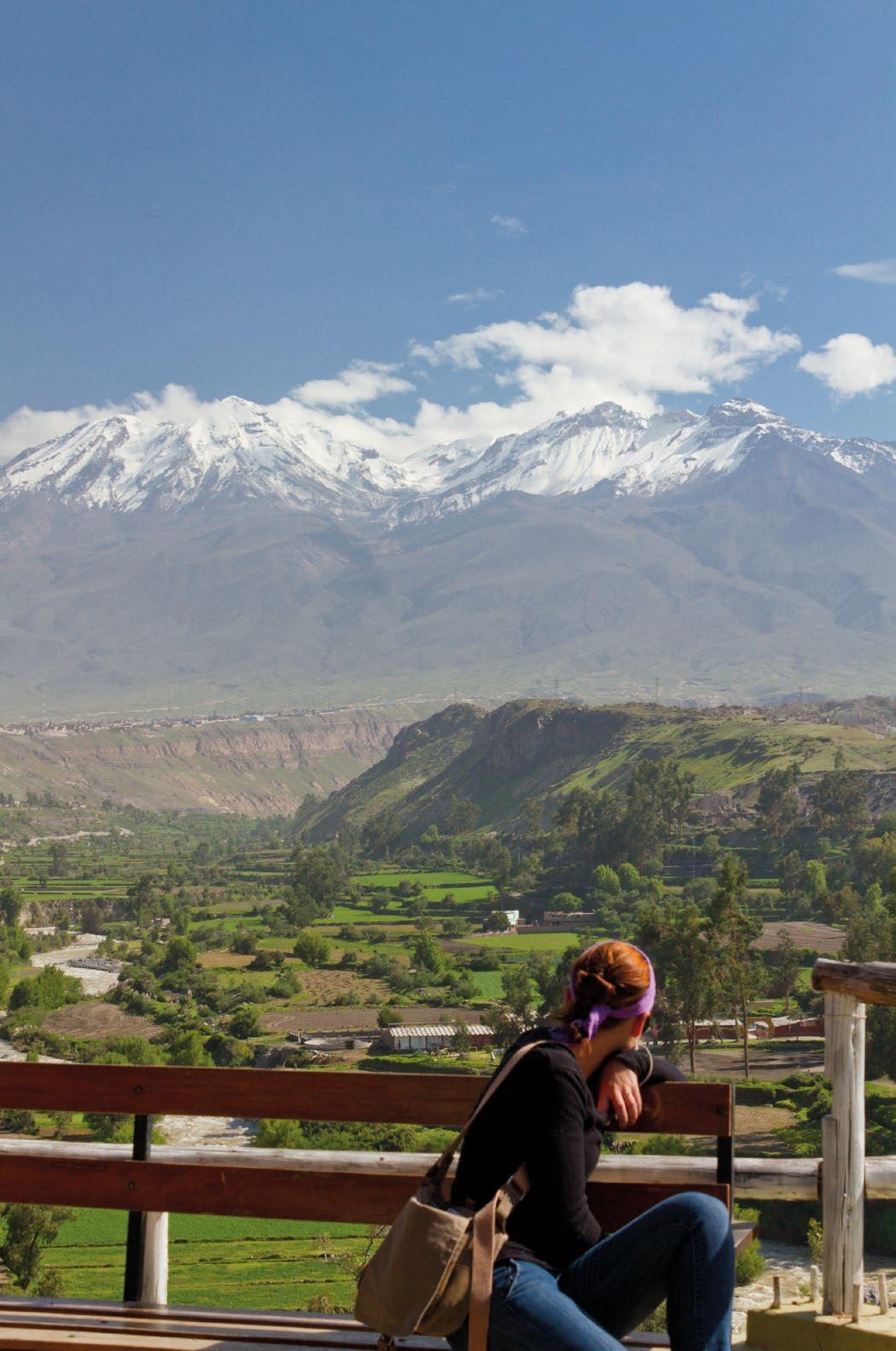
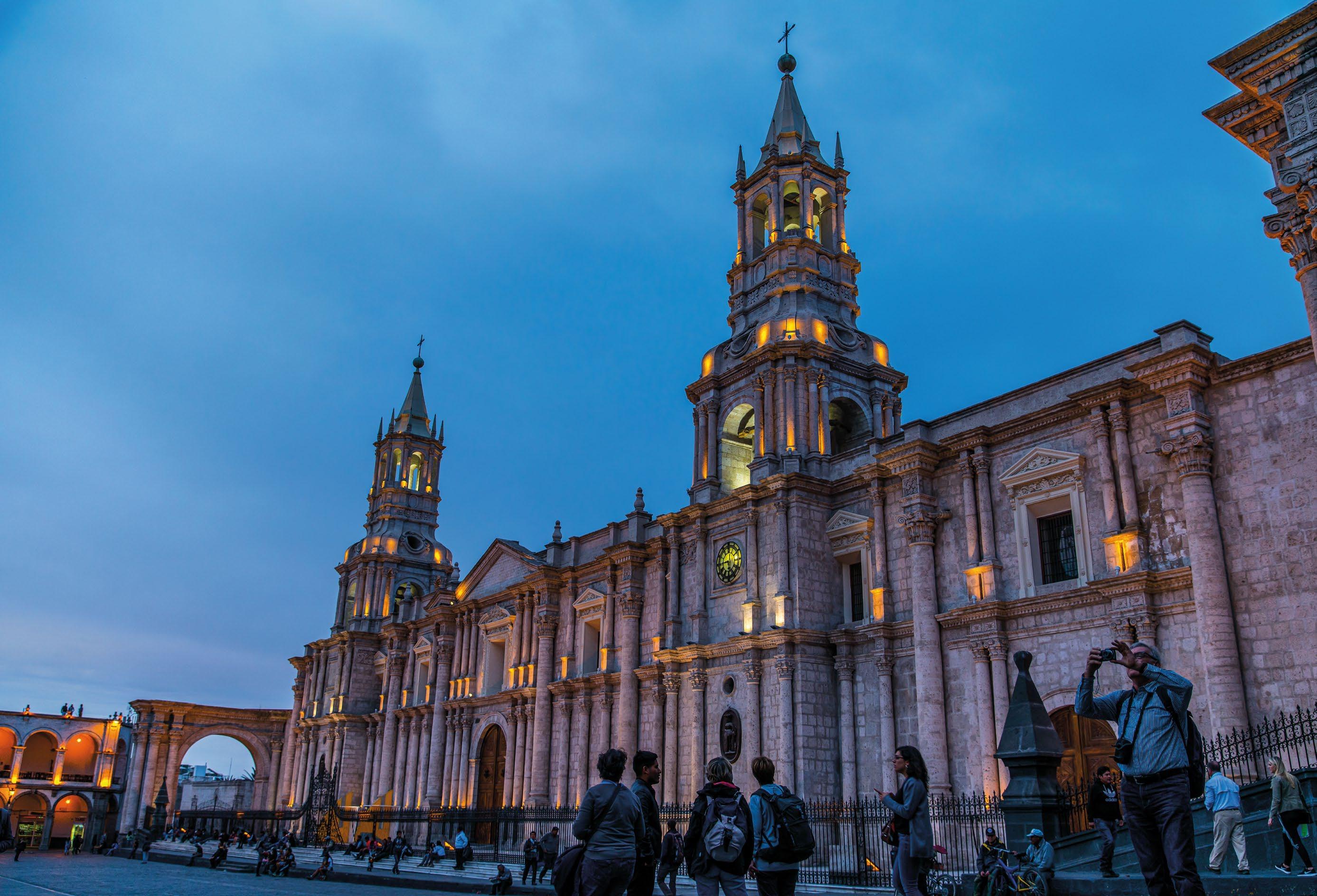
Because of its architecture, which combines the European and Andean visions of Colonial times, Arequipa was declared Cultural Heritage of Humanity by UNESCO in 2000.
to Lima
Bella Unión Acarí
AYACUCHO
Department capital
Province capital
District capital
Tourist attraction
International border
Provincial border
Main road
Paved road
Reserva Paisajística Subcuenca del Cotahuasi
Baños termales de Luicho
Alca Tomepampa
Catarata de Sipia
Velinga
Jaqui
Cahuacho Lomas
Sacaco
Yauca
Puyca
Cotahuasi
CONDESUYOS
Valle de los Volcanes
Andagua
Quicacha
Área de Conservación
Privada Lomas de Atiquipa
Achanizo Tocota
Atico Atiquipa
Chala
Caravelí
Chichas
Área de Conservación Privada Uchumiri
Laguna de Mamacocha
Aplao Chuquibamba CARAVELÍ
Urasqui
Iray Petroglifos de Toro Muerto
CAMANÁ
Ocoña
Camaná
Airport
Quilca
CASTILLA
Corire
Puerto de Matarani
Dirt road Port
Protected Natural Area
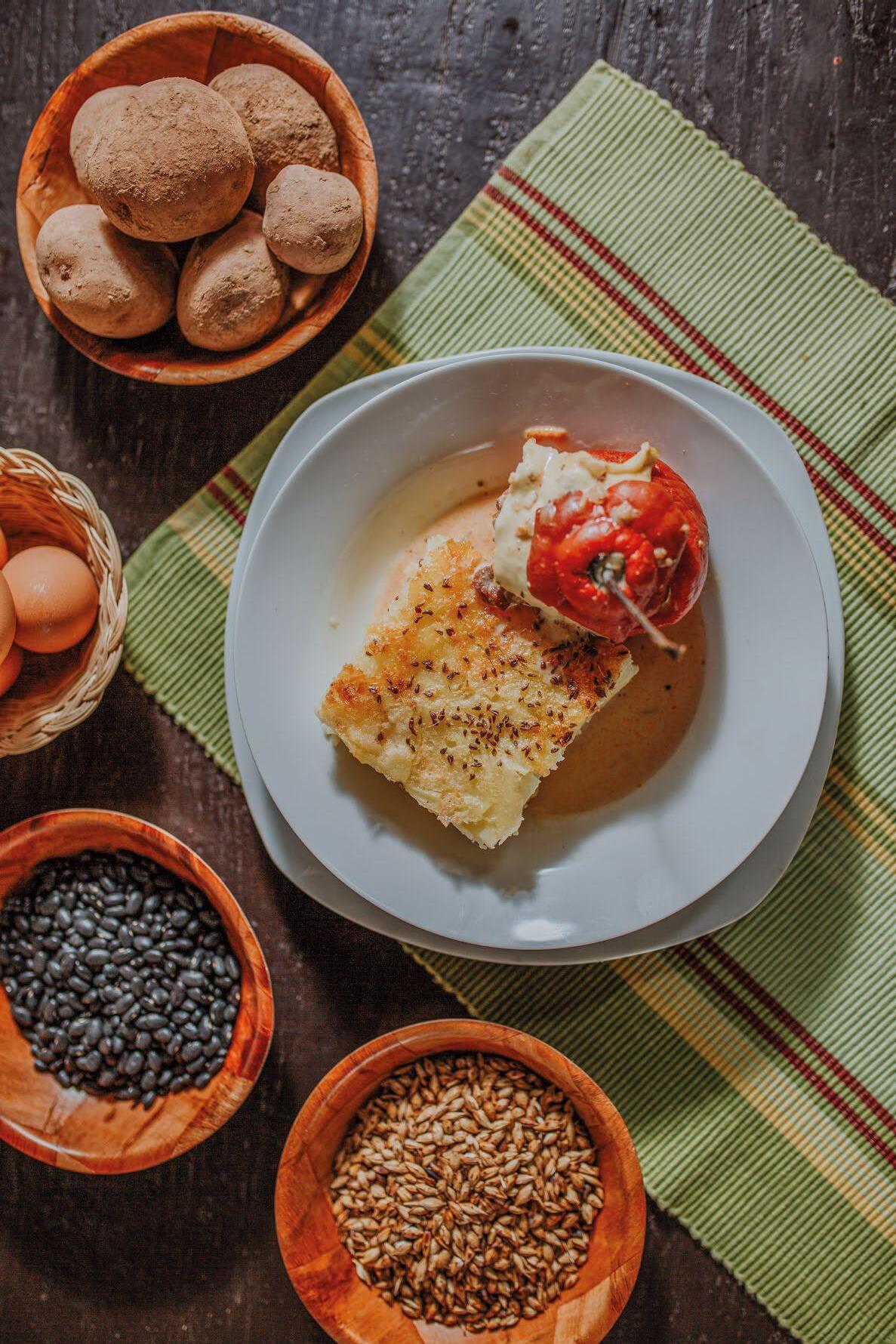
Rocoto relleno © Red Frame / PROMPERÚ
DISTANCE
Tours
3 days (minimum recommended stay)
The Ashlar Route, traditional Arequipa countryside day
Historic City Center, National Sanctuary of Lagunas de Mejía day
2 days
3 to 4 days
Colca valley and canyon, Majes valley (Toro Muerto and Pisco wineries), ascent of Misti or Chachani volcanoes, visit to Camaná or Islay beaches
Valley of the Volcanoes, Cotahuasi valley and canyon, Caravelí (Lomas de Atiquipa, Puerto Inca and Pisco wineries)
Festivity of Virgen de Chapi (Polobaya, Miraflores, Cayma, and Islay Provinces)
Anniversary of Cotahuasi (La Unión Province)
Anniversary of Caylloma (Caylloma Province)
Anniversary of the city of Arequipa (Arequipa) (San Juan de Tarucani, Arequipa)
Festivity of Virgen Inmaculada Concepción (Chivay,
picanterías deserve special attention, a modern and exceptional expression of an ancestral culinary custom of the region. In addition to the traditional chupes, there are a variety soltero de queso, ocopa, and on Sundays, . The must-have local dessert is the exquisite queso helado Do not skip a visit to San Camilo market, where you will find delicious
Arequipa is an excellent place to buy export-quality alpaca fiber garments, as their factories are established in the city. The tradition of the Arequipa craftsmen endures with their work in wrought iron and embossed leather, making belts, furniture, and desk items. The ashlar is also worked by artisans who carve decorative items. If it comes to sweets, Arequipa’s chocolates and desserts are famous. You can also find liqueurs, such as pisco and anisette.
Plaza de Armas
The neoclassical Republican architectural ensemble of the main square consists of the cathedral and arches built in granite, lime, and ashlar. In the center of the square, there is a bronze fountain with the “Tuturutu,” an emblematic figure which represents a 16th-century soldier in charge of delivering the royal messages. The scene is completed by the presence of the Misti and Chachani volcanoes.
Basílica catedral de Arequipa
Plaza de Armas. Mon-Sun, 7:00-10:00 and 17:00-18:00; Sun, 9:00-13:00. The cathedral basilica of Arequipa was built between 1621 and 1656 and rebuilt by Lucas Poblete, in a neoclassical style and in ashlar, after the fire of 1844. In 1850, Bishop José Sebastián de Goyeneche had its interior adorned with jewels by Francisco de Moratilla, chamber silversmith of Isabel II. The cathedral houses a 39 ft (12 m) high Belgian organ and impressive wooden carvings, such as the sculptures of the twelve apostles and the pulpit, supported by a serpent-bodied demon.
Churches and Monasteries
During the Colony, most of the religious complexes representative of the city were built.
• Complejo de la Compañía de Jesús
At General Morán and Álvarez Thomas streets. Temple hours: Mon-Fri, 9:00-12:30 and 15:00-18:30, and Sat-Sun, 10:00-12:00 and 16:00-18:00. Hours of the chapel of San Ignacio de Loyola: Mon-Fri, 9:00-13:00 and 15:00-18:00; Sat-Sun, 10:00-12:00 and 15:00-18:00. Admission to the chapel requires a ticket.
The Complex of the Society of Jesus is the greatest exponent of regional architecture and art and combines indigenous and European cultures. It is complemented by the chapel of San Ignacio de Loyola, whose dome is
• Iglesia de San Agustín
At San Agustín and Sucre streets Mon-Sat, 9:00-13:00 and 16:00-18:00; Sun, 9:00-13:00
The church of San Agustín retains its original façade from the first half of the 18th century; it withstood the earthquake of 1868. Its main cloister housed the Academia Lauretana (19th century) and Universidad Nacional de San Agustín.
• Monasterio de Santa Catalina
Cl. Santa Catalina 301. Fri-Wed, 9:00-17:00; Thu, 9:00-19:30.
Entrance fee charged.
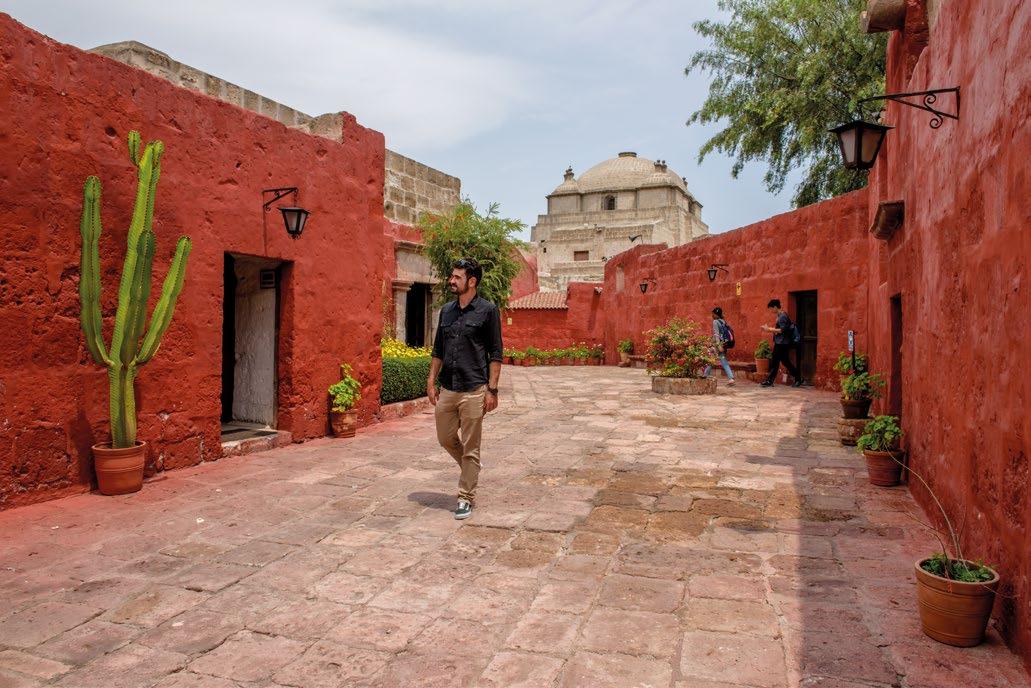
From 1579 to 1970, the Monastery of Santa Catalina worked as a cloistered convent. Its rooms, of different architectural styles, initially housed Creole and mestizo women, and daughters of curacas. In 1964 the first Spanish nuns joined them. Its narrow streets, courtyards, cloisters, and distribution of cells resemble a small citadel.
• Complejo de San Francisco Cl. Zela 103. Temple Hours: Mon-Sat, 16:00-20:00; Sun, 7:00-13:00 and 18:00-19:00. Convent hours: Mon-Sat, 9:00-12:00 and 15:00-18:00. Entrance fee charged. Hours of the Temple of the Third Order and Museum: Mon-Sat, 15:45-19:30. Entrance fee charged.
The complex of San Francisco was founded in 1552 and was the fourth temple and the third house for clergy in Arequipa. Its walls are made of ashlar and its vault of brick. The paintings of the Cusco school stand out.
• Museo de Arte Virreinal e iglesia de Santa Teresa
Cl. Melgar 303. Church hours: Mon-Sat, 6:30-7:45 and Sun 8:00-9:50. Museum hours: Mon-Sun, 10:00-15:00.
More than 300 years of history are depicted in paintings, sculptures, and other pieces displayed in this living museum, as well as objects and environments still used by the nuns to pray the Angelus, with songs that visitors can hear.
• Convento Museo La Recoleta
Jr. Recoleta 117. Mon-Sat, 9:00-13:00 and 14:00-17:00. Entrance fee charged. La Recoleta convent museum is one of the most complete museums in the city. Its library has more than twenty thousand books. It preserves a jar of wine of 1550 that would point to Arequipa as the first wine producer during the viceroyalty of Peru.
Manor Houses
Old Arequipa manor houses are known for their mestizo architecture, vaulted ceilings, and large courtyards.
• Casa Tristán del Pozo Cl. San Francisco 108. Mon-Fri, 9:00-18:00 and Sat, 9:00-13:00.
• Casa Goyeneche Cl. La Merced 205. Mon-Fri, 9:00-13:00 and 14:00-16:45.
• Casa del Moral Cl. Moral 318. Mon-Sat, 9:00-17:00. Entrance fee charged.
Museums
As an important cultural and tourist center in the country, the city of Arequipa has museums of archaeology, colonial history, and art.
• Museo Santuarios Andinos de la Universidad Católica de Santa María Cl. La Merced 110. Tue-Sat, 9:00-18:00 and Sun, 9:00-14:00. Entrance fee charged.
From May to December, Juanita, the 500-year-old Inca mummy, preserved in excellent conditions, is exhibited in the museum.
• Museo de La Catedral Plaza de Armas. Mon-Sat, 10:00-16:15. Entrance fee charged.
• Museo Arqueológico José María Morante de la Universidad Nacional de San Agustín
Cl. Álvarez Thomas 200. Mon-Fri, 8:30-13:00 and 14:00-15:15 Entrance fee charged.
• Museo Histórico Municipal Guillermo Zegarra Meneses
Plaza San Francisco 407. Mon-Fri, 8:00-15:00. Entrance fee charged.
• Casa Museo Mario Vargas Llosa Av. Parra 101. Mon-Fri, 8:00-15:00 (group visit). Entrance fee charged.
• Casa Museo Arequipa - Museo de Arte Contemporáneo Alameda San Lázaro 120. Mon-Fri, 9:00-15:00. Entrance fee charged.
Barrios tradicionales
San Lázaro neighborhood has narrow passages, small squares, and large houses. Del Solar, Tambos de Bronce, El Matadero and La Cabezona were points of fairs and barters, and they stand out for their colonial architecture.
Mirador de Yanahuara
1.2 miles (2 km) north of the city of Arequipa
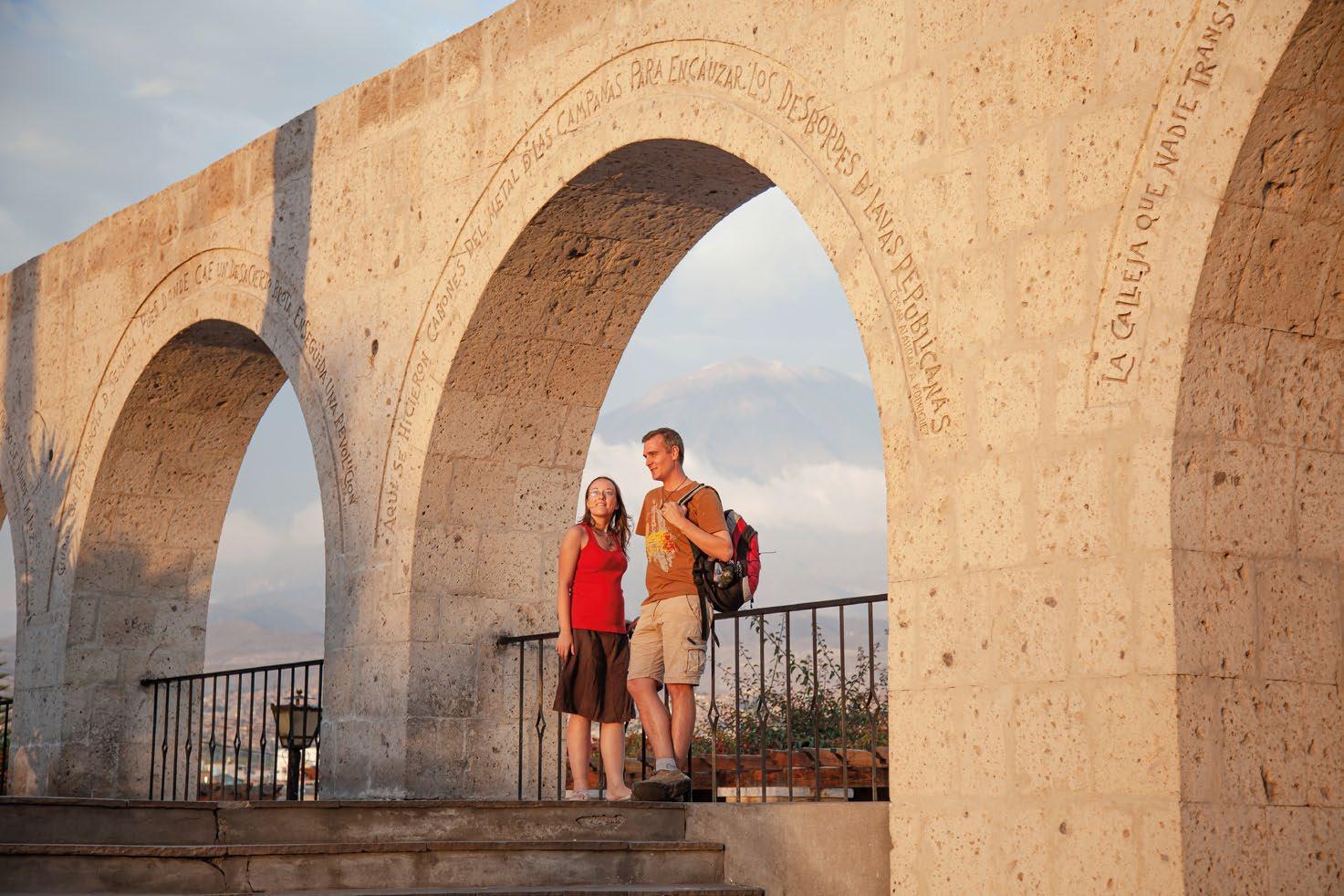
Built in the 19th century, the Yanahuara viewpoint offers an exceptional view of the city and its guardian, the Misti volcano. Phrases by renowned Arequipa residents are engraved on its arches. The Sachaca and Carmen Alto viewpoints also offer beautiful landscapes.
2.5 miles (4 km) northwest of the city of Arequipa (10 min by car) Cayma district is considered the balcony of Arequipa for its privileged view of the entire city. Its main attraction is the temple of San Miguel Arcángel, built in 1730, for its mestizo façade and its collection of paintings from the Cusco school.
Cerro Colorado and Uchumayo districts, 7 miles (12 km) northwest of the city of
On the slopes of the Chachani volcano is the Añashuayco gorge, which flows into the right bank of the Chili River. Millions of years ago, a large explosion on the earth’s surface gave rise to ignimbrite or ashlar. The presence of these ashlar quarries and master stonemasons offers the tourist an unforgettable experience, considering that the artisanal activity of the stonemason has been declared
16 miles (25 km) northwest of Arequipa (1 h by car). Mon-Fri, 8:00-14:00; Sat, Sun, and holidays, 7:00-16:00. Entrance fee charged.
The waters of the Yura thermal springs come from the Chachani volcano and are renowned for their therapeutic properties. The water temperature fluctuates between 73 °F and 82 °F (23 °C and 28 °C). The complex offers accommodation
6 miles (10 km) southwest of the city of Arequipa (25 min by car)
In this fertile valley, the traditional villages of Los Tunales and Alata stand out. Since the beginning of the 20th century, the traditional Quasimodo Festival has
6 miles (9 km) southeast of the city of Arequipa (25 min by car).
The founder’s mansion is one of the most representative manor houses in the region. It is said that the founder of the city, Garcí Manuel de Carbajal, ordered the construction of this ashlar mansion for his son. In 1785, it was remodeled by Juan Crisóstomo de Goyeneche y Aguerreverre, to provide it with the stately appearance that it possesses today.
Pueblo y molino de Sabandía
6 miles (9 km) southeast of the city of Arequipa (25 min by car). Mon-Sun, 9:00-17:00. Entrance fee charged.
Sabandía is a traditional village with houses that still retain colonial and Republican-style structures and is surrounded by the Misti and Pichu Pichu volcanoes. It is known for the bullfights that are held to date. The mill is a large house with colorful balconies, built in 1621 entirely in ashlar. During the tour, you can learn about wheat stone milling.
Distrito de Characato
8 miles (12.5 km) southeast of the city of Arequipa (35 min by car)
Characato district is known for its traditional picanterías. Its soil is fertile and abundant with water, conducive to practicing agriculture. A visit to its beautiful colonial church is recommended.
Distrito de Yarabamba
14.6 miles (23.5 km) southeast of the city of Arequipa (50 min by car)
The mansion of the Arenas y Pinto and the colonial mansion of the Rivera y Echevarría are the most important constructions. It is recommended to visit the Sogay Annex, a picturesque village with narrow streets and beautiful landscapes, and enjoy a walk to the Sogay waterfall.
Distrito de Quequeña
16 miles (26 km) southeast of the city of Arequipa (40 min by car)
In the Huanaqueros ravine there are petroglyphs that show that the district has been populated since ancient times. The House of the Martyrs of Quequeña is a site museum that narrates the war of the Pacific through watercolors. The church, Alameda de los Muertos (boulevard of the dead) and the Alameda de los Sauces (boulevard of willows) are also interesting.
Santuario de la Virgen de Chapi
Polobaya district, 37 miles (60 km) southeast of Arequipa (2 h by car)
Thousands of faithful arrive every May 1 at the Sanctuary of Virgen de Chapi, Patron Saint of Arequipa. Polobaya hosts one of the most important pilgrimages in the south of the country.
Zoo Mundo
Paucarpata district, 8 miles (13 km) northeast of Arequipa (35 min by car)
Mon-Sun, 9:00-17:00. Entrance fee charged.
Many of the specimens found in this zoo were bred in captivity.
Balneario de Jesús
Paucarpata district, 8 miles (13 km) northeast of Arequipa (35 min by car)
The mineral-medicinal waters of these pools have therapeutic properties; the gas content of the water naturally sprouts in the form of bubbles. It has individual and family pools, a whirlpool, and a semi-Olympic pool.
Distrito de Chiguata
17 miles (27 km) northeast of the city of Arequipa (1 h by car)
Chiguata means “cold all year round.” This district was founded in 1540 by the encomendero Diego Hernández. All its tourist sites can be reached on foot: the temple of the Holy Spirit, the archaeological centers, and its queñuales forest.
Reserva Nacional de Salinas y Aguada Blanca
50 miles (80 km) northeast of Arequipa (1 h 30 min by car)
The Salinas y Aguada Blanca National Reserve covers almost 367 thousand hectares, spread across the provinces of Arequipa and Caylloma (Arequipa) and General Sánchez Cerro (Moquegua). Its highest point is at an altitude of 19,931 ft (6,075 m) (Chachani volcano) and the lowest at 9,186 ft (2,800 m). The Misti (19,111 ft / 5,825 m) and Pichu Pichu (18,583 ft / 5,664 m) volcanoes are also within its boundaries. The vicuña is the most representative species of the reserve. During the second half of the year, you can participate in the chaku, or shearing, of vicuñas.
• Cuevas de Sumbay
Yanahuara district, 58 miles (93.3 km) north of the city of Arequipa (1 h 45 min by car)
The Sumbay caves house more than 500 paintings of rock art with human and animal figures. They were discovered in 1968 and are, approximately, 6,000 to 8,000 years old.
• Laguna Salinas
San Juan de Tarucani district, 44 miles (70.5 km) northeast of Arequipa (3 h by car)
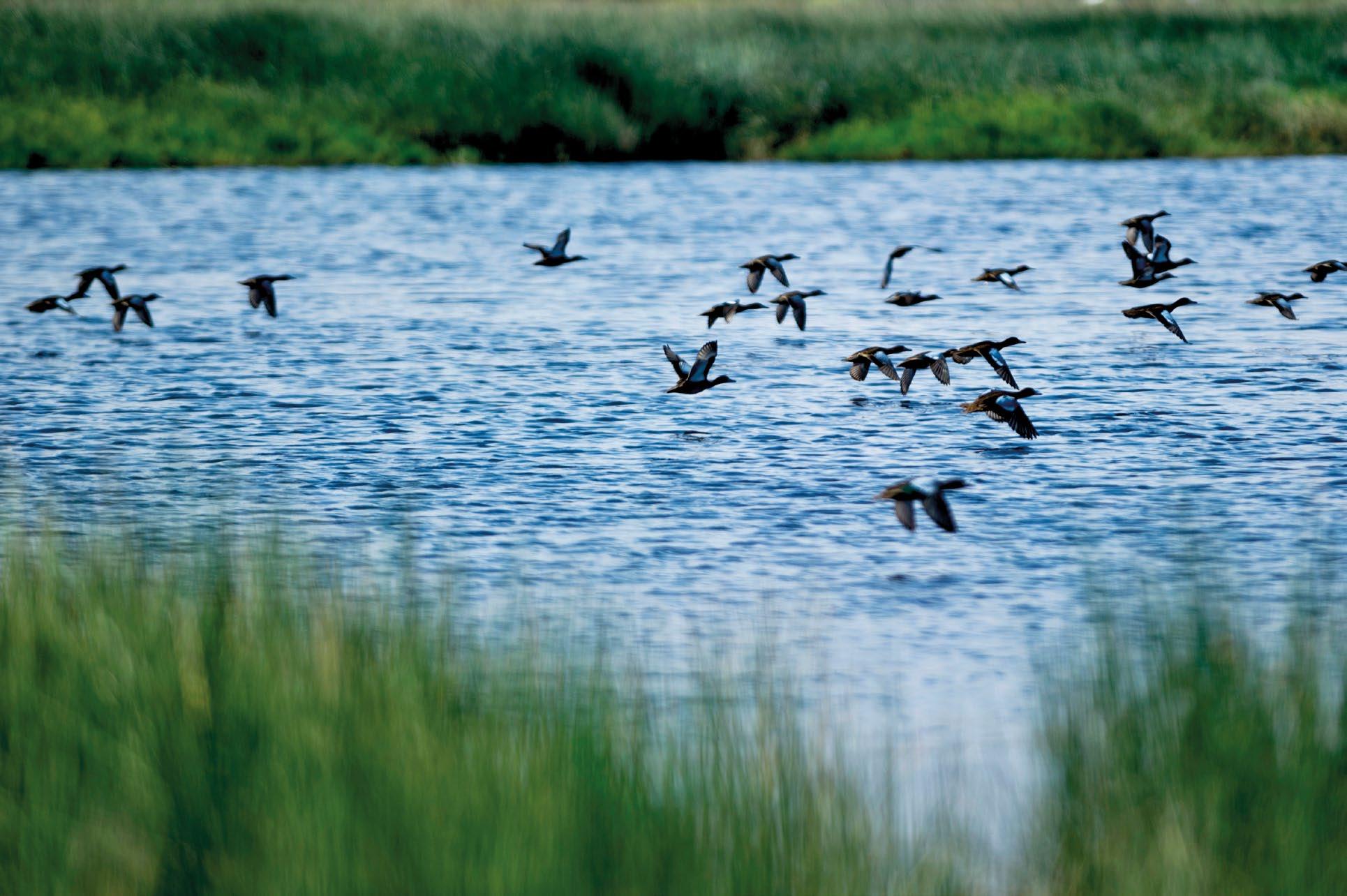
At an altitude of 14,108 ft (4,300 m), Salinas is the largest lagoon in the entire region (6182 ha). Due to the wide variety of wild birds that inhabit it, such as the Parihuana (Andean, common and James), it is the ideal destination for bird watchers. In the dry season, the outcrop of salt produces a mirage effect, and, with a little ingenuity, beautiful images can be captured.
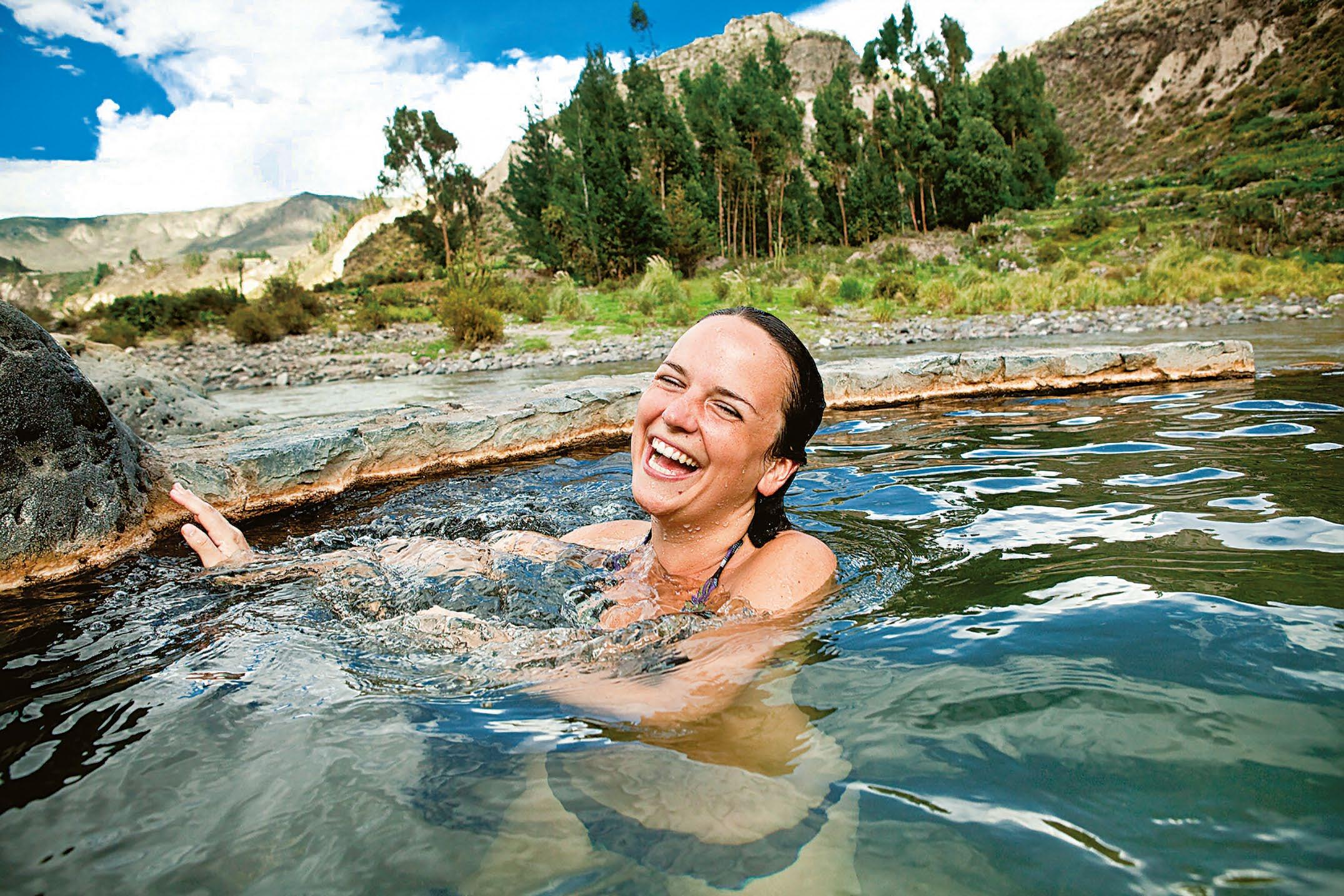
Valle y cañón del Colca
Chivay, 94 miles (151 km) northwest of Arequipa (3 h by car). Entrance fee charged. Towns on the left bank: Chivay, Yanque, Achoma, Maca, Pinchollo, and Cabanaconde. Right bank: Coporaque, Ichupampa, Lari, Madrigal, and Tapay. Upper part: Tuti, Callalli, Sibayo, and Tisco.
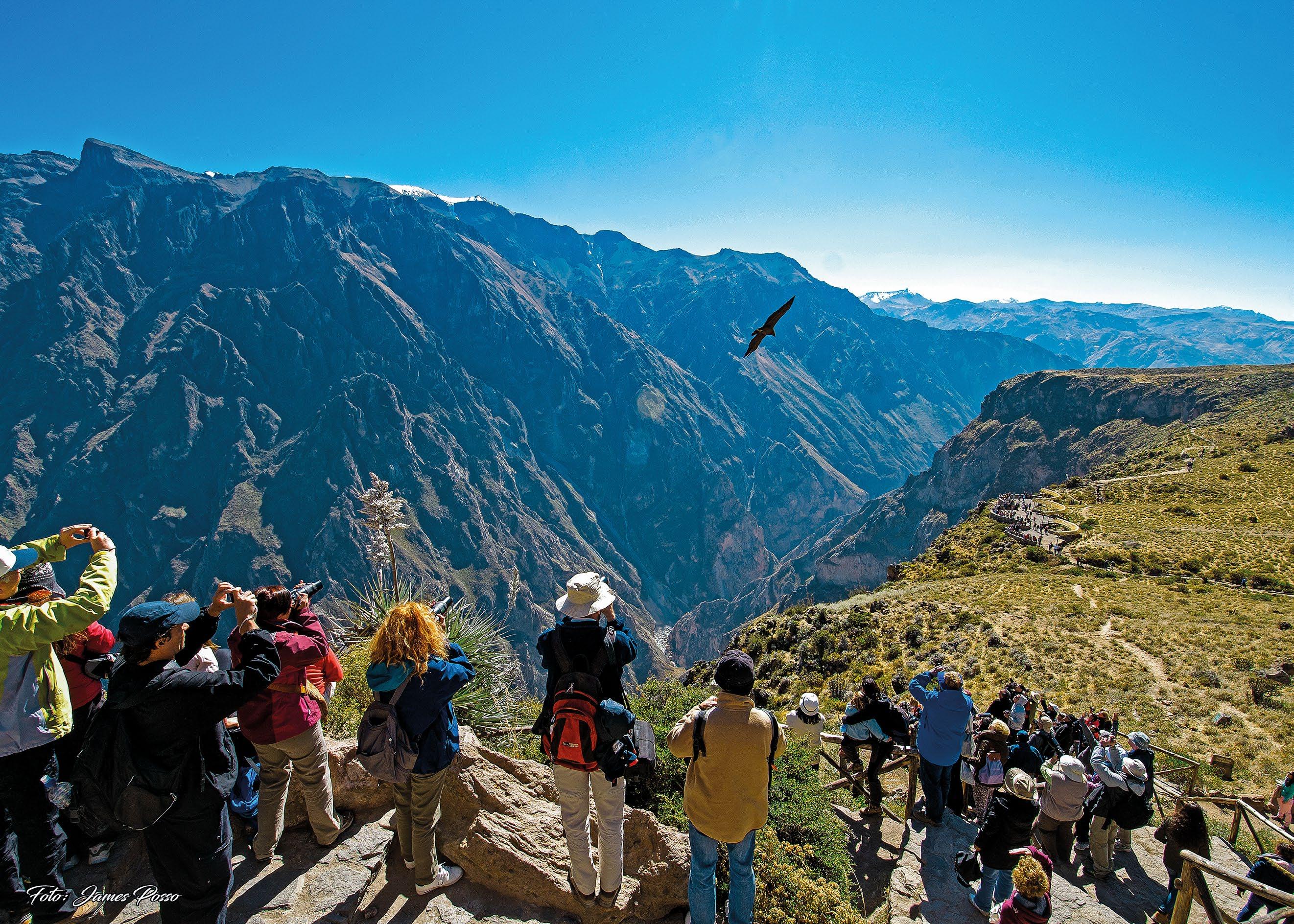
At 10,499 ft (3,200 m) deep, Colca canyon is one of the deepest on the planet. It was inhabited by the Collagua and Cabana ethnic groups. The current towns are distinguished from each other by the hats and the embroidery of the clothing of their inhabitants, art declared National Cultural Heritage. The twenty districts that make up the Colca valley offer great attractions: hiking, adventure sports, a tour of churches and temples that are more than 400 years old. Some villages were able to recover their traditions and customs, such as the Wititi dance, declared Intangible Cultural Heritage of Humanity by UNESCO, which can be observed thanks to community tourism initiatives.
From the Cruz del Condor viewpoint, you can watch the majestic flight of the condor, one of the largest birds in the world capable of flying. The offer of lodges has grown in the area, which has natural hot springs with relaxing properties. UNESCO has recently declared Colca and the Andagua volcanoes a geopark, being the first in the country to receive this denomination.
Valle de Majes
Aplao District, 111 miles (178 km) west of Arequipa (3 h by car)
The valley offers a breathtaking view of the Majes river, where you can go canoeing and taste shrimp-based cuisine. You can visit the dinosaur footprints of Querulpa and enjoy a tour of part of the Pisco Route, visiting different vineyards and wineries that produce our flagship drink.
• Petroglifos de Toro Muerto
Uraca District, 101 miles (163 km) west of Arequipa (2 h 30 min by car)
Entrance fee charged.
These huge blocks of ashlar depict anthropomorphic, zoomorphic, geometric, and mythological figures that make up the most important archaeological complex of petroglyphs in the country. The drawings were created by using techniques such as beating, scratching, rubbing, chipping, and percussion engraving. They belonged to the Wari, Collagua, and Inca cultures.
Valle de los Volcanes
Andagua District, 201 miles (323 km) northwest of the city of Arequipa (9 h by car)
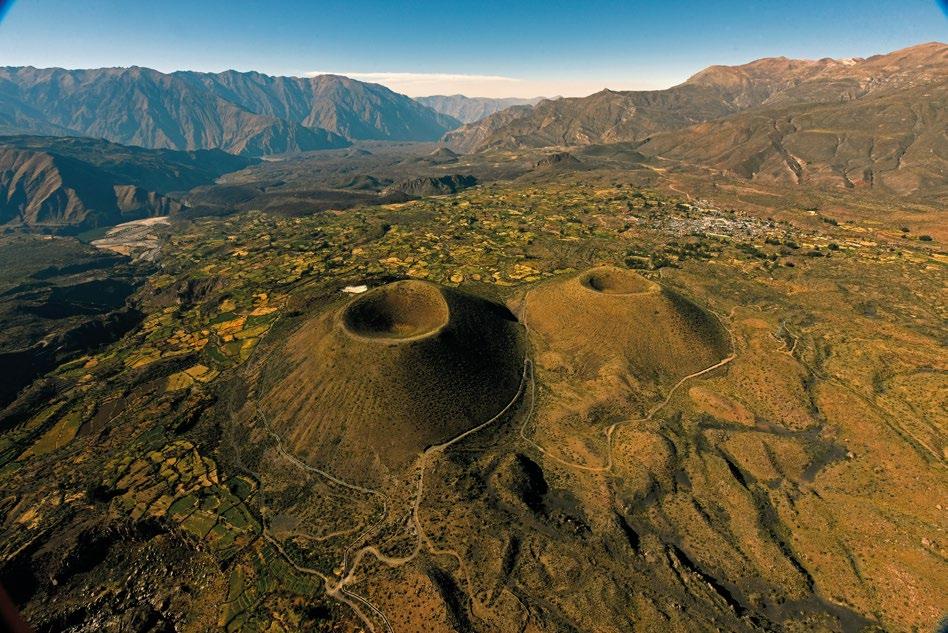
36 volcanoes, ranging between 33 and 984 ft (10 and 300 m) high, have been identified. The most emblematic are Los Gemelos (“the Twins”), from whose summit you can see the town of Andagua and its countryside, and the Kallana Mauras volcano. A visit the citadel and viewpoint of Antaymarca, and the viewpoint of Soporo, among other tourist places, is highly recommended.
• Orcopampa
217 miles (349 km) northwest of Arequipa (9 h by car)
The Orcopampa district is currently the most important mining center in the area. You can enjoy the thermal baths of Huancarama and the impressive frozen waterfalls of Panagua, where wild animals such as vizcacha can be seen.
• Laguna de Mamacocha
Ayo district, 25 miles (40 km) southeast of Andagua (90 min by car)
It is a true oasis with an incredible biodiversity. Fed by the groundwater of the Andagua river, the Mamacocha lagoon is a haven of life amidst the rugged volcanic landscape. Several species of birds and bats can be seen, as well as a small population of otters, known in the area as huallaques, of special scientific interest.
Reserva Paisajística Subcuenca del Cotahuasi (Cotahuasi Valley and Canyon)
233 miles (375 km) northwest of Arequipa (6 h 30 min by car)
The Cotahuasi Canyon is 11,598 ft (3,535 m) and is considered one of the deepest in Peru. Due to its diversity of flora and fauna, this Scenery Reserve is ideal for hiking, birdwatching, fishing, and paragliding. The route from the city of Arequipa offers a beautiful landscape in which the Coropuna volcano (21,079 ft / 6,425 m) stands out, the highest in the region and the third in the country, which is reflected in the crystalline waters of the Pallarcocha lagoon. It is recommended to visit the Sipia waterfall (a drop of 492 ft / 150 m), natural viewpoints with impressive landscapes, geological formations, hot springs, and areas of abundant vegetation.
Distrito de Mollendo
78 miles (126 km) south of Arequipa (2 h 30 min by car)
The capital of the province is characterized by its picturesque streets with wooden mansions. In the old train station is the Chiribaya museum, which exhibits ceramics and textiles from the culture of the same name. From the Ratti boardwalk, on the cliff, you will be presented with a beautiful view of the nearby beaches.
Distrito de Mejía
10 miles (16 km) southeast of Mollendo (15 min by car)
Former colonial and republican mansions intermingle with modern constructions. Among its most popular beaches are El Conto and Motobomba.
Santuario Nacional Lagunas de Mejía
12 miles (20 km) southeast of Mollendo (20 min by car). Entrance fee charged. Thousands of migratory birds, such as the white shorebird, find refuge in this 690.6-hectare coastal area. The fauna of the Lagunas de Mejía National Sanctuary also includes toads, lizards, and the coastal fox. In its waters swim native grey mullet and silverside species.
Punta de Bombón
14 miles (23 km) southeast of Mejía (40 min drive)
It stands out for its fine sandy beaches and calm waters. This is an ideal place for camping.
Playas de Camaná
107 miles (173 km) southwest of Arequipa (3 h by car)
The Nasca, Paracas, Wari, Collagua, Chuquibamba and Inca cultures settled in this valley, and in 1539 the Villa Hermosa de Camaná (“the Beautiful Villa of Camaná”) was founded. Beaches, such as La Punta, Cerrillos, El Chorro, Las Cuevas, Quilca, La Miel, Arantas, Honoratos, and La Playuela are visited by fans of water sports, such as sport fishing and surfing.
Playas de Caravelí
237 miles (382 km) northwest of Arequipa (8 h by car) Pre-Inca and Inca cultures developed along these beaches, as evidenced by the vestiges found in the Waca ravine or at Puerto Inca, where coastal and Andean products would have been stockpiled and bartered. There are also remains of the Inca trail that would lead to the city of Cusco. During the colonial period, the first vine and wheat plantations were planted: today its wineries maintain the tradition and are part of the Pisco Route. Caravelí has peaceful beaches with transparent waters, coastal hills with great biological diversity, large dunes and marine fossils found in the Sacaco desert, dating back ten million years.
Urban area
Catedral de Arequipa y museo
Complejo de la Compañía de Jesús
Complejo de San Francisco
Iglesia de San Agustín
Monasterio de Santa Catalina
Convento Museo La Recoleta
Museo de Arte Virreinal e iglesia de Santa Teresa
Iglesia de Santo Domingo
Iglesia de La Merced
Casa del Moral
Casa Goyeneche
Museo Santuarios Andinos de la Universidad Católica de Santa María
Museo Histórico Municipal Guillermo Zegarra Meneses
Tambo de La Cabezona
Tambos de Bronce y El Matadero
Mirador de Yanahuara
Casa Museo Mario Vargas Llosa
Casa
Av . Los Arces
Pje.LosArces
Av . Cayma
Cl. Zela
Cl. Jerusalén
Cl. CuestadelÁngel
Cl. Tacna
to the airport, Ruta del Sillar, Cerro Colorado, Yura, Colca, Puno, Cusco to the Mirador de Carmen Alto
Cl. T
Cl.13
Pje. Carpio
Cl.LosLirios
Cl. Sevilla
Cl.PampitaZevallos
Pje.3
Cl.Valencia
Cl.Fraternidad
Av.SanJerónimo
Cl.JuanEspinar
Cl. Málaga Grenet
G. delaVega
Cl. Inca
Av RicardoPalma
Cl.Ampatacocha
Pje. Unión
Av Emmel
Cl.Beaterio
Pje.Lima
Cl.Quezada
Cl. Misti
Cl. LaRecoleta
Av . Francisco Bolognesi
Parque
Grau
Cl. Villalba
AvZamácola
Av . Quiñones
Estadio de Umacollo
Av LosÁngeles
Cl.AnteroPeralta
Parque Libertad de Expresión
to Sachaca
Av La Marina
Cl.Consuelo
Cl.SanAgustín Cl. Bolívar
Cl.Moral
Cl. Callejón Ripacha
Torrentera
Pje.Violín
Cl.PuenteGrau
Cl.LaGruta
Parque Selva Alegre
Pje.Veliz
Cl.Ayacucho
Av . Roosevelt
Arrayanes
Av . Gutenberg
Av . JacintoIbáñez
Cl. Florida
Av Alianza
Av . 13deAbril
Av . Arequipa
Cl. Amazonas
Cl.Taboada
Cl. Villafuerte
Cl.LasFlores
Cl.Arica
Puente San Martín Óvalo Martínez
Cl.28deJulio
Cl.GarcíaCalderón
AvEjército Av . Independencia
Cl.LinoUrquieta
Cl.Calvario
Cl. Santa Catalina Cl.
Cl. SanFrancisco
Cl. Jerusalén
Cl.RiveroCl.Santa Marta
Cl.RodríguezBallón
Cl.FranciscoBolognesi
Cl.MiguelGrau
Av . Progreso
Av . Unión
Cl.Moquegua
Cl.Puno
Cl.SanPedro
Plaza de Armas
Cl.Mercaderes
Cl.SanJosé
Cl.Peral
Cl.PalacioViejo
Cl. Sucre
Cl.FloraTristán
Cl. La Merced
Cl. ÁlvarezThomas
Cl. San Juande Dios
Mercado San Camilo
Cl.Perú
Cl.AltodelaLuna
Parque
Romaña
Cl. Colón
Cl.SantaRosa
Av . LaPaz
AvSigloXX .
Cl.BartoloméHerrera
Av . Goyeneche
Av . LaSalle
Cl.DeánValdivia
Cl.LosGorriones
Pje.FernándezDávila
Cl.JorgeChávez
Av . MariscalCastilla
Cl.Universidad
Cl.JoséGálvez Cl.
Cl.ElLago
Cl.SanIsidro
Av . Parra
Parque
Melgar
de Bellas
Puente Quiñones Estación de Ferrocarril
Parque del Tren
to Hunter to La Mansión del Fundador to Panamericana Sur highway
Av . Olímpica
Cl.Leticia
Cl.
Cl.7deJunio
Estadio
Melgar
Cl.VíctorLira
Cl.15deAgosto
Cl.Otero
Cl.Caylloma
Cl.2deMayo
Cl.Camaná
Cl.Islay
Parque Las Condes
Cl.Paucarpata
Cl.JorgePolar
Parque O’Higgins
Av .
Parque
Villa Gloria
Parque Asvea
to Paucarpata to Sabandía to Mall Aventura Plaza
to
Plaza de Armas (+51-54) 223-265 (+51) 959-432-983
Portal de la Municipalidad 110 iperuarequipa@promperu.gob.pe
iperu@promperu.gob.pe
The information contained in this brochure has been updated in September 2023. To prepare it, PROMPERÚ has used official information sources, as well as the Regional Directorate of Foreign Trade and Tourism (DIRCETUR) of Arequipa. The opening hours and telephone numbers are subject to vary at each tourist attraction. Confirm the hours and telephone numbers with IPERÚ.
Published by PROMPERÚ - Peru for Exports and Tourism Promotion Agency
Calle Uno Oeste 50, 14th Floor, Urb. Córpac, San Isidro, Lima, Perú Tel. +511 616-7300 www.promperu.gob.pe © PROMPERÚ. All rights reserved
Legal Deposit at the Biblioteca Nacional del Perú
Printed by WORK UP E. I. R. L. (Calle Albert Einstein 165, Ate, Lima) Lima, October 2023