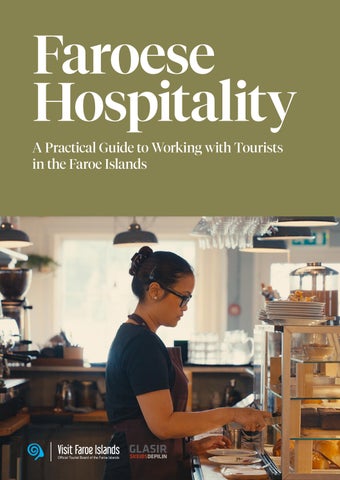
Faroese Hospitality A Practical Guide to Working with Tourists in the Faroe Islands
Contents
Faroese Hospitality 1.0 - Curiosity
4
What is curiosity? How to show curiosity When and where?
6 8 10
Faroese Hospitality 2.0 - Humility
12
What is humility? How to show humility When and where?
14 16 18
Faroese Hospitality 3.0 - Inclusiveness
20
What is inclusiveness? How to show inclusiveness When and where?
22 24 26
Faroese Hospitality 4.0 - Responsibility
28
What is responsibility? Show responsibility When and where?
30 32 34
Publisher Visit Faroe Islands, í Gongini 9 P.O. Box 118, FO-110 Tórshavn Tel. +298 666 555 www.visitfaroeislands.com info@visitfaroeislands.com Layout Sansir © Visit Faroe Islands
In 2025, around 50 people from across the Faroese tourism industry gathered to discuss Faroese hospitality. What is Faroese hospitality exactly? How is it expressed in practice when tourists visit the Faroe Islands? This booklet is the result of a project by Visit Faroe Islands. Through a series of workshops, people from across the tourism industry came together to explore and develop knowledge of Faroese hospitality. The project also drew on surveys of international tourists and people of the Faroe Islands. The ideas and discussions from the workshops led to four key words: curiosity, humility, inclusiveness and responsibility. The insights in this booklet come from people who work with tourists every day and know from experience what works: tour guides, hotel staff, restaurant and café employees, as well as bus and taxi drivers. Visit Faroe Islands would like to thank everyone who took part. Hopefully, this booklet will help you give visitors a memorable Faroese experience.
4
Faroese Hospitality 1.0
Curiosity
5
6
7
What is curiosity? Some say that Faroese people are a curious breed.
When talking with visitors, we shouldn’t shy away
That is probably true of many island communities.
from being curious. It can be part of the way we
We have lived here for a thousand years, and when-
work. Visitors enjoy genuine interest. Asking ques-
ever visitors found their way to our shores, we want-
tions and listening carefully makes people feel seen
ed to know more about them and hear stories from
and heard, and it often leads to interesting conver-
the outside world.
sations.
Over the centuries, curiosity has shaped who we are.
Curiosity is the first part of Faroese hospitality.
Today, it is so deeply rooted in our culture that it has
The next few pages explore how to use it in your
become part of our character. You’ll notice it in
work.
cafés, at birthday parties and in locker rooms. We love to get absorbed in a good conversation. Even after putting on our coats and shoes and getting ready to leave, we often linger in the doorway, still chatting away.
8
How to show curiosity Most visitors arrive with a plan. Before setting foot,
You can also share your own experiences from trav-
they have already read about the islands, watched
elling around the Faroe Islands. What is the most
videos and browsed social media. But visitors often
memorable place you have visited?
trust a local voice more than a brochure or a website, and will be keen to hear tips from an insider.
This not only gives visitors new ideas, but also helps spread tourism around the country. Too many visi-
Many of them are also actively looking for some-
tors in one place can have a negative impact. Small-
thing beyond the usual tourist places. So if you know
er places such as the previously mentioned Gjógv,
a hidden gem beyond Gjógv, Saksun and Mykines,
Saksun and Mykines are particularly vulnerable and
tell them about it.
cannot cope with large numbers of visitors.
If there is a village that you have visited often and know particularly well, you could encourage visitors to explore it: • Is there a beautiful place in nature nearby? • A great viewpoint? • A local tale? • A historical site?
9
Draw um on Fortel your own títt upphav experience
Greið frá egnum upplivingum, tá ið tú prátar við ferðafólk: Fortel um Share your own stories when talking bygdina ella býin, sum tú kemur frá, with visitors. Tell them about the og kom við góðum ráðum, um town or village you know best, and ferðafólkini ætla at leita sær hagar. share a few recommendations if Mong ferðafólk vilja fegin uppliva they’re thinking about going there. okkurt annað, okkurt øðrvísi, enn tað, Many visitors are looking for somesum tey lesa um á netinum. Tín thing beyond what they’ve already staðbundna vitan er gull verd fyri tey. read online. That’s where your local knowledge comes in.
10
Show interest You don’t need to know the answer to everything. Visitors have plenty of questions about the Faroe Islands, and in many cases they will already have done their homework beforehand. But you can always show that you’re interested. Ask a follow-up question. Listen. Keep the conversation going. It helps visitors feel welcome and often it’s those conversations people remember most.
11
When and where? The advice below is based on input from people across the tourism industry and their experiences working with visitors.
arrow-right Airport and harbour
Usually, visitors are eager to go out and explore, so
“Welcome to our home, the Faroe Islands.” That is
this is also a good opportunity to offer recommenda-
the message visitors hear when they land at Vágar
tions for restaurants, sights and activities. Maps and
Airport. It is a simple sentence, but it sets the tone
other practical information are useful to have avail-
from the moment they arrive. Staff at the airport
able in guest rooms.
and the harbour in Tórshavn can do the same. So can taxi drivers meeting passengers at the airport or
arrow-right Restaurants and bars
ferry terminal.
Working in a restaurant or bar often leads to conversations with visitors. A quick chat can easily turn
arrow-right Transport
into a longer one. Ask visitors about their plans and
Some visitors know a lot about the Faroe Islands
what they have experienced so far. Be curious. Try
upon arriving. Others know very little. People trav-
to ask questions that lead to a conversation rather
elling on Norröna ferry have 36 hours to read about
than a simple yes or no:
the islands before they dock in Tórshavn, compared with those arriving by air. Taxi drivers and car rental
• What have you seen and done so far?
companies can keep maps, brochures and other use-
• How did you first hear about the Faroe Islands?
ful information in the cars.
• What are your plans while you’re here? • What are you most looking forward to?
arrow-right Hotels, guesthouses and airbnbs For many, the journey to the Faroes has been a long
When you are curious about other people and show
one. After arriving, most people head straight to
a genuine interest in them, they feel seen and heard.
drop off their luggage. Hotel receptionists and Airbnb hosts can show interest by asking questions such as: • How was the journey? • How long have you been travelling? • Have you been to the Faroe Islands before?
12
Faroese Hospitality 2.0
Humility
13
14
15
What is humility? Humility is another trait often associated with Faro-
can also be used as a practical tool when working
ese people. Why that is, is a good question. Perhaps
with visitors. We don’t interrupt them unless there’s
it simply comes from the harsh conditions we live
a reason, and we never rush them.
in. Here, nature is in charge. You don’t challenge it. As the old saying goes, “The sea giveth, the sea ta-
Humility is the second part of Faroese hospitali-
keth.” It’s hard not to feel small when you’re looking
ty. The next few pages explore how to use it in
out across the endless ocean or staring up at a moun-
your work.
tain wrapped in fog. Perhaps that's one of the reasons humility runs so deep in Faroese culture. The social etiquette is to treat foreign guests with respect and humility. This
16
How to show humility In hospitality, it’s the guest, not the host, who should
Humility also means being comfortable saying, “I
be at the centre of attention. Don’t try to be noticed.
don’t know.” Visitors ask all sorts of questions, and
Try to notice your guests.
nobody expects you to have every answer. If you don’t know something, you can simply say:
Create the right setting and let the place and the moment speak for themselves. If you’re a taxi driver
• “Let me find out, and I’ll get back to you.”
and you’re driving visitors between villages, for example, point out what they’re seeing through the
And if you don’t have the time or the opportunity to
window during the journey.
ask someone else, point visitors in the right direction instead, whether that’s a tourist information
Hospitality should reflect reality. If you tell visitors
office, a website or somewhere else they can find the
about places they’re planning to see, don’t exagger-
answer themselves.
ate or raise expectations beyond what they will actually experience.
17
Tell the truth Don’t dress up reality. Give visitors honest information and useful tips, and then let the place, the people, and the landscape speak for themselves.
18
Be yourself Be present when you’re with visitors. Even though you work in hospitality, try to see the moment as an encounter rather than a service. Be the same person with visitors as you are with everyone else.
19
When and where? The advice below is based on input from people across the tourism industry and their experiences working with visitors.
arrow-right Restaurants and bars
high as the Eiffel Tower? Or that, while we don’t
The world is big, and visitors come from many dif-
have an opera house, we do have Klæmintsgjógv, the
ferent backgrounds. No two people are the same,
world’s largest sea cave, where concerts are held
and the same goes for cultures. A good host knows
every summer?
how to read the situation. Get a sense of the people in front of you and adapt accordingly. If they want to
The Faroe Islands may be small, but there’s nothing
chat, join the conversation. If their body language or
small about the landscape. And being humble
facial expressions suggest they’d rather be left alone,
doesn’t mean you can’t be interesting. Tell stories
then give them the space they need.
and show visitors unforgettable places. Give them experiences they won’t find anywhere else.
arrow-right Tour guides As a tour guide, you spend a lot of time with your
arrow-right Hotels, guesthouses and airbnbs
visitors, so you have plenty of opportunities to tell
The things we take for granted in the Faroe Islands
them about the Faroe Islands. But don’t assume vis-
can become an experience in itself for others: the
itors are most interested in hearing that we’ve won
peace and quiet. The fresh air. Even something as
sports or music competitions. Their country has
simple as the clean water from the tap. But instead
probably won plenty of competitions too. And re-
of letting visitors discover these things by chance,
member, they came here to experience something
you could mention them in conversation. It may
they can’t experience anywhere else.
help them notice something they would otherwise have overlooked. And, although a small thing, per-
They know there’s no Eiffel Tower here. But do they
haps it becomes something they’d still be talking
know that Cape Enniberg rises more than twice as
about long after they leave.
20
Faroese Hospitality 3.0
Inclusiveness
21
22
23
What is inclusiveness? When you travel to other countries, sometimes you
If you work with visitors every day, you already
experience things that feel completely foreign. In
know that the key is tolerance and making room for
France, people greet each other with a kiss on the
others. The proverb “When in Rome, do as the
cheek. In the United States, tipping is expected. In
Romans do” is easier said than done.
England, people keep their shoes on indoors. It’s only fair to expect that visitors walking through a
A Faroese proverb captures it better: “Where there is
Faroese village will find things just as unfamiliar:
room in the heart, there is room in the home.” In
fish hanging to dry on the side of a house, prams left
your work, there is no “us” and “them”. You see
outside, front doors left unlocked.
visitors as people first and nationalities second. Above all, your job is to give our guests a good
Some customs are so deeply rooted in us that we
experience.
hardly know of them. If a Faroese person was invited into someone’s home in England, he or she would
Making room for others is the third part of
most likely take their shoes off without even
Faroese hospitality. The next few pages explore
thinking. In the same way, we shouldn’t expect
how to do it in your work.
every English visitor to remember to take their shoes off when stepping into a Faroese home.
24
How to show inclusiveness Some visitors may experience a slight culture shock
things. More often than not, visitors simply don’t
when they arrive in the Faroe Islands. That’s per-
know any better. That’s where you can help by ex-
fectly natural. Cultures differ, and many of the peo-
plaining clearly what they should do. Remember to
ple who travel here come from large cities and have
explain not only how, but also why.
little experience of small island communities. If visitors have questions about local customs or history,
Inclusiveness doesn’t always mean agreeing. It
help them understand them if you can. If not, point
means showing tolerance, listening and under-
them to someone who can.
standing. As a tourism professional, your role is to guide, inform and help, rather than become defen-
Sometimes it works the other way round too. Some
sive or start an argument.
Faroese have criticised visitors for hiking where they shouldn’t or going to places that are off limits.
That said, there are some topics, such as politics and
But are visitors really trying to break the rules and
religion, that are best avoided, so the conversation
cause trouble? Or is it simply because they don’t
stays on neutral ground.
know what is allowed and what isn’t? Bad intentions and a lack of knowledge are two very different
25
Make room for tolerance Lead by example. Visitors may be seeing the Faroe Islands for the first time, and what seems obvious to someone who is living here may be completely new to them. If you sense they’re unsure, help them. Explain what they should do, where they can go, and what they should avoid.
26
When and where The advice below is based on input from people across the tourism industry and their experiences working with visitors.
arrow-right Hotels, guesthouses, airbnbs, restaurants, and bars
arrow-right Tour guides When you’re hiking with a group of visitors, it’s your
Many hotels, restaurants and other businesses keep
responsibility to make sure no one feels left out.
a booking calendar with their guests’ names. One
Some guides begin the hike by asking everyone to
simple thing you can do is learn their names before
introduce themselves and say where they’re from.
they arrive. Some restaurants even turn it into a
Visitors may come from different countries and
game, with chefs and waiters testing each other be-
have never met before.
fore the guests walk through the door. You can also check whether guests have visited before, have any
The weather can also be a challenge for some visi-
allergies or dietary requirements, or have made any
tors, especially if they’re not used to the rain, wind
special requests. Small things like these help guests
and cold. Before anyone gets the chance to com-
feel genuinely welcome.
plain, a light remark can help lift the mood:
Being inclusive isn’t something you are. It’s about
• “Here, there’s no such thing as bad weather, only
what you do. Keep an open mind and show a genuine interest in getting to know other people.
bad clothing.” • “In the Faroe Islands, there are four seasons in one day.” Before setting off, let visitors know the route and when you’ll stop for lunch. You can also introduce them to local traditions, such as not disturbing sheep or nesting birds. If you know the story, tell visitors why some Faroese pick up loose wool when they’re out on the hills: so birds don’t end up with it tangled around their legs.
27
If someone has brought a drone, remind them that birds are easily disturbed by drones, and that some areas are protected, including the Ramsar sites on Mykines, Nólsoy and Skúgvoy. It’s also important to show consideration for the local community. arrow-right Transport As a taxi driver you could make a brief stop along the way and let visitors enjoy the view. One popular place is the viewpoint at Norðradalsskarð on the road to Tórshavn, where visitors can enjoy the panoramic view towards Koltur. The stop takes no more than five minutes, but for them it leaves an impression. You can also offer to take a group photo for them. It’s often the little things that make the biggest difference.
28
Faroese Hospitality 4.0
Responsibility
29
30
Take responsibility Encourage visitors to respect nature, the weather and private property. Don’t be afraid to speak up or say no when necessary.
31
What is responsibility? Being a good host also means taking responsibility.
Practical knowledge matters too. Most visitors aren’t
Through your words and actions, you show visitors
used to Faroese weather and may not realise that
how people behave in the Faroe Islands. That shapes
even if it’s foggy in one part of the country, the sun
their experience. They see the Faroe Islands as a safe
may be shining somewhere else. Tell them about
destination and the people who live here as trust-
www.faroeislandslive.com, where they can check
worthy. For a travel destination, few things are more
live webcams from across the islands.
valuable than that. When visitors know what’s expected of them, they’re
Responsibility is the fourth and final element of
more likely to respect local communities and help
Faroese hospitality. The next few pages explore
protect fragile natural areas. This is good for every-
how to do it in your work.
one, including the visitors themselves, who are more likely to have a safe trip and return home safely.
32
Show responsibility There are many ways to take responsibility. It’s not
And from time to time, we all make mistakes or get
only about how you deal with situations in the mo-
something wrong. Nobody is perfect. What matters
ment. Being well prepared is also part of taking re-
is how you handle it. If you realise you’ve made a
sponsibility. Here are a few tips from others in the
mistake, admit it and apologise. People are unlikely
tourism industry:
to hold it against you. But if you keep insisting you’re right when everyone knows you’re not, you’ll quick-
• Arrive in good time. • Prepare for questions visitors are likely to ask. • Check the weather beforehand, if needed. Another part of hospitality, even if it may seem contradictory, is knowing how to say no. Sometimes a clear, but friendly, ‘no’ is necessary, especially regarding safety or the law. Saying no doesn’t make you unfriendly, but it does protect both visitors and the places they come to experience.
ly lose their trust.
33
34
35
When and where? The advice below is based on input from people across the tourism industry and their experiences working with visitors.
arrow-right Tour guides
arrow-right Transport
As a tour guide, you’re responsible not only for giv-
If you’re driving a taxi and notice that a visitor has
ing visitors a good experience, but also for keeping
forgotten to fasten their seatbelt, remind them.
them safe. Before setting off, remind everyone to wear suitable clothing and good walking shoes.
If you work for a car rental company, let visitors know where they can find information about speed
If the weather doesn’t look suitable, it’s better to
limits and other traffic rules. Don’t forget to remind
cancel the tour and choose another day. Don’t be
them that sheep may be on the roads anywhere in
afraid to speak up if visitors disturb sheep or nesting
the Faroe Islands, especially between villages.
birds, or walk where they shouldn’t. Some visitors will go to great lengths to get the perfect photo or
arrow-right Hotels, guesthouses and airbnbs
selfie, but if you see someone getting too close to the
Most hotels are in Tórshavn and other larger towns.
edge, warn them immediately.
But if you host guests in an Airbnb in a small village, on one of the smaller islands or in a historic residen-
arrow-right Restaurants and bars
tial area such as Á Reyni in Tórshavn, remind them
If you work behind a bar, keep an eye on your guests.
that people live there too. Ask them not to take pho-
If someone has had too much to drink, don’t hesi-
tos through people’s windows or park on private
tate to refuse them another alcoholic drink. Instead,
property, as this invades people’s privacy.
offer them a non-alcoholic alternative. If a situation arises that you or your colleagues can’t handle, call the police. In situations like these, taking responsibility means putting safety first.
This little booklet is full of simple, practical tools to use in your work Do you work with tourists in the Faroe Islands? This little booklet offers simple, practical tools you can use in your day-to-day work. The booklet is the result of a project by Visit Faroe Islands. All the advice comes from people who work with tourists every day and know what works in practice, including tour guides, staff at hotels, restaurants and cafés, and bus and taxi drivers. Visit Faroe Islands’ new campaign, Please Visit Responsibly, also focuses on communicating with tourists. It encourages people to explore the Faroe Islands with respect for both nature and the local community. You can read more about the campaign on the Visit Faroe Islands website. www.visitfaroeislands.com
Visit Faroe Islands Gongin 9 100 Tórshavn
Tlf. 666 555 info@visitfaroeislands.com www.visitfaroeislands.com