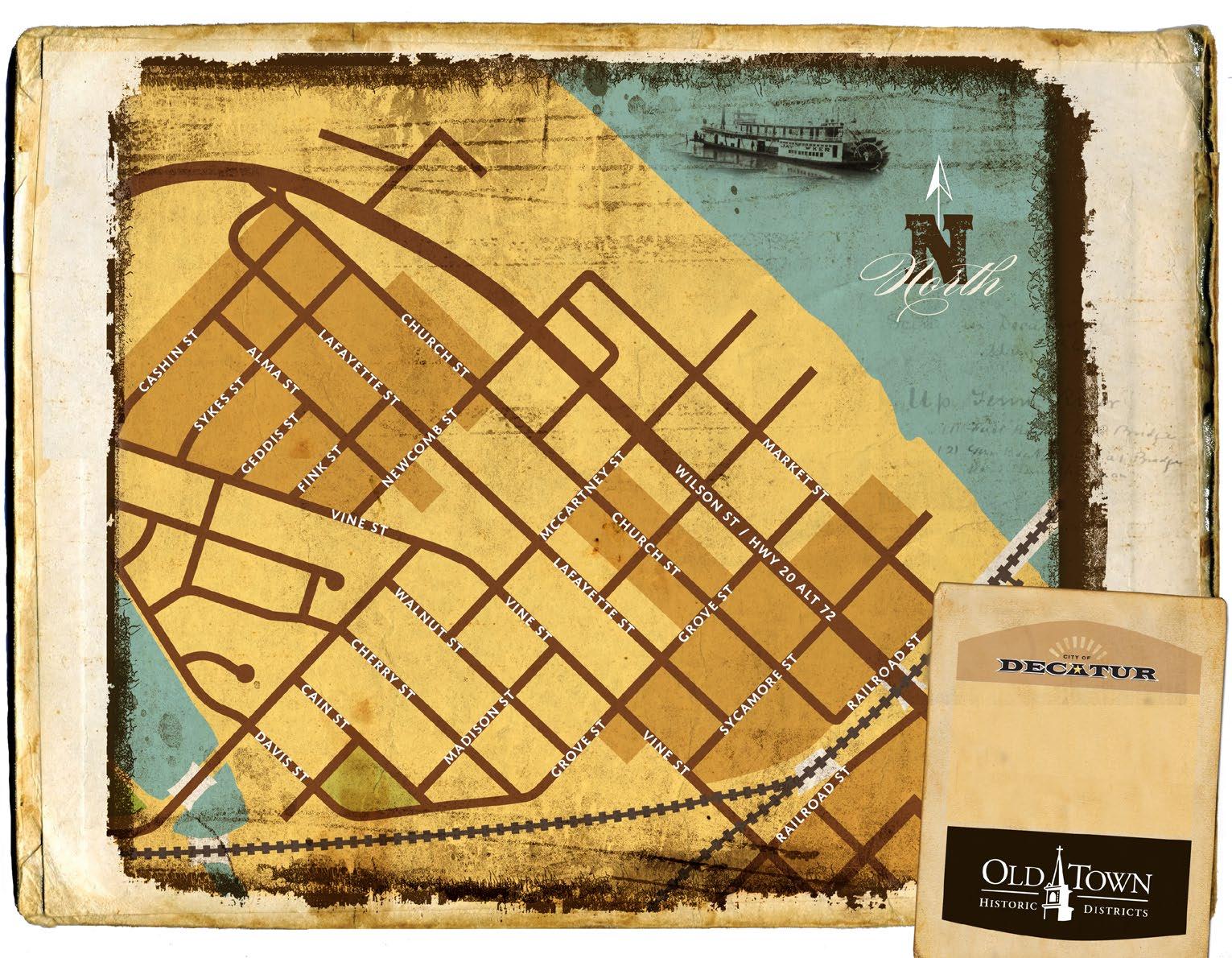
Decatur is home to several National Register Districts. The stories from the oldest portions of Decatur are told by three different National Register Districts: Bank Street/Old Decatur, Old Town East, and Old Town West. The Old Town National Register districts are unique in their development patterns and their role in local and national history. The Old Town National Register Districts tell the story of the northwest portion of the original city plat, ranging from the earliest extant building in the city, the 1829 Dancy Polk house, to the Black churches that played pivotal roles in the Civil Rights struggles of the 20th century.
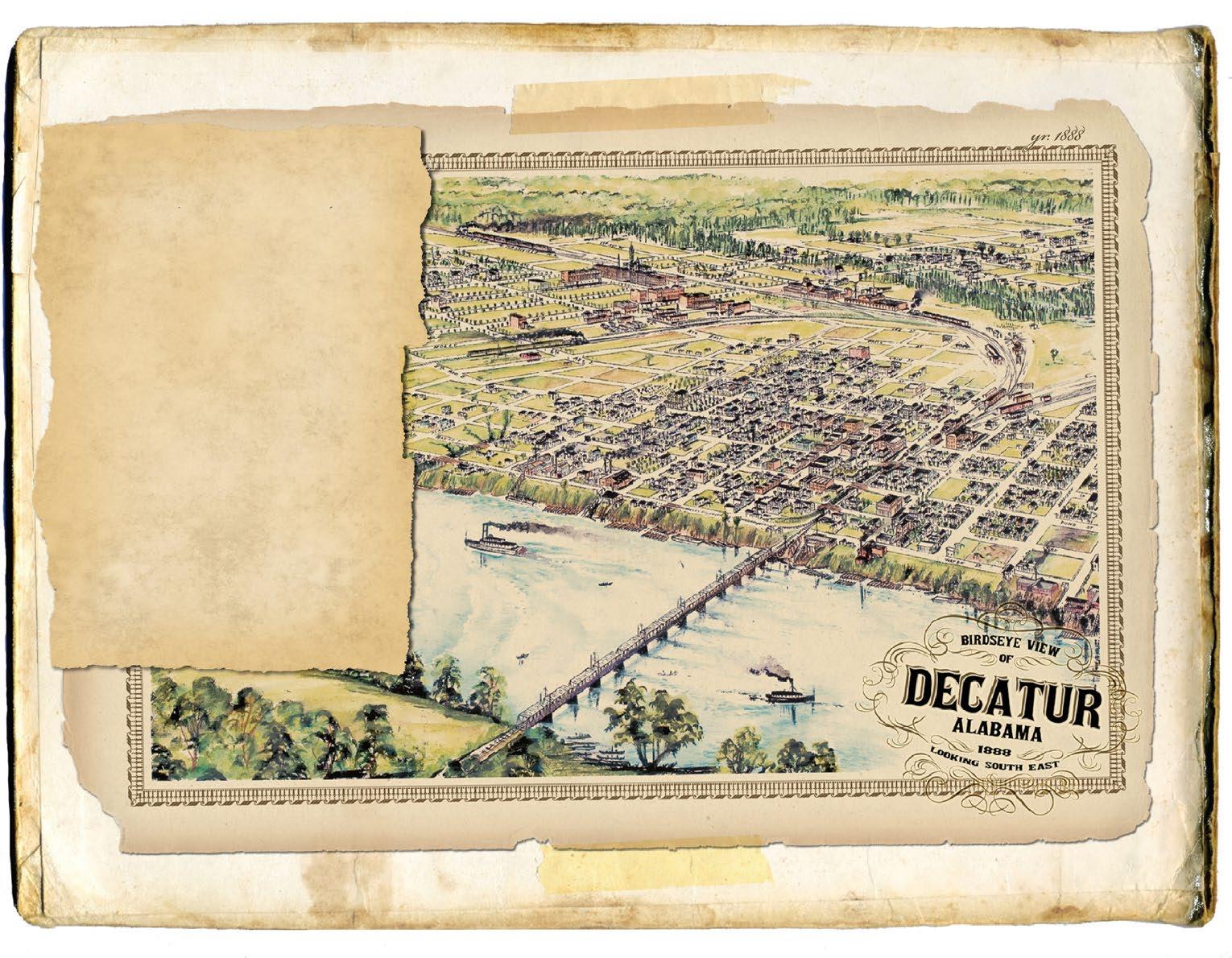
The city of Decatur was incorporated in 1826. The main business streets in the community were Bank Street, Church Street, Vine Street, and Water Street. Water Street, named for its location parallel to the Tennessee River, was a busy thoroughfare when most transportation needs were met by river travel. The damming of the Tennessee River in the 1930s for Wheeler Dam raised water levels high enough to submerge Water Street.
In Decatur’s earliest years, the areas within the Old Town National Register Districts provided housing for white families. Census records show that only three non-enslaved Blacks lived in Decatur before the Civil War. During the Civil War, most of Decatur was razed, and the Reconstruction period saw the city’s white residents migrate east of the railroad tracks, settling in the eastern portion of Old Decatur or the adjoining separate city of New Decatur (later named Albany) to the southeast. Old Town’s demographics became increasingly
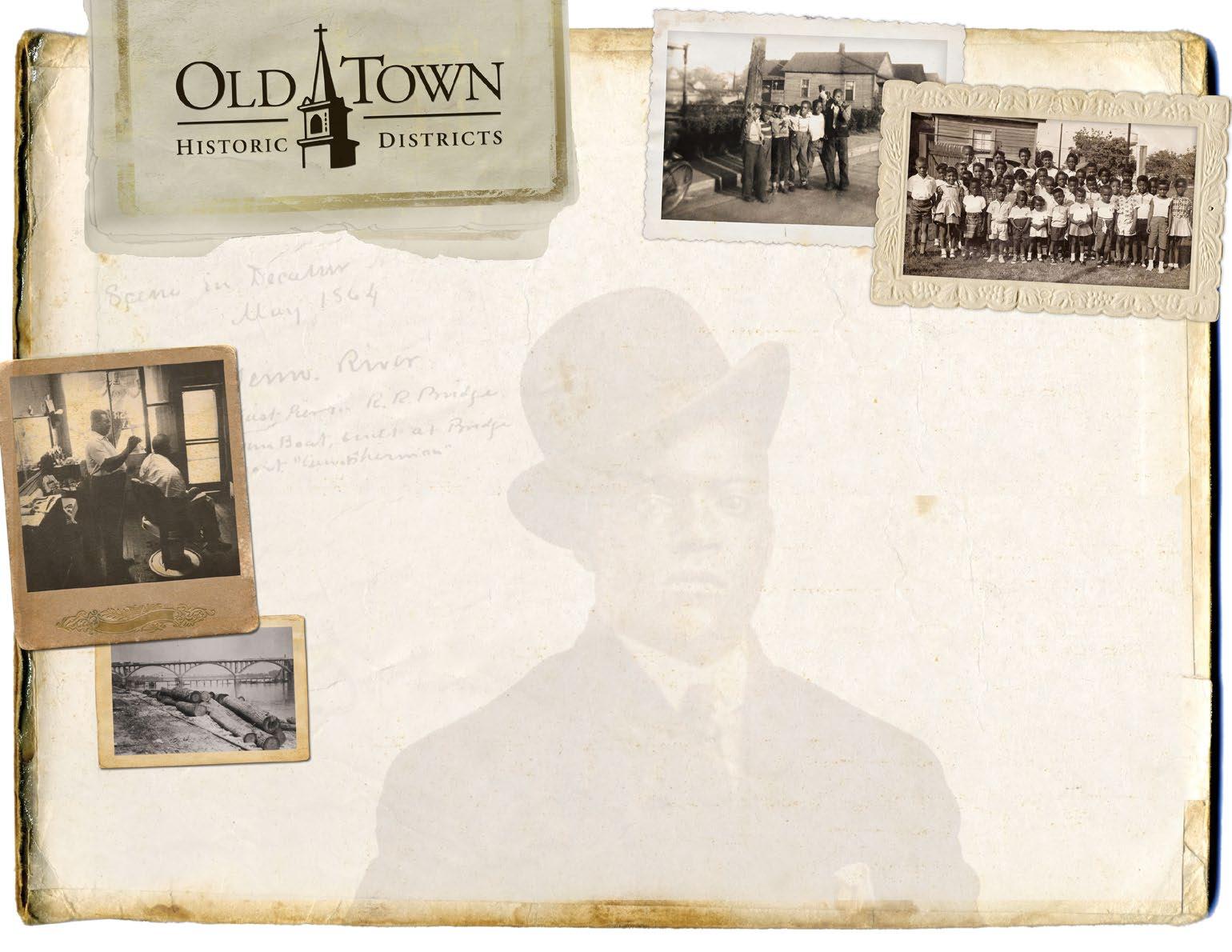
Black by the turn of the 20th century, providing business and education opportunities for Black people and those that the state of Alabama ofcially or socially classied as “Black,” which Alabama’s 1901 constitution codied as one-eighth or more African ancestry. Several Middle Eastern families, such as the Shaia, Joseph, and Namie families, lived on Vine Street NW. They had immigrated from the former Ottoman Empire–which included portions of modern-day Egypt, Saudi Arabia, Lebanon, Syria, and Turkey. These immigrants challenged the binary classication system that the state imposed on race.
When legal segregation was struck down by the Supreme Court in the 1950s and 1960s, Black residents of Old Town had the freedom to patronize white businesses, but that often came at the expense of Black-owned businesses, which were typically not patronized by white residents. This created a seismic shift within the commercial heart of Old Town, culminating with federally funded urban renewal programs and later municipal code enforcement actions. These created a signicant number of vacant lots that remain to this day. The neighborhood’s resilience is highlighted by substantial growth, ranging from the municipally funded construction of dozens of single-family homes to the southwest of Vine Street NW to the current development of the Decatur Scottsboro Boys Civil Rights Museum.

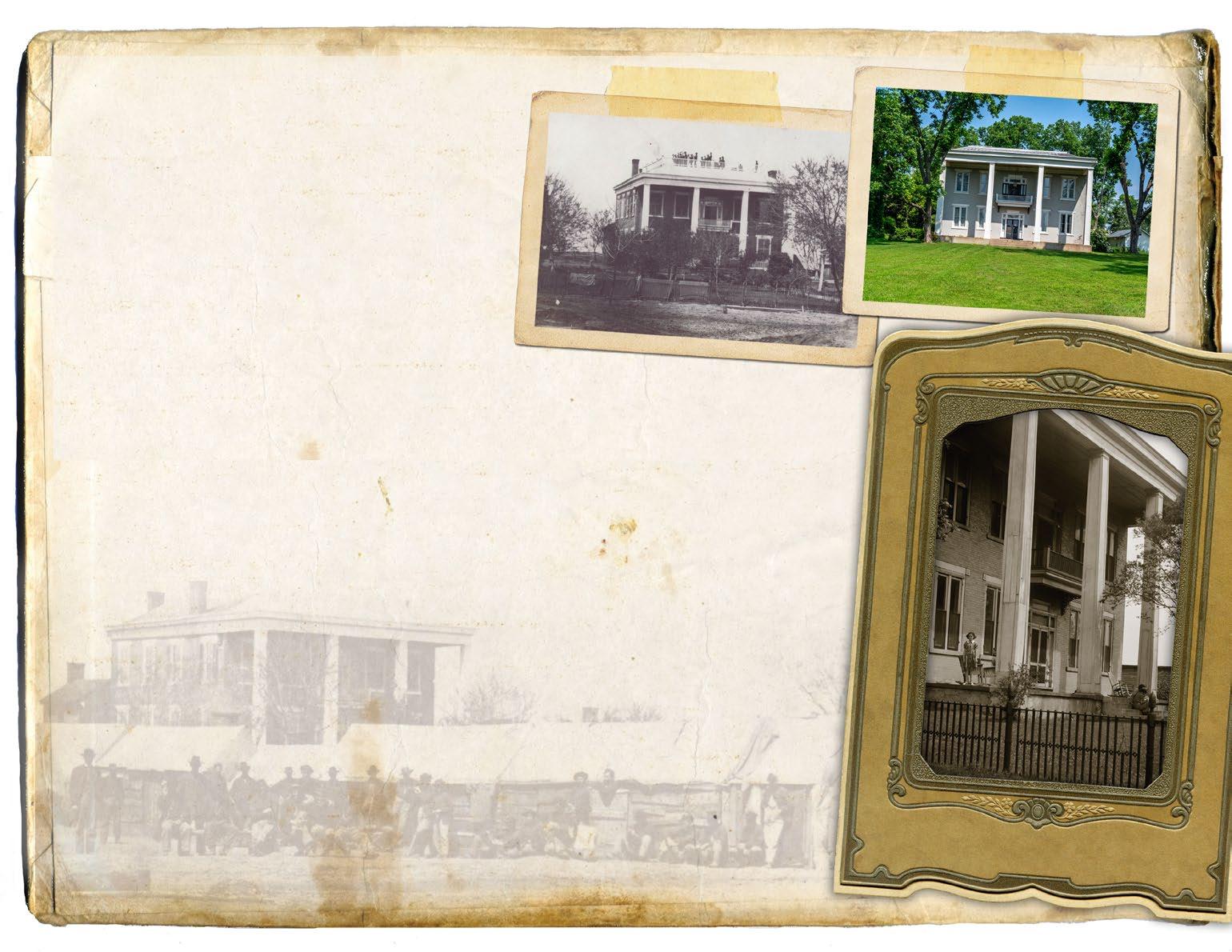
Stop 1. Rhea-McEntire House
1105 Sycamore Street NW
The Rhea-McEntire House, also known as the Rhea-Burleson-Hinds-McEntire House, has overlooked the Tennessee River since it was built circa 1836. At the time of the home’s construction Decatur had fewer than 400 residents, and they would have been impressed by the brick house with 14 foot tall ceilings perched on the riverbank, high above the main mode of transportation at the time. The house was alternately used as headquarters by Union and Confederate forces during the Civil War. Although some of early Decatur’s streets along the riverfront were submerged when construction of Wheeler Dam nished in 1936, The Rhea-McEntire House remained high above the river.
The house was constructed by John Sevier Rhea, grandson of the rst governor of Tennessee. Rhea owned a wholesale grocery and commercial property just two blocks away from the house. When he went bankrupt in 1842, James Fennell, one of Decatur’s founders, acquired the house. After Fennell’s death Alexander Pattison purchased the property. Pattison’s daughter Margaret Burleson later inherited the house. Jerome J. Hinds purchased the house in 1869, and it stayed in his family until 1894, when Rufus P. McEntire purchased the house. The McEntire family owned the home for more than a century.
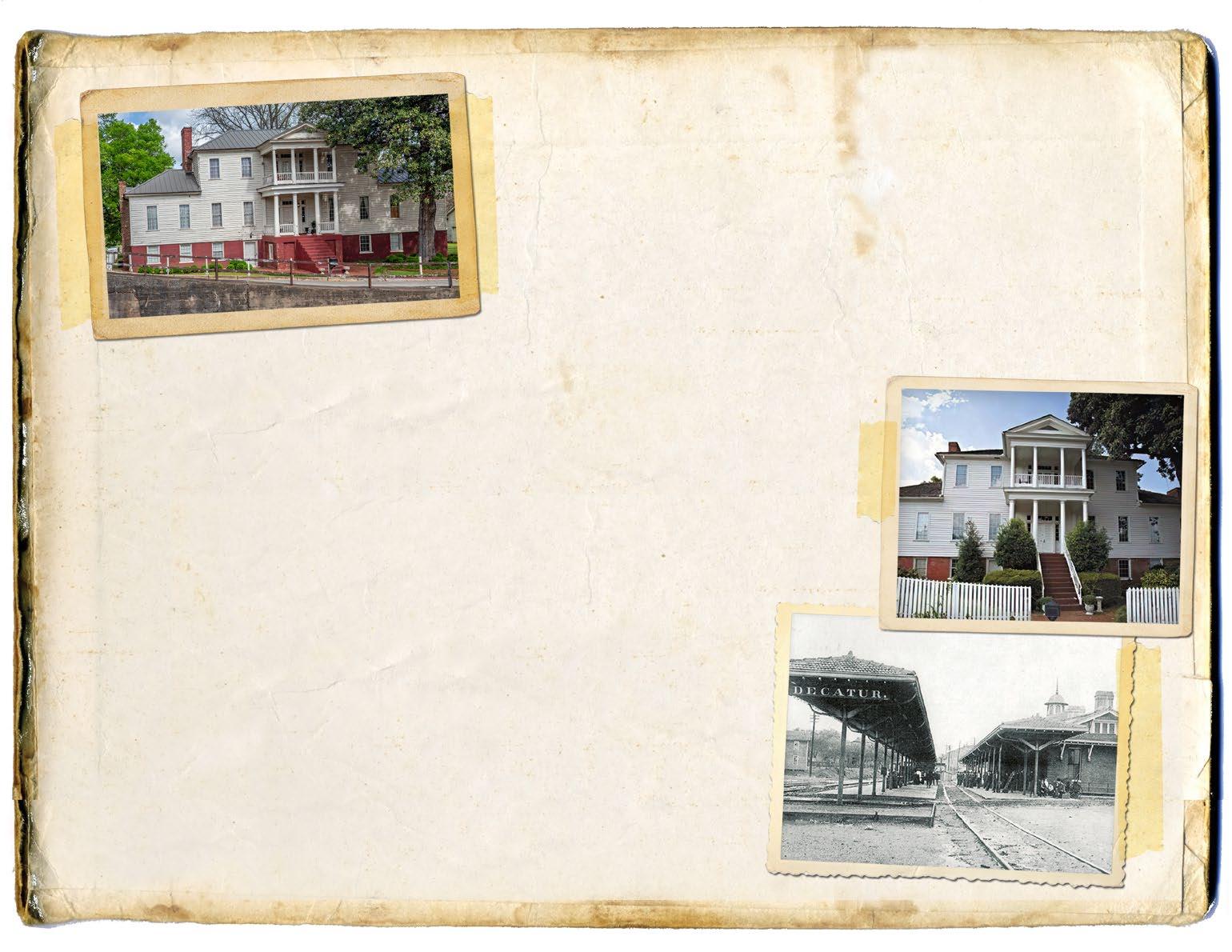
Stop 2. The Dancy Polk House–901 Railroad Street NW
This elegant Federal style house was built in 1829 by Colonel Frank Dancy, one of Decatur’s founding citizens. The Dancy Polk House is the oldest extant building in Decatur, and has a fascinating history. It was one of the most formally designed residences in the state when completed, with its massing and design details echoing older American and British designs. Francis Dancy and his wife, Elizabeth Mason, descended from prominent families from southeastern Virginia. Towards the end of the 1830s, the Dancys moved to Louisiana, transferring the house to their daughter, Caroline, and her husband, Jonas C. Wood, and by the time the Civil War broke out, the house was occupied by the Wood’s daughter, Lavinia, and her husband, Dr. Thomas Polk. Dr. Thomas Polk was cousin to both President James K. Polk and the Reverend Leonidas Polk, the colorful ghting Bishop of the Confederacy.
In 1864, Union troops razed almost every single building in Decatur to create a clear eld of re. When the smoke cleared, the Polk house was one of only a few buildings that remained standing in the city. Historians believe that the Polk house may have been used as of cer quarters for the Union Army, as the Polks, like other residents of Decatur, were exiled, returning to Decatur only after the war was over. When Lavinia and her husband returned, the house became a boarding house. Traveling salesmen had a samples building behind the house that displayed goods for local merchants to see. Noted outlaw Frank James allegedly stayed at the house under an assumed name in 1883, later saying that he never committed any robberies in Decatur because “there was nothing worth carrying off.”
Lavinia managed the boarding house until her death in 1888. She was so popular that twenty men signed a resolution when she passed, describing her importance to travelers in the city. They claimed that they had “…lost a friend who was ever ready to watch over them and minister to their comforts with the same tenderness that a mother looks after the comforts of her sons.”
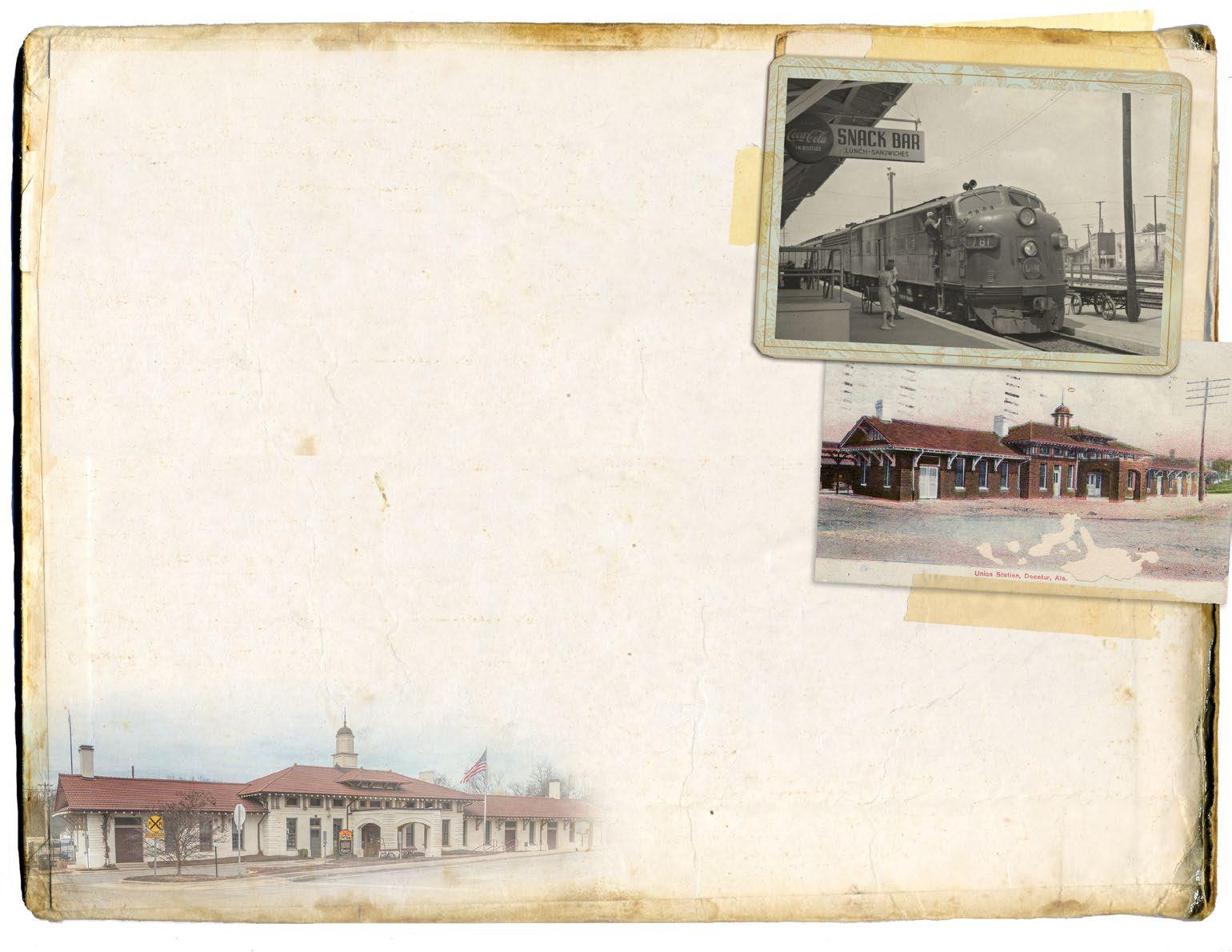
Stop 3. The Depot – 701 Railroad Street NW
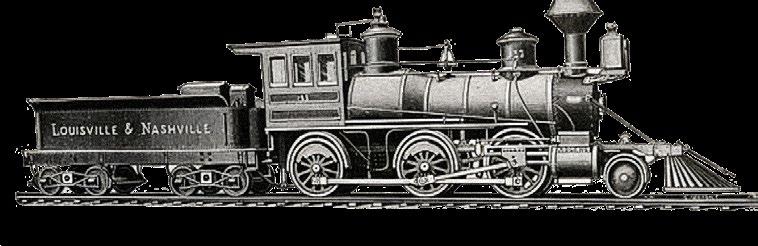
Decatur served as the eastern terminus of the Tuscumbia, Courtland, and Decatur Railroad, the rst American railroad west of the Allegheny Mountains. That railroad later became part of the Memphis & Charleston. By the 1850s Decatur was a key junction for several major railroads, including the Memphis & Charleston (present day Norfolk-Southern) and the Louisville & Nashville (present day CSX). In 1889, the Louisville and Nashville Railroad constructed repair facilities that employed 2,500 people in Decatur. The Southern Railway constructed the depot in 1905, replacing two older buildings that could no longer accommodate the increased railroad traf c in the region. Both the Southern Railway and the Louisville & Nashville Railway used the new depot. The building is thought to have been designed, or at the very least, had its construction overseen by Frank Pierce Milburn, chief architect for the Southern Railway. During the heyday of rail travel, six nearby hotels supported passenger needs.

The decline in rail travel contributed to the closing of the Depot in 1979. The city eventually purchased the property, rehabilitating the building in 2015. A portion of the building is used for city of ces, while the main waiting room and adjacent rooms serve as a museum, showcasing railroad artifacts. A viewing platform and a railcam allow visitors to view the adjacent rail traf c. More than forty trains cross the Tennessee River railroad bridge daily as they move through the region.
Stop 4. The Conley House –111 Church Street NW
This striking cottage was built in the early 1900s. John C. and Bertha Conley were early residents of this house. The house’s proximity to the railroad depot was helpful for John, who served as a transfer clerk for the Railway Mail Service, a major mail transportation service in the United States, which carried most of the letters and packages mailed in the country.
By the early 1920s, the house had become the residence of Galileo “Leo” Newton and Patti Kathleen Cashin Sykes, leaders in Decatur’s African American community. Leo’s mother, Ada Garth Sykes, gifted the house to them as a wedding present. Galileo was a Sergeant Major in the U.S. Army, serving in the 366th Infantry during World War I. Upon his return to Decatur, he worked as an undertaker in the family funeral business and operated the rst coal yard ever owned by an African American in the city on neighboring Bank Street. Patti graduated from Alabama A&M in 1911 and served as the rst principal of the Cedar Lake Rosenwald School. Both the Sykes were active in their community and attended King’s Memorial Church.
Stop 5. Frederick and Willie King House–202 Church Street NW
The 1938 city directory lists a white couple, Fred and Willie Anne King, as the rst owners and residents of this house. Fred was a salesman at Jack Smallwood Incorporated. Jack Smallwood had a Standard Oil service station and repair shop on the corner of Lee and Canal.

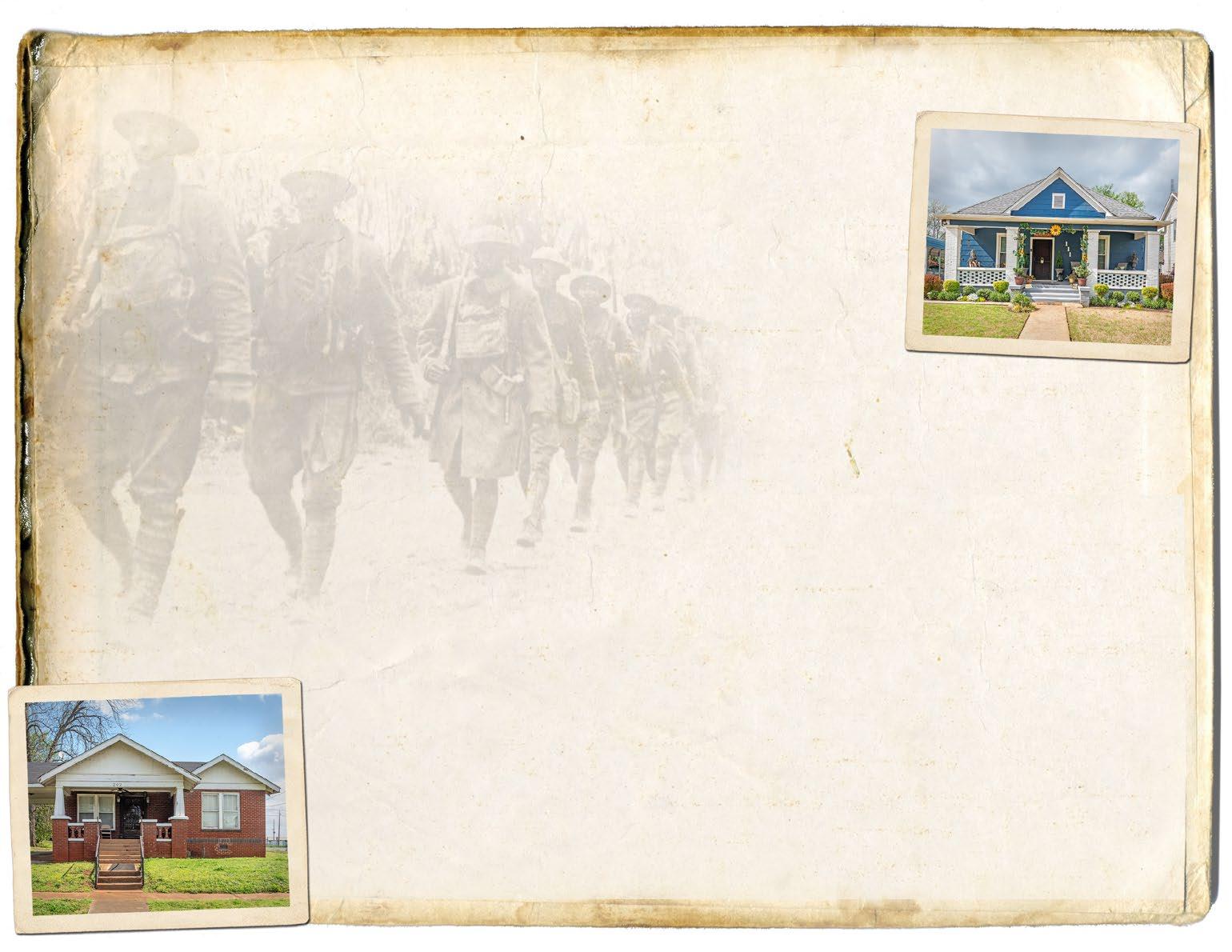
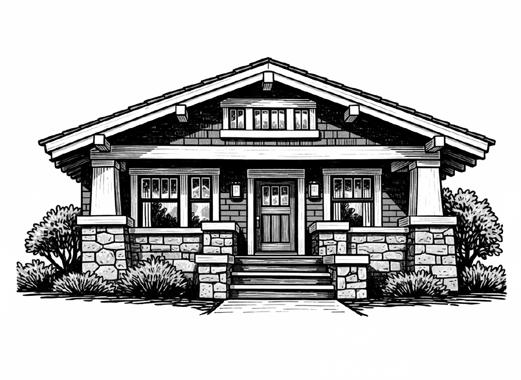
This home is representative of many of the Craftsman cottages that once lled Old Decatur. The style, a favorite in the early 20th century, is known for its informal layout and emphasis on design details that include the low-pitched rooflines with exposed rafter tails. The striking windows with three vertical window panes in the upper section are original as are the tapered front porch piers, both design details that were common for this style. The decorative metal railing is a post-World War II design element that was added later.
The Craftsman design that the Kings selected for their house was a popular working-class style in that era. Craftsman houses championed natural materials, simplicity, and informality as an antidote to the mass production, formality, and ornateness of the Victorian homes of the prior generation. Popularized by magazines between roughly 1900 and 1930, the style became associated with democratic values and accessible homes for the middle class. Many Craftsman-style houses had built-in bookcases, china cabinets, and even dressers, reducing furnishing costs and household labor. Old Town’s mix of Victorian, Craftsman, and even Ranch houses show how the neighborhood developed in the decades of the late 19th to mid-20th century, embracing new trends as styles changed.
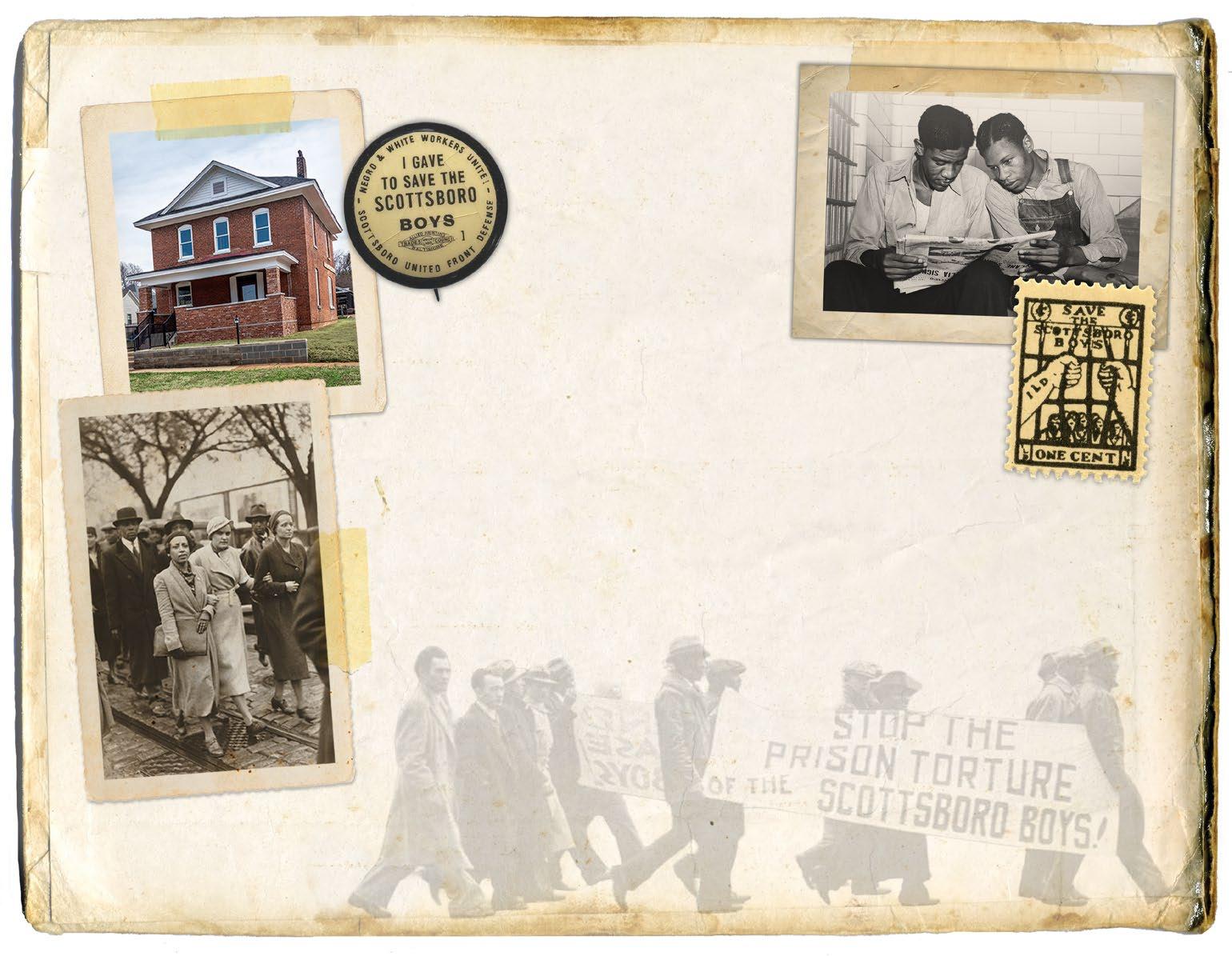
Stop 6. Scottsboro Boys House
818 Sycamore Street NW
Early residents of the house were a white couple, Owen J. and Hettie M. Thomas. Owen was a barber, but the location of his barbershop was not indicated in the city directories. By the 1930s, the house served as a boarding house. Oral tradition within the neighborhood states that during the infamous Scottsboro Boys trial, Ruby Bates, one of the white accusers, stayed at the house during the trial where she recanted her accusations. Ruby’s decision to recant effectively made her persona non grata in the white community, forcing her to seek shelter in Old Town, among a community whose lives had been made more dangerous due to her false testimony. In 2019, Celebrating Early Old Town with Art (CEOTA) acquired the property with plans to develop it into the Decatur Scottsboro Boys Civil Rights Museum.
Stop 7. First Missionary Baptist Church
233 Vine Street NW
This striking red brick church has a special place in Decatur’s history. Known as the “Colored Baptist Church,” freed African Americans organized the congregation in 1866, right after the Civil War. After moving locations several times, the congregation expanded enough to require a larger building. The church was designed by Wallace Augustus Rayfield, an African American architect from Georgia. After Rayfield earned a degree in architecture from Columbia University, Booker T. Washington recruited him to direct the Architectural and Mechanical Drawing Department at Tuskegee Institute in 1899. He served for eight years before opening his own architecture business in Birmingham. Rayfield designed hundreds of buildings, including churches like the well-known 16th Street Baptist Church in Birmingham and Chicago’s Ebenezer Baptist Church. The three-arched entry is a design detail that all three churches share, one that signifies the Trinity: the Father, the Son, and the Holy Spirit. Daniel Brandon, of Henderson Brandon & Son masonry and construction firm, a prominent Black-owned company located in Huntsville, built the church from 1921 to 1922. Many pillars of the local Black community who raised funds for the church have their names written on the luminescent stained glass that floods the sanctuary with golden light.
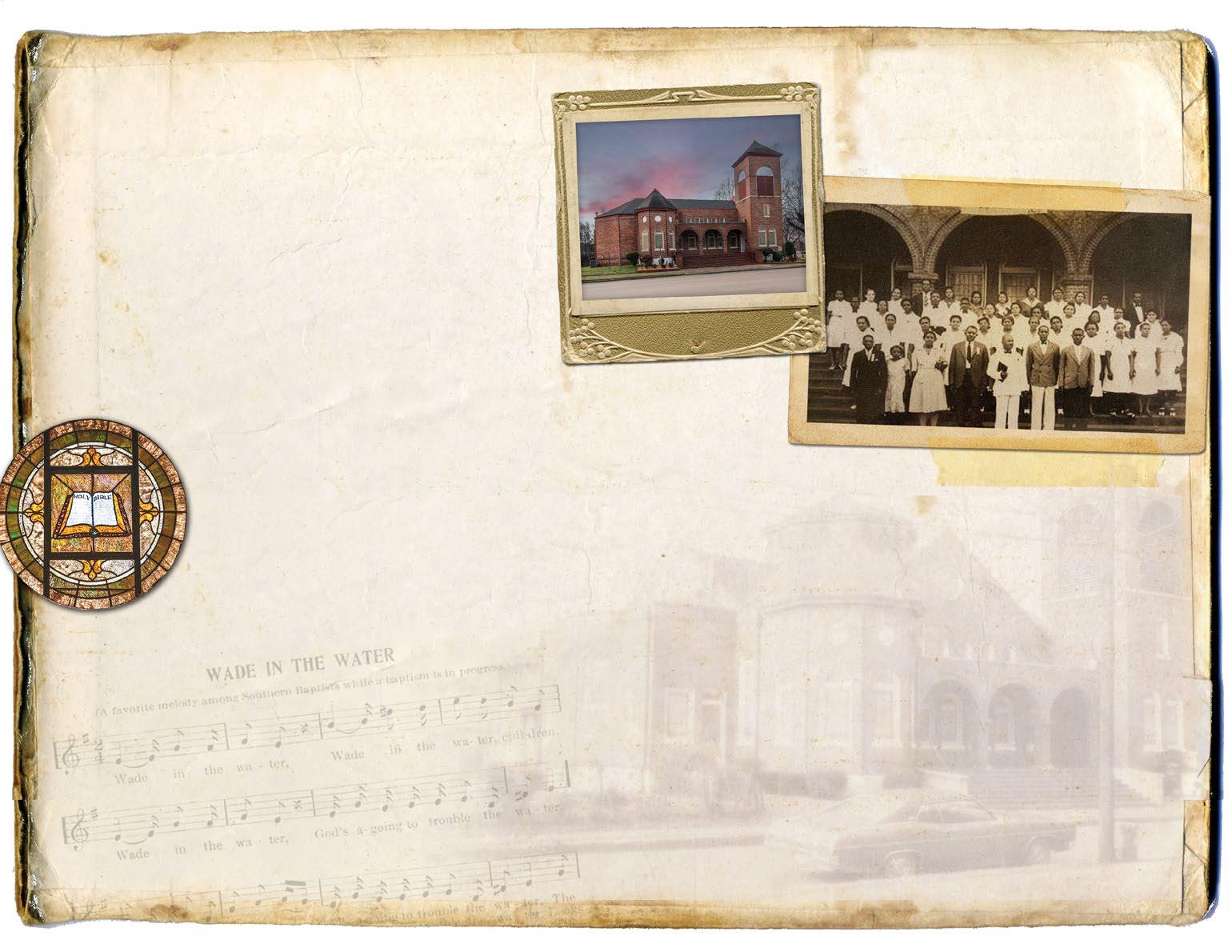
The congregation has been instrumental in supporting the community. In 1932 after the U.S. Supreme Court overturned the convictions of the Scottsboro Boys in Powell v. Alabama, New York criminal defense attorney Samuel Leibowitz became co-counsel in the case, focusing on the exclusion of Blacks from the jury rolls. This led to the Supreme Court case of Norris v. Alabama which found that the systematic exclusion of Blacks from jury service violated the Equal Protection Clause of the Fourteenth Amendment. Leibowitz spent considerable time interviewing Black residents to make his case, often at First Missionary, which provided the space for community members to meet with the defense team.
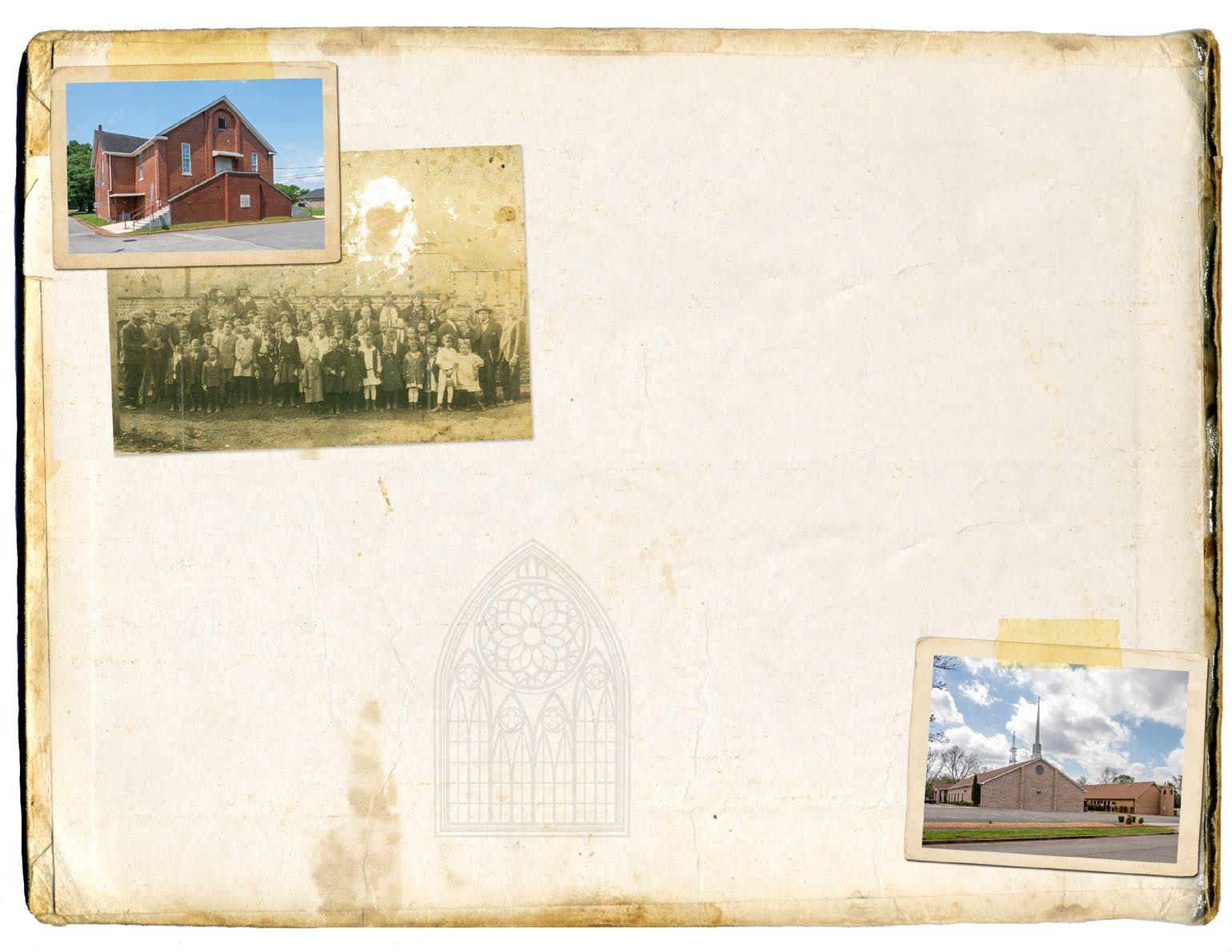
Stop 8. Garner Memorial Church – 401 Cherry Street NW
Originally named Bailey Temple Colored Methodist Episcopal Church, the congregation relocated to its current site under Reverend G.G. Garner. The church started as a basement church, with the understanding that a new sanctuary would be constructed at a future time. Although the exact date the church basement was nished is unknown, it does show on maps as early as 1927. By 1945, the upper church was constructed and named New Garner Memorial Colored Methodist Episcopal Church, in honor of Reverend Garner.
This church has a “raised basement” design, a common detail in Black churches where spacious basements served for worship, but also served as essential community, social, and political centers during the segregation era. The church provided meeting space for groups as varied as singing ensembles and the Negro Boy Scouts.
Stop 9. King’s Memorial United Methodist Church – 702 McCartney Street NW
Although the current buildings at this site date from 1986 and 2014, the King’s Memorial United Methodist congregation is the oldest historically Black congregation in the city. The congregation was established in the 1850s by enslaved Black and bi-racial people who were members of the First Methodist Episcopal Church, South in Decatur. Union soldiers dismantled the rst building, known as St. Paul’s Methodist Episcopal Church, along with most of Decatur, during the Civil War. After the Civil War the congregation constructed a new building and hosted a Freedman’s Aid Society School for children of color. In 1881 the congregation moved to its present site. Decatur’s rst permanent school for children of color was housed here, under a lease agreement with the city of Decatur.
During the Reconstruction era, several City Aldermen (now known as Councilmen) and school principals attended the church. This included Aldermen Burrell W. Lemons and Matthew Hewlett Banks, and Charles Leon Shefeld (Lakeside High School) and Athelyne Celest Banks (Carver Elementary School). The church was renamed King’s Memorial Methodist Episcopal church in 1908, honoring the noted revival preacher, and later Methodist Church bishop the Reverend Willis Jefferson King, after King led a revival in Decatur. The Decatur Chapter of the National Association of the Advancement of Colored People (NAACP) was organized at the church in 1934. In 1977, King’s Memorial United Methodist Church voted to merge with Jones Chapel United Methodist Congregation, which had lost their building on Poplar Street NE, due to a city urban renewal program.
Stop
10. Judge James E. and Anna E. Horton House – 212 Church Street NW
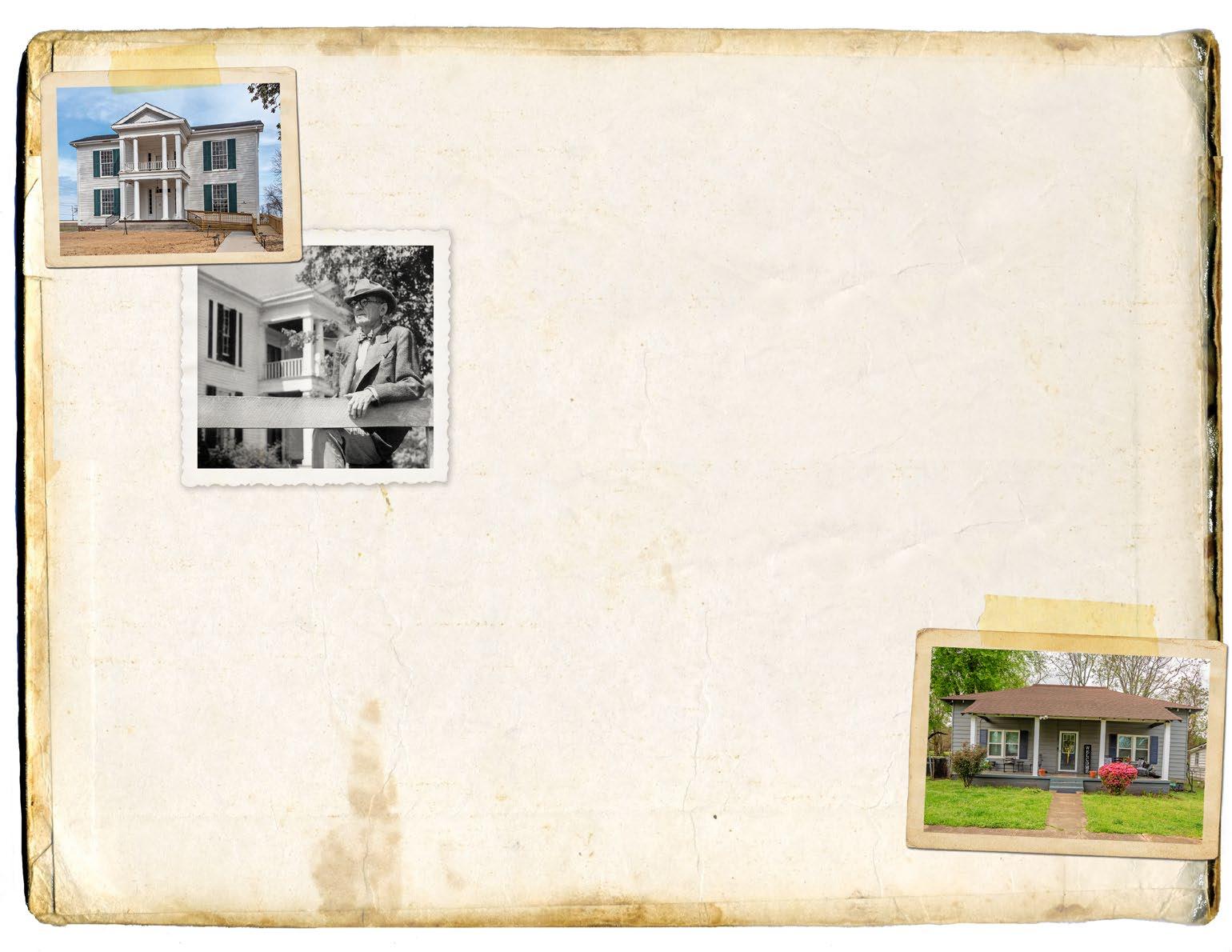
This large antebellum home has a complex story which eventually led to it being moved not once, but twice. Originally located in neighboring Athens, the house was constructed in 1846. By the early 20th century, the house had become the home of Judge James Edwin Horton, Jr., through marriage to his wife, Anna Hobbs. Judge Horton was elected the Eighth Circuit Court Judge in 1922 and again in 1928 and he served as the presiding judge for the re-trials for the Scottsboro Boys. Judge Horton rebuked the state’s case after a second conviction with the death penalty was handed down against defendant Haywood Patterson. The judge overturned the jury’s guilty verdict in June of 1933, stating that the prosecution’s testimony was uncorroborated and contradicted. He ordered a new trial.
The following year, after losing his re-election bid, Judge Horton retired to farming. After selling land in 1934 to the Tennessee Valley Authority at the site of what would become Wheeler Dam, Judge Horton used the funds to purchase land in Greenbrier, Alabama, and had his home in Athens dismantled and moved to Greenbrier, where it was reassembled. By the early 21st century, the house was located in an industrial zone and was under threat of demolition until it was acquired by Decatur-based CEOTA and moved to Decatur in 2023. The house will serve as part of the Decatur Scottsboro Boys Civil Rights Museum.
Stop 11.
The Thomas Lewis House – 407 Church Street NW
This 20th-century cottage is representative of the hundreds of worker’s cottages that once lined the streets in Old Town, housing families that worked in a variety of jobs to support the growing city.
A number of residents, all Black, have called this house home over the years. The occupants from the mid 1910s through the early 1920s were Thomas and Marshalla Lewis. Marshalla worked as a maid. By 1926 Charlotte Cromwell, who worked as a laundress and cook, lived here, and by 1938, Aaron Orr and William Stone occupied the house. As a child Aaron Orr was active collecting tin cans and won a silver dollar by the City Beautiful Club for the child collecting the most tin cans in 1923. He attended the East End School, later named Carver School, which served the Black population of Decatur. Carver School is located at 809 Church Street NE, in the historic Albany neighborhood. As an adult, Aaron was employed by the Alabama Water Service Company in the 1930s and was later employed by the city of Decatur for more than 20 years in the city’s Water Department. He was an active member of First Missionary Baptist Church, where he served as a deacon.
Stop 12. Wayman Chapel AME
412 Church Street NW
Shortly after the Civil War ended members of Wayman Chapel African Methodist Episcopal Church (AME) began meeting as a group in Decatur. The congregation has met at the present site since 1905. The basement was constructed around 1926, and for many years members met there. The current sanctuary was constructed in 1938. It underwent extensive remodels in 1943, 1960, and 2010. Wayman Chapel was named in honor of Alexander Wayman, the 7th AME Church bishop.
Services for Dr. Newman Marion Sykes, a local undertaker, were held at the church. Born in Decatur in 1887, Sykes was a graduate of Fisk College in Nashville and Northwestern University in Illinois. He practiced medicine in St. Louis for 14 years before relocating back to Decatur to assist with his family’s business, Sykes Funeral Home. By the 1940s Sykes had taken over as manager of the family’s funeral home, which was located on Bank Street NE.
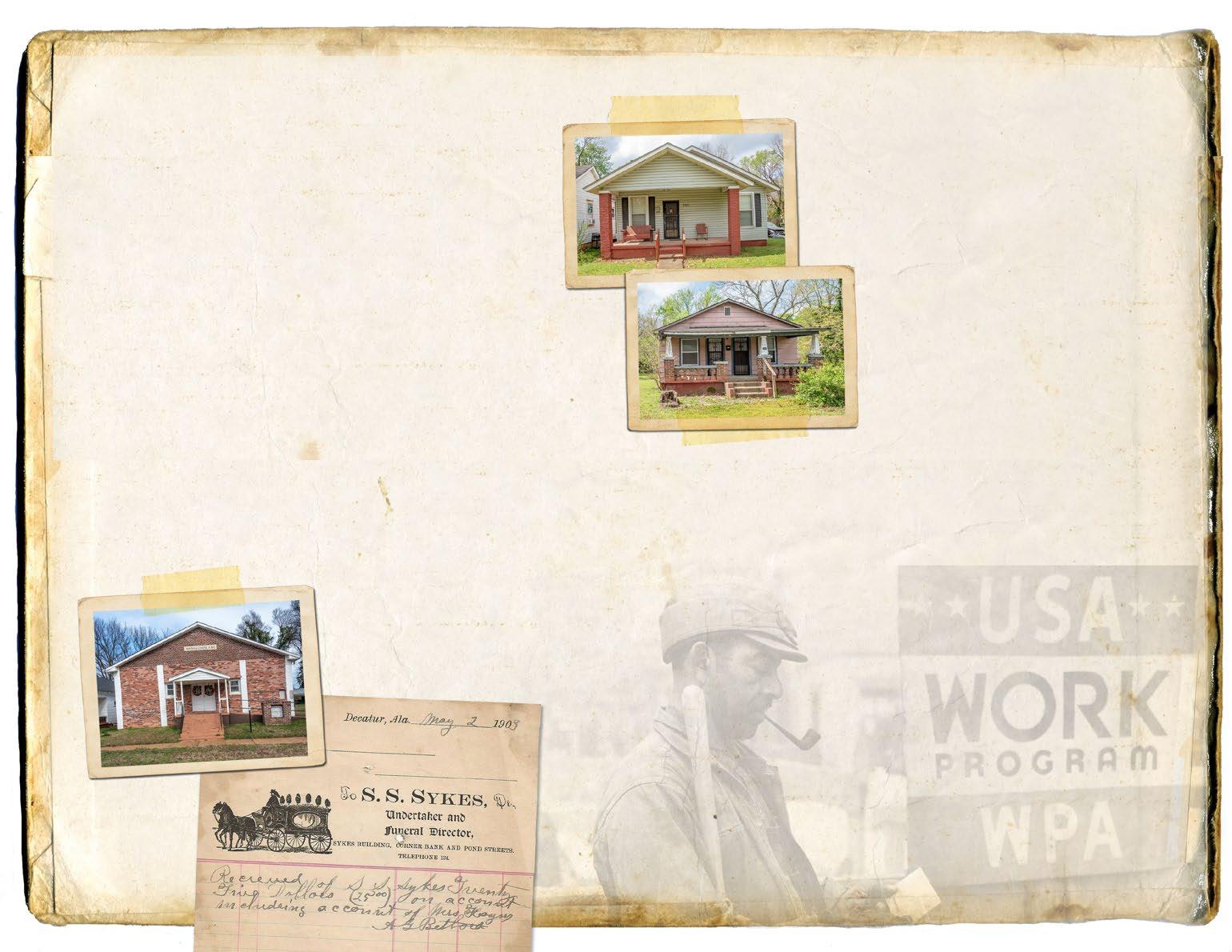
Stop 13. The Albert Ruffin and Ada Thompson Houses
705 and 733 Church Street NW
These two Craftsman-style homes sheltered a variety of residents who called this neighborhood home. 705 Church Street NW was occupied by a series of workingclass Black families. In 1922 Albert Rufn, a barber, lived here. Laborer Irving Rogers lived here by 1926, while Eunice Rodgers, possibly his widow, lived here in 1938. By 1948 Charles and Ovella Lee lived in the home. Charles worked at the Decatur Box & Basket Company, a business located near the Tennessee River.
A series of Black working-class families occupied 733 Church through the rst part of the 20th century. The rst city directory to list an occupant at this address is the 1922 volume, which named Ada Hampton, a laundress. The 1926 directory notes William and Mary Elliot at this address. William was a laborer who worked for the Works Progress Administration later in his life. By 1938 Ernest and Thelma Orr occupied the house. Ernest was a porter at the Tennessee Valley Hotel, located near the railroad at the corner of Church Street NE and Railroad Street NW.
Stop 14. The Mary Brown House – 712 Lafayette Street NW
This mid-century house is outside the area shown on early maps, thus the construction date is ambiguous. The 1949 city directory lists a Mary Brown as the owner and occupant of the house. Mary’s occupation was listed as a “house worker,” which would be a domestic worker, like a maid. An earlier directory listed Mary’s occupation as a cook. The 1961 city directory lists Alf and Margaret T. Holms as renters of the house. Alf worked as a laborer.
Post-World War II era houses had simpler forms than earlier styles. This house is almost a time capsule showcasing common architectural trends from this era. The wide pitched roof and recessed front porch with the iron railing are common details, as are the unusual windows on the right side of the front elevation, sporting horizontal panes of glass, a “trendy” new architectural detail during this era. Another architectural detail from this time period is the large plate glass picture window, made possible by technological advances in glass manufacturing.
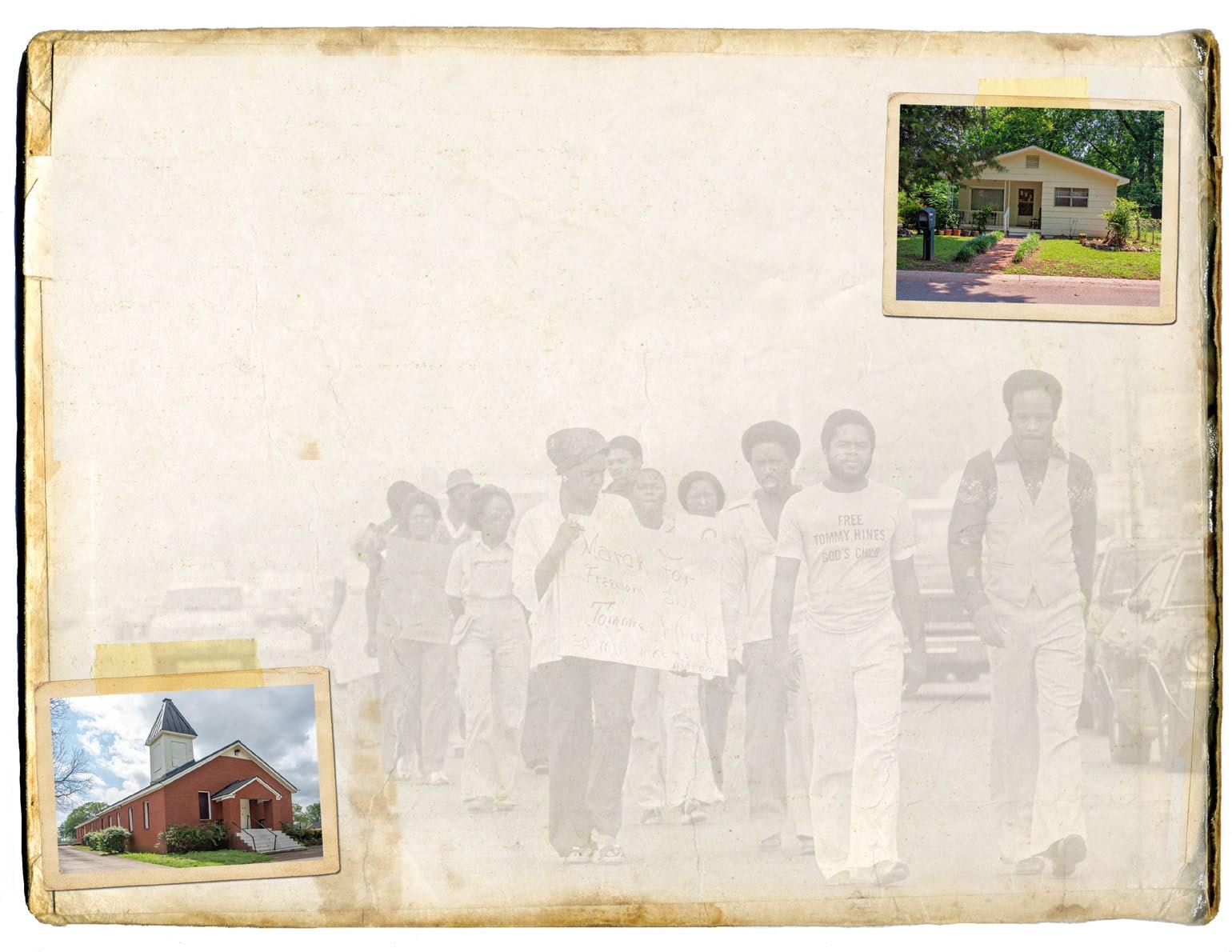
Stop 15. Newcomb Church of Christ – 726 Newcomb Street NW
The Newcomb Street Church of Christ was established in the early 1920s by the prominent Black evangelist Marshall Keeble, the driving force behind the emergence of African American Churches of Christ in the south between 1914 and 1968. White worshippers sometimes attended services, and seating was segregated by race on these occasions.
In 1978, the arrest of intellectually disabled church member Tommy Lee Hines sparked outrage in the African American community. The church hosted a mass meeting led by then-pastor Alphonso Robinson. A few days later the Southern Christian Leadership Conference (SCLC) project director Richard Cottonreader arrived in Decatur to help organize a response to Hines’ arrest, establishing a local SCLC chapter. The Newcomb Street Church of Christ served as the local SCLC headquarters. After a grand jury charged Hines with three counts of rape, outraged protesters camped out in the lobby of the Morgan County Courthouse, refusing to leave until the district attorney granted their meeting request. Judge Richard Hundley responded with a ruling that blacks could no longer congregate on courthouse property. A gathering at the Newcomb Street Church of Christ was called as a protest. A crowd of hundreds then marched to the courthouse, where Cottonreader burned Hundley’s order in a show of deance. Several months later, a change in venue was granted to Cullman County, with less than one percent Blacks in their town. On the eve of Hines’ trial, protesters left on foot from the Newcomb Street Church of Christ to start a more than thirty-mile walk to the courthouse in Cullman, Alabama.
Stop 16. Eva Adelaide Sterrs Boys Club
606 Vine Street NW
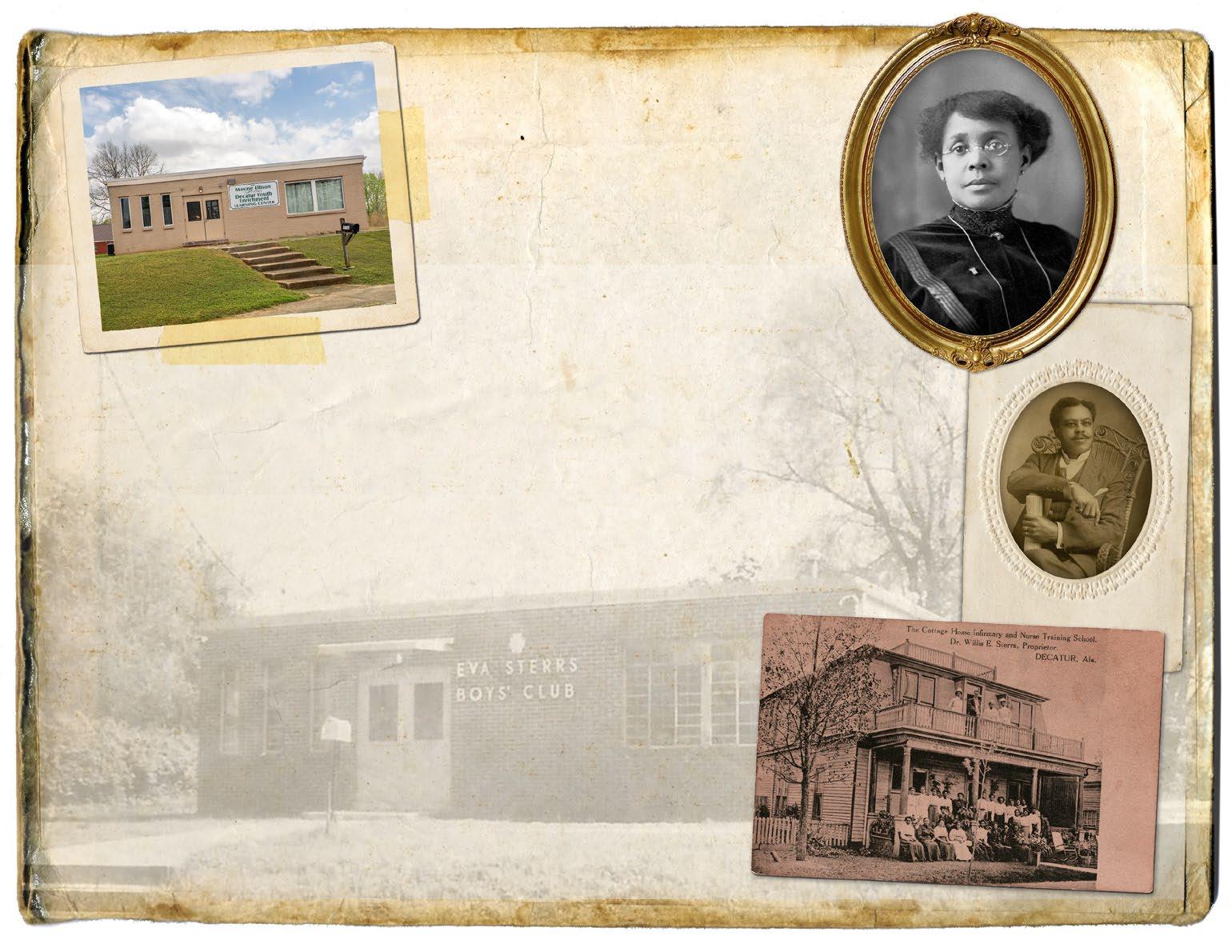
This 1964 building housed the Eva Adelaide Sterrs’ Boys Club, an organization that provided leadership training and social skills to neighborhood boys. The club provided a game room, which included a ping pong table and a foosball table, an area for arts and crafts, and a basketball goal outside. The club offered swimming lessons in the summer, and organized tournaments for a number of different sports. The club was originally called the Vine Street Boys Club, and was organized in the late 1940s by Dr. Morris Hightower Williams, a local dentist. It was open to boys age six and up, and welcomed girls in 1984. Today, the City of Decatur owns the building, and Decatur Youth Enrichment, a local non-prot provides tutoring and instruction in the visual and performing arts in the space.
The building was originally named for its benefactor, African American Eva Sterrs. She donated the land in her will, along with a $10,000 endowment to assist with construction costs. Ms. Sterrs was the rst and only female in Decatur to own and operate a newspaper, The Guardian. Her husband, Dr. Willis E. Sterrs, was the rst Black doctor in Decatur, and in 1900 opened the rst hospital in town, which became the Cottage Home Infirmary and Nursing Training School.
Stop 17.
Leo the Lion – 425 Vine Street NW
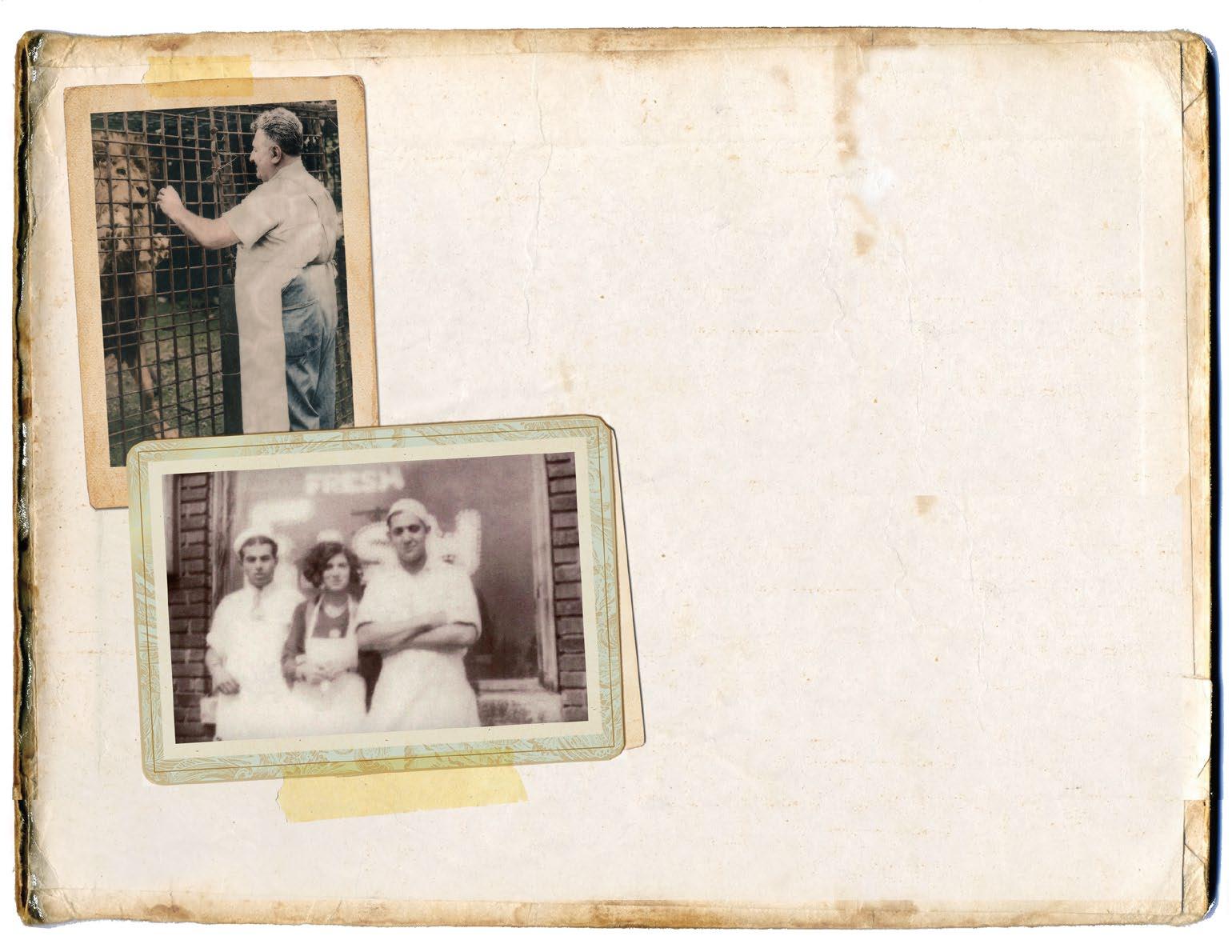
No tour of Old Town would be complete without mentioning the neighborhood’s most infamous resident… Leo the lion. In the 1940s Leo was purchased as a cub from an exotic pet company in Galveston, Texas. Once he reached full size, he lived in a large cage. Sometimes Leo would escape from his enclosure and worried neighbors would call their children to come inside. Leo’s enclosure was located on 400 block of Vine Street NW, between Madison and McCartney Streets, behind the Star Market.
Leo was owned by Mike G. Namie, a local business man. Mike’s parents immigrated to the U.S. from Lebanon, then part of the Ottoman Empire, in 1895. Mike owned the Star Market grocery store and the Elite Movie Theatre, Decatur’s only movie theatre that was fully accessible to the Black community. The Elite Movie Theatre which was located at the corner of Vine Street NW and Madison Street NW, opened in 1949. In addition to mainstream movies, the theatre also showed independent “race lms” which featured all-Black casts in a number of genres, offering Black representation during segregation.
For more information about Decatur, stop by our Visitors Center at 350 Market Street.
This project was made possible by the City of Decatur and Decatur-Morgan County Tourism, funded with a grant from the Alabama Historical Commission. Copyright 2026. Designed and produced by McComm Group, Inc. Special thanks to Caroline Swope, Historic Preservation Specialist for the City of Decatur; John Allison, Morgan County Archives; Rebekah L. Davis; Danielle Dutcher; Rev. Wylheme H. Ragland; Peggy Allen Towns; Olivia Williams; and Rev. Daylan Woodall