Published by TrueQuest Communications, 1417 W. Ardmore Avenue, Chicago, Illinois 60660-3441; phone: 312-356-9900; eMail: mail@truequestweb.com; weBsite: truequestweb.com
Printed in the United States. ISSN 1083-0804. No part of this publication may be reproduced without permission from TrueQuest Communications.
editorial inquiries For writer’s guidelines and other editorial questions, contact: Vision Editor at mail@vocationnetwork.org.
request additional Copies: Order online at VocationNetwork.org/orders; email: mail@vocationnetwork.org; or call 312-356-9900
interested in Being a vision advertiser/sponsor?
Please call Patrice Tuohy at 312-356-9900. All ads are subject to publisher’s review and must be in line with VISION’s mission to promote Catholic religious vocations. The NRVC does not specifically endorse any advertisements.
NRVC MISSION
OUR VISION
The National Religious Vocation Conference has a vision to set the world ablaze with the fire of God’s love through the prophetic, joyful witness of religious sisters, brothers, and priests as radical disciples of Jesus.
OUR MISSION
The National Religious Vocation Conference is a catalyst for vocation discernment and the full flourishing of religious life as sisters, brothers, and priests for the ongoing transformation of the world.
OUR PURPOSE
To accomplish its mission, the National Religious Vocation Conference, in collaboration with its members and strategic partners, provides professional development, advocacy, education, resources, and networking opportunities to support vocation ministry and religious life.
OUR VALUES
In presenting religious life as a viable, prophetic option that remains mystery and gift, the NRVC seeks to:
• Provide professional development, best practices, and shared wisdom to animate the elements of vocation ministry: encounter, invitation, and accompaniment;
• Foster a culture of vocations in a spirit of collaboration, joy, and hope to inspire and be inspired by the minds and hearts of the young church;
• Celebrate the charism of each Catholic religious institute as part of the mission of Jesus; and
• Grow and nurture an intercultural approach to vocation ministry.
PUBLISHER’S NOTE
The challenge of peace
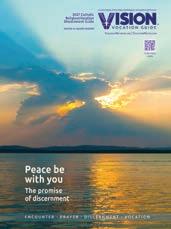
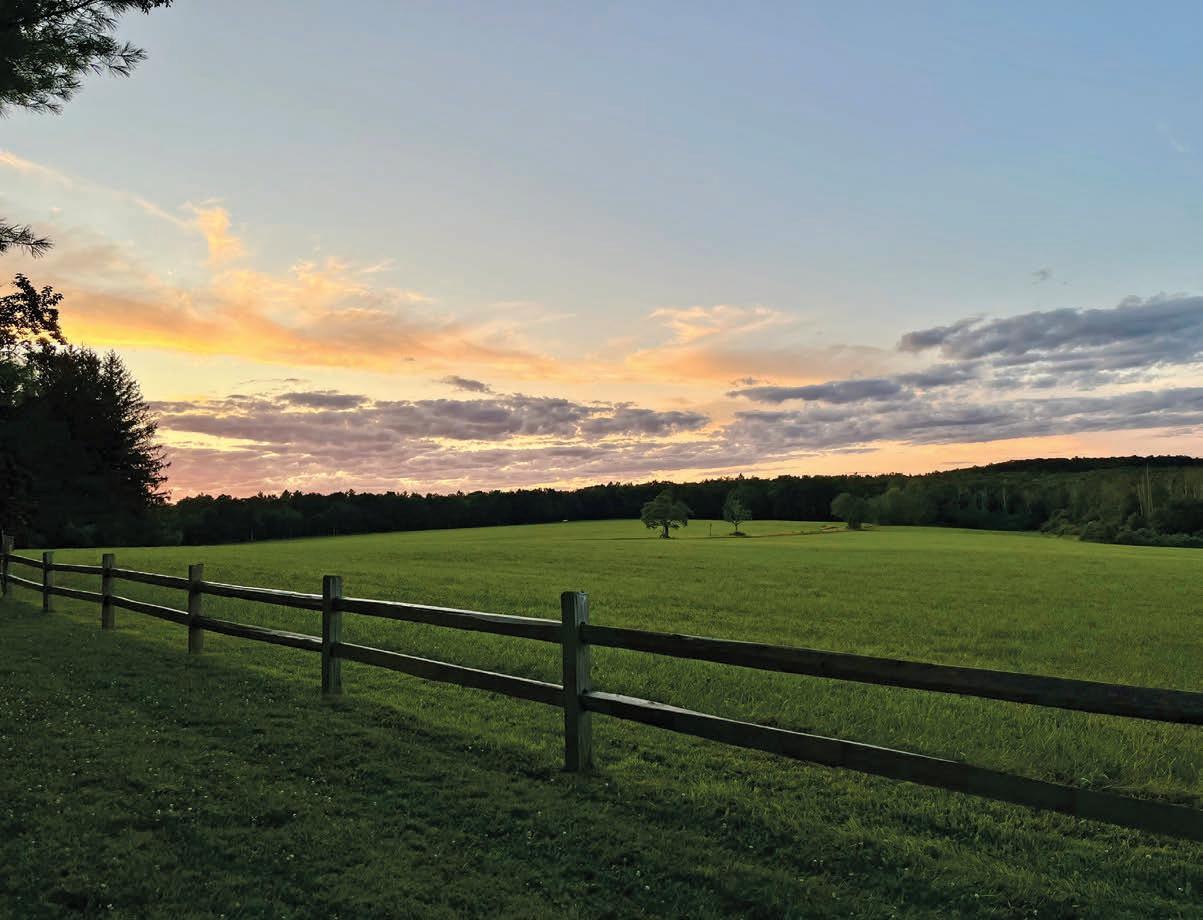
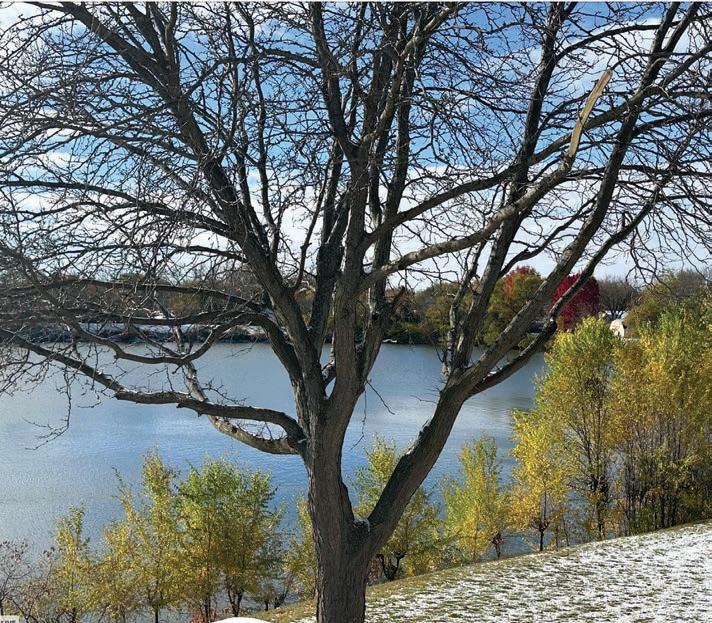
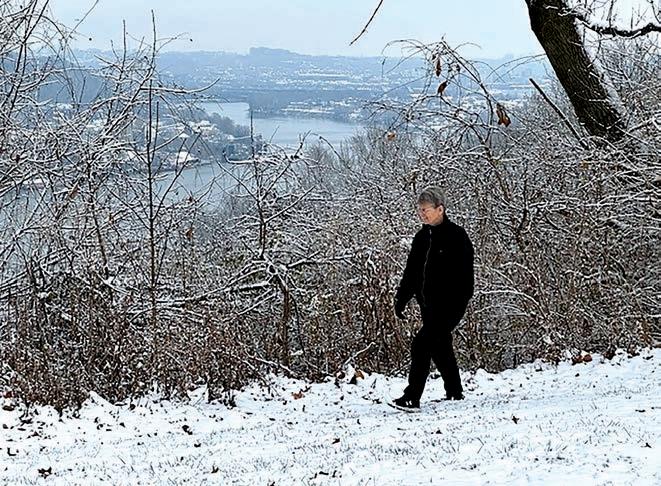
THISYEAR’S VISION cover turned out to be one of the most challenging for VISION editors to design. We went through at least 20 drafts with pictures ranging from an expansive pastoral scene with green fields and a winding river disappearing into the horizon to a single Adirondack chair perched on a pier overlooking a placid tree-lined lake. My personal favorite was a winter scene: a frozen river, tall pine trees, mountains in the distance, and the captivating stillness that comes with a blanket of fresh fallen snow. But alas, one person’s peace is another person’s anxiety. “Snow and cold!” exclaimed one editor. “No, no, no—that does not say peace to me!” And so we kept plugging away looking for an image of peace everyone could agree on.
World peace is even more difficult to imagine. Our big conflicts often end with precarious compromises, fraught with pain and resentment, that can collapse at any moment. And smaller conflicts often go unchecked for generations. Isaiah’s picture of the wolf as a guest of the lamb rarely comes to life.
Then there is personal peace. It is the peace we pray for at Mass. “Deliver us, Lord, we pray, from every evil, graciously grant peace in our days, That, by the help of your mercy, we may be always free from sin and safe from all distress.” It is the peace of Christ, the peace Jesus gives to us through his Spirit (John 14:27). This peace comes when we listen to our hearts and seek God’s will, not ours. It is the image of the cross.
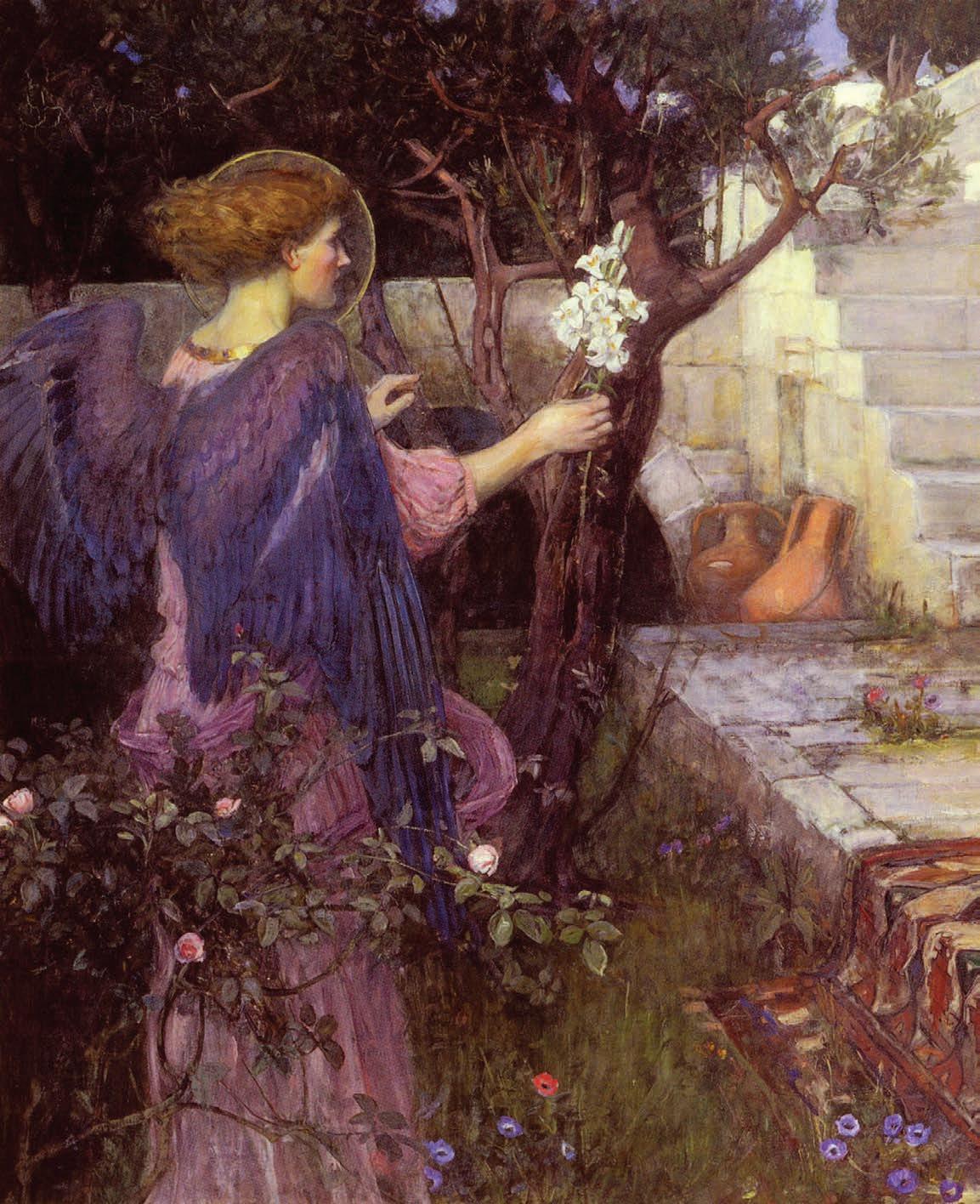
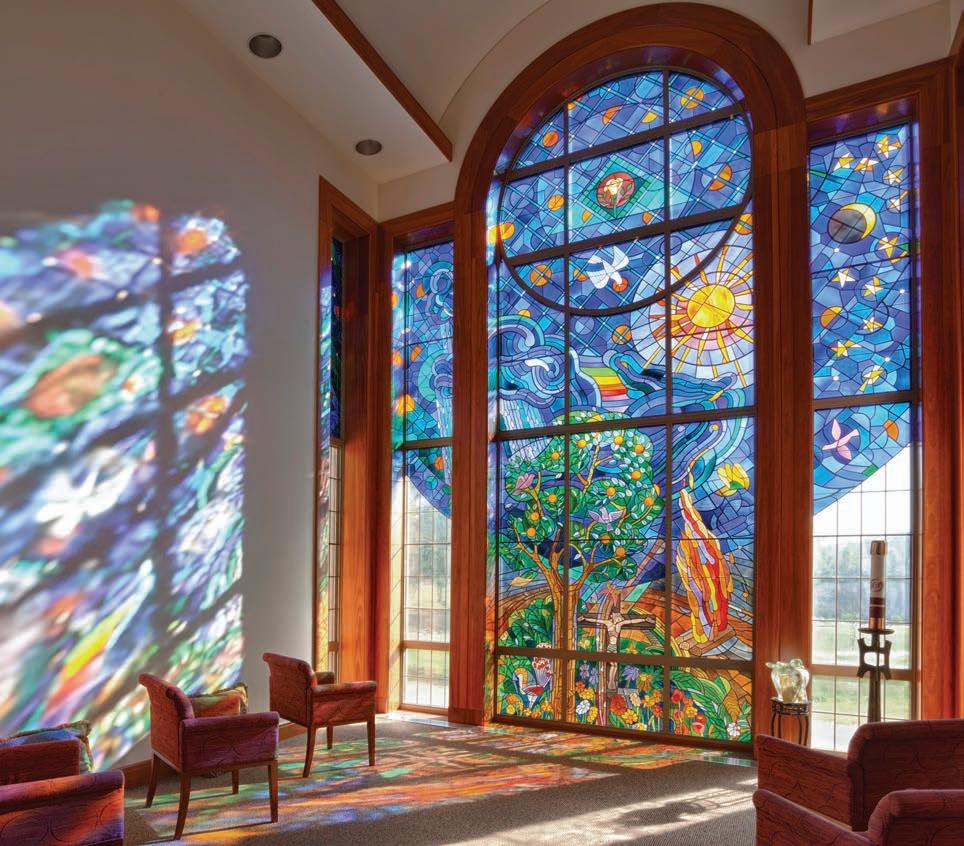
Finally, there is the peace that comes with finding your true vocation. It is the peace of our baptismal vows, renewed each Easter, to follow Christ and renounce the “empty promises” of evil—the peace that “surpasses all understanding,” which, Saint Paul says, “will guard our hearts and minds.” It is the peace that proclaims, “Behold, the Light of the World! (That is the image of peace we finally selected for our cover.)
As you seek that peace in your own life, we hope that you find inspiration in the pages of VISION. We mention peace many times in this issue, which is fitting for the Jubilee Year of Saint Francis, who prayed 800 years ago, “Happy those who endure in peace, By you, Most High, they will be crowned.”
—Patrice J. Tuohy, VISION Publisher
80 Need to knows about becoming a priest
86 A restless heart finds a home
PROFILE OF FATHER RAYMOND J. FLORES, O.S.A.
BROTHERS
88 You are not alone: The bonds of brotherhood
DAN MASTERTON
93 A vocation built to last
PROFILE OF BROTHER THOMAS JOSEPH PIEPER, S.M.
EN ESPAÑOL
ORACIÓN Y DISCERNIMIENTO
94 ¿Vocación religiosa o familia?
HERMANA ANA CECILIA
MONTALVO, F.SP.S.
98 ¿Cómo rezo?
HERMANA KATTY
HUANUCO, CCVI
103 Cuatro pasos para el discernimiento vocacional
EDITORES DE VISIÓN HERMANAS
97 Nacida para server
PERFIL DE LA HERMANA
MARÍA DELA PAZ, O.S.F.
HERMANOS
101 Una vocación creada para perdurar
PERFIL DEL HERMANO
THOMAS JOSEPH PIEPER, S.M.
SACERDOTES
102 Un corazón inquieto encuentra un hogar
PERFIL DEL PADRE RAYMOND J. FLORES, O.S.A.
BEING CATHOLIC
104 The New Evangelization: A modern take on eternal truths
FATHER CEDRIC PISEGNA, C.P.
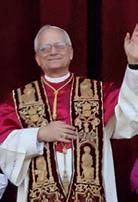
110 What Pope Leo XIV wants you to know about the love of Christ
DOMINIC SANFILIPPO
116 What is the kiss of peace?
ALICE CAMILLE & VISION EDITORS
ART OF DISCERNMENT
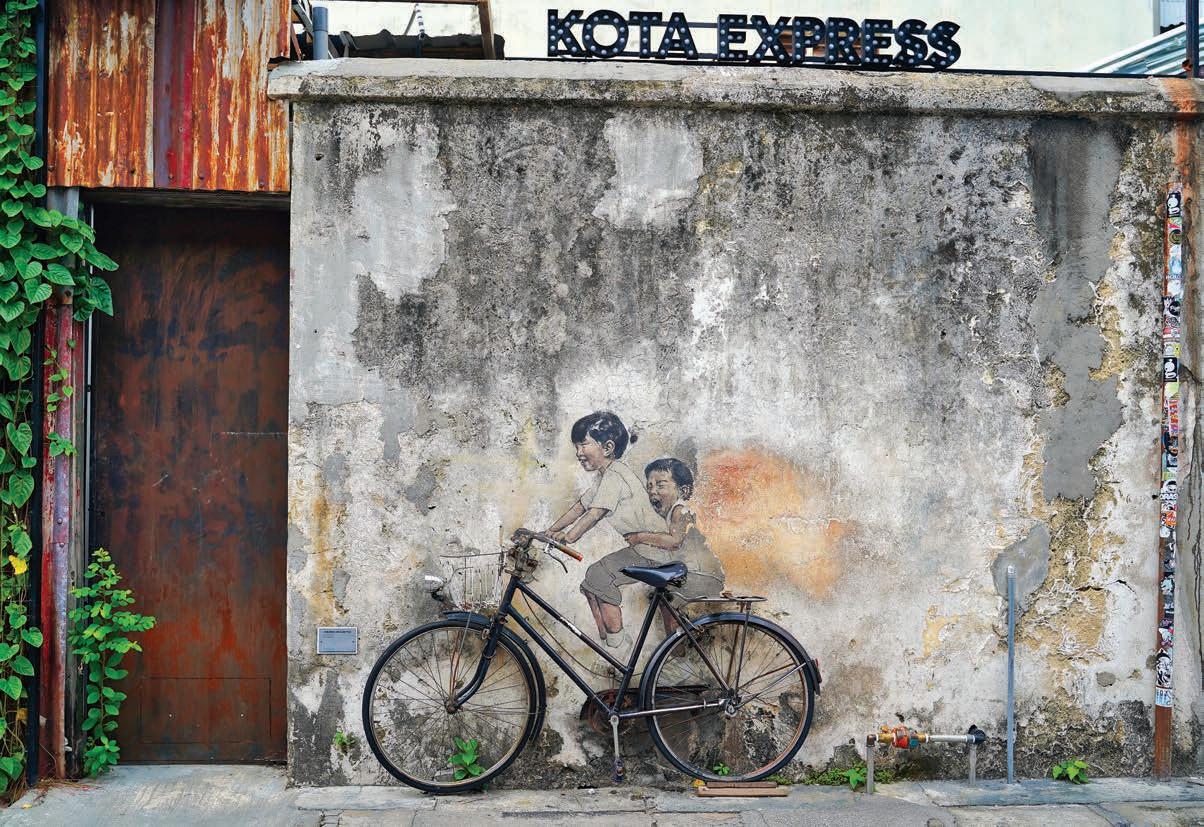
120 The ride of your life!
TEXT BY PATRICE J. TUOHY; ART BY ERNEST ZACHAREVIC
men’s Communities searCh 128 other Communities/ resourCes searCh
WORLD YOUTH DAY 129 Seoul, Aug. 3-8, 2027
VOCATIONNETWORK.ORG
VoCation matCh
Community searCh
eVents Calendar
Videos
VoCation FaQs
Questions CatholiCs ask spanish/FrenCh resourCes
digital edition
PAULISTS RECEIVE MAJOR GRANT FOR PROJECT TACKLING POLARIZATION
Brothers and sisters, I would like that our first great desire be for a united Church, a sign of unity and communion, which becomes a leaven for a reconciled world.
pope leo XiV
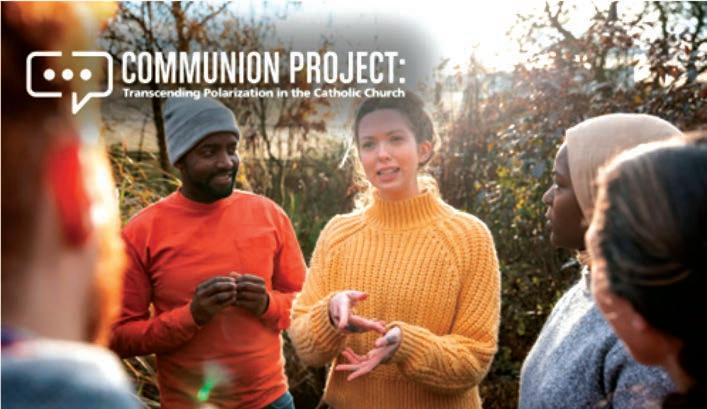
INANY GIVEN AGE we are called as Catholics to respond to the signs of the times. Acute polarization is a blinking warning light in both the U.S. Catholic Church and civil society at large, and the Paulist Fathers are determined to respond. The Communion Project—a joint Paulist initiative with the Catholic University of America (CUA)—was
World Youth Day 2027: Seoul
Learn more at wydseoul.org.
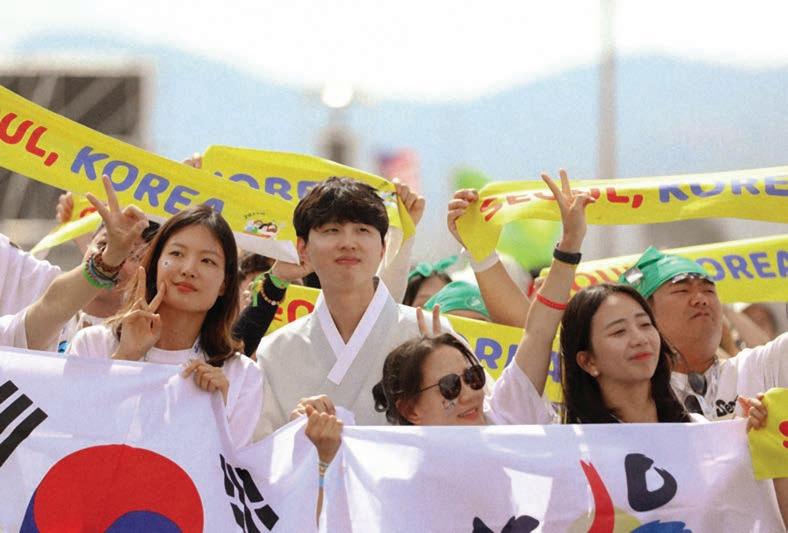
WORLD YOUTH DAY (WYD) 2027 is coming to Seoul. From August 3-8, 2027, millions of young Catholics from around the world are expected to journey to South Korea’s capital city to celebrate, connect, and pray alongside Pope Leo XIV. It has been more than three decades since the historic 1995 WYD gathering in Manila—the last time the event was held in Asia—and the church has never before gathered in a country with a minority Christian population like South Korea.
awarded a $1 million grant from the Lilly Endowment to “equip clergy and lay pastoral leaders with practical tools to confront polarization in the U.S. Catholic Church,” according to a Paulist statement.
The Communion Project’s team seeks to build capacity with other organizations combating polarization and to build out resources rooted in the church’s social vision.
Theological reflection is key, but this kind of work cannot remain wholly abstract, according to Father René Constanza, C.S.P., the head of the Paulists. The Communion Project is focused on “providing practical support to clergy and lay leaders,” he says, “to address the increasing divisions in our country and church.”
The project’s mission is in line with Pope Francis’ emphasis—carried forward by Pope Leo XIV—of building bridges of understanding between peoples and perspectives. Learn more at communionproject.org.
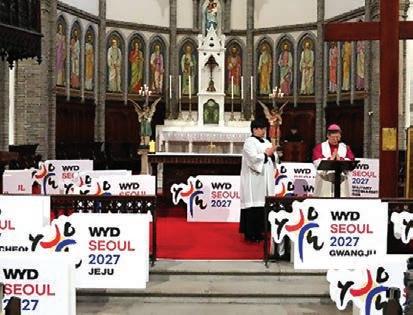
Archbishop Peter Soon-taick Chung, O.C.D. presides over the blessing of WYD Seoul 2027 logo sculptures at Myeongdong Cathedral on January 20, 2026, marking the launch of the nationwide pilgrimage of World Youth Day symbols. (Photo credit: Committee for Communications, Archdiocese of Seoul)
The logo for WYD 2027 was announced back in November 2024. Its red and blue paint dashes form a cross, a black circle represents young people, and a yellow circle at the center signals the “glory of Christ’s victory,” according to the Dicastery for Laity, Family and Life.
In January 2026, the Archdiocese of Seoul furthered anticipation of WYD 2027 by embarking on a cross-country pilgrimage carrying 15 honeycomb-board sculptures containing the logo. In blessing each sculpture representing a South Korean diocese, Archbishop Peter Soon-taick Chung, O.C.D. said they will “remind everyone preparing for this event of their calling and the graces they have received,” according to a LiCAS News dispatch.
Sisters get their message out in a big way
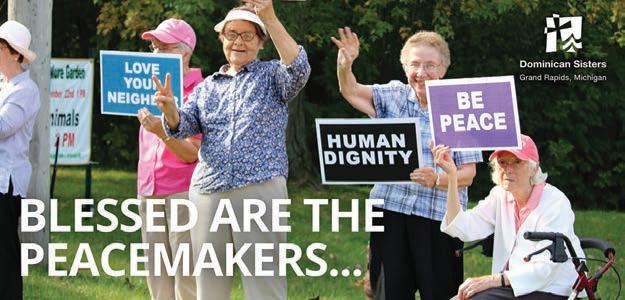
MOST PEOPLE who have spent a good amount of time trekking across the United States can recall a few famous (or infamous) billboards along highways and train routes. In July 2025, sisters from six Catholic religious institutes across the Midwest purchased airtime on numerous billboards to remind travelers “that how we treat each other, each human being, matters deeply,” says Dominican Sisters of Grand Rapids prioress Sister Megan McElroy, O.P.
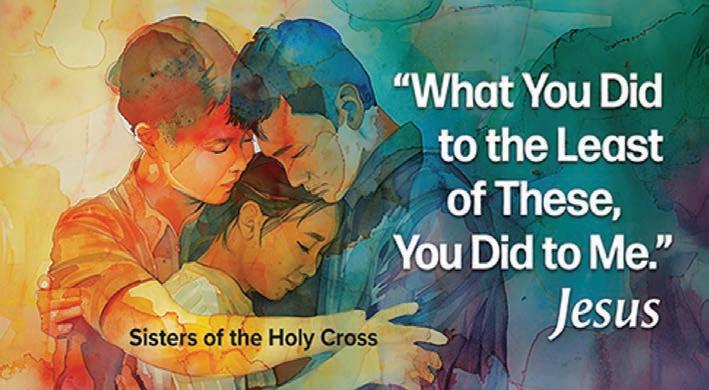
Besides the Grand Rapids Dominican Sisters, sponsoring communities include the Adrian Dominican Sisters, Sisters of St. Joseph, Sisters of the Holy Cross, Poor Handmaids of Jesus Christ, and the Sisters of Providence of Saint Mary-of-the-Woods. The billboards, featuring various sisters holding beatitude-rooted placards, could be spotted at various points across the Michiana interstate area. In light of fraying U.S. governmental support for the poor and vulnerable, the sisters collectively hope the signage “will encourage people to pause and see the vulnerable and marginalized in the United States and around the world in a compassionate lens.”
IN A SIMILAR VEIN in 2025, eight religious women’s congregations placed bright, bold displays on buses and subway lines across the city of Baltimore with one central message: “Put the Guns Down.” “The Catholic sisters have long stood for the dignity of every human life,” says Sister Elaine Davia, C.B.S., area leader of the Sisters of Bon Secours in the United States.
Other participating congregations included the Benedictine Sisters of Baltimore, Daughters of Charity of St. Vincent de Paul, Mission Helpers of the Sacred Heart, the Oblate Sisters of Providence, Sisters of Mercy of the Americas, School Sisters of Notre Dame, and the Sisters of Notre Dame de Namur.
“We hope the signage will encourage people to pause and see the vulnerable and marginalized in the United States and around the world in a compassionate lens.”
SHARE YOUR SIGHTINGS If you spot a member of a religious community in the news, please email the details to us at mail@vocationnetwork.org.
IN THIS AGE, marked by so many seemingly interminable wars, by internal and social divisions that create mistrust and fear, Saint Francis continues to speak. Not because he offers technical solutions, but because his life points to the authentic source of peace. pope leo XiV
JUBILEE YEAR OF SAINT FRANCIS
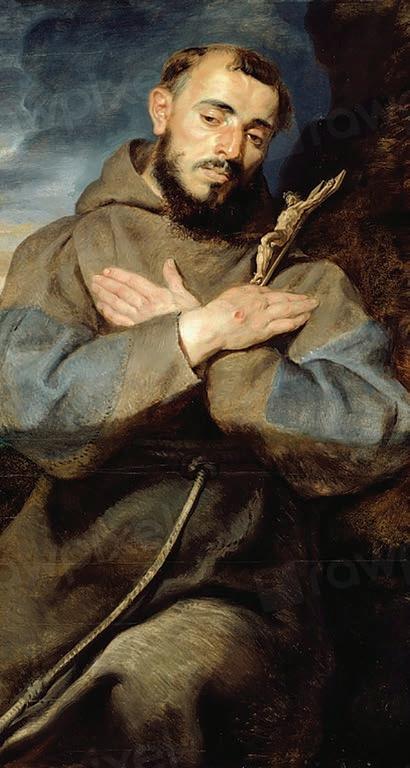
POPE LEO XIV declared January 10, 2026 through January 10, 2027 a special Franciscan Jubilee Year to mark the 800th anniversary of the death of Saint Francis of Assisi. This special year invites Catholics and all people of goodwill to live the gift of peace, which “is the sum of all God’s gifts,” says Pope Leo in a letter addressed to the Franciscan Family.
The hope of the year is that the example and spiritual legacy of Saint Francis and his message of peace find a “profound echo in the Church and society today.”
“Give us the courage to build bridges where the world raises up boundaries,” says Pope Leo in a prayer to Saint Francis. “In this time afflicted by conflict and division, intercede for us so that we may become peacemakers.”
KEY THEMES
Peace with God Returning to the gospel and a life of simple, essential faith.
Peace among humanity Building bridges where the world raises boundaries and becoming “unarmed witnesses” of Christ.
Peace with creation Rediscovering our kinship with all creatures and caring for our common home.
HOW TO PARTICIPATE
Make a pilgrimage Visit any Franciscan church or place of worship dedicated to Saint Francis anywhere in the world.
Devout meditation Spend time in prayer.
Usual conditions Fulfill the requirements of Confession, Communion, and prayer for the pope’s intentions.
KEY DATES
October 3, 2026 The 800th Anniversary of the Transitus (Passing) of Saint Francis.
October 4 Feast Day of Saint Francis
Visit tinyurl.com/QCA-Franciscans to learn more about the various Franciscan Orders. Find additional resources for the Year of St. Francis at individual Franciscan websites and VaticanNews.va.
Mother Cabrini honored in park statue
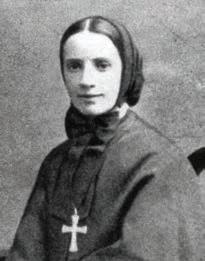
SAINT FRANCES XAVIER CABRINI, founder of the Missionary Sisters of the Sacred Heart of Jesus, beat out Justice Antonin Scalia, educator Maria Montessori, Nobel physicist Enrico Fermi, and explorer Amerigo Vespuci, among others, as a person of Italian descent to be depicted on a statue planned for Arrigo Park in the Little Italy neighborhood of Chi-
cago, according to OSV News. The criteria for the memorial statue had to be a person who demonstrated, “civic contribution, historical and cultural significance, integrity, and enduring impact.” Mother Cabrini “didn’t just serve immigrant families, she built institutions that transformed lives,” said Chicago Mayor Brandon Johnson in announcing the honor.
By Father Warren Sazama, S.J., former vocation director, president of Marquette University High School, and pastor of St. Thomas More Catholic Community.
GOD SPEAKS TO US directly in our hearts, minds, and souls through our thoughts and feelings, and through our inner movements and desires.
The ways God calls us
Some may see a vocation as a predesigned plan from on high, others as a general sketch. Ignatian tradition sees God’s call as an interactive process—a dialogue—between God and us.
WE OFTEN HEAR it said that we all have a vocation—but what is a vocation anyway? I’ve thought a lot about this question. It’s not a “thing” inside of us. Nor is it a “thing” outside of us that we search to find as on a treasure hunt. Sure, it means “God’s call” to us, but that’s merely a translation of the Latin root vocare, “to call.”
In trying to understand what a vocation truly is or what we’re actually doing when we search to discover our vocation in life, it might be helpful to look at two extreme positions. As my novice director used to tell us, the truth is often somewhere in the middle.
One extreme position is that God has a blueprint for each of us. To discover our vocation in life is to figure out and follow that blueprint. If we deviate from God’s plan for us, we deviate from God’s will, and we’re lost. Most of us today see this model for understanding one’s vocation in life as a bit rigid and implausible.
The other extreme is that God’s call to all of us is the same—to be united with God and to use our gifts in service of our neighbor. The particulars of how we do this are up to us. In this view, God doesn’t really care how we do it as long as we do it. This view makes God rather remote and uninvolved, almost uncaring. This is certainly not the God in the JudeoChristian scripture who is personally active in our lives and our history.
An Ignatian view
A middle view comes out of my
Jesuit, Ignatian tradition, which sees God as actively and personally involved in each of our lives. God speaks to us directly in our hearts, minds, and souls through our thoughts and feelings, and through our inner movements and desires. However, not all of our inner thoughts, movements, and desires come from God. Therefore, we have to discern which are from God and which are not. God is engaged in a lifelong dialogue with us. Our role in the dialogue is to pay attention, listen, and try to respond.
In this Ignatian view we discover what God is calling us to by paying attention to what gives us the most life, energy, and joy. Where do your interests lie and how will you order your life to pursue these interests? Some might have a passion for art or science and a deep desire to be married and have children. Others may want to teach or act and find
God is engaged in a lifelong dialogue with us. Our role in the dialogue is to pay attention, listen, and try to respond.
that their passions may best be met in the context of religious life or the priesthood.
Let the dialogue begin
So a vocation is literally “God’s call,” a call that we hear by listening to God’s voice within us as God speaks through our inner and outer experiences. Listening to God’s call is an interactive process—a dialogue—between God and us.
If we look at the major, archetypal calls in scripture, we see this pattern borne out. Whether it is Abraham, Moses, Samuel, Jeremiah, Mary, Jesus, or Peter, they all somehow hear God’s voice, often in the interior of their hearts and sometimes through external experiences. Regardless of how they hear God’s voice, each of these models from scripture eventually responds generously and openly. After a time, their calls seem obvious and literally define who they are. But this is not the case initially.
At first each one responds with confusion and doubt. Each one’s first reaction is a variation on “Not me, Lord!” “I’m too young” (Jeremiah) or “I have a stutter” (Moses) or “I’m too sinful” (Peter and Isaiah) or “I haven’t had sex, so how can
I bear a son?” (Mary). But as they try to listen attentively and respond generously and openly, they eventually discover what God is calling them to. And the more deeply they respond over time, the clearer their sense of having been called becomes. They develop a genuine, profound sense of vocation.
Keep the conversation going
So when we say that we all have a vocation in life, what this means is that God speaks to each of us in a personal way and has a preference for us. If we listen and respond, we grow to possess a sense of clarity about what our vocation in life is.
It’s a truly wonderful, joyful experience to grow aware in this way. At the same time, it’s important to remember that one’s initial intuition about a vocation is rarely accom-
WHETHER IT IS Abraham, Moses, Samuel, Jeremiah, Mary, Jesus, or Peter, they all somehow hear God’s voice, often in the interior of their hearts and sometimes through external experiences.
Staying faithful to the conversation with God in time brings a growing sense of what’s right for you—what will bring you peace and joy.
panied by calm and lucidity. It is usually accompanied by doubt and confusion—perhaps even anxiety. Staying faithful to the conversation with God in time brings a growing sense of what’s right for you—what will bring you peace and joy.
If you’re currently discerning your calling and are experiencing uncertainty, trust that God is speaking to you and that, if you try to listen and respond, you’ll find your way.
Enjoy the journey. May God bless your every step! =
A version of this article appeared in Vision 2003 and was originally published in the Jesuit Midwest publication “Callings: A Newsletter About Vocations.” jesuitsmidwest.org. Reprinted with permission.
related: VocationNetwork.org, “Unravel the mystery of your call” and “Call stories to help you discern.”
SISTER KATTY Huanuco, CCVI’s way of praying begins with a candle. Sometimes it is lit, and sometimes it simply rests nearby. A candle steadies the room. It marks a threshold.
By Sister Katty Huanuco, CCVI, a Sister of Charity of the Incarnate Word, San Antonio, who lives in St. Louis as she pursues a Ph.D. in Public and Social Policy. She is director of her community’s Justice, Peace, and Integrity of Creation Office.
How I pray
Small gestures bring the sacred to light.
MLeer en español en la página 98.
Y WAY OF PRAYING begins with a candle. Sometimes it is lit, and sometimes it simply rests nearby. Having a candle has always felt sacred to me. The gesture is almost ordinary, yet it gathers memory and longing. A candle steadies the room. It marks a threshold. It tells me that something within and around me deserves attention.
That reverence for small gestures began in my earliest memories of my mother with her candles. She kept a small corner of the house dedicated to prayer. There, in the quiet mornings, she would light a candle and sit beside a photograph of her own mother and an image of Jesus. That space was intentional; it
I came to see that this simple gesture, having a candle, is shared across cultures and faith experiences.
was her place of reflection, grief, and gratitude. As a child, I did not yet have the language to describe what I was witnessing. Now I see that I was learning how prayer can live in an ordinary space and how trust can be woven into daily life.
As I grew older, I came to see that this simple gesture, having a candle, is shared across cultures and faith experiences. In Peru, devotion to the Señor de los Milagros fills the streets with candles each October. The image of Christ, painted by an enslaved Angolan man in the 17th century, draws thousands who walk for hours. Many carry candles as they offer their struggles and hopes. The act of walking becomes prayer. Some sing, some remain silent. Faith moves through public spaces, carried by bodies that refuse to separate hope from struggles.
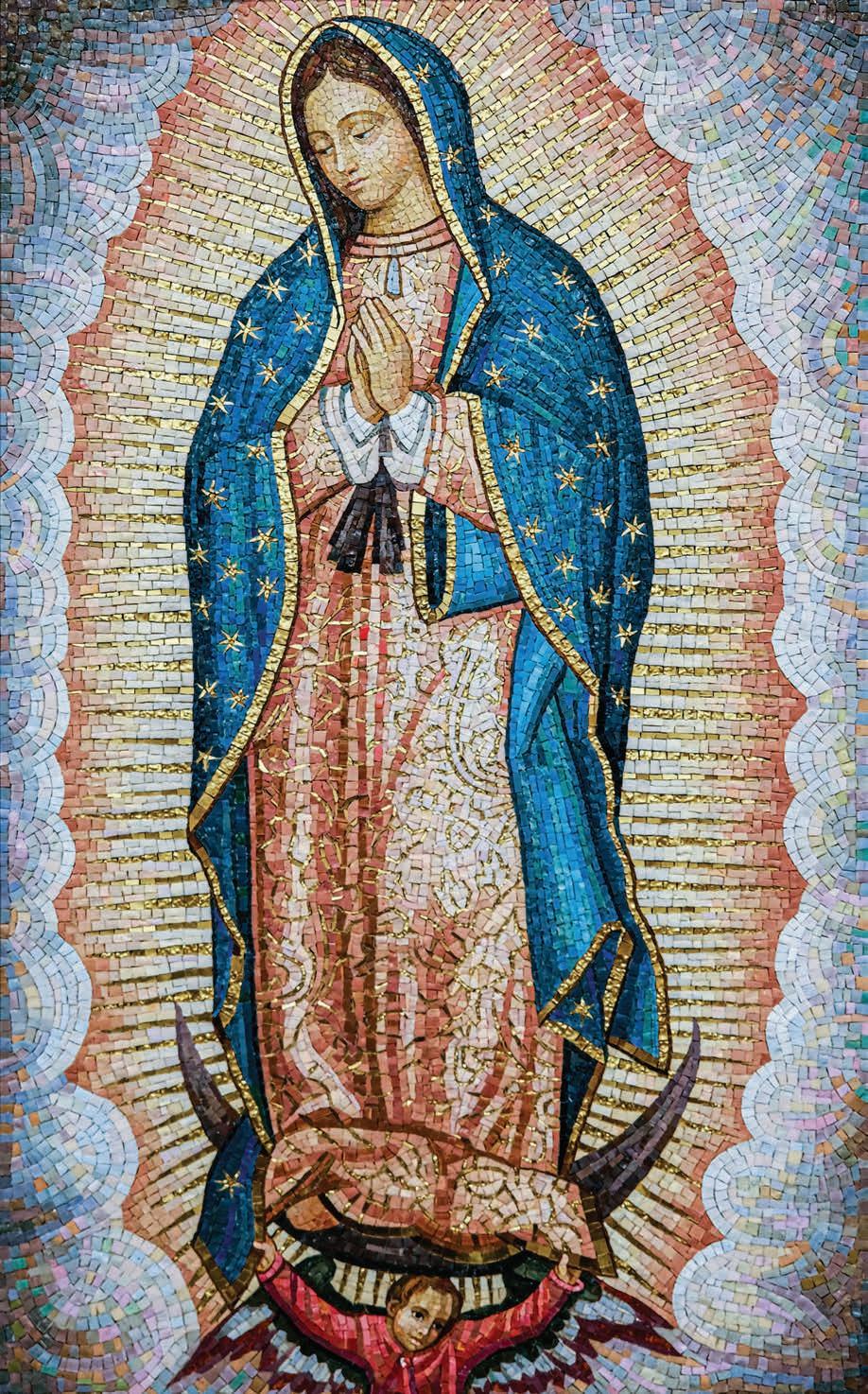
That pilgrimage of faith follows me to Mexico, where I have watched people move on their knees toward Nuestra Señora de Guadalupe, carrying candles as offerings. The veladora, the tall devotional candle in glass, burns steadily as a sign of confidence in intercession. These gestures are costly; they require time, vulnerability, and perseverance. They remind me that prayer unfolds as much in what we do as in what we say.
Living now in the United States, I notice that even here, candles continue to shape prayer, though in differ-
Code #098 @VocationNetwork.org Community Search
ent forms. Some people light them. Others keep candle warmer lamps that release scent without flame. The form changes, yet the intention remains. Having a candle, whether bright with fire or gentle with warmth, expresses a desire to attend to what deserves to be noticed.
The push of prayer outward and in I pray with a candle, and sometimes the light simply takes another shape. When I pray in silence, sitting in my own corner as my mother did when I was growing up, I am reminded that prayer is never only about me. It reaches outward toward the people I love and even toward those I struggle to love. My corner usually has an open window, and through it, the world enters: the sound of wind, birdsong, or neighbors passing by.
The same breeze that touches my face moves through countless other lives. My prayer belongs in that larger world.
When I step beyond that quiet space, prayer takes on movement. Sometimes I pray like those who walk for the Señor de los Milagros, moving through the streets with others, sustained by shared presence. More often I pray with “Pray As You Go,” an app that follows a lectio divina style for 10 to 15 minutes. It helps me lean on scripture and let the sacred text meet me where I am. No matter where I am, at home, in the car, or out among others, all are places where I can pray. Prayer moves me.
At other times, prayer is shaped by intercession. I think of the devotees of Our Lady of Guadalupe, whose confidence in intercession does not depend on clarity but on
I too have felt the quiet strength of others’ prayers, the sense of being held when I could not hold myself.
relationship. Their faith is moved more by trust than by certainty. It stirs something in me, draws me back to the essential, and helps me trust again and again. I, too, have felt the quiet strength of others’ prayers, the sense of being held when I could not hold myself. Sometimes prayers are communal acts of justice and solidarity that honor human dignity and our common home.
There are also moments when prayer asks me simply to be present. I sit quietly, noticing what stirs within me: the weight of fear, the
THE DEVOTEES of Our Lady of Guadalupe have a confidence in intercession that does not depend on clarity but on relationship. Their faith is moved more by trust than by certainty.
For those of us discerning vocation, prayer becomes a daily way of asking how we are being called to love and to belong.
rise of hope, the presence of gratitude. Like a candle that sometimes burns with fire and sometimes glows through gentle warmth, prayer adapts to the season. Living in Missouri has taught me how the seasons accompany prayer. Winter teaches me stillness, spring embodies return, summer speaks of joy, and autumn invites release. Nature steadies my
heart, even in difficult times, and reminds me that change has its own pace. Showing up becomes a way of trusting that God is already at work in the very flux of life.
Where discernment unfolds Making intentional room to listen to inner movements, to notice change,
LIVING IN MISSOURI has taught Huanuco how the seasons accompany prayer. Nature steadies her heart, even in difficult times, and reminds her that change has its own pace.
to receive others’ intercession, and to let prayer shape daily life creates conditions where discernment can unfold. It is the space where I can listen more honestly to desires and fears, my own and those shared in community, and to the invitations of God that arise among and between us.
For those of us discerning vocation or the shape of our commit-
ments, prayer becomes a daily way of asking how we are being called to love and to belong. Prayer, in all its forms, does not just fit into the demands of daily life; it changes how I hold them, so they become spaces where I can meet the God who is already present. It is a relationship with God practiced with hands, heart, breath, mind, and persistence.
In that small flame and its warmth, I experience again and again that trust can be nurtured toward God and toward one another. Using a candle then becomes, for me, an ordinary gesture that carries an extraordinary symbol of prayer. =
By Kathleen Tierney, a member of the DeSales Secular Institute living in Indianapolis.
Secular institutes: Hidden in plain sight
Outwardly, members of secular institutes may seem like any other layperson, but within ordinary settings, they try to weave Christ into every encounter. The author folds back the curtain on this unique form of consecrated life.
MOST CATHOLICS expect consecrated women to be in convents, not climbing gyms. But the essence of my vocation placed me there, with a particular person, at a particular moment in his life.
As I was putting on my harness for my usual vertical workout, I was chatting with the manager of the gym. He noticed the cross I was wearing, a 1 1⁄2-inch
KATHLEEN TIERNEY was amazed to discover a thriving community of devout Catholic women living lives of celibacy for Christ’s sake.
replica of Saint Francis de Sales’ episcopal cross, which I wear publicly as part of the rule of the DeSales Secular Institute. I explained that it was modeled after the cross worn by a bishop who is also a saint.
“Are you Catholic?” he asked.
“Yes!” I perked up.
“My wife is Catholic,” he said.
“Is she practicing?” I asked.
He shook his head. “No, not really. I’m an evangelical Christian but … searching.”
Prior to my calling to a secular institute 15 years ago, I probably would have let the conversation end there. I’m friendly but naturally shy, and conversations about deep spiri-
tual matters don’t come easily for me with people I’ve just met.
But these are exactly the moments my vocation was made for.
All in with everyday life
Secular institutes were inspired by the Holy Spirit more than a century ago to bring people with a deep love
for Christ and the Catholic faith into the post-Christian, secular world as missionaries. Instead of stepping away from everyday life, we remain fully in it.
My own journey toward that vocation began unexpectedly.
In my 30s, during the soulsearching and questioning that often comes with a midlife crisis, I en-
PHOTOS COURTESY OF KATHLEEN TIERNEY
Code #344 @VocationNetwork.org Community Search
TIERNEY’S PRAYER life follows a spiritual directory inspired by Saint Francis de Sales. Each day she spends an hour in meditative prayer before the Lord, attends daily Mass, and prays morning, evening, and night prayer from the breviary.
countered God in a way I never had before. I had grown up Catholic, but I suddenly discovered the depth and beauty of the Catholic faith for the first time. As I plunged into the wellspring of prayer, the sacraments, and the life of the church, I experienced a sense of peace, joy, fulfillment, and freedom that could only come from the Holy Spirit.
That was when I realized God was calling me to serve, not as a wife and mother, but as a consecrated, celibate woman. Naturally, I assumed that meant religious life.
What followed were several years of what many people discerning a vocation know well: the spiritual roller coaster of discernment. I explored religious life. God said no.
I spent two years walking the path toward consecrated virginity. Again, God said no.
Confused and feeling a little rejected, I finally made a private vow of celibacy and promised Jesus I would do whatever he wanted.
The next five years were fruitful. I served the church in various ministries and discovered the writings of Saint Francis de Sales. His message that laypeople are called to holiness by learning how to “bloom where you are planted” lit a fire in my faith. For the first time, I felt at peace with my vocation as a privately vowed woman.
Drawn to a unique form of consecrated life
Then one day I came across the term secular institutes in the Catechism of the Catholic Church. My first reac-
tion to this new vocation, with its somewhat unappealing name, was simple: “No!”
But God said, “Yes.”
The bait God used was the DeSales Secular Institute. I was amazed to discover a thriving community of devout Catholic women living lives of celibacy for the sake of Christ who also shared a love for Saint Francis de Sales.
What fascinated me about this vocation was that it seemed to be a response to Saint John Paul II’s call for a “New Evangelization,” except that it had already begun decades earlier in Europe. In the midst of increasingly secular cultures, privately consecrated men and women were living and working among ordinary people with the missionary zeal of the first Christians.
I realized God was calling me to serve, not as a wife and mother, but as a consecrated, celibate woman.
noticed this growing movement, they studied it carefully. They recognized that it was not simply another form of religious life, but something new. In 1942 Pope Pius XII formally recognized secular institutes as a unique form of consecrated life in the church.
So what has this vocation looked like for me?
In some ways it resembles religious life. My formation included a postulancy and two years of formation. I made vows of poverty, celibate Code #122 @VocationNetwork.org Community Search
When church leaders in Rome
chastity, and obedience. After five years of temporary vows, I was fully incorporated into the institute at my Fifth Consecration.
My prayer life follows a spiritual directory inspired by Saint Francis de Sales. Each day I spend an hour in meditative prayer before the Lord, attend daily Mass, and pray morning, evening, and night prayer from the breviary. I practice a daily examen and go to Confession every other week.
But that’s where the similarities
end. My vocation truly comes to life in the secular world.
How I live the vows
Outwardly, my life looks much like that of any other laywoman. I live in my own home, hold a job, and experience the ordinary ups and downs of everyday life. Yet within those ordinary settings I try to weave Christ into every moment and every encounter.
I live my vow of poverty by treat-
ing everything I have as something entrusted to me by God. My income belongs to God. I try to live simply so that more can be shared with those in need.
Our obedience is different from that of religious communities where members are assigned where to live or work. Instead, we practice obedience in the responsibilities we accept in service to our institute, the church, and the people God places in our lives. Saint Francis de Sales reminds us that true obedience is not just doing what is asked but doing it promptly and joyfully.
My vow of celibacy is a spiritual union with Christ that frees my heart to offer a kind of spiritual motherhood to the people God brings into my life.
Why the big secret?
At this point you might be wonder-
Secular institutes defined
SECULAR
INSTITUTES are a recognized form of consecrated life and listed in the Catechism of the Catholic Church alongside hermits, consecrated virgins and widows, religious life, and societies of apostolic life. It is the newest form of consecrated life in the church, receiving its official acknowledgement in Pope Pius XII’s Provida Mater Ecclesia on February 2, 1947.
Ministries vary from institute to institute. Institutes whose members live and work independently are called “penetrative institutes.” Secular institutes whose members work in collaboration with the church (“collaborative institutes”) do things typically thought of as official church ministry, such as leading Catholic retreats. Some institutes are for diocesan priests, who benefit from belonging to
a community of men who are walking the same path as shepherds of the church.
In an address to secular institutes, Saint John Paul II explained “this vocation, so timely and I would say so urgent, has to be known and made known, as the vocation of people who consecrate themselves to God by practicing the evangelical counsels. They are people who strive to immerse their entire life and all their activities in that special consecration, making themselves totally available to the will of the Father and working to change the world from within.”
Visit secularinstitutes.org for more information and for a listing of secular institutes in the United States, along with descriptions and additional contact information.
Code #105 @VocationNetwork.org Community Search
Saint Francis de Sales reminds us that true obedience is not just doing what is asked but doing it promptly and joyfully.
ing: Why haven’t I heard about this unique vocation before?
You’re not alone.
Many Catholics, and even some clergy, are unfamiliar with secular institutes. In their early decades many communities practiced what was called “reserve,” meaning members did not publicly identify their vocation. Founders believed this allowed them to evangelize on common ground with people who might otherwise be wary of religious life.
Some communities still follow that practice, while others are becoming more open about sharing their vocation within the church.
Even Saint John Paul II acknowledged the hidden nature of this life when he described secular institutes as “a precious gift offered not only to the Christian community but also to that world which is ignorant of the magnitude of your vocation and your distinguished service.”
Which brings me back to the climbing gym. Years ago, I might have smiled politely and ended that conversation with the manager. But this time, armed with the grace of my vocation, I stayed.
What began as casual small talk turned into a 20-minute heart-toheart conversation about the search for holiness, the truth of the gospel, and the deep roots of the Catholic faith that stretch all the way back to the apostles and to Christ himself.
Our conversation was animated enough that I suspect others working out nearby overheard more than a little evangelization.
At one point I said, half joking but half serious, “Maybe God encouraged me to join this gym just so I could meet people and share His love.” He smiled and replied,
“Probably so you would be here to talk to me.”
That is what secular institutes are all about. =
r elated : VocationNetwork.org, “Explore the different types of vocations” and “The essential facts about secular institutes.”
POPE LEO XIV reminds us that our “faces and voices” are made in the image and likeness of God. As such we must protect the essential parts of our humanity from our technological creations.
By Dominic Sanfilippo, a former assistant director
in the Division of Student Affairs at the University of Notre Dame. He holds a master’s in theological studies from the University of Dayton.
Discernment in the age of AI
Catholic teaching is an effective guide as we consider the challenges and opportunities AI brings to every aspect of our lives, including the discernment process.
IF YOU’RE READING THIS, you might be wondering what unfolding paths lie ahead for you. You’re not alone in this discernment! In the spirit of Pope Leo XIV’s encyclical Magnifica Humanitas (“Magnificent Humanity: On Safeguarding the Human Person in the Time of Artificial Intelligence”), I want you to think a bit about what discernment looks like in the age of artificial intelligence (AI) and digital connection. What has it personally been like for you to notice, feel, and search for God’s presence in our frenetic, on-demand world?
I’ll start with a common contemporary disclaimer: I didn’t ask AI to help write this article. I muddled through it myself. However, I don’t want to shame you if you’ve used Claude, ChatGPT, or another AI model to help you with various tasks. I tinker with large language models (LLMs) like Claude on a weekly basis for producing an efficient vacation itinerary; streamlining budget data; or using AI writing helpers to suggest punctuation fixes. These aids and interjections can be useful;
however, we may forego our own learning, and our idiosyncratic voices risk getting lost within the AI model’s idea of error-free writing. I fondly recall a mentor’s words: “Honest writing unfolds with a steady rhythm, like a good baseball game, Dominic. Don’t edit yourself to paralysis in the first inning!” As Leo puts it in Magnifica Humanitas: “For an algorithm, an error is a flaw to be corrected; for a person, however, an error can be a catalyst for profound change” (128).
A mind of its own?
LLMs predict where sentences and paragraphs should go next, based on both immense text-based input from as many sources as they can devour and contextual algorithmic engineering. In a February 2026 feature by Gideon Lewis-Kraus in The New Yorker, data engineers from the AI
“For an algorithm, an error is a flaw to be corrected; for a person, however, an error can be a catalyst for profound change.”
company Anthropic made it clear that they did not fully know where Claude, its rapidly expanding creation, intended to go. AI models “are black boxes,” Lewis-Kraus writes:
We don’t really understand how they work. We don’t know if it makes sense to call them intelligent, or if it will ever make sense to call them conscious… The existence of talking machines . . . throws a lot of other
things into question. We refer to our own minds as if they weren’t also black boxes. We use the word “intelligence” as if we have a clear idea of what it means. It turns out that we don’t know that, either.
Claude and other major, up-to-date LLMs integrate webs of models to tackle complex tasks in near-real time. A family member of mine— a seasoned software professional himself—was recently astonished when he asked Claude to create an app to help users navigate landmarks in a particular city, based on an old Microsoft Excel dataset containing thousands of distinct addresses and geographic markers. Claude jumped into the project with gusto, listing and explaining each coding choice. Within 30 minutes, Claude completed the task that a contracted hu-
man professional might have needed several weeks to complete.
The church weighs in
The Catholic Church has meditated on what it means to be human in times of rapid change for nearly two millennia. After the former Cardinal Robert Prevost chose Leo XIV as his papal name in May 2025, many commentators speculated that contemporary digital challenges were on his mind. In his first speech to his fellow cardinals, he confirmed that his choice of name was a direct nod to his predecessor Leo XIII’s transformational contributions to Catholic social teaching during the Industrial Revolution, including the landmark 1891 encyclical Rerum Novarum on capital, dignity, and work. Leo XIII was responding to the multifaceted ways in which the explosion of infrastructure and mass media in
the 19th and 20th centuries altered and disrupted workers’ livelihoods, simultaneously creating opportunity and entrenching inequality.
In his opening address after being elected pope, Leo XIV noted the “developments in the field of artificial intelligence that pose new challenges for the defense of human dignity, justice, and labor.” His response was the encyclical Magnifica Humanitas—signed a year later on the 135th anniversary of Rerum Novarum—representing a robust, coherent response to the urgency of those new challenges.
If current speculation is to be believed, millions of people across diverse sectors in the United States alone may lose their jobs to AI processes in the months and years ahead, even as some AI founders promise benefits from increased efficiency and automation; others who keep their jobs face the threat of AI
The Catholic Church has meditated on what it means to be human in times of rapid change for nearly two millennia.
fostering a professional atmosphere of “automated surveillance … (and) rigid and repetitive tasks” (MH 150). Simultaneously, novelists, screenwriters, and other artists around the world are suing AI companies for uploading copyrighted works as training data for LLM datasets. In an AI near future, how will we both safeguard the dignity of work and foster circumstances in which human creativity continues to spark?
Outside of labor, digital and artificial ecosystems continue to alter and distort our collective sense of what counts as reality. You may have seen several AI-created videos of politicians or celebrities in your newsfeed in recent months. While these videos often contain flaws—such as jerky frame rates or missing hands—they are increasingly hard to distinguish from real footage, particularly for individuals with less experience identifying AI cues. Some of this content is trivial and entertaining. When created with manipulative motives, however, such artificial fragments can inflame the polarized wells of distrust and isolation within our families, communities, and the church. “Disinformation did not begin with AI,” muses Leo, “yet today it finds a powerful amplifier in AI” (MH 132).
What, ultimately, can we say about what AI really is? “It is not possible to provide a single, comprehensive definition of AI,” Leo observes in Magnifica Humanitas However, he answers Lewis-Kraus’ open-ended question about the nature of current AI models with a clear voice: They are not aware nor
We must avoid the misconception of equating this type of ‘intelligence’ with that of human beings. These systems merely imitate certain functions of human intelligence. In doing so, they often surpass human intelligence in speed and computational capacity, offering tangible benefits across many fields. Yet this power remains entirely tied to data processing (MH 99).
Artificial intelligences do not have “experiences” in the same way humans do, says Leo. Without a body, they do not feel joy or pain or know what love, commitment, or responsibility for others mean. He goes on:
Nor do they have a moral conscience, since they do not judge
good and evil, grasp the ultimate meaning of situations, or bear responsibility for consequences. They may imitate language, behavior and analytical skills, or even simulate empathy and understanding, but they do not understand what they produce, for they lack the affective, relational and spiritual perspective through which human beings grow in wisdom (MH 99).
Their way of “learning,” says Leo, is also different from human learning. It is a form of “statistical adaptation” that can be effective, but “not the experience of those who allow themselves to be shaped by life and grow over time through choices, mistakes, forgiveness, and fidelity” (MH 99).
Key steps to consider
Feeling a bit apprehensive at this
point? It’s OK. Rest assured that AIera discernment is not only possible; it is vital to the shared work of building, alongside other Catholics and all peoples of goodwill, a world that reflects the love embodied in, by, and through Christ.
What follows are four things to keep in mind as you maintain a prayerful attitude of attention in your evolving relationship with an artifice-saturated world.
1.
WE HAVE PLENTY OF WISDOM TO HELP US NAVIGATE AI.
Friar Paolo Benanti, T.O.R.—a chief Vatican advisor on AI and a self-described student of “algorethics”—has been thinking about what makes us human for a long time. As a young man, he fell in love with the intertwined questions posed by the humanities and science, dream-
THE AVERAGE 100word search query on an AI platform uses the equivalent of one bottle of water.
ing about The Odyssey and J.R.R. Tolkien’s Middle-earth while deconstructing an early home computer to try and rig it to play video games. His eventual engineering studies were fulfilling, but not enough on their own. After a fateful visit to an Umbrian Franciscan church, Benanti told The New York Times, he “realized he needed a sacred space where he could ‘not stop questioning life.’” He took the first step toward a vocation with the Franciscans, eventually becoming a priest and a creative moral theologian navigating our blurred physical and virtual realities. Benanti helped the late Pope Francis map his vision for a culture of encounter onto digital terrain. In his 2024 message for the World Day of Social Communications, Francis cited the early 20th-century theologian Romano Guardini’s reminder that apocalyptic, end-of-the-world thinking has accompanied every epochal
technological shift. We should not panic, Francis said, being simultaneously open to change even as we privilege “the wisdom of (our) hearts” to sift through endless data streams.
Nowadays, Benanti and other Vatican experts regularly meet with leaders from Silicon Valley, government, and higher education to discuss embedding human cares and concerns into digital systems. In public speeches, he advocates that all people can engage in dialogue about our circumstances, even when it feels like ordinary individuals don’t have much say.
Benanti must have been pleased to see Leo quote both Guardini and Tolkien in Magnifica Humanitas. Leo calls on Guardini to remind us that “contemporary man has not been trained to use power well” (MH 93) and Tolkien’s character Gandalf from The Lord of the Rings: The Return of the King to assure us that “it is not
our part to master all the tides of the world, but to do what is in us for the succour of those years wherein we are set” (MH 213).
Benanti is friendly with Dr. Meghan Sullivan and her colleagues at the University of Notre Dame, who created the DELTA Network—a “faith-based framework for AI ethics”—through Notre Dame’s Institute for Ethics and the Common Good. DELTA—which stands for “Dignity, Embodiment, Love, Transcendence, and Agency”—aims to serve as a global research hub and a partner for people around the world. This group appears to support Leo’s stance that “we must consider the digital world as a new continent to be evangelized” (MH 238).
As AI continues to upend and transform societies in the decades ahead, Sullivan and the DELTA team remind us that “the person is not a system of algorithms” but a living
PIXABAY
AI-era discernment is not only possible; it is vital to the shared work of building a world that reflects the love embodied in, by, and through Christ.
subject with infinite dignity given freely by God. You can check out the DELTA Network’s many resources at tinyurl.com/DeltaAIEthics.
2. RESOURCES ARE LIMITED. USE THEM THOUGHTFULLY.
It takes a lot of energy to cool the humming data centers that house the hardware powering AI architectures. University of California, Riverside researchers estimate that the average 100-word search query on an AI platform uses the equivalent of one bottle of water. Efforts are ongoing to make the large AI data centers opening around the world more energy-efficient and less taxing on local energy grids and transmission networks, and there are hopeful signs that climateconscious engineering decisions can help build the “extensive network of machines, cables, data centers, and energy-intensive infrastructure” (MH 101) more in the spirit of both Pope Francis’ 2015 encyclical Laudato si' and Magnifica Humanitas.
In the meantime, it is useful to reflect periodically on our AI usage with moderation in mind. Which queries and projects should I prioritize? If I free up one task through AI, how am I spending the time I receive back? How are my local, state, and national leaders handling AI’s water and energy demands? Do those leaders engage my neighbors,
parishioners, and those on the margins about the benefits and consequences of AI infrastructure in my community?
After all, we are all protagonists in AI’s unfolding story, says Notre Dame’s Sullivan in a New York Times interview about Magnifica Humanitas “The Church is insisting, as it has for 2,000 years, that the people of Wich-
ita and South Bend and Nairobi and Manila are not bit players in someone else’s technological revolution.”
3. COMMUNITY IS ALWAYS AT STAKE.
For current and aspiring leaders in the church, it is important to ask how Leo is following in the footsteps
of his predecessor and modeling servant leadership and authentic listening through his work on AI.
“Magnifica Humanitas is possible because of what Pope Francis did in Laudato si',” says Katherine G. Schmidt, an associate professor in the Department of Theology and Religious Studies at Molloy University. Schmidt’s research explores the relationships between theology, digital culture, and mediation. Magnifica Humanitas, she says, “should help folks in the church see how important leaders are as a community themselves, not just as individual leaders” but leaders in collaboration with other leaders. “What you do,”
says Schmidt, “has profound effects on what comes after you.”
We all draw on our own experiences, passions, and consciences as we navigate our moral lives; this can sometimes lead to tension within our respective communities. Schmidt sees Leo as a model for church leaders in a time of strained relationships. “Magnifica Humanitas, like Laudato si', is a clear example of a consistent ethic of life and a holistic approach to moral issues,” says Schmidt. “It should help anyone discerning a role in the church to be careful not to isolate any one issue, which is the tendency of ideological identity politics in the United
AI reading list
ARTICLES
“Data Centers and Water Consumption” (2025) by Miguel Yañez-Barnuevo, Environmental and Energy Study Institute
“Mediation and Grace: The Possibility of Christian Community in Digital Culture” (2020) by Katherine G. Schmidt, American Catholic Studies 131, no. 3: 24-28
“The Friar Who Became the Vatican’s Go-To Guy on AI” (2024) by Jason Horowitz, The New York Times
“The urgency of an algorethics” (2023) by Father Paolo Benanti, Discover Artificial Intelligence 3, no. 11
“What Is Claude? Anthropic Doesn’t Know, Either” (2026) by Gideon LewisKraus, The New Yorker
BOOKS
Artificial Intelligence: A Very Short Introduction (2018) by Margaret A. Boden
Co-Intelligence: Living and Working with AI (2024) by Ethan Mollick
Cybertheology: Thinking Christianity in the Era of the Internet (2014) by Antonio Spadaro, S.J.
The Algorithm: How AI Decides Who Gets Hired, Monitored, Promoted, and Fired and Why We Need to Fight Back Now (2024) by Hilke Schellmann
ENCYCLICALS AND VATICAN DOCUMENTS
Magnifica Humanitas (2026), encyclical of Pope Leo XIV on the human person and artificial intelligence
Antiqua et Nova (Note on the Relationship Between Artificial Intelligence and Human Intelligence) (2025), Vatican document
“Artificial Intelligence and the Wisdom of the Heart: Towards a Fully Human Communication” (2024), message of Pope Francis
“Preserving Human Voices and Faces” (2026), message of Pope Leo XIV
Rerum Novarum (1891), encyclical of Pope Leo XIII on capital and labor
POETRY
Devotions: The Selected Poems of Mary Oliver (2020) by Mary Oliver
States.” Indeed, says Leo, “our hearts yearn for an approach that is wise and benevolent” (MH 230).
In Magnifica Humanitas, Leo asks the fundamental questions of discernment: “Where are we going? Toward what goal do we wish to orient ourselves? What direction should we choose as a people and as a human community?” (MH 6). By way of exploring options to address these questions, Leo presents two striking images from Hebrew scripture: the construction of the Tower of Babel and the rebuilding of the ancient walls of Jerusalem.
In the story of Babel, the building project is conceived “without reference to God” and supported by uniformity and the elimination of diversity. “When a city is built on pride and the claim to self-sufficiency,” Leo reminds us, “communication breaks down, languages are confused and people no longer understand one another” (MH 7). In contrast, after measured discernment and prayer, Nehemiah works alongside the mosaic of Jerusalem’s inhabitants— “men, women, priests, artisans, heads of households, and young people”—to restore order from the rubble through a diverse “communion” with God at the center, that “rebuilds relationships before rebuilding with stones” (MH 8).
4. MAKE ROOM FOR MYSTERY.
We all hope AI will do a lot of good for our planet—help doctors rapidly implement medical discoveries, for instance, and assist engineers creatively tackling climate threats. It will surely open up possibilities that are difficult to imagine, even as it simulates and warps certain human experiences. Becoming trapped in our individual preferences-fueled, algorithm-driven bubbles is a real risk. Leo poignantly describes what happens when we substitute human relationships with AI systems that catalog our thoughts as a “world of
Being present with and to others—their physical expressions, whether of elation or sorrow—is essential to being human.
mirrors around us, where everything is made in our ‘image and likeness’”—not God’s.
Being present with and to others—their physical expressions, whether of elation or sorrow—is essential to being human. So is making more space for our own sacramental imagination: in our frailties and unresolved questions, and through the stuff that makes our heart leap with joy. “So much can be learned from an illness, an embrace of reconciliation, and even a simple sunset,” Vatican thinkers tell us in Antiqua et Nova (2025), a document that informed Magnifica Humanitas. “Indeed, many experiences we have as humans open new horizons and offer the possibility of attaining new wisdom.”
Naturally, our human uncertainty can make us feel vulnerable and alone. But we can find comfort in these words from Leo:
Even when limitations are experienced as inner suffering, human wisdom teaches us not to deny or suppress it, but to integrate it. To eliminate suffering entirely would mean, in the end, extinguishing love and desire as well. Those who love and desire cannot avoid passing through trial and suffering; and over the years, we carry within us lessons that leave their mark like scars, the memories of a journey shaped by freedom and failure, dreams and disappointments. It is only thanks to the interplay of these elements that the wonders of the soul occur within us, allowing us to sense the richness of our humanity (MH 120).
We are complex beings worthy of the joy, pain, and time it takes for self-determination. Each of us possesses the power to measure, sift, and notice our own unique response to God’s call as it takes shape in our AI-driven world. We are “called to unite listening and courage, prayer and responsibility,” says Leo, amid a “technocratic mentality.” In this way,
we will find our true vocation “to be men and women prepared to enter the construction sites of history,” to build the City of God and proclaim the greatest intelligence of all: the Word made flesh. =
related: VocationNetwork.org, “Beware of bots and bad actors as you engage online.”
Code #143 @VocationNetwork.org Community Search
Code #126 @VocationNetwork.org Community Search
By Dan Masterton, a Catholic freelance writer and the director of communications for the
Viatorians. Find his writing at linktr.ee/ danmasterton.
Community life: A place to build holy friendships
In the hopes of growing in unity with Christ and giving witness to God’s saving love, men and women since the Early Church have chosen to live communally and share their lives with one another.
HOLY FRIENDSHIPS, or “friendships of virtue,” as Saint Thomas Aquinas called them, grow out of relationships in which individuals genuinely care for each other’s well-being, support each other’s moral development, and share common values and goals. That seems to work as a definition of community life for men and women religious as well. As Father Andrew Fritz, C.S.C. describes community: “You can be about two conversations from a new best
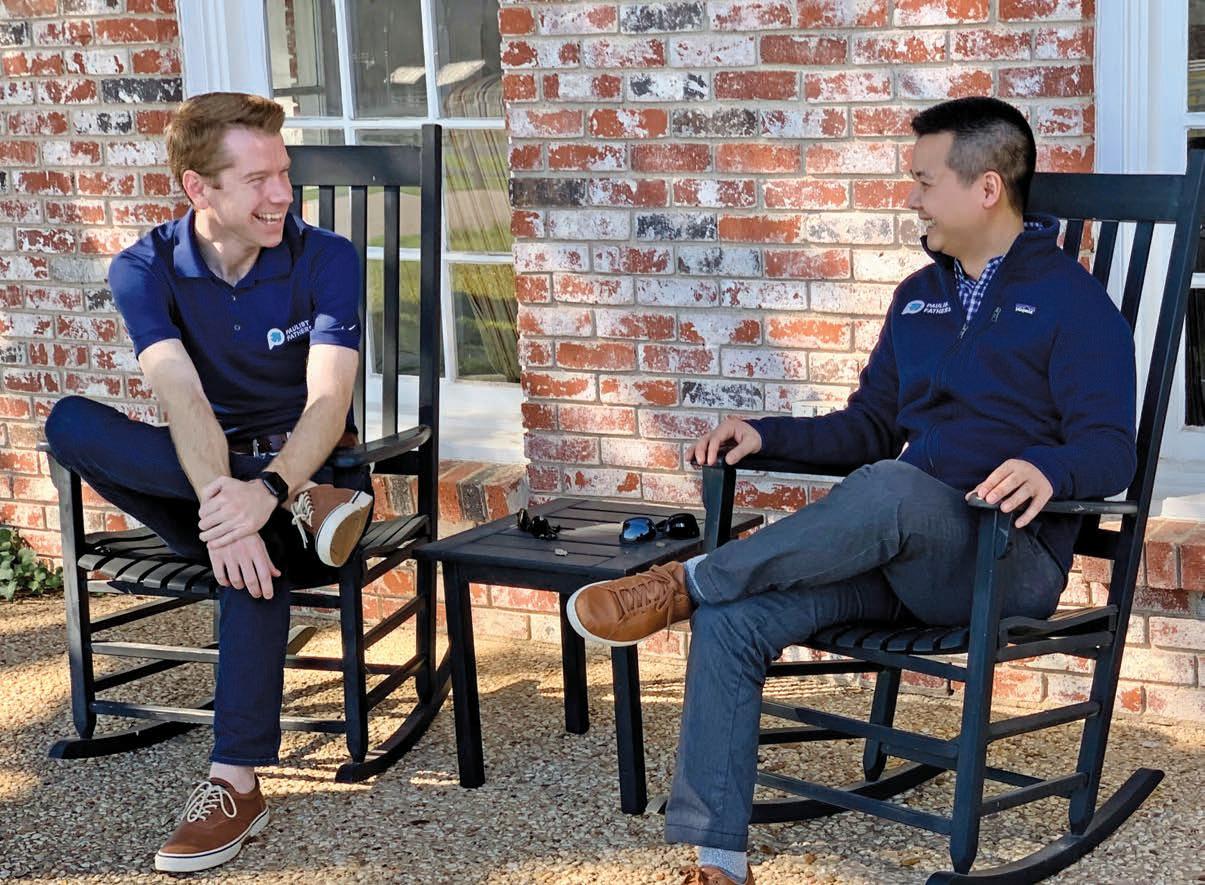
FOR FATHER CHRIS Lawton, C.S.P. (left), living in community brings a “wonderful rhythm” to everyday life.
friend if you come with intentionality and interest.”
The Christian practice of communal living dates back to the first disciples and the early Christian community in Jerusalem. Over time, men and women withdrew to the desert, seeking a more radical form of communion by sharing material and spiritual goods, contemplative simplicity, and loosely structured community under the guidance of an abbot or abbess. These desert monks looked to the first disciples as their model for living in unity with Christ. This way of life embodied a Trinitarian vision made manifest by “the grace of our Lord Jesus Christ, the love of God, and the fellowship of the Holy Spirit” (2 Corinthians 13:13). Centuries later, monasteries became the center of towns and villages, and Saint Benedict of Nursia gave lasting structure to communal life through his Rule, which became a foundational template for monastic religious life that endures to this day.
Over time, some religious communities felt called to “active” ministry—that is, serving people beyond the cloister walls. So, they chose to live in community among those they served. Additionally, some religious communities discerned missionary vocations in answer to the call to proclaim Christ and the gospel in new lands and to new peoples.
All the while, religious have been distinguished by “public profession of the evangelical counsels,” or vows of poverty, chastity, and obedience, and “fraternal life led in common” (Catechism of the Catholic Church, 925). Community life is a central and defining aspect of religious life. It is considered a “gift of the Spirit” and part of the “mystery of the Church for the life of the world,” according to the 1994 Vatican document Fraternal life in community. The
commitment to community serves as both exemplary and prophetic of Christian unity. As “experts in communion,” men and women religious are called to be “witnesses and architects of the plan for unity which is the crowning point of human history in God’s design.”
Many expressions to living as one
So what does religious community life look like? For Fritz, a Holy Cross father, it means living as priest-inresidence in a men’s hall at the University of Notre Dame with hundreds of undergraduate students. While he has two brothers working and living with him under the same roof, he typically engages in “community
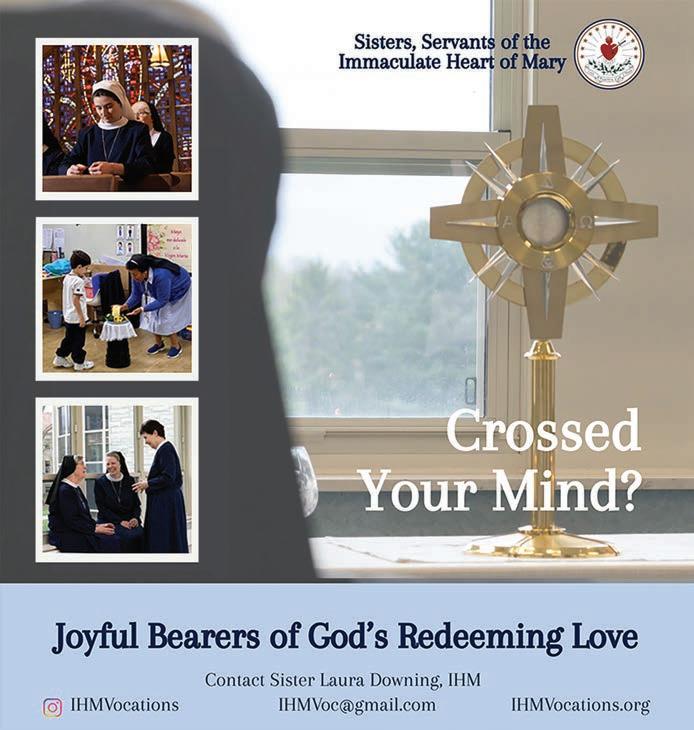
And that’s just one of a wide variety of possible arrangements in religious life. Another is Sister Fran Gorsuch, C.B.S., who shares a rented suburban Baltimore townhouse with one other sister while Sister Ana Gonzalez, O.P. lives in her community’s House of Welcome with five other sisters in Columbus, Ohio. Father Chris Lawton, C.S.P. and Father Rodrigo Ulloa, M.M. each live in large urban rectories, in New York and Chicago, respectively. Sister Laura Downing, I.H.M. lives in a motherhouse outside Philadelphia with 60 other sisters, and
Sister Sharon Ratteree, O.S.C. lives in a cloistered monastery in South Carolina that also offers ministry and hospitality and feels “a lot more like a home than most people imagine.”
Come and see
Given this range of possibilities, Maryknoll’s Ulloa strongly recommends that discerners visit communities. “Come see the lay of the land,” he says. “Stay long enough to pray, eat, mingle, and have good conversations. Then go back and reflect on what you saw, how you felt, and what the experience was like.
“Websites can show pictures, videos, or articles,” Ulloa continues, “but it’s not the same as when you go and enter the house. Embodying the life” through Holy Cross’ Corby Hall on campus, where many religious priests and brothers gather intermittently throughout the day for prayer, meals, and fellowship.
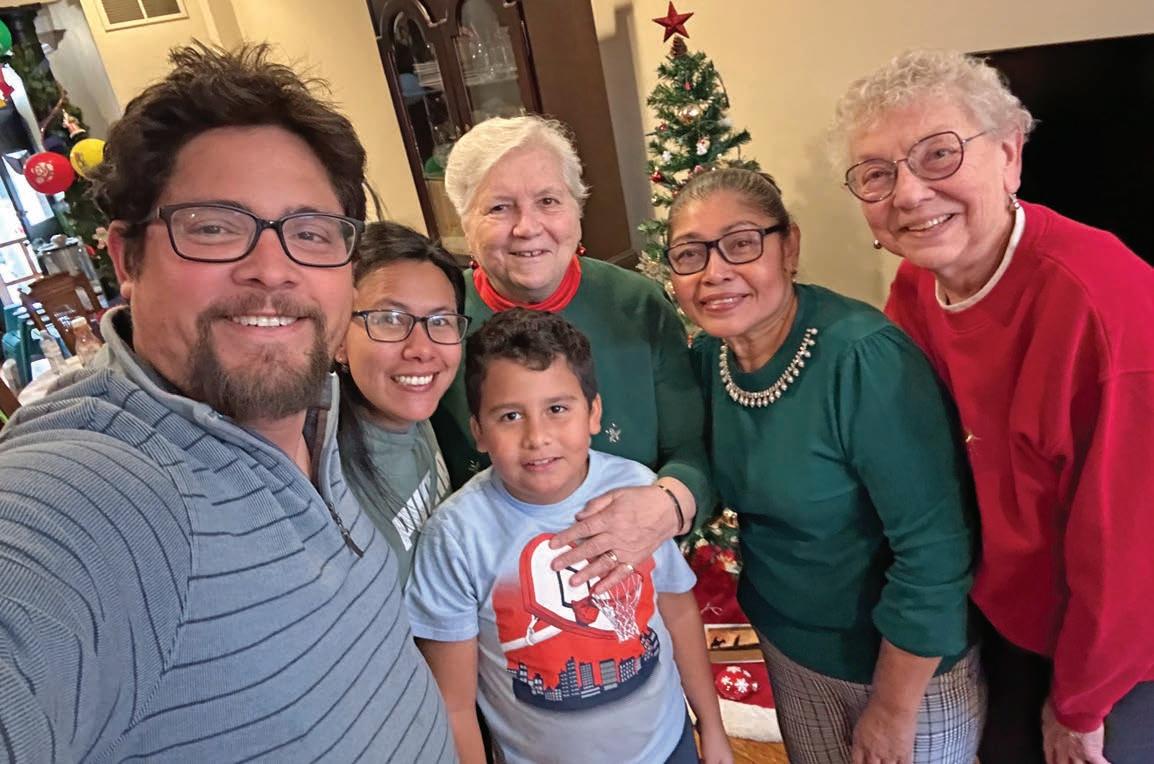
SISTER FRAN GORSUCH, C.B.S. (center) and her Bon Secours sisters love getting to know their neighbors. Here, they celebrate Christmas with a family from Nicaragua.
”The struggles are usually small, but they ask something real of us: patience, flexibility, and the willingness to grow.”
experience in a fully present way is different. Don’t be satisfied with only what you see on the internet! It’s no wonder why grandparents want you to come over, eat with them, enjoy treats, and converse in person.”
Religious are eager to provide generous hospitality, which includes sharing insightful and candid witness with discerners about what they have discovered in religious community life. “As a discerner and early in community life,” says Downing, a Sister, Servant of the Immaculate Heart of Mary, Immaculata, PA, “I thought I’d just plug into a preexisting community. I’d move in and join something already there. What I came to realize is that each new sister who moves in changes the community a little bit. It’s not something I receive just by being there; it’s something I bring and affect by being there. I’m grateful that I have some input and influence, hopefully to be a force for good, and that comes with responsibility and mutuality.”
Along the way, religious have to confront new truths that can be humbling. “We’re different people with different habits,” says Ratteree, a Poor Clare, “and that means learning to adjust—to someone else’s pace, preferences, or way of doing things. Sometimes it’s as simple as realizing you fold towels differently or that you need quiet when someone else needs to talk. The struggles are usually small, but they ask some-
, “ONE OF THE joys of living together is how ordinary moments become shared ones,” says
(right).
thing real of us: patience, flexibility, and the willingness to grow. We don’t pretend it’s effortless, but we trust that the effort shapes us.”
Fritz consciously balances ministry work and community time, noting that his confreres who gather at the community hall have a healthy respect for each other’s various schedules and routines: “The day is structured there,” says Fritz. “If you’re around, great; if you’re not, it’s assumed you’re off in the vineyard.”
The questions we ask ourselves, says Fritz, are: “How much should you be around? What’s your expectation of yourself and your community? How do you balance your
individual life with your ministry responsibilities and your community life? The tensions are full of great promise. The tension of guys living together yet ministering in different ways reveals the great gift of our community and brotherhood.”
Let the fun begin
Community is where religious often discover profound grace and joy. Ulloa encourages leaning into this journey. “Housemates have been vetted and accepted by a careful process,” he says. “They have sacred stories and credible backgrounds, and this is where the fun can begin.
Sister Sharon Ratteree, O.S.C.
COURTESY OF POOR CLARES
You get to have new joys. You may meet someone who is more pious, more simple, more positive. You may find someone a bit opposite of you who elicits profound good in you. It can be encouraging to witness positive qualities in others and find inspiration in their example.”
For this exposure and connection, Gorsuch, a Bon Secours sister, and her housemate sister love getting to know their neighbors as well as going out to public demonstrations and witness events together. Moreover, they try to be a hub of hospitality for their own sisters. “We try to gather all the sisters in the United States about twice a year to have some faith-sharing rituals and put out a big food spread to enjoy together,” Gorsuch says. “And then on Friday afternoons, we have ‘holy
happy hour’: sisters in the area, when they can, come to pray together for a bit and then enjoy some drinks, snacks, and catch-up. We can talk about ministries and friends and share prayer requests.”
Similarly, Downing discovers community depth by the literal shape of the convent and the life it naturally facilitates. She values her simple private room for rest and quiet alongside the chapel, parlors, and common spaces that accommodate interactions and boost community life. “My sisters in community and I are always ‘rubbing up against each other,’ taking the edges off each other, helping each other grow, supporting each other through challenges,” Downing says. “I have lots of examples of how my joys are doubled and my struggles are halved—but my
sisters still make me nuts if they eat the last Entenmann’s treat and leave the knife in the box!”
You
can’t
escape the chores
No matter what vows you profess, human habits and realities persist— household chores follow people through single life, marriage and family life, and religious life. Religious women and men still have to work together to share common spaces, communicate about schedules, and maintain home lives. Yet, this can be another place where grace and joy are revealed in community.
“One of the joys of living together is how ordinary moments become shared ones,” Ratteree says. “You might be chopping vegetables for dinner and another sister wan-
I.H.M. SISTER Laura Downing (right) discovers community depth by the literal shape of the convent and the life it naturally facilitates.
COURTESY OF SISTERS, SERVANTS OF THE IMMACULATE HEART OF MARY, IMMACULATA, PA
ders in and asks if she can help. Or, someone leaves an encouraging note by your door. There’s a kind of gentle noticing that happens—people pay attention to how you’re doing, even without words. Those small gestures add up to a sense of being held by the community.”
Fritz agrees. “You have brotherhood that goes beyond simply knowing someone; you get to enjoy someone for who they are and really reflect and share those relationships and connections with the young people we minister to. Religious life is a gift that demands that you take a step for this community life. Even if you minister in a dorm and have two brothers ministering with you, the greater promise is to go out and encounter one another in broader ways together.”
For Lawton, a Paulist, a surprising gift of living in community was caring for a brother recovering from surgery. “Many of us are in and out of his room, visiting with him and bringing him what he needs,” says Lawton. “This morning, I’m thinking about what I need to do today in my own work, but also incorporating how I can care for him today, which is a bit unexpected.
“I loved that it was so wonderfully normal and conventional to provide this care for him. We’re figuring it out, just like anyone would whose loved ones are ill. There are ways that my day is in my control; yet, there’s nothing like the urgencies of a home and housemates to call me to care for people in important ways. It brings this wonderful rhythm.”
Members of religious communi-
”You
get to have new joys. You may find someone a bit opposite of you who elicits profound good in you.”
ties are not free from the personal hurts, irritating idiosyncrasies, and even injustices of others in their community, but, when lived well, community life is a sign of unity. It brings comfort, care, a sense of mission, and a broader sense of self. Most of all, it brings love, the brotherly and sisterly love that Jesus spoke of when he called his disciples friends. =
related: VocationNetwork.org, “Living the good life in community.”
COMMUNITY IS where religious often discover profound grace and joy. Maryknoll Father Rodrigo Ulloa,
M.M. (center) encourages discerners to lean into this journey.
COURTESY OF MARYKNOLL FATHERS AND BROTHERS
THE ABILITY TO maintain friendships and have a full and vibrant life are among the traits needed to successfully live the vow of celibacy.
By Carol Schuck Scheiber, veteran writer and former editor of VISION Vocation Guide and HORIZON journal, living in Toledo, Ohio.
8 traits for successful celibacy
How good are you at setting limits and sticking to them or balancing quiet time with an active social life? These are just some of the questions you’ll need to ask yourself if you are seriously considering religious life and the vow of celibacy.
THE MORE YOU KNOW about yourself, the better chance you have of choosing a life path that will bring you the most joy. Discernment tools, such as VISION’s celibacy quiz, spirituality quiz, and Vocation Match, can help you gain insight into your personal preferences and practices as they relate to the requirements of religious life. We encourage you to use those tools first and
then read on for more information about what it takes to live the vow of celibacy well.
1. Having close friends and an ability to love
Consecrated life means being willing to love brothers and sisters generously, in ministry and in community life. While becoming a more loving person is a lifelong task, religious communities do expect to see a certain capacity for this in prospective members.
Those who struggle to have and maintain friendships may not be good candidates for living a chaste, celibate life. Why? Celibates will not have a life partner. Though they strive to have an intimate relationship with Christ, they still need hu-
man intimacy. They meet that need through friendships and relationships with community members and those they encounter in ministry. If your capacity for friendship is relatively untested, it may be unwise to take a vow that would require you to rely on friendship to meet the need for intimacy.
2. Having a full life
To “have a life” means that you are multifaceted and engaged with people and in activities. Those whose worlds are limited may be unprepared socially for the demands of religious life. Members of a religious community invite a new member to share life with them. A person who has a vibrant life outside of a religious community has much to
A person who has a vibrant life outside of a religious community has much to offer and much to gain by joining a religious community.
offer and much to gain by joining a religious community.
3. Enjoying time alone
Those who don’t mind being alone and are not anxious about being accepted usually thrive in religious communities. Religious should be comfortable with solitude. There is a long tradition in religious life of maintaining silence to commune with God more readily.
Code #094 @VocationNetwork.org Community Search
Communities are seeking new members who can engage comfortably and appropriately with people of all races, genders, political persuasions, and economic backgrounds.
4. Being able to set limits and maintain boundaries
The ability to establish and maintain boundaries in your personal and professional life is especially important for celibate church ministers. Ministerial relationships, in particular, can sometimes become close and intense. Taking a vow does not stop people from having normal sexual feelings for those they meet.
The ability to set and keep limits will help you to maintain vowed, celibate chastity, just as Catholic singles and married people strive to maintain chastity within their commitments—by adhering to limits and maintaining respect for themselves and others.
5. Having a personal and prayerful relationship with God
The theology of vacare Deo—or
emptiness for God—sees the sacrifice involved in a celibate lifestyle as an opportunity to create a space that is for God alone, for God to fill one’s emptiness. The time and energy required by commitment to a spouse or family, for example, is instead left open for God to fill. Without a close personal relationship with God, there is little point in consecrating one’s full self to God.
The Catholic concept of consecrated celibacy is definitely countercultural, and those entering religious life do well to understand and appreciate this tradition. Try reading some classics on the topic, including Clowning in Rome: Reflections on Solitude, Celibacy, Prayer, and Contemplation by Father Henri Nouwen.
6. Being comfortable with diverse people of both sexes
Religious community members must be comfortable with all types of people. Communities are seeking new members who can engage comfortably and appropriately with people of all races, genders, political persuasions, and economic backgrounds. If people of the opposite sex tend to make you feel uncomfortable, fearful, or angry, then this may be worth exploring with a close confidante or a professional. Religious life is not an escape from dealing with people who are different from you.
7. Being emotionally mature
Happy religious community members are generally able to understand and name their emotions. They can cope with strong emotions without resorting to one extreme (overreaction) or another (shutting down, going numb). A person capable of healthy celibate living can find and
stay
8. Feeling comfortable with their body
Those who live celibacy best have the discipline to follow healthy physical habits, such as proper diet, nutrition, and exercise. They do not escape into an overly spiritual and mental life but rather are able to fully experience life physically and mentally. They accept their body while also making an effort to keep it healthy and well-groomed.
Healthy physical expressions such as appropriate hugs and handshakes are not a cause of unease for the person who is a mature celibate. Those who live the vow of celibacy best understand and accept who they are sexually, even if the vow naturally means that they discipline the way they relate to others physically.
Past sexual behavior is not necessarily an impediment to joining religious life, but religious communities do seek out individuals who have demonstrated—over a number of years—that they can live chastely in a healthy and joyful way.
Like any type of true discipleship, there is a cost to being a vowed religious. Day-to-day living of the vow of celibacy is not always easy. Yet every commitment has its demands.
For those who are called to consecrated life, the long-term joys and satisfactions make the life what it is meant to be: a gift to those who live it, a gift to the church, and a gift to the world. =
By Father Michael J. Himes, a professor of theology and a priest of the Diocese of Brooklyn
from 1972 until his death in 2022.
The vows don’t mean what you think
The vows that members of religious communities make— of poverty, chastity, and obedience—are frequently misunderstood. Rather than an unnatural way of life, perhaps it is an embrace of what it means to be human.
THE VOW OF poverty is about what makes you you. To embrace poverty publicly is to publicly embrace being human.
THE WAY I see religious vows is that there aren’t three. There’s one and two further variations. The central vow is poverty. Celibacy and obedience are ways of being, but poverty is the main vow.
The vow of poverty is not about our social or economic condition. The vow of poverty is about
what makes you you. To embrace poverty publicly is
POVERTY: How less is more
What does that mean? Well, the characteristic human experience is “Yeah, yeah, yeah, but more.” You’ve never known a human being who
didn’t want more. The totally satisfied, totally fulfilled human being is dead. If you want to see a totally fulfilled human being, drop into your local cemetery. The fact is that what marks us as human beings is endless restlessness, endless hunger—more, more, more, more, more.
As I like to say to students, if you could imagine somebody saying,
“I have everything. I am everything. I know everything. I’ve experienced everything that I could possibly want. I am perfectly and totally satisfied,” the next question to ask that person is, “Would you like it to last?” If you had everything, what you’d want is time. There’s never a moment when we don’t want. That’s a characteristic of being a creature.
Being “poor” is being human publicly. It is to embrace the human condition and recognize that there are radical limits on me—limits of time ultimately. Someday I’m going to breathe out and I’m going to say, “Gee, I’d like to breathe in,” and it won’t happen. There’s going to come a point where I’ll say, “I’d like just to get to tomorrow morning,” and
You’ve never known a human being who didn’t want more. What marks us as human beings is endless restlessness, endless hunger.
it won’t come. There are limits on our time, energy, strength, courage, wisdom, and knowledge. Ultimately, I have to look at that and say, “And it’s a good thing; I embrace that.” Poverty is central.
CELIBACY:
Unfulfillment at its best
Celibacy is a way of saying the same thing very publicly. Much of what has been said about celibacy in recent years is the most patent nonsense. We have all sorts of materials trying to say it is perfectly possible to be celibate and be a complete, fulfilled, and happy man or woman. Junk. The fact is that 99.99 percent of human beings have, do, and presumably always will find that the most significant relationship in their lives is being someone’s spouse and someone’s parent. If I come along and say, “Well, I’m no one’s spouse and I’m no one’s parent, and it doesn’t matter a hill of beans. I’m just as happy as can be and as fulfilled as you can get. And what you people think is so important really isn’t.” Well, that’s arrogance. It’s stupid arrogance. The whole point of celibacy is, of course, that you’re unfulfilled.
But if you can be publicly unfulfilled and still be an intelligent, free, responsible, loving, brave, wise, concerned human being, what that suggests is that maybe fulfillment
Trust the Providence of God
On our own, we can do nothing, but leaving all to Divine Providence, everything is possible!
Reveal the merciful, providential love of God
Promote a culture of life, love and mercy, responding to the deepest needs of the human person.
Become a gift of Providence
Closely conforming ourselves to Christ, our gift of self becomes “providence” for all we serve and meet.
Obedience has nothing to do—or almost nothing to do—with the submission of one person’s will to another person’s will.
isn’t what humanity is about. Celibacy is a public witness to the reality that unfulfillment is characteristic of being human.
The moment that somebody says, “Here I am, a publicly vowed celibate,” that person has made a public statement saying, “I am unfulfilled and it’s OK. We’re all unfulfilled. I’m just publicly noting the fact. I’m going to be a sign to you
that you’re as unfulfilled as I am. I’m just publicly acknowledging that fact in a particularly striking way.”
OBEDIENCE:
Committed to what is
The same thing is true with obedience. Obedience has nothing to do— or almost nothing to do—with the submission of one person’s will to
another person’s will. That is thoroughly anti-Christian. The whole point of our relationship to the will of God is that I don’t subject my will to God’s will. I discover that God’s will really is my will, that God’s will is what undergirds my will. It’s not a question of, “Gee, I want this and God wants that and by hook or by crook I’ve got to pull myself around to want what God wants.” That’s a misunderstanding of God and a vision of God that is very destructive. What does obedience mean?
Above everything else, it means poverty in the face of facts. Obedience is a responsibility to what is. Not what you would like, not what you had hoped, not what you wanted, not what you wished, not what you feared, but what is.
I used to give my seminarian students this example about obedience to a bishop. You’re newly ordained. You get assigned to a youthful parish, and you are the best thing that ever happened to the kids in that parish. Shortly thereafter it happens that the diocese desperately needs somebody in another parish in an elderly neighborhood. There aren’t a lot of kids; the younger families have moved out. If you say, “Well, I don’t work well with the elderly, I work with
A
A
NEWSLETTER
Monthly insights on discernment matters and help on your vocation journey. Sign up at VocationNetwork. org/newsletter.
VISION EVENTS CALENDAR
Postings of service, education, and discernment opportunities in your
area. Sign up to receive alerts from communities that interest you at VocationNetwork.org/en/events.
TAKE FIVE FOR FAITH
Daily faith formation for busy Catholics.
SPIRITUALITY QUIZ
Insights into your spirituality type.
Obedience is a responsibility to what is. Not what you would like, not what you had hoped, not what you wanted, not what you wished, not what you feared, but what is.
kids,” you are being disobedient. You’re not being disobedient to the bishop; you’re not being disobedient to the pastor; you’re being disobedient to facts. The fact is that these are the people who are here. You’re the person on the spot—serve them.
You may be saying to yourself, “Well, I’m not really good at serving them.” And others may say, “Yeah, we’ve noticed.” But the fact is you’re the only one there. If the Titanic is going down and you’re the nearest ship, you don’t say, “It would crowd breakfast so terribly to take on these other passengers.” The ship’s going down, get over and save them!
The vow of obedience demands obedience to facts. There is a poverty—an unfulfillment—in the acceptance that sometimes you’re in positions where what is most necessary for you to do is something you’re not good at and you’ve got to give it your best. At the same time, you may have the responsibility to say, “You could get somebody else in here who might be a lot better at this than I am. But until that happens, I’m here, and I’ll get to work.” That’s real obedience. It’s poverty once again.
Celibacy and obedience are both variants of poverty. Why is it so important that religious life seize that value of poverty and sign it for
the whole church? Because it’s the experience of being a human being. It’s the deepest truth about us as human beings. It is what the rest of us come to grips with in all sorts of ways or try to hide from ourselves. In religious life, we should find a community of women and men who say in the strongest, clearest, and most striking way, “I, too, am poor,
and it’s good. This is what it is to be a human being.” =
A version of this article appeared in VISION 2001 and was based on a talk given to the National Conference of Vicars for Religious.
related: VocationNetwork.org, “What are religious vows?”
VOCATION BASICS
ESSENTIALS FOR THE VOCATION JOURNEY
Questions | Other vocations | Prayers
COMMON QUESTIONS
How can I enter religious life and how long does it take?
Joining a religious community takes time— typically three to nine years—and involves several stages. While these vary, the basic stages include: candidacy, novitiate, and vows. In addition, becoming a religious priest generally takes four years of college, followed by several years of seminary, a college for preparing men for priesthood.
Can I spend time with family and friends after I enter religious life?
Each religious community has its own policies, and some, such as cloistered, are fairly restrictive. However, all recognize that the support of loved ones is crucial and encourage contact with family and friends.
How important is prayer?
Prayer is central to religious life both in solitude and in community. Many in religious life spend about two hours a day praying at Mass, saying the Liturgy of the Hours and the Rosary, holy reading, Adoration, or reflecting on scripture. Whatever shape it takes, prayer is a way to stay in communication with God and offer praise and thanksgiving, seek forgiveness, and petition for the needs of the world.
Do men and women religious work?
Just like most adults, religious sisters, brothers, priests, and nuns spend a portion of each day working—some in paid jobs related to their community’s charism, or spirit; others in the ministries of their religious institute. Religious strive to share their lives with others and reveal Christ in all they do.
After people enter religious life, what happens if they fall in love?
Sisters, brothers, priests, and nuns work at remaining faithful to their vows of chastity through prayer, closeness to Jesus, good friendships, and physical exercise. It isn’t always easy to remain faithful to one’s vows, no matter one’s life’s calling. Dealing with challenges honestly can make a vocation stronger.
OTHER VOCATIONS
GOD CALLS all of us to be true to ourselves and live in ways that bring us the greatest joy, whether that be within marriage, single life, Holy Orders, consecrated life, or other vocations, such as:
Associates Single and married laypeople who have a close bond with religious communities that offer this form of membership. Associates commit to integrating the community’s charism, or spirit, into their way of life and usually take part in some activities of the community.
Secular third orders Laypeople who follow the inspiration and guidance of a religious institute in their daily lives. Third order members are usually received into the religious community in a particular ceremony and pledge themselves to certain prayers and religious practices.
Permanent deacons Men ordained to minister in preaching, liturgy, counseling, and other forms of service in a diocese after a formal period of formation. Deacons may be married at the time they receive Holy Orders.
Diocesan hermits A relatively rare but ancient form of life that involves living a life of prayer and contemplation in solitude with the approval of the bishop.
Secular institutes A form of consecrated life in which members commit to a life of celibate chastity, poverty, and obedience while providing Christian witness wherever they live and work.
Consecrated virgins Women who commit to living in perpetual virginity supervised by the local bishop. Candidates for consecration must be women who have never been married or had children, and have lived chaste lives.
Lay ecclesial movements Church organizations focused on a particular ministry or spirituality, or both. Examples include Cursillo and Focolare.
VOCATION PRAYER
Prayer for discernment
LORD, help me to: take charge of my life, aim for the most beautiful and profound things, and keep my heart pure.
RESPOND to your call, with the aid of wise and generous guides, and realize a proper plan for my life to achieve true happiness.
DREAM great dreams and always have a concern for the good of others.
STAND with you at the foot of the cross and receive the gift of your mother.
WITNESS to your Resurrection and the hope it brings.
BE AWARE that you are at my side as I joyously proclaim you as Lord. Amen
—PoPe FrAncis
Basic terms | Types | Way of life | Process ESSENTIALS
vō-´kā-shən\ noun: a summons or strong inclination to a particular state or course of action, especially to the religious life; a response to one’s baptismal call to follow Jesus as a disciple in a life of holiness and service. From Latin (summons) and earlier vocare (to call) from vox (voice).
WOMEN AND MEN IN RELIGIOUS LIFE
SISTER A woman religious who professes public vows to an apostolic, or active, religious institute, distinct from a nun, who lives an enclosed, contemplative life. Sisters have a legacy of dedicating their prayer and ministry to serving wherever the need is greatest, particularly with the abandoned, neglected, and underserved.
NUN Although the terms nun and sister are often used interchangeably, a nun belongs to a contemplative order, lives in a cloister, and devotes the majority of her time to prayer for the good of the world.
BROTHER A man religious who publicly professes vows to God and models his commitment by serving others as a minister of mercy and compassion in ways that express the charism of his religious institute. Striving to imitate Christ, a brother relates to others as Jesus did, as a brother to all.
PRIEST A religious priest professes vows in a religious institute and is ordained through the sacrament of Holy Orders. A religious, or order, priest is accountable to his major superior and the other members of his community, as well as to the local bishop and the people he serves. Religious priests take vows of poverty, chastity, and obedience, and any additional vows of their community. A diocesan priest is ordained to serve the local church in a specific diocese/archdiocese. He is accountable to his bishop and the people he serves. A diocesan priest makes promises of obedience and celibacy to his bishop but not vows of poverty or community living.
TYPES OF RELIGIOUS VOCATIONS
APOSTOLIC Apostolic religious communities are engaged primarily in active ministries, such as education, parish and youth ministry, healthcare, social work, and care for poor and elderly people. Prayer and community are important elements of their life.
CLOISTERED Cloistered (enclosed) or semi-cloistered communities rarely leave their monasteries or convents, where they work, pray, and share meals. Like contemplative communities, their main charism is typically prayer.
CONTEMPLATIVE Contemplative religious communities focus on daily communal prayer, especially the Mass and Liturgy of the Hours, and individual prayer, such as lectio divina, which is the prayerful reading
of scripture. They live in relative solitude so that they can direct their prayer and work toward contemplation, though some contemplative communities are engaged in active apostolic ministries.
MONASTIC Monastic communities place a high value on prayer and communal living, but many in monastic life are also engaged in active ministries, such as preaching, teaching, and spiritual direction. Monasticism centers on common life, work, and prayer, and, often, adherence to a specific Rule.
MISSIONARY Missionary communities focus on promoting the gospel in areas where the church is not yet present in a robust form. Missionaries serve in many different places as preachers, teachers, advocates, social service ministers, among many other forms of witness.
WAY OF LIFE
CHARISM A religious community’s spirit, way of life, and focus, which grows out of its history, traditions, and founder. From the Greek charisma meaning “gift,” charism guides decisions about mission and ministry.
VOWS Men and women in consecrated life take vows of poverty, chastity, and obedience. Many communities add a fourth or fifth vow related to their charism, such as stability, hospitality, or service to the poor. In most religious institutes new members take temporary vows for a specified time, which they may renew. The final step is to profess perpetual vows.
PROCESS TO ENTER
DISCERNMENT The process of reflecting and praying about how to respond to God’s call to follow Jesus in a particular way of life.
FORMATION Education and spiritual development that takes place after joining a religious community.
POSTULANCY Usually lasting six months to two years, the time the candidate lives within the community while continuing his or her education or work experience.
NOVITIATE Usually lasting from 12 to 24 months, a time after entrance that typically involves studying the community’s charism, history, constitution, and way of life and learning more about the Catholic faith.
PROFESSION The religious rite in which a person formally enters a religious community by making public vows of poverty, chastity, and obedience, among others. Typically, religious make first profession and then three to nine years later perpetual profession, or final vows.
ADDITIONAL RESOURCES
Find more information on religious vocations, religious life today, and discerning a vocation as a Catholic sister, nun, brother, or priest at VocationNetwork.org/en/articles/archive.
VOCATION BASICS Timeline of religious life through the ages
33 | Jesus begins his public ministry and invites all he encounters to “Come, follow me” (Luke 18:22).
50-65 | Letters of Saint Paul refer to distinct groupings in the Early Church, including groups of celibate women and men dedicated to prayer and charity.
251-356 | Saint Anthony the Great heeds the gospel call to sell all he has, serve the poor, and live a life of asceticism. He takes up residence in the Egyptian desert to live in solitude and prayer. His story inspires other men and women to live as hermits, from the Greek cremeites, meaning “desert dwellers.”
I saw the snares that the enemy spreads out over the world and I said groaning, “What can get through from such snares?” Then I heard a voice saying to me, “Humility.”
SAINT ANTHONY
313 | Persecution of Christians ends as Roman Emperor Constantine issues the “Edict of Toleration.” Christians seek ways other than martyrdom to give completely to the faith.
292-348 | Pachomius, a contemporary of Saint Anthony, creates a model for a cenobitic, or common, way of life based on the early Christian communities sharing goods in common and praying together. The first true monastery is established in Tabenna, Egypt.
The human being is an animal who has received the vocation to become God. SAINT BASIL
329-379 | Saint Basil establishes large communities of monks in Asia Minor (modernday Turkey). As bishop of Cesarea, Basil has his monks engage in the apostolic work of teaching and pastoral care.
347-420 | Saint Jerome, scholar and Bible translator, moves to Bethlehem where he sets up and lives in a monastery. One of many men and women religious who have been named doctors of the church for their contributions to theology and spiritual practice.
354-430 | Saint Augustine of Hippo writes rules for monks and nuns during his early years as a bishop in North Africa and founds monasteries focused on prayer, reading, and manual labor. Shapes Christian philosophy and theology for the ages.
400-500 | Surge of monastic communities
In 470 Saint Brigid establishes Kildare Abbey in Ireland, a monastery for monks and nuns.
480-547 | Saint Benedict of Nursia founds monasteries and writes his rule for monks still used today. Benedict’s twin sister, Saint Scholastica, heads a community of women. She is later named the patron saint of nuns.
Let all guests who arrive be received as Christ, because he will say: “I was a stranger and you took me in” (Matt. 25:35).
From the RULE OF ST. BENEDICT
500-600 | Living in community becomes the dominant form of religious life and spreads to France, Germany, and Italy.
500-1600 | In Europe, Monasteries maintain the literature of the ancient world, and Christian scripture is preserved. Larger monasteries are centers of cultural and economic activity, harboring schools, hospitals, guest houses, and farms.
910 | Benedictine Abbey of Cluny in central France spearheads reform of the medieval church and produces leaders who become bishops and popes.
|
monks are founded by Saint Romuald (in Italy) and Saint Bruno (in the French Alps). Both continue to this day.
1098-1300 | Cistercian order (Trappists) greatly increases in number and influence with the help of French monk Saint Bernard of Clairvaux. The first Cistercian monastery for women is established in Dijon, France in 1125.
1121-1134 | Saint Norbert combines a monastic regimen with parish work, foreshadowing the coming of the mendicant, or begging, orders and their service in cities. A double monastery of canons and nuns is established at Prémontré, France. The Norbertine Third Order, or lay association—the first of its kind—is founded. Often referred to as associates, tertiaries, lay associates, or secular tertiaries, such associations continue today.
1150-1244 | Mendicant orders emerge In contrast with the previous emphasis on contemplative life and stability, members are free to travel to preach the gospel and respond to the needs of the poor. The four major mendicant orders are the Carmelites (1150), Franciscans (1209), Dominicans (1216), and Augustinians (1244).
1050-1150
Camaldolese and Carthusian hermit and contemplative
He who prays and labors lifts his heart to God with his hands.
—SAINT BERNARD
Timeline of religious life through the ages
1209 | Saint Francis of Assisi founds a new order. In 1212 Saint Clare joins him and establishes a community for women (Poor Clares) She is the first woman to write rules for monastic life. Over the centuries diverse Franciscan men’s and women’s communities emerge, with members exercising influence as teachers and evangelizers and promoting pious practices, such as the Christmas crèche, Angelus, and Stations of the Cross.
1242 | Saint Thomas Aquinas joins the Dominicans in 1242. Among the greatest theologians, study of his works is required for those seeking ordination or entrance in religious life.
Be who God meant you to be and you will set the world on fire.
SAINT CATHERINE
1368 | Catherine of Siena enters public life after years spent in solitude as a tertiary Dominican. She champions spiritual reform and church unity and has the ear of the pope. Named a doctor of the church— one of four women so designated.
1517 | Augustinian priest Martin Luther proposes his 95 Theses for church reform in Wittenberg, Germany, resulting in his excommunication and
symbolically beginning the Protestant Reformation and its accompanying social and religious upheaval.
1534-85 | Saint Teresa of Ávila and Saint John of the Cross, influential mystics and writers, begin their reform of the Carmelite order in Spain.
1540 | Jesuits are founded by Saint Ignatius of Loyola Their efforts in education and mission continue to wield global influence. Missionary activities of Jesuits, Dominicans, Franciscans, and Augustinians expand globally.
Every way of preparing . . . to find the Divine Will . . . for the salvation of the soul is called a Spiritual Exercise.
From Ignatian SPIRITUAL EXERCISES
1545-63 | Council of Trent encourages renewal of religious orders and new forms of religious life.
1540-1850 | Founding and growth of apostolic religious communities that emphasize serving the needs of the poor, especially through education and medical care. With Saint Vincent de Paul, Saint Louise de Marillac forms the first community of
noncloistered sisters (1633). Many religious institutes are founded to meet social needs in the wake of the French Revolution and other European conflicts.
1809 | Saint Elizabeth Ann Seton founds the first apostolic community of women in the United States in 1809.
1829-1965 | Servant of God Mother Mary Elizabeth Lange establishes the first African-American women’s religious community in 1829; Charles Uncles is the first black man ordained in the U.S. and founds the Josephite order in 1893. Rerum Novarum (1891), the foundational document for Catholic social teaching, calls on clergy, religious, and laity to advocate for justice and social equality. With 180,000 religious women and 42,000 religious men by 1965, U.S. religious reach their peak.
1947 | Pope Pius XII encourages the formation of secular institutes, a distinct form of consecrated life that vows poverty, obedience, and chastity without communal life.
1962-65 | Second Vatican Council convenes bishops worldwide to address calls to reform the church. Religious communities are urged to return to their
original charism, or guiding spirit, as well as to respond to the needs of the times. All aspects of Catholic life, including consecrated life, experience significant change.
The purpose of the religious life is to help the members follow Christ and be united to God through the profession of the evangelical counsels (chastity, poverty, and obedience).
PERFECTAE CARITATIS
2009 | Ground-breaking Study on Recent Vocations to Religious Life (NRVC/CARA) sets benchmarks for the new millennium. The 2020 follow-up study confirms that after a steep decline in the late 20th century, entries to religious life remain steady.
2013-27 | Pope Francis, a Jesuit, draws attention to religious life as one of the few religious order priests to become pope. 2015 is named the Year of Consecrated Life
Another religious, Pope Leo XIV, an Augustinian, is elected in 2025. In his first message to young people, he addresses vocations: “Do not be afraid. Accept the invitation.” Publishes his seminal encyclical Magnifica Humanitas on artificial intelligence in 2026. The 16th international World Youth Day takes place in Seoul in 2027.
Ongoing | In response to God’s call, people continue to discern religious vocations, enter religious life, and found new religious communities.
THE NATURAL beauty of the Trappist Abbey in Spencer, Massachusetts inspires reflection with its wide-open fields and hills untouched by development.
By Alice Camille, the author of
numerous books and articles, including Seven Last Words (ACTA, 1998) and “Questions Catholics Ask” online.
Invitation to pray
The
places
that call us to prayer
are
as unique as the person praying. A bench, a tree, a holy image, a grand vista—each can serve as a doorway to sacred space.
AMONG THE MOST personal questions to ask someone is surely: How do you pray? What’s your formula for a successful encounter with the Holy Unseen? Possible answers to this question number about 8 billion, depending on the current count of the living.
While prayer is a kind of communication, it’s rarely about the words. Prayer is, most vitally, a mode of relationship. Of course it involves God, but just as essentially, it includes human actors. Prayer is communal as much as solitary. What we do in the hour of prayer, we do together: across the planet, across centuries, across countless walls and circumstances that vie to keep us apart. Where do we pray? Everywhere we can! Since prayer is rooted in intention,
COURTESY OF SANDRA PIWKO
our decision to pray is the doorway to sacred space. Cathedral or parlor, forest or back stoop, we arrive in the presence of the Eternal just the same. Vast caverns of consecrated space may enhance the experience, literally drawing our eyes and hearts heavenward. Yet intimate interiors invite the inward journey, where the indwelling Spirit waits. Wherever this activity takes us, the results are not about getting it right, not at all about having a mystical experience that’s one for the hagiographies. Quite simply, in this space, we find our place. When we pray, we are surrounded and held, yet liberated and boundless. Here, we know who God is, and who we are.
The places we choose to pray are hardly random. An element of invitation is characteristic of sacred space. A bench that calls our name. An open door. A beckoning tree. A window opening wide on natural wonder. A holy image that takes us by the hand, or perhaps the heart, with its benevolent gaze. We feel the spiritual saturation of a place that’s frequently prayed in. Sometimes you can see the worn stones where many knees have knelt. More often it’s just a quality of the air: buoyant, yet reverent. Sacred places aren’t just pretty interiors, or grand vistas—although beauty can be enough to launch us into the attitude of praise.
Sacred space is expectant. It is hospitable space that feels prepared for our arrival. It ignites the fire in our prayer, drawing the faithful and the curious alike. The play of light may exalt our prayer, or we may find consolation in the sheltering darkness. Our prayer may be vocalized, or we may plummet into mothering silence. Whatever our prayer becomes, it is never an end, but only a beginning. = Alice Camille
A version of this article appeared in VISION 2019.
By Sister Adele Marie Altenhofen, S.S.M.O.
I ENJOY PRAYING on the Oregon coastline—specifically at Cannon Beach. I love to walk along the shore, listening to the rhythmic beat of the crashing waves, feeling the sand-speckled wind on my cheeks and looking for the occasional sand dollar or razor clam dimple or doughnut hole on the beach. All of this catches me up into the wonder of God and the creativity displayed. Just listening and observing in awe becomes a prayer of gratitude and praise!
SHORELINE WONDERS sisters of st. mary of oregon
A
PLACE TO FIND PEACE hosPital sisters of st. francis
THE CANTICLE Prayer Room at Chiara Center of the Hospital Sisters of St. Francis in Springfield, Illinois offers peace and quiet to people of all faiths.
A DAILY DOSE OF GOD’S GLORY
carmelite friars, Province of the most Pure heart of mary
By Father Michael Joyce, O.Carm.
AS A NATURE LOVER, I love praying outdoors, especially near water. I am blessed that my present home affords me the opportunity to be in nature by simply walking out the back door. Having learned to “have a cup of coffee with God” from one of my favorite Carmelite brothers, I often find myself watching the sun dance on the water, taking in the beautiful colors of each season, the sounds of the spring, or the silence of the winter. This prayer spot helps me to keep life in perspective. I’m filled with gratitude for all the beauty and love in this world.
COURTESY OF HOSPITAL SISTERS OF ST. FRANCIS
COURTESY OF CARMELITE FRIARS, PROVINCE OF THE MOST PURE HEART OF MARY
WINTER STILLNESS
Benedictine sisters, st. WalBurg monastery
By Sister Cathy Bauer, O.S.B.
MY PRAYER PLACE isn’t a chapel or a room, but a snowy path in nature, where I practice the Benedictine value of peace that fills the quiet winter air. Surrounded by the stillness of winter, the peacefulness of the snow helps me focus my heart and mind on God.
RETREAT TO SILENCE religious of the assumPtion
By Sandra Piwko
THE TRAPPIST ABBEY in Spencer, Massachusetts is close to my office in Worcester. I have made two silent retreats here and have taken my volunteers for visits to experience the solitude. It is hard to find a place of true peace and quiet, and this is why the abbey is a wonderful spot for prayer. The
natural beauty of the place inspires reflection with its wide-open fields and hills untouched by development. The structures are also beautiful, made with the field stones of the land that the monks used to build their chapel and monastery. Visitors are invited to Mass or prayer throughout the day too. It’s a place for contemplation and meditation to soothe the mind, body, and soul.
COURTESY OF SANDRA PIWKO
COURTESY OF BENEDICTINE SISTERS, ST. WALBURG MONASTERY
GATHERING ON WELL-WORN STEPS sisters of saints cyril and methodius
By Sister Deborah Borneman, SS.C.M.
FOUR TIMES each year, regardless of the weather, the Sisters of Saints Cyril and Methodius gather outside the Adoration Chapel at our motherhouse to pray specifically for the needs of people around the world. Although communal prayer within our various chapels is a cherished tradition, Prayer Outside the Walls serves a deeper purpose: It is a visible expression of solidarity with our sisters and brothers in need. It is an invitation is to stand together in unity. Our SS.C.M. community first started Prayer Outside the Walls in 2012 in response to the mass shooting
at Sandy Hook Elementary School in Newtown, Connecticut. Since then, our sisters have continued to gather with associates and friends in the local neighborhood on these well-worn chapel steps. This is one of my favorite places to pray because steps can be easily overlooked. There’s not a single sign directing people to this sacred space, and for that very reason, these steps serve as a poignant reminder that we can pray anywhere, at any time.
COURTESY OF SISTERS OF SAINTS CYRIL AND METHODIUS
INTEGRATING MISSION AND PRAYER
sisters of charity of seton hill
THE QUEEN OF PEACE Chapel at Caritas Christi, the motherhouse of the Sisters of Charity of Seton Hill in Greensburg, Pennsylvania reflects the sisters’ desire for integrated lives of mission, community, and prayer.
BRIDGING A PATH TO SOLIDARITY sisters of Bon secours
AT THE BON SECOURS RETREAT and Conference Center in Marriottsville, Maryland, “Each of us spends time in personal prayer to deepen and sustain our relationship with God. As women of God committed
to providing justice in radical solidarity with the poor and suffering, we join in prayer with those we serve. As contemplatives in action, our service can become a prayer offering too.”
STEVE SPARTANA
A GARDEN WITH GOOD BONES sisters of our mother of divine grace
By Sister Michael Marie Miller, S.M.D.G.
THERE ARE MANY places I love to pray, and of course, being in the presence of the Blessed Sacrament is the best place anyone could encounter the Lord. However, my favorite place to pray is the Garden Park Fossil Area located in Canon City, Colorado. This is where I encountered God the most profoundly after my third year of college. At that time, I began discerning my vocation as to what God was calling me to do, and possibly putting aside my dream of becoming a paleontologist. Here I could clear my thoughts, but also at the same time see God's grandeur and beauty not just in the current mountain ranges but recalling the many magnificent fossils that came from this place. God even heard my heart-breaking cry by allowing me to find one last time a single bone well preserved in this area along with a single tooth. At this discovery I knew he wanted me for his own.
To this day, I make a yearly visit back to this place to help heal from wounds and to know that
I'm still using paleontology in ways never imagined for the glory of God. This place is away from the city, noise, and even the highway. It brings about the wonder and beauty of God's creation both past and present. It brings one into meditation on how the world was before humans ever appeared and helps humans discover a world we never knew. By studying prehistoric life, a paleontologist can marvel at the creativity of something larger than themselves and acknowledge that even in nature there is something in greater control than the material elements themselves. God never changes, yet God is the one who can bring about the greatest change even in the smallest of ways. God only had to speak to change bread and wine into his Body and Blood. So too, could God speak for something new to grow or evolve.
The way I see it, paleontologists treat fossils with utmost care because they are very fragile. In the same way, God, the greatest paleontologist, treats each soul with utmost care because we are all fragile in His sight. If you want to mediate on the wonder of God, this is the place.
COURTESY OF SISTERS OF OUR MOTHER OF DIVINE GRACE
THE CROSS THAT LEADS TO LOVE sisters
of the resurrection
By Sister Therese Grace Baillargeon, C.R.
MY FAVORITE SPOT to pray is before our Crucified and Risen Lord in the Eucharist in our Provincial House chapel. The ceiling lights accentuate the crucifix above the Eucharist, reminding me of God’s sacrificial love for me. As His spouse, this favorite place helps me to live the life I’ve been called to as a Sister of the Resurrection. I am able to meditate on our charism where we pass “through the cross and death to Resurrection and glory.”
A PLACE
OF MYSTERY AND MOVEMENT sisters of Providence of saint mary-of-the-Woods, in
By Sister Joni Luna, S.P.
THOUGH I CAN PRAY anywhere, for God’s presence fills every space, my spirit awakens most deeply when I am near water and beneath an open sky. The rhythm of the waves becomes my heartbeat, the endless sky, God’s gentle gaze. Water is life-giving—sky, ever-changing—together they remind me of the mystery and movement of the Divine. It is the harmony that opens my heart to prayer.
By the water’s edge, I feel both grounded and free—the Earth steady beneath me, the sky wide above. The sound of the waves calms my thoughts and draws me into a natural rhythm of breathing and being. The air feels alive with Spirit, carrying whispered prayers to Creator God. Here, I am reminded that I am part of something vast and sacred. The water reflects God’s purity and flow; the open sky invites surrender and trust. In this space, distractions fade, and I can listen—not only with my ears, but with my soul. This place holds me gently in God’s presence, where prayer becomes effortless, like the tide meeting the shore.
TOGETHER with her fellow Sisters of the Holy Family of Nazareth, Sister Angela Cresswell, C.S.F.N. celebrates at a 50th Jubilee Mass.
By Sister Angela Cresswell, C.S.F.N., a Sister of the Holy Family of Nazareth, with a Ph.D. in Secondary Language Acquisition. She currently serves as an assistant professor at Holy Family University and director of the Family Center in Philadelphia.
An inescapable pull toward religious life
In her circuitous route to the convent, Sister Angela Cresswell, C.S.F.N. discovers that God’s call is ever present—sometimes whispered, sometimes shouted—and always patient.
OCTOBER 1, 1949, BEGAN as a brisk fall day in Chicago. I arrived into the world at 5 a.m.—a tad early for my mother, I suspect. While memory can be a delicate faculty that softens or rearranges the past, I can now see how gently and persistently God pursued me from the start. My vocation did not arrive in a single revelation but unfolded through people, places, and unexpected graces.
Our African-American Protestant family was introduced to the Catholic
PHOTOS COURTESY OF SISTER ANGELA CRESSWELL, C.S.F.N.
My vocation did not arrive in a single revelation but unfolded through people, places, and unexpected graces.
Church by a family friend, and I was baptized at St. Anselm’s at age 6. My early years in parochial school were a series of vivid impressions: the mysterious silhouette of my firstgrade teacher, the smell of mimeograph paper, and a growing awe of the sisters who moved through the world with such quiet purpose.
Pierced to the core
During a visit to New Jersey in the summer of 1959, my sister and I fell in love with the open spaces and leafy trees of the East Coast; we refused to leave. One of my summer counselors taught me my first Spanish word, muchacho. It was a significant moment; I promised myself then that, one day, I would master the language. My family eventually settled in Englewood, where I attended St. Cecilia School.
Our Lord’s personal invitation to me was about to unfold. The unpredictability of the weather made steady work difficult for my stepfather, a bricklayer, and we soon moved again—this time to Harrisburg, Pennsylvania. I was 12 years old and in the seventh grade at St. Francis of Assisi when Sister Hyacinth pierced me to the core. Dropping a Josephite Father’s periodical on my desk, she stated simply: “You
Since 1650, Sisters of Saint Joseph strive to embody a charism of unioning love, where we move toward an everdeeper relationship with God, our neighbors, and our Earth.
We do this by ministering in: parishes * campus ministry * healthcare * education * prisons * retreat centers * offering spiritual direction * accompanying immigrants * advocating for justice * being a prayerful presence and doing whatever a woman is capable of!
If you are seeking a community of like-minded women whose prayer, ministry, and presence serves every neighbor without distinction, please contact us today!
should be a nun!” I was indignant and embarrassed, yet secretly shaken. She had named something I had not yet dared to name myself.
The color question
Life, however, didn’t lead straight to the convent. After another move, our family settled in Philadelphia.
In the early 1960s, as an eighth grader at St. Gregory’s, I asked my teacher if her order accepted “colored” girls. Doubtful, she introduced me to Sister Vincentia, an Oblate Sister of Providence—a religious community founded by and for women of African descent. Though I visited the sisters’ home in Baltimore and stayed close with
Sister Vincentia, I spent my time at West Philadelphia Catholic Girls’ High School happily exploring seven different congregations.
Alas, the Lord’s plan did not align with my own. The community I applied to during my senior year rejected me that April. Disheartened and ready to abandon my vocation, I pivoted: I planned to use a diocesan scholarship to major in Spanish, move to Spain, find my matador, and start a family of my own. But once again, the good Lord had other plans.
An unmistakable whisper
The door I thought was closed was merely ajar. While attending sum-
mer school at St. Joseph’s University, I met Sister Robert, an AfricanAmerican member of the Sisters of the Holy Family of Nazareth. She asked the second startling question of my life: “When are you entering?”
“Never!” was my bold response.
That was before she took me on a tour of the motherhouse. As I walked down the wide middle aisle of the chapel, sunlight filtering through the mosaic windows, my heart heard an unmistakable whisper: “This is where I want you.” It was useless to resist any longer.
Commitment renewed daily
That was 56 years ago. The vows I pronounced at first profession
CRESSWELL (at right) with her mother (center) and Sister Robert, C.S.F.N. (left), who asked Cresswell the second startling question of her life: “When are you entering?”
make many times a day, aware that I need the strength and courage God is ever ready to give me.
require daily renewal. My priority remains the pursuit of an authentic, personal relationship with Our Lord, living the charism of my congregation by imitating the Holy Family despite my own imperfections. I not only live in a fallen world, I too, am fallen. In our daily petition to the Holy Family, we pray: “Jesus, Mary, Joseph, inspire us to live our community life, that we may be a sign to others that Christ has come, that our hope is centered in him.”
CRESSWELL WITH Polish postulants, to whom she taught English.
My sponsor’s words still echo with me today: “Remember for Whom you came, and for Whom you will stay.” Faithfulness is a choice I make many times a day, aware that I need the strength and courage God is ever ready to give me.
Memor y may be imperfect, but grace is not. God’s call is always present—sometimes whispered, sometimes shouted—and always patient. In time, I found the place where that call could finally take root and flourish. =
related: VocationNetwork.org, “A zigzagging road to the convent” and “Unravel the mystery of your call.”
CRESSWELL with Mother Dolores Hart, O.S.B., former actress, who made her movie debut with Elvis Presley.
What was your childhood like?
I remember my dad teaching me prayers before going to bed and taking my younger sibling and me to the soup kitchen to volunteer. So service was always a value of ours.
What first drew you to religious life?
I participated in the Jesuit Volunteer Corps (JVC) after I graduated from Saint Peter’s University in Jersey City. The experience of JVC and the opportunity to live in an intentional community—where we prayed together and had weekly community and faith-sharing nights—was the first experience I had to compare what living in religious life could be like.
How did your family and friends respond to your decision to enter religious life?
My friends helped me each step of the way in the lengthy discernment and application process. My parents were the last people I told. When I finally told them, they were supportive. After I took perpetual vows in August 2024, our congregational minister “officially” welcomed my parents and younger sibling into the family.
What do you do for fun?
I love to hang out with my friends, play board games, dance, and sing karaoke. I also love to go on long walks and try to spend time outside every day.
Born to serve
SISTER MARÍA DELA PAZ, O.S.F.
Growing up in New Jersey, Dela Paz’ family life was centered around the church. As part of an immigrant family, she felt the internal pressure to work hard and be successful. She met the Sisters of St. Francis of Philadelphia while looking for a spiritual director, which then began her journey of discernment. Now, as a Sister of St. Francis of Philadelphia herself, she knows that being successful means being her authentic self, who God made her to be in service of others.
Leer en español en la página 97.
By Father Jorge Sanchez, O.M.V., an Oblate of the Virgin Mary, currently serving in Alton, Illinois as parochial vicar at St.
Parish and chaplain at Marquette
Shaped
by those who came before
For one young priest, understanding his vocation started with the Spiritual Exercises and moved to the moment he felt a connection to the communion of saints at his ordination.
TO BECOME A FATHER, a man must first be formed by other fathers.”
I didn’t hear that until seminary, but I had already been living inside of it for years without knowing how to name it.
School. Read this article in Spanish at VocationNetwork.org.
I grew up at St. Peter Chanel, a Catholic parish in Southern California served by the Oblates of the Virgin Mary. As a kid, I wasn’t thinking about
FATHER JORGE Sanchez, O.M.V. administers ashes to Marquette High School students.
Mary’s
High
People would walk up to the priests without hesitation. There was no distance. They were available in a way that stayed with me.
priesthood in any serious way. I wasn’t trying to figure out my future. I just knew I liked being there, and I liked being around the priests. I would see the same priest at Mass, then later in the confessional for hours, then outside talking with people who didn’t seem in a hurry to leave. People would walk up to them without hesitation. There was no distance. They were available in a way that stayed with me. I didn’t have language for it, but I could see it. That stayed in the background as I got older.
By the time I was in college, I was studying film at Cal State Long Beach. I could see a path in front of me that made sense. I enjoyed it. I could imagine building something there. The priesthood didn’t fit anywhere into that picture. When the thought came up, I moved past it quickly. Then I made the Ignatian Spiritual Exercises (see sidebar on the next page).
I didn’t go into that expecting anything to change in a major way. I thought it would be a good experience, something worthwhile. What I wasn’t expecting was how direct everything would become. Prayer stopped feeling distant. The gospel wasn’t something I was just read-
SANCHEZ AND FELLOW
Oblate of the Virgin Mary Father Jonathon Hank (left) share a laugh with Bishop Joseph A. Williams at their ordination ceremony.
What are the Ignatian Spiritual Exercises?
The Spiritual Exercises of Ignatius of Loyola is a spiritual classic that has transformed lives and strengthened the faith of countless men and women from the 16th century to the present. The Exercises were designed as a way to discern God’s will, achieve spiritual detachment, and deepen one’s commitment to Jesus. Originally intended to be practiced as a monthlong retreat, the Exercises are now available in many editions and adaptations for daily use. A good place to begin familiarizing yourself with the basics of this unique spiritual program is through Loyola Press: ignatianspirituality.com/ignatian-prayer/the-spiritual-exercises/.
A BRIEF OUTLINE OF THE EXERCISES
first Week. A time of reflection on our lives in light of God’s boundless love where we come to recognize how our response to that love has been hindered by patterns of sin. We face these sins with the assurance that God desires to free us from whatever prevents us from loving fully. The week concludes with a meditation on Christ’s call to follow him.
second Week. We are invited to follow Christ more closely as his disciples and reflect on key moments from scripture—Christ’s birth and Baptism, the Sermon on the Mount, his ministry of healing and teaching, and the raising of Lazarus. These reflections lead us to decisions about how to change our lives, participate in Christ’s work, and love him more deeply.
third Week. We meditate on Christ’s Last Supper, Passion, and death and contemplate his suffering and the gift of the Eucharist as the fullest expression of God’s love.
fourth Week. Centered on Jesus’ Resurrection and appearances to the disciples, we walk with the risen Christ and are sent forth to love and serve him.
I started to recognize that following him was going to ask something from me.
ing anymore. I found myself drawn into it, into Jesus’ life, into moments where I wasn’t just observing but responding. I started to recognize that following him was going to ask something from me. That question didn’t leave after the Exercises. It stayed with me. It came up in prayer, in conversations, in moments when I wasn’t trying to think about it. At the same time, I kept coming back to what I had already seen growing up.
A familiar community draws me in
The more I stayed with it, the more I started to understand the life of the Oblates in a different way. I had known them as the priests at my parish. Now I started to see the source of it. Our founder, Venerable Bruno Lanteri, had built a way of life around helping people encounter Christ deeply through the Spiritual Exercises, through preaching, through Confession, staying with people and not giving up on them. I realized I had already seen that lived out before I ever understood where it came from. That drew me in, and at the same time, it raised more questions. I knew what I would be stepping away from. I didn’t fully know what I was stepping into. I didn’t have clarity on everything. At some point, I
reached a place where I had to move or I was going to stay in the same spot, turning the same questions over without ever answering them. So I entered seminary. I moved into Our Lady of Grace Seminary in Boston, and everything became more immediate. I wasn’t just seeing priests in short moments anymore. I was living in the same house with
them. Same chapel. Same schedule. Same table at meals. I saw them early in the morning in prayer, then again at Mass, then later just moving through the day like anyone else. I saw when they were tired. I saw when things didn’t go well. I saw how they handled it when plans changed or something unexpected came up. What stayed with me
Code #177 @VocationNetwork.org Community Search
Code #284 @VocationNetwork.org Community Search
Everything I had received from those who came before me was right there with me.
wasn’t anything they said directly to me. It was the way they kept going back to prayer throughout the day, like they knew they couldn’t do this without it.
Living there brought things out in me too. I started to notice how quickly I got impatient in small things. How easily I could check out of a conversation. How I would avoid something instead of staying with it. Being around the same group of guys every day doesn’t let you hide from that.
A legacy passed on to me
At the same time, I was watching men who had already given their lives to this. Over time, I began to recognize that what I had seen growing up and what I was seeing now were not separate things. It was the same life, handed on.
I remember the day of my or-
dination, lying on the floor during the Litany of the Saints, hearing the names being called. I knew I wasn’t there on my own. Everything I had received from those who came before me was right there with me.
Now I’m in Alton, Illinois, at St. Mary’s Parish and School, and I serve as chaplain at Marquette Catholic High School. I teach OCIA (Order of Christian Initiation of Adults), and I spend time with our young adult group, Amicizia Cristiana, so most days I’m moving between the parish and the school without much of a break between them. I’ll be walking through the hallway and someone will fall in step next to me and start talking. It can stay on the surface for a bit, and then it shifts. Or after something at the parish, someone hangs back and starts saying something they haven’t said out loud before.
I know that place because I’ve been there.
STUDENTS FROM St. Mary’s Parish and Marquette High School Youth Group celebrate a spiritual win with Sanchez.
I know what it’s like to sit there and not know how to begin, and to need someone to stay long enough for it to come out the way it comes out. So I stay there with them, even when I don’t feel ready, even when I don’t have a clear answer, because that’s what was given to me. I’m still learning how to do that without trying to control it or move it along too quickly. It keeps happening like that
in ways I don’t see coming and don’t get to prepare for. I’m in it now on the other side, trying to give what I received while still being formed by it. I hope to become a father to others worthy of the many fathers who formed me. =
related: VocationNetwork.org, “What it takes to be a good priest” and “A spirituality for every temperament.”
to join us at the Abbey for a
SANCHEZ administers the sacrament of Communion.
The Benedictine monks of Mount Angel Abbey invite you
THE ROMAN Catholic Church has two types of priests: diocesan priests and religious priests, that is, those who are members of a religious community.
By Carol Schuck Scheiber, veteran writer and former editor of VISION Vocation Guide and HORIZON journal, living in Toledo, Ohio.
Need to knows about becoming a priest
Becoming a priest is a long process, and it begins with what you are doing this moment: considering that possibility for your life.
SOME BOYS like to play priest and pass out “Communion” to their friends. Others grow up without a thought in their heads about becoming a priest. Until they do.
Both paths are valid because there are thousands of ways that people uncover their true self, their deepest identity, their essential vocation. Becoming a priest is a long process, and it begins with what you are doing this moment: considering that possibility for your life. Entire books are devoted to the call-
ing of Catholic priesthood. Here, we will attempt to distill the basics for any man drawn to the vocation who wants a clear notion of what is involved in this way of life.
Make no mistake, the priesthood is an entire lifestyle. The “job” or ministry is crucial, but being a priest actually encompasses all aspects of your person, the same way that being a Catholic brother, deacon, husband, or father is all encompassing. It shapes what you do, who you love, where you live, and how you live.
Two types of priesthood: Diocesan and religious
The Roman Catholic priesthood has two main categories: diocesan priests and priests who belong to a religious community. Diocesan priests are the ones Catholics tend
to be most familiar with. By and large—with some exceptions—they run parishes and celebrate the sacraments. Within that realm, they have varied duties and usually have other parish staff to assist them. Almost all priests work with other ministers, both paid and volunteers. Parish priests say Mass, perform Baptisms, listen to Confessions, visit the sick, teach the faith, oversee the parish infrastructure, serve as head parish administrator, and carry out other pastoral duties.
Diocesan priests normally live and work within their home diocese (a given geographical area), and they make promises of celibacy and obedience to the bishop who oversees the diocese. They are committed to a celibate, prayerful life and may live alone or with other priests. Usually they live in a rectory located near the parish church. Shadow a par-
Make no mistake, the priesthood is an entire lifestyle. It shapes what you do, who you love, where you live, and how you live.
ish priest for a day or two to get an inside look at this life.
Diocesan priests sometimes serve as teachers or administrators of a Catholic nonprofit, but the majority have pastoral duties in a parish as their main work. Parish ministry is not a 9-to-5 job, and it involves a great deal of work on evenings and weekends. Like others in the helping professions, the most content priests tend to consciously prioritize worklife balance. The respite of free time and the priority of personal prayer are essential for priests and other ministers.
Religious order priests belong to a religious community, and their days are determined by the “charism,” or orientation of their community. The community may be dedicated to teaching, healthcare, evangelization, or any number of “active” ministries. Or, if the com-
munity is contemplative or monastic (such as Trappists or many Benedictines and Carmelites), then the primary focus is prayer, with the rhythm of the day centered on the Divine Office. The Office is a series of prayers, chants, psalms, and readings spread throughout the day. (See “Monastic life is habit-forming” on VocationNetwork.org for an example of a monastic community.) Monastic and contemplative priests usually have duties beyond the Office, such as income-earning works or, for instance, ministry in a community-run school.
Religious communities come in three basic types:
1. Apostolic (active ministry)
2. Monastic/contemplative/ cloistered (life in a monas-
The respite of free time and the priority of personal prayer are essential for priests and other ministers.
tery with the Divine Office setting the daily pattern)
3. Missionary (focused on outreach to those outside the church)
Many different communities exist within each of these broad categories, and they sometimes seem similar. Keep in mind that back when various religious institutes were being founded, geography and language separated people with similar intentions. In addition, every religious community has its own personality, with distinct traditions and nuances that become clear by spending time with the members.
Vocation
ministers can help
A spiritual director, or spiritual mentor, is helpful for guiding your ongoing conversation with God. If you pursue a priestly vocation, a vocation minister will help you understand requirements and expectations and can guide you in the discernment process. A vocation director will want to know about your background, your current life, your education, and your psychological health. Prospective candidates for the priesthood often have both a spiritual director and a vocation director (ideally they should be different people).
How do you find a vocation di-
rector? If the diocesan priesthood attracts you, talk to your parish priest or get in touch with your diocesan vocation office (any browser can help you locate your diocesan vocation office). If the lifestyle, support, and camaraderie of communal life attract you, then use VISION Vocation Guide and its resources to find men’s communities in your region and beyond.
Go to VISION vocationnetwork. org and browse the men’s communities directory and also Vocation Match to narrow your search. Note: Communities with the word “brother” in their name usually do not include ordained men. A small percentage of men’s communities are for brothers only; the rest are for priests or are “mixed” with priests and brothers.
If you and a vocation minister agree that you should keep moving
VISION resources to help discern priesthood
Vocation Basics
General information about Catholic religious life.
Articles on prayer and discernment
Articles by and about priests
Spirituality Quiz
Insights into your spirituality type.
Celibacy Quiz
Test of your ability to live a celibate lifestyle.
Vocation Match
A discernment tool to help you narrow your search for the right vocation.
Men’s Community Search
Find men’s communities in your area or with ministries of interest to you.
Events Calendar
Find in-person and virtual service, educational, and discernment opportunities.
Find a mentor or guide
The path is not always obvious, but a prayerful, deliberate, compassionate walk through discernment is the only way to learn where your vocation lies.
IF YOU PURSUE A PRIESTLY vocation, a vocation minister can guide you in the discernment process. Father Guerric DeBona, O.S.B., director of spiritual formation, talks with a visitor outside the abbey church of the Benedictine Archabbey of Saint
forward with priesthood discernment, here is what priest preparation involves. Keep in mind that the order these things happen can vary. In general, it takes about five or six years until ordination after you complete a four-year undergraduate degree, but the number of years between being accepted as a priesthood candidate and being ordained can vary widely depending on your circumstances. In most cases, priesthood preparation involves:
• Four-year undergraduate degree
• Master of Divinity or
comparable post-graduate coursework in theology and philosophy at a seminary
• Volunteer ministry
If you join a religious community:
• Study, communal living experience, and formation in the history and tradition of the particular community will be required on top of seminary studies.
• First vows and further temporary vows happen at a pace determined by the community.
Meinrad in Indiana.
COURTESY
• You eventually make final vows of celibacy, poverty, and obedience to the superior of the community.
• Ordination to be a transitional deacon may take place.
• Ordination to the priesthood usually comes after final vows, also called solemn vows.
What qualities do you need?
The qualities needed to be a happy, healthy, life-giving priest are not that different from the qualities needed to be a good husband or committed single man. It is important to know yourself, have experience with a variety of positive human relationships, have a track record of service, and—naturally—a deep and abiding relationship to God is foundational. It sounds obvious to say it, but the priesthood should attract you. The priesthood should not simply be what you intellectually consider “the most holy” form of life. Every form of life is holy when it is centered on God. Academic ability is also essential to complete graduate-level coursework. A man must be unmarried, not have dependents, have a track record of living celibately, and be healthy physically, sexually, and psychologically.
As you dig into what this vocation might be like for you personally, it’s key to talk to and spend time with wise people who can help guide you. Prayer, Mass, and the sacraments should be important dimensions of your life as you contemplate a calling that emphasizes these
aspects of faith. A vocation director is not meant to pressure you or perform a sales job; rather he or she is expected by the Catholic Church to consider who you are, what your gifts are, and what sort of man is needed in the community or diocese. Are you that man? Can you grow into a healthy, vibrant priest given education, formation, and experi-
ence? No magic is involved. The path is not always obvious, but a prayerful, deliberate, compassionate walk through discernment is the only way to learn where your vocation lies. Take the leap of looking closely! =
related: VocationNetwork.org, “Secrets to being a happy priest.”
Code #203 @VocationNetwork.org Community Search
Code #159 @VocationNetwork.org Community Search
A restless heart finds a home
FATHER RAYMOND J. FLORES, O.S.A.
Growing up in Silver City, New Mexico as one of seven siblings, Father Raymond J. Flores, O.S.A. was blessed with a happy childhood. His grandmother was a kind of “prophet,” telling him at a young age, “One day you may be a priest.” Flores studied at Mundelein Seminary and was ordained a priest for the Diocese of Las Cruces, where he served for 12 years as a diocesan priest. In time, he felt called to discern religious life and, feeling drawn to Saint Augustine’s idea of the “restless heart” and the strong sense of community life, Flores entered the Augustinians in 2017. In 2025, he was thrilled to be part of the Augustinian delegation to attend the installation of Pope Leo XIV in Rome.
Growing up, what were your dreams for your life?
As a teenager, I remember watching the movie SpaceCamp and becoming fascinated with the idea of being an astronaut. I’ve been captivated by anything related to space ever since.
How did you first meet your religious community?
A former spiritual director, Father Brian, introduced me to the Augustinians. Through conversations with him, I was led to meet Father Tom McCarthy, O.S.A.,who was serving as vocation director at the time. Those encounters began my journey of discernment with the community.
How did your family and friends respond when you told them you were joining a religious community?
My family thought I was a little crazy—those were actually the exact words my brother used when I told him I was leaving the Diocese of Las Cruces to join a religious community. It was certainly an adventure and also a bit frightening to make such a change after 12 years of priesthood. My bishop at the time, Bishop Oscar Cantú, was incredibly supportive. He offered to accompany me in my discernment, and I remain grateful for his pastoral care and for allowing me the freedom to explore this call with the Augustinians.
What is your current ministry?
I serve as pastor of St. Jude Church in New Lenox, Illinois.
What do you do for fun?
I love to travel—in fact, one of my favorite sayings is, “Be a priest, see the world!” I also enjoy reading, cooking, and spending time with my family. I’ve always had a lifelong fascination with space and still find myself drawn to anything related to astronomy and exploration.
By Dan Masterton, a Catholic freelance writer and the director of communications for the Viatorians.
Find his writing at linktr.ee/ danmasterton.
You are not alone:
BROTHER ROB Robertson, C.S.V. (left) considers community life foundational to all that religious are and all they do. In 2025, several American Viatorians traveled to join brothers in Colombia for the ordination of a brother who had studied and served in the United States for part of his formation.
The bonds of brotherhood
For Viatorian brothers, the heart of their vocation is to witness community among themselves and build community among all people.
FOR PROFESSED VIATORIANS, brotherhood is the universal bond they all share. Some may intend to become priests early in religious life; some may live as brothers for 10 or 20 years or more before discerning a call to priesthood; and others will live as religious brothers for life. In each case, this brotherhood is fundamental to their religious life, and “Brother” is the title they all
“As a Viatorian religious, I believe it’s important to see the need and respond—it’s our call to get out of our comfort zone in service.”
bear from day one of their novitiates, when they formally join the community.
“We take our vows as religious brothers,” says Brother Rob Robertson, C.S.V., a brother since 1987. “We celebrate that anniversary. That’s what we all have in common. That’s what we are first and foremost: We are all Viatorian brothers.”
While some live the community charism largely through ordained ministry and celebrating the sacraments as priests, Viatorians have, for their nearly 200-year tradition, always had religious brothers. Here’s how three brothers understand and share their religious brotherhood with one another and with the People of God.
Reaching out to those often overlooked
bRotheR Rob RobeRtsoN, c.s.V., school couNseloR
“My daily ministry is challenging, rewarding, and varied. Lots of time is spent meeting individually with students. A caseload of 200 students can be time-consuming, but it is very important and so worthwhile to check in with each student to assess their emotional, social, and academic progress,” Brother Rob Robertson, C.S.V. says.
Robertson earned a master’s in pastoral studies early in religious life
and served more than 15 years as a teacher and campus minister. Then, a community need arose for a school counselor. “While it was difficult to leave the classroom, counseling was something I had already considered,” he says. “It’d be more challenging as I’d have less daily contact with students. However, as a Viatorian
religious, I believe it’s important to see the need and respond—it’s our call to get out of our comfort zone in service.”
Now, he relishes serving students in various ways. “I never know what to expect each day, but my service fulfills the mission of our founder, the Venerable Louis Querbes, to reach
BROTHER MICHAEL Gosch, C.S.V. often gives information sessions about immigration and organizes and leads public witness events in support of immigrants, such as this one in downtown Arlington Heights, Illinois, in 2025.
“The effectiveness of our religious lives doesn’t depend on our titles or the clothes we wear; rather, our greatest witness is the way we walk with others.”
out to those who may be counted of little importance,” Robertson says. “One must be very open with young people and develop a trusting relationship to best help them navigate high school. Students know they have an advocate in me, and giving them an advocate named ‘Brother’ brings special comfort.”
Robertson is known in the congregation as a fierce advocate for community life, and wants to model and share it with discerners. “As I live my life as a Viatorian brother, I strive to encourage what newer members may see as most attractive,” he says. “Our lives together are very important to me, and this is a big part of what makes religious life worth sacrificing other forms of vocation, relationships, or commitments. This life can be very rewarding and fulfilling with brothers who
share those values, and I am grateful to experience and share that.”
Measured by the quality of accompaniment
bRotheR Michael gosch, c s.V., iMMigRatioN aDVocate
“The effectiveness of our religious lives doesn’t depend on our titles or the clothes we wear; rather, our greatest witness is the way we walk with others,” Brother Michael Gosch, C.S.V., says. “At the end of the day, we’re all just walking each other home,” he adds, quoting the spiritual writer Ram Dass.
Gosch went to Saint Viator High School in Illinois and credits the brothers who taught him with starting his journey to brotherhood. “As a high-school student, I was impressed by the young brothers who taught
me. They were excellent teachers and so present,” he says. “I liked that each brother was unique and very approachable. When I ministered as a teacher, I felt it was important to not only be a good teacher, but to be approachable as well. For many students, I was one of the few brothers they knew.”
Gosch has been a classroom teacher, a school counselor, and a social worker, all the while mindful of people who society might try to suggest are unimportant. In 2017, he and fellow Viatorian Father Corey Brost, C.S.V.—who lived as a brother for more than 16 years before ordination—cofounded Viator House of Hospitality, a residential program for young men seeking asylum in the United States. Gosch serves as its director of Programs and Housing.
“There is no average day or week for me, especially in today’s polarized time regarding immigration,” says Gosch. “I could be found meeting with participants and staff to problem-solve, writing letters to Immigration and Customs Enforcement requesting the release of youth from shelter or detention, attending advocacy meetings, giving presentations to various groups, or accompanying young participants to medical appointments, legal appointments, and therapy appointments.”
As someone who thrives in this varied and demanding ministry of accompaniment and advocacy, Gosch feels at home in religious brotherhood. “While it sounds cliché, I believe we are all brothers and sisters to one another, regardless of one’s background,” says Gosch. “I have not been drawn to sacramental ministry. I find a certain freedom in that. I aim to walk this journey with others, being brother to and with them. Once home, I enjoy sharing life with
the two priests with whom I live in a small local community. Our life together is flexible and not dictated by an horarium.”
He is known in the community for a sharp sense of humor and what you might call a “brotherly” love of poking fun and playing pranks. Those bonds and his supportive home community help sustain him to do hard but important work. “Sometimes, we serve as host. Sometimes, we serve as guest,” he says. “And there’s a fine line that often times get blurred, because true accompaniment involves letting the young person sometimes be the host in their own lives. Then, when they allow us in their lives, we become their guests.”
A presence to give witness to God’s presence
bRotheR caRlos flóRez, c s.V., catholic school aDMiNistRatoR “When I introduce myself, I usually say, ‘I’m Brother Carlos, a Viatorian Brother,’ and explain that means dedicating my life to God through community, mission, and service—not as a priest, but as a brother among the people,” Brother Carlos Flórez, C.S.V., says. “For me, brotherhood means presence. It’s walking with others, listening, accompanying, and helping create spaces where faith can be lived and shared. A brother is someone who stands beside them.”
Much like his brothers in religious life, there isn’t much daily routine as director of Catholic and Viatorian Identity at Cristo Rey St. Viator College Prep in North Las Vegas. “There is rarely an average day, and that is one of the joys of this vocation,” Flórez says. “I try to create an atmosphere where faith feels natural and alive. My days are filled
“Vocation is not about what we do alone, but about who we become together, as community, as church, and as people walking toward God.”
with both planning and unexpected encounters, and often it is in those simple moments that God is most present. My greatest joy is simply walking with people and helping them discover that God is already present in their story.”
This ministry is strengthened by his Spanish-language skills as a native of Colombia. “I’ve felt my vo-
cation uniquely fit a situation: when a student needed someone simply to listen, when a family needed reassurance, or when cultural or language differences required a bridge,” Flórez says. “Being a bilingual Viatorian has often allowed me to connect communities that might otherwise remain separate. My international journey and ministry across cultures have taught me that God’s love is always greater than language or borders, and my bilingual ministry allows me to help people feel seen, welcomed, and included.”
In more than 30 years of religious life, he has served in vocation ministry, high school admissions, and on the Viatorian General Council before this administration role.
“Each role has been a different expression of the same call: to accompany people and help build communities of faith,” Flórez says. “Above all, I have learned that vocation is not about what we do alone, but about who we become together, as community, as church, and as people walking toward God.”
Brotherhood could be summarized in a number of ways, and Flórez offers an excellent one: “Brothers often witness to fraternity, that we belong to one another. In a world that can feel divided or rushed, the simple presence of a brother says: You are not alone.” =
related: VocationNetwork.org, “God called me to be a brother.”
BROTHER CARLOS Flórez, C.S.V. (back row center) poses with students and Cristo Rey St. Viator Founding President Father Tom von Behren, C.S.V. (left) on ring day at school.
Please tell us a bit about your youth.
I grew up in Florence, Kentucky as one of seven children in a very Catholic family. My siblings and I all attended St. Paul’s Parish and Catholic School, and my mom taught us our prayers every day at meals and before going to bed.
What were your plans for your future?
I thought of myself as a handyman; that’s what I wanted to do. I never thought too much about the future.
What first drew you to religious life?
During my senior year in high school, two of my friends said they were going to join the Marianist Brothers who taught at our school. That got me thinking, and I asked if I could join. The brothers said, “Yes, see if it fits you!” I told my mom and dad, and they were happy for me! Really, everyone was very positive and encouraging.
Please tell us about your ministries. I have had three wonderful ministries: teaching religion at Purcell Marian High School in Cincinnati, serving as director of novices for the order, and my current role as campus minister at the University of Dayton. For 20 summers of my ministry, I had the privilege of mentoring the Summer Appalachia Program. Living out Jesus’ command to love one another by sharing our lives with others was life changing—not just for me, but for the many University of Dayton students who joined me.
What do you like to do in your spare time?
I love working with my hands and fixing things up around my community. I also create different decorations for all the holidays. I enjoy walking each morning, praying and praising God for all the beauty that surrounds me in nature.
A vocation built to last
BROTHER THOMAS JOSEPH PIEPER, S.M.
Brother Thomas Joseph Pieper, S.M. is a natural fixer. In his youth, he spent his weekends helping his early teachers, the Benedictine Sisters of Covington, Kentucky, with various chores and repairs. One sister eventually offered him a piece of advice that would shape his future: “If you ever decide to be a priest or brother, join one that has community life.” Shortly after graduating from Covington Catholic, a Marianist high school, he entered the Marianist novitiate. Pieper explains, “I stayed because I fell in love with Mary’s mission of bringing Jesus to others in the world—and the community life!” And true to his roots, he can still be found fixing whatever needs mending around the community.
Leer en español en la página 101.
Por la Hermana Ana Cecilia Montalvo, F.Sp.S. pertenece a la Congregación de las Hijas del Espíritu Santo y realiza su apostolado como director adjunto de vocaciones de la Arquidiócesis de San Antonio.
¿Vocación religiosa o familia?
LOS PADRES del Hermano René Álvarez, Misionero del Espíritu Santo, son bendecidos por el vicario provincial, el Padre Alex Rubio, quien les agradeció el don de su hijo a la Iglesia.
Las presiones familiares pueden hacer que sea difícil ver adónde te está llamando Dios y dar el próximo paso en tu vocación. Sabiduría y perspectiva para seguir adelante.
MILES DE HOMBRES y mujeres a lo largo de la historia de la cristiandad han ofrecido a Dios sus posesiones, sus amores más entrañables y legítimos, su vida misma, por el reino de los cielos, porque encontraron en Jesús la Perla Preciosa por cuya posesión todo se vende. Ellos son, sin duda, un hermoso testimonio para ti, que sientes el llamado de Dios a la vida consagrada o sacerdotal y te preguntas, ¿Tengo que elegir entre mi
La responsabilidad que siente un joven cuyos padres invirtieron tiempo, dinero y esfuerzo en su educación para que su hijo o hija “sea alguien” en la sociedad, es muy fuerte.
familia y el llamado de Dios?
En la cultura latina la familia juega un papel muy importante en nuestra vida y en las decisiones que tomamos. El vínculo con nuestros padres y hermanos es tan fuerte que cuando estamos siguiendo nuestra vocación, dejar a la familia se convierte en uno de los temas más importantes a discernir.
Desapego y bendición
Recuerdo cuando ingresé a la vida consagrada. Era la madrugada de un 25 de agosto cuando salimos de mi ciudad natal hacia el convento que quedaba a unas ocho horas de distancia. Acompañada de mis abuelos, mis padres y mis tres hermanos, iniciaba una nueva aventura siguiendo a Jesús en la Congregación de las Hijas del Espíritu Santo. En mi corazón había sentimientos encontrados; por una parte, la alegría de iniciar mi primera etapa de formación en la vida consagrada y por otra, el dolor de la separación de mi familia. En ese momento me preguntaba: ¿Cuándo los volveré a ver? ¿Quién los seguirá apoyando?
Al llegar al convento las hermanas nos acogieron cálidamente y explicaron a mi familia la etapa de formación que iba a iniciar. Después, llegó el momento de la
despedida. Recibí la bendición de mis abuelos y de mis padres, y con un nudo en la garganta y el corazón dolorido, los despedí con la certeza de que Dios me pedía dar ese paso. Puedo decir, sin dudarlo, que ese desprendimiento ha sido uno de los más grandes que he sentido en mi vida consagrada.
Algunas presiones familiares
Al acompañar a los jóvenes en su discernimiento vocacional, descubro tres elementos relacionados con la familia que deben ser discernidos e iluminados desde la experiencia de Dios providente y fiel a sus promesas.
1. RESPONSABILIDAD PARA PROVEER APOYO MATERIAL
La responsabilidad que siente un joven cuyos padres invirtieron tiempo, dinero y esfuerzo en su educación para que su hijo o hija “sea alguien” en la sociedad, es muy fuerte. Devolver a los padres lo invertido y darles la satisfacción de verlo graduado y con un trabajo, mueve al joven a seguir luchando y superándose.
José, que está en su último año de universidad, siente que Jesús lo llama a seguirlo en la vida consagrada y tiene gran atracción por el sacerdocio, al que desde niño le inculcaron gran respeto y admiración. Sus padres, que emigraron a Estados Unidos hace 25 años, se han sacrificado mucho para darle estudios. José sabe que al terminar su carrera tiene la tarea de buscar un buen trabajo y devolver algo de lo invertido en él.
2. VIVIR CERCA DE LA FAMILIA
Los hispanos tenemos varias tradiciones familiares que compartimos. Cumpleaños, aniversarios, celebraciones religiosas, la muerte de un
familiar, el logro académico o laboral de algún miembro, nos unen y son motivo de fiesta o de consolarnos unos a otros.
Laura está discerniendo su llamado a la vida consagrada en una comunidad internacional; sabe bien que si Dios la llama puede pasar algunos años lejos de su ambiente familiar, en otro país y cultura. Desprenderse de su familia es su mayor miedo, pues sabe que posiblemente no estará en la boda de su hermano, ni tampoco en el próximo cumpleaños de la abuelita que cumplirá 80 años.
3. LA DESCENDENCIA
El significado cultural de la maternidad y la paternidad es muy valorado entre los hispanos, por lo tanto, en general los padres esperan que sus hijos se casen y les den nietos para tener descendencia que continúe el apellido y las tradiciones familiares.
Elizabeth tiene 27 años y “aún no se ha casado” (dice su familia con cierta frustración). Ella tuvo un novio durante dos años a quien la familia conoció, lo trataban como uno de ellos y esperaban que se casaran. Elizabeth terminó esa relación dado que siente gran atracción por la vida consagrada y quiso darse tiempo para discernir. La familia no entiende “cómo es que Elizabeth se va a hacer monja y nunca va a tener hijos.”
Estas tres situaciones y otras que tienen que ver con aspectos culturales y presiones familiares, son complejas, y son un componente normal en el proceso de discernimiento de algunos jóvenes que sienten el llamado de Dios. El acompañamiento personal, el encuentro con Jesús en la oración y en la realidad y escu-
El papa nos recuerda que el don de la vocación es un regalo y que para gozarlo hay que arriesgar.
char testimonios de otros consagrados, pueden animar e iluminar tu decisión.
Fijos los ojos en Jesús, la Perla Preciosa
Jesús, hijo único de José y María, vivió con ellos creciendo en sabiduría, estatura y gracia para con Dios y con los hombres (Lc. 2:52). Cuando descubre que es tiempo de dar el paso a la misión a que Dios lo llamaba, movido por el Espíritu, deja su casa para vivir un proyecto de familia más abierta, levantada sobre la gratuidad y la universalidad. Jesús valora ahora a su familia desde la perspectiva del reino por el que quiere entregar la vida.
Contemplar a Jesús en su relación con María y José, con su gente, con Dios Padre y con la realidad de su tiempo, te puede ayudar a dar los pasos para responder a su llamado. El mismo Papa Francisco te lo dice en Christus Vivit (Cristo Vive): “Ten la certeza de que, si reconoces un llamado de Dios y lo sigues, eso será lo que te hará pleno” (276).
Con la osadía del Espíritu
Venderlo todo por la Perla Preciosa no se da de un día para otro. El Espíritu Santo nos va concediendo la osadía para dar el paso, sin ahorrarnos el dolor. El papa nos recuerda que el don de la vocación es un regalo y que para gozarlo hay que arriesgar. Nos dice también que nuestra vocación “no será una exigencia de
un deber impuesto por otros desde afuera sino algo que estimulará a crecer y a optar para que madure y se convierta en don para los demás” (Christus Vivit 289).
Con todo lo mencionado no quiero restarle valor al dolor y preocupación que implica dejar a tu familia, por ello menciono algunos puntos que espero te ayuden a ti y a tu familia a recibir con paz y alegría el llamado de Dios.
1. PREGUNTA A TU DIRECTOR VOCACIONAL O ACOMPAÑANTE sobre instituciones eclesiásticas y civiles que ayudan con deudas estudiantiles y con procesos migratorios (en caso de que tus padres lo necesiten). La iglesia sabe que el tema económico y migratorio es siempre complejo, por ello existen fundaciones que apoyan a las familias en estos dos aspectos. Te comparto algunos sitios web que te pueden ayudar a buscar información:
• vocationfund.org
• rescuevocations.org
• fundforvocations.org
• serraus.org
2. PIDE A TU PÁRROCO que hable con tu familia sobre su testimonio vocacional y cómo fue la reacción de sus padres cuando les dijo que quería ser sacerdote. Les ayudará mucho escuchar lo importante que ha sido para su vocación sentir el apoyo moral y espiritual de su familia.
3. INVOLUCRA A TU FAMILIA en el proceso de interacción con la congregación con la que estás discerniendo. “Nadie ama lo que no conoce.” Llévalos a conocer a hermanas, hermanos o sacerdotes concretos, háblales de la misión que realizan, pide a algunos de ellos que compartan su testimonio vocacional. Verás que irán sintiendo que no perderán a
una hija o hijo, sino que la familia se ensanchará.
4. CONFÍA EN LA FIDELIDAD Y PROVIDENCIA DE DIOS. Ora con estas palabras del Apóstol San Pablo:
Todas las promesas que ha hecho Dios son “sí” en Cristo. Así que por medio de Cristo respondemos “amén” para la gloria de Dios. Dios es el que nos mantiene firmes en Cristo, tanto a nosotros como a ustedes. Él nos ungió, nos selló como propiedad suya y puso su Espíritu en nuestro corazón como garantía de sus promesas.
—II Cor. 1:20-22
Que el Espíritu Santo, el Dulce Huésped del Alma, te guíe hacia el encuentro de la Perla Preciosa y que al encontrarla te conceda la osadía de venderlo todo para poseerla, pues en esa Perla que es Jesús se encuentra tu felicidad. =
Los nombres y los casos en este artículo son una representación general, sin referirse a una persona específica.
Una versión de este artículo apareció originalmente en VISION 2022.
Venderlo todo por la perla preciosa
Sucede con el reino de los cielos lo mismo que con un comerciante que busca perlas finas, y que, al encontrar una de gran valor, se va a vender todo lo que tiene y la compra (Mt.1:45-46).
¿Cómo fue tu infancia?
Recuerdo que mi papá me enseñaba oraciones antes de irme a dormir y nos llevaba a mi hermano menor y a mí al comedor social para hacer trabajo voluntario. Así que el servicio siempre ha sido uno de nuestros valores.
¿Qué fue lo primero que te atrajo a la vida religiosa?
Participé en el Cuerpo de Voluntarios Jesuitas (JVC) después de graduarme de la Universidad de Saint Peter’s en Jersey City. La experiencia del JVC y la oportunidad de vivir en una comunidad intencional— donde rezábamos juntos y teníamos noches semanales de compartir la comunidad y la fe—fue la primera experiencia que tuve para comparar cómo podría ser la vida religiosa.
¿Cómo reaccionó la gente a tu decisión de ingresar a la vida religiosa?
Mis amigos me ayudaron en cada paso del largo proceso de discernimiento y postulación. Mis padres fueron las últimas personas a quienes se lo conté. Cuando finalmente se lo conté, me brindaron todo su apoyo. Después de tomar los votos perpetuos, el ministro de nuestra congregación dio «oficialmente» la bienvenida a mis padres y a mi hermano menor a la familia.
¿Qué haces para divertirte?
Me encanta salir con mis amigos, disfrutar de juegos de mesa, bailar y cantar en el karaoke. También me encanta dar largos paseos e intento pasar tiempo al aire libre todos los días.
Nacida para servir
En su infancia en Nueva Jersey, la vida familiar de Dela Paz estaba centrada en la iglesia. Siendo parte de una familia de inmigrantes, sentía la presión interna para trabajar duro y tener éxito. Conoció a las Hermanas de San Francisco de Filadelfia mientras buscaba un director espiritual, lo que marcó el inicio de su camino de discernimiento, y profesó sus votos perpetuos en agosto de 2024. Ahora, como Hermana de San Francisco de Filadelfia, sabe que tener éxito significa ser ella misma, tal y como Dios la creó para estar al servicio de los demás.
HERMANA MARÍA DELA PAZ, O.S.F.
Traducción de Mónica Krebs. Read this article in English on page 71.
LA FORMA de rezar de la autora comienza con una vela. A veces está encendida, y otras veces simplemente sabe que está. Una vela hace como que el ambiente se calme. Marca un paso.
Por la Hermana
Katty Huanuco, CCVI, Hermana de la Caridad del Verbo
Encarnado de San Antonio, quien reside en San Luis mientras cursa un doctorado en Política Pública y Social. Es directora de la Oficina de Justicia, Paz e Integridad de la Creación de su comunidad.
¿Cómo rezo?
Los pequeños gestos sacan a la luz lo sagrado.
Read this article in English on page 18.
MI ORACIÓN COMIENZA con una vela. A veces está encendida, y otras veces simplemente sé que está. Tener una vela siempre me ha parecido conectado a algo sagrado. El gesto es casi cotidiano, pero contiene memoria y anhelo. Una vela hace como que el ambiente se calme. Marca un paso. Como que me señala que algo dentro y alrededor de mí merece atención. Mis primeros recuerdos de esta reverencia por este pequeño gesto tienen que ver con mi madre y sus velas. Ella tenía un pequeño espacio de la casa donde ella rezaba. Allí, en las mañanas tranquilas, ella encendía una vela y se sentaba junto a la fotografía de su mamá y una imagen de Jesús. Ese espacio era intencional; era su lugar de reflexión, duelo y gratitud. De niña, yo no tenía las palabras para describir lo que veía. Ahora comprendo que estaba aprendiendo a cómo la oración se puede vivir en un espacio ordinario y cómo la confianza se puede tejer en la vida diaria.
Estaba aprendiendo a cómo la oración se puede vivir en un espacio ordinario y cómo la confianza se puede tejer en la vida diaria.
Con los años, llegué a ver que este gesto sencillo, tener una vela, está muy presente en muchas culturas y experiencias de fe. En el Perú, la devoción al Señor de los Milagros llena las calles de velas cada octubre. La imagen de Cristo, pintada por un hombre angoleño esclavizado en el siglo XVII, convoca a miles de personas que caminan durante horas. Muchos llevan velas en sus manos mientras ofrecen sus luchas y esperanzas. El acto de caminar se vuelve oración. Algunos cantan, otros guardan silencio. La fe recorre los espacios públicos, llevada por cuerpos que se niegan a separar la esperanza de las dificultades.
Esa peregrinación de fe me acompaña hasta México, donde he visto personas avanzar de rodillas hacia la Virgen de Guadalupe, llevando velas como ofrenda. La veladora, una vela alta de vidrio, arde de manera constante como signo de confianza en la intercesión. Estos gestos cuestan; requieren tiempo, vulnerabilidad
y perseverancia. Me recuerdan que la oración se engendra tanto en lo que hacemos como en lo que decimos. Viviendo ahora en Estados Unidos, noto que incluso aquí las velas siguen acompañando la oración, aunque de maneras distintas. Algunas personas las encienden. Otras usan lámparas que calientan velas perfumadas sin llama. La forma cambia, pero la intención permanece. Tener una vela, ya sea brillante con fuego o suave con calor, expresa el deseo de prestar atención a lo que merece ser atendido.
El impulso de la oración: hacia afuera y hacia adentro
Yo realizo mi oración con una vela, y a veces la luz simplemente toma otra forma. Cuando rezo en silencio, sentada en mi propio rincón, como hacía mi madre cuando yo era niña, recuerdo que la oración nunca es solo sobre mí. Se extiende hacia las personas que amo e incluso hacia aquellas con quienes me cuesta amar. Mi rincón suele tener una ventana abierta, y por ella entra el mundo: el viento, el canto de los pájaros o los sonidos de mis vecinas y vecinos. La misma brisa que toca mi rostro también acaricia innumerables vidas.
Mi oración pertenece a ese mundo más amplio.
Cuando salgo de ese espacio
silencioso, mi oración es también movimiento. A veces rezo como quienes caminan con el Señor de los Milagros, recorriendo las calles con otras y otros, sostenidas por la presencia compartida. Frecuentemente rezo con “Pray As You Go,” una aplicación que sigue el estilo de lectio divina por unos diez o quince minutos. Ello me permite dejarme sostener por la Palabra de Dios, y el texto sagrado me encuentra donde estoy. No importa si estoy en casa, en el auto o entre la gente: todos esos lugares son espacios donde yo puedo rezar. He experimentado que la oración me mueve.
Otras veces, la oración es intercesión. Pienso en la gente devota de la Virgen de Guadalupe, cuya confianza en la intercesión no depende de la claridad, sino de la relación. Su fe se mueve más por la confianza que por la certeza.
Despierta algo en mí, me devuelve a lo esencial y me ayuda a confiar una y otra vez. Yo también he sentido la fuerza de las oraciones de la gente, es algo así como ser sostenida cuando una ya no puede sostenerse sola. A veces la oración está presente en casa o en la iglesia, y otras veces está en las demostraciones grupales por justicia y solidaridad que honran la dignidad humana y nuestra casa común.
También hay momentos en que
Consulta estos recursos en línea galardonados en VocationNetwork.org
VOCATION MATCH
Una herramienta de discernimiento para ayudarte a acotar tu búsqueda de la vocación adecuada.
PREGUNTAS DE LOS CATÓLICOS
Una sección periódica que arroja luz sobre las tradiciones y prácticas de nuestra rica herencia católica.
E-VOCATION HOJA INFORMATIVA Reflexiones mensuales sobre discernimiento y ayuda en tu camino vocacional. Suscríbete en VocationNetwork.org/newsletter.
VISION CALENDARIO DE EVENTOS Publicaciones de oportunidades de servicio, educación y discernimiento en tu zona. Regístrate para recibir alertas
de las comunidades que te interesan en VocationNetwork.org/en/events.
TAKE FIVE FOR FAITH
Formación diaria en la fe para católicos ocupados.
PRUEBA DE ESPIRITUALIDAD Perspectivas sobre tu tipo de espiritualidad.
VIVIR EN MISSOURI me ha enseñado cómo las estaciones acompañan mi vida de oración. La naturaleza calma mi corazón, incluso en los tiempos difíciles, y me recuerda que el cambio tiene su propio ritmo.
Yo también he sentido la fuerza de las oraciones de la gente, es algo así como ser sostenida cuando una ya no puede sostenerse sola.
la oración me pide simplemente estar presente. Me siento en silencio, notando lo que se mueve dentro de mí: el peso del miedo, el surgir de la esperanza, la presencia de la gratitud. Como una vela que a veces arde con fuego y otras brilla con calor suave, la oración se adapta a mis etapas. Vivir en Missouri me ha enseñado cómo las estaciones acompañan mi vida de oración. El invierno me enseña quietud, la primavera el retorno, el verano la alegría y el otoño el dejar ir. La naturaleza calma mi corazón, incluso en los tiempos difíciles, y me recuerda que el cambio tiene su propio ritmo. Así, sencillamente estar ahí es en una forma de confiar en que Dios ya está obrando en el flujo mismo de la vida.
Donde se desarrolla el discernimiento
Crear intencionalmente un espacio para escuchar el movimiento interior, notar los cambios, acoger la intercesión y dejar que la oración dé forma a la vida cotidiana abre las condiciones para el discernimiento. Es el espacio donde puedo escuchar
con más honestidad mis deseos y mis miedos (los míos y los compartidos en comunidad) y las invitaciones de Dios que surgen entre nosotras. Para quienes estamos discerniendo nuestra vocación o la forma de nuestros compromisos, la oración es nuestra manera diaria de preguntar cómo estamos siendo llamadas a amar y a pertenecer. La oración, en todas sus formas, no solo se ajusta a las demandas de la vida diaria; sino que transforma la manera en que yo lo vivo, porque esos espacios se convierten en lugares donde yo puedo encontrarme con que Dios ya está presente ahí. Es una relación con Dios practicada con las manos, el corazón, la respiración, la mente y la constancia. En esa pequeña llama, o en el calor que irradia, experimento una y otra vez que la confianza puede nutrirse hacia Dios y hacia las y los demás. Tener una vela, entonces, es para mí un gesto ordinario que lleva un símbolo extraordinario de oración.
relaCionado: VocationNetwork.org, “Rezar de todas las formas—tres maneras de empezar.”
JOSHUA WORONIECKI, PIXABAY
Una vocación creada para perdurar
HERMANO THOMAS JOSEPH PIEPER, S.M.
El hermano Thomas Joseph Pieper, S.M., tiene un don natural para reparar cosas. En su juventud, dedicaba los fines de semana a ayudar a sus primeras maestras, las Hermanas Benedictinas de Covington (Kentucky), con tareas y reparaciones. Una de las hermanas le dio un consejo que definiría su futuro: “Si alguna vez decides ser sacerdote o hermano, únete a una orden que tenga vida comunitaria.” Poco después de graduarse de Covington Catholic, una escuela secundaria Marianista, ingresó al noviciado Marianista. Pieper explica: «Me quedé porque me enamoré de la misión de María de llevar a Jesús a los demás en el mundo—¡y de la vida comunitaria!” Y fiel a sus raíces, todavía se lo puede encontrar arreglando cualquier cosa que necesite reparación en la comunidad.
Cuéntanos un poco sobre tu juventud.
Crecí en Florence, Kentucky, como uno de los siete hijos de una familia muy católica. Mis hermanos y yo asistíamos a la parroquia y a la escuela católica de San Pablo, y mi mamá nos enseñaba las oraciones todos los días antes de las comidas y antes de acostarnos.
¿Qué planes tenías para el futuro?
Me consideraba un técnico de mantenimiento; eso era lo que quería hacer.
¿Qué fue lo que primero te atrajo a la vida religiosa?
Durante mi último año de secundaria, dos de mis amigos me dijeron que iban a ingresar en la congregación de los Hermanos Marianistas, que enseñaban en nuestro colegio. Les pregunté si yo también podía unirme. Los hermanos me dijeron: “¡Sí, fíjate si te gusta!” Se lo conté a mis padres, y se alegraron mucho por mí. De verdad, todos se mostraron muy positivos y me animaron mucho.
Por favor, cuéntanos sobre tus ministerios.
He ejercido tres maravillosos ministerios: la enseñanza de religión en la escuela secundaria Purcell Marian de Cincinnati, el cargo de director de novicios de la orden y mi función actual como capellán universitario en la Universidad de Dayton. Durante veinte veranos de mi ministerio, tuve el privilegio de coordinar el Programa de Verano de los Apalaches.
¿Qué te gusta hacer en tu tiempo libre?
Me encanta trabajar con las manos y arreglar cosas en mi comunidad. También hago decoraciones para todas las fiestas. Disfruto de dar un paseo cada mañana, rezando y alabando a Dios por toda la belleza que me rodea en la naturaleza.
CORTESÍA DE LOS MARIANISTAS
Traducción de Mónica Krebs. Read this article in English on page 93.
Un corazón inquieto encuentra un hogar
PADRE RAYMOND J. FLORES, O.S.A.
El padre Raymond J. Flores, O.S.A., creció en Silver City, New Mexico, como uno de siete hermanos, y tuvo la bendición de disfrutar de una infancia feliz. Su abuela era una especie de “profeta” y, cuando él era aún muy pequeño, le dijo: “Algún día podrías ser sacerdote.” Flores estudió en el Seminario de Mundelein y fue ordenado para la Diócesis de Las Cruces, donde trabajó durante 12 años como sacerdote diocesano. Con el tiempo, sintió el llamado a discernir la vida religiosa y, atraído por la idea de San Agustín del “corazón inquieto” y el fuerte sentido de la vida comunitaria, Flores ingresó en la Orden de los Agustinos en 2017. En 2025, se sintió entusiasmado de formar parte de la delegación agustiniana que asistió a la instalación del papa León XIV en Roma.
Qué sueños tenías para tu vida cuando eras niño?
Traducción de Mónica Krebs. Read this article in English on page 86.
Cuando era adolescente, vi la película “SpaceCamp” y me fascinó la idea de ser astronauta. Desde entonces, todo lo relacionado con el espacio me ha cautivado.
¿Cómo conociste a tu comunidad religiosa?
El padre Brian, un antiguo director espiritual, me presentó a los Agustinos. Llegué a conocer al padre Tom McCarthy, que era el director vocacional. Esos encuentros fueron el comienzo de mi camino de discernimiento con la comunidad.
¿Cómo reaccionaron tu familia y tus amigos cuando les dijiste que ibas a ingresar en una comunidad religiosa?
Mi familia pensó que estaba un poco loco—de hecho, esas fueron las palabras exactas que empleó mi hermano cuando le dije que iba a dejar la Diócesis de Las Cruces para unirme a una comunidad religiosa. Sin duda fue toda una aventura y también un poco abrumador hacer un cambio así después de 12 años de sacerdocio. Mi obispo en ese momento, Monseñor Oscar Cantú, me brindó un apoyo increíble. Se ofreció a acompañarme en mi discernimiento, y todavía le estoy agradecido por su cuidado pastoral y por darme la libertad de investigar ese llamado con los Agustinos.
¿Cuál es tu ministerio actual?
Soy el párroco de la iglesia de St. Jude en New Lenox, Illinois.
¿Qué haces para divertirte?
Me encanta viajar—de hecho, uno de mis lemas favoritos es: “¡Sé sacerdote, conoce el mundo!” También disfruto leyendo, cocinando y pasando tiempo con mi familia. Toda mi vida me ha fascinado el espacio y sigo sintiéndome atraído por todo lo relacionado con la astronomía y la exploración.
CORTESÍA DE LOS FRAILES AGUSTINOS
Cuatro pasos para el discernimiento vocacional
PASO 1 ORA
Escucha la voz de Dios. Invita a Dios a tu proceso de toma de decisiones. Prueba diferentes estilos de oración. Asiste a misa. Lee, medita y toma conciencia de la presencia de Dios.
Pide y te será dado; busca y encontrarás; llama y estará abierto para ti (Mateo 7:7).
PASO 2 CONÓCETE A TI MISMO
Escucha tu voz. ¿Cuáles son tus miedos y motivaciones? ¿Qué te hace sentir más completo, santo y fiel a ti mismo? ¿Qué te trae mayor alegría?
¡Busquemos y examinemos nuestros caminos y volvamos a los de Jehová! ¡Levantemos nuestros corazones y nuestras manos hacia Dios en el cielo (Lamentaciones 3:40-41)!
PASO 3 BUSCA CONSEJO
Escucha otras voces. Reúne información honesta de personas que te conocen y te aman. Los amigos, la familia, el personal de la parroquia, los directores espirituales y vocacionales pueden ayudarte a evaluar el camino que estás considerando.
Escucha consejos y acepta instrucciones, para que puedas adquirir sabiduría en el futuro (Proverbios 19:20).
PASO 4 A CTÚA Y CONFIRMA
Sigue tu corazón. Una vez que tomes tu decisión, deberás estar en paz y sentirte satisfecho y confiado en tu elección. Sigue escuchando con tu corazón.
Les dejo la paz, les doy mi paz, pero no como la da el mundo. ¡No se inquieten ni teman (Juan 14:27)!
por editores de VISIÓN
IN INSTRUCTING THE church on the New Evangelization, the Synod of Bishops said: “New methods and new forms of expression are needed to convey to the people of today the perennial truth of Jesus Christ.”
By Father Cedric Pisegna, C.P., a Passionist priest.
He has a media ministry and has authored 26 books including his latest: Thorns Have Roses. For more information, see his website at frcedric.org.
The New Evangelization: A modern take on eternal truths
From the time Jesus called his first disciples, Christians have been called to proclaim the Good News. Each generation finds its own way to do that. Ours has embarked on what the church calls the “New Evangelization.”
BY ITS VERY NATURE the Catholic Church is missionary. Jesus called his apostles to be with him and to be sent out to spread the Good News, that is, to evangelize. Evangelization is simply sharing the gospel. The gospel, of course, centers around Jesus Christ and a saving relation-
By our life and words we evangelize the faithful. We also share the gospel with those who have fallen away from the faith as well as with those who have not yet come to faith in Jesus.
ship with him that leads to eternal life. The Magna Carta of evangelization is Pope Paul VI’s Evangelii Nuntiandi (Evangelization in the Modern World). In it, Pope Paul explains: “The person who has been evangelized goes on to evangelize others. Here lies the test of truth, the touchstone of evangelization: It is unthinkable that a person should accept the Word and give himself to the Kingdom without becoming a person who bears witness to it and proclaims it in his turn.”
By our life and words we evangelize the faithful. We also share the gospel with those who have fallen away from the faith as well as with those who have not yet come to faith in Jesus. We believers are the light of the world and the salt of the Earth, and God will work through our vocational commitment and sacrifices to bring new life to others.
Through the New Evangelization, it is our hope, says Pope Benedict XVI, that “the world, which seeks answers to the great questions of the meaning of life and truth, experience, with renewed unexpectedness, the joy of meeting witnesses of the gospel who, through the simple and credible character of their lives,
demonstrate the transforming power of the Christian faith.”
The New Evangelization is new because of its methods, expression and ardor
Methods: Outreach through new media
In instructing the church on the New Evangelization in 2012, the Synod
of Bishops said: “New methods and new forms of expression are needed to convey to the people of today the perennial truth of Jesus Christ, forever new and the source of all newness.” Back in 2006, when I got involved in TV and radio ministry, I knew the way to reach out to the nones (those who claim no religious affiliation), youth, and fallen aways was not to hand out pamphlets, but
True evangelization happens when people see our loving deeds and know that we do them in the name of Jesus.
to enter their lives through media. My primary duty as a priest is the proclamation of the gospel of God to all. Indeed, “to teach in order to lead others to faith is the task of every preacher and of each believer,” says the great Doctor of the Church Saint Thomas Aquinas. That is why the motto of my ministry is “Touching lives/Saving souls.” My hope is to bring people to Jesus. Having a personal relationship with Jesus and telling others about our faith is the call of every baptized Christian. True evangelization happens when people see our loving deeds and know that we do them in the name of Jesus.
Expression: Live the joy
“Evangelization in our time must be a dialogue of mercy, not a monologue of judgment,” says Pope Leo XIV.
The New Evangelization is primar-
Insights
ily directed at people who have fallen away from the church, “so that they can rediscover the beauty of their Christian faith and the joy of a personal relationship with the Lord Jesus in the Church and the community of the faithful” (2012 Synod of Bishops working document on the New Evangelization).
People everywhere are hungering for something more, something deeper. As Saint Augustine so eloquently put it: “You have formed us for yourself, and our hearts are restless till they find rest in you, Lord.” Hunger, thirst, and loneliness are telltale signs of God’s activity in our soul. The poet Francis Thompson called God the “Hound of Heaven.” God is always searching for us and trying to woo us. God works in our minds, hearts, and wills and through our emotions and feelings.
The core of the gospel is “being with Jesus, abiding in Jesus.” Jesus is always inviting people to come to him, to get to know him. When we read scripture, we hear the gracious invitation: “Come to me all you who are burdened and heavy laden and I will give you rest” (Matthew 11: 28-30). What is unique about Jesus’ ministry (and the cause of scandal) was his reaching out to those on the margins and the peripheries of society. Those who were outcasts and those who were sick in mind and body. When challenged about his ministry Jesus replied, “Those who are well do not need a physician, but the sick do. I desire mercy, not sacrifice. I did not come to call the righteous but sinners” (Matthew 9:12).
The mercy of Jesus is what gives
us hope. It is the joy of the gospel. We “are set free from sin, sorrow, inner emptiness and loneliness,” says Pope Francis in Evangelii Gaudium (The Joy of the Gospel). We come to know Jesus personally by spending time with him in prayer, scripture reading, and celebration of the sacraments, particularly the Eucharist, which is the “source and summit
of the Christian life” (CCC, 1324). But we also grow closer to Jesus by knowing why he came and what he has done for us. Bishop Fulton Sheen wrote in The Life of Christ that Jesus was the only person “born to die.” By Jesus’ suffering and death our sins are forgiven and we have been ransomed from death to eternal life. Our Christian faith and our vocation
Code #254 @VocationNetwork.org Community Search
Code #181 @VocationNetwork.org Community Search
The challenge for all of us is to become who we are meant to be, to make the most of our lives, and realize our God-given potential.
flow from knowing Jesus and his saving acts on our behalf.
Ardor:
Find your passion
When it comes to proclaiming Jesus we should show gravity, energy, and enthusiasm. After all, we are talking about eternal life in heaven with God! I am a Passionist priest. The
word passion means “suffering” but also “enthusiasm.” The name I have given my TV and radio programs is “Live with Passion!” I conclude every broadcast with: “Don’t just live, live with passion!” We should be excited about our faith! The Holy Spirit comes to vivify and energize our lives with enthusiasm. “An evangelizer must never look like some-
“DON’T JUST LIVE, live with passion!” We should be excited about our faith! The Holy Spirit comes to vivify and energize our lives with enthusiasm.
one who has just come back from a funeral!” Pope Francis reminds us. The foundation of my ministry is this saying: “Who you are is God’s gift to you. Who you become is your gift to God!” “Everyone is born original, but most end up dying as photocopies,” said Saint Carlo Acutis, a recognized “God influencer” of our age. The challenge for all of us is to
become who we are meant to be, to make the most of our lives, and realize our God-given potential. We are each called to change the world by bringing the Good News of God’s love to all. That is the New Evangelization. =
related: VocationNetwork.org, “Go viral with the gospel!” and “All because of God.”
IN A CLEAR VOICE, the pope speaks to Christians around the world about the ongoing need to recenter the poor in both our societal structures and in our daily lives.
By Dominic Sanfilippo,
a former assistant director in the Division of Student Affairs at the University of Notre Dame. He holds a master’s in theological studies from the University of Dayton.
What Pope Leo XIV wants you to know about the love of Christ
Continuing Pope Francis’ message on the Sacred Heart of Jesus, Pope Leo XIV calls Christians to recenter our focus where Christ placed his: on the poor.
WHEN CARDINAL ROBERT PREVOST, a serene, globe-trotting Augustinian from southwest Chicagoland, took up the papacy as Leo XIV in May 2025, many wondered how he might approach his predecessor’s pastoral focus on the marginalized. His first major magisterial document Dilexit te (I have loved you), released in October 2025 as a followup to Francis’ encyclical on the Sacred Heart of Jesus, Dilexit nos (He loved us),
makes it clear that Leo XIV likewise views the road toward holiness as a shared journey with the poor and all those “weak, scorned, suffering” (Dilexit nos, 170).
In the opening sentences of Dilexit te, Leo expresses his desire to spread wide Francis’ draft exhortation (with a few additional “reflections” of his own) about God’s particular love for those without “influence or resources” (1). We often see the poor physically embody “the suffering of Christ himself” in appearance (9). Leo XIV reminds us to meditate more deeply on the “many faces” of the poor:
In fact, there are many forms of poverty: the poverty of those who lack material means of subsistence, the poverty of those who are socially marginalized and lack the means to
give voice to their dignity and abilities, moral and spiritual poverty, cultural poverty, the poverty of those who find themselves in a condition of personal or social weakness or fragility, the poverty of those who have no rights, no space, no freedom (9).
In a clear voice, the pope speaks to Christians around the world about the ongoing need to recenter the poor in both our societal structures and in our daily lives. Following are key messages from the exhortation.
1. The poor are central in salvation history.
Pope Leo XIV cites God’s appearance to Moses in the burning bush as a “constant starting point” for
“The Gospel shows us that
poverty marked every aspect of Jesus’ life. From the moment he entered the world, Jesus knew the bitter experience of rejection.”
the poor’s centrality in the Christian story (8). Often voiced through the prophets, God’s presence and call for renewal in the Old Testament “comes to fulfillment in Jesus of Nazareth” (18) and in Christ’s incarnational mission to embody the mystery of God’s love through and in the cross.
The Gospel shows us that poverty marked every aspect of Jesus’ life. From the moment he entered the world, Jesus
“Love for our neighbor is tangible proof of the authenticity of our love for God.”
knew the bitter experience of rejection. The Evangelist Luke tells how Joseph and Mary, who was about to give birth, arrived in Bethlehem, and then adds, poignantly, that “there was no place for them in the inn” (Luke 2:7). Jesus was born in humble surroundings and laid in a manger; then, to save him from being killed, they fled to Egypt (cf. Matt. 2:13-15). At the dawn of his public ministry, after announcing in the synagogue of Nazareth that the year of grace which would bring joy to the poor was fulfilled in him, he was driven out of town (cf. Luke 4:14-30).
Leo tells us that Jesus died an outcast and was led out of Jerusalem to be crucified.
Indeed, that is how Jesus’ poverty is best described: he experienced the same exclusion that is the lot of the poor, the outcast of society. Jesus is a manifestation of this privilegium pauperum. He presented himself to the world not only as a poor Messiah, but also as the Messiah of and for the poor (19).
Through his words, gestures, and actions, Jesus worked to overturn both the common understanding that poverty resulted directly from “personal sin” and that the rich, powerful, and secure were automatically on a
glide path to holiness (22). The mercy and solidarity Jesus exemplifies in the gospels is carried forward by the early Christian communities documented in the Acts of the Apostles, the Pauline letters, and other New Testament writings, and lays the foundation for millennia to come.
… Love for our neighbor is tangible proof of the authenticity of our love for God, as the Apostle John attests: “No one has ever seen God; if we love one another, God lives in us,
SCHOLARLY preachers like Saint Augustine of Hippo encoded the preferential option for the poor into their commentaries and writings, leaving no doubt that “doctrinal rigor without mercy is empty talk.”
and his love is perfected in us… God is love, and those who abide in love abide in God, and God abides in them” (1 John 4:12,16). The two loves are distinct yet inseparable (26).
2. Men and women throughout church history offer exemplars to follow.
Leo XIV notes that the early apostles chose individuals from the community to minister to and among the poor in diakonía, a forerunner of the
SAINT AUGUSTINE OF HIPPO, BY PHILIPPE DE CHAMPAIGNE, WIKIMEDIA COMMONS
church’s eventual diaconate focused on charity and service (37). In the shadow of empire, early martyrs like the first-century Saint Stephen and the third-century Saint Lawrence “united” care for the poor and giving one’s life for Christ (38).
From Saint Ambrose’s account, we learn that Lawrence, a deacon in Rome during the pontificate of Pope Sixtus II, was forced by the Roman authorities to turn over the treasures of the Church. The following day he brought the poor with him. Questioned about where the promised treasures might be, he pointed to the poor saying, “These are the treasures of the Church” (38).
Scholarly preachers like Saint John Chrysostom, archbishop of Constantinople, and Saint Augustine of Hippo wove a preferential option for the poor into their commentaries and writings, leaving no doubt that “doctrinal rigor without mercy is empty talk” (48). Christians took up this charge through particular ministries across the centuries. Some treated and accompanied the sick, embodied by orders like the Camillians and the Daughters of Charity of Saint Vincent de Paul (50-51); some welcomed weary strangers to contemplative monastic communities like
the Benedictines did, even as they established economies “of solidarity…in the cells and cloisters” (56); others worked to liberate prisoners and the enslaved (59-61). Through their mendicant poverty and travels, vivacious figures like Saint Francis of Assisi, Saint Clare of Assisi, and Saint Dominic de Guzmán spurred an “evangelical” ressourcement and renewal amid the opulence and inequality of 13th and 14th centuries with their eventual orders shaking up the church (63-67). Educational founders like Saint John Baptist de la Salle and the Ursulines fostered learning for generations of impoverished peoples (69-71); 19th-century figures like Saint John Baptist Scalabrini and Saint Frances Xavier Cabrini materially and spiritually supported migrants across oceans, barriers, and borders (74-75).
3. Modern Catholic Social Teaching emerges from the margins—and reality is “best viewed from the sidelines” (82).
The post-Enlightenment era of revolutions—and the civil freedoms, staggering technological advances, and fractures emerging in their wake—would give church leaders and the laity (“men and women alike”) ample context to discuss and formulate the eventual social doctrine we now call Catholic Social
Teaching (82). In his 1891 landmark document Rerum Novarum, Pope Leo XIII called for a more “just social order” and improved conditions for laborers worldwide. Dilexit te draws a straight line from Rerum Novarum to the Second Vatican Council, the works of Benedict XVI and Francis, and into an ever-shifting present, which poses challenges too multifaceted for any one sector of the church or civil society:
The epochal change we are now undergoing makes even more necessary a constant interaction between the faithful and the Church’s Magisterium, between ordinary citizens and experts, between individuals and institutions (82).
Leo XIV writes that he wishes to maintain Francis’ appreciation for lessons learned from regional ecclesial conferences and laity in the Global South, particularly regarding civil and economic structures that paralyze billions of individuals in poverty and violence (90-95). This structural analysis must take place, Leo says, alongside a shift in perspective that sees members of marginalized communities as “subjects” rather than passive “objects,” capable of charting their futures and fostering culture (100-102). Paying attention to and with the poor can change everything.
Growing up in precarious circumstances, learning to survive in the most adverse conditions, trusting in God with the assurance that no one else takes them seriously, and helping one another in the darkest moments, the poor have learned many things that they keep
“Christian love breaks down every barrier, brings close those who were distant, unites strangers, and reconciles enemies.”
hidden in their hearts. Those of us who have not had similar experiences of living this way certainly have much to gain from the source of wisdom that is the experience of the poor. Only by relating our complaints to their sufferings and privations can we experience a reproof that can challenge us to simplify our lives (102).
Leo concludes his reflections by reminding us that almsgiving remains a viable and necessary way to “encounter” the poor (115). It does not replace the urgent need to untangle larger structural knots, nor does it “absolve” governmental and civil leaders of their core responsibility to use power in service of the marginalized. Instead, it brings us into encounter with real, breathing people, full of their own complexities, joys, and heartaches. It reminds us of our intertwined fates. If we ever feel an act is too small or partial, we must remember that “it is always better at least to do something rather than nothing” (119). We walk the camino toward holiness and an ever-emerging kingdom of Heaven together with the poor—or we do not walk it at all.
Christian love breaks down every barrier, brings close those who were distant, unites strang-
ers, and reconciles enemies. It spans chasms that are humanly impossible to bridge, and it penetrates to the most hidden crevices of society. By its very nature, Christian love is prophetic: it works miracles and knows no limits. It makes what was apparently impossible happen (120).
“Love,” Leo continues, is above all “a way of looking at life and living it.” What the world needs today, he says, is a “church that sets no limits to love, that knows no enemies to fight but only men and women to love.” Amen to that. =
related: VocationNetwork.org, “6 things Pope Francis wants you to know.”
Code #212 @VocationNetwork.org Community Search
Code #107 @VocationNetwork.org Community Search
Adapted by the VISION editors from a “Questions Catholics Ask” column by veteran Catholic writer Alice Camille, author of numerous books, including Seven Last Words (ACTA, 1998).
What is the kiss of
THE KISS OF PEACE calls to mind the words of the Risen Lord, “Peace be with you.”
peace?
Ritual kisses have a long and storied history of reconciliation and betrayal and have been part of Christian liturgy as a sign of peace since the Early Church.
ALOT OF KISSING GOES ON inside and outside of the Bible. Some 50 references, to be precise—but not all are kisses of peace, nor what the New Testament frequently calls a “holy kiss.” Many kisses, within and apart from scripture, are exchanged between spouses, lovers, children and parents, friends, and family. Such gestures typically imply affection and a close personal bond.
Many kisses, within and apart from scripture, are exchanged between spouses, lovers, children and parents, friends, and family. Such gestures typically imply affection and a close personal bond.
However, biblical kisses may mean more. Ritual kisses are exchanged between kings and their subjects as a sign of fealty. The prophet Samuel kisses Saul when anointing him first king of Israel. The hand of a lender may be kissed by a borrower. These kisses are promises of action or remuneration to follow.
Kisses may also signal reconciliation. In this way, aggrieved Esau kisses Jacob when the long-separated brothers are reunited. Joseph kisses the brothers who sold him into slavery when the family is finally restored. Jesus recommends all divisions be similarly resolved before approaching the altar with a gift. “If you are offering your gift at the altar … first, be reconciled with your brother” (Matthew 5:23-24). The Book of Proverbs describes an honest reply as a “kiss on the lips.” Psalm 85 imagines the meeting of justice and peace as a kiss.
Such plentiful ritual use of the kiss is why betrayal with a kiss is both unexpected and reprehensible. As early as Genesis, Jacob deceives his blind father with a kiss, posing as his brother to steal his paternal blessing. King David’s general Joab pretends to kiss an enemy Amasa, then stabs him in the abdomen. Most famously, Judas betrays Jesus to a mob in Gethsemane by greeting him with a most unholy kiss.
The Early Church chose to
include the ritual practice of the kiss in its liturgy. The kiss of peace is first mentioned by Justin Martyr as part of the liturgy in the second century. It was delivered after the Prayer of the Faithful: “When the prayers are concluded we exchange the kiss.” Positioned as it was before the Offertory, it was seen as a sign of forgiveness and reconciliation—an
offer of peace among the faithful. And for third-century Christian theologian Tertullian it was a seal of affirmation of the preceding prayer, much like an amen.“What prayer is complete without the holy kiss?” he asks.
In the fifth century, Pope Innocent repositioned the kiss after the Eucharist, again as a sign of assent to
Code #077 @VocationNetwork.org Community Search
Code #1256 @VocationNetwork.org Community Search
The plentiful ritual use of the kiss is why betrayal with a kiss is both unexpected and reprehensible.
all that had gone before. In the 11th century, “the bond of peace and charity,” as the gesture was described, preceded Communion. By medieval times, the ritual sign of peace started with the presiding priest kissing the altar and then kissing a plaque that became known as a pax, or peace, board, which was then shared among other ministers and the congregation. Though this practice was far removed from its original sense of fellowship and communion symbolized in the kiss of peace, the 1474 Missal did include as part of the ritual, the words of the Risen Lord: “Peace be with you.”
The 20th century, with the convening of Vatican II, saw liturgists
and scholars alike looking to restore the kiss of peace and its rich symbolism. Pope Paul VI wanted the kiss of peace to be obligatory rather than optional, and Sacrosanctum Concilium called for the restoration of rites to their original form so that the faithful could participate more fully in the liturgy, which “is their right and duty by reason of their baptism.”
Now positioned after the Lord’s Prayer before Communion, the kiss of peace serves as a recognition of Christ’s presence in the faithful. We are invited to offer one another a sign of peace in the spirit of our Lord Jesus Christ, who as the presider reminds us, said to his disciples, “Peace I leave you, my peace I give
Judas’ betrayal of Jesus with a kiss in the Garden of Gethsemane is among the most infamous displays of the holy kiss. The kiss of Judas has been depicted in Christian art since the Early Church. The painting of The Taking of Christ by Caravaggio (1602) is among the most well known.
The more we come to recognize God’s love for us and the many great things God has done for us, the more we come to love ourselves and one another. That is when true peace is possible.
to you (John 14:27). And this offer of peace, according to a pastoral introduction to the rite by the International Commission on English in the Liturgy, is an essential element of our faith and the work of God’s people:
The exchange of peace prior to the reception of Communion is an acknowledgement that Christ whom we receive in the Sacrament is already present in our neighbor. In this exchange the assembly acknowledges the insistent Gospel truth that communion with God in Christ is enjoyed in communion with our sisters and brothers in Christ. The rite of peace is not an expression merely of human solidarity or good will; it is rather an opening of ourselves and our neighbors to a challenge and a gift from beyond ourselves. Like the “Amen” at Communion, it is the acceptance of a challenge, a profession of faith that we are members, one with another, in the body of Christ.
The symbolism behind the kiss of peace is arguably a perfect encapsulation of our Christian faith: God is love. God became incarnate. God redeemed and sanctified us and is ever present. The more we come to recognize God’s love for us and the
many great things God has done for us, the more we come to love ourselves and one another. That is when true peace is possible and we become one in Christ.
Whether we place the emphasis on reconciliation or unity in Christ, the kiss of peace—delivered with a brush on the cheek, a handshake, a nod, or some other simple gesture— is a blessing, an offering, and a thing hoped for as we look to our neighbor and exchange the words: “Peace be with you.” =
Kisses in scripture: Genesis 27:2627; 33:4; 45:15; 2 Samuel 20:9; Psalm 85:11; Proverbs 24:26; Sirach 29:5; Mark 14:44-45; Matthew 5:2324; 26:48-49; Luke 7:38, 45; 15:20; 22:47-48; Acts 20:37; Romans 16:16; 1 Corinthians 16:20; 2 Corinthians 13:12; 1 Thessalonians 5:26; 1 Peter 5:14e.
Peace
When will you ever, Peace, wild wooddove, shy wings shut, Your round me roaming end, and under be my boughs? When, when, Peace, will you, Peace? I’ll not play hypocrite To own my heart: I yield you do come sometimes; but That piecemeal peace is poor peace. What pure peace allows Alarms of wars, the daunting wars, the death of it?
O surely, reaving Peace, my Lord should leave in lieu
Some good! And so he does leave Patience exquisite, That plumes to Peace thereafter. And when Peace here does house
He comes with work to do, he does not come to coo, He comes to brood and sit.
—Gerard Manley Hopkins (1844-1889)
By Patrice J. Tuohy, publisher of VISION on behalf of
the National Religiou s Vocation Conference, and
CEO of TrueQuest Communications.
The ride of your life!
JOY IS THE FIRST INSPIRATION and enduring aim of discernment. What brings you the most joy? The answer to that question is the key to finding one’s true vocation. We hope with all our hearts that we choose the path that leads to a profound, exhilarating sense of fulfillment. That is the life Jesus promised his disciples. “These things I have spoken to you, that my joy may be in you, and that your joy may be full” (John 15:11).
The street art Little Children on a Bicycle by Ernest Zacharevic captures the spirit of this quest. We hope to find the truth that will set our spirits free to ride where we will with courage and kinship. Grateful for all that came before, we are determined to carve our own path and leave a positive stamp on the world. Past and present, physical and spiritual, real and imagined, science and art, leading and following—all help form the complete picture of who we are and who we are becoming as we joyfully embrace the call of Christ. =
Little Children on a Bicycle by Ernest Zacharevic is found in the Malaysian city of George Town on Armenian Street, a UNESCO World Heritage site, known for its rich multicultural history.
(Photo credit: Shutterstock)
AAdorers of the Blood of Christ (A.S.C.) vocationnetwork.org/ community/001
See ad on page 45.
BApostles of the Sacred Heart of Jesus (A.S.C.J.) vocationnetwork.org/ community/267
Benedictine Nuns (O.S.B.), peterSham, ma, St. ScholaStica priory vocationnetwork.org/ community/482
Benedictine Sisters of Perpetual Adoration (O.S.B.) vocationnetwork.org/ community/008
You possess the power to build a new world by establishing your lives within God’s love and grace and loving your neighbors, thereby transforming the world.
arChbishop peter soon-taiCk Chung, o.C.d., arChbishop oF seoul
Take courage! I have overcome the world (John 16:33).
Pope Francis chose John 16:33 as the theme for World Youth Day Seoul 2027. This verse, spoken by Jesus to his disciples at the Last Supper, reminds us of the irrevocable truth that despite the challenges of the world, Christ has already conquered fear, sin, and death. It is a call to hope and courage rooted in faith in the Resurrection—not a passive optimism, but a bold confidence grounded in the living presence of Christ.
Young people across the globe today are confronted with a wide range of challenges, including conflicts, economic hardship, and an uncertain future. Thankfully, at WYD Seoul 2027, pilgrims can receive the joy of becoming the “salt of the earth and the light of the world.” Through their encounters with one another, they will experience unconditional love, thereby gaining the strength to be sent back out into the world as “pilgrims of hope” and “courageous missionaries,” boldly putting into practice the joy of the gospel they have discovered.
Learn more at wydseoul.org
FRONTIERS MISSION AT THE
PRIESTS AND BROTHERS SERVING THE NEGLECTED AND BUILDING UP CATHOLIC FAITH IN RUGGED, RURAL AMERICA!