Cultivate







Virginia Farm Bureau



International Year of the Woman Farmer

VA women impact agriculture and forestry



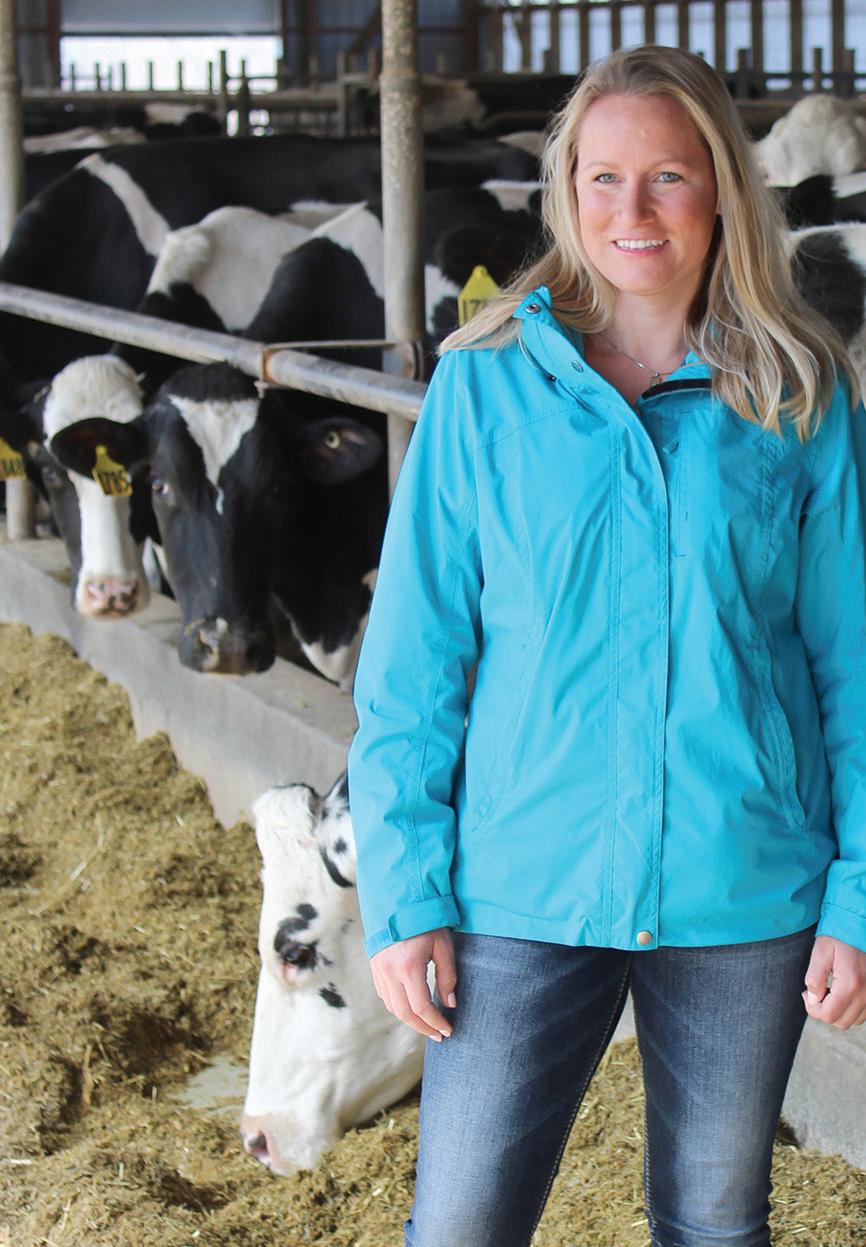
“There are no typical days.”
— SARAH WILSON, Russell County
cow-calf operator
Learn about Virginia Farm Bureau’s origins and how the organization has supported farmers and rural communities for the past 100 years.
Care farming integrates agriculture with
and
Two Virginia full-time farmers are just a couple examples of women in agriculture who will be featured as part of the International Year of the Woman Farmer in 2026.
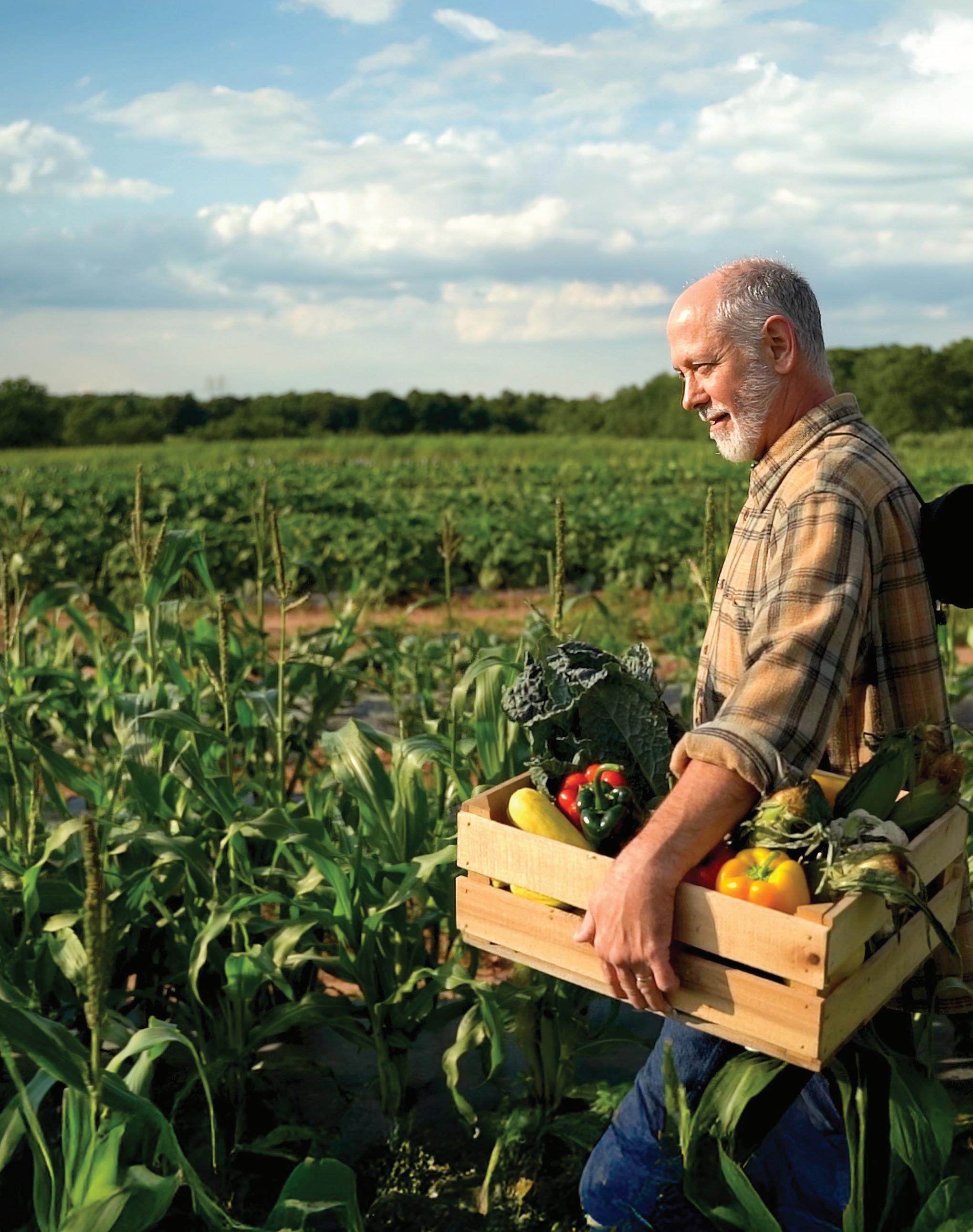
More farmers’ primary vocations are off the farm than on, and they wear their multiple hats well.
Associate members will receive their next issue of Cultivate in May. The magazine is published quarterly, and back issues can be viewed at
Volume 19, Number 1 Winter 2026
Cultivate (USPS 025051) (ISSN 1946-8121) is published four times a year. February, May, August, October. It is published by Virginia Farm Bureau Federation, 12580 West Creek Parkway, Richmond, VA 23238. Periodicals postage rate is paid at Richmond, VA and additional mailing offices. The annual Subscription Rate is $1.13 (included in membership dues).
Postmaster: Please send changes of address to, Cultivate, Virginia Farm Bureau Federation, P.O. Box 27552, Richmond, VA 23261; fax 804-290-1096. Editorial and business offices are located at 12580 West Creek Parkway, Richmond, VA 23238. Telephone 804-290-1000, fax 804-290-1096. Email address is Cultivate@vafb.com. Office hours are 8 a.m. to 4:30 p.m., Monday through Friday. All advertising is accepted subject to the publisher’s approval. Advertisers must assume liability for the content of their advertising. The publisher assumes no liability for products or services advertised. The publisher maintains the right to cancel advertising for nonpayment or reader complaints about services or products.
Member: Virginia Press Association
EDITORIAL TEAM
Kathy Dixon Assistant Director, Communications Nicole Zema Sr. Staff Writer/Photographer Christina Amano Dolan Staff Writer/ Photographer Kenny Kane Graphic Design Manager Eleanor Stickley Sr. Graphic Designer Alice Kemp Sr. Staff Writer/Advertising Coordinator
MEMBERS — Address change? If your address or phone number has changed, or is about to change, contact your county Farm Bureau. They will update your membership and subscription information.
FAMILY PHOTO

Did you know?
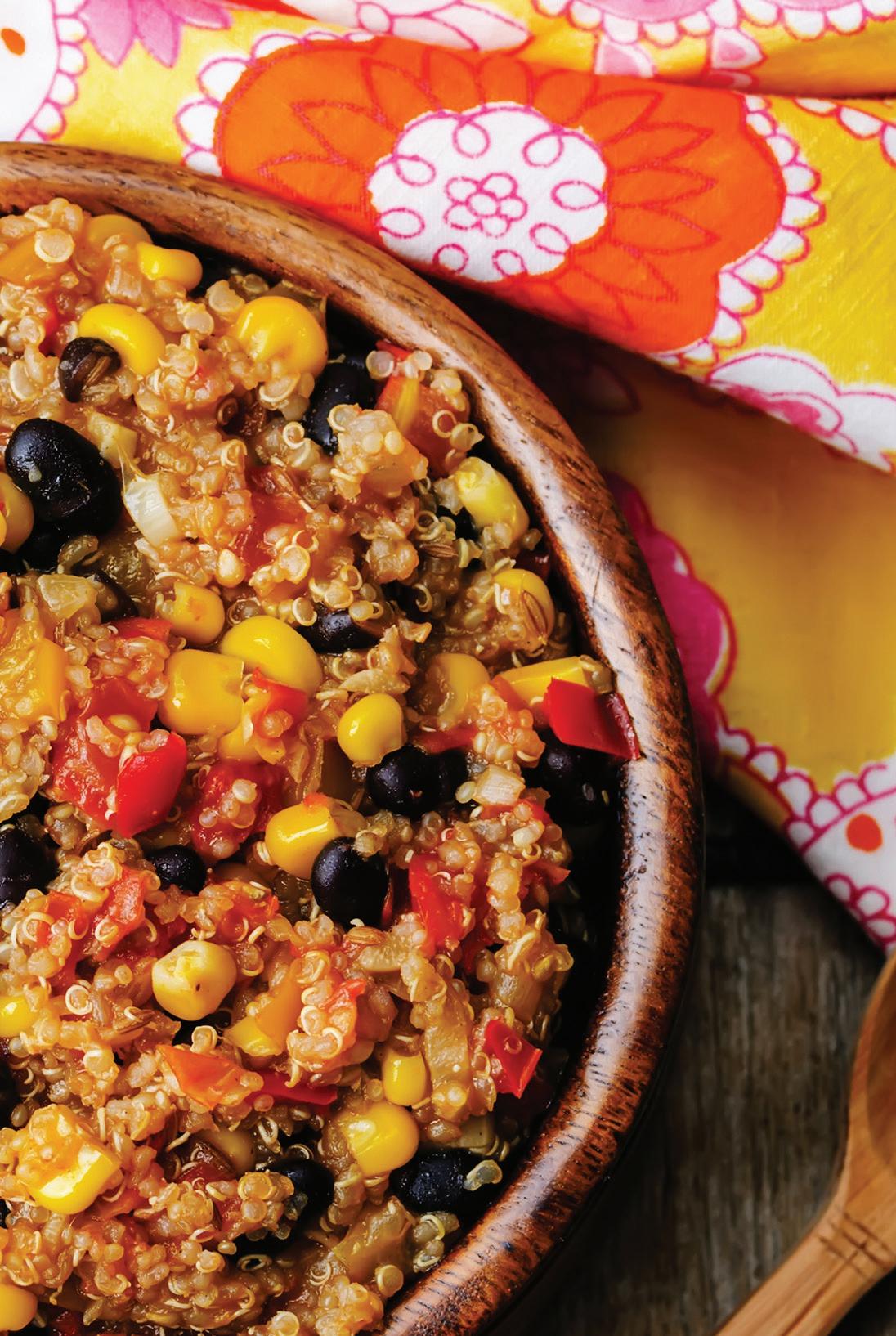
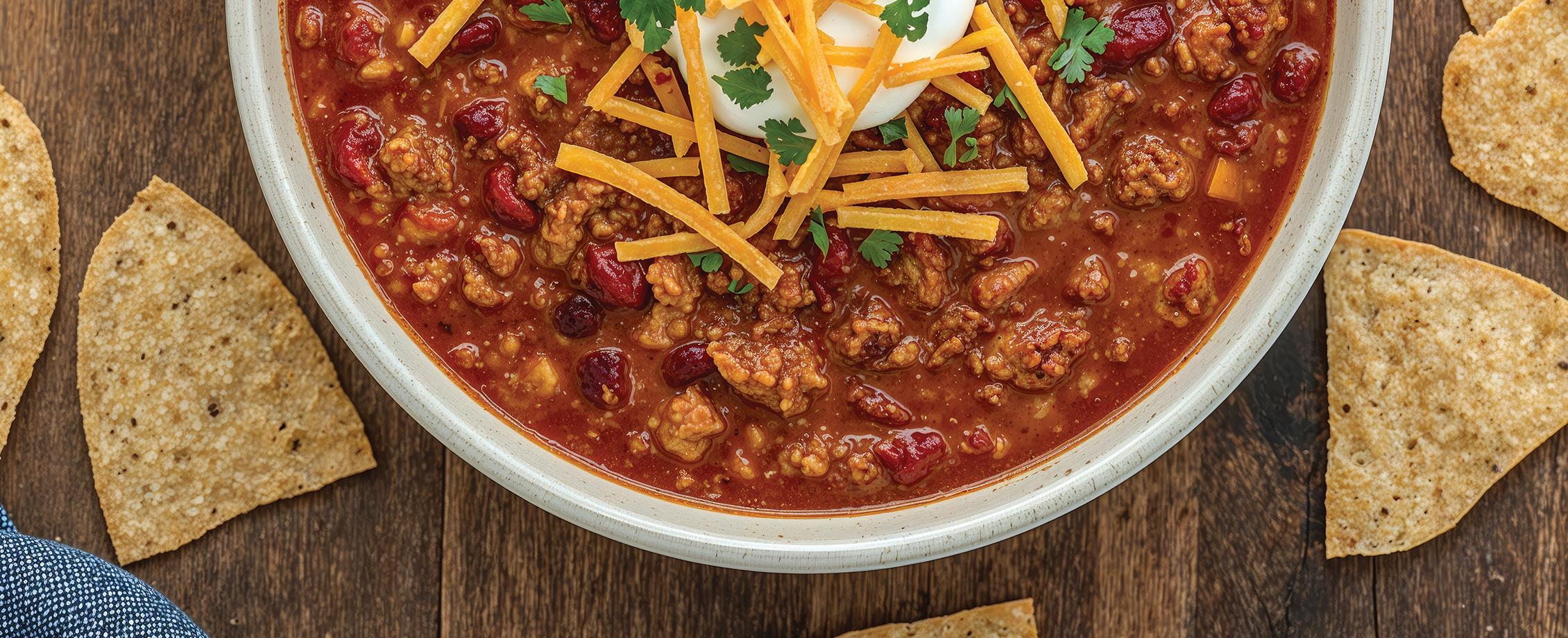
During the chilly days of February, there’s no better way to warm up than with a comforting bowl of chili.
National Chili Day is observed the fourth Thursday in February, so this year it falls on Feb. 26.
To mark the occasion, you could create a steaming pot of chili using a Virginia grown ingredient. If you’re a meat eater, there are recipes for spicy beef chili, tasty chicken chili or pork and black bean chili. If you want to skip the meat, how about a soybean
chili or a vegetable chili using fresh peppers, sweet potatoes or greens?
Along with its comfort-food feel, chili can be good for you. The Virginia Beef Council says there are 31 cuts of beef that meet the definition of lean. So, stirring some lean ground beef or cubes of sirloin into your chili will add to your nutrition. Here’s a recipe for a classic beef chili: beefitswhatsfordinner.com/recipes/ recipe/2801/chilly-day-beef-chili
Pork is another meat that is sometimes overlooked. According to the Virginia Pork Council, both pork tenderloin and pork sirloin roast are heart-healthy because they contain less than 5 grams of fat and 480 milligrams or less of sodium per serving. Pork also is packed with
protein. Find a slow-cooked black bean and pork chili recipe here: pork.org/taste-what-pork-cando/#recipes
Chicken is another Virginia-raised commodity that offers high-quality protein as well as B vitamins, which are essential for metabolism, nerve function and energy production. Try a recipe for white chicken chili here: articles.vafb.com/white-chicken-chili/ Soybeans provide a meat alternative, and also can be made into a tasty chili. Soyfoods can help lower cholesterol, they are high in protein and even provide folate, potassium and fiber. Here is a vegetarian soy-based chili recipe from the Veterans Affairs Health Library: www.veteranshealthlibrary. va.gov/30,64.
40,327
That’s how many Virginia farmers reported that farming was not their primary occupation. According to the most recent 2022 Census of Agriculture, 27,471 farmers in the commonwealth consider farming their primary occupation. See related article on page 22.

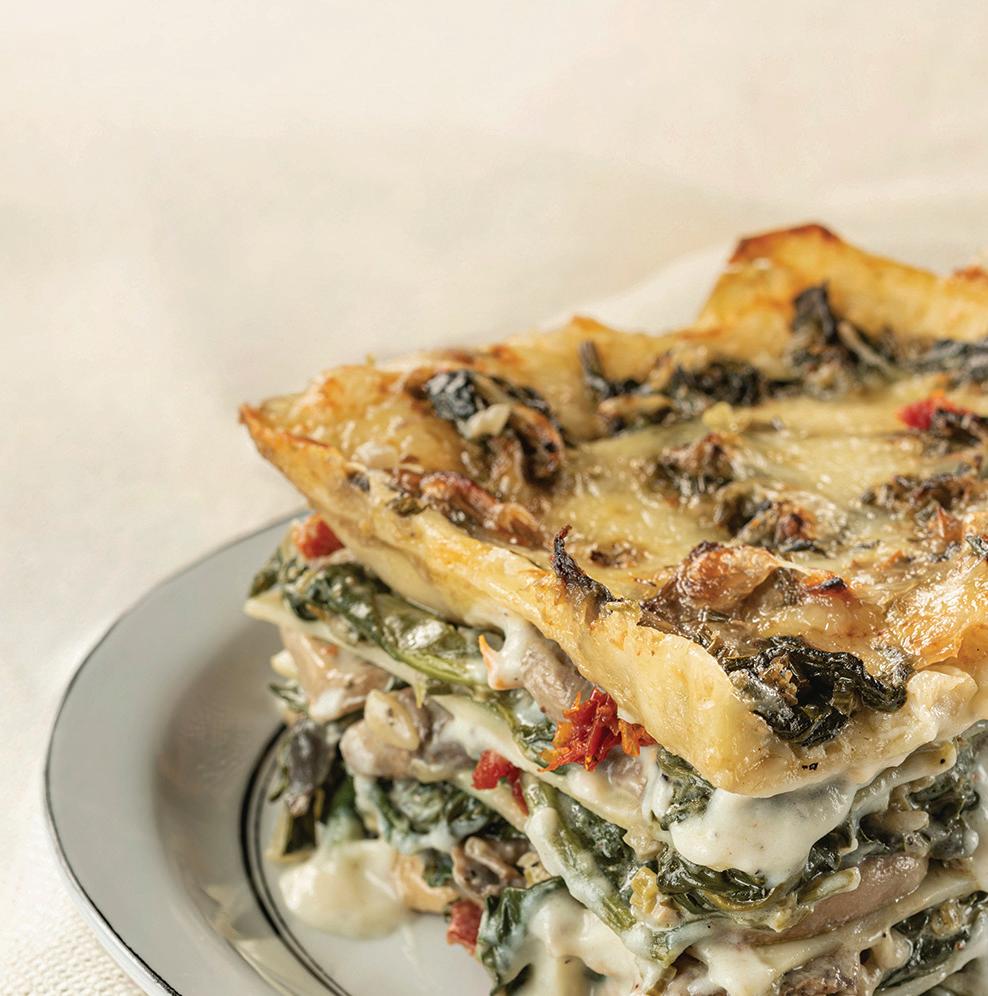


Layer up a new rendition of lasagna, on Real Virginia
Featured this month on Real Virginia, Virginia Farm Bureau’s weekly television program:
• Discover a new twist on classic lasagna, using spinach and mushrooms.
• Find out how Extension agents share agriculture and gardening research with farmers and homeowners.
• Learn about the farmers who are devoted to agriculture, but work off the farm to better support their families.

Real Virginia airs nationwide at 4:30 p.m. on the first and third Saturdays of each month in the Voices of Agriculture program on RFD-TV on Dish Network and DirecTV; and on selected cable outlets around the state. It airs weekly on WBRA digital channel 15.2, the WHRO World Channel, WVVA Bluefield and WTKR Norfolk, and on the first and third Sundays of each month at 10 a.m. on WVIR Charlottesville and at 10:30 a.m. on WHSV Harrisonburg; and on the first and third Saturdays at 8 a.m. on WRLH Richmond and at 5:30 a.m. on WSLS Roanoke.
2026 discounts for Virginia Farm Bureau members
Save on preventive health screenings
No one knows when a stroke or cardiovascular issue will arise, so why not get screened to assess your risk for stroke, heart attack and related issues?
Virginia Farm Bureau members can save on four noninvasive vascular health screenings that may give you peace of mind. For just $135, members can be screened for carotid artery, abdominal aortic aneurysm, atrial fibrillation and peripheral arterial disease. They also receive a free osteoporosis scan.
Healthcare professionals use the latest technology to provide hospital-quality preventive screenings, and boardcertified physicians carefully review your results.
Visit vafb.com/benefits, go to the Life Line Screening tab and log in as a Virginia Farm Bureau member to sign up.
KEY Apparel saves members up to 20% off, plus free shipping
Since 1908, KEY Apparel has crafted quality workwear at an affordable price. KEY Apparel provides comfortable office wear and rugged workwear, all shipped from its headquarters in Fort Scott, Kansas. Virginia Farm Bureau has partnered with KEY to provide members with apparel they can rely on.
Virginia Farm Bureau members will receive a 10%-20% discount on all merchandise, plus free shipping on orders over $75. Members can customize garments with state or county Farm Bureau logos, or add personal graphics like sports team and organizational logos.
To use this Virginia Farm Bureau benefit, visit vafb.com/ benefits, log in as a Virginia Farm Bureau member, and go to the KEY Apparel tab and follow the link to Virginia’s exclusive site.
Save on recreational Yamaha vehicles
Yamaha Motor Corporation, U.S.A., designs, engineers and tests its all-terrain and side-by-side vehicles in the real world. Their products are assembled in America at a state-of-the-art facility in Newnan, Georgia.
And now Farm Bureau members in Virginia are eligible to receive $250 Factory Direct Cash on the purchase of select new Yamaha 4WD ATV and SXS vehicles, excluding youth models under 350cc.
To claim your rebate:
• Members have up to 30 days after purchase to apply for the $250 rebate*, and there is no waiting period for new members to use the Yamaha discount.
• Go to vafb.com/benefits, and search for Yamaha. Click on the link, select your state, and enter your Farm Bureau membership number and other required information. Click submit, and Yamaha will send a $250 rebate check within 6-8 weeks of submitting the request
* Limit one Factory Direct Cash serialized coupon per eligible VIN, and multiple qualified purchases per household are allowed.
Start spring yard prep with discounted products from Grainger
Members are eligible for special Virginia Farm Bureau prices on selected product categories and supplies from Grainger, plus free standard ground shipping on all standard Grainger products*.
Farm Bureau members receive special pricing on the following categories: cleaning; electrical; hand tools; manufacturing; motors; outdoor equipment; plumbing; power tools; and safety items.
Get started with your price savings using one of three easy methods.
1. Present the Virginia Farm Bureau organization account number at time of purchase. The number is available from your county Farm Bureau or visit vafb.com/benefits;
2. Go to grainger.com/farmbureau to establish a new Grainger.com® account using that account number; or
3. Call Grainger customer service at 800-472-4643 to update your existing Grainger account with the Farm Bureau organization account number (You will need to be registered and logged in as a member).
If you have questions or need assistance, contact your county Farm Bureau.
* FREE standard shipping on all orders shipped ground transportation. Other freight charges will be incurred for services such as expedited delivery, special handling by the carrier, sourcing orders and shipments outside the continental United States.
Virginia Farm Bureau retains Forbes No. 1 ranking among best homeowners insurance providers in the U.S.
Virginia Farm Bureau Mutual Insurance Co. is again at the top of an esteemed list, ranked the No. 1 homeowners insurance company in the country.
The company earned the recognition from Forbes for the second year in a row.
Forbes partnered with market research firm Statista to rank America’s Best Insurance Companies for 2026. VFBMIC is one of 93 U.S. companies with high marks in at least one of five insurance categories evaluated: homeowners, renters, auto, permanent life or term life.
The rankings were derived by surveying more than 18,000 people across the country who reported having an insurance policy in at least one of the five categories. Companies with the highest scores made the Forbes ranking.
Survey respondents were asked whether they were satisfied with their insurance company and if they would recommend it to others. They also rated their insurance providers; agent guidance; and their customer service, cost, company transparency, digital services and claims service.
“As insurers stay laser-focused on the customer experience, they’re also contending with operational risks,” said Bob Brown, executive vice president of VFBMIC and CEO of its subsidiary


Countryway Insurance Co. “Though weather events, such as hurricanes and tornados, are some of the biggest challenges facing the industry today, Virginia Farm Bureau is continuing to increase our technology investments and research AI capabilities that aim to strike the right balance between efficiency and service.”
Between increased weather impacts, rising costs and changing customer desires, insurance companies and their clients are navigating new territory. But VFBMIC is among the best-in-class companies seizing on the chance to innovate and evolve.
“To again be named the No. 1 homeowners insurance provider by Forbes is not just an honor; it’s a powerful testament to the dedication, expertise and unwavering commitment of every employee on our team to serve our policyholders,” Brown said. “This prestigious ranking was earned by the relentless drive of our field salesforce, the compassion of our claims team, and the meticulous care of our support staff, who together deliver on our promise to protect our policyholders’ most valued assets.”
Visit forbes.com/lists/best-insurance-companies for the full list of America’s Best Insurance Companies for 2026.
For quotes and information about Virginia Farm Bureau’s insurance products, visit the website at vafb.com.


Celebrate National Ag Day, Agriculture Literacy Week this March



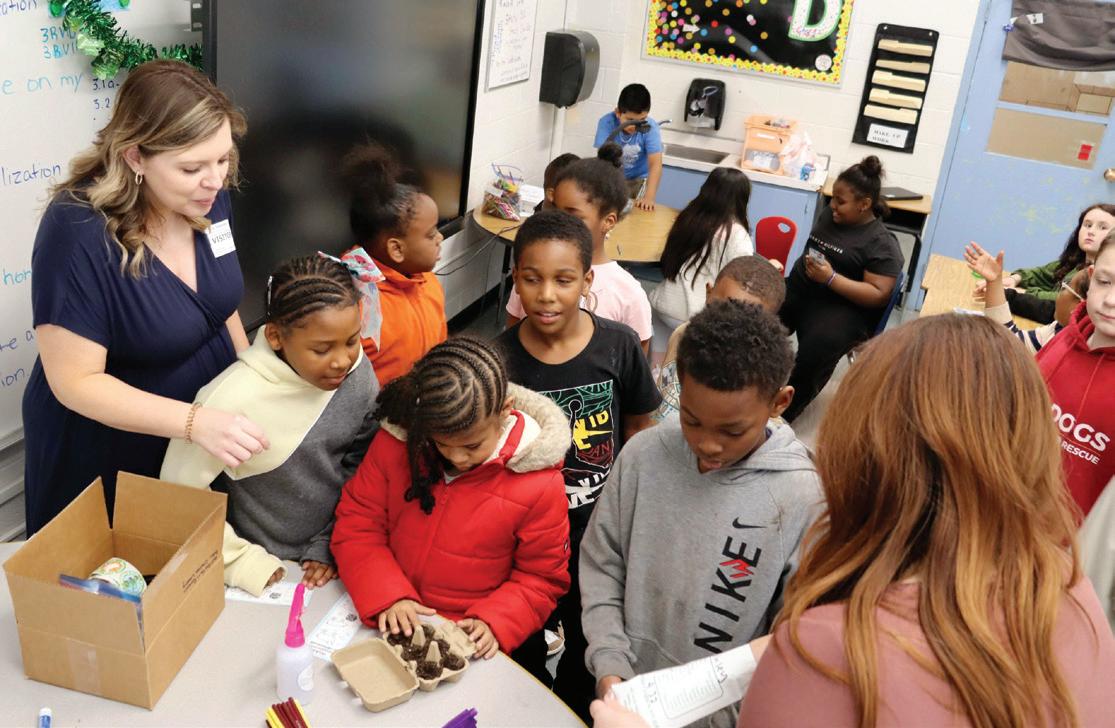
resources to be presented to the classroom educator.
National Ag Day 2026 will be celebrated on March 24 during National Ag Week, March 22-28. The annual observances are organized by the Agriculture Council of America, a nonprofit organization dedicated to raising awareness of agriculture’s role in modern society.
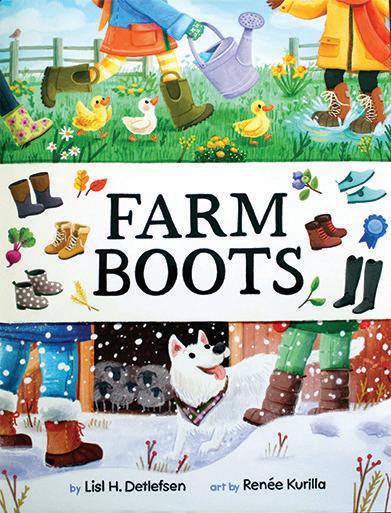
Additionally, Virginia Agriculture in the Classroom will hold its annual Agriculture Literacy Week March 23-27. AITC has selected Farm Boots by Lisl H. Detlefsen as its 2026 Book of the Year.
Playfully illustrated by Renée Kurilla, Farm Boots offers a delightful snapshot of farm life and the many different varieties of boots needed to complete farm chores. Readers can observe a diverse cast of farm families as they don their boots to work and play on the farm throughout the seasons, and also learn how the farmers care for their crops and animals.
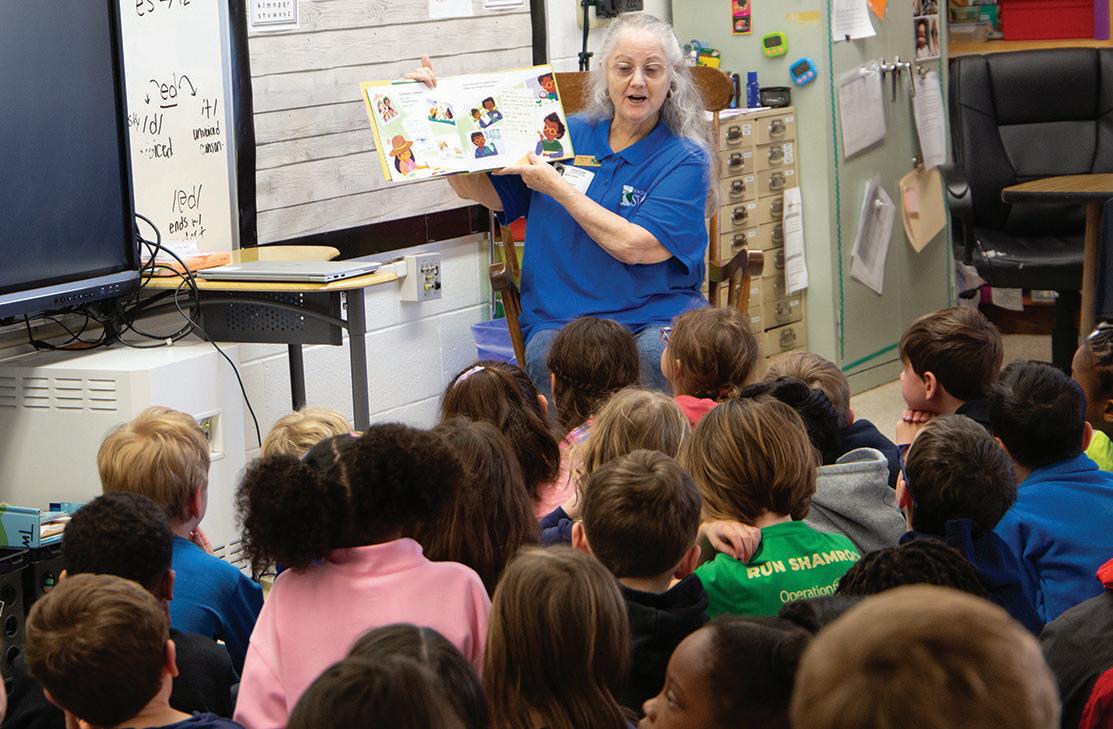
“This year’s book introduces children to different kinds of farms and the important work that takes place on them during the year,” said Lynn Black, Virginia AITC’s director of education. “Agriculture Literacy Week is a wonderful opportunity for volunteers to connect with children and share agriculture’s story with the next generation. Each year, volunteers from the agriculture community read to over 70,000 children, resulting in increased awareness and appreciation for the role that agriculture plays in their daily lives.”
Now in its 17th year, Agriculture Literacy Week is AITC’s largest educational event of the year, with thousands of volunteers reading to children across the commonwealth. The program helps teach youth about the importance of agriculture, farming and the sources of their food.
Copies of Farm Boots are available for purchase at $14 each from Virginia AITC. A book order form is located on the Virginia AITC website: virginia.agclassroom.org
Book orders will include free supplementary resources to expand learning at school and at home. Books will be accompanied by a volunteer guide, as well as other teaching
Volunteers are encouraged to read Farm Boots to children in pre-K through third grade. Virginia AITC also will share highlights on its social media platforms throughout the week.
This year’s Agriculture Literacy Week is sponsored by Southern Farm Bureau Life Insurance. Participants include county Farm Bureau volunteers; Farm Bureau Women’s Leadership and Young Farmers committees; FFA and 4-H members; partners from the Virginia Department of Agriculture and Consumer Services and other state agencies; and members of other agricultural organizations and businesses. Colonial Farm Credit and Farm Credit of the Virginias have been supporters as well.
For details or to order books, visit virginia.agclassroom.org
Annual golf tournament benefits AITC
Sponsors and teams of four are invited to tee off in the 29th annual Virginia Foundation for Agriculture in the Classroom Charity Golf Tournament in May. The tournament will offer two shotgun starts, with awards following each round of play. Food and refreshments will be available throughout the day.
WHEN: May 18
WHERE: The Dominion Club in Glen Allen
REGISTRATION: Registration is open. Visit virginia. agclassroom.org/donors/ events for details.





Anthem Medicare drops Part D

Customers have until Feb. 28 to find alternative prescription coverage


BY NICOLE ZEMA
otices went out in October to Virginia Farm Bureau members with Medicare prescription drug coverage, informing them that Anthem was dropping the standalone Part D plans effective Jan. 1, 2026. VAFB Healthcare Solutions provided support through the changes, and shared resources for choosing another Medicare drug plan.
There is still time for those who lost coverage to get a new prescription drug plan before this year’s Feb. 28 deadline.
“You have to actively sign up,” said Brett Denton, vice president of VAFB Health Insurance Solutions. “If you do nothing, you will not have prescription drug coverage for 2026.”
Medicare Part D is the prescription drug plan that was launched during the George W. Bush administration in the 2000s, noted Mark Khatib, executive vice president and general manager of Farm Bureau’s healthcare companies.
“It gave much-needed prescription drug coverage to seniors,” he said. “When it first launched, there were over 1,400 Part D stand-alone prescription drug plans offered nationwide. Today, that has dropped to 360 with eight to 12 plans in each state. For 2026, Virginia has nine plan options for Medicare beneficiaries to choose from.”
That reduction in plan availability is driven by factors related to the Inflation Reduction Act of 2022. Legislative changes led to a redesign of Part D’s benefit structure and introduced new cost-control measures, aimed at lowering drug costs for beneficiaries and the federal government. These measures shifted a greater share of cost and responsibility onto Part D plan insurers and drug manufacturers.
Anthem is the latest provider to drop Part D, affecting 4,200 VFB members, and 400,000 across Anthem’s multistate network.
“And now five insurance companies are left to pick up all of this enrollment, which is risky for them,” Khatib said. “This year and next will be very transitional because of these major changes. It’s catching a lot of people by surprise.
“Because time is not on our side," he continued, “If you have not already secured coverage, you will need to enroll in a new prescription drug plan as soon as possible, and then perhaps research more options during next year’s Annual Election Period.”
Denton said county Farm Bureau staff and his team are trying to find a home for affected enrollees between now and Feb. 28 for a March 1 effective date
Get help comparing plans
Visit Medicare.gov for a list of Medicare prescription drug plans in your area. Click the “Find Plans Now” tab to compare the plans in your area.
Call 1-800-MEDICARE and tell them you received a letter saying your plan isn’t going to be offered next year and you want help choosing a new plan. This toll-free helpline is available 24/7 at 1-800-633-4227 (TTY users can call 1-877-486-2048).
Call the Virginia Insurance Counseling & Assistance Program at 1-800-552-3402. Free counseling is available to answer questions, discuss needs and share information about your options.
Anthem customers can call 888-983-9818 to walk through their options.
Missed open enrollment?
For those under age 65, the Affordable Care Act open enrollment period to purchase individual health insurance for 2026 ran through Jan. 30. Those who missed the deadline still have opportunities to secure some form of health coverage. Certain life events may qualify you for a special enrollment period. Individuals who don’t qualify for a special enrollment period may purchase short-term health insurance plans for temporary coverage, offering basic protection against catastrophic medical expenses. To learn more about your coverage options, contact your county Farm Bureau office or call VAFB Health Insurance Solutions at 800-229-7779.
A beginner’s guide to getting started



BY CHRISTINA AMANO DOLAN


rom a neighbor’s enchanting flower garden to a friend’s heavenly homegrown tomatoes, inspiration for starting a garden can strike anywhere.
Often, knowing where to start is key.
Whether yearning for a grand outdoor oasis or simply a few vegetable plants for the patio, the journey to your dream garden begins with baby steps.
“Start small, and build on your successes,” emphasized Ed Olsen, Virginia Cooperative Extension Master Gardener director and consumer horticulture specialist.
Starting small
Depending on your available space and vision, “starting small” can mean different things.
If you only have a windowsill, try growing small container herbs that are readily available at grocery stores year-
round, or at your local nursery and garden center during the growing season.
If you’re an aspiring vegetable gardener, scout for an outdoor spot that gets over 6-8 hours of sunlight per day.
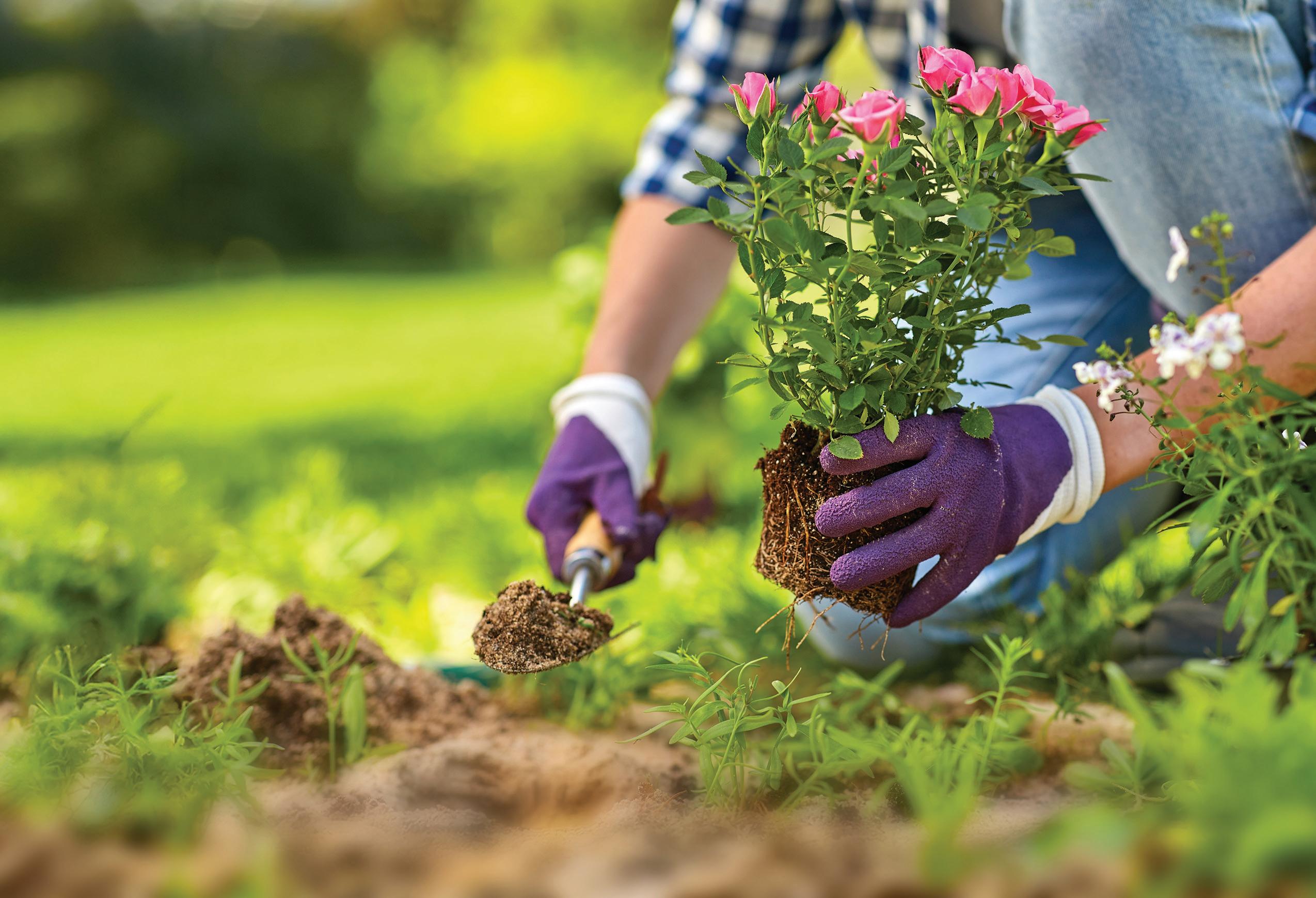
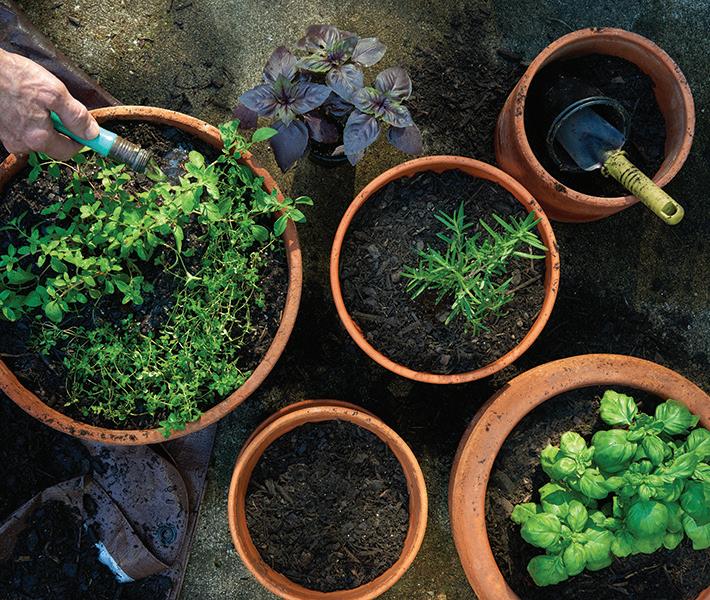
“Container gardens are a great place to start,” Olsen noted. “If you can grow plants in a container on your deck for the summer, then you probably can succeed in moving them out to the yard the next year.”
If you’re looking to beautify your yard with ornamental plants, get started by picking an area for creating a small garden bed. While you can get creative with placement, the spot you pick will help determine which plants to choose.
After selecting your garden’s location, get to know your soil. You can acquire a soil test kit from your local Extension office and submit a sample to the Virginia Tech Soil Testing Lab.
“Winter is a great time to do a soil
test, as long as the ground isn’t frozen,” he added. “That will tell you what your ornamental or vegetable garden will need to make sure you’re starting off with the right nutrients and pH for desired plants.”
Raised beds are another great option for beginners who are unsure about their soil and want quick success. A 4-by-8-foot bed is generally a good size to start with.
Visit pubs.ext.vt.edu for a guide on container and raised bed gardening.
Right plant, right place
The most important gardening rule is planting the right plant in the right place.
Once you’ve identified your garden’s location, create a list of desired plants with matching light and soil requirements.
“If you put a plant that likes high light in a shady garden, it’s not going to thrive,” Olsen cautioned. “And typically,
you end up with diseases and pest issues when a plant’s struggling to grow in an environment.”
He added that perennial plants are great options for beginner ornamental gardeners—offering “immediate gratification” and extended blooms.
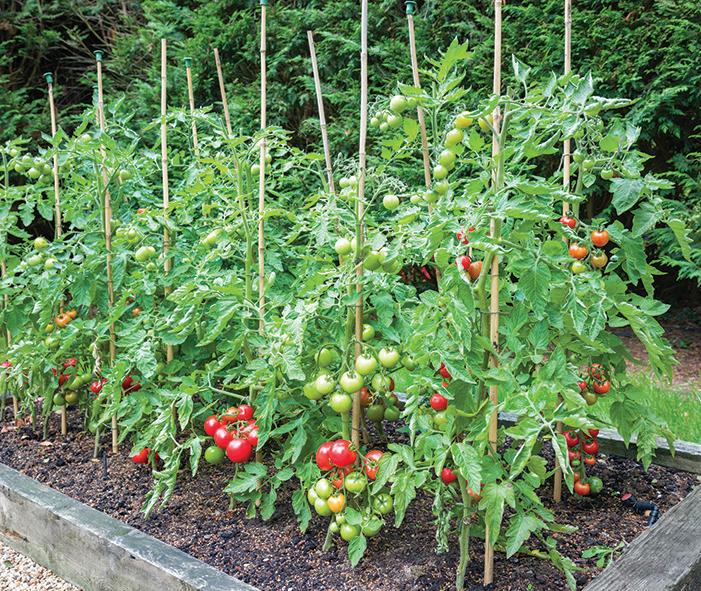
Tomatoes and peppers are generally easy to grow and offer popular options for beginning vegetable gardeners. For interesting blooms and color, try incorporating peppers into your ornamental landscape or edging with chives.
For first-time gardeners, Olsen recommends purchasing young plants at garden centers and then replanting them. Starting plants from seed takes a lot of time indoors and can result in more plants than intended.
“You usually end up planting more than what you need, because you started plants from seed and have an attachment to them,” he noted. “Buying two tomato plants for the family is pretty easy to do, and it’s not much more expensive than a pack of seeds.”
Key considerations
“Every gardener learns from mistakes, so don’t be afraid to make them,” Olsen encouraged.
But avoiding common mistakes can make a difference. It’s important to avoid:
• Crowding plants too closely together. Space plantings based on the size your plants will grow into—not the size of the container. This will help prevent pest problems.
• Digging deep holes for planting. The hole should be no bigger than the plant’s container, or you may end up with overwatering and disease issues.
Other helpful tips:
• Ensure you’re watering ornamental plants properly the first year for proper establishment.
• If your plants are wilting, scout for similar plants in your area and see
how they’re doing. If they aren’t wilting, that could indicate that you’re over- or under-watering your plants.
• Visit pubs.ext.vt.edu to access Extension’s 2025 Pest Management Guide. Create a short list of common pests and diseases for your plants, and learn how to detect and deal with them early on.
Plant responsibly!
The Virginia Department of Forestry urges everyone to avoid introducing new invasive plants and always plant native species. Visit dof.virginia.gov for resources on invasive species that threaten Virginia’s forests and landscapes.


Must-have gardening tools


When building up your gardening “toolbox,” Olsen recommends investing in:





























A good spade for ornamental gardening.


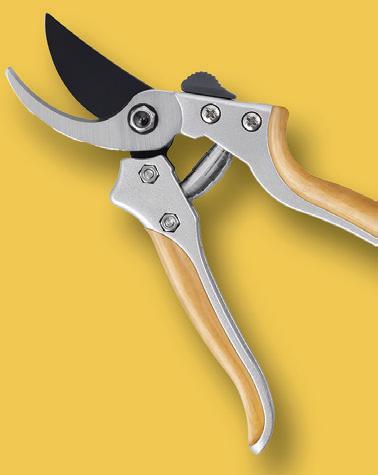









A quality trowel, like an ergonomic one for vegetable gardening. hose nozzle with various spray lifetime.” A that


Container gardening is great for those with little space, and first-time gardeners.
Tomatoes often are easy to grow and offer a good option for beginning vegetable gardeners.
If you're growing ornamental plants for the first time, it's important to water them properly to help get them established.



Training resources help farmers address public misconceptions about agriculture on a personal level
BY NICOLE ZEMA





Consumers and policymakers are forming strong opinions about food, farming and agriculture, often without a farmer’s voice adding context to those conversations, with real-world perspectives about what really happens on the farm.
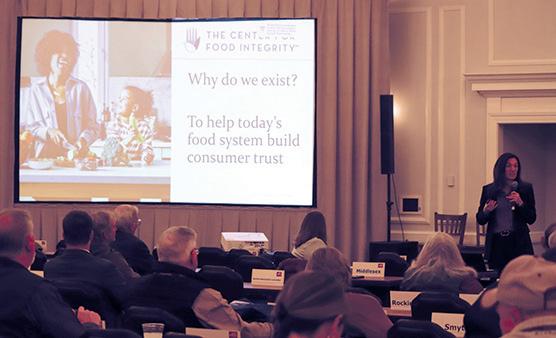
“We need to invite their skepticism, rather than dismissing it,” said Kelly Leighton, vice president of growth and engagement at the Center for Food Integrity.


She talked with farmers in a workshop about how to effectively approach these critical conversations at the 2025 Virginia Farm Bureau Federation Annual Convention in Williamsburg. The session was sponsored by the VFBF Growing Leaders Program.
“If we're not in the conversation, someone else will define agriculture for us,” she said. “We exist to help build that trust—empowering organizations, individuals and agribusiness operators with information to build those relationships and engage in conversations in a meaningful way.”

From seed oils and “big ag” to pesticides, misinformation circulating today is often grounded in skepticism, fearmongering, and emotions over science, she said, which are framing modern agriculture as part of the problem.
“It’s showing up in policy circles and shaping those policies, which certainly can impact our regulatory frameworks,” she said. “Whether you're a direct-to-consumer farm organization or a large commodity operation, you all have a role in talking about what we do in agriculture and why we do it.”
Making connections based on aligned values is the key to productive engagement on polarizing industry topics.
Workshop co-chair and Madison County large animal veterinarian Dr. Amanda WeakleyScott’s family is the first generation to farm, which includes a large-scale turkey operation.
crop-protectants and shifting away from commodity crops.
Meanwhile, Growing a Healthier America is the food system’s coordinated, collaborative, values-led response to MAHA, led by The Center for Food Integrity. GaHA brings together farmers, food makers, retailers, scientists and health voices to reclaim the narrative, counter misinformation and strengthen trust across the entire food value chain.
“They offered tools and resources that let me shape my conversations,” Weakley-Scott said.
From seed oils and “big ag” to pesticides, misinformation circulating today is often grounded in skepticism, fearmongering and emotions over science
“I wasn't exactly comfortable talking to consumers about the product I was raising, and I felt that most people viewed me as a factory farm instead of a family farm,” she shared.
Leighton said family, tradition and work ethic are universally shared values and beliefs that need to be central to these conversations.
“And then we have permission to introduce the proof points, the data, the facts and science that is critically important to validate what we're talking about when it comes to food and agriculture,” she said.
Training through American Farm Bureau Federation GO Team and the Center for Food Integrity imbued WeakleyScott with insight on how consumers think, especially as Make America Healthy Again policy is developed in Washington.
MAHA strategy focuses on promoting healthier food production and improving nutrition outcomes, while increasing scrutiny of
“Some may see this as a long overdue correction to a broken food system,” Leighton said. “Wanting a ‘healthier America’ is a universal value. But it's really confusing for today's consumer to cut through the noise and decide what is true about food and agriculture.”
Finding common ground in an era of conflicting messages is essential.
“I am putting the same turkey on my plate at Thanksgiving that I grow in our poultry houses,” Weakley-Scott said. “If you ever want to see how we raise birds or cattle, my door is open.”
Fourth-generation farmer Shawn Carr also has an open-gate policy at Carr Farms in Isle of Wight County, where the family raises cattle and laying hens and grows an array of row crops.
“Everything that we grow, whether it be in my garden, our cattle, our chickens—goes on my plate,” she said. “That's what I feed our family. And I welcome anybody to come see our farm.”
THE CENTER FOR FOOD INTEGRITY
Visit foodintegrity.org for educational resources, research insights, strategies. and training and workshop opportunities.
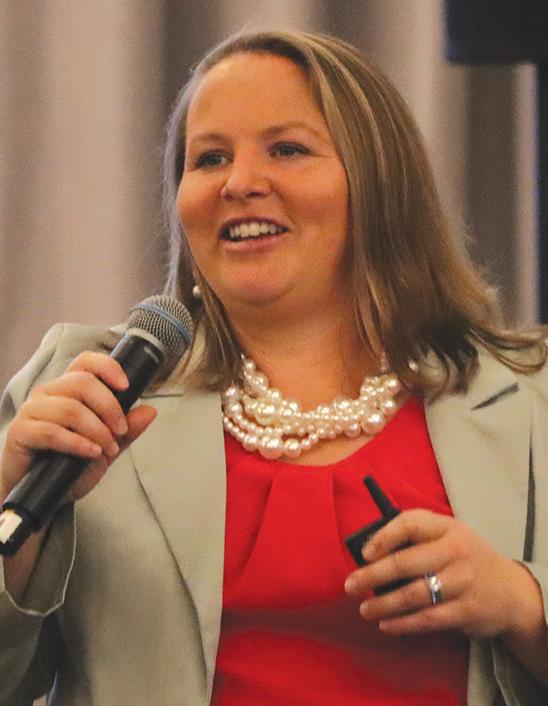
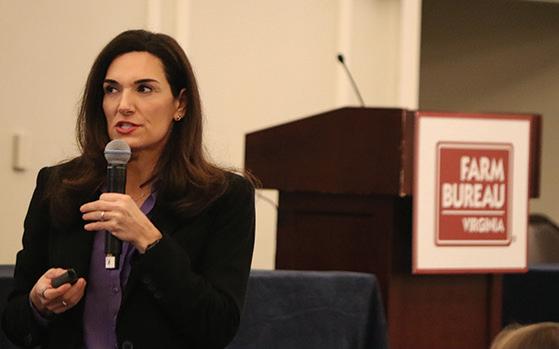
Madison County large animal veterinarian Dr. Amanda Weakley-Scott co-chaired a workshop with Kelly Leighton, vice president of growth and engagement at the Center for Food Integrity.
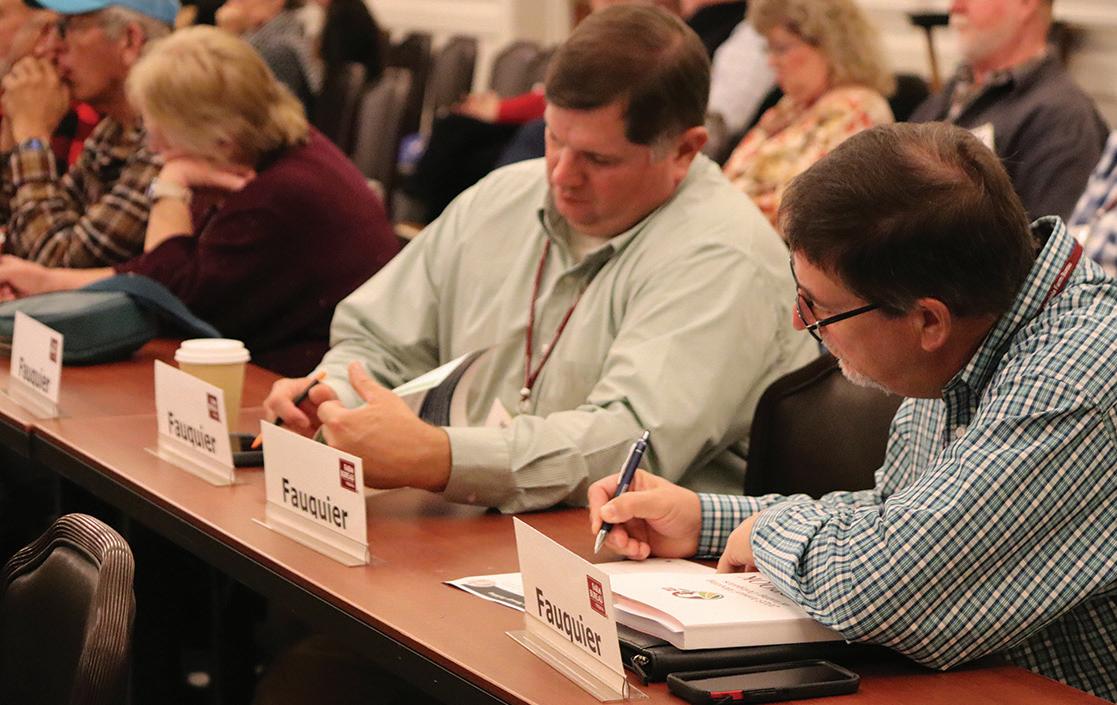
VFBF members shared their input on addressing conflicting messages in agriculture and finding common ground with consumers.
PHOTOS BY ALICE KEMP
Virginia Farm Bureau celebrates a centennial of service
BY KATHY DIXON
Virginia Farm Bureau Federation turns 100 on Feb. 26, and is celebrating a centennial of supporting farmers and rural communities.
The organization was founded Feb. 26, 1926, to represent farmers at the local, state and national levels. Today, Farm Bureau continues to support agriculture and policies that will strengthen the state’s No. 1 industry. The organization has almost 137,000 members statewide, and the $40 annual membership dues enable it to help families, farmers and communities thrive.
Advocacy and support
Virginia Farm Bureau has been successful on many advocacy campaigns throughout its history that have helped farmers and its nonfarming members. The company has fought to protect property rights, repeal the Virginia estate tax, ensure funding for voluntary, costshare conservation practices, provide resources for large animal veterinarians, protect prime farmland and more.
Historical Timeline
Feb. 26, 1926 – Virginia Farm Bureau Federation is officially incorporated
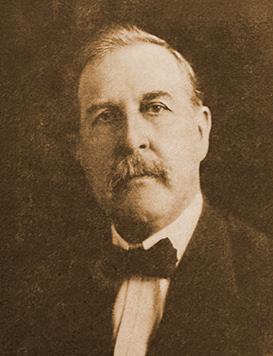
1926 – Daniel H. Barger elected first VFBF president
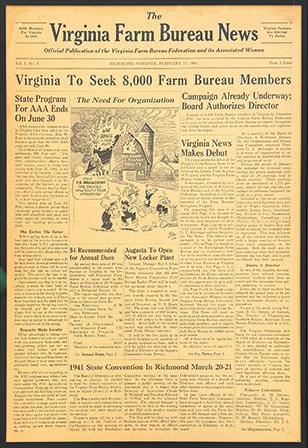
1941 – First issue of Virginia Farm Bureau News is published
Farm Bureau also supports Virginia Agriculture in the Classroom, which was established in 1987 to educate teachers and students about the importance of agriculture. AITC is a part of a nationwide effort to help teachers and students understand and appreciate agriculture—Virginia and the nation's largest industry.
The 501(c)(3) organization hosts an annual Agricultural Literacy Week during which volunteers read an agricultural themed
book to elementary students in schools across the state. Through that outreach effort, and providing hands-on resources, workshops and grants to teachers, AITC reached more than 700,000 students in the 2024-25 school year. Currently, over 2,100 teachers are integrating agriculture education into core subjects like science, math and reading.
Also to increase agricultural literacy, Farm Bureau purchased The Meadow Event Park property, where the State Fair of Virginia is held. The organization has successfully kept the fair focused on agriculture and providing an opportunity to showcase the best of Virginia agriculture to those who may not have a farming background.
Benefits for everyone
With 104 offices in 88 counties, Virginia Farm Bureau is able to reach every part of the state. Through county Farm Bureau staff and volunteers, the company supports local and statewide organizations, even donating more than $100,000 in youth scholarships each year.
Farm Bureau members also can access a robust member
1952 – VFBF Women’s Committee formed



1948 – Howard S. Zigler elected third president

1950 - Virginia Farm Bureau Mutual Insurance Co. founded to provide insurance to members
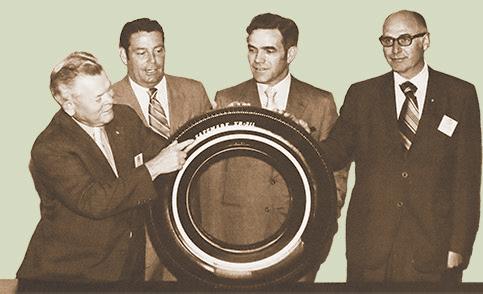
1965 – Virginia Farm Bureau Products Program begins, allowing members to purchase products like tires, batteries, and farm equipment through pooled buying power.

1975 – VFBF Young Farmers Committee formed
1980 – Former VFBF President Robert B. Delano elected president of the American Farm Bureau Federation
1985 – Young farmers Andrew and Deborah Barker of Henry County were named one of three AFBF’s Young Farmers of the year, Virginia YF’s first national honor.
1988 – First Legislative Day at the Capitol was held during the General Assembly
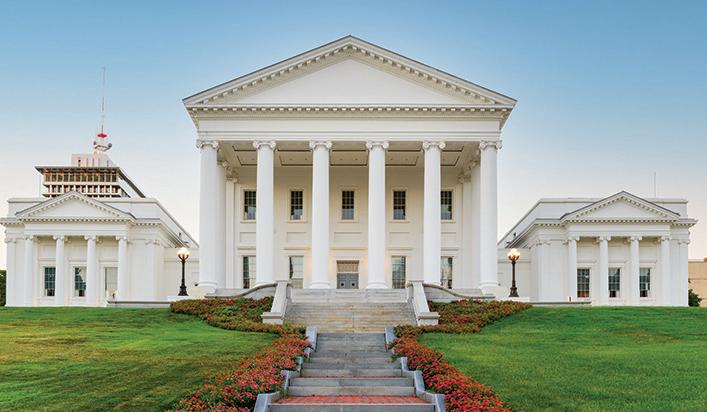
benefits program, which includes tangible savings on hotels, rental cars, retail establishments and more. Members also are eligible for discounts on auto and truck tires through the Products Division, which celebrated its 60th anniversary last year.
Additionally, the Virginia Farm Bureau Mutual Insurance Co. has provided members with peace of mind for more than 75 years. VFBMIC offers members a comprehensive line of insurance products, and the company has been ranked the No. 1 homeowners insurance company in the country by Forbes for the second year in a row.
Celebrations in 2026
Farm Bureau is planning to grow and expand all of these programs in the next century.
Commemorations and other events have been planned throughout 2026.
• All year at the headquarters office in Richmond, historical artifacts that include the history of all VFBF companies over the last 100 years will be on display. Additionally, a commemorative photo gallery will be on display. Photo panels depicting agriculture in all 14 board districts and the Young Farmers and Women’s Leadership programs will be included.
• The West Creek office also will house a large map of Virginia counties made with native Virginia woods from Farm Bureau members’ property.
• County offices will hold specific events and many of them will participate in a Farm Bureau Day of Giving/Service during a particular week that had not been identified at press time.
• During the State Fair of Virginia, Sept. 26-Oct., 4, a new adult creative arts competition revolving around Farm Bureau memorabilia will be included.
1995 – Creation of the first commodity advisory committees


established as a non-profit to support rural economic development.

1999 – Virginia Farm Bureau Federation AgPAC, a nonpartisan political action committee that works to build relationships with elected officials and enhance their understanding of agricultural issues, was formed.
2004 – The Virginia Foundation for Agriculture, Innovation and Rural Sustainability is
2004 – Virginia names its first-ever Secretary of Agriculture and Forestry, something Virginia Farm Bureau had lobbied for.


2013 – Virginia Farm Bureau purchases The Meadow Event Park and the State Fair of Virginia

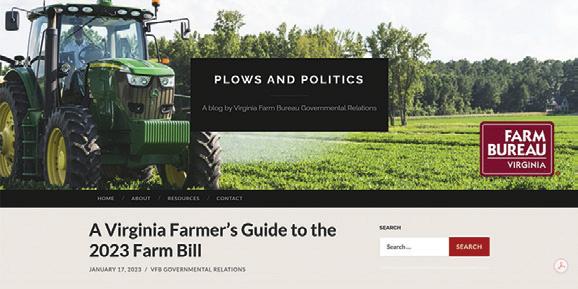
2011 – Established the Plows and Politics blog to provide timely updates on issues to producer members
2024 – Scott Sink elected VFBF’s 13th president
2026 – Forbes names Virginia Farm Bureau Insurance as the #1 Home Insurer in the entire U.S.
NICOLE ZEMA
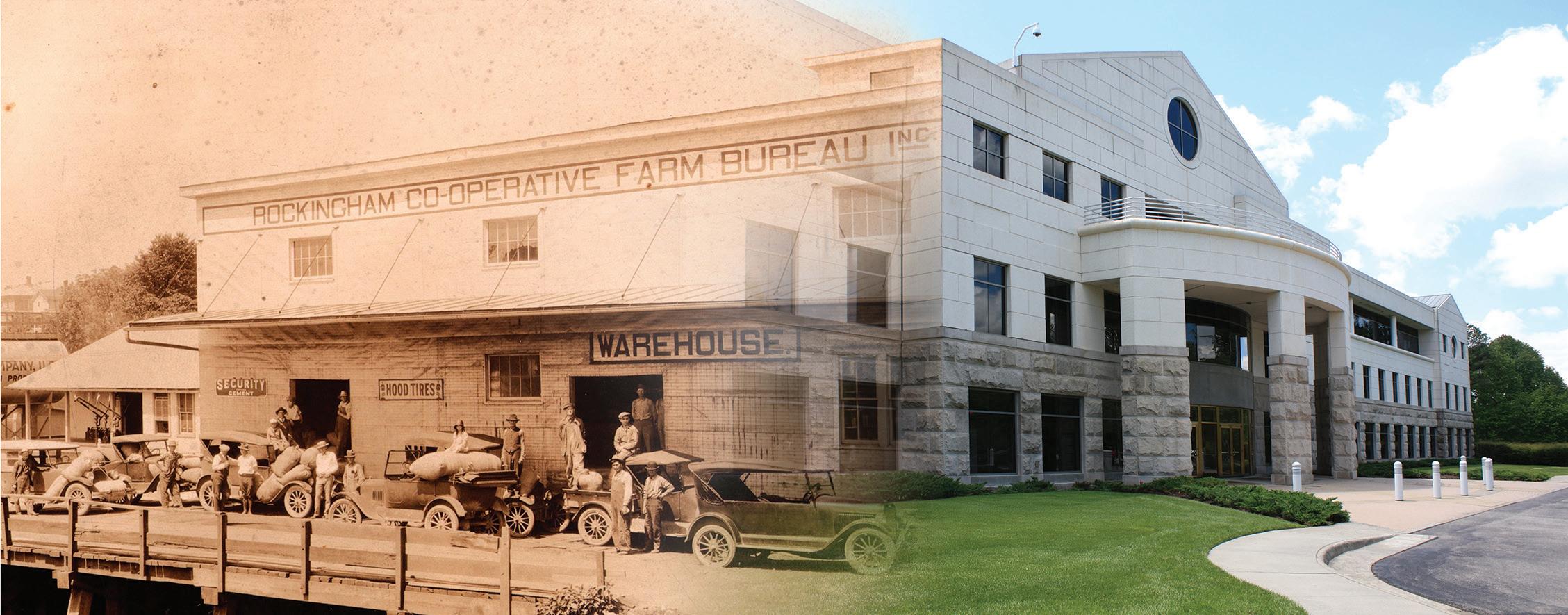
From cooperative purchasing of farm goods through the Rockingham Cooperative in the mid-1920s to representing agriculture today through its headquarters in Goochland County, Virginia Farm Bureau has supported the state's farmers for 100 years.




Virginia farms cultivate healing, personal growth


BY ALICE KEMP
Across Virginia, some farms are producing more than crops and livestock.
They’re cultivating confidence, nourishing independence, and building skills that encourage individuals to thrive—all through everyday farm chores.
Care farming, defined by the National Care Farming Network, integrates agriculture with therapeutic and developmental practices. By using agriculture as a tool, these farms provide support, foster connections, and create opportunities for personal growth while delivering physical, mental and social benefits.
Growing through Christmas trees
Down a quiet country road in rural Augusta County sits a Christmas tree farm that offers a welcoming environment
for young men to grow through meaningful work.
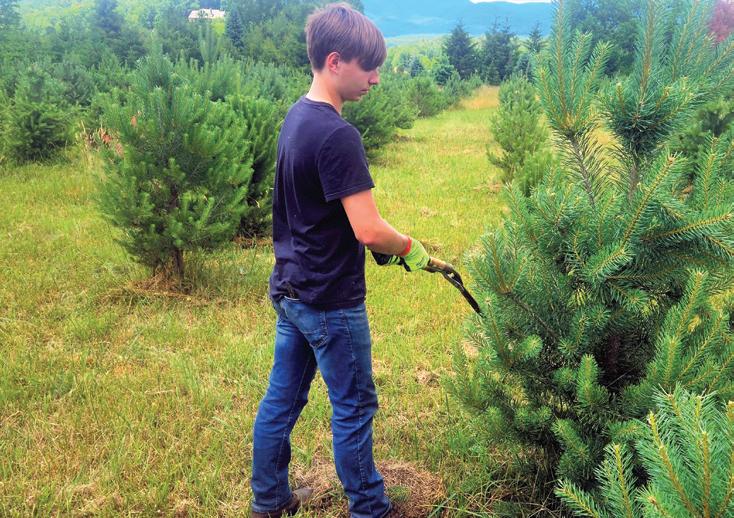
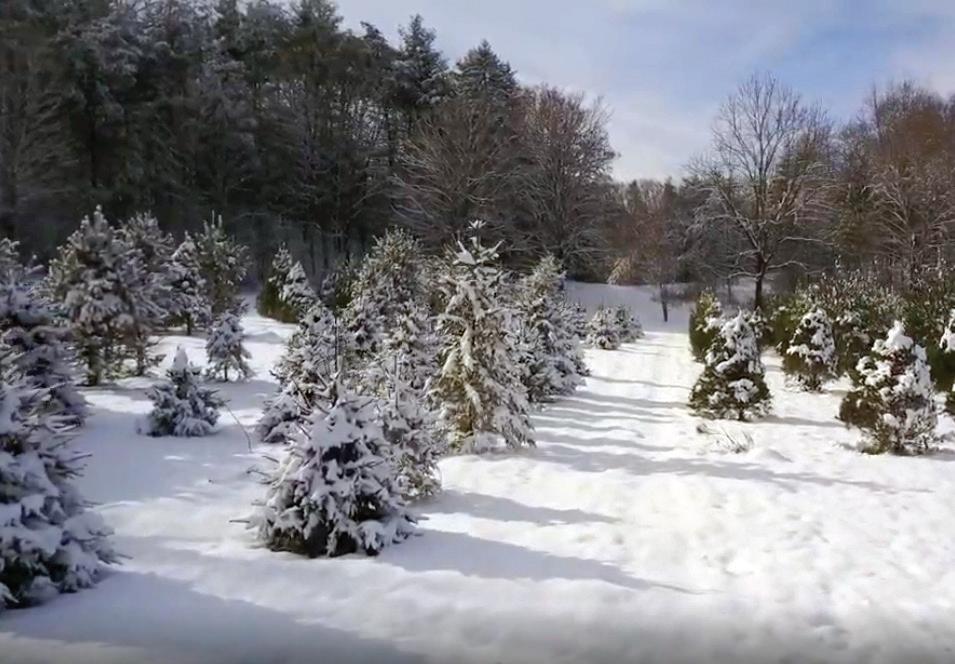
Since Joanne Tannehill left her 80-acre property to the Boys Home of Virginia in 1994, the farm has provided students with teaching and learning experiences. Each year, small crews of boys spend weekends tending to thousands of fir trees, maintaining the land and building lifelong skills.
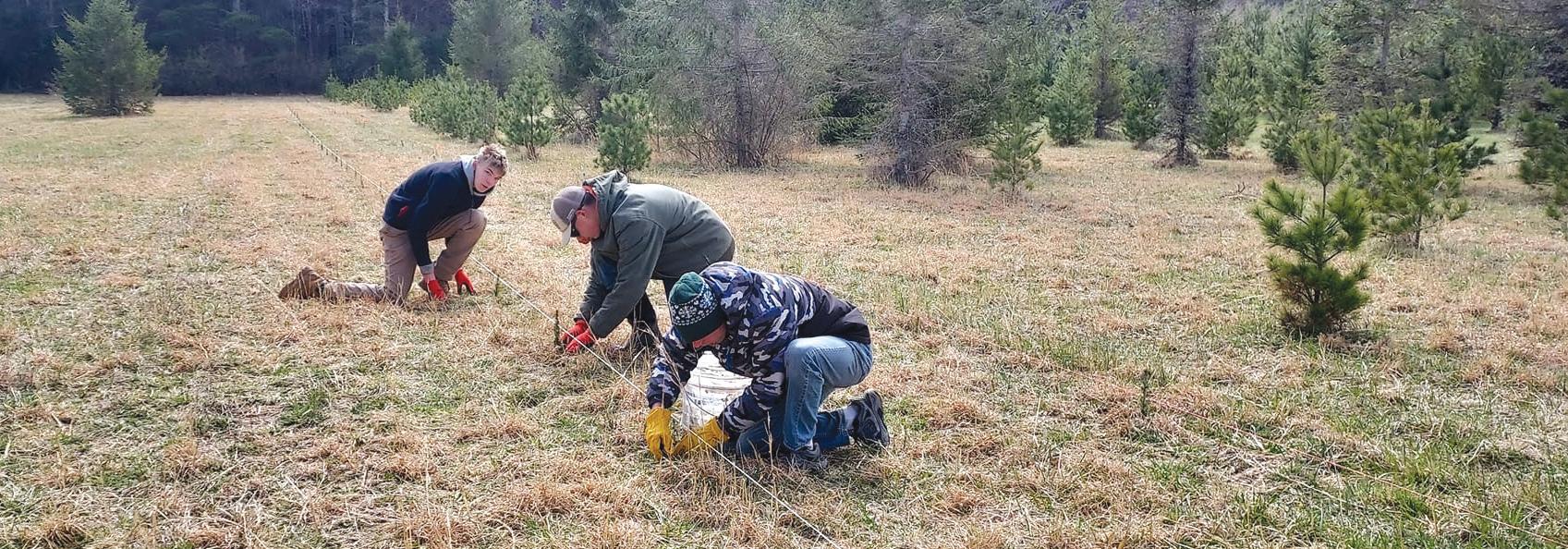
They begin in the spring, when students “map out how many trees we’ve got and how many rows we need in order to plant 420 trees,” explained farm manager Rick Hutson. “The kids help lay out the grid and we quiz them on the math.”
Throughout the seasons, Hutson and the boys keep busy relocating mature transplants, shearing trees, grooming fields, clearing brush and caring for a small menagerie of farm animals. Along

the way, they’re earning an hourly wage, staying active, forging friendships and gaining skills beyond forestry—teamwork, responsibility and the confidence from taking pride in their work.
“You learn to work with others,” Hutson said. “You learn how things work, how to figure out solutions to problems.”
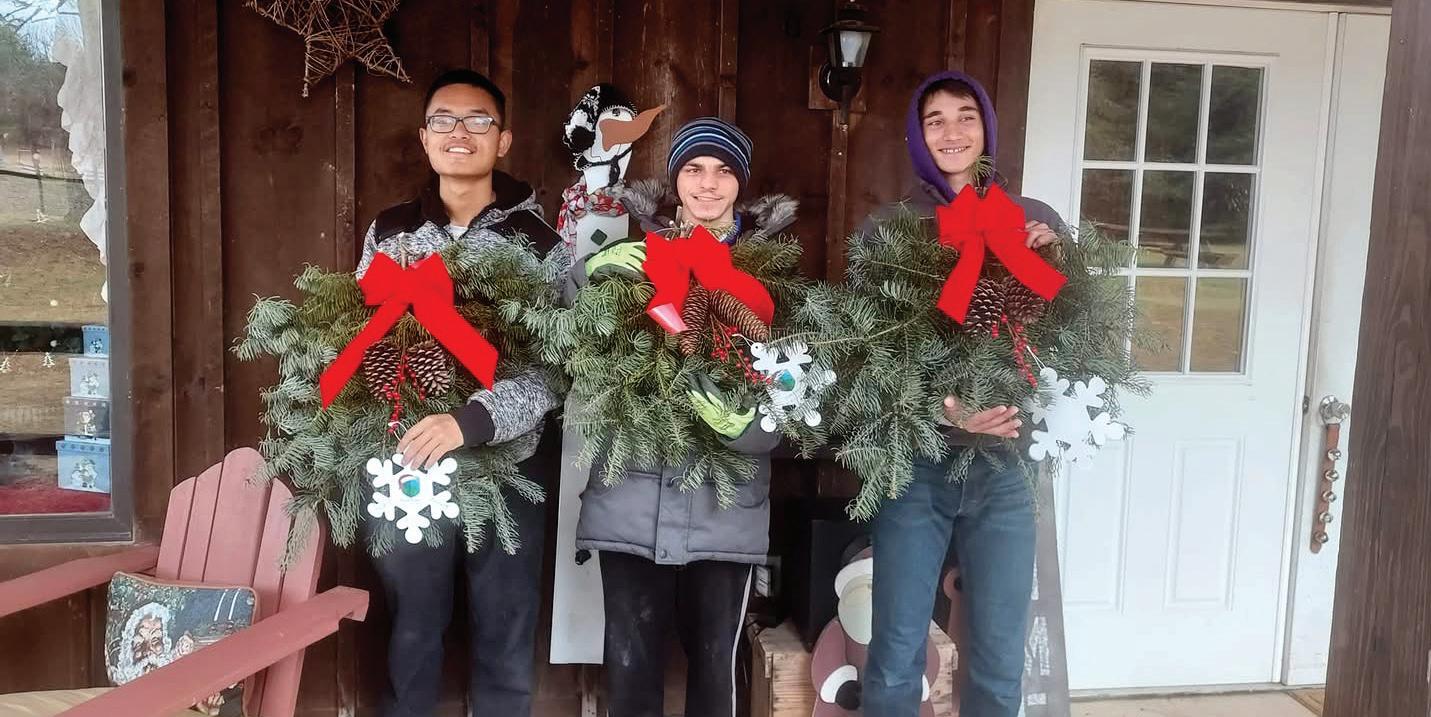
Their efforts culminate each fall when the farm opens to the public after Thanksgiving. Students help customers select and cut trees they’ve nurtured, prepare wholesale orders, and sell wreaths and ornaments.
Backing up against a scenic national forest, the property’s trees, walking trails, ponds and open spaces also offer moments of peace and recreation. It’s a serene space for young men who have faced significant adversities in their lives.
“The woods can be a very cleansing and therapeutic place,” Hutson said. “And
Innisfree Village
it’s good for them to get out where it’s not as structured.”
And just as the farm’s Christmas trees take root and flourish, so can the boys.
“This is a worthwhile experience for the students,” Hutson said. “You can’t save every kid, but when you do make a difference, it does feel good. You know you have done well when a previous Boys Home graduate comes back with his wife and baby to show them what it was like at the tree farm.”
Learn more at boyshomeofva.org/ support-us/our-tree-farm
A community of caring
Tucked among rolling hills in the Blue Ridge Mountains, Innisfree Village has fostered an empowering life sharing community with individuals with intellectual and developmental disabilities since 1971.
Here, residents—called coworkers— live alongside volunteers and engage in activities that keep the 550-acre Albemarle County community thriving. The inclusive model builds lasting relationships and skills with therapeutic benefits through purposeful work like preparing meals, gardening, crafting artisan goods and supporting a familylike environment.
“Some of our coworkers have been with us for 40-50 years,” said Innisfree’s executive director, Rorie Hutter. “We’re not just an organization focused on care delivery, but rather on everyone being participatory.”
Some of that participation involves working on the village’s farm, where coworkers care for 400 chickens, 60 cows, 20 sheep and a handful of turkeys and pigs.
“We have our basic chore checklist, just like every farm,” explained farm manager and longtime volunteer Tim Wool. Coworkers collect eggs, rotate cows among pastures, repair fences, feed pigs, put out hay and clean up fallen trees.
“The lambs are very fun,” Wool added. “And there are certain animals that people love to go say hi to…you can see the rewarding and therapeutic benefits of caring for the animals.”
Meals made from fresh eggs and pasture-raised meat paired with fruits, vegetables and herbs from the community’s 3-acre garden demonstrate the value of everyone’s contributions.
“It’s realizing, ‘I just harvested tomatoes yesterday and now we’re enjoying those incredible tomatoes,’” Hutter said. “That direct correlation is really important for our folks.”
While the farm is fruitful, production isn’t the sole focus. Tasks are intentionally less automated and broken down so “individuals with differing abilities can
fully participate” and benefit from working on the farm and with animals, Wool said. Activities are chosen based on interest and ability, with the wellbeing of people, animals and land always at the forefront.
And in a community where everyone works together, “it brings new possibilities,” Hutter said.
“There are opportunities here that people probably haven’t been exposed to,” she said. “By setting up a supportive environment, there’s a much more enriched menu of choices.”
Learn more at innisfreevillage.org
RICK HUTSON, BOYS HOME OF VIRGINIA
On an 80-acre parcel in Augusta County, members of the Boys Home of Virginia plant and then tend to thousands of fir trees. The boys earn an hourly wage and learn about teamwork and responsibility. The trees and byproducts like ornamental wreaths are then sold to the public after Thanksgiving.
Virginia farms cultivate healing, personal growth
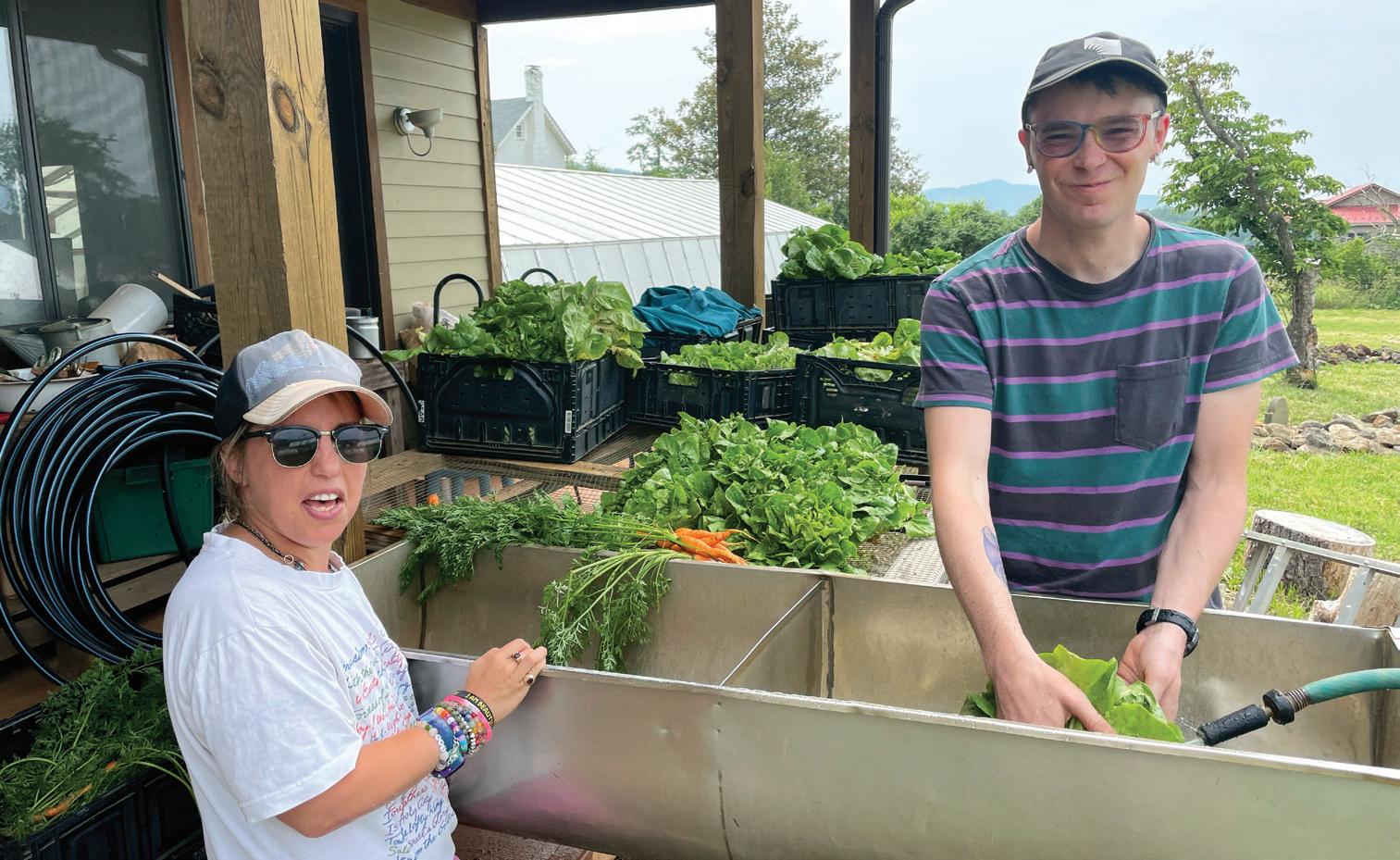
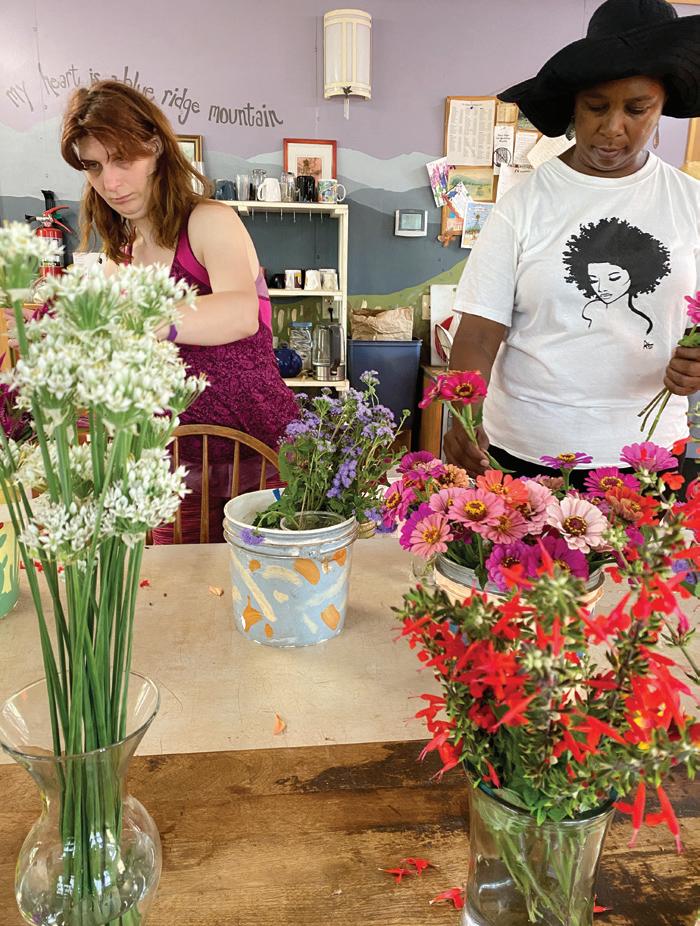
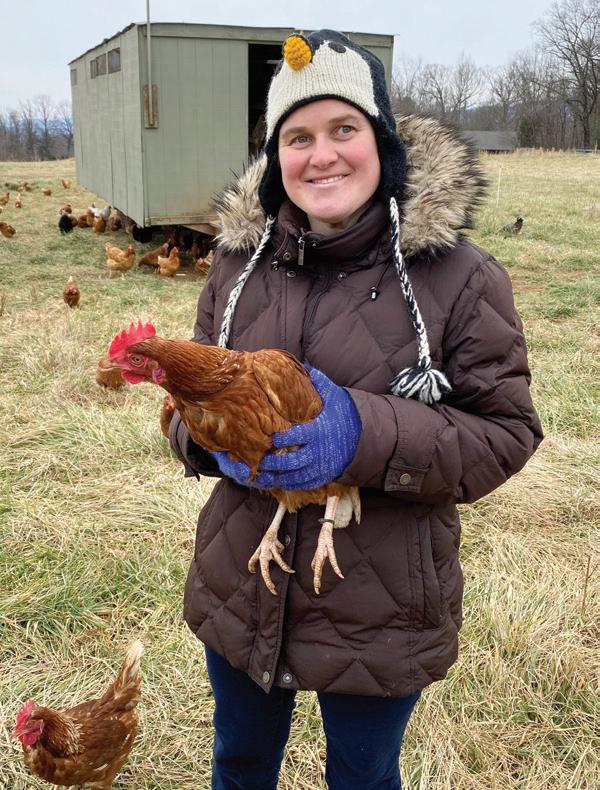
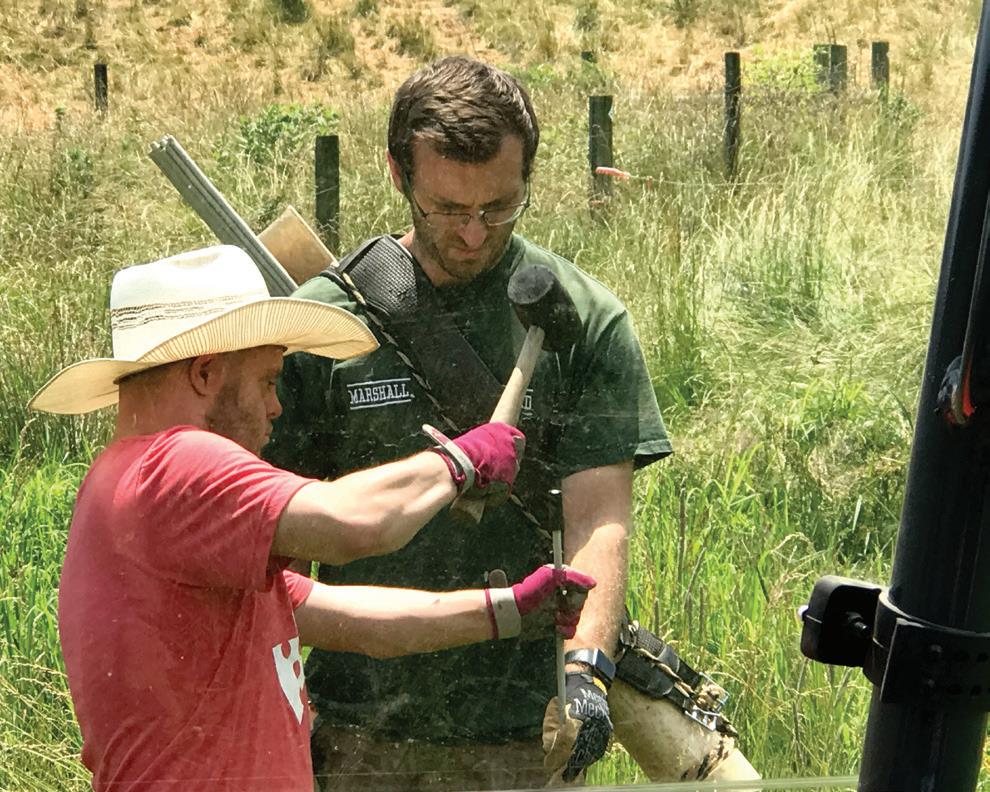
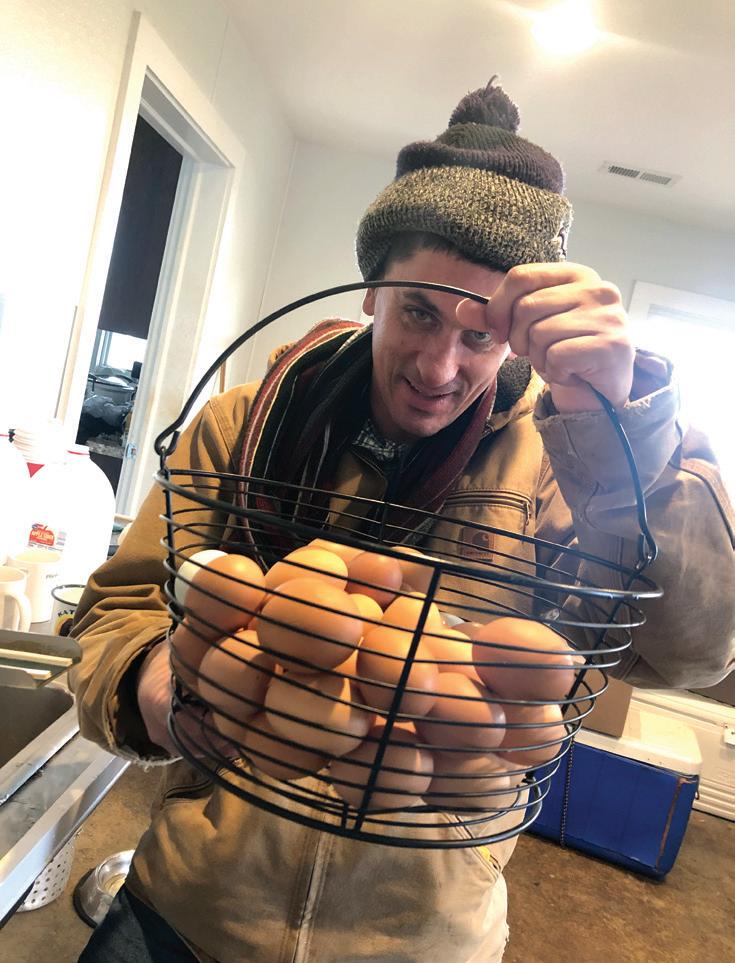
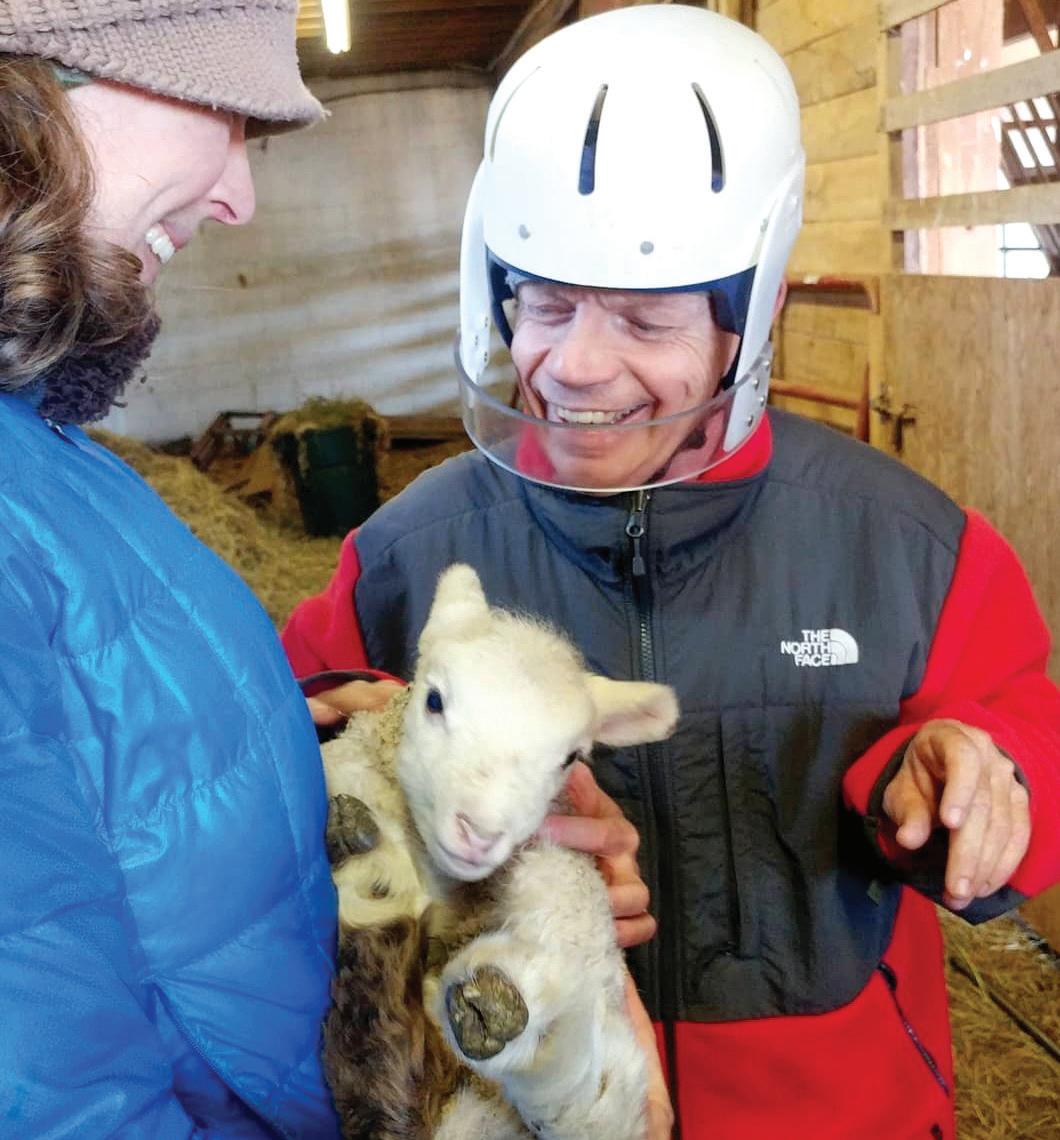
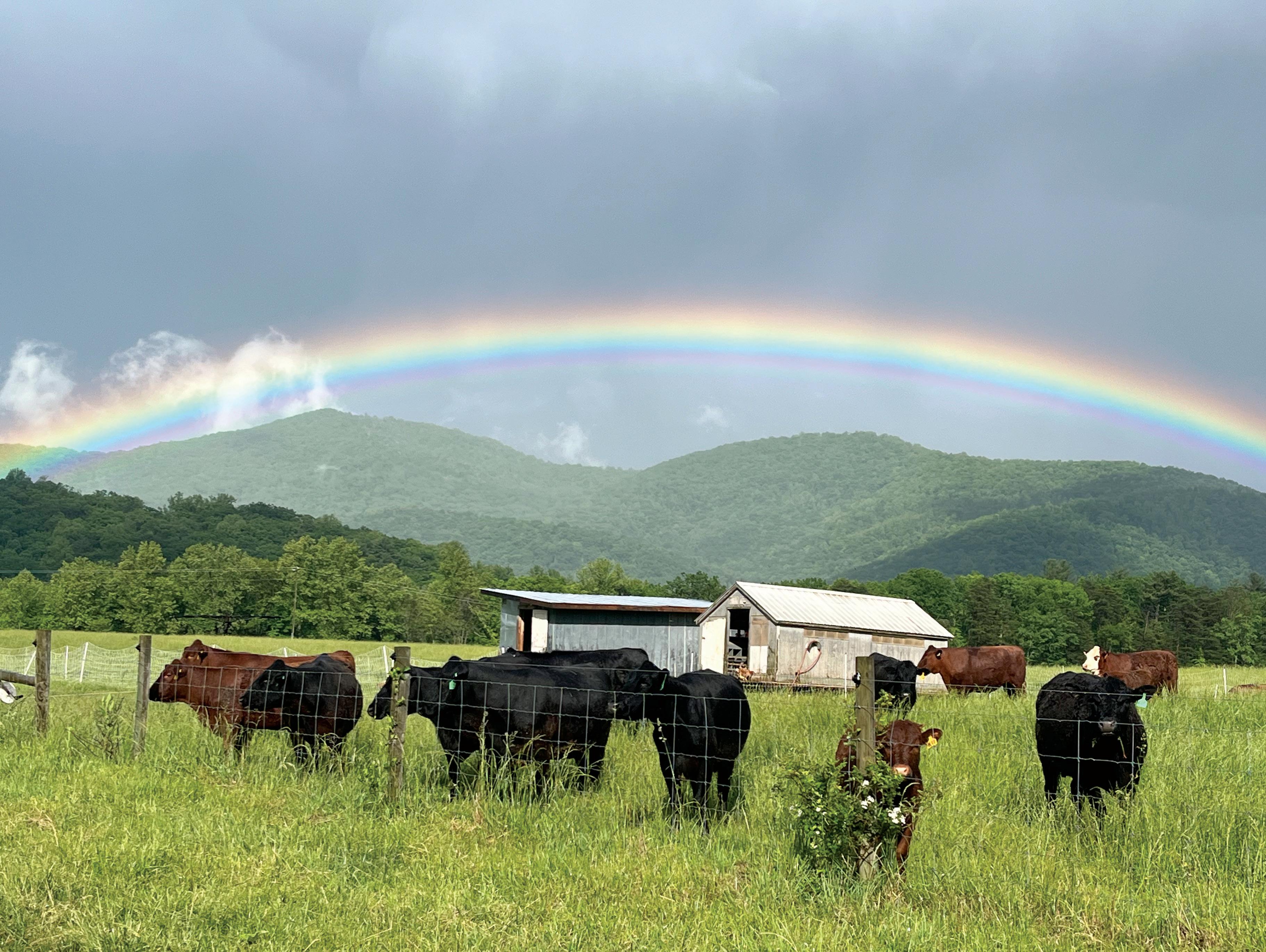
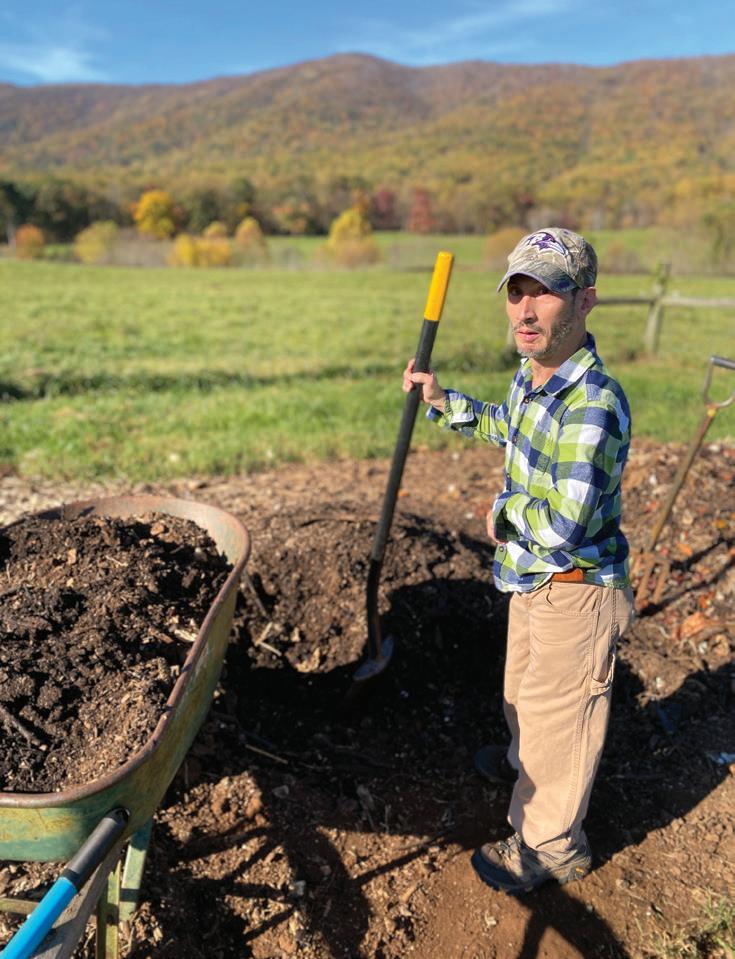
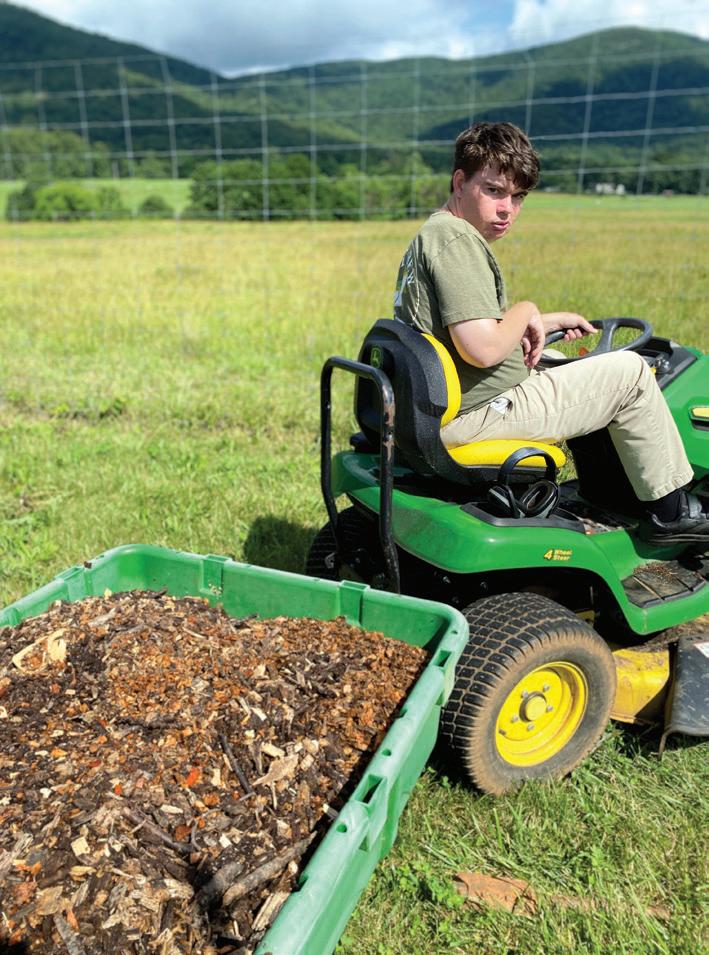
At Innisfree Village in Albemarle County, people with intellectual and developmental disabilities live alongside volunteers and work to keep the 550-acre farm thriving. They help cultivate vegetable and flower gardens and assist with caring for the farm's chickens, cows, sheep and a handful of pigs.
From Virginia’s

pastures to pine stands, women working full time in agriculture and forestry lead by example

BY NICOLE ZEMA
Th
e United Nations General Assembly declared 2026 the International Year of the Woman Farmer, honoring the vital role that women farmers play in agrifood systems globally. The observance will highlight the contributions of rural women in ensuring the economic survival of their families, communities and the nation.
Virginia Farm Bureau Federation’s communications channels will showcase women statewide working in agriculturerelated capacities throughout 2026.
The 2022 Census of Agriculture reported farming as a primary occupation for 8,810 women out of Virginia’s 25,000plus female farmers. Many of them are full-time farmers and foresters whose track records set high standards within Virginia’s largest private industries.

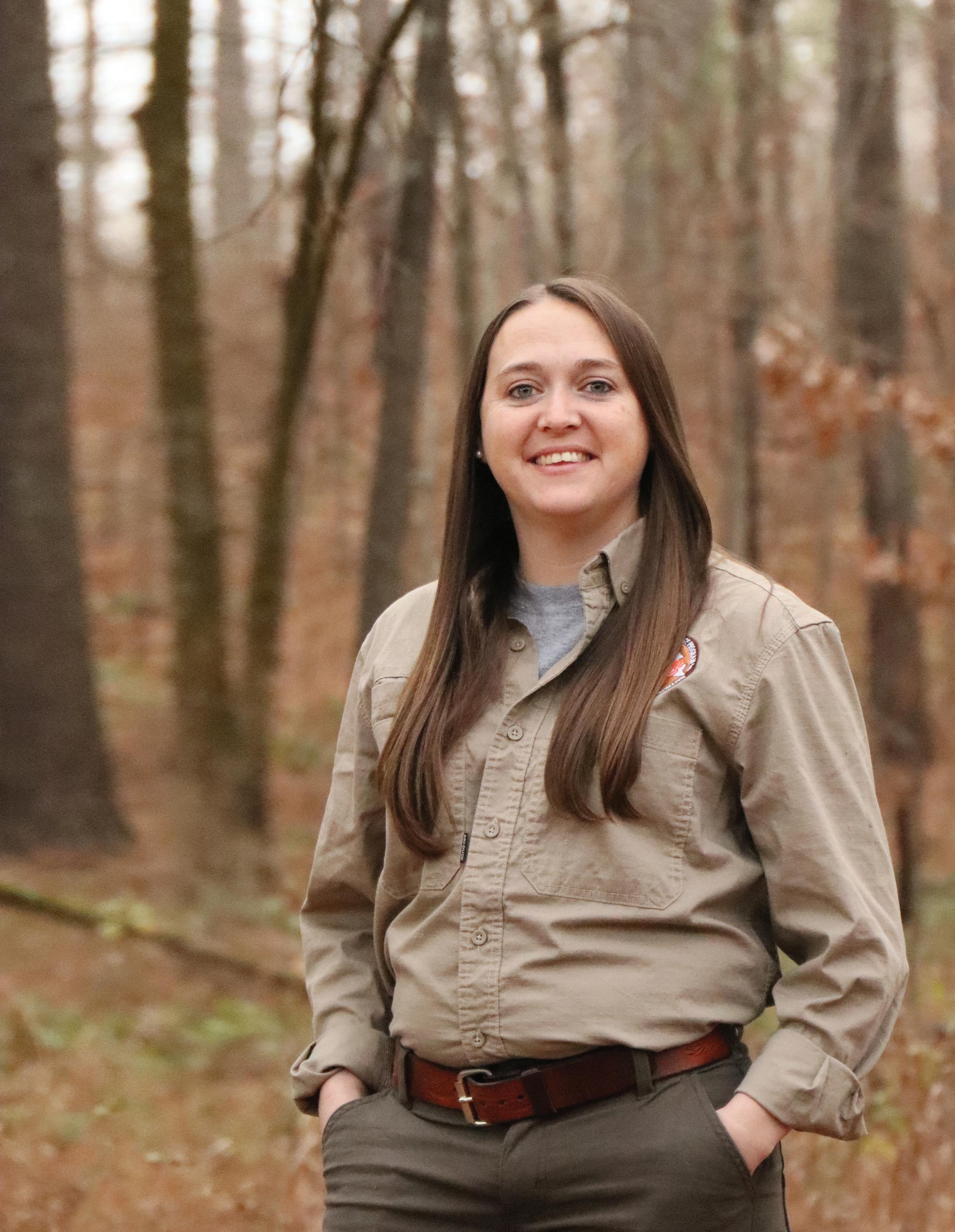
LAURA HUDSON
Halifax County
Southern Piedmont regional steward
Countless hours spent fishing and hunting as a youth in Halifax County taught Laura Hudson respect for nature’s rhythms, an understanding of healthy ecosystems and a sense of responsibility for forest conservation.
A natural resources elective in high school was the trailhead on her path to an impactful forestry career. She studied fisheries and wildlife conservation at Virginia Tech, with a minor in forestry.
“My goal was to come back and find a job where I could live and work in my hometown,” Hudson recalled. “Thankfully, Halifax County is pretty big in the forest industry with good opportunities.”
Hudson’s tenure as an area forester with the Virginia Department of

Forestry was a step along a footpath to her leadership role as the Southern Piedmont regional supervisor for the Virginia Department of Conservation and Recreation’s Natural Heritage Program.
“Working as an area forester gave me the groundwork experience to take on this new role last summer,” she said.
She now oversees stewardship practices on forestland across 11 counties on natural areas of statewide significance that DCR acquired and manages through the Natural Area Preserve System. Its Natural Heritage Stewardship Section maintains and enhances the value of natural resources by conserving the area’s biological diversity. Practices include management planning, operations management and research.
“We’re also harvesting timber, controlling invasive species and
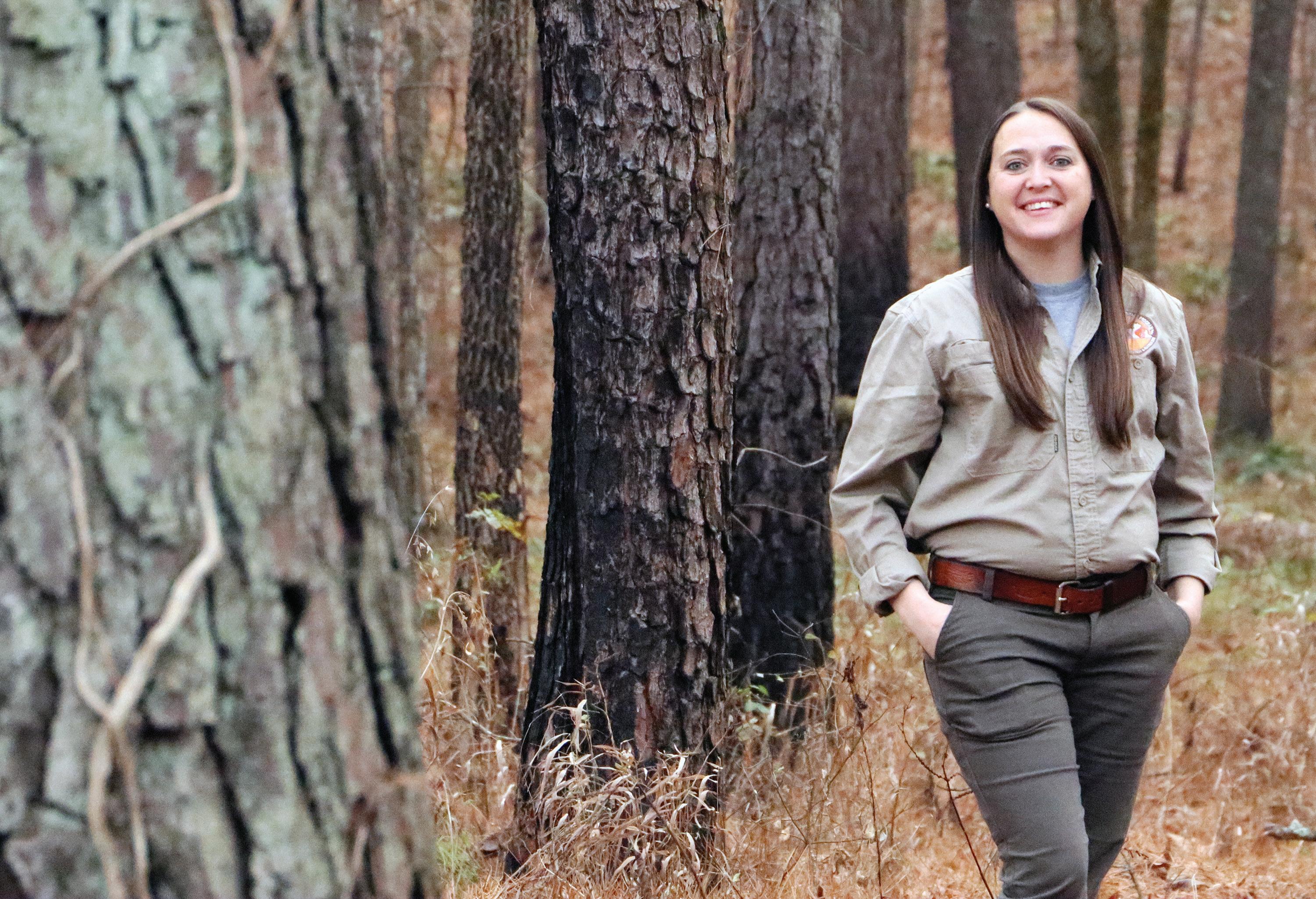
Laura Hudson
overseeing prescribed burns,” Hudson said. “Trying to provide for good management on the ground.”
Though men far outnumber women in forestry, “I felt I was always looked at as a peer,” she said. “I was the only female area forester working in Halifax County, and I’m still the only woman here in my particular position, though there are women with the same role in different regions.”
U.S. Bureau of Labor Statistics data suggests that among the nation’s forest and conservation workforce, women made up 14.5%.
Though women may be underrepresented in the sector, their influence is outsized.
“Amy Bigger was one woman in my DOF district who I looked up to,” Hudson said. “She worked in the forest industry for a very long time and had a ton of experience that I didn’t necessarily have. She was very good at what she did, and I
admired her for that.”
Hudson has a partner to emulate in full-time forestry as she navigates firsttime motherhood. Her dependable husband, Luke, plus nearby family and a reliable sitter for their baby, Lila, offer support on days she can’t see the forest for the trees.
Laura Hudson’s advice for women interested in forestry careers:
“If you have the interest, pursue it. Take the class, enroll in the forestry or natural resources program, find a mentor in that field if possible, and put in the time and effort to reach your career goals.”
SARAH WILSON
Washington County
Large-scale cow-calf operation
Sarah Wilson’s kids Clint and Mady joke they’re always “doing something with hay,” she said.
“We’re fertilizing hay, we’re mowing hay, we’re raking hay, we’re baling hay, we’re storing hay,” Wilson continued. “Or we’re feeding hay.”
She needs all that hay to feed 300 mama cows and their 300 seasonal calves at Leonard Land and Livestock in Russell County. She operates the farm full time with her dad, David Leonard, 87.
There are no “typical days,” Wilson said. Farm responsibilities vary by season.
“We’re trying to get all of our cows pregnancy checked and we’re selling calves while getting heifers and steers shipped out before the end of the year,” she said in December.
Wilson had a good career in health
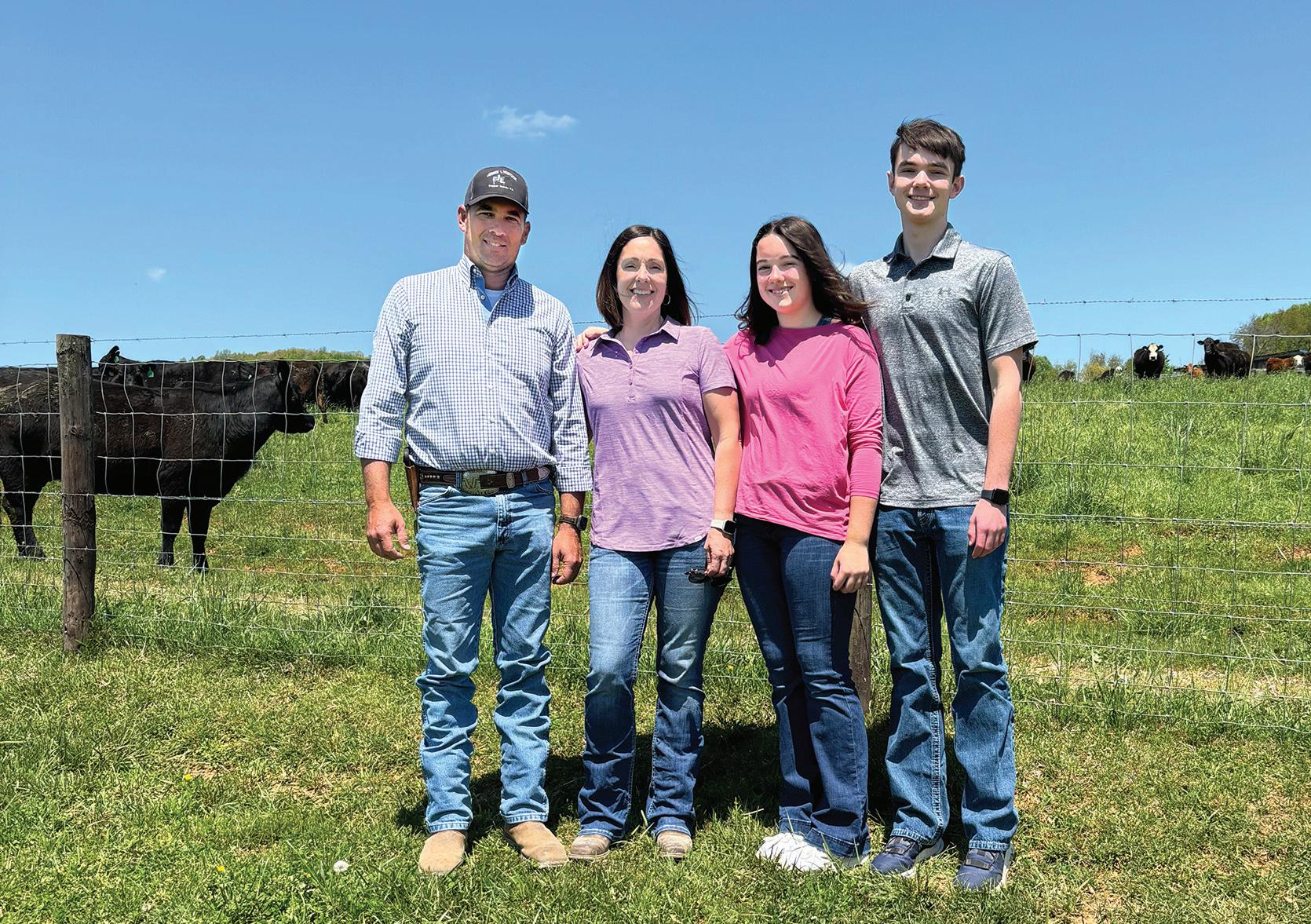
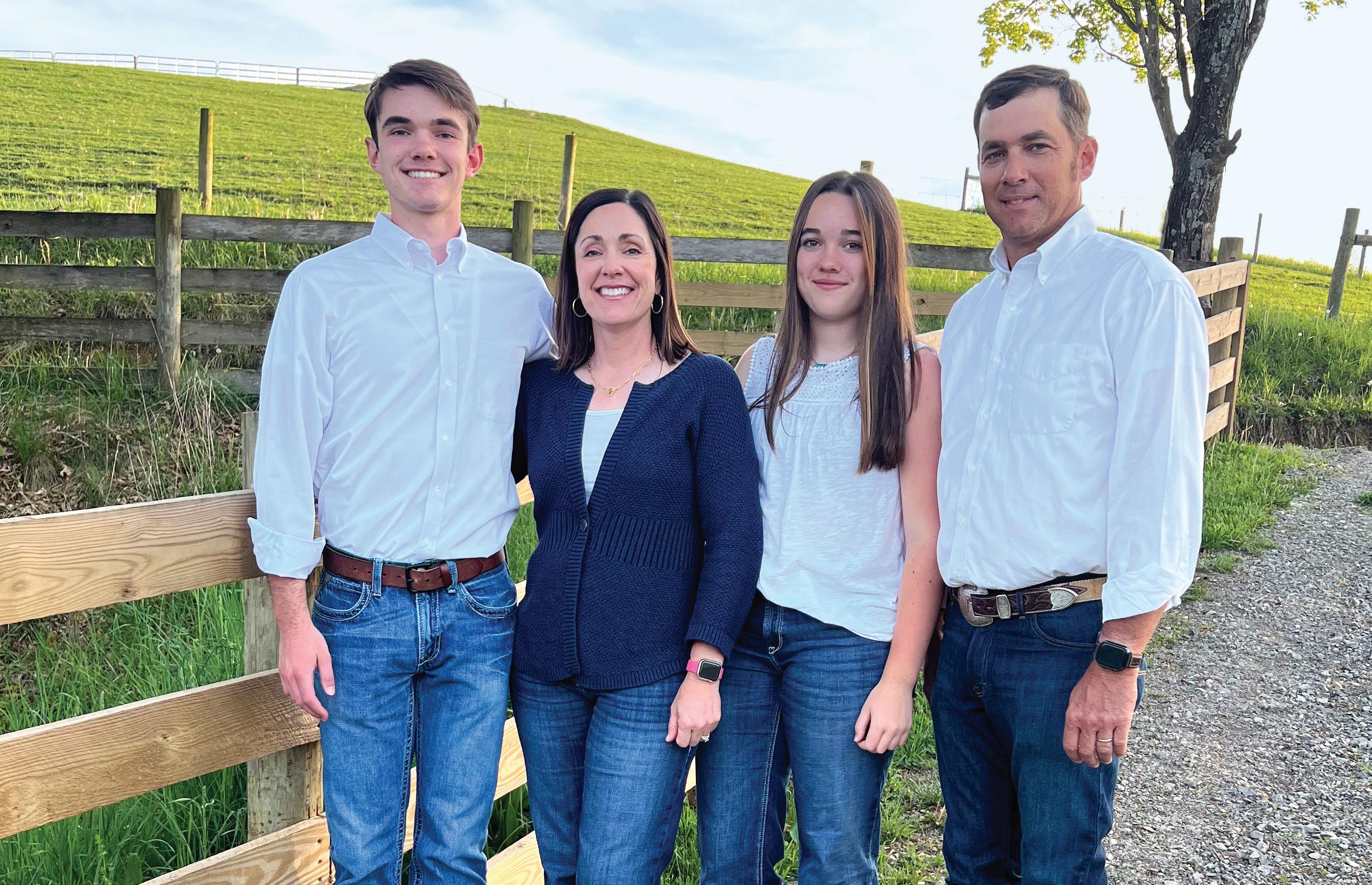
Sarah Wilson's son Clint, daughter Mady and husband Adam all pitch in on her Washington County cow-calf farm.

care sales. But when presented with an opportunity to return to the family farm in 2010, she took it.
“I was born and raised on my family’s farm and loved it,” she said. “It’s where I developed a passion for agriculture and where I really wanted to be.”
Her family farm’s culture was inclusive of women.
“I was never told that girls can’t do this,” Wilson said.
It took time to reestablish herself in agricultural circles after returning as farm operator.
“Sometimes early on, a big decision had to be made, and people would want to call my dad or my husband, Adam,” Wilson chuckled. “But being persistent and showing up is a factor in establishing yourself.”
Calling Adam would be futile anyway. He has his own cattle operation to worry about at Wilson Cattle.
“We like to aggravate each other about whose calves weigh the best or turned
out better,” she said. “And of course, if he does get ahead of me, it’s always because he’s cheating!”
Wilson’s balancing act as a volleyball mom, agricultural leadership fellow, and presence on state boards and local committees while managing two employees at a 1,500-acre cow-calf operation has its rewards and challenges.
“The past two days, I feel like I need a legal pad to list the most difficult aspects of this,” she said. “But I’m thankful— being able to work with my family and kids alongside us on a daily basis is completely satisfying.”

Sarah Wilson’s advice for women establishing themselves in Virginia agriculture:
“Know that you’re capable. Don’t doubt yourself. Your farm or business may not look the same as everybody else’s, but know there is a place for you in this industry.”
AFBF launches Women in Agriculture Study
In honor of the international observance, American Farm Bureau Federation has launched a national study to capture women’s voices nationwide and understand the experiences, leadership pathways and future needs of women in agriculture. It will help identify what’s working, gaps and barriers, and how to strengthen engagement and support systems across agriculture. The survey will remain open through March 31 gathering insight from women working in production agriculture, agribusiness, education and advocacy. Visit fb.org, or scan the QR code to participate in the study.


Double duty—farmers work on and off the farm
Double

Many farmers wear two—or more— hats as they juggle multiple jobs.
According to the latest census of agriculture, 27,471 Virginia farmers reported that farming is their primary occupation, while 40,327 said their primary occupation was something off the farm.
Extension agent by day, young farmer by leisure
BY CHRISTINA AMANO DOLAN
Growing up on a farm, Elizabeth Cooper always felt a deep connection to the land and legacy cultivated by her father’s family for generations. Her love of learning and teaching others mirrored her mother’s career as an English teacher.
She chose to pursue both passions.
“My mom got her wish a little bit,” Cooper joked. “I did end up in a form of education, but my classroom tends to be a field.”
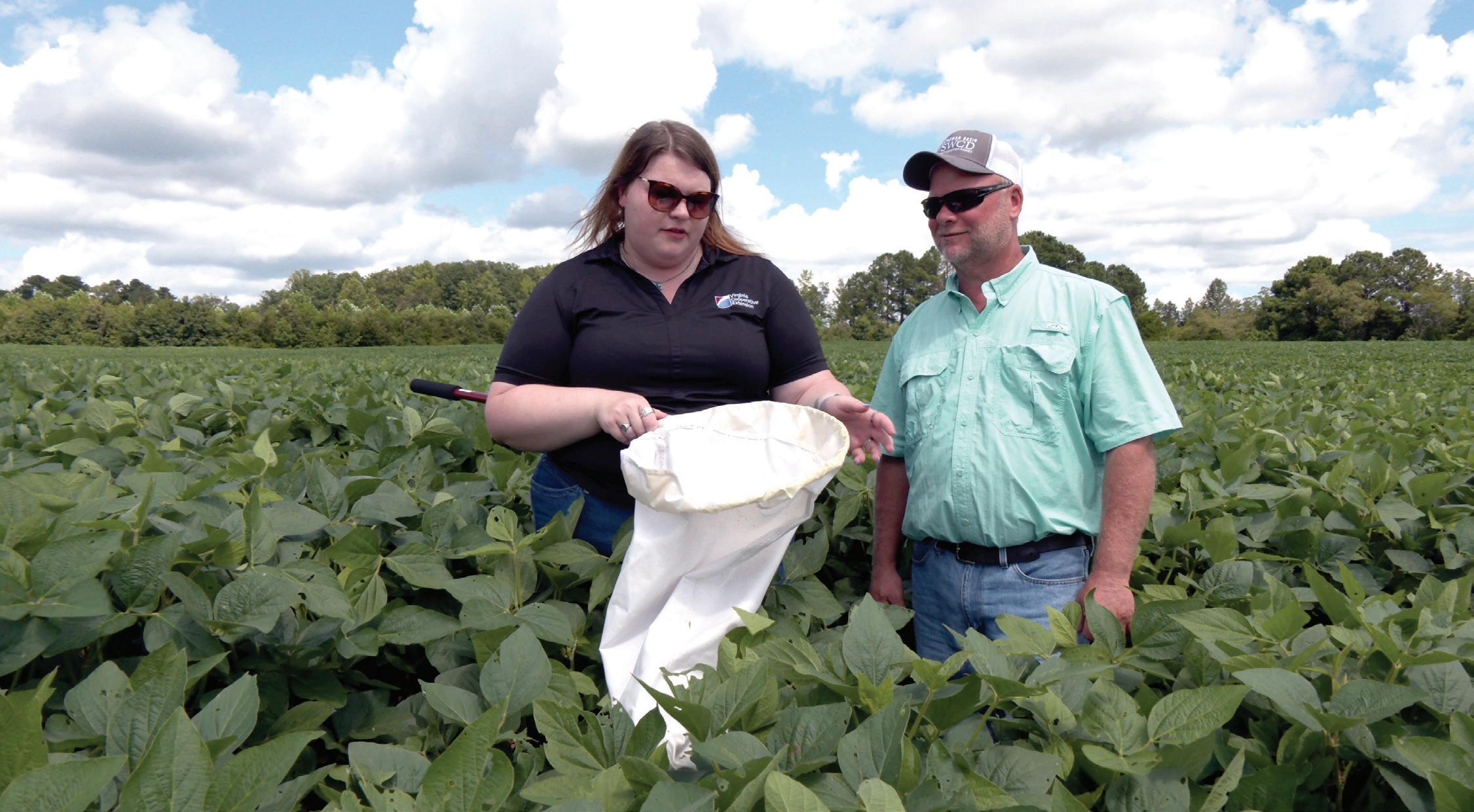
Cooper is always on the move and learning something new as a Virginia Cooperative Extension agriculture and natural resources agent in Surry and Sussex counties. She applies her expertise in plant science and pest management to assisting farmers in the field—diagnosing crop diseases, offering treatment plans, conducting pesticide recertification trainings and sharing university research.
As an Extension agent, she’s always on call—ready to answer a question, run an errand or offer a listening ear.
“I love what I do because I love interacting with people,” she reflected. “With farmers, I live the life that they live to an extent. I’m a reliable source, but also someone who understands what they’re going through.”
Cooper and her brother always knew they had a future on the family’s Surry County farm, but they needed a backup plan. The farm would need to expand to fully support each generation— complicated by issues with land access, steep startup costs and
other challenges facing many young farmers today. Plus, an off-farm job could offer health insurance benefits and a steady paycheck.
“Even if it’s a bad year with crops, you know you have a paycheck coming from somewhere,” she noted. “I’m seeing that more and more, at least one person in the household is working off the farm—especially with the rise of remote work.”
Cooper helps out on the farm whenever she can, where the family grows corn, soybeans and wheat, and manages a herd of Black Angus cattle. She assists her father with the business side of things, and can apply lessons learned through Extension to her family’s operation.
Luckily, her Extension office is just 15 minutes down the road.
“Whatever is needed is where I fill in,” she explained. “I may take an hour during lunch and go help fix a tractor or take samples to the lab, or take a good bit of time off during harvest to help move equipment.”
Cooper hopes to one day work full-time on the family’s farm— however long it takes. In the meantime, she works on honing her work-life balance and taking more time for herself and her family.
She encourages fellow double-duty farmers to do the same. Remember that “you’re just one person,” and ask for help when needed.
“We do it because we have a passion for agriculture, feeding our families and the world, and conserving our land for generations to come,” she reflected. “Even if it means a few hours less of sleep at night, it’s worth it. It’s what I grew up wanting to do, and I think a lot of double-duty farmers would say the same.”
ELIJAH
As a full-time Virginia Cooperative Extension agent, Elizabeth Cooper shares helpful agricultural research with Sussex and Surry farmers, and also works on her family's small grain and beef cattle farm part time.




Surry County farmer Breyon Pierce pulls triple-duty in farming, ag education and local government
NICOLE ZEMA
Breyon Pierce wakes up at 4 a.m. to a challenge: “How can I capitalize on my 24 hours?”
The Surry County livestock and row crop farmer’s daily checklist takes him from farm fields to the classroom and then the dais at local board of supervisors meetings.
A legacy is at stake—the family farm, a future for youth in agriculture, and local policies that impact the county’s historic farming identity.
Pierce and his dad, Glen, grow peanuts, corn, soybeans and wheat on over 900 acres at Pierce Farms LLC. His 14-year-old twins Landon and London help on the farm where Pierce also mentors area youth seeking agricultural experience.
“With us being fifth- and sixth-generation farmers, and raising two future leaders myself, I won’t let everything my forefathers worked hard for stop with me,” he said. “If my kids want to pursue some type of career in agriculture, then I have the family farm infrastructure where they can implement what they have learned.”
Their operation has expanded into growing sweet corn for local grocery stores, and a venture called Poppa Breeze Peanuts and Produce, which offers peanuts in chocolate, salted and trail mix varieties.
As an agriculture educator and FFA advisor at Surry County

High School, Pierce was named 2020-21 school and district teacher of year. Many of his students went on to find roles in production agriculture, forestry, industry agencies and ag education.
“Teaching gives me the purpose of actually molding the next generation of agricultural leaders, whether it’s in farming or in policy,” Pierce said.
He was elected to the Surry County Board of Supervisors in 2022, and advocates for agriculture, education and smart community growth.
Now 38, Pierce finds purpose as a youth mentor and in community leadership.
“I’m focused on serving Surry County and my students, becoming a leader in my rural community—one young people need to see,” he said. “My hope is they are inspired and empowered to do the same.”
However, those responsibilities come with sacrifices.
“I love planting season, but may miss a few days of that,” Pierce said. “Sometimes I feel bad I can’t be out there to assist my dad with what he needs. But knowing that everything is more expensive in farming, working an off-farm job helps build income. I would enjoy farming full time, but we need something else to back us up.”
Embracing complex daily challenges is worthwhile. Pierce’s off-farm activities also are intentional in sustaining the essence of his rural farming community.
In the imperfect pursuit of balance, Pierce reminds himself to “handle your responsibilities today, so tomorrow’s opportunities can find you.”
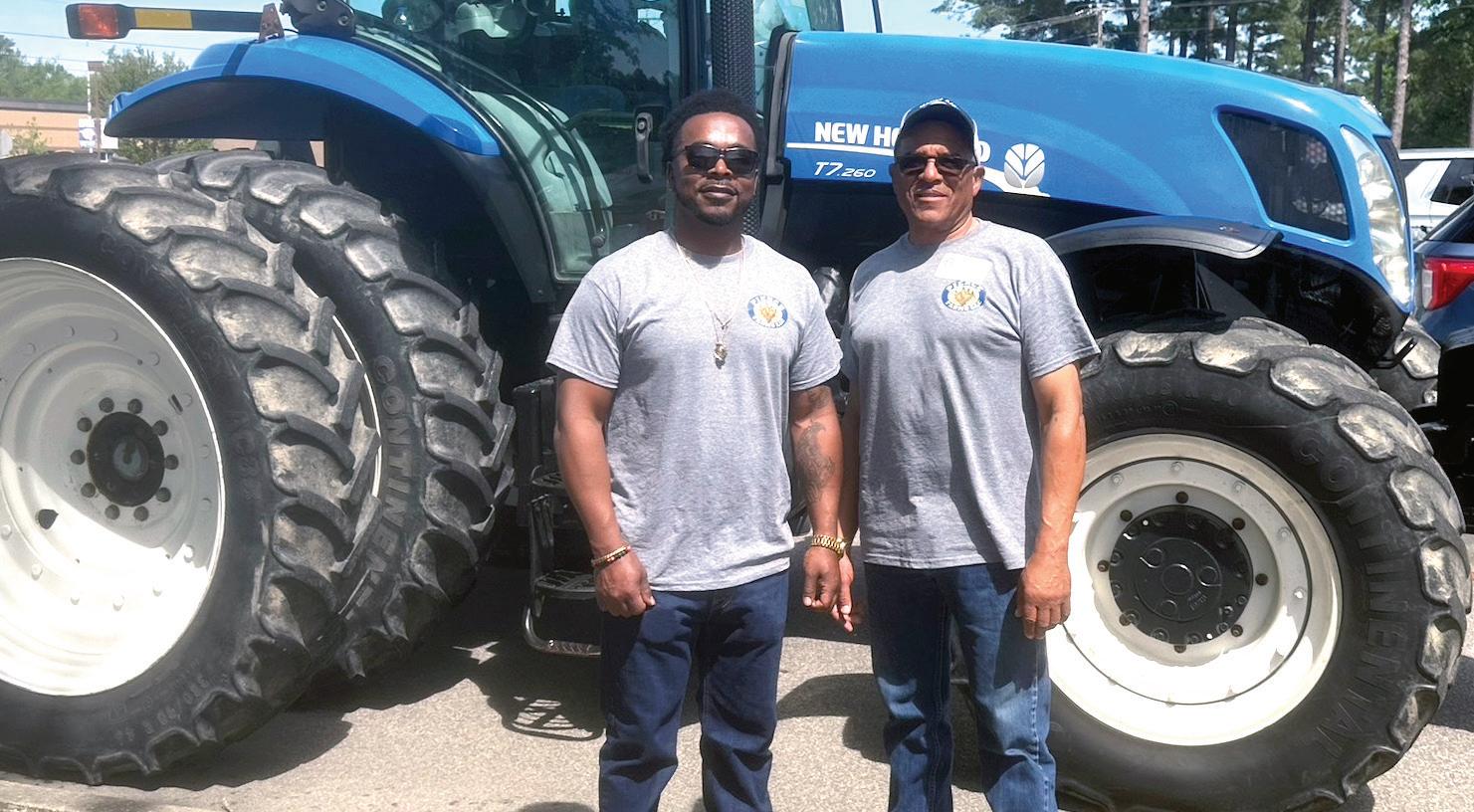
Breyon Pierce, left, and his dad, Glen, grow peanuts, corn, soybeans and wheat on the family farm in Surry County. Pierce also works as an agriculture teacher and serves on the Surry County Board of Supervisors. He finds that all three roles support farming in different but meaningful ways.

From farm to firehouse
BY ALICE KEMP
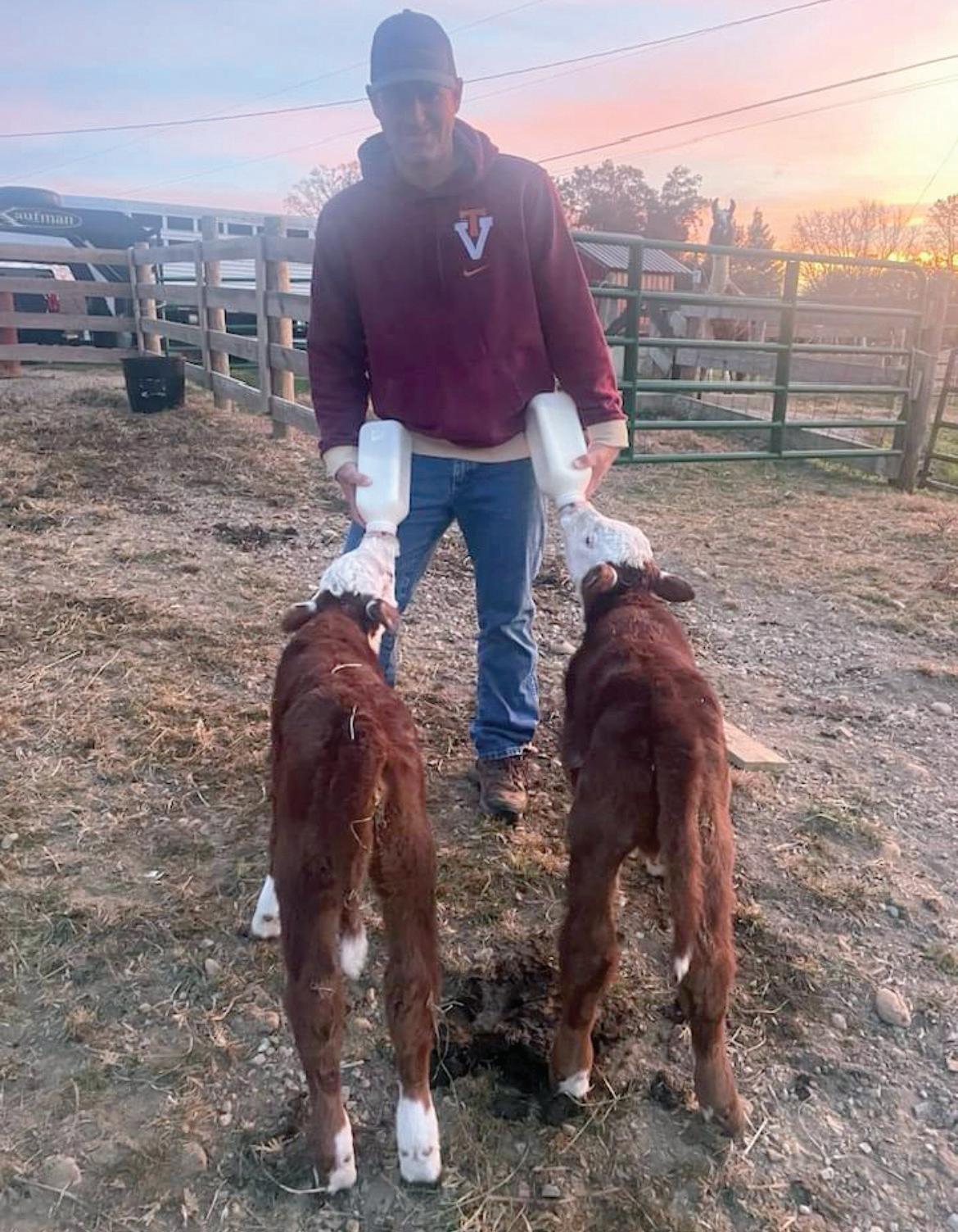
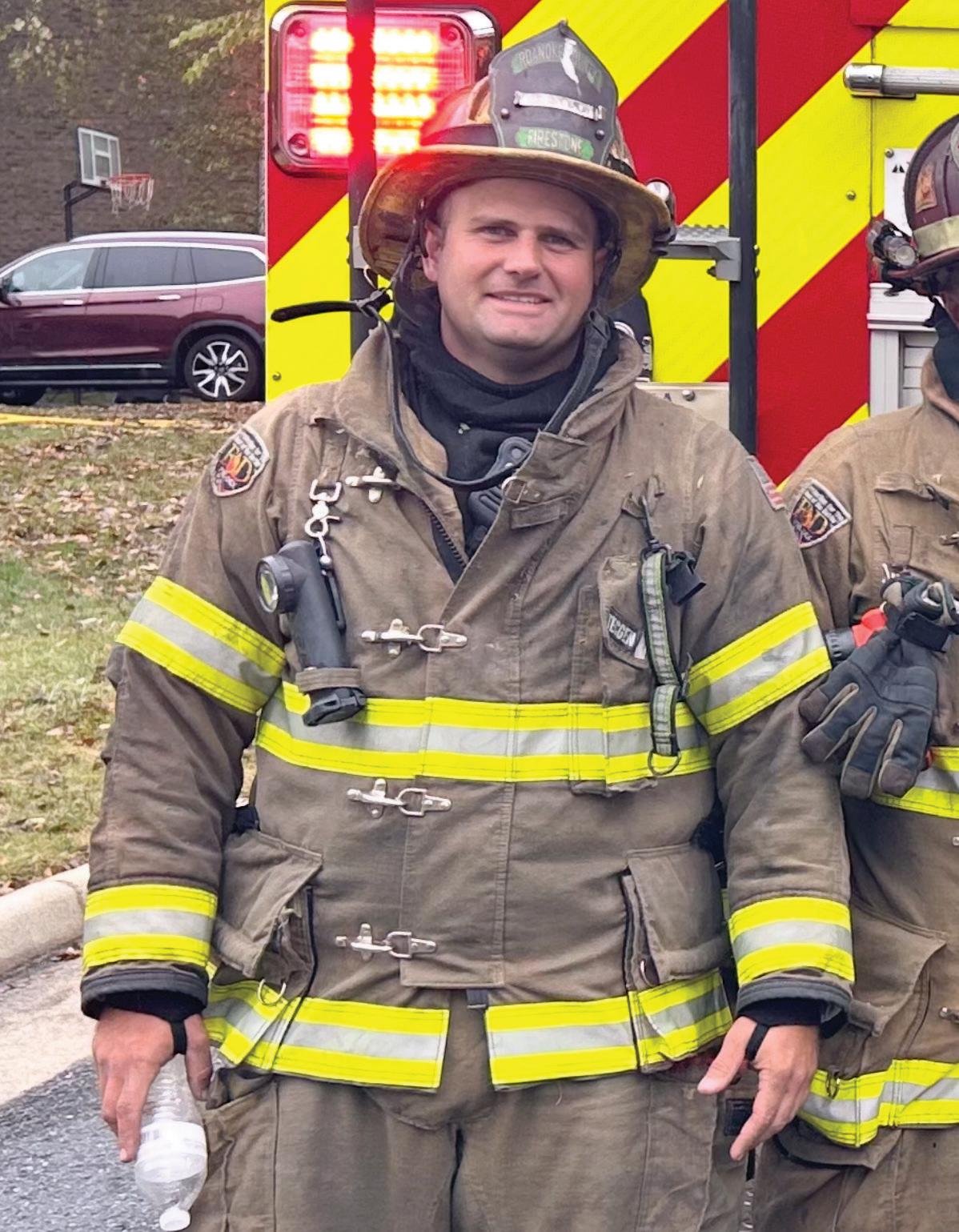
For Kent Firestone, firefighting and farming always went hand in hand. Raised in the racehorse industry and drawn to fire trucks as a child, he naturally gravitated to both agriculture and firefighting.
Today, he divides his time between 24-hour shifts with Roanoke County Fire & Rescue and a small cow-calf operation.
When he’s not at the station, he’s working alongside his wife, Sarah, managing their Hereford cows and building his commercial crop spraying business.
“I have to give a shoutout to my wife,” Kent said. “I wouldn’t be able to balance two things, let alone three, without her being involved.”
Between the farm, firefighting, the spraying business, Sarah’s career at Virginia-Maryland College of Veterinary Medicine and raising their son, the family juggles multiple jobs—a reality many farm families face.
“The barrier to entry for farming is difficult, especially to reach the point where it’s a sole source of income,” Kent said. “And when commodity prices are in the tank and input costs through the roof, it’s quite challenging.”
Balancing responsibilities requires meticulous organization so the Firestones “don’t miss the finer details.” Kent’s firefighting
career offers some flexibility—working 10 day-long shifts a month lets him “do two things at the same time.
“At least until I’m too tired,” he quipped.
But the busy summer season brings long days when emergency calls take him far from home and the calendar is booked with time-sensitive spraying jobs.
“I’m not nonexistent on the farm, but there’s a lot of passing in the hallway,” Kent said. “Sarah holds down the fort here and will tell me in passing, ‘Hey, I had to pull a new calf yesterday.’
“She always jokes that I’m never home when there’s a problem, but that’s just luck of the draw.”
Despite hectic schedules, Kent’s careers complement each other. Firefighters who farm often become “subject matter experts” during incidents with loose cattle, livestock trailers or rural emergencies.
And firefighting is his calling.
“You’re there to help someone on their worst day. All your problems go out the door and you’re 100% focused on the situation.”
And although there’s scarce downtime, the family still makes time together.
“Farming is a lifestyle, and what might not look like a vacation to anyone else is a vacation to us,” he said. “When we take a load of cows to a show across the country, that’s our time to get away from home and have new experiences as a family.”
Kent Firestone runs a small cow-calf operation in Roanoke but also works as a full-time firefighter. He said balancing both requires meticulous organization.
KENT FIRESTONE

Virginia forestry: A sustainable cycle of growth, harvest and renewal






BY CHRISTINA AMANO DOLAN
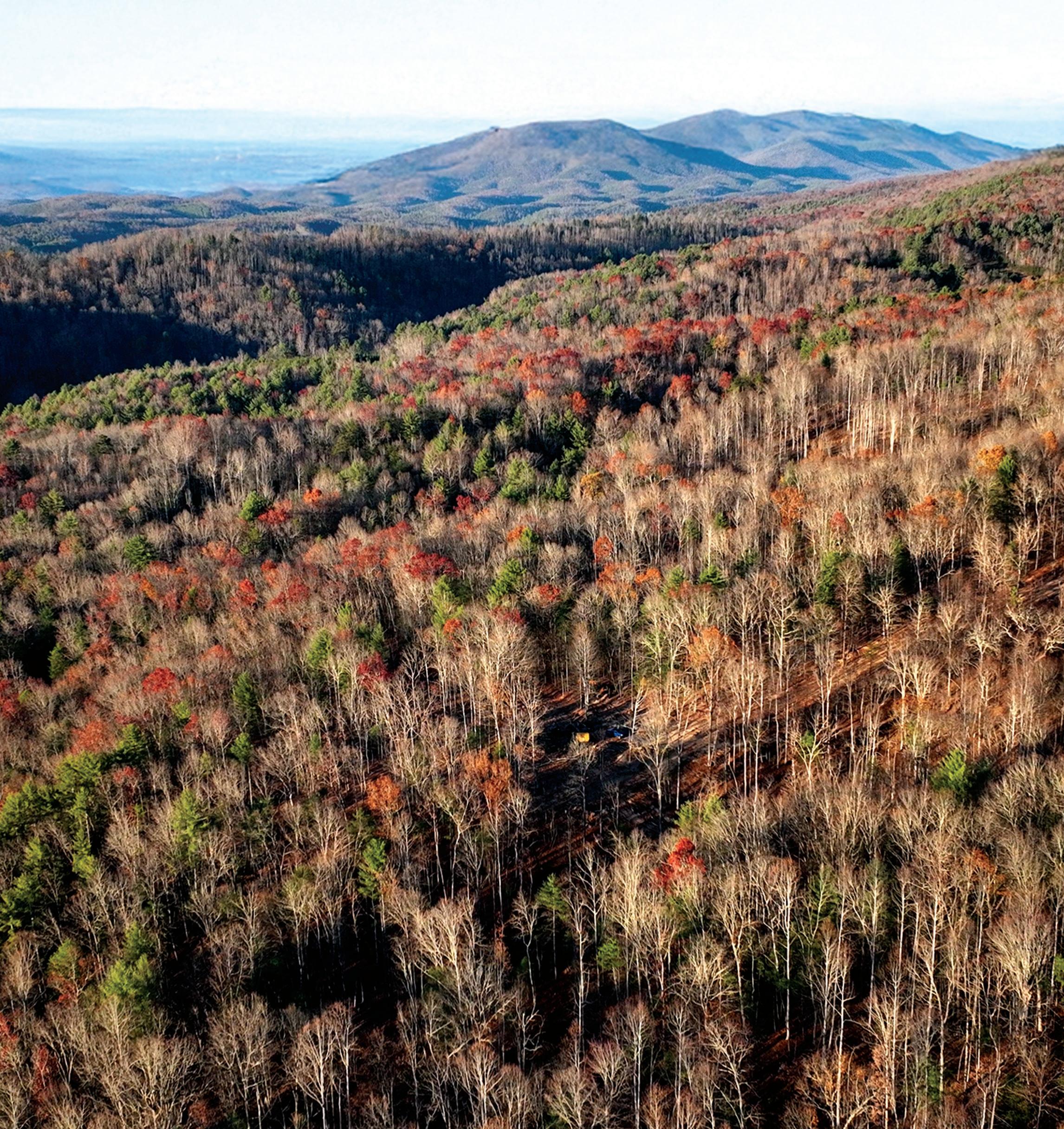
The trees around us have unique stories to tell—echoing centuries of resilience, opportunity and the interconnectedness of our forests and our futures.
The health of the commonwealth’s 16 million acres of forested land impacts all Virginians. Forests provide clean air
and water, wildlife habitat, recreational spaces and myriad products we use daily, according to the Virginia Department of Forestry.
Forest landowners, foresters, loggers, timber buyers and other forestry professionals work together to ensure a steady, renewable stream of valuable timber resources—harvested for lumber,
paper, electricity and more.
More than 75% of Virginia’s forests are hardwood. Pine makes up 20%, about two-thirds of which are planted pines.
“Sustainability is a big thing we can be proud about,” noted Sabina Dhungana, VDOF utilization and marketing program manager. “We grow way more than we harvest on an annual basis, we have
ELIJAH GRILES

all these best management practices in place, and we are one of the unique states that has a water quality program.”
Forestry is the state’s third leading industry with an annual economic impact of more than $23 billion, employing more than 108,000 people, and helping reforest millions of acres across the state.
‘Reforestation—a great investment’
In Prince Edward County, valuable upland oaks and loblolly pines take on new shapes elsewhere—from hardwood floors, oak trims and poplar boards to paper and engineered wood panels.
Patrick Murphy, a Virginia Farm Bureau Federation board member, keeps a watchful eye on the health and marketplace potential of his 185 acres of timberland. Like many producers, his timber provides additional income for supporting his farm operation.
“We also hold timberland for recreation, and watershed protection to help provide clean water to everybody in the commonwealth,” he noted.
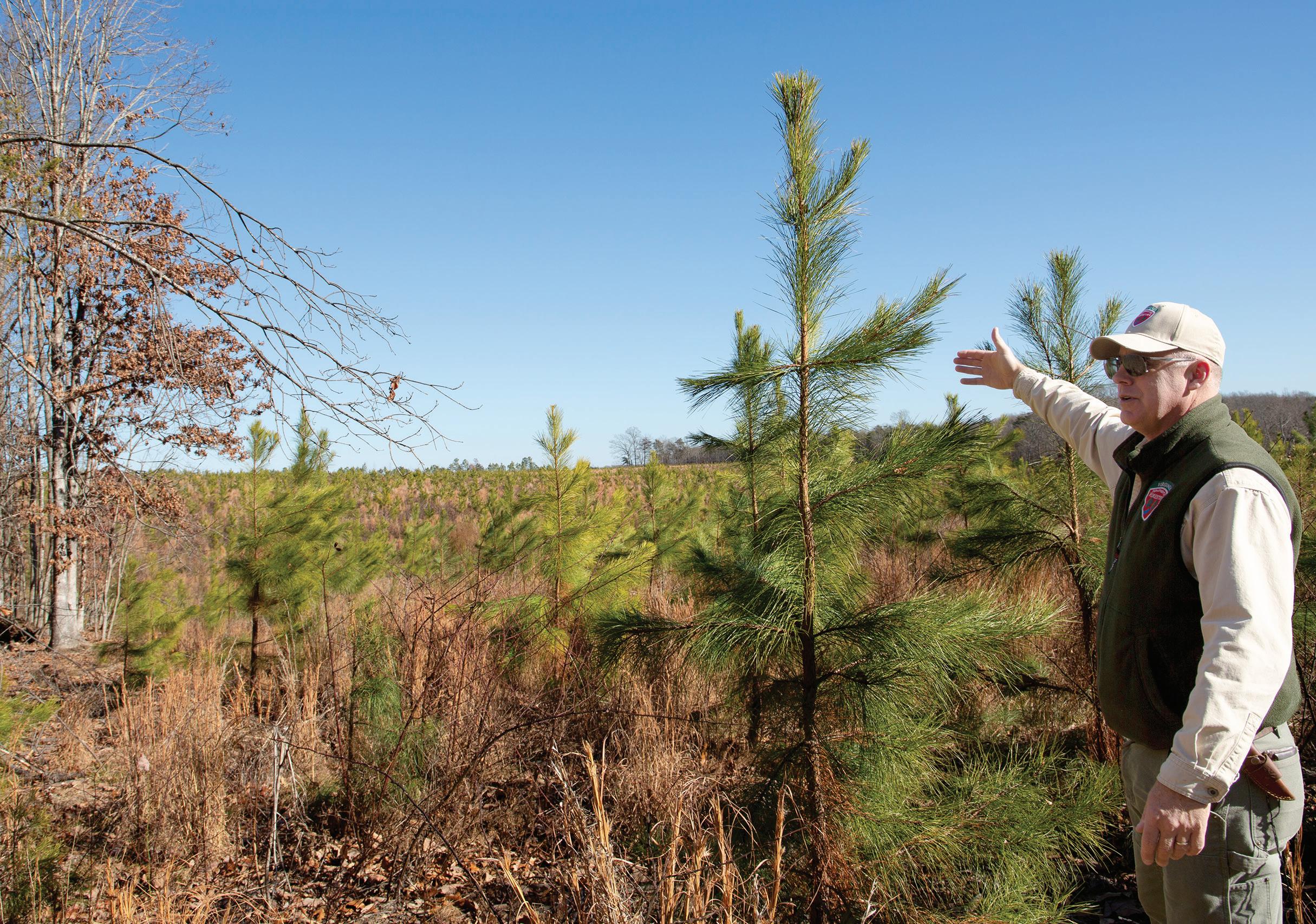
Murphy has spent decades cultivating his thriving woodland—most of which has been reforested from clear-cut harvests, a regeneration method that removes all trees from an area at once.
A longtime county forester, Murphy helps protect, preserve and sustain Virginia’s forests—promoting oak germination, suppressing wildfires, enforcing state water quality laws on harvesting sites, and helping fellow timberland owners optimize their resources.
“My primary goal is to help landowners make educated decisions,” he explained.
“As county foresters, we give them unbiased information about their tracts of land with science-based recommendations that have been used
CHRISTINA AMANO DOLAN
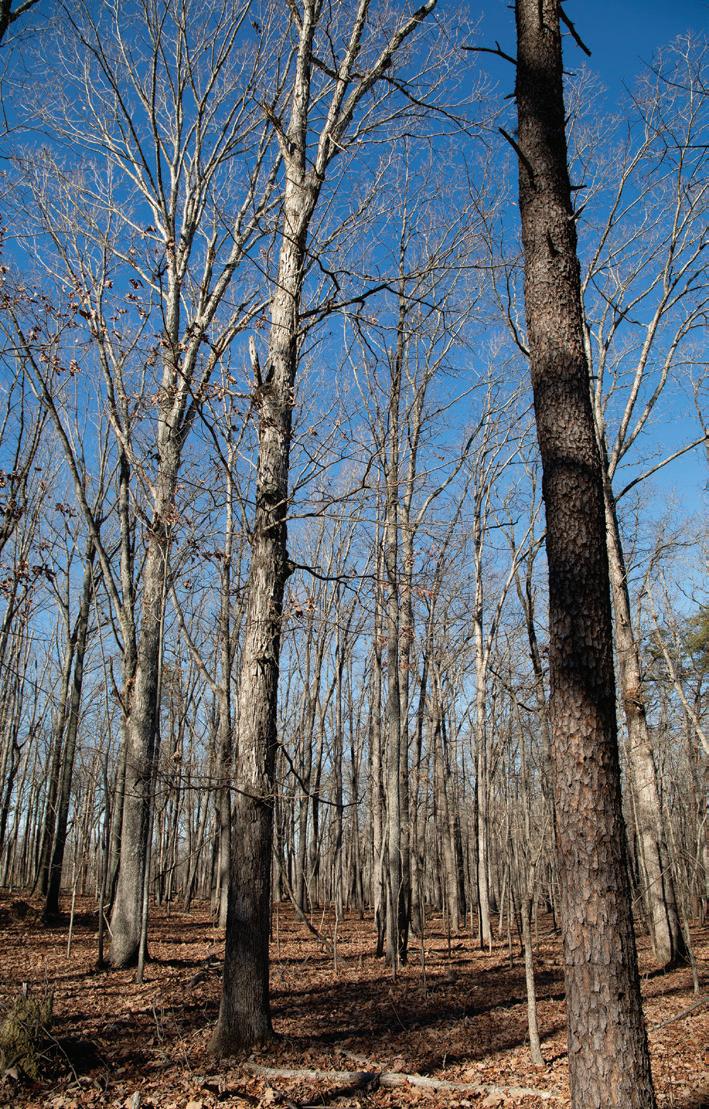
Patrick Murphy's replanted pines grow beside towering hardwoods on his property. Below: Open forest floor is the result of prescribed fires in spring 2024 that promoted oak germination. Intentional burns are powerful tools for foresters as they control vegetation and also enhance wildlife habitat.
CHRISTINA AMANO DOLAN
and fine-tuned over and over again.”
While examining properties, he may identify opportunities for wildfire protection, invasive species control, or harvesting marketable timber.
A consulting forester may come aboard to help market the landowner’s timber to various mills and loggers. After a sale is made, the harvesting process begins.
“Once loggers get there, they make informed decisions,” Murphy noted.
Loggers will determine harvesting methods based on topography, soils and desired wood products. Wood products are then sorted and sent off to the “highest value marketplace”—sometimes trucked as far as 100-200 miles to the appropriate mill for processing.
Then comes the reforestation process.
“Reforestation is a great investment,” he remarked. “It helps keep your land productive and working, and depending on what methods are used to prepare the land prior to tree planting or improve the land after planting, we have cost share programs available through the Virginia Department of Forestry to help offset some of those costs.”
The Reforestation of Timberlands Program, managed by the VDOF, provides cost-share assistance to landowners for pine reforestation and is funded by the Virginia Forest Products Tax with matching funds from the state’s General Fund.
From 1970 to 2020, Virginia’s forest industry invested more than $54.5 million toward growing trees on private lands. When combined with the General Assembly’s match, more than 51,000 harvested tracts covering nearly 2 million acres have been reforested in Virginia.
Emerging challenges
Forest markets are essential to sustaining well-managed forests, but emerging challenges are rippling through the industry—inspiring a diverse group of stakeholders to team up and find solutions.
The Virginia Wood Council held its first meeting in September, bringing together industry associations, partners and state agencies, including Virginia Farm
Bureau, the Virginia Forestry Association, Virginia Loggers Association, Virginia Forest Products Association, Virginia Department of Agriculture and Consumer Services, Virginia Economic Development Partnership, loggers, sawmill owners and product makers.
“The plan is to understand all the emerging forest product industry issues, and figure out what’s causing them,” Dhungana explained.
Timber is harvested for construction, furniture and building materials for domestic and international markets. But trade disputes, housing market challenges, and globalization of manufacturing and labor are sowing uncertainty throughout the industry.
“We’ve had about 10-15 primary hardwood mill closures in the last three to four years,” Dhungana said. “It’s been hard on industry folks to even survive, and demand is diminishing for forest products overall.”
Meanwhile, ongoing forest fragmentation and logger shortages are concerning Murphy and others in Southside Virginia.
“It’s an extremely dangerous line of work, and not a lot of people want to do it,” he said. “As these big blocks of timberland are cut up, it makes it more challenging to get people on them
to harvest.”
Dhungana added that many Virginia mills are “mom-and-pops,” and owners may be reluctant to pass on debt and risk to their children—posing transition issues.
“It’s a very hard and risky business,” she said. “If we keep losing mills, forest management sustainability in Virginia will be super hard—if not impossible.”
Virginia wood is ‘beautiful, durable and long-lasting’
Forest products and markets for those products are essential to helping landowners keep their land in forest.
“And if we don’t have foresters and mills who are helping manage our forest resources sustainably with revenue from making and selling products, paid to the landowners at the end, we may not have very healthy forests,” Dhungana cautioned. She encourages consumers to buy local wood products, and reach out to the VDOF for more information on where to find materials.
“If you buy a table or chair made in Virginia with Virginia wood, you’re already helping the industry,” she said. “If you want to do a flooring project, look for a floor manufacturer in Virginia.”
Murphy encourages Virginians to “use real wood products. Wood is beautiful. Wood is durable. Wood lasts long periods of time.”
CHRISTINA AMANO DOLAN
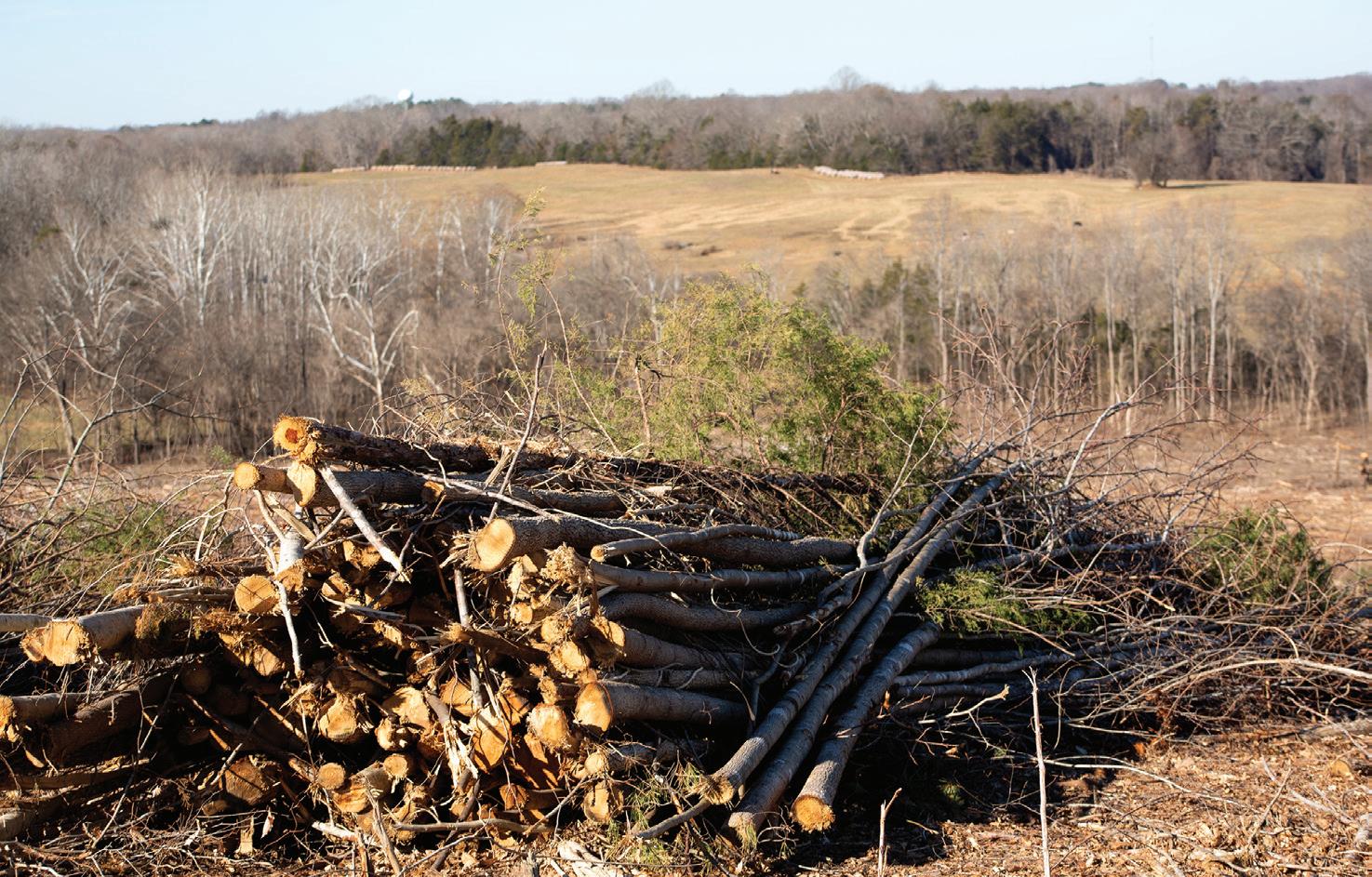
This Prince Edward County logging site sits beside Culpeper farmland.








With their smoky, saucy, falloff-the-bone tenderness, ribs are a hallmark of American barbecue. Once c considered an inexpensive castoff cut in the early 19th century, they’ve become a celebrated staple in backyard barbecue pits and on restaurant menus.
Across the country, cooking styles and flavors reflect regional character and traditions. Texas-style beef ribs are known for their bold smoky dry rubs, and Kansas City ribs are smothered in a thick, sweet, tangy sauce. Memphis baby back ribs are served dry with a thin vinegar-based sauce on the side, while St. Louis-style trimmed spareribs have a subtly sweet, balanced finish.
But no matter the style or flavor, the secret to great ribs is cooking low and slow. Whether on a grill, smoker, in the oven or a crockpot, this method breaks down connective tissue and transforms them into
Meaty, messy and delicious
tender, flavorful bites. A final brush of sauce toward the end before searing creates a rich caramelized bark that heightens flavor.
So, whether you prefer your ribs smoky, sweet or tangy, grab extra napkins and dig in
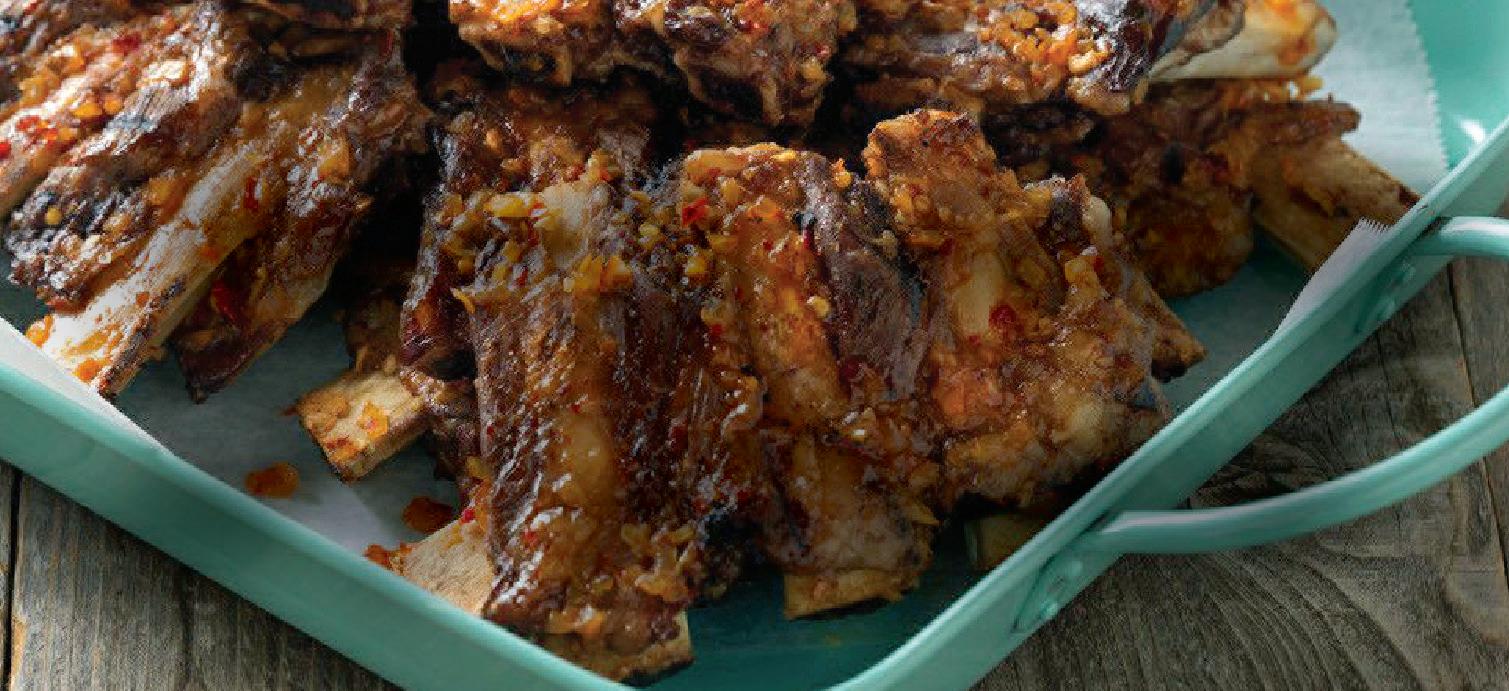
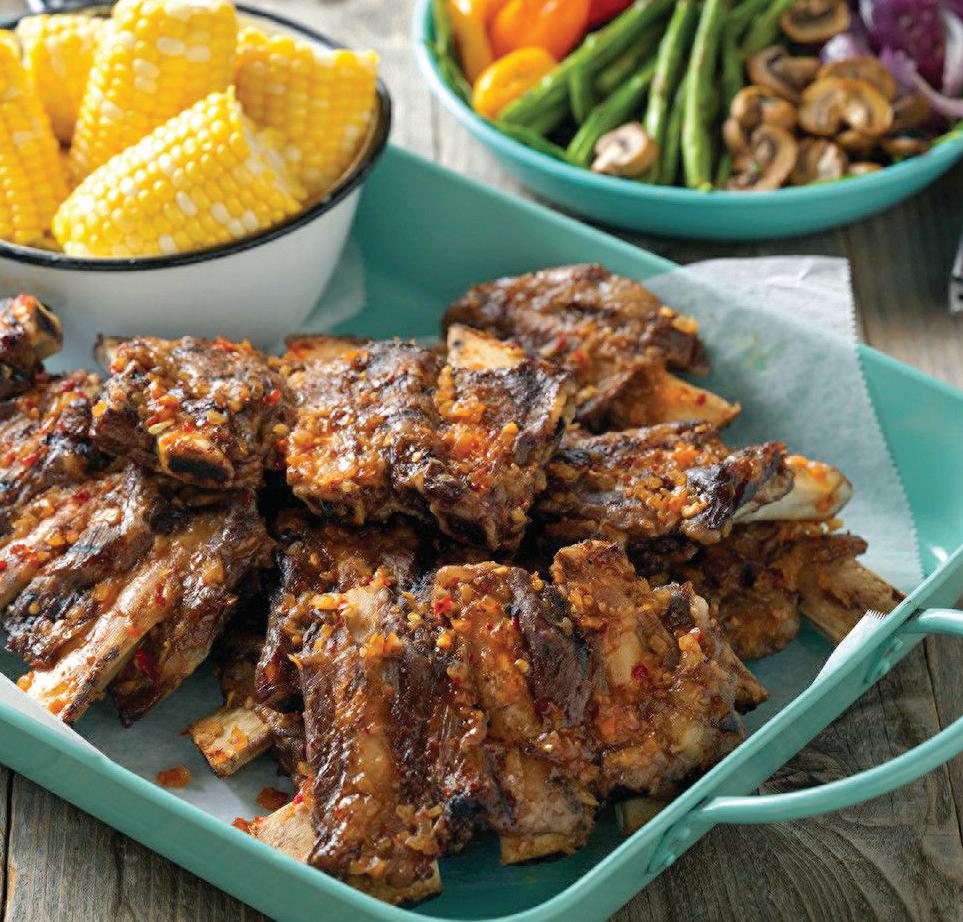
Spicy Beef Back Ribs
INGREDIENTS
1 tablespoon vegetable oil
1½ cups finely chopped onion
1 tablespoon minced garlic
1-1½ teaspoon crushed red pepper flakes
1½ cups chili sauce
½ cup water
3 tablespoons fresh lemon juice
½ teaspoon salt
5 pounds beef back ribs, cut into 2-4 rib sections
DIRECTIONS
In a medium saucepan, heat oil over medium high heat until hot. Add the onion, garlic and pepper flakes and cook 4-5 minutes or until onion is tender. Add the chili sauce, water and lemon juice and bring to a boil. Reduce the heat and simmer for 5 minutes, stirring frequently. Season with salt. Reserve ½ cup sauce for basting.
Prepare the charcoal grill for indirect cooking by igniting an equal number of charcoal briquets on each side of the fire grate, leaving open space in the center. When the coals are medium, ash-covered (25-30 minutes), add 3-4 new briquets to each side. Position the cooking grid with handles over the coals so additional briquets may be added when necessary. Place the ribs meat-side-up in a large foil roasting pan, and cover tightly with aluminum foil. Place the foil pan on the
Spicy Beef Back Ribs
cooking grid and cover with the grill lid. Grill over medium heat 1-1½ hours or until the ribs are fork-tender. Carefully remove the roasting pan from the grill, remove ribs from the pan and place them meat-sideup on the grill rack. Baste the ribs with the reserved sauce and grill, covered, 10-15 minutes, turning and basting occasionally.
—Recipe adapted from Beef. It’s What’s For Dinner.
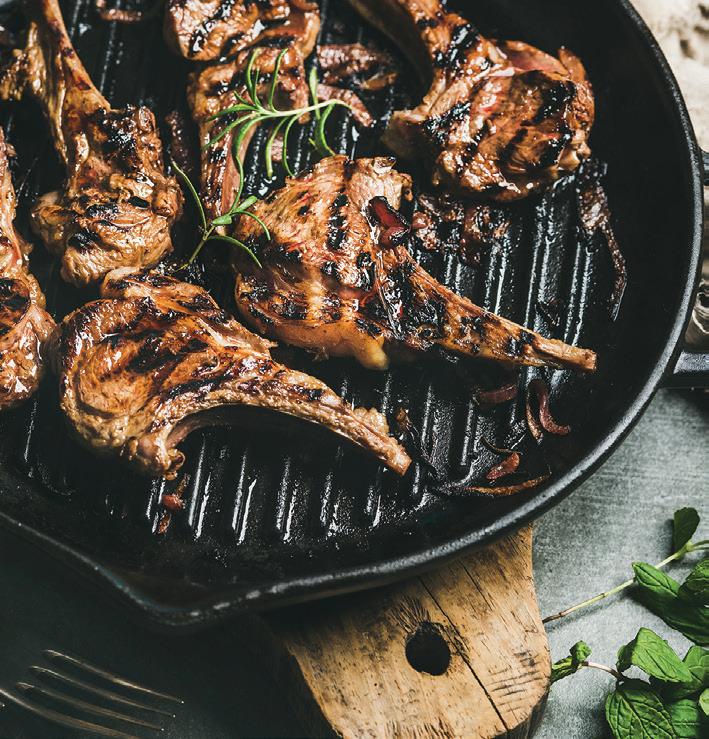
BBQ Bourbon Grilled Lamb Ribs
INGREDIENTS
2 cups barbecue sauce
2 tablespoons bourbon salt and pepper, to taste
2 racks lamb ribs, 1 pound each
DIRECTIONS
In a bowl, combine the barbecue sauce, bourbon, salt and pepper.
Place the ribs on a sheet of foil. Cover each rack with about 1 cup of bourbon barbecue sauce. Close the foil and place the ribs on the grill over medium heat. Grill for 2 hours or until desired temperature has been reached. USDA recommends a 145° internal temperature with a 3-minute rest.
Remove the ribs from the grill and serve on a large platter.
—Recipe adapted from the American Lamb Board and “The Curious Plate”
Chili-Ginger Braised Pork Ribs
INGREDIENTS
2 racks pork spareribs, membranes removed
3 tablespoons canola oil, divided salt and pepper
6 green onions, sliced, white and green parts separated
4 garlic cloves, crushed
2 red bell peppers, sliced
2 green bell peppers, sliced
¼ cup apricot jam
¼ cup rice vinegar
¼ cup low-sodium soy sauce
3 tablespoons oyster sauce
2 tablespoons ground ginger
2 tablespoons crushed red chili pepper
½ cup low-sodium chicken stock
DIRECTIONS
Heat oven to broil on high. Line a sheet pan with foil and coat with cooking spray. Pat pork dry with paper towels. Separate into individual ribs, then rub all over with 2 tablespoons oil. Season with salt and black pepper if desired. Arrange in a single layer on prepared sheet pan.
Broil ribs until lightly browned, rotating pan and turning ribs over halfway through, 7 minutes. Remove from oven and set aside.
Heat oven to 325°.
In an ovenproof pot, heat the remaining oil on the stovetop over medium-low heat. Add the white parts of the green onion and cook, stirring occasionally, until translucent, about 5 minutes. Stir in the garlic and bell peppers, and cook until fragrant, about 1 minute.
Reduce the heat to low, stir in remaining ingredients and bring to a simmer. Add the broiled ribs and gently stir to coat. Remove from the heat, cover with heavy-duty foil and bake 30 minutes.
Remove the pot from the oven. Using tongs, shift the submerged ribs to the top
and gently push the top ribs to the bottom. Replace the foil and return to the oven. Continue baking until the pork is forktender but not falling off the bones, about 30–40 minutes. Transfer the ribs and bell peppers to a bowl and tent with foil.
Return the pot to the stovetop and simmer over medium heat, skimming off fat as needed, until the liquid is thickened, about 10 minutes. Remove from heat and return ribs to the pot, gently tossing to coat. Serve immediately topped with bell peppers and green parts of the green onion.
—Recipe adapted from the National Pork Board
Tangy Grilled Back Pork Ribs
INGREDIENTS
1 cup reduced-fat French dressing
2 tablespoons dry onion soup mix
2 tablespoons honey
1 tablespoon low-sodium soy sauce
4 pounds pork back ribs
salt and pepper
DIRECTIONS
Heat the grill to 350° or medium heat. Clean and oil the cooking grate, then close the lid.
In a small bowl, combine the dressing, soup mix, honey and soy sauce. Set aside.
Season the ribs with salt and pepper.
Grill the ribs for 1½–2 hours until tender, or until the internal temperature reaches 170–180°F. Brush the ribs with sauce during the last 15–30 minutes of cooking. Serve the remaining sauce with ribs.
—Recipe adapted from the National Pork Board
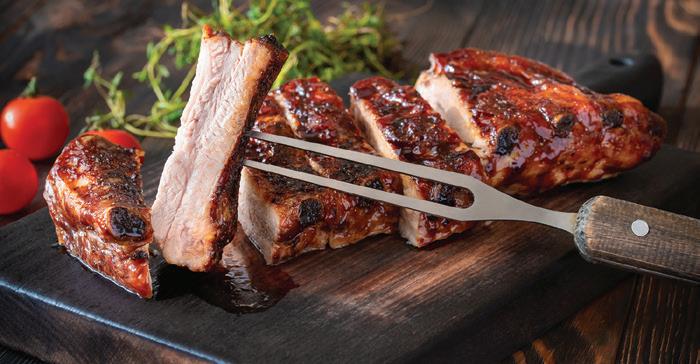
Grilled Lamb Ribs
Grilled Pork Ribs
Business Owner’s Policies can evolve with company growth
BY NICOLE ZEMA
From the dining room table in 2021 to two business locations now serving a large swath of Virginia, Brandon Mitchell’s insurance needs have evolved with the growth of his water treatment and plumbing company, PureWater Solutions of Virginia.
With 25 years of industry experience before establishing his own enterprise, “insurance wasn’t my forte,” Mitchell said. So, he sought guidance from Wes Condrey, a Prince George County Farm Bureau insurance agent.
Condrey first set Mitchell up with a general liability policy in case a customer’s property was damaged during service.
“If I went into someone’s house, and God forbid, something happened and I needed to pay for it, or if there were secondary damages to a driveway or mailbox, I had some coverage that would back me,” Mitchell said. “Causing an issue in someone’s home can cost hundreds of thousands in damage repairs, including paying for temporary housing while a structure is restored.”
Mitchell’s business soon expanded from the dining room to the garage, converted into a home office. PureWater Solutions continued its growth trajectory and needed more space, so he rented a business location in Chesterfield County.
“Once he got bigger within a short time span, I wrote him a Business Owner’s Policy,” Condrey recalled. “Say the building catches fire. He would be taking a major hit on the loss of tools and supplies.”
It’s Condrey’s job to consider every worst-case scenario, which positions Mitchell’s business for the best possible outcomes. Equipment and contractor tools were scheduled into his BOP, protecting the company from fire or theft losses.
BOP coverage is specially tailored to companies of various sizes and can include home businesses or online sales. It rolls property coverage, general liability and lost income coverage together, so the total cost is often lower than individual policies. Specialized coverage can be added as the business grows.
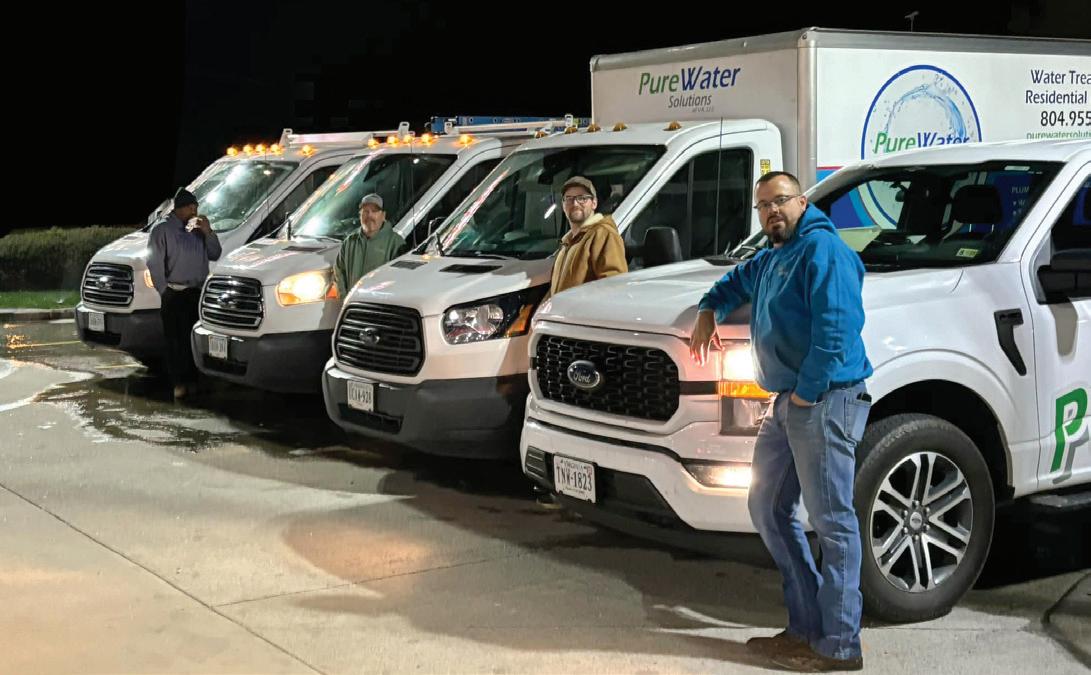
PureWater Solutions now rents a second location in Farmville, and has grown to include a fleet of 11 trucks and 20 employees.
“We’re covering a larger area than what most companies can without hefty trip charges,” Mitchell said.
Damage to a vehicle is covered under his auto policy, Condrey said.
“But all the tools and equipment inside of it extend from the BOP,” he explained. “And the amount of business personal property at each location have their own separate limits.”
Though Mitchell’s premiums have grown with his business
coverage needs, he said the peace of mind is priceless.
“Just having that coverage from one end to the other is the most important to me,” he said. “I know things will be taken care of no matter what.”
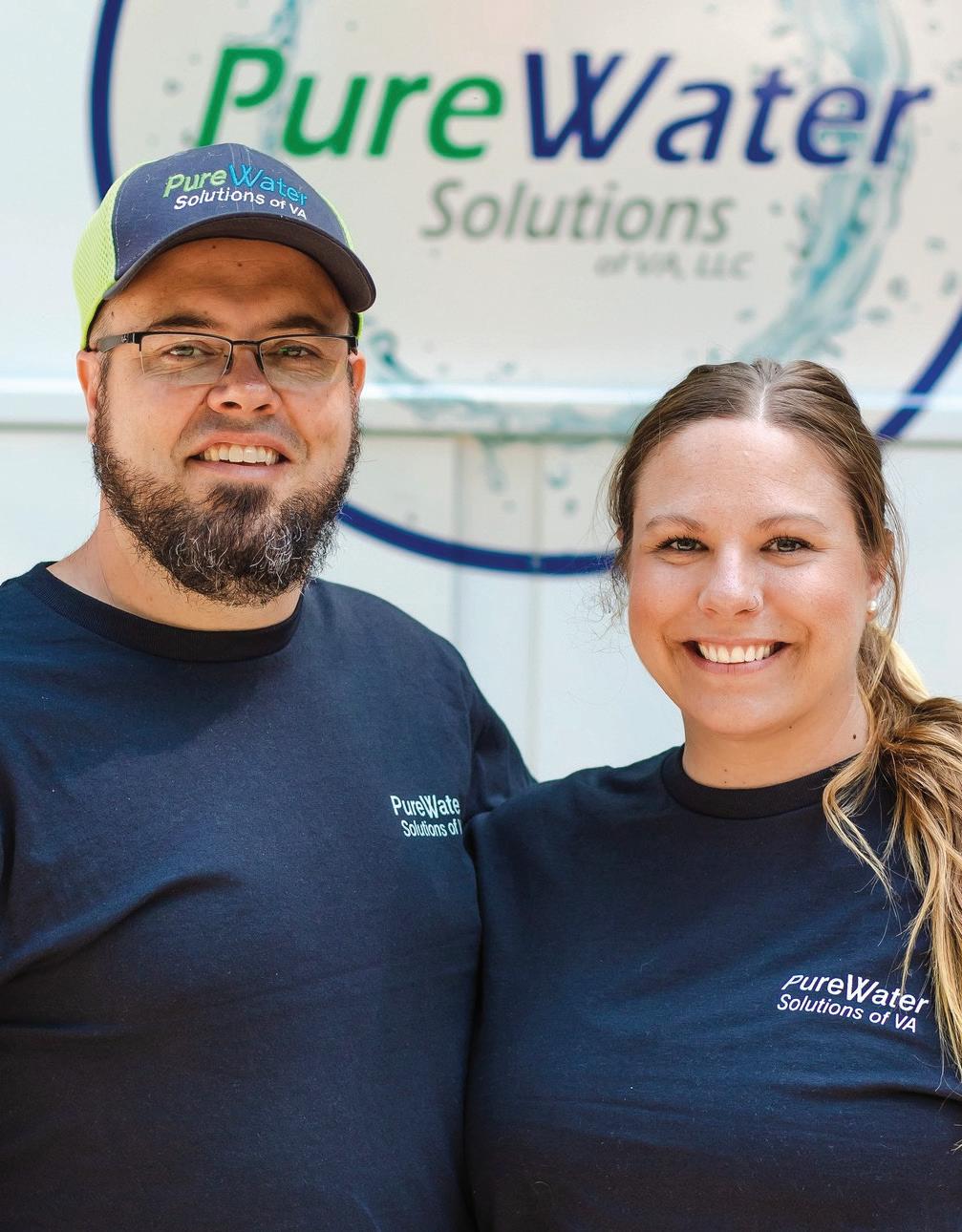
Brandon and Britney Mitchell's plumbing business in Prince George County was in need of liability coverage. VFB insurance agent Wes Condrey wrote Mitchell a policy that covers his fleet of trucks as well as his water treatment and plumbing supplies.
Virginia Farm Bureau Business Owner's Policies
A Business Owner’s Policy can add specialized coverage according to the industry.
BUSINESS PROPERTY covers inventory, furniture, landscaping and outdoor signs.
WORKERS’ COMPENSATION is a financial safety net if employees are injured on the job.
GENERAL LIABILITY is standard coverage for legal expenses and medical costs if you are responsible for an accident.
LOSS OF INCOME maintains business operations and other financial obligations if your business can’t operate normally due to a covered disaster, like fire.
ADDITIONAL COVERAGES are available, including equipment breakdown, cyber suite protection and employment practices liability.
Need a BOP?
To discuss the insurance needs of your business, contact a Farm Bureau insurance agent today, or visit vafb.com/ business-insurance for a list of BOP coverage.