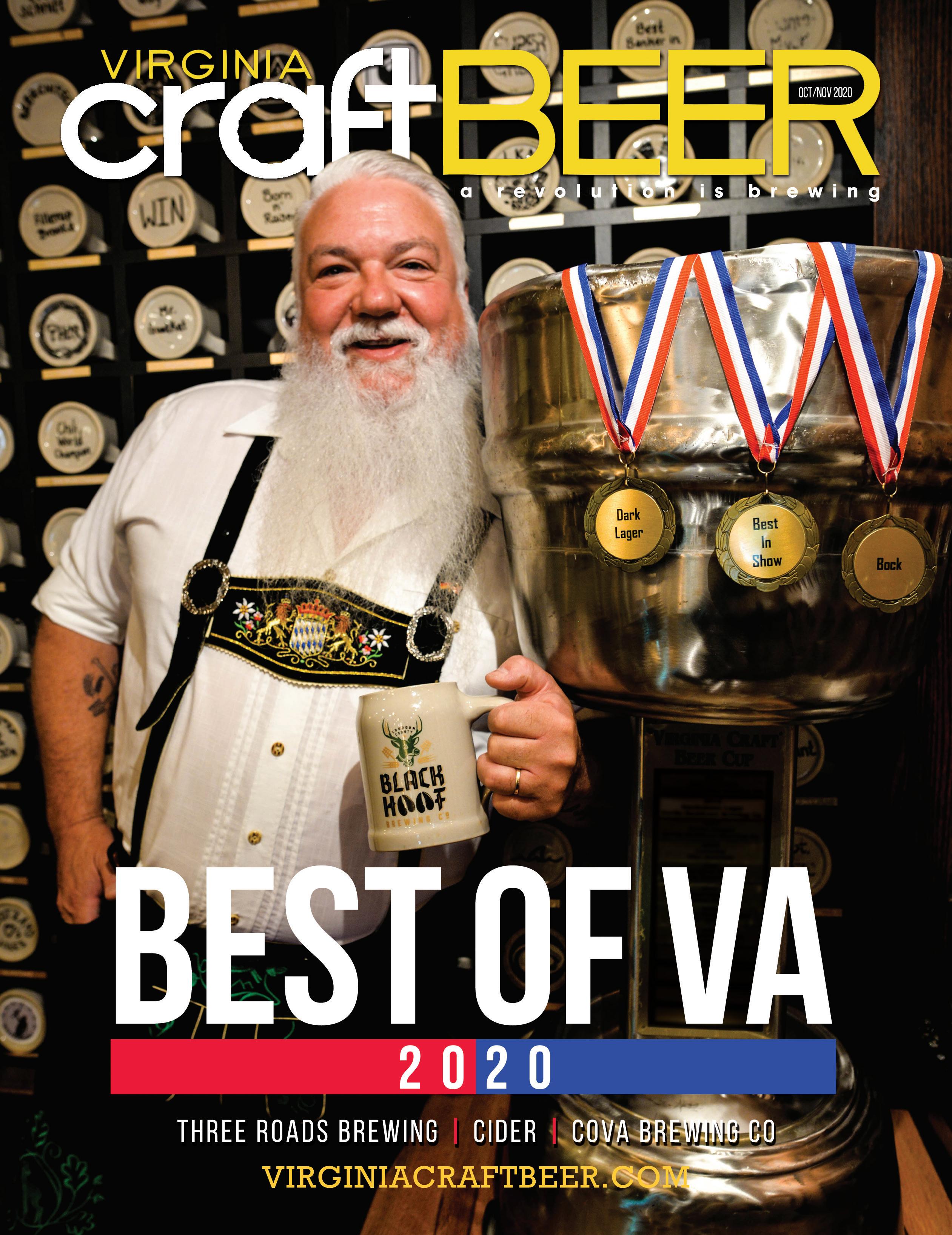
As with many events this year, the annual Virginia Craft Beer Cup Awards Ceremony, usually held in June, was postponed to late August. The Virginia Craft Brewers Guild hosted the event at the Bon Secours Training Center in Richmond. This month’s cover story features the complete list of winners including the coveted Virginia Beer Cup winner Black Hoof Brewing Company from Leesburg, who won Best In Show for their Muzzle Loader, a Munich Dunkel. This is the first time that a brewery from Northern Virginia has won the award. We congratulate all of the winners and hope that readers will use the list of winners as a guide to discovering all of the great, award-winning beer that Virginia has to offer.
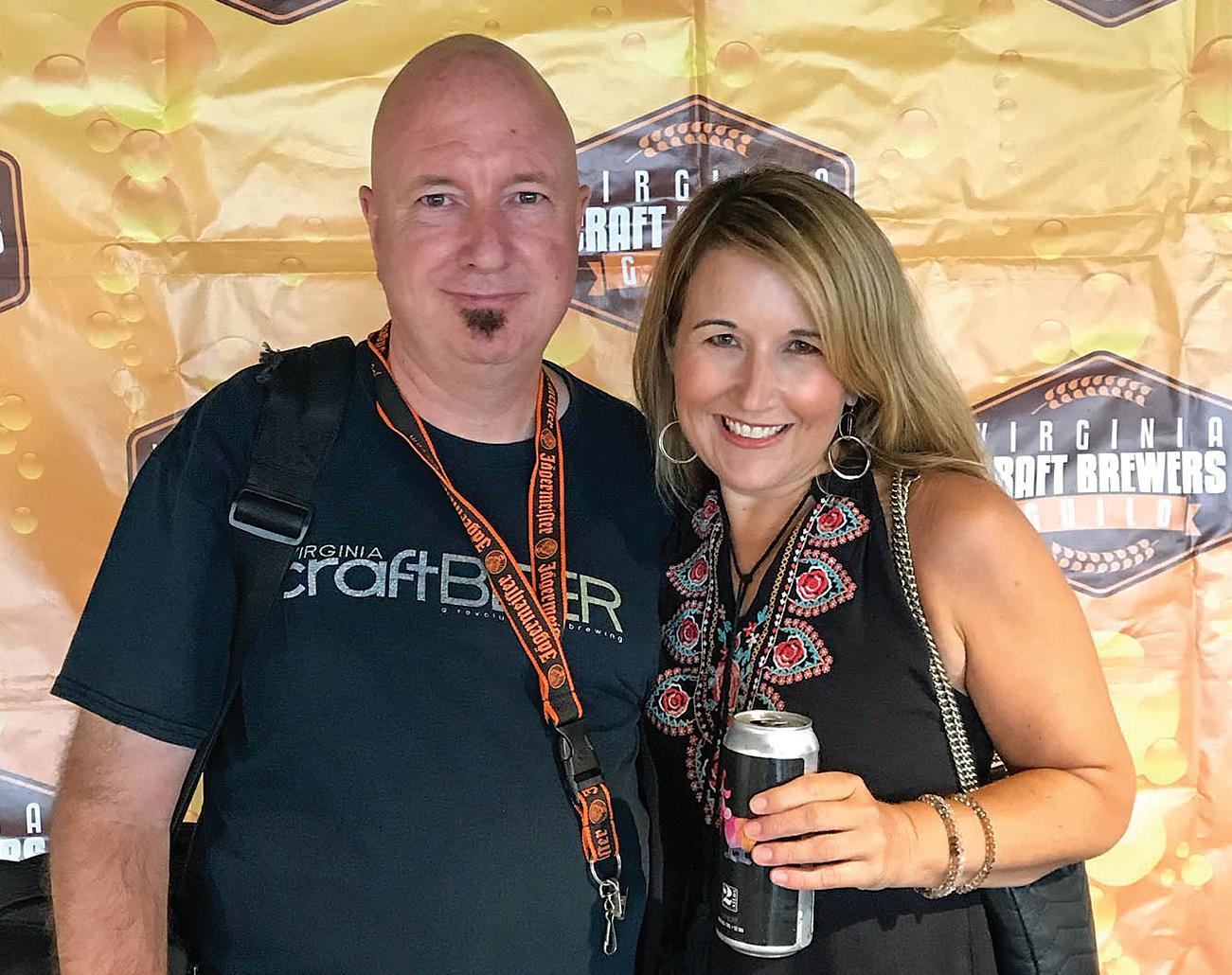
In Brew News, Jeff shares his conversations with both Brett Vasey, the Virginia Craft Brewers Guild CEO, and Janell Zurschmeide from Dirt Farm Brewing, the newly elected, and first woman elected, Chair of the Virginia Craft Brewers Guild. In addition, we’ll have news about Virginia’s first African-American owned brewery, 1865 Brewing Company, opening in Hampton. Plus, Brothers Craft Brewing will present not one, but two Resolute Days - one in Harrisonburg and a second one at Big Ugly Brewing Company in Chesapeake. And, Blue Mountain Brewery in Afton signs with Hoffman Beverage in the Hampton Roads market.
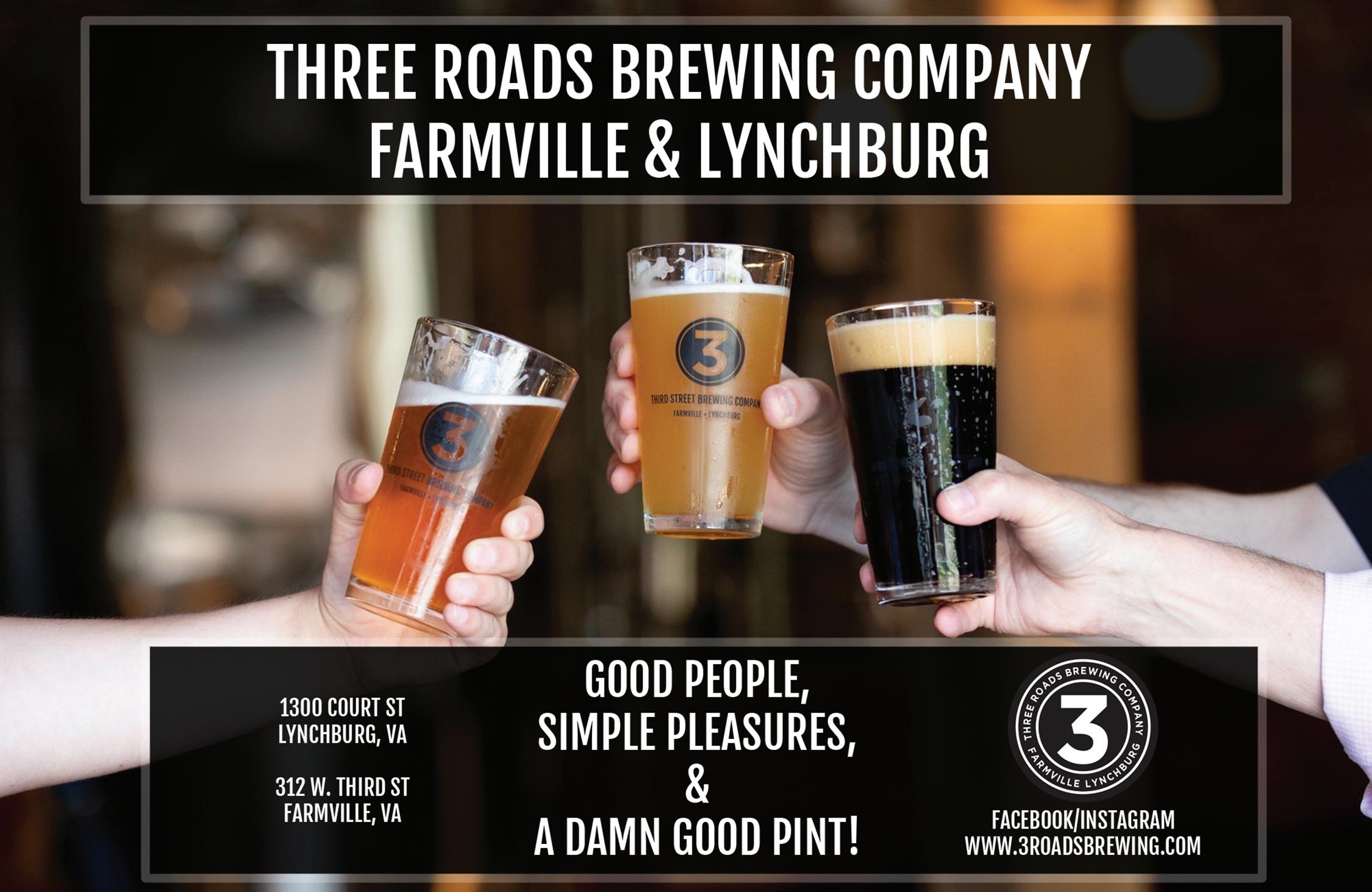
Brewery profiles include Three Roads Brewing in Farmville and Lynchburg and COVA Brewing Company in Norfolk. Plus, we’ll have cider news in anticipation of Cider Week, November 13-22, and our ABC Compliance article by Kevin Anderson.
As always, our Brewery Guide serves as a road map for exploring the state this fall!
Cheers!
Jennifer
Jennifer McDonald Jennifer.McDonald@hotmail.com
Jeff Maisey jeffmaisey@yahoo.com
Jennifer McDonald Brian Koski
Brenda Mihalko
Jefferson Evans
Michael T. Jarvis
Greg Kitsock
Chuck Triplett
Jennifer Waldera
Valentini
First Woman Elected VCBG Chair
By Jeff Maisey
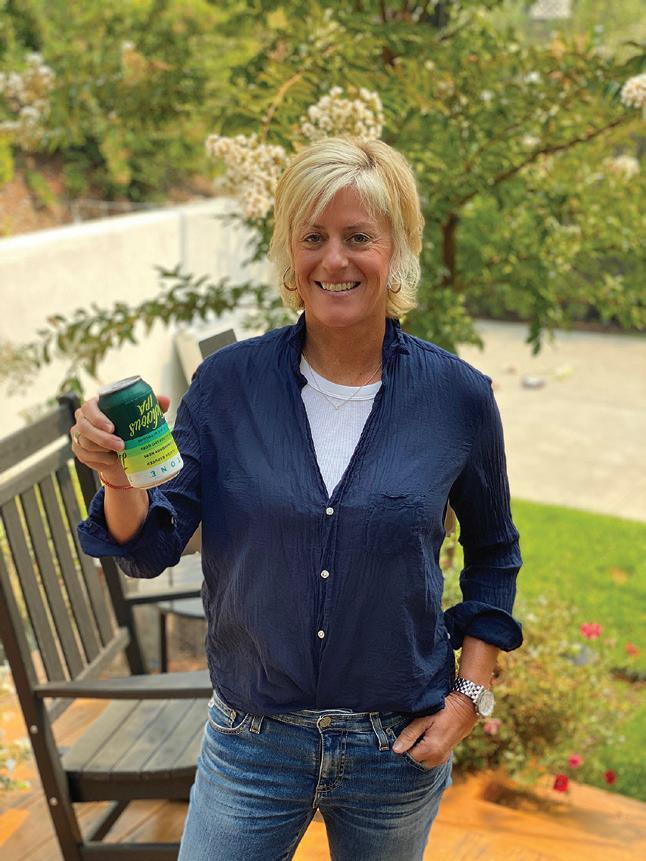
Janell Zurschmeide was elected Chair of the Virginia Craft Brewers Guild (VCBG) when its members convened for its annual Leadership Council meeting in Richmond.
The selection made the Dirt Farm Brewing co-owner the first woman to head the Guild.
“I’m definitely honored to serve in this position,” said Zurschmeide. “Since I got into this industry, in 2012, there are women all over this industry, whether they are owners, brewers, managers or servers.”
“Dependable and dynamic servant leaders are how great trade associations are built,” said Brett Vassey, VCBG President & CEO. “We are fortunate that the 2020-2021 VCBG Leadership Council embodies those values.”
Looking ahead, Zurschmeide said the Guild will have a legislative focus related to COVID restrictions and making sure tasting rooms are compliant and open for business.
The full 2020-2021 Leadership Council of the Virginia Craft Brewers Guild is as follows:
When 1865 Brewing Company opens in late October, it will officially become the first Black-owned independent craft brewery to operate in Virginia. Co-owners Whitteney Guyton and William Connor are both successful entrepreneurs in the healthcare and contracting field respectively.
Randy Jones, who spent time at Black Sky Brewing in Denver, is the brewmaster.
Located in the historic Phoebus neighborhood in Hampton, the brewery is located a mile from where slaves from Africa first landed in 1619 in what would become the United States of America.
The name 1865 Brewing Company is a nod to the year the 13th Amendment was ratified, thus abolishing slavery in America.
Government Affairs Committee cochairs: Sten Sellier, Beltway Brewing Company, and Hunter Smith, Champion Brewing Company
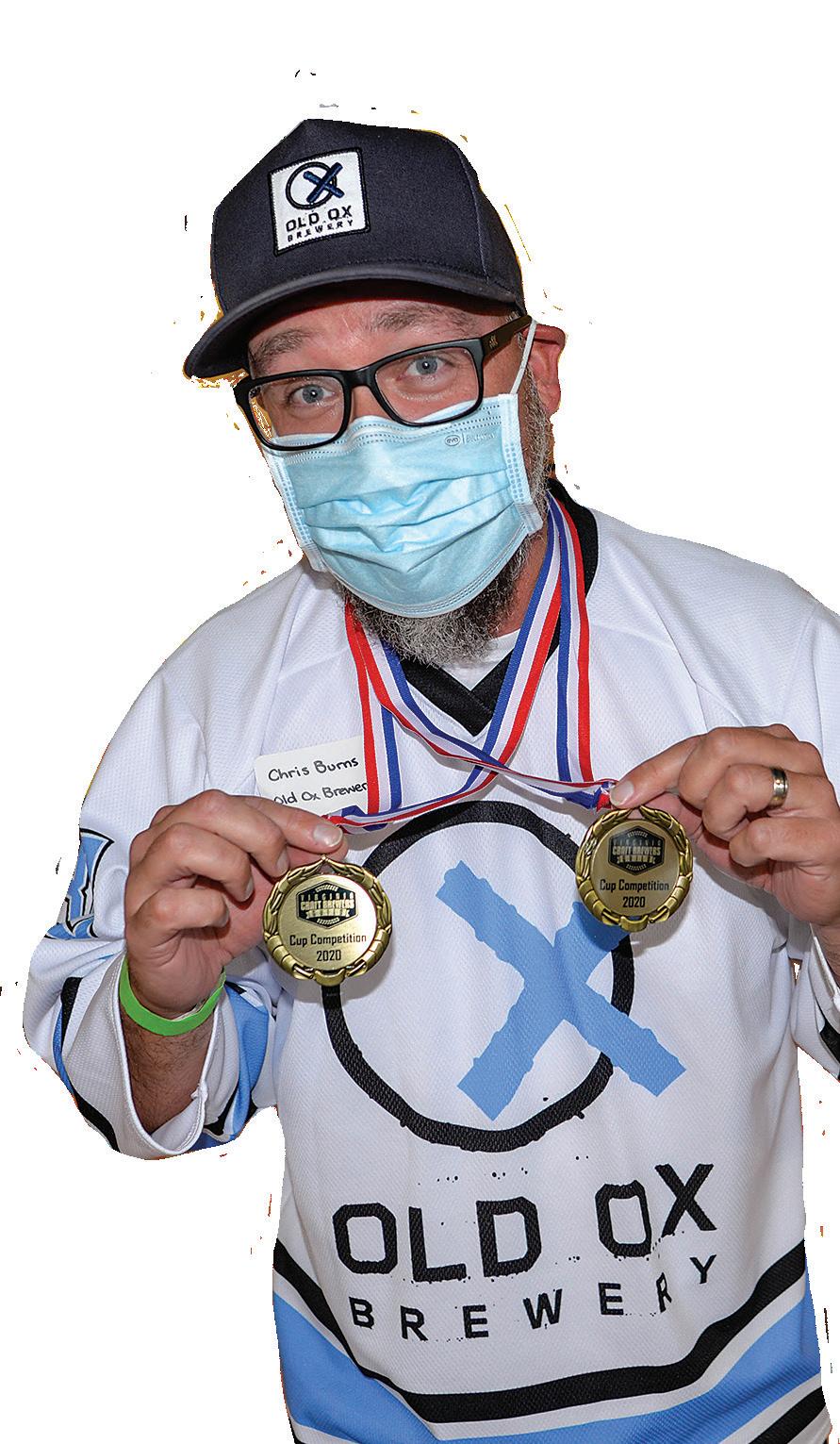
Tourism & Marketing Committee co-chairs: Neil Burton, Strangeways Brewing, Sterling and Chris Burns, Old Ox Brewery, Ashburn Farm Brewery Committee co-chairs:
Lisa Pumphrey, Lickinghole Creek Craft Brewery, Goochland and Dave St. Clair, Swover Creek Farms & Brewery, Edinburg
Quality Committee co-chairs: Kate Lee, Hardywood Park Craft Brewery, Richmond and Shawn Phillips, Spencer Devon Brewing, Fredericksburg.
Absolute Resolute
Will there be a Resolute Day in 2020? Absolutely.
In fact there’ll be two events — one at Brothers Craft Brewing’s headquarters in Harrisonburg (November 14) and the other at Big Ugly Brewing Company in Chesapeake (November 15).
“Chesapeake?” you might ask.
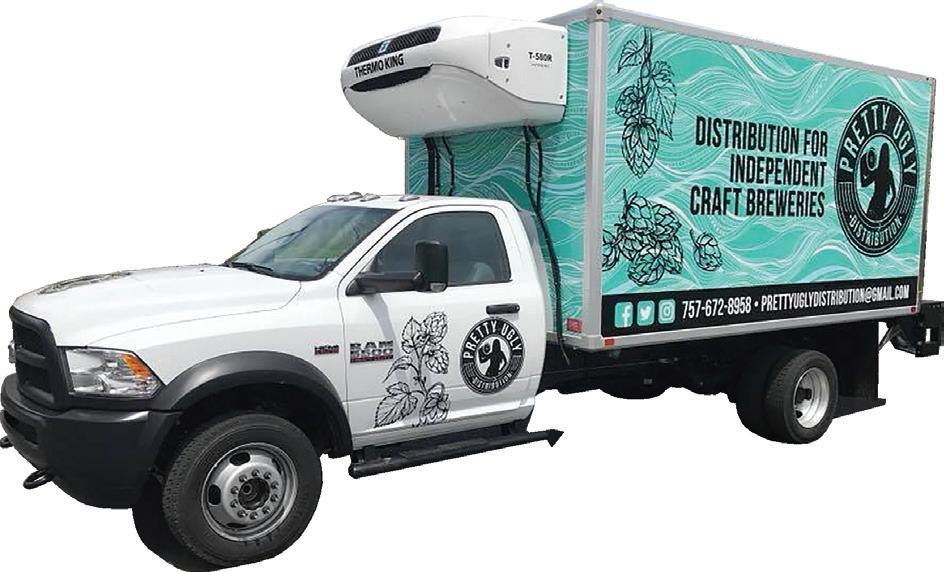
That’s right. Pretty Ugly is the distribution arm of Big Ugly Brewing Company. The small, independentlyoperated distributorship serves breweries such as Benchtop, Oozlefinch, Tradition, and Blue Toad Cider, and gets their products to retailers and restaurants in Richmond and the Hampton Roads region. They also handle Brothers Craft Brewing products in these markets.
“Resolute East”
“Spreading our brand and one of our favorite beers to the eastern part of the state,” said Brothers Craft Brewing co-founder Jason Shifflett, is the goal for Resolute East.
Shifflett went on to share, “We will have six variants this year and an exclusive variant for our bottle club members.”
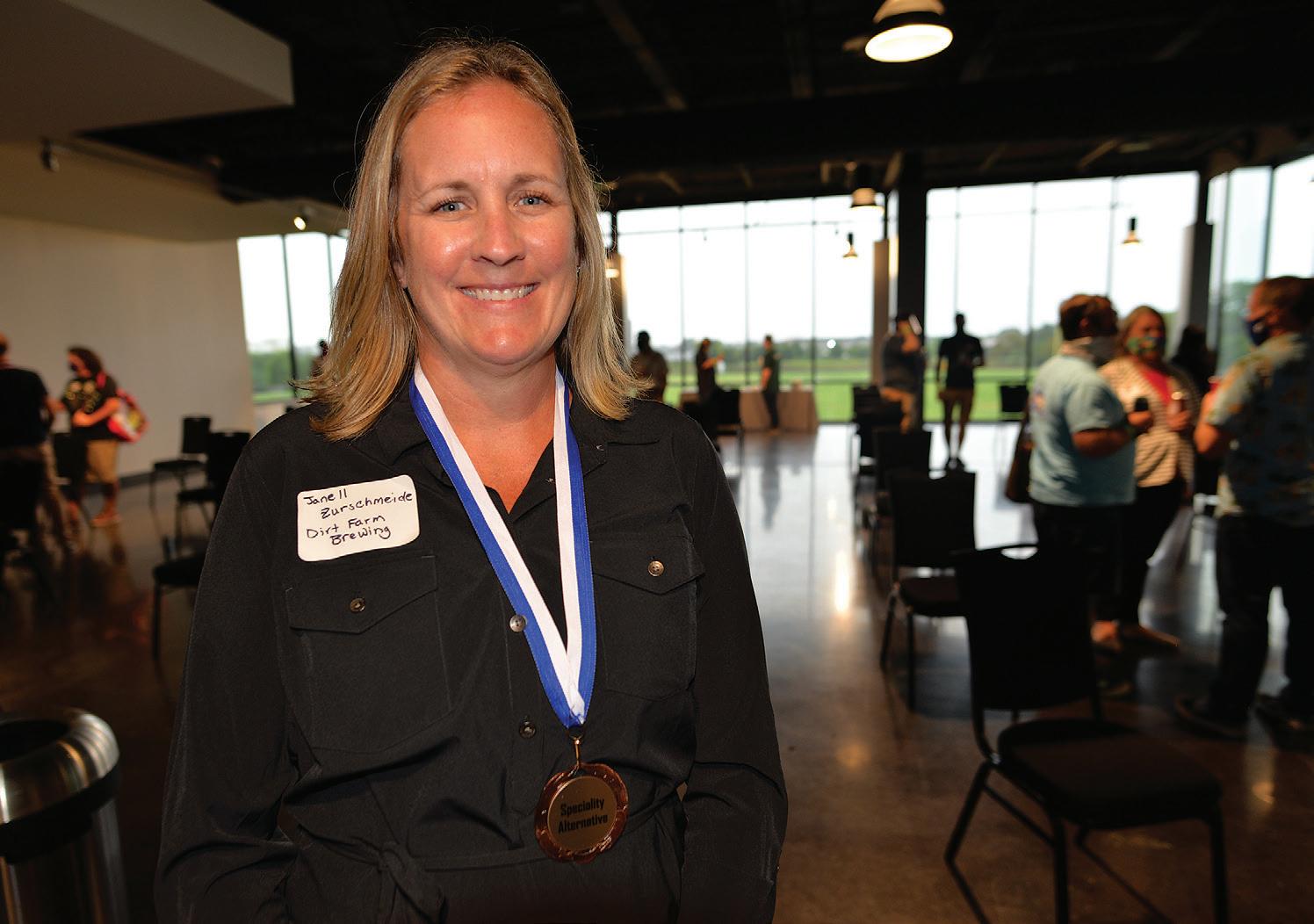
A big day for Janell Zurschmeide as her Dirt Farm Brewing won a bronze medal in the Specialty Alternative category on the same day she was elected Chair of the Virginia Craft Brewers Guild.
Stone Hires Maria Stipp as CEO
Stone Brewing, the ninth largest craft brewery in America, has named Maria Stipp as its CEO.
Most recently, Stipp served as CEO for five years at Lagunitas Brewing Company. Her resume also includes high level positions at Kelloggs, Miller Brewing Co, and ecoATM.
Maria Stipp will oversee Stone’s Richmond production facility as well as all West Coast operations and related businesses.
Blue Mountain Brewery Signs with Hoffman Beverage
Afton, Virginia based Blue Mountain Brewery will have enhanced visibility in the Hampton Roads market having recently signed a new distribution deal with locally-owned, family-run Hoffman Beverage Company.
Blue Mountain’s flagship brands include Full Nelson (Pale Ale), Classic Lager, Kolsch 151, and Dark Hollow (barrel-aged stout) as well as fall seasonals 13.Five Oktoberfest and Spooky (barrel-aged pumpkin ale).
Taylor Smack, owner and head brewer of Blue Mountain Brewery, Blue Mountain Barrel House and South Street Brewery, is excited about the expanded visibility.
“We are hoping for a very big impact as we roll into the heady fall beer season with a distributor who runs the show on great placements and merchandising in the Norfolk/VAB market,” said Smack. “Seasonal beers like our 13.FIVE Ofest that will benefit from wider chain retail placement in addition to our flagship offerings give us high hopes.”
Blue Mountain Brewery will mark its 13th anniversary in October. They are one of the original Route 151 independent craft breweries that played an important role in the latest revolution of the beer movement. Still, established brands like Blue Mountain are eager for a boost.
“As the hyper-localization of the on-premise draft market has hit its peak, mature brands like Blue Mountain really have the best fighting chance with off-premise placement of packaged beer,” Smack explained. “Hoffman Beverage Co. is the right partner for where we are with our brewery for this reason.”
Cider Week 2020
Cider Week Virginia is scheduled for November 13-22.
Wine Enthusiast Gives Hoptropolis a 96
New Realm Brewing Company’s Hoptropolis IPA was included in a recent Wine Enthusiast article titled “10 Top-Rated American IPAs, from Session Beers to Hazies.”
Writer John Holl said this about the Virginia Beach brewery’s IPA: “This IPA is full in feel, with soft tones of pineapple, pear and peach. It’s a well-crafted recipe that treats each flavor with balance. There’s something new to discover as you make your way through a six pack.” He scored it a 96.
Maria Stipp becomes Stone Brewing’s CEO
Best of 2020
BY JEFF MAISEY
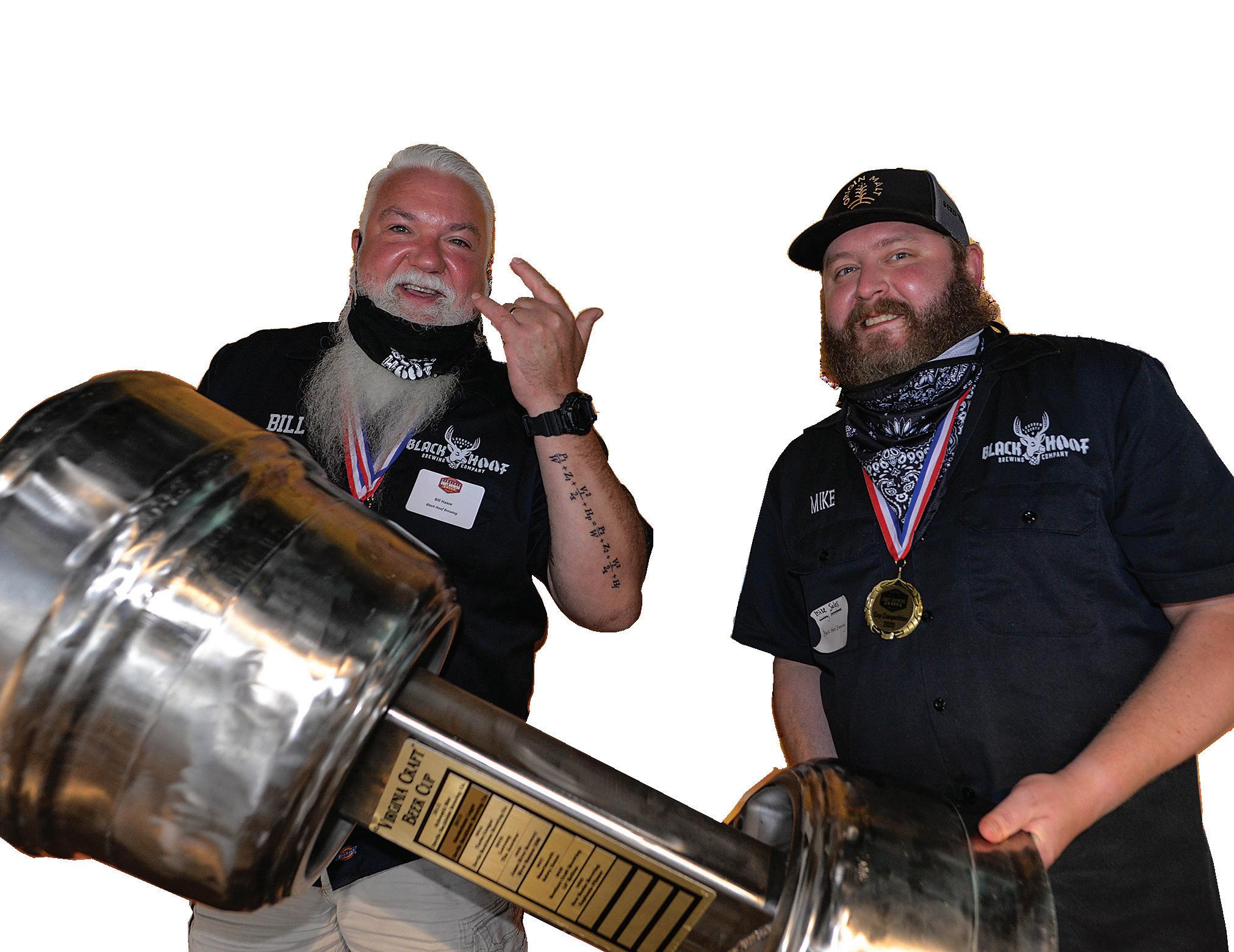
Black Hoof Brewing Company became the first brewery from Northern Virginia to win the Virginia Craft Beer Cup when its Muzzle Loader Munich Dunkel was crowned Best in Show as the Virginia Craft Brewers Guild announced the 2020 winners on August 31 at Bon Secours Training Center in Richmond.
This year’s competition was managed by Head Judge Charlie Harr. In all, 267 beers in 20 categories competed for awards.
“This was a challenging year due to the pandemic. However, we made several adjustments to operate in a safe environment and follow established guidelines. In the end, we had a lot of fun, made new friends and tasted some great Virginia beers,” said Charlie Harr, Head Judge.
The first place winning beers in each category contend for the Best in Show medals with the overall top beer determining the Cup champion.
Black Hoof is a family-owned microbrewery located in downtown Leesburg specializing in traditional German-style beers. Owner Bill Haase was surprised by the win.
“I thought that another beer would actually win this,” said Haase. “We are very proud of it and hope everybody comes out and tries it.”
And come out they’ll have to. Black Hoof beers are exclusively available at the micro-brewery.
Interesting takeaway: Not only was 2020 the first year a brewery from Northern Virginia won the coveted Virginia Craft Beer Cup, NoVA beer-makers dominated the medal count.
Of the 60 individual medals — gold, silver and bronze — awarded, 28 (almost half) went to breweries based in Northern Virginia, while 10 to the Coastal Virginia region, 9 in the Charlottesville/Route 151/Lexington corridor, 9 to Richmond/ Central VA, and 4 from Roanoke/SWVA/Danville area.
Capping things off: All three Best-in-Show medalists were from Northern Virginia.
The 2020 Virginia Craft Beer Cup winners are as follows:
BEST IN SHOW
1st Muzzle Loader Munich Dunkel
Black Hoof Brewing Company
2nd Goats in the House Pilsner
Cedar Run Brewery
3rd Optimal Wit
Port City Brewing Company
AMBER ALE
1st Ticket to Ride Red Ale
The Board Room VA
2nd Scouser Red Ale
Random Row Brewing Co.
3rd Scottish 80
7 Dogs Brew Pub
AMBER LAGER
BROWN ALE
1st Black Ox Rye Porter
Old Ox Brewery
2nd Fast Mail Mild Ale
Ballad Brewing
3rd Wallops Island
rocket Frog Brewing Company
BOCK
1st Broadside Maibock
Black Hoof Brewing Company
2nd Dopplebock
Barking Rose Brewing Company + Farm
3rd Accelerator
Big Ugly Brewing DARK LAGER
1st Muzzleloader Munich Dunkel
1st High Barbary
Fair Winds Brewing Company
2nd First Edition
Tasting Room at Mount Ida Reserve
3rd Half Moon Rising
Mustang Sally Brewing Company
Black Hoof Brewing Company
2nd Mobjack Black
Gloucester Brewing Company
3rd Thurinigan
Maker’s Craft Brewery
Random Row Brewing Company medaled three times
A pair of Golds for Ashburnbased Old Ox Brewery
FRUIT/VEGETABLE
1st Mermaid’s Lure
Benchtop Brewing Company
2nd Rosé Gosé
Elation Brewing Company
3rd Getaway Plan
Mustang Sally Brewing Company
HM Blueberry Blonde
Stable Craft Brewing
ipa
1st Stone IPA
Stone Brewing Co.
2nd Howling Gale
Fair Winds Brewing Company
3rd Oxfordcommadisiac
Heliotrope Brewing
HM Windswell DIPA
Random Row Brewing Co.
SAISON
1st Sightseer Saison
Old Ox Brewery
2nd Patio Vibes
Bingo Beer Co,
3rd Ardent Saison
PALE ALE
1st Approachable Guise
Beltway Brewing Company
2nd Keep Ya Distance Cream Ale
Twin Creeks Brewing Company
3rd Conviction
Barking Rose Brewing Company + Farm
HM Mosaic Pale Ale
Random Row Brewing Co.
KOLSCH
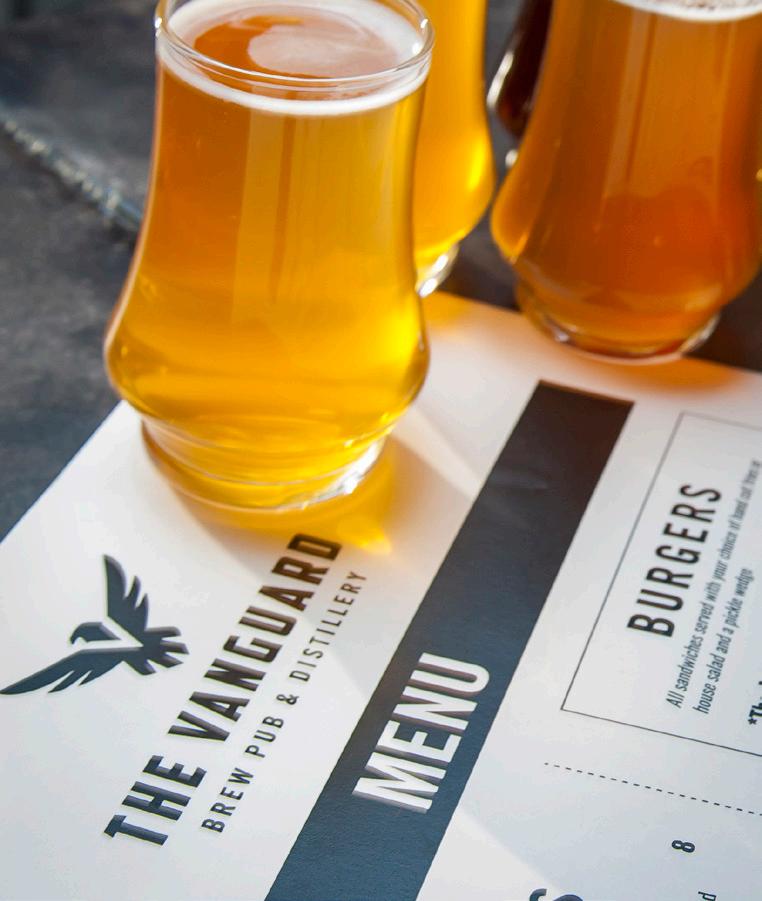
1st House Beer
The Vanguard Brewpub & Distillery
2nd Barking Frog Kolsch
Sweetwater Tavern
PALE LAGER
1st Loafing Shed Lager
Cave Hill Farms Brewery
2nd Helles Lager
Port City Brewing Company
3rd Dynasty Lager
Dynasty Brewing
PILSNER
1st Goats in the House Pilsner
Cedar Run Brewery tradition Brewing Company
2 Witches Winery & Brewing Company once again show Virginians there’s a great reason to visit Danville: awardwinning beer
SPECIALTY –
OTHER
1st Raspberries on Acid
Blue Mountain Barrel House
2nd Friar Storm
Benchtop Brewing Company
3rd Capital Kolsch
SOUR
Extra Billy’s Smokehouse & Brewery
1st Gryffon’s Red Reason Beer
2nd Anniversary Flanders Red Ale
Audacious Aleworks
SPECIALTY MIXED
1st Franc-n-Stein
2 Witches Winery & Brewing Company
2nd Wine Barrel Aged Golden Sour
Fine Creek Brewing Company
3rd Herbarium Wild Saison
Fine Creek Brewing Company
SPECIALTY – ALTERNATIVE
1st Holden in the Rye
That Damn Mary Brewing Company
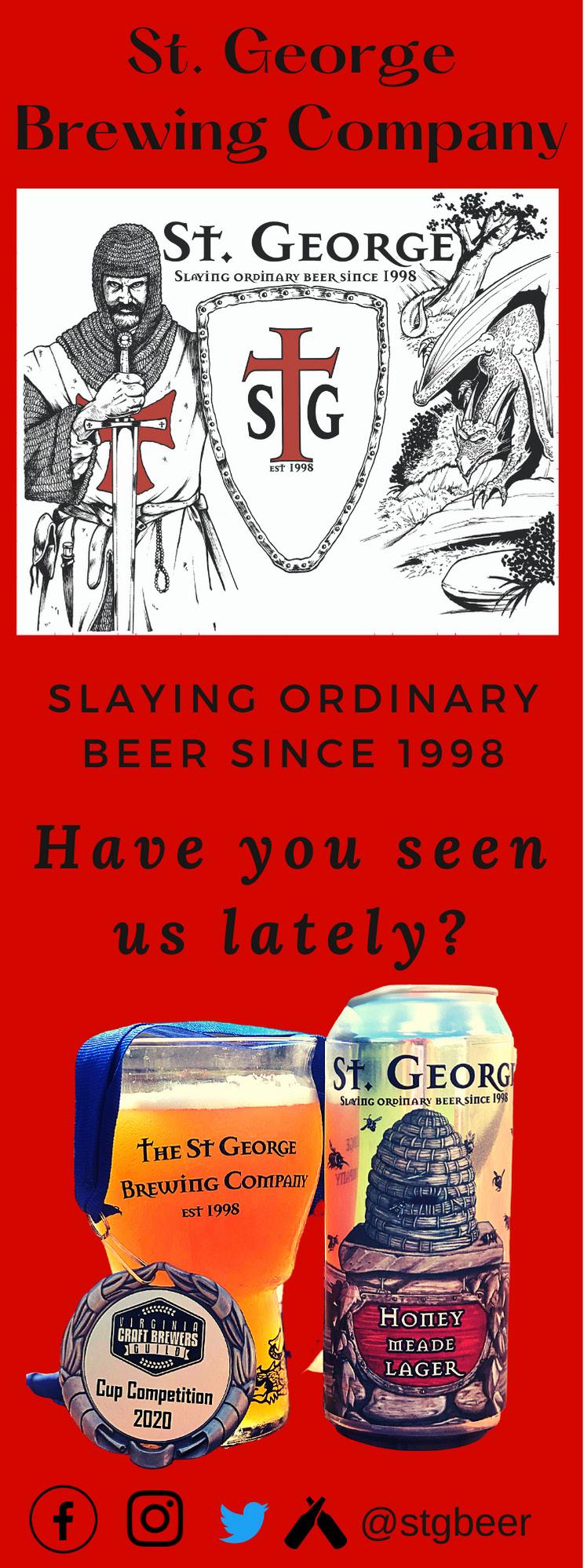
2nd Honey Mead Lager
St. George Brewing Company
3rd Honey Helles
Dirt Farm Brewing
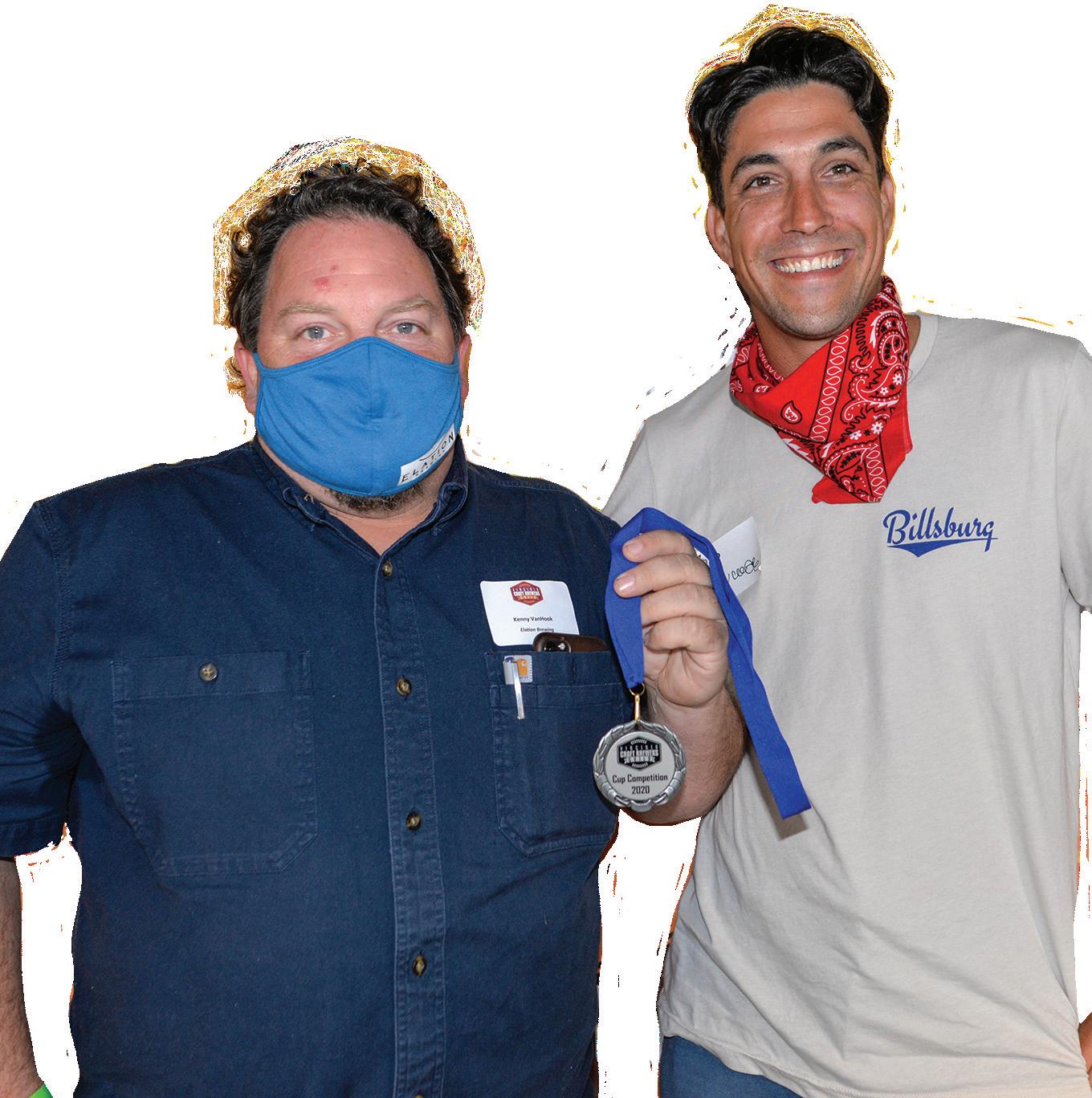
Norfolk’s Elation Brewing Co was elated to earn a Silver for its Rose Gose
SPECIALTY WOOD
1st Fireside Ale
Caboose Brewing Company
2nd Barrel Reserve Imperial Stout
2 Silos Brewing Company
3rd Dark Hollow
Blue Mountain Barrel House
STOUT
1st 838 Stout
Dynasty Brewing
2nd Stout
Great Valley Farm Brewery
STRONG ALE
1st Fergus Wee Heavy
Garden Grove Brewing Co.
2nd 2020
Lake Anne Brew House
3rd Quadiversary
Lake Anne Brew House
HM Murcielago Madison Stout
Tasting Room at Mount Ida Reserve
WHEAT BEER
1st Optimal Wit
Port City Brewing Company
2nd Chasing Ponies
Trapezium Brewing Co.
3rd Pontoon Bridges
Spencer Devon Brewing
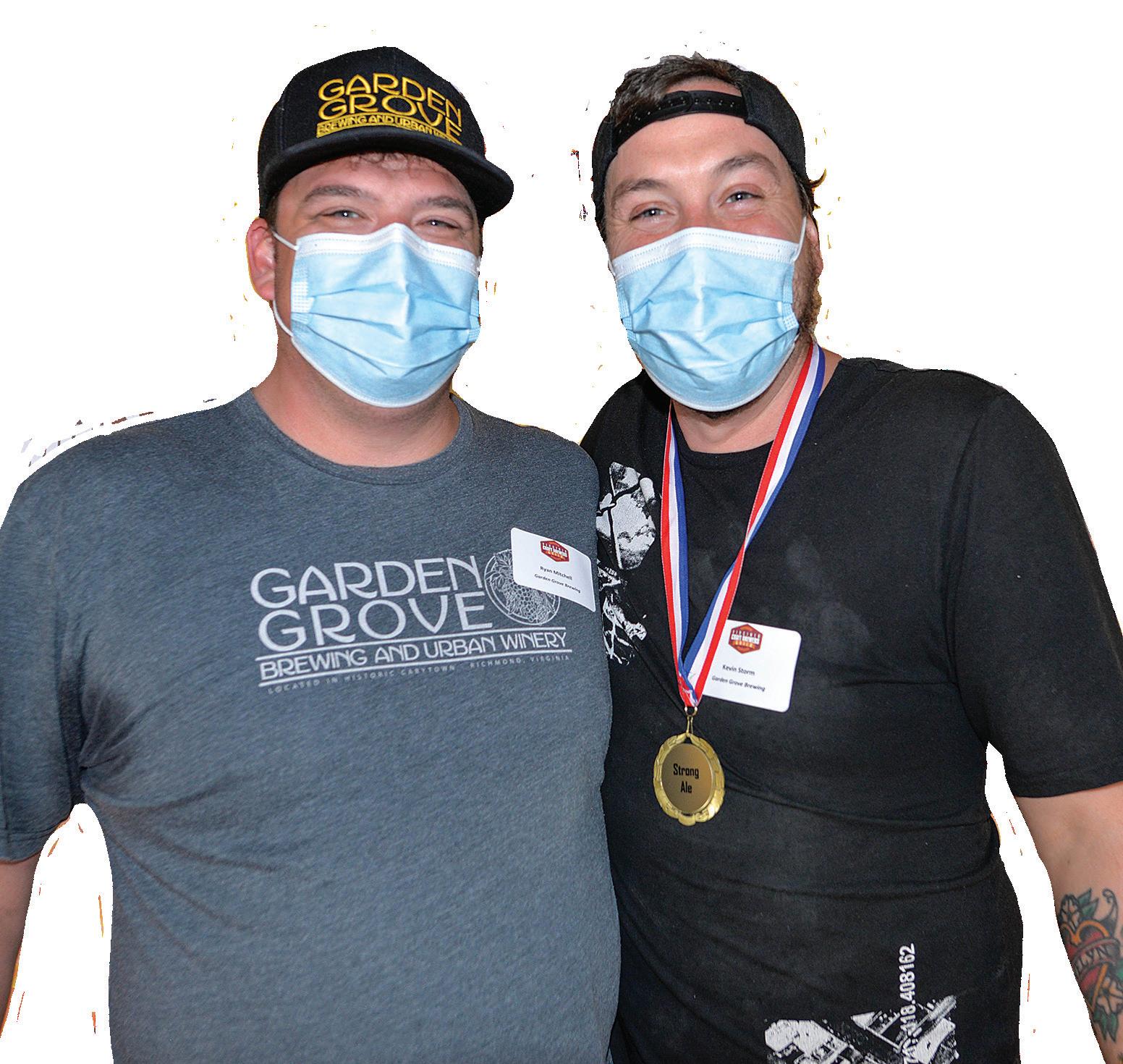
The masked men of Garden Grove Brewing & Urban Winery claimed Gold in the Strong Ale category
Adventure Awaits at Three Roads Brewing Company
By Jeff Maisey
The spirit of adventure drives the curiosity in most of us to explore both uncharted territory and familiar favorites that yearn for a deeper understanding.
It’s easy to imagine a playlist to serve as a soundtrack for such a journey, especially when the road to discovery begins at your driveway and stretches anywhere your heart and tastebuds desire.
Songs might include Talking Heads “Road to Nowhere,” “Radar Love” by Golden Earring, AC/DC’s “Highway to Hell,” and, of course, Willie Nelson’s “On the Road Again.”
The Commonwealth of Virginia is ideal for a road trip with its scenic mountain vistas, sunny Atlantic Ocean beaches, historic towns, and re-imagined urban communities.
All of these themes are the fuel that powers Three Roads Brewing Company.
“Craft beer is an adventure – there is an open road of beautiful towns and cities where all sizes of breweries are open, and it is our duty with breath in our bodies to travel these roads and experience them,” said Miles Sadler, the brewery’s brand manager. “Our team has put markers down in Farmville and Lynchburg for all to visit. We are a brewery that produces traditional beers using the purest ingredients and have vowed never to take shortcuts. This mantra instilled by David (Steeves, brewmaster) and the rest of the team have created a popular product and atmosphere that we love to share.”
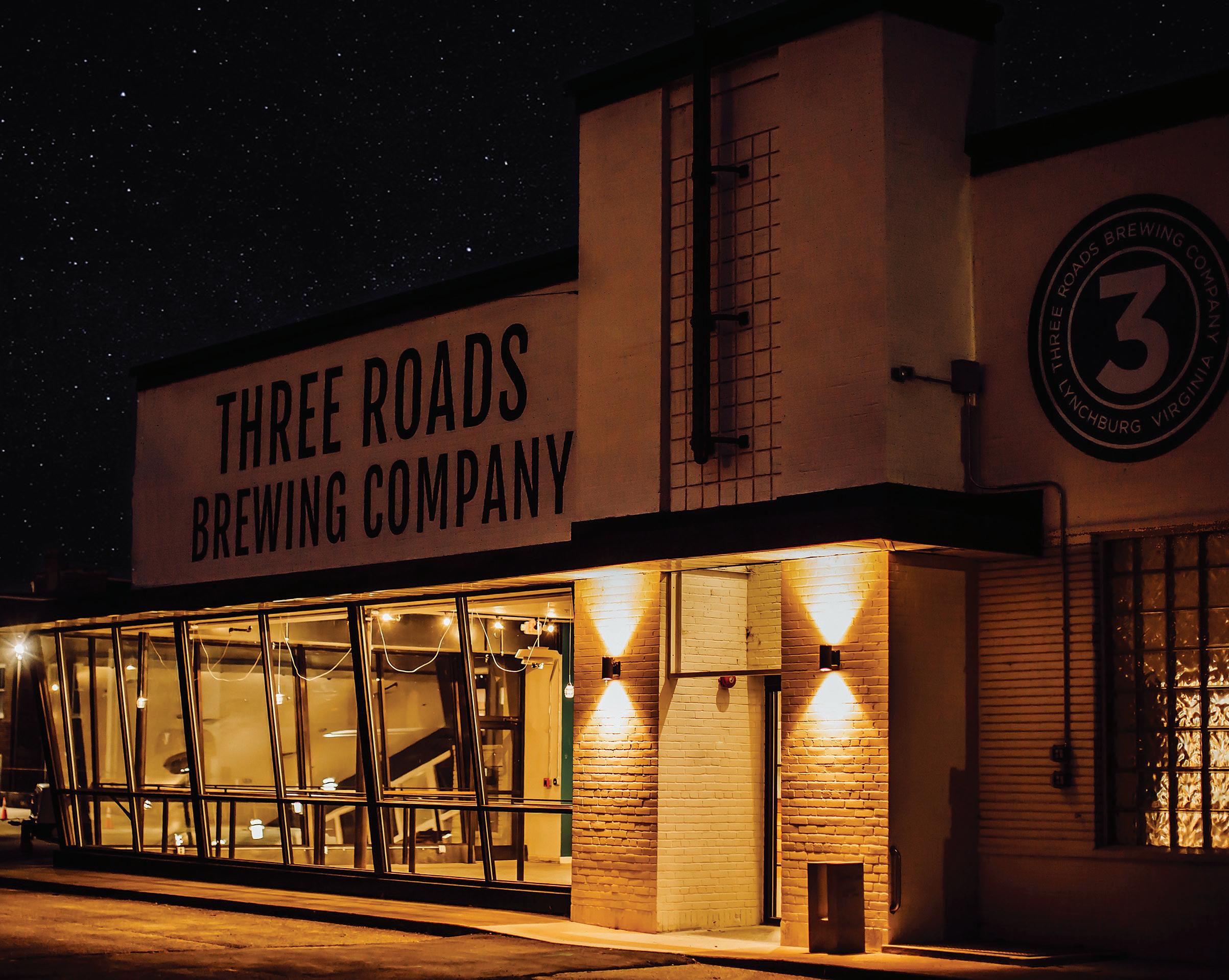
Three Roads Brewing Company was founded in 2016 in Farmville, and earlier this year opened a second location in Lynchburg’s fast growing downtown corridor. Each brewery and tasting room made use of existing structures that turned out to be uniquely reimagined.
“When it comes to converting old buildings, we have been incredibly lucky with the locations we now call home,” Sadler said. “In Farmville, we occupy an old Southern States grain, feed, and farm store and in the space above our taproom, we have student housing through the local university. The building is now a vibrant and historical brick structure that continues to bring visitors to Farmville. Three Roads’ taproom in Lynchburg occupies an old Ford dealership and mechanic shop. Through that building’s restoration, we have taken something beloved by the community and created something new and fresh for customers to get excited about.”
Three Roads’ motto is “We brew community,” and that is reflected in the beers enjoyed by customers.
“The beer drinking public in Farmville has a diverse taste,” explained Sadler, “but we see the High Bridge Helles lager, the N150 IPA as well as the Top Down Blonde Lemongrass Ale as our year-round crowd pleasers.”
Founding brewmaster David Steeves is a graduate of The American Brewers
Guild in Vermont. Steeves now brews on a 20-barrel system in Lynchburg and Sam Allen brews on a 7-barrel system in Farmville. Lynchburg has become Three Roads’ production facility with its focus on the aforementioned Three Roads flagships as well as its Drive By Juice DIPA.
The brewery will begin canning its beers in October and distributing the packaged and draft products within the one-hour range of Lynchburg and Farmville.
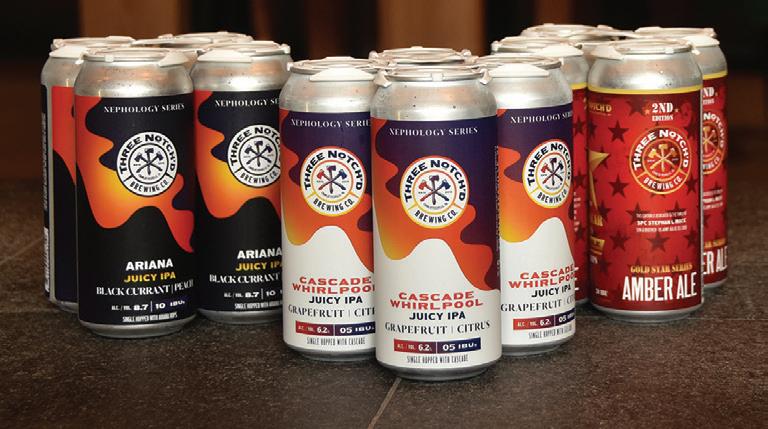
Limited release and seasonal beers are also gaining traction, though the flagships definitely carry the day for Three Roads. Among the special release brews you might find are Autobahn (Marzen Lager), Red Line (Red Double IPA, 8% ABV), Drifter’s Apple Ale, Highway to Hef, Stingray (Honey Saison), and Runaway Heifer (Imperial Milk Porter).
Nearly all of Three Roads Brewing Company’s beer brands reference modes of travel. That’s by design.
“My father and co-founder of Three Roads Brewing Company has always had a passion for motors, automobiles, racing, and tinkering/fixing mechanics,” said Miles Sadler. “When he joined this adventure in 2016 with four other founders, he framed it as an exciting venture that would satisfy a need in the community, and something he could put his passion behind.”
Plot your course at 3roadsbrewing.com.
Something’s Always Brewing at COVA
By Diane Catanzaro and Chris Jones
To brew or not to brew? That is the question.
For Scott and Susan Bateman, the answer was “two brew.”
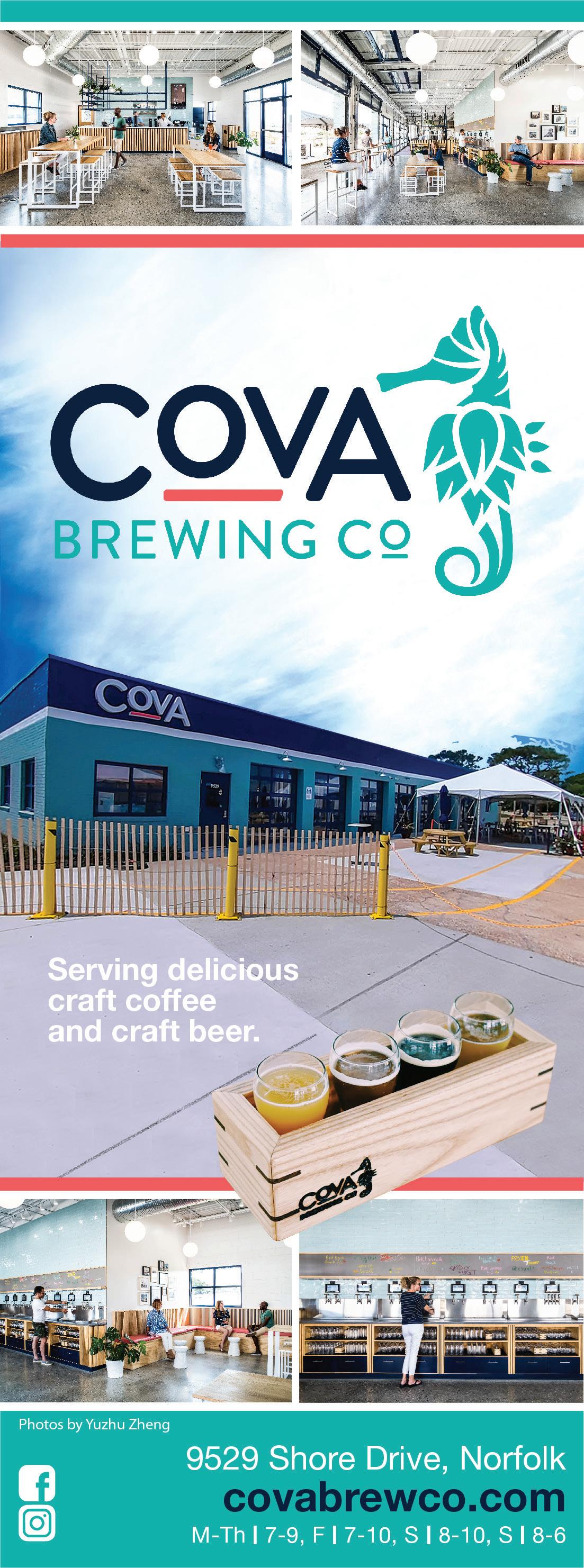
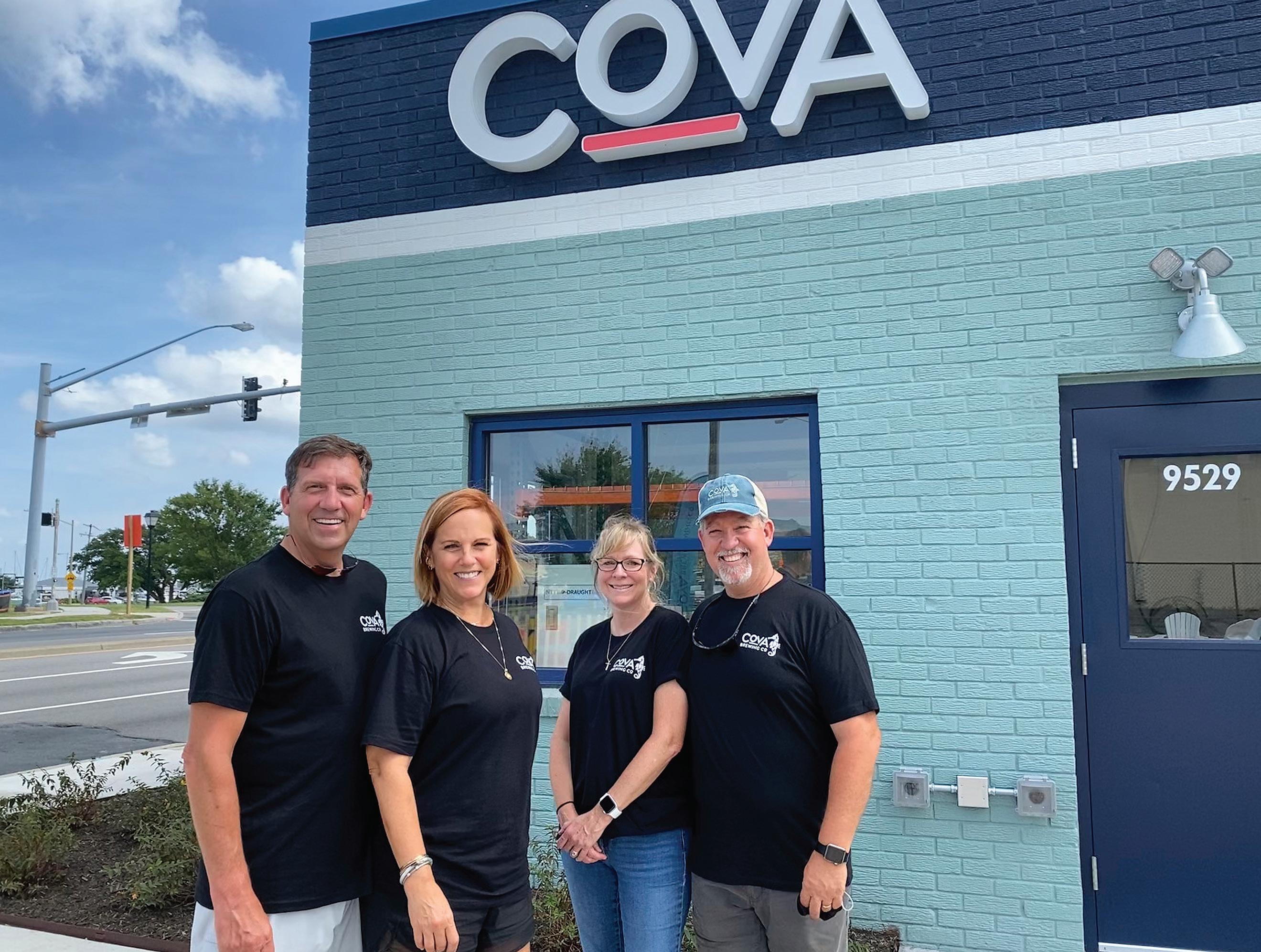
Blending the family’s love of craft beer and daughter-in-law Corrie’s barista experience, they decided to open a brewery where they could brew both beer and fine coffees in the Ocean View section of Norfolk. COVA (short for “Coastal Virginia”) Brewing Co is at 9529 Shore Drive, across the street from the marinas near East Beach and Joint Expeditionary Base Little Creek.
Scott and Susan are both Norview High School graduates, and Scott is an ODU alumnus, class of 1985 and a Theta Chi. Back in 2017, the Batemans were sitting in a brewery in Norfolk and thinking about the need for a brewery in their native Ocean View. Like many home-brewers, they had a dream of opening a brewery, and at that time, Ocean View was a ‘craft beer desert’ without a single brewery or craft beer bar. Scott and Susan took a leap of faith and decided to open a hybrid brewery-coffee bar that would give the community a place to sip their beverage of choice. In addition to beer and coffee, COVA has wine, cider, and delicious home-brewed kombucha. They are family friendly, pet friendly (outdoors), and even wine-drinker friendly.
Partners Phil and Karla Smith are relatively new to the
neighborhood, having relocated to the Norfolk area from Ohio. They learned about the Bateman’s vision and joined forces to help make the dream a reality. Phil’s dad is a part of advertising history; perhaps you’ve heard some of the slogans he did for Miller Brewing, like “Tastes Great, Less Filling” and “Everything You Always Wanted in a Beer and Less.” Pretty cool, huh? That’s, like, beer-famous!
The highly skilled artisans at Spacemakers did the build out, and this former tire supply shop now boasts a gleaming seven-barrel brewhouse, a light-filled tasting room with blond wood tables, selfserve taps, and a coffee bar. The interior is bedecked with subway tiles in white and a pale aqua-mint reminiscent of sea glass or clear Caribbean waters. Outside is a very spacious seating area with well-spaced picnic tables, Adirondack chairs, high-top four-tops, and a covered patio.
Every brewhouse needs a brewer. Matt Topping was Head Brewer at Coelacanth Brewing, and after that brewery’s demise he found a home at COVA. We’re happy to say that Matt is doing a fantastic job and the beer at COVA is delicious. In early July, four of their beers were on tap; a Pilsner, an IPA, a gose, and a coffee stout. There was also an Extra Special Bitter collaboration with Elation
COVA Brewing Co is the 757’s newest craft brewery.
Photo:
Diane Catanzaro
Brewing, a Blue Toad Hard Cider, and a session IPA from Brothers Craft Brewing. While the specific beers will rotate and vary, they plan to always have the range of styles cover light, hoppy, sour, and dark. We were delighted with the quality of the beers.
The Pilsner is crisp and clean, and sessionable at under 5% ABV. An easy-drinking, beautifully balanced, well carbonated peoplepleaser of a beer. Great before, after, or instead of the beach.
The IPA was a knock-out. With four pounds of Comet and Citra hops per barrel, it has a lot of hops flavor, moderate bitterness reminiscent of grapefruit, with tropical notes. While billed as a West Coast IPA, this hazy drinking companion would fit right in with the New England-style crowd. If you’re a “hops head,” this is the beer for you. If you’re not, it might convert you.
The passionfruit-lime Gose was tart and tasty. It had the requisite pucker-factor but was more approachable than many. If you are a sour fan, you will want to try the gose.
The Coffee Stout was outstanding. This isn’t a heavy imperialtype stout but is lighter-bodied than you’d expect, with a hint of roastiness, moderate coffee flavor, and wonderful coffee aroma. It would be a nice breakfast stout any time of day. There is a regular version on tap as we write this and also a nitro version.
Speaking of breakfast, this is the first brewery to our knowledge in the region to open in the morning for the coffee-crowd. The fancy Italian LaMarzocco espresso machine will provide the brew for a killer latte, cappuccino, mocha, macchiato, etc. There are homemade chocolate, vanilla, and caramel syrups, and cow, soy, oat, or coconut milk. It’s a real coffee bar, with a few nibbles in the case like muffins, cupcakes, and large German-style pretzels. Chris had an iced caramel latte which he thoroughly enjoyed, and Diane relished a hot latte. You can get a regular drip cuppa joe, or hot chocolate. The coffee served at COVA comes from a gourmet roaster, Counter Culture, of Durham, NC.
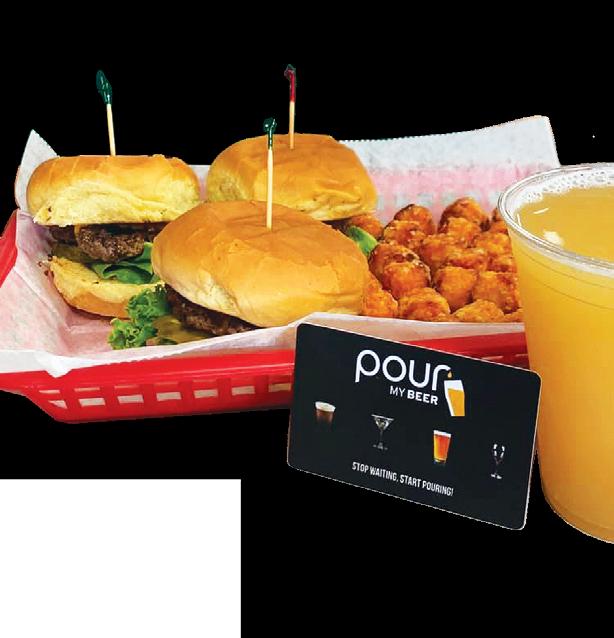
The tasting room at COVA is unique for a brewery in our region as it is self-service. You receive a plastic card that you place in a slot above the tap-handle. The screen tells you about the beer. You open the tap and pour your own beer. We love choosing exactly how much of a beer to drink rather than have ‘set’ serving sizes. You can pour yourself a full glass, an ounce, or anything in-between. When you are ready to leave, you turn in the plastic card and pay by the ounce.
In these COVID days, with our collective awareness of fomites at a heightened state, aren’t there risks in letting us put our hands on the taps? The nice folks at COVA have expertise based on experience in the health care industry and have taken steps to minimize these risks. When you enter the building, you’ll need to have a mask on; if you don’t have one, they will sell you one for a buck. Next, you’ll be directed to wipe your hands with hand sanitizer. You will be given the plastic card which operates the taps. You’ll get a clean glass and proceed to the dispensing area. Staff will then instruct you on how to pour a beer without touching the glass to the tap. The tap-handles are made of copper, which can be a germicide. In addition, the tap, the top of your glass, and your plastic beer card are all under a UVC light; the ”C” wavelength of UV light won’t harm you, but is a known germicide. You get a fresh glass for each beer. No re-using the glassware. So, actually the COVID risk would seem to be either the same or less risk than being served by another person.
Do check out COVA Brewing in Ocean View. You’ll be glad you did!
Flavor Breakdown of America’s New Favorite Drink
By Aaron Whittemore
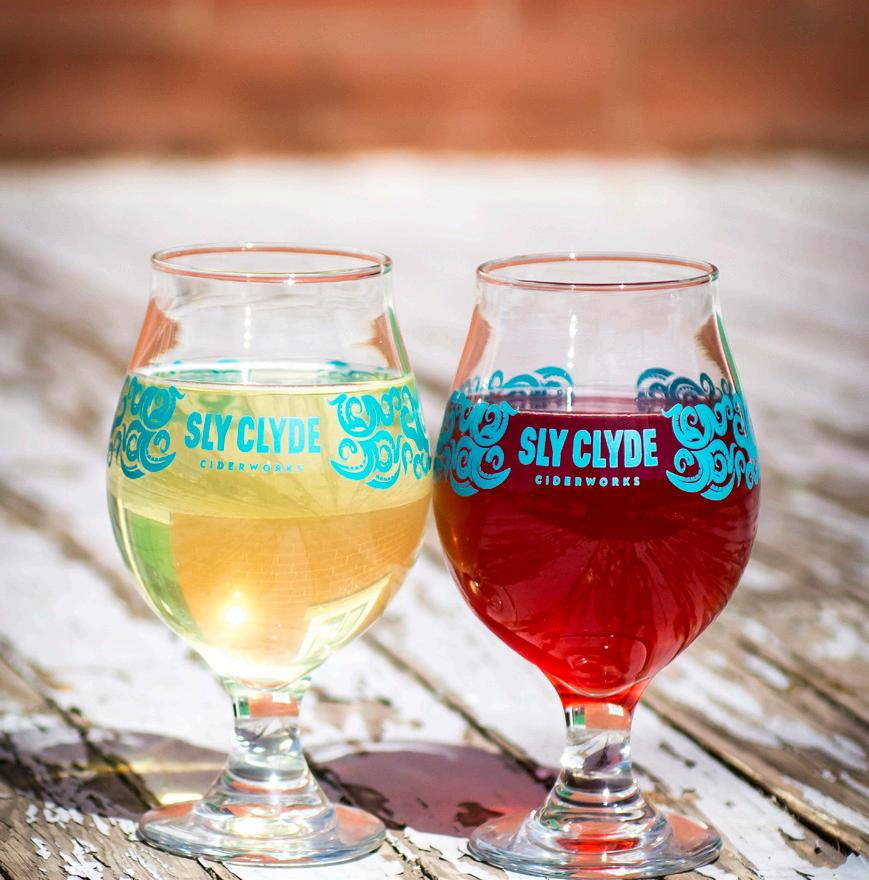
The U.S. alcoholic cider industry is growing and growing fast. In 2008, hard cider sales totaled $44 million. In 2018 that figure had climbed to over $1 billion—an increase of over 2,000 percent. Local and regional cideries account for about a quarter of these sales, and the number of craft cideries has nearly doubled in the past few years. Craft cider is an important part of many local and regional economies across the U.S., and cider production has cascading economic effects that bolster the agriculture and tourism industries. Virginia, in particular, has strong cider production, ranking ninth out of all U.S. states, and lays claim to Bold Rock, the second largest cider producer in America. Other high-quality cider makers in the Commonwealth include Sly Clyde Ciderworks, Bryant’s Small Batch Cider, Courthouse Creek Cider, Albemarle CiderWorks, Winchester Ciderworks, Busky Cider, Castle Hill Cider, Potter’s Craft Cider, Wild Hare Cider, Blue Bee Cider, Ditchley Cider Works, Coyote Hole
Ciderworks, Big Fish Cider Co., Blue Toad Hard Cider, and Lost Boy Cider.
The cider industry has old roots that date back to the beginning of Colonial America, but they have only recently been replanted. The relative novelty of cider in the U.S. means that the industry has yet to benefit from the widespread and thorough research that has been a staple in other beverage industries like those of wine and beer. Virginia Tech researchers in the Water INTERface Interdisciplinary Graduate Education Program (IGEP) and the Department of Food Science and Technology are leading pioneering research to improve the understanding of cider tastes and odors and its elemental composition.
As the cider industry grows in Virginia and across the U.S., there will be an increasing diversity in sensory profiles of cider. A beverage’s sensory profile is essentially a combination of the flavors, tastes, smells, and mouthfeels that can be used to describe
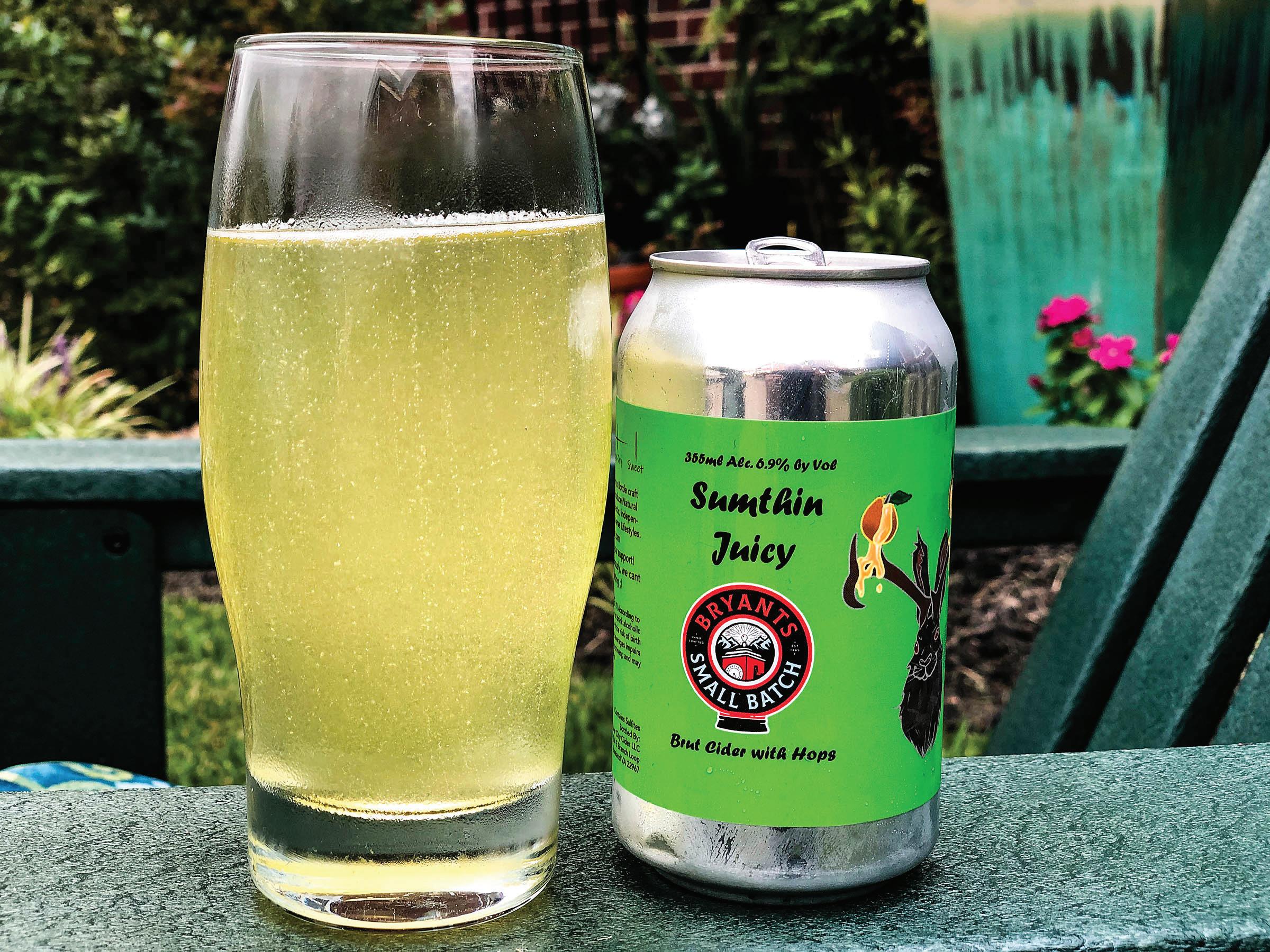
Bryant’s Small Batch Brut Cider with Hops is amazingly refreshing
that product. Cider, for example, might have a sensory profile with the descriptors sweet, tart, dry, etc. It is important for producers in the cider industry to be able to evaluate their cider’s flavors and assess customer liking so that their products can continually improve. Jacob Lahne, an assistant professor in the VT Food Science and Technology Department, sees much opportunity for growth in this area. “There’s clearly a lot of room for people to understand what flavors they could have in ciders and then develop better ciders from that,” he said. Developing a cider sensory profile could be especially helpful to advance general awareness of cider flavors.
So far in the cider industry, sensory profiles have usually been developed by cider makers for internal use, and not for consumers. This is problematic according to Katherine Phetxumphou, a VT Food Science and Technology postdoctoral researcher and former Water INTERface IGEP fellow, “because cider makers describe their ciders in a particular way, but that’s not necessarily reflective of what the consumer is experiencing.” Consumers ultimately decide which cider to buy, so understanding their perception of cider flavors through a sensory profile could be extremely useful for the cider industry.
Phetxumphou led an exploratory study that aimed to develop a consumer sensory profile of Virginia ciders through lexicon development—in other words, creating a vocabulary of cider tastes, flavors, smells, and mouthfeels based on consumer experience. The study was broken into two parts to first develop the sensory profile, and then put it to the test.
In part one, participants were asked to smell and taste six different Virginia hard ciders and then freely describe their
perceptions and rate each cider on a scale of 1 to 9, with 1 being “dislike extremely” and 9 being “like extremely.” Researchers analyzed the entirety of the descriptive terms used by participants and combined similar terms to produce a list of 26 unique terms that fully described the smell and taste of the various cider samples. The 26 descriptors were divided into different sensory categories: flavor and aroma, taste, and mouthfeel. Some of these terms are fairly straightforward, such as “sweet,” “fruity,” “fresh apples,” and so on. However, within the terms, a lot of detail is covered: the good (“woody,” “earthy,” “sharp”), the bad (“metallic” “synthetic”) and the ugly (“putrid”). The descriptors were used to create a check-all-that-apply list (at right) that could be given to consumers to aid in future cider descriptions.
In part two of the research, a new group of participants described and rated six different hard cider samples, and this time they used the check-all-that-apply list to describe the ciders. Results showed that the vast majority of check-all-that-apply list terms were useful for differentiating between cider samples— participants were able to use the terms to identify and describe different sensory experiences among the cider samples. Further, these descriptors were also associated with liking scores showing what sensory qualities participants liked and disliked in their ciders. The most positively associated terms are those we might typically associate with good cider: “fresh apples,” “crisp,” “fruity,” “smooth,” and “sweet,” while the most negatively associated terms included “putrid,” “synthetic,” “metallic,” “earthy/musty,” and “bitter.” These insights could be extremely useful for cider producers in gauging consumer preferences. After reviewing these results, producers could tailor their cider recipes to
OCTOBER EVENT SCHEDULE
FRI 10/2 NO NOGGIN MUNICH DUNKEL RELEASE
SAT & SUN 10/3-4 KIDS FALL CRAFTS & GAME-ROOM DECORATING
FRI 10/9 ANGELIAUREUM BELGIAN TRIPEL RELEASE
SAT & SUN 10/10-11 PUMPKIN DECORATING FOR ALL AGES
MEET ME FOR A
FRI 10/16 JABRONIUS MAXIMUS BLACK DIPA RELEASE
SAT & SUN 10/17-18 HALLOWEEN MOVIES AT THE BREWERY
FRI 10/23 SMOKED HELLES RELEASE
SAT 10/24 PET HALLOWEEN CONTEST
FRI 10/30 THREE FATHOMS TRIPLE IPA RELEASE
SAT 10/31 FAMILY TRICK-OR-TREAT 5:30-7PM, 21+ AFTER 8PM
CHEERS TO DEDICATION.
Kaufman & Canoles has worked with breweries, vineyards and distilleries for years, and we have a dedicated team of attorneys to help you navigate the complexities of the alcoholic beverage industry. We can. And we will.
accentuate positively associated flavors, aromas, tastes, and mouthfeels while steering clear of their negatively associated counterparts.
Liking scores for each of the descriptors. Positive values represent positive association, and negative values represent negative association. The longer the bar, the greater the magnitude of liking or disliking.
Obviously, cider-makers intend to create cider with good tastes or smells, but crafting the perfect cider is no easy task. This is made more difficult due to the new nature of the industry and the lack of scientific support it has received. For example, cider sensory profiles are affected by their mineral and metal compositions, but few have analyzed the mineral make-up of hard ciders. Wenchuo Yao, a VT Water INTERface researcher and PhD student in the Civil and Environmental Engineering department, working with Water INTERface Professor Andrea Dietrich, led a study to fill in this knowledge gap, which will further benefit the cider industry.
Yao analyzed 18 different samples of Virginia hard cider for their mineral compositions in an Inductively Coupled Plasma-
Lost Boy Cider in Alexandria gives several options to explore.
Photo: Lost Boy Cider
Mass Spectrometer, or ICP-MS for short. The ICP-MS process is complicated, but essentially decomposes a sample into its constituent atoms and then reports how much of each the sample contains. When Yao analyzed the results, she found high concentrations of potassium, magnesium, and calcium, which are expected given that apples contain high amounts of these beneficial and essential minerals. Iron was found in all ciders at levels above the value known to cause metallic flavor in water. This is a potential concern for the cider industry, as metallic flavor was connected to lower liking scores for cider in the check-all-that-apply study.
In the future, Yao hopes to link metal and mineral concentrations in cider directly to its sensory profile. That way, it could be determined if higher iron concentrations in cider are leading to a metallic flavor. Similarly, high scoring ciders based on study participants liking scores could be related to their mineral and metal compositions to determine which may enhance cider flavor. This could help cider makers decide on what type of apple to use in crafting their cider or make changes to their brewing process to improve their cider products. Yao is eager to begin future research. “Making these connections between mineral and metal composition and the sensory profile could really improve cider products,” she said.
Through their pioneering and exploratory work, VT Water INTERface IGEP researchers have made significant strides in hard cider sensory profile and metal/mineral composition research. Their research has focused on Virginia ciders, but is applicable and beneficial to the burgeoning cider industry that has taken off around the U.S. “Interdisciplinary research is exciting and advances society in ways that a single discipline cannot. Specifically in this cider research, the coupling of food scientists with environmental engineers to understand consumer flavor preferences for ciders is unusual and groundbreaking,” says Dietrich, who co-directs the Water INTERface IGEP. Further, this work opens the door for many follow up studies that can continue to improve the knowledge on the taste, flavors, smells, and mouthfeels of ciders, ensuring that the cider industry continues to advance.
The next time you sit down to enjoy a crisp and cold hard cider, you can do so with the knowledge that VT Water INTERface IGEP researchers are at the cutting-edge to ensure that your enjoyment only grows.
Most Common Brewery Compliance Issues Found During TTB Inspections and Audits – Part 1
by Kevin N. Anderson, Regulatory Consultant
Running a brewery sounds like a dream job to many, and it can be, but the ongoing regulatory requirements remain vast and complex. This is why many alcohol manufacturers use outside consultants and counsel to navigate these ever-changing regulations. This leaves the brewery and its employees to do what they do best, brew and sell amazing Virginia craft beer.
The Alcohol and Tobacco Tax and Trade Bureau (TTB) has provided a detailed list of the most common problems and violations that their investigators and auditors come across. The TTB provides four main areas where issues are most commonly found at breweries. Below is a sample from www.ttb.gov/beer:
1. Records
2. Production and Inventory
3. Taxes
4. Reporting
Yes, this may be boring, but staying compliant will save you in the long run.
This article will discuss issue number one, TTB Record Keeping.
1. Records Issues
Daily Records of Operations
TTB auditors most frequently cite a brewer’s lack of and inaccuracy of records required under TTB regulations as the number one non-compliance issue. Under 27 CFR part 25, brewers must complete and maintain daily records and reports that capture information about brewery operations. These daily records must include:
• Each kind of material received and used in the production of beer;
• The amount of beer produced;
• Beer transferred for, and returned from, bottling and racking, or bottled, racked, or removed from the brewery;
• Beer removed for consumption or sale — For each removal, the record shows the date of removal, the person to whom the brewer shipped or delivered the beer, and the quantities of beer removed calculated in kegs and in bottles;
• Beer removed without payment of tax — For each removal, the record shows the date of removal, the person to whom the brewer shipped or delivered the beer, and the quantities of beer removed in kegs, bottles, tanks, tank cars, tank trucks, tank ships, barges, or deep tanks of vessels;
• Packaged beer used for laboratory samples at the brewery;
• Beer consumed at the brewery;
• Beer returned to the brewery from which it was originally removed or from another brewery that the brewer owns;
• Beer reconditioned, used as material, or destroyed;
• Beer received from other breweries or received from pilot brewing plants;
• Beer lost due to breakage, theft, casualty or other unusual cause;
• Brewing materials sold or transferred to pilot brewing plants (including the name and address of the person to whom it was shipped or delivered) and brewing materials used in the manufacture of wort, wort concentrate, malt syrup and malt extract for sale or removal;
• Record of tests of measuring devices; and
• Beer purchased from other brewers in the purchasing brewer’s barrels and kegs and such beer sold to other brewers.
All entries in the daily records must show the date of the operation or transaction, accurately and clearly reflect the details of each operation or transaction, and contain all data necessary to enable brewers to prepare summaries, reports, and returns. The records should verify removals of beer, verify claims, and confirm compliance with laws and regulations.
Inventory Records
Under 27 CFR 25.294, brewers must take a physical inventory of beer and cereal beverage (A beverage, produced either wholly or in part from malt (or a substitute for malt), and either fermented or unfermented, which contains, when ready for consumption, less than one-half of one percent (0.5%) of alcohol by volume) at least once per calendar month. The brewer must retain inventory records and make them available for inspection when an appropriate TTB officer requests them.
• The record of inventory must include the following:
• Date taken;
• Quantity of beer and cereal beverage on hand;
• Losses, gains, and shortages; and
• Signature–under penalties of perjury–of the brewer or person taking the inventory.
This is just a small example of the federal regulations that Virginia breweries must adhere to. To review more of TTB’s four main areas of non-compliance, you can visit, https://www. brewerycompliance.com/brewery-audits.
Disclaimer: Before you take any action based on this article please consult with an expert or regulatory official. Regulations and interpretations at the federal and state level are subject to change at any time.