www.vinegarhillmagazine.com | 1
2|
INSIDE This Issue 06
2026 High School Grads Reflect On Local Community
12
Black Women The Unemployment Storm
18
Stepping In When Parents are Absent
22
Building Culinary Careers Alternative Routes to Career Training
28
She Spent 18 Years She Wants The World To Know That Incarcerated Mothers Matter
34
Matchbox’s Craft Without Ego Creativity With Restraint
www.vinegarhillmagazine.com | 3
ABOUT THIS
ISSUE In this issue, we explore the pathways our community is forging toward economic mobility, empowerment and self-advocacy. Leading this issue as our cover story, Madelyn Coles shares her deeply personal account of stepping up as a primary caregiver for her grandson, Reo. Her experience navigating administrative hurdles, financial strain, and personal sacrifice led to founding Another Mother’s Arms to support grandparents raising children across our region, serving as an urgent call for policy reform to empower kinship caregivers. Alongside Madelyn’s powerful cover feature, our neighbors continue creating possibilities and breaking cycles to shape a brighter future for the 4|
Charlottesville region. We honor the Class of 2026 as local high school graduates reflect on their deep roots, regional resources and aspirations for Charlottesville. We also address the persistent systemic challenges facing Black women navigating current labor market shifts and unemployment, highlighting regional workforce tools and creative strategies for resilience. Our coverage extends into local alternative career pathways, profiling how programs like GO Cook at Culinary Concepts AB equip aspiring chefs with foundational life and kitchen skills. We visit Matchbox Restaurant at the Shops at Stonefield to highlight how thoughtful hospitality
and restraint showcase Black entrepreneurship and community stewardship. Additionally, in a moving first-person essay, Candace Williams shares her journey through incarceration, detailing her work establishing parenting programs for mothers behind bars and advocating for hidden victims. As our community continues to tackle economic disparities and broaden opportunities, we hope these stories inspire you to engage, support local leadership and help build a space where all emerging adults and families can thrive. With Purpose, The Vinegar Hill Team
come + enjoy REFRAMING AGING SINCE 1960
Meet people. Try a dance or exercise class. Join a band. Enjoy live music or a cup of coffee. Volunteer. You’ll find 150+ programs six days a week! Healthy aging opportunities for all adults age 50 and better.
540 Belvedere Blvd. | C’ville | 974.7756 | thecentercville.org Monday & Friday 8:30 am–4:30 pm | Tuesday–Thursday 8:30 am–8:00 pm | Saturday 8:30 am–2:00 pm
We help you grow your brand exponentially.
#growyourbrand
—STEPPEMEDIA
SteppeMedia locally owned and operated, was launched to assist small business owners to expand and make the best use of their digital presence. We use our corporate advertising experience to your benefit while you focus on running your business.
• SEO • SOCIAL MEDIA MANAGEMENT • MARKETING STRATEGY • WEB DEVELOPMENT • WCAG 2.0 COMPLIANCE • GRAPHIC DESIGN
steppemedia.com
(434) 290-1270
info@steppemedia.com
www.vinegarhillmagazine.com | 5
2026 HIGH
SCHOOL GRADS REFLECT ON LOCAL COMMUNITY by Jessica Harris
Jessica Harris is based in Charlottesville, Virginia, and has written for Vinegar Hill Magazine for three years. She’s passionate about accessible arts education, community-based work and, of course, 70s & 80s music.
Students smile in celebration at a graduation ceremony amidst a flurry of colorful confetti. Photo credit: filmana/Vecteezy 6|
T
assels turned. Caps thrown. Cameras flashed. Amidst smiles and tears, the class of 2026 celebrated the milestone of completing their high school careers this past week in the Charlottesville area. As the kids say, it’s #graduationszn. And once the pomp and circumstance of this time comes to a close, students move on to their next chapters. Whether employment, enlistment, further education or taking time to assess their options, students pursue a variety of routes. In many cases, students are choosing to stay in the area and remain rooted in Charlottesville/Albemarle. As these local high school seniors complete their steps across the graduation stage, they stare down their future in this community -- a future filled with uncertainty, with hope, with possibility. The question is thus: is this community a place where they are able to thrive? Are there sufficient opportunities for them to engage? Resources to support them? How are we collectively working to ensure the future is bright for these graduates? On paper, it seems this might be an uphill battle. Twentyseven percent of families in Charlottesville did not earn enough to provide for their family’s basic needs in 2024 when it came to expenses like housing, childcare and food. The median household income in 2023 for white residents in Charlottesville/ Albemarle was $102,100, compared to $48,200 for Black
Nasir Wayne, right, posing with ReadyKids Executive Director Jacki Byrant, left, at the ReadyKids Community Lunch. Photo Credit: Ready Kids
residents. And youth participation in the labor force for people aged 16-19 in both Charlottesville and Albemarle is below that of the state overall. Across Virginia, 40% of this age group works. In Charlottesville, it’s 34%. In Albemarle, it’s 24%. These numbers may suggest low engagement for our young people. As graduates look to the future, I was curious to hear what their hopes were for our community. What might this region do that moves beyond word and towards actualizing possibility? How do they envision a future that includes them and centers their needs? Nasir Wayne, 17, is a Charlottesville High School (CHS) graduate who has lived locally nearly his entire life. His connections with family and friends are deep and broad in this city, and he considers this place his home. Most recently, Wayne received the Ryan Vaughn Community Builder Award from ReadyKids, in recognition of his advocacy efforts around www.vinegarhillmagazine.com | 7
mental health and support of his community. After graduating, he’s planning to become a heating, ventilation and air conditioning (HVAC) technician and is staying in the area. He aims to pursue the training necessary at Piedmont Virginia Community College (PVCC). But Wayne believes there are many things to be done to improve this region, particularly around service mobilization. Wayne said if he had a magic wand he would encourage
“looking for those in need instead of asking people to come together. I think you actually go out and look to try and help people so they can actually feel wanted and receive actual support.” His sentiments speak to the challenges that individuals face when navigating resources. Oftentimes individuals in need of support take on the extra burden of navigating complex systems and applications to receive services, rather than the services meeting individuals where they are. While Charlottesville has over 2,000 organizations in the metro area doing fantastic work, navigating these resources can be a challenge. CHS graduate Zaharra Colla, 17, spoke to some of these same obstacles as well. Also a lifelong Charlottesville resident, Colla expressed her desire for Charlottesville to become a place that is welcoming and accessible 8|
to all -- not just some. When asked about resources, mentors, and ongoing support Colla named the challenges in accessing these opportunities.
“You have to be going out to seek them. And I almost wish that you (could) meet in the middle and then maybe a third party or something like that would be able to help with those bridges.” She, too, expressed the need for resource collaboration, consolidation and navigation. Her magic wand would also give people a “mindset of curiosity…I think if people who are meeting new people or who are going into new spaces, just enter it with curiosity and wanting to learn, that could fix a lot of problems,” she said. Colla named a special interest in the community extending warmer welcomes to people with international backgrounds and those who may have unique needs. Addressing this gap in resources is especially significant as Charlottesville is becoming increasingly more diverse and varied in experience and demographics -- with non-white and non-Black racial and ethnic groups increasing over the past 10 years, and economic gaps widening. Colla voiced that making things more accessible should be a priority -- from more
Photo caption: Zaharra Colla at a Charlottesville High School scholarship ceremony. Photo provided by Zaharra Colla www.vinegarhillmagazine.com | 9 www.vinegarhillmagazine.com
widespread regional transit to geographically and financially accessible events and resources. This summer, Colla is interning with the local National Association for the Advancement of Colored People (NAACP) and the Jefferson Madison Regional Library, focused on library studies. She’s also serving as the arts education intern at the Jefferson School African American Heritage Center. She’s weighing her options for the fall, and will either enroll in a 4-year school, or will take credits at PVCC with a goal to transfer. Her end goal is to study global affairs, with a focus on international political economy, aspiring to serve in the foreign service or as a diplomat. When asked what they love most about the community, Wayne, in alignment with his communitybuilding ethos, shared that he loves that Charlottesville is “super diverse, and you can meet a lot of genuinely good people.” Colla equally appreciates the diversity of experiences that the community and the University of Virginia offer and the chances to learn and engage in various events. There certainly are many organizations and individuals doing phenomenal work in our community. Local Human and Social Services and programs
10 |
like Charlottesville City’s Community Attention for local youth; immigrant and refugee supports like the International Rescue Committee; and other job and resource navigators like Network2Work@PVCC all are making strides towards the items Colla and Wayne raised. Not to mention the hundreds of other organizations who show up and do meaningful work each and every day. Perhaps resources like these are part of why both grads are looking to stay or come back to Charlottesville in some capacity. This investment locally speaks also to their roots in the community, their passion for giving back and desire to leave this area better than they found it. Colla even expressed interest in starting a nonprofit to help provide transportation and afterschool opportunities for youth. Graduates locally and across the nation must decide if the efforts they make in their careers will be designed to enrich the places they call home or if they will venture out on paths elsewhere. While both routes have strengths and opportunities, students like Colla and Wayne remind us that we as a community should work to ensure our area remains a place that makes both pathways possible. Students who stay must be able to find success and economic
mobility, and students who leave should be adequately prepared and supported in their ability to pursue possibility. This support includes proper training, employment and enrichment opportunities that cultivate the skills and resources necessary to be successful -- both here and elsewhere. We should continue to amplify the great work taking place by organizations locally, while grappling intentionally with the challenges and disparities we face. To me, our young people are well positioned to do this both/ and; they meet the barriers headon, and often have the ideas and energy to tackle them. In speaking with these two graduates, I left our conversations more hopeful than when we began. Their optimism, understanding of possibility and investment in the community inspire me. I look forward to seeing where these graduates’ next chapters take them, both in Charlottesville and beyond. And I look forward to working alongside our community members to ensure our area is one where we know all our emerging adults can thrive. Hats off, Class of 2026.
“It was time for me to change my life and the lives of my family, so I went back and got my high school diploma.” - Darlene
Find free adult education centers near you at
FinishYourDiploma.org
www.vinegarhillmagazine.com | 11
BLACK WOMEN WEATHER THE STORM OF UNEMPLOYMENT by Katrina L. Spencer
Katrina L. Spencer began writing for Vinegar Hill Magazine in 2022 when she lived in Charlottesville. She left Virginia to pursue a master’s degree in journalism and media. Having completed her program, she now resides in Austin, Texas, and recruits freelancers to contribute to the publication.
At TJ Maxx, Chrystal Edney, 47, checks out customers as a cashier. She is required to ask each of them three times if they’re interested in opening new lines of credit at every transaction. The store is understaffed, she said, and the hours are long and sporadic. Standing on her feet is aggravating her sciatic nerve, yet she has already applied to hundreds of other jobs without success. Edney didn’t aspire to work in retail. She moved from Atlanta, back home to Columbia, South Carolina, when her work opportunities thinned. While she already holds a bachelor’s and a master’s degree, she has reluctantly been considering going back to school 12 |
Erica Adams sits at her desk at Santa Monica College in Southern California, April 2026, where she works as a college administrator. She and 72 of her co-workers have received layoff notices. Their work ends June 2026. Photo provided by Erica Adams
as she has been unable to secure a position in her former field of insurance for about 3 years. Pursuing further schooling causes her fear of entering a new cycle of educational debt, she said. “I’ve kind of lost my hope,” she said. Edney is not alone. Like many Black women across the United States, unemployment and underemployment have visited our doorsteps. At the end of 2025, over 7% of Black women aged 20+ were unemployed, according to the U.S. Bureau of Labor Statistics. The last time the numbers were that high was the summer of 2021 in the middle of the Covid-19 pandemic. To complicate matters, some
Chrystal Edney poses for her first day of work in insurance in 2001. The tides of the labor market have since forced her to move from Atlanta, Georgia, and to return home to South Carolina where she says there is not a “mindset of abundance.” Photo provided by Chrystal Edney
employers are reluctant in committing to new candidates. “This is largely an employer’s market. Hiring parties currently hold more leverage and are using it to be highly selective, sometimes to the point of being unrealistic,” Sarah Morton, the executive director of Regional Workforce Board, Virginia Career Works Piedmont, wrote in an email. She has supplied a list of resources at the end of this article for people living in Virginia, where unemployment, as of April 2026, is up. The topic has received wide coverage with some sources attributing parts of the decline in Black women’s employment to cuts to federal jobs that accompanied the introduction of the Department of Government Efficiency (DOGE) and the dissolution of many diversity, education and www.vinegarhillmagazine.com | 13
inclusion (DEI) programs. “Women of color are disproportionately represented in sectors that are often the first to experience layoffs when funding tightens or priorities shift,” Morton wrote. Some of the eliminations of this sort have the potential to contribute to a competitive job market at best and a hostile one for Black women at worst. And even as unemployment rates for Black women now begin to show modest signs of decrease nationwide, many have been obligated of late to pursue nonstandard paths to wage earning to get by. Ronchelle “Roni” Nelson, 34, lives in Denver, Colorado, and spoke on TikTok under the handle @heyy_ roni about her job search. She has
14 |
worked domestically and abroad, some of her professional choices made with the explicit goal of following musical artist Prince’s career across the nation and around the world. Her bachelor’s degree is in English. “I have not used this degree,” she said. “It has not advanced me in any way.” While historically higher education within the Black community has been seen as a rung on a socioeconomic ladder that can offer some degree of protection from poverty to postsecondary graduates, the notion is being tested by fire. “College degrees and certifications still matter, but in today’s job market, particularly in Virginia, they function as a starting point rather than a safeguard,” Morton
wrote. A return to school, then, aside from imposing likely financial encumberments, is not a guarantee of economic stability. As Black women weather the storm of unemployment, some are obligated to lean even further into our creativity for income. Among its many types, alternative employment can include apprenticeships, contract- or project-based roles and/or, consulting, Morton wrote.
Ronchelle “Roni” Nelson has taken a full-time, seasonal job with luxury train service Canyon Spirit. Her job is to “tell stories of the towns/scenery and serve food/drinks,” she wrote in a text message. The train travels weekly from Denver, Colorado, to Salt Lake City, Utah. Photos provided by Ronchelle Nelson
www.vinegarhillmagazine.com | 15
In concert with that suggestion, Nelson is not committed to the ‘9 to 5, Monday thru Friday plus retirement contributions’ paradigm that is familiar to so many Americans. “I’m a big advocate for seasonal work,” Nelson said, citing the fact that some positions provide housing and food stipends and can turn into year-round work. Her variety of employment has included driving for Uber Eats and DoorDash, and in the past, she has secured work by using sites like giggs.live.com, which provides work associated with tours, production and merchandise. She also recommended coolworks. com, which allows job seekers to select the geographical sites around the nation where they are interested in working. Nelson, for example, has worked on Martha’s Vineyard in a hospitality role, been a tour guide at musical artist Prince’s Paisley Park and just secured full-time seasonal work with a luxury train service after over a year of searching. Thinking outside the box has kept her earnings regular. While some Black women are unable to find work despite their efforts, Myjah Guy, 25, who lives in Wisconsin, represents a subset of people who cannot work. She was born in Belize and though she has spent the majority of her life in this country, Guy is legally unable to work in the United States.
government’s approval to make her next educational and professional moves. “Being unemployed made me face some of the fears I had surrounding money,” she said. Guy has several ideas for how others can make money in what might otherwise feel like a stagnant market. Eyebrow threading, cooking, baking and gardening were the first she listed. She also recommended writing on medium. com, setting up an Etsy shop to sell hair accessories and jewelry and doing affiliate marketing as an influencer on social media. “Lean into the skills that you do have,” Guy said. Yan Shanklin as well, 34, of Cleveland, Ohio, has refused stillness in this era of unemployment. Find her on TikTok with handle @callher_yan. “You have the opportunity to go out and explore,” she said. True to her word, she self-published a book titled Navigating Life In Uncertainty, took a role in a film called Deon’s Almost Famous and started shaping her content creation on social media. While she holds an undergraduate and a graduate degree in political science and financial management, her faith and artistry keep her spirits afloat.
“I’ve been undocumented for 16 years,” she said.
Morton suggested that applicants be strategic in their applications and not reactive, applying indiscriminately.
She holds an associate’s degree in nursing and is waiting on the
To make oneself more eligible for competition, Edney suggests
16 |
learning as much about artificial intelligence as one can, and taking internships. In the meanwhile, exercise, journaling, spending time with loved ones and seeking therapy are helping her on her journey, she said. Guy is hopeful. “I feel like things come around at the right time and when you need them.” Executive Director Sarah Morton of Regional Workforce Board, Virginia Career Works Piedmont, shares Virginia-based employment resources ● Virginia Works – The Commonwealth’s workforce development agency offering job listings, career coaching, apprenticeships and sector-based training aligned with employer demand ● Virginia Employment Commission – Resources for job seekers, workforce connection registration, job fairs, and unemployment support during transitions ● Elevate Virginia – Tools for career readiness, credentialing and workforce navigation with a focus on skills-based employment pathways ● Virginia Career Works Centers – Local, one-stop centers providing resume assistance, training referrals and employer connections across Virginia
Yan Shanklin, 34, of Cleveland, Ohio, poses for a headshot. She has refused to be still during a period of unemployment in her life. Photo provided by Yan Shanklin
www.vinegarhillmagazine.com | 17
STEPPING IN
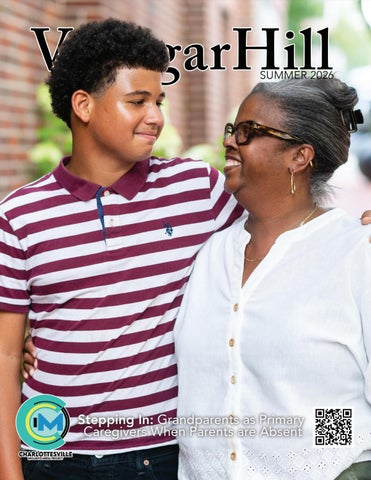
GRANDPARENTS AS PRIMARY CAREGIVERS WHEN PARENTS ARE ABSENT by Madelyn Coles| Photos by Kori Price Life as I knew it was being a single mom who raised her son and only child and watched him grow into an adult. At the age of 20, my son had his first child. He then started his own life and moved away from home. By the age of 25, he had five more children. At 53 and as a grandmother of six, I was living my life working two jobs, as I always had, but came and went freely without anything preventing me from doing as such. I traveled when I wanted to, hung out with friends or just simply chilled with my sister and did some occasional shopping. That was the life I was enjoying. With six grandchildren, I was thinking of birthdays and Christmas. I must get all my grandchildren gifts, right? I tried to keep up with their birthdays but would often forget, and my son would text me and say, “Your grandchild’s birthday is today. Don’t forget to call them,” because 18 |
he knew I would forget. This was my norm. On June 27, 2018, however, my life as a single grandmother raising her 4-year-old grandson, Reo, began. I was 56 years old and my life changed drastically. My son, Reo’s dad, was serving 10 months of time in prison, and Reo’s mother was serving time, too, facing eight years. The thought of this and having to raise a child all over again gave me a very unsettling feeling, a feeling of hurt that only a person in my situation could possibly understand. Was I angry at the thought of having to do this? Of course. I was angry at the fact that I was doing the best I could taking care of myself. Taking on custody of a 4-year-old meant extra everything: I’d have to purchase more food, clothes and personal items. Was it a struggle for me? Absolutely.
At that time, I didn’t know much about all the different local support groups that I could reach out to like the Albemarle County Emergency Relief Program (ACERP), but I did know about the food bank, Loaves and Fishes, which I reached out to when I needed to. These programs also support others who are giving kinship care to their loved ones. (In my case, “kinship care” describes when a child is raised by a relative or a close family friend when their parents aren’t able to do so.) Although financially there were some struggles, the thought of putting Reo in foster care was never an option and I knew we would fight this battle and win it together. I knew I had a village to help me through this, but my pride didn’t always allow me to reach out for help. I had amazing siblings and a very good friend who held me up during times I felt like I was going
Madalyn and her grandson Reo. Photo by Kori Price
to fall. A very good friend of 17 years made sure Reo got what he needed and was also a positive role model for him. Reo took to him very well and they did fun things together like fishing and riding bikes. He was just a great addition to Reo’s upbringing and helped mold him as he grew older. I had co-workers who would leave things for Reo on my office desk that I didn’t even ask for. Whether it was school supplies or an outfit, they just knew I had taken on the job of raising my grandson and that I could probably use the help. At times when I needed a little break, a family friend, Jason, would get Reo on some weekends. Jason would say, “Mama Coles, I got Reo. You just enjoy yourself.” Jason had two daughters and at
that time they were ages eight and 15. Reo played well with Jason’s kids, so I was comfortable with him going and he was always excited to go. I had a hard time getting Reo enrolled in school not knowing I had to go through the courts and legally become his guardian before I could even get him registered. Albemarle County Public Schools would not let me enroll him in school until I got the necessary documents showing I was his legal guardian. They told me that I had to go down to Albemarle County Court to have these papers drawn up and then I could come back to register him for school. So, that year, Reo missed preschool and started going to Grady’s Day Care. Grady’s Day Care was
great for him because I knew they prepared kids for the start of school. When I heard they had tutors come in from the University of Virginia (UVA) each week to prepare them for kindergarten and first grade, that relieved me of some of the worry and I knew he wouldn’t fall behind in learning. I did all the court visits and paperwork, and I legally had joint custody with his dad so I could not only have him registered for school, but I could also take him to his doctor’s appointments without being looked at as though I had kidnapped him. Reo would often stare off as if there was something on his mind, and I’m sure he was just trying to make sense of all the changes in his life. His mom and dad www.vinegarhillmagazine.com www.vinegarhillmagazine.com || 19 19
were both away and another relative was saying she was going to put him in foster care because she couldn’t afford to raise him. But I refused to let that happen. On the first night of Reo being in his new home with me, I had gotten him settled in his own bedroom, which took him some getting used to. I would always sleep with my bedroom door open and a nightlight in the hallway because he wasn’t fond of the dark. He came in my room and said, “Grandma, can we talk?” I sat up immediately and said, “Of course.” He got up on the bed beside me and I put my arms around him and he started telling me what he had experienced when the police showed up at his mom’s house to arrest her. It was in such detail it would have frightened any child or adult for that matter. That’s when I knew why he would stare off and be in deep thought trying to make sense of it all. Once Reo started school, juggling his school schedule and my work schedule became a lot. With me working a full-time job during the week and part-time as a caregiver on the weekends, it was pretty challenging at times, but I did what I had to do. I would leave work in the middle of the day to pick him up once school was over and take him back to work with me to finish out my day. My part-time job was on the weekends, which allowed me to take him there with me as well, so that worked out in our favor. It was a lot, but, nevertheless, we made it work for the both of us. So there I was trying to make a good life for the both of us and then came the calls from jail that I had to pay for. It was another 20 |
expense, but I was trying to keep him connected with his parents since we didn’t do a lot of visiting, and Reo was okay with that. Each call cost about $3.00, but that expense didn’t last long because both parents started paying for their calls themselves because they didn’t want to put any extra expenses on me, and I was certainly fine with that. I’ve had to tackle many hurdles while raising Reo, including racism. Reo is multiracial and I have been called the “N” word by a non-Black family member many times. I’m not sure why, but it was just random and for no reason. I talked to God a lot during these times and it was his grace and mercy that brought me through. Reo is one of six grandchildren, and I love them all the same. Out of the six grandchildren Reo was the only one who didn’t have both parents present for those eight years that his mother was away. I did give him more attention than I did the rest of the grandchildren because he was living with me and we had a special bond. I was the only mother figure he had at that time. But, I will say that my other grandchildren’s mothers treated Reo very well and when he was around them, I can tell they loved him dearly, and for that I was grateful. During the four years of
raising Reo, I had to deal with problems in school, in the neighborhood off and on the playground, you name it. I used to tell my son that I would be glad when
he himself graduated and got out of school, not knowing I was only going to face it again. After my son served his 10 months, I continued to raise Reo until my son was able to do so financially. What I thought was going to be 10 months of raising Reo turned into four years. I knew financially my son wasn’t prepared to take him back immediately following his release, so I was okay with continuing to raise Reo until his father could. In 2019, my son established a catering business called Simply Trending Catering, which is still
running successfully today. In 2022, he was able to get his own apartment for himself, Reo and one of Reo’s sisters. Reo told me he wanted to live with his dad, and I
totally understood. Reo is always respectful to me, and if I had to do it all over again with him, I would. To this day I still treat him as if I’m still raising him. He can always call on Grandma Madelyn. Having to experience this chapter in my life, I wanted to try and help other grandparents going through this in any way I could. That’s when I came up with the idea of starting a non-profit organization called “Another Mother’s Arms” (AMA). AMA is specifically designed to support grandmothers but is not limited
to others who are raising someone else’s child or children for whatever reason. During my research, it was just amazing how much help there is out there that I’m willing to share with others who may find themselves in these situations. When I attended different functions like One Stop Shop and The UVA Small Business Expo, letting people know about AMA, I offered them a packet called the Street Sheet, and it alone covers practically every need these grandmothers and kinship caregivers may have. Anything from food, clothes, a ride to their doctor’s appointments, mental health, you name it, can pretty much be found in this packet. If it’s not there, I have other resources people can reach out to me for as well. We have to understand that not every need is a monetary need. Life’s needs are not just based on the dollar bill. I would strongly recommend starting with the Street Sheet by Googling “Street Sheet Charlottesville.” Seekers can also contact Another Mother’s Arms for help and other resources that are available to them. Madelyn Coles, founder of Another Mother’s Arms, poses on the Downtown Mall in Charlottesville, Virginia. Coles’s efforts are aimed to encourage sustainable support for caregivers in Virginia. Photo credit: Kori Price AMA has had a successful beginning. We are currently
working on getting our name out there and letting others know what our purpose and vision is. When speaking with the public, we hear nothing but positive feedback and how needed and important our organization is to the community. I have an awesome staff of volunteers and amazing people who have reached out and offered to volunteer to help when needed. It’s just amazing how people have stepped up to offer their help and for that we are truly grateful. You can contact us on our website at anothermothersarms. wixsite.com/another-mother and donate to the cause using the same site. No donation is too small. On behalf of all grandparents raising grandchildren and anyone giving kinship care, I have since asked Governor Abigail Spanberger for reconsideration of policies affecting grandparents who step in to raise children when a parent is incarcerated or absent. The questions that I would like her to address are: Why is continued assistance not consistently available when a grandparent assumes fulltime care due to a parental incarceration? What administrative barriers prevent these caregivers from receiving support on behalf of a child? Are there current efforts to address this gap in assistance for kinship caregivers?Another Mother’s Arms is here to advocate on your behalf. This is my story, Madelyn Coles, Founder
www.vinegarhillmagazine.com | 21
BUILDING
ROADMAPS TO CULINARY CAREERS by Channing J. Mathews Channing J. Mathews is based in Charlottesville, Virginia, where she works as an assistant professor at the University of Virginia. Her journalism experience comes from a desire to translate research into public scholarship, specifically by connecting her interest in identity formation to food and wine culture in the South. In her free time, Channing enjoys reading, powerlifting, exploring wineries and making new cocktails.
Alternative routes to career training When we think of school, we often think of traditional trajectories. We think of education as the Great Equalizer. That is, education gives access to more opportunities to succeed. So we finish high school. Often we go to college. And, in many scenarios, we land somewhat satisfactory jobs that hopefully pay the bills. And with young people’s increasing reliance upon multiple 22 |
side hustles in our current gig economy, it’s more likely to have a few jobs just to make ends meet. But here’s the thing about traditional pathways: they are becoming less accessible as the years go by. With college costs on the rise – rising over 32% in the last two decades – young people are looking for alternatives to traditional schooling pathways. Essentially, young people are posing the question: If college does not promise the social
mobility payoff that our parents experienced, what does it look like for our generation to dream differently? Some pursue trade school. Some go for technical school. And others try culinary school. The fast pace. The flavors. The knife cuts. The international travel. This is the path upon which Antwon Brinson, otherwise known as “Chef AB,” CEO of
Caption: Jabez Maupin, right, works with Chef Casey Bauer, left, in Maggie’s Midtown kitchen to learn relevant meat knife cuts. Photo Credit: Channing J. Mathews www.vinegarhillmagazine.com | 23
Culinary Concepts AB on Barracks Road, has built his career. Chef AB has created a culinary incubator and workforce program in Charlottesville working with folks from many different walks of life to help people envision more options for their future career trajectories. From young people just entering the workforce to more seasoned workers looking for a career pivot, Chef AB has curated an innovative training space that builds chefs from the ground up, incorporating valuable life skills alongside precision food preparation. But what does culinary incubation look like? A cook in training Meet Jabez Maupin. A 24-year-old Charlottesville native and Culinary Concepts’ GO Cook Program alum, Maupin represents the best of what Chef AB envisioned for Culinary Concepts AB.
credits his dad as his first chef, his grandmother is who taught him how to cook with love. “My father was my first chef… when I would go visit him, we would always find something to cook…I remember one day on the porch he was showing me how to break down crab, how to eat it properly, what parts not to eat and everything. And one time he made mussels – it was the first time I had them, and it was great,” Maupin said. “My grandmother taught me just by eating the food, and watching her cook the mac and cheese on Thanksgiving. I didn’t do much, but I was in the kitchen and I watched her cook. It’s all love. There’s no measurements. None of that extra stuff — it’s just love.”
“I went to Albemarle High School, and [after] I just started working. I was working at UVA [the University of Virginia], at Newcomb dining hall and my boss there at the time, Ian Hawks, he saw my passion,” Maupin said. “He brought up the [GO Cook] program. He told me where I was supposed to apply.”
After multiple applications, Maupin was accepted to the GO Cook Program where he threw himself into learning the intricacies of the 5-course menu that he was to perfect across the 7-week training. Engaging sauce work and seasoning of a BBQ creole shrimp, parmesan grits and a sweet pepper relish, Maupin learned the ins and outs of a fine dining kitchen while channeling his passion into disciplined creativity, even with something as “simple” as a knife cut.
Chef AB aims to equip local talent with the skills, values and handson experience to transform a passion for food into a culinary career. For Maupin, that passion is rooted in his early experiences in the kitchen with his father and grandmother. While Maupin
For Maupin, the knife is more than a tool; it teaches consistency and discipline. From building deep flavor with the brunoise cut, to creating beautiful presentation with the julienne cut, knife skills can be a gateway into one’s integrity as a chef, and a first step
24 |
to infusing food with love. Tasting the launch of a culinary career Maupin’s graduation from the GO Cook program landed him a job at Maggie’s Midtown of Charlottesville, a new Virginia brewpub style restaurant that opened in March 2026. I had the privilege not only to taste the fruits of Maupin’s labor, but also to watch his hands in action as he curated an innovative tasting menu for my eager palate. I was welcomed at Maggie’s Midtown by the hostess and was quickly escorted to see Maupin in action. As a preview to my meal, I got to see some of Maggie’s Midtown signature dishes come out including the fried fish, the cauliflower carbonara and the fried olives....giving me some visual insights into what I would order for my own dinner. Maupin mentioned that he would be on the grill station that evening, so I went with the grilled fish to experience how he put his skills to work. I began with the fried olives, a curious culinary innovation that tantalized my senses. The crispy goodness coupled with the brininess of the olive and the smoothness of the goat cheese in the middle was a bright start to what was destined to be an amazing meal. I coupled my appetizer with a lovely drink, aptly named “Parts Unknown,” made with citadelle gin, lavender, lemon, sassafras
bitters and egg white. It felt reminiscent of a raspberry cream pie and it took my tastebuds on a titillating journey. I was thrilled by how my cocktails paired with my appetizer, both cleansing my palate and enhancing the savory smoothness of the goat cheese. But the main event was all about the entree. I selected the grilled rockfish with clams and I could not have made a better choice. I paired it with the “Accidental Mixtape,” a mezcal cocktail that added just the perfect amount
of sweetness and spice to complement the light seafood flavors captured in the broth of my dish. It was the sauce, however, that blew me away. The simplicity of the broth – only containing fish and vegetable broth mixed with some mushroom powder – gave such a powerful kick. The fish was perfectly cooked, glistening with moisture from the flavors and the sweet little potatoes that soaked up the sauce. AND THOSE CLAMS… were the perfect closer to an incredible dish.
I wasn’t planning on having a dessert, but Maupin insisted on two of the restaurant’s best: the sticky toffee pudding and the Eaton Mess. They were two very different desserts, but one very happy party in my mouth. The sticky toffee gave the comfort of a warm gingerbread cookie in bundt cake form, and the lightly coated honey syrup that it bathed in was a soulful boon to the tastebuds. The Eaton Mess gave me a bit of fruit and dessert, with exciting pops of raspberry crisps disbursed throughout. I was grateful for the food journey he shared with me, and could taste the love and training in his cooking. I felt the passion in the food. Maupin admits he is still learning, but his passion pushes him through each mistake. Even his current mentor, Chef Casey Bauer, takes notice of the young man’s efforts. “I love to see his frustration [when things go wrong]. It shows how much he cares about presenting the best plate of food every time,” she said. While Chef AB notes that only 1% of chefs work in fine dining — a statistic that drops to 0.001% for Black chefs — Maupin does not see these odds as a deterrent. Instead, he views the challenge as more fuel and drive to succeed in a space where representation has historically been rare. “Everything that I do, I go all the way,” Maupin said. “That’s one thing my father taught me. If you want to do something, you go do it right.”
Grilled fish with clams, potatoes and spinach alongside the Accidental Mixtape cocktail at Maggie’s Midtown. Photo credit: Channing J. Mathews
As he continues to master his craft and set his sights on the world’s most rigorous kitchens, we can’t wait to see this young chef shine.
www.vinegarhillmagazine.com | 25
Two signature desserts from Maggie’s Midtown in Charlottesville, Virginia: the Eaton Mess (foreground) and Sticky Toffee Pudding (background) Photo credit: Channing J. Mathews Maupin presents a dessert course, the Eaton Mess, at Maggie’s Midtown.
26 |
ANNUAL MEMBERSHIP
Purchasing an Annual Content Membership gives those folks who have or want to become a part of the Vinegar Hill community quarterly print issues of the magazine. It also, ensures that you are the first informed about new stories, content, and events being sponsored by Vinegar Hill. It is more than a subscription. It is an invitation to participate in community and collectively authoring a more inclusive social narrative. ($9.99 Monthly) Package Includes 4 Issues + Special Editions Discounted Merchandise Exclusive and Early-Access Content IMPORTANT: We publish in print quarterly in March, July, October, and December + occasional special editions. Your print copies will begin arriving in the quarter immediately after your order.
www.vinegarhillmagazine.com www.vinegarhillmagazine.com | 27
It’s time for “qualified” to mean qualities, not just a bachelor’s degree.
Keith, Data Analyst, Google Career Certificate Graduate, STAR
Tear the paper ceiling that is keeping you from discovering over 70 million STARs: workers Skilled Through Alternative Routes that are being held back by degree screens, stereotypes and more. Find out how STARs can meet your talent needs.
TEAR THE PAPER CEILING.ORG 28 |
#HireSTARs
SHE SPENT 18 YEARS
IN CENTRAL VIRGINIA PRISONS — AND WANTS THE WORLD TO KNOW THAT INCARCERATED MOTHERS MATTER by Candace Williams
Telling women in prison that they matter can help break the cycle of incarceration, writes Candace Williams. In a deeply personal First Person Charlottesville story, Williams tells her story of motherhood and coming back from the inside. Kori Price/ Charlottesville Tomorrow
www.vinegarhillmagazine.com | 29
Before I was inmate number 1414048, I was Candace Williams. And long before the system knew my name, I was a little girl whose mother was in and out of prison. I was raised by my grandparents. I told myself over and over again, “I’m not going to end up like my mom.” But cycles don’t just break because we want them to. In 2008, at 22 years old, I was arrested in Charlottesville. I was already a mother of two beautiful girls and pregnant with my third child. I pleaded guilty for my role in felony murder, two robberies and abduction. It’s a story I’ve told many times over the last few years. Now I want to tell the next part of my story. Eight months into my incarceration, I gave birth to my son. I was allowed to hold him for four hours. Four hours to memorize his face. Four hours to kiss his forehead. Four hours to be his mother. Then he was taken from me. I was stripsearched and placed back in a cell — alone — with milk still in my body and emptiness in my arms.
statement did. Because in that moment, I heard generational trauma being predicted like it was inevitable. When I was first sentenced, I thought the judge was being unfair. But then I realized what he was implying: If I didn’t change the narrative, the narrative would change my children. When I arrived at the Fluvanna Correctional Center for Women, I met individuals who changed my life. Women who were serving long sentences, women who had lost custody, women who had made mistakes. But they were still mothers. And they showed me something I had forgotten: Incarceration does not erase motherhood. Last year, the Virginia Department of Corrections held almost 23,000 inmates on average per day. Fewer than 2,000 of those inmates are women, or as many as 3,000 in the last decade according to the VADOC. We are lost in the numbers. From our clothing to prison programming to re-entry, the system is designed for men.
What should have been one of the most sacred moments of my life became one of the most traumatic. But even that didn’t wake me up. Not fully. It wasn’t until sentencing day in 2011 that I started to process our generational curse. The judge looked at me and said, “Ms. Williams, I sentenced your mother. Now I’m sentencing you. And most likely, I will sentence your children.”
At the time of their incarceration, 58% of women according to national U.S. Department of Justice statistics have custody of their children. Yet when we walk through those gates, we lose that. We feel deflated, disconnected, powerless. But we still have rights. We can write to our children’s schools, we can contact pediatricians, we can stay involved — if we’re willing to learn how.
The time he gave me — 65 years, 47 suspended and 18 active — didn’t shake me to my core. That
I took the parenting class at Fluvanna Correctional Center twice in 2013. The third time I took it in
30 |
2014, I came back able to give my insights to other mothers who felt that there was no light at the end of the tunnel. I told them that I was able to build healthy relationships with my kids after taking the class. Later, I created the Mending Hearts Parenting Support Group in the Cognitive Community, what we called the “re-entry hall” where individuals were moved before being released. It wasn’t just a class, it was a space where mothers could say, “I’m scared my child won’t know me,” “I don’t know how to talk to the caregiver,” or “I don’t know how to fix what I broke.” We learned parenting styles. We practiced difficult conversations. We talked about accountability and healing. Over 200 mothers came through Mending Hearts before I came home. And I watched something beautiful happen. Mothers began to pour into other mothers. Women who once felt shame began to find purpose. Certificates from the program — I kept copies of all of them because I was so proud — helped some women regain visitation and even begin custody processes. And I realized something powerful: When you support a mother, you support a child. When you support a child, you shift a generation. But there’s another group we don’t talk about enough: The grandmothers raising babies again and the sisters stepping in. We don’t talk about the fathers trying to figure it out and the caregivers carrying financial, emotional and mental weight without recognition. When we are sentenced, our
www.vinegarhillmagazine.com | 31
children are sentenced too. They walk into classrooms with a cloud over them. They hear whispers. They Google our names. And the narrative gets written without us. So I began advocating for something bold: A “Hidden Victims Impact Statement.” Since my release, I’ve been speaking with lawmakers and advocacy groups in Virginia about the people who are taking care of the children of incarcerated loved ones. Just like victims have a voice in court, why shouldn’t our children and caregivers have one too? Why shouldn’t the court hear how incarceration impacts families mentally, emotionally and financially? Because if we don’t humanize the impact, we normalize the cycle. In 2020, I was transferred to the Virginia Correctional Center for Women in Goochland to complete a 72-hour Peer Recovery Specialist training, to use my lived experience to mentor other people who’ve been through trauma from incarceration. I worked one-on-one with women preparing to re-enter society. Then COVID-19 hit and many programs shut down. The Peer Recovery training shut down, the parenting and educational programs shut down. And once again, incarcerated mothers were left without structured support. That silence felt familiar, but I wasn’t the same woman anymore. The day that judge made that statement, I became a mother on a mission. I decided that my incarceration would not define my legacy — my transformation would. Every time I saw the warden come down the hall during the pandemic, 32 |
I asked him when the programs would start again because people were getting released without the information and tools they needed for re-entry. When the lockdown ended, I started Mending Hearts in Goochland too. On December 26, 2023, I went home. And freedom didn’t slow me down. It sharpened my purpose. Today, I advocate for incarcerated women by speaking and standing in my truth and sharing my lived experiences. I carry the voices of the women I left behind. I carry the lessons I learned inside the walls of the Fluvanna Correctional Center and Goochland.
This First Person Charlottesville piece is adapted from a talk Candace Williams gave as part of a March 11, 2026 Tedx program Fluvanna Correctional Center for Women, hosted by the nonprofit organization Proximity for Justice and the Virginia Department of Corrections.
I want to keep talking to the woman inside who feels like she’s already been written off. I want to talk to the mother who thinks she’s ruined everything, to the woman who hears that voice saying, “You’re just like your mama,” “Your kids are next.” I need you to hear me clearly. Cycles are real but so is change. Accountability is painful, but it is powerful. Motherhood does not stop because of a sentence and your story does not end here. If you are willing to heal, to learn, to take responsibility, to lean into programs, to pour into each other — you can change the trajectory of your family. I am not inmate 1414048. I am Candace Williams. I am a mother. I am an advocate. I am proof that transformation is possible. When mothers are supported, families heal. When families heal, communities change. And when women inside prisons believe they still matter, the cycle breaks.
“When you support a mother, you support a child. When you support a child, you shift a generation,” writes Candace Williams. Kori Price/ Charlottesville Tomorrow
www.vinegarhillmagazine.com | 33
MATCHBOX’S CRAFT WITHOUT
EGO,
CREATIVITY WITH RESTRAINT by Channing J. Mathews
I
n celebration of 100 years of Black History Month, I reignited my search for Black food and wine culture in Charlottesville, and landed at Matchbox Restaurant in Charlottesville. Tucked in the back corner of the Shops at Stonefield just off Hydraulic Road, Matchbox reveals itself not through spectacle but through warmth. Just steps from the Regal Stonefield movie 34 |
theater, the restaurant opens into a living room: calm, with two wood-fired ovens glowing at the front of the room like hearths, softening the large room into something intimate and inviting. Near the back, a preserved olive tree rises through the space, its branches hovering quietly overhead. Though no longer living, its presence anchors a simple resilience that characterizes Matchbox’s focus for
care, craft, and intention. Owner Maurice Kelly’s attention to detail precedes him. Far from anyone’s seat, he starts his shift by replacing umbrellas on the patio in anticipation of a spring that seems readily near. As he comes inside, he greets every customer, many of whom are regulars who delight in engaging him in conversation.
Caption: Matchbox Owner, Maurice Kelly Photo credit: Channing J. Mathews
and stay accountable to the community he serves. “My role at Matchbox sharpened my understanding of how decisions ripple through real environments, staff, guests, supply chains, margins, and culture and service. It taught me discipline, accountability and respect for constraints,” Kelly said. Kelly brings a deep knowledge of Charlottesville and recognizes his connection and responsibility to local history as a franchise member of the Thompson Hospitality Group. As the largest minority-owned food services provider in the U.S., Thompson Hospitality group has cultivated a rich footprint of restaurants in the Charlottesville area including The Ridley, Milk and Honey and Matchbox. Being a part of that legacy taps into Kelly’s identity as a builder and systems thinker seeking to use his skills to steward high quality customer service for every guest.
As we walk back to a quiet corner, I am struck by the ways Kelly sees and hears everything around him. A glass breaks behind me and he gets up quickly to remove the shards while simultaneously supporting his staff in running food and drinks to the table. Our interview is stop and go, but the experience embodies his identity as a leader accountable to the community, particularly in his efforts to make others’ lives easier. “I am a builder, but not just of businesses or ideas. I build systems, spaces and moments that make life feel more navigable for the people around me,” Kelly said. Kelly’s professional life has been a marriage of hospitality and technology, including serving for 12 years as an operations director in the U.S. Navy. Now shaping workflows and more at Matchbox, Kelly centers the guest experience through thoughtful decision-making. He recognizes both the responsibility and the discipline it takes to lead
“Being part of the Thompson Hospitality legacy carries real weight for me, because it represents excellence built over time, not visibility for its own sake. And though we love a good history, y’all know what I’m here for: THE FOOD. As your local food and libations guide, I had to ask Kelly what dishes, wines or cocktails best tell the story of Matchbox. The Holy Grail Margherita pizza was his immediate response. “It’s deceptively simple — crushed tomatoes, basil, hand-pulled www.vinegarhillmagazine.com | 35
mozzarella. No distractions. No excess. It reflects confidence in fundamentals. The wood-fired oven does the storytelling: char, structure, balance. That pizza embodies what Matchbox does best, craft without ego,” Kelly said. I was taken aback at how my tastebuds danced in the simple sweetness of the crushed tomato
and abundant basil coming together in a perfect harmony of pizza perfection. And the fresh mozzarella bites were a soothing comfort without the greasy guilt you might find from a typical pizza chain pie. Indeed, the slight char from the wood fire oven, coupled with the lightness of the pizza gave me an enjoyable bite that kept me coming back for more
The Holy Grail Margherita Photo credit: Channing J. Mathews 36 |
smoky, simple comfort. And while we love a good pizza and wine moment, your dearest author is a sucker for a good cocktail, especially with homegrown twists. So I found my pairing by way of the Black Pepper Fig Old Fashioned, a refined, spirit-forward, edgy cousin to the traditional old fashioned. While the classic old fashioned might have you ready to cozy up on the couch alone with a great book, Matchbox’s version nudges you outward, inviting you to lean across the table, order another round and continue the conversation.
Black Pepper Fig Old Fashioned Photo credit: Channing J. Mathews
The kick of black pepper was readily smoothed (but not hidden) by the subtle fig sweetness within the old fashioned. A luxardo rather than a maraschino cherry might be a lovely variation here — the maraschino’s brightness is nostalgic, but the darker, more restrained luxardo flavor could deepen the fig and pepper notes, enriching the cocktail’s layered nature. Regardless, the balance of this whiskey-forward drink demonstrates an ongoing theme I see in the spirit of Matchbox, its staff, and Kelly: traditional roots, thoughtful elevation and layering with restraint.
Between laughter and a table full of Matchbox staples — the 3.6.9 mini burgers and crisp shoestring onion rings among them — we eased into the end of our meal. With drinks nearly empty, I turned to Kelly with one last question: What does success look like to you now? “Earlier in my life, it might have been scale or recognition. Today, it’s durability. It’s building something that can stand on its
own that reflects integrity and that creates opportunity for others long after I step back from it,” Kelly said. In a place where Black entrepreneurship has too often been erased or displaced, durability is its own quiet victory. Six years into its Charlottesville story, Matchbox is building that future — Black ownership grounded in hospitality, possibility and staying power.
Matchbox’s 3.6.9 mini burgers and shoestring onion rings, Photo credit: Channing J. Mathews www.vinegarhillmagazine.com | 37
PACKAGES Full-Page Annual Package -4 Print full-page ad (full color) -Online banner ads (see sizes on page 4) full color- these rotate online and can be switched out throughout the month. -4 printed magazine copies
-Total cost for the year $908.00 Half-Page Annual Package -4 Print half-page ad (full color) -Online banner ads (see sizes on page 4) full color - these rotate online and can be switched out throughout the month. -4 printed magazine copies
-Total cost for the year $628.00 1/4 Page Annual Package -4 Print 1/4 page ad (full color) -Online banner ads (see sizes on page 4) full color- these rotate online and can be switched out throughout the month. -4 printed magazine copies
-Total cost for the year $508.00 DIGITAL ADS -Sponsorship Section $5,000.00 (annual) -Home page pop-up $1,000.00 (monthly) -Video News Post (appears in line with articles) $150.00 (monthly) -Social Media (FaceBook, Instagram, & Twitter) $75.00 (monthly) -Newsletter/Email Campaign (1-3 weekly) $75.00 (monthly) -YouTube Page $75.00 (monthly) -Online Banners $150.00 (monthly)
Ad Designs Print and online banner ad designs are $325.00 A la carte $150.00 2 Mock ups 2 Revisions
Vinegar Hill Magazine | www.vinegarhillmagazine.com | (434) 201-6499 38 |
www.vinegarhillmagazine.com | 39
IT’S TIME FOR BUSINESS.
You created the perfect business cards and you have more orders than you can handle, so what’s next? As your business banking partner, we’re here to find solutions that will work for you. Business Banking Business Loans | Free Business Checking* | Remote Deposit Capture Treasury Management | Credit Cards
*$100 to open | No minimum balance requirement. No monthly maintenance fee, but other fees can apply. Please refer to the Fee Schedule.
40 |