


Dear Readers,
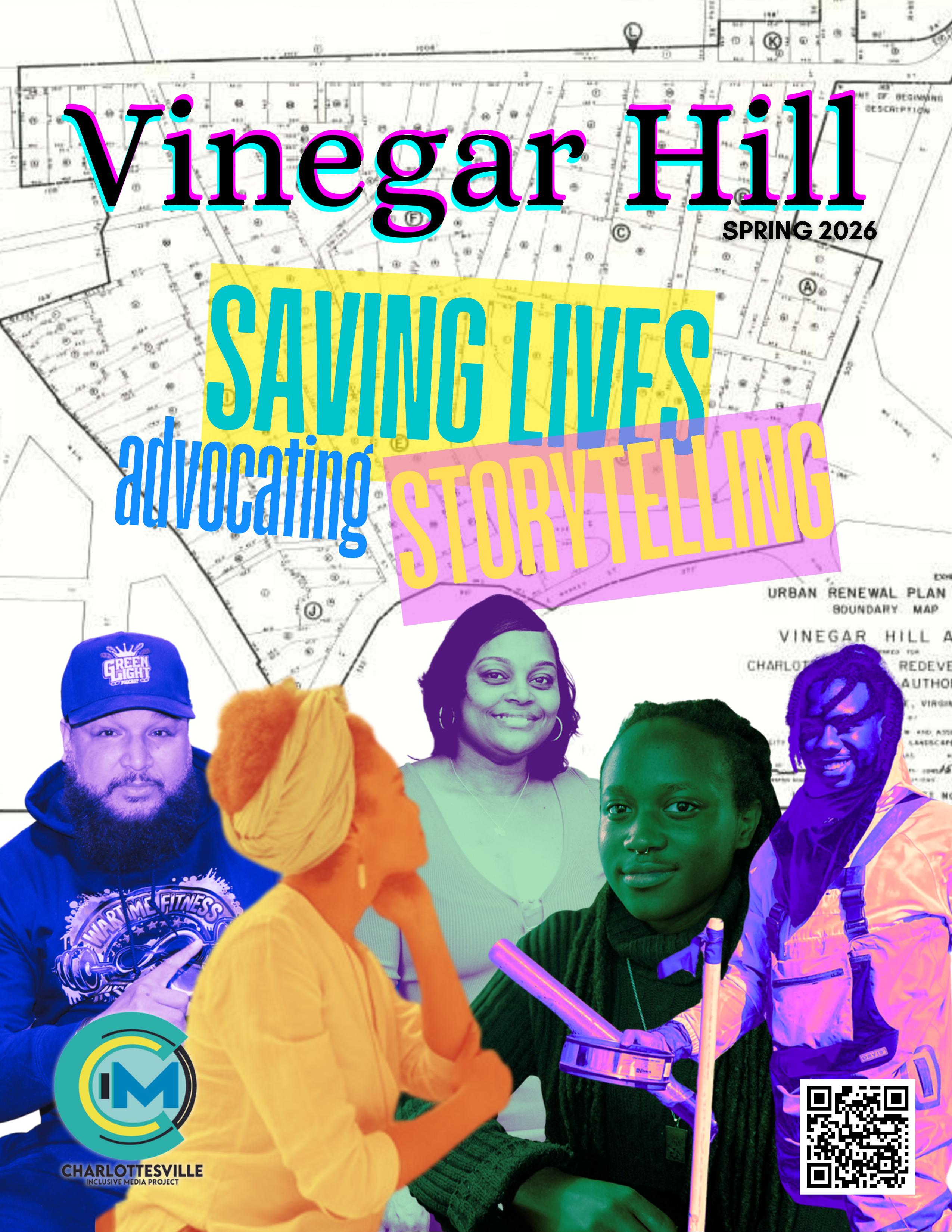
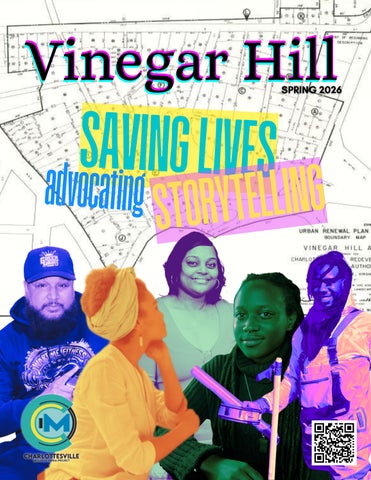
This Spring 2026 issue of Vinegar Hill Magazine is dedicated to the courage of the first leap —a tribute to those in our community who have moved past fear to create a better future. From the ring to the halls of justice and the center stage of the arts, we share stories of people who have “cut the safety net” to go all-in on their vision for Charlottesville.
In this issue, we highlight:
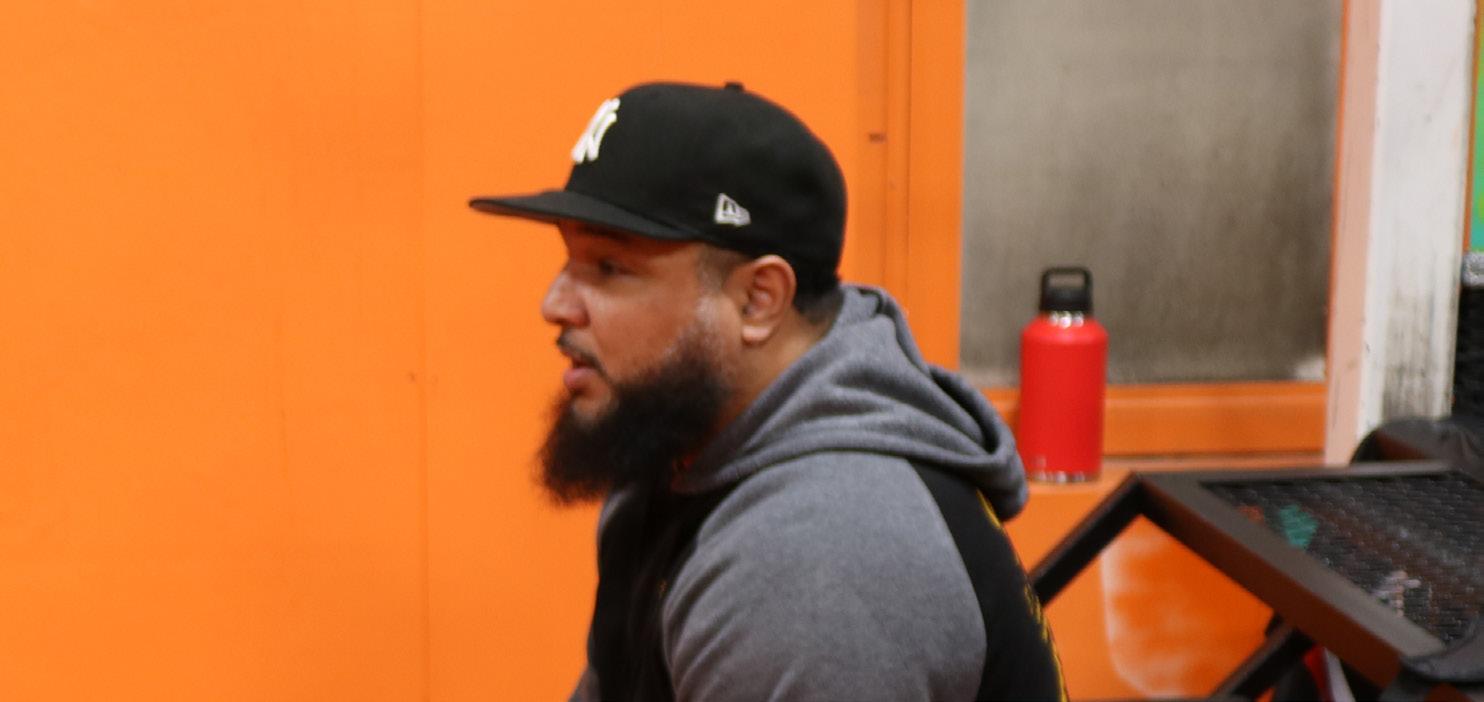
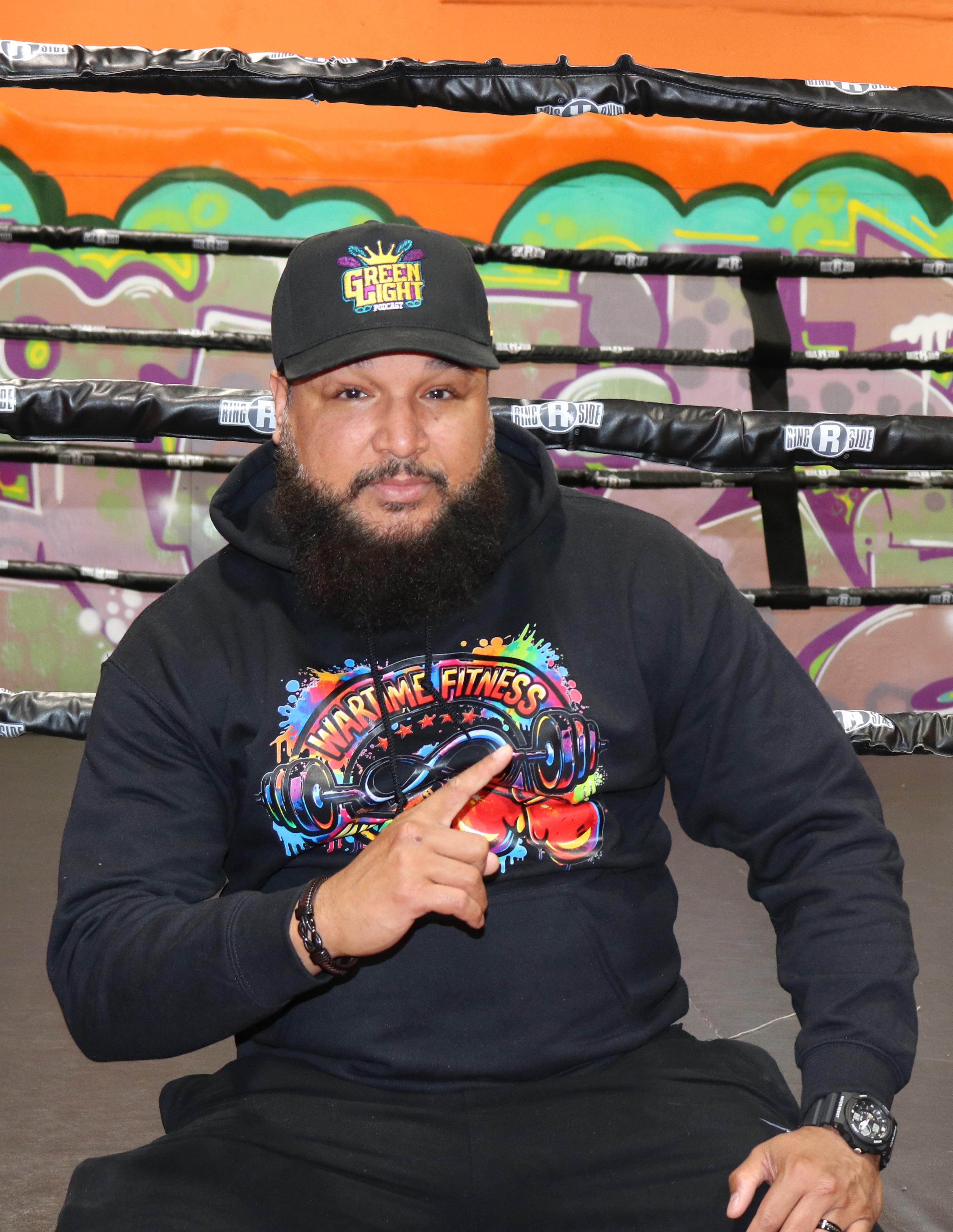
Wartime Fitness Warriors: We follow the journey of George Rivera, who transformed his survival instincts into a 10-step program for youth development. Since 2020, his gym at 1226 Harris Street has served over 2,000 young people, using boxing and mandatory academic tutoring to turn “misunderstood” youth into confident community leaders.
Next-Generation Voices: Author
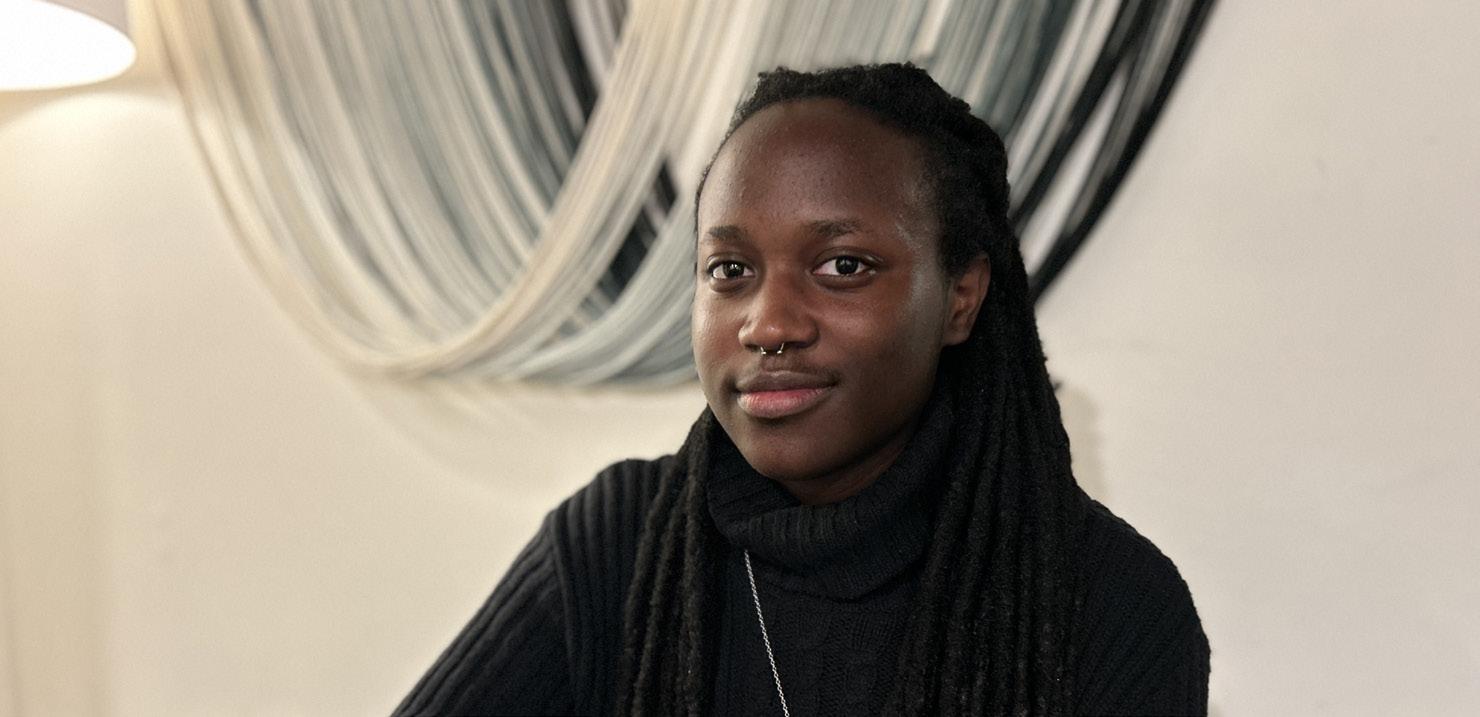
Jessica Harris introduces us to 20-year-old Saturn Edwards, a Charlottesville native and burgeoning playwright reclaiming our cultural legacy through authentic storytelling. Their play, Floorboards, offers a nuanced lens into a Black queer community during the Harlem Renaissance, inspired by a commitment to ensure that “masculine black lesbian stories” are no longer hidden.
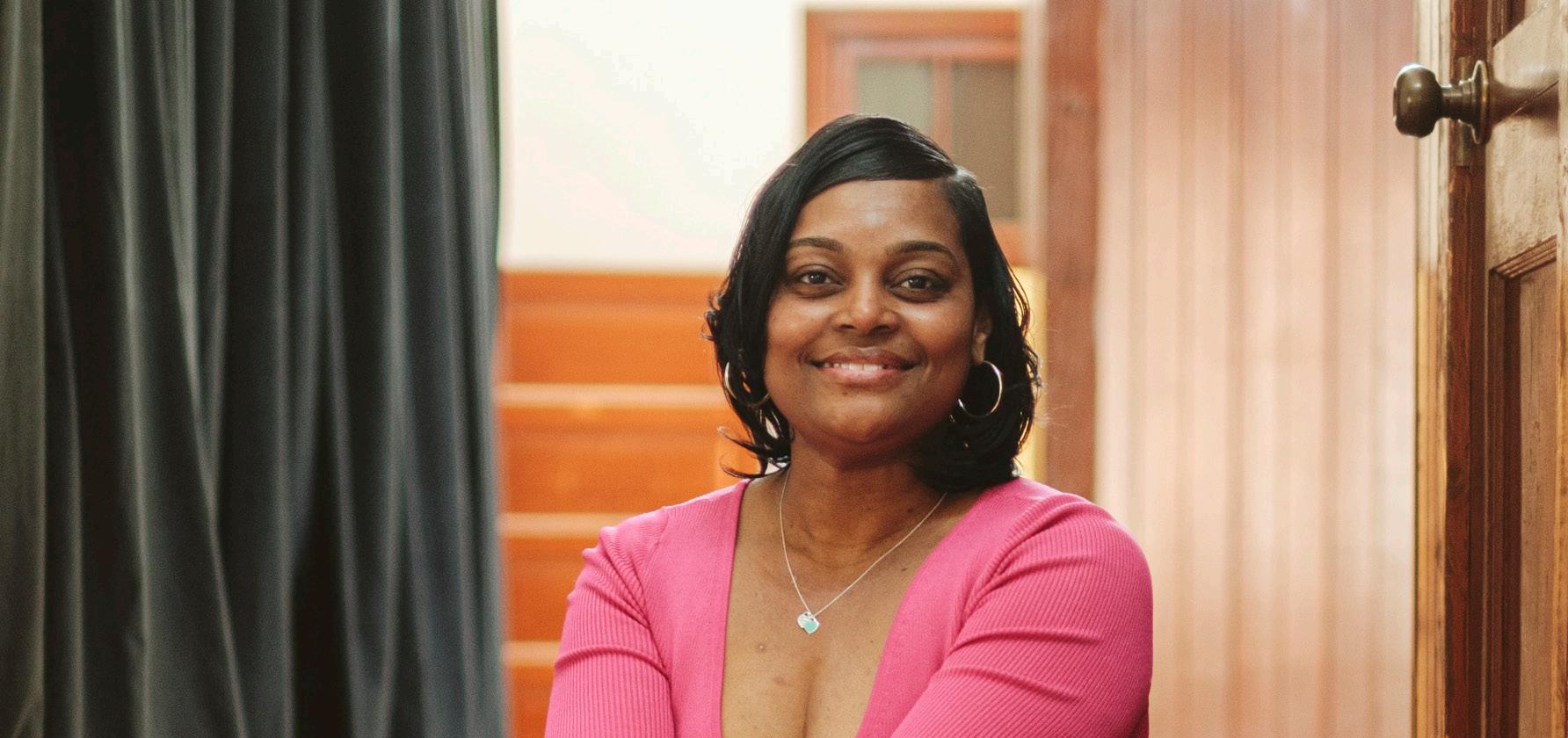
Trailblazing Advocacy: We profile Tanesha Hudson, whose commanding voice and spirit of resistance are reshaping the fight for justice. From representing families in school disciplinary hearings to successfully testifying for state housing legislation (HB 1895), Hudson embodies a relentless commitment to holding local systems accountable.
Visibility in STEM: This issue explores how Black professionals, such as associate professor André
K. Isaacs and soil researcher Justin “Jules” Giuliano, are utilizing social media and digital presence to enhance visibility in science and technology.
Holistic Wellness: As we move through the seasons, author Marnae Chavers offers a wellnesscentered approach to personal growth, encouraging readers to rethink the pressure of traditional New Year’s resolutions in favor of reclaiming agency and wholeness.
We hope these stories inspire you to find your own “why” and embrace the growth that comes with the change of season.
In Solidarity,
THE VINEGAR HILL TEAM

by Marquan E. Jones
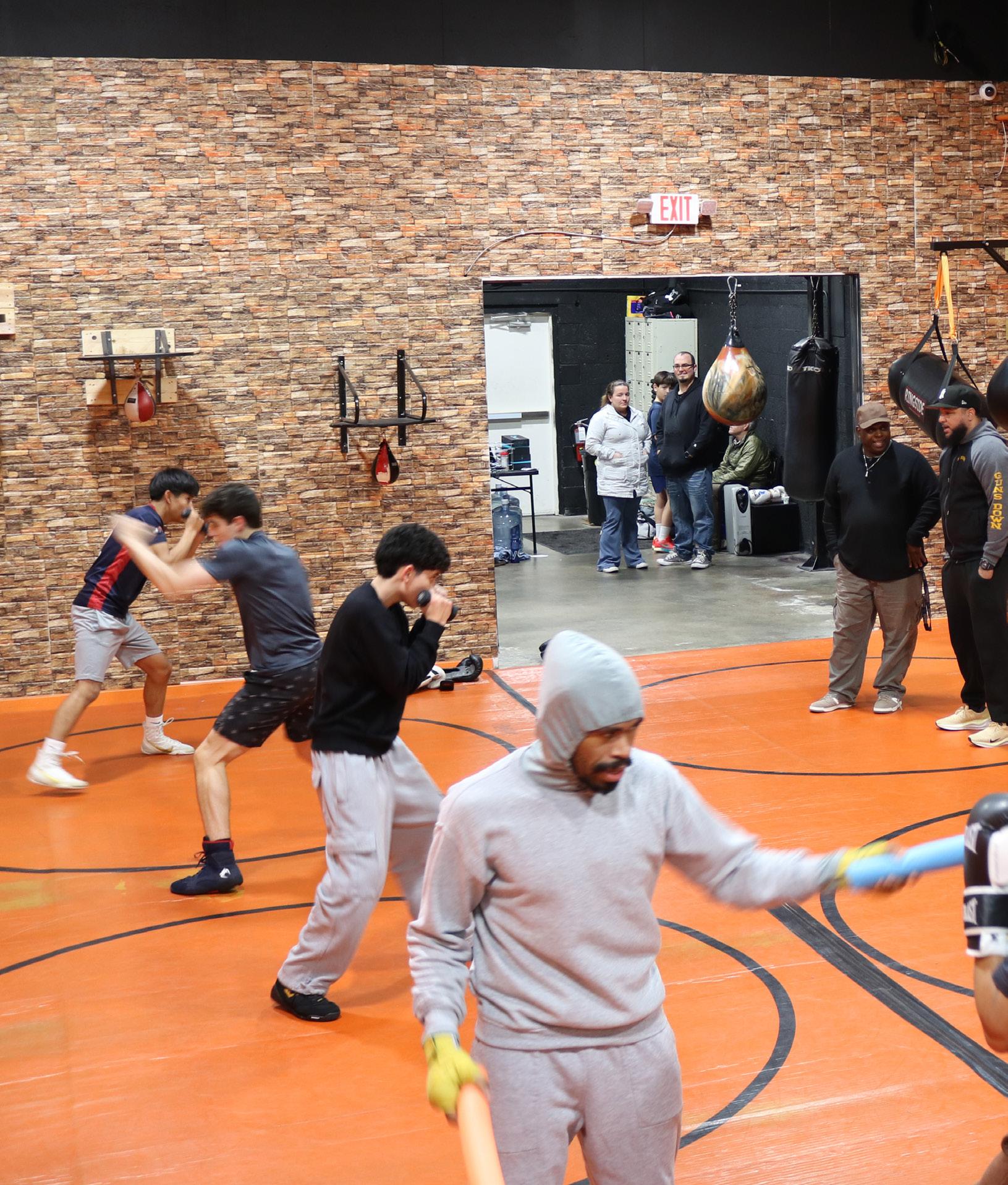
The heavy bag swings like a pendulum.
Thud. Thud. Thud.
Matrix—lean, focused—plants his feet and fires combinations with the precision of someone who’s done this a thousand times. Around him, the gym breathes. Ropes whip against the floor in steady rhythm. Smaller kids shadow his footwork, trying to match his tempo. A coach’s voice cuts through the air: “Tighten up that jab. Again.”
Light music hums underneath it all, but it’s barely audible over the symphony of work—gloves
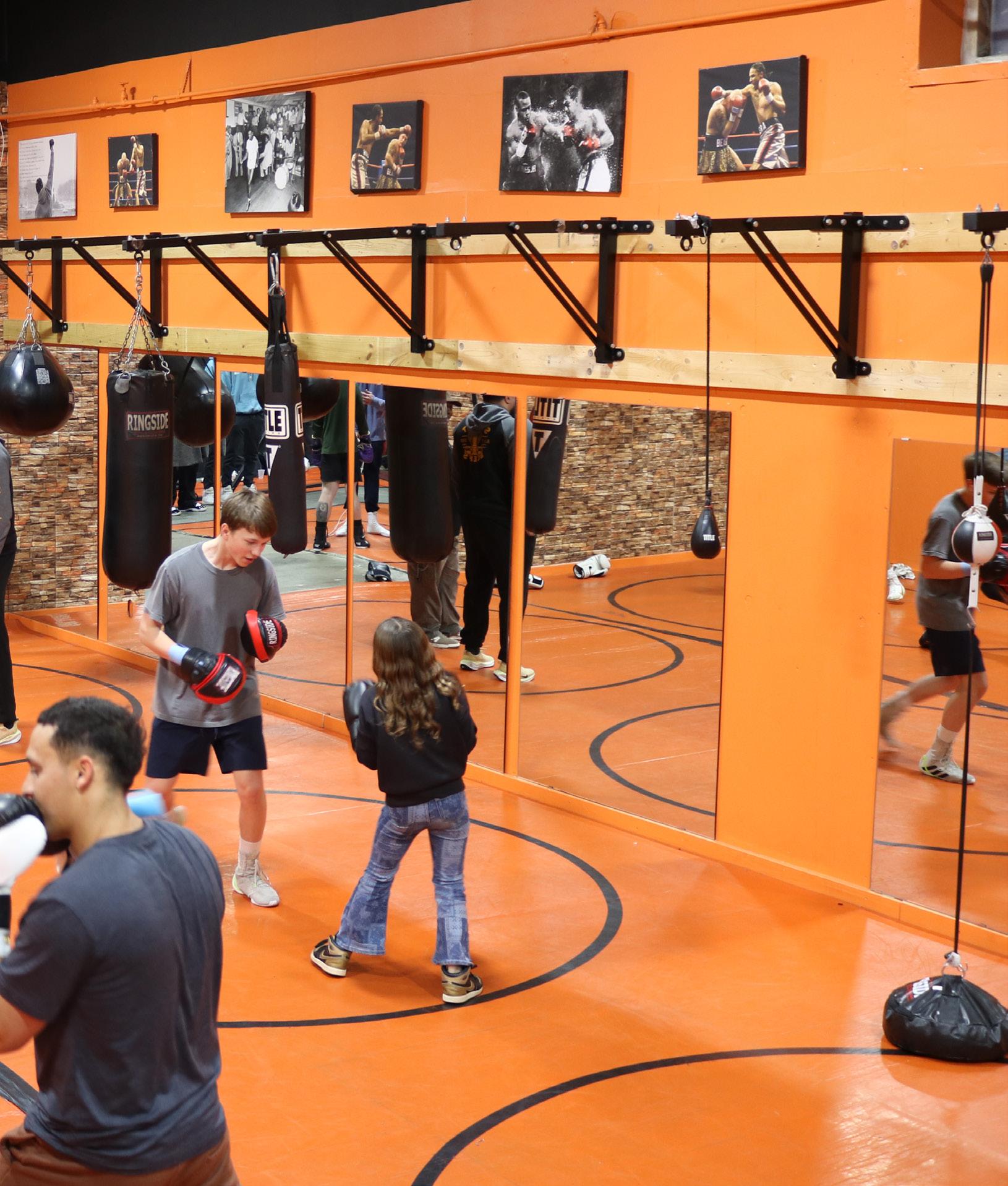
meeting pads, feet shuffling on concrete, exhales timed to punches. The space itself feels alive. 1226 Harris Street. Wartime Fitness Warriors. A state-of-theart boxing gym in Charlottesville that looks like it could train Olympians, close enough that you can feel everyone holding each other accountable, spacious enough that no one’s in anyone’s way.
Three years ago, Matrix couldn’t look anyone in the eye.
Now he leads the room.
George Rivera stands near the wall, arms crossed, watching.
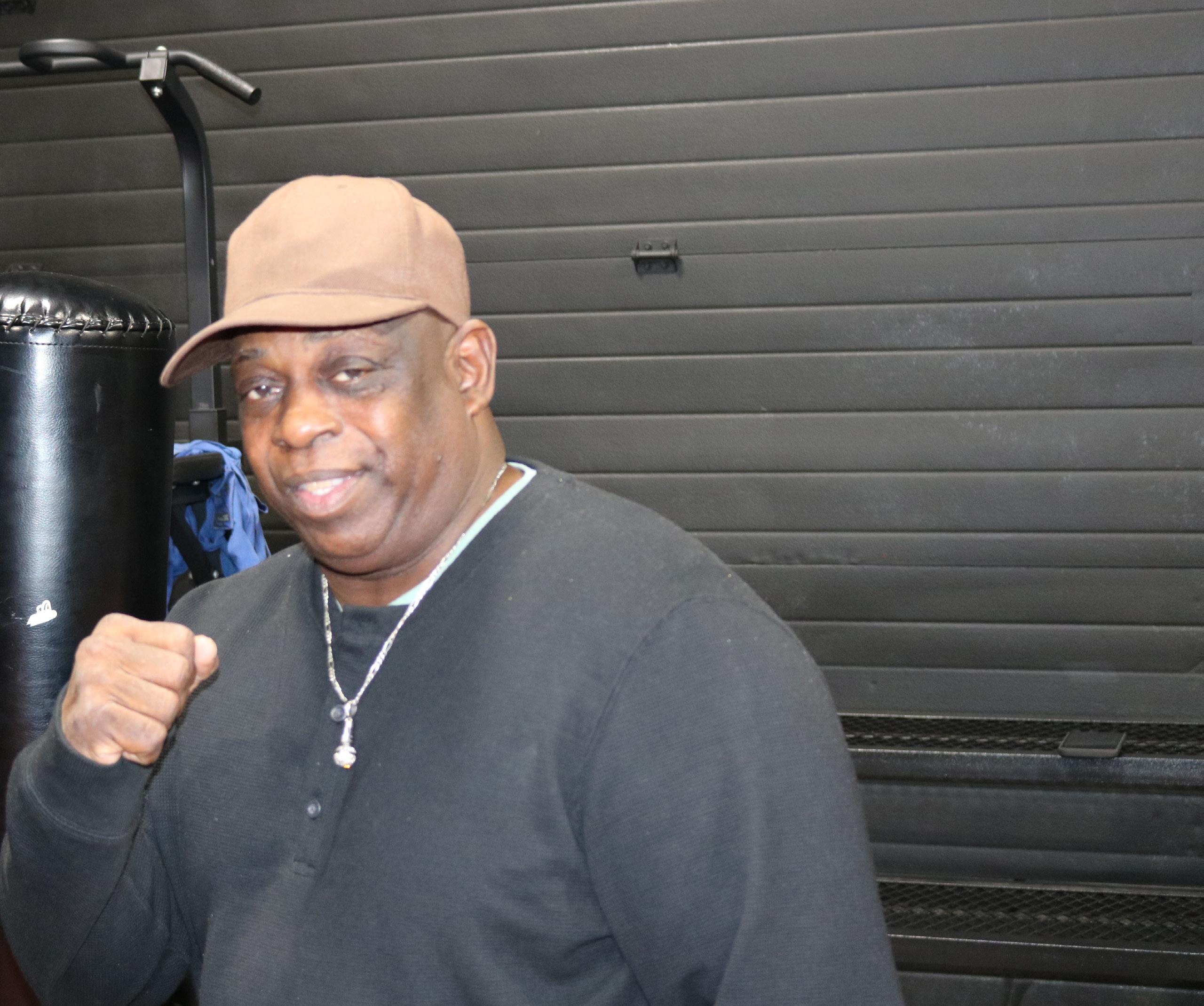
Forty-seven years old, solid build, the kind of presence that commands respect without demanding it. He doesn’t say much in this moment. He doesn’t have to. Matrix is doing the talking for him.
“I don’t call them troubled youth,” George says later, his voice steady, certain. “I call them misunderstood youth. Because don’t nobody know what they going through, number one. And number two, how can you label that kid or call that kid troubled if you don’t know his lifestyle, you don’t know what he’s seen?”
George knows labels. He wore
them like a second skin growing up in Harlem. Violence on every corner. Survival the only curriculum that mattered. When he moved to Virginia, the labels followed him. “New York street baller.” Enough to keep him off teams. Enough to make coaches see trouble instead of talent. Enough to make him wonder if anyone would ever look past where he came from.
So he made a promise: No kid would feel that. Not on his watch.
For years, George Rivera had options. Professional boxing. A future in the ring. One foot in, chasing titles and paychecks. One foot out—coaching, family, life, hanging with friends, staying comfortable. Safe.
Then 2018 came.
His sister got sick. Before she died, George gave her his word: He’d stop playing it safe. He’d go all in.
“When I gave her my word and then she passed away, I cut that safety net out and I put both feet in,” George says. “Into the youth, the community, coaching. Ten toes down on helping the community be better.”
Two years later, in 2020, Wartime Fitness Warriors opened its doors.
The gym doesn’t just teach kids how to fight. It teaches them how to stand. How to show up. How to believe they’re worth showing up for.
Matrix proves it every time he steps on the floor.
Last Saturday, ten kids from Wartime Fitness traveled to Lucks Boxing Gym in Danville. Seven of them competed in heavy
sparring. One earned a stoppage in the second round. Not bad for a program that’s only been open four years. Not bad for kids people used to call troubled.
George calls them misunderstood. Mathew Johnson—everyone calls him Mighty Mat—calls them accountable.
“We hit the streets and make sure them boys not out here running around doing nothing they ain’t supposed to,” Mat says. He’s George’s right hand, the enforcer with a heart, the one who shows up in neighborhoods late at night just to make sure kids are where they’re supposed to be. “We seen the same young boys outside late at night on a school night, missing school, the bus, doing everything else. But once they started coming to the gym and I rode through that neighborhood, them boys were nowhere to be found.”
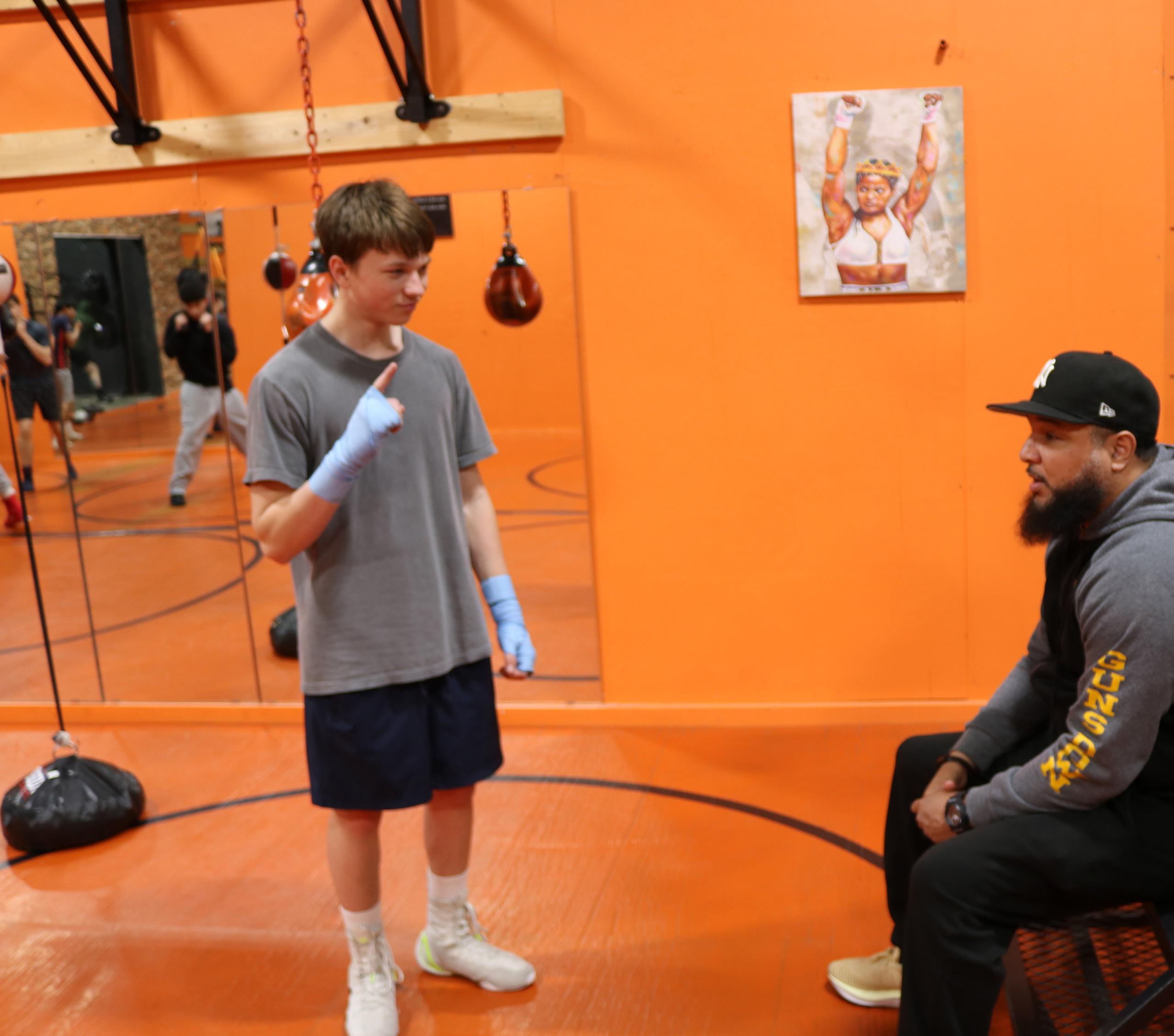
He and George don’t just pull up to the gym. They pull up to schools. They check grades. They talk to parents. They hold everyone—kids and adults—to the same standard.
“We hold the kids accountable,” they both say, “but we also hold the parents accountable too.”
Inside the gym, there are no second chances.
There are third, fourth, and fifth chances. As many as it takes.
George built Wartime Fitness Warriors on a 10-step program— modeled after boxing’s own progression from novice to world champion. Each step demands something. Discipline. Consistency. Accountability. Mental toughness. It’s not about how hard you can hit. It’s about how many times you’re willing to get back up.
“You do these little small steps,” George says, “life is gonna get a lot easier.”
The kids don’t all come from the same place. Some are court-mandated. Some are one bad decision away from ankle monitors—or worse. Some just want to be better. Want to feel strong. Want someone to see them as more than a label, a statistic, a file in a guidance counselor’s office. Wartime Fitness doesn’t ask where they came from.
It asks where they’re going.
On Tuesday and Thursday afternoons, the gym shifts. Gloves come off. Books come out. Volunteers arrive—tutors who work with students one-on-one, structured and focused. No video games. No distractions. Just kids getting the academic support they need, surrounded by the same people who push them in the ring. Grades improve. Fast.
Kids who couldn’t sit still in a classroom suddenly stay after school because someone believes
they can do the work. Someone who looks like them. Someone who’s been where they are.
George doesn’t sugarcoat it. He never has.
“I don’t want nobody to go through that experience that I went through,” he says, his voice quieter now, weighted with years of carrying it.
“Not even given a chance for just being labeled just because where we originally came from.”
Harlem wasn’t kind. Virginia wasn’t much better. George grew up watching violence spill into streets, into homes, into lives that deserved better. He watched kids—misunderstood kids—get written off before they ever had a shot. He was one of them.
When he started boxing, it gave him an outlet. A target that wasn’t another person. A way to channel everything he’d seen, everything he’d survived.
But coaching? Coaching gave him a purpose.
“Boxing is more than just throwing punches,” George says. “It’s more therapeutic than anything.”
It’s in the rhythm. The repetition. The focus required to tune out everything else and just be present. One combination at a time. One round at a time. One day at a time.
That’s what the kids learn
here. Not just how to defend themselves physically, but how to defend their futures.
“We’re not creating bullies,” George says, his tone firm, deliberate. “We’re creating leaders. People that know how to defend themselves.”
Leaders like Matrix, who now mentors younger kids the way George mentored him.
Leaders like the young woman who walked into Wartime Fitness three years ago battling substance use, near-fatal experiences, and academic struggles that
threatened to swallow her whole. She didn’t believe in herself. Didn’t think she’d graduate. Didn’t think she had a future worth fighting for.
She graduated.
Now she’s launching her own business.
“When we got kids come up in here, it’s no judgment, it’s no label,” George says. “Everybody’s trying to help each other feel better about themselves, about their confidence.”
That’s the difference. That’s what
makes Wartime Fitness more than a gym.
It’s a safe haven.
A place where mistakes aren’t the end of the story—they’re the beginning of the lesson. Where kids can be authentic without fear. Where criticism is constructive, not crushing. Where the only label that matters is the one you give yourself.
Since 2020, over 2,000 young people from Charlottesville and surrounding counties have walked through these doors. Some stay for months. Some for years. Some
leave and come back when life gets hard again, because they know the door is always open.
George and Mighty Mat don’t just coach in the gym. They coach in the streets.
“We pull up to the schools,” Mat says. His voice carries the same steady conviction as George’s. No wasted words. Just truth. “We hold the kids accountable, but we also hold the parents accountable too.”
It’s a two-way street. Kids can’t succeed if their home lives are chaos. Parents can’t support
their kids if they don’t know what’s happening. So George and Mat show up. They check in. They make sure families aren’t just surviving—they’re moving forward together.
Some parents resist at first. Defensive. Uncomfortable with someone else holding them to a standard.
But most of them come around. Because they see the change in their kids. The confidence. The grades. The way their child walks a little taller, speaks a little clearer, dreams a little bigger.
And they realize: this isn’t just about boxing.
It never was.
The gym empties out around 8 PM most nights, but George and Mat are usually the last ones to leave.
They lock up. Check the lights. Make sure everything’s set for the next day. Then they drive.
Not home. Not yet.
Through neighborhoods where streetlights flicker and corners stay crowded too late. Where kids who should be inside doing homework are outside doing anything but. George and Mat don’t lecture. They don’t judge. They pull up, roll down the window, and talk.
“We seen the same young boys outside late at night on a school night, missing school, the bus, doing everything else,” Mat says.
“But once they started coming to the gym and I rode through that neighborhood, them boys were nowhere to be found.”
Gone. Not because someone threatened them. Not because police swept the block. But because they had somewhere better to be. Something better to do. Someone who believed they were worth the effort.
That’s the ripple effect George talks about. The one you can’t measure in trophies or test scores alone.
It shows up in court hearings where a judge offers a deal: complete the Wartime Fitness program and we’ll remove the ankle monitor. It shows up in schools where principals call George directly, asking if he can work with a student everyone else has given up on. It shows up in parents who show up to the gym not because they have to, but because they want to see their kid succeed.
Wartime Fitness has partnerships now. With local schools. With the courts. With jails and social services. Kids who might’ve been headed toward lockup are being redirected toward the ring. It’s not a cure-all. George knows that. But it’s a chance. And a chance is all some kids need.
“We don’t have no problem with them here,” George says, talking about the so-called “troubled” kids other programs reject. “You know what I think it is? I think it’s the labeling part, in my opinion.”
Strip away the label, and you see the person. The kid who’s scared. The kid who’s angry. The kid who’s never had someone show up consistently, who’s never been told they matter.
Give that kid a 10-step program. A coach who won’t quit. A community that holds them accountable without tearing them down.
And watch what happens.
Matrix happened. The young woman who graduated and started her business happened. The amateur boxing champions happened. The kids who stopped missing school happened. The families who started healing happened.
Over 2,000 stories. Each one different. Each one proof that labels lie.
But George isn’t satisfied. Not yet.
“Gloves Up, Guns Down.”
That’s the name of one of Wartime Fitness’s biggest community events. It’s exactly what it sounds like. A massive gathering—youth, adults, families, people from every corner of Charlottesville—coming together to box, to work out, to defuse tension before it becomes violence.
And it works.
After the events, local violence drops. Conflicts that might’ve escalated in the streets get settled in the ring. Strangers become
sparring partners. Sparring partners become friends.
“That’s why I feel we’re going to change the narrative,” George says, leaning forward now, voice rising with conviction. “That’s why this is a movement. And it’s going to impact not just our area, but it’s going to impact the whole world.”
It’s not arrogance. It’s certainty.
Because George has seen what
happens when you stop labeling kids and start listening. When you stop playing it safe and cut the safety net. When you go all in, both feet, ten toes down.
You build something that outlasts you.
Wartime Fitness isn’t just about the kids in the gym right now. It’s about the ones who’ll come after them. The ones Matrix will coach. The ones that young woman will inspire. The ones who’ll hear
about a gym in Charlottesville that refused to give up on people everyone else had written off.
“Once we get all the resources, donations and everything,” George says, eyes bright with the kind of hope that’s earned, not given, “y’all haven’t seen nothing yet. Nothing.”
The vision is bigger than one gym. It’s a model. A blueprint for how
youth development should work. Not just athletic training, but mental health support. Academic tutoring. Parent engagement. Life skills. Leadership development.
George and Mat want other gyms, other programs, other communities to adopt the same philosophy. Stop creating athletes and start creating leaders. Stop focusing on wins and start focusing on lives.
“We’re not creating bullies,”
George says again, because it bears repeating. “We’re creating leaders. People that know how to defend themselves.”
Defend themselves from violence, yes. But also from the labels. From the low expectations. From the systems designed to keep them exactly where they are.
The next big event is April 4th. Charlottesville High School. 6 to 9 PM. Boxing matches. Community celebration. A chance for the city to see what these kids have become.
George wants the stands packed. He wants parents there. Teachers. Neighbors. City officials. Anyone who’s ever doubted what’s possible when you believe in people instead of labels.
“Come see what we’re building,” he says. Not a request. An invitation.
Because Wartime Fitness isn’t George’s gym. It’s the community’s. It belongs to every kid who walked in scared and walked out strong. Every parent who showed up even when it was hard. Every volunteer tutor who stayed late on a Thursday. Every person who decided that Charlottesville’s youth deserved better than what they were getting.
And it’s working.
The proof is in Matrix’s footwork. In the young woman’s business plan. In the empty street corners Mat drives past. In the 2,000 lives that have already changed, and
the thousands more waiting for their turn.
George Rivera cut his safety net in 2018.
He went all in.
And now, 2,000 kids are following. Not because he told them to. But because he showed them how.
The heavy bag is still swinging when the lights go down.
Thud. Thud. Thud.
Even in the silence, you can feel the echoes. The work that happened here today. The work that’ll happen tomorrow. The work that never really stops because the need never really stops.
George Rivera didn’t cut his safety net because it was easy. He did it because 2,000 kids were waiting for someone to believe in them first. To see past the labels. To show up when everyone else walked away.
Now he’s asking the same from Charlottesville.
Show up.
Not just on April 4th at Charlottesville High School, though that matters. Not just when the cameras are rolling or the headlines are written. But in the quiet, consistent ways that change lives. Volunteer on a Tuesday afternoon and help a kid with math homework. Donate so a family that can’t afford the fees doesn’t have to choose between
groceries and giving their child a chance. Attend an event and cheer for a kid who’s never had anyone in the stands before.
“Once we get all the resources, donations and everything,” George says, “y’all haven’t seen nothing yet.”
He means it.
This isn’t charity. It’s investment. In futures that haven’t been written yet. In leaders who haven’t stepped into their power yet. In a community that’s choosing to be better, together.
Wartime Fitness Warriors is more than a gym. It’s proof that labels don’t have to be permanent. That troubled can become misunderstood, and misunderstood can become unstoppable.
But it can’t do it alone.
Visit wartimefitnesswarriors. org. Read the stories. Watch the transformations. See what happens when a community decides that no kid gets left behind, no matter where they came from or what they’ve been called.
Then ask yourself: What would happen if I cut my safety net too?
Matrix already knows the answer. So does George.
Now it’s your turn.
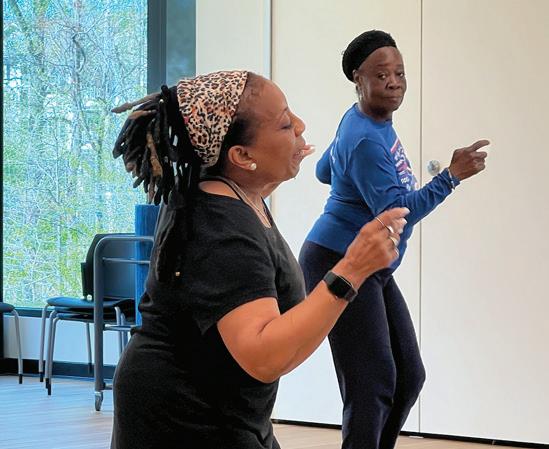
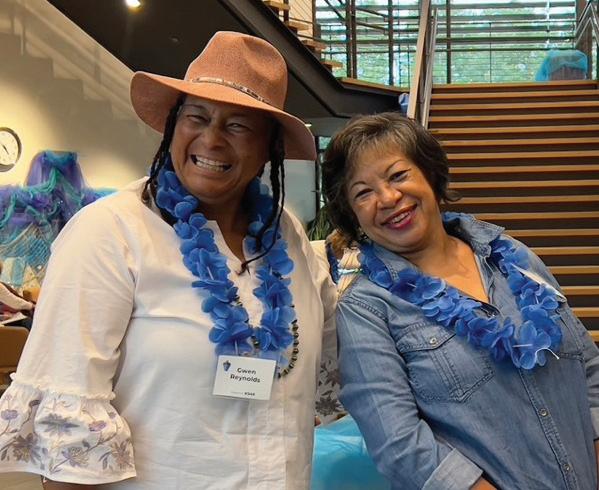
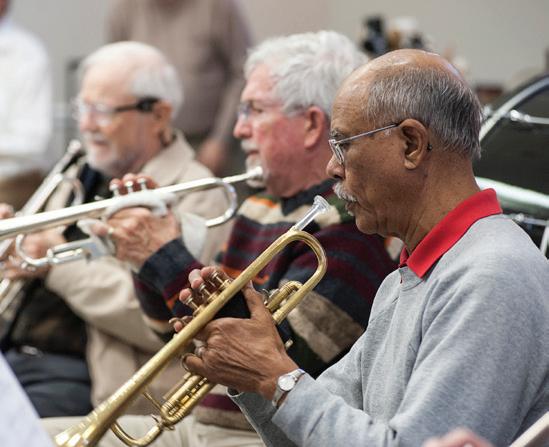
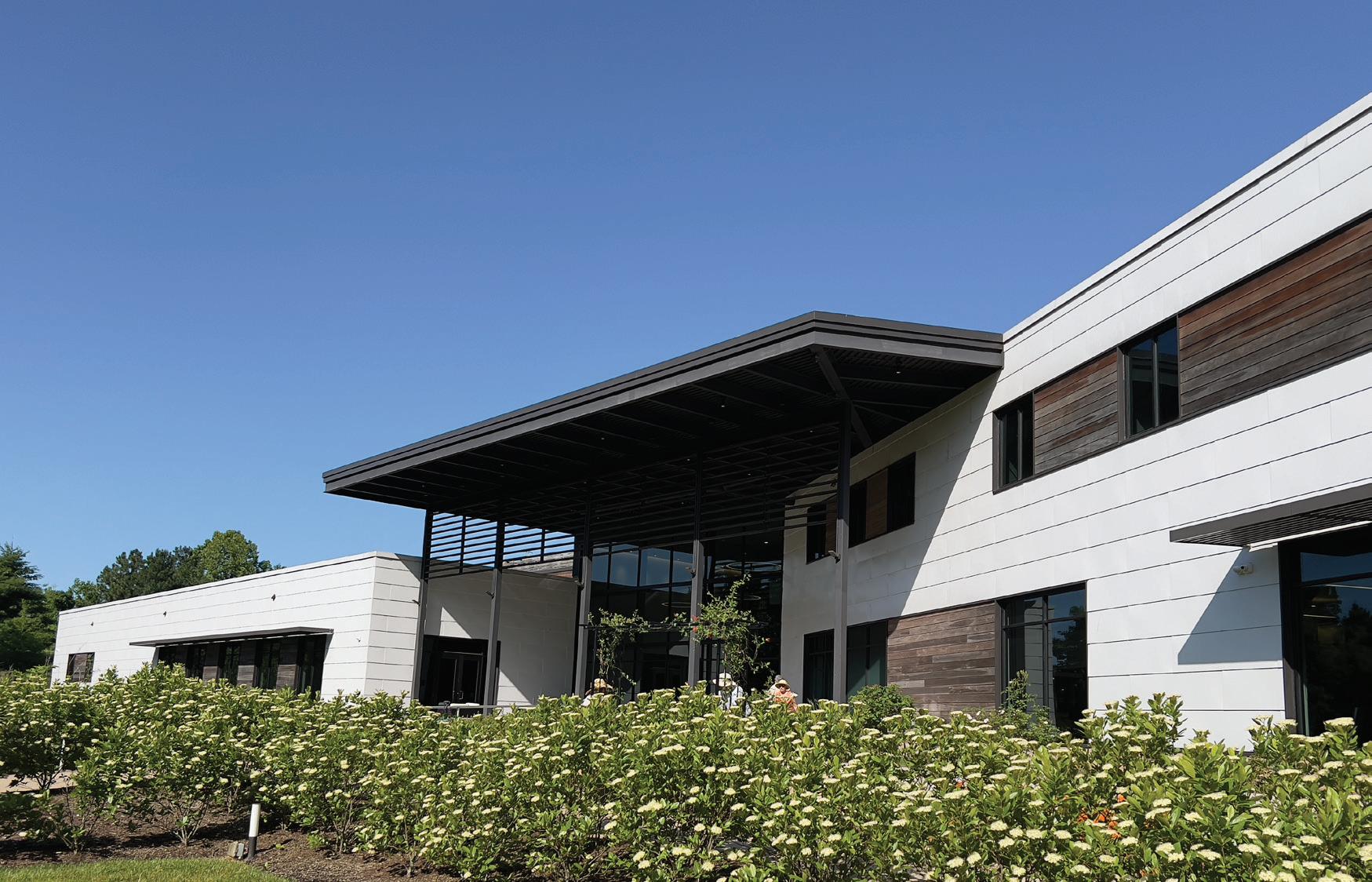
Meet people. Try a dance or exercise class. Join a band. Enjoy live music or a cup of coffee. Volunteer. You’ll find 150+ programs six days a week!
Healthy aging opportunities for all adults age 50 and better.


by Jessica Harris
Jessica Harris is based in Charlottesville, Virginia, and has written for Vinegar Hill Magazine for 3 years. She’s passionate about accessible arts education, community-based work, and, of course, 70s & 80s music.
There’s no lack of stories told about Charlottesville. For many reasons, the national spotlight has been on our community – in more ways than I can count.
But the stories told about Charlottesville haven’t been relegated only to news articles. Plays, music, films, and other creative arts have all captured various aspects of our community.
Performances like Suzan-Lori Parks’s recently released and critically acclaimed Sally & Tom display one of Charlottesville’s most noted stories of Sally Hemings and Thomas Jefferson on a national stage. We’ve had Priyanka Shetty retell and reinterpret the events of August 11 and 12, 2017. And numerous
musicians and writers have shared our stories via original songs, popular books like My Monticello and Charlottesville and verse, like that of poet MaKysha Tolbert.
Despite Charlottesville’s wealth of creative expression, we don’t often feature the stories told by us and about us locally. And we haven’t amplified the nuanced or bold stories about our own legacies that often go undertold. Without a clear, cultural footprint driven by authentic storytelling, I wonder: What will the cultural memory of Charlottesville be in 5 years? 10? 50?
As a theatre artist and educator, I believe performing arts in particular can be used as a tool to transform communities and shape the way we remember. Performance is not just an avenue for expression, but a vessel into our collective memory and cultural heritage. In this time where arts and culture are being used as the first line of attack for political
polarization - as evidenced by the current White House takeover and rename of the Kennedy Center for the Performing Arts - these homegrown, new, authentic stories are needed now more than ever. And if we don’t tell them, who will?
The answer to this question is to amplify youth’s creative voices.
While the next generation is certainly our future, it’s not just the passing of the baton that warrants our listening to young folk. Their perspectives, their understanding and their experiences are distinct, and
challenge us to envision new possibilities. They remind us of where we have been and how far we have to go.
Enter Saturn Edwards.
For Saturn, a Charlottesville native, their interest in being an artist stems from wanting to ensure that authentic stories are centered. As an actor, a curator and a burgeoning playwright, they seek to tell stories from a bold lens and to ensure all narratives are rooted in authenticity.
As a child, Saturn came across a character description in a play
they were reading.
“His name was something like ‘Marlin,’” Saturn recalled. “And his character description was ‘Black. Likes rapping.’ And I was like, okay, we gotta do better than this.”
Suffice to say, Saturn has committed to this effort.
Similar to the character, the stories we tell about Charlottesville deserve nuance and authenticity that represent
crucial moments, quandaries and the legacies we want to leave behind.
Saturn, 20, has lived in this community their entire life and addresses these challenges in their work. Most recently, they just finished writing a play called Floorboards. Set during the Harlem Renaissance, the play follows a Black queer community working on the fictional ship S.S. Dewberry and offers a lens into the ship’s working class, LGBTQ and racially diverse staff.
They were inspired to write this story because they feel “masculine black lesbian stories aren’t highlighted or told at all.” They’ve submitted the piece to a number of places for publication and staging, including the Trans History Project and other programs and theatres.
“The goal with floorboards is to tell a story about how Black people, how working people came together, especially through art, because art was the main way that queer people were able to express themselves,” Saturn said.
While not explicitly about Charlottesville, they utilized research on local narratives, places, and LGTBQ experiences to connect local stories to the play’s broader narratives and themes.
One prime example is the play’s callback to the Dewberry Hotel. Folks walking on the Downtown Mall will recognize this behemoth, empty building that has been home to the “Music Box” art exhibit for years. Saturn
remembered the first time they saw the installation, they noticed someone had graffitied the words “not a local artist” on the art itself, as it was created by a guest artist. This moment stayed with them.
In Floorboards, they named the ship the “Dewberry” as an homage to the hotel, to “represent the potential that local spaces could harness when the community actually invests in them.” Saturn shared that it is important to grapple with the complexity of local disinvestment, as evidenced by the hotel’s lack of utilization and the subsequent artwork’s non-local focus.
Saturn says they are curious to learn more about this town they call home. For instance, they recently learned about Vinegar Hill’s Blue Diamond Cafe, and are inspired to learn more and tell stories of that place.
“I want to read more about black communities in my city,” Saturn shared.
Inspired by this history, they hope that Charlottesville embraces its Black cultural legacies more fiercely. Next up for them is pursuing a theatre and liberal arts degree in college. And in ten years, they hope to come back and “shake things up in Charlottesville.” Ideally, they hope to serve as an artistic director, shaping the narratives and stories that theatre-goers experience.
Individuals like Saturn inspire hope for the future of our community’s creative expression and preservation. Works like Saturn’s have the potential to open up Charlottesville’s stages, its pages and its galleries more widely to generations to come. Our legacies will be remembered through their eyes and ears, and we have the opportunity to uplift their stories now.

-4 Print full-page ad (full color)
-Online banner ads (see sizes on page 4) full color- these rotate online and can be switched out throughout the month
-4 printed magazine copies
-Total cost for the year $908.00
-4 Print half-page ad (full color)
-Online banner ads (see sizes on page 4) full color - these rotate online and can be switched out throughout the month
-4 printed magazine copies
-Total cost for the year $628.00
-4 Print 1/4 page ad (full color)
-Online banner ads (see sizes on page 4) full color- these rotate online and can be switched out throughout the month
-4 printed magazine copies
-Total cost for the year $508.00
-Sponsorship Section $5,000.00 (annual)
-Home page pop-up $1,000 00 (monthly)
-Video News Post (appears in line with articles) $150.00 (monthly)
-Social Media (FaceBook, Instagram, & Twitter) $75.00 (monthly)
-Newsletter/Email Campaign (1-3 weekly) $75.00 (monthly)
-YouTube Page $75.00 (monthly)
-Online Banners $150 00 (monthly)
Print and online banner ad designs are $325 00 A la carte $150.00
2 Mock ups
2 Revisions


by Marquan E. Jones
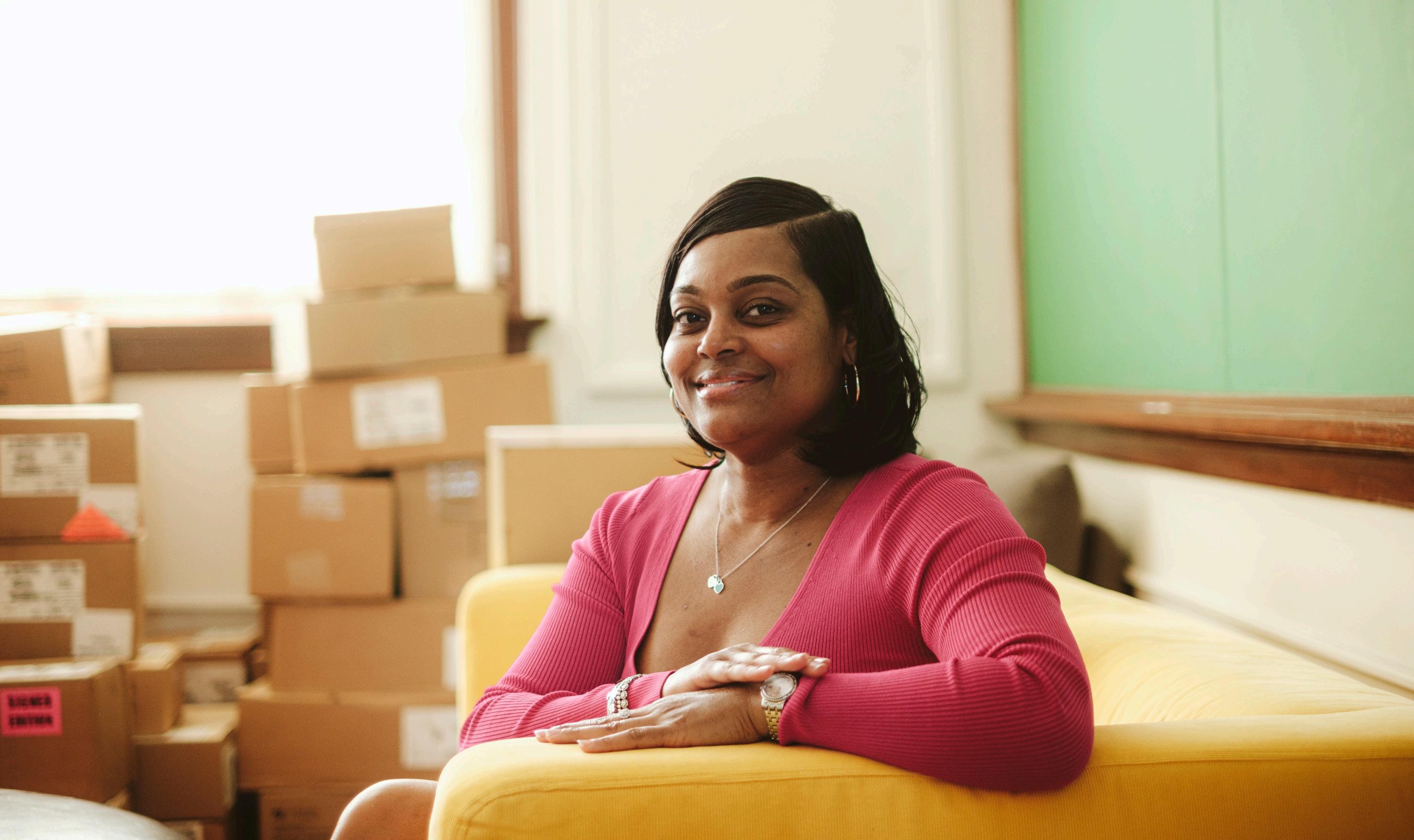
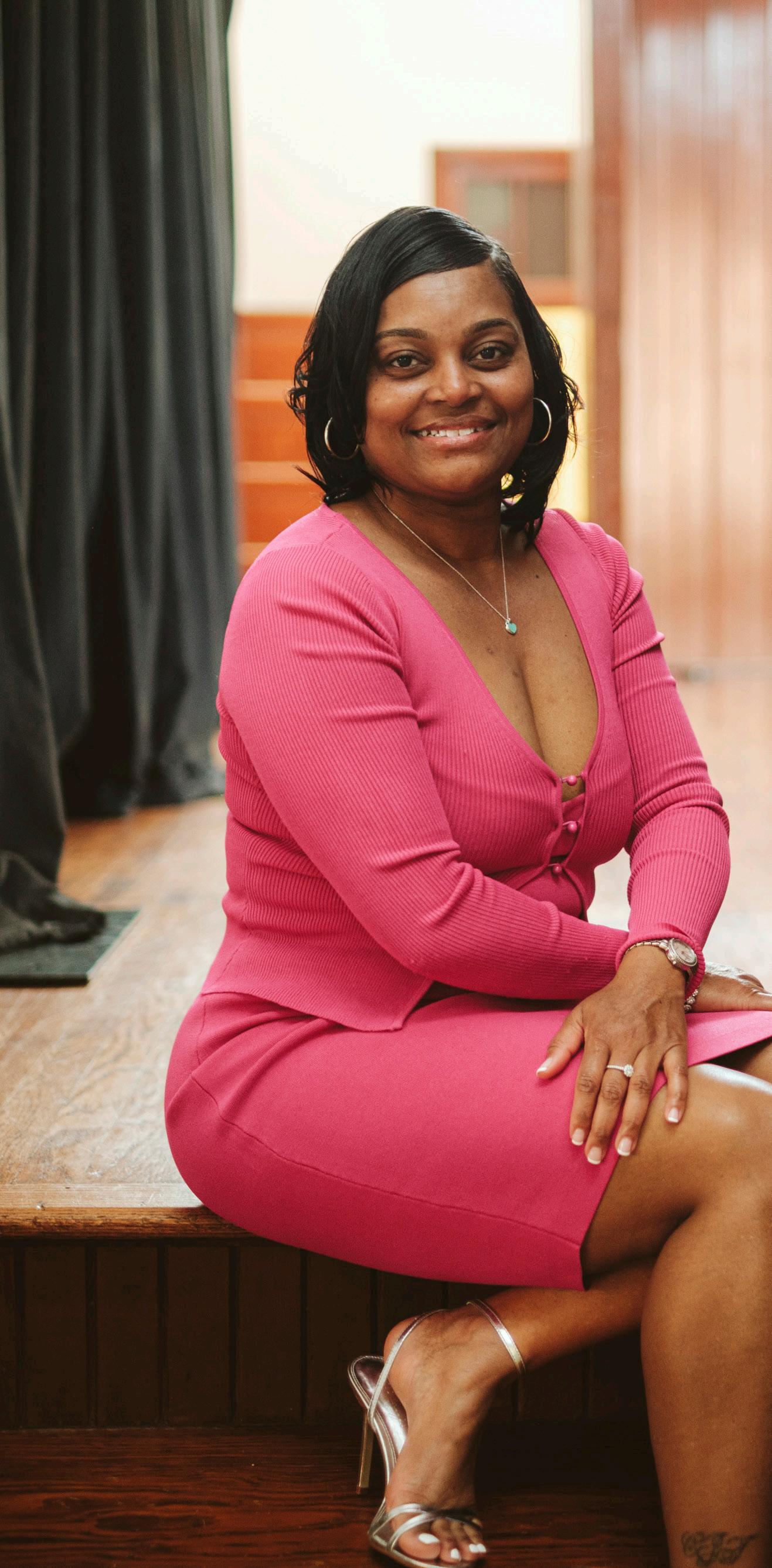
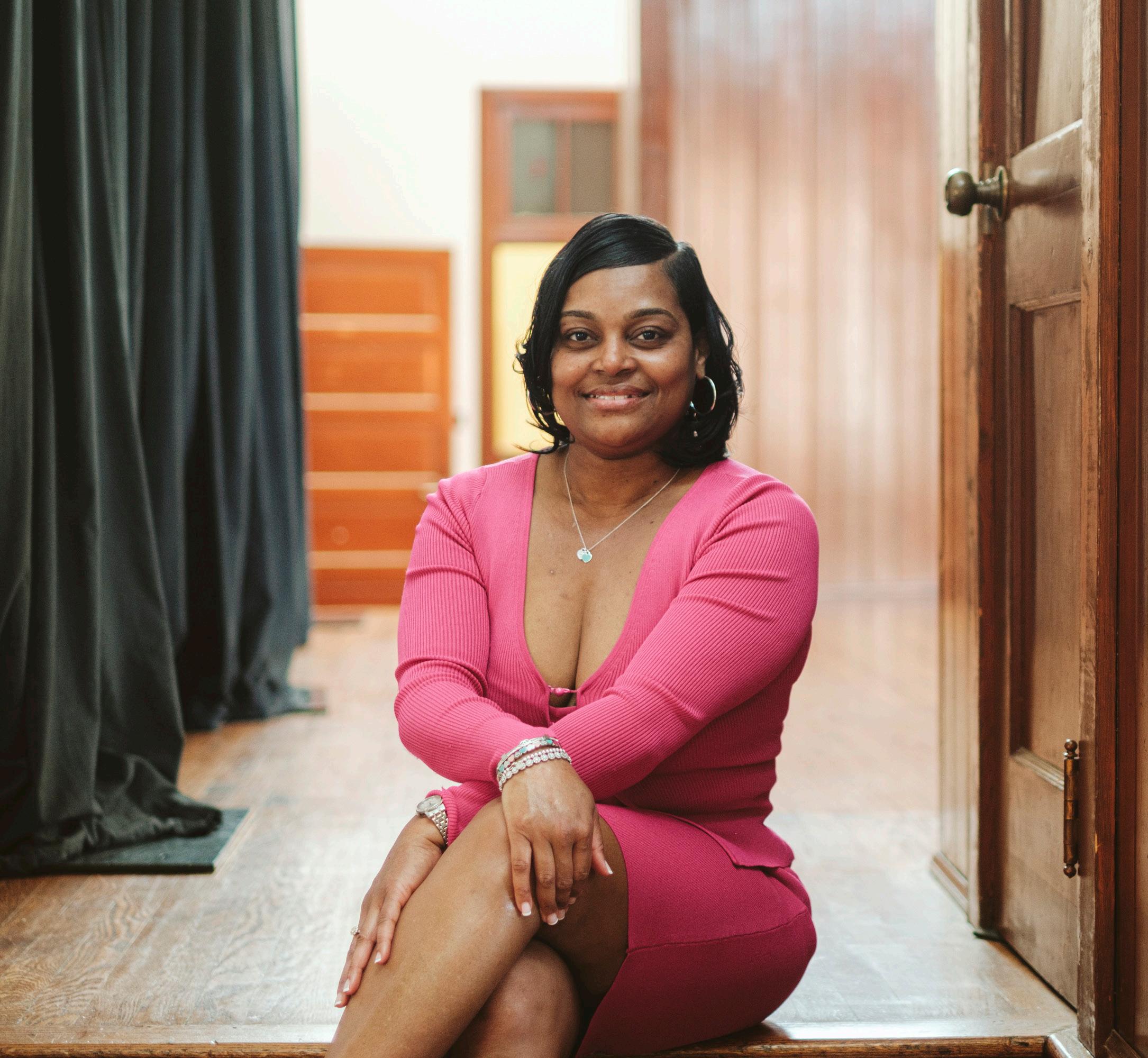
When Tanesha Hudson walks into a room, she owns it. It’s not arrogance—it’s a lesson learned from mentors who taught her that belonging isn’t granted by the makeup of the room, but claimed by the confidence you carry into it. And in Charlottesville, where she’s spent her life advocating for the marginalized, holding power accountable, and fighting for Black children who “just don’t know any better,” that confidence has become her greatest weapon.
For Hudson, activism isn’t a path she chose—it’s simply who she is. “Activism to me is embracing the gifts from your ancestors because they couldn’t speak,” she explains. “I vow to use that gift of speaking and moving and shaking in rooms in ways
that they weren’t able to do. It would’ve cost them their life. I’m able to do it now and walk out with a smile on my face.”
Growing up in Hardy Drive during the 1980s and ‘90s, Hudson witnessed a reality that could have easily consumed her. “There was no rougher time than growing up in Hardy Drive in the eighties and nineties,” she recalls. But what set her apart was an expanded imagination—a refusal to let her environment define her future.
“What I saw never consumed me,” Hudson says. “I knew that there was a life outside of Hardy Drive and Run Street. I think if we can get kids back to doing
that in a more positive light—take the music away, take the tablets away, take away social media—we got to think beyond our horizons.”
That imagination was fueled by education, books, and travel. But it was also fueled by something Hudson believes might be hereditary—a family ethos of resistance and advocacy. “How I was raised drew me to activism,” she explains. “How my family operates, I believe it could be hereditary.”
Her formative years at Charlottesville High School from 1996 to 2000, where she played point guard on the basketball team under coaches Edward Brooks III, Harry Terrell, and Gary Bloxsom, shaped more than just her athletic prowess. “I was a point guard at heart, so I speak loudly and naturally,” Hudson says with a laugh. That commanding voice—the one that directs plays on the court—is the same voice that now directs attention to injustice in city council chambers, school board meetings, and courtrooms across Charlottesville.
“I am who I am because I just always knew I wanted more. I vividly pictured myself as being more than what I came from.”
on the Shoulders of Giants
Hudson’s activism didn’t develop in isolation. She credits her foundation to powerful mentors, particularly Dr. M Rick Turner, former dean of African American Studies at UVA, and his wife, Mrs.
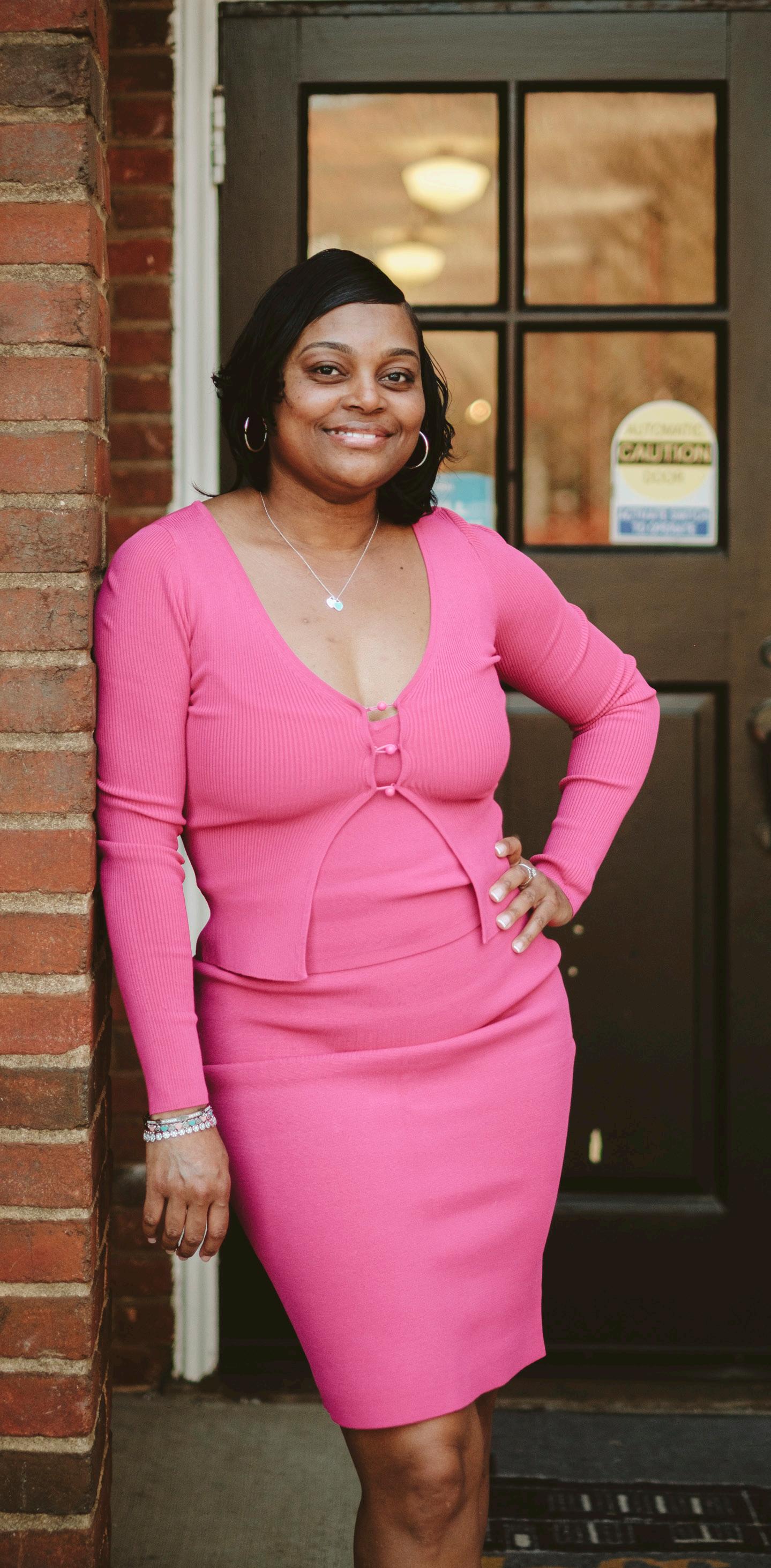
Tamyra Turner, an educator at PVCC.
“Nobody was as powerful as Rick Turner when I was a teenager,” Hudson remembers. “I would see this man walk into rooms and speak with a passion and with a power.” The Turners taught her a lesson that would become her signature: “When you walk into a room, you walk into that room and you act like you belong there even when the makeup doesn’t look like you. Have confidence that you belong there and you always speak up no matter what.”
That lesson stuck. Today, Hudson walks into IEP meetings, disciplinary hearings, city council sessions, and senate sub-committee hearings with the same unwavering confidence, demanding accountability and speaking truth to power.
Her faith also anchors her work. As a member of Pilgrim Baptist Church on Albemarle Street, where her cousin, Reverend Reginald A. Johnson, serves as pastor, Hudson draws strength from a foundation that has sustained Black communities for generations. “Without faith, where would we be as a people?” she asks. “Faith has definitely been one of the foundations of anything that I’ve ever worked on.”
Fighting on Every Front Hudson’s activism touches nearly every corner of Charlottesville life. “I don’t think there’s one level that you can’t say Tanesha Hudson hasn’t touched in this community,” she says, and the evidence supports her claim.
In the education arena, Hudson serves as a fierce advocate for Black students and their families. She represents families in IEP meetings, disciplinary hearings, and even expulsion proceedings—keeping kids in school and ensuring they get the services they need to succeed. “I’m making the school be accountable and holding them accountable to meeting those needs for those students so that they have what they need so that they can flourish,” she explains.
Her live videos on social media have become an unexpected tool for change. Though she may not always see immediate engagement, the impact is real. “When I go out in public, someone says, ‘I saw your live video, and it really helped me. I was able to contact the school to ask questions about my child’s IEP,’” Hudson shares. “People might not hit a like button, but they are listening.”
The tangible differences she’s making are everywhere: kids going from failing grades to passing grades, students getting into college and trade programs, families successfully navigating systems that were designed to exclude them. “The reward is seeing kids go off to college, graduate, be able to play sports, turn their life around, go from failing grades to passing grades, get into programs and learn how to do stuff and earn a trade,” Hudson says. “That’s the reward and that’s the tangible difference that I can say I’m grateful to be a part of.”
Beyond education, Hudson has been instrumental in police accountability efforts, working closely with former mayor Niah Walker to demand transparency from law enforcement. She’s a constant presence at city council meetings, board of supervisors sessions, and school board gatherings—always ready to challenge officials and demand better for her community.
Perhaps most impressively, Hudson successfully testified at a senate sub-committee hearing on a housing bill she introduced to combat racist retaliation and treatment from homeowners associations. The bill passed 5-0 with one abstention—a legislative victory that directly addresses the systemic racism she’s long fought against. “HOAs are so deeply embedded in racism and most legislation tied to it is so old fashioned that it still bleeds racism,” Hudson explains. This win came after she felt “brushed off” by local media when trying
to bring attention to the issue— proving that when the press won’t tell the story, Hudson will write it herself in legislation.
“This work is not for the weak. It’s draining, it’s heartbreaking, it’s stressful, but the reward trumps all of that. The reward is greater.”
Creating Spaces for Black Joy Hudson’s vision extends beyond holding systems accountable— she’s actively building alternatives. In 2023, she graduated from the Sorenson Institute, a political leaders program, where she met Clue Atkinson. That connection led to the creation of Stop the Violence 434, inspired by the work of Monica Atkins and Clue Atkinson’s Stop the Violence 757 chapter.
Stop the Violence 434 raises money to keep kids off the streets by paying for AAU teams and positive programming. “They’re paying for kids to get out the street, to get on AAU teams and just all positive things,” Hudson explains. “They raise money and they put kids in programming so that they can stay out of the street.”
She also founded Legacy Unbroken, an organization dedicated to documenting Black stories in Charlottesville. Currently, she’s working on a documentary about the Martinsville Seven, ensuring that critical histories aren’t forgotten.
Made in Charlottesville, an event Hudson created in 2019 as part of the Unity Days following the
events of 2017, was a resounding success. When asked to move the event to a different location, Hudson refused, insisting on keeping it in a Black space. “I think we need to latch on to the Black events that are for us by us and keep those events flourishing,” she insists.
Hudson is unapologetic in her belief that Charlottesville needs to do more for its Black residents. She’s been a vocal advocate for free events and resources—”Black people deserve free. We deserve free stuff around here,” she declares—and points out the disparity in how the city supports different communities.
“Richmond has a jazz festival. Richmond has an R&B festival. Hampton has a jazz festival, R&B festival. Portsmouth, Chesapeake, you name it. These places have their own weeks of Black festivities, and Charlottesville has yet to give us a week,” Hudson notes. “They got Tom Tom, they got Gay Pride. They have all of these festivities for people that don’t look like us. And then when Black people want to do something, it’s a problem.”
Her upcoming projects include gaming events with Upscale Event Center and plans for youth programming, though she’s mindful of current safety concerns. “With all this area violence, it’s just one of those things where it’s like, do I punish all the kids because some kids don’t know how to act or do I still do it?” she wonders. “But I’m a firm believer that safety’s first.”
The Price of Speaking Truth
Hudson doesn’t shy away from discussing the very real costs of her activism. She’s been terminated from jobs “because I’m Black and they don’t like the way I talk.” She’s received hate mail and threats. Her car was shot up—she still doesn’t know who did it. There are things she’s been through that she’s never shared publicly.
“You’ll get it from all sides. You’ll be targeted. They’ll target your kids, you’ll get hate mail, you’ll get threats,” Hudson says frankly. “These are real results of things that will happen to you and you got to just keep going. You can’t stop.”
She’s also keenly aware of how Black women activists are perceived. “Black women can be seen as ‘angry birds’ or angry Black women when they are just passionate about topics,” she explains. Hudson wants people to look past how she’s saying something and focus on what she’s saying—the substance over the style. Yet she refuses to change her tone to make others comfortable. “Change does not get complacent,” she reminds us.
“I wouldn’t be who I am if I had listened to everybody. ‘Oh, you need to change your tone. You need to do this.’ No, be you. I am who I am. I’ve made it to where I am being exactly who I am and never compromising who I am for anyone and I refuse to.”

What keeps Hudson going through the threats, the exhaustion, and the heartbreak? Black joy. “Knowing that you can put a smile on somebody’s face in their weakest and most vulnerable moments, knowing that you can help a kid that just don’t know any better,” she says. “I appreciate and know what those before me have done and why I’m in the position that I’m in. Because they fought so hard for me to do what I do.”
When asked where she sees the most potential for positive change in Charlottesville, Hudson doesn’t hesitate: the youth. “We’re losing our children out here and it’s a worldwide issue,” she says. “We need to pull more resources into them. We need to get them on a path early of using their imagination and figuring out what they want to be and working towards that at a younger age.”
Her vision is concrete: more youth job training programs, certifications kids can use in their future, tech programs, and handson blue collar workshops teaching skills like sewing, cooking, HVAC, and electrical work. “These kids learning all year long, that’s not cutting it for them. They tired of school. We got to find other alternatives,” Hudson argues.
But she wants more than just graduation rates. “Are they graduating on a level that they can be sustainable as adults?” Hudson asks. “Are they sustainable as adults when they walk that stage? That’s what I want to see more of.”
For those who want to make a difference but don’t know where to start, Hudson’s advice is simple: “You just got to do it. There is no right or wrong way.”
She expands: “When you walk into a room, you walk into that room regardless of what it look like and own your space. Know that you belong there. Own it period. Don’t bite your tongue. Be authentically you. Be unapologetically you and remember your why and remember why you’re there. And don’t let nobody change who you are.”
Hudson emphasizes the importance of authenticity in this work. “A lot of people can fake this type of work. They really want to change, and then when the pressure comes, they fold,” she observes. “This work is not for the weak. You have got to know how to deal with pressure.”
And self-care? It’s non-negotiable. “I always remember the self-care,” Hudson says. As someone who describes herself as “extremely extroverted”—”outside is my middle name”—she finds renewal in networking, traveling to other communities, and bringing back ideas to Charlottesville. “Sometimes you have got to take breaks,” she adds firmly.
Tanesha Hudson is not waiting for permission to create change. From the courtrooms where she advocates for children’s futures to the senate chambers where she shapes housing policy, from the
community events that celebrate Black joy to the live videos that educate and empower, Hudson is everywhere—speaking loudly, owning her space, and refusing to be anything other than herself.
“I am who I am not solely because of where I’m from, but what I have gotten to experience and learn outside of Charlottesville,” Hudson reflects. But she’s clear about her purpose: she’s here, doing this work, because of faith beyond the horizons and a deep commitment to honoring those who came before.
When asked if there’s anything else she wants readers to know, Hudson’s response is characteristically direct: remember the work. The IEP advocacy, the court appearances, the city council confrontations, the housing bill victory, Stop the Violence 434, Legacy Unbroken, Made in Charlottesville, the Martinsville Seven documentary, the Unity Day events. “I don’t think there’s one level that you can’t say Tanesha Hudson hasn’t touched in this community.”
And she’s just getting started.
For Tanesha Hudson, activism isn’t about being liked or being comfortable. It’s about being necessary. It’s about using the gifts her ancestors couldn’t use, speaking the truths they couldn’t speak, and walking out of rooms—with a smile on her face—that they couldn’t even enter.
In a city still grappling with its racial history and present,
Hudson is both a mirror and a megaphone. She reflects the pain and possibility of Charlottesville’s Black community while amplifying voices that have been ignored for too long. And she’s doing it unapologetically, loudly, and exactly as herself—just like that point guard from CHS who always knew where the ball needed to go.
The question isn’t whether Tanesha Hudson will continue fighting. The question is: will Charlottesville finally listen?
• Education Advocacy: Represents families in IEP meetings, disciplinary hearings, and expulsion proceedings
• Legislative Victory: Successfully testified for housing bill (HB 1895) combating HOA racism, passed 5-0
• Stop the Violence 434: Cofounder, raising funds for AAU teams and youth programming
• Legacy Unbroken: Founder, documenting Black stories including Martinsville Seven documentary
• Made in Charlottesville: Creator of annual community event celebrating Black culture
• Police Accountability: Works with city leadership to demand transparency from law enforcement
To learn more about Tanesha Hudson’s work with Stop the Violence 434 and Legacy Unbroken, or to support youth programming initiatives in Charlottesville, follow her on social media where she continues to educate, advocate, and inspire.

Associate professor of chemistry André
at College
the
in
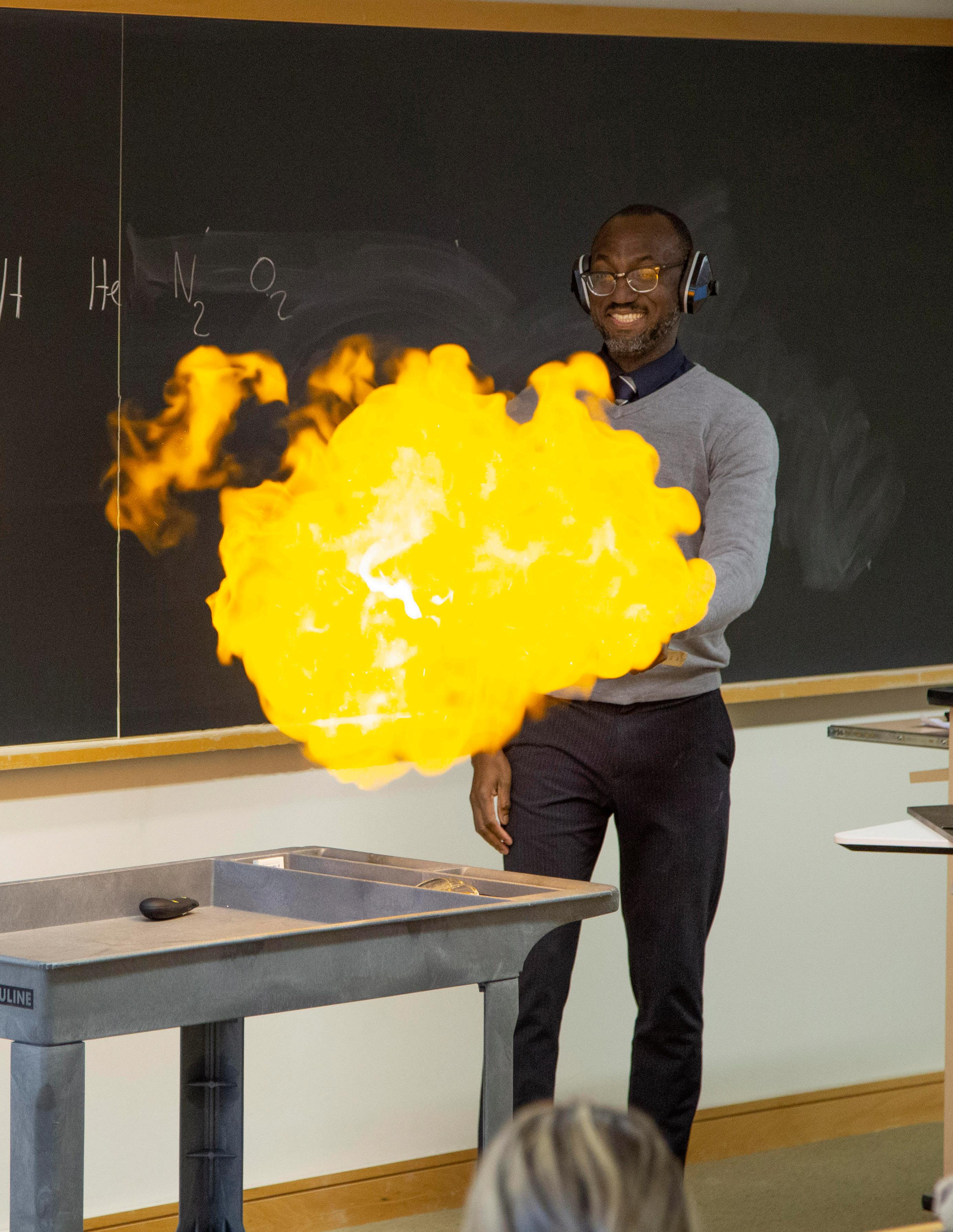
makes a demonstration that produces flame in a classroom.
Massachusetts, and is the only Black faculty person there within the science complex. Diversifying the sciences is a responsibility, he says, that the Black community must not pursue alone. Image provided by
by Katrina Spencer
Twenty-first century social media platforms are offering new forms of visibility and reach that scientists have not enjoyed before. While celebrity culture often keeps actors, singers and royals in the public eye, the hidden figures testing theories, boiling liquids in Bunsen burners and graphing equations are accessing new channels to showcase their professions.
This includes the likes of astrophysicist Neil deGrasse Tyson whose TikTok account boasts nearly 6 million followers and other Black men in lab coats who wear goggles, concoct formulas… and shake a tail feather in response to infectious beats and the latest, trending dance challenges.
“I want to make a cannabis soil next year,” Justin “Jules” Giuliano said.
Giuliano, 32 and based in New Orleans, is a Black man working in STEM -- the Science, Technology, Engineering and Math fields -- where Black men are underrepresented and sometimes unseen. He’s the lead soil researcher for Rosy Soil, a potting soil company
that, as of this writing, sells a suite of seven soils: house plant, cacti, seedling, plant food, biochar booster, aroid and orchid. In a soil studio, he tests a dynamic list of compilations and with his company, expects to release a herb soil, a garden soil and a liquid fertilizer this year.
“Half my work is killing plants,” he said.
Despite the essential work he carries out to make Rosy Soil profitable, there is a risk that much of his identity could remain invisible to customers.
TikTok, Instagram and other platforms, however, are allowing creators with backgrounds like Giuliano’s to reach across borders, informing the public that Black men can thrive in the sciences, too.
While educational attainment for Black Americans has grown in recent decades with 27% of Black adults aged 25 and older earning a bachelor’s degree, only 9% of STEM-related jobs are held by Black people according to the Pew Research Center.
“We desperately need more Black men in science,” said
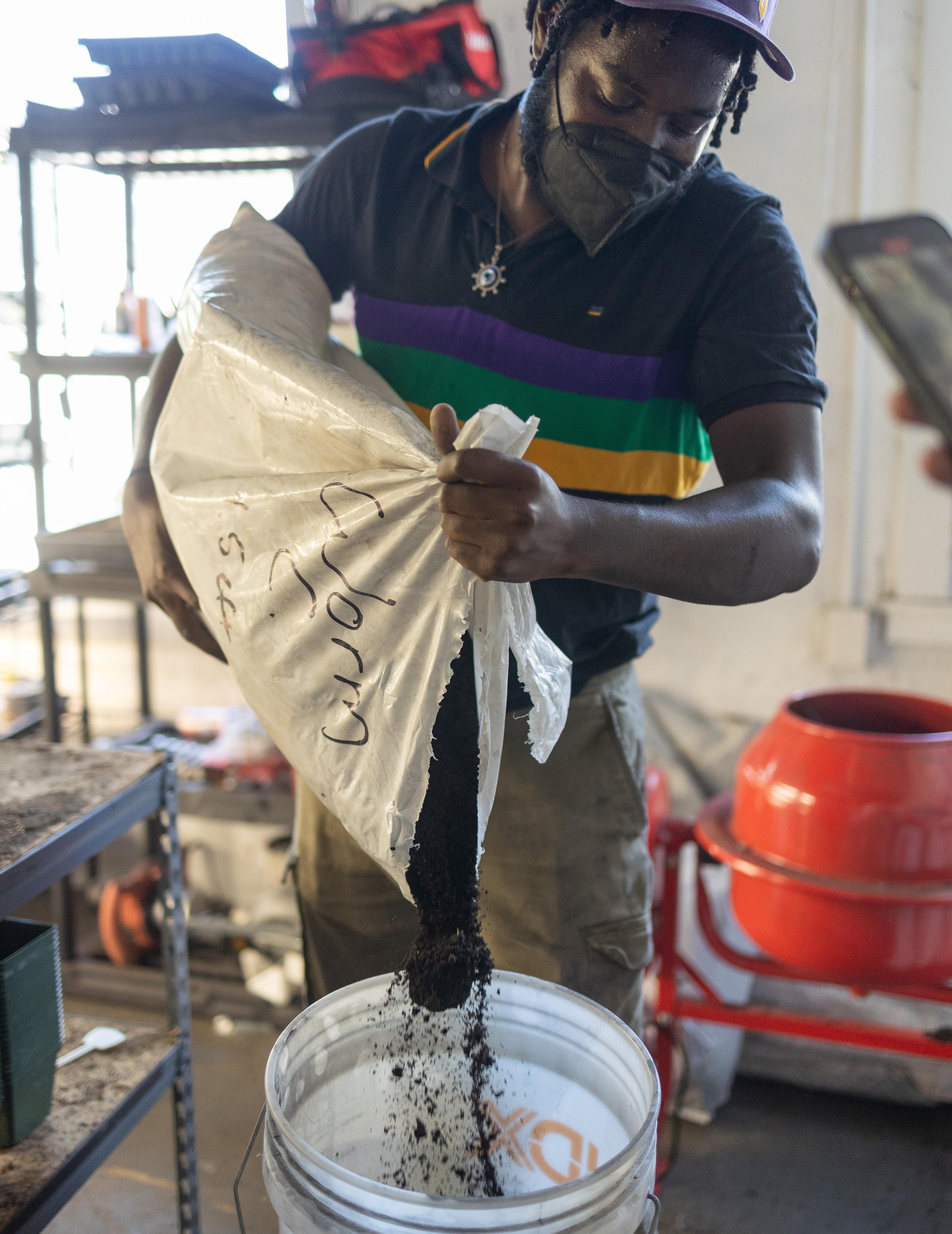
Justin “Jules” Giuliano pours soil into a bucket. He has a farming background and his research helps his employer, Rosy Soil, to use biochar, an organic substance created from burnt plant scraps, to develop its products that are sold in all 50 states. Image provided by
André K. Isaacs, an associate professor of chemistry at College of the Holy Cross in Worcester, Massachusetts, who is Black, Jamaican and queer.
With over 653,000 followers on TikTok, Isaacs, 44, has gained some notoriety on social media for learning and performing choreographed dances on TikTok with the college students who work in his chemistry lab, creating under the handle @drdre4000. His dancing skills have made him a fun and welcome presence in and outside of STEM via social media’s algorithmic powers, and dozens of people from all over contact him, many expressing gratitude to him for making both a Black and a queer face visible in the sciences.
“People don’t realize how much visibility matters,” Isaacs said.
Recruitment of Black people to the sciences is not the sole obstacle to the diversification of the body of people in the sciences. Retention of Black faculty in the sciences is a national challenge, Isaacs said. While he has taught in his college for 14 years, he is the only Black person within his institution’s entire science complex.
Programs like Holy Cross’s Future Faculty Institute aim to
develop people of color who are academics for faculty roles, which can help to address the dearth of diversity in countless disciplines within higher education and the Black mentorship Isaacs says is needed. However, Holy Cross is able to sustain such an investment because of its status as a private institution. The Trump administration, on the other hand, has made an effort to eliminate programs that value and prioritize diversity at public institutions, going so far as to rescind funding meant to forward inclusion.
In a climate that is closing some avenues for the sciences, social media platforms remain as a tool for communicating iterations of what is possible.
TikToker Jordon King (@kidflamesss), 25, for example, who has over 62,000 followers, appears in many of his videos with two-strand twists in his natural hair and a set of flashy, gold-toned grills. While such swag was common among rappers from the 90s and early 2000s, King is part of another rarefied group.
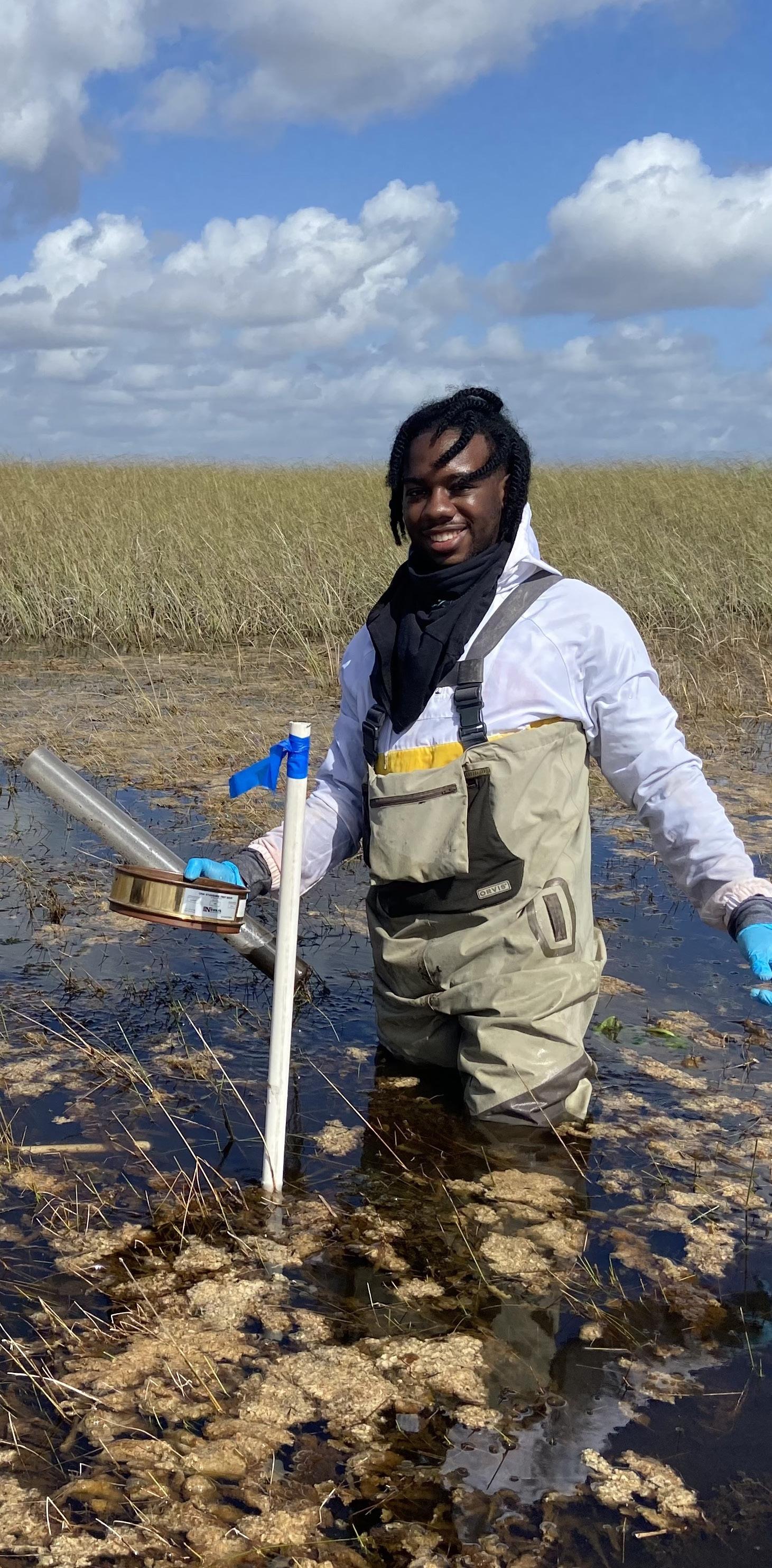
He’s an environmental scientist based in Florida who studied marine sciences in New York.
“I only knew like one other Black person in the major,”
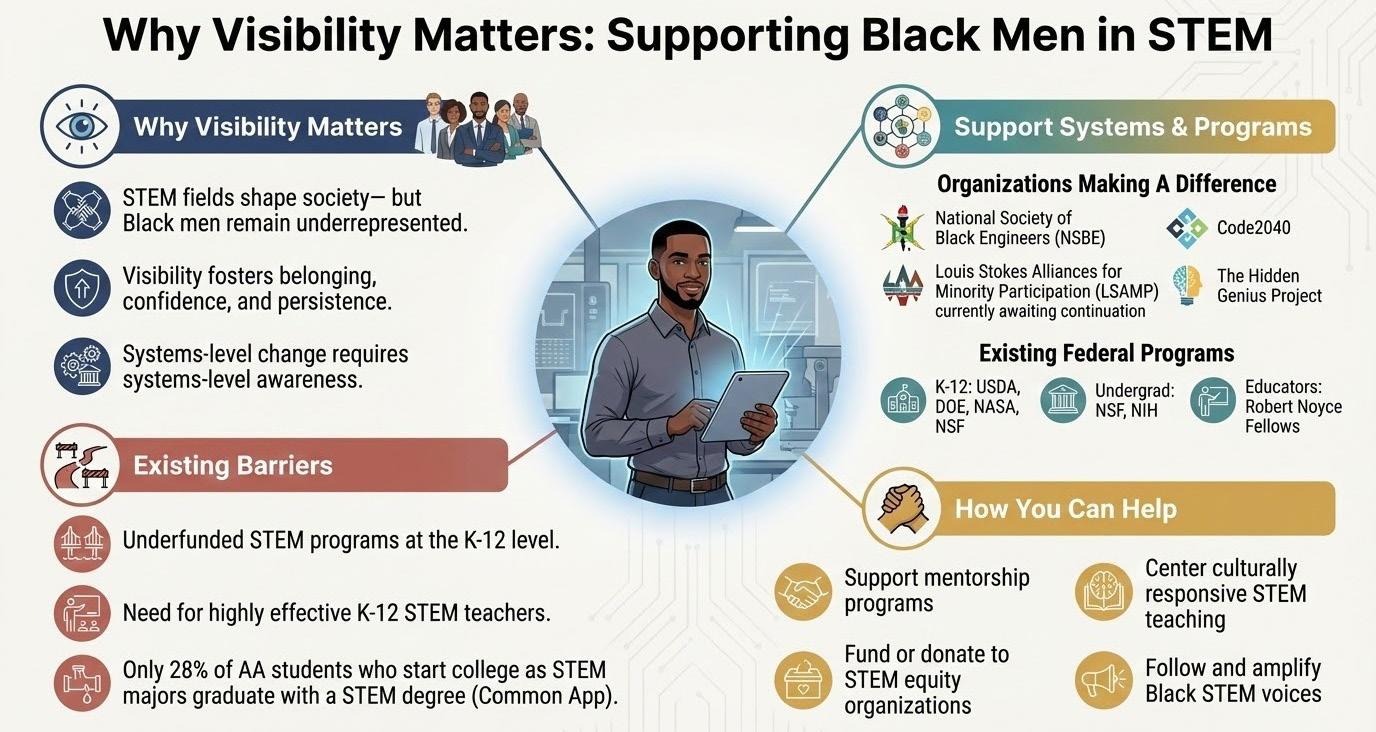
This infographic summarizes the importance of visibility of Black men in STEM fields and was fashioned by neuroscientist and dean for academic success Dr. Jerí Bryant who works for Arkansas State University. A segment states that only 28% of African American students who start college as STEM majors graduate with STEM degrees, highlighting the need for retention in STEM disciplines. Infographic created and provided by Jerí Bryant
King said, “and it’s been like that throughout my entire academic career.”
He cold pitched scores of professors by email in search of internships. One took him on, which led him to collecting water samples in the Everglades, a flooded grassland in South Florida, testing for organic carbon. He now works in the commercial realm for an environmental consulting company that collects ground water and soil samples on land meant to be developed, testing for contamination.
“Don’t judge a book by its cover,” King said. “You don’t have to look a certain way to accomplish things.”
While many education tracks can lead to work within the sciences, not all education tracks come with the proper supports to nurture the talent and spirits of Black men.
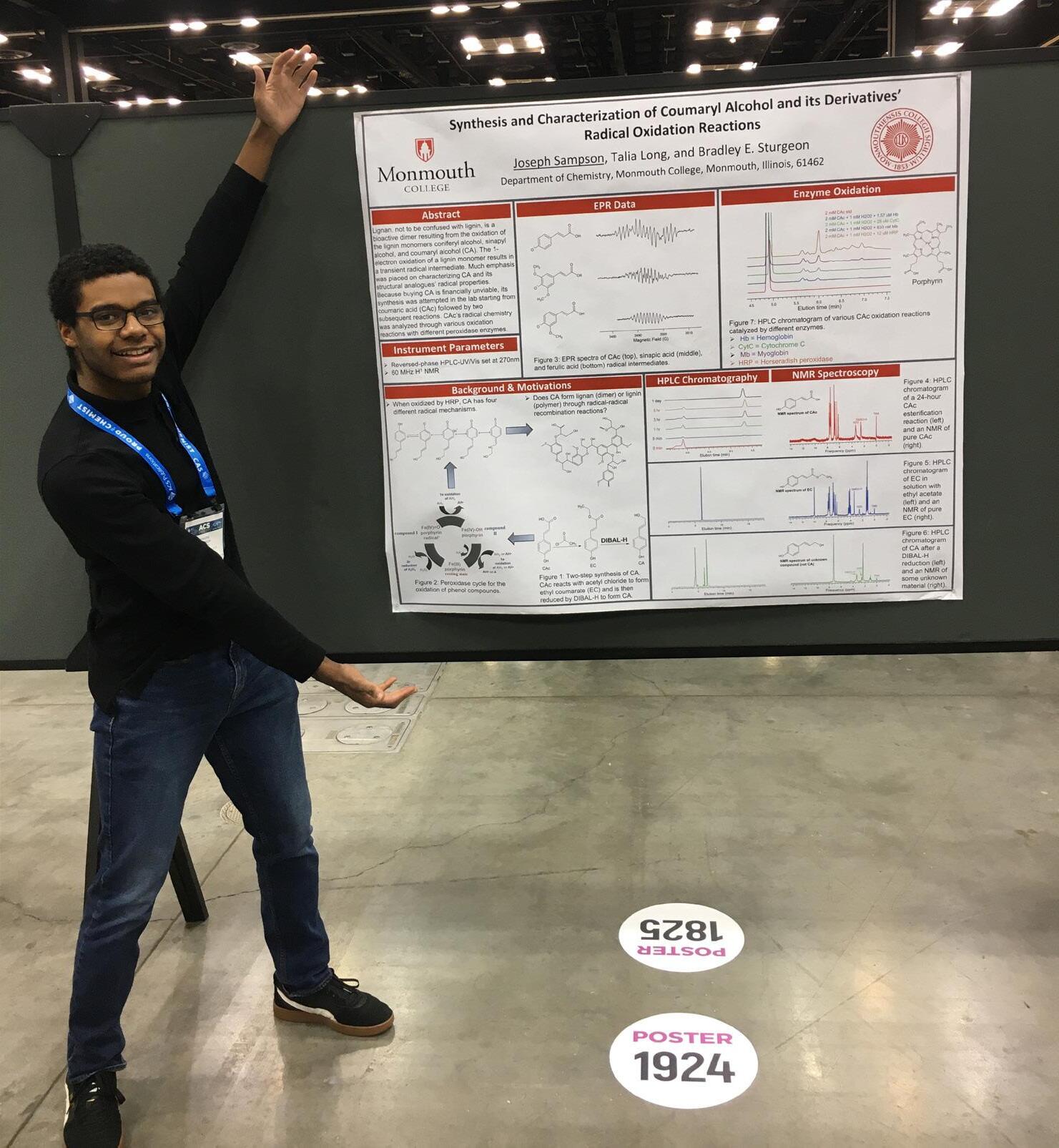
Social media creator Joseph “Joe” Sampson, 24, enrolled at the University of Texas in Austin to pursue a Ph.D. in chemistry. While a student, he studied electrochemistry, which involved measuring currents produced from chemical reactions.
But not all was smooth sailing. Sampson described an environment of overwork, an inability to care for himself amidst his schooling’s demands and an impatient advisor.
“I didn’t enjoy the research process,” Sampson said.
After almost two years, he decided to leave his program. He now makes videos designed to train others

in navigating the math needed to succeed in chemistry.
“I fell in love with content creation,” Sampson said. Forty-four thousand people follow his efforts on Instagram @thatblackchemist. His focus now is in growing and selling the courses he’s developing for his audience and making his materials lucrative.
He hasn’t entirely ruled out more traditional roles within the science industry and keeps his eye on the market, but is circumspect about withdrawing from his former program.
“I didn’t see a single job I wanted that required a Ph.D,” Sampson said.
While not all science leads to the lab, much training in the sciences is routed through higher education.
Choosing an institution where a breadth of mentors is available in a geography that has a large Black presence were keys to success, Isaacs said of his journey towards a Ph.D. White professors mentored him and their investment was essential, he added.
“The task of supporting Black students does not fall exclusively on our community,” Isaacs said.
For more, follow @joelbervell and @doctor.darien on TikTok, @ ebereillustrate on Instagram and #BlackinSTEM.

by Marnae Chavers
Every January, we are encouraged to set timelines and resolutions with renewed urgency. New habits. New bodies. New productivity levels. But year after year, many of us quietly ask the same question: What do we actually gain from setting unrealistic goals rooted in pressure rather than selfawareness?
Nearly half of Americans set at least one New Year’s resolution each year, according to the Department of Homeland Security. The act of setting goals — even imperfectly — increases the likelihood of behavior change. However, these same sources
highlight a steep drop-off in follow-through: over 22% of people abandon their resolutions within the first week, and more than half drop them within three months because they were based on unrealistic expectations. These patterns reinforce why traditional timelines — January 1st deadlines and rigid success metrics — often fail us. These numbers tell a larger story: it isn’t discipline we lack — it’s alignment.
As a chief operations officer at an inner city charter school district, yoga teacher and wellness coach — and as a Black woman navigating systems that often demand overperformance —
I’ve tried nearly every method of goal-setting imaginable throughout the years: the “12week year,” vision boards, time blocking -- you name it. What I’ve learned is this: sustainable growth requires honoring our natural rhythms, identities and preferences, not resisting it to fit a larger, often capitalistic narrative that perpetuates our social media feeds each year.
In recent years, I’ve begun aligning my goals with the seasons. Living in the Midwest and having spent years as a teacher, I’m deeply familiar with cyclical systems of years, quarters and semesters. These rhythms quietly shaped
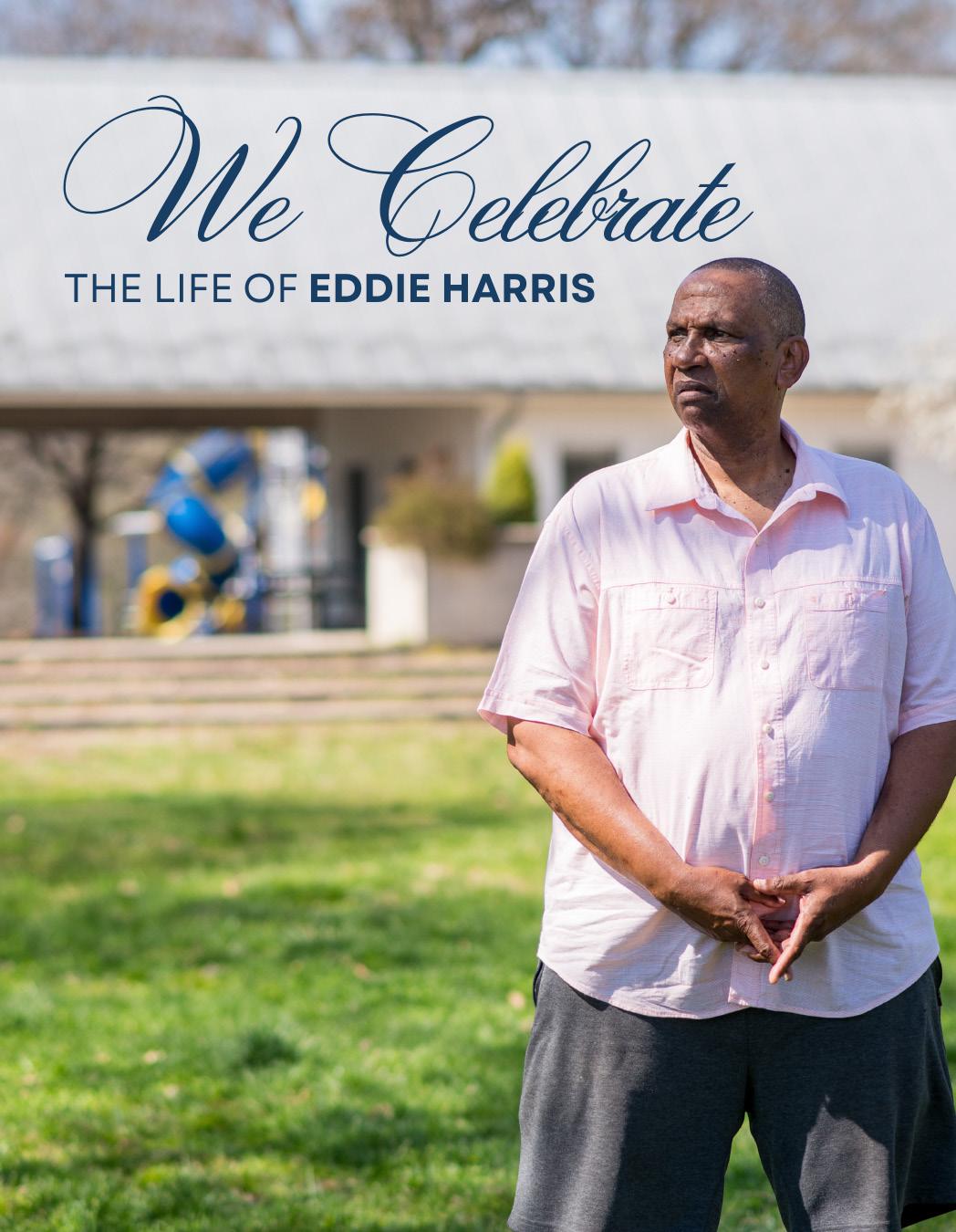
A visionary leader and a beloved son of the 10th and Preston community, Edward “Eddie” Douglas Harris (1956–2025) transformed a life of resilience into a monumental legacy of service. Known to many as “Ducey,” Eddie was a man who refused to let his past define his future, choosing instead to live by the mantra that “the sky is the limit.” Whether he was mentoring young fathers through the Real Dads program or documenting the warmth and intelligence of the Black community, his heart was always rooted in the upliftment of others. In 2011, he founded Vinegar Hill Magazine as a grassroots response to local media gaps, ensuring that the Black experience in Charlottesville was recorded with dignity, truth, and pride. Today, the magazine stands as a vital cultural institution—a testament to Eddie’s belief in the power of storytelling to foster equity and reunite a community. His imprint on this city is indelible, and while he has moved beyond this earthly time, the vision he planted continues to grow, inspiring generations of writers, artists, and activists to reach for the stars.
how I now live my life. The method of planning and shifting with the seasons has allowed me to grow and change naturally, and with much ease, regardless of external demands.
For me, January and February are not for launching something new. They are a time for completion — wrapping up goals with clarity, focus and renewed intention. Spring carries creative energy, making it the ideal season to begin new projects. One springspecific goal I set was launching a wellness series on social media that I had postponed for months. By March, the timing felt right, and the follow-through came naturally.
Also, as a yoga teacher, I’ve learned to respect and take heed of the natural times in which students and I want to exercise. In my experience, clients like to hibernate in the winter, and by summer, they like to be outside for brunch, cookouts and fellowship that all foster togetherness and kinship. Fall and early winter then become seasons of continuation, refinement and reflection.
This shift didn’t make me less productive. It made me more honest.
So, before rushing into the future, I strive to adhere to a wellnesscentered approach that asks us to pause and look back.
Taking a bird’s-eye view of the year behind us allows space to acknowledge wins, recognize lessons and identify areas for
by Basil Otshudi
improvement without judgment. Reflection transforms goalsetting from a harsh audit into a compassionate assessment. It reminds us that growth has already occurred, even if it didn’t look the way we expected.
From there, we can begin to dream.
Dreaming doesn’t always mean starting over. Sometimes it looks like carrying the torch for goals and dreams that worked well the year before. Other times, it means releasing what no longer fits. Both are valid. Wellness honors discernment and transformation, not constant reinvention.
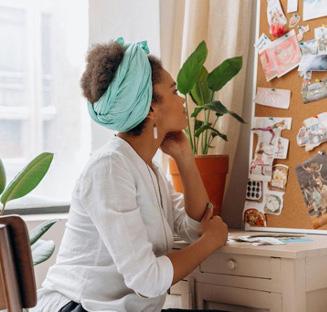
Goal-setting also works best when it reflects how we naturally process information. For visual learners, creating a digital or physical vision board can help transform abstract hopes into tangible reminders. Visualization activates similar neural pathways as physical action, increasing
confidence and motivation (Psychology Today). Some studies suggest that people who regularly visualize their goals report significantly higher follow-through and self-belief than those who do not. According to Forbes, only about 6% of adults actually follow through with their New Year’s resolutions long-term — meaning a whopping 94% abandon them within two months. This is where tools such as physical and/ or digital vision boards can be supports.
For those who prefer structure, a monthly or seasonal goal list can offer grounding. For more spontaneous personalities, placing goals or intentions on slips of paper in a jar allows flexibility while still honoring commitment. And for those seeking simplicity, choosing a single word — such as aligned, intentional, or grace — can guide decisions without the pressure of checking off of a comprehensive list of things to do.
In many Black communities, vision-setting has long been both personal and collective. Vision boards, prayer journals and themed years are not trends — they are tools of resilience. In my work with Black women, I see how intention-setting becomes a way to reclaim agency, slow down urgency culture and prioritize wholeness over performance.
True wellness invites us to set goals across all areas of life — physical, intellectual, spiritual, emotional, and mental. It allows growth to unfold in layers rather than in response to deadlines. The New Year isn’t just a starting line. It’s a checkpoint: a moment to reflect, reset and move forward with ease. You are not required to transform your entire life by January 1st every year. Sometimes the most radical resolution is allowing yourself the time and grace to grow — in season.

You created the perfect business cards and you have more orders than you can handle, so what’s next? As your business banking partner, we’re here to find solutions that will work for you.
Business Banking
Business Loans | Free Business Checking* | Remote Deposit Capture Treasury Management | Credit Cards

*$100 to open | No minimum balance requirement. No monthly maintenance fee, but other fees can apply. Please refer to the Fee Schedule.