
Glue for Sanding Disc & Wood Turning Tools: Ultimate Guide for Woodworkers
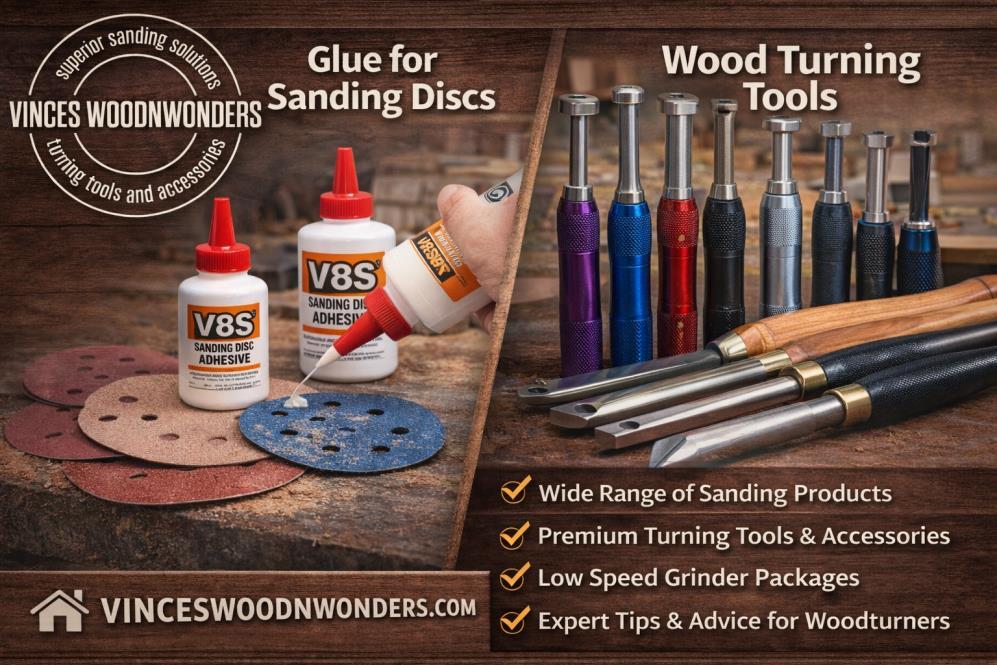
Woodworking is an art, and mastering the tools is a blend of skill, technique, and the right accessories. Whether you’re crafting bowls on a lathe, shaping decorative pieces, or refining furniture surfaces, the effectiveness of your sanding process can make or break your finish. This comprehensive guide dives deep into glue for sanding disc & wood turning tools why it matters, how to use it intelligently, and how to pair sanding systems with superior tools like those available at Vince’s Wood N’ Wonders

Why Glue Matters in Sanding & Wood Turning
When you hear “glue” in a sanding context, it can mean two things:
1. The adhesive backing that bonds abrasive grains to a sanding disc
2. Using glue in workshop tricks and jigs to aid sanding or filling cracks
In sanding discs, adhesives are critical. Abrasive grains must be firmly bonded to the disc backing so they’ll hold up under pressure, resist heat, and avoid shedding during rapid rotation. According to sandpaper science, adhesives (such as resin bonds) play an essential role in holding grit to the backing and determining durability and performance under load especially on power tools and angle grinders.
For woodturners, this translates to smoother operations, fewer disc changes, and consistent finishes with tools like backup pads and interface pads sold at VincesWoodNWonders.com.
Using Glue or Adhesive Backed Sanding Discs on the Lathe
One common school of thought among experienced turners is to glue sanding media to a wooden form or pad for custom finishing operations especially for odd shapes. This can be as simple as applying hot melt glue to a wooden disk, pressing sandpaper around it, and then truing it on the lathe giving you a tailored sanding tool for unique contours. Historical woodworking reference guides even suggest using hot-melt glue or contact adhesives around the perimeter of a wooden platen before sanding.
However, for most hobbyists and professionals, a better solution is to invest in hook-and-loop backed sanding discs with strong adhesives built in. These discs attach easily to backup pads, interface pads, or quick-change adapters, making sanding safer, faster, and more controllable. Products like SIASPEED Ultra Sanding Discs demonstrate how quality adhesive backing extends service life and reduces clogging saving time and costs.
Top Sanding Tools for Woodturners
When it comes to wood turning, surface refinement is an art in itself. Turning tools leave distinct marks, and achieving the perfect finish often requires stepping through multiple grits of abrasives from coarser to superfine. Here’s how quality sanding tools assist:
Backup Pads and Interface Pads: These pads support sanding discs and help conform to contours for smooth sanding on curved surfaces.
Hook-and-Loop Sanding Discs: Quick changes and secure adhesive make these ideal for repetitive sanding tasks.
Sanding Accessories: Blocks, paddles, and articulated sanders help refine tricky areas.
Pairing these with the right grit progression from 80 grit to 400 grit and beyond ensures efficiency and a professional finish.
Trending Techniques with Glue in Woodworking
Beyond sanding adhesive discs, woodworkers have developed clever tricks using glue in finishing and repair:
Glue and Sawdust Filler: Mixing sawdust from your project with glue creates a custom, color-matched filler for small cracks. While debates exist about how this affects stain absorption or finish quality, many craftspeople find it useful for minor repairs before final sanding.
Glue as a Sealer: Certain finishes use glue like thin CA (cyanoacrylate) to seal grain before final sanding. This method can help reduce fuzz and speed up finish coats, especially on highly figured woods.
These techniques underscore the creative ways woodworkers incorporate glue for sanding disc & wood turning tools not just as adhesives but also as functional helpers in finishing workflows.
Smart Sanding Workflow: From Rough to Refined
Achieving a professional woodturning finish isn’t just about grit; it’s about workflow:
1. Start Aggressively: Remove tool marks and high spots with a 60–100 grit disc ideally hook-and-loop backed, so you can switch quickly.
2. Progressively Refine: Move through finer grits (120 to 220 to 400) to smooth scratches and prepare for polish.
3. Use Quality Pads: Interface pads help adapt sanding to contours without digging into the surface.
4. Final Touches: Consider a sanding sealer or very fine abrasive like mesh pads to eliminate micro-scratches before finish coats.
Trend watchers in the woodworking community also highlight the growing popularity of flextype sanding discs that conform better to curved surfaces and reduce chatter marks.
Why Buy Quality Tools at Vince’s Wood N’ Wonders
Vince’s Wood N’ Wonders is more than a tool supplier it’s a resource for education and craftsmanship. With superior sanding abrasives, personalized advice from experienced woodturners, and a wide array of accessories from Velcro discs to power adapters, this resource helps woodworkers refine their approach to finishing. Whether you’re a seasoned pro or just getting started, accessing quality products and knowledgeable support matters.
Conclusion: Glue for Sanding Disc & Wood Turning Tools Done Right
Whether you’re leveraging adhesive-backed sanding discs for efficiency or creatively applying glue to assist in finishing and repair tasks, understanding how glue for sanding disc & wood turning tools fits into your overall workflow can elevate your craftsmanship. Quality discs and pads reduce sanding time, improve finishes, and give you greater control over every stage of your project. Combine this with smart sanding progression, and you’ll consistently achieve smooth, professional surfaces in your woodturning projects.