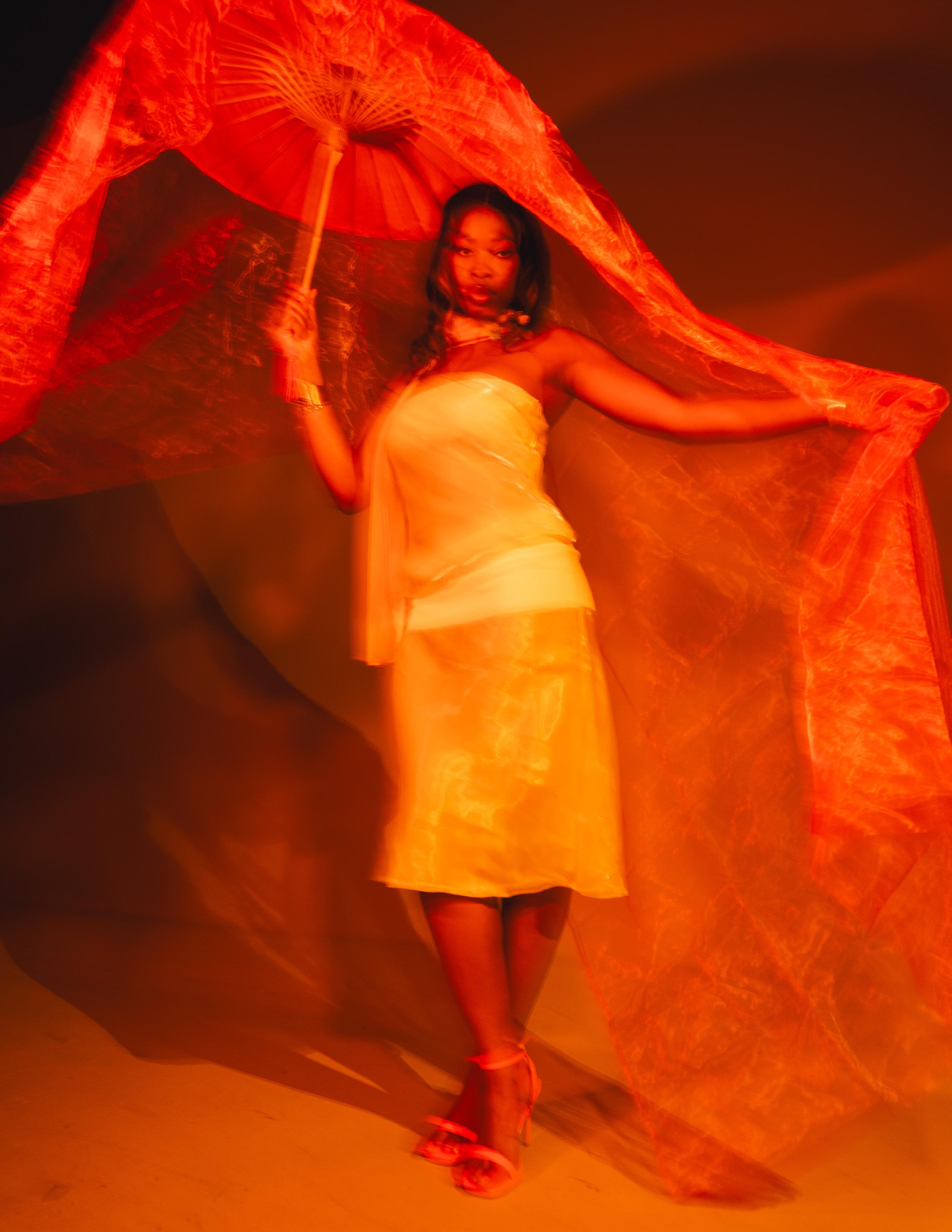
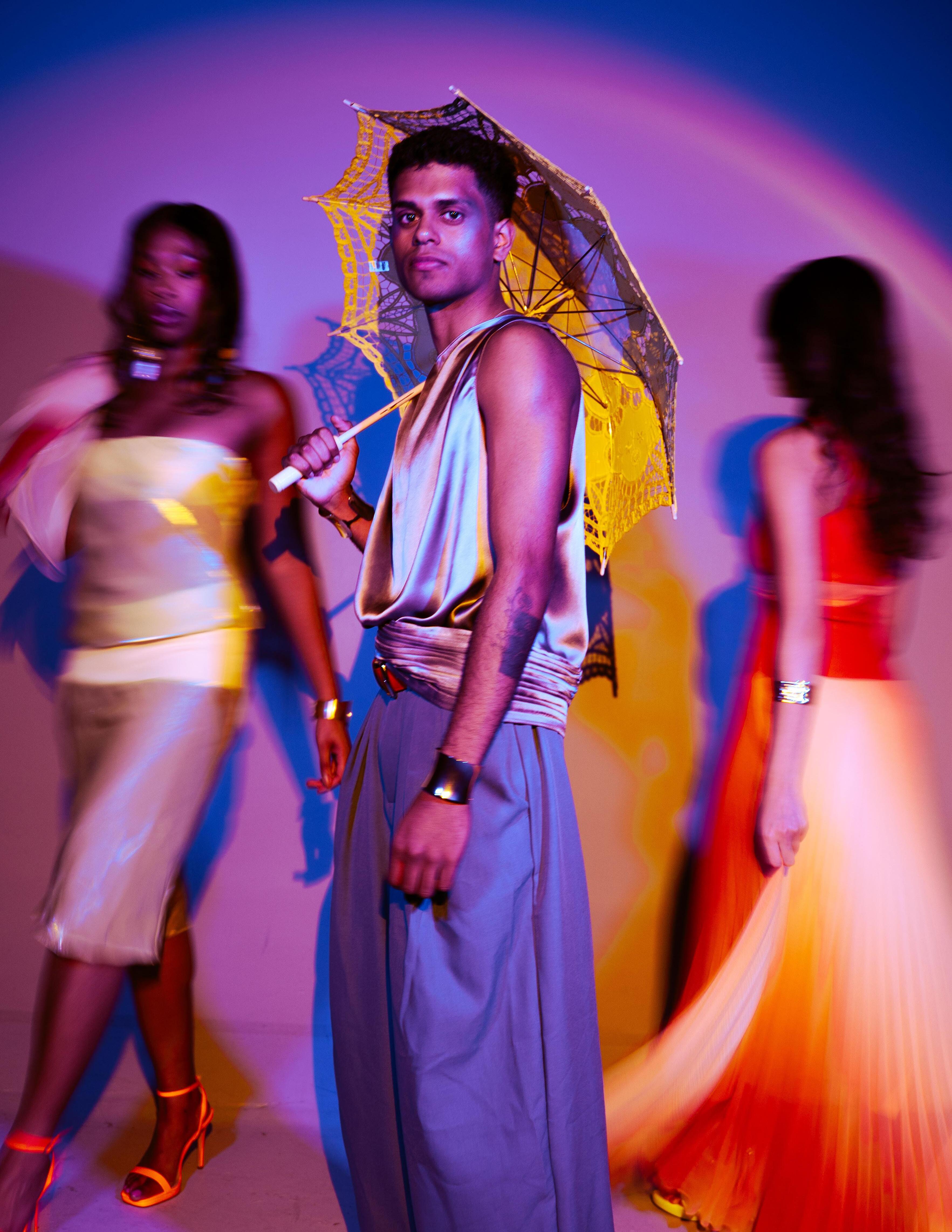
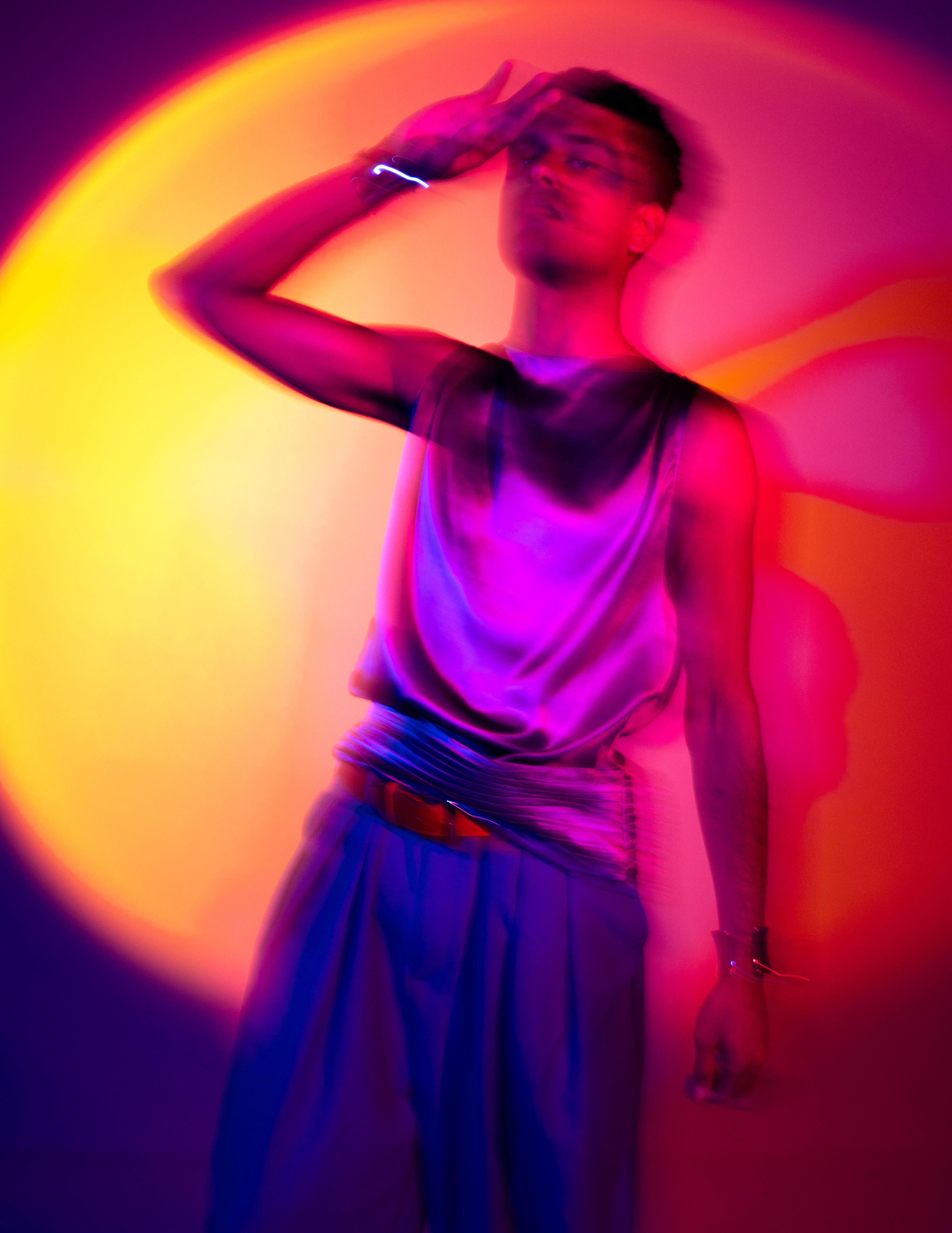
GRAPHIC DESIGN AND ART MOOD WAVES 54 THE CHIAROSCURO EFFECT 64
CREATIVE BEAUTY NO TOOLS NEEDED 28
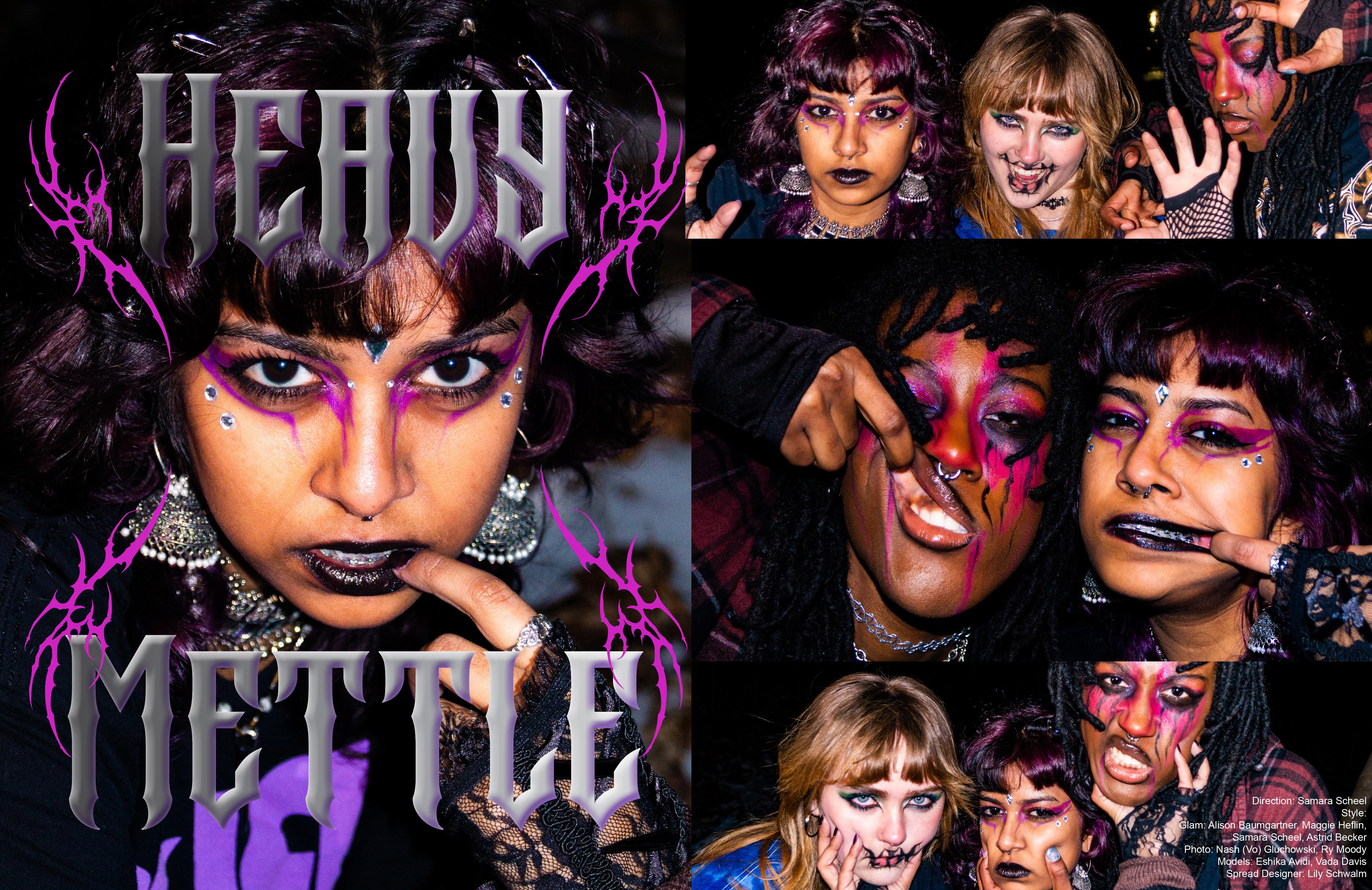
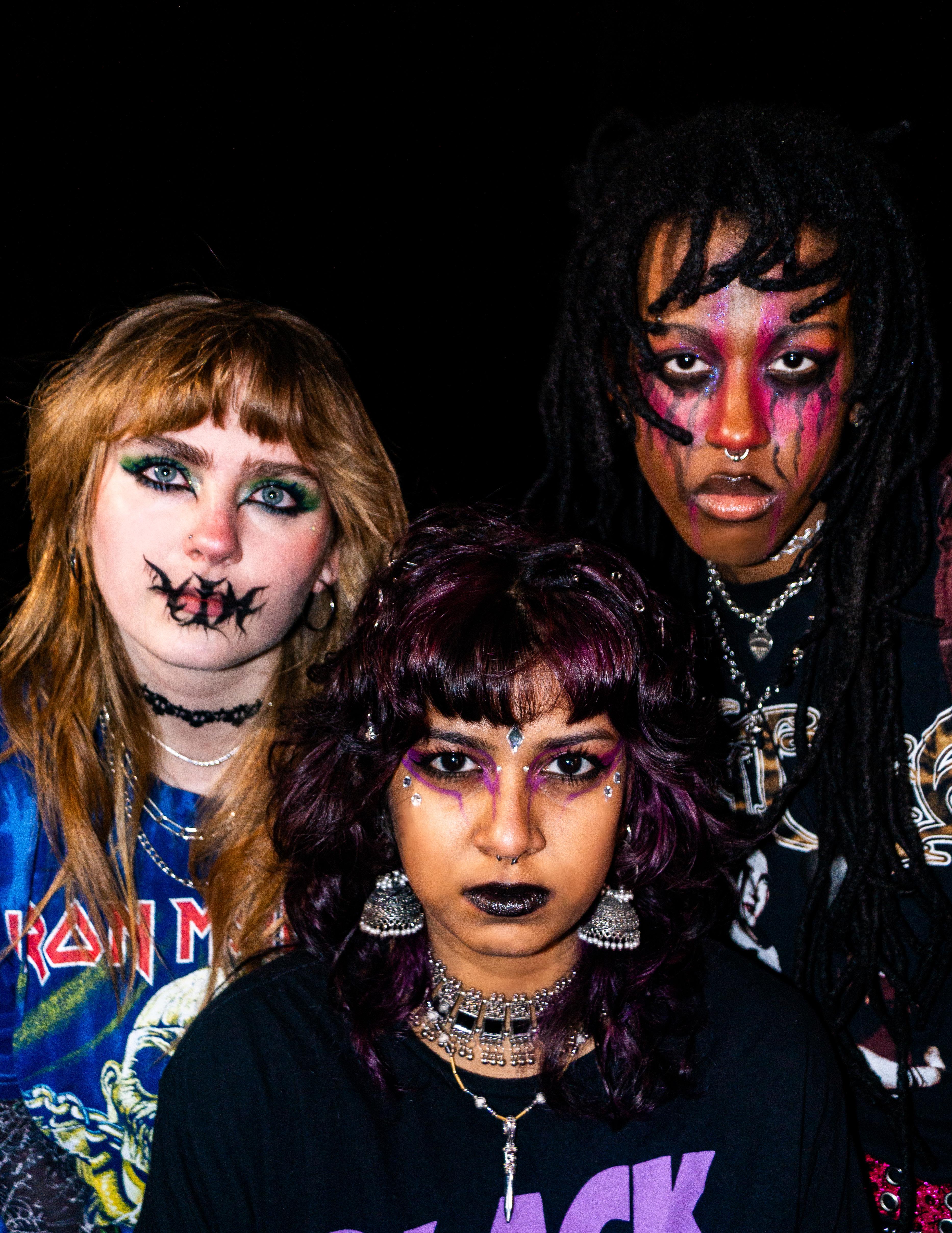
HEAVY METTLE 62
CREATIVE STING LIKE A BEE 32 STAGES OF LIGHT 40 COOPED UP 50
PHOTO THE BLUEPRINT 30
FASHION
FASHION ON THE FRINGE 18 HOW BIZZARE 20 WRITE ME UP 36
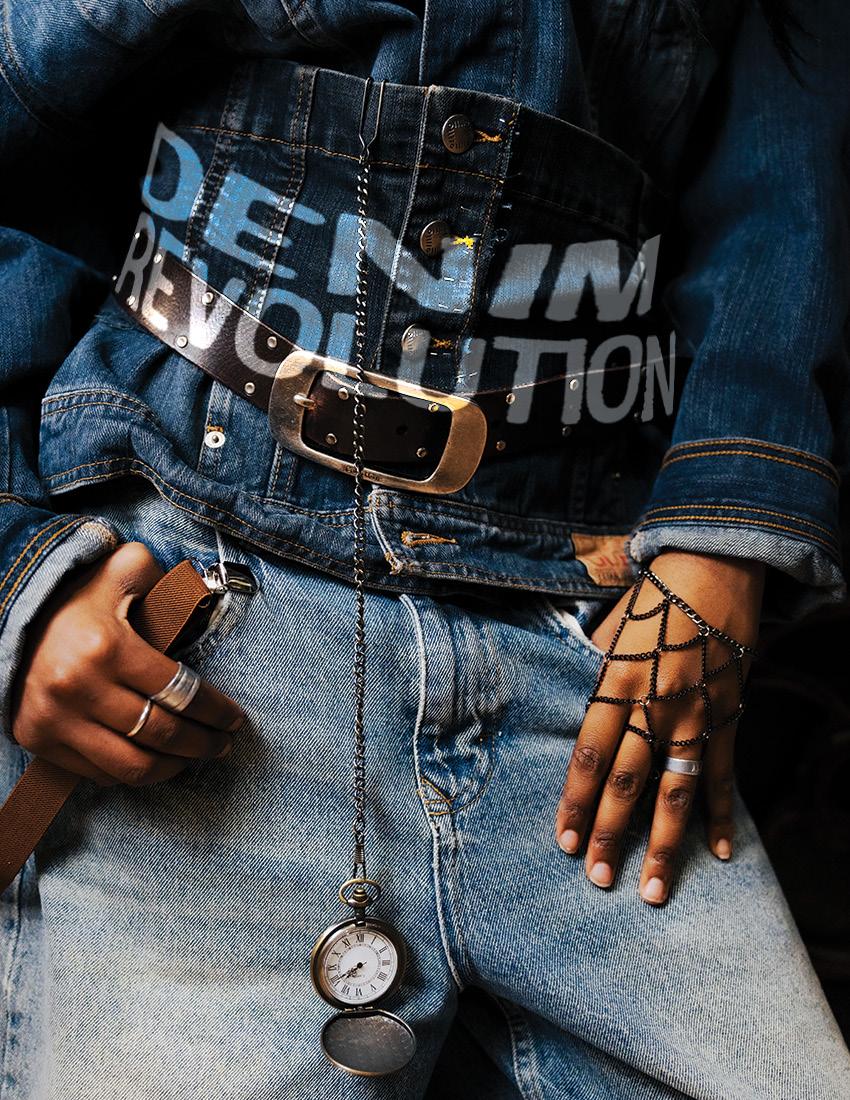
DENIM REVOLUTION 44
MEET THE DIRECTORS 73
DIVERSITY, EQUITY, & INCLUSION
REFORMATION 12
LIFESTYLE
BOOKWORM 16
CHROMATIC CONTRAST 24
TEA TIME 48
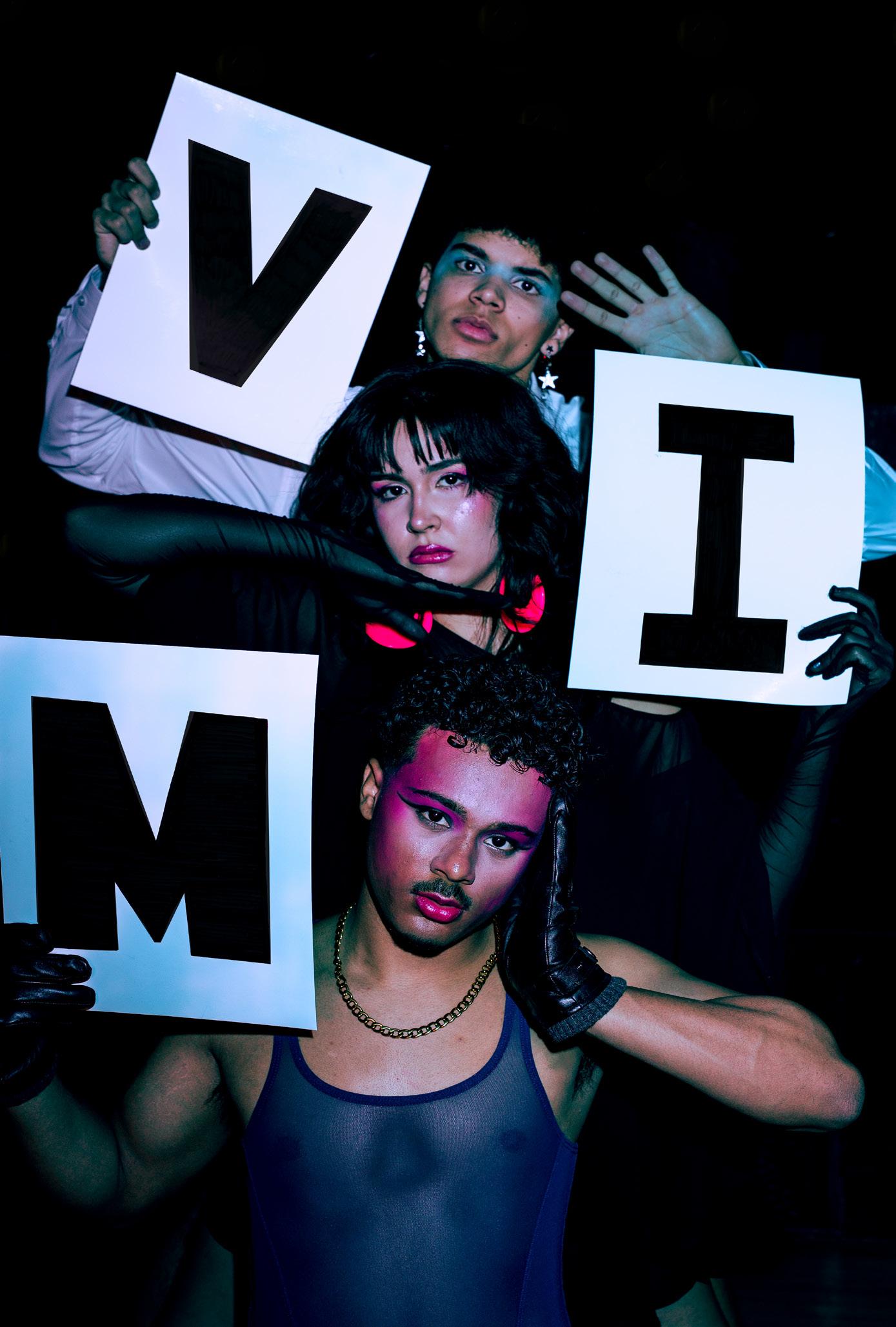
CATEGORY IS: VIM 56
HEALTH AND BEAUTY
LEVEL UP 8
IT’S JUST JUNK 60
DISTRACTED 68
PERFECT FIT 70
from the
editors
Welcome to our newest issue, we couldn’t
be happier you’re here.
To those joining us for the first time, welcome to VIM Magazine. VIM is a student-run fashion, beauty and lifestyle magazine consisting of over 40+ directors, 200+ members and 22 total content and business teams, making it one of the top 10 largest RSOs at Michigan State. Each semester, VIM produces one print and digital publication available to students and creatives free of charge.
When we first began exploring the vision for this magazine, the one word that came to mind was growth. Not as a response to what was missing, but instead as a natural extension of what VIM has always been—an organization defined by its ability to evolve. This year, we set out to honor that foundation by challenging ourselves to expand creatively and grow with both intention and confidence.
This semester, we reimagined the way we gather by implementing new meeting formats, creating more opportunities for connection across teams. VIM also took on one of its biggest collaborations yet, working with Volunteers of America Thrift. In addition, we hosted our Spring 2026 fashion show, highlighting the many talented and creative minds of Michigan State students.
Beyond all the visible change, we hope the most meaningful transformation happened within you. We hope you found yourself growing—not just as a member of VIM, but as a person, a creative, and a student. We hope you took risks, found your voice, built confidence, and discovered new sides of yourself along the way.
And with that, we present to you your Spring 2026 magazine.
Signing off as your EICs,
Photo: Sofia Pate, Alexis Schmidt
Spread Designer: Julianna Chan
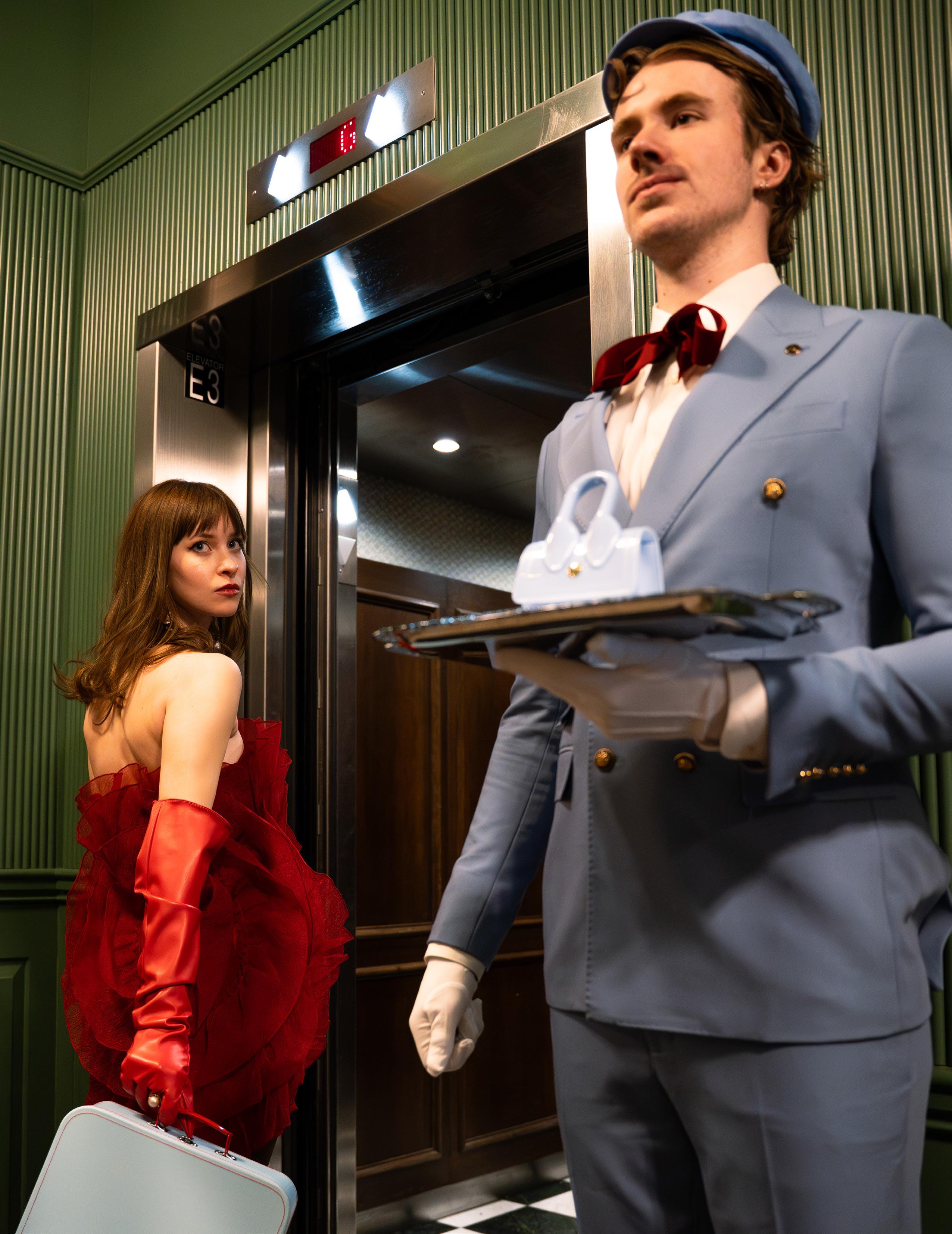
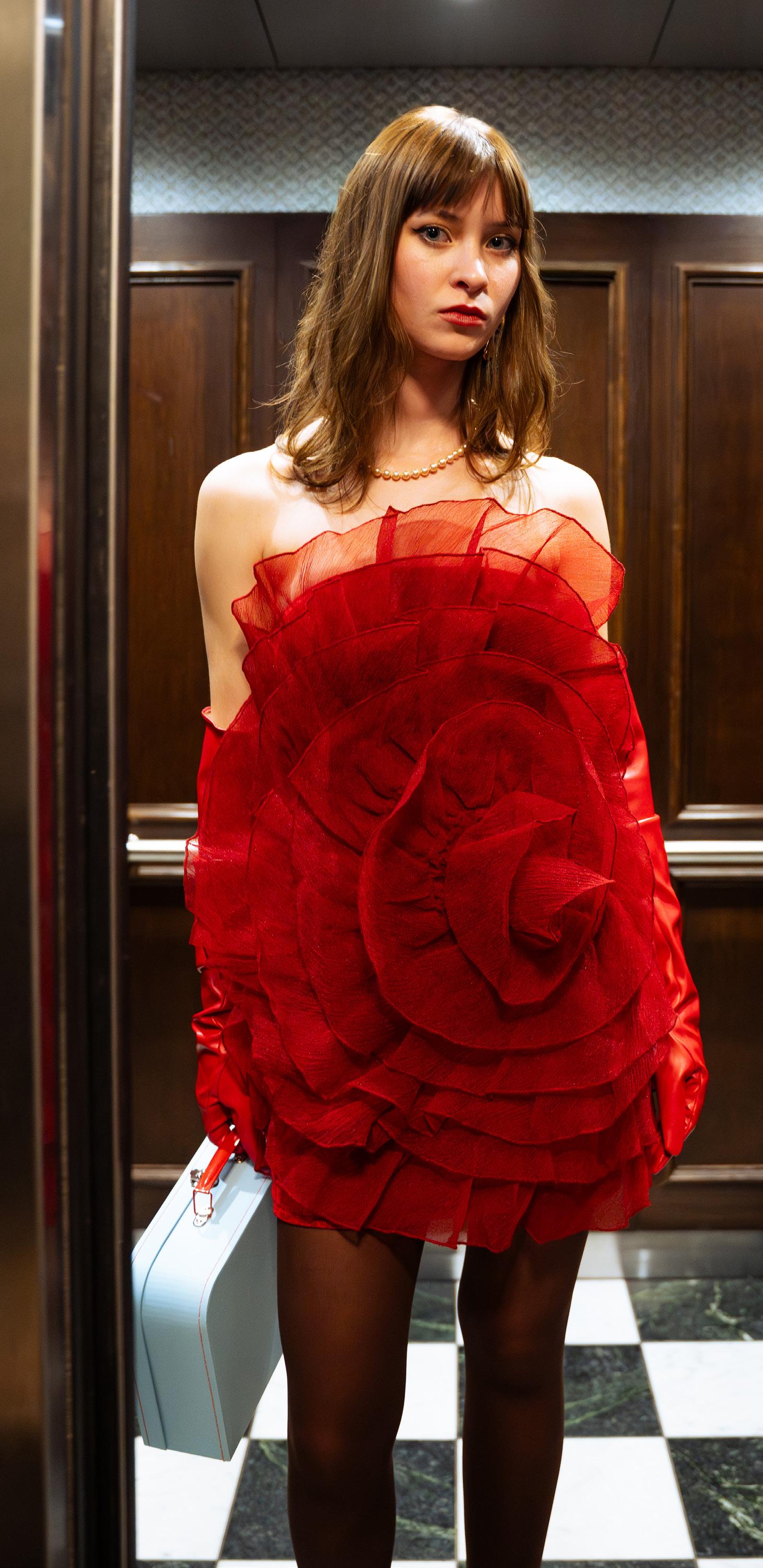
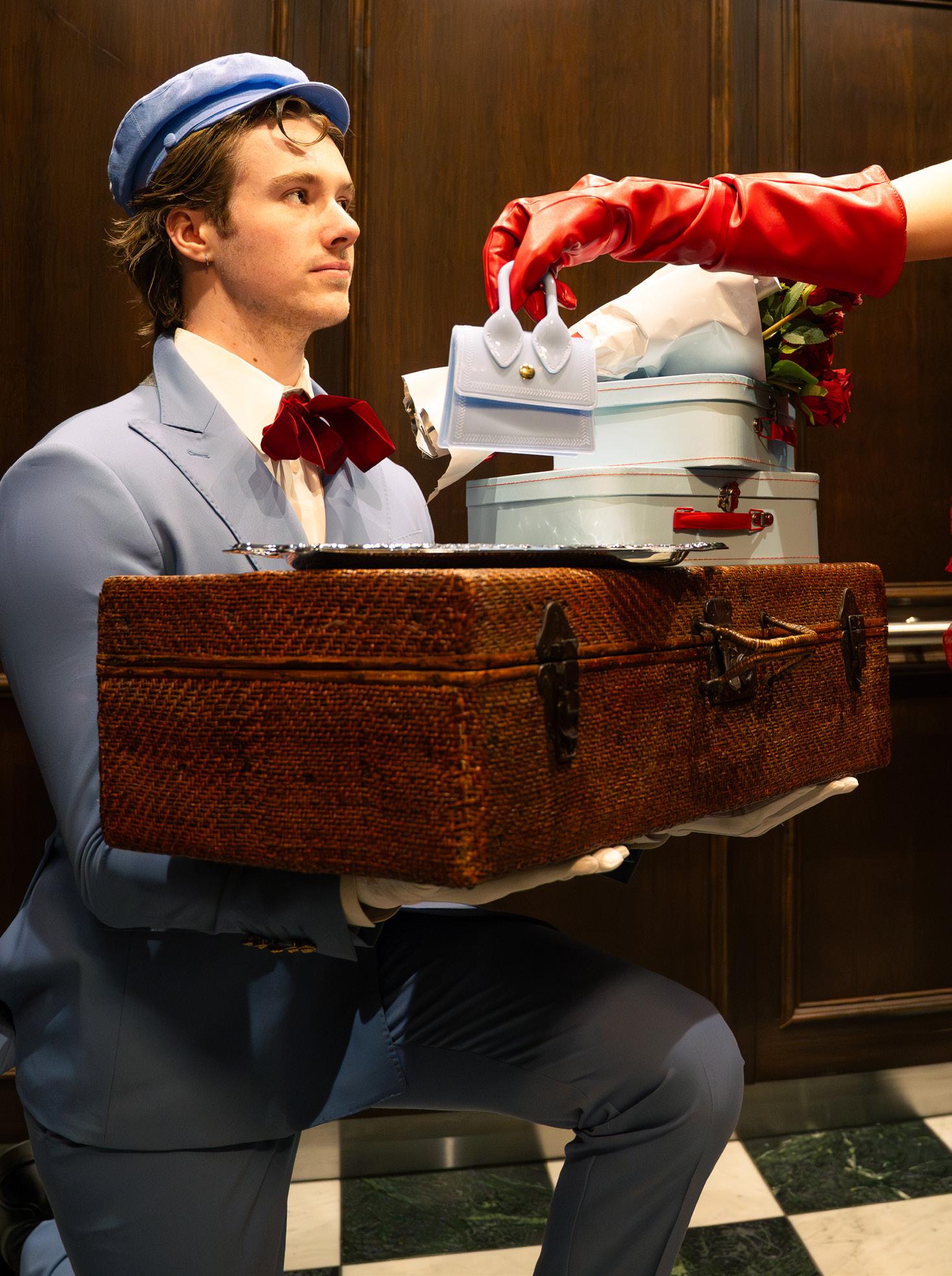
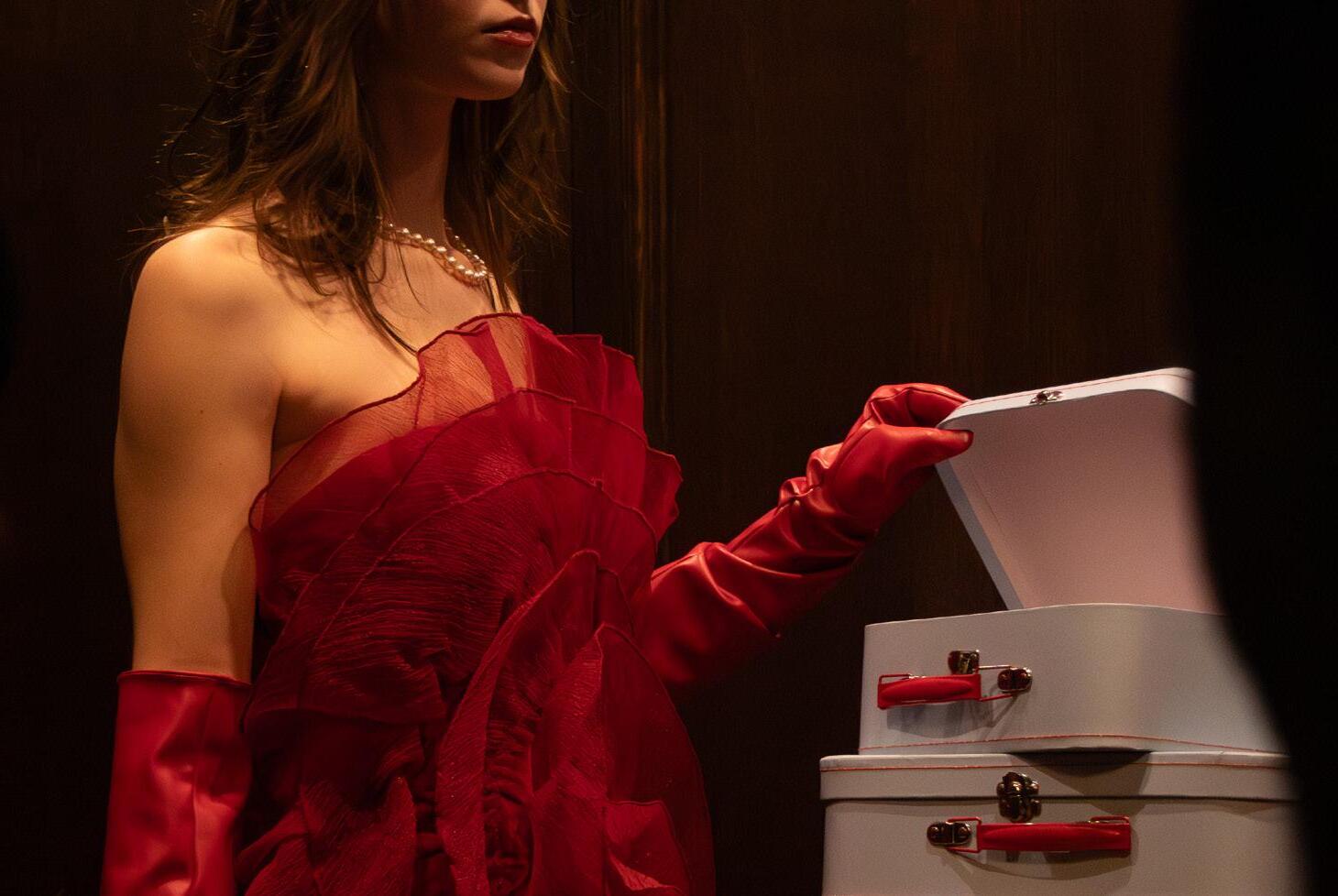
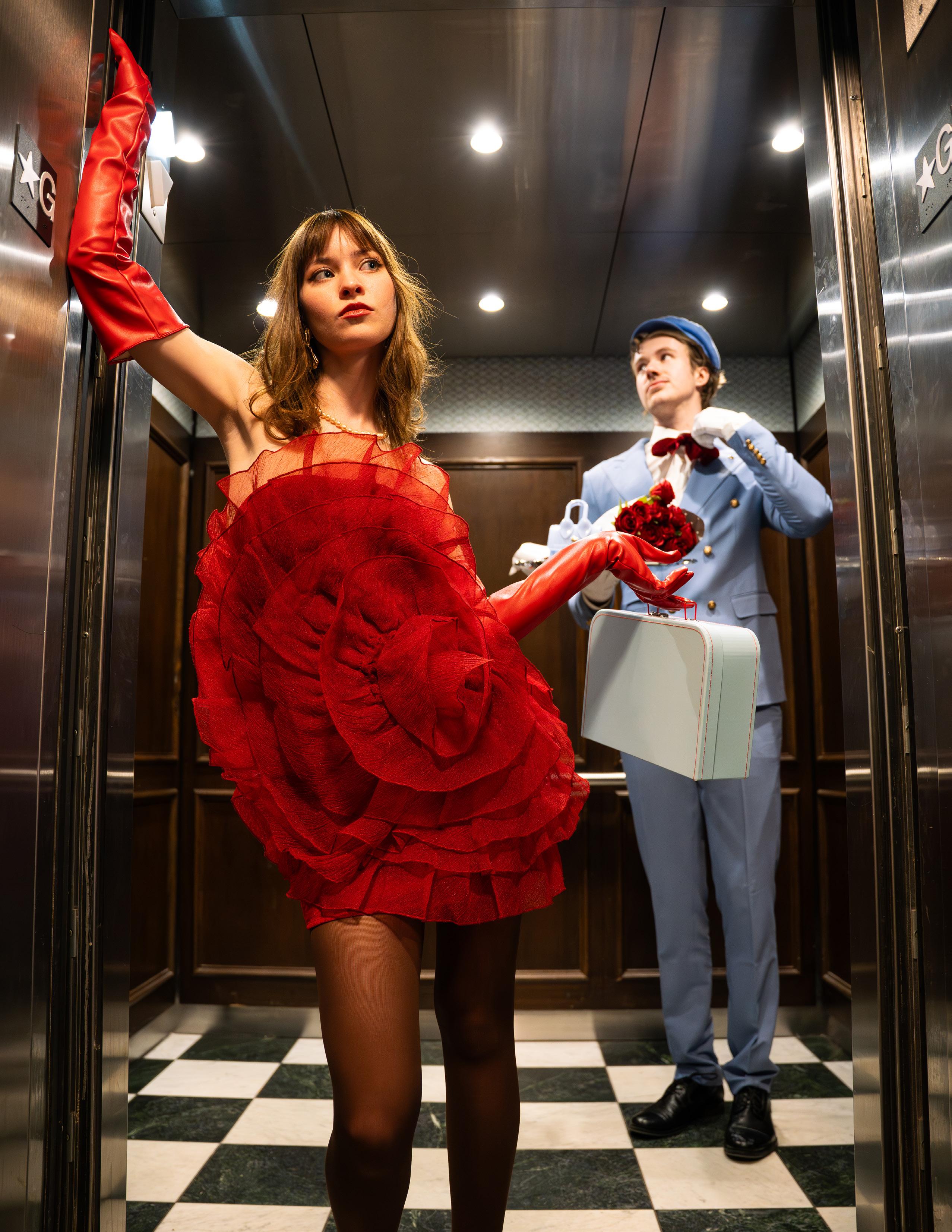
FLife can feel like an elevator. Constant changes, movement, endless decisions, and new people bring feelings of discomfort, stagnancy and uncertainty. While the choice to push a button is made deliberately, it can sometimes feel like an obligation. There’s consistent progression in life through new phases and stages; it’s not uncommon to feel frustrated, and like an elevator, stuck.
First, there’s the wait for the elevator to arrive. While some take mere seconds, others make the staircase a better option. Apartment and dormitory residents account for the time the elevator will take in the morning. This estimate, however, can be thrown off at any instant — someone holding the door too long, stops on every floor, or even a malfunction disrupts the anticipated timing. This is reflective of planning out goals and ideals. People have expectations for themselves based on passions or societal conventions; attend college, get a job, get married, and have a family before the age of 30. Cue the dreaded, “Where do you see yourself in five years?” The truth is that plans go awry, sometimes due to uncontrollable circumstances. There is value in patience and rerouting, and freedom in knowing that the destination will still be there, whether it’s five minutes or five years away.
Then follows the elevator ride itself. Some love the convenience of not walking up flights of stairs after a long day, while some find it claustrophobic. Some like to get exercise in, while others may avoid it altogether due to the slim chance it will break down and they’ll be trapped. This fear can be compared to how people hold themselves back, avoiding unfamiliar environments and continuing the same behaviors and routines that bring them comfort. Change is scary but inevitable, and can bring the most beautiful things to life. There is always the risk of something going wrong, but one can’t know until they try.
FExperiencing new people and new things, even the hardest things, is growth. Instead of fearing the unknown and possible downfalls, it’s worth considering: What if everything goes right?
Sharing the elevator with others can bring an unavoidable awkward silence or tension. There are the overcrowded rides with nowhere to stand, or debatably worse, rides with one visibly uncomfortable passenger. There’s the decision of whether to make eye contact, initiate a conversation, or take part in the classic weather app scroll session. Sure, the average ride comes with a couple of strangers whose faces are easily forgotten, but sometimes, there is an encounter that ends in a smile, laugh or memorable conversation. Whether it’s a compliment or a good joke, moments like these are enough to brighten someone’s day. Just like the friendly stranger who waves or makes small talk, there will be people in life who are worth remembering and holding onto. Familiar faces, and more so, loved ones, can make the uncertainties of life bearable, shifting the unknown into a journey with unforgettable bonds and memories.
Regardless of whether the ride will lead to another tedious day at work or a move to a new city, embrace the possibility. Even when the elevator breaks down, it will eventually be fixed and likely function better than before. Things will take their course in the way they’re meant to, and what’s important are the experiences and lessons learned along the way. Disregard the delays that result in being in an unexpected scenario and the concept of being late. What might feel like stagnancy and setbacks can be a beautiful redirection. Remember, to live is to level up.
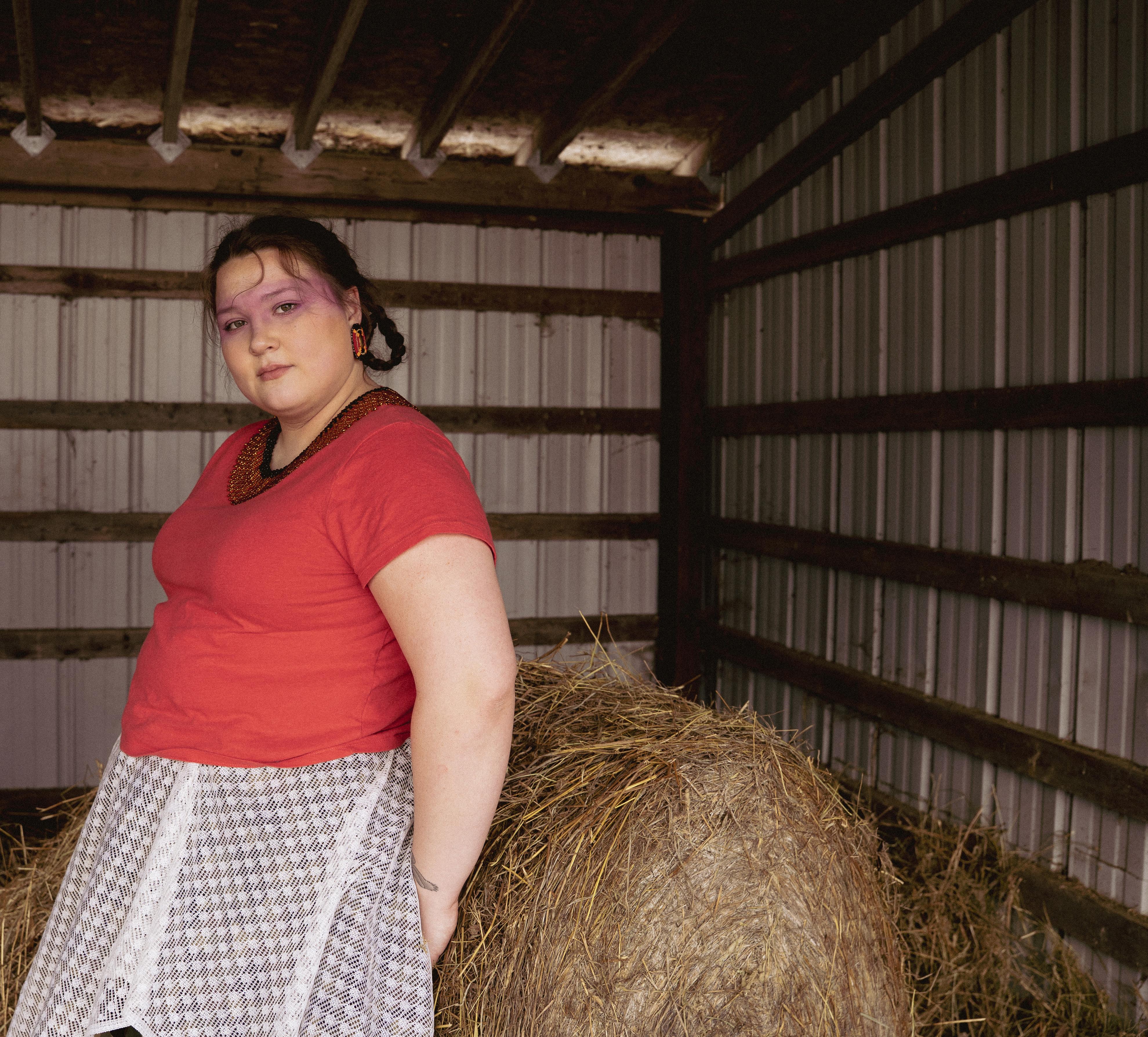
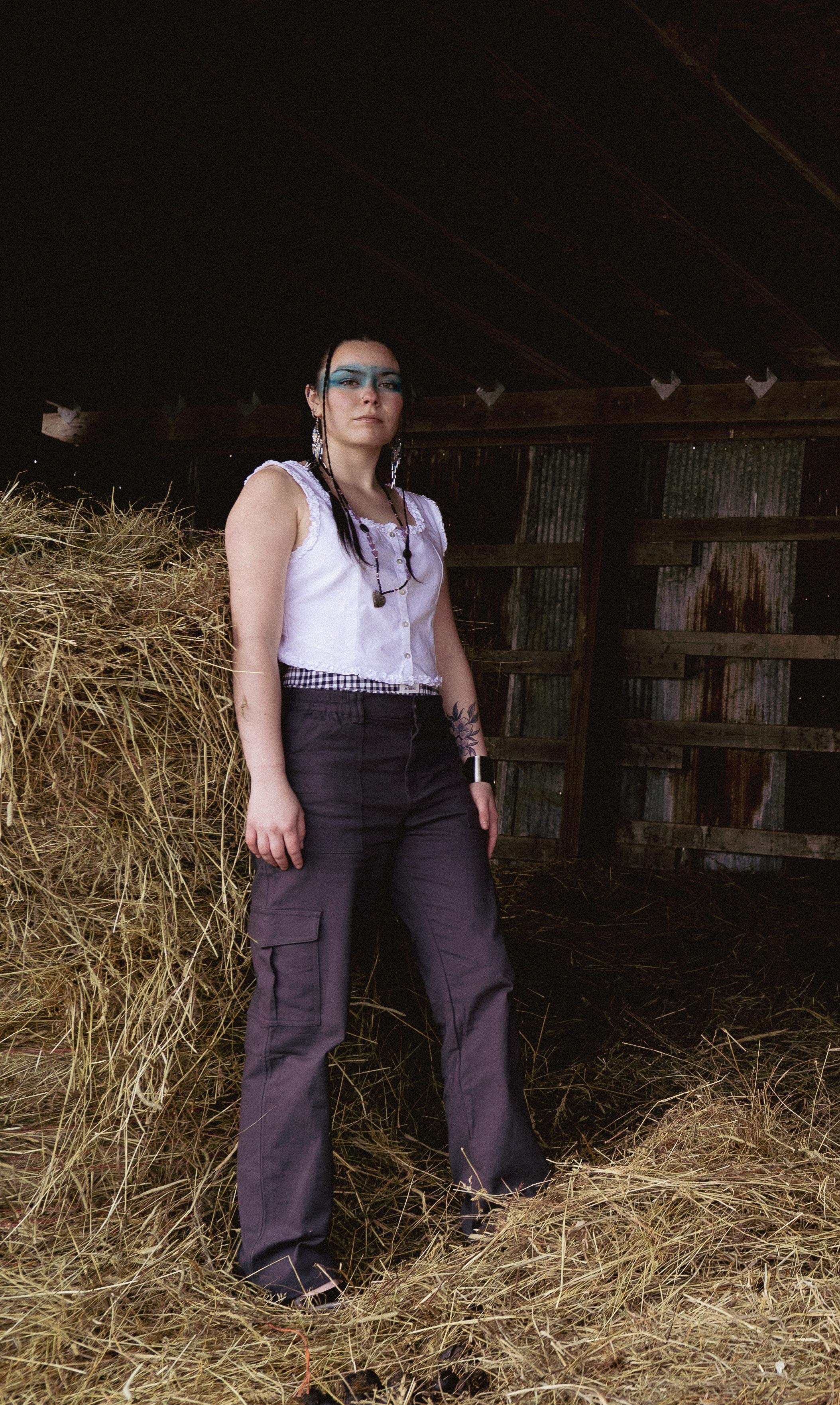
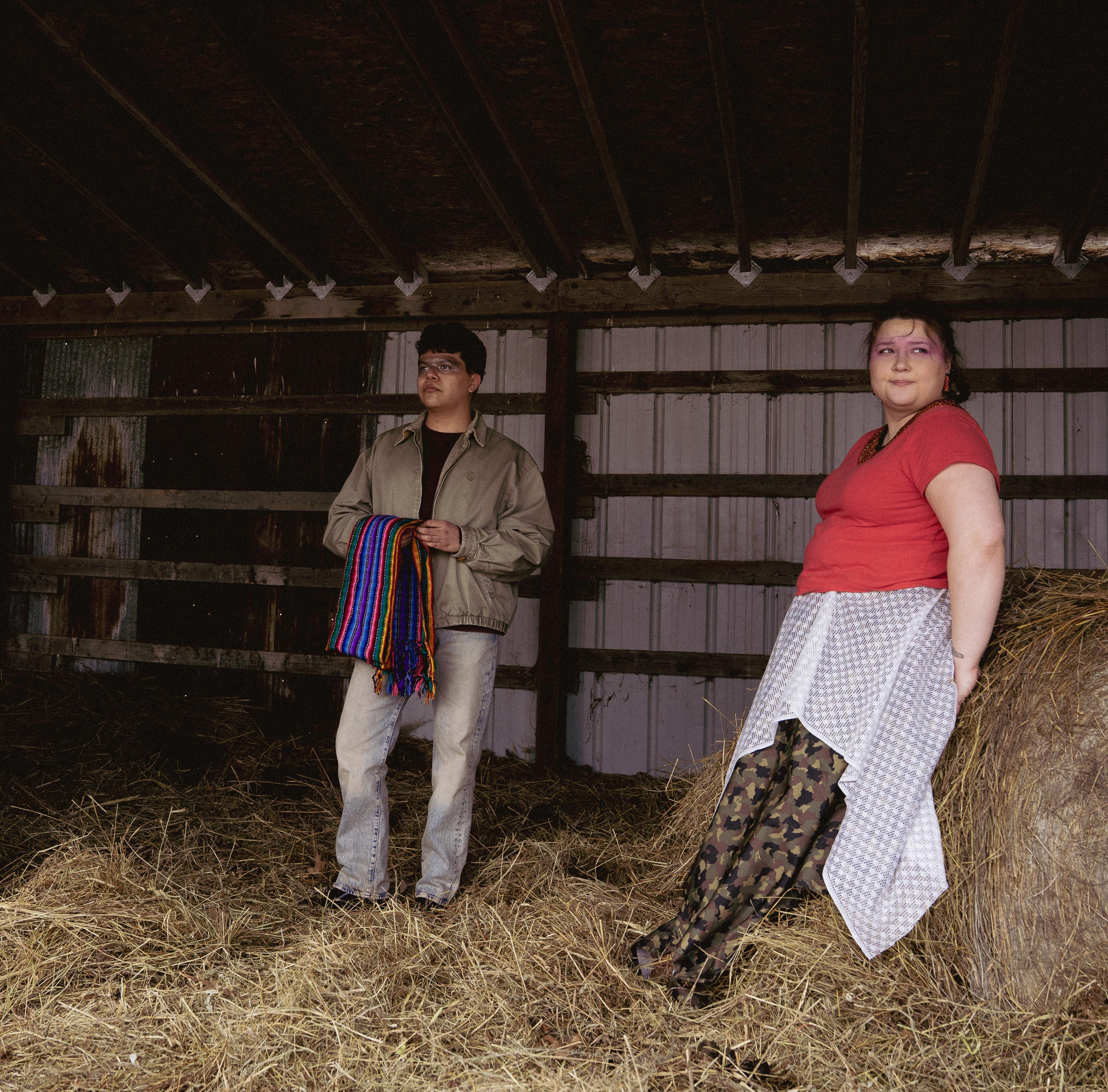
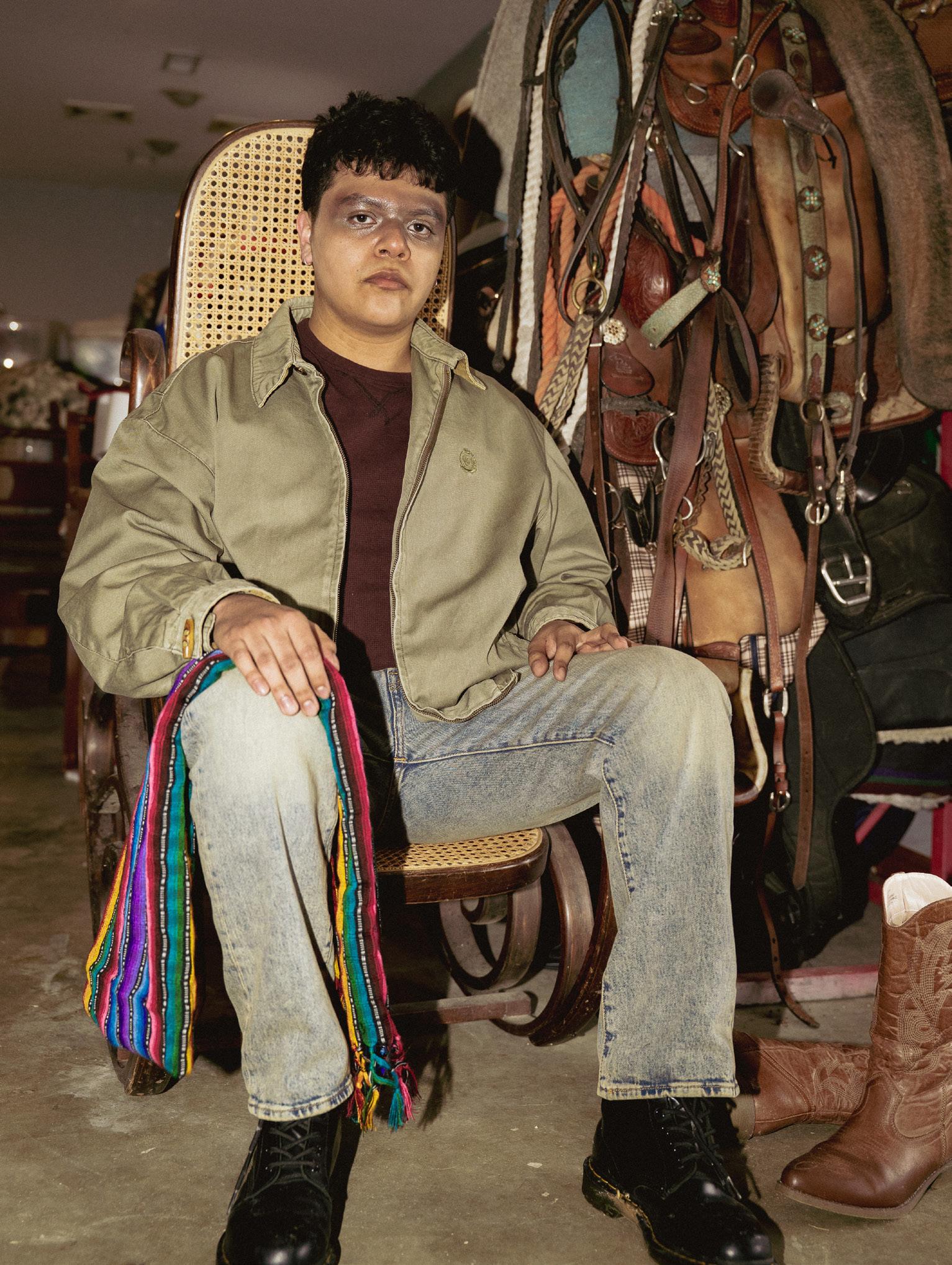
The word Americana is usually associated with worn denim, cowboy boots, and roadside diners, a popular aesthetic that has been shaped throughout the years of nostalgia and advertising. Yet, before American culture was shaped into a perfectly curated aesthetic, indigenous communities were shaping the framework of Americana.
Their influence, rooted in land, tradition, and identity, exists far beyond the camouflaged aesthetic of layered denim and lace. From detailed textiles to lacework, these pieces of art were not just decorative; instead, they carried cultural meanings that reflect the landscapes, traditions, and stories passed through generations. Mainstream fashion has filtered Americana through a romanticized lens of longing for home while replacing the faces who lived through it.
The myth of the white cowboy has redefined American history by overlooking Indigenous influences and obscuring the context. The media has celebrated this figure as the face of the American identity, overshadowing the diverse realities of the past. With doing this, Indigenous influence has been minimized, leaving the context of American history distorted. Selective storytelling has shaped the public’s perception and enforced a narrow understanding of what Americana represents.
Direction & Style
Ameena Babatunde Glam
Angelina Flores
Astrid Becker
Kushika Sulabelle
Photo Alexis Schmidt Brianna Schmidt
Models Sarah Lettau Michelle Hale
Rafael Rivera
Words Lilly Summers
Spread Designer
Courtney Cohen
“Being American once meant many of the things we are taught as children: kindness, freedom, opportunity, and the idea of the “American Dream.” As I’ve gotten older, however, I have become more aware of the difficult truths behind that image.” said Sarah Lettau, a sophomore at Michigan State who is a direct descendant of the Grand Traverse Band of Ottawa and Chippewa Indians. “The history of this country includes many atrocities that have shaped my understanding of what it means to be American today, and that realization has complicated and challenged the meaning of that identity for me.”
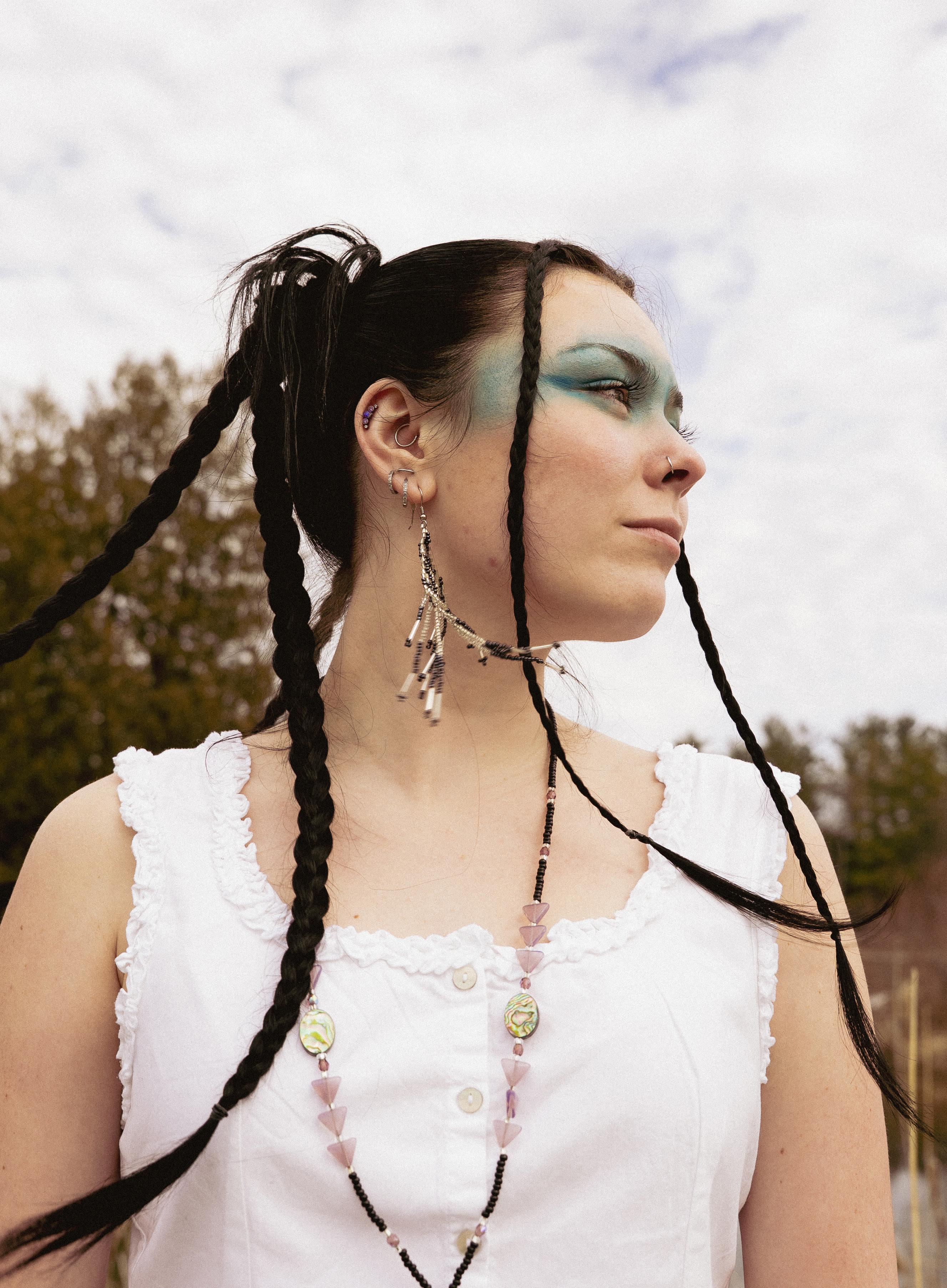
Long before the United States was formed, indigenous communities spread throughout the land, taking their fashion to a deeper level than what meets the eye. Fashion was not just about style, but communication as well. Specific colors, beadwork, and patterns were used as a way of tribal affiliation, allowing individuals to communicate who they were without speaking, creating an understanding across communities. Every design carried intention tied to stories, beliefs, and history that is passed down through generations.
Garments worn also reflect what role the person may have in their community. Clothing could indicate if someone was a leader, a specific age, or a member of a certain social group. Materials were sourced straight from the environment, using animal hides, plants, and shells, creating deep connections between human and land. Today, these traditions continue to hold meaning, not only expressions of identity, but resilience. Indigenous fashion continues to honor the past while adapting to the present.
R
eforming the meaning behind Americana will take more than the understanding of the aesthetic, but a recognition of the history and voices that have been overlooked.
To continue advancing forward, media and fashion will have to shift from acknowledging just the visual elements to honoring the culture behind it. Americana is not just a thing of the past, but a continuous story of the fight for recognition and preservation.
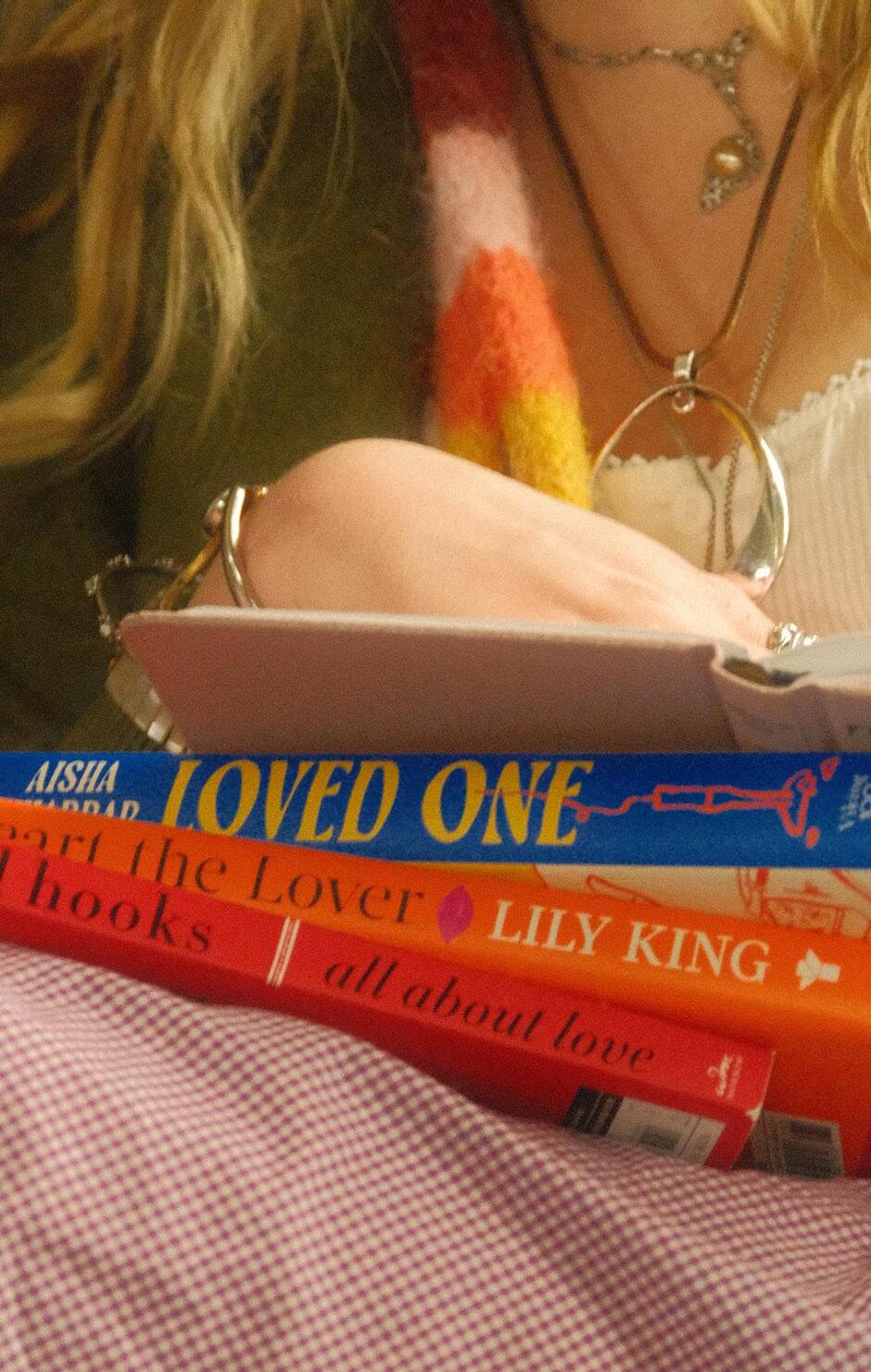
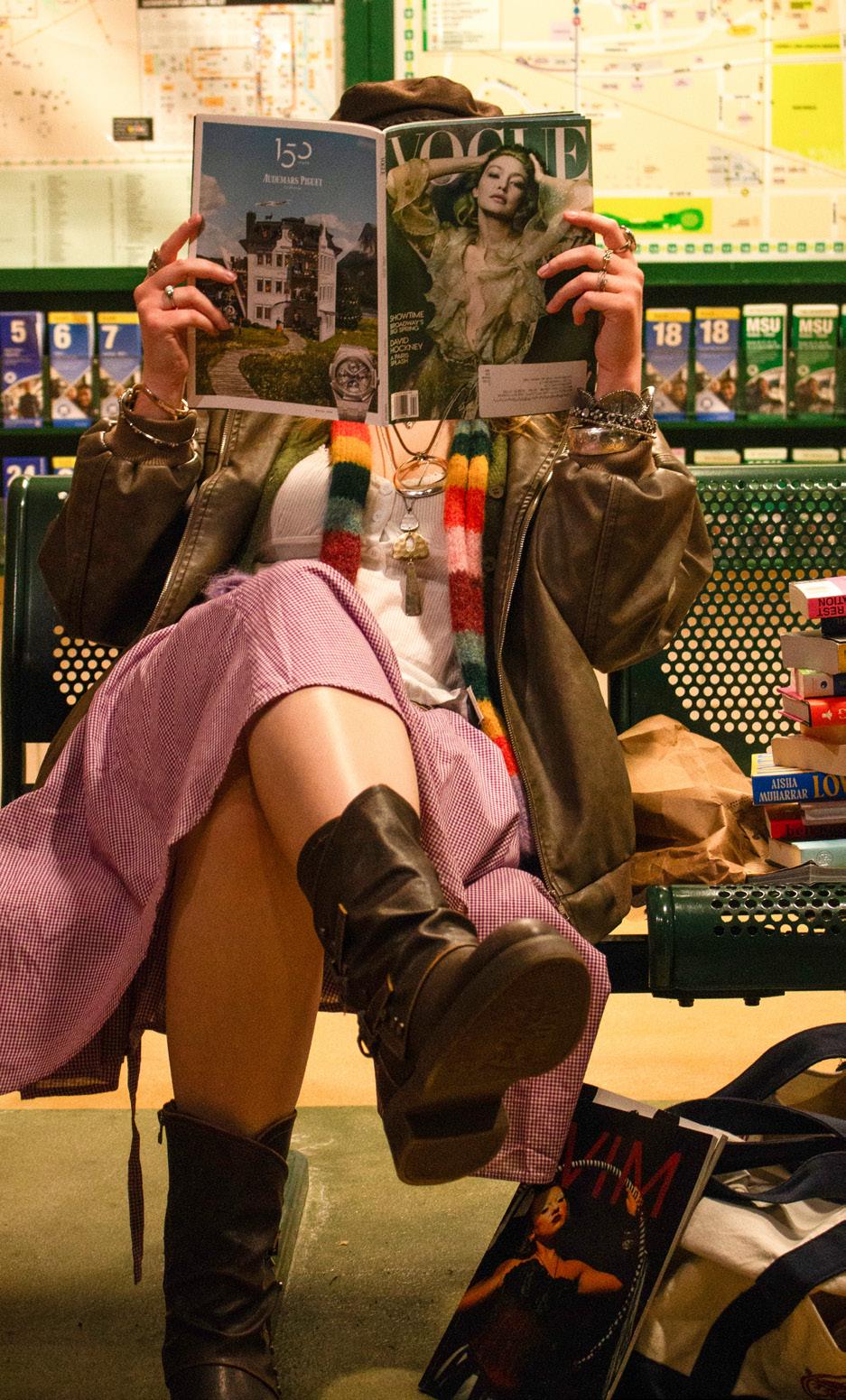
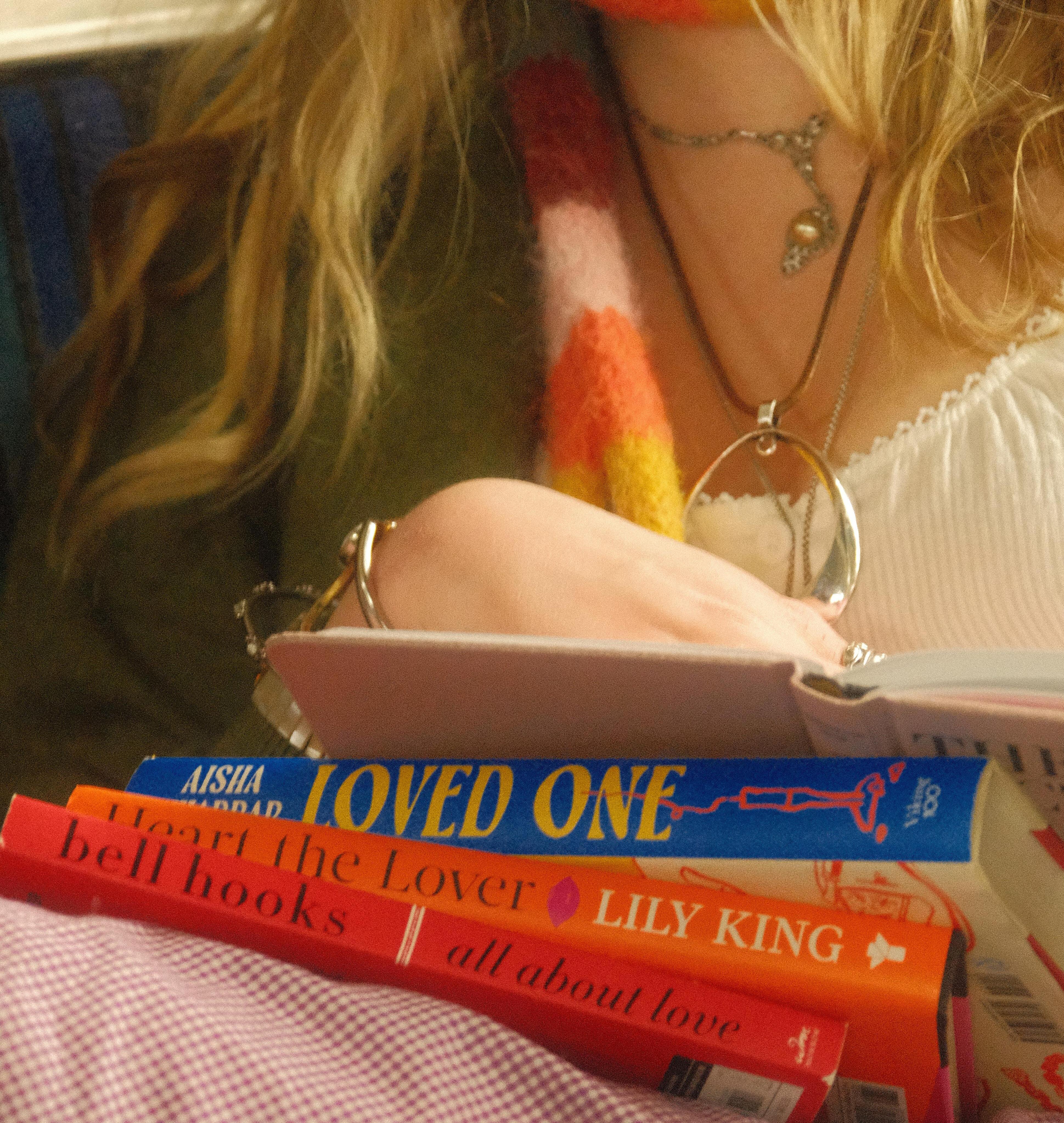
BOOKWORM
Direction: Jayda Groth
Style: Jayda Groth
Glam: Samara Scheel, Kushika Sulabelle
Photo: Victoria Hu, Samuel Stowers Models: Ainsleigh Kubicki
Words: Jayda Groth
Spread Designer: Reagan Sullivan
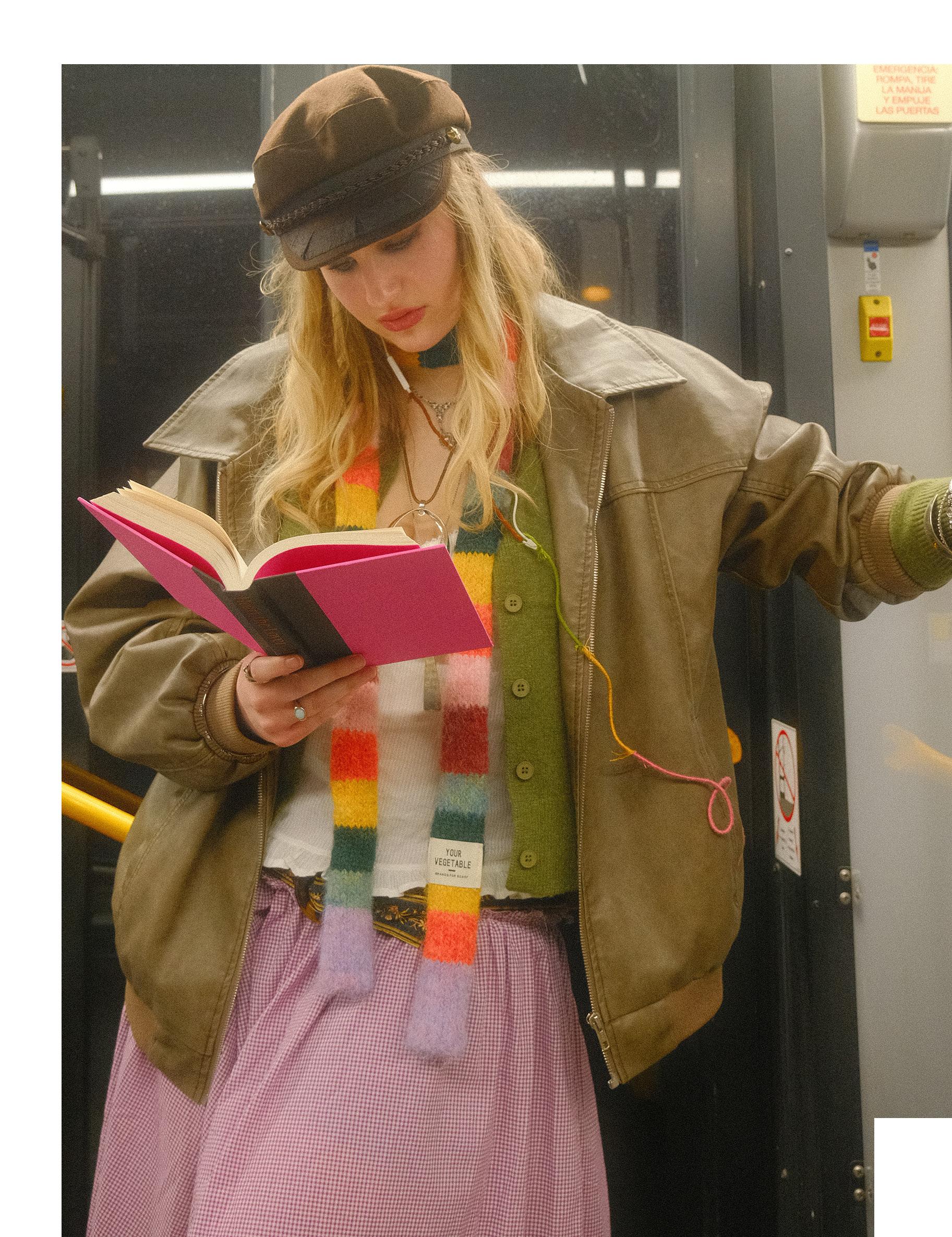
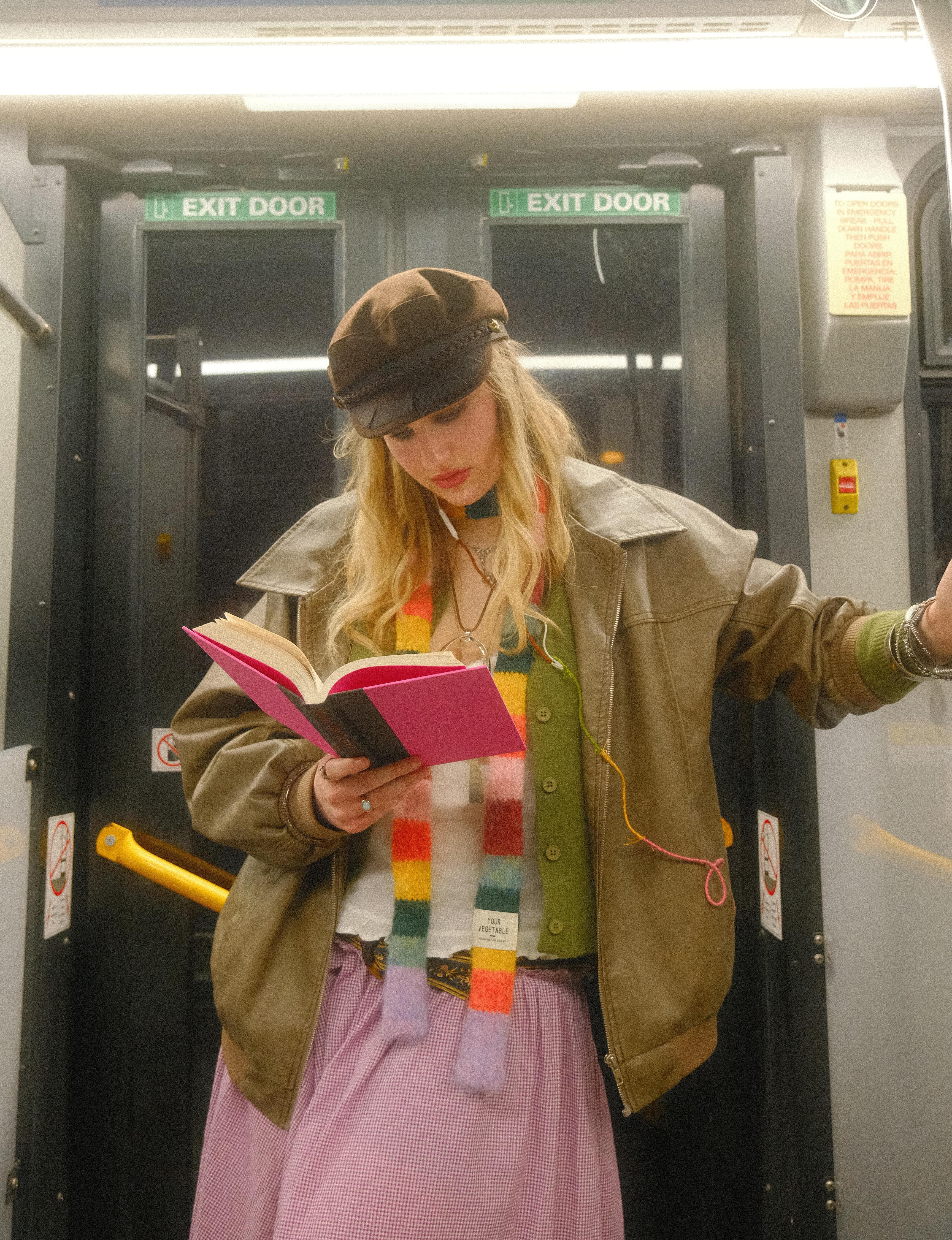
Books have the ability to transport readers to new worlds. The characters, places and experiences may teach new perspectives on life and all that it entails. The term “bookworm” originated as a negative insult for someone who was socially disconnected by often having their face stuck in a book. However, the insult has evolved into a term of endearment, highlighting readers’ thirst for knowledge and devotion to a good story.
This same desire to learn is what helps to heighten the human experience. Stories of love, death and coming of age untangle the knots of emotion, thus allowing the reader to apply various themes of comfort and comprehension to their experiences. Some grow up reading about heroes, villains and the comedic relief sidekick. These characters can teach values, and their stories may ignite individual passions.
For centuries, books have connected communities. An author who writes autobiographically can educate new groups of people from across the globe on their unique experiences. The world is full of approximately eight billion people, each with their stories and cultures to share. That is, reading is a way to educate.
Books exist as physical written documentation of being alive. History books teach mistakes in order to avoid repeating the past. Romance novels show the love people deserve, while self-care journals encourage others to love themselves. There are books of poetry andresearch that authors spend their lives working on. Some get published while others reside in private diaries, both marking an individual’s own life and soul. Reading these pieces of media connects one human experience to another.
Along with expanding knowledge and understanding of others, reading also supports personal mental well-being. Reading is a part of a therapeutic approach to reducing stress called bibliotherapy. Immersing oneself in another world stimulates the mind and gives it time to regulate itself, turning books into important mental health tools.
Books and written media have served as constant, reliable pieces of the human experience. People read to ease their minds and to travel to diverse places and times.
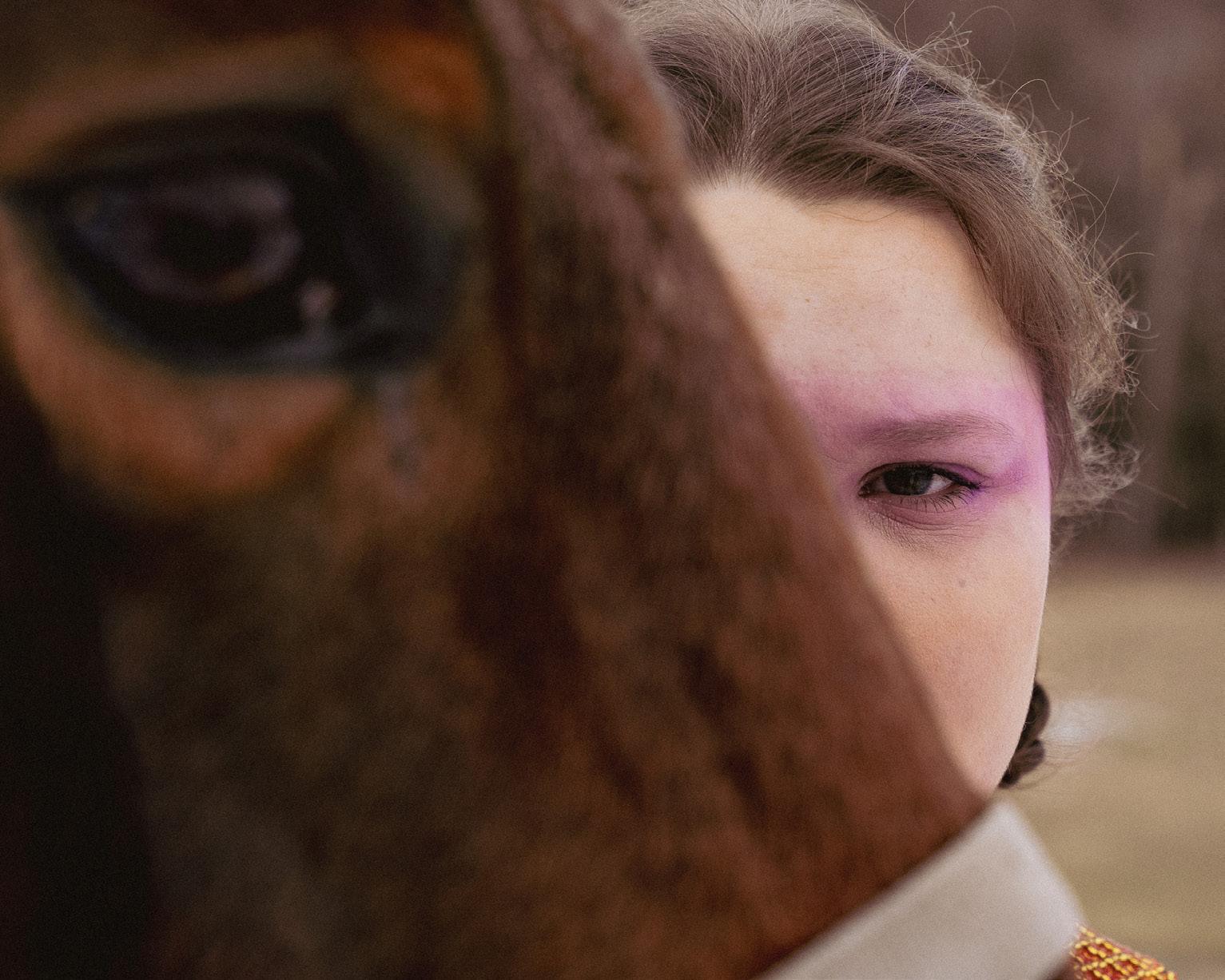
Fashion Fringe On The
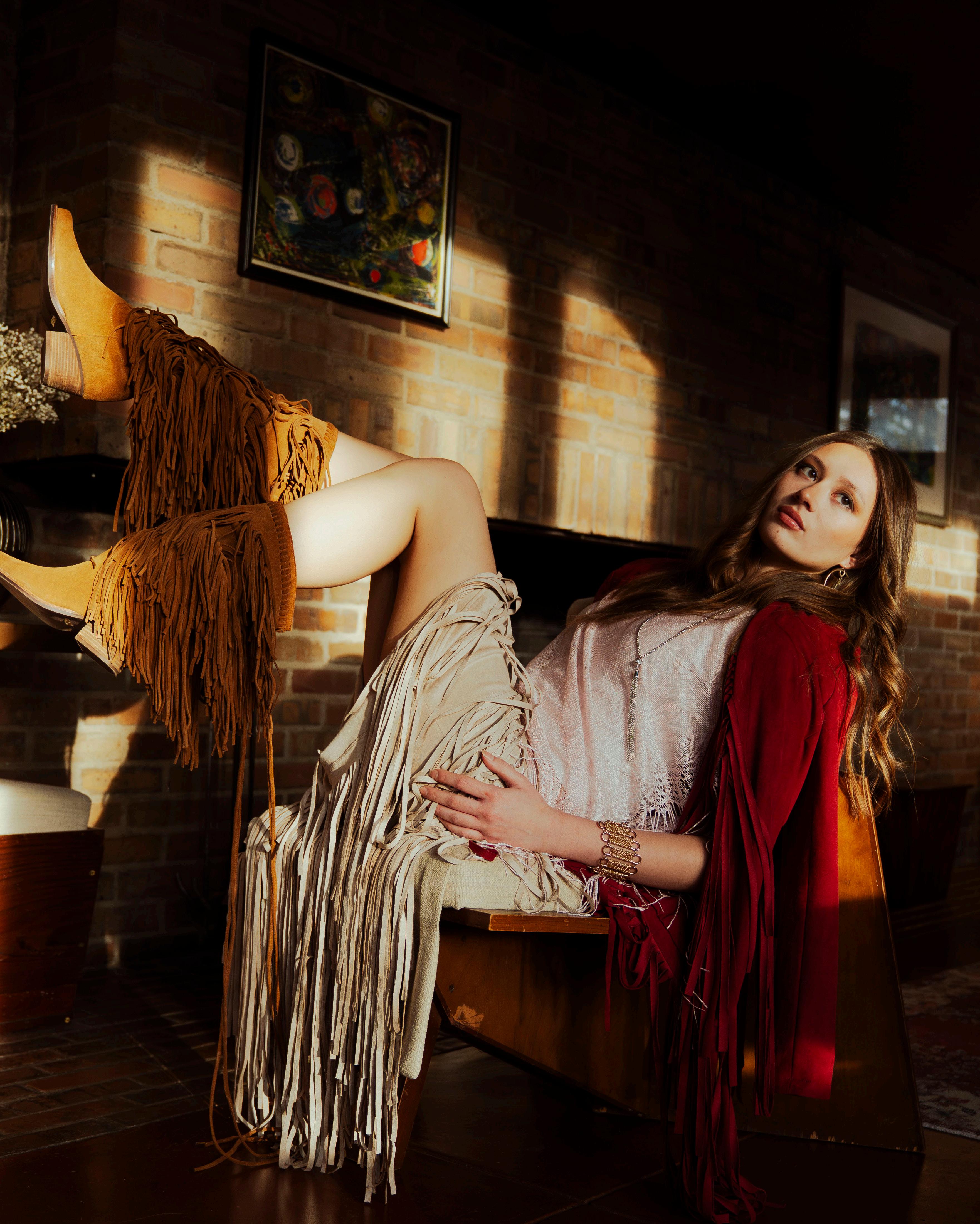
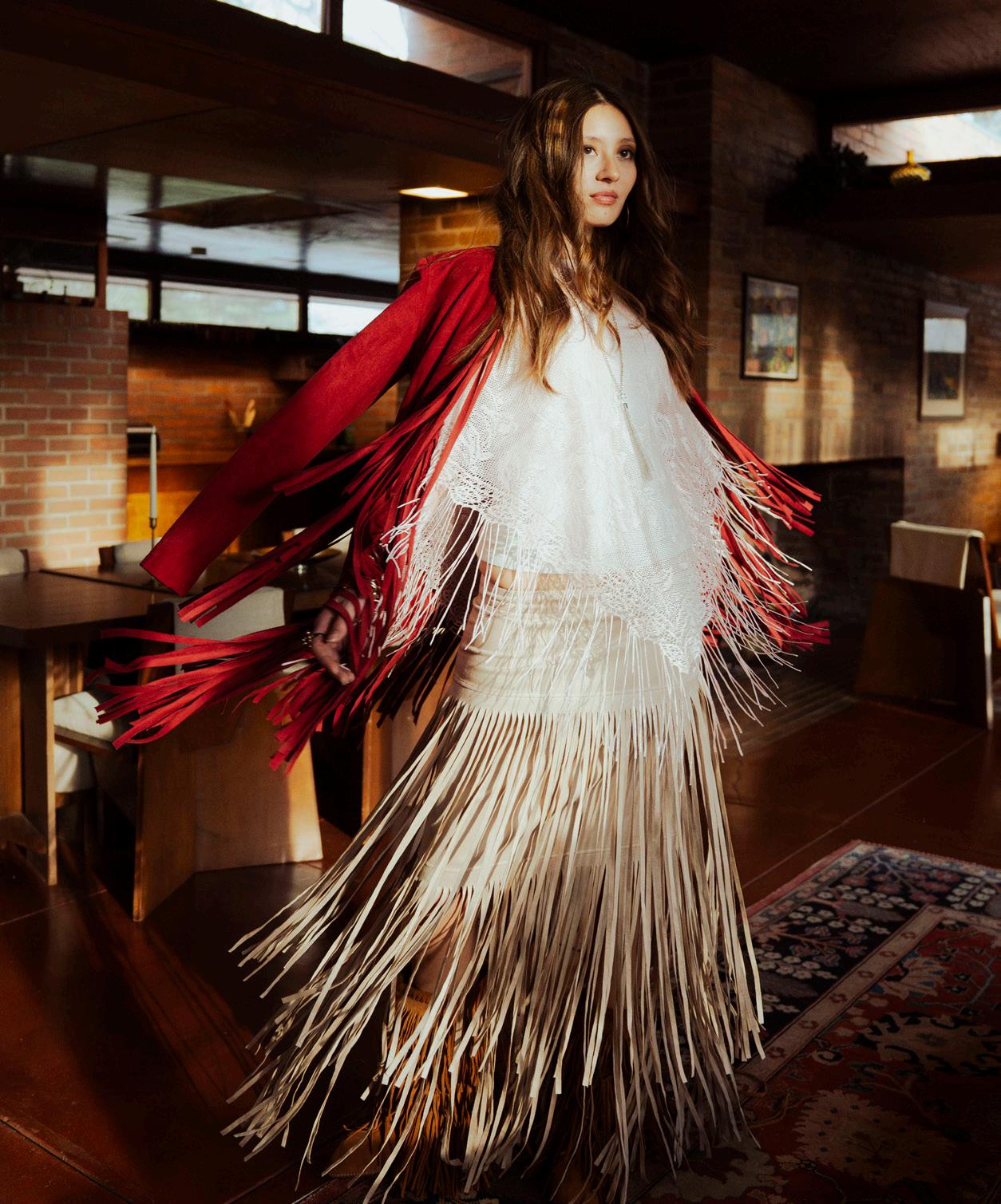
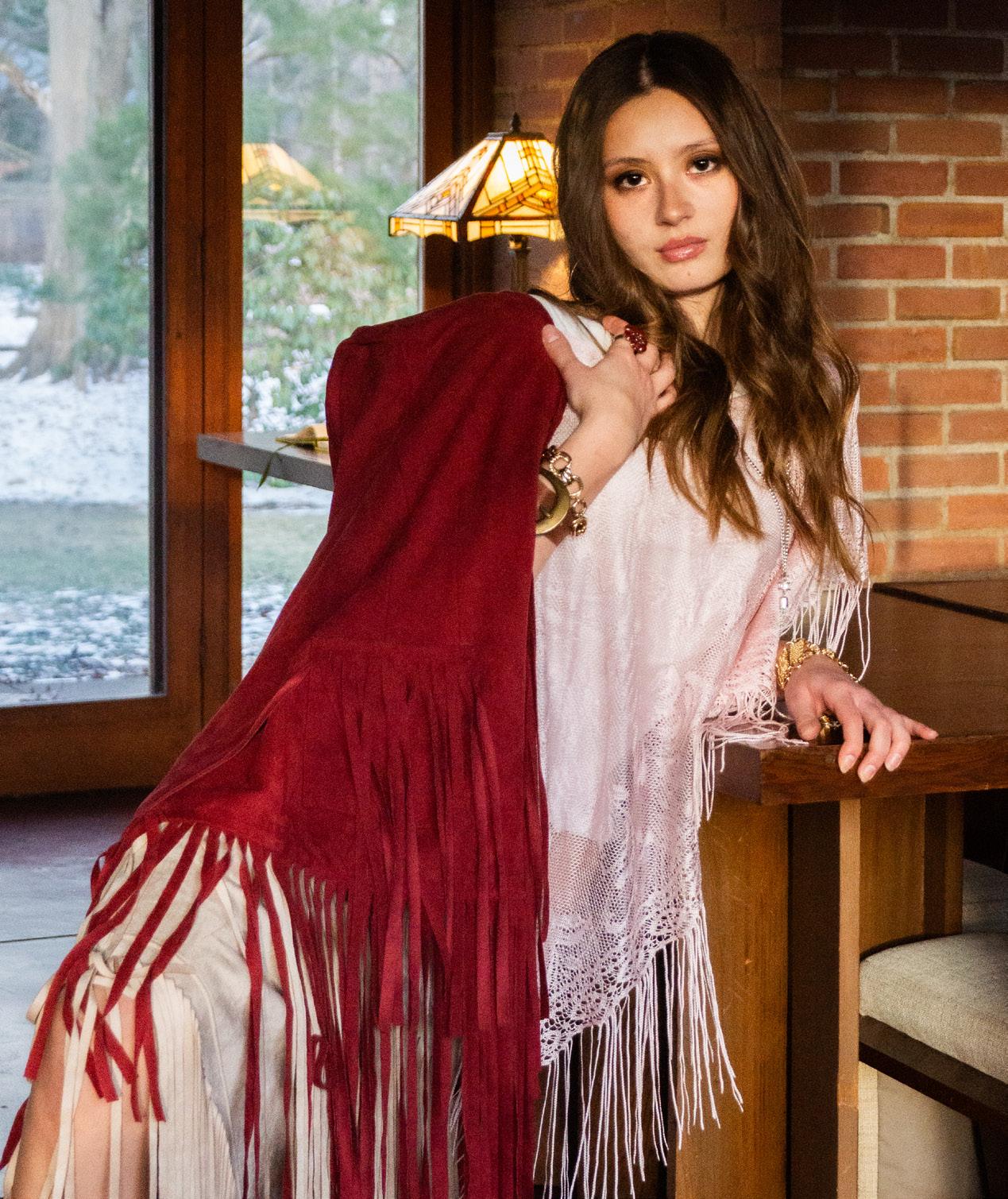
FFringe has a habit of swinging back into style — literally. Season after season, these playful strands reappear on runways and racks, adding movement and personality to even the simplest outfits. But fringe is more than just a fleeting trend. To wear it, is to wear history.
The earliest known forms of fringe date back to ancient Mesopotamia around 3000 B.C., where garments often featured tangled or knotted edges. But these trims weren’t just aesthetic; they symbolized social status and played a role in formal agreements.
shifting from the previously more neutral, utilitarian fringe, to something glamorous and free.
Then in the 1960s and ‘70s, fringe experienced a second revival as Western wear merged with countercultural styles. Popularized by icons like Elvis Presley and embraced by the hippie movement, it became a symbol of rebellion and free-spiritedness.
Today, fringe remains a staple of both Western and Bohemian fashion. From luxury runway pieces to
Across the world, fringe also took on practical meaning. In many Native American cultures, leather and suede garments featured fringe that served both function and beauty. The strips helped channel rainwater away from the main garment, allowing it to dry more quickly.
Fast forward to the 1920s and fringe became synonymous with movement. Throughout the decade, a new version of fringe was born — silvery tinsel dresses and delicately draped floral pieces. Often worn by flapper dancers, these designs were made to articulate movement,
festival-ready accessories, its appeal lies in its movement and spirit. A single fringed detail can elevate a look, transforming a simple piece into something dynamic.
Because to wear fringe, is not just to wear a trend — it’s wearing movement, history and the promise that fashion is always, quite literally, on the fringe of possibility.
Direction: Shelby Salame Style: Shelby Salame
Glam: Emily Filippis, Meredith Hill
Photo: Megan Basile, Ry Moody Model: Hana Baldwin
Words: Nina Tinney, Mia Hagerstrom
Spread Designer: Lily Schwalm, Reagan Sullivan
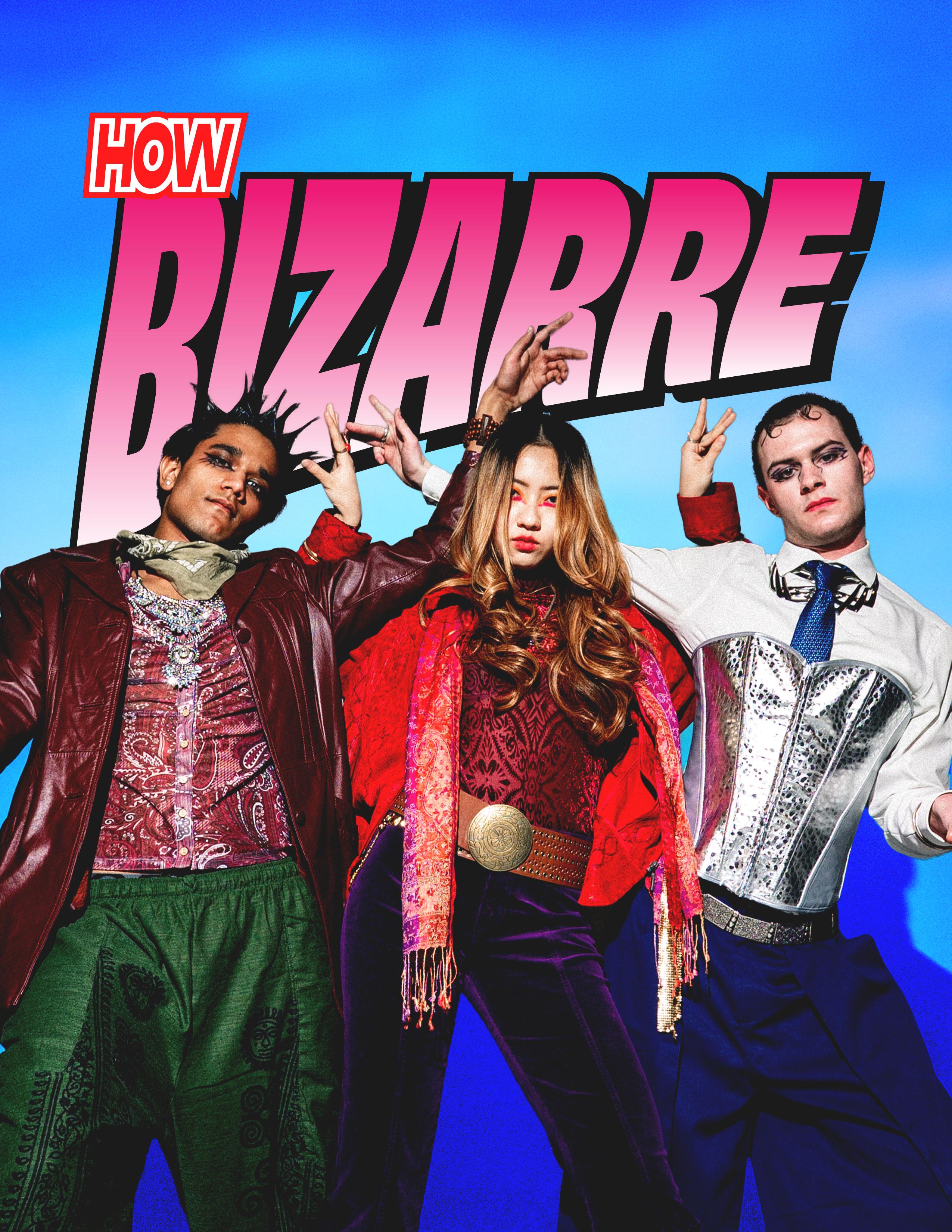
Strange, bold, weird, eccentric. These are all words that have been used to describe two of the most beloved artforms of the modern day; fashion and anime. Originating in Japan in the 1900s and derived from graphic novels known as manga, anime is a popular form of animation that has consistently influenced pop culture. Known for its colorful style, fun characters and
fantastical storytelling, anime has been defying the boundaries of animation and style for as long as it has existed.
One of the most significant aspects of anime is character design, specifically their style. From Princess Serenity’s 1992 Dior haute couture gown in “Sailor Moon” to Loewe’s “Spirited Away” collection from 2022, the intersection between
fashion and anime has always been prominent and continues to inspire one another to this day. The fashions of anime have one major through line, they are avant-garde. Avant-garde is defined as, “new and unusual or experimental ideas, especially in the arts.” French for, “vanguard,” it used to describe experimental styles with no limits or bounds. It does not conform to traditional norms or expectations.
Japanese animators have not shied away from making their characters look or feel out of place. They stand out against their backdrops and intrigue the viewer. Avant-garde fashion designers often share the same sentiments, they do not desire mass approval and strive to innovate instead. Even under critiques of being “bizarre,” the avant-garde does not yield, persisting in its thought-provoking defiance of creative conventions.
Anime has acted as a major source of inspiration for everyday fashion as well, with different shows highlighting different styles. Created by Hirohiko Araki, “Jojo’s Bizarre Adventure” was instrumental in the popularization of color blocking, pattern mixing and androgynous silhouettes and has been inspiring people since its inception. TikTok influencer Anni Peng, with a following of over 15 thousand, has a popular series dressing according to the style of each character, each avantgarde and eclectic in its own right.
Interpretations of avant-garde have continued to evolve over time. Despite differing adaptations of the concept, anime creators and fashion designers have shared the same sentiment: fashion is experimentation.
Direction: Sam McCarthy
Style: Sam McCarthy, Ella Chamberlain
Glam: Samara Scheel, Alison Baumgartner
Photo: Dakota Hendren, Owen Curtis
Models: Rachel Zhai, Krishayveer Sultania, Isaac Dakin
Words: Shaka Prince
Spread Designer: Niranjan Anantharaman
H C I T A M C Ro ontrast
“That’s not my color” is a phrase often spoken, but never truly understood. The deeper and more complex meaning of this phrase comes down to a person’s color analysis. This goes further beyond clothing and includes hair, makeup and jewelry. Color analysis is the process behind identifying which colors are the most flattering based on one’s natural features. It’s not about creating rules or complicating morning routines, but enhancing appearance to make eyes pop, skin glow and hair shine.
To master color analysis, the foundation must be understood first. There are four core categories determined by the seasons. Spring is considered warm and bright, while autumn is warm and muted. On the other hand, summer is cool and muted, and winter is cool and bright. There are then more precise subcategories ranging from light, true, deep, soft and bright, revealing terms such as soft autumn or cool winter. The other parts of the analysis are undertones, which are the natural, unchanging colors beneath the skin’s surface, categorized as warm, cool and neutral.
Finding the right palette often involves trial and error. Going to professionals can cost several hundred dollars. Alternatives include taking online quizzes or ordering
personalized kits. Some people have even gone to hardware stores and compared their appearances to paint swatches. While these methods can work, there are easier ways to do it at home; The vein test is a quick way to check undertones. Blue or purple veins tend to lean cool, green veins are warm, and a mix indicates neutral undertones. Another simple way to find undertones is by using jewelry. Warm tones look better in gold, cool tones in silver, and neutral tones suit both. Colors that brighten and balance skin tone help determine seasons. For example, light spring incorporates soft pink and pale blue, while deep autumn features muted green and mauve red.
Ultimately, the most important aspect of the color analysis equation is looking great and feeling confident, no matter what color or shade is worn. The goal here isn’t perfection, but rather intention. Enhancing looks with color analysis can be a valuable self-care investment, allowing confidence to flow into other areas of life. So, the next time “that’s not my color” comes to mind, think of it as “that’s simply out of my palette, something else will look much better.”
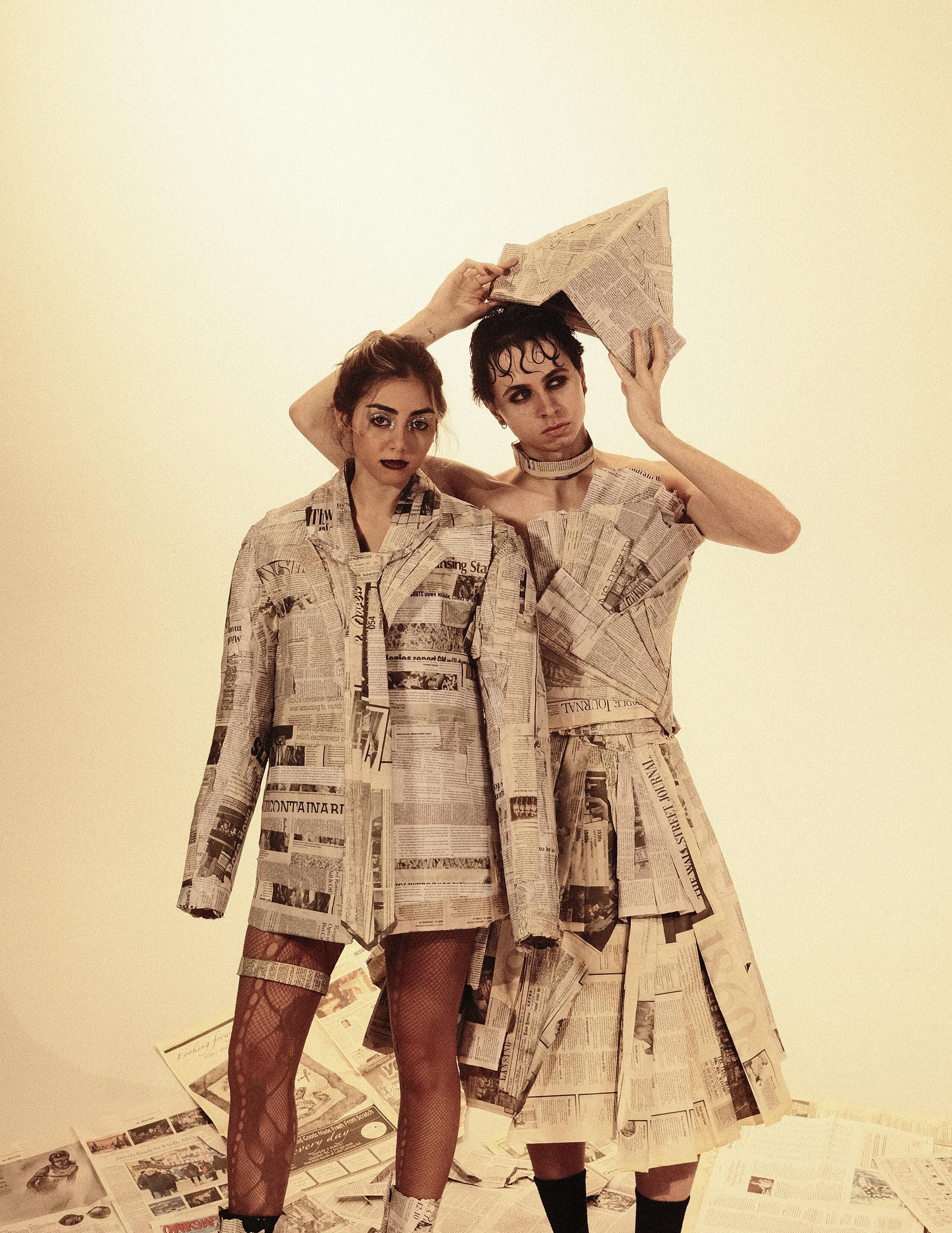
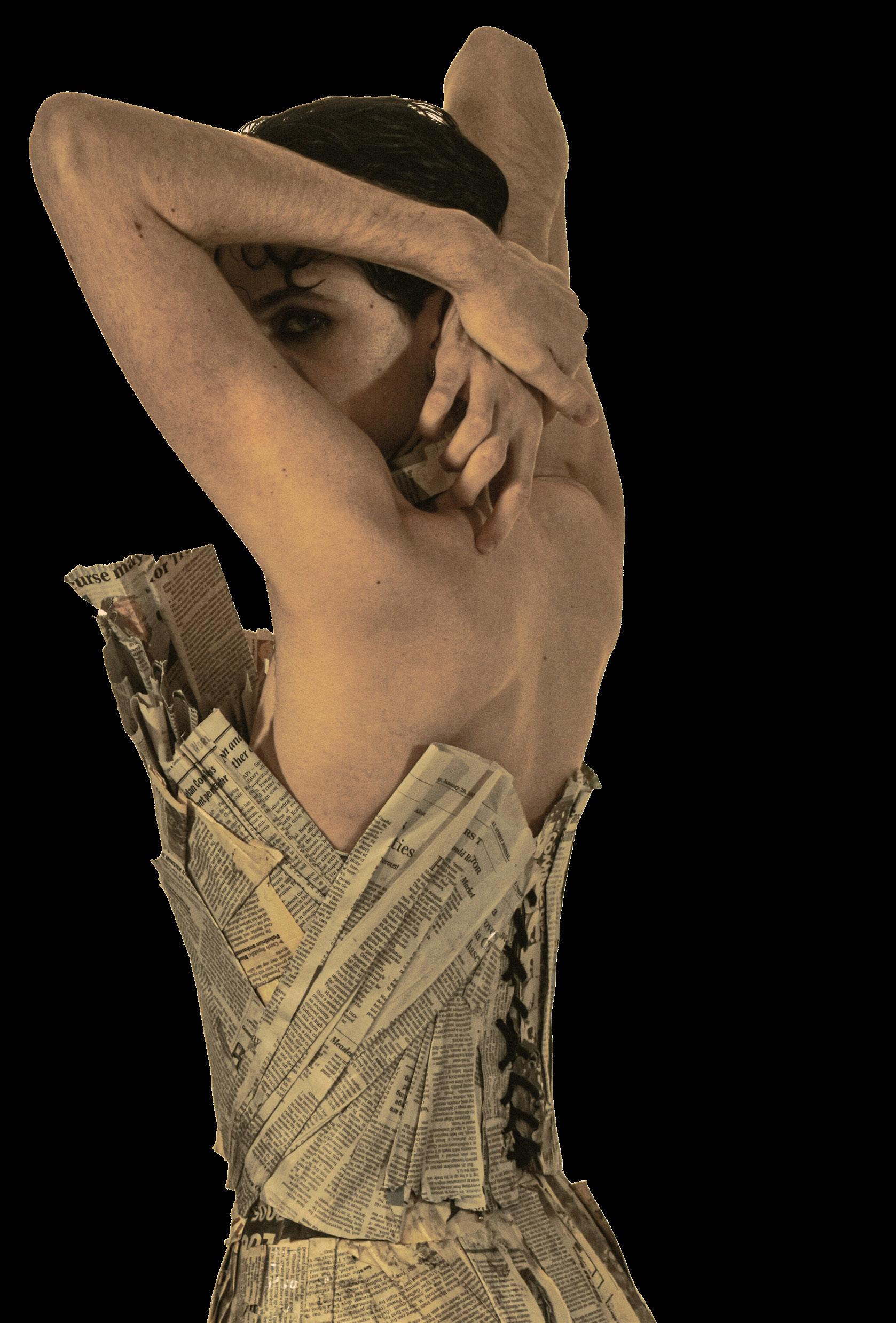
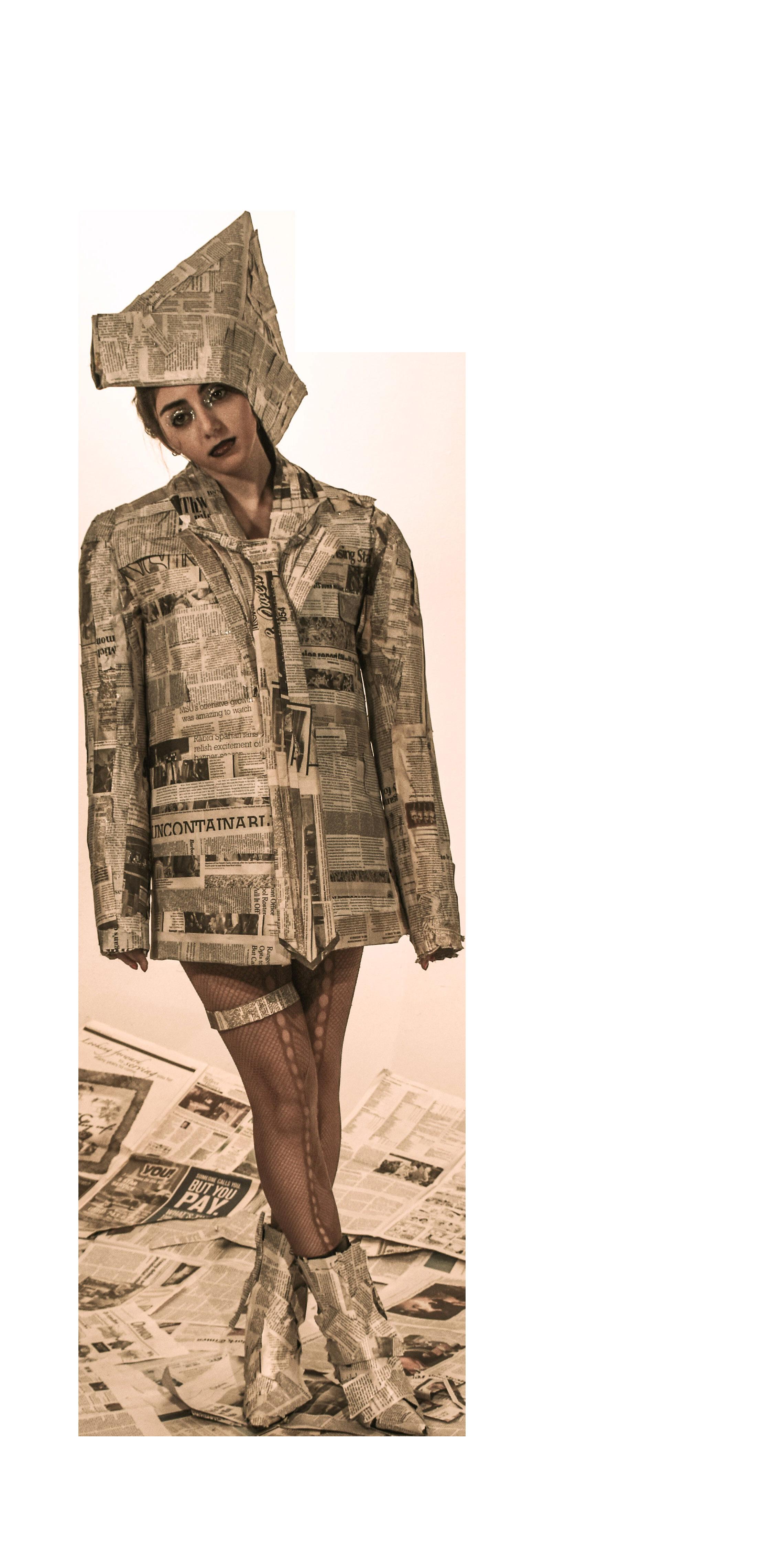
rom cave paintings featuring seemingly abstract dots and lines to print media in languages of all different cultures, transforming thoughts, narratives and information into physical form has always been integral to humans; it is how individuals communicate, connect, express and make sense of the surrounding world, much like fashion.
Dating back to ancient civilizations, fashion left lasting statements; Rome and Egypt signifying social hierarchies and prestige through differing fabric garments and ornate jewelry. The Renaissance period introduced a shift towards individualism and increased accessibility, while the World Wars introduced simplicity and practicality. In modern days, fashion has become a global phenomenon, involving increased prevalence of runways, emergence of subcultures and rapid trend cycles.
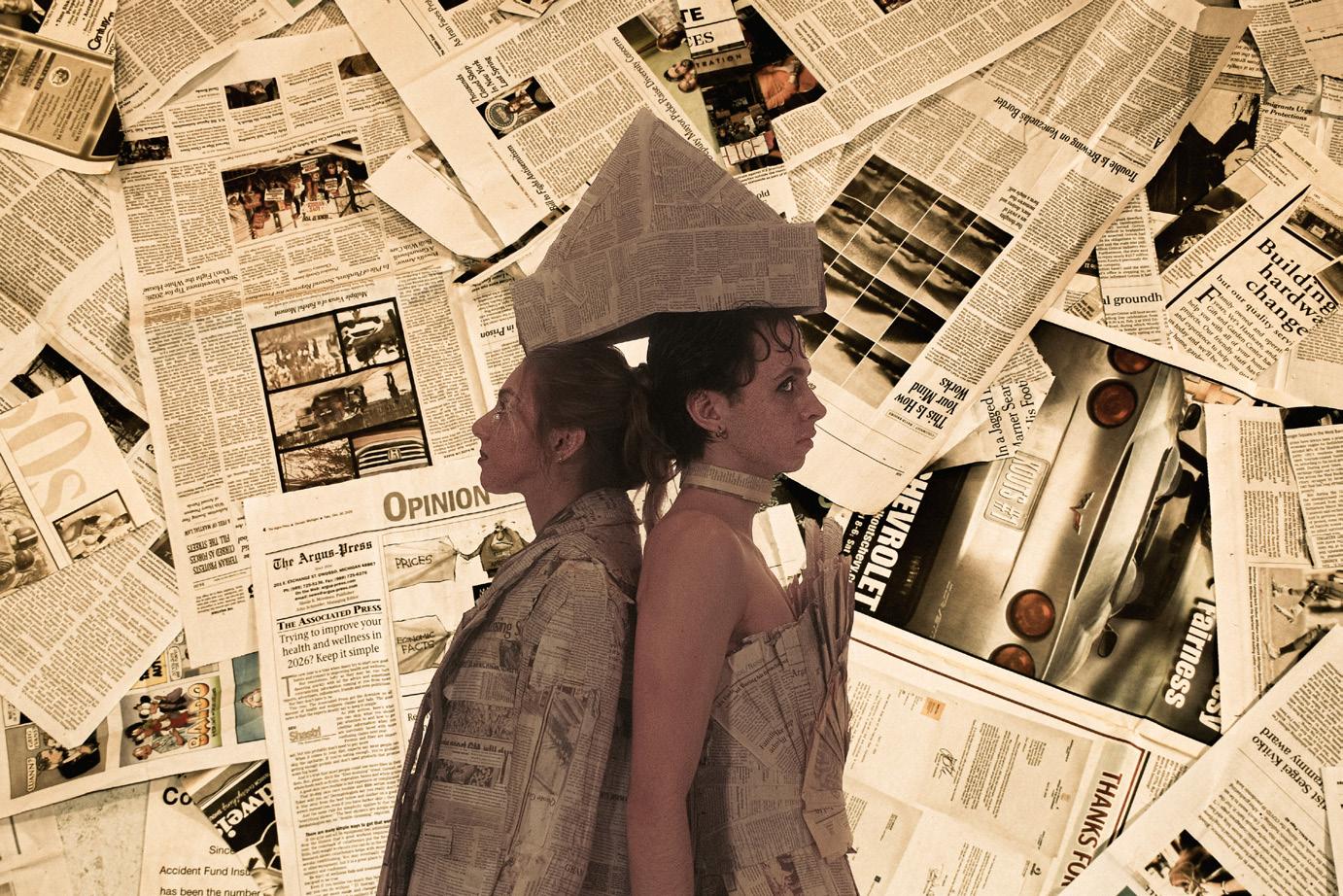
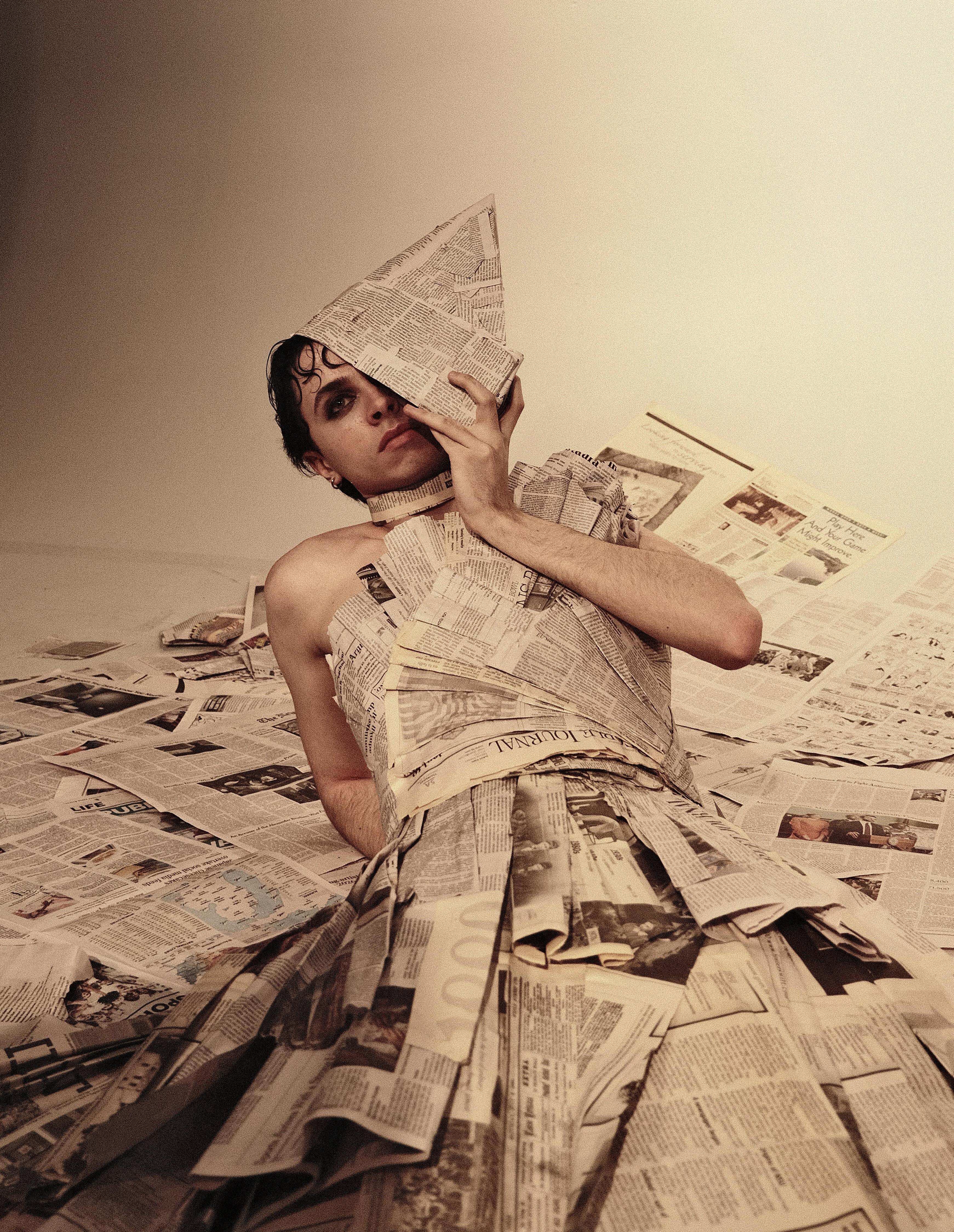
Together, throughout time, literature and fashion are crucial reflections of societal and global evolvement. Print media and newspapers serve as a daily dose of information and fashion as a visual and living text. Despite their differing mediums, their roles in society are quite alike. Newspapers are temporary, quickly read and then often discarded as news articles and papers fly off the press daily to keep up with the never-ending happenings of the world. Fashion also follows this swift cycle, its chapters shortened by the year and trends created, used and recycled at an accelerated rate. Both are the foundation of storytelling and cultural expression between humans, capturing moments in time to adapt and evolve.
However, both literature and fashion have fallen victim to the limiting expectations and norms of society, restricting extraordinary concepts in order to make them a more digestible read. Public discourse often centers around rigid gender roles, assigning specific garments to particular identities and confining true individualism.
Such notions are limiting: a gender does not dictate one’s garment of choice. It is rather the reinforcement of socially constructed expectations and norms that do so. Media such as Mulan and literature such as Statius Achilleid explore cross-dressing and fluidity through garments to represent the beliefs and identity of a character.
“
speaks volumes, have a too.
Neither fashion nor literature have remained stagnant throughout their histories. Their notorious reputations of disposability are misunderstandings; rather, they reflect traits of a timeless nature and an ever-evolving form of storytelling. Newspapers tell the narratives of society, while garments wear the stories of the individual. Through the ordinary being transformed into art, their meanings of human expression are reclaimed.
Direction: Grace Sliwka
Style: Anna Williams
Clothing Designer: Reagan Wiley
Glam: Angelina Flores, Stephie Kosmas
Photo: Victoria Hu, Stella Govitz
Models: Sofia Mukhtar, Aden Grubb
Words: Genevieve Orlewicz, Kayla Kirkland
Spread Designer: Myah Greene
direction
style
Katie
glam
Katie Mulhearn
Mulhearn
Kushika Sulabelle
Meredith Hill
photo Sofia Pate
Alexis Schmidt
models
Lillia Mojica
Danielle Okeke
Ved Vinod Nambiar
spread designer
Nia Kalinovic
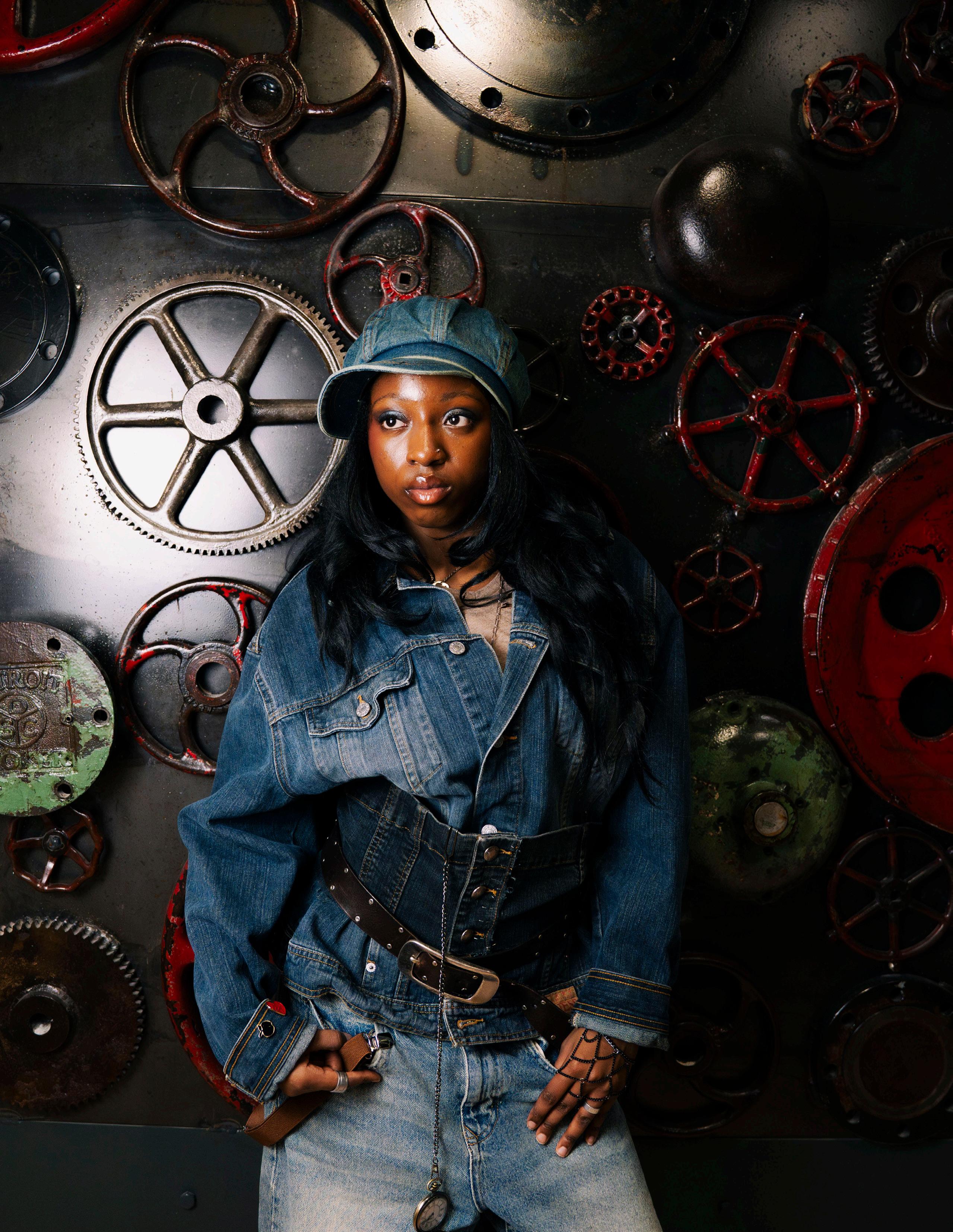
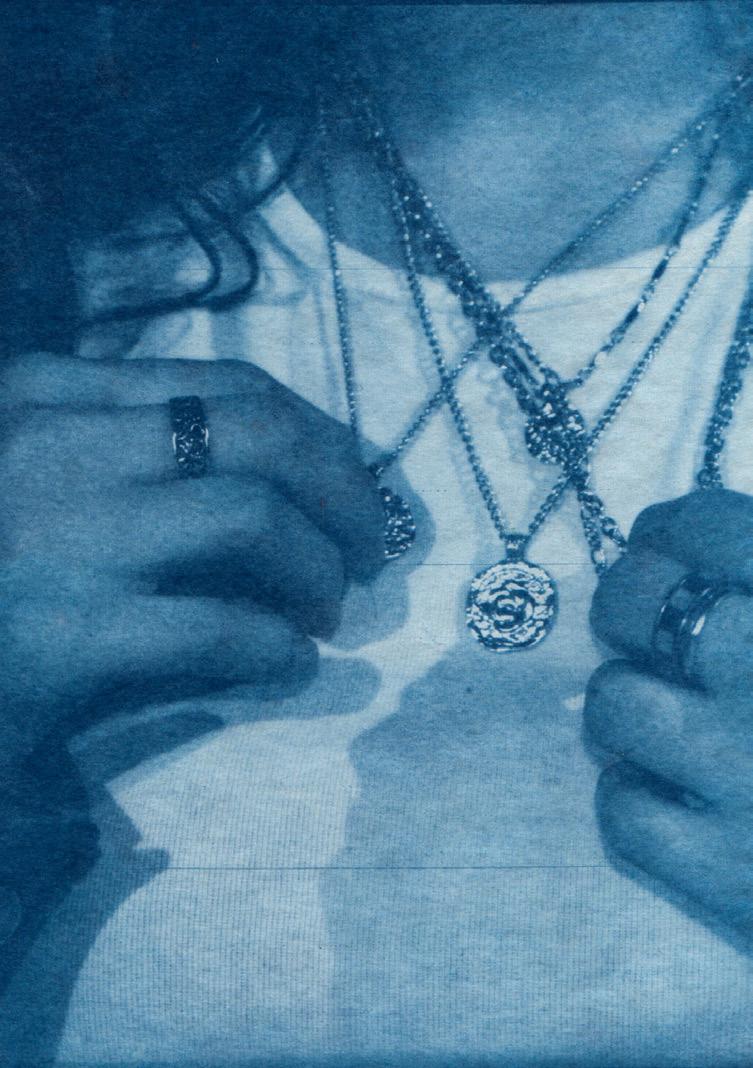
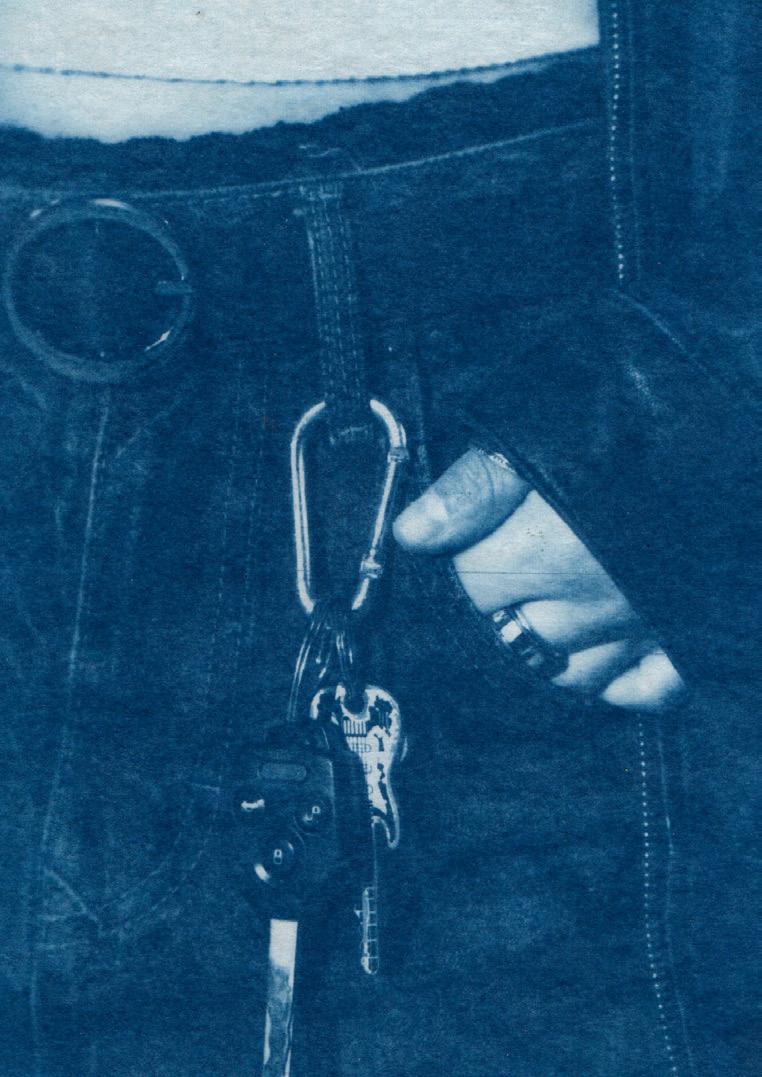
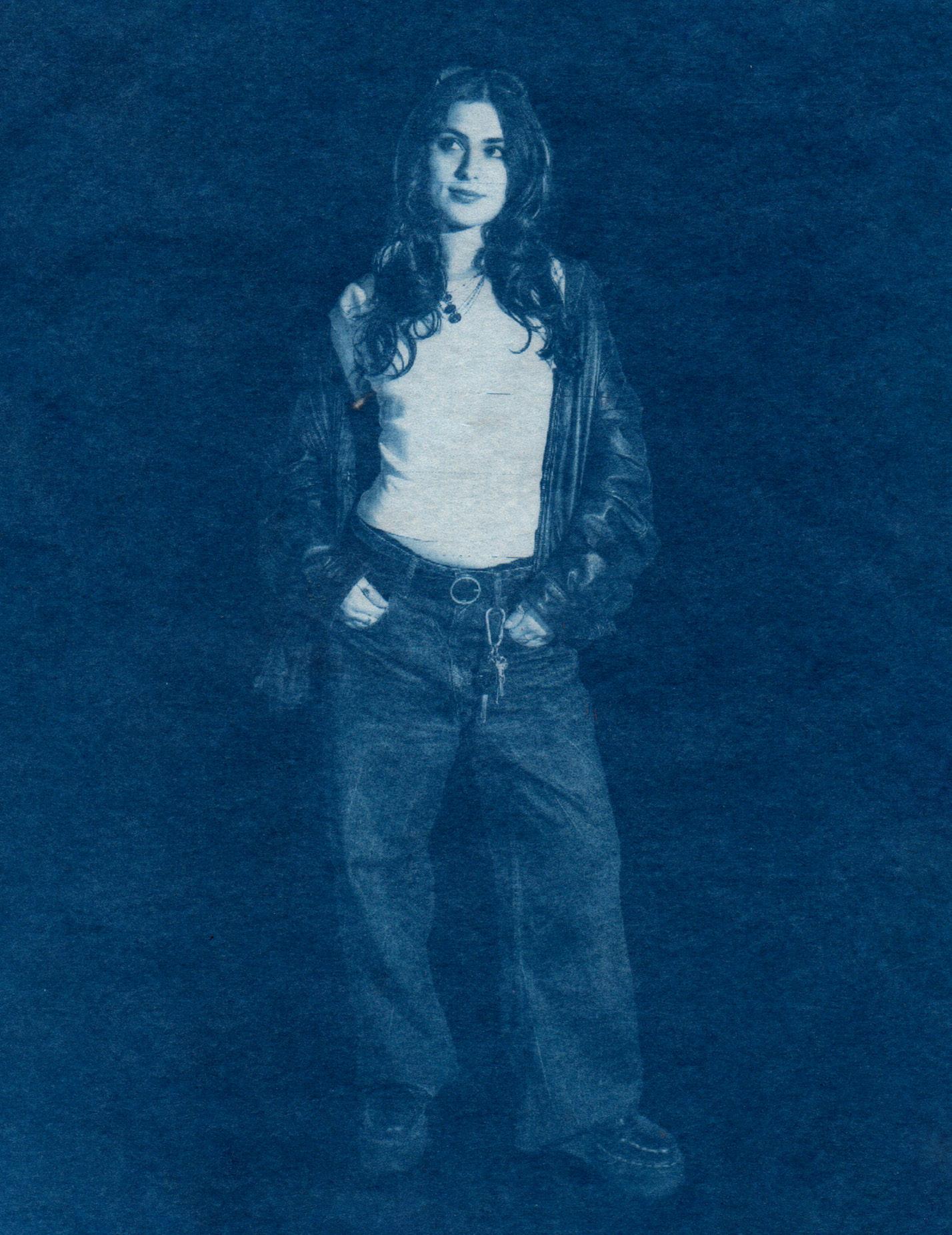
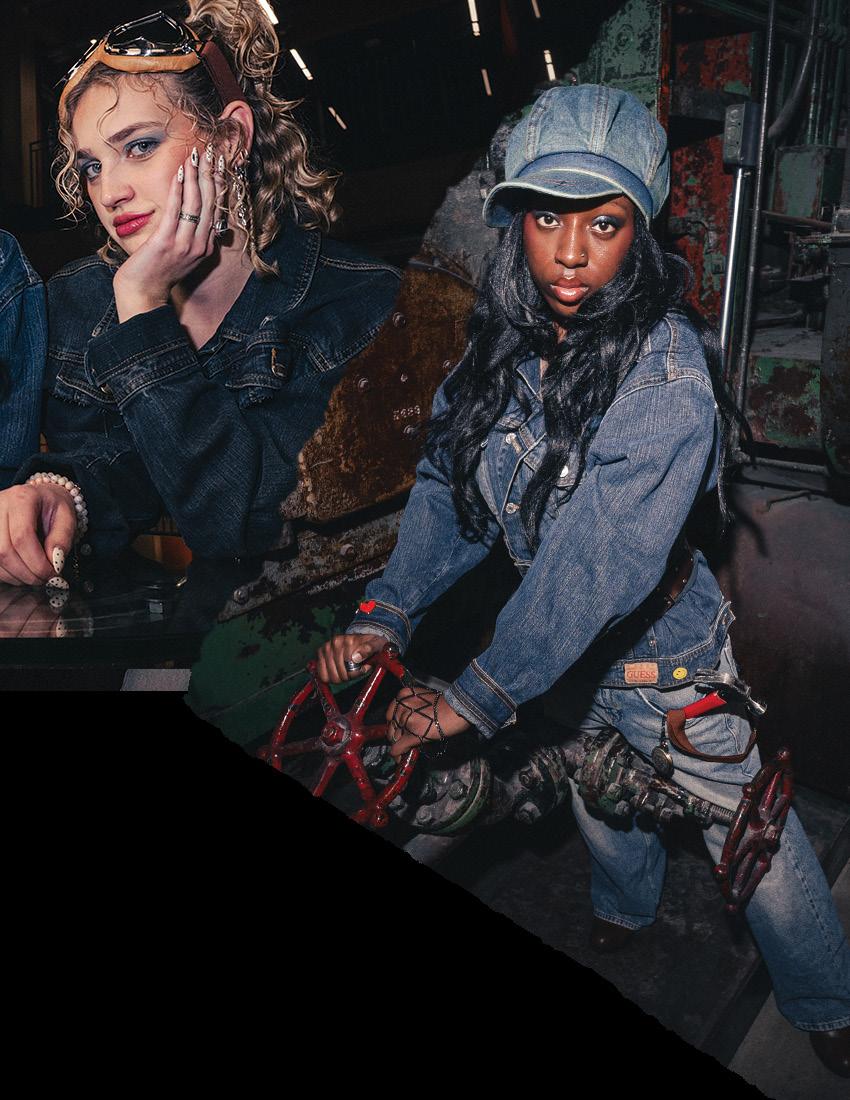
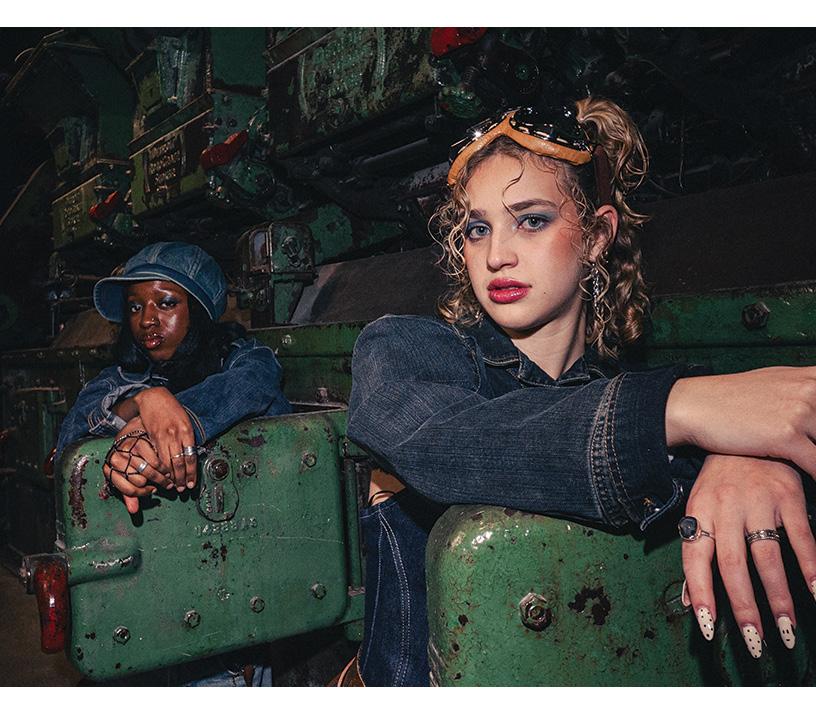
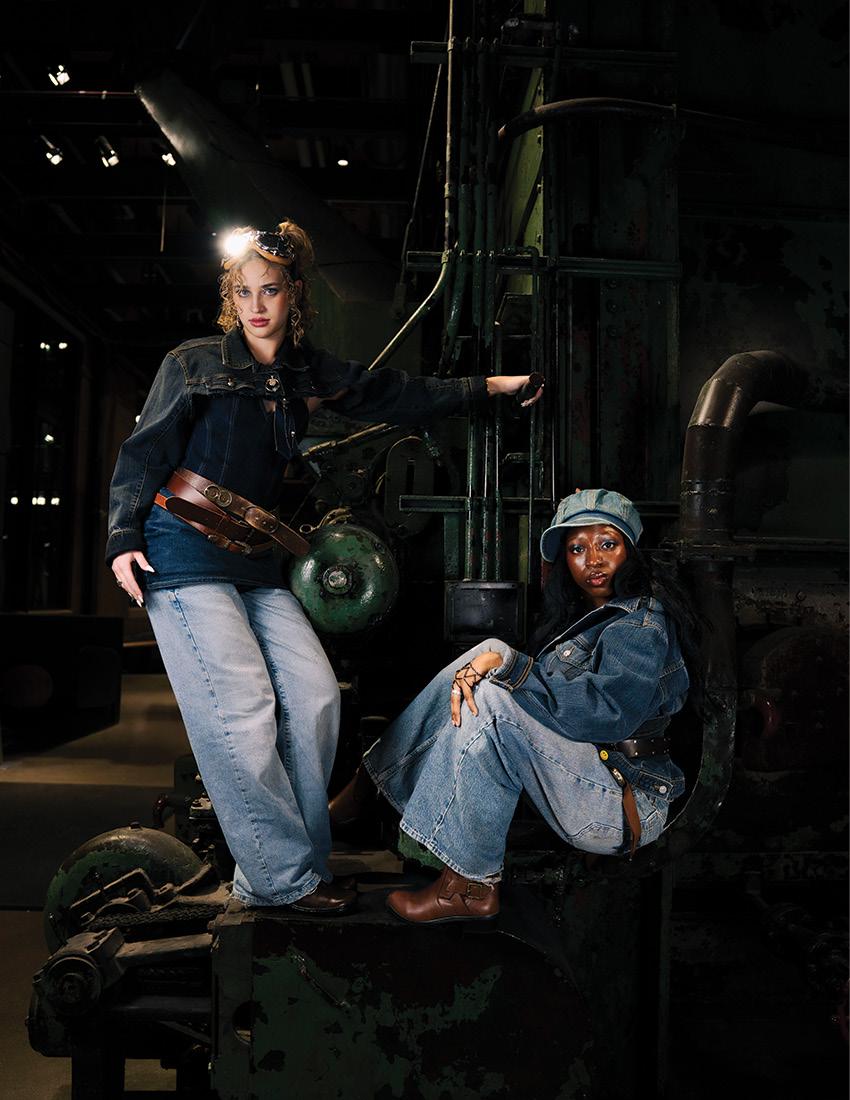
When a person is wearing denim, many people may think nothing of it. Denim clothing might seem common and unsuspecting, but don’t be fooled. Denim does not simply hold threads; it holds the story of a quiet yet powerful revolution — one stitched together through resilience, labor and cultural defiance.
Originally, denim was not created for style, but for sheer practicality. In the early 1900s, the demand for the fabric increased because of its unmatched durability. Denim became a staple for working men, particularly in physically demanding, blue-collar professions such as farming, mining and railroad construction. By the 1930s, denim had become synonymous with the rugged image of the American cowboy, further solidifying its association with masculinity. Society’s rigid expectations reinforced the idea that denim belonged exclusively to men. Women, confined by traditional gender roles, were expected to wear garments that emphasized delicacy rather than strength. In such a world, there seemed to be no place for women in denim.
But history has a way of unraveling even the tightest seams of convention. During World War II, necessity challenged tradition. As men were drafted for the war, women stepped into roles that had long been denied to them. Factories, shipyards and workshops became new spaces of female labor. The cultural icon of Rosie the Riveter emerged during this time, dressed in sturdy denim overalls. Her image was more than just propaganda — it was a declaration. Women could perform the same demanding work as men. Denim,
After the war, many women were expected to return to domestic life, but the impact of their contributions lingered. Denim had already begun its transformation. By the 1960s, fashion itself became a site of rebellion and self-expression. Tighter-fitting jeans emerged, marking a shift from purely functional clothing to garments that combined sturdiness with style. Influential actresses began wearing denim both on and off screen, challenging the notion that femininity required restriction. Women increasingly chose jeans
styles and forms, reshaping denim into something uniquely their own.
Today, denim exists in countless variations — bootcut, skinny, relaxed, oversized and more. It extends beyond jeans to jackets, skirts, dresses and accessories. What was once a uniform of labor has become a universal
Denim did not simply adapt to women — women redefined it. In doing so, they reclaimed a fabric that once excluded them and turned it into a symbol of empowerment. Every pair of denim carries a legacy — a reminder that even the most unassuming materials can tell stories of profound social change.
Direction: Mia Hagerstorm
Style: Mia Hagerstrom, Genevieve Orlewicz
Glam: Meredith Hill, Alison Baumgartner
Photo: Megan Basile, Owen Curtis Models: Elizabeth Abel, Korede Onakanmi
Words: Olivia Selcanin
Spread Designer: Stephanie Monk
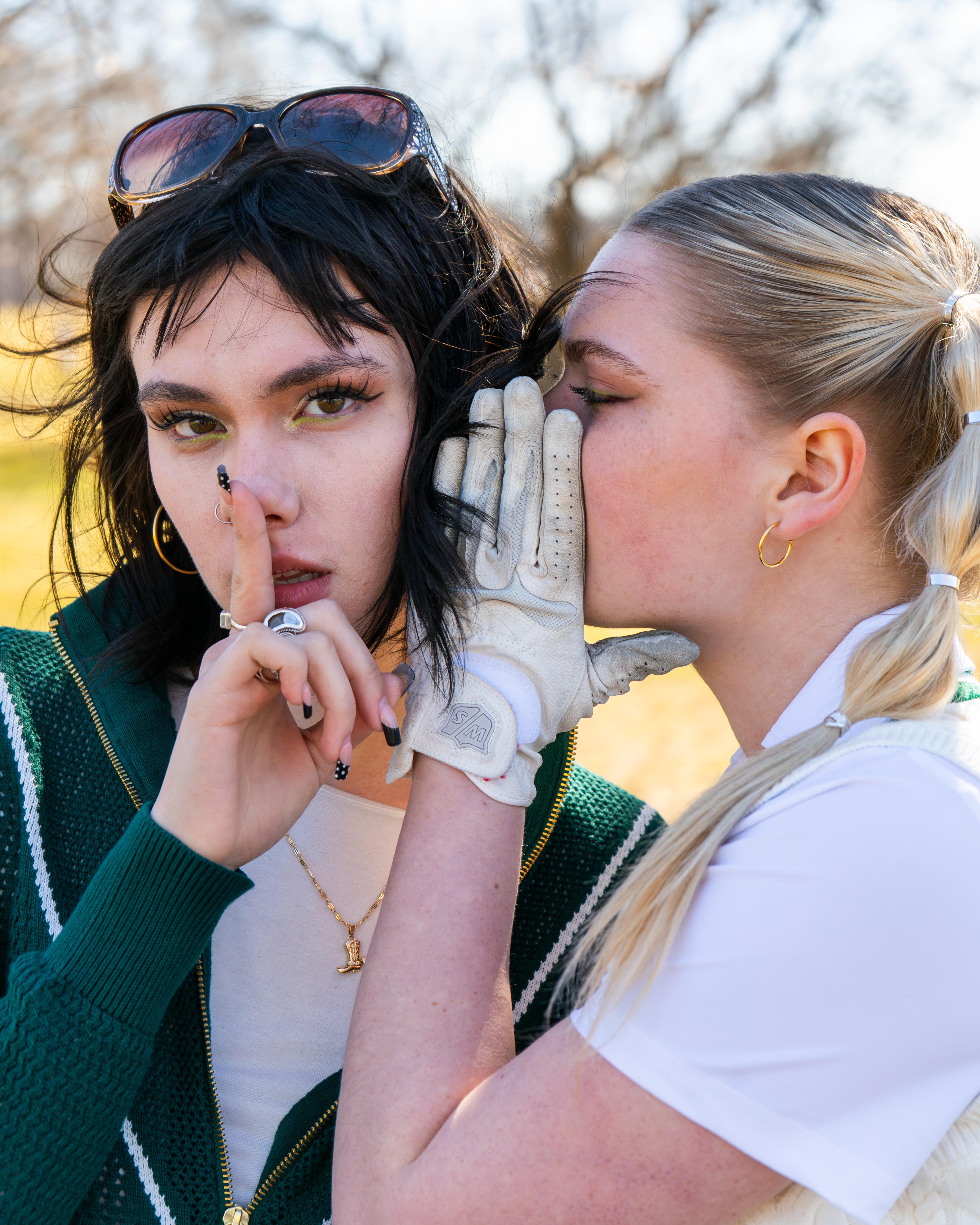
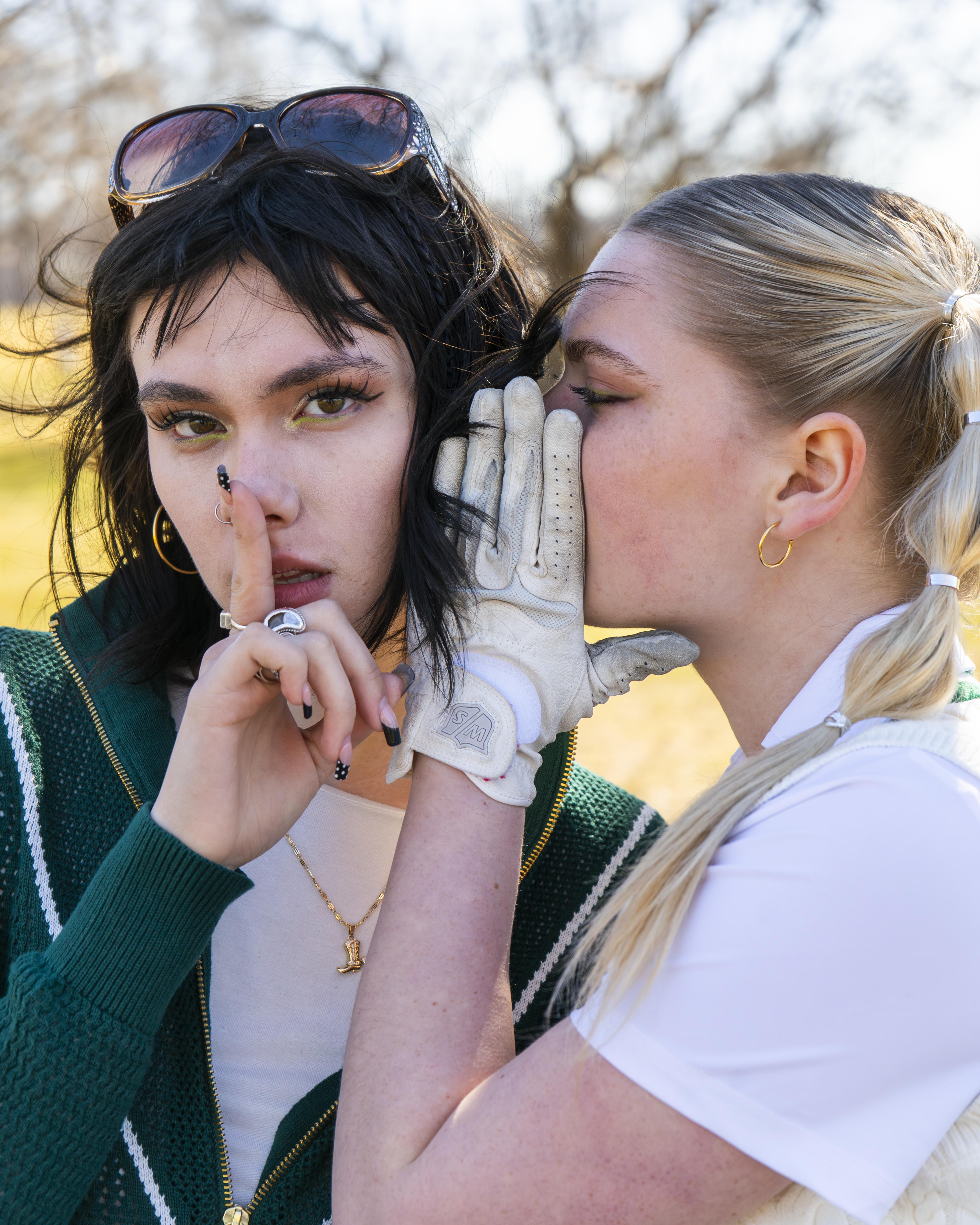
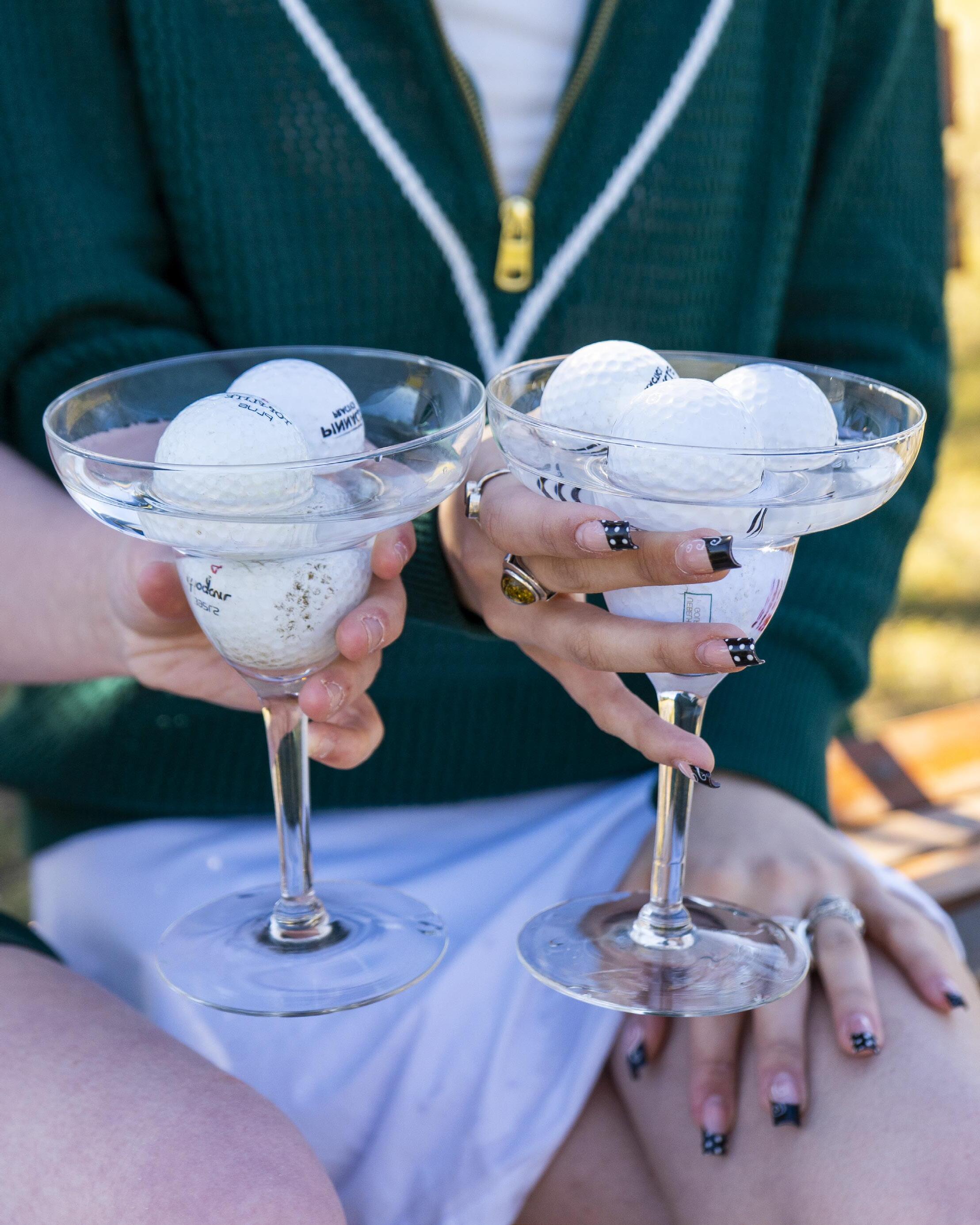
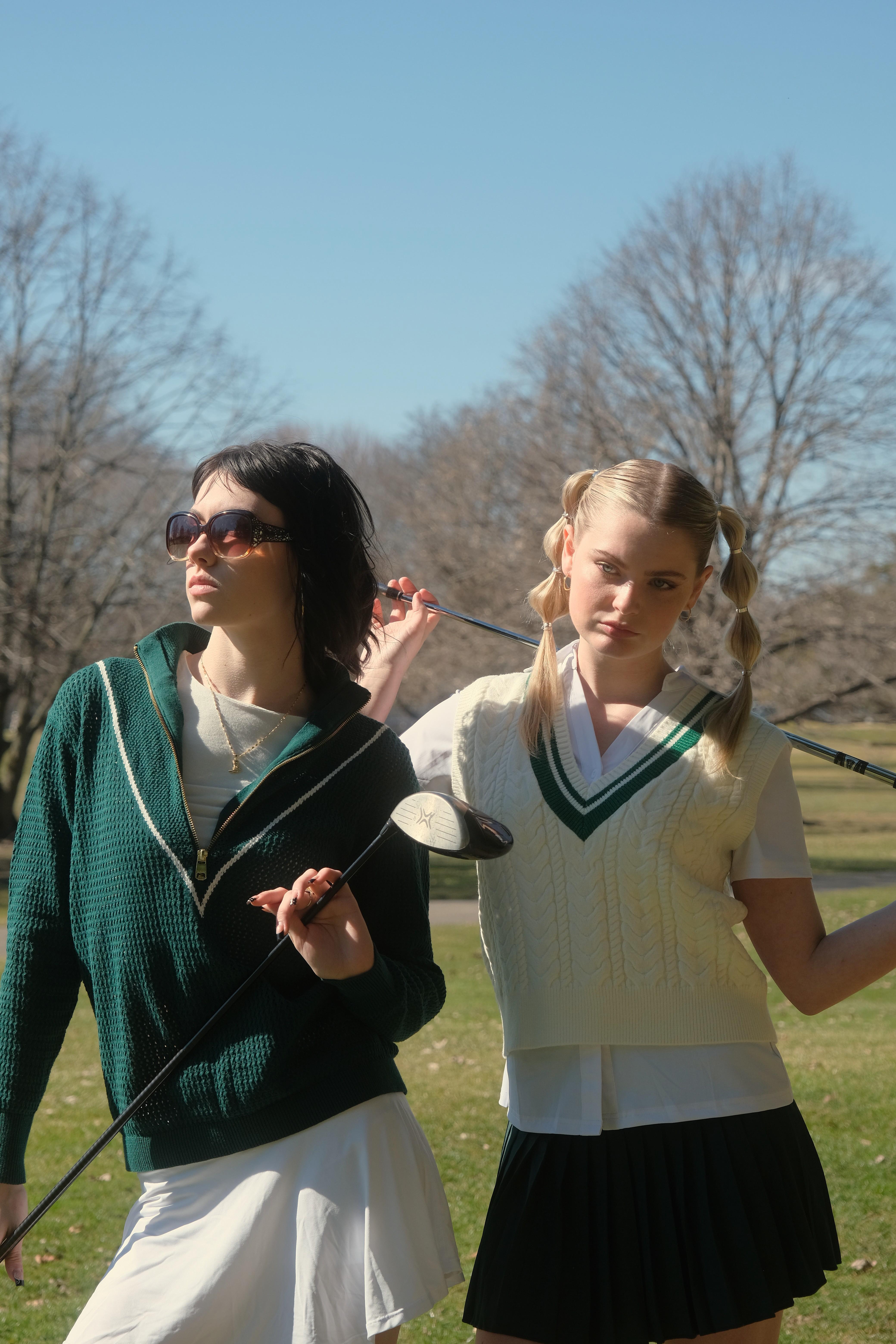
Sometimes those moments feel like they stretch on forever, and even a simple round of golf can turn into 9 holes of proving yourself as worthy. However, in the end, acceptance is determined by how well someone appreciates themselves, not by whether they meet group-prescribed standards.
industry, the business world has consistently shut out newcomers, especially women.
Glam: Astrid Becker, Meredith Hill, Stephie Kosmas
Photo: Owen Curtis, Aastha Singh
Models: Angelina Flores, Ryan Harris, Sean Lewin
Words: Madison Lloyd, Meghan Valade
Designer: Andrei Reynoso
Modern drag involves witty televised competitions and champagne-spraying brunch performances. At the heart of it all, drag is a performance of exaggerated gender expressions for entertainment. Part of this expression includes voguing, a style of dance that evolved from African American Harlem Ballroom culture.
Through the audience’s eyes to camera lenses, word spreads intimately and globally. Names became brands, catchphrases became currency and stages have stretched far beyond the clubs. No longer is it an odd display of character that only certain audiences will ever see. It has become a nationalized industry created on hopes and dreams..
Beneath the rhinestones and ring lights, there’s
“Here, voguing is not yet a mainstream spectacle. It is a language, a coded poetry of survival.”
a pulse that feels older, deeper. Step back from modern times and walk into a downtown night in 1980s Harlem. The air is thick with sweat, perfume and possibility. Bass rattling the floor, bodies pressed close, eyes hungry. The ballroom is alive. Here, voguing is not yet a mainstream spectacle. It is a language, a coded poetry of survival. Hands slice through the air like punctuation, limbs form impossible lines, faces tell stories sharper than any blade. This is transformation, yes, but also defiance. Gender rewritten in real time.
In this room, marginalized voices rise, not quietly, but with rhythm, with attitude and with undeniable presence.
Icons like Grace Jones and RuPaul helped define the era, and made drag and club kids more visible in common culture. Grace Jones had an androgynous style and refused to conform her identity to gender norms of the time. Jones broke down the boundaries between masculinity and femininity,
“ House mothers and house fathers supported and guided young queer individuals not just for their performances, but in how to survive a world that denied their existence. Family, in ballroom culture, is not just symbolic, it is essential.”
and she has left a permanent mark on how fashion and culture are defined. RuPaul emerged slightly later, becoming one of the most recognizable figures in drag. Through RuPaul’s Drag Race, he brought key elements of drag and ballroom culture into mainstream media. While this platform has expanded visibility and opportunity for the drag, ballroom and queer communities, it has also revealed the tension between protecting and supporting underground queer cultures and the mainstream commercialization of queer spaces. These icons are remembered as the central
figures of ballroom culture, but ballroom culture’s true backbone has always been its families. Typically referred to as “houses”, these chosen families are not defined by blood but by care and mentorship. In a world that has historically marginalized queer communities, especially for people of color, houses became a space to escape this outside hatred. House mothers and house fathers supported and guided young queer individuals, not just for their performances, but in how to survive a world that denied their existence. Family, in ballroom culture, is not just symbolic, it is essential.
“Every pose holds history. Every look carries legacy. And every beat that drops invites a new generation to remember, reinterpret, and refuse to let the rhythm fade.”
“In voguing, style is not just worn, it is performed, exaggerated, weaponized.”
Family became the heart, and fashion, the blood that keeps it pumping. In voguing, style is not just worn, but performed, exaggerated and weaponized. Shoulders are squared like high fashion editorials, wrists flick with aristocratic precision and every strut echoes a runway that was never meant to include them. Houses become families, and categories become canvases. Executive realness, high glamour, streetwear fantasy, all bend reality into something freer, something bolder.
The performance is not simply about winning a trophy; it is about being seen, loudly and without apology. One underdone look, one offbeat clack of the fan, one wrong take on the theme of the night can cost everything. But it can also take just one iconic spin, one showstopping drop, one perfect execution to become the inspiration for everyone in the ballroom.
Every pose holds history. Every look carries legacy. Every beat that drops invites a new generation to remember, reinterpret and refuse to let the rhythm fade. What will the next category be?
Direction: Lillia Mojica
Style: Lillia Mojica
Glam: Alison Baumgartner, Meredith Hill
Photo: Owen Curtis, Dakota Hendren
Models: Haley Kurak
Words: Lillia Mojica
Spread Designer: Julia Bugar
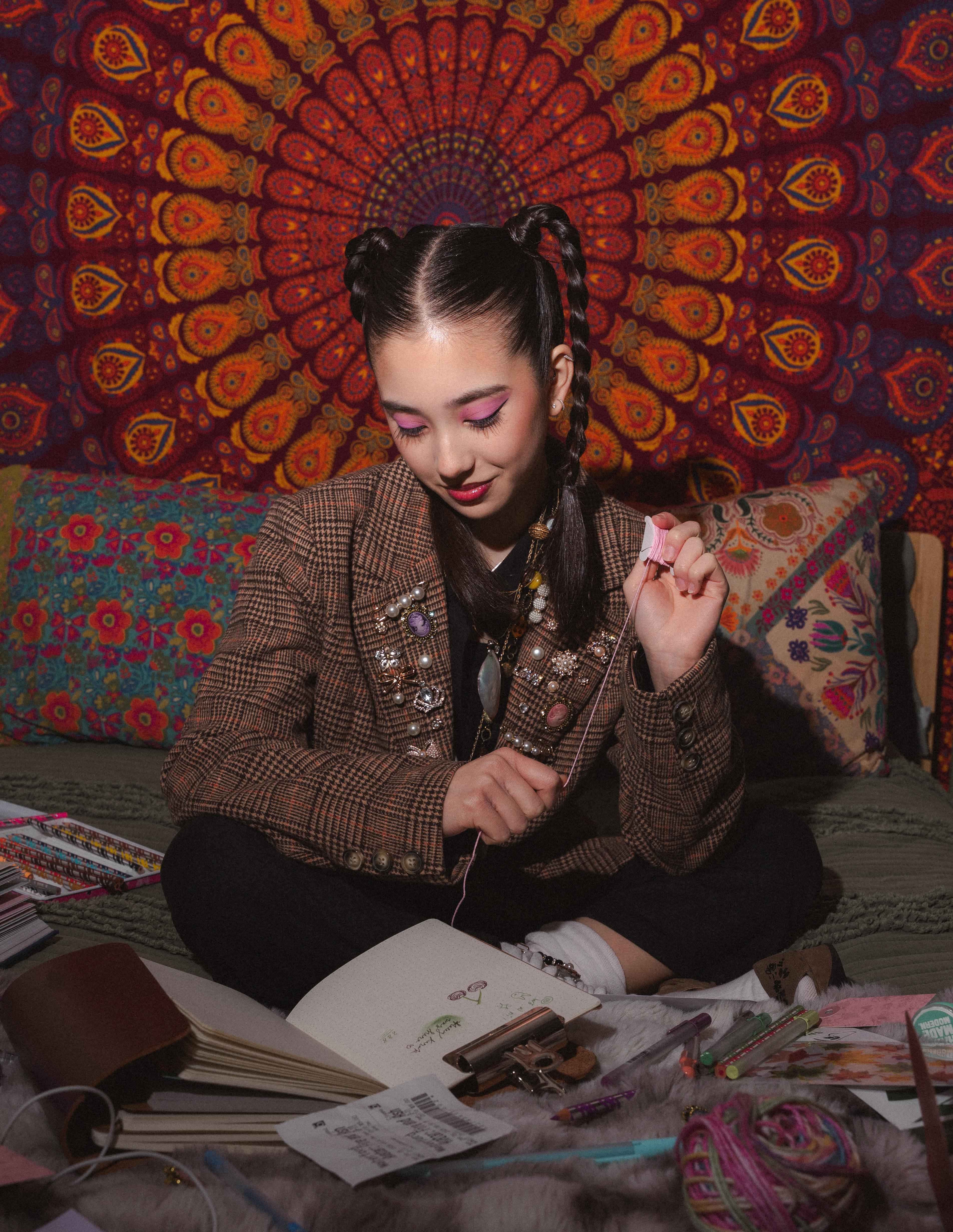
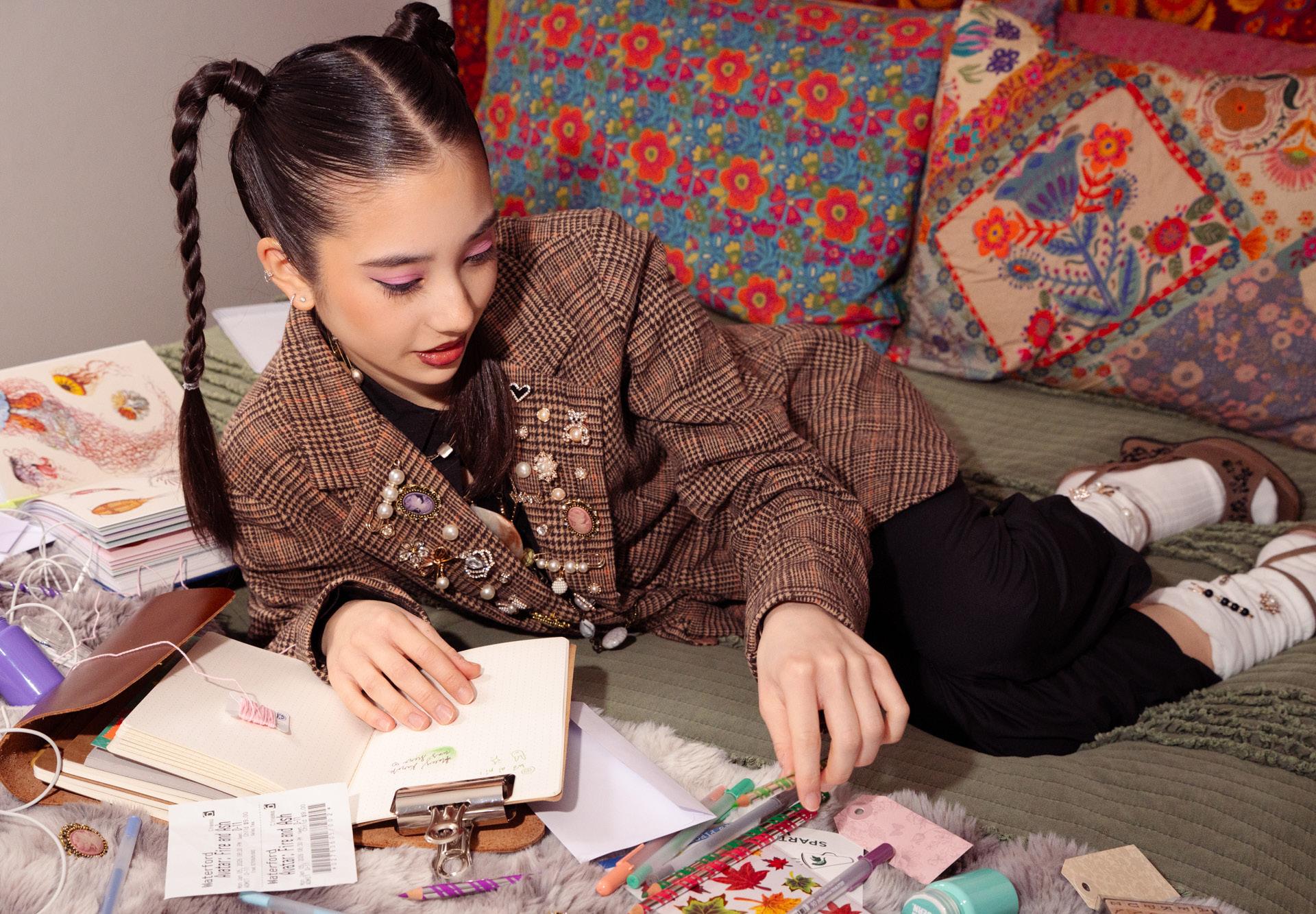
It’s important to document change in a world that never stops evolving. Society is often comfortable with letting moments pass by and only capturing time digitally through social media. While this may seem like an intentional act, it’s easy to get wrapped up in being perceived by others. This pressure affects how people choose to portray themselves online and in person, and even what they spend their time doing. In being performative on social media, less substance remains in the undocumented parts of life. Online personas are often heightened, unrealistic and hold no value to the poster. These days, having tangible proof of life is something personal and priceless in a chronically online society. Putting meaning into physical things that hold little
monetary value is one way to reconnect with the world. Life can be walked through every day without feeling a single second of it. Why waste time going through the motions, only capturing the life-changing things? Some of the best moments in life are unanticipated: an evening with friends, an afternoon wandering the town. Instead of collecting photos in these moments, save the tea-stained napkin or the branded cozy from a local coffee shop. Hold on to the ticket to that movie after seeing it with friends. Like the saying goes, “one man’s junk is another’s treasure.” The scraps from life do not have to make sense to anyone else. Rip them to pieces and scatter them on the page. Add stickers and doodles to the edges. Journal the story behind the items, why they were saved, and the feelings they bring. Chaos doesn’t have to feel unintentional. Start collecting and configuring glimpses of days passed. Create something completely original, void of rules, boundaries and guidelines. Let creativity flow with different mediums and textures. Pursue meaning in the miscellaneous and purpose in the
Direction: Samara Scheel
Style: Samara Scheel
Glam: Alison Baumgartner, Maggie Heflin, Samara Scheel, Astrid Becker
Photo: Nash (Vo) Gluchowski, Ry Moody Models: Eshika Avidi, Vada Davis
Spread Designers: Lyle Hoffman, Aditi Gonuguntala, Mia Gerstenschlager, Richard Mabry, Aurora baker, Briana Barker
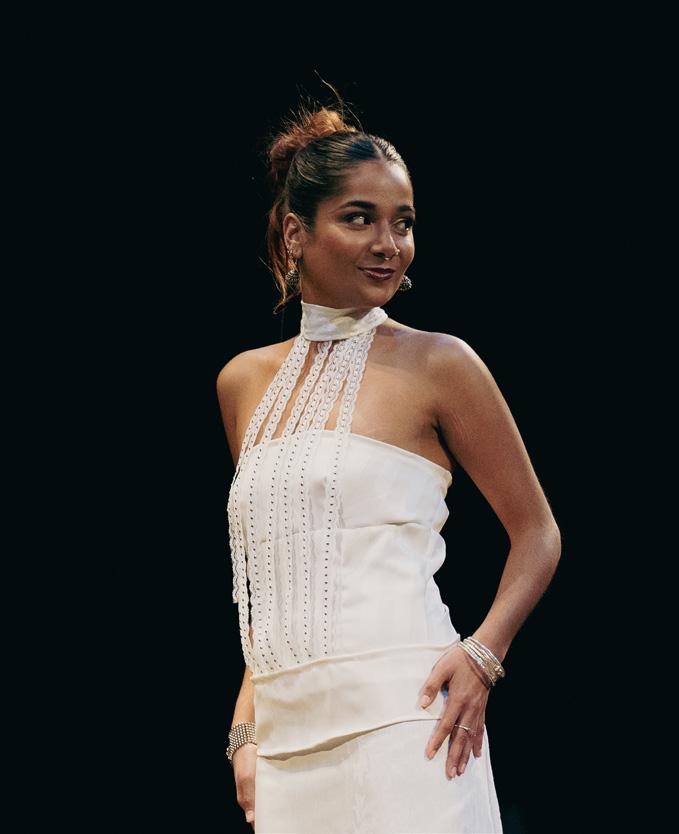
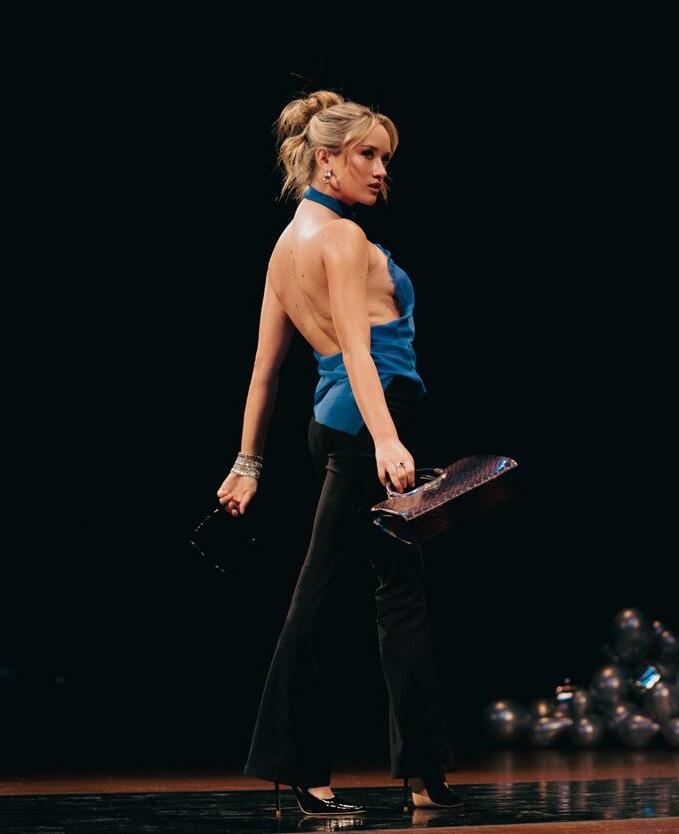
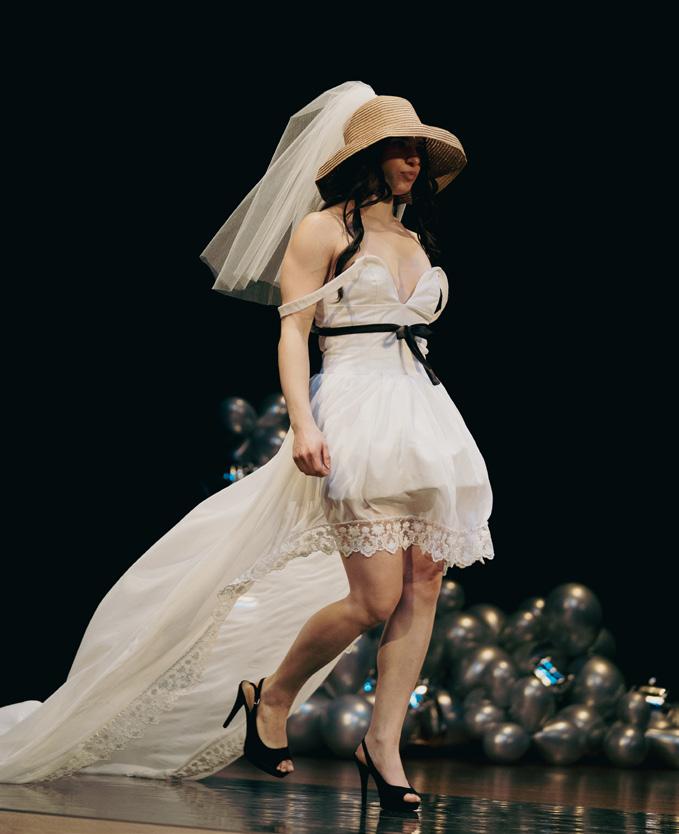
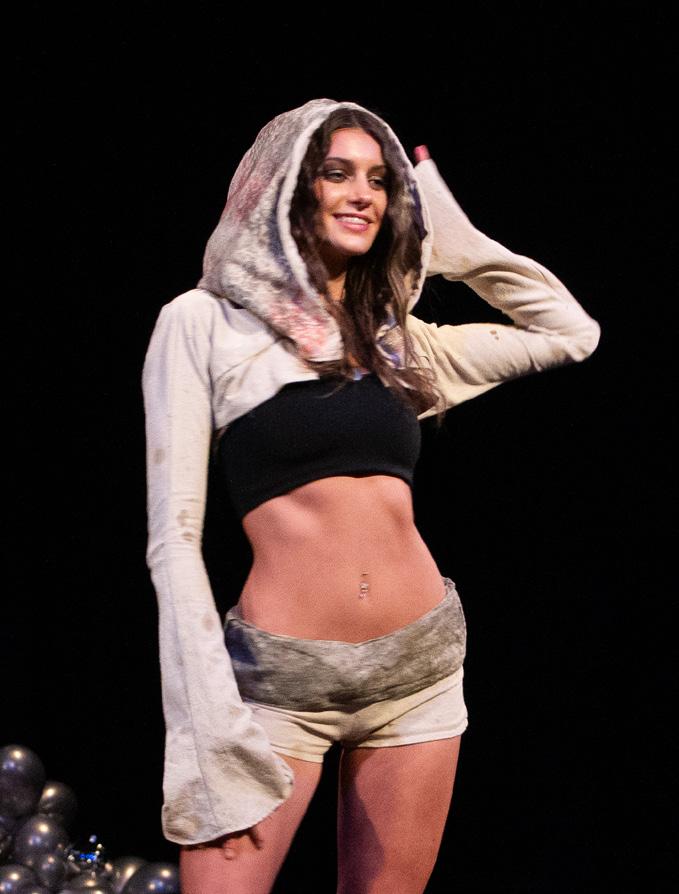
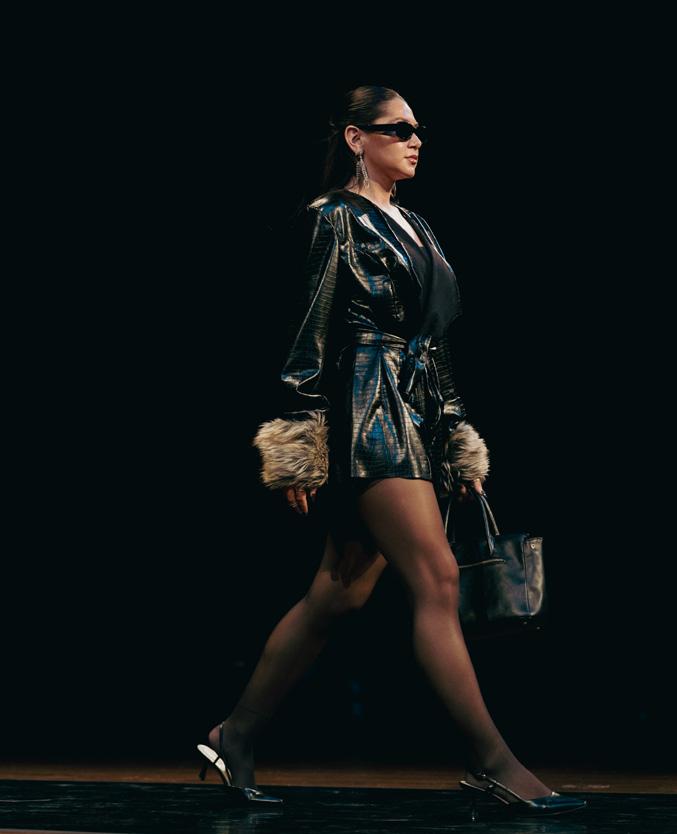
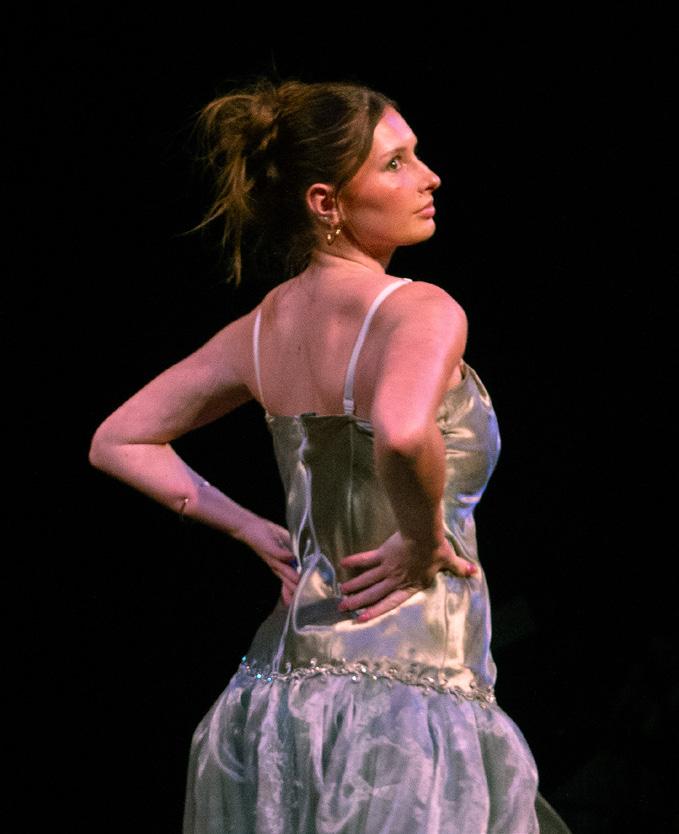
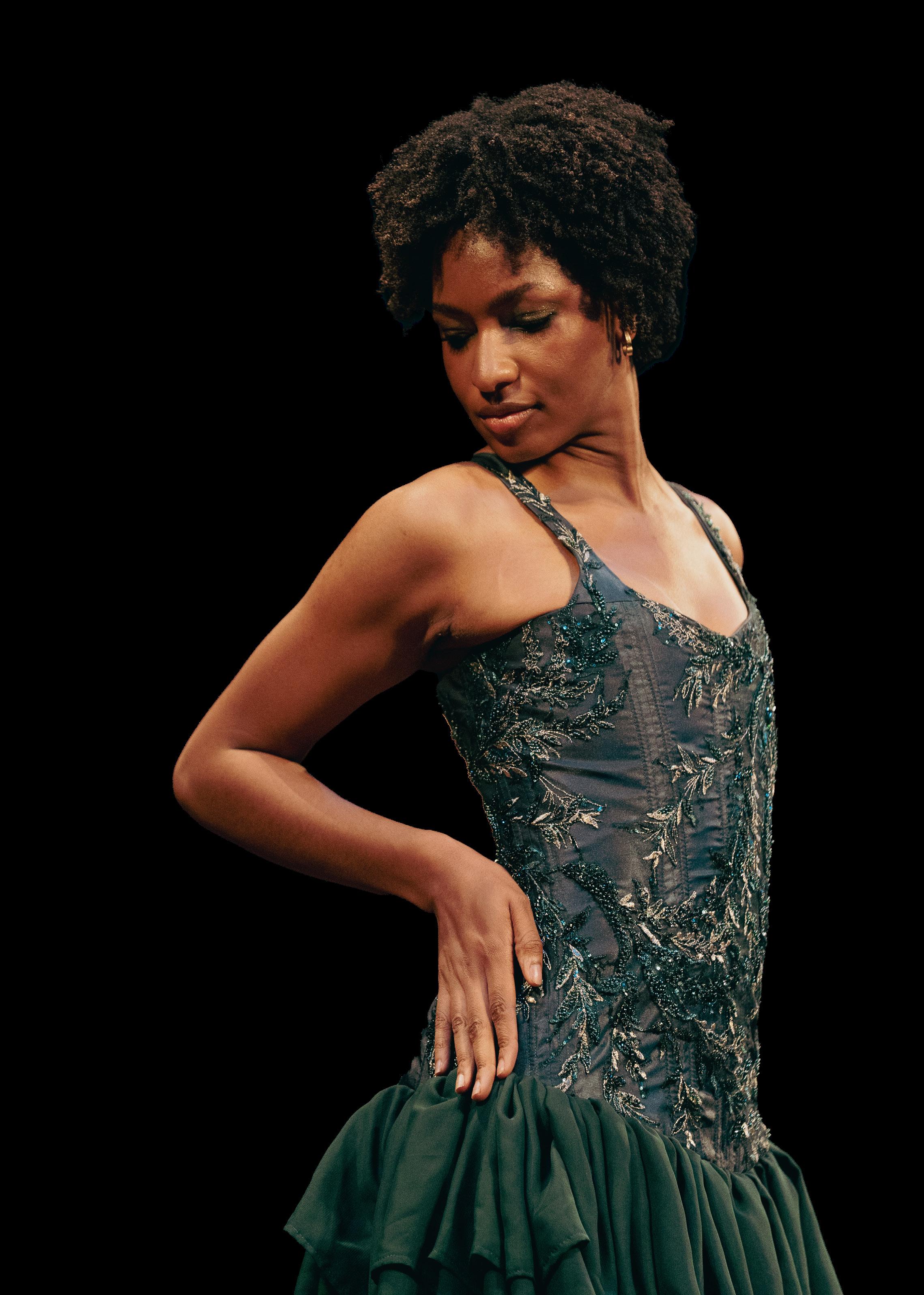
This year, VIM’s annual spring fashion show curated an atmosphere where “attention” was the main event. The theme “Made You Look” explored fashion as a spectacle, where it became all about the act of looking, being looked at and commanding attention.
Who holds it, how it shifts and how fashion controls it. Each look included in the show was not only designed to be seen, but to direct the viewer’s focus through movement, texture or bold visual contrast. From the moment the show began, the runway had become an eye-catching atmosphere. Reflective surfaces and bold text reinforced the theme of the show. Mirrored elements were placed throughout the space, capturing light and movement from every angle.
The collection presented throughout the night featured the highly creative and talented student designers of Michigan State University. From structured statement pieces to playful streetwear or elegant evening wear, each look was designed with the intention of turning heads and commanding the room’s focus. Models walked down the runway with energy and confidence, enhancing the audience’s dynamic visual experience.
High-energy music drove the rhythm of the show, including dramatic musical transitions that built anticipation with every beat. Sudden shifts in tempo and sound mirrored the visual elements on the runway, which kept the viewers engaged from one look to another. As each designer’s work took center stage, the audience was invited to fall deeper into the spectacle of fashion, style, performance and creativity.
“Made You Look” celebrated the power fashion has to make a statement and spark individualism. Through bold designs, striking visual elements and the overall talent of the VIM community, the 2026 fashion show left a lasting impression.
Glam: Ali Baumgartner, Meredith Hill, Maggie Heflin, Astrid Becker, Angelina Flores, Samara Scheel, Kushi Sulabelle, Stephie Kosmas, Emily Filippis
Photo: Alexis Schmidt, Maria Watkins, Ry Moody, Samuel Stowers, Vo Gluchowski, Brianna Schmidt, Dakota Hendren, Jhaden Jackson, Keira Nagy, Megan Basile, Owen Curtis
Words: Anna Milnes
Spread Designer: Meryl Peterhans, Courtney Cohen
YOU
Direction: Emma Stuckey Style: Emma Stuckey
Glam: Astrid Becker
Photo: Samuel Stowers, Ry Moody Models: Meghan Valade, Bindi-Faye Mittendorf, Noelle Ward Words: Emma Stuckey Spread Designer: Ava Isham
Subtle sounds of pencils hitting paper, keyboards clicking and classmates chewing gum are sounds that the neurotypical brain filters out, but can cause somebody with ADHD to lose all focus for the day, every day. Constant streams of irrelevant thoughts, endless fidgeting and severe procrastination take over. For some, the world never calms down.
ADHD, attention deficit hyperactivity disorder, is a neurodevelopmental disorder characterized by patterns of inattention, hyperactivity and impulsivity. Commonly, it impacts academic success, job performance, emotional regulation, executive function, mental health and relationships.
While symptoms often reveal themselves during childhood, signs can be mistaken or dismissed due to the likelihood of experiencing comorbid issues such as anxiety, depression, developmental issues or other neurodivergencies. The propensity to develop ADHD is largely dependent on genetic factors, though environment plays an additional role.
According to M.D. Aaron Winkler, research suggests that when compared to peers without ADHD, students
with ADHD have grade point averages nearly an entire point lower. Although difficult, continuing education is one of the best ways to take back power and fight against stereotypes, statistics and negative associations. It’s not about the moments where things were too distracting, it’s about all the times that the job was accomplished, despite the task being that much harder.
ADHD is also associated with reduced self esteem not only due to obstacles and challenges, but also societal and personal expectations. As with any mental illness or disorder, stigma surrounds ADHD through shame, disregard or hurtful comments. Students with ADHD are more likely to get into trouble at school, and face unfair perceptions of being disruptive, unmotivated or even lazy. Increasing awareness and accommodations are important for combatting stigma and false pretenses that surround ADHD. It’s not a lack of effort or drive, it’s a disability with real and pressing battles.
Schools and workplaces are mandated to provide accommodations, but personal coping mechanisms are important as well. Minimizing distractions by turning off electronics and seeking quiet spaces is a great
start. Creating work and study schedules that prioritize taking breaks and utilizing rewards is also helpful. Identifying sources of stress and personal strengths may alleviate frustration and boost ability, while engaging in exercise may release built up energy. While ADHD fights everyday to disinhibit millions around the world, it does not predict one’s capability, intelligence or their chances of having a successful and happy life. With the right support, people with ADHD can not only keep up, they can and will thrive.
Per fect Fit
In the media, college can be painted, like most things in life, as unrelenting and ever demanding of time and energy. Day in and day out, students work tirelessly to secure a spot in the real world, never knowing how fulfilling it will be in the end. For some, it can be easy to lose their identity amidst the copious amounts of deadlines, assignments and tasks. While college expects a lot from students, it can also offer endless opportunities to meet new people and build a community.
To some, the friend-hunt can almost be as daunting as the infamous job-hunt. As soon as an individual steps on campus, the unspoken desire to belong fills every hallway and classroom. Striking up a conversation with a classmate or joining a new club are low-effort ways to get involved on campus. These connections allow people to find identity and community.
It can be easy to get wrapped up in crowds that used to feel fulfilling, but don’t fit the person you’ve become.
While maintaining relationships is important, outgrowing spaces is not inherently bad. Prioritizing building relationships with new people can push an individual to explore their own personality. Having confidence in one’s own character can attract motivated and like-minded people. Suddenly the uncomfortable moments become manageable, and new beginnings become exciting. Creativity feels less risky and individuality is celebrated.
The benefits of building deep and meaningful connections go far beyond comfort. They encourage the exploration of the parts of a person that used to feel unworthy. They also help to reveal diverse ideas and bring forth new experiences. They can motivate people to ask questions, seek answers and broaden their ability to see the world. Whether it’s the introduction to a new food or a new hobby, it can feel more comfortable trying new things with a companion. This also adds the unmatched joy of being able to share something cherished with others.
A support system, especially in college, is built of many different pieces. Not just family and friends, but also colleagues, professors and mentors. These relationships form the backbone of future networks, built on genuine understanding and shared ambition. These are the people to track and celebrate milestones, and collaborate with on future projects. But they are also there for questions or guidance when the winding path ahead feels too daunting.
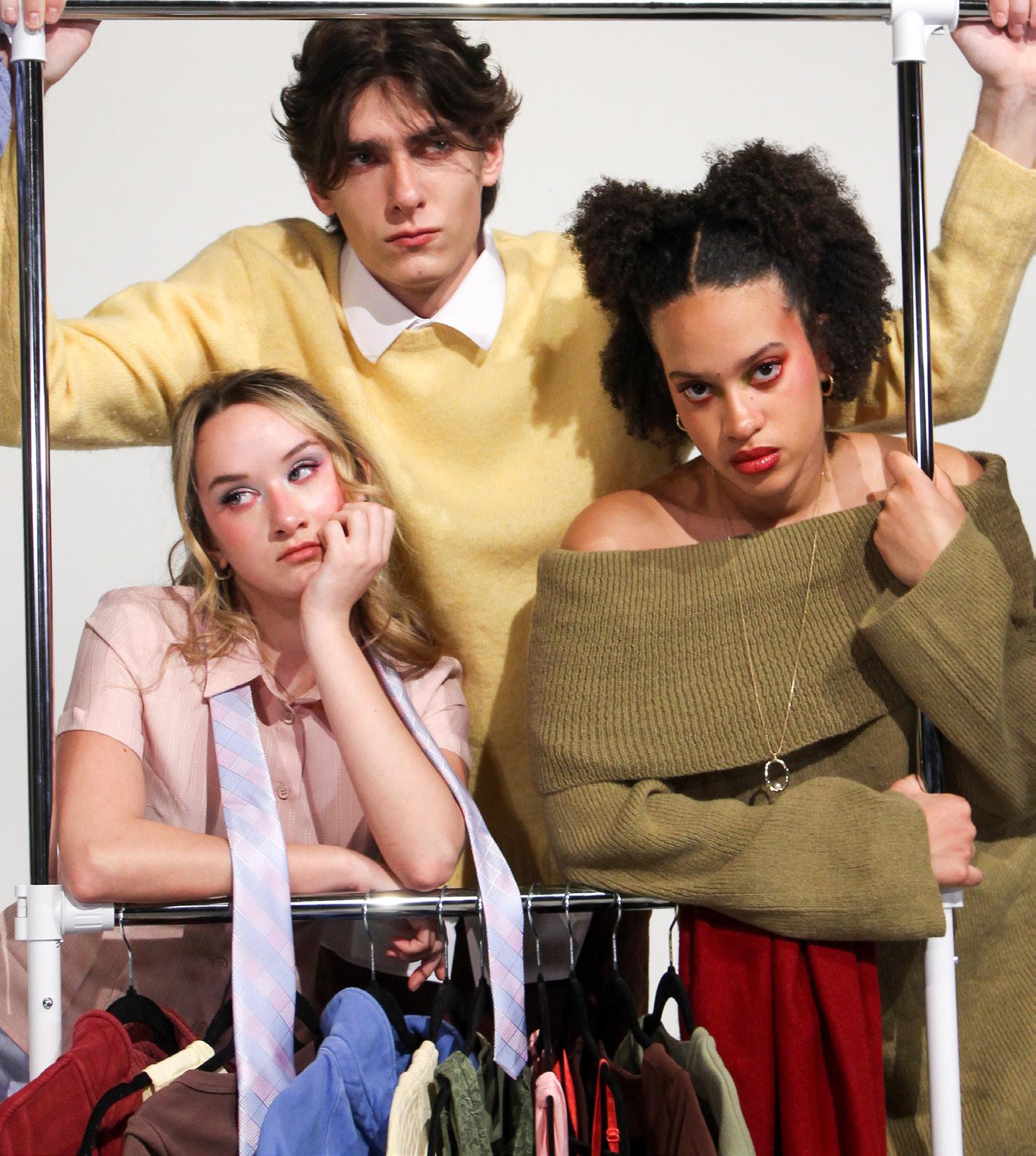
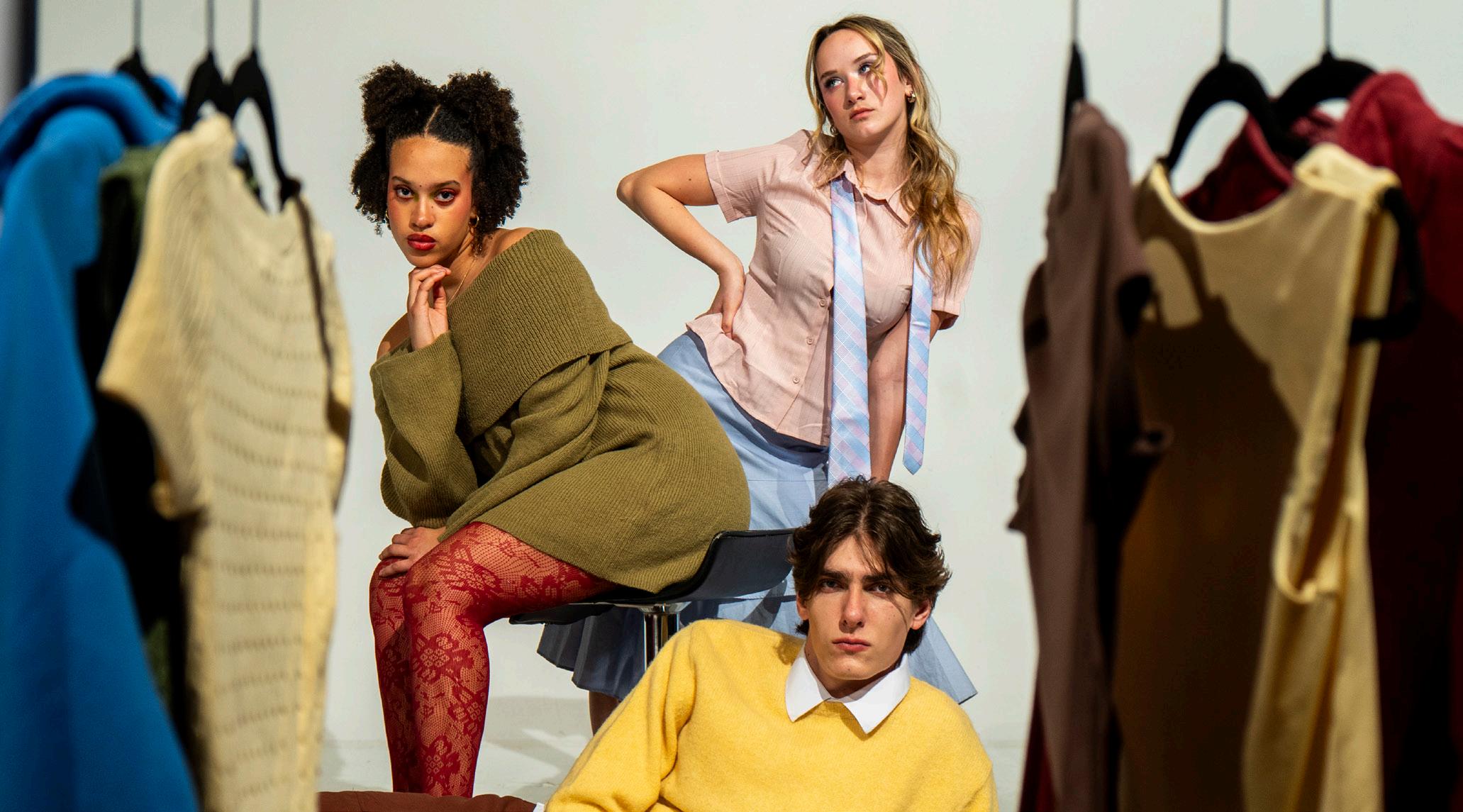
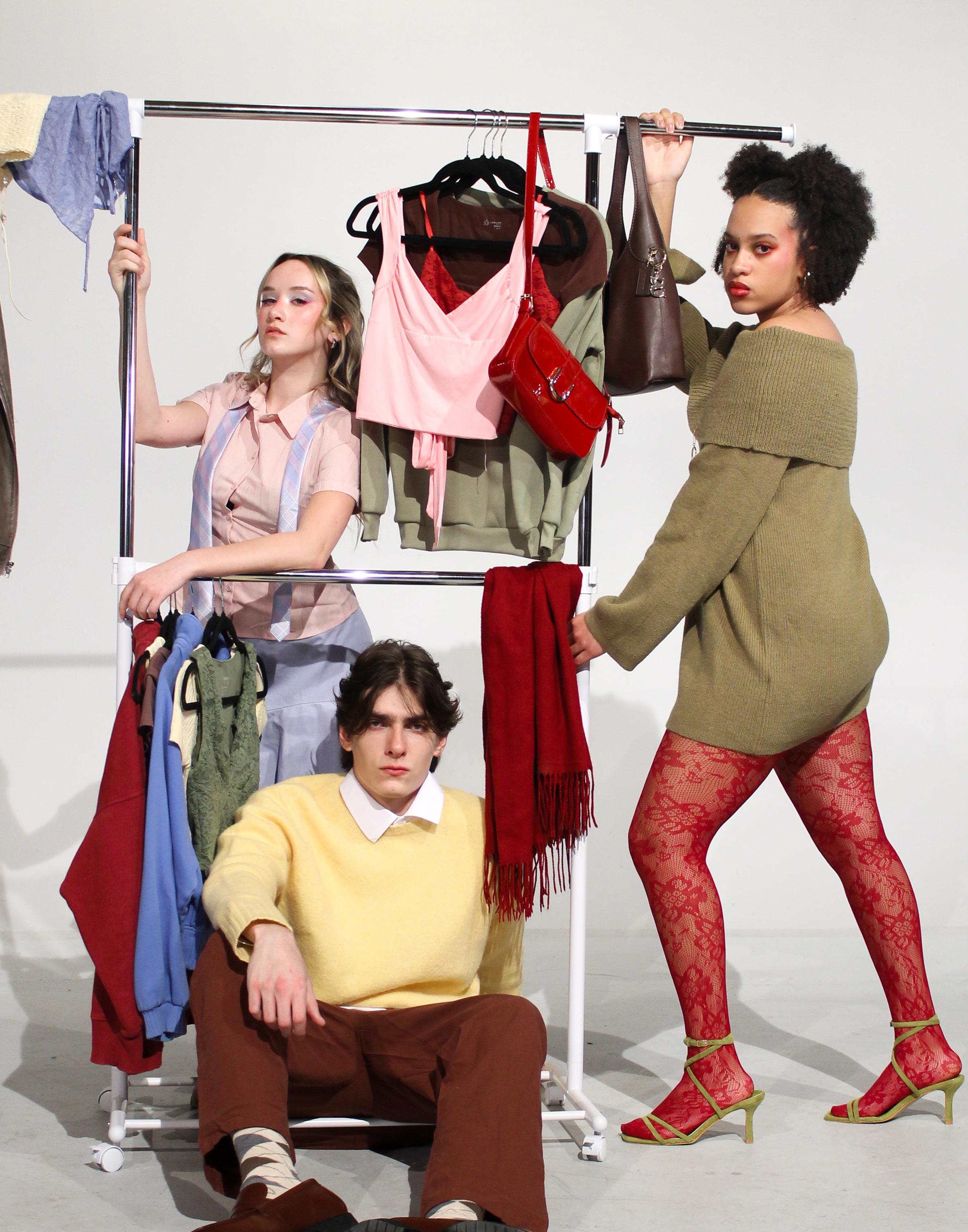
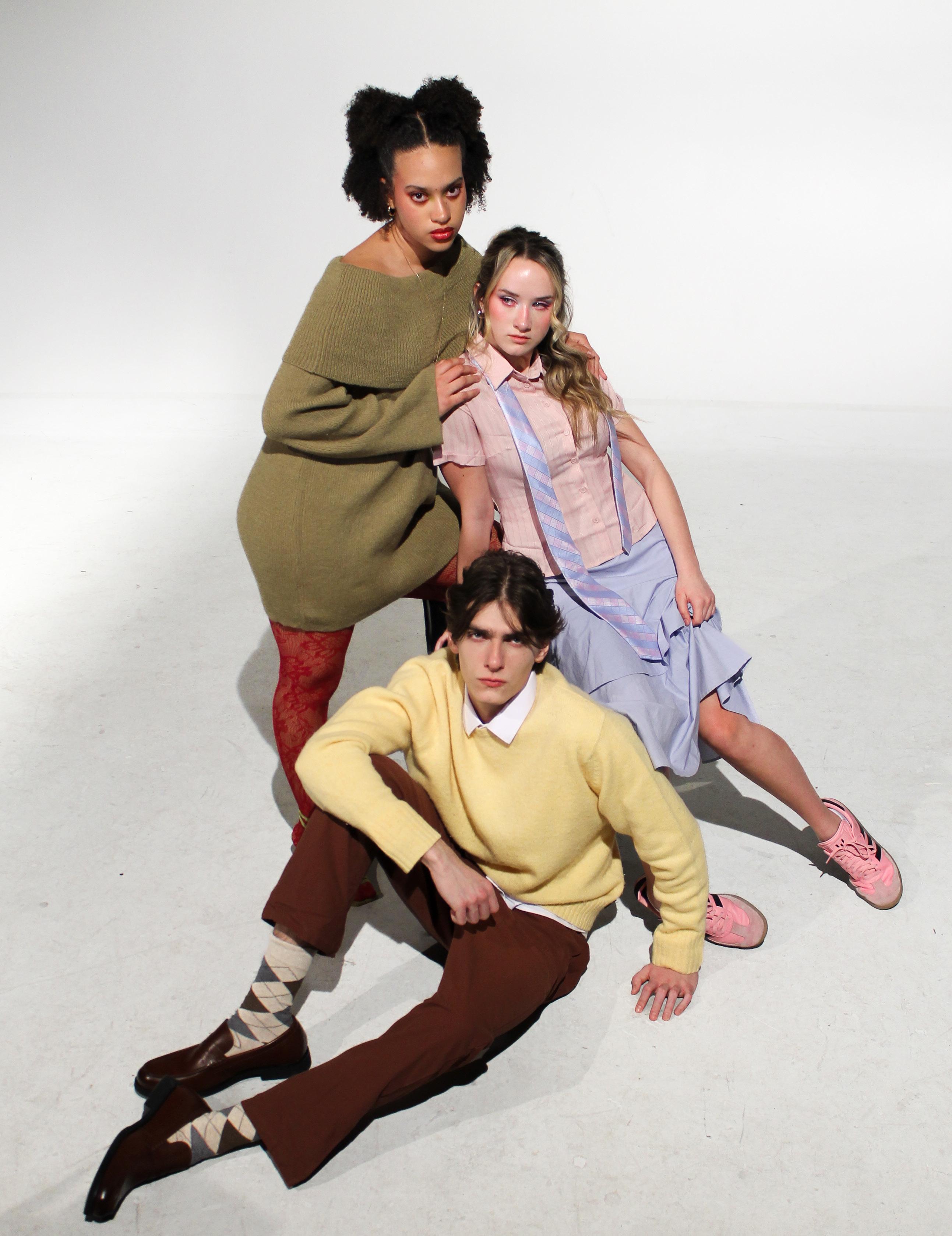
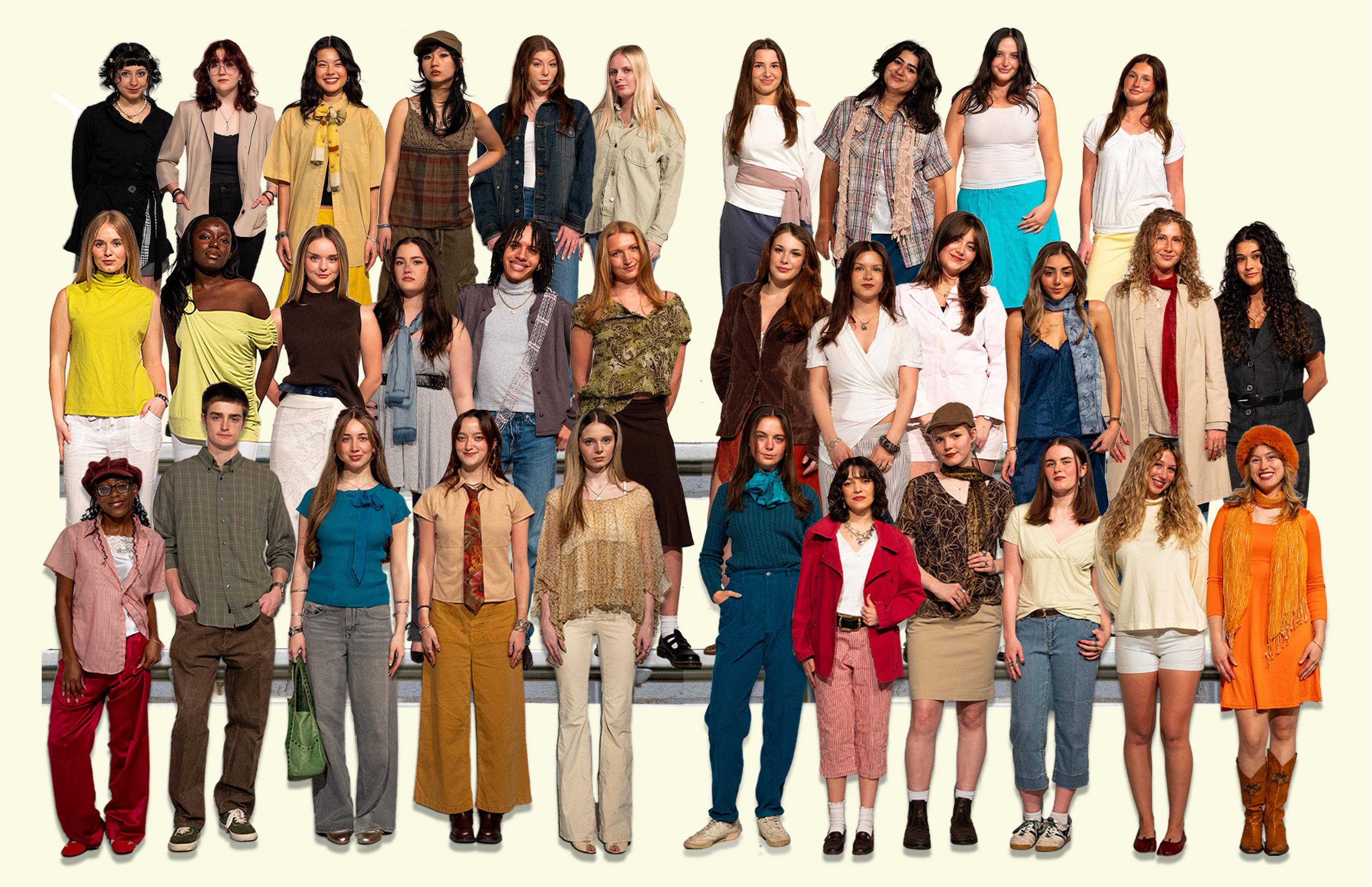
Skirts worn as tops and scarves tied as bows. A monochrome monsoon, straight from a sitcom. To dress is to express and embrace one’s individuality in a visual form. When the nonprofit organization and secondhand store, VOA Michigan Thirft Store, in West Lansing proposed a collaboration, there was no doubt we’d partake. Both serve as sources for style: VIM Magazine represents and VOA Michigan provides.
Our initial duties involved several trips to VOA Michigan to gather the pieces. Fashion directors Ella Chamberlain, Shelby Salame and Genevieve Orlewicz, as well as stylists Susanna Knutsen and Sam McCarthy, gathered racks on racks provided by VOA Michigan, compiling colors all across the spectrum. The more funky and unconventional, the better. Once sourcing was conquered, we sorted clockwise to the color wheel and outfits began to take shape. When we reached a final consensus for the outfits, we scavenged for hats, scarves and other arbitrary accessories for better contrast and cohesion. What began as miscellaneous pieces transformed into a
broad array of self expression. Altogether, 34 outfits were created at an average of about $15 per outfit.
The day of, fashion directors and stylists reconvened, and received additional assistance from Daniela Aranda, Prince Shaka and Anna Williams, to assign each director to an outfit that best matched personal preferences. Due to VOA Michigan’s generosity, we had grabbed back up pieces and were able to restructure and reshape when needed. Overall, our priority was comfort and confidence throughout the crowd. Later in the evening, it was showtime which resulted as a seamless process that brought the vision to life.
In today’s day and age, dressing dozens on our budget would seem infeasible. In 2025, the U.S. Bureau of Labor Statistics estimated that people on average, spend $131.48 on a singular outfit. By shopping secondhand at VOA Michigan, we reduced the cost per outfit by over $100. Volunteers of America Michigan Thrift operates 7 stores across the state, keeping 5.5 million items out of landfills each year and giving donated goods a second life.
With over 3,000 new items hitting the floor daily—from clothing and furniture to books, jewelry, and home goods— shoppers can save big while reducing waste. Every purchase also supports lifechanging programs that help veterans, seniors, and families rebuild their lives. Choosing thrift means supporting your community, protecting the environment, and discovering one-of-a-kind finds all at the same time.
An article written by the United Nations reveals the fast fashion industry is responsible for 10% of the global annual carbon footprint: this is more than international flights and maritime shipping emissions combined. Polyester, a common synthetic fiber, makes up the bulk of the 35% of microplastics in the ocean, and is seeping into wardrobes and oceans simultaneously at a concerning rate.
Not only does shopping secondhand lower the cost on your wallet, but also the cost on the planet. Prioritize longevity over instant gratification. As Vivienne Westwood’s mantra put it, “Buy less. Choose well. Make it last.”